EP2840112B1 - Stabilized polymer compositions and methods of making same - Google Patents
Stabilized polymer compositions and methods of making same Download PDFInfo
- Publication number
- EP2840112B1 EP2840112B1 EP13181133.3A EP13181133A EP2840112B1 EP 2840112 B1 EP2840112 B1 EP 2840112B1 EP 13181133 A EP13181133 A EP 13181133A EP 2840112 B1 EP2840112 B1 EP 2840112B1
- Authority
- EP
- European Patent Office
- Prior art keywords
- acid
- tert
- butyl
- copolymers
- bis
- Prior art date
- Legal status (The legal status is an assumption and is not a legal conclusion. Google has not performed a legal analysis and makes no representation as to the accuracy of the status listed.)
- Active
Links
Images


Classifications
-
- C—CHEMISTRY; METALLURGY
- C08—ORGANIC MACROMOLECULAR COMPOUNDS; THEIR PREPARATION OR CHEMICAL WORKING-UP; COMPOSITIONS BASED THEREON
- C08K—Use of inorganic or non-macromolecular organic substances as compounding ingredients
- C08K5/00—Use of organic ingredients
- C08K5/49—Phosphorus-containing compounds
- C08K5/51—Phosphorus bound to oxygen
- C08K5/52—Phosphorus bound to oxygen only
-
- C—CHEMISTRY; METALLURGY
- C08—ORGANIC MACROMOLECULAR COMPOUNDS; THEIR PREPARATION OR CHEMICAL WORKING-UP; COMPOSITIONS BASED THEREON
- C08K—Use of inorganic or non-macromolecular organic substances as compounding ingredients
- C08K3/00—Use of inorganic substances as compounding ingredients
- C08K3/01—Use of inorganic substances as compounding ingredients characterized by their specific function
-
- C—CHEMISTRY; METALLURGY
- C08—ORGANIC MACROMOLECULAR COMPOUNDS; THEIR PREPARATION OR CHEMICAL WORKING-UP; COMPOSITIONS BASED THEREON
- C08K—Use of inorganic or non-macromolecular organic substances as compounding ingredients
- C08K3/00—Use of inorganic substances as compounding ingredients
- C08K3/18—Oxygen-containing compounds, e.g. metal carbonyls
- C08K3/20—Oxides; Hydroxides
- C08K3/22—Oxides; Hydroxides of metals
-
- C—CHEMISTRY; METALLURGY
- C08—ORGANIC MACROMOLECULAR COMPOUNDS; THEIR PREPARATION OR CHEMICAL WORKING-UP; COMPOSITIONS BASED THEREON
- C08K—Use of inorganic or non-macromolecular organic substances as compounding ingredients
- C08K5/00—Use of organic ingredients
- C08K5/0008—Organic ingredients according to more than one of the "one dot" groups of C08K5/01 - C08K5/59
- C08K5/005—Stabilisers against oxidation, heat, light, ozone
-
- C—CHEMISTRY; METALLURGY
- C08—ORGANIC MACROMOLECULAR COMPOUNDS; THEIR PREPARATION OR CHEMICAL WORKING-UP; COMPOSITIONS BASED THEREON
- C08K—Use of inorganic or non-macromolecular organic substances as compounding ingredients
- C08K5/00—Use of organic ingredients
- C08K5/04—Oxygen-containing compounds
- C08K5/09—Carboxylic acids; Metal salts thereof; Anhydrides thereof
- C08K5/098—Metal salts of carboxylic acids
-
- C—CHEMISTRY; METALLURGY
- C08—ORGANIC MACROMOLECULAR COMPOUNDS; THEIR PREPARATION OR CHEMICAL WORKING-UP; COMPOSITIONS BASED THEREON
- C08K—Use of inorganic or non-macromolecular organic substances as compounding ingredients
- C08K5/00—Use of organic ingredients
- C08K5/04—Oxygen-containing compounds
- C08K5/13—Phenols; Phenolates
- C08K5/134—Phenols containing ester groups
-
- C—CHEMISTRY; METALLURGY
- C08—ORGANIC MACROMOLECULAR COMPOUNDS; THEIR PREPARATION OR CHEMICAL WORKING-UP; COMPOSITIONS BASED THEREON
- C08K—Use of inorganic or non-macromolecular organic substances as compounding ingredients
- C08K3/00—Use of inorganic substances as compounding ingredients
- C08K3/18—Oxygen-containing compounds, e.g. metal carbonyls
- C08K3/20—Oxides; Hydroxides
- C08K3/22—Oxides; Hydroxides of metals
- C08K2003/2296—Oxides; Hydroxides of metals of zinc
Definitions
- the invention relates generally to compositions and stabilizers for polymer resin compositions, and more particularly relates to stabilized resin compositions and stabilizer concentrates for polymer resin compositions.
- Polymeric compounds for example polyolefins like polyethylene and polypropylene, undergo radical driven degradation processes especially during processing steps which might include moulding, extrusion etc.
- radical driven degradation processes especially during processing steps which might include moulding, extrusion etc.
- degradation even proceeds during end-use by a radical mechanism under the influence of light, heat etc. and will finally destroy the polymer properties.
- antioxidants and light stabilizers can prevent or at least reduce these effects.
- additives are added to polymers to protect them during processing and to achieve the desired end-use properties. Additives are generally divided in stabilizers and modifiers. Typical modifiers are antistatic- and anti-fogging agents, acid scavengers, blowing agents, cling agents, lubricants and resins, nucleating agents, slip- and anti-blocking agents as well as fillers, flame retardants, compatibilizers and crosslinkers.
- Antioxidants traditionally and currently used comprise hindered phenolics, aromatic amines, organo-phosphites/phosphonites and thioethers.
- Neutralizers are often used to boost performance and diminish effects of residual polymer acidity.
- polyolefins e.g., polyethylene and polypropylene
- stabilization of polyolefins is extremely important.
- polyolefins e.g., polyethylene and polypropylene
- polyolefins disintegrate to powdery oxidation products. This process is characterized by relatively well-defined and reproducible induction periods, commonly called oven lifetimes. Endpoints are easily detected even visually.
- the disintegration begins mostly at the edges and corners of the test species. It is often accompanied by yellow to brown discoloration.
- LTHS Long-term heat stability
- phenol antioxidants or combinations of phenols, thioethers, and/or phosphites
- problems with such systems may be the tendency to yellowing increased by increased phenol concentrations; the thioether may influence organoleptic properties in a negative way; or that many phosphites demonstrate sensitivity to hydrolysis and thus only provide short-term stabilization.
- a stabilized polymer composition comprises 50 parts per million (ppm) to 50,000 ppm of a stabilizer composition, and a polymer, wherein the ppm is based on the total weight of the polymer.
- the stabilizer composition comprises (a) 1 wt% to 60 wt% of an antacid comprising a metal oxide or a metal hydroxide; (b) 10 wt% to 69 wt% of an organic acid-metal salt having a general formula M 1 Y m , wherein M 1 is selected from the group consisting of bismuth, calcium, zinc, magnesium, lithium, sodium, potassium, barium, strontium, aluminum, and combinations thereof; wherein Y is a conjugate base of an organic acid, having from six to twenty-four carbon atoms, selected from the group consisting of a linear or branched organic acid, a saturated or unsaturated organic acid, a substituted or unsubstituted organic acid, an aliphatic organic acid, an aromatic
- a method of making a stabilized polymer composition comprises (1) preparing a premixture comprising (a) 1 wt% to 60 wt% of the antacid comprising a metal oxide or a metal hydroxide; and at least one additional component selected from: (b) 10 wt% to 69 wt% of the organic acid-metal salt; or (c) 30 wt% to 89 wt% of the primary antioxidant, wherein wt% is based on the total weight of (a)-(c); and (2) intimately mixing the premixture obtained from step (1); (3) combining the mixed premixture with the at least one additional ingredient of (b) or (c) not already present to provide the stabilizer composition; and (4) combining 50 parts per million (ppm) to 50,000 ppm of the stabilizer composition with a polymer, wherein said polymer composition is substantially free of an organic phosphite and an organic phosphonite compound.
- stabilizing means improving the stability of a polymer composition during extrusion or polymer processing, or against exposure to severe conditions, and the like. Further, the term “stabilization” may also mean improving the stability of the polymer against changes in molecular weight, melt flow index, color degradation, e.g. in the yellowness index of the polymer during extrusion or similar polymer processing operations. In another embodiment, stabilization may mean to improve the stability of the polymer due to degradation upon exposure to weathering, heat, light, and/or the elements.
- polymer copolymer
- terpolymer and “polymer resin” are used interchangeably and refer to the same unless the context clearly dictates otherwise.
- a stabilizing amount is meant an amount effective to improve the polymer resin stabilization against, for example, molecular weight degradation, color degradation, or molecular weight degradation and color degradation from melt processing, from weathering, and/or from long term field exposure to heat, light, and/or the elements.
- the stabilizer compositions comprise (a) an antacid; (b) an organic acid-metal salt having a general formula M 1 Y m , wherein M 1 , Y, and m are defined below; and (c) a primary antioxidant, such as a sterically-hindered phenolic compound, a sterically-hindered amine compound, or a hydroxylamine compound, and are present in stabilized polymer compositions in an effective stabilizing amount.
- a primary antioxidant such as a sterically-hindered phenolic compound, a sterically-hindered amine compound, or a hydroxylamine compound
- Exemplary antacids suitable for use in the stabilizer composition include, but are not limited to, metal oxides; metal hydroxides; metal carbonates; metal bicarbonates; natural or synthetic inorganic materials such as hydrotalcites, hydrocalumites, pyrocatecholates, or silicates, or combinations thereof.
- the antacid is an inorganic material having the general formula Me 1 O a (OH) b A c * x H 2 O, wherein Me 1 is a cation having a maximum valence charge of 4 selected from, but not limited to, Li, Na, K, Mg, Ca, Zr, Sn, Si, Ti, Al, Fe, as well as Zn, or a mixture thereof; wherein A represents an anion selected from, but not limited to, sulfate, sulfite, sulfide, thiosulfate, peroxide, peroxosulfate, hydrogen phosphate, hydrogen phosphite, carbonate, halogenide, nitrate, nitrite, hydrogen sulfate, hydrogen carbonate, hydrogen sulfite, hydrogen sulfide, dihydrogen phosphate, dihydrogen phosphite, monocarboxylic acids such as acetate and benzoate, amide, azide, hydrox
- the antacid used in the stabilizer composition can include a metal oxide such as zinc oxide, calcium oxide, magnesium oxide, or combinations thereof; or a metal hydroxide such as calcium hydroxide, magnesium hydroxide, or combinations thereof.
- the antacid is included in the stabilizer composition in an amount in a range from 1 wt% to 60 wt%, wherein the wt% is based on the combined weight of (a) the antacid, (b) the organic acid-metal salt, and (c) the primary oxidant.
- the stabilizer composition may include 2 wt% to 50 wt%, 5 wt% to 40 wt%, or 10 wt% to 30 wt% of the antacid.
- Exemplary organic acid-metal salts suitable for use in the stabilizer composition include, but are not limited to, those metal salts having a general formula M 1 Y m , wherein M 1 is selected from the group consisting of bismuth, calcium, zinc, magnesium, lithium, sodium, potassium, barium, strontium, aluminum, and combinations thereof; wherein Y is a conjugate base of an organic acid, having from six (6) to twenty-four (24) carbon atoms, said organic acid being selected from the group consisting of a linear or branched organic acid, a saturated or unsaturated organic acid, a substituted or unsubstituted organic acid, an aliphatic organic acid, an aromatic organic acid, an alicyclic organic acid, an oxygen-containing heterocyclic organic acid, a dicarboxylic acid, or a polyprotic carboxylic acid, and combinations thereof; and wherein m is an integer from 1 to 3.
- the organic acid-metal salt used in the stabilizer composition can include the metal salt of an organic acid selected from, but not limited to, hexanoic acid; octanoic acid; 2-ethylhexanoic acid; decanoic acid; decenoic acid; lauric acid; cis-9-dodecenoic acid; myristic acid; cis-9-tetradecenoic acid; pentadecanoic acid; cis-9-pentadecenoic acid; palmitic acid; cis-9-hexadecenoic acid; hexadecadienoic acid; heptadecanoic acid; heptadecenoic acid; stearic acid; 12-hydroxystearic acid; oleic acid; linoleic acid; linolenic acid; octadecatetraenoic acid; a-eleosteric acid; 4-oxo-cis-9, trans-11, trans-13-
- the organic acid-metal salts may be used in a previously prepared form or can be prepared in-situ.
- Various processes are amenable to the production of the organic acid-metal salt.
- suitable processes include, but not limited to, precipitation and fusion processes, both of which are well known by those skilled in the art.
- the organic acid-metal salt is included in the stabilizer composition in an amount in a range from about 10 wt% to 69 wt%, wherein the wt% is based on the combined weight of (a) the antacid, (b) the organic acid-metal salt, and (c) the primary antioxidant.
- the stabilizer composition may include 12 wt% to 65 wt%, 15 wt% to 60 wt%, 20 wt% to 50 wt%, or 30 wt% to 40 wt% of the organic acid-metal salt.
- the primary antioxidant included in the stabilizer composition is at least one of a sterically-hindered phenolic compound, a sterically-hindered amine compound, or a hydroxylamine compound,
- Exemplary sterically-hindered phenolic compounds suitable for use in the stabilizer composition include, but are not limited to, alkylated mono-phenols, such as 2,6-di-tert-butyl-4-methylphenol, 2-tert-butyl-4,6-dimethylphenol, 2,6-di-tert-butyl- 4-ethylphenol, 2,6-di-tert-butyl-4-n-butylphenol, 2,6-di-tert-butyl-4-isobutylphenol, 2,6-dicyclopentyl-4-methylphenol, 2-(a-methylcyclohexyl)-4,6-dimethylphenol, 2,6-di-octadecyl-4-methylphenol, 2,4,6,-tricyclohexyphenol, 2,6-di-tert-butyl-4- methoxymethylphenol, and the like; alkylated hydroquinones, such as 2,6-di-tert- butyl-4-methoxyphenol
- phenolic antioxidants n-octadecyl, 3,5-di-tert-butyl-4-hydroxyhydrocinnamate; neopentanetetrayl, tetrakis(3,5-di-tert-butyl-4-hydroxyhydrocinnamate); tetrakis [methylene(3,5-di-tert-butyl-4- hydroxyhydrocinnamate)methane]; di-n-octadecyl-3,5-di-tert-butyl-4- hydroxybenzylphosphonate; 1,3,5-tris(3,5-di-tert-butyl-4-hydroxybenzyl)-isocyanurate, thiodiethylene bis(3,5-di-tert-butyl-4-hydroxyhydrocinnamate); 1,3,5- trimethyl-2,4,6-tris(3,5-di-tert-butyl-4-hydroxybenzyl)benzene
- Exemplary sterically-hindered amine compounds include, but are not limited to, bis(2,2,6,6-tetramethyl-4-piperidyl)sebacate; bis(2,2,6,6-tetramethyl-4-piperidyl)succinate; bis(1,2,2,6,6-pentamethyl-4-piperidyl)sebacate; bis(1-octyloxy-2,2,6,6-tetramethyl-4-piperidyl)sebacate; bis(1,2,2,6,6-pentamethyl-4-piperidyl) n-butyl-3,5-di-tert-butyl-4-hydroxybenzylmalonate; the condensate of 1-(2-hydroxyethyl)-2,2,6,6-tetramethyl-4-hydroxypiperidine and succinic acid; linear or cyclic condensates of N,N'-bis(2,2,6,6-tetramethyl-4-piperidyl)hexamethylenediamine and 4-tert-oct
- Exemplary hydroxylamine compounds include, but are not limited to, N,N-dibenzylhydroxylamine, N,N-diethylhydroxylamine, N,N-dioctylhydroxylamine, N,N-dilaurylhydroxylamine, N,N-ditetradecylhydroxylamine, N,N- dihexadecylhydroxylamine, N,N-dioctadecylhydroxylamine, N-hexadecyl-N- octadecylhydroxylamine, N-heptadecyl-N-octadecylhydroxylamine, N,N- dialkylhydroxylamine, N,N-di-tert-butylhydroxylamine, N-cyclohexylhydroxylamine, N- cyclododecylhydroxylamine, N,N-dicyclohexylhydroxylamine, N,N- dibenzylhydroxylamine, N,N-didecyl
- the primary antioxidant is included in the stabilizer composition in an amount in a range from about 30 wt% to 89 wt%, wherein the wt% is based on the combined weight of (a) the antacid, (b) the organic acid-metal salt, and (c) the primary antioxidant.
- the stabilizer composition may include 35 wt% to 85 wt%, 40 wt% to 80 wt%, 45 wt% to 75 wt%, or 50 wt% to 70 wt% of the primary antioxidant.
- the stabilizer composition may further include one or more additional components such as secondary antioxidant compounds, UV absorbers, light stabilizers, metal deactivators, peroxide scavengers, fillers and reinforcing agents, plasticizers, epoxidized vegetable oils, such as epoxidized soybean oils, lubricants like stearyl alcohol, emulsifiers, pigments, optical brighteners, flameproofing agents, anti-static agents, blowing agents, antiblocking agents, clarifiers, antiozonants, optical brighteners, flameproofing agents, and thiosynergists such as dilaurythiodipropionate, distearylthiodipropionate, neopentanetetrayl, tetrakis(3-dodecylthioproprionate).
- additional components when present, are used in an amount effective to further improve the stabilizing ability of the stabilizer composition.
- a secondary antioxidant compound is included in the stabilizer composition.
- exemplary secondary is an acylaminophenol compound.
- Exemplary secondary antioxidant compounds include 1,3,5-tris-(3,5-di-tert-butyl-4-hydroxybenzyl)-2,4,6-trimethylbenzene; bis-(3,5-di-tert-butyl-4-hydroxybenzyl)sulfide; isooctyl-3,5-di-tert-butyl-4- hydroxybenzylmercaptoacetate; bis-(4-tert-butyl-3-hydroxy-2,6-dimethylbenzyl)dithiol-terephthalate; 1,3,5-tris-(3,5-di-tert-butyl-4,10-hydroxybenzyl)isocyanurate; 1,3,5-tris-(4-tert-butyl-3-hydroxy-2,6-dimethylbenzyl)isocyanurate; and 1,3,5-tris-(3,5-dicyclohexyl-4- hydroxybenzyl)isocyanurate.
- the stabilizer composition is substantially free of any organic phosphite compound or any organic phosphonite compound.
- substantially free means that no organic phosphite or organic phosphonite is intentionally added to the stabilizer composition.
- Acylaminophenols may be used as a secondary antioxidant, such as for example, 4-hydroxylauric acid anilide, 4-hydroxystearic acid anilide, 2,4-bis-octylmercapto-6-(3,5-tert-butyl-4-hydroxyanilino)-s-triazine, andoctyl-N-(3,5-di-tert- butyl-4-hydroxyphenyl)-carbamate.
- the stabilizer compositions may be prepared by combining components (a)-(c), and optionally (d), in a variety of suitable ways.
- the antacid (a) and the organic acid-metal salt (b) are combined to form a premixture, prior to combining with the primary antioxidant.
- a premixture of (a) 1 wt% to 60 wt% of the antacid; and (b) 10 wt% to 69 wt% of the organic acid-metal salt can be prepared, followed by combining the premixture with (c) 30 wt% to 89 wt% of the primary antioxidant, wherein wt% is based on the total weight of (a)-(c).
- the premixture of (a) and (b) can be prepared by a melt mix or a fusion process, as described above.
- suitable processes include, but not limited to, melt and fusion processes.
- a low melting organic acid-metal salt can be heated to its melting point and then the antacid mixed into the molten organic acid-metal salt to form the premixture.
- the premixture of antacid and organic acid-metal salt can be prepared by melting the desired organic acid-metal salt followed by intimately dispersing the desired quantity of antacid into the organic acid-metal salt melt.
- the premixture of antacid and organic acid- metal salt can be prepared by reacting the appropriate organic acid with a stoichiometric excess of one or more antacids.
- This fusion process may optionally employ a catalyst to accelerate the reaction and reduce the induction temperature of the reaction.
- Catalysts for this fusion process are known to those skilled in the art.
- diprotic and triprotic acids are suitable catalysts.
- An exemplary fusion process would be reacting the organic acid with zinc oxide, magnesium oxide, or calcium oxide in the presence of adipic acid, citric acid, and/or succinic acid, which form the desired organic acid-metal salt in-situ.
- the fusion process reaction can be controlled at temperatures above the melting point of the organic acid-metal salt and below the degradation temperature of the product organic acid-metal salt.
- the carboxylic acid is derived from natural sources such as tallow or vegetable oil
- State-of-the-art fusion processes have advantages of yielding a physical form of the premixture that is relatively non-dusting and does not require additional steps to classify the material, require separate grinding steps, use inefficient batch processing techniques, or have long inefficient reaction times over 20 minutes.
- the state-of-the-art process using tightly controlled stoichiometry, process temperature controls, very short heat history (e.g., less than 20 minutes) at elevated temperatures above 80°C, and continuous forming process are desired.
- a premixture of (a) about 1 wt% to about 60 wt% of the antacid; and (c) about 30 wt% to about 89 wt% of the primary antioxidant can be prepared, followed by combining the premixture of (a) and (c) with (b) about 10 wt% to about 69 wt% of the organic acid-metal salt, wherein wt% is based on the total weight of (a)-(c).
- the premixture of (a) and (c) can be prepared by a melt mix, similar to that described above.
- the stabilizer compositions may be packaged along with a carrier material to improve or enhance the dispersion of the stabilizer composition throughout the polymer composition.
- exemplary carriers include, but are not limited to, a polymer, an oligomer, a wax, an oil, a paraffin, an aliphatic ester, an aromatic ester, an aliphatic carboxylic acid, an aromatic carboxylic acid, a glycol, an alcohol, or combinations thereof.
- the selection of the carrier can be primarily based on its compatibility with the polymer to which it is to be added, as well as the intended manner of addition.
- the stabilizer combinations may be incorporated into the polymer resins by conventional techniques, at any convenient stage prior to the manufacture of shaped articles therefrom.
- the stabilizer composition is added in an amount of 50 parts per million (ppm) to 50,000 ppm, based on the weight of the resin.
- the stabilizer composition may present in the stabilized polymer composition in an amount of 500 ppm to 25,000 ppm, or from 1,000 ppm to 10,000 ppm.
- the organic phosphite compound and/or the organic phosphonite compound may be present in the stabilized polymer resins in an amount from 0 ppm to 17,500 ppm.
- the stabilized polymer composition is substantially free of an organic phosphite and an organic phosphonite compound.
- the polymer component may be any polymer known in the art, such as polyolefin, polycarbonate, polyamide, styrenic polymers, polymethacrylate and combinations thereof.
- the polymer comprises a polyolefin polymer.
- Non-limiting examples of polyolefin polymers include, but are not limited to, polypropylene, polyisobutylene, polybut-1-ene, poly-4- methylpent-1-ene, polyisoprene, polybutadiene, cyclopentene, norbornene, polyethylene, high density polyethylene (HDPE), high density and high molecular weight polyethylene (HDPE-HMW), high density and ultrahigh molecular weight polyethylene (HDPE-UHMW), medium density polyethylene (MDPE), low density polyethylene (LDPE), linear low density polyethylene (LLDPE), very low density polypropylene (VLDPE), ultra low density polyethylene (ULDPE), mixture of polypropylene with polyisobutylene, mixtures of polypropylene with polyethylene, ethylene/propylene copolymers, linear low density polyethylene (LLDPE) and mixtures of linear low density polyethylene with low density polyethylene (LDPE), propylene/but-1-ene copolymers, propylene/but-1
- the stabilizers of this invention help with the stabilization of polymer resin compositions especially in high temperature processing against changes in melt index and/or color, even though the polymer resin may undergo a number of extrusions.
- the stabilizers of the present invention may readily be incorporated into the polymer resin compositions by conventional techniques, at any convenient stage prior to the manufacture of shaped articles therefrom.
- the stabilizer may be mixed with the resin in dry powder form, or a suspension or emulsion of the stabilizer may be mixed with a solution, suspension, or emulsion of the polymer.
- the stabilized polymer resin compositions of the present invention can be prepared by a variety of methods, e.g., intimate admixing of the ingredients with any additional materials desired in the formulation. Suitable procedures include solution blending and melt blending. Because of the availability of melt blending equipment in commercial polymer processing facilities, melt processing procedures are generally preferred. Examples of equipment used in such melt compounding methods include: co-rotating and counter-rotating extruders, single screw extruders, disc-pack processors and various other types of extrusion equipment.
- ingredients may be added initially to the processing system, or else certain additives may be pre-compounded with each other or with a portion of the polymer resin to make a stabilizer concentrate.
- certain additives may be pre-compounded with each other or with a portion of the polymer resin to make a stabilizer concentrate.
- Those of ordinary skill in the art will be able to adjust blending times and temperatures, as well as component addition location and sequence, without undue additional experimentation.
- the stabilizers of this invention may be conveniently incorporated by conventional techniques into polymer resins before the fabrication thereof into shaped articles, it is also possible to apply the instant stabilizers by a topical application to the finished articles.
- Premix 1 was prepared by dispersing 135.4 g of zinc oxide (French Process with a purity of >99.7%) in 892.1 g of fatty acid (acid value 209) in a Parr Reactor, adding and dissolving 0.3 g of adipic acid catalyst in the reaction mixture, heating the reaction mixture to the induction temperature of the reaction and mixing and reacting the mixture under pressure of 35 psig for 20 minutes, venting the reaction vessel to atmospheric pressure while maintaining the temperature above the melting point of the resultant organic acid metal salt reaction product and finally 250 g of zinc oxide (French Process with a purity of >99.7%) was intimately dispersed with intensive mixing to produce the premixture stabilizing component. The molten dispersion of the premixture was flaked to convert it to a solid form and coarsely milled for the experiments containing Premix 1 tabulated in Tables 1 - 3 below.
- Premix 2 was prepared by dispersing 135.4 g of zinc oxide (French Process with a purity of >99.7%) in 892.1 g of fatty acid (acid value 209) in a Parr Reactor, adding and dissolving 0.3 g of adipic acid catalyst in the reaction mixture, heating the reaction mixture to the induction temperature of the reaction and mixing and reacting the mixture under pressure of 35 psig for 20 minutes, venting the reaction vessel to atmospheric pressure while maintaining the temperature above the melting point of the resultant organic acid metal salt reaction product and finally 250 g of magnesium oxide (synthetic with high purity >97.0%) was intimately dispersed with intensive mixing to produce the premixture stabilizing component. The molten dispersion of the premixture was flaked to convert it to a solid form and coarsely milled for the experiments containing Premix 2 tabulated in Tables 1-3 below.
- Premix 3 was prepared in accordance with the procedure described for Premixes 1 and 2 using 135.4 g of zinc oxide, in 892.1 g of fatty acid (acid value 209), and 250 g of calcium oxide.
- Premix 4 was prepared by dispersing 299.5 g of zinc oxide (French Process with a purity of >99.7%) in 600.3 g of fatty acid (acid value 209) in a Parr reactor, adding and dissolving 0.18 g of adipic acid catalyst , heating the reaction mixture to the induction temperature of the reaction and mixing and reacting the mixture under pressure of 35 psig for 20 minutes, venting the reaction vessel to atmospheric pressure while maintaining the temperature above the melting point of the resultant organic acid metal salt reaction product.
- Premix 3 and Premix 4 were flaked and milled for the experiments containing Premix 3 and 4 in Table 3 below.
- Table 1 Low linear density polyethylene (LLDPE) compositions. Entry Premix # 1 Premix #2 Irganox 1076 TNPP (ppm) Zinc Oxide - - - - - 2 - - 500 1,000 150 3 - - 500 - - 4 - - 500 - 150 5 300 - 500 500 6 300 - 500 - - 7 - 300 500 500 - 8 - 300 500 - - Entry 1: No additives Entry 2: Control Irganox® 1076: octadecyl 3,5-di-tert-butyl-4-hydroxyhydrocinnamate TNPP: tris(nonylphenyl) phosphite
- Entry 1 of Table 1 was an unstabilized LLDPE resin containing about 20-30 ppm residual chloride.
- the stabilizer additives were tumble-blended into the LLDPE resin in a Henschel mixer and the resulting stabilized mixtures were processed for testing.
- a zero pass run was performed at 190°C with nitrogen purge to simulate pelleting.
- a 5-pass extrusion was performed using a Kraus Maffei Berstorff ZE 25A x 26D UTXi® Twin Screw Extruder conducted at 225°C without nitrogen purging and Melt Flow Rate (MFR) and Yellowness Index (YI) were measured after the first, third, and fifth pass.
- Yellowness Index (YI) was measured on a Hunter Lab ColorQuest XE colorimeter and Melt Flow Rate (MFR) was measured on a Tinius Olsen Extrusion Plastometer.
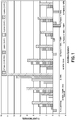
- the invention stabilizer compositions yield a significantly improved Yellowness Index after multiple heat histories.
- the examples of Premix 1 and Premix 2 replacing the phosphite show better yellowness than the industry standard control using TNPP (tris(nonylphenyl)phosphite).
- Premix 1 and Premix 2 also showed the same improved yellowness index result when the premixture replaced half of the TNPP phosphite.
- Premix 2 used in the stabilizer composition showed improved color.
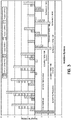
- the invention stabilizer compositions yield more stable Melt Flow Rate after multiple-extrusion processing than the control group.
- the results show melt flow stability equivalent to the control.
- the stabilizer composition may be used in conjunction with phosphites.
- Table 2 High density polyethylene (HDPE) compositions. Entry Premix #1 (ppm) Premix #2 (ppm) Irganox 1010 (ppm) Irgafos 168 (ppm) CaSt 2 (ppm) Ultranox 626 or equiv (ppm) 2 - - 1,000 - - - 3 - - 1,000 1,000 - - 4 500 - 1,000 500 - - 5 500 - 1,000 - - - 6 - 500 1,000 500 - - 7 - 500 1,000 - - - 8 - - 500 - 500 500 9 - - 500 500 500 - Entry 1: No additives Entry 3: Control #1 Entry 8: Control #2 Entry 9: Control #3 Irganox® 1010: pentaerythrityl-tetrakis(3-(3',5'-di-tert-butyl-4-hydroxyphenyl)-propionate Irgafos® 168: Tris (2,4-di-tert
- Entry 1 of Table 2 was an unstabilized HDPE resin.
- the stabilizer additives were tumble blended into the HDPE resin in a Henschel mixer and the resulting stabilized mixtures were processed for testing.
- a zero pass run was performed at 210°C with nitrogen purge to simulate pelleting.
- a 5-pass extrusion was performed using a Kraus Maffei Berstorff ZE 25A x 26D UTXi® Twin Screw Extruder conducted at 250°C without nitrogen purging and MFI and YI were measured after the first, third, and fifth pass.
- the stabilizer composition was used to replace half or all of the industry standard phosphite tris(2,4-di-tert-butylphenyl) phosphite, CAS Number 31570-04-4 .
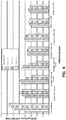
- the Yellowness Index results when using the invention clearly shows superior color hold after multiple passes through the extruder.
- the whiteness of the polymer after thermoprocessing is greatly improved by the invention.
- the stabilizer composition invention was used to replace half or all of the industry standard phosphite tris(2,4-di-tert-butylphenyl) phosphite, CAS Number 31570-04-4 .
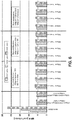
- the invention stabilizer composition yielded superior Melt Flow Rate stability versus the industry standard control phosphite.
- Entry 1 of Table 3 was an unstabilized PP resin.
- the stabilizer additives were tumble blended into the HDPE resin in a Henschel mixer and the resulting stabilized mixtures were processed for testing.
- a 5-pass extrusion was performed using a KrausMaffei Berstorff ZE 25A x 26D UTXi® Twin Screw Extruder conducted at 190°C without nitrogen purging and MFI and YI were measured after the first, third, and fifth pass.
- the stabilizer compositions replaced all of the industry standard phosphites (e.g., tris(2,4-di-tert-butylphenyl) phosphite, CAS Number [31570-04-4 ] and bis(2,4-di-t-butylphenyl) pentraerythritol diphosphite, CAS Number [26741-53-7 ]).
- the Yellowness Index results when using either of the four invention compositions clearly show superior color hold after multiple passes through the extruder versus the control.
- the whiteness of the polymer after thermoprocessing is greatly improved by the invention.
- the stabilizer composition used in conjunction with the two phosphites showed further improvement in color of the polymer after multiple extrusion passes.
- the stabilizer compositions replaced all of the industry standard phosphites (e.g., tris(2,4-di-tert-butylphenyl) phosphite, CAS Number [31570-04-4 ], and bis(2,4-di-t-butylphenyl) pentraerythritol diphosphite, CAS Number [26741-53-7 ]).
- the invention stabilizer composition yielded equivalent Melt Flow Rate stability versus the industry standard control phosphites.
Landscapes
- Chemical & Material Sciences (AREA)
- Health & Medical Sciences (AREA)
- Chemical Kinetics & Catalysis (AREA)
- Medicinal Chemistry (AREA)
- Polymers & Plastics (AREA)
- Organic Chemistry (AREA)
- Compositions Of Macromolecular Compounds (AREA)
Description
- The invention relates generally to compositions and stabilizers for polymer resin compositions, and more particularly relates to stabilized resin compositions and stabilizer concentrates for polymer resin compositions.
- A primary challenge with processing and storing most polymers, especially polyolefinic polymers, is the susceptibility of the polymer to undergo oxidative degradation. Polymeric compounds, for example polyolefins like polyethylene and polypropylene, undergo radical driven degradation processes especially during processing steps which might include moulding, extrusion etc. However, degradation even proceeds during end-use by a radical mechanism under the influence of light, heat etc. and will finally destroy the polymer properties.
- It is well-known in the art that antioxidants and light stabilizers can prevent or at least reduce these effects. Several types of additives are added to polymers to protect them during processing and to achieve the desired end-use properties. Additives are generally divided in stabilizers and modifiers. Typical modifiers are antistatic- and anti-fogging agents, acid scavengers, blowing agents, cling agents, lubricants and resins, nucleating agents, slip- and anti-blocking agents as well as fillers, flame retardants, compatibilizers and crosslinkers.
- Antioxidants traditionally and currently used comprise hindered phenolics, aromatic amines, organo-phosphites/phosphonites and thioethers. Neutralizers are often used to boost performance and diminish effects of residual polymer acidity.
- Because of its sensitivity to oxidation, stabilization of polyolefins (e.g., polyethylene and polypropylene) against thermal oxidation is extremely important. At elevated temperatures and with excess of air, polyolefins disintegrate to powdery oxidation products. This process is characterized by relatively well-defined and reproducible induction periods, commonly called oven lifetimes. Endpoints are easily detected even visually. The disintegration begins mostly at the edges and corners of the test species. It is often accompanied by yellow to brown discoloration.
- Long-term heat stability (LTHS) is an important property for many applications of polymers, especially polyolefins. Generally, LTHS requirements are met by adding high concentrations of phenol antioxidants or combinations of phenols, thioethers, and/or phosphites to the polymer. Problems with such systems may be the tendency to yellowing increased by increased phenol concentrations; the thioether may influence organoleptic properties in a negative way; or that many phosphites demonstrate sensitivity to hydrolysis and thus only provide short-term stabilization.
- In the state of art, the most obvious way to further increase LTHS is generally seen in the use of higher amounts of those antioxidants. However, it is likewise obvious that simply increasing the antioxidant concentration in the polymer composition will most likely affect the properties of the final plastic material in a negative way. Therefore, it is highly desirable to be able to reduce long-term thermal ageing with even less antioxidant compounds used in the polymer composition. Therefore, a need exists for new polymer stabilizer compositions and methods of stabilizing polymers.
- According to an embodiment, a stabilized polymer composition is provided that comprises 50 parts per million (ppm) to 50,000 ppm of a stabilizer composition, and a polymer, wherein the ppm is based on the total weight of the polymer. The stabilizer composition comprises (a) 1 wt% to 60 wt% of an antacid comprising a metal oxide or a metal hydroxide; (b) 10 wt% to 69 wt% of an organic acid-metal salt having a general formula M1Ym, wherein M1 is selected from the group consisting of bismuth, calcium, zinc, magnesium, lithium, sodium, potassium, barium, strontium, aluminum, and combinations thereof; wherein Y is a conjugate base of an organic acid, having from six to twenty-four carbon atoms, selected from the group consisting of a linear or branched organic acid, a saturated or unsaturated organic acid, a substituted or unsubstituted organic acid, an aliphatic organic acid, an aromatic organic acid, an alicyclic organic acid, an oxygen-containing heterocyclic organic acid, a dicarboxylic acid, or a polyprotic carboxylic acid, and combinations thereof; and wherein m is an integer from 1 to 3; and (c) 30 wt% to 89 wt% of a primary antioxidant selected from a sterically hindered phenolic compound, a hindered amine compound, a hydroxylamine compound, and combinations thereof, wherein the wt% is based on the total weight of (a)-(c), wherein said polymer composition is substantially free of an organic phosphite and an organic phosphonite compound.
- According to another embodiment, a method of making a stabilized polymer composition is provided. The method comprises (1) preparing a premixture comprising (a) 1 wt% to 60 wt% of the antacid comprising a metal oxide or a metal hydroxide; and at least one additional component selected from: (b) 10 wt% to 69 wt% of the organic acid-metal salt; or (c) 30 wt% to 89 wt% of the primary antioxidant, wherein wt% is based on the total weight of (a)-(c); and (2) intimately mixing the premixture obtained from step (1); (3) combining the mixed premixture with the at least one additional ingredient of (b) or (c) not already present to provide the stabilizer composition; and (4) combining 50 parts per million (ppm) to 50,000 ppm of the stabilizer composition with a polymer, wherein said polymer composition is substantially free of an organic phosphite and an organic phosphonite compound.
- The accompanying drawings, which are incorporated in and constitute a part of this specification, illustrate embodiments of the invention and, together with a general description of the invention given above, and the detailed description of the embodiments given below, serve to explain the principles of the invention.
-
FIG. 1 is a bar graph showing a comparison of Yellowness Index (YI) results from a multi-pass extrusion study of unstabilized and stabilized linear low density polyethylene (LLDPE) compositions; -
FIG. 2 is a bar graph showing a comparison of Melt Flow Rate (MFR) results from a multi-pass extrusion study of unstabilized and stabilized LLDPE compositions; -
FIG. 3 is a bar graph showing a comparison of YI results from a multi-pass extrusion study of unstabilized and stabilized high density polyethylene (HDPE) compositions; and -
FIG. 4 is a bar graph showing a comparison of MFR results from a multi-pass extrusion study of unstabilized and stabilized HDPE compositions. -
FIG. 5 is a bar graph showing a comparison of YI results from a multi-pass extrusion study of unstabilized and stabilized polypropylene (PP) compositions; and [00016]FIG. 6 is a bar graph showing a comparison of Melt Flow Rate (MFR) results from a multi-pass extrusion study of unstabilized and stabilized PP compositions. - As used herein, the term "stabilizing" means improving the stability of a polymer composition during extrusion or polymer processing, or against exposure to severe conditions, and the like. Further, the term "stabilization" may also mean improving the stability of the polymer against changes in molecular weight, melt flow index, color degradation, e.g. in the yellowness index of the polymer during extrusion or similar polymer processing operations. In another embodiment, stabilization may mean to improve the stability of the polymer due to degradation upon exposure to weathering, heat, light, and/or the elements. The words "polymer," "copolymer," "terpolymer," and "polymer resin" are used interchangeably and refer to the same unless the context clearly dictates otherwise.
- As used herein, a "stabilizing amount" is meant an amount effective to improve the polymer resin stabilization against, for example, molecular weight degradation, color degradation, or molecular weight degradation and color degradation from melt processing, from weathering, and/or from long term field exposure to heat, light, and/or the elements.
- The stabilizer compositions, in accordance with embodiments of the present invention, comprise (a) an antacid; (b) an organic acid-metal salt having a general formula M1Ym, wherein M1, Y, and m are defined below; and (c) a primary antioxidant, such as a sterically-hindered phenolic compound, a sterically-hindered amine compound, or a hydroxylamine compound, and are present in stabilized polymer compositions in an effective stabilizing amount.
- STABILIZER COMPONENT(S):
- Exemplary antacids suitable for use in the stabilizer composition include, but are not limited to, metal oxides; metal hydroxides; metal carbonates; metal bicarbonates; natural or synthetic inorganic materials such as hydrotalcites, hydrocalumites, pyrocatecholates, or silicates, or combinations thereof. According to an embodiment, the antacid is an inorganic material having the general formula
Me1Oa(OH)bAc * x H2O,
wherein Me1 is a cation having a maximum valence charge of 4 selected from, but not limited to, Li, Na, K, Mg, Ca, Zr, Sn, Si, Ti, Al, Fe, as well as Zn, or a mixture thereof; wherein A represents an anion selected from, but not limited to, sulfate, sulfite, sulfide, thiosulfate, peroxide, peroxosulfate, hydrogen phosphate, hydrogen phosphite, carbonate, halogenide, nitrate, nitrite, hydrogen sulfate, hydrogen carbonate, hydrogen sulfite, hydrogen sulfide, dihydrogen phosphate, dihydrogen phosphite, monocarboxylic acids such as acetate and benzoate, amide, azide, hydroxide, hydroxyl amide, hydrazide, acetyl acetonate, phenolate, pseudohalogenides, halogenites, halogenates, perhalogenates, I -, permanganate, dianions of dicarboxylic acids such as phthalate, oxalate, maleate, and fumarate, bisphenolate, phosphate, pyrophosphate, phosphite, pyrophosphite, trianions of tricarboxylic acid such as citrate, trisphenolate, and/or mixtures thereof; wherein a + b does not equal 0; wherein c is selected so that an electro-neutral molecule is formed; and wherein x represents the number of H2O molecules present, if applicable. - For example, the antacid used in the stabilizer composition can include a metal oxide such as zinc oxide, calcium oxide, magnesium oxide, or combinations thereof; or a metal hydroxide such as calcium hydroxide, magnesium hydroxide, or combinations thereof.
- According to embodiments of the present invention, the antacid is included in the stabilizer composition in an amount in a range from 1 wt% to 60 wt%, wherein the wt% is based on the combined weight of (a) the antacid, (b) the organic acid-metal salt, and (c) the primary oxidant. For example, the stabilizer composition may include 2 wt% to 50 wt%, 5 wt% to 40 wt%, or 10 wt% to 30 wt% of the antacid.
- Exemplary organic acid-metal salts suitable for use in the stabilizer composition include, but are not limited to, those metal salts having a general formula M1Ym, wherein M1 is selected from the group consisting of bismuth, calcium, zinc, magnesium, lithium, sodium, potassium, barium, strontium, aluminum, and combinations thereof; wherein Y is a conjugate base of an organic acid, having from six (6) to twenty-four (24) carbon atoms, said organic acid being selected from the group consisting of a linear or branched organic acid, a saturated or unsaturated organic acid, a substituted or unsubstituted organic acid, an aliphatic organic acid, an aromatic organic acid, an alicyclic organic acid, an oxygen-containing heterocyclic organic acid, a dicarboxylic acid, or a polyprotic carboxylic acid, and combinations thereof; and wherein m is an integer from 1 to 3.
- For example, the organic acid-metal salt used in the stabilizer composition can include the metal salt of an organic acid selected from, but not limited to, hexanoic acid; octanoic acid; 2-ethylhexanoic acid; decanoic acid; decenoic acid; lauric acid; cis-9-dodecenoic acid; myristic acid; cis-9-tetradecenoic acid; pentadecanoic acid; cis-9-pentadecenoic acid; palmitic acid; cis-9-hexadecenoic acid; hexadecadienoic acid; heptadecanoic acid; heptadecenoic acid; stearic acid; 12-hydroxystearic acid; oleic acid; linoleic acid; linolenic acid; octadecatetraenoic acid; a-eleosteric acid; 4-oxo-cis-9, trans-11, trans-13-octadecatrienoic acid; ricinoleic acid; dihydroxystearic acid; nonadecanoic acid; ecosanoic acid; cis-9- eicosenoic acid; cis-11-eicosenoic acid; eicosadienoic acid; eicosatrienoic acid; arachidonic acid; eicosapentaenoic acid; docosanoic acid; cis-13-docosenoic acid; docosatetraenoic acid; 4,8,12,15,19-docosapentaenoic acid; docosahexanoic acid; tetracosanoic acid; tetracosenoic acid; 4,8,12,15,18,21-tetracosahexaenoic acid; malonic acid, succinic acid; glutaric acid; adipic acid; pimelic acid; suberic acid; azelaic acid; sebacic acid; maleic acid; fumaric acid; phthalic acid; isophtalic acid; terephthalic acid; or combinations thereof.
- The organic acid-metal salts may be used in a previously prepared form or can be prepared in-situ. Various processes are amenable to the production of the organic acid-metal salt. For example, suitable processes include, but not limited to, precipitation and fusion processes, both of which are well known by those skilled in the art.
- According to embodiments of the present invention, the organic acid-metal salt is included in the stabilizer composition in an amount in a range from about 10 wt% to 69 wt%, wherein the wt% is based on the combined weight of (a) the antacid, (b) the organic acid-metal salt, and (c) the primary antioxidant. For example, the stabilizer composition may include 12 wt% to 65 wt%, 15 wt% to 60 wt%, 20 wt% to 50 wt%, or 30 wt% to 40 wt% of the organic acid-metal salt.
- According to embodiments of the present invention, the primary antioxidant included in the stabilizer composition is at least one of a sterically-hindered phenolic compound, a sterically-hindered amine compound, or a hydroxylamine compound,
- Exemplary sterically-hindered phenolic compounds suitable for use in the stabilizer composition include, but are not limited to, alkylated mono-phenols, such as 2,6-di-tert-butyl-4-methylphenol, 2-tert-butyl-4,6-dimethylphenol, 2,6-di-tert-butyl- 4-ethylphenol, 2,6-di-tert-butyl-4-n-butylphenol, 2,6-di-tert-butyl-4-isobutylphenol, 2,6-dicyclopentyl-4-methylphenol, 2-(a-methylcyclohexyl)-4,6-dimethylphenol, 2,6-di-octadecyl-4-methylphenol, 2,4,6,-tricyclohexyphenol, 2,6-di-tert-butyl-4- methoxymethylphenol, and the like; alkylated hydroquinones, such as 2,6-di-tert- butyl-4-methoxyphenol, 2,5-di-tert-butylhydroquinone, 2,5-di-tert-amyl-hydroquinone, 2,6-diphenyl-4-octadecyloxyphenol, and the like; hydroxylated thiodiphenyl ethers, such as 2,2'-thio-bis-(6-tert-butyl-4-methylphenol), 2,2'-thio-bis-(4-octylphenol), 4,4'-thio-bis-(6-tertbutyl-3-methylphenol), and 4,4'-thio-bis-(6-tert-butyl-2-methylphenol); alkylidene-bisphenols, such as 2,2'-methylene-bis-(6-tert-butyl-4-methylphenol), 2,2'-methylene-bis-(6-tert-butyl-4-ethylphenol), 2,2'-methylene-bis-(4-methyl-6-(a-methylcyclohexyl)phenol), 2,2'-methylene-bis-(4-methyl-6-cyclohexylphenol), 2,2'-methylene-bis-(6-nonyl-4-methylphenol), 2,2'-methylene-bis-(6-nonyl-4- methylphenol), 2,2'-methylene-bis-(6(a-methylbenzyl)-4-nonylphenol), 2,2'-methylene-bis-(6-(a,a-dimethylbenzyl)-4-nonyl-phenol), 2,2'-methylene-bis-(4,6-di-tert-butylphenol), 2,2'-ethylidene-bis-(6-tert-butyl-4-isobutylphenol), 4,4'-methylene- bis-(2,6-di-tert-butylphenol), 4,4'-methylene-bis-(6-tert-butyl-2-methylphenol), 1,1-bis- (5-tert-butyl-4-hydroxy-2-methylphenol)
butane 2,6-di-(3-tert-butyl-5-methyl-2- hydroxybenzyl)-4-methylphenol, 1,1,3-tris-(5-tert-butyl-4-hydroxy-2-methylphenyl)butane, 1,1-bis-(5-tert-butyl-4-hydroxy-2-methylphenyl)-3-dodecylmercaptobutane, ethyleneglycol-bis-(3,3,-bis-(3'-tert-butyl-4'-hydroxyphenyl)- butyrate), di-(3-tert-butyl-4-hydroxy-5-methylpenyl)-dicyclopentadiene, di-(2-(3'-tert-butyl-2'hydroxy-5'methylbenzyl)-6-tert-butyl-4-methylphenyl)terephthalate; and other phenolics such as monoacrylate esters of bisphenols such as ethylidiene bis-2,4-di- tertbutylphenol monoacrylate ester and esters of 3,5-di-butyl hydroxyphenyl propionic acid. - Other exemplary phenolic antioxidants n-octadecyl, 3,5-di-tert-butyl-4-hydroxyhydrocinnamate; neopentanetetrayl, tetrakis(3,5-di-tert-butyl-4-hydroxyhydrocinnamate); tetrakis [methylene(3,5-di-tert-butyl-4- hydroxyhydrocinnamate)methane]; di-n-octadecyl-3,5-di-tert-butyl-4- hydroxybenzylphosphonate; 1,3,5-tris(3,5-di-tert-butyl-4-hydroxybenzyl)-isocyanurate, thiodiethylene bis(3,5-di-tert-butyl-4-hydroxyhydrocinnamate); 1,3,5- trimethyl-2,4,6-tris(3,5-di-tert-butyl-4-hydroxybenzyl)benzene; 3,6-dioxaoctamethylene bis(3-methyl-5-tert-butyl-4-hydroxyhydrocinnamate); 2,6-di-tert- butyl-p-cresol; 2,2'-ethylidene-bis(4,6-di-tert-butylphenol); 1,3,5-tris(2,6-dimethyl-4- tert-butyl-3-hydroxybenzyl)isocyanurate; 1,1,3-tris(2-methyl-4-hydroxy-5-tert- butylphenyl)butane; 1,3,5-tris[2-(3,5-di-tert-butyl-4-hydroxyhydrocinnamoyloxy)ethyl]isocyanurate; 3,5-di-(3,5-di-tert-butyl-4-hydroxybenzyl)mesitol; hexamethylene bis(3,5-di-tert-butyl-4-hyroxyhydrocinnamate); 1-(3,5-di-tert-butyl4-hydroxyanilino)-3,5-di(octylthio)-s-triazine; N,N'-hexamethylene-bis(3,5-di-tert-butyl-4-hydroxyhydrocinnamamide); calcium bis(ethyl-3,5-di-tert-butyl-4-hydroxybenzylphosphonate); ethylene bis [3,3- di(3-tert-butyl-4-hydroxyphenyl)butyrate]; octyl-3,5-di-tert-butyl-4- hydroxybenzylmercaptoacetate; bis(3,5-di-tert-butyl-4- hydroxyhydrocinnamoyl)hydrazide; N,N'-bis-[2-(3,5-di-tert-butyl-4-hydroxyhydrocinnamoyloxy)ethyl]-oxamide; octadecyl-3,5-di-tert-butyl-4- hydroxycinnamate; tetrakis[methylene(3,5-di-tert-butyl-4- hydroxyhydrocinnamate)]methane; 1,3,5-tris(3,5-di-tert-butyl-4-hydroxybenzyl)isocyanurate; tetrakis(3,5-di-tert-butyl-4-hydroxyhydrocinnamate); and/or combinations thereof.
- Exemplary sterically-hindered amine compounds include, but are not limited to, bis(2,2,6,6-tetramethyl-4-piperidyl)sebacate; bis(2,2,6,6-tetramethyl-4-piperidyl)succinate; bis(1,2,2,6,6-pentamethyl-4-piperidyl)sebacate; bis(1-octyloxy-2,2,6,6-tetramethyl-4-piperidyl)sebacate; bis(1,2,2,6,6-pentamethyl-4-piperidyl) n-butyl-3,5-di-tert-butyl-4-hydroxybenzylmalonate; the condensate of 1-(2-hydroxyethyl)-2,2,6,6-tetramethyl-4-hydroxypiperidine and succinic acid; linear or cyclic condensates of N,N'-bis(2,2,6,6-tetramethyl-4-piperidyl)hexamethylenediamine and 4-tert-octylamino-2,6-dichloro-1,3,5-triazine; tris(2,2,6,6-tetramethyl-4- piperidyl)nitrilotriacetate; tetrakis(2,2,6,6-tetramethyl-4-piperidyl)-1,2,3,4-butanetetracarboxylate; 1,1'-(1,2-ethanediyl)-bis(3,3,5,5-tetramethylpiperazinone); 4-benzoyl-2,2,6,6-tetramethylpiperidine; 4-stearyloxy-2,2,6,6-tetramethylpiperidine; bis(1,2,2,6,6-pentamethylpiperidyl)-2-n-butyl-2-(2-hydroxy-3,5-di-tert-butylbenzyl)malonate, 3-n-octyl-7,7,9,9-tetramethyl-1,3,8-triazaspiro[4.5]decane-2,4-dione; bis(1-octyloxy-2,2,6,6-tetramethylpiperidyl)sebacate; bis(1-octyloxy-2,2,6,6-tetramethylpiperidyl)succinate, linear or cyclic condensates of N,N'-bis(2,2,6,6- tetramethyl-4-piperidyl)hexamethylenediamine and 4-morpholino-2,6-dichloro-1,3,5- triazine; the condensate of 2-chloro-4,6-bis(4-n-butylamino-2,2,6,6-tetramethylpiperidyl)-1,3,5-triazine and 1,2-bis(3-aminopropylamino)ethane; the condensate of 2-chloro-4,6-di-(4-n-butylamino-1,2,2,6,6-pentamethylpiperidyl)-1,3,5-triazine and 1,2-bis(3-aminopropylamino)ethane; 8-acetyl-3-dodecyl-7,7,9,9- tetramethyl-1,3,8-triazaspiro[4.5]decane-2,4-dione; 3-dodecyl-1-(2,2,6,6-tetramethyl- 4-piperidyl)pyrrolidine-2,5-dione; 3-dodecyl-1-(1,2,2,6,6-pentamethyl-4-piperidyl)pyrrolidine-2,5-dione; a mixture of 4-hexadecyloxy- and 4-stearyloxy-2,2,6,6-tetramethylpiperidine; a condensate of N,N'-bis(2,2,6,6-tetramethyl-4-piperidyl)hexamethylenediamine and 4-cyclohexylamino-2,6-dichloro-1,3,5-triazine; a condensate of 1,2-bis(3-aminopropylamino)ethane, 2,4,6-trichloro-1,3,5-triazine and 4-butylamino-2,2,6,6-tetramethylpiperidine (CAS Reg. No. [136504-96-6]); a condensate of 1,6-hexanediamine, 2,4,6-trichloro-1,3,5-triazine, N,N-dibutylamine and 4-butylamino-2,2,6,6-tetramethylpiperidine; N-(2,2,6,6-tetramethyl-4-piperidyl)-n- dodecylsuccinimide, N-(1,2,2,6,6-pentamethyl-4-piperidyl)-n-dodecylsuccinimide, 2-undecyl-7,7,9,9-tetramethyl-1-oxa-3,8-diaza-4-oxo-spiro[4,5]decane; a reaction product of 7,7,9,9-tetramethyl-2-cycloundecyl-1-oxa-3,8-diaza-4-oxospiro- [4,5]decane and epichlorohydrin; 1,1-bis(1,2,2,6,6-pentamethyl-4-piperidyloxycarbonyl)-2-(4-methoxyphenyl)-ethene, N,N'-bis-formyl-N,N'-bis(2,2,6,6-tetramethyl-4-piperidyl)hexamethylenediamine, a diester of 4-methoxymethylenemalonic acid with 1,2,2,6,6-pentamethyl-4-hydroxypiperidine, poly[methylpropyl-3-oxy-4-(2,2,6,6-tetramethyl-4-piperidyl)]siloxane; a reaction product of maleic acid anhydride-a-olefin copolymer with 2,2,6,6-tetramethyl-4- aminopiperidine or 1,2,2,6,6-pentamethyl-4-aminopiperidine; 2,4-bis[N-(1-cyclohexyloxy-2,2,6,6-tetramethylpiperidine-4-yl)-N-butylamino]-6-(2- hydroxyethyl)amino-1,3,5-triazine, 1-(2-hydroxy-2-methylpropoxy)-4-octadecanoyloxy-2,2,6,6-tetramethylpiperidine; 5-(2-ethylhexanoyl)oxymethyl-3,3,5-trimethyl-2-morpholinone; 5-(2-ethylhexanoyl)oxymethyl-3,3,5-trimethyl-2-morpholinone; the reaction product of 2,4-bis[(1-cyclohexyloxy-2,2,6,6-piperidine-4-yl)butylamino]-6-chloro-s-triazine with N,N'-bis(3-aminopropyl)ethylenediamine); 1,3,5-tris(N-cyclohexyl-N-(2,2,6,6-tetramethylpiperazine-3-one-4-yl)amino)-s-triazine and 1,3,5-tris(N-cyclohexyl-N-(1,2,2,6,6-pentamethylpiperazine-3-one-4-yl)amino)-s-triazine; or combinations thereof. Amine oxides of hindered amine stabilizers are also included in the present invention.
- Exemplary hydroxylamine compounds include, but are not limited to, N,N-dibenzylhydroxylamine, N,N-diethylhydroxylamine, N,N-dioctylhydroxylamine, N,N-dilaurylhydroxylamine, N,N-ditetradecylhydroxylamine, N,N- dihexadecylhydroxylamine, N,N-dioctadecylhydroxylamine, N-hexadecyl-N- octadecylhydroxylamine, N-heptadecyl-N-octadecylhydroxylamine, N,N- dialkylhydroxylamine, N,N-di-tert-butylhydroxylamine, N-cyclohexylhydroxylamine, N- cyclododecylhydroxylamine, N,N-dicyclohexylhydroxylamine, N,N- dibenzylhydroxylamine, N,N-didecylhydroxylamine, N,N-di(coco alkyl)hydroxylamine, N,N-di(C20-C22 alkyl) hydroxylamine, and N,N-dialkylhydroxylamine derived from hydrogenated tallow amine (that is, N,N-di(tallow alkyl)hydroxylamine); as well as mixtures containing any of the foregoing.
- According to embodiments of the present invention, the primary antioxidant is included in the stabilizer composition in an amount in a range from about 30 wt% to 89 wt%, wherein the wt% is based on the combined weight of (a) the antacid, (b) the organic acid-metal salt, and (c) the primary antioxidant. For example, the stabilizer composition may include 35 wt% to 85 wt%, 40 wt% to 80 wt%, 45 wt% to 75 wt%, or 50 wt% to 70 wt% of the primary antioxidant.
- According to embodiments of the present invention, the stabilizer composition may further include one or more additional components such as secondary antioxidant compounds, UV absorbers, light stabilizers, metal deactivators, peroxide scavengers, fillers and reinforcing agents, plasticizers, epoxidized vegetable oils, such as epoxidized soybean oils, lubricants like stearyl alcohol, emulsifiers, pigments, optical brighteners, flameproofing agents, anti-static agents, blowing agents, antiblocking agents, clarifiers, antiozonants, optical brighteners, flameproofing agents, and thiosynergists such as dilaurythiodipropionate, distearylthiodipropionate, neopentanetetrayl, tetrakis(3-dodecylthioproprionate). The additional components, when present, are used in an amount effective to further improve the stabilizing ability of the stabilizer composition.
- According to an embodiment, a secondary antioxidant compound is included in the stabilizer composition. Exemplary secondary is an acylaminophenol compound.
- Exemplary secondary antioxidant compounds include 1,3,5-tris-(3,5-di-tert-butyl-4-hydroxybenzyl)-2,4,6-trimethylbenzene; bis-(3,5-di-tert-butyl-4-hydroxybenzyl)sulfide; isooctyl-3,5-di-tert-butyl-4- hydroxybenzylmercaptoacetate; bis-(4-tert-butyl-3-hydroxy-2,6-dimethylbenzyl)dithiol-terephthalate; 1,3,5-tris-(3,5-di-tert-butyl-4,10-hydroxybenzyl)isocyanurate; 1,3,5-tris-(4-tert-butyl-3-hydroxy-2,6-dimethylbenzyl)isocyanurate; and 1,3,5-tris-(3,5-dicyclohexyl-4- hydroxybenzyl)isocyanurate.
- The stabilizer composition is substantially free of any organic phosphite compound or any organic phosphonite compound. As used herein, "substantially free" means that no organic phosphite or organic phosphonite is intentionally added to the stabilizer composition.
- Acylaminophenols may be used as a secondary antioxidant, such as for example, 4-hydroxylauric acid anilide, 4-hydroxystearic acid anilide, 2,4-bis-octylmercapto-6-(3,5-tert-butyl-4-hydroxyanilino)-s-triazine, andoctyl-N-(3,5-di-tert- butyl-4-hydroxyphenyl)-carbamate.
- In accordance with embodiments of the present invention, the stabilizer compositions may be prepared by combining components (a)-(c), and optionally (d), in a variety of suitable ways. According to an embodiment of the present invention, the antacid (a) and the organic acid-metal salt (b) are combined to form a premixture, prior to combining with the primary antioxidant. For example, in accordance with an embodiment, a premixture of (a) 1 wt% to 60 wt% of the antacid; and (b) 10 wt% to 69 wt% of the organic acid-metal salt can be prepared, followed by combining the premixture with (c) 30 wt% to 89 wt% of the primary antioxidant, wherein wt% is based on the total weight of (a)-(c). The premixture of (a) and (b) can be prepared by a melt mix or a fusion process, as described above.
- Various processes are amenable to the production of the antacid and organic acid-metal salt premixture. For example, suitable processes include, but not limited to, melt and fusion processes.
- For example, a low melting organic acid-metal salt can be heated to its melting point and then the antacid mixed into the molten organic acid-metal salt to form the premixture. Accordingly, the premixture of antacid and organic acid-metal salt can be prepared by melting the desired organic acid-metal salt followed by intimately dispersing the desired quantity of antacid into the organic acid-metal salt melt.
- According to another example, the premixture of antacid and organic acid- metal salt can be prepared by reacting the appropriate organic acid with a stoichiometric excess of one or more antacids. This fusion process may optionally employ a catalyst to accelerate the reaction and reduce the induction temperature of the reaction. Catalysts for this fusion process are known to those skilled in the art. For example, diprotic and triprotic acids are suitable catalysts. An exemplary fusion process would be reacting the organic acid with zinc oxide, magnesium oxide, or calcium oxide in the presence of adipic acid, citric acid, and/or succinic acid, which form the desired organic acid-metal salt in-situ.
- Advantageously, the fusion process reaction can be controlled at temperatures above the melting point of the organic acid-metal salt and below the degradation temperature of the product organic acid-metal salt. For example, in one embodiment using zinc stearate wherein the carboxylic acid is derived from natural sources such as tallow or vegetable oil, it is important to stay below 200°C, which is its decomposition temperature. State-of-the-art fusion processes have advantages of yielding a physical form of the premixture that is relatively non-dusting and does not require additional steps to classify the material, require separate grinding steps, use inefficient batch processing techniques, or have long inefficient reaction times over 20 minutes. Specifically for fusion-produced premixtures, the state-of-the-art process using tightly controlled stoichiometry, process temperature controls, very short heat history (e.g., less than 20 minutes) at elevated temperatures above 80°C, and continuous forming process are desired.
- In accordance with another embodiment, a premixture of (a) about 1 wt% to about 60 wt% of the antacid; and (c) about 30 wt% to about 89 wt% of the primary antioxidant can be prepared, followed by combining the premixture of (a) and (c) with (b) about 10 wt% to about 69 wt% of the organic acid-metal salt, wherein wt% is based on the total weight of (a)-(c). Various processes are amenable to the production of the antacid and the antioxidant premixture. For example, the premixture of (a) and (c) can be prepared by a melt mix, similar to that described above.
- The stabilizer compositions may be packaged along with a carrier material to improve or enhance the dispersion of the stabilizer composition throughout the polymer composition. Exemplary carriers include, but are not limited to, a polymer, an oligomer, a wax, an oil, a paraffin, an aliphatic ester, an aromatic ester, an aliphatic carboxylic acid, an aromatic carboxylic acid, a glycol, an alcohol, or combinations thereof. The selection of the carrier can be primarily based on its compatibility with the polymer to which it is to be added, as well as the intended manner of addition.
- The stabilizer combinations may be incorporated into the polymer resins by conventional techniques, at any convenient stage prior to the manufacture of shaped articles therefrom. In one embodiment, the stabilizer composition is added in an amount of 50 parts per million (ppm) to 50,000 ppm, based on the weight of the resin. For example, the stabilizer composition may present in the stabilized polymer composition in an amount of 500 ppm to 25,000 ppm, or from 1,000 ppm to 10,000 ppm. When present, the organic phosphite compound and/or the organic phosphonite compound may be present in the stabilized polymer resins in an amount from 0 ppm to 17,500 ppm. Advantageously, in accordance with another embodiment, the stabilized polymer composition is substantially free of an organic phosphite and an organic phosphonite compound.
- POLYMER COMPONENT: The polymer component may be any polymer known in the art, such as polyolefin, polycarbonate, polyamide, styrenic polymers, polymethacrylate and combinations thereof. In one embodiment, the polymer comprises a polyolefin polymer. Non-limiting examples of polyolefin polymers include, but are not limited to, polypropylene, polyisobutylene, polybut-1-ene, poly-4- methylpent-1-ene, polyisoprene, polybutadiene, cyclopentene, norbornene, polyethylene, high density polyethylene (HDPE), high density and high molecular weight polyethylene (HDPE-HMW), high density and ultrahigh molecular weight polyethylene (HDPE-UHMW), medium density polyethylene (MDPE), low density polyethylene (LDPE), linear low density polyethylene (LLDPE), very low density polypropylene (VLDPE), ultra low density polyethylene (ULDPE), mixture of polypropylene with polyisobutylene, mixtures of polypropylene with polyethylene, ethylene/propylene copolymers, linear low density polyethylene (LLDPE) and mixtures of linear low density polyethylene with low density polyethylene (LDPE), propylene/but-1-ene copolymers, propylene/isobutylene copolymers, ethylene/but-1-ene copolymers, ethylene/hexene copolymers, ethylene/methylpentene copolymers, ethylene/heptene copolymers, ethylene/octene copolymers, propylene/butadiene copolymers, isobutylene/isoprene copolymers, ethylene/alkyl acrylate copolymers, ethylene/alkyl methacrylate copolymers, ethylene/vinyl acetate copolymers, polypropylene/ethylene-propylene copolymers, LDPE/ethylene-vinyl acetate copolymers (EVA), LDPE/ethylene-acrylic acid copolymers (EAA), LLDPE/EVA, LLDPE/EAA, ethylenepropylene-diene monomer copolymers (EPDM), copolymers of ethylene with higher alpha-olefins, polybutadiene, polyisoprene, styrene-butadiene copolymers, hydrogenated styrene-butadiene copolymers, styrene-isoprene copolymers, hydrogenated styrene-isoprene copolymers, and combinations thereof.
- PROCESSING METHODS. The stabilizers of this invention help with the stabilization of polymer resin compositions especially in high temperature processing against changes in melt index and/or color, even though the polymer resin may undergo a number of extrusions. The stabilizers of the present invention may readily be incorporated into the polymer resin compositions by conventional techniques, at any convenient stage prior to the manufacture of shaped articles therefrom. For example, the stabilizer may be mixed with the resin in dry powder form, or a suspension or emulsion of the stabilizer may be mixed with a solution, suspension, or emulsion of the polymer.
- The stabilized polymer resin compositions of the present invention can be prepared by a variety of methods, e.g., intimate admixing of the ingredients with any additional materials desired in the formulation. Suitable procedures include solution blending and melt blending. Because of the availability of melt blending equipment in commercial polymer processing facilities, melt processing procedures are generally preferred. Examples of equipment used in such melt compounding methods include: co-rotating and counter-rotating extruders, single screw extruders, disc-pack processors and various other types of extrusion equipment.
- All of the ingredients may be added initially to the processing system, or else certain additives may be pre-compounded with each other or with a portion of the polymer resin to make a stabilizer concentrate. Those of ordinary skill in the art will be able to adjust blending times and temperatures, as well as component addition location and sequence, without undue additional experimentation. While the stabilizers of this invention may be conveniently incorporated by conventional techniques into polymer resins before the fabrication thereof into shaped articles, it is also possible to apply the instant stabilizers by a topical application to the finished articles.
- The following examples are included to provide additional guidance to those skilled in the art in practicing the claimed invention.
- Production of the premixture of (a) antacid and (b) organic acid-metal salt for the examples provided in Tables 1 and 2 are described below. The components for the production of the premixture according to embodiments of the present invention are presented in their order of addition.
-
Premix 1 was prepared by dispersing 135.4 g of zinc oxide (French Process with a purity of >99.7%) in 892.1 g of fatty acid (acid value 209) in a Parr Reactor, adding and dissolving 0.3 g of adipic acid catalyst in the reaction mixture, heating the reaction mixture to the induction temperature of the reaction and mixing and reacting the mixture under pressure of 35 psig for 20 minutes, venting the reaction vessel to atmospheric pressure while maintaining the temperature above the melting point of the resultant organic acid metal salt reaction product and finally 250 g of zinc oxide (French Process with a purity of >99.7%) was intimately dispersed with intensive mixing to produce the premixture stabilizing component. The molten dispersion of the premixture was flaked to convert it to a solid form and coarsely milled for theexperiments containing Premix 1 tabulated in Tables 1 - 3 below. -
Premix 2 was prepared by dispersing 135.4 g of zinc oxide (French Process with a purity of >99.7%) in 892.1 g of fatty acid (acid value 209) in a Parr Reactor, adding and dissolving 0.3 g of adipic acid catalyst in the reaction mixture, heating the reaction mixture to the induction temperature of the reaction and mixing and reacting the mixture under pressure of 35 psig for 20 minutes, venting the reaction vessel to atmospheric pressure while maintaining the temperature above the melting point of the resultant organic acid metal salt reaction product and finally 250 g of magnesium oxide (synthetic with high purity >97.0%) was intimately dispersed with intensive mixing to produce the premixture stabilizing component. The molten dispersion of the premixture was flaked to convert it to a solid form and coarsely milled for theexperiments containing Premix 2 tabulated in Tables 1-3 below. -
Premix 3 was prepared in accordance with the procedure described forPremixes -
Premix 4 was prepared by dispersing 299.5 g of zinc oxide (French Process with a purity of >99.7%) in 600.3 g of fatty acid (acid value 209) in a Parr reactor, adding and dissolving 0.18 g of adipic acid catalyst , heating the reaction mixture to the induction temperature of the reaction and mixing and reacting the mixture under pressure of 35 psig for 20 minutes, venting the reaction vessel to atmospheric pressure while maintaining the temperature above the melting point of the resultant organic acid metal salt reaction product.Premix 3 andPremix 4 were flaked and milled for theexperiments containing Premix -
Table 1: Low linear density polyethylene (LLDPE) compositions. Entry Premix # 1 Premix # 2Irganox 1076TNPP (ppm) Zinc Oxide - - - - - 2 - - 500 1,000 150 3 - - 500 - - 4 - - 500 - 150 5 300 - 500 500 6 300 - 500 - - 7 - 300 500 500 - 8 - 300 500 - - Entry 1: No additives
Entry 2: Control
Irganox® 1076:octadecyl 3,5-di-tert-butyl-4-hydroxyhydrocinnamate TNPP: tris(nonylphenyl) phosphite -
Entry 1 of Table 1 was an unstabilized LLDPE resin containing about 20-30 ppm residual chloride. For entries 2-8, the stabilizer additives were tumble-blended into the LLDPE resin in a Henschel mixer and the resulting stabilized mixtures were processed for testing. A zero pass run was performed at 190°C with nitrogen purge to simulate pelleting. A 5-pass extrusion was performed using a Kraus Maffei Berstorff ZE 25A x 26D UTXi® Twin Screw Extruder conducted at 225°C without nitrogen purging and Melt Flow Rate (MFR) and Yellowness Index (YI) were measured after the first, third, and fifth pass. Yellowness Index (YI) was measured on a Hunter Lab ColorQuest XE colorimeter and Melt Flow Rate (MFR) was measured on a Tinius Olsen Extrusion Plastometer. - In reference to
FIG. 1 , the invention stabilizer compositions yield a significantly improved Yellowness Index after multiple heat histories. Unexpectedly, the examples ofPremix 1 andPremix 2 replacing the phosphite show better yellowness than the industry standard control using TNPP (tris(nonylphenyl)phosphite).Premix 1 andPremix 2 also showed the same improved yellowness index result when the premixture replaced half of the TNPP phosphite. Additionally,Premix 2 used in the stabilizer composition showed improved color. - In reference to
FIG. 2 , the invention stabilizer compositions yield more stable Melt Flow Rate after multiple-extrusion processing than the control group. When the invention was used to replace half of the control phosphite TNPP, the results show melt flow stability equivalent to the control. Thus, the stabilizer composition may be used in conjunction with phosphites. -
Table 2: High density polyethylene (HDPE) compositions. Entry Premix #1 (ppm) Premix #2 (ppm) Irganox 1010 (ppm) Irgafos 168 (ppm) CaSt2 (ppm) Ultranox 626 or equiv (ppm)2 - - 1,000 - - - 3 - - 1,000 1,000 - - 4 500 - 1,000 500 - - 5 500 - 1,000 - - - 6 - 500 1,000 500 - - 7 - 500 1,000 - - - 8 - - 500 - 500 500 9 - - 500 500 500 - Entry 1: No additives
Entry 3:Control # 1
Entry 8:Control # 2
Entry 9:Control # 3
Irganox® 1010: pentaerythrityl-tetrakis(3-(3',5'-di-tert-butyl-4-hydroxyphenyl)-propionate
Irgafos® 168: Tris (2,4-di-tert-butylphenyl) phosphite
Ultranox® 626: Bis (2,4-di-t-butylphenyl) Pentraerythritol Diphosphite -
Entry 1 of Table 2 was an unstabilized HDPE resin. For entries 2-13, the stabilizer additives were tumble blended into the HDPE resin in a Henschel mixer and the resulting stabilized mixtures were processed for testing. A zero pass run was performed at 210°C with nitrogen purge to simulate pelleting. A 5-pass extrusion was performed using a Kraus Maffei Berstorff ZE 25A x 26D UTXi® Twin Screw Extruder conducted at 250°C without nitrogen purging and MFI and YI were measured after the first, third, and fifth pass. - In reference to
FIG. 3 , the stabilizer composition was used to replace half or all of the industry standard phosphite tris(2,4-di-tert-butylphenyl) phosphite, CAS Number 31570-04-4. The Yellowness Index results when using the invention clearly shows superior color hold after multiple passes through the extruder. The whiteness of the polymer after thermoprocessing is greatly improved by the invention. - In reference to
FIG. 4 , the stabilizer composition invention was used to replace half or all of the industry standard phosphite tris(2,4-di-tert-butylphenyl) phosphite, CAS Number 31570-04-4. The invention stabilizer composition yielded superior Melt Flow Rate stability versus the industry standard control phosphite. -
Table 3: Polypropylene (PP) Compositions Entry Premix #1 (ppm) Premix #2 (ppm) Premix #3 (ppm) Premix #4 (ppm) Irganox 1010 (ppm) Irgafos 168 (ppm) Ca5t2 (ppm) Ultranox 626 or equiv (ppm)1 - - - - - - - - 2 - - - - 500 500 500 - 3 - - - - 500 - 500 500 4 500 - - - 500 - - - 5 - - 500 - 500 - - - 6 - 500 - - 500 - - - 7 - - 500 500 - - - 8 500 - - - 500 500 - - 9 - - 500 - 500 500 - - 10 - 500 - - 500 500 - - 11 - - - 500 500 500 - - 12 500 - - - 500 - - 500 13 - - 500 - 500 - - 500 14 - 500 - - 500 - - 500 15 - - - 500 500 - - 500 Entry 1: No additives
Entry 2:Control # 1
Entry 3:Control # 2
Irganox® 1010: pentaerythrityl-tetrakis(3-(3',5'-di-tert-butyl-4-hydroxyphenyl)-propionate
Irgafos® 168: Tris (2,4-di-tert-butylphenyl) phosphite
Ultranox® 626: Bis (2,4-di-t-butylphenyl) Pentraerythritol Diphosphite -
Entry 1 of Table 3 was an unstabilized PP resin. For entries 2-8, the stabilizer additives were tumble blended into the HDPE resin in a Henschel mixer and the resulting stabilized mixtures were processed for testing. A 5-pass extrusion was performed using a KrausMaffei Berstorff ZE 25A x 26D UTXi® Twin Screw Extruder conducted at 190°C without nitrogen purging and MFI and YI were measured after the first, third, and fifth pass. - In reference to
FIG. 5 , four different stabilizer compositions in accordance with embodiments of the present invention were evaluated. The stabilizer compositions replaced all of the industry standard phosphites (e.g., tris(2,4-di-tert-butylphenyl) phosphite, CAS Number [31570-04-4] and bis(2,4-di-t-butylphenyl) pentraerythritol diphosphite, CAS Number [26741-53-7]). The Yellowness Index results when using either of the four invention compositions clearly show superior color hold after multiple passes through the extruder versus the control. The whiteness of the polymer after thermoprocessing is greatly improved by the invention. Advantageously, the stabilizer composition used in conjunction with the two phosphites showed further improvement in color of the polymer after multiple extrusion passes. - In reference to
FIG. 6 , four different stabilizer compositions were evaluated. The stabilizer compositions replaced all of the industry standard phosphites (e.g., tris(2,4-di-tert-butylphenyl) phosphite, CAS Number [31570-04-4], and bis(2,4-di-t-butylphenyl) pentraerythritol diphosphite, CAS Number [26741-53-7]). The invention stabilizer composition yielded equivalent Melt Flow Rate stability versus the industry standard control phosphites.
Claims (17)
- A stabilized polymer composition comprising:
50 parts per million (ppm) to 50,000 ppm of a stabilizer composition, comprising:(a) 1 wt% to 60 wt% of an antacid, wherein the antacid comprises a metal oxide or a metal hydroxide;(b) 10 wt% to 69 wt% of an organic acid-metal salt having a general formula M1Ym, wherein M1 is selected from the group consisting of bismuth, calcium, zinc, magnesium, lithium, sodium, potassium, barium, strontium, aluminum, and combinations thereof; wherein Y is a conjugate base of an organic acid, having from six to twenty-four carbon atoms, selected from the group consisting of a linear or branched organic acid, a saturated or unsaturated organic acid, a substituted or unsubstituted organic acid, an aliphatic organic acid, an aromatic organic acid, an alicyclic organic acid, an oxygen-containing heterocyclic organic acid, dicarboxylic acid, polyprotic carboxylic acid, and combinations thereof; and wherein m is an integer from 1 to 3; and(c) 30 wt% to 89 wt% of a primary antioxidant selected from a sterically hindered phenolic compound, a hindered amine compound, a hydroxylamine compound, and combinations thereof;wherein the wt% is based on the total weight of components (a)-(c); and
a polymer,
wherein ppm is based on the total weight of the polymer, and
wherein said composition is substantially free of an organic phosphite and an organic phosphonite compound. - The stabilized polymer composition of claim 1, wherein the stabilizer composition is present in an amount in a range from 500 ppm to 25,000 ppm.
- The stabilized polymer composition of claim 1 or 2, wherein the polymer is a polyolefin, a polycarbonate, a polyamide, a styrenic polymer, a polymethacrylate or combinations thereof, where the polyolefin is at least one member selected from the group consisting of polypropylene, polyisobutylene, polybut-1-ene, poly-4-methylpent-1-ene, polyisoprene, polybutadiene, cyclopentene, norbornene, polyethylene, high density polyethylene (H DPE), high density and high molecular weight polyethylene (HDPE-HMW), high density and ultrahigh molecular weight polyethylene (HDPE-UHMW), medium density polyethylene (MDPE), low density polyethylene (LDPE), linear low density polyethylene (LLDPE), very low density polypropylene (VLDPE), ultra low density polyethylene (ULDPE), mixture of polypropylene with polyisobutylene, mixtures of polypropylene with polyethylene, ethylene/propylene copolymers, linear low density polyethylene (LLDPE) and mixtures of linear low density polyethylene with low density polyethylene (LDPE), propylene/but-1-ene copolymers, propylene/isobutylene copolymers, ethylene/but-1-ene copolymers, ethylene/hexane copolymers, ethylene/methylpentene copolymers, ethylene/heptene copolymers, ethylene/octene copolymers, propylene/ butadiene copolymers, isobutylene/isoprene copolymers, ethylene/alkyl acrylate copolymers, ethylene/alkyl methacrylate copolymers, ethylene/vinyl acetate copolymers, polypropylene/ethylenepropylene copolymers, LDPE/ethylene-vinyl acetate copolymers (EVA), LDPE/ethylene-acrylic acid copolymers (EAA), LLDPE/EVA, LLDPE/EAA, ethylenepropylene-diene monomer copolymers (EPDM), copolymers of ethylene with higher alpha-olefins, polybutadiene, polyisoprene, styrene-butadiene copolymers, hydrogenated styrene-butadiene copolymers, styrene-isoprene copolymers, hydrogenated styrene-isoprene copolymers, and combinations thereof.
- The stabilized polymer composition of any of the preceding claims, further comprising at least one of an anti-static agent, an anti-fogging agent, an acid scavenger, a blowing agent, a cling agent, a lubricant, a nucleating agent, an anti-blocking agent, a filler, a flame retardant, a compatibilizer, or a cross-linking agent.
- The stabilized polymer composition of any of the preceding claims, wherein the antacid comprises an inorganic material of the formula Me1Oa(OH)bAc * x H2O, wherein Me1 is a cation having a maximum valence charge of 4 selected from the group consisting of Li, Na, K, Mg, Ca, Zr, Sn, Si, Ti, Al, Fe, Zn, and mixtures thereof, wherein optionally Ti, Sn, or Zr may be further substituted with alkyl substituents having 1-12 carbon atoms; wherein A represents an anion selected from the group consisting of sulfate, sulfite, sulfide, thiosulfate, peroxide, eroxosulfate, hydrogen phosphate, hydrogen phosphite, carbonate, halogenide, nitrate, nitrite, hydrogen sulfate, hydrogen carbonate, hydrogen sulfite, hydrogen sulfide, dihydrogen phosphate, dihydrogen phosphite, a monocarboxylic acid, an amide, an azide, a hydroxyl amide, a hydrazide, an acetyl acetonate, a phenolate, a pseudohalogenides, a halogenites, a halogenates, a perhalogenates, I-·, permanganate, a dianion of a dicarboxylic acid, a bisphenolate, a phosphate, a pyrophosphate, a phosphite, a pyrophosphite, a trianion of a tricarboxylic acid, and combinations thereof; wherein a + b does not equal 0; wherein c is selected so that an electro-neutral molecule is formed; and wherein x represents the number of H2O molecules present in the antacid.
- The stabilized polymer composition of any of the preceding claims, wherein the antacid comprises at least one of the metal oxide selected from the group consisting of zinc oxide, calcium oxide, magnesium oxide, and combinations thereof; or the metal hydroxide selected from the group consisting of calcium hydroxide, magnesium hydroxide, and combinations thereof.
- The stabilized polymer composition of any of the preceding claims, wherein the antacid comprises at least one of zinc oxide, calcium oxide, magnesium oxide, calcium hydroxide, or magnesium hydroxide; and wherein the organic acid-metal salt comprises zinc stearate or magnesium stearate.
- The stabilized polymer composition of any of the preceding claims, wherein the primary antioxidant comprises the sterically hindered phenolic compound selected from the group consisting of 2,6-di-tert-butyl-4-methyl phenol; pentaerythrityl-tetrakis(3-(3',5'-di-tert-butyl-4-hydroxyphenyl)-propionate; octadecyl3-(3',5'-di-tert-butyl-4-hydroxyphenyl)propionate; 1,3,5-trimethyl-2,4,6-tris-(3,5-di-tert-butyl-4-hydroxyphenyl)-benzene; 2,2'-thiodiethylene-bis-(3,5-di-tert-butyl-4-hydroxyphenyl)propionate; calcium-(3,5-di-tert-butyl-4-hydroxy benzylmonoethylphosphonate); 1,3,5-tris(3',5'-di-tert-butyl-4'-hydroxybenzyl)-isocyanurate; bis-(3,3-bis-(4'-hydroxy-3'-tert-butylphenyl) butanoic acid)-glycolester; 4,4'-thiobis(2-tert-butyl-5-methylphenol); 2,2'-methylene-bis(6-(1-methylcyclohexyl) para-cresol); N,N'-hexamethylene bis(3,5-di-tertbutyl-4-hydroxy hydrocinnamamide; 2,5,7,8-tetramethyl-2(4',8',12'-trimethyltridecyl)chroman-6-ol; 2,2'-ethylidenebis(4,6-di-tert-butylphenol); 1,1,3-tris(2-methyl-4-hydroxy-5-tert-butylphenyl)butane; 1,3,5-tris(4-tert-butyl-3-hydroxy-2,6-dimethylbenzyl)-1,3,5-triazine-2,4,-6-(1H,3H,5H)-trione; 3,9-bis(1,1-dimethyl-2-(beta-(3-tert-butyl-4-hydroxy-5-methylphenyl)propionyloxy)ethyl)-2,4,8,10-tetraoxaspiro(5,5)undecane; 1,6-hexanediyl-bis(3,5-bis(1,1-dimethylethyl)-4-hydroxybenzene-propaonate); 2,6-di-tert-butyl-4-nonyl-phenol; 3,5-di-tert-butyl-4-hydroxyhydrocinnamic acid trimester with 1,3,5-tris(2-hydroxyethyl)-s-triazine-2,4,6(1H,3H,5H)-trione; 4,4'-butylidenebis(6-tert-butyl-3-methylphenol); 2,2'-methylene bis(4-methyl-6-tertbutylphenol); 2,2-bis(4-(2-(3,5-di-t-butyl-4-hydroxyhydrocinnamoyloxy))ethoxyphenyl))propane; triethylene-glycolbis-(3-tert-butyl-4-hydroxy-5-methylphenyl)propionate; benzenepropanoic acid, 3,5-bis(1,1-dimethylethyl)-4-hydroxy, C13-C15-branched and linear alkyl esters; 6,6'-di-tert-butyl-2,2'-thiodi-p-cresol; diethyl((3,5-bis(1,1-dimethylethyl)-4-hydroxyphenyl)-methyl)-phosphonate; 4,6-bis(octylthiomethyl)o-cresol; benzenepropanoic acid, 3,5-bis(1,1-dimethylethyl)4-hydroxy-, C7-C9-branched and linear alkyl esters; 1,1,3-tris[2-methyl-4-[3-(3,5-di-t-butyl-4-hydroxyphenyl)propionyloxy]-5-t-butylphenyl]butane; butylated reaction product of p-cresol and dicyclopentadiene; and combinations thereof.
- The stabilized polymer composition of any of the preceding claims, wherein the organic acid is selected from the group consisting of hexanoic acid; octanoic acid; 2-ethylhexanoic acid; decanoic acid; decenoic acid; lauric acid; cis-9-dodecenoic acid; myristic acid; cis-9-tetradecenoic acid; pentadecanoic acid; cis-9-pentadecenoic acid; palmitic acid; cis-9-hexadecenoic acid; hexadecadienoic acid; heptadecanoic acid; heptadecenoic acid; steric acid; 12-hydroxystearic acid; oleic acid; linoleic acid; linolenic acid; octadecatetraenoic acid; a-eleosteric acid; 4-oxo-cis-9, trans-11, trans-13-octadecatrienoic acid; ricinnoleic acid; dihydroxystearic acid; nonadecanoic acid; ecosanoic acid; cis-9-eicosenoic acid; cis-11-eicosenoic acid; eicosadienoic acid; eicosatrienoic acid; arachidonic acid; eicosapentaenoic acid; docosanoic acid; cis-13-docosenoic acid; docosatetraenoic acid; 4,8,12,15,19-docosapentaenoic acid; docosahexanoic acid; tetracosanoic acid; tetracosenoic acid; 4,8,12,15,18,21-tetracosahexaenoicacid; malonic acid; succinic acid; glutaric acid; adipic acid; pimelic acid; suberic acid; azelaic acid; sebacic acid; maleic acid; fumaric acid; phthalic acid; isophtalic acid; terephthalic acid; and combinations thereof.
- The stabilized polymer composition of any of the preceding claims, wherein the stabilizer composition further comprises:
a carrier selected from the group consisting of a polymer, an oligomer, a wax, a paraffin, an oil, an aliphatic ester, an aromatic ester, an aliphatic carboxylic acid, an aromatic carboxylic acid, a glycol, an alcohol, and combinations thereof. - A method of making a stabilized polymer composition, comprising(1) preparing a premixture comprising(a) 1 wt% to 60 wt% of an antacid, wherein the antacid comprises a metal oxide or a metal hydroxide; and at least one additional component selected from:(b) 10 wt% to 69 wt% of an organic acid-meta I salt having a general formula M1Ym, wherein M1 is selected from the group consisting of bismuth, calcium, zinc, magnesium, lithium, sodium, potassium, barium, strontium, aluminum, and combinations thereof; wherein Y is a conjugate base of an organic acid, having from six to twenty-four carbon atoms, selected from the group consisting of a linear or branched organic acid, a saturated or unsaturated organic acid, a substituted or unsubstituted organic acid, an aliphatic organic acid, an aromatic organic acid, an alicyclic organic acid, an oxygen-containing heterocyclic organic acid, dicarboxylic acid, polyprotic carboxylic acids, and combinations thereof; and wherein m is an integer from 1 to 3; or(c) 30 wt% to 89 wt% of a primary antioxidant selected from a sterically hindered phenolic compound, a hindered amine compound, a hydroxylamine compound, and combinations thereof to provide a stabilizer composition, wherein wt% is based an the total weight of (a)-(c); and(2) intimately mixing the premixture obtained from step (1);(3) combining the mixed premixture with the at least one additional ingredient of (b) or (c) not already present to provide the stabilizer composition; and(4) combining 50 parts per million (ppm) to 50,000 ppm of the stabilizer composition with a polymer,wherein said composition is substantially free of an organic phosphite and an organic phosphonite compound.
- The method of claim 11, wherein the preparing the premixture of (a) and (b) comprises:(i) combining the organic acid with a first portion of the antacid to form (b) the organic acid-metal salt; and(ii) mixing the organic acid-metal salt from step (i) with a second portion of the antacid to provide a mixed premixture.
- The method of claim 11 or 12, further comprising combining the mixed premixture with (c) the antioxidant.
- The method of any of claims 11 to 13, wherein the preparing the mixture of (a) and (b) comprises:
(iii) mixing the organic acid with the antacid at a temperature greater than a melting point of the organic acid to provide a mixed premixture. - The method of claim 14, further comprising:
(iv) combining the mixed premixture with (c) the antioxidant. - The method of any of claims 11 to 15, wherein the preparing the premixture of (a) and (c) comprises:(i) mixing (a) the antacid and (c) the antioxidant at a temperature greater than a melting point of the antioxidant to provide a mixed premixture.
- The method of claim 16, further comprising:
(iii) combining the mixed premixture with (b) the organic acid-metal salt.
Priority Applications (10)
| Application Number | Priority Date | Filing Date | Title |
|---|---|---|---|
| EP13181133.3A EP2840112B2 (en) | 2013-08-21 | 2013-08-21 | Stabilized polymer compositions and manufacturing processes for them |
| PCT/EP2014/055350 WO2014140383A1 (en) | 2013-03-15 | 2014-03-17 | Stabilized polymer compositions and methods of making same |
| CA2904201A CA2904201C (en) | 2013-03-15 | 2014-03-17 | Stabilized polymer compositions and methods of making same |
| KR1020157029338A KR101956424B1 (en) | 2013-03-15 | 2014-03-17 | Stabilized polymer compositions and methods of making same |
| SG11201507158WA SG11201507158WA (en) | 2013-03-15 | 2014-03-17 | Stabilized polymer compositions and methods of making same |
| US14/777,184 US10119010B2 (en) | 2013-03-15 | 2014-03-17 | Stabilized polymer compositions and methods of making same |
| BR112015022740-6A BR112015022740B1 (en) | 2013-03-15 | 2014-03-17 | STABILIZED POLYMERIC COMPOSITION, METHOD FOR PREPARING THE SAME AND METHOD TO REDUCE A NUMBER OF PHOSPHIT STABILIZER REQUIRED TO STABILIZE A POLYMER |
| EP14713058.7A EP2970633B1 (en) | 2013-03-15 | 2014-03-17 | Stabilized polymer compositions and methods of making same |
| CN201480028579.0A CN105209535B (en) | 2013-03-15 | 2014-03-17 | Stabilized polymer composition and method of making the same |
| US16/012,109 US20180312665A1 (en) | 2013-03-15 | 2018-06-19 | Stabilized polymer compositions and methods of making same |
Applications Claiming Priority (1)
| Application Number | Priority Date | Filing Date | Title |
|---|---|---|---|
| EP13181133.3A EP2840112B2 (en) | 2013-08-21 | 2013-08-21 | Stabilized polymer compositions and manufacturing processes for them |
Publications (3)
| Publication Number | Publication Date |
|---|---|
| EP2840112A1 EP2840112A1 (en) | 2015-02-25 |
| EP2840112B1 true EP2840112B1 (en) | 2019-04-10 |
| EP2840112B2 EP2840112B2 (en) | 2026-05-20 |
Family
ID=49033850
Family Applications (2)
| Application Number | Title | Priority Date | Filing Date |
|---|---|---|---|
| EP13181133.3A Active EP2840112B2 (en) | 2013-03-15 | 2013-08-21 | Stabilized polymer compositions and manufacturing processes for them |
| EP14713058.7A Active EP2970633B1 (en) | 2013-03-15 | 2014-03-17 | Stabilized polymer compositions and methods of making same |
Family Applications After (1)
| Application Number | Title | Priority Date | Filing Date |
|---|---|---|---|
| EP14713058.7A Active EP2970633B1 (en) | 2013-03-15 | 2014-03-17 | Stabilized polymer compositions and methods of making same |
Country Status (8)
| Country | Link |
|---|---|
| US (2) | US10119010B2 (en) |
| EP (2) | EP2840112B2 (en) |
| KR (1) | KR101956424B1 (en) |
| CN (1) | CN105209535B (en) |
| BR (1) | BR112015022740B1 (en) |
| CA (1) | CA2904201C (en) |
| SG (1) | SG11201507158WA (en) |
| WO (1) | WO2014140383A1 (en) |
Families Citing this family (23)
| Publication number | Priority date | Publication date | Assignee | Title |
|---|---|---|---|---|
| US11267951B2 (en) * | 2010-12-13 | 2022-03-08 | Cytec Technology Corp. | Stabilizer compositions containing substituted chroman compounds and methods of use |
| EP2840112B2 (en) * | 2013-08-21 | 2026-05-20 | Baerlocher Gmbh | Stabilized polymer compositions and manufacturing processes for them |
| US9809699B2 (en) * | 2015-10-30 | 2017-11-07 | Fina Technology, Inc. | Alternative methods to control crosslinking in high impact polystyrene |
| WO2018046099A1 (en) | 2016-09-09 | 2018-03-15 | Leoni Kabel Gmbh | Strand-shaped elements and polymer composition for preparing same |
| US10669412B2 (en) | 2016-09-09 | 2020-06-02 | Leoni Kabel Gmbh | Elongated article with good flexibility and high flame retardancy |
| US10920049B2 (en) | 2016-09-09 | 2021-02-16 | Leoni Kabel Gmbh | Polymer composition with high flexibility and flame retardancy |
| US11248111B2 (en) | 2016-09-09 | 2022-02-15 | Leoni Kabel Gmbh | Conjunction device such as a cable and polymer composition for preparing same |
| CN107814989B (en) * | 2016-09-14 | 2020-07-24 | 中国石油化工股份有限公司 | Anti-aging agent composition and application thereof, polymer composition, oil-extended rubber and application thereof, and vehicle tire |
| AT519431B1 (en) | 2016-12-12 | 2020-04-15 | Chemson Polymer Additive Ag | Process for producing a stabilizer composition and stabilizer composition produced therewith |
| EP3572467A4 (en) * | 2017-01-23 | 2020-09-02 | Shiseido Company, Ltd. | POWDERY COMPOSITION, MANUFACTURING METHOD FOR ITS AND COSMETIC PREPARATION |
| US10851228B2 (en) | 2018-07-26 | 2020-12-01 | FSIT Services LLC | Flame-retardant composition |
| CN109251364A (en) * | 2018-08-14 | 2019-01-22 | 含山县胜发塑料制品有限公司 | Heat stabilizer is used in a kind of production and processing of PVC plastic |
| US11753566B2 (en) | 2019-01-31 | 2023-09-12 | Synthomer Adhesive Technologies Llc | Low volatile tackifier compositions |
| KR102441542B1 (en) * | 2019-07-30 | 2022-09-08 | 한국과학기술원 | Method of Preparing Polymers Using Deoxygenation |
| US11555086B2 (en) | 2019-07-30 | 2023-01-17 | Korea Advanced Institute Of Science And Technology | Method of synthesizing hydrocarbon polymers using deoxygenation |
| WO2021043782A1 (en) * | 2019-09-06 | 2021-03-11 | Borealis Ag | Method for improving the storage stability and/or transport stability of a polymer |
| KR102158757B1 (en) * | 2019-09-27 | 2020-09-22 | 김기수 | Life vest |
| US20240110041A1 (en) * | 2019-10-15 | 2024-04-04 | Sabic Global Technologies B.V. | Polyethylene composition for use with recycled polyethylene |
| US20230279196A1 (en) * | 2020-09-07 | 2023-09-07 | Dow Global Technologies Llc | Ultraviolet stabilized polymeric compositions |
| CN115584096B (en) * | 2021-07-06 | 2023-12-29 | 中国石油化工股份有限公司 | Chlorinated polyvinyl chloride composition and preparation method and application thereof |
| KR20240118780A (en) | 2021-12-14 | 2024-08-05 | 바스프 에스이 | Stabilization of polyisobutene |
| DE102022206466A1 (en) * | 2022-06-27 | 2023-12-28 | Fraunhofer-Gesellschaft zur Förderung der angewandten Forschung eingetragener Verein | Use of a stabilizer composition for stabilizing halogen-free thermoplastic virgin plastics, stabilizer composition, a masterbatch or concentrate, a stabilized plastic composition, method for stabilizing halogen-free thermoplastic virgin plastics and use of the composition |
| GB202212888D0 (en) * | 2022-09-05 | 2022-10-19 | Father Alterin Ltd | Thermoplastic resins and recycling thereof |
Citations (5)
| Publication number | Priority date | Publication date | Assignee | Title |
|---|---|---|---|---|
| EP0330097A2 (en) | 1988-02-26 | 1989-08-30 | NEYNABER CHEMIE GmbH | Process for the preparation of a pulverulent basic metallic soap |
| EP0398620A2 (en) | 1989-05-19 | 1990-11-22 | Milliken Research Corporation | Poly(oxyalkylene) modified phthalocyanine colorants |
| WO1991008984A1 (en) | 1989-12-19 | 1991-06-27 | Bärlocher Gmbh | Basic calcium aluminium hydroxyphosphites, method of production thereof and their use |
| EP0889085A2 (en) | 1997-06-30 | 1999-01-07 | Ciba SC Holding AG | N,N',N'''-Tris(2,4-bis(1-hydrocarbyloxy-2,2,6,6,-tetramethylpiperidin-4-yl)alkylamino)-s-triazin-6-yl)-3,3'-ethylenediiminodipropylamines, their isomers and bridged derivatives and polymer compositions stabilized therewith |
| WO2006131455A1 (en) | 2005-06-07 | 2006-12-14 | Ciba Specialty Chemicals Holding Inc. | Scratch resistant polyolefins |
Family Cites Families (40)
| Publication number | Priority date | Publication date | Assignee | Title |
|---|---|---|---|---|
| US3647704A (en) * | 1969-03-28 | 1972-03-07 | Int Rubber Ind Inc | Premixed elastomeric compounding composition and process |
| CA1084646A (en) * | 1976-03-29 | 1980-08-26 | Carl W. Schroeder | Polypropylene compositions |
| US4307027A (en) * | 1979-04-09 | 1981-12-22 | Dart Industries Inc. | Continuous process for preparing dry metallic salts of higher fatty acids |
| US4454281A (en) * | 1982-12-01 | 1984-06-12 | Union Carbide Corporation | Formulation for high clarity linear low density polyethylene film products |
| US4576983A (en) * | 1984-08-31 | 1986-03-18 | Shell Oil Company | Polymeric composition useful for hot water pipe service |
| US4692489A (en) * | 1985-08-06 | 1987-09-08 | El Paso Products Company | Polypropylene compositions of improved clarity |
| JPH0611826B2 (en) * | 1985-09-20 | 1994-02-16 | 三井東圧化学株式会社 | Resin composition |
| JP2553537B2 (en) * | 1987-01-23 | 1996-11-13 | 東燃化学 株式会社 | Polypropylene fiber yarn-proofing composition |
| WO1990003358A1 (en) * | 1988-09-30 | 1990-04-05 | Mallinckrodt, Inc. | A process for the production of granular metal soaps |
| US5032632A (en) * | 1990-05-15 | 1991-07-16 | E. I. Du Pont De Nemours And Company | Oxidation-resistant ethylene vinyl alcohol polymer compositions |
| EP0506615B1 (en) * | 1991-03-27 | 1995-02-22 | Ciba-Geigy Ag | Stabilized methylmethacrylate polymers |
| IT1247941B (en) * | 1991-05-17 | 1995-01-05 | Enichem Sintesi | PROCESS FOR OBTAINING GRANULAR FORMS OF ADDITIVES FOR ORGANIC POLYMERS |
| IT1258271B (en) * | 1992-04-06 | 1996-02-22 | Enichem Sintesi | PROCESS FOR OBTAINING GRANULAR FORMS OF ADDITIVES FOR ORGANIC POLYMERS. |
| EP0569950B1 (en) * | 1992-05-11 | 1999-12-08 | Fuji Photo Film Co., Ltd. | Molded articles for photographic photosensitive materials |
| WO1994007951A1 (en) * | 1992-09-25 | 1994-04-14 | Ciba-Geigy Ag | Process for the stabilization of and stabilizer mixtures for single-material recycled plastics |
| US5844042A (en) * | 1993-04-06 | 1998-12-01 | Great Lakes Chemical Italia S.R.L. | Process for obtaining granular forms of additives for organic polymers |
| US5597857A (en) * | 1994-12-28 | 1997-01-28 | Ciba-Geigy Corporation | Low-dust granules of plastic additives |
| US5656202A (en) * | 1995-06-20 | 1997-08-12 | Witco Corporation | Method for making overbased PVC stabilizer |
| AR003526A1 (en) * | 1995-09-08 | 1998-08-05 | Mallinckrodt Chemical Inc | STABILIZING SYSTEM TO STABILIZE POLYMER MATERIALS AND METHOD TO PRODUCE A STABILIZED SYSTEM IN THE FORM OF PELLETS. |
| DE19627258C2 (en) * | 1996-07-08 | 2001-04-12 | Chemson Polymer Additive | Process for producing a fusible stabilizer combination |
| US6162836A (en) * | 1996-10-11 | 2000-12-19 | Nissin Kagaku Kenkyusho Co., Ltd. | Process for preparing aqueous dispersion of higher fatty acid zinc salt |
| GB2332678B (en) * | 1997-12-23 | 2000-09-27 | Ciba Sc Holding Ag | Stabilizer mixtures containing a sterically hindered amine |
| US6800228B1 (en) * | 1998-09-22 | 2004-10-05 | Albemarle Corporation | Sterically hindered phenol antioxidant granules having balanced hardness |
| CN100429259C (en) * | 2000-02-22 | 2008-10-29 | 西巴特殊化学品控股有限公司 | Stabilizer mixtures for polyolefins |
| US6867250B1 (en) * | 2000-10-30 | 2005-03-15 | Cytec Technology Corp. | Non-yellowing ortho-dialkyl aryl substituted triazine ultraviolet light absorbers |
| JP2002146121A (en) * | 2000-11-16 | 2002-05-22 | Japan Polyolefins Co Ltd | Polyethylene resin composition |
| US6664018B2 (en) * | 2002-04-23 | 2003-12-16 | Xerox Corporation | In-situ method of forming zinc stearate dispersion and use thereof in toners |
| US6689894B1 (en) * | 2003-02-05 | 2004-02-10 | Crompton Corporation | Process for preparing fatty acid zinc salts |
| US20050009967A1 (en) * | 2003-06-12 | 2005-01-13 | Hayder Zahalka | Phosphite stabilizers and methods to preparation and polymer composition thereof |
| TW200732400A (en) * | 2005-10-31 | 2007-09-01 | Sumitomo Chemical Co | Granule mass |
| US7530905B2 (en) * | 2006-02-24 | 2009-05-12 | Bridgestone Sports Co., Ltd. | Molded rubber material for golf ball, method of producing the material, and golf ball |
| DE602008001387D1 (en) * | 2007-03-07 | 2010-07-15 | Sumitomo Chemical Co | Polypropylene composition |
| EP2164892A1 (en) | 2007-07-10 | 2010-03-24 | Basf Se | Stabilizer compositions |
| US20100152341A1 (en) * | 2008-12-12 | 2010-06-17 | Ingenia Polymers Inc. | Compacted pelletized additive blends for polymers |
| JP2010254959A (en) * | 2009-04-03 | 2010-11-11 | Sumitomo Chemical Co Ltd | Method for producing granule composition |
| CN101575422A (en) * | 2009-06-18 | 2009-11-11 | 浙江嘉澳环保科技股份有限公司 | Method for preparing environmental-friendly calcium-zinc composite liquid stabilizing agent |
| CN101602863B (en) * | 2009-06-22 | 2011-09-14 | 温州天盛塑料助剂有限公司 | Environmental-friendly dust-free calcium-zinc composite heat stabilizer for PVC processing |
| JP5722002B2 (en) * | 2010-11-10 | 2015-05-20 | 株式会社Adeka | Polypropylene resin composition |
| US20140127438A1 (en) | 2012-11-08 | 2014-05-08 | Robert L. Sherman, Jr. | Stabilized high-density polyethylene composition with improved resistance to deterioration and stabilizer system |
| EP2840112B2 (en) * | 2013-08-21 | 2026-05-20 | Baerlocher Gmbh | Stabilized polymer compositions and manufacturing processes for them |
-
2013
- 2013-08-21 EP EP13181133.3A patent/EP2840112B2/en active Active
-
2014
- 2014-03-17 SG SG11201507158WA patent/SG11201507158WA/en unknown
- 2014-03-17 KR KR1020157029338A patent/KR101956424B1/en active Active
- 2014-03-17 CA CA2904201A patent/CA2904201C/en active Active
- 2014-03-17 WO PCT/EP2014/055350 patent/WO2014140383A1/en not_active Ceased
- 2014-03-17 EP EP14713058.7A patent/EP2970633B1/en active Active
- 2014-03-17 BR BR112015022740-6A patent/BR112015022740B1/en active IP Right Grant
- 2014-03-17 CN CN201480028579.0A patent/CN105209535B/en active Active
- 2014-03-17 US US14/777,184 patent/US10119010B2/en active Active
-
2018
- 2018-06-19 US US16/012,109 patent/US20180312665A1/en not_active Abandoned
Patent Citations (5)
| Publication number | Priority date | Publication date | Assignee | Title |
|---|---|---|---|---|
| EP0330097A2 (en) | 1988-02-26 | 1989-08-30 | NEYNABER CHEMIE GmbH | Process for the preparation of a pulverulent basic metallic soap |
| EP0398620A2 (en) | 1989-05-19 | 1990-11-22 | Milliken Research Corporation | Poly(oxyalkylene) modified phthalocyanine colorants |
| WO1991008984A1 (en) | 1989-12-19 | 1991-06-27 | Bärlocher Gmbh | Basic calcium aluminium hydroxyphosphites, method of production thereof and their use |
| EP0889085A2 (en) | 1997-06-30 | 1999-01-07 | Ciba SC Holding AG | N,N',N'''-Tris(2,4-bis(1-hydrocarbyloxy-2,2,6,6,-tetramethylpiperidin-4-yl)alkylamino)-s-triazin-6-yl)-3,3'-ethylenediiminodipropylamines, their isomers and bridged derivatives and polymer compositions stabilized therewith |
| WO2006131455A1 (en) | 2005-06-07 | 2006-12-14 | Ciba Specialty Chemicals Holding Inc. | Scratch resistant polyolefins |
Non-Patent Citations (2)
| Title |
|---|
| BASF: "Irganox® 1010, Phenolic primary antioxidant for processing and long-term thermal stabilization", BASF, THE CHEMICAL COMPANY, DATASHEET, September 2010 (2010-09-01), XP55667805 |
| HANS ZWEIFEL ET AL: "stabilization of selected substrates", PLASTIC ADDITIVES HANDBOOK, 2009, pages 40 - 57, 98-115, 1130-1135, XP055773738 |
Also Published As
| Publication number | Publication date |
|---|---|
| BR112015022740A2 (en) | 2017-07-18 |
| CN105209535A (en) | 2015-12-30 |
| SG11201507158WA (en) | 2015-10-29 |
| US10119010B2 (en) | 2018-11-06 |
| EP2970633A1 (en) | 2016-01-20 |
| CA2904201C (en) | 2021-03-30 |
| CN105209535B (en) | 2019-04-23 |
| CA2904201A1 (en) | 2014-09-18 |
| KR20150135361A (en) | 2015-12-02 |
| EP2840112A1 (en) | 2015-02-25 |
| US20180312665A1 (en) | 2018-11-01 |
| KR101956424B1 (en) | 2019-03-08 |
| EP2970633B1 (en) | 2019-10-23 |
| EP2840112B2 (en) | 2026-05-20 |
| US20160032078A1 (en) | 2016-02-04 |
| WO2014140383A1 (en) | 2014-09-18 |
| BR112015022740B1 (en) | 2020-08-18 |
Similar Documents
| Publication | Publication Date | Title |
|---|---|---|
| EP2840112A1 (en) | Stabilized polymer compositions and methods of making same | |
| EP1885783B1 (en) | Stabilized cross-linked polyolefin compositions | |
| DE60209252T3 (en) | Stabilized Polymer Composition | |
| CA2695603C (en) | Tree resistant insulation compositions | |
| KR101468482B1 (en) | stabilized medium and high voltage insulation composition | |
| CA3062974C (en) | Cable insulation | |
| EP0918740B1 (en) | Fusible stabiliser combination | |
| EP1373392B1 (en) | Color improving stabilizing compositions comprising leucine | |
| US7186853B2 (en) | Polymer compositions containing stabilizer compounds comprising tricyclodecylmethyl groups | |
| CN1177001C (en) | Resin composition for agricultural film | |
| KR20220147621A (en) | polyolefin composition | |
| EP0324106A1 (en) | Use of a polyolefin moulding composition for long term contact with an extracting medium | |
| CN102164998B (en) | Blended phosphite or phosphonite compositions having improved hydrolytic stability | |
| AT230089B (en) | Process for the heat stabilization of polyolefins | |
| TW202600742A (en) | Flame retardant articles comprising polylactic acid | |
| EP0783542A1 (en) | Master batch for heat stabilisation of polyolefins | |
| EP3284779A1 (en) | Modified polymer composition and stabilizer mixture for making the same | |
| TH166878A (en) | Stabilized polymer composition And the method of preparing the same |
Legal Events
| Date | Code | Title | Description |
|---|---|---|---|
| PUAI | Public reference made under article 153(3) epc to a published international application that has entered the european phase |
Free format text: ORIGINAL CODE: 0009012 |
|
| 17P | Request for examination filed |
Effective date: 20130821 |
|
| AK | Designated contracting states |
Kind code of ref document: A1 Designated state(s): AL AT BE BG CH CY CZ DE DK EE ES FI FR GB GR HR HU IE IS IT LI LT LU LV MC MK MT NL NO PL PT RO RS SE SI SK SM TR |
|
| AX | Request for extension of the european patent |
Extension state: BA ME |
|
| R17P | Request for examination filed (corrected) |
Effective date: 20150824 |
|
| RBV | Designated contracting states (corrected) |
Designated state(s): AL AT BE BG CH CY CZ DE DK EE ES FI FR GB GR HR HU IE IS IT LI LT LU LV MC MK MT NL NO PL PT RO RS SE SI SK SM TR |
|
| STAA | Information on the status of an ep patent application or granted ep patent |
Free format text: STATUS: EXAMINATION IS IN PROGRESS |
|
| 17Q | First examination report despatched |
Effective date: 20170816 |
|
| REG | Reference to a national code |
Ref country code: DE Ref legal event code: R079 Ref document number: 602013053573 Country of ref document: DE Free format text: PREVIOUS MAIN CLASS: C08K0005000000 Ipc: C08K0005098000 |
|
| RIC1 | Information provided on ipc code assigned before grant |
Ipc: C08K 5/098 20060101AFI20180906BHEP Ipc: C08K 5/134 20060101ALI20180906BHEP Ipc: C08K 3/22 20060101ALI20180906BHEP |
|
| GRAP | Despatch of communication of intention to grant a patent |
Free format text: ORIGINAL CODE: EPIDOSNIGR1 |
|
| STAA | Information on the status of an ep patent application or granted ep patent |
Free format text: STATUS: GRANT OF PATENT IS INTENDED |
|
| INTG | Intention to grant announced |
Effective date: 20181019 |
|
| GRAS | Grant fee paid |
Free format text: ORIGINAL CODE: EPIDOSNIGR3 |
|
| GRAA | (expected) grant |
Free format text: ORIGINAL CODE: 0009210 |
|
| STAA | Information on the status of an ep patent application or granted ep patent |
Free format text: STATUS: THE PATENT HAS BEEN GRANTED |
|
| AK | Designated contracting states |
Kind code of ref document: B1 Designated state(s): AL AT BE BG CH CY CZ DE DK EE ES FI FR GB GR HR HU IE IS IT LI LT LU LV MC MK MT NL NO PL PT RO RS SE SI SK SM TR |
|
| REG | Reference to a national code |
Ref country code: GB Ref legal event code: FG4D |
|
| REG | Reference to a national code |
Ref country code: CH Ref legal event code: EP Ref country code: AT Ref legal event code: REF Ref document number: 1118577 Country of ref document: AT Kind code of ref document: T Effective date: 20190415 |
|
| REG | Reference to a national code |
Ref country code: IE Ref legal event code: FG4D |
|
| REG | Reference to a national code |
Ref country code: DE Ref legal event code: R096 Ref document number: 602013053573 Country of ref document: DE |
|
| REG | Reference to a national code |
Ref country code: DE Ref legal event code: R082 Ref document number: 602013053573 Country of ref document: DE Representative=s name: MATHYS & SQUIRE EUROPE LLP, DE Ref country code: DE Ref legal event code: R082 Ref document number: 602013053573 Country of ref document: DE Representative=s name: MATHYS & SQUIRE GBR, DE Ref country code: DE Ref legal event code: R082 Ref document number: 602013053573 Country of ref document: DE Representative=s name: MATHYS & SQUIRE EUROPE PATENTANWAELTE PARTNERS, DE |
|
| REG | Reference to a national code |
Ref country code: NL Ref legal event code: MP Effective date: 20190410 |
|
| REG | Reference to a national code |
Ref country code: LT Ref legal event code: MG4D |
|
| REG | Reference to a national code |
Ref country code: AT Ref legal event code: MK05 Ref document number: 1118577 Country of ref document: AT Kind code of ref document: T Effective date: 20190410 |
|
| PG25 | Lapsed in a contracting state [announced via postgrant information from national office to epo] |
Ref country code: NL Free format text: LAPSE BECAUSE OF FAILURE TO SUBMIT A TRANSLATION OF THE DESCRIPTION OR TO PAY THE FEE WITHIN THE PRESCRIBED TIME-LIMIT Effective date: 20190410 |
|
| PG25 | Lapsed in a contracting state [announced via postgrant information from national office to epo] |
Ref country code: SE Free format text: LAPSE BECAUSE OF FAILURE TO SUBMIT A TRANSLATION OF THE DESCRIPTION OR TO PAY THE FEE WITHIN THE PRESCRIBED TIME-LIMIT Effective date: 20190410 Ref country code: PT Free format text: LAPSE BECAUSE OF FAILURE TO SUBMIT A TRANSLATION OF THE DESCRIPTION OR TO PAY THE FEE WITHIN THE PRESCRIBED TIME-LIMIT Effective date: 20190910 Ref country code: HR Free format text: LAPSE BECAUSE OF FAILURE TO SUBMIT A TRANSLATION OF THE DESCRIPTION OR TO PAY THE FEE WITHIN THE PRESCRIBED TIME-LIMIT Effective date: 20190410 Ref country code: AL Free format text: LAPSE BECAUSE OF FAILURE TO SUBMIT A TRANSLATION OF THE DESCRIPTION OR TO PAY THE FEE WITHIN THE PRESCRIBED TIME-LIMIT Effective date: 20190410 Ref country code: NO Free format text: LAPSE BECAUSE OF FAILURE TO SUBMIT A TRANSLATION OF THE DESCRIPTION OR TO PAY THE FEE WITHIN THE PRESCRIBED TIME-LIMIT Effective date: 20190710 Ref country code: FI Free format text: LAPSE BECAUSE OF FAILURE TO SUBMIT A TRANSLATION OF THE DESCRIPTION OR TO PAY THE FEE WITHIN THE PRESCRIBED TIME-LIMIT Effective date: 20190410 Ref country code: LT Free format text: LAPSE BECAUSE OF FAILURE TO SUBMIT A TRANSLATION OF THE DESCRIPTION OR TO PAY THE FEE WITHIN THE PRESCRIBED TIME-LIMIT Effective date: 20190410 Ref country code: ES Free format text: LAPSE BECAUSE OF FAILURE TO SUBMIT A TRANSLATION OF THE DESCRIPTION OR TO PAY THE FEE WITHIN THE PRESCRIBED TIME-LIMIT Effective date: 20190410 |
|
| PG25 | Lapsed in a contracting state [announced via postgrant information from national office to epo] |
Ref country code: GR Free format text: LAPSE BECAUSE OF FAILURE TO SUBMIT A TRANSLATION OF THE DESCRIPTION OR TO PAY THE FEE WITHIN THE PRESCRIBED TIME-LIMIT Effective date: 20190711 Ref country code: BG Free format text: LAPSE BECAUSE OF FAILURE TO SUBMIT A TRANSLATION OF THE DESCRIPTION OR TO PAY THE FEE WITHIN THE PRESCRIBED TIME-LIMIT Effective date: 20190710 Ref country code: RS Free format text: LAPSE BECAUSE OF FAILURE TO SUBMIT A TRANSLATION OF THE DESCRIPTION OR TO PAY THE FEE WITHIN THE PRESCRIBED TIME-LIMIT Effective date: 20190410 Ref country code: PL Free format text: LAPSE BECAUSE OF FAILURE TO SUBMIT A TRANSLATION OF THE DESCRIPTION OR TO PAY THE FEE WITHIN THE PRESCRIBED TIME-LIMIT Effective date: 20190410 Ref country code: LV Free format text: LAPSE BECAUSE OF FAILURE TO SUBMIT A TRANSLATION OF THE DESCRIPTION OR TO PAY THE FEE WITHIN THE PRESCRIBED TIME-LIMIT Effective date: 20190410 |
|
| PG25 | Lapsed in a contracting state [announced via postgrant information from national office to epo] |
Ref country code: AT Free format text: LAPSE BECAUSE OF FAILURE TO SUBMIT A TRANSLATION OF THE DESCRIPTION OR TO PAY THE FEE WITHIN THE PRESCRIBED TIME-LIMIT Effective date: 20190410 Ref country code: IS Free format text: LAPSE BECAUSE OF FAILURE TO SUBMIT A TRANSLATION OF THE DESCRIPTION OR TO PAY THE FEE WITHIN THE PRESCRIBED TIME-LIMIT Effective date: 20190810 |
|
| REG | Reference to a national code |
Ref country code: DE Ref legal event code: R026 Ref document number: 602013053573 Country of ref document: DE |
|
| PLBI | Opposition filed |
Free format text: ORIGINAL CODE: 0009260 |
|
| PLAX | Notice of opposition and request to file observation + time limit sent |
Free format text: ORIGINAL CODE: EPIDOSNOBS2 |
|
| PG25 | Lapsed in a contracting state [announced via postgrant information from national office to epo] |
Ref country code: DK Free format text: LAPSE BECAUSE OF FAILURE TO SUBMIT A TRANSLATION OF THE DESCRIPTION OR TO PAY THE FEE WITHIN THE PRESCRIBED TIME-LIMIT Effective date: 20190410 Ref country code: EE Free format text: LAPSE BECAUSE OF FAILURE TO SUBMIT A TRANSLATION OF THE DESCRIPTION OR TO PAY THE FEE WITHIN THE PRESCRIBED TIME-LIMIT Effective date: 20190410 Ref country code: CZ Free format text: LAPSE BECAUSE OF FAILURE TO SUBMIT A TRANSLATION OF THE DESCRIPTION OR TO PAY THE FEE WITHIN THE PRESCRIBED TIME-LIMIT Effective date: 20190410 Ref country code: RO Free format text: LAPSE BECAUSE OF FAILURE TO SUBMIT A TRANSLATION OF THE DESCRIPTION OR TO PAY THE FEE WITHIN THE PRESCRIBED TIME-LIMIT Effective date: 20190410 Ref country code: SK Free format text: LAPSE BECAUSE OF FAILURE TO SUBMIT A TRANSLATION OF THE DESCRIPTION OR TO PAY THE FEE WITHIN THE PRESCRIBED TIME-LIMIT Effective date: 20190410 |
|
| 26 | Opposition filed |
Opponent name: CHEMSON POLYMER-ADDITIVE AG Effective date: 20200109 |
|
| PG25 | Lapsed in a contracting state [announced via postgrant information from national office to epo] |
Ref country code: SM Free format text: LAPSE BECAUSE OF FAILURE TO SUBMIT A TRANSLATION OF THE DESCRIPTION OR TO PAY THE FEE WITHIN THE PRESCRIBED TIME-LIMIT Effective date: 20190410 Ref country code: IT Free format text: LAPSE BECAUSE OF FAILURE TO SUBMIT A TRANSLATION OF THE DESCRIPTION OR TO PAY THE FEE WITHIN THE PRESCRIBED TIME-LIMIT Effective date: 20190410 |
|
| PG25 | Lapsed in a contracting state [announced via postgrant information from national office to epo] |
Ref country code: TR Free format text: LAPSE BECAUSE OF FAILURE TO SUBMIT A TRANSLATION OF THE DESCRIPTION OR TO PAY THE FEE WITHIN THE PRESCRIBED TIME-LIMIT Effective date: 20190410 |
|
| GBPC | Gb: european patent ceased through non-payment of renewal fee |
Effective date: 20190821 |
|
| PLBB | Reply of patent proprietor to notice(s) of opposition received |
Free format text: ORIGINAL CODE: EPIDOSNOBS3 |
|
| PG25 | Lapsed in a contracting state [announced via postgrant information from national office to epo] |
Ref country code: CH Free format text: LAPSE BECAUSE OF NON-PAYMENT OF DUE FEES Effective date: 20190831 Ref country code: SI Free format text: LAPSE BECAUSE OF FAILURE TO SUBMIT A TRANSLATION OF THE DESCRIPTION OR TO PAY THE FEE WITHIN THE PRESCRIBED TIME-LIMIT Effective date: 20190410 Ref country code: MC Free format text: LAPSE BECAUSE OF FAILURE TO SUBMIT A TRANSLATION OF THE DESCRIPTION OR TO PAY THE FEE WITHIN THE PRESCRIBED TIME-LIMIT Effective date: 20190410 Ref country code: LU Free format text: LAPSE BECAUSE OF NON-PAYMENT OF DUE FEES Effective date: 20190821 Ref country code: LI Free format text: LAPSE BECAUSE OF NON-PAYMENT OF DUE FEES Effective date: 20190831 |
|
| REG | Reference to a national code |
Ref country code: BE Ref legal event code: MM Effective date: 20190831 |
|
| PG25 | Lapsed in a contracting state [announced via postgrant information from national office to epo] |
Ref country code: IE Free format text: LAPSE BECAUSE OF NON-PAYMENT OF DUE FEES Effective date: 20190821 Ref country code: FR Free format text: LAPSE BECAUSE OF NON-PAYMENT OF DUE FEES Effective date: 20190831 |
|
| PG25 | Lapsed in a contracting state [announced via postgrant information from national office to epo] |
Ref country code: BE Free format text: LAPSE BECAUSE OF NON-PAYMENT OF DUE FEES Effective date: 20190831 Ref country code: GB Free format text: LAPSE BECAUSE OF NON-PAYMENT OF DUE FEES Effective date: 20190821 |
|
| PLAB | Opposition data, opponent's data or that of the opponent's representative modified |
Free format text: ORIGINAL CODE: 0009299OPPO |
|
| R26 | Opposition filed (corrected) |
Opponent name: AKDENIZ CHEMSON ADDITIVES AG Effective date: 20200109 |
|
| REG | Reference to a national code |
Ref country code: DE Ref legal event code: R082 Ref document number: 602013053573 Country of ref document: DE Representative=s name: MATHYS & SQUIRE GBR, DE Ref country code: DE Ref legal event code: R082 Ref document number: 602013053573 Country of ref document: DE Representative=s name: MATHYS & SQUIRE EUROPE PATENTANWAELTE PARTNERS, DE |
|
| PG25 | Lapsed in a contracting state [announced via postgrant information from national office to epo] |
Ref country code: CY Free format text: LAPSE BECAUSE OF FAILURE TO SUBMIT A TRANSLATION OF THE DESCRIPTION OR TO PAY THE FEE WITHIN THE PRESCRIBED TIME-LIMIT Effective date: 20190410 |
|
| APAH | Appeal reference modified |
Free format text: ORIGINAL CODE: EPIDOSCREFNO |
|
| APBM | Appeal reference recorded |
Free format text: ORIGINAL CODE: EPIDOSNREFNO |
|
| APBP | Date of receipt of notice of appeal recorded |
Free format text: ORIGINAL CODE: EPIDOSNNOA2O |
|
| PG25 | Lapsed in a contracting state [announced via postgrant information from national office to epo] |
Ref country code: MT Free format text: LAPSE BECAUSE OF FAILURE TO SUBMIT A TRANSLATION OF THE DESCRIPTION OR TO PAY THE FEE WITHIN THE PRESCRIBED TIME-LIMIT Effective date: 20190410 Ref country code: HU Free format text: LAPSE BECAUSE OF FAILURE TO SUBMIT A TRANSLATION OF THE DESCRIPTION OR TO PAY THE FEE WITHIN THE PRESCRIBED TIME-LIMIT; INVALID AB INITIO Effective date: 20130821 |
|
| APBQ | Date of receipt of statement of grounds of appeal recorded |
Free format text: ORIGINAL CODE: EPIDOSNNOA3O |
|
| PG25 | Lapsed in a contracting state [announced via postgrant information from national office to epo] |
Ref country code: MK Free format text: LAPSE BECAUSE OF FAILURE TO SUBMIT A TRANSLATION OF THE DESCRIPTION OR TO PAY THE FEE WITHIN THE PRESCRIBED TIME-LIMIT Effective date: 20190410 |
|
| APBU | Appeal procedure closed |
Free format text: ORIGINAL CODE: EPIDOSNNOA9O |
|
| PLAY | Examination report in opposition despatched + time limit |
Free format text: ORIGINAL CODE: EPIDOSNORE2 |
|
| PLBC | Reply to examination report in opposition received |
Free format text: ORIGINAL CODE: EPIDOSNORE3 |
|
| PLAY | Examination report in opposition despatched + time limit |
Free format text: ORIGINAL CODE: EPIDOSNORE2 |
|
| PGFP | Annual fee paid to national office [announced via postgrant information from national office to epo] |
Ref country code: DE Payment date: 20250827 Year of fee payment: 13 |
|
| PUAH | Patent maintained in amended form |
Free format text: ORIGINAL CODE: 0009272 |
|
| STAA | Information on the status of an ep patent application or granted ep patent |
Free format text: STATUS: PATENT MAINTAINED AS AMENDED |
|
| REG | Reference to a national code |
Ref country code: CH Ref legal event code: M12 Free format text: ST27 STATUS EVENT CODE: U-0-0-M10-M12 (AS PROVIDED BY THE NATIONAL OFFICE) Effective date: 20260423 |