EP2833712B1 - Screening von herbizidverbindungen - Google Patents
Screening von herbizidverbindungen Download PDFInfo
- Publication number
- EP2833712B1 EP2833712B1 EP13772583.4A EP13772583A EP2833712B1 EP 2833712 B1 EP2833712 B1 EP 2833712B1 EP 13772583 A EP13772583 A EP 13772583A EP 2833712 B1 EP2833712 B1 EP 2833712B1
- Authority
- EP
- European Patent Office
- Prior art keywords
- plant
- compound
- activity
- regulatory
- compounds
- Prior art date
- Legal status (The legal status is an assumption and is not a legal conclusion. Google has not performed a legal analysis and makes no representation as to the accuracy of the status listed.)
- Active
Links
Images


Classifications
-
- G—PHYSICS
- G01—MEASURING; TESTING
- G01N—INVESTIGATING OR ANALYSING MATERIALS BY DETERMINING THEIR CHEMICAL OR PHYSICAL PROPERTIES
- G01N33/00—Investigating or analysing materials by specific methods not covered by groups G01N1/00 - G01N31/00
- G01N33/48—Biological material, e.g. blood, urine; Haemocytometers
- G01N33/50—Chemical analysis of biological material, e.g. blood, urine; Testing involving biospecific ligand binding methods; Immunological testing
- G01N33/5097—Chemical analysis of biological material, e.g. blood, urine; Testing involving biospecific ligand binding methods; Immunological testing involving plant cells
-
- A—HUMAN NECESSITIES
- A01—AGRICULTURE; FORESTRY; ANIMAL HUSBANDRY; HUNTING; TRAPPING; FISHING
- A01H—NEW PLANTS OR NON-TRANSGENIC PROCESSES FOR OBTAINING THEM; PLANT REPRODUCTION BY TISSUE CULTURE TECHNIQUES
- A01H3/00—Processes for modifying phenotypes, e.g. symbiosis with bacteria
- A01H3/04—Processes for modifying phenotypes, e.g. symbiosis with bacteria by treatment with chemicals
-
- A—HUMAN NECESSITIES
- A01—AGRICULTURE; FORESTRY; ANIMAL HUSBANDRY; HUNTING; TRAPPING; FISHING
- A01N—PRESERVATION OF BODIES OF HUMANS OR ANIMALS OR PLANTS OR PARTS THEREOF; BIOCIDES, e.g. AS DISINFECTANTS, AS PESTICIDES OR AS HERBICIDES; PEST REPELLANTS OR ATTRACTANTS; PLANT GROWTH REGULATORS
- A01N25/00—Biocides, pest repellants or attractants, or plant growth regulators, characterised by their forms, or by their non-active ingredients or by their methods of application, e.g. seed treatment or sequential application; Substances for reducing the noxious effect of the active ingredients to organisms other than pests
Definitions
- the present disclosure relates to methods of identification of herbicidal compositions.
- the worldwide herbicide market is large, growing, and spans all continents.
- the target agricultural species for protection include the major row crops (e.g. corn, soy, and rice) but the dominant application is on cereal plants that are valued at over $3 billion annually.
- Existing herbicides use various mechanisms to kill plants, such as inhibiting lipid synthesis, inhibiting amino acid synthesis, growth regulation (synthetic auxins), inhibiting photosynthesis, inhibiting nitrogen metabolism, inhibiting pigmentation, disrupting cell membranes, or inhibiting root/seedling growth.
- the rapid appearance and spread of herbicide-resistant weeds poses a significant challenge.
- rotating herbicides with different mechanisms of action to reduce the emergence of resistance it has become increasingly clear from the spread of glyphosate resistance that additional herbicides may be necessary for crop management, and innovative approaches to herbicide discovery are required.
- WO2004/022780 relates to a method for identifying compounds having a herbicide action.
- WO00/42205 relates to genes isolated from Arabidopsis that code for proteins essential for seedling growth and methods of using these proteins to discover new herbicides.
- the present disclosure provides a novel approach for the discovery of herbicides with new mechanisms using plant pathways involved in cell death and critical development processes that can be used to identify and prioritize novel herbicidal compounds (and multi-compound formulations).
- the present disclosure provides a method for identifying an active herbicidal composition comprising compounds that can potentiate toxic plant regulatory pathways.
- the compounds in the herbicidal composition synergistically activate the plant regulatory pathways to inhibit the growth of or kill plant cells despite their lack of herbicidal function when acting individually.
- the present invention provides a method for identifying a herbicidally-effective composition that damages or kills a cell of a target plant, the method comprising:
- This screening method includes the use of:
- a toxic regulatory polypeptide that is part of plant regulatory pathway that confers toxicity or cell death is identified.
- a plant line is transformed with a polynucleotide encoding the toxic regulatory polypeptide; in a preferable embodiment, expression of the toxic regulatory polypeptide is regulated by an inducible promoter.
- an inducible promoter Through the use of an experimentally established level of an exogenously applied induction factor, the toxic regulatory polypeptide is expressed in the transformed plant to a sub-lethal level.
- An example of a suitable induction factor is dexamethasone, as when expression of the regulatory polypeptide is regulated by a dexamethasone-inducible promoter.
- Said sub-lethal levels of the induction factor may be applied to the transformed plant line or lines in combination with one or more test compounds to identify "co-herbicides" that lack herbicidal activity when applied alone but that are herbicidal when sub-lethal levels of the inducible regulatory polypeptide are expressed in the plant.
- co-herbicides can be applied to non-transformed plants, or without the induction factor to the transformed plants, to identify potentiating factors, another class of compounds that act to potentiate the toxic regulatory pathway. Effective amounts of the exogenously applied co-herbicidal compound and the potentiating factor that are sufficient to damage or kill the non-transformed plant may thus be determined with this screening method.
- the instant application also pertains to marker genes of the toxic plant regulatory pathways that are identified through genome-wide transcriptional profiling studies based on their ability of being induced following the increase of the activity of the plant regulatory pathway.
- the target plant cell and the transgenic plant cell are comprised within a target plant and a transgenic plant, respectively.
- the instant application also provides a method of selecting an active herbicidal composition by applying a combination of the compounds that are identified through the reporter system described above to a plant cell and selecting a herbicidal combination consisting of compounds that act synergistically to kill the plant cell.
- a library of compounds was applied to a second plant cell in combination with a first compound identified from the reporter assay system described above.
- a second compound is selected that kills the second plant cell when applied in combination with the first compound, but does not kill the second plant cell when applied alone.
- a herbicidal combination is thus identified comprising the first compound and the second compound, which synergistically provide the herbicidal function in the active composition.
- the description also provides a method for controlling the growth of a plant by contacting a target plant, or the growth area of the target plant, or a part of the target plant, with a herbicidal quantity of the active composition identified above.
- the application additionally provides a method to control the growth of a harmful or unwanted plant in a crop field which comprises the step of applying the herbicidal compound combination identified above at an effective amount to the field.
- the harmful or unwanted plant is a monocot plant.
- the description also provides herbicidal compositions comprising a herbicidal quantity of the active composition identified above.
- Sequence Listing provides exemplary polynucleotide and polypeptide sequences of this disclosure.
- Sequence Listing provides exemplary polynucleotide and polypeptide sequences.
- the present disclosure generally relates to herbicidally-effective compositions and methods for identifying them. Methods are provided for identification of chemical compounds that can be applied to an organism, for example, a plant or an in vitro culture, to enhance the performance, or modify phenotypes of the organism.
- the information sources include scientific journal articles, patent documents, textbooks, and World Wide Web browser-inactive page addresses. The reference to these information sources clearly indicates that they can be used by one of skill in the art. The contents and teachings of each and every one of the information sources can be relied on and used to make and use embodiments of this disclosure.
- a host cell includes a plurality of such host cells
- a reference to “a stress” is a reference to one or more stresses and equivalents thereof known to those skilled in the art, and so forth.
- “Synergistic” refers to (i) a cooperative effect of a system of multiple components that is greater that a simple additive effect of the individual componentsor (ii) a cooperative effect that produces a result that is not independently obtainable, or obtainable to the same degree by the individual components taken alone.
- many compounds do not inhibit the growth of or kill a plant or plant cell individually, but when they are combined they are able to act synergistically to inhibit the growth of, or kill, a plant or a plant cell.
- Toxic plant regulatory pathway refers to a plant regulatory pathway that is able to inhibit the growth of or kill a plant when the toxic plant regulatory pathway is induced to a sufficient degree.
- Patentiate toxic plant regulatory pathways refers to an enhancement of the activation of the toxic plant regulatory pathway.
- a "toxic regulatory polypeptide” refers to a plant regulatory polypeptide that can inhibit the growth of, or kill, a plant when the toxic regulatory polypeptide is expressed at a sufficient level. Examples of toxic regulatory polypeptides are provided in the Sequence Listing and include G12 (SEQ ID NO: 2), G2827 (SEQ ID NO: 4, G1540 (SEQ ID NO: 6), and G2298 (SEQ ID NO: 8).
- a "toxic gene” refers to a polynucleotide that encodes a toxic regulatory polypeptide.
- Sublethal refers to a state in which a plant is not killed.
- sublethal generally refers to a level of a chemical, compound or composition that is insufficient to cause death of a plant when the chemical, compound or composition is in contact with the plant.
- a “sub-lethal dose” refers to a concentration of a chemical or environmental treatment that is applied to a plant or plant cell without causing lethality.
- Herbicidal quantity refers to a combination of chemical compounds at an amount that can cause plant injury, necrosis, growth inhibition, or death.
- Herbicidal composition refers to a composition comprising at least one chemical compound that when applied at an effective amount, can cause plant injury, necrosis, growth inhibition, or death.
- “Induction factor” refers to a compound exogenously applied to a plant, such as a transformed plant, that causes the expression of ("induces") a specific endogenous polypeptide, such as an endogenous toxic regulatory polypeptide.
- the induction factor may be applied in such a manner that the toxic regulatory polypeptide is expressed in the plant to a sub-lethal extent.
- Dexamethasone is an example of an induction factor that may be used to regulate the expression of any polypeptide that is under the regulatory control of a dexamethasone-inducible promoter.
- a "co-herbicide” is defined as a compound that lacks or has minimal herbicidal activity when applied alone to a plant, but is more strongly herbicidal when a inducible toxic regulatory polypeptide is expressed in the plant, and the co-herbicide and the toxic regulatory polypeptide act synergistically to produce the stronger herbicidal effect and significantly damage or kill the plant.
- a “potentiating factor” refers to a compound that acts to increase the activity of an endogenous toxic regulatory pathway in a plant and causes the expression of an endogenous toxic regulatory polypeptide in the plant. Increasing the activity of an endogenous toxic regulatory polypeptide would be useful for controlling weed or other undesirable plant species.
- a “transgenic or transformed plant” refers to a plant which contains a recombinant polynucleotide introduced by transformation. Transformation means introducing a nucleotide sequence in a plant in any manner to cause stable or transient expression of the sequence. This may be achieved by transfection with viral vectors, transformation with plasmids, such as Agrobacterium- based vectors, or introduction of naked DNA by electroporation, lipofection, or particle gun acceleration.
- a transformed plant may refer to a whole plant as well as to seed, plant tissue, plant cells or any other plant material, and to the plant's progeny.
- a “vector” is a nucleic acid construct, generated recombinantly or synthetically, comprising nucleic acid elements that can cause expression of a gene.
- a “donor vector” is a construct for expression of a polynucleotide sequence for a transactivator gene. The transactivator gene is operably linked to a promoter.
- the promoter region may include tissue active-or-specific promoters, developmental stage active-or-specific promoters, inducible promoters or constitutive promoters.
- DNA sequence-specific transactivator refers to a polypeptide that comprises at least a DNA binding domain that binds to DNA with some degree of specificity and a transcriptional activation domain that has the function of activating transcription.
- a common feature of some activation domains is that they are designed to form amphiphilic alpha helices with negative charge ( Giniger and Ptashne (1987) Nature 330:670-672 , Gill and Ptashne (1987) Cell 51:121-126 , Estruch et al (1994) Nucl. Acids Res. 22:3983-3989 ).
- Examples include the transcription activation region of VP16 or GAL4 ( Moore et al. (1998) Proc. Natl. Acad. Sci.
- Activity of a promoter-reporter construct is considered to be achieved when the activity value relative to control, e.g., a sample that is not treated with a test compound, is 105%, 110%, 120%, 130%, 140%, 150%, 200%, 250%, 300%, 400%, 500%, or 1000-3000% or more higher.
- plant includes whole plants, shoot vegetative organs/structures (for example, leaves, stems and tubers), roots, flowers and floral organs/structures (for example, bracts, sepals, petals, stamens, carpels, anthers and ovules), seed (including embryo, endosperm, and seed coat) and fruit (the mature ovary), plant tissue (for example, vascular tissue, ground tissue, and the like) and cells (for example, guard cells, egg cells, and the like), and progeny of same.
- shoot vegetative organs/structures for example, leaves, stems and tubers
- roots for example, flowers and floral organs/structures (for example, bracts, sepals, petals, stamens, carpels, anthers and ovules)
- seed including embryo, endosperm, and seed coat
- fruit the mature ovary
- plant tissue for example, vascular tissue, ground tissue, and the like
- cells for example, guard cells, egg cells, and the like
- the class of plants that can be used in the method of the instant description is generally as broad as the class of higher and lower plants amenable to transformation techniques, including angiosperms (monocotyledonous and dicotyledonous plants), gymnosperms, ferns, horsetails, psilophytes, lycophytes, bryophytes, and multicellular algae.
- angiosperms monocotyledonous and dicotyledonous plants
- gymnosperms gymnosperms
- ferns ferns
- horsetails psilophytes, lycophytes, bryophytes, and multicellular algae.
- a “trait” refers to a physiological, morphological, biochemical, or physical characteristic of a plant or particular plant material or cell. In some instances, this characteristic is visible to the human eye, such as seed or plant size, or can be measured by biochemical techniques, such as detecting the protein, starch, or oil content of seed or leaves, or by observation of a metabolic or physiological process, e.g. by measuring tolerance to water deprivation or particular salt or sugar concentrations, or by the observation of the expression level of a gene or genes, e.g., by employing Northern analysis, RT-PCR, microarray gene expression assays, or reporter gene expression systems, or by agricultural observations such as hyperosmotic stress tolerance or yield. Any technique can be used to measure the amount of, comparative level of, or difference in any selected chemical compound or macromolecule in the transgenic plants, however.
- Trait modification refers to a detectable difference in a characteristic in an organism being treated with the chemical compounds of the instant description relative to a control organism of the same species, the latter including organisms treated with a control compound or a carrier solvent or no treatment.
- the trait modification can be evaluated quantitatively.
- the trait modification can entail at least about a 2% increase or decrease, or an even greater difference, in an observed trait as compared with a control or wild-type organism. It is known that there can be a natural variation in the modified trait. Therefore, the trait modification observed entails a change of the normal distribution and magnitude of the trait in the plants as compared to control or wild-type organisms.
- Ectopic expression or altered expression or modified expression in reference to a polynucleotide indicates that the pattern of expression in, e.g., a transgenic organism or tissue, is different from the expression pattern in a wild-type organism or a reference organism of the same species.
- the pattern of expression may also be compared with a reference expression pattern in a wild-type plant of the same species.
- the polynucleotide or polypeptide is expressed in a cell or tissue type other than a cell or tissue type in which the sequence is expressed in the wild-type organism, or by expression at a time other than at the time the sequence is expressed in the wild-type plant, or by a response to different inducible agents, such as hormones or environmental signals, or at different expression levels (either higher or lower) compared with those found in a wild-type organism.
- the term also refers to altered expression patterns that are produced by lowering the levels of expression to below the detection level or completely abolishing expression.
- the resulting expression pattern can be transient or stable, constitutive or inducible.
- the term "ectopic expression or altered expression” further may relate to altered activity levels resulting from the interactions of the polypeptides with exogenous or endogenous modulators or from interactions with factors or as a result of the chemical modification of the polypeptides.
- overexpression refers to a greater expression level of a gene in an organism, a cell or a tissue, compared to expression in a wild-type plant, cell or tissue, at any developmental or temporal stage for the gene. Overexpression can occur when, for example, the genes encoding one or more polypeptides are under the control of a strong promoter (e.g., the cauliflower mosaic virus 35S transcription initiation region). Overexpression may also occur under the control of an inducible or tissue specific promoter. Thus, overexpression may occur throughout an organism, in specific tissues of the organism, or in the presence or absence of particular environmental signals, depending on the promoter used.
- a strong promoter e.g., the cauliflower mosaic virus 35S transcription initiation region
- Overexpression may take place in cells normally lacking expression of polypeptides functionally equivalent or identical to the present polypeptides. Overexpression may also occur in cells where endogenous expression of the present polypeptides or functionally equivalent molecules normally occurs, but such normal expression is at a lower level. Overexpression thus results in a greater than normal production, or "overproduction" of the polypeptide in the organism, cell or tissue.
- Up-regulation refers to an increase in expression of a gene, a polynucleotide, a gene product (e.g., mRNA or a polypeptide), or the activity of a regulatory pathway of interest in an organism.
- the term may, for example, refer to the situation where transcription of a specific mRNA is increased, but can also refer to an increase in mRNA or protein levels due to increased stability of the specific mRNA.
- Conditional up-regulation is an increase in the expression of a gene, a polynucleotide, a gene product, or the activity of a regulatory pathway in response to a particular ex vivo or in vivo signal, e.g., an environmental or cellular condition, contact, or exposure.
- An inducible promoter or altered RNA stability may be used to conditionally increase gene, polynucleotide, or gene product expression.
- Damage to a plant refers to an detrimental effect on plant health, and may be caused by a variety of influences, including a treatment that directly or indirectly, alone or in a combination treatment, negatively impacts a plant and adversely affects growth, physiology, quality, and/or fertility. Damage may also refer to a detrimental effect on plant health that can occur across a plant species of interest or to a representative member of a plant species of interest. Damage may manifest in the form of, for example, reduced gamete production or seed count, growth inhibition, reduced biomass, wilting, stunting, chlorosis, promotion of senescence, or necrosis.
- Proprietary screening assays have produced a large number of regulatory proteins that conferred deleterious phenotypes when ectopically and constitutively expressed. These sequences were categorized according to severity of their effects on plants. Exemplary sequences that include conferred deleterious phenotypes when the sequences were ectopically expressed include G12 (SEQ ID NO: 2), G2827 (SEQ ID NO: 4), G1540 (SEQ ID NO: 6), and G2298 (SEQ ID NO: 8) shown in Table 1. Other regulatory proteins that confer deleterious phenotypes when ectopically and constitutively expressed may also be envisioned. Table 1.
- Sequences that conferred deleterious phenotypes when constitutively expressed in plants Sequence Identifier SEQ ID NO: AGI number Protein Family Type: Domain (amino acids from N terminus) G12 2 AT4G36900 AP2 AP2: 27-94 G2827 4 AT3G49930 Z-C2H2 C2H2-type zinc finger: 96-116, 151-171 G1540 6 AT2G17950 HB Homeodomain: 35-98 G2298 8 AT5G21960 AP2 AP2: 4-70
- AP2 domains are DNA-binding domain found in transcriptional regulators in plants; an example of an AP2 domain is found in EREBP (ethylene responsive element binding protein).
- C2H2-type zinc finger domains are nucleic acid-binding protein structures.
- the first pair of zinc coordinating residues are cysteines, while the second pair are histidines.
- Homeodomains are DNA binding domains involved in the transcriptional regulation of key eukaryotic developmental processes. Homeodomains may bind to DNA as monomers or as homo- and/or heterodimers, in a sequence-specific manner.
- the Dof domain is a zinc finger DNA-binding domain that shows resemblance to the Cys2 zinc finger.
- the AT-hook is a DNA-binding motif.
- At-hook proteins generally contain at least one AT-hook domain.
- a second conserved domain, the DUF-296 domain, is associated with AT-hook-containing proteins, which strongly suggests a DNA-binding function for the proteins as a whole.
- the multi-level regulation of toxic transcription factor proteins may imply the need for multiple compounds to increase the activity of the target pathway and activate the target pathway. Therefore, identification of compounds with synergistic herbicidal activity is of high interest.
- any chemical compound of interest can be tested for its ability to potentiate toxic plant regulator pathways and herbicidal function when it is applied in conjunction with other compounds.
- compounds can be dissolved in aqueous or organic (e.g ., dimethyl sulfoxide (DMSO)-based) solutions.
- DMSO dimethyl sulfoxide
- the assays are designed to screen large chemical libraries and usually include automating the assay steps, which are typically run in parallel ( e.g ., in microtiter formats on microtiter plates in robotic assays). It will be appreciated that there are many suppliers of chemical compounds, including Sigma-Aldrich® (St. Louis, MO), Fluka® Chemika-Biochemica Analytika (Buchs, Switzerland) and the like.
- high throughput screening methods are conducted that provide a combinatorial chemical library containing a large number of test compounds.
- Such "combinatorial chemical libraries” are screened in one or more assays, as described herein, to identify those library members (particular chemical species or subclasses) that activate or down-regulate the activity of the promoters of the instant description.
- the compounds thus identified serve as conventional "lead compounds” or can themselves be used as potential or actual agents for treating plants or other organisms.
- a combinatorial chemical library is a collection of diverse chemical compounds generated by either chemical synthesis or biological synthesis by combining a number of chemical "building blocks" or reagents.
- a linear combinatorial chemical library such as a polypeptide library is formed by combining a set of chemical building blocks (amino acids) in numerous iterations for a given compound length (i.e., the number of amino acids in a polypeptide compound). Millions of chemical compounds can be synthesized through such combinatorial mixing of chemical building blocks.
- combinatorial chemical libraries include, but are not limited to, small organic molecule libraries (see, e.g., U.S. Patent 5,569,588 ; thiazolidinones and metathiazanones, U.S. Patent 5,549,974 ; pyrrolidines, U.S. Patents 5,525,735 and 5,519,134 ; morpholino compounds, U.S. Patent 5,506,337 ; and the like). Other chemistries for generating chemical diversity libraries can also be used.
- Chemical diversity libraries are also commercially available, e.g ., from such companies as 3-Dimensional Pharmaceuticals Inc., Albany Molecular Research Inc., Alchemia Pty. Ltd., Argonaut Technologies Inc., ArQuie Inc, Biofocus DPI, Array Biopharma Inc., Axys Pharmaceutical Inc., Cambridge Combinatorial Ltd., Charybdis Technologies Inc, ChemBridge Corp., CombiChem Inc., ComGenex Inc., Discovery Partners International Inc., Diversa Corp., EnzyMed Inc.
- chemical libraries that are screened with the methods of the instant description comprise compounds with molecular weights between 150 and 600, an average cLogP value of 3 (range 0-9), an average number of R-bonding acceptors of 3.5 (range 0-9), an average number of R-bonding donors of one (range 0-4) and an average of three rotatable bonds (range 0-9).
- Such characteristics are typical of agrichemicals known in the art.
- This instant disclosure also provides a reporter assay system that may be used to identify herbicidal compounds that can activate marker genes of a toxic plant regulatory pathway of interest.
- Expression vectors comprising a promoter or its functional part of a marker gene of the toxic plant regulatory pathway can be used to identify these compounds.
- Reporters can be any protein that can be used to provide a discernible signal, and include, but are not limited to, fluorescent proteins, such as green or red fluorescent proteins, or variants that produce a fluorescent color; ⁇ -glucuronidase (GUS); luciferase; chloramphenicol acetyltransferase; ⁇ -galactosidase; and alkaline phosphatase.
- reporter genes include those encoding proteins that can generate quantifiable fluorescent, colorimetric, or luminescent signals. Transcription of the sequences encoding the reporter gene can be determined using any method known in the art. In some embodiments, protein activity of the reporter gene is measured, e.g ., using a fluorescent reader or other instrumentation appropriate to the reporter system. Products to assist in determination of reporter activity are commercially available.
- Samples that are treated with a test compound, or pool of test compounds, are compared to control samples without the test compound to examine the extent of modulation.
- Control samples (untreated with activators are assigned a relative activity value. Activation is then achieved when the reporter activity value relative to the control is 105%, 105-150%, optionally 150%, 150-500%, or 500-2000% or more, whereas down-regulation is achieved when the reporter activity value relative to the control is 70-90%, 66%, 20-50%, or 5-10%.
- endpoints other than reporter activity are assayed.
- expression levels of the mRNA or protein can be measured to assess the effects of a test compound on reporter activation.
- the expression of the reporter construct is measured by assessing the level of mRNA that encodes the reporter gene or the translational fusion of the reporter gene and a polypeptide of interest, or alternatively of the protein product.
- assays can be performed using any methods known by those of skill in the art to be suitable.
- mRNA expression can be detected using amplification-based methodologies, northern or dot blots, nuclease protection and the like.
- Polypeptide products can be identified using immunoassays.
- Reporter constructs can be introduced into the desired hosts or cells derived there from, such as plants, microbes, mammals, yeast, Drosophila, C. elegans by a variety of conventional and well-known techniques.
- the vector can be introduced directly into the host cells using techniques such as electroporation, microinjection, and biolistic methods, such as particle bombardment.
- Microinjection techniques are known in the art and well described in the scientific and patent literature.
- the introduction of DNA constructs using polyethylene glycol precipitation is described, e.g., in Paszkowski et al. (1984) e EMBO J.: 2717 -2722 .
- Electroporation techniques are described in Fromm et al. (1985) Proc. Natl. Acad. Sci. (USA) 1985 82:5824-5828 .
- Biolistic transformation techniques are described in Klein et al. (1987) Nature, 327: 70-73 .
- reporter constructs may also be combined with suitable T-DNA flanking regions and introduced into a conventional Agrobacterium tumefaciens host vector.
- the virulence functions of the Agrobacterium tumefaciens host will direct the insertion of the construct and adjacent marker into the plant cell DNA when the cell is infected by the bacteria.
- Agrobacterium tumefaciens -mediated transformation techniques, including disarming and use of binary vectors, are well described in the scientific literature. See, for example Horsch et al.
- the host plant cells for screening reporter constructs can be from any plant, including both dicots and monocots.
- plant cells are from Nicotiana benthamiana , or Arabidopsis thaliana, or another plant that may be transformed, and preferably is routinely transformed and assayed in the art.
- plants also can be used in the screening methods taught herein. These include cereals, for example, maize, sorghum, rice, wheat, barley, oats, rye, milo, flax, or gramma grass.
- Other plant genera include, but are not limited to, Cucurbita , Rosa , Vitis , Juglans , Gragaria , Lotus , Medicago , Onobrychis; Trigonella, Vigna, Citrus, Linum, Geranium, Manihot, Daucus, Arabidopsis, Brassica, Raphanus, Sinapis, Atropa , Capsicum, Datura, Hyoscyamus, Lycopersicon, Nicotiana, Solanum, Petunia, Digitalis, Majorana , Ciahorium, Helianthus, Lactuca, Bromus, Asparagus, Antirrhinum, Heterocallis, Nemesis, Pelargonium, Panieum, Pennisetum,
- the transformed cell or plant tissue is selected or screened by conventional techniques.
- the transformed cell or plant tissue containing the reporter construct can then be regenerated, if desired, by known procedures. Additional methodology for the generation of plants comprising expression constructs for screening chemicals can be found in the art (see, e.g., US Patent No,. 5,614,395 ).
- test compounds In high throughput assays, it is possible to screen numerous, for example, several thousand different test compounds in a single day. For example, each well of a microtiter plate can be used to run a separate assay against a selected test compound, or, if concentration or incubation time effects are to be observed, every 5-10 wells can test a single test compound.
- pools of test compounds can also be tested where 25 multiple compounds are included in a single test sample. If a 'hit' (a positive result or a result of interest) is identified, the chemicals included in the pool can be individually tested to identify compounds that are able to potentiate toxic plant regulatory pathways.
- initial hit compounds are subjected to a subsequent high throughput screen to identify a second compound that in combination with the initial hit compound confers plant cell lethality.
- the ratio and concentration of the two compounds are optimized based on the ability to inhibit or injure the plant or plant cell, and a herbicidal composition comprising the effective combination of the two compounds are then identified.
- the selected chemicals can be formulated for treating plants as a liquid or a solid form.
- the plants can be treated with a spray, in a drench application, a drip application, or through irrigation.
- Formulations are prepared using known methodology and may comprise other reagents conventionally employed in formulation of agricultural chemicals, e.g ., emulsifying agents, surfactants, etc. Examples of formulations include emulsifiable concentrates, directly sprayable or dilutable solutions, dilute emulsions, wettable powders, soluble powders, dusts, granules or microcapsules.
- a slow-release formulation can be applied as a soil treatment so that a plant is exposed frequently to an isolated chemical (e.g ., turf grass).
- an isolated chemical e.g ., turf grass
- Example I Identification of plant regulatory pathways that are capable of inhibiting the growth of, or killing, plants
- the first component comprises a translational fusion of the LexA DNA binding domain, the GAL4 transcriptional activator domain, and the glucocorticoid receptor (GR) that imparts dexamethasone-dependent nuclear localization to the multi-domain synthetic transcriptional activator.
- This component is expressed constitutively using the CaMV 35S viral promoter and enhancer regulatory sequence.
- the second component (introduced through transformation) comprises a transcriptional fusion of the opLexA regulatory sequence and the protein-encoding sequence for the target toxic gene candidate.
- the resulting transgenic lines were subjected to a mock or dexamethasone treatment to evaluate the gene-dependent onset of death and severe morphological defects.
- the morphology of the seedlings was evaluated daily for at least one week to prioritize genes regulating highly toxic pathways ( Figure 1 ).
- a selection of mock-treated seedlings were subsequently transplanted to soil (Sunshine mix #1) and the plants were grown under continuous light (100-150 ⁇ M m-2 s-1, 22°-25°C) for additional analysis.
- the plants were between three and four weeks of age, multiple leaf explants (containing the petiole) were excised from representative plants and soaked in either a dexamethasone (5 ⁇ M) or DMSO (mock) aqueous solution. Tissue necrosis was monitored daily for up to one week to further priorize toxic pathways for subsequent analysis ( Figure 2 ). Seeds were harvested from individual plants of transgenic lines comprising the recombinant polypeptide encoding the toxic regulatory polypeptide.
- Seeds of the prioritized T1 lines were surface sterilized and transgenic T2 seedlings were grown on selection media for seven days.
- a panel of seedlings from each line was subsequently transplanted to growth media containing either dexamethasone (50 ⁇ M) or DMSO (mock-treatment).
- the morphology of the seedlings was evaluated daily for at least one week to prioritize genes regulating highly toxic pathways.
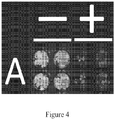
- a selection of mock-treated seedlings were subsequently transplanted to soil (Sunshine mix #1) and the plants were grown under continuous light (100-150 ⁇ M m-2 s-1, 22°-25°C) and seed stocks were harvested from individual plants of the prioritized lines ( Figures 3 and 4 ).
- Homozygous transgenic lines harboring a recombinant polynucleotide encoding a toxic regulatory polypeptide of interest are selected by evaluating the resistance pattern to the herbicide selection.
- the selected seed stocks are subsequently surface sterilized and arrayed into the wells of multi-well (typically 96-well) plates at a density of approximately 3-10 seeds per well using a growth media slurry (50% MS, 0.05% MES, 0.5% sucrose, 0.1% PhytoBlend).
- the seedlings are then germinated and grown under continuous light (90 ⁇ M m-2 s-1, 22°-25°C) for three to six days prior to the addition of dexamethasone (0.1 to 50 ⁇ M final concentration).
- Conditions are identified for each selected line comprised of an inducible toxic gene where the dexamethasone treatment results in induction of the target gene (as assessed by qRT-PCR), but where the induction is insufficient to result in noticeable tissue necrosis, senescence, or growth defects during the course of the assay (1-4 days of subsequent growth).
- Prioritized Arabidopsis toxic genes are used to generate transgenic Setaria (e.g. Setaria viridis ) that express high levels of the transgene constitutively or in a gene-induction system.
- the resulting transgenic lines are surveyed to assess the toxicity of the transgene and the demonstration of cross-species conservation of the herbicidal target pathway.
- a phylogenetic analysis is performed to identify the closest ortholog from a selected monocot species (e.g.
- the protein-encoding nucleotide sequence is cloned and used to generate transgenic Setaria and Arabidopsis that express the transgene either constitutively or using a gene-induction system and the resulting transgenic lines evaluated for the toxic effects of the transgene.
- Example IV Hit compound identification and herbicidal lead composition selection
- Example II Once optimized conditions (dexamethasone application concentration and timing) are identified according to the methods in Example II, a library of compounds is screened to identify compounds that potentiate the target toxic gene resulting in more rapid tissue necrosis than the control (mock-treated) seedlings. Compound hits are subsequently evaluated for herbicidal effects in the absence of induced toxic gene expression and those with herbicidal effects are de-prioritized in favor of those compounds that require the elevated expression of the toxic gene for herbicidal activity.
- Hit compounds are subsequently evaluated for additive or synergistic herbicidal activity. Wild-type seedlings are arrayed in multi-well plates (as described above) and grown for several days prior to the addition of hit compound combinations. Seedling health is evaluated after several additional days of growth to ascertain if specific combinations of hit compounds confer herbicidal activity.
- a hit compound is selected for a subsequent high-throughput screen of chemicals that could act in conjunction with the hit compound to confer herbicidal activity.
- a hit compound is selected for a subsequent high-throughput screen of chemicals that could act in conjunction with the hit compound to confer herbicidal activity.
- only compounds that lack herbicidal activity when applied alone are selected for subsequent evaluation.
- the combination of the hit compound from the first screen and the hit compound from the second screen is considered a lead composition, and subsequent assays are performed to optimize the relative concentrations of both compounds for herbicidal activity.
- Example V Identifying marker genes of the regulatory pathway. Hit compound identification and herbicidal lead composition selection
- Transcriptional profiling studies are performed on identified toxic pathways (see Example I) using a proprietary Affymetrix® GeneChip® array or mRNAseq using the Illumina® GA2 platform. In each experiment, samples from multiple time points post-induction are analyzed to identify marker genes that are induced immediately following target gene expression and those that are persistently expressed at high levels relative to mock-treated control plants.
- Promoter fragments will be amplified for each marker gene and introduced into a proprietary reporter vector, including (but not limited to) the two-component induction system that leverages the LexA:GAL4 synthetic transcriptional activator complex for subsequent activation of the green fluorescent protein (GFP) reporter gene.
- the resulting constructs will be used to transform Arabidopsis to obtain a panel of independent transgenic lines for subsequent characterization.
- the reporter systems that generate sufficient signal-to-noise signals are used for a high-throughput chemical screen. Any known induction conditions (from public or proprietary studies) for the marker gene are used to identify lines with a strong up-regulation of reporter signal following promoter activation.
- protoplasts from candidate reporter lines are isolated and transfected with the upstream toxic regulatory polypeptide to identify candidate lines for further optimization.
- Selected lines for each marker reporter system spanning the prioritized toxic TF pathways will be grown for homozygous bulk seed production and subsequent assay optimization experiments in 96-well plates.
- a pilot high-throughput screen of a library of chemical compounds are performed on the selected reporter lines. Compounds that induce the reporter gene expression but do not significantly inhibit the growth of or kill the wild type Arabidopsis plants are identified.
- Hit compounds are subsequently evaluated for additive or synergistic herbicidal activity. Wild-type seedlings are arrayed in multi-well plates (as described above) and grown for several days prior to the addition of hit compound combinations. Seedling health is evaluated after several additional days of growth to ascertain if specific combinations of hit compounds confer herbicidal activity.
- a hit compound identified from the reporter assay is used in a subsequent high-throughput assay to screen for chemicals that could act in conjunction with the hit compound to confer herbicidal activity.
- a hit compound identified from the reporter assay is used in a subsequent high-throughput assay to screen for chemicals that could act in conjunction with the hit compound to confer herbicidal activity.
- only compounds that lack herbicidal activity when applied alone are selected for subsequent evaluation.
- the combination of the hit compound from the first screen and the hit compound from the second screen is considered a lead composition, and subsequent assays are performed to optimize the relative concentrations of both compounds for herbicidal activity.
- Example VI Screening of a chemical library using a screening assay in a high throughput format
- each of the chemicals from a library purchased from a commercial source is added to 96 well plates containing in each well 5-10 Arabidopsis seeds, which harbor a reporter construct encoding GFP, for instance of the type shown in Figures 1-4 .
- the volume of the media in each well is 250 ⁇ l and the final concentration of the chemical in each well is 28 ⁇ M.
- the seeds are allowed to germinate and grow in the medium.
- the data are normalized based on negative controls in the same plate that are not treated with the chemical for one week and the GFP signal is quantified in a 96 well fluorescent reader (TriStar, Berthold, Oak Ridge, TN).
- An alternative screening method involves the germination and growth of the Arabidopsis seedlings harboring the GFP construct in 96 well plates for 4-7 days prior to the addition of the compound stock solutions.
- the seedlings are exposed to the compound solution for an additional 1-3 days and the GFP signal quantified in a 96 well fluorescent plate reader (TriStar, Berthold, Oak Ridge, TN).
- seeds for all experiments Prior to plating, seeds for all experiments are surface sterilized in the following manner: (1) 5 minute incubation with mixing in 70 % ethanol; (2) 20 minute incubation with mixing in 30% bleach, 0.01% Triton® X-100; (3) five rinses with sterile water. Seeds are resuspended in 0.1% sterile agarose and stratified at 4°C for 2-4 days.
- Sterile stratified wild-type seeds (100 per plate) are sown on square plates containing the following medium: 80% MS solution, 1% sucrose, 0.05% MES, and 0.65% Phytoblend agar. Plates are incubated at 22°C under 24-hour light (100 ⁇ E m-2 s-1) in a germination growth chamber. On day 8, the seedlings are transferred to 6-well assay plates at a density of 10 seedlings per well. The assay plates contained growth medium spiked with a unique test compound or DMSO (carrier solvent, 0.4% v/v) per well. The compound-treated seedlings are incubated at 22°C under 24-hour light (100 ⁇ E m-2 s-1) in a germination growth chamber.
- Sterile seeds (50 per plate) are sown on standard Petri dishes containing the following medium: 80% MS solution, 1% sucrose, 0.05% MES, and 0.65% Phytagar. Plates are incubated at 22°C under 24-hour light (95 ⁇ E m-2 s-1) in a germination growth chamber. On day 8, the seedlings are transferred to square growth plates containing fresh medium (15-25 seedlings per plate) and arranged such that their primary roots are exposed and aligned in parallel along the surface of the plate. The plates are sealed with venting tape and returned to the growth chamber, oriented for vertical growth.
- the plates are sprayed with a 0.01% Spreader Sticker surfactant solution containing the test compound or DMSO (carrier solvent, 0.4% v/v) using a Preval® aerosol sprayer (1.5 mL/plate).
- a Preval® aerosol sprayer 1.5 mL/plate. The plates are re-sealed and returned to the growth chamber (horizontal orientation) for further analysis.
- Embodiment 1 The described method comprises identifying a herbicidally-effective composition that damages or kills a cell of a target plant by:
Landscapes
- Life Sciences & Earth Sciences (AREA)
- Health & Medical Sciences (AREA)
- Engineering & Computer Science (AREA)
- Immunology (AREA)
- Chemical & Material Sciences (AREA)
- General Health & Medical Sciences (AREA)
- Biomedical Technology (AREA)
- Hematology (AREA)
- Molecular Biology (AREA)
- Urology & Nephrology (AREA)
- Botany (AREA)
- Environmental Sciences (AREA)
- Analytical Chemistry (AREA)
- Biotechnology (AREA)
- Medicinal Chemistry (AREA)
- Physics & Mathematics (AREA)
- Microbiology (AREA)
- Biochemistry (AREA)
- Cell Biology (AREA)
- General Physics & Mathematics (AREA)
- Pathology (AREA)
- Food Science & Technology (AREA)
- Pest Control & Pesticides (AREA)
- Plant Pathology (AREA)
- Toxicology (AREA)
- Dentistry (AREA)
- Wood Science & Technology (AREA)
- Zoology (AREA)
- Agronomy & Crop Science (AREA)
- Chemical Kinetics & Catalysis (AREA)
- General Chemical & Material Sciences (AREA)
- Developmental Biology & Embryology (AREA)
- Agricultural Chemicals And Associated Chemicals (AREA)
- Micro-Organisms Or Cultivation Processes Thereof (AREA)
Claims (9)
- Verfahren zum Identifizieren einer herbizid wirksamen Zusammensetzung, die eine Zelle einer Zielpflanze schädigt oder abtötet, wobei das Verfahren Folgendes umfasst:(a) Bereitstellen einer ersten Pflanze und einer zweiten Pflanze der gleichen Pflanzenspezies;(b) Identifizieren eines regulatorischen Pfads, der in der Lage ist, ein Mitglied der Pflanzenspezies zu schädigen oder abzutöten, wenn die Aktivität des regulatorischen Pfads in dem Mitglied der Pflanzenspezies erhöht wird;(c) bedingtes Erhöhen der Aktivität des regulatorischen Pfads durch Transformation mit einem rekombinanten Polynukleotid, das für ein toxisches regulatorisches Polypeptid unter der Kontrolle eines induzierbaren Promoters kodiert, der durch eine chemische oder umgebungsbedingte Behandlung aktiviert werden kann, auf ein Niveau, das in der ersten Pflanze subletal ist, und
wobei, bei Abwesenheit von Aktivierung durch die chemische oder umgebungsbedingte Behandlung, das toxische regulatorische Polypeptid die erste Pflanze nicht abtötet;(d) Identifizieren einer ersten Verbindung, die beim Schädigen oder Abtöten der ersten Pflanze wirksamer ist als bei der zweiten Pflanze, in der die Aktivität des regulatorischen Pfads nicht erhöht ist, wenn die erste Verbindung mit der ersten und zweiten Pflanze in Kontakt gebracht wird; und(e) Identifizieren einer zweiten Verbindung, die,(1) wenn mit der ersten Verbindung in einer aktiven Zusammensetzung kombiniert, in der Lage ist, die zweite Pflanze zu schädigen oder abzutöten, wenn die zweite Pflanze mit der aktiven Zusammensetzung in Kontakt gebracht wird; und(2) wenn mit der zweiten Pflanze in einer Zusammensetzung, der die erste Verbindung fehlt, in Kontakt gebracht, weniger wirksam beim Schädigen oder Abtöten der zweiten Pflanze ist als die aktive Zusammensetzung. - Verfahren nach Anspruch 1, wobei die Pflanze eine schädliche oder unerwünschte Pflanze ist.
- Verfahren nach Anspruch 2, wobei die schädliche oder unerwünschte Pflanze eine monokotyle Pflanze ist.
- Verfahren nach Anspruch 2, wobei die schädliche oder unerwünschte Pflanze eine dikotyle Pflanze ist.
- Verfahren zum Identifizieren einer Verbindung, die die Aktivität eines toxischen regulatorischen Pfads einer Pflanze erhöht, wobei das Verfahren Folgendes umfasst:(a) Identifizieren eines Markergen-Polynukleotids eines regulatorischen Pfads einer Pflanze, wobei der regulatorische Pfad einer Pflanze eine Zielpflanzenzelle schädigen oder abtöten kann und die Expression des Markergens verändert ist, wenn die Aktivität des regulatorischen Pfads erhöht wird;(b) Einführen einer Expressionskassette, umfassend einen funktionellen Teil des Promoterbereichs des Markergens und ein Reportergen-Polynukleotid, in eine Pflanze, um eine transgene Pflanzenzelle zu erzeugen;(c) Auswählen einer oder mehrerer Verbindungen aus einer Bibliothek von Verbindungen, die die Expression des Reportergen-Polynukleotids in der transgenen Pflanzenzelle relativ zu einer Kontrollverbindung verändert, wenn mit der transgenen Pflanzenzelle in Kontakt gebracht, wobei die eine oder mehreren Verbindungen der Zielpflanzenzelle gegenüber nicht herbizid sind, wenn einzeln angewendet;(d) Anwenden von jeder der in Schritt (c) ausgewählten einen oder mehreren Verbindungen auf eine Pflanzenzelle, wobei die Aktivität des regulatorischen Pfads bedingt erhöht worden ist, ohne Letalität zu verursachen; und(e) Identifizieren von mindestens einer Verbindung, die die Pflanzenzelle, in welcher die Aktivität des regulatorischen Pfads bedingt erhöht worden ist, abtötet.
- Verfahren nach Anspruch 5, wobei das Markergen durch genomweites transkriptionales Profiling auf Grundlage seiner veränderten Expression bei der erhöhten Aktivität des regulatorischen Pfads der Pflanze identifiziert wird.
- Verfahren nach Anspruch 5, ferner umfassend die Schritte des:(f) Anwendens einer Kombination von in Schritt (e) identifizierten Verbindungen auf eine Pflanzenzelle;(g) Auswählens einer herbizid wirksam Kombination von Verbindungen, die die Pflanzenzelle synergistisch abtötet.
- Verfahren nach Anspruch 5, wobei eine erste Verbindung in Schritt (e) identifiziert wird, wobei das Verfahren ferner Folgendes umfasst:(f) Identifizieren einer zweiten Verbindung, die eine zweite Pflanzenzelle abtötet, wenn die zweite Pflanzenzelle mit einer aktiven Zusammensetzung, die die erste Verbindung und die zweite Verbindung umfasst, in Kontakt gebracht wird, aber wobei die zweite Verbindung in Abwesenheit der ersten Verbindung die zweite Pflanzenzelle nicht abtötet, wenn die zweite Pflanzenzelle mit der zweiten Verbindung in Kontakt gebracht wird; und(g) Kombinieren der ersten Verbindung und der zweiten Verbindung in einer herbizid wirksamen Zusammensetzung, wobei die erste Verbindung und die zweite Verbindung die herbizide Funktion in der aktiven Zusammensetzung synergistisch bereitstellen.
- Verfahren nach Anspruch 5, ferner umfassend die Schritte des:(f) Auswählens einer Kombination von in Schritt (e) identifizierten Verbindungen, die eine Pflanze, in welcher die Aktivität des regulatorischen Pfads nicht erhöht ist, abtötet.
Applications Claiming Priority (2)
| Application Number | Priority Date | Filing Date | Title |
|---|---|---|---|
| US201261620952P | 2012-04-05 | 2012-04-05 | |
| PCT/US2013/034802 WO2013151929A1 (en) | 2012-04-05 | 2013-04-01 | Herbicidal compound screening |
Publications (3)
| Publication Number | Publication Date |
|---|---|
| EP2833712A1 EP2833712A1 (de) | 2015-02-11 |
| EP2833712A4 EP2833712A4 (de) | 2015-10-21 |
| EP2833712B1 true EP2833712B1 (de) | 2018-06-27 |
Family
ID=49292779
Family Applications (1)
| Application Number | Title | Priority Date | Filing Date |
|---|---|---|---|
| EP13772583.4A Active EP2833712B1 (de) | 2012-04-05 | 2013-04-01 | Screening von herbizidverbindungen |
Country Status (4)
| Country | Link |
|---|---|
| US (1) | US9612235B2 (de) |
| EP (1) | EP2833712B1 (de) |
| ES (1) | ES2686690T3 (de) |
| WO (1) | WO2013151929A1 (de) |
Family Cites Families (39)
| Publication number | Priority date | Publication date | Assignee | Title |
|---|---|---|---|---|
| US5506337A (en) | 1985-03-15 | 1996-04-09 | Antivirals Inc. | Morpholino-subunit combinatorial library and method |
| US4833080A (en) | 1985-12-12 | 1989-05-23 | President And Fellows Of Harvard College | Regulation of eucaryotic gene expression |
| US5614395A (en) | 1988-03-08 | 1997-03-25 | Ciba-Geigy Corporation | Chemically regulatable and anti-pathogenic DNA sequences and uses thereof |
| GB8901673D0 (en) | 1989-01-26 | 1989-03-15 | Ici Plc | Gene switch |
| US5519134A (en) | 1994-01-11 | 1996-05-21 | Isis Pharmaceuticals, Inc. | Pyrrolidine-containing monomers and oligomers |
| US5525735A (en) | 1994-06-22 | 1996-06-11 | Affymax Technologies Nv | Methods for synthesizing diverse collections of pyrrolidine compounds |
| US5549974A (en) | 1994-06-23 | 1996-08-27 | Affymax Technologies Nv | Methods for the solid phase synthesis of thiazolidinones, metathiazanones, and derivatives thereof |
| US5569588A (en) | 1995-08-09 | 1996-10-29 | The Regents Of The University Of California | Methods for drug screening |
| GB9603069D0 (en) | 1996-02-14 | 1996-04-10 | Medical Res Council | Improvements in or relating to gene expression |
| US7598429B2 (en) | 2001-04-18 | 2009-10-06 | Mendel Biotechnology, Inc. | Transcription factor sequences for conferring advantageous properties to plants |
| US20050086718A1 (en) | 1999-03-23 | 2005-04-21 | Mendel Biotechnology, Inc. | Plant transcriptional regulators of abiotic stress |
| US7858848B2 (en) | 1999-11-17 | 2010-12-28 | Mendel Biotechnology Inc. | Transcription factors for increasing yield |
| US7193129B2 (en) | 2001-04-18 | 2007-03-20 | Mendel Biotechnology, Inc. | Stress-related polynucleotides and polypeptides in plants |
| US8030546B2 (en) | 1998-09-22 | 2011-10-04 | Mendel Biotechnology, Inc. | Biotic and abiotic stress tolerance in plants |
| US7345217B2 (en) | 1998-09-22 | 2008-03-18 | Mendel Biotechnology, Inc. | Polynucleotides and polypeptides in plants |
| US7663025B2 (en) | 1999-03-23 | 2010-02-16 | Mendel Biotechnology, Inc. | Plant Transcriptional Regulators |
| US20120137382A1 (en) | 1998-09-22 | 2012-05-31 | Mendel Biotechnology, Inc. | Stress tolerance in plants |
| US8686226B2 (en) | 1999-03-23 | 2014-04-01 | Mendel Biotechnology, Inc. | MYB-related transcriptional regulators that confer altered root hare, trichome morphology, and increased tolerance to abiotic stress in plants |
| US7960612B2 (en) | 1998-09-22 | 2011-06-14 | Mendel Biotechnology, Inc. | Plant quality with various promoters |
| US7511190B2 (en) | 1999-11-17 | 2009-03-31 | Mendel Biotechnology, Inc. | Polynucleotides and polypeptides in plants |
| US7956242B2 (en) | 1998-09-22 | 2011-06-07 | Mendel Biotechnology, Inc. | Plant quality traits |
| US7238860B2 (en) | 2001-04-18 | 2007-07-03 | Mendel Biotechnology, Inc. | Yield-related polynucleotides and polypeptides in plants |
| AU776046B2 (en) | 1998-12-22 | 2004-08-26 | Dow Agrosciences Llc | Transgenic plants and methods for production thereof |
| AU2290900A (en) | 1999-01-15 | 2000-08-01 | Syngenta Participations Ag | Herbicide target gene and methods |
| US9447425B2 (en) | 2000-11-16 | 2016-09-20 | Mendel Biotechnology, Inc. | Transcription factor sequences for conferring advantageous properties to plants |
| US20110138499A1 (en) | 1999-03-23 | 2011-06-09 | Mendel Biotechnology, Inc. | Plant quality traits |
| US8426685B2 (en) | 2001-04-18 | 2013-04-23 | Mendel Biotechnology, Inc. | Yield-related polynucleotides and polypeptides in plants |
| WO2001020020A2 (en) * | 1999-09-10 | 2001-03-22 | Cropdesign N.V. | Method to identify herbicides, fungicides or plant growth regulators |
| AU2002313749A1 (en) | 2001-08-09 | 2003-02-24 | Mendel Biotechnology, Inc. | Biochemistry-related polynucleotides and polypeptides in plants |
| US8426678B2 (en) | 2002-09-18 | 2013-04-23 | Mendel Biotechnology, Inc. | Polynucleotides and polypeptides in plants |
| DE10238434A1 (de) | 2002-08-16 | 2004-04-15 | Metanomics Gmbh & Co. Kgaa | Verfahren zur Identifizierung von Substanzen mit herbizider Wirkung |
| EP3249046B1 (de) | 2002-09-18 | 2020-07-08 | Mendel Biotechnology, Inc. | Polynukleotide und polypeptide in pflanzen |
| US8541665B2 (en) | 2002-09-18 | 2013-09-24 | Mendel Biotechnology, Inc. | Polynucleotides and polypeptides in plants |
| DE602004031862D1 (de) | 2003-11-13 | 2011-04-28 | Mendel Biotechnology Inc | Pflanzliche transkriptionsregulatoren |
| BRPI0513291A (pt) | 2004-07-14 | 2008-05-06 | Mendel Biotechnology Inc | polinucleotìdeos de planta para rendimento e qualidade melhorados |
| AR060563A1 (es) | 2006-04-24 | 2008-06-25 | Mendel Biotechnology Inc | Promotores inducibles por enfermedad |
| US20080301836A1 (en) | 2007-05-17 | 2008-12-04 | Mendel Biotechnology, Inc. | Selection of transcription factor variants |
| AR072383A1 (es) | 2008-06-27 | 2010-08-25 | Mendel Biotechnology Inc | Dominio de activacion potente de la transcripcion identificado en una proteina vegetal |
| WO2011149843A1 (en) | 2010-05-24 | 2011-12-01 | Mendel Biotechnology Inc. | Novel reporter constructs for compound screening |
-
2013
- 2013-03-13 US US13/801,567 patent/US9612235B2/en active Active
- 2013-04-01 ES ES13772583.4T patent/ES2686690T3/es active Active
- 2013-04-01 EP EP13772583.4A patent/EP2833712B1/de active Active
- 2013-04-01 WO PCT/US2013/034802 patent/WO2013151929A1/en not_active Ceased
Non-Patent Citations (1)
| Title |
|---|
| None * |
Also Published As
| Publication number | Publication date |
|---|---|
| US9612235B2 (en) | 2017-04-04 |
| EP2833712A1 (de) | 2015-02-11 |
| US20130267419A1 (en) | 2013-10-10 |
| WO2013151929A1 (en) | 2013-10-10 |
| WO2013151929A9 (en) | 2015-02-26 |
| EP2833712A4 (de) | 2015-10-21 |
| ES2686690T3 (es) | 2018-10-19 |
Similar Documents
| Publication | Publication Date | Title |
|---|---|---|
| Ju et al. | JAZ proteins modulate seed germination through interaction with ABI 5 in bread wheat and Arabidopsis | |
| Song et al. | OsMFT2 is involved in the regulation of ABA signaling‐mediated seed germination through interacting with OsbZIP23/66/72 in rice | |
| Zhao et al. | Jasmonic acid enhances osmotic stress responses by MYC2‐mediated inhibition of protein phosphatase 2C1 and response regulators 26 transcription factor in tomato | |
| Divi et al. | Gene expression and functional analyses in brassinosteroid‐mediated stress tolerance | |
| Jensen et al. | The Hv NAC6 transcription factor: A positive regulator of penetration resistance in barley and Arabidopsis | |
| Harberd et al. | The angiosperm gibberellin-GID1-DELLA growth regulatory mechanism: how an “inhibitor of an inhibitor” enables flexible response to fluctuating environments | |
| Qiu et al. | Over-expression of the stress-induced OsWRKY45 enhances disease resistance and drought tolerance in Arabidopsis | |
| Oh et al. | PIL5, a phytochrome-interacting bHLH protein, regulates gibberellin responsiveness by binding directly to the GAI and RGA promoters in Arabidopsis seeds | |
| Fernández-Calvo et al. | The Arabidopsis bHLH transcription factors MYC3 and MYC4 are targets of JAZ repressors and act additively with MYC2 in the activation of jasmonate responses | |
| Singh et al. | Wheat Brassinosteroid-Insensitive1 (TaBRI1) interacts with members of TaSERK gene family and cause early flowering and seed yield enhancement in Arabidopsis | |
| Sharma et al. | Rice OsiSAP7 negatively regulates ABA stress signalling and imparts sensitivity to water-deficit stress in Arabidopsis | |
| Josse et al. | A DELLA in disguise: SPATULA restrains the growth of the developing Arabidopsis seedling | |
| Dong et al. | ABA-INDUCED expression 1 is involved in ABA-inhibited primary root elongation via modulating ROS homeostasis in Arabidopsis | |
| Bäumler et al. | At ERF# 111/ABR 1 is a transcriptional activator involved in the wounding response | |
| He et al. | The NADPH-oxidase AtRbohI plays a positive role in drought-stress response in Arabidopsis thaliana | |
| Wawrzynska et al. | Powdery mildew resistance conferred by loss of the ENHANCED DISEASE RESISTANCE1 protein kinase is suppressed by a missense mutation in KEEP ON GOING, a regulator of abscisic acid signaling | |
| Jiang et al. | Molecular evolution of plant 14-3-3 proteins and function of Hv14-3-3A in stomatal regulation and drought tolerance | |
| Shanks et al. | The role of cytokinin during infection of Arabidopsis thaliana by the cyst nematode Heterodera schachtii | |
| Jiang et al. | Overexpression of poplar PtrWRKY89 in transgenic Arabidopsis leads to a reduction of disease resistance by regulating defense-related genes in salicylate-and jasmonate-dependent signaling | |
| Zhang et al. | Transcription factor CabHLH035 promotes cold resistance and homeostasis of reactive oxygen species in pepper | |
| Bi et al. | The tomato IQD gene SUN24 regulates seed germination through ABA signaling pathway | |
| Cheng et al. | SlCAND1, encoding cullin-associated Nedd8-dissociated protein 1, regulates plant height, flowering time, seed germination, and root architecture in tomato | |
| US20160201146A1 (en) | Novel reporter constructs for compound screening | |
| Lu et al. | OsOFP9 regulates diverse key traits of rice by integrating multiple plant hormones | |
| Li et al. | The GmPRL1b‐GmST2‐GmAOC3/4 Module Confers Salt Tolerance and Botrytis cinerea Resistance by Inducing Jasmonic Acid Biosynthesis in Soybean |
Legal Events
| Date | Code | Title | Description |
|---|---|---|---|
| PUAI | Public reference made under article 153(3) epc to a published international application that has entered the european phase |
Free format text: ORIGINAL CODE: 0009012 |
|
| 17P | Request for examination filed |
Effective date: 20141023 |
|
| AK | Designated contracting states |
Kind code of ref document: A1 Designated state(s): AL AT BE BG CH CY CZ DE DK EE ES FI FR GB GR HR HU IE IS IT LI LT LU LV MC MK MT NL NO PL PT RO RS SE SI SK SM TR |
|
| AX | Request for extension of the european patent |
Extension state: BA ME |
|
| RA4 | Supplementary search report drawn up and despatched (corrected) |
Effective date: 20150921 |
|
| RIC1 | Information provided on ipc code assigned before grant |
Ipc: A01H 1/00 20060101AFI20150915BHEP |
|
| 17Q | First examination report despatched |
Effective date: 20160630 |
|
| STAA | Information on the status of an ep patent application or granted ep patent |
Free format text: STATUS: EXAMINATION IS IN PROGRESS |
|
| RAP1 | Party data changed (applicant data changed or rights of an application transferred) |
Owner name: KOCH BIOLOGICAL SOLUTIONS, LLC |
|
| REG | Reference to a national code |
Ref country code: DE Ref legal event code: R079 Ref document number: 602013039446 Country of ref document: DE Free format text: PREVIOUS MAIN CLASS: A01H0001000000 Ipc: G01N0033500000 |
|
| GRAP | Despatch of communication of intention to grant a patent |
Free format text: ORIGINAL CODE: EPIDOSNIGR1 |
|
| STAA | Information on the status of an ep patent application or granted ep patent |
Free format text: STATUS: GRANT OF PATENT IS INTENDED |
|
| RIC1 | Information provided on ipc code assigned before grant |
Ipc: G01N 33/50 20060101AFI20171214BHEP |
|
| INTG | Intention to grant announced |
Effective date: 20180117 |
|
| GRAS | Grant fee paid |
Free format text: ORIGINAL CODE: EPIDOSNIGR3 |
|
| GRAA | (expected) grant |
Free format text: ORIGINAL CODE: 0009210 |
|
| STAA | Information on the status of an ep patent application or granted ep patent |
Free format text: STATUS: THE PATENT HAS BEEN GRANTED |
|
| AK | Designated contracting states |
Kind code of ref document: B1 Designated state(s): AL AT BE BG CH CY CZ DE DK EE ES FI FR GB GR HR HU IE IS IT LI LT LU LV MC MK MT NL NO PL PT RO RS SE SI SK SM TR |
|
| AX | Request for extension of the european patent |
Extension state: BA ME |
|
| REG | Reference to a national code |
Ref country code: GB Ref legal event code: FG4D |
|
| REG | Reference to a national code |
Ref country code: AT Ref legal event code: REF Ref document number: 1012776 Country of ref document: AT Kind code of ref document: T Effective date: 20180715 |
|
| REG | Reference to a national code |
Ref country code: IE Ref legal event code: FG4D |
|
| REG | Reference to a national code |
Ref country code: DE Ref legal event code: R096 Ref document number: 602013039446 Country of ref document: DE |
|
| REG | Reference to a national code |
Ref country code: NL Ref legal event code: FP |
|
| REG | Reference to a national code |
Ref country code: ES Ref legal event code: FG2A Ref document number: 2686690 Country of ref document: ES Kind code of ref document: T3 Effective date: 20181019 |
|
| PG25 | Lapsed in a contracting state [announced via postgrant information from national office to epo] |
Ref country code: LT Free format text: LAPSE BECAUSE OF FAILURE TO SUBMIT A TRANSLATION OF THE DESCRIPTION OR TO PAY THE FEE WITHIN THE PRESCRIBED TIME-LIMIT Effective date: 20180627 Ref country code: NO Free format text: LAPSE BECAUSE OF FAILURE TO SUBMIT A TRANSLATION OF THE DESCRIPTION OR TO PAY THE FEE WITHIN THE PRESCRIBED TIME-LIMIT Effective date: 20180927 Ref country code: SE Free format text: LAPSE BECAUSE OF FAILURE TO SUBMIT A TRANSLATION OF THE DESCRIPTION OR TO PAY THE FEE WITHIN THE PRESCRIBED TIME-LIMIT Effective date: 20180627 Ref country code: BG Free format text: LAPSE BECAUSE OF FAILURE TO SUBMIT A TRANSLATION OF THE DESCRIPTION OR TO PAY THE FEE WITHIN THE PRESCRIBED TIME-LIMIT Effective date: 20180927 Ref country code: FI Free format text: LAPSE BECAUSE OF FAILURE TO SUBMIT A TRANSLATION OF THE DESCRIPTION OR TO PAY THE FEE WITHIN THE PRESCRIBED TIME-LIMIT Effective date: 20180627 |
|
| REG | Reference to a national code |
Ref country code: LT Ref legal event code: MG4D |
|
| PG25 | Lapsed in a contracting state [announced via postgrant information from national office to epo] |
Ref country code: LV Free format text: LAPSE BECAUSE OF FAILURE TO SUBMIT A TRANSLATION OF THE DESCRIPTION OR TO PAY THE FEE WITHIN THE PRESCRIBED TIME-LIMIT Effective date: 20180627 Ref country code: HR Free format text: LAPSE BECAUSE OF FAILURE TO SUBMIT A TRANSLATION OF THE DESCRIPTION OR TO PAY THE FEE WITHIN THE PRESCRIBED TIME-LIMIT Effective date: 20180627 Ref country code: GR Free format text: LAPSE BECAUSE OF FAILURE TO SUBMIT A TRANSLATION OF THE DESCRIPTION OR TO PAY THE FEE WITHIN THE PRESCRIBED TIME-LIMIT Effective date: 20180928 Ref country code: RS Free format text: LAPSE BECAUSE OF FAILURE TO SUBMIT A TRANSLATION OF THE DESCRIPTION OR TO PAY THE FEE WITHIN THE PRESCRIBED TIME-LIMIT Effective date: 20180627 |
|
| REG | Reference to a national code |
Ref country code: AT Ref legal event code: MK05 Ref document number: 1012776 Country of ref document: AT Kind code of ref document: T Effective date: 20180627 |
|
| PG25 | Lapsed in a contracting state [announced via postgrant information from national office to epo] |
Ref country code: IS Free format text: LAPSE BECAUSE OF FAILURE TO SUBMIT A TRANSLATION OF THE DESCRIPTION OR TO PAY THE FEE WITHIN THE PRESCRIBED TIME-LIMIT Effective date: 20181027 Ref country code: AT Free format text: LAPSE BECAUSE OF FAILURE TO SUBMIT A TRANSLATION OF THE DESCRIPTION OR TO PAY THE FEE WITHIN THE PRESCRIBED TIME-LIMIT Effective date: 20180627 Ref country code: EE Free format text: LAPSE BECAUSE OF FAILURE TO SUBMIT A TRANSLATION OF THE DESCRIPTION OR TO PAY THE FEE WITHIN THE PRESCRIBED TIME-LIMIT Effective date: 20180627 Ref country code: PL Free format text: LAPSE BECAUSE OF FAILURE TO SUBMIT A TRANSLATION OF THE DESCRIPTION OR TO PAY THE FEE WITHIN THE PRESCRIBED TIME-LIMIT Effective date: 20180627 Ref country code: CZ Free format text: LAPSE BECAUSE OF FAILURE TO SUBMIT A TRANSLATION OF THE DESCRIPTION OR TO PAY THE FEE WITHIN THE PRESCRIBED TIME-LIMIT Effective date: 20180627 Ref country code: SK Free format text: LAPSE BECAUSE OF FAILURE TO SUBMIT A TRANSLATION OF THE DESCRIPTION OR TO PAY THE FEE WITHIN THE PRESCRIBED TIME-LIMIT Effective date: 20180627 Ref country code: RO Free format text: LAPSE BECAUSE OF FAILURE TO SUBMIT A TRANSLATION OF THE DESCRIPTION OR TO PAY THE FEE WITHIN THE PRESCRIBED TIME-LIMIT Effective date: 20180627 |
|
| PG25 | Lapsed in a contracting state [announced via postgrant information from national office to epo] |
Ref country code: SM Free format text: LAPSE BECAUSE OF FAILURE TO SUBMIT A TRANSLATION OF THE DESCRIPTION OR TO PAY THE FEE WITHIN THE PRESCRIBED TIME-LIMIT Effective date: 20180627 |
|
| REG | Reference to a national code |
Ref country code: DE Ref legal event code: R097 Ref document number: 602013039446 Country of ref document: DE |
|
| PLBE | No opposition filed within time limit |
Free format text: ORIGINAL CODE: 0009261 |
|
| STAA | Information on the status of an ep patent application or granted ep patent |
Free format text: STATUS: NO OPPOSITION FILED WITHIN TIME LIMIT |
|
| PG25 | Lapsed in a contracting state [announced via postgrant information from national office to epo] |
Ref country code: DK Free format text: LAPSE BECAUSE OF FAILURE TO SUBMIT A TRANSLATION OF THE DESCRIPTION OR TO PAY THE FEE WITHIN THE PRESCRIBED TIME-LIMIT Effective date: 20180627 |
|
| 26N | No opposition filed |
Effective date: 20190328 |
|
| PG25 | Lapsed in a contracting state [announced via postgrant information from national office to epo] |
Ref country code: SI Free format text: LAPSE BECAUSE OF FAILURE TO SUBMIT A TRANSLATION OF THE DESCRIPTION OR TO PAY THE FEE WITHIN THE PRESCRIBED TIME-LIMIT Effective date: 20180627 |
|
| PG25 | Lapsed in a contracting state [announced via postgrant information from national office to epo] |
Ref country code: AL Free format text: LAPSE BECAUSE OF FAILURE TO SUBMIT A TRANSLATION OF THE DESCRIPTION OR TO PAY THE FEE WITHIN THE PRESCRIBED TIME-LIMIT Effective date: 20180627 |
|
| PG25 | Lapsed in a contracting state [announced via postgrant information from national office to epo] |
Ref country code: MC Free format text: LAPSE BECAUSE OF FAILURE TO SUBMIT A TRANSLATION OF THE DESCRIPTION OR TO PAY THE FEE WITHIN THE PRESCRIBED TIME-LIMIT Effective date: 20180627 Ref country code: LU Free format text: LAPSE BECAUSE OF NON-PAYMENT OF DUE FEES Effective date: 20190401 |
|
| PG25 | Lapsed in a contracting state [announced via postgrant information from national office to epo] |
Ref country code: TR Free format text: LAPSE BECAUSE OF FAILURE TO SUBMIT A TRANSLATION OF THE DESCRIPTION OR TO PAY THE FEE WITHIN THE PRESCRIBED TIME-LIMIT Effective date: 20180627 |
|
| PG25 | Lapsed in a contracting state [announced via postgrant information from national office to epo] |
Ref country code: PT Free format text: LAPSE BECAUSE OF FAILURE TO SUBMIT A TRANSLATION OF THE DESCRIPTION OR TO PAY THE FEE WITHIN THE PRESCRIBED TIME-LIMIT Effective date: 20181029 |
|
| PG25 | Lapsed in a contracting state [announced via postgrant information from national office to epo] |
Ref country code: CY Free format text: LAPSE BECAUSE OF FAILURE TO SUBMIT A TRANSLATION OF THE DESCRIPTION OR TO PAY THE FEE WITHIN THE PRESCRIBED TIME-LIMIT Effective date: 20180627 |
|
| PG25 | Lapsed in a contracting state [announced via postgrant information from national office to epo] |
Ref country code: HU Free format text: LAPSE BECAUSE OF FAILURE TO SUBMIT A TRANSLATION OF THE DESCRIPTION OR TO PAY THE FEE WITHIN THE PRESCRIBED TIME-LIMIT; INVALID AB INITIO Effective date: 20130401 Ref country code: MT Free format text: LAPSE BECAUSE OF FAILURE TO SUBMIT A TRANSLATION OF THE DESCRIPTION OR TO PAY THE FEE WITHIN THE PRESCRIBED TIME-LIMIT Effective date: 20180627 |
|
| REG | Reference to a national code |
Ref country code: DE Ref legal event code: R081 Ref document number: 602013039446 Country of ref document: DE Owner name: PLANT RESPONSE, INC., DURHAM, US Free format text: FORMER OWNER: KOCH BIOLOGICAL SOLUTIONS, LLC, HAYWARD, CALIF., US |
|
| PG25 | Lapsed in a contracting state [announced via postgrant information from national office to epo] |
Ref country code: MK Free format text: LAPSE BECAUSE OF FAILURE TO SUBMIT A TRANSLATION OF THE DESCRIPTION OR TO PAY THE FEE WITHIN THE PRESCRIBED TIME-LIMIT Effective date: 20180627 |
|
| REG | Reference to a national code |
Ref country code: BE Ref legal event code: PD Owner name: PLANT RESPONSE, INC.; US Free format text: DETAILS ASSIGNMENT: CHANGE OF OWNER(S), ASSIGNMENT; FORMER OWNER NAME: KOCH BIOLOGICAL SOLUTIONS, LLC Effective date: 20220902 |
|
| REG | Reference to a national code |
Ref country code: ES Ref legal event code: PC2A Owner name: PLANT RESPONSE, INC. Effective date: 20230315 |
|
| P01 | Opt-out of the competence of the unified patent court (upc) registered |
Effective date: 20230516 |
|
| PGFP | Annual fee paid to national office [announced via postgrant information from national office to epo] |
Ref country code: GB Payment date: 20250327 Year of fee payment: 13 |
|
| PGFP | Annual fee paid to national office [announced via postgrant information from national office to epo] |
Ref country code: NL Payment date: 20250409 Year of fee payment: 13 |
|
| PGFP | Annual fee paid to national office [announced via postgrant information from national office to epo] |
Ref country code: DE Payment date: 20250402 Year of fee payment: 13 |
|
| PGFP | Annual fee paid to national office [announced via postgrant information from national office to epo] |
Ref country code: ES Payment date: 20250508 Year of fee payment: 13 |
|
| PGFP | Annual fee paid to national office [announced via postgrant information from national office to epo] |
Ref country code: BE Payment date: 20250410 Year of fee payment: 13 Ref country code: IT Payment date: 20250422 Year of fee payment: 13 |
|
| PGFP | Annual fee paid to national office [announced via postgrant information from national office to epo] |
Ref country code: FR Payment date: 20250401 Year of fee payment: 13 |
|
| PGFP | Annual fee paid to national office [announced via postgrant information from national office to epo] |
Ref country code: CH Payment date: 20250501 Year of fee payment: 13 |
|
| PGFP | Annual fee paid to national office [announced via postgrant information from national office to epo] |
Ref country code: IE Payment date: 20250402 Year of fee payment: 13 |