EP2828434B1 - Process for preparing scalenohedral precipitated calcium carbonate - Google Patents
Process for preparing scalenohedral precipitated calcium carbonate Download PDFInfo
- Publication number
- EP2828434B1 EP2828434B1 EP13764704.6A EP13764704A EP2828434B1 EP 2828434 B1 EP2828434 B1 EP 2828434B1 EP 13764704 A EP13764704 A EP 13764704A EP 2828434 B1 EP2828434 B1 EP 2828434B1
- Authority
- EP
- European Patent Office
- Prior art keywords
- pcc
- process according
- slaked lime
- calcium carbonate
- carbonation
- Prior art date
- Legal status (The legal status is an assumption and is not a legal conclusion. Google has not performed a legal analysis and makes no representation as to the accuracy of the status listed.)
- Not-in-force
Links
- VTYYLEPIZMXCLO-UHFFFAOYSA-L Calcium carbonate Chemical compound [Ca+2].[O-]C([O-])=O VTYYLEPIZMXCLO-UHFFFAOYSA-L 0.000 title claims description 157
- 229940088417 precipitated calcium carbonate Drugs 0.000 title claims description 104
- 238000004519 manufacturing process Methods 0.000 title claims description 8
- 239000002245 particle Substances 0.000 claims description 47
- CURLTUGMZLYLDI-UHFFFAOYSA-N Carbon dioxide Chemical compound O=C=O CURLTUGMZLYLDI-UHFFFAOYSA-N 0.000 claims description 44
- 239000000920 calcium hydroxide Substances 0.000 claims description 41
- AXCZMVOFGPJBDE-UHFFFAOYSA-L calcium dihydroxide Chemical compound [OH-].[OH-].[Ca+2] AXCZMVOFGPJBDE-UHFFFAOYSA-L 0.000 claims description 40
- 235000011116 calcium hydroxide Nutrition 0.000 claims description 39
- 229910001861 calcium hydroxide Inorganic materials 0.000 claims description 39
- 238000000034 method Methods 0.000 claims description 38
- 239000001569 carbon dioxide Substances 0.000 claims description 25
- 229910002092 carbon dioxide Inorganic materials 0.000 claims description 25
- 238000006243 chemical reaction Methods 0.000 claims description 22
- ODINCKMPIJJUCX-UHFFFAOYSA-N Calcium oxide Chemical compound [Ca]=O ODINCKMPIJJUCX-UHFFFAOYSA-N 0.000 claims description 21
- 239000000292 calcium oxide Substances 0.000 claims description 11
- 235000012255 calcium oxide Nutrition 0.000 claims description 11
- 239000000654 additive Substances 0.000 claims description 10
- 238000000227 grinding Methods 0.000 claims description 9
- 239000007787 solid Substances 0.000 claims description 9
- 238000013019 agitation Methods 0.000 claims description 7
- 238000001816 cooling Methods 0.000 claims description 6
- 239000006185 dispersion Substances 0.000 claims description 4
- 238000010438 heat treatment Methods 0.000 claims description 4
- 238000012216 screening Methods 0.000 claims description 4
- 238000002156 mixing Methods 0.000 claims description 2
- 239000002002 slurry Substances 0.000 description 24
- 239000000123 paper Substances 0.000 description 23
- 229910000019 calcium carbonate Inorganic materials 0.000 description 22
- 238000012360 testing method Methods 0.000 description 18
- 239000000945 filler Substances 0.000 description 12
- 239000013078 crystal Substances 0.000 description 11
- 238000005119 centrifugation Methods 0.000 description 10
- XLYOFNOQVPJJNP-UHFFFAOYSA-N water Substances O XLYOFNOQVPJJNP-UHFFFAOYSA-N 0.000 description 7
- 229910021532 Calcite Inorganic materials 0.000 description 6
- 238000012545 processing Methods 0.000 description 6
- 238000009826 distribution Methods 0.000 description 5
- 238000001035 drying Methods 0.000 description 5
- 239000007789 gas Substances 0.000 description 5
- 229910052500 inorganic mineral Inorganic materials 0.000 description 5
- 239000000463 material Substances 0.000 description 5
- 235000010755 mineral Nutrition 0.000 description 5
- 239000011707 mineral Substances 0.000 description 5
- 235000019738 Limestone Nutrition 0.000 description 4
- YNAVUWVOSKDBBP-UHFFFAOYSA-N Morpholine Chemical compound C1COCCN1 YNAVUWVOSKDBBP-UHFFFAOYSA-N 0.000 description 4
- ISWSIDIOOBJBQZ-UHFFFAOYSA-N Phenol Chemical compound OC1=CC=CC=C1 ISWSIDIOOBJBQZ-UHFFFAOYSA-N 0.000 description 4
- 238000001354 calcination Methods 0.000 description 4
- 239000011248 coating agent Substances 0.000 description 4
- 238000000576 coating method Methods 0.000 description 4
- 150000002016 disaccharides Chemical class 0.000 description 4
- 239000008246 gaseous mixture Substances 0.000 description 4
- 239000006028 limestone Substances 0.000 description 4
- 238000005259 measurement Methods 0.000 description 4
- 238000001556 precipitation Methods 0.000 description 4
- BVKZGUZCCUSVTD-UHFFFAOYSA-L Carbonate Chemical compound [O-]C([O-])=O BVKZGUZCCUSVTD-UHFFFAOYSA-L 0.000 description 3
- 239000000203 mixture Substances 0.000 description 3
- 150000002772 monosaccharides Chemical class 0.000 description 3
- 239000003973 paint Substances 0.000 description 3
- 239000000049 pigment Substances 0.000 description 3
- 239000004033 plastic Substances 0.000 description 3
- 229920003023 plastic Polymers 0.000 description 3
- BFSVOASYOCHEOV-UHFFFAOYSA-N 2-diethylaminoethanol Chemical compound CCN(CC)CCO BFSVOASYOCHEOV-UHFFFAOYSA-N 0.000 description 2
- IJGRMHOSHXDMSA-UHFFFAOYSA-N Atomic nitrogen Chemical compound N#N IJGRMHOSHXDMSA-UHFFFAOYSA-N 0.000 description 2
- OYPRJOBELJOOCE-UHFFFAOYSA-N Calcium Chemical compound [Ca] OYPRJOBELJOOCE-UHFFFAOYSA-N 0.000 description 2
- 235000008733 Citrus aurantifolia Nutrition 0.000 description 2
- FBPFZTCFMRRESA-KVTDHHQDSA-N D-Mannitol Chemical compound OC[C@@H](O)[C@@H](O)[C@H](O)[C@H](O)CO FBPFZTCFMRRESA-KVTDHHQDSA-N 0.000 description 2
- LFQSCWFLJHTTHZ-UHFFFAOYSA-N Ethanol Chemical compound CCO LFQSCWFLJHTTHZ-UHFFFAOYSA-N 0.000 description 2
- DGAQECJNVWCQMB-PUAWFVPOSA-M Ilexoside XXIX Chemical compound C[C@@H]1CC[C@@]2(CC[C@@]3(C(=CC[C@H]4[C@]3(CC[C@@H]5[C@@]4(CC[C@@H](C5(C)C)OS(=O)(=O)[O-])C)C)[C@@H]2[C@]1(C)O)C)C(=O)O[C@H]6[C@@H]([C@H]([C@@H]([C@H](O6)CO)O)O)O.[Na+] DGAQECJNVWCQMB-PUAWFVPOSA-M 0.000 description 2
- 229930195725 Mannitol Natural products 0.000 description 2
- FSVCELGFZIQNCK-UHFFFAOYSA-N N,N-bis(2-hydroxyethyl)glycine Chemical compound OCCN(CCO)CC(O)=O FSVCELGFZIQNCK-UHFFFAOYSA-N 0.000 description 2
- AKNUHUCEWALCOI-UHFFFAOYSA-N N-ethyldiethanolamine Chemical compound OCCN(CC)CCO AKNUHUCEWALCOI-UHFFFAOYSA-N 0.000 description 2
- CDBYLPFSWZWCQE-UHFFFAOYSA-L Sodium Carbonate Chemical compound [Na+].[Na+].[O-]C([O-])=O CDBYLPFSWZWCQE-UHFFFAOYSA-L 0.000 description 2
- CZMRCDWAGMRECN-UGDNZRGBSA-N Sucrose Chemical compound O[C@H]1[C@H](O)[C@@H](CO)O[C@@]1(CO)O[C@@H]1[C@H](O)[C@@H](O)[C@H](O)[C@@H](CO)O1 CZMRCDWAGMRECN-UGDNZRGBSA-N 0.000 description 2
- 229930006000 Sucrose Natural products 0.000 description 2
- 235000011941 Tilia x europaea Nutrition 0.000 description 2
- GSEJCLTVZPLZKY-UHFFFAOYSA-N Triethanolamine Chemical compound OCCN(CCO)CCO GSEJCLTVZPLZKY-UHFFFAOYSA-N 0.000 description 2
- SLINHMUFWFWBMU-UHFFFAOYSA-N Triisopropanolamine Chemical compound CC(O)CN(CC(C)O)CC(C)O SLINHMUFWFWBMU-UHFFFAOYSA-N 0.000 description 2
- 239000002253 acid Substances 0.000 description 2
- 230000000996 additive effect Effects 0.000 description 2
- 239000007900 aqueous suspension Substances 0.000 description 2
- 239000007998 bicine buffer Substances 0.000 description 2
- 239000011575 calcium Substances 0.000 description 2
- 229910052791 calcium Inorganic materials 0.000 description 2
- 239000003153 chemical reaction reagent Substances 0.000 description 2
- 238000002485 combustion reaction Methods 0.000 description 2
- 230000000052 comparative effect Effects 0.000 description 2
- ZBCBWPMODOFKDW-UHFFFAOYSA-N diethanolamine Chemical compound OCCNCCO ZBCBWPMODOFKDW-UHFFFAOYSA-N 0.000 description 2
- 239000003814 drug Substances 0.000 description 2
- 230000000694 effects Effects 0.000 description 2
- 150000004676 glycans Chemical class 0.000 description 2
- 239000004571 lime Substances 0.000 description 2
- 239000007788 liquid Substances 0.000 description 2
- 239000000594 mannitol Substances 0.000 description 2
- 235000010355 mannitol Nutrition 0.000 description 2
- 229920001282 polysaccharide Polymers 0.000 description 2
- 239000005017 polysaccharide Substances 0.000 description 2
- 238000002360 preparation method Methods 0.000 description 2
- 238000007639 printing Methods 0.000 description 2
- 150000003839 salts Chemical class 0.000 description 2
- 238000004062 sedimentation Methods 0.000 description 2
- 239000011734 sodium Substances 0.000 description 2
- 229910052708 sodium Inorganic materials 0.000 description 2
- 239000007921 spray Substances 0.000 description 2
- 239000005720 sucrose Substances 0.000 description 2
- 235000000346 sugar Nutrition 0.000 description 2
- 150000005846 sugar alcohols Polymers 0.000 description 2
- 238000001238 wet grinding Methods 0.000 description 2
- 239000002023 wood Substances 0.000 description 2
- OWEGMIWEEQEYGQ-UHFFFAOYSA-N 100676-05-9 Natural products OC1C(O)C(O)C(CO)OC1OCC1C(O)C(O)C(O)C(OC2C(OC(O)C(O)C2O)CO)O1 OWEGMIWEEQEYGQ-UHFFFAOYSA-N 0.000 description 1
- SMZOUWXMTYCWNB-UHFFFAOYSA-N 2-(2-methoxy-5-methylphenyl)ethanamine Chemical compound COC1=CC=C(C)C=C1CCN SMZOUWXMTYCWNB-UHFFFAOYSA-N 0.000 description 1
- NIXOWILDQLNWCW-UHFFFAOYSA-N 2-Propenoic acid Natural products OC(=O)C=C NIXOWILDQLNWCW-UHFFFAOYSA-N 0.000 description 1
- GUBGYTABKSRVRQ-XLOQQCSPSA-N Alpha-Lactose Chemical compound O[C@@H]1[C@@H](O)[C@@H](O)[C@@H](CO)O[C@H]1O[C@@H]1[C@@H](CO)O[C@H](O)[C@H](O)[C@H]1O GUBGYTABKSRVRQ-XLOQQCSPSA-N 0.000 description 1
- UXVMQQNJUSDDNG-UHFFFAOYSA-L Calcium chloride Chemical compound [Cl-].[Cl-].[Ca+2] UXVMQQNJUSDDNG-UHFFFAOYSA-L 0.000 description 1
- UGFAIRIUMAVXCW-UHFFFAOYSA-N Carbon monoxide Chemical compound [O+]#[C-] UGFAIRIUMAVXCW-UHFFFAOYSA-N 0.000 description 1
- 235000014653 Carica parviflora Nutrition 0.000 description 1
- 241000243321 Cnidaria Species 0.000 description 1
- 239000004606 Fillers/Extenders Substances 0.000 description 1
- 229930091371 Fructose Natural products 0.000 description 1
- 239000005715 Fructose Substances 0.000 description 1
- RFSUNEUAIZKAJO-ARQDHWQXSA-N Fructose Chemical compound OC[C@H]1O[C@](O)(CO)[C@@H](O)[C@@H]1O RFSUNEUAIZKAJO-ARQDHWQXSA-N 0.000 description 1
- WQZGKKKJIJFFOK-GASJEMHNSA-N Glucose Natural products OC[C@H]1OC(O)[C@H](O)[C@@H](O)[C@@H]1O WQZGKKKJIJFFOK-GASJEMHNSA-N 0.000 description 1
- 229920002527 Glycogen Polymers 0.000 description 1
- GUBGYTABKSRVRQ-QKKXKWKRSA-N Lactose Natural products OC[C@H]1O[C@@H](O[C@H]2[C@H](O)[C@@H](O)C(O)O[C@@H]2CO)[C@H](O)[C@@H](O)[C@H]1O GUBGYTABKSRVRQ-QKKXKWKRSA-N 0.000 description 1
- FYYHWMGAXLPEAU-UHFFFAOYSA-N Magnesium Chemical compound [Mg] FYYHWMGAXLPEAU-UHFFFAOYSA-N 0.000 description 1
- GUBGYTABKSRVRQ-PICCSMPSSA-N Maltose Natural products O[C@@H]1[C@@H](O)[C@H](O)[C@@H](CO)O[C@@H]1O[C@@H]1[C@@H](CO)OC(O)[C@H](O)[C@H]1O GUBGYTABKSRVRQ-PICCSMPSSA-N 0.000 description 1
- 241001465754 Metazoa Species 0.000 description 1
- 229920002472 Starch Polymers 0.000 description 1
- 239000000853 adhesive Substances 0.000 description 1
- 230000001070 adhesive effect Effects 0.000 description 1
- 239000003513 alkali Substances 0.000 description 1
- 238000004458 analytical method Methods 0.000 description 1
- 239000007864 aqueous solution Substances 0.000 description 1
- 238000000149 argon plasma sintering Methods 0.000 description 1
- 238000005452 bending Methods 0.000 description 1
- WQZGKKKJIJFFOK-VFUOTHLCSA-N beta-D-glucose Chemical compound OC[C@H]1O[C@@H](O)[C@H](O)[C@@H](O)[C@@H]1O WQZGKKKJIJFFOK-VFUOTHLCSA-N 0.000 description 1
- GUBGYTABKSRVRQ-QUYVBRFLSA-N beta-maltose Chemical compound OC[C@H]1O[C@H](O[C@H]2[C@H](O)[C@@H](O)[C@H](O)O[C@@H]2CO)[C@H](O)[C@@H](O)[C@@H]1O GUBGYTABKSRVRQ-QUYVBRFLSA-N 0.000 description 1
- 239000000872 buffer Substances 0.000 description 1
- 239000001110 calcium chloride Substances 0.000 description 1
- 229910001628 calcium chloride Inorganic materials 0.000 description 1
- 150000001720 carbohydrates Chemical class 0.000 description 1
- 235000014633 carbohydrates Nutrition 0.000 description 1
- 229910001748 carbonate mineral Inorganic materials 0.000 description 1
- 239000001913 cellulose Substances 0.000 description 1
- 229920002678 cellulose Polymers 0.000 description 1
- 239000003795 chemical substances by application Substances 0.000 description 1
- 230000003750 conditioning effect Effects 0.000 description 1
- 229920001577 copolymer Polymers 0.000 description 1
- 230000007812 deficiency Effects 0.000 description 1
- 238000011161 development Methods 0.000 description 1
- 239000002270 dispersing agent Substances 0.000 description 1
- 239000010459 dolomite Substances 0.000 description 1
- 229910000514 dolomite Inorganic materials 0.000 description 1
- 229940079593 drug Drugs 0.000 description 1
- 235000019441 ethanol Nutrition 0.000 description 1
- 238000000855 fermentation Methods 0.000 description 1
- 230000004151 fermentation Effects 0.000 description 1
- 239000000835 fiber Substances 0.000 description 1
- 239000003546 flue gas Substances 0.000 description 1
- 238000009472 formulation Methods 0.000 description 1
- 239000008103 glucose Substances 0.000 description 1
- 229940096919 glycogen Drugs 0.000 description 1
- 239000011121 hardwood Substances 0.000 description 1
- 239000000976 ink Substances 0.000 description 1
- 239000008101 lactose Substances 0.000 description 1
- 239000011777 magnesium Substances 0.000 description 1
- 229910052749 magnesium Inorganic materials 0.000 description 1
- 239000004579 marble Substances 0.000 description 1
- 239000004570 mortar (masonry) Substances 0.000 description 1
- 229910052757 nitrogen Inorganic materials 0.000 description 1
- 238000007645 offset printing Methods 0.000 description 1
- 229920001495 poly(sodium acrylate) polymer Polymers 0.000 description 1
- 229920000058 polyacrylate Polymers 0.000 description 1
- 239000011541 reaction mixture Substances 0.000 description 1
- 239000000565 sealant Substances 0.000 description 1
- 235000021309 simple sugar Nutrition 0.000 description 1
- 229910000029 sodium carbonate Inorganic materials 0.000 description 1
- FQENQNTWSFEDLI-UHFFFAOYSA-J sodium diphosphate Chemical compound [Na+].[Na+].[Na+].[Na+].[O-]P([O-])(=O)OP([O-])([O-])=O FQENQNTWSFEDLI-UHFFFAOYSA-J 0.000 description 1
- NNMHYFLPFNGQFZ-UHFFFAOYSA-M sodium polyacrylate Chemical compound [Na+].[O-]C(=O)C=C NNMHYFLPFNGQFZ-UHFFFAOYSA-M 0.000 description 1
- 239000011122 softwood Substances 0.000 description 1
- 239000000243 solution Substances 0.000 description 1
- 239000008107 starch Substances 0.000 description 1
- 235000019698 starch Nutrition 0.000 description 1
- 238000003860 storage Methods 0.000 description 1
- 239000002699 waste material Substances 0.000 description 1
Images


Classifications
-
- C—CHEMISTRY; METALLURGY
- C01—INORGANIC CHEMISTRY
- C01F—COMPOUNDS OF THE METALS BERYLLIUM, MAGNESIUM, ALUMINIUM, CALCIUM, STRONTIUM, BARIUM, RADIUM, THORIUM, OR OF THE RARE-EARTH METALS
- C01F11/00—Compounds of calcium, strontium, or barium
- C01F11/18—Carbonates
- C01F11/181—Preparation of calcium carbonate by carbonation of aqueous solutions and characterised by control of the carbonation conditions
-
- C—CHEMISTRY; METALLURGY
- C01—INORGANIC CHEMISTRY
- C01F—COMPOUNDS OF THE METALS BERYLLIUM, MAGNESIUM, ALUMINIUM, CALCIUM, STRONTIUM, BARIUM, RADIUM, THORIUM, OR OF THE RARE-EARTH METALS
- C01F11/00—Compounds of calcium, strontium, or barium
- C01F11/18—Carbonates
-
- D—TEXTILES; PAPER
- D21—PAPER-MAKING; PRODUCTION OF CELLULOSE
- D21H—PULP COMPOSITIONS; PREPARATION THEREOF NOT COVERED BY SUBCLASSES D21C OR D21D; IMPREGNATING OR COATING OF PAPER; TREATMENT OF FINISHED PAPER NOT COVERED BY CLASS B31 OR SUBCLASS D21G; PAPER NOT OTHERWISE PROVIDED FOR
- D21H17/00—Non-fibrous material added to the pulp, characterised by its constitution; Paper-impregnating material characterised by its constitution
- D21H17/63—Inorganic compounds
- D21H17/67—Water-insoluble compounds, e.g. fillers, pigments
- D21H17/675—Oxides, hydroxides or carbonates
-
- D—TEXTILES; PAPER
- D21—PAPER-MAKING; PRODUCTION OF CELLULOSE
- D21H—PULP COMPOSITIONS; PREPARATION THEREOF NOT COVERED BY SUBCLASSES D21C OR D21D; IMPREGNATING OR COATING OF PAPER; TREATMENT OF FINISHED PAPER NOT COVERED BY CLASS B31 OR SUBCLASS D21G; PAPER NOT OTHERWISE PROVIDED FOR
- D21H19/00—Coated paper; Coating material
- D21H19/36—Coatings with pigments
- D21H19/38—Coatings with pigments characterised by the pigments
- D21H19/385—Oxides, hydroxides or carbonates
-
- C—CHEMISTRY; METALLURGY
- C01—INORGANIC CHEMISTRY
- C01P—INDEXING SCHEME RELATING TO STRUCTURAL AND PHYSICAL ASPECTS OF SOLID INORGANIC COMPOUNDS
- C01P2004/00—Particle morphology
- C01P2004/01—Particle morphology depicted by an image
- C01P2004/03—Particle morphology depicted by an image obtained by SEM
-
- C—CHEMISTRY; METALLURGY
- C01—INORGANIC CHEMISTRY
- C01P—INDEXING SCHEME RELATING TO STRUCTURAL AND PHYSICAL ASPECTS OF SOLID INORGANIC COMPOUNDS
- C01P2004/00—Particle morphology
- C01P2004/30—Particle morphology extending in three dimensions
- C01P2004/39—Particle morphology extending in three dimensions parallelepiped-like
-
- C—CHEMISTRY; METALLURGY
- C01—INORGANIC CHEMISTRY
- C01P—INDEXING SCHEME RELATING TO STRUCTURAL AND PHYSICAL ASPECTS OF SOLID INORGANIC COMPOUNDS
- C01P2004/00—Particle morphology
- C01P2004/51—Particles with a specific particle size distribution
- C01P2004/52—Particles with a specific particle size distribution highly monodisperse size distribution
-
- C—CHEMISTRY; METALLURGY
- C01—INORGANIC CHEMISTRY
- C01P—INDEXING SCHEME RELATING TO STRUCTURAL AND PHYSICAL ASPECTS OF SOLID INORGANIC COMPOUNDS
- C01P2004/00—Particle morphology
- C01P2004/60—Particles characterised by their size
- C01P2004/61—Micrometer sized, i.e. from 1-100 micrometer
-
- C—CHEMISTRY; METALLURGY
- C01—INORGANIC CHEMISTRY
- C01P—INDEXING SCHEME RELATING TO STRUCTURAL AND PHYSICAL ASPECTS OF SOLID INORGANIC COMPOUNDS
- C01P2006/00—Physical properties of inorganic compounds
- C01P2006/12—Surface area
Definitions
- the present invention relates to a method for producing a precipitated calcium carbonate and, in particular, a precipitated calcium carbonate product in substantially scalenohedral form.
- Ground natural calcium carbonate in the meaning of the present invention is a calcium carbonate obtained from natural sources including marble, chalk or limestone or dolomite.
- Calcite is a carbonate mineral and the most stable polymorph of calcium carbonate.
- the other polymorphs of calcium carbonate are the minerals aragonite and vaterite. Aragonite will change to calcite at 380-470°C, and vaterite is even less stable.
- Ground calcium carbonate is processed through a treatment such as grinding, screening and/or fractionizing by wet and/or dry, for example, by a cyclone. It is known to the skilled person that ground calcium carbonate can inherently contain a defined concentration of magnesium, such as it is the case for dolomitic limestone.
- Precipitated calcium carbonate in the meaning of the present invention is a synthesized material, generally obtained by precipitation following the reaction of carbon dioxide and lime in an aqueous environment or by precipitation of a calcium and carbonate source in water or by precipitation of calcium and carbonate ions, for example CaCl 2 and Na 2 CO 3 , out of solution.
- Precipitated calcium carbonate exists in three primary crystalline forms: calcite, aragonite and vaterite, and there are many different polymorphs (crystal habits) for each of these crystalline forms.
- Prior art processes for producing scalenohedral PCC product typically rely on the use of additives such as monosaccharides (e.g, simple sugars such as fructose, glucose), disaccharides (e.g., sucrose, maltose, lactose), polysaccharides (e.g, starch, cellulose, glycogen), triethanolamine, mannitol, diethanolamine, bicine, morpholine, tri-isopropanolamine, N-ethyl diethanolamine, N,N-diethylethanolamine, sodium boroheptonate, or reagents including a polyhydric alcohol or a polyhydric phenol, during the slaking of the quick lime or prior to carbonation (see, e.g., U.S. Patent Nos. 6,294,143 , 5,232,678 and 5,558,850 ).
- additives such as monosaccharides (e.g, simple sugars such as fructose, glucose), disaccharides (e
- the duration of the reaction may vary but is typically about 5 to 15 minutes.
- the solids content of the slurry is typically about 10 to 20 wt.-% solids, and preferably 12 to 18 wt.-% solids. It is within the confines of the present invention that additional water may be introduced during the slaking reaction in order to control and/or maintain and/or achieve the desired solids concentration.
- the calcium hydroxide slurry or slaked lime is not subjected to agitation during the carbonation reaction as is done in conventional processes for preparing PCC.
- "without agitation” means the agitator of the reactor is turned off. The absence of agitation is believed to slow the reaction and the development of the PCC scalenohedral crystal.
- the carbonation is conducted in the absence of any additives.
- absence of any additives means the absence of any additives that may be added prior to or during carbonation, including additives that may be added during the slaking of the quick lime or the resulting calcium hydroxide slurry.
- the carbon dioxide is present in the range of 8 to about 99% by volume, and preferably in the range of 10 to 25% by volume, for example 20% by volume.
- the CO 2 is obtained from an external source, and is more preferably captured from the calcination of the crushed calcium carbonate.
- the carbonation reaction is conducted at an initial temperature of 54.44°C (130°F) to 71.11°C (160°F), preferably at an initial temperature of 57.22°C (135°F) to 62.78°C (145°F).
- the medium particle size of the calcium carbonate can be controlled by adjusting the starting temperature upwards or downwards 0.56-1.11°C (1-2 °F).
- the reaction desirably precedes until all or substantially all of the calcium hydroxide or slaked lime has been converted into calcium carbonate slurry. In the preferred embodiment, the reaction is stopped when the conductivity of the reaction mixture increases.
- the resulting PCC product preferably contains 85% or more scalenohedral particles, and more preferably 90% or more scalenohedral particles, and most preferably 95% or more scalenohedral particles.
- the resulting PCC product also preferably has a medium particle size ( d 50 ) of 2.0 to 3.0 microns, and more preferably a medium particle size ( d 50 ) of 2.2 to 2.8 microns, and most preferably a medium particle size ( d 50 ) of 2.5 microns.
- the "particle size" of a calcium carbonate product is described by its distribution of particle sizes.
- the value d x represents the diameter relative to which x % by weight of the particles have diameters less than d x . This means that the d 20 value is the particle size at which 20 wt.-% of all particles are smaller, and the d 75 value is the particle size at which 75 wt.-% of all particles are smaller.
- the d 50 value is thus the weight median particle size, i.e. 50 wt.-% of all grains are bigger or smaller than this particle size.
- the particle size is specified as weight median particle size d 50 unless indicated otherwise.
- a Sedigraph 5100 device from the company Micromeritics, USA can be used.
- Drying may take place using any suitable drying equipment and can, for example, include thermal drying and/or drying at reduced pressure using equipment such as an evaporator, a flash drier, an oven, a spray drier (such as a spray drier sold by Niro and/or Nara), and/or drying in a vacuum chamber. Dispersants also can be included to prepare dispersions if desired.
- the PCC product produced according to the present invention is believed to result in higher gloss and improved opacity.
- the PCC according to the present invention was prepared as in Example 1 with the following differences. First, the slaked lime was not pumped through a heat exchanger to cool the slurry. Second, sugar was not added to the slaked lime. Third, the carbonation reaction was performed with the agitators turned off. The product prepared by this process had a medium particle size ( d 50 ) of 2.5 micron, a BET specific surface area of 4.7 m 2 /g, and a d 75 / d 25 of 1.5.
- Tensile Strength This test measured the maximum tensile strength developed at rupture, and more specifically, the force per unit width required to break a paper sample. This test used the Instron Testing System (Model #1011)(Instron Corporation, Massachusetts) in accordance with Tappi T-498 om-88.
Landscapes
- Chemical & Material Sciences (AREA)
- Organic Chemistry (AREA)
- Inorganic Chemistry (AREA)
- Life Sciences & Earth Sciences (AREA)
- Geology (AREA)
- Compounds Of Alkaline-Earth Elements, Aluminum Or Rare-Earth Metals (AREA)
- Pigments, Carbon Blacks, Or Wood Stains (AREA)
- Paper (AREA)
Description
- The present invention relates to a method for producing a precipitated calcium carbonate and, in particular, a precipitated calcium carbonate product in substantially scalenohedral form.
- In recent years calcium carbonate has found a wide array of uses across many fields. For example, calcium carbonate is one of the most widely used minerals in the paper, plastic, paint and coating industries both as a filler and, due to its white color, as a coating pigment. In the paper industry calcium carbonate is valued for its high brightness, opacity and gloss and is commonly used as a filler to make bright opaque paper. In addition, calcium carbonate is frequently used as an extender in paints and is also used as a filler in adhesives, sealants and plastics. High grade calcium carbonate has also found uses in formulations of pharmaceuticals.
- Calcium carbonate is known to exist as natural occurring minerals as well as a synthetically produced products.
- "Ground natural calcium carbonate (GNCC)" in the meaning of the present invention is a calcium carbonate obtained from natural sources including marble, chalk or limestone or dolomite. Calcite is a carbonate mineral and the most stable polymorph of calcium carbonate. The other polymorphs of calcium carbonate are the minerals aragonite and vaterite. Aragonite will change to calcite at 380-470°C, and vaterite is even less stable. Ground calcium carbonate is processed through a treatment such as grinding, screening and/or fractionizing by wet and/or dry, for example, by a cyclone. It is known to the skilled person that ground calcium carbonate can inherently contain a defined concentration of magnesium, such as it is the case for dolomitic limestone.
- "Precipitated calcium carbonate (PCC)" in the meaning of the present invention is a synthesized material, generally obtained by precipitation following the reaction of carbon dioxide and lime in an aqueous environment or by precipitation of a calcium and carbonate source in water or by precipitation of calcium and carbonate ions, for example CaCl2 and Na2CO3, out of solution. Precipitated calcium carbonate exists in three primary crystalline forms: calcite, aragonite and vaterite, and there are many different polymorphs (crystal habits) for each of these crystalline forms. Calcite has a trigonal structure with typical crystal habits such as scalenohedral (S-PCC), rhombohedral (R-PCC), hexagonal prismatic, pinacoidal, colloidal (C-PCC), cubic, and prismatic (P-PCC). Aragonite is an orthorhombic structure with typical crystal habits of twinned hexagonal prismatic crystals, as well as a diverse assortment of thin elongated prismatic, curved bladed, steep pyramidal, chisel shaped crystals, branching tree, and coral or worm-like forms.
- Among these forms, the scalenohedral form of calcite is particularly desirable for use as a bulking pigment in the paper industry because it is relatively inexpensive to produce and it has desirable light scattering properties.
- Generally, one way to produce calcium carbonate commercially is by calcining crude limestone to obtain quicklime. Water is then added to yield an aqueous suspension of calcium hydroxide ("milk of lime"), and carbon dioxide is reintroduced into this slurry to precipitate the calcium carbonate. The product of this process is known as precipitated calcium carbonate ("PCC"). The resulting aqueous suspension, or slurry, of calcium carbonate may be used as is or further processed (e.g., dewatered, grinded, etc.) to form a dry product. The precipitation reaction is capable of producing each of the three polymorphs (calcite, aragonite and vaterite) depending on the exact reaction conditions used.
- Prior art processes for producing scalenohedral PCC product typically rely on the use of additives such as monosaccharides (e.g, simple sugars such as fructose, glucose), disaccharides (e.g., sucrose, maltose, lactose), polysaccharides (e.g, starch, cellulose, glycogen), triethanolamine, mannitol, diethanolamine, bicine, morpholine, tri-isopropanolamine, N-ethyl diethanolamine, N,N-diethylethanolamine, sodium boroheptonate, or reagents including a polyhydric alcohol or a polyhydric phenol, during the slaking of the quick lime or prior to carbonation (see, e.g.,
U.S. Patent Nos. 6,294,143 ,5,232,678 and5,558,850 ). - Conventional processes for preparing scalenohedral PCC also typically cool the slaked lime before carbonation (see, e.g.,
U.S. Patent Nos. 3,320,026 and6,251,356 ). - In addition, conventional processes for preparing scalenohedral PCC utilize agitation during carbonation (see, e.g.,
U.S. Patent Nos. 3,320,026 ,5,232,678 ,5,342,600 ,5,558,850 and6,251,356 ). - In the manufacture of paper, and particularly woodfree paper, there is a desirability of increasing the filler content to achieve higher bulk, and at the same time, increasing the stiffness of the produced/obtained paper. However, one of the downsides of conventional scalenohedral PCC is that it may not be as strong as required in the manufacture of paper, and particularly uncoated woodfree paper. Accordingly, there exists a need for a low cost process for producing precipitated PCC in the scalenohedral form that is stronger than conventional scalenohedral PCC, that permits an increase in the filler content and density without sacrificing stiffness or bulk of the produced paper.
- The present invention provides a process for producing low cost precipitated PCC in the scalenohedral form that has a stronger resistance of the PCC clusters/crystals during processing (i.e. lesser tendency to form discrete PCC particles), and leads to improved stiffness and/or bulk in woodfree paper applications than conventional scalenohedral PCC. In its general form, the present invention accomplishes these requirements by utilizing a two stage manufacturing process. The first stage includes the step of slaking quick lime to obtain slaked lime. The second stage includes the step of subjecting the slaked lime, without agitation, without prior cooling in a heat exchanger, and in the absence of any additives and at an initial temperature of 54.44°C (130°F) to 71.11°C (160°F), to carbonation with carbon dioxide gas to produce PCC, wherein the carbon dioxide is introduced into the reactor containing the slaked lime and wherein the agitator of the reactor is turned off.
- As will be discussed in the examples below, the product of this two stage process overcomes the deficiencies of prior PCC production processes and results in a scalenohedral PCC product that has a stronger resistance of the PCC clusters/crystals during processing (i.e. lesser tendency to form discrete PCC particles), and leads to improved stiffness and/or bulk in woodfree paper applications than conventional scalenohedral PCC.
- Additional objects of the invention will be apparent from the description which follows.
-
-
Figure 1 represents a graph of the particle size distribution comparing the PCC prepared in accordance with the conventional process (old) with the PCC prepared in accordance with the present invention (new) both before and after centrifugation (after CF). -
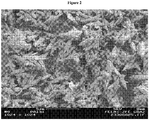
Figure 2 represents an SEM photograph taken of the PCC prepared in accordance with the present invention before centrifugation. -
Figure 3 represents an SEM photograph taken of the PCC prepared in accordance with the present invention after centrifugation. - In accordance with the present invention, a precipitated calcium carbonate product is prepared in a two-stage process. In the first stage, quick lime (CaO) is slaked in water to obtain a calcium hydroxide (Ca(OH)2) slurry, or milk of lime. This reaction is shown in reaction (1) and preferably takes place in a slaker tank:
(1) CaO + H2O → Ca(OH)2 + heat
- The source of quick lime (CaO) used in the slaking reaction is preferably obtained by subjecting crushed limestone to heat (calcination) to form lime (CaO) and carbon dioxide (CO2). The reaction is preferably performed at an initial temperature of about 29.44°C (85°F) to 48.89°C (120°F), and preferably 35°C (95°F) to 43.33°C (110°F). Since the reaction is exothermic, the temperature typically raises to 82.22°C (180°F) to 98.89°c (210°F), and preferably to 90.56°C (195°F) to 96.11°C (205°F). The reaction also is desirably performed with mixing or agitation. The duration of the reaction may vary but is typically about 5 to 15 minutes. The solids content of the slurry is typically about 10 to 20 wt.-% solids, and preferably 12 to 18 wt.-% solids. It is within the confines of the present invention that additional water may be introduced during the slaking reaction in order to control and/or maintain and/or achieve the desired solids concentration.
- The calcium hydroxide slurry or slaked lime from the slaking reaction may then be screened if desired in order to remove oversize particles. A suitable screen can include, for example, a screen having an about 30-50 mesh screen size. The calcium hydroxide slurry or slaked lime may then be transferred to an intermediate tank if desired. As a result of air cooling, the temperature of the calcium hydroxide slurry or slaked lime is then reduced by about 4.44°C (40°F) to 21.11°C (70°F), and more preferably about 15.56°C (60°F), resulting in slurry temperature of 51.67°C (125°F) to 73.89°C (165°F), and preferably 57.22°C (135°F) to 68.33°C (155°F). However, contrary to conventional processes for preparing PCC, the calcium hydroxide slurry or slaked lime is not subjected to cooling in a heating exchanger prior to carbonation. In this regard, conventional processes for preparing PCC typically cool the calcium hydroxide slurry or slaked lime to 32.22°C (90°F) to 48.89°C (120°F) in a heating exchanger prior to carbonation.
- In the second stage, the calcium hydroxide slurry or slaked lime is then subjected to carbonation with carbon dioxide gas to produce PCC. This carbonation step is shown in reaction (2), and takes place in a reactor:
(2) Ca(OH)2 + CO2 → CaCO3 + H2O + heat
- Contrary to conventional processes, the calcium hydroxide slurry or slaked lime is not subjected to agitation during the carbonation reaction as is done in conventional processes for preparing PCC. As used herewith, "without agitation" means the agitator of the reactor is turned off. The absence of agitation is believed to slow the reaction and the development of the PCC scalenohedral crystal.
- In addition, contrary to methods for preparing PCC in the prior art, the carbonation is conducted in the absence of any additives. As used herein, the "absence of any additives" means the absence of any additives that may be added prior to or during carbonation, including additives that may be added during the slaking of the quick lime or the resulting calcium hydroxide slurry. Such additives include, for example, a carbohydrate, a monosaccharide, a disaccharide, a polysaccharide, triethanolamine, mannitol, diethanolamine, bicine, morpholine, tri-isopropanolamine, N-ethyl diethanolamine, N,N-diethylethanolamine, sodium boroheptonate, or reagents including a polyhydric alcohol or a polyhydric phenol, or any mixture thereof. Preferably, the absence of any additive means the absence of a monosaccharide or a disaccharide, and most preferably, the absence of any additive means the absence of a disaccharide (e.g., sucrose).
- In accordance with the present invention, the carbon dioxide (CO2) is selected from gaseous carbon dioxide, liquid carbon dioxide, solid carbon dioxide or a gaseous mixture of carbon dioxide and at least one other gas, and is preferably gaseous carbon dioxide. When the CO2 is a gaseous mixture of carbon dioxide and at least one other gas, then the gaseous mixture is a carbon dioxide containing flue gas exhausted from industrial processes like combustion processes or calcination processed or alike. CO2 can also be produced by reacting an alkali- and/or earth alkali carbonate with acid. Furthermore, it can be produced by the combustion of organics, such as ethyl alcohol, wood and the like, or by fermentation. When a gaseous mixture of carbon dioxide and at least one other gas is used, then the carbon dioxide is present in the range of 8 to about 99% by volume, and preferably in the range of 10 to 25% by volume, for example 20% by volume. Preferably, the CO2 is obtained from an external source, and is more preferably captured from the calcination of the crushed calcium carbonate. The carbonation reaction is conducted at an initial temperature of 54.44°C (130°F) to 71.11°C (160°F), preferably at an initial temperature of 57.22°C (135°F) to 62.78°C (145°F). The medium particle size of the calcium carbonate can be controlled by adjusting the starting temperature upwards or downwards 0.56-1.11°C (1-2 °F). The reaction desirably precedes until all or substantially all of the calcium hydroxide or slaked lime has been converted into calcium carbonate slurry. In the preferred embodiment, the reaction is stopped when the conductivity of the reaction mixture increases.
- The PCC slurry obtained from the carbonation reaction is then isolated. This is preferably accomplished by transferring the PCC slurry to a holding tank. The PCC slurry may then be subjected to additional processing steps, including, for example, screening, dewatering, dispersion and/or grinding steps to obtain a PCC product having desired characteristics. In the preferred embodiment, the PCC slurry is passed through one or more screens in order to remove larger particles. In the more preferred embodiment, the PCC slurry is passed through a screen to separate particles >45 microns or particles >75 microns.
- The resulting PCC product preferably contains 85% or more scalenohedral particles, and more preferably 90% or more scalenohedral particles, and most preferably 95% or more scalenohedral particles.
- The resulting PCC product also preferably has a medium particle size (d 50) of 2.0 to 3.0 microns, and more preferably a medium particle size (d 50) of 2.2 to 2.8 microns, and most preferably a medium particle size (d 50) of 2.5 microns. Throughout the present application, the "particle size" of a calcium carbonate product is described by its distribution of particle sizes. The value dx represents the diameter relative to which x % by weight of the particles have diameters less than d x. This means that the d 20 value is the particle size at which 20 wt.-% of all particles are smaller, and the d 75 value is the particle size at which 75 wt.-% of all particles are smaller. The d 50 value is thus the weight median particle size, i.e. 50 wt.-% of all grains are bigger or smaller than this particle size. For the purpose of the present invention the particle size is specified as weight median particle size d 50 unless indicated otherwise. For determining the weight median particle size d 50 value for particles having a d 50 greater than 0.5 µm, a
Sedigraph 5100 device from the company Micromeritics, USA can be used. - The resulting PCC product also preferably has a BET surface area of 4.0 to 7.0 m2/g.
- The PCC product obtained in accordance with the process of the present invention has a stronger resistance of the PCC clusters/crystals during processing (i.e. lesser tendency to form discrete PCC particles), and leads to improved stiffness and/or bulk in woodfree paper applications than PCC products prepared using conventional processes.
- If the PCC is subjected to dewatering, dispersion and/or grinding steps, these steps may be accomplished by procedures known in the art. With respect to grinding, the PCC product may be dry ground and/or wet ground. Wet grinding refers to grinding the PCC in a liquid medium (e.g., slurry). Wet grinding may be carried out in the absence of a grinding aid or in the presence of a grinding aid. One or more grinding agents can be included, such as, e.g., sodium polyacrylate, a salt of polyacrylate acid, and/or a salt of a copolymer of acrylic acid. Drying may take place using any suitable drying equipment and can, for example, include thermal drying and/or drying at reduced pressure using equipment such as an evaporator, a flash drier, an oven, a spray drier (such as a spray drier sold by Niro and/or Nara), and/or drying in a vacuum chamber. Dispersants also can be included to prepare dispersions if desired.
- The PCC product produced according to the present invention may be used in various materials in which it is desirable to use calcium carbonate as a filler. For example, the scalenohedral PCC product produced according to the present invention may be used in the pharmaceutical field with products such as medicines, in human or animal foodstuffs, in the papermaking field as a filler or in the coating of paper, in water-based or non-water-based paints, in plastics, or in printing inks (e.g., offset printing, rotogravure printing). Preferably, the PCC product produced according to the present invention is used as a filler in paper, and more preferably as a filler in uncoated woodfree paper. In this regard, the PCC product produced according to the present invention offers an improvement over conventional PCC in uncoated wood free paper, by allowing better bulk (+ 5-10%), higher opacity and stiffness than conventional PCC.
- When used in the coating of paper, the PCC product produced according to the present invention is believed to result in higher gloss and improved opacity.
- The present invention is described in the following examples which are set forth to aid in the understanding of the invention, and should not be construed to limit in any way the invention as defined in the claims which follow.
- Particle size distribution (mass % particles with a diameter <X) and weight medium diameter (d 50 ) of mineral material. In all of the following examples, the weight median diameter and the particle size distribution characteristics of the mineral material were determined via the sedimentation method, i.e. an analysis of sedimentation behavior in a gravimetric field. The measurement was made using a
Sedigraph™ 5100 of Micromeritics Instrument Corporation. - The method and the instrument are known to the skilled person and are commonly used to determine grain size of fillers and pigments. The measurement was carried out in an aqueous solution of 0.1 wt.-% Na4P2O7. The samples were dispersed using a high speed stirrer and supersonics.
- Specific Surface Area (SSA) of a material. The specific surface area was measured via the BET (Brunauer, Emmett, Teller) method according to ISO 9277 using nitrogen, following conditioning of the sample by heating at 250°C (482°F) for a period of 30 minutes. Prior to such measurements, the sample was filtered, rinsed and dried at 90 to 100°C (194 to 212°F) in an oven for at least 12 hours before being broken down in a mortar with a pestle, and then placed in a mass balance at 130°C (266°F) until a constant weight was observed.
- Conventional PCC was prepared as follows. First, burnt lime was reacted with water at a temperature of about 85 to 98.89°C (185 to 210°F) in a slaker to obtain slaked lime. Next, course grits were separated from the slaked lime and dumped to waste. The slaked lime was then collected in a buffer tank and pumped through a heat exchanger to cool the slurry, and then into an intermediate tank. Thereafter, sugar was added to the slaked lime. The cooled slaked lime was then transferred to a reactor set at an initial temperature of >57.22°C (135 °F). Carbon dioxide from the host paper mill's lime kiln was then introduced into the bottom of the reactor with the agitators turned on to convert the slaked lime into calcium carbonate slurry. The calcium carbonate slurry was then screened to remove particles >45 microns, and resulting product was then pumped into a storage tank. Two products were prepared using this process by varying the carbonation start temperature. One product had a medium particle size (d 50) of a 2.5 micron, a BET specific surface area of 4.9 m2/g, and a d 75/d 25 of 1.49. The other product had a medium particle size (d 50) of 2.9 micron, a BET specific surface area of 3.8 m2/g, and a d 75/d 25 of 1.44.
- The PCC according to the present invention was prepared as in Example 1 with the following differences. First, the slaked lime was not pumped through a heat exchanger to cool the slurry. Second, sugar was not added to the slaked lime. Third, the carbonation reaction was performed with the agitators turned off. The product prepared by this process had a medium particle size (d 50) of 2.5 micron, a BET specific surface area of 4.7 m2/g, and a d 75/d 25 of 1.5.
- The conventional PCC from Example 1 and the PCC according to the present invention from Example 2 were used to prepare handsheets for further testing. More specifically, the handsheets were prepared by first combining 80% hardwood pulp with 20% softwood pulp to achieve a 100% pulp mix. Hanksheets were then made using 80% of the pulp and 20% of either the conventional PCC or the PCC according to the present invention. The handsheets were then subjected to the following tests.
- Gurley porosity. This test measured the time for a 100 cc of air to pass through a paper sample, and used a Gurley-Hill Porosity Meter (Model 4190)(Gurley Precision Instruments, New York) in accordance with Tappi T460 om-96.
- Scott Bond test. This test measured the internal fiber bond strength of paper, and gave an indication of expected performance of the strength in the Z direction. This test was performed with the Scott Internal Bond Tester (Model # B, version AV-2)(Huygen Corporation, Illinois) in accordance with Tappi T569.
- Taber Stiffness. This tests evaluated the stiffness and resilency of paper, and used a Tabler V-5 Stiffness Tester (Model # 150B) (Teledyne/Taber Inc., New York) in accordance with Tappi T-543 pm-84.
- Tensile Strength. This test measured the maximum tensile strength developed at rupture, and more specifically, the force per unit width required to break a paper sample. This test used the Instron Testing System (Model #1011)(Instron Corporation, Massachusetts) in accordance with Tappi T-498 om-88.
- The results of the testing are presented in Table 1. As can be seen, a handsheet prepared from the PCC according to the present invention had improved stiffness (as determined using the Scott Bond test, the Tabor stiffness test, and tensile strength test) at a higher buck density than handsheets prepared from the conventional PCC products.
Table 1 - PCC Handsheet Testing Comparative Example 1 (2.5 mps) Comparative Example 1 (2.9 mps) PCC according to invention Example 2 Basis weight Basis weight g/m2 72.0 71.9 72.2 Basis weight lb/3300 ft2 48.8 48.6 48.8 Brightness R457 TAPPI % 88.5 89.5 89.4 Standard deviation 0.2 0.3 0.2 Caliper Thickness Thousandths of inch 5.00 4.70 4.60 Thickness cm 0.0127 0.0119 0.0117 Standard deviation 0.20 0.10 0.10 Specific Volume cm3/g 1.76 1.66 1.62 Bulk density g/cm3 0.57 0.60 0.62 Filler Filler content % 21.30 21.50 19.90 Gurley Porosity Porosity s 3.9 5.1 4.7 Standard deviation 0.2 0.6 0.5 Opacity Opacity % 88.3 89.6 88.4 Standard deviation 0.7 0.3 0.3 Corrected opacity % 88.7 90.0 88.8 Scott Bond Scott Bond ft-lb/in2 64 61 78 Scott Bond kJ/m2 134.5 128.2 163.9 Standard deviation 5 7 3 Taber Stiffness Bending resist 15° TU 1.91 2.23 2.33 Standard deviation 0.31 0.28 0.26 Tensile strength Tensile strength lbs/in 8.0 8.4 9.8 Tensile strength N/m 1401 1471 1716 Standard deviation 0.3 0.2 0.4 Breaking length km 1.98 2.09 2.42 Tensile index Nm/g 19.4 20.5 23.7 - The PCC prepared by the conventional process ("old PCC") and the PCC prepared by the process of the present invention ("new PCC") were subjected to a resistance test involving centrifugation, which subjects the PCC to stress forces due to centrifugal effect and the shear effect generated by the differential speed of the rotor. The parameters of the testing were as follows:
Batch size: 500 Liter Time operation ∼ 60 minutes centrifuge type, model: KHD Humboldt SC01 cone angle: 10° drum diameter: 268 mm pool depth: 168 mm rot. speed: 4450 min-1 diff. rot speed: 41 min-1 feed rate: 400 1/h motor nominal current: 28 A motor nominal power: 15 kW - The particle size distribution was determined for the old PCC and the new PCC, both before and after centrifugation. The results are shown in Table 2 below and in
Figure 1 . As shown in Table 2 andFigure 1 , the new PCC generated less fines than the old PCC after being subjected to centrifugation. For example, as a result of centrifugation, the old PCC generated an increase of 56% of particles having a dp < 2µm, while the new PCC generated an increase of 48.9% of particles having a dp < 2 µm. For dp < 1.5 µm, the old PCC generated an increase of 34.6% of particles having a dp < 1.5 µm, while the new PCC generated an increase of 27.8% of particles having a dp < 1.5 µm. For dp < 1.0 µm, the old PCC generated an increase of 13% of particles having a having a dp < 1µm, while the new PCC generated an increase of 10.1% particles having a dp < 1 µm. The reduction in fines for the new PCC in comparison to the old PCC as a result of centrifugation demonstrates that the new PCC has a stronger resistance of the PCC clusters/crystals during processing than the old PCC.Table 2 - PSD Measurements Mass% < dp 0.2 0.3 0.4 0.5 0.6 0.8 1 1.5 2 3 4 5 6 8 10 S270 "old" 0.3 0.1 0.9 4 12.2 24.2 64.4 89.9 97.4 99.1 99.6 99.5 S 270 "old" (after CF)1.2 1.6 2.6 3.6 7.1 13 34.6 56 88.7 97.4 99.1 99.3 99.4 99.5 5270 "new" 0.5 1.6 3.4 4.9 12.2 24.9 69.2 91.9 98 99.3 99.2 99.1 S270 "new" (after CF) 0.6 1.2 2.5 3.2 4 6.2 10.1 27.8 48.2 85.5 96.6 98.9 99.6 99.8 99.9 - In addition, SEM photographs of the new PCC before and after centrifugation are shown in
Figures 2 and3 , respectively. Samples before and after centrifugation look qualitatively the same, i.e. no observable reduction of the particle size. Therefore, it can be concluded that the PCC product produced according to the present invention has a stronger resistance of the PCC clusters/crystals to the conditions experienced during processing. - While the foregoing invention has been described in detail for the purposed of clarity and understanding, it will be appreciated by one skilled in the art from a reading of the disclosure that various changes in form and detail can be made without departing from the true scope of the invention in the appended claims. All changes that come within the meaning and range of equivalency of the claims are therefore intended to be embraced therein.
Claims (15)
- A process for preparing precipitated calcium carbonate (PCC) comprising the steps of:(a) slaking quick lime to obtain slaked lime; and(b) subjecting the slaked lime, without prior cooling in a heat exchanger and at an initial temperature of 54. 44°C (130°F) to 71.11°C (160°F) and in the absence of any additives, to carbonation with carbon dioxide gas in a reactor to produce PCC, wherein the carbon dioxide is introduced into the reactor containing the slaked lime and wherein the agitator of the reactor is turned off.
- The process according to Claim 1, wherein step (a) is performed at an initial temperature of 29.44°C (85°F) to 48.89°C (120°F), preferably at an initial temperature of 35°C (95°F) to 43.33°C (110°F).
- The process according to any one of Claims 1-2, wherein the temperature of the reaction in step (a) raises to 82.22°C (180°F) to 98.89°C (210°F), preferably to 90.56°C (195°F) to 96.11°C (205°F).
- The process according to any one of Claim 1-3, wherein (a) is performed with mixing or agitation.
- The process according to any one of Claims 1-4, wherein slaked lime obtained in step (a) has a solids content of 10 to 20% solids, preferably has a solids content of 12 to 18% solids.
- The process according to any one of Claims 1-5, which further comprises subjecting the slaked lime obtained in step (a) to screening.
- The process according to any one of Claims 1-6, wherein as a result of air cooling, the temperature of the slaked lime obtained in step (a) is reduced by 4.44°C (40°F) to 21.11°C (70°F), prior to carbonation in step (b).
- The process according to any one of Claims 1-7, wherein the slaked lime obtained in step (a) is not subjected to cooling in a heating exchanger prior to carbonation in step (b).
- The process according to any one of Claims 1-8, wherein the carbonation reaction in step (b) is conducted at an initial temperature of 57.22°C (135°F) to 62.78°C (145°F).
- The process according to any one of Claims 1-9, wherein the PCC obtained in step (b) is isolated.
- The process according to any one of Claims 1-10, wherein the PCC obtained in step (b) is subjected to screening, dewatering, dispersion and/or grinding steps to obtain a PCC product.
- The process according to any one of Claims 1-11, wherein the PCC obtained in step (b) is passed through one or more screens to obtain a PCC product.
- The process according to Claim 11 or 12, wherein the PCC product contains 85% or more scalenohedral particles, preferably contains 90% or more scalenohedral particles, more preferably contains 95% or more scalenohedral particles.
- The process according to Claim 11 or 12, wherein the PCC product has a medium particle size (d 50) of 2.0 to 3.0 microns, preferably of 2.2 to 2.8 microns.
- The process according to Claim 11 or 12, wherein PCC product has a BET surface area of 4.0 to 7.0 m2/g.
Priority Applications (2)
| Application Number | Priority Date | Filing Date | Title |
|---|---|---|---|
| PL13764704T PL2828434T3 (en) | 2012-03-23 | 2013-03-19 | Process for preparing scalenohedral precipitated calcium carbonate |
| EP13764704.6A EP2828434B1 (en) | 2012-03-23 | 2013-03-19 | Process for preparing scalenohedral precipitated calcium carbonate |
Applications Claiming Priority (4)
| Application Number | Priority Date | Filing Date | Title |
|---|---|---|---|
| US201261614644P | 2012-03-23 | 2012-03-23 | |
| EP12164041 | 2012-04-13 | ||
| EP13764704.6A EP2828434B1 (en) | 2012-03-23 | 2013-03-19 | Process for preparing scalenohedral precipitated calcium carbonate |
| PCT/US2013/032923 WO2013142473A1 (en) | 2012-03-23 | 2013-03-19 | Process for preparing scalenohedral precipitated calcium carbonate |
Publications (3)
| Publication Number | Publication Date |
|---|---|
| EP2828434A1 EP2828434A1 (en) | 2015-01-28 |
| EP2828434A4 EP2828434A4 (en) | 2016-03-02 |
| EP2828434B1 true EP2828434B1 (en) | 2018-08-15 |
Family
ID=49223298
Family Applications (1)
| Application Number | Title | Priority Date | Filing Date |
|---|---|---|---|
| EP13764704.6A Not-in-force EP2828434B1 (en) | 2012-03-23 | 2013-03-19 | Process for preparing scalenohedral precipitated calcium carbonate |
Country Status (13)
| Country | Link |
|---|---|
| US (2) | US9428398B2 (en) |
| EP (1) | EP2828434B1 (en) |
| JP (2) | JP5893795B2 (en) |
| KR (1) | KR101720401B1 (en) |
| CN (1) | CN104204351B (en) |
| AU (2) | AU2013235257B2 (en) |
| CA (1) | CA2865647C (en) |
| CO (1) | CO7051025A2 (en) |
| IN (1) | IN2014MN02048A (en) |
| MX (1) | MX2014011125A (en) |
| PL (1) | PL2828434T3 (en) |
| RU (1) | RU2596763C2 (en) |
| WO (1) | WO2013142473A1 (en) |
Families Citing this family (112)
| Publication number | Priority date | Publication date | Assignee | Title |
|---|---|---|---|---|
| EP2722368B1 (en) | 2012-10-16 | 2016-07-13 | Omya International AG | Process of controlled chemical reaction of a solid filler material surface and additives to produce a surface treated filler material product |
| CN105658580B (en) | 2013-10-24 | 2017-05-31 | 卡利有限公司 | The preparation method and device of hydroxide slurry |
| EP2939980B1 (en) | 2014-04-30 | 2018-03-21 | Omya International AG | Production of precipitated calcium carbonate |
| EP3012223A1 (en) | 2014-10-24 | 2016-04-27 | Omya International AG | PCC with reduced portlandite content |
| NO3033944T3 (en) | 2014-12-16 | 2018-07-14 | ||
| EP3045042A1 (en) | 2015-01-15 | 2016-07-20 | Omya International AG | Use of surface-reacted calcium carbonate as carrier for agrochemical compounds |
| EP3045503A1 (en) | 2015-01-15 | 2016-07-20 | Omya International AG | Surface-treated calcium carbonate with improved stability in environments with a pH of 4.5 to 7 |
| EP3061729B1 (en) | 2015-02-27 | 2017-12-27 | Omya International AG | High solids PCC with cationic additive |
| ES2655290T3 (en) | 2015-03-13 | 2018-02-19 | Omya International Ag | Inkjet printing method |
| NO3067214T3 (en) | 2015-03-13 | 2018-05-19 | ||
| EP3070057A1 (en) | 2015-03-16 | 2016-09-21 | Omya International AG | Process for the purification of water |
| EP3088475A1 (en) | 2015-04-27 | 2016-11-02 | Omya International AG | Modified mineral-based filler comprising copper salts |
| PT3118161T (en) | 2015-07-17 | 2018-10-08 | Omya Int Ag | High solids pcc with depolymerized carboxylated cellulose |
| EP3124436A1 (en) | 2015-07-31 | 2017-02-01 | Omya International AG | Precipitated calcium carbonate with improved resistance to structural breakdown |
| EP3133127B1 (en) | 2015-08-21 | 2018-08-08 | Omya International AG | Process for the preparation of a mineral filler product |
| EP3156540A1 (en) | 2015-10-12 | 2017-04-19 | Omya International AG | Process for the deinking of coated paper or paperboard |
| PL3156369T3 (en) | 2015-10-16 | 2019-01-31 | Omya International Ag | High solids pcc with copolymeric additive |
| EP3173522A1 (en) | 2015-11-24 | 2017-05-31 | Omya International AG | Method of tagging a substrate |
| EP3173247A1 (en) | 2015-11-24 | 2017-05-31 | Omya International AG | Printed watermark |
| EP3183965A1 (en) | 2015-12-23 | 2017-06-28 | Omya International AG | Composition for aquatic pest control |
| EP3192838A1 (en) | 2016-01-14 | 2017-07-19 | Omya International AG | Treatment of surface-reacted calcium carbonate |
| EP3192850B1 (en) | 2016-01-14 | 2018-10-03 | Omya International AG | Use of surface-treated calcium carbonate as oxygen scavenger |
| EP3192839B1 (en) | 2016-01-14 | 2023-03-08 | Omya International AG | Alkoxysilane treatment of a calcium carbonate-comprising material |
| SI3252229T1 (en) * | 2016-05-31 | 2019-11-29 | Koehler Se August Papierfabrik | Paper containing scalenoedric precipitated calcium carbonate (s pcc) |
| WO2017209706A2 (en) * | 2016-06-01 | 2017-12-07 | The Siam Cement Public Company Limited | Process for preparing calcium supplement for feed additives |
| EP3272799A1 (en) | 2016-07-19 | 2018-01-24 | Omya International AG | Use of mono-substituted succinic anhydride in polylactic acid composite filled with calcium carbonate |
| EP3275946A1 (en) | 2016-07-25 | 2018-01-31 | Omya International AG | Post treatment of surface-reacted calcium carbonate with different functional cations |
| EP3275947A1 (en) | 2016-07-25 | 2018-01-31 | Omya International AG | Surface-reacted calcium carbonate with functional cations |
| EP3275537A1 (en) | 2016-07-25 | 2018-01-31 | Omya International AG | Surface-modified calcium carbonate as carrier for transition metal-based catalysts |
| EP3275948A1 (en) | 2016-07-25 | 2018-01-31 | Omya International AG | Process for preparing surface-reacted calcium carbonate |
| EP3293011A1 (en) | 2016-09-13 | 2018-03-14 | Omya International AG | Method for manufacturing a water-insoluble pattern |
| EP3293322A1 (en) | 2016-09-13 | 2018-03-14 | Omya International AG | Slip resistant product |
| EP3311665A1 (en) | 2016-10-21 | 2018-04-25 | Omya International AG | Use of surface-reacted calcium carbonate for preparing supersaturated aqueous systems |
| EP3318599A1 (en) | 2016-11-07 | 2018-05-09 | Omya International AG | Use of mono-substituted succinic anhydride |
| RU2756864C2 (en) * | 2016-12-29 | 2021-10-06 | Марс, Инкорпорейтед | Compositions of edible paint, including scalenohedral particles of calcium carbonate |
| EP3360601A1 (en) | 2017-02-09 | 2018-08-15 | Omya International AG | Functionalized calcium carbonate for sun protection boosting |
| EP3366740A1 (en) | 2017-02-24 | 2018-08-29 | Omya International AG | Mineral oil barrier |
| EP3378502A1 (en) | 2017-03-23 | 2018-09-26 | Omya International AG | Use of zinc treated precipitated calcium carbonate in hygienic products |
| EP3385335A1 (en) | 2017-04-03 | 2018-10-10 | Omya International AG | Pigment composition comprising surface modified calcium carbonate and ground natural calcium carbonate |
| EP3400810A1 (en) | 2017-05-11 | 2018-11-14 | Omya International AG | Surface-reacted calcium carbonate in food |
| EP3406455A1 (en) | 2017-05-23 | 2018-11-28 | Omya International AG | Method for producing water-insoluble quantum dot patterns |
| EP3418064A1 (en) | 2017-06-22 | 2018-12-26 | Omya International AG | Tamper-proof medium for thermal printing |
| EP3461651A1 (en) | 2017-09-28 | 2019-04-03 | Omya International AG | Coating formulation for digital printing media |
| EP3517178A1 (en) | 2018-01-26 | 2019-07-31 | Omya International AG | Surface-reacted calcium carbonate for modifying the biomechanical properties of the skin |
| EP3517176A1 (en) | 2018-01-26 | 2019-07-31 | Omya International AG | Surface-reacted calcium carbonate for the use as skin appearance modifier |
| EP3520798A1 (en) | 2018-01-31 | 2019-08-07 | Omya International AG | Use of functionalized calcium carbonate as active ingredient |
| EP3542897A1 (en) | 2018-03-23 | 2019-09-25 | Omya International AG | Method for transesterification of carboxylic acid esters |
| KR20200142049A (en) | 2018-04-11 | 2020-12-21 | 옴야 인터내셔널 아게 | Composition containing calcium carbonate for producing elastomer film |
| SI3561002T1 (en) | 2018-04-23 | 2021-01-29 | Omya International Ag | Use of additives containing primary alkanolamines in aqueous mineral suspensions |
| WO2019241478A1 (en) | 2018-06-15 | 2019-12-19 | Wm. Wrigley Jr. Company | Edible confectionery coatings including calcium carbonate |
| EP4516109A1 (en) * | 2018-06-28 | 2025-03-05 | Mars, Incorporated | Improved edible ink formulations including clacium carbonate |
| EP3594289A1 (en) | 2018-07-13 | 2020-01-15 | Omya International AG | Surface-reacted calcium carbonate for stabilizing mint oil |
| EP3598105A1 (en) | 2018-07-20 | 2020-01-22 | Omya International AG | Method for detecting phosphate and/or sulphate salts on the surface of a substrate or within a substrate, use of a lwir detecting device and a lwir imaging system |
| EP3599224A1 (en) | 2018-07-24 | 2020-01-29 | Omya International AG | Particulate mineral materials functionalized with reducing agents for lowering the amount of heavy metal contaminants from an aqueous medium |
| EP3599016A1 (en) | 2018-07-24 | 2020-01-29 | Omya International AG | Heavy metal removal using minerals being functionalized with thiols |
| EP3599223A1 (en) | 2018-07-24 | 2020-01-29 | Omya International AG | Heavy metal removal using minerals being functionalized with adsorption enhancers |
| EP3622966A1 (en) | 2018-09-17 | 2020-03-18 | Omya International AG | High performance excipient comprising co-processed microcrystalline cellulose and surface-reacted calcium carbonate |
| MX2021001562A (en) | 2018-09-17 | 2021-06-08 | Omya Int Ag | HIGH PERFORMANCE EXCIPIENT COMPRISING CO-PROCESSED MICROCRYSTALLINE CELLULOSE AND SURFACE REACTED CALCIUM CARBONATE. |
| EP3682901A1 (en) | 2019-01-21 | 2020-07-22 | Omya International AG | High performance excipient comprising co-processed microcrystalline cellulose and surface-reacted calcium carbonate |
| EP3693339A1 (en) | 2019-02-01 | 2020-08-12 | Omya International AG | Production of surface-reacted calcium salts by grinding induced conversion |
| EP3696145A1 (en) | 2019-02-15 | 2020-08-19 | Omya International AG | Process for producing nano precipitated calcium carbonate |
| EP3725851A1 (en) | 2019-04-16 | 2020-10-21 | Omya International AG | Process for preparing surface-reacted calcium carbonate |
| EP3750950A1 (en) | 2019-06-12 | 2020-12-16 | Omya International AG | Chemical foaming of pvc with surface-reacted calcium carbonate (mcc) and/or hydromagnesite |
| EP3753409A1 (en) | 2019-06-18 | 2020-12-23 | Omya International AG | Use of urea as an antimicrobial additive in an aqueous suspension |
| US20230217950A1 (en) * | 2019-06-21 | 2023-07-13 | Mars, Incorporated | Edible ink formulations including scalenohedral calcium carbonate particles |
| AR119243A1 (en) | 2019-07-08 | 2021-12-01 | Omya Int Ag | COSMETIC AND/OR SKIN CARE DRY COMPOSITION |
| US12060666B2 (en) | 2019-07-11 | 2024-08-13 | Omya International Ag | Nonwoven fabric and process for the production thereof |
| CN114430697A (en) | 2019-07-21 | 2022-05-03 | 艾瑞莱克公司 | Method and system for utilizing calcium compounds from calcined limestone |
| EP3789460A1 (en) | 2019-09-04 | 2021-03-10 | Omya International AG | Calcium carbonate treated with functionalized poly- and/or perfluorinated compounds |
| BR112022005125A2 (en) | 2019-09-26 | 2022-06-21 | Omya Int Ag | Catalytic system, method of making a catalytic system, uses of a catalytic system and a solid carrier, and granules, molded or extruded parts |
| JP7787807B2 (en) | 2019-09-26 | 2025-12-17 | オムヤ インターナショナル アクチェンゲゼルシャフト | GNCC and/or PCC as catalyst supports for metal species |
| BR112022005901A2 (en) | 2019-09-27 | 2022-06-28 | Hercules Llc | TITANIUM DIOXIDE-FREE WHITE FILM COATING COMPOSITION, PROCESS FOR PREPARING IT AND METHOD OF USE THEREOF |
| EP3855162A1 (en) | 2020-01-21 | 2021-07-28 | Omya International AG | Lwir imaging system for detecting an amorphous and/or crystalline structure of phosphate and/or sulphate salts on the surface of a substrate or within a substrate and use of the lwir imaging system |
| BR112022011602A2 (en) | 2020-01-29 | 2022-08-30 | Omya Int Ag | PROCESS FOR PRODUCING A NON-WOVEN FABRIC, NON-WOVEN FABRIC, USE OF A FILLING MATERIAL CONTAINING SURFACE-TREATED CALCIUM CARBONATE, AND, ARTICLE |
| WO2021173784A1 (en) | 2020-02-25 | 2021-09-02 | Arelac, Inc. | Methods and systems for treatment of limestone to form vaterite |
| CN115038342B (en) | 2020-03-03 | 2024-02-02 | 欧米亚国际集团 | Anti-caking agent |
| CN115485338B (en) | 2020-05-04 | 2025-03-21 | Omya国际股份公司 | Dry compositions and/or emulsions for chemical and physical sun protection and their use |
| FI4146743T3 (en) | 2020-05-08 | 2024-10-01 | Omya Int Ag | Coatings for food packaging containing antimicrobial active ingredients |
| EP4157944B1 (en) | 2020-05-27 | 2025-10-01 | Omya International AG | Hydrophobic antimicrobial agents |
| US20230233424A1 (en) | 2020-05-29 | 2023-07-27 | Omya International Ag | Use of a mineral blend as cosmetic agent for wet cosmetic compositions |
| GB2613474B (en) | 2020-06-30 | 2025-01-01 | Arelac Inc | Methods and systems for forming vaterite from calcined limestone using electric kiln |
| MX2023000613A (en) | 2020-07-16 | 2023-02-13 | Omya Int Ag | Reinforced elastomer composition. |
| CN115996978A (en) | 2020-07-16 | 2023-04-21 | Omya国际股份公司 | Reinforced Fluoropolymer |
| CA3178667A1 (en) | 2020-07-16 | 2022-01-20 | Tobias Keller | Alkaline earth metal minerals as carriers for surfactants in drilling fluids |
| CN116157454A (en) | 2020-07-16 | 2023-05-23 | Omya国际股份公司 | Composition formed from a material comprising calcium carbonate or magnesium carbonate and a surface treatment composition comprising at least one crosslinkable compound |
| CN116157458A (en) | 2020-07-16 | 2023-05-23 | Omya国际股份公司 | Compositions formed from materials comprising calcium carbonate and grafted polymers |
| KR20230041684A (en) | 2020-07-16 | 2023-03-24 | 옴야 인터내셔널 아게 | Use of Porous Fillers to Reduce Gas Permeability of Elastomer Compositions |
| AR123009A1 (en) | 2020-07-20 | 2022-10-19 | Omya Int Ag | STABILIZING AGENT FOR PROBIOTIC COMPOSITION |
| BR112022024479A2 (en) | 2020-07-22 | 2023-01-31 | Omya Int Ag | PICKERING EMULSION, COMPOSITION, METHOD FOR PREPARING A PICKERING EMULSION, AND USE OF CALCIUM CARBONATE PARTICLES |
| EP3974385A1 (en) | 2020-09-24 | 2022-03-30 | Omya International AG | A moisture-curing one-component polymer composition comprising a natural ground calcium carbonate (gcc) |
| WO2022073934A1 (en) | 2020-10-05 | 2022-04-14 | Omya International Ag | Kit comprising surface-treated calcium carbonate and a peroxide agent for improving the mechanical properties of polyethylene/polypropylene compositions |
| WO2022073940A1 (en) | 2020-10-05 | 2022-04-14 | Omya International Ag | Surface-treated ultrafine calcium carbonate for improving the mechanical properties of polyethylene/polypropylene compositions |
| CN116457215A (en) | 2020-11-02 | 2023-07-18 | Omya国际股份公司 | Method for producing precipitated calcium carbonate in the presence of natural ground calcium carbonate |
| WO2022112434A1 (en) | 2020-11-25 | 2022-06-02 | Omya International Ag | Ultrafine surface-treated fillers for thin breathable films |
| EP4005399A1 (en) * | 2020-11-27 | 2022-06-01 | ImerTech SAS | Edible coating compositions comprising precipitated calcium carbonate |
| WO2022136490A1 (en) | 2020-12-23 | 2022-06-30 | Omya International Ag | Method and apparatus for detecting an amorphous and/or crystalline structure of phosphate and/or sulphate salts on the surface of a substrate or within a substrate |
| EP4294353A1 (en) | 2021-02-18 | 2023-12-27 | Omya International AG | Anti-pollution agent |
| EP4067424A1 (en) | 2021-03-29 | 2022-10-05 | Omya International AG | Thermally conductive fillers |
| US12145884B2 (en) | 2021-11-09 | 2024-11-19 | Omya International Ag | Asphalt slurry seal composition |
| KR20240165453A (en) | 2022-03-31 | 2024-11-22 | 옴야 인터내셔널 아게 | Calcium carbonate for improving mechanical properties of thermoplastic polymer compositions |
| EP4532611A1 (en) | 2022-05-25 | 2025-04-09 | Omya International AG | Process for producing a white uv-absorbing surface-reacted calcium carbonate doped with a titanium species, a white uv-absorbing surface-reacted calcium carbonate and use thereof |
| EP4532610A1 (en) | 2022-05-25 | 2025-04-09 | Omya International AG | White uv-absorbing surface-reacted calcium carbonate doped with a titanium species |
| EP4306210A1 (en) | 2022-07-12 | 2024-01-17 | Omya International AG | High surface area pcc as a catalyst carrier for platinum compounds |
| WO2024013231A1 (en) | 2022-07-15 | 2024-01-18 | Omya International Ag | Membrane bioreactor wastewater treatment using calcium carbonate |
| CN120051604A (en) | 2022-10-18 | 2025-05-27 | 欧米亚国际集团 | Liquid impregnated surface modified material |
| CN120476178A (en) | 2023-01-05 | 2025-08-12 | Omya国际股份公司 | Polyvinyl alcohol as a dispersant for mineral dispersions |
| EP4702083A1 (en) | 2023-04-28 | 2026-03-04 | Omya International AG | Polypropylene (pp) - caco3 masterbatch in pet fibers |
| CN121219238A (en) | 2023-05-31 | 2025-12-26 | Omya国际股份公司 | Method for controlling polymorphisms in PCC precipitated by CaCl2 and Na2CO3 |
| WO2024251828A1 (en) | 2023-06-06 | 2024-12-12 | Omya International Ag | Method for producing a bioceramic material |
| WO2025132417A1 (en) | 2023-12-19 | 2025-06-26 | Omya International Ag | Granular material comprising a carboxymethylcellulose binder |
| WO2025149508A1 (en) | 2024-01-10 | 2025-07-17 | Omya International Ag | Removal of the unpleasant smell in calcium carbonate filled polymer compositions |
| EP4663618A1 (en) | 2024-06-12 | 2025-12-17 | Omya International AG | Thermally conductive mineral blend |
Citations (1)
| Publication number | Priority date | Publication date | Assignee | Title |
|---|---|---|---|---|
| US20110158890A1 (en) * | 2008-08-13 | 2011-06-30 | Omya Development Ag | Process to prepare precipitated calcium carbonate implementing low charge acrylate a/o maleinate-containing polymer |
Family Cites Families (28)
| Publication number | Priority date | Publication date | Assignee | Title |
|---|---|---|---|---|
| US3320026A (en) | 1964-02-20 | 1967-05-16 | Pfizer & Co C | Method of preparing calcite and the product thereof |
| JPH02137720A (en) * | 1988-11-16 | 1990-05-28 | Mitsubishi Mining & Cement Co Ltd | Production of precipitated calcium carbonate |
| GB2246344A (en) | 1990-07-27 | 1992-01-29 | Ecc Int Ltd | Precipitated calcium carbonate |
| US5558850A (en) | 1990-07-27 | 1996-09-24 | Ecc International Limited | Precipitated calcium carbonate |
| US5342600A (en) | 1990-09-27 | 1994-08-30 | Ecc International Limited | Precipitated calcium carbonate |
| JP2958838B2 (en) | 1992-04-10 | 1999-10-06 | 北越製紙 株式会社 | Method for producing light calcium carbonate for internal use in papermaking |
| JPH06271313A (en) * | 1993-03-19 | 1994-09-27 | Mitsubishi Paper Mills Ltd | Production of spindle-shaped light calcium carbonate |
| WO1997011030A1 (en) * | 1995-09-20 | 1997-03-27 | Chemical Lime Company | Method of manufacturing high purity calcium carbonate |
| JP3874449B2 (en) * | 1996-05-21 | 2007-01-31 | 奥多摩工業株式会社 | Method for producing light calcium carbonate |
| GB9626557D0 (en) * | 1996-12-20 | 1997-02-05 | Ecc Int Ltd | The production of slaked lime |
| CA2203210C (en) * | 1997-04-21 | 2005-11-15 | Goldcorp Inc. | Manufacture of precipitated calcium carbonate |
| FI106114B (en) * | 1998-01-19 | 2000-11-30 | Fp Pigments Oy | Process for the production and modification of synthetic calcium carbonate |
| US6294143B1 (en) | 1998-03-24 | 2001-09-25 | Minerals Technologies Inc. | Process for the preparation of discrete particles of calcium carbonate |
| JP3626620B2 (en) * | 1999-03-19 | 2005-03-09 | 矢橋工業株式会社 | Method for producing calcium carbonate |
| BR9917234A (en) * | 1999-03-31 | 2002-04-23 | Minerals Tech Inc | Process for the preparation of discrete particles of calcium carbonate, and, composition |
| US6251356B1 (en) | 1999-07-21 | 2001-06-26 | G. R. International, Inc. | High speed manufacturing process for precipitated calcium carbonate employing sequential perssure carbonation |
| FI116573B (en) | 2001-11-28 | 2005-12-30 | M Real Oyj | Filler for making thin base paper and method for making base paper |
| EP1579070B1 (en) * | 2002-12-27 | 2017-02-15 | Imerys Pigments, Inc. | Paper coating pigments |
| US8017101B2 (en) | 2003-06-05 | 2011-09-13 | Okutama Kogyo Co., Ltd. | Precipitated calcium carbonate, method for producing the same and filler for loading paper using the same |
| US20050089466A1 (en) * | 2003-10-27 | 2005-04-28 | Degenova Mark G. | Methods and apparatus for producing precipitated calcium carbonate |
| EP1893546B1 (en) * | 2005-06-15 | 2019-12-25 | Imertech Sas | Use of particles of calcium carbonate in the production of construction materials |
| US8002887B2 (en) * | 2005-09-16 | 2011-08-23 | Omya Development Ag | Economical process of manufacturing very fine co-ground calcium carbonate material of the GCC and PCC type, obtained products and their uses |
| JP4749315B2 (en) | 2006-12-07 | 2011-08-17 | 大和グランド株式会社 | Printed matter |
| EP2144851B1 (en) * | 2007-04-20 | 2016-04-13 | Omya International AG | Process for production of pcc |
| KR100854913B1 (en) * | 2007-10-01 | 2008-08-28 | (주) 세화엠텍 | Ultrafine hard calcium carbonate manufacturing method and apparatus |
| JP5426982B2 (en) * | 2009-09-29 | 2014-02-26 | 日本製紙株式会社 | Method for producing calcium carbonate |
| JP2011225390A (en) * | 2010-04-19 | 2011-11-10 | Oji Paper Co Ltd | Method for producing spindle-like light calcium carbonate |
| FI124634B (en) * | 2010-06-11 | 2014-11-14 | Upm Kymmene Oyj | Method and apparatus for in-line production of lime milk in a PCC in-line manufacturing process arranged in connection with a fiber web machine |
-
2013
- 2013-03-19 IN IN2048MUN2014 patent/IN2014MN02048A/en unknown
- 2013-03-19 US US14/379,110 patent/US9428398B2/en not_active Expired - Fee Related
- 2013-03-19 EP EP13764704.6A patent/EP2828434B1/en not_active Not-in-force
- 2013-03-19 PL PL13764704T patent/PL2828434T3/en unknown
- 2013-03-19 AU AU2013235257A patent/AU2013235257B2/en not_active Ceased
- 2013-03-19 RU RU2014142635/05A patent/RU2596763C2/en active
- 2013-03-19 KR KR1020147028622A patent/KR101720401B1/en not_active Expired - Fee Related
- 2013-03-19 CA CA2865647A patent/CA2865647C/en not_active Expired - Fee Related
- 2013-03-19 JP JP2015501844A patent/JP5893795B2/en not_active Expired - Fee Related
- 2013-03-19 WO PCT/US2013/032923 patent/WO2013142473A1/en not_active Ceased
- 2013-03-19 MX MX2014011125A patent/MX2014011125A/en unknown
- 2013-03-19 CN CN201380015854.0A patent/CN104204351B/en not_active Expired - Fee Related
-
2014
- 2014-08-29 CO CO14190921A patent/CO7051025A2/en unknown
-
2015
- 2015-10-02 US US14/873,924 patent/US9981855B2/en active Active
-
2016
- 2016-02-23 JP JP2016031715A patent/JP6295283B2/en active Active
- 2016-06-07 AU AU2016203777A patent/AU2016203777A1/en not_active Abandoned
Patent Citations (1)
| Publication number | Priority date | Publication date | Assignee | Title |
|---|---|---|---|---|
| US20110158890A1 (en) * | 2008-08-13 | 2011-06-30 | Omya Development Ag | Process to prepare precipitated calcium carbonate implementing low charge acrylate a/o maleinate-containing polymer |
Also Published As
| Publication number | Publication date |
|---|---|
| EP2828434A4 (en) | 2016-03-02 |
| CA2865647A1 (en) | 2013-09-26 |
| MX2014011125A (en) | 2014-12-10 |
| JP5893795B2 (en) | 2016-03-23 |
| AU2016203777A1 (en) | 2016-06-23 |
| KR101720401B1 (en) | 2017-03-27 |
| US20160023915A1 (en) | 2016-01-28 |
| IN2014MN02048A (en) | 2015-08-14 |
| CA2865647C (en) | 2017-04-18 |
| CN104204351B (en) | 2019-03-12 |
| PL2828434T3 (en) | 2019-01-31 |
| CN104204351A (en) | 2014-12-10 |
| JP2016164116A (en) | 2016-09-08 |
| KR20140143183A (en) | 2014-12-15 |
| RU2014142635A (en) | 2016-05-20 |
| JP2015516358A (en) | 2015-06-11 |
| AU2013235257A1 (en) | 2014-09-18 |
| RU2596763C2 (en) | 2016-09-10 |
| US9981855B2 (en) | 2018-05-29 |
| US20150056124A1 (en) | 2015-02-26 |
| EP2828434A1 (en) | 2015-01-28 |
| US9428398B2 (en) | 2016-08-30 |
| CO7051025A2 (en) | 2014-09-10 |
| AU2013235257B2 (en) | 2016-06-30 |
| JP6295283B2 (en) | 2018-03-14 |
| WO2013142473A1 (en) | 2013-09-26 |
Similar Documents
| Publication | Publication Date | Title |
|---|---|---|
| US9981855B2 (en) | Process for preparing scalenohedral precipitated calcium carbonate | |
| CN103534207B (en) | Precipitated calcium carbonate from pulp grinding waste with improved brightness, process for its manufacture and use thereof | |
| KR101706396B1 (en) | Process for manufacturing calcium carbonate materials having a particle surface with improved adsorption properties | |
| ES2621497T3 (en) | Process for the production of a high solids pigment suspension comprising carboxymethyl cellulose dispersant | |
| EP2712895B1 (en) | Rheologically stable aqueous mineral material suspensions comprising organic polymers having reduced volatile organic compound (voc) content | |
| BR112014004301B1 (en) | PROCESS TO PREPARE SELF-ADHESIVE PIGMENT PARTICLES, SELF-ADHESIVE PIGMENT PARTICLE SUSPENSION, AND, USE OF THE SAME | |
| CN107995906A (en) | Increase the method for the opacity of winnofil | |
| EP3031778B1 (en) | Improved process for the production of precipitated calcium carbonate | |
| BR112014027615B1 (en) | AQUEOUS SUSPENSION, PROCESS TO PREPARE AN AQUEOUS SUSPENSION, USE OF AT LEAST ONE MODIFIED POLYSACCHARIDE AS A DISPERSION AGENT AND/OR SHRINKAGE AID, AND, USE OF AN AQUEOUS SUSPENSION | |
| BR112014021592B1 (en) | process for the preparation of precipitated calcium carbonate | |
| CN121219238A (en) | Method for controlling polymorphisms in PCC precipitated by CaCl2 and Na2CO3 | |
| CN116457215A (en) | Method for producing precipitated calcium carbonate in the presence of natural ground calcium carbonate |
Legal Events
| Date | Code | Title | Description |
|---|---|---|---|
| PUAI | Public reference made under article 153(3) epc to a published international application that has entered the european phase |
Free format text: ORIGINAL CODE: 0009012 |
|
| 17P | Request for examination filed |
Effective date: 20141009 |
|
| AK | Designated contracting states |
Kind code of ref document: A1 Designated state(s): AL AT BE BG CH CY CZ DE DK EE ES FI FR GB GR HR HU IE IS IT LI LT LU LV MC MK MT NL NO PL PT RO RS SE SI SK SM TR |
|
| AX | Request for extension of the european patent |
Extension state: BA ME |
|
| DAX | Request for extension of the european patent (deleted) | ||
| REG | Reference to a national code |
Ref country code: DE Ref legal event code: R079 Ref document number: 602013042052 Country of ref document: DE Free format text: PREVIOUS MAIN CLASS: D21H0017670000 Ipc: C01F0011180000 |
|
| RA4 | Supplementary search report drawn up and despatched (corrected) |
Effective date: 20160129 |
|
| RIC1 | Information provided on ipc code assigned before grant |
Ipc: C01F 11/18 20060101AFI20160125BHEP |
|
| RIN1 | Information on inventor provided before grant (corrected) |
Inventor name: SKRZYPCZAK, MATHIEU Inventor name: MAURER, MARC Inventor name: WENK, JOE Inventor name: SAUNDERS, GEORGE |
|
| RIN1 | Information on inventor provided before grant (corrected) |
Inventor name: SAUNDERS, GEORGE Inventor name: MAURER, MARC Inventor name: SKRZYPCZAK, MATHIEU Inventor name: WENK, JOE |
|
| STAA | Information on the status of an ep patent application or granted ep patent |
Free format text: STATUS: EXAMINATION IS IN PROGRESS |
|
| 17Q | First examination report despatched |
Effective date: 20161212 |
|
| GRAP | Despatch of communication of intention to grant a patent |
Free format text: ORIGINAL CODE: EPIDOSNIGR1 |
|
| STAA | Information on the status of an ep patent application or granted ep patent |
Free format text: STATUS: GRANT OF PATENT IS INTENDED |
|
| INTG | Intention to grant announced |
Effective date: 20180124 |
|
| RIN1 | Information on inventor provided before grant (corrected) |
Inventor name: MAURER, MARC Inventor name: WENK, JOE Inventor name: SKRZYPCZAK, MATHIEU Inventor name: SAUNDERS, GEORGE |
|
| GRAJ | Information related to disapproval of communication of intention to grant by the applicant or resumption of examination proceedings by the epo deleted |
Free format text: ORIGINAL CODE: EPIDOSDIGR1 |
|
| STAA | Information on the status of an ep patent application or granted ep patent |
Free format text: STATUS: EXAMINATION IS IN PROGRESS |
|
| RIN1 | Information on inventor provided before grant (corrected) |
Inventor name: SAUNDERS, GEORGE Inventor name: SKRZYPCZAK, MATHIEU Inventor name: WENK, JOE Inventor name: MAURER, MARC |
|
| INTC | Intention to grant announced (deleted) | ||
| GRAR | Information related to intention to grant a patent recorded |
Free format text: ORIGINAL CODE: EPIDOSNIGR71 |
|
| GRAS | Grant fee paid |
Free format text: ORIGINAL CODE: EPIDOSNIGR3 |
|
| STAA | Information on the status of an ep patent application or granted ep patent |
Free format text: STATUS: GRANT OF PATENT IS INTENDED |
|
| GRAA | (expected) grant |
Free format text: ORIGINAL CODE: 0009210 |
|
| STAA | Information on the status of an ep patent application or granted ep patent |
Free format text: STATUS: THE PATENT HAS BEEN GRANTED |
|
| AK | Designated contracting states |
Kind code of ref document: B1 Designated state(s): AL AT BE BG CH CY CZ DE DK EE ES FI FR GB GR HR HU IE IS IT LI LT LU LV MC MK MT NL NO PL PT RO RS SE SI SK SM TR |
|
| INTG | Intention to grant announced |
Effective date: 20180709 |
|
| REG | Reference to a national code |
Ref country code: CH Ref legal event code: EP Ref country code: GB Ref legal event code: FG4D Ref country code: AT Ref legal event code: REF Ref document number: 1029523 Country of ref document: AT Kind code of ref document: T Effective date: 20180815 |
|
| REG | Reference to a national code |
Ref country code: IE Ref legal event code: FG4D |
|
| REG | Reference to a national code |
Ref country code: DE Ref legal event code: R096 Ref document number: 602013042052 Country of ref document: DE |
|
| REG | Reference to a national code |
Ref country code: PT Ref legal event code: SC4A Ref document number: 2828434 Country of ref document: PT Date of ref document: 20181126 Kind code of ref document: T Free format text: AVAILABILITY OF NATIONAL TRANSLATION Effective date: 20181112 |
|
| REG | Reference to a national code |
Ref country code: NL Ref legal event code: MP Effective date: 20180815 |
|
| REG | Reference to a national code |
Ref country code: LT Ref legal event code: MG4D |
|
| PG25 | Lapsed in a contracting state [announced via postgrant information from national office to epo] |
Ref country code: GR Free format text: LAPSE BECAUSE OF FAILURE TO SUBMIT A TRANSLATION OF THE DESCRIPTION OR TO PAY THE FEE WITHIN THE PRESCRIBED TIME-LIMIT Effective date: 20181116 Ref country code: BG Free format text: LAPSE BECAUSE OF FAILURE TO SUBMIT A TRANSLATION OF THE DESCRIPTION OR TO PAY THE FEE WITHIN THE PRESCRIBED TIME-LIMIT Effective date: 20181115 Ref country code: SE Free format text: LAPSE BECAUSE OF FAILURE TO SUBMIT A TRANSLATION OF THE DESCRIPTION OR TO PAY THE FEE WITHIN THE PRESCRIBED TIME-LIMIT Effective date: 20180815 Ref country code: NO Free format text: LAPSE BECAUSE OF FAILURE TO SUBMIT A TRANSLATION OF THE DESCRIPTION OR TO PAY THE FEE WITHIN THE PRESCRIBED TIME-LIMIT Effective date: 20181115 Ref country code: NL Free format text: LAPSE BECAUSE OF FAILURE TO SUBMIT A TRANSLATION OF THE DESCRIPTION OR TO PAY THE FEE WITHIN THE PRESCRIBED TIME-LIMIT Effective date: 20180815 Ref country code: RS Free format text: LAPSE BECAUSE OF FAILURE TO SUBMIT A TRANSLATION OF THE DESCRIPTION OR TO PAY THE FEE WITHIN THE PRESCRIBED TIME-LIMIT Effective date: 20180815 Ref country code: LT Free format text: LAPSE BECAUSE OF FAILURE TO SUBMIT A TRANSLATION OF THE DESCRIPTION OR TO PAY THE FEE WITHIN THE PRESCRIBED TIME-LIMIT Effective date: 20180815 Ref country code: IS Free format text: LAPSE BECAUSE OF FAILURE TO SUBMIT A TRANSLATION OF THE DESCRIPTION OR TO PAY THE FEE WITHIN THE PRESCRIBED TIME-LIMIT Effective date: 20181215 |
|
| PG25 | Lapsed in a contracting state [announced via postgrant information from national office to epo] |
Ref country code: AL Free format text: LAPSE BECAUSE OF FAILURE TO SUBMIT A TRANSLATION OF THE DESCRIPTION OR TO PAY THE FEE WITHIN THE PRESCRIBED TIME-LIMIT Effective date: 20180815 Ref country code: LV Free format text: LAPSE BECAUSE OF FAILURE TO SUBMIT A TRANSLATION OF THE DESCRIPTION OR TO PAY THE FEE WITHIN THE PRESCRIBED TIME-LIMIT Effective date: 20180815 Ref country code: HR Free format text: LAPSE BECAUSE OF FAILURE TO SUBMIT A TRANSLATION OF THE DESCRIPTION OR TO PAY THE FEE WITHIN THE PRESCRIBED TIME-LIMIT Effective date: 20180815 |
|
| REG | Reference to a national code |
Ref country code: SK Ref legal event code: T3 Ref document number: E 29066 Country of ref document: SK |
|
| PG25 | Lapsed in a contracting state [announced via postgrant information from national office to epo] |
Ref country code: EE Free format text: LAPSE BECAUSE OF FAILURE TO SUBMIT A TRANSLATION OF THE DESCRIPTION OR TO PAY THE FEE WITHIN THE PRESCRIBED TIME-LIMIT Effective date: 20180815 Ref country code: RO Free format text: LAPSE BECAUSE OF FAILURE TO SUBMIT A TRANSLATION OF THE DESCRIPTION OR TO PAY THE FEE WITHIN THE PRESCRIBED TIME-LIMIT Effective date: 20180815 Ref country code: CZ Free format text: LAPSE BECAUSE OF FAILURE TO SUBMIT A TRANSLATION OF THE DESCRIPTION OR TO PAY THE FEE WITHIN THE PRESCRIBED TIME-LIMIT Effective date: 20180815 Ref country code: ES Free format text: LAPSE BECAUSE OF FAILURE TO SUBMIT A TRANSLATION OF THE DESCRIPTION OR TO PAY THE FEE WITHIN THE PRESCRIBED TIME-LIMIT Effective date: 20180815 |
|
| REG | Reference to a national code |
Ref country code: DE Ref legal event code: R097 Ref document number: 602013042052 Country of ref document: DE |
|
| PG25 | Lapsed in a contracting state [announced via postgrant information from national office to epo] |
Ref country code: DK Free format text: LAPSE BECAUSE OF FAILURE TO SUBMIT A TRANSLATION OF THE DESCRIPTION OR TO PAY THE FEE WITHIN THE PRESCRIBED TIME-LIMIT Effective date: 20180815 Ref country code: SM Free format text: LAPSE BECAUSE OF FAILURE TO SUBMIT A TRANSLATION OF THE DESCRIPTION OR TO PAY THE FEE WITHIN THE PRESCRIBED TIME-LIMIT Effective date: 20180815 |
|
| PLBE | No opposition filed within time limit |
Free format text: ORIGINAL CODE: 0009261 |
|
| STAA | Information on the status of an ep patent application or granted ep patent |
Free format text: STATUS: NO OPPOSITION FILED WITHIN TIME LIMIT |
|
| 26N | No opposition filed |
Effective date: 20190516 |
|
| PG25 | Lapsed in a contracting state [announced via postgrant information from national office to epo] |
Ref country code: SI Free format text: LAPSE BECAUSE OF FAILURE TO SUBMIT A TRANSLATION OF THE DESCRIPTION OR TO PAY THE FEE WITHIN THE PRESCRIBED TIME-LIMIT Effective date: 20180815 |
|
| PG25 | Lapsed in a contracting state [announced via postgrant information from national office to epo] |
Ref country code: MC Free format text: LAPSE BECAUSE OF FAILURE TO SUBMIT A TRANSLATION OF THE DESCRIPTION OR TO PAY THE FEE WITHIN THE PRESCRIBED TIME-LIMIT Effective date: 20180815 |
|
| REG | Reference to a national code |
Ref country code: CH Ref legal event code: PL |
|
| PG25 | Lapsed in a contracting state [announced via postgrant information from national office to epo] |
Ref country code: LU Free format text: LAPSE BECAUSE OF NON-PAYMENT OF DUE FEES Effective date: 20190319 |
|
| REG | Reference to a national code |
Ref country code: BE Ref legal event code: MM Effective date: 20190331 |
|
| PG25 | Lapsed in a contracting state [announced via postgrant information from national office to epo] |
Ref country code: LI Free format text: LAPSE BECAUSE OF NON-PAYMENT OF DUE FEES Effective date: 20190331 Ref country code: IE Free format text: LAPSE BECAUSE OF NON-PAYMENT OF DUE FEES Effective date: 20190319 Ref country code: CH Free format text: LAPSE BECAUSE OF NON-PAYMENT OF DUE FEES Effective date: 20190331 |
|
| PG25 | Lapsed in a contracting state [announced via postgrant information from national office to epo] |
Ref country code: BE Free format text: LAPSE BECAUSE OF NON-PAYMENT OF DUE FEES Effective date: 20190331 |
|
| PG25 | Lapsed in a contracting state [announced via postgrant information from national office to epo] |
Ref country code: TR Free format text: LAPSE BECAUSE OF FAILURE TO SUBMIT A TRANSLATION OF THE DESCRIPTION OR TO PAY THE FEE WITHIN THE PRESCRIBED TIME-LIMIT Effective date: 20180815 |
|
| PG25 | Lapsed in a contracting state [announced via postgrant information from national office to epo] |
Ref country code: MT Free format text: LAPSE BECAUSE OF NON-PAYMENT OF DUE FEES Effective date: 20190319 |
|
| REG | Reference to a national code |
Ref country code: AT Ref legal event code: UEP Ref document number: 1029523 Country of ref document: AT Kind code of ref document: T Effective date: 20180815 |
|
| PGFP | Annual fee paid to national office [announced via postgrant information from national office to epo] |
Ref country code: PT Payment date: 20210318 Year of fee payment: 9 Ref country code: FI Payment date: 20210322 Year of fee payment: 9 Ref country code: FR Payment date: 20210323 Year of fee payment: 9 Ref country code: IT Payment date: 20210329 Year of fee payment: 9 |
|
| PG25 | Lapsed in a contracting state [announced via postgrant information from national office to epo] |
Ref country code: CY Free format text: LAPSE BECAUSE OF FAILURE TO SUBMIT A TRANSLATION OF THE DESCRIPTION OR TO PAY THE FEE WITHIN THE PRESCRIBED TIME-LIMIT Effective date: 20180815 |
|
| PGFP | Annual fee paid to national office [announced via postgrant information from national office to epo] |
Ref country code: PL Payment date: 20210317 Year of fee payment: 9 Ref country code: GB Payment date: 20210324 Year of fee payment: 9 Ref country code: DE Payment date: 20210319 Year of fee payment: 9 Ref country code: AT Payment date: 20210322 Year of fee payment: 9 |
|
| PGFP | Annual fee paid to national office [announced via postgrant information from national office to epo] |
Ref country code: SK Payment date: 20210317 Year of fee payment: 9 |
|
| PG25 | Lapsed in a contracting state [announced via postgrant information from national office to epo] |
Ref country code: HU Free format text: LAPSE BECAUSE OF FAILURE TO SUBMIT A TRANSLATION OF THE DESCRIPTION OR TO PAY THE FEE WITHIN THE PRESCRIBED TIME-LIMIT; INVALID AB INITIO Effective date: 20130319 |
|
| PG25 | Lapsed in a contracting state [announced via postgrant information from national office to epo] |
Ref country code: MK Free format text: LAPSE BECAUSE OF FAILURE TO SUBMIT A TRANSLATION OF THE DESCRIPTION OR TO PAY THE FEE WITHIN THE PRESCRIBED TIME-LIMIT Effective date: 20180815 |
|
| REG | Reference to a national code |
Ref country code: DE Ref legal event code: R119 Ref document number: 602013042052 Country of ref document: DE |
|
| REG | Reference to a national code |
Ref country code: FI Ref legal event code: MAE |
|
| PG25 | Lapsed in a contracting state [announced via postgrant information from national office to epo] |
Ref country code: PT Free format text: LAPSE BECAUSE OF NON-PAYMENT OF DUE FEES Effective date: 20220919 Ref country code: FI Free format text: LAPSE BECAUSE OF NON-PAYMENT OF DUE FEES Effective date: 20220319 |
|
| REG | Reference to a national code |
Ref country code: SK Ref legal event code: MM4A Ref document number: E 29066 Country of ref document: SK Effective date: 20220319 |
|
| REG | Reference to a national code |
Ref country code: AT Ref legal event code: MM01 Ref document number: 1029523 Country of ref document: AT Kind code of ref document: T Effective date: 20220319 |
|
| GBPC | Gb: european patent ceased through non-payment of renewal fee |
Effective date: 20220319 |
|
| PG25 | Lapsed in a contracting state [announced via postgrant information from national office to epo] |
Ref country code: SK Free format text: LAPSE BECAUSE OF NON-PAYMENT OF DUE FEES Effective date: 20220319 Ref country code: GB Free format text: LAPSE BECAUSE OF NON-PAYMENT OF DUE FEES Effective date: 20220319 Ref country code: FR Free format text: LAPSE BECAUSE OF NON-PAYMENT OF DUE FEES Effective date: 20220331 Ref country code: DE Free format text: LAPSE BECAUSE OF NON-PAYMENT OF DUE FEES Effective date: 20221001 Ref country code: AT Free format text: LAPSE BECAUSE OF NON-PAYMENT OF DUE FEES Effective date: 20220319 |
|
| PG25 | Lapsed in a contracting state [announced via postgrant information from national office to epo] |
Ref country code: IT Free format text: LAPSE BECAUSE OF NON-PAYMENT OF DUE FEES Effective date: 20220319 |
|
| PG25 | Lapsed in a contracting state [announced via postgrant information from national office to epo] |
Ref country code: PL Free format text: LAPSE BECAUSE OF NON-PAYMENT OF DUE FEES Effective date: 20220319 |