EP2825586B1 - Verfahren zum enzymatischen abbau von polyurethanen - Google Patents
Verfahren zum enzymatischen abbau von polyurethanen Download PDFInfo
- Publication number
- EP2825586B1 EP2825586B1 EP13761309.7A EP13761309A EP2825586B1 EP 2825586 B1 EP2825586 B1 EP 2825586B1 EP 13761309 A EP13761309 A EP 13761309A EP 2825586 B1 EP2825586 B1 EP 2825586B1
- Authority
- EP
- European Patent Office
- Prior art keywords
- reaction
- polyurethane
- polar
- mixture
- polar solvent
- Prior art date
- Legal status (The legal status is an assumption and is not a legal conclusion. Google has not performed a legal analysis and makes no representation as to the accuracy of the status listed.)
- Active
Links
- CBCKQZAAMUWICA-UHFFFAOYSA-N Nc(cc1)ccc1N Chemical compound Nc(cc1)ccc1N CBCKQZAAMUWICA-UHFFFAOYSA-N 0.000 description 1
- ALQLPWJFHRMHIU-UHFFFAOYSA-N O=C=Nc(cc1)ccc1N=C=O Chemical compound O=C=Nc(cc1)ccc1N=C=O ALQLPWJFHRMHIU-UHFFFAOYSA-N 0.000 description 1
- GLTGEGPIVROEIH-UHFFFAOYSA-N OCCCOC(Nc(cc1)ccc1N=C=O)=O Chemical compound OCCCOC(Nc(cc1)ccc1N=C=O)=O GLTGEGPIVROEIH-UHFFFAOYSA-N 0.000 description 1
Images


Classifications
-
- C—CHEMISTRY; METALLURGY
- C08—ORGANIC MACROMOLECULAR COMPOUNDS; THEIR PREPARATION OR CHEMICAL WORKING-UP; COMPOSITIONS BASED THEREON
- C08J—WORKING-UP; GENERAL PROCESSES OF COMPOUNDING; AFTER-TREATMENT NOT COVERED BY SUBCLASSES C08B, C08C, C08F, C08G or C08H
- C08J11/00—Recovery or working-up of waste materials
- C08J11/04—Recovery or working-up of waste materials of polymers
- C08J11/10—Recovery or working-up of waste materials of polymers by chemically breaking down the molecular chains of polymers or breaking of crosslinks, e.g. devulcanisation
- C08J11/105—Recovery or working-up of waste materials of polymers by chemically breaking down the molecular chains of polymers or breaking of crosslinks, e.g. devulcanisation by treatment with enzymes
-
- C—CHEMISTRY; METALLURGY
- C08—ORGANIC MACROMOLECULAR COMPOUNDS; THEIR PREPARATION OR CHEMICAL WORKING-UP; COMPOSITIONS BASED THEREON
- C08J—WORKING-UP; GENERAL PROCESSES OF COMPOUNDING; AFTER-TREATMENT NOT COVERED BY SUBCLASSES C08B, C08C, C08F, C08G or C08H
- C08J2375/00—Characterised by the use of polyureas or polyurethanes; Derivatives of such polymers
- C08J2375/04—Polyurethanes
-
- C—CHEMISTRY; METALLURGY
- C08—ORGANIC MACROMOLECULAR COMPOUNDS; THEIR PREPARATION OR CHEMICAL WORKING-UP; COMPOSITIONS BASED THEREON
- C08J—WORKING-UP; GENERAL PROCESSES OF COMPOUNDING; AFTER-TREATMENT NOT COVERED BY SUBCLASSES C08B, C08C, C08F, C08G or C08H
- C08J2375/00—Characterised by the use of polyureas or polyurethanes; Derivatives of such polymers
- C08J2375/04—Polyurethanes
- C08J2375/08—Polyurethanes from polyethers
-
- Y—GENERAL TAGGING OF NEW TECHNOLOGICAL DEVELOPMENTS; GENERAL TAGGING OF CROSS-SECTIONAL TECHNOLOGIES SPANNING OVER SEVERAL SECTIONS OF THE IPC; TECHNICAL SUBJECTS COVERED BY FORMER USPC CROSS-REFERENCE ART COLLECTIONS [XRACs] AND DIGESTS
- Y02—TECHNOLOGIES OR APPLICATIONS FOR MITIGATION OR ADAPTATION AGAINST CLIMATE CHANGE
- Y02W—CLIMATE CHANGE MITIGATION TECHNOLOGIES RELATED TO WASTEWATER TREATMENT OR WASTE MANAGEMENT
- Y02W30/00—Technologies for solid waste management
- Y02W30/50—Reuse, recycling or recovery technologies
- Y02W30/62—Plastics recycling; Rubber recycling
Definitions
- the invention relates to a process for the recycling of polyurethanes.
- Polyurethanes are used in a wide range of economics. By way of example, mention may be made of the use in the automotive industry, where polyurethane is often used in combination with other plastics. In view of ever stricter environmental regulations regarding recycling rates, the targeted recycling of these plastics, in particular the degradation to raw materials for a re-polymerization of outstanding importance.
- the use of polyurethanes in the field of foam production for the furniture and mattress production also increasingly requires the development of cycle processes for production-related waste, which represents a sorted basis for recycling processes.
- PU wastes are ground to a powder, slurried with new polyol, and the particles are incorporated into the matrix during polymerization.
- a maximum of 15% of pulverized material can be processed, which in addition come only for applications in the lower quality segment in question, since the particles have essentially a filler function and are relatively weakly crosslinked with the matrix and in addition require a relatively high energy input to produce the required particle sizes.
- the esterase is obtained in the first step from the cultivation of Comamonas acidovorans strains by only ester polyurethane is available as a carbon source.
- the Separated esterase and added as a reaction medium in an acidic medium for the degradation of ester-based polyurethanes in the batch.
- the disadvantage here can be a comparatively high sensitivity of the enzyme activity to environmental parameters of the Comamonas acidovorans strain, as well as the multistage batch process with long degradation times.
- the object of the invention is to develop a stable process for the recovery of degradation products, especially the polyols and diamines, from polyurethanes of high quality at moderate temperatures and pressures.
- the object is achieved in that the hydrolysis of the polyurethane in a water-containing polar solvent so water or a water-containing polar solvent mixture, preferably with cleavage of the carbamate, by means of a hydrolase of class EC is carried out and the polar solvent is partially removed and regenerated in a separate process and the reaction products are removed by extraction with an apolar solvent the reaction equilibrium.
- the polyurethane to be recycled is comminuted with a shredder, a further processing into a powder is advantageously not necessary and can thus lead to a much cheaper process.
- the temperatures required can advantageously be kept in moderate ranges and can lead to defined reaction products.
- the recovery of polyols and diamines from polyurethanes based on polyether polyols has been found.
- diphenylmethane diisocyanate (MDI) or tolylene diisocyanate (TDI) is used for the isocyanate component to be recycled polyurethanes.
- the hydrolases of class EC 3 can lead to the desired degradation, but in particular the carboxylesterase (EC 3.1.1.1) (eg Rapidase), the triacylglycerol lipase (EC 3.1.1.3), the glycosidase (EC 3.2.1.50), the cutinase (EC 3.1.1.74) additionally also the protease of Bacillus licheniformis (EC 3.4.21.14).
- carboxylesterase EC 3.1.1.1
- Rapidase eg Rapidase
- the triacylglycerol lipase EC 3.1.1.3
- the glycosidase EC 3.2.1.50
- the cutinase EC 3.1.1.74
- protease of Bacillus licheniformis EC 3.4.21.14
- arylacylamidases (EC 3.5.1.13) is particularly suitable from Nocardia farcinica.
- these polyurethanes by intermediates, the desired alcohols (polyols) which can be used directly again, as well as amines (diamines) which can be converted to further processing steps to isocyanates, as reaction products.
- a specific pH range by means of buffer may prove to be particularly advantageous. Especially the range above pH 7.5 - which can be stabilized to pH 8 with a phosphate buffer. For pH 9, a Tris buffer is used and above pH 10 a borate buffer.
- the enzymes will be used in dilutions of 1: 5 to 1:20 and may ideally have enzyme activities above 0.001 [U / ml], especially above 0.005 [U / ml ], but especially over 0.02 [U / ml] show.
- the polar solvent may consist of one, or a mixture of two or more, the following solvents: petroleum ether / acetone / tetrahydrofuran / ethyl acetate / DMSO / acetonitrile / ethanol / water
- apolar extraction agent recovery phase
- the extracted component mixture which can contain a large number of polyols and amines, in particular when processing mixed polyurethane residue fractions, can be worked up into pure fractions using further known process steps (precipitation, distillation, etc.) and can thus produce the desired pure, thermally unimpaired raw materials for the Supply polymerization.
- apolar extractants or mixtures thereof which are immiscible with aqueous solvent mixtures, are used for this purpose, which are capable of extracting polyols, for example: petroleum ether / diethyl ether / ethyl acetate
- This extraction is carried out by conventional physicochemical methods, but advantageously by countercurrent extraction, which may result in a continuous process.
- the necessary regeneration of the polar solvent can be carried out by discharging a subset.
- Model substrate To simulate a polyurethane bond, a model substrate consisting of n-butanol and 4-nitrophenyl isocyanate was prepared and degraded with 0.5 U / mL arylacylamidase at pH 8 and 21 ° C.
- the fragment analysis was carried out by HPLC.
- a 10x1x50 cm wide foam strip was incubated at 37 ° C for 3 days in 200 mM potassium phosphate buffer at pH 8 with arylacylamidase 0.3 U / mL.
- the sample was dried at room temperature and the tensile strength and elongation behavior were measured according to customary ISO standards.
- an identical foam strip was incubated with buffer only and also dried at room temperature.
Landscapes
- Chemical & Material Sciences (AREA)
- Life Sciences & Earth Sciences (AREA)
- Sustainable Development (AREA)
- Health & Medical Sciences (AREA)
- Chemical Kinetics & Catalysis (AREA)
- Medicinal Chemistry (AREA)
- Polymers & Plastics (AREA)
- Organic Chemistry (AREA)
- Preparation Of Compounds By Using Micro-Organisms (AREA)
- Separation, Recovery Or Treatment Of Waste Materials Containing Plastics (AREA)
- Polyurethanes Or Polyureas (AREA)
Description
- Die Erfindung betrifft ein Verfahren zur stofflichen Verwertung von Polyurethanen.
- Polyurethane finden in einem weiten Bereich der Wirtschaft ihre Anwendung. Beispielhaft sei hier der Einsatz im Automobilbau erwähnt, wo Polyurethan häufig auch in Kombination mit anderen Kunststoffen eingesetzt wird. Im Hinblick auf immer strengere Umweltauflagen bezüglich der Recyclingquoten ist die gezielte Verwertung dieser Kunststoffe, insbesondere der Abbau zu Rohstoffen für eine erneute Polymerisation von herausragender Bedeutung. Auch die Verwendung von Polyurethanen im Bereich der Schaumstoffproduktion für die Möbel- und Matratzenherstellung erfordert in immer stärkerem Maß die Entwicklung von Kreislaufprozessen für produktionsbedingten Verschnitt, welcher ja eine sortenreine Basis für Recyclingprozesse darstellt.
- Bereits in der Vergangenheit wurden daher verschiedene Ansätze entwickelt Polyurethanreststoffe einer Verwertung zuzuführen.
- Neben der wenig zufriedenstellenden Möglichkeit diese Kunststoffe thermisch zu verwerten, welche zusätzlich einen vergleichsweise hohen Aufwand bei der Reinigung der dabei entstehenden Abgase verursacht, ist eine stoffliche Verwertung von Polyurethanen zum Einsatz als Füllstoff in der Teppichproduktion bekannt. Dabei werden PU-Flocken bei der Herstellung von Teppichen in die Unterschicht eingebracht um mehr Volumen und ein weicheres Auftreten zu erreichen.
- Aus der
CN 101096426 ist ein Verfahren bekannt, bei dem PU-Abfälle zu einem Pulver vermahlen werden, mit neuem Polyol aufgeschlämmt und die Partikel damit bei der Polymerisation in die Matrix eingebaut werden. Dabei können jedoch maximal 15% an pulverisiertem Material verarbeitet werden, welches darüber hinaus nur für Anwendungen im niederen Qualitätssegment in Frage kommen, da die Partikel im Wesentlichen eine Füllerfunktion haben und vergleichsweise schwach mit der Matrix vernetzt sind und darüber hinaus einen vergleichsweise hohen Energieaufwand benötigen, um die erforderlichen Partikelgrößen herzustellen. - Weiter sind aus der Patentliteratur Prozesse für das chemisch Recycling bekannt die einen Abbau des Polymers in seine Grundkomponenten zum Ziel haben um diese wiederum in einer erneuten Polymerisationsreaktion einsetzen zu können. Diese Prozesse basieren auf Hydrolyse bzw. Aminolyseprozessen und sind beispielsweise aus der
US 4025559 bekannt. Ein ähnlicher Prozess wird beispielsweise in derEP 1149862 beschrieben. Bei diesem Prozess wird fein gemahlenes PU-Pulver (1µm) in einem ersten Schritt mit Glykol vermischt und bei 150 - 200 °C unter Verwendung von Bariumacetat oder Thalliumacetat als Katalysator über 12 Stunden lang zur Reaktion gebracht. In einem weiteren Schritt erfolgt eine Reaktion mit superkritischem Wasser bei Drücken von 10 MPa - 25 MPa und Temperaturen zwischen 190 °C bis 400 °C. Die sich dabei ergebende Mischung wird in weiteren Schritten fraktioniert, welche wiederum als Rohmaterial für neuerliche Polymerisationsreaktionen eingesetzt werden können. - Im Allgemeinen laufen alle diese Prozesse bei sehr hohen Temperaturen und sehr langen Reaktionszeiten im Batchprozess, sowie unter Einsatz von Katalysatoren ab. Daraus kann sich das Problem des thermischen Abbaus der Polymerketten in Crackreaktionen zu unerwünschten und undefinierten Abbauprodukten oder auch die Bildung von Epoxidringen ergeben, welche zu einer hohen Geruchsbelastung und nachteiligen Vernetzungen der Ketten im recyclierten Rohstoff führt und damit insbesondere die Wiederverwendung einer personennahen Verwendung, insbesondere bei der Schaumstoffproduktion für den Möbel- und Matratzenbau verhindern kann.
- Weiter ist aus der
JP 09201192 - Aus der
EP0968300 ist bekannt, dass Polymere, unter anderem Polyesterurethane, mittels Lipasen, Cutinasen und Esterasen rasch abgebaut werden können. Dieser Abbau zielt jedoch lediglich auf die Spaltung der Esterbindung, welche vergleichsweise leicht gespalten wird. Bei einem Abbau von Polyesterurethanen an der Esterbindung werden jedoch die Ketten weitgehend abgebaut und es erfolgt im Wesentlichen keine oder nur eine geringe Spaltung der Carbamatbindung. Dies ist jedoch die Voraussetzung für den gezielten Abbau eines Polyurethans, insbesondere eines Polyetherurethans in seine Polyole und Diamine. - Im Artikel "Enzymatic degratation of poly(ether urethane) and poly(carbonate urethane) by cholesterol esterase" geben Elizabeth M. Christenson et al. die Versuchsergebnisse zum Vergleich von invitro zu invivo Zerfall von Polyurethanen wieder. Dabei wurde ein Versuch zum Zerfall einer Folie aus Polyurethan in wässriger Lösung von Cholesterol Esterase vorgenommen und dokumentiert.
- Die Aufgabe der Erfindung ist ein stabiles Verfahren für die Rückgewinnung von Abbauprodukten, insbesondere der Polyole und Diamine, aus Polyurethanen in hoher Qualität bei moderaten Temperaturen und Drücken zu entwickeln.
- Erfindungsgemäß wird die Aufgabe dadurch gelöst, dass die Hydrolyse des Polyurethans in einem Wasser enthaltendem polaren Lösemittel also Wasser oder einem Wasser enthaltenden polaren Lösungsmittelgemisch , bevorzugt unter Spaltung der Carbamatbindung, mittels einer Hydrolase der Klasse EC 3 durchgeführt wird und das polare Lösungsmittel teilweise ausgeschleust und in einem separaten Prozess regeneriert wird und die Reaktionsprodukte durch Extraktion mit einem apolaren Lösungsmittel dem Reaktionsgleichgewicht entzogen werden.
- Vorteilhafterweise wird in einem ersten Schritt das zu recyclierende Polyurethan mit einem Schredder zerkleinert, eine weitergehende Verarbeitung zu einem Pulver ist vorteilhafterweise nicht notwendig und kann somit zu einem wesentlich günstigerem Verfahren führen.
- Wird eine derartige enzymatisch katalysierte Hydrolyse durchgeführt, können die dabei nötigen Temperaturen vorteilhafterweise in moderaten Bereichen gehalten werden und können zu definierten Reaktionsprodukten führen. Als besonders vorteilhaftes Verfahren hat sich die Rückgewinnung der Polyole und Diamine aus Polyurethanen auf Basis von Polyetherpolyolen erwiesen. In einer weiteren vorteilhaften Ausprägung wird für die Isocyanatkomponte zu recyclierenden Polyurethane Diphenylmethandiisocyanat (MDI) oder Toluylendiisocyanat (TDI) verwendet.
- Erfindungsgemäß können die Hydrolasen der Klasse EC 3, gemäß Enzym Commission Number, zum gewünschten Abbau führen, besonders haben sich jedoch die Carboxylesterase (EC 3.1.1.1) (z.B. Rapidase), die Triacylglycerol Lipase (EC 3.1.1.3), die Glycosidase (EC 3.2.1.50), die Cutinase (EC 3.1.1.74) zusätzlich auch die Protease von Bacillus licheniformis (EC 3.4.21.14) geeignet.
- Besonders vorteilhaft ist die Arylacylamidasen (EC 3.5.1.13) insbesondere aus Nocardia farcinica geeignet.
- Diese Enzyme können selektiv mit der Urethanbindung reagieren und so die gewünschte Spaltung des Polyurethans an der Carbamatbindung herbeiführen. Dabei können alle Polyurethane entsprechend abgebaut werden, vorteilhafterweise führt jedoch der Abbau von Polyurethanen aus Polyetherpolyolen zu definierten langkettigen Reaktionsprodukten welche als wertvolle Rohstoffe wieder in der Polymerisation, auch hochqualitativer Schäume wie z.B. Kaltschaum, verwendet werden können.
- Vorteilhafterweise entstehen bei diesen Polyurethanen über Zwischenstufen die gewünschten Alkohole (Polyole) welche direkt wieder eingesetzt werden können, sowie Amine (Diamine) welche über weitere Aufarbeitungsschritte wieder zu Isocyanaten umgesetzt werden können, als Reaktionsprodukte.
- Überraschenderweise hat sich gezeigt, dass ein Bereich von 30 bis 50 °C, insbesondere zwischen 32 und 47 °C ausreicht, um bei ausreichend hoher spezifischer Aktivität gleichzeitig eine ausreichende langfristige Stabilitäten des Enzyms zu erreichen. Überdies kann mit der enzymatisch katalysierten Hydrolyse eine Spaltung ermöglicht werden ohne zusätzlich Druck beaufschlagen zu müssen.
- Außerdem kann sich die Einstellung eines speziellen pH-Bereichs mittels Puffer als besonders vorteilhaft erweisen. Besonders der Bereich oberhalb von pH 7,5 - welcher bis pH 8 mit einem Phosphatpuffer stabilisiert werden kann. Für pH 9 kann ein Tris-Puffer verwendet und oberhalb pH 10 ein Boratpuffer.
- Insbesondere vorteilhaft ist der Bereich von pH 9,5 bis pH 11 Vorteilhafterweise werden die Enzyme dabei in Verdünnungen von 1:5 bis 1:20 eingesetzt werden und können dabei Enzymaktivitäten idealerweise über 0,001 [U/ml], besonders über 0,005 [U/ml], insbesondere jedoch über 0,02 [U/ml] zeigen.
- Wesentlich ist jedoch die Verwendung geeigneter polarer Lösungsmittel beziehungsweise Lösungsmittelmischungen, die einerseits eine ausreichende Mischbarkeit der Polyole mit dem Lösungsmittel aufweisen und zusätzlich die Eigenschaft haben sollten das zu verarbeitende Polyurethan anquellen zu können um damit den Enzymen entsprechende Angriffspunkte zu ermöglichen.
- Eine ausreichende Löslichkeit ist bei der Ablösung der Abbauprodukte von der PU-Oberfläche wichtig, darf aber eine mögliche Extraktion mit apolarem Lösungsmittel nicht negativ beeinflussen. Das polare Lösungsmittel kann aus einem, oder einer Mischung aus zwei oder mehreren, folgender Lösungsmittel bestehen: Petrolether / Aceton / Tetrahydrofuran / Ethylacetat / DMSO / Acetonitril / Ethanol / Wasser
- In einer vorteilhaften Ausprägung können in einem 3-Phasensystem in einem weiteren Schritt zumindest ein Teil der Reaktionsprodukte aus der polaren Phase mittels eines apolaren Extraktionsmittels (Recoveryphase) aus dem Reaktionsgleichgewicht entfernt werden, wodurch eine Beschleunigung des Abbaus und ein kontinuierliches Verfahren erzielt werden kann. Das extrahierte Komponentengemisch welches eine Vielzahl von Polyolen und Aminen enthalten kann, insbesondere bei Verarbeitung gemischter Polyurethanrestfraktionen, kann mit weiteren bekannten Verfahrensschritten (Fällung, Destillation, etc.) zu reinen Fraktionen aufgearbeitet werden und kann somit die gewünschten reinen, thermisch nicht belasteten Rohstoffe für den Polymerisationsprozess liefern.
- Vorteilhafterweise werden hierfür apolare Extraktionsmittel oder Mischungen daraus, die mit wässrigen Lösungsmittelgemischen nicht mischbar sind, eingesetzt, die Polyole zu extrahieren vermögen, beispielsweise: Petrolether / Diethylether / Ethylacetat
- Diese Extraktion wird mit herkömmlichen physikalisch-chemischen Methoden, vorteilhafterweise aber mit der Gegenstromextraktion durchgeführt, wobei sich ein kontinuierlicher Prozess ergeben kann. Die dabei notwendige Regeneration des polaren Lösungsmittels kann durch Ausschleusung einer Teilmenge durchgeführt werden. Weiter kann auch eine notwendige ergänzende Dosierung des Enzyms bei nachlassender Aktivität durch einen Färbetest ermittelt und durchgeführt werden.
- Als weiterer Vorteil erweist sich bei diesem Verfahren, dass der Restschaum aber auch inerte Stoffe wie z.B. Füller oder anorganische Verunreinigungen als dritte, inerte Phase verbleiben und regelmäßig abgezogen werden können.
- Enzymatischer Hydrolyse eines Modellschaums hergestellt analog zur gängigen Industriepraxis aus Toluidendiisocyanat und Glycerolpropoxylat mit MW 2500:
- 5 g mechanisch zerkleinerter Schaum wurde 5 Tage bei 35°C mit einer 0,5 U/mL Arylacylamidase in 200mM Kaliumphosphatpuffer, pH 11 inkubiert.
- Probenahme: Start und nach 5 Tagen. Die Proben wurden anschließend mit HPLC untersucht.
- Hydrolyse eines Modellsubstrats zur Simulation einer PU-Bindung: Modellsubstrat: Zur Simulation einer Polyurethanbindung wurde ein Modellsubstrat bestehend aus n-Butanol und 4-Nitrophenylisocyanat hergestellt und mit 0,5 U/mL Arylacylamidase bei pH 8 und 21 °C abgebaut.

- Struktur des Modellsubstrats zur Simulation einer Polyurethanbindung.
- Die Bruchstückanalytik wurde mittels HPLC durchgeführt.
- Änderung der physikalischen Eigenschaften nach Inkubation eines handelsüblichen Industrieschaumes mit Arylacylamidase. Handelsüblicher Industrieschaum, hergestellt von Eurofoam GmbH, Kremsmünster, Österreich. (PU-Normalschaum des Typs N2348 der Firma Eurofoam)
- Ein 10x1x50 cm breiter Schaumstreifen wurde bei 37°C für 3 Tage in 200 mM Kaliumphosphatpuffer bei pH 8 mit Arylacylamidase 0,3U/mL inkubiert.
- Anschließend wurde die Probe bei Raumtemperatur getrocknet und das Reißfestigkeit- sowie Dehnungsverhalten nach üblichen ISO Normen gemessen. Als Referenz wurde ein Identischer Schaumstreifen nur mit Puffer inkubiert und ebenfalls bei Raumtemperatur getrocknet.
- Sowohl Reißfestigkeit, wie auch das Dehnverhalten wurden durch die enzymatische Inkubation messbar verschlechtert. Im Vergleich zum Referenzexperiment wurde die Reißfestigkeit von 163,7 kPa auf 156 kPa reduziert, sowie die Dehnfähigkeit von 94% auf 86%.
- Diese Änderungen zeigen ein Aufbrechen der Carbamatbindungen. Die amorphen Strukturen werden enzymatisch leichter angegriffen wobei die Kristallinität erhöht und damit die Dehnbarkeit verringert wird.
-
Figur 1 zeigt das allgemeine Schema der Urethanreaktion auf welchem die Polyurethanreaktion basiert, sowie im zweiten Schritt den enzymatisch katalysierten Hydrolyseschritt, welcher unter Spaltung der Carbamatbindung zu den entsprechenden Alkoholen und Aminen der Ausgangsprodukte führt. -
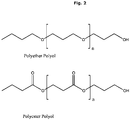
Figur 2 zeigt den schematischen Aufbau von Polyolen auf Ether-und Esterbasis welche die Ausgangsstoffe in der Polymerisation darstellen. Die Polyesterurethane weisen daher zusätzlich zur Carbamatbindung eine Ester-bindung auf welche ebenso in der enzymatischen Hydrolyse gespalten wird und daher einen Abbau zu Ausgangsproduktenermöglicht, jedoch eine größere Fülle an Abbauprodukten bildet, welche dann in den Aufarbeitungsschritten zusätzlich getrennt und aufgearbeitet werden müssen. -
Figur 3 zeigt die Enzymaktivitäten aus den Testreihen mit der Modellsubstanz p-nitrophenyl butyl carbamat.
Claims (14)
- Verfahren zur stofflichen Verwertung von Polyurethanen bei dem das Ausgangsmaterial grob zerkleinert, danach aufgeschlämmt und mit einem Enzym versetzt wird, die Hydrolyse des Polyurethans in Wasser oder einem Wasser enthaltendem polaren Lösungsmittelgemisch mittels zumindest einer Hydrolase der Klasse EC 3 durchgeführt wird, dadurch gekennzeichnet, dass das polare Lösungsmittel teilweise ausgeschleust und in einem separaten Prozess regeneriert wird und die Reaktionsprodukte durch Extraktion mit einem apolaren Lösungsmittel dem Reaktionsgleichgewicht entzogen werden.
- Verfahren nach Anspruch 1, dadurch gekennzeichnet, dass das Polyurethan auf Polyetherpolyolen basiert.
- Verfahren nach Anspruch 1 oder 2, dadurch gekennzeichnet, dass das Polyurethan auf einer Polymerisationsreaktion mit Diphenylmethandiisocyanat (MDI) oder Toluylendiisocyanat (TDI) basiert.
- Verfahren nach einem der vorhergehenden Ansprüche, dadurch gekennzeichnet, dass das verwendete Enzym wahlweise eine Hydrolase aus folgender Gruppe ist- Aryl-Acylamidase (Polyamidase)- Carboxylesterase (Rapidase)- Cutinase- Triacylglycerol Lipase.
- Verfahren nach einem der vorhergehenden Ansprüche, dadurch gekennzeichnet, dass das verwendete Enzym Aryl-Acylamidase (Polyamidase) ist.
- Verfahren nach einem der vorhergehenden Ansprüche, dadurch gekennzeichnet, dass die Reaktionstemperatur zwischen 32°C und 47°C gehalten wird.
- Verfahren nach einem der vorhergehenden Ansprüche, dadurch gekennzeichnet, dass die Reaktion bei einem pH-Wert zwischen pH 7,5 und pH 11 durchgeführt wird.
- Verfahren nach einem der vorhergehenden Ansprüche, dadurch gekennzeichnet, dass die Reaktion bei einem pH-Wert zwischen pH 9,5 und pH 11 durchgeführt wird.
- Verfahren nach einem der vorhergehenden Ansprüche, dadurch gekennzeichnet, dass die Enzymaktivität über 0,005 [U/ml], insbesondere jedoch größer 0,02 [U/ml] eingestellt wird.
- Verfahren nach einem der vorhergehenden Ansprüche, dadurch gekennzeichnet, dass die Verdünnung der Enzyme mit dem Lösungsmittel zwischen 1:5 und 1:20 gewählt wird.
- Verfahren nach einem der vorhergehenden Ansprüche, dadurch gekennzeichnet, dass das polare Lösungsmittel aus einem, oder einer Mischung aus zwei oder mehreren, folgender Lösungsmittel besteht:
Petrolether / Aceton / Tetrahydrofuran / Ethylacetat / DMSO / Acetonitril / Ethanol / Wasser. - Verfahren nach einem der vorhergehenden Ansprüche, dadurch gekennzeichnet, dass die Abbaureaktion mittels einem 3-Phasensystem im kontinuierlichen Prozess durchgeführt wird, wobei eine polare Reaktionsphase bestehend aus einem oder einer Mischung aus zwei oder mehreren der Lösungsmittel Petrolether / Aceton / Tetrahydrofuran / Ethylacetat / DMSO / Acetonitril / Ethanol / Wasser, eine apolare Recoveryphase bestehend aus oder einer Mischung aus Petrolether / Diethylether / Ethylacetat und eine Festphase aus Inertstoffen wie Füller, anorganische Verunreinigungen und Restschaum verwendet wird.
- Verfahren nach einem der vorhergehenden Ansprüche, dadurch gekennzeichnet, dass die Extraktion der Reaktionsprodukte im Gegenstrom durchgeführt wird.
- Verfahren nach einem der vorhergehenden Ansprüche, dadurch gekennzeichnet, dass das gewonnene Komponentengemisch aus der apolaren Phase einer Destillation zur Gewinnung der reinen Fraktionen unterworfen wird.
Applications Claiming Priority (2)
| Application Number | Priority Date | Filing Date | Title |
|---|---|---|---|
| ATA301/2012A AT512560B1 (de) | 2012-03-12 | 2012-03-12 | Verfahren zur stofflichen Verwertung von Polyurethanen |
| PCT/AT2013/050047 WO2013134801A2 (de) | 2012-03-12 | 2013-02-27 | Verfahren zur stofflichen verwertung von polyurethanen |
Publications (2)
| Publication Number | Publication Date |
|---|---|
| EP2825586A2 EP2825586A2 (de) | 2015-01-21 |
| EP2825586B1 true EP2825586B1 (de) | 2018-06-06 |
Family
ID=49111625
Family Applications (1)
| Application Number | Title | Priority Date | Filing Date |
|---|---|---|---|
| EP13761309.7A Active EP2825586B1 (de) | 2012-03-12 | 2013-02-27 | Verfahren zum enzymatischen abbau von polyurethanen |
Country Status (3)
| Country | Link |
|---|---|
| EP (1) | EP2825586B1 (de) |
| AT (1) | AT512560B1 (de) |
| WO (1) | WO2013134801A2 (de) |
Families Citing this family (9)
| Publication number | Priority date | Publication date | Assignee | Title |
|---|---|---|---|---|
| EP3587570B1 (de) | 2018-06-21 | 2022-08-31 | Covestro Deutschland AG | Neue urethanasen für den enzymatischen abbau von polyurethanen |
| CN113661222A (zh) * | 2019-02-08 | 2021-11-16 | 朗盛公司 | 可降解的氨基甲酸乙酯和氨基甲酸乙酯-脲系统 |
| EP4013806B1 (de) | 2019-08-16 | 2024-06-26 | Covestro Deutschland AG | Verfahren zum abbau von polyether-polyurethan |
| US20230167225A1 (en) * | 2020-04-27 | 2023-06-01 | The Regents Of The University Of California | Degradable bio-based polymers |
| US20230391978A1 (en) * | 2020-10-23 | 2023-12-07 | Societe Des Produits Nestle S.A. | Enzymatic recycling of polyurethanes by cutinases |
| CN116710520A (zh) * | 2020-12-24 | 2023-09-05 | 雀巢产品有限公司 | 通过角质酶和酯酶的组合进行的聚氨酯的酶促再循环 |
| EP4267666A1 (de) * | 2020-12-24 | 2023-11-01 | Société des Produits Nestlé S.A. | Enzymatisches recycling von polyurethanen durch eine kombination von cutinasen und lipasen |
| CN118984873A (zh) | 2022-04-08 | 2024-11-19 | 科思创德国股份有限公司 | 用于酶促降解聚氨酯的新型氨基甲酸酯酶 |
| EP4257683A1 (de) | 2022-04-08 | 2023-10-11 | Covestro Deutschland AG | Neue urethanasen für den enzymatischen abbau von polyurethanen |
Family Cites Families (4)
| Publication number | Priority date | Publication date | Assignee | Title |
|---|---|---|---|---|
| JP3735918B2 (ja) * | 1996-01-24 | 2006-01-18 | スズキ株式会社 | エステラーゼ活性を有するポリウレタン分解用酵素液の調製方法 |
| DE19706023A1 (de) * | 1997-02-17 | 1998-08-20 | Bayer Ag | Abbau von biologisch abbaubaren Polymeren mit Enzymen |
| DE19834359A1 (de) * | 1998-07-30 | 2000-02-03 | Bayer Ag | Reinigung von Gebinden, Produktionsanlagen und Werkzeugen |
| WO2007029630A1 (ja) * | 2005-09-07 | 2007-03-15 | Japan Science And Technology Agency | 新規なセラミダーゼ及びその利用 |
-
2012
- 2012-03-12 AT ATA301/2012A patent/AT512560B1/de active
-
2013
- 2013-02-27 WO PCT/AT2013/050047 patent/WO2013134801A2/de not_active Ceased
- 2013-02-27 EP EP13761309.7A patent/EP2825586B1/de active Active
Non-Patent Citations (1)
| Title |
|---|
| None * |
Also Published As
| Publication number | Publication date |
|---|---|
| WO2013134801A3 (de) | 2014-01-23 |
| AT512560B1 (de) | 2013-12-15 |
| EP2825586A2 (de) | 2015-01-21 |
| WO2013134801A2 (de) | 2013-09-19 |
| AT512560A1 (de) | 2013-09-15 |
Similar Documents
| Publication | Publication Date | Title |
|---|---|---|
| AT512560B1 (de) | Verfahren zur stofflichen Verwertung von Polyurethanen | |
| EP4291589B9 (de) | Verfahren zur wiedergewinnung von rohstoffen aus polyurethanschäumen | |
| EP2435231B1 (de) | Wasser als treibmittel für polyurethane | |
| EP4430112A1 (de) | Verfahren zur wiedergewinnung von rohstoffen aus polyurethanprodukten | |
| WO2022074184A1 (de) | Verfahren zur herstellung einer polyolkomposition enthaltend aus polyurethan-abfällen freigesetzte polyole | |
| EP4013806A1 (de) | Verfahren zum abbau von polyether-polyurethan | |
| EP2046879A1 (de) | Rückspaltung von polyurethanen | |
| EP0965582B1 (de) | Carbodiimide auf der Basis von 1,3-Bis-(1-methyl-1-isocyanatoethyl)-benzol | |
| DE2834431C3 (de) | Verfahren zur schonenden Aufarbeitung von Abfällen aus Urethan- und/oder Harnstoffgruppen enthaltenden organischen Polyaddukten | |
| EP4441130A1 (de) | Verfahren zur wiedergewinnung von rohstoffen aus polyurethanprodukten | |
| EP0610719A2 (de) | Verfahren zur Herstellung von Hydroxylgruppen aufweisenden Verbindungen aus (Polyurethan) Polyharnstoffabfällen | |
| DE2854940A1 (de) | Verfahren zur auftrennung von polyurethanschaumstoff-hydrolysaten in polyol und diamin | |
| EP0826705B1 (de) | Verfahren zur Wiederverwendung von mikrozelligen Polyurethanen | |
| EP1654313A1 (de) | Kunststoff, insbesondere polyurethan enthaltend ein sterisch gehindertes, verestertes amin | |
| DE831604C (de) | Verfahren zur Herstellung von Kunststoffen | |
| EP4514884A1 (de) | Verfahren zur wiedergewinnung von rohstoffen aus isocyanurat-haltigen polyurethanprodukten | |
| WO2022263336A1 (de) | Verfahren zur spaltung von polyurethanprodukten | |
| DE102020131581A1 (de) | Verfahren zum Abbau von Polyurethan | |
| WO2009095363A1 (de) | Verfahren zur herstellung von polyetheralkoholen | |
| DE102006039057A1 (de) | Verfahren zur Herstellung von Polyolen und/oder Polyaminen aus Polyurethanen, Polyurethanharnstoffen und Polyharnstoffen | |
| DE4132282A1 (de) | Verfahren zur verwertung von kunststoffen | |
| EP0550563B1 (de) | Verfahren zur verwertung von kunststoffen | |
| EP3549931A1 (de) | Verfahren zur rückgewinnung von diisocyanaten aus destillationsrückständen | |
| EP3597632A1 (de) | Verfahren zur rückgewinnung von diisocyanaten aus destillationsrückständen | |
| EP4567059A1 (de) | Verfahren zur herstellung von pvc-rezyklat |
Legal Events
| Date | Code | Title | Description |
|---|---|---|---|
| PUAI | Public reference made under article 153(3) epc to a published international application that has entered the european phase |
Free format text: ORIGINAL CODE: 0009012 |
|
| 17P | Request for examination filed |
Effective date: 20141008 |
|
| AK | Designated contracting states |
Kind code of ref document: A2 Designated state(s): AL AT BE BG CH CY CZ DE DK EE ES FI FR GB GR HR HU IE IS IT LI LT LU LV MC MK MT NL NO PL PT RO RS SE SI SK SM TR |
|
| AX | Request for extension of the european patent |
Extension state: BA ME |
|
| DAX | Request for extension of the european patent (deleted) | ||
| GRAP | Despatch of communication of intention to grant a patent |
Free format text: ORIGINAL CODE: EPIDOSNIGR1 |
|
| STAA | Information on the status of an ep patent application or granted ep patent |
Free format text: STATUS: GRANT OF PATENT IS INTENDED |
|
| INTG | Intention to grant announced |
Effective date: 20180123 |
|
| GRAS | Grant fee paid |
Free format text: ORIGINAL CODE: EPIDOSNIGR3 |
|
| GRAA | (expected) grant |
Free format text: ORIGINAL CODE: 0009210 |
|
| STAA | Information on the status of an ep patent application or granted ep patent |
Free format text: STATUS: THE PATENT HAS BEEN GRANTED |
|
| AK | Designated contracting states |
Kind code of ref document: B1 Designated state(s): AL AT BE BG CH CY CZ DE DK EE ES FI FR GB GR HR HU IE IS IT LI LT LU LV MC MK MT NL NO PL PT RO RS SE SI SK SM TR |
|
| REG | Reference to a national code |
Ref country code: GB Ref legal event code: FG4D Free format text: NOT ENGLISH |
|
| REG | Reference to a national code |
Ref country code: CH Ref legal event code: EP Ref country code: AT Ref legal event code: REF Ref document number: 1006015 Country of ref document: AT Kind code of ref document: T Effective date: 20180615 |
|
| REG | Reference to a national code |
Ref country code: IE Ref legal event code: FG4D Free format text: LANGUAGE OF EP DOCUMENT: GERMAN |
|
| REG | Reference to a national code |
Ref country code: DE Ref legal event code: R096 Ref document number: 502013010340 Country of ref document: DE |
|
| REG | Reference to a national code |
Ref country code: NL Ref legal event code: MP Effective date: 20180606 |
|
| REG | Reference to a national code |
Ref country code: LT Ref legal event code: MG4D |
|
| PG25 | Lapsed in a contracting state [announced via postgrant information from national office to epo] |
Ref country code: BG Free format text: LAPSE BECAUSE OF FAILURE TO SUBMIT A TRANSLATION OF THE DESCRIPTION OR TO PAY THE FEE WITHIN THE PRESCRIBED TIME-LIMIT Effective date: 20180906 Ref country code: FI Free format text: LAPSE BECAUSE OF FAILURE TO SUBMIT A TRANSLATION OF THE DESCRIPTION OR TO PAY THE FEE WITHIN THE PRESCRIBED TIME-LIMIT Effective date: 20180606 Ref country code: LT Free format text: LAPSE BECAUSE OF FAILURE TO SUBMIT A TRANSLATION OF THE DESCRIPTION OR TO PAY THE FEE WITHIN THE PRESCRIBED TIME-LIMIT Effective date: 20180606 Ref country code: CY Free format text: LAPSE BECAUSE OF FAILURE TO SUBMIT A TRANSLATION OF THE DESCRIPTION OR TO PAY THE FEE WITHIN THE PRESCRIBED TIME-LIMIT Effective date: 20180606 Ref country code: ES Free format text: LAPSE BECAUSE OF FAILURE TO SUBMIT A TRANSLATION OF THE DESCRIPTION OR TO PAY THE FEE WITHIN THE PRESCRIBED TIME-LIMIT Effective date: 20180606 Ref country code: SE Free format text: LAPSE BECAUSE OF FAILURE TO SUBMIT A TRANSLATION OF THE DESCRIPTION OR TO PAY THE FEE WITHIN THE PRESCRIBED TIME-LIMIT Effective date: 20180606 Ref country code: NO Free format text: LAPSE BECAUSE OF FAILURE TO SUBMIT A TRANSLATION OF THE DESCRIPTION OR TO PAY THE FEE WITHIN THE PRESCRIBED TIME-LIMIT Effective date: 20180906 |
|
| PG25 | Lapsed in a contracting state [announced via postgrant information from national office to epo] |
Ref country code: RS Free format text: LAPSE BECAUSE OF FAILURE TO SUBMIT A TRANSLATION OF THE DESCRIPTION OR TO PAY THE FEE WITHIN THE PRESCRIBED TIME-LIMIT Effective date: 20180606 Ref country code: HR Free format text: LAPSE BECAUSE OF FAILURE TO SUBMIT A TRANSLATION OF THE DESCRIPTION OR TO PAY THE FEE WITHIN THE PRESCRIBED TIME-LIMIT Effective date: 20180606 Ref country code: GR Free format text: LAPSE BECAUSE OF FAILURE TO SUBMIT A TRANSLATION OF THE DESCRIPTION OR TO PAY THE FEE WITHIN THE PRESCRIBED TIME-LIMIT Effective date: 20180907 Ref country code: LV Free format text: LAPSE BECAUSE OF FAILURE TO SUBMIT A TRANSLATION OF THE DESCRIPTION OR TO PAY THE FEE WITHIN THE PRESCRIBED TIME-LIMIT Effective date: 20180606 |
|
| PG25 | Lapsed in a contracting state [announced via postgrant information from national office to epo] |
Ref country code: NL Free format text: LAPSE BECAUSE OF FAILURE TO SUBMIT A TRANSLATION OF THE DESCRIPTION OR TO PAY THE FEE WITHIN THE PRESCRIBED TIME-LIMIT Effective date: 20180606 |
|
| PG25 | Lapsed in a contracting state [announced via postgrant information from national office to epo] |
Ref country code: PL Free format text: LAPSE BECAUSE OF FAILURE TO SUBMIT A TRANSLATION OF THE DESCRIPTION OR TO PAY THE FEE WITHIN THE PRESCRIBED TIME-LIMIT Effective date: 20180606 Ref country code: EE Free format text: LAPSE BECAUSE OF FAILURE TO SUBMIT A TRANSLATION OF THE DESCRIPTION OR TO PAY THE FEE WITHIN THE PRESCRIBED TIME-LIMIT Effective date: 20180606 Ref country code: SK Free format text: LAPSE BECAUSE OF FAILURE TO SUBMIT A TRANSLATION OF THE DESCRIPTION OR TO PAY THE FEE WITHIN THE PRESCRIBED TIME-LIMIT Effective date: 20180606 Ref country code: CZ Free format text: LAPSE BECAUSE OF FAILURE TO SUBMIT A TRANSLATION OF THE DESCRIPTION OR TO PAY THE FEE WITHIN THE PRESCRIBED TIME-LIMIT Effective date: 20180606 Ref country code: RO Free format text: LAPSE BECAUSE OF FAILURE TO SUBMIT A TRANSLATION OF THE DESCRIPTION OR TO PAY THE FEE WITHIN THE PRESCRIBED TIME-LIMIT Effective date: 20180606 Ref country code: IS Free format text: LAPSE BECAUSE OF FAILURE TO SUBMIT A TRANSLATION OF THE DESCRIPTION OR TO PAY THE FEE WITHIN THE PRESCRIBED TIME-LIMIT Effective date: 20181006 |
|
| PG25 | Lapsed in a contracting state [announced via postgrant information from national office to epo] |
Ref country code: SM Free format text: LAPSE BECAUSE OF FAILURE TO SUBMIT A TRANSLATION OF THE DESCRIPTION OR TO PAY THE FEE WITHIN THE PRESCRIBED TIME-LIMIT Effective date: 20180606 Ref country code: IT Free format text: LAPSE BECAUSE OF FAILURE TO SUBMIT A TRANSLATION OF THE DESCRIPTION OR TO PAY THE FEE WITHIN THE PRESCRIBED TIME-LIMIT Effective date: 20180606 |
|
| REG | Reference to a national code |
Ref country code: DE Ref legal event code: R097 Ref document number: 502013010340 Country of ref document: DE |
|
| PLBE | No opposition filed within time limit |
Free format text: ORIGINAL CODE: 0009261 |
|
| STAA | Information on the status of an ep patent application or granted ep patent |
Free format text: STATUS: NO OPPOSITION FILED WITHIN TIME LIMIT |
|
| 26N | No opposition filed |
Effective date: 20190307 |
|
| PG25 | Lapsed in a contracting state [announced via postgrant information from national office to epo] |
Ref country code: SI Free format text: LAPSE BECAUSE OF FAILURE TO SUBMIT A TRANSLATION OF THE DESCRIPTION OR TO PAY THE FEE WITHIN THE PRESCRIBED TIME-LIMIT Effective date: 20180606 Ref country code: DK Free format text: LAPSE BECAUSE OF FAILURE TO SUBMIT A TRANSLATION OF THE DESCRIPTION OR TO PAY THE FEE WITHIN THE PRESCRIBED TIME-LIMIT Effective date: 20180606 |
|
| REG | Reference to a national code |
Ref country code: CH Ref legal event code: PL |
|
| GBPC | Gb: european patent ceased through non-payment of renewal fee |
Effective date: 20190227 |
|
| PG25 | Lapsed in a contracting state [announced via postgrant information from national office to epo] |
Ref country code: MC Free format text: LAPSE BECAUSE OF FAILURE TO SUBMIT A TRANSLATION OF THE DESCRIPTION OR TO PAY THE FEE WITHIN THE PRESCRIBED TIME-LIMIT Effective date: 20180606 Ref country code: LU Free format text: LAPSE BECAUSE OF NON-PAYMENT OF DUE FEES Effective date: 20190227 |
|
| REG | Reference to a national code |
Ref country code: BE Ref legal event code: MM Effective date: 20190228 |
|
| REG | Reference to a national code |
Ref country code: IE Ref legal event code: MM4A |
|
| PG25 | Lapsed in a contracting state [announced via postgrant information from national office to epo] |
Ref country code: AL Free format text: LAPSE BECAUSE OF FAILURE TO SUBMIT A TRANSLATION OF THE DESCRIPTION OR TO PAY THE FEE WITHIN THE PRESCRIBED TIME-LIMIT Effective date: 20180606 |
|
| PG25 | Lapsed in a contracting state [announced via postgrant information from national office to epo] |
Ref country code: LI Free format text: LAPSE BECAUSE OF NON-PAYMENT OF DUE FEES Effective date: 20190228 Ref country code: CH Free format text: LAPSE BECAUSE OF NON-PAYMENT OF DUE FEES Effective date: 20190228 |
|
| PG25 | Lapsed in a contracting state [announced via postgrant information from national office to epo] |
Ref country code: IE Free format text: LAPSE BECAUSE OF NON-PAYMENT OF DUE FEES Effective date: 20190227 Ref country code: GB Free format text: LAPSE BECAUSE OF NON-PAYMENT OF DUE FEES Effective date: 20190227 |
|
| PG25 | Lapsed in a contracting state [announced via postgrant information from national office to epo] |
Ref country code: BE Free format text: LAPSE BECAUSE OF NON-PAYMENT OF DUE FEES Effective date: 20190228 Ref country code: FR Free format text: LAPSE BECAUSE OF NON-PAYMENT OF DUE FEES Effective date: 20190228 |
|
| PG25 | Lapsed in a contracting state [announced via postgrant information from national office to epo] |
Ref country code: TR Free format text: LAPSE BECAUSE OF FAILURE TO SUBMIT A TRANSLATION OF THE DESCRIPTION OR TO PAY THE FEE WITHIN THE PRESCRIBED TIME-LIMIT Effective date: 20180606 |
|
| REG | Reference to a national code |
Ref country code: AT Ref legal event code: MM01 Ref document number: 1006015 Country of ref document: AT Kind code of ref document: T Effective date: 20190227 |
|
| PG25 | Lapsed in a contracting state [announced via postgrant information from national office to epo] |
Ref country code: AT Free format text: LAPSE BECAUSE OF NON-PAYMENT OF DUE FEES Effective date: 20190227 |
|
| PG25 | Lapsed in a contracting state [announced via postgrant information from national office to epo] |
Ref country code: PT Free format text: LAPSE BECAUSE OF FAILURE TO SUBMIT A TRANSLATION OF THE DESCRIPTION OR TO PAY THE FEE WITHIN THE PRESCRIBED TIME-LIMIT Effective date: 20181008 Ref country code: MT Free format text: LAPSE BECAUSE OF FAILURE TO SUBMIT A TRANSLATION OF THE DESCRIPTION OR TO PAY THE FEE WITHIN THE PRESCRIBED TIME-LIMIT Effective date: 20180606 |
|
| PG25 | Lapsed in a contracting state [announced via postgrant information from national office to epo] |
Ref country code: HU Free format text: LAPSE BECAUSE OF FAILURE TO SUBMIT A TRANSLATION OF THE DESCRIPTION OR TO PAY THE FEE WITHIN THE PRESCRIBED TIME-LIMIT; INVALID AB INITIO Effective date: 20130227 |
|
| REG | Reference to a national code |
Ref country code: DE Ref legal event code: R081 Ref document number: 502013010340 Country of ref document: DE Owner name: NEVEON AUSTRIA GMBH, AT Free format text: FORMER OWNER: EUROFOAM GMBH, KREMSMUENSTER, AT |
|
| PG25 | Lapsed in a contracting state [announced via postgrant information from national office to epo] |
Ref country code: MK Free format text: LAPSE BECAUSE OF FAILURE TO SUBMIT A TRANSLATION OF THE DESCRIPTION OR TO PAY THE FEE WITHIN THE PRESCRIBED TIME-LIMIT Effective date: 20180606 |
|
| PGFP | Annual fee paid to national office [announced via postgrant information from national office to epo] |
Ref country code: DE Payment date: 20251224 Year of fee payment: 14 |