EP2824194A1 - Method for producing silicon steel normalizing substrate - Google Patents
Method for producing silicon steel normalizing substrate Download PDFInfo
- Publication number
- EP2824194A1 EP2824194A1 EP12870723.9A EP12870723A EP2824194A1 EP 2824194 A1 EP2824194 A1 EP 2824194A1 EP 12870723 A EP12870723 A EP 12870723A EP 2824194 A1 EP2824194 A1 EP 2824194A1
- Authority
- EP
- European Patent Office
- Prior art keywords
- furnace
- section
- normalizing
- pressure
- throat
- Prior art date
- Legal status (The legal status is an assumption and is not a legal conclusion. Google has not performed a legal analysis and makes no representation as to the accuracy of the status listed.)
- Granted
Links
Images

Classifications
-
- C—CHEMISTRY; METALLURGY
- C21—METALLURGY OF IRON
- C21D—MODIFYING THE PHYSICAL STRUCTURE OF FERROUS METALS; GENERAL DEVICES FOR HEAT TREATMENT OF FERROUS OR NON-FERROUS METALS OR ALLOYS; MAKING METAL MALLEABLE, e.g. BY DECARBURISATION OR TEMPERING
- C21D8/00—Modifying the physical properties of ferrous metals or ferrous alloys by deformation combined with, or followed by, heat treatment
- C21D8/12—Modifying the physical properties of ferrous metals or ferrous alloys by deformation combined with, or followed by, heat treatment during manufacturing of articles with special electromagnetic properties
- C21D8/1244—Modifying the physical properties of ferrous metals or ferrous alloys by deformation combined with, or followed by, heat treatment during manufacturing of articles with special electromagnetic properties characterised by the heat treatment
- C21D8/1261—Modifying the physical properties of ferrous metals or ferrous alloys by deformation combined with, or followed by, heat treatment during manufacturing of articles with special electromagnetic properties characterised by the heat treatment following hot rolling
-
- C—CHEMISTRY; METALLURGY
- C21—METALLURGY OF IRON
- C21D—MODIFYING THE PHYSICAL STRUCTURE OF FERROUS METALS; GENERAL DEVICES FOR HEAT TREATMENT OF FERROUS OR NON-FERROUS METALS OR ALLOYS; MAKING METAL MALLEABLE, e.g. BY DECARBURISATION OR TEMPERING
- C21D1/00—General methods or devices for heat treatment, e.g. annealing, hardening, quenching or tempering
- C21D1/26—Methods of annealing
- C21D1/28—Normalising
-
- C—CHEMISTRY; METALLURGY
- C21—METALLURGY OF IRON
- C21D—MODIFYING THE PHYSICAL STRUCTURE OF FERROUS METALS; GENERAL DEVICES FOR HEAT TREATMENT OF FERROUS OR NON-FERROUS METALS OR ALLOYS; MAKING METAL MALLEABLE, e.g. BY DECARBURISATION OR TEMPERING
- C21D1/00—General methods or devices for heat treatment, e.g. annealing, hardening, quenching or tempering
- C21D1/34—Methods of heating
-
- C—CHEMISTRY; METALLURGY
- C21—METALLURGY OF IRON
- C21D—MODIFYING THE PHYSICAL STRUCTURE OF FERROUS METALS; GENERAL DEVICES FOR HEAT TREATMENT OF FERROUS OR NON-FERROUS METALS OR ALLOYS; MAKING METAL MALLEABLE, e.g. BY DECARBURISATION OR TEMPERING
- C21D9/00—Heat treatment, e.g. annealing, hardening, quenching or tempering, adapted for particular articles; Furnaces therefor
- C21D9/52—Heat treatment, e.g. annealing, hardening, quenching or tempering, adapted for particular articles; Furnaces therefor for wires; for strips ; for rods of unlimited length
- C21D9/54—Furnaces for treating strips or wire
- C21D9/56—Continuous furnaces for strip or wire
- C21D9/561—Continuous furnaces for strip or wire with a controlled atmosphere or vacuum
-
- H—ELECTRICITY
- H01—ELECTRIC ELEMENTS
- H01F—MAGNETS; INDUCTANCES; TRANSFORMERS; SELECTION OF MATERIALS FOR THEIR MAGNETIC PROPERTIES
- H01F41/00—Apparatus or processes specially adapted for manufacturing or assembling magnets, inductances or transformers; Apparatus or processes specially adapted for manufacturing materials characterised by their magnetic properties
Definitions
- the present invention relates to a method for producing high-quality normalized silicon steel substrates.
- Non-oriented electrical steel both at home and abroad has gradually entered into the era of excess capacity, and low-grade oriented silicon steel products have also stepped into the stage of saturation; in order to secure the products a place in the fierce competition in the market, it is of penetrating significance to continue to achieve product quality upgrade, or continue to reduce production cost.
- Silicon steel production methods include steelmaking, hot rolling, normalizing, acid pickling, cold rolling and subsequent annealing.
- Non-oriented silicon steel is often subject to normalizing treatment for the purpose of obtaining a coarse grain structure for the hot rolled sheet before cold rolling, so as to achieve a high-strength 0vw structure for the cold-rolled sheet upon annealing.
- Oriented silicon steel products are produced by adjusting the grain size and texture, realizing hard-phase control, generating free C and N, precipitating ALN and so on.
- Japan is a world leader in terms of silicon production technology level.
- the Japanese Patent Publication SHO 48-19048 focused on how to strengthen the acid pickling treatment to remove the dense oxides already produced as much as possible.
- Domestic published literature, Electrical Steel edited by He Zhongzhi also explores how to eliminate the oxides attached on the substrate surface. The specific descriptions are as follows: Subject the annealed steel sheet to acid pickling treatment in concentrated hydrochloric acid containing 10% HF or 1 ⁇ 2% HF +6% HNO 3 at 70°C, or subject it to H 3 PO 4 + HF chemical polishing or electrolytic polishing; after complete removal of attached oxides, subject the substrate to subsequent treatment, and the iron loss of the finished silicon steel products will be significantly reduced.
- the object of the present invention is to provide a method for producing high-quality normalized silicon steel substrates.
- "High quality" means that, after normalizing treatment by this method, no dense oxides which can not be removed by subsequent acid pickling are produced on the substrate.
- the method of the present invention can successfully prevent the formation of dense oxides in the normalizing treatment process, and improve the quality of normalized silicon steel substrate. By the method of the present invention, the steps following normalization are simplified and the cost is reduced.
- the present invention provides a method for producing normalized silicon steel substrates, including steps of steelmaking, hot rolling and normalization; and in the normalization step, a normalizing furnace being used, which includes along the running direction of the strip steel successively preheating section, non-oxidation heating section, furnace throat, various subsequent normalizing treatment furnace sections and outlet sealed chamber.
- the pressure distribution of the normalizing furnace is as follows: the downstream furnace section adjacent to the furnace throat along the running direction of the strip steel has the highest furnace pressure; the furnace pressure gradually declines from the furnace section possessing the highest furnace pressure to the furnace section in the inlet direction of the normalizing furnace; it also gradually declines from the furnace section possessing the highest furnace pressure to the furnace section in the outlet direction of the normalizing furnace.
- the said various subsequent normalizing treatment furnace sections include at least one furnace section selected from radiant tube heating/cooling section, electric/radiant tube soaking section and radiant tube/water jacket cooling section, and the said various subsequent normalizing treatment furnace sections may be arranged in a random sequence.
- the protective gas N 2 is charged into the furnace section between furnace throat and outlet sealed chamber, and the supply of the protective gas N 2 in the furnace section between furnace throat and outlet sealed chamber is adjusted to realize the asaid distribution of furnace pressure.
- the supply of the protective gas N 2 in the asaid furnace section should satisfy the following relation:
- the furnace pressure difference between the downstream furnace section adjacent to the furnace throat along the running direction of the strip steel and the non-oxidation heating section is controlled between 0 and 10Pa, and should preferablly be controlled between 5 and 10Pa.
- the benchmark for furnace pressure control is set between 10 and 25Pa.
- the slope of furnace pressure reduction from the downstream furnace section adjacent to the furnace throat along the running direction of the strip steel to the furnace section in the outlet direction of the normalizing furnace is between - 0.05 and - 0.25, while the slope of furnace pressure reduction from the non-oxidation heating section to the furnace section in the inlet direction of the normalizing furnace is between 0.55 and 0.8.
- the method of the present invention can successfully prevent the formation of dense oxides in the normalizing treatment process, and improve the quality of normalized silicon steel substrate.
- the steps following normalization are simplified and the cost is reduced.
- the production method of the normalized silicon steel substrate include steps of steelmaking, hot rolling and normalization; and in the normalization step, the normalizing furnace includes along the running direction of the strip steel successively preheating section, non-oxidation heating section, furnace throat (furnace chamber height abruptly reduced), various subsequent normalizing treatment sections and outlet sealed chamber, among which the various subsequent normalizing treatment furnace sections include at least one furnace section selected from radiant tube heating/cooling section, electric/radiant tube soaking section and radiant tube/water jacket cooling section, and the said various subsequent normalizing treatment furnace sections are arranged in a random sequence.
- the heating before furnace throat is non-oxidation heating by direct flame combustion, and the protective gas N 2 is charged between furnace throat and outlet sealed chamber (including furnace throat and outlet sealed chamber).
- the functions of the normalizing furnace include preheating, heating, soaking and cooling.
- furnace pressures of the preheating section, the non-oxidation heating section, the downstream furnace section adjacent to the furnace throat and the last furnace section of various subsequent normalizing treatment furnace sections are detected and provided in Figure 1 .
- Furnace pressure refers to the internal pressure of the furnace chamber.
- the furnace pressure detected in the preheating section is referred as the benchmark for furnace pressure control.
- the present invention via a new type of furnace pressure distribution in the normalizing furnace shown in Figure 1 , eradicates the backward flow of smoke, prevents the production of dense oxides on the surface of the hot-rolled steel sheet in the course of subsequent normalizing treatment which can not be effectively removed by acid pickling, and thus improves the quality of the normalized substrate.
- the weight percentages of the main elements of the hot-rolled steel sheet are described below: 0.5 ⁇ Si ⁇ 6.5%, 0.05 ⁇ Mn ⁇ 0.55%, 0.05 ⁇ Al ⁇ 0.7%, C ⁇ 0.05%, P ⁇ 0.03%, S ⁇ 0.03%; it also contains Fe and some unavoidable impurity elements.
- This is just a general chemical composition of the hot-rolled steel sheet, and the present invention is not limited thereto and can also include other chemicals.
- the furnace throat is rarely or only slightly supplemented with the protective gas N 2 in the course of normal production.
- the combustion load will change as well; particularly, in the course of transition strip production, the differences in the material, specification or usage frequency of the transition strip will cause wild fluctuation of furnace atmosphere and thus result in the backward flow of smoke of the non-oxidation heating furnace section to the latter furnace section of the furnace throat.
- the imperfectly combusted and consumed air (containing oxygen in high volume) and smoke (containing gaseous H 2 O) will react with the high-temperature strip steel, and gradually form dense oxides on the substrate surface.
- the distribution of the new furnace pressure of the present invention as shown in Figure 1 is described below:
- the downstream furnace section adjacent to the furnace throat along the running direction of the strip steel has the highest furnace pressure; the furnace pressure gradually declines from the furnace section possessing the highest furnace pressure to the furnace section in the inlet direction of the normalizing furnace; it also gradually declines from the furnace section possessing the highest furnace pressure to the furnace section in the outlet direction of the normalizing furnace.
- the protective gas N 2 is charged into the furnace section between furnace throat and outlet sealed chamber, and the supply of the protective gas N 2 in the furnace section between furnace throat and outlet sealed chamber is adjusted to realize the distribution of the new furnace pressure. For example, it may be realized by adjusting the flow of the protective gas N 2 in the furnace throat and various subsequent normalizing treatment furnace sections.
- the furnace pressure difference between the downstream furnace section adjacent to the furnace throat along the running direction of the strip steel and the non-oxidation heating section is controlled between 0 and 10Pa, and should preferablly be controlled between 5 and 10Pa.
- the fuel supplied in the non-oxidation heating furnace combusts inside the furnace.
- the furnace pressure can be stably controlled around the benchmark for furnace pressure control.
- the benchmark for furnace pressure control is set between 10 and 25Pa.
- the benchmark for furnace pressure control is less than 10Pa, air will be taken in from the inlet sealed roller of the normalizing furnace in large amount; if it is above 25Pa, smoke will overflow out of the furnace chamber in large amount, which not only causes significant heat loss but also poses a safety hazard to equipment nearby.
- the N 2 amount of the outlet sealed chamber is regulated to adjust the slope K' outlet direction of furnace pressure reduction from the downstream furnace section adjacent to the furnace throat along the running direction of the strip steel to the furnace section in the outlet direction of the normalizing furnace , i.e., the slope of furnace pressure reduction from the highest point to the outlet direction of the normalizing furnace.
- K' outlet direction (furnace pressure of the last furnace section among the various subsequent normalizing treatment sections along the running direction of the strip steel-furnace pressure of the downstream furnace section adjacent to the furnace throat along the running direction of the strip steel)/distance between the corresponding two furnace sections.
- the slope K' outlet direction of furnace pressure reduction from the downstream furnace section adjacent to the furnace throat along the running direction of the strip steel to the furnace section in the outlet direction of the normalizing furnace is between - 0.05 and - 0.25.
- K inlet direction furnace pressure of the non - oxidation heating section - the benchmark for furnace pressure control / distance between the corresponding two furnace sections
- the slope K inlet direction of furnace pressure reduction from the non-oxidation heating section to the furnace section in the inlet direction of the normalizing furnace is between 0.55 and 0.8. If the slope is above 0.8, it will cause inadequate effective heat exchange between smoke and steel strip, raise smoke exhaust temperature and result in energy waste; if the slope is less than 0.55, gradient distribution of furnace pressure can not be formed inside the furnace chamber, and air flow inside the furnace is not smooth, which will then affect the stable combustion at the nozzle of the non-oxidation heating furnace.
- a protective curtain effectively cut off by N 2 is formed in the furnace throat, and by effectively controlling the slopes of furnace pressure reduction from the furnace throat to the inlet and outlet directions, we can completely eradicate the backward flow of smoke, prevent the production of dense oxides on the surface of the hot-rolled steel sheet in the course of subsequent normalizing treatment which can not be effectively removed by acid pickling, and thus improves the quality of the normalized substrate.
- Hot rolled steel coil production methods include such steps as steelmaking and hot rolling, as described below:
- the N 2 supply ratio (the ratio of N 2 inlet in furnace throat (Nm 3 /hr)/total N 2 inlet in various subsequent normalizing treatment furnace sections (Nm 3 /hr)) is set at 1.3.
- the furnace pressure difference between the downstream furnace section adjacent to the furnace throat along the running direction of the strip steel and the non-oxidation heating section is 5Pa;
- the slope K' outlet direction of furnace pressure reduction from the downstream furnace section adjacent to the furnace throat along the running direction of the strip steel to the furnace section in the outlet direction of the normalizing furnace is - 0.1;
- the slope K inlet direction of furnace pressure reduction from the non-oxidation heating section to the furnace section in the inlet direction of the normalizing furnace is 0.70.
- the downstream furnace section adjacent to the furnace throat along the running direction of the strip steel has the highest furnace pressure; the furnace pressure gradually declines from the furnace section possessing the highest furnace pressure to the furnace section in the inlet direction of the normalizing furnace; it also gradually declines from the furnace section possessing the highest furnace pressure to the furnace section in the outlet direction of the normalizing furnace, which realizes the furnace pressure distribution mode of the present invention.
- the Example 1 forms a protective curtain effectively cut off by N 2 in the furnace throat and realizes the furnace pressure distribution mode of the present invention, so there is no oxide residue on the normalized substrate after acid pickling.
- the benchmark for furnace pressure control is set at 20Pa to realize the stable control of furnace pressure.
- the N 2 supply ratio (the ratio of N 2 inlet in furnace throat (Nm 3 /hr)/total N 2 inlet in various subsequent normalizing treatment furnace sections (Nm 3 /hr)) is set at 1.35.
- the furnace pressure difference between the downstream furnace section adjacent to the furnace throat along the running direction of the strip steel and the non-oxidation heating section is 7Pa;
- the slope K' outlet direction of furnace pressure reduction from the downstream furnace section adjacent to the furnace throat along the running direction of the strip steel to the furnace section in the outlet direction of the normalizing furnace is - 0.15;
- the slope K inlet direction of furnace pressure reduction from the non-oxidation heating section to the furnace section in the inlet direction of the normalizing furnace is 0.80.
- the downstream furnace section adjacent to the furnace throat along the running direction of the strip steel has the highest furnace pressure ; the furnace pressure gradually declines from the furnace section possessing the highest furnace pressure to the furnace section in the inlet direction of the normalizing furnace; it also gradually declines from the furnace section possessing the highest furnace pressure to the furnace section in the outlet direction of the normalizing furnace, which realizes the furnace pressure distribution mode of the present invention.
- the Example 2 forms a protective curtain effectively cut off by N 2 in the furnace throat and realizes the furnace pressure distribution mode of the present invention, so there is no oxide residue on the normalized substrate after acid pickling.
- the benchmark for furnace pressure control is set at 15Pa to realize the stable control of furnace pressure.
- the N 2 supply ratio (the ratio of N 2 inlet in furnace throat (Nm 3 /hr)/total N 2 inlet in various subsequent normalizing treatment furnace sections (Nm 3 /hr)) is set at 1.15.
- the furnace pressure difference between the downstream furnace section adjacent to the furnace throat along the running direction of the strip steel and the non-oxidation heating section is - 5Pa. It can be seen from the above data that, the non-oxidation heating section has the highest furnace pressure, so the furnace pressure distribution of the present invention is not realized.
- the N 2 supply ratio (the ratio of N 2 inlet in furnace throat (Nm 3 /hr)/total N 2 inlet in various subsequent normalizing treatment furnace sections (Nm 3 /hr)) is less than 1.2, neither can a protective curtain effectively cut off by N 2 be formed in the furnace throat, nor can the furnace pressure distribution mode of the present invention be realized, so the backward flow of smoke occurs, and there are oxide residues on the normalized substrate after acid pickling.
- the N 2 supply ratio (the ratio of N 2 inlet in furnace throat (Nm 3 /hr)/total N 2 inlet in various subsequent normalizing treatment furnace sections (Nm 3 /hr)) is set at 1.1.
- the furnace pressure difference between the downstream furnace section adjacent to the furnace throat along the running direction of the strip steel and the non-oxidation heating section is - 4Pa. It can be seen from the above data that, the non-oxidation heating section has the highest furnace pressure, so the furnace pressure distribution of the present invention is not realized.
- the N 2 supply ratio (the ratio of N 2 inlet in furnace throat (Nm 3 /hr)/total N 2 inlet in various subsequent normalizing treatment furnace sections (Nm 3 /hr)) is less than 1.2, neither can a protective curtain effectively cut off by N 2 be formed in the furnace throat, nor can the furnace pressure distribution mode of the present invention be realized, so the backward flow of smoke occurs, and there are oxide residues on the normalized substrate after acid pickling.
- Figure 3 provides the change tendency chart of both dew point and oxygen content detected in subsequent furnace sections of the furnace throat of the normalizing furnace when the smoke of the non-oxidation heating section flows backward in the furnace throat, and in this course, hardly removable oxides are formed on the strip steel surface of normalized substrate produced after acid pickling.
- Dew point refers to the water content of smoke.
- the method of producing a high quality normalized silicon steel substrate of the present invention can successfully prevent the formation of dense oxides in the normalizing treatment process, and improve the quality of normalized silicon steel substrate.
- the steps following normalization are simplified and the cost is reduced, and it may be used for the large-scale production of high-quality normalized silicon steel substrate.
Landscapes
- Chemical & Material Sciences (AREA)
- Engineering & Computer Science (AREA)
- Physics & Mathematics (AREA)
- Materials Engineering (AREA)
- Thermal Sciences (AREA)
- Crystallography & Structural Chemistry (AREA)
- Mechanical Engineering (AREA)
- Metallurgy (AREA)
- Organic Chemistry (AREA)
- Manufacturing & Machinery (AREA)
- Power Engineering (AREA)
- Electromagnetism (AREA)
- Heat Treatment Of Strip Materials And Filament Materials (AREA)
- Manufacturing Of Steel Electrode Plates (AREA)
- Chemical Vapour Deposition (AREA)
- Silicon Compounds (AREA)
Abstract
Description
- The present invention relates to a method for producing high-quality normalized silicon steel substrates.
- The production of non-oriented electrical steel both at home and abroad has gradually entered into the era of excess capacity, and low-grade oriented silicon steel products have also stepped into the stage of saturation; in order to secure the products a place in the fierce competition in the market, it is of penetrating significance to continue to achieve product quality upgrade, or continue to reduce production cost. Silicon steel production methods include steelmaking, hot rolling, normalizing, acid pickling, cold rolling and subsequent annealing. Non-oriented silicon steel is often subject to normalizing treatment for the purpose of obtaining a coarse grain structure for the hot rolled sheet before cold rolling, so as to achieve a high-strength 0vw structure for the cold-rolled sheet upon annealing. Oriented silicon steel products are produced by adjusting the grain size and texture, realizing hard-phase control, generating free C and N, precipitating ALN and so on.
- If the normalization process is not properly controlled, that is, in the actual production process, if the mixture of the imperfectly mixed and combusted coal gas, air and smoke in the non-oxidation heater flows backward to the latter section of the furnace throat, it will raise the dew point, cause the remaining oxygen to further react with strip steel and form on the substrate surface a layer of hardly removable dense oxides constituted of Si, Al, Mn, etc. These oxides adhering to the surface of the substrate will be extremely difficult to be removed in the subsequent shot blasting and acid pickling treatment. After cold rolling, dustlike point and strip-shaped hand feeling-free matters will be found attached locally or entirely across its width on the surface of the rolled hard sheet.
- Japan is a world leader in terms of silicon production technology level. For example, the Japanese Patent Publication
SHO 48-19048 - The above literature all propose the strengthening of acid pickling treatment to remove dense oxides on the substrate surface in the steps following normalization, but they are only follow-up remedial measures. There are usually such problems as complicated process and increased cost in subsequent steps after normalization. Therefore, efforts are still expected to be made to prevent the formation of dense oxides in the normalizing treatment process.
- The object of the present invention is to provide a method for producing high-quality normalized silicon steel substrates. "High quality" means that, after normalizing treatment by this method, no dense oxides which can not be removed by subsequent acid pickling are produced on the substrate. The method of the present invention can successfully prevent the formation of dense oxides in the normalizing treatment process, and improve the quality of normalized silicon steel substrate. By the method of the present invention, the steps following normalization are simplified and the cost is reduced.
- The present invention provides a method for producing normalized silicon steel substrates, including steps of steelmaking, hot rolling and normalization; and in the normalization step, a normalizing furnace being used, which includes along the running direction of the strip steel successively preheating section, non-oxidation heating section, furnace throat, various subsequent normalizing treatment furnace sections and outlet sealed chamber. The pressure distribution of the normalizing furnace is as follows: the downstream furnace section adjacent to the furnace throat along the running direction of the strip steel has the highest furnace pressure; the furnace pressure gradually declines from the furnace section possessing the highest furnace pressure to the furnace section in the inlet direction of the normalizing furnace; it also gradually declines from the furnace section possessing the highest furnace pressure to the furnace section in the outlet direction of the normalizing furnace.
- In the method of the present invention, the said various subsequent normalizing treatment furnace sections include at least one furnace section selected from radiant tube heating/cooling section, electric/radiant tube soaking section and radiant tube/water jacket cooling section, and the said various subsequent normalizing treatment furnace sections may be arranged in a random sequence.
- In the method of the present invention, the protective gas N2 is charged into the furnace section between furnace throat and outlet sealed chamber, and the supply of the protective gas N2 in the furnace section between furnace throat and outlet sealed chamber is adjusted to realize the asaid distribution of furnace pressure.
- In the method of the present invention, the supply of the protective gas N2 in the asaid furnace section should satisfy the following relation:
- N2 inlet in furnace throat/total N2 inlet in various subsequent normalizing treatment furnace sections≥1.2.
- In the method of the present invention, in the asaid distribution of furnace pressure, the furnace pressure difference between the downstream furnace section adjacent to the furnace throat along the running direction of the strip steel and the non-oxidation heating section is controlled between 0 and 10Pa, and should preferablly be controlled between 5 and 10Pa.
- In the method of the present invention, in the asaid distribution of furnace pressure, the benchmark for furnace pressure control is set between 10 and 25Pa.
- In the method of the present invention, in the asaid distribution of furnace pressure, the slope of furnace pressure reduction from the downstream furnace section adjacent to the furnace throat along the running direction of the strip steel to the furnace section in the outlet direction of the normalizing furnace is between - 0.05 and - 0.25, while the slope of furnace pressure reduction from the non-oxidation heating section to the furnace section in the inlet direction of the normalizing furnace is between 0.55 and 0.8.
- The method of the present invention can successfully prevent the formation of dense oxides in the normalizing treatment process, and improve the quality of normalized silicon steel substrate. By the method of the present invention, the steps following normalization are simplified and the cost is reduced.
-
-
Figure 1 provides the schematic diagram for comparison between the original furnace pressure distribution of the normalizing furnace and the new furnace pressure distribution in the present invention, in which A represents the preheating section, B represents the non-oxidation heating section, C represents the downstream section adjacent to the furnace throat, and D represents the last furnace section among the various subsequent normalizing treatment sections. -
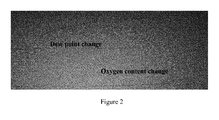
Figure 2 provides the change tendency chart of both dew point and oxygen content detected in subsequent furnace sections of the furnace throat of the normalizing furnace when the smoke of the non-oxidation heating section flows backward in the furnace throat of the normalizing furnace. - In conjunction with the following figures and embodiments, the method of the present invention is specifically described below, but the present invention is not limited thereto.
- The production method of the normalized silicon steel substrate include steps of steelmaking, hot rolling and normalization; and in the normalization step, the normalizing furnace includes along the running direction of the strip steel successively preheating section, non-oxidation heating section, furnace throat (furnace chamber height abruptly reduced), various subsequent normalizing treatment sections and outlet sealed chamber, among which the various subsequent normalizing treatment furnace sections include at least one furnace section selected from radiant tube heating/cooling section, electric/radiant tube soaking section and radiant tube/water jacket cooling section, and the said various subsequent normalizing treatment furnace sections are arranged in a random sequence. The heating before furnace throat is non-oxidation heating by direct flame combustion, and the protective gas N2 is charged between furnace throat and outlet sealed chamber (including furnace throat and outlet sealed chamber). The functions of the normalizing furnace include preheating, heating, soaking and cooling.
- Along the running direction of the strip steel, the furnace pressures of the preheating section, the non-oxidation heating section, the downstream furnace section adjacent to the furnace throat and the last furnace section of various subsequent normalizing treatment furnace sections are detected and provided in
Figure 1 . Furnace pressure refers to the internal pressure of the furnace chamber. The furnace pressure detected in the preheating section is referred as the benchmark for furnace pressure control. - The present invention, via a new type of furnace pressure distribution in the normalizing furnace shown in
Figure 1 , eradicates the backward flow of smoke, prevents the production of dense oxides on the surface of the hot-rolled steel sheet in the course of subsequent normalizing treatment which can not be effectively removed by acid pickling, and thus improves the quality of the normalized substrate. The weight percentages of the main elements of the hot-rolled steel sheet are described below: 0.5≤Si≤6.5%, 0.05≤Mn≤0.55%, 0.05≤Al≤0.7%, C≤0.05%, P≤0.03%, S≤0.03%; it also contains Fe and some unavoidable impurity elements. This is just a general chemical composition of the hot-rolled steel sheet, and the present invention is not limited thereto and can also include other chemicals. - In the original distribution of furnace pressure as shown in
Figure 1 , the furnace throat is rarely or only slightly supplemented with the protective gas N2 in the course of normal production. In the case of the change of product variety or specification, the conversion of technology or the change of threading speed during production, the combustion load will change as well; particularly, in the course of transition strip production, the differences in the material, specification or usage frequency of the transition strip will cause wild fluctuation of furnace atmosphere and thus result in the backward flow of smoke of the non-oxidation heating furnace section to the latter furnace section of the furnace throat. In this case, the imperfectly combusted and consumed air (containing oxygen in high volume) and smoke (containing gaseous H2O) will react with the high-temperature strip steel, and gradually form dense oxides on the substrate surface. - The distribution of the new furnace pressure of the present invention as shown in
Figure 1 is described below: The downstream furnace section adjacent to the furnace throat along the running direction of the strip steel has the highest furnace pressure; the furnace pressure gradually declines from the furnace section possessing the highest furnace pressure to the furnace section in the inlet direction of the normalizing furnace; it also gradually declines from the furnace section possessing the highest furnace pressure to the furnace section in the outlet direction of the normalizing furnace. In the present invention, the protective gas N2 is charged into the furnace section between furnace throat and outlet sealed chamber, and the supply of the protective gas N2 in the furnace section between furnace throat and outlet sealed chamber is adjusted to realize the distribution of the new furnace pressure. For example, it may be realized by adjusting the flow of the protective gas N2 in the furnace throat and various subsequent normalizing treatment furnace sections. The specific practice is to charge a certain amount of the protective gas N2 into the furnace throat, and thus form a protective curtain effectively cut off by N2. In order to form an effective N2 protective curtain, the amount of N2 charged into the furnace throat and that charged into various subsequent normalizing treatment furnace sections need to satisfy the following relation: - N2 inlet in furnace throat/total N2 inlet in various subsequent normalizing treatment furnace sections≥1.2.
- In order to form an effective N2 protective curtain and completely eradicate the backward flow of smoke, as shown in
Figure 1 , in the distribution of new furnace pressure of the present invention, the furnace pressure difference between the downstream furnace section adjacent to the furnace throat along the running direction of the strip steel and the non-oxidation heating section is controlled between 0 and 10Pa, and should preferablly be controlled between 5 and 10Pa. - The fuel supplied in the non-oxidation heating furnace combusts inside the furnace. Inside the furnace chamber of a certain volume, when the amount of exhaust produced by combustion and that emitted by the smoke exhaust fan are controlled at a balance point, the furnace pressure can be stably controlled around the benchmark for furnace pressure control. In order to realize the stable control of furnace pressure on the basis of energy conservation, in the distribution of new furnace pressure of the present invention's normalizing furnace, the benchmark for furnace pressure control is set between 10 and 25Pa. If the benchmark for furnace pressure control is less than 10Pa, air will be taken in from the inlet sealed roller of the normalizing furnace in large amount; if it is above 25Pa, smoke will overflow out of the furnace chamber in large amount, which not only causes significant heat loss but also poses a safety hazard to equipment nearby.
- Based on various furnace body structure sizes, the N2 amount of the outlet sealed chamber is regulated to adjust the slope K'outlet direction of furnace pressure reduction from the downstream furnace section adjacent to the furnace throat along the running direction of the strip steel to the furnace section in the outlet direction of the normalizing furnace , i.e., the slope of furnace pressure reduction from the highest point to the outlet direction of the normalizing furnace.
- K'outlet direction= (furnace pressure of the last furnace section among the various subsequent normalizing treatment sections along the running direction of the strip steel-furnace pressure of the downstream furnace section adjacent to the furnace throat along the running direction of the strip steel)/distance between the corresponding two furnace sections.
- In order to ensure the furnace pressure distribution of the present invention and reduce the consumption of N2 to the greatest extent, as shown in
Figure 1 , in the new furnace pressure distribution of the present invention, the slope K'outlet direction of furnace pressure reduction from the downstream furnace section adjacent to the furnace throat along the running direction of the strip steel to the furnace section in the outlet direction of the normalizing furnace is between - 0.05 and - 0.25. - In combination with smoke baffle and smoke exhaust fan, we can adjust the slope Kinlet direction of furnace pressure reduction from the non-oxidation heating section to the furnace section in the inlet direction of the normalizing furnace , i.e., adjust the slope of furnace pressure reduction from the non-oxidation heating section to the benchmark for furnace pressure control as shown in
Figure 1 .
- As shown in
Figure 1 , the slope Kinlet direction of furnace pressure reduction from the non-oxidation heating section to the furnace section in the inlet direction of the normalizing furnace is between 0.55 and 0.8. If the slope is above 0.8, it will cause inadequate effective heat exchange between smoke and steel strip, raise smoke exhaust temperature and result in energy waste; if the slope is less than 0.55, gradient distribution of furnace pressure can not be formed inside the furnace chamber, and air flow inside the furnace is not smooth, which will then affect the stable combustion at the nozzle of the non-oxidation heating furnace. - When the furnace pressure distribution inside the entire furnace chamber satisfies the above relation, the normalized substrate produced presents the best surface quality.
- By the method of the present invention, by adjusting the recharge position and flow of the protective gas N2 of the normalizing furnace, a protective curtain effectively cut off by N2 is formed in the furnace throat, and by effectively controlling the slopes of furnace pressure reduction from the furnace throat to the inlet and outlet directions, we can completely eradicate the backward flow of smoke, prevent the production of dense oxides on the surface of the hot-rolled steel sheet in the course of subsequent normalizing treatment which can not be effectively removed by acid pickling, and thus improves the quality of the normalized substrate.
- Hot rolled steel coil production methods include such steps as steelmaking and hot rolling, as described below:
- 1) Steelmaking process: It covers converter blowing, RH refining and continuous casting process; through the above processes, we can strictly control the ingredients, inclusions and microstructure of the products; maintain unavoidable impurities and residual elements in the steel at a relatively low level, reduce the amount of inclusions in the steel and coarsen them, and try to obtain casting blanks of a high equiaxed crystal proportion at a rational cost through a series of steel-making technology and according to the different categories of products.
- 2) Hot-rolling process: It covers different steps like heating, rough rolling, precision rolling, laminar cooling and reeling at different temperatures with regard to the steel-grade continuous casting billets designed in Step 1; relying on the hot rolling process independently developed by Baosteel, we can effectively save energy and obtain high-production and high-quality hot coils with excellent performance which can satisfy the performance and quality requirements on final products. The chemical ingredients of the hot rolled steel coil prepared are described below: 0.5 ≤Si≤6.5%, 0.05≤Mn≤0.55%, 0.05≤Al≤0.7%, C≤0.05%, P≤0.03%, S≤0.03%; it also contains Fe and some unavoidable impurity elements.
- Constituted by C: 20ppm, Si: 3.06%, Mn: 0.2%, AL: 0.58%, P: 0.004% and S≤0.0005%, the hot rolled steel coil has gone through normalization by various methods, and the quality of the product surface after acid pickling and cold rolling is described below:
Table 1 Comparison between the Normalized Substrate Produced under Furnace Pressure Distribution of the Present Invention and That Produced after Backward Flow of Smoke N2 supply ratio1 Benchmark furnace pressure2 Furnace pressure after furnace throat3- furnace pressure of non-oxidation heating section Kinlet direction K'outlet direction Oxide residue on normalized substrate after acid pickling Example 1 1.3 20 5 0.70 - 0.1 No Example 2 1.35 15 7 0.80 - 0.15 No Comparative Example 1 1.15 20 - 5 0.45 - 0.15 (Backward flow of smoke) Yes Comparative Example 2 1.1 25 - 4 0.90 - 0.07 (Backward flow of smoke) Yes Remark 1: N2 supply ratio refers to the ratio of N2 inlet in furnace throat (Nm3/hr)/total N2 inlet in various subsequent normalizing treatment furnace sections (Nm3/hr).
Remark 2: Benchmark furnace pressure refers to the furnace pressure of the benchmark for furnace pressure control.
Remark 3: Furnace pressure after furnace throat refers to the furnace pressure of the downstream furnace section adjacent to the furnace throat along the running direction of the strip steel. - In Example 1, the N2 supply ratio (the ratio of N2 inlet in furnace throat (Nm3/hr)/total N2 inlet in various subsequent normalizing treatment furnace sections (Nm3/hr)) is set at 1.3. The furnace pressure difference between the downstream furnace section adjacent to the furnace throat along the running direction of the strip steel and the non-oxidation heating section is 5Pa; the slope K'outlet direction of furnace pressure reduction from the downstream furnace section adjacent to the furnace throat along the running direction of the strip steel to the furnace section in the outlet direction of the normalizing furnace is - 0.1; the slope Kinlet direction of furnace pressure reduction from the non-oxidation heating section to the furnace section in the inlet direction of the normalizing furnace is 0.70. It can be seen from the above data that, the downstream furnace section adjacent to the furnace throat along the running direction of the strip steel has the highest furnace pressure; the furnace pressure gradually declines from the furnace section possessing the highest furnace pressure to the furnace section in the inlet direction of the normalizing furnace; it also gradually declines from the furnace section possessing the highest furnace pressure to the furnace section in the outlet direction of the normalizing furnace, which realizes the furnace pressure distribution mode of the present invention. By adjusting the N2 supply ratio (the ratio of N2 inlet in furnace throat (Nm3/hr)/total N2 inlet in various subsequent normalizing treatment furnace sections (Nm3/hr)) to 1.3, the Example 1 forms a protective curtain effectively cut off by N2 in the furnace throat and realizes the furnace pressure distribution mode of the present invention, so there is no oxide residue on the normalized substrate after acid pickling. The benchmark for furnace pressure control is set at 20Pa to realize the stable control of furnace pressure.
- In Example 2, the N2 supply ratio (the ratio of N2 inlet in furnace throat (Nm3/hr)/total N2 inlet in various subsequent normalizing treatment furnace sections (Nm3/hr)) is set at 1.35. The furnace pressure difference between the downstream furnace section adjacent to the furnace throat along the running direction of the strip steel and the non-oxidation heating section is 7Pa; the slope K'outlet direction of furnace pressure reduction from the downstream furnace section adjacent to the furnace throat along the running direction of the strip steel to the furnace section in the outlet direction of the normalizing furnace is - 0.15; the slope Kinlet direction of furnace pressure reduction from the non-oxidation heating section to the furnace section in the inlet direction of the normalizing furnace is 0.80. It can be seen from the above data that, the downstream furnace section adjacent to the furnace throat along the running direction of the strip steel has the highest furnace pressure ; the furnace pressure gradually declines from the furnace section possessing the highest furnace pressure to the furnace section in the inlet direction of the normalizing furnace; it also gradually declines from the furnace section possessing the highest furnace pressure to the furnace section in the outlet direction of the normalizing furnace, which realizes the furnace pressure distribution mode of the present invention. By adjusting the N2 supply ratio (the ratio of N2 inlet in furnace throat (Nm3/hr)/total N2 inlet in various subsequent normalizing treatment furnace sections (Nm3/hr)) to 1.35, the Example 2 forms a protective curtain effectively cut off by N2 in the furnace throat and realizes the furnace pressure distribution mode of the present invention, so there is no oxide residue on the normalized substrate after acid pickling. The benchmark for furnace pressure control is set at 15Pa to realize the stable control of furnace pressure.
- In Comparative Example 1, the N2 supply ratio (the ratio of N2 inlet in furnace throat (Nm3/hr)/total N2 inlet in various subsequent normalizing treatment furnace sections (Nm3/hr)) is set at 1.15. The furnace pressure difference between the downstream furnace section adjacent to the furnace throat along the running direction of the strip steel and the non-oxidation heating section is - 5Pa. It can be seen from the above data that, the non-oxidation heating section has the highest furnace pressure, so the furnace pressure distribution of the present invention is not realized. Given that the N2 supply ratio (the ratio of N2 inlet in furnace throat (Nm3/hr)/total N2 inlet in various subsequent normalizing treatment furnace sections (Nm3/hr)) is less than 1.2, neither can a protective curtain effectively cut off by N2 be formed in the furnace throat, nor can the furnace pressure distribution mode of the present invention be realized, so the backward flow of smoke occurs, and there are oxide residues on the normalized substrate after acid pickling.
- In Comparative Example 2, the N2 supply ratio (the ratio of N2 inlet in furnace throat (Nm3/hr)/total N2 inlet in various subsequent normalizing treatment furnace sections (Nm3/hr)) is set at 1.1. The furnace pressure difference between the downstream furnace section adjacent to the furnace throat along the running direction of the strip steel and the non-oxidation heating section is - 4Pa. It can be seen from the above data that, the non-oxidation heating section has the highest furnace pressure, so the furnace pressure distribution of the present invention is not realized. Given that the N2 supply ratio (the ratio of N2 inlet in furnace throat (Nm3/hr)/total N2 inlet in various subsequent normalizing treatment furnace sections (Nm3/hr)) is less than 1.2, neither can a protective curtain effectively cut off by N2 be formed in the furnace throat, nor can the furnace pressure distribution mode of the present invention be realized, so the backward flow of smoke occurs, and there are oxide residues on the normalized substrate after acid pickling.
- In Comparative Example 1, Figure 3 provides the change tendency chart of both dew point and oxygen content detected in subsequent furnace sections of the furnace throat of the normalizing furnace when the smoke of the non-oxidation heating section flows backward in the furnace throat, and in this course, hardly removable oxides are formed on the strip steel surface of normalized substrate produced after acid pickling. Dew point refers to the water content of smoke.
- The method of producing a high quality normalized silicon steel substrate of the present invention can successfully prevent the formation of dense oxides in the normalizing treatment process, and improve the quality of normalized silicon steel substrate. By the method of the present invention, the steps following normalization are simplified and the cost is reduced, and it may be used for the large-scale production of high-quality normalized silicon steel substrate.
Claims (8)
- A method for producing normalized silicon steel substrates, including steps of steelmaking, hot rolling and normalizing, where a normalizing furnace being used in the normalization step and comprising sequentially, along the running direction of the strip steel, preheating section, non-oxidation heating section, furnace throat, multiple subsequent normalizing treatment furnace sections, and outlet sealed chamber, wherein the normalizing furnace has a pressure distribution as follows: the furnace pressure reaches its maximum at the downstream furnace section adjacent to the furnace throat along the running direction of the strip steel, said furnace pressure gradually declines from the furnace section having the maximum pressure to the furnace sections toward the inlet of the normalizing furnace, and gradually declines from the furnace section having the maximum pressure to the furnace sections toward the outlet of the normalizing furnace.
- The method for producing normalized silicon steel substrates according to claim 1, wherein said multiple subsequent normalizing treatment furnace sections include at least one furnace section selected from radiant tube heating/cooling section, electric/radiant tube soaking section, and radiant tube/water jacket cooling section, and said multiple subsequent normalizing treatment furnace sections are arranged in a random sequence.
- The method for producing normalized silicon steel substrates according to claim 1, wherein protective gas of N2 is charged into the furnace sections between furnace throat and outlet sealed chamber, and the supply of the protective gas of N2 to the furnace sections between the furnace throat and outlet sealed chamber is adjusted so as to realize said distribution of furnace pressure.
- The method for producing normalized silicon steel substrates according to claim 3, wherein the supply of the protective gas of N2 to said furnace sections satisfies the following relation:N2 supply at furnace throat/total N2 supply at multiple subsequent normalizing treatment furnace sections≥1.2.
- The method for producing normalized silicon steel substrates according to claim 1, wherein said distribution of furnace pressure has a furnace pressure difference controlled in the range from 0 to 10 Pa between the downstream furnace section adjacent to the furnace throat along the running direction of the strip steel and the non-oxidation heating section.
- The method for producing normalized silicon steel substrates according to claim 5, wherein said furnace pressure difference is controlled in the range from 5 to 10 Pa.
- The method for producing normalized silicon steel substrates according to claim 1, wherein said distribution of furnace pressure has a benchmark for furnace pressure control set in the range from 10 to 25 Pa.
- The method for producing normalized silicon steel substrates according to claim 1, wherein in said distribution of furnace pressure, the slope of furnace pressure reduction from the downstream furnace section adjacent to the furnace throat along the running direction of the strip steel to the furnace sections toward the outlet of the normalizing furnace is between - 0.05 and - 0.25, and the slope of furnace pressure reduction from the non-oxidation heating section to the furnace sections toward the inlet of the normalizing furnace is between 0.55 and 0.8.
Applications Claiming Priority (2)
| Application Number | Priority Date | Filing Date | Title |
|---|---|---|---|
| CN201210060176.7A CN103305744B (en) | 2012-03-08 | 2012-03-08 | A kind of production method of high quality silicon steel normalizing substrate |
| PCT/CN2012/000368 WO2013131212A1 (en) | 2012-03-08 | 2012-03-27 | Method for producing silicon steel normalizing substrate |
Publications (3)
| Publication Number | Publication Date |
|---|---|
| EP2824194A1 true EP2824194A1 (en) | 2015-01-14 |
| EP2824194A4 EP2824194A4 (en) | 2016-01-13 |
| EP2824194B1 EP2824194B1 (en) | 2018-07-25 |
Family
ID=49115844
Family Applications (1)
| Application Number | Title | Priority Date | Filing Date |
|---|---|---|---|
| EP12870723.9A Active EP2824194B1 (en) | 2012-03-08 | 2012-03-27 | Method for producing silicon steel normalizing substrate |
Country Status (9)
| Country | Link |
|---|---|
| US (1) | US9738946B2 (en) |
| EP (1) | EP2824194B1 (en) |
| JP (1) | JP5893766B2 (en) |
| KR (1) | KR20140115366A (en) |
| CN (1) | CN103305744B (en) |
| IN (1) | IN2014MN01786A (en) |
| MX (1) | MX356617B (en) |
| RU (1) | RU2585913C2 (en) |
| WO (1) | WO2013131212A1 (en) |
Families Citing this family (4)
| Publication number | Priority date | Publication date | Assignee | Title |
|---|---|---|---|---|
| CN104726682B (en) * | 2013-12-23 | 2017-03-29 | 鞍钢股份有限公司 | Method for converting non-oriented silicon steel into oriented silicon steel |
| CN107119180B (en) * | 2016-02-25 | 2019-09-06 | 宝山钢铁股份有限公司 | Method for improving the shape of non-oriented silicon steel sheet |
| CN106011655A (en) * | 2016-08-08 | 2016-10-12 | 浙江华赢特钢科技有限公司 | High efficiency silicon steel normal substrate production method |
| CN112974523B (en) * | 2021-02-23 | 2023-04-07 | 山西太钢不锈钢精密带钢有限公司 | Production method of 309S ultrathin precise stainless strip steel for sealing gasket |
Family Cites Families (29)
| Publication number | Priority date | Publication date | Assignee | Title |
|---|---|---|---|---|
| US3307981A (en) * | 1963-11-14 | 1967-03-07 | Inland Steel Co | Continuous bluing and annealing process |
| JPS4819048B1 (en) | 1969-09-03 | 1973-06-11 | ||
| GB1292403A (en) * | 1969-11-15 | 1972-10-11 | Kobe Steel Ltd | Continous treatment method and apparatus for metals |
| US4490107A (en) * | 1981-12-18 | 1984-12-25 | Kurosaki Furnace Industries Company Limited | Method of processing charges in a continuous combustion furnace |
| JPS6017020A (en) * | 1983-07-07 | 1985-01-28 | Nippon Kokan Kk <Nkk> | Direct firing vertical type continuous annealing furnace |
| JPS6173880A (en) * | 1984-09-17 | 1986-04-16 | Mitsubishi Heavy Ind Ltd | Method and device for plating by vacuum deposition |
| AU585531B2 (en) * | 1984-09-17 | 1989-06-22 | Mitsubishi Jukogyo Kabushiki Kaisha | Method and apparatus for vacuum deposition plating |
| FR2583064B1 (en) * | 1985-06-05 | 1987-08-14 | Air Liquide | HEAT TREATMENT PROCESS, HOOD FOR CARRYING OUT SAID METHOD AND USE THEREOF IN HEAT TREATMENT OVENS |
| JPS62120427A (en) | 1985-11-20 | 1987-06-01 | Kawasaki Steel Corp | Method for annealing hot rolled silicon steel sheet |
| US4832757A (en) * | 1987-07-08 | 1989-05-23 | Amax Inc. | Method for producing normalized grade D sucker rods |
| JPH0699749B2 (en) | 1988-11-29 | 1994-12-07 | 住友金属工業株式会社 | Manufacturing method of non-oriented electrical steel sheet with good magnetic properties |
| JPH03125897A (en) * | 1989-10-12 | 1991-05-29 | R I Denshi Kogyo:Kk | Extremely low oxygen concentration atmospheric furnace |
| JPH05186831A (en) * | 1991-07-29 | 1993-07-27 | Kenichi Arai | Production of grain-oriented silicon steel sheet having crystal orientation integrated in goss orientation |
| JPH05202419A (en) | 1992-01-27 | 1993-08-10 | Kawasaki Steel Corp | Method for descaling hot rolled silicon steel plate |
| IT1284268B1 (en) * | 1996-08-30 | 1998-05-14 | Acciai Speciali Terni Spa | PROCEDURE FOR THE PRODUCTION OF GRAIN ORIENTED MAGNETIC SHEETS, WITH HIGH MAGNETIC CHARACTERISTICS, STARTING FROM |
| RU2126844C1 (en) * | 1998-02-16 | 1999-02-27 | Открытое акционерное общество "Машиностроительный завод" | Method of continuous nonoxidizing heat treatment of long ultrathin-walled pipes and device for its embodiment |
| SE515593C2 (en) * | 1999-03-01 | 2001-09-03 | Avesta Sheffield Ab | Apparatus for heating a metal band |
| CN2471440Y (en) | 2000-07-13 | 2002-01-16 | 武汉钢铁(集团)公司 | Normal annealing furnace for hot rolled silicon steel plates |
| CA2615962C (en) * | 2005-07-25 | 2011-04-26 | Sumitomo Metal Industries, Ltd. | Continuous heat treatment furnace and utilizing the same, metal pipe and method of heat treatment |
| FR2903122B1 (en) * | 2006-06-30 | 2008-09-12 | Stein Heurtey | DEVICE FOR SECURING AN OVEN EQUIPPED WITH FAST HEATING AND COOLING OPERATING UNDER CONTROLLED ATMOSPHERE. |
| CN201201973Y (en) * | 2008-06-19 | 2009-03-04 | 中冶南方(武汉)威仕工业炉有限公司 | Normalizing unit furnace section preventing strip steel from being oxygenized |
| CN101812571B (en) * | 2009-02-24 | 2011-09-21 | 宝山钢铁股份有限公司 | Method for preventing internal oxidation layer in normalization treatment of electrical hot-rolled strip steel |
| CN101906529B (en) * | 2009-06-08 | 2012-11-28 | 鞍钢股份有限公司 | Control and treatment method for carbon sleeve furnace bottom roller accretion |
| RU2407808C1 (en) * | 2009-08-03 | 2010-12-27 | Открытое акционерное общество "Новолипецкий металлургический комбинат" | Procedure for production of anisotropic electro-technical steel with low specific losses for re-magnetisation |
| CN101760607B (en) | 2009-12-30 | 2012-05-09 | 攀钢集团攀枝花钢钒有限公司 | Method for controlling hearth pressure of two-flue heating furnace |
| CN102268516B (en) * | 2010-06-07 | 2013-05-01 | 鞍钢股份有限公司 | Decarburization annealing process for high-carbon-content medium-low-grade cold-rolled non-oriented silicon steel |
| JP5088596B2 (en) * | 2010-09-30 | 2012-12-05 | 日立金属株式会社 | Method for producing RTB-based sintered magnet |
| AT511034B1 (en) * | 2011-02-04 | 2013-01-15 | Andritz Tech & Asset Man Gmbh | METHOD FOR CONTROLLING A PROTECTION GASATOMOS IN A PROTECTIVE GAS CHAMBER FOR TREATING A METAL STRIP |
| JP5928939B2 (en) * | 2012-02-16 | 2016-06-01 | 住友電工ファインポリマー株式会社 | Ionizing radiation irradiation apparatus and ionizing radiation irradiation method |
-
2012
- 2012-03-08 CN CN201210060176.7A patent/CN103305744B/en active Active
- 2012-03-27 EP EP12870723.9A patent/EP2824194B1/en active Active
- 2012-03-27 MX MX2014010512A patent/MX356617B/en active IP Right Grant
- 2012-03-27 JP JP2014560207A patent/JP5893766B2/en active Active
- 2012-03-27 KR KR1020147023541A patent/KR20140115366A/en not_active Ceased
- 2012-03-27 IN IN1786MUN2014 patent/IN2014MN01786A/en unknown
- 2012-03-27 US US14/379,595 patent/US9738946B2/en active Active
- 2012-03-27 WO PCT/CN2012/000368 patent/WO2013131212A1/en not_active Ceased
- 2012-03-27 RU RU2014132739/02A patent/RU2585913C2/en active
Also Published As
| Publication number | Publication date |
|---|---|
| CN103305744A (en) | 2013-09-18 |
| RU2585913C2 (en) | 2016-06-10 |
| US9738946B2 (en) | 2017-08-22 |
| EP2824194A4 (en) | 2016-01-13 |
| IN2014MN01786A (en) | 2015-07-03 |
| KR20140115366A (en) | 2014-09-30 |
| CN103305744B (en) | 2016-03-30 |
| RU2014132739A (en) | 2016-04-27 |
| WO2013131212A8 (en) | 2014-08-21 |
| JP2015515540A (en) | 2015-05-28 |
| MX356617B (en) | 2018-06-06 |
| MX2014010512A (en) | 2014-10-14 |
| WO2013131212A1 (en) | 2013-09-12 |
| EP2824194B1 (en) | 2018-07-25 |
| JP5893766B2 (en) | 2016-03-23 |
| US20150013846A1 (en) | 2015-01-15 |
Similar Documents
| Publication | Publication Date | Title |
|---|---|---|
| KR101617288B1 (en) | Non-oriented Electrical Steel Plate and Manufacturing Process Therefor | |
| CN101947557B (en) | Preparation method for reducing scales generated on surfaces of hot-rolled steel plates | |
| CN103409642B (en) | Processing method of low yield ratio high strength titanium coiled plate for heat exchanger | |
| CN101812571B (en) | Method for preventing internal oxidation layer in normalization treatment of electrical hot-rolled strip steel | |
| CN103341498B (en) | Reduce the method for hot rolled steel plate surface oxidation iron sheet thickness | |
| CN103966527A (en) | Austenitic stainless steel for urban rail vehicle face plates and manufacturing method of austenitic stainless steel | |
| EP2824193A1 (en) | Method for producing silicon steel normalizing substrate | |
| CN108570595A (en) | A kind of new-energy automobile driving motor low iron loss high magnetic sensing cold milling orientation less electrical sheet and its production method | |
| EP2824194B1 (en) | Method for producing silicon steel normalizing substrate | |
| CN106475432A (en) | High-carbon steel wire rod suitable for fine steel wire drawing and iron scale control method | |
| CN118045863B (en) | A method for producing TC4ELI titanium alloy medium and thick plates with high yield and low cost | |
| CN116900055B (en) | A method for producing low-carbon steel ferrite with high surface quality and good stamping performance | |
| CN109822070A (en) | A kind of non-oriented electrical steel for electric drive of thin slab full endless rolling and preparation method | |
| CN110157979A (en) | A kind of milling method improving plate surface quality | |
| CN105220070A (en) | The minimizing technology of a kind of hot-rolled steel sheet and scale on surface thereof | |
| CN114717480B (en) | B 8 Moderate-temperature common oriented silicon steel with temperature not less than 1.90T and manufacturing method thereof | |
| CN110238203A (en) | A Method for Eliminating Warped Edges of Hot-Rolled Tool Steel | |
| JP3197638B2 (en) | Scale control method in heating furnace | |
| CN117206330B (en) | Methods and apparatus for controlling foreign matter indentation and indentation defects on the surface of steel after short-process pickling | |
| RU2407808C1 (en) | Procedure for production of anisotropic electro-technical steel with low specific losses for re-magnetisation | |
| CN102744254A (en) | Production method of hot-rolling austenitic stainless steel strip steel | |
| JP5907352B2 (en) | Hot rolling method for steel slabs | |
| CN114540698A (en) | Preparation method of spring steel wire rod | |
| CN120861603A (en) | Control method for preventing rough rolling and warping during low-temperature production of non-oriented silicon steel | |
| CN116078811A (en) | A Production Method to Solve the Crack of Q420C |
Legal Events
| Date | Code | Title | Description |
|---|---|---|---|
| PUAI | Public reference made under article 153(3) epc to a published international application that has entered the european phase |
Free format text: ORIGINAL CODE: 0009012 |
|
| 17P | Request for examination filed |
Effective date: 20140822 |
|
| AK | Designated contracting states |
Kind code of ref document: A1 Designated state(s): AL AT BE BG CH CY CZ DE DK EE ES FI FR GB GR HR HU IE IS IT LI LT LU LV MC MK MT NL NO PL PT RO RS SE SI SK SM TR |
|
| AX | Request for extension of the european patent |
Extension state: BA ME |
|
| DAX | Request for extension of the european patent (deleted) | ||
| RA4 | Supplementary search report drawn up and despatched (corrected) |
Effective date: 20151210 |
|
| RIC1 | Information provided on ipc code assigned before grant |
Ipc: C21D 8/02 20060101AFI20151204BHEP Ipc: C21D 9/56 20060101ALI20151204BHEP |
|
| 17Q | First examination report despatched |
Effective date: 20160905 |
|
| STAA | Information on the status of an ep patent application or granted ep patent |
Free format text: STATUS: EXAMINATION IS IN PROGRESS |
|
| GRAP | Despatch of communication of intention to grant a patent |
Free format text: ORIGINAL CODE: EPIDOSNIGR1 |
|
| STAA | Information on the status of an ep patent application or granted ep patent |
Free format text: STATUS: GRANT OF PATENT IS INTENDED |
|
| INTG | Intention to grant announced |
Effective date: 20180327 |
|
| GRAS | Grant fee paid |
Free format text: ORIGINAL CODE: EPIDOSNIGR3 |
|
| GRAA | (expected) grant |
Free format text: ORIGINAL CODE: 0009210 |
|
| STAA | Information on the status of an ep patent application or granted ep patent |
Free format text: STATUS: THE PATENT HAS BEEN GRANTED |
|
| AK | Designated contracting states |
Kind code of ref document: B1 Designated state(s): AL AT BE BG CH CY CZ DE DK EE ES FI FR GB GR HR HU IE IS IT LI LT LU LV MC MK MT NL NO PL PT RO RS SE SI SK SM TR |
|
| REG | Reference to a national code |
Ref country code: GB Ref legal event code: FG4D |
|
| REG | Reference to a national code |
Ref country code: CH Ref legal event code: EP |
|
| REG | Reference to a national code |
Ref country code: AT Ref legal event code: REF Ref document number: 1021837 Country of ref document: AT Kind code of ref document: T Effective date: 20180815 |
|
| REG | Reference to a national code |
Ref country code: IE Ref legal event code: FG4D |
|
| REG | Reference to a national code |
Ref country code: DE Ref legal event code: R096 Ref document number: 602012049010 Country of ref document: DE |
|
| REG | Reference to a national code |
Ref country code: NL Ref legal event code: MP Effective date: 20180725 |
|
| REG | Reference to a national code |
Ref country code: LT Ref legal event code: MG4D |
|
| PG25 | Lapsed in a contracting state [announced via postgrant information from national office to epo] |
Ref country code: NL Free format text: LAPSE BECAUSE OF FAILURE TO SUBMIT A TRANSLATION OF THE DESCRIPTION OR TO PAY THE FEE WITHIN THE PRESCRIBED TIME-LIMIT Effective date: 20180725 |
|
| PG25 | Lapsed in a contracting state [announced via postgrant information from national office to epo] |
Ref country code: PL Free format text: LAPSE BECAUSE OF FAILURE TO SUBMIT A TRANSLATION OF THE DESCRIPTION OR TO PAY THE FEE WITHIN THE PRESCRIBED TIME-LIMIT Effective date: 20180725 Ref country code: BG Free format text: LAPSE BECAUSE OF FAILURE TO SUBMIT A TRANSLATION OF THE DESCRIPTION OR TO PAY THE FEE WITHIN THE PRESCRIBED TIME-LIMIT Effective date: 20181025 Ref country code: LT Free format text: LAPSE BECAUSE OF FAILURE TO SUBMIT A TRANSLATION OF THE DESCRIPTION OR TO PAY THE FEE WITHIN THE PRESCRIBED TIME-LIMIT Effective date: 20180725 Ref country code: SE Free format text: LAPSE BECAUSE OF FAILURE TO SUBMIT A TRANSLATION OF THE DESCRIPTION OR TO PAY THE FEE WITHIN THE PRESCRIBED TIME-LIMIT Effective date: 20180725 Ref country code: FI Free format text: LAPSE BECAUSE OF FAILURE TO SUBMIT A TRANSLATION OF THE DESCRIPTION OR TO PAY THE FEE WITHIN THE PRESCRIBED TIME-LIMIT Effective date: 20180725 Ref country code: IS Free format text: LAPSE BECAUSE OF FAILURE TO SUBMIT A TRANSLATION OF THE DESCRIPTION OR TO PAY THE FEE WITHIN THE PRESCRIBED TIME-LIMIT Effective date: 20181125 Ref country code: NO Free format text: LAPSE BECAUSE OF FAILURE TO SUBMIT A TRANSLATION OF THE DESCRIPTION OR TO PAY THE FEE WITHIN THE PRESCRIBED TIME-LIMIT Effective date: 20181025 Ref country code: RS Free format text: LAPSE BECAUSE OF FAILURE TO SUBMIT A TRANSLATION OF THE DESCRIPTION OR TO PAY THE FEE WITHIN THE PRESCRIBED TIME-LIMIT Effective date: 20180725 Ref country code: GR Free format text: LAPSE BECAUSE OF FAILURE TO SUBMIT A TRANSLATION OF THE DESCRIPTION OR TO PAY THE FEE WITHIN THE PRESCRIBED TIME-LIMIT Effective date: 20181026 |
|
| PG25 | Lapsed in a contracting state [announced via postgrant information from national office to epo] |
Ref country code: HR Free format text: LAPSE BECAUSE OF FAILURE TO SUBMIT A TRANSLATION OF THE DESCRIPTION OR TO PAY THE FEE WITHIN THE PRESCRIBED TIME-LIMIT Effective date: 20180725 Ref country code: LV Free format text: LAPSE BECAUSE OF FAILURE TO SUBMIT A TRANSLATION OF THE DESCRIPTION OR TO PAY THE FEE WITHIN THE PRESCRIBED TIME-LIMIT Effective date: 20180725 Ref country code: AL Free format text: LAPSE BECAUSE OF FAILURE TO SUBMIT A TRANSLATION OF THE DESCRIPTION OR TO PAY THE FEE WITHIN THE PRESCRIBED TIME-LIMIT Effective date: 20180725 |
|
| REG | Reference to a national code |
Ref country code: DE Ref legal event code: R097 Ref document number: 602012049010 Country of ref document: DE |
|
| PG25 | Lapsed in a contracting state [announced via postgrant information from national office to epo] |
Ref country code: CZ Free format text: LAPSE BECAUSE OF FAILURE TO SUBMIT A TRANSLATION OF THE DESCRIPTION OR TO PAY THE FEE WITHIN THE PRESCRIBED TIME-LIMIT Effective date: 20180725 Ref country code: RO Free format text: LAPSE BECAUSE OF FAILURE TO SUBMIT A TRANSLATION OF THE DESCRIPTION OR TO PAY THE FEE WITHIN THE PRESCRIBED TIME-LIMIT Effective date: 20180725 Ref country code: EE Free format text: LAPSE BECAUSE OF FAILURE TO SUBMIT A TRANSLATION OF THE DESCRIPTION OR TO PAY THE FEE WITHIN THE PRESCRIBED TIME-LIMIT Effective date: 20180725 Ref country code: ES Free format text: LAPSE BECAUSE OF FAILURE TO SUBMIT A TRANSLATION OF THE DESCRIPTION OR TO PAY THE FEE WITHIN THE PRESCRIBED TIME-LIMIT Effective date: 20180725 |
|
| PG25 | Lapsed in a contracting state [announced via postgrant information from national office to epo] |
Ref country code: SK Free format text: LAPSE BECAUSE OF FAILURE TO SUBMIT A TRANSLATION OF THE DESCRIPTION OR TO PAY THE FEE WITHIN THE PRESCRIBED TIME-LIMIT Effective date: 20180725 Ref country code: SM Free format text: LAPSE BECAUSE OF FAILURE TO SUBMIT A TRANSLATION OF THE DESCRIPTION OR TO PAY THE FEE WITHIN THE PRESCRIBED TIME-LIMIT Effective date: 20180725 Ref country code: DK Free format text: LAPSE BECAUSE OF FAILURE TO SUBMIT A TRANSLATION OF THE DESCRIPTION OR TO PAY THE FEE WITHIN THE PRESCRIBED TIME-LIMIT Effective date: 20180725 |
|
| PLBE | No opposition filed within time limit |
Free format text: ORIGINAL CODE: 0009261 |
|
| STAA | Information on the status of an ep patent application or granted ep patent |
Free format text: STATUS: NO OPPOSITION FILED WITHIN TIME LIMIT |
|
| 26N | No opposition filed |
Effective date: 20190426 |
|
| PG25 | Lapsed in a contracting state [announced via postgrant information from national office to epo] |
Ref country code: SI Free format text: LAPSE BECAUSE OF FAILURE TO SUBMIT A TRANSLATION OF THE DESCRIPTION OR TO PAY THE FEE WITHIN THE PRESCRIBED TIME-LIMIT Effective date: 20180725 |
|
| PG25 | Lapsed in a contracting state [announced via postgrant information from national office to epo] |
Ref country code: MC Free format text: LAPSE BECAUSE OF FAILURE TO SUBMIT A TRANSLATION OF THE DESCRIPTION OR TO PAY THE FEE WITHIN THE PRESCRIBED TIME-LIMIT Effective date: 20180725 |
|
| REG | Reference to a national code |
Ref country code: CH Ref legal event code: PL |
|
| PG25 | Lapsed in a contracting state [announced via postgrant information from national office to epo] |
Ref country code: LU Free format text: LAPSE BECAUSE OF NON-PAYMENT OF DUE FEES Effective date: 20190327 |
|
| REG | Reference to a national code |
Ref country code: BE Ref legal event code: MM Effective date: 20190331 |
|
| PG25 | Lapsed in a contracting state [announced via postgrant information from national office to epo] |
Ref country code: CH Free format text: LAPSE BECAUSE OF NON-PAYMENT OF DUE FEES Effective date: 20190331 Ref country code: LI Free format text: LAPSE BECAUSE OF NON-PAYMENT OF DUE FEES Effective date: 20190331 Ref country code: IE Free format text: LAPSE BECAUSE OF NON-PAYMENT OF DUE FEES Effective date: 20190327 |
|
| PG25 | Lapsed in a contracting state [announced via postgrant information from national office to epo] |
Ref country code: BE Free format text: LAPSE BECAUSE OF NON-PAYMENT OF DUE FEES Effective date: 20190331 |
|
| PG25 | Lapsed in a contracting state [announced via postgrant information from national office to epo] |
Ref country code: TR Free format text: LAPSE BECAUSE OF FAILURE TO SUBMIT A TRANSLATION OF THE DESCRIPTION OR TO PAY THE FEE WITHIN THE PRESCRIBED TIME-LIMIT Effective date: 20180725 |
|
| PG25 | Lapsed in a contracting state [announced via postgrant information from national office to epo] |
Ref country code: MT Free format text: LAPSE BECAUSE OF NON-PAYMENT OF DUE FEES Effective date: 20190327 Ref country code: PT Free format text: LAPSE BECAUSE OF FAILURE TO SUBMIT A TRANSLATION OF THE DESCRIPTION OR TO PAY THE FEE WITHIN THE PRESCRIBED TIME-LIMIT Effective date: 20181125 |
|
| PG25 | Lapsed in a contracting state [announced via postgrant information from national office to epo] |
Ref country code: CY Free format text: LAPSE BECAUSE OF FAILURE TO SUBMIT A TRANSLATION OF THE DESCRIPTION OR TO PAY THE FEE WITHIN THE PRESCRIBED TIME-LIMIT Effective date: 20180725 |
|
| PG25 | Lapsed in a contracting state [announced via postgrant information from national office to epo] |
Ref country code: HU Free format text: LAPSE BECAUSE OF FAILURE TO SUBMIT A TRANSLATION OF THE DESCRIPTION OR TO PAY THE FEE WITHIN THE PRESCRIBED TIME-LIMIT; INVALID AB INITIO Effective date: 20120327 |
|
| REG | Reference to a national code |
Ref country code: AT Ref legal event code: UEP Ref document number: 1021837 Country of ref document: AT Kind code of ref document: T Effective date: 20180725 |
|
| PG25 | Lapsed in a contracting state [announced via postgrant information from national office to epo] |
Ref country code: MK Free format text: LAPSE BECAUSE OF FAILURE TO SUBMIT A TRANSLATION OF THE DESCRIPTION OR TO PAY THE FEE WITHIN THE PRESCRIBED TIME-LIMIT Effective date: 20180725 |
|
| P01 | Opt-out of the competence of the unified patent court (upc) registered |
Effective date: 20230508 |
|
| PGFP | Annual fee paid to national office [announced via postgrant information from national office to epo] |
Ref country code: GB Payment date: 20260323 Year of fee payment: 15 |
|
| PGFP | Annual fee paid to national office [announced via postgrant information from national office to epo] |
Ref country code: DE Payment date: 20260313 Year of fee payment: 15 |
|
| PGFP | Annual fee paid to national office [announced via postgrant information from national office to epo] |
Ref country code: AT Payment date: 20260224 Year of fee payment: 15 |
|
| PGFP | Annual fee paid to national office [announced via postgrant information from national office to epo] |
Ref country code: IT Payment date: 20260310 Year of fee payment: 15 |
|
| PGFP | Annual fee paid to national office [announced via postgrant information from national office to epo] |
Ref country code: FR Payment date: 20260330 Year of fee payment: 15 |