EP2816357B1 - Method of detection of Gram-negative bacteria periplasmic space and cell wall outer membrane proteins by mass spectrometry - Google Patents
Method of detection of Gram-negative bacteria periplasmic space and cell wall outer membrane proteins by mass spectrometry Download PDFInfo
- Publication number
- EP2816357B1 EP2816357B1 EP14173225.5A EP14173225A EP2816357B1 EP 2816357 B1 EP2816357 B1 EP 2816357B1 EP 14173225 A EP14173225 A EP 14173225A EP 2816357 B1 EP2816357 B1 EP 2816357B1
- Authority
- EP
- European Patent Office
- Prior art keywords
- beta
- bacteria
- mass spectrometry
- lactamases
- gram
- Prior art date
- Legal status (The legal status is an assumption and is not a legal conclusion. Google has not performed a legal analysis and makes no representation as to the accuracy of the status listed.)
- Not-in-force
Links
- 238000000034 method Methods 0.000 title claims description 28
- 241000894006 Bacteria Species 0.000 title claims description 27
- 238000001514 detection method Methods 0.000 title claims description 15
- 238000004949 mass spectrometry Methods 0.000 title claims description 13
- 210000002421 cell wall Anatomy 0.000 title claims description 11
- 210000001322 periplasm Anatomy 0.000 title claims description 10
- 101710116435 Outer membrane protein Proteins 0.000 title claims description 9
- 102000006635 beta-lactamase Human genes 0.000 claims description 38
- 108020004256 Beta-lactamase Proteins 0.000 claims description 22
- WEVYAHXRMPXWCK-UHFFFAOYSA-N Acetonitrile Chemical compound CC#N WEVYAHXRMPXWCK-UHFFFAOYSA-N 0.000 claims description 18
- 108090000204 Dipeptidase 1 Proteins 0.000 claims description 18
- DTQVDTLACAAQTR-UHFFFAOYSA-N Trifluoroacetic acid Chemical compound OC(=O)C(F)(F)F DTQVDTLACAAQTR-UHFFFAOYSA-N 0.000 claims description 18
- 108090000623 proteins and genes Proteins 0.000 claims description 18
- 102000004169 proteins and genes Human genes 0.000 claims description 17
- 239000000203 mixture Substances 0.000 claims description 16
- 238000001228 spectrum Methods 0.000 claims description 16
- 238000001840 matrix-assisted laser desorption--ionisation time-of-flight mass spectrometry Methods 0.000 claims description 10
- 239000000758 substrate Substances 0.000 claims description 10
- LFQSCWFLJHTTHZ-UHFFFAOYSA-N Ethanol Chemical compound CCO LFQSCWFLJHTTHZ-UHFFFAOYSA-N 0.000 claims description 9
- 239000011159 matrix material Substances 0.000 claims description 9
- 239000003112 inhibitor Substances 0.000 claims description 8
- 239000000243 solution Substances 0.000 claims description 8
- CSCPPACGZOOCGX-UHFFFAOYSA-N Acetone Chemical compound CC(C)=O CSCPPACGZOOCGX-UHFFFAOYSA-N 0.000 claims description 6
- 102000016943 Muramidase Human genes 0.000 claims description 6
- 108010014251 Muramidase Proteins 0.000 claims description 6
- 108010062010 N-Acetylmuramoyl-L-alanine Amidase Proteins 0.000 claims description 6
- 239000003782 beta lactam antibiotic agent Substances 0.000 claims description 6
- 238000000605 extraction Methods 0.000 claims description 6
- 229960000274 lysozyme Drugs 0.000 claims description 6
- 239000004325 lysozyme Substances 0.000 claims description 6
- 235000010335 lysozyme Nutrition 0.000 claims description 6
- 239000002132 β-lactam antibiotic Substances 0.000 claims description 6
- 229940124586 β-lactam antibiotics Drugs 0.000 claims description 6
- 229930006000 Sucrose Natural products 0.000 claims description 5
- CZMRCDWAGMRECN-UGDNZRGBSA-N Sucrose Chemical compound O[C@H]1[C@H](O)[C@@H](CO)O[C@@]1(CO)O[C@@H]1[C@H](O)[C@@H](O)[C@H](O)[C@@H](CO)O1 CZMRCDWAGMRECN-UGDNZRGBSA-N 0.000 claims description 5
- 239000007864 aqueous solution Substances 0.000 claims description 5
- 235000013681 dietary sucrose Nutrition 0.000 claims description 5
- 238000011534 incubation Methods 0.000 claims description 5
- 239000008188 pellet Substances 0.000 claims description 5
- 229960004793 sucrose Drugs 0.000 claims description 5
- XLYOFNOQVPJJNP-UHFFFAOYSA-N water Substances O XLYOFNOQVPJJNP-UHFFFAOYSA-N 0.000 claims description 5
- AVKUERGKIZMTKX-NJBDSQKTSA-N ampicillin Chemical compound C1([C@@H](N)C(=O)N[C@H]2[C@H]3SC([C@@H](N3C2=O)C(O)=O)(C)C)=CC=CC=C1 AVKUERGKIZMTKX-NJBDSQKTSA-N 0.000 claims description 4
- 229960000723 ampicillin Drugs 0.000 claims description 4
- 238000005119 centrifugation Methods 0.000 claims description 4
- DMJNNHOOLUXYBV-PQTSNVLCSA-N meropenem Chemical compound C=1([C@H](C)[C@@H]2[C@H](C(N2C=1C(O)=O)=O)[C@H](O)C)S[C@@H]1CN[C@H](C(=O)N(C)C)C1 DMJNNHOOLUXYBV-PQTSNVLCSA-N 0.000 claims description 4
- 229960002260 meropenem Drugs 0.000 claims description 4
- HXITXNWTGFUOAU-UHFFFAOYSA-N phenylboronic acid Chemical compound OB(O)C1=CC=CC=C1 HXITXNWTGFUOAU-UHFFFAOYSA-N 0.000 claims description 4
- 239000003781 beta lactamase inhibitor Substances 0.000 claims description 3
- 229940126813 beta-lactamase inhibitor Drugs 0.000 claims description 3
- 150000003952 β-lactams Chemical class 0.000 claims description 3
- 229940126085 β‑Lactamase Inhibitor Drugs 0.000 claims description 3
- HZZVJAQRINQKSD-UHFFFAOYSA-N Clavulanic acid Natural products OC(=O)C1C(=CCO)OC2CC(=O)N21 HZZVJAQRINQKSD-UHFFFAOYSA-N 0.000 claims description 2
- HZZVJAQRINQKSD-PBFISZAISA-N clavulanic acid Chemical compound OC(=O)[C@H]1C(=C/CO)/O[C@@H]2CC(=O)N21 HZZVJAQRINQKSD-PBFISZAISA-N 0.000 claims description 2
- 229960003324 clavulanic acid Drugs 0.000 claims description 2
- 238000001556 precipitation Methods 0.000 claims description 2
- 239000013049 sediment Substances 0.000 claims description 2
- 238000001816 cooling Methods 0.000 claims 2
- 239000000725 suspension Substances 0.000 claims 2
- -1 cefepim Chemical compound 0.000 claims 1
- 238000004090 dissolution Methods 0.000 claims 1
- 238000005259 measurement Methods 0.000 description 6
- 102000004190 Enzymes Human genes 0.000 description 5
- 108090000790 Enzymes Proteins 0.000 description 5
- 229940088598 enzyme Drugs 0.000 description 5
- 239000000047 product Substances 0.000 description 5
- 241000588724 Escherichia coli Species 0.000 description 4
- 206010034133 Pathogen resistance Diseases 0.000 description 4
- 239000006228 supernatant Substances 0.000 description 4
- QKNYBSVHEMOAJP-UHFFFAOYSA-N 2-amino-2-(hydroxymethyl)propane-1,3-diol;hydron;chloride Chemical compound Cl.OCC(N)(CO)CO QKNYBSVHEMOAJP-UHFFFAOYSA-N 0.000 description 3
- 241000588747 Klebsiella pneumoniae Species 0.000 description 3
- 241000588770 Proteus mirabilis Species 0.000 description 3
- 239000012528 membrane Substances 0.000 description 3
- 102000004196 processed proteins & peptides Human genes 0.000 description 3
- 108090000765 processed proteins & peptides Proteins 0.000 description 3
- 230000006641 stabilisation Effects 0.000 description 3
- 238000011105 stabilization Methods 0.000 description 3
- 241000588921 Enterobacteriaceae Species 0.000 description 2
- 108010068543 beta-lactamase CMY-2 Proteins 0.000 description 2
- 108010068385 carbapenemase Proteins 0.000 description 2
- 238000003795 desorption Methods 0.000 description 2
- 230000000694 effects Effects 0.000 description 2
- 238000001802 infusion Methods 0.000 description 2
- PCMORTLOPMLEFB-ONEGZZNKSA-N sinapic acid Chemical compound COC1=CC(\C=C\C(O)=O)=CC(OC)=C1O PCMORTLOPMLEFB-ONEGZZNKSA-N 0.000 description 2
- 210000001090 spherocyte Anatomy 0.000 description 2
- 239000000126 substance Substances 0.000 description 2
- 108091093088 Amplicon Proteins 0.000 description 1
- 229930186147 Cephalosporin Natural products 0.000 description 1
- 241000588919 Citrobacter freundii Species 0.000 description 1
- 108010040721 Flagellin Proteins 0.000 description 1
- 108700028353 OmpC Proteins 0.000 description 1
- 238000012408 PCR amplification Methods 0.000 description 1
- 229930182555 Penicillin Natural products 0.000 description 1
- 241000589517 Pseudomonas aeruginosa Species 0.000 description 1
- 239000003242 anti bacterial agent Substances 0.000 description 1
- 229940088710 antibiotic agent Drugs 0.000 description 1
- 238000003556 assay Methods 0.000 description 1
- 125000003460 beta-lactamyl group Chemical group 0.000 description 1
- 230000003115 biocidal effect Effects 0.000 description 1
- 229940041011 carbapenems Drugs 0.000 description 1
- 230000015556 catabolic process Effects 0.000 description 1
- HVFLCNVBZFFHBT-ZKDACBOMSA-N cefepime Chemical compound S([C@@H]1[C@@H](C(N1C=1C([O-])=O)=O)NC(=O)\C(=N/OC)C=2N=C(N)SC=2)CC=1C[N+]1(C)CCCC1 HVFLCNVBZFFHBT-ZKDACBOMSA-N 0.000 description 1
- 229960002100 cefepime Drugs 0.000 description 1
- 229940124587 cephalosporin Drugs 0.000 description 1
- 150000001780 cephalosporins Chemical class 0.000 description 1
- 238000006243 chemical reaction Methods 0.000 description 1
- 238000003776 cleavage reaction Methods 0.000 description 1
- 150000001875 compounds Chemical class 0.000 description 1
- 230000006378 damage Effects 0.000 description 1
- 238000006731 degradation reaction Methods 0.000 description 1
- 239000008367 deionised water Substances 0.000 description 1
- 238000011161 development Methods 0.000 description 1
- 230000009144 enzymatic modification Effects 0.000 description 1
- 238000006911 enzymatic reaction Methods 0.000 description 1
- 230000003301 hydrolyzing effect Effects 0.000 description 1
- 230000002401 inhibitory effect Effects 0.000 description 1
- YWXYYJSYQOXTPL-SLPGGIOYSA-N isosorbide mononitrate Chemical compound [O-][N+](=O)O[C@@H]1CO[C@@H]2[C@@H](O)CO[C@@H]21 YWXYYJSYQOXTPL-SLPGGIOYSA-N 0.000 description 1
- 239000007788 liquid Substances 0.000 description 1
- 238000001819 mass spectrum Methods 0.000 description 1
- 238000000816 matrix-assisted laser desorption--ionisation Methods 0.000 description 1
- 150000002960 penicillins Chemical class 0.000 description 1
- 238000002360 preparation method Methods 0.000 description 1
- 230000035484 reaction time Effects 0.000 description 1
- 229920006395 saturated elastomer Polymers 0.000 description 1
- 230000007017 scission Effects 0.000 description 1
- 230000035945 sensitivity Effects 0.000 description 1
- 238000012163 sequencing technique Methods 0.000 description 1
- PCMORTLOPMLEFB-UHFFFAOYSA-N sinapinic acid Natural products COC1=CC(C=CC(O)=O)=CC(OC)=C1O PCMORTLOPMLEFB-UHFFFAOYSA-N 0.000 description 1
- 239000002904 solvent Substances 0.000 description 1
Images


Classifications
-
- C—CHEMISTRY; METALLURGY
- C12—BIOCHEMISTRY; BEER; SPIRITS; WINE; VINEGAR; MICROBIOLOGY; ENZYMOLOGY; MUTATION OR GENETIC ENGINEERING
- C12Q—MEASURING OR TESTING PROCESSES INVOLVING ENZYMES, NUCLEIC ACIDS OR MICROORGANISMS; COMPOSITIONS OR TEST PAPERS THEREFOR; PROCESSES OF PREPARING SUCH COMPOSITIONS; CONDITION-RESPONSIVE CONTROL IN MICROBIOLOGICAL OR ENZYMOLOGICAL PROCESSES
- C12Q1/00—Measuring or testing processes involving enzymes, nucleic acids or microorganisms; Compositions therefor; Processes of preparing such compositions
- C12Q1/02—Measuring or testing processes involving enzymes, nucleic acids or microorganisms; Compositions therefor; Processes of preparing such compositions involving viable microorganisms
- C12Q1/04—Determining presence or kind of microorganism; Use of selective media for testing antibiotics or bacteriocides; Compositions containing a chemical indicator therefor
-
- C—CHEMISTRY; METALLURGY
- C12—BIOCHEMISTRY; BEER; SPIRITS; WINE; VINEGAR; MICROBIOLOGY; ENZYMOLOGY; MUTATION OR GENETIC ENGINEERING
- C12Q—MEASURING OR TESTING PROCESSES INVOLVING ENZYMES, NUCLEIC ACIDS OR MICROORGANISMS; COMPOSITIONS OR TEST PAPERS THEREFOR; PROCESSES OF PREPARING SUCH COMPOSITIONS; CONDITION-RESPONSIVE CONTROL IN MICROBIOLOGICAL OR ENZYMOLOGICAL PROCESSES
- C12Q1/00—Measuring or testing processes involving enzymes, nucleic acids or microorganisms; Compositions therefor; Processes of preparing such compositions
- C12Q1/02—Measuring or testing processes involving enzymes, nucleic acids or microorganisms; Compositions therefor; Processes of preparing such compositions involving viable microorganisms
- C12Q1/18—Testing for antimicrobial activity of a material
-
- C—CHEMISTRY; METALLURGY
- C12—BIOCHEMISTRY; BEER; SPIRITS; WINE; VINEGAR; MICROBIOLOGY; ENZYMOLOGY; MUTATION OR GENETIC ENGINEERING
- C12Q—MEASURING OR TESTING PROCESSES INVOLVING ENZYMES, NUCLEIC ACIDS OR MICROORGANISMS; COMPOSITIONS OR TEST PAPERS THEREFOR; PROCESSES OF PREPARING SUCH COMPOSITIONS; CONDITION-RESPONSIVE CONTROL IN MICROBIOLOGICAL OR ENZYMOLOGICAL PROCESSES
- C12Q1/00—Measuring or testing processes involving enzymes, nucleic acids or microorganisms; Compositions therefor; Processes of preparing such compositions
- C12Q1/34—Measuring or testing processes involving enzymes, nucleic acids or microorganisms; Compositions therefor; Processes of preparing such compositions involving hydrolase
-
- G—PHYSICS
- G01—MEASURING; TESTING
- G01N—INVESTIGATING OR ANALYSING MATERIALS BY DETERMINING THEIR CHEMICAL OR PHYSICAL PROPERTIES
- G01N33/00—Investigating or analysing materials by specific methods not covered by groups G01N1/00 - G01N31/00
- G01N33/48—Biological material, e.g. blood, urine; Haemocytometers
- G01N33/50—Chemical analysis of biological material, e.g. blood, urine; Testing involving biospecific ligand binding methods; Immunological testing
- G01N33/53—Immunoassay; Biospecific binding assay; Materials therefor
- G01N33/569—Immunoassay; Biospecific binding assay; Materials therefor for microorganisms, e.g. protozoa, bacteria, viruses
- G01N33/56911—Bacteria
-
- G—PHYSICS
- G01—MEASURING; TESTING
- G01N—INVESTIGATING OR ANALYSING MATERIALS BY DETERMINING THEIR CHEMICAL OR PHYSICAL PROPERTIES
- G01N33/00—Investigating or analysing materials by specific methods not covered by groups G01N1/00 - G01N31/00
- G01N33/48—Biological material, e.g. blood, urine; Haemocytometers
- G01N33/50—Chemical analysis of biological material, e.g. blood, urine; Testing involving biospecific ligand binding methods; Immunological testing
- G01N33/68—Chemical analysis of biological material, e.g. blood, urine; Testing involving biospecific ligand binding methods; Immunological testing involving proteins, peptides or amino acids
- G01N33/6803—General methods of protein analysis not limited to specific proteins or families of proteins
- G01N33/6848—Methods of protein analysis involving mass spectrometry
- G01N33/6851—Methods of protein analysis involving laser desorption ionisation mass spectrometry
-
- G—PHYSICS
- G01—MEASURING; TESTING
- G01N—INVESTIGATING OR ANALYSING MATERIALS BY DETERMINING THEIR CHEMICAL OR PHYSICAL PROPERTIES
- G01N33/00—Investigating or analysing materials by specific methods not covered by groups G01N1/00 - G01N31/00
- G01N33/48—Biological material, e.g. blood, urine; Haemocytometers
- G01N33/50—Chemical analysis of biological material, e.g. blood, urine; Testing involving biospecific ligand binding methods; Immunological testing
- G01N33/94—Chemical analysis of biological material, e.g. blood, urine; Testing involving biospecific ligand binding methods; Immunological testing involving narcotics or drugs or pharmaceuticals, neurotransmitters or associated receptors
- G01N33/9446—Antibacterials
-
- G—PHYSICS
- G01—MEASURING; TESTING
- G01N—INVESTIGATING OR ANALYSING MATERIALS BY DETERMINING THEIR CHEMICAL OR PHYSICAL PROPERTIES
- G01N2333/00—Assays involving biological materials from specific organisms or of a specific nature
- G01N2333/90—Enzymes; Proenzymes
- G01N2333/914—Hydrolases (3)
- G01N2333/978—Hydrolases (3) acting on carbon to nitrogen bonds other than peptide bonds (3.5)
- G01N2333/986—Hydrolases (3) acting on carbon to nitrogen bonds other than peptide bonds (3.5) acting on amide bonds in cyclic amides (3.5.2), e.g. beta-lactamase (penicillinase, 3.5.2.6), creatinine amidohydrolase (creatininase, EC 3.5.2.10), N-methylhydantoinase (3.5.2.6)
Definitions
- the invention relates to a method of identification of proteins of periplasmic space and of the outer membrane of a cell wall of Gram-negative bacteria using mass spectrometry.
- it relates to a method of identification of beta-lactamases and to the detection of Gram-negative bacteria resistance towards beta-lactam antibiotics.
- Beta-lactamases are enzymes produced by some bacteria. They are responsible for bacterial resistance towards beta-lactam antibiotics (e.g. penicillins, cephalosporins, carbapenems). A suitable method for the determination of bacterial resistance is detection of beta-lactamases. It is important for an effective antibiotic treatment and for setting of suitable precautions to block the spreading of their producers.
- beta-lactam antibiotics e.g. penicillins, cephalosporins, carbapenems.
- Beta-lactamase identification is carried out using phenotype methods based on the sensitivity towards different inhibitors. A precise identification takes place by the use of PCR amplification of the genes thereof followed by sequencing of the amplicons.
- mass spectrometry e.g. Schaumann R, Knoop N, Genzel GH, Losensky K, Rosenkranz C, Stingu CS, Schellenberger W, Rodloff AC, Eschrich K. 2012.
- the method of protein (beta-lactamase) detection using MALDI-TOF (matrix assisted laser desorption/ionization time-of-flight) mass spectrometry is capable of affording results comparable with molecular genetics assays (PCR, microchips), yet making the whole process considerably faster and cheaper. So far, no effective method of detection of these enzymes using MALDI-TOF mass spectrometry has been published. The only published work, in which beta-lactamase has been identified using MALDI-TOF mass spectrometry, is the work of Camara JE, Hays FA. 2007.
- the detection of bacterial resistance is known, wherein products of treatment with enzymes causing the resistance are followed by mass spectrometry. It involves covalently modified antibiotics or covalently modified model compounds ( US 2012/196309 ).
- a determination of the presence of beta-lactamases based on the detection of products of beta-lactamase activity, thus based on the detection of products of hydrolytic cleavage of the beta-lactam ring amide bond of beta-lactam anibiotics ( WO 2011/154517 ).
- WO 2012/113699 describes a method of mass spectrometric determination of the inhibitory effect of substances on beta-lactamases.
- the tested substance is mixed with a beta-lactamase and a substrate which has a beta-lactam ring, and after allowing for reaction time, a mass spectrum of the substrate and the product of its enzymatic modification is acquired.
- the beta-lactamase itself is not subject to mass spectroscopy measurement.
- Camara and Hays (Anal Bioanal Chem (2007) 389:1633-1638 ) describe a method of discrimination between bacteria carrying a beta-lactamase (resistant to beta-lactam antibiotics) or not carrying a beta-lactamase (sensitive to beta-lactam antibiotics) using MALDI-TOF.
- the article relies on observation of one typical peak of a beta-lactamase - the spectra have a low signal/noise ratio.
- the inventors of the present invention reproduced the method as described in this article and the spectrum obtained had a signal/noise ratio which did not allow to observe any MS peak.
- the present invention provides a method of detection of gram-negative bacteria periplasmic space and cell wall outer membrane proteins by mass spectrometry, wherein the periplasmic space and cell wall outer membrane proteins are extracted from the bacteria, and the proteins to be detected are stabilized by an inhibitor and/or a substrate of the respective protein to be detected.
- the stabilized proteins are then dissolved, deposited on a MALDI-TOF plate, covered by matrix solution and measured by a MALDI-TOF (matrix assisted laser desorption/ionization time-of-flight) mass spectrometry method.
- the resulting spectra are then compared with reference peaks for a given protein. Protein reference peaks are obtained from measurements of protein standards of known - or verified using known methods - identities.
- the extraction is preferably carried out as follows: bacteria grown in a liquid cultivation medium appropriate for Gram-negative bacteria, e.g. Mueller-Hinton (MH) bouillon or brain-heart infusion (BHI), are cooled down to a temperature in the range of from 0 °C to 6 °C, followed by a centrifugation in order to sediment the bacteria. The supernatant is discharged, the pellet is re-suspended in an aqueous solution of saccharose having the concentration of at least 20 % (w/w), preferably from 20 % to 40 % (w/w), more preferably in a 40 % (w/w) saccharose aqueous solution.
- MH Mueller-Hinton
- BHI brain-heart infusion
- the incubation is carried out for at least 1 hour at the temperature of from 2 °C to 8 °C, followed by an addition of a buffer suitable for a lysozyme activity (for example Tris-HCl buffer) and the lysozyme.
- a buffer suitable for a lysozyme activity for example Tris-HCl buffer
- the mixture is then incubated at a temperature of from 35 °C to 37 °C for a time necessary to destroy the outer membrane of the cell wall and to liberate the proteins of periplasmic space (generally 1 hour minimum).
- the quality of the extraction/destruction of the outer membrane of a cell wall can be verified microscopically - the rod-shaped bacteria change into a spherical form (spherocytes).
- the present invention provides a method of detection of beta-lactamases of gram-negative bacteria using mass spectrometry, wherein periplasmic space and cell wall outer membrane proteins are extracted from the bacteria, beta-lactamases in this mixture are stabilized with a beta-lactamase inhibitor and/or substrate. Beta-lactamases are further precipitated, the precipitated beta-lactamases are dissolved and deposited on a MALDI-TOF plate, covered by a matrix solution destined for ionization of proteins with Mr > 10 000 and measured using MALDI-TOF mass spectrometry method. The resulting spectra are compared with reference peaks of beta-lactamases.
- the inhibitor or substrate used for the stabilization is a beta-lactam antibiotic or a beta-lactam inhibitor, e.g. meropenem, ampicillin, clavulanic acid, cefepime, phenyl boric acid.
- the precipitation is preferably performed using C1 to C4 alcohol, more preferably ethanol, or acetone, into which trifluoroacetic acid can preferably be added, more preferably 0.1 vol. % of trifluoroacetic acid.
- the precipitated stabilized beta-lactamase is dissolved in a mixture of acetonitrile and water with an addition of trifluoroacetic acid, more preferably in the mixture containing 50 vol. % of acetonitrile, 2.5 vol. % trifluoroacetic acid and water.
- Beta-lactamase reference peaks can be obtained from measurements of beta-lactamase standards, whose identity is known or can be verified using known methods.
- the present invention can be carried out using a kit for the detection of beta-lactamases of Gram-negative bacteria using mass spectrometry, containing Tris-HCl buffer (pH 8.0), a lysozyme, a beta-lactamase inhibitor and/or substrate, C1 to C4 alcohol or acetone, a mixture of acetonitrile and water with an addition of trifluoroacetic acid, matrix, matrix solvent.
- Tris-HCl buffer pH 8.0
- a lysozyme a beta-lactamase inhibitor and/or substrate
- C1 to C4 alcohol or acetone a mixture of acetonitrile and water with an addition of trifluoroacetic acid, matrix, matrix solvent.
- the isolate of bacteria of the family Enterobacteriaceae (the bacteria tested were Escherichia coli, Klebsiella pneumoniae, Proteus mirabilis, Citrobacter freundii) was inoculated into 50 mL of Mueller-Hinton bouillon (MH bouillon) or brain-heart infusion (BHI) with an addition of 50 mg/L of ampicillin; the culture was cultivated for from 12 to 18 hours at the temperature of from 35 °C to 37 °C.
- MH bouillon Mueller-Hinton bouillon
- BHI brain-heart infusion
- the media with the cultivated culture was then cooled down to the temperature of ca. 4 °C (incubation on ice for ca. 10 min) and centrifuged for 20 min. The supernatant was discharged. The pellet was re-suspended in 90 ⁇ L of aqueous solution of saccharose (40 % w/w) and incubated for 1 hour at 4 °C.
- the supernatant was then discharged, the pellet was dried at the temperature of from 35 °C to 37 °C for 10 min, and further dissolved in 50 ⁇ L of acetonitrile solution (500 ⁇ L of acetonitrile, 475 ⁇ L of de-ionized water, 25 ⁇ L of trifluoroacetic acid). The mixture was then vortexed for 1 min.
- acetonitrile solution 500 ⁇ L of acetonitrile, 475 ⁇ L of de-ionized water, 25 ⁇ L of trifluoroacetic acid.
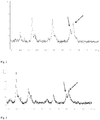
- Fig. 1 shows spectra with separated peaks which are easy to integrate and which have a very good signal-to-noise ratio, obtained by using the method according to the present invention.
- Figures 2 to 5 show spectra with separated peaks of beta-lactamases and other periplasmic space and cell wall outer membrane proteins, obtained by the procedure described in example 1, using meropenem for stabilization of the proteins.
Landscapes
- Life Sciences & Earth Sciences (AREA)
- Health & Medical Sciences (AREA)
- Engineering & Computer Science (AREA)
- Chemical & Material Sciences (AREA)
- Molecular Biology (AREA)
- Immunology (AREA)
- Organic Chemistry (AREA)
- Physics & Mathematics (AREA)
- Proteomics, Peptides & Aminoacids (AREA)
- Bioinformatics & Cheminformatics (AREA)
- Zoology (AREA)
- Wood Science & Technology (AREA)
- General Health & Medical Sciences (AREA)
- Biotechnology (AREA)
- Biochemistry (AREA)
- Analytical Chemistry (AREA)
- Microbiology (AREA)
- Biomedical Technology (AREA)
- Urology & Nephrology (AREA)
- Hematology (AREA)
- Biophysics (AREA)
- Genetics & Genomics (AREA)
- General Engineering & Computer Science (AREA)
- General Physics & Mathematics (AREA)
- Bioinformatics & Computational Biology (AREA)
- Cell Biology (AREA)
- Food Science & Technology (AREA)
- Medicinal Chemistry (AREA)
- Pathology (AREA)
- Toxicology (AREA)
- Spectroscopy & Molecular Physics (AREA)
- Pharmacology & Pharmacy (AREA)
- Optics & Photonics (AREA)
- Tropical Medicine & Parasitology (AREA)
- Virology (AREA)
- Other Investigation Or Analysis Of Materials By Electrical Means (AREA)
- Measuring Or Testing Involving Enzymes Or Micro-Organisms (AREA)
Description
- The invention relates to a method of identification of proteins of periplasmic space and of the outer membrane of a cell wall of Gram-negative bacteria using mass spectrometry. In particular it relates to a method of identification of beta-lactamases and to the detection of Gram-negative bacteria resistance towards beta-lactam antibiotics.
- Beta-lactamases are enzymes produced by some bacteria. They are responsible for bacterial resistance towards beta-lactam antibiotics (e.g. penicillins, cephalosporins, carbapenems). A suitable method for the determination of bacterial resistance is detection of beta-lactamases. It is important for an effective antibiotic treatment and for setting of suitable precautions to block the spreading of their producers.
- Beta-lactamase identification is carried out using phenotype methods based on the sensitivity towards different inhibitors. A precise identification takes place by the use of PCR amplification of the genes thereof followed by sequencing of the amplicons. There are several laboratories dealing with the development of beta-lactamase identification methods using mass spectrometry (e.g. Schaumann R, Knoop N, Genzel GH, Losensky K, Rosenkranz C, Stingu CS, Schellenberger W, Rodloff AC, Eschrich K. 2012. A step towards the discrimination of beta-lactamase-producing clinical isolates of Enterobacteriaceae and Pseudomonas aeruginosa by MALDI-TOF mass spectrometry. Med. Sci. Monit. 18: MT71-MT77).
- The method of protein (beta-lactamase) detection using MALDI-TOF (matrix assisted laser desorption/ionization time-of-flight) mass spectrometry is capable of affording results comparable with molecular genetics assays (PCR, microchips), yet making the whole process considerably faster and cheaper. So far, no effective method of detection of these enzymes using MALDI-TOF mass spectrometry has been published. The only published work, in which beta-lactamase has been identified using MALDI-TOF mass spectrometry, is the work of Camara JE, Hays FA. 2007. Discrimination between wild-type and ampicillin-resistant Escherichia coli by matrix-assisted laser desorption/ionization time-of-flight mass spectrometry. Anal. Bioanal. Chem. 389: 1633-1638 from 2007. The results published by the above-mentioned authors were, however, ireproducible. At the same time there exist no publications confirming the conclusions of the above-cited work.
- It is known from
WO 2012/143535 andWO 2012/143534 that carbapenemases and cephalosporinases can be detected by mass spectrometry, however, the proteins are first cleaved into short peptides and the type of carbapenemases and cephalosporinases is then determined according to the spectra typical for those peptides. - Furthermore, the detection of bacterial resistance is known, wherein products of treatment with enzymes causing the resistance are followed by mass spectrometry. It involves covalently modified antibiotics or covalently modified model compounds (
US 2012/196309 ). Likewise, there is known a determination of the presence of beta-lactamases, based on the detection of products of beta-lactamase activity, thus based on the detection of products of hydrolytic cleavage of the beta-lactam ring amide bond of beta-lactam anibiotics (WO 2011/154517 ). - All methods of detecting the enzymes of bacterial resistance known heretofore require either enzyme degradation into peptides or carrying out of the enzymatic reaction followed by the detection of the products of this reaction. This generates the risk of false positive results by incorporating additional components into the mixture being analyzed.
-
WO 2012/113699 describes a method of mass spectrometric determination of the inhibitory effect of substances on beta-lactamases. The tested substance is mixed with a beta-lactamase and a substrate which has a beta-lactam ring, and after allowing for reaction time, a mass spectrum of the substrate and the product of its enzymatic modification is acquired. In this document, the beta-lactamase itself is not subject to mass spectroscopy measurement. - Camara and Hays (Anal Bioanal Chem (2007) 389:1633-1638) describe a method of discrimination between bacteria carrying a beta-lactamase (resistant to beta-lactam antibiotics) or not carrying a beta-lactamase (sensitive to beta-lactam antibiotics) using MALDI-TOF. The article relies on observation of one typical peak of a beta-lactamase - the spectra have a low signal/noise ratio. The inventors of the present invention reproduced the method as described in this article and the spectrum obtained had a signal/noise ratio which did not allow to observe any MS peak.
- The present invention provides a method of detection of gram-negative bacteria periplasmic space and cell wall outer membrane proteins by mass spectrometry, wherein the periplasmic space and cell wall outer membrane proteins are extracted from the bacteria, and the proteins to be detected are stabilized by an inhibitor and/or a substrate of the respective protein to be detected. The stabilized proteins are then dissolved, deposited on a MALDI-TOF plate, covered by matrix solution and measured by a MALDI-TOF (matrix assisted laser desorption/ionization time-of-flight) mass spectrometry method. The resulting spectra are then compared with reference peaks for a given protein. Protein reference peaks are obtained from measurements of protein standards of known - or verified using known methods - identities.
- The extraction is preferably carried out as follows: bacteria grown in a liquid cultivation medium appropriate for Gram-negative bacteria, e.g. Mueller-Hinton (MH) bouillon or brain-heart infusion (BHI), are cooled down to a temperature in the range of from 0 °C to 6 °C, followed by a centrifugation in order to sediment the bacteria. The supernatant is discharged, the pellet is re-suspended in an aqueous solution of saccharose having the concentration of at least 20 % (w/w), preferably from 20 % to 40 % (w/w), more preferably in a 40 % (w/w) saccharose aqueous solution. The incubation is carried out for at least 1 hour at the temperature of from 2 °C to 8 °C, followed by an addition of a buffer suitable for a lysozyme activity (for example Tris-HCl buffer) and the lysozyme. The mixture is then incubated at a temperature of from 35 °C to 37 °C for a time necessary to destroy the outer membrane of the cell wall and to liberate the proteins of periplasmic space (generally 1 hour minimum). The quality of the extraction/destruction of the outer membrane of a cell wall can be verified microscopically - the rod-shaped bacteria change into a spherical form (spherocytes).
- In a preferred embodiment, the present invention provides a method of detection of beta-lactamases of gram-negative bacteria using mass spectrometry, wherein periplasmic space and cell wall outer membrane proteins are extracted from the bacteria, beta-lactamases in this mixture are stabilized with a beta-lactamase inhibitor and/or substrate. Beta-lactamases are further precipitated, the precipitated beta-lactamases are dissolved and deposited on a MALDI-TOF plate, covered by a matrix solution destined for ionization of proteins with Mr > 10 000 and measured using MALDI-TOF mass spectrometry method. The resulting spectra are compared with reference peaks of beta-lactamases.
- In a preferred embodiment, the inhibitor or substrate used for the stabilization is a beta-lactam antibiotic or a beta-lactam inhibitor, e.g. meropenem, ampicillin, clavulanic acid, cefepime, phenyl boric acid.
- The precipitation is preferably performed using C1 to C4 alcohol, more preferably ethanol, or acetone, into which trifluoroacetic acid can preferably be added, more preferably 0.1 vol. % of trifluoroacetic acid.
- Preferably, the precipitated stabilized beta-lactamase is dissolved in a mixture of acetonitrile and water with an addition of trifluoroacetic acid, more preferably in the mixture containing 50 vol. % of acetonitrile, 2.5 vol. % trifluoroacetic acid and water.
- Beta-lactamase reference peaks can be obtained from measurements of beta-lactamase standards, whose identity is known or can be verified using known methods.
- The present invention can be carried out using a kit for the detection of beta-lactamases of Gram-negative bacteria using mass spectrometry, containing Tris-HCl buffer (pH 8.0), a lysozyme, a beta-lactamase inhibitor and/or substrate, C1 to C4 alcohol or acetone, a mixture of acetonitrile and water with an addition of trifluoroacetic acid, matrix, matrix solvent.
-
-
Fig. 1 represents examples of detection of beta-lactamases of the CMY type. The peaks corresponding to beta-lactamase are marked by an arrow. A - spectrum of the purified beta-lactamase CMY-2, B - spectrum of a sample of Proteus mirabilis producing beta-lactamase CMY-15, C - spectrum of a sample of Escherichia coli producing beta-lactamase CMY-2. -
Fig. 2 represents the spectrum of Escherichia coli, wherein the thin arrow shows the peak of CMY-2 and the bold arrow shows the peak of the protein OmpC. -
Fig. 3 represents the spectrum of Klebsiella pneumoniae, wherein the thin arrow shows the peak of CMY-2 and the bold arrow shows the peak of the outer membrane protein II. -
Fig. 4 represents the spectrum of Klebsiella pneumoniae, wherein the thin arrow shows the peak of CMY-2 and the bold arrow shows the peak of the OmpK36. -
Fig. 5 represents the spectrum of Proteus mirabilis, wherein the thin arrow shows the peak of CMY-2 and the bold arrow shows the peak of the flagellin. - The isolate of bacteria of the family Enterobacteriaceae (the bacteria tested were Escherichia coli, Klebsiella pneumoniae, Proteus mirabilis, Citrobacter freundii) was inoculated into 50 mL of Mueller-Hinton bouillon (MH bouillon) or brain-heart infusion (BHI) with an addition of 50 mg/L of ampicillin; the culture was cultivated for from 12 to 18 hours at the temperature of from 35 °C to 37 °C.
- The media with the cultivated culture was then cooled down to the temperature of ca. 4 °C (incubation on ice for ca. 10 min) and centrifuged for 20 min. The supernatant was discharged. The pellet was re-suspended in 90 µL of aqueous solution of saccharose (40 % w/w) and incubated for 1 hour at 4 °C.
- In the next step, 10 µL of 1M Tris-HCl buffer (pH 8.0) was added to the mixture together with 1 µL of lysozyme (concentration 10 mg/mL); the incubation was carried out for 90 min at the temperature of from 35 °C to 37 °C. The quality of the extraction can be verified microscopically - the rod-shaped bacteria change into a spherical form (spherocytes) .
- The following centrifugation lasted 5 min at 14 000 g. The supernatant containing extracted beta-lactamases was further used.
- 100 µL of the prepared extract was mixed with 25 µL of 100 mM meropenem (phenyl boronic acid was also tested, giving similar results) and incubated for 10 min at room temperature. 1 mL of ice-cold ethanol with 0.1 vol. % of trifluoroacetic acid was added to the mixture, vortexed for 30 seconds and centrifuged for 20 min at 14 000 g at the temperature of 4 °C. The supernatant was then discharged, the pellet was dried at the temperature of from 35 °C to 37 °C for 10 min, and further dissolved in 50 µL of acetonitrile solution (500 µL of acetonitrile, 475 µL of de-ionized water, 25 µL of trifluoroacetic acid). The mixture was then vortexed for 1 min.
- 1 µL of the solution was placed on a MALDI plate used for MALDI-TOF mass spectrometry measurements and let to dry at room temperature. The sample was then covered by 1 µL of matrix (50 % (vol.) of ethanol in water, saturated with sinapic acid) and allowed to dry. MALDI-TOF measurement followed.
-
Fig. 1 shows spectra with separated peaks which are easy to integrate and which have a very good signal-to-noise ratio, obtained by using the method according to the present invention. -
Figures 2 to 5 show spectra with separated peaks of beta-lactamases and other periplasmic space and cell wall outer membrane proteins, obtained by the procedure described in example 1, using meropenem for stabilization of the proteins.
Claims (7)
- A method of detection of Gram-negative bacteria periplasmic space and cell wall outer membrane proteins by mass spectrometry, characterized in that the periplasmic space and cell wall outer membrane proteins are extracted from the bacteria, and the proteins to be detected are stabilized by an inhibitor and/or a substrate of the given protein, the proteins are then dissolved, placed onto a MALDI-TOF plate, covered with matrix solution, measured by MALDI-TOF mass spectrometry, and the resulting spectra are compared to the reference peaks of the given protein.
- The method according to claim 1, characterized in that the extraction is carried out by cooling down the bacteria in cultivation medium for gram-negative bacteria to the temperature of from 0 °C to 6 °C, followed by centrifugation in order to sediment the bacteria, re-suspension of the pellet in an aqueous solution of saccharose of a concentration of at least 20 % (w/w), and incubation for at least 1 hour at the temperature of from 2 °C to 8 °C; a lysozyme solution in a buffer is further added to the mixture and the resulting mixture is incubated at the temperature of from 35 °C to 37 °C.
- A method of detection of beta-lactamases of Gram-negative bacteria by mass spectrometry, characterized in that periplasmic space and cell wall outer membrane proteins are extracted from the bacteria; beta-lactamases in this mixture are stabilized with a beta-lactamase inhibitor and/or substrate; beta-lactamases are further precipitated, the precipitated beta-lactamases are dissolved, placed onto a MALDI-TOF plate, covered with matrix solution destined for ionization of proteins with molecular mass greater than 10 000, and measured by MALDI-TOF mass spectrometry; the resulting spectra are compared to the reference peaks of beta-lactamases.
- The method according to claim 3, characterized in that the extraction is carried out by cooling down the bacteria in cultivation medium for Gram-negative bacteria to the temperature of from 0 °C to 6 °C, followed by centrifugation for at least 20 min, re-suspension of the pellet in an aqueous solution of saccharose of a concentration of at least 20 % (w/v), and incubation for at least 1 hour at the temperature of from 2 °C to 8 °C; a lysozyme solution in a buffer is further added to the mixture and the resulting mixture is incubated at the temperature of from 35 °C to 37 °C for at least 1 hour.
- The method according to claim 3, characterized in that the inhibitor or substrate is a beta-lactam antibiotic or a beta-lactam inhibitor, preferably the inhibitor or substrate is selected from the group comprising meropenem, ampicillin, clavulanic acid, cefepim, phenyl boric acid.
- The method according to claim 3, characterized in that the precipitation is performed using C1 to C4 alcohol or acetone, preferably with the addition of trifluoroacetic acid.
- The method according to claim 3, characterized in that the dissolution of the precipitated stabilized beta-lactamase is carried out using a mixture of acetonitrile and water with the addition of trifluoroacetic acid.
Applications Claiming Priority (1)
| Application Number | Priority Date | Filing Date | Title |
|---|---|---|---|
| CZ2013-473A CZ304833B6 (en) | 2013-06-20 | 2013-06-20 | Detection method of gram-negative bacterium beta-lactamases by mass spectrometry |
Publications (2)
| Publication Number | Publication Date |
|---|---|
| EP2816357A1 EP2816357A1 (en) | 2014-12-24 |
| EP2816357B1 true EP2816357B1 (en) | 2019-04-17 |
Family
ID=51032943
Family Applications (1)
| Application Number | Title | Priority Date | Filing Date |
|---|---|---|---|
| EP14173225.5A Not-in-force EP2816357B1 (en) | 2013-06-20 | 2014-06-20 | Method of detection of Gram-negative bacteria periplasmic space and cell wall outer membrane proteins by mass spectrometry |
Country Status (4)
| Country | Link |
|---|---|
| US (1) | US9803229B2 (en) |
| EP (1) | EP2816357B1 (en) |
| CZ (1) | CZ304833B6 (en) |
| WO (1) | WO2014202034A1 (en) |
Families Citing this family (5)
| Publication number | Priority date | Publication date | Assignee | Title |
|---|---|---|---|---|
| WO2019034437A1 (en) * | 2017-08-17 | 2019-02-21 | Conicet - Consejo Nacional De Investigaciones Científicas Y Técnicas | Direct detection of resistance mechanisms by maldi-tof mass spectrometry |
| JP2019143975A (en) * | 2018-02-15 | 2019-08-29 | 株式会社島津製作所 | ANALYSIS METHOD AND β-LACTAM-BASED ANTIBACTERIAL DRUG RESISTANCE EVALUATION METHOD |
| KR101999574B1 (en) * | 2018-08-03 | 2019-09-27 | 다이아텍코리아 주식회사 | Direct detection of the active form of beta-lactam-hydrolysing enzymes by using Mass spectrophotometry |
| KR102729119B1 (en) * | 2019-08-02 | 2024-11-13 | (재)씨젠의료재단 | A Method for Direct Detection of Pathogenic Microbes with Resistance to β-Lactam Antibiotics |
| JP2026013695A (en) * | 2024-07-17 | 2026-01-29 | 株式会社島津製作所 | Method for evaluating drug resistance of microorganisms |
Family Cites Families (6)
| Publication number | Priority date | Publication date | Assignee | Title |
|---|---|---|---|---|
| DE102006021493B4 (en) * | 2006-05-09 | 2010-04-01 | Bruker Daltonik Gmbh | Mass spectrometric measurement of microbial resistance |
| DE102010023452B4 (en) | 2010-06-11 | 2012-11-08 | Bruker Daltonik Gmbh | Mass spectrometric measurement of β-lactamase resistance |
| US20120196309A1 (en) | 2011-01-28 | 2012-08-02 | Yale University | Methods and Kits for Detection of Antibiotic Resistance |
| DE102011012060A1 (en) * | 2011-02-23 | 2012-08-23 | Bruker Daltonik Gmbh | Mass spectrometric determination of the inhibitory effect of substances on beta-lactamases |
| WO2012143535A2 (en) | 2011-04-21 | 2012-10-26 | Biomerieux Inc. | Method for detecting at least one carbapenem resistance mechanism by means of mass spectrometry |
| EP3156496B1 (en) | 2011-04-21 | 2019-04-10 | Biomérieux Inc. | Method for detecting at least a resistance mechanism affecting cephalosporins by means of mass spectrometry |
-
2013
- 2013-06-20 CZ CZ2013-473A patent/CZ304833B6/en unknown
-
2014
- 2014-06-20 EP EP14173225.5A patent/EP2816357B1/en not_active Not-in-force
- 2014-06-20 WO PCT/CZ2014/000069 patent/WO2014202034A1/en not_active Ceased
- 2014-06-20 US US14/398,705 patent/US9803229B2/en not_active Expired - Fee Related
Non-Patent Citations (1)
| Title |
|---|
| None * |
Also Published As
| Publication number | Publication date |
|---|---|
| US9803229B2 (en) | 2017-10-31 |
| EP2816357A1 (en) | 2014-12-24 |
| CZ2013473A3 (en) | 2014-11-26 |
| WO2014202034A1 (en) | 2014-12-24 |
| CZ304833B6 (en) | 2014-11-26 |
| US20160138068A1 (en) | 2016-05-19 |
Similar Documents
| Publication | Publication Date | Title |
|---|---|---|
| JP6216711B2 (en) | Method for detecting at least one mechanism of resistance to carbapenem by mass spectrometry | |
| JP6087341B2 (en) | Method for detecting at least one mechanism of resistance to cephalosporin by mass spectrometry | |
| JP6992112B2 (en) | Analysis of microbial characteristics via MALDI-TOF | |
| AU2010359382B2 (en) | Methods and means for characterizing antibiotic resistance in microorganisms | |
| US9803229B2 (en) | Method of detection of gram-negative bacteria periplasmic space and cell wall outer membrane proteins by mass spectrometry | |
| US20120196309A1 (en) | Methods and Kits for Detection of Antibiotic Resistance | |
| FR2951548A1 (en) | METHOD FOR CHARACTERIZING AT LEAST ONE MICROORGANISM BY MASS SPECTROMETRY | |
| FR2990217A1 (en) | PROCESS FOR OBTAINING PEPTIDES | |
| EP3087396B1 (en) | Identification of methicillin resistant staphylococcus aureus (mrsa) | |
| Jang et al. | Mass spectrometric identification of phenol-soluble modulins in the ATCC® 43300 standard strain of methicillin-resistant Staphylococcus aureus harboring two distinct phenotypes | |
| CA3247165A1 (en) | Method for determining the methicillin resistance of staphylococcus aureus strains | |
| JP6370781B2 (en) | Method for detecting at least one mechanism of resistance to glycopeptides by mass spectrometry | |
| US9376705B2 (en) | Method for detecting susceptibility of microorganisms to chemical agents | |
| US12448641B2 (en) | Method for quantifying at least one microorganism group via mass spectrometry | |
| Shah et al. | Determination of antimicrobial resistance using tandem mass spectrometry | |
| Nicholls | The characterization of two novel Class II lanthipeptides from Thalassomonas viridans by heterologous expression in Escherichia coli | |
| EP3527668A1 (en) | Analysis method and b-lactam antibiotic resistance evaluation method | |
| Gekenidis | Rapid Profiling of Human Pathogenic Bacteria and Antibiotic Resistance Employing Specific Tryptic Peptides as Biomarkers David Drissner, René Brunisholz, Ralph Schlapbach and |
Legal Events
| Date | Code | Title | Description |
|---|---|---|---|
| PUAI | Public reference made under article 153(3) epc to a published international application that has entered the european phase |
Free format text: ORIGINAL CODE: 0009012 |
|
| 17P | Request for examination filed |
Effective date: 20140625 |
|
| AK | Designated contracting states |
Kind code of ref document: A1 Designated state(s): AL AT BE BG CH CY CZ DE DK EE ES FI FR GB GR HR HU IE IS IT LI LT LU LV MC MK MT NL NO PL PT RO RS SE SI SK SM TR |
|
| AX | Request for extension of the european patent |
Extension state: BA ME |
|
| STAA | Information on the status of an ep patent application or granted ep patent |
Free format text: STATUS: EXAMINATION IS IN PROGRESS |
|
| 17Q | First examination report despatched |
Effective date: 20170324 |
|
| GRAP | Despatch of communication of intention to grant a patent |
Free format text: ORIGINAL CODE: EPIDOSNIGR1 |
|
| STAA | Information on the status of an ep patent application or granted ep patent |
Free format text: STATUS: GRANT OF PATENT IS INTENDED |
|
| INTG | Intention to grant announced |
Effective date: 20181120 |
|
| GRAS | Grant fee paid |
Free format text: ORIGINAL CODE: EPIDOSNIGR3 |
|
| GRAA | (expected) grant |
Free format text: ORIGINAL CODE: 0009210 |
|
| STAA | Information on the status of an ep patent application or granted ep patent |
Free format text: STATUS: THE PATENT HAS BEEN GRANTED |
|
| AK | Designated contracting states |
Kind code of ref document: B1 Designated state(s): AL AT BE BG CH CY CZ DE DK EE ES FI FR GB GR HR HU IE IS IT LI LT LU LV MC MK MT NL NO PL PT RO RS SE SI SK SM TR |
|
| REG | Reference to a national code |
Ref country code: GB Ref legal event code: FG4D |
|
| REG | Reference to a national code |
Ref country code: CH Ref legal event code: EP |
|
| REG | Reference to a national code |
Ref country code: DE Ref legal event code: R096 Ref document number: 602014044791 Country of ref document: DE |
|
| REG | Reference to a national code |
Ref country code: AT Ref legal event code: REF Ref document number: 1122146 Country of ref document: AT Kind code of ref document: T Effective date: 20190515 Ref country code: IE Ref legal event code: FG4D |
|
| REG | Reference to a national code |
Ref country code: NL Ref legal event code: MP Effective date: 20190417 |
|
| REG | Reference to a national code |
Ref country code: LT Ref legal event code: MG4D |
|
| PG25 | Lapsed in a contracting state [announced via postgrant information from national office to epo] |
Ref country code: NL Free format text: LAPSE BECAUSE OF FAILURE TO SUBMIT A TRANSLATION OF THE DESCRIPTION OR TO PAY THE FEE WITHIN THE PRESCRIBED TIME-LIMIT Effective date: 20190417 |
|
| PG25 | Lapsed in a contracting state [announced via postgrant information from national office to epo] |
Ref country code: LT Free format text: LAPSE BECAUSE OF FAILURE TO SUBMIT A TRANSLATION OF THE DESCRIPTION OR TO PAY THE FEE WITHIN THE PRESCRIBED TIME-LIMIT Effective date: 20190417 Ref country code: HR Free format text: LAPSE BECAUSE OF FAILURE TO SUBMIT A TRANSLATION OF THE DESCRIPTION OR TO PAY THE FEE WITHIN THE PRESCRIBED TIME-LIMIT Effective date: 20190417 Ref country code: SE Free format text: LAPSE BECAUSE OF FAILURE TO SUBMIT A TRANSLATION OF THE DESCRIPTION OR TO PAY THE FEE WITHIN THE PRESCRIBED TIME-LIMIT Effective date: 20190417 Ref country code: NO Free format text: LAPSE BECAUSE OF FAILURE TO SUBMIT A TRANSLATION OF THE DESCRIPTION OR TO PAY THE FEE WITHIN THE PRESCRIBED TIME-LIMIT Effective date: 20190717 Ref country code: ES Free format text: LAPSE BECAUSE OF FAILURE TO SUBMIT A TRANSLATION OF THE DESCRIPTION OR TO PAY THE FEE WITHIN THE PRESCRIBED TIME-LIMIT Effective date: 20190417 Ref country code: AL Free format text: LAPSE BECAUSE OF FAILURE TO SUBMIT A TRANSLATION OF THE DESCRIPTION OR TO PAY THE FEE WITHIN THE PRESCRIBED TIME-LIMIT Effective date: 20190417 Ref country code: PT Free format text: LAPSE BECAUSE OF FAILURE TO SUBMIT A TRANSLATION OF THE DESCRIPTION OR TO PAY THE FEE WITHIN THE PRESCRIBED TIME-LIMIT Effective date: 20190817 Ref country code: FI Free format text: LAPSE BECAUSE OF FAILURE TO SUBMIT A TRANSLATION OF THE DESCRIPTION OR TO PAY THE FEE WITHIN THE PRESCRIBED TIME-LIMIT Effective date: 20190417 |
|
| PG25 | Lapsed in a contracting state [announced via postgrant information from national office to epo] |
Ref country code: BG Free format text: LAPSE BECAUSE OF FAILURE TO SUBMIT A TRANSLATION OF THE DESCRIPTION OR TO PAY THE FEE WITHIN THE PRESCRIBED TIME-LIMIT Effective date: 20190717 Ref country code: GR Free format text: LAPSE BECAUSE OF FAILURE TO SUBMIT A TRANSLATION OF THE DESCRIPTION OR TO PAY THE FEE WITHIN THE PRESCRIBED TIME-LIMIT Effective date: 20190718 Ref country code: PL Free format text: LAPSE BECAUSE OF FAILURE TO SUBMIT A TRANSLATION OF THE DESCRIPTION OR TO PAY THE FEE WITHIN THE PRESCRIBED TIME-LIMIT Effective date: 20190417 Ref country code: RS Free format text: LAPSE BECAUSE OF FAILURE TO SUBMIT A TRANSLATION OF THE DESCRIPTION OR TO PAY THE FEE WITHIN THE PRESCRIBED TIME-LIMIT Effective date: 20190417 Ref country code: LV Free format text: LAPSE BECAUSE OF FAILURE TO SUBMIT A TRANSLATION OF THE DESCRIPTION OR TO PAY THE FEE WITHIN THE PRESCRIBED TIME-LIMIT Effective date: 20190417 |
|
| REG | Reference to a national code |
Ref country code: AT Ref legal event code: MK05 Ref document number: 1122146 Country of ref document: AT Kind code of ref document: T Effective date: 20190417 |
|
| PG25 | Lapsed in a contracting state [announced via postgrant information from national office to epo] |
Ref country code: IS Free format text: LAPSE BECAUSE OF FAILURE TO SUBMIT A TRANSLATION OF THE DESCRIPTION OR TO PAY THE FEE WITHIN THE PRESCRIBED TIME-LIMIT Effective date: 20190817 |
|
| REG | Reference to a national code |
Ref country code: DE Ref legal event code: R097 Ref document number: 602014044791 Country of ref document: DE |
|
| PG25 | Lapsed in a contracting state [announced via postgrant information from national office to epo] |
Ref country code: EE Free format text: LAPSE BECAUSE OF FAILURE TO SUBMIT A TRANSLATION OF THE DESCRIPTION OR TO PAY THE FEE WITHIN THE PRESCRIBED TIME-LIMIT Effective date: 20190417 Ref country code: DK Free format text: LAPSE BECAUSE OF FAILURE TO SUBMIT A TRANSLATION OF THE DESCRIPTION OR TO PAY THE FEE WITHIN THE PRESCRIBED TIME-LIMIT Effective date: 20190417 Ref country code: SK Free format text: LAPSE BECAUSE OF FAILURE TO SUBMIT A TRANSLATION OF THE DESCRIPTION OR TO PAY THE FEE WITHIN THE PRESCRIBED TIME-LIMIT Effective date: 20190417 Ref country code: MC Free format text: LAPSE BECAUSE OF FAILURE TO SUBMIT A TRANSLATION OF THE DESCRIPTION OR TO PAY THE FEE WITHIN THE PRESCRIBED TIME-LIMIT Effective date: 20190417 Ref country code: CZ Free format text: LAPSE BECAUSE OF FAILURE TO SUBMIT A TRANSLATION OF THE DESCRIPTION OR TO PAY THE FEE WITHIN THE PRESCRIBED TIME-LIMIT Effective date: 20190417 Ref country code: RO Free format text: LAPSE BECAUSE OF FAILURE TO SUBMIT A TRANSLATION OF THE DESCRIPTION OR TO PAY THE FEE WITHIN THE PRESCRIBED TIME-LIMIT Effective date: 20190417 Ref country code: AT Free format text: LAPSE BECAUSE OF FAILURE TO SUBMIT A TRANSLATION OF THE DESCRIPTION OR TO PAY THE FEE WITHIN THE PRESCRIBED TIME-LIMIT Effective date: 20190417 |
|
| REG | Reference to a national code |
Ref country code: CH Ref legal event code: PL |
|
| PLBE | No opposition filed within time limit |
Free format text: ORIGINAL CODE: 0009261 |
|
| STAA | Information on the status of an ep patent application or granted ep patent |
Free format text: STATUS: NO OPPOSITION FILED WITHIN TIME LIMIT |
|
| PG25 | Lapsed in a contracting state [announced via postgrant information from national office to epo] |
Ref country code: SM Free format text: LAPSE BECAUSE OF FAILURE TO SUBMIT A TRANSLATION OF THE DESCRIPTION OR TO PAY THE FEE WITHIN THE PRESCRIBED TIME-LIMIT Effective date: 20190417 Ref country code: IT Free format text: LAPSE BECAUSE OF FAILURE TO SUBMIT A TRANSLATION OF THE DESCRIPTION OR TO PAY THE FEE WITHIN THE PRESCRIBED TIME-LIMIT Effective date: 20190417 |
|
| 26N | No opposition filed |
Effective date: 20200120 |
|
| REG | Reference to a national code |
Ref country code: BE Ref legal event code: MM Effective date: 20190630 |
|
| PG25 | Lapsed in a contracting state [announced via postgrant information from national office to epo] |
Ref country code: TR Free format text: LAPSE BECAUSE OF FAILURE TO SUBMIT A TRANSLATION OF THE DESCRIPTION OR TO PAY THE FEE WITHIN THE PRESCRIBED TIME-LIMIT Effective date: 20190417 |
|
| PG25 | Lapsed in a contracting state [announced via postgrant information from national office to epo] |
Ref country code: IE Free format text: LAPSE BECAUSE OF NON-PAYMENT OF DUE FEES Effective date: 20190620 |
|
| PG25 | Lapsed in a contracting state [announced via postgrant information from national office to epo] |
Ref country code: LI Free format text: LAPSE BECAUSE OF NON-PAYMENT OF DUE FEES Effective date: 20190630 Ref country code: LU Free format text: LAPSE BECAUSE OF NON-PAYMENT OF DUE FEES Effective date: 20190620 Ref country code: CH Free format text: LAPSE BECAUSE OF NON-PAYMENT OF DUE FEES Effective date: 20190630 Ref country code: BE Free format text: LAPSE BECAUSE OF NON-PAYMENT OF DUE FEES Effective date: 20190630 Ref country code: SI Free format text: LAPSE BECAUSE OF FAILURE TO SUBMIT A TRANSLATION OF THE DESCRIPTION OR TO PAY THE FEE WITHIN THE PRESCRIBED TIME-LIMIT Effective date: 20190417 |
|
| PGFP | Annual fee paid to national office [announced via postgrant information from national office to epo] |
Ref country code: FR Payment date: 20200623 Year of fee payment: 7 Ref country code: DE Payment date: 20200618 Year of fee payment: 7 |
|
| PGFP | Annual fee paid to national office [announced via postgrant information from national office to epo] |
Ref country code: GB Payment date: 20200617 Year of fee payment: 7 |
|
| PG25 | Lapsed in a contracting state [announced via postgrant information from national office to epo] |
Ref country code: CY Free format text: LAPSE BECAUSE OF FAILURE TO SUBMIT A TRANSLATION OF THE DESCRIPTION OR TO PAY THE FEE WITHIN THE PRESCRIBED TIME-LIMIT Effective date: 20190417 |
|
| PG25 | Lapsed in a contracting state [announced via postgrant information from national office to epo] |
Ref country code: MT Free format text: LAPSE BECAUSE OF FAILURE TO SUBMIT A TRANSLATION OF THE DESCRIPTION OR TO PAY THE FEE WITHIN THE PRESCRIBED TIME-LIMIT Effective date: 20190417 Ref country code: HU Free format text: LAPSE BECAUSE OF FAILURE TO SUBMIT A TRANSLATION OF THE DESCRIPTION OR TO PAY THE FEE WITHIN THE PRESCRIBED TIME-LIMIT; INVALID AB INITIO Effective date: 20140620 |
|
| REG | Reference to a national code |
Ref country code: DE Ref legal event code: R119 Ref document number: 602014044791 Country of ref document: DE |
|
| GBPC | Gb: european patent ceased through non-payment of renewal fee |
Effective date: 20210620 |
|
| PG25 | Lapsed in a contracting state [announced via postgrant information from national office to epo] |
Ref country code: GB Free format text: LAPSE BECAUSE OF NON-PAYMENT OF DUE FEES Effective date: 20210620 Ref country code: DE Free format text: LAPSE BECAUSE OF NON-PAYMENT OF DUE FEES Effective date: 20220101 |
|
| PG25 | Lapsed in a contracting state [announced via postgrant information from national office to epo] |
Ref country code: FR Free format text: LAPSE BECAUSE OF NON-PAYMENT OF DUE FEES Effective date: 20210630 |
|
| PG25 | Lapsed in a contracting state [announced via postgrant information from national office to epo] |
Ref country code: MK Free format text: LAPSE BECAUSE OF FAILURE TO SUBMIT A TRANSLATION OF THE DESCRIPTION OR TO PAY THE FEE WITHIN THE PRESCRIBED TIME-LIMIT Effective date: 20190417 |