EP2813526A1 - Polymer and organic solar cell including same - Google Patents
Polymer and organic solar cell including same Download PDFInfo
- Publication number
- EP2813526A1 EP2813526A1 EP13746662.9A EP13746662A EP2813526A1 EP 2813526 A1 EP2813526 A1 EP 2813526A1 EP 13746662 A EP13746662 A EP 13746662A EP 2813526 A1 EP2813526 A1 EP 2813526A1
- Authority
- EP
- European Patent Office
- Prior art keywords
- group
- substituted
- unsubstituted
- polymer
- alkyl group
- Prior art date
- Legal status (The legal status is an assumption and is not a legal conclusion. Google has not performed a legal analysis and makes no representation as to the accuracy of the status listed.)
- Withdrawn
Links
- 0 Bc(c1n[s]nc11)c(*)c(*)c1Br Chemical compound Bc(c1n[s]nc11)c(*)c(*)c1Br 0.000 description 10
- HAATUPUABNMHJK-UHFFFAOYSA-N NCC=[N]=CPN Chemical compound NCC=[N]=CPN HAATUPUABNMHJK-UHFFFAOYSA-N 0.000 description 1
Images






Classifications
-
- C—CHEMISTRY; METALLURGY
- C07—ORGANIC CHEMISTRY
- C07D—HETEROCYCLIC COMPOUNDS
- C07D417/00—Heterocyclic compounds containing two or more hetero rings, at least one ring having nitrogen and sulfur atoms as the only ring hetero atoms, not provided for by group C07D415/00
- C07D417/14—Heterocyclic compounds containing two or more hetero rings, at least one ring having nitrogen and sulfur atoms as the only ring hetero atoms, not provided for by group C07D415/00 containing three or more hetero rings
-
- C—CHEMISTRY; METALLURGY
- C08—ORGANIC MACROMOLECULAR COMPOUNDS; THEIR PREPARATION OR CHEMICAL WORKING-UP; COMPOSITIONS BASED THEREON
- C08G—MACROMOLECULAR COMPOUNDS OBTAINED OTHERWISE THAN BY REACTIONS ONLY INVOLVING UNSATURATED CARBON-TO-CARBON BONDS
- C08G61/00—Macromolecular compounds obtained by reactions forming a carbon-to-carbon link in the main chain of the macromolecule
- C08G61/12—Macromolecular compounds containing atoms other than carbon in the main chain of the macromolecule
-
- C—CHEMISTRY; METALLURGY
- C08—ORGANIC MACROMOLECULAR COMPOUNDS; THEIR PREPARATION OR CHEMICAL WORKING-UP; COMPOSITIONS BASED THEREON
- C08G—MACROMOLECULAR COMPOUNDS OBTAINED OTHERWISE THAN BY REACTIONS ONLY INVOLVING UNSATURATED CARBON-TO-CARBON BONDS
- C08G61/00—Macromolecular compounds obtained by reactions forming a carbon-to-carbon link in the main chain of the macromolecule
- C08G61/12—Macromolecular compounds containing atoms other than carbon in the main chain of the macromolecule
- C08G61/122—Macromolecular compounds containing atoms other than carbon in the main chain of the macromolecule derived from five- or six-membered heterocyclic compounds, other than imides
- C08G61/123—Macromolecular compounds containing atoms other than carbon in the main chain of the macromolecule derived from five- or six-membered heterocyclic compounds, other than imides derived from five-membered heterocyclic compounds
-
- C—CHEMISTRY; METALLURGY
- C08—ORGANIC MACROMOLECULAR COMPOUNDS; THEIR PREPARATION OR CHEMICAL WORKING-UP; COMPOSITIONS BASED THEREON
- C08G—MACROMOLECULAR COMPOUNDS OBTAINED OTHERWISE THAN BY REACTIONS ONLY INVOLVING UNSATURATED CARBON-TO-CARBON BONDS
- C08G61/00—Macromolecular compounds obtained by reactions forming a carbon-to-carbon link in the main chain of the macromolecule
- C08G61/12—Macromolecular compounds containing atoms other than carbon in the main chain of the macromolecule
- C08G61/122—Macromolecular compounds containing atoms other than carbon in the main chain of the macromolecule derived from five- or six-membered heterocyclic compounds, other than imides
- C08G61/123—Macromolecular compounds containing atoms other than carbon in the main chain of the macromolecule derived from five- or six-membered heterocyclic compounds, other than imides derived from five-membered heterocyclic compounds
- C08G61/124—Macromolecular compounds containing atoms other than carbon in the main chain of the macromolecule derived from five- or six-membered heterocyclic compounds, other than imides derived from five-membered heterocyclic compounds with a five-membered ring containing one nitrogen atom in the ring
-
- C—CHEMISTRY; METALLURGY
- C08—ORGANIC MACROMOLECULAR COMPOUNDS; THEIR PREPARATION OR CHEMICAL WORKING-UP; COMPOSITIONS BASED THEREON
- C08G—MACROMOLECULAR COMPOUNDS OBTAINED OTHERWISE THAN BY REACTIONS ONLY INVOLVING UNSATURATED CARBON-TO-CARBON BONDS
- C08G61/00—Macromolecular compounds obtained by reactions forming a carbon-to-carbon link in the main chain of the macromolecule
- C08G61/12—Macromolecular compounds containing atoms other than carbon in the main chain of the macromolecule
- C08G61/122—Macromolecular compounds containing atoms other than carbon in the main chain of the macromolecule derived from five- or six-membered heterocyclic compounds, other than imides
- C08G61/123—Macromolecular compounds containing atoms other than carbon in the main chain of the macromolecule derived from five- or six-membered heterocyclic compounds, other than imides derived from five-membered heterocyclic compounds
- C08G61/126—Macromolecular compounds containing atoms other than carbon in the main chain of the macromolecule derived from five- or six-membered heterocyclic compounds, other than imides derived from five-membered heterocyclic compounds with a five-membered ring containing one sulfur atom in the ring
-
- C—CHEMISTRY; METALLURGY
- C08—ORGANIC MACROMOLECULAR COMPOUNDS; THEIR PREPARATION OR CHEMICAL WORKING-UP; COMPOSITIONS BASED THEREON
- C08G—MACROMOLECULAR COMPOUNDS OBTAINED OTHERWISE THAN BY REACTIONS ONLY INVOLVING UNSATURATED CARBON-TO-CARBON BONDS
- C08G75/00—Macromolecular compounds obtained by reactions forming a linkage containing sulfur with or without nitrogen, oxygen, or carbon in the main chain of the macromolecule
-
- H—ELECTRICITY
- H10—SEMICONDUCTOR DEVICES; ELECTRIC SOLID-STATE DEVICES NOT OTHERWISE PROVIDED FOR
- H10F—INORGANIC SEMICONDUCTOR DEVICES SENSITIVE TO INFRARED RADIATION, LIGHT, ELECTROMAGNETIC RADIATION OF SHORTER WAVELENGTH OR CORPUSCULAR RADIATION
- H10F19/00—Integrated devices, or assemblies of multiple devices, comprising at least one photovoltaic cell covered by group H10F10/00, e.g. photovoltaic modules
-
- H—ELECTRICITY
- H10—SEMICONDUCTOR DEVICES; ELECTRIC SOLID-STATE DEVICES NOT OTHERWISE PROVIDED FOR
- H10K—ORGANIC ELECTRIC SOLID-STATE DEVICES
- H10K85/00—Organic materials used in the body or electrodes of devices covered by this subclass
- H10K85/10—Organic polymers or oligomers
- H10K85/111—Organic polymers or oligomers comprising aromatic, heteroaromatic, or aryl chains, e.g. polyaniline, polyphenylene or polyphenylene vinylene
-
- H—ELECTRICITY
- H10—SEMICONDUCTOR DEVICES; ELECTRIC SOLID-STATE DEVICES NOT OTHERWISE PROVIDED FOR
- H10K—ORGANIC ELECTRIC SOLID-STATE DEVICES
- H10K85/00—Organic materials used in the body or electrodes of devices covered by this subclass
- H10K85/10—Organic polymers or oligomers
- H10K85/111—Organic polymers or oligomers comprising aromatic, heteroaromatic, or aryl chains, e.g. polyaniline, polyphenylene or polyphenylene vinylene
- H10K85/113—Heteroaromatic compounds comprising sulfur or selene, e.g. polythiophene
-
- H—ELECTRICITY
- H10—SEMICONDUCTOR DEVICES; ELECTRIC SOLID-STATE DEVICES NOT OTHERWISE PROVIDED FOR
- H10K—ORGANIC ELECTRIC SOLID-STATE DEVICES
- H10K85/00—Organic materials used in the body or electrodes of devices covered by this subclass
- H10K85/10—Organic polymers or oligomers
- H10K85/151—Copolymers
-
- C—CHEMISTRY; METALLURGY
- C08—ORGANIC MACROMOLECULAR COMPOUNDS; THEIR PREPARATION OR CHEMICAL WORKING-UP; COMPOSITIONS BASED THEREON
- C08G—MACROMOLECULAR COMPOUNDS OBTAINED OTHERWISE THAN BY REACTIONS ONLY INVOLVING UNSATURATED CARBON-TO-CARBON BONDS
- C08G2261/00—Macromolecular compounds obtained by reactions forming a carbon-to-carbon link in the main chain of the macromolecule
- C08G2261/10—Definition of the polymer structure
- C08G2261/14—Side-groups
- C08G2261/141—Side-chains having aliphatic units
- C08G2261/1412—Saturated aliphatic units
-
- C—CHEMISTRY; METALLURGY
- C08—ORGANIC MACROMOLECULAR COMPOUNDS; THEIR PREPARATION OR CHEMICAL WORKING-UP; COMPOSITIONS BASED THEREON
- C08G—MACROMOLECULAR COMPOUNDS OBTAINED OTHERWISE THAN BY REACTIONS ONLY INVOLVING UNSATURATED CARBON-TO-CARBON BONDS
- C08G2261/00—Macromolecular compounds obtained by reactions forming a carbon-to-carbon link in the main chain of the macromolecule
- C08G2261/10—Definition of the polymer structure
- C08G2261/14—Side-groups
- C08G2261/141—Side-chains having aliphatic units
- C08G2261/1414—Unsaturated aliphatic units
-
- C—CHEMISTRY; METALLURGY
- C08—ORGANIC MACROMOLECULAR COMPOUNDS; THEIR PREPARATION OR CHEMICAL WORKING-UP; COMPOSITIONS BASED THEREON
- C08G—MACROMOLECULAR COMPOUNDS OBTAINED OTHERWISE THAN BY REACTIONS ONLY INVOLVING UNSATURATED CARBON-TO-CARBON BONDS
- C08G2261/00—Macromolecular compounds obtained by reactions forming a carbon-to-carbon link in the main chain of the macromolecule
- C08G2261/10—Definition of the polymer structure
- C08G2261/14—Side-groups
- C08G2261/142—Side-chains containing oxygen
- C08G2261/1424—Side-chains containing oxygen containing ether groups, including alkoxy
-
- C—CHEMISTRY; METALLURGY
- C08—ORGANIC MACROMOLECULAR COMPOUNDS; THEIR PREPARATION OR CHEMICAL WORKING-UP; COMPOSITIONS BASED THEREON
- C08G—MACROMOLECULAR COMPOUNDS OBTAINED OTHERWISE THAN BY REACTIONS ONLY INVOLVING UNSATURATED CARBON-TO-CARBON BONDS
- C08G2261/00—Macromolecular compounds obtained by reactions forming a carbon-to-carbon link in the main chain of the macromolecule
- C08G2261/30—Monomer units or repeat units incorporating structural elements in the main chain
- C08G2261/32—Monomer units or repeat units incorporating structural elements in the main chain incorporating heteroaromatic structural elements in the main chain
- C08G2261/322—Monomer units or repeat units incorporating structural elements in the main chain incorporating heteroaromatic structural elements in the main chain non-condensed
- C08G2261/3223—Monomer units or repeat units incorporating structural elements in the main chain incorporating heteroaromatic structural elements in the main chain non-condensed containing one or more sulfur atoms as the only heteroatom, e.g. thiophene
-
- C—CHEMISTRY; METALLURGY
- C08—ORGANIC MACROMOLECULAR COMPOUNDS; THEIR PREPARATION OR CHEMICAL WORKING-UP; COMPOSITIONS BASED THEREON
- C08G—MACROMOLECULAR COMPOUNDS OBTAINED OTHERWISE THAN BY REACTIONS ONLY INVOLVING UNSATURATED CARBON-TO-CARBON BONDS
- C08G2261/00—Macromolecular compounds obtained by reactions forming a carbon-to-carbon link in the main chain of the macromolecule
- C08G2261/30—Monomer units or repeat units incorporating structural elements in the main chain
- C08G2261/32—Monomer units or repeat units incorporating structural elements in the main chain incorporating heteroaromatic structural elements in the main chain
- C08G2261/324—Monomer units or repeat units incorporating structural elements in the main chain incorporating heteroaromatic structural elements in the main chain condensed
- C08G2261/3241—Monomer units or repeat units incorporating structural elements in the main chain incorporating heteroaromatic structural elements in the main chain condensed containing one or more nitrogen atoms as the only heteroatom, e.g. carbazole
-
- C—CHEMISTRY; METALLURGY
- C08—ORGANIC MACROMOLECULAR COMPOUNDS; THEIR PREPARATION OR CHEMICAL WORKING-UP; COMPOSITIONS BASED THEREON
- C08G—MACROMOLECULAR COMPOUNDS OBTAINED OTHERWISE THAN BY REACTIONS ONLY INVOLVING UNSATURATED CARBON-TO-CARBON BONDS
- C08G2261/00—Macromolecular compounds obtained by reactions forming a carbon-to-carbon link in the main chain of the macromolecule
- C08G2261/30—Monomer units or repeat units incorporating structural elements in the main chain
- C08G2261/32—Monomer units or repeat units incorporating structural elements in the main chain incorporating heteroaromatic structural elements in the main chain
- C08G2261/324—Monomer units or repeat units incorporating structural elements in the main chain incorporating heteroaromatic structural elements in the main chain condensed
- C08G2261/3243—Monomer units or repeat units incorporating structural elements in the main chain incorporating heteroaromatic structural elements in the main chain condensed containing one or more sulfur atoms as the only heteroatom, e.g. benzothiophene
-
- C—CHEMISTRY; METALLURGY
- C08—ORGANIC MACROMOLECULAR COMPOUNDS; THEIR PREPARATION OR CHEMICAL WORKING-UP; COMPOSITIONS BASED THEREON
- C08G—MACROMOLECULAR COMPOUNDS OBTAINED OTHERWISE THAN BY REACTIONS ONLY INVOLVING UNSATURATED CARBON-TO-CARBON BONDS
- C08G2261/00—Macromolecular compounds obtained by reactions forming a carbon-to-carbon link in the main chain of the macromolecule
- C08G2261/30—Monomer units or repeat units incorporating structural elements in the main chain
- C08G2261/32—Monomer units or repeat units incorporating structural elements in the main chain incorporating heteroaromatic structural elements in the main chain
- C08G2261/324—Monomer units or repeat units incorporating structural elements in the main chain incorporating heteroaromatic structural elements in the main chain condensed
- C08G2261/3246—Monomer units or repeat units incorporating structural elements in the main chain incorporating heteroaromatic structural elements in the main chain condensed containing nitrogen and sulfur as heteroatoms
-
- C—CHEMISTRY; METALLURGY
- C08—ORGANIC MACROMOLECULAR COMPOUNDS; THEIR PREPARATION OR CHEMICAL WORKING-UP; COMPOSITIONS BASED THEREON
- C08G—MACROMOLECULAR COMPOUNDS OBTAINED OTHERWISE THAN BY REACTIONS ONLY INVOLVING UNSATURATED CARBON-TO-CARBON BONDS
- C08G2261/00—Macromolecular compounds obtained by reactions forming a carbon-to-carbon link in the main chain of the macromolecule
- C08G2261/40—Polymerisation processes
- C08G2261/41—Organometallic coupling reactions
- C08G2261/414—Stille reactions
-
- H—ELECTRICITY
- H10—SEMICONDUCTOR DEVICES; ELECTRIC SOLID-STATE DEVICES NOT OTHERWISE PROVIDED FOR
- H10K—ORGANIC ELECTRIC SOLID-STATE DEVICES
- H10K30/00—Organic devices sensitive to infrared radiation, light, electromagnetic radiation of shorter wavelength or corpuscular radiation
- H10K30/30—Organic devices sensitive to infrared radiation, light, electromagnetic radiation of shorter wavelength or corpuscular radiation comprising bulk heterojunctions, e.g. interpenetrating networks of donor and acceptor material domains
-
- H—ELECTRICITY
- H10—SEMICONDUCTOR DEVICES; ELECTRIC SOLID-STATE DEVICES NOT OTHERWISE PROVIDED FOR
- H10K—ORGANIC ELECTRIC SOLID-STATE DEVICES
- H10K30/00—Organic devices sensitive to infrared radiation, light, electromagnetic radiation of shorter wavelength or corpuscular radiation
- H10K30/50—Photovoltaic [PV] devices
-
- H—ELECTRICITY
- H10—SEMICONDUCTOR DEVICES; ELECTRIC SOLID-STATE DEVICES NOT OTHERWISE PROVIDED FOR
- H10K—ORGANIC ELECTRIC SOLID-STATE DEVICES
- H10K85/00—Organic materials used in the body or electrodes of devices covered by this subclass
- H10K85/20—Carbon compounds, e.g. carbon nanotubes or fullerenes
- H10K85/211—Fullerenes, e.g. C60
- H10K85/215—Fullerenes, e.g. C60 comprising substituents, e.g. PCBM
-
- H—ELECTRICITY
- H10—SEMICONDUCTOR DEVICES; ELECTRIC SOLID-STATE DEVICES NOT OTHERWISE PROVIDED FOR
- H10K—ORGANIC ELECTRIC SOLID-STATE DEVICES
- H10K85/00—Organic materials used in the body or electrodes of devices covered by this subclass
- H10K85/40—Organosilicon compounds, e.g. TIPS pentacene
-
- Y—GENERAL TAGGING OF NEW TECHNOLOGICAL DEVELOPMENTS; GENERAL TAGGING OF CROSS-SECTIONAL TECHNOLOGIES SPANNING OVER SEVERAL SECTIONS OF THE IPC; TECHNICAL SUBJECTS COVERED BY FORMER USPC CROSS-REFERENCE ART COLLECTIONS [XRACs] AND DIGESTS
- Y02—TECHNOLOGIES OR APPLICATIONS FOR MITIGATION OR ADAPTATION AGAINST CLIMATE CHANGE
- Y02E—REDUCTION OF GREENHOUSE GAS [GHG] EMISSIONS, RELATED TO ENERGY GENERATION, TRANSMISSION OR DISTRIBUTION
- Y02E10/00—Energy generation through renewable energy sources
- Y02E10/50—Photovoltaic [PV] energy
- Y02E10/549—Organic PV cells
-
- Y—GENERAL TAGGING OF NEW TECHNOLOGICAL DEVELOPMENTS; GENERAL TAGGING OF CROSS-SECTIONAL TECHNOLOGIES SPANNING OVER SEVERAL SECTIONS OF THE IPC; TECHNICAL SUBJECTS COVERED BY FORMER USPC CROSS-REFERENCE ART COLLECTIONS [XRACs] AND DIGESTS
- Y02—TECHNOLOGIES OR APPLICATIONS FOR MITIGATION OR ADAPTATION AGAINST CLIMATE CHANGE
- Y02P—CLIMATE CHANGE MITIGATION TECHNOLOGIES IN THE PRODUCTION OR PROCESSING OF GOODS
- Y02P70/00—Climate change mitigation technologies in the production process for final industrial or consumer products
- Y02P70/50—Manufacturing or production processes characterised by the final manufactured product
Definitions
- the present disclosure relates to a polymer and an organic solar cell comprising the same.
- Solar cells are photovoltaic devices that can convert solar energy directly into electrical energy.
- Solar cells can be divided, according to the type of thin film material thereof, into inorganic solar cells and organic solar cells.
- a conventional solar cell is made of inorganic crystalline semiconductor material such as silicon (Si), which is doped to form a p-n junction. The electrons and holes created by the absorption of light diffuse to the p-n junction and are accelerated by the electric field to go to electrodes.
- the power conversion efficiency of this process is defined as the ratio of the electric power provided to the external circuit to the solar power incident on the solar cell. It has reached about 24%, as measured under standard stimulated conditions.
- conventional inorganic solar cells have limitations in terms of economic efficiency and material supply. For this reason, an organic semiconductor solar cell, which is easy to process and inexpensive and has various functions, is receiving attention as a long-term alternative energy source.
- the present disclosure provides a polymer which can show excellent electrical properties thanks to its high hole mobility, and has a stable HOMO energy level, a high open-circuit voltage and excellent photovoltaic conversion efficiency, and an organic solar cell comprising the polymer.
- the present disclosure also provides an electron donor material which can be produced in large amounts by a simple process.
- One embodiment of the present disclosure provides a polymer comprising a unit of the following chemical formula 1 and having a number-average molecular weight of 10,000-1,000,000: wherein L comprises structures of the following chemical formulas 2, 3 and 4; and n is an integer ranging from 2 to 100,000, wherein R 1 to R 4 are each independently selected from the group consisting of hydrogen; deuterium; a halogen group; a nitro group; a nitrile group; an imide group; an amide group -CONX 1 X 2 , wherein X 1 and X 2 may be the same or different and are each independently hydrogen, a substituted or unsubstituted C 1-25 alkyl group or a substituted or unsubstituted C 6-25 aryl group; a hydroxyl group; an ester group -COOX 3 , wherein X 3 is a substituted or unsubstituted C 1-25 alkyl group or a substituted or unsubstituted C 6-25 aryl group; a
- an organic solar cell comprising: a first electrode; a second electrode; and one or more photoactive layers, wherein one or more of the photoactive layers comprise the polymer of formula 1.
- Still another embodiment of the present disclosure provides a method for fabricating an organic solar cell, the method comprising the steps of: providing a substrate; forming a first electrode on the substrate; forming a photoactive layer comprising the polymer of formula 1 on the first electrode; and forming a second electrode on the photoactive layer.
- the polymer represented by formula 1 in the disclosure may be used as a material for an organic layer in organic electronic devices, including organic solar cells.
- Organic electronic devices such as organic solar cells, which comprise the polymer, exhibit excellent properties, including increased efficiency and stability.
- the polymer represented by formula 1 in the present disclosure shows excellent properties, including excellent thermal stability, deep HOMO levels, various bandgaps, various LUMO level states and high electronic stability.
- the polymer represented by formula 1 in the present disclosure may be used in a pure or impure form in organic electronic devices, including organic solar cells.
- it can be applied by a solution coating method, shows improved photovoltaic conversion efficiency, is thermally stable and can improve the life characteristics of the devices.
- electron donor refers to any ion, atom or molecule that donates an electron to a domain lacking a positive charge or an electron pair. It is also meant to include one that can transfer an excited electron to an electron acceptor having high electronegativity (due to its high ability to receive electrons) when it receives light in the state in which it is mixed with the electron acceptor.
- electron acceptor refers to any ion, atom or molecule that receives an electron from an electron donor.
- One embodiment of the present disclosure provides a polymer comprising a unit of the following chemical formula 1 and having a number-average molecular weight of 10,000-1,000,000: wherein L comprises structures having the following chemical formulas 2, 3 and 4; and n is an integer ranging from 2 to 100,000, wherein R 1 to R 4 are each independently selected from the group consisting of hydrogen; deuterium; a halogen group; a nitro group; a nitrile group; an imide group; an amide group -CONX 1 X 2 , wherein X 1 and X 2 may be the same or different and are each independently hydrogen, a substituted or unsubstituted C 1-25 alkyl group or a substituted or unsubstituted C 6-25 aryl group; a hydroxyl group; an ester group -COOX 3 , wherein X 3 is a substituted or unsubstituted C 1-25 alkyl group or a substituted or unsubstituted C 6-25 aryl group; a
- the number-average molecular weight of the polymer is 10,000-1,000,000.
- a compound according to one embodiment of the present disclosure is polymeric.
- a polymeric compound having high number-average molecular weight shows high charge mobility and good film properties compared to an oligomeric compound.
- the polymer When the number-average molecular weight of the polymer is 10,000 or more, the distance of charge transfer in the molecules will be long, and the frequency of charge hopping between the molecules will be low, so that the charge mobility is prevented from decreasing significantly. Thus, the polymer is suitable for use as an organic layer in an organic solar cell. Also, if the number-average molecular weight of the polymer is 1,000,000 or less, the polymer will have suitable solubility and thus can be applied by a solution process.
- a polymer having a number-average molecular weight in the above-described range has a charge mobility suitable for a photoactive layer for an organic solar cell and can be applied by a solution process.
- the polymer having chemical formula 1 comprises the structures of chemical formulas 3 and 2, which are sequentially arranged from left to right in chemical formula 1.
- the polymer having chemical formula 1 comprises the structures of chemical formulas 2 and 3, which are sequentially arranged from left to right in chemical formula 1.
- the polymer of chemical formula 1 may be a polymer having the following chemical formula 14 or 15: wherein A, R 1 to R 4 , a, b, c and n are as defined in chemical formulas 1 to 4 above. in the present disclosure indicates a portion that is linked to the main chain, end group or other substituents of the polymer.
- the halogen group may be fluorine, chlorine, bromine or iodine.
- the aryl group may be a monocyclic or polycyclic aryl group.
- the aryl group is a monocyclic aryl group, it preferably has 6 to 25 carbon atoms, but is not specifically limited thereto.
- Specific examples of the monocyclic aryl group include, but are not limited to, phenyl, biphenyl, terphenyl, and stilbenyl.
- the aryl group is the polycyclic aryl group, it preferably contains 10-24 carbon atoms, but is not specifically limited.
- Specific examples of the polycyclic aryl group include, but are not limited to, naphthyl, anthryl, phenanthryl, pyrenyl, perylenyl, chrysenyl, and fluorenyl.
- the amide group preferably has 1 to 25 carbon atoms, but is not specifically limited thereto.
- the amide group may be mono- or di-substituted with a C 1-25 straight-chain, branched or cyclic alkyl group or a C 6-25 aryl group.
- Specific examples of the amide group include, but are not limited to, compounds having the following structural formulas:
- ester group may be substituted with a C 1-25 straight-chain, branched or cyclic alkyl group or a C 6-25 aryl group.
- Specific examples of the ester group include, but are not limited to, compounds having the following structural formulas:
- the alkyl group may be straight-chain, branched or cyclic.
- the alkyl group preferably contains 1 to 25 carbon atoms, but is not specifically limited thereto.
- Specific examples of the alkyl group include, but are not limited to, methyl, ethyl, n-propyl, iso-propyl, n-butyl, sec-butyl, t-butyl, n-pentyl, iso-pentyl, neo-pentyl, n-hexyl, cyclopropyl, cyclobutyl, cyclopentyl, and cyclohexyl.
- the alkoxy group may be straight-chain, branched or cyclic.
- the alkoxy group preferably contains 1 to 25 carbon atoms, but is not specifically limited thereto.
- Specific examples of the alkoxy group include, but are not limited to, methoxy, ethoxy, n-propyloxy, iso-propyloxy, n-butyloxy, and cyclopentyloxy.
- the alkenyl group may be straight-chain or branched and substituted or unsubstituted, and it may contain 2 to 25 carbon atoms, but is not specifically limited thereto.
- Specific examples of the alkenyl group include, but are not limited to, ethenyl, propenyl, butenyl, and pentenyl.
- the substituent may be one or more selected from the group consisting of halogen, nitrile, nitro, hydroxy, alkyl, cycloalkyl, alkenyl, alkoxy, aryloxy, thiol, alkylthio, allylthio, sulfoxy, alkylsulfoxy, arylsulfoxy, silyl, boron, arylamine, aralkylamine, alkylamine, aryl, fluorenyl, carbazole, arylalkyl, arylalkenyl, heterocyclic and acetylene groups.
- a, b and c may represent the mole fractions of the compounds of formulas 2 to 4, respectively.
- the term "mole fraction” refers to the ratio of the moles of any compound to the total moles of all compounds present.
- a in chemical formula 1, 14 or 15 is the ratio of the moles of the compound of chemical formula 2 to the total moles of all the compounds, and may be 0 ⁇ a ⁇ 0.45.
- b in chemical formula 1, 14 or 15 is the ratio of the moles of the compound of chemical formula 3 to the total moles of all the compounds, and may be 0 ⁇ b ⁇ 0.45.
- c in chemical formula 1, 14 or 15 is the ratio of the moles of the compound of chemical formula 4 to the total moles of all the compounds, and may be 0.1 ⁇ c ⁇ 1.
- a + b + c may be 1.
- a may be 1/3
- b may be 1/3
- c may be 1/3
- n may be an integer ranging from 2 to 100,000, preferably from 30 to 100.
- n 100,000 or less, the polymer can be easily applied by a solution coating method.
- n ranges from 2 to 100,000, the mechanical and electrical properties of the polymer can be improved by increasing the value of n.
- n is an integer ranging from 30 to 100, the polymer will have good solubility, and thus will be easily applied by a solution coating method.
- the polymer may have a number-average molecular weight of 10,000-1,000,000 and a molecular weight distribution of 1-100.
- the polymer has a number-average molecular weight of 10,000-100,000 and a molecular weight distribution of 1-3.
- the polymer When the number-average molecular weight is 1,000,000 or less, the polymer will have good solubility, and thus can be easily applied by a solution coating process. When the number-average molecular weight ranges from 10,000 to 1,000,000, the electrical and mechanical properties of the polymer improve with increases in the number-average molecular weight. Specifically, when the number-average molecular weight ranges from 10,000 to 100,000, the polymer will have increased solubility and improved electrical and mechanical properties.
- number-average molecular weight refers to a value obtained by dividing the mass by the total number of polymer chains in the polymer.
- the molecular weight distribution of the polymer is preferably in the range from 1 to 100.
- the effect of the polymer becomes better with a decrease in the molecular weight distribution.
- the molecular weight distribution is 1-3, the polymer will have good solubility, so that it is easily applied by a solution coating method and has improved electrical and mechanical properties.
- molecular weight distribution refers to the value obtained by dividing the weight-average molecular weight (Mw) by the number-average molecular weight (Mn).
- end groups are not specifically limited, and examples thereof include heteroaromatic groups, aromatic groups, halogen-substituted alkyl groups and the like.
- the heteroaromatic groups include thiophene, furan and the like.
- the aromatic groups include benzene, naphthalene, anthracene and the like.
- the scope of the end group is not limited to this embodiment.
- A is the compound of chemical formula 9.
- A is the compound of chemical formula 9 while Z is NR'.
- A is the compound of chemical formula 9 while Z is NR', wherein R' is a substituted or unsubstituted C 1-25 alkyl group.
- A is the compound of chemical formula 9 while Z is NR', wherein R' is a branched chain alkyl group.
- A is the compound of chemical formula 8.
- A is the compound of chemical formula 8 while X 1 is S.
- A is the compound of chemical formula 8 while X 2 is SiR'R".
- A is the compound of chemical formula 8 while X 2 is SiR'R", wherein R' is a substituted or unsubstituted C 1-25 alkyl group.
- A is the compound of chemical formula 8 while X 2 is SiR'R", wherein R' is a branched-chain alkyl group.
- A is the compound of chemical formula 8 while X 2 is SiR'R", wherein R" is a substituted or unsubstituted C 1-25 alkyl group.
- A is the compound of chemical formula 8 while X 2 is SiR'R", wherein R" is a branched-chain alkyl group.
- A is the compound of chemical formula 8 while X 2 is CR'R".
- A is the compound of chemical formula 8 while X 2 is CR'R", wherein R' is a substituted or unsubstituted C 1-25 alkyl group.
- A is the compound of chemical formula 8 while X 2 is CR'R", wherein R' is a branched-chain alkyl group.
- A is the compound of chemical formula 8 while X 2 is CR'R", wherein R" is a substituted or unsubstituted C 1-25 alkyl group.
- A is the compound of chemical formula 8 while X 2 is CR'R", wherein R" is a branched-chain alkyl group.
- A is the compound of chemical formula 10.
- A is the compound of chemical formula 10 while X 1 is S.
- A is the compound of chemical formula 10 while X 2 is S.
- A is the compound of chemical formula 10 while Y 1 is CR'.
- A is the compound of chemical formula 10 while Y 1 is CR', wherein R' is a substituted or unsubstituted C 1-25 alkoxy group.
- A is the compound of chemical formula 10 while Y 1 is CR', wherein R' is a branched-chain alkoxy group.
- A is the compound of chemical formula 10 while Y 2 is CR'.
- A is the compound of chemical formula 10 while Y 2 is CR', wherein R' is a substituted or unsubstituted C 1-25 alkoxy group.
- A is the compound of chemical formula 10 while Y 2 is CR', wherein R' is a branched-chain alkoxy group.
- R 1 is hydrogen
- R 2 is hydrogen
- R 1 is a substituted or unsubstituted C 1-25 alkoxy group.
- R 2 is a substituted or unsubstituted C 1-25 alkoxy group.
- A is the compound of chemical formula 5.
- A is the compound of chemical formula 5 while X 7 is S.
- R 5 is hydrogen
- R 6 is hydrogen
- R 3 and R 4 are the same or different and each independently hydrogen or a substituted or unsubstituted C 1-25 alkoxy group.
- R 3 or R 4 is an alkoxy group, the solubility of the polymer can increase.
- R 1 is hydrogen
- R 2 is hydrogen
- the polymer of chemical formula 1 may be one represented by any one of the following structural formulas 1 to 14, but is not limited thereto: wherein a, b, c and n are as defined in chemical formulas 1 to 4 above.
- the compound of chemical formula 1 can be prepared through a multi-step chemical reaction.
- monomers can be prepared by an alkylation reaction, the Grignard reaction, the Suzuki coupling reaction or the Stille coupling reaction, after which final polymers can be prepared from the monomers by a carbon-carbon coupling reaction such as the Stille coupling reaction.
- the substituent to be introduced is a boronic acid or boronic ester compound
- the polymer can be prepared by the Suzuki coupling reaction
- the substituent to be introduced is a tributyltin compound
- the polymer can be prepared by the Stille coupling reaction, but is not limited thereto.
- One embodiment of the present disclosure provides an organic solar cell comprising a photoactive layer which comprises a polymer comprising the unit of chemical formula 1.
- An organic solar cell comprises a first electrode, a second electrode, and a photoactive layer.
- the organic solar cell may further comprise a substrate, a hole transport layer and/or an electrode transport layer.
- the organic solar cell according to the embodiment of the present disclosure further comprises one or more of an electrode transport layer and a hole transport layer.
- one or more of the electron transport layer and the hole transport layer comprise the polymer of chemical formula 1.
- the substrate may be a glass substrate or a transparent plastic substrate, which have excellent transparency, surface smoothness, ease of handling and water resistance properties, but is not limited thereto. Any substrate may be used without limitation in the present disclosure, as long as it is commonly used in organic solar cells. Specific examples of the substrate include, but are not limited to, PET (polyethylene terephthalate), PEN (polyethylene naphthalate), PP (polypropylene), PI (polyimide) and TAC (triacetyl cellulose) substrates.
- the first electrode may be an anode or a cathode
- the second electrode may be an anode or a cathode
- the anode is preferably made of a material having a high work function such that holes are easily injected into the organic layer.
- the anode may be made of a transparent, highly conductive material, but is not limited thereto.
- Specific examples of the anode material that may be used in the present disclosure include, but are not limited to, metals or alloys thereof, such as vanadium, chromium, copper, zinc or gold; metal oxides such as zinc oxide, indium oxide, indium tin oxide (ITO), tin oxide (SnO 2 ), zinc oxide (ZnO), or indium zinc oxide (IZO); metal/oxide combinations such as ZnO:Al or SNO 2 : Sb; and conductive polymers such as poly(3-methylthiophene), poly[3,4-(ethylene-1,2-dioxy)thiophene] (PEDOT), polypyrrole or polyaniline.
- metals or alloys thereof such as vanadium, chromium, copper, zinc or gold
- the cathode is preferably made of a material having a low work function such that electrons are easily injected into the organic layer.
- the cathode material include, but are not limited to, metals or alloys thereof, such as magnesium, calcium, sodium, potassium, titanium, indium, yttrium, lithium, gadolinium, aluminum, silver, tin or lead; and multilayer materials, such as Al/Li, Al/BaF 2 , Al/BaF 2 /Ba, LiF/Al or LiO 2 /Al.
- the hole transport layer and/or the electron transport layer may be made of a material which efficiently transfers electrons and holes to the photoactive layer to increase the mobility of produced charges to the electrodes, but is not limited thereto.
- Specific examples of materials for forming the hole transport layer and/or the electron transport layer include, but are not limited to, arylamine-based organic materials, conductive polymers, and block polymers comprising a conjugated moiety and a non-conjugated moiety.
- Examples of the material for the hole transport layer include PEDOT:PSS (poly(3,4-ethylenediocythiophene) doped with poly(styrenesulfonic acid)), and N,N'-bis(3-methylphenyl)-N,N'-diphenyl-[1,1'-biphenyl]-4,4'-diamine (TPD).
- PEDOT:PSS poly(3,4-ethylenediocythiophene) doped with poly(styrenesulfonic acid)
- TPD N,N'-bis(3-methylphenyl)-N,N'-diphenyl-[1,1'-biphenyl]-4,4'-diamine
- Examples of the material for the electron transport layer include an Al complex of 8-hydroxyquinoline; a complex containing Alq 3 ; organic radical compounds; a hydroxyflavone-metal complex; aluminum trihydroxyquinoline (Alq 3 ); the 1,3,4-oxadiazole derivative PBD (2-(4-bipheyl)-5-phenyl-1,3,4-oxadiazole); the quinoxaline derivative TPQ (1,3,4-tris[(3-phenyl-6-trifluoromethyl)qunoxaline-2-yl]benzene;, and triazole derivatives.
- the photoactive layer may comprise an electrode donor material and an electrode acceptor material.
- the electron donor material may be the polymer of chemical formula 1 according to one embodiment of the present disclosure.
- the electron acceptor material may be selected from the group consisting of fullerene, fullerene derivatives, vasocuproin, semiconductor elements, semiconductor compounds, or combinations thereof.
- the electron acceptor material may be phenyl C 61 -butyric acid methyl ester (PC 61 BM) or phenyl C 71 -butyric acid methyl ester (PC 71 BM).
- the electron donor material and the electron acceptor material in the photoactive layer can form a bulk heterojunction (BHJ).
- the electron donor material and the electron acceptor material may be mixed with each other at a ratio of 1:10-10:1 (w/w). After the electron donor material and the electron acceptor material have been mixed, they may be annealed at a temperature of 30 to 300 °C for 1 second to 24 hours in order to maximize the characteristics thereof.
- the organic solar cell may comprise the anode, the hole transport layer, the photoactive layer, the electron transport layer and the cathode, which are sequentially arranged from bottom to top.
- the organic solar cell may also comprise the cathode, the electron transport layer, the photoactive layer, the hole transport layer and the anode, which are sequentially arranged from bottom to top.
- the scope of the present disclosure is not limited to this arrangement.
- an exciton consisting of a pair of an electron and a hole is formed in the p-type semiconductor by light excitation and is separated into an electron and a hole at the p-n junction.
- the separated electron and hole move to the n-type semiconductor thin film and the p-type semiconductor thin film, respectively, and are collected in the first and second electrode, respectively, so that they can be used as electrical energy.
- Organic solar cells are divided, according to the structure of a photoactive layer, into a bi-layer p-n junction organic solar cell and a BHJ (bulk heterojunction) organic solar cell.
- the bi-layer p-n junction organic solar cell comprises a two-layer photoactive layer consisting of a p-type semiconductor thin film and an n-type semiconductor thin film.
- the BHJ (bulk heterojunction) organic solar cell comprises a photoactive layer consisting of a blend of an n-type semiconductor and a p-type semiconductor.
- Electron donor materials have been studied with a focus on p-type conductive polymer, but do not absorb a significant portion of the solar light spectrum due to their high bandgap. In addition, these materials have poor solubility, which limits the use of a solution coating process, a spin coating process, a roll-to-roll process or an inkjet printing process. Meanwhile, BHJ devices comprising electron acceptor materials such as fullerene derivatives have an efficiency of up to 8%, and thus the development of novel photoactive materials having improved electronic properties for commercialization has been required.
- an organic solar cell according to one embodiment of the present disclosure shows excellent properties in terms of efficiency and stability.
- the polymer of chemical formula 1 according to the present disclosure shows excellent properties, including excellent thermal stability, deep HOMO levels, various bandgap, various LUMO level states and high electronic stability.
- the polymer of chemical formula 1 according to the present disclosure has excellent solubility, and can thereby be applied to organic electronic devices, including organic solar cells, using a solution coating process.
- it shows improved photovoltaic conversion efficiency, is thermally stable, and can increase the lifespan of the devices.
- the organic solar cell according to the present disclosure can be fabricated using the materials and methods known in the art, except that the photoactive layer comprises the compound of the present disclosure, that is, the heteroaromatic polymer compound represented by chemical formula 1.
- a method for fabricating an organic solar cell comprising the steps of: providing a substrate; forming a first electrode on the substrate; forming a photoactive layer comprising the polymer of chemical formula 1 on the first electrode; and forming a second electrode on the photoactive layer.
- the method for fabricating the organic solar cell according to one embodiment of the present disclosure further comprises, after the step of forming the first electrode, but before the step of forming the photoactive layer, a step of forming a hole transport layer on the first electrode.
- a method for fabricating an organic solar cell comprises the steps of: providing a substrate; forming an anode on the substrate; forming a photoactive layer on the anode; and forming a cathode on the photoactive layer.
- a method for fabricating an organic solar cell comprises the steps of: providing a substrate; forming a cathode on a substrate; forming a photoactive layer on the cathode; and forming an anode on the photoactive layer.
- the organic solar cell of the present disclosure can be fabricated, for example, by sequentially depositing the anode, the photoactive layer and the cathode on the substrate.
- the deposition can be performed using wet coating methods, including gravure printing, offset printing, screen printing, inkjet printing, spin coating, and spray coating, but is not limited thereto.
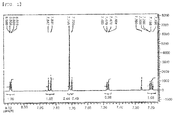
- FIG. 1 shows the 1H-NMR spectrum of (4-bromo-7-(thiophen-2-yl)-2,1,3-benzothiadiazole) synthesized in Preparation Example 1-A.
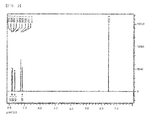
- FIG. 2 shows the 1 H-NMR spectrum of 4-bromo-7-(5-bromothiophen-2-yl)-2,1,3-benzothiadiazole prepared in Preparation Example 1-B.
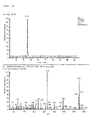
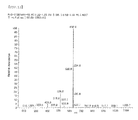
- FIG. 3 shows the HPLC-MS spectrum of 4-bromo-7-(5-bromothiophen-2-yl)-2,1,3-benzothiadiazole prepared in Preparation Example 1-B.
- 2,5-dibromothiophene (9.68 g, 40.0 mmol) was dissolved in 200 ml of tetrahydrofuran (THF) and cooled to -78 °C.
- 1.6M n-butyllithium in hexane 55 ml, 88 mmol was added slowly to the solution at that temperature and stirred for 1 hour.
- 1M trimethyltinchloride in THF 100 ml, 100 mmol
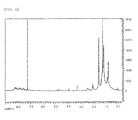
- FIG. 10 shows the NMR spectrum of 2,5-bis(trimethylstannyl)thiophene prepared in Preparation Example 1-C.
- FIG. 11 shows the MS spectrum of 4-bromo-7-(thiophen-2-yl)-5,6-bis (octyloxy)benzo[c]-1,2,5-thiadiazole prepared in Preparation Example 1-D.
- FIG. 12 shows the MS spectrum of 4-bromo-7-(5-bromothiophen-2-yl)-5,6-bis (octyloxy)benzo[c]-1,2,5-thiadiazole_prepared in Preparation Example 1-D.
- Number-average molecular weight 32,100 g/mol.
- Weight-average molecular weight 58,200 g/mol.
- FIG. 4 shows the NMR spectrum of the poly(N-9-heptadecanylcarbazole-alt-4-(thiophen-2-yl)-2,1,3,-benzothiadiazole prepared in Preparation Example 2.
- Number-average molecular weight 12,400 g/mol.
- Weight-average molecular weight 39,100 g/mol.
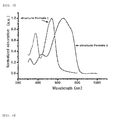
- FIG. 6 shows the UV absorbance spectra of films formed from the compounds of structural formulas 1 and 2.
- each of the polymers was dissolved in chlorobenzene at a concentration of 1 wt% to prepare solutions, and each of the solutions was spin-coated on a glass substrate to prepare samples.
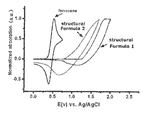
- FIG. 7 shows the cyclic voltammetry of the compounds of structural formulas 1 and 2.
- each of the polymer solutions was drop-casted on a working electrode to prepare films.
- the cyclic voltammetry of the films was measured using an electrolyte obtained by dissolving 0.1M B Bu 4 NBF 4 in acetonitrile at a concentration of 0.1M, a working electrode made of glassy carbon, a reference electrode made of Ag/AgCl, and a counter electrode made of Pt.
- Number-average molecular weight 60,700 g/mol.
- Weight-average molecular weight 110,500 g/mol.
- FIG. 13 shows the UV absorbance spectrum of a film formed from the compound of structural formula 4.
- the polymer was dissolved in chlorobenzene at a concentration of 1 wt% to prepare a solution which was then spin-coated on a glass substrate to prepare a sample.
- FIG. 14 shows the cyclic voltammetry of the compound of structural formula 4.
- the polymer solution was drop-casted on a working electrode to prepare films.
- the cyclic voltammetry of the film was measured using an electrolyte obtained by dissolving 0.1M B Bu 4 NBF 4 in acetonitrile at a concentration of 0.1M, a working electrode made of glassy carbon, a reference electrode made of Ag/AgCl, and a counter electrode made of Pt.
- Number-average molecular weight 39,500 g/mol.
- Weight-average molecular weight 64,000 g/mol.
- FIG. 16 shows the UV absorbance spectrum of a film formed from the compound of structural formula 5.
- the polymer was dissolved in chlorobenzene at a concentration of 1 wt% to prepare a solution which was then spin-coated on a glass substrate to prepare a sample.
- FIG. 17 shows the cyclic voltammetry of the compound of structural formula 5.
- the polymer solution was drop-casted on a working electrode to prepare films.
- the cyclic voltammetry of the film was measured using an electrolyte obtained by dissolving 0.1M B Bu 4 NBF 4 in acetonitrile at a concentration of 0.1M, a working electrode made of glassy carbon, a reference electrode made of Ag/AgCl, and a counter electrode made of Pt.
- 2,5-Bis(trimethylstannyl)thiophene (259 mg, 0.632 mmol), 4-bromo-7-(5-bromothiophen-2-yl)-5,6-bis(octyloxy)benzo[c]-1,2,5-thiadiazole (400 mg, 0.632 mmol) and Pd(PPh 3 ) 4 (22 mg) were added to and dissolved in 10 ml of toluene and stirred under reflux. After 72 hours, the mixture was cooled to room temperature, and methanol was added thereto. The solid was filtered and Soxhlet-extracted with acetone, hexane and chloroform. The extract was precipitated in methanol, and the solid was filtered.
- Number-average molecular weight 22,500 g/mol.
- Weight-average molecular weight 58,000 g/mol.
- FIG. 19 shows the UV absorbance spectrum of a film formed from the compound of structural formula 6.
- the polymer was dissolved in chlorobenzene at a concentration of 1 wt% to prepare a solution which was then spin-coated on a glass substrate to prepare a sample.
- FIG. 10 shows the cyclic voltammetry of the compound of structural formula 6.
- the polymer solution was drop-casted on a working electrode to prepare films.
- the cyclic voltammetry of the film was measured using an electrolyte obtained by dissolving 0.1M B Bu 4 NBF 4 in acetonitrile at a concentration of 0.1M, a working electrode made of glassy carbon, a reference electrode made of Ag/AgCl, and a counter electrode made of Pt.
- the polymer prepared in Preparation Example 2 was mixed with PC 61 BM at a ratio of 1:4, and the mixture was dissolved in 1,2-dichlorobenzene (DCB) at a concentration of 1.0-2.0 wt% to prepare a composite solution.
- An organic solar cell having a structure of ITO/PEDOT: PSS/photoactive layer/LiF/Al was fabricated in the following manner.
- An ITO-coated glass substrate was ultrasonically washed with distilled water, acetone and 2-propanol, and the ITO surface was treated with ozone for 10 minutes, spin-coated with PEDOT: PSS (baytrom P), and heat-treated at 120 °C for 10 minutes.
- the polymer-PCBM composite solution was filtered through a 0.45- ⁇ m PP syringe filter, after which it was spin-coated on the substrate and heat-treated at 120 °C for 5 minutes. Then, LiF was deposited on the substrate to a thickness of 7 ⁇ under a vacuum of 3 ⁇ 10 -8 torr using a thermal evaporator, followed by deposition of Al to a thickness of 200 nm.
- the polymer prepared in Preparation Example 2 was mixed with PC 71 BM at a ratio of 1:4, and the mixture was dissolved in 1,2-dichlorobenzene (DCB) at a concentration of 1.0-2.0 wt% to prepare a composite solution.
- An organic solar cell having a structure of ITO/PEDOT: PSS/photoactive layer/LiF/Al was fabricated in the following manner.
- An ITO-coated glass substrate was ultrasonically washed with distilled water, acetone and 2-propanol, and the ITO surface was treated with ozone for 10 minutes, spin-coated with PEDOT: PSS (baytrom P), and heat-treated at 120 °C for 10 minutes.
- the polymer-PCBM composite solution was filtered through a 0.45- ⁇ m PP syringe filter, after which it was spin-coated on the substrate and heat-treated at 120 °C for 5 minutes. Then, LiF was deposited on the substrate to a thickness of 7 ⁇ under a vacuum of 3 ⁇ 10 -8 torr using a thermal evaporator, followed by deposition of Al to a thickness of 200 nm.
- the polymer prepared in Preparation Example 3 was mixed with PC 61 BM at a ratio of 1:4, and the mixture was dissolved in 1,2-dichlorobenzene (DCB) at a concentration of 1.0-2.0 wt% to prepare a composite solution.
- An organic solar cell having a structure of ITO/PEDOT: PSS/photoactive layer/LiF/Al was fabricated in the following manner.
- An ITO-coated glass substrate was ultrasonically washed with distilled water, acetone and 2-propanol, and the ITO surface was treated with ozone for 10 minutes, spin-coated with PEDOT: PSS (baytrom P), and heat-treated at 120 °C for 10 minutes.
- the polymer-PCBM composite solution was filtered through a 0.45- ⁇ m PP syringe filter, after which it was spin-coated on the substrate and heat-treated at 120 °C for 5 minutes. Then, LiF was deposited on the substrate to a thickness of 7 ⁇ under a vacuum of 3 ⁇ 10 -8 torr using a thermal evaporator, followed by deposition of Al to a thickness of 200 nm.
- the polymer prepared in Preparation Example 3 was mixed with PC 71 BM at a ratio of 1:4, and the mixture was dissolved in 1,2-dichlorobenzene (DCB) at a concentration of 1.0-2.0 wt% to prepare a composite solution.
- An organic solar cell having a structure of ITO/PEDOT: PSS/photoactive layer/LiF/Al was fabricated in the following manner.
- An ITO-coated glass substrate was ultrasonically washed with distilled water, acetone and 2-propanol, and the ITO surface was treated with ozone for 10 minutes, spin-coated with PEDOT: PSS (baytrom P), and heat-treated at 120 °C for 10 minutes.
- the polymer-PCBM composite solution was filtered through a 0.45- ⁇ m PP syringe filter, after which it was spin-coated on the substrate and heat-treated at 120 °C for 5 minutes. Then, LiF was deposited on the substrate to a thickness of 7 ⁇ under a vacuum of 3 ⁇ 10 -8 torr using a thermal evaporator, followed by deposition of Al to a thickness of 200 nm.
- the polymer prepared in Preparation Example 4 was mixed with PC 61 BM at a ratio of 1:4, and the mixture was dissolved in 1,2-dichlorobenzene (DCB) at a concentration of 1.0-2.0 wt% to prepare a composite solution.
- An organic solar cell having a structure of ITO/PEDOT: PSS/photoactive layer/LiF/Al was fabricated in the following manner.
- An ITO-coated glass substrate was ultrasonically washed with distilled water, acetone and 2-propanol, and the ITO surface was treated with ozone for 10 minutes, spin-coated with PEDOT: PSS (baytrom P), and heat-treated at 120 °C for 10 minutes.
- the polymer-PCBM composite solution was filtered through a 0.45- ⁇ m PP syringe filter, after which it was spin-coated on the substrate and heat-treated at 120 °C for 5 minutes. Then, LiF was deposited on the substrate to a thickness of 7 ⁇ under a vacuum of 3 ⁇ 10 -8 torr using a thermal evaporator, followed by deposition of Al to a thickness of 200 nm.
- the polymer prepared in Preparation Example 5 was mixed with PC 61 BM at a ratio of 1:4, and the mixture was dissolved in 1,2-dichlorobenzene (DCB) at a concentration of 1.0-2.0 wt% to prepare a composite solution.
- An organic solar cell having a structure of ITO/PEDOT: PSS/photoactive layer/LiF/Al was fabricated in the following manner.
- An ITO-coated glass substrate was ultrasonically washed with distilled water, acetone and 2-propanol, and the ITO surface was treated with ozone for 10 minutes, spin-coated with PEDOT: PSS (baytrom P), and heat-treated at 120 °C for 10 minutes.
- the polymer-PCBM composite solution was filtered through a 0.45- ⁇ m PP syringe filter, after which it was spin-coated on the substrate and heat-treated at 120 °C for 5 minutes. Then, LiF was deposited on the substrate to a thickness of 7 A under a vacuum of 3 ⁇ 10 -8 torr using a thermal evaporator, followed by deposition of Al to a thickness of 200 nm.
- the polymer prepared in Preparation Example 6 was mixed with PC 61 BM at a ratio of 1:4, and the mixture was dissolved in 1,2-dichlorobenzene (DCB) at a concentration of 1.0-2.0 wt % to prepare a composite solution.
- An organic solar cell having a structure of ITO/PEDOT: PSS/photoactive layer/LiF/Al was fabricated in the following manner.
- An ITO-coated glass substrate was ultrasonically washed with distilled water, acetone and 2-propanol, and the ITO surface was treated with ozone for 10 minutes, spin-coated with PEDOT: PSS (baytrom P), and heat-treated at 120 °C for 10 minutes.
- the polymer-PCBM composite solution was filtered through a 0.45- ⁇ m PP syringe filter, after which it was spin-coated on the substrate and heat-treated at 120 °C for 5 minutes. Then, LiF was deposited on the substrate to a thickness of 7 ⁇ under a vacuum of 3 ⁇ 10 -8 torr using a thermal evaporator, followed by deposition of Al to a thickness of 200 nm.
- P3HT poly(3-hexylthiophene)
- PC 61 BM 1,2-dichlorobenzene
- DCB 1,2-dichlorobenzene
- An organic solar cell having a structure of ITO/PEDOT: PSS/photoactive layer/LiF/Al was fabricated in the following manner.
- An ITO-coated glass substrate was ultrasonically washed with distilled water, acetone and 2-propanol, and the ITO surface was treated with ozone for 10 minutes, spin-coated with PEDOT: PSS (baytrom P), and heat-treated at 120 °C for 10 minutes.
- the polymer-PCBM composite solution was filtered through a 0.45- ⁇ m PP syringe filter, after which it was spin-coated on the substrate and heat-treated at 120 °C for 5 minutes. Then, LiF was deposited on the substrate to a thickness of 7 ⁇ under a vacuum of 3 ⁇ 10 -8 torr using a thermal evaporator, followed by deposition of Al to a thickness of 200 nm.
- P3HT poly(3-hexylthiophene)
- PC 71 BM 1,2-dichlorobenzene
- DCB 1,2-dichlorobenzene
- An organic solar cell having a structure of ITO/PEDOT: PSS/photoactive layer/LiF/Al was fabricated in the following manner.
- An ITO-coated glass substrate was ultrasonically washed with distilled water, acetone and 2-propanol, and the ITO surface was treated with ozone for 10 minutes, spin-coated with PEDOT: PSS (baytrom P), and heat-treated at 120 °C for 10 minutes.
- the polymer-PCBM composite solution was filtered through a 0.45- ⁇ m PP syringe filter, after which it was spin-coated on the substrate and heat-treated at 120 °C for 5 minutes. Then, LiF was deposited on the substrate to a thickness of 7 ⁇ under a vacuum of 3 ⁇ 10 -8 torr using a thermal evaporator, followed by deposition of Al to a thickness of 200 nm.
- Test Example 1 Test for organic solar cells
- FIG. 7 shows the organic solar cell fabricated using the compound of structural formula 1 or 2 together with PC 61 BM or PC 71 BM.
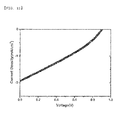
- FIG. 8 shows the I-V curves of the organic solar cells fabricated in Examples 1 and 2, which comprise the poly(N-9-heptadecanylcarbazole-alt-4-(thiophen-2-yl)2,1,3-benzothiazole) prepared in Preparation Example 2.
- FIG. 9 shows the I-V curves of the organic solar cells fabricated in Examples 3 and 4, which comprise the poly(4,4'-bis(2-ethylhexyl)dithieno[3,2-b:2',3'-d]silole-alt-4-(thiophen-2-yl)2,1,3-benzothiadiazole) prepared in Preparation Example 3.
- FIG. 15 shows the I-V curve of the organic solar cell fabricated in Example 5, which comprises the poly(N-9-heptadecanylcarbazole-alt-4-(thiophen-2-yl)-5,6-bis(octyloxy)benzo[c]-1,2,5-thiadiazole) prepared in Preparation Example 4.
- FIG. 18 shows the I-V curve of the organic solar cell fabricated in Example 6, which comprises the poly(4,8-bis(2-ethylhexyloxy)benzo[1,2-b:4,5-b']dithiophene-2,6-diyl-alt-4-(thiophen-2-yl)5,6-bis(octyloxy)benzo[c]-1,2,5-thiadiazole) prepared in Preparation Example 5.
- FIG. 21 shows the I-V curve of the organic solar cell fabricated in Example 7, which comprises the poly(thiophen-2,5-yl-alt-4-(thiophene-2-yl)-5,6-bis(octyloxy)benzo[c]-1,2,5-thiadiazole) prepared in Preparation Example 6.
Landscapes
- Chemical & Material Sciences (AREA)
- Organic Chemistry (AREA)
- Health & Medical Sciences (AREA)
- Chemical Kinetics & Catalysis (AREA)
- Medicinal Chemistry (AREA)
- Polymers & Plastics (AREA)
- Engineering & Computer Science (AREA)
- Materials Engineering (AREA)
- Photovoltaic Devices (AREA)
- Polyoxymethylene Polymers And Polymers With Carbon-To-Carbon Bonds (AREA)
Abstract
Description
- This application claims priority to and the benefits of Korean Patent Application No.
10-2012-0011980 10-2012-0114808 10-2013-0012261 - The present disclosure relates to a polymer and an organic solar cell comprising the same.
- Solar cells are photovoltaic devices that can convert solar energy directly into electrical energy. Solar cells can be divided, according to the type of thin film material thereof, into inorganic solar cells and organic solar cells. A conventional solar cell is made of inorganic crystalline semiconductor material such as silicon (Si), which is doped to form a p-n junction. The electrons and holes created by the absorption of light diffuse to the p-n junction and are accelerated by the electric field to go to electrodes. The power conversion efficiency of this process is defined as the ratio of the electric power provided to the external circuit to the solar power incident on the solar cell. It has reached about 24%, as measured under standard stimulated conditions. However, conventional inorganic solar cells have limitations in terms of economic efficiency and material supply. For this reason, an organic semiconductor solar cell, which is easy to process and inexpensive and has various functions, is receiving attention as a long-term alternative energy source.
- In the case of the organic solar cells, various organic semiconductor materials are used in small amounts, and thus material costs can be reduced. In addition, thin films can be formed by a wet process, and thus devices can be easily fabricated.
- Meanwhile, it is important to increase the efficiency of solar cells so as to maximize the production of electrical energy from solar energy. In order to increase the efficiency of such solar cells, it is important not only to maximize the production of excitons in a semiconductor, but also to collect the produced charges without loss. One cause of the loss of electric charges is electric charge dissipation caused by the recombination of produced electrons and holes. Various methods for transferring produced electrons or holes to electrodes without loss have been suggested, but require additional processes that can increase the fabrication cost.
- Organic solar cells were first introduced in the 1970s, but had no practical use because their efficiency was exceedingly low. However, in 1986, C.W. Tang (Eastman Kodak) reported a two-layer structure comprising copper phthalocyanine (CuPc) and a perylene tetracarboxylic acid derivative, which could be put to practical use as solar cells, and since then, attention and research on organic solar cells have increased rapidly. In 1995, Yu et al. introduced the concept of a bulk-heterojunction (BHJ). In addition, fullerene derivatives having improved solubility, such as PCBM, have been developed for use as n-type semiconductor materials, resulting in a significant improvement in the efficiency of organic solar cells.
- The present disclosure provides a polymer which can show excellent electrical properties thanks to its high hole mobility, and has a stable HOMO energy level, a high open-circuit voltage and excellent photovoltaic conversion efficiency, and an organic solar cell comprising the polymer. The present disclosure also provides an electron donor material which can be produced in large amounts by a simple process.
- One embodiment of the present disclosure provides a polymer comprising a unit of the following
chemical formula 1 and having a number-average molecular weight of 10,000-1,000,000:
chemical formulas 


formulas 5 to 13 or a group in which two or more among structures of the followingformulas 5 to 13 are bonded to each other,


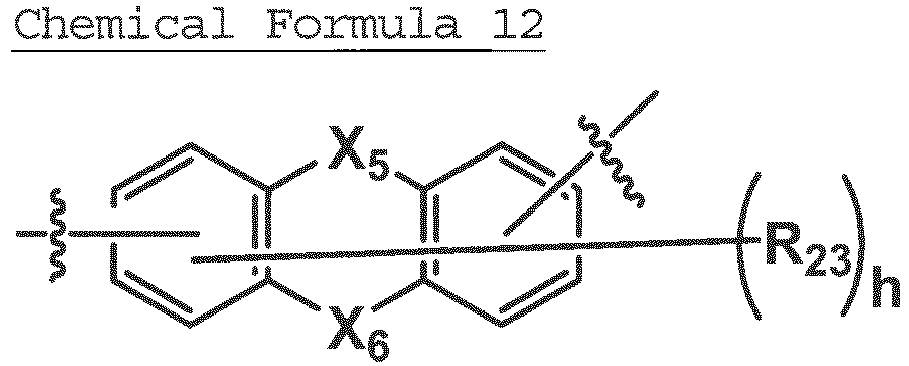

- d, e, f and g are each an integer ranging from 0 to 3,
- h and i are each an integer ranging from 0 to 6,
- X5 to X7 are each independently selected from the group consisting of CR'R'', SiR'R'', GeR'R'', NR', PR', O, S and Se,
- Y1 and Y2 are each independently selected from the group consisting of CR', SiR', GeR', N and P,
- Z is selected from the group consisting of SiR'R", GeR'R", NR', PR', O, S and Se,
- R5 to R24, R', R'' and R''' are each independently selected from the group consisting of hydrogen; deuterium; a halogen group; a nitro group; a nitrile group; an imide group; an amide group - CONX1X2, wherein X1 and X2 may be the same or different and are each independently hydrogen, a substituted or unsubstituted C1-25 alkyl group or a substituted or unsubstituted C6-25 aryl group; a hydroxyl group; an ester group -COOX3, wherein X3 is a substituted or unsubstituted C1-25 alkyl group or a substituted or unsubstituted C6-25 aryl group; a carbonyl group -COX4, wherein X4 is a substituted or unsubstituted C1-25 alkyl group or a substituted or unsubstituted C6-25 aryl group; a substituted or unsubstituted C1-25 alkyl group; a substituted or unsubstituted C1-25 alkoxy group; a substituted or unsubstituted C2-25 alkenyl group; a thiophene group unsubstituted or substituted with either a C1-25 alkyl group or a C1-25 alkoxy group; a selenophene group unsubstituted or substituted with either a C1-25 alkyl group or a C1-25 alkoxy group; a pyrrole group unsubstituted or substituted with either a C1-25 alkyl group or a C1-25 alkoxy group; a thiazole group unsubstituted or substituted with either a C1-25 alkyl group or a C1-25 alkoxy group; an arylamine group unsubstituted or substituted with either a C1-25 alkyl group or a C1-25 alkoxy group; and an aryl group unsubstituted or substituted with either a C1-25 alkyl group or a C1-25 alkoxy group;
- a, b and c represent the mole fractions of the structures of
formulas 2 to 4, respectively, - a is a real number in the range of 0 < a ≤ 0.45,
- b is a real number in the range of 0 < b ≤ 0.45,
- c is a real number in the range of 0.1 ≤ c < 1, and a + b + c = 1.
- Another embodiment of the present disclosure provides an organic solar cell comprising: a first electrode; a second electrode; and one or more photoactive layers, wherein one or more of the photoactive layers comprise the polymer of
formula 1. - Still another embodiment of the present disclosure provides a method for fabricating an organic solar cell, the method comprising the steps of: providing a substrate; forming a first electrode on the substrate; forming a photoactive layer comprising the polymer of
formula 1 on the first electrode; and forming a second electrode on the photoactive layer. - The polymer represented by
formula 1 in the disclosure may be used as a material for an organic layer in organic electronic devices, including organic solar cells. Organic electronic devices such as organic solar cells, which comprise the polymer, exhibit excellent properties, including increased efficiency and stability. In particular, the polymer represented byformula 1 in the present disclosure shows excellent properties, including excellent thermal stability, deep HOMO levels, various bandgaps, various LUMO level states and high electronic stability. The polymer represented byformula 1 in the present disclosure may be used in a pure or impure form in organic electronic devices, including organic solar cells. In addition, it can be applied by a solution coating method, shows improved photovoltaic conversion efficiency, is thermally stable and can improve the life characteristics of the devices. -
-
FIG. 1 shows the 1H-NMR spectrum of 4-bromo-7-(thiophen-2-yl)-2,1,3-benzothiadiazole prepared in Preparation Example 1-A. -
FIG. 2 shows the 1H-NMR spectrum of 4-bromo-7-(5-brpmothiophen-2-yl)-2,1,3-benzothiadiazole prepared in Preparation Example 1-B. -
FIG. 3 shows the HPLC-MS spectrum of 4-bromo-7-(5-brpmothiophen-2-yl)-2,1,3-benzothiadiazole prepared in Preparation Example 1-B. -
FIG. 4 shows the NMR spectrum of poly(N-9-heptadecanylcarbazole-alt-4-(thiophen-2-yl)-2,1,3-benzothiadiazole) prepared in Preparation Example 2. -
FIG. 5 shows the UV absorbance spectra of films formed from compounds having thestructural formulas -
FIG. 6 shows the cyclic voltammetry of compounds having thestructural formulas -
FIG. 7 shows an organic solar cell comprising the compound ofstructural formula -
FIG. 8 shows the I-V curves of organic solar cells fabricated in Examples 1 and 2, which comprise poly(N-9-heptadecanylcarbazole-alt-4-(thiophen-2-yl)-2,1,3-benzothiadiazole), which is a compound ofstructural formula 1. -
FIG. 9 shows the I-V curves of organic solar cells fabricated in Examples 3 and 4, which comprise poly(4,4'-bis(2-ethylhexyl)dithieno[3,2-b:2',3'-d]silole-alt-4-(thiophen-2-yl)2,1,3-benzothiadiazole), which is a compound ofstructural formula 2. -
FIG. 10 shows the 1H-NMR spectrum of 2,5-bis(trimethylstannyl)thiophene prepared in Preparation Example 1-C. -
FIG. 11 shows the MS spectrum of 4-bromo-7-(thiophen-2-yl)-5,6-bis(octyloxy)benzo[c]-1,2,5-thiadiazole prepared in Preparation Example 1-D. -
FIG. 12 shows the MS spectrum of 4-bromo-7-(5-bromothiophen-2-yl)-5,6-bis(octyloxy)benzo[c]-1,2,5-thiadiazole synthesized in Preparation Example 1-E. -
FIG. 13 shows the UV absorbance spectrum of a film formed from the compound ofstructural formula 4. -
FIG. 14 shows the cyclic voltammetry of the compound ofstructural formula 4. -
FIG. 15 shows the I-V curve of an organic solar cell fabricated in Example 5, which comprises poly(N-9-heptadecanylcarbazole-alt-4-(thiophen-2-yl)5,6-bis(octyloxy)benzo[c]-1,2,5-thiadiazole), which is the compound ofstructural formula 4. -
FIG. 16 shows the UV absorbance spectrum of a film formed from the compound ofstructural formula 5. -
FIG. 17 shows the cyclic voltammetry of the compound ofstructural formula 5. -
FIG. 18 shows the I-V curve of an organic solar cell fabricated in Example 6, which comprises poly(4,8-bis(2-ethylhexyloxy)benzo[1,2-b:4,5-b']dithiophen-2,6-diyl-alt-4-(thiophen-2-yl)5,6-bis(octyloxy)benzo[c]-1,2,5-thiadiazole), which is the compound ofstructural formula 5. -
FIG. 19 shows the UV absorbance spectrum of a film formed from the compound ofstructural formula 6. -
FIG. 20 shows the cyclic voltammetry of the compound ofstructural formula 6. -
FIG. 21 shows the I-V curve of the organic solar cell fabricated in Example 7, which comprises poly(thiophen-2,5-yl-alt-4-(thiophen-2-yl)5,6-bis(octyloxy)benzo[c]-1,2,5-thiadiazole), which is the compound ofstructural formula 6. - Hereinafter, the present disclosure will be described in detail.
- As used herein, the term "electron donor" refers to any ion, atom or molecule that donates an electron to a domain lacking a positive charge or an electron pair. It is also meant to include one that can transfer an excited electron to an electron acceptor having high electronegativity (due to its high ability to receive electrons) when it receives light in the state in which it is mixed with the electron acceptor.
- As used herein, the term "electron acceptor" refers to any ion, atom or molecule that receives an electron from an electron donor.
- One embodiment of the present disclosure provides a polymer comprising a unit of the following chemical formula 1 and having a number-average molecular weight of 10,000-1,000,000:


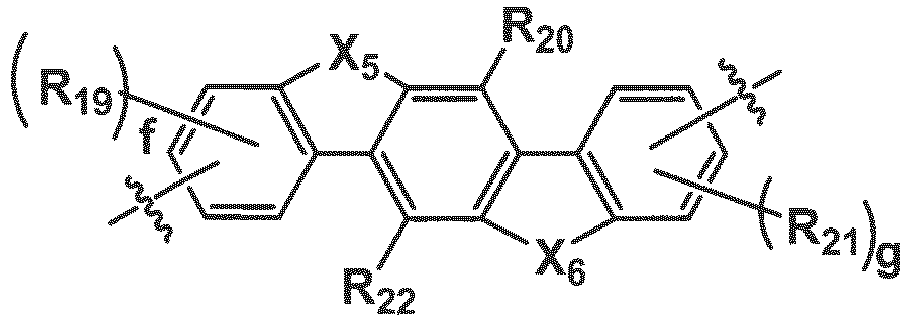


- d, e, f and g are each an integer ranging from 0 to 3,
- h and i are each an integer ranging from 0 to 6,
- X5 to X7 are each independently selected from the group consisting of CR'R", SiR'R'', GeR'R'', NR', PR', O, S and Se, Y1 and Y2 are each independently selected from the group consisting of CR', SiR', GeR', N and P,
- Z is selected from the group consisting of SiR'R", GeR'R", NR', PR', O, S and Se,
- R5 to R24, R', R'' and R''' are each independently selected from the group consisting of hydrogen; deuterium; a halogen group; a nitro group; a nitrile group; an imide group; an amide group - CONX1X2, wherein X1 and X2 may be the same or different and are each independently hydrogen, a substituted or unsubstituted C1-25 alkyl group or a substituted or unsubstituted C6-25 aryl group; a hydroxyl group; an ester group -COOX3, wherein X3 is a substituted or unsubstituted C1-25 alkyl group or a substituted or unsubstituted C6-25 aryl group; a carbonyl group -COX4, wherein X4 is a substituted or unsubstituted C1-25 alkyl group or a substituted or unsubstituted C6-25 aryl group; a substituted or unsubstituted C1-25 alkyl group; a substituted or unsubstituted C1-25 alkoxy group; a substituted or unsubstituted C2-25 alkenyl group; a thiophene group unsubstituted or substituted with either a C1-25 alkyl group or a C1-25 alkoxy group; a selenophene group unsubstituted or substituted with either a C1-25 alkyl group or a C1-25 alkoxy group; a pyrrole group unsubstituted or substituted with either a C1-25 alkyl group or a C1-25 alkoxy group; a thiazole group unsubstituted or substituted with either a C1-25 alkyl group or a C1-25 alkoxy group; an arylamine group unsubstituted or substituted with either a C1-25 alkyl group or a C1-25 alkoxy group; and an aryl group unsubstituted or substituted with either a C1-25 alkyl group or a C1-25 alkoxy group;
- a, b and c represent the mole fractions of the structures of
formulas 2 to 4, respectively, - a is a real number in the range of 0 < a ≤ 0.45,
- b is a real number in the range of 0 < b ≤ 0.45,
- c is a real number in the range of 0.1 ≤ c < 1, and

- In the present disclosure, the number-average molecular weight of the polymer is 10,000-1,000,000.
- A compound according to one embodiment of the present disclosure is polymeric. A polymeric compound having high number-average molecular weight shows high charge mobility and good film properties compared to an oligomeric compound.
- When the number-average molecular weight of the polymer is 10,000 or more, the distance of charge transfer in the molecules will be long, and the frequency of charge hopping between the molecules will be low, so that the charge mobility is prevented from decreasing significantly. Thus, the polymer is suitable for use as an organic layer in an organic solar cell. Also, if the number-average molecular weight of the polymer is 1,000,000 or less, the polymer will have suitable solubility and thus can be applied by a solution process.
- Accordingly, a polymer having a number-average molecular weight in the above-described range according to one embodiment of the present disclosure has a charge mobility suitable for a photoactive layer for an organic solar cell and can be applied by a solution process.
- In one embodiment of the present disclosure, the polymer having
chemical formula 1 comprises the structures ofchemical formulas chemical formula 1. - In another embodiment of the present disclosure, the polymer having
chemical formula 1 comprises the structures ofchemical formulas chemical formula 1. - In one embodiment of the present disclosure, the polymer of
chemical formula 1 may be a polymer having the following chemical formula 14 or 15: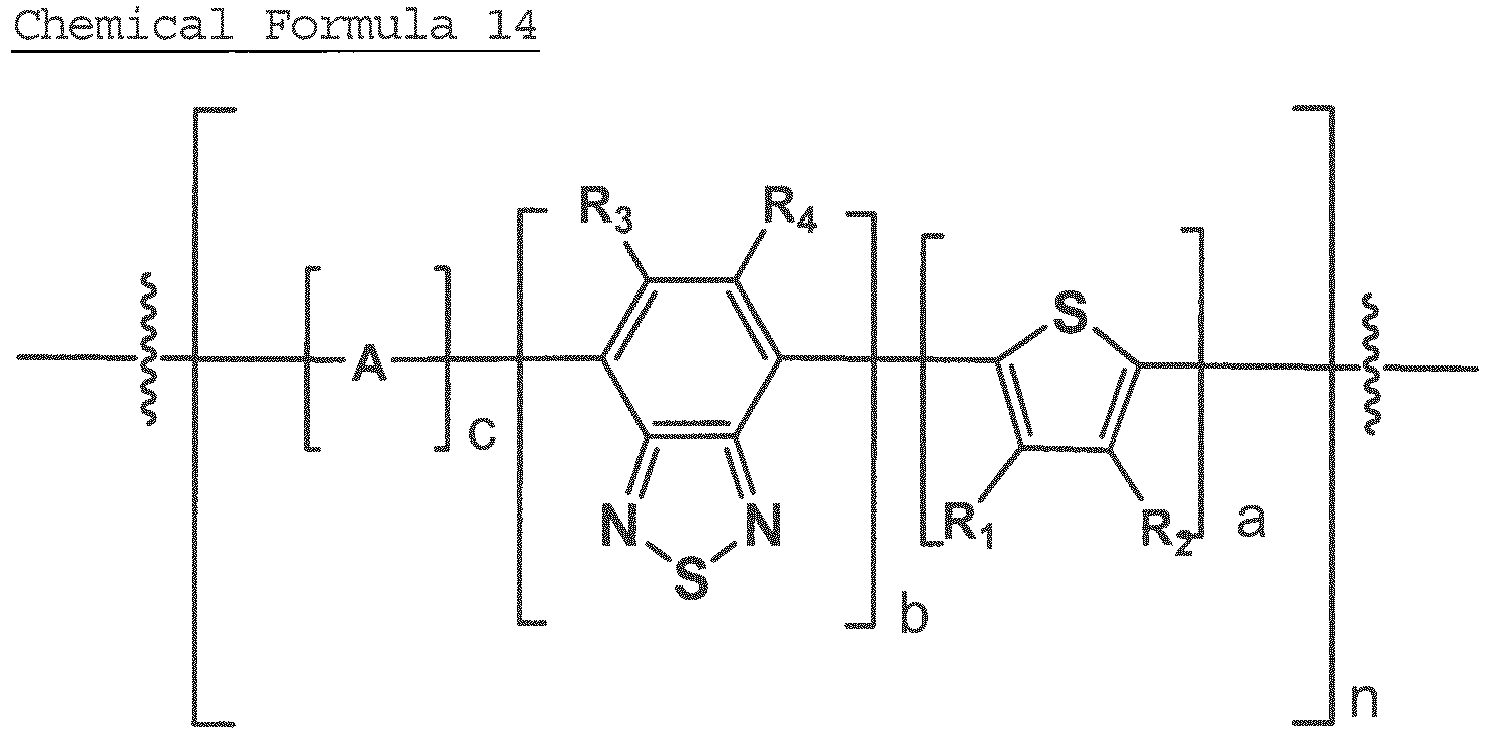

chemical formulas 1 to 4 above.
- In
chemical formulas 1 to 15, the halogen group may be fluorine, chlorine, bromine or iodine. - In
chemical formulas 1 to 15, the aryl group may be a monocyclic or polycyclic aryl group. - When the aryl group is a monocyclic aryl group, it preferably has 6 to 25 carbon atoms, but is not specifically limited thereto. Specific examples of the monocyclic aryl group include, but are not limited to, phenyl, biphenyl, terphenyl, and stilbenyl.
- When the aryl group is the polycyclic aryl group, it preferably contains 10-24 carbon atoms, but is not specifically limited. Specific examples of the polycyclic aryl group include, but are not limited to, naphthyl, anthryl, phenanthryl, pyrenyl, perylenyl, chrysenyl, and fluorenyl.
- In
chemical formulas 1 to 15, the amide group preferably has 1 to 25 carbon atoms, but is not specifically limited thereto. - In
chemical formulas 1 to 15, the amide group may be mono- or di-substituted with a C1-25 straight-chain, branched or cyclic alkyl group or a C6-25 aryl group. Specific examples of the amide group include, but are not limited to, compounds having the following structural formulas:

- In
chemical formulas 1 to 15, the ester group may be substituted with a C1-25 straight-chain, branched or cyclic alkyl group or a C6-25 aryl group. Specific examples of the ester group include, but are not limited to, compounds having the following structural formulas:
- In
chemical formulas 1 to 15, the alkyl group may be straight-chain, branched or cyclic. The alkyl group preferably contains 1 to 25 carbon atoms, but is not specifically limited thereto. Specific examples of the alkyl group include, but are not limited to, methyl, ethyl, n-propyl, iso-propyl, n-butyl, sec-butyl, t-butyl, n-pentyl, iso-pentyl, neo-pentyl, n-hexyl, cyclopropyl, cyclobutyl, cyclopentyl, and cyclohexyl. - In
chemical formulas 1 to 15, the alkoxy group may be straight-chain, branched or cyclic. The alkoxy group preferably contains 1 to 25 carbon atoms, but is not specifically limited thereto. Specific examples of the alkoxy group include, but are not limited to, methoxy, ethoxy, n-propyloxy, iso-propyloxy, n-butyloxy, and cyclopentyloxy. - In
chemical formulas 1 to 15, the alkenyl group may be straight-chain or branched and substituted or unsubstituted, and it may contain 2 to 25 carbon atoms, but is not specifically limited thereto. Specific examples of the alkenyl group include, but are not limited to, ethenyl, propenyl, butenyl, and pentenyl. - In
chemical formulas 1 to 15, the term "unsubstituted or substituted" means unsubstituted or substituted with one or more substituents. - In
chemical formulas 1 to 15, unless specified otherwise, the substituent may be one or more selected from the group consisting of halogen, nitrile, nitro, hydroxy, alkyl, cycloalkyl, alkenyl, alkoxy, aryloxy, thiol, alkylthio, allylthio, sulfoxy, alkylsulfoxy, arylsulfoxy, silyl, boron, arylamine, aralkylamine, alkylamine, aryl, fluorenyl, carbazole, arylalkyl, arylalkenyl, heterocyclic and acetylene groups. - In
chemical formulas 2 to 4 according to one embodiment of the present disclosure, a, b and c may represent the mole fractions of the compounds offormulas 2 to 4, respectively. As used herein, the term "mole fraction" refers to the ratio of the moles of any compound to the total moles of all compounds present. - In one embodiment of the present disclosure, a in
chemical formula chemical formula 2 to the total moles of all the compounds, and may be 0 < a ≤ 0.45. - In one embodiment of the present disclosure, b in
chemical formula chemical formula 3 to the total moles of all the compounds, and may be 0 < b ≤ 0.45. - In one embodiment of the present disclosure, c in
chemical formula chemical formula 4 to the total moles of all the compounds, and may be 0.1 ≤ c < 1. - In one embodiment of the present disclosure, a + b + c may be 1.
- In one embodiment of the present disclosure, a may be 1/3, b may be 1/3, and c may be 1/3.
- In
chemical formula - In
chemical formula - When the number-average molecular weight is 1,000,000 or less, the polymer will have good solubility, and thus can be easily applied by a solution coating process. When the number-average molecular weight ranges from 10,000 to 1,000,000, the electrical and mechanical properties of the polymer improve with increases in the number-average molecular weight. Specifically, when the number-average molecular weight ranges from 10,000 to 100,000, the polymer will have increased solubility and improved electrical and mechanical properties.
- As used herein, the term "number-average molecular weight" refers to a value obtained by dividing the mass by the total number of polymer chains in the polymer.
- The molecular weight distribution of the polymer is preferably in the range from 1 to 100. When the molecular weight distribution is 100 or less, the effect of the polymer becomes better with a decrease in the molecular weight distribution. Specifically, when the molecular weight distribution is 1-3, the polymer will have good solubility, so that it is easily applied by a solution coating method and has improved electrical and mechanical properties.
- As used herein, the term "molecular weight distribution" refers to the value obtained by dividing the weight-average molecular weight (Mw) by the number-average molecular weight (Mn).
- In
chemical formula - In one embodiment of the present disclosure, A is the compound of
chemical formula 9. - In one embodiment of the present disclosure, A is the compound of
chemical formula 9 while Z is NR'. - In one embodiment of the present disclosure, A is the compound of
chemical formula 9 while Z is NR', wherein R' is a substituted or unsubstituted C1-25 alkyl group. - In one embodiment of the present disclosure, A is the compound of
chemical formula 9 while Z is NR', wherein R' is a branched chain alkyl group. - In one embodiment of the present disclosure, A is the compound of
chemical formula 8. - In one embodiment of the present disclosure, A is the compound of
chemical formula 8 while X1 is S. - In one embodiment of the present disclosure, A is the compound of
chemical formula 8 while X2 is SiR'R". - In one embodiment of the present disclosure, A is the compound of
chemical formula 8 while X2 is SiR'R", wherein R' is a substituted or unsubstituted C1-25 alkyl group. - In one embodiment of the present disclosure, A is the compound of
chemical formula 8 while X2 is SiR'R", wherein R' is a branched-chain alkyl group. - In one embodiment of the present disclosure, A is the compound of
chemical formula 8 while X2 is SiR'R", wherein R" is a substituted or unsubstituted C1-25 alkyl group. - In one embodiment of the present disclosure, A is the compound of
chemical formula 8 while X2 is SiR'R", wherein R" is a branched-chain alkyl group. - In one embodiment of the present disclosure, A is the compound of
chemical formula 8 while X2 is CR'R". - In one embodiment of the present disclosure, A is the compound of
chemical formula 8 while X2 is CR'R", wherein R' is a substituted or unsubstituted C1-25 alkyl group. - In one embodiment of the present disclosure, A is the compound of
chemical formula 8 while X2 is CR'R", wherein R' is a branched-chain alkyl group. - In one embodiment of the present disclosure, A is the compound of
chemical formula 8 while X2 is CR'R", wherein R" is a substituted or unsubstituted C1-25 alkyl group. - In one embodiment of the present disclosure, A is the compound of
chemical formula 8 while X2 is CR'R", wherein R" is a branched-chain alkyl group. - In one embodiment of the present disclosure, A is the compound of
chemical formula 10. - In one embodiment of the present disclosure, A is the compound of
chemical formula 10 while X1 is S. - In one embodiment of the present disclosure, A is the compound of
chemical formula 10 while X2 is S. - In one embodiment of the present disclosure, A is the compound of
chemical formula 10 while Y1 is CR'. - In one embodiment of the present disclosure, A is the compound of
chemical formula 10 while Y1 is CR', wherein R' is a substituted or unsubstituted C1-25 alkoxy group. - In one embodiment of the present disclosure, A is the compound of
chemical formula 10 while Y1 is CR', wherein R' is a branched-chain alkoxy group. - In one embodiment of the present disclosure, A is the compound of
chemical formula 10 while Y2 is CR'. - In one embodiment of the present disclosure, A is the compound of
chemical formula 10 while Y2 is CR', wherein R' is a substituted or unsubstituted C1-25 alkoxy group. - In one embodiment of the present disclosure, A is the compound of
chemical formula 10 while Y2 is CR', wherein R' is a branched-chain alkoxy group. - In one embodiment of the present disclosure, R1 is hydrogen.
- In one embodiment of the present disclosure, R2 is hydrogen.
- In one embodiment of the present disclosure, R1 is a substituted or unsubstituted C1-25 alkoxy group.
- In one embodiment of the present disclosure, R2 is a substituted or unsubstituted C1-25 alkoxy group.
- In one embodiment of the present disclosure, A is the compound of
chemical formula 5. - In one embodiment of the present disclosure, A is the compound of
chemical formula 5 while X7 is S. - In one embodiment of the present disclosure, R5 is hydrogen.
- In one embodiment of the present disclosure, R6 is hydrogen.
- In one embodiment of the present disclosure, R3 and R4 are the same or different and each independently hydrogen or a substituted or unsubstituted C1-25 alkoxy group. When R3 or R4 is an alkoxy group, the solubility of the polymer can increase.
- In one embodiment of the present disclosure, R1 is hydrogen.
- In one embodiment of the present disclosure, R2 is hydrogen.
- The polymer of
chemical formula 1 according to one embodiment of the present disclosure may be one represented by any one of the followingstructural formulas 1 to 14, but is not limited thereto:


chemical formulas 1 to 4 above. - The compound of
chemical formula 1 according to one embodiment of the present disclosure can be prepared through a multi-step chemical reaction. Specifically, monomers can be prepared by an alkylation reaction, the Grignard reaction, the Suzuki coupling reaction or the Stille coupling reaction, after which final polymers can be prepared from the monomers by a carbon-carbon coupling reaction such as the Stille coupling reaction. When the substituent to be introduced is a boronic acid or boronic ester compound, the polymer can be prepared by the Suzuki coupling reaction, and when the substituent to be introduced is a tributyltin compound, the polymer can be prepared by the Stille coupling reaction, but is not limited thereto. - One embodiment of the present disclosure provides an organic solar cell comprising a photoactive layer which comprises a polymer comprising the unit of
chemical formula 1. - An organic solar cell according to one embodiment of the present disclosure comprises a first electrode, a second electrode, and a photoactive layer. The organic solar cell may further comprise a substrate, a hole transport layer and/or an electrode transport layer.
- The organic solar cell according to the embodiment of the present disclosure further comprises one or more of an electrode transport layer and a hole transport layer.
- In another embodiment, one or more of the electron transport layer and the hole transport layer comprise the polymer of
chemical formula 1. - The substrate may be a glass substrate or a transparent plastic substrate, which have excellent transparency, surface smoothness, ease of handling and water resistance properties, but is not limited thereto. Any substrate may be used without limitation in the present disclosure, as long as it is commonly used in organic solar cells. Specific examples of the substrate include, but are not limited to, PET (polyethylene terephthalate), PEN (polyethylene naphthalate), PP (polypropylene), PI (polyimide) and TAC (triacetyl cellulose) substrates.
- The first electrode may be an anode or a cathode, and the second electrode may be an anode or a cathode.
- The anode is preferably made of a material having a high work function such that holes are easily injected into the organic layer. In addition, the anode may be made of a transparent, highly conductive material, but is not limited thereto. Specific examples of the anode material that may be used in the present disclosure include, but are not limited to, metals or alloys thereof, such as vanadium, chromium, copper, zinc or gold; metal oxides such as zinc oxide, indium oxide, indium tin oxide (ITO), tin oxide (SnO2), zinc oxide (ZnO), or indium zinc oxide (IZO); metal/oxide combinations such as ZnO:Al or SNO2 : Sb; and conductive polymers such as poly(3-methylthiophene), poly[3,4-(ethylene-1,2-dioxy)thiophene] (PEDOT), polypyrrole or polyaniline.
- The cathode is preferably made of a material having a low work function such that electrons are easily injected into the organic layer. Specific examples of the cathode material include, but are not limited to, metals or alloys thereof, such as magnesium, calcium, sodium, potassium, titanium, indium, yttrium, lithium, gadolinium, aluminum, silver, tin or lead; and multilayer materials, such as Al/Li, Al/BaF2, Al/BaF2/Ba, LiF/Al or LiO2/Al.
- The hole transport layer and/or the electron transport layer may be made of a material which efficiently transfers electrons and holes to the photoactive layer to increase the mobility of produced charges to the electrodes, but is not limited thereto. Specific examples of materials for forming the hole transport layer and/or the electron transport layer include, but are not limited to, arylamine-based organic materials, conductive polymers, and block polymers comprising a conjugated moiety and a non-conjugated moiety. Examples of the material for the hole transport layer include PEDOT:PSS (poly(3,4-ethylenediocythiophene) doped with poly(styrenesulfonic acid)), and N,N'-bis(3-methylphenyl)-N,N'-diphenyl-[1,1'-biphenyl]-4,4'-diamine (TPD).
- Examples of the material for the electron transport layer include an Al complex of 8-hydroxyquinoline; a complex containing Alq3; organic radical compounds; a hydroxyflavone-metal complex; aluminum trihydroxyquinoline (Alq3); the 1,3,4-oxadiazole derivative PBD (2-(4-bipheyl)-5-phenyl-1,3,4-oxadiazole); the quinoxaline derivative TPQ (1,3,4-tris[(3-phenyl-6-trifluoromethyl)qunoxaline-2-yl]benzene;, and triazole derivatives.
- The photoactive layer may comprise an electrode donor material and an electrode acceptor material. The electron donor material may be the polymer of
chemical formula 1 according to one embodiment of the present disclosure. The electron acceptor material may be selected from the group consisting of fullerene, fullerene derivatives, vasocuproin, semiconductor elements, semiconductor compounds, or combinations thereof. Specifically, the electron acceptor material may be phenyl C61-butyric acid methyl ester (PC61BM) or phenyl C71-butyric acid methyl ester (PC71BM). - The electron donor material and the electron acceptor material in the photoactive layer can form a bulk heterojunction (BHJ). The electron donor material and the electron acceptor material may be mixed with each other at a ratio of 1:10-10:1 (w/w). After the electron donor material and the electron acceptor material have been mixed, they may be annealed at a temperature of 30 to 300 °C for 1 second to 24 hours in order to maximize the characteristics thereof.
- The organic solar cell may comprise the anode, the hole transport layer, the photoactive layer, the electron transport layer and the cathode, which are sequentially arranged from bottom to top. Alternatively, the organic solar cell may also comprise the cathode, the electron transport layer, the photoactive layer, the hole transport layer and the anode, which are sequentially arranged from bottom to top. However, the scope of the present disclosure is not limited to this arrangement.
- In the organic solar cell, an exciton consisting of a pair of an electron and a hole is formed in the p-type semiconductor by light excitation and is separated into an electron and a hole at the p-n junction. The separated electron and hole move to the n-type semiconductor thin film and the p-type semiconductor thin film, respectively, and are collected in the first and second electrode, respectively, so that they can be used as electrical energy.
- Organic solar cells are divided, according to the structure of a photoactive layer, into a bi-layer p-n junction organic solar cell and a BHJ (bulk heterojunction) organic solar cell. The bi-layer p-n junction organic solar cell comprises a two-layer photoactive layer consisting of a p-type semiconductor thin film and an n-type semiconductor thin film. The BHJ (bulk heterojunction) organic solar cell comprises a photoactive layer consisting of a blend of an n-type semiconductor and a p-type semiconductor.
- The efficiency of polymer solar cells has been significantly improved through new device configurations and changes in process conditions. Thus, there have been studies on the development of new electron donor materials having a low bandgap and new electron acceptor materials having high charge mobility as substitutes for conventional materials.
- Electron donor materials have been studied with a focus on p-type conductive polymer, but do not absorb a significant portion of the solar light spectrum due to their high bandgap. In addition, these materials have poor solubility, which limits the use of a solution coating process, a spin coating process, a roll-to-roll process or an inkjet printing process. Meanwhile, BHJ devices comprising electron acceptor materials such as fullerene derivatives have an efficiency of up to 8%, and thus the development of novel photoactive materials having improved electronic properties for commercialization has been required.
- However, an organic solar cell according to one embodiment of the present disclosure shows excellent properties in terms of efficiency and stability. The polymer of
chemical formula 1 according to the present disclosure shows excellent properties, including excellent thermal stability, deep HOMO levels, various bandgap, various LUMO level states and high electronic stability. The polymer ofchemical formula 1 according to the present disclosure has excellent solubility, and can thereby be applied to organic electronic devices, including organic solar cells, using a solution coating process. In addition, it shows improved photovoltaic conversion efficiency, is thermally stable, and can increase the lifespan of the devices. - The organic solar cell according to the present disclosure can be fabricated using the materials and methods known in the art, except that the photoactive layer comprises the compound of the present disclosure, that is, the heteroaromatic polymer compound represented by
chemical formula 1. - In accordance with one embodiment of the present disclosure, there is provided a method for fabricating an organic solar cell, the method comprising the steps of: providing a substrate; forming a first electrode on the substrate; forming a photoactive layer comprising the polymer of
chemical formula 1 on the first electrode; and forming a second electrode on the photoactive layer. - The method for fabricating the organic solar cell according to one embodiment of the present disclosure further comprises, after the step of forming the first electrode, but before the step of forming the photoactive layer, a step of forming a hole transport layer on the first electrode.
- A method for fabricating an organic solar cell according to another embodiment of the present disclosure comprises the steps of: providing a substrate; forming an anode on the substrate; forming a photoactive layer on the anode; and forming a cathode on the photoactive layer.
- A method for fabricating an organic solar cell according to still another embodiment of the present disclosure comprises the steps of: providing a substrate; forming a cathode on a substrate; forming a photoactive layer on the cathode; and forming an anode on the photoactive layer.
- The organic solar cell of the present disclosure can be fabricated, for example, by sequentially depositing the anode, the photoactive layer and the cathode on the substrate. Herein, the deposition can be performed using wet coating methods, including gravure printing, offset printing, screen printing, inkjet printing, spin coating, and spray coating, but is not limited thereto.
- Hereinafter, a method for preparing the heteroaromatic polymer compound of
chemical formula 1, and a method for fabricating an organic solar cell using the polymer compound will be described in detail with reference to preparation examples, examples, comparative examples and test examples. It is to be understood, however, that these preparation examples, examples, comparative examples and test examples are for illustrative purposes only and are not intended to limit the scope of the present disclosure. -

- In this Example, 4,7-dibromo-2,1,3-benzothiadiazole was prepared with reference to the literature (X. Li, W, Zeng, Y, Zhang, Q. Hou, W. Yang and Y. Cao, Eur. Plymer. U., 2005, 41, 2923-2933).
- 4,7-Dibromo-2,1,3-benzothiadiazole (1 g, 3.40 mmol), 2-thiopheneboronic acid (0.435 g, 3.40 mmol), 2M K2CO3 aqueous solution and (tetrakis(triphenylphosphine)palladium(0) (372 mg, 0.340 mmol) were added to and dissolved in 20 ml of tetrahydrofuran (THF) and stirred under reflux. After 24 hours, the mixture was cooled to room temperature, and THF was removed in a vacuum. The residue was extracted with chloroform, washed with water and dried using MgSO4. The solution was filtered through silica gel to remove the catalyst, followed by the removal of the chloroform. The residue was recrystallized from methanol and dichloromethane to afford 0.6 g of a yellow solid.
- Yield: 59%.
- 1H-NMR (500MHz, CDCl3): d (ppm) 8.08 (d, J = 3.0Hz, 1H), 7.84 (d, J = 8.0Hz, 1H), 7.71 (d, J = 7.5Hz, 1H), 7.47 (d, J = 4.0Hz, 8H), 7.20 (t, J = 9.0Hz, 1H).
- MS: [M+H]+ = 297.
-
FIG. 1 shows the 1H-NMR spectrum of (4-bromo-7-(thiophen-2-yl)-2,1,3-benzothiadiazole) synthesized in Preparation Example 1-A. -

- 4-Bromo-7-(thiophen-2-yl)-2,1,3-benzothiadiazole (0.7 g, 2.36 mmol) was added to and dissolved in 25 ml of dimethylformamide (DMF), and N-bromosuccinimide (1.26 g, 7.07 mmol) was added thereto, followed by stirring for 12 hours. Water was added to the reaction solution, and the precipitated was filtered. The solution was washed with acetone, after which the solvent was removed.
- Yield: 72%.
- 1H-NMR (500 MHz, CDCl3): d (ppm) 7.84 (s, 1H), 7.78 (s, 1H), 7.63 (s, 1H), 7.15 (s, 1H).
- MS: [M+H]+ = 376.
-
FIG. 2 shows the 1H-NMR spectrum of 4-bromo-7-(5-bromothiophen-2-yl)-2,1,3-benzothiadiazole prepared in Preparation Example 1-B. -
FIG. 3 shows the HPLC-MS spectrum of 4-bromo-7-(5-bromothiophen-2-yl)-2,1,3-benzothiadiazole prepared in Preparation Example 1-B. -

- 2,5-dibromothiophene (9.68 g, 40.0 mmol) was dissolved in 200 ml of tetrahydrofuran (THF) and cooled to -78 °C. 1.6M n-butyllithium in hexane (55 ml, 88 mmol) was added slowly to the solution at that temperature and stirred for 1 hour. Then, 1M trimethyltinchloride in THF (100 ml, 100 mmol) was added thereto at one time, and the mixture was warmed to room temperature and stirred for 12 hours. The solution was poured onto ice, extracted three times with diethyl ether, washed three times with water, and dried with MgSO4 (magnesium sulfate). The solvent was removed under reduced pressure, and the residue was recrystallized from methanol to afford a white solid.
- Yield: 73.1 %.
-
FIG. 10 shows the NMR spectrum of 2,5-bis(trimethylstannyl)thiophene prepared in Preparation Example 1-C. -

- In this Example, 4,7-dibromo-5,6-bis(octyloxy)benzo[c]-1,2,5-thiadiazole was prepared with reference to the literature (Wonho Lee, Hyosung Choi, Sungu Hwang, Jin Young Kim and Han Young Woo, Chem. Eur. J. 18, 2012, 2551-2558).
- 2-(tributylstannyl)thiophene (3.39 g, 9.08 mmol), 4,7-dibromo-5,6-bis(octyloxy)benzo[c]-1,2,5-thiadiazole (0.500 g, 9.08 mmol), tri-(o-tolyl)phosphine (331 mg) and Pd2(dba)3(tris(dibenzylideneacetone)dipalladium(0) (249 mg) were added to and dissolved in 10 ml of tetrahydrofuran (THF) and stirred under reflux. After 24 hours, the mixture was cooled to room temperature, and THF was removed in a vacuum. The residue was extracted with dichloromethane, washed with water, and then dried using MgSO4. The resulting material was purified by column chromatography to afford a yellow solid.
- Yield: 49%.
-
FIG. 11 shows the MS spectrum of 4-bromo-7-(thiophen-2-yl)-5,6-bis (octyloxy)benzo[c]-1,2,5-thiadiazole prepared in Preparation Example 1-D. -

- 4-bromo-7-(thiophen-2-yl)-5,6-bis(octyloxy)benzo[c]-1,2,5-thiadiazole (1.22 g, 2.19 mmol) was added to and dissolved in 30 ml of dimethylformamide (DMF), and N-bromosuccinimide (0.429 g, 2.41 mmol) was added thereto, followed by stirring for 12 hours. The mixture was extracted with dichloromethane, washed with water, and then dried using MgSO4. The resulting material was purified by column chromatography to afford a yellow solid.
- Yield: 67%.
-
FIG. 12 shows the MS spectrum of 4-bromo-7-(5-bromothiophen-2-yl)-5,6-bis (octyloxy)benzo[c]-1,2,5-thiadiazole_prepared in Preparation Example 1-D. -


- In this Example, 2,7-bis(4,4,5,5-tetramethyl-1,3,2-dioxaborolan-2-yl)-N,9-heptadecanylcarbazole was prepared with reference to the literature (N. Blouin, A. Michaud, M. Leclerc, Adv. Mater. 19, 2007, 2295-2300).
- 2,7-bis(4,4,5,5-tetramethyl-1,3,2-dioxaborolan-2-yl)-N,9-heptadecanylcarbazole (200 mg, 0.304 mmol), 4-bromo-7-(5-bromothiophen-yl)-2,1,3-benzothiadiazole (114 mg, 0.304 mmol), 2M potassium carbonate aqueous solution (5 ml) and Pd(PPh3)4 (5 mg) were added to and dissolved in 10 ml of toluene and stirred under reflux. After 72 hours, the mixture was cooled to room temperature, and methanol was added thereto. The solid was filtered and Soxhlet-extracted with acetone, hexane and chloroform. The extract was precipitated in methanol, and the solid was filtered.
- Yield: 51%.
- Number-average molecular weight: 32,100 g/mol. Weight-average molecular weight: 58,200 g/mol.
-
FIG. 4 shows the NMR spectrum of the poly(N-9-heptadecanylcarbazole-alt-4-(thiophen-2-yl)-2,1,3,-benzothiadiazole prepared in Preparation Example 2. -


- In this Example, 4,4'-bis(2-ethylhexyl)-5,5'-bis(trimethyltin)dithieno[3,2-b:2',3'-d]silole was prepared with reference to the reference (L. Hou, J. Hou, H. Y. Chen, S. Zhang, Y. Jiang, T. L. Chen, Y. Yang, Macromolecules 42, 2009, 6564-6571).
- 4,4'-bis(2-ethylhexyl)-5,5'-bis(trimethyltin)dithieno[3,2-b:2',3'-d]silole (1.15 g, 1.55 mmol), 4-bromo-7-(5-bromothiophen-yl)-2,1,3-benzothiadiazole (583 mg, 1.55mmol), and Pd(PPh3)4 (25 mg) were added to and dissolved in 40 ml of toluene and stirred under reflux. After 72 hours, the mixture was cooled to room temperature, and methanol was added thereto. The solid was filtered and Soxhlet-extracted with acetone, hexane and chloroform. The extract was precipitated in methanol, and the solid was filtered.
- Yield: 65%.
- Number-average molecular weight: 12,400 g/mol.
- Weight-average molecular weight: 39,100 g/mol.
-
FIG. 6 shows the UV absorbance spectra of films formed from the compounds ofstructural formulas -
FIG. 7 shows the cyclic voltammetry of the compounds ofstructural formulas -


- In this Example, 2,7-bis(4,4,5,5-tetramethyl-1,3,2-dioxaborolan-2-yl)-N,9-heptadecanylcarbazole was prepared with reference to the literature (N. Blouin, A. Michaud, M. Leclerc, Adv. Mater. 19, 2007, 2295-2300).
- 2,7-bis(4,4,5,5-tetramethyl-1,3,2-dioxaborolan-2-yl)-N,9-heptadecanylcarbazole (416 mg, 0.632 mmol), 4-bromo-7-(5-bromothiophen-2-yl)-5,6-bis(octyloxy)benzo[c]-1,2,5-thiadiazole (400 mg, 0.632 mmol), 20 wt% Et4NOH aqueous solution (6 ml) and Pd(PPh3)4 (22 mg) were added to and dissolved in 10 ml of toluene and stirred under reflux. After 72 hours, the mixture was cooled to room temperature, and methanol was added thereto. The solid was filtered and Soxhlet-extracted with acetone, hexane and chloroform. The extract was precipitated in methanol, and the solid was filtered.
- Yield: 50%.
- Number-average molecular weight: 60,700 g/mol.
- Weight-average molecular weight: 110,500 g/mol.
-
FIG. 13 shows the UV absorbance spectrum of a film formed from the compound ofstructural formula 4. To measure the UV absorbance spectrum, the polymer was dissolved in chlorobenzene at a concentration of 1 wt% to prepare a solution which was then spin-coated on a glass substrate to prepare a sample. -
FIG. 14 shows the cyclic voltammetry of the compound ofstructural formula 4. To measure the cyclic voltammetry, the polymer solution was drop-casted on a working electrode to prepare films. The cyclic voltammetry of the film was measured using an electrolyte obtained by dissolving 0.1M B Bu4NBF4 in acetonitrile at a concentration of 0.1M, a working electrode made of glassy carbon, a reference electrode made of Ag/AgCl, and a counter electrode made of Pt. -


- In this Example, 2,6-bis(trimethyltin)-4,8-bis(2-ethylhexyloxy)benzo[1,2-b:4,5-b']dithiophene was prepared with reference to the literature (P. Morvillo, F. Parenti, R. Diana, C. Fontanesi, A. Mucci, F. Tassinari, L. Schenetti, Solar Energy Materials & Solar Cells 104, 2012, 45-52).
- 2,6-Bis(trimethyltin)-4,8-bis(2-ethylhexyloxy)benzo[1,2-b:4,5-b']dithiophene (488 mg, 0.632 mmol), 4-bromo-7-(5-bromothiophen-2-yl)-5,6-bis(octyloxy)benzo[c]-1,2,5-thiadiazole (400 mg, 0.632 mmol) and Pd(PPh3)4 (22 mg) were added to and dissolved in 10 ml of toluene and stirred under reflux. After 72 hours, the mixture was cooled to room temperature, and methanol was added thereto. The solid was filtered and Soxhlet-extracted with acetone, hexane and chloroform. The extract was precipitated in methanol, and the solid was filtered.
- Yield: 40%.
- Number-average molecular weight: 39,500 g/mol.
- Weight-average molecular weight: 64,000 g/mol.
-
FIG. 16 shows the UV absorbance spectrum of a film formed from the compound ofstructural formula 5. To measure the UV absorbance spectrum, the polymer was dissolved in chlorobenzene at a concentration of 1 wt% to prepare a solution which was then spin-coated on a glass substrate to prepare a sample. -
FIG. 17 shows the cyclic voltammetry of the compound ofstructural formula 5. To measure the cyclic voltammetry, the polymer solution was drop-casted on a working electrode to prepare films. The cyclic voltammetry of the film was measured using an electrolyte obtained by dissolving 0.1M B Bu4NBF4 in acetonitrile at a concentration of 0.1M, a working electrode made of glassy carbon, a reference electrode made of Ag/AgCl, and a counter electrode made of Pt. -


- 2,5-Bis(trimethylstannyl)thiophene (259 mg, 0.632 mmol), 4-bromo-7-(5-bromothiophen-2-yl)-5,6-bis(octyloxy)benzo[c]-1,2,5-thiadiazole (400 mg, 0.632 mmol) and Pd(PPh3)4 (22 mg) were added to and dissolved in 10 ml of toluene and stirred under reflux. After 72 hours, the mixture was cooled to room temperature, and methanol was added thereto. The solid was filtered and Soxhlet-extracted with acetone, hexane and chloroform. The extract was precipitated in methanol, and the solid was filtered.
- Yield: 53%.
- Number-average molecular weight: 22,500 g/mol.
- Weight-average molecular weight: 58,000 g/mol.
-
FIG. 19 shows the UV absorbance spectrum of a film formed from the compound ofstructural formula 6. To measure the UV absorbance spectrum, the polymer was dissolved in chlorobenzene at a concentration of 1 wt% to prepare a solution which was then spin-coated on a glass substrate to prepare a sample. -
FIG. 10 shows the cyclic voltammetry of the compound ofstructural formula 6. To measure the cyclic voltammetry, the polymer solution was drop-casted on a working electrode to prepare films. The cyclic voltammetry of the film was measured using an electrolyte obtained by dissolving 0.1M B Bu4NBF4 in acetonitrile at a concentration of 0.1M, a working electrode made of glassy carbon, a reference electrode made of Ag/AgCl, and a counter electrode made of Pt. - The polymer prepared in Preparation Example 2 was mixed with PC61BM at a ratio of 1:4, and the mixture was dissolved in 1,2-dichlorobenzene (DCB) at a concentration of 1.0-2.0 wt% to prepare a composite solution. An organic solar cell having a structure of ITO/PEDOT: PSS/photoactive layer/LiF/Al was fabricated in the following manner. An ITO-coated glass substrate was ultrasonically washed with distilled water, acetone and 2-propanol, and the ITO surface was treated with ozone for 10 minutes, spin-coated with PEDOT: PSS (baytrom P), and heat-treated at 120 °C for 10 minutes. To form a photoactive layer, the polymer-PCBM composite solution was filtered through a 0.45-µm PP syringe filter, after which it was spin-coated on the substrate and heat-treated at 120 °C for 5 minutes. Then, LiF was deposited on the substrate to a thickness of 7 Å under a vacuum of 3 × 10⁻⁸ torr using a thermal evaporator, followed by deposition of Al to a thickness of 200 nm.
- The polymer prepared in Preparation Example 2 was mixed with PC71BM at a ratio of 1:4, and the mixture was dissolved in 1,2-dichlorobenzene (DCB) at a concentration of 1.0-2.0 wt% to prepare a composite solution. An organic solar cell having a structure of ITO/PEDOT: PSS/photoactive layer/LiF/Al was fabricated in the following manner. An ITO-coated glass substrate was ultrasonically washed with distilled water, acetone and 2-propanol, and the ITO surface was treated with ozone for 10 minutes, spin-coated with PEDOT: PSS (baytrom P), and heat-treated at 120 °C for 10 minutes. To form a photoactive layer, the polymer-PCBM composite solution was filtered through a 0.45-µm PP syringe filter, after which it was spin-coated on the substrate and heat-treated at 120 °C for 5 minutes. Then, LiF was deposited on the substrate to a thickness of 7 Å under a vacuum of 3 × 10⁻⁸ torr using a thermal evaporator, followed by deposition of Al to a thickness of 200 nm.
- The polymer prepared in Preparation Example 3 was mixed with PC61BM at a ratio of 1:4, and the mixture was dissolved in 1,2-dichlorobenzene (DCB) at a concentration of 1.0-2.0 wt% to prepare a composite solution. An organic solar cell having a structure of ITO/PEDOT: PSS/photoactive layer/LiF/Al was fabricated in the following manner. An ITO-coated glass substrate was ultrasonically washed with distilled water, acetone and 2-propanol, and the ITO surface was treated with ozone for 10 minutes, spin-coated with PEDOT: PSS (baytrom P), and heat-treated at 120 °C for 10 minutes. To form a photoactive layer, the polymer-PCBM composite solution was filtered through a 0.45-µm PP syringe filter, after which it was spin-coated on the substrate and heat-treated at 120 °C for 5 minutes. Then, LiF was deposited on the substrate to a thickness of 7 Å under a vacuum of 3 × 10⁻⁸ torr using a thermal evaporator, followed by deposition of Al to a thickness of 200 nm.
- The polymer prepared in Preparation Example 3 was mixed with PC71BM at a ratio of 1:4, and the mixture was dissolved in 1,2-dichlorobenzene (DCB) at a concentration of 1.0-2.0 wt% to prepare a composite solution. An organic solar cell having a structure of ITO/PEDOT: PSS/photoactive layer/LiF/Al was fabricated in the following manner. An ITO-coated glass substrate was ultrasonically washed with distilled water, acetone and 2-propanol, and the ITO surface was treated with ozone for 10 minutes, spin-coated with PEDOT: PSS (baytrom P), and heat-treated at 120 °C for 10 minutes. To form a photoactive layer, the polymer-PCBM composite solution was filtered through a 0.45-µm PP syringe filter, after which it was spin-coated on the substrate and heat-treated at 120 °C for 5 minutes. Then, LiF was deposited on the substrate to a thickness of 7 Å under a vacuum of 3 × 10⁻⁸ torr using a thermal evaporator, followed by deposition of Al to a thickness of 200 nm.
- The polymer prepared in Preparation Example 4 was mixed with PC61BM at a ratio of 1:4, and the mixture was dissolved in 1,2-dichlorobenzene (DCB) at a concentration of 1.0-2.0 wt% to prepare a composite solution. An organic solar cell having a structure of ITO/PEDOT: PSS/photoactive layer/LiF/Al was fabricated in the following manner. An ITO-coated glass substrate was ultrasonically washed with distilled water, acetone and 2-propanol, and the ITO surface was treated with ozone for 10 minutes, spin-coated with PEDOT: PSS (baytrom P), and heat-treated at 120 °C for 10 minutes. To form a photoactive layer, the polymer-PCBM composite solution was filtered through a 0.45-µm PP syringe filter, after which it was spin-coated on the substrate and heat-treated at 120 °C for 5 minutes. Then, LiF was deposited on the substrate to a thickness of 7 Å under a vacuum of 3 × 10⁻⁸ torr using a thermal evaporator, followed by deposition of Al to a thickness of 200 nm.
- The polymer prepared in Preparation Example 5 was mixed with PC61BM at a ratio of 1:4, and the mixture was dissolved in 1,2-dichlorobenzene (DCB) at a concentration of 1.0-2.0 wt% to prepare a composite solution. An organic solar cell having a structure of ITO/PEDOT: PSS/photoactive layer/LiF/Al was fabricated in the following manner. An ITO-coated glass substrate was ultrasonically washed with distilled water, acetone and 2-propanol, and the ITO surface was treated with ozone for 10 minutes, spin-coated with PEDOT: PSS (baytrom P), and heat-treated at 120 °C for 10 minutes. To form a photoactive layer, the polymer-PCBM composite solution was filtered through a 0.45-µm PP syringe filter, after which it was spin-coated on the substrate and heat-treated at 120 °C for 5 minutes. Then, LiF was deposited on the substrate to a thickness of 7 A under a vacuum of 3 × 10⁻⁸torr using a thermal evaporator, followed by deposition of Al to a thickness of 200 nm.
- The polymer prepared in Preparation Example 6 was mixed with PC61BM at a ratio of 1:4, and the mixture was dissolved in 1,2-dichlorobenzene (DCB) at a concentration of 1.0-2.0 wt% to prepare a composite solution. An organic solar cell having a structure of ITO/PEDOT: PSS/photoactive layer/LiF/Al was fabricated in the following manner. An ITO-coated glass substrate was ultrasonically washed with distilled water, acetone and 2-propanol, and the ITO surface was treated with ozone for 10 minutes, spin-coated with PEDOT: PSS (baytrom P), and heat-treated at 120 °C for 10 minutes. To form a photoactive layer, the polymer-PCBM composite solution was filtered through a 0.45-µm PP syringe filter, after which it was spin-coated on the substrate and heat-treated at 120 °C for 5 minutes. Then, LiF was deposited on the substrate to a thickness of 7 Å under a vacuum of 3 × 10⁻⁸ torr using a thermal evaporator, followed by deposition of Al to a thickness of 200 nm.
- P3HT (poly(3-hexylthiophene)) was mixed with PC61BM at a ratio of 1:1, and the mixture was dissolved in 1,2-dichlorobenzene (DCB) at a concentration of 1.0-2.0 wt% to prepare a composite solution. An organic solar cell having a structure of ITO/PEDOT: PSS/photoactive layer/LiF/Al was fabricated in the following manner. An ITO-coated glass substrate was ultrasonically washed with distilled water, acetone and 2-propanol, and the ITO surface was treated with ozone for 10 minutes, spin-coated with PEDOT: PSS (baytrom P), and heat-treated at 120 °C for 10 minutes. To form a photoactive layer, the polymer-PCBM composite solution was filtered through a 0.45-µm PP syringe filter, after which it was spin-coated on the substrate and heat-treated at 120 °C for 5 minutes. Then, LiF was deposited on the substrate to a thickness of 7 Å under a vacuum of 3 × 10⁻⁸ torr using a thermal evaporator, followed by deposition of Al to a thickness of 200 nm.
- P3HT (poly(3-hexylthiophene)) was mixed with PC71BM at a ratio of 1:1, and the mixture was dissolved in 1,2-dichlorobenzene (DCB) at a concentration of 1.0-2.0 wt% to prepare a composite solution. An organic solar cell having a structure of ITO/PEDOT: PSS/photoactive layer/LiF/Al was fabricated in the following manner. An ITO-coated glass substrate was ultrasonically washed with distilled water, acetone and 2-propanol, and the ITO surface was treated with ozone for 10 minutes, spin-coated with PEDOT: PSS (baytrom P), and heat-treated at 120 °C for 10 minutes. To form a photoactive layer, the polymer-PCBM composite solution was filtered through a 0.45-µm PP syringe filter, after which it was spin-coated on the substrate and heat-treated at 120 °C for 5 minutes. Then, LiF was deposited on the substrate to a thickness of 7 Å under a vacuum of 3 × 10⁻⁸ torr using a thermal evaporator, followed by deposition of Al to a thickness of 200 nm.
- The photovoltaic properties of the organic solar cells fabricated in Examples 1 to 7 and Comparative Examples 1 and 2 were measured under a condition of 100 mW/cm2 (AM 1.5), and the results of the measurement are shown in Table 1 below.
Table 1 Photoactive layer Total thickness (nm) Open circuit voltage VOC Short-circuit current JSC Fill factor FF Photovoltaic conversion efficiency PCE (V) (mA/cm2) (%) Example 1 Structural formula 1/PC61BM = 1:471 0.75 7.16 0.48 2.41 Example 2 Structural formula 1/PC71BM = 1:492 0.80 7.3 0.51 2.96 Example 3 Structural formula 65 0.86 8.1 60.3 4.3 2/PC61BM = 1:4 Example 4 Structural formula 2/PC71BM = 1:465 0.87 8.3 58.6 4.3 Example 5 Structural formula 4/PC61BM = 1:487 0.90 1.9 30.8 0.54 Example 6 Structural formula 5/PC61BM = 1:474 0.80 7.1 62.6 3.6 Example 7 Structural formula 6/PC61BM = 1:481 0.61 3.7 37.1 0.84 Comparative Example 1 P3HT/PC61BM = 1:1 90 0.72 8.3 45.5 2.8 Comparative Example 2 P3HT/PC71BM = 1:1 90 0.71 8.3 55.6 3.3 -
FIG. 7 shows the organic solar cell fabricated using the compound ofstructural formula -
FIG. 8 shows the I-V curves of the organic solar cells fabricated in Examples 1 and 2, which comprise the poly(N-9-heptadecanylcarbazole-alt-4-(thiophen-2-yl)2,1,3-benzothiazole) prepared in Preparation Example 2. -
FIG. 9 shows the I-V curves of the organic solar cells fabricated in Examples 3 and 4, which comprise the poly(4,4'-bis(2-ethylhexyl)dithieno[3,2-b:2',3'-d]silole-alt-4-(thiophen-2-yl)2,1,3-benzothiadiazole) prepared in Preparation Example 3. -
FIG. 15 shows the I-V curve of the organic solar cell fabricated in Example 5, which comprises the poly(N-9-heptadecanylcarbazole-alt-4-(thiophen-2-yl)-5,6-bis(octyloxy)benzo[c]-1,2,5-thiadiazole) prepared in Preparation Example 4. -
FIG. 18 shows the I-V curve of the organic solar cell fabricated in Example 6, which comprises the poly(4,8-bis(2-ethylhexyloxy)benzo[1,2-b:4,5-b']dithiophene-2,6-diyl-alt-4-(thiophen-2-yl)5,6-bis(octyloxy)benzo[c]-1,2,5-thiadiazole) prepared in Preparation Example 5. -
FIG. 21 shows the I-V curve of the organic solar cell fabricated in Example 7, which comprises the poly(thiophen-2,5-yl-alt-4-(thiophene-2-yl)-5,6-bis(octyloxy)benzo[c]-1,2,5-thiadiazole) prepared in Preparation Example 6. - Although the present disclosure has been described in detail with reference to the specific features, it will be apparent to those skilled in the art that this description is only for a preferred embodiment, and does not limit the scope of the present disclosure. Thus, the substantial scope of the present disclosure will be defined by the appended claims and equivalents thereof.
Claims (15)
- A polymer comprising a unit of the following chemical formula 1 and having a number-average molecular weight of 10,000-1,000,000:


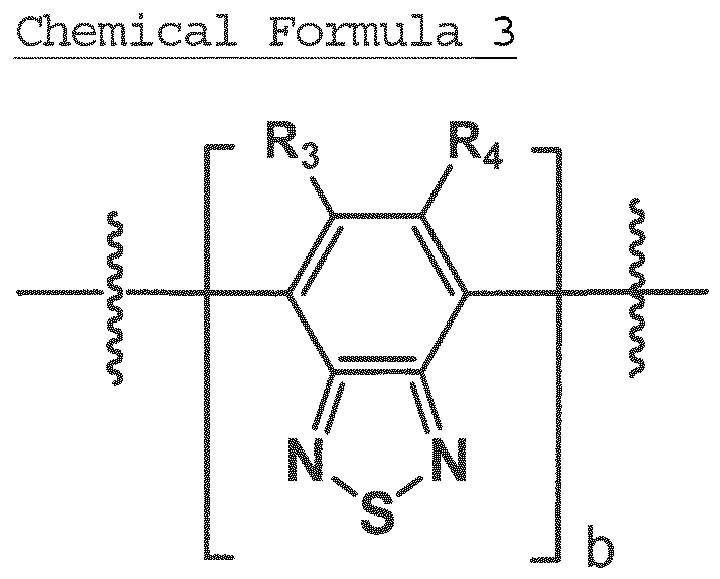
wherein X1 and X2 may be the same or different and are each independently hydrogen, a substituted or unsubstituted C1-25 alkyl group or a substituted or unsubstituted C6-25 aryl group; a hydroxyl group; an ester group -COOX3, wherein X3 is a substituted or unsubstituted C1-25 alkyl group or a substituted or unsubstituted C6-25 aryl group; a carbonyl group -COX4,
wherein X4 is a substituted or unsubstituted C1-25 alkyl group or a substituted or unsubstituted C6-25 aryl group; a substituted or unsubstituted C1-25 alkyl group; a substituted or unsubstituted C1-25 alkoxy group; a substituted or unsubstituted C2-25 alkenyl group; a thiophene group unsubstituted or substituted with either a C1-25 alkyl group or a C1-25 alkoxy group; a selenophene group unsubstituted or substituted with either a C1-25 alkyl group or a C1-25 alkoxy group; a pyrrole group unsubstituted or substituted with either a C1-25 alkyl group or a C1-25 alkoxy group; a thiazole group unsubstituted or substituted with either a C1-25 alkyl group or a C1-25 alkoxy group; an arylamine group unsubstituted or substituted with either a C1-25 alkyl group or a C1-25 alkoxy group; and an aryl group unsubstituted or substituted with either a C1-25 alkyl group or a C1-25 alkoxy group;


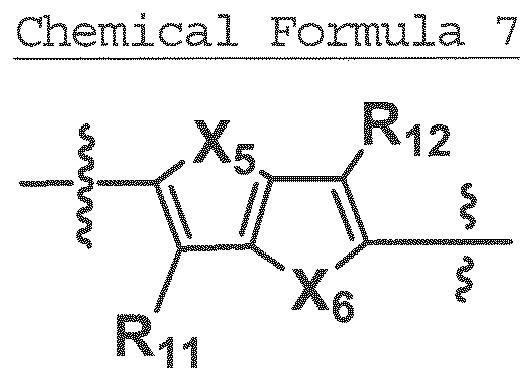


 d, e, f and g are each an integer ranging from 0 to 3,h and i are each an integer ranging from 0 to 6,X5 to X7 are each independently selected from the group consisting of CR'R", SiR'R", GeR'R", NR', PR', O, S and Se,Y1 and Y2 are each independently selected from the group consisting of CR', SiR', GeR', N and P,Z is selected from the group consisting of SiR'R", GeR'R", NR', PR', O, S and Se,R5 to R24, R', R" and R"' are each independently selected from the group consisting of hydrogen; deuterium; a halogen group; a nitro group; a nitrile group; an imide group; an amide group - CONX1X2, wherein X1 and X2 may be the same or different and are each independently hydrogen, a substituted or unsubstituted C1-25 alkyl group or a substituted or unsubstituted C6-25 aryl group; a hydroxyl group; an ester group -COOX3, wherein X3 is a substituted or unsubstituted C1-25 alkyl group or a substituted or unsubstituted C6-25 aryl group; a carbonyl group -COX4,wherein X4 is a substituted or unsubstituted C1-25 alkyl group or a substituted or unsubstituted C6-25 aryl group; a substituted or unsubstituted C1-25 alkyl group; a substituted or unsubstituted C1-25 alkoxy group; a substituted or unsubstituted C2-25 alkenyl group; a thiophene group unsubstituted or substituted with either a C1-25 alkyl group or a C1-25 alkoxy group; a selenophene group unsubstituted or substituted with either a C1-25 alkyl group or a C1-25 alkoxy group; a pyrrole group unsubstituted or substituted with either a C1-25 alkyl group or a C1-25 alkoxy group; a thiazole group unsubstituted or substituted with either a C1-25 alkyl group or a C1-25 alkoxy group; an arylamine group unsubstituted or substituted with either a C1-25 alkyl group or a C1-25 alkoxy group; and an aryl group unsubstituted or substituted with either a C1-25 alkyl group or a C1-25 alkoxy group;a, b and c represent the mole fractions of the structures of formulas 2 to 4, respectively,a is a real number in the range of 0 < a ≤ 0.45,b is a real number in the range of 0 < b ≤ 0.45,c is a real number in the range of 0.1 ≤ c < 1, and a + b + c = 1.
 - The polymer of claim 1, wherein chemical formula 1 is the following chemical formula 14 or 15:



- The polymer of claim 1, wherein R3 and R4 are the same or different and are each independently hydrogen or a substituted or unsubstituted C1-25 alkoxy group.
- The polymer of claim 1, wherein n is an integer ranging from 30 to 100.
- The polymer of claim 1, wherein the polymer has a molecular weight distribution of 1-100.
- The polymer of claim 1, wherein the polymer has a heteroaromatic group, an aromatic group or a halogen-substituted alkyl group as its end group.
- The polymer of claim 1, wherein chemical formula 1 is any one of the following structural formulas 1 to 14:


- An organic solar cell comprising a first electrode, a second electrode and one or more photoactive layers, wherein one or more of the photoactive layers comprises the polymer of any one of claims 1 to 7.
- The organic solar cell of claim 8, wherein the photoactive layers comprise an electron donor material and an electron acceptor material.
- The organic solar cell of claim 9, wherein the electrode donor material comprises the polymer.
- The organic solar cell of claim 9, wherein the electron acceptor material comprises one or more selected from the group consisting of fullerene, fullerene derivatives, vasocuproin, semiconductor elements, and semiconductor compounds.
- The organic solar cell of claim 8, wherein the organic solar cell further comprises one or more of an electron transport layer and a hole transport layer.
- The organic solar cell of claim 12, wherein one or more of the electron transport layer and the hole transport layer comprise the polymer.
- A method for fabricating an organic solar cell, the method comprising the steps of:providing a substrate;forming a first electrode on the substrate;forming on the first electrode a photoactive layer comprising the polymer of any one of claims 1 to 7; andforming a second electrode on the photoactive layer.
- The method of claim 14, wherein the method further comprises, after the step of forming the first electrode, but before the step of forming the photoactive layer, a step of forming a hole transport layer on the first electrode.
Applications Claiming Priority (4)
| Application Number | Priority Date | Filing Date | Title |
|---|---|---|---|
| KR20120011980 | 2012-02-06 | ||
| KR1020120114808A KR20130090736A (en) | 2012-02-06 | 2012-10-16 | Heteroaromatic compound and organic solar cell comprising the same |
| KR1020130012261A KR101473083B1 (en) | 2012-02-06 | 2013-02-04 | Polymer and organic solar cell comprising the same |
| PCT/KR2013/000919 WO2013119022A1 (en) | 2012-02-06 | 2013-02-05 | Polymer and organic solar cell including same |
Publications (2)
| Publication Number | Publication Date |
|---|---|
| EP2813526A1 true EP2813526A1 (en) | 2014-12-17 |
| EP2813526A4 EP2813526A4 (en) | 2015-09-16 |
Family
ID=49216260
Family Applications (1)
| Application Number | Title | Priority Date | Filing Date |
|---|---|---|---|
| EP13746662.9A Withdrawn EP2813526A4 (en) | 2012-02-06 | 2013-02-05 | POLYMER AND ORGANIC SOLAR CELL INCLUDING |
Country Status (7)
| Country | Link |
|---|---|
| US (1) | US9184392B2 (en) |
| EP (1) | EP2813526A4 (en) |
| JP (1) | JP5935229B2 (en) |
| KR (2) | KR20130090736A (en) |
| CN (1) | CN103946266A (en) |
| TW (1) | TWI535752B (en) |
| WO (1) | WO2013119022A1 (en) |
Cited By (1)
| Publication number | Priority date | Publication date | Assignee | Title |
|---|---|---|---|---|
| US11690282B2 (en) | 2017-06-23 | 2023-06-27 | Lg Chem, Ltd. | Organic solar cell |
Families Citing this family (18)
| Publication number | Priority date | Publication date | Assignee | Title |
|---|---|---|---|---|
| US9777108B2 (en) | 2013-09-16 | 2017-10-03 | Lg Chem, Ltd. | Copolymer and organic solar cell comprising same |
| TWI550929B (en) * | 2014-02-14 | 2016-09-21 | Lg化學股份有限公司 | Copolymer and organic solar cell containing same |
| CN106103538B (en) * | 2014-03-21 | 2018-09-25 | 株式会社Lg化学 | Polymers and organic solar cells containing them |
| KR101698666B1 (en) * | 2014-03-27 | 2017-01-23 | 주식회사 엘지화학 | Copolymer and organic solar cell comprising the same |
| KR101636687B1 (en) * | 2014-07-21 | 2016-07-06 | 한국과학기술연구원 | Low band gap polymers, the synthesis of the polymers, and the organic photovoltaic cell |
| KR101633261B1 (en) * | 2014-09-16 | 2016-06-27 | 주식회사 포스코 | Conductive polymer and organic solar cell including the same |
| US10644241B2 (en) | 2014-12-19 | 2020-05-05 | Lg Chem, Ltd. | Polymer and organic solar cell comprising same |
| CN107207534B (en) * | 2015-02-17 | 2019-10-22 | 株式会社Lg化学 | Heterocyclic compounds and organic solar cells containing the same |
| US20180026192A1 (en) * | 2015-03-09 | 2018-01-25 | Lg Chem, Ltd. | Polymer and organic solar cell comprising same |
| KR101766746B1 (en) * | 2015-05-08 | 2017-08-10 | 경북대학교 산학협력단 | Copolymer comprising thiophene and benzothiadiazole as an electron donor or an electron acceptor for all polymer organic electronic device and all polymer organic electronic device comprising the same |
| KR101732310B1 (en) | 2015-06-03 | 2017-05-02 | 주식회사 엘지화학 | Polymer and organic electronic device comprising same |
| WO2016195305A1 (en) * | 2015-06-03 | 2016-12-08 | 주식회사 엘지화학 | Polymer and organic electronic element comprising same |
| KR101928932B1 (en) * | 2015-12-07 | 2018-12-13 | 주식회사 엘지화학 | Polymer and organic solar cell comprising the same |
| CN106129248B (en) * | 2016-06-23 | 2018-06-05 | 南昌航空大学 | A kind of water/alcohol soluble block conjugated polymer is used as the organic photovoltaic cell fabrication method of cathode buffer layer |
| KR102074556B1 (en) | 2017-03-06 | 2020-02-06 | 주식회사 엘지화학 | Polymer and organic solar cell comprising the same |
| KR102053616B1 (en) * | 2017-11-08 | 2020-01-22 | 고려대학교 산학협력단 | Conjugated ternary copolymers comprising methylenethiophenecarboxylate and benzodithiophene nd the organic solar cells using them |
| KR102410122B1 (en) * | 2017-11-17 | 2022-06-16 | 주식회사 엘지화학 | Heterocyclic compound and organic solar cell comprising the same |
| CN113831514A (en) * | 2021-09-28 | 2021-12-24 | 北京航空航天大学 | End-capped polymer and preparation method and application thereof |
Family Cites Families (27)
| Publication number | Priority date | Publication date | Assignee | Title |
|---|---|---|---|---|
| CN1252215C (en) * | 2000-01-05 | 2006-04-19 | 剑桥显示技术有限公司 | Luminescent polymer |
| US7094902B2 (en) * | 2002-09-25 | 2006-08-22 | 3M Innovative Properties Company | Electroactive polymers |
| WO2007121252A2 (en) | 2006-04-11 | 2007-10-25 | Konarka Technologies, Inc. | Tandem photovoltaic cells |
| US8008421B2 (en) * | 2006-10-11 | 2011-08-30 | Konarka Technologies, Inc. | Photovoltaic cell with silole-containing polymer |
| JP5144938B2 (en) | 2007-02-02 | 2013-02-13 | 住友化学株式会社 | Polymer light emitting device, polymer compound, composition, liquid composition and conductive thin film |
| US20080262183A1 (en) | 2007-04-17 | 2008-10-23 | Lutz Uwe Lehmann | Dithienopyrrole-containing copolymers |
| JP5303896B2 (en) * | 2007-10-19 | 2013-10-02 | 住友化学株式会社 | Polymer compound and organic photoelectric conversion device using the same |
| US20090181509A1 (en) * | 2008-01-14 | 2009-07-16 | Xerox Corporation | Polymer semiconductors with high mobility |
| JP2009197218A (en) * | 2008-01-22 | 2009-09-03 | Ricoh Co Ltd | Polymer, organic film containing it, and transistor |
| CN101945922A (en) * | 2008-02-18 | 2011-01-12 | 住友化学株式会社 | Composition and organic photoelectric conversion element using same |
| JP5480510B2 (en) | 2008-03-31 | 2014-04-23 | 住友化学株式会社 | Organic semiconductor composition, organic thin film, and organic thin film element comprising the same |
| WO2009139339A1 (en) * | 2008-05-12 | 2009-11-19 | 東レ株式会社 | Carbon nanotube composite, organic semiconductor composite, and field-effect transistor |
| JP2010034494A (en) * | 2008-06-30 | 2010-02-12 | Sumitomo Chemical Co Ltd | Organic photoelectric conversion element |
| JP2010150418A (en) * | 2008-12-25 | 2010-07-08 | Sumitomo Chemical Co Ltd | Process for producing conjugated polymer |
| KR101102079B1 (en) | 2009-04-08 | 2012-01-04 | 한국화학연구원 | Conductive Polymer Containing Carbazole and Organic Photovoltaic Device Using the Same |
| KR101038469B1 (en) * | 2009-04-13 | 2011-06-01 | 광주과학기술원 | Stacked organic solar cell using polymer electrolyte layer and manufacturing method thereof |
| WO2010135701A1 (en) | 2009-05-21 | 2010-11-25 | Polyera Corporation | Conjugated polymers and their use in optoelectronic devices |
| KR101557301B1 (en) * | 2009-07-16 | 2015-10-05 | 광주과학기술원 | Organic solar cells with light active layer of interpenetrating polymer network and method of fabricating the same |
| JP2011099028A (en) * | 2009-11-05 | 2011-05-19 | Daito Chemix Corp | New copolymer and method for producing the same |
| JP2011124551A (en) * | 2009-11-12 | 2011-06-23 | Toray Ind Inc | Method of manufacturing uneven structure and photovoltaic element using the same |
| PT2501698T (en) * | 2009-11-18 | 2018-07-23 | Nat Res Council Canada | FLUORATE MONOMERS, OLIGOMERS AND POLYMERS FOR USE IN ORGANIC ELECTRONIC DEVICES |
| KR101142206B1 (en) * | 2009-12-03 | 2012-05-08 | 한국화학연구원 | Conducting polymer incorporating with dithiophene-thiazolothiazole derivatives, organic photoelectric device using it and organic solar cell |
| WO2011085004A2 (en) * | 2010-01-05 | 2011-07-14 | Konarka Technologies, Inc. | Photovoltaic cell with benzodithiophene-containing polymer |
| JP5225305B2 (en) | 2010-03-11 | 2013-07-03 | 株式会社東芝 | Organic thin film solar cell and method for producing the same |
| JP2011246503A (en) * | 2010-05-21 | 2011-12-08 | Jsr Corp | Novel polymer and intermediate thereof |
| CN102295752A (en) * | 2010-06-25 | 2011-12-28 | 海洋王照明科技股份有限公司 | Dithiophene silole-thiophene-quinoxaline conjugate polymer and preparation method as well as application thereof |
| CN101878717B (en) * | 2010-07-08 | 2012-04-25 | 贵阳德昌祥药业有限公司 | Standardized planting method of sanguinea ginseng |
-
2012
- 2012-10-16 KR KR1020120114808A patent/KR20130090736A/en active Pending
-
2013
- 2013-02-04 KR KR1020130012261A patent/KR101473083B1/en active Active
- 2013-02-05 US US14/354,088 patent/US9184392B2/en active Active
- 2013-02-05 EP EP13746662.9A patent/EP2813526A4/en not_active Withdrawn
- 2013-02-05 WO PCT/KR2013/000919 patent/WO2013119022A1/en not_active Ceased
- 2013-02-05 JP JP2014544684A patent/JP5935229B2/en active Active
- 2013-02-05 TW TW102104396A patent/TWI535752B/en active
- 2013-02-05 CN CN201380003924.0A patent/CN103946266A/en active Pending
Cited By (1)
| Publication number | Priority date | Publication date | Assignee | Title |
|---|---|---|---|---|
| US11690282B2 (en) | 2017-06-23 | 2023-06-27 | Lg Chem, Ltd. | Organic solar cell |
Also Published As
| Publication number | Publication date |
|---|---|
| KR101473083B1 (en) | 2014-12-18 |
| CN103946266A (en) | 2014-07-23 |
| KR20130090821A (en) | 2013-08-14 |
| US9184392B2 (en) | 2015-11-10 |
| US20140290747A1 (en) | 2014-10-02 |
| WO2013119022A1 (en) | 2013-08-15 |
| TWI535752B (en) | 2016-06-01 |
| JP2015505868A (en) | 2015-02-26 |
| JP5935229B2 (en) | 2016-06-15 |
| TW201345946A (en) | 2013-11-16 |
| KR20130090736A (en) | 2013-08-14 |
| EP2813526A4 (en) | 2015-09-16 |
Similar Documents
| Publication | Publication Date | Title |
|---|---|---|
| US9184392B2 (en) | Polymer and organic solar cell including same | |
| US8912308B2 (en) | Copolymer, organic solar cell using the same and manufacturing method thereof | |
| CN102762631B (en) | Pyrene-containing conductive polymer and organic solar cell comprising pyrene-containing conductive polymer | |
| Shi et al. | Synthesis of copolymers based on thiazolothiazole and their applications in polymer solar cells | |
| KR102439270B1 (en) | Novel polymer and organic electronic device using same | |
| KR102291239B1 (en) | N-type organic semiconducting compounds, manufacturing method thereof, and organic photovoltaics containing the same | |
| KR101595147B1 (en) | Aromatic compound and organic solar cell comprising the same | |
| JP6200096B2 (en) | Copolymer and organic solar cell including the same | |
| JP6004090B2 (en) | Copolymer and organic solar cell using the same | |
| KR101562426B1 (en) | Heterofused-ring compound and organic solar cell comprising the same | |
| KR101698666B1 (en) | Copolymer and organic solar cell comprising the same | |
| JP2014185192A (en) | Copolymer, organic solar cell using the same and manufacturing method thereof | |
| KR101495152B1 (en) | organic semiconductor compound, manufacturing method thereof, and organic electronic device that contains it | |
| KR101676904B1 (en) | Copolymer and organic solar cell comprising the same | |
| KR101638220B1 (en) | Copolymer and organic solar cell comprising the same | |
| KR101584851B1 (en) | Copolymer and organic solar cell comprising the same | |
| KR20150111094A (en) | Diketopyrrolopyrrole polymer and organic electronic device using the same | |
| KR101666700B1 (en) | Polymer and organic solar cell comprising the same | |
| KR101581492B1 (en) | Aromatic cyclic compound, organic solar cell comprising the same and manufacturing method thereof | |
| KR101637058B1 (en) | Nitrogen-containg compound and organic solar cell comprising the same | |
| KR20120100529A (en) | Organic photoelectric transfer polymer and organic photovoltaic device |
Legal Events
| Date | Code | Title | Description |
|---|---|---|---|
| PUAI | Public reference made under article 153(3) epc to a published international application that has entered the european phase |
Free format text: ORIGINAL CODE: 0009012 |
|
| 17P | Request for examination filed |
Effective date: 20140326 |
|
| AK | Designated contracting states |
Kind code of ref document: A1 Designated state(s): AL AT BE BG CH CY CZ DE DK EE ES FI FR GB GR HR HU IE IS IT LI LT LU LV MC MK MT NL NO PL PT RO RS SE SI SK SM TR |
|
| AX | Request for extension of the european patent |
Extension state: BA ME |
|
| DAX | Request for extension of the european patent (deleted) | ||
| RA4 | Supplementary search report drawn up and despatched (corrected) |
Effective date: 20150817 |
|
| RIC1 | Information provided on ipc code assigned before grant |
Ipc: H01L 51/46 20060101AFI20150811BHEP Ipc: C07D 417/14 20060101ALI20150811BHEP Ipc: C08G 61/12 20060101ALI20150811BHEP |
|
| STAA | Information on the status of an ep patent application or granted ep patent |
Free format text: STATUS: THE APPLICATION IS DEEMED TO BE WITHDRAWN |
|
| 18D | Application deemed to be withdrawn |
Effective date: 20160315 |