EP2813410A1 - Heavy object movement platform truck - Google Patents
Heavy object movement platform truck Download PDFInfo
- Publication number
- EP2813410A1 EP2813410A1 EP13817363.8A EP13817363A EP2813410A1 EP 2813410 A1 EP2813410 A1 EP 2813410A1 EP 13817363 A EP13817363 A EP 13817363A EP 2813410 A1 EP2813410 A1 EP 2813410A1
- Authority
- EP
- European Patent Office
- Prior art keywords
- carriage cart
- rollers
- carriage
- heavy object
- main body
- Prior art date
- Legal status (The legal status is an assumption and is not a legal conclusion. Google has not performed a legal analysis and makes no representation as to the accuracy of the status listed.)
- Granted
Links
Images




Classifications
-
- B—PERFORMING OPERATIONS; TRANSPORTING
- B60—VEHICLES IN GENERAL
- B60B—VEHICLE WHEELS; CASTORS; AXLES FOR WHEELS OR CASTORS; INCREASING WHEEL ADHESION
- B60B33/00—Castors in general ; Anti-clogging castors
- B60B33/0036—Castors in general ; Anti-clogging castors characterised by type of wheels
- B60B33/0044—Roller type wheels, i.e. extra wide wheels
-
- B—PERFORMING OPERATIONS; TRANSPORTING
- B62—LAND VEHICLES FOR TRAVELLING OTHERWISE THAN ON RAILS
- B62B—HAND-PROPELLED VEHICLES, e.g. HAND CARTS OR PERAMBULATORS; SLEDGES
- B62B5/00—Accessories or details specially adapted for hand carts
- B62B5/0083—Wheeled supports connected to the transported object
- B62B5/0086—Wheeled supports connected to the transported object arranged independently on either side of the transported load
-
- B—PERFORMING OPERATIONS; TRANSPORTING
- B62—LAND VEHICLES FOR TRAVELLING OTHERWISE THAN ON RAILS
- B62B—HAND-PROPELLED VEHICLES, e.g. HAND CARTS OR PERAMBULATORS; SLEDGES
- B62B2203/00—Grasping, holding, supporting the objects
- B62B2203/02—Grasping, holding, supporting the objects suspended
- B62B2203/04—Grasping, holding, supporting the objects suspended pivotally, e.g. for keeping it horizontally
-
- B—PERFORMING OPERATIONS; TRANSPORTING
- B62—LAND VEHICLES FOR TRAVELLING OTHERWISE THAN ON RAILS
- B62B—HAND-PROPELLED VEHICLES, e.g. HAND CARTS OR PERAMBULATORS; SLEDGES
- B62B3/00—Hand carts having more than one axis carrying transport wheels; Steering devices therefor; Equipment therefor
- B62B3/008—Hand carts having more than one axis carrying transport wheels; Steering devices therefor; Equipment therefor having more than two axes
Definitions
- the present invention relates to a heavy duty carriage cart used for safely moving a heavy object, such as a piece of furniture such as a wardrobe or a cabinet, or a refrigerator or a flowerpot, used in ordinary houses or offices.
- a heavy object such as a piece of furniture such as a wardrobe or a cabinet, or a refrigerator or a flowerpot, used in ordinary houses or offices.
- Figs. 10, 11 and 12 show a conventional carriage cart.
- This conventional art is similar to those disclosed in, for example, Patent Document 1 and Patent Document 2.
- the carriage carts have a structure provided with a turntable 3 which is pivotally supported on a main body 2 of the carriage cart so as to be horizontally turnable, or horizontally turnable and vertically extendable, and a tab 21 projecting forward from a front frame.
- the carriage carts have a plurality of rollers 5 pivotally supported at the bottom thereof. At least four carriage carts are used to support a heavy object, such as a piece of furniture, by inserting the carriage carts into four corners underneath the heavy object.
- the carriage carts can integrally move with the heavy object by the load acting from the heavy object.
- the above-described carriage carts integrally move with a heavy object 10, such as a piece of furniture, by the load acting from the heavy object 10, while supporting the heavy object 10 after the carriage carts are inserted into the four corners underneath the heavy object 10.
- a heavy object 10 such as a piece of furniture
- the integrated state of one or some of the carriage carts with the heavy object 10 is canceled.
- the heavy duty carriage carts 1a, 1b, 1c and 1d which were inserted into the four corners of the heavy object 10 may be reduced down only to three carriage carts at three corners, or rarely down to the support by two carriage carts, resulting in some of carriage carts being left behind.
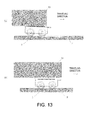
- Fig. 13(b) shows this left-behind state, i.e., a state where the heavy object is floating.
- the carriage carts loose their straight-traveling capability because the load concentrates on one or some of the rollers.
- the carriage cart may unintentionally change its course, and some carriage carts may deviate their courses from a moving direction of the heavy object 10, resulting in the traveling being stopped.
- one of the conventional carriage carts has the structure where the turntable 3 is provided on the main body 2 so as to be pivotally supported horizontally turnable and vertically extendable, and the carriage cart is configured as if it can smoothly move by extending and retracting the turntable 3 even if the carriage cart travels on the floor surface having the distortion or the inclination of the vertical gap.
- the extension and the retraction of the turntable 3 are to simply move the turntable 3 in vertical directions.
- the conventional carriage carts are characterized by arranging the positions of the rollers 5 which are pivotally supported in the lower part of the carriage cart main body to be located outside the peripheral portion of the turntable 3 to prevent a tip-over of the carriage cart even if the position of the load acting to the turntable 3 is shifted.
- the carriage cart travels over the going-up step H, and the load acting from the heavy object 10 is then substantially entirely acted onto the rollers 5 pivotally supported by a front shaft 6a of the carriage cart as a load Wa.
- a large force P occurs as resistance to obstruct the traveling of the carriage cart.
- the contacting between the heavy object 10 and the turntable 3 is released, and the traveling of the carriage cart is greatly obstructed.
- a floor surface F where a piece of furniture or the like is moved has the distortion or the vertical gap even if the floor is made of tiles or flooring material, as well as tatami mats or a concrete floor.
- Some carriage carts have more risks of the unintentional stop or the course change, which results in a sudden difficulty in traveling the carriage carts.
- the piece of furniture or the like may then fall off the carriage cart(s). Thus, this may induce an injury of an operator or damages to the floor surface. Therefore, the floor surface to which the carriage carts are applicable is only limited to an entirely flat surface.
- the object according to the present invention is to provide a heavy duty carriage cart, which is movable smoothly, stability and safely on a floor surface which has been widely spread in ordinary houses using a wide range of floor materials, such as tatami mats, wooden flooring, tiles and stone floor, having distortions, curves, etc.
- a heavy duty carriage cart 1 which is made in order to solve the above objectives includes a carriage cart main body 2, a plurality of rollers 5 pivotally supported by a plurality of shafts at a lower part of the carriage cart main body 2, and a load receiving platform 3 placed on an upper part of the carriage cart main body 2, the load receiving platform 3 including a planar portion 4 configured to support a heavy object by contacting with the bottom of the heavy object, and an elastic member arranged in a tapered shape outside the perimeter of the planar portion, such that extension and retraction of the planar portion can be adjusted while changing an inclining angle of the planar portion.
- the load receiving platform 3 has the planar portion 4 to contact the bottom of the heavy object 10 at the center thereof.
- the tapered portion may be formed in the elastic member from a peripheral edge 3b of the planar portion to a peripheral edge 3a of the load receiving platform, and the tapered portion of the elastic member may be formed such that its elasticity becomes smaller gradually from the center portion toward the peripheral portion.
- the peripheral edge 3a of the load receiving platform may be in contact with a receiving portion 22 of the carriage cart main body.
- the load receiving platform 3 which received the load acting from the heavy object 10 at the planar portion 4 begins deforming from the peripheral portion with an increase in the load, and the deformation sequentially advances to the center portion.
- the load receiving platform 3 is placed on the upper part of the carriage cart main body 2 such that, when a load more than a predetermined load is acted while the bottom of the heavy object 10 is always in contact with the planar portion 4 of the load receiving platform 3, the load receiving platform 3 closely contacts the carriage cart main body 2.
- the lower part of the carriage cart main body 2 may be provided with a front shaft 6a configured to pivotally support front rollers 5, a rear shaft 6c configured to pivotally support rear rollers 5, and an intermediate shaft 6b configured to pivotally support intermediate rollers 5 at a wheel base of the rollers.
- the intermediate shaft 6b may be located below a center position of the planar portion 4.
- the heavy duty carriage cart 1 according to the invention can always hold the load of the heavy object 10 at the planar portion 4 of the load receiving platform 3. Therefore, as shown in Fig. 9 , when moving the heavy object 10, such as a piece of furniture, even if some of the heavy duty carriage carts 1a, 1b, 1c and 1d encounter the distortion or the dent on the floor surface, the heavy duty carriage cart 1 according to the present invention can stably support the heavy object, while keeping itself in contact with the bottom of the heavy object 10 and the floor surface without separating therefrom, and always receiving the load at the planar portion 4 of the load receiving platform 3.
- the heavy duty carriage cart 1 when the heavy duty carriage cart 1 according to the present invention encounters a gap G at the joint between the plates if the floor surface F where the heavy object 10 is moved is made of a flooring material, or encounters the gap G at the joint between tiles or stone plates. Then, the possibility that any of the front, rear and intermediate rollers 5 falls into the gap G may be occurred. As shown in Fig. 7(a) , when the rollers 5 pivotally supported by the front shaft 6a approach the gap G and the possibility of the rollers 5 falling into the gap G is occurred, the heavy duty carriage cart 1 is about to incline forward.
- the front shaft rollers 5 do not easily receive the resistance of the going-up step H on the floor surface forward, and the possibility that the heavy duty carriage cart 1 stops at the step H and is removed from the heavy object 10 can be eliminated. Therefore, even if the heavy duty carriage cart 1 according to the present invention encounters the obstacle, such as the joint or the inclination of the distortion, or a loose dent on the floor surface where the carriage cart travels and moves, the possibility that the heavy duty carriage cart 1 is left behind from the heavy object 10, and the risks including an unintentional change in the course of the carriage cart, can be avoided. Thus, the heavy object, such as a piece of furniture, can be moved smoothly and safely.
- the heavy duty carriage carts 1 when the heavy duty carriage carts 1 according to the present invention are inserted at the four corners underneath the heavy object 10, such as a piece of furniture, and the carriage carts are then moved while supporting the heavy object 10, even if the carriage carts encounter the obstacle, such as the inclination of the distortion or the loose dent on the floor surface where the carriage carts travels and moves, the heavy duty carriage carts 1 can stably travel, always in contact with the bottom of the heavy object 10 and the floor surface, without separating therefrom. Therefore, the heavy object 10, such as a piece of furniture, can be carried safely, smoothly and easily, in accordance with most flooring materials used in ordinary houses or offices.
- the carriage cart since the load receiving platform 3 is formed in the tapered shape toward the center of the upper surface of the carriage cart main body 1, the carriage cart has an effect that it can be inserted smoothly without resistance when being inserted into the bottom of the heavy object 10. Note that, by pivotally supporting the rollers 5 by the three shafts 6a, 6b and 6c, the rollers 5 will not fall into the gap at the joint of the floor surface where the carriage cart travels and moves and, thus, the traveling of the heavy duty carriage cart 1 will not be stopped. Further, even if there is the uphill or the going-up step on the floor surface forward of the travel of the carriage cart, the front shaft rollers 5 has an effect to not easily receive the resistance of the step on the floor surface forward.
- the stable traveling can be achieved also with smaller-diameter rollers.
- the heavy duty carriage cart which is small in size, better in traveling performance, and low in height can be provided. This brings great effects in terms of an improvement in operability and safety because the heavy object, such as a piece of furniture, is only raised slightly when inserting the heavy duty carriage cart into the bottom of the heavy object, such as a piece of furniture.
- Figs. 1 to 4 show one embodiment of a heavy duty carriage cart 1 according to the present invention.
- This heavy duty carriage cart 1 is comprised of a carriage cart main body 2 made of synthetic resin, rollers 5 made of synthetic resin, roller shafts 6a, 6b and 6c made of metal, and a load receiving platform 3 provided to an upper part of the carriage cart main body 2.
- the carriage cart main body 2 includes a curved external surface which extends from a top plate 2a to front, rear, left and right side faces 2b, 2c, 2d and 2e, and covers substantially halves of the rollers.
- the carriage cart main body 2 also includes ribs 2f on a lower surface of the top plate 2a, and a boss hole 26 is formed, which penetrates vertically in a center portion of the main body 2.
- a recessed seat 22 for holding the load receiving platform 3 is formed on an upper surface of the top plate 2a, and a lower surface of the top plate 2a is opened.
- the ribs 2f formed on the lower surface of the top plate 2a are integrally formed in a honeycomb shape from the boss hole 26 part at the center of the carriage cart main body 2 to the side faces 2b, 2c, 2d and 2e of front, rear, left and right.
- bearing portions 25 which support the roller shafts 6a, 6b and 6c are formed at twelve locations in the side faces 2d and 2e of front, rear, left and right, and the rib 2f, so that the bearing portions 25 are arranged to pivotally support the rollers 5 separately at six locations.
- the load receiving platform 3 has a planar portion 4 in a center portion.
- An elastic member between a planar portion peripheral edge 3b and a load receiving platform peripheral edge 3a forms a tapered portion, and the tapered portion is formed in a ripple shape such that it has a gradually decreasing elasticity from the center portion toward the peripheral portion.
- the load receiving platform 3 is placed on the carriage cart main body 2 in a state where the load receiving platform peripheral edge 3a contacts the receiving portion 22 of the carriage cart main body 2.
- a member made of urethane or the like for increasing a coefficient of friction is provided on an upper surface of the planar portion 4 of the center portion.
- the planar portion 4 is configured to have a function of extension and retraction via the elastic member, while being freely movable to change its inclining angle with respect to the carriage cart main body 2 and, thus, the planar portion 4 moves smoothly, while contacting with the bottom of a heavy object 10.
- rollers 5 are pivotally supported by the roller shaft 6a in a front part of the carriage cart main body 2, and four rollers 5 are pivotally supported by the roller shaft 6c in a rear part, and four rollers 5 are pivotally supported by the roller shaft 6b in a longitudinally intermediate part.
- the rollers 5 are arranged at six locations in the lower part of the load receiving platform 3 and in a part outside the peripheral edge 3a.
- the intermediate shaft 6b is arranged below the center portion of the planar portion 4. If the heavy duty carriage cart is used for a light object, the number of rollers 5 may be two, respectively.
- the heavy duty carriage carts 1a, 1b, 1c and 1d are inserted into the bottom of the heavy object 10 such as a piece of furniture, and the heavy duty carriage carts 1a, 1b, 1c and 1d move on a floor surface, while supporting the heavy object 10.
- the heavy duty carriage cart 1a approaches a distortion or a dent on the floor surface, and, as shown in Figs. 5(b) , 6(a) and 6(b) , an inclination is generated between the floor surface and the bottom of the heavy object.
- a state where a load position W of the heavy object 10 may greatly shift from the center of the heavy duty carriage cart may occur, or, as shown in Figs. 5(c) or 6(c) , a distance between the bottom of the heavy object 10 and the floor surface may increase, and the load of the heavy object 10 may not act onto the heavy duty carriage cart 1a.
- the center planar portion 4 of the load receiving platform 3 which is placed on the heavy duty carriage cart 1a extends and retracts, while changing the inclining angle so that the center planar portion 4 keeps the contacting state with the bottom of the heavy object 10 and does not separate therefrom.
- the heavy duty carriage cart 1a keeps contacting with the bottom of the heavy object 10 and with the floor surface, without separating therefrom, and can stably support the heavy object, while always receiving the load near the center of the heavy duty carriage cart 1a. This effect can also be applied to other heavy duty carriage carts 1b, 1c and 1d.
- Figs. 7(a), 7(b) and 7(c) for example, when the heavy duty carriage cart 1 according to the present invention encounters a gap G at the joint of plates if the floor surface F, where the heavy object 10 such as a piece of furniture is moved, is wooden flooring, or a gap G on the joint of tiles or stone plates if the floor surface F is tile or stone flooring, the rollers 5 pivotally supported by the front shaft 6a approach the gap G as shown in Fig. 7(a) , and the rollers 5 are then about to fall into the gap G to incline the heavy duty carriage cart 1 forward.
- the load point W acting to the load receiving platform 3 naturally moves slightly rearward from the center portion of the loading platform, and the load acting from the heavy object 10 is held by the rollers 5 which are pivotally supported by the intermediate shaft 6b and the rear shaft 6c. Therefore, the rollers 5 which are pivotally supported by the front shaft 6a will not fall into the gap G. Further, when the rollers 5 pivotally supported by the intermediate shaft 6b are located at the gap G as shown in Fig. 7(b) , the load acting to the load receiving platform 3 is held by the rollers 5 pivotally supported by the front shaft 6a and the rear shaft 6c, and the rollers 5 will not fall into the gap G.
- the heavy duty carriage cart 1 is dramatically improved in the traveling performance thereof over the distortions and roughness, and the steps on the floor surface, and even if smaller-diameter rollers compared with those of the conventional carriage carts are adopted, the traveling performance will not be degraded. Therefore, the heavy duty carriage cart, which is significantly smaller and lower than the conventional carriage carts, can be provided.
Landscapes
- Engineering & Computer Science (AREA)
- Mechanical Engineering (AREA)
- Chemical & Material Sciences (AREA)
- Combustion & Propulsion (AREA)
- Transportation (AREA)
- Handcart (AREA)
Abstract
Description
- The present invention relates to a heavy duty carriage cart used for safely moving a heavy object, such as a piece of furniture such as a wardrobe or a cabinet, or a refrigerator or a flowerpot, used in ordinary houses or offices.
-
Figs. 10, 11 and12 show a conventional carriage cart. This conventional art is similar to those disclosed in, for example,Patent Document 1 andPatent Document 2. The carriage carts have a structure provided with aturntable 3 which is pivotally supported on amain body 2 of the carriage cart so as to be horizontally turnable, or horizontally turnable and vertically extendable, and atab 21 projecting forward from a front frame. The carriage carts have a plurality ofrollers 5 pivotally supported at the bottom thereof. At least four carriage carts are used to support a heavy object, such as a piece of furniture, by inserting the carriage carts into four corners underneath the heavy object. The carriage carts can integrally move with the heavy object by the load acting from the heavy object. -
- Patent Document 1:
JP3051835U - Patent Document 2:
JP2010-143419A - As shown in
Fig. 9 , the above-described carriage carts integrally move with aheavy object 10, such as a piece of furniture, by the load acting from theheavy object 10, while supporting theheavy object 10 after the carriage carts are inserted into the four corners underneath theheavy object 10. However, if there are slight distortions or vertical gaps on a floor surface where heavy duty carriage carts 1a, 1b, 1c and 1d travel, the integrated state of one or some of the carriage carts with theheavy object 10 is canceled. Thus, the heavy duty carriage carts 1a, 1b, 1c and 1d which were inserted into the four corners of theheavy object 10 may be reduced down only to three carriage carts at three corners, or rarely down to the support by two carriage carts, resulting in some of carriage carts being left behind.Fig. 13(b) shows this left-behind state, i.e., a state where the heavy object is floating. Alternatively, as shown inFig. 13(a) , when the load acting from theheavy object 10 to the carriage cart at the edge of a slope of the floor surface shifts greatly in the rear-to-front direction, or to the right or to the left, the carriage carts loose their straight-traveling capability because the load concentrates on one or some of the rollers. Thus, the carriage cart may unintentionally change its course, and some carriage carts may deviate their courses from a moving direction of theheavy object 10, resulting in the traveling being stopped. - Moreover, as shown in
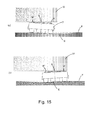
Fig. 12 , one of the conventional carriage carts has the structure where theturntable 3 is provided on themain body 2 so as to be pivotally supported horizontally turnable and vertically extendable, and the carriage cart is configured as if it can smoothly move by extending and retracting theturntable 3 even if the carriage cart travels on the floor surface having the distortion or the inclination of the vertical gap. However, the extension and the retraction of theturntable 3 are to simply move theturntable 3 in vertical directions. Thus, as shown inFigs. 14(a) and 14(b) , andFigs. 15(a) and 15(b) , when the carriage cart approaches a distortion or an inclined part E on the floor surface, or the middle of the slope, a load point W of theheavy object 10 acting to theturntable 3 moves to the peripheral portion of theturntable 3, and theturntable 3 which only movable vertically will not extend from the carriage cartmain body 2. Therefore, the load cannot be received near the center of theturntable 3. In addition, since the extending force which theturntable 3 always exerts a force to extend the entire turntable upwardly, a no-load point N where the load of theturntable 3 is not acted operates theturntable 3 to extend from the carriage cartmain body 2. Therefore, theturntable 3 will operates to extend upwardly in a slanted manner with respect to the carriage cartmain body 2. This creates a distortion in the fitting between theturntable 3 and arecessed portion 22 or a centerboss hole portion 26 of the carriage cartmain body 2, resulting in a generation of large friction between theturntable 3 and the carriage cartmain body 2. Therefore, the smooth extension cannot be expected. - Note that, as shown in
Figs. 11 and12 , the conventional carriage carts are characterized by arranging the positions of therollers 5 which are pivotally supported in the lower part of the carriage cart main body to be located outside the peripheral portion of theturntable 3 to prevent a tip-over of the carriage cart even if the position of the load acting to theturntable 3 is shifted. This means that there is noroller 5 in the lower part of theturntable 3, which supports the load by contacting with the floor surface, and the load acting from theheavy object 10 is supported by therollers 5 arranged only outside theturntable 3. This will not cause a problem when traveling on a flat floor surface, but, as shown inFigs. 14(a) and 14(b) , andFigs. 15(a) and 15(b) , when the carriage cart approaches the distortion or inclined part E on the floor surface and keeps traveling, or approaches the middle of the slope, the point W of the load acting from theheavy object 10 moves to the peripheral portion of theturntable 3, and the load acting from theheavy object 10 will remarkably concentrate only on the roller(s) 5 near the load point W. For this reason, the carriage cart which approaches the distortion or the vertical gap on the floor surface greatly looses the balance of the loads acted onto therollers 5 of front, rear, left and right. Therefore, friction or resistance which is caused between the roller and the floor surface, and the roller and the roller shaft thereof, is greatly different between the roller(s) which receives a less load and the roller(s) which receives a larger load. This causes deterioration of the straight-traveling capability of the carriage carts and, thus, the carriage carts unintentionally change their course in the middle of traveling, and the positions of the carriage carts with respect to the heavy object are shifted, or the carriage carts are disengaged from the heavy object. Therefore, the smooth movement of the heavy object is obstructed. Particularly, considering when the distortion on the floor surface is an uphill as shown inFig. 14(b) , or when there is a slight going-up step H on the floor surface forward in the course as shown inFig. 16 , the carriage cart travels over the going-up step H, and the load acting from theheavy object 10 is then substantially entirely acted onto therollers 5 pivotally supported by afront shaft 6a of the carriage cart as a load Wa. In order for the carriage cart to travel over the going-up step H to keep traveling forward, a large force P occurs as resistance to obstruct the traveling of the carriage cart. Thus, the contacting between theheavy object 10 and theturntable 3 is released, and the traveling of the carriage cart is greatly obstructed. A floor surface F where a piece of furniture or the like is moved has the distortion or the vertical gap even if the floor is made of tiles or flooring material, as well as tatami mats or a concrete floor. Some carriage carts have more risks of the unintentional stop or the course change, which results in a sudden difficulty in traveling the carriage carts. The piece of furniture or the like may then fall off the carriage cart(s). Thus, this may induce an injury of an operator or damages to the floor surface. Therefore, the floor surface to which the carriage carts are applicable is only limited to an entirely flat surface. - Therefore, the object according to the present invention is to provide a heavy duty carriage cart, which is movable smoothly, stability and safely on a floor surface which has been widely spread in ordinary houses using a wide range of floor materials, such as tatami mats, wooden flooring, tiles and stone floor, having distortions, curves, etc.
- A heavy
duty carriage cart 1 according to the present invention which is made in order to solve the above objectives includes a carriage cartmain body 2, a plurality ofrollers 5 pivotally supported by a plurality of shafts at a lower part of the carriage cartmain body 2, and a load receivingplatform 3 placed on an upper part of the carriage cartmain body 2, the load receivingplatform 3 including aplanar portion 4 configured to support a heavy object by contacting with the bottom of the heavy object, and an elastic member arranged in a tapered shape outside the perimeter of the planar portion, such that extension and retraction of the planar portion can be adjusted while changing an inclining angle of the planar portion.. - The load receiving
platform 3 has theplanar portion 4 to contact the bottom of theheavy object 10 at the center thereof. The tapered portion may be formed in the elastic member from aperipheral edge 3b of the planar portion to aperipheral edge 3a of the load receiving platform, and the tapered portion of the elastic member may be formed such that its elasticity becomes smaller gradually from the center portion toward the peripheral portion. Theperipheral edge 3a of the load receiving platform may be in contact with a receivingportion 22 of the carriage cart main body. Thus, theplanar portion 4 of the load receivingplatform 3 is freely changeable in the inclining angle with respect to the carriage cartmain body 2, and theplanar portion 4 is always in contact with the bottom of theheavy object 10 to hold the load acting from theheavy object 10. The load receivingplatform 3 which received the load acting from theheavy object 10 at theplanar portion 4 begins deforming from the peripheral portion with an increase in the load, and the deformation sequentially advances to the center portion. The load receivingplatform 3 is placed on the upper part of the carriage cartmain body 2 such that, when a load more than a predetermined load is acted while the bottom of theheavy object 10 is always in contact with theplanar portion 4 of the load receivingplatform 3, the load receivingplatform 3 closely contacts the carriage cartmain body 2. - The lower part of the carriage cart
main body 2 may be provided with afront shaft 6a configured to pivotally supportfront rollers 5, arear shaft 6c configured to pivotally supportrear rollers 5, and anintermediate shaft 6b configured to pivotally supportintermediate rollers 5 at a wheel base of the rollers. Theintermediate shaft 6b may be located below a center position of theplanar portion 4. Thus, the load acting from theheavy object 10 can be distributed and supported by the front andrear shaft rollers 5 centering on theintermediate rollers 5. - Therefore, as shown in
Fig. 9 , when the heavy duty carriage carts 1a, 1b, 1c and 1d were inserted into the bottom of theheavy object 10, such as a piece of furniture, and moved theheavy object 10, in a case of a flat floor surface, the bottom of theheavy object 10 was parallel to the floor surface, and the heavyduty carriage carts 1 securely held the heavy object on the floor surface as shown inFig. 5(a) . When some of the heavyduty carriage carts 1 approached the distortion or the dent on the floor surface, and as shown inFig. 5(b) , andFigs. 6(a) and 6(b) , the inclination occurred between the floor surface and the bottom of theheavy object 10. However, even if the state where the position of the load acting from the heavy object shifts greatly from the center of the heavy duty carriage cart is occurred, or, as shown inFigs. 5(c) and6(c) , even if the heavy duty carriage carts according to the present invention encounter the possibility where the distance between the bottom of theheavy object 10 and the floor surface increases, and the load acting from theheavy object 10 no longer acts onto the heavyduty carriage carts 1, theplanar portion 4 of the load receivingplatform 3 of the heavyduty carriage cart 1 extends and/or extracts while freely changing the inclining angle so that theplanar portion 4 keeps contacting with the bottom of theheavy object 10 without separating therefrom. Therefore, the heavyduty carriage cart 1 according to the invention can always hold the load of theheavy object 10 at theplanar portion 4 of the load receivingplatform 3. Therefore, as shown inFig. 9 , when moving theheavy object 10, such as a piece of furniture, even if some of the heavy duty carriage carts 1a, 1b, 1c and 1d encounter the distortion or the dent on the floor surface, the heavyduty carriage cart 1 according to the present invention can stably support the heavy object, while keeping itself in contact with the bottom of theheavy object 10 and the floor surface without separating therefrom, and always receiving the load at theplanar portion 4 of the load receivingplatform 3. - Further, when the heavy
duty carriage cart 1 according to the present invention encounters a gap G at the joint between the plates if the floor surface F where theheavy object 10 is moved is made of a flooring material, or encounters the gap G at the joint between tiles or stone plates. Then, the possibility that any of the front, rear andintermediate rollers 5 falls into the gap G may be occurred. As shown inFig. 7(a) , when therollers 5 pivotally supported by thefront shaft 6a approach the gap G and the possibility of therollers 5 falling into the gap G is occurred, the heavyduty carriage cart 1 is about to incline forward. However, a point W of the load acting to the load receivingplatform 3 naturally moves rearward slightly from the center portion of the loading platform, and the load acting from the heavy object is then held by therollers 5 pivotally supported by theintermediate shaft 6b and therear shaft 6c. Therefore, therollers 5 pivotally supported by thefront shaft 6a will not fall into the gap G. Further, as shown inFig. 7(b) , if therollers 5 pivotally supported by theintermediate shaft 6b are located at the gap G, the load acting to the load receivingplatform 3 is held by therollers 5 pivotally supported by thefront shaft 6a and therear shaft 6c, and therollers 5 will not fall into the gap G. Further, as shown inFig. 7(c) , also if therollers 5 pivotally supported by therear shaft 6c are located at the gap G, the point W of the load acting to the load receivingplatform 3 naturally moves forward slightly from the center portion of the loading platform, and the load acting from the heavy object is then held by therollers 5 pivotally supported by theintermediate shaft 6b and thefront shaft 6a. Therefore, therollers 5 pivotally supported by therear shaft 6c will not fall into the gap G, and the heavyduty carriage cart 1 can move smoothly. - Note that, as shown in
Fig. 8(a) , when the heavyduty carriage cart 1 according to the present invention encounters a going-up step H on the floor surface in the course thereof, therollers 5 pivotally supported by theintermediate shaft 6b hold substantially a half load Wb of the load W acting from theheavy object 10. Therefore, a load Wa acting to thefront shaft rollers 5 which encountered the step H further decreases, and a resistance P which is received when traveling the heavyduty carriage cart 1 over the going-up step H to move forward becomes small. Further, the carriage cartmain body 2 made of resin has elasticity, and the resistance which is received at thefront shaft rollers 5 is also absorbed by the carriage cartmain body 2 slightly deforming in a bow bending manner backwardly centering on theintermediate shaft 6b portion. Thus, since a loading ratio to thefront shaft rollers 5 further decreases, thefront shaft rollers 5 do not easily receive the resistance of the going-up step H on the floor surface forward, and the possibility that the heavyduty carriage cart 1 stops at the step H and is removed from theheavy object 10 can be eliminated. Therefore, even if the heavyduty carriage cart 1 according to the present invention encounters the obstacle, such as the joint or the inclination of the distortion, or a loose dent on the floor surface where the carriage cart travels and moves, the possibility that the heavyduty carriage cart 1 is left behind from theheavy object 10, and the risks including an unintentional change in the course of the carriage cart, can be avoided. Thus, the heavy object, such as a piece of furniture, can be moved smoothly and safely. - As described above in detail, when the heavy
duty carriage carts 1 according to the present invention are inserted at the four corners underneath theheavy object 10, such as a piece of furniture, and the carriage carts are then moved while supporting theheavy object 10, even if the carriage carts encounter the obstacle, such as the inclination of the distortion or the loose dent on the floor surface where the carriage carts travels and moves, the heavyduty carriage carts 1 can stably travel, always in contact with the bottom of theheavy object 10 and the floor surface, without separating therefrom. Therefore, theheavy object 10, such as a piece of furniture, can be carried safely, smoothly and easily, in accordance with most flooring materials used in ordinary houses or offices. Further, since theload receiving platform 3 is formed in the tapered shape toward the center of the upper surface of the carriage cartmain body 1, the carriage cart has an effect that it can be inserted smoothly without resistance when being inserted into the bottom of theheavy object 10. Note that, by pivotally supporting therollers 5 by the threeshafts rollers 5 will not fall into the gap at the joint of the floor surface where the carriage cart travels and moves and, thus, the traveling of the heavyduty carriage cart 1 will not be stopped. Further, even if there is the uphill or the going-up step on the floor surface forward of the travel of the carriage cart, thefront shaft rollers 5 has an effect to not easily receive the resistance of the step on the floor surface forward. Therefore, the stable traveling can be achieved also with smaller-diameter rollers. As described above, since, with the number of the roller shafts is less and three, the effects of the prevention of the roller falling into the gap at the joint of the floor surface and the reduction in the roller outer diameter can be acquired, the heavy duty carriage cart which is small in size, better in traveling performance, and low in height can be provided. This brings great effects in terms of an improvement in operability and safety because the heavy object, such as a piece of furniture, is only raised slightly when inserting the heavy duty carriage cart into the bottom of the heavy object, such as a piece of furniture. -
-
Fig. 1 is a plan view showing a first embodiment according to the present invention. -
Fig. 2 is a cross-sectional view taken along a line A-A ofFig. 1 . -
Fig. 3 is an elevational view ofFig. 1 , seen in an arrow direction B. -
Fig. 4 is a bottom view ofFig. 1 . -
Fig. 5 is an illustration of effects (#1) of a heavy duty carriage cart according to the present invention. -
Fig. 6 is an illustration of effects (#2) of the heavy duty carriage cart according to the present invention. -
Fig. 7 is an illustration of effects (#3) of the heavy duty carriage cart according to the present invention. -
Fig. 8 is an illustration of effects (#4) of the heavy duty carriage cart according to the present invention. -
Fig. 9 is an illustration of use of the heavy duty carriage cart. -
Fig. 10 is a perspective view of a conventional heavy duty carriage cart. -
Fig. 11 is a plan view of the conventional heavy duty carriage cart. -
Fig. 12 is a cross-sectional view of the conventional heavy duty carriage cart. -
Fig. 13 is an illustration of problems (#1) of the conventional heavy duty carriage cart. -
Fig. 14 is an illustration of problems (#2) of the conventional heavy duty carriage cart. -
Fig. 15 is an illustration of problems (#3) of the conventional heavy duty carriage cart. -
Fig. 16 is an illustration of problems (#4) of the conventional heavy duty carriage cart. -
Figs. 1 to 4 show one embodiment of a heavyduty carriage cart 1 according to the present invention. This heavyduty carriage cart 1 is comprised of a carriage cartmain body 2 made of synthetic resin,rollers 5 made of synthetic resin,roller shafts load receiving platform 3 provided to an upper part of the carriage cartmain body 2. - As shown in
Figs. 3 and 4 , the carriage cartmain body 2 includes a curved external surface which extends from atop plate 2a to front, rear, left and right side faces 2b, 2c, 2d and 2e, and covers substantially halves of the rollers. The carriage cartmain body 2 also includesribs 2f on a lower surface of thetop plate 2a, and aboss hole 26 is formed, which penetrates vertically in a center portion of themain body 2. A recessedseat 22 for holding theload receiving platform 3 is formed on an upper surface of thetop plate 2a, and a lower surface of thetop plate 2a is opened. - As shown in
Fig. 4 , theribs 2f formed on the lower surface of thetop plate 2a are integrally formed in a honeycomb shape from theboss hole 26 part at the center of the carriage cartmain body 2 to the side faces 2b, 2c, 2d and 2e of front, rear, left and right. Further, bearingportions 25 which support theroller shafts rib 2f, so that the bearingportions 25 are arranged to pivotally support therollers 5 separately at six locations. - As shown in
Fig. 2 , theload receiving platform 3 has aplanar portion 4 in a center portion. An elastic member between a planar portionperipheral edge 3b and a load receiving platformperipheral edge 3a forms a tapered portion, and the tapered portion is formed in a ripple shape such that it has a gradually decreasing elasticity from the center portion toward the peripheral portion. Theload receiving platform 3 is placed on the carriage cartmain body 2 in a state where the load receiving platformperipheral edge 3a contacts the receivingportion 22 of the carriage cartmain body 2. Note that, in this embodiment, a member made of urethane or the like for increasing a coefficient of friction is provided on an upper surface of theplanar portion 4 of the center portion. - When the
load receiving platform 3 is placed on the carriage cartmain body 2, theperipheral edge 3a is supported by the carriage cartmain body 2, while being in contact with the recessedseat 22 of the carriage cartmain body 2. Theplanar portion 4 is configured to have a function of extension and retraction via the elastic member, while being freely movable to change its inclining angle with respect to the carriage cartmain body 2 and, thus, theplanar portion 4 moves smoothly, while contacting with the bottom of aheavy object 10. - Four
rollers 5 are pivotally supported by theroller shaft 6a in a front part of the carriage cartmain body 2, and fourrollers 5 are pivotally supported by theroller shaft 6c in a rear part, and fourrollers 5 are pivotally supported by theroller shaft 6b in a longitudinally intermediate part. Thus, therollers 5 are arranged at six locations in the lower part of theload receiving platform 3 and in a part outside theperipheral edge 3a. Note that theintermediate shaft 6b is arranged below the center portion of theplanar portion 4. If the heavy duty carriage cart is used for a light object, the number ofrollers 5 may be two, respectively. - Hereinafter, operation of the heavy duty carriage cart according to the present invention is described, using
Figs. 1 to 9 . As shown inFig. 9 , the heavy duty carriage carts 1a, 1b, 1c and 1d are inserted into the bottom of theheavy object 10 such as a piece of furniture, and the heavy duty carriage carts 1a, 1b, 1c and 1d move on a floor surface, while supporting theheavy object 10. In such a case, when the heavy duty carriage cart 1a approaches a distortion or a dent on the floor surface, and, as shown inFigs. 5(b) ,6(a) and 6(b) , an inclination is generated between the floor surface and the bottom of the heavy object. Then, a state where a load position W of theheavy object 10 may greatly shift from the center of the heavy duty carriage cart may occur, or, as shown inFigs. 5(c) or6(c) , a distance between the bottom of theheavy object 10 and the floor surface may increase, and the load of theheavy object 10 may not act onto the heavy duty carriage cart 1a. Even in such a case, the centerplanar portion 4 of theload receiving platform 3 which is placed on the heavy duty carriage cart 1a extends and retracts, while changing the inclining angle so that the centerplanar portion 4 keeps the contacting state with the bottom of theheavy object 10 and does not separate therefrom. Thus, the load of theheavy object 10 can always be held at the centerplanar portion 4 of theload receiving platform 3 of the heavy duty carriage cart 1a. Therefore, the heavy duty carriage cart 1a according to the present invention keeps contacting with the bottom of theheavy object 10 and with the floor surface, without separating therefrom, and can stably support the heavy object, while always receiving the load near the center of the heavy duty carriage cart 1a. This effect can also be applied to other heavy duty carriage carts 1b, 1c and 1d. - Moreover, as shown in
Figs. 7(a), 7(b) and 7(c) , for example, when the heavyduty carriage cart 1 according to the present invention encounters a gap G at the joint of plates if the floor surface F, where theheavy object 10 such as a piece of furniture is moved, is wooden flooring, or a gap G on the joint of tiles or stone plates if the floor surface F is tile or stone flooring, therollers 5 pivotally supported by thefront shaft 6a approach the gap G as shown inFig. 7(a) , and therollers 5 are then about to fall into the gap G to incline the heavyduty carriage cart 1 forward. However, the load point W acting to theload receiving platform 3 naturally moves slightly rearward from the center portion of the loading platform, and the load acting from theheavy object 10 is held by therollers 5 which are pivotally supported by theintermediate shaft 6b and therear shaft 6c. Therefore, therollers 5 which are pivotally supported by thefront shaft 6a will not fall into the gap G. Further, when therollers 5 pivotally supported by theintermediate shaft 6b are located at the gap G as shown inFig. 7(b) , the load acting to theload receiving platform 3 is held by therollers 5 pivotally supported by thefront shaft 6a and therear shaft 6c, and therollers 5 will not fall into the gap G. Further, also when therollers 5 pivotally supported by therear shaft 6c are located at the gap G as shown inFig. 7(c) , the point W of the load acting to theload receiving platform 3 naturally moves slightly forward from the center portion of the loading platform, and the load acting from theheavy object 10 is held by therollers 5 pivotally supported by theintermediate shaft 6b and thefront shaft 6a. Therefore, therollers 5 pivotally supported by therear shaft 6c will not fall into the gap G and, thus, the heavyduty carriage cart 1 can move smoothly. - Note that, as shown in
Fig. 8(a) , when the heavyduty carriage cart 1 according to the present invention encounters a going-up step H on the floor surface on its course, since therollers 5 pivotally supported by theintermediate shaft 6b hold substantially a half load Wb of the load W acting from theheavy object 10, a load Wa acting to thefront shaft rollers 5 which encounter the step H further decreases, a resistance P which is received when the heavyduty carriage cart 1 travels forward and travels over the going-up step H becomes only a little. In addition, since the carriage cartmain body 2 made of resin has elasticity, the resistance which is received by thefront shaft rollers 5 is also absorbed by the carriage cartmain body 2 slightly deforming in a bow bending manner backward at theintermediate shaft 6b portion as the center, and since the loading ratio to thefront shaft rollers 5 further decreases, thefront shaft rollers 5 will be more difficult to receive the resistance at the going-up step H on the floor surface forward. As described above, the heavyduty carriage cart 1 according to the present invention is dramatically improved in the traveling performance thereof over the distortions and roughness, and the steps on the floor surface, and even if smaller-diameter rollers compared with those of the conventional carriage carts are adopted, the traveling performance will not be degraded. Therefore, the heavy duty carriage cart, which is significantly smaller and lower than the conventional carriage carts, can be provided. -
- 1:
- Heavy Duty Carriage Cart
- 2:
- Carriage Cart Main Body
- 3:
- Load Receiving Platform
- 3a:
- Load Receiving Platform Peripheral Edge
- 3b:
- Load Receiving Platform Center Planar Portion Peripheral Edge
- 4:
- Load Receiving Platform Center Planar Portion
- 5:
- Roller
- 6a:
- Roller Shaft
- 6b:
- Roller Shaft
- 6c:
- Roller Shaft
- 10:
- Heavy Object
Claims (3)
- A heavy duty carriage cart, comprising:a carriage cart main body;a plurality of rollers pivotally supported by a plurality of shafts at a lower part of the carriage cart main body; anda load receiving platform placed on an upper part of the carriage cart main body, the load receiving platform including:a planar portion configured to support a heavy object by contacting with the bottom of the heavy object; andan elastic member arranged in a tapered shape outside the perimeter of the planar portion, such that extension and retraction of the planar portion can be adjusted while changing an inclining angle of the planar portion.
- The heavy duty carriage cart of claim 1, wherein the elastic member has a tapered portion from a peripheral edge of the planar portion toward a peripheral edge of the load receiving platform, the tapered portion being formed so as to have a gradually smaller elasticity from a center portion toward a peripheral portion thereof, and
wherein the load receiving platform is placed on the carriage cart main body so that the peripheral edge of the load receiving platform contacts a receiving portion of the carriage cart main body. - The heavy duty carriage cart of claim 2, wherein the lower part of the carriage cart main body is provided with a front shaft configured to pivotally support front rollers, a rear shaft configured to pivotally support rear rollers, and an intermediate shaft configured to pivotally support intermediate rollers at a wheel base of the rollers, and the intermediate shaft is located below a center position of the planar portion.
Applications Claiming Priority (2)
| Application Number | Priority Date | Filing Date | Title |
|---|---|---|---|
| JP2012156837A JP5187605B1 (en) | 2012-07-12 | 2012-07-12 | Heavy goods moving cart |
| PCT/JP2013/054678 WO2014010264A1 (en) | 2012-07-12 | 2013-02-25 | Heavy object movement platform truck |
Publications (3)
| Publication Number | Publication Date |
|---|---|
| EP2813410A1 true EP2813410A1 (en) | 2014-12-17 |
| EP2813410A4 EP2813410A4 (en) | 2015-04-08 |
| EP2813410B1 EP2813410B1 (en) | 2016-04-20 |
Family
ID=48481437
Family Applications (1)
| Application Number | Title | Priority Date | Filing Date |
|---|---|---|---|
| EP13817363.8A Active EP2813410B1 (en) | 2012-07-12 | 2013-02-25 | Platform truck for moving heavy objects |
Country Status (8)
| Country | Link |
|---|---|
| US (1) | US9027942B2 (en) |
| EP (1) | EP2813410B1 (en) |
| JP (1) | JP5187605B1 (en) |
| AU (1) | AU2013288062B2 (en) |
| CA (1) | CA2866240C (en) |
| DK (1) | DK2813410T3 (en) |
| ES (1) | ES2577285T3 (en) |
| WO (1) | WO2014010264A1 (en) |
Families Citing this family (27)
| Publication number | Priority date | Publication date | Assignee | Title |
|---|---|---|---|---|
| US20130325670A1 (en) | 2012-05-30 | 2013-12-05 | Liberty Hardware Mfg. Corp. | Shower door assembly display and retail |
| US10227080B2 (en) * | 2013-09-12 | 2019-03-12 | Workshops for Warriors | Transporting loads on support surfaces |
| USD709363S1 (en) | 2014-01-29 | 2014-07-22 | Liberty Hardware Mfg. Corp. | Handle packaging |
| US9676543B2 (en) | 2014-01-29 | 2017-06-13 | Liberty Hardware Mfg. Corp. | Shower door glass pane packaging assembly |
| USD763023S1 (en) | 2014-01-29 | 2016-08-09 | Liberty Hardware Mfg. Corp. | Shower door display |
| US10070739B2 (en) | 2014-01-29 | 2018-09-11 | Liberty Hardware Mfg. Corp. | Shower door assembly display |
| USD767380S1 (en) * | 2014-01-29 | 2016-09-27 | Liberty Hardware Mfg. Corp. | Packaging castors |
| USD758771S1 (en) | 2014-01-29 | 2016-06-14 | Liberty Hardware Mfg. Corp. | Shower door display |
| JP5617088B1 (en) * | 2014-04-07 | 2014-11-05 | 光男 長谷川 | Heavy goods moving cart |
| US9907415B2 (en) * | 2015-03-13 | 2018-03-06 | Liberty Hardware Mfg. Corp. | Article divider assembly |
| USD777564S1 (en) | 2015-03-13 | 2017-01-31 | Liberty Hardware Mfg. Corp. | Carton divider |
| US9743810B2 (en) | 2015-07-31 | 2017-08-29 | Liberty Hardware Mfg. Corp. | Shower door guide assembly |
| JP6711665B2 (en) * | 2016-03-29 | 2020-06-17 | ジー・オー・ピー株式会社 | Carrier |
| AU2017213537A1 (en) * | 2016-08-31 | 2018-03-15 | Mammoth Industries Pty Ltd | Sliding panel wheel assembly |
| US10053129B1 (en) * | 2017-02-07 | 2018-08-21 | Eddie Lee Turner, JR. | Adjustable all-terrain dolly system and method |
| WO2020027765A1 (en) | 2018-07-30 | 2020-02-06 | Turner Eddie Lee Jr | All-terrain platform dolly |
| CA186586S (en) * | 2019-03-15 | 2020-09-03 | Parkit360 Inc | Powered dolly |
| CN110104041B (en) * | 2019-05-14 | 2024-06-04 | 中国三冶集团有限公司 | Motor hauling device and use method thereof |
| JP6664610B1 (en) * | 2019-07-10 | 2020-03-13 | 光男 長谷川 | Heavy goods moving trolley |
| US10994762B2 (en) | 2019-07-10 | 2021-05-04 | Mitsuo Hasegawa | Heavy duty carriage |
| USD965245S1 (en) * | 2019-07-18 | 2022-09-27 | Parkit 360, Inc. | Powered dolly |
| US11554802B2 (en) | 2020-04-27 | 2023-01-17 | Midwest Innovative Products | Dolly |
| JP2020125116A (en) * | 2020-05-28 | 2020-08-20 | ジー・オー・ピー株式会社 | Carrier |
| CN112722031B (en) * | 2021-01-23 | 2022-04-12 | 佛山民宇电子科技有限公司 | A foldable transport device for convenient circuit boards |
| CN112850541B (en) * | 2021-02-03 | 2022-10-25 | 陈火平 | Mechanical equipment hoisting device |
| JP7270129B1 (en) | 2022-10-06 | 2023-05-10 | 光男 長谷川 | Heavy goods mobile cart |
| KR102678186B1 (en) * | 2023-10-13 | 2024-06-24 | 윤삼섭 | Weight carrying roller device |
Family Cites Families (23)
| Publication number | Priority date | Publication date | Assignee | Title |
|---|---|---|---|---|
| US171367A (en) * | 1875-12-21 | Improvement in trucks | ||
| LU39736A1 (en) * | 1961-02-03 | 1961-04-04 | ||
| US3137512A (en) * | 1961-08-11 | 1964-06-16 | Carpezzi Leo Joseph | Height adjustable dolly |
| US3411802A (en) * | 1967-01-03 | 1968-11-19 | Montgomery Ward & Co Inc | Dolly |
| JPS4829551U (en) | 1971-08-13 | 1973-04-11 | ||
| JPS4829561U (en) * | 1971-08-16 | 1973-04-11 | ||
| US3948538A (en) * | 1975-06-16 | 1976-04-06 | Harry Hovila | Self equalizing ball caster lift mat |
| JPS62121162U (en) | 1986-01-24 | 1987-07-31 | ||
| JPH0239960U (en) | 1988-09-09 | 1990-03-19 | ||
| JPH0351835U (en) | 1989-09-26 | 1991-05-20 | ||
| JP4047427B2 (en) * | 1997-11-19 | 2008-02-13 | 日之出水道機器株式会社 | Manhole cover truck |
| JP3051835U (en) | 1998-02-26 | 1998-09-02 | 康裕 鈴木 | Heavy goods moving trolley |
| DE29818496U1 (en) * | 1998-10-16 | 1998-12-17 | Josef Heiss Medizintechnik GmbH, 78532 Tuttlingen | Equipment cart |
| JP3482463B2 (en) * | 2000-12-15 | 2003-12-22 | 矢崎化工株式会社 | Submersible guided towing vehicle |
| JP2002211720A (en) * | 2001-01-10 | 2002-07-31 | Ota Giken:Kk | Self-advancing table roller for carrying heavy cargo |
| DE20109183U1 (en) * | 2001-06-01 | 2001-08-23 | Heinrich, Hans-Jürgen, 72827 Wannweil | Transport and work trolleys, in particular for paint buckets |
| US7140622B1 (en) * | 2003-03-25 | 2006-11-28 | Cantu Richard A | Movie camera skate dolly |
| US7226264B2 (en) * | 2003-09-03 | 2007-06-05 | The Boeing Company | Seat gantry |
| US7600767B2 (en) * | 2007-01-18 | 2009-10-13 | Carl Lewis | Dolly for moving large and heavy objects |
| JP5246620B2 (en) * | 2008-12-19 | 2013-07-24 | 大洋精工株式会社 | Heavy goods moving cart |
| US8302934B1 (en) * | 2009-07-03 | 2012-11-06 | Woods Steven L | Vehicle stop device |
| US8616564B2 (en) * | 2009-12-07 | 2013-12-31 | Paceco Corp. | Cargo container handling cart and system using same |
| GB2485599A (en) * | 2010-11-20 | 2012-05-23 | Steven Bowman | Chiminea wheeled base |
-
2012
- 2012-07-12 JP JP2012156837A patent/JP5187605B1/en active Active
-
2013
- 2013-02-25 EP EP13817363.8A patent/EP2813410B1/en active Active
- 2013-02-25 CA CA2866240A patent/CA2866240C/en not_active Expired - Fee Related
- 2013-02-25 AU AU2013288062A patent/AU2013288062B2/en not_active Ceased
- 2013-02-25 DK DK13817363.8T patent/DK2813410T3/en active
- 2013-02-25 WO PCT/JP2013/054678 patent/WO2014010264A1/en not_active Ceased
- 2013-02-25 ES ES13817363.8T patent/ES2577285T3/en active Active
- 2013-02-25 US US14/355,822 patent/US9027942B2/en active Active
Also Published As
| Publication number | Publication date |
|---|---|
| JP5187605B1 (en) | 2013-04-24 |
| EP2813410A4 (en) | 2015-04-08 |
| CA2866240A1 (en) | 2014-01-16 |
| US20140290001A1 (en) | 2014-10-02 |
| AU2013288062B2 (en) | 2015-02-05 |
| EP2813410B1 (en) | 2016-04-20 |
| WO2014010264A1 (en) | 2014-01-16 |
| DK2813410T3 (en) | 2016-06-27 |
| JP2014019195A (en) | 2014-02-03 |
| CA2866240C (en) | 2015-04-28 |
| US9027942B2 (en) | 2015-05-12 |
| ES2577285T3 (en) | 2016-07-14 |
| AU2013288062A1 (en) | 2014-08-28 |
Similar Documents
| Publication | Publication Date | Title |
|---|---|---|
| US9027942B2 (en) | Heavy duty carriage cart | |
| US9896264B2 (en) | Freight rack | |
| JP6555525B2 (en) | Trolley | |
| US10245885B2 (en) | Pallet dolly puller system | |
| US7770903B2 (en) | Drawer type storage cart | |
| JP3159376U (en) | Attachments for transport carts and transport carts | |
| AU2008201692A1 (en) | Pallet storage system | |
| US6908088B2 (en) | Wheelbarrow bumper | |
| JP5246620B2 (en) | Heavy goods moving cart | |
| KR20200001191A (en) | Easy to load and unload cart for cargo transportation | |
| HK1244765A1 (en) | Cargo handling pallet | |
| US7552968B2 (en) | Feet for stacking chair | |
| CA3200922A1 (en) | Improved drywall cart and methods of using the same | |
| KR101252758B1 (en) | Parking equipment | |
| JP6336366B2 (en) | Cargo truck | |
| US9133001B2 (en) | Pallet positioning bar | |
| KR20080004142U (en) | Cargo cart | |
| KR101581157B1 (en) | Cart for stairs | |
| CN111801261B (en) | Heavy object moving trolley | |
| US8607411B2 (en) | Combination of carpet-cleaning machine and platform for transporting the machine | |
| KR20170025079A (en) | Movable Carriage For Loading Cargo | |
| CN101835405A (en) | A ramp assembly for mobile shelving | |
| JP7270129B1 (en) | Heavy goods mobile cart | |
| KR101433580B1 (en) | Mechanical parking equipment | |
| KR20140058924A (en) | Mechanical parking apparatus |
Legal Events
| Date | Code | Title | Description |
|---|---|---|---|
| PUAI | Public reference made under article 153(3) epc to a published international application that has entered the european phase |
Free format text: ORIGINAL CODE: 0009012 |
|
| 17P | Request for examination filed |
Effective date: 20140801 |
|
| AK | Designated contracting states |
Kind code of ref document: A1 Designated state(s): AL AT BE BG CH CY CZ DE DK EE ES FI FR GB GR HR HU IE IS IT LI LT LU LV MC MK MT NL NO PL PT RO RS SE SI SK SM TR |
|
| AX | Request for extension of the european patent |
Extension state: BA ME |
|
| RA4 | Supplementary search report drawn up and despatched (corrected) |
Effective date: 20150309 |
|
| RIC1 | Information provided on ipc code assigned before grant |
Ipc: B62B 3/00 20060101ALN20150303BHEP Ipc: B62B 5/00 20060101AFI20150303BHEP |
|
| DAX | Request for extension of the european patent (deleted) | ||
| RIC1 | Information provided on ipc code assigned before grant |
Ipc: B62B 3/00 20060101ALN20151005BHEP Ipc: B62B 5/00 20060101AFI20151005BHEP |
|
| REG | Reference to a national code |
Ref country code: DE Ref legal event code: R079 Ref document number: 602013006826 Country of ref document: DE Free format text: PREVIOUS MAIN CLASS: B62B0001260000 Ipc: B62B0005000000 |
|
| GRAP | Despatch of communication of intention to grant a patent |
Free format text: ORIGINAL CODE: EPIDOSNIGR1 |
|
| INTG | Intention to grant announced |
Effective date: 20151201 |
|
| RIC1 | Information provided on ipc code assigned before grant |
Ipc: B62B 5/00 20060101AFI20151123BHEP Ipc: B62B 3/00 20060101ALN20151123BHEP |
|
| GRAS | Grant fee paid |
Free format text: ORIGINAL CODE: EPIDOSNIGR3 |
|
| GRAA | (expected) grant |
Free format text: ORIGINAL CODE: 0009210 |
|
| AK | Designated contracting states |
Kind code of ref document: B1 Designated state(s): AL AT BE BG CH CY CZ DE DK EE ES FI FR GB GR HR HU IE IS IT LI LT LU LV MC MK MT NL NO PL PT RO RS SE SI SK SM TR |
|
| REG | Reference to a national code |
Ref country code: GB Ref legal event code: FG4D |
|
| REG | Reference to a national code |
Ref country code: CH Ref legal event code: EP |
|
| REG | Reference to a national code |
Ref country code: AT Ref legal event code: REF Ref document number: 792084 Country of ref document: AT Kind code of ref document: T Effective date: 20160515 |
|
| REG | Reference to a national code |
Ref country code: IE Ref legal event code: FG4D |
|
| REG | Reference to a national code |
Ref country code: NL Ref legal event code: FP |
|
| REG | Reference to a national code |
Ref country code: DE Ref legal event code: R096 Ref document number: 602013006826 Country of ref document: DE |
|
| REG | Reference to a national code |
Ref country code: CH Ref legal event code: NV Representative=s name: HEPP WENGER RYFFEL AG, CH |
|
| REG | Reference to a national code |
Ref country code: DK Ref legal event code: T3 Effective date: 20160623 |
|
| REG | Reference to a national code |
Ref country code: ES Ref legal event code: FG2A Ref document number: 2577285 Country of ref document: ES Kind code of ref document: T3 Effective date: 20160714 |
|
| REG | Reference to a national code |
Ref country code: SE Ref legal event code: TRGR |
|
| REG | Reference to a national code |
Ref country code: LT Ref legal event code: MG4D |
|
| REG | Reference to a national code |
Ref country code: AT Ref legal event code: MK05 Ref document number: 792084 Country of ref document: AT Kind code of ref document: T Effective date: 20160420 |
|
| PG25 | Lapsed in a contracting state [announced via postgrant information from national office to epo] |
Ref country code: LT Free format text: LAPSE BECAUSE OF FAILURE TO SUBMIT A TRANSLATION OF THE DESCRIPTION OR TO PAY THE FEE WITHIN THE PRESCRIBED TIME-LIMIT Effective date: 20160420 Ref country code: FI Free format text: LAPSE BECAUSE OF FAILURE TO SUBMIT A TRANSLATION OF THE DESCRIPTION OR TO PAY THE FEE WITHIN THE PRESCRIBED TIME-LIMIT Effective date: 20160420 Ref country code: PL Free format text: LAPSE BECAUSE OF FAILURE TO SUBMIT A TRANSLATION OF THE DESCRIPTION OR TO PAY THE FEE WITHIN THE PRESCRIBED TIME-LIMIT Effective date: 20160420 Ref country code: NO Free format text: LAPSE BECAUSE OF FAILURE TO SUBMIT A TRANSLATION OF THE DESCRIPTION OR TO PAY THE FEE WITHIN THE PRESCRIBED TIME-LIMIT Effective date: 20160720 |
|
| PG25 | Lapsed in a contracting state [announced via postgrant information from national office to epo] |
Ref country code: PT Free format text: LAPSE BECAUSE OF FAILURE TO SUBMIT A TRANSLATION OF THE DESCRIPTION OR TO PAY THE FEE WITHIN THE PRESCRIBED TIME-LIMIT Effective date: 20160822 Ref country code: RS Free format text: LAPSE BECAUSE OF FAILURE TO SUBMIT A TRANSLATION OF THE DESCRIPTION OR TO PAY THE FEE WITHIN THE PRESCRIBED TIME-LIMIT Effective date: 20160420 Ref country code: HR Free format text: LAPSE BECAUSE OF FAILURE TO SUBMIT A TRANSLATION OF THE DESCRIPTION OR TO PAY THE FEE WITHIN THE PRESCRIBED TIME-LIMIT Effective date: 20160420 Ref country code: GR Free format text: LAPSE BECAUSE OF FAILURE TO SUBMIT A TRANSLATION OF THE DESCRIPTION OR TO PAY THE FEE WITHIN THE PRESCRIBED TIME-LIMIT Effective date: 20160721 Ref country code: AT Free format text: LAPSE BECAUSE OF FAILURE TO SUBMIT A TRANSLATION OF THE DESCRIPTION OR TO PAY THE FEE WITHIN THE PRESCRIBED TIME-LIMIT Effective date: 20160420 Ref country code: LV Free format text: LAPSE BECAUSE OF FAILURE TO SUBMIT A TRANSLATION OF THE DESCRIPTION OR TO PAY THE FEE WITHIN THE PRESCRIBED TIME-LIMIT Effective date: 20160420 |
|
| PG25 | Lapsed in a contracting state [announced via postgrant information from national office to epo] |
Ref country code: BE Free format text: LAPSE BECAUSE OF FAILURE TO SUBMIT A TRANSLATION OF THE DESCRIPTION OR TO PAY THE FEE WITHIN THE PRESCRIBED TIME-LIMIT Effective date: 20160420 |
|
| REG | Reference to a national code |
Ref country code: DE Ref legal event code: R097 Ref document number: 602013006826 Country of ref document: DE |
|
| PG25 | Lapsed in a contracting state [announced via postgrant information from national office to epo] |
Ref country code: EE Free format text: LAPSE BECAUSE OF FAILURE TO SUBMIT A TRANSLATION OF THE DESCRIPTION OR TO PAY THE FEE WITHIN THE PRESCRIBED TIME-LIMIT Effective date: 20160420 Ref country code: RO Free format text: LAPSE BECAUSE OF FAILURE TO SUBMIT A TRANSLATION OF THE DESCRIPTION OR TO PAY THE FEE WITHIN THE PRESCRIBED TIME-LIMIT Effective date: 20160420 Ref country code: SK Free format text: LAPSE BECAUSE OF FAILURE TO SUBMIT A TRANSLATION OF THE DESCRIPTION OR TO PAY THE FEE WITHIN THE PRESCRIBED TIME-LIMIT Effective date: 20160420 Ref country code: CZ Free format text: LAPSE BECAUSE OF FAILURE TO SUBMIT A TRANSLATION OF THE DESCRIPTION OR TO PAY THE FEE WITHIN THE PRESCRIBED TIME-LIMIT Effective date: 20160420 |
|
| PLBE | No opposition filed within time limit |
Free format text: ORIGINAL CODE: 0009261 |
|
| STAA | Information on the status of an ep patent application or granted ep patent |
Free format text: STATUS: NO OPPOSITION FILED WITHIN TIME LIMIT |
|
| REG | Reference to a national code |
Ref country code: FR Ref legal event code: PLFP Year of fee payment: 5 |
|
| PG25 | Lapsed in a contracting state [announced via postgrant information from national office to epo] |
Ref country code: SM Free format text: LAPSE BECAUSE OF FAILURE TO SUBMIT A TRANSLATION OF THE DESCRIPTION OR TO PAY THE FEE WITHIN THE PRESCRIBED TIME-LIMIT Effective date: 20160420 |
|
| 26N | No opposition filed |
Effective date: 20170123 |
|
| PG25 | Lapsed in a contracting state [announced via postgrant information from national office to epo] |
Ref country code: SI Free format text: LAPSE BECAUSE OF FAILURE TO SUBMIT A TRANSLATION OF THE DESCRIPTION OR TO PAY THE FEE WITHIN THE PRESCRIBED TIME-LIMIT Effective date: 20160420 |
|
| PG25 | Lapsed in a contracting state [announced via postgrant information from national office to epo] |
Ref country code: MC Free format text: LAPSE BECAUSE OF FAILURE TO SUBMIT A TRANSLATION OF THE DESCRIPTION OR TO PAY THE FEE WITHIN THE PRESCRIBED TIME-LIMIT Effective date: 20160420 |
|
| PG25 | Lapsed in a contracting state [announced via postgrant information from national office to epo] |
Ref country code: LU Free format text: LAPSE BECAUSE OF NON-PAYMENT OF DUE FEES Effective date: 20170225 |
|
| REG | Reference to a national code |
Ref country code: FR Ref legal event code: PLFP Year of fee payment: 6 |
|
| PG25 | Lapsed in a contracting state [announced via postgrant information from national office to epo] |
Ref country code: MT Free format text: LAPSE BECAUSE OF NON-PAYMENT OF DUE FEES Effective date: 20170225 |
|
| PG25 | Lapsed in a contracting state [announced via postgrant information from national office to epo] |
Ref country code: AL Free format text: LAPSE BECAUSE OF FAILURE TO SUBMIT A TRANSLATION OF THE DESCRIPTION OR TO PAY THE FEE WITHIN THE PRESCRIBED TIME-LIMIT Effective date: 20160420 |
|
| PG25 | Lapsed in a contracting state [announced via postgrant information from national office to epo] |
Ref country code: HU Free format text: LAPSE BECAUSE OF FAILURE TO SUBMIT A TRANSLATION OF THE DESCRIPTION OR TO PAY THE FEE WITHIN THE PRESCRIBED TIME-LIMIT; INVALID AB INITIO Effective date: 20130225 |
|
| PG25 | Lapsed in a contracting state [announced via postgrant information from national office to epo] |
Ref country code: BG Free format text: LAPSE BECAUSE OF FAILURE TO SUBMIT A TRANSLATION OF THE DESCRIPTION OR TO PAY THE FEE WITHIN THE PRESCRIBED TIME-LIMIT Effective date: 20160420 |
|
| PG25 | Lapsed in a contracting state [announced via postgrant information from national office to epo] |
Ref country code: CY Free format text: LAPSE BECAUSE OF FAILURE TO SUBMIT A TRANSLATION OF THE DESCRIPTION OR TO PAY THE FEE WITHIN THE PRESCRIBED TIME-LIMIT Effective date: 20160420 |
|
| PG25 | Lapsed in a contracting state [announced via postgrant information from national office to epo] |
Ref country code: MK Free format text: LAPSE BECAUSE OF FAILURE TO SUBMIT A TRANSLATION OF THE DESCRIPTION OR TO PAY THE FEE WITHIN THE PRESCRIBED TIME-LIMIT Effective date: 20160420 |
|
| PG25 | Lapsed in a contracting state [announced via postgrant information from national office to epo] |
Ref country code: TR Free format text: LAPSE BECAUSE OF FAILURE TO SUBMIT A TRANSLATION OF THE DESCRIPTION OR TO PAY THE FEE WITHIN THE PRESCRIBED TIME-LIMIT Effective date: 20160420 |
|
| PGFP | Annual fee paid to national office [announced via postgrant information from national office to epo] |
Ref country code: SE Payment date: 20200224 Year of fee payment: 8 Ref country code: IT Payment date: 20200221 Year of fee payment: 8 Ref country code: ES Payment date: 20200320 Year of fee payment: 8 Ref country code: IE Payment date: 20200219 Year of fee payment: 8 Ref country code: DK Payment date: 20200220 Year of fee payment: 8 |
|
| PGFP | Annual fee paid to national office [announced via postgrant information from national office to epo] |
Ref country code: CH Payment date: 20200224 Year of fee payment: 8 |
|
| PGFP | Annual fee paid to national office [announced via postgrant information from national office to epo] |
Ref country code: FR Payment date: 20200220 Year of fee payment: 8 |
|
| PG25 | Lapsed in a contracting state [announced via postgrant information from national office to epo] |
Ref country code: IS Free format text: LAPSE BECAUSE OF FAILURE TO SUBMIT A TRANSLATION OF THE DESCRIPTION OR TO PAY THE FEE WITHIN THE PRESCRIBED TIME-LIMIT Effective date: 20160820 |
|
| REG | Reference to a national code |
Ref country code: DK Ref legal event code: EBP Effective date: 20210228 |
|
| REG | Reference to a national code |
Ref country code: SE Ref legal event code: EUG |
|
| PG25 | Lapsed in a contracting state [announced via postgrant information from national office to epo] |
Ref country code: LI Free format text: LAPSE BECAUSE OF NON-PAYMENT OF DUE FEES Effective date: 20210228 Ref country code: CH Free format text: LAPSE BECAUSE OF NON-PAYMENT OF DUE FEES Effective date: 20210228 |
|
| PG25 | Lapsed in a contracting state [announced via postgrant information from national office to epo] |
Ref country code: SE Free format text: LAPSE BECAUSE OF NON-PAYMENT OF DUE FEES Effective date: 20210226 |
|
| PG25 | Lapsed in a contracting state [announced via postgrant information from national office to epo] |
Ref country code: DK Free format text: LAPSE BECAUSE OF NON-PAYMENT OF DUE FEES Effective date: 20210228 Ref country code: IE Free format text: LAPSE BECAUSE OF NON-PAYMENT OF DUE FEES Effective date: 20210225 Ref country code: FR Free format text: LAPSE BECAUSE OF NON-PAYMENT OF DUE FEES Effective date: 20210228 |
|
| PG25 | Lapsed in a contracting state [announced via postgrant information from national office to epo] |
Ref country code: IT Free format text: LAPSE BECAUSE OF NON-PAYMENT OF DUE FEES Effective date: 20210225 |
|
| REG | Reference to a national code |
Ref country code: ES Ref legal event code: FD2A Effective date: 20220523 |
|
| PG25 | Lapsed in a contracting state [announced via postgrant information from national office to epo] |
Ref country code: ES Free format text: LAPSE BECAUSE OF NON-PAYMENT OF DUE FEES Effective date: 20210226 |
|
| PGFP | Annual fee paid to national office [announced via postgrant information from national office to epo] |
Ref country code: NL Payment date: 20230220 Year of fee payment: 11 |
|
| REG | Reference to a national code |
Ref country code: NL Ref legal event code: MM Effective date: 20240301 |
|
| PG25 | Lapsed in a contracting state [announced via postgrant information from national office to epo] |
Ref country code: NL Free format text: LAPSE BECAUSE OF NON-PAYMENT OF DUE FEES Effective date: 20240301 |
|
| PG25 | Lapsed in a contracting state [announced via postgrant information from national office to epo] |
Ref country code: NL Free format text: LAPSE BECAUSE OF NON-PAYMENT OF DUE FEES Effective date: 20240301 |
|
| PGFP | Annual fee paid to national office [announced via postgrant information from national office to epo] |
Ref country code: GB Payment date: 20260219 Year of fee payment: 14 |
|
| PGFP | Annual fee paid to national office [announced via postgrant information from national office to epo] |
Ref country code: DE Payment date: 20260218 Year of fee payment: 14 |