EP2804113A2 - Hybrides Offline-/Online-Sprachübersetzungssystem - Google Patents
Hybrides Offline-/Online-Sprachübersetzungssystem Download PDFInfo
- Publication number
- EP2804113A2 EP2804113A2 EP14167420.0A EP14167420A EP2804113A2 EP 2804113 A2 EP2804113 A2 EP 2804113A2 EP 14167420 A EP14167420 A EP 14167420A EP 2804113 A2 EP2804113 A2 EP 2804113A2
- Authority
- EP
- European Patent Office
- Prior art keywords
- computing device
- client computing
- language
- translation
- speech
- Prior art date
- Legal status (The legal status is an assumption and is not a legal conclusion. Google has not performed a legal analysis and makes no representation as to the accuracy of the status listed.)
- Ceased
Links
Images




Classifications
-
- G—PHYSICS
- G10—MUSICAL INSTRUMENTS; ACOUSTICS
- G10L—SPEECH ANALYSIS TECHNIQUES OR SPEECH SYNTHESIS; SPEECH RECOGNITION; SPEECH OR VOICE PROCESSING TECHNIQUES; SPEECH OR AUDIO CODING OR DECODING
- G10L13/00—Speech synthesis; Text to speech systems
- G10L13/02—Methods for producing synthetic speech; Speech synthesisers
- G10L13/04—Details of speech synthesis systems, e.g. synthesiser structure or memory management
-
- G—PHYSICS
- G06—COMPUTING OR CALCULATING; COUNTING
- G06F—ELECTRIC DIGITAL DATA PROCESSING
- G06F40/00—Handling natural language data
- G06F40/40—Processing or translation of natural language
- G06F40/58—Use of machine translation, e.g. for multi-lingual retrieval, for server-side translation for client devices or for real-time translation
-
- G—PHYSICS
- G10—MUSICAL INSTRUMENTS; ACOUSTICS
- G10L—SPEECH ANALYSIS TECHNIQUES OR SPEECH SYNTHESIS; SPEECH RECOGNITION; SPEECH OR VOICE PROCESSING TECHNIQUES; SPEECH OR AUDIO CODING OR DECODING
- G10L15/00—Speech recognition
- G10L15/28—Constructional details of speech recognition systems
- G10L15/30—Distributed recognition, e.g. in client-server systems, for mobile phones or network applications
Definitions
- each of the plurality of back end speech translation server systems may be for determining a translation to the second language of the speech utterances in the first language based on the data received via the wireless network from the client computing device; and one of the plurality of back-end speech translation server systems may select one of the translations from the plurality of back-end speech translation server systems for transmitting to the client computing device.
- one of the plurality of back end speech translation server systems merges two or more of the translations from the plurality of back-end speech translation server systems to generate a merged translation for transmitting to the client computing device.
- the method may further comprise the steps of
- the speech translation method may comprise a step of downloading by the client computing device application software for a language translation pair that comprises the first and second languages.
- the step of downloading the application software for the language translation pair may comprise downloading the application software for the language translation pair when suitable connectivity between the client computing device and the back-end speech translation server system is available via the wireless network.
- the speech translation method may comprise:
- the client computing device may comprise a graphical user interface have a first language display section and a second language display section that are simultaneously displayed; and
- the method further may comprise the step of receiving by the client computing device via the graphical user interface a selection of the first language from the listing in the first language display section and the second language in the second language display section, such that the client computing device is thereby configured to translate the input speech utterances from the first language to the second languages.
- the client computing device 12 is used by a user to translate speech utterances received by the client computing device 12 in a first language to a second (or even other) languages.
- the client computing device 12 may be any suitable computing device, such as a desktop or laptop computer, but is more preferably a mobile, handheld computing device, such as smartphone or tablet computer. More details regarding an example client computing device 12 are described below in connection with Figure 3 .
- the client computing device 12 is provisioned with software (including models) that permits the client computing device 12 to perform offline speech translation or to perform online speech translation, with the back-end speech translation server system 16 providing the computationally intensive speech recognition and/or translation processing steps.
- the back-end speech translation server system 16 may therefore comprise one or more networked computer servers that perform speech translation based on data received from the client computing device 12 via the wireless network 14.
- the user of the client computing device 12 may purchase speech translation software (or application or "app") via the app store 18.
- an online version of the translation app where the back-end speech translation server system 16 performs the bulk of the speech translation processing assuming a connection to the client computing device 12, is available for free downloading via the app store 18.
- the online translation app provides the client computing device 12 with a user interface, the capability of collecting input word phrases for translations, such as speech utterances (captured by a microphone on the client computing device 12) or text (via a text field provided by the user interface), and outputting the translation (via speakers of the client computing device 12 and/or textually via the user interface).
- the client computing device 12 may transmit to the back-end speech translation server system 16, via the wireless network 14, data regarding the input phrase to be translated, in the first language, recorded by a microphone of the client computing device 12 or input via the text input field, as the data including for example digital, encoded samples or feature vectors after pre-processing the input speech.
- the back-end speech translation server system 16 translates the speech utterances to the selected second language, and transmits data representative of the translation back to the client computing device 12 via the wireless network 14 for processing, synthesis, and audible outputting via the speakers of the client computing device 12.
- the speech translation app may also be operated in an offline mode, where the client computing device 12 performs the speech translation locally, without connection to the back-end speech translation server system 16.
- the user of the client computing device 12 while having connectivity to the wireless network 14, downloads the offline app software for a language pair of choice (e.g., English-Spanish, etc.), so that the offline system can run with network connectivity ceases.
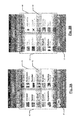
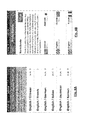
- Figures 2A-B illustrate sample user interfaces for display on the client computing device 12 using the app that allows the user to select the desired language pair. The illustrated sample user interface also show that the user can select online or offline mode via a user control.
- the user may access any language pair that is offered. This may be indicated to the user by showing in color the icons (e.g., nationality flags) for the available languages in the two columns 42, 44, as shown in Figure 2A . The user may then scroll the two columns up/down so that the desired language pair is show in the selection area 46.
- wireless network connectivity is not available (such as because it was switched off by the user via user control40 or automatically switched off, as described below), only previously installed language pair on the client computing device 12 are available in various embodiments.
- the available languages for the offline mode may be indicated to the user by showing in color the icons (e.g., flags) for the installed languages in the two columns 42, 44, while showing all non-installed languages in grey.
- icons e.g., flags
- the back-end speech translation server system 16 transmits data for the translation back to the client computing device 12 via the wireless network 14 so that, at step 79, the client computing device 12 (e.g., the speaker(s) thereof) may audibly output the translation in the second language of the input utterance.
- the client computing device 12 e.g., the speaker(s) thereof
- the client computing device 12 executing the downloaded offline speech translation software stored in memory, translates the utterance to the second language, and it is output at step 79.
- An I/0 transceiver 238 may manage wired communications between the device and other devices, for example, according to the Universal Serial Bus (USB) or any other suitable standard.
- a connector 239 may facilitate wired connections. In some embodiments, connections via the connector 239 and I/0 transceiver 238 may provide power for charging the battery 234.
- the user of the client computing device 14 may configure the app through its settings to establish the applicable criteria for automatically transitioning between the online and offline operating modes. For example, the user could select, according to various embodiments, to: always use offline mode (in which case online mode is never used); prefer the fastest service (in which case online mode is used only if the connection speed of the wireless network exceeds a threshold); the most accurate translations (in which case online mode is used whenever available); limit costs (in which case, for example, offline mode is used when roaming charges are applicable).
- Such user preferences may be influenced by privacy (data transmission), quality (size and performance of speech translation models), or cost (data roaming) considerations.
- Another aspect of the hybrid offline/online translation system is the language pairs made available on the client computing device 12 for offline mode. Because of memory size limitations for the client computing device 12, in most cases it is impractical to download all available language pairs to the client computing device 12. As such, the user of the client computing device 12 preferably downloads to the client computing device 12 only selected language pairs that the user needs. For example, in various embodiments, the user may chooses or purchases available offline language pairs through the app store 18.
- the user could purchase a package that comprises several language pairs (such as languages for a geographic area, such as Europe, Southeast Asia, etc., or versions of the same language, such as Mexico and Spain versions of Spanish, Portugal and Brazil versions of the Portuguese, etc.), in which case the software apps for all of the language pairs in the package are available for downloading to the client computing device 18.
- Figure 4A shows a sample screen shot where a user may choose to purchase various translation language pairs
- Figure 4B shows a sample screen shot for a package of the translation language pairs (in this example, a world package). If the user wishes to remove a language pair from the client computing device to same memory, the user is able, in various embodiments, to remove that pair and the models that correspond to it, without losing their availability. That is, the user may download the models again at a later date.
- the choice to download a language pair is left to the user, and the user selects the pairs to be installed on the client computing device for offline translation. If the user desired to install a selected language pair(s) but there is not satisfactory network connectivity, the client computing device stores and request and issues a reminder message to the user to download the pair when network connectivity is next available. The reminder message queries the user whether he/she wishes to download the offline version of the selected language pair(s) and proceeds with the download if confirmed by the user.
- the client computing device 12 itself may manage the offline translation pairs for the user.
- the client computing device 12 may maintain data regarding languages used around the world, and may automatically download an offline language pair that is relevant to the location of the user. For example, if the GPS system 22 shows that the user is in Spain, the Spain version of Spanish may be downloaded, and so on.
- the offline language pairs could be automatically downloaded based on, for example, calendar data for the user (e.g., a trip) or web search data that indicates a user's interest in or plain to travel to a particular region of the world.
- the system may therefore, in various embodiments, download customized parametric models even for offline/embedded systems from the back-end speech translation system 16, when network connectivity is available, and swap in and out vocabulary items, language models and modified probabilistic acoustic parameters.
- Models storing phrases of words can use efficiently implemented storing techniques such as prefix trees.
- memory- mapping techniques can be used which load only small parts of the models dynamically on demand into the RAM 212/214, while unneeded parts remain untouched in the non volatile storage 216.
- Another, more sophisticated approach for reducing language models and/or translation models to a given size so that they run on an offline client computing device is to use special trimming/ expansion heuristics that either eliminates vocabularies and word N-grams or expanding a base model by adding additional information. Elimination may be done in an opportunistic manner so that a user's most likely words and expressions are still represented despite the resource limitations, e.g. by limiting the vocabulary to a user-specific subset only and selecting only those parts of a general model that is covered by this vocabulary or by automatically collecting user-specific information from the queries of the user and selecting those parts of the general model that are closely related to the user's queries.
- Expansion on the other hand may be done by selecting only user specific - e.g. based on the users speaking style - and/or domain specific - e.g. for tourism usage or humanitarian usage and/or situation specific - e.g. based on the GPS location - and/or general, not related to any of the above specific information on the server, transferring this (delta) information only from the server to the device and applying this information to a base model stored on the device.
- the back-end speech translation server system 16 may analyze the user data to determine, at step 62, whether the user's offline language model and/or translation table should be updated to, for example, eliminate seldom used words or expressions, while maintaining commonly used words and expressions of the user or extracting commonly used translations and expressions on the server and applying them to a base model stored on the client computing device.
- the back-end speech translation server system 16 may analyze the user's translation queries (e.g., expressions to be translated) and/or internet browsing history, to determine the words and expressions commonly (and not commonly) used.
- the user's translation queries in offline mode may be saved and stored by the client computing device 12, and uploaded to the back-end speech translation server system 16 during a period of network connectivity so that they can be analyzed by the back-end speech translation server system 16.
- the user's internet browsing history e.g. cookie data
- the back-end speech translation server system 16 determines that the language models and/or translation tables of the client computing device's offline processing software should be updated, the updated software (e.g. models) are downloaded to the client computing device (e.g., from the back-end speech translation server system 16) at step 64. Instead of downloading the full models, also downloading just the (delta) information that is required to update the model on the client computing device is possible.
- user specific information might also be useful for reducing the size of the acoustic model by, for example, substituting a more general acoustic model by a smaller user- specific one.
- this can be achieved, for example, by either using acoustic model adaptation techniques such as MLLR or fully retraining the acoustic model using the new data in addition.
- the back-end speech translation server system 16 determines that the offline-mode acoustic model for the user's client computing device 12 should be modified based on the analysis of the user data
- the updated software e.g., acoustic model
- the client computing device e.g., from the back-end speech translation server system 16
- a speech-to-speech translation system the most speed-limiting element are the speech recognition algorithms, as they perform searches over many acoustic hypotheses and many time slices of the speech signal.
- the speed of the algorithmic searches is affected predominantly by the size of the acoustic model set.
- several techniques can be used. For example, in one embodiment, depending on the size of the model, look-up tables can be used for computing the Mahalanobis distances between the model and input speech instead of computing the distances on demand.
- Gaussian selection techniques may be used in the offline mode to reduce the overall amount of model parameters that need to be evaluated. As soon as user specific information is available, smaller, more efficient user specific models can be used instead, as described above in connection with Figure 6 .
- the back-end speech translation system 16 may use and combine multiple speech recognition and translation engines (modules). These backend engines can be provided by the same speech translation provider and run on the same server, for example, or in other embodiments could be provided by independent speech translation providers at different locations, as illustrated in the example of Figure 8 , which shows three separate and independent back-end speech translation systems 16, although in other embodiments fewer or more back-end speech translation systems 16 could be used. In such an embodiment, each of the back-end speech translation systems 16 may be requested to perform the translation simultaneously through the Internet 15.
- the present invention is directed to speech translation systems and methods for hybrid, offline and online speech translation.
- the system may comprise a back-end speech translation server system and a client computing device that is configured for communicating with the back-end speech translation server system via a wireless network.
- the client computing device may comprise a microphone, a processor connected to the microphone, a memory connected to the processor that stores instructions to be executed by the processor, a speaker connected to the processor.
- the client computing device is for outputting, e.g., via the speaker or a text display field, a translation of input word phrases for translation (e.g., speech utterances or input text) from a first language to a second language.
- the back-end speech translation server system may be programmed to: (i) monitor over time speech utterances received by the client computing device for translation from the first language to the second language; and (ii) update at least one of the local acoustic model, the local language model, the local translation model and the local speech synthesis model of the client computing device based on the monitoring over time of speech utterances received by the client computing device for translation from the first language to the second language.
- the client computing device may also comprise a GPS system for determining a location of the client computing device.
- the client computing device may be configured to download application software (including the models) for a language translation pair that comprises the first and second languages, particularly when suitable connectivity between the client computing device and the back-end speech translation server system is available via the wireless network.
- the client computing device comprises a GPS system
- the client computing device may be configured to download the application software for the language translation pair based on the determined location of the client computing device and when suitable connectivity between the client computing device and the back-end speech translation server system is available via the wireless network.
- the speech translation method comprises, in a first (offline) operating mode: (i) receiving by a client computing device a first input word phrase in a first language; (ii) translating by the client computing device the first input word phrase to a second language; and (iii) outputting by the client computing device the first speech utterance in the second language (e.g., audibly via a speaker and/or visually via a text display field).
- embodiments described herein may be implemented in many different embodiments of software, firmware, and/or hardware.
- the software and firmware code may be executed by a processor circuit or any other similar computing device.
- the software code or specialized control hardware that may be used to implement embodiments is not limiting.
- embodiments described herein may be implemented in computer software using any suitable computer software language type, using, for example, conventional or object-oriented techniques.
- Such software may be stored on any type of suitable computer-readable medium or media, such as, for example, a magnetic or optical storage medium.
- the operation and behavior of the embodiments may be described without specific reference to specific software code or specialized hardware components. The absence of such specific references is feasible, because it is clearly understood that artisans of ordinary skill would be able to design software and control hardware to implement the embodiments based on the present description with no more than reasonable effort and without undue experimentation.
- a single component may be replaced by multiple components and multiple components may be replaced by a single component to perform a given function or functions. Except where such substitution would not be operative, such substitution is within the intended scope of the embodiments.
- Any servers described herein, for example may be replaced by a "server farm" or other grouping of networked servers (such as server blades) that are located and configured for cooperative functions. It can be appreciated that a server farm may serve to distribute workload between/among individual components of the farm and may expedite computing processes by harnessing the collective and cooperative power of multiple servers.
- Such server farms may employ load-balancing software that accomplishes tasks such as, for example, tracking demand for processing power from different machines, prioritizing and scheduling tasks based on network demand and/or providing backup contingency in the event of component failure or reduction in operability.
Landscapes
- Engineering & Computer Science (AREA)
- Physics & Mathematics (AREA)
- Computational Linguistics (AREA)
- Health & Medical Sciences (AREA)
- Audiology, Speech & Language Pathology (AREA)
- Acoustics & Sound (AREA)
- Human Computer Interaction (AREA)
- Multimedia (AREA)
- Theoretical Computer Science (AREA)
- Artificial Intelligence (AREA)
- General Health & Medical Sciences (AREA)
- General Engineering & Computer Science (AREA)
- General Physics & Mathematics (AREA)
- Machine Translation (AREA)
Applications Claiming Priority (3)
| Application Number | Priority Date | Filing Date | Title |
|---|---|---|---|
| US201361822629P | 2013-05-13 | 2013-05-13 | |
| US13/915,820 US9430465B2 (en) | 2013-05-13 | 2013-06-12 | Hybrid, offline/online speech translation system |
| PCT/US2014/036454 WO2014186143A1 (en) | 2013-05-13 | 2014-05-01 | Hybrid, offline/online speech translation system |
Publications (2)
| Publication Number | Publication Date |
|---|---|
| EP2804113A2 true EP2804113A2 (de) | 2014-11-19 |
| EP2804113A3 EP2804113A3 (de) | 2014-12-24 |
Family
ID=50735853
Family Applications (1)
| Application Number | Title | Priority Date | Filing Date |
|---|---|---|---|
| EP14167420.0A Ceased EP2804113A3 (de) | 2013-05-13 | 2014-05-07 | Hybrides Offline-/Online-Sprachübersetzungssystem |
Country Status (1)
| Country | Link |
|---|---|
| EP (1) | EP2804113A3 (de) |
Cited By (7)
| Publication number | Priority date | Publication date | Assignee | Title |
|---|---|---|---|---|
| CN107424607A (zh) * | 2017-07-04 | 2017-12-01 | 珠海格力电器股份有限公司 | 语音控制模式切换方法、装置及具有该装置的设备 |
| US20180157673A1 (en) | 2015-05-27 | 2018-06-07 | Google Llc | Dynamically updatable offline grammar model for resource-constrained offline device |
| CN111429924A (zh) * | 2018-12-24 | 2020-07-17 | 同方威视技术股份有限公司 | 语音交互方法、装置、机器人及计算机可读存储介质 |
| CN112786010A (zh) * | 2019-11-11 | 2021-05-11 | 财团法人资讯工业策进会 | 语音合成系统、方法及非暂态计算机可读取媒体 |
| CN117808013A (zh) * | 2024-02-29 | 2024-04-02 | 济南幼儿师范高等专科学校 | 一种互动式多语言交流系统 |
| CN120071937A (zh) * | 2025-04-27 | 2025-05-30 | 深圳唯创知音电子有限公司 | 多模式协同的离在线语音交互方法、系统、设备及介质 |
| CN121171224A (zh) * | 2025-09-23 | 2025-12-19 | 深圳时空壶技术有限公司 | 一种实现离在线混合识别翻译结果的处理方法、系统及介质 |
Citations (4)
| Publication number | Priority date | Publication date | Assignee | Title |
|---|---|---|---|---|
| US20100312555A1 (en) * | 2009-06-09 | 2010-12-09 | Microsoft Corporation | Local and remote aggregation of feedback data for speech recognition |
| US8090570B2 (en) | 2006-10-26 | 2012-01-03 | Mobile Technologies, Llc | Simultaneous translation of open domain lectures and speeches |
| US8204739B2 (en) | 2008-04-15 | 2012-06-19 | Mobile Technologies, Llc | System and methods for maintaining speech-to-speech translation in the field |
| US20130007405A1 (en) * | 2011-06-30 | 2013-01-03 | International Business Machines Corporation | Translation cache prediction |
Family Cites Families (2)
| Publication number | Priority date | Publication date | Assignee | Title |
|---|---|---|---|---|
| US7272377B2 (en) * | 2002-02-07 | 2007-09-18 | At&T Corp. | System and method of ubiquitous language translation for wireless devices |
| JP5017441B2 (ja) * | 2010-10-28 | 2012-09-05 | 株式会社東芝 | 携帯型電子機器 |
-
2014
- 2014-05-07 EP EP14167420.0A patent/EP2804113A3/de not_active Ceased
Patent Citations (4)
| Publication number | Priority date | Publication date | Assignee | Title |
|---|---|---|---|---|
| US8090570B2 (en) | 2006-10-26 | 2012-01-03 | Mobile Technologies, Llc | Simultaneous translation of open domain lectures and speeches |
| US8204739B2 (en) | 2008-04-15 | 2012-06-19 | Mobile Technologies, Llc | System and methods for maintaining speech-to-speech translation in the field |
| US20100312555A1 (en) * | 2009-06-09 | 2010-12-09 | Microsoft Corporation | Local and remote aggregation of feedback data for speech recognition |
| US20130007405A1 (en) * | 2011-06-30 | 2013-01-03 | International Business Machines Corporation | Translation cache prediction |
Non-Patent Citations (3)
| Title |
|---|
| J. G. FISCUS: "A post-processing system to yield reduced error word rates: Recognizer output voting error reduction (ROVER", IEEE WORKSHOP ON AUTOMATIC SPEECH RECOGNITION AND UNDERSTANDING, 1997, pages 347 - 354, XP010267529, DOI: doi:10.1109/ASRU.1997.659110 |
| K. HEAFIELD ET AL.: "Combining Machine Translation Output with Open Source", PRAGUE BULLETIN OF MATHEMATICAL LINGUISTICS, 2010, pages 27 - 36 |
| ROSTI ET AL.: "Combining Outputs from Multiple Machine Translation Systems", PROC. OF NAACL HLT, 2007, pages 228 - 235 |
Cited By (10)
| Publication number | Priority date | Publication date | Assignee | Title |
|---|---|---|---|---|
| US20180157673A1 (en) | 2015-05-27 | 2018-06-07 | Google Llc | Dynamically updatable offline grammar model for resource-constrained offline device |
| EP3385946A1 (de) * | 2015-05-27 | 2018-10-10 | Google LLC | Dynamisch aktualisierbares offline-grammatik-modell für eine ressourcenbeschränkte offline-vorrichtung |
| US10552489B2 (en) | 2015-05-27 | 2020-02-04 | Google Llc | Dynamically updatable offline grammar model for resource-constrained offline device |
| CN107424607A (zh) * | 2017-07-04 | 2017-12-01 | 珠海格力电器股份有限公司 | 语音控制模式切换方法、装置及具有该装置的设备 |
| CN107424607B (zh) * | 2017-07-04 | 2023-06-06 | 珠海格力电器股份有限公司 | 语音控制模式切换方法、装置及具有该装置的设备 |
| CN111429924A (zh) * | 2018-12-24 | 2020-07-17 | 同方威视技术股份有限公司 | 语音交互方法、装置、机器人及计算机可读存储介质 |
| CN112786010A (zh) * | 2019-11-11 | 2021-05-11 | 财团法人资讯工业策进会 | 语音合成系统、方法及非暂态计算机可读取媒体 |
| CN117808013A (zh) * | 2024-02-29 | 2024-04-02 | 济南幼儿师范高等专科学校 | 一种互动式多语言交流系统 |
| CN120071937A (zh) * | 2025-04-27 | 2025-05-30 | 深圳唯创知音电子有限公司 | 多模式协同的离在线语音交互方法、系统、设备及介质 |
| CN121171224A (zh) * | 2025-09-23 | 2025-12-19 | 深圳时空壶技术有限公司 | 一种实现离在线混合识别翻译结果的处理方法、系统及介质 |
Also Published As
| Publication number | Publication date |
|---|---|
| EP2804113A3 (de) | 2014-12-24 |
Similar Documents
| Publication | Publication Date | Title |
|---|---|---|
| AU2017210631B2 (en) | Hybrid, offline/online speech translation system | |
| EP2804113A2 (de) | Hybrides Offline-/Online-Sprachübersetzungssystem | |
| US12223963B2 (en) | Performing speech recognition using a local language context including a set of words with descriptions in terms of components smaller than the words | |
| US9183843B2 (en) | Configurable speech recognition system using multiple recognizers | |
| KR101330328B1 (ko) | 음성 인식 방법 및 이를 위한 시스템 | |
| US10971157B2 (en) | Methods and apparatus for hybrid speech recognition processing | |
| KR101770358B1 (ko) | 내장형 및 네트워크 음성 인식기들의 통합 | |
| US10049669B2 (en) | Configurable speech recognition system using multiple recognizers | |
| US8938388B2 (en) | Maintaining and supplying speech models | |
| US20060122836A1 (en) | Dynamic switching between local and remote speech rendering | |
| KR20190100334A (ko) | 문맥상의 핫워드들 | |
| JP5018120B2 (ja) | 携帯端末、プログラム及び携帯端末への表示画面制御方法 | |
| US20160098994A1 (en) | Cross-platform dialog system | |
| US10529324B1 (en) | Geographical based voice transcription | |
| KR20190021136A (ko) | Tts 모델을 생성하는 시스템 및 전자 장치 | |
| KR101989127B1 (ko) | 번역 장치, 번역 방법 및 번역 컴퓨터 프로그램 | |
| KR20190011031A (ko) | 자연어 표현 생성 방법 및 전자 장치 | |
| WO2006068734A2 (en) | Method and apparatus for improving text-to-speech performance |
Legal Events
| Date | Code | Title | Description |
|---|---|---|---|
| PUAI | Public reference made under article 153(3) epc to a published international application that has entered the european phase |
Free format text: ORIGINAL CODE: 0009012 |
|
| 17P | Request for examination filed |
Effective date: 20140507 |
|
| AK | Designated contracting states |
Kind code of ref document: A2 Designated state(s): AL AT BE BG CH CY CZ DE DK EE ES FI FR GB GR HR HU IE IS IT LI LT LU LV MC MK MT NL NO PL PT RO RS SE SI SK SM TR |
|
| AX | Request for extension of the european patent |
Extension state: BA ME |
|
| PUAL | Search report despatched |
Free format text: ORIGINAL CODE: 0009013 |
|
| AK | Designated contracting states |
Kind code of ref document: A3 Designated state(s): AL AT BE BG CH CY CZ DE DK EE ES FI FR GB GR HR HU IE IS IT LI LT LU LV MC MK MT NL NO PL PT RO RS SE SI SK SM TR |
|
| AX | Request for extension of the european patent |
Extension state: BA ME |
|
| RIC1 | Information provided on ipc code assigned before grant |
Ipc: G06F 17/28 20060101AFI20141117BHEP Ipc: G10L 13/00 20060101ALI20141117BHEP Ipc: G10L 15/00 20130101ALI20141117BHEP |
|
| R17P | Request for examination filed (corrected) |
Effective date: 20150616 |
|
| RBV | Designated contracting states (corrected) |
Designated state(s): AL AT BE BG CH CY CZ DE DK EE ES FI FR GB GR HR HU IE IS IT LI LT LU LV MC MK MT NL NO PL PT RO RS SE SI SK SM TR |
|
| STAA | Information on the status of an ep patent application or granted ep patent |
Free format text: STATUS: EXAMINATION IS IN PROGRESS |
|
| 17Q | First examination report despatched |
Effective date: 20171220 |
|
| STAA | Information on the status of an ep patent application or granted ep patent |
Free format text: STATUS: THE APPLICATION HAS BEEN REFUSED |
|
| 18R | Application refused |
Effective date: 20201129 |