EP2802115B1 - Verfahren, endgerät und server zur wiederherstellung von sitzungsinhaltsübertragungen - Google Patents
Verfahren, endgerät und server zur wiederherstellung von sitzungsinhaltsübertragungen Download PDFInfo
- Publication number
- EP2802115B1 EP2802115B1 EP12879716.4A EP12879716A EP2802115B1 EP 2802115 B1 EP2802115 B1 EP 2802115B1 EP 12879716 A EP12879716 A EP 12879716A EP 2802115 B1 EP2802115 B1 EP 2802115B1
- Authority
- EP
- European Patent Office
- Prior art keywords
- session
- information
- ice address
- address
- ice
- Prior art date
- Legal status (The legal status is an assumption and is not a legal conclusion. Google has not performed a legal analysis and makes no representation as to the accuracy of the status listed.)
- Active
Links
Images



Classifications
-
- H—ELECTRICITY
- H04—ELECTRIC COMMUNICATION TECHNIQUE
- H04L—TRANSMISSION OF DIGITAL INFORMATION, e.g. TELEGRAPHIC COMMUNICATION
- H04L65/00—Network arrangements, protocols or services for supporting real-time applications in data packet communication
- H04L65/1066—Session management
- H04L65/1069—Session establishment or de-establishment
-
- H—ELECTRICITY
- H04—ELECTRIC COMMUNICATION TECHNIQUE
- H04L—TRANSMISSION OF DIGITAL INFORMATION, e.g. TELEGRAPHIC COMMUNICATION
- H04L61/00—Network arrangements, protocols or services for addressing or naming
- H04L61/09—Mapping addresses
- H04L61/10—Mapping addresses of different types
-
- H—ELECTRICITY
- H04—ELECTRIC COMMUNICATION TECHNIQUE
- H04L—TRANSMISSION OF DIGITAL INFORMATION, e.g. TELEGRAPHIC COMMUNICATION
- H04L61/00—Network arrangements, protocols or services for addressing or naming
- H04L61/09—Mapping addresses
- H04L61/25—Mapping addresses of the same type
- H04L61/2503—Translation of Internet protocol [IP] addresses
- H04L61/256—NAT traversal
- H04L61/2575—NAT traversal using address mapping retrieval, e.g. simple traversal of user datagram protocol through session traversal utilities for NAT [STUN]
-
- H—ELECTRICITY
- H04—ELECTRIC COMMUNICATION TECHNIQUE
- H04L—TRANSMISSION OF DIGITAL INFORMATION, e.g. TELEGRAPHIC COMMUNICATION
- H04L61/00—Network arrangements, protocols or services for addressing or naming
- H04L61/09—Mapping addresses
- H04L61/25—Mapping addresses of the same type
- H04L61/2503—Translation of Internet protocol [IP] addresses
- H04L61/256—NAT traversal
- H04L61/2589—NAT traversal over a relay server, e.g. traversal using relay for network address translation [TURN]
-
- H—ELECTRICITY
- H04—ELECTRIC COMMUNICATION TECHNIQUE
- H04L—TRANSMISSION OF DIGITAL INFORMATION, e.g. TELEGRAPHIC COMMUNICATION
- H04L65/00—Network arrangements, protocols or services for supporting real-time applications in data packet communication
- H04L65/1066—Session management
-
- H—ELECTRICITY
- H04—ELECTRIC COMMUNICATION TECHNIQUE
- H04L—TRANSMISSION OF DIGITAL INFORMATION, e.g. TELEGRAPHIC COMMUNICATION
- H04L65/00—Network arrangements, protocols or services for supporting real-time applications in data packet communication
- H04L65/1066—Session management
- H04L65/1083—In-session procedures
-
- H—ELECTRICITY
- H04—ELECTRIC COMMUNICATION TECHNIQUE
- H04L—TRANSMISSION OF DIGITAL INFORMATION, e.g. TELEGRAPHIC COMMUNICATION
- H04L61/00—Network arrangements, protocols or services for addressing or naming
- H04L61/09—Mapping addresses
- H04L61/25—Mapping addresses of the same type
- H04L61/2503—Translation of Internet protocol [IP] addresses
- H04L61/2514—Translation of Internet protocol [IP] addresses between local and global IP addresses
Definitions
- the present invention relates to the communications field, and in particular, to a method, a terminal, and a server for restoring transmission of session content.
- Real-time communication between browsers is a technology for performing real-time video and audio communication within browsers.
- the technology mainly uses the HyperText Markup Language (HyperTextMark-upLanguage 5, HTML5) protocol and the JavaScript language and can implement communication between browsers without using a plug-in.
- WebRTC is mainly used to implement point-to-point communication between browsers, so as to implement a real point-to-point connection between two browsers.
- media information of the browsers needs to be negotiated in the process of establishing the session, where the media information may include a media sending/receiving address, an encoding/decoding manner and a protocol used for media transmission, and the like, and is borne by using the Session Description Protocol (SDP, Session Description Protocol).
- SDP Session Description Protocol
- an OFFER/ANSWER mechanism of SDP is used to perform media information negotiation, such as audio and video negotiation, and negotiation on encoding/decoding manner used by the media.
- NAT Network Address Translator
- ICE Interactive Connectivity Establishment
- the Interactive Connectivity Establishment needs to be used to negotiate an available ICE address to perform point-to-point transmission of session content, so as to establish a connection (PeerConnection) of a session generated by using the browsers, thereby enabling the browsers to communicate with each other.
- a process of collecting an ICE candidate address mainly is sending, by a browser, a request to a Session Traversal Utilities for Network Address Translator (STUN, Session Traversal Utilities for NAT) server or a Traversal Using Relay NAT network address translator (TURN, Traversal Using Relay NAT) server that serves the browser.
- STUN Session Traversal Utilities for Network Address Translator
- TURN Traversal Using Relay NAT
- the STUN or TURN server returns to the browser, in a returned response, an external communication address (that is, an ICE address) or a relay address (that is, an ICE address) on the server after traversing the NAT or the firewall.
- the browser may send the ICE candidate address to a called party (which may be an IMS (IP Multimedia Subsystem) terminal, a browser, or a common terminal) in a request for establishing a session or in a separate message. If the called party also supports ICE negotiation, the called party further needs to, after receiving the ICE candidate address sent by the calling browser, collect an ICE candidate address of a called end and send a collected ICE candidate address to the calling browser.
- IMS IP Multimedia Subsystem
- a process of negotiating the ICE address pair thereof mainly is performing negotiation by each ICE candidate address of the called party with each ICE candidate address of the calling party (which specifically is sending an NAT request packet from each ICE candidate address of the called party to each ICE candidate address of the calling party, and waiting to receive a response returned by using the ICE candidate address of the calling party), and performing negotiation by each ICE candidate address of the calling party with each ICE candidate address of the called party (which specifically is sending an NAT request packet from each ICE candidate address of the calling party to each ICE candidate address of the called party, and waiting to receive a response returned by using the ICE candidate address of the called party).
- a determining mechanism for example, according to a priority condition of an ICE candidate address, preference of an application, and the like
- the ICE protocol is used to select one optimal ICE address pair including a calling ICE address and a called ICE address as addresses of the calling browser and the called browser for performing transmission of session content.
- Document D1 discloses a solution of traversal using relays around NAT(TURN) between a TURN client and A peer user.
- Document D2 discloses a mechanism for supplying a stream of data used to update information displayed by a browser.
- the browser periodically refreshed a frame document , transmitting a request for the frame document to a network device ( see column 3, lines 24-27 of D2 ).
- Embodiments of the present invention provide a method, a terminal, and a server for restoring transmission of session content, which solves the problem where when a calling browser or a called browser is refreshed, ICE negotiation needs to be performed again for restoring content transmission of an original session, which is time-consuming and causes the session to be obviously interrupted, hence resulting in poor user experience.
- a first aspect of the present invention provides a method for restoring transmission of session content, including: receiving, by a terminal, a refresh message for a page, wherein, the terminal receives the refresh message for the page when browsing a page by using a browser, and the refresh message for the page is sent by a user by using a refresh function of the page or is sent when the browser is restarted; retaining, by the terminal, a first ICE address in an Interactive Connectivity Establishment (ICE, Interactive Connectivity Establishment) address pair used by a session in the page to be in an activated state, wherein, the first ICE address is an ICE address used by the browser receiving the refresh message for the page; sending, by the terminal, a refresh request to a server; receiving, by the terminal, a refreshed page returned by the server, where the refreshed page includes an application program and the application program comprises the information about the ICE address pair and the session identifier; and running, by the terminal, the application program to restore transmission of session content of the session by using the first ICE address in the activated
- the method before the receiving a refresh message for a page, the method further includes: sending information about an ICE address pair used by the session and a session identifier to the server, where the information about the ICE address pair used by the session includes information about the first ICE address and information about a second address.
- the application program includes the information about the ICE address pair and the session identifier, and the information about the ICE address pair used by the session includes the information about the first ICE address and the information about the second address; and the restoring session content of the session by using the first ICE address in the activated state specifically includes: assigning an ICE address in the activated state and corresponding to the information about the first ICE address to the session, and sending data to the second address.
- the method before the receiving a refresh message for a page, the method further includes: storing information about an ICE address pair used by the session and a session identifier, where the information about the ICE address pair used by the session includes information about the first ICE address and information about a second address; and the restoring transmission of content of the session by using the first ICE address in the activated state specifically includes: assigning the first ICE address in the activated state and corresponding to the information about the first ICE address to the session, and sending data to the second address.
- the retaining the first ICE address in the ICE address pair used by the session in the page to be in the activated state specifically includes: starting a timer and retaining the first ICE address to be in the activated state within a time range set by the timer.
- the method before the restoring transmission of session content by using the first ICE address in the activated state, the method further includes: determining that the first ICE address is in the activated state.
- the method further includes: stopping the started timer; or determining that duration for retaining the first ICE address to be in the activated state reaches duration set by the timer, and stopping the started timer.
- a second aspect of the present invention provides a terminal, including: a transceiver, configured to receive a refresh message for a page, wherein, the terminal receives the refresh message for the page when browsing a page by using a browser, and the refresh message for the page is sent by a user by using a refresh function of the page or is sent when the browser is restarted;; a retaining unit, configured to, after the transceiver receives the refresh message for the page, retain a first ICE address in an Interactive Connectivity Establishment (ICE, Interactive Connectivity Establishment) address pair used by a session in the page to be in an activated state, wherein, the first ICE address is an ICE address used by the browser receiving the refresh message for the page; where the transceiver is further configured to send a refresh request to a server after the refresh message for the page is received and receive a refreshed page returned by the server, where the refreshed page includes an application program and the application program comprises the information about the ICE address pair and the session identifier; and a running unit,
- the transceiver before receiving the refresh message for the page, is further configured to send information about an ICE address pair used by the session and a session identifier to the server, where the information about the ICE address pair used by the session includes information about the first ICE address and information about a second address.
- the application program includes the information about the ICE address pair and the session identifier, and the information about the ICE address pair used by the session includes the information about the first ICE address and the information about the second address; and the restoring, by the running unit, the transmission of the session content of the session by using the first ICE address that is retained in the activated state by the retaining unit specifically includes: assigning an ICE address in the activated state and corresponding to the information about the first ICE address to the session, and sending data to the second address.
- the terminal further includes a storing unit, configured to store information about an ICE address pair used by the session and a session identifier, where the information about the ICE address pair used by the session includes information about the first ICE address and information about a second address; and the restoring, by the running unit, the transmission of the session content by using the first ICE address that is retained in the activated state by the retaining unit specifically includes: assigning an ICE address in the activated state and corresponding to the information about the first ICE address to the session, and sending data to the second address.
- the retaining, by the retaining unit, the ICE address used by the session in the page to be in the activated state specifically includes: starting a timer and retaining the ICE address to be in the activated state within a time range set by the timer.
- the retaining unit is further configured to: after the running unit restores the transmission of the session content by using the first ICE address in the activated state, stop the started timer; or the retaining unit is further configured to determine that duration for retaining the first ICE address to be in the activated state reaches duration set by the timer, and stop the started timer.
- a third aspect of the present invention provides a method for restoring transmission of session content, including: receiving, by a server, information about an ICE address pair used by a session and a session identifier that are sent by a terminal, and binding and storing the information about the ICE address pair used by the session and the session identifier, where the information about the ICE address pair used by the session includes information about the first ICE address and information about a second address; receiving, by the server, a refresh request sent by the terminal; wherein, the refresh request is sent by the terminal after the terminal receives a refresh message for a page, and the terminal receives the refresh message for the page when browsing a page by using a browser, and the refresh message for the page is sent by a user by using a refresh function of the page or is sent when the browser is restarted; and returning, by the server a refreshed page to the terminal, where the refreshed page includes an application program, and the application program includes the information about the ICE address and the session identifier, so that the terminal assigns, by running
- a fourth aspect of the present invention provides a server, including: a transceiver, configured to receive information about an ICE address pair used by a session and a session identifier that are sent by a terminal, where the information about the ICE address pair used by the session includes information about the first ICE address and information about a second address; and a storing unit, configured to bind and store the information about the ICE address pair used by the session and the session identifier that are received by the transceiver, where the transceiver is further configured to receive a refresh request sent by the terminal, the refresh request is sent by the terminal after the terminal receives a refresh message for a page, and the terminal receives the refresh message for the page when browsing a page by using a browser, and the refresh message for the page is sent by a user by using a refresh function of the page or is sent when the browser is restarted, and return a refreshed page to the terminal, where the refreshed page includes an application program, and the application program includes the information about the ICE address and the session identifie
- a first ICE address used by a session in the page continues to be retained to be in an activated state, so that a terminal, after receiving a refreshed page, establishes a connection directly according to the first ICE address in the activated state, and the terminal, after a refresh message for a page, does not need to negotiate an ICE address pair to determine a suitable ICE address for receiving and sending session content, which reduces waiting time for performing session content interaction with the peer-end user, thereby improving user experience.
- FIG. 1 is a flowchart of a method for establishing a session according to an embodiment of the present invention, which includes the following steps:
- a terminal receives the refresh message for the page when browsing a page by using a browser.
- the refresh message for the page may be sent by a user by using a refresh function of the page or be sent when the browser is restarted.
- This embodiment of the present invention sets no limit thereto.
- Step 102 Retain a first ICE address in an Interactive Connectivity Establishment (ICE, Interactive Connectivity Establishment) address pair used by a session in the page to be in an activated state, and send a refresh request to a server, where the ICE address pair used by the session includes an ICE address (which is referred to as a first ICE address in this embodiment of the present invention) used by the browser receiving the refresh message for the page and an address (which is referred to as a second address in this embodiment of the present invention) used by a peer-end user in the ICE address pair used by the session.
- the second address may be an ICE address or another address, where this embodiment of the present invention sets no limit thereto.
- the user needs to use the ICE address to connect to another user when establishing the session (real-time communication between browsers (WebRTC, Real-time Communication Between Browsers) session) with the another user by using the browser of the terminal.
- the terminal sends, by using the browser, a message to an STUN or TURN server assigning the first ICE address used by the session, and receives a response returned by the STUN or TURN server so as to retain the first ICE address to be in the activated state.
- the terminal even after receiving a refresh message, the terminal still continues to send a message to the STUN or TURN server assigning the first ICE address used by the session, so as to continue to retain the first ICE address used by the session to be in the activated state, and does not need to release a resource of the first ICE address corresponding to the session.
- the terminal further sends a refresh request to the server, where the refresh request may include a uniform resource locator (URL: Uniform Resource Locator) of the page, so that the server returns a refreshed page according to the URL.
- URL Uniform Resource Locator
- Step 103 Receive a refreshed page returned by the server, where the refreshed page includes an application program.
- the server acquires the refreshed page corresponding to the URL according to the URL included in the refresh message for a page, and returns the refreshed page to the terminal, where the refreshed page includes the application program, and the application program may be a JavaScript (JS) application program or another application program.
- JS JavaScript
- Step 104 Run the application program to restore transmission of session content of the session by using the first ICE address in the activated state.
- the terminal runs the application program (for example, the JS program) included in the page and runs the application program to restore, by using the ICE address in the activated state, receiving of content sent by a peer-end user of the session, and sending of content of the session to the peer-end user.
- the application program for example, the JS program
- a terminal when a page is refreshed, causing that transmission of session content with a peer-end user cannot continue, for example, a sound, a message, or the like of the peer cannot be received, a terminal continues to retain an ICE address used by a session in the page to be in an activated state, so that the terminal, after receiving a refreshed page, establishes a connection directly according to the ICE address in the activated state, and after receiving a refresh message for a page, the terminal does not need to negotiate an ICE address to determine a suitable ICE address for receiving and sending session content, which shortens waiting time for performing session content interaction with the peer-end user, thereby improving user experience.
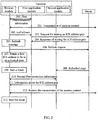
- FIG. 2 is a flowchart of a method for restoring transmission of session content according to an embodiment of the present invention.
- a terminal stores, by using a first application module, an ICE address used by a session in a server, which includes the following steps:
- the terminal includes a browser module, the first application module, and a second application module.
- the first application module stores the first application program, where the first application program is an application program used by the browser module to run the application to establish a session with a peer end, for example, a JS application program, or may be another application program.
- the second application module stores a second application program, where the second application program is an application program sent by a server after receiving a refresh request to the terminal.
- the terminal When establishing a WebRTC session with a peer-end device, the terminal needs to run the first application program in the first application module to establish the first PeerConnection information corresponding to the WebRTC session.
- the first PeerConnection information records related information about the WebRTC session, for example, a WebRTC session identifier (for example, information about calling and called users, and other information that may identify a session), SDP information used by the WebRTC session, state information (for example, whether it is in a connected state) of the WebRTC session, and state information indicating whether the WebRTC session has acquired the ICE address.
- the first PeerConnection information records state information indicating that the WebRTC session has acquired the ICE address.
- each WebRTC session has one PeerConnection to record related information about the WebRTC session.
- the terminal further, after establishing the first PeerConnection information, sends the first PeerConnection information to the server, and synchronizes update of the first PeerConnection information to the server.
- Step 201 The user implements, by using the WebRTC session established by the browser of the terminal with another terminal, transmission of session content with the another terminal (for example, a peer end).
- Step 202 The browser module sends information about an ICE address pair used by the WebRTC session to the first application module.
- the terminal by using the browser using an ICE address callback function (iceCallback() function) or another function, sends the ICE address used by the terminal in the WebRTC session to the application program of the first application module, that is, the first application program (for example, a JS (JavaScript) program).
- the first application program for example, a JS (JavaScript) program.
- ) function is used as an existing function for a browser to send a collected ICE candidate address to the application program of the first application module, where a value of a candidate address (cand) parameter is the ICE address.
- ) has two optional values. When a value is true (true), it indicates that the browser will further send a candidate ICE address to the first application program; and when the value is false (false), it indicates that the browser will not send an ICE candidate address again to the same WebRTC session, that is, a procedure for collecting a ICE candidate address is completed.
- the ICE address callback function (iceCallback() function) may be used to carry the information about the ICE address pair used by the WebRTC session, which may be, for example, iceCallback (local-cand, remote-cand,
- iceCallback local-cand, remote-cand,
- indicating that a cand address is the ICE address used by the WebRTC session, that is, iceCallback (local-cand, remote-cand,
- a local parameter address represents that the WebRTC session eventually uses the ICE address (which is referred to as the first ICE address in this embodiment of the present invention), which is used by the browser that receives the refresh message for the page, in the ICE address pair.
- the parameter peer-end address represents information of an address (which is referred to as the second address in the embodiment of the present invention), which is used by a peer-end user, in the ICE address pair used by the WebRTC session.
- the second address may be an ICE address or not an ICE address, where this embodiment of the present invention sets no limit thereto.
- one parameter for example,
- is false, it indicates that the local-cand and remote-cand address pair is not an ICE address used by the session; and when
- Other settings are similar to those described above.
- a new function for example, an ICE address discovery function (finalIce(local-cand, remote-cand) function) may also be used to send the information about the ICE address pair used by the WebRTC session to the first application program.
- a cand value of the function is the information about the ICE address used by the WebRTC session.
- the foregoing function may further be used to send only the ICE address used by the browser that receives the refresh message for the page, where this embodiment of the present invention sets no limit thereto.
- Step 203 The first application module sends a request for storing the ICE address pair to the server, where the request for storing the ICE address pair includes the information about the ICE address pair used by the WebRTC session and the WebRTC session identifier.
- An HTTP POST request may be used as the request for storing the ICE address pair.
- Step 204 The server sends a response of storing the ICE address pair to the first application module. Specifically, after receiving the request for storing the ICE address pair, the server binds and stores the ICE address pair and the WebRTC session identifier corresponding thereto, and sends a success response of storing the ICE address pair to the first application module.
- Step 205 The terminal receives a refresh message for a page, and specifically, reference may be made to step 101, which is not described in detail in this embodiment of the present invention.
- Step 206 The terminal sends a refresh request to the server.
- the refresh request may include a uniform resource locator (URL: Uniform Resource Locator) of the page, so that the server acquires the page corresponding to the URL and returns the page as a refreshed page to the browser module.
- URL Uniform Resource Locator
- Step 207 The browser module retains the interactive connectivity establishment (ICE, Interactive Connectivity Establishment) address, namely, a first ICE address used by the session in the page to be in an activated state.
- ICE Interactive Connectivity Establishment
- the browser determines, according to first PeerConnection information corresponding to the WebRTC session, that the WebRTC session is in a connected state before the refresh message for the page is received, and continues to retain the first ICE address in the ICE address pair used by the WebRTC session to be in the activated state. However, after receiving the refresh message for the page, the browser deletes all content presented by the page and deletes related information about the first PeerConnection information corresponding to the WebRTC session.
- the browser only retains the first ICE address in the ICE address pair used by the WebRTC session to be in the activated state, but a correspondence between the first ICE address and the WebRTC session is deleted.
- steps 206 and 207 has no sequence in terms of time.
- Step 208 The browser starts a timer for retaining the first ICE address to be in the activated state. That is, within a time range set by the timer, the first ICE address is retained to be in the activated state. Specifically, within the time range indicated by the timer, a request message is sent to an STUN or TURN server that assigns the first ICE address, and a response returned by the STUN or TURN server is received, so as to retain the activated state of the ICE address.
- Step 209 The server responds to the refresh request by sending the refreshed page to the second application module of the terminal.
- the refreshed page including refreshed HTML code and a second application program is sent to the second application module of the terminal.
- the second application program further includes the information about the ICE address pair used by the WebRTC session and the first PeerConnection information corresponding to the WebRTC session.
- the second application program and the first application program may be the same program or be different application programs (for example, the information about the ICE address used by the WebRTC session and information about the WebRTC session identifier may be directly included in the second application program).
- Step 210 Run the second application program delivered in step 209, and establish second PeerConnection information corresponding to the WebRTC session, so as to restore content transmission of the WebRTC session.
- the second application program includes the first PeerConnection information.
- the browser module establishes the second PeerConnection information corresponding to the WebRTC session by using the first PeerConnection information of the second application program delivered by the server in step 209. For example, a session identifier (for example, information about calling and called users) recorded in the first PeerConnection information and SDP information used by the WebRTC session before refreshing are recorded in the second PeerConnection information.
- a session identifier for example, information about calling and called users
- Step 211 Send the information about the ICE address pair used by the WebRTC session to the browser module, so that the browser module restores transmission of the session content of the WebRTC session corresponding to the session identifier by using the ICE address corresponding to the information about the ICE address pair.
- the second application module may send the information about the ICE address pair used by the WebRTC session to the browser module by using an ICE address response function.
- a new application program interface function for example, the ICE address response function (icefeedback(
- ICE address response function is used by the second application module to send the information about the ICE address to the browser
- local-cand represents information about the first ICE address in the ICE address pair that is eventually used by the session
- remote-cand represents information about the second address in the ICE address pair that is eventually used by the session.
- the second application module may also use an existing API function, for example, a processing ICE address message function (processIceMessage(
- a processing ICE address message function for example, a processing ICE address message function (processIceMessage(
- ) function is an existing function for an application program (for example, a JS program) to send an ICE address of the peer end to the browser.
- the function may be expanded herein.
- is added, that is, processIceMessage (
- Step 212 The browser module restores transmission of session content of the WebRTC session by using the ICE address pair.
- the browser module determines whether the first ICE address in the ICE address pair exists in the browser and is in the activated state; and when determining that the first ICE address is in the activated state, assigns the first ICE address to the WebRTC session and sends data to the second address, thereby restoring the transmission of the session content.
- Step 213 The browser module stops the timer that is started before.
- step 213 may be performed before step 212. That is, when the browser module determines, according to time set by the timer, that duration for retaining the first ICE address in the ICE address pair used by the WebRTC session to be in the activated state reaches duration set by the timer, the browser module stops the started timer, and does not retain the ICE address in the ICE address pair used by the WebRTC session to be in the activated state.
- step 212 after receiving the ICE address pair sent by the JS, the browser module detects that the first ICE address in the ICE address pair does not exist in the browser or exists in the browser but is not in the activated state, the browser module cannot restore the transmission of the session content directly by using the ICE address pair corresponding to the information about the ICE address pair sent by the JS, but needs to perform ICE address pair negotiation again as in the prior art, so as to restore the transmission of the session content.
- a terminal when a page is refreshed, causing that session interaction with a peer-end user cannot not continue, for example, a sound, a message, or the like of the peer cannot be received, a terminal continues to retain a first ICE address used by a session in the page to be in an activated state, so that the terminal, after receiving a refreshed page, establishes a connection directly by using the ICE address in the activated state, and after receiving a refresh message for a page, the terminal does not need to negotiate a first ICE address to determine a suitable ICE address for receiving and sending session content, which reduces waiting time for performing session content interaction with the peer-end user, thereby improving user experience.
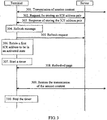
- FIG. 3 is a flowchart of a method for restoring transmission of session content according to an embodiment of the present invention.
- the implementation manner is the same as a procedure corresponding to FIG. 2 , where a terminal stores an ICE address used by a WebRTC session in a server, which includes the following steps:
- the terminal Before this step is performed, when establishing the WebRTC session with the peer-end user, the terminal establishes first PeerConnection information corresponding to the WebRTC session by running a first application program.
- the first PeerConnection information records related information about the WebRTC session, for example, a WebRTC session identifier (for example, information about calling and called users, and other information that may identify a session), SDP information used by the WebRTC session, and state information (for example, whether it is in a connected state) of the WebRTC session, information indicating whether the WebRTC session has negotiated the ICE address, and state information indicating whether the WebRTC session has acquired the ICE address.
- the first PeerConnection information records state information indicating that the WebRTC session has acquired the ICE address.
- each WebRTC session has one PeerConnection information to record related information about the WebRTC session.
- the terminal further, after establishing the first PeerConnection information, sends the first PeerConnection information to the server and synchronizes update of the first PeerConnection information to the server.
- Step 302 The terminal sends a request for storing the ICE address pair to the server, where the request for storing the ICE address includes information about the ICE address pair used by the WebRTC session and the first PeerConnection information corresponding to the WebRTC session.
- An HTTP POST request may be used as the request for storing the ICE address, so that the server binds and stores the ICE address and the WebRTC session identifier corresponding thereto.
- the terminal Before performing this step, the terminal, by using the browser using an ICE address callback function (iceCallback() function) or another function, sends the ICE address, which is used by the terminal, in the WebRTC session, to a first application program (for example, a JS (JavaScript) program).
- a first application program for example, a JS (JavaScript) program
- a second application program an application program used for establishing the WebRTC session before a refresh request
- an application program that is run for restoring transmission of session content after a refresh message is received is referred to as a second application program.
- the first application program and the second application program may be the same or different, where this embodiment of the present invention sets no limit thereto.
- the ICE callback function (iceCallback (cand,
- a more ICE address parameter (
- the ICE address callback function (iceCallback() function) is used to carry the ICE address pair used by the WebRTC session, which may be, for example, iceCallback (local-cand, remote-cand,
- iceCallback local-cand, remote-cand,
- parameter is carried, indicating that the local-cand and remote-cand address is the ICE address pair used by the WebRTC session, that is, iceCallback (local-cand, remote-cand,
- the parameter local address represents that the WebRTC session eventually uses the ICE address (which is referred to as the first ICE address in this embodiment of the present invention), which is used by the browser that receives the refresh message for the page, in the ICE address pair.
- the parameter peer-end address represents an address (which is referred to as the second address in this embodiment of the present invention), which is used by the peer-end user, in the ICE address pair used by the WebRTC session.
- the second address may be an ICE address or not an ICE address, where this embodiment of the present invention sets no limit thereto.
- one parameter for example,
- is false, it indicates that a local-cand and remote-cand address pair is not an ICE address used by the session; and when
- Other settings are similar to those described above.
- a new function for example, an ICE address discovery function (finalIce(local-cand, remote-cand) function) may also be used to send the ICE address pair used by the WebRTC session to the first application program.
- a cand value of the function is the ICE address used by the WebRTC session.
- the foregoing function may also be used to send only the ICE address used by the browser that receives the refresh message for the page, where this embodiment of the present invention sets no limit thereto.
- Step 303 The server sends a response of storing the ICE address pair to the terminal. Specifically, after receiving the request for storing the ICE address pair, the server binds and stores information about the ICE address pair and the WebRTC session identifier corresponding thereto, and sends a response of storing the ICE address pair to the terminal.
- Step 304 is the same as step 101, which is not described in detail in this embodiment of the present invention.
- Step 305 The terminal sends a refresh request to the server.
- the refresh request may include a uniform resource locator (URL: Uniform Resource Locator) of the page, so that the server acquires the page corresponding to the URL and returns the page as a refreshed page to the terminal.
- URL Uniform Resource Locator
- Step 306 The terminal retains the ICE address used by the session in the page to be in the activated state.
- the terminal determines, according to the first PeerConnection information corresponding to the WebRTC session, that the WebRTC session before the refresh message for the page is received is in a connected state, the terminal continues to retain the first ICE address to be in the activated state. However, after receiving the refresh message for the page, the terminal deletes all content presented by the page and deletes the first PeerConnection information corresponding to the WebRTC session.
- the terminal only retains the activated state of the first ICE address; however, a correspondence between the first ICE address and the WebRTC session is deleted.
- steps 305 and 306 has no sequence in terms of time.
- Step 307 The terminal starts a timer for retaining the first ICE address to be in the activated state. That is, within a time range set by the timer, the first ICE address is retained to be in the activated state. Specifically, within the time range indicated by the timer, a message is sent to the first ICE address, and a response returned from the first ICE address is received.
- Step 308 The server responds to the refresh request by sending the refreshed page to the terminal.
- the refreshed page including refreshed HTML code and a second application program (for example, a JS application program) is sent to the terminal.
- the refreshed page further includes the information about the ICE address pair used by the WebRTC session and the first PeerConnection information corresponding to the WebRTC session.
- the second application program and the first application program may be the same program or be different application programs.
- the information about the ICE address used by the WebRTC session and information about the WebRTC session identifier may be directly included in the second application program.
- Step 309 The terminal restores the transmission of the session content of the WebRTC session by using the ICE address pair corresponding to the information about the ICE address pair.
- the terminal After receiving the refreshed page including the information about the ICE address pair and the first PeerConnection information corresponding to the WebRTC session, and the second application program that are sent by the server, the terminal detects whether the first ICE address exists in the browser and is in the activated state; and when determining that the first ICE address is in the activated state, assigns the first ICE address to the WebRTC session and sends data to the second address, thereby restoring the transmission of the session content.
- the terminal Before performing this step, the terminal further needs to run the second application program delivered in step 309 and establish second PeerConnection information corresponding to the WebRTC session, so as to restore content transmission of the WebRTC session.
- a session identifier for example, information about calling and called users
- SDP information used by the WebRTC session before refreshing are recorded in the second PeerConnection information.
- the terminal may further acquire, by using an ICE address response function, the information about the ICE address pair used by the WebRTC session included in the refreshed page, so as to restore the transmission of the session content of the WebRTC session by using the ICE address pair corresponding to the information about the ICE address pair.
- the terminal may use a new application interface function (API function), for example, the ICE address response function (icefeedback(
- API function for example, the ICE address response function (icefeedback(
- the function is used by a second application module to send the information about
- the function may be expanded herein.
- is added, that is, processIceMessage (
- processIceMessage
- Step 310 The terminal stops the timer started before.
- the terminal may possibly receive the refresh message for the page for multiple times. If the refresh message for the page is received for the second time, the terminal stops performing an ongoing refresh step. If it is assumed that a refresh message for the page is received for the second time when the terminal is performing any one step of steps 305, 308, and 309, the terminal stops performing the ongoing step, such as any one step of steps 305, 308, and 309, and re-performs steps 305, 308, and 309; however, step 307 is not performed repeatedly. That is, the timer for retaining the ICE address to be in the activated state is not set again.
- step 309 it is determined whether the ICE address is still in the activated state; if the ICE address is in the activated state, step 309 is performed; and otherwise, content transmission of the WebRTC session cannot be restored by directly using the information about the ICE address pair stored and sent by the terminal, but ICE address pair negotiation needs to be performed again as in the prior art, so as to restore the transmission of the session content.
- step 310 may be performed before step 309. That is, when the terminal determines, according to duration set by the timer, that duration for retaining the ICE address in the ICE address pair used by the WebRTC session to be in the activated state reaches the duration set by the timer, the terminal stops the started timer and does not retain the ICE address used by the WebRTC session to be in the activated state (that is, stops sending a message packet to the ICE address and receiving a response returned from the ICE address).
- step 309 after the terminal acquires the ICE address used by the WebRTC session and detects that it does not exist in the browser or exists in the browser but is not in the activated state, the terminal cannot restore the transmission of the session content by using the acquired and stored ICE address, but needs to perform ICE address negotiation again as in the prior art, so as to restore the transmission of the session content.
- an ICE address used by a session in the page is continued to be retained to be in an activated state, so that the terminal, after receiving a refreshed page, establishes a connection directly according to the ICE address in the activated state, and after receiving a refresh message for a page, the terminal does not need to negotiate an ICE address to determine a suitable ICE address for receiving and sending session content, which reduces waiting time for performing session content interaction with the peer-end user, thereby improving user experience.
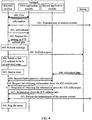
- FIG. 4 is a flowchart of a method for restoring transmission of session content according to an embodiment of the present invention.
- a terminal stores, by using a first application module and using a web storage API function (web storage API function), an ICE address used by a WebRTC session in a browser module, which includes the following steps:
- a first application program in the first application module invokes a session storage application programming interface (Application Programming Interface, API) function (session storage API, windows.sessionStorage.setItem("key", “value”) function) in a browser local storage (Web storage), and binds and stores the session identifier of the WebRTC session and the information about the ICE address pair used by the WebRTC session.
- API Application Programming Interface
- the function defines a variable having a name of key word, that is, "key”, where a value thereof is "value”.
- the browser module receives the session storage API function, a variable having a variable name "key” and a value "value” is created and stored in the browser.
- the first application program may use a variable name "PC-ICE", where "PC” is the session identifier of the WebRTC session, and a parameter "ICE” indicates that information about the ICE address pair is stored. Therefore, in such a case, the API may be a window session storage setting item windows.sessionStorage.setItem("PC-ICE", “candidate") function.
- the browser module after receiving the function, stores the variable "PC-ICE” and the value thereof in the browser, where a value of "candidate” herein is the information about the ICE address pair received in step 402.
- the first application program changes a state of an ICE address pair state parameter ("iceState" parameter) of a first PeerConnection to a state of ICE address state acquired, for example, "ICE_RECEIVED".
- Step 404 is the same as step 205, which is not described in detail in this embodiment of the present invention.
- Step 405 is the same as step 206, which is not described in detail in this embodiment of the present invention.
- Steps 406 to 407 are the same as steps 207 to 208, which are not described in detail in this embodiment of the present invention.
- steps 405 and 406 and step 407 have no sequence in terms of time.
- Step 408 A server responds to a refresh request by sending a refreshed page to a second application module of a terminal.
- the refreshed page including refreshed HTML code and a second application program (for example, a JS application program) is sent to the browser module of the terminal, where the second application program includes first PeerConnection information.
- a second application program for example, a JS application program
- Step 409 Run the second application program delivered in step 408 and establish second PeerConnection information corresponding to the WebRTC session, so as to restore content transmission of the WebRTC session.
- the browser module establishes the second PeerConnection information corresponding to the WebRTC session by using the first PeerConnection information included in the second application program.
- a session identifier for example, information about calling and called users
- SDP information used by the WebRTC session before refreshing and information about the ICE address negotiated by the WebRTC session are recorded in the second PeeStep 410:
- the second application module sends a request for acquiring the information about the ICE address pair to the browser module, where the request for acquiring the information about the ICE address pair carries the session identifier of the WebRTC session.
- the second application module invokes, by using the second application program, a brrConnection information. owser local storage API function session storage API function, alert(windows.sessionStorage.getItem("PC-ICE"), so that the browser, after receiving the function, searches within the browser for a variable having a name "PC-ICE" and sends the stored information about the ICE address pair to the second application module.
- the second application module determines, by using the second application program, that the state of the ICE address state parameter ("iceState” parameter) in the second PeerConnection is ICE address acquired "ICE_RECEIVED", it indicates that the first PeerConnection before refreshing records state information indicating that the WebRTC session has acquired the ICE address; and in such a case, the second application program may invoke the session storage API function (session storage API function) in web storage storage, so as to acquire the stored information about the ICE address used by the WebRTC session from the browser.
- the session storage API function session storage API function
- Step 411 The browser module sends a response of acquiring the information about the ICE address pair to the second application module, so as to return the information about the ICE address pair to the second application module.
- the browser module after receiving the request for acquiring the information about the ICE address pair and after finding, according to the WebRTC session identifier, the "PC-ICE" variable that is stored before, returns the information about the ICE address pair in the PC-ICE variable to the second application module.
- Step 412 is the same as step 211, which is not described in detail in this embodiment of the present invention.
- Step 413 is the same as step 212, which is not described in detail in this embodiment of the present invention.
- Step 414 is the same as step 213, which is not described in detail in this embodiment of the present invention.
- the browser module may possibly receive a refresh message for a page for multiple times. If the refresh message for the page is received for the second time, the browser module stops performing an ongoing refresh step. If it is assumed that a refresh message for a page is received for the second time when the browser module is performing step 408 or any step of steps 409, 410, 411, and 412, the browser module stops performing the ongoing step, such as step 408 or any step of steps 409, 410, 411, and 412, and re-performs steps 405 and 408 to 412; however, step 407 is not performed repeatedly. That is, a timer for retaining a first ICE address to be in an activated state is not set again.
- step 413 after receiving the information about the ICE address pair sent by a JS, the browser module detects whether the first ICE address in the ICE address pair does not exist in the browser or exists in the browser but is not in the activated state, the browser module cannot restore the transmission of the session content directly by using the ICE address pair corresponding to the information about the ICE address pair sent by the JS, but needs to perform ICE address negotiation again as in the prior art, so as to restore the transmission of the session content.
- a first ICE address used by a session in the page is continued to be retained to be in an activated state, so that the terminal, after receiving a refreshed page, establishes a connection directly by using the first ICE address in the activated state, and after receiving a refresh message for a page, the terminal does not need to negotiate an ICE address to determine a suitable ICE address for receiving and sending session content, which reduces waiting time for performing session content interaction with the peer-end user, thereby improving user experience.
- FIG. 5 is a flowchart of a method for restoring transmission of session content according to an embodiment of the present invention.
- a terminal stores, by using a web storage API function (web storage API function), an ICE address used by a WebRTC session, which includes the following steps:
- the terminal before performing this step, the terminal, by using a browser, sends information about the ICE address pair, which is used by the terminal, in the WebRTC session, to a first application program (for example, a JS (JavaSctrip) program) by using an ICE address callback function (iceCallback() function) or another function.
- a first application program for example, a JS (JavaSctrip) program
- an ICE address callback function (iceCallback() function) or another function.
- the first application program After receiving the information about the ICE address pair, the first application program invokes a session storage application programming interface (Application Programming Interface, API) function (session storage API, windows.sessionStorage.setItem("key", “value”) function) in web storage (Web storage), and binds and stores a session identifier of the WebRTC session and the information about the ICE address pair used by the WebRTC session.
- API Application Programming Interface
- Step 503 is the same as step 304, which is not described in detail in this embodiment of the present invention.
- Step 504 is the same as step 305, which is not described in detail in this embodiment of the present invention.
- Steps 505 to 506 are the same as steps 306 to 307, which are not described in detail in this embodiment of the present invention.
- steps 504 and 505 and step 506 have no sequence in terms of time.
- Step 507 A server responds to a refresh request by sending a refreshed page to the terminal.
- the refreshed page including refreshed HTML code and a second application program (for example, a JS application program) is sent to the browser module of the terminal, where the second application program includes first PeerConnection information.
- a second application program for example, a JS application program
- Step 508 The terminal restores transmission of session content of the WebRTC session by using the ICE address.
- the terminal runs the second application program and establishes second PeerConnection information corresponding to the WebRTC session by using first PeerConnection information included in the second application program.
- first PeerConnection information included in the second application program.
- a session identifier for example, information about calling and called users
- SDP information used by the WebRTC session before refreshing and information about the ICE address negotiated by the WebRTC session are recorded in the second PeerConnection information.
- the second application program invokes a browser local storage API function session storage API function, alert(windows.sessionStorage.getItem("PC-ICE") function, so that the browser, after receiving the function, searches within the terminal for a variable having a name "PC-ICE".
- the second application program determines that a state of an ICE address state parameter ("iceFinalState” parameter) in the second PeerConnection is ICE address acquired "ICE_RECEIVED", it indicates that the first PeerConnection before refreshing records state information indicating that the WebRTC session has acquired the ICE address; and the second application program may invoke a session storage API function (session storage API function) in web storage storage, so as to acquire the stored information, which is stored by the terminal, about the ICE address used by the WebRTC session from the terminal.
- ICE address state parameter (“iceFinalState” parameter) in the second PeerConnection is ICE address acquired "ICE_RECEIVED”
- Step 509 is the same as step 310, which is not described in detail in this embodiment of the present invention.
- the terminal may possibly receive the refresh message for the page for multiple times. If the refresh message for the page is received for the second time, the terminal stops performing an ongoing refresh step. If it is assumed that a refresh message for a page is received for the second time when the browser module is performing step 504 or any step of steps 507 and 508, the browser module stops performing an ongoing step, such as step 504 or any step of steps 507 and 508, and re-performs step 504 and steps 507 to 508; however, step 506 is not performed repeatedly. That is, a timer for retaining a first ICE address to be in an activated state is not set again.
- step 308 after acquiring the information about the ICE address pair used by the WebRTC session, the terminal detects whether the first ICE address in the ICE address pair exists in the browser or exists in the browser but is not in the activated state, the terminal cannot restore the transmission of the session content by using the ICE address corresponding to the information about the ICE address pair that is acquired and stored, but needs to perform ICE address pair negotiation again as in the prior art, so as to restore the transmission of the session content.
- step 509 may be performed before step 508. That is, when the terminal determines, according to duration set by the timer, that duration for retaining the first ICE address used by the WebRTC session to be in the activated state reaches the duration set by the timer, the terminal stops the started timer, and does not retain the first ICE address used by the WebRTC session to be in the activated state (that is, stops sending a message packet to the ICE address and receiving a response returned from the first ICE address).
- step 508 after acquiring the ICE address used by the WebRTC session, the terminal detects whether the ICE address exists in the browser or exists in the browser but is not in the activated state, and the terminal cannot restore the transmission of the session content by using the acquired and stored ICE address, but needs to perform ICE address pair negotiation again as in the prior art, so as to restore the transmission of the session content.
- an ICE address used by a session in the page is continued to be retained to be in an activated state, so that the terminal, after receiving a refreshed page, establishes a connection directly by using the ICE address in the activated state, and after receiving a refresh message for a page, the terminal does not need to negotiate an ICE address to determine a suitable ICE address for receiving and sending session content, which reduces waiting time for performing session content interaction with the peer-end user, thereby improving user experience.
- FIG. 6 is a schematic structural diagram of a terminal according to an embodiment of the present invention, which includes a transceiver 601, a retaining unit 602, a determining unit 603, a storing unit 604, and a running unit 605.
- the transceiver 601 is configured to receive a refresh message for a page.
- the retaining unit 602 is configured to: after the transceiver receives the refresh message for the page, retain a first ICE address in an Interactive Connectivity Establishment (ICE, Interactive Connectivity Establishment) address pair used by a session in the page to be in an activated state.
- the transceiver 601 is further configured to: after receiving the refresh message for the page, send a refresh request to a server and receive a refreshed page returned by the server, where the refreshed page includes an application program.
- the running unit 605 is configured to run the application program that is received by the transceiver and returned by the server, so as to restore transmission of session content of the session by using the first ICE address that is retained in the activated state by the retaining unit.
- the transceiver 601 is further configured to: before receiving the refresh message for the page, send information about an ICE address pair used by the session and a session identifier to the server, where the information about the ICE address pair used by the session includes information about the first ICE address and information about a second address.
- the application program includes the information about the ICE address and the session identifier, and the information about the ICE address pair used by the session includes the information about the first ICE address and the information about the second address; and the restoring, by the running unit 605, the transmission of the session content by using the first ICE address that is retained in the activated state by the retaining unit specifically includes: assigning an ICE address in the activated state and corresponding to the information about the first ICE address to the session, and sending data to the second address.
- the terminal further includes the storing unit 604, configured to store the information about the ICE address pair used by the session and the session identifier, where the information about the ICE address pair used by the session includes the information about the first ICE address and the information about the second address; and the restoring, by the running unit 605, the transmission of the session content by using the first ICE address that is retained in the activated state by the retaining unit specifically includes: assigning an ICE address in the activated state and corresponding to the information about the first ICE address to the session, and sending data to the second address.
- the retaining, by the retaining unit 602, the first ICE address in the ICE address pair used by the session in the page to be in the activated state specifically includes: starting a timer and retaining the first ICE address to be in the activated state within a time range set by the timer.
- the terminal further includes the determining unit 603, configured to: before the running unit restores the transmission of the session content by using the first ICE address that is retained in the activated state by the retaining unit, determine that the first ICE address is in the activated state.
- the retaining unit 602 is further configured to: after the running unit restores the transmission of the session content by using the first ICE address in the activated state, stop the started timer; or the retaining unit 602 is further configured to determine that duration for retaining the first ICE address to be in the activated state reaches duration set by the timer, and stop the started timer.
- the storing unit may be a memory (memorry or storage), a random access memory (RAM, random access memory), or a read-only memory (ROM, Read Only Memory), where this embodiment of the present invention sets no limit thereto.
- FIG. 7 is a schematic structural diagram of a terminal according to an embodiment of the present invention, which includes a transceiver 701, a memory 702, and a processor 703.
- the transceiver 701 is configured to perform communication with a terminal, receive an instruction sent to a terminal, and send signaling.
- the transceiver 701 illustrated in FIG. 7 may be the same as the transceiver 601 illustrated in FIG. 6 and perform related functions of the transceiver illustrated in FIG. 6 .
- the memory 702 is coupled with the processor 703, where the memory 702 is configured to store various programs and applications and is invoked by the processor 703 to perform functions of the various programs and applications.
- the memory 702 illustrated in FIG. 7 may be the same as the storing unit 604 illustrated in FIG. 6 and perform related functions performed by the storing unit 604 illustrated in FIG. 6 .
- the transceiver is configured to receive a refresh message for a page; after receiving the refresh message for the page, send a refresh request to a server; and receive a refreshed page returned by the server, where the refreshed page includes an application program.
- the processor 703 is configured to: after the transceiver receives the refresh message for the page, retain an Interactive Connectivity Establishment (ICE, Interactive Connectivity Establishment) address used by a session in the page to be in an activated state; and run the application program that is received by the transceiver and sent by the server, so as to restore transmission of session content by using the ICE address that is retained in the activated state by the retaining unit.
- ICE Interactive Connectivity Establishment
- processor 703 may further be configured to perform steps performed by the terminal or functional modules of the terminal that are described in the method embodiments illustrated in FIG. 1 to FIG. 5 , which is not described in detail in this embodiment of the present invention.
- the terminal may possibly receive the refresh message for the page for multiple times.
- the terminals illustrated in FIG. 6 and FIG. 7 may perform any step performed by the terminals in the foregoing method procedure embodiments, which is not described in detail one by one in this embodiment of the present invention.
- FIG. 8 is a method for restoring transmission of session content according to an embodiment of the present invention, which includes the following steps:
- a server receives the information about the ICE address pair used by the session and the session identifier that are sent by the terminal, and binds and stores the information about the ICE address pair used by the session and the session identifier.
- a server receives the information about the ICE address pair used by the session and the session identifier that are sent by the terminal, and binds and stores the information about the ICE address pair used by the session and the session identifier.
- Step 802 Receive a refresh request sent by the terminal.
- the refresh request is sent by the terminal to the server after the terminal receives a refresh message for a page.
- Step 803 Return a refreshed page to the terminal, where the refreshed page includes an application program, and the application program includes the information about the ICE address pair and the session identifier, so that the terminal assigns, by running the application program, a first ICE address in the activated state and corresponding to the information about the first ICE address to the session, and sends data to the second address.
- step 209 in FIG. 2 and step 308 in FIG. 3 , which is not described in detail in this embodiment of the present invention.
- FIG. 9 is a schematic structural diagram of a server according to an embodiment of the present invention, which includes a transceiver 901 and a storing unit 902.
- the transceiver 901 is configured to receive information about an ICE address pair used by a session and a session identifier that are sent by a terminal, where the information about the ICE address pair used by the session includes information about the first ICE address and information about a second address; and the storing unit 902 is configured to bind and store the information about the ICE address pair used by the session and the session identifier that are received by the transceiver 901.
- the transceiver 901 is further configured to receive a refresh request sent by the terminal; and return a refreshed page to the terminal, where the refreshed page includes an application program, and the application program includes the information about the ICE address pair and the session identifier, so that the terminal assigns, by running the application program, a first ICE address in the activated state and corresponding to the information about the first ICE address to the session, and sends data to the second address.
- FIG. 10 is a schematic structural diagram of a server according to an embodiment of the present invention, which includes a transceiver 1001, a memory 1002, and a processor 1003.
- the transceiver 1001 is configured to perform communication with a terminal, receive a refresh request sent by a terminal, and return a refreshed page to the terminal.
- the transceiver 1001 illustrated in FIG. 10 may be the same as the transceiver 901 illustrated in FIG. 9 and perform related functions of the transceiver illustrated in FIG. 6 .
- the memory 1002 is coupled with the processor 1003, where the memory 1002 is configured to store various programs and applications and is invoked by the processor 1003 to perform functions of the various programs and applications.
- the memory 1002 illustrated in FIG. 10 may be the same as the storing unit 902 illustrated in FIG. 9 and perform related functions performed by the storing unit 902 illustrated in FIG. 9 .
- the transceiver 1001 in this embodiment of the present invention is configured to receive information about an ICE address pair used by a session and a session identifier which are sent by a terminal; receive a refresh request sent by the terminal; and return a refreshed page to the terminal, where the refreshed page includes an application program, and the application program includes the information about the ICE address pair and the session identifier, so that the terminal runs the application program to restore, by using a first ICE address in an activated state and corresponding to the information about the ICE address pair, transmission of session content of a session corresponding to the session identifier.
- the memory is configured to bind and store the information about the ICE address pair used by the session and the session identifier.
- processor 1003 may further be configured to perform steps performed by the servers described in the method embodiments illustrated in FIG. 1 to FIG. 5 , which is not described in detail in this embodiment of the present invention.
- the terminal may be various mobile terminals, for example, various smart phones, tablet computers, and mobile reading devices.
- the terminal is divided into apparatuses by function logic, but the above division is not limited by the present invention, so long as corresponding functions can be implemented.
- the specific names of the apparatuses are only used for differentiation and not intended to limit the protection scope of the present invention. All the functions of functional modules or apparatuses of the terminals illustrated in FIG. 1 to FIG. 5 can be run and completed by a processor of the terminal.
Landscapes
- Engineering & Computer Science (AREA)
- Computer Networks & Wireless Communication (AREA)
- Signal Processing (AREA)
- Business, Economics & Management (AREA)
- General Business, Economics & Management (AREA)
- Multimedia (AREA)
- Computer And Data Communications (AREA)
- Information Transfer Between Computers (AREA)
Claims (16)
- Verfahren zur Wiederherstellung von Sitzungsinhaltsübertragungen, umfassend:Empfangen (101), durch ein Endgerät, einer Aktualisierungsnachricht für eine Seite, wobei das Endgerät die Aktualisierungsnachricht für die Seite beim Durchsuchen einer Seite unter Verwendung eines Browsers empfängt, und wobei die Aktualisierungsnachricht für die Seite von einem Benutzer unter Verwendung einer Aktualisierungsfunktion der Seite gesendet wird oder dann gesendet wird, wenn der Browser neu gestartet wird;Halten (102), durch das Endgerät, einer ersten ICE-Adresse in einem von einer Sitzung auf der Seite verwendeten ICE-Adressenpaar ("Interactive Connectivity Establishment, interaktive Verbindungseinrichtung) in einem aktivierten Zustand, wobei es sich bei der ersten ICE-Adresse um eine ICE-Adresse handelt, die von dem Browser verwendet wird, der die Aktualisierungsnachricht für die Seite empfängt;Senden, durch das Endgerät, einer Aktualisierungsanforderung an einen Server;Empfangen (103), durch das Endgerät, einer durch den Server zurückgegebenen aktualisierten Seite, wobei die aktualisierte Seite ein Anwendungsprogramm umfasst und das Anwendungsprogramm die Informationen über das ICE-Adressenpaar und die Sitzungskennung umfasst; undAusführen (104), durch das Endgerät, des Anwendungsprogramms, um die Sitzungsinhaltsübertragung der Sitzung unter Verwendung der ersten ICE-Adresse im aktivierten Zustand wiederherzustellen.
- Verfahren nach Anspruch 1, wobei das Verfahren vor dem Empfangen einer Aktualisierungsnachricht für eine Seite ferner umfasst:Senden von Informationen über ein von der Sitzung verwendetes ICE-Adressenpaar und eine Sitzungskennung an den Server, wobei die Informationen über das von der Sitzung verwendete ICE-Adressenpaar Informationen über die erste ICE-Adresse und Informationen über eine zweite Adresse umfassen.
- Verfahren nach Anspruch 2, wobei:das Anwendungsprogramm die Informationen über das ICE-Adressenpaar und die Sitzungskennung umfasst; wobei die Informationen über das von der Sitzung verwendete ICE-Adressenpaar die Informationen über die erste ICE-Adresse und die Informationen über die zweite Adresse umfassen; und wobei die Wiederherstellung der Sitzungsinhaltsübertragung der Sitzung unter Verwendung der ersten ICE-Adresse im aktivierten Zustand insbesondere umfasst:Zuweisen einer ICE-Adresse im aktivierten Zustand und entsprechend den Informationen über die erste ICE-Adresse für die Sitzung und Senden von Daten an die zweite Adresse.
- Verfahren nach Anspruch 1, wobei das Verfahren vor dem Empfangen einer Aktualisierungsnachricht für eine Seite ferner umfasst:Speichern von Informationen über ein von der Sitzung verwendetes ICE-Adressenpaar und einer Sitzungskennung, wobei die Informationen über das von der Sitzung verwendete ICE-Adressenpaar Informationen über die erste ICE-Adresse und Informationen über eine zweite Adresse umfassen; undwobei die Wiederherstellung der Sitzungsinhaltsübertragung der Sitzung unter Verwendung der ersten ICE-Adresse im aktivierten Zustand insbesondere umfasst: Zuweisen der ersten ICE-Adresse im aktivierten Zustand und entsprechend den Informationen über die erste ICE-Adresse für die Sitzung und Senden von Daten an die zweite Adresse.
- Verfahren nach einem der Ansprüche 1 bis 4, wobei das Halten der ersten ICE-Adresse in dem von der Sitzung auf der Seite verwendeten ICE-Adressenpaar im aktivierten Zustand insbesondere umfasst:Starten eines Zeitgebers und Halten der ersten ICE-Adresse im aktivierten Zustand innerhalb eines durch den Zeitgeber festgelegten Zeitraums.
- Verfahren nach Anspruch 5, wobei das Verfahren vor der Wiederherstellung der Sitzungsinhaltsübertragung unter Verwendung der ersten ICE-Adresse im aktivierten Zustand ferner umfasst: Bestimmen, dass sich die erste ICE-Adresse im aktivierten Zustand befindet.
- Verfahren nach Anspruch 6, wobei:das Verfahren nach der Wiederherstellung der Sitzungsinhaltsübertragung unter Verwendung der ersten ICE-Adresse im aktivierten Zustand ferner umfasst: Anhalten des gestarteten Zeitgebers; oderBestimmen, dass die Dauer für das Halten der ersten ICE-Adresse im aktivierten Zustand die durch den Zeitgeber festgelegte Dauer erreicht hat, und Anhalten des gestarteten Zeitgebers.
- Endgerät, umfassend:einen Sendeempfänger (601), der dafür ausgelegt ist, eine Aktualisierungsnachricht für eine Seite zu empfangen, wobei das Endgerät die Aktualisierungsnachricht für die Seite beim Durchsuchen einer Seite unter Verwendung eines Browsers empfängt, und wobei die Aktualisierungsnachricht für die Seite von einem Benutzer unter Verwendung einer Aktualisierungsfunktion der Seite gesendet wird oder dann gesendet wird, wenn der Browser neu gestartet wird;eine Halteeinheit (602), die dafür ausgelegt ist, nachdem der Sendeempfänger die Aktualisierungsnachricht für die Seite empfangen hat, eine erste ICE-Adresse in einem von einer Sitzung auf der Seite verwendeten ICE-Adressenpaar ("Interactive Connectivity Establishment", interaktive Verbindungseinrichtung) in einem aktivierten Zustand zu halten, wobei es sich bei der ersten ICE-Adresse um eine ICE-Adresse handelt, die von dem Browser verwendet wird, der die Aktualisierungsnachricht für die Seite empfängt, wobei:der Sendeempfänger ferner dafür ausgelegt ist, nach dem Empfangen der Aktualisierungsnachricht für die Seite eine Aktualisierungsanforderung an einen Server zu senden und eine von dem Server zurückgegebene aktualisierte Seite zu empfangen, wobei die aktualisierte Seite ein Anwendungsprogramm umfasst und das Anwendungsprogramm die Informationen über das ICE-Adressenpaar und die Sitzungskennung umfasst; undeine Ausführungseinheit (605), die dafür ausgelegt ist, das Anwendungsprogramm auszuführen, das von dem Sendeempfänger empfangen wird und von dem Server zurückgegeben wird, um die Sitzungsinhaltsübertragung der Sitzung unter Verwendung der ersten ICE-Adresse, die von der Halteeinheit im aktivierten Zustand gehalten wird, wiederherzustellen.
- Endgerät nach Anspruch 8, wobei der Sendeempfänger ferner dafür ausgelegt ist, vor dem Empfangen einer Aktualisierungsnachricht für eine Seite: Informationen über ein von der Sitzung verwendetes ICE-Adressenpaar und eine Sitzungskennung an den Server zu senden, wobei die Informationen über das von der Sitzung verwendete ICE-Adressenpaar Informationen über die erste ICE-Adresse und Informationen über eine zweite Adresse umfassen.
- Endgerät nach Anspruch 9, wobei das Anwendungsprogramm die Informationen über das ICE-Adressenpaar und die Sitzungskennung umfasst und die Informationen über das von der Sitzung verwendete ICE-Adressenpaar die Informationen über die erste ICE-Adresse und die Informationen über die zweite Adresse umfassen; und wobei das Wiederherstellen, durch die Ausführungseinheit, der Sitzungsinhaltsübertragung der Sitzung unter Verwendung der ersten ICE-Adresse, die von der Halteeinheit im aktivierten Zustand gehalten wird, insbesondere umfasst: Zuweisen einer ICE-Adresse im aktivierten Zustand und entsprechend den Informationen über die erste ICE-Adresse für die Sitzung, und Senden von Daten an die zweite Adresse.
- Endgerät nach Anspruch 8, wobei das Endgerät ferner eine Speichereinheit (604) umfasst, die dafür ausgelegt ist, Informationen über ein von der Sitzung verwendetes ICE-Adressenpaar und eine Sitzungskennung zu speichern, wobei die Informationen über das von der Sitzung verwendete ICE-Adressenpaar Informationen über die erste ICE-Adresse und Informationen über eine zweite Adresse umfassen; und
wobei das Wiederherstellen, durch die Ausführungseinheit, der Sitzungsinhaltsübertragung unter Verwendung der ersten ICE-Adresse, die durch die Halteeinheit im aktivierten Zustand gehalten wird, insbesondere umfasst: Zuweisen der ersten ICE-Adresse im aktivierten Zustand und entsprechend den Informationen über die erste ICE-Adresse für die Sitzung, und Senden von Daten an die zweite Adresse. - Endgerät nach einem der Ansprüche 8 bis 11, wobei:das Halten, durch die Halteeinheit, der ersten ICE-Adresse in dem von der Sitzung auf der Seite verwendeten ICE-Adressenpaar im aktivierten Zustand insbesondere umfasst: Starten eines Zeitgebers und Halten der ersten ICE-Adresse im aktivierten Zustand innerhalb eines durch den Zeitgeber festgelegten Zeitraums.
- Endgerät nach Anspruch 12, wobei das Endgerät ferner eine Bestimmungseinheit (603) umfasst, die dafür ausgelegt ist: zu bestimmen, dass sich die erste ICE-Adresse im aktivierten Zustand befindet, bevor die Ausführungseinheit die Sitzungsinhaltsübertragung unter Verwendung der ersten ICE-Adresse, die von der Halteeinheit im aktivierten Zustand gehalten wird, wiederherstellt.
- Endgerät nach Anspruch 13, wobei:die Halteeinheit ferner dafür ausgelegt ist: den gestarteten Zeitgeber anzuhalten, nachdem die Ausführungseinheit die Sitzungsinhaltsübertragung unter Verwendung der ersten ICE-Adresse im aktivierten Zustand wiederherstellt; oderdie Halteeinheit ferner dafür ausgelegt ist, zu bestimmen, dass die Dauer für das Halten der ersten ICE-Adresse im aktivierten Zustand die durch den Zeitgeber festgelegte Dauer erreicht hat, und den gestarteten Zeitgeber anzuhalten.
- Verfahren zur Wiederherstellung von Sitzungsinhaltsübertragungen, umfassend:Empfangen, durch einen Server, von Informationen über ein von einer Sitzung verwendetes ICE-Adressenpaar und eine Sitzungskennung, die von einem Endgerät gesendet werden, und Binden und Speichern der Informationen über das von der Sitzung verwendete ICE-Adressenpaar und die Sitzungskennung, wobei die Informationen über das von der Sitzung verwendete ICE-Adressenpaar Informationen über eine erste ICE-Adresse und Informationen über eine zweite Adresse umfassen;Empfangen, durch den Server, einer von dem Endgerät gesendeten Aktualisierungsanforderung; wobei die Aktualisierungsanforderung von dem Endgerät gesendet wird, nachdem das Endgerät eine Aktualisierungsnachricht für eine Seite empfangen hat, und das Endgerät die Aktualisierungsnachricht für die Seite beim Durchsuchen einer Seite unter Verwendung eines Browsers empfängt, und wobei die Aktualisierungsnachricht für die Seite von einem Benutzer unter Verwendung einer Aktualisierungsfunktion der Seite gesendet wird oder dann gesendet wird, wenn der Browser neu gestartet wird; undZurückgeben, durch den Server, einer aktualisierten Seite an das Endgerät, wobei die aktualisierte Seite ein Anwendungsprogramm umfasst und das Anwendungsprogramm die Informationen über das ICE-Adressenpaar und die Sitzungskennung umfasst, so dass das Endgerät, durch Ausführen des Anwendungsprogramms, die erste ICE-Adresse in einem aktivierten Zustand und entsprechend den Informationen über die erste ICE-Adresse für die Sitzung zuweist und Daten an die zweite Adresse sendet.
- Server, umfassend: einen Sendeempfänger (1001), der dafür ausgelegt ist, Informationen über ein von einer Sitzung verwendetes ICE-Adressenpaar und eine Sitzungskennung zu empfangen, die von einem Endgerät gesendet werden, wobei die Informationen über das von der Sitzung verwendete ICE-Adressenpaar Informationen über eine erste ICE-Adresse und Informationen über eine zweite Adresse umfassen; und
eine Speichereinheit, die dafür ausgelegt ist, die Informationen über das von der Sitzung verwendete ICE-Adressenpaar und die Sitzungskennung, die von dem Sendeempfänger empfangen werden, zu binden und zu speichern, wobei:der Sendeempfänger (1001) ferner dafür ausgelegt ist, eine von dem Endgerät gesendete Aktualisierungsanforderung zu empfangen und eine aktualisierte Seite an das Endgerät zurückzugeben, wobei die Aktualisierungsanforderung von dem Endgerät gesendet wird, nachdem das Endgerät eine Aktualisierungsnachricht für eine Seite empfangen hat, und das Endgerät die Aktualisierungsnachricht für die Seite beim Durchsuchen einer Seite unter Verwendung eines Browsers empfängt, und die Aktualisierungsnachricht für die Seite von einem Benutzer unter Verwendung einer Aktualisierungsfunktion der Seite gesendet wird oder dann gesendet wird, wenn der Browser neu gestartet wird, und wobei die aktualisierte Seite ein Anwendungsprogramm umfasst und das Anwendungsprogramm die Informationen über das ICE-Adressenpaar und die Sitzungskennung umfasst, so dass das Endgerät, durch Ausführen des Anwendungsprogramms, die erste ICE-Adresse in einem aktivierten Zustand und entsprechend den Informationen über die erste ICE-Adresse für die Sitzung zuweist und Daten an die zweite Adresse sendet.
Applications Claiming Priority (1)
| Application Number | Priority Date | Filing Date | Title |
|---|---|---|---|
| PCT/CN2012/078003 WO2014000312A1 (zh) | 2012-06-30 | 2012-06-30 | 恢复会话内容的传输的方法,终端和服务器 |
Publications (3)
| Publication Number | Publication Date |
|---|---|
| EP2802115A1 EP2802115A1 (de) | 2014-11-12 |
| EP2802115A4 EP2802115A4 (de) | 2015-03-04 |
| EP2802115B1 true EP2802115B1 (de) | 2016-04-27 |
Family
ID=49782135
Family Applications (1)
| Application Number | Title | Priority Date | Filing Date |
|---|---|---|---|
| EP12879716.4A Active EP2802115B1 (de) | 2012-06-30 | 2012-06-30 | Verfahren, endgerät und server zur wiederherstellung von sitzungsinhaltsübertragungen |
Country Status (5)
| Country | Link |
|---|---|
| US (1) | US10015204B2 (de) |
| EP (1) | EP2802115B1 (de) |
| CN (1) | CN103891236B (de) |
| ES (1) | ES2583842T3 (de) |
| WO (1) | WO2014000312A1 (de) |
Families Citing this family (8)
| Publication number | Priority date | Publication date | Assignee | Title |
|---|---|---|---|---|
| US9769214B2 (en) * | 2013-11-05 | 2017-09-19 | Avaya Inc. | Providing reliable session initiation protocol (SIP) signaling for web real-time communications (WEBRTC) interactive flows, and related methods, systems, and computer-readable media |
| WO2015160389A1 (en) * | 2014-04-14 | 2015-10-22 | Mcafee, Inc. | Automatic log-in and log-out of a session with session sharing |
| US10397183B2 (en) | 2016-11-10 | 2019-08-27 | Cisco Technology, Inc. | Method and system for enabling media optimization in a cloud conference |
| CN108322514A (zh) * | 2018-01-09 | 2018-07-24 | 安徽小马创意科技股份有限公司 | 基于WebRTC的多路音频数据自定义混合技术的研发方法 |
| US11366731B2 (en) * | 2019-07-03 | 2022-06-21 | At&T Intellectual Property I, L.P. | Method and system to automate troubleshooting and resolution of customer device issues |
| CN110971669B (zh) * | 2019-11-11 | 2022-03-01 | 北京达佳互联信息技术有限公司 | 消息通知方法、装置、服务器、电子设备及可读存储介质 |
| CN113382026B (zh) * | 2021-08-16 | 2021-10-29 | 腾讯科技(深圳)有限公司 | 数据处理方法、装置、相关设备及存储介质 |
| JP7290373B1 (ja) * | 2022-05-10 | 2023-06-13 | 株式会社ピーゼットピー | 情報管理システム |
Family Cites Families (19)
| Publication number | Priority date | Publication date | Assignee | Title |
|---|---|---|---|---|
| LU69979A1 (de) * | 1974-05-02 | 1976-04-13 | ||
| US6701368B1 (en) * | 1999-04-26 | 2004-03-02 | Cisco Technology, Inc. | Providing a stream of data to a browser to update properties on a page |
| US20060129933A1 (en) * | 2000-12-19 | 2006-06-15 | Sparkpoint Software, Inc. | System and method for multimedia authoring and playback |
| US20060190563A1 (en) * | 2005-02-22 | 2006-08-24 | Vann Richard J | High-volume web page update system and method |
| CN100535900C (zh) * | 2005-12-06 | 2009-09-02 | 国际商业机器公司 | 用于提供异步门户页的方法和系统 |
| US9122650B1 (en) * | 2007-11-14 | 2015-09-01 | Appcelerator, Inc. | Web server based on the same paradigms as web clients |
| TW200924439A (en) * | 2007-11-23 | 2009-06-01 | D Link Corp | Portable ICE relay server and its method thereof |
| US8589955B2 (en) * | 2008-02-12 | 2013-11-19 | Nuance Communications, Inc. | System and method for building applications, such as customized applications for mobile devices |
| US7953010B2 (en) * | 2008-07-30 | 2011-05-31 | Avaya Inc. | System and method of controlling in-bound path selection based on historical and continuous path quality monitoring, assessment and predictions |
| US8228861B1 (en) * | 2008-09-12 | 2012-07-24 | Nix John A | Efficient handover of media communications in heterogeneous IP networks using handover procedure rules and media handover relays |
| US9392437B2 (en) * | 2008-10-17 | 2016-07-12 | Alcatel Lucent | Method and system for IP multimedia bearer path optimization through a succession of border gateways |
| US7941551B2 (en) * | 2009-02-25 | 2011-05-10 | Microsoft Corporation | Tunneling of remote desktop sessions through firewalls |
| US8185660B2 (en) * | 2009-05-12 | 2012-05-22 | Cisco Technology, Inc. | Inter-working between network address type (ANAT) endpoints and interactive connectivity establishment (ICE) endpoints |
| KR20110053159A (ko) * | 2009-11-13 | 2011-05-19 | 삼성전자주식회사 | 비디오 부가 재생 정보의 3차원 재생을 위한 멀티미디어 스트림 생성 방법과 그 장치, 및 수신 방법과 그 장치 |
| US9363228B2 (en) * | 2009-12-15 | 2016-06-07 | Qualcomm Innovation Center, Inc. | Apparatus and method of peer-to-peer communication |
| WO2012060747A1 (en) * | 2010-11-03 | 2012-05-10 | Telefonaktiebolaget L M Ericsson (Publ) | Signalling gateway, method, computer program and computer program product for communication between http and sip |
| US20130031453A1 (en) * | 2011-07-28 | 2013-01-31 | Peter Griffiths | System for Annotating Documents Served by a Document System without Functional Dependence on the Document System |
| US9413589B2 (en) * | 2011-11-08 | 2016-08-09 | Blackberry Limited | Method for discovering a dynamic address of a communication device |
| WO2013190597A1 (en) * | 2012-06-21 | 2013-12-27 | Hitachi, Ltd. | Flash memory device and storage control method |
-
2012
- 2012-06-30 EP EP12879716.4A patent/EP2802115B1/de active Active
- 2012-06-30 WO PCT/CN2012/078003 patent/WO2014000312A1/zh not_active Ceased
- 2012-06-30 ES ES12879716.4T patent/ES2583842T3/es active Active
- 2012-06-30 CN CN201280000742.3A patent/CN103891236B/zh active Active
-
2014
- 2014-08-19 US US14/462,818 patent/US10015204B2/en active Active
Also Published As
| Publication number | Publication date |
|---|---|
| CN103891236B (zh) | 2017-01-25 |
| US20140359004A1 (en) | 2014-12-04 |
| ES2583842T3 (es) | 2016-09-22 |
| US10015204B2 (en) | 2018-07-03 |
| EP2802115A4 (de) | 2015-03-04 |
| WO2014000312A1 (zh) | 2014-01-03 |
| EP2802115A1 (de) | 2014-11-12 |
| CN103891236A (zh) | 2014-06-25 |
Similar Documents
| Publication | Publication Date | Title |
|---|---|---|
| US10015204B2 (en) | Method, terminal, and server for restoring transmission of session content | |
| US10034057B2 (en) | Message processing method, device, gateway, STB and IPTV | |
| CN104253742B (zh) | 虚拟web实时通信网关以及相关的方法、系统 | |
| CN111147506A (zh) | 一种基于html5播放流媒体数据的方法、系统及存储设备 | |
| CN107154963B (zh) | 一种请求处理方法、装置及电子设备 | |
| US9769214B2 (en) | Providing reliable session initiation protocol (SIP) signaling for web real-time communications (WEBRTC) interactive flows, and related methods, systems, and computer-readable media | |
| CN104253857A (zh) | 背靠背虚拟web实时通信代理以及相关的方法、系统 | |
| EP3996355B1 (de) | Verfahren zur übertragung eines medienstroms und benutzergerät | |
| CN104796396A (zh) | 提供用于基于策略的应用代理的网络代理层的方法和介质 | |
| CN113282856B (zh) | 跨域数据处理方法、装置、设备及存储介质 | |
| CN106878460A (zh) | 通信处理方法及装置 | |
| JP2007193802A (ja) | 遠隔ユーザインターフェースの状態情報を保存して復旧する方法及び装置 | |
| CN105991689A (zh) | Http报文处理方法及系统、http客户端及服务器 | |
| CN103412896A (zh) | 浏览器资源展示的方法和系统 | |
| US20120197971A1 (en) | Enhanced web-browsing system and method | |
| CN113901374B (zh) | 网页刷新方法、装置、电子设备及存储介质 | |
| CN108271083A (zh) | 一种媒体处理架构及方法 | |
| CN103442256B (zh) | 一种基于html5实现电子节目菜单的方法及系统 | |
| CN103618661A (zh) | 一种数据分离方法及系统 | |
| CN112118284A (zh) | 一种面向网关设备的http数据请求方法、设备及介质 | |
| CN118101615A (zh) | 一种实时聊天方法、装置、设备及存储介质 | |
| CN102571851B (zh) | 一种数据通信方法和系统 | |
| CN114760296A (zh) | 信息发送方法及装置 | |
| CN115174552B (zh) | 基于web操作系统的局域网通信和文件传输方法及系统 | |
| CN117082124B (zh) | 数据传送方法、装置、设备、介质及产品 |
Legal Events
| Date | Code | Title | Description |
|---|---|---|---|
| PUAI | Public reference made under article 153(3) epc to a published international application that has entered the european phase |
Free format text: ORIGINAL CODE: 0009012 |
|
| 17P | Request for examination filed |
Effective date: 20140807 |
|
| AK | Designated contracting states |
Kind code of ref document: A1 Designated state(s): AL AT BE BG CH CY CZ DE DK EE ES FI FR GB GR HR HU IE IS IT LI LT LU LV MC MK MT NL NO PL PT RO RS SE SI SK SM TR |
|
| A4 | Supplementary search report drawn up and despatched |
Effective date: 20150202 |
|
| RIC1 | Information provided on ipc code assigned before grant |
Ipc: H04L 29/06 20060101AFI20150127BHEP Ipc: H04L 29/12 20060101ALI20150127BHEP |
|
| DAX | Request for extension of the european patent (deleted) | ||
| GRAP | Despatch of communication of intention to grant a patent |
Free format text: ORIGINAL CODE: EPIDOSNIGR1 |
|
| INTG | Intention to grant announced |
Effective date: 20151105 |
|
| GRAS | Grant fee paid |
Free format text: ORIGINAL CODE: EPIDOSNIGR3 |
|
| GRAA | (expected) grant |
Free format text: ORIGINAL CODE: 0009210 |
|
| AK | Designated contracting states |
Kind code of ref document: B1 Designated state(s): AL AT BE BG CH CY CZ DE DK EE ES FI FR GB GR HR HU IE IS IT LI LT LU LV MC MK MT NL NO PL PT RO RS SE SI SK SM TR |
|
| REG | Reference to a national code |
Ref country code: GB Ref legal event code: FG4D |
|
| REG | Reference to a national code |
Ref country code: CH Ref legal event code: EP |
|
| REG | Reference to a national code |
Ref country code: AT Ref legal event code: REF Ref document number: 795877 Country of ref document: AT Kind code of ref document: T Effective date: 20160515 |
|
| REG | Reference to a national code |
Ref country code: FR Ref legal event code: PLFP Year of fee payment: 5 |
|
| REG | Reference to a national code |
Ref country code: IE Ref legal event code: FG4D |
|
| REG | Reference to a national code |
Ref country code: DE Ref legal event code: R096 Ref document number: 602012017963 Country of ref document: DE |
|
| REG | Reference to a national code |
Ref country code: LT Ref legal event code: MG4D |
|
| REG | Reference to a national code |
Ref country code: NL Ref legal event code: MP Effective date: 20160427 |
|
| REG | Reference to a national code |
Ref country code: NO Ref legal event code: T2 Effective date: 20160427 |
|
| REG | Reference to a national code |
Ref country code: AT Ref legal event code: MK05 Ref document number: 795877 Country of ref document: AT Kind code of ref document: T Effective date: 20160427 |
|
| REG | Reference to a national code |
Ref country code: ES Ref legal event code: FG2A Ref document number: 2583842 Country of ref document: ES Kind code of ref document: T3 Effective date: 20160922 |
|
| PG25 | Lapsed in a contracting state [announced via postgrant information from national office to epo] |
Ref country code: NL Free format text: LAPSE BECAUSE OF FAILURE TO SUBMIT A TRANSLATION OF THE DESCRIPTION OR TO PAY THE FEE WITHIN THE PRESCRIBED TIME-LIMIT Effective date: 20160427 |
|
| PG25 | Lapsed in a contracting state [announced via postgrant information from national office to epo] |
Ref country code: FI Free format text: LAPSE BECAUSE OF FAILURE TO SUBMIT A TRANSLATION OF THE DESCRIPTION OR TO PAY THE FEE WITHIN THE PRESCRIBED TIME-LIMIT Effective date: 20160427 Ref country code: LT Free format text: LAPSE BECAUSE OF FAILURE TO SUBMIT A TRANSLATION OF THE DESCRIPTION OR TO PAY THE FEE WITHIN THE PRESCRIBED TIME-LIMIT Effective date: 20160427 Ref country code: PL Free format text: LAPSE BECAUSE OF FAILURE TO SUBMIT A TRANSLATION OF THE DESCRIPTION OR TO PAY THE FEE WITHIN THE PRESCRIBED TIME-LIMIT Effective date: 20160427 |
|
| PG25 | Lapsed in a contracting state [announced via postgrant information from national office to epo] |
Ref country code: PT Free format text: LAPSE BECAUSE OF FAILURE TO SUBMIT A TRANSLATION OF THE DESCRIPTION OR TO PAY THE FEE WITHIN THE PRESCRIBED TIME-LIMIT Effective date: 20160829 Ref country code: RS Free format text: LAPSE BECAUSE OF FAILURE TO SUBMIT A TRANSLATION OF THE DESCRIPTION OR TO PAY THE FEE WITHIN THE PRESCRIBED TIME-LIMIT Effective date: 20160427 Ref country code: AT Free format text: LAPSE BECAUSE OF FAILURE TO SUBMIT A TRANSLATION OF THE DESCRIPTION OR TO PAY THE FEE WITHIN THE PRESCRIBED TIME-LIMIT Effective date: 20160427 Ref country code: HR Free format text: LAPSE BECAUSE OF FAILURE TO SUBMIT A TRANSLATION OF THE DESCRIPTION OR TO PAY THE FEE WITHIN THE PRESCRIBED TIME-LIMIT Effective date: 20160427 Ref country code: SE Free format text: LAPSE BECAUSE OF FAILURE TO SUBMIT A TRANSLATION OF THE DESCRIPTION OR TO PAY THE FEE WITHIN THE PRESCRIBED TIME-LIMIT Effective date: 20160427 Ref country code: GR Free format text: LAPSE BECAUSE OF FAILURE TO SUBMIT A TRANSLATION OF THE DESCRIPTION OR TO PAY THE FEE WITHIN THE PRESCRIBED TIME-LIMIT Effective date: 20160728 Ref country code: LV Free format text: LAPSE BECAUSE OF FAILURE TO SUBMIT A TRANSLATION OF THE DESCRIPTION OR TO PAY THE FEE WITHIN THE PRESCRIBED TIME-LIMIT Effective date: 20160427 |
|
| PG25 | Lapsed in a contracting state [announced via postgrant information from national office to epo] |
Ref country code: BE Free format text: LAPSE BECAUSE OF FAILURE TO SUBMIT A TRANSLATION OF THE DESCRIPTION OR TO PAY THE FEE WITHIN THE PRESCRIBED TIME-LIMIT Effective date: 20160427 |
|
| REG | Reference to a national code |
Ref country code: DE Ref legal event code: R097 Ref document number: 602012017963 Country of ref document: DE |
|
| PG25 | Lapsed in a contracting state [announced via postgrant information from national office to epo] |
Ref country code: SK Free format text: LAPSE BECAUSE OF FAILURE TO SUBMIT A TRANSLATION OF THE DESCRIPTION OR TO PAY THE FEE WITHIN THE PRESCRIBED TIME-LIMIT Effective date: 20160427 Ref country code: DK Free format text: LAPSE BECAUSE OF FAILURE TO SUBMIT A TRANSLATION OF THE DESCRIPTION OR TO PAY THE FEE WITHIN THE PRESCRIBED TIME-LIMIT Effective date: 20160427 Ref country code: CZ Free format text: LAPSE BECAUSE OF FAILURE TO SUBMIT A TRANSLATION OF THE DESCRIPTION OR TO PAY THE FEE WITHIN THE PRESCRIBED TIME-LIMIT Effective date: 20160427 Ref country code: MC Free format text: LAPSE BECAUSE OF FAILURE TO SUBMIT A TRANSLATION OF THE DESCRIPTION OR TO PAY THE FEE WITHIN THE PRESCRIBED TIME-LIMIT Effective date: 20160427 Ref country code: EE Free format text: LAPSE BECAUSE OF FAILURE TO SUBMIT A TRANSLATION OF THE DESCRIPTION OR TO PAY THE FEE WITHIN THE PRESCRIBED TIME-LIMIT Effective date: 20160427 Ref country code: RO Free format text: LAPSE BECAUSE OF FAILURE TO SUBMIT A TRANSLATION OF THE DESCRIPTION OR TO PAY THE FEE WITHIN THE PRESCRIBED TIME-LIMIT Effective date: 20160427 |
|
| REG | Reference to a national code |
Ref country code: CH Ref legal event code: PL |
|
| PG25 | Lapsed in a contracting state [announced via postgrant information from national office to epo] |
Ref country code: SM Free format text: LAPSE BECAUSE OF FAILURE TO SUBMIT A TRANSLATION OF THE DESCRIPTION OR TO PAY THE FEE WITHIN THE PRESCRIBED TIME-LIMIT Effective date: 20160427 |
|
| PLBE | No opposition filed within time limit |
Free format text: ORIGINAL CODE: 0009261 |
|
| STAA | Information on the status of an ep patent application or granted ep patent |
Free format text: STATUS: NO OPPOSITION FILED WITHIN TIME LIMIT |
|
| REG | Reference to a national code |
Ref country code: IE Ref legal event code: MM4A |
|
| 26N | No opposition filed |
Effective date: 20170130 |
|
| PG25 | Lapsed in a contracting state [announced via postgrant information from national office to epo] |
Ref country code: CH Free format text: LAPSE BECAUSE OF NON-PAYMENT OF DUE FEES Effective date: 20160630 Ref country code: LI Free format text: LAPSE BECAUSE OF NON-PAYMENT OF DUE FEES Effective date: 20160630 |
|
| REG | Reference to a national code |
Ref country code: FR Ref legal event code: PLFP Year of fee payment: 6 |
|
| PG25 | Lapsed in a contracting state [announced via postgrant information from national office to epo] |
Ref country code: SI Free format text: LAPSE BECAUSE OF FAILURE TO SUBMIT A TRANSLATION OF THE DESCRIPTION OR TO PAY THE FEE WITHIN THE PRESCRIBED TIME-LIMIT Effective date: 20160427 Ref country code: IE Free format text: LAPSE BECAUSE OF NON-PAYMENT OF DUE FEES Effective date: 20160630 |
|
| REG | Reference to a national code |
Ref country code: FR Ref legal event code: PLFP Year of fee payment: 7 |
|
| PG25 | Lapsed in a contracting state [announced via postgrant information from national office to epo] |
Ref country code: HU Free format text: LAPSE BECAUSE OF FAILURE TO SUBMIT A TRANSLATION OF THE DESCRIPTION OR TO PAY THE FEE WITHIN THE PRESCRIBED TIME-LIMIT; INVALID AB INITIO Effective date: 20120630 |
|
| PG25 | Lapsed in a contracting state [announced via postgrant information from national office to epo] |
Ref country code: LU Free format text: LAPSE BECAUSE OF NON-PAYMENT OF DUE FEES Effective date: 20160630 Ref country code: MK Free format text: LAPSE BECAUSE OF FAILURE TO SUBMIT A TRANSLATION OF THE DESCRIPTION OR TO PAY THE FEE WITHIN THE PRESCRIBED TIME-LIMIT Effective date: 20160427 Ref country code: MT Free format text: LAPSE BECAUSE OF NON-PAYMENT OF DUE FEES Effective date: 20160630 Ref country code: IS Free format text: LAPSE BECAUSE OF FAILURE TO SUBMIT A TRANSLATION OF THE DESCRIPTION OR TO PAY THE FEE WITHIN THE PRESCRIBED TIME-LIMIT Effective date: 20160427 Ref country code: CY Free format text: LAPSE BECAUSE OF FAILURE TO SUBMIT A TRANSLATION OF THE DESCRIPTION OR TO PAY THE FEE WITHIN THE PRESCRIBED TIME-LIMIT Effective date: 20160427 |
|
| PG25 | Lapsed in a contracting state [announced via postgrant information from national office to epo] |
Ref country code: BG Free format text: LAPSE BECAUSE OF FAILURE TO SUBMIT A TRANSLATION OF THE DESCRIPTION OR TO PAY THE FEE WITHIN THE PRESCRIBED TIME-LIMIT Effective date: 20160427 |
|
| PG25 | Lapsed in a contracting state [announced via postgrant information from national office to epo] |
Ref country code: AL Free format text: LAPSE BECAUSE OF FAILURE TO SUBMIT A TRANSLATION OF THE DESCRIPTION OR TO PAY THE FEE WITHIN THE PRESCRIBED TIME-LIMIT Effective date: 20160427 Ref country code: TR Free format text: LAPSE BECAUSE OF FAILURE TO SUBMIT A TRANSLATION OF THE DESCRIPTION OR TO PAY THE FEE WITHIN THE PRESCRIBED TIME-LIMIT Effective date: 20160427 |
|
| REG | Reference to a national code |
Ref country code: DE Ref legal event code: R079 Ref document number: 602012017963 Country of ref document: DE Free format text: PREVIOUS MAIN CLASS: H04L0029060000 Ipc: H04L0065000000 |
|
| P01 | Opt-out of the competence of the unified patent court (upc) registered |
Effective date: 20230524 |
|
| PGFP | Annual fee paid to national office [announced via postgrant information from national office to epo] |
Ref country code: ES Payment date: 20250707 Year of fee payment: 14 |
|
| PGFP | Annual fee paid to national office [announced via postgrant information from national office to epo] |
Ref country code: GB Payment date: 20260511 Year of fee payment: 15 |
|
| PGFP | Annual fee paid to national office [announced via postgrant information from national office to epo] |
Ref country code: IT Payment date: 20260522 Year of fee payment: 15 |
|
| PGFP | Annual fee paid to national office [announced via postgrant information from national office to epo] |
Ref country code: DE Payment date: 20260506 Year of fee payment: 15 |
|
| PGFP | Annual fee paid to national office [announced via postgrant information from national office to epo] |
Ref country code: NO Payment date: 20260610 Year of fee payment: 15 |
|
| PGFP | Annual fee paid to national office [announced via postgrant information from national office to epo] |
Ref country code: FR Payment date: 20260511 Year of fee payment: 15 |