EP2800221A1 - Power control system and method for controlling power - Google Patents
Power control system and method for controlling power Download PDFInfo
- Publication number
- EP2800221A1 EP2800221A1 EP12737693.7A EP12737693A EP2800221A1 EP 2800221 A1 EP2800221 A1 EP 2800221A1 EP 12737693 A EP12737693 A EP 12737693A EP 2800221 A1 EP2800221 A1 EP 2800221A1
- Authority
- EP
- European Patent Office
- Prior art keywords
- weather forecast
- power
- information
- customer
- unit
- Prior art date
- Legal status (The legal status is an assumption and is not a legal conclusion. Google has not performed a legal analysis and makes no representation as to the accuracy of the status listed.)
- Withdrawn
Links
Images





Classifications
-
- G—PHYSICS
- G06—COMPUTING OR CALCULATING; COUNTING
- G06Q—INFORMATION AND COMMUNICATION TECHNOLOGY [ICT] SPECIALLY ADAPTED FOR ADMINISTRATIVE, COMMERCIAL, FINANCIAL, MANAGERIAL OR SUPERVISORY PURPOSES; SYSTEMS OR METHODS SPECIALLY ADAPTED FOR ADMINISTRATIVE, COMMERCIAL, FINANCIAL, MANAGERIAL OR SUPERVISORY PURPOSES, NOT OTHERWISE PROVIDED FOR
- G06Q50/00—Information and communication technology [ICT] specially adapted for implementation of business processes of specific business sectors, e.g. utilities or tourism
- G06Q50/06—Energy or water supply
-
- G—PHYSICS
- G06—COMPUTING OR CALCULATING; COUNTING
- G06Q—INFORMATION AND COMMUNICATION TECHNOLOGY [ICT] SPECIALLY ADAPTED FOR ADMINISTRATIVE, COMMERCIAL, FINANCIAL, MANAGERIAL OR SUPERVISORY PURPOSES; SYSTEMS OR METHODS SPECIALLY ADAPTED FOR ADMINISTRATIVE, COMMERCIAL, FINANCIAL, MANAGERIAL OR SUPERVISORY PURPOSES, NOT OTHERWISE PROVIDED FOR
- G06Q10/00—Administration; Management
- G06Q10/04—Forecasting or optimisation specially adapted for administrative or management purposes, e.g. linear programming or "cutting stock problem"
-
- H—ELECTRICITY
- H02—GENERATION; CONVERSION OR DISTRIBUTION OF ELECTRIC POWER
- H02J—ELECTRIC POWER NETWORKS; CIRCUIT ARRANGEMENTS OR SYSTEMS FOR SUPPLYING OR DISTRIBUTING ELECTRIC POWER; SYSTEMS FOR STORING ELECTRIC ENERGY
- H02J3/00—Circuit arrangements for AC mains or AC distribution networks
- H02J3/003—Load forecast, e.g. methods or systems for forecasting future load demand
-
- H—ELECTRICITY
- H02—GENERATION; CONVERSION OR DISTRIBUTION OF ELECTRIC POWER
- H02J—ELECTRIC POWER NETWORKS; CIRCUIT ARRANGEMENTS OR SYSTEMS FOR SUPPLYING OR DISTRIBUTING ELECTRIC POWER; SYSTEMS FOR STORING ELECTRIC ENERGY
- H02J2105/00—Networks for supplying or distributing electric power characterised by their spatial reach or by the load
- H02J2105/50—Networks for supplying or distributing electric power characterised by their spatial reach or by the load for selectively controlling the operation of the loads
- H02J2105/52—Networks for supplying or distributing electric power characterised by their spatial reach or by the load for selectively controlling the operation of the loads for limitation of the power consumption in the networks or in one section of the networks, e.g. load shedding or peak shaving
-
- H—ELECTRICITY
- H02—GENERATION; CONVERSION OR DISTRIBUTION OF ELECTRIC POWER
- H02J—ELECTRIC POWER NETWORKS; CIRCUIT ARRANGEMENTS OR SYSTEMS FOR SUPPLYING OR DISTRIBUTING ELECTRIC POWER; SYSTEMS FOR STORING ELECTRIC ENERGY
- H02J3/00—Circuit arrangements for AC mains or AC distribution networks
- H02J3/17—Demand-responsive operation of AC power transmission or distribution networks
-
- Y—GENERAL TAGGING OF NEW TECHNOLOGICAL DEVELOPMENTS; GENERAL TAGGING OF CROSS-SECTIONAL TECHNOLOGIES SPANNING OVER SEVERAL SECTIONS OF THE IPC; TECHNICAL SUBJECTS COVERED BY FORMER USPC CROSS-REFERENCE ART COLLECTIONS [XRACs] AND DIGESTS
- Y02—TECHNOLOGIES OR APPLICATIONS FOR MITIGATION OR ADAPTATION AGAINST CLIMATE CHANGE
- Y02A—TECHNOLOGIES FOR ADAPTATION TO CLIMATE CHANGE
- Y02A30/00—Adapting or protecting infrastructure or their operation
-
- Y—GENERAL TAGGING OF NEW TECHNOLOGICAL DEVELOPMENTS; GENERAL TAGGING OF CROSS-SECTIONAL TECHNOLOGIES SPANNING OVER SEVERAL SECTIONS OF THE IPC; TECHNICAL SUBJECTS COVERED BY FORMER USPC CROSS-REFERENCE ART COLLECTIONS [XRACs] AND DIGESTS
- Y02—TECHNOLOGIES OR APPLICATIONS FOR MITIGATION OR ADAPTATION AGAINST CLIMATE CHANGE
- Y02B—CLIMATE CHANGE MITIGATION TECHNOLOGIES RELATED TO BUILDINGS, e.g. HOUSING, HOUSE APPLIANCES OR RELATED END-USER APPLICATIONS
- Y02B70/00—Technologies for an efficient end-user side electric power management and consumption
- Y02B70/30—Systems integrating technologies related to power network operation and communication or information technologies for improving the carbon footprint of the management of residential or tertiary loads, i.e. smart grids as climate change mitigation technology in the buildings sector, including also the last stages of power distribution and the control, monitoring or operating management systems at local level
- Y02B70/3225—Demand response systems, e.g. load shedding, peak shaving
-
- Y—GENERAL TAGGING OF NEW TECHNOLOGICAL DEVELOPMENTS; GENERAL TAGGING OF CROSS-SECTIONAL TECHNOLOGIES SPANNING OVER SEVERAL SECTIONS OF THE IPC; TECHNICAL SUBJECTS COVERED BY FORMER USPC CROSS-REFERENCE ART COLLECTIONS [XRACs] AND DIGESTS
- Y02—TECHNOLOGIES OR APPLICATIONS FOR MITIGATION OR ADAPTATION AGAINST CLIMATE CHANGE
- Y02P—CLIMATE CHANGE MITIGATION TECHNOLOGIES IN THE PRODUCTION OR PROCESSING OF GOODS
- Y02P80/00—Climate change mitigation technologies for sector-wide applications
- Y02P80/10—Efficient use of energy, e.g. using compressed air or pressurized fluid as energy carrier
-
- Y—GENERAL TAGGING OF NEW TECHNOLOGICAL DEVELOPMENTS; GENERAL TAGGING OF CROSS-SECTIONAL TECHNOLOGIES SPANNING OVER SEVERAL SECTIONS OF THE IPC; TECHNICAL SUBJECTS COVERED BY FORMER USPC CROSS-REFERENCE ART COLLECTIONS [XRACs] AND DIGESTS
- Y04—INFORMATION OR COMMUNICATION TECHNOLOGIES HAVING AN IMPACT ON OTHER TECHNOLOGY AREAS
- Y04S—SYSTEMS INTEGRATING TECHNOLOGIES RELATED TO POWER NETWORK OPERATION, COMMUNICATION OR INFORMATION TECHNOLOGIES FOR IMPROVING THE ELECTRICAL POWER GENERATION, TRANSMISSION, DISTRIBUTION, MANAGEMENT OR USAGE, i.e. SMART GRIDS
- Y04S20/00—Management or operation of end-user stationary applications or the last stages of power distribution; Controlling, monitoring or operating thereof
- Y04S20/20—End-user application control systems
- Y04S20/222—Demand response systems, e.g. load shedding, peak shaving
Definitions
- the present invention relates to a power management system and a power management method.
- the conventional technology for securing the demand response capability described above fails to reflect an operating plan or the like of each customer closely, target power supplied to customers may possibly be difficult to realize.
- the conventional technology problematically fails to provide accuracy expected for reduction in power consumption.
- accuracy of power consumption depends on accuracy of the weather information (weather forecast).
- the conventional technology may possibly fail to provide accuracy expected for forecast of power consumption depending on the weather information to be used.
- the power prediction unit 22 predicts power consumption and an amount of power that can be reduced (a reducible amount of power) in a customer in the predetermined future period forecasted in the weather forecast information.
- the operation of the power prediction unit 22 will be described later in detail.
- FIG. 6 and FIG. 7 are graphs for explaining a relationship between a reference weather forecast value and a change range.
- the vertical axis represents outside air temperature (temperature), and the horizontal axis represents time that is a target of forecast (from 1 o'clock to 24 o'clock).
- the weather forecast information notification unit 34 notifies the customer terminal 20 (weather forecast information acquisition unit 21) of a corresponding customer of (transmits thereto) the weather forecast information for each customer generated by the individual customer weather forecast unit 33 via the network N.
- the operational timing of notification is not restricted in particular, and the notification may be performed every time the individual customer weather forecast unit 33 generates weather forecast information.
- the power prediction unit 22 of the customer terminal 20 calculates (predicts) an energy load required in the predetermined future period that is a target of the forecast in the weather forecast information by using the weather forecast information acquired from the power management apparatus 30 and information on an electric power load input by the customer in advance. Specifically, the power prediction unit 22 adjusts parameters related to calculation of the energy load in accordance with the weather forecast value of each of the weather elements included in the weather forecast information, and uses the parameters thus adjusted to calculate the energy load.
- the individual customer weather forecast unit 33 compares the value of the error information with a predetermined threshold for each piece of the error information acquired at Step S22, and determines whether the value is larger than the threshold (Step S23). If the value of the error information for a customer is determined to be equal to or smaller than the threshold (No at Step S23), the individual customer weather forecast unit 33 generates the reference weather forecast values calculated at Step S21 as weather forecast information for the corresponding customer (Step S24). The system control then goes to Step S27.
Landscapes
- Engineering & Computer Science (AREA)
- Business, Economics & Management (AREA)
- Economics (AREA)
- Health & Medical Sciences (AREA)
- Human Resources & Organizations (AREA)
- Strategic Management (AREA)
- Power Engineering (AREA)
- Physics & Mathematics (AREA)
- Theoretical Computer Science (AREA)
- General Physics & Mathematics (AREA)
- Marketing (AREA)
- General Business, Economics & Management (AREA)
- Tourism & Hospitality (AREA)
- Water Supply & Treatment (AREA)
- Primary Health Care (AREA)
- General Health & Medical Sciences (AREA)
- Public Health (AREA)
- Development Economics (AREA)
- Game Theory and Decision Science (AREA)
- Entrepreneurship & Innovation (AREA)
- Operations Research (AREA)
- Quality & Reliability (AREA)
- Supply And Distribution Of Alternating Current (AREA)
- Management, Administration, Business Operations System, And Electronic Commerce (AREA)
- Remote Monitoring And Control Of Power-Distribution Networks (AREA)
Abstract
Description
- The present invention relates to a power management system and a power management method.
- In recent years, action to reduce greenhouse gases has been promoted in civilian sectors besides in industrial sectors, and structures in which energy is consumed, such as buildings and factories, are required to further conserve energy. However, it is assumed that power consumption inevitably increases in developing countries along with economic development and that power consumption also increases even in developed countries along with the popularization of electric vehicles and the like.
- In terms of power supply, power systems have characteristics in that stable operation fails to be achieved unless the amount of power consumption (demand) and the amount of power generation (supply) are constantly balanced. In other words, the balance of supply and demand needs to be constantly maintained. Therefore, it is required to reinforce power generation facilities in accordance with a peak of power consumption and to secure larger supply and demand adjustment reserve capacity.
- Securement of demand response capability is expected as an aspect of the supply and demand adjustment reserve capacity. Demand response means reducing power demand instead of increasing power generation to balance supply and demand. By securing capability to reduce power consumption when needed (demand response capability), the capability can contribute to stable operation of power systems as power generation reserve capacity. Furthermore, by managing and integrating reducible power amounts in power consumption of individual customers in units of areas or the like, the demand response capability increases.
- Conventionally, there has been developed a technology for predicting power consumption of customers in units of areas to supply target power obtained by subtracting reduction of a fixed ratio as a technology for securing the demand response capability. Examples of the technology for predicting power consumption of customers include a technology for predicting power consumption based on temperature and humidity in the early morning and forecast maximum temperature and a technology for predicting power consumption based on weather information, such as outside air temperature, humidity, and an amount of solar radiation of the following day.
-
- Patent Literature 1: Japanese Patent No.
3564605 - Patent Literature 2: Japanese Patent Application Laid-open No.
2002-22239 - Patent Literature 3: Japanese Patent Application Laid-open No.
2005-90780 - However, because the conventional technology for securing the demand response capability described above fails to reflect an operating plan or the like of each customer closely, target power supplied to customers may possibly be difficult to realize. As a result, the conventional technology problematically fails to provide accuracy expected for reduction in power consumption. Furthermore, in the conventional technology for predicting power consumption described above, accuracy of power consumption depends on accuracy of the weather information (weather forecast). As a result, the conventional technology may possibly fail to provide accuracy expected for forecast of power consumption depending on the weather information to be used.
- A power management system according to an embodiment includes customer terminals and a power management apparatus connected to the customer terminals. Each of the customer terminals includes a weather forecast acquisition unit and a power prediction unit, and the power management apparatus includes an integrating unit. The weather forecast acquisition unit acquires a local weather forecast for a corresponding customer terminal. The power prediction unit predicts a power consumption and an amount of power that can be reduced for a predetermined period based on the weather forecast. The integrating unit integrates the power consumptions and the amounts of power that can be reduced that are predicted for the respective customer terminals to calculate a total power consumption and a total amount of power that can be reduced for all of the customer terminals.
-
- [
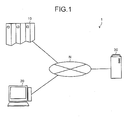
FIG. 1] FIG. 1 is a schematic of a configuration of a power management system according to an embodiment. - [
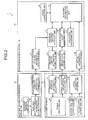
FIG. 2] FIG. 2 is a block diagram of an exemplary functional configuration of a weather information providing apparatus, a customer terminal, and a power management apparatus according to the embodiment. - [
FIG. 3] FIG. 3 is a graph schematically illustrating an example of wide-area weather forecast information. - [
FIG. 4] FIG. 4 is another graph schematically illustrating an example of the wide-area weather forecast information. - [
FIG. 5] FIG. 5 is a schematic of an exemplary data configuration of a customer information accumulating unit illustrated inFIG. 2 . - [
FIG. 6] FIG. 6 is a graph for explaining a relationship between reference weather forecast and a change range according to the embodiment. - [
FIG. 7] FIG. 7 is another graph for explaining the relationship between the reference weather forecast and the change range according to the embodiment. - [
FIG. 8] FIG. 8 is a schematic of an example of a relationship between power consumption and a reducible power amount according to the embodiment. - [
FIG. 9] FIG. 9 is a schematic of another example of the relationship between power consumption and a reducible power amount according to the embodiment. - [
FIG. 10] FIG. 10 is a flowchart of an example of weather forecast notification processing performed by the power management apparatus according to the embodiment. - [
FIG. 11] FIG. 11 is a flowchart of an example of individual customer weather forecast processing performed by the power management apparatus according to the embodiment. - [
FIG. 12] FIG. 12 is a schematic of an example of the wide-area weather forecast information. - [
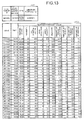
FIG. 13] FIG. 13 is a schematic of an example of weather forecast information to which no change range is added according to the embodiment. - [
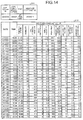
FIG. 14] FIG. 14 is a schematic of an example of the weather forecast information to which the change range is added according to the embodiment. - [
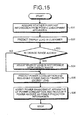
FIG. 15] FIG. 15 is a flowchart of an example of power predictive value calculation processing performed by the customer terminal according to the embodiment. - [
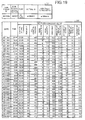
FIG. 16] FIG. 16 is schematic of an example of power prediction information generated by the power predictive value calculation processing illustrated inFIG. 15 . - [
FIG. 17] FIG. 17 is a flowchart of an example of power predictive value adjustment processing performed by the power management apparatus according to the embodiment. - [
FIG. 18] FIG. 18 is a flowchart of an example of error calculation processing performed by the power management apparatus according to the embodiment. - [
FIG. 19] FIG. 19 is a schematic of an example of actual information (actual weather values) according to the embodiment. - [
FIG. 20] FIG. 20 is a diagram of an exemplary configuration of a computer according to the embodiment. - Exemplary embodiments of a power management system and a power management method according to the present invention are described below in greater detail with reference to the accompanying drawings.
-
FIG. 1 is a schematic of a configuration of a power management system according to the present embodiment. As illustrated in the figure, apower management system 1 according to the first embodiment includes a weatherinformation providing apparatus 10, acustomer terminal 20, and apower management apparatus 30. The weatherinformation providing apparatus 10, thecustomer terminal 20, and thepower management apparatus 30 are connected to a network N such as the Internet in a detachable manner, and transmit and receive various types of information via the network N. The number of apparatuses connected to the network N is not particularly restricted. -
FIG. 2 is a block diagram of an exemplary functional configuration of the power management system 1 (the weatherinformation providing apparatus 10, thecustomer terminal 20, and the power management apparatus 30). - The weather
information providing apparatus 10 is an information processor, such as a server, that performs wide-area weather forecast. The weatherinformation providing apparatus 10 includes a wide-areaweather forecast unit 11, a wide-area weather forecastinformation accumulating unit 12, and a wide-area weather forecastinformation providing unit 13 as functional units. - The wide-area
weather forecast unit 11 predicts weather conditions in a predetermined future period in a wide area including an area managed by thepower management apparatus 30, and generates a weather forecast value serving as the forecast result as wide-area weather forecast information. Examples of weather elements to be predicted include temperature (outside air temperature), humidity, CO2 concentration, a wind direction, wind velocity, weather, an amount of solar radiation, an amount of cloud, an amount of precipitation, and an amount of snowfall. In the present embodiment, the forecast of weather conditions is performed in units of fixed periods (e.g., one hour) in the predetermined future period (e.g., one day). -
FIG. 3 and FIG. 4 are graphs schematically illustrating an example of wide-area weather forecast information.FIG. 3 and FIG. 4 illustrate forecast results of CO2 concentration in a certain future day. The vertical axis represents CO2 concentration, and the horizontal axis represents time (from 1 o'clock to 24 o'clock). - The graph of
FIG. 3 illustrates forecast results of each area type. In the figure, the area types are a mountainous area, an urban area, and an industrial area. A solid line L11 represents change in CO2 concentration in the mountainous area, a dashed line L12 represents change in CO2 concentration in the urban area, and a dashed-dotted line L13 represents change in CO2 concentration in the industrial area. As illustrated in the figure, the CO2 concentration shows different patterns depending on the area types. - The graph of
FIG. 4 illustrates forecast results of each season in the urban area. The seasons herein are two seasons of a summer season and a winter season. A solid line L21 represents change in CO2 concentration in the summer season, and a dashed line L22 represents change in CO2 concentration in the winter season. As illustrated in the figure, the CO2 concentration shows different patterns depending on the seasons. - By simulating weather conditions in the wide area using a well-known numerical forecast model, for example, the wide-area
weather forecast unit 11 generates weather conditions at each point (area) such as the area types illustrated inFIG. 3 and weather conditions in accordance with a time period to be a target of forecast (seasons and dates and times) illustrated inFIG. 4 as the wide-area forecast information. - Referring back to
FIG. 2 , the wide-area weather forecastinformation accumulating unit 12 is a database, for example, and accumulates therein the wide-area weather forecast information generated by the wide-areaweather forecast unit 11. The wide-area weather forecastinformation providing unit 13 provides (transmits) the wide-area weather forecast information accumulated in the wide-area weather forecastinformation accumulating unit 12 to thepower management apparatus 30 via the network N. The operational timing of providing of the wide-area weather forecast information is not restricted in particular. The wide-area weather forecastinformation providing unit 13 may provide the wide-area weather forecast information in response to a request from thepower management apparatus 30, for example. Alternatively, the wide-area weather forecastinformation providing unit 13 may transmit the wide-area weather forecast information to thepower management apparatus 30 every predetermined time (e.g., every one hour). - The
customer terminal 20 is an information processor, such as a personal computer (PC) provided to each customer. Thecustomer terminal 20 includes a weather forecast information acquisition unit 21, apower prediction unit 22, a power prediction information notification unit 23, an actualweather acquisition unit 24, an actualpower acquisition unit 25, and an actualinformation providing unit 26 as functional units. - The weather forecast information acquisition unit 21 acquires (receives) weather forecast information for each customer from the
power management apparatus 30 via the network N. The weather forecast information will be described later in detail. - Based on the weather forecast information acquired by the weather forecast information acquisition unit 21, the
power prediction unit 22 predicts power consumption and an amount of power that can be reduced (a reducible amount of power) in a customer in the predetermined future period forecasted in the weather forecast information. The operation of thepower prediction unit 22 will be described later in detail. - The power prediction information notification unit 23 determines the power consumption and the reducible power amount predicted by the
power prediction unit 22 to be power prediction information, and notifies thepower management apparatus 30 of (transmits thereto) the power prediction information via the network N. The operational timing of notification of the power prediction information is not restricted in particular. The notification of the power prediction information may be performed in response to a request from thepower management apparatus 30, for example. Alternatively, the power prediction information notification unit 23 may notify thepower management apparatus 30 of the power prediction information every time thepower prediction unit 22 performs forecast. - The actual
weather acquisition unit 24 acquires local weather conditions around the customer to which the device itself is provided as actual weather values. Weather elements to be acquired as the actual weather values are coincident with the wide-area weather forecast information (weather forecast information) described above. The method for acquiring the actual weather values is not restricted in particular, and the actualweather acquisition unit 24 may acquire measured values of various types of measuring instruments (e.g., a thermometer, a hygrometer, and an illuminometer) provided to the customer as the actual weather values, for example. - The actual
power acquisition unit 25 is a smart meter, for example, and measures power consumption of an electric power load (e.g., an air conditioning load) and power generation of a power generation system (e.g., a photovoltaic and solar thermal power generation system) provided in the customer. Hereinafter, the power consumption and the power generation measured by the actualpower acquisition unit 25 are collectively referred to as power consumption. - The actual
information providing unit 26 determines the actual weather values acquired by the actualweather acquisition unit 24 and the power consumption acquired by the actualpower acquisition unit 25 to be actual information, and provides (transmits) the actual information to thepower management apparatus 30 via the network N. The operational timing of transmission of the actual information is not restricted in particular. The actualinformation providing unit 26 may transmit the actual information in response to a request from thepower management apparatus 30, for example. Alternatively, the actualinformation providing unit 26 may transmit the actual information to thepower management apparatus 30 every predetermined time (e.g., every one hour). Furthermore, the actualinformation providing unit 26 may transmit the actual weather values and the power consumption separately. - The
power management apparatus 30 is an information processor, such as a server, that performs power management of a predetermined area. Thepower management apparatus 30 includes a wide-area weather forecastinformation acquisition unit 31, a customerinformation accumulating unit 32, an individual customerweather forecast unit 33, a weather forecastinformation notification unit 34, a power predictioninformation acquisition unit 35, a power predictivevalue adjustment unit 36, an integration processing unit 37, an actual information acquisition unit 38, and an error calculation unit 39 as functional units. - The wide-area weather forecast
information acquisition unit 31 acquires wide-area weather forecast information from the weather information providing apparatus 10 (wide-area weather forecast information providing unit 13) via the network N. The operational timing of acquisition of the wide-area weather forecast information is not restricted in particular. The wide-area weather forecastinformation acquisition unit 31 may request the wide-area weather forecast information from the weatherinformation providing apparatus 10 every predetermined time (e.g., every one hour), for example. Alternatively, the wide-area weather forecastinformation acquisition unit 31 may wait until the weatherinformation providing apparatus 10 provides the wide-area weather forecast information. - The customer
information accumulating unit 32 is a database, for example, and accumulates therein information on each customer belonging to the area to be managed.FIG. 5 is a schematic of an exemplary data configuration of the customerinformation accumulating unit 32. As illustrated in the figure, the customerinformation accumulating unit 32 includes items, such as a customer ID, positional information, date and time information, weather forecast information, power prediction information, actual information, and error information. - The item of the "customer ID" stores therein a unique customer ID allocated to each customer in advance as identification information for identifying each customer. The "positional information" stores therein information by which the present position of each customer can be specified in the area to be managed, such as an address, latitude and longitude, and an area ID indicating a belonging area.
- The item of the "date and time information" stores therein information indicating a date and time. The customer
information accumulating unit 32 manages weather forecast information, power prediction information, and actual information accumulated in association with the same customer ID (positional information) based on the date and time information. In other words, weather forecast information (weather forecast values) and power prediction information (power consumption and a reducible power amount) predicted for the same date and time and actual information (actual weather values and power consumption) actually measured at the same date and time are accumulated in a manner associated with one another. - The item of the "weather forecast information" stores therein weather forecast information, which will be described later, indicating weather forecast values for each customer calculated by the individual customer
weather forecast unit 33. The item of the "power prediction information" stores therein power prediction information (power consumption and a reducible power amount) acquired from the actualpower acquisition unit 25 of eachcustomer terminal 20. The item of the "error information" stores therein error information, which will be described later, calculated by the error calculation unit 39. - Referring back to
FIG. 2 , the individual customerweather forecast unit 33 derives weather forecast information indicating local weather forecast values around each customer based on the wide-area weather forecast information acquired by the wide-area weather forecastinformation acquisition unit 31 and the positional information of each customer accumulated in the customerinformation accumulating unit 32. - Specifically, the individual customer
weather forecast unit 33 reads weather forecast values at a point (area) corresponding to the positional information of each customer from the wide-area weather forecast information, and interpolates the weather forecast values into weather forecast values at a plurality of points adjacent to the point, thereby calculates reference weather forecast values for each customer. The method for calculating the reference weather forecast values is not limited to the example described above. The individual customerweather forecast unit 33 may calculate the reference weather forecast values for each customer by performing well-known weather simulation based on weather forecast values at each point included in the wide-area weather forecast information and on geographical information indicating geography around each customer. - Furthermore, the individual customer
weather forecast unit 33 uses weather conditions, such as weather included in the reference weather forecast values, and information, such as period that is a target of the forecast (e.g., a date and time and a season), as search conditions, and acquires error information, which will be described later, associated with weather forecast information corresponding to the check conditions from the customerinformation accumulating unit 32 for each customer. The individual customerweather forecast unit 33 then compares the value indicated by the error information thus acquired with a predetermined threshold. If the error information is larger than the threshold, the individual customerweather forecast unit 33 adds a change range in accordance with the error information to reference weather forecast, thereby adjusting the reference weather forecast values. The individual customerweather forecast unit 33 then stores the reference weather forecast values in the customerinformation accumulating unit 32 as the weather forecast information for each customer. -
FIG. 6 and FIG. 7 are graphs for explaining a relationship between a reference weather forecast value and a change range. The vertical axis represents outside air temperature (temperature), and the horizontal axis represents time that is a target of forecast (from 1 o'clock to 24 o'clock). - In
FIG. 6 , a solid line L31 represents a reference weather forecast value of the outside air temperature. If a change in the outside air temperature is predicted along with passage of a cold front or a typhoon, for example, by adding a change range to the passage time as illustrated inFIG. 6 , it is possible to provide latitude to the time at which the change is expected. A dashed line L32 represents the reference weather forecast value obtained by setting the passage time earlier, whereas a dashed-dotted line L33 represents the reference weather forecast value obtained by setting the passage time later. - In the case of
FIG. 6 , the individual customerweather forecast unit 33 extracts a change tendency in the time direction for each customer from the error information indicating an error of the weather forecast accumulated in the customerinformation accumulating unit 32, and adds a change range in accordance with the change tendency to the reference weather forecast value. Thus, the individual customerweather forecast unit 33 generates one of the dashed line L32 and the dashed-dotted line L33 obtained by adding a change amount to the solid line L31 as weather forecast information, for example. - In
FIG. 7 , a solid line L41 represents the reference weather forecast value of the outside air temperature. If change in the outside air temperature is predicted because of influence of the wind direction and the amount of cloud, for example, by adding a change range to the outside air temperature as illustrated inFIG. 7 , it is possible to provide latitude to the temperature to be predicted. A dashed line L42 represents the reference weather forecast value obtained by setting the outside air temperature lower, whereas a dashed-dotted line L43 represents the reference weather forecast value obtained by setting the outside air temperature higher. - In the case of
FIG. 7 , the individual customerweather forecast unit 33 extracts a change tendency in the outside air temperature for each customer from the error information accumulated in the customerinformation accumulating unit 32, and adds a change range in accordance with the change tendency to the reference weather forecast value. Thus, the individual customerweather forecast unit 33 generates one of the dashed line L42 and the dashed-dotted line L43 obtained by adding a change amount to the solid line L41 as weather forecast information, for example. At this time, the change range can be added in each fixed period unit (unit of one hour in the case ofFIG. 6 and FIG.7 ) obtained by fractionizing the forecast period. Furthermore, the method for adding the change amount (e.g., the forward and backward directions in time and the increasing and decreasing directions in the temperature) is preferably unified for each customer. - As described above, various methods can be employed to add the change range to the reference weather forecast. In the present embodiment, by extracting a change tendency in weather conditions from error information between previous weather forecast and actual weather for each customer, and adding a change amount in accordance with the tendency to the reference weather forecast, weather forecast information customized for each customer is generated. The fact that the change amount has been already added, the magnitude of the change amount, and information indicating the method for adding the change range, for example, are attached to the weather forecast information to which the change amount is added (refer to
FIG. 13 andFIG. 14 ). - Referring back to
FIG. 2 , the weather forecastinformation notification unit 34 notifies the customer terminal 20 (weather forecast information acquisition unit 21) of a corresponding customer of (transmits thereto) the weather forecast information for each customer generated by the individual customerweather forecast unit 33 via the network N. The operational timing of notification is not restricted in particular, and the notification may be performed every time the individual customerweather forecast unit 33 generates weather forecast information. - The weather forecast information reported from the weather forecast
information notification unit 34 is acquired (received) by the weather forecast information acquisition unit 21 of the corresponding customer (customer terminal 20), and is transferred to thepower prediction unit 22. - The
power prediction unit 22 of thecustomer terminal 20 calculates (predicts) an energy load required in the predetermined future period that is a target of the forecast in the weather forecast information by using the weather forecast information acquired from thepower management apparatus 30 and information on an electric power load input by the customer in advance. Specifically, thepower prediction unit 22 adjusts parameters related to calculation of the energy load in accordance with the weather forecast value of each of the weather elements included in the weather forecast information, and uses the parameters thus adjusted to calculate the energy load. - The weather element of the "temperature" influences an indoor air conditioning load caused by heat exchange through a window and an outer wall, an outside-air conditioning load caused when outside air is processed to be introduced into a room, consumption energy of a heat source system that supplies hot and cold temperature to an air conditioning system, and power generation of a photovoltaic and solar thermal power generation system, for example. The weather element of the "humidity" influences the outside-air conditioning load and the consumption energy of the heat source system, for example. The weather element of the "CO2 concentration" influences the outside-air conditioning load for maintaining an indoor environment. The weather elements of the "wind direction" and the "wind velocity" influence the outside-air conditioning load and power generation of a wind power generation system. The weather element of the "weather" influences all the weather elements as an index indicating change timings and changes in weather forecast. The weather elements of the "amount of solar radiation" and the "amount of cloud" influence the indoor air conditioning load caused by entry of heat from the window, energy consumption of lighting equipment in the room, and the power generation of the photovoltaic and solar thermal power generation system, for example. The weather elements of the "amount of precipitation" and the "amount of snowfall" influence the power generation of the photovoltaic and solar thermal power generation system, for example.
- When calculating the energy load, the
power prediction unit 22 determines whether a change range is added to the weather forecast information. If a change range is added, thepower prediction unit 22 predicts the energy load while taking into account the change range. The method for taking into account the change range is not restricted in particular. A predetermined ratio may be added to or subtracted from the energy load, or the method for calculating the energy load may be changed in accordance with the type of the change range (e.g., the upper limit and the lower limit), for example. - The
power prediction unit 22 predicts power consumption and a reducible power amount in the future period forecasted in the weather forecast information from the energy load thus predicted by using information of a customer system. The information of the customer system used herein means an operating plan of each electric power load in an important house, previous forecast results, and the like. The method for predicting the power consumption and the reducible power amount is not restricted in particular, and various methods can be employed, such as a well-known forecast method, a method for calculating the power consumption and the reducible power amount by simulation of a system model, and a method for calculating the power consumption and the reducible power amount from an actual power value by using a neural net and multiple regression analysis. -
FIG. 8 is a schematic of an example of a relationship between power consumption and a reducible power amount. InFIG. 8 , the vertical axis represents power consumption, and the horizontal axis represents time. A solid line L51 represents time transient of the power consumption predicted by thepower prediction unit 22, and a dashed line L52 represents time transient of the power consumption when a predetermined amount is reduced from the solid line L51. If reduced from the power consumption biasedly in this manner, thepower prediction unit 22 calculates a power amount that is difference between the solid line L51 and the dashed line L52 at each time as a reducible power amount. - The method for reducing the power consumption is not limited to the example illustrated in
FIG. 8. FIG. 9 is a schematic of another example of the relationship between power consumption and a reducible power amount. Similarly toFIG. 8 , the vertical axis represents power consumption, and the horizontal axis represents time. InFIG. 9 , a solid line L61 represents time transient of the power consumption predicted by thepower prediction unit 22, and a dashed line L62 represents time transient of the power consumption when a predetermined amount is reduced from the solid line L61. The power consumption may be reduced such that power consumption at predetermined time is maintained in this manner. Thepower prediction unit 22 calculates a power amount that is difference between the solid line L61 and the dashed line L62 at each time as a reducible power amount in the same manner as inFIG. 8 . - The power prediction information notification unit 23 of the
customer terminal 20 notifies thepower management apparatus 30 of (transmits thereto) the power consumption and the reducible power amount predicted by thepower prediction unit 22 as the power prediction information. - By contrast, the power prediction
information acquisition unit 35 of thepower management apparatus 30 acquires (receives) the power prediction information from the customer terminal 20 (power prediction information notification unit 23) of each customer via the network N. The operational timing at which the power predictioninformation acquisition unit 35 acquires the power prediction information is not restricted in particular. The power predictioninformation acquisition unit 35 may acquire the power prediction information in response to an operation of the power predictivevalue adjustment unit 36, which will be described later. - The power predictive
value adjustment unit 36 adjusts the value of the power prediction information acquired from each customer in accordance with the change range added to the weather forecast information for each customer. Specifically, the power predictivevalue adjustment unit 36 refers to the weather forecast information for each customer accumulated in the customerinformation accumulating unit 32, and determines whether a change range is added to the weather forecast information. If a change range is added, the power predictivevalue adjustment unit 36 adjusts the values of the power consumption and the reducible power amount included in the power prediction information in accordance with the change range to reduce the risk of a weather forecast error caused by the change range. - The method for adjusting the power consumption and the reducible power amount in accordance with the change range is not particularly restricted. If the change range is larger than a predetermined threshold, for example, processing for reducing the power consumption and the reducible power amount at a predetermined rate may be performed. Furthermore, the power predictive
value adjustment unit 36 stores the power prediction information thus acquired (the power consumption and the reducible power amount) of each demand level in the customerinformation accumulating unit 32 in a manner associated with the customer ID of the customer corresponding thereto. - The integration processing unit 37 integrates the power consumption and the reducible power amounts, individually, in the predetermined future period included in the customer information of each customer in the customer
information accumulating unit 32. Thus, the integration processing unit 37 calculates the total power consumption and the total reducible power amount of all the customers, that is, of the whole area managed by thepower management apparatus 30. - The total power consumption and the total reducible power amount calculated by the
power management apparatus 30 are used as an amount of power consumption (demand) and supply and demand adjustment reserve capacity, respectively, and a power control apparatus, which is not illustrated, performs power control for the whole area (all the customers). Furthermore, the actual value of power consumption acquired from eachcustomer terminal 20 as actual information can also be used for power control. Based on the predictive value of power consumption presented by each customer and the actual value of power consumption, for example, a configuration for paying compensation in accordance with the degree of the gap therebetween may be incorporated. - The actual information acquisition unit 38 and the error calculation unit 39 are functional units related to calculation of error information. The actual information acquisition unit 38 acquires (receives) actual information (actual weather values and power consumption) from each customer terminal 20 (actual information providing unit 26) via the network N. The operational timing of acquisition of the actual information is not restricted in particular. The actual information acquisition unit 38 may request the actual information from the weather
information providing apparatus 10 every predetermined time (e.g., every one hour), for example. Alternatively, the actual information acquisition unit 38 may wait until the weatherinformation providing apparatus 10 provides the actual information. Furthermore, the actual information acquisition unit 38 may acquire the actual weather values and the power consumption separately. - The error calculation unit 39 compares the weather forecast information (weather forecast values) for each customer accumulated in the customer
information accumulating unit 32 with the actual information (actual weather values) at the date and time forecasted in the weather forecast information to calculate difference between both the values. Thus, the error calculation unit 39 calculates an error in the actual weather values compared with the weather forecast values as error information. Furthermore, the error calculation unit 39 associates the error information thus calculated with a pair of individual customer weather information and individual customer weather forecast information used for the calculation, and stores the error information in the item of the "error information" in the individual customerinformation accumulating unit 32. The method for calculating the error between the weather forecast values and the actual weather values is not restricted in particular, and a well-known method is used. - An operation of the
power management system 1 with the configuration described above will now be explained. Weather forecast notification processing performed by thepower management apparatus 30 will be described with reference toFIG. 10 to FIG. 14 . -
FIG. 10 is a flowchart of an example of the weather forecast notification processing performed by thepower management apparatus 30. The wide-area weather forecastinformation acquisition unit 31 of thepower management apparatus 30 requests wide-area weather forecast information from the weatherinformation providing apparatus 10 to acquire wide-area weather forecast information of a wide area including the area to be managed (Step S11). Subsequently, the individual customerweather forecast unit 33 refers to customer information of each customer accumulated in the customer information accumulating unit 32 (Step S12). The individual customerweather forecast unit 33 then performs individual customer weather forecast processing for generating weather forecast information for each customer from the wide-area weather forecast information acquired at Step S11 (Step S13). The individual customer weather forecast processing at Step S13 will now be described with reference toFIG. 11 . -
FIG. 11 is a flowchart of an example of the individual customer weather forecast processing performed by thepower management apparatus 30. The individual customerweather forecast unit 33 calculates reference weather forecast values for each customer based on weather forecast at each point (area) indicated in the weather forecast information and on positional information of each customer (Step S21). Subsequently, the individual customerweather forecast unit 33 uses various types of information related to the reference weather forecast values as search conditions, and acquires error information corresponding to the check conditions for each customer (Step S22). - The individual customer
weather forecast unit 33 then compares the value of the error information with a predetermined threshold for each piece of the error information acquired at Step S22, and determines whether the value is larger than the threshold (Step S23). If the value of the error information for a customer is determined to be equal to or smaller than the threshold (No at Step S23), the individual customerweather forecast unit 33 generates the reference weather forecast values calculated at Step S21 as weather forecast information for the corresponding customer (Step S24). The system control then goes to Step S27. - By contrast, if the value of the error information for the customer is determined to be larger than the threshold at Step S23 (Yes at Step S23), the individual customer
weather forecast unit 33 calculates a change range in accordance with the value of the error information (Step S25). The individual customerweather forecast unit 33 then adds the change range calculated at Step S25 to the reference weather forecast values for the corresponding customer, thereby generating weather forecast information (Step S26). The system control then goes to Step S27. - Subsequently, at Step S27, the individual customer
weather forecast unit 33 stores the weather forecast information for each customer generated at Step S24 or S26 in the customerinformation accumulating unit 32 in a manner associated with the customer ID of the customer corresponding thereto (Step S27). Subsequently, the system control goes to Step S14 inFIG. 10 . - Referring back to
FIG. 10 , the weather forecastinformation notification unit 34 notifies thecustomer terminal 20 of the corresponding customer of the weather forecast information generated by the individual customer weather forecast processing at Step S13 (Step S14), and the present processing is terminated. - An operation of the weather forecast notification processing will now be described. An assumption is made that wide-area weather forecast information illustrated in
FIG. 12 is acquired at Step S11, for example.FIG. 12 is a schematic of an example of the wide-area weather forecast information. As illustrated in the figure, for example, the wide-area weather forecast information lists weather forecast values in a predetermined future period for each area type, such as an urban area and a mountainous area, or in predetermined units of an area (an area A1), such as a city, a town, and a village, in units of one hour. Furthermore, inFIG. 12 , the weather forecast values include temperature, humidity, CO2 concentration, a wind direction, wind velocity, weather, an amount of solar radiation, an amount of cloud, an amount of precipitation, and an amount of snowfall. In terms of the weather, the state such as clear weather and raining is represented by a numerical value. - In this case, in the individual customer weather forecast processing at Step S13, the individual customer
weather forecast unit 33 generates weather forecast information for each customer illustrated inFIG. 13 andFIG. 14 from the wide-area weather forecast information illustrated inFIG. 12 , for example.FIG. 13 is a schematic of an example of weather forecast information to which no change range is added.FIG. 14 is a schematic of an example of the weather forecast information to which a change range is added. - As illustrated in
FIG. 13 andFIG. 14 , the weather forecast information includes additional information D11 and main information D12. The additional information D11 includes a "customer ID", "positional information", a "type", and a "weather forecast ID" as items. - In the additional information D11, a demand level ID (9910035) and positional information (990021) of a customer that is a target of the processing are entered in the items of the "customer ID" and the "positional information", respectively, among the customer information of each customer accumulated in the customer
information accumulating unit 32. The presence of a change range and the method for adding the change range, for example, are entered in the item of the "type" as type information indicating the type of the weather forecast information. The type information of "forecast" entered in the "type" inFIG. 13 indicates that the weather forecast information is weather forecast information with no change range, for example. By contrast, the type information of "upper limit" entered in the "type" inFIG. 14 indicates that the weather forecast information is weather forecast information to which the upper limit of the change range is added. Furthermore, a unique ID (e4089910 and e4089911) for discriminating the weather forecast information from other weather forecast information is entered in the space of the "weather forecast ID". - The main information D12 lists weather forecast values in a predetermined future period calculated for a customer corresponding to the "customer ID" of the additional information D11 in units of one hour. Compared with the weather forecast information to which no change range is added illustrated in
FIG. 13 , in the weather forecast information to which the change range is added illustrated inFIG. 14 , values in accordance with amounts of change are added to the humidity, the CO2 concentration, the wind velocity, the weather, the amount of solar radiation, and the amount of cloud. - As described above, the
power management apparatus 30 derives local weather forecast values (reference weather forecast values) in accordance with the existing position of each customer. Furthermore, thepower management apparatus 30 adds a change range in accordance with an error (error information) between previous weather forecast and actual weather to the reference weather forecast values, to the weather forecast values to generate weather forecast information in consideration of previous actual weather, and provides the weather forecast information to thecustomer terminal 20 of the corresponding customer. Thus, the accuracy of the weather forecast information provided to each customer (customer terminal 20) can be improved. Therefore, it is possible to improve the accuracy of forecast results (power consumption and the reducible power amount) predicted by using the weather forecast information. - In
FIG. 14 , the change range is added directly to the reference weather forecast values. However, it is not limited thereto, and the change range may be attached to the reference weather forecast values as independent change range information. - Power predictive value calculation processing performed by the
customer terminal 20 will now be described with reference toFIG. 15 andFIG. 16 .FIG. 15 is a flowchart of an example of the power predictive value calculation processing performed by thecustomer terminal 20. - The weather forecast information acquisition unit 21 of the
customer terminal 20 acquires weather forecast information for each customer provided from the power management apparatus 30 (Step S31). Subsequently, thepower prediction unit 22 uses the weather forecast information acquired at Step S31 and information on an electric load device input in advance to predict an energy load in the customer in a predetermined period forecasted in the weather forecast information (Step S32). - The
power prediction unit 22 then determines whether a change range is added to the weather forecast information based on type information attached to the weather forecast information (Step S33). If no change range is determined to be added (No at Step S33), the system control goes to Step S35. - By contrast, if a change range is determined to be added at Step S33 (Yes at Step S33), the
power prediction unit 22 adjusts the energy load predicted at Step S32 in accordance with the change range thus added (Step S34). The system control then goes to Step S35. - Subsequently, at Step S35, the
power prediction unit 22 predicts power consumption and a reducible power amount in the customer in a predetermined period forecasted in the weather forecast information based on the energy load (Step S35). The power prediction information notification unit 23 then generates the power consumption and the reducible power amount predicted at Step S35 as power prediction information, and notifies thepower management apparatus 30 of the power prediction information (Step S36). Subsequently, the present processing is terminated. -
FIG. 16 is schematic of an example of the power prediction information generated by the power predictive value calculation processing. As illustrated in the figure, the power prediction information includes additional information D21 and main information D22. The additional information D21 includes a "customer ID", "positional information", and a "weather forecast ID" as items. - In the additional information D21, the customer ID (9910035) and the positional information (990021) of the customer itself are entered in the items of the "customer ID" and the "positional information", respectively. The weather forecast ID (e4089910) of the weather forecast information used for generating the power prediction information is entered in the item of the "weather forecast ID". The main information D22 lists the power consumption and the reducible power amounts in a predetermined period that is a target of the forecast in the weather forecast information in units of one hour.
- As described above, the
customer terminal 20 predicts the power consumption and the reducible power amount based on the weather forecast information for the customer itself provided from thepower management apparatus 30. Therefore, it is possible to reflect an operating plan or the like of the customer and to improve the accuracy of the power consumption and the reducible power amount. Furthermore, if a change range is added to the weather forecast information, thecustomer terminal 20 predicts the power consumption and the reducible power amount while taking into account the change range. Therefore, it is possible to derive the power consumption and the reducible power amount in consideration of the risk (uncertainties) of the change range. - Power predictive value adjustment processing performed by the
power management apparatus 30 will now be described with reference toFIG. 17. FIG. 17 is a flowchart of an example of the power predictive value adjustment processing performed by thepower management apparatus 30. - The power prediction
information acquisition unit 35 of thepower management apparatus 30 acquires power prediction information (power consumption and a reducible power amount) reported from the customer terminal 20 (power prediction information notification unit 23) of each customer (Step S41). - Subsequently, the power predictive
value adjustment unit 36 reads weather forecast information of the customer corresponding to the customer ID of the power prediction information acquired at Step S41 from the customer information accumulating unit 32 (Step S42). The power predictivevalue adjustment unit 36 then determines whether a change range is added to the weather forecast information based on type information attached to the weather forecast information (Step S43). If no change range is determined to be added (No at Step S43), the system control goes to Step S45. - By contrast, if a change range is determined to be added at Step S43 (Yes at Step S43), the power predictive
value adjustment unit 36 adjusts the values of the power consumption and the reducible power amount included in the power prediction information in accordance with the change range to reduce the risk of a weather forecast error caused by the change range (Step S44). - The power predictive
value adjustment unit 36 then stores the power prediction information in the customerinformation accumulating unit 32 in a manner associated with the customer ID of the customer corresponding thereto (Step S45). The integration processing unit 37 then sums up the power consumption and the reducible power amounts, individually, in a predetermined future period accumulated in the customerinformation accumulating unit 32 to calculate the total power consumption and the total reducible power amount of all the customers (Step S46). Subsequently, the processing is terminated. - As described above, the
power management apparatus 30 calculates the total power consumption and the total reducible power amount of all the customers based on the power prediction information provided from thecustomer terminal 20 of each customer. Therefore, it is possible to estimate the total power consumption and the total reducible power amount of all the customers with high accuracy. Furthermore, if a change range is added to the weather forecast information used for generating the power prediction information, thepower management apparatus 30 adjusts the power consumption and the reducible power amount in accordance with the change range. Therefore, it is possible to estimate the total power consumption and the total reducible power amount in consideration of the risk (uncertainties) of the change range. - Error calculation processing performed by the
power management apparatus 30 will now be described with reference toFIG. 18 andFIG. 19 .FIG. 18 is a flowchart of an example of the error calculation processing performed by thepower management apparatus 30. As a premise of the present processing, an assumption is made that the actualweather acquisition unit 24 of eachcustomer terminal 20 has already acquired local actual weather values around each customer. - The error calculation unit 39 of the
power management apparatus 30 reads weather forecast information of a customer to be a target of error evaluation from the customer information accumulating unit 32 (Step S51). The error calculation unit 39 then acquires actual information (actual weather values) in a period forecasted in the weather forecast information from the customer terminal 20 (actual information providing unit 26) of the customer to be a target of the error evaluation through the actual information acquisition unit 38 (Step S52). The error calculation unit 39 then stores the actual information (actual weather values) acquired from thecustomer terminal 20 in the customerinformation accumulating unit 32 in a manner associated with weather forecast information (weather forecast values) corresponding thereto (Step S53). - The error calculation unit 39 then compares the actual information (actual weather values) stored at Step S53 with the weather forecast information (weather forecast values) corresponding to the actual information, that is, compares the actual weather values and the actual weather values in the same period, and derives difference between both the values, thereby calculating an error in the actual weather values with respect to the weather forecast values as error information (Step S54). The error calculation unit 39 then stores the error information calculated at Step S54 in the customer
information accumulating unit 32 in a manner associated with the actual information (actual weather values) and the weather forecast information (weather forecast values) from which the error information is calculated (Step S55). -
FIG. 19 is a schematic of an example of the actual information (actual weather values). As illustrated in the figure, the actual information includes additional information D31 and main information D32. - The additional information D31 includes a "customer ID", "positional information", a "type", an "actual ID", and a "weather forecast ID" as items. In the additional information D31, the customer ID (9910035) and the positional information (990021) of the customer from which the actual weather values are acquired are entered in the items of the "customer ID" and the "positional information", respectively. Information (actual) indicating that the information is the actual information is entered in the item of the "type". Identification Information (e4089912) for discriminating the actual information from other actual information is entered in the "actual ID". The weather forecast ID (e4089910) of the weather forecast information related to calculation of error information, that is, the weather forecast information corresponding to measurement time of the actual weather values is entered in the "weather forecast ID". Furthermore, the main information D32 lists the actual weather values in a predetermined period in units of one hour.
- When using the actual measurement information of
FIG. 19 , for example, the error calculation unit 39 compares the actual information with the weather forecast information of "e4089910" entered in the "weather forecast ID", that is, the weather forecast values at the time corresponding to the weather forecast information illustrated inFIG. 13 , thereby generating the error information. The error information may be generated for each of the items of the weather forecast values. Alternatively, errors in the items may be integrated by averaging or other methods to generate one piece of error information. Furthermore, the time unit for generating the error information may be one hour, for example. Alternatively, by calculating an average value, for example, one piece of error information may be generated in a predetermined period. - The
power management apparatus 30 can feed back the error information derived from the weather forecast values and the actual weather values acquired previously to calculation of the weather forecast information performed by the individual customerweather forecast unit 33. Therefore, it is possible to improve the accuracy of the forecast efficiently. - As described above, the
power management system 1 according to the present embodiment predicts the power consumption and the reducible power amount for each customer by using local weather forecast information around each customer, and calculates the total power consumption and the total reducible power amount of all the customers from the power consumption and the reducible power amount predicted for each customer. Therefore, it is possible to predict the power consumption and the reducible power amount of all the customers with high accuracy. - The weather
information providing apparatus 10, thecustomer terminal 20, and thepower management apparatus 30 can be realized by a typical computer.FIG. 20 is a diagram of an exemplary configuration of a computer. As illustrated in the figure, the computer includes a central processing unit (CPU) 41 that performs information processing, a read-only memory (ROM) 42 that is a read-only memory storing therein the basic input/output system (BIOS) and the like, a random access memory (RAM) 43 functioning as a work area for theCPU 41, adisplay unit 44, such as a cathode ray tube (CRT) and a liquid crystal display (LCD), that displays various types of information, aninput unit 45 that is an input device, such as a keyboard and a mouse, astorage unit 46, such as a hard disk drive (HDD), that stores therein various types of computer programs and data, and acommunication unit 47 that transmits and receives information to and from an external device via the network N. These units are connected to one another via abus 48. - In the computer, the
CPU 41 starts a computer program stored in theROM 42 and thestorage unit 46, thereby controlling operations of the computer itself collectively and realizing the various types of functional units. In other words, the computer functions as one of the weatherinformation providing apparatus 10, thecustomer terminal 20, and thepower management apparatus 30 depending on the difference of the computer program stored in theROM 42 and thestorage unit 46. As described above, the functional units of the weatherinformation providing apparatus 10, thecustomer terminal 20, and thepower management apparatus 30 can be realized by a software configuration achieved by cooperation of theCPU 41 and the computer program. The method for realizing the functional units of the weatherinformation providing apparatus 10, thecustomer terminal 20, and thepower management apparatus 30 is not limited to the software configuration. Alternatively, by providing a processor for each of the functional units, for example, the functional units may be realized by a hardware configuration. - While the embodiment according to the present invention has been described, the embodiment has been presented by way of example only, and is not intended to limit the scope of the invention. Indeed, the novel system and method described herein may be embodied in a variety of other forms; furthermore, various omissions, substitutions, changes, combinations, additions, and other modifications in the form of the system and method described herein may be made without departing from the spirit of the invention. The accompanying claims and their equivalents are intended to cover the embodiment and the modifications as would fall within the scope and spirit of the invention.
- While the
power management system 1 according to the embodiment includes the weatherinformation providing apparatus 10, thepower management system 1 may use weather information provided from a third party, for example. Specifically, the Japan Meteorological Agency makes weather forecast in units of one month available besides weather forecast of three days just coming and weekly forecast. In terms of the hours of sunshine, the temperature, and the amount of precipitation, for example, a probability lower (smaller) than that in the average year, a probability equivalent to that in the average year, and a probability higher (larger) than that in the average year can be acquired as data from the monthly forecast. Therefore, thepower management apparatus 30 may acquire weather forecast provided from the third party described above, and use the weather forecast as wide-area weather forecast information. - Furthermore, in the embodiment, both the
customer terminal 20 and thepower management apparatus 30 perform processing in accordance with the change range added to the weather forecast information for each customer. However, it is not limited thereto, and one of the apparatuses may perform the processing in accordance with the change range. Thecustomer terminal 20 may generate power prediction information (power consumption and the reducible power amount) from the weather forecast information without regard to the change range, for example, and thepower management apparatus 30 may perform adjustment processing in accordance with the change range on the power prediction information. - The computer program executed in the apparatuses according to the embodiment is provided in a manner incorporated in advance in a storage medium included in each of the apparatuses. However, it is not limited thereto, and the computer program may be provided in a manner recorded in a computer-readable recording medium, such as a compact disk read-only memory (CD-ROM), a flexible disk (FD), a compact disk recordable (CD-R), and a digital versatile disk (DVD), as a file in an installable or executable format. Furthermore, the storage medium is not necessarily a medium separated from the computer or an embedded system. Examples of the storage medium include a storage medium that stores therein or temporarily stores therein the computer program transmitted and downloaded via a local area network (LAN) or the Internet.
- The computer program executed in the apparatuses according to the embodiment may be provided in a manner stored in a computer connected to a network such as the Internet to be made available for downloads via the network, or may be provided or distributed over a network such as the Internet.
-
- 1
- power management system
- 10
- weather information providing apparatus
- 11
- wide-area weather forecast unit
- 12
- wide-area weather forecast information accumulating unit
- 13
- wide-area weather forecast information providing unit
- 20
- customer terminal
- 21
- weather forecast information acquisition unit
- 22
- power prediction unit
- 23
- power prediction information notification unit
- 24
- actual weather acquisition unit
- 25
- actual power acquisition unit
- 26
- actual information providing unit
- 30
- power management apparatus
- 31
- wide-area weather forecast information acquisition unit
- 32
- customer information accumulating unit
- 33
- individual customer weather forecast unit
- 34
- weather forecast information notification unit
- 35
- power prediction information acquisition unit
- 36
- power predictive value adjustment unit
- 37
- integration processing unit
- 38
- actual information acquisition unit
- 39
- error calculation unit
- 41
- CPU
- 42
- ROM
- 43
- RAM
- 44
- display unit
- 45
- input unit
- 46
- storage unit
- 47
- communication unit
- 48
- bus
- N
- network
Claims (9)
- A power management system comprising:customer terminals; anda power management apparatus connected to the customer terminals, whereineach of the customer terminals includes a weather forecast acquisition unit that acquires a local weather forecast for a corresponding customer terminal, and a power prediction unit that predicts a power consumption and an amount of power that can be reduced for a predetermined period based on the weather forecast, andthe power management apparatus includes an integration processing unit that integrates the power consumptions and the amounts of power that can be reduced that are predicted for the respective customer terminals to calculate a total power consumption and a total amount of power that can be reduced for all of the customer terminals.
- The power management system of Claim 1, wherein the power management apparatus further includes a wide-area weather forecast acquisition unit that acquires a wide-area weather forecast, and a weather forecast unit that derives the local weather forecast for the corresponding customer terminal based on the wide-area weather forecast and an existing position of the customer terminal in an area corresponding to the wide-area weather forecast, and
the weather forecast acquisition unit acquires the local weather forecast for the corresponding customer terminal that is derived by the weather forecast unit. - The power management system of Claim 2, wherein the each of the customer terminals further includes an actual weather acquisition unit that acquires an actual local weather of the corresponding customer terminal, and
the power management apparatus further includes an error calculation unit that calculates error information by using the actual weather acquired by the each of the customer terminals and the weather forecast corresponding to the customer terminal and a period in which the actual weather is acquired, and
the weather forecast unit adds a change range in accordance with the error information to the weather forecast. - The power management system of Claim 3, wherein, the weather forecast unit adds the change range in accordance with the error information to the weather forecast when the error information exceeds a predetermined threshold.
- The power management system of Claim 3 or 4, wherein when the change range is added to the weather forecast, the power prediction unit predicts the power consumption and the amount of power that can be reduced by using the change range.
- The power management system of any one of Claims 3 to 5, wherein the power management apparatus further includes an adjustment unit that adjusts the power consumption and the amount of power that are predicted in the customer terminal in accordance with the change range added to the weather forecast for the customer terminal.
- The power management system of Claim 2, wherein the wide-area weather forecast acquisition unit acquires the wide-area weather forecast from a third party that makes a weather forecast for a wide area including an area in which the customer terminals exist.
- The power management system of any one of Claims 1 to 7, the weather forecast includes at least one of elements including temperature, humidity, CO2 concentration, a wind direction, wind velocity, weather, an amount of solar radiation, cloud cover, an amount of precipitation, and an amount of snowfall.
- A power management method comprising:acquiring, by a weather forecast acquisition unit, a local weather forecast for each of customer terminals;predicting, by a power prediction unit, a power consumption and an amount of power that can be reduced for a predetermined period based on the weather forecast; andintegrating, by an integration processing unit, the power consumptions and the amounts of power that can be reduced that are predicted for the respective customer terminals to calculate a total power consumption and a total amount of power that can be reduced for all of the customer terminals.
Applications Claiming Priority (2)
| Application Number | Priority Date | Filing Date | Title |
|---|---|---|---|
| JP2011289493A JP5743881B2 (en) | 2011-12-28 | 2011-12-28 | Power management system, power management method, customer terminal, and power management apparatus |
| PCT/JP2012/065526 WO2013099323A1 (en) | 2011-12-28 | 2012-06-18 | Power control system and method for controlling power |
Publications (2)
| Publication Number | Publication Date |
|---|---|
| EP2800221A1 true EP2800221A1 (en) | 2014-11-05 |
| EP2800221A4 EP2800221A4 (en) | 2015-08-19 |
Family
ID=48696845
Family Applications (1)
| Application Number | Title | Priority Date | Filing Date |
|---|---|---|---|
| EP12737693.7A Withdrawn EP2800221A4 (en) | 2011-12-28 | 2012-06-18 | POWER CONTROL SYSTEM, AND POWER CONTROL METHOD |
Country Status (6)
| Country | Link |
|---|---|
| US (1) | US9136706B2 (en) |
| EP (1) | EP2800221A4 (en) |
| JP (1) | JP5743881B2 (en) |
| CN (1) | CN103283104B (en) |
| SG (1) | SG193221A1 (en) |
| WO (1) | WO2013099323A1 (en) |
Cited By (2)
| Publication number | Priority date | Publication date | Assignee | Title |
|---|---|---|---|---|
| CN107912067A (en) * | 2015-08-07 | 2018-04-13 | 三菱电机株式会社 | Solar power generation prediction device and solar power generation prediction method |
| EP3247016A4 (en) * | 2015-01-16 | 2018-09-05 | Mitsubishi Electric Corporation | Electrical power management device |
Families Citing this family (34)
| Publication number | Priority date | Publication date | Assignee | Title |
|---|---|---|---|---|
| US9569804B2 (en) * | 2012-08-27 | 2017-02-14 | Gridium, Inc. | Systems and methods for energy consumption and energy demand management |
| JP5981313B2 (en) | 2012-11-09 | 2016-08-31 | 株式会社東芝 | Power suppression type storage energy storage optimization device, optimization method, and optimization program |
| JP6109555B2 (en) | 2012-12-11 | 2017-04-05 | 株式会社東芝 | Energy management server, energy management method and program |
| JP6180826B2 (en) * | 2013-07-02 | 2017-08-16 | 株式会社東芝 | Energy management server, energy management method and program |
| WO2015019184A2 (en) * | 2013-08-06 | 2015-02-12 | Systemex-Energies International Inc. | Method and apparatus for controlling the power supply from an electric vehicle to a dwelling or to an ac power distribution network |
| JP6226367B2 (en) * | 2013-09-18 | 2017-11-08 | 株式会社東芝 | Energy use support system, support method and support program |
| JP6230055B2 (en) * | 2013-11-15 | 2017-11-15 | 株式会社日立パワーソリューションズ | Electric power demand prediction apparatus and electric power demand prediction method |
| US20160266176A1 (en) * | 2013-12-30 | 2016-09-15 | Telefonaktiebolaget L M Ericsson (Publ) | Range Determination for an Intermediate Bus Architecture Power Supply Controller |
| JP2015139283A (en) * | 2014-01-22 | 2015-07-30 | 国立大学法人名古屋大学 | Device, method and program for prediction of power demand peak |
| US10050799B2 (en) * | 2014-01-28 | 2018-08-14 | Patched Conics, LLC. | Power control system and method, and information communication ability control system and method |
| CN103855807B (en) * | 2014-03-24 | 2016-02-10 | 东南大学 | A kind of system, method and Executive Module realizing home intelligent administration of power networks |
| US9409492B2 (en) | 2014-04-21 | 2016-08-09 | Honda Motor Co., Ltd. | Method for precise demand response and control, and a system thereof |
| JP6321466B2 (en) * | 2014-06-17 | 2018-05-09 | 株式会社Nttファシリティーズ | Supply and demand management system |
| JP2016127622A (en) * | 2014-12-26 | 2016-07-11 | 株式会社デンソー | Power demand forecasting system |
| JP6847343B2 (en) * | 2015-02-23 | 2021-03-24 | 学校法人沖縄科学技術大学院大学学園 | Systems and methods for determining prediction errors for renewable energy fluctuations |
| JP6481468B2 (en) * | 2015-03-31 | 2019-03-13 | 日本電気株式会社 | Predictive distribution estimation system, predictive distribution estimation method, and predictive distribution estimation program |
| JP6560070B2 (en) * | 2015-09-10 | 2019-08-14 | Necプラットフォームズ株式会社 | Power supply device, power supply control method thereof, and computer program |
| CN105262119B (en) * | 2015-09-29 | 2018-07-17 | 中国电力科学研究院 | A kind of Energy efficiency evaluation and energy-saving control method of energy accumulation power consumption system |
| WO2017098631A1 (en) * | 2015-12-10 | 2017-06-15 | 三菱電機株式会社 | Power control device, operation plan planning method, and program |
| JP6702408B2 (en) * | 2016-03-08 | 2020-06-03 | 日本電気株式会社 | Power control device, power control system, power control method, and program |
| KR101783252B1 (en) * | 2016-08-03 | 2017-09-29 | 한국전력공사 | Apparatus and method for supporting to collect demand resource of electric consumer in micro-grid |
| JP6877956B2 (en) * | 2016-10-31 | 2021-05-26 | 株式会社東芝 | Demand forecasting device and demand forecasting method |
| JP6410857B2 (en) * | 2017-02-06 | 2018-10-24 | 三菱電機株式会社 | Power saving request device and power saving request program |
| CA3051063C (en) | 2017-02-15 | 2022-04-05 | Simon Jasmin | Power control device |
| US10693296B2 (en) * | 2017-05-03 | 2020-06-23 | International Business Machines Corporation | Stabilizing consumer energy demand |
| US10742037B2 (en) | 2018-07-02 | 2020-08-11 | International Business Machines Corporation | Managing consumer energy demand |
| CN109034495A (en) * | 2018-08-30 | 2018-12-18 | 珠海吉瓦科技有限公司 | Electric Load Prediction System based on edge calculations |
| CN109274100A (en) * | 2018-11-28 | 2019-01-25 | 清华四川能源互联网研究院 | Electric energy dispatching method and system |
| JP7342369B2 (en) * | 2019-01-31 | 2023-09-12 | 中国電力株式会社 | Prediction system, prediction method |
| CN109818351B (en) * | 2019-03-26 | 2022-08-23 | 成都信息工程大学 | Meteorological power data comprehensive management method and system |
| JP2022090423A (en) * | 2020-12-07 | 2022-06-17 | 東芝エネルギーシステムズ株式会社 | Power prediction device and power prediction method |
| JP7107423B1 (en) * | 2021-11-10 | 2022-07-27 | トヨタ自動車株式会社 | Power consumption prediction device, power consumption prediction method, and power consumption prediction program |
| CN114967796B (en) * | 2022-04-13 | 2024-09-20 | 安徽领电智能科技有限公司 | Intelligent building equipment management system |
| CN114857656B (en) * | 2022-05-25 | 2024-07-16 | 京东城市(北京)数字科技有限公司 | Heat supply load prediction method and device |
Family Cites Families (17)
| Publication number | Priority date | Publication date | Assignee | Title |
|---|---|---|---|---|
| JP2002022239A (en) | 2000-07-11 | 2002-01-23 | Mitsubishi Heavy Ind Ltd | Load prediction device |
| JP3564605B2 (en) | 2000-09-27 | 2004-09-15 | ダイキン工業株式会社 | Demand control operation support method and device |
| US6577962B1 (en) * | 2000-09-28 | 2003-06-10 | Silicon Energy, Inc. | System and method for forecasting energy usage load |
| US7356548B1 (en) * | 2001-12-03 | 2008-04-08 | The Texas A&M University System | System and method for remote monitoring and controlling of facility energy consumption |
| JP2004274822A (en) * | 2003-03-05 | 2004-09-30 | Hitachi Ltd | Power supply trading system |
| JP2005090780A (en) | 2003-09-12 | 2005-04-07 | Shimizu Corp | Air conditioning energy evaluation system |
| JP2005094891A (en) * | 2003-09-16 | 2005-04-07 | Sumitomo Electric Ind Ltd | Power shortage elimination system |
| US7274975B2 (en) * | 2005-06-06 | 2007-09-25 | Gridpoint, Inc. | Optimized energy management system |
| US20080313037A1 (en) | 2007-06-15 | 2008-12-18 | Root Steven A | Interactive advisory system |
| US8700187B2 (en) * | 2007-08-28 | 2014-04-15 | Consert Inc. | Method and apparatus for actively managing consumption of electric power supplied by one or more electric utilities |
| JP2009303411A (en) * | 2008-06-16 | 2009-12-24 | Mitsubishi Electric Corp | Power generation plan creating apparatus and power management system |
| US8200370B2 (en) | 2008-12-04 | 2012-06-12 | American Power Conversion Corporation | Energy reduction |
| JP2012511300A (en) * | 2008-12-04 | 2012-05-17 | アメリカン パワー コンバージョン コーポレイション | Energy saving integration |
| US20100217550A1 (en) * | 2009-02-26 | 2010-08-26 | Jason Crabtree | System and method for electric grid utilization and optimization |
| JP4703736B2 (en) | 2009-03-02 | 2011-06-15 | 株式会社東芝 | Energy management system and method |
| JP5646205B2 (en) | 2010-04-28 | 2014-12-24 | 株式会社東芝 | Power consumption management system, power consumption management device used therefor, power consumption management method, central power supply management device, power supply management method |
| JP5487125B2 (en) | 2011-01-11 | 2014-05-07 | 株式会社東芝 | Power supply / demand adjustment reserve capacity trading system and power supply / demand adjustment reserve capacity transaction method |
-
2011
- 2011-12-28 JP JP2011289493A patent/JP5743881B2/en not_active Expired - Fee Related
-
2012
- 2012-06-18 SG SG2012058384A patent/SG193221A1/en unknown
- 2012-06-18 EP EP12737693.7A patent/EP2800221A4/en not_active Withdrawn
- 2012-06-18 WO PCT/JP2012/065526 patent/WO2013099323A1/en not_active Ceased
- 2012-06-18 CN CN201280000630.8A patent/CN103283104B/en not_active Expired - Fee Related
- 2012-06-18 US US13/576,518 patent/US9136706B2/en not_active Expired - Fee Related
Cited By (5)
| Publication number | Priority date | Publication date | Assignee | Title |
|---|---|---|---|---|
| EP3247016A4 (en) * | 2015-01-16 | 2018-09-05 | Mitsubishi Electric Corporation | Electrical power management device |
| CN107912067A (en) * | 2015-08-07 | 2018-04-13 | 三菱电机株式会社 | Solar power generation prediction device and solar power generation prediction method |
| EP3333999A4 (en) * | 2015-08-07 | 2018-06-13 | Mitsubishi Electric Corporation | Device for predicting amount of photovoltaic power generation, and method for predicting amount of photovoltaic power generation |
| US10963602B2 (en) | 2015-08-07 | 2021-03-30 | Mitsubishi Electric Corporation | Device for predicting amount of photovoltaic power generation, and method for predicting amount of photovoltaic power generation |
| CN107912067B (en) * | 2015-08-07 | 2023-05-23 | 三菱电机株式会社 | Solar power generation prediction device and solar power generation prediction method |
Also Published As
| Publication number | Publication date |
|---|---|
| US20130173075A1 (en) | 2013-07-04 |
| SG193221A1 (en) | 2013-10-30 |
| JP2013141331A (en) | 2013-07-18 |
| EP2800221A4 (en) | 2015-08-19 |
| CN103283104B (en) | 2016-02-03 |
| US9136706B2 (en) | 2015-09-15 |
| CN103283104A (en) | 2013-09-04 |
| JP5743881B2 (en) | 2015-07-01 |
| WO2013099323A1 (en) | 2013-07-04 |
Similar Documents
| Publication | Publication Date | Title |
|---|---|---|
| US9136706B2 (en) | Power management system and power management method | |
| Mutschler et al. | Benchmarking cooling and heating energy demands considering climate change, population growth and cooling device uptake | |
| JP7834216B2 (en) | Solar radiation intensity prediction device | |
| US8103465B2 (en) | System and method for monitoring and managing energy performance | |
| US9322951B2 (en) | Weather and satellite model for estimating solar irradiance | |
| Valor et al. | Daily air temperature and electricity load in Spain | |
| US10719773B2 (en) | Managing computational workloads of computing apparatuses powered by renewable resources | |
| US20150331023A1 (en) | Building energy consumption forecasting procedure using ambient temperature, enthalpy, bias corrected weather forecast and outlier corrected sensor data | |
| JP2014021555A (en) | Natural energy amount prediction device | |
| JP2012215969A (en) | Life cycle utilization system and life cycle utilization method | |
| KR20190095587A (en) | Smart power demand management system using real-time collected customer load information | |
| KR102109857B1 (en) | Photovoltaic generation forecasting system and method for forecasting power generation amount and profitability using thereof | |
| JP6226367B2 (en) | Energy use support system, support method and support program | |
| JP6628700B2 (en) | Weather information forecasting device and power demand forecasting device | |
| CN121146196A (en) | Methods, devices and computer equipment for dynamic prediction of heating load | |
| EP3637360A1 (en) | Method and server for predicting weather-related dangerous situation at specific point on path of user by referencing separate observation data observed from multiple observation points | |
| JP6452854B2 (en) | Power generation amount calculation device, power generation amount calculation system, power generation amount calculation method, and program | |
| JP2016127622A (en) | Power demand forecasting system | |
| CN120013029A (en) | Urban population mobility prediction method based on multi-source data | |
| JP7660401B2 (en) | Photovoltaic power generation output estimation device, photovoltaic power generation output estimation method, and photovoltaic power generation output estimation program | |
| US20150066812A1 (en) | Energy management system and method therefor, and non-transitory computer readable medium | |
| WO2016146788A1 (en) | System and method for predicting solar power generation | |
| Do et al. | Impact of weather forecasting uncertainty on building thermal load predictions | |
| EP4675542A1 (en) | Information processing device, information processing method, and program | |
| Condaxakis et al. | Application of Measure–Correlate–Predict (MCP) Methodology for Long-Term Evaluation of Wind Potential and Energy Production on a Terrestrial Wind Farm Siting Position in the Hellenic Region |
Legal Events
| Date | Code | Title | Description |
|---|---|---|---|
| PUAI | Public reference made under article 153(3) epc to a published international application that has entered the european phase |
Free format text: ORIGINAL CODE: 0009012 |
|
| 17P | Request for examination filed |
Effective date: 20120731 |
|
| AK | Designated contracting states |
Kind code of ref document: A1 Designated state(s): AL AT BE BG CH CY CZ DE DK EE ES FI FR GB GR HR HU IE IS IT LI LT LU LV MC MK MT NL NO PL PT RO RS SE SI SK SM TR |
|
| DAX | Request for extension of the european patent (deleted) | ||
| RA4 | Supplementary search report drawn up and despatched (corrected) |
Effective date: 20150716 |
|
| RIC1 | Information provided on ipc code assigned before grant |
Ipc: G06Q 10/04 20120101ALI20150710BHEP Ipc: H02J 3/00 20060101ALI20150710BHEP Ipc: G01D 4/00 20060101ALI20150710BHEP Ipc: G06Q 50/06 20120101AFI20150710BHEP Ipc: H02J 13/00 20060101ALI20150710BHEP |
|
| 17Q | First examination report despatched |
Effective date: 20160315 |
|
| STAA | Information on the status of an ep patent application or granted ep patent |
Free format text: STATUS: THE APPLICATION HAS BEEN WITHDRAWN |
|
| 18W | Application withdrawn |
Effective date: 20180524 |