EP2799862A1 - Verfahren zur analyse von formylglycinresten - Google Patents
Verfahren zur analyse von formylglycinresten Download PDFInfo
- Publication number
- EP2799862A1 EP2799862A1 EP12860390.9A EP12860390A EP2799862A1 EP 2799862 A1 EP2799862 A1 EP 2799862A1 EP 12860390 A EP12860390 A EP 12860390A EP 2799862 A1 EP2799862 A1 EP 2799862A1
- Authority
- EP
- European Patent Office
- Prior art keywords
- halogen
- protein
- carboxylic acid
- labeled
- substituted carboxylic
- Prior art date
- Legal status (The legal status is an assumption and is not a legal conclusion. Google has not performed a legal analysis and makes no representation as to the accuracy of the status listed.)
- Granted
Links
Images
Classifications
-
- C—CHEMISTRY; METALLURGY
- C12—BIOCHEMISTRY; BEER; SPIRITS; WINE; VINEGAR; MICROBIOLOGY; ENZYMOLOGY; MUTATION OR GENETIC ENGINEERING
- C12Q—MEASURING OR TESTING PROCESSES INVOLVING ENZYMES, NUCLEIC ACIDS OR MICROORGANISMS; COMPOSITIONS OR TEST PAPERS THEREFOR; PROCESSES OF PREPARING SUCH COMPOSITIONS; CONDITION-RESPONSIVE CONTROL IN MICROBIOLOGICAL OR ENZYMOLOGICAL PROCESSES
- C12Q1/00—Measuring or testing processes involving enzymes, nucleic acids or microorganisms; Compositions therefor; Processes of preparing such compositions
- C12Q1/34—Measuring or testing processes involving enzymes, nucleic acids or microorganisms; Compositions therefor; Processes of preparing such compositions involving hydrolase
- C12Q1/44—Measuring or testing processes involving enzymes, nucleic acids or microorganisms; Compositions therefor; Processes of preparing such compositions involving hydrolase involving esterase
-
- B—PERFORMING OPERATIONS; TRANSPORTING
- B01—PHYSICAL OR CHEMICAL PROCESSES OR APPARATUS IN GENERAL
- B01D—SEPARATION
- B01D15/00—Separating processes involving the treatment of liquids with solid sorbents; Apparatus therefor
- B01D15/08—Selective adsorption, e.g. chromatography
- B01D15/26—Selective adsorption, e.g. chromatography characterised by the separation mechanism
- B01D15/32—Bonded phase chromatography
- B01D15/325—Reversed phase
-
- G—PHYSICS
- G01—MEASURING; TESTING
- G01N—INVESTIGATING OR ANALYSING MATERIALS BY DETERMINING THEIR CHEMICAL OR PHYSICAL PROPERTIES
- G01N33/00—Investigating or analysing materials by specific methods not covered by groups G01N1/00 - G01N31/00
- G01N33/48—Biological material, e.g. blood, urine; Haemocytometers
- G01N33/50—Chemical analysis of biological material, e.g. blood, urine; Testing involving biospecific ligand binding methods; Immunological testing
- G01N33/68—Chemical analysis of biological material, e.g. blood, urine; Testing involving biospecific ligand binding methods; Immunological testing involving proteins, peptides or amino acids
- G01N33/6803—General methods of protein analysis not limited to specific proteins or families of proteins
- G01N33/6806—Determination of free amino acids
- G01N33/6812—Assays for specific amino acids
- G01N33/6815—Assays for specific amino acids containing sulfur, e.g. cysteine, cystine, methionine, homocysteine
-
- G—PHYSICS
- G01—MEASURING; TESTING
- G01N—INVESTIGATING OR ANALYSING MATERIALS BY DETERMINING THEIR CHEMICAL OR PHYSICAL PROPERTIES
- G01N30/00—Investigating or analysing materials by separation into components using adsorption, absorption or similar phenomena or using ion-exchange, e.g. chromatography or field flow fractionation
- G01N30/02—Column chromatography
- G01N30/88—Integrated analysis systems specially adapted therefor, not covered by a single one of the groups G01N30/04 - G01N30/86
- G01N2030/8809—Integrated analysis systems specially adapted therefor, not covered by a single one of the groups G01N30/04 - G01N30/86 analysis specially adapted for the sample
- G01N2030/8813—Integrated analysis systems specially adapted therefor, not covered by a single one of the groups G01N30/04 - G01N30/86 analysis specially adapted for the sample biological materials
- G01N2030/8831—Integrated analysis systems specially adapted therefor, not covered by a single one of the groups G01N30/04 - G01N30/86 analysis specially adapted for the sample biological materials involving peptides or proteins
-
- G—PHYSICS
- G01—MEASURING; TESTING
- G01N—INVESTIGATING OR ANALYSING MATERIALS BY DETERMINING THEIR CHEMICAL OR PHYSICAL PROPERTIES
- G01N2333/00—Assays involving biological materials from specific organisms or of a specific nature
- G01N2333/90—Enzymes; Proenzymes
- G01N2333/914—Hydrolases (3)
- G01N2333/916—Hydrolases (3) acting on ester bonds (3.1), e.g. phosphatases (3.1.3), phospholipases C or phospholipases D (3.1.4)
Definitions
- the present invention relates to analysis of a protein, in more detail, to a method of analysis for a formylglycine residue generated by conversion of a cysteine residue in the peptide chain of a protein.
- the present invention relates to a method for determination of the ratio between formylglycine and cysteine residues in the peptide chain of an analyte protein, based on the peptide fragments obtained by enzymatic digestion of the protein.
- Sulfatase (sulfuric ester hydrolase) has an activity to hydrolyze various biomolecules containing ester-linked sulfate groups, releasing the sulfate groups.
- a human at least nine types of sulfatases occur which differ in their substrate specificity.
- Each of these sulfatases contains a formylglycine residue (2-amino-3-oxopropionate residue) in its peptide chain (Non-patent Document 1).
- This formylglycine residue which is one of the amino acid residues constituting the active center, is a residue generated by conversion of a certain cysteine residue originally present in the amino acid sequence of the sulfatase just after its translation.
- the formylglycine residue is hydrated and occurs in a gem-diol form in the catalytic reactions of sulfatase, and one of the two hydroxyl groups of the gem-diol is essential for the generation of an enzyme-sulfuric acid ester intermediate, and the other hydroxyl group is required for separation of a sulfate group. Therefore, the conversion of the cysteine residue to a formylglycine residue is essential for the sulfatase activity.
- Non-patent Document 1 In multiple sulfatase deficiency, which is a genetic disease caused by severe reduction of all sulfatase activities, there is no abnormality in the sulfatase gene itself, but the normal conversion of the cysteine residue to a formylglycine residue fails to take place, and as a result, sulfatase activities are lost or markedly reduced (Non-patent Document 1, Patent Document 1).
- Iduronate 2-sulfatase is one of sulfatases having an activity to hydrolyze sulfate ester bonds of heparan sulfate and dermatan sulfate, both belonging to the glycosaminoglycans.
- I2S In order for I2S to exhibit its enzymatic activity, it is also necessary, like other sulfatases, that its predetermined cysteine residue located in the active center has been converted into a formylglycine residue.
- N-acetylgalactosamine-4-sulfatase also called arylsulfatase B
- ASB is one of sulfatases and has an activity to release sulfuric acid ions by hydrolyzing chondroitin-4-sulphate, dermatan sulfate and UDP-N-acetylgalactosamine-4-sulfate.
- ASB In order for ASB to exhibit its enzymatic activity, it is also necessary, like other sulfatases, that its predetermined cysteine residue located in the active center has been converted into a formylglycine residue.
- Maroteaux-Lamy syndrome Maroteaux-Lamy syndrome (mucopolysaccharidosis type VI), which exhibits such symptoms as growth retardation, marked deformation of the spine and limbs, hepatosplenomegaly, and congenital cataract.
- enzyme replacement therapy is performed to supplement ASB.
- ASB used in enzyme replacement therapy of Maroteaux-Lamy syndrome has been produced as a recombinant human ASB using CHO cells transformed with an expression vector with an incorporated human ASB gene (Patent Document 5).
- the diseases caused by deficiency of sulfatase include Morquio disease type A, and San Filippo syndrome A and D types, in which are found genetic deficiency of N acetylgalactosamine-6-sulfatase, heparan-N-sulfatase, and N-acetyl glucosamine-6-sulfate sulfatase, respectively.
- enzyme replacement therapy employing enzymes produced using recombinant technology, in which, too, conversion of the cysteine residue to a formylglycine residue is essential in order for these enzymes produced using recombinant technology to exhibit their enzymatic activities.
- measurement of mere its total amount is insufficient, and it is necessary to determine the ratio at which the cysteine residue has been converted into a formylglycine residue in the enzymes.
- Non-patent Document 1 As a method for determination of the amount of a sulfatase in which the particular cysteine residue originally present in the sulfatase is converted into a formylglycine residue, there is known a method comprising; digesting the sulfatase into peptide fragments by trypsin treatment, and then subjecting the peptide fragments to reverse phase column chromatography, and comparing, on the chromatogram thus produced, a peak corresponding to a peptide fragment containing the formylglycine residue with a peak corresponding to a peptide fragment containing the cysteine residue (Non-patent Document 1).
- This method does not allow one to identify, on a resulting chromatogram alone, the peak corresponding to a cysteine residue-containing peptide fragment or to a formylglycine residue-containing peptide fragment. According to this method, therefore, it is required to collect all the fractions corresponding to respective peaks, and then analyze the amino acid sequence of the peptide fragment contained in each of these fractions, one by one, to identify the aimed peptide fragments. Thus, it is very complicated to follow its procedure. And in the case of a protein made up of a long peptide chain, its treatment with trypsin gives an increased number of peptide fragments, and so an increased number of peaks are produced by their separation with reverse phase column chromatography. This, therefore, makes the procedure more complicated.
- Non-patent Document 1 Schmidt B. et al., Cell, 82: 271-8 (1998 ).
- the objective of the present invention is to provide a method for determination of the ratio between cysteine and formylglycine residues in the peptide chain of a protein, either semiquantitatively or quantitatively.
- a peptide fragment which had contained a cysteine residue when in the original protein as well as a peptide fragment which had contained a formylglycine residue when in the original protein, can be easily identified, and thus that the ratio between the cysteine residue and the formylglycine residue generated by conversion of a cysteine residue in the peptide chain of the analyte protein, can be determined, either semiquantitatively or quantitatively: by preparing a differently labeled protein by labeling the cysteine residue of a protein with iodoacetic acid, with iodoacetamide, or with iodoacetic acid or iodoacetamide and also with a hydrazine compound or a hydroxylamine compound (herein referred to as "hydrazine-labeling" or "oximation-labeling", respectively); and then digesting each of them to a peptide fragment mixture; subjecting each of
- the present invention enables one to analyze an analyte protein, either semiquantitatively or quantitatively, for the ratio between its cysteine residue and its formylglycine residue generated by conversion of a cysteine residue, in the peptide chain of the protein molecules.
- the present invention enables one to determine, either semiquantitatively or quantitatively, the proportion of active enzyme molecules in an analyte enzyme, such as an enzyme which, like sulfatases, requires for exhibiting its activity that a certain cysteine residue located at its active center has been converted into a formylglycine residue.
- Conversion of a cysteine residue to a formylglycine residue in the peptide chain of a protein is represented by the following formula (1).
- the reaction utilized to label a protein with a halogen-substituted carboxylic acid is an alkylation reaction in which the sulfhydryl group of a cysteine residue is alkylated with a halogen-substituted carboxylic acid, and is exemplified by the reaction of labeling a protein using iodoacetic acid (iodoacetic acid-labeling reaction) as represented by the following formula (2), and the reaction product is herein referred to as "halogen-substituted carboxylic acid-labeled protein".
- the protein labeled using this reaction is an enzyme, especially a lysosomal enzyme, more especially iduronate-2-sulfatase (I2S), and still more especially a recombinant human iduronate-2-sulfatase (rhI2S)
- the resulting product is herein referred to as "halogen-substituted carboxylic acid-labeled enzyme", especially "halogen-substituted carboxylic acid-labeled lysosomal enzyme", more especially "halogen-substituted carboxylic acid-labeled I2S", and still more especially "halogen-substituted carboxylic acid-labeled rhI2S", respectively, in the present specification.
- a cysteine residue alkylated with a halogen-substituted carboxylic acid in a halogen-substituted carboxylic acid-labeled enzyme or its fragments is herein referred to as "halogen-substituted carboxylic acid-labeled cysteine residue", and the moiety modified with a halogen-substituted carboxylic acid in a halogen-substituted carboxylic acid-labeled cysteine residue is referred to as "halogen-substituted carboxylic acid-labeled residue".
- iodoacetic acid-labeled protein when the halogen-substituted carboxylic acid used for labeling a protein is iodoacetic acid, the product produced by the reaction [iodoacetic acid-labeling reaction represented by the following formula (2)] is herein referred to as "iodoacetic acid-labeled protein".
- the protein labeled by this reaction is an enzyme, especially a lysosomal enzyme, more especially iduronate-2-sulfatase (I2S), and still more especially a recombinant human iduronate-2-sulfatase (rhI2S), the resulting product is herein referred to as "iodoacetic acid-labeled enzyme", especially "iodoacetic acid labeled-lysosomal enzyme", more especially “iodoacetic acid-labeled I2S", and still more especially "iodoacetic acid-labeled rhI2S", respectively.
- iodoacetic acid-labeled cysteine residue a cysteine residue alkylated with iodoacetic acid in an iodoacetic acid-labeled enzyme or its fragments
- iodoacetic acid-labeled cysteine residue a cysteine residue alkylated with iodoacetic acid in an iodoacetic acid-labeled enzyme or its fragments
- iodoacetic acid-labeled cysteine residue the moiety modified with iodoacetic acid in the iodoacetic acid-labeled cysteine residue.
- Products produced by labeling with other halogen-substituted carboxylic acids than iodoacetic acid are referred to in the same manner as the product labeled using the iodoacetic acid-labeling reaction.
- any halogen-substituted carboxylic acid amides may be employed without particular limitation as far as they can alkylate the sulfhydryl group of a cysteine residue of a protein, though preferred are those represented by the general formula (I) (in the formula, X denotes halogen, m denotes an integer of 1 to 5), and are those in which a hydrogen atom in the hydrocarbon chain of acetic acid, propionic acid, butyric acid, valeric acid, or caproic acid is substituted by a halogen, and more preferred are those in which a hydrogen atom in the hydrocarbon chain of acetic acid, propionic acid, or butyric acid is substituted by a halogen, and particularly preferred are those in which a hydrogen atom in the hydrocarbon chain of acetic acid or propionic acid is substituted by halogen.
- halogen is preferably iodine, chlorine, or bromine, and particularly preferably, iodine or chlorine.
- halogen-substituted carboxylic acids include iodoacetic acid, 2-iodopropionic acid (2-iodine propanoic acid), 3-iodopropionic acid (3-iodine propanoic acid), and chloroacetic acid, and more preferable are iodoacetic acid and 3-iodopropionic acid.
- the reaction utilized to label a protein with a halogen-substituted carboxylic acid amide is an alkylation reaction in which the sulfhydryl group of a cysteine residue is alkylated with a halogen-substituted carboxylic acid amide, exemplified by the reaction for labeling a protein with iodoacetic acid amide (iodoacetic acid amide-labeling reaction) as represented by the following formula (3), and the reaction product is referred to as "halogen-substituted carboxylic acid amide-labeled protein"
- the protein labeled using this reaction is an enzyme, especially a lysosomal enzyme, more especially iduronate-2-sulfatase (I2S), and still more especially a recombinant human iduronate-2-sulfatase (rhI2S)
- a cysteine residue alkylated with a halogen-substituted carboxylic acid amide in a halogen-substituted carboxylic acid amide-labeled enzyme or its fragments is referred to as "halogen-substituted carboxylic acid amide-labeled cysteine residue", and the moiety modified with the halogen-substituted carboxylic acid amide in the halogen-substituted carboxylic acid amide-labeled cysteine residue is referred to as "halogen-substituted carboxylic acid amide-labeled residue".
- iodoacetamide-labeled protein when the halogen-substituted carboxylic acid amide used for labeling a protein is iodoacetamide, the product produced by the reaction [iodoacetamide-labeling reaction represented by the following formula (3)] is referred to as "iodoacetamide-labeled protein".
- the protein labeled by this reaction is an enzyme, especially a lysosomal enzyme, more especially iduronate-2-sulfatase (I2S), and still more especially a recombinant human iduronate-2-sulfatase (rhI2S), the resulting product is referred to as "iodoacetamide-labeled enzyme", especially "iodoacetamide-labeled lysosomal enzyme", more especially “iodoacetamide-labeled I2S", and still more especially "iodoacetamide-labeled rhI2S", respectively.
- iodoacetamide-labeled cysteine residue a cysteine residue alkylated with iodoacetamide in an iodoacetamide-labeled enzyme or its fragment
- iodoacetamide-labeled cysteine residue a cysteine residue alkylated with iodoacetamide in an iodoacetamide-labeled enzyme or its fragment
- iodoacetamide-labeled cysteine residue the moiety modified with iodoacetamide in the iodoacetamide-labeled cysteine residue
- Products which are labeled with other halogen-substituted carboxylic acid amides than iodoacetamide also are referred to in the same manner as the products labeled through the iodoacetamide-labeling reaction.
- any halogen-substituted carboxylic acid amides may be employed without particular limitation as far as they can alkylate the sulfhydryl groups of a cysteine residue of a protein, though preferred are those represented by the general formula (II) (in the formula, X denotes halogen, m denotes an integer of 1 to 5), and are those in which a hydrogen atom in the hydrocarbon chain of acetic acid amide (acetamide), propionic acid amide, butyric acid amide, valeric acid amide or caproic acid amide is substituted by halogen, and more preferred are those in which a hydrogen atom in the hydrocarbon chain of acetic acid amide, propionic acid amide and butyric acid amide is substituted by halogen, and particularly preferred are those in which a hydrogen atom in the hydrocarbon chain of acetic acid amide and propionic acid amide is substituted with halogen.
- halogen is preferably iodine, chlorine, or bromine, and particularly preferably iodine or chlorine.
- Preferable halogen-substituted carboxylic acid amides include iodoacetic acid amide, 2-iodopropionic acid amide (2-iodine propanoic acid amide), 3-iodopropionic acid amide (3-iodine propanoic acid amide), and chloroacetic acid amide, and more preferable are iodoacetic acid amide or 3-iodopropionic acid amide.
- the reaction utilized to label a formylglycine residue in a protein with a hydrazine compound or a salt thereof is a reaction in which a hydrazone is produced from the carbonyl group of a formylglycine residue and a hydrazine compound, and the resulting product is referred to as "hydrazine-labeled protein".
- the protein labeled using this reaction is a halogen-substituted carboxylic acid-labeled protein, especially a halogen-substituted carboxylic acid-labeled lysosomal enzyme, more especially halogen-substituted carboxylic acid-labeled I2S, and still more especially a halogen-substituted carboxylic acid-labeled rhI2S
- the resulting product is referred to as "halogen-substituted carboxylic acid-hydrazine-labeled protein", especially "halogen-substituted carboxylic acid-hydrazine-labeled lysosomal enzyme", more especially "halogen-substituted carboxylic acid-hydrazine-labeled I2S", and still more especially "halogen-substituted carboxylic acid-labeled hydrazine", respectively.
- the protein labeled using this reaction is an iodoacetic acid-labeled protein, especially an iodoacetic acid-labeled lysosomal enzyme, more especially iodoacetic acid-labeled I2S, and still more especially iodoacetic acid-labeled rhI2S
- the resulting product is referred to as "iodoacetic acid-hydrazine-labeled protein", especially "iodoacetic acid-hydrazine-labeled lysosomal enzyme", more especially "iodoacetic acid-hydrazine-labeled I2S", and still more especially "iodoacetic acid-labeled hydrazine ", respectively.
- the product produced from it using the hydrazine-labeling reaction is also referred in the same manner as the product which is produced by hydrazine-labeling of the above iodoacetic acid-labeled protein.
- any hydrazine compounds or salts thereof may be employed without particular limitation as far as they can form a hydrazone with the carbonyl group of a formylglycine residue in a protein, though preferred is 2,4-dinitrophenyl hydrazine or a salt thereof, in particular, 2,4-dinitrophenylhydrazine hydrochloride.
- the following formula represents the reaction in which the carbonyl group of a formylglycine residue is labeled with 2,4-dinitrophenylhydrazine hydrochloride, one of hydrazine compounds (DNPH-labeling reaction).
- the product is referred to as "DNPH-labeled protein", and when the protein labeled according to this reaction is an iodoacetic acid-labeled protein, especially an iodoacetic acid-labeled enzyme, more especially an iodoacetic acid-labeled lysosomal enzyme, still more especially an iodoacetic acid-labeled I2S, and most especially iodoacetic acid-labeled rhI2S, the resulting product is referred to as "iodoacetic acid-DNPH-labeled protein", especially "iodoacetic acid-DNPH-labeled enzyme", more especially "iodoacetic acid-DNPH-labeled lyso
- a halogen-substituted carboxylic acid amide-labeled protein may also be labeled with hydrazine. Its reaction with 2,4-dinitrophenylhydrazine (DNPH) used as a hydrazine compound, is also as shown in the formula above.
- DNPH 2,4-dinitrophenylhydrazine
- the halogen-substituted carboxylic acid amide is iodoacetamide
- the product produced by the hydrazine-labeling reaction using DNPH is referred to as "iodoacetamide-DNPH-labeled protein".
- the iodoacetamide-labeled protein which is labeled by this reaction is, in particular, an iodoacetamide-labeled enzyme, especially an iodoacetamide-labeled lysosomal enzyme, more especially an iodoacetamide-labeled I2S, and still more especially an iodoacetamide-labeled rhI2S
- the resulting product is referred to as "iodoacetamide-DNPH-labeled enzyme”
- iodoacetamide-DNPH-labeled lysosomal enzyme more especially "iodoacetamide-DNPH-labeled I2S
- iodoacetamide-DNPH-labeled I2S and still more especially " iodoacetamide-DNPH- labeled rhI2S
- a protein instead of using a hydrazine compound such as 2,4-dinitrophenylhydrazine, a protein may be labeled using a compound that can form an oxime group (including herein those which are esterified at the hydroxyl moiety) by the reaction with the carbonyl group of a formylglycine residue, especially hydroxylamine compounds.
- a compound that can form an oxime group including herein those which are esterified at the hydroxyl moiety
- oximation-labeled protein Labeling by this reaction is referred to as oximation-labeling, and the resulting product is called "oximation-labeled protein.”
- the protein labeled by this reaction is especially an iodoacetic acid-labeled protein, more especially an iodoacetic acid-labeled-enzyme, still more especially an iodoacetic acid-labeled lysosomal enzyme, even more especially an iodoacetic acid-labeled I2S, and most especially an iodoacetic acid-labeled rhI2S
- the resulting product is referred to as "iodoacetic acid-oximation-labeled protein", "iodoacetic acid-oximation-labeled lysosomal enzyme", “iodoacetic acid-oximation-labeled I2S", and “iodoacetic acid-oximation-labeled rhI2S
- the protein labeled by this reaction is an iodoacetamide-labeled protein, especially an iodoacetamide-labeled enzyme, more especially an iodoacetamide-labeled lysosomal enzyme, more especially an iodoacetamide-labeled I2S, and most especially an iodoacetamide-labeled rhI2S
- the resulting product is referred to as "iodoacetamide-oximation-labeled protein", especially "iodoacetamide-oximation-labeled-enzyme", still more especially "iodoacetamide-oximation-labeled-lysosomal enzyme", still more especially "iodoacetamide-oximation-labeled I2S", and most especially "iodoacetamide-oximation-labeled rhI2S", respectively.
- the oxime group is represented by the following formula (5)
- the hydroxylamine compound is represented by the following formula (6).
- R 1 is selected from hydrogen, linear or branched alkyl, benzyl, aryl, linear or branched- alkenyl, alicyclic (a group consisting of alicyclic compound radical), or from combinations or derivatives thereof; the number of carbon atoms of the alkyl group is preferably 1 to 20, more preferably 1 to 12, still more preferably 1 to 6, and particularly preferably 1 to 3; the benzyl group may have a substituent on the benzene ring thereof and the substituent may be nitro; the number of carbon atoms of the alkenyl group is preferably 2 to 20, more preferably 2 to 12, still more preferably 1 to 6, and particularly preferably 2 to 3, and, the alkenyl group is an allyl group, for example; the number of carbon atoms of the aryl group is preferably 6 to 10; the number of carbon atoms of the alicyclic group is preferably 4 to 12, more preferably 4 to 10, and still more preferably 4 to 6.
- R 1 is as defined above.
- formula (7) shows an example of oximation-labeling, i.e., a reaction wherein the carbonyl group of a formylglycine residue is labeled with O-4-nitrobenzyl hydroxylamine hydrochloride.
- a residue labeled with a halogen-substituted carboxylic acid tends to have a lower charge and a higher hydrophobicity than a halogen-substituted carboxylic acid amide-labeled residue (e.g., iodoacetamide-labeled residue).
- a protein (or its fragment) labeled with a halogen-substituted carboxylic acid and the same protein labeled with a halogen-substituted carboxylic acid amide will differ in their elution time when subjected to reverse phase column chromatography under an acidic condition, and the protein (or its fragment) labeled with a halogen-substituted carboxylic acid will take a longer time to be eluted, as a general tendency.
- peptide fragments containing no cysteine residue, a residue which can be labeled either with iodoacetic acid or iodoacetamide exhibit identical elution patterns with each other.
- the elution patterns of peptide fragments containing a cysteine residue, a residue which can be labeled either with iodoacetic acid or iodoacetamide differ from each other.
- the peaks corresponding to peptide fragments containing a cysteine residue can be easily identified on the chromatograms. As a general tendency, it takes a longer time for peptide fragments labeled with iodoacetic acid to be eluted.
- the protein when labeling a protein either with a halogen-substituted carboxylic acid (e.g., iodoacetic acid-labeled) or a halogen-substituted carboxylic acid amide (e.g., iodoacetamide-labeled), the protein is pretreated in either case.
- This pre-treatment which is performed to label all the cysteine residues contained in the peptide chains of the protein, consists of two steps.
- the first step is a step to destroy the higher-order structure of the protein using a protein denaturant.
- the second step is a step to reduce disulfide bonds into cysteine residues with a reducing agent.
- the protein labeled with halogen-substituted carboxylic acid e.g., iodoacetic acid-labeled
- labeled with halogen-substituted carboxylic acid amide e.g., iodoacetamide-labeled
- the protein labeled with halogen-substituted carboxylic acid is purified, following the labeling reaction, by gel filtration column chromatography, to reduce noises in the result of analysis.
- halogen-substituted carboxylic acid labeling e.g. iodoacetic acid-labeling
- halogen-substituted carboxylic acid amide labeling e.g.
- iodoacetamide-labeling iodoacetamide-labeling
- hydrazine-labeling or oximation-labeling it is also possible to carry out hydrazine-labeling or oximation-labeling first, and then halogen-substituted carboxylic acid-labeling or halogen-substituted carboxylic acid amide-labeling.
- a protein labeled with a halogen-substituted carboxylic acid e.g. iodoacetic acid-labeling
- halogen-substituted carboxylic acid amide e.g. iodoacetamide-labeling
- hydrazine-labeling or by oximation-labeling is decomposed into peptide fragments using a method which allows cutting of the peptide bond of the protein, at specific positions selectively or preferentially.
- peptidase proteolytic enzyme
- chemical methods in which a protein is decomposed by cyanogen bromide or the like without using a peptidase.
- Suitable peptidases to be used in an enzymatic method include trypsin, chymotrypsin, lysyl endopeptidase, glutamine endopeptidase, peptidyl-Asp metalloendopeptidase, and the like, among which trypsin is particularly preferred.
- the chemical method preferred is a method to decompose a protein using cyanogen bromide, 2-nitro-5-thiocyanobenzoic acid, or o-iodosobenzoic acid.
- Peptide fragments obtained by the above method can be separated into respective molecular species by reverse phase column chromatography.
- acidic conditions e.g., in a trifluoroacetic acid aqueous solution, an iodoacetic acid-labeled residue has a lower tendency to become electrically charged and is more hydrophobic than iodoacetamide-labeled residue.
- peptide fragments labeled with iodoacetic acid and those labeled with iodoacetamide will differ in their elution time when subjected to reverse phase column chromatography under an acidic condition, with peptide fragments labeled with iodoacetic acid taking a longer time to be eluted than those labeled with iodoacetamide, as a general tendency.
- a halogen-substituted carboxylic acid e.g., iodoacetic acid-labeling
- a halogen-substituted carboxylic acid amide e.g., iodoacetamide-labeling
- hydrazine i.e., by oximation-labeling
- the term "semiquantitative" analysis regarding the ratio between peptide fragments which contained one of those residues in the analyte protein, herein means a method in which relative evaluation of the levels of corresponding analytical values of an analyte protein lot is made based on comparison with a standard analytical value derived from particular one or more protein lots of: for example, by setting, as a standard, the analytical value or values of particular one or more protein lots, and determining, for another protein lot, the ratio between peptide fragments which contained a cysteine residue and those which contained a formylglycine residue, respectively, in comparison with the standard value.
- the term "quantitative" analysis means a method in which a protein containing a known amount of cysteine residue and of formylglycine residue, respectively, is labeled and digested; the resulting peptide fragments were analyzed by reverse phase column chromatography; the area of the respective peaks on the chromatogram produced from the peptide fragments are compared with the area of the respective peaks produced from the peptide fragments of an analyte protein; and based on this comparison, the ratio is directly calculated.
- the cysteine residue and the formylglycine residue to be analyzed are, in particular, the cysteine residue that has a potential to get converted into a formylglycine residue in the peptide chain of a protein and a formylglycine residue generated by conversion of such a cysteine residue. Because such conversion of a cysteine residue into a formylglycine residue is brought about by a highly specific enzymatic reaction, it is only a particular cysteine residue that can get converted into a formylglycine residue. In the case of sulfuric ester hydrolase, for example, the cysteine residue that can get converted into a formylglycine residue is just the one that is part of the active center.
- the above analysis is very important. This is because in order for a sulfuric ester hydrolase to exert its enzyme activity, it is essential that a particular cysteine residue located in its active center has been converted into a formylglycine residue. Analysis of a sulfuric ester hydrolase using the method of the present invention enables determination of the ratio of active enzyme, i.e., the enzyme in which the cysteine residue has been converted into a formylglycine residue.
- Such analysis of sulfuric ester hydrolase is particularly important when a sulfuric ester hydrolase of interest is that which was produced by recombinant technology. This is because a sulfuric ester hydrolase produced by recombinant technology may be used as a medical drug, and in such cases, it is required from the viewpoint of quality control to find out the ratio of the enzyme that has the enzyme activity.
- sulfuric ester hydrolases which can be used as medical drugs, namely, iduronate-2-sulfatase, N-acetylgalactosamine-4-sulfatase, N-acetylgalactosamine-6-sulfatase, heparan-N-sulfatase and N-acetyl glucosamine-6-sulfate sulfatase. These can be used in enzyme replacement therapy for patients with Hunter syndrome, Maroteaux-Lamy syndrome, Morquio disease A-type, San Filippo syndrome A-type and D-type, respectively.
- analyte proteins in the present invention are sulfuric ester hydrolases, more preferred are iduronate-2-sulfatase, N-acetylgalactosamine-4-sulfatase, N-acetylgalactosamine-6-sulfatase, heparan-N-sulfatase and N-acetyl glucosamine-6-sulfate sulfatase, and still more preferred is iduronate-2-sulfatase, and these enzymes produced using recombinant technology are particularly preferred.
- cysteine residue converted into a formylglycine residue is the cysteine residue (Cys59) located at position 59 from the N-terminus of the mature form of iduronate-2-sulfatase; the cysteine residue (Cys55) located at position 55 from the N-terminus of the mature form of N-acetylgalactosamine-4-sulfatase; the cysteine residue (Cys53) located at position 53 from the N-terminus of the mature form of N-acetylgalactosamine-6-sulfatase; the cysteine residue (Cys59) located at position 59 from the N-terminus of the mature form of iduronate-2-sulfatase; the cysteine residue (Cys55) located at position 55 from the N-terminus of the mature form of N-acetylgalactosamine-4-sulfatase; the cysteine residue (Cys53) located at position 53 from the N
- a purified product of recombinant human iduronate-2-sulfatase (rhI2S) was prepared as an analyte according to a known method ( U.S. Patent No. 5,798,239 , International Publication WO2012/101998 ).
- 0.1 mg of rhI2S was dissolved in 50 ⁇ L of a protein lysis solution (prepared by dissolving 66.8 g of guanidine hydrochloride, 6.1 g of trishydroxymethylaminomethane, and 0.372 g of disodium ethylenediaminetetraacetic acid in water, adjusting the pH to 8.5 with 1N HCl, and then adding water to make 100 mL), and after 4 ⁇ L of a reducing solution (prepared by dissolving 10 mg of dithiothreitol in 50 ⁇ L of the protein lysis solution) was added and mixed by shaking, the solution was left standing for 30 minutes at room temperature.
- a protein lysis solution prepared by dissolving 66.8 g of guanidine hydrochloride, 6.1 g of trishydroxymethylaminomethane, and 0.372 g of disodium ethylenediaminetetraacetic acid in water, adjusting the pH to 8.5 with 1N HCl, and
- This gel filtration column chromatography was conducted by subjecting the reaction product to a Sephadex (trade mark) G-25 superfine (5 mm column diameter, 150 mm column length, GE Healthcare) that had been equilibrated with purified water, and flowing purified water at a flow rate of 1 mL/min at room temperature while monitoring absorbance at a wavelength of 215 nm using an ultraviolet absorption photometer.
- the rhI2S-containing fraction thus collected was evaporated to dryness under reduced pressure.
- the resulting product was designated iodoacetic acid-labeled rhI2S.
- rhI2S 0.1 mg was dissolved in 50 ⁇ L of the protein lysis solution (prepared by dissolving in water 66.8 g of guanidine hydrochloride, 6.1 g of trishydroxymethylaminomethane, and 0.372 g of disodium ethylenediaminetetraacetic acid, adjusting the pH to 8.5 with 1N HCl, and then adding water to make 100 mL), and after 4 ⁇ L of a reducing solution (prepared by dissolving 10 mg of dithiothreitol in 50 ⁇ L of the protein lysis solution) was added and mixed by shaking, the solution was left standing for 30 minutes at room temperature.
- the protein lysis solution prepared by dissolving in water 66.8 g of guanidine hydrochloride, 6.1 g of trishydroxymethylaminomethane, and 0.372 g of disodium ethylenediaminetetraacetic acid, adjusting the pH to 8.5 with 1N HCl, and then adding water
- This gel filtration column chromatography was conducted by subjecting the reaction product to a Sephadex (trade mark) G-25 superfine (5 mm column diameter, 150 mm column length, GE Healthcare) that had been equilibrated with purified water, and flowing purified water at a flow rate of 1 mL/min at room temperature while monitoring absorbance at a wavelength of 215 nm using an ultraviolet absorption photometer.
- the rhI2S-containing fraction thus collected was evaporated to dryness under reduced pressure.
- the resulting product was designated iodoacetamide-labeled rhI2S.
- DNPH 2-4-dinitrophenylhydrazine
- trypsin solution prepared by dissolving 25 ⁇ g of trypsin in 50 mL of 1 mmol/L hydrochloric acid
- trypsin was inactivated by heating for 5 min at 95 °C, and the resulting product was designated trypsin-treated product.
- the trypsin-treated product obtained above was, after evaporated to dryness under reduced pressure, dissolved in purified water to make a sample solution, and 30 ⁇ L of it was subjected to reversed phase column chromatography for analysis.
- the reverse phase column chromatography was carried out using a high-performance liquid chromatography apparatus (Shimadzu HPLC LC-20A system), which was fitted with a reverse phase column (Vydac 218TP54, inner diameter: 4.6 mm, length: 250 mm, particle size: 5 ⁇ m, Grace Vydac).
- Solution A which was an a 0.1 % trifluoroacetic acid aqueous solution
- solution B which was a 0.1 % trifluoroacetic acid-70 % acetonitrile aqueous solution
- the proportion of solution B in the mobile phase was linearly increased from 2 % to 60 % over 46 minutes, and then the proportion of solution B in the mobile phase was linearly increased up to 99% over 7 minutes, and further the mobile phase in which the proportion of solution B was to 99% was allowed to flow through the column for 12 minutes.
- the flow rate of the mobile phase and column temperature were set to 0.5 mL/min and 50 °C, respectively, and a fluorescence detector was installed on the flow path downstream of the column outlet, and absorbance was recorded at 215 nm to produce a chromatogram.
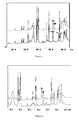
- peak (1) coming from the iodoacetamide-labeled protein
- peak (2) coming from the iodoacetic acid-labeled protein
- both peaks corresponded to a peptide fragment (amino acid sequence: SPNIDQLASHSLLFQNAFAQQAVCAPSR: SEQ ID NO 1) containing the cysteine residue (Cys59) at position 59 from the N-terminus of the mature form of rhI2S, which lacked the signal sequence.
- peak (2) which corresponded to the peptide derived from the iodoacetic acid-labeled protein, delayed in elution time compared with peak (1), which corresponded to to the peptide derived from the iodoacetamide-labeled protein.
- peak (1) which corresponded to to the peptide derived from the iodoacetamide-labeled protein.
- peak (3) appeared when no DNPH labeling was involved while not seen when DNPH-labeling was involved, suggested that peak (3) was a peak to be corresponding to the peptide fragment which had contained a formylglycine residue when in the analyte protein.
- the fraction corresponding to peak (3) appearing in iodoacetic acid-labeled rhI2S was isolated and its amino acid sequence was determined, which confirmed that it corresponded to a peptide fragment in which the cysteine residue which had been located at position 59 (Cys59) from the N-terminus when in the mature form of rhI2S, had been converted into a formylglycine residue (FGly59).
- the ratio between the labeled cysteine residue (Cys59) and the formylglycine residue (FGly59) can be determined quantitatively or semiquantitatively by comparing the area of peak (2) and peak (3) appearing in the chromatogram produced on the iodoacetic acid-labeled rhI2S.
- peak (3) corresponding to the peptide fragment containing the formylglycine residue (FGly59) is supposed to appear at the same position in respective chromatograms produced by analysis of an iodoacetic acid-labeled rhI2S and an iodoacetamide-labeled rhI2S (the upper and the lower in Figure 1 )
- peak (1) shown in the result of analysis of the iodoacetamide-labeled rhI2S (the lower Figure 1 ) consists of overlapping peaks: the one corresponding to the peptide fragment containing the iodoacetamide-labeled cysteine residue (Cys59) and the other corresponding to the peptide fragment containing the formylglycine residue (FGly59) (i.e., peak (3)).
- the peak corresponding to a peptide fragment which contained a cysteine residue when in an analyte protein can be identified by respectively labeling the analyte protein with iodoacetic acid or iodoacetamide, digesting each product into peptide fragments, subjecting them to reverse phase column chromatography, and then comparing both chromatograms thus produced; that the peptide fragment which contained a formylglycine residue when in the analyte protein, can be identified by respectively labeling the analyte protein with iodoacetic acid or iodoacetic acid-DNPH, digesting each product into peptide fragments, subjecting them to reverse phase column chromatography, and then comparing both chromatograms thus produced; and that the ratio between cysteine and formylglycine residues in the analyte protein can be determined semiquantitatively or quantitatively by comparing the area of the peaks corresponding to the peptide fragment which contained a
- a specification test for rhI2S produced by recombinant technology may be established by setting a standard value upon analysis of a standard compound and calculation of the ratio between its cysteine and formylglycine residues. It is also allowed to set as a standard value the mean of the values obtained from analysis of multiple different lots of a compound.
- 3-iodopropionic acid instead of iodoacetic acid, was used for labeling rhI2S (3-iodopropionic acid-labeling). Further, 3-iodopropionic acid DNPH-labeled rhI2S was obtained by labeling 3-iodopropionic acid-labeled rhI2S with DNPH in the same manner as described above.
- Oximation-labeling was carried out in the following manner.
- iodoacetic acid-labeled rhI2S which had been evaporated to dryness under reduced pressure was dissolved in an O-4-nitrobenzyl hydroxylamine hydrochloride solution [prepared by dissolving 1.3 mg of O-4-nitrobenzyl hydroxylamine hydrochloride (Tokyo Kasei Kogyo) in 1 mL of 50% acetonitrile-0.5% TFA aqueous solution], the resulting solution was left standing for 1 hour at room temperature, and then evaporated to dryness under reduced pressure. The product thus obtained was designated iodoacetic acid-oximation-labeled rhI2S
- Iodoacetic acid-labeled rhI2S, iodoacetic acid-oximation-labeled rhI2S and iodoacetamide-labeled rhI2S were respectively analyzed in the same method as above using reversed phase column chromatography.
- oximation-labeling using O-4-nitrobenzyl hydroxylamine also allows identification of the peptide fragments which contained a formylglycine residue when in the analyte protein; and further that the ratio between cysteine and formylglycine residues when in the analyte protein, can be determined, semiquantitatively or quantitatively, by comparing the area of the peaks corresponding to peptide fragments which contained a cysteine residue with the area of the peaks corresponding to peptide fragments which contained a formylglycine residue in the analyte protein.
- the present invention enables quantitative or semiquantitative determination of the ratio at which a certain cysteine residue originally present in sulfatase has been converted into a formylglycine residue.
- it provides, for example, a method for determination of the proportion of enzymatically active part of a sulfatase produced by recombinant technology, which can be utilized in designing for the optimum manufacturing process of a sulfatase with increased enzymatic activity, and in quality controlling of the products produced by such a process.
Landscapes
- Life Sciences & Earth Sciences (AREA)
- Health & Medical Sciences (AREA)
- Engineering & Computer Science (AREA)
- Chemical & Material Sciences (AREA)
- Molecular Biology (AREA)
- Physics & Mathematics (AREA)
- Immunology (AREA)
- Biomedical Technology (AREA)
- Urology & Nephrology (AREA)
- Hematology (AREA)
- Proteomics, Peptides & Aminoacids (AREA)
- Analytical Chemistry (AREA)
- Biochemistry (AREA)
- Organic Chemistry (AREA)
- Biotechnology (AREA)
- Biophysics (AREA)
- General Health & Medical Sciences (AREA)
- Microbiology (AREA)
- Bioinformatics & Cheminformatics (AREA)
- Food Science & Technology (AREA)
- Medicinal Chemistry (AREA)
- Bioinformatics & Computational Biology (AREA)
- General Physics & Mathematics (AREA)
- Pathology (AREA)
- Cell Biology (AREA)
- Wood Science & Technology (AREA)
- Zoology (AREA)
- General Engineering & Computer Science (AREA)
- Genetics & Genomics (AREA)
- Chemical Kinetics & Catalysis (AREA)
- Measuring Or Testing Involving Enzymes Or Micro-Organisms (AREA)
Applications Claiming Priority (2)
| Application Number | Priority Date | Filing Date | Title |
|---|---|---|---|
| JP2011278560 | 2011-12-20 | ||
| PCT/JP2012/082734 WO2013094579A1 (ja) | 2011-12-20 | 2012-12-18 | ホルミルグリシン残基の分析法 |
Publications (3)
| Publication Number | Publication Date |
|---|---|
| EP2799862A1 true EP2799862A1 (de) | 2014-11-05 |
| EP2799862A4 EP2799862A4 (de) | 2016-02-10 |
| EP2799862B1 EP2799862B1 (de) | 2017-03-08 |
Family
ID=48668468
Family Applications (1)
| Application Number | Title | Priority Date | Filing Date |
|---|---|---|---|
| EP12860390.9A Not-in-force EP2799862B1 (de) | 2011-12-20 | 2012-12-18 | Verfahren zur analyse von formylglycinresten |
Country Status (4)
| Country | Link |
|---|---|
| US (1) | US9896715B2 (de) |
| EP (1) | EP2799862B1 (de) |
| JP (1) | JP6124439B2 (de) |
| WO (1) | WO2013094579A1 (de) |
Families Citing this family (2)
| Publication number | Priority date | Publication date | Assignee | Title |
|---|---|---|---|---|
| CA3019398A1 (en) | 2016-04-26 | 2017-11-02 | R.P. Scherer Technologies, Llc | Antibody conjugates and methods of making and using the same |
| CN108645937A (zh) * | 2018-08-09 | 2018-10-12 | 苏州科铭生物技术有限公司 | 一种基于高效液相色谱法的丙酸含量测定方法 |
Family Cites Families (9)
| Publication number | Priority date | Publication date | Assignee | Title |
|---|---|---|---|---|
| US5932211A (en) | 1991-11-12 | 1999-08-03 | Women's And Children's Hospital | Glycosylation variants of iduronate 2-sulfatase |
| US6866844B2 (en) | 2002-11-07 | 2005-03-15 | Biomarin Pharmaceutical Inc. | Precursor N-acetylgalactosamine-4-sulfatase, methods of treatment using said enzyme and methods for producing and purifying said enzyme |
| DE60124265D1 (de) * | 2000-05-05 | 2006-12-14 | Purdue Research Foundation | Durch affinität ausgewählte unterschriftspeptide zur identifizierung und quantifizierung von proteinen |
| EP1332513A2 (de) | 2000-08-25 | 2003-08-06 | Genencor International, Inc. | Nachweiss von polymeren und polymerenfragmenten |
| CN110496230A (zh) | 2003-02-11 | 2019-11-26 | 夏尔人类遗传性治疗公司 | 使用甲酰-甘氨酸生成酶(fge)对多种硫酸酯酶缺乏症和其它病症进行诊断和治疗 |
| NZ576986A (en) | 2004-01-30 | 2010-12-24 | Shire Pharmaceuticals Ireland Ltd | Production and purification of recombinant arylsulfatase A |
| CA2559870A1 (en) * | 2004-04-07 | 2005-10-27 | Genetech,Inc. | Mass spectrometry of antibody conjugates |
| EP1850132A1 (de) | 2006-04-26 | 2007-10-31 | DKFZ Deutsches Krebsforschungszentrum | Methode zur Bestimmung des Verhältnisses zweier verschiedener Peptide oder Polynukleinsäuren |
| WO2012101671A1 (en) | 2011-01-25 | 2012-08-02 | Jcr Pharmaceuticals Co., Ltd. | Method for production of human recombinant iduronate 2-sulfatase |
-
2012
- 2012-12-18 WO PCT/JP2012/082734 patent/WO2013094579A1/ja not_active Ceased
- 2012-12-18 US US14/366,533 patent/US9896715B2/en not_active Expired - Fee Related
- 2012-12-18 EP EP12860390.9A patent/EP2799862B1/de not_active Not-in-force
- 2012-12-18 JP JP2012275469A patent/JP6124439B2/ja not_active Expired - Fee Related
Also Published As
| Publication number | Publication date |
|---|---|
| US9896715B2 (en) | 2018-02-20 |
| JP6124439B2 (ja) | 2017-05-10 |
| EP2799862A4 (de) | 2016-02-10 |
| JP2013148578A (ja) | 2013-08-01 |
| WO2013094579A1 (ja) | 2013-06-27 |
| US20150044715A1 (en) | 2015-02-12 |
| EP2799862B1 (de) | 2017-03-08 |
Similar Documents
| Publication | Publication Date | Title |
|---|---|---|
| Hägglund et al. | A new strategy for identification of N-glycosylated proteins and unambiguous assignment of their glycosylation sites using HILIC enrichment and partial deglycosylation | |
| Uematsu et al. | High throughput quantitative glycomics and glycoform-focused proteomics of murine dermis and epidermis | |
| Stavenhagen et al. | Quantitative mapping of glycoprotein micro‐heterogeneity and macro‐heterogeneity: an evaluation of mass spectrometry signal strengths using synthetic peptides and glycopeptides | |
| Rivers et al. | Absolute multiplexed quantitative analysis of protein expression during muscle development using QconCAT | |
| Lewis et al. | Characterization of humanized anti-TAC, an antibody directed against the interleukin 2 receptor, using electrospray ionization mass spectrometry by direct infusion, LC/MS, and MS/MS | |
| EP2167974B1 (de) | Verfahren zur absoluten quantifizierung von polypeptiden | |
| US9134318B2 (en) | Detection of oxidized polypeptides | |
| Faid et al. | Middle-up analysis of monoclonal antibodies after combined IgdE and IdeS hinge proteolysis: Investigation of free sulfhydryls | |
| EP2093569A2 (de) | Zusammensetzungen und Verfahren zur Quantifizierung von Serum-Glycoproteinen | |
| Hsu et al. | Dimethyl multiplexed labeling combined with microcolumn separation and MS analysis for time course study in proteomics | |
| IL200933A (en) | Method for protein identification and quantification in complex mixtures utilizing affinity selection of constituent peptide fragments | |
| US8568993B2 (en) | Detection of glycopeptides and glycoproteins for medical diagnostics | |
| WO2012111249A1 (ja) | 質量分析法における質量変化を検出する方法及び安定同位体標識タンパク質の絶対量の定量方法 | |
| Park et al. | Four unreported types of glycans containing mannose-6-phosphate are heterogeneously attached at three sites (including newly found Asn 233) to recombinant human acid alpha-glucosidase that is the only approved treatment for Pompe disease | |
| Mao et al. | Comparison of the influence of pH on the selectivity of free and immobilized trypsin for β-lactoglobulin hydrolysis | |
| CN111239273A (zh) | 一种利妥昔单抗的药代动力学研究质谱分析方法 | |
| EP2047279A1 (de) | Reagenz für hämoglobinabbau | |
| EP2799862B1 (de) | Verfahren zur analyse von formylglycinresten | |
| Sleat et al. | The human urine mannose 6-phosphate glycoproteome | |
| Hirayama et al. | Development of new NGLY1 assay systems–toward developing an early screening method for NGLY1 deficiency | |
| Hamase | Sensitive two-dimensional determination of small amounts of D-amino acids in mammals and the study on their functions | |
| Wang et al. | An 18O‑labeling assisted LC/MS method for assignment of aspartyl/Isoaspartyl products from Asn Deamidation and asp isomerization in proteins | |
| Borotto et al. | Targeted Annotation of S‑Sulfonylated Peptides by Selective Infrared Multiphoton Dissociation Mass Spectrometry | |
| Kumarage et al. | Recent advancements in the detection of organic contaminants in wastewater using advanced mass spectrometry | |
| JP2005121380A (ja) | 蛋白質分析方法 |
Legal Events
| Date | Code | Title | Description |
|---|---|---|---|
| PUAI | Public reference made under article 153(3) epc to a published international application that has entered the european phase |
Free format text: ORIGINAL CODE: 0009012 |
|
| 17P | Request for examination filed |
Effective date: 20140718 |
|
| AK | Designated contracting states |
Kind code of ref document: A1 Designated state(s): AL AT BE BG CH CY CZ DE DK EE ES FI FR GB GR HR HU IE IS IT LI LT LU LV MC MK MT NL NO PL PT RO RS SE SI SK SM TR |
|
| RIN1 | Information on inventor provided before grant (corrected) |
Inventor name: YOKOYAMA, TETSUO |
|
| RIN1 | Information on inventor provided before grant (corrected) |
Inventor name: YOKOYAMA, TETSUO |
|
| DAX | Request for extension of the european patent (deleted) | ||
| RA4 | Supplementary search report drawn up and despatched (corrected) |
Effective date: 20160112 |
|
| RIC1 | Information provided on ipc code assigned before grant |
Ipc: G01N 30/74 20060101ALI20160105BHEP Ipc: G01N 33/68 20060101ALI20160105BHEP Ipc: G01N 30/88 20060101AFI20160105BHEP Ipc: B01D 15/32 20060101ALI20160105BHEP Ipc: C12Q 1/37 20060101ALI20160105BHEP Ipc: C12Q 1/44 20060101ALI20160105BHEP Ipc: G01N 30/06 20060101ALI20160105BHEP |
|
| RIC1 | Information provided on ipc code assigned before grant |
Ipc: G01N 33/68 20060101ALI20160630BHEP Ipc: C12Q 1/44 20060101ALI20160630BHEP Ipc: G01N 30/74 20060101ALI20160630BHEP Ipc: B01D 15/32 20060101ALI20160630BHEP Ipc: G01N 30/06 20060101ALI20160630BHEP Ipc: C12Q 1/37 20060101ALI20160630BHEP Ipc: G01N 30/88 20060101AFI20160630BHEP |
|
| GRAP | Despatch of communication of intention to grant a patent |
Free format text: ORIGINAL CODE: EPIDOSNIGR1 |
|
| GRAJ | Information related to disapproval of communication of intention to grant by the applicant or resumption of examination proceedings by the epo deleted |
Free format text: ORIGINAL CODE: EPIDOSDIGR1 |
|
| INTG | Intention to grant announced |
Effective date: 20160905 |
|
| INTC | Intention to grant announced (deleted) | ||
| GRAP | Despatch of communication of intention to grant a patent |
Free format text: ORIGINAL CODE: EPIDOSNIGR1 |
|
| STAA | Information on the status of an ep patent application or granted ep patent |
Free format text: STATUS: GRANT OF PATENT IS INTENDED |
|
| INTG | Intention to grant announced |
Effective date: 20161116 |
|
| GRAS | Grant fee paid |
Free format text: ORIGINAL CODE: EPIDOSNIGR3 |
|
| GRAA | (expected) grant |
Free format text: ORIGINAL CODE: 0009210 |
|
| STAA | Information on the status of an ep patent application or granted ep patent |
Free format text: STATUS: THE PATENT HAS BEEN GRANTED |
|
| AK | Designated contracting states |
Kind code of ref document: B1 Designated state(s): AL AT BE BG CH CY CZ DE DK EE ES FI FR GB GR HR HU IE IS IT LI LT LU LV MC MK MT NL NO PL PT RO RS SE SI SK SM TR |
|
| REG | Reference to a national code |
Ref country code: GB Ref legal event code: FG4D |
|
| REG | Reference to a national code |
Ref country code: CH Ref legal event code: EP Ref country code: AT Ref legal event code: REF Ref document number: 873986 Country of ref document: AT Kind code of ref document: T Effective date: 20170315 |
|
| REG | Reference to a national code |
Ref country code: IE Ref legal event code: FG4D |
|
| REG | Reference to a national code |
Ref country code: DE Ref legal event code: R096 Ref document number: 602012029703 Country of ref document: DE |
|
| REG | Reference to a national code |
Ref country code: LT Ref legal event code: MG4D |
|
| REG | Reference to a national code |
Ref country code: NL Ref legal event code: MP Effective date: 20170308 |
|
| PG25 | Lapsed in a contracting state [announced via postgrant information from national office to epo] |
Ref country code: FI Free format text: LAPSE BECAUSE OF FAILURE TO SUBMIT A TRANSLATION OF THE DESCRIPTION OR TO PAY THE FEE WITHIN THE PRESCRIBED TIME-LIMIT Effective date: 20170308 Ref country code: HR Free format text: LAPSE BECAUSE OF FAILURE TO SUBMIT A TRANSLATION OF THE DESCRIPTION OR TO PAY THE FEE WITHIN THE PRESCRIBED TIME-LIMIT Effective date: 20170308 Ref country code: NO Free format text: LAPSE BECAUSE OF FAILURE TO SUBMIT A TRANSLATION OF THE DESCRIPTION OR TO PAY THE FEE WITHIN THE PRESCRIBED TIME-LIMIT Effective date: 20170608 Ref country code: LT Free format text: LAPSE BECAUSE OF FAILURE TO SUBMIT A TRANSLATION OF THE DESCRIPTION OR TO PAY THE FEE WITHIN THE PRESCRIBED TIME-LIMIT Effective date: 20170308 Ref country code: GR Free format text: LAPSE BECAUSE OF FAILURE TO SUBMIT A TRANSLATION OF THE DESCRIPTION OR TO PAY THE FEE WITHIN THE PRESCRIBED TIME-LIMIT Effective date: 20170609 |
|
| REG | Reference to a national code |
Ref country code: AT Ref legal event code: MK05 Ref document number: 873986 Country of ref document: AT Kind code of ref document: T Effective date: 20170308 |
|
| PG25 | Lapsed in a contracting state [announced via postgrant information from national office to epo] |
Ref country code: LV Free format text: LAPSE BECAUSE OF FAILURE TO SUBMIT A TRANSLATION OF THE DESCRIPTION OR TO PAY THE FEE WITHIN THE PRESCRIBED TIME-LIMIT Effective date: 20170308 Ref country code: BG Free format text: LAPSE BECAUSE OF FAILURE TO SUBMIT A TRANSLATION OF THE DESCRIPTION OR TO PAY THE FEE WITHIN THE PRESCRIBED TIME-LIMIT Effective date: 20170608 Ref country code: ES Free format text: LAPSE BECAUSE OF FAILURE TO SUBMIT A TRANSLATION OF THE DESCRIPTION OR TO PAY THE FEE WITHIN THE PRESCRIBED TIME-LIMIT Effective date: 20170308 Ref country code: RS Free format text: LAPSE BECAUSE OF FAILURE TO SUBMIT A TRANSLATION OF THE DESCRIPTION OR TO PAY THE FEE WITHIN THE PRESCRIBED TIME-LIMIT Effective date: 20170308 Ref country code: SE Free format text: LAPSE BECAUSE OF FAILURE TO SUBMIT A TRANSLATION OF THE DESCRIPTION OR TO PAY THE FEE WITHIN THE PRESCRIBED TIME-LIMIT Effective date: 20170308 |
|
| PG25 | Lapsed in a contracting state [announced via postgrant information from national office to epo] |
Ref country code: NL Free format text: LAPSE BECAUSE OF FAILURE TO SUBMIT A TRANSLATION OF THE DESCRIPTION OR TO PAY THE FEE WITHIN THE PRESCRIBED TIME-LIMIT Effective date: 20170308 |
|
| PG25 | Lapsed in a contracting state [announced via postgrant information from national office to epo] |
Ref country code: IT Free format text: LAPSE BECAUSE OF FAILURE TO SUBMIT A TRANSLATION OF THE DESCRIPTION OR TO PAY THE FEE WITHIN THE PRESCRIBED TIME-LIMIT Effective date: 20170308 Ref country code: CZ Free format text: LAPSE BECAUSE OF FAILURE TO SUBMIT A TRANSLATION OF THE DESCRIPTION OR TO PAY THE FEE WITHIN THE PRESCRIBED TIME-LIMIT Effective date: 20170308 Ref country code: RO Free format text: LAPSE BECAUSE OF FAILURE TO SUBMIT A TRANSLATION OF THE DESCRIPTION OR TO PAY THE FEE WITHIN THE PRESCRIBED TIME-LIMIT Effective date: 20170308 Ref country code: EE Free format text: LAPSE BECAUSE OF FAILURE TO SUBMIT A TRANSLATION OF THE DESCRIPTION OR TO PAY THE FEE WITHIN THE PRESCRIBED TIME-LIMIT Effective date: 20170308 Ref country code: AT Free format text: LAPSE BECAUSE OF FAILURE TO SUBMIT A TRANSLATION OF THE DESCRIPTION OR TO PAY THE FEE WITHIN THE PRESCRIBED TIME-LIMIT Effective date: 20170308 Ref country code: SK Free format text: LAPSE BECAUSE OF FAILURE TO SUBMIT A TRANSLATION OF THE DESCRIPTION OR TO PAY THE FEE WITHIN THE PRESCRIBED TIME-LIMIT Effective date: 20170308 |
|
| PG25 | Lapsed in a contracting state [announced via postgrant information from national office to epo] |
Ref country code: SM Free format text: LAPSE BECAUSE OF FAILURE TO SUBMIT A TRANSLATION OF THE DESCRIPTION OR TO PAY THE FEE WITHIN THE PRESCRIBED TIME-LIMIT Effective date: 20170308 Ref country code: PL Free format text: LAPSE BECAUSE OF FAILURE TO SUBMIT A TRANSLATION OF THE DESCRIPTION OR TO PAY THE FEE WITHIN THE PRESCRIBED TIME-LIMIT Effective date: 20170308 Ref country code: IS Free format text: LAPSE BECAUSE OF FAILURE TO SUBMIT A TRANSLATION OF THE DESCRIPTION OR TO PAY THE FEE WITHIN THE PRESCRIBED TIME-LIMIT Effective date: 20170708 Ref country code: PT Free format text: LAPSE BECAUSE OF FAILURE TO SUBMIT A TRANSLATION OF THE DESCRIPTION OR TO PAY THE FEE WITHIN THE PRESCRIBED TIME-LIMIT Effective date: 20170710 |
|
| REG | Reference to a national code |
Ref country code: DE Ref legal event code: R097 Ref document number: 602012029703 Country of ref document: DE |
|
| REG | Reference to a national code |
Ref country code: FR Ref legal event code: PLFP Year of fee payment: 6 |
|
| PLBE | No opposition filed within time limit |
Free format text: ORIGINAL CODE: 0009261 |
|
| STAA | Information on the status of an ep patent application or granted ep patent |
Free format text: STATUS: NO OPPOSITION FILED WITHIN TIME LIMIT |
|
| PG25 | Lapsed in a contracting state [announced via postgrant information from national office to epo] |
Ref country code: DK Free format text: LAPSE BECAUSE OF FAILURE TO SUBMIT A TRANSLATION OF THE DESCRIPTION OR TO PAY THE FEE WITHIN THE PRESCRIBED TIME-LIMIT Effective date: 20170308 |
|
| 26N | No opposition filed |
Effective date: 20171211 |
|
| PG25 | Lapsed in a contracting state [announced via postgrant information from national office to epo] |
Ref country code: SI Free format text: LAPSE BECAUSE OF FAILURE TO SUBMIT A TRANSLATION OF THE DESCRIPTION OR TO PAY THE FEE WITHIN THE PRESCRIBED TIME-LIMIT Effective date: 20170308 |
|
| REG | Reference to a national code |
Ref country code: CH Ref legal event code: PL |
|
| REG | Reference to a national code |
Ref country code: IE Ref legal event code: MM4A |
|
| PG25 | Lapsed in a contracting state [announced via postgrant information from national office to epo] |
Ref country code: MT Free format text: LAPSE BECAUSE OF NON-PAYMENT OF DUE FEES Effective date: 20171218 Ref country code: LU Free format text: LAPSE BECAUSE OF NON-PAYMENT OF DUE FEES Effective date: 20171218 |
|
| REG | Reference to a national code |
Ref country code: BE Ref legal event code: MM Effective date: 20171231 |
|
| PG25 | Lapsed in a contracting state [announced via postgrant information from national office to epo] |
Ref country code: IE Free format text: LAPSE BECAUSE OF NON-PAYMENT OF DUE FEES Effective date: 20171218 |
|
| PG25 | Lapsed in a contracting state [announced via postgrant information from national office to epo] |
Ref country code: LI Free format text: LAPSE BECAUSE OF NON-PAYMENT OF DUE FEES Effective date: 20171231 Ref country code: BE Free format text: LAPSE BECAUSE OF NON-PAYMENT OF DUE FEES Effective date: 20171231 Ref country code: CH Free format text: LAPSE BECAUSE OF NON-PAYMENT OF DUE FEES Effective date: 20171231 |
|
| PG25 | Lapsed in a contracting state [announced via postgrant information from national office to epo] |
Ref country code: HU Free format text: LAPSE BECAUSE OF FAILURE TO SUBMIT A TRANSLATION OF THE DESCRIPTION OR TO PAY THE FEE WITHIN THE PRESCRIBED TIME-LIMIT; INVALID AB INITIO Effective date: 20121218 Ref country code: MC Free format text: LAPSE BECAUSE OF FAILURE TO SUBMIT A TRANSLATION OF THE DESCRIPTION OR TO PAY THE FEE WITHIN THE PRESCRIBED TIME-LIMIT Effective date: 20170308 |
|
| PG25 | Lapsed in a contracting state [announced via postgrant information from national office to epo] |
Ref country code: CY Free format text: LAPSE BECAUSE OF FAILURE TO SUBMIT A TRANSLATION OF THE DESCRIPTION OR TO PAY THE FEE WITHIN THE PRESCRIBED TIME-LIMIT Effective date: 20170308 |
|
| PG25 | Lapsed in a contracting state [announced via postgrant information from national office to epo] |
Ref country code: MK Free format text: LAPSE BECAUSE OF FAILURE TO SUBMIT A TRANSLATION OF THE DESCRIPTION OR TO PAY THE FEE WITHIN THE PRESCRIBED TIME-LIMIT Effective date: 20170308 |
|
| PG25 | Lapsed in a contracting state [announced via postgrant information from national office to epo] |
Ref country code: TR Free format text: LAPSE BECAUSE OF FAILURE TO SUBMIT A TRANSLATION OF THE DESCRIPTION OR TO PAY THE FEE WITHIN THE PRESCRIBED TIME-LIMIT Effective date: 20170308 |
|
| PG25 | Lapsed in a contracting state [announced via postgrant information from national office to epo] |
Ref country code: AL Free format text: LAPSE BECAUSE OF FAILURE TO SUBMIT A TRANSLATION OF THE DESCRIPTION OR TO PAY THE FEE WITHIN THE PRESCRIBED TIME-LIMIT Effective date: 20170308 |
|
| PGFP | Annual fee paid to national office [announced via postgrant information from national office to epo] |
Ref country code: GB Payment date: 20231220 Year of fee payment: 12 |
|
| PGFP | Annual fee paid to national office [announced via postgrant information from national office to epo] |
Ref country code: FR Payment date: 20231221 Year of fee payment: 12 |
|
| PGFP | Annual fee paid to national office [announced via postgrant information from national office to epo] |
Ref country code: DE Payment date: 20231229 Year of fee payment: 12 |
|
| REG | Reference to a national code |
Ref country code: DE Ref legal event code: R119 Ref document number: 602012029703 Country of ref document: DE |
|
| GBPC | Gb: european patent ceased through non-payment of renewal fee |
Effective date: 20241218 |
|
| PG25 | Lapsed in a contracting state [announced via postgrant information from national office to epo] |
Ref country code: DE Free format text: LAPSE BECAUSE OF NON-PAYMENT OF DUE FEES Effective date: 20250701 |
|
| PG25 | Lapsed in a contracting state [announced via postgrant information from national office to epo] |
Ref country code: GB Free format text: LAPSE BECAUSE OF NON-PAYMENT OF DUE FEES Effective date: 20241218 |
|
| PG25 | Lapsed in a contracting state [announced via postgrant information from national office to epo] |
Ref country code: FR Free format text: LAPSE BECAUSE OF NON-PAYMENT OF DUE FEES Effective date: 20241231 |