EP2799591A1 - Zn-mg alloy-coated steel sheet with excellent blackening resistance and excellent adhesion and method for manufacturing same - Google Patents
Zn-mg alloy-coated steel sheet with excellent blackening resistance and excellent adhesion and method for manufacturing same Download PDFInfo
- Publication number
- EP2799591A1 EP2799591A1 EP12861547.3A EP12861547A EP2799591A1 EP 2799591 A1 EP2799591 A1 EP 2799591A1 EP 12861547 A EP12861547 A EP 12861547A EP 2799591 A1 EP2799591 A1 EP 2799591A1
- Authority
- EP
- European Patent Office
- Prior art keywords
- steel sheet
- coating layer
- alloy
- coated steel
- intermetallic compound
- Prior art date
- Legal status (The legal status is an assumption and is not a legal conclusion. Google has not performed a legal analysis and makes no representation as to the accuracy of the status listed.)
- Granted
Links
Images

Classifications
-
- C—CHEMISTRY; METALLURGY
- C23—COATING METALLIC MATERIAL; COATING MATERIAL WITH METALLIC MATERIAL; CHEMICAL SURFACE TREATMENT; DIFFUSION TREATMENT OF METALLIC MATERIAL; COATING BY VACUUM EVAPORATION, BY SPUTTERING, BY ION IMPLANTATION OR BY CHEMICAL VAPOUR DEPOSITION, IN GENERAL; INHIBITING CORROSION OF METALLIC MATERIAL OR INCRUSTATION IN GENERAL
- C23C—COATING METALLIC MATERIAL; COATING MATERIAL WITH METALLIC MATERIAL; SURFACE TREATMENT OF METALLIC MATERIAL BY DIFFUSION INTO THE SURFACE, BY CHEMICAL CONVERSION OR SUBSTITUTION; COATING BY VACUUM EVAPORATION, BY SPUTTERING, BY ION IMPLANTATION OR BY CHEMICAL VAPOUR DEPOSITION, IN GENERAL
- C23C14/00—Coating by vacuum evaporation, by sputtering or by ion implantation of the coating forming material
- C23C14/06—Coating by vacuum evaporation, by sputtering or by ion implantation of the coating forming material characterised by the coating material
- C23C14/14—Metallic material, boron or silicon
-
- C—CHEMISTRY; METALLURGY
- C23—COATING METALLIC MATERIAL; COATING MATERIAL WITH METALLIC MATERIAL; CHEMICAL SURFACE TREATMENT; DIFFUSION TREATMENT OF METALLIC MATERIAL; COATING BY VACUUM EVAPORATION, BY SPUTTERING, BY ION IMPLANTATION OR BY CHEMICAL VAPOUR DEPOSITION, IN GENERAL; INHIBITING CORROSION OF METALLIC MATERIAL OR INCRUSTATION IN GENERAL
- C23C—COATING METALLIC MATERIAL; COATING MATERIAL WITH METALLIC MATERIAL; SURFACE TREATMENT OF METALLIC MATERIAL BY DIFFUSION INTO THE SURFACE, BY CHEMICAL CONVERSION OR SUBSTITUTION; COATING BY VACUUM EVAPORATION, BY SPUTTERING, BY ION IMPLANTATION OR BY CHEMICAL VAPOUR DEPOSITION, IN GENERAL
- C23C16/00—Chemical coating by decomposition of gaseous compounds, without leaving reaction products of surface material in the coating, i.e. chemical vapour deposition [CVD] processes
- C23C16/44—Chemical coating by decomposition of gaseous compounds, without leaving reaction products of surface material in the coating, i.e. chemical vapour deposition [CVD] processes characterised by the method of coating
- C23C16/453—Chemical coating by decomposition of gaseous compounds, without leaving reaction products of surface material in the coating, i.e. chemical vapour deposition [CVD] processes characterised by the method of coating passing the reaction gases through burners or torches, e.g. atmospheric pressure CVD
-
- B—PERFORMING OPERATIONS; TRANSPORTING
- B32—LAYERED PRODUCTS
- B32B—LAYERED PRODUCTS, i.e. PRODUCTS BUILT-UP OF STRATA OF FLAT OR NON-FLAT, e.g. CELLULAR OR HONEYCOMB, FORM
- B32B15/00—Layered products comprising a layer of metal
- B32B15/01—Layered products comprising a layer of metal all layers being exclusively metallic
- B32B15/013—Layered products comprising a layer of metal all layers being exclusively metallic one layer being formed of an iron alloy or steel, another layer being formed of a metal other than iron or aluminium
-
- C—CHEMISTRY; METALLURGY
- C23—COATING METALLIC MATERIAL; COATING MATERIAL WITH METALLIC MATERIAL; CHEMICAL SURFACE TREATMENT; DIFFUSION TREATMENT OF METALLIC MATERIAL; COATING BY VACUUM EVAPORATION, BY SPUTTERING, BY ION IMPLANTATION OR BY CHEMICAL VAPOUR DEPOSITION, IN GENERAL; INHIBITING CORROSION OF METALLIC MATERIAL OR INCRUSTATION IN GENERAL
- C23C—COATING METALLIC MATERIAL; COATING MATERIAL WITH METALLIC MATERIAL; SURFACE TREATMENT OF METALLIC MATERIAL BY DIFFUSION INTO THE SURFACE, BY CHEMICAL CONVERSION OR SUBSTITUTION; COATING BY VACUUM EVAPORATION, BY SPUTTERING, BY ION IMPLANTATION OR BY CHEMICAL VAPOUR DEPOSITION, IN GENERAL
- C23C14/00—Coating by vacuum evaporation, by sputtering or by ion implantation of the coating forming material
- C23C14/06—Coating by vacuum evaporation, by sputtering or by ion implantation of the coating forming material characterised by the coating material
- C23C14/14—Metallic material, boron or silicon
- C23C14/16—Metallic material, boron or silicon on metallic substrates or on substrates of boron or silicon
-
- C—CHEMISTRY; METALLURGY
- C23—COATING METALLIC MATERIAL; COATING MATERIAL WITH METALLIC MATERIAL; CHEMICAL SURFACE TREATMENT; DIFFUSION TREATMENT OF METALLIC MATERIAL; COATING BY VACUUM EVAPORATION, BY SPUTTERING, BY ION IMPLANTATION OR BY CHEMICAL VAPOUR DEPOSITION, IN GENERAL; INHIBITING CORROSION OF METALLIC MATERIAL OR INCRUSTATION IN GENERAL
- C23C—COATING METALLIC MATERIAL; COATING MATERIAL WITH METALLIC MATERIAL; SURFACE TREATMENT OF METALLIC MATERIAL BY DIFFUSION INTO THE SURFACE, BY CHEMICAL CONVERSION OR SUBSTITUTION; COATING BY VACUUM EVAPORATION, BY SPUTTERING, BY ION IMPLANTATION OR BY CHEMICAL VAPOUR DEPOSITION, IN GENERAL
- C23C14/00—Coating by vacuum evaporation, by sputtering or by ion implantation of the coating forming material
- C23C14/06—Coating by vacuum evaporation, by sputtering or by ion implantation of the coating forming material characterised by the coating material
- C23C14/14—Metallic material, boron or silicon
- C23C14/16—Metallic material, boron or silicon on metallic substrates or on substrates of boron or silicon
- C23C14/165—Metallic material, boron or silicon on metallic substrates or on substrates of boron or silicon by cathodic sputtering
-
- C—CHEMISTRY; METALLURGY
- C23—COATING METALLIC MATERIAL; COATING MATERIAL WITH METALLIC MATERIAL; CHEMICAL SURFACE TREATMENT; DIFFUSION TREATMENT OF METALLIC MATERIAL; COATING BY VACUUM EVAPORATION, BY SPUTTERING, BY ION IMPLANTATION OR BY CHEMICAL VAPOUR DEPOSITION, IN GENERAL; INHIBITING CORROSION OF METALLIC MATERIAL OR INCRUSTATION IN GENERAL
- C23C—COATING METALLIC MATERIAL; COATING MATERIAL WITH METALLIC MATERIAL; SURFACE TREATMENT OF METALLIC MATERIAL BY DIFFUSION INTO THE SURFACE, BY CHEMICAL CONVERSION OR SUBSTITUTION; COATING BY VACUUM EVAPORATION, BY SPUTTERING, BY ION IMPLANTATION OR BY CHEMICAL VAPOUR DEPOSITION, IN GENERAL
- C23C14/00—Coating by vacuum evaporation, by sputtering or by ion implantation of the coating forming material
- C23C14/58—After-treatment
-
- C—CHEMISTRY; METALLURGY
- C23—COATING METALLIC MATERIAL; COATING MATERIAL WITH METALLIC MATERIAL; CHEMICAL SURFACE TREATMENT; DIFFUSION TREATMENT OF METALLIC MATERIAL; COATING BY VACUUM EVAPORATION, BY SPUTTERING, BY ION IMPLANTATION OR BY CHEMICAL VAPOUR DEPOSITION, IN GENERAL; INHIBITING CORROSION OF METALLIC MATERIAL OR INCRUSTATION IN GENERAL
- C23C—COATING METALLIC MATERIAL; COATING MATERIAL WITH METALLIC MATERIAL; SURFACE TREATMENT OF METALLIC MATERIAL BY DIFFUSION INTO THE SURFACE, BY CHEMICAL CONVERSION OR SUBSTITUTION; COATING BY VACUUM EVAPORATION, BY SPUTTERING, BY ION IMPLANTATION OR BY CHEMICAL VAPOUR DEPOSITION, IN GENERAL
- C23C14/00—Coating by vacuum evaporation, by sputtering or by ion implantation of the coating forming material
- C23C14/58—After-treatment
- C23C14/5846—Reactive treatment
-
- C—CHEMISTRY; METALLURGY
- C23—COATING METALLIC MATERIAL; COATING MATERIAL WITH METALLIC MATERIAL; CHEMICAL SURFACE TREATMENT; DIFFUSION TREATMENT OF METALLIC MATERIAL; COATING BY VACUUM EVAPORATION, BY SPUTTERING, BY ION IMPLANTATION OR BY CHEMICAL VAPOUR DEPOSITION, IN GENERAL; INHIBITING CORROSION OF METALLIC MATERIAL OR INCRUSTATION IN GENERAL
- C23C—COATING METALLIC MATERIAL; COATING MATERIAL WITH METALLIC MATERIAL; SURFACE TREATMENT OF METALLIC MATERIAL BY DIFFUSION INTO THE SURFACE, BY CHEMICAL CONVERSION OR SUBSTITUTION; COATING BY VACUUM EVAPORATION, BY SPUTTERING, BY ION IMPLANTATION OR BY CHEMICAL VAPOUR DEPOSITION, IN GENERAL
- C23C14/00—Coating by vacuum evaporation, by sputtering or by ion implantation of the coating forming material
- C23C14/58—After-treatment
- C23C14/5846—Reactive treatment
- C23C14/5853—Oxidation
-
- C—CHEMISTRY; METALLURGY
- C23—COATING METALLIC MATERIAL; COATING MATERIAL WITH METALLIC MATERIAL; CHEMICAL SURFACE TREATMENT; DIFFUSION TREATMENT OF METALLIC MATERIAL; COATING BY VACUUM EVAPORATION, BY SPUTTERING, BY ION IMPLANTATION OR BY CHEMICAL VAPOUR DEPOSITION, IN GENERAL; INHIBITING CORROSION OF METALLIC MATERIAL OR INCRUSTATION IN GENERAL
- C23C—COATING METALLIC MATERIAL; COATING MATERIAL WITH METALLIC MATERIAL; SURFACE TREATMENT OF METALLIC MATERIAL BY DIFFUSION INTO THE SURFACE, BY CHEMICAL CONVERSION OR SUBSTITUTION; COATING BY VACUUM EVAPORATION, BY SPUTTERING, BY ION IMPLANTATION OR BY CHEMICAL VAPOUR DEPOSITION, IN GENERAL
- C23C16/00—Chemical coating by decomposition of gaseous compounds, without leaving reaction products of surface material in the coating, i.e. chemical vapour deposition [CVD] processes
- C23C16/22—Chemical coating by decomposition of gaseous compounds, without leaving reaction products of surface material in the coating, i.e. chemical vapour deposition [CVD] processes characterised by the deposition of inorganic material, other than metallic material
- C23C16/30—Deposition of compounds, mixtures or solid solutions, e.g. borides, carbides, nitrides
- C23C16/40—Oxides
-
- C—CHEMISTRY; METALLURGY
- C23—COATING METALLIC MATERIAL; COATING MATERIAL WITH METALLIC MATERIAL; CHEMICAL SURFACE TREATMENT; DIFFUSION TREATMENT OF METALLIC MATERIAL; COATING BY VACUUM EVAPORATION, BY SPUTTERING, BY ION IMPLANTATION OR BY CHEMICAL VAPOUR DEPOSITION, IN GENERAL; INHIBITING CORROSION OF METALLIC MATERIAL OR INCRUSTATION IN GENERAL
- C23C—COATING METALLIC MATERIAL; COATING MATERIAL WITH METALLIC MATERIAL; SURFACE TREATMENT OF METALLIC MATERIAL BY DIFFUSION INTO THE SURFACE, BY CHEMICAL CONVERSION OR SUBSTITUTION; COATING BY VACUUM EVAPORATION, BY SPUTTERING, BY ION IMPLANTATION OR BY CHEMICAL VAPOUR DEPOSITION, IN GENERAL
- C23C16/00—Chemical coating by decomposition of gaseous compounds, without leaving reaction products of surface material in the coating, i.e. chemical vapour deposition [CVD] processes
- C23C16/22—Chemical coating by decomposition of gaseous compounds, without leaving reaction products of surface material in the coating, i.e. chemical vapour deposition [CVD] processes characterised by the deposition of inorganic material, other than metallic material
- C23C16/30—Deposition of compounds, mixtures or solid solutions, e.g. borides, carbides, nitrides
- C23C16/40—Oxides
- C23C16/401—Oxides containing silicon
-
- C—CHEMISTRY; METALLURGY
- C23—COATING METALLIC MATERIAL; COATING MATERIAL WITH METALLIC MATERIAL; CHEMICAL SURFACE TREATMENT; DIFFUSION TREATMENT OF METALLIC MATERIAL; COATING BY VACUUM EVAPORATION, BY SPUTTERING, BY ION IMPLANTATION OR BY CHEMICAL VAPOUR DEPOSITION, IN GENERAL; INHIBITING CORROSION OF METALLIC MATERIAL OR INCRUSTATION IN GENERAL
- C23C—COATING METALLIC MATERIAL; COATING MATERIAL WITH METALLIC MATERIAL; SURFACE TREATMENT OF METALLIC MATERIAL BY DIFFUSION INTO THE SURFACE, BY CHEMICAL CONVERSION OR SUBSTITUTION; COATING BY VACUUM EVAPORATION, BY SPUTTERING, BY ION IMPLANTATION OR BY CHEMICAL VAPOUR DEPOSITION, IN GENERAL
- C23C16/00—Chemical coating by decomposition of gaseous compounds, without leaving reaction products of surface material in the coating, i.e. chemical vapour deposition [CVD] processes
- C23C16/22—Chemical coating by decomposition of gaseous compounds, without leaving reaction products of surface material in the coating, i.e. chemical vapour deposition [CVD] processes characterised by the deposition of inorganic material, other than metallic material
- C23C16/30—Deposition of compounds, mixtures or solid solutions, e.g. borides, carbides, nitrides
- C23C16/40—Oxides
- C23C16/401—Oxides containing silicon
- C23C16/402—Silicon dioxide
-
- C—CHEMISTRY; METALLURGY
- C23—COATING METALLIC MATERIAL; COATING MATERIAL WITH METALLIC MATERIAL; CHEMICAL SURFACE TREATMENT; DIFFUSION TREATMENT OF METALLIC MATERIAL; COATING BY VACUUM EVAPORATION, BY SPUTTERING, BY ION IMPLANTATION OR BY CHEMICAL VAPOUR DEPOSITION, IN GENERAL; INHIBITING CORROSION OF METALLIC MATERIAL OR INCRUSTATION IN GENERAL
- C23C—COATING METALLIC MATERIAL; COATING MATERIAL WITH METALLIC MATERIAL; SURFACE TREATMENT OF METALLIC MATERIAL BY DIFFUSION INTO THE SURFACE, BY CHEMICAL CONVERSION OR SUBSTITUTION; COATING BY VACUUM EVAPORATION, BY SPUTTERING, BY ION IMPLANTATION OR BY CHEMICAL VAPOUR DEPOSITION, IN GENERAL
- C23C16/00—Chemical coating by decomposition of gaseous compounds, without leaving reaction products of surface material in the coating, i.e. chemical vapour deposition [CVD] processes
- C23C16/22—Chemical coating by decomposition of gaseous compounds, without leaving reaction products of surface material in the coating, i.e. chemical vapour deposition [CVD] processes characterised by the deposition of inorganic material, other than metallic material
- C23C16/30—Deposition of compounds, mixtures or solid solutions, e.g. borides, carbides, nitrides
- C23C16/40—Oxides
- C23C16/403—Oxides of aluminium, magnesium or beryllium
-
- C—CHEMISTRY; METALLURGY
- C23—COATING METALLIC MATERIAL; COATING MATERIAL WITH METALLIC MATERIAL; CHEMICAL SURFACE TREATMENT; DIFFUSION TREATMENT OF METALLIC MATERIAL; COATING BY VACUUM EVAPORATION, BY SPUTTERING, BY ION IMPLANTATION OR BY CHEMICAL VAPOUR DEPOSITION, IN GENERAL; INHIBITING CORROSION OF METALLIC MATERIAL OR INCRUSTATION IN GENERAL
- C23C—COATING METALLIC MATERIAL; COATING MATERIAL WITH METALLIC MATERIAL; SURFACE TREATMENT OF METALLIC MATERIAL BY DIFFUSION INTO THE SURFACE, BY CHEMICAL CONVERSION OR SUBSTITUTION; COATING BY VACUUM EVAPORATION, BY SPUTTERING, BY ION IMPLANTATION OR BY CHEMICAL VAPOUR DEPOSITION, IN GENERAL
- C23C16/00—Chemical coating by decomposition of gaseous compounds, without leaving reaction products of surface material in the coating, i.e. chemical vapour deposition [CVD] processes
- C23C16/22—Chemical coating by decomposition of gaseous compounds, without leaving reaction products of surface material in the coating, i.e. chemical vapour deposition [CVD] processes characterised by the deposition of inorganic material, other than metallic material
- C23C16/30—Deposition of compounds, mixtures or solid solutions, e.g. borides, carbides, nitrides
- C23C16/40—Oxides
- C23C16/404—Oxides of alkaline earth metals
-
- C—CHEMISTRY; METALLURGY
- C23—COATING METALLIC MATERIAL; COATING MATERIAL WITH METALLIC MATERIAL; CHEMICAL SURFACE TREATMENT; DIFFUSION TREATMENT OF METALLIC MATERIAL; COATING BY VACUUM EVAPORATION, BY SPUTTERING, BY ION IMPLANTATION OR BY CHEMICAL VAPOUR DEPOSITION, IN GENERAL; INHIBITING CORROSION OF METALLIC MATERIAL OR INCRUSTATION IN GENERAL
- C23C—COATING METALLIC MATERIAL; COATING MATERIAL WITH METALLIC MATERIAL; SURFACE TREATMENT OF METALLIC MATERIAL BY DIFFUSION INTO THE SURFACE, BY CHEMICAL CONVERSION OR SUBSTITUTION; COATING BY VACUUM EVAPORATION, BY SPUTTERING, BY ION IMPLANTATION OR BY CHEMICAL VAPOUR DEPOSITION, IN GENERAL
- C23C28/00—Coating for obtaining at least two superposed coatings either by methods not provided for in a single one of groups C23C2/00 - C23C26/00 or by combinations of methods provided for in subclasses C23C and C25C or C25D
- C23C28/02—Coating for obtaining at least two superposed coatings either by methods not provided for in a single one of groups C23C2/00 - C23C26/00 or by combinations of methods provided for in subclasses C23C and C25C or C25D only coatings only including layers of metallic material
-
- C—CHEMISTRY; METALLURGY
- C23—COATING METALLIC MATERIAL; COATING MATERIAL WITH METALLIC MATERIAL; CHEMICAL SURFACE TREATMENT; DIFFUSION TREATMENT OF METALLIC MATERIAL; COATING BY VACUUM EVAPORATION, BY SPUTTERING, BY ION IMPLANTATION OR BY CHEMICAL VAPOUR DEPOSITION, IN GENERAL; INHIBITING CORROSION OF METALLIC MATERIAL OR INCRUSTATION IN GENERAL
- C23C—COATING METALLIC MATERIAL; COATING MATERIAL WITH METALLIC MATERIAL; SURFACE TREATMENT OF METALLIC MATERIAL BY DIFFUSION INTO THE SURFACE, BY CHEMICAL CONVERSION OR SUBSTITUTION; COATING BY VACUUM EVAPORATION, BY SPUTTERING, BY ION IMPLANTATION OR BY CHEMICAL VAPOUR DEPOSITION, IN GENERAL
- C23C28/00—Coating for obtaining at least two superposed coatings either by methods not provided for in a single one of groups C23C2/00 - C23C26/00 or by combinations of methods provided for in subclasses C23C and C25C or C25D
- C23C28/02—Coating for obtaining at least two superposed coatings either by methods not provided for in a single one of groups C23C2/00 - C23C26/00 or by combinations of methods provided for in subclasses C23C and C25C or C25D only coatings only including layers of metallic material
- C23C28/021—Coating for obtaining at least two superposed coatings either by methods not provided for in a single one of groups C23C2/00 - C23C26/00 or by combinations of methods provided for in subclasses C23C and C25C or C25D only coatings only including layers of metallic material including at least one metal alloy layer
-
- C—CHEMISTRY; METALLURGY
- C23—COATING METALLIC MATERIAL; COATING MATERIAL WITH METALLIC MATERIAL; CHEMICAL SURFACE TREATMENT; DIFFUSION TREATMENT OF METALLIC MATERIAL; COATING BY VACUUM EVAPORATION, BY SPUTTERING, BY ION IMPLANTATION OR BY CHEMICAL VAPOUR DEPOSITION, IN GENERAL; INHIBITING CORROSION OF METALLIC MATERIAL OR INCRUSTATION IN GENERAL
- C23C—COATING METALLIC MATERIAL; COATING MATERIAL WITH METALLIC MATERIAL; SURFACE TREATMENT OF METALLIC MATERIAL BY DIFFUSION INTO THE SURFACE, BY CHEMICAL CONVERSION OR SUBSTITUTION; COATING BY VACUUM EVAPORATION, BY SPUTTERING, BY ION IMPLANTATION OR BY CHEMICAL VAPOUR DEPOSITION, IN GENERAL
- C23C28/00—Coating for obtaining at least two superposed coatings either by methods not provided for in a single one of groups C23C2/00 - C23C26/00 or by combinations of methods provided for in subclasses C23C and C25C or C25D
- C23C28/02—Coating for obtaining at least two superposed coatings either by methods not provided for in a single one of groups C23C2/00 - C23C26/00 or by combinations of methods provided for in subclasses C23C and C25C or C25D only coatings only including layers of metallic material
- C23C28/023—Coating for obtaining at least two superposed coatings either by methods not provided for in a single one of groups C23C2/00 - C23C26/00 or by combinations of methods provided for in subclasses C23C and C25C or C25D only coatings only including layers of metallic material only coatings of metal elements only
-
- C—CHEMISTRY; METALLURGY
- C23—COATING METALLIC MATERIAL; COATING MATERIAL WITH METALLIC MATERIAL; CHEMICAL SURFACE TREATMENT; DIFFUSION TREATMENT OF METALLIC MATERIAL; COATING BY VACUUM EVAPORATION, BY SPUTTERING, BY ION IMPLANTATION OR BY CHEMICAL VAPOUR DEPOSITION, IN GENERAL; INHIBITING CORROSION OF METALLIC MATERIAL OR INCRUSTATION IN GENERAL
- C23C—COATING METALLIC MATERIAL; COATING MATERIAL WITH METALLIC MATERIAL; SURFACE TREATMENT OF METALLIC MATERIAL BY DIFFUSION INTO THE SURFACE, BY CHEMICAL CONVERSION OR SUBSTITUTION; COATING BY VACUUM EVAPORATION, BY SPUTTERING, BY ION IMPLANTATION OR BY CHEMICAL VAPOUR DEPOSITION, IN GENERAL
- C23C28/00—Coating for obtaining at least two superposed coatings either by methods not provided for in a single one of groups C23C2/00 - C23C26/00 or by combinations of methods provided for in subclasses C23C and C25C or C25D
- C23C28/30—Coatings combining at least one metallic layer and at least one inorganic non-metallic layer
- C23C28/32—Coatings combining at least one metallic layer and at least one inorganic non-metallic layer including at least one pure metallic layer
- C23C28/321—Coatings combining at least one metallic layer and at least one inorganic non-metallic layer including at least one pure metallic layer with at least one metal alloy layer
-
- C—CHEMISTRY; METALLURGY
- C23—COATING METALLIC MATERIAL; COATING MATERIAL WITH METALLIC MATERIAL; CHEMICAL SURFACE TREATMENT; DIFFUSION TREATMENT OF METALLIC MATERIAL; COATING BY VACUUM EVAPORATION, BY SPUTTERING, BY ION IMPLANTATION OR BY CHEMICAL VAPOUR DEPOSITION, IN GENERAL; INHIBITING CORROSION OF METALLIC MATERIAL OR INCRUSTATION IN GENERAL
- C23C—COATING METALLIC MATERIAL; COATING MATERIAL WITH METALLIC MATERIAL; SURFACE TREATMENT OF METALLIC MATERIAL BY DIFFUSION INTO THE SURFACE, BY CHEMICAL CONVERSION OR SUBSTITUTION; COATING BY VACUUM EVAPORATION, BY SPUTTERING, BY ION IMPLANTATION OR BY CHEMICAL VAPOUR DEPOSITION, IN GENERAL
- C23C30/00—Coating with metallic material characterised only by the composition of the metallic material, i.e. not characterised by the coating process
-
- C—CHEMISTRY; METALLURGY
- C23—COATING METALLIC MATERIAL; COATING MATERIAL WITH METALLIC MATERIAL; CHEMICAL SURFACE TREATMENT; DIFFUSION TREATMENT OF METALLIC MATERIAL; COATING BY VACUUM EVAPORATION, BY SPUTTERING, BY ION IMPLANTATION OR BY CHEMICAL VAPOUR DEPOSITION, IN GENERAL; INHIBITING CORROSION OF METALLIC MATERIAL OR INCRUSTATION IN GENERAL
- C23C—COATING METALLIC MATERIAL; COATING MATERIAL WITH METALLIC MATERIAL; SURFACE TREATMENT OF METALLIC MATERIAL BY DIFFUSION INTO THE SURFACE, BY CHEMICAL CONVERSION OR SUBSTITUTION; COATING BY VACUUM EVAPORATION, BY SPUTTERING, BY ION IMPLANTATION OR BY CHEMICAL VAPOUR DEPOSITION, IN GENERAL
- C23C30/00—Coating with metallic material characterised only by the composition of the metallic material, i.e. not characterised by the coating process
- C23C30/005—Coating with metallic material characterised only by the composition of the metallic material, i.e. not characterised by the coating process on hard metal substrates
-
- Y—GENERAL TAGGING OF NEW TECHNOLOGICAL DEVELOPMENTS; GENERAL TAGGING OF CROSS-SECTIONAL TECHNOLOGIES SPANNING OVER SEVERAL SECTIONS OF THE IPC; TECHNICAL SUBJECTS COVERED BY FORMER USPC CROSS-REFERENCE ART COLLECTIONS [XRACs] AND DIGESTS
- Y10—TECHNICAL SUBJECTS COVERED BY FORMER USPC
- Y10T—TECHNICAL SUBJECTS COVERED BY FORMER US CLASSIFICATION
- Y10T428/00—Stock material or miscellaneous articles
- Y10T428/12—All metal or with adjacent metals
- Y10T428/12493—Composite; i.e., plural, adjacent, spatially distinct metal components [e.g., layers, joint, etc.]
- Y10T428/12535—Composite; i.e., plural, adjacent, spatially distinct metal components [e.g., layers, joint, etc.] with additional, spatially distinct nonmetal component
- Y10T428/12583—Component contains compound of adjacent metal
-
- Y—GENERAL TAGGING OF NEW TECHNOLOGICAL DEVELOPMENTS; GENERAL TAGGING OF CROSS-SECTIONAL TECHNOLOGIES SPANNING OVER SEVERAL SECTIONS OF THE IPC; TECHNICAL SUBJECTS COVERED BY FORMER USPC CROSS-REFERENCE ART COLLECTIONS [XRACs] AND DIGESTS
- Y10—TECHNICAL SUBJECTS COVERED BY FORMER USPC
- Y10T—TECHNICAL SUBJECTS COVERED BY FORMER US CLASSIFICATION
- Y10T428/00—Stock material or miscellaneous articles
- Y10T428/12—All metal or with adjacent metals
- Y10T428/12493—Composite; i.e., plural, adjacent, spatially distinct metal components [e.g., layers, joint, etc.]
- Y10T428/12535—Composite; i.e., plural, adjacent, spatially distinct metal components [e.g., layers, joint, etc.] with additional, spatially distinct nonmetal component
- Y10T428/12583—Component contains compound of adjacent metal
- Y10T428/1259—Oxide
-
- Y—GENERAL TAGGING OF NEW TECHNOLOGICAL DEVELOPMENTS; GENERAL TAGGING OF CROSS-SECTIONAL TECHNOLOGIES SPANNING OVER SEVERAL SECTIONS OF THE IPC; TECHNICAL SUBJECTS COVERED BY FORMER USPC CROSS-REFERENCE ART COLLECTIONS [XRACs] AND DIGESTS
- Y10—TECHNICAL SUBJECTS COVERED BY FORMER USPC
- Y10T—TECHNICAL SUBJECTS COVERED BY FORMER US CLASSIFICATION
- Y10T428/00—Stock material or miscellaneous articles
- Y10T428/12—All metal or with adjacent metals
- Y10T428/12493—Composite; i.e., plural, adjacent, spatially distinct metal components [e.g., layers, joint, etc.]
- Y10T428/12535—Composite; i.e., plural, adjacent, spatially distinct metal components [e.g., layers, joint, etc.] with additional, spatially distinct nonmetal component
- Y10T428/12611—Oxide-containing component
-
- Y—GENERAL TAGGING OF NEW TECHNOLOGICAL DEVELOPMENTS; GENERAL TAGGING OF CROSS-SECTIONAL TECHNOLOGIES SPANNING OVER SEVERAL SECTIONS OF THE IPC; TECHNICAL SUBJECTS COVERED BY FORMER USPC CROSS-REFERENCE ART COLLECTIONS [XRACs] AND DIGESTS
- Y10—TECHNICAL SUBJECTS COVERED BY FORMER USPC
- Y10T—TECHNICAL SUBJECTS COVERED BY FORMER US CLASSIFICATION
- Y10T428/00—Stock material or miscellaneous articles
- Y10T428/12—All metal or with adjacent metals
- Y10T428/12493—Composite; i.e., plural, adjacent, spatially distinct metal components [e.g., layers, joint, etc.]
- Y10T428/12535—Composite; i.e., plural, adjacent, spatially distinct metal components [e.g., layers, joint, etc.] with additional, spatially distinct nonmetal component
- Y10T428/12611—Oxide-containing component
- Y10T428/12618—Plural oxides
-
- Y—GENERAL TAGGING OF NEW TECHNOLOGICAL DEVELOPMENTS; GENERAL TAGGING OF CROSS-SECTIONAL TECHNOLOGIES SPANNING OVER SEVERAL SECTIONS OF THE IPC; TECHNICAL SUBJECTS COVERED BY FORMER USPC CROSS-REFERENCE ART COLLECTIONS [XRACs] AND DIGESTS
- Y10—TECHNICAL SUBJECTS COVERED BY FORMER USPC
- Y10T—TECHNICAL SUBJECTS COVERED BY FORMER US CLASSIFICATION
- Y10T428/00—Stock material or miscellaneous articles
- Y10T428/12—All metal or with adjacent metals
- Y10T428/12493—Composite; i.e., plural, adjacent, spatially distinct metal components [e.g., layers, joint, etc.]
- Y10T428/12771—Transition metal-base component
- Y10T428/12785—Group IIB metal-base component
- Y10T428/12792—Zn-base component
-
- Y—GENERAL TAGGING OF NEW TECHNOLOGICAL DEVELOPMENTS; GENERAL TAGGING OF CROSS-SECTIONAL TECHNOLOGIES SPANNING OVER SEVERAL SECTIONS OF THE IPC; TECHNICAL SUBJECTS COVERED BY FORMER USPC CROSS-REFERENCE ART COLLECTIONS [XRACs] AND DIGESTS
- Y10—TECHNICAL SUBJECTS COVERED BY FORMER USPC
- Y10T—TECHNICAL SUBJECTS COVERED BY FORMER US CLASSIFICATION
- Y10T428/00—Stock material or miscellaneous articles
- Y10T428/12—All metal or with adjacent metals
- Y10T428/12493—Composite; i.e., plural, adjacent, spatially distinct metal components [e.g., layers, joint, etc.]
- Y10T428/12771—Transition metal-base component
- Y10T428/12785—Group IIB metal-base component
- Y10T428/12792—Zn-base component
- Y10T428/12799—Next to Fe-base component [e.g., galvanized]
-
- Y—GENERAL TAGGING OF NEW TECHNOLOGICAL DEVELOPMENTS; GENERAL TAGGING OF CROSS-SECTIONAL TECHNOLOGIES SPANNING OVER SEVERAL SECTIONS OF THE IPC; TECHNICAL SUBJECTS COVERED BY FORMER USPC CROSS-REFERENCE ART COLLECTIONS [XRACs] AND DIGESTS
- Y10—TECHNICAL SUBJECTS COVERED BY FORMER USPC
- Y10T—TECHNICAL SUBJECTS COVERED BY FORMER US CLASSIFICATION
- Y10T428/00—Stock material or miscellaneous articles
- Y10T428/12—All metal or with adjacent metals
- Y10T428/12493—Composite; i.e., plural, adjacent, spatially distinct metal components [e.g., layers, joint, etc.]
- Y10T428/12771—Transition metal-base component
- Y10T428/12861—Group VIII or IB metal-base component
- Y10T428/12951—Fe-base component
- Y10T428/12972—Containing 0.01-1.7% carbon [i.e., steel]
-
- Y—GENERAL TAGGING OF NEW TECHNOLOGICAL DEVELOPMENTS; GENERAL TAGGING OF CROSS-SECTIONAL TECHNOLOGIES SPANNING OVER SEVERAL SECTIONS OF THE IPC; TECHNICAL SUBJECTS COVERED BY FORMER USPC CROSS-REFERENCE ART COLLECTIONS [XRACs] AND DIGESTS
- Y10—TECHNICAL SUBJECTS COVERED BY FORMER USPC
- Y10T—TECHNICAL SUBJECTS COVERED BY FORMER US CLASSIFICATION
- Y10T428/00—Stock material or miscellaneous articles
- Y10T428/12—All metal or with adjacent metals
- Y10T428/12493—Composite; i.e., plural, adjacent, spatially distinct metal components [e.g., layers, joint, etc.]
- Y10T428/12771—Transition metal-base component
- Y10T428/12861—Group VIII or IB metal-base component
- Y10T428/12951—Fe-base component
- Y10T428/12972—Containing 0.01-1.7% carbon [i.e., steel]
- Y10T428/12979—Containing more than 10% nonferrous elements [e.g., high alloy, stainless]
Definitions
- the present disclosure relates to a Zn-Mg alloy-coated steel sheet for use as a basic material in industrial applications such as in automobiles, home appliances, and constructions, and more particularly, to a Zn-Mg alloy-coated steel sheet having high blackening resistance and coating adhesion.
- the surfaces of steel sheets may be galvanized by a method such as electrogalvanization and hot-dip galvanization so as to improve the corrosion resistance and durability of such steel sheets.
- galvanized steel sheets have high corrosion resistance owing to zinc functioning as a sacrificial anode and are thus widely used as materials for automobiles, home appliances, and constructions.
- coated steel sheets being relatively lightweight and highly economical, in addition to having higher degrees of durability, are increasingly required.
- Zn-Mg alloy-coated steel sheets formed by a vacuum deposition method have received attention.
- a coating process is performed in a vacuum to produce Zn-Mg alloy-coated steel sheets. Therefore, the emission of pollutants is very low, and production rates higher than those of existing plating processes may be obtained according to the development of techniques for evaporating coating materials.
- Zn-Mg alloy-coated steel sheets having high corrosion resistance and thin coating film thicknesses can be manufactured, Zn-Mg alloy-coated steel sheets have received attention as relatively economical future steel sheets.
- Zn-Mg coatings have such merits in terms of manufacturing processes and product properties, Zn-Mg coatings are harder and more fragile than zinc coatings, and thus it is difficult to improve the adhesion of Zn-Mg coatings.
- magnesium (Mg) is very active, the surface of a product coated with Zn-Mg may react with moisture in humid environments, and thus the surface of the product may be blackened and worsened in quality.
- Patent Document 1 discloses a technique for solving such a blackening problem. According to the technique disclosed in Patent Document 1, blackening of a Zn-Mg coated product is prevented by treating the Zn-Mg coated product with a 0.01% to 30% calcium phosphate solution so as to elute magnesium (Mg) and adjust the content of magnesium (Mg) in the surface of the Zn-Mg coated product to be 1 wt% or less. However, according to the technique disclosed in Patent Document 1, magnesium (Mg) is not uniformly eluted. Thus, the surface of the Zn-Mg coated product may be stained or may be blackened due to the formation of calcium phosphate including magnesium (Mg) during a calcium phosphate solution treatment.
- Patent Document 1 Japanese Patent Application Laid-open Publication No. 1997-241828
- aspects of the present disclosure may include a Zn-Mg alloy-coated steel sheet having high blackening resistance and coating adhesion and a method for manufacturing the Zn-Mg alloy-coated steel sheet.
- a Zn-Mg alloy-coated steel sheet having high blackening resistance and coating adhesion may include: a base steel sheet; a Zn-Fe intermetallic compound layer formed on the base steel sheet; a first Zn-Mg coating layer formed on the Zn-Fe intermetallic compound layer and including a Zn-Mg intermetallic compound in which zinc (Zn) is included in an amount of 95 wt% or greater; a second Zn-Mg coating layer formed on the first Zn-Mg coating layer and including a Zn-Mg intermetallic compound in which zinc (Zn) is included in an amount of 80 wt% to 95 wt%; and an oxide film formed on the second Zn-Mg coating layer and including a metal oxide.
- a method for manufacturing a Zn-Mg alloy-coated steel sheet having high blackening resistance and coating adhesion may included: forming a Zn-Mg coating layer on a base steel sheet; and performing a combustion chemical vapor deposition (CCVD) process to form an oxide film.
- CCVD combustion chemical vapor deposition
- an oxide film is formed on a Zn-Mg alloy-coated steel sheet by a combustion chemical vapor deposition (CCVD) process to improve coating adhesion and resistance to blackening caused by moisture, which are demerits of existing steel sheets. Therefore, the Zn-Mg alloy-coated steel sheet of the present disclosure may be provided as an inexpensive basic industrial material in industrial applications such as automobiles, home appliances, and constructions. In addition, the Zn-Mg alloy-coated steel sheet may be commercialized as a steel sheet having high durability and high-quality surfaces and may have a large market share.
- CCVD combustion chemical vapor deposition
- a combustion chemical vapor deposition (CCVD) method used in embodiments of the present disclosure is different from a conventional physical vapor deposition (PVD) method or a conventional chemical vapor deposition (CVD) method, in that a hydrocarbon (e.g., propane) used as a fuel is mixed with air in which a precursor (e.g., HMDSO (raw-material gas molecules)) is saturated, and heat generated by combusting the mixture (gas mixture) at atmospheric pressure is used as an energy source for the precursor to undergo evaporation, decomposition, and a chemical reaction, so as to form a coating layer on a surface.
- a hydrocarbon e.g., propane
- HMDSO raw-material gas molecules
- organic silane is used as a precursor in a CCVD process so as to form a metal oxide (such as a silicon oxide) having cross-linked bonds by coupling with oxygen from air on a metal surface as a deposition coating layer.
- a metal oxide such as a silicon oxide
- Zn-Mg alloy-coated steel sheets formed by a PVD method are blackened as hydrates are formed thereon due to a reaction with moisture.
- the inventors have exposed a Zn-Mg alloy-coated steel sheet to a high-temperature flame by using a CCVD method.
- a coating layer of the Zn-Mg alloy-coated steel sheet was made uniform, and the adhesion of the coating layer was increased.
- blackening of the coating layer was prevented by an oxide film.
- a gaseous mixture of a hydrocarbon (propane) and air in which raw-material gas molecules (precursor) are saturated is combusted at atmospheric pressure, and heat generated by the combustion is used as an energy source so as to form an oxide film having a cross-linked structure by evaporating, decomposing, and oxidizing the raw-material gas molecules.
- the kind of the base steel sheet is not limited. That is, any kinds of steel sheets such as a hot-rolled steel sheet and a cold-rolled steel sheet and any kinds of metal sheets may be applied to the present embodiment.
- the Zn-Fe intermetallic compound layer is formed on the base steel sheet.
- a fine oxide film existing between the base steel sheet and a Zn-Mg coating layer may be diffused into the Zn-Mg coating layer, and thus a Zn-Fe intermetallic compound layer may be formed.
- the Zn-Fe intermetallic compound layer improves the adhesion between the base steel sheet and the Zn-Mg coating layer.
- the first Zn-Mg coating layer is formed on the Zn-Fe intermetallic compound layer and includes a Zn-Mg intermetallic compound in which zinc (Zn) is included in an amount of 95 wt% or greater.
- the first Zn-Mg coating layer is a soft Zn-rich region. Therefore, the first Zn-Mg coating layer has high adhesion.
- the content of zinc (Zn) in the first Zn-Mg coating layer is less than 95 wt%, the first Zn-Mg coating layer may become fragile due to the influence of a Zn-Mg alloy, and thus the adhesion of the first Zn-Mg coating layer may not be high. Therefore, a higher content of zinc (Zn) may be favored. However, to form a Zn-Mg intermetallic compound, it may be preferable that the content of zinc (Zn) be less than 100 wt%.
- the second Zn-Mg coating layer is formed on the first Zn-Mg coating layer and includes a Zn-Mg intermetallic compound in which zinc (Zn) is included in an amount of 80 wt% to 95 wt%.
- the second Zn-Mg coating layer has a high resistance to corrosion as compared with a general zinc coating layer because of Zn-Mg alloy characteristics.
- the Zn-Mg intermetallic compound may have a zinc content of 80 wt% to 95 wt%. If the content of zinc is less than 80 wt%, the corrosion resistance of the second Zn-Mg coating layer is decreased due to the influence of a Zn-Mg alloy coating layer having a different crystal shape.
- the oxide film is formed on the second Zn-Mg coating layer.
- the oxide film includes a metal oxide. The oxide film blocks the permeation of moisture and thus prevents blackening.
- the oxide film includes a metal oxide (e.g., a silicon oxide (SiO 2 )) formed by a CCVD process.
- a metal oxide e.g., a silicon oxide (SiO 2 )
- SiO 2 silicon oxide
- magnesium oxide (MgO) is formed by oxygen of high-temperature air as a natural oxide film and coexists with the oxide film.
- the oxide film may have a thickness of 10 nm to 40 nm. If the thickness of the oxide film is less than 10 nm, the permeation of moisture may not be sufficiently prevented, and thus sufficient blackening resistance may not be obtained. Of the other hand, if the thickness of the oxide film is greater than 40 nm, oxide particles (that is, SiO 2 particles of the oxide film) may be coarsened, and thus the oxide film may not function as a barrier film.
- a Zn-Mg coating layer is formed on a base steel sheet.
- the Zn-Mg coating layer is not the first and second Zn-Mg coating layers described in the previous embodiment. That is, the Zn-Mg coating layer is not a final Zn-Mg coating layer.
- the Zn-Mg coating layer will be modified by a later CCVD process.
- the Zn-Mg coating layer may be formed by a PVD method.
- the Zn-Mg coating layer may be formed by a conventional PVD method known in the related art.
- a large amount of Zn-Mg or a raw coating material including Zn and Mg is evaporated in a vacuum by using thermal energy or ion collision energy, and the evaporated Zn-Mg or raw coating material is directed to the surface of a steel sheet or metal sheet continuously fed into the vacuum by a roll-to-roll method, so as to form a Zn-Mg alloy coating layer on the steel sheet or metal sheet.
- the thermal-PVD or sputtering method may be used to form the Zn-Mg coating layer of the embodiment of the present disclosure.
- EML-PVD electro magnetic PVD
- a Zn-Mg alloy coating material is levitated and heated in a vacuum by electromagnetic induction so as to rapidly generate a large amount of vapor and form a coating layer using the vapor.
- the EML-PVD method is widely used for producing Zn-Mg coated products owing to a high production rate and economic benefits.
- a CCVD process is performed on the base steel sheet on which the Zn-Mg coating layer is formed, so as to form an oxide film thereon.
- layers (films) as described in the previous embodiment are formed on the base steel sheet.
- a Zn-Fe intermetallic compound layer is formed on the base steel sheet; a first Zn-Mg coating layer including a Zn-Mg intermetallic compound in which zinc (Zn) is contained in an amount of 95 wt% or greater is formed on the Zn-Fe intermetallic compound layer; a second Zn-Mg coating layer including a Zn-Mg intermetallic compound in which zinc (Zn) is included in an amount of 80 wt% to 95 wt% is formed on the first Zn-Mg coating layer; and an oxide film including an metal oxide is formed on the second Zn-Mg coating layer.
- a Zn-Mg alloy-coated steel sheet is manufactured according to the manufacturing method of the embodiment of the present disclosure.
- the base steel sheet may be spaced apart from a burner of a CCVD apparatus by a distance of 10 mm or less. Furthermore, in the CCVD process, if air and precursor vapor are supplied according to the following ratio, a metal oxide deposition film having optimized characteristics may be formed.
- the ratio of the flow rates is less than 0.8:210 (L/min), since the number of film-forming particles is small relative to the amount of air, an excessively thin or fine film not functioning as a barrier may be formed.
- the ratio of the flow rates is greater than 2.1:210 (L/min), since precursor particles clump together (coarse particles), a film (coating) may not be densely formed and thus may not function as a barrier.
- the base steel sheet be maintained within a temperature range of 330°C to 450°C. If the base steel sheet is maintained at a temperature lower than 330°C, a coating layer may not have sufficient energy necessary for diffusion of atoms, and thus the coating layer may not become homogeneous during the CCVD process. On the other hand, if the base steel sheet is maintained at a temperature higher than 450°C, a Zn-Fe alloying reaction may intensively occur between the base steel sheet and the first Zn-Mg coating layer having a high density of zinc (Zn), and thus a Zn-Fe alloy layer may be excessively formed to adversely affect coating adhesion.
- EML-PVD process a kind of thermal-PVD process using electromagnetic induction, was performed on the cold rolled steel sheets.
- a Zn-Mg alloy coating material was levitated and heated in a vacuum by electromagnetic induction so as to rapidly generate a large amount of vapor, and the vapor was directed to surfaces of the cold-rolled steel sheets continuously fed into the vacuum by a roll-to-roll method, so as to form Zn-Mg coating layers on the cold-rolled steel sheets.
- the steel sheets on which the Zn-Mg coating layers were formed were subjected to a CCVD process so as to form silicon oxide films on the steel sheets by using organic silane.
- a CCVD process so as to form silicon oxide films on the steel sheets by using organic silane.
- Zn-Mg alloy-coated steel sheets on which oxide films were formed were manufactured.
- the oxide films were formed on the steel sheets to different thicknesses (processing cycles) at different temperatures as shown in Table 1.
- Comparative Samples (steel sheets) 7 to 10 were tested while varying temperatures thereof without forming oxide films thereon so as to evaluate the coating adhesion of the Comparative Samples 7 to 10 according to the temperatures of the Comparative Samples 7 to 10 in the CCVD process.
- the blackening resistance and coating adhesion of each of the Zn-Mg alloy-coated steel sheets were tested as shown in Table 1.
- the coating adhesion of each of the Zn-Mg alloy-coated steel sheets was evaluated by attaching tape to the steel sheet (sample), bending the steel sheet, separating the tape, and observing the tape to determine whether the coating adhesion was good or bad according to the separation of the coating layer from the steel sheet.
- the blackening resistance of each of the Zn-Mg alloy-coated steel sheets was evaluated by immersing the steel sheet in boiling water and observing the color of the steel sheet to determine whether blackening resistance was good or bad according to the change of the color of the steel sheet. [Table 1] No.
- FIG. 1 illustrates a structure (a) of a conventional sample and a structure (b) of the inventive sample.
- a Zn-Mg alloy coating layer is formed on a base steel sheet as a mixed layer.
- an intermetallic compound layer, a Zn-rich layer, a Zn-Mg alloy layer, and an outermost oxide film are formed on a base steel sheet. Therefore, the inventive sample formed according to the embodiments of the present disclosure has high blacking resistance and coating adhesion.
- Comparative Samples 1 and 6 not satisfying the oxide film thickness condition of the embodiments of the present disclosure have poor blackening resistance.
- Comparative samples 2 to 5 satisfying the oxide film thickness condition of the embodiments of the present disclosure but not satisfying the temperature condition of the embodiments of the present disclosure have good blackening resistance but poor coating adhesion.
- FIG. 2 illustrates images (a) of the inventive sample and images (b) of the conventional sample taken before and after a boiling water test.
- the color of the inventive sample is not changed. That is, the inventive sample has high blackening resistance.
- the conventional sample is entirely blackened.
- FIG. 3 illustrates results (a) of a tape test performed on the inventive sample and results (b) of a tape test performed on the conventional sample.
- the inventive sample has higher coating adhesion than the conventional sample.
Landscapes
- Chemical & Material Sciences (AREA)
- Engineering & Computer Science (AREA)
- Metallurgy (AREA)
- Chemical Kinetics & Catalysis (AREA)
- Materials Engineering (AREA)
- Mechanical Engineering (AREA)
- Organic Chemistry (AREA)
- General Chemical & Material Sciences (AREA)
- Inorganic Chemistry (AREA)
- Physics & Mathematics (AREA)
- Plasma & Fusion (AREA)
- Physical Vapour Deposition (AREA)
- Other Surface Treatments For Metallic Materials (AREA)
- Chemical Vapour Deposition (AREA)
- Laminated Bodies (AREA)
Abstract
Description
- The present disclosure relates to a Zn-Mg alloy-coated steel sheet for use as a basic material in industrial applications such as in automobiles, home appliances, and constructions, and more particularly, to a Zn-Mg alloy-coated steel sheet having high blackening resistance and coating adhesion.
- The surfaces of steel sheets may be galvanized by a method such as electrogalvanization and hot-dip galvanization so as to improve the corrosion resistance and durability of such steel sheets. As compared with non-coated steel sheets, galvanized steel sheets have high corrosion resistance owing to zinc functioning as a sacrificial anode and are thus widely used as materials for automobiles, home appliances, and constructions.
- However, in such industrial fields, coated steel sheets being relatively lightweight and highly economical, in addition to having higher degrees of durability, are increasingly required.
- Meanwhile, due to the limited amount of zinc deposits in the earth and concern about the depletion of zinc reserves, the trend of using zinc deposits as a weapon has increased. Moreover, existing electrogalvanizing processes and hot-dip galvanization processes consume a large amount of energy and emit pollutants, disadvantageous, in that regulations on pollutants are being strengthened worldwide.
- Due to these reasons, Zn-Mg alloy-coated steel sheets formed by a vacuum deposition method have received attention. According to the vacuum deposition method, a coating process is performed in a vacuum to produce Zn-Mg alloy-coated steel sheets. Therefore, the emission of pollutants is very low, and production rates higher than those of existing plating processes may be obtained according to the development of techniques for evaporating coating materials. Moreover, since Zn-Mg alloy-coated steel sheets having high corrosion resistance and thin coating film thicknesses can be manufactured, Zn-Mg alloy-coated steel sheets have received attention as relatively economical future steel sheets.
- Although Zn-Mg coatings have such merits in terms of manufacturing processes and product properties, Zn-Mg coatings are harder and more fragile than zinc coatings, and thus it is difficult to improve the adhesion of Zn-Mg coatings.
- Furthermore, since magnesium (Mg) is very active, the surface of a product coated with Zn-Mg may react with moisture in humid environments, and thus the surface of the product may be blackened and worsened in quality.
- Patent Document 1 discloses a technique for solving such a blackening problem. According to the technique disclosed in Patent Document 1, blackening of a Zn-Mg coated product is prevented by treating the Zn-Mg coated product with a 0.01% to 30% calcium phosphate solution so as to elute magnesium (Mg) and adjust the content of magnesium (Mg) in the surface of the Zn-Mg coated product to be 1 wt% or less. However, according to the technique disclosed in Patent Document 1, magnesium (Mg) is not uniformly eluted. Thus, the surface of the Zn-Mg coated product may be stained or may be blackened due to the formation of calcium phosphate including magnesium (Mg) during a calcium phosphate solution treatment.
- (Patent Document 1) Japanese Patent Application Laid-open Publication No.
1997-241828 - Aspects of the present disclosure may include a Zn-Mg alloy-coated steel sheet having high blackening resistance and coating adhesion and a method for manufacturing the Zn-Mg alloy-coated steel sheet.
- According to an aspect of the present disclosure, a Zn-Mg alloy-coated steel sheet having high blackening resistance and coating adhesion may include: a base steel sheet; a Zn-Fe intermetallic compound layer formed on the base steel sheet; a first Zn-Mg coating layer formed on the Zn-Fe intermetallic compound layer and including a Zn-Mg intermetallic compound in which zinc (Zn) is included in an amount of 95 wt% or greater; a second Zn-Mg coating layer formed on the first Zn-Mg coating layer and including a Zn-Mg intermetallic compound in which zinc (Zn) is included in an amount of 80 wt% to 95 wt%; and an oxide film formed on the second Zn-Mg coating layer and including a metal oxide.
- According to another aspect of the present disclosure, a method for manufacturing a Zn-Mg alloy-coated steel sheet having high blackening resistance and coating adhesion may included: forming a Zn-Mg coating layer on a base steel sheet; and performing a combustion chemical vapor deposition (CCVD) process to form an oxide film.
- According to the present disclosure, an oxide film is formed on a Zn-Mg alloy-coated steel sheet by a combustion chemical vapor deposition (CCVD) process to improve coating adhesion and resistance to blackening caused by moisture, which are demerits of existing steel sheets. Therefore, the Zn-Mg alloy-coated steel sheet of the present disclosure may be provided as an inexpensive basic industrial material in industrial applications such as automobiles, home appliances, and constructions. In addition, the Zn-Mg alloy-coated steel sheet may be commercialized as a steel sheet having high durability and high-quality surfaces and may have a large market share.
-
-
FIG. 1 illustrates S-TEM and TEM images (a) of sections of a conventional sample and S-TEM and TEM images (b) of sections of an inventive sample. -
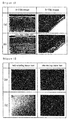
FIG. 2 illustrates images (a) of the inventive sample and images (b) of the conventional sample taken before and after a boiling water test. -
FIG. 3 illustrates results (a) of a coating adhesion test (tape test) performed on the inventive sample and results (b) of a coating adhesion test (tape test) performed on the conventional sample. - A combustion chemical vapor deposition (CCVD) method used in embodiments of the present disclosure is different from a conventional physical vapor deposition (PVD) method or a conventional chemical vapor deposition (CVD) method, in that a hydrocarbon (e.g., propane) used as a fuel is mixed with air in which a precursor (e.g., HMDSO (raw-material gas molecules)) is saturated, and heat generated by combusting the mixture (gas mixture) at atmospheric pressure is used as an energy source for the precursor to undergo evaporation, decomposition, and a chemical reaction, so as to form a coating layer on a surface.
- In the embodiments of the present disclosure, organic silane is used as a precursor in a CCVD process so as to form a metal oxide (such as a silicon oxide) having cross-linked bonds by coupling with oxygen from air on a metal surface as a deposition coating layer.
- Hereinafter, the embodiments of the present disclosure will be described in detail.
- The inventors found that coating layers of Zn-Mg alloy-coated steel sheets formed by a PVD method have unevenly distributed Zn-Mg, Zn, and Mg crystal regions and are easily separated due to fine natural oxide layers formed between the coating layers and the Zn-Mg alloy-coated steel sheets. In addition, the inventors found that Zn-Mg alloy-coated steel sheets formed by a PVD method are blackened as hydrates are formed thereon due to a reaction with moisture.
- Thus, the inventors have exposed a Zn-Mg alloy-coated steel sheet to a high-temperature flame by using a CCVD method. In this case, a coating layer of the Zn-Mg alloy-coated steel sheet was made uniform, and the adhesion of the coating layer was increased. In addition, blackening of the coating layer was prevented by an oxide film. Based on this knowledge, the inventors invented the Zn-Mg alloy-coated steel sheet of the present disclosure.
- In the CCVD method, a gaseous mixture of a hydrocarbon (propane) and air in which raw-material gas molecules (precursor) are saturated is combusted at atmospheric pressure, and heat generated by the combustion is used as an energy source so as to form an oxide film having a cross-linked structure by evaporating, decomposing, and oxidizing the raw-material gas molecules.
- First, a Zn-Mg alloy-coated steel sheet will be described in detail according to an embodiment of the present disclosure.
- The Zn-Mg alloy-coated steel sheet of the embodiment includes:
- a base steel sheet;
- a Zn-Fe intermetallic compound layer formed on the base steel sheet;
- a first Zn-Mg coating layer formed on the Zn-Fe intermetallic compound layer and including a Zn-Mg intermetallic compound in which zinc (Zn) is included in an amount of 95 wt% or greater;
- a second Zn-Mg coating layer formed on the first Zn-Mg coating layer and including a Zn-Mg intermetallic compound in which zinc (Zn) is included in an amount of 80 wt% to 95 wt%; and
- an oxide film formed on the second Zn-Mg coating layer and including an metal oxide.
- The kind of the base steel sheet is not limited. That is, any kinds of steel sheets such as a hot-rolled steel sheet and a cold-rolled steel sheet and any kinds of metal sheets may be applied to the present embodiment.
- The Zn-Fe intermetallic compound layer is formed on the base steel sheet. In a CCVD process (described later), a fine oxide film existing between the base steel sheet and a Zn-Mg coating layer may be diffused into the Zn-Mg coating layer, and thus a Zn-Fe intermetallic compound layer may be formed. The Zn-Fe intermetallic compound layer improves the adhesion between the base steel sheet and the Zn-Mg coating layer.
- The first Zn-Mg coating layer is formed on the Zn-Fe intermetallic compound layer and includes a Zn-Mg intermetallic compound in which zinc (Zn) is included in an amount of 95 wt% or greater. The first Zn-Mg coating layer is a soft Zn-rich region. Therefore, the first Zn-Mg coating layer has high adhesion.
- If the content of zinc (Zn) in the first Zn-Mg coating layer is less than 95 wt%, the first Zn-Mg coating layer may become fragile due to the influence of a Zn-Mg alloy, and thus the adhesion of the first Zn-Mg coating layer may not be high. Therefore, a higher content of zinc (Zn) may be favored. However, to form a Zn-Mg intermetallic compound, it may be preferable that the content of zinc (Zn) be less than 100 wt%.
- The second Zn-Mg coating layer is formed on the first Zn-Mg coating layer and includes a Zn-Mg intermetallic compound in which zinc (Zn) is included in an amount of 80 wt% to 95 wt%. The second Zn-Mg coating layer has a high resistance to corrosion as compared with a general zinc coating layer because of Zn-Mg alloy characteristics.
- It may be preferable that the Zn-Mg intermetallic compound have a zinc content of 80 wt% to 95 wt%. If the content of zinc is less than 80 wt%, the corrosion resistance of the second Zn-Mg coating layer is decreased due to the influence of a Zn-Mg alloy coating layer having a different crystal shape.
- The oxide film is formed on the second Zn-Mg coating layer. The oxide film includes a metal oxide. The oxide film blocks the permeation of moisture and thus prevents blackening.
- The oxide film includes a metal oxide (e.g., a silicon oxide (SiO2)) formed by a CCVD process. In addition, during the CCVD process, magnesium oxide (MgO) is formed by oxygen of high-temperature air as a natural oxide film and coexists with the oxide film.
- It may be preferable that the oxide film have a thickness of 10 nm to 40 nm. If the thickness of the oxide film is less than 10 nm, the permeation of moisture may not be sufficiently prevented, and thus sufficient blackening resistance may not be obtained. Of the other hand, if the thickness of the oxide film is greater than 40 nm, oxide particles (that is, SiO2 particles of the oxide film) may be coarsened, and thus the oxide film may not function as a barrier film.
- Hereinafter, a method of manufacturing a Zn-Mg alloy-coated steel sheet will be described in detail according to an embodiment of the present disclosure.
- First, a Zn-Mg coating layer is formed on a base steel sheet. At this time, the Zn-Mg coating layer is not the first and second Zn-Mg coating layers described in the previous embodiment. That is, the Zn-Mg coating layer is not a final Zn-Mg coating layer. The Zn-Mg coating layer will be modified by a later CCVD process.
- The Zn-Mg coating layer may be formed by a PVD method. For example, the Zn-Mg coating layer may be formed by a conventional PVD method known in the related art.
- For example, in a thermal-PVD or sputtering method, a large amount of Zn-Mg or a raw coating material including Zn and Mg is evaporated in a vacuum by using thermal energy or ion collision energy, and the evaporated Zn-Mg or raw coating material is directed to the surface of a steel sheet or metal sheet continuously fed into the vacuum by a roll-to-roll method, so as to form a Zn-Mg alloy coating layer on the steel sheet or metal sheet. The thermal-PVD or sputtering method may be used to form the Zn-Mg coating layer of the embodiment of the present disclosure. Particularly, in an electro magnetic PVD (EML-PVD) method, a kind of thermal-PVD method using electromagnetic induction, a Zn-Mg alloy coating material is levitated and heated in a vacuum by electromagnetic induction so as to rapidly generate a large amount of vapor and form a coating layer using the vapor. The EML-PVD method is widely used for producing Zn-Mg coated products owing to a high production rate and economic benefits.
- A CCVD process is performed on the base steel sheet on which the Zn-Mg coating layer is formed, so as to form an oxide film thereon. In detail, through the CCVD process, such layers (films) as described in the previous embodiment are formed on the base steel sheet. That is, a Zn-Fe intermetallic compound layer is formed on the base steel sheet; a first Zn-Mg coating layer including a Zn-Mg intermetallic compound in which zinc (Zn) is contained in an amount of 95 wt% or greater is formed on the Zn-Fe intermetallic compound layer; a second Zn-Mg coating layer including a Zn-Mg intermetallic compound in which zinc (Zn) is included in an amount of 80 wt% to 95 wt% is formed on the first Zn-Mg coating layer; and an oxide film including an metal oxide is formed on the second Zn-Mg coating layer. In this way, a Zn-Mg alloy-coated steel sheet is manufactured according to the manufacturing method of the embodiment of the present disclosure.
- In the CCVD process, the base steel sheet may be spaced apart from a burner of a CCVD apparatus by a distance of 10 mm or less. Furthermore, in the CCVD process, if air and precursor vapor are supplied according to the following ratio, a metal oxide deposition film having optimized characteristics may be formed.
- If the ratio of the flow rates is less than 0.8:210 (L/min), since the number of film-forming particles is small relative to the amount of air, an excessively thin or fine film not functioning as a barrier may be formed. On the other hand, if the ratio of the flow rates is greater than 2.1:210 (L/min), since precursor particles clump together (coarse particles), a film (coating) may not be densely formed and thus may not function as a barrier.
- In the CCVD process, it may be preferable that the base steel sheet be maintained within a temperature range of 330°C to 450°C. If the base steel sheet is maintained at a temperature lower than 330°C, a coating layer may not have sufficient energy necessary for diffusion of atoms, and thus the coating layer may not become homogeneous during the CCVD process. On the other hand, if the base steel sheet is maintained at a temperature higher than 450°C, a Zn-Fe alloying reaction may intensively occur between the base steel sheet and the first Zn-Mg coating layer having a high density of zinc (Zn), and thus a Zn-Fe alloy layer may be excessively formed to adversely affect coating adhesion.
- Hereinafter, an example of the present disclosure will be described in detail. The following example is for illustrative purposes and is not intended to limit the scope of the present disclosure.
- The following experiment was conducted to evaluate the blackening resistance and coating adhesion of steel sheets according to the thicknesses of oxide films and the heating temperature of the steel sheets.
- General cold-rolled steel sheets (continuous strip coils) were prepared. Then, an EML-PVD process, a kind of thermal-PVD process using electromagnetic induction, was performed on the cold rolled steel sheets. Specifically, in the EML-PVD process, a Zn-Mg alloy coating material was levitated and heated in a vacuum by electromagnetic induction so as to rapidly generate a large amount of vapor, and the vapor was directed to surfaces of the cold-rolled steel sheets continuously fed into the vacuum by a roll-to-roll method, so as to form Zn-Mg coating layers on the cold-rolled steel sheets.
- Thereafter, the steel sheets on which the Zn-Mg coating layers were formed were subjected to a CCVD process so as to form silicon oxide films on the steel sheets by using organic silane. In this way, Zn-Mg alloy-coated steel sheets on which oxide films were formed were manufactured. In the CCVD process, the oxide films were formed on the steel sheets to different thicknesses (processing cycles) at different temperatures as shown in Table 1.
- Referring to Table 1, Comparative Samples (steel sheets) 7 to 10 were tested while varying temperatures thereof without forming oxide films thereon so as to evaluate the coating adhesion of the Comparative Samples 7 to 10 according to the temperatures of the Comparative Samples 7 to 10 in the CCVD process.
- The blackening resistance and coating adhesion of each of the Zn-Mg alloy-coated steel sheets were tested as shown in Table 1. The coating adhesion of each of the Zn-Mg alloy-coated steel sheets was evaluated by attaching tape to the steel sheet (sample), bending the steel sheet, separating the tape, and observing the tape to determine whether the coating adhesion was good or bad according to the separation of the coating layer from the steel sheet. The blackening resistance of each of the Zn-Mg alloy-coated steel sheets was evaluated by immersing the steel sheet in boiling water and observing the color of the steel sheet to determine whether blackening resistance was good or bad according to the change of the color of the steel sheet.
[Table 1] No. Thickness of oxide film (CCVD process cycles) Sample Te. (°C) Blackening resistance Coating adhesion Conventional Sample Not processed - X X Inventive Sample 22 nm (50 cycles) 330 ○ ○ Comparative Sample 1 5 nm (3 cycles) 45 X X Comparative sample 2 11 nm (6 cycles) 80 ○ X Comparative Sample 3 22 nm (12 cycles) 110 ○ X Comparative Sample 4 32 nm (18 cycles) 120 ○ X Comparative Sample 5 40 nm (30 cycles) 180 ○ X Comparative Sample 6 48 nm (50 cycles) 330 - ○ Comparative Sample 7 - (30 cycles) 180 X X Comparative Sample 8 - (50 cycles) 330 X ○ Comparative Sample 9 - (75 cycles) 425 X ○ Comparative Sample 10 - (100 cycles) 480 X X - An inventive sample satisfying conditions of the embodiments of the present disclosure has high blackening resistance and coating adhesion.
FIG. 1 illustrates a structure (a) of a conventional sample and a structure (b) of the inventive sample. Referring toFIG. 1 , in the conventional sample, a Zn-Mg alloy coating layer is formed on a base steel sheet as a mixed layer. However, in the inventive sample, an intermetallic compound layer, a Zn-rich layer, a Zn-Mg alloy layer, and an outermost oxide film are formed on a base steel sheet. Therefore, the inventive sample formed according to the embodiments of the present disclosure has high blacking resistance and coating adhesion. - Comparative Samples 1 and 6 not satisfying the oxide film thickness condition of the embodiments of the present disclosure have poor blackening resistance. Comparative samples 2 to 5 satisfying the oxide film thickness condition of the embodiments of the present disclosure but not satisfying the temperature condition of the embodiments of the present disclosure have good blackening resistance but poor coating adhesion.
- Comparative Samples 8 and 9, satisfying the temperature conditions of the embodiments of the present disclosure, have good coating adhesion. However, since oxide films are not formed on Comparative Samples 8 and 9, Comparative Samples 8 and 9 have poor blackening resistance. Comparative Samples 7 and 10, not satisfying the temperature condition of the embodiments of the present disclosure, have poor coating adhesion.
-
FIG. 2 illustrates images (a) of the inventive sample and images (b) of the conventional sample taken before and after a boiling water test. Referring toFIG. 2 , the color of the inventive sample is not changed. That is, the inventive sample has high blackening resistance. However, the conventional sample is entirely blackened. -
FIG. 3 illustrates results (a) of a tape test performed on the inventive sample and results (b) of a tape test performed on the conventional sample. Referring toFIG. 3 , the inventive sample has higher coating adhesion than the conventional sample.
Claims (7)
- A Zn-Mg alloy-coated steel sheet having high blackening resistance and coating adhesion, the Zn-Mg alloy-coated steel sheet comprising:a base steel sheet;a Zn-Fe intermetallic compound layer formed on the base steel sheet;a first Zn-Mg coating layer formed on the Zn-Fe intermetallic compound layer and comprising a Zn-Mg intermetallic compound in which zinc (Zn) is included in an amount of 95 wt% or greater;a second Zn-Mg coating layer formed on the first Zn-Mg coating layer and comprising a Zn-Mg intermetallic compound in which zinc (Zn) is included in an amount of 80 wt% to 95 wt%; andan oxide film formed on the second Zn-Mg coating layer and comprising a metal oxide.
- The Zn-Mg alloy-coated steel sheet of claim 1, wherein the metal oxide comprises a silicon oxide (SiO2), and a magnesium oxide (MgO) is included as a part of the metal oxide.
- The Zn-Mg alloy-coated steel sheet of claim 1, wherein the oxide film has a thickness of 11 µm to 40 µm.
- A method for manufacturing a Zn-Mg alloy-coated steel sheet having high blackening resistance and coating adhesion, the method comprising:forming a Zn-Mg coating layer on a base steel sheet; andperforming a combustion chemical vapor deposition (CCVD) process to form an oxide film.
- The method of claim 4, wherein the forming of the Zn-Mg coating layer is performed by a physical vapor deposition (PVD) method.
- The method of claim 4, wherein in the CCVD process, air and precursor vapor are supplied according to the following ratio:precursor flow rate:air flow rate = 0.8:210 to 2.1:210 (L/min).
- The method of claim 4, wherein in the CCVD process, the base steel sheet is maintained within a temperature range of 330°C to 450°C.
Applications Claiming Priority (2)
| Application Number | Priority Date | Filing Date | Title |
|---|---|---|---|
| KR1020110143891A KR101359259B1 (en) | 2011-12-27 | 2011-12-27 | Zn-Mg ALLOY PLATED STEEL SHEET HAVING EXCELLENT BLACKENING RESISTANCE AND COATING ADHESION, AND METHOD FOR MANUFACTURING THE SAME |
| PCT/KR2012/011540 WO2013100616A1 (en) | 2011-12-27 | 2012-12-27 | Zn-mg alloy-coated steel sheet with excellent blackening resistance and excellent adhesion and method for manufacturing same |
Publications (3)
| Publication Number | Publication Date |
|---|---|
| EP2799591A1 true EP2799591A1 (en) | 2014-11-05 |
| EP2799591A4 EP2799591A4 (en) | 2015-10-07 |
| EP2799591B1 EP2799591B1 (en) | 2017-08-30 |
Family
ID=48697964
Family Applications (1)
| Application Number | Title | Priority Date | Filing Date |
|---|---|---|---|
| EP12861547.3A Active EP2799591B1 (en) | 2011-12-27 | 2012-12-27 | Method for manufacturing a zn-mg alloy-coated steel sheet with excellent blackening resistance and excellent adhesion |
Country Status (6)
| Country | Link |
|---|---|
| US (2) | US9441302B2 (en) |
| EP (1) | EP2799591B1 (en) |
| JP (2) | JP2015510033A (en) |
| KR (1) | KR101359259B1 (en) |
| CN (1) | CN104024468B (en) |
| WO (1) | WO2013100616A1 (en) |
Cited By (1)
| Publication number | Priority date | Publication date | Assignee | Title |
|---|---|---|---|---|
| WO2018109619A1 (en) * | 2016-12-12 | 2018-06-21 | BSH Hausgeräte GmbH | Method for coating a base element for a household appliance component and household appliance component |
Families Citing this family (7)
| Publication number | Priority date | Publication date | Assignee | Title |
|---|---|---|---|---|
| KR101940885B1 (en) * | 2016-12-26 | 2019-01-21 | 주식회사 포스코 | Mono-layered zinc alloy plated steel material having excellent spot weldability and corrosion resistance and method for manufacturing the same |
| JP6982077B2 (en) | 2016-12-26 | 2021-12-17 | ポスコPosco | Multilayer zinc alloy plated steel with excellent spot weldability and corrosion resistance |
| KR102086209B1 (en) * | 2017-12-26 | 2020-03-06 | 주식회사 포스코 | Zinc alloy coated steel sheet having excellent corrosion resistance, weldability, and lubrication, and method for manufacturing the same |
| KR102180799B1 (en) * | 2018-11-29 | 2020-11-19 | 주식회사 포스코 | Zinc coated steel sheet having excellent hardness and galling resistance, and method for amnufacturing the same |
| KR102178717B1 (en) * | 2018-12-19 | 2020-11-27 | 주식회사 포스코 | Zinc-magnesium alloy plated steel material having excellent adhesion to plating and corrosion resistance, and manufacturing method for the same |
| AU2020442769A1 (en) * | 2020-04-15 | 2022-12-15 | Henkel Ag & Co. Kgaa | Anti-blackening coating composition |
| KR102443926B1 (en) * | 2020-12-01 | 2022-09-19 | 주식회사 포스코 | Plated steel sheet having multilayer structure and welded structure using the same, and manufacturing method for the plated steel sheet having multilayer structure |
Family Cites Families (18)
| Publication number | Priority date | Publication date | Assignee | Title |
|---|---|---|---|---|
| JPH07268605A (en) * | 1994-03-29 | 1995-10-17 | Nisshin Steel Co Ltd | Production of alloyed zn-mg vapor deposition-coated steel sheet |
| JP3545051B2 (en) * | 1994-06-14 | 2004-07-21 | 日新製鋼株式会社 | Zn-Mg based plated steel sheet excellent in corrosion resistance and manufacturing method |
| JPH08239754A (en) * | 1995-02-28 | 1996-09-17 | Nisshin Steel Co Ltd | Zn-mg alloy plated steel sheet excellent in secondary adhesion and corrosion resistance |
| TW359688B (en) * | 1995-02-28 | 1999-06-01 | Nisshin Steel Co Ltd | High anticorrosion Zn-Mg series-plated steel sheet and method of manufacture it |
| JPH09228030A (en) | 1996-02-16 | 1997-09-02 | Nisshin Steel Co Ltd | High workability zinc-magnesium alloy plated steel sheet having low magnesium concentration and its production |
| JPH09241828A (en) | 1996-03-08 | 1997-09-16 | Nisshin Steel Co Ltd | Zinc-magnesium plated steel sheet excellent in coating film water resisting adhesion and its production |
| JPH1068063A (en) * | 1996-08-26 | 1998-03-10 | Nisshin Steel Co Ltd | Zinc-magnesium series plated steel sheet excellent in blackening treatability and production of black zinc-magnesium series plated steel sheet |
| JPH10219475A (en) * | 1996-12-02 | 1998-08-18 | Nisshin Steel Co Ltd | Zn-mg plated steel sheet excellent in coating adhesion |
| JP3857866B2 (en) * | 2000-02-29 | 2006-12-13 | 日本ペイント株式会社 | Non-chromate metal surface treatment agent, surface treatment method and treated painted steel |
| DE10114401B4 (en) * | 2001-03-23 | 2005-03-17 | Tetra Laval Holdings & Finance S.A. | Method for blow molding a container made of plastic and for coating the container interior |
| US20040076868A1 (en) * | 2002-10-18 | 2004-04-22 | Peter Mardilovich | Fuel cell and method for forming |
| US20100151130A1 (en) * | 2004-12-10 | 2010-06-17 | Koninklijke Philips Electronics, N.V. | Combustion chemical vapor deposition on temperature-sensitive substrates |
| EP1888810A2 (en) | 2004-12-10 | 2008-02-20 | Koninklijke Philips Electronics N.V. | Substrate temperature control for combustion chemical vapor deposition |
| KR100742857B1 (en) * | 2005-12-26 | 2007-07-25 | 주식회사 포스코 | Combustion Chemical Vapor Deposition of Wet Silicon Oxide |
| KR100843839B1 (en) * | 2006-12-29 | 2008-07-03 | 주식회사 포스코 | Combustion Chemical Vapor Deposition Method of Silicon Oxide with Excellent Corrosion Resistance |
| KR100961371B1 (en) * | 2007-12-28 | 2010-06-07 | 주식회사 포스코 | Zinc-based alloy plated steel sheet with excellent sealer adhesion and corrosion resistance and its manufacturing method |
| RU2535424C1 (en) * | 2010-12-17 | 2014-12-10 | Арселормитталь Инвестигасьон И Десарролло Сл | Steel plate with multilayer coating |
| DE102012107633A1 (en) * | 2012-08-20 | 2014-02-20 | Eckart Gmbh | Zinc magnesium alloy corrosion protection pigments, anticorrosive paint and process for the preparation of anticorrosive pigments |
-
2011
- 2011-12-27 KR KR1020110143891A patent/KR101359259B1/en active Active
-
2012
- 2012-12-27 EP EP12861547.3A patent/EP2799591B1/en active Active
- 2012-12-27 WO PCT/KR2012/011540 patent/WO2013100616A1/en not_active Ceased
- 2012-12-27 CN CN201280065252.1A patent/CN104024468B/en active Active
- 2012-12-27 US US14/368,724 patent/US9441302B2/en active Active
- 2012-12-27 JP JP2014550005A patent/JP2015510033A/en active Pending
-
2015
- 2015-10-30 JP JP2015214095A patent/JP6099722B2/en active Active
-
2016
- 2016-08-16 US US15/238,358 patent/US9982342B2/en active Active
Cited By (1)
| Publication number | Priority date | Publication date | Assignee | Title |
|---|---|---|---|---|
| WO2018109619A1 (en) * | 2016-12-12 | 2018-06-21 | BSH Hausgeräte GmbH | Method for coating a base element for a household appliance component and household appliance component |
Also Published As
| Publication number | Publication date |
|---|---|
| KR20130075501A (en) | 2013-07-05 |
| EP2799591A4 (en) | 2015-10-07 |
| KR101359259B1 (en) | 2014-02-06 |
| EP2799591B1 (en) | 2017-08-30 |
| JP6099722B2 (en) | 2017-03-22 |
| US20160355926A1 (en) | 2016-12-08 |
| WO2013100616A1 (en) | 2013-07-04 |
| US9982342B2 (en) | 2018-05-29 |
| CN104024468B (en) | 2017-04-12 |
| US9441302B2 (en) | 2016-09-13 |
| JP2016040413A (en) | 2016-03-24 |
| JP2015510033A (en) | 2015-04-02 |
| US20150030875A1 (en) | 2015-01-29 |
| CN104024468A (en) | 2014-09-03 |
Similar Documents
| Publication | Publication Date | Title |
|---|---|---|
| US9982342B2 (en) | Zn—Mg alloy-coated steel sheet with excellent blackening resistance and excellent adhesion | |
| CN113316664B (en) | Alloy coated steel plate and manufacturing method thereof | |
| US5747111A (en) | Steel sheet coated with Zn-Mg binary coating layer excellent in corrosion resistance and manufacturing method thereof | |
| US20130186524A1 (en) | Al PLATING LAYER/Al-Mg PLATING LAYER MULTI-LAYERED STRUCTURE ALLOY PLATED STEEL SHEET HAVING EXCELLENT PLATING ADHESIVENESS AND CORROSION RESISTANCE, AND METHOD OF MANUFACTURING THE SAME | |
| WO2013100615A1 (en) | High-strength hot-dip galvanized steel sheet having excellent plating surface quality and adhesion, and method of manufacturing the same | |
| EP2631320B1 (en) | Metal-coated steel sheet and hot-dip galvanized steel sheet | |
| KR20140083836A (en) | Zn-Mg ALLOY COATED STEEL SHEET AND MEHTDOD FOR MANUFACTURING THE SAME | |
| KR101527144B1 (en) | Mg-al coated steel sheet and method for manufacturing the same | |
| CN105189818B (en) | The aluminum series alloy plated steel material of corrosion resistance excellent after application | |
| KR20140086860A (en) | Al-mg coated steel sheet and method for manufacturing the same | |
| KR101898729B1 (en) | Zinc coated steel sheet and a manufacturing method thereof | |
| KR101789725B1 (en) | Alloy-coated steel sheet and method for manufacturing the same | |
| CN1846014A (en) | Aluminum coated stainless steel strip | |
| KR20170106466A (en) | Method for forming a metallic protective coating on one surface of a steel product | |
| JP2019506525A (en) | Alloy-coated steel sheet and method for producing the same | |
| KR101829766B1 (en) | Alloy-coated steel sheet and method for manufacturing the same | |
| EP3647464B1 (en) | Alloy-coated steel sheet and manufacturing method thereof | |
| KR20170117845A (en) | Alloy-coated steel sheet and method for manufacturing the same | |
| KR100775241B1 (en) | Kn-Mg alloy plated steel sheet and manufacturing method thereof | |
| KR101829765B1 (en) | Alloy-coated steel sheet and method for manufacturing the same | |
| KR101829764B1 (en) | Alloy-coated steel sheet and method for manufacturing the same | |
| US20100266866A1 (en) | Method of metal coating and coating produced thereby | |
| KR19980051207A (en) | Aluminum silicon dioxide composite plated steel sheet with excellent gloss and corrosion resistance and manufacturing method | |
| JPH06316755A (en) | Galvanized steel sheet containing o, n and c and its production | |
| JPH05222519A (en) | Manufacture of hot-dip coated steel sheet containing cr |
Legal Events
| Date | Code | Title | Description |
|---|---|---|---|
| PUAI | Public reference made under article 153(3) epc to a published international application that has entered the european phase |
Free format text: ORIGINAL CODE: 0009012 |
|
| 17P | Request for examination filed |
Effective date: 20140725 |
|
| AK | Designated contracting states |
Kind code of ref document: A1 Designated state(s): AL AT BE BG CH CY CZ DE DK EE ES FI FR GB GR HR HU IE IS IT LI LT LU LV MC MK MT NL NO PL PT RO RS SE SI SK SM TR |
|
| DAX | Request for extension of the european patent (deleted) | ||
| RA4 | Supplementary search report drawn up and despatched (corrected) |
Effective date: 20150907 |
|
| RIC1 | Information provided on ipc code assigned before grant |
Ipc: C23C 14/58 20060101ALI20150901BHEP Ipc: C23C 16/40 20060101ALI20150901BHEP Ipc: C23C 14/14 20060101AFI20150901BHEP |
|
| REG | Reference to a national code |
Ref country code: DE Ref legal event code: R079 Ref document number: 602012036780 Country of ref document: DE Free format text: PREVIOUS MAIN CLASS: C23C0014140000 Ipc: C23C0014160000 |
|
| GRAP | Despatch of communication of intention to grant a patent |
Free format text: ORIGINAL CODE: EPIDOSNIGR1 |
|
| STAA | Information on the status of an ep patent application or granted ep patent |
Free format text: STATUS: GRANT OF PATENT IS INTENDED |
|
| RIC1 | Information provided on ipc code assigned before grant |
Ipc: B32B 15/01 20060101ALI20170220BHEP Ipc: C23C 14/16 20060101AFI20170220BHEP Ipc: C23C 16/453 20060101ALI20170220BHEP Ipc: C23C 16/40 20060101ALI20170220BHEP |
|
| INTG | Intention to grant announced |
Effective date: 20170328 |
|
| GRAS | Grant fee paid |
Free format text: ORIGINAL CODE: EPIDOSNIGR3 |
|
| GRAA | (expected) grant |
Free format text: ORIGINAL CODE: 0009210 |
|
| STAA | Information on the status of an ep patent application or granted ep patent |
Free format text: STATUS: THE PATENT HAS BEEN GRANTED |
|
| AK | Designated contracting states |
Kind code of ref document: B1 Designated state(s): AL AT BE BG CH CY CZ DE DK EE ES FI FR GB GR HR HU IE IS IT LI LT LU LV MC MK MT NL NO PL PT RO RS SE SI SK SM TR |
|
| RAP1 | Party data changed (applicant data changed or rights of an application transferred) |
Owner name: POSCO |
|
| REG | Reference to a national code |
Ref country code: GB Ref legal event code: FG4D |
|
| REG | Reference to a national code |
Ref country code: CH Ref legal event code: EP |
|
| REG | Reference to a national code |
Ref country code: AT Ref legal event code: REF Ref document number: 923645 Country of ref document: AT Kind code of ref document: T Effective date: 20170915 |
|
| REG | Reference to a national code |
Ref country code: IE Ref legal event code: FG4D |
|
| REG | Reference to a national code |
Ref country code: DE Ref legal event code: R096 Ref document number: 602012036780 Country of ref document: DE |
|
| REG | Reference to a national code |
Ref country code: NL Ref legal event code: FP Ref country code: FR Ref legal event code: PLFP Year of fee payment: 6 |
|
| REG | Reference to a national code |
Ref country code: LT Ref legal event code: MG4D |
|
| REG | Reference to a national code |
Ref country code: AT Ref legal event code: MK05 Ref document number: 923645 Country of ref document: AT Kind code of ref document: T Effective date: 20170830 |
|
| PG25 | Lapsed in a contracting state [announced via postgrant information from national office to epo] |
Ref country code: SE Free format text: LAPSE BECAUSE OF FAILURE TO SUBMIT A TRANSLATION OF THE DESCRIPTION OR TO PAY THE FEE WITHIN THE PRESCRIBED TIME-LIMIT Effective date: 20170830 Ref country code: NO Free format text: LAPSE BECAUSE OF FAILURE TO SUBMIT A TRANSLATION OF THE DESCRIPTION OR TO PAY THE FEE WITHIN THE PRESCRIBED TIME-LIMIT Effective date: 20171130 Ref country code: LT Free format text: LAPSE BECAUSE OF FAILURE TO SUBMIT A TRANSLATION OF THE DESCRIPTION OR TO PAY THE FEE WITHIN THE PRESCRIBED TIME-LIMIT Effective date: 20170830 Ref country code: HR Free format text: LAPSE BECAUSE OF FAILURE TO SUBMIT A TRANSLATION OF THE DESCRIPTION OR TO PAY THE FEE WITHIN THE PRESCRIBED TIME-LIMIT Effective date: 20170830 Ref country code: AT Free format text: LAPSE BECAUSE OF FAILURE TO SUBMIT A TRANSLATION OF THE DESCRIPTION OR TO PAY THE FEE WITHIN THE PRESCRIBED TIME-LIMIT Effective date: 20170830 Ref country code: FI Free format text: LAPSE BECAUSE OF FAILURE TO SUBMIT A TRANSLATION OF THE DESCRIPTION OR TO PAY THE FEE WITHIN THE PRESCRIBED TIME-LIMIT Effective date: 20170830 |
|
| PG25 | Lapsed in a contracting state [announced via postgrant information from national office to epo] |
Ref country code: RS Free format text: LAPSE BECAUSE OF FAILURE TO SUBMIT A TRANSLATION OF THE DESCRIPTION OR TO PAY THE FEE WITHIN THE PRESCRIBED TIME-LIMIT Effective date: 20170830 Ref country code: ES Free format text: LAPSE BECAUSE OF FAILURE TO SUBMIT A TRANSLATION OF THE DESCRIPTION OR TO PAY THE FEE WITHIN THE PRESCRIBED TIME-LIMIT Effective date: 20170830 Ref country code: BG Free format text: LAPSE BECAUSE OF FAILURE TO SUBMIT A TRANSLATION OF THE DESCRIPTION OR TO PAY THE FEE WITHIN THE PRESCRIBED TIME-LIMIT Effective date: 20171130 Ref country code: LV Free format text: LAPSE BECAUSE OF FAILURE TO SUBMIT A TRANSLATION OF THE DESCRIPTION OR TO PAY THE FEE WITHIN THE PRESCRIBED TIME-LIMIT Effective date: 20170830 Ref country code: IS Free format text: LAPSE BECAUSE OF FAILURE TO SUBMIT A TRANSLATION OF THE DESCRIPTION OR TO PAY THE FEE WITHIN THE PRESCRIBED TIME-LIMIT Effective date: 20171230 Ref country code: GR Free format text: LAPSE BECAUSE OF FAILURE TO SUBMIT A TRANSLATION OF THE DESCRIPTION OR TO PAY THE FEE WITHIN THE PRESCRIBED TIME-LIMIT Effective date: 20171201 |
|
| PG25 | Lapsed in a contracting state [announced via postgrant information from national office to epo] |
Ref country code: PL Free format text: LAPSE BECAUSE OF FAILURE TO SUBMIT A TRANSLATION OF THE DESCRIPTION OR TO PAY THE FEE WITHIN THE PRESCRIBED TIME-LIMIT Effective date: 20170830 Ref country code: RO Free format text: LAPSE BECAUSE OF FAILURE TO SUBMIT A TRANSLATION OF THE DESCRIPTION OR TO PAY THE FEE WITHIN THE PRESCRIBED TIME-LIMIT Effective date: 20170830 Ref country code: DK Free format text: LAPSE BECAUSE OF FAILURE TO SUBMIT A TRANSLATION OF THE DESCRIPTION OR TO PAY THE FEE WITHIN THE PRESCRIBED TIME-LIMIT Effective date: 20170830 Ref country code: CZ Free format text: LAPSE BECAUSE OF FAILURE TO SUBMIT A TRANSLATION OF THE DESCRIPTION OR TO PAY THE FEE WITHIN THE PRESCRIBED TIME-LIMIT Effective date: 20170830 |
|
| PG25 | Lapsed in a contracting state [announced via postgrant information from national office to epo] |
Ref country code: IT Free format text: LAPSE BECAUSE OF FAILURE TO SUBMIT A TRANSLATION OF THE DESCRIPTION OR TO PAY THE FEE WITHIN THE PRESCRIBED TIME-LIMIT Effective date: 20170830 Ref country code: SK Free format text: LAPSE BECAUSE OF FAILURE TO SUBMIT A TRANSLATION OF THE DESCRIPTION OR TO PAY THE FEE WITHIN THE PRESCRIBED TIME-LIMIT Effective date: 20170830 Ref country code: EE Free format text: LAPSE BECAUSE OF FAILURE TO SUBMIT A TRANSLATION OF THE DESCRIPTION OR TO PAY THE FEE WITHIN THE PRESCRIBED TIME-LIMIT Effective date: 20170830 Ref country code: SM Free format text: LAPSE BECAUSE OF FAILURE TO SUBMIT A TRANSLATION OF THE DESCRIPTION OR TO PAY THE FEE WITHIN THE PRESCRIBED TIME-LIMIT Effective date: 20170830 |
|
| REG | Reference to a national code |
Ref country code: DE Ref legal event code: R097 Ref document number: 602012036780 Country of ref document: DE |
|
| PLBE | No opposition filed within time limit |
Free format text: ORIGINAL CODE: 0009261 |
|
| STAA | Information on the status of an ep patent application or granted ep patent |
Free format text: STATUS: NO OPPOSITION FILED WITHIN TIME LIMIT |
|
| REG | Reference to a national code |
Ref country code: CH Ref legal event code: PL |
|
| 26N | No opposition filed |
Effective date: 20180531 |
|
| GBPC | Gb: european patent ceased through non-payment of renewal fee |
Effective date: 20171227 |
|
| PG25 | Lapsed in a contracting state [announced via postgrant information from national office to epo] |
Ref country code: SI Free format text: LAPSE BECAUSE OF FAILURE TO SUBMIT A TRANSLATION OF THE DESCRIPTION OR TO PAY THE FEE WITHIN THE PRESCRIBED TIME-LIMIT Effective date: 20170830 |
|
| REG | Reference to a national code |
Ref country code: IE Ref legal event code: MM4A |
|
| PG25 | Lapsed in a contracting state [announced via postgrant information from national office to epo] |
Ref country code: LU Free format text: LAPSE BECAUSE OF NON-PAYMENT OF DUE FEES Effective date: 20171227 Ref country code: MT Free format text: LAPSE BECAUSE OF NON-PAYMENT OF DUE FEES Effective date: 20171227 |
|
| PG25 | Lapsed in a contracting state [announced via postgrant information from national office to epo] |
Ref country code: IE Free format text: LAPSE BECAUSE OF NON-PAYMENT OF DUE FEES Effective date: 20171227 |
|
| PG25 | Lapsed in a contracting state [announced via postgrant information from national office to epo] |
Ref country code: CH Free format text: LAPSE BECAUSE OF NON-PAYMENT OF DUE FEES Effective date: 20171231 Ref country code: GB Free format text: LAPSE BECAUSE OF NON-PAYMENT OF DUE FEES Effective date: 20171227 Ref country code: LI Free format text: LAPSE BECAUSE OF NON-PAYMENT OF DUE FEES Effective date: 20171231 |
|
| PG25 | Lapsed in a contracting state [announced via postgrant information from national office to epo] |
Ref country code: MC Free format text: LAPSE BECAUSE OF FAILURE TO SUBMIT A TRANSLATION OF THE DESCRIPTION OR TO PAY THE FEE WITHIN THE PRESCRIBED TIME-LIMIT Effective date: 20170830 Ref country code: HU Free format text: LAPSE BECAUSE OF FAILURE TO SUBMIT A TRANSLATION OF THE DESCRIPTION OR TO PAY THE FEE WITHIN THE PRESCRIBED TIME-LIMIT; INVALID AB INITIO Effective date: 20121227 |
|
| PG25 | Lapsed in a contracting state [announced via postgrant information from national office to epo] |
Ref country code: CY Free format text: LAPSE BECAUSE OF FAILURE TO SUBMIT A TRANSLATION OF THE DESCRIPTION OR TO PAY THE FEE WITHIN THE PRESCRIBED TIME-LIMIT Effective date: 20170830 |
|
| PG25 | Lapsed in a contracting state [announced via postgrant information from national office to epo] |
Ref country code: MK Free format text: LAPSE BECAUSE OF FAILURE TO SUBMIT A TRANSLATION OF THE DESCRIPTION OR TO PAY THE FEE WITHIN THE PRESCRIBED TIME-LIMIT Effective date: 20170830 |
|
| PG25 | Lapsed in a contracting state [announced via postgrant information from national office to epo] |
Ref country code: TR Free format text: LAPSE BECAUSE OF FAILURE TO SUBMIT A TRANSLATION OF THE DESCRIPTION OR TO PAY THE FEE WITHIN THE PRESCRIBED TIME-LIMIT Effective date: 20170830 |
|
| PG25 | Lapsed in a contracting state [announced via postgrant information from national office to epo] |
Ref country code: PT Free format text: LAPSE BECAUSE OF FAILURE TO SUBMIT A TRANSLATION OF THE DESCRIPTION OR TO PAY THE FEE WITHIN THE PRESCRIBED TIME-LIMIT Effective date: 20170830 |
|
| PG25 | Lapsed in a contracting state [announced via postgrant information from national office to epo] |
Ref country code: AL Free format text: LAPSE BECAUSE OF FAILURE TO SUBMIT A TRANSLATION OF THE DESCRIPTION OR TO PAY THE FEE WITHIN THE PRESCRIBED TIME-LIMIT Effective date: 20170830 |
|
| REG | Reference to a national code |
Ref country code: DE Ref legal event code: R081 Ref document number: 602012036780 Country of ref document: DE Owner name: POSCO CO., LTD, POHANG-SI, KR Free format text: FORMER OWNER: POSCO, POHANG-SI, GYEONGSANGBUK-DO, KR Ref country code: DE Ref legal event code: R081 Ref document number: 602012036780 Country of ref document: DE Owner name: POSCO CO., LTD, POHANG- SI, KR Free format text: FORMER OWNER: POSCO, POHANG-SI, GYEONGSANGBUK-DO, KR Ref country code: DE Ref legal event code: R081 Ref document number: 602012036780 Country of ref document: DE Owner name: POSCO HOLDINGS INC., KR Free format text: FORMER OWNER: POSCO, POHANG-SI, GYEONGSANGBUK-DO, KR |
|
| REG | Reference to a national code |
Ref country code: NL Ref legal event code: PD Owner name: POSCO HOLDINGS INC.; KR Free format text: DETAILS ASSIGNMENT: CHANGE OF OWNER(S), CHANGE OF LEGAL ENTITY; FORMER OWNER NAME: POSCO Effective date: 20221026 |
|
| REG | Reference to a national code |
Ref country code: NL Ref legal event code: PD Owner name: POSCO CO., LTD; KO Free format text: DETAILS ASSIGNMENT: CHANGE OF OWNER(S), ASSIGNMENT; FORMER OWNER NAME: POSCO Effective date: 20221109 |
|
| REG | Reference to a national code |
Ref country code: BE Ref legal event code: PD Owner name: POSCO CO., LTD; KR Free format text: DETAILS ASSIGNMENT: CHANGE OF OWNER(S), ASSIGNMENT; FORMER OWNER NAME: VAN REET JOSEPH Effective date: 20221209 Ref country code: BE Ref legal event code: HC Owner name: POSCO HOLDINGS INC.; KR Free format text: DETAILS ASSIGNMENT: CHANGE OF OWNER(S), CHANGE OF OWNER(S) NAME; FORMER OWNER NAME: POSCO Effective date: 20221209 |
|
| REG | Reference to a national code |
Ref country code: DE Ref legal event code: R081 Ref document number: 602012036780 Country of ref document: DE Owner name: POSCO CO., LTD, POHANG-SI, KR Free format text: FORMER OWNER: POSCO HOLDINGS INC., SEOUL, KR Ref country code: DE Ref legal event code: R081 Ref document number: 602012036780 Country of ref document: DE Owner name: POSCO CO., LTD, POHANG- SI, KR Free format text: FORMER OWNER: POSCO HOLDINGS INC., SEOUL, KR |
|
| PGFP | Annual fee paid to national office [announced via postgrant information from national office to epo] |
Ref country code: NL Payment date: 20251223 Year of fee payment: 14 Ref country code: FR Payment date: 20251223 Year of fee payment: 14 |
|
| PGFP | Annual fee paid to national office [announced via postgrant information from national office to epo] |
Ref country code: BE Payment date: 20251229 Year of fee payment: 14 |
|
| PGFP | Annual fee paid to national office [announced via postgrant information from national office to epo] |
Ref country code: DE Payment date: 20251222 Year of fee payment: 14 |