EP2799552B1 - Method capable of massively and rapidly inducing mesenchymal stem cells to transdetermine into hematopoietic stem cells of high purity - Google Patents
Method capable of massively and rapidly inducing mesenchymal stem cells to transdetermine into hematopoietic stem cells of high purity Download PDFInfo
- Publication number
- EP2799552B1 EP2799552B1 EP13834380.1A EP13834380A EP2799552B1 EP 2799552 B1 EP2799552 B1 EP 2799552B1 EP 13834380 A EP13834380 A EP 13834380A EP 2799552 B1 EP2799552 B1 EP 2799552B1
- Authority
- EP
- European Patent Office
- Prior art keywords
- stem cells
- hematopoietic stem
- mesenchymal stem
- transdetermine
- mir
- Prior art date
- Legal status (The legal status is an assumption and is not a legal conclusion. Google has not performed a legal analysis and makes no representation as to the accuracy of the status listed.)
- Active
Links
Images
Classifications
-
- C—CHEMISTRY; METALLURGY
- C12—BIOCHEMISTRY; BEER; SPIRITS; WINE; VINEGAR; MICROBIOLOGY; ENZYMOLOGY; MUTATION OR GENETIC ENGINEERING
- C12N—MICROORGANISMS OR ENZYMES; COMPOSITIONS THEREOF; PROPAGATING, PRESERVING, OR MAINTAINING MICROORGANISMS; MUTATION OR GENETIC ENGINEERING; CULTURE MEDIA
- C12N5/00—Undifferentiated human, animal or plant cells, e.g. cell lines; Tissues; Cultivation or maintenance thereof; Culture media therefor
- C12N5/06—Animal cells or tissues; Human cells or tissues
- C12N5/0602—Vertebrate cells
- C12N5/0634—Cells from the blood or the immune system
- C12N5/0647—Haematopoietic stem cells; Uncommitted or multipotent progenitors
-
- C—CHEMISTRY; METALLURGY
- C12—BIOCHEMISTRY; BEER; SPIRITS; WINE; VINEGAR; MICROBIOLOGY; ENZYMOLOGY; MUTATION OR GENETIC ENGINEERING
- C12N—MICROORGANISMS OR ENZYMES; COMPOSITIONS THEREOF; PROPAGATING, PRESERVING, OR MAINTAINING MICROORGANISMS; MUTATION OR GENETIC ENGINEERING; CULTURE MEDIA
- C12N15/00—Mutation or genetic engineering; DNA or RNA concerning genetic engineering, vectors, e.g. plasmids, or their isolation, preparation or purification; Use of hosts therefor
- C12N15/09—Recombinant DNA-technology
- C12N15/11—DNA or RNA fragments; Modified forms thereof; Non-coding nucleic acids having a biological activity
- C12N15/111—General methods applicable to biologically active non-coding nucleic acids
-
- C—CHEMISTRY; METALLURGY
- C12—BIOCHEMISTRY; BEER; SPIRITS; WINE; VINEGAR; MICROBIOLOGY; ENZYMOLOGY; MUTATION OR GENETIC ENGINEERING
- C12N—MICROORGANISMS OR ENZYMES; COMPOSITIONS THEREOF; PROPAGATING, PRESERVING, OR MAINTAINING MICROORGANISMS; MUTATION OR GENETIC ENGINEERING; CULTURE MEDIA
- C12N2310/00—Structure or type of the nucleic acid
- C12N2310/10—Type of nucleic acid
- C12N2310/14—Type of nucleic acid interfering nucleic acids [NA]
- C12N2310/141—MicroRNAs, miRNAs
-
- C—CHEMISTRY; METALLURGY
- C12—BIOCHEMISTRY; BEER; SPIRITS; WINE; VINEGAR; MICROBIOLOGY; ENZYMOLOGY; MUTATION OR GENETIC ENGINEERING
- C12N—MICROORGANISMS OR ENZYMES; COMPOSITIONS THEREOF; PROPAGATING, PRESERVING, OR MAINTAINING MICROORGANISMS; MUTATION OR GENETIC ENGINEERING; CULTURE MEDIA
- C12N2320/00—Applications; Uses
- C12N2320/30—Special therapeutic applications
-
- C—CHEMISTRY; METALLURGY
- C12—BIOCHEMISTRY; BEER; SPIRITS; WINE; VINEGAR; MICROBIOLOGY; ENZYMOLOGY; MUTATION OR GENETIC ENGINEERING
- C12N—MICROORGANISMS OR ENZYMES; COMPOSITIONS THEREOF; PROPAGATING, PRESERVING, OR MAINTAINING MICROORGANISMS; MUTATION OR GENETIC ENGINEERING; CULTURE MEDIA
- C12N2501/00—Active agents used in cell culture processes, e.g. differentation
- C12N2501/10—Growth factors
- C12N2501/105—Insulin-like growth factors [IGF]
-
- C—CHEMISTRY; METALLURGY
- C12—BIOCHEMISTRY; BEER; SPIRITS; WINE; VINEGAR; MICROBIOLOGY; ENZYMOLOGY; MUTATION OR GENETIC ENGINEERING
- C12N—MICROORGANISMS OR ENZYMES; COMPOSITIONS THEREOF; PROPAGATING, PRESERVING, OR MAINTAINING MICROORGANISMS; MUTATION OR GENETIC ENGINEERING; CULTURE MEDIA
- C12N2501/00—Active agents used in cell culture processes, e.g. differentation
- C12N2501/10—Growth factors
- C12N2501/11—Epidermal growth factor [EGF]
-
- C—CHEMISTRY; METALLURGY
- C12—BIOCHEMISTRY; BEER; SPIRITS; WINE; VINEGAR; MICROBIOLOGY; ENZYMOLOGY; MUTATION OR GENETIC ENGINEERING
- C12N—MICROORGANISMS OR ENZYMES; COMPOSITIONS THEREOF; PROPAGATING, PRESERVING, OR MAINTAINING MICROORGANISMS; MUTATION OR GENETIC ENGINEERING; CULTURE MEDIA
- C12N2501/00—Active agents used in cell culture processes, e.g. differentation
- C12N2501/10—Growth factors
- C12N2501/115—Basic fibroblast growth factor (bFGF, FGF-2)
-
- C—CHEMISTRY; METALLURGY
- C12—BIOCHEMISTRY; BEER; SPIRITS; WINE; VINEGAR; MICROBIOLOGY; ENZYMOLOGY; MUTATION OR GENETIC ENGINEERING
- C12N—MICROORGANISMS OR ENZYMES; COMPOSITIONS THEREOF; PROPAGATING, PRESERVING, OR MAINTAINING MICROORGANISMS; MUTATION OR GENETIC ENGINEERING; CULTURE MEDIA
- C12N2501/00—Active agents used in cell culture processes, e.g. differentation
- C12N2501/10—Growth factors
- C12N2501/125—Stem cell factor [SCF], c-kit ligand [KL]
-
- C—CHEMISTRY; METALLURGY
- C12—BIOCHEMISTRY; BEER; SPIRITS; WINE; VINEGAR; MICROBIOLOGY; ENZYMOLOGY; MUTATION OR GENETIC ENGINEERING
- C12N—MICROORGANISMS OR ENZYMES; COMPOSITIONS THEREOF; PROPAGATING, PRESERVING, OR MAINTAINING MICROORGANISMS; MUTATION OR GENETIC ENGINEERING; CULTURE MEDIA
- C12N2501/00—Active agents used in cell culture processes, e.g. differentation
- C12N2501/10—Growth factors
- C12N2501/135—Platelet-derived growth factor [PDGF]
-
- C—CHEMISTRY; METALLURGY
- C12—BIOCHEMISTRY; BEER; SPIRITS; WINE; VINEGAR; MICROBIOLOGY; ENZYMOLOGY; MUTATION OR GENETIC ENGINEERING
- C12N—MICROORGANISMS OR ENZYMES; COMPOSITIONS THEREOF; PROPAGATING, PRESERVING, OR MAINTAINING MICROORGANISMS; MUTATION OR GENETIC ENGINEERING; CULTURE MEDIA
- C12N2501/00—Active agents used in cell culture processes, e.g. differentation
- C12N2501/10—Growth factors
- C12N2501/145—Thrombopoietin [TPO]
-
- C—CHEMISTRY; METALLURGY
- C12—BIOCHEMISTRY; BEER; SPIRITS; WINE; VINEGAR; MICROBIOLOGY; ENZYMOLOGY; MUTATION OR GENETIC ENGINEERING
- C12N—MICROORGANISMS OR ENZYMES; COMPOSITIONS THEREOF; PROPAGATING, PRESERVING, OR MAINTAINING MICROORGANISMS; MUTATION OR GENETIC ENGINEERING; CULTURE MEDIA
- C12N2501/00—Active agents used in cell culture processes, e.g. differentation
- C12N2501/10—Growth factors
- C12N2501/15—Transforming growth factor beta (TGF-β)
-
- C—CHEMISTRY; METALLURGY
- C12—BIOCHEMISTRY; BEER; SPIRITS; WINE; VINEGAR; MICROBIOLOGY; ENZYMOLOGY; MUTATION OR GENETIC ENGINEERING
- C12N—MICROORGANISMS OR ENZYMES; COMPOSITIONS THEREOF; PROPAGATING, PRESERVING, OR MAINTAINING MICROORGANISMS; MUTATION OR GENETIC ENGINEERING; CULTURE MEDIA
- C12N2501/00—Active agents used in cell culture processes, e.g. differentation
- C12N2501/10—Growth factors
- C12N2501/17—Angiopoietin
-
- C—CHEMISTRY; METALLURGY
- C12—BIOCHEMISTRY; BEER; SPIRITS; WINE; VINEGAR; MICROBIOLOGY; ENZYMOLOGY; MUTATION OR GENETIC ENGINEERING
- C12N—MICROORGANISMS OR ENZYMES; COMPOSITIONS THEREOF; PROPAGATING, PRESERVING, OR MAINTAINING MICROORGANISMS; MUTATION OR GENETIC ENGINEERING; CULTURE MEDIA
- C12N2501/00—Active agents used in cell culture processes, e.g. differentation
- C12N2501/20—Cytokines; Chemokines
- C12N2501/23—Interleukins [IL]
- C12N2501/235—Leukemia inhibitory factor [LIF]
-
- C—CHEMISTRY; METALLURGY
- C12—BIOCHEMISTRY; BEER; SPIRITS; WINE; VINEGAR; MICROBIOLOGY; ENZYMOLOGY; MUTATION OR GENETIC ENGINEERING
- C12N—MICROORGANISMS OR ENZYMES; COMPOSITIONS THEREOF; PROPAGATING, PRESERVING, OR MAINTAINING MICROORGANISMS; MUTATION OR GENETIC ENGINEERING; CULTURE MEDIA
- C12N2501/00—Active agents used in cell culture processes, e.g. differentation
- C12N2501/20—Cytokines; Chemokines
- C12N2501/26—Flt-3 ligand (CD135L, flk-2 ligand)
-
- C—CHEMISTRY; METALLURGY
- C12—BIOCHEMISTRY; BEER; SPIRITS; WINE; VINEGAR; MICROBIOLOGY; ENZYMOLOGY; MUTATION OR GENETIC ENGINEERING
- C12N—MICROORGANISMS OR ENZYMES; COMPOSITIONS THEREOF; PROPAGATING, PRESERVING, OR MAINTAINING MICROORGANISMS; MUTATION OR GENETIC ENGINEERING; CULTURE MEDIA
- C12N2501/00—Active agents used in cell culture processes, e.g. differentation
- C12N2501/40—Regulators of development
-
- C—CHEMISTRY; METALLURGY
- C12—BIOCHEMISTRY; BEER; SPIRITS; WINE; VINEGAR; MICROBIOLOGY; ENZYMOLOGY; MUTATION OR GENETIC ENGINEERING
- C12N—MICROORGANISMS OR ENZYMES; COMPOSITIONS THEREOF; PROPAGATING, PRESERVING, OR MAINTAINING MICROORGANISMS; MUTATION OR GENETIC ENGINEERING; CULTURE MEDIA
- C12N2501/00—Active agents used in cell culture processes, e.g. differentation
- C12N2501/40—Regulators of development
- C12N2501/41—Hedgehog proteins; Cyclopamine (inhibitor)
-
- C—CHEMISTRY; METALLURGY
- C12—BIOCHEMISTRY; BEER; SPIRITS; WINE; VINEGAR; MICROBIOLOGY; ENZYMOLOGY; MUTATION OR GENETIC ENGINEERING
- C12N—MICROORGANISMS OR ENZYMES; COMPOSITIONS THEREOF; PROPAGATING, PRESERVING, OR MAINTAINING MICROORGANISMS; MUTATION OR GENETIC ENGINEERING; CULTURE MEDIA
- C12N2501/00—Active agents used in cell culture processes, e.g. differentation
- C12N2501/40—Regulators of development
- C12N2501/42—Notch; Delta; Jagged; Serrate
-
- C—CHEMISTRY; METALLURGY
- C12—BIOCHEMISTRY; BEER; SPIRITS; WINE; VINEGAR; MICROBIOLOGY; ENZYMOLOGY; MUTATION OR GENETIC ENGINEERING
- C12N—MICROORGANISMS OR ENZYMES; COMPOSITIONS THEREOF; PROPAGATING, PRESERVING, OR MAINTAINING MICROORGANISMS; MUTATION OR GENETIC ENGINEERING; CULTURE MEDIA
- C12N2501/00—Active agents used in cell culture processes, e.g. differentation
- C12N2501/65—MicroRNA
-
- C—CHEMISTRY; METALLURGY
- C12—BIOCHEMISTRY; BEER; SPIRITS; WINE; VINEGAR; MICROBIOLOGY; ENZYMOLOGY; MUTATION OR GENETIC ENGINEERING
- C12N—MICROORGANISMS OR ENZYMES; COMPOSITIONS THEREOF; PROPAGATING, PRESERVING, OR MAINTAINING MICROORGANISMS; MUTATION OR GENETIC ENGINEERING; CULTURE MEDIA
- C12N2506/00—Differentiation of animal cells from one lineage to another; Differentiation of pluripotent cells
- C12N2506/13—Differentiation of animal cells from one lineage to another; Differentiation of pluripotent cells from connective tissue cells, from mesenchymal cells
- C12N2506/1346—Differentiation of animal cells from one lineage to another; Differentiation of pluripotent cells from connective tissue cells, from mesenchymal cells from mesenchymal stem cells
- C12N2506/1384—Differentiation of animal cells from one lineage to another; Differentiation of pluripotent cells from connective tissue cells, from mesenchymal cells from mesenchymal stem cells from adipose-derived stem cells [ADSC], from adipose stromal stem cells
Definitions
- the present invention relates to the field of biotechnology, in particular refers to a method which can rapidly induce large-scale and high-purity mesenchymal stem cells to transdetermine into hematopoietic stem cells.
- WAT White adipose tissue
- AD-MSCs adipose-derived stem cell
- BMSCs bone marrow derived mesenchymal stem cells
- the proportion and proliferation ability of BMSCs in bone-marrow descends with the increasing of age and incidence rate of osteoporosis, but the quantity of ADSCs in adipose tissue does not decrease with the increasing of age of the donors.
- the ability of amplification in vitro and renewability of ADSC is strong, and cell fusion is more than 90% after 5-7 days of primary culture, and Logarithmic growth phase occurs three times in one month, and can be passaged stably more than 20 generations; It is not special selectivity for serum when cultured in vitro, and can grow well without additives, and growth and phenotype of ADSCs is not changed after freezing of liquid nitrogen and long-term passage generations.
- ADSCs has multipotent differentiation capacity, and ADSCs can directionally differentiates into a variety of tissue cells such as osteoblast, chondrocytes, adipocytes, endothelial cells, skeletal muscle cells, cardiac cells, pancreatic endocrine-like cells, liver cells and optic nerve cells etc. under different induced culture conditions. But it is not clear whether they can be transformed into hematopoietic stem cell (HSCs) till now.
- HSCs hematopoietic stem cell
- Hematopoietic stem cell is the most effective method of treating hemopathy, especially for leukemia.
- Leukemia has the trend of increasing significantly in China recently as same as other tumor diseases, and presents the character of younger-age trend.
- Leukemia accounts for 5% of malignant cancer, and incidence is in the majority in children and young people.
- the most effective method of treating leukemia is hematopoietic stem cell treatment. Families of patients and related sectors of society use all available resources to find a suitable matching hematopoietic stem cells, but the possibility of matching is extremely small. Therefore it is pushed the establishment of a national stem cell bank, but the expense of each bank is about 2 hundred million yuan, and its high economic cost can be imagined.
- iR-181 is related with B-lymphocyte development
- miR-142 and miR-223 are related with development of T-lymphocytes
- miR-221 and miR-222 are related with human erythrocytopoiesis
- miR-223 is related with granulocyte cell differentiation of mice
- miR-10, miR-126 and miR-17 are related with decreasing of megakaryocyte.
- miRNA such as miR-130a and miR-10a, induce cell differentiation through affecting transcription factor genes of HOXA1gene and MAFB gene.
- the present invention provides a method which can rapidly induce large-scale and high-purity mesenchymal stem cells to transdetermine into hematopoietic stem cells, resolving the technical bottleneck problem of cell matching difficulties, immune rejection and quantity limitation of hematopoietic stem cells in prior art of hematopoietic stem cell of treatment.
- a method which can rapidly induce large-scale and high-purity mesenchymal stem cells to transdetermine into hematopoietic stem cells includes the steps as follows:
- the said medium refers to the medium of adding five factors of EGF, FGF-2, PDGF-BB, IGF and TGF- ⁇ into non-serum high-glucose DMEM/F12 medium.
- siR-EID1 molecule sequence targeting different loci of EID1 mRNA shown in Table 2.
- the culture of the said post-transdetermined hematopoietic stem cells refers to cultivate at least 3 days as cell density of 5 ⁇ 10 5 /ml in the medium of inducing and amplifying hematopoietic stem cells.
- Assembling of nucleic acid and polypeptide nanoparticles refers to preparation process of various small RNA molecules with polypeptide transfection reagents according to the proportion, procedure and time in example 3, and achieves the optimal inductive efficiency through transfection of once a day, totally 2 times.
- the said activating multiple hemopoiesis-related genes refers to, but not limited to, Runx1, Bmi1, HoxB4, Gata1, Gata2, Gfi1, Sall4, Pu.1, Scl, Mcl, C-myc, C-myb, Kcl4, Cxcr4, and Crb.
- the formula of mesenchymal stem cell medium can be made to different cultivation kit, which includes cell proliferation factors and cell differentiation inhibitors needed in proliferation of different mesenchymal stem cells.
- hematopoietic stem cells inducing and amplification medium can be made to different cultivation kit, which includes cell proliferation factors, and cell differentiation inhibitors needed in proliferation of hematopoietic stem cells.
- the induced hematopoietic stem cells obtained by the method of the present invention can be used in the treatment of blood diseases, such as aplastic anemia and leukemia.
- Example 1 Separation, cultivation and amplification of hematopoietic stem cells.
- fat aspirates are divided into two components: one is low-density lipid component, and the other is high-density aqueous component, liquid component.
- the liquid component is used for source of fat-derived stem cells.
- the acquired adipose tissue is flushed repeatedly 3-5 times by using same volume of PBS under aseptic conditions, adding 0.1 % I type collagenase, water-bath shaking at 37 °C, digested 60 min, and then a DMEM medium containing 10% fetal calf serum to terminate digestion.
- the cell suspension is counted using cell counting plate, cell inoculation as 1-3 ⁇ 10 5 cells/cm 2 in a 150cm 2 culture flask, adding with 20 mL of non-serum high-glucose DMEM/F12 medium, adding with 20ng/ml EGF, 20ng/ml FGF-2, 10ng/ml PDGF-BB, 5ng/ml IGF and 0.5ng/ml TGF- ⁇ , mixed evenly, cultivating in an incubator with 5% saturated humility of CO 2 at 37 °C.
- the medium disclosed by the present invention is a fast-amplifying and non-differentiated mesenchymal stem cell culture solution, and it can cultivate highly uniform non-differentiated mesenchymal stem cell, and provide reliable assurance for the follow-up production of hematopoietic stem cells.
- solution was changed for first time after 36-48h, and changed once 72h afterwards.
- cell fusion is more than 80 % of the flask bottom, it is digested with conventional trypsin and then passage.
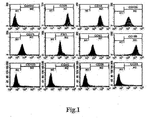
- ADSCs expresses mainly CD44, CD73, CD90, CD105, CD166, CD29, CD49e and HLA-ABC, but not CD34, CD3, CD19, CD45, CD14, CD31, CD62L, CD95L and HLA-DR (shown in Fig.1 ) .And the result is almost the same as the results of other MSCs.
- ADSCs are BMSCs express CD10 and CD106, while ADSCs expressing CD10 is only 5% ⁇ 20%; and almost all ADSCs-express GD49f and CD54, and BMSCs seldom express those.
- the first miRNA is miRNA-138-1
- the short hairpin DNA sequence corresponding to miRNA-138-1 sequence is as follows:
- the second miRNA is miRNA-138-2, and the short hairpin DNA sequence corresponding to miRNA-138-2 sequence is as follows:
- the third miRNA is miRNA-433, and the short hairpin DNA sequence corresponding to miRNA-433 sequence is as follows:
- miRNAs can be acquired by the method of chemistry synthesis, and in order to enhance stability, the composed monomers of those small RNAs can conduct wholly or partly different chemical modification, such as methoxy- or ethoxy-modification.
- the method of preparation active ingredients of miRNAs of the present invention is as follows:
- Example 3 The preparation and cell transfection of nanoparticles of small nucleic acids and polypeptides
- the present invention further optimizes detailed inducing schemes, here are disclosed 8 kinds of inducing formula as shown in Table 1. From the table, it can be seen that the efficiency of second inducing formulation of scheme 3 is highest, and it can enable 80% of human mesenchymal stem cells transdetermine to hematopoietic stem cells, es through transfection once a day, totally 2 times. It is greatly improved than our original induction method, so that this technology can make it possible to obtain clinical-grade stem cells. And it can be further used to treat blood diseases such as aplastic anemia and leukemia. Table 1.
- Example 4 Small nucleic acid-peptide nanoparticles inducing mesenchymal stem cells transdetermine to hematopoietic stem cells.
- adherent spindle mesenchymal stem cells transform into suspended round stem cells. It is cultivated at least 3 days as the cell density of 5 ⁇ 10 5 /ml in the medium(formula shown in Table 3) of inducing and amplifying of hematopoietic stem cells, and these stem cells lose gradually the specific antigens (such as CD44, CD73, CD105, CD166, CD29, Flk-1) of mesenchymal stem cell and acquire meanwhile the surface antigen(such as CD34, CD133, CD49f, CD38, CD45, CD41 and CD90) (shown is Fig. 4 ) of hematopoietic stem cell. And then they acquire quick amplification.
- specific antigens such as CD44, CD73, CD105, CD166, CD29, Flk-1
- the transfected single cells are separated and then inoculated on the 24-hole culture plate(bought from Corning company) covered with methyl cellulose, and adding cytokines of inducing hematopoietic stem cells to amplify and other necessary ingredients(formulation shown in Table 3), and the cultivation condition: 37°C, 5% CO 2 .
- the formulation of the medium described herewith which induces hematopoietic stem cells to amplify is shown in reference Table 3. Observed on the 15 th day, it can be seen the formation of cell colony (shown in Fig. 7 ).
- the method is more efficient and quicker compared with cultivated method of colonies of hematopoietic stem cells used widely nowadays.
- the cultivated method usually used easily leads to differentiation of hematopoietic stem cells and hemopoietic progenitor cells and lower multiple of amplification.
- Reference Table 3 3.
- Amplification medium formula of hematopoietic stem cell Ingredient Content DMEM/F12 basic medium 80-100% (v/v) Sonic hedgehog (shh) 0-1 ⁇ g/ml Delta1 0-1 ⁇ g/ml FGF2 0-1 ⁇ g/ml IGFBP 0-1 ⁇ g/ml SCF 0-1 ⁇ g/ml Angiopoietin 0-1 ⁇ g/ml TPO 0-1 ⁇ g/ml MBP 0-1 ⁇ g/ml LIF 0-1 ⁇ g/m TGF- ⁇ 0-1 ⁇ g/ml TEPA (Tetraethylenepentamine) 0-100 ⁇ M NAC (N-acetyl cysteine) 1-5 mM
- Example 5 Two-time transplantation experiment shows these transformed hematopoietic stem cells can rebuild hematopoietic function.
- Mesenchymal stem cells transfected with small RNA molecules are respectively transplanted into mice which are treated by radiation of lethal dose.
- Hematopoietic cells differentiated from human adipose-derived mesenchymal stem cells can be detected after 10 weeks. And then hematopoietic stem cells differentiated from human adipose-derived mesenchymal stems are separated from murine bone marrow, and are transplanted into other mice treated by radiation of lethal dose again.
- Murine bone marrow is analyzed by FACS through anti-human monoclonal antibody after 10 weeks; and then it is found that the expression of gene symbolic molecules of hematopoietic stem cells and hemopoietic progenitor cells can be detected in the bone marrow of the mice treated by radiation of lethal dose.
- These hemopoietic progenitor cells can further differentiate to blood cells which specifically express the molecule markers such as CD33, CD13, CD19, CD3, CD235, CD61 and CD56 etc.(shown in Fig.8 ). And it is visible that the induced hematopoietic stem cells can be used in treating blood diseases such as aplastic anemia and leukemia.
- a method rapidly inducing large-scale and high-purity mesenchymal stem cells to transdetermine into hematopoietic stem cells which includes the steps as follows: 1) preparation of homogeneous medium of mesenchymal stem cells; 2)Combination of a plurality of small RNA molecules; 3) assembling and transfection of nanoparticles of nucleic acids and polypeptides; 4) inducing and amplifying medium of post-transdetermined hematopoietic stem cells; 5)activating multiple hemopoiesis-related genes.
- the induced hematopoietic stem cells can be used in treating blood diseases such as aplastic anemia and leukemia
- the present invention provides some endogenous miRNAs and the derivatives thereof, they are different from the shRNAs whose fragments of stems and loops are totally complementary introduced in our former patent. It is a totally new resource of hematopoietic stem cells, and has much higher transformation efficiency, and the efficiency is 8-10 times than that of our former patent, and enable the clinical application. It resolves effectively the bottleneck question of efficient transfection small RNAs into primary mesenchymal stem cells, and prevents effectively the occurance of easy differentiation of hematopoietic stem cells into downstream blood cells during the process of amplification of hematopoietic stem cells, and activate effectively multiple genes related to occurrence of hematopoietic stem cells.
- a method can rapidly induce large-scale and high-purity mesenchymal stem cells to transdetermine into hematopoietic stem cells, includes the steps as follows:
- the said medium refers to the medium of adding five factors of EGF, FGF-2, PDGF-BB, IGF and TGF- ⁇ into non-serum high-glucose DMEM/F12 medium.
- siR-EID1 molecule sequence targeting different loci of EID1 mRNA shown in Table 2.
- the culture of the said post-transdetermined hematopoietic stem cells refers to cultivate at least 3 days as cell density of 5 ⁇ 10 5 /ml in the medium of inducing and amplifying hematopoietic stem cells, and then finally make mesenchymal stem cells to transform into hematopoietic stem cells.
- Assembling of nucleic acid and polypeptide nanoparticles refers to preparation process of various small RNA molecules with polypeptide transfection reagents according to the proportion, procedure and time (referencing example 3), and achieves the optimal inductive efficiency through transfection of once a day, totally 2 times.
- the said activating multiple hemopoiesis-related genes refers to, but not limited to, Runx1, Bmi1, HoxB4, Gata1, Gata2, Gfi1, Sall4, Pu.1, Scl, Mcl, C-myc, C-myb, Kcl4, Cxcr4, and Crb.
Landscapes
- Health & Medical Sciences (AREA)
- Engineering & Computer Science (AREA)
- Life Sciences & Earth Sciences (AREA)
- Biomedical Technology (AREA)
- Genetics & Genomics (AREA)
- Wood Science & Technology (AREA)
- Organic Chemistry (AREA)
- Biotechnology (AREA)
- Chemical & Material Sciences (AREA)
- Bioinformatics & Cheminformatics (AREA)
- Zoology (AREA)
- General Engineering & Computer Science (AREA)
- Hematology (AREA)
- General Health & Medical Sciences (AREA)
- Microbiology (AREA)
- Biochemistry (AREA)
- Molecular Biology (AREA)
- Cell Biology (AREA)
- Immunology (AREA)
- Developmental Biology & Embryology (AREA)
- Physics & Mathematics (AREA)
- Biophysics (AREA)
- Plant Pathology (AREA)
- Micro-Organisms Or Cultivation Processes Thereof (AREA)
- Medicines Containing Material From Animals Or Micro-Organisms (AREA)
Description
- The present invention relates to the field of biotechnology, in particular refers to a method which can rapidly induce large-scale and high-purity mesenchymal stem cells to transdetermine into hematopoietic stem cells.
- White adipose tissue (WAT), the main source of adipose-derived stem cell (AD-MSCs),is widely distributed in the body and abundant. Cell cloning experiment has proved that bone marrow derived mesenchymal stem cells (Bone-marrow mesenchymal stem cell, BMSCs) only is 0.2×10⁻⁵ - 0.1×10⁻⁵ of adult bone marrow, and the cloning efficiency of stem cell obtained from adipose tissue is 100-500 times of that of BMSCs. The proportion and proliferation ability of BMSCs in bone-marrow descends with the increasing of age and incidence rate of osteoporosis, but the quantity of ADSCs in adipose tissue does not decrease with the increasing of age of the donors. The ability of amplification in vitro and renewability of ADSC is strong, and cell fusion is more than 90% after 5-7 days of primary culture, and Logarithmic growth phase occurs three times in one month, and can be passaged stably more than 20 generations; It is not special selectivity for serum when cultured in vitro, and can grow well without additives, and growth and phenotype of ADSCs is not changed after freezing of liquid nitrogen and long-term passage generations.
- ADSCs has multipotent differentiation capacity, and ADSCs can directionally differentiates into a variety of tissue cells such as osteoblast, chondrocytes, adipocytes, endothelial cells, skeletal muscle cells, cardiac cells, pancreatic endocrine-like cells, liver cells and optic nerve cells etc. under different induced culture conditions. But it is not clear whether they can be transformed into hematopoietic stem cell (HSCs) till now.
- Hematopoietic stem cell is the most effective method of treating hemopathy, especially for leukemia. Leukemia has the trend of increasing significantly in China recently as same as other tumor diseases, and presents the character of younger-age trend. Leukemia accounts for 5% of malignant cancer, and incidence is in the majority in children and young people. The most effective method of treating leukemia is hematopoietic stem cell treatment. Families of patients and related sectors of society use all available resources to find a suitable matching hematopoietic stem cells, but the possibility of matching is extremely small. Therefore it is pushed the establishment of a national stem cell bank, but the expense of each bank is about 2 hundred million yuan, and its high economic cost can be imagined. But technically it is not completely rule out the possibility of immune rejection and tumorigenesis. Furthermore, the high-quality medical treatment cannot be assured due to limited quantity of stem cells and lacking of non-differentiated amplification technique. For all those above-mentioned reasons, it exists urgent need for people to discover new sources of hematopoietic stem cells and to develop new techniques and methods of non-differentiated amplification of hematopoietic stem cells.
- Recent research has discovered that the expression of small RNA in different types of hematopoietic cells is significantly different, and the said difference plays very important regulation effect in the process of cell development. For instance, iR-181 is related with B-lymphocyte development, miR-142 and miR-223 are related with development of T-lymphocytes, miR-221 and miR-222 are related with human erythrocytopoiesis, miR-223 is related with granulocyte cell differentiation of mice, and miR-10, miR-126 and miR-17 are related with decreasing of megakaryocyte. Beyond that, people also discovered that some miRNA, such as miR-130a and miR-10a, induce cell differentiation through affecting transcription factor genes of HOXA1gene and MAFB gene.
- The present invention provides a method which can rapidly induce large-scale and high-purity mesenchymal stem cells to transdetermine into hematopoietic stem cells, resolving the technical bottleneck problem of cell matching difficulties, immune rejection and quantity limitation of hematopoietic stem cells in prior art of hematopoietic stem cell of treatment.
- The technical resolution of the present invention is achieved in that: a method which can rapidly induce large-scale and high-purity mesenchymal stem cells to transdetermine into hematopoietic stem cells, includes the steps as follows:
- 1) preparation of homogeneous medium of mesenchymal stem cells;
- 2) Combination of a plurality of small RNA molecules;
- 3) assembling and transfection of nanoparticles of nucleic acids and polypeptides;
- 4) inducing and amplifying medium of post-transdetermined hematopoietic stem cells;
- 5) activating multiple hemopoiesis-related genes.
- As preferred technical solution, the said medium refers to the medium of adding five factors of EGF, FGF-2, PDGF-BB, IGF and TGF-β into non-serum high-glucose DMEM/F12 medium.
- The said siR-EID1 molecule sequence targeting different loci of EID1 mRNA shown in Table 2.
- As preferred technical solution, the culture of the said post-transdetermined hematopoietic stem cells refers to cultivate at least 3 days as cell density of 5×10⁵/ml in the medium of inducing and amplifying hematopoietic stem cells.
- Assembling of nucleic acid and polypeptide nanoparticles refers to preparation process of various small RNA molecules with polypeptide transfection reagents according to the proportion, procedure and time in example 3, and achieves the optimal inductive efficiency through transfection of once a day, totally 2 times.
- As preferred technical solution, the said activating multiple hemopoiesis-related genes refers to, but not limited to, Runx1, Bmi1, HoxB4, Gata1, Gata2, Gfi1, Sall4, Pu.1, Scl, Mcl, C-myc, C-myb, Kcl4, Cxcr4, and Crb.
- The formula of mesenchymal stem cell medium can be made to different cultivation kit, which includes cell proliferation factors and cell differentiation inhibitors needed in proliferation of different mesenchymal stem cells.
- The formula of hematopoietic stem cells inducing and amplification medium can be made to different cultivation kit, which includes cell proliferation factors, and cell differentiation inhibitors needed in proliferation of hematopoietic stem cells. The detailed formula shown in reference Table 3.
- The induced hematopoietic stem cells obtained by the method of the present invention can be used in the treatment of blood diseases, such as aplastic anemia and leukemia.
- The present invention is further described by combined the detailed embodiments.
- The acquiring of fat / bone marrow / umbilicalcord is carried out under the premise of donor consent. The collection, separation and cultivation of the human fat-derived stem cells: fat aspirates are divided into two components: one is low-density lipid component, and the other is high-density aqueous component, liquid component. The liquid component is used for source of fat-derived stem cells. The acquired adipose tissue is flushed repeatedly 3-5 times by using same volume of PBS under aseptic conditions, adding 0.1 % I type collagenase, water-bath shaking at 37 °C, digested 60 min, and then a DMEM medium containing 10% fetal calf serum to terminate digestion. Centrifugating at 1000g for 10 min, the supernatant and the remaining suspension tissue are discarded, resuspending cells, adding 2 times the volume of red blood cell lysis buffer (NH4Cl 154 mmol / L +
KHCO 3 10 mmol / L + EDTA 0.1 mmol / L), standing for 10 min, centrifuged and the supernatant is discarded. Washing 3 times with suitable volume of PBS, filtered with 200 mesh screen, the cell suspension is counted using cell counting plate, cell inoculation as 1-3 × 10⁵ cells/cm2 in a 150cm2 culture flask, adding with 20 mL of non-serum high-glucose DMEM/F12 medium, adding with 20ng/ml EGF, 20ng/ml FGF-2, 10ng/ml PDGF-BB, 5ng/ml IGF and 0.5ng/ml TGF-β, mixed evenly, cultivating in an incubator with 5% saturated humility of CO2 at 37 °C. The medium disclosed by the present invention is a fast-amplifying and non-differentiated mesenchymal stem cell culture solution, and it can cultivate highly uniform non-differentiated mesenchymal stem cell, and provide reliable assurance for the follow-up production of hematopoietic stem cells. Using phase-contrast microscope to observe the characters of cell morphology and proliferation conditions, solution was changed for first time after 36-48h, and changed once 72h afterwards. When cell fusion is more than 80 % of the flask bottom, it is digested with conventional trypsin and then passage. - The identification of human adipose-derived stem cell: picking the 3rd or 4th generation of cell, and then digesting with 0.25% trypsin. Through flow cytometry analysis, it is discovered that ADSCs expresses mainly CD44, CD73, CD90, CD105, CD166, CD29, CD49e and HLA-ABC, but not CD34, CD3, CD19, CD45, CD14, CD31, CD62L, CD95L and HLA-DR (shown in
Fig.1 ) .And the result is almost the same as the results of other MSCs. But there is difference between ADSCs and BMSCs: most BMSCs express CD10 and CD106, while ADSCs expressing CD10 is only 5%∼20%; and almost all ADSCs-express GD49f and CD54, and BMSCs seldom express those. - Through technology of bioinformatics and related prediction software(Target Scan), we scanned and identified three kinds of miRNA(shown in
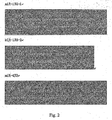
fig.2 ). The first miRNA is miRNA-138-1, and the short hairpin DNA sequence corresponding to miRNA-138-1 sequence is as follows:
- The second miRNA is miRNA-138-2, and the short hairpin DNA sequence corresponding to miRNA-138-2 sequence is as follows:

- The third miRNA is miRNA-433, and the short hairpin DNA sequence corresponding to miRNA-433 sequence is as follows:

- All those miRNAs can be acquired by the method of chemistry synthesis, and in order to enhance stability, the composed monomers of those small RNAs can conduct wholly or partly different chemical modification, such as methoxy- or ethoxy-modification. The method of preparation active ingredients of miRNAs of the present invention is as follows:
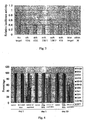
- Synthesizing 4 different kinds of nucleotide monomers to three different kinds of small RNA single strands through RNA/DNA synthesizer according to special designed sequence, and the sequences of those small RNA single strands are shown above. The synthesized small RNA single strands are then separated and purified so as to remove other ingredients, and annealed to form three characteristic miRNAs. Those three kinds of miRNA molecules are freezed and concentrated to form dry powder as small nucleic acid active ingredients in the formula, and stored at low temperature. The dry powder includes miRNA-138-1, miRNA-138-2 and miRNA-433, and each miRNA contains a seed fragment of EID1 gene. They respectively co-transfected adipose mesenchymal stem cells together with luciferase plasmid (pRL-TK) containing 3'UTR sequence of EID1, and analysis result of luciferase activity 36 hours after transfection shows that those small RNA molecules(including siR-EID1, shR-EID1 and sRNA-M) can all effectively down-regulate the target gene EID1(shown in
fig.3 ),and can make different histone acetylation and multiple transcription factors acetylation, consequently active mesenchymal stem cells and make them transform to other stem cells easily. In order to enhance interference effect of small RNAs, we adopt the combined strategy of those three kinds of small RNAs (sRNA-M), and the.final active ingredients of small nucleic acids are mixed and prepared according to the proportion of 1:1:1 by dry powder weight after the synthesis of miRNA-138-1, miRNA-138-2 and miRNA-433. - Mixture of above-mentioned small nucleic acid ingredients and cell penetrating peptide(bought from Beijing Giliao Biotechnology Development Co., Ltd.) are dissolved respectively in medical-grade deionized water, evenly mixed for 10min, and then slowly dripping the solution of small nucleic acid ingredients into the solution of cell penetrating peptide under stirring state, according to ratio of nucleic acid to peptide, es. 1: 10 to 1: 100. Keep stirring and enable small nucleic acid ingredients and cell penetrating peptide to mix fully, standing for 20min, and then make them fully self-assemble into nanoparticles, and then ready to use.
- In order to improve the determining efficiency of small RNAs of inducing human mesenchymal stem cells to hematopoietic stem cells, the present invention further optimizes detailed inducing schemes, here are disclosed 8 kinds of inducing formula as shown in Table 1. From the table, it can be seen that the efficiency of second inducing formulation of scheme 3 is highest, and it can enable 80% of human mesenchymal stem cells transdetermine to hematopoietic stem cells, es through transfection once a day, totally 2 times. It is greatly improved than our original induction method, so that this technology can make it possible to obtain clinical-grade stem cells. And it can be further used to treat blood diseases such as aplastic anemia and leukemia.
Table 1. Inducing scheme of transdetermining human mesenchymal stem cells to hematopoietic stem cells Scheme sRNA (µg) Conversion Efficiency (%) First Second 1 shR-EID1 (Table 2) 1 3±2.1 6±2.3 4 6±2.4 11±1.9 2 siR-EID1 (Table 2) 1 9±1.8 10±2.7 4 6±2.5 9±3.3 3 MiRNA-138-1+miR433+miRNA138-2 1 37±4.8 23±4.5 2 48±6.3 33±4.6 4 MiR-138-1 +siEID1 1 32±5.9 13±3.6 2 38±4.1 27±1.0 Table 2. Sequences of siR-EID1 molecules targeting different loci of EID1mRNA No. Sequence (positive-sense strand) 1 GGAGGACGACTACGACTATTT 2 GCATCTGTCTTGCTGGAAGCT 3 GGTTGAGCGGTTTGCACAATG 4 GGTTTGCACAATGTCGGAAAT 5 GGCGAGGAATTTGATGACTGG 6 GCGAGGAATTTGATGACTGGG 7 GCTCTTGAAGAAGCCGACAAG 8 GACAAGATGTTTCTGAGAACA 9 GGCGGGTTTCAGATGCATTAT 10 GCGGGTTTCAGATGCATTATG 11 GGTTTCAGATGCATTATGATT 12 GGACCCAACTTTCCGCTATCT 13 GCCACAGTTATCAAAGGCTAC 14 GACACTAAATGTGTGTGAATG 15 GCCCAGAAATTACCTTGGTAT 16 GCTTGTTATTTGTCATGCACC 17 GCTTCAGCTATCTAATTCACA 18 GCCCTATCAATGAGTATGTTG 19 GCCGTGGTTACCTTACTAAGA 20 GCTGAAGTTCTAGGAGAGTAA 21 GCTCCATTATAGCAGTAAAGA 22 GAACGAATATCCAATGCAACA 23 CAAATACTCACCATTGTGTTA - 1 to 2 days after transfecting of miRNA-433 and miR-138 into human mesenchymal Stem cells, adherent spindle mesenchymal stem cells transform into suspended round stem cells. It is cultivated at least 3 days as the cell density of 5×10⁵/ml in the medium(formula shown in Table 3) of inducing and amplifying of hematopoietic stem cells, and these stem cells lose gradually the specific antigens (such as CD44, CD73, CD105, CD166, CD29, Flk-1) of mesenchymal stem cell and acquire meanwhile the surface antigen(such as CD34, CD133, CD49f, CD38, CD45, CD41 and CD90) (shown is
Fig. 4 ) of hematopoietic stem cell. And then they acquire quick amplification. - Analyzing these transformed stem cells through FACS double-antigen labeling, and the result shows that in these stem cells, 90% of these cells express surface antigens(such as CD34, CD133, CD150, CD49f, CD45, CD41 and CD90) of long-term hematopoietic stem cells(LT-HSCs) and short-term hematopoietic stem cells(ST-HSCs), and only 10% of these cells express surface symbolic antigens(such as CD38 and FLK2) of hemopoietic progenitor cell(as shown in
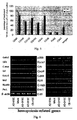
Fig. 5 ). - To detect these transformed stem cells with the method of RT-PCR, and then discovered that they can highly express many important hematopoiesis-related gene, such as Runx1, Bmi1, HoxB4, Gata1, Gata2, Gfi1, Sall4, Pu.1, Scl, Mcl, C-myc, C-myb, Kcl4, Cxcr4, and Crb, and hence make them more similar with nature-occurred hematopoietic stem cells at the aspect of gene expression, and different with mesenchymal stem cells which they come from(as shown in
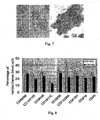
Fig. 6 ). The activation of these critical hematopoiesis-regulated genes enables mesenchymal stem cells to transdetermine into hematopoietic stem cells. - In order to verify that these transformed single cells can self-renew through cultivation, the transfected single cells are separated and then inoculated on the 24-hole culture plate(bought from Corning company) covered with methyl cellulose, and adding cytokines of inducing hematopoietic stem cells to amplify and other necessary ingredients(formulation shown in Table 3), and the cultivation condition: 37°C, 5% CO2. The formulation of the medium described herewith which induces hematopoietic stem cells to amplify is shown in reference Table 3. Observed on the 15th day, it can be seen the formation of cell colony (shown in
Fig. 7 ). And the method is more efficient and quicker compared with cultivated method of colonies of hematopoietic stem cells used widely nowadays. The cultivated method usually used easily leads to differentiation of hematopoietic stem cells and hemopoietic progenitor cells and lower multiple of amplification.Reference Table 3. Amplification medium formula of hematopoietic stem cell Ingredient Content DMEM/F12 basic medium 80-100% (v/v) Sonic hedgehog (shh) 0-1µg/ml Delta1 0-1µg/ml FGF2 0-1µg/ml IGFBP 0-1µg/ml SCF 0-1µg/ml Angiopoietin 0-1µg/ml TPO 0-1µg/ml MBP 0-1µg/ml LIF 0-1µg/m TGF-β 0-1µg/ml TEPA (Tetraethylenepentamine) 0-100 µM NAC (N-acetyl cysteine) 1-5 mM - Mesenchymal stem cells transfected with small RNA molecules are respectively transplanted into mice which are treated by radiation of lethal dose. Hematopoietic cells differentiated from human adipose-derived mesenchymal stem cells can be detected after 10 weeks. And then hematopoietic stem cells differentiated from human adipose-derived mesenchymal stems are separated from murine bone marrow, and are transplanted into other mice treated by radiation of lethal dose again. Murine bone marrow is analyzed by FACS through anti-human monoclonal antibody after 10 weeks; and then it is found that the expression of gene symbolic molecules of hematopoietic stem cells and hemopoietic progenitor cells can be detected in the bone marrow of the mice treated by radiation of lethal dose. These hemopoietic progenitor cells can further differentiate to blood cells which specifically express the molecule markers such as CD33, CD13, CD19, CD3, CD235, CD61 and CD56 etc.(shown in
Fig.8 ). And it is visible that the induced hematopoietic stem cells can be used in treating blood diseases such as aplastic anemia and leukemia. - Due to adoption of the above-mentioned technical solution, a method rapidly inducing large-scale and high-purity mesenchymal stem cells to transdetermine into hematopoietic stem cells, which includes the steps as follows: 1) preparation of homogeneous medium of mesenchymal stem cells; 2)Combination of a plurality of small RNA molecules; 3) assembling and transfection of nanoparticles of nucleic acids and polypeptides; 4) inducing and amplifying medium of post-transdetermined hematopoietic stem cells; 5)activating multiple hemopoiesis-related genes. It resolved the bottleneck question of difficulty of cell matching, immune rejection and quantity limitation of hematopoietic stem cells in treatment of hematopoietic stem cells in existing technique. The induced hematopoietic stem cells can be used in treating blood diseases such as aplastic anemia and leukemia
- The present invention provides some endogenous miRNAs and the derivatives thereof, they are different from the shRNAs whose fragments of stems and loops are totally complementary introduced in our former patent. It is a totally new resource of hematopoietic stem cells, and has much higher transformation efficiency, and the efficiency is 8-10 times than that of our former patent, and enable the clinical application. It resolves effectively the bottleneck question of efficient transfection small RNAs into primary mesenchymal stem cells, and prevents effectively the occurance of easy differentiation of hematopoietic stem cells into downstream blood cells during the process of amplification of hematopoietic stem cells, and activate effectively multiple genes related to occurrence of hematopoietic stem cells.
- In order to describe more clearly the technical solutions of the embodiments of the present invention and existing technology, the drawings used in the embodiments and existing technology are described briefly.
-
Fig. 1 is specific antigens on the surface of human adipose mesenchymal stem cell. The flow cytometry analysis shows that human adipose mesenchymal stem cells are CD29, CD44, Flk1, CD90, CD105, CD71 and CD166 positive, and CD133, CD38, CD33 and CD45 negative; -
Fig.2 is the second structure of miRNA-138-1, miR-138-2 and miR-433 molecules; -
Fig.3 is the target gene EIDI which can be effectively recognized by different small RNAs molecules; -
Fig.4 is the changing of cell surface specific antigens when the human mesenchymal stem cells transdetermined into hematopoietic stem cells; -
Fig. 5 is the classification and proportion of the transdetermined hematopoietic stem cells and hematopoietic progenitor cells; -
Fig. 6 is the PCR electrophoretic analysis comparing expression difference of hematopoiesis-related genes in human mesenchymal stem hematopoietic stem cells, and stem cells transfected with different small RNA molecules; -
Fig. 7 is colony formation and cellular morphology of transdetermined hematopoietic stem cells; -
Fig. 8 is the condition of the second-implantation and differentiation to various blood cells of the transdetermined hematopoietic stem cells and hematopoietic progenitor cells in mice. - The technical solution in the embodiments of the present invention is described clearly and integrally, combined with the drawings in the embodiments of the present invention. Obviously, the embodiments described are only a part of the embodiments of the present invention, not all the embodiments. Based on the embodiments of the present invention, the all other embodiments acquired by the skilled persons of the technical field without inventive labor are all belong to the protective scope of the present invention.
- A method can rapidly induce large-scale and high-purity mesenchymal stem cells to transdetermine into hematopoietic stem cells, includes the steps as follows:
- 1) preparation of homogeneous medium of mesenchymal stem cells;
- 2) Combination of a plurality of small RNA molecules;
- 3) assembling and transfection of nanoparticles of nucleic acids and polypeptides;
- 4) inducing and amplifying medium of post-transdetermined hematopoietic stem cells;
- 5) activating multiple hemopoiesis-related genes.
- The said medium refers to the medium of adding five factors of EGF, FGF-2, PDGF-BB, IGF and TGF-β into non-serum high-glucose DMEM/F12 medium.
- The said siR-EID1 molecule sequence targeting different loci of EID1 mRNA shown in Table 2.
- The culture of the said post-transdetermined hematopoietic stem cells refers to cultivate at least 3 days as cell density of 5×10⁵/ml in the medium of inducing and amplifying hematopoietic stem cells, and then finally make mesenchymal stem cells to transform into hematopoietic stem cells.
- Assembling of nucleic acid and polypeptide nanoparticles refers to preparation process of various small RNA molecules with polypeptide transfection reagents according to the proportion, procedure and time (referencing example 3), and achieves the optimal inductive efficiency through transfection of once a day, totally 2 times.
- The said activating multiple hemopoiesis-related genes refers to, but not limited to, Runx1, Bmi1, HoxB4, Gata1, Gata2, Gfi1, Sall4, Pu.1, Scl, Mcl, C-myc, C-myb, Kcl4, Cxcr4, and Crb.
- The above-described are only the preferable examples of the present invention, and not the limitation for the present invention, and any changing, replacements and modifications etc. should be included the protective scope of the present invention.
Claims (7)
- A method which can rapidly induce large-scale and high-purity mesenchymal stem cells to transdetermine into hematopoietic stem cells, characterized in that it includes the steps as follows:1) preparation of homogeneous medium of mesenchymal stem cells;2) Combination of a plurality of small RNA molecules;3) assembling and transfection of nanoparticles of nucleic acids and polypeptides;4) inducing and amplifying medium of post-transdetermined hematopoietic stem cells;5) activating multiple hemopoiesis-related genes;wherein the various small RNA molecules of the step 2) are miR-138-1, miR-138-2, miR-433 and siR-EID1 molecule sequence targeting different loci of EID1 mRNA.
- The said method which can rapidly induce large-scale and high-purity mesenchymal stem cells to transdetermine into hematopoietic stem cells of claim 1, the medium of the said step 1) refers to the medium of adding five factors of EGF, FGF-2, PDGF-BB, IGF and TGF-β into non-serum high-glucose DMEM/F12 medium.
- The said method which can rapidly induce large-scale and high-purity mesenchymal stem cells to transdetermine into hematopoietic stem cells of claim 1, the combination proportion of various small RNA molecules of the said step 2) is: the proportion of dry powders of miR-138-1, miR-138-2, miR-433 is 1:1:1 by weight.
- The said method which can rapidly induce large-scale and high-purity mesenchymal stem cells to transdetermine into hematopoietic stem cells of claim 1, the assembling method of nanoparticles of nucleic acid and polypeptide of the said step 3): mixture of combination of multiple small RNA molecules and polypeptide transfection reagents are dissolved respectively in medical-grade deionized water, and then slowly dripping the solution of multiple small nucleic acid mixture into the solution of polypeptide transfection reagents under stirring state, keep stirring and enable small nucleic acid active ingredients and polypeptide transfection reagents to mix fully, standing for 20min, and then make them fully self-assemble into nanoparticles.
- The said method which can rapidly induce large-scale and high-purity mesenchymal stem cells to transdetermine into hematopoietic stem cells of claim 4, the way of transfection of the said nanoparticles of nucleic acid and polypeptide into mesenchymal stem cells is once a day, totally two times.
- The said method which can rapidly induce large-scale and high-purity mesenchymal stem cells to transdetermine into hematopoietic stem cells of claim 1, the culture of the said post-transdetermined hematopoietic stem cells refers to cultivate at least 3 days as cell density of 5×10⁵/ml in the medium of inducing and amplifying hematopoietic stem cells.
- The said method which can rapidly induce large-scale and high-purity mesenchymal stem cells to transdetermine into hematopoietic stem cells of claim 1, the said activating multiple hemopoiesis-related genes refers to Runx1, Bmi1, HoxB4, Gata1, Gata2, Gfi1, Sall4, Pu.1, Scl, Mcl, C-myc, C-myb, Kcl4, Cxcr4, and Crb.
Applications Claiming Priority (2)
| Application Number | Priority Date | Filing Date | Title |
|---|---|---|---|
| CN201310028871.XA CN103088065B (en) | 2013-01-25 | 2013-01-25 | Method capable of forming hematopoietic stem cells by quickly inducing reversal decision of mesenchymal stem cells in large scale with high purity |
| PCT/CN2013/072150 WO2014114023A1 (en) | 2013-01-25 | 2013-03-04 | Method capable of massively and rapidly inducing mesenchymal stem cells to transdetermine into hematopoietic stem cells of high purity |
Publications (3)
| Publication Number | Publication Date |
|---|---|
| EP2799552A1 EP2799552A1 (en) | 2014-11-05 |
| EP2799552A4 EP2799552A4 (en) | 2015-03-25 |
| EP2799552B1 true EP2799552B1 (en) | 2017-05-31 |
Family
ID=48201193
Family Applications (1)
| Application Number | Title | Priority Date | Filing Date |
|---|---|---|---|
| EP13834380.1A Active EP2799552B1 (en) | 2013-01-25 | 2013-03-04 | Method capable of massively and rapidly inducing mesenchymal stem cells to transdetermine into hematopoietic stem cells of high purity |
Country Status (5)
| Country | Link |
|---|---|
| US (2) | US9481867B2 (en) |
| EP (1) | EP2799552B1 (en) |
| JP (1) | JP5878650B2 (en) |
| CN (1) | CN103088065B (en) |
| WO (1) | WO2014114023A1 (en) |
Families Citing this family (8)
| Publication number | Priority date | Publication date | Assignee | Title |
|---|---|---|---|---|
| CN106318979B (en) * | 2015-02-10 | 2021-02-19 | 黄兵 | Method for inducing transdifferentiation of mesenchymal stem cells into skin stem cells |
| CN106190970B (en) * | 2015-04-30 | 2021-02-19 | 黄兵 | Method for inducing direct transdifferentiation of umbilical cord mesenchymal stem cells into erythroblasts |
| CA3009225A1 (en) * | 2015-12-23 | 2017-06-29 | Monash University | Cell reprogramming |
| CN107418934B (en) * | 2016-05-24 | 2021-01-01 | 南开大学 | Application of TNFSF15 protein in-vitro amplification of human cord blood hematopoietic stem cells |
| CN115252807A (en) | 2016-07-27 | 2022-11-01 | 利兰斯坦福初级大学董事会 | Disintegrated cell-penetrating complexes for nucleic acid delivery |
| CN110016083A (en) * | 2019-04-19 | 2019-07-16 | 温州医科大学 | A kind of FGF-1 fusion protein and its use in the treatment of spinal cord injury |
| CN112089733B (en) * | 2020-11-05 | 2021-03-12 | 广东赛尔生物科技有限公司 | Application of modified umbilical cord stem cells in preparation of anti-aging pharmaceutical composition or health-care product |
| CN115558642B (en) * | 2022-10-26 | 2025-05-02 | 银丰生物工程集团有限公司 | Semi-solid culture medium for inducing colony growth and preparation method and application thereof |
Family Cites Families (11)
| Publication number | Priority date | Publication date | Assignee | Title |
|---|---|---|---|---|
| WO2005040360A1 (en) * | 2003-10-14 | 2005-05-06 | Universitätsklinikum Hamburg-Eppendorf | Blood products from mesenchymal stem cells |
| US8440460B2 (en) * | 2005-07-27 | 2013-05-14 | The Board Of Regents Of The University Of Texas System | Methods for transdifferentiating cells |
| US7981446B2 (en) * | 2007-11-26 | 2011-07-19 | Forhumantech. Co., Ltd. | Pharmaceutical compositions and methods for delivering nucleic acids into cells |
| WO2010022553A1 (en) * | 2008-08-25 | 2010-03-04 | Institute Of Basic Medical Sciences, Chinese Academy Of Medical Sciences | An endogenous short hairpin rna and the use of the same |
| CN101368180A (en) * | 2008-10-15 | 2009-02-18 | 中国科学院生物物理研究所 | A class of small RNA molecules capable of differentiating mesenchymal stem cells into hematopoietic cells and their targets |
| US9447379B2 (en) * | 2010-02-27 | 2016-09-20 | Reza Izadpanah | Derivation of hematopoietic cells from adult mesenchymal stem cells |
| WO2011159684A2 (en) * | 2010-06-15 | 2011-12-22 | Cellular Dynamics International, Inc. | Generation of induced pluripotent stem cells from small volumes of peripheral blood |
| US9309496B2 (en) * | 2010-08-23 | 2016-04-12 | The Research Foundation For The State University Of New York | Method for expansion of stem cells and the use of such cells |
| WO2012054935A2 (en) * | 2010-10-22 | 2012-04-26 | Salk Institute For Biological Studies | Formation of hematopoietic progenitor cells from mesenchymal stem cells |
| CA2866590A1 (en) * | 2012-03-07 | 2013-09-12 | Janssen Biotech, Inc. | Defined media for expansion and maintenance of pluripotent stem cells |
| CA2918486C (en) * | 2012-07-20 | 2020-12-08 | The Regents Of The University Of California | Methods for producing cartilage and bone |
-
2013
- 2013-01-25 CN CN201310028871.XA patent/CN103088065B/en active Active
- 2013-03-04 EP EP13834380.1A patent/EP2799552B1/en active Active
- 2013-03-04 US US14/343,390 patent/US9481867B2/en active Active
- 2013-03-04 WO PCT/CN2013/072150 patent/WO2014114023A1/en not_active Ceased
- 2013-03-04 JP JP2014557992A patent/JP5878650B2/en active Active
-
2015
- 2015-11-30 US US14/953,990 patent/US20160075997A1/en not_active Abandoned
Also Published As
| Publication number | Publication date |
|---|---|
| JP5878650B2 (en) | 2016-03-08 |
| WO2014114023A1 (en) | 2014-07-31 |
| US20160075997A1 (en) | 2016-03-17 |
| EP2799552A1 (en) | 2014-11-05 |
| US20150315545A1 (en) | 2015-11-05 |
| CN103088065A (en) | 2013-05-08 |
| JP2015509712A (en) | 2015-04-02 |
| CN103088065B (en) | 2014-12-10 |
| US9481867B2 (en) | 2016-11-01 |
| EP2799552A4 (en) | 2015-03-25 |
Similar Documents
| Publication | Publication Date | Title |
|---|---|---|
| EP2799552B1 (en) | Method capable of massively and rapidly inducing mesenchymal stem cells to transdetermine into hematopoietic stem cells of high purity | |
| Alt et al. | Fibroblasts share mesenchymal phenotypes with stem cells, but lack their differentiation and colony‐forming potential | |
| Huang et al. | Extensive ex vivo expansion of functional human erythroid precursors established from umbilical cord blood cells by defined factors | |
| Ye et al. | Blood cell-derived induced pluripotent stem cells free of reprogramming factors generated by Sendai viral vectors | |
| Bang et al. | Optimization of episomal reprogramming for generation of human induced pluripotent stem cells from fibroblasts | |
| US11339372B2 (en) | Serum-free medium inducing differentiation of umbilical cord mesenchymal stem cell into insulin-secretion-like cell and preparation method and use thereof | |
| Ragni et al. | Differential microRNA signature of human mesenchymal stem cells from different sources reveals an “environmental-niche memory” for bone marrow stem cells | |
| Dai et al. | Non-genetic direct reprogramming and biomimetic platforms in a preliminary study for adipose-derived stem cells into corneal endothelia-like cells | |
| EP3828263A1 (en) | Method and kit for preparing clinical-grade mesenchymal stem cells derived from human induced pluripotent stem cells | |
| Yang et al. | Generation of neurospheres from human adipose‐derived stem cells | |
| WO2012096461A2 (en) | Composition for suspension culturing of stem cells | |
| CN101821383A (en) | A medium and method for in vitro large-scale culture of human adult primitive mesenchymal stem cells, and obtained primitive mesenchymal stem cells and applications thereof | |
| US9163234B2 (en) | Culture method | |
| CN106318979B (en) | Method for inducing transdifferentiation of mesenchymal stem cells into skin stem cells | |
| CN101368180A (en) | A class of small RNA molecules capable of differentiating mesenchymal stem cells into hematopoietic cells and their targets | |
| CN104450622B (en) | Recombinant cell line, and preparation method and application thereof | |
| CN106190970B (en) | Method for inducing direct transdifferentiation of umbilical cord mesenchymal stem cells into erythroblasts | |
| CN102131929A (en) | A kind of endogenous short hairpin RNA and its application | |
| CN108148808B (en) | Induction medium for the induction of neural precursor cells | |
| US20260036570A1 (en) | Biliary tract cancer organoid derived from human chemically-derived hepatic progenitors (hcdhs) using crispr-cas9 | |
| JP5645197B2 (en) | A novel method for maintaining the undifferentiated state of stem cells | |
| Zhu et al. | Differentiation of Human umbilical cord-derived mesenchymal stem cells to melanocyte, Osteogenic and Neural cells in vitro | |
| CN111793609B (en) | Method for promoting proliferation and differentiation of adipose-derived stem cells | |
| Babiker et al. | Production of insulin producing cells from cord blood mesenchymal stem cells and their potential in cell therapy | |
| CN115505573A (en) | Genetically engineered mesenchymal stem cell with enhanced migration activity and application thereof in stem cell treatment and stem cell cosmetology |
Legal Events
| Date | Code | Title | Description |
|---|---|---|---|
| PUAI | Public reference made under article 153(3) epc to a published international application that has entered the european phase |
Free format text: ORIGINAL CODE: 0009012 |
|
| 17P | Request for examination filed |
Effective date: 20140313 |
|
| AK | Designated contracting states |
Kind code of ref document: A1 Designated state(s): AL AT BE BG CH CY CZ DE DK EE ES FI FR GB GR HR HU IE IS IT LI LT LU LV MC MK MT NL NO PL PT RO RS SE SI SK SM TR |
|
| R17P | Request for examination filed (corrected) |
Effective date: 20140313 |
|
| REG | Reference to a national code |
Ref country code: DE Ref legal event code: R079 Ref document number: 602013021831 Country of ref document: DE Free format text: PREVIOUS MAIN CLASS: C12N0015870000 Ipc: C12N0005078900 |
|
| A4 | Supplementary search report drawn up and despatched |
Effective date: 20150220 |
|
| RIC1 | Information provided on ipc code assigned before grant |
Ipc: C12N 15/11 20060101ALI20150216BHEP Ipc: C12N 5/0789 20100101AFI20150216BHEP Ipc: C12N 15/87 20060101ALI20150216BHEP |
|
| 17Q | First examination report despatched |
Effective date: 20151209 |
|
| DAX | Request for extension of the european patent (deleted) | ||
| GRAP | Despatch of communication of intention to grant a patent |
Free format text: ORIGINAL CODE: EPIDOSNIGR1 |
|
| GRAJ | Information related to disapproval of communication of intention to grant by the applicant or resumption of examination proceedings by the epo deleted |
Free format text: ORIGINAL CODE: EPIDOSDIGR1 |
|
| GRAP | Despatch of communication of intention to grant a patent |
Free format text: ORIGINAL CODE: EPIDOSNIGR1 |
|
| INTG | Intention to grant announced |
Effective date: 20161222 |
|
| INTG | Intention to grant announced |
Effective date: 20170119 |
|
| GRAS | Grant fee paid |
Free format text: ORIGINAL CODE: EPIDOSNIGR3 |
|
| GRAA | (expected) grant |
Free format text: ORIGINAL CODE: 0009210 |
|
| AK | Designated contracting states |
Kind code of ref document: B1 Designated state(s): AL AT BE BG CH CY CZ DE DK EE ES FI FR GB GR HR HU IE IS IT LI LT LU LV MC MK MT NL NO PL PT RO RS SE SI SK SM TR |
|
| REG | Reference to a national code |
Ref country code: CH Ref legal event code: EP Ref country code: GB Ref legal event code: FG4D |
|
| REG | Reference to a national code |
Ref country code: AT Ref legal event code: REF Ref document number: 897501 Country of ref document: AT Kind code of ref document: T Effective date: 20170615 |
|
| REG | Reference to a national code |
Ref country code: IE Ref legal event code: FG4D |
|
| REG | Reference to a national code |
Ref country code: DE Ref legal event code: R096 Ref document number: 602013021831 Country of ref document: DE |
|
| REG | Reference to a national code |
Ref country code: NL Ref legal event code: FP |
|
| REG | Reference to a national code |
Ref country code: LT Ref legal event code: MG4D |
|
| REG | Reference to a national code |
Ref country code: AT Ref legal event code: MK05 Ref document number: 897501 Country of ref document: AT Kind code of ref document: T Effective date: 20170531 |
|
| PG25 | Lapsed in a contracting state [announced via postgrant information from national office to epo] |
Ref country code: AT Free format text: LAPSE BECAUSE OF FAILURE TO SUBMIT A TRANSLATION OF THE DESCRIPTION OR TO PAY THE FEE WITHIN THE PRESCRIBED TIME-LIMIT Effective date: 20170531 Ref country code: ES Free format text: LAPSE BECAUSE OF FAILURE TO SUBMIT A TRANSLATION OF THE DESCRIPTION OR TO PAY THE FEE WITHIN THE PRESCRIBED TIME-LIMIT Effective date: 20170531 Ref country code: HR Free format text: LAPSE BECAUSE OF FAILURE TO SUBMIT A TRANSLATION OF THE DESCRIPTION OR TO PAY THE FEE WITHIN THE PRESCRIBED TIME-LIMIT Effective date: 20170531 Ref country code: GR Free format text: LAPSE BECAUSE OF FAILURE TO SUBMIT A TRANSLATION OF THE DESCRIPTION OR TO PAY THE FEE WITHIN THE PRESCRIBED TIME-LIMIT Effective date: 20170901 Ref country code: NO Free format text: LAPSE BECAUSE OF FAILURE TO SUBMIT A TRANSLATION OF THE DESCRIPTION OR TO PAY THE FEE WITHIN THE PRESCRIBED TIME-LIMIT Effective date: 20170831 Ref country code: LT Free format text: LAPSE BECAUSE OF FAILURE TO SUBMIT A TRANSLATION OF THE DESCRIPTION OR TO PAY THE FEE WITHIN THE PRESCRIBED TIME-LIMIT Effective date: 20170531 Ref country code: FI Free format text: LAPSE BECAUSE OF FAILURE TO SUBMIT A TRANSLATION OF THE DESCRIPTION OR TO PAY THE FEE WITHIN THE PRESCRIBED TIME-LIMIT Effective date: 20170531 |
|
| PG25 | Lapsed in a contracting state [announced via postgrant information from national office to epo] |
Ref country code: SE Free format text: LAPSE BECAUSE OF FAILURE TO SUBMIT A TRANSLATION OF THE DESCRIPTION OR TO PAY THE FEE WITHIN THE PRESCRIBED TIME-LIMIT Effective date: 20170531 Ref country code: LV Free format text: LAPSE BECAUSE OF FAILURE TO SUBMIT A TRANSLATION OF THE DESCRIPTION OR TO PAY THE FEE WITHIN THE PRESCRIBED TIME-LIMIT Effective date: 20170531 Ref country code: RS Free format text: LAPSE BECAUSE OF FAILURE TO SUBMIT A TRANSLATION OF THE DESCRIPTION OR TO PAY THE FEE WITHIN THE PRESCRIBED TIME-LIMIT Effective date: 20170531 Ref country code: BG Free format text: LAPSE BECAUSE OF FAILURE TO SUBMIT A TRANSLATION OF THE DESCRIPTION OR TO PAY THE FEE WITHIN THE PRESCRIBED TIME-LIMIT Effective date: 20170831 Ref country code: IS Free format text: LAPSE BECAUSE OF FAILURE TO SUBMIT A TRANSLATION OF THE DESCRIPTION OR TO PAY THE FEE WITHIN THE PRESCRIBED TIME-LIMIT Effective date: 20170930 |
|
| PG25 | Lapsed in a contracting state [announced via postgrant information from national office to epo] |
Ref country code: DK Free format text: LAPSE BECAUSE OF FAILURE TO SUBMIT A TRANSLATION OF THE DESCRIPTION OR TO PAY THE FEE WITHIN THE PRESCRIBED TIME-LIMIT Effective date: 20170531 Ref country code: EE Free format text: LAPSE BECAUSE OF FAILURE TO SUBMIT A TRANSLATION OF THE DESCRIPTION OR TO PAY THE FEE WITHIN THE PRESCRIBED TIME-LIMIT Effective date: 20170531 Ref country code: RO Free format text: LAPSE BECAUSE OF FAILURE TO SUBMIT A TRANSLATION OF THE DESCRIPTION OR TO PAY THE FEE WITHIN THE PRESCRIBED TIME-LIMIT Effective date: 20170531 Ref country code: SK Free format text: LAPSE BECAUSE OF FAILURE TO SUBMIT A TRANSLATION OF THE DESCRIPTION OR TO PAY THE FEE WITHIN THE PRESCRIBED TIME-LIMIT Effective date: 20170531 Ref country code: CZ Free format text: LAPSE BECAUSE OF FAILURE TO SUBMIT A TRANSLATION OF THE DESCRIPTION OR TO PAY THE FEE WITHIN THE PRESCRIBED TIME-LIMIT Effective date: 20170531 |
|
| PG25 | Lapsed in a contracting state [announced via postgrant information from national office to epo] |
Ref country code: IT Free format text: LAPSE BECAUSE OF FAILURE TO SUBMIT A TRANSLATION OF THE DESCRIPTION OR TO PAY THE FEE WITHIN THE PRESCRIBED TIME-LIMIT Effective date: 20170531 Ref country code: PL Free format text: LAPSE BECAUSE OF FAILURE TO SUBMIT A TRANSLATION OF THE DESCRIPTION OR TO PAY THE FEE WITHIN THE PRESCRIBED TIME-LIMIT Effective date: 20170531 Ref country code: SM Free format text: LAPSE BECAUSE OF FAILURE TO SUBMIT A TRANSLATION OF THE DESCRIPTION OR TO PAY THE FEE WITHIN THE PRESCRIBED TIME-LIMIT Effective date: 20170531 |
|
| REG | Reference to a national code |
Ref country code: DE Ref legal event code: R097 Ref document number: 602013021831 Country of ref document: DE |
|
| REG | Reference to a national code |
Ref country code: FR Ref legal event code: PLFP Year of fee payment: 6 |
|
| PLBE | No opposition filed within time limit |
Free format text: ORIGINAL CODE: 0009261 |
|
| STAA | Information on the status of an ep patent application or granted ep patent |
Free format text: STATUS: NO OPPOSITION FILED WITHIN TIME LIMIT |
|
| 26N | No opposition filed |
Effective date: 20180301 |
|
| PG25 | Lapsed in a contracting state [announced via postgrant information from national office to epo] |
Ref country code: SI Free format text: LAPSE BECAUSE OF FAILURE TO SUBMIT A TRANSLATION OF THE DESCRIPTION OR TO PAY THE FEE WITHIN THE PRESCRIBED TIME-LIMIT Effective date: 20170531 |
|
| PG25 | Lapsed in a contracting state [announced via postgrant information from national office to epo] |
Ref country code: MC Free format text: LAPSE BECAUSE OF FAILURE TO SUBMIT A TRANSLATION OF THE DESCRIPTION OR TO PAY THE FEE WITHIN THE PRESCRIBED TIME-LIMIT Effective date: 20170531 |
|
| REG | Reference to a national code |
Ref country code: BE Ref legal event code: MM Effective date: 20180331 |
|
| REG | Reference to a national code |
Ref country code: IE Ref legal event code: MM4A |
|
| PG25 | Lapsed in a contracting state [announced via postgrant information from national office to epo] |
Ref country code: LU Free format text: LAPSE BECAUSE OF NON-PAYMENT OF DUE FEES Effective date: 20180304 |
|
| PG25 | Lapsed in a contracting state [announced via postgrant information from national office to epo] |
Ref country code: IE Free format text: LAPSE BECAUSE OF NON-PAYMENT OF DUE FEES Effective date: 20180304 |
|
| PG25 | Lapsed in a contracting state [announced via postgrant information from national office to epo] |
Ref country code: BE Free format text: LAPSE BECAUSE OF NON-PAYMENT OF DUE FEES Effective date: 20180331 |
|
| PG25 | Lapsed in a contracting state [announced via postgrant information from national office to epo] |
Ref country code: MT Free format text: LAPSE BECAUSE OF NON-PAYMENT OF DUE FEES Effective date: 20180304 |
|
| PG25 | Lapsed in a contracting state [announced via postgrant information from national office to epo] |
Ref country code: TR Free format text: LAPSE BECAUSE OF FAILURE TO SUBMIT A TRANSLATION OF THE DESCRIPTION OR TO PAY THE FEE WITHIN THE PRESCRIBED TIME-LIMIT Effective date: 20170531 |
|
| PG25 | Lapsed in a contracting state [announced via postgrant information from national office to epo] |
Ref country code: HU Free format text: LAPSE BECAUSE OF FAILURE TO SUBMIT A TRANSLATION OF THE DESCRIPTION OR TO PAY THE FEE WITHIN THE PRESCRIBED TIME-LIMIT; INVALID AB INITIO Effective date: 20130304 Ref country code: PT Free format text: LAPSE BECAUSE OF FAILURE TO SUBMIT A TRANSLATION OF THE DESCRIPTION OR TO PAY THE FEE WITHIN THE PRESCRIBED TIME-LIMIT Effective date: 20170531 |
|
| PG25 | Lapsed in a contracting state [announced via postgrant information from national office to epo] |
Ref country code: MK Free format text: LAPSE BECAUSE OF NON-PAYMENT OF DUE FEES Effective date: 20170531 Ref country code: CY Free format text: LAPSE BECAUSE OF FAILURE TO SUBMIT A TRANSLATION OF THE DESCRIPTION OR TO PAY THE FEE WITHIN THE PRESCRIBED TIME-LIMIT Effective date: 20170531 |
|
| PG25 | Lapsed in a contracting state [announced via postgrant information from national office to epo] |
Ref country code: AL Free format text: LAPSE BECAUSE OF FAILURE TO SUBMIT A TRANSLATION OF THE DESCRIPTION OR TO PAY THE FEE WITHIN THE PRESCRIBED TIME-LIMIT Effective date: 20170531 |
|
| REG | Reference to a national code |
Ref country code: GB Ref legal event code: 732E Free format text: REGISTERED BETWEEN 20210610 AND 20210616 |
|
| PGFP | Annual fee paid to national office [announced via postgrant information from national office to epo] |
Ref country code: NL Payment date: 20241230 Year of fee payment: 13 |
|
| PGFP | Annual fee paid to national office [announced via postgrant information from national office to epo] |
Ref country code: CH Payment date: 20250401 Year of fee payment: 13 |
|
| REG | Reference to a national code |
Ref country code: CH Ref legal event code: U11 Free format text: ST27 STATUS EVENT CODE: U-0-0-U10-U11 (AS PROVIDED BY THE NATIONAL OFFICE) Effective date: 20260402 |
|
| PGFP | Annual fee paid to national office [announced via postgrant information from national office to epo] |
Ref country code: GB Payment date: 20260320 Year of fee payment: 14 |
|
| PGFP | Annual fee paid to national office [announced via postgrant information from national office to epo] |
Ref country code: DE Payment date: 20260331 Year of fee payment: 14 |
|
| PGFP | Annual fee paid to national office [announced via postgrant information from national office to epo] |
Ref country code: FR Payment date: 20260320 Year of fee payment: 14 |