EP2798013B1 - Antireflexionsbeschichtung - Google Patents
Antireflexionsbeschichtung Download PDFInfo
- Publication number
- EP2798013B1 EP2798013B1 EP12809207.9A EP12809207A EP2798013B1 EP 2798013 B1 EP2798013 B1 EP 2798013B1 EP 12809207 A EP12809207 A EP 12809207A EP 2798013 B1 EP2798013 B1 EP 2798013B1
- Authority
- EP
- European Patent Office
- Prior art keywords
- acid
- compound
- composition according
- groups
- dicarboxylic acid
- Prior art date
- Legal status (The legal status is an assumption and is not a legal conclusion. Google has not performed a legal analysis and makes no representation as to the accuracy of the status listed.)
- Active
Links
Images





Classifications
-
- C—CHEMISTRY; METALLURGY
- C09—DYES; PAINTS; POLISHES; NATURAL RESINS; ADHESIVES; COMPOSITIONS NOT OTHERWISE PROVIDED FOR; APPLICATIONS OF MATERIALS NOT OTHERWISE PROVIDED FOR
- C09D—COATING COMPOSITIONS, e.g. PAINTS, VARNISHES OR LACQUERS; FILLING PASTES; CHEMICAL PAINT OR INK REMOVERS; INKS; CORRECTING FLUIDS; WOODSTAINS; PASTES OR SOLIDS FOR COLOURING OR PRINTING; USE OF MATERIALS THEREFOR
- C09D5/00—Coating compositions, e.g. paints, varnishes or lacquers, characterised by their physical nature or the effects produced; Filling pastes
- C09D5/006—Anti-reflective coatings
-
- C—CHEMISTRY; METALLURGY
- C08—ORGANIC MACROMOLECULAR COMPOUNDS; THEIR PREPARATION OR CHEMICAL WORKING-UP; COMPOSITIONS BASED THEREON
- C08G—MACROMOLECULAR COMPOUNDS OBTAINED OTHERWISE THAN BY REACTIONS ONLY INVOLVING UNSATURATED CARBON-TO-CARBON BONDS
- C08G77/00—Macromolecular compounds obtained by reactions forming a linkage containing silicon with or without sulfur, nitrogen, oxygen or carbon in the main chain of the macromolecule
- C08G77/48—Macromolecular compounds obtained by reactions forming a linkage containing silicon with or without sulfur, nitrogen, oxygen or carbon in the main chain of the macromolecule in which at least two but not all the silicon atoms are connected by linkages other than oxygen atoms
- C08G77/58—Metal-containing linkages
-
- C—CHEMISTRY; METALLURGY
- C09—DYES; PAINTS; POLISHES; NATURAL RESINS; ADHESIVES; COMPOSITIONS NOT OTHERWISE PROVIDED FOR; APPLICATIONS OF MATERIALS NOT OTHERWISE PROVIDED FOR
- C09D—COATING COMPOSITIONS, e.g. PAINTS, VARNISHES OR LACQUERS; FILLING PASTES; CHEMICAL PAINT OR INK REMOVERS; INKS; CORRECTING FLUIDS; WOODSTAINS; PASTES OR SOLIDS FOR COLOURING OR PRINTING; USE OF MATERIALS THEREFOR
- C09D1/00—Coating compositions, e.g. paints, varnishes or lacquers, based on inorganic substances
-
- C—CHEMISTRY; METALLURGY
- C09—DYES; PAINTS; POLISHES; NATURAL RESINS; ADHESIVES; COMPOSITIONS NOT OTHERWISE PROVIDED FOR; APPLICATIONS OF MATERIALS NOT OTHERWISE PROVIDED FOR
- C09D—COATING COMPOSITIONS, e.g. PAINTS, VARNISHES OR LACQUERS; FILLING PASTES; CHEMICAL PAINT OR INK REMOVERS; INKS; CORRECTING FLUIDS; WOODSTAINS; PASTES OR SOLIDS FOR COLOURING OR PRINTING; USE OF MATERIALS THEREFOR
- C09D183/00—Coating compositions based on macromolecular compounds obtained by reactions forming in the main chain of the macromolecule a linkage containing silicon, with or without sulfur, nitrogen, oxygen, or carbon only; Coating compositions based on derivatives of such polymers
- C09D183/14—Coating compositions based on macromolecular compounds obtained by reactions forming in the main chain of the macromolecule a linkage containing silicon, with or without sulfur, nitrogen, oxygen, or carbon only; Coating compositions based on derivatives of such polymers in which at least two but not all the silicon atoms are connected by linkages other than oxygen atoms
-
- G—PHYSICS
- G02—OPTICS
- G02B—OPTICAL ELEMENTS, SYSTEMS OR APPARATUS
- G02B1/00—Optical elements characterised by the material of which they are made; Optical coatings for optical elements
- G02B1/10—Optical coatings produced by application to, or surface treatment of, optical elements
- G02B1/11—Anti-reflection coatings
- G02B1/111—Anti-reflection coatings using layers comprising organic materials
-
- Y—GENERAL TAGGING OF NEW TECHNOLOGICAL DEVELOPMENTS; GENERAL TAGGING OF CROSS-SECTIONAL TECHNOLOGIES SPANNING OVER SEVERAL SECTIONS OF THE IPC; TECHNICAL SUBJECTS COVERED BY FORMER USPC CROSS-REFERENCE ART COLLECTIONS [XRACs] AND DIGESTS
- Y10—TECHNICAL SUBJECTS COVERED BY FORMER USPC
- Y10T—TECHNICAL SUBJECTS COVERED BY FORMER US CLASSIFICATION
- Y10T428/00—Stock material or miscellaneous articles
- Y10T428/31504—Composite [nonstructural laminate]
- Y10T428/31652—Of asbestos
- Y10T428/31663—As siloxane, silicone or silane
Definitions
- the invention relates to an antireflection coating, in particular a single-layer antireflection coating, and a method for producing such a coating and their use.
- PVD Physical vapor deposition
- CVD chemical vapor deposition
- wet-chemical methods such as the sol-gel method, are favorable methods for the production of antireflection coatings, even for large surfaces.
- high-quality antireflection coatings are achieved by multilayer coatings. This is not only time consuming, but also expensive, especially because of the more complex thermal curing. It has been shown that the industry therefore needs single-layer coatings for large areas and large quantities, such as for solar cells. Such monolayer coatings show a broadband transmission of the solar spectrum, which are needed just for solar cells.
- the porosity of the coatings in particular by the trapped air, thereby reduces the refractive index of the coating from theoretically 1.5 (pure SiO 2 ) to 1.1- 1.45, depending on the porosity and the method of preparation of the SiO 2 -Martix (1 , 2, 3, 4, 5).
- the porosity must therefore be precisely controlled to obtain high quality coatings.
- One known class of compounds which form porous structures are the coordination polymers, in particular the so-called metal-organic frameworks (MOFs) (6, 7, 8, 9, 10). These are compounds consisting of ligands bridged organometallic centers. By suitable choice of the ligands and the organometallic centers, it is possible in these compounds to adjust the porosity of the structure obtained.
- the solvent or solvent mixture used can also play a role.
- These compounds are mainly used in the field of catalysis, since the metal centers contained often have a catalytic effect. Therefore, the compounds are usually not treated thermally, because then these skills are lost. Antireflection coatings with MOFs are not known.
- CN 10206112A discloses a composition for optical coatings comprising a sol and a coordination polymer.
- a coating composition comprising at least one hydrolyzable silane compound, at least one hydrolyzable metal compound, which compound may also be partially hydrolyzed and / or condensed, at least one organic compound having at least two functional coordinative groups or precursors thereof and at least one solvent wherein the at least one hydrolyzable silane compound, the at least one hydrolyzable metal compound, and the at least one organic compound at least partially form a coordination polymer.
- organic compound having at least two functional coordinating groups denotes an organic compound containing at least two functional groups capable of forming coordinate bonds to a given metal ion.
- organic groups which can form two or more functional bonds Preference is given to organic compounds which can form coordinative bonds via the functional groups to form two or more, preferably two, metal atoms. Such preferred compounds are particularly suitable for the construction of coordination polymers.
- coordination polymers especially MOFs
- the hydrolyzable metal compound and the organic compound serve in particular the hydrolyzable metal compound and the organic compound.
- the silane compound will also be involved in the formation of the MOF.
- the structure of such a coordination polymer the advantage that in the composition forms a defined framework, which leads to a defined pore formation.
- the coordinative bonds do not have to be formed into a single connection. It is also possible that the organic compound combines condensates of the metal compound and / or the silane compound. Of course, it is also possible that some of the compounds that are not involved in the MOF are incorporated within the pores.
- the defined structure within the composition is also of great importance for the antireflection coating produced.
- the applied composition is thermally treated.
- the solvent is removed and the organics, i.
- the structure formed in the composition has an influence on the structure of the later antireflection layer, in particular on its porous structure, which is important for the refractive index obtained. This makes it possible to influence the structure of the subsequent antireflection coating by means of a defined structure in the composition.
- the composition contains at least one hydrolyzable silane compound.
- This is preferably a compound of the formula R 1 a SiX 4-a (I) where X is one or more hydrolyzable radicals, which may be the same or different.
- hydrolyzable radicals X of the above formulas are hydrogen, halogen (F, Cl, Br or I, in particular Cl or Br), alkoxy (for example C 1-6 -alkoxy, such as, for example, methoxy, ethoxy, n-propoxy, Propoxy and n-, i-, sec- or tert-butoxy), aryloxy (preferably C 6-10 aryloxy such as phenoxy), alkaryloxy, eg benzoyloxy, acyloxy (eg C 1-6 acyloxy, preferably C 1-4 acyloxy such as acetoxy or propionyloxy) and alkylcarbonyl (eg C 2-7 alkylcarbonyl such as acetyl).
- alkoxy for example C 1-6 -alkoxy, such as, for example, methoxy, ethoxy, n-propoxy, Propoxy and n-, i-, sec- or tert-butoxy
- aryloxy preferably C
- NH 2 mono- or disubstituted amino with alkyl, aryl and / or aralkyl
- alkyl, aryl and / or aralkyl radicals given below for R 1
- amido such as benzamido or aldoxime or ketoxime groups.
- Two or three groups X can also be linked to one another, for example in the case of Si-polyol complexes with glycol, glycerol or pyrocatechol.
- the groups mentioned may optionally contain substituents such as halogen, hydroxy, alkoxy, amino or epoxy.
- Preferred hydrolytically removable radicals X are halogen, alkoxy groups and acyloxy groups.
- Particularly preferred hydrolytically removable radicals are C 1-4 alkoxy groups, in particular methoxy and ethoxy.
- a can assume the value 0, 1 or 2, silanes with a being equal to 0 or 1, particularly preferably a being 0. These are silanes with four hydrolyzable radicals, which are preferably all identical.
- R 1 represents one or more nonhydrolyzable radicals. These are, for example, alkyl (for example C 1-20 -alkyl, in particular C 1-4 -alkyl, such as methyl, ethyl, n-propyl, isopropyl, n-butyl, isobutyl, sec-butyl and tert-butyl.
- alkyl for example C 1-20 -alkyl, in particular C 1-4 -alkyl, such as methyl, ethyl, n-propyl, isopropyl, n-butyl, isobutyl, sec-butyl and tert-butyl.
- alkenyl eg C 2-20 alkenyl, especially C 2-4 alkenyl, such as vinyl, 1-propenyl, 2-propenyl and butenyl
- alkynyl eg C 2-20 alkynyl, especially C 2-4 Alkynyl such as ethynyl or propargyl
- aryl especially C 6-10 aryl such as phenyl and naphthyl
- corresponding aralkyl and alkaryl groups such as Tolyl and benzyl
- cyclic C 3 -C 12 alkyl and alkenyl groups such as cyclopropyl, cyclopentyl and cyclohexyl.
- the radicals R 1 can have customary substituents, which may be functional groups, via which crosslinking is also possible if required.
- Typical substituents are for example halogen (eg chlorine or fluorine), epoxide (eg glycidyl or glycidyloxy), hydroxy, ether, ester, amino, monoalkylamino, dialkylamino, optionally substituted anilino, amide, carboxy, alkenyl, alkynyl, acryl, acryloxy, methacrylic, Methacryloxy, mercapto, cyano, alkoxy, isocyanato, aldehyde, keto, alkylcarbonyl, acid anhydride and phosphoric acid.
- halogen eg chlorine or fluorine
- epoxide eg glycidyl or glycidyloxy
- hydroxy ether
- ester amino, monoalkylamino, dialkylamino, optionally substituted an
- These substituents are attached to the silicon atom via divalent bridging groups, in particular alkylene, alkenylene or arylene bridging groups, which may be interrupted by oxygen or -NH groups.
- the bridging groups contain z. B. 1 to 18, preferably 1 to 8 and especially 1 to 6 carbon atoms.
- the divalent bridging groups mentioned are derived, for example, from the abovementioned monovalent alkyl, alkenyl or aryl radicals.
- the radical R 1 may also have more than one functional group.
- nonhydrolyzable radicals R 1 having functional groups via which crosslinking is possible are a glycidyl or a glycidyloxy- (C 1-20 ) -alkylene radical, such as ⁇ -glycidyloxyethyl, ⁇ -glycidyloxypropyl, ⁇ -glycidyloxybutyl, ⁇ -glycidyloxypentyl, ⁇ -glycidyloxyhexyl, and 2- (3,4-epoxycyclohexyl) ethyl, a (meth) acryloxy- (C 1-6 ) alkylene radical, eg (meth) acryloxymethyl, (meth) acryloxyethyl, (Meth) acryloxypropyl or (meth) acryloxybutyl, and a 3-isocyanatopropyl radical.
- Particularly preferred radicals are ⁇ -glycidyloxypropyl and (meth) acryl-
- radicals R 1 which are used are radicals without substituents or functional groups, in particular alkyl groups, preferably having 1 to 4 carbon atoms, in particular methyl and ethyl, and also aryl radicals such as phenyl.
- silane compounds of formula (I) are methyltrimethoxysilane, methyltriethoxysilane, ethyltriethoxysilane, isobutyltrimethoxysilane, isobutyltriethoxysilane, octyltriethoxysilane, octyltrimethoxysilane, (3-glycidyloxypropyl) methyldiethoxysilane, (3-glycidyloxypropyl) trimethoxysilane, phenyltrimethoxysilane or phenyltriethoxysilane, tetraalkoxysilanes such as tetramethoxysilane (Si (OCH 3) 4 ), tetraethoxysilane (Si (OC 2 H 5 ) 4 ), tetrapropoxysilane Si (on- or iC 3 H 7 ) 4 , Si (OC 4 H 9 ) 4
- the composition also contains a hydrolyzable metal compound.
- the metal compound is a hydrolyzable metal compound, i. which contains at least one group which can be exchanged by reaction with water, i. which is hydrolytically cleavable.
- Such compounds are, for example, halides, such as fluorides, chlorides, bromides or iodides, alkoxides, carboxylic acid compounds, cyanides or sulfides.
- the compound is a compound of the formula (II): MX n (II) wherein M is selected from the groups Ia, IIa, IIIa, IVa to VIa and Ib to VIIIb. Particularly preferred are Mg, Ca, Sr, Ba, Sc, Y, Ti, Zr, Hf, V, Nb, Ta, Cr, Mo, W, Mn, Re, Fe, Ro, Os, Co, Rh, Ir, Ni , Pd, Pt, Cu, Ag, Au, Zn, Cd, Hg, B, Al, Ga, In, Tl, Si, Ge, Sn, Pb, As, Sb and Bi.
- Zn, Al, Mg, Ca, Ti, Zr, Cu, Ni, Fe, Pd, Pt, Ru, Rh and Co Particular preference is given to Zn, Al, Ti, Zr, Ni, Cu, Mg, Ca, Fe.
- Zn, Al, Ti, Zr, Ni, Cu, Mg, Ca, Fe Particular preference is given to Zn, Al, Ti, Zr, Ni, Cu, Mg, Ca, Fe.
- hydrolyzable compounds of elements of main groups I and II of the periodic table eg Na, K, Ca and Mg
- subgroups V to VIII of the periodic table eg Mn, Cr, Fe and Ni
- hydrolyzable compounds of lanthanides such as Ce
- M is Al, B, Sn, Fe, Ti, Zr, V or Zn
- Al, Fe, Ti or Zr preferably Al, Fe, Ti or Zr, with Ti being particularly preferred.
- Mixtures of several metal compounds can also be used.
- X is a hydrolyzable group which is preferably as defined in formula (I), wherein two groups X may be replaced by an oxo group.
- Preferred metal compounds are, for. B. the alkoxides or halides of B, Al, Zr and in particular Ti.
- Suitable hydrolyzable metal compounds are, for. Al (OCH 3 ) 3 , Al (OC 2 H 5 ) 3 , Al (OnC 3 H 7 ) 3 , Al (OiC 3 H 5 ) 3 , Al (OnC 4 H 9 ) 3 , Al (O-sec C 4 H 9 ) 3 ) AlCl 3 , AlCl (OH) 2 , Al (OC 2 H 4 OC 4 H 9 ) 3 , TiCl 4 , Ti (OC 2 H 5 ) 4 , Ti (OnC 3 H 7 ) 4 , Ti (OiC 3 H 7 ) 4 , Ti (OC 4 H 9 ) 4 , Ti (2-ethylhexoxy) 4 , ZrCl 4 , Zr (OC 2 H 5 ) 4 , Zr (OnC 3 H 7 ) 4 , Zr (OiC
- the metal compounds may also be partially or completely hydrolyzed, for example TiOCl 2 . This can be achieved by reacting these compounds with water before addition to the composition, preferably with an excess of water, for example in a 2 to 10-fold excess, measured on the hydrolyzable groups of the compound, ie 2 to 10 moles of water per mole of hydrolysable Group.
- the hydrolysis can also be carried out with stoichiometric or substoichiometric amounts of water.
- functional groups are to be mentioned in which the abovementioned radical R is absent.
- -CH (SH) 2 , -C (SH) 3 -CH (NH 2 ) 2, -C (NH 2 ) 3 , - CH (OH) 2 , -C (OH) 3 , -CH (CN) 2 or -C (CN) 3 to call.
- Preferred groups are amino group, carboxylic acid groups, hydroxyl groups and thiols or precursors of such groups, with carboxylic acids being preferred.
- Precursors for carboxylic acid groups are, for example, anhydride groups, esters or amides.
- the compound may also contain several different such groups and / or precursors.
- the at least two functional groups may in principle be attached to any suitable organic compound as long as it is ensured that the organic compound having these functional groups is capable of forming the coordinate bond and the preparation of the framework, i. for coordinative bonding to at least one metal compound and / or at least one silane compound.
- the organic compounds containing the at least two functional groups are derived from a saturated or unsaturated aliphatic compound or an aromatic compound or an aliphatic as well as an aromatic compound.
- the aliphatic compound or the aliphatic portion of the both aliphatic and aromatic compound may be linear and / or branched and / or cyclic, wherein also several cycles per compound are possible. More preferably, the aliphatic compound or the aliphatic portion of the both aliphatic and aromatic compound contains 1 to 15, more preferably 1 to 14, further preferably 1 to 13, further preferably 1 to 12, further preferably 1 to 11 and particularly preferably 1 to 10 C atoms such as 1, 2, 3, 4, 5, 6, 7, 8, 9 or 10 C atoms. Methane, adamantane, acetylene, ethylene or butadiene are particularly preferred in this case.
- the aromatic compound or the aromatic part of both aromatic and aliphatic compound may have one or more cores, such as two, three, four or five cores, wherein the cores may be separated from each other and / or at least two nuclei in condensed form.
- the aromatic compound or the aromatic moiety of the both aliphatic and aromatic compounds has one, two or three nuclei, with one or two nuclei being particularly preferred.
- each nucleus of the compound mentioned can furthermore contain at least one heteroatom, such as, for example, N, O, S, B, P, Si, Al, preferably N, O and / or S.
- the aromatic or aromatic moiety of the both aromatic and aliphatic compounds contains one or two C 6 nuclei, the two being either separately or in condensed form.
- benzene, naphthalene and / or biphenyl and / or bipyridyl and / or pyridyl may be mentioned as aromatic compounds.
- Examples include trans-muconic acid or fumaric acid or phenylenebisacrylic acid.
- dicarboxylic acids such as oxalic acid, succinic acid, tartaric acid, 1,4-butanedicarboxylic acid, 4-oxo-pyran-2,6-dicarboxylic acid, 1,6-hexanedicarboxylic acid, decanedicarboxylic acid, 1,8-heptadecanedicarboxylic acid, 1, 9-heptadecanedicarboxylic acid, heptadecanedicarboxylic acid, acetylenedicarboxylic acid, 1,2-benzenedicarboxylic acid, 2,3-pyridinedicarboxylic acid, pyridine-2,3-dicarboxylic acid, 1,3-butadiene-1,4-dicarboxylic acid, 1,4-benzenedicarboxylic acid, p-benzenedicarboxylic acid, Imidazole-2,4-dicarboxylic acid, 2-methyl-quinoline-3,4-dicarboxylic acid, quinoline-2
- each of the cores can contain at least one heteroatom, where two or more nuclei have identical or different heteroatoms may contain.
- monocarboxylic dicarboxylic acids preference is given to monocarboxylic dicarboxylic acids, monocarboxylic tricarboxylic acids, monocarboxylic tetracarboxylic acids, dicercaric dicarboxylic acids, dicercaric tricarboxylic acids, dicerous tetracarboxylic acids, tricarboxylic dicarboxylic acids, tricarboxylic tricarboxylic acids, tricarboxylic tetracarboxylic acids, tetracyclic Dicarboxylic acids, tetracyclic tricarboxylic acids and / or tetracarboxylic tetracarboxylic acids.
- Suitable heteroatoms are, for example, N, O, S, B, P, Si, Al, preferred heteroatoms here are N, S and / or O.
- a suitable substituent in this regard is, inter alia, -OH, a nitro group, an amino group or an alkyl or To name alkoxy group.
- At least bidentate organic compounds are acetylenedicarboxylic acid (ADC), benzenedicarboxylic acids, naphthalenedicarboxylic acids, biphenyldicarboxylic acids such as 4,4'-biphenyldicarboxylic acid (BPDC), bipyridinedicarboxylic acids such as 2,2'-bipyridinedicarboxylic acids such as 2,2'-bipyridine-5, 5'-dicarboxylic acid, benzene tricarboxylic acids such as 1,2,3-benzenetricarboxylic acid or 1,3,5-benzenetricarboxylic acid (BTC), 1,3,5,7-adamantane tetracarboxylic acid (ATC), adamantane dibenzoate (ADB) benzene tribenzoate (BTB), methanetetrabenzoate (MTB), adamantane tetrabenzoate, 1,2,4,5-benzenete
- ADC
- isophthalic acid, terephthalic acid, 2,5-dihydroxyterephthalic acid, 1,2,3-benzenetricarboxylic acid, 1,3,5-benzenetricarboxylic acid, 1,2,4,5-benzenetetracarboxylic acid or 2,2'-bipyridine-5 are very particularly preferred , 5'-dicarboxylic acid used.
- precursors or variants of these acids can be used, such as. B. their anhydrides, esters or amides. If solvents having hydroxyl groups are used, for example lower alcohols such as methanol, ethanol, isopropanol or tert-butanol, the corresponding esters can also be formed in the composition.
- solvents having hydroxyl groups for example lower alcohols such as methanol, ethanol, isopropanol or tert-butanol
- the corresponding esters can also be formed in the composition.
- the number of free acid groups can be adjusted by adding water.
- the anhydrides are particularly preferred when the carboxylic acid groups present in the organic compound can form a cyclic anhydride within the compound. For the most preferred compounds, such a corresponding anhydride is 1,2,4,5-benzenetetracarboxyl-1,2: 4,5-dianhydride.
- the MOF may also comprise one or more monodentate ligands.
- Suitable solvents for the preparation of the MOF include water, alcohols, preferably lower aliphatic alcohols (C 1 -C 8 alcohols), such as methanol, ethanol, 1-propanol, isopropanol and 1-butanol, ketones, preferably lower dialkyl ketones, such as acetone and Methyl isobutyl ketone, ethers, preferably lower dialkyl ethers, such as diethyl ether, or monoethers of diols, such as ethylene glycol or propylene glycol, with C 1 -C 6 alcohols, amides, such as dimethylformamide, tetrahydrofuran, dioxane, sulfoxides, such as dimethyl sulfoxide, sulfones, acetonitrile or butyl glycol, and the like mixtures.
- alcohols preferably lower aliphatic alcohols (C 1 -C 8 alcohols), such as methanol, ethanol, 1-propan
- water and alcohols are used.
- high-boiling solvents for example polyethers such as triethylene glycol, diethylene glycol diethyl ether and tetraethylene glycol dimethyl ether.
- other solvents for example light paraffins (petroleum ethers, alkanes and cycloalkanes), aromatics, toluene, heteroaromatics and halogenated hydrocarbons such as chlorobenzene.
- Dicarboxylic acid esters such as dimethyl succinate, dimethyl adipate, glutaric acid dimethyl ester, may also be used and their mixtures and the cyclic carboxylic acid esters such as propylene carbonate and glycerol carbonate find use.
- Preferred solvents are alcohols and ethers, more preferably lower aliphatic alcohols such as methanol, ethanol, 1-propanol, isopropanol and 1-butanol and also ethylene glycol or tetrahydrofuran. Preference is given to tetrahydrofuran or a mixture of isopropanol and 1-butanol, particularly preferably in the ratio 10: 1 to 1:10, very particularly preferably 2: 1 to 1: 2.
- coordination polymer it is important that the formed coordination polymer be dissolved in the resulting composition. It may be necessary to centrifuge or filter the composition prior to application. In this respect, preference is given to coordination polymers which are soluble in the chosen solvent.
- the ratio of silane compound and metal compound to the organic compound is widely variable. It may, for example, be between 100: 1 and 1: 100 measured in mmol of silicon to metal ion.
- the silane compounds and metal compounds are used in excess to the organic compound, preferably in the ratio of 100: 1 to 1: 1 measured in mmol (total of silicon and metal ions in relation to the organic compound), preferably between 50: 1 to 1: 1 ,
- the ratio may depend on how many coordinative bonds the organic compound can form, or how many different metal or silicon centers form the organic compound at least one coordinate bond can.
- the ratio is preferably at least n: 1, if n coordinate bonds can be formed.
- the preferred molar ratio is between 50: 1 and 2: 1, preferably between 30: 1 and 2: 1, more preferably between 10: 1 and 2: 1.
- the ratio between the silane compound and the metal compound is preferably between 100: 1 and 1: 2, more preferably between 100: 1 and 1: 1, most preferably between 50: 1 and 1: 1. It can also be between 30: 1 and 1: 1 or 20: 1 and 1: 1.
- the high content of metal compound not only affects the refractive index of the antireflection coating.
- the metal compound may also impart additional properties such as increased hardness to the coating.
- the metal compound is a titanium compound.
- the antireflection coating contains a proportion of titanium dioxide which has photocatalytic properties.
- the antireflection coating can also be given self-cleaning properties. In this case, no separate titanium dioxide particles, but the Titanium dioxide is integrated into the structure due to the coordination polymer.
- the content of solvent may vary depending on the further processing of the composition.
- the content of silane compound (s) and metal compound (s) in the composition is between 0.001 mol / l and 10 mol / l, preferably between 0.01 mol / l and 1 mol / l, more preferably between 0.1 and 0.8 mol / l.
- the solids content of the composition before application to a substrate is preferably between 1 and 20% by weight, more preferably between 2 and 5% by weight.
- the composition may contain other ingredients. These may be conventional additives for optical systems. Examples are plasticizers, sensitizers, wetting auxiliaries, adhesion promoters, leveling agents, antioxidants, stabilizers, dyes and photochromic or thermochromic compounds.
- the composition may contain further optically active substances, for example for influencing the refractive index.
- further nanoparticles with a diameter of less than 500 nm (measured with TEM). These may be, for example, SiO 2 , ZrO 2 and / or TiO 2 particles.
- the invention also relates to a process for producing an antireflection coating.
- a composition described above is produced. It may be necessary to adjust the viscosity and concentration of the composition to the coating process used.
- the composition is applied to a substrate.
- the coating can be done by conventional methods, for. As by dipping, flooding, knife coating, casting, spinning, spraying, brushing, slot coating, meniscus coating, film casting, spinning or spraying.
- the required viscosity can be adjusted by adding or removing solvent.
- Preferred layer thicknesses (in the cured state) are 0.01 to 1 ⁇ m.
- the application amount is generally selected such that layer thicknesses in the range from 50 to 200 nm, preferably 100 to 150 nm, are achieved.
- suitable substrates for optical applications are selected, such as glass, ceramic, silicon, metal, semiconductor materials or (preferably transparent) plastics, such as PET, PE and PP, as far as they are suitable for the thermal treatment.
- crystalline materials there are also crystalline materials possible. In this case, it is possible to use any known crystalline material which is suitable for the respective purpose.
- preferred crystalline substrates are substrates of silicon, lithium niobate, lithium tantalate, quartz, sapphire, other gemstones or semi-precious stones and other optical crystals, crystalline detectors, e.g. For example, for electromagnetic radiation such as PbS or selenium, and optical filters (UV, IR, NIR and VIS), of the crystalline substrates sapphire is particularly preferred.
- the crystalline substrate is preferably a transparent substrate.
- the substrate may, for. B. also be present as a surface layer on a support of a different material.
- the substrate may have any desired shape. It can, for. B. plan or curved, z. B. concave or convex.
- the substrate may be provided on one side or on both sides with a multilayer optical system.
- the substrate may, for. B. in the form of a rectangular or round disc or a lens or any other form.
- the substrate is a wafer, a screen, an instrument cover glass, a crystalline detector, an optical filter, or a watch glass made of a crystalline material.
- the term "glasses" for some crystalline substrates used in the trade or in the art is common for some embodiments, e.g. B. although real glasses can be used for the application.
- the applied composition is thermally treated.
- the coating is preferably heated to temperatures of 400 to 800 ° C, preferably 400 to 600 ° C and in particular 400 to 500 ° C, and held for example 1 minute to 1 hour at this temperature. This results in a complete burnout of the organic (carbonaceous) components. In this way, an inorganic antireflection layer is obtained.
- the method makes it possible in particular already in one step, i. with only a single-layer coating to obtain an effective antireflection layer with a transmission of over 94%, preferably over 98%.
- the layers produced by the process have a layer thickness between 0.01 to 1 .mu.m, preferably in the range of 50 to 200 nm, particularly preferably 100 to 150 nm.
- They also contain silica and at least one metal oxide according to the proportions indicated for the composition.
- the metal oxides are metal oxides of the compounds described for the composition.
- the coatings obtained have a particularly high proportion of metal oxide while retaining the anti-reflection properties.
- the molar ratio is preferably between 100: 1 and 1: 2, more preferably between 100: 1 and 1: 1, most preferably between 50: 1 and 1: 1. It can also be between 30: 1 and 1: 1 or 20: 1 and 1: 1.
- the layers obtained are characterized in particular by their uniform porosity. This can, as described, be controlled by the choice of organic compound. As a result, coatings are obtained with only a small variation in the refractive index.
- the surface can also be characterized by its BET surface area.
- Holographic layers light-guiding systems, information storage, laser couplers, waveguides, decoration and architecture.
- Embossable layers Anti-reflection systems, focusing in detector fields, flat panel display lighting, imaging in photocopiers, fiber optics (light coupling).
- Lithography Production of micro-optical elements such as waveguides, gratings, pinholes, diffraction gratings (point gratings) as well as in the field of display technology, fiber-chip coupling and imaging optics.
- micro-optical elements such as waveguides, gratings, pinholes, diffraction gratings (point gratings) as well as in the field of display technology, fiber-chip coupling and imaging optics.
- coatings are also possible for solar applications, such as solar collectors or solar cells.
- the coating compositions prepared were applied to glass substrates (Marienfeld). For this purpose, a dip coating machine was used. The coatings were made at speeds of 1, 2, 3, and 4 mm / s. Thereafter, all coatings were thermally treated at 500 ° C for 2 hours.
- Example 2 To 25.0 ml of a mixture of iPrOH / n-BuOH (1: 1 v / v) with stirring was added 5.0 ml of Example 2, 1.30 g (6.25 mmol) of TEOS and 0.16 ml of Example 1 and the mixture was stirred for 6 hours.
- Example 3 To 25.0 ml of a mixture of iPrOH / n-BuOH (1: 1 v / v) with stirring was added 2.82 g of Example 3, 1.30 g (6.25 mmol) of TEOS and 0.16 ml of Example 1, and the mixture was stirred for 6 hours.
- Example 4 To Example 4, 6.50 g (31.3 mmol) of TEOS and 0.8 ml of Example 1 (added dropwise) were added with stirring, and the mixture was stirred for 6 hours.
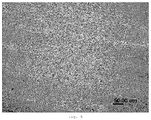
- the scratch resistance of the coatings was examined with a pencil scratch test according to ASTM D3363 and checked with a light microscope. Different pencil hardnesses were used to investigate scratch resistance. The results are in the FIGS. 4 to 6 shown.
- the adhesion quality of the coatings was examined by a cross-cut test and by tape test according to ASTM D3359.
- the measured adhesion values are 5/5 (this means 100% adhesion in the cross-cut test and 100% adhesion after the tape test on the cut test area) for Examples 6 and 7 and 4/4 for Example 5.
- the test results are also in the FIGS. 7 to 9 and summarized in Table 1.
- the refractive indices and thickness of the coatings were measured by ellipsometry (J.A. Woollan Co, Inc. M-2000 DI, Spectroscopic Ellipsometer). The results are shown in Table 2.
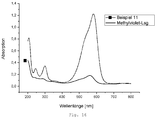
- FIG. 16 a measurement of the photocatalytic activity of the coating of Example 11 is shown.
- the measurement was carried out on a Heraeus Suntest CPS with xenon radiator, to which the coated slide was covered with 150 g of a solution of 10 mg / l methyl violet in water and exposed for 10 h. It was regularly (every 30 min) filled with evaporated water. The measurement was carried out after the end of the experiment after 10 hours.
- Example 1 Without the metal compound, ie Example 1, no useful layers were obtained. Table 1 Scratch resistance test (pencil hardness) Adhesion (cross-cut test / tape test) Example 5 1H 4.4 Example 6 8H 5.5 Example 7 8H 5.5 Thickness (nm) Refractive index (s) Example 5 96 1.3189 Example 6 88 1.4090 Example 7 104 1.4588
Landscapes
- Chemical & Material Sciences (AREA)
- Organic Chemistry (AREA)
- Life Sciences & Earth Sciences (AREA)
- Engineering & Computer Science (AREA)
- Materials Engineering (AREA)
- Wood Science & Technology (AREA)
- Physics & Mathematics (AREA)
- Chemical Kinetics & Catalysis (AREA)
- General Physics & Mathematics (AREA)
- Optics & Photonics (AREA)
- Health & Medical Sciences (AREA)
- Medicinal Chemistry (AREA)
- Polymers & Plastics (AREA)
- Inorganic Chemistry (AREA)
- Paints Or Removers (AREA)
- Surface Treatment Of Optical Elements (AREA)
Description
- Die Erfindung betrifft eine Antireflexionsbeschichtung, insbesondere eine einschichtige Antireflexionsbeschichtung, sowie ein Verfahren zur Herstellung einer solchen Beschichtung und ihre Verwendung.
- Physical vapour deposition (PVD) und chemical vapour deposition (CVD) sind übliche Verfahren zur Herstellung von Antireflexionsbeschichtungen. Allerdings machen die für diese Verfahren benötigten Vakuumanlagen die Herstellung solcher Beschichtungen sehr teuer, insbesondere für große Oberflächen. Nasschemische Methoden, wie die Sol-Gel-Methode, sind dabei günstige Verfahren zur Herstellung von Antireflexionsbeschichtungen auch für große Oberflächen. In der Regel werden hochwertige Antireflexionsbeschichtungen durch mehrschichtige Beschichtungen erreicht. Dies ist nicht nur zeitaufwändig, sondern auch teuer, insbesondere wegen der aufwändigeren thermischen Härtung. Es hat sich gezeigt, dass die Industrie daher einschichtige Beschichtungen für große Flächen und große Stückzahlen benötigt, wie zum Beispiel für Solarzellen. Solche einschichtigen Beschichtungen zeigen eine breitbandige Transmission des solaren Spektrums, welche gerade für Solarzellen benötigt werden.
- Nach bisher üblichen Verfahren werden solche einschichtige oder einlagige Antireflexionsschichten aus porösem SiO2 im Sol-Gel-Verfahren hergestellt.
- Die Porosität der Beschichtungen, insbesondere durch die eingeschlossene Luft, reduziert dabei den Brechungsindex der Beschichtung von theoretisch 1,5 (reines SiO2) auf 1,1 - 1,45 in Abhängigkeit von der Porosität und des Herstellungsverfahrens der SiO2-Martix (1, 2, 3, 4, 5). Die Porosität muss daher genau gesteuert werden, um hochwertige Beschichtungen zu erhalten. Eine bekannte Klasse von Verbindungen, welche poröse Strukturen aufbauen sind die Koordinationspolymere, insbesondere die sogenannten metal-organic frameworks (MOFs) (6, 7, 8, 9, 10). Dies sind Verbindungen, welche aus über Liganden verbrückten metallorganische Zentren bestehen. Durch die geeignete Wahl der Liganden und der metallorganischen Zentren ist es in diesen Verbindungen möglich, die Porosität der erhaltenen Struktur einzustellen. Dabei kann auch das verwendete Lösungsmittel oder Lösungsmittelgemisch eine Rolle spielen. Diese Verbindungen werden vor allem im Bereich der Katalyse eingesetzt, da die enthaltenen Metallzentren oft auch eine katalytische Wirkung haben. Daher werden die Verbindungen in der Regel auch nicht thermisch behandelt, da dann diese Fähigkeiten verloren gehen. Antireflexionsbeschichtungen mit MOFs sind nicht bekannt.
-
CN 10206112A offenbart eine Zusammensetzung für optische Beschichtungen, umfassend ein Sol und ein Koordinationspolymer. - Es ist daher die Aufgabe der Erfindung eine Antireflexionsbeschichtung bereitzustellen, welche eine bessere Kontrolle der Porosität der Beschichtung erlaubt.
- Diese Aufgabe wird durch die Erfindungen mit den Merkmalen der unabhängigen Ansprüche gelöst. Vorteilhafte Weiterbildungen der Erfindungen sind in den Unteransprüchen gekennzeichnet. Der Wortlaut sämtlicher Ansprüche wird hiermit durch Bezugnahme zum Inhalt dieser Beschreibung gemacht. Die Erfindungen umfassen auch alle sinnvollen und insbesondere alle erwähnten Kombinationen von unabhängigen und/oder abhängigen Ansprüchen.
- Die Aufgabe wird durch eine Beschichtungszusammensetzung gelöst, welche mindestens eine hydrolysierbare Silanverbindung, mindestens eine hydrolysierbare Metallverbindung, wobei die Verbindung auch teilweise hydrolysiert und/oder kondensiert vorliegen kann, mindestens eine organische Verbindung mit mindestens zwei funktionellen koordinativen Gruppen oder Vorstufen davon und mindestens ein Lösungsmittel umfasst, wobei die mindestens eine hydrolysierbare Silanverbindung, die mindestens eine hydrolysierbare Metallverbindung und die mindestens eine organische Verbindung zumindest teilweise ein Koordinationspolymer bilden.
- Der Begriff "mindestens eine organische Verbindung mit mindestens zwei funktionellen koordinativen Gruppen" bezeichnet eine organische Verbindung, die mindestens zwei funktionelle Gruppen enthält, die in der Lage ist, zu einem gegebenen Metallion koordinative Bindungen aufzubauen. Bevorzugt sind dabei organische Gruppen, welche zwei oder mehr funktionelle Bindungen aufbauen können. Bevorzugt sind dabei organische Verbindungen, welche über die funktionellen Gruppen koordinative Bindungen zu zwei oder mehr, bevorzugt zu zwei Metallatomen ausbilden können. Solche bevorzugten Verbindungen sind besonders zum Aufbau von Koordinationspolymeren geeignet.
- Ohne an eine bestimmte Theorie gebunden zu sein, wird angenommen, dass in der Zusammensetzung Koordinationspolymere, insbesondere MOFs gebildet werden. Dazu dienen insbesondere die hydrolysierbare Metallverbindung und die organische Verbindung. Allerdings wird auch die Silanverbindung an der Bildung des MOFs beteiligt sein. Insgesamt hat der Aufbau eines solchen Koordinationspolymers den Vorteil, dass sich in der Zusammensetzung ein definiertes Gerüst bildet, welche zu einer definierten Porenbildung führt.
- Die koordinativen Bindungen müssen dabei nicht zu einer einzelnen Verbindung ausgebildet werden. Es ist auch möglich, dass die organische Verbindung Kondensate der Metallverbindung und/oder der Silanverbindung verbindet. Es ist natürlich auch möglich, dass sich ein Teil der Verbindungen, welche nicht am MOF beteiligt sind, innerhalb der Poren einlagert.
- Die definierte Struktur innerhalb der Zusammensetzung ist auch für die hergestellte Antireflexionsbeschichtung von großer Bedeutung. Zur Herstellung der Antireflexionsbeschichtung wird die aufgetragene Zusammensetzung thermisch behandelt. Dabei wird das Lösungsmittel entfernt und die organischen Bestandteile, d.h. auch die organischen Verbindungen, werden in der Regel ausgebrannt. Dennoch hat die sich in der Zusammensetzung gebildete Struktur einen Einfluss auf die Struktur der späteren Antireflexionsschicht, insbesondere auf deren poröse Struktur, welche wichtig für den erhaltenen Brechungsindex ist. Dadurch ist es möglich durch eine definierte Struktur in der Zusammensetzung die Struktur der späteren Antireflexionsbeschichtung zu beeinflussen.
- Die Zusammensetzung enthält mindestens eine hydrolysierbare Silanverbindung. Dies ist bevorzugt eine Verbindung der Formel
R1 aSiX4-a (I)
wobei X für einen oder mehrere hydrolysierbare Reste, welche gleich oder verschieden sein können, steht. - Geeignete Beispiele für hydrolysierbare Reste X der obigen Formeln sind Wasserstoff, Halogen (F, Cl, Br oder I, insbesondere Cl oder Br), Alkoxy (z.B. C1-6- Alkoxy, wie z.B. Methoxy, Ethoxy, n-Propoxy, i-Propoxy und n-, i-, sek.- oder tert.-Butoxy), Aryloxy (vorzugsweise C6-10-Aryloxy, wie z.B. Phenoxy), Alkaryloxy, z.B. Benzoyloxy, Acyloxy (z.B. C1-6-Acyloxy, vorzugsweise C1-4-Acyloxy, wie z.B. Acetoxy oder Propionyloxy) und Alkylcarbonyl (z.B. C2-7-Alkylcarbonyl wie Acetyl). Ebenfalls geeignet sind NH2, mit Alkyl, Aryl und/oder Aralkyl mono oder disubstituiertes Amino, wobei Beispiele für die Alkyl-, Aryl und/oder Aralkylreste die nachstehend für R1 angegebenen sind, Amido wie Benzamido oder Aldoxim oder Ketoximgruppen. Zwei oder drei Gruppen X können auch miteinander verbunden sein, z.B. bei Si-Polyolkomplexen mit Glycol, Glycerin oder Brenzcatechin. Die genannten Gruppen können gegebenenfalls Substituenten, wie Halogen, Hydroxy, Alkoxy, Amino oder Epoxy, enthalten. Bevorzugte hydrolytisch abspaltbare Reste X sind Halogen, Alkoxygruppen und Acyloxygruppen. Besonders bevorzugte hydrolytisch abspaltbare Reste sind C1-4- Alkoxygruppen, insbesondere Methoxy und Ethoxy.
- Dabei kann a den Wert 0, 1 oder 2 annehmen, bevorzugt sind Silane mit a gleich 0 oder 1, besonders bevorzugt a gleich 0. Dies sind Silane mit vier hydrolysierbaren Resten, welche bevorzugt alle identisch sind.
- R1 steht für einen oder mehrere nicht hydrolysierbare Reste. Dies sind z.B. Alkyl (z.B. C1-20-Alkyl, insbesondere C1-4-Alkyl, wie Methyl, Ethyl, n-Propyl, i-Propyl, n-Butyl, i-Butyl, sek.-Butyl und tert.-Butyl), Alkenyl (z.B. C2-20-Alkenyl, insbesondere C2-4-Alkenyl, wie Vinyl, 1-Propenyl, 2-Propenyl und Butenyl), Alkinyl (z.B. C2-20-Alkinyl, insbesondere C2-4-Alkinyl, wie Ethinyl oder Propargyl), Aryl (insbesondere C6-10-Aryl, wie Phenyl und Naphthyl) und entsprechende Aralkyl und Alkarylgruppen, wie Tolyl und Benzyl, und cyclische C3-C12-Alkyl und - Alkenylgruppen, wie Cyclopropyl, Cyclopentyl und Cyclohexyl.
- Die Reste R1 können übliche Substituenten aufweisen, bei denen es sich um funktionelle Gruppen handeln kann, über die nach Bedarf auch eine Vernetzung möglich ist. Übliche Substituenten sind z.B. Halogen (z.B. Chlor oder Fluor), Epoxid (z.B. Glycidyl oder Glycidyloxy), Hydroxy, Ether, Ester, Amino, Monoalkylamino, Dialkylamino, gegebenenfalls substituiertes Anilino, Amid, Carboxy, Alkenyl, Alkinyl, Acryl, Acryloxy, Methacryl, Methacryloxy, Mercapto, Cyano, Alkoxy, Isocyanato, Aldehyd, Keto, Alkylcarbonyl, Säureanhydrid und Phosphorsäure. Diese Substituenten sind über zweiwertige Brückengruppen, insbesondere Alkylen-, Alkenylen oder Arylen-Brückengruppen, die durch Sauerstoffoder -NH-Gruppen unterbrochen sein können, an das Siliziumatom gebunden. Die Brückengruppen enthalten z. B. 1 bis 18, vorzugsweise 1 bis 8 und insbesondere 1 bis 6 Kohlenstoffatome. Die genannten zweiwertigen Brückengruppen leiten sich z.B. von den oben genannten einwertigen Alkyl-, Alkenyl oder Arylresten ab. Natürlich kann der Rest R1 auch mehr als eine funktionelle Gruppe aufweisen.
- Bevorzugte Beispiele für nicht hydrolysierbare Reste R1 mit funktionellen Gruppen, über die eine Vernetzung möglich ist, sind ein Glycidyl oder ein Glycidyloxy-(C1-20)-alkylen-Rest, wie β-Glycidyloxyethyl, γ-Glycidyloxypropyl, δ-Glycidyloxybutyl, ε-Glycidyloxypentyl, ω-Glycidyloxyhexyl, und 2-(3,4-Epoxy-cyclohexyl)ethyl, ein (Meth) acryloxy-(C1-6) -alkylen-Rest, z.B. (Meth)acryloxymethyl, (Meth)acryloxyethyl, (Meth)acryloxypropyl oder (Meth)acryloxybutyl, und ein 3-Isocyanatopropylrest. Besonders bevorzugte Reste sind γ-Glycidyloxypropyl und (Meth)acryloxypropyl. Hierbei steht (Meth)acryl für Acryl und Methacryl.
- Bevorzugte Reste R1, die eingesetzt werden, sind Reste ohne Substituenten oder funktionelle Gruppen, insbesondere Alkylgruppen, vorzugsweise mit 1 bis 4 Kohlenstoffatomen, insbesondere Methyl und Ethyl, sowie Arylreste wie Phenyl.
- Beispiele für Silanverbindungen der Formel (I) sind Methyltrimethoxysilan, Methyltriethoxysilan, Ethyltriethoxysilan, Isobutyltrimethoxysilan, Isobutyltriethoxysilan, Octyltriethoxysilan, Octyltrimethoxysilan, (3-Glycidyloxypropyl)methyldiethoxysilan, (3-Glycidyloxypropyl)trimethoxysilan, Phenyltrimethoxysilan oder Phenyltriethoxysilan, Tetraalkoxysilane wie Tetramethoxysilan (Si(OCH3)4), Tetraethoxysilan (Si(OC2H5)4), Tetrapropoxysilan Si (O-n- oder i-C3H7)4, Si (OC4H9)4, sowie SiCl4, HSiCl3, Si(OOCCH3)4 oder Gemische solcher Silanverbindungen, wobei Tetraalkoxysilane wie Tetramethoxysilan (Si (OCH3)4), Tetraethoxysilan (Si (OC2H5)4), Tetrapropoxysilan Si (O-n- oder i-C3H7)4, Si(OC4H9)4, sowie SiCl4, HSiCl3, Si(OOCCH3)4 oder Gemische davon bevorzugt sind. Besonders bevorzugt sind Tetraalkoxysilane wie Tetramethoxysilan oder Tetraethoxysilan oder deren Gemische.
- Die Zusammensetzung enthält außerdem eine hydrolysierbare Metallverbindung.
- Die Metallverbindung ist eine hydrolysierbare Metallverbindung, d.h. die enthält mindestens eine Gruppe, welcher durch Reaktion mit Wasser ausgetauscht werden kann, d.h. welche hydrolytisch abspaltbar ist.
- Solche Verbindungen sind beispielsweise Halogenide, wie Fluoride, Chloride, Bromide oder Iodide, Alkoxide, Carbonsäureverbindungen, Cyanide oder Sulfide.
- In einer Weiterbildung der Erfindung ist die Verbindung eine Verbindung der Formel (II):
MXn (II)
wobei M ausgewählt ist aus den Gruppen Ia, IIa, IIIa, IVa bis VIa und Ib bis VIIIb. Besonders bevorzugt sind Mg, Ca, Sr, Ba, Sc, Y, Ti, Zr, Hf, V, Nb, Ta, Cr, Mo, W, Mn, Re, Fe, Ro, Os, Co, Rh, Ir, Ni, Pd, Pt, Cu, Ag, Au, Zn, Cd, Hg, B, Al, Ga, In, Tl, Si, Ge, Sn, Pb, As, Sb und Bi. Besonders bevorzugt sind Zn, Al, Mg, Ca, Ti, Zr, Cu, Ni, Fe, Pd, Pt, Ru, Rh und Co. Insbesondere bevorzugt sind Zn, Al, Ti, Zr, Ni, Cu, Mg, Ca, Fe. In Bezug auf die Ionen dieser Elemente sind besonders zu erwähnen Mg2+, Ca2+, Sr2+, Ba2+, Sc3+, Y3+, Ti4+, Zr4+, Hf4+, V4+, V3+, V2+, Nb3+, Ta3+, Cr3+, Mo3+, W3+, Mn3+, Mn2+, Re3+, Re2+, Fe3+, Fe2+, Ru3+, Ru2+, Os3+, Os2+, Co3+, Co2+, Rh2+, Rh+, Ir2+, Ir+, Ni2+, Ni+, Pd2+, Pd+, Pt2+, Pt+, Cu2+, Cu+, Ag+, Au+, Zn2+, Cd2+, Hg2+, Al3+, Ga3+, In3+, Tl3+, Si4+, Si2+, Ge4+, Ge2+, Sn4+, Sn2+, Pb4+, Pb2+, As5+, As3+, As+, Sb5+, Sb3+, Sb+, Bi5+, Bi3+ und Bi+. Dabei entspricht n der Wertigkeit des Metalls. - Ebenfalls einsetzbar sind z.B. hydrolysierbare Verbindungen von Elementen der Hauptgruppen I und II des Periodensystems (z.B. Na, K, Ca und Mg) und der Nebengruppen V bis VIII des Periodensystems (z.B. Mn, Cr, Fe und Ni). Auch hydrolysierbare Verbindungen der Lanthanoide wie Ce können verwendet werden. Bevorzugt sind Metallverbindungen, wobei M gleich Al, B, Sn, Fe, Ti, Zr, V oder Zn ist, bevorzugt Al, Fe, Ti oder Zr, wobei Ti besonders bevorzugt ist. Es können auch Mischungen mehrere Metallverbindungen eingesetzt werden.
- X ein hydrolysierbarer Rest ist, welcher bevorzugt wie in Formel (I) definiert ist, wobei zwei Gruppen X durch eine Oxogruppe ersetzt sein können.
- Bevorzugte Metallverbindungen sind z. B. die Alkoxide oder Halogenide von B, Al, Zr und insbesondere Ti. Geeignete hydrolysierbare Metallverbindungen sind z. B. Al (OCH3)3, Al (OC2H5)3, Al (O-n-C3H7)3, Al (O-i-C3H5)3, Al (O-n-C4H9)3, Al (O-sek.-C4H9)3) AlCl3, AlCl (OH)2, Al (OC2H4OC4H9)3, TiCl4, Ti(OC2H5)4, Ti (O-n-C3H7)4, Ti (O-i-C3H7)4, Ti (OC4H9)4, Ti (2-ethylhexoxy)4, ZrCl4, Zr(OC2H5)4, Zr(O-n-C3H7)4, Zr(O-i-C3H7)4, Zr(OC4H9)4, ZrOCl2, Zr(2-ethylhexoxy)4, sowie Zr- oder Ti-Verbindungen, die komplexierende Reste aufweisen, wie z.B. β-Diketon und (Meth)acrylreste, Borsäure, BCl3, B(OCH3)3, B(OC2H5)3, SnCl4, Sn (OCH3)4, Sn(OC2H5)4, VOCl3 und VO(OCH3)3. Die Metallverbindungen können auch teilweise oder vollständig hydrolysiert vorliegen, z.B. TiOCl2. Dies kann dadurch erreicht werden, dass diese Verbindungen vor der Zugabe zu der Zusammensetzung mit Wasser umgesetzt werden, bevorzugt mit einem Überschuss an Wasser z.B. im 2 bis 10 fachen Überschuss gemessen an den hydrolysierbaren Gruppen der Verbindung, d.h. 2 bis 10 mol Wasser pro mol hydrolysierbarer Gruppe. Die Hydrolyse kann aber auch mit stöchiometrischen oder unterstöchiometrischen Mengen an Wasser erfolgen.
- Als funktionelle Gruppen der mindestens einen organischen Verbindung, über die die genannten koordinativen Bindungen ausgebildet werden können, sind insbesondere beispielsweise folgende funktionellen Gruppen zu nennen: -CO2H, -NH2, -OH, -SH, -CS2H, - NO2, -B(OH)2, -SO3H, -Ge(OH)3, -Sn(OH)3, -Si(SH)4, -Ge(SH)4, - Sn(SH)3, -PO3H, -AsO3H, -AsO4H, -P(SH)3, -As(SH)3, -CH(RSH)2, - C(RSH)3, -CH(RNH2)2, -C(RNH2)3, -CH(ROH)2, -C(ROH)3, -CH(RCN)2, - C(RCN)3 wobei R beispielsweise bevorzugt eine Alkylengruppe mit 1, 2, 3, 4 oder 5 Kohlenstoffatomen wie beispielsweise eine Methylen-, Ethylen-, n-Propylen-, i-Propylen, n-Butylen-, i-Butylen-, tert-Butylen- oder n-Pentylengruppe, oder eine Arylgruppe, enthaltend 1 oder 2 aromatische Kerne wie beispielsweise 2 C6-Ringe, die gegebenenfalls kondensiert sein können und unabhängig voneinander mit mindestens jeweils einem Substituenten geeignet substituiert sein können, und/oder die unabhängig voneinander jeweils mindestens ein Heteroatom wie beispielsweise N, O und/oder S enthalten können. Gemäß ebenfalls bevorzugten Ausführungsformen sind funktionelle Gruppen zu nennen, bei denen der oben genannte Rest R nicht vorhanden ist. Diesbezüglich sind unter anderem -CH(SH)2, -C(SH)3, -CH(NH2)2, -C(NH2)3, - CH(OH)2, -C(OH)3, -CH(CN)2 oder -C(CN)3 zu nennen.
- Bevorzugte Gruppen sind Aminogruppe, Carbonsäuregruppen, Hydroxylgruppen und Thiole oder Vorstufen solcher Gruppen, wobei Carbonsäuren bevorzugt sind.
- Vorstufen für Carbonsäuregruppen sind beispielsweise Anhydridgruppen, Ester oder Amide. Die Verbindung kann auch mehrere verschiedene solcher Gruppen und/oder Vorstufen enthalten.
- Die mindestens zwei funktionellen Gruppen können grundsätzlich an jede geeignete organische Verbindung gebunden sein, solange gewährleistet ist, dass die diese funktionellen Gruppen aufweisende organische Verbindung zur Ausbildung der koordinativen Bindung und zur Herstellung des Gerüstmaterials befähigt ist, d.h. zur koordinativen Bindung zu mindestens einer Metallverbindungen und/oder mindestens einer Silanverbindung.
- Bevorzugt leiten sich die organischen Verbindungen, die die mindestens zwei funktionellen Gruppen enthalten, von einer gesättigten oder ungesättigten aliphatischen Verbindung oder einer aromatischen Verbindung oder einer sowohl aliphatischen als auch aromatischen Verbindung ab.
- Die aliphatische Verbindung oder der aliphatische Teil der sowohl aliphatischen als auch aromatischen Verbindung kann linear und/oder verzweigt und/oder cyclisch sein, wobei auch mehrere Cyclen pro Verbindung möglich sind. Weiter bevorzugt enthält die aliphatische Verbindung oder der aliphatische Teil der sowohl aliphatischen als auch aromatischen Verbindung 1 bis 15, weiter bevorzugt 1 bis 14, weiter bevorzugt 1 bis 13, weiter bevorzugt 1 bis 12, weiter bevorzugt 1 bis 11 und insbesondere bevorzugt 1 bis 10 C-Atome wie beispielsweise 1, 2, 3, 4, 5, 6, 7, 8, 9 oder 10 C-Atome. Insbesondere bevorzugt sind hierbei unter anderem Methan, Adamantan, Acetylen, Ethylen oder Butadien.
- Die aromatische Verbindung oder der aromatische Teil der sowohl aromatischen als auch aliphatischen Verbindung kann einen oder auch mehrere Kerne wie beispielsweise zwei, drei, vier oder fünf Kerne aufweisen, wobei die Kerne getrennt voneinander und/oder mindestens zwei Kerne in kondensierter Form vorliegen können. Besonders bevorzugt weist die aromatische Verbindung oder der aromatische Teil der sowohl aliphatischen als auch aromatischen Verbindung einen, zwei oder drei Kerne auf, wobei einer oder zwei Kerne besonders bevorzugt sind. Unabhängig voneinander kann weiter jeder Kern der genannten Verbindung mindestens ein Heteroatom wie beispielsweise N, O, S, B, P, Si, Al, bevorzugt N, O und/oder S enthalten. Weiter bevorzugt enthält die aromatische Verbindung oder der aromatische Teil der sowohl aromatischen als auch aliphatischen Verbindung einen oder zwei C6-Kerne, wobei die zwei entweder getrennt voneinander öder in kondensierter Form vorliegen. Insbesondere sind als aromatische Verbindungen Benzol, Naphthalin und/oder Biphenyl und/oder Bipyridyl und/oder Pyridyl zu nennen.
- Beispielsweise sind unter anderem trans-Muconsäure oder Fumarsäure oder Phenylenbisacrylsäure zu nennen.
- Beispielsweise sind im Rahmen der vorliegenden Erfindung Dicarbonsäuren wie etwa Oxalsäure, Bernsteinsäure, Weinsäure, 1,4-Butandicarbonsäure, 4-Oxo-Pyran-2,6-dicarbonsäure, 1,6-Hexandicarbonsäure, Decandicarbonsäure, 1,8-Heptadecandicarbonsäure, 1,9-Heptadecandicarbonsäure, Heptadecandicarbonsäure, Acetylendicarbonsäure, 1,2-Benzoldicarbonsäure, 2,3-Pyridindicarbonsäure, Pyridin-2,3-dicarbonsäure, 1,3-Butadien-1,4-dicarbonsäure, 1,4-Benzoldicarbonsäure, p-Benzoldicarbonsäure, Imidazol-2,4-dicarbonsäure, 2-Methyl-chinolin-3,4-dicarbonsäure, Chinolin-2,4-dicarbonsäure, Chinoxalin-2,3-dicarbonsäure, 6-Chlorchinoxalin-2,3-dicarbonsäure, 4,4'-Diaminphenylmethan-3,3'-dicarbonsäure, Chinolin-3,4-dicarbonsäure, 7-Chlor-4-hydroxychinolin-2,8-dicarbonsäure, Diimiddicarbonsäure, Pyridin-2,6-dicarbonsäure, 2-Methylimidazol-4,5-dicarbonsäure, Thiophen-3,4-dicarbonsäure, 2-Isopropylimidazol-4,5-dicarbonsäure, Tetrahydropyran-4,4-dicarbonsäure, Perylen-3,9-dicarbonsäure, Perylendicarbonsäure, Pluriol E 200-dicarbonsäure, 3,6-Dioxaoctandicarbonsäure, 3,5-Cyclohexadien-1,2-dicarbonsäure, Octadicarbonsäure, Pentan-3,3-carbonsäure, 4,4'-Diamino-1,1'-diphenyl-3,3'-dicarbon-säure, 4,4'-Diaminodiphenyl-3,3'-dicarbonsäure, Benzidin-3,3'-dicarbonsäure, 1,4-Bis-(phenylamino)-benzol-2,5-dicarbonsäure, 1,1'-Dinaphthyldicarbonsäure, 7-Chlor-8-methylchinolin-2,3-dicarbonsäure, 1-Anilinoanthrachinon-2,4'-dicarbonsäure, Poly-tetrahydrofuran-250-dicarbonsäure, 1,4-Bis-(carboxymethyl)-piperazin-2,3-dicarbonsäure, 7-Chlorchinolin-3,8-dicarbonsäure, 1-(4-Carboxy)-phenyl-3-(4-chlor)-phenylpyrazolin-4,5-dicarbonsäure, 1,4,5,6,7,7,-Hexachlor-5-norbornen-2,3-dicarbonsäure, Phenylindandicarbonsäure, 1,3-Dibenzyl-2-oxo-imidazolidin-4,5-dicarbonsäure, 1,4-Cyclohexandicarbonsäure, Naphthalin-1,8-dicarbonsäure, 2-Benzoylbenzol-1,3-dicarbonsäure, 1,3-Dibenzyl-2-oxoimidazolidin-4,5-cis-dicarbonsäure, 2,2'-Bichinolin-4,4'-di-carbonsäure, Pyridin-3,4-dicarbonsäure, 3,6,9-Trioxaundecandicarbonsäure, Hydroxybenzophenondicarbonsäure, Pluriol E 300-dicarbonsäure, Pluriol E 400-dicarbonsäure, Pluriol E 600-dicarbonsäure, Pyrazol-3,4-dicarbonsäure, 2,3-Pyrazindicarbonsäure, 5,6-Dimethyl-2,3-pyrazindicarbonsäure, 4,4'-Diaminodiphenyletherdiimiddicarbonsäure, 4,4'-Diaminodiphenylmethandiimiddicarbonsäure, 4,4'-Diaminodiphenylsulfondiimiddicarbonsäure, 2,6-Naphthalindicarbonsäure, 1,3-Adamantandicarbonsäure, 1,8-Naphthalindicarbonsäure, 2,3-Naphthalindicarbonsäure, 8-Methoxy-2,3-naphthalindicarbonsäure, 8-Nitro-2,3-naphthalincarbonsäure, 8-Sulfo-2,3-naphthalindicarbonsäure, Anthracen-2,3-dicarbonsaure, 2',3'-Diphenyl-p-terphenyl-4,4 "-dicarbonsäure, Diphenylether-4,4'-dicarbonsäure, Imidazol-4,5-dicarbonsäure, 4-(1H)-Oxothiochromen-2,8-dicarbonsäure, 5-tert-Butyl-1,3-benzoldicarbonsäure, 7,8-Chinolindicarbonsäure, 4,5-Imidazoldicarbonsäure, 4-Cyclohexen-1,2-dicarbonsäure, Hexatriacontandicarbonsäure, Tetradecandicarbonsäure, 1,7-Heptadicarbonsäure, 5-Hydroxy-1,3-Benzoldicarbonsäure, Pyrazin-2,3-dicarbonsäure, Furan-2,5-dicarbonsäure, 1-Nonen-6,9-dicarbonsäure, Eicosendicarbonsäure, 4,4'-Dihydroxydiphenylmethan-3,3'-dicarbonsäure, 1-Amino-4-methyl-9,10-dioxo-9,10-dihydroanthracen-2,3-dicarbonsäure, 2,5-Pyridindicarbonsäure, Cyclohexen-2,3-dicarbonsäure,2,9-Dichlorfluorubin-4,11-dicarbonsäure, 7-Chlor-3-methylchinolin-6,8-dicarbonsäure, 2,4-Dichlorbenzophenon-2',5'-dicarbonsäure, 1,3-Benzoldicarbonsäure, 2,6-Pyridindicarbonsäure, 1-Methylpyrrol-3,4-dicarbonsäure, 1-Benzyl-1H-pyrrol-3,4-dicarbonsäure, Anthrachinon-1,5-dicarbonsäure, 3,5-Pyrazoldicarbonsäure, 2-Nitrobenzol-1,4-dicarbonsäure, Heptan-1,7-dicarbonsäure, Cyclobutan-1,1-dicarbonsäure 1,14-Tetradecandicarbonsäure, 5,6-Dehydronorbornan-2,3-dicarbonsäure oder 5-Ethyl-2,3-pyridindicarbonsäure, Tricarbonsäuren wie etwa 2-Hydroxy-1,2,3-propantricarbonsäure, 7-Chlor-2,3,8-chinolintricarbonsäure, 1,2,4-Benzoltricarbonsäure, 1,2,4-Butantricarbonsäure, 2-Phosphono-1,2,4-butantricarbonsäure, 1,3,5-Benzoltricarbonsäure, 1-Hydroxy-1,2,3-Propantricarbonsäure, 4,5-Dihydro-4,5-dioxo-1H-pyrrolo[2,3-F]chinolin-2,7,9-tricarbonsäure, 5-Acetyl-3-amino-6-methyibenzol-1,2,4-tricarbonsäure, 3-Amino-5-benzoyl-6-methylbenzol-1,2,4-tricarbonsäure, 1,2,3-Propantricarbonsäure oder Aurintricarbonsäure oder Tetracarbonsäuren wie etwa 1,1-Dioxidperylo[1,12-BCD]thiophen-3,4,9,10-tetracarbonsäure, Perylentetracarbonsäuren wie Perylen-3,4,9,10-tetracarbonsäure oder Perylen-1,12-sulfon-3,4,9,10-tetracarbonsäure, Butantetracarbonsäuren wie 1,2,3,4-Butantetracarbonsäure oder Meso-1,2,3,4-Butantetracarbonsäure, Decan-2,4,6,8-tetracarbonsäure, 1,4,7,10,13,16-Hexaoxacyclooctadecan-2,3,11,12-tetracarbonsäure, 1,2,4,5-Benzoltetracarbonsäure, 1,2,11,12-Dodecantetracarbonsäure, 1,2,5,6-Hexan-tetracarbonsäure, 1,2,7,8-Octantetracarbonsäure, 1,4,5,8-Naphthalintetracarbonsäure, 1,2,9,10-Decantetracarbonsäure, Benzophenontetracarbonsäure, 3,3',4,4'-Benzophenontetracarbonsäure, Tetrahydrofurantetracarbonsäure oder Cyclopentantetracarbonsäuren wie Cyclopentan-1,2,3,4-tetracarbonsäure zu nennen.
- Ganz besonders bevorzugt werden gegebenenfalls mindestens einfach substituierte mono-, di-, tri-, tetra- oder höherkernige aromatische Di-, Tri- oder Tetracarbonsäuren eingesetzt, wobei jeder der Kerne mindestens ein Heteroatom enthalten kann, wobei zwei oder mehr Kerne gleiche oder unterschiedliche Heteroatome enthalten kann. Beispielsweise bevorzugt werden monokernige Dicarbonsäuren, monokernige Tricarbonsäuren, monokernige Tetracarbonsäuren, dikernige Dicarbonsäuren, dikernige Tricarbonsäuren, dikernige Tetracarbonsäuren, trikernige Dicarbonsäuren, trikernige Tricarbonsäuren, trikernige Tetracarbonsäuren, tetrakernige Dicarbonsäuren, tetrakernige Tricarbonsäuren und/oder tetrakernige Tetracarbonsäuren. Geeignete Heteroatome sind beispielsweise N, O, S, B, P, Si, Al, bevorzugte Heteroatome sind hierbei N, S und/oder O. Als geeigneter Substituent ist diesbezüglich unter anderem -OH, eine Nitrogruppe, eine Aminogruppe oder eine Alkyl- oder Alkoxygruppe zu nennen.
- Insbesondere bevorzugt werden als mindestens zweizähnige organische Verbindungen Acetylendicarbonsäure (ADC), Benzoldicarbonsäuren, Naphthalindicarbonsäuren, Biphenyldicarbonsäuren wie beispielsweise 4,4'-Biphenyldicarbonsäure (BPDC), Bipyridindicarbonsäuren wie beispielsweise 2,2'-Bipyridindicarbonsäuren wie beispielsweise 2,2'-Bipyridin-5,5'-dicarbonsäure, Benzoltricarbonsäuren wie beispielsweise 1,2,3-Benzoltricarbonsäure oder 1,3,5-Benzoltricarbonsäure (BTC), 1,3,5,7-Adamantantetracarbonsäure (ATC), Adamantandibenzoat (ADB) Benzoltribenzoat (BTB), Methantetrabenzoat (MTB), Adamantantetrabenzoat, 1,2,4,5-Benzoltetracarbonsäure oder Dihydroxyterephthalsäuren wie beispielsweise 2,5-Dihydroxyterephthalsäure (DHBDC), 1,2,4,5-Benzoltetracarbonsäure- (= Pyromellitsäure), 3,3'-4,4'-Biphenyltetracarbonsäure, 3,3'-4,4'-Benzophenontetracarbonsäure (= 3,3'-4,4'-Benzoylbenzoltetracarbonsäure), 3,3'-4,4'-Isopropylidendiphthalsäure, 3,3'-4,4'-Oxydiphthalsäure und (Hexafluoroisopropyliden)diphthalsäure eingesetzt.
- Ganz besonders bevorzugt werden unter anderem Isophthalsäure, Terephthalsäure, 2,5-Dihydroxyterephthalsäure, 1,2,3-Benzoltricarbonsäure, 1,3,5-Benzoltricarbonsäure, 1,2,4,5-Benzoltetracarbonsäure oder 2,2'-Bipyridin-5,5'-dicarbonsäure eingesetzt.
- Neben den vorstehend genannten Verbindungen können auch Vorstufen oder Varianten dieser Säuren eingesetzt werden wie z. B. ihre Anhydride, Ester oder Amide. Falls Lösungsmittel mit Hydroxylgruppen eingesetzt werden, wie z.B. niedere Alkohole wie Methanol, Ethanol, Isopropanol oder tert.-Butanol, können sich auch in der Zusammensetzung die entsprechenden Ester bilden. Bei dem Einsatz von Anhydriden kann über die Zugabe von Wasser die Anzahl der freien Säuregruppen eingestellt werden. Die Anhydride sind insbesondere dann bevorzugt, wenn die in der organischen Verbindung vorhandenen Carbonsäuregruppen innerhalb der Verbindung ein cyclisches Anhydrid bilden können. Für die besonders bevorzugten Verbindungen ist ein solches korrespondierendes Anhydrid 1,2,4,5-Benzoltetracarboxyl-1,2:4,5-Dianhydrid.
- Neben diesen mindestens zweizähnigen organischen Verbindungen kann der MOF auch eine oder mehrere einzähnige Liganden umfassen.
- Geeignete Lösemittel zur Herstellung der MOF sind u.a. Wasser, Alkohole, vorzugsweise niedere aliphatische Alkohole (C1-C8-Alkohole), wie Methanol, Ethanol, 1-Propanol, Isopropanol und 1-Butanol, Ketone, vorzugsweise niedere Dialkylketone, wie Aceton und Methylisobutylketon, Ether, vorzugsweise niedere Dialkylether, wie Diethylether, oder Monoether von Diolen, wie Ethylenglycol oder Propylenglycol, mit C1-C6-Alkoholen, Amide, wie Dimethylformamid, Tetrahydrofuran, Dioxan, Sulfoxide wie Dimethylsulfoxid, Sulfone, Acetonitril oder Butylglycol und deren Gemische. Bevorzugt werden Wasser und Alkohole verwendet. Es können auch hochsiedende Lösungsmittel eingesetzt werden, z.B. Polyether wie Triethylenglycol, Diethylenglycoldiethylether und Tetraethylenglycoldimethylether. In manchen Fällen finden auch andere Lösungsmittel Verwendung, z.B. Leichtparaffine (Petrolether, Alkane und Cycloalkane), Aromaten, Toluol, Heteroaromaten und halogenierte Kohlenwasserstoffe wie Chlorbenzol. Anwendung können auch Dicarbonsäureester wie Bernsteinsäuredimethylester, Adipinsäuredimethylester, Glutarsäuredimethylester und deren Mischungen sowie die cyclische Carbonsäureester wie z.B. Propylencarbonat und Glycerincarbonat Verwendung finden.
- Bevorzugte Lösungsmittel sind Alkohole und Ether, besonders bevorzugt niedere aliphatische Alkohole wie Methanol, Ethanol, 1-Propanol, Isopropanol und 1-Butanol sowie Ethylenglykol oder Tetrahydrofuran. Bevorzugt sind Tetrahydrofuran oder eine Mischung aus Isopropanol und 1-Butanol, besonders bevorzugt im Verhältnis 10:1 bis 1:10, ganz besonders bevorzugt 2:1 bis 1:2.
- Es ist wichtig, dass das gebildete Koordinationspolymer in der erhaltenen Zusammensetzung gelöst ist. Es kann erforderlich sein, die Zusammensetzung vor dem Auftragen zu zentrifugieren oder zu filtrieren. Insofern sind Koordinationspolymere bevorzugt, welche in dem gewählten Lösungsmittel löslich sind.
- Gleichzeitig ist es möglich, durch die Wahl des Lösungsmittels die Struktur des erhaltenen Koordinationspolymers zu beeinflussen.
- Durch die Selbstorganisation des Koordinationspolymers ist das Verhältnis von Silanverbindung und Metallverbindung zu der organischen Verbindung in weiten Bereichen variabel. Es kann beispielsweise zwischen 100:1 und 1:100 gemessen in mmol von Silizium zu Metallion liegen. Üblicherweise werden die Silanverbindungen und Metallverbindungen im Überschuss zu der organischen Verbindung eingesetzt, bevorzugt im Verhältnis von 100:1 zu 1:1 gemessen in mmol (Summe von Silizium und Metallionen im Verhältnis zur organischen Verbindung), bevorzugt zwischen 50:1 zu 1:1. Das Verhältnis kann davon abhängig sein, wie viele koordinative Bindungen die organische Verbindung ausbilden kann, bzw. wie viele verschiedene Metall- oder Siliziumzentren die organische Verbindung mindestens eine koordinative Bindung ausbilden kann. Das Verhältnis beträgt dabei bevorzugt mindestens n:1, wenn n koordinative Bindungen ausgebildet werden können. Es beträgt dann bevorzugt zwischen 50:n und n:1, bevorzugt zwischen 10:n und n:1. Wenn die organische Verbindung beispielsweise zu zwei Metallionen koordinative Bindungen aufzubauen ist das bevorzugte molare Verhältnis zwischen 50:1 und 2:1, bevorzugt zwischen 30:1 und 2:1, besonders bevorzugt zwischen 10:1 und 2:1.
- Eine weitere wichtige Größe ist das Verhältnis zwischen der Silanverbindung und der Metallverbindung. Durch den Aufbau des Koordinationspolymers ist es möglich im Gegensatz zu den reinen auf Silanen basierenden Antireflexionsbeschichtungen einen hohen Gehalt an Metallverbindung in die Struktur des entstehenden SiO2 zu integrieren, ohne dass die Transmission der erhaltenen Beschichtung signifikant schlechter wird. Gemessen im mmol liegt das Verhältnis zwischen Silizium in der Silanverbindung und dem Metallion in der Metallverbindung bevorzugt zwischen 100:1 und 1:2, besonders bevorzugt zwischen 100:1 und 1:1, ganz besonders bevorzugt zwischen 50:1 und 1:1. Es kann auch zwischen 30:1 und 1:1 oder 20:1 und 1:1 liegen.
- Durch den hohen Gehalt an Metallverbindung kann nicht nur der Brechungsindex der Antireflexionsschicht beeinflusst werden. Die Metallverbindung kann der Beschichtung auch noch weitere Eigenschaften, wie erhöhte Härte verleihen.
- In einer bevorzugten Weiterbildung ist die Metallverbindung eine Titanverbindung. Dadurch enthält die Antireflexionsschicht einen Anteil Titandioxid, welches photokatalytische Eigenschaften aufweist. Dadurch können der Antireflexionsbeschichtung auch selbstreinigende Eigenschaften verliehen werden. Dabei bilden sich keine separaten Titandioxidpartikel, sondern das Titandioxid wird aufgrund des Koordinationspolymers in die Struktur integriert.
- Der Gehalt an Lösungsmittel kann in Abhängigkeit von der weiteren Verarbeitung der Zusammensetzung variieren. In einer bevorzugten Weiterbildung der Erfindung liegt der Gehalt an Silanverbindung(en) und Metallverbindung(en) in der Zusammensetzung zwischen 0,001 mol/l und 10 mol/l, bevorzugt zwischen 0,01 mol/l und 1 mol/l, besonders bevorzugt zwischen 0,1 und 0,8 mol/l.
- In Abhängigkeit von der weiteren Verwendung der Zusammensetzung liegt der Feststoffgehalt der Zusammensetzung vor dem Auftragen auf ein Substrat bevorzugt zwischen 1 und 20 Gew.-%, besonders bevorzugt zwischen 2 und 5 Gew.-%.
- Die Zusammensetzung kann noch weitere Bestandteile enthalten. Dies können für optische Systeme übliche Additive sein. Beispiele sind Weichmacher, Sensibilisierungsmittel, Netzhilfsmittel, Haftvermittler, Verlaufsmittel, Antioxidationsmittel, Stabilisatoren, Farbstoffe und photochrome oder thermochrome Verbindungen.
- In einer Weiterbildung der Erfindung kann die Zusammensetzung noch weitere optisch aktive Substanzen, z.B. zur Beeinflussung des Brechwerts, enthalten. So ist es beispielsweise möglich noch weitere Nanopartikel mit einem Durchmesser von unter 500 nm (gemessen mit TEM) zuzugeben. Dies können beispielsweise SiO2, ZrO2 und/oder TiO2-Partikel sein.
- Die Erfindung betrifft außerdem ein Verfahren zur Herstellung einer Antireflexionsbeschichtung.
- Im Folgenden werden einzelne Verfahrensschritte näher beschrieben. Die Schritte müssen nicht notwendigerweise in der angegebenen Reihenfolge durchgeführt werden, und das zu schildernde Verfahren kann auch weitere, nicht genannte Schritte aufweisen.
- In einem ersten Schritt wird dabei eine vorstehend beschriebene Zusammensetzung hergestellt. Es kann notwendig sein, die Viskosität und Konzentration der Zusammensetzung an das verwendete Beschichtungsverfahren anzupassen.
- In einem nächsten Schritt wird die Zusammensetzung auf ein Substrat aufgetragen. Die Beschichtung kann nach üblichen Methoden erfolgen, z. B. durch Tauchen, Fluten, Rakeln, Gießen, Schleudern, Spritzen, Aufstreichen, Slot-Coating, Meniskus-Coating, Foliengießen, Spinnen oder Sprühen. Die erforderliche Viskosität kann dabei durch Zugabe oder Entfernen von Lösungsmittel eingestellt werden. Bevorzugte Schichtdicken (im gehärteten Zustand) liegen bei 0,01 bis 1 µm. Bevorzugt wird die Auftragsmenge in Abhängigkeit von der gewünschten Brechzahl und dem Anwendungsbereich im allgemeinen so gewählt, dass Schichtdicken im Bereich von 50 bis 200 nm, vorzugsweise 100 bis 150 nm, erzielt werden.
- Für die Beschichtung werden vorzugsweise für optische Anwendungen geeignete Substrate ausgewählt, wie beispielsweise Glas, Keramik, Silicium, Metall, Halbleiter-Materialien oder (vorzugsweise transparente) Kunststoffe, wie PET, PE und PP, soweit diese für die thermische Behandlung geeignet sind.
- Es sind auch kristalline Materialien möglich. Dabei kann jedes bekannte kristalline Material eingesetzt werden, das für den jeweiligen Zweck geeignet ist. Beispiele für bevorzugte kristalline Substrate sind Substrate aus Silizium, Lithiumniobat, Lithiumtantalat, Quarz, Saphir, anderen Edelsteinen oder Halbedelsteinen und anderen optischen Kristallen, kristallinen Detektoren, z. B. für elektromagnetische Strahlung, wie PbS oder Selen, und optischen Filtern (UV, IR, NIR und VIS), wobei von den kristallinen Substraten Saphir besonders bevorzugt ist. Bei dem kristallinen Substrat handelt es sich bevorzugt um ein transparentes Substrat. Das Substrat kann z. B. auch als Oberflächenschicht auf einem Träger aus einem anderen Material vorliegen.
- Das Substrat kann jede gewünschte Gestalt haben. Es kann z. B. plan oder gewölbt, z. B. konkav oder konvex, sein. Das Substrat kann auf einer Seite oder auf beiden Seiten mit einem optischen Mehrschichtsystem versehen sein. Das Substrat kann z. B. in Form einer rechtwinkligen oder runden Scheibe oder einer Linse oder irgendeiner anderen Form vorliegen. In einer bevorzugten Ausführungsform handelt es sich bei dem Substrat um einen Wafer, einen Bildschirm, ein Instrumenten-Deckglas, einen kristallinen Detektor, ein optisches Filter oder ein Uhrglas aus einem kristallinen Material. Bei manchen Einsatzgebieten ist im Handel oder in der Technik für einige Ausführungsformen die Bezeichnung "Gläser" für verwendete kristalline Substrate üblich, z. B. wenn auch echte Gläser für die Anwendung verwendet werden können.
- In dem nächsten Schritt wird die aufgetragene Zusammensetzung thermisch behandelt. Dabei wird die Beschichtung bevorzugt auf Temperaturen von 400 bis 800 °C, vorzugsweise 400 bis 600 °C und insbesondere 400 bis 500 °C, aufgeheizt und beispielsweise 1 Minute bis 1 Stunde bei dieser Temperatur gehalten. Hierbei erfolgt ein vollständiges Ausbrennen der organischen (kohlenstoffhaltigen) Bestandteile. Auf diese Weise wird eine anorganische Antireflexionsschicht erhalten.
- Das Verfahren ermöglicht es insbesondere schon in einem Schritt, d.h. mit nur einer einlagigen Beschichtung, eine wirksame Antireflexionsschicht mit einer Transmission von über 94 %, bevorzugt über 98 % zu erhalten.
- Die durch das Verfahren hergestellten Schichten weisen eine Schichtdicke zwischen 0,01 bis 1 µm auf, bevorzugt im Bereich von 50 bis 200 nm, besonders bevorzugt 100 bis 150 nm.
- Sie enthalten außerdem Siliziumdioxid und mindestens ein Metalloxid entsprechend den für die Zusammensetzung angegebenen Verhältnissen. Die Metalloxide sind Metalloxide der Verbindungen, welche für die Zusammensetzung beschrieben wurden.
- Bezogen auf die molaren Verhältnisse von Si im Siliziumdioxid und Metallion im Metalloxid, weisen die erhaltenen Beschichtungen einen besonders hohen Anteil an Metalloxid bei Beibehaltung der Antireflexionseigenschaften auf. Das molare Verhältnis liegt bevorzugt zwischen 100:1 und 1:2, besonders bevorzugt zwischen 100:1 und 1:1, ganz besonders bevorzugt zwischen 50:1 und 1:1. Es kann auch zwischen 30:1 und 1:1 oder 20:1 und 1:1 liegen.
- Die erhaltenen Schichten zeichnen sich insbesondere durch ihre gleichmäßige Porosität aus. Diese kann, wie beschrieben, durch die Wahl der organischen Verbindung gesteuert werden. Dadurch werden Beschichtungen mit einer nur geringen Variation des Brechungsindex erhalten.
- Die Oberfläche kann auch durch ihre BET-Oberfläche charakterisiert werden.
- Die erfindungsgemäßen optischen Beschichtungen sind z. B. als Interferenz- und Antireflexsysteme für folgende Anwendungen geeignet:
- Optische Filter: Antireflex- und Reflexfilter im Bereich der Brillenindustrie, Displays, Bildschirme, Halbleiterlaser, Mikrolinsen-Beschichtung, Solarzellen, "Damage-Resistant"-Laserschichten, Bandpassfilter, Antireflexionsfilter, Absorptionsfilter und Strahlteiler.
- Holographische Schichten: Lichtlenksysteme, Informationsspeicherung, Laserkoppler, Wellenleiter, Dekoration und Architektur.
- Prägbare Schichten: Entspiegelungssysteme, Fokussierung in Detektorfeldern, Beleuchtung von Flachbildschirmen, Bildgebung in Fotokopierern, Faseroptiken (Lichteinkopplung).
- Lithographie: Herstellung von mikrooptischen Elementen wie Wellenleitern, Gittern, Pinholes, Beugungsgittern (Punktgittern) sowie im Bereich Displaytechnik, Faserchip-Kopplung und abbildende Optik.
- Es sind aber auch Beschichtungen für solare Anwendungen, wie Solarkollektoren oder Solarzellen möglich.
- Weitere Einzelheiten und Merkmale ergeben sich aus der nachfolgenden Beschreibung von bevorzugten Ausführungsbeispielen in Verbindung mit den Unteransprüchen. Hierbei können die jeweiligen Merkmale für sich alleine oder zu mehreren in Kombination miteinander verwirklicht sein. Die Möglichkeiten, die Aufgabe zu lösen, sind nicht auf die Ausführungsbeispiele beschränkt. So umfassen beispielsweise Bereichsangaben stets alle - nicht genannten - Zwischenwerte und alle denkbaren Teilintervalle.
- Fig. 1
- Transmissionsspektren der Proben der Beispiele 5, 6 und 7 im sichtbaren Bereich. Als Vergleich wurde ein unbeschichteter Glasträger vermessen;
- Fig. 2
- Reflexionsspektren der Proben der Beispiele 5, 6 und 7 im sichtbaren Bereich;
- Fig. 3
- Transmissionsspektren der Proben der Beispiele 8 bis 11. Als Vergleich wurde ein unbeschichteter Glasträger vermessen;
- Fig. 4
- Lichtmikroskopische Aufnahme der Oberfläche von Beispiel 5 nach einem Kratzfestigkeitstest mit einem Bleistift der Härte 1H;
- Fig. 5
- Lichtmikroskopische Aufnahme der Oberfläche von Beispiel 6 nach einem Kratzfestigkeitstest mit einem Bleistift der Härte 8H;
- Fig. 6
- Lichtmikroskopische Aufnahme der Oberfläche von Beispiel 7 nach einem Kratzfestigkeitstest mit einem Bleistift der Härte 8H;
- Fig. 7
- Lichtmikroskopische Aufnahme der untersuchten Fläche der Oberfläche von Beispiel 5 nach dem Klebeband Test;
- Fig. 8
- Lichtmikroskopische Aufnahme der untersuchten Fläche der Oberfläche von Beispiel 6 nach dem Klebeband Test;
- Fig. 9
- Lichtmikroskopische Aufnahme der untersuchten Fläche der Oberfläche von Beispiel 7 nach dem Klebeband Test;
- Fig. 10
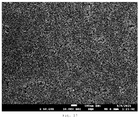
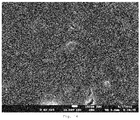
- REM-Aufnahme der Oberfläche von Beispiel 5 mit einer Vergrößerung von 10.000x;
- Fig. 11
- REM-Aufnahme der Oberfläche von Beispiel 6 mit einer Vergrößerung von 10.000x;
- Fig. 12
- REM-Aufnahme der Oberfläche von Beispiel 7 mit einer Vergrößerung von 10.000x;
- Fig. 13
- REM-Aufnahme der Oberfläche von Beispiel 5 mit einer Vergrößerung von 50.000x;
- Fig. 14
- REM-Aufnahme der Oberfläche von Beispiel 6 mit einer Vergrößerung von 50.000x;
- Fig. 15
- REM-Aufnahme der Oberfläche von Beispiel 7 mit einer Vergrößerung von 50.000x;
- Fig. 16
- Untersuchung der photokatalytischen Aktivität der Beschichtung aus Beispiel 11 anhand der Zersetzung von Methylviolett.
- Pyromellitsäuredianhydrid (1,2,4,5-Benzoltetracarboxyl-1,2:4,5-Dianhydrid; Merck Suchardt OHG); Titan(IV)chlorid (TiCl4) (Fluka Analytical, Sigma-Aldrich Chemie GmbH); Tetraethoxysilan (TEOS ABCR GmbH & Co. KG); Tetrahydrofuran (THF Alfa-Aesar GmbH & Co KG); Isopropanol (iPrOH CWR International S.A.S.); n-Butanol (n-BuOH Merck Schuchardt OHG). Als Wasser wurde ultrapures Wasser (Millipore) verwendet.
- Die hergestellten Beschichtungszusammensetzungen wurden auf Glassubstrate (Marienfeld) aufgetragen. Dazu wurde eine Tauchbeschichtungsmaschine (dip coating) verwendet. Die Beschichtungen wurden bei Geschwindigkeiten von 1, 2, 3, und 4 mm/s hergestellt. Danach wurden alle Beschichtungen bei 500 °C für 2 Stunden thermisch behandelt.
- 6,67 ml TiCl4 wurden zu 25 mL Wasser gegeben und für 30 Minuten gerührt.
- 2,73 g (12,5 mmol) Pyromellitsäuredianhydrid und 225 mg (12,5 mmol) Wasser wurden zu 50,0 ml einer Mischung von iPrOH/ n-BuOH (1:1 v/v; nach Volumen) und für 48 Stunden gerührt.
- 2,18 g (0,01 mol) Pyromellitsäuredianhydrid und 0,36 g (0,02 mol) Wasser wurden zu 22,5 ml THF gegeben und für 48 h gerührt.
- 2,73 g (12,5 mmol) Pyromellitsäuredianhydrid und 0,90 g (0,05 mol) Wasser wurden zu 50,0 ml einer Mischung aus iPrOH/ n-BuOH (1:1 v/v) gegeben und für 48 h gerührt.
- Zu 25,0 ml einer Mischung von iPrOH/ n-BuOH (1:1 v/v) wurden unter Rühren 5,0 ml von Beispiel 2, 1,30 g (6,25 mmol) TEOS und 0,16 ml von Beispiel 1 gegeben und die Mischung wurde für 6 Stunden gerührt.
- Zu 25,0 ml einer Mischung von iPrOH/ n-BuOH (1:1 v/v) wurden unter Rühren 2,82 g von Beispiel 3, 1,30 g (6,25 mmol) TEOS und 0,16 ml von Beispiel 1 gegeben und die Mischung für 6 Stunden gerührt.
- Zu Beispiel 4 wurden unter Rühren 6,50 g (31,3 mmol) TEOS und 0,8 ml von Beispiel 1 (zugetropft) gegeben und die Mischung für 6 Stunden gerührt.
- Zu 50 mL von Beispiel 4 wurden unter Rühren 3,12 g (14,98 mmol) TEOS, 5.26 ml von Beispiel 1 (zugetropft) und 9,00 ml einer Mischung von iPrOH/ n-BuOH (1:1 v/v) gegeben und die erhaltene Lösung wurde für 6 Stunden gerührt.
- Zu 50 mL von Beispiel 4 wurden unter Rühren 3,73 g (17,90 mmol) TEOS, 4,10 ml von Beispiel 1 (zugetropft) und 9,00 ml einer Mischung von iPrOH/ n-BuOH (1:1 v/v) gegeben und die erhaltene Lösung wurde für 6 Stunden gerührt.
- Zu 50 mL von Beispiel 4 wurden unter Rühren 4,36 g (20,93 mmol) TEOS, 3,15 ml von Beispiel 1 (zugetropft) und 7,00 ml einer Mischung von iPrOH/ n-BuOH (1:1 v/v) gegeben und die erhaltene Lösung wurde für 6 Stunden gerührt.
- Zu 50 mL von Beispiel 4 wurden unter Rühren 4,98 g (23,90 mmol) TEOS, 2,10 ml von Beispiel 1 (zugetropft) und 7,00 ml einer Mischung aus iPrOH/ n-BuOH (1:1 v/v) gegeben und die erhaltene Lösung wurde für 6 Stunden gerührt.
- Die Lösungen aller Beispiele wurden vor der Verdünnung mit 0,2 µm Filtern filtriert.
- Für alle hergestellten Beschichtungen war der antireflektive Effekt schon direkt durch Beobachtung mit dem Auge zu erkennen.
- Sowohl Reflexions- als auch Transmissionsspektren wurden mit einem Carry 5000 Spektrometer gemessen. Die Transmissionsspektren und Reflexionsspektren der Beispiele 5 bis 7 sind in den
Figuren 1 und2 gezeigt. - Die Kratzfestigkeit der Beschichtungen wurde mit einem Bleistift-Kratztest nach ASTM D3363 untersucht und mit einem Lichtmikroskop überprüft. Unterschiedliche Bleistifthärten wurden zur Untersuchung der Kratzfestigkeit verwendet. Die Ergebnisse sind in den
Figuren 4 bis 6 gezeigt. - Die Adhäsionsqualität der Beschichtungen wurde mit einem Gitterschnitt Test und durch Klebeband-Test gemäß ASTM D3359 untersucht. Die gemessenen Adhäsionswerte sind 5/5 (dies bedeutet 100 % Adhäsion beim Gitterschnitt Test und 100 % Adhäsion nach dem Klebeband-Test auf der geschnittenen Testfläche) für die Beispiele 6 und 7 sowie 4/4 für Beispiel 5. Die Testergebnisse sind auch in den
Figuren 7 bis 9 dargestellt und in Tabelle 1 zusammengefasst. - Die Brechungsindizes und Dicke der Beschichtungen wurden mit Ellipsometrie gemessen (J. A. Woollan Co, Inc. M-2000 DI, Spectroscopic Ellipsometer). Die Ergebnisse sind in Tabelle 2 angegeben.
- Die Morphologie und Mikrostruktur der Strukturen wurde mit Hilfe von Rasterelektronenmikroskopie (REM) untersucht. Abbildungen der Beschichtungen aus den Beispielen 5, 6 und 7 sind in den
Figuren 10 bis 15 dargestellt. - In
Figur 16 ist eine Messung der photokatalytischen Aktivität der Beschichtung aus Beispiel 11 gezeigt. - Die Messung wurde an einem Heraeus Suntest CPS mit Xenonstrahler durchgeführt, dazu wurde der beschichtete Objektträger mit 150g einer Lösung von 10 mg/l Methylviolett in Wasser bedeckt und für 10h belichtet. Es wurde regelmäßig (alle 30 Min) verdunstetes Wasser aufgefüllt. Die Messung erfolgte nach Beendigung des Versuchs nach 10 Stunden.
- Ohne die Metallverbindung, d.h. Beispiel 1 wurden keine brauchbaren Schichten erhalten.
Tabelle 1 Kratzfestigkeitstest (Bleistifthärte) Adhäsion (Gitterschnitt-Test / Klebeband-Test) Beispiel 5 1H 4/4 Beispiel 6 8H 5/5 Beispiel 7 8H 5/5 Tabelle 2 Dicke (nm) Brechungsindex (n) Beispiel 5 96 1.3189 Beispiel 6 88 1.4090 Beispiel 7 104 1.4588 -
- 1 F. Guillemot, A. Brunet-Bruneau, E. Bourgeat-Lami, T. Gacoin, E. Barthel and J.-P. Boilot, Chem. Mater. 2010, 22, 2822-2828.
- 2 M. C. Bautista and A. Morales, Sol. Energy Mater. Sol. Cells 2003, 80, 217-225.
- 3 B. B. Troitskii, Yu. A. Mamaev, A. A. Babin, M.A. Lopatin, V. N. Denisova, M. A. Novikova, L. V. Khokhlova and T. I. Lopatina, Glass Physics and Chemistry, 2010, 36 (5), 609-616.
- 4 P. Falcaro, L. Malfatti, T. Kidchob, G. Giannini, A. Falqui, M. F. Casula, H. Amenitsch, B. Marmiroli, □ G. Grenci and P. Innocenzi, Chem. Mater. 2009, 21, 2055-2061.
- 5 K. Biswas, S. Gangopadhyay, H.-C. Kim and R. D. Miller, Thin Solid Films 2006, 514, 350-354.
- 6 O. M. Yaghi and H. Li, J. Am. Chem. Soc. 1995,117, 10401-10402.
- 7 C. Janiak, Dalton Trans., 2003, 2781-2804.
- 8 Jesse L.C. Rowsell, Omar M. Yaghi, Microporous and Mesoporous Materials 73 (2004) 3- 14.
- 9 J. D. Figueroa; T. Fout; S. Plasynski; H. Mcllyried; R. D. Srivastava, Int. J. Greenhouse Gas Contr. 2008, 2, 9-20.
- 10 Corma, H. Garca and F. X. Llabrés i Xamena, Chem. Rev. 2010, 110, 4606-4655.
Claims (13)
- Zusammensetzung zur Herstellung einer Antireflexionsbeschichtung, dadurch gekennzeichnet, dass
die Zusammensetzung folgende Bestandteile umfassta) mindestens eine hydrolysierbare Silanverbindung;b) mindestens eine hydrolysierbare Metallverbindung, wobei die Verbindung auch teilweise hydrolysiert und/oder kondensiert vorliegen kann;c) mindestens eine organische Verbindung mit mindestens zwei funktionellen koordinativen Gruppen oder Vorstufen davon; undd) mindestens ein Lösungsmittel, wobei die Bestandteile a), b) und c) zumindest teilweise ein Koordinationspolymer bilden. - Zusammensetzung nach Anspruch 1, dadurch gekennzeichnet, dass
die organische Verbindung mindestens zwei funktionelle Gruppen oder Vorstufen davon aufweist, ausgewählt aus der Gruppe Aminogruppe, Carbonsäuregruppen, Hydroxylgruppen und Thiole. - Zusammensetzung nach einem der Ansprüche 1 oder 2, dadurch gekennzeichnet, dass
die organische Verbindung eine Di-, Tri- oder Tetracarbonsäure, Di-, Tri- oder Tetracarbonsäureester und/oder ein Anhydrid und/oder Ester einer solchen Verbindung ist. - Zusammensetzung nach einem der Ansprüche 1 bis 3, dadurch gekennzeichnet, dass
die hydrolysierbare Metallverbindung eine Verbindung der Formel MXn ist, wobei X ein hydrolysierbarer Rest ist und M ausgewählt ist aus den Gruppen Ia, IIa, IIIa, IVa bis VIa und Ib bis VIIIb und n der Wertigkeit des Metalls entspricht. - Zusammensetzung nach Anspruch 4, dadurch gekennzeichnet, dass
M ausgewählt ist aus der Gruppe umfassend Al, B, Sn, Fe, Ti, Zr, V oder Zn. - Zusammensetzung nach Anspruch 5, dadurch gekennzeichnet, dass M ausgewählt ist aus Ti oder Zr.
- Zusammensetzung nach einem der Ansprüche 2 bis 6, dadurch gekennzeichnet, dass
die funktionelle Gruppe eine Carbonsäuregruppe oder eine Vorstufe davon ist. - Zusammensetzung nach einem der Ansprüche 1 bis 7, dadurch gekennzeichnet, dass
die mindestens eine Metallverbindung mit Wasser umgesetzt wird. - Zusammensetzung nach einem der Ansprüche 1 bis 8, dadurch gekennzeichnet, dass
das molare Verhältnis von Silizium und Metallion der Verbindungen a) und b) zwischen 100:1 und 1:2 beträgt - Verfahren zur Herstellung einer Antireflexionsbeschichtung umfassend folgende Schrittea) Herstellen einer Zusammensetzung nach einem der Ansprüche 1 bis 9b) Auftragen der Zusammensetzung auf ein Substrat;c) thermische Behandlung der Beschichtung.
- Antireflexionsbeschichtung erhalten nach dem Verfahren gemäß Anspruch 10.
- Beschichtetes Substrat mit einer Beschichtung nach Anspruch 11.
- Verwendung einer Antireflexionsbeschichtung in optischen Elementen.
Applications Claiming Priority (2)
| Application Number | Priority Date | Filing Date | Title |
|---|---|---|---|
| DE102011057180A DE102011057180A1 (de) | 2011-12-30 | 2011-12-30 | Antireflexionsbeschichtung |
| PCT/EP2012/075492 WO2013098090A1 (de) | 2011-12-30 | 2012-12-14 | Antireflexionsbeschichtung |
Publications (2)
| Publication Number | Publication Date |
|---|---|
| EP2798013A1 EP2798013A1 (de) | 2014-11-05 |
| EP2798013B1 true EP2798013B1 (de) | 2016-08-17 |
Family
ID=47471769
Family Applications (1)
| Application Number | Title | Priority Date | Filing Date |
|---|---|---|---|
| EP12809207.9A Active EP2798013B1 (de) | 2011-12-30 | 2012-12-14 | Antireflexionsbeschichtung |
Country Status (8)
| Country | Link |
|---|---|
| US (1) | US20140335366A1 (de) |
| EP (1) | EP2798013B1 (de) |
| JP (1) | JP6526418B2 (de) |
| KR (1) | KR102023222B1 (de) |
| DE (1) | DE102011057180A1 (de) |
| ES (1) | ES2603192T3 (de) |
| PL (1) | PL2798013T3 (de) |
| WO (1) | WO2013098090A1 (de) |
Families Citing this family (1)
| Publication number | Priority date | Publication date | Assignee | Title |
|---|---|---|---|---|
| US11725275B2 (en) * | 2017-07-13 | 2023-08-15 | Uchicago Argonne, Llc | Low refractive index surface layers and related methods |
Family Cites Families (7)
| Publication number | Priority date | Publication date | Assignee | Title |
|---|---|---|---|---|
| US5648508A (en) * | 1995-11-22 | 1997-07-15 | Nalco Chemical Company | Crystalline metal-organic microporous materials |
| US7094709B2 (en) * | 2004-06-15 | 2006-08-22 | Braggone Oy | Method of synthesizing hybrid metal oxide materials and applications thereof |
| US7524444B2 (en) * | 2004-11-09 | 2009-04-28 | Basf Aktiengesellschaft | Shaped bodies containing metal-organic frameworks |
| WO2007090864A1 (de) * | 2006-02-10 | 2007-08-16 | Basf Se | Verfahren zur herstellung poröser organischer gerüstmaterialien |
| US8501150B2 (en) | 2006-04-18 | 2013-08-06 | Basf Aktiengesellschaft | Metal oxides from metal-organic framework materials |
| US8668961B2 (en) * | 2008-07-31 | 2014-03-11 | Guardian Industries Corp. | Titania coating and method of making same |
| CN102061112B (zh) * | 2010-11-12 | 2012-10-03 | 华东师范大学 | 复合金属有机骨架材料胶体溶液的制备方法及其在光学涂层上的应用 |
-
2011
- 2011-12-30 DE DE102011057180A patent/DE102011057180A1/de not_active Withdrawn
-
2012
- 2012-12-14 PL PL12809207T patent/PL2798013T3/pl unknown
- 2012-12-14 JP JP2014549406A patent/JP6526418B2/ja not_active Expired - Fee Related
- 2012-12-14 KR KR1020147021193A patent/KR102023222B1/ko not_active Expired - Fee Related
- 2012-12-14 ES ES12809207.9T patent/ES2603192T3/es active Active
- 2012-12-14 US US14/366,015 patent/US20140335366A1/en not_active Abandoned
- 2012-12-14 WO PCT/EP2012/075492 patent/WO2013098090A1/de not_active Ceased
- 2012-12-14 EP EP12809207.9A patent/EP2798013B1/de active Active
Also Published As
| Publication number | Publication date |
|---|---|
| ES2603192T3 (es) | 2017-02-24 |
| JP2015507765A (ja) | 2015-03-12 |
| DE102011057180A1 (de) | 2013-07-25 |
| US20140335366A1 (en) | 2014-11-13 |
| EP2798013A1 (de) | 2014-11-05 |
| KR102023222B1 (ko) | 2019-09-19 |
| KR20140110019A (ko) | 2014-09-16 |
| WO2013098090A1 (de) | 2013-07-04 |
| PL2798013T3 (pl) | 2017-02-28 |
| JP6526418B2 (ja) | 2019-06-05 |
Similar Documents
| Publication | Publication Date | Title |
|---|---|---|
| Knapp et al. | Aerosol-assisted chemical vapor deposition of transparent conductive gallium− indium− oxide films | |
| Koziej et al. | Nonaqueous TiO2 nanoparticle synthesis: a versatile basis for the fabrication of self-supporting, transparent, and UV-absorbing composite films | |
| US6296943B1 (en) | Method for producing composite sol, coating composition, and optical element | |
| DE69310797T2 (de) | Vernetzbare, funktionelle Gruppen enthaltende Polysiloxanzusammensetzungen und deren Anwendung als Wirkstoff für nichthaftende Beschichtungen | |
| DE69611618T2 (de) | Substrat mit einer photokatalytischen beschichtung von titandioxyd und organische dispersionen mit titandioxyd | |
| DE69324307T2 (de) | Mit einem gehärteten Film beschichtete optische Elemente | |
| TWI428282B (zh) | 金屬氧化物複合溶膠,塗佈組成物及光學構件 | |
| US11081292B2 (en) | Method for producing a film of light-absorbing material with a perovskite-like structure | |
| DE3701654A1 (de) | Verfahren zur behandlung anorganischer ueberzuege | |
| KR102035831B1 (ko) | 다면체 올리고머 실세스퀴옥산 및 그 제조 방법 | |
| WO2005120154A2 (de) | Abrieb- und kratzfeste beschichtungen mit niedriger brechzahl auf einem substrat | |
| EP0770699A2 (de) | Herstellung von wasserabweisenden Beschichtungen auf optischen Substraten | |
| EP2467514A1 (de) | Verfahren zur herstellung indiumoxid-haltiger schichten | |
| Studebaker et al. | Encapsulating Bis (β-Ketoiminato) Polyethers. Volatile, Fluorine-Free Barium Precursors for Metal− Organic Chemical Vapor Deposition | |
| KR20180001576A (ko) | 마그네슘 염의 첨가를 포함하는, 알콕사이드로부터 마그네슘 플루오라이드 졸 용액을 제조하기 위한 공정 | |
| DE19825100A1 (de) | Mittel zur Herstellung von wasserabweisenden Beschichtungen auf optischen Substraten | |
| Kariper et al. | Optical properties of cobalt xanthate films on different substrates | |
| CN103496744A (zh) | 还原态铵钨青铜纳米粒子的制备方法 | |
| CN112760036A (zh) | 一种具有紫外光屏蔽、可见光增透性能的耐原子氧涂层及其制备方法 | |
| KR101795751B1 (ko) | 고굴절 지르코니아 유무기 복합체의 제조방법 | |
| DE102011057180A1 (de) | Antireflexionsbeschichtung | |
| Murthy et al. | Sol–gel synthesized ZnO thin films doped with Rb and Al for self-cleaning antibacterial applications | |
| Asiltürk et al. | Structural and optical properties of thin films prepared from surface modified ZrO2 | |
| EP2996986A1 (de) | Fluordotierte zinnoxidkolloide und verfahren zur herstellung davon | |
| Tamilnayagam et al. | Structural and optical behaviour of cerium doped TiO2 thin films prepared by spray pyrolysis method |
Legal Events
| Date | Code | Title | Description |
|---|---|---|---|
| PUAI | Public reference made under article 153(3) epc to a published international application that has entered the european phase |
Free format text: ORIGINAL CODE: 0009012 |
|
| 17P | Request for examination filed |
Effective date: 20140730 |
|
| AK | Designated contracting states |
Kind code of ref document: A1 Designated state(s): AL AT BE BG CH CY CZ DE DK EE ES FI FR GB GR HR HU IE IS IT LI LT LU LV MC MK MT NL NO PL PT RO RS SE SI SK SM TR |
|
| RIN1 | Information on inventor provided before grant (corrected) |
Inventor name: DE OLIVEIRA, PETER WILLIAM Inventor name: JILAVI, MOHAMMAD Inventor name: CARVALHO MENEZES, ELISABETE HENRIQUETTA SOARES DE Inventor name: KOENIG, PETER |
|
| DAX | Request for extension of the european patent (deleted) | ||
| RIN1 | Information on inventor provided before grant (corrected) |
Inventor name: CARVALHO MENEZES, ELISABETE HENRIQUETTA SOARES DE Inventor name: DE OLIVEIRA, PETER WILLIAM Inventor name: JILAVI, MOHAMMAD Inventor name: KOENIG, PETER |
|
| 17Q | First examination report despatched |
Effective date: 20150717 |
|
| GRAP | Despatch of communication of intention to grant a patent |
Free format text: ORIGINAL CODE: EPIDOSNIGR1 |
|
| INTG | Intention to grant announced |
Effective date: 20160324 |
|
| GRAS | Grant fee paid |
Free format text: ORIGINAL CODE: EPIDOSNIGR3 |
|
| GRAA | (expected) grant |
Free format text: ORIGINAL CODE: 0009210 |
|
| AK | Designated contracting states |
Kind code of ref document: B1 Designated state(s): AL AT BE BG CH CY CZ DE DK EE ES FI FR GB GR HR HU IE IS IT LI LT LU LV MC MK MT NL NO PL PT RO RS SE SI SK SM TR |
|
| REG | Reference to a national code |
Ref country code: GB Ref legal event code: FG4D Free format text: NOT ENGLISH |
|
| REG | Reference to a national code |
Ref country code: CH Ref legal event code: EP |
|
| REG | Reference to a national code |
Ref country code: IE Ref legal event code: FG4D Free format text: LANGUAGE OF EP DOCUMENT: GERMAN |
|
| REG | Reference to a national code |
Ref country code: AT Ref legal event code: REF Ref document number: 821087 Country of ref document: AT Kind code of ref document: T Effective date: 20160915 |
|
| REG | Reference to a national code |
Ref country code: DE Ref legal event code: R096 Ref document number: 502012008004 Country of ref document: DE |
|
| REG | Reference to a national code |
Ref country code: CH Ref legal event code: NV Representative=s name: E. BLUM AND CO. AG PATENT- UND MARKENANWAELTE , CH |
|
| REG | Reference to a national code |
Ref country code: FR Ref legal event code: PLFP Year of fee payment: 5 Ref country code: NL Ref legal event code: MP Effective date: 20160817 |
|
| REG | Reference to a national code |
Ref country code: LT Ref legal event code: MG4D |
|
| PG25 | Lapsed in a contracting state [announced via postgrant information from national office to epo] |
Ref country code: HR Free format text: LAPSE BECAUSE OF FAILURE TO SUBMIT A TRANSLATION OF THE DESCRIPTION OR TO PAY THE FEE WITHIN THE PRESCRIBED TIME-LIMIT Effective date: 20160817 Ref country code: LT Free format text: LAPSE BECAUSE OF FAILURE TO SUBMIT A TRANSLATION OF THE DESCRIPTION OR TO PAY THE FEE WITHIN THE PRESCRIBED TIME-LIMIT Effective date: 20160817 Ref country code: NO Free format text: LAPSE BECAUSE OF FAILURE TO SUBMIT A TRANSLATION OF THE DESCRIPTION OR TO PAY THE FEE WITHIN THE PRESCRIBED TIME-LIMIT Effective date: 20161117 Ref country code: RS Free format text: LAPSE BECAUSE OF FAILURE TO SUBMIT A TRANSLATION OF THE DESCRIPTION OR TO PAY THE FEE WITHIN THE PRESCRIBED TIME-LIMIT Effective date: 20160817 Ref country code: NL Free format text: LAPSE BECAUSE OF FAILURE TO SUBMIT A TRANSLATION OF THE DESCRIPTION OR TO PAY THE FEE WITHIN THE PRESCRIBED TIME-LIMIT Effective date: 20160817 Ref country code: FI Free format text: LAPSE BECAUSE OF FAILURE TO SUBMIT A TRANSLATION OF THE DESCRIPTION OR TO PAY THE FEE WITHIN THE PRESCRIBED TIME-LIMIT Effective date: 20160817 |
|
| REG | Reference to a national code |
Ref country code: ES Ref legal event code: FG2A Ref document number: 2603192 Country of ref document: ES Kind code of ref document: T3 Effective date: 20170224 |
|
| PG25 | Lapsed in a contracting state [announced via postgrant information from national office to epo] |
Ref country code: PT Free format text: LAPSE BECAUSE OF FAILURE TO SUBMIT A TRANSLATION OF THE DESCRIPTION OR TO PAY THE FEE WITHIN THE PRESCRIBED TIME-LIMIT Effective date: 20161219 Ref country code: SE Free format text: LAPSE BECAUSE OF FAILURE TO SUBMIT A TRANSLATION OF THE DESCRIPTION OR TO PAY THE FEE WITHIN THE PRESCRIBED TIME-LIMIT Effective date: 20160817 Ref country code: GR Free format text: LAPSE BECAUSE OF FAILURE TO SUBMIT A TRANSLATION OF THE DESCRIPTION OR TO PAY THE FEE WITHIN THE PRESCRIBED TIME-LIMIT Effective date: 20161118 Ref country code: LV Free format text: LAPSE BECAUSE OF FAILURE TO SUBMIT A TRANSLATION OF THE DESCRIPTION OR TO PAY THE FEE WITHIN THE PRESCRIBED TIME-LIMIT Effective date: 20160817 |
|
| PG25 | Lapsed in a contracting state [announced via postgrant information from national office to epo] |
Ref country code: EE Free format text: LAPSE BECAUSE OF FAILURE TO SUBMIT A TRANSLATION OF THE DESCRIPTION OR TO PAY THE FEE WITHIN THE PRESCRIBED TIME-LIMIT Effective date: 20160817 Ref country code: RO Free format text: LAPSE BECAUSE OF FAILURE TO SUBMIT A TRANSLATION OF THE DESCRIPTION OR TO PAY THE FEE WITHIN THE PRESCRIBED TIME-LIMIT Effective date: 20160817 |
|
| REG | Reference to a national code |
Ref country code: DE Ref legal event code: R097 Ref document number: 502012008004 Country of ref document: DE |
|
| PG25 | Lapsed in a contracting state [announced via postgrant information from national office to epo] |
Ref country code: DK Free format text: LAPSE BECAUSE OF FAILURE TO SUBMIT A TRANSLATION OF THE DESCRIPTION OR TO PAY THE FEE WITHIN THE PRESCRIBED TIME-LIMIT Effective date: 20160817 Ref country code: SK Free format text: LAPSE BECAUSE OF FAILURE TO SUBMIT A TRANSLATION OF THE DESCRIPTION OR TO PAY THE FEE WITHIN THE PRESCRIBED TIME-LIMIT Effective date: 20160817 Ref country code: CZ Free format text: LAPSE BECAUSE OF FAILURE TO SUBMIT A TRANSLATION OF THE DESCRIPTION OR TO PAY THE FEE WITHIN THE PRESCRIBED TIME-LIMIT Effective date: 20160817 Ref country code: BG Free format text: LAPSE BECAUSE OF FAILURE TO SUBMIT A TRANSLATION OF THE DESCRIPTION OR TO PAY THE FEE WITHIN THE PRESCRIBED TIME-LIMIT Effective date: 20161117 Ref country code: SM Free format text: LAPSE BECAUSE OF FAILURE TO SUBMIT A TRANSLATION OF THE DESCRIPTION OR TO PAY THE FEE WITHIN THE PRESCRIBED TIME-LIMIT Effective date: 20160817 |
|
| PLBE | No opposition filed within time limit |
Free format text: ORIGINAL CODE: 0009261 |
|
| STAA | Information on the status of an ep patent application or granted ep patent |
Free format text: STATUS: NO OPPOSITION FILED WITHIN TIME LIMIT |
|
| 26N | No opposition filed |
Effective date: 20170518 |
|
| PG25 | Lapsed in a contracting state [announced via postgrant information from national office to epo] |
Ref country code: SI Free format text: LAPSE BECAUSE OF FAILURE TO SUBMIT A TRANSLATION OF THE DESCRIPTION OR TO PAY THE FEE WITHIN THE PRESCRIBED TIME-LIMIT Effective date: 20160817 |
|
| PG25 | Lapsed in a contracting state [announced via postgrant information from national office to epo] |
Ref country code: MC Free format text: LAPSE BECAUSE OF FAILURE TO SUBMIT A TRANSLATION OF THE DESCRIPTION OR TO PAY THE FEE WITHIN THE PRESCRIBED TIME-LIMIT Effective date: 20160817 |
|
| REG | Reference to a national code |
Ref country code: IE Ref legal event code: MM4A |
|
| PG25 | Lapsed in a contracting state [announced via postgrant information from national office to epo] |
Ref country code: LU Free format text: LAPSE BECAUSE OF NON-PAYMENT OF DUE FEES Effective date: 20161214 |
|
| PG25 | Lapsed in a contracting state [announced via postgrant information from national office to epo] |
Ref country code: IE Free format text: LAPSE BECAUSE OF NON-PAYMENT OF DUE FEES Effective date: 20161214 |
|
| REG | Reference to a national code |
Ref country code: FR Ref legal event code: PLFP Year of fee payment: 6 |
|
| PG25 | Lapsed in a contracting state [announced via postgrant information from national office to epo] |
Ref country code: HU Free format text: LAPSE BECAUSE OF FAILURE TO SUBMIT A TRANSLATION OF THE DESCRIPTION OR TO PAY THE FEE WITHIN THE PRESCRIBED TIME-LIMIT; INVALID AB INITIO Effective date: 20121214 |
|
| PG25 | Lapsed in a contracting state [announced via postgrant information from national office to epo] |
Ref country code: MK Free format text: LAPSE BECAUSE OF FAILURE TO SUBMIT A TRANSLATION OF THE DESCRIPTION OR TO PAY THE FEE WITHIN THE PRESCRIBED TIME-LIMIT Effective date: 20160817 Ref country code: CY Free format text: LAPSE BECAUSE OF FAILURE TO SUBMIT A TRANSLATION OF THE DESCRIPTION OR TO PAY THE FEE WITHIN THE PRESCRIBED TIME-LIMIT Effective date: 20160817 Ref country code: IS Free format text: LAPSE BECAUSE OF FAILURE TO SUBMIT A TRANSLATION OF THE DESCRIPTION OR TO PAY THE FEE WITHIN THE PRESCRIBED TIME-LIMIT Effective date: 20160817 |
|
| PG25 | Lapsed in a contracting state [announced via postgrant information from national office to epo] |
Ref country code: MT Free format text: LAPSE BECAUSE OF FAILURE TO SUBMIT A TRANSLATION OF THE DESCRIPTION OR TO PAY THE FEE WITHIN THE PRESCRIBED TIME-LIMIT Effective date: 20160817 |
|
| PG25 | Lapsed in a contracting state [announced via postgrant information from national office to epo] |
Ref country code: AL Free format text: LAPSE BECAUSE OF FAILURE TO SUBMIT A TRANSLATION OF THE DESCRIPTION OR TO PAY THE FEE WITHIN THE PRESCRIBED TIME-LIMIT Effective date: 20160817 Ref country code: TR Free format text: LAPSE BECAUSE OF FAILURE TO SUBMIT A TRANSLATION OF THE DESCRIPTION OR TO PAY THE FEE WITHIN THE PRESCRIBED TIME-LIMIT Effective date: 20160817 |
|
| P01 | Opt-out of the competence of the unified patent court (upc) registered |
Effective date: 20230513 |
|
| PGFP | Annual fee paid to national office [announced via postgrant information from national office to epo] |
Ref country code: GB Payment date: 20231220 Year of fee payment: 12 |
|
| PGFP | Annual fee paid to national office [announced via postgrant information from national office to epo] |
Ref country code: FR Payment date: 20231220 Year of fee payment: 12 Ref country code: DE Payment date: 20231214 Year of fee payment: 12 Ref country code: AT Payment date: 20231214 Year of fee payment: 12 |
|
| PGFP | Annual fee paid to national office [announced via postgrant information from national office to epo] |
Ref country code: PL Payment date: 20231201 Year of fee payment: 12 Ref country code: BE Payment date: 20231218 Year of fee payment: 12 |
|
| PGFP | Annual fee paid to national office [announced via postgrant information from national office to epo] |
Ref country code: ES Payment date: 20240118 Year of fee payment: 12 |
|
| PGFP | Annual fee paid to national office [announced via postgrant information from national office to epo] |
Ref country code: CH Payment date: 20240110 Year of fee payment: 12 |
|
| PGFP | Annual fee paid to national office [announced via postgrant information from national office to epo] |
Ref country code: IT Payment date: 20231229 Year of fee payment: 12 |
|
| REG | Reference to a national code |
Ref country code: DE Ref legal event code: R119 Ref document number: 502012008004 Country of ref document: DE |
|
| REG | Reference to a national code |
Ref country code: CH Ref legal event code: PL |
|
| REG | Reference to a national code |
Ref country code: AT Ref legal event code: MM01 Ref document number: 821087 Country of ref document: AT Kind code of ref document: T Effective date: 20241214 |
|
| GBPC | Gb: european patent ceased through non-payment of renewal fee |
Effective date: 20241214 |
|
| REG | Reference to a national code |
Ref country code: BE Ref legal event code: MM Effective date: 20241231 |
|
| PG25 | Lapsed in a contracting state [announced via postgrant information from national office to epo] |
Ref country code: DE Free format text: LAPSE BECAUSE OF NON-PAYMENT OF DUE FEES Effective date: 20250701 |
|
| PG25 | Lapsed in a contracting state [announced via postgrant information from national office to epo] |
Ref country code: IT Free format text: LAPSE BECAUSE OF NON-PAYMENT OF DUE FEES Effective date: 20241214 |
|
| PG25 | Lapsed in a contracting state [announced via postgrant information from national office to epo] |
Ref country code: BE Free format text: LAPSE BECAUSE OF NON-PAYMENT OF DUE FEES Effective date: 20241231 Ref country code: GB Free format text: LAPSE BECAUSE OF NON-PAYMENT OF DUE FEES Effective date: 20241214 |
|
| PG25 | Lapsed in a contracting state [announced via postgrant information from national office to epo] |
Ref country code: FR Free format text: LAPSE BECAUSE OF NON-PAYMENT OF DUE FEES Effective date: 20241231 Ref country code: AT Free format text: LAPSE BECAUSE OF NON-PAYMENT OF DUE FEES Effective date: 20241214 |
|
| PG25 | Lapsed in a contracting state [announced via postgrant information from national office to epo] |
Ref country code: CH Free format text: LAPSE BECAUSE OF NON-PAYMENT OF DUE FEES Effective date: 20241231 |
|
| REG | Reference to a national code |
Ref country code: ES Ref legal event code: FD2A Effective date: 20260130 |
|
| PG25 | Lapsed in a contracting state [announced via postgrant information from national office to epo] |
Ref country code: ES Free format text: LAPSE BECAUSE OF NON-PAYMENT OF DUE FEES Effective date: 20241215 |