EP2797900B1 - Komplexbildende verbindungen - Google Patents
Komplexbildende verbindungen Download PDFInfo
- Publication number
- EP2797900B1 EP2797900B1 EP12837606.8A EP12837606A EP2797900B1 EP 2797900 B1 EP2797900 B1 EP 2797900B1 EP 12837606 A EP12837606 A EP 12837606A EP 2797900 B1 EP2797900 B1 EP 2797900B1
- Authority
- EP
- European Patent Office
- Prior art keywords
- group
- acid
- compound
- general formula
- formula
- Prior art date
- Legal status (The legal status is an assumption and is not a legal conclusion. Google has not performed a legal analysis and makes no representation as to the accuracy of the status listed.)
- Active
Links
- 0 *N1CCOCCOCCN(*)CCOCCOCC1 Chemical compound *N1CCOCCOCCN(*)CCOCCOCC1 0.000 description 2
- XLKFOQSZDXEGHE-UHFFFAOYSA-N OC(CCC(C(O)=O)NC(CN1CCOCCOCCN(CC(NC(CCC(O)=O)C(O)=O)=O)CCOCCOCC1)=O)=O Chemical compound OC(CCC(C(O)=O)NC(CN1CCOCCOCCN(CC(NC(CCC(O)=O)C(O)=O)=O)CCOCCOCC1)=O)=O XLKFOQSZDXEGHE-UHFFFAOYSA-N 0.000 description 1
Images




Classifications
-
- C—CHEMISTRY; METALLURGY
- C07—ORGANIC CHEMISTRY
- C07K—PEPTIDES
- C07K5/00—Peptides containing up to four amino acids in a fully defined sequence; Derivatives thereof
- C07K5/04—Peptides containing up to four amino acids in a fully defined sequence; Derivatives thereof containing only normal peptide links
- C07K5/06—Dipeptides
- C07K5/06139—Dipeptides with the first amino acid being heterocyclic
-
- A—HUMAN NECESSITIES
- A61—MEDICAL OR VETERINARY SCIENCE; HYGIENE
- A61K—PREPARATIONS FOR MEDICAL, DENTAL OR TOILETRY PURPOSES
- A61K31/00—Medicinal preparations containing organic active ingredients
- A61K31/28—Compounds containing heavy metals
- A61K31/305—Mercury compounds
- A61K31/31—Mercury compounds containing nitrogen
-
- A—HUMAN NECESSITIES
- A61—MEDICAL OR VETERINARY SCIENCE; HYGIENE
- A61P—SPECIFIC THERAPEUTIC ACTIVITY OF CHEMICAL COMPOUNDS OR MEDICINAL PREPARATIONS
- A61P39/00—General protective or antinoxious agents
- A61P39/02—Antidotes
-
- A—HUMAN NECESSITIES
- A61—MEDICAL OR VETERINARY SCIENCE; HYGIENE
- A61P—SPECIFIC THERAPEUTIC ACTIVITY OF CHEMICAL COMPOUNDS OR MEDICINAL PREPARATIONS
- A61P39/00—General protective or antinoxious agents
- A61P39/04—Chelating agents
-
- A—HUMAN NECESSITIES
- A61—MEDICAL OR VETERINARY SCIENCE; HYGIENE
- A61K—PREPARATIONS FOR MEDICAL, DENTAL OR TOILETRY PURPOSES
- A61K31/00—Medicinal preparations containing organic active ingredients
- A61K31/28—Compounds containing heavy metals
- A61K31/32—Tin compounds
-
- A—HUMAN NECESSITIES
- A61—MEDICAL OR VETERINARY SCIENCE; HYGIENE
- A61K—PREPARATIONS FOR MEDICAL, DENTAL OR TOILETRY PURPOSES
- A61K31/00—Medicinal preparations containing organic active ingredients
- A61K31/33—Heterocyclic compounds
- A61K31/395—Heterocyclic compounds having nitrogen as a ring hetero atom, e.g. guanethidine or rifamycins
-
- A—HUMAN NECESSITIES
- A61—MEDICAL OR VETERINARY SCIENCE; HYGIENE
- A61K—PREPARATIONS FOR MEDICAL, DENTAL OR TOILETRY PURPOSES
- A61K38/00—Medicinal preparations containing peptides
- A61K38/04—Peptides having up to 20 amino acids in a fully defined sequence; Derivatives thereof
- A61K38/05—Dipeptides
-
- C—CHEMISTRY; METALLURGY
- C07—ORGANIC CHEMISTRY
- C07D—HETEROCYCLIC COMPOUNDS
- C07D273/00—Heterocyclic compounds containing rings having nitrogen and oxygen atoms as the only ring hetero atoms, not provided for by groups C07D261/00 - C07D271/00
- C07D273/08—Heterocyclic compounds containing rings having nitrogen and oxygen atoms as the only ring hetero atoms, not provided for by groups C07D261/00 - C07D271/00 having two nitrogen atoms and more than one oxygen atom
Definitions
- the present invention refers to the compounds of the general formula the preparation thereof and the use of these compounds for the prevention and treatment of heavy metal poisoning.
- the present invention refers to a compound of the formula (I) which contains a structure of 1,4,10,13-tetraoxa-7,16-diazacylooctadekane (shortly KRIPTOFIX base structure) and in which each of the two nitrogen atoms are substituted with an identical or different group of the general formula
- chelate-forming compounds For the removal of the above-mentioned poisoning compounds so called "chelate-forming" compounds can be used which remove the toxic metals from the body.
- the Hungarian Patent No. 209389 discloses such complex-forming agents which are based on a Kriptofix compound binding the strontium selectively.
- One member of these compounds is the compound of the formula (7,16-bis-malonate)-1,4,10,13-tetraoxa-7,16-diazacyclooctadecane-bis-malonic acid, which was prepared in Ca complex form as well.
- the compound of the formula (XI) verified a stronger activity with strontium than calcium in physico-chemical and in vivo experiments on mice. In the in vivo experiments the strontium administered artificially in a different amount could be removed selectively by the compound of the formula (XI) added intravenously, thus preventing its accumulation in the bones, while the calcium remained.
- the salts of the compound of (XI) were administered intravenously in a concentration of 100-500 mg/l in animal experiments.
- a further disadvantage of the compound of the formula (XI) is that the malonic acid substructure decarboxylates easily and the strontium complex of the resulted compound is not soluble and precipitates from the aqueous medium, which can prevent the excretion of the strontium ion from the body.
- malonic acid cleaves from the compound which is a strong cytotoxin.
- the reason for this feature is that its structure is similar to that of the succinic acid which has a key role in the cellular respiration and therefore inhibits the function of succinate dehydrogenase enzyme.
- decarboxylation can increase in the presence of other heavy metals having Lewis acidic properties such as lead (Pb) or tin (Sn), which is proved by our experimental results measured with mass spectrometer.
- Pb lead
- Sn tin
- complex-forming agents the selectivity of which is similar to the compound of the formula (XI), but more effective, more water soluble, and do not transform to toxic compounds in course of their incidental metabolism in the body and are stable during storage. These compounds would allow the reduction of the amount of used dose. Since these compounds are usually used in catastrophes, they have to be stored in a large amount and for a long time. The mere fact that compounds have 1.5-2 fold more effective complex-forming compounds than the known ones, reduces significantly the expenses of the preparation for catastrophes. On the other hand it is also important that the complex-forming compounds do not bind significantly and do not remove the microelements from the body which are important for the living beings such as zinc and copper.
- the most general embodiment of the present invention is a compound of the general formula (I) in which R 1 and R 2 are identical or different groups according to the general formula wherein n stands for 0, 1 or 2, Q is a carboxyl group, X stands for an oxygen, sulfur or a nitrogen atom, in which the substituent of the nitrogen atom is a hydrogen atom or a straight or branched C 1-6 carbon chained alkyl group, R 3 , R 4 and R 5 are identical or different groups which stand for hydrogen, halogen atom, a straight or branched C 1-6 carbon chained alkyl group, C 1-6 alkylene group, C 1-6 alkynyl group, aryl, aralkyl or heteroaryl group, saturated or unsaturated cycloalkyl group, a heteroaryl group containing one or more sulfur, oxygen or nitrogen atoms, and which contains one or more identical or different substituents optionally which substituents are preferably C 1-6 alkyl group, halogen atom, a straight
- n, X, R 3 , R 4 , R 5 , R 6 and R 6 can be partly identical or totally different in the two groups.
- the compound is asymmetric.
- the compounds of the present invention bind strontium ion significantly more selectively than the compound of formula (XI).
- the ion binding capabilities to each of ions are compared to the calcium binding capabilities, which is shown by R H (relative complex-forming tendency).
- Table 1 Calculated thermodynamic values of the Ca 2+ ion changing process of the compound of (XI) (kJ mol -1 ).
- the quantity of the active ingredient to be stored will be one fourth of the quantity to be stored in other cases and the load exerted on the organism during the treatment reduces at the same extent, while the same therapeutic effect can be achieved.
- the degradation products are amino- or hydroxy acids which are not harmful for the body.
- the substituents of R 1 and R 2 are identical or different groups of the general formula (II), wherein n stands for 0, 1 or 2, X stands for an oxygen atom or an unsubstituted or substituted nitrogen atom and the substituent of the nitrogen atom is a hydrogen atom or a methyl group, the meaning of the substituents R 3 , R 4 , R 5 , R 6 are as mentioned above and the salts and/or complexes thereof.
- the substituents of R 1 and R 2 are identical or different groups of the general formula (II), wherein n stands for 0, 1 or 2, Q stands for a carboxyl group, X stands for an oxygen atom or an unsubstituted or substituted nitrogen atom and the substituent of the nitrogen atom is a hydrogen atom or a methyl group, the meaning of the substituents R 3 , R 4 , R 5 , R 6 are as mentioned above and the salts and/or complexes thereof.
- R 1 and R 2 are identical or different groups of the general formula (II), wherein n stands for 0, 1 or 2, Q stands for a carboxyl group, X stands for an oxygen atom or an unsubstituted or substituted nitrogen atom and the substituent of the nitrogen atom is a hydrogen atom or a methyl group, the substituents R 3 , R 4 , R 5 are identical or different groups which stand for hydrogen atom, halogen atom, straight or branched C 1-6 alkyl group, aryl or aralkyl group, R 6 stands for an unsubstituted or substituted methylene group which can be substituted with one or more identical or different substituents, halogen atoms, a straight or branched C 1-6 carbon chained alkyl group, C 1-6 alkylene group, C 1-6 alkinyl
- R 1 and R 2 of the general formula (I) are identical, in the groups of the general formula (II) n stands for 0, 1 or 2, Q stands for a carboxyl group, X stands for an unsubstituted or substituted nitrogen atom wherein the substituent of the nitrogen atom is a hydrogen atom or a methyl group, R 3 , R 4 , R 5 are identical or different, which stand for hydrogen atom, halogen atom, straight or branched C 1-6 alkyl group, aryl or aralkyl group, R 6 stands for an unsubstituted or substituted methylene group which can be substituted with one or more identical or different substituents, halogen atoms, or a straight or branched C 1-6 carbon chained alkyl group, C 1-6 alkylene group, C 1-6 alkinyl group, aryl, aralkyl or heteroaryl group, saturated or unsaturated cycloalky
- the most advantageous embodiments of the present invention are the compounds 2-(2- ⁇ 16-[(Dicarboxymethyl-carbamoyl)-methyl]-1,4,10,13-tetraoxa-7,16-diazacyclooctadec-7-yl ⁇ -acetiyamino)-malonic acid: 2-(2- ⁇ 16-[(1,2-dicarboxyethylcarbamoyl)-methyl]-1,4,10,13-tetraoxa-7,16-diaza-cyclooctadec-7-yl ⁇ -acetylamino)-succinic acid: and 2-(2- ⁇ 16-[(1,3-dicarboxy-propylcarbamoyl)-methyll]-1,4,10,13-tetraoxa-7,16-diaza-cyclolooctadec-7-yl ⁇ -acetylamino)-glutaric acid of the formula: or salts or complexes thereof.
- the complexes according to the present invention are preferably the complexes of calcium, magnesium, strontium, mercury and lead ions of the compounds of the general formula (I).
- the compounds according to the present invention have acid carboxyl groups and basic amino groups, thus they form salts with ammonia, amines and also with organic or inorganic acids.
- Further objects of the present invention are complex compounds being also salts formed with acids or with bases, for example such strontium complexes, in which the carboxyl groups are in a sodium salt form or such complexes in which the nitrogen atom forms a salt with an organic or inorganic acid.
- the salts composed either with acids or bases are more stable, can be better handled and are less hygroscopic than the compounds not stabilized with salt formation.
- the organic acid components of the acid addition salts of the compounds of the formula (I) are preferably saturated or unsaturated, substituted or unsubstituted aliphatic carboxylic acids, e.g. formic acid, acetic acid, propionic acid, butyric acid, isobutyric acid, stearic acid, decanoic acid, sebacic acid, orotic acid, palmitic acid, pamoic acid, substituted carboxylic acids as carboxylic acids substituted with halogen atoms, e.g.
- C 1-6 alkyl groups are e.g. methyl, ethyl, propyl, isopropyl, butyl, tert-butyl, hexyl groups
- C 1-6 alkylene groups are groups having one or more isolated or conjugated double bonds, e.g. 2-propenyl, isobutenyl groups
- C 1-6 alkinyl groups are groups having one or more isolated or conjugated double bonds, or triple bonds e.g. propargyl groups.
- Aryl groups are substituted or unsubstituted, isolated or condensed isocyclic aromatic compoundss such as phenyl and naphtyl groups.
- Aralkyl groups are such isocyclic groups which are connected to the structure through an alkylene, e.g. a methylene group.
- Heteroaryl groups are such compounds which contain at least one hetero atom such as pyridyl, pyrazonyl, imidazolyl, pyrazolyl, oxazolyl, thiophenyl groups or condensed heteroaryl groups such as purinyl groups.
- Saturated or unsaturated cycloalkyl groups are such groups as cyclopropyl, cyclobutyl, cyclohexyl, cycloheptyl or the derivatives thereof containing at least one double bond.
- Substituted or unsubstituted heterocyclic compounds are groups derived from cyclic compounds having at least one sulphur, oxygen or nitrogen ring member such as azetidinyl, oxyranyl, dioxolanyl, morpholinyl groups.
- Alkoxy groups are groups in which the alkyl group is attached to a carbon atom of the compound through an oxygen atom.
- the amino groups can be primary, secondary or tertiary amino groups according to the present invention.
- the alkoxycarbonyl groups are such esters in which the alcohol component is an alkyl or aralkyl group, such groups are e.g. ethoxy carbonyl, methoxycarbonyl or benzyloxicarbonyl groups.
- the carbamoyl groups can have one or two substituents. Halogen atoms are chloro, bromo, iodo or fluoro atom. Carbon containing acid is the carboxylic acid.
- Another aspect of the present invention is the preparation of the compounds of the general formula (I), in which R 1 and R 2 are as defined above, characterized in that the compound of the formula (X) is reacted with a compound of the general formula of (II/A), in which the meaning of R 3 , R 4 , R 5 ,R 6 , n and X is as defined above for group (II) and in which Q' and P' stand for carboxyl groups, Z is a leaving group, preferably a halogen atom, e.g.
- the obtained compound of the formula (VI) is reacted with a compound of the general formula (IX) wherein R 5 , R 6 and X are as defined above, P' and Q' groups are protected carboxyl groups such as esters, amides or P' and/or Q' are cyano groups. Then the protecting groups of the obtained compound of the general formula (VII) are removed and the compound of the general formula (I) is obtained.
- the obtained compound of the general formula (I) can be transformed into a salt and/or complex if necessary.
- a sulfonyloxy group preferably mesyloxy, tosyloxy, or benzenesulfonyloxy group, then preferably reacted with further 0.5-1.5 mol equivalents of a compound of the general formula (II/A) different from the other compound used in the first step, the obtained compound of the general formula (I), wherein the meaning of R 1 and R 2 is defined above, is isolated from the reaction mixture, purified if necessary and optionally transformed into a salt and/or complex form.
- the reaction can be carried out in such a manner that the carboxyl groups of the compound of the formula (II/A) are applied first before the reaction with protecting groups which groups are removed after the reaction.
- the reaction can be carried out in the presence of organic or inorganic bases, preferably in the presence of potassium or sodium carbonate or triethylamine.
- the X group of the compound of the general formula (II/A) can stand for a sulphur, oxygen or nitrogen atom as defined above. From the point of view of the N-alkylation reaction there can be any of them because they do not take part in the reaction.
- the compounds of the general formula (II/A) can be prepared in an analogous manner, namely an amino, hydroxyl or mercapto dicarboxylic acid or derivatives thereof with protected carboxyl functions are reacted with an unsubstituted or substituted chloro, bromo or iodo acetic acid halogenid, preferably with a chloride in the presence of a base in an indifferent solvent and the temperature of the reaction mixture is kept between -20 - 100°C, preferably between 40-80°C.
- the acylation of amino, mercapto and hydroxyl acids is well-known from the prior art, it is a part of the knowledge of the person skilled in the art.
- the carboxyl groups are generally protected in ester form, preferably alkyl esters, e.g. tert. butyl esters or benzyl esters are used.
- the alkyl ester groups can be removed by hydrolysis, benzylesters by hydrogenation. These processes are well known from the prior art and are a part of the knowledge of the person skilled in the art, as the hydrolysis of other protecting groups, such as the transformation of amide group, cyano groups, and the orthoesters to carboxyl groups.
- the compounds of the general formula (II/A) which can be used for the synthesis of the compounds of the general formula (I) can also be prepared in a manner that the carboxyl groups of the used amino dicarboxylic acid are protected with benzyl or other alkyl groups before the reaction, which groups are removed after the reaction.
- the N-acylation reaction can be preferably carried out with the use of acid halogenids or acid anhydrides.
- the reaction can be carried out in the presence of organic or inorganic base, preferably in the presence of potassium or sodium carbonate or triethylamine at a temperature between -20 - +100 °C, preferably between +20 - +50 °C.
- the Kriptofix compound of the formula (X) can be alkylated with the thus obtained compounds of the general formula (II/A) or with a compound of the general formula (IV).
- the reaction can also be carried out in a manner that the reagents are reacted in the presence of an organic or inorganic base, preferably in the presence of potassium, sodium, cesium carbonate or triethyl amine, in an organic apolar or polar, aprotic or protic solvent, preferably in tetrahydrofurane, acretonitrile or dimethylformamide between a temperature of -20 - +100 °C, preferably between +50 - +80 °C.
- the compound of the general formula (VI) can be prepared from the compound of the general formula (V) so that the compound of the general formula (V) is reacted in an aqueous or anhydrous, aprotic or protic solvent, preferably in dichloroethane with a strong organic or mineral acid, preferably in trifluoacetic acid at a temperature between -20 - +100 °C, preferably at room temperature if the group R 11 is e.g. an ester group.
- the compound of the general formula (VII) can be prepared also in a way that the compound of the general formula (VI) is reacted with a compound of the general formula (IX) in the presence of organic or inorganic bases, preferably in the presence of triethylamine, in an organic polar or apolar solvent, preferably in tetrahydrofurane, acetonitrile, dimethylformamide, also in the presence of coupling agents of TBTU (O-(benzotriazol-1-yl)-N,N,N',N'-tetramethyluronium tetrafluoroborate), HATU ( O -(7-azabenzotriazol-1-yl)- N,N,N',N" -tetramethyluronium hexafluorophosphate), TATU (2-(1H-7-Azabenzotriazol-1-yl)--1,1,3,3-tetramethyl uronium hexafluorophosphate),
- the compound of the general formula (I) can also be prepared from the compound of the general formula (VII) in which the Q", Q', P" and P' groups stand for an ester group with acidic or alkaline hydrolysis.
- the reaction can be carried out in a manner that the compound of the general formula (VII) is reacted in the presence of an inorganic base, preferably in the presence of potassium lithium, sodium or calcium carbonate, in organic polar or apolar, aprotic or protic solvent or possibly in an aqueous solvent, preferably in alcohols between a temperature of -20 - +100 °C, preferably between +50 - +80 °C.
- the salt With the evaporation of the solvent the salt is obtained, or alternatively, using an antisolvent it precipitates. Alternatively we can crystallise the salt from the evaporated reaction mixture, or the acid can be obtained with the acidification of the reaction mixture.
- Esters according to the general formula (VII) can form into acid by the reaction with an acid, preferably hydrochloric acid in an aqueous or anhydrous, polar and apolar, aprotic and protic solvent, preferably in diethylether at a temperature between of -20 - +100 °C, preferably at room temperature.
- an acid preferably hydrochloric acid in an aqueous or anhydrous, polar and apolar, aprotic and protic solvent, preferably in diethylether at a temperature between of -20 - +100 °C, preferably at room temperature.
- the ester group can be removed by reduction.
- Q",Q',P"and P' of the formula (VII) are benzyl or any other type of groups which can be removed by reduction
- the reaction can be carried out in an aqueous or anhydrous, apolar or polar, aprotic or protic solvent, preferably in alcohols at a temperature between of -20 - +100 °C, preferably at room temperature, using transition metal catalysts, preferably Pd or Raney-Ni catalyst.
- transition metal catalysts preferably Pd or Raney-Ni catalyst.
- hydrogen source elemental hydrogen ammonium formiate formic acid and hydrazine can also be used.
- organic apolar solvents e.g. saturated or unsaturated hydrocarbons or mixtures thereof, e.g. hexane, heptane, toluene, diethyl ether can be used.
- polar aprotic solvent methylene chloride
- tetrahydrofurane, dimethyl formamide, acetonitrile, dimethyl sulfoxide can also be used.
- protic solvent water aliphatic alcohols, such as methanol, ethanol, propanol, 2-propanol and the like can be used. The selection of the suitable solvents is the part of the general knowledge of the person skilled in the art.
- Another object of the present invention is one of the key intermediates of the compound of the general formula (VII), wherein the meaning of n, X, R 3 , R 4 , R 5 and R 6 is as defined in Claim 1, Q', Q", P' and P" are identical or different protected carboxyl groups, preferably ester, substituted or unsubstituted amide groups or cyano groups.
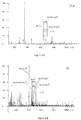
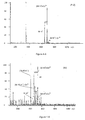
- the decarboxylation which is characteristic of decorporol, was shown also during the measurements.
- the experiments with different metal ions showed that the compound of (P-3) of the present invention binds the toxic metals (Sr 2+ , Sn 2+ , Pd 2+ ) significantly better than the physiologically important metals (Zn 2+ , Fe 2+ , Ca 2+ ).
- the behavior of Decorporol is similar, but binds the tin and palladium significantly less and in this case the amount of decarboxylated decorporol is much higher, meanwhile the compound of the formula (P-3) does not decarboxylate.
- the decorporol binds Zn ions stronger than Ca ions, which can lead to the reduction of Zn ions to a dangerous extent.
- the metal ion binding abilities of the compound of the formula (P-3) and Decorporol are as follows: (P-3) compound M 2+ /Ca 2+ rate Decorporol M 2+ /Ca 2+ rate Sr 1.5 1.2 Cu 1.1 1.2(+1.5) Zn ca. 0 8(+4)* Fe ca. 0 - Sn 100 22 Pd 29 20(+29+40)* *The peaks of decarboxylated fragments are in the brackets.
- compositions according to the present invention are suitable to remove the toxic metals from the body of patients who need such treatment, meanwhile the essential metal ions such as copper, zinc and calcium do not excrete from the body.
- a further aspect of the present invention is a pharmaceutical composition, which comprises a compound of the general formula (I) as active ingredient, wherein the meaning of R 1 and R 2 is as defined above and the pharmaceutically acceptable salts and/or complexes thereof beside the usual carrier agents.
- the most advantageous embodiment of the present invention comprises as active ingredient a compound of (P-2), (P-1) or (P-3), or a salt and/or complex thereof.
- the pharmaceutical composition comprises 0.01-95 weight %, preferably 1-50 weight %, practically 5-30 weight % of the active ingredient.
- compositions according to the present invention are suitable for peroral, parenteral, rectal or topical treatments.
- the pharmaceutical compositions can be solid or liquid and suitable for peroral, parenteral, rectalor topical treatments.
- the peroral solid compositions can be powders, capsules, tablets, film coated tablets, microcapsules etc., which can contain as carrier binders, e.g. gelatin. sorbitol, polyvinylpyrrolidone etc, diluents such as lactose, glucose, starch, potassium phosphate etc., tableting accessories such as magnesium stearate, talc, polyethylene glycol, silica etc., wetting agents such as sodium lauryl sulphate etc.
- carrier binders e.g. gelatin. sorbitol, polyvinylpyrrolidone etc, diluents such as lactose, glucose, starch, potassium phosphate etc., tableting accessories such as magnesium stearate, talc, polyethylene glycol, silica etc., wetting agents such as sodium lauryl sulphate etc.
- carrier binders e.g. gelatin. sorbitol, polyvinylpyrrolidone etc
- compositions generally are a sterile solution of the active ingredient.
- emulsifying agents such as sorbitane monooleate etc.
- solvents such as water oils, glycerol, propyleneglycol, ethanol
- preservatives such as p-hydroxybenzoic acid methyl or propyl ester etc.
- the parenteral compositions generally are a sterile solution of the active ingredient.
- a typical daily dose for an adult patient is 0,1-3000 mg of the compound of the general formula (I) or a pharmaceutically active salt and/or complex based on 1 kg bodyweight.
- the daily dose can be administered in one or in several parts. The dose depends on several factors and is determined by the physician.
- the pharmaceutical composition comprising a compound of the general formula (I) or salts and/or complexes thereof and one or more carriers can be prepared by the mixing of the active ingredient and one or more carriers, then the mixture is formed to a pharmaceutical composition in a known manner. Suitable processes are known from the literature, e.g. from the above mentioned Remington's Pharmaceutical Sciences handbook.
- the organic phase is washed once with 60 ml of saturated sodium carbonate solution, then with 50 ml of saturated sodium chloride solution, then dried over magnesium sulphate, filtered, washed with ethyl acetate and evaporated under vacuum.
- the crude product is 16 g.
- the crude product was purified on silica with a mixture of DMC: MeOH (DCM: dichloromethane). The obtained product is 5.2 g (white oil, 40.4%).
- reaction mixture is purified with preparative HPLC, then lyophilized. Thus 800 mg of titled product are obtained.
- Example B.8 Preparation of 2-(2- ⁇ 16-[(1,3-Dicarboxy-propylcarbamoyl)-methyl]-1,4,10,13-tetraoxa-7,16-diaza-cyclooctadec-7-yl ⁇ -acetylamino) glutaric acid dihydrochloride salt /(P-3) * 2HCl/ (General formula I)
- the measuring of Ca-Sr ionselectivity was carried out with an AGILENT 6140 Octapol MS (mass spectrometer) equipped with an AGILENT 1200 HPLC.
- the ionization was carried out by using an electron-spray (ESI, MM-FS) soft ionization equipment with positive detection.
- the used field strength was 10000V, the spray temperature 220 °C, Fragmentor: 70; Treshold: 500, stepsize 0.2 Da; Ionization Switch Delay: 0 ms; Polarity Switch Delay 300 ms; Gain: 1:0; Mass range: 100-1200 Da. Nitrogen gas was used. These parameters were obtained by optimization.
- the used HPLC column was a 30 mm long WATERS ACQUITY UPLC column with an inner diameter of 2.1 mm and filled with C18 packing of 1.8 um.
- the amounts of the injected samples were changed between 2-10 ul.
- the eluents used due to the appropriate ionization were as follows:
- compositions of the used stock solutions are the compositions of the used stock solutions:
- the compounds of the present invention bind strontium ion stronger than decorporol.
- the strongest was the compound of the formula (P-3), the weakest was the compound of formula (P-1).
- the compound of formula (P-3) does not bind the essential ions of Zn and Fe, and binds Cu ion a little stronger than Ca ion.
- the compound of the formula (P-3) binds the observed toxic metal ions of Sn and Pb very strongly. It is a very important result, because the new compounds can excrete the toxic metal ions from the body very effectively, meanwhile they do not excrete the physiologically important ions.
- the effect of decorporol was similar, with two exceptions.
Landscapes
- Health & Medical Sciences (AREA)
- Chemical & Material Sciences (AREA)
- Organic Chemistry (AREA)
- General Health & Medical Sciences (AREA)
- Life Sciences & Earth Sciences (AREA)
- Medicinal Chemistry (AREA)
- Animal Behavior & Ethology (AREA)
- Public Health (AREA)
- Pharmacology & Pharmacy (AREA)
- Veterinary Medicine (AREA)
- Epidemiology (AREA)
- Chemical Kinetics & Catalysis (AREA)
- Toxicology (AREA)
- Nuclear Medicine, Radiotherapy & Molecular Imaging (AREA)
- General Chemical & Material Sciences (AREA)
- Biochemistry (AREA)
- Biophysics (AREA)
- Genetics & Genomics (AREA)
- Molecular Biology (AREA)
- Proteomics, Peptides & Aminoacids (AREA)
- Pharmaceuticals Containing Other Organic And Inorganic Compounds (AREA)
- Heterocyclic Carbon Compounds Containing A Hetero Ring Having Nitrogen And Oxygen As The Only Ring Hetero Atoms (AREA)
Claims (15)
- Verbindungen der allgemeinen Struktur


wobein 0, 1 oder 2 bezeichnet,Q eine Carboxylgruppe bezeichnet,X ein Sauerstoff-, Schwefel- oder Stickstoffatom bezeichnet,wobei der Substituent des Stickstoffs ein Wasserstoffatom oder eine gerade oder verzweigte C1-6 Kohlenstoffkettenalkylgruppe bezeichnet;R3, R4 und R5 identische Gruppen oder voneinander verschiedene Gruppen sind und ein Wasserstoffatom, ein Halogenatom, oder eine gerade oder verzweigte C1-6 Kohelstoffkettenalkylgruppe bezeichnen, C1-6 Alkylengruppe, C1-6 Alkynylgruppe, Aryl, Aralkylgruppe aufweisend eine C1-6 Alkylgruppe, oder Heteroarylgruppe,gesättigte oder ungesättigte C3-7 Cycloalkylgruppen oder eine heterozyklische Gruppe enthaltend ein oder mehr Schwefel-, Sauerstoff- oder Stickstoffatome, welche optional substituiert sind mit einem oder mehr identischen oder verschiedenen Substituenten, welche bevorzugt C1-6 Alkylgruppen, Halogenatome, eine gerade oder verzweigte C1-6 Carbonkettenalkylgruppe sind,C1-6 Alkylengruppe, C1-6Alkynylgruppe, Aryl, Aralkylgruppe aufweisend eine C1-6 Alkylgruppe, oder Heteroarylgruppe, gesättigte oder ungesättigte C3-7 Cycloalkylgruppe, oder eine heterozyklische Gruppe umfassend ein oder mehr Schwefel-, Sauerstoff- oder StickstoffAtome, Hydroxylgruppe, Alkoxygruppe, Aminogruppencarboxylgruppe, Alcoxycarbonylgruppe oder Carbamoylgruppe;optional, formen R5 und R6 zusammen eine Doppelbindung;R6 steht für eine gesättigte oder ungesättigte C1-C2 Alkylgruppe, welche optional substituiert ist mit einem oder mehr identischen oder verschiedenen Halogenatomen oder einer geraden oder verzweigten C1-6 Alkylgruppe, C1-6 Alkylengruppe, C1-6 Alkynylgruppe oder Arylgruppe, Aralkylgruppe aufweisend C1-6 Alkylgruppe, Heteroarylgruppe, oder eine gesättigte oder ungesättigte heterozyklische Gruppe enthaltend ein oder mehr Schwefel-, Sauerstoff- oder Stickstoffatome,wobei die Substituenten optional ein oder mehr identische oder unterschiedliche weitere Substituenten enthalten,welche Halogenatome sind, eine gerade oder verzweigte C1-6 Alkyl, C1-6 Alkylengruppe, C1-6 Alkynylgruppen oder Arylgruppen, Aralkylgruppen aufweisend C1-6 Alkylgruppe, Heteroarylgruppe, gesättigte oder nicht-gesättigte C3-7 Cycloalkylgruppe oder eine heterozyklische Gruppe enthaltend ein oder mehr Schwefel-, Sauerstoff- oder Stickstoffatome, Hydroxylgruppe, Alkoxygruppe, Aminogruppe, Carboxylgruppe, Alkoxycarbonylgruppe oder Carbamoylgruppe, und optionalR6 eine Gruppe der folgenden Struktur ist worin die beiden Kohlenstoffatome mit der Gruppe R7 einen 3-7 gliedrigen, gesättigten oder ungesättigten Ring bilden, welcher bevorzugt eine gesättigte oder ungesättigte C3-7 Cycloalkylgruppe ist, odereine isolierte oder kondensierte, gesättigte oder ungesättigte 3-7 gliedrige heterozyklische Gruppe enthaltend ein oder mehr Heteroatome ausgewählt aus Schwefel-, Sauerstoff- oder Stickstoffatomen, odereine isolierte oder kondensierte Arylgruppe, oder eine Heteroarylgruppe enthaltend ein oder mehr Heteroatome, bevorzugt Schwefel-, Sauerstoff- oder Stickstoffatome,und in welcher als Substituenten der allgemeinen Formel (III) ein oder mehr identische oder verschiedene Substituenten sein können, bevorzugt Halogenatom, Hydroxylgruppe, Aminogruppe, Carboxylgruppe, Alkoxycarbonylgruppe oder Carbamoylgruppe; undwahlweise R5 und R6 einen 3-7 gliedrigen Ring formen, welcher bevorzugt eine gesättigte oder ungesättigte C3-7 Cycloalkylgruppe ist, oder eine isolierte oder kondensierte heterozyklische Gruppe enthaltend ein oder mehr Heteroatome, bevorzugt Schwefel,Sauerstoff oder Stickstoff, welche zyklische Gruppe bevorzugt weitere Substituenten enthält, wie beispielsweise Halogenatom, Hydroxylgruppe, C1-6 Alkylgruppe, C1-6 Alkylen oder C1-6 Alkynylgruppe, Alkoxygruppe, Aminogruppe, Carboxylgruppe, Alkoxycarbonylgruppe oder Carbamoylgruppe.
 - Die Verbindung der allgemeinen Formel (I) gemäß Anspruch 1 oder Salze und/oder Komplexe davon,
wobei
R1 und R2 identisch oder voneinander verschieden sind
und in welcher
die Bedeutung von n, Q der generellen Formel (II) definiert ist wie in Anspruch 1,
X für ein Sauerstoffatom oder ein unsubstituiertes oder substituiertes Stickstoffatom steht, in welchem der Substituent des Stickstoffatoms ein Wasserstoffatom oder eine Methylgruppe ist,
R3, R4, und R5 identische oder verschiedene Gruppen sind, welche für ein Wasserstoffatom stehen, Halogenatom, gerade oder verzweigte C1-6 Alkylgruppe, Aryl oder Aralkylgruppe,
R6 für eine substituierte oder nicht-substituierte Methylengruppe steht, welche ein oder mehr identische oder unterschiedliche Substituenten enthalten kann, wie zum Beispiel Halogenatom, gerade oder verzweigte C1-6 Alkylgruppe, C1-6 Alkylengruppe, C1-6 Alkynylgruppe, Arylgruppe, Aralkylgruppe aufweisend C1-6 Alkylgruppe, Heteroarylgruppe, gesättigte oder ungesättigte C3-7 Cycloalkylgruppe, eine heterozyklische Gruppe enthaltend ein oder mehr Schwefel-, Sauerstoff- oder Stickstoffatome, und
wahlweise R5 und ein Substituent von R6 einen 3-7 gliedrigen Ring formen. - Die Verbindung der allgemeinen Formel (I) gemäß Anspruch 1, oder Salze und/oder Komplexe davon
R1 und R2 sind identisch
und in welcher
n für 0, 1 oder 2 in der generellen Formel (II) steht,
Q für eine Carboxylgruppe steht,
X für ein Stickstoffatom steht, in welchem der Substituent des Stickstoffatoms ein Wasserstoffatom oder eine Methylgruppe ist,
R3, R4, R5 identische oder verschiedene Gruppen sind, ausgewählt aus Wasserstoffatom, Halogenatom, geraden oder verzweigten Kohlenstoffketten, C1-6 Alkylgruppen, Aryl oder Aralkylgruppe aufweisend eine C1-6 Alkylgruppe,
R6 für eine unsubstituierte oder substituierte Methylengruppe steht, welche einen oder mehr identische oder verschiedene Substituenten enthalten kann, wie beispielsweise ein Halogenatom oder eine gerade oder verzweigte C1-6 Alkylgruppe, C1-6 Alkylengruppe, C1-6 Alkynylgruppe, Arylgruppe, Aralkylgruppe aufweisend C1-6 Alkylgruppe, Heteroarylgruppe, gesättigte oder ungesättigte C3-7 Cycloalkylgruppe, heterozyklische Gruppe enthaltend ein oder mehr Schwefel-, Sauerstoff oder Stickstoffatome, oder
R5 und einer der Substituenten der R6 Gruppe zusammen einen substituierten oder unsubstituierten 3-7 gliedrigen Ring formen. - Verbindungen der allgemeinen Formel (I) gemäß Anspruch 1 ausgewählt aus Verbindungen von
2-(2-{16-[(Dicarboxymethyl-carbamoyl)-methyl]-1,4,10,13-tetraoxa-7,16-diaza-cyclooctadec-7-yl}-acetylamino)-Malonsäure der Formel:


- Komplexe der Verbindungen gemäß einem der Ansprüche 1-4 mit Magnesium, Kalzium, Strontium, Quecksilber, Zinn oder Blei und Alkali- oder Alkalierdmetallsalzen davon.
- Säureadditionssalze der Verbindungen von einem der Ansprüche 1-5, enthaltend als eine organische Säure bildende Verbindungen bevorzugt gesättigte oder ungesättigte, substituierte oder nicht-substituierte aliphatische Carboxylsäuren z.B. Ameisensäure, Essigsäure, Propionsäure, Buttersäure, Isobuttersäure, Stearinsäure, Decanonsäure, Sebacinsäure, Orotsäure, Palmitinsäure, Pamoasäure, substituierte Carboxylsäuren, z.B. Carboxylsäuren substituiert mit Halogenatomen, Chloressigsäure, Dichloressigsäure, Trifluoressigsäure, oder Sauerstoffsäuren wie 2-oxo-Glutarsäure, Brenztraubensäure, aliphatische Di- und Polycarboxylsäuren wie Oxalsäure, Adipinsäure, Bernsteinsäure, Fumarsäure, Maleinsäure, Malonsäure, aromatische Carboxylsäuren wie Benzoesäure, Salizylsäure, Acetylsalizylsäure, 4-Aminosalizylsäure, aliphatische oder aromatische Sulfonsäuren wie Methan-, Ethansulfonsäure, Hydroxy-Ethansulfonsäure, Cyclohexyl-Sulfonsäure (Cyclohexansulfamidsäure), Dodecylsulphonsäure, Ethan-1,2-Disulfonsäure, p-Toluenesulfonsäure, Naphthalensulfonsäure, Naphthalen-2-Sulfonsäure, Naphthalen-1,5-Disulfonsäure, Kohlenstoffe mit Carboxylfunktionalität wie zum Beispiel Glucoheptoinsäure, D-Gluconsäure, D-Glukuronsäure, Wasserstoffsäuren, wie zum Beispiel Askorbinsäure, (+)-L-Milchsäure, (±)-DL-Milchsäure, Apfelsäure, Aminosäuren wie zum Beispiel L-Asparaginsäure, bevorzugt eine unsubstituierte C1-C4 Carboxylsäure oder eine C1-C4 Carboxylsäure substituiert mit einem oder mehreren Halogenatomen, wie zum Beispiel Essigsäure, Dichloressigsäure, Difluoressigsäure, besonders bevorzugt Trifluoressigsäure, anorganische Salz formende Komponenten sind z.B. Salpetersäure, Schwefelsäure, Wasserstoffbromid, Phosphorsäure in Salz oder in einer Säuresalzform.
- Eine Verbindung der allgemeinen Formel (VII)

n, X, R3, R4, R5 und R6 wie in Anspruch 1 definiert sind, Q',Q", P' und P" identische oder unterschiedliche geschützte Carboxylgruppen sind, bevorzugt Ester, Amid oder Cyanogruppen oder Salze und Komplexe davon. - Pharmazeutische Zusammensetzung dadurch gekennzeichnet, dass die Zusammensetzung eine Verbindung der allgemeinen Formel (I) oder ein Salz und/oder Komplex davon enthält, wobei R1, R2 in Anspruch 1 definiert sind, die Zusammensetzung bevorzugt umfassend 2-(2-{16-[(Dicarboxymethyl-carbamoyl)-methyl]-1,4,10,13-tetraoxa-7,16-diaza-cyclooctadec-7-yl}-acetylamino)-Malonsäure, 2-(2-{16-[(1,2-Dicarboxyethylcarbamoyl)-methyl]-1,4,10,13-tetraoxa-7,16-diaza-cyclooctadec-7-yl}-acetylamino)-Bernsteinsäure, 2-(2-{16-[(1,3-Dicarboxy-propylcarbamoyl)-methyl]-1,4,10,13-tetraoxa-7,16-diaza-cyclooctadec-7-yl}-acetylamino)-Glutarsäure oder pharmazeutisch geeignete Salze und/oder Komplexe davon als aktive Bestandteile neben den üblichen Trägern.
- Pharmazeutische Zusammensetzung gemäß Anspruch 8, gekennzeichnet dadurch, dass die Zusammensetzung 0,1-95 w/w % enthält, bevorzugt 1-50 w/w %, praktisch 5-30 w/w % an aktiven Bestandteilen enthält und die Zusammensetzung zur oralen, parenteralen, rektalen, transdermalen oder topischen Anwendung geeignet ist.
- Pharmazeutische Zusammensetzung gemäß Anspruch 8, gekennzeichnet dadurch, dass die Zusammensetzung zur oralen, parenteralen, rektalen, transdermalen oder topischen Anwendung geeignet ist.
- Verfahren für die Herstellung der Verbindungen der allgemeinen Formel (I), wobei die Bedeutung von R1 und R2 wie in Anspruch 1 definiert ist, dadurch gekennzeichnet, dass (Prozess A)
eine Verbindung der Formel

(Prozess B)
die Gruppen P', P", Q' und Q" der allgemeinen Formel
(Prozess D)
eine Verbindung der allgemeinen Formel

(Prozess C)
die Verbindung der allgemeinen Formel (VI), wobei die Bedeutung von R3 und R4 mit den Substituenten der Formel (II) in Anspruch 1 mit einer Verbindung der Formel (IX) korrespondiert, wobei P' und Q' für identisch oder unterschiedlich geschützte Carboxylgruppen stehen, z.B. Ester-, Amid- oder Cyanogruppen, wobei dann die Schutzgruppen falls nötig entfernt werden und die dadurch erhaltenen Verbindungen der allgemeinen Formel (I) in ein Salz und/oder einen Komplex, falls notwendig, überführt werden. - Verfahren gemäß Anspruch 11, gekennzeichnet dadurch, dassa.) im Verlauf von Prozess A die Verbindung der Formel (I), wobei R1 und R2 Wasserstoffatome sind, reagiert mit
1,5-2,5 Mol Äquivalenten der Verbindung der allgemeinen Formel (II/A), wobei R3, R4, R5, R6, R7, n, Q und X wie in Anspruch 1 definiert sind, Z für eine Abgangsgruppe steht, bevorzugt Chlor-, Brom- oder lodatom, oder eine aktive Estergruppe wie Sulfonyloxygruppe, bevorzugt Mesyloxy-, Tosyloxy- oder Benzolsulfonyloxygruppe optional in der Gegenwart einer organischen oder anorganischen Base, bevorzugt Kalium-, Natriumkarbonat oder Triethylamin, oderb.) im Verlauf von Prozess A die Verbindung der Formel (I), wobei R1 und R2 Wasserstoffatome sind, reagiert mit
0,5-1,5 mol Äquivalenten der Verbindung der generellen Formel (II/A), wobei R3, R4, R5, R6, R7, n, Q und X wie in Anspruch 1 definiert sind, Z für eine Abgangsgruppe steht, bevorzugt Chlor-, Brom- oder Iodatom, oder eine aktive Estergruppe wie Sulfonyloxygruppe, bevorzugt Mesyl-, Tosyl- oder Benzensulfonyloxygruppe, und dann das erhaltene Produkt reagiert mit einer Verbindung der allgemeinen Formel (II/A), sich unterscheidend von der Verbindung der allgemeinen Formel (II), die zuvor zugefügt wurde, und die Verbindung der allgemeinen Formel (I) von der Reaktionsmischung abgetrennt wird, und in ein Salz und/oder einen Komplex überführt wird, falls nötig. - Verfahren für die Zubereitung einer pharmazeutischen Zusammensetzung, dadurch gekennzeichnet, dass eine Verbindung der allgemeinen Formula (I), in welcher die Bedeutung von R1, R2 wie in Anspruch 1 definiert ist, oder pharmazeutisch akzeptable Salze und/oder Komplexe davon, bevorzugt die Verbindung der Formel (P-1), (P-2) oder (P-3) oder pharmazeutisch akzeptable Salze und/oder Komplexe davon mit den Trägern oder Verbindungen gemischt werden, die generell in der pharmazeutischen Industrie verwendet und zu einer galenischen Form geformt werden.
- Verwendung der Verbindung der allgemeinen Formel (I), wobei die Bedeutung von R1 und R2 wie in Anspruch 1 definiert ist, oder ein pharmazeutisch akzeptables Salz und/oder Komplex davon, bevorzugt die Verbindung der Formel (P-1), (P-2) oder (P-3) oder pharmazeutisch akzeptable Salze und/oder Komplexe davon für die Zubereitung einer pharmazeutischen Zusammensetzung für die Prävention oder die Behandlung von Schwermetallvergiftungen, bevorzugt Strontium-, Blei-, oder Quecksilbervergiftungen.
- Die Verbindung der allgemeinen Formel (I), wobei die Bedeutung von R1 und R2 wie in Anspruch 1 definiert ist, oder ein pharmazeutisch akzeptables Salz und/oder Komplex davon, bevorzugt die Verbindungen der Formel (P-1), (P-2) oder (P-3) oder pharmazeutisch akzeptable Salze und/oder Komplexe davon für die Verwendung in der Prävention oder in der Behandlung von Schwermetallvergiftungen, bevorzugt Strontium-, Blei-, oder Quecksilbervergiftungen.
Applications Claiming Priority (2)
| Application Number | Priority Date | Filing Date | Title |
|---|---|---|---|
| HU1100731A HUP1100731A2 (en) | 2011-12-30 | 2011-12-30 | Complex forming compounds |
| PCT/HU2012/000145 WO2013098572A1 (en) | 2011-12-30 | 2012-12-28 | Complex-forming compounds |
Publications (2)
| Publication Number | Publication Date |
|---|---|
| EP2797900A1 EP2797900A1 (de) | 2014-11-05 |
| EP2797900B1 true EP2797900B1 (de) | 2016-09-28 |
Family
ID=89990559
Family Applications (1)
| Application Number | Title | Priority Date | Filing Date |
|---|---|---|---|
| EP12837606.8A Active EP2797900B1 (de) | 2011-12-30 | 2012-12-28 | Komplexbildende verbindungen |
Country Status (6)
| Country | Link |
|---|---|
| US (1) | US9243031B2 (de) |
| EP (1) | EP2797900B1 (de) |
| JP (1) | JP6174600B2 (de) |
| HU (2) | HUP1100731A2 (de) |
| RU (1) | RU2619939C2 (de) |
| WO (1) | WO2013098572A1 (de) |
Cited By (1)
| Publication number | Priority date | Publication date | Assignee | Title |
|---|---|---|---|---|
| CN109942450A (zh) * | 2019-03-27 | 2019-06-28 | 南京华狮新材料有限公司 | 一种氨基酸型螯合剂及其制备方法和应用 |
Families Citing this family (2)
| Publication number | Priority date | Publication date | Assignee | Title |
|---|---|---|---|---|
| WO2024249278A2 (en) * | 2023-05-26 | 2024-12-05 | Cornell University | Macrocyclic chelators and methods of use for the separation of rare earth elements |
| WO2025235681A1 (en) * | 2024-05-07 | 2025-11-13 | Cornell University | Halogenated metal chelators and uses thereof |
Family Cites Families (4)
| Publication number | Priority date | Publication date | Assignee | Title |
|---|---|---|---|---|
| JPH07119218B2 (ja) | 1988-11-14 | 1995-12-20 | ザ リージェンツ オブ ザ ユニバーシティー オブ カリフォルニア | アルカリ金属カチオン用けい光指示薬色素 |
| HU209389B (en) | 1989-05-24 | 1994-05-30 | Kossuth Lajos Tudomanyegyetem | Method for producing tetrasodium salt of 1,4,10,13-tetraoxa-7,16-diaza-cyclooctadecane-n,n'-dimalonic acid with sodium bromide content and one for producing medical preparatives containing said compound |
| DE59005183D1 (de) | 1989-11-10 | 1994-05-05 | Agrolinz Agrarchemikalien | Verfahren zur Herstellung reiner, unsymmetrisch disubstituierter Harnstoffe. |
| HU210667B (hu) * | 1990-01-16 | 1998-03-30 | NUCLETECH Kutató-Fejlesztő, Egészségügyi és Kereskedelmi Korlátolt Felelősségű Társaság | Eljárás N,N'-bisz(dikarboxi-metil)-1,4,10,13-tetraoxa-7,16-diaza-ciklooktadekán-származékok sói és komplexei és a vegyületeket tartalmazó gyógyászati készítmények előállítására |
-
2011
- 2011-12-30 HU HU1100731A patent/HUP1100731A2/hu unknown
-
2012
- 2012-12-28 EP EP12837606.8A patent/EP2797900B1/de active Active
- 2012-12-28 JP JP2014549540A patent/JP6174600B2/ja active Active
- 2012-12-28 RU RU2014130182A patent/RU2619939C2/ru active
- 2012-12-28 WO PCT/HU2012/000145 patent/WO2013098572A1/en not_active Ceased
- 2012-12-28 HU HUE12837606A patent/HUE031347T2/en unknown
- 2012-12-28 US US14/369,868 patent/US9243031B2/en active Active
Cited By (1)
| Publication number | Priority date | Publication date | Assignee | Title |
|---|---|---|---|---|
| CN109942450A (zh) * | 2019-03-27 | 2019-06-28 | 南京华狮新材料有限公司 | 一种氨基酸型螯合剂及其制备方法和应用 |
Also Published As
| Publication number | Publication date |
|---|---|
| JP2015503542A (ja) | 2015-02-02 |
| WO2013098572A1 (en) | 2013-07-04 |
| JP6174600B2 (ja) | 2017-08-02 |
| US9243031B2 (en) | 2016-01-26 |
| RU2014130182A (ru) | 2016-02-20 |
| HUE031347T2 (en) | 2017-07-28 |
| HUP1100731A2 (en) | 2013-06-28 |
| EP2797900A1 (de) | 2014-11-05 |
| RU2619939C2 (ru) | 2017-05-22 |
| US20140342997A1 (en) | 2014-11-20 |
Similar Documents
| Publication | Publication Date | Title |
|---|---|---|
| EP3778590A1 (de) | Gegen proteinabbau gerichtete verbindung, antitumor-anwendung, zwischenprodukt davon und verwendung von zwischenprodukt | |
| RS64464B1 (sr) | Inhibitori transglutaminaze 2 (tg2) | |
| JP2546470B2 (ja) | ピラゾロピリジン化合物およびその製造方法 | |
| WO1993020088A1 (en) | Mixed ligand metal complexes of nitric oxide-nucleophile adducts useful as cardiovascular agents | |
| EP0128762A2 (de) | Peptide mit hypotensiver Wirkung, ihre Herstellung und Verwendung | |
| PT88949B (pt) | Processo para a preparacao de inibidores de renina e de composicoes farmaceuticas que os contem | |
| US9243031B2 (en) | Complex-forming compounds | |
| AU2010246323A1 (en) | Cycloalkyl derivatives of 3-hydroxy-4- pyridinones | |
| CA2873258A1 (en) | N-ethyl-4-hydroxyl-1-methyl-5-(methyl(2,3,4,5,6-pentahydroxyhexyl)amino)-2-oxo-n-phenyl-1,2-dihydroquinoline-3-carboxamide | |
| CN109651357A (zh) | 6,7-二氢-5h-喹啉-8-腙类衍生物铁螯合剂及其制备抗肿瘤药物的用途 | |
| AU2012350146A1 (en) | Functionalisation of cage amine ligands for metallo-radiopharmaceuticals | |
| CA3090691A1 (en) | Mebendazole prodrugs with enhanced solubility and oral bioavailability | |
| RS53642B1 (sr) | Fluorisani derivati 3-hidroksipiridin-4-ona | |
| WO2015147666A1 (en) | N-guanyl derivatives of 9-amino-5.1 1 -dimethyl-5h-indolo[2,3-b]quinoline having cytotoxic activity | |
| WO2017175185A1 (en) | Heteroaryl butanoic acid derivatives as lta4h inhibitors | |
| CA2860504A1 (en) | Metal complexes of poly(carboxyl)amine-containing ligands having an affinity for carbonic anhydrase ix | |
| CN101302245B (zh) | 黑色素皮质激素受体四肽类激动剂及其制备方法和用途 | |
| Ohkanda et al. | Structure-based design of imidazole-containing peptidomimetic inhibitors of protein farnesyltransferase | |
| JP6873223B2 (ja) | 抗腫瘍活性を有するベンゾ−n−ヒドロキシアミド化合物 | |
| WO2016057743A1 (en) | Substituted pyridine inhibitors of hif prolyl hydroxylase | |
| EP4574212A1 (de) | Histondeacetylaseinhibitoren | |
| US20250340573A1 (en) | The synthesis of omapatrilat | |
| JP3766443B2 (ja) | イミダゾールの新規な二環式誘導体、それらの製造法、得られる新規な中間体、それらの薬剤としての使用及びそれらを含有する製薬組成物 | |
| WO2015063544A1 (en) | Novel substituted 2-aminoquinazolin-4(3h)-one derivatives as malarial aspartic protease inhibitors | |
| EP4720091A1 (de) | Cyclophilinhemmer und verwendungen davon |
Legal Events
| Date | Code | Title | Description |
|---|---|---|---|
| PUAI | Public reference made under article 153(3) epc to a published international application that has entered the european phase |
Free format text: ORIGINAL CODE: 0009012 |
|
| 17P | Request for examination filed |
Effective date: 20140722 |
|
| AK | Designated contracting states |
Kind code of ref document: A1 Designated state(s): AL AT BE BG CH CY CZ DE DK EE ES FI FR GB GR HR HU IE IS IT LI LT LU LV MC MK MT NL NO PL PT RO RS SE SI SK SM TR |
|
| DAX | Request for extension of the european patent (deleted) | ||
| 17Q | First examination report despatched |
Effective date: 20151020 |
|
| RAP1 | Party data changed (applicant data changed or rights of an application transferred) |
Owner name: STRATOXER(S) KFT. |
|
| GRAP | Despatch of communication of intention to grant a patent |
Free format text: ORIGINAL CODE: EPIDOSNIGR1 |
|
| INTG | Intention to grant announced |
Effective date: 20160408 |
|
| GRAS | Grant fee paid |
Free format text: ORIGINAL CODE: EPIDOSNIGR3 |
|
| GRAA | (expected) grant |
Free format text: ORIGINAL CODE: 0009210 |
|
| AK | Designated contracting states |
Kind code of ref document: B1 Designated state(s): AL AT BE BG CH CY CZ DE DK EE ES FI FR GB GR HR HU IE IS IT LI LT LU LV MC MK MT NL NO PL PT RO RS SE SI SK SM TR |
|
| REG | Reference to a national code |
Ref country code: GB Ref legal event code: FG4D |
|
| REG | Reference to a national code |
Ref country code: CH Ref legal event code: EP |
|
| REG | Reference to a national code |
Ref country code: AT Ref legal event code: REF Ref document number: 832615 Country of ref document: AT Kind code of ref document: T Effective date: 20161015 |
|
| REG | Reference to a national code |
Ref country code: IE Ref legal event code: FG4D |
|
| REG | Reference to a national code |
Ref country code: DE Ref legal event code: R096 Ref document number: 602012023609 Country of ref document: DE |
|
| REG | Reference to a national code |
Ref country code: FR Ref legal event code: PLFP Year of fee payment: 5 |
|
| REG | Reference to a national code |
Ref country code: LT Ref legal event code: MG4D |
|
| PG25 | Lapsed in a contracting state [announced via postgrant information from national office to epo] |
Ref country code: RS Free format text: LAPSE BECAUSE OF FAILURE TO SUBMIT A TRANSLATION OF THE DESCRIPTION OR TO PAY THE FEE WITHIN THE PRESCRIBED TIME-LIMIT Effective date: 20160928 Ref country code: LT Free format text: LAPSE BECAUSE OF FAILURE TO SUBMIT A TRANSLATION OF THE DESCRIPTION OR TO PAY THE FEE WITHIN THE PRESCRIBED TIME-LIMIT Effective date: 20160928 Ref country code: FI Free format text: LAPSE BECAUSE OF FAILURE TO SUBMIT A TRANSLATION OF THE DESCRIPTION OR TO PAY THE FEE WITHIN THE PRESCRIBED TIME-LIMIT Effective date: 20160928 Ref country code: NO Free format text: LAPSE BECAUSE OF FAILURE TO SUBMIT A TRANSLATION OF THE DESCRIPTION OR TO PAY THE FEE WITHIN THE PRESCRIBED TIME-LIMIT Effective date: 20161228 Ref country code: HR Free format text: LAPSE BECAUSE OF FAILURE TO SUBMIT A TRANSLATION OF THE DESCRIPTION OR TO PAY THE FEE WITHIN THE PRESCRIBED TIME-LIMIT Effective date: 20160928 |
|
| REG | Reference to a national code |
Ref country code: NL Ref legal event code: MP Effective date: 20160928 |
|
| REG | Reference to a national code |
Ref country code: AT Ref legal event code: MK05 Ref document number: 832615 Country of ref document: AT Kind code of ref document: T Effective date: 20160928 |
|
| PG25 | Lapsed in a contracting state [announced via postgrant information from national office to epo] |
Ref country code: LV Free format text: LAPSE BECAUSE OF FAILURE TO SUBMIT A TRANSLATION OF THE DESCRIPTION OR TO PAY THE FEE WITHIN THE PRESCRIBED TIME-LIMIT Effective date: 20160928 Ref country code: GR Free format text: LAPSE BECAUSE OF FAILURE TO SUBMIT A TRANSLATION OF THE DESCRIPTION OR TO PAY THE FEE WITHIN THE PRESCRIBED TIME-LIMIT Effective date: 20161229 Ref country code: NL Free format text: LAPSE BECAUSE OF FAILURE TO SUBMIT A TRANSLATION OF THE DESCRIPTION OR TO PAY THE FEE WITHIN THE PRESCRIBED TIME-LIMIT Effective date: 20160928 Ref country code: SE Free format text: LAPSE BECAUSE OF FAILURE TO SUBMIT A TRANSLATION OF THE DESCRIPTION OR TO PAY THE FEE WITHIN THE PRESCRIBED TIME-LIMIT Effective date: 20160928 |
|
| PG25 | Lapsed in a contracting state [announced via postgrant information from national office to epo] |
Ref country code: EE Free format text: LAPSE BECAUSE OF FAILURE TO SUBMIT A TRANSLATION OF THE DESCRIPTION OR TO PAY THE FEE WITHIN THE PRESCRIBED TIME-LIMIT Effective date: 20160928 Ref country code: RO Free format text: LAPSE BECAUSE OF FAILURE TO SUBMIT A TRANSLATION OF THE DESCRIPTION OR TO PAY THE FEE WITHIN THE PRESCRIBED TIME-LIMIT Effective date: 20160928 |
|
| PG25 | Lapsed in a contracting state [announced via postgrant information from national office to epo] |
Ref country code: BG Free format text: LAPSE BECAUSE OF FAILURE TO SUBMIT A TRANSLATION OF THE DESCRIPTION OR TO PAY THE FEE WITHIN THE PRESCRIBED TIME-LIMIT Effective date: 20161228 Ref country code: PL Free format text: LAPSE BECAUSE OF FAILURE TO SUBMIT A TRANSLATION OF THE DESCRIPTION OR TO PAY THE FEE WITHIN THE PRESCRIBED TIME-LIMIT Effective date: 20160928 Ref country code: CZ Free format text: LAPSE BECAUSE OF FAILURE TO SUBMIT A TRANSLATION OF THE DESCRIPTION OR TO PAY THE FEE WITHIN THE PRESCRIBED TIME-LIMIT Effective date: 20160928 Ref country code: SM Free format text: LAPSE BECAUSE OF FAILURE TO SUBMIT A TRANSLATION OF THE DESCRIPTION OR TO PAY THE FEE WITHIN THE PRESCRIBED TIME-LIMIT Effective date: 20160928 Ref country code: IS Free format text: LAPSE BECAUSE OF FAILURE TO SUBMIT A TRANSLATION OF THE DESCRIPTION OR TO PAY THE FEE WITHIN THE PRESCRIBED TIME-LIMIT Effective date: 20170128 Ref country code: BE Free format text: LAPSE BECAUSE OF FAILURE TO SUBMIT A TRANSLATION OF THE DESCRIPTION OR TO PAY THE FEE WITHIN THE PRESCRIBED TIME-LIMIT Effective date: 20160928 Ref country code: PT Free format text: LAPSE BECAUSE OF FAILURE TO SUBMIT A TRANSLATION OF THE DESCRIPTION OR TO PAY THE FEE WITHIN THE PRESCRIBED TIME-LIMIT Effective date: 20170130 Ref country code: ES Free format text: LAPSE BECAUSE OF FAILURE TO SUBMIT A TRANSLATION OF THE DESCRIPTION OR TO PAY THE FEE WITHIN THE PRESCRIBED TIME-LIMIT Effective date: 20160928 Ref country code: AT Free format text: LAPSE BECAUSE OF FAILURE TO SUBMIT A TRANSLATION OF THE DESCRIPTION OR TO PAY THE FEE WITHIN THE PRESCRIBED TIME-LIMIT Effective date: 20160928 Ref country code: SK Free format text: LAPSE BECAUSE OF FAILURE TO SUBMIT A TRANSLATION OF THE DESCRIPTION OR TO PAY THE FEE WITHIN THE PRESCRIBED TIME-LIMIT Effective date: 20160928 |
|
| REG | Reference to a national code |
Ref country code: DE Ref legal event code: R097 Ref document number: 602012023609 Country of ref document: DE |
|
| PG25 | Lapsed in a contracting state [announced via postgrant information from national office to epo] |
Ref country code: IT Free format text: LAPSE BECAUSE OF FAILURE TO SUBMIT A TRANSLATION OF THE DESCRIPTION OR TO PAY THE FEE WITHIN THE PRESCRIBED TIME-LIMIT Effective date: 20160928 |
|
| REG | Reference to a national code |
Ref country code: HU Ref legal event code: AG4A Ref document number: E031347 Country of ref document: HU |
|
| PG25 | Lapsed in a contracting state [announced via postgrant information from national office to epo] |
Ref country code: DK Free format text: LAPSE BECAUSE OF FAILURE TO SUBMIT A TRANSLATION OF THE DESCRIPTION OR TO PAY THE FEE WITHIN THE PRESCRIBED TIME-LIMIT Effective date: 20160928 |
|
| REG | Reference to a national code |
Ref country code: CH Ref legal event code: PL |
|
| PLBE | No opposition filed within time limit |
Free format text: ORIGINAL CODE: 0009261 |
|
| STAA | Information on the status of an ep patent application or granted ep patent |
Free format text: STATUS: NO OPPOSITION FILED WITHIN TIME LIMIT |
|
| 26N | No opposition filed |
Effective date: 20170629 |
|
| PG25 | Lapsed in a contracting state [announced via postgrant information from national office to epo] |
Ref country code: MC Free format text: LAPSE BECAUSE OF FAILURE TO SUBMIT A TRANSLATION OF THE DESCRIPTION OR TO PAY THE FEE WITHIN THE PRESCRIBED TIME-LIMIT Effective date: 20160928 |
|
| REG | Reference to a national code |
Ref country code: IE Ref legal event code: MM4A |
|
| PG25 | Lapsed in a contracting state [announced via postgrant information from national office to epo] |
Ref country code: CH Free format text: LAPSE BECAUSE OF NON-PAYMENT OF DUE FEES Effective date: 20161231 Ref country code: LU Free format text: LAPSE BECAUSE OF NON-PAYMENT OF DUE FEES Effective date: 20161228 Ref country code: LI Free format text: LAPSE BECAUSE OF NON-PAYMENT OF DUE FEES Effective date: 20161231 |
|
| PG25 | Lapsed in a contracting state [announced via postgrant information from national office to epo] |
Ref country code: SI Free format text: LAPSE BECAUSE OF FAILURE TO SUBMIT A TRANSLATION OF THE DESCRIPTION OR TO PAY THE FEE WITHIN THE PRESCRIBED TIME-LIMIT Effective date: 20160928 Ref country code: IE Free format text: LAPSE BECAUSE OF NON-PAYMENT OF DUE FEES Effective date: 20161228 |
|
| REG | Reference to a national code |
Ref country code: FR Ref legal event code: PLFP Year of fee payment: 6 |
|
| PG25 | Lapsed in a contracting state [announced via postgrant information from national office to epo] |
Ref country code: MK Free format text: LAPSE BECAUSE OF FAILURE TO SUBMIT A TRANSLATION OF THE DESCRIPTION OR TO PAY THE FEE WITHIN THE PRESCRIBED TIME-LIMIT Effective date: 20160928 Ref country code: CY Free format text: LAPSE BECAUSE OF FAILURE TO SUBMIT A TRANSLATION OF THE DESCRIPTION OR TO PAY THE FEE WITHIN THE PRESCRIBED TIME-LIMIT Effective date: 20160928 |
|
| PG25 | Lapsed in a contracting state [announced via postgrant information from national office to epo] |
Ref country code: MT Free format text: LAPSE BECAUSE OF NON-PAYMENT OF DUE FEES Effective date: 20161228 |
|
| PG25 | Lapsed in a contracting state [announced via postgrant information from national office to epo] |
Ref country code: TR Free format text: LAPSE BECAUSE OF FAILURE TO SUBMIT A TRANSLATION OF THE DESCRIPTION OR TO PAY THE FEE WITHIN THE PRESCRIBED TIME-LIMIT Effective date: 20160928 Ref country code: AL Free format text: LAPSE BECAUSE OF FAILURE TO SUBMIT A TRANSLATION OF THE DESCRIPTION OR TO PAY THE FEE WITHIN THE PRESCRIBED TIME-LIMIT Effective date: 20160928 |
|
| PGFP | Annual fee paid to national office [announced via postgrant information from national office to epo] |
Ref country code: GB Payment date: 20251230 Year of fee payment: 14 |
|
| PGFP | Annual fee paid to national office [announced via postgrant information from national office to epo] |
Ref country code: FR Payment date: 20251230 Year of fee payment: 14 |
|
| PGFP | Annual fee paid to national office [announced via postgrant information from national office to epo] |
Ref country code: DE Payment date: 20251230 Year of fee payment: 14 |
|
| PGFP | Annual fee paid to national office [announced via postgrant information from national office to epo] |
Ref country code: HU Payment date: 20260327 Year of fee payment: 14 |