EP2782449B1 - Isoxazoline derivatives used in the control of ectoparasites - Google Patents
Isoxazoline derivatives used in the control of ectoparasites Download PDFInfo
- Publication number
- EP2782449B1 EP2782449B1 EP12795228.1A EP12795228A EP2782449B1 EP 2782449 B1 EP2782449 B1 EP 2782449B1 EP 12795228 A EP12795228 A EP 12795228A EP 2782449 B1 EP2782449 B1 EP 2782449B1
- Authority
- EP
- European Patent Office
- Prior art keywords
- trifluoromethyl
- methyl
- oxaborol
- dihydroisoxazol
- hydroxy
- Prior art date
- Legal status (The legal status is an assumption and is not a legal conclusion. Google has not performed a legal analysis and makes no representation as to the accuracy of the status listed.)
- Not-in-force
Links
- 244000078703 ectoparasite Species 0.000 title description 58
- 150000002547 isoxazolines Chemical class 0.000 title description 2
- 150000001875 compounds Chemical class 0.000 claims description 450
- 239000000203 mixture Substances 0.000 claims description 285
- 125000002023 trifluoromethyl group Chemical group FC(F)(F)* 0.000 claims description 203
- 229910052739 hydrogen Inorganic materials 0.000 claims description 202
- 125000002496 methyl group Chemical group [H]C([H])([H])* 0.000 claims description 165
- 150000003839 salts Chemical class 0.000 claims description 102
- 125000004216 fluoromethyl group Chemical group [H]C([H])(F)* 0.000 claims description 101
- -1 chloro, bromo, methyl Chemical group 0.000 claims description 94
- 125000001495 ethyl group Chemical group [H]C([H])([H])C([H])([H])* 0.000 claims description 87
- 239000001257 hydrogen Substances 0.000 claims description 51
- 239000002552 dosage form Substances 0.000 claims description 50
- 239000008194 pharmaceutical composition Substances 0.000 claims description 45
- 125000001153 fluoro group Chemical group F* 0.000 claims description 38
- 125000001309 chloro group Chemical group Cl* 0.000 claims description 29
- 239000000546 pharmaceutical excipient Substances 0.000 claims description 28
- 125000004435 hydrogen atom Chemical group [H]* 0.000 claims description 25
- 238000009472 formulation Methods 0.000 claims description 23
- 229910052799 carbon Inorganic materials 0.000 claims description 17
- 238000011282 treatment Methods 0.000 claims description 16
- 206010014143 Ectoparasitic Infestations Diseases 0.000 claims description 15
- 125000000956 methoxy group Chemical group [H]C([H])([H])O* 0.000 claims description 15
- 241000282414 Homo sapiens Species 0.000 claims description 13
- 125000001028 difluoromethyl group Chemical group [H]C(F)(F)* 0.000 claims description 13
- 125000003652 trifluoroethoxy group Chemical group FC(CO*)(F)F 0.000 claims description 13
- 125000000876 trifluoromethoxy group Chemical group FC(F)(F)O* 0.000 claims description 13
- 238000006467 substitution reaction Methods 0.000 claims description 12
- 239000004480 active ingredient Substances 0.000 claims description 11
- CFGJNEWXOUFYPC-UHFFFAOYSA-N indolizine-8-carboxamide Chemical compound NC(=O)C1=CC=CN2C=CC=C12 CFGJNEWXOUFYPC-UHFFFAOYSA-N 0.000 claims description 11
- GELKMUNIVPLLFA-UHFFFAOYSA-N indolizine-5-carboxamide Chemical compound NC(=O)C1=CC=CC2=CC=CN12 GELKMUNIVPLLFA-UHFFFAOYSA-N 0.000 claims description 9
- 125000001997 phenyl group Chemical group [H]C1=C([H])C([H])=C(*)C([H])=C1[H] 0.000 claims description 9
- OKTJSMMVPCPJKN-UHFFFAOYSA-N Carbon Chemical group [C] OKTJSMMVPCPJKN-UHFFFAOYSA-N 0.000 claims description 8
- 150000001721 carbon Chemical group 0.000 claims description 8
- GPAHVPNPFANFBV-UHFFFAOYSA-N 4-[5-(3,5-dichloro-4-fluorophenyl)-5-(trifluoromethyl)-4h-1,2-oxazol-3-yl]-n-[(1-hydroxy-3,3-dimethyl-2,1-benzoxaborol-6-yl)methyl]-2-methylbenzamide Chemical compound C=1C=C(C(=O)NCC=2C=C3C(C(OB3O)(C)C)=CC=2)C(C)=CC=1C(C1)=NOC1(C(F)(F)F)C1=CC(Cl)=C(F)C(Cl)=C1 GPAHVPNPFANFBV-UHFFFAOYSA-N 0.000 claims description 7
- ASTKNRUHFMXNAQ-UHFFFAOYSA-N n-[(1-hydroxy-3,3-dimethyl-2,1-benzoxaborol-6-yl)methyl]-5-[5-(3,4,5-trichlorophenyl)-5-(trifluoromethyl)-4h-1,2-oxazol-3-yl]indolizine-8-carboxamide Chemical compound C=1C=C2C(C)(C)OB(O)C2=CC=1CNC(=O)C(C1=CC=CN11)=CC=C1C(C1)=NOC1(C(F)(F)F)C1=CC(Cl)=C(Cl)C(Cl)=C1 ASTKNRUHFMXNAQ-UHFFFAOYSA-N 0.000 claims description 7
- QHUFYSMDBUYFQO-UHFFFAOYSA-N n-[1-(1-hydroxy-3,3-dimethyl-2,1-benzoxaborol-6-yl)ethyl]-2-methyl-4-[5-(3,4,5-trichlorophenyl)-5-(trifluoromethyl)-4h-1,2-oxazol-3-yl]benzamide Chemical compound C=1C=C(C(OB2O)(C)C)C2=CC=1C(C)NC(=O)C(C(=C1)C)=CC=C1C(C1)=NOC1(C(F)(F)F)C1=CC(Cl)=C(Cl)C(Cl)=C1 QHUFYSMDBUYFQO-UHFFFAOYSA-N 0.000 claims description 7
- 125000000113 cyclohexyl group Chemical group [H]C1([H])C([H])([H])C([H])([H])C([H])(*)C([H])([H])C1([H])[H] 0.000 claims description 6
- 125000001511 cyclopentyl group Chemical group [H]C1([H])C([H])([H])C([H])([H])C([H])(*)C1([H])[H] 0.000 claims description 6
- ONAZGIICBUNCDQ-UHFFFAOYSA-N n-[(1-hydroxy-3,3-dimethyl-2,1-benzoxaborol-6-yl)methyl]-8-[5-(3,4,5-trichlorophenyl)-5-(trifluoromethyl)-4h-1,2-oxazol-3-yl]indolizine-5-carboxamide Chemical compound C=1C=C2C(C)(C)OB(O)C2=CC=1CNC(=O)C(N1C=CC=C11)=CC=C1C(C1)=NOC1(C(F)(F)F)C1=CC(Cl)=C(Cl)C(Cl)=C1 ONAZGIICBUNCDQ-UHFFFAOYSA-N 0.000 claims description 6
- UKVLVZALTPPSBE-UHFFFAOYSA-N n-[(5-chloro-1-hydroxy-3,3-dimethyl-2,1-benzoxaborol-6-yl)methyl]-2-methyl-4-[5-(3,4,5-trichlorophenyl)-5-(trifluoromethyl)-4h-1,2-oxazol-3-yl]benzamide Chemical compound C=1C=C(C(=O)NCC=2C(=CC=3C(C)(C)OB(O)C=3C=2)Cl)C(C)=CC=1C(C1)=NOC1(C(F)(F)F)C1=CC(Cl)=C(Cl)C(Cl)=C1 UKVLVZALTPPSBE-UHFFFAOYSA-N 0.000 claims description 6
- OENPZOSMWSCLLW-UHFFFAOYSA-N 5-[5-(3,5-dichloro-4-fluorophenyl)-5-(trifluoromethyl)-4h-1,2-oxazol-3-yl]-n-[(1-hydroxy-3,3-dimethyl-2,1-benzoxaborol-6-yl)methyl]indolizine-8-carboxamide Chemical compound C=1C=C2C(C)(C)OB(O)C2=CC=1CNC(=O)C(C1=CC=CN11)=CC=C1C(C1)=NOC1(C(F)(F)F)C1=CC(Cl)=C(F)C(Cl)=C1 OENPZOSMWSCLLW-UHFFFAOYSA-N 0.000 claims description 5
- 125000001246 bromo group Chemical group Br* 0.000 claims description 5
- KVQRJKXUWMIGHS-UHFFFAOYSA-N n-[(1-hydroxy-3,3-dimethyl-2,1-benzoxaborol-6-yl)methyl]-2-methyl-4-[5-(3,4,5-trichlorophenyl)-5-(trifluoromethyl)-4h-1,2-oxazol-3-yl]benzamide Chemical compound C=1C=C(C(=O)NCC=2C=C3C(C(OB3O)(C)C)=CC=2)C(C)=CC=1C(C1)=NOC1(C(F)(F)F)C1=CC(Cl)=C(Cl)C(Cl)=C1 KVQRJKXUWMIGHS-UHFFFAOYSA-N 0.000 claims description 5
- PPILBMLJGXHPIW-UHFFFAOYSA-N 4-[5-(3,5-dichloro-4-fluorophenyl)-5-(trifluoromethyl)-4h-1,2-oxazol-3-yl]-n-[2-(1-hydroxy-3,3-dimethyl-2,1-benzoxaborol-6-yl)ethyl]-2-methylbenzamide Chemical compound C=1C=C(C(=O)NCCC=2C=C3C(C(OB3O)(C)C)=CC=2)C(C)=CC=1C(C1)=NOC1(C(F)(F)F)C1=CC(Cl)=C(F)C(Cl)=C1 PPILBMLJGXHPIW-UHFFFAOYSA-N 0.000 claims description 4
- OYTPAJZBBJYMCM-UHFFFAOYSA-N 4-[5-(3,5-dichlorophenyl)-5-(trifluoromethyl)-4h-1,2-oxazol-3-yl]-n-[(1-hydroxy-3,3-dimethyl-2,1-benzoxaborol-6-yl)methyl]-2-methylbenzamide Chemical compound C=1C=C(C(=O)NCC=2C=C3C(C(OB3O)(C)C)=CC=2)C(C)=CC=1C(C1)=NOC1(C(F)(F)F)C1=CC(Cl)=CC(Cl)=C1 OYTPAJZBBJYMCM-UHFFFAOYSA-N 0.000 claims description 4
- FNOBQUBRUSKYBT-UHFFFAOYSA-N 4-[5-(3,5-dichlorophenyl)-5-(trifluoromethyl)-4h-1,2-oxazol-3-yl]-n-[(1-hydroxy-3,3-dimethyl-2,1-benzoxaborol-6-yl)methyl]-n,2-dimethylbenzamide Chemical compound C=1C=C(C(OB2O)(C)C)C2=CC=1CN(C)C(=O)C(C(=C1)C)=CC=C1C(C1)=NOC1(C(F)(F)F)C1=CC(Cl)=CC(Cl)=C1 FNOBQUBRUSKYBT-UHFFFAOYSA-N 0.000 claims description 4
- UNXRXQUIXYVFQT-UHFFFAOYSA-N 8-[5-(3,5-dichloro-4-fluorophenyl)-5-(trifluoromethyl)-4h-1,2-oxazol-3-yl]-n-[(1-hydroxy-3,3-dimethyl-2,1-benzoxaborol-6-yl)methyl]indolizine-5-carboxamide Chemical compound C=1C=C2C(C)(C)OB(O)C2=CC=1CNC(=O)C(N1C=CC=C11)=CC=C1C(C1)=NOC1(C(F)(F)F)C1=CC(Cl)=C(F)C(Cl)=C1 UNXRXQUIXYVFQT-UHFFFAOYSA-N 0.000 claims description 4
- 125000005843 halogen group Chemical group 0.000 claims description 4
- IYIWXEPWCGFKBW-UHFFFAOYSA-N n-[(1-hydroxy-3,3-dimethyl-2,1-benzoxaborol-5-yl)methyl]-2-methyl-4-[5-(3,4,5-trichlorophenyl)-5-(trifluoromethyl)-4h-1,2-oxazol-3-yl]benzamide Chemical compound C=1C=C(C(=O)NCC=2C=C3C(C)(C)OB(O)C3=CC=2)C(C)=CC=1C(C1)=NOC1(C(F)(F)F)C1=CC(Cl)=C(Cl)C(Cl)=C1 IYIWXEPWCGFKBW-UHFFFAOYSA-N 0.000 claims description 4
- BCZXLWVFYWGRAH-UHFFFAOYSA-N n-[(1-hydroxyspiro[2,1-benzoxaborole-3,1'-cyclopentane]-6-yl)methyl]-5-[5-(3,4,5-trichlorophenyl)-5-(trifluoromethyl)-4h-1,2-oxazol-3-yl]indolizine-8-carboxamide Chemical compound C12=CC=C(CNC(=O)C=3C4=CC=CN4C(C=4CC(ON=4)(C=4C=C(Cl)C(Cl)=C(Cl)C=4)C(F)(F)F)=CC=3)C=C2B(O)OC21CCCC2 BCZXLWVFYWGRAH-UHFFFAOYSA-N 0.000 claims description 4
- HDWRWGDNZIRRAC-UHFFFAOYSA-N n-[2-(1-hydroxy-3,3-dimethyl-2,1-benzoxaborol-6-yl)ethyl]-2-methyl-4-[5-(3,4,5-trichlorophenyl)-5-(trifluoromethyl)-4h-1,2-oxazol-3-yl]benzamide Chemical compound C=1C=C(C(=O)NCCC=2C=C3C(C(OB3O)(C)C)=CC=2)C(C)=CC=1C(C1)=NOC1(C(F)(F)F)C1=CC(Cl)=C(Cl)C(Cl)=C1 HDWRWGDNZIRRAC-UHFFFAOYSA-N 0.000 claims description 4
- DKRGAMRBGFYZDC-UHFFFAOYSA-N n-[2-(1-hydroxy-3,3-dimethyl-2,1-benzoxaborol-6-yl)ethyl]-5-[5-(3,4,5-trichlorophenyl)-5-(trifluoromethyl)-4h-1,2-oxazol-3-yl]indolizine-8-carboxamide Chemical compound C=1C=C2C(C)(C)OB(O)C2=CC=1CCNC(=O)C(C1=CC=CN11)=CC=C1C(C1)=NOC1(C(F)(F)F)C1=CC(Cl)=C(Cl)C(Cl)=C1 DKRGAMRBGFYZDC-UHFFFAOYSA-N 0.000 claims description 4
- VPQNDPOHIIMDEO-UHFFFAOYSA-N n-[2-(1-hydroxy-3,3-dimethyl-2,1-benzoxaborol-6-yl)propan-2-yl]-2-methyl-4-[5-(3,4,5-trichlorophenyl)-5-(trifluoromethyl)-4h-1,2-oxazol-3-yl]benzamide Chemical compound C=1C=C(C(=O)NC(C)(C)C=2C=C3C(C(OB3O)(C)C)=CC=2)C(C)=CC=1C(C1)=NOC1(C(F)(F)F)C1=CC(Cl)=C(Cl)C(Cl)=C1 VPQNDPOHIIMDEO-UHFFFAOYSA-N 0.000 claims description 4
- JOWMCYONOJMTFI-UHFFFAOYSA-N n-[[3,3-bis(fluoromethyl)-1-hydroxy-2,1-benzoxaborol-6-yl]methyl]-4-[5-(3,5-dichlorophenyl)-5-(trifluoromethyl)-4h-1,2-oxazol-3-yl]-2-methylbenzamide Chemical compound C=1C=C(C(=O)NCC=2C=C3C(C(OB3O)(CF)CF)=CC=2)C(C)=CC=1C(C1)=NOC1(C(F)(F)F)C1=CC(Cl)=CC(Cl)=C1 JOWMCYONOJMTFI-UHFFFAOYSA-N 0.000 claims description 4
- 238000002560 therapeutic procedure Methods 0.000 claims description 4
- GPAHVPNPFANFBV-MHZLTWQESA-N 4-[(5s)-5-(3,5-dichloro-4-fluorophenyl)-5-(trifluoromethyl)-4h-1,2-oxazol-3-yl]-n-[(1-hydroxy-3,3-dimethyl-2,1-benzoxaborol-6-yl)methyl]-2-methylbenzamide Chemical compound C1([C@]2(ON=C(C2)C=2C=C(C(=CC=2)C(=O)NCC=2C=C3C(C(OB3O)(C)C)=CC=2)C)C(F)(F)F)=CC(Cl)=C(F)C(Cl)=C1 GPAHVPNPFANFBV-MHZLTWQESA-N 0.000 claims description 3
- VXKBOWDIIISNFX-UHFFFAOYSA-N 4-[5-(3,5-dichloro-4-fluorophenyl)-5-(trifluoromethyl)-4h-1,2-oxazol-3-yl]-n-[(1-hydroxy-3,3-dimethyl-2,1-benzoxaborol-5-yl)methyl]-2-methylbenzamide Chemical compound C=1C=C(C(=O)NCC=2C=C3C(C)(C)OB(O)C3=CC=2)C(C)=CC=1C(C1)=NOC1(C(F)(F)F)C1=CC(Cl)=C(F)C(Cl)=C1 VXKBOWDIIISNFX-UHFFFAOYSA-N 0.000 claims description 3
- CAARPIKZHHHQCO-UHFFFAOYSA-N 4-[5-(3,5-dichloro-4-fluorophenyl)-5-(trifluoromethyl)-4h-1,2-oxazol-3-yl]-n-[(3,3-diethyl-1-hydroxy-2,1-benzoxaborol-6-yl)methyl]-2-methylbenzamide Chemical compound C=1C=C2C(CC)(CC)OB(O)C2=CC=1CNC(=O)C(C(=C1)C)=CC=C1C(C1)=NOC1(C(F)(F)F)C1=CC(Cl)=C(F)C(Cl)=C1 CAARPIKZHHHQCO-UHFFFAOYSA-N 0.000 claims description 3
- PWMNNLOFDZDPGL-UHFFFAOYSA-N 4-[5-(3,5-dichlorophenyl)-5-(trifluoromethyl)-4h-1,2-oxazol-3-yl]-n-[(1-hydroxy-3h-2,1-benzoxaborol-6-yl)methyl]-2-methylbenzamide Chemical compound C=1C=C(C(=O)NCC=2C=C3B(O)OCC3=CC=2)C(C)=CC=1C(C1)=NOC1(C(F)(F)F)C1=CC(Cl)=CC(Cl)=C1 PWMNNLOFDZDPGL-UHFFFAOYSA-N 0.000 claims description 3
- RXFLQKWWTNABBP-UHFFFAOYSA-N 4-[5-(3,5-dichlorophenyl)-5-(trifluoromethyl)-4h-1,2-oxazol-3-yl]-n-[(3,3-diethyl-1-hydroxy-2,1-benzoxaborol-6-yl)methyl]-2-methylbenzamide Chemical compound C=1C=C2C(CC)(CC)OB(O)C2=CC=1CNC(=O)C(C(=C1)C)=CC=C1C(C1)=NOC1(C(F)(F)F)C1=CC(Cl)=CC(Cl)=C1 RXFLQKWWTNABBP-UHFFFAOYSA-N 0.000 claims description 3
- BDVZXAMKOHFKNH-UHFFFAOYSA-N 4-[5-(3,5-dichlorophenyl)-5-(trifluoromethyl)-4h-1,2-oxazol-3-yl]-n-[2-(1-hydroxy-3,3-dimethyl-2,1-benzoxaborol-6-yl)ethyl]-2-methylbenzamide Chemical compound C=1C=C(C(=O)NCCC=2C=C3C(C(OB3O)(C)C)=CC=2)C(C)=CC=1C(C1)=NOC1(C(F)(F)F)C1=CC(Cl)=CC(Cl)=C1 BDVZXAMKOHFKNH-UHFFFAOYSA-N 0.000 claims description 3
- OENPZOSMWSCLLW-MUUNZHRXSA-N 5-[(5r)-5-(3,5-dichloro-4-fluorophenyl)-5-(trifluoromethyl)-4h-1,2-oxazol-3-yl]-n-[(1-hydroxy-3,3-dimethyl-2,1-benzoxaborol-6-yl)methyl]indolizine-8-carboxamide Chemical compound C1([C@@]2(ON=C(C2)C2=CC=C(C3=CC=CN32)C(=O)NCC=2C=C3B(O)OC(C3=CC=2)(C)C)C(F)(F)F)=CC(Cl)=C(F)C(Cl)=C1 OENPZOSMWSCLLW-MUUNZHRXSA-N 0.000 claims description 3
- OENPZOSMWSCLLW-NDEPHWFRSA-N 5-[(5s)-5-(3,5-dichloro-4-fluorophenyl)-5-(trifluoromethyl)-4h-1,2-oxazol-3-yl]-n-[(1-hydroxy-3,3-dimethyl-2,1-benzoxaborol-6-yl)methyl]indolizine-8-carboxamide Chemical compound C1([C@]2(ON=C(C2)C2=CC=C(C3=CC=CN32)C(=O)NCC=2C=C3B(O)OC(C3=CC=2)(C)C)C(F)(F)F)=CC(Cl)=C(F)C(Cl)=C1 OENPZOSMWSCLLW-NDEPHWFRSA-N 0.000 claims description 3
- SUADNLWZJHLXKC-UHFFFAOYSA-N 5-[5-(3,5-dichloro-4-fluorophenyl)-5-(trifluoromethyl)-4h-1,2-oxazol-3-yl]-n-[(1-hydroxy-3,3-dimethyl-2,1-benzoxaborol-5-yl)methyl]indolizine-8-carboxamide Chemical compound C1=C2C(C)(C)OB(O)C2=CC=C1CNC(=O)C(C1=CC=CN11)=CC=C1C(C1)=NOC1(C(F)(F)F)C1=CC(Cl)=C(F)C(Cl)=C1 SUADNLWZJHLXKC-UHFFFAOYSA-N 0.000 claims description 3
- PDPJUDWMYVLCLN-UHFFFAOYSA-N 5-[5-(3,5-dichloro-4-fluorophenyl)-5-(trifluoromethyl)-4h-1,2-oxazol-3-yl]-n-[(3,3-diethyl-1-hydroxy-2,1-benzoxaborol-6-yl)methyl]indolizine-8-carboxamide Chemical compound C=1C=C2C(CC)(CC)OB(O)C2=CC=1CNC(=O)C(C1=CC=CN11)=CC=C1C(C1)=NOC1(C(F)(F)F)C1=CC(Cl)=C(F)C(Cl)=C1 PDPJUDWMYVLCLN-UHFFFAOYSA-N 0.000 claims description 3
- BIQPWHSDLJNOAY-UHFFFAOYSA-N 5-[5-(3,5-dichlorophenyl)-5-(trifluoromethyl)-4h-1,2-oxazol-3-yl]-n-[(1-hydroxy-3,3-dimethyl-2,1-benzoxaborol-5-yl)methyl]indolizine-8-carboxamide Chemical compound C1=C2C(C)(C)OB(O)C2=CC=C1CNC(=O)C(C1=CC=CN11)=CC=C1C(C1)=NOC1(C(F)(F)F)C1=CC(Cl)=CC(Cl)=C1 BIQPWHSDLJNOAY-UHFFFAOYSA-N 0.000 claims description 3
- MIHIWFYAAINFFY-UHFFFAOYSA-N 5-[5-(3,5-dichlorophenyl)-5-(trifluoromethyl)-4h-1,2-oxazol-3-yl]-n-[(1-hydroxy-3,3-dimethyl-2,1-benzoxaborol-6-yl)methyl]-n-methylindolizine-8-carboxamide Chemical compound C=1C=C(C(OB2O)(C)C)C2=CC=1CN(C)C(=O)C(C1=CC=CN11)=CC=C1C(C1)=NOC1(C(F)(F)F)C1=CC(Cl)=CC(Cl)=C1 MIHIWFYAAINFFY-UHFFFAOYSA-N 0.000 claims description 3
- NRKMLWKCZFGVIK-UHFFFAOYSA-N 5-[5-(3,5-dichlorophenyl)-5-(trifluoromethyl)-4h-1,2-oxazol-3-yl]-n-[(1-hydroxy-3,3-dimethyl-2,1-benzoxaborol-6-yl)methyl]indolizine-8-carboxamide Chemical compound C=1C=C2C(C)(C)OB(O)C2=CC=1CNC(=O)C(C1=CC=CN11)=CC=C1C(C1)=NOC1(C(F)(F)F)C1=CC(Cl)=CC(Cl)=C1 NRKMLWKCZFGVIK-UHFFFAOYSA-N 0.000 claims description 3
- BPALKBZHTDEUOU-UHFFFAOYSA-N 5-[5-(3,5-dichlorophenyl)-5-(trifluoromethyl)-4h-1,2-oxazol-3-yl]-n-[(1-hydroxy-3h-2,1-benzoxaborol-6-yl)methyl]indolizine-8-carboxamide Chemical compound C1=C2B(O)OCC2=CC=C1CNC(=O)C(C1=CC=CN11)=CC=C1C(C1)=NOC1(C(F)(F)F)C1=CC(Cl)=CC(Cl)=C1 BPALKBZHTDEUOU-UHFFFAOYSA-N 0.000 claims description 3
- ISGWISPOHGLKIC-UHFFFAOYSA-N 5-[5-(3,5-dichlorophenyl)-5-(trifluoromethyl)-4h-1,2-oxazol-3-yl]-n-[(3,3-diethyl-1-hydroxy-2,1-benzoxaborol-6-yl)methyl]indolizine-8-carboxamide Chemical compound C=1C=C2C(CC)(CC)OB(O)C2=CC=1CNC(=O)C(C1=CC=CN11)=CC=C1C(C1)=NOC1(C(F)(F)F)C1=CC(Cl)=CC(Cl)=C1 ISGWISPOHGLKIC-UHFFFAOYSA-N 0.000 claims description 3
- UNXRXQUIXYVFQT-MUUNZHRXSA-N 8-[(5r)-5-(3,5-dichloro-4-fluorophenyl)-5-(trifluoromethyl)-4h-1,2-oxazol-3-yl]-n-[(1-hydroxy-3,3-dimethyl-2,1-benzoxaborol-6-yl)methyl]indolizine-5-carboxamide Chemical compound C1([C@@]2(ON=C(C2)C2=CC=C(N3C=CC=C32)C(=O)NCC=2C=C3B(O)OC(C3=CC=2)(C)C)C(F)(F)F)=CC(Cl)=C(F)C(Cl)=C1 UNXRXQUIXYVFQT-MUUNZHRXSA-N 0.000 claims description 3
- QOAVPCQFNAMGNK-UHFFFAOYSA-N 8-[5-(3,5-dichloro-4-fluorophenyl)-5-(trifluoromethyl)-4h-1,2-oxazol-3-yl]-n-[(1-hydroxy-3,3-dimethyl-2,1-benzoxaborol-5-yl)methyl]indolizine-5-carboxamide Chemical compound C1=C2C(C)(C)OB(O)C2=CC=C1CNC(=O)C(N1C=CC=C11)=CC=C1C(C1)=NOC1(C(F)(F)F)C1=CC(Cl)=C(F)C(Cl)=C1 QOAVPCQFNAMGNK-UHFFFAOYSA-N 0.000 claims description 3
- QPERRXGQPASKEG-UHFFFAOYSA-N 8-[5-(3,5-dichloro-4-fluorophenyl)-5-(trifluoromethyl)-4h-1,2-oxazol-3-yl]-n-[(3,3-diethyl-1-hydroxy-2,1-benzoxaborol-6-yl)methyl]indolizine-5-carboxamide Chemical compound C=1C=C2C(CC)(CC)OB(O)C2=CC=1CNC(=O)C(N1C=CC=C11)=CC=C1C(C1)=NOC1(C(F)(F)F)C1=CC(Cl)=C(F)C(Cl)=C1 QPERRXGQPASKEG-UHFFFAOYSA-N 0.000 claims description 3
- PJVDQMBSGXGSKV-UHFFFAOYSA-N 8-[5-(3,5-dichlorophenyl)-5-(trifluoromethyl)-4h-1,2-oxazol-3-yl]-n-[(1-hydroxy-3h-2,1-benzoxaborol-6-yl)methyl]indolizine-5-carboxamide Chemical compound C1=C2B(O)OCC2=CC=C1CNC(=O)C(N1C=CC=C11)=CC=C1C(C1)=NOC1(C(F)(F)F)C1=CC(Cl)=CC(Cl)=C1 PJVDQMBSGXGSKV-UHFFFAOYSA-N 0.000 claims description 3
- MQHCFEPUYFZUCA-UHFFFAOYSA-N 8-[5-(3,5-dichlorophenyl)-5-(trifluoromethyl)-4h-1,2-oxazol-3-yl]-n-[(3,3-diethyl-1-hydroxy-2,1-benzoxaborol-6-yl)methyl]indolizine-5-carboxamide Chemical compound C=1C=C2C(CC)(CC)OB(O)C2=CC=1CNC(=O)C(N1C=CC=C11)=CC=C1C(C1)=NOC1(C(F)(F)F)C1=CC(Cl)=CC(Cl)=C1 MQHCFEPUYFZUCA-UHFFFAOYSA-N 0.000 claims description 3
- WRWHJVREBNFERC-UHFFFAOYSA-N n-[(1-hydroxy-3,3-dimethyl-2,1-benzoxaborol-5-yl)methyl]-5-[5-(3,4,5-trichlorophenyl)-5-(trifluoromethyl)-4h-1,2-oxazol-3-yl]indolizine-8-carboxamide Chemical compound C1=C2C(C)(C)OB(O)C2=CC=C1CNC(=O)C(C1=CC=CN11)=CC=C1C(C1)=NOC1(C(F)(F)F)C1=CC(Cl)=C(Cl)C(Cl)=C1 WRWHJVREBNFERC-UHFFFAOYSA-N 0.000 claims description 3
- YSDGIOFIBVLJOY-UHFFFAOYSA-N n-[(1-hydroxy-3,3-dimethyl-2,1-benzoxaborol-5-yl)methyl]-8-[5-(3,4,5-trichlorophenyl)-5-(trifluoromethyl)-4h-1,2-oxazol-3-yl]indolizine-5-carboxamide Chemical compound C1=C2C(C)(C)OB(O)C2=CC=C1CNC(=O)C(N1C=CC=C11)=CC=C1C(C1)=NOC1(C(F)(F)F)C1=CC(Cl)=C(Cl)C(Cl)=C1 YSDGIOFIBVLJOY-UHFFFAOYSA-N 0.000 claims description 3
- KVQRJKXUWMIGHS-MHZLTWQESA-N n-[(1-hydroxy-3,3-dimethyl-2,1-benzoxaborol-6-yl)methyl]-2-methyl-4-[(5s)-5-(3,4,5-trichlorophenyl)-5-(trifluoromethyl)-4h-1,2-oxazol-3-yl]benzamide Chemical compound C1([C@]2(ON=C(C2)C=2C=C(C(=CC=2)C(=O)NCC=2C=C3C(C(OB3O)(C)C)=CC=2)C)C(F)(F)F)=CC(Cl)=C(Cl)C(Cl)=C1 KVQRJKXUWMIGHS-MHZLTWQESA-N 0.000 claims description 3
- ASTKNRUHFMXNAQ-MUUNZHRXSA-N n-[(1-hydroxy-3,3-dimethyl-2,1-benzoxaborol-6-yl)methyl]-5-[(5r)-5-(3,4,5-trichlorophenyl)-5-(trifluoromethyl)-4h-1,2-oxazol-3-yl]indolizine-8-carboxamide Chemical compound C1([C@@]2(ON=C(C2)C2=CC=C(C3=CC=CN32)C(=O)NCC=2C=C3B(O)OC(C3=CC=2)(C)C)C(F)(F)F)=CC(Cl)=C(Cl)C(Cl)=C1 ASTKNRUHFMXNAQ-MUUNZHRXSA-N 0.000 claims description 3
- ASTKNRUHFMXNAQ-NDEPHWFRSA-N n-[(1-hydroxy-3,3-dimethyl-2,1-benzoxaborol-6-yl)methyl]-5-[(5s)-5-(3,4,5-trichlorophenyl)-5-(trifluoromethyl)-4h-1,2-oxazol-3-yl]indolizine-8-carboxamide Chemical compound C1([C@]2(ON=C(C2)C2=CC=C(C3=CC=CN32)C(=O)NCC=2C=C3B(O)OC(C3=CC=2)(C)C)C(F)(F)F)=CC(Cl)=C(Cl)C(Cl)=C1 ASTKNRUHFMXNAQ-NDEPHWFRSA-N 0.000 claims description 3
- ONAZGIICBUNCDQ-MUUNZHRXSA-N n-[(1-hydroxy-3,3-dimethyl-2,1-benzoxaborol-6-yl)methyl]-8-[(5r)-5-(3,4,5-trichlorophenyl)-5-(trifluoromethyl)-4h-1,2-oxazol-3-yl]indolizine-5-carboxamide Chemical compound C1([C@@]2(ON=C(C2)C2=CC=C(N3C=CC=C32)C(=O)NCC=2C=C3B(O)OC(C3=CC=2)(C)C)C(F)(F)F)=CC(Cl)=C(Cl)C(Cl)=C1 ONAZGIICBUNCDQ-MUUNZHRXSA-N 0.000 claims description 3
- ONAZGIICBUNCDQ-NDEPHWFRSA-N n-[(1-hydroxy-3,3-dimethyl-2,1-benzoxaborol-6-yl)methyl]-8-[(5s)-5-(3,4,5-trichlorophenyl)-5-(trifluoromethyl)-4h-1,2-oxazol-3-yl]indolizine-5-carboxamide Chemical compound C1([C@]2(ON=C(C2)C2=CC=C(N3C=CC=C32)C(=O)NCC=2C=C3B(O)OC(C3=CC=2)(C)C)C(F)(F)F)=CC(Cl)=C(Cl)C(Cl)=C1 ONAZGIICBUNCDQ-NDEPHWFRSA-N 0.000 claims description 3
- ZGWYDPGFZKPDDX-UHFFFAOYSA-N n-[(1-hydroxyspiro[2,1-benzoxaborole-3,1'-cyclopentane]-6-yl)methyl]-8-[5-(3,4,5-trichlorophenyl)-5-(trifluoromethyl)-4h-1,2-oxazol-3-yl]indolizine-5-carboxamide Chemical compound C12=CC=C(CNC(=O)C=3N4C=CC=C4C(C=4CC(ON=4)(C=4C=C(Cl)C(Cl)=C(Cl)C=4)C(F)(F)F)=CC=3)C=C2B(O)OC21CCCC2 ZGWYDPGFZKPDDX-UHFFFAOYSA-N 0.000 claims description 3
- BGEOAAIUFHTYFJ-UHFFFAOYSA-N n-[(3,3-diethyl-1-hydroxy-2,1-benzoxaborol-6-yl)methyl]-2-methyl-4-[5-(3,4,5-trichlorophenyl)-5-(trifluoromethyl)-4h-1,2-oxazol-3-yl]benzamide Chemical compound C=1C=C2C(CC)(CC)OB(O)C2=CC=1CNC(=O)C(C(=C1)C)=CC=C1C(C1)=NOC1(C(F)(F)F)C1=CC(Cl)=C(Cl)C(Cl)=C1 BGEOAAIUFHTYFJ-UHFFFAOYSA-N 0.000 claims description 3
- QYPLIZATKJEGEN-UHFFFAOYSA-N n-[(3,3-diethyl-1-hydroxy-2,1-benzoxaborol-6-yl)methyl]-5-[5-(3,4,5-trichlorophenyl)-5-(trifluoromethyl)-4h-1,2-oxazol-3-yl]indolizine-8-carboxamide Chemical compound C=1C=C2C(CC)(CC)OB(O)C2=CC=1CNC(=O)C(C1=CC=CN11)=CC=C1C(C1)=NOC1(C(F)(F)F)C1=CC(Cl)=C(Cl)C(Cl)=C1 QYPLIZATKJEGEN-UHFFFAOYSA-N 0.000 claims description 3
- QLFJERNXNNGSJZ-UHFFFAOYSA-N n-[(4-fluoro-1-hydroxy-3,3-dimethyl-2,1-benzoxaborol-6-yl)methyl]-2-methyl-4-[5-(3,4,5-trichlorophenyl)-5-(trifluoromethyl)-4h-1,2-oxazol-3-yl]benzamide Chemical compound C=1C=C(C(=O)NCC=2C=C(F)C=3C(C)(C)OB(O)C=3C=2)C(C)=CC=1C(C1)=NOC1(C(F)(F)F)C1=CC(Cl)=C(Cl)C(Cl)=C1 QLFJERNXNNGSJZ-UHFFFAOYSA-N 0.000 claims description 3
- UKVLVZALTPPSBE-MHZLTWQESA-N n-[(5-chloro-1-hydroxy-3,3-dimethyl-2,1-benzoxaborol-6-yl)methyl]-2-methyl-4-[(5s)-5-(3,4,5-trichlorophenyl)-5-(trifluoromethyl)-4h-1,2-oxazol-3-yl]benzamide Chemical compound C1([C@]2(ON=C(C2)C=2C=C(C(=CC=2)C(=O)NCC=2C(=CC=3C(C)(C)OB(O)C=3C=2)Cl)C)C(F)(F)F)=CC(Cl)=C(Cl)C(Cl)=C1 UKVLVZALTPPSBE-MHZLTWQESA-N 0.000 claims description 3
- QHUFYSMDBUYFQO-HYLFTZOBSA-N n-[1-(1-hydroxy-3,3-dimethyl-2,1-benzoxaborol-6-yl)ethyl]-2-methyl-4-[(5s)-5-(3,4,5-trichlorophenyl)-5-(trifluoromethyl)-4h-1,2-oxazol-3-yl]benzamide Chemical compound C1([C@]2(ON=C(C2)C2=CC=C(C(=C2)C)C(=O)NC(C)C=2C=C3C(C(OB3O)(C)C)=CC=2)C(F)(F)F)=CC(Cl)=C(Cl)C(Cl)=C1 QHUFYSMDBUYFQO-HYLFTZOBSA-N 0.000 claims description 3
- ORHHPNUAFYWHDD-MHZLTWQESA-N n-[[3,3-bis(fluoromethyl)-1-hydroxy-2,1-benzoxaborol-6-yl]methyl]-2-methyl-4-[(5s)-5-(3,4,5-trichlorophenyl)-5-(trifluoromethyl)-4h-1,2-oxazol-3-yl]benzamide Chemical compound C1([C@]2(ON=C(C2)C=2C=C(C(=CC=2)C(=O)NCC=2C=C3C(C(OB3O)(CF)CF)=CC=2)C)C(F)(F)F)=CC(Cl)=C(Cl)C(Cl)=C1 ORHHPNUAFYWHDD-MHZLTWQESA-N 0.000 claims description 3
- ORHHPNUAFYWHDD-UHFFFAOYSA-N n-[[3,3-bis(fluoromethyl)-1-hydroxy-2,1-benzoxaborol-6-yl]methyl]-2-methyl-4-[5-(3,4,5-trichlorophenyl)-5-(trifluoromethyl)-4h-1,2-oxazol-3-yl]benzamide Chemical compound C=1C=C(C(=O)NCC=2C=C3C(C(OB3O)(CF)CF)=CC=2)C(C)=CC=1C(C1)=NOC1(C(F)(F)F)C1=CC(Cl)=C(Cl)C(Cl)=C1 ORHHPNUAFYWHDD-UHFFFAOYSA-N 0.000 claims description 3
- FZEKPQYXTICHQC-UHFFFAOYSA-N n-[[3,3-bis(fluoromethyl)-1-hydroxy-2,1-benzoxaborol-6-yl]methyl]-5-[5-(3,5-dichlorophenyl)-5-(trifluoromethyl)-4h-1,2-oxazol-3-yl]indolizine-8-carboxamide Chemical compound C1=C2B(O)OC(CF)(CF)C2=CC=C1CNC(=O)C(C1=CC=CN11)=CC=C1C(C1)=NOC1(C(F)(F)F)C1=CC(Cl)=CC(Cl)=C1 FZEKPQYXTICHQC-UHFFFAOYSA-N 0.000 claims description 3
- SKTYGWSPXWDGEY-UHFFFAOYSA-N n-[[3,3-bis(fluoromethyl)-1-hydroxy-2,1-benzoxaborol-6-yl]methyl]-8-[5-(3,4,5-trichlorophenyl)-5-(trifluoromethyl)-4h-1,2-oxazol-3-yl]indolizine-5-carboxamide Chemical compound C1=C2B(O)OC(CF)(CF)C2=CC=C1CNC(=O)C(N1C=CC=C11)=CC=C1C(C1)=NOC1(C(F)(F)F)C1=CC(Cl)=C(Cl)C(Cl)=C1 SKTYGWSPXWDGEY-UHFFFAOYSA-N 0.000 claims description 3
- GPAHVPNPFANFBV-HHHXNRCGSA-N 4-[(5r)-5-(3,5-dichloro-4-fluorophenyl)-5-(trifluoromethyl)-4h-1,2-oxazol-3-yl]-n-[(1-hydroxy-3,3-dimethyl-2,1-benzoxaborol-6-yl)methyl]-2-methylbenzamide Chemical compound C1([C@@]2(ON=C(C2)C=2C=C(C(=CC=2)C(=O)NCC=2C=C3C(C(OB3O)(C)C)=CC=2)C)C(F)(F)F)=CC(Cl)=C(F)C(Cl)=C1 GPAHVPNPFANFBV-HHHXNRCGSA-N 0.000 claims description 2
- WFSSSIQWNFMMRW-UHFFFAOYSA-N 4-[5-(3,5-dichlorophenyl)-5-(trifluoromethyl)-4h-1,2-oxazol-3-yl]-n-[(1-hydroxy-3,3-dimethyl-2,1-benzoxaborol-5-yl)methyl]-2-methylbenzamide Chemical compound C=1C=C(C(=O)NCC=2C=C3C(C)(C)OB(O)C3=CC=2)C(C)=CC=1C(C1)=NOC1(C(F)(F)F)C1=CC(Cl)=CC(Cl)=C1 WFSSSIQWNFMMRW-UHFFFAOYSA-N 0.000 claims description 2
- ORBRZUACNFHQTA-UHFFFAOYSA-N 4-[5-(3,5-dichlorophenyl)-5-(trifluoromethyl)-4h-1,2-oxazol-3-yl]-n-[2-[(1-hydroxy-3h-2,1-benzoxaborol-6-yl)methylamino]-2-oxoethyl]-2-methylbenzamide Chemical compound C=1C=C(C(=O)NCC(=O)NCC=2C=C3B(O)OCC3=CC=2)C(C)=CC=1C(C1)=NOC1(C(F)(F)F)C1=CC(Cl)=CC(Cl)=C1 ORBRZUACNFHQTA-UHFFFAOYSA-N 0.000 claims description 2
- XOHWVKGMWDWSAJ-UHFFFAOYSA-N 5-[5-(3,5-dichloro-4-fluorophenyl)-5-(trifluoromethyl)-4h-1,2-oxazol-3-yl]-n-[2-(1-hydroxy-3,3-dimethyl-2,1-benzoxaborol-6-yl)ethyl]indolizine-8-carboxamide Chemical compound C=1C=C2C(C)(C)OB(O)C2=CC=1CCNC(=O)C(C1=CC=CN11)=CC=C1C(C1)=NOC1(C(F)(F)F)C1=CC(Cl)=C(F)C(Cl)=C1 XOHWVKGMWDWSAJ-UHFFFAOYSA-N 0.000 claims description 2
- DRSSDJNBXSPBBE-UHFFFAOYSA-N 5-[5-(3,5-dichlorophenyl)-5-(trifluoromethyl)-4h-1,2-oxazol-3-yl]-n-[2-(1-hydroxy-3,3-dimethyl-2,1-benzoxaborol-6-yl)ethyl]indolizine-8-carboxamide Chemical compound C=1C=C2C(C)(C)OB(O)C2=CC=1CCNC(=O)C(C1=CC=CN11)=CC=C1C(C1)=NOC1(C(F)(F)F)C1=CC(Cl)=CC(Cl)=C1 DRSSDJNBXSPBBE-UHFFFAOYSA-N 0.000 claims description 2
- UNXRXQUIXYVFQT-NDEPHWFRSA-N 8-[(5s)-5-(3,5-dichloro-4-fluorophenyl)-5-(trifluoromethyl)-4h-1,2-oxazol-3-yl]-n-[(1-hydroxy-3,3-dimethyl-2,1-benzoxaborol-6-yl)methyl]indolizine-5-carboxamide Chemical compound C1([C@]2(ON=C(C2)C2=CC=C(N3C=CC=C32)C(=O)NCC=2C=C3B(O)OC(C3=CC=2)(C)C)C(F)(F)F)=CC(Cl)=C(F)C(Cl)=C1 UNXRXQUIXYVFQT-NDEPHWFRSA-N 0.000 claims description 2
- JQFBWUPRFXYUFW-UHFFFAOYSA-N 8-[5-(3,5-dichloro-4-fluorophenyl)-5-(trifluoromethyl)-4h-1,2-oxazol-3-yl]-n-[2-(1-hydroxy-3,3-dimethyl-2,1-benzoxaborol-6-yl)ethyl]indolizine-5-carboxamide Chemical compound C=1C=C2C(C)(C)OB(O)C2=CC=1CCNC(=O)C(N1C=CC=C11)=CC=C1C(C1)=NOC1(C(F)(F)F)C1=CC(Cl)=C(F)C(Cl)=C1 JQFBWUPRFXYUFW-UHFFFAOYSA-N 0.000 claims description 2
- YNRQLODDGIXSDJ-UHFFFAOYSA-N 8-[5-(3,5-dichlorophenyl)-5-(trifluoromethyl)-4h-1,2-oxazol-3-yl]-n-[(1-hydroxy-3,3-dimethyl-2,1-benzoxaborol-5-yl)methyl]indolizine-5-carboxamide Chemical compound C1=C2C(C)(C)OB(O)C2=CC=C1CNC(=O)C(N1C=CC=C11)=CC=C1C(C1)=NOC1(C(F)(F)F)C1=CC(Cl)=CC(Cl)=C1 YNRQLODDGIXSDJ-UHFFFAOYSA-N 0.000 claims description 2
- NCCRJVCBGLYKNS-UHFFFAOYSA-N 8-[5-(3,5-dichlorophenyl)-5-(trifluoromethyl)-4h-1,2-oxazol-3-yl]-n-[(1-hydroxy-3,3-dimethyl-2,1-benzoxaborol-6-yl)methyl]-n-methylindolizine-5-carboxamide Chemical compound C=1C=C(C(OB2O)(C)C)C2=CC=1CN(C)C(=O)C(N1C=CC=C11)=CC=C1C(C1)=NOC1(C(F)(F)F)C1=CC(Cl)=CC(Cl)=C1 NCCRJVCBGLYKNS-UHFFFAOYSA-N 0.000 claims description 2
- OOJHLFQPNSNIPZ-UHFFFAOYSA-N 8-[5-(3,5-dichlorophenyl)-5-(trifluoromethyl)-4h-1,2-oxazol-3-yl]-n-[2-(1-hydroxy-3,3-dimethyl-2,1-benzoxaborol-6-yl)ethyl]indolizine-5-carboxamide Chemical compound C=1C=C2C(C)(C)OB(O)C2=CC=1CCNC(=O)C(N1C=CC=C11)=CC=C1C(C1)=NOC1(C(F)(F)F)C1=CC(Cl)=CC(Cl)=C1 OOJHLFQPNSNIPZ-UHFFFAOYSA-N 0.000 claims description 2
- 125000002915 carbonyl group Chemical group [*:2]C([*:1])=O 0.000 claims description 2
- KVQRJKXUWMIGHS-HHHXNRCGSA-N n-[(1-hydroxy-3,3-dimethyl-2,1-benzoxaborol-6-yl)methyl]-2-methyl-4-[(5r)-5-(3,4,5-trichlorophenyl)-5-(trifluoromethyl)-4h-1,2-oxazol-3-yl]benzamide Chemical compound C1([C@@]2(ON=C(C2)C=2C=C(C(=CC=2)C(=O)NCC=2C=C3C(C(OB3O)(C)C)=CC=2)C)C(F)(F)F)=CC(Cl)=C(Cl)C(Cl)=C1 KVQRJKXUWMIGHS-HHHXNRCGSA-N 0.000 claims description 2
- JCPYFQKZWFTNPK-UHFFFAOYSA-N n-[(1-hydroxyspiro[2,1-benzoxaborole-3,1'-cyclopentane]-6-yl)methyl]-2-methyl-4-[5-(3,4,5-trichlorophenyl)-5-(trifluoromethyl)-4h-1,2-oxazol-3-yl]benzamide Chemical compound CC1=CC(C=2CC(ON=2)(C=2C=C(Cl)C(Cl)=C(Cl)C=2)C(F)(F)F)=CC=C1C(=O)NCC(C=1)=CC=C2C=1B(O)OC21CCCC1 JCPYFQKZWFTNPK-UHFFFAOYSA-N 0.000 claims description 2
- AOCHAYJYJHJKGJ-UHFFFAOYSA-N n-[(3,3-diethyl-1-hydroxy-2,1-benzoxaborol-6-yl)methyl]-8-[5-(3,4,5-trichlorophenyl)-5-(trifluoromethyl)-4h-1,2-oxazol-3-yl]indolizine-5-carboxamide Chemical compound C=1C=C2C(CC)(CC)OB(O)C2=CC=1CNC(=O)C(N1C=CC=C11)=CC=C1C(C1)=NOC1(C(F)(F)F)C1=CC(Cl)=C(Cl)C(Cl)=C1 AOCHAYJYJHJKGJ-UHFFFAOYSA-N 0.000 claims description 2
- YJFWBJOQJYTLNK-UHFFFAOYSA-N n-[(5-chloro-1-hydroxy-3,3-dimethyl-2,1-benzoxaborol-6-yl)methyl]-8-[5-(3,4,5-trichlorophenyl)-5-(trifluoromethyl)-4h-1,2-oxazol-3-yl]indolizine-5-carboxamide Chemical compound ClC=1C=C2C(C)(C)OB(O)C2=CC=1CNC(=O)C(N1C=CC=C11)=CC=C1C(C1)=NOC1(C(F)(F)F)C1=CC(Cl)=C(Cl)C(Cl)=C1 YJFWBJOQJYTLNK-UHFFFAOYSA-N 0.000 claims description 2
- AAQKNTGOMKSCGI-UHFFFAOYSA-N n-[1-(1-hydroxy-3,3-dimethyl-2,1-benzoxaborol-6-yl)ethyl]-8-[5-(3,4,5-trichlorophenyl)-5-(trifluoromethyl)-4h-1,2-oxazol-3-yl]indolizine-5-carboxamide Chemical compound C=1C=C(C(OB2O)(C)C)C2=CC=1C(C)NC(=O)C(N1C=CC=C11)=CC=C1C(C1)=NOC1(C(F)(F)F)C1=CC(Cl)=C(Cl)C(Cl)=C1 AAQKNTGOMKSCGI-UHFFFAOYSA-N 0.000 claims description 2
- QLJYPHJKFJKLPF-UHFFFAOYSA-N n-[2-(1-hydroxy-3,3-dimethyl-2,1-benzoxaborol-6-yl)ethyl]-8-[5-(3,4,5-trichlorophenyl)-5-(trifluoromethyl)-4h-1,2-oxazol-3-yl]indolizine-5-carboxamide Chemical compound C=1C=C2C(C)(C)OB(O)C2=CC=1CCNC(=O)C(N1C=CC=C11)=CC=C1C(C1)=NOC1(C(F)(F)F)C1=CC(Cl)=C(Cl)C(Cl)=C1 QLJYPHJKFJKLPF-UHFFFAOYSA-N 0.000 claims description 2
- GIDKINZEUWZNPD-UHFFFAOYSA-N n-[2-(1-hydroxy-3,3-dimethyl-2,1-benzoxaborol-6-yl)propan-2-yl]-5-[5-(3,4,5-trichlorophenyl)-5-(trifluoromethyl)-4h-1,2-oxazol-3-yl]indolizine-8-carboxamide Chemical compound C=1C=C(C(OB2O)(C)C)C2=CC=1C(C)(C)NC(=O)C(C1=CC=CN11)=CC=C1C(C1)=NOC1(C(F)(F)F)C1=CC(Cl)=C(Cl)C(Cl)=C1 GIDKINZEUWZNPD-UHFFFAOYSA-N 0.000 claims description 2
- ADVLWEZOCAVXPX-UHFFFAOYSA-N n-[2-(1-hydroxy-3,3-dimethyl-2,1-benzoxaborol-6-yl)propan-2-yl]-8-[5-(3,4,5-trichlorophenyl)-5-(trifluoromethyl)-4h-1,2-oxazol-3-yl]indolizine-5-carboxamide Chemical compound C=1C=C(C(OB2O)(C)C)C2=CC=1C(C)(C)NC(=O)C(N1C=CC=C11)=CC=C1C(C1)=NOC1(C(F)(F)F)C1=CC(Cl)=C(Cl)C(Cl)=C1 ADVLWEZOCAVXPX-UHFFFAOYSA-N 0.000 claims description 2
- RSWJYSNWAVDKOS-UHFFFAOYSA-N n-[[3,3-bis(fluoromethyl)-1-hydroxy-2,1-benzoxaborol-6-yl]methyl]-5-[5-(3,4,5-trichlorophenyl)-5-(trifluoromethyl)-4h-1,2-oxazol-3-yl]indolizine-8-carboxamide Chemical compound C1=C2B(O)OC(CF)(CF)C2=CC=C1CNC(=O)C(C1=CC=CN11)=CC=C1C(C1)=NOC1(C(F)(F)F)C1=CC(Cl)=C(Cl)C(Cl)=C1 RSWJYSNWAVDKOS-UHFFFAOYSA-N 0.000 claims description 2
- WLMPNOMIGVJBMS-UHFFFAOYSA-N n-[[3,3-bis(fluoromethyl)-1-hydroxy-2,1-benzoxaborol-6-yl]methyl]-8-[5-(3,5-dichlorophenyl)-5-(trifluoromethyl)-4h-1,2-oxazol-3-yl]indolizine-5-carboxamide Chemical compound C1=C2B(O)OC(CF)(CF)C2=CC=C1CNC(=O)C(N1C=CC=C11)=CC=C1C(C1)=NOC1(C(F)(F)F)C1=CC(Cl)=CC(Cl)=C1 WLMPNOMIGVJBMS-UHFFFAOYSA-N 0.000 claims description 2
- 125000005004 perfluoroethyl group Chemical group FC(F)(F)C(F)(F)* 0.000 claims description 2
- NEOOJWPLCVBZBE-UHFFFAOYSA-N n-[1-(1-hydroxy-3,3-dimethyl-2,1-benzoxaborol-6-yl)ethyl]-5-[5-(3,4,5-trichlorophenyl)-5-(trifluoromethyl)-4h-1,2-oxazol-3-yl]indolizine-8-carboxamide Chemical compound C=1C=C(C(OB2O)(C)C)C2=CC=1C(C)NC(=O)C(C1=CC=CN11)=CC=C1C(C1)=NOC1(C(F)(F)F)C1=CC(Cl)=C(Cl)C(Cl)=C1 NEOOJWPLCVBZBE-UHFFFAOYSA-N 0.000 claims 1
- 238000011321 prophylaxis Methods 0.000 claims 1
- 239000000243 solution Substances 0.000 description 187
- XEKOWRVHYACXOJ-UHFFFAOYSA-N Ethyl acetate Chemical compound CCOC(C)=O XEKOWRVHYACXOJ-UHFFFAOYSA-N 0.000 description 168
- OKKJLVBELUTLKV-UHFFFAOYSA-N Methanol Chemical compound OC OKKJLVBELUTLKV-UHFFFAOYSA-N 0.000 description 165
- 238000002360 preparation method Methods 0.000 description 152
- 229910052727 yttrium Inorganic materials 0.000 description 151
- 239000000460 chlorine Substances 0.000 description 149
- WYURNTSHIVDZCO-UHFFFAOYSA-N Tetrahydrofuran Chemical compound C1CCOC1 WYURNTSHIVDZCO-UHFFFAOYSA-N 0.000 description 106
- PMZURENOXWZQFD-UHFFFAOYSA-L Sodium Sulfate Chemical compound [Na+].[Na+].[O-]S([O-])(=O)=O PMZURENOXWZQFD-UHFFFAOYSA-L 0.000 description 104
- 229910052938 sodium sulfate Inorganic materials 0.000 description 104
- 239000007832 Na2SO4 Substances 0.000 description 103
- XLYOFNOQVPJJNP-UHFFFAOYSA-N water Chemical compound O XLYOFNOQVPJJNP-UHFFFAOYSA-N 0.000 description 95
- 239000012044 organic layer Substances 0.000 description 91
- IAZDPXIOMUYVGZ-WFGJKAKNSA-N Dimethyl sulfoxide Chemical compound [2H]C([2H])([2H])S(=O)C([2H])([2H])[2H] IAZDPXIOMUYVGZ-WFGJKAKNSA-N 0.000 description 88
- 230000002829 reductive effect Effects 0.000 description 86
- 239000012267 brine Substances 0.000 description 84
- HPALAKNZSZLMCH-UHFFFAOYSA-M sodium;chloride;hydrate Chemical compound O.[Na+].[Cl-] HPALAKNZSZLMCH-UHFFFAOYSA-M 0.000 description 84
- 239000011541 reaction mixture Substances 0.000 description 82
- JGFZNNIVVJXRND-UHFFFAOYSA-N N,N-Diisopropylethylamine (DIPEA) Chemical compound CCN(C(C)C)C(C)C JGFZNNIVVJXRND-UHFFFAOYSA-N 0.000 description 81
- 239000003814 drug Substances 0.000 description 76
- ZMXDDKWLCZADIW-UHFFFAOYSA-N N,N-Dimethylformamide Chemical compound CN(C)C=O ZMXDDKWLCZADIW-UHFFFAOYSA-N 0.000 description 75
- YMWUJEATGCHHMB-UHFFFAOYSA-N Dichloromethane Chemical compound ClCCl YMWUJEATGCHHMB-UHFFFAOYSA-N 0.000 description 74
- 241001465754 Metazoa Species 0.000 description 65
- 239000007787 solid Substances 0.000 description 65
- 229940124597 therapeutic agent Drugs 0.000 description 65
- VEXZGXHMUGYJMC-UHFFFAOYSA-N Hydrochloric acid Chemical compound Cl VEXZGXHMUGYJMC-UHFFFAOYSA-N 0.000 description 64
- 238000005160 1H NMR spectroscopy Methods 0.000 description 62
- 235000019439 ethyl acetate Nutrition 0.000 description 59
- 238000004440 column chromatography Methods 0.000 description 57
- ZMANZCXQSJIPKH-UHFFFAOYSA-N Triethylamine Chemical compound CCN(CC)CC ZMANZCXQSJIPKH-UHFFFAOYSA-N 0.000 description 48
- VYPSYNLAJGMNEJ-UHFFFAOYSA-N Silicium dioxide Chemical compound O=[Si]=O VYPSYNLAJGMNEJ-UHFFFAOYSA-N 0.000 description 47
- 238000000034 method Methods 0.000 description 46
- 239000000047 product Substances 0.000 description 41
- 241000196324 Embryophyta Species 0.000 description 40
- QTBSBXVTEAMEQO-UHFFFAOYSA-N Acetic acid Chemical compound CC(O)=O QTBSBXVTEAMEQO-UHFFFAOYSA-N 0.000 description 38
- 239000000741 silica gel Substances 0.000 description 38
- 229910002027 silica gel Inorganic materials 0.000 description 38
- 239000007821 HATU Substances 0.000 description 35
- 239000012071 phase Substances 0.000 description 35
- PCLIMKBDDGJMGD-UHFFFAOYSA-N N-bromosuccinimide Chemical compound BrN1C(=O)CCC1=O PCLIMKBDDGJMGD-UHFFFAOYSA-N 0.000 description 34
- HEDRZPFGACZZDS-MICDWDOJSA-N Trichloro(2H)methane Chemical compound [2H]C(Cl)(Cl)Cl HEDRZPFGACZZDS-MICDWDOJSA-N 0.000 description 34
- 238000006243 chemical reaction Methods 0.000 description 34
- IJGRMHOSHXDMSA-UHFFFAOYSA-N Atomic nitrogen Chemical compound N#N IJGRMHOSHXDMSA-UHFFFAOYSA-N 0.000 description 32
- 239000002904 solvent Substances 0.000 description 32
- WEVYAHXRMPXWCK-UHFFFAOYSA-N Acetonitrile Chemical compound CC#N WEVYAHXRMPXWCK-UHFFFAOYSA-N 0.000 description 31
- HEMHJVSKTPXQMS-UHFFFAOYSA-M Sodium hydroxide Chemical compound [OH-].[Na+] HEMHJVSKTPXQMS-UHFFFAOYSA-M 0.000 description 30
- 238000004128 high performance liquid chromatography Methods 0.000 description 29
- 125000001424 substituent group Chemical group 0.000 description 29
- 125000000217 alkyl group Chemical group 0.000 description 28
- 208000037265 diseases, disorders, signs and symptoms Diseases 0.000 description 27
- 238000004809 thin layer chromatography Methods 0.000 description 26
- UIIMBOGNXHQVGW-UHFFFAOYSA-M Sodium bicarbonate Chemical compound [Na+].OC([O-])=O UIIMBOGNXHQVGW-UHFFFAOYSA-M 0.000 description 25
- 201000010099 disease Diseases 0.000 description 25
- 238000000746 purification Methods 0.000 description 25
- 150000002431 hydrogen Chemical class 0.000 description 24
- 238000002953 preparative HPLC Methods 0.000 description 24
- VZGDMQKNWNREIO-UHFFFAOYSA-N tetrachloromethane Chemical compound ClC(Cl)(Cl)Cl VZGDMQKNWNREIO-UHFFFAOYSA-N 0.000 description 24
- 229910052757 nitrogen Inorganic materials 0.000 description 23
- 125000003118 aryl group Chemical group 0.000 description 22
- 239000012453 solvate Substances 0.000 description 22
- NLXLAEXVIDQMFP-UHFFFAOYSA-N Ammonia chloride Chemical compound [NH4+].[Cl-] NLXLAEXVIDQMFP-UHFFFAOYSA-N 0.000 description 21
- 238000003756 stirring Methods 0.000 description 21
- 150000003254 radicals Chemical class 0.000 description 20
- 238000004587 chromatography analysis Methods 0.000 description 18
- CURLTUGMZLYLDI-UHFFFAOYSA-N Carbon dioxide Chemical compound O=C=O CURLTUGMZLYLDI-UHFFFAOYSA-N 0.000 description 17
- 241000238631 Hexapoda Species 0.000 description 17
- KDLHZDBZIXYQEI-UHFFFAOYSA-N Palladium Chemical compound [Pd] KDLHZDBZIXYQEI-UHFFFAOYSA-N 0.000 description 17
- 125000001072 heteroaryl group Chemical group 0.000 description 17
- 239000010410 layer Substances 0.000 description 17
- XKRFYHLGVUSROY-UHFFFAOYSA-N Argon Chemical compound [Ar] XKRFYHLGVUSROY-UHFFFAOYSA-N 0.000 description 16
- 238000000926 separation method Methods 0.000 description 16
- 229910052796 boron Inorganic materials 0.000 description 15
- 238000010568 chiral column chromatography Methods 0.000 description 15
- 238000003821 enantio-separation Methods 0.000 description 15
- 239000012530 fluid Substances 0.000 description 15
- 238000004808 supercritical fluid chromatography Methods 0.000 description 15
- MZRVEZGGRBJDDB-UHFFFAOYSA-N n-Butyllithium Substances [Li]CCCC MZRVEZGGRBJDDB-UHFFFAOYSA-N 0.000 description 14
- 239000004342 Benzoyl peroxide Substances 0.000 description 13
- 241000283690 Bos taurus Species 0.000 description 13
- AVXURJPOCDRRFD-UHFFFAOYSA-N Hydroxylamine Chemical compound ON AVXURJPOCDRRFD-UHFFFAOYSA-N 0.000 description 13
- 229910017912 NH2OH Inorganic materials 0.000 description 13
- 235000019400 benzoyl peroxide Nutrition 0.000 description 13
- VUWZPRWSIVNGKG-UHFFFAOYSA-N fluoromethane Chemical group F[CH2] VUWZPRWSIVNGKG-UHFFFAOYSA-N 0.000 description 13
- 125000004404 heteroalkyl group Chemical group 0.000 description 13
- 125000005842 heteroatom Chemical group 0.000 description 13
- 239000003921 oil Substances 0.000 description 13
- 239000012230 colorless oil Substances 0.000 description 12
- 208000015181 infectious disease Diseases 0.000 description 12
- 235000019198 oils Nutrition 0.000 description 12
- 229910000030 sodium bicarbonate Inorganic materials 0.000 description 12
- FYSNRJHAOHDILO-UHFFFAOYSA-N thionyl chloride Chemical compound ClS(Cl)=O FYSNRJHAOHDILO-UHFFFAOYSA-N 0.000 description 12
- CJXQHFNCLQKHJA-UHFFFAOYSA-N (1-hydroxy-3,3-dimethyl-2,1-benzoxaborol-6-yl)methanamine;hydrochloride Chemical compound Cl.NCC1=CC=C2C(C)(C)OB(O)C2=C1 CJXQHFNCLQKHJA-UHFFFAOYSA-N 0.000 description 11
- 241000238876 Acari Species 0.000 description 11
- QGZKDVFQNNGYKY-UHFFFAOYSA-N Ammonia Chemical compound N QGZKDVFQNNGYKY-UHFFFAOYSA-N 0.000 description 11
- LFQSCWFLJHTTHZ-UHFFFAOYSA-N Ethanol Chemical compound CCO LFQSCWFLJHTTHZ-UHFFFAOYSA-N 0.000 description 11
- 239000002253 acid Substances 0.000 description 11
- 239000002775 capsule Substances 0.000 description 11
- 230000012010 growth Effects 0.000 description 11
- 239000000543 intermediate Substances 0.000 description 11
- 239000003643 water by type Substances 0.000 description 11
- JFLRKDZMHNBDQS-UCQUSYKYSA-N CC[C@H]1CCC[C@@H]([C@H](C(=O)C2=C[C@H]3[C@@H]4C[C@@H](C[C@H]4C(=C[C@H]3[C@@H]2CC(=O)O1)C)O[C@H]5[C@@H]([C@@H]([C@H]([C@@H](O5)C)OC)OC)OC)C)O[C@H]6CC[C@@H]([C@H](O6)C)N(C)C.CC[C@H]1CCC[C@@H]([C@H](C(=O)C2=C[C@H]3[C@@H]4C[C@@H](C[C@H]4C=C[C@H]3C2CC(=O)O1)O[C@H]5[C@@H]([C@@H]([C@H]([C@@H](O5)C)OC)OC)OC)C)O[C@H]6CC[C@@H]([C@H](O6)C)N(C)C Chemical group CC[C@H]1CCC[C@@H]([C@H](C(=O)C2=C[C@H]3[C@@H]4C[C@@H](C[C@H]4C(=C[C@H]3[C@@H]2CC(=O)O1)C)O[C@H]5[C@@H]([C@@H]([C@H]([C@@H](O5)C)OC)OC)OC)C)O[C@H]6CC[C@@H]([C@H](O6)C)N(C)C.CC[C@H]1CCC[C@@H]([C@H](C(=O)C2=C[C@H]3[C@@H]4C[C@@H](C[C@H]4C=C[C@H]3C2CC(=O)O1)O[C@H]5[C@@H]([C@@H]([C@H]([C@@H](O5)C)OC)OC)OC)C)O[C@H]6CC[C@@H]([C@H](O6)C)N(C)C JFLRKDZMHNBDQS-UCQUSYKYSA-N 0.000 description 10
- RTZKZFJDLAIYFH-UHFFFAOYSA-N Diethyl ether Chemical compound CCOCC RTZKZFJDLAIYFH-UHFFFAOYSA-N 0.000 description 10
- IAZDPXIOMUYVGZ-UHFFFAOYSA-N Dimethylsulphoxide Chemical compound CS(C)=O IAZDPXIOMUYVGZ-UHFFFAOYSA-N 0.000 description 10
- 241000255925 Diptera Species 0.000 description 10
- 241000282412 Homo Species 0.000 description 10
- CDBYLPFSWZWCQE-UHFFFAOYSA-L Sodium Carbonate Chemical compound [Na+].[Na+].[O-]C([O-])=O CDBYLPFSWZWCQE-UHFFFAOYSA-L 0.000 description 10
- 125000004432 carbon atom Chemical group C* 0.000 description 10
- 239000012043 crude product Substances 0.000 description 10
- DLEDOFVPSDKWEF-UHFFFAOYSA-N lithium butane Chemical compound [Li+].CCC[CH2-] DLEDOFVPSDKWEF-UHFFFAOYSA-N 0.000 description 10
- 239000000463 material Substances 0.000 description 10
- VLKZOEOYAKHREP-UHFFFAOYSA-N n-Hexane Chemical compound CCCCCC VLKZOEOYAKHREP-UHFFFAOYSA-N 0.000 description 10
- SCVFZCLFOSHCOH-UHFFFAOYSA-M potassium acetate Chemical compound [K+].CC([O-])=O SCVFZCLFOSHCOH-UHFFFAOYSA-M 0.000 description 10
- 229920006395 saturated elastomer Polymers 0.000 description 10
- WMFOQBRAJBCJND-UHFFFAOYSA-M Lithium hydroxide Chemical compound [Li+].[OH-] WMFOQBRAJBCJND-UHFFFAOYSA-M 0.000 description 9
- 239000005930 Spinosad Substances 0.000 description 9
- 238000003556 assay Methods 0.000 description 9
- 125000004429 atom Chemical group 0.000 description 9
- 229940079593 drug Drugs 0.000 description 9
- 125000003971 isoxazolinyl group Chemical group 0.000 description 9
- DJTUYAFJAGLQCK-UHFFFAOYSA-N methyl 2-bromo-4-methylbenzoate Chemical compound COC(=O)C1=CC=C(C)C=C1Br DJTUYAFJAGLQCK-UHFFFAOYSA-N 0.000 description 9
- 229940014213 spinosad Drugs 0.000 description 9
- 239000003826 tablet Substances 0.000 description 9
- UYLCWGZUICWBIS-UHFFFAOYSA-N (1-hydroxy-3,3-dimethyl-2,1-benzoxaborol-5-yl)methanamine;hydrochloride Chemical compound Cl.C1=C(CN)C=C2C(C)(C)OB(O)C2=C1 UYLCWGZUICWBIS-UHFFFAOYSA-N 0.000 description 8
- UBRQXAJDOBNMGT-UHFFFAOYSA-N (3,3-diethyl-1-hydroxy-2,1-benzoxaborol-6-yl)methanamine;hydrochloride Chemical compound Cl.NCC1=CC=C2C(CC)(CC)OB(O)C2=C1 UBRQXAJDOBNMGT-UHFFFAOYSA-N 0.000 description 8
- WGRZSXRRSKXNBV-UHFFFAOYSA-N 2-methyl-4-[5-(3,4,5-trichlorophenyl)-5-(trifluoromethyl)-4h-1,2-oxazol-3-yl]benzoic acid Chemical compound C1=C(C(O)=O)C(C)=CC(C=2CC(ON=2)(C=2C=C(Cl)C(Cl)=C(Cl)C=2)C(F)(F)F)=C1 WGRZSXRRSKXNBV-UHFFFAOYSA-N 0.000 description 8
- KEYLPKBNNWNMEN-UHFFFAOYSA-N 5-[5-(3,4,5-trichlorophenyl)-5-(trifluoromethyl)-4h-1,2-oxazol-3-yl]indolizine-8-carboxylic acid Chemical compound N12C=CC=C2C(C(=O)O)=CC=C1C(C1)=NOC1(C(F)(F)F)C1=CC(Cl)=C(Cl)C(Cl)=C1 KEYLPKBNNWNMEN-UHFFFAOYSA-N 0.000 description 8
- ZOXJGFHDIHLPTG-UHFFFAOYSA-N Boron Chemical compound [B] ZOXJGFHDIHLPTG-UHFFFAOYSA-N 0.000 description 8
- 241000283073 Equus caballus Species 0.000 description 8
- 241000607479 Yersinia pestis Species 0.000 description 8
- 238000004458 analytical method Methods 0.000 description 8
- 229910052786 argon Inorganic materials 0.000 description 8
- KXDAEFPNCMNJSK-UHFFFAOYSA-N benzene carboxamide Natural products NC(=O)C1=CC=CC=C1 KXDAEFPNCMNJSK-UHFFFAOYSA-N 0.000 description 8
- IPWKHHSGDUIRAH-UHFFFAOYSA-N bis(pinacolato)diboron Chemical compound O1C(C)(C)C(C)(C)OB1B1OC(C)(C)C(C)(C)O1 IPWKHHSGDUIRAH-UHFFFAOYSA-N 0.000 description 8
- 231100000252 nontoxic Toxicity 0.000 description 8
- 230000003000 nontoxic effect Effects 0.000 description 8
- RYVMJFDGXSBWRC-UHFFFAOYSA-N 1-hydroxy-3,3-dimethyl-2,1-benzoxaborole-6-carbaldehyde Chemical compound O=CC1=CC=C2C(C)(C)OB(O)C2=C1 RYVMJFDGXSBWRC-UHFFFAOYSA-N 0.000 description 7
- KBWVSPGZOPXKRR-UHFFFAOYSA-N 4-[5-(3,5-dichlorophenyl)-5-(trifluoromethyl)-4h-1,2-oxazol-3-yl]-2-methylbenzoic acid Chemical compound C1=C(C(O)=O)C(C)=CC(C=2CC(ON=2)(C=2C=C(Cl)C=C(Cl)C=2)C(F)(F)F)=C1 KBWVSPGZOPXKRR-UHFFFAOYSA-N 0.000 description 7
- XJUZRXYOEPSWMB-UHFFFAOYSA-N Chloromethyl methyl ether Chemical compound COCCl XJUZRXYOEPSWMB-UHFFFAOYSA-N 0.000 description 7
- 206010061217 Infestation Diseases 0.000 description 7
- 241001674048 Phthiraptera Species 0.000 description 7
- 241000258242 Siphonaptera Species 0.000 description 7
- 239000013543 active substance Substances 0.000 description 7
- 125000002947 alkylene group Chemical group 0.000 description 7
- 230000037396 body weight Effects 0.000 description 7
- FJDQFPXHSGXQBY-UHFFFAOYSA-L caesium carbonate Chemical compound [Cs+].[Cs+].[O-]C([O-])=O FJDQFPXHSGXQBY-UHFFFAOYSA-L 0.000 description 7
- 239000003795 chemical substances by application Substances 0.000 description 7
- 238000000605 extraction Methods 0.000 description 7
- 125000000592 heterocycloalkyl group Chemical group 0.000 description 7
- 238000006460 hydrolysis reaction Methods 0.000 description 7
- 238000000338 in vitro Methods 0.000 description 7
- 229910052760 oxygen Inorganic materials 0.000 description 7
- 239000012286 potassium permanganate Substances 0.000 description 7
- 239000000843 powder Substances 0.000 description 7
- 239000000651 prodrug Substances 0.000 description 7
- 229940002612 prodrug Drugs 0.000 description 7
- 238000006722 reduction reaction Methods 0.000 description 7
- 239000000725 suspension Substances 0.000 description 7
- DTQVDTLACAAQTR-UHFFFAOYSA-N trifluoroacetic acid Substances OC(=O)C(F)(F)F DTQVDTLACAAQTR-UHFFFAOYSA-N 0.000 description 7
- 239000003981 vehicle Substances 0.000 description 7
- GOKXCNGZACOZPV-UHFFFAOYSA-N (1-hydroxy-3,3-dimethyl-2,1-benzoxaborol-6-yl)methanamine Chemical compound NCC1=CC=C2C(C)(C)OB(O)C2=C1 GOKXCNGZACOZPV-UHFFFAOYSA-N 0.000 description 6
- NFOAPWOMCAQYJP-UHFFFAOYSA-N 1-(2-bromo-4-methylphenyl)cyclopentan-1-ol Chemical compound BrC1=CC(C)=CC=C1C1(O)CCCC1 NFOAPWOMCAQYJP-UHFFFAOYSA-N 0.000 description 6
- LFGAYEHTCYZSQU-AATRIKPKSA-N 1-hydroxy-3,3-dimethyl-6-[(e)-2-nitroethenyl]-2,1-benzoxaborole Chemical compound [O-][N+](=O)/C=C/C1=CC=C2C(C)(C)OB(O)C2=C1 LFGAYEHTCYZSQU-AATRIKPKSA-N 0.000 description 6
- COPXIDKECWBLHD-UHFFFAOYSA-N 2-(2-bromo-4-methylphenyl)-1,3-difluoropropan-2-ol Chemical compound CC1=CC=C(C(O)(CF)CF)C(Br)=C1 COPXIDKECWBLHD-UHFFFAOYSA-N 0.000 description 6
- FIHZZUPJHJWZGI-UHFFFAOYSA-N 2-bromo-1-[1,3-difluoro-2-(methoxymethoxy)propan-2-yl]-4-methylbenzene Chemical compound COCOC(CF)(CF)C1=CC=C(C)C=C1Br FIHZZUPJHJWZGI-UHFFFAOYSA-N 0.000 description 6
- OSZJAONWUKBCDJ-UHFFFAOYSA-N 2-bromo-1-[1-(methoxymethoxy)cyclopentyl]-4-methylbenzene Chemical compound C=1C=C(C)C=C(Br)C=1C1(OCOC)CCCC1 OSZJAONWUKBCDJ-UHFFFAOYSA-N 0.000 description 6
- AKNFHFSCTRUKPX-UHFFFAOYSA-N 2-bromo-1-[3-(methoxymethoxy)pentan-3-yl]-4-methylbenzene Chemical compound COCOC(CC)(CC)C1=CC=C(C)C=C1Br AKNFHFSCTRUKPX-UHFFFAOYSA-N 0.000 description 6
- RQJANBDSOQFDII-UHFFFAOYSA-N 3-(2-bromo-4-methylphenyl)pentan-3-ol Chemical compound CCC(O)(CC)C1=CC=C(C)C=C1Br RQJANBDSOQFDII-UHFFFAOYSA-N 0.000 description 6
- KVDAGBPQBOYRKB-UHFFFAOYSA-N 4-[5-(3,5-dichloro-4-fluorophenyl)-5-(trifluoromethyl)-4h-1,2-oxazol-3-yl]-2-methylbenzoic acid Chemical compound C1=C(C(O)=O)C(C)=CC(C=2CC(ON=2)(C=2C=C(Cl)C(F)=C(Cl)C=2)C(F)(F)F)=C1 KVDAGBPQBOYRKB-UHFFFAOYSA-N 0.000 description 6
- WURMJCQOPDWJTP-UHFFFAOYSA-N 5-[5-(3,5-dichlorophenyl)-5-(trifluoromethyl)-4h-1,2-oxazol-3-yl]indolizine-8-carboxylic acid Chemical compound N12C=CC=C2C(C(=O)O)=CC=C1C(C1)=NOC1(C(F)(F)F)C1=CC(Cl)=CC(Cl)=C1 WURMJCQOPDWJTP-UHFFFAOYSA-N 0.000 description 6
- OMPJBNCRMGITSC-UHFFFAOYSA-N Benzoylperoxide Chemical compound C=1C=CC=CC=1C(=O)OOC(=O)C1=CC=CC=C1 OMPJBNCRMGITSC-UHFFFAOYSA-N 0.000 description 6
- 241000282472 Canis lupus familiaris Species 0.000 description 6
- 241000283707 Capra Species 0.000 description 6
- 241000282994 Cervidae Species 0.000 description 6
- HEDRZPFGACZZDS-UHFFFAOYSA-N Chloroform Chemical compound ClC(Cl)Cl HEDRZPFGACZZDS-UHFFFAOYSA-N 0.000 description 6
- 241000124008 Mammalia Species 0.000 description 6
- BAVYZALUXZFZLV-UHFFFAOYSA-N Methylamine Chemical compound NC BAVYZALUXZFZLV-UHFFFAOYSA-N 0.000 description 6
- 241001494479 Pecora Species 0.000 description 6
- DNIAPMSPPWPWGF-UHFFFAOYSA-N Propylene glycol Chemical compound CC(O)CO DNIAPMSPPWPWGF-UHFFFAOYSA-N 0.000 description 6
- 206010037660 Pyrexia Diseases 0.000 description 6
- VMHLLURERBWHNL-UHFFFAOYSA-M Sodium acetate Chemical compound [Na+].CC([O-])=O VMHLLURERBWHNL-UHFFFAOYSA-M 0.000 description 6
- HCHKCACWOHOZIP-UHFFFAOYSA-N Zinc Chemical compound [Zn] HCHKCACWOHOZIP-UHFFFAOYSA-N 0.000 description 6
- KWQSVRLOIQOZDT-UHFFFAOYSA-N [3,3-bis(fluoromethyl)-1-hydroxy-2,1-benzoxaborol-6-yl]methanamine;hydrochloride Chemical compound Cl.NCC1=CC=C2C(CF)(CF)OB(O)C2=C1 KWQSVRLOIQOZDT-UHFFFAOYSA-N 0.000 description 6
- 239000008346 aqueous phase Substances 0.000 description 6
- FCYRSDMGOLYDHL-UHFFFAOYSA-N chloromethoxyethane Chemical compound CCOCCl FCYRSDMGOLYDHL-UHFFFAOYSA-N 0.000 description 6
- 125000000753 cycloalkyl group Chemical group 0.000 description 6
- 230000000694 effects Effects 0.000 description 6
- 239000000839 emulsion Substances 0.000 description 6
- 150000002148 esters Chemical class 0.000 description 6
- 235000019441 ethanol Nutrition 0.000 description 6
- 239000000706 filtrate Substances 0.000 description 6
- 239000000796 flavoring agent Substances 0.000 description 6
- 239000002917 insecticide Substances 0.000 description 6
- VLTRZXGMWDSKGL-UHFFFAOYSA-N perchloric acid Chemical compound OCl(=O)(=O)=O VLTRZXGMWDSKGL-UHFFFAOYSA-N 0.000 description 6
- BWHMMNNQKKPAPP-UHFFFAOYSA-L potassium carbonate Chemical compound [K+].[K+].[O-]C([O-])=O BWHMMNNQKKPAPP-UHFFFAOYSA-L 0.000 description 6
- 238000007363 ring formation reaction Methods 0.000 description 6
- SRJQTHAZUNRMPR-UHFFFAOYSA-N spinosyn A Natural products CC1C(=O)C2=CC3C4CC(OC5C(C(OC)C(OC)C(C)O5)OC)CC4C=CC3C2CC(=O)OC(CC)CCCC1OC1CCC(N(C)C)C(C)O1 SRJQTHAZUNRMPR-UHFFFAOYSA-N 0.000 description 6
- SRJQTHAZUNRMPR-UYQKXTDMSA-N spinosyn A Chemical compound O([C@H]1CCC[C@@H](OC(=O)C[C@H]2[C@@H]3C=C[C@@H]4C[C@H](C[C@H]4[C@@H]3C=C2C(=O)[C@@H]1C)O[C@H]1[C@@H]([C@H](OC)[C@@H](OC)[C@H](C)O1)OC)CC)[C@H]1CC[C@H](N(C)C)[C@@H](C)O1 SRJQTHAZUNRMPR-UYQKXTDMSA-N 0.000 description 6
- RDECBWLKMPEKPM-UHFFFAOYSA-N spinosyn D Natural products CC1C(=O)C2=CC3C4CC(OC5C(C(OC)C(OC)C(C)O5)OC)CC4C(C)=CC3C2CC(=O)OC(CC)CCCC1OC1CCC(N(C)C)C(C)O1 RDECBWLKMPEKPM-UHFFFAOYSA-N 0.000 description 6
- RDECBWLKMPEKPM-PSCJHHPTSA-N spinosyn D Chemical compound O([C@H]1CCC[C@@H](OC(=O)C[C@H]2[C@@H]3C=C(C)[C@@H]4C[C@H](C[C@H]4[C@@H]3C=C2C(=O)[C@@H]1C)O[C@H]1[C@@H]([C@H](OC)[C@@H](OC)[C@H](C)O1)OC)CC)[C@H]1CC[C@H](N(C)C)[C@@H](C)O1 RDECBWLKMPEKPM-PSCJHHPTSA-N 0.000 description 6
- 229910052717 sulfur Inorganic materials 0.000 description 6
- 239000003765 sweetening agent Substances 0.000 description 6
- 230000001225 therapeutic effect Effects 0.000 description 6
- NHDIQVFFNDKAQU-UHFFFAOYSA-N tripropan-2-yl borate Chemical compound CC(C)OB(OC(C)C)OC(C)C NHDIQVFFNDKAQU-UHFFFAOYSA-N 0.000 description 6
- ULFPANFVRPXMCZ-UHFFFAOYSA-N 1,2,3-trichloro-5-(3,3,3-trifluoroprop-1-en-2-yl)benzene Chemical compound FC(F)(F)C(=C)C1=CC(Cl)=C(Cl)C(Cl)=C1 ULFPANFVRPXMCZ-UHFFFAOYSA-N 0.000 description 5
- RYHBNJHYFVUHQT-UHFFFAOYSA-N 1,4-Dioxane Chemical compound C1COCCO1 RYHBNJHYFVUHQT-UHFFFAOYSA-N 0.000 description 5
- ABXHNIVAHZDOHH-UHFFFAOYSA-N 1-(1-hydroxy-3,3-dimethyl-2,1-benzoxaborol-6-yl)-n-methylmethanamine Chemical compound CNCC1=CC=C2C(C)(C)OB(O)C2=C1 ABXHNIVAHZDOHH-UHFFFAOYSA-N 0.000 description 5
- YHLJNIYISMRAQQ-UHFFFAOYSA-N 1-hydroxy-3,3,6-trimethyl-2,1-benzoxaborole Chemical compound CC1=CC=C2C(C)(C)OB(O)C2=C1 YHLJNIYISMRAQQ-UHFFFAOYSA-N 0.000 description 5
- BAGFIHRGZXNBBJ-UHFFFAOYSA-N 2-(2-bromo-4-methylphenyl)propan-2-ol Chemical compound CC1=CC=C(C(C)(C)O)C(Br)=C1 BAGFIHRGZXNBBJ-UHFFFAOYSA-N 0.000 description 5
- OZAIFHULBGXAKX-UHFFFAOYSA-N 2-(2-cyanopropan-2-yldiazenyl)-2-methylpropanenitrile Chemical compound N#CC(C)(C)N=NC(C)(C)C#N OZAIFHULBGXAKX-UHFFFAOYSA-N 0.000 description 5
- JQDTWHPXJDGUGC-UHFFFAOYSA-N 8-[5-(3,5-dichlorophenyl)-5-(trifluoromethyl)-4h-1,2-oxazol-3-yl]indolizine-5-carboxylic acid Chemical compound C12=CC=CN2C(C(=O)O)=CC=C1C(C1)=NOC1(C(F)(F)F)C1=CC(Cl)=CC(Cl)=C1 JQDTWHPXJDGUGC-UHFFFAOYSA-N 0.000 description 5
- 241000282898 Sus scrofa Species 0.000 description 5
- 150000001412 amines Chemical class 0.000 description 5
- 229910052794 bromium Inorganic materials 0.000 description 5
- 150000001732 carboxylic acid derivatives Chemical class 0.000 description 5
- 239000003054 catalyst Substances 0.000 description 5
- 229910052801 chlorine Inorganic materials 0.000 description 5
- 239000007859 condensation product Substances 0.000 description 5
- 235000014113 dietary fatty acids Nutrition 0.000 description 5
- 239000000194 fatty acid Substances 0.000 description 5
- 229930195729 fatty acid Natural products 0.000 description 5
- 150000004665 fatty acids Chemical class 0.000 description 5
- 229910052731 fluorine Inorganic materials 0.000 description 5
- 235000003599 food sweetener Nutrition 0.000 description 5
- 239000008187 granular material Substances 0.000 description 5
- 125000004474 heteroalkylene group Chemical group 0.000 description 5
- 238000004895 liquid chromatography mass spectrometry Methods 0.000 description 5
- 230000000144 pharmacologic effect Effects 0.000 description 5
- 238000010898 silica gel chromatography Methods 0.000 description 5
- 229910000029 sodium carbonate Inorganic materials 0.000 description 5
- 239000007858 starting material Substances 0.000 description 5
- 239000000375 suspending agent Substances 0.000 description 5
- 231100000419 toxicity Toxicity 0.000 description 5
- 230000001988 toxicity Effects 0.000 description 5
- GCUOXXMVTUFLGC-WUXMJOGZSA-N (ne)-n-[(1-hydroxy-3,3-dimethyl-2,1-benzoxaborol-6-yl)methylidene]hydroxylamine Chemical compound O/N=C/C1=CC=C2C(C)(C)OB(O)C2=C1 GCUOXXMVTUFLGC-WUXMJOGZSA-N 0.000 description 4
- KZPYGQFFRCFCPP-UHFFFAOYSA-N 1,1'-bis(diphenylphosphino)ferrocene Chemical compound [Fe+2].C1=CC=C[C-]1P(C=1C=CC=CC=1)C1=CC=CC=C1.C1=CC=C[C-]1P(C=1C=CC=CC=1)C1=CC=CC=C1 KZPYGQFFRCFCPP-UHFFFAOYSA-N 0.000 description 4
- UYBQBUZXULIDMQ-UHFFFAOYSA-N 1,3-dichloro-5-(3,3,3-trifluoroprop-1-en-2-yl)benzene Chemical compound FC(F)(F)C(=C)C1=CC(Cl)=CC(Cl)=C1 UYBQBUZXULIDMQ-UHFFFAOYSA-N 0.000 description 4
- MMTAZHNMTZHOSA-UHFFFAOYSA-N 1-hydroxy-6-methylspiro[2,1-benzoxaborole-3,1'-cyclopentane] Chemical compound C=1C(C)=CC=C2C=1B(O)OC21CCCC1 MMTAZHNMTZHOSA-UHFFFAOYSA-N 0.000 description 4
- XFACSVJRYJKMGR-UHFFFAOYSA-N 2-(1-hydroxy-3,3-dimethyl-2,1-benzoxaborol-6-yl)ethanamine;hydrochloride Chemical compound Cl.NCCC1=CC=C2C(C)(C)OB(O)C2=C1 XFACSVJRYJKMGR-UHFFFAOYSA-N 0.000 description 4
- GBIZOVBXMNGQNC-UHFFFAOYSA-N 3,3-bis(fluoromethyl)-1-hydroxy-6-methyl-2,1-benzoxaborole Chemical compound CC1=CC=C2C(CF)(CF)OB(O)C2=C1 GBIZOVBXMNGQNC-UHFFFAOYSA-N 0.000 description 4
- HJNKTQFSNIMDEY-UHFFFAOYSA-N 3,3-diethyl-1-hydroxy-6-methyl-2,1-benzoxaborole Chemical compound CC1=CC=C2C(CC)(CC)OB(O)C2=C1 HJNKTQFSNIMDEY-UHFFFAOYSA-N 0.000 description 4
- CCVPSRPSVVCLJP-UHFFFAOYSA-N 5-(bromomethyl)-1-hydroxy-3,3-dimethyl-2,1-benzoxaborole Chemical compound C1=C(CBr)C=C2C(C)(C)OB(O)C2=C1 CCVPSRPSVVCLJP-UHFFFAOYSA-N 0.000 description 4
- XUSWJYFTCZBHNG-UHFFFAOYSA-N 6-(bromomethyl)-1-hydroxyspiro[2,1-benzoxaborole-3,1'-cyclopentane] Chemical compound C12=CC=C(CBr)C=C2B(O)OC21CCCC2 XUSWJYFTCZBHNG-UHFFFAOYSA-N 0.000 description 4
- KDVWDHCAHZEQKD-UHFFFAOYSA-N 6-(bromomethyl)-3,3-bis(fluoromethyl)-1-hydroxy-2,1-benzoxaborole Chemical compound C1=C(CBr)C=C2B(O)OC(CF)(CF)C2=C1 KDVWDHCAHZEQKD-UHFFFAOYSA-N 0.000 description 4
- LKRRWMJJDKEARO-UHFFFAOYSA-N 6-(bromomethyl)-3,3-diethyl-1-hydroxy-2,1-benzoxaborole Chemical compound BrCC1=CC=C2C(CC)(CC)OB(O)C2=C1 LKRRWMJJDKEARO-UHFFFAOYSA-N 0.000 description 4
- USFZMSVCRYTOJT-UHFFFAOYSA-N Ammonium acetate Chemical compound N.CC(O)=O USFZMSVCRYTOJT-UHFFFAOYSA-N 0.000 description 4
- 102000004506 Blood Proteins Human genes 0.000 description 4
- 108010017384 Blood Proteins Proteins 0.000 description 4
- VTYYLEPIZMXCLO-UHFFFAOYSA-L Calcium carbonate Chemical compound [Ca+2].[O-]C([O-])=O VTYYLEPIZMXCLO-UHFFFAOYSA-L 0.000 description 4
- KZBUYRJDOAKODT-UHFFFAOYSA-N Chlorine Chemical compound ClCl KZBUYRJDOAKODT-UHFFFAOYSA-N 0.000 description 4
- IAYPIBMASNFSPL-UHFFFAOYSA-N Ethylene oxide Chemical compound C1CO1 IAYPIBMASNFSPL-UHFFFAOYSA-N 0.000 description 4
- 241001660203 Gasterophilus Species 0.000 description 4
- 238000003747 Grignard reaction Methods 0.000 description 4
- 241000258937 Hemiptera Species 0.000 description 4
- KFZMGEQAYNKOFK-UHFFFAOYSA-N Isopropanol Chemical compound CC(C)O KFZMGEQAYNKOFK-UHFFFAOYSA-N 0.000 description 4
- CSNNHWWHGAXBCP-UHFFFAOYSA-L Magnesium sulfate Chemical compound [Mg+2].[O-][S+2]([O-])([O-])[O-] CSNNHWWHGAXBCP-UHFFFAOYSA-L 0.000 description 4
- SJRJJKPEHAURKC-UHFFFAOYSA-N N-Methylmorpholine Chemical compound CN1CCOCC1 SJRJJKPEHAURKC-UHFFFAOYSA-N 0.000 description 4
- 241000238887 Ornithodoros Species 0.000 description 4
- PXIPVTKHYLBLMZ-UHFFFAOYSA-N Sodium azide Chemical compound [Na+].[N-]=[N+]=[N-] PXIPVTKHYLBLMZ-UHFFFAOYSA-N 0.000 description 4
- NXQGGXCHGDYOHB-UHFFFAOYSA-L [1,1'-bis(diphenylphosphino)ferrocene]dichloropalladium (II) Substances [Fe+2].Cl[Pd]Cl.[CH-]1C=CC(P(C=2C=CC=CC=2)C=2C=CC=CC=2)=C1.[CH-]1C=CC(P(C=2C=CC=CC=2)C=2C=CC=CC=2)=C1 NXQGGXCHGDYOHB-UHFFFAOYSA-L 0.000 description 4
- ZBIKORITPGTTGI-UHFFFAOYSA-N [acetyloxy(phenyl)-$l^{3}-iodanyl] acetate Chemical compound CC(=O)OI(OC(C)=O)C1=CC=CC=C1 ZBIKORITPGTTGI-UHFFFAOYSA-N 0.000 description 4
- 150000001413 amino acids Chemical class 0.000 description 4
- 239000007900 aqueous suspension Substances 0.000 description 4
- 239000012300 argon atmosphere Substances 0.000 description 4
- 244000309464 bull Species 0.000 description 4
- 229910000024 caesium carbonate Inorganic materials 0.000 description 4
- 239000013553 cell monolayer Substances 0.000 description 4
- 239000003086 colorant Substances 0.000 description 4
- 238000011161 development Methods 0.000 description 4
- 230000018109 developmental process Effects 0.000 description 4
- 239000003085 diluting agent Substances 0.000 description 4
- 239000002270 dispersing agent Substances 0.000 description 4
- 239000003937 drug carrier Substances 0.000 description 4
- 206010014599 encephalitis Diseases 0.000 description 4
- 238000005886 esterification reaction Methods 0.000 description 4
- OLWDNTNYBDEPDQ-UHFFFAOYSA-N ethyl 8-[5-(3,5-dichlorophenyl)-5-(trifluoromethyl)-4h-1,2-oxazol-3-yl]indolizine-5-carboxylate Chemical compound C12=CC=CN2C(C(=O)OCC)=CC=C1C(C1)=NOC1(C(F)(F)F)C1=CC(Cl)=CC(Cl)=C1 OLWDNTNYBDEPDQ-UHFFFAOYSA-N 0.000 description 4
- 238000003818 flash chromatography Methods 0.000 description 4
- 235000013355 food flavoring agent Nutrition 0.000 description 4
- 125000000524 functional group Chemical group 0.000 description 4
- 229910052736 halogen Inorganic materials 0.000 description 4
- 239000005457 ice water Substances 0.000 description 4
- 238000001727 in vivo Methods 0.000 description 4
- 239000002085 irritant Substances 0.000 description 4
- 231100000021 irritant Toxicity 0.000 description 4
- ZCSHNCUQKCANBX-UHFFFAOYSA-N lithium diisopropylamide Chemical compound [Li+].CC(C)[N-]C(C)C ZCSHNCUQKCANBX-UHFFFAOYSA-N 0.000 description 4
- NXPHGHWWQRMDIA-UHFFFAOYSA-M magnesium;carbanide;bromide Chemical compound [CH3-].[Mg+2].[Br-] NXPHGHWWQRMDIA-UHFFFAOYSA-M 0.000 description 4
- NUJOXMJBOLGQSY-UHFFFAOYSA-N manganese dioxide Chemical compound O=[Mn]=O NUJOXMJBOLGQSY-UHFFFAOYSA-N 0.000 description 4
- 229910000069 nitrogen hydride Inorganic materials 0.000 description 4
- 125000004430 oxygen atom Chemical group O* 0.000 description 4
- 230000036961 partial effect Effects 0.000 description 4
- KWYUFKZDYYNOTN-UHFFFAOYSA-M potassium hydroxide Substances [OH-].[K+] KWYUFKZDYYNOTN-UHFFFAOYSA-M 0.000 description 4
- 239000003755 preservative agent Substances 0.000 description 4
- BDERNNFJNOPAEC-UHFFFAOYSA-N propan-1-ol Chemical compound CCCO BDERNNFJNOPAEC-UHFFFAOYSA-N 0.000 description 4
- 230000009467 reduction Effects 0.000 description 4
- 241000894007 species Species 0.000 description 4
- DYHSDKLCOJIUFX-UHFFFAOYSA-N tert-butoxycarbonyl anhydride Chemical compound CC(C)(C)OC(=O)OC(=O)OC(C)(C)C DYHSDKLCOJIUFX-UHFFFAOYSA-N 0.000 description 4
- GPOJGBGDHCWRHO-UHFFFAOYSA-N tert-butyl n-[(1-hydroxy-3,3-dimethyl-2,1-benzoxaborol-6-yl)methyl]carbamate Chemical compound CC(C)(C)OC(=O)NCC1=CC=C2C(C)(C)OB(O)C2=C1 GPOJGBGDHCWRHO-UHFFFAOYSA-N 0.000 description 4
- JOXIMZWYDAKGHI-UHFFFAOYSA-N toluene-4-sulfonic acid Chemical compound CC1=CC=C(S(O)(=O)=O)C=C1 JOXIMZWYDAKGHI-UHFFFAOYSA-N 0.000 description 4
- QAEDZJGFFMLHHQ-UHFFFAOYSA-N trifluoroacetic anhydride Chemical compound FC(F)(F)C(=O)OC(=O)C(F)(F)F QAEDZJGFFMLHHQ-UHFFFAOYSA-N 0.000 description 4
- RIOQSEWOXXDEQQ-UHFFFAOYSA-N triphenylphosphine Chemical compound C1=CC=CC=C1P(C=1C=CC=CC=1)C1=CC=CC=C1 RIOQSEWOXXDEQQ-UHFFFAOYSA-N 0.000 description 4
- 239000000080 wetting agent Substances 0.000 description 4
- BZQYHQXQCMJSLP-UHFFFAOYSA-N (1-hydroxy-3h-2,1-benzoxaborol-6-yl)methanamine Chemical compound NCC1=CC=C2COB(O)C2=C1 BZQYHQXQCMJSLP-UHFFFAOYSA-N 0.000 description 3
- ZRFDEVRSPRRWMG-UHFFFAOYSA-N (1-hydroxyspiro[2,1-benzoxaborole-3,1'-cyclopentane]-6-yl)methanamine;hydrochloride Chemical compound Cl.C=1C(CN)=CC=C2C=1B(O)OC21CCCC1 ZRFDEVRSPRRWMG-UHFFFAOYSA-N 0.000 description 3
- LZGRUIDUPIPKGC-UHFFFAOYSA-N (4-fluoro-1-hydroxy-3,3-dimethyl-2,1-benzoxaborol-6-yl)methanamine Chemical compound NCC1=CC(F)=C2C(C)(C)OB(O)C2=C1 LZGRUIDUPIPKGC-UHFFFAOYSA-N 0.000 description 3
- 125000004178 (C1-C4) alkyl group Chemical group 0.000 description 3
- KLANAFICVUFFEO-NTUHNPAUSA-N (ne)-n-[1-(1-hydroxy-3,3-dimethyl-2,1-benzoxaborol-6-yl)ethylidene]hydroxylamine Chemical compound O\N=C(/C)C1=CC=C2C(C)(C)OB(O)C2=C1 KLANAFICVUFFEO-NTUHNPAUSA-N 0.000 description 3
- JZRHDWQJDJQSGD-UHFFFAOYSA-N 1-(1-hydroxy-3,3-dimethyl-2,1-benzoxaborol-6-yl)ethanamine;hydrochloride Chemical compound Cl.CC(N)C1=CC=C2C(C)(C)OB(O)C2=C1 JZRHDWQJDJQSGD-UHFFFAOYSA-N 0.000 description 3
- YWJMOPOMKAGPGG-UHFFFAOYSA-N 1-(1-hydroxy-3,3-dimethyl-2,1-benzoxaborol-6-yl)ethanone Chemical compound CC(=O)C1=CC=C2C(C)(C)OB(O)C2=C1 YWJMOPOMKAGPGG-UHFFFAOYSA-N 0.000 description 3
- XVGWUCMEHBIRCP-UHFFFAOYSA-N 1-[3-bromo-4-(2-hydroxypropan-2-yl)phenyl]ethanone Chemical compound CC(=O)C1=CC=C(C(C)(C)O)C(Br)=C1 XVGWUCMEHBIRCP-UHFFFAOYSA-N 0.000 description 3
- ZOMMZODYDTZXQZ-UHFFFAOYSA-N 1-[3-bromo-4-[2-(ethoxymethoxy)propan-2-yl]phenyl]ethanone Chemical compound CCOCOC(C)(C)C1=CC=C(C(C)=O)C=C1Br ZOMMZODYDTZXQZ-UHFFFAOYSA-N 0.000 description 3
- ZPYGYTRCXOELFS-UHFFFAOYSA-N 1-[4-[2-(ethoxymethoxy)propan-2-yl]-3-(4,4,5,5-tetramethyl-1,3,2-dioxaborolan-2-yl)phenyl]ethanone Chemical compound CCOCOC(C)(C)C1=CC=C(C(C)=O)C=C1B1OC(C)(C)C(C)(C)O1 ZPYGYTRCXOELFS-UHFFFAOYSA-N 0.000 description 3
- OGHWZZMOCWKJQK-UHFFFAOYSA-N 1-bromo-3-fluoro-2-[2-(methoxymethoxy)propan-2-yl]-5-methylbenzene Chemical compound COCOC(C)(C)C1=C(F)C=C(C)C=C1Br OGHWZZMOCWKJQK-UHFFFAOYSA-N 0.000 description 3
- XIUBOSIWTPSXAI-UHFFFAOYSA-N 1-bromo-4-chloro-2-[2-(ethoxymethoxy)propan-2-yl]-5-methylbenzene Chemical compound CCOCOC(C)(C)C1=CC(Cl)=C(C)C=C1Br XIUBOSIWTPSXAI-UHFFFAOYSA-N 0.000 description 3
- GQHTUMJGOHRCHB-UHFFFAOYSA-N 2,3,4,6,7,8,9,10-octahydropyrimido[1,2-a]azepine Chemical compound C1CCCCN2CCCN=C21 GQHTUMJGOHRCHB-UHFFFAOYSA-N 0.000 description 3
- QYQRGWZTWIWWEH-UHFFFAOYSA-N 2-(1-hydroxy-3,3-dimethyl-2,1-benzoxaborol-6-yl)propan-2-amine Chemical compound CC(C)(N)C1=CC=C2C(C)(C)OB(O)C2=C1 QYQRGWZTWIWWEH-UHFFFAOYSA-N 0.000 description 3
- CYVMHIOKVRCECI-UHFFFAOYSA-N 2-(1-hydroxy-3,3-dimethyl-2,1-benzoxaborol-6-yl)propan-2-ol Chemical compound CC(C)(O)C1=CC=C2C(C)(C)OB(O)C2=C1 CYVMHIOKVRCECI-UHFFFAOYSA-N 0.000 description 3
- WZNOAEIFOJGCBR-UHFFFAOYSA-N 2-(2-bromo-5-chloro-4-methylphenyl)propan-2-ol Chemical compound CC1=CC(Br)=C(C(C)(C)O)C=C1Cl WZNOAEIFOJGCBR-UHFFFAOYSA-N 0.000 description 3
- BYBOZPCSZZLVOT-UHFFFAOYSA-N 2-(2-bromo-6-fluoro-4-methylphenyl)propan-2-ol Chemical compound CC1=CC(F)=C(C(C)(C)O)C(Br)=C1 BYBOZPCSZZLVOT-UHFFFAOYSA-N 0.000 description 3
- QXEBIFTTZDKUFP-UHFFFAOYSA-N 2-[2,5-bis[2-(ethoxymethoxy)propan-2-yl]phenyl]-4,4,5,5-tetramethyl-1,3,2-dioxaborolane Chemical compound CCOCOC(C)(C)C1=CC=C(C(C)(C)OCOCC)C(B2OC(C)(C)C(C)(C)O2)=C1 QXEBIFTTZDKUFP-UHFFFAOYSA-N 0.000 description 3
- ORGOQLDUVPUNFO-UHFFFAOYSA-N 2-[2-[2-(ethoxymethoxy)propan-2-yl]-5-methylphenyl]-4,4,5,5-tetramethyl-1,3,2-dioxaborolane Chemical compound CCOCOC(C)(C)C1=CC=C(C)C=C1B1OC(C)(C)C(C)(C)O1 ORGOQLDUVPUNFO-UHFFFAOYSA-N 0.000 description 3
- VPJBFICWODTJNV-UHFFFAOYSA-N 2-[3-bromo-4-(2-hydroxypropan-2-yl)phenyl]propan-2-ol Chemical compound CC(C)(O)C1=CC=C(C(C)(C)O)C(Br)=C1 VPJBFICWODTJNV-UHFFFAOYSA-N 0.000 description 3
- YAQHQLBSOXVYED-UHFFFAOYSA-N 2-[4-chloro-2-[2-(ethoxymethoxy)propan-2-yl]-5-ethylphenyl]-4,4,5,5-tetramethyl-1,3,2-dioxaborolane Chemical compound CCOCOC(C)(C)C1=CC(Cl)=C(CC)C=C1B1OC(C)(C)C(C)(C)O1 YAQHQLBSOXVYED-UHFFFAOYSA-N 0.000 description 3
- QKXBWIWTSHUGNE-UHFFFAOYSA-N 2-bromo-1,4-bis[2-(ethoxymethoxy)propan-2-yl]benzene Chemical compound CCOCOC(C)(C)C1=CC=C(C(C)(C)OCOCC)C(Br)=C1 QKXBWIWTSHUGNE-UHFFFAOYSA-N 0.000 description 3
- ZJGOZXACDNCTSA-UHFFFAOYSA-N 3-bromo-4-methoxycarbonylbenzoic acid Chemical compound COC(=O)C1=CC=C(C(O)=O)C=C1Br ZJGOZXACDNCTSA-UHFFFAOYSA-N 0.000 description 3
- VHYFNPMBLIVWCW-UHFFFAOYSA-N 4-Dimethylaminopyridine Chemical compound CN(C)C1=CC=NC=C1 VHYFNPMBLIVWCW-UHFFFAOYSA-N 0.000 description 3
- GUSAMVYTMZBIDQ-UHFFFAOYSA-N 4-fluoro-1-hydroxy-3,3,6-trimethyl-2,1-benzoxaborole Chemical compound FC1=CC(C)=CC2=C1C(C)(C)OB2O GUSAMVYTMZBIDQ-UHFFFAOYSA-N 0.000 description 3
- NECPVBMXDVWVDC-UHFFFAOYSA-N 4-fluoro-1-hydroxy-3,3-dimethyl-2,1-benzoxaborole-6-carbaldehyde Chemical compound O=CC1=CC(F)=C2C(C)(C)OB(O)C2=C1 NECPVBMXDVWVDC-UHFFFAOYSA-N 0.000 description 3
- OIWOOOJFKXTXKV-UHFFFAOYSA-N 4-formyl-2-methylbenzoic acid Chemical compound CC1=CC(C=O)=CC=C1C(O)=O OIWOOOJFKXTXKV-UHFFFAOYSA-N 0.000 description 3
- WXEDVFCZCKWBCL-UHFFFAOYSA-N 5-amino-2-bromo-4-methylbenzoic acid Chemical compound CC1=CC(Br)=C(C(O)=O)C=C1N WXEDVFCZCKWBCL-UHFFFAOYSA-N 0.000 description 3
- WPBDTHQNWXIGDB-UHFFFAOYSA-N 5-chloro-1-hydroxy-3,3,6-trimethyl-2,1-benzoxaborole Chemical compound C1=C(Cl)C(C)=CC2=C1C(C)(C)OB2O WPBDTHQNWXIGDB-UHFFFAOYSA-N 0.000 description 3
- ONLMDCRISCSDGD-UHFFFAOYSA-N 5-chloro-1-hydroxy-3,3-dimethyl-2,1-benzoxaborole-6-carbaldehyde Chemical compound O=CC1=C(Cl)C=C2C(C)(C)OB(O)C2=C1 ONLMDCRISCSDGD-UHFFFAOYSA-N 0.000 description 3
- HKXTZZJDQRPXHU-UHFFFAOYSA-N 6-(2-azidopropan-2-yl)-1-hydroxy-3,3-dimethyl-2,1-benzoxaborole Chemical compound [N-]=[N+]=NC(C)(C)C1=CC=C2C(C)(C)OB(O)C2=C1 HKXTZZJDQRPXHU-UHFFFAOYSA-N 0.000 description 3
- HBAQYPYDRFILMT-UHFFFAOYSA-N 8-[3-(1-cyclopropylpyrazol-4-yl)-1H-pyrazolo[4,3-d]pyrimidin-5-yl]-3-methyl-3,8-diazabicyclo[3.2.1]octan-2-one Chemical class C1(CC1)N1N=CC(=C1)C1=NNC2=C1N=C(N=C2)N1C2C(N(CC1CC2)C)=O HBAQYPYDRFILMT-UHFFFAOYSA-N 0.000 description 3
- FRFBPKWJMPKIKF-UHFFFAOYSA-N 8-[5-(3,5-dichlorophenyl)-5-(trifluoromethyl)-4h-1,2-oxazol-3-yl]-n-[(1-hydroxy-3,3-dimethyl-2,1-benzoxaborol-6-yl)methyl]indolizine-5-carboxamide Chemical compound C=1C=C2C(C)(C)OB(O)C2=CC=1CNC(=O)C(N1C=CC=C11)=CC=C1C(C1)=NOC1(C(F)(F)F)C1=CC(Cl)=CC(Cl)=C1 FRFBPKWJMPKIKF-UHFFFAOYSA-N 0.000 description 3
- CSCPPACGZOOCGX-UHFFFAOYSA-N Acetone Chemical compound CC(C)=O CSCPPACGZOOCGX-UHFFFAOYSA-N 0.000 description 3
- QGZKDVFQNNGYKY-UHFFFAOYSA-O Ammonium Chemical compound [NH4+] QGZKDVFQNNGYKY-UHFFFAOYSA-O 0.000 description 3
- 239000004475 Arginine Substances 0.000 description 3
- 241000322475 Bovicola Species 0.000 description 3
- OYPRJOBELJOOCE-UHFFFAOYSA-N Calcium Chemical compound [Ca] OYPRJOBELJOOCE-UHFFFAOYSA-N 0.000 description 3
- 241000282836 Camelus dromedarius Species 0.000 description 3
- 241000700199 Cavia porcellus Species 0.000 description 3
- 241000490513 Ctenocephalides canis Species 0.000 description 3
- 241000258924 Ctenocephalides felis Species 0.000 description 3
- ODKSFYDXXFIFQN-SCSAIBSYSA-N D-arginine Chemical compound OC(=O)[C@H](N)CCCNC(N)=N ODKSFYDXXFIFQN-SCSAIBSYSA-N 0.000 description 3
- KDXKERNSBIXSRK-RXMQYKEDSA-N D-lysine Chemical compound NCCCC[C@@H](N)C(O)=O KDXKERNSBIXSRK-RXMQYKEDSA-N 0.000 description 3
- XTHFKEDIFFGKHM-UHFFFAOYSA-N Dimethoxyethane Chemical compound COCCOC XTHFKEDIFFGKHM-UHFFFAOYSA-N 0.000 description 3
- 241000282326 Felis catus Species 0.000 description 3
- 241000287828 Gallus gallus Species 0.000 description 3
- 241000699694 Gerbillinae Species 0.000 description 3
- PEDCQBHIVMGVHV-UHFFFAOYSA-N Glycerine Chemical compound OCC(O)CO PEDCQBHIVMGVHV-UHFFFAOYSA-N 0.000 description 3
- UFHFLCQGNIYNRP-UHFFFAOYSA-N Hydrogen Chemical compound [H][H] UFHFLCQGNIYNRP-UHFFFAOYSA-N 0.000 description 3
- 241000257303 Hymenoptera Species 0.000 description 3
- DGAQECJNVWCQMB-PUAWFVPOSA-M Ilexoside XXIX Chemical compound C[C@@H]1CC[C@@]2(CC[C@@]3(C(=CC[C@H]4[C@]3(CC[C@@H]5[C@@]4(CC[C@@H](C5(C)C)OS(=O)(=O)[O-])C)C)[C@@H]2[C@]1(C)O)C)C(=O)O[C@H]6[C@@H]([C@H]([C@@H]([C@H](O6)CO)O)O)O.[Na+] DGAQECJNVWCQMB-PUAWFVPOSA-M 0.000 description 3
- 208000016604 Lyme disease Diseases 0.000 description 3
- 239000004472 Lysine Substances 0.000 description 3
- FYYHWMGAXLPEAU-UHFFFAOYSA-N Magnesium Chemical compound [Mg] FYYHWMGAXLPEAU-UHFFFAOYSA-N 0.000 description 3
- LQZMLBORDGWNPD-UHFFFAOYSA-N N-iodosuccinimide Substances IN1C(=O)CCC1=O LQZMLBORDGWNPD-UHFFFAOYSA-N 0.000 description 3
- 241000238814 Orthoptera Species 0.000 description 3
- 241000283973 Oryctolagus cuniculus Species 0.000 description 3
- 229910002666 PdCl2 Inorganic materials 0.000 description 3
- 241000517325 Pediculus Species 0.000 description 3
- ZLMJMSJWJFRBEC-UHFFFAOYSA-N Potassium Chemical compound [K] ZLMJMSJWJFRBEC-UHFFFAOYSA-N 0.000 description 3
- 241000283011 Rangifer Species 0.000 description 3
- 241001481703 Rhipicephalus <genus> Species 0.000 description 3
- 241000700605 Viruses Species 0.000 description 3
- PAXKNOBXABEPQO-UHFFFAOYSA-N [5-(hydroxymethyl)indolizin-8-yl] trifluoromethanesulfonate Chemical compound OCC1=CC=C(OS(=O)(=O)C(F)(F)F)C2=CC=CN12 PAXKNOBXABEPQO-UHFFFAOYSA-N 0.000 description 3
- 230000002378 acidificating effect Effects 0.000 description 3
- 238000010171 animal model Methods 0.000 description 3
- 125000003710 aryl alkyl group Chemical group 0.000 description 3
- 239000012298 atmosphere Substances 0.000 description 3
- QVGXLLKOCUKJST-UHFFFAOYSA-N atomic oxygen Chemical compound [O] QVGXLLKOCUKJST-UHFFFAOYSA-N 0.000 description 3
- 201000008680 babesiosis Diseases 0.000 description 3
- UENWRTRMUIOCKN-UHFFFAOYSA-N benzyl thiol Chemical compound SCC1=CC=CC=C1 UENWRTRMUIOCKN-UHFFFAOYSA-N 0.000 description 3
- 125000001584 benzyloxycarbonyl group Chemical group C(=O)(OCC1=CC=CC=C1)* 0.000 description 3
- 230000005540 biological transmission Effects 0.000 description 3
- ZADPBFCGQRWHPN-UHFFFAOYSA-N boronic acid Chemical compound OBO ZADPBFCGQRWHPN-UHFFFAOYSA-N 0.000 description 3
- 239000011575 calcium Substances 0.000 description 3
- 229910052791 calcium Inorganic materials 0.000 description 3
- 238000004113 cell culture Methods 0.000 description 3
- OEYIOHPDSNJKLS-UHFFFAOYSA-N choline Chemical compound C[N+](C)(C)CCO OEYIOHPDSNJKLS-UHFFFAOYSA-N 0.000 description 3
- 229960001231 choline Drugs 0.000 description 3
- KRKNYBCHXYNGOX-UHFFFAOYSA-N citric acid Chemical compound OC(=O)CC(O)(C(O)=O)CC(O)=O KRKNYBCHXYNGOX-UHFFFAOYSA-N 0.000 description 3
- 238000007796 conventional method Methods 0.000 description 3
- 239000006071 cream Substances 0.000 description 3
- 244000038559 crop plants Species 0.000 description 3
- 235000005911 diet Nutrition 0.000 description 3
- 230000037213 diet Effects 0.000 description 3
- HPNMFZURTQLUMO-UHFFFAOYSA-N diethylamine Chemical compound CCNCC HPNMFZURTQLUMO-UHFFFAOYSA-N 0.000 description 3
- UAOMVDZJSHZZME-UHFFFAOYSA-N diisopropylamine Chemical compound CC(C)NC(C)C UAOMVDZJSHZZME-UHFFFAOYSA-N 0.000 description 3
- VUMPFOPENBVFOF-UHFFFAOYSA-N dimethyl 2-bromobenzene-1,4-dicarboxylate Chemical compound COC(=O)C1=CC=C(C(=O)OC)C(Br)=C1 VUMPFOPENBVFOF-UHFFFAOYSA-N 0.000 description 3
- 239000003651 drinking water Substances 0.000 description 3
- 235000020188 drinking water Nutrition 0.000 description 3
- 235000013399 edible fruits Nutrition 0.000 description 3
- ZHMDEMXWTMKHRB-JYRVWZFOSA-N ethyl 8-[(z)-hydroxyiminomethyl]indolizine-5-carboxylate Chemical compound CCOC(=O)C1=CC=C(\C=N/O)C2=CC=CN12 ZHMDEMXWTMKHRB-JYRVWZFOSA-N 0.000 description 3
- ZENBBHQDVFSXSX-UHFFFAOYSA-N ethyl 8-formylindolizine-5-carboxylate Chemical compound CCOC(=O)C1=CC=C(C=O)C2=CC=CN12 ZENBBHQDVFSXSX-UHFFFAOYSA-N 0.000 description 3
- 239000000284 extract Substances 0.000 description 3
- 238000002347 injection Methods 0.000 description 3
- 239000007924 injection Substances 0.000 description 3
- 238000001990 intravenous administration Methods 0.000 description 3
- 230000002147 killing effect Effects 0.000 description 3
- 125000005647 linker group Chemical group 0.000 description 3
- 229940057995 liquid paraffin Drugs 0.000 description 3
- 229910001623 magnesium bromide Inorganic materials 0.000 description 3
- 238000004519 manufacturing process Methods 0.000 description 3
- RFKCORANESPHQD-UHFFFAOYSA-N methyl 2-bromo-4-carbamoylbenzoate Chemical compound COC(=O)C1=CC=C(C(N)=O)C=C1Br RFKCORANESPHQD-UHFFFAOYSA-N 0.000 description 3
- JSIGBTNTMZSLMO-UHFFFAOYSA-N methyl 2-bromo-4-cyanobenzoate Chemical compound COC(=O)C1=CC=C(C#N)C=C1Br JSIGBTNTMZSLMO-UHFFFAOYSA-N 0.000 description 3
- AYHCWHCWQSWWRE-UHFFFAOYSA-N methyl 2-bromo-5-chloro-4-methylbenzoate Chemical compound COC(=O)C1=CC(Cl)=C(C)C=C1Br AYHCWHCWQSWWRE-UHFFFAOYSA-N 0.000 description 3
- CWCFJSVWQZLTBJ-UHFFFAOYSA-N methyl 2-methyl-4-[5-(3,4,5-trichlorophenyl)-5-(trifluoromethyl)-4h-1,2-oxazol-3-yl]benzoate Chemical compound C1=C(C)C(C(=O)OC)=CC=C1C1=NOC(C(F)(F)F)(C=2C=C(Cl)C(Cl)=C(Cl)C=2)C1 CWCFJSVWQZLTBJ-UHFFFAOYSA-N 0.000 description 3
- JHIIGMPHTZEAPM-UHFFFAOYSA-N methyl 5-(hydroxymethyl)indolizine-8-carboxylate Chemical compound COC(=O)C1=CC=C(CO)N2C=CC=C12 JHIIGMPHTZEAPM-UHFFFAOYSA-N 0.000 description 3
- OPLACVIBNFENOP-KPKJPENVSA-N methyl 5-[(e)-hydroxyiminomethyl]indolizine-8-carboxylate Chemical compound COC(=O)C1=CC=C(\C=N\O)N2C=CC=C12 OPLACVIBNFENOP-KPKJPENVSA-N 0.000 description 3
- HWJUJOSYOXFEKN-UHFFFAOYSA-N methyl 5-[5-(3,4,5-trichlorophenyl)-5-(trifluoromethyl)-4h-1,2-oxazol-3-yl]indolizine-8-carboxylate Chemical compound N12C=CC=C2C(C(=O)OC)=CC=C1C(C1)=NOC1(C(F)(F)F)C1=CC(Cl)=C(Cl)C(Cl)=C1 HWJUJOSYOXFEKN-UHFFFAOYSA-N 0.000 description 3
- OMZDABGAVPPFGM-UHFFFAOYSA-N methyl 5-[5-(3,5-dichlorophenyl)-5-(trifluoromethyl)-4h-1,2-oxazol-3-yl]indolizine-8-carboxylate Chemical compound N12C=CC=C2C(C(=O)OC)=CC=C1C(C1)=NOC1(C(F)(F)F)C1=CC(Cl)=CC(Cl)=C1 OMZDABGAVPPFGM-UHFFFAOYSA-N 0.000 description 3
- YZLNWLHJRDAYTM-UHFFFAOYSA-N methyl 5-amino-2-bromo-4-methylbenzoate Chemical compound COC(=O)C1=CC(N)=C(C)C=C1Br YZLNWLHJRDAYTM-UHFFFAOYSA-N 0.000 description 3
- DBLRTYNMZUDWMS-UHFFFAOYSA-N methyl 5-formylindolizine-8-carboxylate Chemical compound COC(=O)C1=CC=C(C=O)N2C=CC=C12 DBLRTYNMZUDWMS-UHFFFAOYSA-N 0.000 description 3
- 239000002480 mineral oil Substances 0.000 description 3
- 235000010446 mineral oil Nutrition 0.000 description 3
- 238000002156 mixing Methods 0.000 description 3
- SCHZBEOSXBGEFV-UHFFFAOYSA-N n-[(5-chloro-1-hydroxy-3,3-dimethyl-2,1-benzoxaborol-6-yl)methylidene]hydroxylamine Chemical compound ON=CC1=C(Cl)C=C2C(C)(C)OB(O)C2=C1 SCHZBEOSXBGEFV-UHFFFAOYSA-N 0.000 description 3
- 230000007935 neutral effect Effects 0.000 description 3
- 125000004433 nitrogen atom Chemical group N* 0.000 description 3
- LYGJENNIWJXYER-UHFFFAOYSA-N nitromethane Chemical compound C[N+]([O-])=O LYGJENNIWJXYER-UHFFFAOYSA-N 0.000 description 3
- 239000002674 ointment Substances 0.000 description 3
- 239000004006 olive oil Substances 0.000 description 3
- 235000008390 olive oil Nutrition 0.000 description 3
- 238000007254 oxidation reaction Methods 0.000 description 3
- 239000001301 oxygen Substances 0.000 description 3
- PIBWKRNGBLPSSY-UHFFFAOYSA-L palladium(II) chloride Chemical compound Cl[Pd]Cl PIBWKRNGBLPSSY-UHFFFAOYSA-L 0.000 description 3
- 244000052769 pathogen Species 0.000 description 3
- 230000035515 penetration Effects 0.000 description 3
- 239000000575 pesticide Substances 0.000 description 3
- XHXFXVLFKHQFAL-UHFFFAOYSA-N phosphoryl trichloride Chemical compound ClP(Cl)(Cl)=O XHXFXVLFKHQFAL-UHFFFAOYSA-N 0.000 description 3
- 239000011591 potassium Substances 0.000 description 3
- 229910052700 potassium Inorganic materials 0.000 description 3
- 229910000027 potassium carbonate Inorganic materials 0.000 description 3
- 125000002924 primary amino group Chemical group [H]N([H])* 0.000 description 3
- 239000000523 sample Substances 0.000 description 3
- 239000011734 sodium Substances 0.000 description 3
- 229910052708 sodium Inorganic materials 0.000 description 3
- 235000015424 sodium Nutrition 0.000 description 3
- 239000007921 spray Substances 0.000 description 3
- 238000010254 subcutaneous injection Methods 0.000 description 3
- 239000007929 subcutaneous injection Substances 0.000 description 3
- 125000004434 sulfur atom Chemical group 0.000 description 3
- 239000006188 syrup Substances 0.000 description 3
- 235000020357 syrup Nutrition 0.000 description 3
- CHUUNIZSGDMQAC-UHFFFAOYSA-N tert-butyl n-[1-(1-hydroxy-3,3-dimethyl-2,1-benzoxaborol-6-yl)ethyl]carbamate Chemical compound CC(C)(C)OC(=O)NC(C)C1=CC=C2C(C)(C)OB(O)C2=C1 CHUUNIZSGDMQAC-UHFFFAOYSA-N 0.000 description 3
- CSRZQMIRAZTJOY-UHFFFAOYSA-N trimethylsilyl iodide Substances C[Si](C)(C)I CSRZQMIRAZTJOY-UHFFFAOYSA-N 0.000 description 3
- 239000013598 vector Substances 0.000 description 3
- 235000015112 vegetable and seed oil Nutrition 0.000 description 3
- 239000008158 vegetable oil Substances 0.000 description 3
- 239000011701 zinc Substances 0.000 description 3
- PUPZLCDOIYMWBV-UHFFFAOYSA-N (+/-)-1,3-Butanediol Chemical compound CC(O)CCO PUPZLCDOIYMWBV-UHFFFAOYSA-N 0.000 description 2
- CYPYTURSJDMMMP-WVCUSYJESA-N (1e,4e)-1,5-diphenylpenta-1,4-dien-3-one;palladium Chemical compound [Pd].[Pd].C=1C=CC=CC=1\C=C\C(=O)\C=C\C1=CC=CC=C1.C=1C=CC=CC=1\C=C\C(=O)\C=C\C1=CC=CC=C1.C=1C=CC=CC=1\C=C\C(=O)\C=C\C1=CC=CC=C1 CYPYTURSJDMMMP-WVCUSYJESA-N 0.000 description 2
- OKZYLWQCOUTIMV-UHFFFAOYSA-N (3,5-dichloro-4-fluorophenyl)boronic acid Chemical compound OB(O)C1=CC(Cl)=C(F)C(Cl)=C1 OKZYLWQCOUTIMV-UHFFFAOYSA-N 0.000 description 2
- 125000000229 (C1-C4)alkoxy group Chemical group 0.000 description 2
- ZORQXIQZAOLNGE-UHFFFAOYSA-N 1,1-difluorocyclohexane Chemical compound FC1(F)CCCCC1 ZORQXIQZAOLNGE-UHFFFAOYSA-N 0.000 description 2
- HKIPCXRNASWFRU-UHFFFAOYSA-N 1,3-difluoropropan-2-one Chemical compound FCC(=O)CF HKIPCXRNASWFRU-UHFFFAOYSA-N 0.000 description 2
- KTRCNGDJBGGAAO-UHFFFAOYSA-N 1-(1-hydroxy-3,3-dimethyl-2,1-benzoxaborol-6-yl)ethanamine Chemical compound CC(N)C1=CC=C2C(C)(C)OB(O)C2=C1 KTRCNGDJBGGAAO-UHFFFAOYSA-N 0.000 description 2
- YHNSWCARTYRRBQ-UHFFFAOYSA-N 1-hydroxy-3,3,5-trimethyl-2,1-benzoxaborole Chemical compound CC1=CC=C2B(O)OC(C)(C)C2=C1 YHNSWCARTYRRBQ-UHFFFAOYSA-N 0.000 description 2
- VBICKXHEKHSIBG-UHFFFAOYSA-N 1-monostearoylglycerol Chemical compound CCCCCCCCCCCCCCCCCC(=O)OCC(O)CO VBICKXHEKHSIBG-UHFFFAOYSA-N 0.000 description 2
- IIZPXYDJLKNOIY-JXPKJXOSSA-N 1-palmitoyl-2-arachidonoyl-sn-glycero-3-phosphocholine Chemical compound CCCCCCCCCCCCCCCC(=O)OC[C@H](COP([O-])(=O)OCC[N+](C)(C)C)OC(=O)CCC\C=C/C\C=C/C\C=C/C\C=C/CCCCC IIZPXYDJLKNOIY-JXPKJXOSSA-N 0.000 description 2
- RFEJUZJILGIRHQ-XRIOVQLTSA-N 2,3-dihydroxybutanedioic acid;3-[(2s)-1-methylpyrrolidin-2-yl]pyridine Chemical compound OC(=O)C(O)C(O)C(O)=O.OC(=O)C(O)C(O)C(O)=O.CN1CCC[C@H]1C1=CC=CN=C1 RFEJUZJILGIRHQ-XRIOVQLTSA-N 0.000 description 2
- AKMPGTUZBFZTLA-UHFFFAOYSA-N 2-bromo-1-[2-(ethoxymethoxy)propan-2-yl]-4-methylbenzene Chemical compound CCOCOC(C)(C)C1=CC=C(C)C=C1Br AKMPGTUZBFZTLA-UHFFFAOYSA-N 0.000 description 2
- PLAKKSAFIZVHJP-UHFFFAOYSA-N 2-bromo-1-iodo-4-methylbenzene Chemical compound CC1=CC=C(I)C(Br)=C1 PLAKKSAFIZVHJP-UHFFFAOYSA-N 0.000 description 2
- QKBKGNDTLQFSEU-UHFFFAOYSA-N 2-bromo-3,3,3-trifluoroprop-1-ene Chemical compound FC(F)(F)C(Br)=C QKBKGNDTLQFSEU-UHFFFAOYSA-N 0.000 description 2
- IZHVBANLECCAGF-UHFFFAOYSA-N 2-hydroxy-3-(octadecanoyloxy)propyl octadecanoate Chemical compound CCCCCCCCCCCCCCCCCC(=O)OCC(O)COC(=O)CCCCCCCCCCCCCCCCC IZHVBANLECCAGF-UHFFFAOYSA-N 0.000 description 2
- FPQQSJJWHUJYPU-UHFFFAOYSA-N 3-(dimethylamino)propyliminomethylidene-ethylazanium;chloride Chemical compound Cl.CCN=C=NCCCN(C)C FPQQSJJWHUJYPU-UHFFFAOYSA-N 0.000 description 2
- NHQDETIJWKXCTC-UHFFFAOYSA-N 3-chloroperbenzoic acid Chemical compound OOC(=O)C1=CC=CC(Cl)=C1 NHQDETIJWKXCTC-UHFFFAOYSA-N 0.000 description 2
- TUGGMGZOWOBMLD-UHFFFAOYSA-N 4-(c-chloro-n-hydroxycarbonimidoyl)-2-methylbenzoic acid Chemical compound CC1=CC(C(Cl)=NO)=CC=C1C(O)=O TUGGMGZOWOBMLD-UHFFFAOYSA-N 0.000 description 2
- NTOCSVQZZLNHGF-UHFFFAOYSA-N 5-[5-(3,5-dichloro-4-fluorophenyl)-5-(trifluoromethyl)-4h-1,2-oxazol-3-yl]indolizine-8-carboxylic acid Chemical compound N12C=CC=C2C(C(=O)O)=CC=C1C(C1)=NOC1(C(F)(F)F)C1=CC(Cl)=C(F)C(Cl)=C1 NTOCSVQZZLNHGF-UHFFFAOYSA-N 0.000 description 2
- SGXWAHICZDGQOS-UHFFFAOYSA-N 6-(bromomethyl)-1-hydroxy-3,3-dimethyl-2,1-benzoxaborole Chemical compound BrCC1=CC=C2C(C)(C)OB(O)C2=C1 SGXWAHICZDGQOS-UHFFFAOYSA-N 0.000 description 2
- ZCYVEMRRCGMTRW-UHFFFAOYSA-N 7553-56-2 Chemical group [I] ZCYVEMRRCGMTRW-UHFFFAOYSA-N 0.000 description 2
- IEZLDWDLSQZJMF-UHFFFAOYSA-N 8-[5-(3,4,5-trichlorophenyl)-5-(trifluoromethyl)-4h-1,2-oxazol-3-yl]indolizine-5-carboxylic acid Chemical compound C12=CC=CN2C(C(=O)O)=CC=C1C(C1)=NOC1(C(F)(F)F)C1=CC(Cl)=C(Cl)C(Cl)=C1 IEZLDWDLSQZJMF-UHFFFAOYSA-N 0.000 description 2
- 239000005660 Abamectin Substances 0.000 description 2
- 244000215068 Acacia senegal Species 0.000 description 2
- 235000006491 Acacia senegal Nutrition 0.000 description 2
- 206010063409 Acarodermatitis Diseases 0.000 description 2
- WFDIJRYMOXRFFG-UHFFFAOYSA-N Acetic anhydride Chemical compound CC(=O)OC(C)=O WFDIJRYMOXRFFG-UHFFFAOYSA-N 0.000 description 2
- 208000000230 African Trypanosomiasis Diseases 0.000 description 2
- 102000009027 Albumins Human genes 0.000 description 2
- 108010088751 Albumins Proteins 0.000 description 2
- 241000272525 Anas platyrhynchos Species 0.000 description 2
- 241001427556 Anoplura Species 0.000 description 2
- 241000272814 Anser sp. Species 0.000 description 2
- 241000256844 Apis mellifera Species 0.000 description 2
- 235000003911 Arachis Nutrition 0.000 description 2
- 244000105624 Arachis hypogaea Species 0.000 description 2
- CIWBSHSKHKDKBQ-JLAZNSOCSA-N Ascorbic acid Chemical compound OC[C@H](O)[C@H]1OC(=O)C(O)=C1O CIWBSHSKHKDKBQ-JLAZNSOCSA-N 0.000 description 2
- 241000416162 Astragalus gummifer Species 0.000 description 2
- 241000271566 Aves Species 0.000 description 2
- 241000894006 Bacteria Species 0.000 description 2
- 241000283726 Bison Species 0.000 description 2
- 241001416153 Bos grunniens Species 0.000 description 2
- 241000282817 Bovidae Species 0.000 description 2
- UGFAIRIUMAVXCW-UHFFFAOYSA-N Carbon monoxide Chemical compound [O+]#[C-] UGFAIRIUMAVXCW-UHFFFAOYSA-N 0.000 description 2
- 240000001829 Catharanthus roseus Species 0.000 description 2
- 241000134426 Ceratopogonidae Species 0.000 description 2
- LZZYPRNAOMGNLH-UHFFFAOYSA-M Cetrimonium bromide Chemical compound [Br-].CCCCCCCCCCCCCCCC[N+](C)(C)C LZZYPRNAOMGNLH-UHFFFAOYSA-M 0.000 description 2
- 241001124179 Chrysops Species 0.000 description 2
- 241001327638 Cimex lectularius Species 0.000 description 2
- 241000254173 Coleoptera Species 0.000 description 2
- 241000272201 Columbiformes Species 0.000 description 2
- 241001480824 Dermacentor Species 0.000 description 2
- 241000709823 Dictyoptera <beetle genus> Species 0.000 description 2
- 241000283074 Equus asinus Species 0.000 description 2
- PXGOKWXKJXAPGV-UHFFFAOYSA-N Fluorine Chemical compound FF PXGOKWXKJXAPGV-UHFFFAOYSA-N 0.000 description 2
- 241000692264 Gasterophilus haemorrhoidalis Species 0.000 description 2
- 241001660201 Gasterophilus intestinalis Species 0.000 description 2
- 241001194754 Gasterophilus nasalis Species 0.000 description 2
- 235000010469 Glycine max Nutrition 0.000 description 2
- 244000068988 Glycine max Species 0.000 description 2
- 229920000084 Gum arabic Polymers 0.000 description 2
- 241000257224 Haematobia Species 0.000 description 2
- 241001495069 Ischnocera Species 0.000 description 2
- 208000004554 Leishmaniasis Diseases 0.000 description 2
- 241000255777 Lepidoptera Species 0.000 description 2
- 241001233242 Lontra Species 0.000 description 2
- 241000406668 Loxodonta cyclotis Species 0.000 description 2
- 241000771994 Melophagus ovinus Species 0.000 description 2
- 241000238745 Musca autumnalis Species 0.000 description 2
- 241000272458 Numididae Species 0.000 description 2
- NBIIXXVUZAFLBC-UHFFFAOYSA-N Phosphoric acid Chemical compound OP(O)(O)=O NBIIXXVUZAFLBC-UHFFFAOYSA-N 0.000 description 2
- 241001675082 Pulex Species 0.000 description 2
- JUJWROOIHBZHMG-UHFFFAOYSA-N Pyridine Chemical compound C1=CC=NC=C1 JUJWROOIHBZHMG-UHFFFAOYSA-N 0.000 description 2
- NPXOKRUENSOPAO-UHFFFAOYSA-N Raney nickel Chemical compound [Al].[Ni] NPXOKRUENSOPAO-UHFFFAOYSA-N 0.000 description 2
- 206010039207 Rocky Mountain Spotted Fever Diseases 0.000 description 2
- 241001303601 Rosacea Species 0.000 description 2
- 241000282849 Ruminantia Species 0.000 description 2
- 229910006124 SOCl2 Inorganic materials 0.000 description 2
- 241000447727 Scabies Species 0.000 description 2
- 241000272534 Struthio camelus Species 0.000 description 2
- CZMRCDWAGMRECN-UGDNZRGBSA-N Sucrose Chemical compound O[C@H]1[C@H](O)[C@@H](CO)O[C@@]1(CO)O[C@@H]1[C@H](O)[C@@H](O)[C@H](O)[C@@H](CO)O1 CZMRCDWAGMRECN-UGDNZRGBSA-N 0.000 description 2
- 229930006000 Sucrose Natural products 0.000 description 2
- NINIDFKCEFEMDL-UHFFFAOYSA-N Sulfur Chemical compound [S] NINIDFKCEFEMDL-UHFFFAOYSA-N 0.000 description 2
- QAOWNCQODCNURD-UHFFFAOYSA-N Sulfuric acid Chemical compound OS(O)(=O)=O QAOWNCQODCNURD-UHFFFAOYSA-N 0.000 description 2
- 238000006069 Suzuki reaction reaction Methods 0.000 description 2
- 241000255628 Tabanidae Species 0.000 description 2
- DKGAVHZHDRPRBM-UHFFFAOYSA-N Tert-Butanol Chemical compound CC(C)(C)O DKGAVHZHDRPRBM-UHFFFAOYSA-N 0.000 description 2
- 208000001117 Theileriasis Diseases 0.000 description 2
- 229920001615 Tragacanth Polymers 0.000 description 2
- 241001584775 Tunga penetrans Species 0.000 description 2
- 241000256856 Vespidae Species 0.000 description 2
- 241000353223 Xenopsylla cheopis Species 0.000 description 2
- 238000010521 absorption reaction Methods 0.000 description 2
- 235000010489 acacia gum Nutrition 0.000 description 2
- 230000000895 acaricidal effect Effects 0.000 description 2
- 239000000642 acaricide Substances 0.000 description 2
- 150000007513 acids Chemical class 0.000 description 2
- 238000007259 addition reaction Methods 0.000 description 2
- 230000001476 alcoholic effect Effects 0.000 description 2
- 125000003545 alkoxy group Chemical group 0.000 description 2
- 125000003277 amino group Chemical group 0.000 description 2
- 239000007864 aqueous solution Substances 0.000 description 2
- 150000001499 aryl bromides Chemical class 0.000 description 2
- 230000009286 beneficial effect Effects 0.000 description 2
- SESFRYSPDFLNCH-UHFFFAOYSA-N benzyl benzoate Chemical group C=1C=CC=CC=1C(=O)OCC1=CC=CC=C1 SESFRYSPDFLNCH-UHFFFAOYSA-N 0.000 description 2
- AGEZXYOZHKGVCM-UHFFFAOYSA-N benzyl bromide Chemical compound BrCC1=CC=CC=C1 AGEZXYOZHKGVCM-UHFFFAOYSA-N 0.000 description 2
- 125000001797 benzyl group Chemical group [H]C1=C([H])C([H])=C(C([H])=C1[H])C([H])([H])* 0.000 description 2
- 230000008499 blood brain barrier function Effects 0.000 description 2
- 210000001218 blood-brain barrier Anatomy 0.000 description 2
- ILAHWRKJUDSMFH-UHFFFAOYSA-N boron tribromide Chemical compound BrB(Br)Br ILAHWRKJUDSMFH-UHFFFAOYSA-N 0.000 description 2
- 210000004556 brain Anatomy 0.000 description 2
- 238000005893 bromination reaction Methods 0.000 description 2
- GDTBXPJZTBHREO-UHFFFAOYSA-N bromine Chemical compound BrBr GDTBXPJZTBHREO-UHFFFAOYSA-N 0.000 description 2
- 229910000019 calcium carbonate Inorganic materials 0.000 description 2
- 235000010216 calcium carbonate Nutrition 0.000 description 2
- 239000001506 calcium phosphate Substances 0.000 description 2
- 229910000389 calcium phosphate Inorganic materials 0.000 description 2
- 235000011010 calcium phosphates Nutrition 0.000 description 2
- 235000011089 carbon dioxide Nutrition 0.000 description 2
- 229910002091 carbon monoxide Inorganic materials 0.000 description 2
- 238000005810 carbonylation reaction Methods 0.000 description 2
- 239000000969 carrier Substances 0.000 description 2
- 230000003197 catalytic effect Effects 0.000 description 2
- 239000003153 chemical reaction reagent Substances 0.000 description 2
- 238000004296 chiral HPLC Methods 0.000 description 2
- 238000005660 chlorination reaction Methods 0.000 description 2
- 235000020971 citrus fruits Nutrition 0.000 description 2
- 238000006482 condensation reaction Methods 0.000 description 2
- QPJDMGCKMHUXFD-UHFFFAOYSA-N cyanogen chloride Chemical compound ClC#N QPJDMGCKMHUXFD-UHFFFAOYSA-N 0.000 description 2
- 125000004122 cyclic group Chemical group 0.000 description 2
- 238000006297 dehydration reaction Methods 0.000 description 2
- 238000001212 derivatisation Methods 0.000 description 2
- GVPWHKZIJBODOX-UHFFFAOYSA-N dibenzyl disulfide Chemical compound C=1C=CC=CC=1CSSCC1=CC=CC=C1 GVPWHKZIJBODOX-UHFFFAOYSA-N 0.000 description 2
- WGLUMOCWFMKWIL-UHFFFAOYSA-N dichloromethane;methanol Chemical compound OC.ClCCl WGLUMOCWFMKWIL-UHFFFAOYSA-N 0.000 description 2
- AUZONCFQVSMFAP-UHFFFAOYSA-N disulfiram Chemical group CCN(CC)C(=S)SSC(=S)N(CC)CC AUZONCFQVSMFAP-UHFFFAOYSA-N 0.000 description 2
- 239000000890 drug combination Substances 0.000 description 2
- 230000036267 drug metabolism Effects 0.000 description 2
- 239000000428 dust Substances 0.000 description 2
- 239000013057 ectoparasiticide Substances 0.000 description 2
- 235000013601 eggs Nutrition 0.000 description 2
- 238000010828 elution Methods 0.000 description 2
- 230000007613 environmental effect Effects 0.000 description 2
- AJFZHWFMASCSTK-UHFFFAOYSA-N ethyl 8-(trifluoromethylsulfonyloxy)indolizine-5-carboxylate Chemical compound CCOC(=O)C1=CC=C(OS(=O)(=O)C(F)(F)F)C2=CC=CN12 AJFZHWFMASCSTK-UHFFFAOYSA-N 0.000 description 2
- OJCMLWBTLPSNRV-UHFFFAOYSA-N ethyl 8-[5-(3,4,5-trichlorophenyl)-5-(trifluoromethyl)-4h-1,2-oxazol-3-yl]indolizine-5-carboxylate Chemical compound C12=CC=CN2C(C(=O)OCC)=CC=C1C(C1)=NOC1(C(F)(F)F)C1=CC(Cl)=C(Cl)C(Cl)=C1 OJCMLWBTLPSNRV-UHFFFAOYSA-N 0.000 description 2
- 230000029142 excretion Effects 0.000 description 2
- 238000001914 filtration Methods 0.000 description 2
- 235000013305 food Nutrition 0.000 description 2
- 239000000499 gel Substances 0.000 description 2
- 239000007903 gelatin capsule Substances 0.000 description 2
- 229940093915 gynecological organic acid Drugs 0.000 description 2
- 125000001188 haloalkyl group Chemical group 0.000 description 2
- 150000002367 halogens Chemical class 0.000 description 2
- 230000036541 health Effects 0.000 description 2
- 125000004446 heteroarylalkyl group Chemical group 0.000 description 2
- 125000005553 heteroaryloxy group Chemical group 0.000 description 2
- BXWNKGSJHAJOGX-UHFFFAOYSA-N hexadecan-1-ol Chemical compound CCCCCCCCCCCCCCCCO BXWNKGSJHAJOGX-UHFFFAOYSA-N 0.000 description 2
- FBPFZTCFMRRESA-UHFFFAOYSA-N hexane-1,2,3,4,5,6-hexol Chemical compound OCC(O)C(O)C(O)C(O)CO FBPFZTCFMRRESA-UHFFFAOYSA-N 0.000 description 2
- 150000004677 hydrates Chemical class 0.000 description 2
- NPZTUJOABDZTLV-UHFFFAOYSA-N hydroxybenzotriazole Substances O=C1C=CC=C2NNN=C12 NPZTUJOABDZTLV-UHFFFAOYSA-N 0.000 description 2
- 239000012442 inert solvent Substances 0.000 description 2
- QWXYZCJEXYQNEI-OSZHWHEXSA-N intermediate I Chemical compound COC(=O)[C@@]1(C=O)[C@H]2CC=[N+](C\C2=C\C)CCc2c1[nH]c1ccccc21 QWXYZCJEXYQNEI-OSZHWHEXSA-N 0.000 description 2
- 230000000968 intestinal effect Effects 0.000 description 2
- 229910052740 iodine Inorganic materials 0.000 description 2
- 150000002500 ions Chemical class 0.000 description 2
- 125000001449 isopropyl group Chemical group [H]C([H])([H])C([H])(*)C([H])([H])[H] 0.000 description 2
- 235000010445 lecithin Nutrition 0.000 description 2
- 239000000787 lecithin Substances 0.000 description 2
- 229940067606 lecithin Drugs 0.000 description 2
- 239000007788 liquid Substances 0.000 description 2
- 239000012280 lithium aluminium hydride Substances 0.000 description 2
- YNESATAKKCNGOF-UHFFFAOYSA-N lithium bis(trimethylsilyl)amide Chemical compound [Li+].C[Si](C)(C)[N-][Si](C)(C)C YNESATAKKCNGOF-UHFFFAOYSA-N 0.000 description 2
- 231100000053 low toxicity Toxicity 0.000 description 2
- 239000007937 lozenge Substances 0.000 description 2
- 239000011777 magnesium Substances 0.000 description 2
- 229910052749 magnesium Inorganic materials 0.000 description 2
- HQKMJHAJHXVSDF-UHFFFAOYSA-L magnesium stearate Chemical compound [Mg+2].CCCCCCCCCCCCCCCCCC([O-])=O.CCCCCCCCCCCCCCCCCC([O-])=O HQKMJHAJHXVSDF-UHFFFAOYSA-L 0.000 description 2
- 229910052943 magnesium sulfate Inorganic materials 0.000 description 2
- FRIJBUGBVQZNTB-UHFFFAOYSA-M magnesium;ethane;bromide Chemical compound [Mg+2].[Br-].[CH2-]C FRIJBUGBVQZNTB-UHFFFAOYSA-M 0.000 description 2
- IUYHWZFSGMZEOG-UHFFFAOYSA-M magnesium;propane;chloride Chemical compound [Mg+2].[Cl-].C[CH-]C IUYHWZFSGMZEOG-UHFFFAOYSA-M 0.000 description 2
- 201000004792 malaria Diseases 0.000 description 2
- 229910021645 metal ion Inorganic materials 0.000 description 2
- GBMDVOWEEQVZKZ-UHFFFAOYSA-N methanol;hydrate Chemical compound O.OC GBMDVOWEEQVZKZ-UHFFFAOYSA-N 0.000 description 2
- PVMBLXSZWHJXLC-UHFFFAOYSA-N methyl 4-(c-chloro-n-hydroxycarbonimidoyl)-2-methylbenzoate Chemical compound COC(=O)C1=CC=C(C(Cl)=NO)C=C1C PVMBLXSZWHJXLC-UHFFFAOYSA-N 0.000 description 2
- 230000003228 microsomal effect Effects 0.000 description 2
- CKVMAPHTVCTEMM-ALPQRHTBSA-N milbemycin oxime Chemical group O1[C@H](C)[C@@H](C)CC[C@@]11O[C@H](C\C=C(C)\C[C@@H](C)\C=C\C=C/2[C@]3([C@H](C(=O)O4)C=C(C)C(=N/O)/[C@H]3OC\2)O)C[C@H]4C1.C1C[C@H](C)[C@@H](CC)O[C@@]21O[C@H](C\C=C(C)\C[C@@H](C)\C=C\C=C/1[C@]3([C@H](C(=O)O4)C=C(C)C(=N/O)/[C@H]3OC\1)O)C[C@H]4C2 CKVMAPHTVCTEMM-ALPQRHTBSA-N 0.000 description 2
- 229940099245 milbemycin oxime Drugs 0.000 description 2
- 239000001788 mono and diglycerides of fatty acids Substances 0.000 description 2
- 125000004573 morpholin-4-yl group Chemical group N1(CCOCC1)* 0.000 description 2
- 239000000346 nonvolatile oil Substances 0.000 description 2
- 230000003287 optical effect Effects 0.000 description 2
- 210000000056 organ Anatomy 0.000 description 2
- 150000007524 organic acids Chemical class 0.000 description 2
- 235000005985 organic acids Nutrition 0.000 description 2
- BSCHIACBONPEOB-UHFFFAOYSA-N oxolane;hydrate Chemical compound O.C1CCOC1 BSCHIACBONPEOB-UHFFFAOYSA-N 0.000 description 2
- 244000045947 parasite Species 0.000 description 2
- XUYJLQHKOGNDPB-UHFFFAOYSA-N phosphonoacetic acid Chemical compound OC(=O)CP(O)(O)=O XUYJLQHKOGNDPB-UHFFFAOYSA-N 0.000 description 2
- 125000003386 piperidinyl group Chemical group 0.000 description 2
- IUBQJLUDMLPAGT-UHFFFAOYSA-N potassium bis(trimethylsilyl)amide Chemical compound C[Si](C)(C)N([K])[Si](C)(C)C IUBQJLUDMLPAGT-UHFFFAOYSA-N 0.000 description 2
- QELSKZZBTMNZEB-UHFFFAOYSA-N propylparaben Chemical compound CCCOC(=O)C1=CC=C(O)C=C1 QELSKZZBTMNZEB-UHFFFAOYSA-N 0.000 description 2
- 238000000159 protein binding assay Methods 0.000 description 2
- 244000000040 protozoan parasite Species 0.000 description 2
- 125000004076 pyridyl group Chemical group 0.000 description 2
- 230000002285 radioactive effect Effects 0.000 description 2
- 238000010992 reflux Methods 0.000 description 2
- 238000012552 review Methods 0.000 description 2
- 201000004700 rosacea Diseases 0.000 description 2
- 208000005687 scabies Diseases 0.000 description 2
- 239000000377 silicon dioxide Substances 0.000 description 2
- 239000012279 sodium borohydride Substances 0.000 description 2
- 229910000033 sodium borohydride Inorganic materials 0.000 description 2
- LPXPTNMVRIOKMN-UHFFFAOYSA-M sodium nitrite Chemical compound [Na+].[O-]N=O LPXPTNMVRIOKMN-UHFFFAOYSA-M 0.000 description 2
- 239000002689 soil Substances 0.000 description 2
- 235000011069 sorbitan monooleate Nutrition 0.000 description 2
- 239000001593 sorbitan monooleate Substances 0.000 description 2
- 229940035049 sorbitan monooleate Drugs 0.000 description 2
- 239000000126 substance Substances 0.000 description 2
- 239000005720 sucrose Substances 0.000 description 2
- 239000011593 sulfur Substances 0.000 description 2
- 239000002562 thickening agent Substances 0.000 description 2
- 125000005309 thioalkoxy group Chemical group 0.000 description 2
- 238000011200 topical administration Methods 0.000 description 2
- QORWJWZARLRLPR-UHFFFAOYSA-H tricalcium bis(phosphate) Chemical compound [Ca+2].[Ca+2].[Ca+2].[O-]P([O-])([O-])=O.[O-]P([O-])([O-])=O QORWJWZARLRLPR-UHFFFAOYSA-H 0.000 description 2
- IMNIMPAHZVJRPE-UHFFFAOYSA-N triethylenediamine Chemical compound C1CN2CCN1CC2 IMNIMPAHZVJRPE-UHFFFAOYSA-N 0.000 description 2
- WJKHJLXJJJATHN-UHFFFAOYSA-N triflic anhydride Chemical compound FC(F)(F)S(=O)(=O)OS(=O)(=O)C(F)(F)F WJKHJLXJJJATHN-UHFFFAOYSA-N 0.000 description 2
- PRXNKYBFWAWBNZ-UHFFFAOYSA-N trimethylphenylammonium tribromide Chemical compound Br[Br-]Br.C[N+](C)(C)C1=CC=CC=C1 PRXNKYBFWAWBNZ-UHFFFAOYSA-N 0.000 description 2
- 125000004417 unsaturated alkyl group Chemical group 0.000 description 2
- 235000012141 vanillin Nutrition 0.000 description 2
- MWOOGOJBHIARFG-UHFFFAOYSA-N vanillin Chemical compound COC1=CC(C=O)=CC=C1O MWOOGOJBHIARFG-UHFFFAOYSA-N 0.000 description 2
- FGQOOHJZONJGDT-UHFFFAOYSA-N vanillin Natural products COC1=CC(O)=CC(C=O)=C1 FGQOOHJZONJGDT-UHFFFAOYSA-N 0.000 description 2
- 235000013311 vegetables Nutrition 0.000 description 2
- 229910052725 zinc Inorganic materials 0.000 description 2
- SBNFWQZLDJGRLK-RTWAWAEBSA-N (1R)-trans-phenothrin Chemical compound CC1(C)[C@H](C=C(C)C)[C@H]1C(=O)OCC1=CC=CC(OC=2C=CC=CC=2)=C1 SBNFWQZLDJGRLK-RTWAWAEBSA-N 0.000 description 1
- LNAZSHAWQACDHT-XIYTZBAFSA-N (2r,3r,4s,5r,6s)-4,5-dimethoxy-2-(methoxymethyl)-3-[(2s,3r,4s,5r,6r)-3,4,5-trimethoxy-6-(methoxymethyl)oxan-2-yl]oxy-6-[(2r,3r,4s,5r,6r)-4,5,6-trimethoxy-2-(methoxymethyl)oxan-3-yl]oxyoxane Chemical compound CO[C@@H]1[C@@H](OC)[C@H](OC)[C@@H](COC)O[C@H]1O[C@H]1[C@H](OC)[C@@H](OC)[C@H](O[C@H]2[C@@H]([C@@H](OC)[C@H](OC)O[C@@H]2COC)OC)O[C@@H]1COC LNAZSHAWQACDHT-XIYTZBAFSA-N 0.000 description 1
- DKYRKAIKWFHQHM-UHFFFAOYSA-N (3,5-dichlorophenyl)boronic acid Chemical compound OB(O)C1=CC(Cl)=CC(Cl)=C1 DKYRKAIKWFHQHM-UHFFFAOYSA-N 0.000 description 1
- KOQAHLZFRAZUBQ-UHFFFAOYSA-N (5-chloro-1-hydroxy-3,3-dimethyl-2,1-benzoxaborol-6-yl)methanamine Chemical compound NCC1=C(Cl)C=C2C(C)(C)OB(O)C2=C1 KOQAHLZFRAZUBQ-UHFFFAOYSA-N 0.000 description 1
- WRIDQFICGBMAFQ-UHFFFAOYSA-N (E)-8-Octadecenoic acid Natural products CCCCCCCCCC=CCCCCCCC(O)=O WRIDQFICGBMAFQ-UHFFFAOYSA-N 0.000 description 1
- 229910019626 (NH4)6Mo7O24 Inorganic materials 0.000 description 1
- MIOPJNTWMNEORI-GMSGAONNSA-N (S)-camphorsulfonic acid Chemical compound C1C[C@@]2(CS(O)(=O)=O)C(=O)C[C@@H]1C2(C)C MIOPJNTWMNEORI-GMSGAONNSA-N 0.000 description 1
- CXUKRUWCWRPKPJ-UHFFFAOYSA-N 1,3-dichloro-2-fluoro-5-(3,3,3-trifluoroprop-1-en-2-yl)benzene Chemical compound FC1=C(Cl)C=C(C(=C)C(F)(F)F)C=C1Cl CXUKRUWCWRPKPJ-UHFFFAOYSA-N 0.000 description 1
- LMDZBCPBFSXMTL-UHFFFAOYSA-N 1-Ethyl-3-(3-dimethylaminopropyl)carbodiimide Substances CCN=C=NCCCN(C)C LMDZBCPBFSXMTL-UHFFFAOYSA-N 0.000 description 1
- ASOKPJOREAFHNY-UHFFFAOYSA-N 1-Hydroxybenzotriazole Chemical group C1=CC=C2N(O)N=NC2=C1 ASOKPJOREAFHNY-UHFFFAOYSA-N 0.000 description 1
- USCKQKQTFCBECF-UHFFFAOYSA-N 1-hydroxy-3h-2,1-benzoxaborol-6-amine Chemical compound NC1=CC=C2COB(O)C2=C1 USCKQKQTFCBECF-UHFFFAOYSA-N 0.000 description 1
- IXPNQXFRVYWDDI-UHFFFAOYSA-N 1-methyl-2,4-dioxo-1,3-diazinane-5-carboximidamide Chemical compound CN1CC(C(N)=N)C(=O)NC1=O IXPNQXFRVYWDDI-UHFFFAOYSA-N 0.000 description 1
- 125000001637 1-naphthyl group Chemical group [H]C1=C([H])C([H])=C2C(*)=C([H])C([H])=C([H])C2=C1[H] 0.000 description 1
- 125000004214 1-pyrrolidinyl group Chemical group [H]C1([H])N(*)C([H])([H])C([H])([H])C1([H])[H] 0.000 description 1
- 125000001462 1-pyrrolyl group Chemical group [*]N1C([H])=C([H])C([H])=C1[H] 0.000 description 1
- AMLDZYCRKRBTAA-UHFFFAOYSA-N 10,29-diphenyl-12,15,18,21,24,27-hexaoxapentacyclo[26.8.0.02,11.03,8.031,36]hexatriaconta-1(28),2(11),3,5,7,9,29,31,33,35-decaene Chemical compound O1CCOCCOCCOCCOCCOC2=C(C=3C=CC=CC=3)C=C3C=CC=CC3=C2C(C2=CC=CC=C2C=2)=C1C=2C1=CC=CC=C1 AMLDZYCRKRBTAA-UHFFFAOYSA-N 0.000 description 1
- XEZNGIUYQVAUSS-UHFFFAOYSA-N 18-crown-6 Chemical compound C1COCCOCCOCCOCCOCCO1 XEZNGIUYQVAUSS-UHFFFAOYSA-N 0.000 description 1
- BCJUMGSHTLYECD-UHFFFAOYSA-N 2,2,2-trifluoro-1-piperidin-1-ylethanone Chemical compound FC(F)(F)C(=O)N1CCCCC1 BCJUMGSHTLYECD-UHFFFAOYSA-N 0.000 description 1
- JDBJZZTZYKUFFK-UHFFFAOYSA-N 2,2,2-trifluoro-n-methoxy-n-methylacetamide Chemical compound CON(C)C(=O)C(F)(F)F JDBJZZTZYKUFFK-UHFFFAOYSA-N 0.000 description 1
- 125000004206 2,2,2-trifluoroethyl group Chemical group [H]C([H])(*)C(F)(F)F 0.000 description 1
- DDQPOYVWHPDXOX-UHFFFAOYSA-N 2,3-dinitrobenzenesulfonyl chloride Chemical compound [O-][N+](=O)C1=CC=CC(S(Cl)(=O)=O)=C1[N+]([O-])=O DDQPOYVWHPDXOX-UHFFFAOYSA-N 0.000 description 1
- VZSRBBMJRBPUNF-UHFFFAOYSA-N 2-(2,3-dihydro-1H-inden-2-ylamino)-N-[3-oxo-3-(2,4,6,7-tetrahydrotriazolo[4,5-c]pyridin-5-yl)propyl]pyrimidine-5-carboxamide Chemical compound C1C(CC2=CC=CC=C12)NC1=NC=C(C=N1)C(=O)NCCC(N1CC2=C(CC1)NN=N2)=O VZSRBBMJRBPUNF-UHFFFAOYSA-N 0.000 description 1
- NGNBDVOYPDDBFK-UHFFFAOYSA-N 2-[2,4-di(pentan-2-yl)phenoxy]acetyl chloride Chemical compound CCCC(C)C1=CC=C(OCC(Cl)=O)C(C(C)CCC)=C1 NGNBDVOYPDDBFK-UHFFFAOYSA-N 0.000 description 1
- KUDFZPNKIAAAOQ-UHFFFAOYSA-N 2-[3-fluoro-2-[2-(methoxymethoxy)propan-2-yl]-5-methylphenyl]-4,4,5,5-tetramethyl-1,3,2-dioxaborolane Chemical compound COCOC(C)(C)C1=C(F)C=C(C)C=C1B1OC(C)(C)C(C)(C)O1 KUDFZPNKIAAAOQ-UHFFFAOYSA-N 0.000 description 1
- SXEYSHBCTSUIFO-UHFFFAOYSA-N 2-[3-fluoro-5-methoxy-2-[2-(methoxymethoxy)propan-2-yl]phenyl]-4,4,5,5-tetramethyl-1,3,2-dioxaborolane Chemical compound FC=1C(=C(C=C(C=1)OC)B1OC(C(O1)(C)C)(C)C)C(C)(C)OCOC SXEYSHBCTSUIFO-UHFFFAOYSA-N 0.000 description 1
- 125000004174 2-benzimidazolyl group Chemical group [H]N1C(*)=NC2=C([H])C([H])=C([H])C([H])=C12 0.000 description 1
- ZZYYOHPHSYCHQG-UHFFFAOYSA-N 2-bromo-4-methylbenzoic acid Chemical compound CC1=CC=C(C(O)=O)C(Br)=C1 ZZYYOHPHSYCHQG-UHFFFAOYSA-N 0.000 description 1
- 125000002941 2-furyl group Chemical group O1C([*])=C([H])C([H])=C1[H] 0.000 description 1
- QECYXMKYZQXEHM-UHFFFAOYSA-N 2-methoxy-4-nitrobenzenesulfonyl chloride Chemical compound COC1=CC([N+]([O-])=O)=CC=C1S(Cl)(=O)=O QECYXMKYZQXEHM-UHFFFAOYSA-N 0.000 description 1
- 125000001622 2-naphthyl group Chemical group [H]C1=C([H])C([H])=C2C([H])=C(*)C([H])=C([H])C2=C1[H] 0.000 description 1
- 125000000094 2-phenylethyl group Chemical group [H]C1=C([H])C([H])=C(C([H])=C1[H])C([H])([H])C([H])([H])* 0.000 description 1
- 125000003903 2-propenyl group Chemical group [H]C([*])([H])C([H])=C([H])[H] 0.000 description 1
- 125000004105 2-pyridyl group Chemical group N1=C([*])C([H])=C([H])C([H])=C1[H] 0.000 description 1
- 125000000389 2-pyrrolyl group Chemical group [H]N1C([*])=C([H])C([H])=C1[H] 0.000 description 1
- 125000000175 2-thienyl group Chemical group S1C([*])=C([H])C([H])=C1[H] 0.000 description 1
- LQJBNNIYVWPHFW-UHFFFAOYSA-N 20:1omega9c fatty acid Natural products CCCCCCCCCCC=CCCCCCCCC(O)=O LQJBNNIYVWPHFW-UHFFFAOYSA-N 0.000 description 1
- AZSNMRSAGSSBNP-UHFFFAOYSA-N 22,23-dihydroavermectin B1a Natural products C1CC(C)C(C(C)CC)OC21OC(CC=C(C)C(OC1OC(C)C(OC3OC(C)C(O)C(OC)C3)C(OC)C1)C(C)C=CC=C1C3(C(C(=O)O4)C=C(C)C(O)C3OC1)O)CC4C2 AZSNMRSAGSSBNP-UHFFFAOYSA-N 0.000 description 1
- XKFIFYROMAAUDL-UHFFFAOYSA-N 3-amino-4-methylbenzoic acid Chemical compound CC1=CC=C(C(O)=O)C=C1N XKFIFYROMAAUDL-UHFFFAOYSA-N 0.000 description 1
- 125000000474 3-butynyl group Chemical group [H]C#CC([H])([H])C([H])([H])* 0.000 description 1
- AAWFUSFNPBRQDE-UHFFFAOYSA-N 3-fluoro-4-nitrobenzenesulfonyl chloride Chemical compound [O-][N+](=O)C1=CC=C(S(Cl)(=O)=O)C=C1F AAWFUSFNPBRQDE-UHFFFAOYSA-N 0.000 description 1
- 125000003682 3-furyl group Chemical group O1C([H])=C([*])C([H])=C1[H] 0.000 description 1
- 125000003349 3-pyridyl group Chemical group N1=C([H])C([*])=C([H])C([H])=C1[H] 0.000 description 1
- 125000001397 3-pyrrolyl group Chemical group [H]N1C([H])=C([*])C([H])=C1[H] 0.000 description 1
- 125000001541 3-thienyl group Chemical group S1C([H])=C([*])C([H])=C1[H] 0.000 description 1
- TZFBTFPYAQWWMQ-UHFFFAOYSA-N 4-[5-(3,5-dichlorophenyl)-5-(trifluoromethyl)-4H-1,2-oxazol-3-yl]-6-[(3,3-diethyl-1-hydroxy-2,1-benzoxaborol-6-yl)methyl]-6-methylcyclohexa-2,4-diene-1-carboxamide Chemical compound ClC=1C=C(C=C(C=1)Cl)C1(CC(=NO1)C1=CC(C(C(=O)N)C=C1)(C)CC=1C=CC2=C(B(OC2(CC)CC)O)C=1)C(F)(F)F TZFBTFPYAQWWMQ-UHFFFAOYSA-N 0.000 description 1
- LANDGZAXYPUZRD-UHFFFAOYSA-N 4-[5-(3,5-dichlorophenyl)-5-(trifluoromethyl)-4h-1,2-oxazol-3-yl]-n,2-diethyl-n-[(1-hydroxy-3,3-dimethyl-2,1-benzoxaborol-6-yl)methyl]benzamide Chemical compound C=1C=C(C(OB2O)(C)C)C2=CC=1CN(CC)C(=O)C(C(=C1)CC)=CC=C1C(C1)=NOC1(C(F)(F)F)C1=CC(Cl)=CC(Cl)=C1 LANDGZAXYPUZRD-UHFFFAOYSA-N 0.000 description 1
- NCQXGFXXSQGEDL-UHFFFAOYSA-N 4-[5-(3,5-dichlorophenyl)-5-(trifluoromethyl)-4h-1,2-oxazol-3-yl]-n-(1-hydroxy-3h-2,1-benzoxaborol-6-yl)-2-methylbenzamide Chemical compound C=1C=C(C(=O)NC=2C=C3B(O)OCC3=CC=2)C(C)=CC=1C(C1)=NOC1(C(F)(F)F)C1=CC(Cl)=CC(Cl)=C1 NCQXGFXXSQGEDL-UHFFFAOYSA-N 0.000 description 1
- RVCJOGNLYVNRDN-UHFFFAOYSA-N 4-bromo-2-methylbenzoic acid Chemical compound CC1=CC(Br)=CC=C1C(O)=O RVCJOGNLYVNRDN-UHFFFAOYSA-N 0.000 description 1
- PXACTUVBBMDKRW-UHFFFAOYSA-M 4-bromobenzenesulfonate Chemical compound [O-]S(=O)(=O)C1=CC=C(Br)C=C1 PXACTUVBBMDKRW-UHFFFAOYSA-M 0.000 description 1
- 229960000549 4-dimethylaminophenol Drugs 0.000 description 1
- SPXOTSHWBDUUMT-UHFFFAOYSA-M 4-nitrobenzenesulfonate Chemical compound [O-][N+](=O)C1=CC=C(S([O-])(=O)=O)C=C1 SPXOTSHWBDUUMT-UHFFFAOYSA-M 0.000 description 1
- 125000000339 4-pyridyl group Chemical group N1=C([H])C([H])=C([*])C([H])=C1[H] 0.000 description 1
- KDDQRKBRJSGMQE-UHFFFAOYSA-N 4-thiazolyl Chemical group [C]1=CSC=N1 KDDQRKBRJSGMQE-UHFFFAOYSA-N 0.000 description 1
- ZOCSXAVNDGMNBV-UHFFFAOYSA-N 5-amino-1-[2,6-dichloro-4-(trifluoromethyl)phenyl]-4-[(trifluoromethyl)sulfinyl]-1H-pyrazole-3-carbonitrile Chemical group NC1=C(S(=O)C(F)(F)F)C(C#N)=NN1C1=C(Cl)C=C(C(F)(F)F)C=C1Cl ZOCSXAVNDGMNBV-UHFFFAOYSA-N 0.000 description 1
- CWDWFSXUQODZGW-UHFFFAOYSA-N 5-thiazolyl Chemical group [C]1=CN=CS1 CWDWFSXUQODZGW-UHFFFAOYSA-N 0.000 description 1
- IBSREHMXUMOFBB-JFUDTMANSA-N 5u8924t11h Chemical compound O1[C@@H](C)[C@H](O)[C@@H](OC)C[C@@H]1O[C@@H]1[C@@H](OC)C[C@H](O[C@@H]2C(=C/C[C@@H]3C[C@@H](C[C@@]4(O3)C=C[C@H](C)[C@@H](C(C)C)O4)OC(=O)[C@@H]3C=C(C)[C@@H](O)[C@H]4OC\C([C@@]34O)=C/C=C/[C@@H]2C)/C)O[C@H]1C.C1=C[C@H](C)[C@@H]([C@@H](C)CC)O[C@]11O[C@H](C\C=C(C)\[C@@H](O[C@@H]2O[C@@H](C)[C@H](O[C@@H]3O[C@@H](C)[C@H](O)[C@@H](OC)C3)[C@@H](OC)C2)[C@@H](C)\C=C\C=C/2[C@]3([C@H](C(=O)O4)C=C(C)[C@@H](O)[C@H]3OC\2)O)C[C@H]4C1 IBSREHMXUMOFBB-JFUDTMANSA-N 0.000 description 1
- DYLBWZXXUADMLT-UHFFFAOYSA-N 6-bromo-6-[2-(ethoxymethoxy)propan-2-yl]-2-methylcyclohexa-1,3-diene Chemical compound CCOCOC(C)(C)C1(Br)CC=CC(C)=C1 DYLBWZXXUADMLT-UHFFFAOYSA-N 0.000 description 1
- SPBDXSGPUHCETR-JFUDTMANSA-N 8883yp2r6d Chemical compound O1[C@@H](C)[C@H](O)[C@@H](OC)C[C@@H]1O[C@@H]1[C@@H](OC)C[C@H](O[C@@H]2C(=C/C[C@@H]3C[C@@H](C[C@@]4(O[C@@H]([C@@H](C)CC4)C(C)C)O3)OC(=O)[C@@H]3C=C(C)[C@@H](O)[C@H]4OC\C([C@@]34O)=C/C=C/[C@@H]2C)/C)O[C@H]1C.C1C[C@H](C)[C@@H]([C@@H](C)CC)O[C@@]21O[C@H](C\C=C(C)\[C@@H](O[C@@H]1O[C@@H](C)[C@H](O[C@@H]3O[C@@H](C)[C@H](O)[C@@H](OC)C3)[C@@H](OC)C1)[C@@H](C)\C=C\C=C/1[C@]3([C@H](C(=O)O4)C=C(C)[C@@H](O)[C@H]3OC\1)O)C[C@H]4C2 SPBDXSGPUHCETR-JFUDTMANSA-N 0.000 description 1
- QSBYPNXLFMSGKH-UHFFFAOYSA-N 9-Heptadecensaeure Natural products CCCCCCCC=CCCCCCCCC(O)=O QSBYPNXLFMSGKH-UHFFFAOYSA-N 0.000 description 1
- OZAIFHULBGXAKX-VAWYXSNFSA-N AIBN Substances N#CC(C)(C)\N=N\C(C)(C)C#N OZAIFHULBGXAKX-VAWYXSNFSA-N 0.000 description 1
- 241001506389 Abacarus hystrix Species 0.000 description 1
- QTBSBXVTEAMEQO-UHFFFAOYSA-M Acetate Chemical compound CC([O-])=O QTBSBXVTEAMEQO-UHFFFAOYSA-M 0.000 description 1
- 241000256111 Aedes <genus> Species 0.000 description 1
- 241000282979 Alces alces Species 0.000 description 1
- GUBGYTABKSRVRQ-XLOQQCSPSA-N Alpha-Lactose Chemical compound O[C@@H]1[C@@H](O)[C@@H](O)[C@@H](CO)O[C@H]1O[C@@H]1[C@@H](CO)O[C@H](O)[C@H](O)[C@H]1O GUBGYTABKSRVRQ-XLOQQCSPSA-N 0.000 description 1
- 239000005995 Aluminium silicate Substances 0.000 description 1
- 241000238679 Amblyomma Species 0.000 description 1
- 241000238682 Amblyomma americanum Species 0.000 description 1
- VHUUQVKOLVNVRT-UHFFFAOYSA-N Ammonium hydroxide Chemical compound [NH4+].[OH-] VHUUQVKOLVNVRT-UHFFFAOYSA-N 0.000 description 1
- 244000099147 Ananas comosus Species 0.000 description 1
- 235000007119 Ananas comosus Nutrition 0.000 description 1
- 241000606646 Anaplasma Species 0.000 description 1
- 235000002198 Annona diversifolia Nutrition 0.000 description 1
- 241000256186 Anopheles <genus> Species 0.000 description 1
- 241000282815 Antilocapra americana Species 0.000 description 1
- 241001481101 Antricola Species 0.000 description 1
- 241001480748 Argas Species 0.000 description 1
- 229910015845 BBr3 Inorganic materials 0.000 description 1
- 241000223836 Babesia Species 0.000 description 1
- 208000035143 Bacterial infection Diseases 0.000 description 1
- 241000238659 Blatta Species 0.000 description 1
- 241000238657 Blattella germanica Species 0.000 description 1
- 241000238660 Blattidae Species 0.000 description 1
- 241001674044 Blattodea Species 0.000 description 1
- 241000589968 Borrelia Species 0.000 description 1
- 241000283700 Boselaphus Species 0.000 description 1
- 241001146166 Bothriocroton Species 0.000 description 1
- 241000322476 Bovicola bovis Species 0.000 description 1
- 241000255625 Brachycera Species 0.000 description 1
- 241000030939 Bubalus bubalis Species 0.000 description 1
- COVZYZSDYWQREU-UHFFFAOYSA-N Busulfan Chemical compound CS(=O)(=O)OCCCCOS(C)(=O)=O COVZYZSDYWQREU-UHFFFAOYSA-N 0.000 description 1
- OQOKYPWKHLPYBF-UHFFFAOYSA-N CC=1C=CN2C=CC=C(C=12)C(=O)N Chemical compound CC=1C=CN2C=CC=C(C=12)C(=O)N OQOKYPWKHLPYBF-UHFFFAOYSA-N 0.000 description 1
- 241000282832 Camelidae Species 0.000 description 1
- 241000589876 Campylobacter Species 0.000 description 1
- OKTJSMMVPCPJKN-OUBTZVSYSA-N Carbon-13 Chemical compound [13C] OKTJSMMVPCPJKN-OUBTZVSYSA-N 0.000 description 1
- OKTJSMMVPCPJKN-NJFSPNSNSA-N Carbon-14 Chemical compound [14C] OKTJSMMVPCPJKN-NJFSPNSNSA-N 0.000 description 1
- 241001502567 Chikungunya virus Species 0.000 description 1
- 241000255930 Chironomidae Species 0.000 description 1
- 108010062745 Chloride Channels Proteins 0.000 description 1
- 102000011045 Chloride Channels Human genes 0.000 description 1
- 241001307956 Chorioptes bovis Species 0.000 description 1
- 241001414835 Cimicidae Species 0.000 description 1
- 241000207199 Citrus Species 0.000 description 1
- 241000202814 Cochliomyia hominivorax Species 0.000 description 1
- 241000239250 Copepoda Species 0.000 description 1
- 229910021589 Copper(I) bromide Inorganic materials 0.000 description 1
- 229910021591 Copper(I) chloride Inorganic materials 0.000 description 1
- 229920002261 Corn starch Polymers 0.000 description 1
- 229920000742 Cotton Polymers 0.000 description 1
- 241000606678 Coxiella burnetii Species 0.000 description 1
- 241000258922 Ctenocephalides Species 0.000 description 1
- 241000256054 Culex <genus> Species 0.000 description 1
- 241000256113 Culicidae Species 0.000 description 1
- FBPFZTCFMRRESA-FSIIMWSLSA-N D-Glucitol Natural products OC[C@H](O)[C@H](O)[C@@H](O)[C@H](O)CO FBPFZTCFMRRESA-FSIIMWSLSA-N 0.000 description 1
- FBPFZTCFMRRESA-JGWLITMVSA-N D-glucitol Chemical compound OC[C@H](O)[C@@H](O)[C@H](O)[C@H](O)CO FBPFZTCFMRRESA-JGWLITMVSA-N 0.000 description 1
- 241000268912 Damalinia Species 0.000 description 1
- 241000376657 Dasypsyllus Species 0.000 description 1
- 241000376652 Dasypsyllus gallinulae Species 0.000 description 1
- 241001128004 Demodex Species 0.000 description 1
- 208000001490 Dengue Diseases 0.000 description 1
- 206010012310 Dengue fever Diseases 0.000 description 1
- 241001480819 Dermacentor andersoni Species 0.000 description 1
- 241001480793 Dermacentor variabilis Species 0.000 description 1
- 241001481695 Dermanyssus gallinae Species 0.000 description 1
- 201000004624 Dermatitis Diseases 0.000 description 1
- YZCKVEUIGOORGS-OUBTZVSYSA-N Deuterium Chemical compound [2H] YZCKVEUIGOORGS-OUBTZVSYSA-N 0.000 description 1
- 241001414830 Diaspididae Species 0.000 description 1
- BUDQDWGNQVEFAC-UHFFFAOYSA-N Dihydropyran Chemical compound C1COC=CC1 BUDQDWGNQVEFAC-UHFFFAOYSA-N 0.000 description 1
- 241000605314 Ehrlichia Species 0.000 description 1
- 241000283070 Equus zebra Species 0.000 description 1
- 241000588724 Escherichia coli Species 0.000 description 1
- 208000010201 Exanthema Diseases 0.000 description 1
- JNCMHMUGTWEVOZ-UHFFFAOYSA-N F[CH]F Chemical group F[CH]F JNCMHMUGTWEVOZ-UHFFFAOYSA-N 0.000 description 1
- 201000006353 Filariasis Diseases 0.000 description 1
- 239000005899 Fipronil Substances 0.000 description 1
- 241000710781 Flaviviridae Species 0.000 description 1
- 241000710831 Flavivirus Species 0.000 description 1
- 208000006004 Flea Infestations Diseases 0.000 description 1
- 208000019331 Foodborne disease Diseases 0.000 description 1
- BDAGIHXWWSANSR-UHFFFAOYSA-N Formic acid Chemical compound OC=O BDAGIHXWWSANSR-UHFFFAOYSA-N 0.000 description 1
- 241001507629 Formicidae Species 0.000 description 1
- 241000589602 Francisella tularensis Species 0.000 description 1
- 230000005526 G1 to G0 transition Effects 0.000 description 1
- 241001194755 Gasterophilus pecorum Species 0.000 description 1
- 241000237858 Gastropoda Species 0.000 description 1
- 241000283899 Gazella Species 0.000 description 1
- 108010010803 Gelatin Proteins 0.000 description 1
- 241000282819 Giraffa Species 0.000 description 1
- 241000282818 Giraffidae Species 0.000 description 1
- 241000257324 Glossina <genus> Species 0.000 description 1
- 241000219146 Gossypium Species 0.000 description 1
- 229910004373 HOAc Inorganic materials 0.000 description 1
- 241001480796 Haemaphysalis Species 0.000 description 1
- 241000790933 Haematopinus Species 0.000 description 1
- 241000894055 Haematopinus eurysternus Species 0.000 description 1
- 241000670091 Haematopinus suis Species 0.000 description 1
- 241000562576 Haematopota Species 0.000 description 1
- 241000775881 Haematopota pluvialis Species 0.000 description 1
- 241001466007 Heteroptera Species 0.000 description 1
- 241000282821 Hippopotamus Species 0.000 description 1
- 235000008694 Humulus lupulus Nutrition 0.000 description 1
- 244000025221 Humulus lupulus Species 0.000 description 1
- 241001480803 Hyalomma Species 0.000 description 1
- WTDHULULXKLSOZ-UHFFFAOYSA-N Hydroxylamine hydrochloride Chemical compound Cl.ON WTDHULULXKLSOZ-UHFFFAOYSA-N 0.000 description 1
- 206010020751 Hypersensitivity Diseases 0.000 description 1
- 241000543830 Hypoderma bovis Species 0.000 description 1
- 241000257174 Hypoderma lineatum Species 0.000 description 1
- 241000256602 Isoptera Species 0.000 description 1
- 241000238681 Ixodes Species 0.000 description 1
- 241000922049 Ixodes holocyclus Species 0.000 description 1
- 241001149946 Ixodes pacificus Species 0.000 description 1
- 241000238703 Ixodes scapularis Species 0.000 description 1
- 241000238889 Ixodidae Species 0.000 description 1
- GUBGYTABKSRVRQ-QKKXKWKRSA-N Lactose Natural products OC[C@H]1O[C@@H](O[C@H]2[C@H](O)[C@@H](O)C(O)O[C@@H]2CO)[C@H](O)[C@@H](O)[C@H]1O GUBGYTABKSRVRQ-QKKXKWKRSA-N 0.000 description 1
- 241000282838 Lama Species 0.000 description 1
- 241000222722 Leishmania <genus> Species 0.000 description 1
- 240000007472 Leucaena leucocephala Species 0.000 description 1
- 235000010643 Leucaena leucocephala Nutrition 0.000 description 1
- 229910010084 LiAlH4 Inorganic materials 0.000 description 1
- 241001113970 Linognathus Species 0.000 description 1
- 241001113946 Linognathus vituli Species 0.000 description 1
- 241000257166 Lucilia cuprina Species 0.000 description 1
- 241000736227 Lucilia sericata Species 0.000 description 1
- 239000005949 Malathion Substances 0.000 description 1
- 241000292449 Menacanthus stramineus Species 0.000 description 1
- 201000009906 Meningitis Diseases 0.000 description 1
- 241000035435 Menopon gallinae Species 0.000 description 1
- 241001481698 Mesostigmata Species 0.000 description 1
- AFVFQIVMOAPDHO-UHFFFAOYSA-N Methanesulfonic acid Chemical compound CS(O)(=O)=O AFVFQIVMOAPDHO-UHFFFAOYSA-N 0.000 description 1
- 239000005918 Milbemectin Substances 0.000 description 1
- 241000257159 Musca domestica Species 0.000 description 1
- 241001124166 Musca vetustissima Species 0.000 description 1
- 241000257226 Muscidae Species 0.000 description 1
- HSHXDCVZWHOWCS-UHFFFAOYSA-N N'-hexadecylthiophene-2-carbohydrazide Chemical compound CCCCCCCCCCCCCCCCNNC(=O)c1cccs1 HSHXDCVZWHOWCS-UHFFFAOYSA-N 0.000 description 1
- 235000002637 Nicotiana tabacum Nutrition 0.000 description 1
- 244000061176 Nicotiana tabacum Species 0.000 description 1
- IOVCWXUNBOPUCH-UHFFFAOYSA-N Nitrous acid Chemical compound ON=O IOVCWXUNBOPUCH-UHFFFAOYSA-N 0.000 description 1
- 241001251767 Nosomma Species 0.000 description 1
- 241000376509 Nosopsyllus Species 0.000 description 1
- 241001036422 Nosopsyllus fasciatus Species 0.000 description 1
- 241001194133 Nuttalliellidae Species 0.000 description 1
- 241000257191 Oestridae Species 0.000 description 1
- 241000543819 Oestrus ovis Species 0.000 description 1
- 241000008357 Okapia johnstoni Species 0.000 description 1
- 239000005642 Oleic acid Substances 0.000 description 1
- ZQPPMHVWECSIRJ-UHFFFAOYSA-N Oleic acid Natural products CCCCCCCCC=CCCCCCCCC(O)=O ZQPPMHVWECSIRJ-UHFFFAOYSA-N 0.000 description 1
- 241000702259 Orbivirus Species 0.000 description 1
- 241000176318 Ornithonyssus bacoti Species 0.000 description 1
- 241000713112 Orthobunyavirus Species 0.000 description 1
- 241000150218 Orthonairovirus Species 0.000 description 1
- 240000007594 Oryza sativa Species 0.000 description 1
- 235000007164 Oryza sativa Nutrition 0.000 description 1
- 241001480755 Otobius Species 0.000 description 1
- 241000790252 Otodectes cynotis Species 0.000 description 1
- 241000283898 Ovis Species 0.000 description 1
- 229910019213 POCl3 Inorganic materials 0.000 description 1
- 241000488585 Panonychus Species 0.000 description 1
- 241000238886 Parasitiformes Species 0.000 description 1
- 235000019483 Peanut oil Nutrition 0.000 description 1
- 241000150350 Peribunyaviridae Species 0.000 description 1
- 241000238661 Periplaneta Species 0.000 description 1
- 235000008673 Persea americana Nutrition 0.000 description 1
- 244000025272 Persea americana Species 0.000 description 1
- 241000255129 Phlebotominae Species 0.000 description 1
- 241000713137 Phlebovirus Species 0.000 description 1
- 206010035148 Plague Diseases 0.000 description 1
- 241000224016 Plasmodium Species 0.000 description 1
- 229920003171 Poly (ethylene oxide) Polymers 0.000 description 1
- 206010036030 Polyarthritis Diseases 0.000 description 1
- 239000004698 Polyethylene Substances 0.000 description 1
- 241001415024 Psocoptera Species 0.000 description 1
- 241001016411 Psorergates Species 0.000 description 1
- 241001649230 Psoroptes ovis Species 0.000 description 1
- 241000255131 Psychodidae Species 0.000 description 1
- 241001414857 Psyllidae Species 0.000 description 1
- 241000517304 Pthirus pubis Species 0.000 description 1
- 241000718000 Pulex irritans Species 0.000 description 1
- 206010037688 Q fever Diseases 0.000 description 1
- 239000007868 Raney catalyst Substances 0.000 description 1
- 229910000564 Raney nickel Inorganic materials 0.000 description 1
- 241000700159 Rattus Species 0.000 description 1
- 241000702247 Reoviridae Species 0.000 description 1
- 241000282806 Rhinoceros Species 0.000 description 1
- 241001480809 Rhipicentor Species 0.000 description 1
- 241001481696 Rhipicephalus sanguineus Species 0.000 description 1
- 241000606701 Rickettsia Species 0.000 description 1
- 208000034712 Rickettsia Infections Diseases 0.000 description 1
- 241000283984 Rodentia Species 0.000 description 1
- 241000607142 Salmonella Species 0.000 description 1
- 238000000297 Sandmeyer reaction Methods 0.000 description 1
- 241000509427 Sarcoptes scabiei Species 0.000 description 1
- XUIMIQQOPSSXEZ-UHFFFAOYSA-N Silicon Chemical compound [Si] XUIMIQQOPSSXEZ-UHFFFAOYSA-N 0.000 description 1
- 241000256103 Simuliidae Species 0.000 description 1
- 241000710960 Sindbis virus Species 0.000 description 1
- FAPWRFPIFSIZLT-UHFFFAOYSA-M Sodium chloride Chemical compound [Na+].[Cl-] FAPWRFPIFSIZLT-UHFFFAOYSA-M 0.000 description 1
- 244000061456 Solanum tuberosum Species 0.000 description 1
- 235000002595 Solanum tuberosum Nutrition 0.000 description 1
- 241000044147 Solenopotes capillatus Species 0.000 description 1
- 239000005929 Spinetoram Substances 0.000 description 1
- GOENIMGKWNZVDA-OAMCMWGQSA-N Spinetoram Chemical group CO[C@@H]1[C@H](OCC)[C@@H](OC)[C@H](C)O[C@H]1OC1C[C@H]2[C@@H]3C=C4C(=O)[C@H](C)[C@@H](O[C@@H]5O[C@H](C)[C@H](CC5)N(C)C)CCC[C@H](CC)OC(=O)CC4[C@@H]3CC[C@@H]2C1 GOENIMGKWNZVDA-OAMCMWGQSA-N 0.000 description 1
- 229920002472 Starch Polymers 0.000 description 1
- 235000021355 Stearic acid Nutrition 0.000 description 1
- 241001494115 Stomoxys calcitrans Species 0.000 description 1
- STSCVKRWJPWALQ-UHFFFAOYSA-N TRIFLUOROACETIC ACID ETHYL ESTER Chemical compound CCOC(=O)C(F)(F)F STSCVKRWJPWALQ-UHFFFAOYSA-N 0.000 description 1
- 241000255626 Tabanus <genus> Species 0.000 description 1
- 241001669733 Tabanus nigrovittatus Species 0.000 description 1
- 240000004460 Tanacetum coccineum Species 0.000 description 1
- 241000283068 Tapiridae Species 0.000 description 1
- 241001454295 Tetranychidae Species 0.000 description 1
- 241001454294 Tetranychus Species 0.000 description 1
- 241000223777 Theileria Species 0.000 description 1
- 241001414989 Thysanoptera Species 0.000 description 1
- 241000710924 Togaviridae Species 0.000 description 1
- YZCKVEUIGOORGS-NJFSPNSNSA-N Tritium Chemical compound [3H] YZCKVEUIGOORGS-NJFSPNSNSA-N 0.000 description 1
- 241000223104 Trypanosoma Species 0.000 description 1
- 241000223105 Trypanosoma brucei Species 0.000 description 1
- 208000034784 Tularaemia Diseases 0.000 description 1
- 241001416177 Vicugna pacos Species 0.000 description 1
- 201000006449 West Nile encephalitis Diseases 0.000 description 1
- 206010057293 West Nile viral infection Diseases 0.000 description 1
- 241000710886 West Nile virus Species 0.000 description 1
- 241000353224 Xenopsylla Species 0.000 description 1
- 208000003152 Yellow Fever Diseases 0.000 description 1
- 240000008042 Zea mays Species 0.000 description 1
- 235000016383 Zea mays subsp huehuetenangensis Nutrition 0.000 description 1
- 235000002017 Zea mays subsp mays Nutrition 0.000 description 1
- 241001414985 Zygentoma Species 0.000 description 1
- WERKSKAQRVDLDW-ANOHMWSOSA-N [(2s,3r,4r,5r)-2,3,4,5,6-pentahydroxyhexyl] (z)-octadec-9-enoate Chemical compound CCCCCCCC\C=C/CCCCCCCC(=O)OC[C@H](O)[C@@H](O)[C@H](O)[C@H](O)CO WERKSKAQRVDLDW-ANOHMWSOSA-N 0.000 description 1
- PNDPGZBMCMUPRI-XXSWNUTMSA-N [125I][125I] Chemical compound [125I][125I] PNDPGZBMCMUPRI-XXSWNUTMSA-N 0.000 description 1
- ROVGZAWFACYCSP-MQBLHHJJSA-N [2-methyl-4-oxo-3-[(2z)-penta-2,4-dienyl]cyclopent-2-en-1-yl] (1r,3r)-2,2-dimethyl-3-(2-methylprop-1-enyl)cyclopropane-1-carboxylate Chemical compound CC1(C)[C@H](C=C(C)C)[C@H]1C(=O)OC1C(C)=C(C\C=C/C=C)C(=O)C1 ROVGZAWFACYCSP-MQBLHHJJSA-N 0.000 description 1
- 229950008167 abamectin Drugs 0.000 description 1
- DPXJVFZANSGRMM-UHFFFAOYSA-N acetic acid;2,3,4,5,6-pentahydroxyhexanal;sodium Chemical compound [Na].CC(O)=O.OCC(O)C(O)C(O)C(O)C=O DPXJVFZANSGRMM-UHFFFAOYSA-N 0.000 description 1
- PBCJIPOGFJYBJE-UHFFFAOYSA-N acetonitrile;hydrate Chemical compound O.CC#N PBCJIPOGFJYBJE-UHFFFAOYSA-N 0.000 description 1
- 125000002777 acetyl group Chemical group [H]C([H])([H])C(*)=O 0.000 description 1
- YRRFBANPGRXQNJ-UHFFFAOYSA-M acetyl(trimethyl)azanium;bromide Chemical group [Br-].CC(=O)[N+](C)(C)C YRRFBANPGRXQNJ-UHFFFAOYSA-M 0.000 description 1
- 125000003668 acetyloxy group Chemical group [H]C([H])([H])C(=O)O[*] 0.000 description 1
- 239000011149 active material Substances 0.000 description 1
- 125000002252 acyl group Chemical group 0.000 description 1
- 125000004423 acyloxy group Chemical group 0.000 description 1
- 239000002671 adjuvant Substances 0.000 description 1
- 150000001299 aldehydes Chemical class 0.000 description 1
- 235000010443 alginic acid Nutrition 0.000 description 1
- 239000000783 alginic acid Substances 0.000 description 1
- 229920000615 alginic acid Polymers 0.000 description 1
- 229960001126 alginic acid Drugs 0.000 description 1
- 150000004781 alginic acids Chemical class 0.000 description 1
- 150000001335 aliphatic alkanes Chemical class 0.000 description 1
- 150000001336 alkenes Chemical class 0.000 description 1
- 125000003342 alkenyl group Chemical group 0.000 description 1
- 125000004450 alkenylene group Chemical group 0.000 description 1
- 125000003282 alkyl amino group Chemical group 0.000 description 1
- 125000004414 alkyl thio group Chemical group 0.000 description 1
- 125000005237 alkyleneamino group Chemical group 0.000 description 1
- 125000005238 alkylenediamino group Chemical group 0.000 description 1
- 125000005530 alkylenedioxy group Chemical group 0.000 description 1
- 125000005529 alkyleneoxy group Chemical group 0.000 description 1
- 125000000304 alkynyl group Chemical group 0.000 description 1
- 208000026935 allergic disease Diseases 0.000 description 1
- HSFWRNGVRCDJHI-UHFFFAOYSA-N alpha-acetylene Natural products C#C HSFWRNGVRCDJHI-UHFFFAOYSA-N 0.000 description 1
- 235000012211 aluminium silicate Nutrition 0.000 description 1
- 238000010640 amide synthesis reaction Methods 0.000 description 1
- 150000001408 amides Chemical class 0.000 description 1
- 238000005576 amination reaction Methods 0.000 description 1
- 235000019270 ammonium chloride Nutrition 0.000 description 1
- 239000000908 ammonium hydroxide Substances 0.000 description 1
- 208000006730 anaplasmosis Diseases 0.000 description 1
- 150000008064 anhydrides Chemical class 0.000 description 1
- 230000000844 anti-bacterial effect Effects 0.000 description 1
- 230000002141 anti-parasite Effects 0.000 description 1
- 239000003963 antioxidant agent Substances 0.000 description 1
- 230000003078 antioxidant effect Effects 0.000 description 1
- 235000006708 antioxidants Nutrition 0.000 description 1
- 239000003096 antiparasitic agent Substances 0.000 description 1
- 238000013459 approach Methods 0.000 description 1
- 206010003246 arthritis Diseases 0.000 description 1
- 125000005165 aryl thioxy group Chemical group 0.000 description 1
- 125000000732 arylene group Chemical group 0.000 description 1
- 125000004104 aryloxy group Chemical group 0.000 description 1
- 235000010323 ascorbic acid Nutrition 0.000 description 1
- 229960005070 ascorbic acid Drugs 0.000 description 1
- 239000011668 ascorbic acid Substances 0.000 description 1
- 238000011914 asymmetric synthesis Methods 0.000 description 1
- RRZXIRBKKLTSOM-XPNPUAGNSA-N avermectin B1a Chemical group C1=C[C@H](C)[C@@H]([C@@H](C)CC)O[C@]11O[C@H](C\C=C(C)\[C@@H](O[C@@H]2O[C@@H](C)[C@H](O[C@@H]3O[C@@H](C)[C@H](O)[C@@H](OC)C3)[C@@H](OC)C2)[C@@H](C)\C=C\C=C/2[C@]3([C@H](C(=O)O4)C=C(C)[C@@H](O)[C@H]3OC\2)O)C[C@H]4C1 RRZXIRBKKLTSOM-XPNPUAGNSA-N 0.000 description 1
- 230000001580 bacterial effect Effects 0.000 description 1
- 235000013871 bee wax Nutrition 0.000 description 1
- 239000012166 beeswax Substances 0.000 description 1
- 230000003542 behavioural effect Effects 0.000 description 1
- 125000005605 benzo group Chemical group 0.000 description 1
- WPYMKLBDIGXBTP-UHFFFAOYSA-N benzoic acid group Chemical group C(C1=CC=CC=C1)(=O)O WPYMKLBDIGXBTP-UHFFFAOYSA-N 0.000 description 1
- 125000003236 benzoyl group Chemical group [H]C1=C([H])C([H])=C(C([H])=C1[H])C(*)=O 0.000 description 1
- 229960002903 benzyl benzoate Drugs 0.000 description 1
- 239000011230 binding agent Substances 0.000 description 1
- 230000004071 biological effect Effects 0.000 description 1
- 230000015572 biosynthetic process Effects 0.000 description 1
- 238000010352 biotechnological method Methods 0.000 description 1
- 125000000319 biphenyl-4-yl group Chemical group [H]C1=C([H])C([H])=C([H])C([H])=C1C1=C([H])C([H])=C([*])C([H])=C1[H] 0.000 description 1
- 210000004369 blood Anatomy 0.000 description 1
- 239000008280 blood Substances 0.000 description 1
- 208000003836 bluetongue Diseases 0.000 description 1
- 238000009835 boiling Methods 0.000 description 1
- 150000001639 boron compounds Chemical class 0.000 description 1
- HGXJOXHYPGNVNK-UHFFFAOYSA-N butane;ethenoxyethane;tin Chemical compound CCCC[Sn](CCCC)(CCCC)C(=C)OCC HGXJOXHYPGNVNK-UHFFFAOYSA-N 0.000 description 1
- 244000309466 calf Species 0.000 description 1
- 150000004657 carbamic acid derivatives Chemical class 0.000 description 1
- 238000001460 carbon-13 nuclear magnetic resonance spectrum Methods 0.000 description 1
- 125000003178 carboxy group Chemical group [H]OC(*)=O 0.000 description 1
- 239000001768 carboxy methyl cellulose Substances 0.000 description 1
- 239000012876 carrier material Substances 0.000 description 1
- 208000015114 central nervous system disease Diseases 0.000 description 1
- 235000013339 cereals Nutrition 0.000 description 1
- 229960000541 cetyl alcohol Drugs 0.000 description 1
- 229940125400 channel inhibitor Drugs 0.000 description 1
- 239000007910 chewable tablet Substances 0.000 description 1
- 229940068682 chewable tablet Drugs 0.000 description 1
- 239000012069 chiral reagent Substances 0.000 description 1
- 229940061627 chloromethyl methyl ether Drugs 0.000 description 1
- 229940110456 cocoa butter Drugs 0.000 description 1
- 235000019868 cocoa butter Nutrition 0.000 description 1
- 239000003240 coconut oil Substances 0.000 description 1
- 235000019864 coconut oil Nutrition 0.000 description 1
- 238000002485 combustion reaction Methods 0.000 description 1
- 229940035377 comfortis Drugs 0.000 description 1
- 235000008504 concentrate Nutrition 0.000 description 1
- 239000012141 concentrate Substances 0.000 description 1
- 238000001816 cooling Methods 0.000 description 1
- OXBLHERUFWYNTN-UHFFFAOYSA-M copper(I) chloride Chemical compound [Cu]Cl OXBLHERUFWYNTN-UHFFFAOYSA-M 0.000 description 1
- 239000008120 corn starch Substances 0.000 description 1
- 238000005859 coupling reaction Methods 0.000 description 1
- 238000005520 cutting process Methods 0.000 description 1
- WZHCOOQXZCIUNC-UHFFFAOYSA-N cyclandelate Chemical compound C1C(C)(C)CC(C)CC1OC(=O)C(O)C1=CC=CC=C1 WZHCOOQXZCIUNC-UHFFFAOYSA-N 0.000 description 1
- 125000000392 cycloalkenyl group Chemical group 0.000 description 1
- 125000002993 cycloalkylene group Chemical group 0.000 description 1
- 125000000582 cycloheptyl group Chemical group [H]C1([H])C([H])([H])C([H])([H])C([H])([H])C([H])(*)C([H])([H])C1([H])[H] 0.000 description 1
- JCWIWBWXCVGEAN-UHFFFAOYSA-L cyclopentyl(diphenyl)phosphane;dichloropalladium;iron Chemical compound [Fe].Cl[Pd]Cl.[CH]1[CH][CH][CH][C]1P(C=1C=CC=CC=1)C1=CC=CC=C1.[CH]1[CH][CH][CH][C]1P(C=1C=CC=CC=1)C1=CC=CC=C1 JCWIWBWXCVGEAN-UHFFFAOYSA-L 0.000 description 1
- 125000004186 cyclopropylmethyl group Chemical group [H]C([H])(*)C1([H])C([H])([H])C1([H])[H] 0.000 description 1
- 238000006900 dealkylation reaction Methods 0.000 description 1
- 230000034994 death Effects 0.000 description 1
- 238000007256 debromination reaction Methods 0.000 description 1
- 208000025729 dengue disease Diseases 0.000 description 1
- 229910052805 deuterium Inorganic materials 0.000 description 1
- 239000012973 diazabicyclooctane Substances 0.000 description 1
- JXSJBGJIGXNWCI-UHFFFAOYSA-N diethyl 2-[(dimethoxyphosphorothioyl)thio]succinate Chemical group CCOC(=O)CC(SP(=S)(OC)OC)C(=O)OCC JXSJBGJIGXNWCI-UHFFFAOYSA-N 0.000 description 1
- IJKVHSBPTUYDLN-UHFFFAOYSA-N dihydroxy(oxo)silane Chemical compound O[Si](O)=O IJKVHSBPTUYDLN-UHFFFAOYSA-N 0.000 description 1
- 229940043279 diisopropylamine Drugs 0.000 description 1
- 239000000539 dimer Substances 0.000 description 1
- 208000035475 disorder Diseases 0.000 description 1
- 229960002563 disulfiram Drugs 0.000 description 1
- QLFZZSKTJWDQOS-YDBLARSUSA-N doramectin Chemical compound O1[C@@H](C)[C@H](O)[C@@H](OC)C[C@@H]1O[C@@H]1[C@@H](OC)C[C@H](O[C@@H]2C(=C/C[C@@H]3C[C@@H](C[C@@]4(O3)C=C[C@H](C)[C@@H](C3CCCCC3)O4)OC(=O)[C@@H]3C=C(C)[C@@H](O)[C@H]4OC\C([C@@]34O)=C/C=C/[C@@H]2C)/C)O[C@H]1C QLFZZSKTJWDQOS-YDBLARSUSA-N 0.000 description 1
- 229960003997 doramectin Drugs 0.000 description 1
- 230000002500 effect on skin Effects 0.000 description 1
- 208000000292 ehrlichiosis Diseases 0.000 description 1
- 238000000921 elemental analysis Methods 0.000 description 1
- 230000008030 elimination Effects 0.000 description 1
- 238000003379 elimination reaction Methods 0.000 description 1
- 239000003974 emollient agent Substances 0.000 description 1
- 239000003995 emulsifying agent Substances 0.000 description 1
- 239000003623 enhancer Substances 0.000 description 1
- 208000028104 epidemic louse-borne typhus Diseases 0.000 description 1
- 125000004185 ester group Chemical group 0.000 description 1
- 125000002534 ethynyl group Chemical group [H]C#C* 0.000 description 1
- 238000001704 evaporation Methods 0.000 description 1
- 230000008020 evaporation Effects 0.000 description 1
- 238000000105 evaporative light scattering detection Methods 0.000 description 1
- 201000005884 exanthem Diseases 0.000 description 1
- YYJNOYZRYGDPNH-MFKUBSTISA-N fenpyroximate Chemical compound C=1C=C(C(=O)OC(C)(C)C)C=CC=1CO/N=C/C=1C(C)=NN(C)C=1OC1=CC=CC=C1 YYJNOYZRYGDPNH-MFKUBSTISA-N 0.000 description 1
- 239000003337 fertilizer Substances 0.000 description 1
- 239000012065 filter cake Substances 0.000 description 1
- 229940013764 fipronil Drugs 0.000 description 1
- 239000011737 fluorine Substances 0.000 description 1
- 238000000806 fluorine-19 nuclear magnetic resonance spectrum Methods 0.000 description 1
- 238000005755 formation reaction Methods 0.000 description 1
- 238000006170 formylation reaction Methods 0.000 description 1
- 238000001640 fractional crystallisation Methods 0.000 description 1
- 229940118764 francisella tularensis Drugs 0.000 description 1
- JLYXXMFPNIAWKQ-GNIYUCBRSA-N gamma-hexachlorocyclohexane Chemical group Cl[C@H]1[C@H](Cl)[C@@H](Cl)[C@@H](Cl)[C@H](Cl)[C@H]1Cl JLYXXMFPNIAWKQ-GNIYUCBRSA-N 0.000 description 1
- JLYXXMFPNIAWKQ-UHFFFAOYSA-N gamma-hexachlorocyclohexane Natural products ClC1C(Cl)C(Cl)C(Cl)C(Cl)C1Cl JLYXXMFPNIAWKQ-UHFFFAOYSA-N 0.000 description 1
- GAEKPEKOJKCEMS-UHFFFAOYSA-N gamma-valerolactone Chemical compound CC1CCC(=O)O1 GAEKPEKOJKCEMS-UHFFFAOYSA-N 0.000 description 1
- 239000007789 gas Substances 0.000 description 1
- 210000001035 gastrointestinal tract Anatomy 0.000 description 1
- 229920000159 gelatin Polymers 0.000 description 1
- 239000008273 gelatin Substances 0.000 description 1
- 235000019322 gelatine Nutrition 0.000 description 1
- 235000011852 gelatine desserts Nutrition 0.000 description 1
- 238000010353 genetic engineering Methods 0.000 description 1
- 229940074045 glyceryl distearate Drugs 0.000 description 1
- 229940075507 glyceryl monostearate Drugs 0.000 description 1
- 239000007902 hard capsule Substances 0.000 description 1
- 238000003306 harvesting Methods 0.000 description 1
- 230000012447 hatching Effects 0.000 description 1
- 239000001307 helium Substances 0.000 description 1
- 229910052734 helium Inorganic materials 0.000 description 1
- SWQJXJOGLNCZEY-UHFFFAOYSA-N helium atom Chemical compound [He] SWQJXJOGLNCZEY-UHFFFAOYSA-N 0.000 description 1
- 244000144980 herd Species 0.000 description 1
- 125000005549 heteroarylene group Chemical group 0.000 description 1
- 125000005326 heteroaryloxy alkyl group Chemical group 0.000 description 1
- 125000005378 heteroarylthioxy group Chemical group 0.000 description 1
- 125000000623 heterocyclic group Chemical group 0.000 description 1
- 125000004366 heterocycloalkenyl group Chemical group 0.000 description 1
- 125000006588 heterocycloalkylene group Chemical group 0.000 description 1
- 238000003898 horticulture Methods 0.000 description 1
- 208000029080 human African trypanosomiasis Diseases 0.000 description 1
- 230000007062 hydrolysis Effects 0.000 description 1
- 235000010979 hydroxypropyl methyl cellulose Nutrition 0.000 description 1
- 239000001866 hydroxypropyl methyl cellulose Substances 0.000 description 1
- 229920003088 hydroxypropyl methyl cellulose Polymers 0.000 description 1
- 238000007654 immersion Methods 0.000 description 1
- 230000003116 impacting effect Effects 0.000 description 1
- 238000000099 in vitro assay Methods 0.000 description 1
- 201000001371 inclusion conjunctivitis Diseases 0.000 description 1
- KNIKYUNHDSXADN-UHFFFAOYSA-N indolizine-8-carboxylic acid Chemical compound OC(=O)C1=CC=CN2C=CC=C12 KNIKYUNHDSXADN-UHFFFAOYSA-N 0.000 description 1
- 239000003701 inert diluent Substances 0.000 description 1
- 238000001802 infusion Methods 0.000 description 1
- 230000002401 inhibitory effect Effects 0.000 description 1
- 230000005764 inhibitory process Effects 0.000 description 1
- 229940102223 injectable solution Drugs 0.000 description 1
- 229940102213 injectable suspension Drugs 0.000 description 1
- 229910052500 inorganic mineral Inorganic materials 0.000 description 1
- 230000000749 insecticidal effect Effects 0.000 description 1
- 238000004920 integrated pest control Methods 0.000 description 1
- 238000007918 intramuscular administration Methods 0.000 description 1
- 238000007912 intraperitoneal administration Methods 0.000 description 1
- 238000007913 intrathecal administration Methods 0.000 description 1
- 238000006192 iodination reaction Methods 0.000 description 1
- 239000011630 iodine Substances 0.000 description 1
- 229940044173 iodine-125 Drugs 0.000 description 1
- 125000002346 iodo group Chemical group I* 0.000 description 1
- 125000000959 isobutyl group Chemical group [H]C([H])([H])C([H])(C([H])([H])[H])C([H])([H])* 0.000 description 1
- QXJSBBXBKPUZAA-UHFFFAOYSA-N isooleic acid Natural products CCCCCCCC=CCCCCCCCCC(O)=O QXJSBBXBKPUZAA-UHFFFAOYSA-N 0.000 description 1
- 230000000155 isotopic effect Effects 0.000 description 1
- 229960002418 ivermectin Drugs 0.000 description 1
- NLYAJNPCOHFWQQ-UHFFFAOYSA-N kaolin Chemical compound O.O.O=[Al]O[Si](=O)O[Si](=O)O[Al]=O NLYAJNPCOHFWQQ-UHFFFAOYSA-N 0.000 description 1
- 150000002576 ketones Chemical class 0.000 description 1
- 239000008101 lactose Substances 0.000 description 1
- 231100000518 lethal Toxicity 0.000 description 1
- 230000001665 lethal effect Effects 0.000 description 1
- 231100000225 lethality Toxicity 0.000 description 1
- 229960002809 lindane Drugs 0.000 description 1
- 239000006210 lotion Substances 0.000 description 1
- 239000000314 lubricant Substances 0.000 description 1
- 201000003265 lymphadenitis Diseases 0.000 description 1
- 239000003120 macrolide antibiotic agent Substances 0.000 description 1
- 229940041033 macrolides Drugs 0.000 description 1
- 159000000003 magnesium salts Chemical class 0.000 description 1
- 235000019359 magnesium stearate Nutrition 0.000 description 1
- 235000019341 magnesium sulphate Nutrition 0.000 description 1
- VXWPONVCMVLXBW-UHFFFAOYSA-M magnesium;carbanide;iodide Chemical compound [CH3-].[Mg+2].[I-] VXWPONVCMVLXBW-UHFFFAOYSA-M 0.000 description 1
- 235000009973 maize Nutrition 0.000 description 1
- 229960000453 malathion Drugs 0.000 description 1
- 238000001819 mass spectrum Methods 0.000 description 1
- 235000013372 meat Nutrition 0.000 description 1
- 238000002844 melting Methods 0.000 description 1
- 230000008018 melting Effects 0.000 description 1
- 201000011475 meningoencephalitis Diseases 0.000 description 1
- HRDXJKGNWSUIBT-UHFFFAOYSA-N methoxybenzene Chemical group [CH2]OC1=CC=CC=C1 HRDXJKGNWSUIBT-UHFFFAOYSA-N 0.000 description 1
- 229920000609 methyl cellulose Polymers 0.000 description 1
- 235000010981 methylcellulose Nutrition 0.000 description 1
- 239000001923 methylcellulose Substances 0.000 description 1
- 125000001570 methylene group Chemical group [H]C([H])([*:1])[*:2] 0.000 description 1
- 244000000010 microbial pathogen Species 0.000 description 1
- FXWHFKOXMBTCMP-WMEDONTMSA-N milbemycin Natural products COC1C2OCC3=C/C=C/C(C)CC(=CCC4CC(CC5(O4)OC(C)C(C)C(OC(=O)C(C)CC(C)C)C5O)OC(=O)C(C=C1C)C23O)C FXWHFKOXMBTCMP-WMEDONTMSA-N 0.000 description 1
- ZLBGSRMUSVULIE-GSMJGMFJSA-N milbemycin A3 Chemical group O1[C@H](C)[C@@H](C)CC[C@@]11O[C@H](C\C=C(C)\C[C@@H](C)\C=C\C=C/2[C@]3([C@H](C(=O)O4)C=C(C)[C@@H](O)[C@H]3OC\2)O)C[C@H]4C1 ZLBGSRMUSVULIE-GSMJGMFJSA-N 0.000 description 1
- 235000010755 mineral Nutrition 0.000 description 1
- 239000011707 mineral Substances 0.000 description 1
- 150000007522 mineralic acids Chemical class 0.000 description 1
- 125000006682 monohaloalkyl group Chemical group 0.000 description 1
- 125000004572 morpholin-3-yl group Chemical group N1C(COCC1)* 0.000 description 1
- YZBLFMPOMVTDJY-CBYMMZEQSA-N moxidectin Chemical compound O1[C@H](C(\C)=C\C(C)C)[C@@H](C)C(=N/OC)\C[C@@]11O[C@H](C\C=C(C)\C[C@@H](C)\C=C\C=C/2[C@]3([C@H](C(=O)O4)C=C(C)[C@@H](O)[C@H]3OC\2)O)C[C@H]4C1 YZBLFMPOMVTDJY-CBYMMZEQSA-N 0.000 description 1
- 229960004816 moxidectin Drugs 0.000 description 1
- LMFDQRYHICDPOX-UHFFFAOYSA-N n-[(4-fluoro-1-hydroxy-3,3-dimethyl-2,1-benzoxaborol-6-yl)methyl]-8-[5-(3,4,5-trichlorophenyl)-5-(trifluoromethyl)-4h-1,2-oxazol-3-yl]indolizine-5-carboxamide Chemical compound C=1C(F)=C2C(C)(C)OB(O)C2=CC=1CNC(=O)C(N1C=CC=C11)=CC=C1C(C1)=NOC1(C(F)(F)F)C1=CC(Cl)=C(Cl)C(Cl)=C1 LMFDQRYHICDPOX-UHFFFAOYSA-N 0.000 description 1
- 125000004108 n-butyl group Chemical group [H]C([H])([H])C([H])([H])C([H])([H])C([H])([H])* 0.000 description 1
- GESBKELMKMNZLZ-UHFFFAOYSA-N n-diethoxyphosphorylaniline Chemical compound CCOP(=O)(OCC)NC1=CC=CC=C1 GESBKELMKMNZLZ-UHFFFAOYSA-N 0.000 description 1
- 125000003136 n-heptyl group Chemical group [H]C([H])([H])C([H])([H])C([H])([H])C([H])([H])C([H])([H])C([H])([H])C([H])([H])* 0.000 description 1
- 125000001280 n-hexyl group Chemical group C(CCCCC)* 0.000 description 1
- 125000000740 n-pentyl group Chemical group [H]C([H])([H])C([H])([H])C([H])([H])C([H])([H])C([H])([H])* 0.000 description 1
- 125000004123 n-propyl group Chemical group [H]C([H])([H])C([H])([H])C([H])([H])* 0.000 description 1
- YNFMRVVYUVPIAN-AQUURSMBSA-N nemadectin Chemical compound C1[C@H](O)[C@H](C)[C@@H](C(/C)=C/C(C)C)O[C@]11O[C@H](C\C=C(C)\C[C@@H](C)\C=C\C=C/2[C@]3([C@H](C(=O)O4)C=C(C)[C@@H](O)[C@H]3OC\2)O)C[C@H]4C1 YNFMRVVYUVPIAN-AQUURSMBSA-N 0.000 description 1
- 229950009729 nemadectin Drugs 0.000 description 1
- YNFMRVVYUVPIAN-UHFFFAOYSA-N nemadectin alpha Natural products C1C(O)C(C)C(C(C)=CC(C)C)OC11OC(CC=C(C)CC(C)C=CC=C2C3(C(C(=O)O4)C=C(C)C(O)C3OC2)O)CC4C1 YNFMRVVYUVPIAN-UHFFFAOYSA-N 0.000 description 1
- FEMOMIGRRWSMCU-UHFFFAOYSA-N ninhydrin Chemical compound C1=CC=C2C(=O)C(O)(O)C(=O)C2=C1 FEMOMIGRRWSMCU-UHFFFAOYSA-N 0.000 description 1
- QJGQUHMNIGDVPM-UHFFFAOYSA-N nitrogen group Chemical group [N] QJGQUHMNIGDVPM-UHFFFAOYSA-N 0.000 description 1
- 231100000344 non-irritating Toxicity 0.000 description 1
- 231100000956 nontoxicity Toxicity 0.000 description 1
- 238000010534 nucleophilic substitution reaction Methods 0.000 description 1
- GYCKQBWUSACYIF-UHFFFAOYSA-N o-hydroxybenzoic acid ethyl ester Natural products CCOC(=O)C1=CC=CC=C1O GYCKQBWUSACYIF-UHFFFAOYSA-N 0.000 description 1
- QIQXTHQIDYTFRH-UHFFFAOYSA-N octadecanoic acid Chemical compound CCCCCCCCCCCCCCCCCC(O)=O QIQXTHQIDYTFRH-UHFFFAOYSA-N 0.000 description 1
- OQCDKBAXFALNLD-UHFFFAOYSA-N octadecanoic acid Natural products CCCCCCCC(C)CCCCCCCCC(O)=O OQCDKBAXFALNLD-UHFFFAOYSA-N 0.000 description 1
- 239000003883 ointment base Substances 0.000 description 1
- ZQPPMHVWECSIRJ-KTKRTIGZSA-N oleic acid Chemical compound CCCCCCCC\C=C/CCCCCCCC(O)=O ZQPPMHVWECSIRJ-KTKRTIGZSA-N 0.000 description 1
- 238000005457 optimization Methods 0.000 description 1
- 125000002524 organometallic group Chemical group 0.000 description 1
- 206010033072 otitis externa Diseases 0.000 description 1
- 231100000194 ovacidal Toxicity 0.000 description 1
- 230000003151 ovacidal effect Effects 0.000 description 1
- XLYOFNOQVPJJNP-UHFFFAOYSA-O oxonium Chemical compound [OH3+] XLYOFNOQVPJJNP-UHFFFAOYSA-O 0.000 description 1
- 238000010422 painting Methods 0.000 description 1
- 239000012188 paraffin wax Substances 0.000 description 1
- 230000000590 parasiticidal effect Effects 0.000 description 1
- 239000002297 parasiticide Substances 0.000 description 1
- 230000001717 pathogenic effect Effects 0.000 description 1
- 230000001575 pathological effect Effects 0.000 description 1
- 239000000312 peanut oil Substances 0.000 description 1
- 230000002093 peripheral effect Effects 0.000 description 1
- 239000003208 petroleum Substances 0.000 description 1
- 229960003536 phenothrin Drugs 0.000 description 1
- UYWQUFXKFGHYNT-UHFFFAOYSA-N phenylmethyl ester of formic acid Natural products O=COCC1=CC=CC=C1 UYWQUFXKFGHYNT-UHFFFAOYSA-N 0.000 description 1
- OJMIONKXNSYLSR-UHFFFAOYSA-N phosphorous acid Chemical class OP(O)O OJMIONKXNSYLSR-UHFFFAOYSA-N 0.000 description 1
- 230000000704 physical effect Effects 0.000 description 1
- 229940023488 pill Drugs 0.000 description 1
- 239000006187 pill Substances 0.000 description 1
- 125000000587 piperidin-1-yl group Chemical group [H]C1([H])N(*)C([H])([H])C([H])([H])C([H])([H])C1([H])[H] 0.000 description 1
- 125000004483 piperidin-3-yl group Chemical group N1CC(CCC1)* 0.000 description 1
- 238000003976 plant breeding Methods 0.000 description 1
- 230000036470 plasma concentration Effects 0.000 description 1
- 239000002798 polar solvent Substances 0.000 description 1
- 208000030428 polyarticular arthritis Diseases 0.000 description 1
- 229920000573 polyethylene Polymers 0.000 description 1
- 229920001223 polyethylene glycol Polymers 0.000 description 1
- 125000006684 polyhaloalkyl group Polymers 0.000 description 1
- 235000010482 polyoxyethylene sorbitan monooleate Nutrition 0.000 description 1
- 239000000244 polyoxyethylene sorbitan monooleate Substances 0.000 description 1
- 229920000053 polysorbate 80 Polymers 0.000 description 1
- 239000001267 polyvinylpyrrolidone Substances 0.000 description 1
- 229920000036 polyvinylpyrrolidone Polymers 0.000 description 1
- 235000013855 polyvinylpyrrolidone Nutrition 0.000 description 1
- 235000011056 potassium acetate Nutrition 0.000 description 1
- 235000012015 potatoes Nutrition 0.000 description 1
- 238000004237 preparative chromatography Methods 0.000 description 1
- 230000002335 preservative effect Effects 0.000 description 1
- 230000002265 prevention Effects 0.000 description 1
- VVWRJUBEIPHGQF-MDZDMXLPSA-N propan-2-yl (ne)-n-propan-2-yloxycarbonyliminocarbamate Chemical compound CC(C)OC(=O)\N=N\C(=O)OC(C)C VVWRJUBEIPHGQF-MDZDMXLPSA-N 0.000 description 1
- VVWRJUBEIPHGQF-UHFFFAOYSA-N propan-2-yl n-propan-2-yloxycarbonyliminocarbamate Chemical compound CC(C)OC(=O)N=NC(=O)OC(C)C VVWRJUBEIPHGQF-UHFFFAOYSA-N 0.000 description 1
- 125000001436 propyl group Chemical group [H]C([*])([H])C([H])([H])C([H])([H])[H] 0.000 description 1
- 235000013772 propylene glycol Nutrition 0.000 description 1
- 239000011814 protection agent Substances 0.000 description 1
- 238000000425 proton nuclear magnetic resonance spectrum Methods 0.000 description 1
- 238000010926 purge Methods 0.000 description 1
- 125000000561 purinyl group Chemical group N1=C(N=C2N=CNC2=C1)* 0.000 description 1
- 125000003373 pyrazinyl group Chemical group 0.000 description 1
- 229940015367 pyrethrum Drugs 0.000 description 1
- UMJSCPRVCHMLSP-UHFFFAOYSA-N pyridine Natural products COC1=CC=CN=C1 UMJSCPRVCHMLSP-UHFFFAOYSA-N 0.000 description 1
- 125000005344 pyridylmethyl group Chemical group [H]C1=C([H])C([H])=C([H])C(=N1)C([H])([H])* 0.000 description 1
- 206010037844 rash Diseases 0.000 description 1
- 238000011084 recovery Methods 0.000 description 1
- 210000000664 rectum Anatomy 0.000 description 1
- 238000006268 reductive amination reaction Methods 0.000 description 1
- 208000007865 relapsing fever Diseases 0.000 description 1
- 230000002441 reversible effect Effects 0.000 description 1
- 235000009566 rice Nutrition 0.000 description 1
- 238000002390 rotary evaporation Methods 0.000 description 1
- CVHZOJJKTDOEJC-UHFFFAOYSA-N saccharin Chemical compound C1=CC=C2C(=O)NS(=O)(=O)C2=C1 CVHZOJJKTDOEJC-UHFFFAOYSA-N 0.000 description 1
- 229940081974 saccharin Drugs 0.000 description 1
- 235000019204 saccharin Nutrition 0.000 description 1
- 239000000901 saccharin and its Na,K and Ca salt Substances 0.000 description 1
- 229930195734 saturated hydrocarbon Natural products 0.000 description 1
- 125000002914 sec-butyl group Chemical group [H]C([H])([H])C([H])([H])C([H])(*)C([H])([H])[H] 0.000 description 1
- AFJYYKSVHJGXSN-KAJWKRCWSA-N selamectin Chemical group O1[C@@H](C)[C@H](O)[C@@H](OC)C[C@@H]1O[C@@H]1C(/C)=C/C[C@@H](O[C@]2(O[C@@H]([C@@H](C)CC2)C2CCCCC2)C2)C[C@@H]2OC(=O)[C@@H]([C@]23O)C=C(C)C(=N\O)/[C@H]3OC\C2=C/C=C/[C@@H]1C AFJYYKSVHJGXSN-KAJWKRCWSA-N 0.000 description 1
- 229960002245 selamectin Drugs 0.000 description 1
- 230000035945 sensitivity Effects 0.000 description 1
- 239000008159 sesame oil Substances 0.000 description 1
- 235000011803 sesame oil Nutrition 0.000 description 1
- 229910052710 silicon Inorganic materials 0.000 description 1
- 239000010703 silicon Substances 0.000 description 1
- 201000002612 sleeping sickness Diseases 0.000 description 1
- 235000010413 sodium alginate Nutrition 0.000 description 1
- 239000000661 sodium alginate Substances 0.000 description 1
- 229940005550 sodium alginate Drugs 0.000 description 1
- 235000017557 sodium bicarbonate Nutrition 0.000 description 1
- 229910001467 sodium calcium phosphate Inorganic materials 0.000 description 1
- 235000019812 sodium carboxymethyl cellulose Nutrition 0.000 description 1
- 229920001027 sodium carboxymethylcellulose Polymers 0.000 description 1
- BEOOHQFXGBMRKU-UHFFFAOYSA-N sodium cyanoborohydride Chemical compound [Na+].[B-]C#N BEOOHQFXGBMRKU-UHFFFAOYSA-N 0.000 description 1
- 235000010288 sodium nitrite Nutrition 0.000 description 1
- 239000001488 sodium phosphate Substances 0.000 description 1
- 235000011152 sodium sulphate Nutrition 0.000 description 1
- 239000007901 soft capsule Substances 0.000 description 1
- 239000000600 sorbitol Substances 0.000 description 1
- 229930185156 spinosyn Natural products 0.000 description 1
- 238000005507 spraying Methods 0.000 description 1
- 239000008107 starch Substances 0.000 description 1
- 235000019698 starch Nutrition 0.000 description 1
- 239000008117 stearic acid Substances 0.000 description 1
- 238000003860 storage Methods 0.000 description 1
- 238000007920 subcutaneous administration Methods 0.000 description 1
- 239000013589 supplement Substances 0.000 description 1
- 239000000829 suppository Substances 0.000 description 1
- 230000002459 sustained effect Effects 0.000 description 1
- 229920002994 synthetic fiber Polymers 0.000 description 1
- 238000010189 synthetic method Methods 0.000 description 1
- 230000009885 systemic effect Effects 0.000 description 1
- 239000000454 talc Substances 0.000 description 1
- 235000012222 talc Nutrition 0.000 description 1
- 229910052623 talc Inorganic materials 0.000 description 1
- 125000000999 tert-butyl group Chemical group [H]C([H])([H])C(*)(C([H])([H])[H])C([H])([H])[H] 0.000 description 1
- 125000005931 tert-butyloxycarbonyl group Chemical group [H]C([H])([H])C(OC(*)=O)(C([H])([H])[H])C([H])([H])[H] 0.000 description 1
- 238000012360 testing method Methods 0.000 description 1
- YLQBMQCUIZJEEH-UHFFFAOYSA-N tetrahydrofuran Natural products C=1C=COC=1 YLQBMQCUIZJEEH-UHFFFAOYSA-N 0.000 description 1
- 125000004192 tetrahydrofuran-2-yl group Chemical group [H]C1([H])OC([H])(*)C([H])([H])C1([H])[H] 0.000 description 1
- 125000001412 tetrahydropyranyl group Chemical group 0.000 description 1
- CZDYPVPMEAXLPK-UHFFFAOYSA-N tetramethylsilane Chemical compound C[Si](C)(C)C CZDYPVPMEAXLPK-UHFFFAOYSA-N 0.000 description 1
- 231100001274 therapeutic index Toxicity 0.000 description 1
- 201000001064 tick infestation Diseases 0.000 description 1
- 201000000827 tick paralysis Diseases 0.000 description 1
- 210000001519 tissue Anatomy 0.000 description 1
- 230000000699 topical effect Effects 0.000 description 1
- 231100000331 toxic Toxicity 0.000 description 1
- 230000002588 toxic effect Effects 0.000 description 1
- 206010044325 trachoma Diseases 0.000 description 1
- 230000009261 transgenic effect Effects 0.000 description 1
- GGUBFICZYGKNTD-UHFFFAOYSA-N triethyl phosphonoacetate Chemical compound CCOC(=O)CP(=O)(OCC)OCC GGUBFICZYGKNTD-UHFFFAOYSA-N 0.000 description 1
- ITMCEJHCFYSIIV-UHFFFAOYSA-M triflate Chemical compound [O-]S(=O)(=O)C(F)(F)F ITMCEJHCFYSIIV-UHFFFAOYSA-M 0.000 description 1
- PNQBEPDZQUOCNY-UHFFFAOYSA-N trifluoroacetyl chloride Chemical compound FC(F)(F)C(Cl)=O PNQBEPDZQUOCNY-UHFFFAOYSA-N 0.000 description 1
- 239000013638 trimer Substances 0.000 description 1
- WRECIMRULFAWHA-UHFFFAOYSA-N trimethyl borate Chemical compound COB(OC)OC WRECIMRULFAWHA-UHFFFAOYSA-N 0.000 description 1
- RYFMWSXOAZQYPI-UHFFFAOYSA-K trisodium phosphate Chemical compound [Na+].[Na+].[Na+].[O-]P([O-])([O-])=O RYFMWSXOAZQYPI-UHFFFAOYSA-K 0.000 description 1
- 229910052722 tritium Inorganic materials 0.000 description 1
- 201000002311 trypanosomiasis Diseases 0.000 description 1
- 206010061393 typhus Diseases 0.000 description 1
- 125000000391 vinyl group Chemical group [H]C([*])=C([H])[H] 0.000 description 1
- 229920002554 vinyl polymer Polymers 0.000 description 1
- 230000003612 virological effect Effects 0.000 description 1
- 238000007794 visualization technique Methods 0.000 description 1
- 230000004584 weight gain Effects 0.000 description 1
- 235000019786 weight gain Nutrition 0.000 description 1
- 210000002268 wool Anatomy 0.000 description 1
Classifications
-
- C—CHEMISTRY; METALLURGY
- C07—ORGANIC CHEMISTRY
- C07F—ACYCLIC, CARBOCYCLIC OR HETEROCYCLIC COMPOUNDS CONTAINING ELEMENTS OTHER THAN CARBON, HYDROGEN, HALOGEN, OXYGEN, NITROGEN, SULFUR, SELENIUM OR TELLURIUM
- C07F5/00—Compounds containing elements of Groups 3 or 13 of the Periodic Table
- C07F5/02—Boron compounds
-
- C—CHEMISTRY; METALLURGY
- C07—ORGANIC CHEMISTRY
- C07F—ACYCLIC, CARBOCYCLIC OR HETEROCYCLIC COMPOUNDS CONTAINING ELEMENTS OTHER THAN CARBON, HYDROGEN, HALOGEN, OXYGEN, NITROGEN, SULFUR, SELENIUM OR TELLURIUM
- C07F5/00—Compounds containing elements of Groups 3 or 13 of the Periodic Table
- C07F5/02—Boron compounds
- C07F5/04—Esters of boric acids
-
- A—HUMAN NECESSITIES
- A01—AGRICULTURE; FORESTRY; ANIMAL HUSBANDRY; HUNTING; TRAPPING; FISHING
- A01N—PRESERVATION OF BODIES OF HUMANS OR ANIMALS OR PLANTS OR PARTS THEREOF; BIOCIDES, e.g. AS DISINFECTANTS, AS PESTICIDES OR AS HERBICIDES; PEST REPELLANTS OR ATTRACTANTS; PLANT GROWTH REGULATORS
- A01N55/00—Biocides, pest repellants or attractants, or plant growth regulators, containing organic compounds containing elements other than carbon, hydrogen, halogen, oxygen, nitrogen and sulfur
- A01N55/08—Biocides, pest repellants or attractants, or plant growth regulators, containing organic compounds containing elements other than carbon, hydrogen, halogen, oxygen, nitrogen and sulfur containing boron
-
- A—HUMAN NECESSITIES
- A61—MEDICAL OR VETERINARY SCIENCE; HYGIENE
- A61K—PREPARATIONS FOR MEDICAL, DENTAL OR TOILETRY PURPOSES
- A61K31/00—Medicinal preparations containing organic active ingredients
- A61K31/69—Boron compounds
-
- A—HUMAN NECESSITIES
- A61—MEDICAL OR VETERINARY SCIENCE; HYGIENE
- A61K—PREPARATIONS FOR MEDICAL, DENTAL OR TOILETRY PURPOSES
- A61K45/00—Medicinal preparations containing active ingredients not provided for in groups A61K31/00 - A61K41/00
- A61K45/06—Mixtures of active ingredients without chemical characterisation, e.g. antiphlogistics and cardiaca
-
- A—HUMAN NECESSITIES
- A61—MEDICAL OR VETERINARY SCIENCE; HYGIENE
- A61P—SPECIFIC THERAPEUTIC ACTIVITY OF CHEMICAL COMPOUNDS OR MEDICINAL PREPARATIONS
- A61P33/00—Antiparasitic agents
-
- A—HUMAN NECESSITIES
- A61—MEDICAL OR VETERINARY SCIENCE; HYGIENE
- A61P—SPECIFIC THERAPEUTIC ACTIVITY OF CHEMICAL COMPOUNDS OR MEDICINAL PREPARATIONS
- A61P33/00—Antiparasitic agents
- A61P33/02—Antiprotozoals, e.g. for leishmaniasis, trichomoniasis, toxoplasmosis
- A61P33/06—Antimalarials
-
- A—HUMAN NECESSITIES
- A61—MEDICAL OR VETERINARY SCIENCE; HYGIENE
- A61P—SPECIFIC THERAPEUTIC ACTIVITY OF CHEMICAL COMPOUNDS OR MEDICINAL PREPARATIONS
- A61P33/00—Antiparasitic agents
- A61P33/10—Anthelmintics
-
- A—HUMAN NECESSITIES
- A61—MEDICAL OR VETERINARY SCIENCE; HYGIENE
- A61P—SPECIFIC THERAPEUTIC ACTIVITY OF CHEMICAL COMPOUNDS OR MEDICINAL PREPARATIONS
- A61P33/00—Antiparasitic agents
- A61P33/14—Ectoparasiticides, e.g. scabicides
-
- C—CHEMISTRY; METALLURGY
- C07—ORGANIC CHEMISTRY
- C07F—ACYCLIC, CARBOCYCLIC OR HETEROCYCLIC COMPOUNDS CONTAINING ELEMENTS OTHER THAN CARBON, HYDROGEN, HALOGEN, OXYGEN, NITROGEN, SULFUR, SELENIUM OR TELLURIUM
- C07F5/00—Compounds containing elements of Groups 3 or 13 of the Periodic Table
- C07F5/02—Boron compounds
- C07F5/025—Boronic and borinic acid compounds
Definitions
- Ectoparasites such as fleas, lice, flies, mosquitoes, ticks and mites are problematic for man and animal alike. Such ectoparasites seriously impact productivity in the domesticated animal industry by reducing weight gain, causing poor quality hide, wool, and meat, and in some cases resulting in death. Ectoparasites are also responsible, in part, for the spread of disease and discomfort in food and companion animals. Ectoparasites in particular are known to harbor and transmit a variety of microbial pathogens, including bacteria, viruses and protozoan parasites, many of which are pathogenic to humans, other warm-blooded mammals and birds.
- ectoparasites in which ectoparasites have been implicated include, but are not limited to, malaria, scabies, rosacea, lymphatic- and blood-born filariasis, trachoma, trypanosomiasis, Leishmaniasis, Rocky Mountain Spotted Fever, Lyme Disease, babesiosis, and food-borne illnesses due to Salmonella, E. coli and Campylobacter, for example.
- ticks parasitize wild as well as domesticated animals and humans, and are known or suspected to be responsible for the transmission of pathogens including bacteria, viruses and protozoan parasites.
- pathogens including bacteria, viruses and protozoan parasites.
- ticks are considered to be second in the world to mosquitoes as vectors of human diseases, but they are considered to be the most important vector of pathogens in North America. Effective elimination of tick infestations is difficult and often impractical, due to the need for concomitant treatment of the immediate host as well as the environmental reservoir.
- tick control is effected by integrated pest management in which different control methods are adapted to one area or against one tick species with due consideration to their environmental effects.
- Desirable compounds, formulations, and methods would not only provide alternative therapies, but would also overcome at least some limitations of current approaches. Such limitations include toxicity and safety of both the animal and the user/owner, limited efficacy (potency and duration), and resistance issues. Also impacting the beneficial use of insecticides and pesticides are administration obstacles, which include mode and recurrence of administration. For example, reducing the frequency of administration while maintaining efficacy is desirable, as excessive and repeated treatment of animals is often inconvenient and/or difficult.
- an active agent includes a single active agent as well as two or more different active agents in combination. It is to be understood that present teaching is not limited to the specific dosage forms, pharmaceutically acceptable excipients, or the like, disclosed herein and as such may vary.
- Ac is acetyl
- AcOH is acetic acid
- ACTBr is acetyltrimethylammonium bromide
- AIBN is azobisisobutyronitrile or 2,2 azobisisobutyronitrile
- BnS is benzyl disulfide
- BnSH is benzyl thiol or benzyl mercaptan
- BnBr is benzyl bromide
- Boc is tert-butoxy carbonyl
- Boc 2 O is di- tert -butyl dicarbonate
- Bz is, in general, benzoyl
- BzOOH is benzoyl peroxide
- Cbz or Z is benzyloxycarbonyl or carboxybenzyl
- Cs 2 CO 3 is cesium carbonate
- CSA camphor sulfonic acid
- CTAB is cetyltrimethylammonium bromide
- Cy is cyclohexyl
- DABCO is 1,4-diazabicyclo[2.2.2]octane
- DCM is camphor sulfonic acid
- CTAB is cetyltrimethylammonium bromide
- Cy is cyclohexyl
- DABCO is 1,4
- pyridine RT or rt or r.t. is room temperature; sat. is saturated; Si-amine or Si-NH 2 is amino-functionalized silica, available from SiliCycle; Si-pyr is pyridyl-functionalized silica, available from SiliCycle; TEA or Et 3 N is triethylamine; TFA is trifluoroacetic acid; Tf 2 O is trifluoromethanesulfonic anhydride; THF is tetrahydrofuran; TFAA is trifluoroacetic anhydride; THP is tetrahydropyranyl; TMSI is trimethylsilyl iodide; H 2 O is water; diNO 2 PhSO 2 Cl is dinitrophenyl sulfonyl chloride; 3-F-4-NO 2 -PhSO 2 Cl is 3-fluoro-4-nitrophenylsulfonyl chloride; 2-MeO-4-
- Compound of the invention refers to the compounds discussed herein, salts (e.g. pharmaceutically acceptable salts), solvates and hydrates of these compounds.
- an “additional therapeutic agent” refers to a compound (or a salt, (e.g. pharmaceutically acceptable salt), solvate and hydrate thereof) that is administered in combination with a compound of the invention or with a compound described herein.
- the additional therapeutic agent exhibits activity against an ectoparasite, such as a tick and/or flea, and therefore has the potential to kill and/or inhibit the growth of an ectoparasite.
- the additional therapeutic agent is a compound (or a salt, (e.g. pharmaceutically acceptable salt), solvate and hydrate thereof) described herein.
- the additional therapeutic agent is a compound (or a salt, (e.g. pharmaceutically acceptable salt), solvate and hydrate thereof) known in the art.
- An additional therapeutic agent can itself be formulated for administration according to methods described herein or known in the art.
- poly as used herein means at least 2.
- a polyvalent metal ion is a metal ion having a valency of at least 2.
- Moiety refers to a radical of a molecule that is attached to the remainder of the molecule.
- the symbol whether utilized as a bond or displayed perpendicular to a bond, indicates the point at which the displayed moiety is attached to the remainder of the molecule.
- alkyl by itself or as part of another substituent, means, unless otherwise stated, a straight or branched chain, or cyclic hydrocarbon radical, or combination thereof, which may be fully saturated, mono- or polyunsaturated and can include di- and multivalent radicals, having the number of carbon atoms designated (i.e. C 1 -C 10 means one to ten carbons).
- alkyl means a straight or branched chain, or combinations thereof, which may be fully saturated, mono- or polyunsaturated and can include di- and multivalent radicals.
- saturated hydrocarbon radicals include, but are not limited to, groups such as methyl, ethyl, n-propyl, isopropyl, n-butyl, t -butyl, isobutyl, sec -butyl, cyclohexyl, (cyclohexyl)methyl, cyclopropylmethyl, homologs and isomers of, for example, n-pentyl, n-hexyl, n-heptyl, n-octyl, and the like.
- An unsaturated alkyl group is one having one or more double bonds or triple bonds.
- unsaturated alkyl groups include, but are not limited to, vinyl, 2-propenyl, crotyl, 2-isopentenyl, 2-(butadienyl), 2,4-pentadienyl, 3-(1,4-pentadienyl), ethynyl, 1- and 3-propynyl, 3-butynyl, and the higher homologs and isomers.
- alkylene by itself or as part of another substituent means a divalent radical derived from an alkane, as exemplified, but not limited, by -CH 2 CH 2 CH 2 CH 2 -.
- an alkyl (or alkylene) group will have from 1 to 24 carbon atoms, with those groups having 10 or fewer carbon atoms being preferred in the invention.
- a “lower alkyl” or “lower alkylene” is a shorter chain alkyl or alkylene group, generally having eight or fewer carbon atoms.
- alkenylene by itself or as part of another substituent means a divalent radical derived from an alkene.
- cycloalkylene by itself or as part of another substituent means a divalent radical derived from a cycloalkyl.
- heteroalkylene by itself or as part of another substituent means a divalent radical derived from an heteroalkane.
- heterocycloalkylene by itself or as part of another substituent means a divalent radical derived from an heterocycloalkane.
- arylene by itself or as part of another substituent means a divalent radical derived from an aryl.
- heteroarylene by itself or as part of another substituent means a divalent radical derived from heteroaryl.
- alkoxy alkylamino and “alkylthio” (or thioalkoxy) are used in their conventional sense, and refer to those alkyl groups attached to the remainder of the molecule via an oxygen atom, an amino group, or a sulfur atom, respectively.
- heteroalkyl by itself or in combination with another term, means, unless otherwise stated, a stable straight or branched chain, or cyclic hydrocarbon radical, or combinations thereof, consisting of the stated number of carbon atoms and at least one heteroatom.
- the term “heteroalkyl,” by itself or in combination with another term, means a stable straight or branched chain, or combinations thereof, consisting of the stated number of carbon atoms and at least one heteroatom.
- the heteroatoms can be selected from the group consisting of B, O, N and S, and wherein the nitrogen and sulfur atoms may optionally be oxidized and the nitrogen heteroatom may optionally be quaternized.
- the heteroatom(s) B, O, N and S may be placed at any interior position of the heteroalkyl group or at the position at which the alkyl group is attached to the remainder of the molecule.
- heteroalkylene by itself or as part of another substituent means a divalent radical derived from heteroalkyl, as exemplified, but not limited by, -CH 2 -CH 2 -S-CH 2 -CH 2 - and -CH 2 -S-CH 2 -CH 2 -NH-CH 2 -.
- heteroatoms can also occupy either or both of the chain termini ( e.g ., alkyleneoxy, alkylenedioxy, alkyleneamino, alkylenediamino, and the like).
- cycloalkyl and “heterocycloalkyl”, by themselves or in combination with other terms, represent, unless otherwise stated, cyclic versions of “alkyl” and “heteroalkyl”, respectively. Additionally, for heterocycloalkyl, a heteroatom can occupy the position at which the heterocycle is attached to the remainder of the molecule. Examples of cycloalkyl include, but are not limited to, cyclopentyl, cyclohexyl, 1-cyclohexenyl, 3-cyclohexenyl, cycloheptyl, and the like.
- heterocycloalkyl examples include, but are not limited to, 1 -(1,2,5,6-tetrahydropyridyl), 1-piperidinyl, 2-piperidinyl, 3-piperidinyl, 4-morpholinyl, 3-morpholinyl, tetrahydrofuran-2-yl, tetrahydrofuran-3-yl, tetrahydrothien-2-yl, tetrahydrothien-3-yl, 1 -piperazinyl, 2-piperazinyl, and the like.
- halo or halogen
- haloalkyl by themselves or as part of another substituent, mean, unless otherwise stated, a fluorine, chlorine, bromine, or iodine atom.
- terms such as “haloalkyl,” are meant to include monohaloalkyl and polyhaloalkyl.
- halo(C 1 -C 4 )alkyl is mean to include, but not be limited to, trifluoromethyl, 2,2,2-trifluoroethyl, 4-chlorobutyl, 3-bromopropyl, and the like.
- aryl means, unless otherwise stated, a polyunsaturated, aromatic, substituent that can be a single ring or multiple rings (preferably from 1 or 2 or 3 rings), which are fused together or linked covalently.
- heteroaryl refers to aryl groups (or rings) that contain from one to four heteroatoms.
- the heteroatom is selected from B, N, O, and S, wherein the nitrogen and sulfur atoms are optionally oxidized, and the nitrogen atom(s) are optionally quaternized.
- a heteroaryl group can be attached to the remainder of the molecule through a heteroatom.
- Non-limiting examples of aryl and heteroaryl groups include phenyl, 1-naphthyl, 2-naphthyl, 4-biphenyl, 1-pyrrolyl, 2-pyrrolyl, 3-pyrrolyl, 3-pyrazolyl, 2-imidazolyl, 4-imidazolyl, pyrazinyl, 2-oxazolyl, 4-oxazolyl, 2-phenyl-4-oxazolyl, 5-oxazolyl, 3-isoxazolyl, 4-isoxazolyl, 5-isoxazolyl, 2-thiazolyl, 4-thiazolyl, 5-thiazolyl, 2-furyl, 3-furyl, 2-thienyl, 3-thienyl, 2-pyridyl, 3-pyridyl, 4-pyridyl, 2-pyrimidyl, 4-pyrimidyl, 5-benzothiazolyl, purinyl, 2-benzimidazolyl, 5-indolyl, 1-isoquinoly
- aryl when used in combination with other terms (e.g., aryloxy, arylthioxy, arylalkyl) includes both aryl and heteroaryl rings as defined herein.
- arylalkyl is meant to include those radicals in which an aryl group is attached to an alkyl group (e.g., benzyl, phenethyl, pyridiylethyl and the like) including those alkyl groups in which a carbon atom (e.g. a methylene group) has been replaced by, for example, an oxygen atom (e.g., phenoxymethyl, 2-pyridyloxymethyl, 3-(1-naphthyloxy)propyl, and the like).
- alkyl group e.g., benzyl, phenethyl, pyridiylethyl and the like
- an oxygen atom e.g., phenoxymethyl, 2-pyridyloxymethyl, 3-(
- heteroaryl when used in combination with other terms (e.g., heteroaryloxy, heteroarylthioxy, heteroarylalkyl) includes those radicals in which a heteroaryl group is attached through the next moiety to the rest of the molecule.
- heteroarylalkyl is meant to include those radicals in which a heteroaryl group is attached to an alkyl group (e.g., pyridylmethyl and the like).
- heteroaryloxy is meant to include those radicals in which a heteroaryl group is attached to an oxygen atom.
- heteroaryloxyalkyl is meant to include those radicals in which an aryl group is attached to an oxygen atom which is then attached to an alkyl group. (e.g ., 2-pyridyloxymethyl and the like).
- R', R", R"', R"" and R""' each preferably independently refer to hydrogen, substituted or unsubstituted heteroalkyl, substituted or unsubstituted aryl, e.g., aryl substituted with 1 or 2 or 3 halogens, substituted or unsubstituted alkyl, alkoxy or thioalkoxy groups, or arylalkyl groups.
- each of the R groups is independently selected as are each R', R", R"', R"" and R"'" groups when more than one of these groups is present.
- R' and R" When R' and R" are attached to the same nitrogen atom, they can be combined with the nitrogen atom to form a 5-, 6-, or 7-membered ring.
- -NR'R is meant to include, but not be limited to, 1-pyrrolidinyl and 4-morpholinyl.
- alkyl is meant to include groups including carbon atoms bound to groups other than hydrogen groups, such as haloalkyl (e.g., -CF 3 and -CH 2 CF 3 ) and acyl ( e.g., -C(O)CH 3 , -C(O)CF 3 , -C(O)CH 2 OCH 3 , and the like).
- haloalkyl e.g., -CF 3 and -CH 2 CF 3
- acyl e.g., -C(O)CH 3 , -C(O)CF 3 , -C(O)CH 2 OCH 3 , and the like.
- substituents for the aryl and heteroaryl groups are generically referred to as "aryl group substituents.”
- Two of the substituents on adjacent atoms of the aryl or heteroaryl ring may optionally be replaced with a substituent of the formula -T-C(O)-(CRR') q -U-, wherein T and U are independently -NR-, -O-, -CRR'- or a single bond, and q is an integer from 0 or 1 or 2 or 3.
- two of the substituents on adjacent atoms of the aryl or heteroaryl ring may optionally be replaced with a substituent of the formula -A-(CH 2 ) r -B-, wherein A and B are independently -CRR'-, -O-, -NR-, -S-,-S(O)-, -S(O) 2 -, -S(O) 2 NR'- or a single bond, and r is an integer from 1 or 2 or 3 or 4.
- One of the single bonds of the new ring so formed may optionally be replaced with a double bond.
- two of the substituents on adjacent atoms of the aryl or heteroaryl ring may optionally be replaced with a substituent of the formula-(CRR') s -X-(CR"R"') d -, where s and d are independently integers from 0 or 1 or 2 or 3, and X is -O-, -NR'-, -S-, -S(O)-, -S(O) 2 -, or -S(O) 2 NR'-.
- the substituents R, R', R" and R'" are preferably independently selected from hydrogen or substituted or unsubstituted (C 1 or C 2 or C 3 or C 4 or C 5 or C 6 )alkyl.
- Ring as used herein, means a substituted or unsubstituted cycloalkyl, substituted or unsubstituted heterocycloalkyl, substituted or unsubstituted aryl, or substituted or unsubstituted heteroaryl.
- a ring includes fused ring moieties. The number of atoms in a ring is typically defined by the number of members in the ring. For example, a "5- to 7-membered ring" means there are 5 or 6 or 7 atoms in the encircling arrangement. Unless otherwise specified, the ring optionally includes a heteroatom.
- the term “5- to 7-membered ring” includes, for example phenyl, pyridinyl and piperidinyl.
- the term “ring” further includes a ring system comprising more than one "ring”, wherein each "ring” is independently defined as above.
- heteroatom includes atoms other than carbon (C) and hydrogen (H). Examples include oxygen (O), nitrogen (N) sulfur (S), silicon (Si), and boron (B).
- leaving group means a functional group or atom which can be displaced by another functional group or atom in a substitution reaction, such as a nucleophilic substitution reaction.
- representative leaving groups include triflate, chloro, bromo and iodo groups; sulfonic ester groups, such as mesylate, tosylate, brosylate, nosylate and the like; and acyloxy groups, such as acetoxy, trifluoroacetoxy and the like.
- R is a general abbreviation that represents a substituent group that is selected from substituted or unsubstituted alkyl, substituted or unsubstituted heteroalkyl, substituted or unsubstituted aryl, substituted or unsubstituted heteroaryl, substituted or unsubstituted cycloalkyl and substituted or unsubstituted heterocycloalkyl groups.
- an effective amount of a drug, formulation, or permeant is meant a sufficient amount of an active agent to provide the desired local or systemic effect.
- a “Topically effective” or “therapeutically effective” amount refers to the amount of drug needed to effect the desired therapeutic result.
- pharmaceutically acceptable salt is meant to include a salt of a compound of the invention which are prepared with relatively nontoxic acids or bases, depending on the particular substituents found on the compounds described herein.
- base addition salts can be obtained by contacting the neutral form of such compounds with a sufficient amount of the desired base, either neat or in a suitable inert solvent.
- pharmaceutically acceptable base addition salts include sodium, potassium, calcium, ammonium, organic amino (such as choline or diethylamine or amino acids such as d-arginine, 1-arginine, d-lysine, or 1-lysine), or magnesium salt, or a similar salt.
- acid addition salts can be obtained by contacting the neutral form of such compounds with a sufficient amount of the desired acid, either neat or in a suitable inert solvent.
- pharmaceutically acceptable acid addition salts include those derived from inorganic acids like hydrochloric, hydrobromic, nitric, carbonic, monohydrogencarbonic, phosphoric, monohydrogenphosphoric, dihydrogenphosphoric, sulfuric, monohydrogensulfuric, hydriodic, or phosphorous acids and the like, as well as the salts derived from relatively nontoxic organic acids like acetic, propionic, isobutyric, maleic, malonic, benzoic, succinic, suberic, fumaric, lactic, mandelic, phthalic, benzenesulfonic, p-tolylsulfonic, citric, tartaric, methanesulfonic, and the like.
- salts of amino acids such as arginate and the like, and salts of organic acids like glucuronic or galactunoric acids and the like (see, for example, Berge et al., "Pharmaceutical Salts", Journal of Pharmaceutical Science 66: 1-19 (1977 )).
- Certain specific compounds of the invention contain both basic and acidic functionalities that allow the compounds to be converted into either base or acid addition salts.
- the neutral forms of the compounds are preferably regenerated by contacting the salt with a base or acid and isolating the parent compounds in the conventional manner.
- the parent form of the compound differs from the various salt forms in certain physical properties, such as solubility in polar solvents.
- Certain compounds of the invention can exist in unsolvated forms as well as solvated forms, including hydrated forms. In general, the solvated forms are equivalent to unsolvated forms and are encompassed within the scope of the invention. Certain compounds of the invention may exist in multiple crystalline or amorphous forms.
- Certain compounds of the invention possess asymmetric carbon atoms (optical centers) or double bonds; the racemates, diastereomers, geometric isomers and individual isomers are encompassed within the scope of the invention.
- the graphic representations of racemic, ambiscalemic and scalemic or enantiomerically pure compounds used herein are taken from Maehr, J. Chem. Ed. 1985, 62: 114-120 . Solid and broken wedges are used to denote the absolute configuration of a stereocenter unless otherwise noted.
- the compounds described herein contain olefinic double bonds or other centers of geometric asymmetry, and unless specified otherwise, it is intended that the compounds include both E and Z geometric isomers. Likewise, all tautomeric forms are included.
- Compounds of the invention can exist in particular geometric or stereoisomeric forms.
- the invention contemplates all such compounds, including cis- and trans -isomers, (-)- and (+)-enantiomers, (R)- and (S)-enantiomers, diastereomers, (D)-isomers, (L)-isomers, the racemic mixtures thereof, and other mixtures thereof, such as enantiomerically or diastereomerically enriched mixtures, as falling within the scope of the invention.
- Additional asymmetric carbon atoms can be present in a substituent such as an alkyl group. All such isomers, as well as mixtures thereof, are intended to be included in this invention.
- Optically active (R)- and ( S )-isomers and d and l isomers can be prepared using chiral synthons, chiral catalysts, or chiral reagents, or resolved using conventional techniques. If, for instance, a particular enantiomer of a compound of the invention is desired, it can be prepared by asymmetric synthesis, or by derivatization with a chiral auxiliary, where the resulting diastereomeric mixture is separated and the auxiliary group cleaved to provide the pure desired enantiomers.
- diastereomeric salts can be formed with an appropriate optically active acid or base, followed by resolution of the diastereomers thus formed by fractional crystallization or chromatographic means known in the art, and subsequent recovery of the pure enantiomers.
- separation of enantiomers and diastereomers is frequently accomplished using chromatography employing chiral, stationary phases, optionally in combination with chemical derivatization (e.g., formation of carbamates from amines).
- the compounds of the invention may also contain unnatural proportions of atomic isotopes at one or more of the atoms that constitute such compounds.
- the compounds may be radiolabeled with radioactive isotopes, such as for example deuterium ( 2 H), tritium ( 3 H), iodine-125 ( 125 I) or carbon-14 ( 14 C). All isotopic variations of the compounds of the invention, whether radioactive or not, are intended to be encompassed within the scope of the invention.
- pharmaceutically acceptable carrier or “pharmaceutically acceptable vehicle” refers to any formulation or carrier medium that provides the appropriate delivery of an effective amount of an active agent as defined herein, does not negatively interfere with the effectiveness of the biological activity of the active agent, and that is sufficiently non-toxic to the host.
- Representative carriers include water, oils, both vegetable and mineral, cream bases, lotion bases, ointment bases and the like. These bases include suspending agents, thickeners, penetration enhancers, and the like. Their formulation is well known to those in the art of topical pharmaceuticals. Additional information concerning carriers can be found in Remington: The Science and Practice of Pharmacy, 21st Ed., Lippincott, Williams & Wilkins (2005 ).
- pharmaceutically acceptable excipient is conventionally known to mean pharmaceutically acceptable carriers, pharmaceutically acceptable diluents and/or pharmaceutically acceptable vehicles used in formulating drug compositions effective for the desired use.
- Bio medium refers to both in vitro and in vivo biological milieus.
- exemplary in vitro “biological media” include, but are not limited to, cell culture, tissue culture, homogenates, plasma and blood. In vivo applications are generally performed in mammals, preferably humans.
- the dosage form includes a compound of the invention in one capsule or tablet. This is a single unit. In some embodiments, the dosage form includes a compound of the invention as part of a therapeutically effective dosage of a cream or gel or ointment. This is also a single unit. In some embodiments, the dosage form includes a compound of the invention and at least one additional therapeutic agent contained within one capsule or tablet, or as part of a therapeutically effective dosage of a cream or gel or ointment. This is a single unit, whether or not the interior of the capsule includes multiple discrete granules of the active ingredient(s).
- the dosage form includes a compound of the invention in one capsule or tablet, and at least one additional therapeutic agent in a second capsule or tablet.
- This is a two unit dosage form, such as two capsules or tablets, and so such units are contained in a single package.
- the term 'unit' refers to the object which is administered to the animal, not to the interior components of the object.
- Boron is able to form additional covalent or dative bonds with oxygen, sulfur or nitrogen under some circumstances in this invention.
- Embodiments of the invention also encompass compounds that are poly- or multi-valent species, including, for example, species such as dimers, trimers, tetramers and higher homologs of the compounds of use in the invention or reactive analogues thereof.
- Salt counterion refers to positively charged ions that associate with a compound of the invention when the boron is fully negatively or partially negatively charged.
- salt counterions include H + , H 3 O + , ammonium, potassium, calcium, magnesium, organic amino (such as choline or diethylamine or amino acids such as d-arginine, 1-arginine, d-lysine, or 1-lysine) and sodium.
- the compounds comprising a boron bonded to a carbon and three heteroatoms (such as three oxygens described in this section) can optionally contain a fully negatively charged boron or partially negatively charged boron. Due to the negative charge, a positively charged counterion may associate with this compound, thus forming a salt.
- positively charged counterions include H + , H,O + , ammonium, potassium, calcium, magnesium, organic amino (such as choline or diethylamine or amino acids such as d-arginine, 1-arginine, d-lysine, 1-lysine), and sodium.
- WO2009/024541 and WO2007/079162 disclose antiparasitic isoxazoline compounds.
- the invention provides, among other aspects, novel boron compounds.
- the invention provides a compound of the invention.
- the invention provides a compound described herein.
- the invention is a compound according to a formula described herein.
- the invention provides compounds having a structure of formula I or II:
- the invention provides compounds of the formula I or II, above, wherein Y is hydrogen, fluoro, or chloro; R 1 is phenyl substituted 2-3 times with the same or different of chloro or fluoro; R 2 is trifluoromethyl; and R 3a and R 3b are the same and are selected from hydrogen, methyl, ethyl, fluoromethyl, or R 3a and R 3b combine with the carbon to which they are attached to form a cyclopentyl ring.
- Y, Z, R 1 , R 2 , R 3a , R 3b , and R 6 are as described herein, and A is
- Y, Z, R 1 , R 2 , R 3a , R 3b , and R 6 are as described herein, and A is
- Y, Z, R 1 , R 2 , R 3a , R 3b , and R 6 are as described herein, and A is
- A, Z, R 1 , R 2 , R 3a , R 3b , and R 6 are as described herein, and Y is H.
- A, Z, R 1 , R 2 , R 3a , R 3b , and R 6 are as described herein, and Y is F.
- A, Z, R 1 , R 2 , R 3a , R 3b , and R 6 are as described herein, and Y is Cl.
- A, Z, R 1 , R 2 , R 3a , R 3b , and R 6 are as described herein, and Y is Br.
- A, Z, Y, R 1 , R 2 , and R 6 are as described herein, and R 3a and R 3b combine with the carbon to which they are attached to form a cyclopentyl ring.
- A, Z, Y, R 1 , R 2 , and R 6 are as described herein, and R 3a and R 3b combine with the carbon to which they are attached to form a cyclohexyl ring.
- A, Z, Y, R 1 , R 2 , and R 6 are as described herein, and R 3a and R 3b are the same and are H.
- A, Z, Y, R 1 , R 2 , and R 6 are as described herein, and R 3a and R 3b are the same and are methyl.
- A, Z, Y, R 1 , R 2 , and R 6 are as described herein, and R 3a and R 3b are the same and are ethyl.
- A, Z, Y, R 1 , R 2 , and R 6 are as described herein, and R 3a and R 3b are the same and are fluoromethyl.
- A, Z, Y, R 1 , R 2 , R 6 and R 3a are as described herein, and R 3b is H.
- A, Z, Y, R 1 , R 2 , R 6 and R 3a are as described herein, and R 3b is unsubstituted alkyl.
- A, Z, Y, R 1 , R 2 , R 6 and R 3a are as described herein, and R 3b is methyl or ethyl or propyl or isopropyl.
- A, Z, Y, R 1 , R 2 , R 6 and R 3a are as described herein, and R 3b is methyl.
- A, Z, Y, R 1 , R 2 , R 6 and R 3a are as described herein, and R 3b is ethyl.
- A, Z, Y, R 1 , R 2 , R 6 and R 3a are as described herein, and R 3b is fluoromethyl.
- R 3a is methyl and R 3b is ethyl.
- A, Z, Y, R 1 , R 2 , and R 6 are as described herein, R 3a is methyl and R 3b is fluoromethyl.
- A, Z, Y, R 1 , R 2 , and R 6 are as described herein, R 3a is ethyl and R 3b is fluoromethyl.
- R 3a is ethyl and R 3b is fluoromethyl.
- A, Y, R 1 , R 2 , R 3a and R 3b are as described herein, R 6 is H, and Z is -CH 2 -. In an exemplary embodiment, A, Y, R 1 , R 2 , R 3a and R 3b are as described herein, R 6 is methyl, Z is -CH 2 -. In an exemplary embodiment, A, Y, R 1 , R 2 , R 3a and R 3b are as described herein, R 6 is H, Z is -CH 2 -CH 2 -.
- A, Y, R 1 , R 2 , R 3a and R 3b are as described herein, R 6 is methyl, Z is -CH 2 -CH 2 -. In an exemplary embodiment, A, Y, R 1 , R 2 , R 3a and R 3b are as described herein, R 6 is H, Z is -CH(CH 3 )-. In an exemplary embodiment, A, Y, R 1 , R 2 , R 3a and R 3b are as described herein, R 6 is methyl, Z is -CH(CH 3 )-.
- A, Y, R 1 , R 2 , R 3a and R 3b are as described herein, R 6 is H, Z is -C(CH 3 ) 2 -. In an exemplary embodiment, A, Y, R 1 , R 2 , R 3a and R 3b are as described herein, R 6 is methyl, Z is -C(CH 3 ) 2 -.
- A, Y, R 1 , and R 2 are as described herein, R 6 is H, Z is -CH 2 -, and R 3a and R 3b are the same and are H.
- A, Y, R 1 , and R 2 are as described herein, R 6 is H, Z is -CH 2 -, and R 3a and R 3b are the same and are methyl.
- A, Y, R 1 , and R 2 are as described herein, R 6 is H, Z is -CH 2 -, and R 3a and R 3b are the same and are ethyl.
- A, Y, R 1 , and R 2 are as described herein, R 6 is H, Z is -CH 2 -, and R 3a and R 3b are the same and are fluoromethyl.
- A, Y, R 1 , and R 2 are as described herein, R 6 is H, Z is -CH 2 -, and R 3a is H and R 3b is methyl.
- A, Y, R 1 , and R 2 are as described herein, R 6 is H, Z is -CH 2 -, and R 3a is H and R 3b is ethyl.
- A, Y, R 1 , and R 2 are as described herein, R 6 is H, Z is -CH 2 -, and R 3a is H and R 3b is fluoromethyl.
- A, Y, R 1 , and R 2 are as described herein, R 6 is methyl, Z is -CH 2 -, and R 3a and R 3b are the same and are H.
- A, Y, R 1 , and R 2 are as described herein, R 6 is methyl, Z is -CH 2 -, and R 3a and R 3b are the same and are methyl.
- A, Y, R 1 , and R 2 are as described herein, R 6 is methyl, Z is -CH 2 -, and R 3a and R 3b are the same and are ethyl.
- A, Y, R 1 , and R 2 are as described herein, R 6 is methyl, Z is -CH 2 -, and R 3a and R 3b are the same and are fluoromethyl.
- A, Y, R 1 , and R 2 are as described herein, R 6 is methyl, Z is -CH 2 -, and R 3a is H and R 3b is methyl.
- A, Y, R 1 , and R 2 are as described herein, R 6 is methyl, Z is -CH 2 -, and R 3a is H and R 3b is ethyl.
- A, Y, R 1 , and R 2 are as described herein, R 6 is methyl, Z is -CH 2 -, and R 3a is H and R 3b is fluoromethyl.
- A, Y, R 1 , and R 2 are as described herein, R 6 is H, Z is -CH 2 -CH 2 -, and R 3a and R 3b are the same and are H.
- R 6 is H, Z is -CH 2 -CH 2 -, and R 3a and R 3b are the same and are methyl.
- A, Y, R 1 , and R 2 are as described herein, R 6 is H, Z is -CH 2 -CH 2 -, and R 3a and R 3b are the same and are ethyl.
- A, Y, R 1 , and R 2 are as described herein, R 6 is H, Z is -CH 2 -CH 2 -, and R 3a and R 3b are the same and are fluoromethyl.
- A, Y, R 1 , and R 2 are as described herein, R 6 is methyl, Z is-CH 2 -CH 2 -, and R 3a and R 3b are the same and are H.
- A, Y, R 1 , and R 2 are as described herein, R 6 is methyl, Z is -CH 2 -CH 2 -, and R 3a and R 3b are the same and are methyl.
- A, Y, R 1 , and R 2 are as described herein, R 6 is methyl, Z is -CH 2 -CH 2 -, and R 3a and R 3b are the same and are ethyl.
- A, Y, R 1 , and R 2 are as described herein, R 6 is methyl, Z is -CH 2 -CH 2 -, and R 3a and R 3b are the same and are fluoromethyl.
- A, Y, R 1 , and R 2 are as described herein, R 6 is H, Z is -CH(CH 3 )-, and R 3a and R 3b are the same and are H.
- R 6 is H, Z is -CH(CH 3 )-, and R 3a and R 3b are the same and are methyl.
- R 6 is H, Z is -CH(CH 3 )-, and R 3a and R 3b are the same and are ethyl.
- A, Y, R 1 , and R 2 are as described herein, R 6 is H, Z is -CH(CH 3 )-, and R 3a and R 3b are the same and are fluoromethyl.
- A, Y, R 1 , and R 2 are as described herein, R 6 is H, Z is-CH(CH 3 )-, and R 3a is H and R 3b is methyl.
- A, Y, R 1 , and R 2 are as described herein, R 6 is H, Z is -CH(CH 3 )-, and R 3a is H and R 3b is ethyl.
- A, Y, R 1 , and R 2 are as described herein, R 6 is H, Z is-CH(CH 3 )-, and R 3a is H and R 3b is fluoromethyl.
- A, Y, R 1 , and R 2 are as described herein, R 6 is methyl, Z is -CH(CH 3 )-, and R 3a and R 3b are the same and are H.
- A, Y, R 1 , and R 2 are as described herein, R 6 is methyl, Z is -CH(CH 3 )-, and R 3a and R 3b are the same and are methyl.
- A, Y, R 1 , and R 2 are as described herein, R 6 is methyl, Z is -CH(CH 3 )-, and R 3a and R 3b are the same and are ethyl.
- A, Y, R 1 , and R 2 are as described herein, R 6 is methyl, Z is -CH(CH 3 )-, and R 3a and R 3b are the same and are fluoromethyl.
- A, Y, R 1 , and R 2 are as described herein, R 6 is methyl, Z is -CH(CH 3 )-, and R 3a is H and R 3b is methyl.
- A, Y, R 1 , and R 2 are as described herein, R 6 is methyl, Z is -CH(CH 3 )-, and R 3a is H and R 3b is ethyl.
- A, Y, R 1 , and R 2 are as described herein, R 6 is methyl, Z is -CH(CH 3 )-, and R 3a is H and R 3b is fluoromethyl.
- A, Y, R 1 , and R 2 are as described herein, R 6 is H, Z is -C(CH 3 ) 2 -, and R 3a and R 3b are the same and are H.
- A, Y, R 1 , and R 2 are as described herein, R 6 is H, Z is -C(CH 3 ) 2 -, and R 3a and R 3b are the same and are methyl.
- A, Y, R 1 , and R 2 are as described herein, R 6 is H, Z is -C(CH 3 ) 2 -, and R 3a and R 3b are the same and are ethyl.
- A, Y, R 1 , and R 2 are as described herein, R 6 is H, Z is -C(CH 3 ) 2 -, and R 3a and R 3b are the same and are fluoromethyl.
- A, Y, R 1 , and R 2 are as described herein, R 6 is methyl, Z is-C(CH 3 ) 2 -, and R 3a and R 3b are the same and are H.
- A, Y, R 1 , and R 2 are as described herein, R 6 is methyl, Z is -C(CH 3 ) 2 -, and R 3a and R 3b are the same and are methyl.
- A, Y, R 1 , and R 2 are as described herein, R 6 is methyl, Z is -C(CH 3 ) 2 -, and R 3a and R 3b are the same and are ethyl.
- A, Y, R 1 , and R 2 are as described herein, R 6 is methyl, Z is -C(CH 3 ) 2 -, and R 3a and R 3b are the same and are fluoromethyl.
- A, Z, Y, R 1 , R 3a , R 3b , and R 6 are as described herein, and R 2 is methyl.
- R 3a is H
- R 3b is H
- R 2 is methyl.
- A, Z, Y, R 1 , and R 6 are as described herein, R 3a is methyl
- R 3b is methyl
- R 2 is methyl.
- A, Z, Y, R 1 , and R 6 are as described herein, R 3a is methyl, R 3b is methyl, and R 2 is methyl.
- A, Z, Y, R 1 , and R 6 are as described herein, R 3a is ethyl, R 3b is ethyl, and R 2 is methyl.
- R 3a is fluoromethyl
- R 3b is fluoromethyl
- R 2 is methyl.
- A, Z, Y, R 1 , R 3a , R 3b , and R 6 are as described herein, and R 2 is fluoromethyl.
- R 3a is H
- R 3b is H
- R 2 is fluoromethyl.
- A, Z, Y, R 1 , and R 6 are as described herein, R 3a is methyl, R 3b is methyl, and R 2 is fluoromethyl.
- A, Z, Y, R 1 , and R 6 are as described herein, R 3a is ethyl, R 3b is ethyl, and R 2 is fluoromethyl.
- R 3a is fluoromethyl
- R 3b is fluoromethyl
- R 2 is fluoromethyl.
- A, Z, Y, R 1 , R 3a , R 3b , and R 6 are as described herein, and R 2 is trifluoromethyl.
- R 3a is H
- R 3b is H
- R 2 is trifluoromethyl.
- A, Z, Y, R 1 , and R 6 are as described herein, R 3a is methyl, R 3b is methyl, and R 2 is trifluoromethyl.
- A, Z, Y, R 1 , R 3a , R 3b , and R 6 are as described herein, and R 2 is perfluoromethyl.
- R 3a is H
- R 3b is H
- R 2 is perfluoromethyl.
- A, Z, Y, R 1 , and R 6 are as described herein, R 3a is methyl, R 3b is methyl, and R 2 is perfluoromethyl.
- A, Z, Y, R 1 , and R 6 are as described herein, R 3a is ethyl, R 3b is ethyl, and R 2 is perfluoromethyl.
- R 3a is fluoromethyl
- R 3b is fluoromethyl
- R 2 is perfluoromethyl.
- Z, Y, R 1 , R 3a , R 3b , and R 6 are as described herein, A is and R 2 is trifluoromethyl.
- R 1 and R 3a are as described herein, Z is -CH 2 -, R 6 is H, Y is H, A is R 3b is H, and R 2 is trifluoromethyl.
- R 1 is as described herein, Z is -CH 2 -, R 6 is H, Y is H, A is R 3a is H, R 3b is H, and R 2 is trifluoromethyl.
- R 1 and R 3a are as described herein, Z is -CH 2 -, R 6 is H, Y is H, A is R 3b is methyl, and R 2 is trifluoromethyl.
- R 1 is as described herein, Z is -CH 2 -, R 6 is H, Y is H, A is R 3a is methyl, R 3b is methyl, and R 2 is trifluoromethyl.
- R 1 and R 3a are as described herein, Z is -CH 2 -, R 6 is H, Y is H, A is R 3b is ethyl, and R 2 is trifluoromethyl.
- R 1 is as described herein, Z is -CH 2 -, R 6 is H, Y is H, A is R 3a is ethyl, R 3b is ethyl, and R 2 is trifluoromethyl.
- R 1 and R 3a are as described herein, Z is -CH 2 -, R 6 is H, Y is H, A is R 3b is fluoromethyl, and R 2 is trifluoromethyl.
- R 1 is as described herein, Z is -CH 2 -, R 6 is H, Y is H, A is R 3a is fluoromethyl, R 3b is fluoromethyl, and R 2 is trifluoromethyl.
- R 1 and R 3a are as described herein, Z is-CH(CH 3 )-, R 6 is H, Y is H, A is R 3b is H, and R 2 is trifluoromethyl.
- R 1 is as described herein, Z is -CH(CH 3 )-, R 6 is H, Y is H, A is R 3a is H, R 3b is H, and R 2 is trifluoromethyl.
- R 1 and R 3a are as described herein, Z is -CH(CH 3 )-, R 6 is H, Y is H, A is R 3b is methyl, and R 2 is trifluoromethyl.
- R 1 is as described herein, Z is -CH(CH 3 )-, R 6 is H, Y is H, A is R 3a is methyl, R 3b is methyl, and R 2 is trifluoromethyl.
- R 1 and R 3a are as described herein, Z is -CH(CH 3 )-, R 6 is H, Y is H, A is R 3b is ethyl, and R 2 is trifluoromethyl.
- R 1 is as described herein, Z is -CH(CH 3 )-, R 6 is H, Y is H, A is R 3a is ethyl, R 3b is ethyl, and R 2 is trifluoromethyl.
- R 1 and R 3a are as described herein, Z is -CH(CH 3 )-, R 6 is H, Y is H, A is R 3b is fluoromethyl, and R 2 is trifluoromethyl.
- R 1 is as described herein, Z is -CH(CH 3 )-, R 6 is H, Y is H, A is R 3a is fluoromethyl, R 3b is fluoromethyl, and R 2 is trifluoromethyl.
- Z, Y, R 1 , R 3a , R 3b , and R 6 are as described herein, A is and R 2 is trifluoromethyl.
- R 1 and R 3a are as described herein, Z is -CH 2 -, R 6 is H, Y is F, A is R 3b is H, and R 2 is trifluoromethyl.
- R 1 is as described herein, Z is -CH 2 -, R 6 is H, Y is F, A is R 3a is H, R 3b is H, and R 2 is trifluoromethyl.
- R 1 and R 3a are as described herein, Z is -CH 2 -, R 6 is H, Y is F, A is R 3b is methyl, and R 2 is trifluoromethyl.
- R 1 is as described herein, Z is -CH 2 -, R 6 is H, Y is F, A is R 3a is methyl, R 3b is methyl, and R 2 is trifluoromethyl.
- R 1 and R 3a are as described herein, Z is -CH 2 -, R 6 is H, Y is F, A is R 3b is ethyl, and R 2 is trifluoromethyl.
- R 1 is as described herein, Z is -CH 2 -, R 6 is H, Y is F, A is R 3a is ethyl, R 3b is ethyl, and R 2 is trifluoromethyl.
- R 1 and R 3a are as described herein, Z is -CH 2 -, R 6 is H, Y is F, A is R 3b is fluoromethyl, and R 2 is trifluoromethyl.
- R 1 is as described herein, Z is -CH 2 -, R 6 is H, Y is F, A is R 3a is fluoromethyl, R 3b is fluoromethyl, and R 2 is trifluoromethyl.
- R 1 and R 3a are as described herein, Z is-CH(CH 3 )-, R 6 is H, Y is F, A is R 3b is H, and R 2 is trifluoromethyl.
- R 1 is as described herein, Z is -CH(CH 3 )-, R 6 is H, Y is F, A is R 3a is H, R 3b is H, and R 2 is trifluoromethyl.
- R 1 and R 3a are as described herein, Z is -CH(CH 3 )-, R 6 is H, Y is F, A is R 3b is methyl, and R 2 is trifluoromethyl.
- R 1 is as described herein, Z is -CH(CH 3 )-, R 6 is H, Y is F, A is R 3a is methyl, R 3b is methyl, and R 2 is trifluoromethyl.
- R 1 and R 3a are as described herein, Z is -CH(CH 3 )-, R 6 is H, Y is F, A is R 3b is ethyl, and R 2 is trifluoromethyl.
- R 1 is as described herein, Z is -CH(CH 3 )-, R 6 is H, Y is F, A is R 3a is ethyl, R 3b is ethyl, and R 2 is trifluoromethyl.
- R 1 and R 3a are as described herein, Z is -CH(CH 3 )-, R 6 is H, Y is F, A is R 3b is fluoromethyl, and R 2 is trifluoromethyl.
- R 1 is as described herein, Z is -CH(CH 3 )-, R 6 is H, Y is F, A is R 3a is fluoromethyl, R 3b is fluoromethyl, and R 2 is trifluoromethyl.
- R 1 and R 3a are as described herein, Z is - CH 2 -, R 6 is H, Y is Cl, A is R 3b is H, and R 2 is trifluoromethyl.
- R 1 is as described herein, Z is -CH 2 -, R 6 is H, Y is Cl, A is R 3a is H, R 3b is H, and R 2 is trifluoromethyl.
- R 1 and R 3a are as described herein, Z is -CH 2 -, R 6 is H, Y is Cl, A is R 3b is methyl, and R 2 is trifluoromethyl.
- R 1 is as described herein, Z is -CH 2 -, R 6 is H, Y is Cl, A is R 3a is methyl, R 3b is methyl, and R 1 is trifluoromethyl.
- R 1 and R 3a are as described herein, Z is -CH 2 -, R 6 is H, Y is Cl, A is R 3b is ethyl, and R 2 is trifluoromethyl.
- R 1 is as described herein, Z is -CH 2 -, R 6 is H, Y is Cl, A is R 3a is ethyl, R 3b is ethyl, and R 1 is trifluoromethyl.
- R 1 and R 3a are as described herein, Z is -CH 2 -, R 6 is H, Y is Cl, A is R 3b is fluoromethyl, and R 2 is trifluoromethyl.
- R 1 is as described herein, Z is -CH 2 -, R 6 is H, Y is Cl, A is R 3a is fluoromethyl, R 3b is fluoromethyl, and R 2 is trifluoromethyl.
- R 1 and R 3a are as described herein, Z is - CH(CH 3 )-, R 6 is H, Y is Cl, A is R 3b is H, and R 2 is trifluoromethyl.
- R 1 is as described herein, Z is -CH(CH 3 )-, R 6 is H, Y is Cl, A is R 3a is H, R 3b is H, and R 2 is trifluoromethyl.
- R 1 and R 3a are as described herein, Z is -CH(CH 3 )-, R 6 is H, Y is Cl, A is R 3b is methyl, and R 1 is trifluoromethyl.
- R 1 is as described herein, Z is -CH(CH 3 )-, R 6 is H, Y is Cl, A is R 3a is methyl, R 3b is methyl, and R 2 is trifluoromethyl.
- R 1 and R 3a are as described herein, Z is -CH(CH 3 )-, R 6 is H, Y is Cl, A is R 3b is ethyl, and R 1 is trifluoromethyl.
- R 1 is as described herein, Z is -CH(CH 3 )-, R 6 is H, Y is Cl, A is R 3a is ethyl, R 3b is ethyl, and R 2 is trifluoromethyl.
- R 1 and R 3a are as described herein, Z is -CH(CH 3 )-, R 6 is H, Y is Cl, A is R 3b is fluoromethyl, and R 2 is trifluoromethyl.
- R 1 is as described herein, Z is -CH(CH 3 )-, R 6 is H, Y is Cl, A is R 3a is fluoromethyl, R 3b is fluoromethyl, and R 2 is trifluoromethyl.
- Z, Y, R 1 , R 3a , R 3b , and R 6 are as described herein, A is and R 2 is trifluoromethyl.
- R 1 and R 3a are as described herein, Z is -CH 2 -, R 6 is H, Y is H, A is R 3b is H, and R 1 is trifluoromethyl.
- R 1 is as described herein, Z is -CH 2 -, R 6 is H, Y is H, A is R 3a is H, R 3b is H, and R 2 is trifluoromethyl.
- R 1 and R 3a are as described herein, Z is -CH 2 -, R 6 is H, Y is H, A is R 3b is methyl, and R 1 is trifluoromethyl.
- R 1 is as described herein, Z is -CH 2 -, R 6 is H, Y is H, A is R 3a is methyl, R 3b is methyl, and R 2 is trifluoromethyl.
- R 1 and R 3a are as described herein, Z is -CH 2 -, R 6 is H, Y is H, A is R 3b is ethyl, and R 2 is trifluoromethyl.
- R 1 is as described herein, Z is -CH 2 -, R 6 is H, Y is H, A is R 3a is ethyl, R 3b is ethyl, and R 2 is trifluoromethyl.
- R 1 and R 3a are as described herein, Z is -CH 2 -, R 6 is H, Y is H, A is R 3b is fluoromethyl, and R 2 is trifluoromethyl.
- R 1 is as described herein, Z is -CH 2 -, R 6 is H, Y is H, A is R 3a is fluoromethyl, R 3b is fluoromethyl, and R 2 is trifluoromethyl.
- R 1 and R 3a are as described herein, Z is-CH(CH 3 )-, R 6 is H, Y is H, A is R 3b is H, and R 2 is trifluoromethyl.
- R 1 is as described herein, Z is -CH(CH 3 )-, R 6 is H, Y is H, A is R 3a is H, R 3b is H, and R 2 is trifluoromethyl.
- R 1 and R 3a are as described herein, Z is -CH(CH 3 )-, R 6 is H, Y is H, A is R 3b is methyl, and R 1 is trifluoromethyl.
- R 1 is as described herein, Z is -CH(CH 3 )-, R 6 is H, Y is H, A is R 3a is methyl, R 3b is methyl, and R 2 is trifluoromethyl.
- R 1 and R 3a are as described herein, Z is -CH(CH 3 )-, R 6 is H, Y is H, A is R 3b is ethyl, and R 1 is trifluoromethyl.
- R 1 is as described herein, Z is -CH(CH 3 )-, R 6 is H, Y is H, A is R 3a is ethyl, R 3b is ethyl, and R 2 is trifluoromethyl.
- R 1 and R 3a are as described herein, Z is -CH(CH 3 )-, R 6 is H, Y is H, A is R 3b is fluoromethyl, and R 2 is trifluoromethyl.
- R 1 is as described herein, Z is -CH(CH 3 )-, R 6 is H, Y is H, A is R 3a is fluoromethyl, R 3b is fluoromethyl, and R 2 is trifluoromethyl.
- R 1 and R 3a are as described herein, Z is - CH 2 -, R 6 is H, Y is F, A is R 3b is H, and R 2 is trifluoromethyl.
- R 1 is as described herein, Z is -CH 2 -, R 6 is H, Y is F, A is R 3a is H, R 3b is H, and R 2 is trifluoromethyl.
- R 1 and R 3a are as described herein, Z is -CH 2 -, R 6 is H, Y is F, A is R 3b is methyl, and R 2 is trifluoromethyl.
- R 1 is as described herein, Z is -CH 2 -, R 6 is H, Y is F, A is R 3a is methyl, R 3b is methyl, and R 1 is trifluoromethyl.
- R 1 and R 3a are as described herein, Z is -CH 2 -, R 6 is H, Y is F, A is R 3b is ethyl, and R 2 is trifluoromethyl.
- R 1 is as described herein, Z is-CH 2 -, R 6 is H, Y is F, A is R 3a is ethyl, R 3b is ethyl, and R 2 is trifluoromethyl.
- R 1 and R 3a are as described herein, Z is -CH 2 -, R 6 is H, Y is F, A is R 3b is fluoromethyl, and R 2 is trifluoromethyl.
- R 1 is as described herein, Z is -CH 2 -, R 6 is H, Y is F, A is R 3a is fluoromethyl, R 3b is fluoromethyl, and R 2 is trifluoromethyl.
- R 1 and R 3a are as described herein, Z is-CH(CH 3 )-, R 6 is H, Y is F, A is R 3b is H, and R 2 is trifluoromethyl.
- R 1 is as described herein, Z is -CH(CH 3 )-, R 6 is H, Y is F, A is R 3a is H, R 3b is H, and R 2 is trifluoromethyl.
- R 1 and R 3a are as described herein, Z is -CH(CH 3 )-, R 6 is H, Y is F, A is R 3b is methyl, and R 2 is trifluoromethyl.
- R 1 is as described herein, Z is -CH(CH 3 )-, R 6 is H, Y is F, A is R 3a is methyl, R 3b is methyl, and R 2 is trifluoromethyl.
- R 1 and R 3a are as described herein, Z is -CH(CH 3 )-, R 6 is H, Y is F, A is R 3b is ethyl, and R 2 is trifluoromethyl.
- R 1 is as described herein, Z is -CH(CH 3 )-, R 6 is H, Y is F, A is R 3a is ethyl, R 3b is ethyl, and R 2 is trifluoromethyl.
- R 1 and R 3a are as described herein, Z is -CH(CH 3 )-, R 6 is H, Y is F, A is R 3b is fluoromethyl, and R 2 is trifluoromethyl.
- R 1 is as described herein, Z is -CH(CH 3 )-, R 6 is H, Y is F, A is R 3a is fluoromethyl, R 3b is fluoromethyl, and R 2 is trifluoromethyl.
- R 1 and R 3a are as described herein, Z is - CH 2 -, R 6 is H, Y is Cl, A is R 3b is H, and R 2 is trifluoromethyl.
- R 1 is as described herein, Z is -CH 2 -, R 6 is H, Y is Cl, A is R 3a is H, R 3b is H, and R 2 is trifluoromethyl.
- R 1 and R 3a are as described herein, Z is -CH 2 -, R 6 is H, Y is Cl, A is R 3b is methyl, and R 2 is trifluoromethyl.
- R 1 is as described herein, Z is -CH 2 -, R 6 is H, Y is Cl, A is R 3a is methyl, R 3b is methyl, and R 2 is trifluoromethyl.
- R 1 and R 3a are as described herein, Z is -CH 2 -, R 6 is H, Y is Cl, A is R 3b is ethyl, and R 2 is trifluoromethyl.
- R 1 is as described herein, Z is -CH 2 -, R 6 is H, Y is Cl, A is R 3a is ethyl, R 3b is ethyl, and R 1 is trifluoromethyl.
- R 1 and R 3a are as described herein, Z is -CH 2 -, R 6 is H, Y is Cl, A is R 3b is fluoromethyl, and R 2 is trifluoromethyl.
- R 1 is as described herein, Z is -CH 2 -, R 6 is H, Y is Cl, A is R 3a is fluoromethyl, R 3b is fluoromethyl, and R 2 is trifluoromethyl.
- R 1 and R 3a are as described herein, Z is-CH(CH 3 )-, R 6 is H, Y is Cl, A is R 3b is H, and R 2 is trifluoromethyl.
- R 1 is as described herein, Z is -CH(CH 3 )-, R 6 is H, Y is Cl, A is R 3a is H, R 3b is H, and R 2 is trifluoromethyl.
- R 1 and R 3a are as described herein, Z is -CH(CH 3 )-, R 6 is H, Y is Cl, A is R 3b is methyl, and R 1 is trifluoromethyl.
- R 1 is as described herein, Z is -CH(CH 3 )-, R 6 is H, Y is Cl, A is R 3a is methyl, R 3b is methyl, and R 2 is trifluoromethyl.
- R 1 and R 3a are as described herein, Z is -CH(CH 3 )-, R 6 is H, Y is Cl, A is R 3b is ethyl, and R 2 is trifluoromethyl.
- R 1 is as described herein, Z is -CH(CH 3 )-, R 6 is H, Y is Cl, A is R 3a is ethyl, R 3b is ethyl, and R 2 is trifluoromethyl.
- R 1 and R 3a are as described herein, Z is -CH(CH 3 )-, R 6 is H, Y is Cl, A is R 3b is fluoromethyl, and R 2 is trifluoromethyl.
- R 1 is as described herein, Z is -CH(CH 3 )-, R 6 is H, Y is Cl, A is R 3a is fluoromethyl, R 3b is fluoromethyl, and R 2 is trifluoromethyl.
- R 1 , R 3a , and R 3b are as described herein, Z is -CH 2 -, R 6 is H, Y is H, A is and R 2 is trifluoromethyl.
- R 1 and R 3a are as described herein, Z is -CH 2 -, R 6 is H, Y is H, A is R 3b is H, and R 2 is trifluoromethyl.
- R 1 is as described herein, Z is -CH 2 -, R 6 is H, Y is H, A is R 3a is H, R 3b is H, and R 2 is trifluoromethyl.
- R 1 and R 3a are as described herein, Z is -CH 2 -, R 6 is H, Y is H, A is R 3b is methyl, and R 2 is trifluoromethyl.
- R 1 is as described herein, Z is-CH 2 -, R 6 is H, Y is H, A is R 3a is methyl, R 3b is methyl, and R 2 is trifluoromethyl.
- R 1 and R 3a are as described herein, Z is -CH 2 -, R 6 is H, Y is H, A is R 3b is ethyl, and R 2 is trifluoromethyl.
- R 1 is as described herein, Z is -CH 2 -, R 6 is H, Y is H, A is R 3a is ethyl, R 3b is ethyl, and R 2 is trifluoromethyl.
- R 1 and R 3a are as described herein, Z is -CH 2 -, R 6 is H, Y is H, A is R 3b is fluoromethyl, and R 2 is trifluoromethyl.
- R 1 is as described herein, Z is -CH 2 -, R 6 is H, Y is H, A is R 3a is fluoromethyl, R 3b is fluoromethyl, and R 2 is trifluoromethyl.
- R 1 , R 3a , and R 3b are as described herein, Z is -CH(CH 3 )-, R 6 is H, Y is H, A is and R 2 is trifluoromethyl.
- R 1 and R 3a are as described herein, Z is -CH(CH 3 )-, R 6 is H, Y is H, A is R 3b is H, and R 2 is trifluoromethyl.
- R 1 is as described herein, Z is -CH(CH 3 )-, R 6 is H, Y is H, A is R 3a is H, R 3b is H, and R 2 is trifluoromethyl.
- R 1 and R 3a are as described herein, Z is -CH(CH 3 )-, R 6 is H, Y is H, A is , R 3b is methyl, and R 2 is trifluoromethyl.
- R 1 is as described herein, Z is -CH(CH 3 )-, R 6 is H, Y is H, A is R 3a is methyl, R 3b is methyl, and R 2 is trifluoromethyl.
- R 1 and R 3a are as described herein, Z is -CH(CH 3 )-, R 6 is H, Y is H, A is R 3b is ethyl, and R 2 is trifluoromethyl.
- R 1 is as described herein, Z is -CH(CH 3 )-, R 6 is H, Y is H, A is R 3a is ethyl, R 3b is ethyl, and R 2 is trifluoromethyl.
- R 1 and R 3a are as described herein, Z is -CH(CH 3 )-, R 6 is H, Y is H, A is R 3b is fluoromethyl, and R 2 is trifluoromethyl.
- R 1 is as described herein, Z is -CH(CH 3 )-, R 6 is H, Y is H, A is R 3a is fluoromethyl, R 3b is fluoromethyl, and R 2 is trifluoromethyl.
- R 1 , R 3a , and R 3b are as described herein, Z is-CH 2 -, R 6 is H, Y is F, A is and R 2 is trifluoromethyl.
- R 1 and R 3a are as described herein, Z is -CH 2 -, R 6 is H, Y is F, A is R 3b is H, and R 2 is trifluoromethyl.
- R 1 is as described herein, Z is -CH 2 -, R 6 is H, Y is F, A is R 3a is H, R 3b is H, and R 2 is trifluoromethyl.
- R 1 and R 3a are as described herein, Z is -CH 2 -, R 6 is H, Y is F, A is R 3b is methyl, and R 1 is trifluoromethyl.
- R 1 is as described herein, Z is -CH 2 -, R 6 is H, Y is F, A is R 3a is methyl, R 3b is methyl, and R 2 is trifluoromethyl.
- R 1 and R 3a are as described herein, Z is -CH 2 -, R 6 is H, Y is F, A is R 3b is ethyl, and R 2 is trifluoromethyl.
- R 1 is as described herein, Z is -CH 2 -, R 6 is H, Y is F, A is R 3a is ethyl, R 3b is ethyl, and R 2 is trifluoromethyl.
- R 1 and R 3a are as described herein, Z is -CH 2 -, R 6 is H, Y is F, A is R 3b is fluoromethyl, and R 2 is trifluoromethyl.
- R 1 is as described herein, Z is -CH 2 -, R 6 is H, Y is F, A is R 3a is fluoromethyl, R 3b is fluoromethyl, and R 2 is trifluoromethyl.
- R 1 , R 3a and R 3b are as described herein, Z is -CH(CH 3 )-, R 6 is H, Y is F, A is and R 2 is trifluoromethyl.
- R 1 and R 3a are as described herein, Z is -CH(CH 3 )-, R 6 is H, Y is F, A is R 3b is H, and R 2 is trifluoromethyl.
- R 1 is as described herein, Z is -CH(CH 3 )-, R 6 is H, Y is F, A is R 3a is H, R 3b is H, and R 2 is trifluoromethyl.
- R 1 and R 3a are as described herein, Z is -CH(CH 3 )-, R 6 is H, Y is F, A is R 3b is methyl, and R 2 is trifluoromethyl.
- R 1 is as described herein, Z is -CH(CH 3 )-, R 6 is H, Y is F, A is R 3a is methyl, R 3b is methyl, and R 1 is trifluoromethyl.
- R 1 and R 3a are as described herein, Z is -CH(CH 3 )-, R 6 is H, Y is F, A is R 3b is ethyl, and R 2 is trifluoromethyl.
- R 1 is as described herein, Z is -CH(CH 3 )-, R 6 is H, Y is F, A is R 3a is ethyl, R 3b is ethyl, and R 2 is trifluoromethyl.
- R 1 and R 3a are as described herein, Z is -CH(CH 3 )-, R 6 is H, Y is F, A is R 3b is fluoromethyl, and R 2 is trifluoromethyl.
- R 1 is as described herein, Z is -CH(CH 3 )-, R 6 is H, Y is F, A is R 3a is fluoromethyl, R 3b is fluoromethyl, and R 2 is trifluoromethyl.
- R 1 , R 3a , and R 3b are as described herein, Z is -CH 2 -, R 6 is H, Y is Cl, A is and R 2 is trifluoromethyl.
- R 1 and R 3a are as described herein, Z is -CH 2 -, R 6 is H, Y is Cl, A is R 3b is H, and R 2 is trifluoromethyl.
- R 1 is as described herein, Z is -CH 2 -, R 6 is H, Y is Cl, A is R 3a is H, R 3b is H, and R 2 is trifluoromethyl.
- R 1 and R 3a are as described herein, Z is -CH 2 -, R 6 is H, Y is Cl, A is R 3b is methyl, and R 2 is trifluoromethyl.
- R 1 is as described herein, Z is-CH 2 -, R 6 is H, Y is Cl, A is R 3a is methyl, R 3b is methyl, and R 2 is trifluoromethyl.
- R 1 and R 3a are as described herein, Z is -CH 2 -, R 6 is H, Y is Cl, A is R 3b is ethyl, and R 2 is trifluoromethyl.
- R 1 is as described herein, Z is -CH 2 -, R 6 is H, Y is Cl, A is R 3a is ethyl, R 3b is ethyl, and R 2 is trifluoromethyl.
- R 1 and R 3a are as described herein, Z is -CH 2 -, R 6 is H, Y is Cl, A is R 3b is fluoromethyl, and R 2 is trifluoromethyl.
- R 1 is as described herein, Z is -CH 2 -, R 6 is H, Y is Cl, A is R 3a is fluoromethyl, R 3b is fluoromethyl, and R 1 is trifluoromethyl.
- R 1 , R 3a , and R 3b are as described herein, Z is -CH(CH 3 )-, R 6 is H, Y is Cl, A is and R 2 is trifluoromethyl.
- R 1 and R 3a are as described herein, Z is -CH(CH 3 )-, R 6 is H, Y is Cl, A is R 3b is H, and R 2 is trifluoromethyl.
- R 1 is as described herein, Z is -CH(CH 3 )-, R 6 is H, Y is Cl, A is R 3a is H, R 3b is H, and R 2 is trifluoromethyl.
- R 1 and R 3a are as described herein, Z is -CH(CH 3 )-, R 6 is H, Y is Cl, A is R 3b is methyl, and R 2 is trifluoromethyl.
- R 1 is as described herein, Z is -CH(CH 3 )-, R 6 is H, Y is Cl, A is R 3a is methyl, R 3b is methyl, and R 2 is trifluoromethyl.
- R 1 and R 3a are as described herein, Z is -CH(CH 3 )-, R 6 is H, Y is Cl, A is R 3b is ethyl, and R 2 is trifluoromethyl.
- R 1 is as described herein, Z is -CH(CH 3 )-, R 6 is H, Y is Cl, A is R 3a is ethyl, R 3b is ethyl, and R 2 is trifluoromethyl.
- R 1 and R 3a are as described herein, Z is -CH(CH 3 )-, R 6 is H, Y is Cl, A is R 3b is fluoromethyl, and R 2 is trifluoromethyl.
- R 1 is as described herein, Z is -CH(CH 3 )-, R 6 is H, Y is Cl, A is R 3a is fluoromethyl, R 3b is fluoromethyl, and R 2 is trifluoromethyl.
- the compound has a structure according to the following formula: or wherein A, Y, Z, R 1 , R 1 , R 3a , R 3b , and R 6 are as described herein, and C* is a carbon atom which is a stereocenter having a configuration which is (R) or (S).
- A, Y, Z, R 1 , R 1 , R 3a , R 3b , and R 6 are as described herein, and C* is a stereocenter with a (R) configuration.
- A, Y, Z, R 1 , R 1 , R 3a , R 3b , and R 6 are as described herein, and C* is a stereocenter with a (S) configuration.
- the invention provides compounds having a structure which is: or wherein C* is a carbon atom which is a stereocenter having a (S) configuration.
- the invention provides compounds, or a salt thereof, having a structure which is: or
- the invention provides compounds, or a salt thereof, having a structure which is: or
- the invention provides compounds, or a salt thereof, having a structure which is: or
- the invention provides compounds, or a salt thereof, having a structure which is: or
- the invention provides compounds, or a salt thereof, having a structure which is:
- the invention provides compounds, or a salt thereof, having a structure which is:
- the invention provides compounds, or a salt thereof, having a structure which is: wherein Y is hydrogen, R 3a and R 3b are each methyl, R 1b is chloro, R 1c is chloro or fluoro; and R 1d is chloro.
- Y is as described herein, R 2 is CF 3 or CHF 2 or CH 2 F, R 3a is CH 3 and R 3b is CH 3 .
- Y is as described herein, R 2 is CF 3 , R 3a is unsubstituted alkyl and R 3b is unsubstituted alkyl.
- Y is as described herein, R 2 is CF 3 , R 3a is ethyl and R 3b is ethyl.
- Y is as described herein, R 2 is CF 3 , R 3a is CH 3 and R 3b is CH 3 .
- R 2 , R 3a , and R 3b are as described herein, and Y is H.
- R 2 , R 3a , and R 3b are as described herein, and Y is F.
- R 2 , R 3a , and R 3b are as described herein, and Y is Cl.
- R 2 is as described herein, R 3a is CH 3 or CH 2 F and R 3b is CH 3 or CH 2 F, and Y is H.
- R 3a is CH 3 or CH 2 F and R 3b is CH 3 or CH 2 F, and Y is F.
- R 2 is as described herein, R 3a is CH 3 or CH 2 F and R 3b is CH 3 or CH 2 F, and Y is Cl.
- R 2 is CF 3
- R 3a is CH 3 or CH 2 F and R 3b is CH 3 or CH 2 F
- Y is H.
- R 2 is CF 3
- R 3a is CH 3 or CH 2 F and R 3b is CH 3 or CH 2 F
- Y is F.
- R 2 is CF 3
- R 3a is CH 3 or CH 2 F and R 3b is CH 3 or CH 2 F
- Y is Cl.
- the invention provides a compound described herein, or a salt, hydrate or solvate thereof, or a combination thereof.
- the invention provides a compound described herein, or a salt, hydrate or solvate thereof.
- the invention provides a compound described herein, or a salt thereof.
- the salt is a pharmaceutically acceptable salt.
- the invention provides a compound described herein, or a hydrate thereof.
- the invention provides a compound described herein, or a solvate thereof.
- the invention provides a compound described herein, or a prodrug thereof.
- the invention provides a salt of a compound described herein. In an exemplary embodiment, the invention provides a pharmaceutically acceptable salt of a compound described herein. In an exemplary embodiment, the invention provides a hydrate of a compound described herein. In an exemplary embodiment, the invention provides a solvate of a compound described herein. In an exemplary embodiment, the invention provides a prodrug of a compound described herein.
- alkyl is linear alkyl. In another exemplary embodiment, alkyl is branched alkyl.
- heteroalkyl is linear heteroalkyl. In another exemplary embodiment, heteroalkyl is branched heteroalkyl.
- chiral refers to a composition having an enantiomeric excess (ee) or a diastereomeric excess (de) of greater than about 50%, preferably greater than about 70% and more preferably greater than about 90%.
- ee enantiomeric excess
- diastereomeric excess de
- higher than about 90% enantiomeric or diastereomeric excess is particularly preferred, e.g., those compositions with greater than about 95%, greater than about 97% and greater than about 99% ee or de.
- first compound and a second compound are present in a composition, and the first compound is a non-superimposable mirror image of the second compound, and the first compound is present in the composition in a greater amount than the second compound, then the first compound is referred to herein as being present in "enantiomeric excess".
- ee z conc . of z ⁇ conc . of y conc . of z + conc . of y ⁇ 100 wherein z is a first compound in a composition, y is a second compound in the composition, and the first compound is a non-superimposable mirror image of the second compound.
- enantiomeric excess is related to the older term “optical purity” in that both are measures of the same phenomenon.
- the value of ee will be a number from 0 to 100, zero being racemic and 100 being enantiomerically pure.
- a composition which in the past might have been called 98% optically pure is now more precisely characterized by 96% ee.
- a 90% ee reflects the presence of 95% of one enantiomer and 5% of the other(s) in the material in question.
- first compound and at least one additional compound are present in a composition, and the first compound and each of the additional compounds are stereoisomers, but not mirror images, of one another, and the first compound is present in the composition in a greater amount than each of the additional compounds, then the first compound is referred to herein as being present in "diastereomeric excess".
- diastereomeric excess or "de” is defined analagously to enantiomeric excess.
- de w conc . of major diastereomer ⁇ conc . of min or diastereomer s conc . of major diastereomer + conc . of min or diastereomer s ⁇ 100 wherein the major diastereomer is a first compound in a composition, and the minor diastereomer(s) is at least one additional compound in the composition, and the major diastereomer and minor diastereomer(s) are stereoisomers, but not mirror images, of one another.
- de will likewise be a number from 0 to 100, zero being an equal mixture of a first diastereomer and the remaining diastereomer(s), and 100 being 100% of a single diastereomer and zero% of the other(s) - i.e. diastereomerically pure.
- 90% de reflects the presence of 95% of one diastereomer and 5% of the other diastereomer(s) in the material in question.
- the invention provides a composition including a first compound of the invention, wherein the first compound of the invention has at least one stereocenter, and at least one stereoisomer of the first compound of the invention.
- the invention provides a composition including a first compound of the invention, wherein the first compound of the invention has at least one stereocenter, and a second compound of the invention, wherein the first compound of the invention is a stereoisomer of the second compound of the invention.
- the invention provides a composition including a first compound of the invention, wherein the first compound of the invention has at least one stereocenter, and only one stereoisomer of the first compound of the invention.
- the invention provides a composition including a first compound of the invention, wherein the first compound of the invention has only one stereocenter, and an enantiomer of the first compound of the invention.
- the invention provides a composition including a first compound of the invention, wherein the first compound of the invention has two stereocenters, and an enantiomer of the first compound of the invention.
- the invention provides a composition including a first compound of the invention, wherein the first compound of the invention has two stereocenters, and at least one diasteromer of the first compound of the invention.
- the invention provides a composition including a first compound of the invention, wherein the first compound of the invention has two stereocenters, and only one diasteromer of the first compound of the invention.
- the first compound of the invention can be present in an enantiomeric excess of at least about 80%, or at least about 90%, or at least about 92% or at least about 95%. In another embodiment, where the first compound of the invention and its enantiomer are present in a composition, the first compound of the invention can be present in an enantiomeric excess of at least about 96%, at least about 97%, at least about 98%, at least about 99% or at least about 99.5%. In another embodiment, the first compound of the invention has at least one stereocenter and is enantiomerically pure (enantiomeric excess is about 100%).
- the first compound of the invention can be present in a diastereomeric excess of at least about 80%, or at least about 90%, or at least about 92% or at least about 95%. In situations where the first compound of the invention and at least one diastereomer of the first compound of the invention are present in a composition, the first compound of the invention can be present in a diastereomeric excess of at least about 96%, at least about 97%, at least about 98%, at least about 99% or at least about 99.5%. In another embodiment, the first compound of the invention has at least two stereocenters and is diastereomerically pure (diastereomeric excess is about 100%).
- Enantiomeric or diastereomeric excess can be determined relative to exactly one other stereoisomer, or can be determined relative to the sum of at least two other stereoisomers. In an exemplary embodiment, enantiomeric or diastereomeric excess is determined relative to all other detectable stereoisomers, which are present in the mixture. Stereoisomers are detectable if a concentration of such stereoisomer in the analyzed mixture can be determined using common analytical methods, such as chiral HPLC.
- composition that is "substantially free" of a compound means that the composition contains less than about 20% by weight, or less than about 15% by weight, or less than about 10% by weight, or less than about 5% by weight, or less than about 3% by weight, or less than about 2% by weight, or less than about 1% by weight of the compound.
- the term "substantially free of the (or its) enantiomer” means that a composition contains a significantly greater proportion of a first compound of the invention than a second compound of the invention, wherein the first compound is a non-superimposable mirror image of the second compound.
- the term “substantially free of the enantiomer” means that the composition is made up of at least about 90% by weight of a first compound of the invention, and about 10% by weight or less of a second compound of the invention, wherein the first compound is a non-superimposable mirror image of the second compound.
- the term "substantially free of the (R) enantiomer” means that the composition is made up of at least about 90% by weight of a first compound of the invention which has only one stereocenter and the stereocenter is in an (S) configuration, and about 10% by weight or less of a second compound of the invention, wherein the second compound is the enantiomer of the first compound.
- the term “substantially free of the enantiomer” means that the composition is made up of at least about 95% by weight of a first compound of the invention, and about 5% by weight or less of a second compound of the invention, wherein the first compound is a non-superimposable mirror image of the second compound.
- the term "substantially free of the (R) enantiomer” means that the composition is made up of at least about 95% by weight of a first compound of the invention which has only one stereocenter and the stereocenter is in an (S) configuration, and about 5% by weight or less of a second compound of the invention, wherein the second compound is the enantiomer of the first compound.
- the term “substantially free of the enantiomer” means that the composition is made up of at least about 98% by weight of a first compound of the invention, and about 2% by weight or less of a second compound of the invention, wherein the first compound is a non-superimposable mirror image of the second compound.
- the term "substantially free of the (R) enantiomer” means that the composition is made up of at least about 98% by weight of a first compound of the invention which has only one stereocenter and the stereocenter is in an (S) configuration, and about 2% by weight or less of a second compound of the invention, wherein the second compound is the enantiomer of the first compound.
- the term “substantially free of the enantiomer” means that the composition is made up of at least about 99% by weight of a first compound of the invention, and about 1% by weight or less of a second compound of the invention, wherein the first compound is a non-superimposable mirror image of the second compound.
- the term "substantially free of the (R) enantiomer” means that the composition is made up of at least about 99% by weight of a first compound of the invention which has only one stereocenter and the stereocenter is in an (S) configuration, and about 1% by weight or less of a second compound of the invention, wherein the second compound is the enantiomer of the first compound.
- the invention provides a composition comprising a) first compound described herein; and b) the enantiomer of the first compound, wherein the first compound described herein is present in an enantiomeric excess of at least 80%. In an exemplary embodiment, the enantiomeric excess is at least 92%.
- the first compound described herein has an isoxazolinyl moiety, and one carbon atom in the isoxazolinyl moiety is a stereocenter, and the stereocenter is in a (S) configuration, and the stereocenter is the only stereocenter in the first compound.
- the first compound described herein has an isoxazolinyl moiety, and one carbon atom in the isoxazolinyl moiety is a stereocenter, and the stereocenter is in a (R) configuration, and the stereocenter is the only stereocenter in the first compound.
- the invention provides a composition comprising a first compound described herein with an isoxazolinyl moiety, and one carbon atom in the isoxazolinyl moiety is a stereocenter, and the stereocenter is in a (S) configuration, and said composition is substantially free of the enantiomer of the first compound described herein.
- the invention provides a composition comprising a first compound described herein with an isoxazolinyl moiety, and one carbon atom in the isoxazolinyl moiety is a stereocenter, and the stereocenter is in a (R) configuration, and said composition is substantially free of the enantiomer of the first compound described herein.
- the compounds of the invention may also be used in combination with additional therapeutic agents.
- the invention thus provides, in a further aspect, a combination comprising a compound described herein or a pharmaceutically acceptable salt thereof together with at least one additional therapeutic agent.
- the invention thus provides, in a further aspect, a combination comprising a compound described herein or a pharmaceutically acceptable salt thereof together with one additional therapeutic agent.
- the invention thus provides, in a further aspect, a combination comprising a compound described herein or a pharmaceutically acceptable salt thereof together with two additional therapeutic agents.
- the invention thus provides, in a further aspect, a combination comprising a compound described herein or a pharmaceutically acceptable salt thereof together with a first additional therapeutic agent and a second additional therapeutic agent.
- the additional therapeutic agent is a compound of the invention.
- the additional therapeutic agent includes a boron atom.
- the additional therapeutic agent does not contain a boron atom.
- the dose of each compound may differ from that when the compound is used alone. Appropriate doses will be readily appreciated by those skilled in the art. It will be appreciated that the amount of a compound of the invention required for use in treatment will vary with the nature of the condition being treated and the age and the condition of the patient and will be ultimately at the discretion of the attendant physician or veterinarian.
- the additional therapeutic agent is an acaricide.
- the additional therapeutic agent is an ixodicide.
- the additional therapeutic agent is a miticide.
- the additional therapeutic agent is pyrethrine.
- the additional therapeutic agent is permethin or pyrethrum or phenothrin. In an exemplary embodiment, the additional therapeutic agent is a chloride channel inhibitor. In an exemplary embodiment, the additional therapeutic agent is an avermectin. In an exemplary embodiment, the additional therapeutic agent is selamectin or doramectin or abamectin. In an exemplary embodiment, the additional therapeutic agent is ivermectin. In an exemplary embodiment, the additional therapeutic agent is a milbemycin. In an exemplary embodiment, the additional therapeutic agent is milbemectin or moxidectin or nemadectin. In an exemplary embodiment, the additional therapeutic agent is milbemycin oxime.
- a first additional therapeutic agent is milbemycin oxime and a second additional therapeutic agent is a spinosad.
- the additional therapeutic agent is an organophosphate.
- the additional therapeutic agent is malathion.
- the additional therapeutic agent is lindane.
- the additional therapeutic agent is disulfiram.
- the additional therapeutic agent is benzyl benzoate.
- the additional therapeutic agent is fipronil.
- the additional therapeutic agent comprises an isoxazoline moiety.
- the additional therapeutic agent is Nissan A1443.
- the additional therapeutic agent is a spinosad.
- the additional therapeutic agent is a spinosad or a salt, (e.g. pharmaceutically acceptable salt), prodrug, solvate or hydrate thereof.
- Spinosad is a member of the spinosyns class of insecticides, which are non-antibacterial tetracyclic macrolides. Spinosad contains two major factors, spinosyn A and spinosyn D.
- the additional therapeutic agent is spinetoram.
- the additional therapeutic agent is spinosyn A.
- the additional therapeutic agent is spinosyn A or a salt, (e.g. pharmaceutically acceptable salt), prodrug, solvate or hydrate thereof.
- the additional therapeutic agent is spinosyn D.
- the additional therapeutic agent is spinosyn D or a salt, (e.g. pharmaceutically acceptable salt), prodrug, solvate or hydrate thereof.
- Comfortis® is administered in combination with a compound described herein, optionally with a pharmaceutically acceptable excipient.
- any pharmaceutical formulation comprising a spinosad e.g., a pharmaceutical formulation comprising (a) a pharmaceutically acceptable excipient; (b) a compound of the invention and (c) a spinosad (e.g., spinosyn A or spinosyn D) is administered orally.
- a pharmaceutical formulation comprising a spinosad is administered to kill or inhibit the growth of fleas.
- any pharmaceutical formulation comprising a spinosad is administered to kill or inhibit the growth of ticks.
- the individual components of such combinations may be administered either simultaneously or sequentially in a unit dosage form.
- the unit dosage form may be a single or multiple unit dosage forms.
- the invention provides a combination in a single unit dosage form.
- An example of a single unit dosage form is a capsule wherein both the compound of the invention and the additional therapeutic agent are contained within the same capsule.
- the invention provides a combination in a two unit dosage form.
- An example of a two unit dosage form is a first capsule which contains the compound of the invention and a second capsule which contains the additional therapeutic agent.
- the term 'single unit' or 'two units' or 'multiple unit' refers to the object which the patient ingests, not to the interior components of the object. Appropriate doses of known therapeutic agents will be readily appreciated by those skilled in the art.
- an exemplary embodiment of the invention is a pharmaceutical formulation comprising a) a compound of the invention; b) an additional therapeutic agent and c) a pharmaceutically acceptable excipient.
- an exemplary embodiment of the invention is a pharmaceutical formulation comprising a) a compound of the invention; b) a first additional therapeutic agent; c) a second additional therapeutic agent and d) a pharmaceutically acceptable excipient.
- the pharmaceutical formulation is a unit dosage form.
- the pharmaceutical formulation is a single unit dosage form.
- the pharmaceutical formulation is a two unit dosage form.
- the pharmaceutical formulation is a two unit dosage form comprising a first unit dosage form and a second unit dosage form, wherein the first unit dosage form includes a) a compound of the invention and b) a first pharmaceutically acceptable excipient; and the second unit dosage form includes c) an additional therapeutic agent and d) a second pharmaceutically acceptable excipient.
- the invention is a combination comprising: a) a compound of the invention; and b) at least one additional therapeutic agent.
- the invention is a combination comprising: a) a compound of the invention; and b) an additional therapeutic agent.
- the combination comprises: a) a compound of the invention; b) a first additional therapeutic agent; and c) a second additional therapeutic agent.
- the combination comprises: a) a compound of the invention; b) a first additional therapeutic agent; c) a second additional therapeutic agent; and d) a third additional therapeutic agent.
- the first additional therapeutic agent or second additional therapeutic agent or third additional therapeutic agent can be selected from the additional therapeutic agents described in this document.
- the carboxylic acid intermediate I used for the preparation of the compound of the invention can be synthesized according to the following scheme: wherein boronic acid-related A is commercially available from, for example, Sigma-Aldrich. A can also be synthesized from the corresponding aryl bromide using well known conventional methods available in the literature. A can be converted to B through Suzuki coupling reaction. C is commercially available from, for example, Sigma-Aldrich. C can be converted to D through subjecting it to formylation reaction conditions, such as those involving BuLi and DMF. D can be converted to E through subjecting it to esterification reaction conditions, such as those involving thionyl chloride and alcohol.
- E can be converted to F through subjecting it to oxime-forming conditions, such as those involving NH 2 OH.
- F can be converted to G through subjecting it to chlorination reaction conditions, such as those involving NCS.
- G can be converted to H through subjecting it to cyclization reaction with B.
- H can be converted to I through subjecting it to hydrolysis reaction conditions, such as those involving aqueous LiOH.
- the carboxylic acid intermediate I used for the preparation of the compound of the invention can be synthesized according to the following scheme: wherein D can be prepared by the method previously described. D can be converted to J through subjecting it to oxime-forming conditions, such as those involving NH 2 OH. J can be converted to K through subjecting it to chlorination reaction conditions, such as those involving NCS. K can be converted to I through subjecting it to cyclization reaction with B.
- the carboxylic acid intermediate Q' used for the preparation of the compound of the invention can be synthesized according to the following scheme: wherein boronic acid-related A' is commercially available from, for example, Sigma-Aldrich.
- A' can be converted to B' through Grignard reaction by reacting A' with magnesium metal or BuLi and then reacting with alkylcarboxylic acid chloride such as 2,2,2-trifluoroacetyl chloride, or with alkylcarboxylic acid ester such as ethyl 2,2,2-trifluoroacetate, or with alkylcarboxylic acid amide such as 2,2,2-trifluoro-1-(piperidin-1-yl)ethanone and 2,2,2-trifluoro-N-methoxy-N-methylacetamide.
- C' is commercially available from, for example, Sigma-Aldrich.
- C' can be converted to D' through subjecting it to substitution reaction with 5-methyldihydrofuran-2(3H)-one under basic conditions, such as those involving NaH.
- D' can be converted to E' through subjecting it to esterification reaction conditions, such as those involving MeI.
- E' can be converted to F' through subjecting it to cyclization reaction conditions, such as those involving BBr 3 .
- F' can be converted to G' through subjecting it to oxidation reaction conditions, such as those involving KMnO 4 .
- G' can be converted to H' through subjecting it to bromination reaction conditions, such as those involving phenyltrimethylammonium tribromide (PTT).
- PTT phenyltrimethylammonium tribromide
- H' can be converted to I' through subjecting it to basic reaction conditions such as 2,3,4,6,7,8,9,10-octahydropyrimido[1,2-a]azepine (DBU).
- DBU 2,3,4,6,7,8,9,10-octahydropyrimido[1,2-a]azepine
- I' can be converted to J' through subjecting it to reductive debromination reaction conditions, such as those involving H 2 and Pd/C in EtOAc.
- J' can be converted to K' through subjecting it to triflating reaction conditions, such as those involving Tf 2 O.
- K' can be converted to L' through subjecting it to coupling reaction conditions, such as those involving tributyl(1-ethoxyvinyl)stannane.
- L' can be converted to M' through subjecting it to dealkylation reaction conditions, such as those involving aqueous HCl.
- M' can be converted to N' through subjecting it to addition reaction conditions with B', such as those involving triethylamine.
- N' can be converted to O' through subjecting it to dehydration reaction conditions, such as those involving Ac 2 O.
- O' can be converted to P' through subjecting it to cyclization reaction conditions, such as those involving NH 2 OH.
- P' can be converted to Q' through subjecting it to hydrolysis reaction conditions, such as those involving KOH.
- the carboxylic acid intermediate used for the preparation of the compound of the invention can be synthesized according to the following scheme: wherein boronic acid-related R' is commercially available from, for example, Sigma-Aldrich. R' can also be synthesized from the corresponding aryl bromide using well known conventional methods available in the literature. R' can be converted to S' through Suzuki coupling reaction. K' can be converted to T' through subjecting it to catalytic carbonylation reaction conditions, such as those involving carbon monoxide. T' can be converted to U' through subjecting it to condensation reaction conditions, such as those involving NH 2 OH.
- U' can be converted to P' through subjecting it to cyclization reaction with S' in the presence of iodobenzene diacetate (DIB).
- P' can be converted to Q' through subjecting it to hydrolysis reaction conditions, such as those involving NaOH or KOH or LiOH.
- the carboxylic acid intermediate AA' used for the preparation of the compound of the invention can be synthesized according to the following scheme: wherein K' can be converted to V' through reduction reaction, such as those involving NaBH 4 . V' can be converted to W' through subjecting it to catalytic carbonylation reaction conditions, such as those involving carbon monoxide. W' can be converted to X' through subjecting it to oxidation reaction conditions, such as those involving MnO 2 . X' can be converted to Y' through subjecting it to condensation reaction conditions, such as those involving NH 2 OH. Y' can be converted to Z' through subjecting it to cyclization reaction with S in the presence of iodobenzene diacetate (DIB). Z' can be converted to AA' through subjecting it to hydrolysis reaction conditions, such as those involving NaOH.
- DIB iodobenzene diacetate
- the amine intermediate V for the preparation of the compound of the invention can be synthesized according to the following scheme: wherein L is commercially available from, for example, Sigma-Aldrich. L can be converted to M through subjecting it to esterification reaction conditions, such as those involving thionyl chloride and alcohol. M can be converted to N through subjecting it to Grignard reaction conditions, such as that involving alkyl magnesium bromide (R 3a and R 3b are same in this scheme). N can be converted to O through subjecting it to boronylation conditions. O can be converted to P through subjecting it to dibromination and hydrolysis conditions, such as those involving 2 eq NBS and then aqueous sodium carbonate.
- L is commercially available from, for example, Sigma-Aldrich.
- L can be converted to M through subjecting it to esterification reaction conditions, such as those involving thionyl chloride and alcohol.
- M can be converted to N through subjecting it to Grignard reaction conditions, such as that involving
- P can be converted to Q through subjecting it to reductive amination reaction conditions, such as those involving methyl amine and NaBH(OAc) 3 .
- O can be converted to R through subjecting it to mono-bromination reaction conditions, such as that involving NBS.
- R can be converted to T through subjecting it to amination reaction conditions, such as that involving NH 3 in methanol.
- P can be converted to S through subjecting it to oxime-forming reaction conditions, such as those involving NH 2 OH.
- S can be converted to T through subjecting it to reduction conditions, such as those involving zinc and acetic acid.
- P can be converted to U through subjecting it to double-forming reaction conditions, such as those involving nitromethane, AcOH and NH 4 OAc.
- U can be converted to V through subjecting it to reduction conditions, such as those involving H 2 and Pd(OH) 2 .
- the key aldehyde intermediate used for the preparation of the amine intermediate and the compound of the invention can be synthesized according to the following scheme: wherein W is commercially available from, for example, Sigma-Aldrich. W can be converted to X through subjecting it to iodination reaction conditions, such as those involving I 2 . X can be converted to Y through subjecting it to Sandmeyer reaction conditions, such as those involving HNO 2 and then CuBr. Y can be converted to N through subjecting it to Grignard-reagent-forming condition and then addition reaction to ketones (R 3a and R 3b can be same or different in this scheme). The rest of the reaction conditions in this scheme are same as described in the previous scheme.
- the amine intermediate AG for the preparation of the compound of the invention can be synthesized according to the following scheme: (where R 4 and R 5 may abe hydrogen or lower alkyl) wherein M can be made by the method described previously.
- M can be converted to Z through subjecting it to oxidation reaction conditions, such as those involving KMnO 4 .
- Z can be converted to AA through subjecting it to esterification reaction conditions, such as those involving thionyl chloride and alcohol.
- AA can be converted to AB through subjecting it to Grignard reaction conditions, such as those involving alkyl magnesium bromide (R 4 , R 5 , R 3a and R 3b are same in this scheme).
- AB can be converted to AC through subjecting it to protection reaction conditions, such as those involving ethoxymethyl chloride and DIPEA.
- AC can be converted to AD through subjecting it to boronylation reaction conditions, such as those involving bis(pinacolato)diboron.
- AD can be converted to AE through subjecting it to hydrolysis reaction conditions, such as that involving aqueous hydrochloric acid.
- AE can be converted to AF through subjecting it to substitution reaction conditions, such as that involving NaN 3 in TFA.
- AF can be converted to AG through subjecting it to reduction reaction conditions, such as those involving H 2 and Pd/C.
- the amine intermediate AO for the preparation of the compound of the invention can be synthesized according to the following scheme: wherein Z can be made by the method described previously. Z can be converted to AH through subjecting it to amide-forming reaction conditions, such as those involving NH 4 Cl, HATU and DIPEA. AH can be converted to AI through subjecting it to dehydration reaction conditions, such as those involving (CNCl) 3 . AI can be converted to AJ through subjecting it to Grignard reaction conditions, such as those involving alkyl magnesium bromide (R 4 , R 3a and R 3b are same in this scheme). AJ can be converted to AK through subjecting it to protection reaction conditions, such as those involving ethoxymethyl chloride and DIPEA.
- Z can be made by the method described previously.
- Z can be converted to AH through subjecting it to amide-forming reaction conditions, such as those involving NH 4 Cl, HATU and DIPEA.
- AH can be converted to AI through subjecting it to de
- AK can be converted to AL through subjecting it to boronylation reaction conditions, such as those involving bis(pinacolato)diboron.
- AL can be converted to AM through subjecting it to hydrolysis reaction conditions, such as that involving aqueous hydrochloric acid.
- AM can be converted to AN through subjecting it to oxime-forming reaction conditions, such as that involving NH 2 OH.
- AN can be converted to AO through subjecting it to reduction reaction conditions, such as those involving zinc and acetic acid.
- a compound of the invention can be synthesized according to the following scheme: wherein I and AP (R 3a , R 3b , R 4 , R 5 and R 6 can be same or different in this scheme) can be made by the methods described above.
- AQ can be formed from I and AP by using amide-forming reaction conditions, such as those involving HATU and DIPEA.
- the compounds of the invention exhibit potency against ectoparasites and therefore have the potential to kill and/or inhibit the growth of ectoparasites.
- the compounds of the invention exhibit potency against insects and thus have the potential to kill and/or inhibit the growth of insects.
- the invention provides a compound or salt thereof for use in the killing and/or inhibition of the growth of an ectoparasite, whereby said ectoparasite is brought into contact with an effective amount of a compound of the invention, thereby killing and/or inhibiting the growth of the ectoparasite.
- the ectoparasite is an acari.
- the ectoparasite is a tick.
- the ectoparasite is a mite.
- the compound is described herein, or a salt, hydrate or solvate thereof, or a combination thereof.
- the invention provides a compound described herein, or a salt, hydrate or solvate thereof. In an exemplary embodiment, the invention provides a compound described herein, or a salt thereof. In another exemplary embodiment, the compound of the invention is a compound described herein, or a pharmaceutically acceptable salt thereof. In another exemplary embodiment, the compound is described by a formula listed herein, or a pharmaceutically acceptable salt thereof. In an exemplary embodiment, the compound is part of a pharmaceutical formulation described herein. In another exemplary embodiment, the contacting occurs under conditions which permit entry of the compound into the organism.
- the ectoparasite is on the surface of an animal. In another aspect, the ectoparasite is in an animal. In an exemplary embodiment, the animal is selected from the group consisting of human, cattle, deer, reindeer, goat, honey bee, pig, sheep, horse, cow, bull, dog, guinea pig, gerbil, rabbit, cat, camel, yak, elephant, ostrich, otter, chicken, duck, goose, guinea fowl, pigeon, swan, and turkey. In another exemplary embodiment, the animal is a human. In an exemplary embodiment, the animal is a warm-blooded animal.
- the ectoparasite is on the surface of a plant. In another aspect, the ectoparasite is in a plant.
- the ectoparasite is killed or its growth is inhibited through oral administration of the compound of the invention. In an exemplary embodiment, the ectoparasite is killed or its growth is inhibited through intravenous administration of the compound of the invention. In an exemplary embodiment, the ectoparasite is killed or its growth is inhibited through subcutaneous administration of the compound of the invention.
- the ectoparasite is an insect.
- the insect is selected from the group consisting of Lepidoptera, Coleoptera, Homoptera, Hemiptera, Heteroptera, Diptera, Dictyoptera, Thysanoptera, Orthoptera, Anoplura, Siphonaptera, Mallophaga, Thysanura, Isoptera, Psocoptera and Hymenoptera.
- the ectoparasites which may be mentioned in particular are those which trouble humans or animals and carry pathogens, for example flies such as Musca domestica, Musca vetustissima, Musca autumnalis, Fannie canicularis, Sarcophage carnaria, Lucilia cuprina, Lucilia sericata, Hypoderma bovis, Hypoderma lineatum, Chrysomyia chloropyga, Dermatobie hominis, Cochliomyia hominivorax, Gasterophilus intestinaiis, Oestrus ovis, biting flies such as Haematobia irritants irritants, Haematobia irritants exigua, Stomoxys calcitrans, horse-flies (Tabanids) with the sublarnilies of Tabanidae such as Haematopota spp.
- flies such as Musca domestica, Musca vetustissima, Musca autumnalis,
- Chrysopsinee such as Chrysops spp.
- Chrysops caecutlens Hippoboscids such as Melophagus ovinus (sheep ked); tsetse flies, such as Glossinia sop,; other biting insects like midges, such as Ceratopogonidae (biting midges), Simuliidse (Blackflies), Psychodidae (Sandflies); but also blood-sucking insects, for example mosquitoes, such as Anopheles spp, Aedes sop and Culex spp, fleas, such as Ctenocephalides felis and Ctenocephalides canis (cat and dog fleas, respectively), Xenopsylla cheopis, Pulex irritants, Ceratophyilus galfinae, Dermatophilus penetrans , blood-sucking lice (Anoplura) such as Linognathus spp, Haematopinus spp, Olenopotes
- Ectoparasites also include members of the order Acarina, such as mites (e.g. Chorioptes bovis, Cheyletiella spp., Dermanyasus galiinae, Ortnithonyssus spp., Demodex cants, Sarcoptes scabiei, Psoroptes ovis and Psorergates spp.
- mites e.g. Chorioptes bovis, Cheyletiella spp., Dermanyasus galiinae, Ortnithonyssus spp.
- Demodex cants Sarcoptes scabiei
- Psoroptes ovis e.g. Archergates s
- Psorergates spp e.g. Chorioptes bovis, Cheyletiella spp., Dermanyasus galiinae, Ortnithonyssus spp.
- the ectoparasite is a fly. In an exemplary embodiment, the ectoparasite is a member of the Oestridae family. In an exemplary embodiment, the ectoparasite is a bot. In an exemplary embodiment, the ectoparasite is a horse bot.
- the insect is a member of the Gasterophilus genus. In an exemplary embodiment, the insect is Gasterophilus nasalis or Gasterophilus intestinalis or Gasterophilus haemorrhoidalis or Gasterophilus inermis or Gasterophilus nigricomis or Gasterophilus pecorum. In an exemplary embodiment, the insect is Gasterophilus nasalis or Gasterophilus intestinalis or Gasterophilus haemorrhoidalis.
- the tick is a hard tick. In an exemplary embodiment, the tick is a soft tick. In an exemplary embodiment, the tick is a Nuttalliellidae tick. In an exemplary embodiment, the tick is an Argasiciae tick. In an exemplary embodiment, the tick is an Antricola tick or Argas tick or Nothaspis tick or Ornithodoros tick or Otobius tick. In an exemplary embodiment, the tick is an Ixodidae tick. In an exemplary embodiment, the tick is an Amblyomma tick. In an exemplary embodiment, the tick is a Dermacentor tick. In an exemplary embodiment, the tick is a Rhipicephalus tick.
- the tick is a Rhipicephalus tick.
- the tick is an Anomalohimalaya tick or Bothriocroton tick or Cosmiomma tick or Cornupalpatum tick or Compluriscutula tick or Haemaphysalis tick or Hyalomma tick or Ixodes tick or Margaropus tick or Nosomma tick or Rhipicentor tick.
- the tick is an Ornithodorus tick.
- the ectoparasite is a Boophilus tick or an Anocentor tick.
- the ectoparasite is a tick which is selected from the group consisting of Ixodes scapularis, Ixodes holocyclus, Ixodes pacificus, Rhiphicephalus sanguineus, Dermacentor andersoni, Dermacentor variabilis, Amblyomma americanum, Ambryomma maculatum , Ornithodorus hermsi, Ornithodorus turicata.
- the ectoparasite is a mite which is selected from the group consisting of Parasitiformes and Mesostigmata.
- the ectoparasite is a mite which is Ornithonyssus bacoti or Dermanyssus gallinae.
- the ectoparasite is a mite.
- the mite is Arcarina or Tetranychidae.
- the mite is Tetranychus spp. or Panonychus spp.
- the mite is a trombiculid mite.
- the mite is chigger.
- the ectoparasite is a flea.
- the flea (Siphonaptera) is a Ctenocephalides flea or Xenopsylla flea or Pulex flea or Tonga flea or Dasypsyllus flea or Nosopsyllus flea.
- the flea (Siphonaptera) is Ctenocephalides felis or Ctenocephalides canis or Xenopsylla cheopis or Pulex irritan or Tonga penetrans or Dasypsyllus gallinulae or Nosopsyllus fasciatus.
- the compounds described herein according to the invention are also active against all or individual development stages of animal pests showing normal sensitivity, as well as those showing resistance to widely used parasiticides. This is especially true for resistant insects and members of the order Acarina.
- the insecticidal, ovicidal and/or acaricidal effect of the active substances of the invention can manifest itself directly, i.e. killing the pests either immediately or after some time has elapsed, for example when moulting occurs, or by destroying their eggs, or indirectly, e.g. reducing the number of eggs laid and/or the hatching rate.
- the compounds described herein can also be used against hygiene pests, especially of the order Diptera of the families Muscidae, Saroophagidae, Anophilidae and Cuticidae; the orders Orthoptera, Dictyoptera (e.g. the family Blattidae (cockroaches), such as Blatella germanica, Blatta onentalis, Periplaneta american ) and Hymenoptera (e.g. the families Formicidae (ants) and Vespidae (wasps)).
- Dictyoptera e.g. the family Blattidae (cockroaches), such as Blatella germanica, Blatta onentalis, Periplaneta american
- Hymenoptera e.g. the families Formicidae (ants) and Vespidae (wasps)
- the insect has high activity against sucking insects of the order Hornoptera, especially against pests of the families Aphididee, Delphaciciae, Cicadellidea Psyllidae, Diaspididae and Eriophydidae (e.g. rust mite on citrus fruits); the orders Hemiptera, Hetsroptera and Thysenoptera, and on the plant-eating insects of the orders Lepidoptera, Coleoptera, Diptera and Orthoptera.
- the insect is Cimicidae.
- the insect is Cimex lectularius.
- the insect is a bed bug.
- the ectoparasite is lice.
- the lice e.g. Pediculus humans capitis, Pediculus humans corporis, Pthirus pubis, Haematopinus eurysternus, Haematopinus suis, Linognathus vituli, Bovicola bovis, Menopon gallinae, Menacanthus stramineus and Solenopotes capillatus.
- the ectoparasite is an ectoparasite of fishes.
- the ectoparasite is Copepoda (e.g. order of Siphonostomatoidae) (sea lice).
- Non-vector born pathological conditions associated with ectoparasite infestations include, for example, flea-allergy dermatitis (FAD) associated with flea infestations; secondary dematological infections associated with heavy ectoparasite burden (i.e., face-fly infestations in cattle herds and ear-mite induced otitis externa in dogs), and tick paralysis associated with various tick species. Mites are implicated in scabies and rosacea.
- FAD flea-allergy dermatitis
- secondary dematological infections associated with heavy ectoparasite burden i.e., face-fly infestations in cattle herds and ear-mite induced otitis externa in dogs
- tick paralysis associated with various tick species.
- the compounds of the invention are effective in the treatment and control of ectoparasites implicated or suspected in development of diseases in animals, such as mammals and birds, and therefore have the potential to indirectly ameliorate, reduce or prevent such diseases associated with ectoparasite infestations in the animals described herein.
- the compounds of the invention are effective in the treatment and control of ectoparasites implicated or suspected in development of diseases in plants, and therefore have the potential to indirectly ameliorate, reduce or prevent such diseases associated with ectoparasite infestations in the plants described herein.
- arbovirus (arthropod-borne virus) diseases associated with an ectoparasite include, for example, Crimean-Congo Hemmorhagic Fever (CCHF), Febrile illness, Papataci fever, Encephalitis and Meningitis, which are caused by Bunyaviridae such as Bunyavirus, Nairovirus and Phlebovirus ; Bluetongue, meningoencephalits, Febrile illness, hemorhagic fever, which are caused by Reoviridae such as Orbivirus and Colitivirus; Febrile illness, rash, encephalitis, polyarthritis, lymphadenitis which are caused by Togaviridae, such as Sindbisvirus and Chikungunya Virus; tick-borne meningoencephalitis, Dengue hemmorhagic fever, encephalitis, Febrile illness or West Nile Fever, and Yellow fever which are caused by Flaviviridae, such as Flavivirus (including diverse sub-groups); West Nile virus.
- bacterial diseases transmitted by ectoparasites include, for example, Rocky Mountain spotted fever, tick typhus caused by infection through Rickettsia spp; Q-fever caused by Coxiella burnetii ; Tularemia caused by infection through Francisella tularensis ; Borreliosis or Spirochaetosis, such as Lyme disease, or relapsing fever, caused by infection through Borrelia spp.; Ehrlichiosis caused by infection through Ehrlichia spp.; Plague, caused by infection through Yersinia pestis.
- protozoan or rickettsial diseases transmitted by ectoparasites include, for example, Babesiosis, such as Texas fever, red water disease, caused by infection through Babesia spp.; Theileriosis, such as east coast fever, Mediterranean coast fever, caused by infection through Theileria spp.; Nagana disease, Sleeping sickness caused by infection through Trypanosoma spp., Anaplasmosis caused by infection through Anaplasma spp.; Malaria caused by infection through Plasmodium spp .; Leishmaniasis caused by infection through Leishmania spp.
- the invention provides a compound or a salt thereof for use in the reduction of the size of an ectoparasitic infestation in or on an animal in need of treatment thereof.
- a therapeutically effective amount of the compound of the invention is adminstered to the animal, sufficient to reduce the size of the ectoparasitic infestation.
- the invention provides a method of reducing the size of an ectoparasitic infestation in or on a plant in need of treatment thereof. The method includes administering to the plant a therapeutically effective amount of the compound of the invention, sufficient to reduce the size of the ectoparasitic infestation.
- the invention provides a a compound or a salt thereof for use in the control of an ectoparasitic infestation in or on an animal in need of treatment thereof.
- a therapeutically effective amount of the compound of the invention is administered to the animal, sufficient to control the ectoparasitic infestation.
- controlling an ectoparasitic infestation is reducing the number of ectoparasites in or on an animal.
- the invention provides a method of controlling an ectoparasitic infestation in or on a plant in need of treatment thereof. The method includes administering to the plant a therapeutically effective amount of the compound of the invention, sufficient to control the ectoparasitic infestation.
- controlling an ectoparasitic infestation is reducing the number of ectoparasites in or on a plant.
- the invention provides a compound or a salt thereof for use of in the prevention of an ectoparasitic infestation in or on an animal in need of treatment thereof.
- a prophylactically effective amount of the compound of the invention is adminstered to the animal, sufficient to prevent the ectoparasitic infestation.
- the invention provides a method of preventing an ectoparasitic infestation in or on a plant in need of treatment thereof. The method includes administering to the plant a prophylactically effective amount of the compound of the invention, sufficient to prevent the ectoparasitic infestation.
- the invention provides a compound or a salt thereof for use of in the reduction of the transmission, in an animal, of a disease transmitted through an ectoparasite.
- a therapeutically effective amount of the compound of the invention is adminstered to the animal, sufficient to reduce the spread of the disease-causing agent from the ectoparasite to the animal.
- the invention provides a method of reducing the transmission, in a plant, of a disease transmitted through an ectoparasite. The method includes administering to the plant in need thereof a therapeutically effective amount of the compound of the invention, sufficient to reduce the spread of the disease-causing agent from the ectoparasite to the plant.
- the compound is described herein, or a salt, hydrate or solvate thereof, or a combination thereof.
- the invention provides a compound described herein, or a salt, hydrate or solvate.
- the invention provides a compound described herein, or a salt thereof.
- the compound of the invention is a compound described herein, or a pharmaceutically acceptable salt thereof.
- the compound is described by a formula listed herein, or a pharmaceutically acceptable salt thereof.
- the compound is part of a pharmaceutical formulation described herein. Such conditions are known to one skilled in the art and specific conditions are set forth in the Examples appended hereto.
- the compound is described herein, or a salt, hydrate or solvate thereof, or a combination thereof.
- the invention provides a compound described herein, or a salt, hydrate or solvate thereof.
- the invention provides a compound described herein, or a salt thereof.
- the compound of the invention is a compound described herein, or a pharmaceutically acceptable salt thereof.
- the compound is described by a formula listed herein, or a pharmaceutically acceptable salt thereof.
- the compound is part of a pharmaceutical formulation described herein. Such conditions are known to one skilled in the art and specific conditions are set forth in the Examples appended hereto.
- the animal is a member selected from human, cattle, deer, reindeer, goat, honey bee, pig, sheep, horse, cow, bull, dog, guinea pig, gerbil, rabbit, cat, camel, yak, elephant, ostrich, otter, chicken, duck, goose, guinea fowl, pigeon, swan, and turkey.
- the animal is a human.
- the animal is a non-human mammal.
- the animal is a mammal.
- the animal is a domestic animal.
- the animal is a domestic mammal.
- the animal is a companion animal.
- the animal is a companion mammal. In another exemplary embodiment, the animal is a dog. In another exemplary embodiment, the animal is a cat. In another exemplary embodiment, the animal is a rodent. In another exemplary embodiment, the animal is a rat. In another exemplary embodiment, the animal is a mouse. In another exemplary embodiment, the animal is a member selected from goat, pig, sheep, horse, cow, bull, dog, guinea pig, gerbil, rabbit, cat, chicken and turkey. In another exemplary embodiment, the animal is an ungulate.
- the ungulate is selected from the group consisting of horse, zebra, donkey, cattle/bison, rhinoceros, camel, hippopotamus, goat, pig, sheep, giraffe, okapi, moose, elk, deer, tapir, antelope, and gazelle.
- the ungulate is cattle.
- the ungulate is selected from the group consisting of goat, pig, and sheep.
- the animal is a ruminant.
- the ruminant is selected from the group consisting of cattle, goats, sheep, giraffes, bison, yaks, water buffalo, deer, camels, alpacas, llamas, wildebeast, antelope, pronghorn, and nilgai.
- the cattle is a cow.
- the cattle is a bull.
- the cattle is a calf.
- the animal is an equine.
- the animal is selected from the group consisting of horse, donkey, caribou and reindeer.
- the animal is a horse.
- the animal is a snail.
- the animal is an insect.
- the animal is a mosquito.
- the animal is a fly.
- the disease is treated through oral administration of the compound of the invention. In an exemplary embodiment, the disease is treated through intravenous administration of the compound of the invention. In an exemplary embodiment, the disease is treated through topical administration of the compound of the invention. In an exemplary embodiment, the disease is treated through intraperitoneal administration of the compound of the invention. In an exemplary embodiment, the disease is treated through subcutaneous injection of the compound of the invention. In an exemplary embodiment, the compound is administered in a topically effective amount. In an exemplary embodiment, the pharmaceutical formulation is administered in an orally effective amount. In an exemplary embodiment, the compound is administered in an effective amount via subcutaneous injection.
- the compounds of the invention are suitable as soil insecticides against pests in the soil, as well as insecticides for plants, such as cereals, cotton, rice, maize, soya, potatoes, vegetables, fruit, tobacco, hops, citrus, and avocados.
- the compounds according to the invention are suitable for protecting plants and plant organs, for increasing the harvest yields, and for improving the quality of the harvested material which are encountered in agriculture, in horticulture, in forests, in gardens, and leisure facilities, and in the protection of stored products and of materials. They may be employed as plant protection agents. Therefore, the compounds of the invention can be used to treat a disease in a plant, or kill or inhibit the growth of a worm that affects a plant.
- Plants are to be understood as meaning in the present context all plants and plant populations such as desired and undesired wild plants or crop plants (including naturally occurring crop plants).
- Crop plants can be plants which can be obtained by conventional plant breeding and optimization methods or by biotechnological and genetic engineering methods or by combinations of these methods, including the transgenic plants and including the plant cultivars protectable or not protectable by plant breeders' rights.
- Plant parts are to be understood as meaning all parts and organs of plants above and below the ground, such as shoot, leaf, flower and root, examples which may be mentioned being leaves, needles, stalks, stems, flowers, fruit bodies, fruits, seeds, roots, tubers and rhizomes.
- the plant parts also include harvested material, and vegetative and generative propagation material, for example cuttings, tubers, rhizomes, offshoots and seeds.
- Treatment according to the invention of the plants and plant parts with the active compounds is carried out by conventional and known means, including directly acting on, or by allowing the compounds to act on, the surroundings, habitat or storage space by the customary treatment methods, for example by immersion, spraying, evaporation, fogging, scattering, painting on, injection and, in the case of propagation material, in particular in the case of seeds, also by applying one or more coats.
- the active compounds can be converted to the customary formulations, such as solutions, emulsions, wettable powders, water- and oil-based suspensions, powders, dusts, pastes, soluble powders, soluble granules, granules for broadcasting, suspension-emulsion concentrates, natural materials impregnated with active compound, synthetic materials impregnated with active compound, fertilizers and microencapsulations in polymeric substances.
- customary formulations such as solutions, emulsions, wettable powders, water- and oil-based suspensions, powders, dusts, pastes, soluble powders, soluble granules, granules for broadcasting, suspension-emulsion concentrates, natural materials impregnated with active compound, synthetic materials impregnated with active compound, fertilizers and microencapsulations in polymeric substances.
- the invention is a pharmaceutical formulation which includes: (a) a pharmaceutically acceptable excipient; and (b) a compound of the invention.
- the pharmaceutical formulation includes: (a) a pharmaceutically acceptable excipient; and (b) a compound according to a formula described herein.
- the pharmaceutical formulation includes: (a) a pharmaceutically acceptable excipient; and (b) a compound described herein, or a salt, prodrug, hydrate or solvate thereof, or a combination thereof.
- the pharmaceutical formulation includes: (a) a pharmaceutically acceptable excipient; and (b) a compound described herein, or a salt, hydrate or solvate thereof, or a combination thereof.
- the pharmaceutical formulation includes: (a) a pharmaceutically acceptable excipient; and (b) a compound described herein, or a salt, hydrate or solvate thereof.
- the pharmaceutical formulation includes: (a) a pharmaceutically acceptable excipient; and (b) a salt of a compound described herein.
- the salt is a pharmaceutically acceptable salt.
- the pharmaceutically acceptable excipient is a pharmaceutically acceptable carrier.
- the pharmaceutically acceptable excipient is a pharmaceutically acceptable diluent.
- the pharmaceutically acceptable excipient is a pharmaceutically acceptable vehicle.
- the pharmaceutical formulation includes: (a) a pharmaceutically acceptable excipient; and (b) a prodrug of a compound described herein.
- the pharmaceutical formulation includes: (a) a pharmaceutically acceptable excipient; and (b) a compound described herein.
- the pharmaceutical formulation is a unit dosage form.
- the pharmaceutical formulation is a single unit dosage form.
- a pharmaceutical formulation described herein can be administered to an animal described herein.
- a pharmaceutical formulation described herein can be administered to a human.
- a pharmaceutical formulation described herein is administered to a non-human mammal described herein.
- a pharmaceutical formulations described herein can be administered to a plant described herein.
- the pharmaceutical formulations of the invention can take a variety of forms adapted to the chosen route of administration. Those skilled in the art will recognize various synthetic methodologies that may be employed to prepare non-toxic pharmaceutical formulations incorporating the compounds described herein. Those skilled in the art will recognize a wide variety of non-toxic pharmaceutically acceptable solvents that may be used to prepare solvates of the compounds of the invention, such as water, ethanol, propylene glycol, mineral oil, vegetable oil and dimethylsulfoxide (DMSO).
- DMSO dimethylsulfoxide
- the pharmaceutical formulation of the invention may be administered orally, topically, intraperitoneally, parenterally, by inhalation or spray or rectally in unit dosage forms containing conventional non-toxic pharmaceutically acceptable carriers, adjuvants and vehicles. It is further understood that the best method of administration may be a combination of methods. Oral administration in the form of a pill, chewable tablet, capsule, elixir, syrup, spray, lozenge, troche, or the like is particularly preferred.
- parenteral as used herein includes subcutaneous injections, intradermal, intravascular (e.g., intravenous), intramuscular, spinal, intrathecal injection or like injection or infusion techniques.
- Topical administration as used herein includes application of liquid and/or solid and/or semi-solid formulations as dermal spot-ons, sprays, dips, pour-ons, dusts or powders, ointments, and feed-throughs.
- the pharmaceutical formulation is administered orally.
- the pharmaceutical formulation is administered intravenously.
- the pharmaceutical formulation is administered in a topically effective dose.
- the pharmaceutical formulation is administered in an orally effective dose.
- the pharmaceutical formulations containing compounds of the invention can be in a form suitable for oral use, for example, as tablets, troches, lozenges, aqueous or oily suspensions, dispersible powders or granules, emulsion, hard or soft capsules, or syrups or elixirs.
- compositions intended for oral use may be prepared according to any method known in the art for the manufacture of pharmaceutical formulations, and such compositions may contain one or more agents selected from the group consisting of sweetening agents, flavoring agents, coloring agents and preserving agents in order to provide pharmaceutically elegant and palatable preparations.
- Tablets may contain the active ingredient in admixture with non-toxic pharmaceutically acceptable excipients that are suitable for the manufacture of tablets.
- excipients may be for example, inert diluents, such as calcium carbonate, sodium carbonate, lactose, calcium phosphate or sodium phosphate; granulating and disintegrating agents, for example, corn starch, or alginic acid; binding agents, for example starch, gelatin or acacia; and lubricating agents, for example magnesium stearate, stearic acid or talc.
- the tablets may be uncoated or they may be coated by known techniques to delay disintegration and absorption in the gastrointestinal tract and thereby provide a sustained action over a longer period.
- a time delay material such as glyceryl monostearate or glyceryl distearate may be employed.
- Formulations for oral use may also be presented as hard gelatin capsules wherein the active ingredient is mixed with an inert solid diluent, for example, calcium carbonate, calcium phosphate or kaolin, or as soft gelatin capsules wherein the active ingredient is mixed with water or an oil medium, for example peanut oil, liquid paraffin or olive oil.
- an inert solid diluent for example, calcium carbonate, calcium phosphate or kaolin
- water or an oil medium for example peanut oil, liquid paraffin or olive oil.
- Aqueous suspensions contain the active materials in admixture with pharmaceutically acceptable excipients suitable for the manufacture of aqueous suspensions.
- excipients are suspending agents, for example sodium carboxymethylcellulose, methylcellulose, hydroxypropylmethylcellulose, sodium alginate, polyvinylpyrrolidone, gum tragacanth and gum acacia; and dispersing or wetting agents, which may be a naturally-occurring phosphatide, for example, lecithin, or condensation products of an alkylene oxide with fatty acids, for example polyoxyethylene stearate, or condensation products of ethylene oxide with long chain aliphatic alcohols, for example heptadecaethyleneoxycetanol, or condensation products of ethylene oxide with partial esters derived from fatty acids and a hexitol such as polyoxyethylene sorbitol monooleate, or condensation products of ethylene oxide with partial esters derived from fatty acids and hexitol anhydrides, for example polyethylene
- the aqueous suspensions may also contain one or more preservatives, for example ethyl, or n-propyl p-hydroxybenzoate, one or more coloring agents, one or more flavoring agents, and one or more sweetening agents, such as sucrose or saccharin.
- preservatives for example ethyl, or n-propyl p-hydroxybenzoate
- coloring agents for example ethyl, or n-propyl p-hydroxybenzoate
- flavoring agents for example ethyl, or n-propyl p-hydroxybenzoate
- sweetening agents such as sucrose or saccharin.
- Oily suspensions may be formulated by suspending the active ingredients in a vegetable oil, for example arachis oil, olive oil, sesame oil or coconut oil, or in a mineral oil such as liquid paraffin.
- the oily suspensions may contain a thickening agent, for example beeswax, hard paraffin or cetyl alcohol. Sweetening agents such as those set forth above, and flavoring agents may be added to provide palatable oral preparations. These compositions may be preserved by the addition of an anti-oxidant such as ascorbic acid.
- Dispersible powders and granules suitable for preparation of an aqueous suspension by the addition of water provide the active ingredient in admixture with a dispersing or wetting agent, suspending agent and one or more preservatives.
- a dispersing or wetting agent e.g., kaolin, kaolin, kaolin, kaolin, kaolin, kaolin, kaolin, kaolin, kaolin, kaolin, kaolin, kaolin, kaolin, kaolin, kaolin, kaolin, kaolin, kaolin, kaolin, kaolin, kaolin, kaolin, kaolin, kaolin, kaolin, kaolin, kaolin, kaolin, kaolin, kaolin, kaolin, kaolin, kaolin, kaolin, kaolin, kaolin, kaolin, kaolin, kaolin, kaolin, kaolin, kaolin, kaolin, kaolin, ka
- compositions of the invention may also be in the form of oil-in-water emulsions and water-in-oil emulsions.
- the oily phase may be a vegetable oil, for example olive oil or arachis oil, or a mineral oil, for example liquid paraffin or mixtures of these.
- Suitable emulsifying agents may be naturally-occurring gums, for example gum acacia or gum tragacanth; naturally-occurring phosphatides, for example soy bean, lecithin, and esters or partial esters derived from fatty acids and hexitol; anhydrides, for example sorbitan monooleate; and condensation products of the said partial esters with ethylene oxide, for example polyoxyethylene sorbitan monooleate.
- the emulsions may also contain sweetening and flavoring agents.
- Syrups and elixirs may be formulated with sweetening agents, for example glycerol, propylene glycol, sorbitol or sucrose. Such formulations may also contain a demulcent, a preservative, and flavoring and coloring agents.
- the pharmaceutical formulations may be in the form of a sterile injectable aqueous or oleaginous suspension. This suspension may be formulated according to the known art using those suitable dispersing or wetting agents and suspending agents, which have been mentioned above.
- the sterile injectable preparation may also be a sterile injectable solution or suspension in a non-toxic parenterally acceptable diluent or solvent, for example as a solution in 1,3-butanediol.
- Suitable vehicles and solvents that may be employed are water, Ringer's solution and isotonic sodium chloride solution.
- sterile, fixed oils are conventionally employed as a solvent or suspending medium.
- any bland fixed oil may be employed including synthetic mono- or diglycerides.
- fatty acids such as oleic acid find use in the preparation of injectables.
- composition of the invention may also be administered in the form of suppositories, e.g., for rectal administration of the drug.
- suppositories e.g., for rectal administration of the drug.
- These compositions can be prepared by mixing the drug with a suitable non-irritating pharmaceutically acceptable excipient that is solid at ordinary temperatures but liquid at the rectal temperature and will therefore melt in the rectum to release the drug.
- suitable non-irritating pharmaceutically acceptable excipient that is solid at ordinary temperatures but liquid at the rectal temperature and will therefore melt in the rectum to release the drug.
- Such materials are cocoa butter and polyethylene glycols.
- compositions can be administered parenterally in a sterile medium.
- the drug depending on the vehicle and concentration used, can either be suspended or dissolved in the vehicle.
- the composition containing the therapeutic compound may be added to the animal's feed or drinking water. Also, it will be convenient to formulate animal feed and drinking water products so that the animal takes in an appropriate quantity of the compound in its diet. It will further be convenient to present the compound in a composition as a premix for addition to the feed or drinking water. The composition can also added as a food or drink supplement for humans.
- the amount of active ingredient that may be combined with the carrier materials to produce a unit dosage form will vary depending upon the condition being treated and the particular mode of administration. Unit dosage forms will generally contain between from about 1 mg to about 3500 mg of an active ingredient. In an exemplary embodiment, an effective amount can be selected from a dosage range provided in this document.
- a therapeutically effective amount can be selected from a dosage range provided in this document.
- a prophylatically effective amount can be selected from a dosage range provided in this document.
- an orally effective amount can be selected from a dosage range provided in this document.
- a topically effective amount can be selected from a dosage range provided in this document.
- Frequency of dosage may also vary depending on the compound used and the particular disease treated.
- the composition of the invention is administered once a day or twice a day or three times a day or four times a day.
- the composition of the invention is administered once a week or twice a week or three times a week or four times a week.
- the composition of the invention is administered once a month or twice a month or three times a month or four times a month.
- the unit dosage form contains from about 1 mg to about 800 mg of a compound of the invention. In an exemplary embodiment, the unit dosage form contains from about 1 mg to about 500 mg of an active ingredient. In an exemplary embodiment, the unit dosage form contains from about 100 mg to about 800 mg of a compound of the invention. In an exemplary embodiment, the unit dosage form contains from about 200 mg to about 500 mg of a compound of the invention. In an exemplary embodiment, the unit dosage form contains from about 500 mg to about 800 mg of a compound of the invention. In an exemplary embodiment, the unit dosage form contains from about 1 mg to about 100 mg of a compound of the invention. In an exemplary embodiment, the unit dosage form contains from about 10 mg to about 100 mg of a compound of the invention.
- the unit dosage form contains from about 50 mg to about 100 mg of a compound of the invention. In an exemplary embodiment, the unit dosage form contains from about 75 mg to about 200 mg of a compound of the invention. In an exemplary embodiment, the unit dosage form contains from about 1 mg to about 5 mg of a compound of the invention. In an exemplary embodiment, the unit dosage form contains from about 10 mg to about 25 mg of a compound of the invention. In an exemplary embodiment, the unit dosage form contains from about 50 mg to about 350 mg of a compound of the invention. In an exemplary embodiment, the unit dosage form contains from about 200 mg to about 400 mg of a compound of the invention. In an exemplary embodiment, the unit dosage form contains from about 800 mg to about 3500 mg of a compound of the invention.
- the unit dosage form contains from about 800 mg to about 3000 mg of a compound of the invention. In an exemplary embodiment, the unit dosage form contains from about 2000 mg to about 3000 mg of a compound of the invention. In an exemplary embodiment, the unit dosage form contains from about 950 mg to about 1450 mg of a compound of the invention. In an exemplary embodiment, the unit dosage form contains from about 1450 mg to about 1950 mg of a compound of the invention. In an exemplary embodiment, the unit dosage form contains from about 1950 mg to about 2450 mg of a compound of the invention. In an exemplary embodiment, the unit dosage form contains from about 2450 mg to about 2950 mg of a compound of the invention.
- the daily dosage contains from about 1 mg to about 800 mg of a compound of the invention. In an exemplary embodiment, the daily dosage contains from about 1 mg to about 500 mg of an active ingredient. In an exemplary embodiment, the daily dosage contains from about 100 mg to about 800 mg of a compound of the invention. In an exemplary embodiment, the daily dosage contains from about 200 mg to about 500 mg of a compound of the invention. In an exemplary embodiment, the daily dosage contains from about 500 mg to about 800 mg of a compound of the invention. In an exemplary embodiment, the daily dosage contains from about 1 mg to about 100 mg of a compound of the invention. In an exemplary embodiment, the daily dosage contains from about 10 mg to about 100 mg of a compound of the invention.
- the daily dosage contains from about 50 mg to about 100 mg of a compound of the invention. In an exemplary embodiment, the daily dosage contains from about 75 mg to about 200 mg of a compound of the invention. In an exemplary embodiment, the daily dosage contains from about 1 mg to about 5 mg of a compound of the invention. In an exemplary embodiment, the daily dosage contains from about 10 mg to about 25 mg of a compound of the invention. In an exemplary embodiment, the daily dosage contains from about 50 mg to about 350 mg of a compound of the invention. In an exemplary embodiment, the daily dosage contains from about 200 mg to about 400 mg of a compound of the invention. In an exemplary embodiment, the daily dosage contains from about 800 mg to about 3500 mg of a compound of the invention.
- the daily dosage contains from about 800 mg to about 3000 mg of a compound of the invention. In an exemplary embodiment, the daily dosage contains from about 2000 mg to about 3000 mg of a compound of the invention. In an exemplary embodiment, the daily dosage contains from about 950 mg to about 1450 mg of a compound of the invention. In an exemplary embodiment, the daily dosage contains from about 1450 mg to about 1950 mg of a compound of the invention. In an exemplary embodiment, the daily dosage contains from about 1950 mg to about 2450 mg of a compound of the invention. In an exemplary embodiment, the daily dosage contains from about 2450 mg to about 2950 mg of a compound of the invention.
- Preferred compounds of the invention will have desirable pharmacological properties that include, but are not limited to, oral bioavailability, low toxicity, low serum protein binding and desirable in vitro and in vivo half-lives. Penetration of the blood brain barrier for compounds used to treat CNS disorders is necessary, while low brain levels of compounds used to treat peripheral disorders are often preferred.
- Assays may be used to predict these desirable pharmacological properties. Assays used to predict bioavailability include transport across human intestinal cell monolayers, including Caco-2 cell monolayers. Toxicity to cultured hepatocyctes may be used to predict compound toxicity. Penetration of the blood brain barrier of a compound in humans may be predicted from the brain levels of laboratory animals that receive the compound intravenously.
- Serum protein binding may be predicted from albumin binding assays. Such assays are described in a review by Oravcova, et al. (Journal of Chromatography B (1996) volume 677, pages 1-27 ).
- compositions required for use in treatment will vary not only with the particular compound selected but also with the route of administration, the nature of the condition being treated and the age and condition of the animal or plant and will ultimately be at the discretion of the attendant physician or veterinarian or agronomist.
- Preferred compounds for use in the pharmaceutical formulations described herein will have certain pharmacological properties. Such properties include, but are not limited to, low toxicity, low serum protein binding and desirable in vitro and in vivo half-lives. Assays may be used to predict these desirable pharmacological properties. Assays used to predict bioavailability include transport across human intestinal cell monolayers, including Caco-2 cell monolayers. Serum protein binding may be predicted from albumin binding assays. Such assays are described in a review by Oravcova et al. (1996, J. Chromat. B677: 1-27 ). Compound half-life is inversely proportional to the frequency of dosage of a compound. In vitro half-lives of compounds may be predicted from assays of microsomal half-life as described by Kuhnz and Gleschen (Drug Metabolism and Disposition, (1998) volume 26, pages 1120-1127 ).
- Toxicity and therapeutic efficacy of such compounds can be determined by standard pharmaceutical procedures in cell cultures or experimental animals, e.g., for determining the LD50 (the dose lethal to 50% of the population) and the ED 50 (the dose therapeutically effective in 50% of the population).
- the dose ratio between toxic and therapeutic effects is the therapeutic index and it can be expressed as the ratio between LD 50 and ED 50 .
- Compounds that exhibit high therapeutic indices are preferred.
- the data obtained from these cell culture assays and animal studies can be used in formulating a range of dosage for use in animals (such as humans) or plants.
- the dosage of such compounds can lie within a range of circulating concentrations that include the ED 50 with little or no toxicity.
- the dosage can vary within this range depending upon the unit dosage form employed and the route of administration utilized.
- the exact formulation, route of administration and dosage can be chosen by the individual physician in view of the patient's condition. ( See, e.g. Fingl et al., 1975, in "The Pharmacological Basis of Therapeutics", Ch. 1, p. 1 ).
- the therapeutically effective dose can be estimated initially from various in vitro assays, as disclosed herein.
- a dose can be formulated in animal models to achieve a circulating concentration range that includes the EC 50 (effective dose for 50% increase) as determined in vitro, i.e., the concentration of the test compound which achieves a half-maximal lethality toward a parasite, pest or other organism of interest.
- EC 50 effective dose for 50% increase
- Such information can be used to more accurately determine useful doses.
- the compounds prepared by the methods, and from the intermediates, described herein will be administered in a therapeutically effective amount by any of the accepted modes of administration for agents that serve similar utilities. It will be understood, however, that the specific dose level for any particular animal or plant will depend upon a variety of factors including the activity of the specific compound employed, the age, body weight, general health, sex, diet, time of administration, route of administration, and rate of excretion, drug combination, the severity of the particular disease undergoing therapy and the judgment of the prescribing entity.
- the drug can be administered once a day or twice a day or three times a day or four times a day, or once a week or twice a week or three times a week or four times a week or once a month or twice a month or three times a month or four times a month.
- Dosage amount and interval can be adjusted individually to provide plasma levels of the active moiety that are sufficient to maintain therapeutic effects.
- the amount of the compound in a formulation can vary within the full range employed by those skilled in the art.
- the formulation will contain, on a weight percent (wt%) basis, from about 0.01-60 wt% of the drug based on the total formulation, with the balance being one or more suitable pharmaceutically acceptable excipients.
- A is the compound, or salt thereof, is N-((1-Hydroxy-3,3-dimethyl-1,3-dihydrobenzo[c][1,2]oxaborol-5-yl)methyl)-2-methyl-4-(5-(3,4,5-trichlorophenyl)-5-(trifluoromethyl)-4,5-dihydroisoxazol-3-yl)benzamide; or 4-(5-(3,5-Dichlorophenyl)-5-(trifluoromethyl)-4,5-dihydroisoxazol-3-yl)-N-((1-hydroxy-3,3-dimethyl-1,3-dihydrobenzo[c][1,2]oxaborol-5-yl)methyl)-2-methylbenzamide; or 4-(5-(3,5-Dichloro-4-fluorophenyl)-5-(trifluoromethyl)-4,5-dihydroisoxa
- A is the compound, or salt thereof, is 5-(5-(3,5-Dichlorophenyl)-5-(trifluoromethyl)-4,5-dihydroisoxazol-3-yl)-N-(((1-hydroxy-3,3-dimethyl-1,3-dihydrobenzo[c][1,2]oxaborol-6-yl)methyl)indolizine-8-carboxamide; or 8-(5-(3,5-Dichlorophenyl)-5-(trifluoromethyl)-4,5-dihydroisoxazol-3-yl)-N-((1-hydroxy-3,3-dimethyl-1,3-dihydrobenzo[c][1,2]oxaborol-6-yl)methyl)indolizine-5-carboxamide; or N-((1-hydroxy-3,3-dimethyl-1,3-dihydrobenzo[c][1,2]ox
- the invention is a combination comprising a compound according to any of the above paragraphs, or a salt thereof, together with at least one additional therapeutic agent.
- the invention is a pharmaceutical formulation comprising: a) the compound according to any of the above paragraphs, or a salt thereof; and b) a pharmaceutically acceptable excipient.
- the pharmaceutical formulation is a unit dosage form.
- the salt of the compound of any of the above paragraphs is a pharmaceutically acceptable salt.
- the ectoparasite is in or on an animal.
- the animal is a dog or a cat.
- Mass spectra were recorded on a Waters MS consisting of an Alliance 2795 (LC) and Waters Micromass ZQ detector at 120 °C.
- the mass spectrometer was equipped with an electrospray ion source (ESI) operated in a positive or negative mode.
- Elemental Analysis for C, H and N composition was performed using a Costech Instrument Elemental Combustion System ECS4010 with a helium flow of 100 mL/min (14 psi), oxygen 20 mL/min (10 psi), air 25 psi and purge of 50 mL/min.
- the reported analyses are an average of two runs.
- HPLC analyses were performed on a Water 600 Controller system with a Waters 717 Plus Autosampler and a Waters 2996 Photodiode Array Detector.
- the column used was an ACE C 18 , 5 ⁇ m, 4.6 ⁇ 150 mm.
- a linear gradient was applied, starting at 95% A (A: 0.1% H 3 PO 4 in water) and ending at 90% B (B: MeCN) over 6 min and then maintained at 90% B until the 10 min mark.
- the column was then reequilibrated over 3 min to 95:5 with a total run time of 20 min.
- the column temperature was at rt with the flow rate of 1.0 mL/min.
- the Diode Array Detector was scanned from 200-400 nm.
- TLC Thin layer chromatography
- Alugram ® Silica gel 60 F 254
- UV was typically used to visualize the spots. Additional visualization methods were also employed in some cases.
- the TLC plate was developed with iodine (generated by adding approximately 1 g of I 2 to 10 g silica gel and thoroughly mixing), vanillin (generated by dissolving about 1 g vanillin in 100 mL 10% H 2 SO 4 ), potassium permanganate (generated by dissolving 1.5 g KMnO 4 and 10 g K 2 CO 3 in 1.25 mL NaOH and 200 mL H 2 O), ninhydrin (available commercially from Aldrich), or Magic Stain (generated by thoroughly mixing 25 g (NH 4 ) 6 Mo 7 O 24 •4H 2 O, 5 g (NH 4 ) 2 Ce(IV)(NO 3 ) 6 in 450 mL H 2 O and 50 mL conc H 2 SO 4 ) to visualize the
- Flash chromatography was preformed using typically 40-63 ⁇ m (230-400 mesh) silica gel from Silicycle following analogous techniques to those disclosed by Still et al.
- Typical solvents used for flash chromatography or thin layer chromatography (TLC) were mixtures of CHCl 3 /MeOH, CH 2 Cl 2 /MeOH, EtOAc/MeOH and hexane/EtOAc.
- Reverse phase flash chromatography were performed on a Biotage ® using a Biotage C 18 cartridges and a H 2 O/MeOH gradient (typically eluting from 5% MeOH/H 2 O to 90% MeOH/H 2 O).
- Preparative chromatography was performed on either a Waters Prep LC 4000 System using a Waters 2487 Diode Array or on a Waters LC Module 1 plus.
- the column used were either a Waters ⁇ Terra Prep C 18 , 5 ⁇ m, 30 ⁇ 100 mm, Phenomenex Luna C 18 , 5 ⁇ m, 21.6 ⁇ 250 mm, or a Phenomenex Gemini C 18 , 5 ⁇ m, 100 ⁇ 30 mm.
- Narrow gradients with MeCN/H 2 O water containing either 0.1% TFA, 0.1% AcOH, 0.1% HCO 2 H or 0.1% NH 4 OAc) were used to elute the compound at a flow rate of approximately 20 mL/min and a total run time between 20-30 min.
- chiral HPLC analysis was performed on a Waters 600 Controller and Multisolvent Delivery System using a Waters 717+ Autosampler and a Waters 996 Photodiode Array Detector with a Crownpak CR(+) column, eluting with 85:15 pH 1 perchloric acid in H 2 O/MeOH mobile phase.
- the pH 1 perchloric acid was generated by adding 16.3 g of 70% perchloric acid to 1 L of distilled H 2 O.
- 6-aminobenzo[c][1,2]oxaborol-1(3H)-ol for example, can be synthesized according to the methods described in U.S. Pat. App. 12/142,692 , as well as U.S. Pat. Pubs. US20060234981 and US20070155699 .
- Step 2 Preparation of 5 -( aminomethyl )- 3 , 3 - dimethylbenzo[c][1 , 2]oxaborol - 1(3H) - ol hydrochloride.
- Step 3 Preparation of N - ((1 - hydroxy - 3 , 3 - dimethyl - 1 , 3 - dihydrobenzo[c][1 , 2] oxaborol-5-yl)methyl)- 2 -methyl-4-(5 - (3,4,5-trichlorophenyl)-5- ( trifluoromethyl )- 4 , 5 - dihydroisoxazol - 3 - yl)benzamide
- HATU 350 mg, 0.92 mmol
- CH 3 CN 5 mL
- 4-(5-(3,5-dichloro-4-fluorophenyl)-5-(trifluoromethyl)-4,5-dihydroisoxazol-3-yl)-2-methylbenzoic acid 200 mg, 0.46 mmol
- 5-(aminomethyl)-3,3-dimethylbenzo[c][1,2]oxaborol-1(3H)-ol hydrochloride 157 mg, 0.69 mmol
- TEA 186 mg, 1.83 mmol
- the title compound was prepared from 4-(5-(3,5-dichlorophenyl)-5-(trifluoromethyl)-4,5-dihydroisoxazol-3-yl)-2-methylbenzoic acid and 6-(aminomethyl)benzo[c][1,2]oxaborol-1(3H)-ol by the same method as described for 4-(5-(3,5-dichlorophenyl)-5-(trifluoromethyl)-4,5-dihydroisoxazol-3-yl)-N-(1-hydroxy-1,3-dihydrobenzo[c][1,2]oxaborol-6-yl)-2-methylbenzamide. It was obtained as a white solid.
- Step3 Preparation of 6 -( bromomethyl )- 3 , 3 - dimethylbenzo[c][1,2]oxaborol-1(3H)-ol
- Step 4 Preparation of 6-(aminomethyl)-3,3-dimethylbenzo[c][1,2]oxaborol-1(3H)-ol hydrochloride.
- Step 5 Preparation of 4-(5-(3,5-dichlorophenyl)-5-(trifluoromethyl)-4,5-dihydro-isoxazol-3-yl)-N-((1-hydroxy-3,3-dimethyl-1,3-dihydrobenzo[c][1,2] oxaborol-6-yl)-methyl)-2-methylbenzamide
- Step 2 Preparation of 4 -( 5 -( 3 , 5 - dichlorophenyl )- 5 -( trifluoromethyl )- 4 , 5-dihydroisoxazol - 3 - yl )- N - ((1 - hydroxy - 3 , 3 - dimethyl - 1 , 3-dihydrobenzo[c][1,2]oxaborol-6-yl)methyl)-N,2-dimethylbenzamide
- Step 2 Preparation of tert - butyl ((1-hydroxy-3,3-dimethyl-1,3-dihydrobenzo[c][1,2]oxaborol-6-yl)methyl)carbamate
- Step 4 Preparation of methyl 4 -( chloro ( hydroxyimino ) methyl )- 2 - methylbenzoate
- Step 5 Preparation of methyl 4 -( 5 -( 3 , 4 , 5 - trichlorophenyl )- 5 -( trifluoromethyl )- 4 , 5-dihydroisoxazol - 3 - yl )- 2 - methylbenzoate
- Step 6 Preparation of 4 -( 5 -( 3 , 4 , 5 - trichlorophenyl )- 5 -( trifluoromethyl )- 4 - 5-dihydroisoxazol - 3 - yl )- 2 - methylbenzoic acid
- Step 7 Preparation of N-((1-hydroxy-3,3-dimethyl-1,3-dihydrobenzo[c][1,2]oxaborol-6-yl)methyl)-2-methyl-4-(5-(3,4,5-trichlorophenyl)-5-(trifluoromethyl)-4,5-dihydroisoxazol-3-yl)benzamide
- Step 2 Preparation of 4 -( hydroxyimino ) methyl )- 2 - methylbenzoic acid
- Step 3 Preparation of 4 -( chloro ( hydroxyimino ) methyl )- 2 - methylbenzoic acid
- Step 4 Preparation of 4-(5-(3,5-dichloro-4-fluorophenyl)-5-(trifluoromethyl)-4,5-dihydroisoxazol - 3 - yl )- 2 - methylbenzoic acid
- Step 5 Preparation of 4 -( 5 -( 3 , 5 - dichloro - 4 - fluorophenyl )- 5 -( trifluoromethyl )- 4 , 5-dihydroisoxazol-3-yl)-N-((1-hydroxy-3,3-dimethyl-1,3-dihydrobenzo[c][1,2]oxaborol-6-yl)methyl)-2-methylbenzamide
- the title compound was obtained by separation of the racemic mixture of N- ((1-hydroxy-3,3-dimethyl-1,3-dihydrobenzo[c][1,2]oxaborol-6-yl)methyl)-2-methyl-4-(5-(3,4,5-trichlorophenyl)-5-(trifluoromethyl)-4,5-dihydroisoxazol-3-yl)benzamide with chiral column chromatography.
- the racemic mixture was dissolved in the solvent of mobile phase and separated by supercritical fluid (SFC) chiral chromatography.
- SFC supercritical fluid
- the title compound was obtained by separation of the racemic mixture of N- ((1-hydroxy-3,3-dimethyl-1,3-dihydrobenzo[c][1,2]oxaborol-6-yl)methyl)-2-methyl-4-(5-(3,4,5-trichlorophenyl)-5-(trifluoromethyl)-4,5-dihydroisoxazol-3-yl)benzamide with chiral column chromatography.
- the racemic mixture was dissolved in the solvent of mobile phase and separated by supercritical fluid (SFC) chiral chromatography.
- SFC supercritical fluid
- the title compound was obtained by separation of the racemic mixture of 4-(5-(3,5-dichloro-4-fluorophenyl)-5-(trifluoromethyl)-4,5-dihydroisoxazol-3-yl)-N-((1-hydroxy-3,3-dimethyl-1,3-di-hydrobenzo[c][1,2]oxaborol-6-yl)methyl)-2-methylbenzamide with chiral column chromatography.
- the racemic mixture was dissolved in the solvent of mobile phase and separated by supercritical fluid (SFC) chiral chromatography.
- SFC supercritical fluid
- the title compound was obtained by separation of the racemic mixture of 4-(5-(3,5-dichloro-4-fluorophenyl)-5-(trifluoromethyl)-4,5-dihydroisoxazol-3-yl)-N-((1-hydroxy-3,3-dimethyl-1,3-dihydrobenzo[c][1,2]oxaborol-6-yl)methyl)-2-methylbenzamide with chiral column chromatography.
- the racemic mixture was dissolved in the solvent of mobile phase and separated by supercritical fluid (SFC) chiral chromatography.
- SFC supercritical fluid
- Step 5 & 6 Preparation of 6-(aminomethyl)-3,3-diethylbenzo[c][1,2]oxaborol-1(3H)-ol hydrochloride.
- Step 7 Preparation of 4-(5-(3,5-dichlorophenyl)-5-(trifluoromethyl)-4,5-dihydroisoxazol-3-yl)-N-((3,3-diethyl-1-hydroxy-1,3-dihydrobenzo[c][1,2]oxaborol-6-yl)methyl)-2-methylbenzamide
- Step 5 and Step 6 Preparation of 6 -( aminomethyl )- 3 , 3-bis(fluoromethyl)benzo[c][1,2] oxaborol-1(3H)-ol hydrochloride
- Step 7 Preparation of N-((3,3-bis(fluoromethyl)-1-hydroxy-1,3-dihydrobenzo[c][1,2]oxaborol-6-yl)methyl)-4-(5-(3,5-dichlorophenyl)-5-(trifluoromethyl)-4,5-dihydroisoxazol-3-yl)-2-methyl-benzamide
- the title compound is obtained by separation of the racemic mixture of N-((3,3-bis(fluoromethyl)-1-hydroxy-1,3-dihydrobenzo[c][1,2]oxaborol-6-yl)methyl)-2-methyl-4-(5-(3,4,5-trichlorophenyl)-5-(trifluoromethyl)-4,5-dihydroisoxazol-3-yl)benzamide with chiral column chromatography.
- the racemic mixture is dissolved in the solvent of mobile phase and separated by supercritical fluid (SFC) chiral chromatography.
- SFC supercritical fluid
- Step 5 and Step 6 Preparation of 6-(aminomethyl)-1H-spiro[benzo[c][1,2]oxaborole-3,1'-cyclopentan]-1-ol hydrochloride
- Step 7 Preparation of N-((1-hydroxy-1H-spiro[benzo[c][1,2]oxaborole-3,1'-cyclopentan]-6-yl)methyl)-2-methyl-4-(5-(3,4,5-trichlorophenyl)-5-(trifluoromethyl)-4,5-dihydroisoxazol-3-yl)benazmide
- Step 2 Preparation of 6-(2-aminoethyl)-3,3-dimethylbenzo[c][1,2]oxaborol-1(3H)-ol hydrochloride.
- Step 3 Preparation of N-(2-(1-hydroxy-3,3-dimethyl-1,3-dihydrobenzo[c][1,2]oxaborol-6-yl)ethyl)-2-methyl-4-(5-(3,4,5-trichlorophenyl)-5-(trifluoromethyl)-4,5-dihydroisoxazol-3-yl)benzamide
- Step 5 Preparation of 1-(4-(2-(ethoxymethoxy)propan-2-yl)-3-(4,4,5,5-tetramethyl-1,3,2-dioxaborolan-2-yl)phenyl)ethanone
- Step 7 Preparation of (E)-1-(1-hydroxy-3,3-dimethyl-1,3-dihydrobenzo[c][1,2]-oxaborol-6-yl)ethanone oxime
- Step 8 Preparation of 6-(1-aminoethyl)-3,3-dimethylbenzo[c][1,2]oxaborol-1(3H)-ol
- Step 9 Preparation of tert-butyl 1-(1-hydroxy-3,3-dimethyl-1,3-dihydrobenzo [c][1,2]oxaborol-6-yl)ethylcarbamate
- Step 10 Preparation of 6-(1-aminoethyl)-3,3-dimethylbenzo[c][1,2]oxaborol-1(3H)-ol hydrochloride.
- Step 11 Preparation of N-(1-(1-hydroxy-3,3-dimethyl-1,3-dihydrobenzo[c][1,2] oxaborol-6-yl)ethyl)-2-methyl-4-(5-(3,4,5-trichlorophenyl)-5-(trifluoromethyl)-4,5-dihydroisoxazol-3-yl)benzamide
- the title compound is obtained by separation of the racemic mixture of N-(1-(1-hydroxy-3,3-dimethyl-1,3-dihydrobenzo[c][1,2]oxaborol-6-yl)ethyl)-2-methyl-4-(5-(3,4,5-trichlorophenyl)-5-(trifluoromethyl)-4,5-dihydroisoxazol-3-yl)benzamide with chiral column chromatography.
- the racemic mixture is dissolved in the solvent of mobile phase and separated by supercritical fluid (SFC) chiral chromatography.
- SFC supercritical fluid
- Step 3 Preparation of 2,2'-(2-bromo-1,4 phenylene)dipropan-2-ol
- Step 5 Preparation of 2 -( 2 , 5 - bis ( 2 -( ethoxymethoxy ) propan - 2 - yl ) phenyl )- 4 , 4 , 5 , 5-tetramethyl-1,3,2- dioxaborolane
- Step 8 Preparation of 6-(2-aminopropan-2-yl)-3,3-dimethylbenzo[c][1,2]oxaborol-1(3H)-ol
- Step 9 Preparation of N(2-(1-hidroxy-3,3-dimethyl-1,3-dihydrobenzo[c][1,2]-oxaborol-6-yl)propan-2-yl)-2-methyl-4-(5-(3,4,5-trichlorophenyl)-5-(trifluoromethyl)-4,5-dihydroisoxazol-3-yl)benzamide
- Step 3 Preparation of 2-(3-fluoro-2-(2-(methoxymethoxy)propan-2-yl)-5-methoxylphenyl)-4,4,5,5-tetramethyl-1,3,2-dioxaborolane
- Step 5 Preparation of 4-fluoro-1-hydroxy-3,3-dimethyl-1,3-dihydrobenzo[c][1,2] oxaborole-6-carbaldehyde
- Step 6 Preparation of (E)-4-fluoro-1-hydroxy-3,3-dimethyl-1,3-dihydrobenzo[c][1,2] oxaborole-6-carbaldehyde oxime
- Step 8 Preparation of N-((4-fluoro-1-hydroxy-3,3-dimethyl-1,3-dihydrobenzo[c][1,2] oxaborol-6-yl)methyl)-2-methyl-4-(5-(3,4,5-trichlorophenyl)-5-(trifluoromethyl)-4,5-dihydroisoxazol-3-yl)benzamide
- reaction mixture was purified by chromatography over silica gel eluted with PE-DCM (1:1) to give an activated intermediate from acid, which was used directly to mix with 6-(aminomethyl)-4-fluoro-3,3- dimethylbenzo[c][1,2]oxaborol-1(3H)-ol (0.3 g, 1.44 mmol) in 5 mL of DMF.
- the reaction mixture was stirred at rt overnight.
- the reaction was monitored by LC-MS.
- the reaction solution was purified by pre-HPLC to give the final title compound (260 mg, 40.4% yield) as a white solid.
- Step 6 Preparation of 2-(4-chloro-2-(2-(ethoxymethoxy)propan-2-yl)-5-ethylphenyl )- 4,4,5,5-tetramethyl-1,3,2-dioxaborolane
- Step 8 Preparation of 5-chloro-1-hydroxy-3,3-dimethyl-1,3-dihydrobenzo[c][1,2] oxaborole-6-carbaldehyde
- Step 9 Preparation of 5-chloro-1-hydroxy-3,3-dimethyl-1,3-dihydrobenzo[c][1,2] oxaborole-6-carbaldehyde oxime
- Step 10 Preparation of 6-(aminomethyl)-5-chloro-3,3-dimethylbenzo[c][1,2] oxaborol-1(3H)-ol
- Step 11 Preparation of N-((5-chloro-1-hydroxy-3,3-dimethyl-1,3-dihydrobenzo-[c][1,2]oxaborol-6-yl)methyl)-2-methyl-4-(5-(3,4,5-trichlorophenyl)-5-(trifluoromethyl)-4,5-dihydroisoxazol-3-yl)benzamide
- the title compound is obtained by separation of the racemic mixture of N-((5-chloro-1-hydroxy-3,3-dimethyl-1,3-dihydrobenzo[c][1,2]oxaborol-6-yl)methyl)-2-methyl-4-(5-(3,4,5-trichlorophenyl)-5-(trifluoromethyl)-4,5-dihydroisoxazol-3-yl)benzamide with chiral column chromatography.
- the racemic mixture is dissolved in the solvent of mobile phase and separated by supercritical fluid (SFC) chiral chromatography.
- SFC supercritical fluid
- Step 1 Preparation of 5 -( hydroxymethyl ) indolizin - 8 - yl trifluoromethanesulfonate
- Step 5 Preparation of methyl 5-(5-(3,5-dichlorophenyl)-5-(trifluoromethyl)-4,5-dihydroisoxazol-3-yl)indolizine-8-carboxylate
- Step 6 Preparation of 5-(5-(3,5-clichlorophenyl)-5-(trifluoromethyl)-4,5-dihydroisoxazol-3-yl)indolizine-8-carboxylic acid
- Step 7 Preparation of 5-(5-(3,5-dichlorophenyl)-5-(trifluoromethyl)-4,5-dihydroisoxazol-3-phenyl)-N-((1-hydroxy-3,3-dimethyl-1,3-dihydrobenzo[e][1,2]oxaborol-6-phenyl)methyl)indolizine-8-carboxamide
- Step 4 Preparation of 2-(2-(2-(ethoxymethoxy)propan-2-yl)-5-methylphenyl)-4,4,5,5-tetramethyl-1,3,2-dioxaborolane
- Step 7 Preparation of (E)-1-hydroxy-3,3-dimethyl-1,3-dihydrobenzo[c][1,2]-oxaborole-6-carbaldehyde oxime
- Step 9 Preparation of tert-butyl (1-hydroxy-3,3-dimethyl-1,3-dihydrobenzo[c][1,2]-oxaborol-6-yl)methylcarbamate
- Step 12 Preparation of ethyl 8-formylindolizine-5-carboxylate
- Step 14 Preparation of ethyl 8-(5-(3,5-dichlorophenyl)-5-(trifluoromethyl)-4,5-dihydroisoxazol-3-yl)indolizine-5-carboxylate
- Step 15 Preparation of 8-(5-(3,5-dichlorophenyl)-5-(trifluoromethyl)-4,5-dihydroisoxazol-3-yl)indolizine-5-carboxylic acid
- Step 16 Preparation of 8-(5-(3,5-dichlorophenyl)-5-(trifluoromethyl)-4,5-dihydroisoxazol-3-yl)-N-((1-hydroxy-3,3-dimethyl-1,3-dihydrobenzo[c][1,2]oxaborol-6-yl)methyl)indolizine-5-carboxamide
- Step 1 Preparation of methyl 5-(5-(3,4,5-trichlorophenyl)-5-(trifluoromethyl)-4,5-dihydroisoxazol-3-yl)indolizine-8-carboxylate
- Step 2 Preparation of 5-(5-(3,4,5-trichlorophenyl)-5-(trifluoromethyl)-4,5-dihydroisoxazol-3-yl)indolizine-8-carboxylic acid
- Step 3 Preparation of N-((1-hydroxy-3,3-dimethyl-1,3-dihydrobenzo[c][1,2]-oxaborol-6-yl)methyl)-5-(5-(3,4,5-trichlorophenyl)-5-(trifluoromethyl)-4,5-dihydroisoxazol-3-yl)indolizine-8-carboxamide
- Step 2 Preparation of ethyl 8-(5-(3,4,5-trichlorophenyl)-5-(trifluoromethyl)-4,5-dihydroisoxazol-3-yl)indolizine-5-carboxylate
- Step 3 Preparation of 8-(5-(3,4,5-trichlorophenyl)-5-(trifluoromethyl)-4,5-dihydroisoxazol-3-yl)indolizine-5-carboxylic acid
- Step 4 Preparation of N-((1-hydroxy-3,3-dimethyl-1,3-dihydrobenzo[c][1,2]-oxa borol-6-yl)methyl)-8-(5-(3,4,5-trichlorophenyl)-5-(trifluoromethyl)-4,5-dihydroisoxazol-3-pheny)indolizine-5-carboxamide
- the title compound can be made by following the methods described above and using a different starting material (3,5-dichloro-4-fluorophenyl)boronic acid.
- the title compound can be made by following the methods described above and using a different starting material (3,5-dichloro-4-fluorophenyl)boronic acid.
- the title compound can be obtained by separation of the racemic mixture of 5-(5-(3,4,5-trichlorophenyl)-5-(trifluoromethyl)-4,5-dihydroisoxazol-3-yl)-N-((1-hydroxy-3,3-dimethyl-1,3-dihydrobenzo[c][1,2]oxaborol-6-yl)methyl)indolizine-8-carboxamide with chiral column chromatography.
- the racemic mixture can be dissolved in the solvent of mobile phase and can be separated by supercritical fluid (SFC) chiral chromatography.
- SFC supercritical fluid
- the title compound can be obtained by separation of the racemic mixture of 8-(5-(3,4,5-trichlorophenyl)-5-(trifluoromethyl)-4,5-dihydroisoxazol-3-yl)-N-((1-hydroxy-3,3-dimethyl-1,3-dihydrobenzo[c][1,2]oxaborol-6-yl)methyl)indolizine-5-carboxamide with chiral column chromatography.
- the racemic mixture can be dissolved in the solvent of mobile phase and can be separated by supercritical fluid (SFC) chiral chromatography.
- SFC supercritical fluid
- the title compound can be obtained by separation of the racemic mixture of 5-(5-(3,4,5-trichlorophenyl)-5-(trifluoromethyl)-4,5-dihydroisoxazol-3-yl)-N-((1-hydroxy-3,3-dimethyl-1,3-dihydrobenzo[c][1,2]oxaborol-6-yl)methyl)indolizine-8-carboxamide with chiral column chromatography.
- the racemic mixture can be dissolved in the solvent of mobile phase and can be separated by supercritical fluid (SFC) chiral chromatography.
- SFC supercritical fluid
- the title compound can be obtained by separation of the racemic mixture of 8-(5-(3,4,5-trichlorophenyl)-5-(trifluoromethyl)-4,5-dihydroisoxazol-3-yl)-N-((1-hydroxy-3,3-dimethyl-1,3-dihydrobenzo[c][1,2]oxaborol-6-yl)methyl)indolizine-5-carboxamide with chiral column chromatography.
- the racemic mixture can be dissolved in the solvent of mobile phase and can be separated by supercritical fluid (SFC) chiral chromatography.
- SFC supercritical fluid
- the title compound can be obtained by separation of the racemic mixture of 5-(5-(3,5-dichloro-4-fluorophenyl)-5-(trifluoromethyl)-4,5-dihydroisoxazol-3-yl)-N-((1-hydroxy-3,3-dimethyl-1,3-dihydrobenzo[c][1,2]oxaborol-6-yl)methyl)indolizine-8-carboxamide with chiral column chromatography.
- the racemic mixture can be dissolved in the solvent of mobile phase and can be separated by supercritical fluid (SFC) chiral chromatography.
- SFC supercritical fluid
- the title compound can be obtained by separation of the racemic mixture of 8-(5-(3,5-dichloro-4-fluorophenyl)-5-(trifluoromethyl)-4,5-dihydroisoxazol-3-yl)- N -((1-hydroxy-3,3-dimethyl-1,3-dihydrobenzo[c][1,2]oxaborol-6-yl)methyl)indolizine-5-carboxamide with chiral column chromatography.
- the racemic mixture can be dissolved in the solvent of mobile phase and can be separated by supercritical fluid (SFC) chiral chromatography.
- SFC supercritical fluid
- the title compound can be obtained by separation of the racemic mixture of 5-(5-(3,5-dichloro-4-fluorophenyl)-5-(trifluoromethyl)-4,5-dihydroisoxazol-3-yl)-N-((1-hydroxy-3,3-dimethyl-1,3-dihydrobenzo[c][1,2]oxaborol-6-yl)methyl)indolizine-8-carboxamide with chiral column chromatography.
- the racemic mixture can be dissolved in the solvent of mobile phase and can be separated by supercritical fluid (SFC) chiral chromatography.
- SFC supercritical fluid
- the title compound can be obtained by separation of the racemic mixture of 8-(5-(3,5-dichloro-4-fluorophenyl)-5-(trifluoromethyl)-4,5-dihydroisoxazol-3-yl)- N -((1-hydroxy-3,3-dimethyl-1,3-dihydrobenzo[c][1,2]oxaborol-6-yl)methyl)indolizine-5-carboxamide with chiral column chromatography.
- the racemic mixture can be dissolved in the solvent of mobile phase and can be separated by supercritical fluid (SFC) chiral chromatography.
- SFC supercritical fluid
- Step 2 Preparation of 5-(aminomethyl)-3,3-dimethylbenzo[c][1,2]oxaborol-1(3H)-ol hydrochloride.
- Step 3 Preparation of N-((1-hydroxy-3,3-dimethyl-1,3-dihydrobenzo[c][1,2]oxaborol-5-yl)methyl)-5-(5-(3,4,5-trichlorophenyl)-5-(trifluoromethl)-4,5-dihydroisoxazol-3-yl)indolizine-8-carboxamide
- the mixture can be stirred at rt for 2 h.
- the solution can be acidified with HCl (IN) and extracted with EA.
- the combined organic layers can be washed with brine, dried over Na 2 SO 4 , and concentrated under reduced pressure.
- the residue can be purified by prep-TLC to give the final title compound.
- the mixture can be poured into 1N HCl solution and extracted with EA (20 ml ⁇ 3). The combined organic layers can be washed with brine, dried over Na 2 SO 4 , filtered and concentrated under reduced pressure. The residue can be purified by prep-TLC and prep-HPLC to give the final title compound.
- HATU 350 mg, 0.92 mmol
- CH 3 CN 5 mL
- HATU a solution of 5-(5-(3,5-dichloro-4-fluorophenyl)-5-(trifluoromethyl)-4,5-dihydroisoxazol-3-yl)indolizine-8-carboxylic acid (0.46 mmol), 5-(aminomethyl)-3,3-dimethylbenzo[c][1,2]oxaborol-1(3H)-ol hydrochloride (157 mg, 0.69 mmol), and TEA (186 mg, 1.83 mmol) in CH 3 CN (8 mL).
- the solution can be stirred at rt for 2 h.
- the solution can be acidified with HCl (IN) and extracted with EA.
- the combined organic layers can be washed with brine, dried over Na 2 SO 4 , and concentrated under reduced pressure.
- the residue can be purified by prep-TLC to give the final title compound.
- the title compound can be prepared from 5-(5-(3,5-dichlorophenyl)-5-(trifluoro-methyl)-4,5-dihydroisoxazol-3-yl)indolizine-8-carboxylic acid and 6-(aminomethyl)benzo[c][1,2]oxaborol-1(3H)-ol as shown by the following scheme:
- the title compound can be prepared from 8-(5-(3,5-dichlorophenyl)-5-(trifluoromethyl)-4,5-dihydroisoxazol-3-yl)indolizine-5-carboxylic acid and 6-(aminomethyl)benzo[c][1,2]oxaborol-1(3H)-ol as shown by the following scheme:
- Step 2 Preparation of 5-(5-(3,5-dichlorophenyl)-5-(trifluoromethyl)-4,5-dihydroisoxazol-3-yl)-N-((1-hydroxy-3,3-dimethyl-1,3-dihydrobenzo[c][1,2]oxaborol-6-yl)methyl)-N-methylindolizine-8-carboxamide
- the title compound can be made by an amide-formation reaction as shown in the scheme above.
- Step 7 Preparation of 5-(5-(3,5-dichlorophenyl)-5-(trifluoromethyl)-4,5-dihydroisoxazol-3-yl)-N((3,3-diethyl-1-hydroxy-1,3-dihydrobenzo[c][1,2]oxaborol-6-yl)methyl)indolizine-8-carboxamide
- the resulting mixture can be stirred at rt overnight. It can be then concentrated under vacuum, and the residue can be partitioned between 1N HCl and ethyl acetate. The organic layer separated can be concentrated under vacuum, and the residue can be purified by column chromatography and prep-HPLC to provide the final title compound.
- the resulting mixture can be stirred at rt overnight. It can be then concentrated under vacuum, and the residue can be partitioned between 1N HCl and ethyl acetate. The organic layer separated can be concentrated under vacuum, and the residue can be purified on column chromatography and prep-HPLC to provide the title compound.
- the resulting mixture can be stirred at rt overnight. It can be then concentrated under vacuum, and the residue can be partitioned between 1N HCl and ethyl acetate. The organic layer separated can be concentrated under vacuum, and the residue can be purified on column chromatography and prep-HPLC to provide the title compound.
- Step 5 and Step 6 Preparation of 6 -( aminomethyl )- 3 , 3-bis(fluoromethyl)benzo[c][1,2]oxaborol-1(3H)-ol hydrochloride
- Step 7 Preparation of N-((3,3-bis(fluoromethyl)-1-hydroxy-1,3-dihydrobenzo[c][1,2]oxaborol-6-yl)methyl)-5-(5-(3,5-dichlorophenyl)-5-(trifluoromethyl)-4,5-dihydroisoxazol-3-yl)indolizine-8-carboxamide
- the resulting mixture can be stirred at rt overnight. It can be then concentrated under vacuum, and the residue can be partitioned between 1N HCl and ethyl acetate. The organic layer separated can be concentrated under vacuum, and the residue can be purified by prep-TLC to provide the final title product.
- the resulting mixture can be stirred at rt overnight. It can be then concentrated under vacuum, and the residue can be partitioned between 1N HCl and ethyl acetate. The organic layer separated can be concentrated under vacuum, and the residue can be purified by prep-TLC to provide the title product.
- Step 5 and Step 6 Preparation of 6-(amiinomethyl)-1H-spiro[benzo[c][1,2]oxaborole-3,1'-cyclopentan]-1-ol hydrochloride
- Step 7 Preparation of N-((1-hydroxy-1H-spiro[benzo[c][1,2]oxaborole-3,1'-cyclopentan]-6-yl)methyl)-5-(5-(3,4,5-trichlorophenyl)-5-(trifluoromethyl)-4,5-dihydroisoxazol-3-yl)indolizine-8-carboxamide
- the resulting mixture can be stirred at rt overnight. It can be then concentrated under vacuum, and the residue can be partitioned between 1N HCl and ethyl acetate. The organic layer separated can be concentrated under vacuum, and the residue can be purified on column chromatography and prep-HPLC to provide the title product.
- Step 3 Preparation of N-(2-(1-hydroxy-3,3-dimethyl-1,3-dihydrobenzo[c][1,2]oxaborol-6-yl)ethyl)-5-(5-(3,4,5-trichlorophenyl)-5-(trifluoromethyl)-4,5-dihydroisoxazol-3-yl)indolizine-8-carboxamide
- Step 5 Preparation of 1-(4-(2-(ethoxymethoxy)propan-2-yl)-3-(4,4,5,5-tetramethyl-1,3,2-dioxaborolan-2-yl)phenyl)ethanone
- Step 6 Preparation of1-(1-hydroxy-3,3-dimethyl-1,3-dihydrobenzo[c][1,2]oxaborol-6-yl)ethanone
- Step 7 Preparation of (E)-1-(1-hydroxy-3,3-dimethyl-1,3-dihydrobenzo[c][1,2]-oxaborol-6-yl)ethanone oxime
- Step 8 Preparation of 6-(1-aminoethyl)-3,3-dimethylbenzo[c][1,2]oxaborol-1(3H)-ol
- Step 9 Preparation of tert-butyl 1-(1-hydroxy-3,3-dimethyl-1,3-dihydrobenzo [c][1,2]oxaborol-6-yl)ethylcarbamate
- Step 10 Preparation of 6-(1-aminoethyl)-3,3-dimethylbenzo[c][1,2]oxaborol- 1(3H)-ol hydrochloride.
- Step 11 Preparation of N-(1-(1-hydroxy-3,3-dimethyl-1,3-dihydrobenzo[e][1,2]oxaborol-6-yl)ethyl)-5-(5-(3,4,5-trichlorophenyl)-5-(trifluoromethyl)-4,5-dihydroisoxazol-3-yl)indolizine-8-carboxamide
Landscapes
- Health & Medical Sciences (AREA)
- Chemical & Material Sciences (AREA)
- Life Sciences & Earth Sciences (AREA)
- Organic Chemistry (AREA)
- Veterinary Medicine (AREA)
- General Health & Medical Sciences (AREA)
- Medicinal Chemistry (AREA)
- Pharmacology & Pharmacy (AREA)
- Animal Behavior & Ethology (AREA)
- Public Health (AREA)
- Tropical Medicine & Parasitology (AREA)
- Nuclear Medicine, Radiotherapy & Molecular Imaging (AREA)
- General Chemical & Material Sciences (AREA)
- Chemical Kinetics & Catalysis (AREA)
- Epidemiology (AREA)
- Plant Pathology (AREA)
- Pest Control & Pesticides (AREA)
- Agronomy & Crop Science (AREA)
- Engineering & Computer Science (AREA)
- Dentistry (AREA)
- Wood Science & Technology (AREA)
- Zoology (AREA)
- Environmental Sciences (AREA)
- Pharmaceuticals Containing Other Organic And Inorganic Compounds (AREA)
- Heterocyclic Carbon Compounds Containing A Hetero Ring Having Nitrogen And Oxygen As The Only Ring Hetero Atoms (AREA)
- Medicines That Contain Protein Lipid Enzymes And Other Medicines (AREA)
- Agricultural Chemicals And Associated Chemicals (AREA)
Description
- Ectoparasites such as fleas, lice, flies, mosquitoes, ticks and mites are problematic for man and animal alike. Such ectoparasites seriously impact productivity in the domesticated animal industry by reducing weight gain, causing poor quality hide, wool, and meat, and in some cases resulting in death. Ectoparasites are also responsible, in part, for the spread of disease and discomfort in food and companion animals. Ectoparasites in particular are known to harbor and transmit a variety of microbial pathogens, including bacteria, viruses and protozoan parasites, many of which are pathogenic to humans, other warm-blooded mammals and birds. Diseases in which ectoparasites have been implicated include, but are not limited to, malaria, scabies, rosacea, lymphatic- and blood-born filariasis, trachoma, trypanosomiasis, Leishmaniasis, Rocky Mountain Spotted Fever, Lyme Disease, babesiosis, and food-borne illnesses due to Salmonella, E. coli and Campylobacter, for example.
- The medical importance of ectoparasiticide infestations has prompted the development of reagents capable of controlling such infestations. Commonly encountered methods to control ectoparasiticide infestations, for example, have generally focused on use of insecticides, which are often unsuccessful or unsatisfactory for one or more of the following reasons: (1) failure of owner or applicator compliance (frequent administration is required); (2) behavioral or physiological intolerance of the animal to the pesticide product or means of administration; (3) the emergence of ectoparasites resistant to the reagent; and (4) negative impact on the environment and/or toxicity.
- Specifically, ticks parasitize wild as well as domesticated animals and humans, and are known or suspected to be responsible for the transmission of pathogens including bacteria, viruses and protozoan parasites. Currently, ticks are considered to be second in the world to mosquitoes as vectors of human diseases, but they are considered to be the most important vector of pathogens in North America. Effective elimination of tick infestations is difficult and often impractical, due to the need for concomitant treatment of the immediate host as well as the environmental reservoir. Presently, tick control is effected by integrated pest management in which different control methods are adapted to one area or against one tick species with due consideration to their environmental effects.
- While the use of insecticides and pesticides have been beneficial, alternative or improved compounds, formulations, and methods are needed. Desirable compounds, formulations, and methods would not only provide alternative therapies, but would also overcome at least some limitations of current approaches. Such limitations include toxicity and safety of both the animal and the user/owner, limited efficacy (potency and duration), and resistance issues. Also impacting the beneficial use of insecticides and pesticides are administration obstacles, which include mode and recurrence of administration. For example, reducing the frequency of administration while maintaining efficacy is desirable, as excessive and repeated treatment of animals is often inconvenient and/or difficult.
- As used herein, the singular forms "a," "an", and "the" include plural references unless the context clearly dictates otherwise. For example, reference to "an active agent" includes a single active agent as well as two or more different active agents in combination. It is to be understood that present teaching is not limited to the specific dosage forms, pharmaceutically acceptable excipients, or the like, disclosed herein and as such may vary.
- The abbreviations used herein generally have their conventional meaning within the chemical and biological arts.
- The following abbreviations have been used: Ac is acetyl; AcOH is acetic acid; ACTBr is acetyltrimethylammonium bromide; AIBN is azobisisobutyronitrile or 2,2 azobisisobutyronitrile; aq. is aqueous; Ar is aryl; B2pin2 is bis(pinacolato)diboron; Bn is, in general, benzyl [see Cbz for one example of an exception]; (BnS)2 is benzyl disulfide; BnSH is benzyl thiol or benzyl mercaptan; BnBr is benzyl bromide; Boc is tert-butoxy carbonyl; Boc2O is di-tert-butyl dicarbonate; Bz is, in general, benzoyl; BzOOH is benzoyl peroxide; Cbz or Z is benzyloxycarbonyl or carboxybenzyl; Cs2CO3 is cesium carbonate; CSA is camphor sulfonic acid; CTAB is cetyltrimethylammonium bromide; Cy is cyclohexyl; DABCO is 1,4-diazabicyclo[2.2.2]octane; DCM is dichloromethane or methylene chloride; DHP is dihydropyran; DIAD is diisopropyl azodicarboxylate; DIEA or DIPEA is N,N-diisopropylethylamine; DMAP is 4-(dimethylamino)pyridine; DME is 1,2-dimethoxyethane; DMF is N,N-dimethylformamide; DMSO is dimethylsulfoxide; EtOAc is ethyl acetate; EtOH is ethanol; Et2O is diethyl ether; EDCI is N-(3-dimethylaminopropyl)-N'-ethylcarbodiimide hydrochloride; ELS is evaporative light scattering; equiv or eq is equivalent; h is hours; HATU is O-(7-azabenzotriazol-1-yl)-N,N,N',N'-tetramethyluronium hexafluorophosphate; HOBt is N-hydroxybenzotriazole; HCl is hydrochloric acid; HPLC is high pressure liquid chromatography; ISCO Companion is automated flash chromatography equipment with fraction analysis by UV absorption available from Presearch; KOAc or AcOK is potassium acetate; K2CO3 is potassium carbonate; LiAlH4 or LAH is lithium aluminum hydride; LDA is lithium diisopropylamide; LHMDS is lithium bis(trimethylsilyl) amide; KHMDS is potassium bis(trimethylsilyl) amide; LiOH is lithium hydroxide; m-CPBA is 3-chloroperoxybenzoic acid; MeCN or ACN is methyl cyanide or cyanomethane or ethanenitrile or acetonitrile which are all names for the same compound; MeOH is methanol; MgSO4 is magnesium sulfate; mins or min is minutes; Mp or MP is melting point; NaCNBH3 is sodium cyanoborohydride; NaOH is sodium hydroxide; Na2SO4 is sodium sulfate; NBS is N-bromosuccinimide; NH4Cl is ammonium chloride; NIS is N-iodosuccinimide; N2 is nitrogen; NMM is N-methylmorpholine; n-BuLi is n-butyllithium; overnight is O/N; PdCl2(pddf) is 1,1'-Bis(diphenylphosphino) ferrocene]dichloropalladium(II); Pd/C is the catalyst known as palladium on carbon; Pd2(dba)3 is an organometallic catalyst known as tris(dibenzylideneacetone) dipalladium(0); Ra Ni or Raney Ni is Raney nickel; Ph is phenyl; PMB is p-methoxybenzyl; PrOH is 1-propanol; iPrOH is 2-propanol; POCl3 is phosphorus chloride oxide; PTSA is para-toluene sulfonic acid; Pyr. or Pyr or Py as used herein means pyridine; RT or rt or r.t. is room temperature; sat. is saturated; Si-amine or Si-NH2 is amino-functionalized silica, available from SiliCycle; Si-pyr is pyridyl-functionalized silica, available from SiliCycle; TEA or Et3N is triethylamine; TFA is trifluoroacetic acid; Tf2O is trifluoromethanesulfonic anhydride; THF is tetrahydrofuran; TFAA is trifluoroacetic anhydride; THP is tetrahydropyranyl; TMSI is trimethylsilyl iodide; H2O is water; diNO2PhSO2Cl is dinitrophenyl sulfonyl chloride; 3-F-4-NO2-PhSO2Cl is 3-fluoro-4-nitrophenylsulfonyl chloride; 2-MeO-4-NO2-PhSO2Cl is 2-methoxy-4-nitrophenylsulfonyl chloride; and (EtO)2POCH2COOEt is a triethylester of phosphonoacetic acid known as triethyl phosphonoacetate.
- "Compound of the invention," as used herein refers to the compounds discussed herein, salts (e.g. pharmaceutically acceptable salts), solvates and hydrates of these compounds.
- An "additional therapeutic agent" refers to a compound (or a salt, (e.g. pharmaceutically acceptable salt), solvate and hydrate thereof) that is administered in combination with a compound of the invention or with a compound described herein. In an exemplary embodiment, the additional therapeutic agent exhibits activity against an ectoparasite, such as a tick and/or flea, and therefore has the potential to kill and/or inhibit the growth of an ectoparasite. In an exemplary embodiment, the additional therapeutic agent is a compound (or a salt, (e.g. pharmaceutically acceptable salt), solvate and hydrate thereof) described herein. In an exemplary embodiment, the additional therapeutic agent is a compound (or a salt, (e.g. pharmaceutically acceptable salt), solvate and hydrate thereof) known in the art. An additional therapeutic agent can itself be formulated for administration according to methods described herein or known in the art.
- The term "poly" as used herein means at least 2. For example, a polyvalent metal ion is a metal ion having a valency of at least 2.
- "Moiety" refers to a radical of a molecule that is attached to the remainder of the molecule.
- The symbol, whether utilized as a bond or displayed perpendicular to a bond, indicates the point at which the displayed moiety is attached to the remainder of the molecule.

- The term "alkyl," by itself or as part of another substituent, means, unless otherwise stated, a straight or branched chain, or cyclic hydrocarbon radical, or combination thereof, which may be fully saturated, mono- or polyunsaturated and can include di- and multivalent radicals, having the number of carbon atoms designated (i.e. C1-C10 means one to ten carbons). In some embodiments, the term "alkyl" means a straight or branched chain, or combinations thereof, which may be fully saturated, mono- or polyunsaturated and can include di- and multivalent radicals. Examples of saturated hydrocarbon radicals include, but are not limited to, groups such as methyl, ethyl, n-propyl, isopropyl, n-butyl, t-butyl, isobutyl, sec-butyl, cyclohexyl, (cyclohexyl)methyl, cyclopropylmethyl, homologs and isomers of, for example, n-pentyl, n-hexyl, n-heptyl, n-octyl, and the like. An unsaturated alkyl group is one having one or more double bonds or triple bonds. Examples of unsaturated alkyl groups include, but are not limited to, vinyl, 2-propenyl, crotyl, 2-isopentenyl, 2-(butadienyl), 2,4-pentadienyl, 3-(1,4-pentadienyl), ethynyl, 1- and 3-propynyl, 3-butynyl, and the higher homologs and isomers.
- The term "alkylene" by itself or as part of another substituent means a divalent radical derived from an alkane, as exemplified, but not limited, by -CH2CH2CH2CH2-. Typically, an alkyl (or alkylene) group will have from 1 to 24 carbon atoms, with those groups having 10 or fewer carbon atoms being preferred in the invention. A "lower alkyl" or "lower alkylene" is a shorter chain alkyl or alkylene group, generally having eight or fewer carbon atoms.
- The term "alkenylene" by itself or as part of another substituent means a divalent radical derived from an alkene.
- The term "cycloalkylene" by itself or as part of another substituent means a divalent radical derived from a cycloalkyl.
- The term "heteroalkylene" by itself or as part of another substituent means a divalent radical derived from an heteroalkane.
- The term "heterocycloalkylene" by itself or as part of another substituent means a divalent radical derived from an heterocycloalkane.
- The term "arylene" by itself or as part of another substituent means a divalent radical derived from an aryl.
- The term "heteroarylene" by itself or as part of another substituent means a divalent radical derived from heteroaryl.
- The terms "alkoxy," "alkylamino" and "alkylthio" (or thioalkoxy) are used in their conventional sense, and refer to those alkyl groups attached to the remainder of the molecule via an oxygen atom, an amino group, or a sulfur atom, respectively.
- The term "heteroalkyl," by itself or in combination with another term, means, unless otherwise stated, a stable straight or branched chain, or cyclic hydrocarbon radical, or combinations thereof, consisting of the stated number of carbon atoms and at least one heteroatom. In some embodiments, the term "heteroalkyl," by itself or in combination with another term, means a stable straight or branched chain, or combinations thereof, consisting of the stated number of carbon atoms and at least one heteroatom. In an exemplary embodiment, the heteroatoms can be selected from the group consisting of B, O, N and S, and wherein the nitrogen and sulfur atoms may optionally be oxidized and the nitrogen heteroatom may optionally be quaternized. The heteroatom(s) B, O, N and S may be placed at any interior position of the heteroalkyl group or at the position at which the alkyl group is attached to the remainder of the molecule. Examples include, but are not limited to, -CH2-CH2-O-CH3, -CH2-CH2-NH-CH3, -CH2-CH2-N(CH3)-CH3, -CH2-S-CH2-CH3, -CH2-CH2,-S(O)-CH3, -CH2-CH2-S(O)2-CH3, -CH=CH-O-CH3, -CH2-CH=N-OCH3, and-CH=CH-N(CH3)-CH3. Up to two heteroatoms may be consecutive, such as, for example, -CH2-NH-OCH3. Similarly, the term "heteroalkylene" by itself or as part of another substituent means a divalent radical derived from heteroalkyl, as exemplified, but not limited by, -CH2-CH2-S-CH2-CH2- and -CH2-S-CH2-CH2-NH-CH2-. For heteroalkylene groups, heteroatoms can also occupy either or both of the chain termini (e.g., alkyleneoxy, alkylenedioxy, alkyleneamino, alkylenediamino, and the like). Still further, for alkylene and heteroalkylene linking groups, no orientation of the linking group is implied by the direction in which the formula of the linking group is written. For example, the formula -C(O)2R'- represents both -C(O)2R'- and-R'C(O)2-.
- The terms "cycloalkyl" and "heterocycloalkyl", by themselves or in combination with other terms, represent, unless otherwise stated, cyclic versions of "alkyl" and "heteroalkyl", respectively. Additionally, for heterocycloalkyl, a heteroatom can occupy the position at which the heterocycle is attached to the remainder of the molecule. Examples of cycloalkyl include, but are not limited to, cyclopentyl, cyclohexyl, 1-cyclohexenyl, 3-cyclohexenyl, cycloheptyl, and the like. Examples of heterocycloalkyl include, but are not limited to, 1 -(1,2,5,6-tetrahydropyridyl), 1-piperidinyl, 2-piperidinyl, 3-piperidinyl, 4-morpholinyl, 3-morpholinyl, tetrahydrofuran-2-yl, tetrahydrofuran-3-yl, tetrahydrothien-2-yl, tetrahydrothien-3-yl, 1 -piperazinyl, 2-piperazinyl, and the like.
- The terms "halo" or "halogen," by themselves or as part of another substituent, mean, unless otherwise stated, a fluorine, chlorine, bromine, or iodine atom. Additionally, terms such as "haloalkyl," are meant to include monohaloalkyl and polyhaloalkyl. For example, the term "halo(C1-C4)alkyl" is mean to include, but not be limited to, trifluoromethyl, 2,2,2-trifluoroethyl, 4-chlorobutyl, 3-bromopropyl, and the like.
- The term "aryl" means, unless otherwise stated, a polyunsaturated, aromatic, substituent that can be a single ring or multiple rings (preferably from 1 or 2 or 3 rings), which are fused together or linked covalently. The term "heteroaryl" refers to aryl groups (or rings) that contain from one to four heteroatoms. In an exemplary embodiment, the heteroatom is selected from B, N, O, and S, wherein the nitrogen and sulfur atoms are optionally oxidized, and the nitrogen atom(s) are optionally quaternized. A heteroaryl group can be attached to the remainder of the molecule through a heteroatom. Non-limiting examples of aryl and heteroaryl groups include phenyl, 1-naphthyl, 2-naphthyl, 4-biphenyl, 1-pyrrolyl, 2-pyrrolyl, 3-pyrrolyl, 3-pyrazolyl, 2-imidazolyl, 4-imidazolyl, pyrazinyl, 2-oxazolyl, 4-oxazolyl, 2-phenyl-4-oxazolyl, 5-oxazolyl, 3-isoxazolyl, 4-isoxazolyl, 5-isoxazolyl, 2-thiazolyl, 4-thiazolyl, 5-thiazolyl, 2-furyl, 3-furyl, 2-thienyl, 3-thienyl, 2-pyridyl, 3-pyridyl, 4-pyridyl, 2-pyrimidyl, 4-pyrimidyl, 5-benzothiazolyl, purinyl, 2-benzimidazolyl, 5-indolyl, 1-isoquinolyl, 5-isoquinolyl, 2-quinoxalinyl, 5-quinoxalinyl, 3-quinolyl, and 6-quinolyl. Substituents for each of the above noted aryl and heteroaryl ring systems are selected from the group of acceptable substituents described below.
- For brevity, the term "aryl" when used in combination with other terms (e.g., aryloxy, arylthioxy, arylalkyl) includes both aryl and heteroaryl rings as defined herein. Thus, the term "arylalkyl" is meant to include those radicals in which an aryl group is attached to an alkyl group (e.g., benzyl, phenethyl, pyridiylethyl and the like) including those alkyl groups in which a carbon atom (e.g. a methylene group) has been replaced by, for example, an oxygen atom (e.g., phenoxymethyl, 2-pyridyloxymethyl, 3-(1-naphthyloxy)propyl, and the like).
- For brevity, the term "heteroaryl" when used in combination with other terms (e.g., heteroaryloxy, heteroarylthioxy, heteroarylalkyl) includes those radicals in which a heteroaryl group is attached through the next moiety to the rest of the molecule. Thus, the term "heteroarylalkyl" is meant to include those radicals in which a heteroaryl group is attached to an alkyl group (e.g., pyridylmethyl and the like). The term "heteroaryloxy" is meant to include those radicals in which a heteroaryl group is attached to an oxygen atom. The term "heteroaryloxyalkyl" is meant to include those radicals in which an aryl group is attached to an oxygen atom which is then attached to an alkyl group. (e.g., 2-pyridyloxymethyl and the like).
- Each of the above terms (e.g., "alkyl," "heteroalkyl," "aryl" and "heteroaryl") are meant to include both substituted and unsubstituted forms of the indicated radical. Preferred substituents for each type of radical are provided below.
- Substituents for the alkyl and heteroalkyl radicals (including those groups often referred to as alkylene, alkenyl, heteroalkylene, heteroalkenyl, alkynyl, cycloalkyl, heterocycloalkyl, cycloalkenyl, and heterocycloalkenyl) are generically referred to as "alkyl group substituents," and they can be one or more of a variety of groups selected from, but not limited to: -R', -OR', =O, =NR', =N-OR', -NR'R",-SR', -halogen, -SiR'R"R"', -OC(O)R', -C(O)R', -CO2R', -CONR'R", -OC(O)NR'R", -NR"C(O)R', -NR'-C(O)NR"R"', -NR"C(O)2R', -NR""'-C(NR'R"R"')=NR"", -NR""-C(NR'R")=NR"', -S(O)R', -S(O)2R', -S(O)2NR'R", -NR"SO2R', -CN, -NO2, -N3, -CH(Ph)2, fluoro(C1-C4)alkoxy, and fluoro(C1-C4)alkyl, in a number ranging from zero to (2m'+1), where m' is the total number of carbon atoms in such radical. R', R", R"', R"" and R""' each preferably independently refer to hydrogen, substituted or unsubstituted heteroalkyl, substituted or unsubstituted aryl, e.g., aryl substituted with 1 or 2 or 3 halogens, substituted or unsubstituted alkyl, alkoxy or thioalkoxy groups, or arylalkyl groups. When a compound of the invention includes more than one R group, for example, each of the R groups is independently selected as are each R', R", R"', R"" and R"'" groups when more than one of these groups is present. When R' and R" are attached to the same nitrogen atom, they can be combined with the nitrogen atom to form a 5-, 6-, or 7-membered ring. For example, -NR'R" is meant to include, but not be limited to, 1-pyrrolidinyl and 4-morpholinyl. From the above discussion of substituents, one of skill in the art will understand that the term "alkyl" is meant to include groups including carbon atoms bound to groups other than hydrogen groups, such as haloalkyl (e.g., -CF3 and -CH2CF3) and acyl (e.g., -C(O)CH3, -C(O)CF3, -C(O)CH2OCH3, and the like).
- Similar to the substituents described for the alkyl radical, substituents for the aryl and heteroaryl groups are generically referred to as "aryl group substituents." The substituents are selected from, for example: -R', -OR', =O, =NR', =N-OR',-NR'R", -SR', -halogen, -SiR'R"R"', -OC(O)R', -C(O)R', -CO2R', -CONR'R",-OC(O)NR'R", -NR"C(O)R', -NR'-C(O)NR"R"', -NR"C(O)2R', -NR""'-C(NR'R"R"')=NR"", -NR""-C(NR'R")=NR"', -S(O)R', -S(O)2R', -S(O)2NR'R", -NR"SO2R', -CN, -NO2, -N3, -CH(Ph)2, fluoro(C1-C4)alkoxy, and fluoro(C1-C4)alkyl, in a number ranging from zero to the total number of open valences on the aromatic ring system; and where R', R", R"', R"" and R"'" are preferably independently selected from hydrogen, substituted or unsubstituted alkyl, substituted or unsubstituted heteroalkyl, substituted or unsubstituted aryl and substituted or unsubstituted heteroaryl. When a compound of the invention includes more than one R group, for example, each of the R groups is independently selected as are each R', R", R"', R"" and R"'" groups when more than one of these groups is present.
- Two of the substituents on adjacent atoms of the aryl or heteroaryl ring may optionally be replaced with a substituent of the formula -T-C(O)-(CRR')q-U-, wherein T and U are independently -NR-, -O-, -CRR'- or a single bond, and q is an integer from 0 or 1 or 2 or 3. Alternatively, two of the substituents on adjacent atoms of the aryl or heteroaryl ring may optionally be replaced with a substituent of the formula -A-(CH2)r-B-, wherein A and B are independently -CRR'-, -O-, -NR-, -S-,-S(O)-, -S(O)2-, -S(O)2NR'- or a single bond, and r is an integer from 1 or 2 or 3 or 4. One of the single bonds of the new ring so formed may optionally be replaced with a double bond. Alternatively, two of the substituents on adjacent atoms of the aryl or heteroaryl ring may optionally be replaced with a substituent of the formula-(CRR')s-X-(CR"R"')d-, where s and d are independently integers from 0 or 1 or 2 or 3, and X is -O-, -NR'-, -S-, -S(O)-, -S(O)2-, or -S(O)2NR'-. The substituents R, R', R" and R'" are preferably independently selected from hydrogen or substituted or unsubstituted (C1 or C2 or C3 or C4 or C5 or C6)alkyl.
- "Ring" as used herein, means a substituted or unsubstituted cycloalkyl, substituted or unsubstituted heterocycloalkyl, substituted or unsubstituted aryl, or substituted or unsubstituted heteroaryl. A ring includes fused ring moieties. The number of atoms in a ring is typically defined by the number of members in the ring. For example, a "5- to 7-membered ring" means there are 5 or 6 or 7 atoms in the encircling arrangement. Unless otherwise specified, the ring optionally includes a heteroatom. Thus, the term "5- to 7-membered ring" includes, for example phenyl, pyridinyl and piperidinyl. The term "5- to 7-membered heterocycloalkyl ring", on the other hand, would include pyridinyl and piperidinyl, but not phenyl. The term "ring" further includes a ring system comprising more than one "ring", wherein each "ring" is independently defined as above.
- As used herein, the term "heteroatom" includes atoms other than carbon (C) and hydrogen (H). Examples include oxygen (O), nitrogen (N) sulfur (S), silicon (Si), and boron (B).
- The term "leaving group" means a functional group or atom which can be displaced by another functional group or atom in a substitution reaction, such as a nucleophilic substitution reaction. By way of example, representative leaving groups include triflate, chloro, bromo and iodo groups; sulfonic ester groups, such as mesylate, tosylate, brosylate, nosylate and the like; and acyloxy groups, such as acetoxy, trifluoroacetoxy and the like.
- The symbol "R" is a general abbreviation that represents a substituent group that is selected from substituted or unsubstituted alkyl, substituted or unsubstituted heteroalkyl, substituted or unsubstituted aryl, substituted or unsubstituted heteroaryl, substituted or unsubstituted cycloalkyl and substituted or unsubstituted heterocycloalkyl groups.
- By "effective" amount of a drug, formulation, or permeant is meant a sufficient amount of an active agent to provide the desired local or systemic effect. A "Topically effective" or "therapeutically effective" amount refers to the amount of drug needed to effect the desired therapeutic result.
- The term "pharmaceutically acceptable salt" is meant to include a salt of a compound of the invention which are prepared with relatively nontoxic acids or bases, depending on the particular substituents found on the compounds described herein. When compounds of the invention contain relatively acidic functionalities, base addition salts can be obtained by contacting the neutral form of such compounds with a sufficient amount of the desired base, either neat or in a suitable inert solvent. Examples of pharmaceutically acceptable base addition salts include sodium, potassium, calcium, ammonium, organic amino (such as choline or diethylamine or amino acids such as d-arginine, 1-arginine, d-lysine, or 1-lysine), or magnesium salt, or a similar salt. When compounds of the invention contain relatively basic functionalities, acid addition salts can be obtained by contacting the neutral form of such compounds with a sufficient amount of the desired acid, either neat or in a suitable inert solvent. Examples of pharmaceutically acceptable acid addition salts include those derived from inorganic acids like hydrochloric, hydrobromic, nitric, carbonic, monohydrogencarbonic, phosphoric, monohydrogenphosphoric, dihydrogenphosphoric, sulfuric, monohydrogensulfuric, hydriodic, or phosphorous acids and the like, as well as the salts derived from relatively nontoxic organic acids like acetic, propionic, isobutyric, maleic, malonic, benzoic, succinic, suberic, fumaric, lactic, mandelic, phthalic, benzenesulfonic, p-tolylsulfonic, citric, tartaric, methanesulfonic, and the like. Also included are salts of amino acids such as arginate and the like, and salts of organic acids like glucuronic or galactunoric acids and the like (see, for example, Berge et al., "Pharmaceutical Salts", Journal of Pharmaceutical Science 66: 1-19 (1977)). Certain specific compounds of the invention contain both basic and acidic functionalities that allow the compounds to be converted into either base or acid addition salts.
- The neutral forms of the compounds are preferably regenerated by contacting the salt with a base or acid and isolating the parent compounds in the conventional manner. The parent form of the compound differs from the various salt forms in certain physical properties, such as solubility in polar solvents.
- Certain compounds of the invention can exist in unsolvated forms as well as solvated forms, including hydrated forms. In general, the solvated forms are equivalent to unsolvated forms and are encompassed within the scope of the invention. Certain compounds of the invention may exist in multiple crystalline or amorphous forms.
- Certain compounds of the invention possess asymmetric carbon atoms (optical centers) or double bonds; the racemates, diastereomers, geometric isomers and individual isomers are encompassed within the scope of the invention. The graphic representations of racemic, ambiscalemic and scalemic or enantiomerically pure compounds used herein are taken from Maehr, J. Chem. Ed. 1985, 62: 114-120. Solid and broken wedges are used to denote the absolute configuration of a stereocenter unless otherwise noted. When the compounds described herein contain olefinic double bonds or other centers of geometric asymmetry, and unless specified otherwise, it is intended that the compounds include both E and Z geometric isomers. Likewise, all tautomeric forms are included.
- Compounds of the invention can exist in particular geometric or stereoisomeric forms. The invention contemplates all such compounds, including cis-and trans-isomers, (-)- and (+)-enantiomers, (R)- and (S)-enantiomers, diastereomers, (D)-isomers, (L)-isomers, the racemic mixtures thereof, and other mixtures thereof, such as enantiomerically or diastereomerically enriched mixtures, as falling within the scope of the invention. Additional asymmetric carbon atoms can be present in a substituent such as an alkyl group. All such isomers, as well as mixtures thereof, are intended to be included in this invention.
- Optically active (R)- and (S)-isomers and d and l isomers can be prepared using chiral synthons, chiral catalysts, or chiral reagents, or resolved using conventional techniques. If, for instance, a particular enantiomer of a compound of the invention is desired, it can be prepared by asymmetric synthesis, or by derivatization with a chiral auxiliary, where the resulting diastereomeric mixture is separated and the auxiliary group cleaved to provide the pure desired enantiomers. Alternatively, where the molecule contains a basic functional group, such as an amino group, or an acidic functional group, such as a carboxyl group, diastereomeric salts can be formed with an appropriate optically active acid or base, followed by resolution of the diastereomers thus formed by fractional crystallization or chromatographic means known in the art, and subsequent recovery of the pure enantiomers. In addition, separation of enantiomers and diastereomers is frequently accomplished using chromatography employing chiral, stationary phases, optionally in combination with chemical derivatization (e.g., formation of carbamates from amines).
- The compounds of the invention may also contain unnatural proportions of atomic isotopes at one or more of the atoms that constitute such compounds. For example, the compounds may be radiolabeled with radioactive isotopes, such as for example deuterium (2H), tritium (3H), iodine-125 (125I) or carbon-14 (14C). All isotopic variations of the compounds of the invention, whether radioactive or not, are intended to be encompassed within the scope of the invention.
- The term "pharmaceutically acceptable carrier" or "pharmaceutically acceptable vehicle" refers to any formulation or carrier medium that provides the appropriate delivery of an effective amount of an active agent as defined herein, does not negatively interfere with the effectiveness of the biological activity of the active agent, and that is sufficiently non-toxic to the host. Representative carriers include water, oils, both vegetable and mineral, cream bases, lotion bases, ointment bases and the like. These bases include suspending agents, thickeners, penetration enhancers, and the like. Their formulation is well known to those in the art of topical pharmaceuticals. Additional information concerning carriers can be found in Remington: The Science and Practice of Pharmacy, 21st Ed., Lippincott, Williams & Wilkins (2005).
- The term "pharmaceutically acceptable excipient" is conventionally known to mean pharmaceutically acceptable carriers, pharmaceutically acceptable diluents and/or pharmaceutically acceptable vehicles used in formulating drug compositions effective for the desired use.
- "Biological medium," as used herein refers to both in vitro and in vivo biological milieus. Exemplary in vitro "biological media" include, but are not limited to, cell culture, tissue culture, homogenates, plasma and blood. In vivo applications are generally performed in mammals, preferably humans.
- The phrase "unit", as used herein, refers to the number of discrete objects to be administered which comprise the dosage form. In some embodiments, the dosage form includes a compound of the invention in one capsule or tablet. This is a single unit. In some embodiments, the dosage form includes a compound of the invention as part of a therapeutically effective dosage of a cream or gel or ointment. This is also a single unit. In some embodiments, the dosage form includes a compound of the invention and at least one additional therapeutic agent contained within one capsule or tablet, or as part of a therapeutically effective dosage of a cream or gel or ointment. This is a single unit, whether or not the interior of the capsule includes multiple discrete granules of the active ingredient(s). In some embodiments, the dosage form includes a compound of the invention in one capsule or tablet, and at least one additional therapeutic agent in a second capsule or tablet. This is a two unit dosage form, such as two capsules or tablets, and so such units are contained in a single package. Thus the term 'unit' refers to the object which is administered to the animal, not to the interior components of the object.
- Boron is able to form additional covalent or dative bonds with oxygen, sulfur or nitrogen under some circumstances in this invention.
- Embodiments of the invention also encompass compounds that are poly- or multi-valent species, including, for example, species such as dimers, trimers, tetramers and higher homologs of the compounds of use in the invention or reactive analogues thereof.
- "Salt counterion", as used herein, refers to positively charged ions that associate with a compound of the invention when the boron is fully negatively or partially negatively charged. Examples of salt counterions include H+, H3O+, ammonium, potassium, calcium, magnesium, organic amino (such as choline or diethylamine or amino acids such as d-arginine, 1-arginine, d-lysine, or 1-lysine) and sodium.
- The compounds comprising a boron bonded to a carbon and three heteroatoms (such as three oxygens described in this section) can optionally contain a fully negatively charged boron or partially negatively charged boron. Due to the negative charge, a positively charged counterion may associate with this compound, thus forming a salt. Examples of positively charged counterions include H+, H,O+, ammonium, potassium, calcium, magnesium, organic amino (such as choline or diethylamine or amino acids such as d-arginine, 1-arginine, d-lysine, 1-lysine), and sodium. These salts of the compounds are implicitly contained in descriptions of these compounds.
-
WO2009/024541 andWO2007/079162 disclose antiparasitic isoxazoline compounds. - The invention provides, among other aspects, novel boron compounds.
- In one aspect, the invention provides a compound of the invention. In an exemplary embodiment, the invention provides a compound described herein. In an exemplary embodiment, the invention is a compound according to a formula described herein.
- The invention provides compounds having a structure of formula I or II:

- wherein A is

- Y is hydrogen, fluoro, chloro, or bromo;
- R1 is phenyl substituted 2-4 times, said substitutions comprising i) 1-4 substitutions with the same or different of halo (preferably fluoro, chloro, or bromo), and 0-1 substitutions with methyl, difluoromethyl, trifluoromethyl, methoxy, trifluoromethoxy, or trifluoroethoxy, or ii) 2 trifluoromethyl groups;
- R2 is methyl, fluoromethyl, trifluoromethyl, or perfluoroethyl;
- R3a and R3b are independently selected from hydrogen, methyl, ethyl, fluoromethyl, or R3a and R3b combine with the carbon to which they are attached to form a cyclopentyl ring or a cyclohexyl ring;
- Z is -CH2-, -CH2-CH2-, -CH(CH3)-, or -C(CH3)2-; and
- R6 is hydrogen or methyl;
- The invention provides compounds of the formula I or II, above, wherein
Y is hydrogen, fluoro, or chloro;
R1 is phenyl substituted 2-3 times with the same or different of chloro or fluoro;
R2 is trifluoromethyl; and
R3a and R3b are the same and are selected from hydrogen, methyl, ethyl, fluoromethyl, or R3a and R3b combine with the carbon to which they are attached to form a cyclopentyl ring. - In an exemplary embodiment, Y, Z, R1, R2, R3a, R3b, and R6 are as described herein, and A is

- In an exemplary embodiment, Y, Z, R1, R2, R3a, R3b, and R6 are as described herein, and A is

- In an exemplary embodiment, Y, Z, R1, R2, R3a, R3b , and R6 are as described herein, and A is

- In an exemplary embodiment, A, Z, R1, R2, R3a, R3b , and R6 are as described herein, and Y is H.
- In an exemplary embodiment, A, Z, R1, R2, R3a, R3b, and R6 are as described herein, and Y is F.
- In an exemplary embodiment, A, Z, R1, R2, R3a, R3b, and R6 are as described herein, and Y is Cl.
- In an exemplary embodiment, A, Z, R1, R2, R3a, R3b, and R6 are as described herein, and Y is Br.
- In an exemplary embodiment, A, Z, Y, R1, R2, and R6 are as described herein, and R3a and R3b combine with the carbon to which they are attached to form a cyclopentyl ring.
- In an exemplary embodiment, A, Z, Y, R1, R2, and R6 are as described herein, and R3a and R3b combine with the carbon to which they are attached to form a cyclohexyl ring.
- In an exemplary embodiment, A, Z, Y, R1, R2, and R6 are as described herein, and R3a and R3b are the same and are H.
- In an exemplary embodiment, A, Z, Y, R1, R2, and R6 are as described herein, and R3a and R3b are the same and are methyl.
- In an exemplary embodiment, A, Z, Y, R1, R2, and R6 are as described herein, and R3a and R3b are the same and are ethyl.
- In an exemplary embodiment, A, Z, Y, R1, R2, and R6 are as described herein, and R3a and R3b are the same and are fluoromethyl.
- In an exemplary embodiment, A, Z, Y, R1, R2, R6 and R3a are as described herein, and R3b is H. In an exemplary embodiment, A, Z, Y, R1, R2, R6 and R3a are as described herein, and R3b is unsubstituted alkyl. In an exemplary embodiment, A, Z, Y, R1, R2, R6 and R3a are as described herein, and R3b is methyl or ethyl or propyl or isopropyl. In an exemplary embodiment, A, Z, Y, R1, R2, R6 and R3a are as described herein, and R3b is methyl. In an exemplary embodiment, A, Z, Y, R1, R2, R6 and R3a are as described herein, and R3b is ethyl. In an exemplary embodiment, A, Z, Y, R1, R2, R6 and R3a are as described herein, and R3b is fluoromethyl. In an exemplary embodiment, A, Z, Y, R1, R2, and R6 are as described herein, R3a is methyl and R3b is ethyl. In an exemplary embodiment, A, Z, Y, R1, R2, and R6 are as described herein, R3a is methyl and R3b is fluoromethyl. In an exemplary embodiment, A, Z, Y, R1, R2, and R6 are as described herein, R3a is ethyl and R3b is fluoromethyl.
- In an exemplary embodiment, A, Y, R1, R2, R3a and R3b are as described herein, R6 is H, and Z is -CH2-. In an exemplary embodiment, A, Y, R1, R2, R3a and R3b are as described herein, R6 is methyl, Z is -CH2-. In an exemplary embodiment, A, Y, R1, R2, R3a and R3b are as described herein, R6 is H, Z is -CH2-CH2-. In an exemplary embodiment, A, Y, R1, R2, R3a and R3b are as described herein, R6 is methyl, Z is -CH2-CH2-. In an exemplary embodiment, A, Y, R1, R2, R3a and R3b are as described herein, R6 is H, Z is -CH(CH3)-. In an exemplary embodiment, A, Y, R1, R2, R3a and R3b are as described herein, R6 is methyl, Z is -CH(CH3)-. In an exemplary embodiment, A, Y, R1, R2, R3a and R3b are as described herein, R6 is H, Z is -C(CH3)2-. In an exemplary embodiment, A, Y, R1, R2, R3a and R3b are as described herein, R6 is methyl, Z is -C(CH3)2-.
- In an exemplary embodiment, A, Y, R1, and R2 are as described herein, R6 is H, Z is -CH2-, and R3a and R3b are the same and are H. In an exemplary embodiment, A, Y, R1, and R2 are as described herein, R6 is H, Z is -CH2-, and R3a and R3b are the same and are methyl. In an exemplary embodiment, A, Y, R1, and R2 are as described herein, R6 is H, Z is -CH2-, and R3a and R3b are the same and are ethyl. In an exemplary embodiment, A, Y, R1, and R2 are as described herein, R6 is H, Z is -CH2-, and R3a and R3b are the same and are fluoromethyl. In an exemplary embodiment, A, Y, R1, and R2 are as described herein, R6 is H, Z is -CH2-, and R3a is H and R3b is methyl. In an exemplary embodiment, A, Y, R1, and R2 are as described herein, R6 is H, Z is -CH2-, and R3a is H and R3b is ethyl. In an exemplary embodiment, A, Y, R1, and R2 are as described herein, R6 is H, Z is -CH2-, and R3a is H and R3b is fluoromethyl. In an exemplary embodiment, A, Y, R1, and R2 are as described herein, R6 is methyl, Z is -CH2-, and R3a and R3b are the same and are H. In an exemplary embodiment, A, Y, R1, and R2 are as described herein, R6 is methyl, Z is -CH2-, and R3a and R3b are the same and are methyl. In an exemplary embodiment, A, Y, R1, and R2 are as described herein, R6 is methyl, Z is -CH2-, and R3a and R3b are the same and are ethyl. In an exemplary embodiment, A, Y, R1, and R2 are as described herein, R6 is methyl, Z is -CH2-, and R3a and R3b are the same and are fluoromethyl. In an exemplary embodiment, A, Y, R1, and R2 are as described herein, R6 is methyl, Z is -CH2-, and R3a is H and R3b is methyl. In an exemplary embodiment, A, Y, R1, and R2 are as described herein, R6 is methyl, Z is -CH2-, and R3a is H and R3b is ethyl. In an exemplary embodiment, A, Y, R1, and R2 are as described herein, R6 is methyl, Z is -CH2-, and R3a is H and R3b is fluoromethyl.
- In an exemplary embodiment, A, Y, R1, and R2 are as described herein, R6 is H, Z is -CH2-CH2-, and R3a and R3b are the same and are H. In an exemplary embodiment, A, Y, R1, and R2 are as described herein, R6 is H, Z is -CH2-CH2-, and R3a and R3b are the same and are methyl. In an exemplary embodiment, A, Y, R1, and R2 are as described herein, R6 is H, Z is -CH2-CH2-, and R3a and R3b are the same and are ethyl. In an exemplary embodiment, A, Y, R1, and R2 are as described herein, R6 is H, Z is -CH2-CH2-, and R3a and R3b are the same and are fluoromethyl. In an exemplary embodiment, A, Y, R1, and R2 are as described herein, R6 is methyl, Z is-CH2-CH2-, and R3a and R3b are the same and are H. In an exemplary embodiment, A, Y, R1, and R2 are as described herein, R6 is methyl, Z is -CH2-CH2-, and R3a and R3b are the same and are methyl. In an exemplary embodiment, A, Y, R1, and R2 are as described herein, R6 is methyl, Z is -CH2-CH2-, and R3a and R3b are the same and are ethyl. In an exemplary embodiment, A, Y, R1, and R2 are as described herein, R6 is methyl, Z is -CH2-CH2-, and R3a and R3b are the same and are fluoromethyl.
- In an exemplary embodiment, A, Y, R1, and R2 are as described herein, R6 is H, Z is -CH(CH3)-, and R3a and R3b are the same and are H. In an exemplary embodiment, A, Y, R1, and R2 are as described herein, R6 is H, Z is -CH(CH3)-, and R3a and R3b are the same and are methyl. In an exemplary embodiment, A, Y, R1, and R2 are as described herein, R6 is H, Z is -CH(CH3)-, and R3a and R3b are the same and are ethyl. In an exemplary embodiment, A, Y, R1, and R2 are as described herein, R6 is H, Z is -CH(CH3)-, and R3a and R3b are the same and are fluoromethyl. In an exemplary embodiment, A, Y, R1, and R2 are as described herein, R6 is H, Z is-CH(CH3)-, and R3a is H and R3b is methyl. In an exemplary embodiment, A, Y, R1, and R2 are as described herein, R6 is H, Z is -CH(CH3)-, and R3a is H and R3b is ethyl. In an exemplary embodiment, A, Y, R1, and R2 are as described herein, R6 is H, Z is-CH(CH3)-, and R3a is H and R3b is fluoromethyl. In an exemplary embodiment, A, Y, R1, and R2 are as described herein, R6 is methyl, Z is -CH(CH3)-, and R3a and R3b are the same and are H. In an exemplary embodiment, A, Y, R1, and R2 are as described herein, R6 is methyl, Z is -CH(CH3)-, and R3a and R3b are the same and are methyl. In an exemplary embodiment, A, Y, R1, and R2 are as described herein, R6 is methyl, Z is -CH(CH3)-, and R3a and R3b are the same and are ethyl. In an exemplary embodiment, A, Y, R1, and R2 are as described herein, R6 is methyl, Z is -CH(CH3)-, and R3a and R3b are the same and are fluoromethyl. In an exemplary embodiment, A, Y, R1, and R2 are as described herein, R6 is methyl, Z is -CH(CH3)-, and R3a is H and R3b is methyl. In an exemplary embodiment, A, Y, R1, and R2 are as described herein, R6 is methyl, Z is -CH(CH3)-, and R3a is H and R3b is ethyl. In an exemplary embodiment, A, Y, R1, and R2 are as described herein, R6 is methyl, Z is -CH(CH3)-, and R3a is H and R3b is fluoromethyl.
- In an exemplary embodiment, A, Y, R1, and R2 are as described herein, R6 is H, Z is -C(CH3)2-, and R3a and R3b are the same and are H. In an exemplary embodiment, A, Y, R1, and R2 are as described herein, R6 is H, Z is -C(CH3)2-, and R3a and R3b are the same and are methyl. In an exemplary embodiment, A, Y, R1, and R2 are as described herein, R6 is H, Z is -C(CH3)2-, and R3a and R3b are the same and are ethyl. In an exemplary embodiment, A, Y, R1, and R2 are as described herein, R6 is H, Z is -C(CH3)2-, and R3a and R3b are the same and are fluoromethyl. In an exemplary embodiment, A, Y, R1, and R2 are as described herein, R6 is methyl, Z is-C(CH3)2-, and R3a and R3b are the same and are H. In an exemplary embodiment, A, Y, R1, and R2 are as described herein, R6 is methyl, Z is -C(CH3)2-, and R3a and R3b are the same and are methyl. In an exemplary embodiment, A, Y, R1, and R2 are as described herein, R6 is methyl, Z is -C(CH3)2-, and R3a and R3b are the same and are ethyl. In an exemplary embodiment, A, Y, R1, and R2 are as described herein, R6 is methyl, Z is -C(CH3)2-, and R3a and R3b are the same and are fluoromethyl.
- In an exemplary embodiment, A, Z, Y, R1, R3a, R3b , and R6 are as described herein, and R2 is methyl. In an exemplary embodiment, A, Z, Y, R1, and R6 are as described herein, R3a is H, R3b is H, and R2 is methyl. In an exemplary embodiment, A, Z, Y, R1, and R6 are as described herein, R3a is methyl, R3b is methyl, and R2 is methyl. In an exemplary embodiment, A, Z, Y, R1, and R6 are as described herein, R3a is ethyl, R3b is ethyl, and R2 is methyl. In an exemplary embodiment, A, Z, Y, R1, and R6 are as described herein, R3a is fluoromethyl, R3b is fluoromethyl, and R2 is methyl.
- In an exemplary embodiment, A, Z, Y, R1, R3a, R3b, and R6 are as described herein, and R2 is fluoromethyl. In an exemplary embodiment, A, Z, Y, R1, and R6 are as described herein, R3a is H, R3b is H, and R2 is fluoromethyl. In an exemplary embodiment, A, Z, Y, R1, and R6 are as described herein, R3a is methyl, R3b is methyl, and R2 is fluoromethyl. In an exemplary embodiment, A, Z, Y, R1, and R6 are as described herein, R3a is ethyl, R3b is ethyl, and R2 is fluoromethyl. In an exemplary embodiment, A, Z, Y, R1, and R6 are as described herein, R3a is fluoromethyl, R3b is fluoromethyl, and R2 is fluoromethyl.
- In an exemplary embodiment, A, Z, Y, R1, R3a, R3b, and R6 are as described herein, and R2 is trifluoromethyl. In an exemplary embodiment, A, Z, Y, R1, and R6 are as described herein, R3a is H, R3b is H, and R2 is trifluoromethyl. In an exemplary embodiment, A, Z, Y, R1, and R6 are as described herein, R3a is methyl, R3b is methyl, and R2 is trifluoromethyl. In an exemplary embodiment, A, Z, Y, R1, and R6 are as described herein, R3a is ethyl, R3b is ethyl, and R2 is trifluoromethyl. In an exemplary embodiment, A, Z, Y, R1, and R6 are as described herein, R3a is fluoromethyl, R3b is fluoromethyl, and R2 is trifluoromethyl.
- In an exemplary embodiment, A, Z, Y, R1, R3a, R3b, and R6 are as described herein, and R2 is perfluoromethyl. In an exemplary embodiment, A, Z, Y, R1, and R6 are as described herein, R3a is H, R3b is H, and R2 is perfluoromethyl. In an exemplary embodiment, A, Z, Y, R1, and R6 are as described herein, R3a is methyl, R3b is methyl, and R2 is perfluoromethyl. In an exemplary embodiment, A, Z, Y, R1, and R6 are as described herein, R3a is ethyl, R3b is ethyl, and R2 is perfluoromethyl. In an exemplary embodiment, A, Z, Y, R1, and R6 are as described herein, R3a is fluoromethyl, R3b is fluoromethyl, and R2 is perfluoromethyl.
- In an exemplary embodiment, Z, Y, R1, R3a, R3b, and R6 are as described herein, A is


- In an exemplary embodiment, R1 and R3a are as described herein, Z is-CH(CH3)-, R6 is H, Y is H, A is


- In an exemplary embodiment, Z, Y, R1, R3a , R3b , and R6 are as described herein, A is


- In an exemplary embodiment, R1 and R3a are as described herein, Z is-CH(CH3)-, R6 is H, Y is F, A is


- In an exemplary embodiment, R1 and R3a are as described herein, Z is - CH2-, R6 is H, Y is Cl, A is
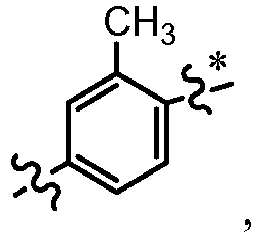


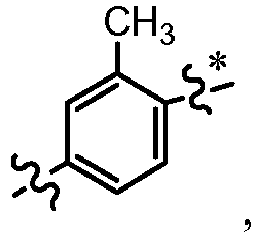
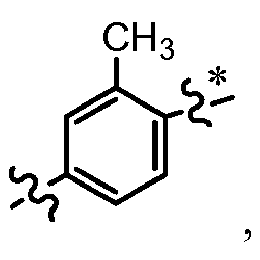

- In an exemplary embodiment, R1 and R3a are as described herein, Z is - CH(CH3)-, R6 is H, Y is Cl, A is
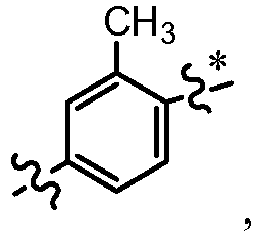
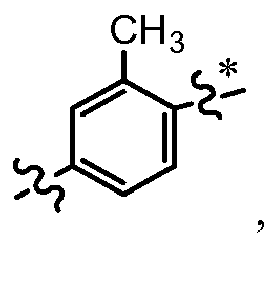


- In an exemplary embodiment, Z, Y, R1, R3a, R3b, and R6 are as described herein, A is


- In an exemplary embodiment, R1 and R3a are as described herein, Z is-CH(CH3)-, R6 is H, Y is H, A is


- In an exemplary embodiment, R1 and R3a are as described herein, Z is - CH2-, R6 is H, Y is F, A is


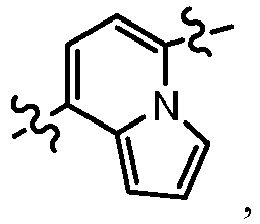


- In an exemplary embodiment, R1 and R3a are as described herein, Z is-CH(CH3)-, R6 is H, Y is F, A is

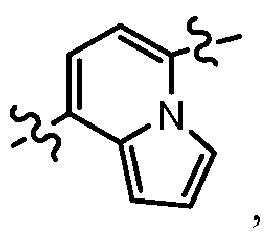


- In an exemplary embodiment, R1 and R3a are as described herein, Z is - CH2-, R6 is H, Y is Cl, A is


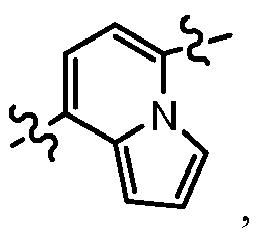


- In an exemplary embodiment, R1 and R3a are as described herein, Z is-CH(CH3)-, R6 is H, Y is Cl, A is


- In an exemplary embodiment, R1, R3a, and R3b are as described herein, Z is -CH2-, R6 is H, Y is H, A is


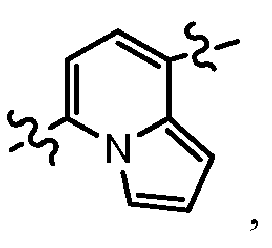


- In an exemplary embodiment, R1, R3a, and R3b are as described herein, Z is -CH(CH3)-, R6 is H, Y is H, A is


- In an exemplary embodiment, R1, R3a, and R3b are as described herein, Z is-CH2-, R6 is H, Y is F, A is

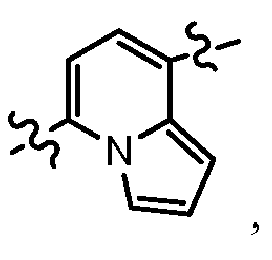


- In an exemplary embodiment, R1, R3a and R3b are as described herein, Z is -CH(CH3)-, R6 is H, Y is F, A is


- In an exemplary embodiment, R1, R3a, and R3b are as described herein, Z is -CH2-, R6 is H, Y is Cl, A is


- In an exemplary embodiment, R1, R3a, and R3b are as described herein, Z is -CH(CH3)-, R6 is H, Y is Cl, A is
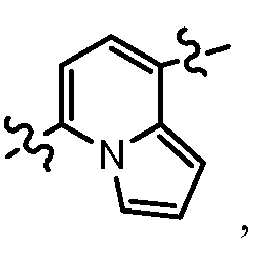


- In an exemplary embodiment, the compound has a structure according to the following formula:


- The invention provides compounds having a structure which is:


- The invention provides compounds, or a salt thereof, having a structure which is:

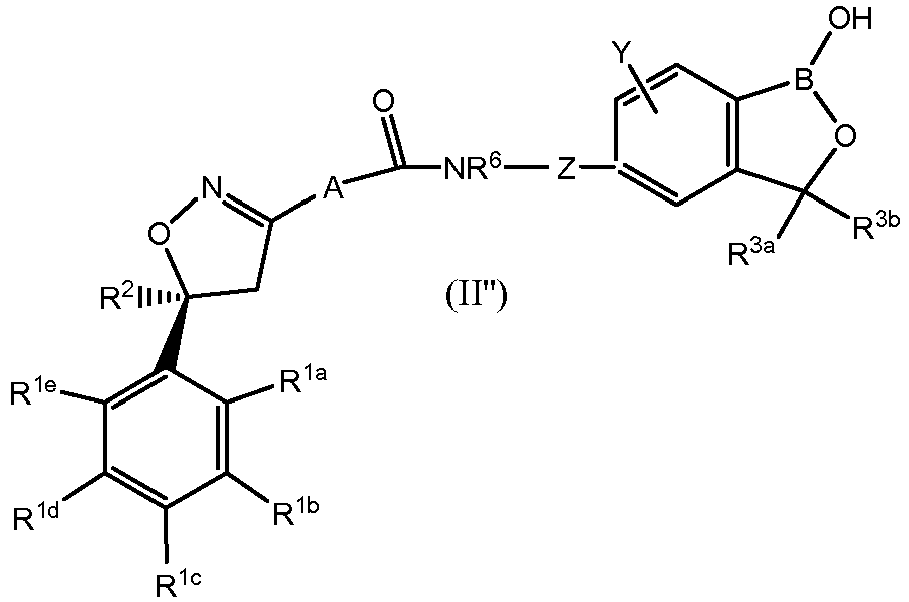
- wherein Y is hydrogen, fluoro, or chloro;
- R2 is trifluoromethyl;
- R3a and R3b are each hydrogen, methyl, or fluoromethyl; and
- R1a, R1b, R1c, R1d, and R1e are each independently selected from hydrogen, fluoro, chloro, bromo, methyl, difluoromethyl, trifluoromethyl, methoxy, trifluormethoxy, or trifluoroethoxy.
- The invention provides compounds, or a salt thereof, having a structure which is:


- wherein Y is hydrogen, fluoro, or chloro;
- R2 is trifluoromethyl;
- R3a and R3b are each hydrogen, methyl, or fluoromethyl; and
- R1b, R1c, and R1d are each independently selected from hydrogen, fluoro, chloro, bromo, methyl, difluoromethyl, trifluoromethyl, methoxy, trifluoromethoxy, or trifluoroethoxy.
- The invention provides compounds, or a salt thereof, having a structure which is:


- wherein Y is hydrogen, fluoro, or chloro;
- R2 is trifluoromethyl;
- R3a and R3b are each hydrogen, methyl, or fluoromethyl; and
- R1b, R1c, and R1d are each independently selected from hydrogen, fluoro, chloro, bromo, methyl, difluoromethyl, trifluoromethyl, methoxy, trifluoromethoxy, or trifluoroethoxy.
- The invention provides compounds, or a salt thereof, having a structure which is:


- wherein Y is hydrogen, fluoro, or chloro;
- R2 is trifluoromethyl;
- R3a and R3b are each hydrogen, methyl, or fluoromethyl; and
- R1b, R1c, and R1d are each independently selected from hydrogen, fluoro, chloro, bromo, methyl, difluoromethyl, trifluoromethyl, methoxy, trifluoromethoxy, or trifluoroethoxy.
- The invention provides compounds, or a salt thereof, having a structure which is:

- wherein Y is hydrogen, fluoro, or chloro;
- R2 is trifluoromethyl;
- R3a and R3b are each hydrogen, methyl, or fluoromethyl; and
- R1b, R1c, and R1d are each independently selected from hydrogen, fluoro, chloro, bromo, methyl, difluoromethyl, trifluoromethyl, methoxy, trifluoromethoxy, or trifluoroethoxy.
- The invention provides compounds, or a salt thereof, having a structure which is:

- wherein Y is hydrogen, fluoro, or chloro;
- R3a and R3b are each methyl or fluoromethyl; and
- R1b, R1c, and R1d are each independently selected from hydrogen, chloro, or fluoro.
- The invention provides compounds, or a salt thereof, having a structure which is:

- In an exemplary embodiment, compounds, or a salt thereof, according to the above, where A is

Table A R 1b R 1c R 1d F F H H H F H H H F F F H F H F H F F F F F Cl Cl H H H Cl H H H Cl Cl Cl H Cl H Cl H Cl Cl Cl Cl Cl Br Br H H H Br H H H Br Br Br H Br H Br H Br Br Br Br Br F, Cl F Cl H Cl F H F H Cl Cl H F H F Cl H Cl F Cl F F F Cl F F F Cl Cl Cl F Cl F Cl F Cl Cl F, Br F Br H Br F H F H Br Br H F H F Br H Br F Br F F F Br F F F Br Br Br F Br F Br F Br Br Br, Cl Br Cl H Cl Br H Br H Cl Cl H Br H Br Cl H Cl Br Cl Br Br Br Cl Br Br Br Cl Cl Cl Br Cl Br Cl Br Cl Cl - In an exemplary embodiment, compounds, or a salt thereof, according to the above, where A is

Table B R 1b R1c R 1d F F H H H F H H H F F F H F H F H F F F F F Cl Cl H H H Cl H H H Cl Cl Cl H Cl H Cl H Cl Cl Cl Cl Cl Br Br H H H Br H H H Br Br Br H Br H Br H Br Br Br Br Br F, Cl F Cl H Cl F H F H Cl Cl H F H F Cl H Cl F Cl F F F Cl F F F Cl Cl Cl F Cl F Cl F Cl Cl F, Br F Br H Br F H F H Br Br H F H F Br H Br F Br F F F Br F F F Br Br Br F Br F Br F Br Br Br, Cl Br Cl H Cl Br H Br H Cl Cl H Br H Br Cl H Cl Br Cl Br Br Br Cl Br Br Br Cl Cl Cl Br Cl Br Cl Br Cl Cl - In an exemplary embodiment, according to any entries in Table A or B, Y is as described herein, R2 is CF3 or CHF2 or CH2F, R3a is CH3 and R3b is CH3. In an exemplary embodiment, according to any entries in this table, Y is as described herein, R2 is CF3, R3a is unsubstituted alkyl and R3b is unsubstituted alkyl. In an exemplary embodiment, according to any entries in this table, Y is as described herein, R2 is CF3, R3a is ethyl and R3b is ethyl. In an exemplary embodiment, according to any entries in this table, Y is as described herein, R2 is CF3, R3a is CH3 and R3b is CH3. In an exemplary embodiment, according to any entries in this table, R2, R3a, and R3b are as described herein, and Y is H. In an exemplary embodiment, according to any entries in this table, R2, R3a, and R3b are as described herein, and Y is F. In an exemplary embodiment, according to any entries in this table, R2, R3a, and R3b are as described herein, and Y is Cl. In an exemplary embodiment, according to any entries in this table, R2 is as described herein, R3a is CH3 or CH2F and R3b is CH3 or CH2F, and Y is H. In an exemplary embodiment, according to any entries in this table, R2 is as described herein, R3a is CH3 or CH2F and R3b is CH3 or CH2F, and Y is F. In an exemplary embodiment, according to any entries in this table, R2 is as described herein, R3a is CH3 or CH2F and R3b is CH3 or CH2F, and Y is Cl. In an exemplary embodiment, according to any entries in this table, R2 is CF3, R3a is CH3 or CH2F and R3b is CH3 or CH2F, and Y is H. In an exemplary embodiment, according to any entries in this table, R2 is CF3, R3a is CH3 or CH2F and R3b is CH3 or CH2F, and Y is F. In an exemplary embodiment, according to any entries in this table, R2 is CF3, R3a is CH3 or CH2F and R3b is CH3 or CH2F, and Y is Cl.
- In an exemplary embodiment, the invention provides a compound described herein, or a salt, hydrate or solvate thereof, or a combination thereof. In an exemplary embodiment, the invention provides a compound described herein, or a salt, hydrate or solvate thereof. In an exemplary embodiment, the invention provides a compound described herein, or a salt thereof. In an exemplary embodiment, the salt is a pharmaceutically acceptable salt. In an exemplary embodiment, the invention provides a compound described herein, or a hydrate thereof. In an exemplary embodiment, the invention provides a compound described herein, or a solvate thereof. In an exemplary embodiment, the invention provides a compound described herein, or a prodrug thereof. In an exemplary embodiment, the invention provides a salt of a compound described herein. In an exemplary embodiment, the invention provides a pharmaceutically acceptable salt of a compound described herein. In an exemplary embodiment, the invention provides a hydrate of a compound described herein. In an exemplary embodiment, the invention provides a solvate of a compound described herein. In an exemplary embodiment, the invention provides a prodrug of a compound described herein.
- In an exemplary embodiment, alkyl is linear alkyl. In another exemplary embodiment, alkyl is branched alkyl.
- In an exemplary embodiment, heteroalkyl is linear heteroalkyl. In another exemplary embodiment, heteroalkyl is branched heteroalkyl.
- As used herein, the term "chiral", "enantiomerically enriched" or "diastereomerically enriched" refers to a composition having an enantiomeric excess (ee) or a diastereomeric excess (de) of greater than about 50%, preferably greater than about 70% and more preferably greater than about 90%. In general, higher than about 90% enantiomeric or diastereomeric excess is particularly preferred, e.g., those compositions with greater than about 95%, greater than about 97% and greater than about 99% ee or de.
- When a first compound and a second compound are present in a composition, and the first compound is a non-superimposable mirror image of the second compound, and the first compound is present in the composition in a greater amount than the second compound, then the first compound is referred to herein as being present in "enantiomeric excess".
- The term "enantiomeric excess" of a compound z, as used herein, is defined as:

- The term "enantiomeric excess" is related to the older term "optical purity" in that both are measures of the same phenomenon. The value of ee will be a number from 0 to 100, zero being racemic and 100 being enantiomerically pure. A composition which in the past might have been called 98% optically pure is now more precisely characterized by 96% ee. A 90% ee reflects the presence of 95% of one enantiomer and 5% of the other(s) in the material in question.
- When a first compound and at least one additional compound are present in a composition, and the first compound and each of the additional compounds are stereoisomers, but not mirror images, of one another, and the first compound is present in the composition in a greater amount than each of the additional compounds, then the first compound is referred to herein as being present in "diastereomeric excess".
- When dealing with mixtures of diastereomers, the term "diastereomeric excess" or "de" is defined analagously to enantiomeric excess. Thus:

- The value of de will likewise be a number from 0 to 100, zero being an equal mixture of a first diastereomer and the remaining diastereomer(s), and 100 being 100% of a single diastereomer and zero% of the other(s) - i.e. diastereomerically pure. Thus, 90% de reflects the presence of 95% of one diastereomer and 5% of the other diastereomer(s) in the material in question.
- Hence, in one embodiment, the invention provides a composition including a first compound of the invention, wherein the first compound of the invention has at least one stereocenter, and at least one stereoisomer of the first compound of the invention. In another embodiment, the invention provides a composition including a first compound of the invention, wherein the first compound of the invention has at least one stereocenter, and a second compound of the invention, wherein the first compound of the invention is a stereoisomer of the second compound of the invention. In another embodiment, the invention provides a composition including a first compound of the invention, wherein the first compound of the invention has at least one stereocenter, and only one stereoisomer of the first compound of the invention.
- In another embodiment, the invention provides a composition including a first compound of the invention, wherein the first compound of the invention has only one stereocenter, and an enantiomer of the first compound of the invention. In another embodiment, the invention provides a composition including a first compound of the invention, wherein the first compound of the invention has two stereocenters, and an enantiomer of the first compound of the invention. In another embodiment, the invention provides a composition including a first compound of the invention, wherein the first compound of the invention has two stereocenters, and at least one diasteromer of the first compound of the invention. In another embodiment, the invention provides a composition including a first compound of the invention, wherein the first compound of the invention has two stereocenters, and only one diasteromer of the first compound of the invention.
- In situations where the first compound of the invention and its enantiomer are present in a composition, the first compound of the invention can be present in an enantiomeric excess of at least about 80%, or at least about 90%, or at least about 92% or at least about 95%. In another embodiment, where the first compound of the invention and its enantiomer are present in a composition, the first compound of the invention can be present in an enantiomeric excess of at least about 96%, at least about 97%, at least about 98%, at least about 99% or at least about 99.5%. In another embodiment, the first compound of the invention has at least one stereocenter and is enantiomerically pure (enantiomeric excess is about 100%).
- In situations where the first compound of the invention and at least one diastereomer of the first compound of the invention are present in a composition, the first compound of the invention can be present in a diastereomeric excess of at least about 80%, or at least about 90%, or at least about 92% or at least about 95%. In situations where the first compound of the invention and at least one diastereomer of the first compound of the invention are present in a composition, the first compound of the invention can be present in a diastereomeric excess of at least about 96%, at least about 97%, at least about 98%, at least about 99% or at least about 99.5%. In another embodiment, the first compound of the invention has at least two stereocenters and is diastereomerically pure (diastereomeric excess is about 100%).
- Enantiomeric or diastereomeric excess can be determined relative to exactly one other stereoisomer, or can be determined relative to the sum of at least two other stereoisomers. In an exemplary embodiment, enantiomeric or diastereomeric excess is determined relative to all other detectable stereoisomers, which are present in the mixture. Stereoisomers are detectable if a concentration of such stereoisomer in the analyzed mixture can be determined using common analytical methods, such as chiral HPLC.
- As used herein, and unless otherwise indicated, a composition that is "substantially free" of a compound means that the composition contains less than about 20% by weight, or less than about 15% by weight, or less than about 10% by weight, or less than about 5% by weight, or less than about 3% by weight, or less than about 2% by weight, or less than about 1% by weight of the compound.
- As used herein, the term "substantially free of the (or its) enantiomer" means that a composition contains a significantly greater proportion of a first compound of the invention than a second compound of the invention, wherein the first compound is a non-superimposable mirror image of the second compound. In one embodiment of the invention, the term "substantially free of the enantiomer" means that the composition is made up of at least about 90% by weight of a first compound of the invention, and about 10% by weight or less of a second compound of the invention, wherein the first compound is a non-superimposable mirror image of the second compound. In one embodiment of the invention, the term "substantially free of the (R) enantiomer" means that the composition is made up of at least about 90% by weight of a first compound of the invention which has only one stereocenter and the stereocenter is in an (S) configuration, and about 10% by weight or less of a second compound of the invention, wherein the second compound is the enantiomer of the first compound. In one embodiment of the invention, the term "substantially free of the enantiomer" means that the composition is made up of at least about 95% by weight of a first compound of the invention, and about 5% by weight or less of a second compound of the invention, wherein the first compound is a non-superimposable mirror image of the second compound. In one embodiment of the invention, the term "substantially free of the (R) enantiomer" means that the composition is made up of at least about 95% by weight of a first compound of the invention which has only one stereocenter and the stereocenter is in an (S) configuration, and about 5% by weight or less of a second compound of the invention, wherein the second compound is the enantiomer of the first compound. In one embodiment of the invention, the term "substantially free of the enantiomer" means that the composition is made up of at least about 98% by weight of a first compound of the invention, and about 2% by weight or less of a second compound of the invention, wherein the first compound is a non-superimposable mirror image of the second compound. In one embodiment of the invention, the term "substantially free of the (R) enantiomer" means that the composition is made up of at least about 98% by weight of a first compound of the invention which has only one stereocenter and the stereocenter is in an (S) configuration, and about 2% by weight or less of a second compound of the invention, wherein the second compound is the enantiomer of the first compound. In one embodiment of the invention, the term "substantially free of the enantiomer" means that the composition is made up of at least about 99% by weight of a first compound of the invention, and about 1% by weight or less of a second compound of the invention, wherein the first compound is a non-superimposable mirror image of the second compound. In one embodiment of the invention, the term "substantially free of the (R) enantiomer" means that the composition is made up of at least about 99% by weight of a first compound of the invention which has only one stereocenter and the stereocenter is in an (S) configuration, and about 1% by weight or less of a second compound of the invention, wherein the second compound is the enantiomer of the first compound.
- In an exemplary embodiment, the invention provides a composition comprising a) first compound described herein; and b) the enantiomer of the first compound, wherein the first compound described herein is present in an enantiomeric excess of at least 80%. In an exemplary embodiment, the enantiomeric excess is at least 92%. In another exemplary embodiment, the first compound described herein has an isoxazolinyl moiety, and one carbon atom in the isoxazolinyl moiety is a stereocenter, and the stereocenter is in a (S) configuration, and the stereocenter is the only stereocenter in the first compound. In another exemplary embodiment, the first compound described herein has an isoxazolinyl moiety, and one carbon atom in the isoxazolinyl moiety is a stereocenter, and the stereocenter is in a (R) configuration, and the stereocenter is the only stereocenter in the first compound.
- In an exemplary embodiment, the invention provides a composition comprising a first compound described herein with an isoxazolinyl moiety, and one carbon atom in the isoxazolinyl moiety is a stereocenter, and the stereocenter is in a (S) configuration, and said composition is substantially free of the enantiomer of the first compound described herein. In an exemplary embodiment, the invention provides a composition comprising a first compound described herein with an isoxazolinyl moiety, and one carbon atom in the isoxazolinyl moiety is a stereocenter, and the stereocenter is in a (R) configuration, and said composition is substantially free of the enantiomer of the first compound described herein.
- The compounds of the invention may also be used in combination with additional therapeutic agents. The invention thus provides, in a further aspect, a combination comprising a compound described herein or a pharmaceutically acceptable salt thereof together with at least one additional therapeutic agent. The invention thus provides, in a further aspect, a combination comprising a compound described herein or a pharmaceutically acceptable salt thereof together with one additional therapeutic agent. The invention thus provides, in a further aspect, a combination comprising a compound described herein or a pharmaceutically acceptable salt thereof together with two additional therapeutic agents. The invention thus provides, in a further aspect, a combination comprising a compound described herein or a pharmaceutically acceptable salt thereof together with a first additional therapeutic agent and a second additional therapeutic agent. In an exemplary embodiment, the additional therapeutic agent is a compound of the invention. In an exemplary embodiment, the additional therapeutic agent includes a boron atom. In an exemplary embodiment, the additional therapeutic agent does not contain a boron atom.
- When a compound of the invention is used in combination with a second therapeutic agent active against the same disease state, the dose of each compound may differ from that when the compound is used alone. Appropriate doses will be readily appreciated by those skilled in the art. It will be appreciated that the amount of a compound of the invention required for use in treatment will vary with the nature of the condition being treated and the age and the condition of the patient and will be ultimately at the discretion of the attendant physician or veterinarian. In an exemplary embodiment, the additional therapeutic agent is an acaricide. In an exemplary embodiment, the additional therapeutic agent is an ixodicide. In an exemplary embodiment, the additional therapeutic agent is a miticide. In an exemplary embodiment, the additional therapeutic agent is pyrethrine. In an exemplary embodiment, the additional therapeutic agent is permethin or pyrethrum or phenothrin. In an exemplary embodiment, the additional therapeutic agent is a chloride channel inhibitor. In an exemplary embodiment, the additional therapeutic agent is an avermectin. In an exemplary embodiment, the additional therapeutic agent is selamectin or doramectin or abamectin. In an exemplary embodiment, the additional therapeutic agent is ivermectin. In an exemplary embodiment, the additional therapeutic agent is a milbemycin. In an exemplary embodiment, the additional therapeutic agent is milbemectin or moxidectin or nemadectin. In an exemplary embodiment, the additional therapeutic agent is milbemycin oxime. In an exemplary embodiment, a first additional therapeutic agent is milbemycin oxime and a second additional therapeutic agent is a spinosad. In an exemplary embodiment, the additional therapeutic agent is an organophosphate. In an exemplary embodiment, the additional therapeutic agent is malathion. In an exemplary embodiment, the additional therapeutic agent is lindane. In an exemplary embodiment, the additional therapeutic agent is disulfiram. In an exemplary embodiment, the additional therapeutic agent is benzyl benzoate. In an exemplary embodiment, the additional therapeutic agent is fipronil. In an exemplary embodiment, the additional therapeutic agent comprises an isoxazoline moiety. In an exemplary embodiment, the additional therapeutic agent is Nissan A1443.
- In an exemplary embodiment, the additional therapeutic agent is a spinosad. In an exemplary embodiment, the additional therapeutic agent is a spinosad or a salt, (e.g. pharmaceutically acceptable salt), prodrug, solvate or hydrate thereof. Spinosad is a member of the spinosyns class of insecticides, which are non-antibacterial tetracyclic macrolides. Spinosad contains two major factors, spinosyn A and spinosyn D. Spinosyn A and spinosyn D are known as 2-[(6-deoxy-2,3,4-tri-O-methyl-α-L-mannopyranosyl)oxy]-13-[[5-dimethylamino)-tetrahydro-6-methyl-2H-pyran-2-yl]oxy]-9-ethyl-2,3,3a,5a,5b,6,9,10,11,12,13,14,16a,16b-tetradecahydro-14-methyl-1H-as-Indaceno[3,2-d]oxacyclododecin-7, 15-dione and 2-[(6-deoxy-2,3,4-tri-O-methyl-α-L-mannopyranosyl)oxy]-13-[[5-dimethylamino)-tetrahydro-6-methyl-2H-pyran-2-yl]oxy]-9-ethyl-2,3,3a,5a,5b,6,9,10,11,12,13,14,16a,16btetradecahydro-4,14-dimethyl-1H-as-Indaceno[3,2-d]oxacyclododecin-7,15-dione, respectively. Spinosyn A and spinosyn D have a structure according to the following formula:

- In an exemplary embodiment, the additional therapeutic agent is spinetoram. In an exemplary embodiment, the additional therapeutic agent is spinosyn A. In an exemplary embodiment, the additional therapeutic agent is spinosyn A or a salt, (e.g. pharmaceutically acceptable salt), prodrug, solvate or hydrate thereof. In an exemplary embodiment, the additional therapeutic agent is spinosyn D. In an exemplary embodiment, the additional therapeutic agent is spinosyn D or a salt, (e.g. pharmaceutically acceptable salt), prodrug, solvate or hydrate thereof. In exemplary embodiments, Comfortis® is administered in combination with a compound described herein, optionally with a pharmaceutically acceptable excipient. In exemplary embodiments, any pharmaceutical formulation comprising a spinosad (e.g., a pharmaceutical formulation comprising (a) a pharmaceutically acceptable excipient; (b) a compound of the invention and (c) a spinosad (e.g., spinosyn A or spinosyn D) is administered orally. In exemplary embodiments, any pharmaceutical formulation comprising a spinosad is administered to kill or inhibit the growth of fleas. In exemplary embodiments, any pharmaceutical formulation comprising a spinosad is administered to kill or inhibit the growth of ticks.
- The individual components of such combinations may be administered either simultaneously or sequentially in a unit dosage form. The unit dosage form may be a single or multiple unit dosage forms. In an exemplary embodiment, the invention provides a combination in a single unit dosage form. An example of a single unit dosage form is a capsule wherein both the compound of the invention and the additional therapeutic agent are contained within the same capsule. In an exemplary embodiment, the invention provides a combination in a two unit dosage form. An example of a two unit dosage form is a first capsule which contains the compound of the invention and a second capsule which contains the additional therapeutic agent. Thus the term 'single unit' or 'two units' or 'multiple unit' refers to the object which the patient ingests, not to the interior components of the object. Appropriate doses of known therapeutic agents will be readily appreciated by those skilled in the art.
- The combinations referred to herein may be presented for use as a pharmaceutical formulation. Thus, an exemplary embodiment of the invention is a pharmaceutical formulation comprising a) a compound of the invention; b) an additional therapeutic agent and c) a pharmaceutically acceptable excipient. Thus, an exemplary embodiment of the invention is a pharmaceutical formulation comprising a) a compound of the invention; b) a first additional therapeutic agent; c) a second additional therapeutic agent and d) a pharmaceutically acceptable excipient. In an exemplary embodiment, the pharmaceutical formulation is a unit dosage form. In an exemplary embodiment, the pharmaceutical formulation is a single unit dosage form. In an exemplary embodiment, the pharmaceutical formulation is a two unit dosage form. In an exemplary embodiment, the pharmaceutical formulation is a two unit dosage form comprising a first unit dosage form and a second unit dosage form, wherein the first unit dosage form includes a) a compound of the invention and b) a first pharmaceutically acceptable excipient; and the second unit dosage form includes c) an additional therapeutic agent and d) a second pharmaceutically acceptable excipient.
- In one aspect, the invention is a combination comprising: a) a compound of the invention; and b) at least one additional therapeutic agent. In an exemplary embodiment, the invention is a combination comprising: a) a compound of the invention; and b) an additional therapeutic agent. In another exemplary embodiment, the combination comprises: a) a compound of the invention; b) a first additional therapeutic agent; and c) a second additional therapeutic agent. In another exemplary embodiment, the combination comprises: a) a compound of the invention; b) a first additional therapeutic agent; c) a second additional therapeutic agent; and d) a third additional therapeutic agent. The first additional therapeutic agent or second additional therapeutic agent or third additional therapeutic agent can be selected from the additional therapeutic agents described in this document.
- It is to be understood that the invention covers all combinations of aspects and/or embodiments, as well as suitable, convenient and preferred groups described herein.
- Compounds of use in the invention can be prepared using commercially available starting materials, known intermediates, or by using the synthetic methods described herein, or published in references described and incorporated by reference herein, such as
PCT Pub. No. WO2008157726 and U.S. Pat. Pubs.US20060234981 ,US20070155699 andUS20070293457 . - In one embodiment, the carboxylic acid intermediate I used for the preparation of the compound of the invention can be synthesized according to the following scheme:

- In one embodiment, the carboxylic acid intermediate I used for the preparation of the compound of the invention can be synthesized according to the following scheme:
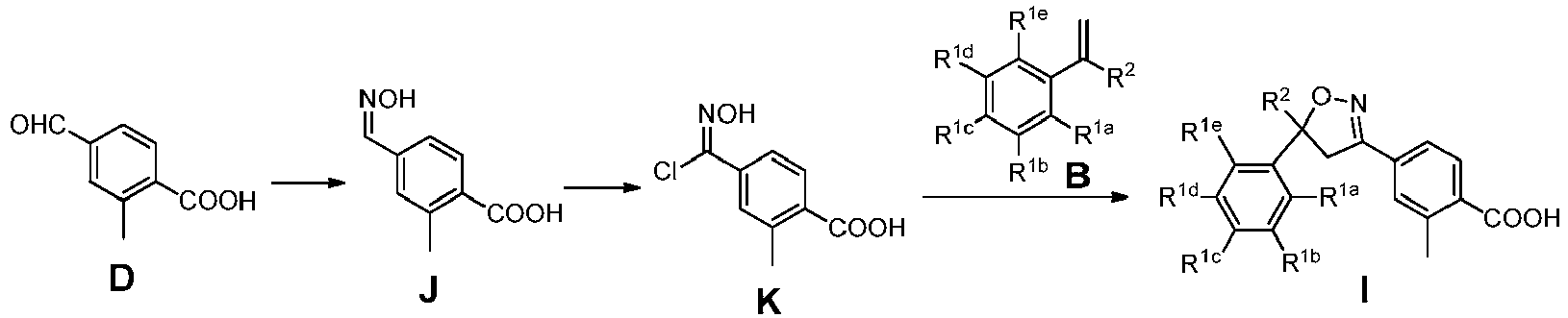
- In one embodiment, the carboxylic acid intermediate Q' used for the preparation of the compound of the invention can be synthesized according to the following scheme:


- In one embodiment, the carboxylic acid intermediate used for the preparation of the compound of the invention can be synthesized according to the following scheme:

- In one embodiment, the carboxylic acid intermediate AA' used for the preparation of the compound of the invention can be synthesized according to the following scheme:

- In one embodiment, the amine intermediate V for the preparation of the compound of the invention can be synthesized according to the following scheme:

- In one embodiment, the key aldehyde intermediate used for the preparation of the amine intermediate and the compound of the invention can be synthesized according to the following scheme:

- In one embodiment, the amine intermediate AG for the preparation of the compound of the invention can be synthesized according to the following scheme:

- In one embodiment, the amine intermediate AO for the preparation of the compound of the invention can be synthesized according to the following scheme:


- In one embodiment, where A is


- Compounds described herein can be converted into hydrates and solvates by methods similar to those described herein.
- The compounds of the invention exhibit potency against ectoparasites and therefore have the potential to kill and/or inhibit the growth of ectoparasites. The compounds of the invention exhibit potency against insects and thus have the potential to kill and/or inhibit the growth of insects.
- In a further aspect, the invention provides a compound or salt thereof for use in the killing and/or inhibition of the growth of an ectoparasite, whereby said ectoparasite is brought into contact with an effective amount of a compound of the invention, thereby killing and/or inhibiting the growth of the ectoparasite. In an exemplary embodiment, the ectoparasite is an acari. In an exemplary embodiment, the ectoparasite is a tick. In an exemplary embodiment, the ectoparasite is a mite. In an exemplary embodiment, the compound is described herein, or a salt, hydrate or solvate thereof, or a combination thereof. In an exemplary embodiment, the invention provides a compound described herein, or a salt, hydrate or solvate thereof. In an exemplary embodiment, the invention provides a compound described herein, or a salt thereof. In another exemplary embodiment, the compound of the invention is a compound described herein, or a pharmaceutically acceptable salt thereof. In another exemplary embodiment, the compound is described by a formula listed herein, or a pharmaceutically acceptable salt thereof. In an exemplary embodiment, the compound is part of a pharmaceutical formulation described herein. In another exemplary embodiment, the contacting occurs under conditions which permit entry of the compound into the organism.
- In another aspect, the ectoparasite is on the surface of an animal. In another aspect, the ectoparasite is in an animal. In an exemplary embodiment, the animal is selected from the group consisting of human, cattle, deer, reindeer, goat, honey bee, pig, sheep, horse, cow, bull, dog, guinea pig, gerbil, rabbit, cat, camel, yak, elephant, ostrich, otter, chicken, duck, goose, guinea fowl, pigeon, swan, and turkey. In another exemplary embodiment, the animal is a human. In an exemplary embodiment, the animal is a warm-blooded animal.
- In another aspect, the ectoparasite is on the surface of a plant. In another aspect, the ectoparasite is in a plant.
- In an exemplary embodiment, the ectoparasite is killed or its growth is inhibited through oral administration of the compound of the invention. In an exemplary embodiment, the ectoparasite is killed or its growth is inhibited through intravenous administration of the compound of the invention. In an exemplary embodiment, the ectoparasite is killed or its growth is inhibited through subcutaneous administration of the compound of the invention.
- In an exemplary embodiment, the ectoparasite is an insect. In an exemplary embodiment, the insect is selected from the group consisting of Lepidoptera, Coleoptera, Homoptera, Hemiptera, Heteroptera, Diptera, Dictyoptera, Thysanoptera, Orthoptera, Anoplura, Siphonaptera, Mallophaga, Thysanura, Isoptera, Psocoptera and Hymenoptera. However, the ectoparasites which may be mentioned in particular are those which trouble humans or animals and carry pathogens, for example flies such as Musca domestica, Musca vetustissima, Musca autumnalis, Fannie canicularis, Sarcophage carnaria, Lucilia cuprina, Lucilia sericata, Hypoderma bovis, Hypoderma lineatum, Chrysomyia chloropyga, Dermatobie hominis, Cochliomyia hominivorax, Gasterophilus intestinaiis, Oestrus ovis, biting flies such as Haematobia irritants irritants, Haematobia irritants exigua, Stomoxys calcitrans, horse-flies (Tabanids) with the sublarnilies of Tabanidae such as Haematopota spp. (e.g. Haematopota pluvialis) and Tabanus spp, e.g. Tabanus nigrovittatus) and Chrysopsinee such as Chrysops spp. (e.g. Chrysops caecutlens); Hippoboscids such as Melophagus ovinus (sheep ked); tsetse flies, such as Glossinia sop,; other biting insects like midges, such as Ceratopogonidae (biting midges), Simuliidse (Blackflies), Psychodidae (Sandflies); but also blood-sucking insects, for example mosquitoes, such as Anopheles spp, Aedes sop and Culex spp, fleas, such as Ctenocephalides felis and Ctenocephalides canis (cat and dog fleas, respectively), Xenopsylla cheopis, Pulex irritants, Ceratophyilus galfinae, Dermatophilus penetrans, blood-sucking lice (Anoplura) such as Linognathus spp, Haematopinus spp, Olenopotes spp, Pediculus humans; but also chewing lice (Mallophaga) such as Bovicola (Damalinia) ovis, Bovicola (Darnalinia) bovis and other Bovicola spp. Ectoparasites also include members of the order Acarina, such as mites (e.g. Chorioptes bovis, Cheyletiella spp., Dermanyasus galiinae, Ortnithonyssus spp., Demodex cants, Sarcoptes scabiei, Psoroptes ovis and Psorergates spp. In an exemplary embodiment, the insect is a flea.
- In an exemplary embodiment, the ectoparasite is a fly. In an exemplary embodiment, the ectoparasite is a member of the Oestridae family. In an exemplary embodiment, the ectoparasite is a bot. In an exemplary embodiment, the ectoparasite is a horse bot. In an exemplary embodiment, the insect is a member of the Gasterophilus genus. In an exemplary embodiment, the insect is Gasterophilus nasalis or Gasterophilus intestinalis or Gasterophilus haemorrhoidalis or Gasterophilus inermis or Gasterophilus nigricomis or Gasterophilus pecorum. In an exemplary embodiment, the insect is Gasterophilus nasalis or Gasterophilus intestinalis or Gasterophilus haemorrhoidalis.
- In an exemplary embodiment, the tick is a hard tick. In an exemplary embodiment, the tick is a soft tick. In an exemplary embodiment, the tick is a Nuttalliellidae tick. In an exemplary embodiment, the tick is an Argasiciae tick. In an exemplary embodiment, the tick is an Antricola tick or Argas tick or Nothaspis tick or Ornithodoros tick or Otobius tick. In an exemplary embodiment, the tick is an Ixodidae tick. In an exemplary embodiment, the tick is an Amblyomma tick. In an exemplary embodiment, the tick is a Dermacentor tick. In an exemplary embodiment, the tick is a Rhipicephalus tick. In an exemplary embodiment, the tick is a Rhipicephalus tick. In an exemplary embodiment, the tick is an Anomalohimalaya tick or Bothriocroton tick or Cosmiomma tick or Cornupalpatum tick or Compluriscutula tick or Haemaphysalis tick or Hyalomma tick or Ixodes tick or Margaropus tick or Nosomma tick or Rhipicentor tick. In an exemplary embodiment, the tick is an Ornithodorus tick. In an exemplary embodiment, the ectoparasite is a Boophilus tick or an Anocentor tick. In an exemplary embodiment, the ectoparasite is a tick which is selected from the group consisting of Ixodes scapularis, Ixodes holocyclus, Ixodes pacificus, Rhiphicephalus sanguineus, Dermacentor andersoni, Dermacentor variabilis, Amblyomma americanum, Ambryomma maculatum, Ornithodorus hermsi, Ornithodorus turicata.
- In an exemplary embodiment, the ectoparasite is a mite which is selected from the group consisting of Parasitiformes and Mesostigmata. In an exemplary embodiment, the ectoparasite is a mite which is Ornithonyssus bacoti or Dermanyssus gallinae.
- In an exemplary embodiment, the ectoparasite is a mite. In an exemplary embodiment, the mite is Arcarina or Tetranychidae. In an exemplary embodiment, the mite is Tetranychus spp. or Panonychus spp. In an exemplary embodiment, the mite is a trombiculid mite. In an exemplary embodiment, the mite is chigger.
- In an exemplary embodiment, the ectoparasite is a flea. In an exemplary embodiment, the flea (Siphonaptera) is a Ctenocephalides flea or Xenopsylla flea or Pulex flea or Tonga flea or Dasypsyllus flea or Nosopsyllus flea. In an exemplary embodiment, the flea (Siphonaptera) is Ctenocephalides felis or Ctenocephalides canis or Xenopsylla cheopis or Pulex irritan or Tonga penetrans or Dasypsyllus gallinulae or Nosopsyllus fasciatus.
- The compounds described herein according to the invention are also active against all or individual development stages of animal pests showing normal sensitivity, as well as those showing resistance to widely used parasiticides. This is especially true for resistant insects and members of the order Acarina. The insecticidal, ovicidal and/or acaricidal effect of the active substances of the invention can manifest itself directly, i.e. killing the pests either immediately or after some time has elapsed, for example when moulting occurs, or by destroying their eggs, or indirectly, e.g. reducing the number of eggs laid and/or the hatching rate.
- The compounds described herein can also be used against hygiene pests, especially of the order Diptera of the families Muscidae, Saroophagidae, Anophilidae and Cuticidae; the orders Orthoptera, Dictyoptera (e.g. the family Blattidae (cockroaches), such as Blatella germanica, Blatta onentalis, Periplaneta american) and Hymenoptera (e.g. the families Formicidae (ants) and Vespidae (wasps)).
- They have high activity against sucking insects of the order Hornoptera, especially against pests of the families Aphididee, Delphaciciae, Cicadellidea Psyllidae, Diaspididae and Eriophydidae (e.g. rust mite on citrus fruits); the orders Hemiptera, Hetsroptera and Thysenoptera, and on the plant-eating insects of the orders Lepidoptera, Coleoptera, Diptera and Orthoptera. In an exemplary embodiment, the insect is Cimicidae. In an exemplary embodiment, the insect is Cimex lectularius. In an exemplary embodiment, the insect is a bed bug.
- In an exemplary embodiment, the ectoparasite is lice. In an exemplary embodiment, the lice (Phthiraptera), e.g. Pediculus humans capitis, Pediculus humans corporis, Pthirus pubis, Haematopinus eurysternus, Haematopinus suis, Linognathus vituli, Bovicola bovis, Menopon gallinae, Menacanthus stramineus and Solenopotes capillatus.
- In an exemplary embodiment, the ectoparasite is an ectoparasite of fishes. In an exemplary embodiment, the ectoparasite is Copepoda (e.g. order of Siphonostomatoidae) (sea lice).
- Diseases transmitted through parasites, particularly blood-feeding ectoparasites such as ticks, biting and muscoid flies, reduvid bugs, mosquitos and fleas, include, for example, bacterial, viral and protozoal diseases. Non-vector born pathological conditions associated with ectoparasite infestations include, for example, flea-allergy dermatitis (FAD) associated with flea infestations; secondary dematological infections associated with heavy ectoparasite burden (i.e., face-fly infestations in cattle herds and ear-mite induced otitis externa in dogs), and tick paralysis associated with various tick species. Mites are implicated in scabies and rosacea. The compounds of the invention are effective in the treatment and control of ectoparasites implicated or suspected in development of diseases in animals, such as mammals and birds, and therefore have the potential to indirectly ameliorate, reduce or prevent such diseases associated with ectoparasite infestations in the animals described herein. The compounds of the invention are effective in the treatment and control of ectoparasites implicated or suspected in development of diseases in plants, and therefore have the potential to indirectly ameliorate, reduce or prevent such diseases associated with ectoparasite infestations in the plants described herein.
- In one embodiment, arbovirus (arthropod-borne virus) diseases associated with an ectoparasite include, for example, Crimean-Congo Hemmorhagic Fever (CCHF), Febrile illness, Papataci fever, Encephalitis and Meningitis, which are caused by Bunyaviridae such as Bunyavirus, Nairovirus and Phlebovirus; Bluetongue, meningoencephalits, Febrile illness, hemorhagic fever, which are caused by Reoviridae such as Orbivirus and Colitivirus; Febrile illness, rash, encephalitis, polyarthritis, lymphadenitis which are caused by Togaviridae, such as Sindbisvirus and Chikungunya Virus; tick-borne meningoencephalitis, Dengue hemmorhagic fever, encephalitis, Febrile illness or West Nile Fever, and Yellow fever which are caused by Flaviviridae, such as Flavivirus (including diverse sub-groups); West Nile virus. In another embodiment, bacterial diseases transmitted by ectoparasites include, for example, Rocky Mountain spotted fever, tick typhus caused by infection through Rickettsia spp; Q-fever caused by Coxiella burnetii; Tularemia caused by infection through Francisella tularensis; Borreliosis or Spirochaetosis, such as Lyme disease, or relapsing fever, caused by infection through Borrelia spp.; Ehrlichiosis caused by infection through Ehrlichia spp.; Plague, caused by infection through Yersinia pestis. In another embodiment, protozoan or rickettsial diseases transmitted by ectoparasites include, for example, Babesiosis, such as Texas fever, red water disease, caused by infection through Babesia spp.; Theileriosis, such as east coast fever, Mediterranean coast fever, caused by infection through Theileria spp.; Nagana disease, Sleeping sickness caused by infection through Trypanosoma spp., Anaplasmosis caused by infection through Anaplasma spp.; Malaria caused by infection through Plasmodium spp.; Leishmaniasis caused by infection through Leishmania spp.
- In an exemplary embodiment, the invention provides a compound or a salt thereof for use in the reduction of the size of an ectoparasitic infestation in or on an animal in need of treatment thereof. A therapeutically effective amount of the compound of the invention is adminstered to the animal, sufficient to reduce the size of the ectoparasitic infestation. In an exemplary embodiment, the invention provides a method of reducing the size of an ectoparasitic infestation in or on a plant in need of treatment thereof. The method includes administering to the plant a therapeutically effective amount of the compound of the invention, sufficient to reduce the size of the ectoparasitic infestation.
- In an exemplary embodiment, the invention provides a a compound or a salt thereof for use in the control of an ectoparasitic infestation in or on an animal in need of treatment thereof. A therapeutically effective amount of the compound of the invention is administered to the animal, sufficient to control the ectoparasitic infestation. In an exemplary embodiment, controlling an ectoparasitic infestation is reducing the number of ectoparasites in or on an animal. In an exemplary embodiment, the invention provides a method of controlling an ectoparasitic infestation in or on a plant in need of treatment thereof. The method includes administering to the plant a therapeutically effective amount of the compound of the invention, sufficient to control the ectoparasitic infestation. In an exemplary embodiment, controlling an ectoparasitic infestation is reducing the number of ectoparasites in or on a plant.
- In an exemplary embodiment, the invention provides a compound or a salt thereof for use of in the prevention of an ectoparasitic infestation in or on an animal in need of treatment thereof. A prophylactically effective amount of the compound of the invention is adminstered to the animal, sufficient to prevent the ectoparasitic infestation. In an exemplary embodiment, the invention provides a method of preventing an ectoparasitic infestation in or on a plant in need of treatment thereof. The method includes administering to the plant a prophylactically effective amount of the compound of the invention, sufficient to prevent the ectoparasitic infestation.
- In an exemplary embodiment, the invention provides a compound or a salt thereof for use of in the reduction of the transmission, in an animal, of a disease transmitted through an ectoparasite. A therapeutically effective amount of the compound of the invention is adminstered to the animal, sufficient to reduce the spread of the disease-causing agent from the ectoparasite to the animal. In an exemplary embodiment, the invention provides a method of reducing the transmission, in a plant, of a disease transmitted through an ectoparasite. The method includes administering to the plant in need thereof a therapeutically effective amount of the compound of the invention, sufficient to reduce the spread of the disease-causing agent from the ectoparasite to the plant.
- In an exemplary embodiment, the compound is described herein, or a salt, hydrate or solvate thereof, or a combination thereof. In an exemplary embodiment, the invention provides a compound described herein, or a salt, hydrate or solvate. In an exemplary embodiment, the invention provides a compound described herein, or a salt thereof. In another exemplary embodiment, the compound of the invention is a compound described herein, or a pharmaceutically acceptable salt thereof. In another exemplary embodiment, the compound is described by a formula listed herein, or a pharmaceutically acceptable salt thereof. In an exemplary embodiment, the compound is part of a pharmaceutical formulation described herein. Such conditions are known to one skilled in the art and specific conditions are set forth in the Examples appended hereto.
- In an exemplary embodiment, the compound is described herein, or a salt, hydrate or solvate thereof, or a combination thereof. In an exemplary embodiment, the invention provides a compound described herein, or a salt, hydrate or solvate thereof. In an exemplary embodiment, the invention provides a compound described herein, or a salt thereof. In another exemplary embodiment, the compound of the invention is a compound described herein, or a pharmaceutically acceptable salt thereof. In another exemplary embodiment, the compound is described by a formula listed herein, or a pharmaceutically acceptable salt thereof. In an exemplary embodiment, the compound is part of a pharmaceutical formulation described herein. Such conditions are known to one skilled in the art and specific conditions are set forth in the Examples appended hereto.
- In another exemplary embodiment, the animal is a member selected from human, cattle, deer, reindeer, goat, honey bee, pig, sheep, horse, cow, bull, dog, guinea pig, gerbil, rabbit, cat, camel, yak, elephant, ostrich, otter, chicken, duck, goose, guinea fowl, pigeon, swan, and turkey. In another exemplary embodiment, the animal is a human. In another exemplary embodiment, the animal is a non-human mammal. In another exemplary embodiment, the animal is a mammal. In another exemplary embodiment, the animal is a domestic animal. In another exemplary embodiment, the animal is a domestic mammal. In another exemplary embodiment, the animal is a companion animal. In another exemplary embodiment, the animal is a companion mammal. In another exemplary embodiment, the animal is a dog. In another exemplary embodiment, the animal is a cat. In another exemplary embodiment, the animal is a rodent. In another exemplary embodiment, the animal is a rat. In another exemplary embodiment, the animal is a mouse. In another exemplary embodiment, the animal is a member selected from goat, pig, sheep, horse, cow, bull, dog, guinea pig, gerbil, rabbit, cat, chicken and turkey. In another exemplary embodiment, the animal is an ungulate. In another exemplary embodiment, the ungulate is selected from the group consisting of horse, zebra, donkey, cattle/bison, rhinoceros, camel, hippopotamus, goat, pig, sheep, giraffe, okapi, moose, elk, deer, tapir, antelope, and gazelle. In another exemplary embodiment, the ungulate is cattle. In another exemplary embodiment, the ungulate is selected from the group consisting of goat, pig, and sheep. In another exemplary embodiment, the animal is a ruminant. In another exemplary embodiment, the ruminant is selected from the group consisting of cattle, goats, sheep, giraffes, bison, yaks, water buffalo, deer, camels, alpacas, llamas, wildebeast, antelope, pronghorn, and nilgai. In another exemplary embodiment, the cattle is a cow. In another exemplary embodiment, the cattle is a bull. In another exemplary embodiment, the cattle is a calf. In another exemplary embodiment, the animal is an equine. In another exemplary embodiment, the animal is selected from the group consisting of horse, donkey, caribou and reindeer. In another exemplary embodiment, the animal is a horse. In another exemplary embodiment, the animal is a snail. In another exemplary embodiment, the animal is an insect. In another exemplary embodiment, the animal is a mosquito. In another exemplary embodiment, the animal is a fly.
- In an exemplary embodiment, the disease is treated through oral administration of the compound of the invention. In an exemplary embodiment, the disease is treated through intravenous administration of the compound of the invention. In an exemplary embodiment, the disease is treated through topical administration of the compound of the invention. In an exemplary embodiment, the disease is treated through intraperitoneal administration of the compound of the invention. In an exemplary embodiment, the disease is treated through subcutaneous injection of the compound of the invention. In an exemplary embodiment, the compound is administered in a topically effective amount. In an exemplary embodiment, the pharmaceutical formulation is administered in an orally effective amount. In an exemplary embodiment, the compound is administered in an effective amount via subcutaneous injection.
- Given their activity, the compounds of the invention are suitable as soil insecticides against pests in the soil, as well as insecticides for plants, such as cereals, cotton, rice, maize, soya, potatoes, vegetables, fruit, tobacco, hops, citrus, and avocados. The compounds according to the invention are suitable for protecting plants and plant organs, for increasing the harvest yields, and for improving the quality of the harvested material which are encountered in agriculture, in horticulture, in forests, in gardens, and leisure facilities, and in the protection of stored products and of materials. They may be employed as plant protection agents. Therefore, the compounds of the invention can be used to treat a disease in a plant, or kill or inhibit the growth of a worm that affects a plant.
- All plants and plant parts can be treated in accordance with the invention. Plants are to be understood as meaning in the present context all plants and plant populations such as desired and undesired wild plants or crop plants (including naturally occurring crop plants). Crop plants can be plants which can be obtained by conventional plant breeding and optimization methods or by biotechnological and genetic engineering methods or by combinations of these methods, including the transgenic plants and including the plant cultivars protectable or not protectable by plant breeders' rights. Plant parts are to be understood as meaning all parts and organs of plants above and below the ground, such as shoot, leaf, flower and root, examples which may be mentioned being leaves, needles, stalks, stems, flowers, fruit bodies, fruits, seeds, roots, tubers and rhizomes. The plant parts also include harvested material, and vegetative and generative propagation material, for example cuttings, tubers, rhizomes, offshoots and seeds.
- Treatment according to the invention of the plants and plant parts with the active compounds is carried out by conventional and known means, including directly acting on, or by allowing the compounds to act on, the surroundings, habitat or storage space by the customary treatment methods, for example by immersion, spraying, evaporation, fogging, scattering, painting on, injection and, in the case of propagation material, in particular in the case of seeds, also by applying one or more coats.
- The active compounds can be converted to the customary formulations, such as solutions, emulsions, wettable powders, water- and oil-based suspensions, powders, dusts, pastes, soluble powders, soluble granules, granules for broadcasting, suspension-emulsion concentrates, natural materials impregnated with active compound, synthetic materials impregnated with active compound, fertilizers and microencapsulations in polymeric substances.
- In another aspect, the invention is a pharmaceutical formulation which includes: (a) a pharmaceutically acceptable excipient; and (b) a compound of the invention. In another aspect, the pharmaceutical formulation includes: (a) a pharmaceutically acceptable excipient; and (b) a compound according to a formula described herein. In another aspect, the pharmaceutical formulation includes: (a) a pharmaceutically acceptable excipient; and (b) a compound described herein, or a salt, prodrug, hydrate or solvate thereof, or a combination thereof. In another aspect, the pharmaceutical formulation includes: (a) a pharmaceutically acceptable excipient; and (b) a compound described herein, or a salt, hydrate or solvate thereof, or a combination thereof. In another aspect, the pharmaceutical formulation includes: (a) a pharmaceutically acceptable excipient; and (b) a compound described herein, or a salt, hydrate or solvate thereof. In another aspect, the pharmaceutical formulation includes: (a) a pharmaceutically acceptable excipient; and (b) a salt of a compound described herein. In an exemplary embodiment, the salt is a pharmaceutically acceptable salt. In an exemplary embodiment, the pharmaceutically acceptable excipient is a pharmaceutically acceptable carrier. In an exemplary embodiment, the pharmaceutically acceptable excipient is a pharmaceutically acceptable diluent. In an exemplary embodiment, the pharmaceutically acceptable excipient is a pharmaceutically acceptable vehicle. In another aspect, the pharmaceutical formulation includes: (a) a pharmaceutically acceptable excipient; and (b) a prodrug of a compound described herein. In another aspect, the pharmaceutical formulation includes: (a) a pharmaceutically acceptable excipient; and (b) a compound described herein. In an exemplary embodiment, the pharmaceutical formulation is a unit dosage form. In an exemplary embodiment, the pharmaceutical formulation is a single unit dosage form. In an exemplary embodiment, a pharmaceutical formulation described herein can be administered to an animal described herein. In an exemplary embodiment, a pharmaceutical formulation described herein can be administered to a human. In an exemplary embodiment, a pharmaceutical formulation described herein is administered to a non-human mammal described herein. In an exemplary embodiment, a pharmaceutical formulations described herein can be administered to a plant described herein.
- The pharmaceutical formulations of the invention can take a variety of forms adapted to the chosen route of administration. Those skilled in the art will recognize various synthetic methodologies that may be employed to prepare non-toxic pharmaceutical formulations incorporating the compounds described herein. Those skilled in the art will recognize a wide variety of non-toxic pharmaceutically acceptable solvents that may be used to prepare solvates of the compounds of the invention, such as water, ethanol, propylene glycol, mineral oil, vegetable oil and dimethylsulfoxide (DMSO).
- The pharmaceutical formulation of the invention may be administered orally, topically, intraperitoneally, parenterally, by inhalation or spray or rectally in unit dosage forms containing conventional non-toxic pharmaceutically acceptable carriers, adjuvants and vehicles. It is further understood that the best method of administration may be a combination of methods. Oral administration in the form of a pill, chewable tablet, capsule, elixir, syrup, spray, lozenge, troche, or the like is particularly preferred. The term parenteral as used herein includes subcutaneous injections, intradermal, intravascular (e.g., intravenous), intramuscular, spinal, intrathecal injection or like injection or infusion techniques. Topical administration as used herein includes application of liquid and/or solid and/or semi-solid formulations as dermal spot-ons, sprays, dips, pour-ons, dusts or powders, ointments, and feed-throughs. In an exemplary embodiment, the pharmaceutical formulation is administered orally. In an exemplary embodiment, the pharmaceutical formulation is administered intravenously. In an exemplary embodiment, the pharmaceutical formulation is administered in a topically effective dose. In an exemplary embodiment, the pharmaceutical formulation is administered in an orally effective dose.
- The pharmaceutical formulations containing compounds of the invention can be in a form suitable for oral use, for example, as tablets, troches, lozenges, aqueous or oily suspensions, dispersible powders or granules, emulsion, hard or soft capsules, or syrups or elixirs.
- Compositions intended for oral use may be prepared according to any method known in the art for the manufacture of pharmaceutical formulations, and such compositions may contain one or more agents selected from the group consisting of sweetening agents, flavoring agents, coloring agents and preserving agents in order to provide pharmaceutically elegant and palatable preparations. Tablets may contain the active ingredient in admixture with non-toxic pharmaceutically acceptable excipients that are suitable for the manufacture of tablets. These excipients may be for example, inert diluents, such as calcium carbonate, sodium carbonate, lactose, calcium phosphate or sodium phosphate; granulating and disintegrating agents, for example, corn starch, or alginic acid; binding agents, for example starch, gelatin or acacia; and lubricating agents, for example magnesium stearate, stearic acid or talc. The tablets may be uncoated or they may be coated by known techniques to delay disintegration and absorption in the gastrointestinal tract and thereby provide a sustained action over a longer period. For example, a time delay material such as glyceryl monostearate or glyceryl distearate may be employed.
- Formulations for oral use may also be presented as hard gelatin capsules wherein the active ingredient is mixed with an inert solid diluent, for example, calcium carbonate, calcium phosphate or kaolin, or as soft gelatin capsules wherein the active ingredient is mixed with water or an oil medium, for example peanut oil, liquid paraffin or olive oil.
- Aqueous suspensions contain the active materials in admixture with pharmaceutically acceptable excipients suitable for the manufacture of aqueous suspensions. Such excipients are suspending agents, for example sodium carboxymethylcellulose, methylcellulose, hydroxypropylmethylcellulose, sodium alginate, polyvinylpyrrolidone, gum tragacanth and gum acacia; and dispersing or wetting agents, which may be a naturally-occurring phosphatide, for example, lecithin, or condensation products of an alkylene oxide with fatty acids, for example polyoxyethylene stearate, or condensation products of ethylene oxide with long chain aliphatic alcohols, for example heptadecaethyleneoxycetanol, or condensation products of ethylene oxide with partial esters derived from fatty acids and a hexitol such as polyoxyethylene sorbitol monooleate, or condensation products of ethylene oxide with partial esters derived from fatty acids and hexitol anhydrides, for example polyethylene sorbitan monooleate. The aqueous suspensions may also contain one or more preservatives, for example ethyl, or n-propyl p-hydroxybenzoate, one or more coloring agents, one or more flavoring agents, and one or more sweetening agents, such as sucrose or saccharin.
- Oily suspensions may be formulated by suspending the active ingredients in a vegetable oil, for example arachis oil, olive oil, sesame oil or coconut oil, or in a mineral oil such as liquid paraffin. The oily suspensions may contain a thickening agent, for example beeswax, hard paraffin or cetyl alcohol. Sweetening agents such as those set forth above, and flavoring agents may be added to provide palatable oral preparations. These compositions may be preserved by the addition of an anti-oxidant such as ascorbic acid.
- Dispersible powders and granules suitable for preparation of an aqueous suspension by the addition of water provide the active ingredient in admixture with a dispersing or wetting agent, suspending agent and one or more preservatives. Suitable dispersing or wetting agents and suspending agents are exemplified by those already mentioned above. Additional pharmaceutically acceptable excipients, for example sweetening, flavoring and coloring agents, may also be present.
- Pharmaceutical formulations of the invention may also be in the form of oil-in-water emulsions and water-in-oil emulsions. The oily phase may be a vegetable oil, for example olive oil or arachis oil, or a mineral oil, for example liquid paraffin or mixtures of these. Suitable emulsifying agents may be naturally-occurring gums, for example gum acacia or gum tragacanth; naturally-occurring phosphatides, for example soy bean, lecithin, and esters or partial esters derived from fatty acids and hexitol; anhydrides, for example sorbitan monooleate; and condensation products of the said partial esters with ethylene oxide, for example polyoxyethylene sorbitan monooleate. The emulsions may also contain sweetening and flavoring agents.
- Syrups and elixirs may be formulated with sweetening agents, for example glycerol, propylene glycol, sorbitol or sucrose. Such formulations may also contain a demulcent, a preservative, and flavoring and coloring agents. The pharmaceutical formulations may be in the form of a sterile injectable aqueous or oleaginous suspension. This suspension may be formulated according to the known art using those suitable dispersing or wetting agents and suspending agents, which have been mentioned above. The sterile injectable preparation may also be a sterile injectable solution or suspension in a non-toxic parenterally acceptable diluent or solvent, for example as a solution in 1,3-butanediol. Among the acceptable vehicles and solvents that may be employed are water, Ringer's solution and isotonic sodium chloride solution. In addition, sterile, fixed oils are conventionally employed as a solvent or suspending medium. For this purpose any bland fixed oil may be employed including synthetic mono- or diglycerides. In addition, fatty acids such as oleic acid find use in the preparation of injectables.
- The composition of the invention may also be administered in the form of suppositories, e.g., for rectal administration of the drug. These compositions can be prepared by mixing the drug with a suitable non-irritating pharmaceutically acceptable excipient that is solid at ordinary temperatures but liquid at the rectal temperature and will therefore melt in the rectum to release the drug. Such materials are cocoa butter and polyethylene glycols.
- Alternatively, the compositions can be administered parenterally in a sterile medium. The drug, depending on the vehicle and concentration used, can either be suspended or dissolved in the vehicle.
- For administration to non-human animals, the composition containing the therapeutic compound may be added to the animal's feed or drinking water. Also, it will be convenient to formulate animal feed and drinking water products so that the animal takes in an appropriate quantity of the compound in its diet. It will further be convenient to present the compound in a composition as a premix for addition to the feed or drinking water. The composition can also added as a food or drink supplement for humans.
- Dosage levels of the order of from about 0.01 mg to about 3500 mg per kilogram of body weight per day, about 0.01 mg to about 1000 mg per kilogram of body weight per day, or from about 0.1 mg to about 100 mg per kilogram of body weight per day, or from about 5 mg to about 250 mg per kilogram of body weight per day, or from about 25 mg to about 150 mg per kilogram of body weight per day, are useful in the treatment of the above-indicated conditions. The amount of active ingredient that may be combined with the carrier materials to produce a unit dosage form will vary depending upon the condition being treated and the particular mode of administration. Unit dosage forms will generally contain between from about 1 mg to about 3500 mg of an active ingredient. In an exemplary embodiment, an effective amount can be selected from a dosage range provided in this document. In an exemplary embodiment, a therapeutically effective amount can be selected from a dosage range provided in this document. In an exemplary embodiment, a prophylatically effective amount can be selected from a dosage range provided in this document. In an exemplary embodiment, an orally effective amount can be selected from a dosage range provided in this document. In an exemplary embodiment, a topically effective amount can be selected from a dosage range provided in this document.
- Frequency of dosage may also vary depending on the compound used and the particular disease treated. In an exemplary embodiment, the composition of the invention is administered once a day or twice a day or three times a day or four times a day. In an exemplary embodiment, the composition of the invention is administered once a week or twice a week or three times a week or four times a week. In an exemplary embodiment, the composition of the invention is administered once a month or twice a month or three times a month or four times a month. It will be understood, however, that the specific dose level for any particular animal or plant will depend upon a variety of factors including the activity of the specific compound employed, the age, body weight, general health, sex, diet, time of administration, route of administration and rate of excretion, drug combination and the severity of the particular disease undergoing therapy.
- In an exemplary embodiment, the unit dosage form contains from about 1 mg to about 800 mg of a compound of the invention. In an exemplary embodiment, the unit dosage form contains from about 1 mg to about 500 mg of an active ingredient. In an exemplary embodiment, the unit dosage form contains from about 100 mg to about 800 mg of a compound of the invention. In an exemplary embodiment, the unit dosage form contains from about 200 mg to about 500 mg of a compound of the invention. In an exemplary embodiment, the unit dosage form contains from about 500 mg to about 800 mg of a compound of the invention. In an exemplary embodiment, the unit dosage form contains from about 1 mg to about 100 mg of a compound of the invention. In an exemplary embodiment, the unit dosage form contains from about 10 mg to about 100 mg of a compound of the invention. In an exemplary embodiment, the unit dosage form contains from about 50 mg to about 100 mg of a compound of the invention. In an exemplary embodiment, the unit dosage form contains from about 75 mg to about 200 mg of a compound of the invention. In an exemplary embodiment, the unit dosage form contains from about 1 mg to about 5 mg of a compound of the invention. In an exemplary embodiment, the unit dosage form contains from about 10 mg to about 25 mg of a compound of the invention. In an exemplary embodiment, the unit dosage form contains from about 50 mg to about 350 mg of a compound of the invention. In an exemplary embodiment, the unit dosage form contains from about 200 mg to about 400 mg of a compound of the invention. In an exemplary embodiment, the unit dosage form contains from about 800 mg to about 3500 mg of a compound of the invention. In an exemplary embodiment, the unit dosage form contains from about 800 mg to about 3000 mg of a compound of the invention. In an exemplary embodiment, the unit dosage form contains from about 2000 mg to about 3000 mg of a compound of the invention. In an exemplary embodiment, the unit dosage form contains from about 950 mg to about 1450 mg of a compound of the invention. In an exemplary embodiment, the unit dosage form contains from about 1450 mg to about 1950 mg of a compound of the invention. In an exemplary embodiment, the unit dosage form contains from about 1950 mg to about 2450 mg of a compound of the invention. In an exemplary embodiment, the unit dosage form contains from about 2450 mg to about 2950 mg of a compound of the invention.
- In an exemplary embodiment, the daily dosage contains from about 1 mg to about 800 mg of a compound of the invention. In an exemplary embodiment, the daily dosage contains from about 1 mg to about 500 mg of an active ingredient. In an exemplary embodiment, the daily dosage contains from about 100 mg to about 800 mg of a compound of the invention. In an exemplary embodiment, the daily dosage contains from about 200 mg to about 500 mg of a compound of the invention. In an exemplary embodiment, the daily dosage contains from about 500 mg to about 800 mg of a compound of the invention. In an exemplary embodiment, the daily dosage contains from about 1 mg to about 100 mg of a compound of the invention. In an exemplary embodiment, the daily dosage contains from about 10 mg to about 100 mg of a compound of the invention. In an exemplary embodiment, the daily dosage contains from about 50 mg to about 100 mg of a compound of the invention. In an exemplary embodiment, the daily dosage contains from about 75 mg to about 200 mg of a compound of the invention. In an exemplary embodiment, the daily dosage contains from about 1 mg to about 5 mg of a compound of the invention. In an exemplary embodiment, the daily dosage contains from about 10 mg to about 25 mg of a compound of the invention. In an exemplary embodiment, the daily dosage contains from about 50 mg to about 350 mg of a compound of the invention. In an exemplary embodiment, the daily dosage contains from about 200 mg to about 400 mg of a compound of the invention. In an exemplary embodiment, the daily dosage contains from about 800 mg to about 3500 mg of a compound of the invention. In an exemplary embodiment, the daily dosage contains from about 800 mg to about 3000 mg of a compound of the invention. In an exemplary embodiment, the daily dosage contains from about 2000 mg to about 3000 mg of a compound of the invention. In an exemplary embodiment, the daily dosage contains from about 950 mg to about 1450 mg of a compound of the invention. In an exemplary embodiment, the daily dosage contains from about 1450 mg to about 1950 mg of a compound of the invention. In an exemplary embodiment, the daily dosage contains from about 1950 mg to about 2450 mg of a compound of the invention. In an exemplary embodiment, the daily dosage contains from about 2450 mg to about 2950 mg of a compound of the invention.
- Preferred compounds of the invention will have desirable pharmacological properties that include, but are not limited to, oral bioavailability, low toxicity, low serum protein binding and desirable in vitro and in vivo half-lives. Penetration of the blood brain barrier for compounds used to treat CNS disorders is necessary, while low brain levels of compounds used to treat peripheral disorders are often preferred.
- Assays may be used to predict these desirable pharmacological properties. Assays used to predict bioavailability include transport across human intestinal cell monolayers, including Caco-2 cell monolayers. Toxicity to cultured hepatocyctes may be used to predict compound toxicity. Penetration of the blood brain barrier of a compound in humans may be predicted from the brain levels of laboratory animals that receive the compound intravenously.
- Serum protein binding may be predicted from albumin binding assays. Such assays are described in a review by Oravcova, et al. (Journal of Chromatography B (1996) volume 677, pages 1-27).
- In vitro half-lives of compounds may be predicted from assays of microsomal half-life as described by Kuhnz and Gieschen (Drug Metabolism and Disposition, (1998) volume 26, pages 1120-1127).
- The amount of the composition required for use in treatment will vary not only with the particular compound selected but also with the route of administration, the nature of the condition being treated and the age and condition of the animal or plant and will ultimately be at the discretion of the attendant physician or veterinarian or agronomist.
- Preferred compounds for use in the pharmaceutical formulations described herein will have certain pharmacological properties. Such properties include, but are not limited to, low toxicity, low serum protein binding and desirable in vitro and in vivo half-lives. Assays may be used to predict these desirable pharmacological properties. Assays used to predict bioavailability include transport across human intestinal cell monolayers, including Caco-2 cell monolayers. Serum protein binding may be predicted from albumin binding assays. Such assays are described in a review by Oravcova et al. (1996, J. Chromat. B677: 1-27). Compound half-life is inversely proportional to the frequency of dosage of a compound. In vitro half-lives of compounds may be predicted from assays of microsomal half-life as described by Kuhnz and Gleschen (Drug Metabolism and Disposition, (1998) volume 26, pages 1120-1127).
- Toxicity and therapeutic efficacy of such compounds can be determined by standard pharmaceutical procedures in cell cultures or experimental animals, e.g., for determining the LD50 (the dose lethal to 50% of the population) and the ED50 (the dose therapeutically effective in 50% of the population). The dose ratio between toxic and therapeutic effects is the therapeutic index and it can be expressed as the ratio between LD50 and ED50. Compounds that exhibit high therapeutic indices are preferred. The data obtained from these cell culture assays and animal studies can be used in formulating a range of dosage for use in animals (such as humans) or plants. The dosage of such compounds can lie within a range of circulating concentrations that include the ED50 with little or no toxicity. The dosage can vary within this range depending upon the unit dosage form employed and the route of administration utilized. The exact formulation, route of administration and dosage can be chosen by the individual physician in view of the patient's condition. (See, e.g. Fingl et al., 1975, in "The Pharmacological Basis of Therapeutics", Ch. 1, p. 1).
- For a compound or composition utilized for a method described herein, the therapeutically effective dose can be estimated initially from various in vitro assays, as disclosed herein. For example, a dose can be formulated in animal models to achieve a circulating concentration range that includes the EC50 (effective dose for 50% increase) as determined in vitro, i.e., the concentration of the test compound which achieves a half-maximal lethality toward a parasite, pest or other organism of interest. Such information can be used to more accurately determine useful doses.
- In general, the compounds prepared by the methods, and from the intermediates, described herein will be administered in a therapeutically effective amount by any of the accepted modes of administration for agents that serve similar utilities. It will be understood, however, that the specific dose level for any particular animal or plant will depend upon a variety of factors including the activity of the specific compound employed, the age, body weight, general health, sex, diet, time of administration, route of administration, and rate of excretion, drug combination, the severity of the particular disease undergoing therapy and the judgment of the prescribing entity. The drug can be administered once a day or twice a day or three times a day or four times a day, or once a week or twice a week or three times a week or four times a week or once a month or twice a month or three times a month or four times a month.
- Dosage amount and interval can be adjusted individually to provide plasma levels of the active moiety that are sufficient to maintain therapeutic effects.
- The amount of the compound in a formulation can vary within the full range employed by those skilled in the art. Typically, the formulation will contain, on a weight percent (wt%) basis, from about 0.01-60 wt% of the drug based on the total formulation, with the balance being one or more suitable pharmaceutically acceptable excipients.
- In an exemplary embodiment, according to any of the above paragraphs, where A is

- In an exemplary embodiment, according to any of the above paragraphs, where A is

- In an exemplary embodiment, the invention is a combination comprising a compound according to any of the above paragraphs, or a salt thereof, together with at least one additional therapeutic agent.
- In an exemplary embodiment, the invention is a pharmaceutical formulation comprising: a) the compound according to any of the above paragraphs, or a salt thereof; and b) a pharmaceutically acceptable excipient.
- In an exemplary embodiment, according to any of the above paragraphs, the pharmaceutical formulation is a unit dosage form.
- In an exemplary embodiment, according to any of the above paragraphs, the salt of the compound of any of the above paragraphs is a pharmaceutically acceptable salt.
- In an exemplary embodiment, according to any of the above paragraphs, the ectoparasite is in or on an animal.
- In an exemplary embodiment, according to any of the above paragraphs, the animal is a dog or a cat.
- The invention is further illustrated by the Examples that follow. The Examples are not intended to define or limit the scope of the invention.
- All solvents used were commercially available and were used without further purification. Reactions were typically run using anhydrous solvents under an inert atmosphere of N2.
- 1H, 13C, and 19F NMR spectra were recorded at 400 MHz for proton, 100 MHz for carbon-13, and 376 MHz for fluorine-19 on a Varian 300 MercuryPlus station with an Oxford AS400 Spectrometer equipped with a Varian 400 ATB PFG probe. All deuterated solvents typically contained 0.03% to 0.05% v/v tetramethylsilane, which was used as the reference signal (set at δ 0.00 for both 1H and 13C).
- Compounds are named using ChemDraw 7.0 or their catalogue name if commercially available.
- Mass spectra were recorded on a Waters MS consisting of an Alliance 2795 (LC) and Waters Micromass ZQ detector at 120 °C. The mass spectrometer was equipped with an electrospray ion source (ESI) operated in a positive or negative mode. The mass spectrometer was scanned between m/z = 100-1000 with a scan time of 0.3 s.
- Elemental Analysis for C, H and N composition was performed using a Costech Instrument Elemental Combustion System ECS4010 with a helium flow of 100 mL/min (14 psi), oxygen 20 mL/min (10 psi), air 25 psi and purge of 50 mL/min. The reported analyses are an average of two runs.
- HPLC analyses were performed on a Water 600 Controller system with a Waters 717 Plus Autosampler and a Waters 2996 Photodiode Array Detector. The column used was an ACE C18, 5 µm, 4.6 × 150 mm. A linear gradient was applied, starting at 95% A (A: 0.1% H3PO4 in water) and ending at 90% B (B: MeCN) over 6 min and then maintained at 90% B until the 10 min mark. The column was then reequilibrated over 3 min to 95:5 with a total run time of 20 min. The column temperature was at rt with the flow rate of 1.0 mL/min. The Diode Array Detector was scanned from 200-400 nm. For high purity samples requiring baseline subtraction, a linear gradient was applied, starting at 99% A (A: 0.1% H3PO4 in water) and ending at 90% B (B: MeCN) over 15 min. The column was then reequilibrated over 3 min to 99% A with a total run time of 23 min. The column temperature was at rt with the flow rate of 1.0 mL/min. The Diode Array Detector was scanned from 200-400 nm. A blank MeOH sample was run immediately prior to the sample of which purity was to be determined: this was then subtracted to obtain the baseline subtracted chromatogram.
- Thin layer chromatography (TLC) was performed on Alugram® (Silica gel 60 F254) from Mancherey-Nagel and UV was typically used to visualize the spots. Additional visualization methods were also employed in some cases. In these cases the TLC plate was developed with iodine (generated by adding approximately 1 g of I2 to 10 g silica gel and thoroughly mixing), vanillin (generated by dissolving about 1 g vanillin in 100 mL 10% H2SO4), potassium permanganate (generated by dissolving 1.5 g KMnO4 and 10 g K2CO3 in 1.25 mL NaOH and 200 mL H2O), ninhydrin (available commercially from Aldrich), or Magic Stain (generated by thoroughly mixing 25 g (NH4)6Mo7O24•4H2O, 5 g (NH4)2Ce(IV)(NO3)6 in 450 mL H2O and 50 mL conc H2SO4) to visualize the compound. Flash chromatography was preformed using typically 40-63 µm (230-400 mesh) silica gel from Silicycle following analogous techniques to those disclosed by Still et al. Typical solvents used for flash chromatography or thin layer chromatography (TLC) were mixtures of CHCl3/MeOH, CH2Cl2/MeOH, EtOAc/MeOH and hexane/EtOAc. Reverse phase flash chromatography were performed on a Biotage® using a Biotage C18 cartridges and a H2O/MeOH gradient (typically eluting from 5% MeOH/H2O to 90% MeOH/H2O).
- Preparative chromatography was performed on either a Waters Prep LC 4000 System using a Waters 2487 Diode Array or on a Waters LC Module 1 plus. The column used were either a Waters × Terra Prep C18, 5 µm, 30 × 100 mm, Phenomenex Luna C18, 5 µm, 21.6 × 250 mm, or a Phenomenex Gemini C18, 5 µm, 100 × 30 mm. Narrow gradients with MeCN/H2O (water containing either 0.1% TFA, 0.1% AcOH, 0.1% HCO2H or 0.1% NH4OAc) were used to elute the compound at a flow rate of approximately 20 mL/min and a total run time between 20-30 min.
- For enantiomeric excess determination, chiral HPLC analysis was performed on a Waters 600 Controller and Multisolvent Delivery System using a Waters 717+ Autosampler and a Waters 996 Photodiode Array Detector with a Crownpak CR(+) column, eluting with 85:15 pH 1 perchloric acid in H2O/MeOH mobile phase. The pH 1 perchloric acid was generated by adding 16.3 g of 70% perchloric acid to 1 L of distilled H2O.
- Starting materials used were either available from commercial sources or prepared according to literature procedures and had experimental data in accordance with those reported. 6-aminobenzo[c][1,2]oxaborol-1(3H)-ol, for example, can be synthesized according to the methods described in
U.S. Pat. App. 12/142,692 , as well as U.S. Pat. Pubs.US20060234981 andUS20070155699 . -

- To a solution of 3,3,5-trimethylbenzo[c][1,2]oxaborol-1(3H)-ol (5.0 g, 28.4 mmol) in CCl4 (50 mL) at rt was added benzoyl peroxide (0.7 g, 2.8 mmol) followed by NBS (5.0 g, 28.4 mmol). The reaction mixture was refluxed overnight, cooled to rt and treated with water. The aqueous layer was extracted with EA (20 mL×3). The organic layer was washed with brine, dried over Na2SO4, filtered and concentrated under reduced pressure. The residue was purified by column chromatography to give the product (4.5 g, yield 62%) as yellow oil. MS: 255 & 257 [M+H]+.
- The mixture of 5-(bromomethyl)-3,3-dimethylbenzo[c][1,2]oxaborol-1(3H)-ol (4.5 g, 1.73 mmol) in a solution of NH3 in MeOH (7N, 10 mL) was stirred at rt overnight. The reaction was evaporated, diluted by water, and washed with EA. The water phase was concentrated to give the desired crude compound (2.5 g, yield 62%) as yellow solid: MS: 192 [M+H]+.
- The solution of 2-methyl-4-(5-(3,4,5-trichlorophenyl)-5-(trifluoromethyl)-4,5-dihydro-isoxazol-3-yl)benzoic acid (300 mg, 0.665 mmol) and HATU (505.4 mg, 1.33 mmol) in CH3CN (15 mL) at rt was stirred for 5 min. The mixture was added to a solution of 5-(aminomethyl)-3,3-dimethylbenzo[c][1,2]oxaborol-1(3H)-ol hydrochloride (181.1 mg, 0.798 mmol) and TEA (268.7 mg, 2.66 mmol) in CH3CN (15 mL). Then the mixture was stirred at rt for 2 h. The solution was acidified with HCl (IN) and extracted with EA. The combined organic layers were washed with brine, dried over Na2SO4, and concentrated under reduced pressure. The residue was purified by prep-TLC (PE:EA = 2:1) to give the final title compound (105 mg, yield 25%): 1H NMR (300 MHz, DMSO-d6): δ 9.0 (s, 1H), 8.95 (t, 1H), 7.83 (s, 2H), 7.64-7.59 (m, 3 H), 7.47 (d, 1H), 7.34-7.29 (m, 2H), 4.52-4.50 (d, 2H), 4.37-4.34 (m, 2 H), 2.38 (s, 3H), 1.44 (s, 6H); HPLC purity: 98.1% at 220 nm and 98.8% at 254 nm; MS: m/z = 625 and 627 [M+H]+.
-

- To a solution of 4-(5-(3,5-dichlorophenyl)-5-(trifluoromethyl)-4,5-dihydroisoxazol-3-yl)-2-methylbenzoic acid (300 mg, 0.72 mmol) in acetonitrile (5 ml) at 0°C was added Et3N (291.1 mg, 2.88 mmol), HATU (546.76 mg, 1.44 mmol) and 5-(aminomethyl)-3,3-dimethylbenzo[c][1,2]oxaborol-1(3H)-ol hydrochloride (194.2 mg, 0.86 mmol). The reaction mixture was stirred overnight at rt. The mixture was poured into 1N HCl solution and extracted with EA (20 ml × 3). The combined organic layers were washed with brine, dried over Na2SO4, filtered and concentrated under reduced pressure. The residue was purified by prep-TLC eluted with PE:EA (1:1 with 2 drops of HOAc) and prep-HPLC to give the final title compound (80 mg, yield 18.8%) as white solid: 1H NMR (300 MHz, DMSO-d6): δ 8.99 (s, 1H), 8.95 (m, 1H), 7.81-7.82 (m, 1H), 7.62-7.64 (m, 5H), 7.49-7.60 (m, 1H), 7.29-7.46 (m, 2H) 4.50-4.52 (d, J = 6.0 Hz, 2H), 4.33-4.36 (m, J = 9 Hz, 2H), 2.42(s, 3 H), 1.20 (s, 6 H); HPLC purity: 97.1% at 214 nm and 98.3% at 254 nm; MS: 591[M+H]+.
-

- HATU (350 mg, 0.92 mmol) was added to CH3CN (5 mL) at 0 °C. After stirring for 5 min, the mixture was added to a solution of 4-(5-(3,5-dichloro-4-fluorophenyl)-5-(trifluoromethyl)-4,5-dihydroisoxazol-3-yl)-2-methylbenzoic acid (200 mg, 0.46 mmol), 5-(aminomethyl)-3,3-dimethylbenzo[c][1,2]oxaborol-1(3H)-ol hydrochloride (157 mg, 0.69 mmol), and TEA (186 mg, 1.83 mmol) in CH3CN (8 mL). Then the solution was stirred at rt for 2 h. The solution was acidified with HCl (IN) and extracted with EA. The combined organic layers were washed with brine, dried over Na2SO4, and concentrated under reduced pressure. The residue was purified by prep-TLC (PE:EA= 2:1) to give the final title compound (150 mg, yield 54%).1H NMR (300 MHz, DMSO-d6): δ 8.98 (s, 1H), 8.92 (t, J = 6.0 Hz, 1H), 7.78 (d, 2H), 7.62-7.58 (m, 3H), 7.48-7.45 (m, 1H), 7.33-7.27 (m, 2H), 4.49 (d, 2H), 4.39-4.25 (m, 2H), 2.36 (s, 3H), 1.42 (s, 6H); HPLC purity: 97.6% at 254 nm; MS: m/z = 609 [M+H]+.
-

- The title compound was prepared from 4-(5-(3,5-dichlorophenyl)-5-(trifluoromethyl)-4,5-dihydroisoxazol-3-yl)-2-methylbenzoic acid and 6-(aminomethyl)benzo[c][1,2]oxaborol-1(3H)-ol by the same method as described for 4-(5-(3,5-dichlorophenyl)-5-(trifluoromethyl)-4,5-dihydroisoxazol-3-yl)-N-(1-hydroxy-1,3-dihydrobenzo[c][1,2]oxaborol-6-yl)-2-methylbenzamide. It was obtained as a white solid. 1H NMR (400 MHz, DMSO-d6 ): δ 9.21 (s, 1 H), 8.94 (m, 1 H), 7.37-7.82 (m, 9 H), 4.95 (s, 2 H), 4.49 (m, 2 H), 4.34 (m, 2 H), 2.37 (s, 3 H) ppm; MS: m/z = 563 (M+1, ESI+).
-

- To a solution of methyl 2-bromo-4-methylbenzoate (4g, 18mmol) cooled at 0°C was added methylmagnesium bromide (17.5ml, 52.6mmol) dropwise. The mixture was allowed to warm to rt and stirred overnight. Then it was quenched with aq. NHaCl and extracted with ethyl acetate. The organic layer was dried over Na2SO4 and concentrated to provide the product (3.5g, yield 85%). TLC analysis (silica gel plate, EA: PE = 10 %): Rf= 0.5.
- To a solution of 2-(2-bromo-4-methylphenyl)propan-2-ol (3.5g, 15.35mmol) in THF (100 mL) at -78°C was added n-BuLi (15.35ml, 38.38mmol) dropwise. The mixture was stirred at -78°C for additional 1 hour and then trimethyl borate (3.19g, 30.70mmol) in 10ml of THF was added below -70°C. The resulting mixture was kept stirring at -78°C for 30min and allowed to warm to rt and stirred overnight. Then it was quenched with aq. NH4Cl and extracted with ethyl acetate. The organic layer was dried over Na2SO4 and concentrated under reduced pressure. The residue was purified by column chromatography to provide the product (1.4g, yield 52%). TLC analysis (silica gel plate, EA: PE = 10 %): Rf= 0.2.
- To a solution of 3,3,6-trimethylbenzo[c][1,2]oxaborol-1(3H)-ol (1.4 g, 7.95 mmol) in CCl4 (10 mL) under nitrogen was added NBS (1.27g, 7.16mmol) and BPO (192.5mg, 0.8mmol). The mixture was refluxed for 2.5h, and then it was cooled to rt, washed with sat. NaHCO3 and then brine, dried over Na2SO4 and concentrated under vacuum. The residue was purified by column chromatography to provide the product (1.4g, yield 77%). TLC analysis (silica gel plate, EA: PE = 10 %): Rf= 0.1.
- A solution of 6-(bromomethyl)-3,3-dimethylbenzo[c][1,2]oxaborol-1(3H)-ol (254 mg, 1mmol) in NH3 gas pre-dissolved methanol (15ml) was stirred at rt for 3h. Then the mixture was concentrated under vacuum and the residue was adjusted to pH=5 with 2N HCl followed by extraction with ethyl acetate. The aqueous layer was concentrated under vacuum to provide the product (174mg, yield 76%).
- A solution of 4-(5-(3,5-dichlorophenyl)-5-(trifluoromethyl)-4,5-dihydroisoxazol-3-yl)-2-methylbenzoic acid (1.65g, 3.95mmol) and Et3N (1.6g, 15.8mmol) in MeCN (35ml) was stirred at rt for 5 min and then HATU (3g, 7.9mmol) was added. The mixture was stirred for 10min prior to the addition of 6-(aminomethyl)-3,3-dimethylbenzo[c][1,2]oxaborol-1(3H)-ol hydrochloride (906mg, 4.74mmol). And the resulting mixture was stirred at rt overnight. It was then concentrated under vacuum, and the residue was partitioned between 1N HCl and ethyl acetate. The organic layer separated was concentrated under vacuum, and the residue was purified by column chromatography and preparative HPLC to provide the product (500mg, yield 21%). 1H NMR (300 MHz, DMSO-d6): δ 9.05 (s, 1H), 8.92 (s, 1H), 7.82 (s, 1H), 7.61 (m, 5H), 7.40 (m, 3H), 4.49 (d, 2H), 4.37 (d, 2H), 2.39 (s, 3H), 1.44 (s, 6H) ppm; HPLC purity: 97.4% at 220nm and 98.1% at 254nm; MS: m/z = 591.3 (M+H, ESI+).
-

- To a solution of 1-hydroxy-3,3-dimethyl-1,3-dihydrobenzo[c][1,2] oxaborole-6-carbaldehyde (370 mg, 1.95 mmol) in THF (15 mL) at rt was added NaBH(OAc)3 (827 mg, 3.9 mmol) followed by methylamine alcoholic solution (30%, 1.0 mL). Several drops of acetic acid were added to the reaction mixture to pH of 6. The mixture was continued to stir at rt overnight. Water (20 mL) was added and the mixture was extracted three times with ethyl acetate. The combined organic layers were washed with brine, dried over Na2SO4, filtered and concentrated under reduced pressure. The residue was purified by prep-HPLC to give 3,3-dimethyl-6-((methylamino)methyl)benzo [c][1,2]oxaborol-1 (3H)-ol (300 mg; yield 75%) as a colorless oil. MS: m/z = 206.1 (M+1, ESI+).
- To a cold solution of 3,3-dimethyl-6-((methylamino)methyl)benzo[c][1,2]-oxaborol-1 (3H)-ol (246 mg, 1.2 mmol), 4-(5-(3,5-dichlorophenyl)-5-(trifluoromethyl)-4,5-dihydroisoxazol-3-yl)-2-methylbenzoic acid (502 mg, 1.2 mmol) and 2-bromo-1-ethylpyridinium tetrafluoroborate (BEP) (292 mg, 1.32 mmol) in DCM (10 mL) was added DIPEA (464 mg, 3.6 mmol). The reaction mixture was stirred at rt overnight. Water (20 mL) was added and the mixture was extracted three times with ethyl acetate. The combined organic layers were washed with brine, dried over Na2SO4, filtered and concentrated under reduced pressure. The residue was purified by prep-HPLC to give 4-(5-(3,5-dichlorophenyl)-5-(trifluoromethyl)-4,5-dihydroisoxazol-3-yl)-N-((1-hydroxy-3,3-dimethyl-1,3-dihydrobenzo[c][1,2]oxaborol-6-yl)methyl)-N,2-di-ethylbenzamide (84 mg; yield 11.6%) as a white solid. HPLC purity: 98.30% at 220 nm and 98.87% at 254 nm; MS: m/z = 604.9 (M+1, ESI+).
-

- To a solution of (E)-1-hydroxy-3,3-dimethyl-1,3-dihydrobenzo[c][1,2]-oxaborole-6-carbaldehyde oxime (2.7g, 13.15mmol) in AcOH (30 mL) at rt was added zinc dust (2.56 g, 39.45 mmol). The reaction mixture was stirred at 40 °C for 4 h under argon. Methanol was added and the mixture was filtered over Celite. The filtrate was concentrated and dissolved in ethyl acetate. The organic layer was washed with water. The water layer was lyophilized to give the crude compound 6-(aminomethyl)-3,3-dimethylbenzo[c][1,2]oxaborol-1(3H)-ol as a light yellow solid. It was used in next step without further purification.
- To a solution of crude compound 6-(aminomethyl)-3,3-dimethylbenzo[c][1,2]-oxaborol-1(3H)-ol (13.15mmol) and (Boc)2O (5.26g, 26.3mmol) in DCM (50mL) at rt was added Et3N (5.6mL, 39.45mmol). The reaction mixture was stirred at rt for 3 h. The mixture was poured into water and extracted with DCM. The organic layer was washed with water, dried over Na2SO4, filtered and concentrated under reduced pressure to give tert-butyl ((1-hydroxy-3,3-dimethyl-1,3-dihydrobenzo[c][1,2]oxaborol-6-yl)methyl)carbamate. It was used in next step without further purification. MS: m/z=314.0 (M+23, ESI+)
- To a solution of tert-butyl ((1-hydroxy-3,3-dimethyl-1,3-dihydrobenzo[c][1,2]oxaborol-6-yl)methyl)carbamate (13.15 mmol) in methanol (100 mL) was added HCl (20 mL, 65.75 mmol). The reaction mixture was stirred for 16 h at rt. The solvent was removed to give 6-(aminomethyl) -3,3-dimethylbenzo[c][1,2]oxaborol-1(3H)-ol hydrochloride (1.5g; yield 50% over 4 steps). MS: m/z=192.1 (M+1, ESI+).
- To a solution of methyl 4-(hydroxyimino)methyl)-2-methylbenzoate (2.43 g, 12.6 mmol) in DMF (30 mL) at rt was added NCS (2.52 g, 18.9 mmol). The mixture was heated at 40°C for 2 h. The solution was used in next step without further purification.
- To a solution of methyl 4-(chloro(hydroxyimino)methyl)-2-methylbenzoate (12.6 mmol) in DMF (30 mL) at 0°C was added 1,2,3-trichloro-5-(3,3,3-trifluoroprop-1-en-2-yl)benzene (4.2 g, 15.1 mmol) followed by Et3N (2.55 g, 25.2 mmol). The reaction mixture was stirred at rt for 18 h, poured into ice-water (30 mL) and extracted with ethyl acetate (50 mL x 2). The combined organic layers were washed with brine, dried over Na2SO4, filtered and concentrated under reduced pressure. The residue was purified by column chromatography over silica gel eluted with PE:EA (10:1) to give methyl 4-(5-(3,4,5-trichlorophenyl)-5-(trifluoromethyl)-4,5-dihydro-isoxazol-3-yl)-2-methylbenzoate (4.1g; yield 70% over 3 steps) as a pale yellow oil. 1H NMR (500 MHz, CDCl3): δ 7.98 (d, J=8.5Hz, 1H), 7.66 (s, 2H), 7.55 (s, 2H), 4.13 (d, J=17.5Hz, 1H), 3.93 (s, 3H), 3.73 (d, J=17.5Hz, 1H), 2.64 (s, 3H) ppm; MS: m/z = 465.9 (M+1, ESI+).
- A mixture of methyl 4-(5-(3,4,5-trichlorophenyl)-5-(trifluoromethyl)-4,5-dihydroisoxazol-3-yl)-2-methylbenzoate (4.1 g, 8.8 mmol) and NaOH (3.5 g, 88 mmol) in THF-H2O-MeOH (1:1:1, 90 mL) was stirred at rt for 18 h. The mixture was acidified with 2 N HCl and extracted with ethyl acetate (50 mL x 3). The combined organic layers were washed with brine, dried over Na2SO4, filtered and concentrated under reduced pressure to give 4-(5-(3,4,5-trichlorophenyl)-5-(trifluoromethyl)-4,5-dihydroisoxazol-3-yl)-2-methylbenzoic acid (3.8g; yield 95%) as a white solid. MS: m/z = 451.7 (M+1, ESI+).
- To a solution of 4-(5-(3,4,5-trichlorophenyl)-5-(trifluoromethyl)-4-5-dihydroisoxazol-3-yl)-2-methylbenzoic acid (3.39g, 7.51mmol) and HATU (4.18g, 11 mmol) in DMF (50mL) was added DIPEA (2.84 g, 22 mmol). The reaction mixture was stirred at rt for 10 min and then 6-(aminomethyl)-3,3-dimethylbenzo[c][1,2]oxaborol-1(3H)-ol hydrochloride (1.4g, 6.15mmol) was added. The reaction mixture was stirred overnight. Water was added and the mixture was extracted three times with ethyl acetate. The combined organic layers were washed with brine, dried over Na2SO4, filtered and concentrated under reduced pressure. The residue was purified by column chromatography over silica gel eluted with PE:EA (2:1 to 1:1) to give the final title compound N-((1-hydroxy-3,3-dimethyl-1,3-dihydrobenzo[c][1,2]oxaborol-6-yl)methyl)-2-methyl -4-(5-(3,4,5-trichlorophenyl)-5-(trifluoromethyl)-4,5-dihydroisoxazo-3-yl)benzamide (2.02 g; yield 56.9%) as a white solid. 1H NMR (500 MHz, DMSO-d6) δ 9.06 (s, 1H), 8.94 (t, J = 6.0 Hz, 1H), 7.85 (s, 2H), 7.65-7.60 (m, 3H), 7.50-7.40 (m, 3H), 4.49 (d, J = 6.0 Hz, 2H), 4.38 (d, J = 18.5 Hz, 1H), 4.35 (d, J = 18.5 Hz, 1H), 2.39 (s, 3 H), 1.44 (s, 6H) ppm; HPLC purity: 99.09% at 220 nm and 99.01% at 254 nm; MS: m/z = 624.8 (M+1, ESI+).
-

- To a solution of 4-bromo-2-methylbenzoic acid (10.7 g, 50 mmol) in THF (250 mL) at -78 °C was added n-BuLi (60 mL, 2.5 M in hexane). The mixture was stirred for 3 h and to it was added DMF (9.6 mL, 125 mmol). The reaction mixture was stirred for 1.5 h, acidified with 1N HCl and extracted with EA (200 mL). The organic solution was dried over Na2SO4, filtered and concentrated under reduced pressure. The crude yellow solid was washed with PE to afford 4-formyl-2-methylbenzoic acid (3.4g; yield 41%) as a white solid.
- To a mixture of 4-formyl-2-methylbenzoic acid (3.9 g, 23.8 mmol) in THF (40 mL) and H2O (30 mL) at rt was added NH2OH-HCl (2.48g, 35.7mmol) followed by KOAc (4.66 g, 47.6 mmol). The reaction mixture was stirred at rt for 2 h. The mixture was extracted with EA (30 mL x 2). The organic solution was dried over Na2SO4, filtered and concentrated under reduced pressure. The residue was used in next step without further purification.
- To a solution of 4-(hydroxyimino)methyl)-2-methylbenzoic acid (4.26 g, 23.8 mmol) in DMF (30 mL) at rt was added NCS (4.76 g, 35.7 mmol). The mixture was heated at 40 °C for 2 h. The solution was used in next step without further purification.
- To a solution of 4-(chloro(hydroxyimino)methyl)-2-methylbenzoic acid (5.1 g, 23.8 mmol) in DMF (30 mL) at 0°C was added 1,3-dichloro-2-fluoro-5-(3,3,3-trifluoroprop-1-en-2-yl)benzene (7.4 g, 28.6 mmol) followed by Et3N (4.8 g, 47.6 mmol). The reaction mixture was stirred at rt for 18 h, poured into ice-water (30 mL) and extracted with ethyl acetate (60 mL x 3). The combined organic layers were washed with brine, dried over Na2SO4, filtered and concentrated under reduced pressure. The residue was purified by column chromatography over silica gel eluted with PE:EA (1:1) to EA: MeOH (10:1) to give 4-(5-(3,5-dichloro-4-fluorophenyl)-5-(trifluoromethyl)-4,5-dihydroisoxazol-3-yl)-2-methylbenzoic acid (6 g; yield 58% over 3 steps) as a white solid. MS: m/z = 435.8 (M+1, ESI+).
- To a solution of 4-(5-(3,5-dichloro-4-fluorophenyl)-5-(trifluoromethyl)-4,5-dihydroisoxazol-3-yl)-2-methylbenzoic acid (3.6 g, 8.3 mmol) and HATU (5.24 g, 13.8 mmol) in DMF (25 mL) was added DIPEA (3.3 mL, 18.4 mmol). The reaction mixture was stirred at rt for 10 min and 6-(aminomethyl)-3,3-dimethylbenzo[c][1,2] oxaborol-1(3H)-ol hydrochloride (2.1g, 9.2mmol) was added. The reaction mixture was stirred overnight. Water was added and the mixture was extracted three times with ethyl acetate. The combined organic layers were washed with brine, dried over Na2SO4, filtered and concentrated under reduced pressure. The residue was purified by column chromatography over silica gel eluted with PE:EA (3:1 to 1:1) to give the final title compound 4-(5-(3,5-dichloro-4-fluorophenyl)-5-(trifluoromethyl)-4,5-dihydroisoxazol-3-yl)-N-((1-hydroxy-3,3-dimethyl-1,3-dihydrobenzo[c][1,2] oxaborol-6-yl)methyl)-2-methylbenzamide (3.1 g; yield 61%) as a white solid. 1H NMR (500 MHz, DMSO-d6) δ 9.08 (s, 1H), 8.94 (t, J = 6.0 Hz, 1H), 7.84 (d, J = 6.5 Hz, 2H), 7.66-7.62 (m, 3H), 7.53-7.43 (m, 3H), 4.49 (d, J = 6.0 Hz, 2H), 4.39 (d, J = 18.5 Hz, 1H), 4.36 (d, J = 18.5 Hz, 1 H), 2.42 (s, 3 H), 1.47 (s, 6H) ppm; HPLC purity: 100% at 220 nm and 99.75% at 254 nm; MS: m/z = 608.8 (M+1, ESI+).
-

- The title compound was obtained by separation of the racemic mixture of N-((1-hydroxy-3,3-dimethyl-1,3-dihydrobenzo[c][1,2]oxaborol-6-yl)methyl)-2-methyl-4-(5-(3,4,5-trichlorophenyl)-5-(trifluoromethyl)-4,5-dihydroisoxazol-3-yl)benzamide with chiral column chromatography. The racemic mixture was dissolved in the solvent of mobile phase and separated by supercritical fluid (SFC) chiral chromatography. The chromatography conditions used were: column CHIRALCEL OJ-H (column size: 0.46 cm I.D. × 15cm length), mobile phase CO2/MeOH = 70/30 (w/w), flow rate 2.0 mL/min, detector wave length UV 220nm, and temperature 35°C.
-

- The title compound was obtained by separation of the racemic mixture of N-((1-hydroxy-3,3-dimethyl-1,3-dihydrobenzo[c][1,2]oxaborol-6-yl)methyl)-2-methyl-4-(5-(3,4,5-trichlorophenyl)-5-(trifluoromethyl)-4,5-dihydroisoxazol-3-yl)benzamide with chiral column chromatography. The racemic mixture was dissolved in the solvent of mobile phase and separated by supercritical fluid (SFC) chiral chromatography. The chromatography conditions used were: column CHIRALCEL OJ-H (column size: 0.46 cm I.D. × 15cm length), mobile phase CO2/MeOH = 70/30 (w/w), flow rate 2.0 mL/min, detector wave length UV 220nm, and temperature 35°C.
-

- The title compound was obtained by separation of the racemic mixture of 4-(5-(3,5-dichloro-4-fluorophenyl)-5-(trifluoromethyl)-4,5-dihydroisoxazol-3-yl)-N-((1-hydroxy-3,3-dimethyl-1,3-di-hydrobenzo[c][1,2]oxaborol-6-yl)methyl)-2-methylbenzamide with chiral column chromatography. The racemic mixture was dissolved in the solvent of mobile phase and separated by supercritical fluid (SFC) chiral chromatography. The chromatography conditions used were: column CHIRALCEL OJ-H (column size: 0.46 cm I.D. × 15cm length), mobile phase CO2/MeOH = 70/30 (w/w), flow rate 2.0 mL/min, detector wave length UV 220nm, and temperature 35°C.
-

- The title compound was obtained by separation of the racemic mixture of 4-(5-(3,5-dichloro-4-fluorophenyl)-5-(trifluoromethyl)-4,5-dihydroisoxazol-3-yl)-N-((1-hydroxy-3,3-dimethyl-1,3-dihydrobenzo[c][1,2]oxaborol-6-yl)methyl)-2-methylbenzamide with chiral column chromatography. The racemic mixture was dissolved in the solvent of mobile phase and separated by supercritical fluid (SFC) chiral chromatography. The chromatography conditions used were: column CHIRALCEL OJ-H (column size: 0.46 cm I.D. × 15cm length), mobile phase CO2/MeOH = 70/30 (w/w), flow rate 2.0 mL/min, detector wave length UV 220nm, and temperature 35°C.
-

- To a solution of methyl 2-bromo-4-methylbenzoate (10 g, 43.7 mmol) in THF (10 mL) was added dropwise EtMgBr (88 mL, 262 mmol) at 0 °C under nitrogen and then stirred at rt for 12 h. The reaction mixture was quenched with NH4Cl-saturated water and extracted with EA. The combined organic layer was washed with NaHCO3 solution and brine, dried over Na2SO4. The solution was concentrated and the residue was purified by column chromatography over silica gel eluted with PE-EA (10:1~2:1) to provide 3-(2-bromo-4-methylphenyl)pentan-3-ol (8.09 g; yield 71.2 %) as a white solid. 1H NMR (400 MHz, CDCl3): δ 7.67 (d, 1 H), 7.52 (s, 1 H), 7.23 (d, 1 H), 2. 35 (s, 3 H), 1.83 (m, 4 H), 0.77 (t, 6 H) ppm.
- To a stirring solution of 3-(2-bromo-4-methylphenyl)pentan-3-ol (6.0 g, 23.3 mmol) in DCM (20 mL) at rt were successively added DIPEA (8.1 mL, 47.4 mmol) and MOMCl (2.7 mL, 35.5 mmol) over a 10 min period. The solution was stirred 11 h at rt followed by addition of aqueous NH4Cl solution (100 mL). The aqueous phase was segregated, and the organic one was washed with water (100 mL), brine, dried with anhydrous Na2SO4, filtered, and concentrated to give pure 2-bromo-1-(3-(methoxymethoxy)pentan-3-yl)-4-methylbenzene (4.0 g, yield 57 %).
- To a solution of 2-bromo-1-(3-(methoxymethoxy)pentan-3-yl)-4-methylbenzene (3.0 g, 10 mmol) in THF (80 mL) cooled at -78 °C was added n-BuLi (12 mL, 30 mmol) dropwise. The mixture was stirred at -78 °C for additional 1 h and then triisopropyl borate (3.76 g, 20 mmol) in 5 mL of THF was added below -70 °C. The resulting mixture was kept stirring at -78 °C for 30 min and allowed to warm to rt and stirred overnight. Then it was quenched with aqueous NH4Cl and extracted with ethyl acetate. The organic layer was dried over Na2SO4 and concentrated under reduced pressure. The residue was purified by column chromatography to provide the product (0.8 g, 39.2 %). 1H NMR (400 MHz, DMSO-d6): δ 8.92 (s, 1 H), 7.43 (s, 1 H), 7.23 (s, 1 H), 7.12 (s, 1 H), 2. 3 (s, 3 H), 1.83-1.63 (m, 4 H), 0.50 (t, 6 H) ppm.
- To a solution of 3,3-diethyl-6-methylbenzo[c][1,2]oxaborol-1(3H)-ol (0.8 g, 3.92 mmol) in CCl4 (10 mL) under nitrogen was added NBS (698 mg, 3.92 mmol) and BPO (94 mg, 0.39 mmol). The mixture was refluxed for 2 h under the light from Sun lamp and then it was cooled to rt, washed with aqueous NaHCO3 and brine, dried over Na2SO4 and concentrated under vacuum. The residue was purified by column chromatography to provide the product (0.8 g, 72 %).
- A solution of 6-(bromomethyl)-3,3-diethylbenzo[c][1,2]oxaborol-1(3H)-ol (800 mg, 2.83 mmol) in ammonia gas pre-dissolved methanol (10 mL) was stirred at rt for 1 h. Then the mixture was concentrated under vacuum and the residue was adjusted to pH=5 with 2N HCl followed by extraction with ethyl acetate. The aqueous layer was concentrated under vacuum to provide the product (500 mg, 69 %).
- A solution of 4-(5-(3,5-dichlorophenyl)-5-(trifluoromethyl)-4,5-dihydroisoxazol-3-yl)-2-methylbenzoic acid (100 mg, 0.24 mmol) and DIPEA (151 mg, 1.17 mmol) in DMF (5.0 mL) was stirred at rt for 5 min and then HATU (180 mg, 0.47 mmol) was added. The mixture was stirred for 10 min prior to the addition of 6-(aminomethyl)-3,3-diethylbenzo[c][1,2]oxaborol-1(3H)-ol hydrochloride (63 mg, 0.25 mmol). And the resulting mixture was stirred at rt overnight. It was then concentrated under vacuum, and the residue was partitioned between 1N HCl and ethyl acetate. The organic layer separated was concentrated under vacuum, and the residue was purified by column chromatography and prep-HPLC to provide the final title compound (118 mg, yield 79 %). 1H NMR (400 MHz, DMSO-d6): δ 9.00 (s, 1H), 8.88 (t, 1H), 7.80 (t, 1H), 7.60 (m, 5H), 7.42 (d, 1H), 7.40 (d, 1H), 7.24 (d, 1H), 4.47 (d, 2H), 4.36 (d, 2H), 4.27 (d, 2H), 2.35 (s, 3H), 1.78 (m, 4H), 0.52 (t, 6H) ppm; HPLC purity: 92.43% at 220nm and 93.69% at 254nm; MS: m/z = 620; 661 [M+CH3CN].
-

- A solution of 4-(5-(3,5-dichloro-4-fluorophenyl)-5-(trifluoromethyl)-4,5-dihydroisoxazol-3-yl)-2-methylbenzoic acid (0.1 g, 0.23 mmol) and DIPEA (118 mg, 0.92 mmol) in DMF (5 mL) was stirred at rt for 5 min and then HATU (175 mg, 0.46 mmol) was added. The mixture was stirred for 10 min prior to the addition of 6-(aminomethyl)-3,3-diethylbenzo[c][1,2]oxaborol-1(3H)-ol hydrochloride (118 mg, 0.46 mmol). And the resulting mixture was stirred at rt overnight. It was then concentrated under vacuum, and the residue was partitioned between 1N HCl and ethyl acetate. The organic layer separated was concentrated under vacuum, and the residue was purified on column chromatography and prep-HPLC to provide the product (60 mg, 41 %). 1H NMR (400 MHz, DMSO-d6): δ 9.01 (s, 1H), 8.89 (t, 1H), 7.79 (d, 2H), 7.59 (t, 3H), 7.47 (d, 1H), 7.41 (d, 1H), 7.24 (d, 1H), 4.47 (d, 2H), 4.37 (d, 1H), 4.30 (d, 1H), 2.35 (s, 3H), 1.79 (m, 4H), 0.52 (t, 6H) ppm; HPLC purity: 95.58 % at 220nm and 96.03 % at 254nm; MS: m/z = 637 (M+1) and 678 [M+CH3CN].
-

- A solution of 4-(5-(3,4,5-trichlorophenyl)-5-(trifluoromethyl)-4,5-dihydroisoxazol-3-yl)-2-methylbenzoic acid (100 mg, 0.22 mmol) and DIPEA (114 mg, 0.88 mmol) in DMF (5.0 mL) was stirred at rt for 5 min and then HATU (169 mg, 0.44 mmol) was added. The mixture was stirred for 10 min prior to the addition of 6-(aminomethyl)-3,3-diethylbenzo[c][1,2]oxaborol-1(3H)-ol hydrochloride (113 mg, 0.44 mmol). And the resulting mixture was stirred at rt overnight. It was then concentrated under vacuum, and the residue was partitioned between 1N HCl and ethyl acetate. The organic layer separated was concentrated under vacuum, and the residue was purified on column chromatography and prep-HPLC to provide the product (70 mg, 48.6 %). 1H NMR (400 MHz, DMSO-d6): δ 9.00 (s, 1H), 8.89 (t, 1H), 7.82 (s, 2H), 7.59 (t, 3H), 7.47 (d, 1H), 7.41 (d, 1H), 7.25 (d, 1H), 4.47 (d, 2H), 4.36 (d, 1H), 4.29 (d, 1H), 2.35 (s, 3H), 1.77 (m, 4H), 0.52 (t, 6H) ppm; HPLC purity: 97.4% at 220nm and 98.1% at 254nm; MS: m/z = 654; 695 [M+CH3CN].
-

- To a solution of 2-bromo-1-iodo-4-methylbenzene (18.5 g, 62.3 mmol) in THF (25 mL) at 0 °C was slowly added i-PrMgCl (24 mL, 24 mmol). After being stirred for 1 h at 0 °C, the reaction mixture was cooled to -78 °C. Then a solution of 1,3-difluoropropan-2-one (0.85 g, 9.04 mmol) in dry THF (25 mL) was added. The mixture was stirred at -70 °C for 1 h, and then dry ice bath was removed. The solution was acidified with HCl (2 N) and extracted with EA (60 mL × 2). The combined organic layers were washed with brine, dried over Na2SO4, filtered and concentrated under reduced pressure. The residue was purified by column chromatography over silica gel, eluting with PE:EA (5:1) to give 2-(2-bromo-4-methylphenyl)-1,3-difluoropropan-2-ol (1.3 g, yield 55 %) as colorless oil.1H NMR (400 MHz, DMSO-d6): δ 7.60 (d, 1 H), 7.46 (s, 1 H), 7.21 (d, 1 H), 6.21 (s, 1 H),4.97-4.94 (m, 1 H), 4.85-4.82 (m, 2 H), 4.74-4.71 (m, 1 H), 2.26 (s, 3 H) ppm.
- To a stirring solution of 2-(2-bromo-4-methylphenyl)-1,3-difluoropropan-2-ol (1.3 g, 4.9 mmol) in DCM (10 mL) at rt were successively added DIPEA (3.4 mL, 19.6 mol) and MOMCl (0.6 mL, 7.4 mmol) over a 10 min period. The solution was stirred 11 h at rt followed by addition of a saturated aqueous NH4Cl solution (20 mL). The aqueous phase was segregated, and the organic one was washed with water (20 mL), brine (20 mL), dried with anhydrous Na2SO4, filtered, and concentrated to give pure 2-bromo-1-(1,3-difluoro-2-(methoxymethoxy)propan-2-yl)-4-methylbenzene (1.2 g, yield 80 %) 1H NMR (400 MHz, CDCl3): δ 7.50 (s, 1 H), 7.38 (d, 1 H), 7.15 (d, 1 H), 5.15-5.12 (m, 1 H),5.03-5.00 (m, 2 H), 4.91-4.88 (m, 1 H), 4.62 (s, 2 H), 3.43 (s, 3 H), 2.32 (s, 3 H) ppm.
- To a solution of 2-bromo-1-(1,3-difluoro-2-(methoxymethoxy)propan-2-yl)-4-methylbenzene (1.2 g, 3.9 mmol) in THF (20 mL) at -78 °C was added n-BuLi (4 mL, 9.75 mmol) dropwise. The mixture was stirred at -78 °C for additional 1 h and then triisopropyl borate (1.5 g, 7.9 mmol) in 10 mL of THF was added below -70 °C. The resulting mixture was kept stirring at -78 °C for 30 min and allowed to warm to rt and stirred overnight. Then it was quenched with aqueous NH4Cl and extracted with EA. The organic layer was dried over Na2SO4 and concentrated under reduced pressure. The residue was purified on column chromatography to provide the product (0.5 g, yield 60 %).
- To a solution of 3,3-bis(fluoromethyl)-6-methylbenzo[c][1,2]oxaborol-1(3H)-ol (0.5 g, 2.36 mmol) in CCl4 (10 mL) under nitrogen was added NBS (420 mg, 2.36 mmol) and BPO (57 mg, 0.236 mmol). The mixture was refluxed for 2 h under the light from a Sun lamp, and then it was cooled to rt, washed with aqueous NaHCO3 and brine, dried over Na2SO4 and concentrated under vacuum. The residue was purified by column chromatography to provide the product (0.6 g, yield 87.4 %).
- A solution of 6-(bromomethyl)-3,3-bis(fluoromethyl)benzo[c][1,2]oxaborol-1(3H)-ol (600 mg, 2.06 mmol) in ammonia gas pre-dissolved methanol (10 mL) was stirred at rt for 1 h. Then the mixture was concentrated under vacuum and the residue was adjusted to pH=5 with 2N HCl followed by extraction with ethyl acetate. The aqueous layer was concentrated under vacuum to provide the product (300 mg, yield 55%).
- A solution of 4-(5-(3,5-dichlorophenyl)-5-(trifluoromethyl)-4,5-dihydroisoxazol-3-yl)-2-methyl-benzoic acid (100 mg, 0.24 mmol) and DIPEA (124 mg, 0.88 mmol) in DMF (5 mL) was stirred at rt for 5 min and then HATU (183 mg, 0.48 mmol) was added. The mixture was stirred for 10 min prior to the addition of 6-(aminomethyl)-3,3-bis(fluoromethyl)benzo[c][1,2]oxaborol-1(3H)-ol hydrochloride (126 mg, 0.44 mmol). And the resulting mixture was stirred at rt overnight. It was then concentrated under vacuum, and the residue was partitioned between 1N HCl and ethyl acetate. The organic layer separated was concentrated under vacuum, and the residue was purified by prep-TLC to provide the final title product (50 mg, 33 %). 1H NMR (400 MHz, CDCl3): δ 7.47 (m, 9H), 4.61 (m, 6H), 4.07 (d, 1H), 3.78 (d, 1H), 2.41 (s, 3H) ppm; HPLC purity: 100% at 220 nm and 100% at 254 nm.
-

- A solution of 4-(5-(3,4,5-trichlorophenyl)-5-(trifluoromethyl)-4,5-dihydroisoxazol-3-yl)-2-methylbenzoic acid (100 mg, 0.22 mmol) and DIPEA (114 mg, 0.88 mmol) in DMF (5 mL) was stirred at rt for 5 min and then HATU (169 mg, 0.44 mmol) was added. The mixture was stirred for 10 min prior to the addition of 6-(aminomethyl)-3,3-bis(fluoromethyl)benzo[c][1,2]oxaborol-1(3H)-ol hydrochloride (116 mg, 0.44 mmol). And the resulting mixture was stirred at rt overnight. It was then concentrated under vacuum, and the residue was partitioned between 1N HCl and ethyl acetate. The organic layer separated was concentrated under vacuum, and the residue was purified by prep-TLC to provide the product (48 mg, 33 %). 1H NMR (400 MHz, DMSO-d6): δ 8.89 (s, 1H), 7.82 (s, 2H), 7.59-7.57 (m, 2H), 7.49-7.44 (m, 3H), 7.33-7.31 (m, 2H), 4.61-4.31 (m, 8H), 2.36 (s, 3H) ppm; HPLC purity: 97.63% at 220 nm and 97.48% at 254 nm.
-

- The title compound is obtained by separation of the racemic mixture of N-((3,3-bis(fluoromethyl)-1-hydroxy-1,3-dihydrobenzo[c][1,2]oxaborol-6-yl)methyl)-2-methyl-4-(5-(3,4,5-trichlorophenyl)-5-(trifluoromethyl)-4,5-dihydroisoxazol-3-yl)benzamide with chiral column chromatography. The racemic mixture is dissolved in the solvent of mobile phase and separated by supercritical fluid (SFC) chiral chromatography. The chromatography conditions are: column CHIRALCEL OJ-H (column size: 0.46 cm I.D. × 15cm length), mobile phase CO2/MeOH = 70/30 (w/w), flow rate 2.0 mL/min, detector wave length UV 220nm, and temperature 35°C.
-

- To a solution of methyl 2-bromo-4-methylbenzoate (5.0 g, 21.3 mmol) in THF (20 mL) was added dropwise BrMg(CH2)4MgBr (50 mL, 25.5 mmol) at 0 °C under nitrogen and then stirred at rt overnight. The reaction mixture was quenched with aqueous NH4Cl and extracted with EA. The combined organic layer was washed with aqueous NaHCO3 solution and brine, dried over Na2SO4. The solution was concentrated and the residue was purified by column chromatography over silica gel eluted with PE-EA (20:1∼10:1) to provide 1-(2-bromo-4-methylphenyl)-cyclopentanol (4.2 g; yield 78 %) as a white solid. 1H NMR (400 MHz, DMSO-d6): δ 7.65 (d, 1 H), 7.39 (s, 1 H), 7.10 (d, 1 H), 4.84 (s, 1 H), 2. 33 (s, 3 H), 1.89-1.74 (m, 8 H) ppm.
- To a stirring solution of 1-(2-bromo-4-methylphenyl)cyclopentanol (4.2 g, 16.5 mmol) in DCM (40 mL) at rt were successively added DIPEA (11 mL, 66 mmol) and MOMCl (2.5 mL, 33 mmol) over a 10 min period. The solution was stirred for 11 h at rt, and afterwards a NH4Cl-saturated aqueous solution (40 mL) was added. The aqueous phase was segregated, and the organic one was washed with water (30 mL), brine (30 mL), dried with anhydrous Na2SO4, filtered, and concentrated to give pure 2-bromo-1-(1-(methoxymethoxy)cyclopentyl)-4-methylbenzene (4.0 g, yield 81 %).
- To a solution of 2-bromo-1-(1-(methoxymethoxy)cyclopentyl)-4-methylbenzene (2.2 g, 714 mmol) in THF (40 mL) at -78 °C was added n-BuLi (7.5 mL, 18.5 mmol) dropwise. The mixture was stirred at -78 °C for additional 1 h and then triisopropyl borate (2.8 g, 14.8 mmol) in 10 mL of THF was added below - 70 °C. The resulting mixture was kept stirring at -78 °C for 30 min and allowed to warm to rt and stirred overnight. Then it was quenched with aqueous NH4Cl and extracted with ethyl acetate. The organic layer was dried over Na2SO4 and concentrated under reduced pressure. The residue was purified on column chromatography to provide the product (1.2 g, yield 81 %).
- To a solution of 6-methyl-1H-spiro[benzo[c][1,2]oxaborole-3,1'-cyclopentan]-1-ol (1.2 g, 6.0 mmol) in CCl4 (10 mL) under nitrogen was added NBS (1.07 g, 6.0 mmol) and BPO (145 mg, 0.6 mmol). The mixture was heated at reflux for 2 h under the light from a Sun lamp, and then it was cooled to rt, washed with aqueous NaHCO3 and brine, dried over Na2SO4 and concentrated under vacuum. The residue was purified on column chromatography to provide the product (1.2 g, yield 71.7 %).
- A solution of 6-(bromomethyl)-1H-spiro[benzo[c][1,2]oxaborole-3,1'-cyclopentan]-1-ol (1.2 g, 4.3 mmol) in ammonia gas pre-dissolved methanol (20 mL) was stirred at rt for 1 h. Then the mixture was concentrated under vacuum and the residue was adjusted to pH=5 with 2N HCl followed by extraction with ethyl acetate. The aqueous layer was concentrated under vacuum to provide the product (450 mg, yield 41.3 %).
- A solution of 4-(5-(3,4,5-trichlorophenyl)-5-(trifluoromethyl)-4,5-dihydroisoxazol-3-yl)-2-methylbenzoic acid (0.3 g, 0.67 mmol) and DIPEA (346 mg, 2.68 mmol) in DMF (10 mL) was stirred at rt for 5 min and then HATU (510 mg, 1.34 mmol) was added. The mixture was stirred for 10 min prior to the addition of 6-(aminomethyl)-1H-spiro[benzo[c][1,2]oxaborole-3,1'-cyclo-pentan]-1-ol hydrochloride (202 mg, 0.80 mmol). And the resulting mixture was stirred at rt overnight. It was then concentrated under vacuum, and the residue was partitioned between 1N HCl and ethyl acetate. The organic layer separated was concentrated under vacuum, and the residue was purified on column chromatography and prepHPLC to provide the product (150 mg, yield 34 %). 1H NMR (400 MHz, DMSO-d6): δ 9.03 (s, 1H), 8.89 (t, 1H), 7.82 (s, 2H), 7.59 (t, 3H), 7.44 (m, 2H), 7.36 (d, 1H), 4.45 (d, 2H), 4.36 (d, 1H), 4.28 (d, 1H), 2.41 (s, 3H), 1.99 (m, 8H) ppm; HPLC purity: 98.37 % at 220 nm and 98.66 % at 254 nm; MS: m/z = 652.
-

- To a solution of 1-hydroxy-3,3-dimethyl-1,3-dihydrobenzo[c][1,2] oxaborole-6-carbaldehyde (1.14 g, 6 mmol) and NH4OAc (47 mg, 0.6 mmol) in AcOH (10 mL) at rt was added CH3NO2 (10 mL). The reaction mixture was stirred at 100°C for 3 h and diluted with H2O. The mixture was extracted with EA and the organic layer was separated. The organic solution was washed with brine, dried over Na2SO4, filtered and concentrated under reduced pressure. The residue was purified by column chromatography on silica gel by elution with PE:EA (2:1 to 1:1) to give (E)-3,3-dimethyl-6-(2-nitrovinyl)benzo[c][1,2]oxaborol-1(3H)-ol as a yellow solid (750 mg, yield 53%). 1H NMR (500 MHz, CDCl3) δ 9.18 (s, 1H), 8.18 (s, 2H), 8.01 (s, 1 H), 7.99 (d, J = 8.0 Hz, 1 H), 7.57 (d, J = 8.0 Hz, 1 H), 1.46 (s, 6H) ppm; MS: m/z = 234.1 (M+1, ESI+).
- To a solution of (E)-3,3-dimethyl-6-(2-nitrovinyl)benzo[c][1,2]oxaborol-1(3H)-ol (117 mg, 0.5 mmol) in MeOH (15 mL) at rt was added Pd(OH)2 (20%) dust (48 mg, 0.078 mmol) and HCl (3N, 0.3 mL). The reaction mixture was stirred at rt for 8 h under H2 atmosphere. Methanol was added and the mixture was filtered through Celite. The organic layer was concentrated under reduced pressure to give the crude compound 6-(2-aminoethyl)-3,3-dimethylbenzo[c][1,2]oxaborol-1(3H)-ol hydrochloride as a light yellow oil. It was used in next step without further purification. MS: m/z = 206.1 (M+1, ESI+).
- To a solution of 4-(5-(3,4,5-trichlorophenyl)-5-(trifluoromethyl)-4-5-dihydroisoxazol-3-yl)-2-methylbenzoic acid (167 mg, 0.37 mmol) and HATU (207 mg, 0.6 mmol) in DMF (5 mL), DIPEA (142 mg, 1.1 mmol) was added. The reaction mixture was stirred at rt for 10 min and crude compound 6-(2-aminoethyl)-3,3-dimethylbenzo[c][1,2]oxaborol-1(3H)-ol hydrochloride (0.5 mmol) was added. The reaction mixture was stirred overnight. Water was added and the mixture was extracted three times with ethyl acetate. The combined organic layers were washed with brine, dried over Na2SO4, filtered and concentrated under reduced pressure. The residue was purified by prep-HPLC to give the final title compound N-(2-(1-hydroxy-3,3-dimethyl-1,3-dihydrobenzo[c][1,2] oxaborol-6-yl)ethyl)-2-methyl-4-(5-(3,4,5-trichlorophenyl)-5-(trifluoro-methyl)-4,5-dihydroisoxazol-3-yl)benzamide (138 mg; yield 56.9% over 2 steps) as a white solid. 1H NMR (500 MHz, DMSO-d6) δ 8.97 (s, 1H), 8.42 (t, J = 6.0 Hz, 1H), 7.85 (s, 2H), 7.54-7.57 (m, 3H), 7.34-7.36 (m, 3H), 4.40 (d, J = 18.5 Hz, 1 H), 4.33 (d, J = 18.5 Hz, 1 H), 3.50 (q, J = 7.5 Hz, 2H), 2.87 (t, J = 7.5 Hz, 2H), 2.24 (s, 3 H), 1.44 (s, 6H) ppm; HPLC purity: 100% 220nm and 99.82% 254 nm; MS: m/z = 638.8 (M+1, ESI+).
-

- To a solution of 4-(5-(3,5-dichloro-4-fluorophenyl)-5-(trifluoromethyl)-4,5-dihydroisoxazol-3-yl)-2-methylbenzoic acid (390 mg, 0.9 mmol) and HATU (513 mg, 1.35 mmol) in DMF (18 mL), DIPEA (350 mg, 2.7 mmol) was added. The reaction mixture was stirred at rt for 10 min and crude 6-(2-aminoethyl)-3,3-dimethylbenzo[c][1,2]oxaborol-1(3H)-ol hydrochloride (1 mmol) was added. The reaction mixture was continued to stir overnight. Water was added and the mixture was extracted three times with ethyl acetate. The combined organic layers were washed with brine, dried over Na2SO4, filtered and concentrated under reduced pressure. The residue was purified by prep-HPLC to give the final title compound 4-(5-(3,5-dichloro-4-fluorophenyl)-5-(trifluoromethyl)-4,5-dihydroisoxazol-3-yl)-N-(2-(1-hydroxy-3,3-dimethyl-1,3-dihydro- benzo[c] [1,2]-oxaborol-6-yl)ethyl)-2-methylbenzamide (280 mg; yield 50.2%) as a white solid. 1H NMR (500 MHz, DMSO-d6) δ 8.99 (s, 1H), 8.44 (t, J = 6.0 Hz, 1H), 7.83 (d, J = 6.5 Hz, 2H), 7.55-7.59 (m, 3H), 7.36-7.37 (m, 3H), 4.36 (d, J = 18.5 Hz, 1 H), 4.34 (d, J = 18.5 Hz, 1 H), 3.51 (q, J = 7.5 Hz, 2H), 2.88 (t, J = 7.5 Hz, 2H), 2.23 (s, 3 H), 1.45 (s, 6H) ppm; HPLC purity: 100% 220nm and 100% 254 nm; MS: m/z = 622.8 (M+1, ESI+).
-
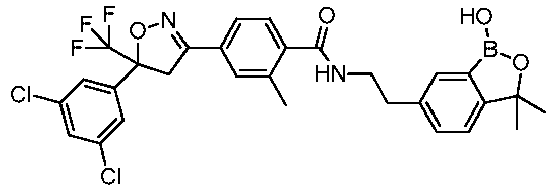
- To a solution of 4-(5-(3,5-dichlorophenyl)-5-(trifluoromethyl)-4,5-dihydroisoxazol-3-yl)-2-methylbenzoic acid (320 mg, 0.76 mmol) and HATU (456 mg, 1.2 mmol) in DMF (18 mL), DIPEA (310 mg, 2.4 mmol) was added. The reaction mixture was stirred at rt for 10 min and crude 6-(2-aminoethyl)-3,3-dimethylbenzo[c][1,2]oxaborol-1(3H)-ol hydrochloride (1 mmol) was added. The reaction mixture was continued to stir overnight. Water was added and the mixture was extracted three times with ethyl acetate. The combined organic layers were washed with brine, dried over Na2SO4, filtered and concentrated under reduced pressure. The residue was purified by prep-HPLC to give the final title compound 4-(5-(3,5-dichlorophenyl)-5-(trifluoromethyl)-4,5-dihydroisoxazol-3-yl)-N-(2-(1-hydroxy-3,3-dimethyl-1,3-dihydrobenzo[c][1,2]oxaborol-6-yl)ethyl)-2-methylbenzamide (276 mg; yield 54.4%) as a white solid. 1H NMR (500 MHz, DMSO-d6) δ 8.99 (s, 1H), 8.42 (t, J = 6.0 Hz, 1H), 7.82 (t, J = 2.0 Hz, 1H), 7.53-7.63 (m, 5H), 7.33-7.35 (m, 3H), 4.35 (d, J = 18.5 Hz, 1 H), 4.30 (d, J = 18.5 Hz, 1 H), 3.50 (q, J = 7.5 Hz, 2H), 2.88 (t, J = 7.5 Hz, 2H), 2.23 (s, 3 H), 1.43 (s, 6H) ppm; HPLC purity: 96.21% 220nm and 97.17% 254 nm; MS: m/z = 604.8 (M+1, ESI+).
-

- A mixture of 3-bromo-4-(methoxycarbonyl)benzoic acid (2.5 g, 9.69 mmol), NH4Cl (1.04 g, 19.38 mmol), HATU (5.5 g, 14.5 mmol), and DIPEA (5.2 mL, 29.1 mmol) in DCM (50 mL) was stirred for 3 h at rt. Water was added and the mixture was extracted with DCM. The combined organic layers were washed with brine, dried over Na2SO4, filtered and concentrated under reduced pressure. The residue was purified by column chromatography over silica gel eluted with PE-EA (3:1) to give methyl 2-bromo-4-carbamoylbenzoate (1.3g; yield 52%) as a white solid. MS: m/z=257.9 (M+1, ESI+).
- To a solution of methyl 2-bromo-4-carbamoylbenzoate (1.3 g, 5.06 mmol) in dry DMF (20 mL) was added (CNCl)3 (1.85 g, 10.12 mmol) at rt and then stirred at rt for 3 h. The reaction mixture was quenched with water and extracted with EA (100 mL x 2). The combined organic layers were washed with brine, dried over Na2SO4, filtered and concentrated under reduced pressure to give crude methyl 2-bromo-4-cyanobenzoate as a white solid (1.1 g). It was used without further purification. 1H NMR (400 MHz, CDCl3): δ 8.36 (s, 1H), 8.01 (d, J=8.0 Hz, 1H), 7.91 (d, J=8.0 Hz, 1H), 3.90 (s, 3H) ppm.
- To a solution of methyl 2-bromo-4-cyanobenzoate (1.1 g, 4.58 mmol) in dry THF (50 mL) was added MeMgBr (6.1 mL, 18.32 mmol) dropwise at 0°C and then the mixture was stirred at rt for overnight. The reaction mixture was quenched with saturated NH4Cl and extracted with EA. The combined organic layers were washed with brine, dried over Na2SO4, filtered and concentrated under reduced pressure. The residue was purified by column chromatography over silica gel eluted with PE-EA (5:1) to give 1-(3-bromo-4-(2-hydroxypropan-2-yl)phenyl)ethanone [0.9 g; yield 70% (2 steps, step 2 and 3)] as colorless oil. 1H NMR (400 MHz, CDCl3): δ 8.07 (s, 1H), 8.00 (d, J=8.0 Hz, 1H), 7.95 (d, J=8.0 Hz, 1H), 5.49 (s, 1H), 2.58 (s, 3H), 1.63 (s, 6H) ppm.
- A mixture of 1-(3-bromo-4-(2-hydroxypropan-2-yl)phenyl)ethanone (0.9 g, 3.51 mmol), (chloro-methoxy)ethane (660 mg, 7.02 mmol) and DIPEA (2.5 mL, 14.04 mmol) in DCM (20 mL) was stirred at 40°C overnight under argon. Water (50 mL) was added and the mixture was extracted with DCM (50 mL x 2). The combined organic layers were washed with brine, dried over Na2SO4, filtered and concentrated under reduced pressure. The residue was purified by column chromatography over silica gel eluted with PE-EA (10:1) to give 1-(3-bromo-4-(2-(ethoxymeth-oxy)propan-2-yl)phenyl)ethanone (990 mg; yield 90%) as a white solid.
- A mixture of compound 1-(3-bromo-4-(2-(ethoxymethoxy)propan-2-yl)phenyl)ethanone (990 mg, 3.15 mmol), 4,4,4',4',5,5,5',5'-octamethyl-2,2'-bi(1,3,2-dioxaborolane) (2.4 g, 9.46 mmol), Pd(dppf)Cl2 (691 mg, 0.945 mmol) and KOAc (926 mg, 9.46 mmol) in 1,4-dioxane (20 mL) was stirred at 80°C overnight under argon atmosphere. The reaction mixture was extracted with DCM (100 mL x 2). The combined organic layers were washed with brine, dried over Na2SO4, filtered and concentrated under reduced pressure. The residue was purified by column chromatography over silica gel eluted with PE-EA (10:1) to give 1-(4-(2-(ethoxymethoxy)propan-2-yl)-3-(4,4,5,5-tetramethyl-1,3,2-dioxaborolan-2-yl)phenyl)ethanone (684 mg) as a white solid.
- To a solution of 1-(4-(2-(ethoxymethoxy)propan-2-yl)-3-(4,4,5,5- tetramethyl-1,3,2-dioxaboro-lan-2-yl)phenyl)ethanone (684 mg, 1.89 mmol) in THF (15 mL) was added 6N HCl (10 mL). The reaction mixture was stirred at rt overnight. Water was added and the mixture was extracted with EA. The organic layers were washed with brine, dried over Na2SO4, filtered and concentrated under reduced pressure. The residue was purified by column chromatography over silica gel eluted with PE-EA (5:1) to give 1-(1-hydroxy-3,3-dimethyl-1,3-dihydrobenzo[c][1,2] oxaborol-6-yl)ethanone (324 mg; yield 50% over 2 steps) as a white solid. 1H NMR (400 MHz, DMSO-d6): δ 9.26 (b, 1H), 8.29 (s, 1H), 8.07 (d, J=8.0 Hz, 1H), 7.59 (d, J=8.0 Hz, 1H), 2.61 (s, 3H), 1.44 (s, 6H) ppm; MS: m/z=205.1 (M+1, ESI+).
- A mixture of 1-(1-hydroxy-3,3-dimethyl-1,3-dihydrobenzo[c][1,2]-oxaborol-6-yl) ethanone (190 mg, 0.93 mmol), NH2OH·HCl (77 mg, 1.12 mmol) and NaOAc (114 mg, 1.4 mmol) in MeOH (15 mL) was heated to 65 °C and stirred for 3 h. Water was added and the mixture was extracted with DCM. The organic layers were washed with brine, dried over Na2SO4, filtered and concentrated under reduced pressure to give (E)-1-(1-hydroxy-3,3-dimethyl-1,3-dihydrobenzo[c][1,2]oxaborol-6-yl)ethanone oxime as a white solid. It was used in the next step without further purification. MS: m/z=220.1 (M+1, ESI+).
- A mixture of crude compound (E)-1-(1-hydroxy-3,3-dimethyl-1,3-dihydrobenzo [c][1,2]oxaborol -6-yl)ethanone oxime (0.93 mmol) and zinc dust (260 mg, 4.0 mmol) in AcOH (8 mL) was heated to 40°C and stirred for 0.5 h. LC-MS showed SM disappeared. The reaction mixture was used for next reaction directly without being purified.
- To a flask containing 6-(1-aminoethyl)-3,3-dimethylbenzo[c][1,2]oxaborol-1(3H)-ol was added DCM (20 mL), Et3N (0.7 mL, 5.0 mmol) and (Boc)2O (0.65 mL, 3.0 mmol). The mixture was stirred for 3 h at rt. Then the mixture was poured into water, extracted with DCM, dried over Na2SO4, filtered and concentrated under reduced pressure to give crude tert-butyl 1-(1-hydroxy-3,3-dimethyl-1,3-dihydrobenzo [c][1,2]oxaborol-6-yl)ethylcarbamate. It was used in the next step without further purification. MS: m/z=328.1 (M+23, ESI+).
- A mixture of tert-butyl 1-(1-hydroxy-3,3-dimethyl-1,3-dihydrobenzo[c][1,2]oxaborol-6-yl)ethyl-carbamate (0.93 mmol) in MeOH (10 mL) was added 6N HCl (10 mL). The mixture was stirred at rt overnight. The mixture was poured into water and washed with EA (50 mL × 2). The water layer was lyophilized to give crude 6-(1-aminoethyl)-3,3-dimethylbenzo[c][1,2]oxaborol-1(3H)-ol hydrochloride. It was used in the next step without further purification.
- To a solution of 2-methyl-4-(5-(3,4,5-trichlorophenyl)-5-(trifluoromethyl)-4,5-dihydro-isoxazol-3-yl)benzoic acid (150 mg, 0.33 mmol), HATU (188 mg, 0.495 mmol) and Et3N (0.15 mL, 0.99 mmol) in DMF (10 mL) was added 6-(1-aminoethyl)-3,3-dimethylbenzo[c][1,2]oxaborol-1(3H)-ol hydrochloride (0.93 mmol). The mixture was stirred at rt overnight and EA (50 mL) was added. The mixture was washed with brine, dried over Na2SO4, filtered and concentrated under reduced pressure. The residue was purified by prep-HPLC to give the title compound N-(1-(1-hydroxy-3,3-dimethyl-1,3-dihydrobenzo [c][1,2]oxaborol-6-yl)ethyl)-2-methyl-4-(5-(3,4,5-tri-chlorophenyl)-5-(trifluoromethyl)-4,5-dihydroisoxazol-3-yl)benzamide (103 mg; yield 18% over 5 steps) as a white solid. 1H NMR (400 MHz, DMSO-d6): δ 9.00 (s, 1H), 8.82 (d, J=7.6 Hz, 1H), 7.84 (s, 2H), 7.37-7.67 (m, 6H), 5.16 (m, 1H), 4.40 (d, J=18.0 Hz, 1H), 4.33 (d, J=18.0 Hz, 1H), 2.33 (s, 3H), 1.47-1.44 (m, 9H) ppm; HPLC purity: 99.88% at 220nm and 99.77% at 254nm; MS: m/z = 639.8 (M+1, ESI+).
-
- The title compound is obtained by separation of the racemic mixture of N-(1-(1-hydroxy-3,3-dimethyl-1,3-dihydrobenzo[c][1,2]oxaborol-6-yl)ethyl)-2-methyl-4-(5-(3,4,5-trichlorophenyl)-5-(trifluoromethyl)-4,5-dihydroisoxazol-3-yl)benzamide with chiral column chromatography. The racemic mixture is dissolved in the solvent of mobile phase and separated by supercritical fluid (SFC) chiral chromatography. The chromatography conditions are: column CHIRALCEL OJ-H (column size: 0.46 cm I.D. × 15cm length), mobile phase CO2/MeOH = 70/30 (w/w), flow rate 2.0 mL/min, detector wave length UV 220nm, and temperature 35°C.
-

- A mixture of methyl 2-bromo-4-methylbenzoate (4.58 g, 20 mmol), KMnO4 (12.64 g, 80 mmol) and 18-crown-6 (1.06 g, 4.0 mmol) in t-BuOH:H2O (1:1, 60 mL) was stirred for 20 min at 75 °C. Then the mixture was cooled to rt and KMnO4 (3.16 g, 20 mmol) was added. The reaction mixture was stirred for additional 1 h at 75 °C. After that, the mixture was cooled to rt and KMnO4 (1.58g, 10mmol) was added again. The mixture was stirred for 1 h more at 75 °C, cooled to rt and filtered. The filtrate was acidified by citric acid and the white solid was precipitated. It was filtered and washed with water to give the product (2.5g, yield 48.5%) as a white solid. MS: m/z==258.9 (M+1, ESI+).
- To a solution of 3-bromo-4-(methoxycarbonyl)benzoic acid (3.0 g, 11.6 mmol) in MeOH (50 mL) was slowly added SOCl2 (2.76 g, 23.2 mmol) dropwise. After the addition completion, the reaction mixture was refluxed for 5 h. Then MeOH was removed and water was added. It was extracted with EA and the organic layer was washed with aqueous sodium bicarbonate solution, brine, dried over Na2SO4, filtered and concentrated under reduced pressure to give dimethyl 2-bromoterephthalate (3.1g, yield 98%) as a white solid. It was used without further purification in the next step.
- To a solution of dimethyl 2-bromoterephthalate (3.1 g, 11.4 mmol) in dry THF (100 mL) was added dropwise MeMgBr (22.8 mL, 68.4 mmol) at 0°C under argon and then stirred at rt overnight. The reaction mixture was quenched with saturated NH4Cl and extracted with EA (200 mL x 2). The combined organic layers were washed with brine, dried over Na2SO4, filtered and concentrated under reduced pressure to give crude 2,2'-(2-bromo-1,4-phenylene)dipropan-2-ol (3.2 g) as white solid. It was used without further purification in the next step.
- To a solution of 2,2'-(2-bromo-1,4-phenylene)dipropan-2-ol (3.2 g) in DCM (50 mL) was added DIPEA (11 mL, 57 mmol) and (chloromethoxy)ethane (3.2 g, 34.2 mmol). The reaction mixture was heated at 40°C overnight. Water (200 mL) was added and the mixture was extracted with DCM (100 mL x 2). The combined organic layers were washed with brine, dried over Na2SO4, filtered and concentrated under reduced pressure. The residue was purified by column chromatography over silica gel eluted with PE-EA (15:1) to give 2-bromo-1,4-bis(2-(ethoxy-methoxy)propan-2-yl)benzene [3.3g, yield 75% (over 2 steps, step 3 and 4)] as colorless oil. 1H NMR (400 MHz, CDCl3) δ 7.68 (s, 1H), 7.46 (d, J=8.4 Hz, 1H), 7.34 (d, J=8.4 Hz, 1H), 4.66 (s, 2H), 4.64 (s, 2H), 3.67 (q, J=7.2 Hz, 2H), 3.63 (q, J=7.2 Hz, 2H), 1.76 (s, 6H), 1.60 (s, 6H), 1.18 (m, 6H) ppm.
- A mixture of 2-bromo-1,4-bis(2-(ethoxymethoxy)propan-2-yl)benzene (440 mg, 1.13 mmol), bis(pinacolato)diboron (860 mg, 3.4 mmol), Pd(dppf)Cl2 (25 mg, 0.034 mmol) and KOAc (330 mg, 3.4 mmol) in 1,4-dioxane (60 mL) was stirred at 80 °C overnight under argon. Water (100mL) was added and the mixture was extracted with DCM (200 mL x 2). The combined organic layers were washed with brine, dried over Na2SO4, filtered and concentrated under reduced pressure. The residue was purified by combiflash to give 2-(2,5-bis(2-(ethoxymethoxy)- propan-2-yl)-phenyl)-4,4,5,5-tetramethyl-1,3,2-dioxaborolane (510 mg) as a white solid. It was used without further purification in the next step.
- To a solution of 2-(2,5-bis(2-(ethoxymethoxy)propan-2-yl)phenyl)-4,4,5,5-tetramethyl-1,3,2-dioxaborolane (510 mg) in THF (15 mL) was added 6 N HCl (3.8 mL). The reaction mixture was stirred at rt for 5 h, and extracted with DCM (200 mL x 2). The combined organic layers were washed with brine, dried over Na2SO4, filtered and concentrated under reduced pressure. The residue was purified by Combiflash to give 6-(2-hydroxypropan-2-yl)-3,3-dimethylbenzo- [c][1,2]oxaborol-1(3H)-ol [112 mg, yield 45% (2 steps, step 5 and 6)] as a white solid. 1H NMR (400 MHz, DMSO-d6) δ 8.93 (s, 1H), 7.77 (s, 1H), 7.57 (d, J=8.0 Hz, 1H), 7.32 (d, J=8.0 Hz, 1H), 4.98 (s, 1H), 1.43 (s, 12H) ppm; HPLC purity: 94.6% at 220 nm and 100% at 254 nm; MS: m/z = 203.1 (M-17, ESI+).
- A solution of TFA (200 µL, 2 mmol) in chloroform (3 mL) was added slowly to a mixture of 6-(2-hydroxypropan-2-yl)-3,3-dimethylbenzo[c][1,2]oxaborol-1(3H)-ol (88 mg, 0.4 mmol) and sodium azide (80 mg, 1.2 mmol) in chloroform (7 mL) at-5 °C to 0 °C. The cooling bath was removed and the mixture was stirred at rt overnight. Concentrated ammonium hydroxide was added until pH was basic (moist PH paper). DCM (50 mL) was added and the organic layer was washed with brine:water (1:1), dried over Na2SO4, filtered and concentrated to give the crude product 6-(2-azidopropan-2-yl)-3,3-dimethylbenzo[c][1,2]oxaborol-1(3H)-ol (100mg) as colorless oil. It was used without further purification in the next step.
- The solution of 6-(2-azidopropan-2-yl)-3,3-dimethylbenzo[c][1,2]-oxaborol-1(3H)-ol (100 mg) in MeOH (6 mL) was hydrogenated under H2 using 10% Pd/C (15 mg) as catalyst at atmospheric pressure for 5 h. The catalyst was removed by filtration, and the solvent was evaporated at reduced pressure to give crude product 6-(2-aminopropan-2-yl)-3,3-dimethylbenzo[c][1,2]oxa-borol-1(3H)-ol (100 mg) as colorless oil. It was used without further purification in the next step.
- To a solution of 6-(2-aminopropan-2-yl)-3,3-dimethylbenzo[c][1,2]-oxaborol-1(3H)-ol (100 mg), HATU (277 mg, 0.73 mmol) and DIPEA (0.2 mL, 1.1 mmol) in THF (5 mL) was added 2-methyl -4-(5-(3,4,5-trichlorophenyl)-5-(trifluoromethyl)-4,5-dihydroisoxazol-3-yl)benzoic acid (80 mg, 0.37 mmol). The reaction mixture was stirred at rt overnight. EA was added and the mixture was washed with brine, dried over Na2SO4, filtered and concentrated under reduced pressure. The residue was purified by prep-HPLC to give the final title compound N-(2-(1-hydroxy-3,3-dimethyl-1,3-dihydrobenzo[c][1,2]oxaborol-6-yl)propan-2-yl)-2-methyl-4-(5-(3,4,5-trichlorophenyl)-5-(trifluoromethyl)-4,5-dihydroisoxazol-3-yl)benzamide (100 mg; yield 38% over 3 steps) as a white solid. 1H NMR (400 MHz, DMSO-d6): δ 8.99 (s, 1H), 8.64 (s, 1H), 7.85 (s, 2H), 7.74 (s, 1H), 7.47-7.55 (m, 4H), 7.36 (d, J=8.4 Hz, 1H), 4.41 (d, J=18.4 Hz, 1H), 4.34 (d, J=18.4 Hz, 1H), 2.33 (s, 3H), 1.66 (s, 6H), 1.44 (s, 6H) ppm; HPLC purity: 99.29% at 220 nm and 99.63% at 254 nm; MS: m/z = 653.8 (M+1, ESI+).
-

- To a 1000-mL 3-necked flask was added 40.7 g (0.402 mol) diisopropylamine (101.19, 0.7178) and 400 mL of anhydrous THF at rt under N2. The mixture solution was cooled to -78°C, and then n-BuLi (134 mL, 0.402 mol) was added dropwise for 30 min. After completion of the addition, the mixture was stirred at -78°C for 1.5 h and then acetone (46.7 g, 0.804 mol) was added dropwise. The mixture was continuously stirred at -78°C for 2 h and then at rt overnight. The reaction was monitored by LC-MS. It was quenched with water, extracted with EtOAc, dried over Na2SO4 and filtered. The filtrate was concentrated by rotary evaporation. The residue was purified by column chromatography over silica gel eluted with PE-EA (10:1) to give 2-(2-bromo-6-fluoro-4-methylphenyl)propan-2-ol (20 g; yield 40.26%) as colorless oil. 1H NMR (400 MHz, DMSO-d6): δ 7.30 (s, 1H), 6.97 (d, J = 13.6 Hz, 1H), 5.05 (s, 1H), 2.24 (s, 3H), 1.59 (d, J = 3.6 Hz , 6H) ppm.
- To a solution of 2-(2-bromo-6-fluoro-4-methylphenyl)propan-2-ol (12 g, 48.56 mmol) in DCM (120 mL) and diisopropylethylamine (6.9 g, 53.42 mmol) in DCM (120 mL) was added dropwise chloromethylmethylether (4.3 g, 53.42 mmol) at 0°C under argon and the mixture was then stirred at rt for 15 h. The reaction mixture was quenched with water and extracted with EA. The combined organic layers were washed with brine, dried over Na2SO4, filtered and concentrated under reduced pressure. The residue was purified by column chromatography over silica gel eluted with PE-EA (20:1) to give 1-bromo-3-fluoro-2-(2-(methoxymethoxy)propan-2-yl)-5-methylbenzene (10 g, 70.73% yield) as colorless oil. 1H NMR (400 MHz, CDCl3): δ 7.22 (s, 1H), 6.71-6.75 (m, 1H), 4.54 (s, 2H), 3.33 (s, 3H), 2.20 (s, 3H), 1.72 (d, J = 5.2 Hz, 6H) ppm.
- To a solution of 1-bromo-3-fluoro-2-(2-(methoxymethoxy)propan-2-yl)-5-methyl benzene (10 g, 34.34 mmol) in 1,4-dioxane (100 mL) at rt under N2 was added (Pina)2B2 (13.1 g, 51.51), KOAc (10.1 g, 103.02 mmol) and Pd(dppf)2Cl2·Cl2(1.4 g, 1.717 mmol). The reaction mixture was stirred at 70-80°C overnight. The reaction was monitored by LC-MS. The reaction mixture was cooled to rt and filtered. The filtrate was washed with brine, dried over Na2SO4, filtered and concentrated under reduced pressure. The residue was used directly in next step without further purification.
- The crude 2-(3-fluoro-2-(2-(methoxymethoxy)propan-2-yl)-5-methylphenyl)-4,4,5,5-tetramethyl-1,3,2-dioxaborolane was mixed with 25 ml of 6N HCl and the reaction mixture was stirred at rt overnight. The reaction was monitored by LC-MS. The reaction solution was extracted with EtOAc, dried over Na2SO4, filtered and concentrated under reduced pressure. The residue was purified by column chromatography over silica gel eluted with PE-EA (5:1 to 2:1) to give 4-fluoro-3,3,6-trimethylbenzo[c][1,2]oxaborol-1(3H)-ol (3.5 g, 52.5% yield) as a pale yellow solid. 1H NMR (400 MHz, DMSO-d6) δ 9.17 (s, 1H), 7.30 (s, 1H), 7.08 (d, J = 11.2 Hz, 1H), 2.34 (s, 3H), 1.49 (s, 6H) ppm.
- To a solution of 4-fluoro-3,3,6-trimethylbenzo[c][1,2]oxaborol-1(3H)-ol (1.94 g, 10 mmol) in CCl4 (19.4 mL) at rt was added benzoyl peroxide (0.24 g, 1.0 mmol) and NBS (3.56 g, 20 mmol). The reaction mixture was refluxed for 16 h, cooled to rt and treated with Na2CO3. The aqueous layer was acidified with 3 N HCl to pH of 3 and extracted with EA. The organic layer was washed with brine, dried over Na2SO4, filtered and concentrated under reduced pressure. The residue was purified by column chromatography over silica gel eluted with PE-EA (2:1) to give 4-fluoro-1-hydroxy-3,3-dimethyl-1,3-dihydrobenzo[c][1,2]oxaborole-6-carbaldehyde (1.86 g, 89.4% yield) as a brown solid. 1H NMR (400MHz, DMSO-d6) δ 10.04 (d, J = 1.6 Hz, 1H), 9.53 (s, 1H), 8.09 (s, 1H), 7.77 (m, 1H), 1.55 (d, J = 5.6 Hz, 6H) ppm.
- To a solution of 4-fluoro-1-hydroxy-3,3-dimethyl-1,3-dihydrobenzo[c][1,2] oxaborole-6-carbaldehyde (1.86 g, 8.94 mmol) and NH2OH·HCl (0.69 g, 9.84 mmol) in THF (16 mL) and H2O (4 mL) at rt was added NaOAc (0.92 g, 11.18 mmol). The reaction mixture was stirred for 3 h and diluted with H2O. The mixture was extracted with EA and the organic layer was separated. The organic solution was washed with brine, dried over Na2SO4, filtered and concentrated under reduced pressure. The residue was purified by column chromatography over silica gel eluted with PE-EA (5:1 to 2:1) to give (E)-4-fluoro-1-hydroxy-3,3-dimethyl-1,3-dihydrobenzo[c][1,2] oxaborole-6-carbaldehyde oxime (1.8 g, 95.8 % yield) as a light yellow solid. 1H NMR (500 MHz, DMSO-d6) δ 11.38 (s, 1H), 9.34 (s, 1H), 8.19 (s, 1H), 7.74 (s, 1H), 7.46 (dd, J = 1.2 Hz, J = 11.2 Hz, 1H), 1.524 (s, 6H) ppm.
- To a solution of (E)-4-fluoro-1-hydroxy-3,3-dimethyl-1,3-dihydrobenzo[c][1,2] oxaborole-6-carbaldehyde oxime (1.8 g, 8.57 mmol) in acetate acid (18 mL) at rt was added Zn powder (2.8 g, 42.85 mmol). The reaction mixture was stirred at 40 to 45°C for 3 h. The mixture was cooled to rt, filtered and concentrated under reduced pressure give crude 6-(aminomethyl)-4-fluoro-3,3-dimethylbenzo[c][1,2] oxaborol-1(3H)-ol as white solid. It was used in next step without further purification.
- To a solution of crude 2-methyl-4-(5-(3,4,5-trichlorophenyl)-5-(trifluoromethyl)-4,5- dihydroisoxazol-3-yl)benzoic acid (0.45 g, 1 mmol) in DMF (5 mL) at rt under N2 was added HBTU (0.76 g, 2 mmol), followed by DIPEA (0.39 g, 3 mmol). The reaction mixture was stirred at rt overnight. The reaction mixture was purified by chromatography over silica gel eluted with PE-DCM (1:1) to give an activated intermediate from acid, which was used directly to mix with 6-(aminomethyl)-4-fluoro-3,3- dimethylbenzo[c][1,2]oxaborol-1(3H)-ol (0.3 g, 1.44 mmol) in 5 mL of DMF. The reaction mixture was stirred at rt overnight. The reaction was monitored by LC-MS. The reaction solution was purified by pre-HPLC to give the final title compound (260 mg, 40.4% yield) as a white solid. 1H NMR (400 MHz, DMSO-d6): δ 9.31 (s, 1H), 8.97 (t, 1H), 7.86 (s, 2H), 7.63-7.62 (m, 2H), 7.53-7.51 (m, 2H), 7.24 (d, 1H), 4.50 (d, J= 5.6 Hz, 2H), 4.43-4.31 (m, 2H) 2.42 (s, 3H) 1.53 (s, 6H) ppm; HPLC purity: 97.9% at 220 nm and 99.6 at 254 nm; MS (ESI+): m/z = 643 (M+1).
-

- To a cooled solution (5°C) of 3-amino-4-methylbenzoic acid (3.02 g, 20 mmol) in DMF (20 mL) was added NBS (3.38 g, 19 mmol) in small portions at such a rate that the reaction mixture temperature was kept below 15°C. After being stirred for one hour, the reaction mixture was poured onto ice water (100 mL) with stirring. The solid formed was collected by filtration, and the filter cake was washed with ice water (3 x 100 mL) and then dried at 60°C under high vacuum to give 5-amino-2-bromo-4-methylbenzoic acid (3.55 g, yield 77.5%) as a pink solid. MS: m/z = 230.0 (M+1, ESI+).
- To a solution of 5-amino-2-bromo-4-methylbenzoic acid (3.55 g, 15.5 mmol) in methanol (60 mL) at rt was slowly added SOCl2 (1.69 mL). The reaction mixture was refluxed for 2 h, cooled to rt, quenched with water and extracted with ethyl acetate. The organic layer was dried over with anhydrous Na2SO4 and concentrated. The residue was washed with petroleum ether (PE) to give methyl 5-amino-2-bromo-4-methyl benzoate (3.6 g, yield 95.5%) as a white solid. 1H NMR (400 MHz, DMSO-d6): δ 8.90 (br s, 2H), 7.63 (s, 1H), 7.59 (s, 1H), 3.86 (s, 3H), 2.30 (s, 3H) ppm; MS: m/z = 244.0 (M+1, ESI+).
- To a solution of methyl 5-amino-2-bromo-4-methylbenzoate (4.86 g, 20 mmol) in hydrochloric acid (6N, 50 mL) was added sodium nitrite (1.38 g, 20 mmol) carefully at -5°C. After one hour, the obtained mixture was added to a boiling solution of copper(I) chloride (3.96 g, 40 mmol) in water (50 mL) dropwise and the resulting mixture was refluxed with stirring for 2 h. The mixture was cooled to rt and extracted with ethyl acetate (2 x 50 mL). The combined organic layers were washed with brine, dried over Na2SO4, filtered and concentrated. The residue was purified by silica gel column chromatography eluted with PE to give methyl 2-bromo-5-chloro-4-methylbenzoate (3.4 g, yield 64.4%). 1H NMR (400 MHz, DMSO-d6): δ 7.82 (s, 1H), 7.81 (s, 1H), 3.85 (s, 3H), 2.51 (s, 3H) ppm; MS: m/z = 265.0 (M+1, ESI+).
- To a solution of methyl 2-bromo-5-chloro-4-methylbenzoate (4.0 g, 15.2 mmol) in dry THF (100 mL) was added MeMgI (20.3 mL, 60.8 mmol) dropwise at 0°C and then the mixture was stirred at rt overnight. The reaction mixture was quenched with NH4Cl-saturated water and extracted with EA. The combined organic layers were washed with brine, dried over Na2SO4, filtered and concentrated under reduced pressure. The residue was purified by silica gel column chromatography eluted with PE-EA (20:1) to give 2-(2-bromo-5-chloro-4-methylphenyl)propan-2-ol (2.96 g; yield 74%) as colorless oil. 1H NMR (400 MHz, DMSO-d6) δ 7.66 (s, 1H), 7.44 (s, 1H), 7.26 (s, 1H), 2.32 (s, 3H), 1.72 (s, 6H) ppm.
- A mixture of 2-(2-bromo-5-chloro-4-methylphenyl)propan-2-ol (4.5 g 17.1 mmol), (chloromethoxy)ethane (3.2 g, 34.2 mmol) and DIPEA (6.6 g, 51.3 mmol) in DCM (50 mL) was stirred at 40°C overnight under argon. Water (50 mL) was added and the mixture was extracted with DCM (2 x 50 mL). The combined organic layers were washed with brine, dried over Na2SO4, filtered and concentrated under reduced pressure. The residue was purified by silica gel column chromatography eluted with PE-EA (10:1) to give 1-bromo-4-chloro-2-(2-(ethoxymethoxy)propan-2-yl)-5-methylbenzene (4.27g, yield 77.5%). 1H NMR (400 MHz, DMSO-d6): δ 7.67 (s, 1H), 7.50 (s, 1H), 4.59 (s, 2H), 3.55 (q, 2H), 2.29 (s, 3H), 1.65 (s, 6H), 1.08 (t, 3H) ppm; MS: m/z = 344.8 (M+Na+, ESI+).
- A mixture of 1-bromo-4-chloro-2-(2-(ethoxymethoxy)propan-2-yl)-5-methylbenzene (1.54 g, 4.8 mmol), bis(pinacolato)diboron (3.05 g, 12 mmol), PdCl2(dppf)2 (105 mg, 0.144 mmol) and KOAc (1.18g, 12mmol) in 1,4-dioxane (100mL) was stirred at 80°C overnight under argon atmosphere. The reaction mixture was extracted with DCM (100 mL x 2). The combined organic layers were washed with brine, dried over Na2SO4, filtered and concentrated. The residue was purified by silica gel column chromatography eluted with PE-EA (10:1) to give 2-(4-chloro-2-(2-(ethoxymethoxy)propan-2-yl)-5-ethylphenyl)-4,4,5,5-tetramethyl-1,3,2-dioxaborolane.
- To a solution of 2-(4-chloro-2-(2-(ethoxymethoxy)propan 2-yl)-5-ethylphenyl)-4,4,5,5-tetramethyl-1,3,2-dioxaborolane (1.77 g, 4.8 mmol) in THF (24 mL) was added 6N HCl (24 mL). The reaction mixture was stirred at rt overnight. Water was added and the mixture was extracted with EA. The organic layers were washed with brine, dried over Na2SO4, filtered and concentrated. The residue was purified by silica gel column chromatography eluted with PE-EA (20:1) to give 5-chloro-3,3,6-trimethylbenzo [c][1,2]oxaborol-1(3H)-ol (540 mg; yield 53.6% over 2 steps) as a light yellow oil. 1H NMR (400 MHz, DMSO-d6): δ 9.13 (s, 1H), 7.62 (s, 1H), 7.54 (s, 1H), 2.36 (s, 3H), 1.46 (s, 6H) ppm; MS: m/z = 210.9 (M+1, ESI+).
- To a solution of 5-chloro-3,3,6-trimethylbenzo[c][1,2]oxaborol-1(3H)-ol (540 mg, 2.57 mmol) in CCl4 (30 mL) at rt was added benzoyl peroxide (62 mg, 0.26 mmol) followed by NBS (915 mg, 5.14 mmol). The reaction mixture was refluxed for 16 h, cooled to rt and treated with Na2CO3. The aqueous layer was acidified with 3 N HCl to pH of 3 and extracted with EA. The organic layer was washed with brine, dried over Na2SO4, filtered and concentrated under reduced pressure. The residue was purified by column chromatography on silica gel eluted with DCM-MeOH (20:1) to give 5-chloro-1-hydroxy-3,3-dimethyl-1,3-dihydrobenzo[c][1,2]oxaborole-6-carbaldehyde (310 mg; yield 53.8%) as a pale yellow solid. 1H NMR (400 MHz, DMSO-d6): δ 10.38 (s, 1H), 9.41 (s, 1H), 8.22 (s, 1H), 7.82 (s, 1H), 1.50 (s, 6H) ppm; MS: m/z = 224.9 (M+1, ESI+).
- To a solution of 5-chloro-1-hydroxy-3,3-dimethyl-1,3-dihydrobenzo[c][1,2] oxaborole-6-carbaldehyde (200 mg, 0.89 mmol) and NH2OH·HCl (74 mg, 1.07 mmol) in THF (12 mL) and H2O (3 mL) at rt was added NaOAc (110 mg, 1.34 mmol). The reaction mixture was stirred for 2 h and diluted with H2O. The mixture was extracted with EA and the organic layer was separated. The organic solution was washed with brine, dried over Na2SO4, filtered and concentrated to give crude compound 5-chloro-1-hydroxy-3,3-dimethyl-1,3-dihydrobenzo[c][1,2] oxaborole-6-carbaldehyde oxime as a light yellow solid. It was used in next step without further purification.
- To a solution of 5-chloro-1-hydroxy-3,3-dimethyl-1,3-dihydrobenzo[c][1,2] oxaborole-6-carbaldehyde oxime (213 mg, 0.89 mmol) in AcOH (5 mL) at rt was added zinc dust (228 mg, 3.56 mmol). The reaction mixture was stirred at 40°C for 4 h under argon atmosphere. Methanol was added and the mixture was filtered over Celite. The filtrate was concentrated and the residue was purified by prep-HPLC [H2O-MeCN(0.01%TFA)] to give 6-(aminomethyl)-5-chloro-3,3-dimethyl benzo[c][1,2]oxaborol-1(3H)-ol as TFA salt (183 mg; yield 60% over 2 steps). MS: m/z = 226.0 (M+1, ESI+).
- To a solution of 4-(5-(3,4,5-trichlorophenyl)-5-(trifluoromethyl)-4-5-dihydro-isoxazol-3-yl)-2-methylbenzoic acid (138 mg, 0.31 mmol), 6-(aminomethyl)-5-chloro-3,3-dimethylbenzo[c][1,2]oxaborol-1(3H)-ol TFA salt (103 mg, 0.31 mmol) and BEP (127 mg, 0.46 mmol) in DMF (10 mL), DIPEA (160 mg, 1.24 mmol) was added. The reaction mixture was stirred at rt overnight. Water was added and the mixture was extracted three times with ethyl acetate. The combined organic layers were washed with brine, dried over Na2SO4, filtered and concentrated under reduced pressure. The residue was purified by prep-HPLC to give N-((5-chloro-1-hydroxy-3,3-dimethyl-1,3-dihydrobenzo-[c][1,2]oxaborol-6-yl)methyl)-2-methyl-4-(5-(3,4,5-trichlorophenyl)-5-(trifluoromethyl)-4,5-dihydroisoxazol-3-yl)benzamide (78 mg, yield 38%) as a white solid. 1H NMR (400 MHz, DMSO-d6): δ 9.21 (s, 1H), 8.93 (t, J = 5.6 Hz, 1H), 7.85 (s, 2H), 7.73 (s, 1H), 7.55-7.64 (m, 4H), 4.53 (d, J = 5.6 Hz, 2 H), 4.38 (d, J= 18.4 Hz, 1 H), 4.31 (d, J = 18.4 Hz, 1 H), 2.41 (s, 3 H), 1.46 (s, 6H) ppm; HPLC purity: 100% at both 220 nm and 254 nm. MS (ESI+): m/z = 661 (M+1).
-

- The title compound is obtained by separation of the racemic mixture of N-((5-chloro-1-hydroxy-3,3-dimethyl-1,3-dihydrobenzo[c][1,2]oxaborol-6-yl)methyl)-2-methyl-4-(5-(3,4,5-trichlorophenyl)-5-(trifluoromethyl)-4,5-dihydroisoxazol-3-yl)benzamide with chiral column chromatography. The racemic mixture is dissolved in the solvent of mobile phase and separated by supercritical fluid (SFC) chiral chromatography. The chromatography conditions are: column CHIRALCEL OJ-H (column size: 0.46 cm I.D. × 15cm length), mobile phase CO2/MeOH = 70/30 (w/w), flow rate 2.0 mL/min, detector wave length UV 220nm, and temperature 35°C.
-

- The title compound was prepared by the following scheme:

- To a solution of ethyl 8-(((trifluoromethyl)sulfonyl)oxy)indolizine-5-carboxylate (30 g, 89 mmol) in MeOH (300 mL) was added NaBH4 (13.5 g, 0.356 mol) at 0°C under N2. The reaction mixture was stirred at rt overnight. After the completion, to the reaction was added water, extracted with EtOAc, washed with brine, dried and concentrated to give the desired product 5-(hydroxymethyl)indolizin-8-yl trifluoromethanesulfonate (50 g, crude).
- To a solution of 5-(hydroxymethyl)indolizin-8-yl trifluoromethanesulfonate (25 g, 0.085 mol) in MeOH (600 mL) was added Et3N (25.7 g, 0.254 mol) and Pd(dppf)2Cl2 (2.5 g, 10%). The reaction mixture was stirred under CO (50 psi) at 50°C for 2 h. The mixture was concentrated. The crude product was purified by column (PE : EtOAc=50:1) to give the desired product methyl 5-(hydroxymethyl)indolizine-8-carboxylate (10 g, yield 57%). 1H NMR (400 MHz, CDCl3): δ 7.62 (d, 1H, J=8.0 Hz), 7.55 (s, 1H), 7.06 (m, 1H), 6.95 (m, 1H), 6.81(d, 1H, J=8.0 Hz), 5.76 (m, 1H), 4.76 (d, 1H, J=5.6 Hz), 3.89 (s, 3H) ppm.
- To a solution of methyl 5-(hydroxymethyl)indolizine-8-carboxylate (13 g, 63.41 mmol) in DCM (300 mL) was added MnO2 (55 g, 0.634 mol) at 0°C. The reaction mixture was stirred at rt overnight. After the completion, the reaction was filtered and concentrated. The crude product was purified by column (PE: EtOAc=300:1) to give the desired product methyl 5-formylindolizine-8-carboxylate (5.8 g, yield 45%). 1H NMR (400 MHz, DMSO): δ 10.01 (s, 1H), 8.90-8.91 (m, 1H), 7.31-7.35 (d, 1H, J=7.6Hz), 7.68-7.70 (d, 1H, J=1Hz), 7.29-7.31 (m, 1H), 7.14-7.16 (m, 1H), 3.97 (s, 3H) ppm.
- To a solution of methyl 5-formylindolizine-8-carboxylate (203 mg, 1.0 mmol) and NH2OH·HCl (105 mg, 1.5 mmol) in THF (30 mL) and H2O (8 mL) at rt was added NaOAc (164 mg, 2.0 mmol). The reaction mixture was stirred at rt for 2 h. The mixture was extracted with EA (2×40 mL). The organic layers was dried over Na2SO4, filtered and concentrated under reduced pressure. The residue was used in next step without further purification.
- A solution of crude (E)-methyl 5-((hydroxyimino)methyl)indolizine-8-carboxylate (1.0 mmol) in THF (10 mL) was added to a stirred solution of DIB (644 mg, 2.0 mmol) and 1,3-dichloro-5-(3,3,3-trifluoroprop-1-en-2-yl)benzene (480 mg, 2.0 mmol) in THF (15 mL) at rt. Then the mixture was heated at 68°C for 2 h. The solvent was removed under reduced pressure and the crude product was purified by prep-TLC and Combiflash to give methyl 5-(5-(3,5-dichlorophenyl)-5-(trifluoromethyl)-4,5- dihydroisoxazol-3-yl)indolizine-8-carboxylate (30 mg; yield 7% over 2 steps). 1H NMR (400 MHz, DMSO-d6): δ 8.52 (d, J=2.0Hz, 1H), 7.77 (t, J=1.6Hz, 1H), 7.57-7.62 (m, 3H), 7.23-7.27 (m, 2H), 7.06 (m, 1H), 4.57 (d , J=18.0Hz, 1H), 4.46 (d , J=18.0Hz, 1H), 3.87 (s, 3H) ppm; MS: m/z = 456.7 (M+1, ESI+).
- A solution of methyl 5-(5-(3,5-dichlorophenyl)-5-(trifluoromethyl)-4,5-dihydro- isoxazol-3-yl)indolizine-8-carboxylate (30 mg, 0.066 mmol) and NaOH (14 mg, 0.33 mmol) in H2O-THF (1:1, 10 mL) was stirred at rt for 3 h. The mixture was acidified with 2 N HCl and extracted with ethyl acetate (3×20mL). The combined organic layers were washed with brine, dried over Na2SO4, filtered and concentrated under reduced pressure. The residue was purified by prep-TLC to give 5-(5-(3,5-dichlorophenyl)-5-(trifluoromethyl)-4,5-dihydroisoxazol-3-yl)indolizine-8-carboxylic acid (10 mg; yield 34%) as a yellow solid. MS: m/z = 442.7 (M+1, ESI+).
- To a solution of 5-(5-(3,5-dichlorophenyl)-5-(trifluoromethyl)-4,5-dihydro-isoxazol-3-yl)indolizine-8-carboxylic acid (10 mg, 0.023 mmol), HATU (13 mg, 0.035 mmol) and Et3N (0.02 mL, 0.11 mmol) in DMF (5 mL) was added 6-(aminomethyl)-3,3-dimethylbenzo[c][1,2]oxaborol-1(3H)-ol hydrochloride (10 mg, 0.046 mmol). The mixture was stirred at rt overnight. EA (40 mL) was added and the mixture was washed with brine, dried over Na2SO4, filtered and concentrated under reduced pressure. The residue was purified by prep-HPLC to give the title compound 5-(5-(3,5-dichlorophenyl)-5-(trifluoromethyl)-4,5-dihydroisoxazol-3-yl)-N-((1-hydroxy-3,3-dimethyl-1,3-dihydrobenzo[c][1,2]oxaborol-6-yl)methyl)indolizine-8-carboxamide (4.8 mg; yield 34%) as a yellow solid. 1H NMR (400 MHz, DMSO-d6): δ 9.16 (t, J=6.0Hz, 1H), 9.04 (s, 1H), 8.55 (s, 1H), 7.84 (s, 1H), 7.66-7.68 (m, 3H), 7.46 (d, J=7.6Hz, 1H), 7.39 (d, J=7.6Hz, 1H), 7.28-7.30 (m, 2H), 7.05-7.12 (m, 2H), 4.54-4.63 (m, 4H), 1.44 (s, 6H) ppm; HPLC purity: 100.0% at 220nm and 100.0% at 254nm; MS: m/z = 615.7 (M+1, ESI+).
-

- The title compound was prepared by the following scheme:

- To a solution of 2-bromo-4-methylbenzoic acid (21.5g, 100mmol) in MeOH (250mL) was added thionyl chloride (10.9 mL, 150 mmol) dropwise and then the reaction mixture was refluxed for 4 h. MeOH was distilled out and water was added. It was extracted with EA and the organic layer was washed with saturated sodium bicarbonate solution, brine, dried over Na2SO4, filtered and concentrated under reduced pressure. The residue was purified by column chromatography over silica gel eluted with PE-EA (20:1) to give methyl 2-bromo-4-methylbenzoate (22.3 g, yield 97%) as colorless oil.
- To a solution of methyl 2-bromo-4-methylbenzoate (22.3 g, 97.4 mmol) in THF (100 mL) was added MeMgBr (130 mL, 3M, 0.39 mol) dropwise at 0°C under argon and the mixture was then stirred at rt for 16 h. The reaction mixture was quenched with saturated NH4Cl and extracted with EA. The combined organic layers were washed with brine, dried over Na2SO4, filtered and concentrated under reduced pressure. The residue was purified by column chromatography over silica gel eluted with PE-EA (20:1) to give 2-(2-bromo-4-methylphenyl)propan-2-ol (19.2g, yield 86%) as a white solid.
- To a solution of 2-(2-bromo-4-methylphenyl)propan-2-ol (19.2 g, 83.8 mmol) in DCM (100 mL) was added (chloromethoxy)ethane (15.85 g, 168 mmol) followed by addition of DIPEA (32.44 g, 251 mmol). The reaction mixture was stirred at 40°C for 14 h. Water (200 mL) was added and the mixture was extracted three times with DCM. The combined extracts were washed with water and brine, dried over Na2SO4, filtered and concentrated under reduced pressure. The residue was purified by column chromatography over silica gel eluted with PE-EA (20:1) to give compound 2-bromo-2-(2-(ethoxymethoxy)propan-2-yl)-4-methylbenzene (21.8 g yield 91%) as yellow oil. 1H NMR (500 MHz, CDCl3): δ 7.38 (s, 1 H), 7.28 (d, J= 8.0 Hz, 1 H), 7.00 (d, J = 8.0 Hz, 1 H), 4.57 (s, 2 H), 3.58 (q, J= 7.0 Hz, 2 H), 2.22 (s, 3H), 1.67 (s, 6H), 1.11 (t, J= 7.0 Hz, 3 H) ppm.
- A mixture of compound 2-bromo-1-(2-(ethoxymethoxy)propan-2-yl)-4-methyl- benzene (21.8 g, 76.2 mmol), bis(pinacolato)diboron (38.72 g, 152 mmol), PdCl2(dppf)2 (1.67 g, 2.29 mmol) and KOAc (14.94 g, 152 mmol) in 1,4-dioxane (250 mL) was stirred at 80°C overnight under argon. Water (200 mL) was added and the mixture was extracted three times with ethyl acetate. The combined extracts were washed with water and brine, dried over Na2SO4, filtered and concentrated under reduced pressure. The residue was purified by column chromatography over silica gel eluted with PE-EA (20:1) to give compound 2-(2-(2-(ethoxymethoxy)propan-2-yl) -5-methylphenyl)-4,4,5,5-tetramethyl-1,3,2-dioxaborolane as a white solid.
- To a solution of compound 2-(2-(2-(ethoxymethoxy)propan-2-yl)-5-methylphenyl)-4,4,5,5-tetramethyl-1,3,2-dioxaborolane (76.2 mmol) in THF (100 mL) was added 6 N HCl (381 mL). The reaction mixture was stirred at rt overnight, and the obtained mixture was extracted three times with ethyl acetate. The combined extracts were washed with water and brine, dried over Na2SO4, filtered and concentrated under reduced pressure. The residue was purified by column chromatography over silica gel eluted with PE-EA (20:1) to give 3,3,6-trimethylbenzo[c][1,2]oxaborol-1(3H)-ol (6.87 g; yield 51.2% over 2 steps) as a white solid. MS: m/z = 177.1 (M+1, ESI+).
- To a solution of 3,3,6-trimethylbenzo[c][1,2]oxaborol-1(3H)-ol (6.87 g, 39 mmol) in CCl4 (100 mL) at rt was added benzoyl peroxide (0.944 g, 3.9 mmol) followed by NBS (13.9 g, 78 mmol). The reaction mixture was refluxed for 16 h, cooled to rt and treated with Na2CO3. The aqueous layer was acidified with 3 N HCl to pH of 3 and extracted with EA. The organic layer was washed with brine, dried over Na2SO4, filtered and concentrated under reduced pressure. The residue was purified by column chromatography over silica gel eluted with DCM-MeOH (20:1) to give 1-hydroxy-3,3-dimethyl-1,3-dihydrobenzo[c][1,2]oxaborole-6-carbaldehyde (4.85 g; yield 65.4%) as a pale yellow solid. 1H NMR (500 MHz, CDCl3) δ 10.06 (s, 1H), 8.15 (s, 1H), 8.01 (d, J = 8.0 Hz, 1 H), 7.42 (d, J = 8.0 Hz, 1 H), 1.58 (s, 6H) ppm. MS: m/z= 191.1 (M+1, ESI+).
- To a solution of 1-hydroxy-3,3-dimethyl-1,3-dihydrobenzo[c][1,2]oxaborole-6- carbaldehyde (9.0 g, 47.4 mmol) and NH2OH·HCl (3.92 g, 56.9 mmol) in THF (100 mL) and H2O (25 mL) at rt was added NaOAc (5.83 g, 71.1 mmol). The reaction mixture was stirred for 2 h and diluted with H2O. The mixture was extracted with EA and the organic layer was separated. The organic solution was washed with brine, dried over Na2SO4, filtered and concentrated under reduced pressure to give crude compound (E)-1-hydroxy-3,3-dimethyl-1,3-dihydrobenzo[c][1,2]oxaborole-6-carbaldehyde oxime as a light yellow solid. It was used in next step without further purification.
- To a solution of crude compound (E)-1-hydroxy-3,3-dimethyl-1,3-dihydrobenzo[c][1,2]oxaborole-6-carbaldehyde oxime (47.4 mmol) in AcOH (60 mL) at rt was added zinc dust (12.3 g, 190 mmol). The reaction mixture was stirred at 40°C for 4 h under argon atmosphere. Methanol was added and the mixture was filtered over Celite. The filtrate was concentrated and dissolved in ethyl acetate. The organic layer was washed with water. The water layer was lyophilized to give the crude compound 6-(aminomethyl)-3,3-dimethylbenzo[c][1,2]oxaborol-1(3H)-ol as a light yellow solid. It was used in next step without further purification. MS: m/z=192.0 (M+1, ESI+).
- To a solution of crude compound 6-(aminomethyl)-3,3-dimethylbenzo[c][1,2]-oxaborol-1(3H)-ol (47.4 mmol) and (Boc)2O (20.5 g, 94.8 mmol) in DCM (150 mL) at rt was added Et3N (20 mL, 142.2 mmol). The reaction mixture was stirred for 3 h at rt. The mixture was poured into water and extracted with DCM. The organic layer was washed with water, dried over Na2SO4, filtered and concentrated under reduced pressure to give crude compound tert-butyl (1-hydroxy-3,3-dimethyl-1,3-dihydrobenzo[c][1,2]oxaborol-6-yl)methyl-carbamate. It was used in next step without further purification. MS: m/z=314.0 (M+23, ESI+).
- To a solution of crude compound tert-butyl (1-hydroxy-3,3-dimethyl-1,3-dihydrobenzo[c][1,2]oxaborol-6-yl)methylcarbamate (47.4 mmol) in methanol (150 mL) was added HCl (50 mL, 94.8 mmol). The reaction mixture was stirred for 16 h at rt. The solvent was removed to give compound 6-(aminomethyl)-3,3-dimethylbenzo[c][1,2]oxaborol-1(3H)-ol hydrochloride (7.3 g; yield 67% over 4 steps). MS: m/z=192.1 (M+1, ESI+).
- A mixture of 3,5-dichlorophenylboronic acid (3.8 g, 20.0 mmol), 2-bromo-3,3,3-trifluoro- prop-1-ene (4.9 g, 28 mmol), Cs2CO3 (20 mL, 2 M, 40 mmol) and Pd(PPh3)2Cl2 (421 mg) in THF (30 mL) was heated at 70°C in a sealed tube for 4 h. The mixture was cooled to rt and partitioned between ether and H2O. The aqueous layer was extracted with EA and the combined organic layers were dried over Na2SO4. The solvent was removed under reduced pressure and the crude product was purified by column chromatography over silica gel eluted with hexanes to give 1,3-dichloro-5-(3,3,3-trifluoroprop-1-en-2-yl)benzene (3.85 g; yield 80%). 1H NMR (500 MHz, CDCl3): δ 7.41 (s, 1H), 7.35 (s, 2H), 6.06 (s, 1 H), 5.83 (s, 1 H) ppm.
- To a solution of ethyl 8-(((trifluoromethyl)sulfonyl)oxy)indolizine-5-carboxylate (4 g, 11.87 mmol) in DMF (1200 mL) was added TEA (3.6 g, 35.61 mmol), Et3SiH (4.14 g, 35.61 mmol) and Pd(dppf)2Cl2 (0.9 g, 10 mol%) under N2. The reaction mixture was stirred at 60°C under CO (50 psi) overnight. The mixture was concentrated and to the residue were added EA and water, washed with brine, dried and concentrated and purified by column to give product ethyl 8-formylindolizine-5-carboxylate (1 g, yield 39%).1H NMR (400 MHz, DMSO-d6): δ 10.15 (s, 1H), 8.61 (s, 1H), 7.76 (m, 1H), 7.63 (m, 1H), 7.37 (m, 1H), 7.10 (m, 1H), 4.46 (q, 2H), 1.39 (t, 3H) ppm.
- To a solution of ethyl 8-formylindolizine-5-carboxylate (100 mg, 0.46 mmol) and NH2OH·HCl (48 mg, 0.69 mmol) in THF (10 mL) and H2O (3 mL) at rt was added NaOAc (75 mg, 0.92 mmol). The reaction mixture was stirred at rt for 2 h. The mixture was extracted with EA (2 × 20 mL). The organic layers was dried over Na2SO4, filtered and concentrated under reduced pressure. The residue was used in next step without further purification.
- A solution of crude (E)-ethyl 8-((hydroxyimino)methyl)indolizine-5-carboxylate (0.46 mmol) in THF (5 mL) was added slowly to a stirred solution of iodobenzene diacetate, (PhI(OAc)2, DIB, 296 mg, 0.92 mmol) and 1,3-dichloro-5-(3,3,3-trifluoroprop-1-en-2-yl)benzene (222 mg, 0.92 mmol) in THF (10 mL) at rt. The mixture was stirred for 1 h at rt. The solvent was removed under reduced pressure and the crude product was purified by prep-TLC and then combiflash to give ethyl 8-(5-(3,5-dichlorophenyl)-5-(trifluoromethyl)-4,5-dihydroisoxazol-3-yl)indolizine-5-carboxylate (50 mg, yield 23% over 2 steps). 1H NMR (400 MHz, DMSO-d6): δ 8.66 (t, J= 2.0 Hz, 1H), 7.84 (t, J= 2.0 Hz, 1H), 7.68-7.71 (m, 3H), 7.25-7.27 (m, 2H), 7.06 (m, 1H), 4.43-4.56 (m, 4H), 1.41 (t, J = 2.0 Hz, 3H) ppm; MS: m/z = 471.7 (M+1, ESI+).
- A solution of ethyl 8-(5-(3,5-dichlorophenyl)-5-(trifluoromethyl)-4,5-dihydroisoxazol-3-yl)indolizine-5-carboxylate (50 mg, 0.11 mmol) and NaOH (21 mg, 0.55 mmol) in H2O-MeOH (1:1, 20 mL) was stirred at rt for 3 h. The mixture was acidified with 2 N HCl and extracted with ethyl acetate (3 × 20 mL). The combined organic layers were washed with brine, dried over Na2SO4, filtered and concentrated under reduced pressure. The residue was purified by prep-TLC to give 8-(5-(3,5-dichlorophenyl)-5-(trifluoromethyl)-4,5-dihydroisoxazol-3-yl)indolizine-5-carboxylic acid (23 mg, yield 47%) as a yellow solid. MS: m/z = 443.7 (M+1, ESI+).
- To a solution of 8-(5-(3,5-dichlorophenyl)-5-(trifluoromethyl)-4,5-dihydroisoxazol-3-yl)indolizine-5-carboxylic acid (23 mg, 0.052 mmol), HATU (30 mg, 0.078 mmol) and Et3N (0.02 mL, 0.104 mmol) in DMF (10 mL) was added 6-(aminomethyl)-3,3-dimethylbenzo[c][1,2]oxaborol-1(3H)-ol hydrochloride (24 mg, 0.104 mmol). The mixture was stirred at rt overnight. EA (50 mL) was added and the mixture was washed with brine, dried over Na2SO4, filtered and concentrated under reduced pressure. The residue was purified by prep-HPLC to give the title compound 8-(5-(3,5-dichlorophenyl)-5-(trifluoromethyl)-4,5-dihydroisoxazol-3-yl)-N-(((1-hydroxy-3,3-dimethyl-1,3-dihydrobenzo[c][1,2]oxaborol-6-yl)methyl)indolizine-5-carboxamide (13 mg, yield 40%) as a yellow solid. 1H NMR (400 MHz, DMSO-d6): δ 9.50 (t, J= 6.0 Hz, 1H), 9.05 (s, 1H), 8.19 (s, 1H), 7.83 (s, 1H), 7.67 (s, 3H), 7.47 (d, J = 8.0 Hz, 1H), 7.40 (d, J = 8.0 Hz, 1H), 7.21 (d, J = 8.0 Hz, 1H), 7.17 (d, J = 8.0 Hz, 1H), 7.11 (s, 1H), 6.94 (s, 1H), 4.57 (d, J= 6.0 Hz, 2H), 4.48 (d, J= 18.0 Hz, 1H), 4.38 (d, J= 18.0 Hz, 1H), 1.44 (s, 6H) ppm; HPLC purity: 100.0% at 220nm and 100.0% at 254 nm; MS: m/z = 616.0 (M+1, ESI+).
-

- The title compound was prepared by the following scheme:

- A solution of crude (E)-methyl 5-((hydroxyimino)methyl)indolizine-8-carboxylate (300 mg, 1.37 mmol) in THF (20 mL) was added to a stirred solution of DIB (882 mg, 2.74 mmol) and 1,2,3-trichloro-5-(3,3,3-trifluoroprop-1-en-2-yl)benzene (750 mg, 2.74 mmol) in THF (15 mL) at rt. The mixture was heated at 68°C for 2 h. The solvent was removed under reduced pressure and the crude product was purified by prep-TLC and then Combiflash to give methyl 5-(5-(3,4,5-trichlorophenyl)-5-(trifluoromethyl)-4,5-dihydroisoxazol-3-yl)indolizine-8-carboxylate (70 mg, yield 10%).
- A solution of methyl 5-(5-(3,4,5-trichlorophenyl)-5-(trifluoromethyl)-4,5-dihydro- isoxazol-3-yl)indolizine-8-carboxylate (70 mg, 0.14 mmol) and NaOH (30 mg, 0.75 mmol) in H2O-THF (1:1, 10 mL) was stirred at rt for 3 h. The mixture was acidified with 2 N HCl and extracted with ethyl acetate (3×20 mL). The combined organic layers were washed with brine, dried over Na2SO4, filtered and concentrated under reduced pressure. The residue was purified by prep-TLC to give 5-(5-(3,4,5-trichloro-phenyl)-5-(trifluoromethyl)-4,5-dihydroisoxazol-3-yl)indolizine-8-carboxylic acid (24 mg, yield 35%) as a yellow solid. MS: m/z = 477.0 (M+1, ESI+).
- To a solution of 5-(5-(3,4,5-trichlorophenyl)-5-(trifluoromethyl)-4,5-dihydro-isoxazol-3-yl)indolizine-8-carboxylic acid (24 mg, 0.05 mmol), HATU (29 mg, 0.075 mmol) and Et3N (0.03 mL, 0.15 mmol) in DMF (10 mL) was added 6-(aminomethyl)-3,3-dimethylbenzo[c][1,2]oxaborol-1(3H)-ol hydrochloride (23 mg, 0.1 mmol). The mixture was stirred at rt overnight. EA (30 mL) was added and the mixture was washed with brine, dried over Na2SO4, filtered and concentrated under reduced pressure. The residue was purified by prep-HPLC to give the title compound N-((1-hydroxy-3,3-dimethyl-1,3-dihydrobenzo[c][1,2]oxaborol-6-yl)methyl)-5-(5-(3,4,5-trichlorophenyl)-5-(trifluoromethyl)-4,5-dihydroisoxazol-3-yl)indolizine-8-carboxamide (8 mg; yield 25%) as a yellow solid. 1H NMR (400 MHz, DMSO-d6): δ 9.16 (t, J=6.0Hz, 1H), 9.05 (s, 1H), 8.54 (s, 1H), 7.90 (s, 2H), 7.67 (s, 1H), 7.47 (d, J=7.6Hz, 1H), 7.39 (d, J=7.6Hz, 1H), 7.29 (s, 2H), 7.06-7.12 (m, 2H), 4.54-4.68 (m, 4H), 1.44 (s, 6H) ppm; HPLC purity: 100.0% at 220 nm and 100.0% at 254 nm; MS: m/z = 649.7 (M+1, ESI+).
-

- The title compound was prepared by the following scheme:

- A mixture of 3,4,5-trichlorophenylboronic acid (4.5 g, 20 mmol), 2-bromo-3,3,3-trifluoro-prop-1-ene (4.9 g, 28 mmol), Cs2CO3 (20 mL, 2 M, 40 mmol) and Pd(PPh3)2Cl2 (421 mg) in THF (30 mL) was heated at 70°C in a sealed tube for 4 h. The mixture was cooled to rt and partitioned between ether and H2O. The aqueous layer was extracted with EA and the combined organic layers were dried over Na2SO4. The solvent was removed under reduced pressure and the crude product was purified by column chromatography over silica gel eluted with hexanes to give 1,2,3-trichloro-5-(3,3,3-trifluoroprop-1-en-2-yl)benzene (4.3 g; yield 80%). 1H NMR (500 MHz, CDCl3): δ 7.40 (s, 2 H), 5.99 (s, 1 H), 5.76 (s, 1 H) ppm.
- A solution of crude (E)-ethyl 8-((hydroxyimino)methyl)indolizine-5-carboxylate (1.15 mmol) in THF (20 mL) was added slowly to a stirred solution of DIB (528 mg, 1.64 mmol) and 1,2,3-trichloro-5-(3,3,3-trifluoroprop-1-en-2-yl)benzene (452 mg, 1.64 mmol) in THF (10 mL) at rt. The mixture was stirred for 1 h at rt. The solvent was removed under reduced pressure and the crude product was purified by prep-TLC and then Combiflash to give ethyl 8-(5-(3,4,5-trichlorophenyl)-5-(trifluoromethyl)-4,5- dihydroisoxazol-3-yl)indolizine-5-carboxylate (130mg; yield 22% over 2 steps). MS: m/z = 506.7 (M+1, ESI+).
- A solution of ethyl 8-(5-(3,5-dichlorophenyl)-5-(trifluoromethyl)-4,5-dihydroisoxazol-3-yl)indolizine-5-carboxylate (130 mg, 0.26 mmol) and NaOH (52 mg, 1.29 mmol) in H2O-MeOH (1:1, 20 mL) was stirred at rt for 3 h. The mixture was acidified with 2 N HCl and extracted with ethyl acetate (3 × 20 mL). The combined organic layers were washed with brine, dried over Na2SO4, filtered and concentrated under reduced pressure. The residue was purified by prep-TLC to give 8-(5-(3,4,5-trichlorophenyl)-5-(trifluoromethyl)-4,5-dihydroisoxazol-3-yl)indolizine-5-carboxylic acid (80 mg; yield 65%) as a yellow solid. MS: m/z = 477.0 (M+1, ESI+).
- To a solution of compound 8-(5-(3,5-dichlorophenyl)-5-(trifluoromethyl)-4,5-dihydroisoxazol-3-yl)indolizine-5-carboxylic acid (80 mg, 0.168 mmol), HATU (96 mg, 0.252 mmol) and Et3N (0.08 mL, 0.504 mmol) in DMF (15 mL) was added 6-(aminomethyl)-3,3-dimethylbenzo[c][1,2]oxaborol-1(3H)-ol hydrochloride (40 mg, 0.168 mmol). The mixture was stirred at rt overnight. EA (50 mL) was added and the mixture was washed with brine, dried over Na2SO4, filtered and concentrated under reduced pressure. The residue was purified by prep-HPLC to give the title compound N-((1-hydroxy-3,3-dimethyl-1,3-dihydrobenzo[c][1,2]oxaborol-6-yl)methyl)-8-(5-(3,4,5-trichlorophenyl)-5-(trifluoromethyl)-4,5-dihydroisoxazol-3-yl)indolizine-5-carboxamide (54 mg, yield 61%) as a yellow solid. 1H NMR (400 MHz, DMSO-d6): δ 9.50 (t, J=6.0Hz, 1H), 9.04 (s, 1H), 8.18 (s, 1H), 7.89 (s, 2H), 7.68 (s, 1H), 7.49 (d, J=8.0Hz, 1H), 7.41 (d, J=8.0Hz, 1H), 7.19 (m, 2H), 7.11 (d, J=2.8Hz,1H), 6.94 (t, J=2.8Hz,1H), 4.57 (d, J=5.6Hz, 2H), 4.48 (d, J=18.0 Hz, 1H), 4.41 (d, J=18.0 Hz, 1H), 1.44 (s, 6H) ppm; HPLC purity: 99.64% at 220nm and 100.0% at 254nm; MS: m/z = 649.7 (M+1, ESI+).
-

- The title compound can be made by following the methods described above and using a different starting material (3,5-dichloro-4-fluorophenyl)boronic acid.
-

- The title compound can be made by following the methods described above and using a different starting material (3,5-dichloro-4-fluorophenyl)boronic acid.
-

- The title compound can be obtained by separation of the racemic mixture of 5-(5-(3,4,5-trichlorophenyl)-5-(trifluoromethyl)-4,5-dihydroisoxazol-3-yl)-N-((1-hydroxy-3,3-dimethyl-1,3-dihydrobenzo[c][1,2]oxaborol-6-yl)methyl)indolizine-8-carboxamide with chiral column chromatography. The racemic mixture can be dissolved in the solvent of mobile phase and can be separated by supercritical fluid (SFC) chiral chromatography. The following chromatography conditions can be used: column CHIRALCEL OJ-H (column size: 0.46 cm I.D. × 15cm length), mobile phase CO2/MeOH = 70/30 (w/w), flow rate 2.0 mL/min, detector wave length UV 220nm, and temperature 35°C.
-

- The title compound can be obtained by separation of the racemic mixture of 8-(5-(3,4,5-trichlorophenyl)-5-(trifluoromethyl)-4,5-dihydroisoxazol-3-yl)-N-((1-hydroxy-3,3-dimethyl-1,3-dihydrobenzo[c][1,2]oxaborol-6-yl)methyl)indolizine-5-carboxamide with chiral column chromatography. The racemic mixture can be dissolved in the solvent of mobile phase and can be separated by supercritical fluid (SFC) chiral chromatography. The following chromatography conditions can be used: column CHIRALCEL OJ-H (column size: 0.46 cm I.D. × 15cm length), mobile phase CO2/MeOH = 70/30 (w/w), flow rate 2.0 mL/min, detector wave length UV 220nm, and temperature 35°C.
-

- The title compound can be obtained by separation of the racemic mixture of 5-(5-(3,4,5-trichlorophenyl)-5-(trifluoromethyl)-4,5-dihydroisoxazol-3-yl)-N-((1-hydroxy-3,3-dimethyl-1,3-dihydrobenzo[c][1,2]oxaborol-6-yl)methyl)indolizine-8-carboxamide with chiral column chromatography. The racemic mixture can be dissolved in the solvent of mobile phase and can be separated by supercritical fluid (SFC) chiral chromatography. The following chromatography conditions can be used: column CHIRALCEL OJ-H (column size: 0.46 cm I.D. × 15cm length), mobile phase CO2/MeOH = 70/30 (w/w), flow rate 2.0 mL/min, detector wave length UV 220nm, and temperature 35°C.
-

- The title compound can be obtained by separation of the racemic mixture of 8-(5-(3,4,5-trichlorophenyl)-5-(trifluoromethyl)-4,5-dihydroisoxazol-3-yl)-N-((1-hydroxy-3,3-dimethyl-1,3-dihydrobenzo[c][1,2]oxaborol-6-yl)methyl)indolizine-5-carboxamide with chiral column chromatography. The racemic mixture can be dissolved in the solvent of mobile phase and can be separated by supercritical fluid (SFC) chiral chromatography. The following chromatography conditions can be used: column CHIRALCEL OJ-H (column size: 0.46 cm I.D. × 15cm length), mobile phase CO2/MeOH = 70/30 (w/w), flow rate 2.0 mL/min, detector wave length UV 220nm, and temperature 35°C.
-

- The title compound can be obtained by separation of the racemic mixture of 5-(5-(3,5-dichloro-4-fluorophenyl)-5-(trifluoromethyl)-4,5-dihydroisoxazol-3-yl)-N-((1-hydroxy-3,3-dimethyl-1,3-dihydrobenzo[c][1,2]oxaborol-6-yl)methyl)indolizine-8-carboxamide with chiral column chromatography. The racemic mixture can be dissolved in the solvent of mobile phase and can be separated by supercritical fluid (SFC) chiral chromatography. The following chromatography conditions can be used: column CHIRALCEL OJ-H (column size: 0.46 cm I.D. × 15cm length), mobile phase CO2/MeOH = 70/30 (w/w), flow rate 2.0 mL/min, detector wave length UV 220nm, and temperature 35°C.
-

- The title compound can be obtained by separation of the racemic mixture of 8-(5-(3,5-dichloro-4-fluorophenyl)-5-(trifluoromethyl)-4,5-dihydroisoxazol-3-yl)-N-((1-hydroxy-3,3-dimethyl-1,3-dihydrobenzo[c][1,2]oxaborol-6-yl)methyl)indolizine-5-carboxamide with chiral column chromatography. The racemic mixture can be dissolved in the solvent of mobile phase and can be separated by supercritical fluid (SFC) chiral chromatography. The following chromatography conditions can be used: column CHIRALCEL OJ-H (column size: 0.46 cm I.D. × 15cm length), mobile phase CO2/MeOH = 70/30 (w/w), flow rate 2.0 mL/min, detector wave length UV 220nm, and temperature 35°C.
-

- The title compound can be obtained by separation of the racemic mixture of 5-(5-(3,5-dichloro-4-fluorophenyl)-5-(trifluoromethyl)-4,5-dihydroisoxazol-3-yl)-N-((1-hydroxy-3,3-dimethyl-1,3-dihydrobenzo[c][1,2]oxaborol-6-yl)methyl)indolizine-8-carboxamide with chiral column chromatography. The racemic mixture can be dissolved in the solvent of mobile phase and can be separated by supercritical fluid (SFC) chiral chromatography. The following chromatography conditions can be used: column CHIRALCEL OJ-H (column size: 0.46 cm I.D. × 15cm length), mobile phase CO2/MeOH = 70/30 (w/w), flow rate 2.0 mL/min, detector wave length UV 220nm, and temperature 35°C.
-

- The title compound can be obtained by separation of the racemic mixture of 8-(5-(3,5-dichloro-4-fluorophenyl)-5-(trifluoromethyl)-4,5-dihydroisoxazol-3-yl)-N-((1-hydroxy-3,3-dimethyl-1,3-dihydrobenzo[c][1,2]oxaborol-6-yl)methyl)indolizine-5-carboxamide with chiral column chromatography. The racemic mixture can be dissolved in the solvent of mobile phase and can be separated by supercritical fluid (SFC) chiral chromatography. The following chromatography conditions can be used: column CHIRALCEL OJ-H (column size: 0.46 cm I.D. × 15cm length), mobile phase CO2/MeOH = 70/30 (w/w), flow rate 2.0 mL/min, detector wave length UV 220nm, and temperature 35°C.
-

- To a solution of 3,3,5-trimethylbenzo[c][1,2]oxaborol-1(3H)-ol (5.0 g, 28.4 mmol) in CCl4 (50 mL) at rt was added benzoyl peroxide (0.7 g, 2.8 mmol) following by NBS (5.0 g, 28.4 mmol). The reaction mixture was refluxed overnight, cooled to rt and treated with water. The aqueous layer was extracted with EA (20 mL× 3). The organic layer was washed with brine, dried over Na2SO4, filtered and concentrated under reduced pressure. The residue was purified by column chromatography to give the product (4.5 g, yield 62%) as yellow oil. MS: 255 & 257 [M+H]+.
- The mixture of 5-(bromomethyl)-3,3-dimethylbenzo[c][1,2]oxaborol-1(3H)-ol (4.5 g, 1.73 mmol) in a solution of NH3 in MeOH (7N, 10 mL) was stirred at rt overnight. The reaction was evaporated, diluted by water, and washed with EA. The water phase was concentrated to give the desired crude compound (2.5 g, yield 62%) as yellow solid: MS: 192 [M+H]+.
-

- The solution of 5-(5-(3,4,5-trichlorophenyl)-5-(trifluoromethyl)-4,5-dihydroisoxazol-3-yl)indolizine-8-carboxylic acid (0.665 mmol) and HATU (505.4 mg, 1.33 mmol) in CH3CN (15 mL) at rt can be stirred for 5 min. The mixture can be added to a solution of 5-(aminomethyl)-3,3-dimethyl-benzo[c][1,2]oxaborol-1(3H)-ol hydrochloride (181.1 mg, 0.798 mmol) and TEA (268.7 mg, 2.66 mmol) in CH3CN (15 mL). Then the mixture can be stirred at rt for 2 h. The solution can be acidified with HCl (IN) and extracted with EA. The combined organic layers can be washed with brine, dried over Na2SO4, and concentrated under reduced pressure. The residue can be purified by prep-TLC to give the final title compound.
-

- The title compound can be made by following the methods described above and the final reaction is shown below:

-

- The title compound can be synthesized by the following scheme:

- To a solution of 5-(5-(3,5-dichlorophenyl)-5-(trifluoromethyl)-4,5-dihydroisoxazol-3-yl)indolizine-8-carboxylic acid (0.72 mmol) in acetonitrile (5 ml) at 0°C can be added Et3N (291.1 mg, 2.88 mmol), HATU (546.76 mg, 1.44 mmol) and 5-(aminomethyl)-3,3-dimethyl-benzo[c][1,2]oxaborol-1(3H)-ol hydrochloride (194.2 mg, 0.86 mmol). The reaction mixture can be stirred overnight at rt. The mixture can be poured into 1N HCl solution and extracted with EA (20 ml × 3). The combined organic layers can be washed with brine, dried over Na2SO4, filtered and concentrated under reduced pressure. The residue can be purified by prep-TLC and prep-HPLC to give the final title compound.
-

- The title compound can be made by following the methods described above and the final reaction is shown below:

-

- The title compound can be synthesized by the following scheme:

- HATU (350 mg, 0.92 mmol) can be added to CH3CN (5 mL) at 0 °C. After stirring for 5 min, the mixture can be added to a solution of 5-(5-(3,5-dichloro-4-fluorophenyl)-5-(trifluoromethyl)-4,5-dihydroisoxazol-3-yl)indolizine-8-carboxylic acid (0.46 mmol), 5-(aminomethyl)-3,3-dimethylbenzo[c][1,2]oxaborol-1(3H)-ol hydrochloride (157 mg, 0.69 mmol), and TEA (186 mg, 1.83 mmol) in CH3CN (8 mL). Then the solution can be stirred at rt for 2 h. The solution can be acidified with HCl (IN) and extracted with EA. The combined organic layers can be washed with brine, dried over Na2SO4, and concentrated under reduced pressure. The residue can be purified by prep-TLC to give the final title compound.
-

- The title compound can be made by following the methods described above and the final reaction is shown below:

-

- The title compound can be prepared from 5-(5-(3,5-dichlorophenyl)-5-(trifluoro-methyl)-4,5-dihydroisoxazol-3-yl)indolizine-8-carboxylic acid and 6-(aminomethyl)benzo[c][1,2]oxaborol-1(3H)-ol as shown by the following scheme:

-

- The title compound can be prepared from 8-(5-(3,5-dichlorophenyl)-5-(trifluoromethyl)-4,5-dihydroisoxazol-3-yl)indolizine-5-carboxylic acid and 6-(aminomethyl)benzo[c][1,2]oxaborol-1(3H)-ol as shown by the following scheme:

-

- To a solution of 1-hydroxy-3,3-dimethyl-1,3-dihydrobenzo[c][1,2]oxaborole-6-carbaldehyde (370 mg, 1.95 mmol) in THF (15 mL) at rt was added NaBH(OAc)3 (827 mg, 3.9 mmol) followed by methylamine alcoholic solution (30%, 1.0 mL). Several drops of acetic acid were added to the reaction mixture to pH of 6. The mixture was continued to stir at rt overnight. Water (20 mL) was added and the mixture was extracted three times with ethyl acetate. The combined organic layers were washed with brine, dried over Na2SO4, filtered and concentrated under reduced pressure. The residue was purified by prep-HPLC to give 3,3-dimethyl-6-((methylamino)methyl)benzo[c][1,2]oxaborol-1(3H)-ol (300 mg; yield 75%) as a colorless oil. MS: m/z = 206.1 (M+1, ESI+).
-

- The title compound can be made by an amide-formation reaction as shown in the scheme above.
-

- The title compound can be made by following the methods described above and the final reaction is shown below:

-

- To a solution of methyl 2-bromo-4-methylbenzoate (10 g, 43.7 mmol) in THF (10 mL) was added dropwise EtMgBr (88 mL, 262 mmol) at 0 °C under nitrogen and then stirred at rt for 12 h. The reaction mixture was quenched with NH4Cl-saturated water and extracted with EA. The combined organic layer was washed with NaHCO3 solution and brine, dried over Na2SO4. The solution was concentrated and the residue was purified by column chromatography over silica gel eluted with PE-EA (10:1∼2:1) to provide 3-(2-bromo-4-methylphenyl)pentan-3-ol (8.09 g; yield 71.2 %) as a white solid. 1H NMR (400 MHz, CDCl3): δ 7.67 (d, 1 H), 7.52 (s, 1 H), 7.23 (d, 1 H), 2. 35 (s, 3 H), 1.83 (m, 4 H), 0.77 (t, 6 H) ppm.
- To a stirring solution of 3-(2-bromo-4-methylphenyl)pentan-3-ol (6.0 g, 23.3 mmol) in DCM (20 mL) at rt were successively added DIPEA (8.1 mL, 47.4 mmol) and MOMCl (2.7 mL, 35.5 mmol) over a 10 min period. The solution was stirred 11 h at rt followed by addition of aqueous NH4Cl solution (100 mL). The aqueous phase was segregated, and the organic one was washed with water (100 mL), brine, dried with anhydrous Na2SO4, filtered, and concentrated to give pure 2-bromo-1-(3-(methoxymethoxy)pentan-3-yl)-4-methylbenzene (4.0 g, yield 57 %).
- To a solution of 2-bromo-1-(3-(methoxymethoxy)pentan-3-yl)-4-methylbenzene (3.0 g, 10 mmol) in THF (80 mL) cooled at -78 °C was added n-BuLi (12 mL, 30 mmol) dropwise. The mixture was stirred at -78 °C for additional 1 h and then triisopropyl borate (3.76 g, 20 mmol) in 5 mL of THF was added below -70 °C. The resulting mixture was kept stirring at -78 °C for 30 min and allowed to warm to rt and stirred overnight. Then it was quenched with aqueous NH4Cl and extracted with ethyl acetate. The organic layer was dried over Na2SO4 and concentrated under reduced pressure. The residue was purified by column chromatography to provide the product (0.8 g, 39.2 %). 1H NMR (400 MHz, DMSO-d6): δ 8.92 (s, 1 H), 7.43 (s, 1 H), 7.23 (s, 1 H), 7.12 (s, 1 H), 2.3 (s, 3 H), 1.83-1.63 (m, 4 H), 0.50 (t, 6 H) ppm.
- To a solution of 3,3-diethyl-6-methylbenzo[c][1,2]oxaborol-1(3H)-ol (0.8 g, 3.92 mmol) in CCl4 (10 mL) under nitrogen was added NBS (698 mg, 3.92 mmol) and BPO (94 mg, 0.39 mmol). The mixture was refluxed for 2 h under the light from Sun lamp and then it was cooled to rt, washed with aqueous NaHCO3 and brine, dried over Na2SO4 and concentrated under vacuum. The residue was purified by column chromatography to provide the product (0.8 g, 72 %).
- A solution of 6-(bromomethyl)-3,3-diethylbenzo[c][1,2]oxaborol-1(3H)-ol (800 mg, 2.83 mmol) in ammonia gas pre-dissolved methanol (10 mL) was stirred at rt for 1 h. Then the mixture was concentrated under vacuum and the residue was adjusted to pH=5 with 2N HCl followed by extraction with ethyl acetate. The aqueous layer was concentrated under vacuum to provide the product (500 mg, 69 %).
-

- A solution of 5-(5-(3,5-dichlorophenyl)-5-(trifluoromethyl)-4,5-dihydroisoxazol-3-yl)indolizine-8-carboxylic acid (0.24 mmol) and DIPEA (151 mg, 1.17 mmol) in DMF (5.0 mL) can be stirred at rt for 5 min and then HATU (180 mg, 0.47 mmol) was added. The mixture can be stirred for 10 min prior to the addition of 6-(aminomethyl)-3,3-diethylbenzo[c][1,2]oxaborol-1(3H)-ol hydrochloride (63 mg, 0.25 mmol). And the resulting mixture can be stirred at rt overnight. It can be then concentrated under vacuum, and the residue can be partitioned between 1N HCl and ethyl acetate. The organic layer separated can be concentrated under vacuum, and the residue can be purified by column chromatography and prep-HPLC to provide the final title compound.
-

- The title compound can be made by following the methods described above and the final reaction is shown below:

-

- The title compound can be synthesized by the following scheme:

- A solution of 5-(5-(3,5-dichloro-4-fluorophenyl)-5-(trifluoromethyl)-4,5-dihydroisoxazol-3-yl)indolizine-8-carboxylic acid (0.23 mmol) and DIPEA (118 mg, 0.92 mmol) in DMF (5 mL) can be stirred at rt for 5 min and then HATU (175 mg, 0.46 mmol) can be added. The mixture can be stirred for 10 min prior to the addition of 6-(aminomethyl)-3,3-diethylbenzo[c][1,2]-oxaborol-1(3H)-ol hydrochloride (118 mg, 0.46 mmol). And the resulting mixture can be stirred at rt overnight. It can be then concentrated under vacuum, and the residue can be partitioned between 1N HCl and ethyl acetate. The organic layer separated can be concentrated under vacuum, and the residue can be purified on column chromatography and prep-HPLC to provide the title compound.
-

- The title compound can be made by following the methods described above and the final reaction is shown below:

-

- The title compound can be synthesized by the following scheme:

- A solution of 5-(5-(3,4,5-trichlorophenyl)-5-(trifluoromethyl)-4,5-dihydroisoxazol-3-yl)indolizine-8-carboxylic acid (0.22 mmol) and DIPEA (114 mg, 0.88 mmol) in DMF (5.0 mL) can be stirred at rt for 5 min and then HATU (169 mg, 0.44 mmol) can be added. The mixture can be stirred for 10 min prior to the addition of 6-(aminomethyl)-3,3-diethylbenzo[c][1,2]oxaborol-1(3H)-ol hydrochloride (113 mg, 0.44 mmol). And the resulting mixture can be stirred at rt overnight. It can be then concentrated under vacuum, and the residue can be partitioned between 1N HCl and ethyl acetate. The organic layer separated can be concentrated under vacuum, and the residue can be purified on column chromatography and prep-HPLC to provide the title compound.
-

- The title compound can be made by following the methods described above and the final reaction is shown below:

-

- To a solution of 2-bromo-1-iodo-4-methylbenzene (18.5 g, 62.3 mmol) in THF (25 mL) at 0 °C was slowly added i-PrMgCl (24 mL, 24 mmol). After being stirred for 1 h at 0 °C, the reaction mixture was cooled to -78 °C. Then a solution of 1,3-difluoropropan-2-one (0.85 g, 9.04 mmol) in dry THF (25 mL) was added. The mixture was stirred at -70 °C for 1 h, and then dry ice bath was removed. The solution was acidified with HCl (2 N) and extracted with EA (60 mL × 2). The combined organic layers were washed with brine, dried over Na2SO4, filtered and concentrated under reduced pressure. The residue was purified by column chromatography over silica gel, eluting with PE:EA (5:1) to give 2-(2-bromo-4-methylphenyl)-1,3-difluoropropan-2-ol (1.3 g, yield 55 %) as colorless oil. 1H NMR (400 MHz, DMSO-d6): δ 7.60 (d, 1 H), 7.46 (s, 1 H), 7.21 (d, 1 H), 6.21 (s, 1 H),4.97-4.94 (m, 1 H), 4.85-4.82 (m, 2 H), 4.74-4.71 (m, 1 H), 2.26 (s, 3 H) ppm.
- To a stirring solution of 2-(2-bromo-4-methylphenyl)-1,3-difluoropropan-2-ol (1.3 g, 4.9 mmol) in DCM (10 mL) at rt were successively added DIPEA (3.4 mL, 19.6 mol) and MOMCl (0.6 mL, 7.4 mmol) over a 10 min period. The solution was stirred 11 h at rt followed by addition of a saturated aqueous NH4Cl solution (20 mL). The aqueous phase was segregated, and the organic one was washed with water (20 mL), brine (20 mL), dried with anhydrous Na2SO4, filtered, and concentrated to give pure 2-bromo-1-(1,3-difluoro-2-(methoxymethoxy)propan-2-yl)-4-methylbenzene (1.2 g, yield 80 %) 1H NMR (400 MHz, CDCl3): δ 7.50 (s, 1 H), 7.38 (d, 1 H), 7.15 (d, 1 H), 5.15-5.12 (m, 1 H),5.03-5.00 (m, 2 H), 4.91-4.88 (m, 1 H), 4.62 (s, 2 H), 3.43 (s, 3 H), 2.32 (s, 3 H) ppm.
- To a solution of 2-bromo-1-(1,3-difluoro-2-(methoxymethoxy)propan-2-yl)-4-methylbenzene (1.2 g, 3.9 mmol) in THF (20 mL) at -78 °C was added n-BuLi (4 mL, 9.75 mmol) dropwise. The mixture was stirred at -78 °C for additional 1 h and then triisopropyl borate (1.5 g, 7.9 mmol) in 10 mL of THF was added below -70 °C. The resulting mixture was kept stirring at -78 °C for 30 min and allowed to warm to rt and stirred overnight. Then it was quenched with aqueous NH4Cl and extracted with EA. The organic layer was dried over Na2SO4 and concentrated under reduced pressure. The residue was purified on column chromatography to provide the product (0.5 g, yield 60 %).
- To a solution of 3,3-bis(fluoromethyl)-6-methylbenzo[c][1,2]oxaborol-1(3H)-ol (0.5 g, 2.36 mmol) in CCl4 (10 mL) under nitrogen was added NBS (420 mg, 2.36 mmol) and BPO (57 mg, 0.236 mmol). The mixture was refluxed for 2 h under the light from a Sun lamp, and then it was cooled to rt, washed with aqueous NaHCO3 and brine, dried over Na2SO4 and concentrated under vacuum. The residue was purified by column chromatography to provide the product (0.6 g, yield 87.4 %).
- A solution of 6-(bromomethyl)-3,3-bis(fluoromethyl)benzo[c][1,2]oxaborol-1(3H)-ol (600 mg, 2.06 mmol) in ammonia gas pre-dissolved methanol (10 mL) was stirred at rt for 1 h. Then the mixture was concentrated under vacuum and the residue was adjusted to pH=5 with 2N HCl followed by extraction with ethyl acetate. The aqueous layer was concentrated under vacuum to provide the product (300 mg, yield 55 %).
-

- A solution of 5-(5-(3,5-dichlorophenyl)-5-(trifluoromethyl)-4,5-dihydroisoxazol-3-yl)indolizine-8-carboxylic acid (0.24 mmol) and DIPEA (124 mg, 0.88 mmol) in DMF (5 mL) can be stirred at rt for 5 min and then HATU (183 mg, 0.48 mmol) can be added. The mixture can be stirred for 10 min prior to the addition of 6-(aminomethyl)-3,3-bis(fluoromethyl)benzo[c][1,2]oxaborol-1(3H)-ol hydrochloride (126 mg, 0.44 mmol). And the resulting mixture can be stirred at rt overnight. It can be then concentrated under vacuum, and the residue can be partitioned between 1N HCl and ethyl acetate. The organic layer separated can be concentrated under vacuum, and the residue can be purified by prep-TLC to provide the final title product.
-

- The title compound can be made by following the methods described above and the final reaction is shown below:

-

- The title compound can be synthesized by the following scheme:

- A solution of 5-(5-(3,4,5-trichlorophenyl)-5-(trifluoromethyl)-4,5-dihydroisoxazol-3-yl)indolizine-8-carboxylic acid (0.22 mmol) and DIPEA (114 mg, 0.88 mmol) in DMF (5 mL) can be stirred at rt for 5 min and then HATU (169 mg, 0.44 mmol) can be added. The mixture can be stirred for 10 min prior to the addition of 6-(aminomethyl)-3,3-bis(fluoromethyl)benzo[c][1,2]oxaborol-1(3H)-ol hydrochloride (116 mg, 0.44 mmol). And the resulting mixture can be stirred at rt overnight. It can be then concentrated under vacuum, and the residue can be partitioned between 1N HCl and ethyl acetate. The organic layer separated can be concentrated under vacuum, and the residue can be purified by prep-TLC to provide the title product.
-

- The title compound can be made by following the methods described above and the final reaction is shown below:

-

- To a solution of methyl 2-bromo-4-methylbenzoate (5.0 g, 21.3 mmol) in THF (20 mL) was added dropwise BrMg(CH2)4MgBr (50 mL, 25.5 mmol) at 0 °C under nitrogen and then stirred at rt overnight. The reaction mixture was quenched with aqueous NH4Cl and extracted with EA. The combined organic layer was washed with aqueous NaHCO3 solution and brine, dried over Na2SO4. The solution was concentrated and the residue was purified by column chromatography over silica gel eluted with PE-EA (20:1∼10:1) to provide 1-(2-bromo-4-methylphenyl)-cyclopentanol (4.2 g; yield 78 %) as a white solid. 1H NMR (400 MHz, DMSO-d6): δ 7.65 (d, 1 H), 7.39 (s, 1 H), 7.10 (d, 1 H), 4.84 (s, 1 H), 2. 33 (s, 3 H), 1.89-1.74 (m, 8 H) ppm.
- To a stirring solution of 1-(2-bromo-4-methylphenyl)cyclopentanol (4.2 g, 16.5 mmol) in DCM (40 mL) at rt were successively added DIPEA (11 mL, 66 mmol) and MOMCl (2.5 mL, 33 mmol) over a 10 min period. The solution was stirred for 11 h at rt, and afterwards a NH4Cl-saturated aqueous solution (40 mL) was added. The aqueous phase was segregated, and the organic one was washed with water (30 mL), brine (30 mL), dried with anhydrous Na2SO4, filtered, and concentrated to give pure 2-bromo-1-(1-(methoxymethoxy)cyclopentyl)-4-methylbenzene (4.0 g, yield 81 %).
- To a solution of 2-bromo-1-(1-(methoxymethoxy)cyclopentyl)-4-methylbenzene (2.2 g, 714 mmol) in THF (40 mL) at -78 °C was added n-BuLi (7.5 mL, 18.5 mmol) dropwise. The mixture was stirred at -78 °C for additional 1 h and then triisopropyl borate (2.8 g, 14.8 mmol) in 10 mL of THF was added below -70 °C. The resulting mixture was kept stirring at -78 °C for 30 min and allowed to warm to rt and stirred overnight. Then it was quenched with aqueous NH4Cl and extracted with ethyl acetate. The organic layer was dried over Na2SO4 and concentrated under reduced pressure. The residue was purified on column chromatography to provide the product (1.2 g, yield 81 %).
- To a solution of 6-methyl-1H-spiro[benzo[c][1,2]oxaborole-3,1'-cyclopentan]-1-ol (1.2 g, 6.0 mmol) in CCl4 (10 mL) under nitrogen was added NBS (1.07 g, 6.0 mmol) and BPO (145 mg, 0.6 mmol). The mixture was heated at reflux for 2 h under the light from a Sun lamp, and then it was cooled to rt, washed with aqueous NaHCO3 and brine, dried over Na2SO4 and concentrated under vacuum. The residue was purified on column chromatography to provide the product (1.2 g, yield 71.7 %).
- A solution of 6-(bromomethyl)-1H-spiro[benzo[c][1,2]oxaborole-3,1'-cyclopentan]-1-ol (1.2 g, 4.3 mmol) in ammonia gas pre-dissolved methanol (20 mL) was stirred at rt for 1 h. Then the mixture was concentrated under vacuum and the residue was adjusted to pH=5 with 2N HCl followed by extraction with ethyl acetate. The aqueous layer was concentrated under vacuum to provide the product (450 mg, yield 41.3 %).
-

- A solution of 5-(5-(3,4,5-trichlorophenyl)-5-(trifluoromethyl)-4,5-dihydroisoxazol-3-yl)indolizine-8-carboxylic acid (0.67 mmol) and DIPEA (346 mg, 2.68 mmol) in DMF (10 mL) can be stirred at rt for 5 min and then HATU (510 mg, 1.34 mmol) can be added. The mixture can be stirred for 10 min prior to the addition of 6-(aminomethyl)-1 H-spiro [benzo [c][1,2]oxa-borole-3,1'-cyclo-pentan]-1-ol hydrochloride (202 mg, 0.80 mmol). And the resulting mixture can be stirred at rt overnight. It can be then concentrated under vacuum, and the residue can be partitioned between 1N HCl and ethyl acetate. The organic layer separated can be concentrated under vacuum, and the residue can be purified on column chromatography and prep-HPLC to provide the title product.
-

- The title compound can be made by following the methods described above and the final reaction is shown below:

-

- To a solution of 1-hydroxy-3,3-dimethyl-1,3-dihydrobenzo[c][1,2]oxaborole-6-carbaldehyde (1.14 g, 6 mmol) and NH4OAc (47 mg, 0.6 mmol) in AcOH (10 mL) at rt was added CH3NO2 (10 mL). The reaction mixture was stirred at 100°C for 3 h and diluted with H2O. The mixture was extracted with EA and the organic layer was separated. The organic solution was washed with brine, dried over Na2SO4, filtered and concentrated under reduced pressure. The residue was purified by column chromatography on silica gel by elution with PE:EA (2:1 to 1:1) to give (E)-3,3-dimethyl-6-(2-nitrovinyl)benzo[c][1,2]oxaborol-1(3H)-ol as a yellow solid (750 mg, yield 53%). 1H NMR (500 MHz, CDCl3) δ 9.18 (s, 1H), 8.18 (s, 2H), 8.01 (s, 1 H), 7.99 (d, J= 8.0 Hz, 1 H), 7.57 (d, J= 8.0 Hz, 1 H), 1.46 (s, 6H) ppm; MS: m/z = 234.1 (M+1, ESI+).
- To a solution of (E)-3,3-dimethyl-6-(2-nitrovinyl)benzo[c][1,2]oxaborol-1(3H)-ol (117 mg, 0.5 mmol) in MeOH (15 mL) at rt was added Pd(OH)2 (20%) dust (48 mg, 0.078 mmol) and HCl (3N, 0.3 mL). The reaction mixture was stirred at rt for 8 h under H2 atmosphere. Methanol was added and the mixture was filtered through Celite. The organic layer was concentrated under reduced pressure to give the crude compound 6-(2-aminoethyl)-3,3-dimethylbenzo[c][1,2]oxaborol-1(3H)-ol hydrochloride as a light yellow oil. It was used in next step without further purification. MS: m/z = 206.1 (M+1, ESI+).
-

- To a solution of 5-(5-(3,4,5-trichlorophenyl)-5-(trifluoromethyl)-4,5-dihydroisoxazol-3-yl)indolizine-8-carboxylic acid (0.37 mmol) and HATU (207 mg, 0.6 mmol) in DMF (5 mL), DIPEA (142 mg, 1.1 mmol) can be added. The reaction mixture can be stirred at rt for 10 min and crude compound 6-(2-aminoethyl)-3,3-dimethylbenzo[c][1,2]oxaborol-1(3H)-ol hydrochloride (0.5 mmol) can be added. The reaction mixture can be stirred overnight. Water can be added and the mixture can be extracted three times with ethyl acetate. The combined organic layers can be washed with brine, dried over Na2SO4, filtered and concentrated under reduced pressure. The residue can be purified by prep-HPLC to give the final title compound.
-

- The title compound can be made by following the methods described above and the final reaction is shown below:

-

- The title compound can be synthesized by the following scheme:

- To a solution of 5-(5-(3,5-dichloro-4-fluorophenyl)-5-(trifluoromethyl)-4,5-dihydroisoxazol-3-yl)indolizine-8-carboxylic acid (0.9 mmol) and HATU (513 mg, 1.35 mmol) in DMF (18 mL), DIPEA (350 mg, 2.7 mmol) can be added. The reaction mixture can be stirred at rt for 10 min and crude 6-(2-aminoethyl)-3,3-dimethylbenzo[c][1,2]oxaborol-1(3H)-ol hydrochloride (1 mmol) can be added. The reaction mixture can be continued to stir overnight. Water can be added and the mixture can be extracted three times with ethyl acetate. The combined organic layers can be washed with brine, dried over Na2SO4, filtered and concentrated under reduced pressure. The residue can be purified by prep-HPLC to give the final title compound.
-

- The title compound can be made by following the methods described above and the final reaction is shown below:

-

- The title compound can be synthesized by the following scheme:

- To a solution of 5-(5-(3,5-dichlorophenyl)-5-(trifluoromethyl)-4,5-dihydroisoxazol-3-yl)indolizine-8-carboxylic acid (0.76 mmol) and HATU (456 mg, 1.2 mmol) in DMF (18 mL), DIPEA (310 mg, 2.4 mmol) can be added. The reaction mixture can be stirred at rt for 10 min and crude 6-(2-aminoethyl)-3,3-dimethylbenzo[c][1,2]oxaborol-1(3H)-ol hydrochloride (1 mmol) can be added. The reaction mixture can be continued to stir overnight. Water can be added and the mixture can be extracted three times with ethyl acetate. The combined organic layers can be washed with brine, dried over Na2SO4, filtered and concentrated under reduced pressure. The residue can be purified by prep-HPLC to give the final title compound.
-

- The title compound can be made by following the methods described above and the final reaction is shown below:

-

- A mixture of 3-bromo-4-(methoxycarbonyl)benzoic acid (2.5 g, 9.69 mmol), NH4Cl (1.04 g, 19.38 mmol), HATU (5.5 g, 14.5 mmol), and DIPEA (5.2 mL, 29.1 mmol) in DCM (50 mL) was stirred for 3 h at rt. Water was added and the mixture was extracted with DCM. The combined organic layers were washed with brine, dried over Na2SO4, filtered and concentrated under reduced pressure. The residue was purified by column chromatography over silica gel eluted with PE-EA (3:1) to give methyl 2-bromo-4-carbamoylbenzoate (1.3g; yield 52%) as a white solid. MS: m/z=257.9 (M+1, ESI+).
- To a solution of methyl 2-bromo-4-carbamoylbenzoate (1.3 g, 5.06 mmol) in dry DMF (20 mL) was added (CNCl)3 (1.85 g, 10.12 mmol) at rt and then stirred at rt for 3 h. The reaction mixture was quenched with water and extracted with EA (100 mL x 2). The combined organic layers were washed with brine, dried over Na2SO4, filtered and concentrated under reduced pressure to give crude methyl 2-bromo-4-cyanobenzoate as a white solid (1.1 g). It was used without further purification. 1H NMR (400 MHz, CDCl3): δ 8.36 (s, 1H), 8.01 (d, J=8.0 Hz, 1H), 7.91 (d, J=8.0 Hz, 1H), 3.90 (s, 3H) ppm.
- To a solution of methyl 2-bromo-4-cyanobenzoate (1.1 g, 4.58 mmol) in dry THF (50 mL) was added MeMgBr (6.1 mL, 18.32 mmol) dropwise at 0 °C and then the mixture was stirred at rt for overnight. The reaction mixture was quenched with saturated NH4Cl and extracted with EA. The combined organic layers were washed with brine, dried over Na2SO4, filtered and concentrated under reduced pressure. The residue was purified by column chromatography over silica gel eluted with PE-EA (5:1) to give 1-(3-bromo-4-(2-hydroxypropan-2-yl)phenyl)ethanone [0.9 g; yield 70% (2 steps, step 2 and 3)] as colorless oil. 1H NMR (400 MHz, CDCl3): δ 8.07 (s, 1H), 8.00 (d, J=8.0 Hz, 1H), 7.95 (d, J=8.0 Hz, 1H), 5.49 (s, 1H), 2.58 (s, 3H), 1.63 (s, 6H) ppm.
- A mixture of 1-(3-bromo-4-(2-hydroxypropan-2-yl)phenyl)ethanone (0.9 g, 3.51 mmol), (chloro-methoxy)ethane (660 mg, 7.02 mmol) and DIPEA (2.5 mL, 14.04 mmol) in DCM (20 mL) was stirred at 40°C overnight under argon. Water (50 mL) was added and the mixture was extracted with DCM (50 mL x 2). The combined organic layers were washed with brine, dried over Na2SO4, filtered and concentrated under reduced pressure. The residue was purified by column chromatography over silica gel eluted with PE-EA (10:1) to give 1-(3-bromo-4-(2-(ethoxymeth-oxy)propan-2-yl)phenyl)ethanone (990 mg; yield 90%) as a white solid.
- A mixture of compound 1-(3-bromo-4-(2-(ethoxymethoxy)propan-2-yl)phenyl)ethanone (990 mg, 3.15 mmol), 4,4,4',4',5,5,5',5'-octamethyl-2,2'-bi(1,3,2-dioxaborolane) (2.4 g, 9.46 mmol), Pd(dppf)Cl2 (691 mg, 0.945 mmol) and KOAc (926 mg, 9.46 mmol) in 1,4-dioxane (20 mL) was stirred at 80 °C overnight under argon atmosphere. The reaction mixture was extracted with DCM (100 mL x 2). The combined organic layers were washed with brine, dried over Na2SO4, filtered and concentrated under reduced pressure. The residue was purified by column chromatography over silica gel eluted with PE-EA (10:1) to give 1-(4-(2-(ethoxymethoxy)propan-2-yl)-3-(4,4,5,5-tetramethyl-1,3,2-dioxaborolan-2-yl)phenyl)ethanone (684 mg) as a white solid.
- To a solution of 1-(4-(2-(ethoxymethoxy)propan-2-yl)-3-(4,4,5,5- tetramethyl-1,3,2-dioxaboro-lan-2-yl)phenyl)ethanone (684 mg, 1.89 mmol) in THF (15 mL) was added 6N HCl (10 mL). The reaction mixture was stirred at rt overnight. Water was added and the mixture was extracted with EA. The organic layers were washed with brine, dried over Na2SO4, filtered and concentrated under reduced pressure. The residue was purified by column chromatography over silica gel eluted with PE-EA (5:1) to give 1-(1-hydroxy-3,3-dimethyl-1,3-dihydrobenzo[c][1,2] oxaborol-6-yl)ethanone (324 mg; yield 50% over 2 steps) as a white solid. 1H NMR (400 MHz, DMSO-d6): δ 9.26 (b, 1H), 8.29 (s, 1H), 8.07 (d, J=8.0 Hz, 1H), 7.59 (d, J=8.0 Hz, 1H), 2.61 (s, 3H), 1.44 (s, 6H) ppm; MS: m/z=205.1 (M+1, ESI+).
- A mixture of 1-(1-hydroxy-3,3-dimethyl-1,3-dihydrobenzo[c][1,2]-oxaborol-6-yl) ethanone (190 mg, 0.93 mmol), NH1OH·HCl (77 mg, 1.12 mmol) and NaOAc (114 mg, 1.4 mmol) in MeOH (15 mL) was heated to 65 °C and stirred for 3 h. Water was added and the mixture was extracted with DCM. The organic layers were washed with brine, dried over Na2SO4, filtered and concentrated under reduced pressure to give (E)-1-(1-hydroxy-3,3-dimethyl-1,3-dihydrobenzo[c][1,2]oxaborol-6-yl)ethanone oxime as a white solid. It was used in the next step without further purification. MS: m/z=220.1 (M+1, ESI+).
- A mixture of crude compound (E)-1-(1-hydroxy-3,3-dimethyl-1,3-dihydrobenzo [c][1,2]oxaborol -6-yl)ethanone oxime (0.93 mmol) and zinc dust (260 mg, 4.0 mmol) in AcOH (8 mL) was heated to 40 °C and stirred for 0.5 h. LC-MS showed SM disappeared. The reaction mixture was used for next reaction directly without being purified.
- To a flask containing 6-(1-aminoethyl)-3,3-dimethylbenzo[c][1,2]oxaborol-1(3H)-ol was added DCM (20 mL), Et3N (0.7 mL, 5.0 mmol) and (Boc)2O (0.65 mL, 3.0 mmol). The mixture was stirred for 3 h at rt. Then the mixture was poured into water, extracted with DCM, dried over Na2SO4, filtered and concentrated under reduced pressure to give crude tert-butyl 1-(1-hydroxy-3,3-dimethyl-1,3-dihydrobenzo [c][1,2]oxaborol-6-yl)ethylcarbamate. It was used in the next step without further purification. MS: m/z=328.1 (M+23, ESI+).
- A mixture of tert-butyl 1-(1-hydroxy-3,3-dimethyl-1,3-dihydrobenzo[c][1,2]oxaborol-6-yl)ethyl-carbamate (0.93 mmol) in MeOH (10 mL) was added 6N HCl (10 mL). The mixture was stirred at rt overnight. The mixture was poured into water and washed with EA (50 mL × 2). The water layer was lyophilized to give crude 6-(1-aminoethyl)-3,3-dimethylbenzo[c][1,2]oxaborol-1(3H)-ol hydrochloride. It was used in the next step without further purification.
-

- To a solution of 5-(5-(3,4,5-trichlorophenyl)-5-(trifluoromethyl)-4,5-dihydroisoxazol-3-yl)indolizine-8-carboxylic acid (0.33 mmol), HATU (188 mg, 0.495 mmol) and Et3N (0.15 mL, 0.99 mmol) in DMF (10 mL) can be added 6-(1-aminoethyl)-3,3-dimethylbenzo[c][1,2] oxaborol-1(3H)-ol hydrochloride (0.93 mmol). The mixture can be stirred at rt overnight and EA (50 mL) can be added. The mixture can be washed with brine, dried over Na2SO4, filtered and concentrated under reduced pressure. The residue can be purified by prep-HPLC to give the title compound.
-

- The title compound can be made by following the methods described above and the final reaction is shown below:

-

- A mixture of methyl 2-bromo-4-methylbenzoate (4.58 g, 20 mmol), KMnO4 (12.64 g, 80 mmol) and 18-crown-6 (1.06 g, 4.0 mmol) in t-BuOH:H2O (1:1, 60 mL) was stirred for 20 min at 75 °C. Then the mixture was cooled to rt and KMnO4 (3.16 g, 20 mmol) was added. The reaction mixture was stirred for additional 1 h at 75 °C. After that, the mixture was cooled to rt and KinO4 (1.58g, 10mmol) was added again. The mixture was stirred for 1 h more at 75 °C, cooled to rt and filtered. The filtrate was acidified by citric acid and the white solid was precipitated. It was filtered and washed with water to give the product (2.5g, yield 48.5%) as a white solid. MS: m/z==258.9 (M+1, ESI+).
- To a solution of 3-bromo-4-(methoxycarbonyl)benzoic acid (3.0 g, 11.6 mmol) in MeOH (50 mL) was slowly added SOCl2 (2.76 g, 23.2 mmol) dropwise. After the addition completion, the reaction mixture was refluxed for 5 h. Then MeOH was removed and water was added. It was extracted with EA and the organic layer was washed with aqueous sodium bicarbonate solution, brine, dried over Na2SO4, filtered and concentrated under reduced pressure to give dimethyl 2-bromoterephthalate (3.1g, yield 98%) as a white solid. It was used without further purification in the next step.
- To a solution of dimethyl 2-bromoterephthalate (3.1 g, 11.4 mmol) in dry THF (100 mL) was added dropwise MeMgBr (22.8 mL, 68.4 mmol) at 0°C under argon and then stirred at rt overnight. The reaction mixture was quenched with saturated NHaCl and extracted with EA (200 mL x 2). The combined organic layers were washed with brine, dried over Na2SO4, filtered and concentrated under reduced pressure to give crude 2,2'-(2-bromo-1,4-phenylene)dipropan-2-ol (3.2 g) as white solid. It was used without further purification in the next step.
- To a solution of 2,2'-(2-bromo-1,4-phenylene)dipropan-2-ol (3.2 g) in DCM (50 mL) was added DIPEA (11 mL, 57 mmol) and (chloromethoxy)ethane (3.2 g, 34.2 mmol). The reaction mixture was heated at 40°C overnight. Water (200 mL) was added and the mixture was extracted with DCM (100 mL x 2). The combined organic layers were washed with brine, dried over Na2SO4, filtered and concentrated under reduced pressure. The residue was purified by column chromatography over silica gel eluted with PE-EA (15:1) to give 2-bromo-1,4-bis(2-(ethoxy-methoxy)propan-2-yl)benzene [3.3g, yield 75% (over 2 steps, step 3 and 4)] as colorless oil. 1H NMR (400 MHz, CDCl3) δ 7.68 (s, 1H), 7.46 (d, J=8.4 Hz, 1H), 7.34 (d, J=8.4 Hz, 1H), 4.66 (s, 2H), 4.64 (s, 2H), 3.67 (q, J=7.2 Hz, 2H), 3.63 (q, J=7.2 Hz, 2H), 1.76 (s, 6H), 1.60 (s, 6H), 1.18 (m, 6H) ppm.
- A mixture of 2-bromo-1,4-bis(2-(ethoxymethoxy)propan-2-yl)benzene (440 mg, 1.13 mmol), bis(pinacolato)diboron (860 mg, 3.4 mmol), Pd(dppf)Cl2 (25 mg, 0.034 mmol) and KOAc (330 mg, 3.4 mmol) in 1,4-dioxane (60 mL) was stirred at 80 °C overnight under argon. Water (100mL) was added and the mixture was extracted with DCM (200 mL x 2). The combined organic layers were washed with brine, dried over Na2SO4, filtered and concentrated under reduced pressure. The residue was purified by combiflash to give 2-(2,5-bis(2-(ethoxymethoxy)- propan-2-yl)-phenyl)-4,4,5,5-tetramethyl-1,3,2-dioxaborolane (510 mg) as a white solid. It was used without further purification in the next step.
- To a solution of 2-(2,5-bis(2-(ethoxymethoxy)propan-2-yl)phenyl)-4,4,5,5-tetramethyl-1,3,2-dioxaborolane (510 mg) in THF (15 mL) was added 6 N HCl (3.8 mL). The reaction mixture was stirred at rt for 5 h, and extracted with DCM (200 mL x 2). The combined organic layers were washed with brine, dried over Na2SO4, filtered and concentrated under reduced pressure. The residue was purified by Combiflash to give 6-(2-hydroxypropan-2-yl)-3,3-dimethylbenzo-[c][1,2]oxaborol-1(3H)-ol [112 mg, yield 45% (2 steps, step 5 and 6)] as a white solid. 1H NMR (400 MHz, DMSO-d6) δ 8.93 (s, 1H), 7.77 (s, 1H), 7.57 (d, J=8.0 Hz, 1H), 7.32 (d, J=8.0 Hz, 1H), 4.98 (s, 1H), 1.43 (s, 12H) ppm; HPLC purity: 94.6% at 220 nm and 100% at 254 nm; MS: m/z = 203.1 (M-17, ESI+).
- A solution of TFA (200 µL, 2 mmol) in chloroform (3 mL) was added slowly to a mixture of 6-(2-hydroxypropan-2-yl)-3,3-dimethylbenzo[c][1,2]oxaborol-1(3H)-ol (88 mg, 0.4 mmol) and sodium azide (80 mg, 1.2 mmol) in chloroform (7 mL) at-5 °C to 0 °C. The cooling bath was removed and the mixture was stirred at rt overnight. Concentrated ammonium hydroxide was added until pH was basic (moist PH paper). DCM (50 mL) was added and the organic layer was washed with brine:water (1:1), dried over Na2SO4, filtered and concentrated to give the crude product 6-(2-azidopropan-2-yl)-3,3-dimethylbenzo[c][1,2]oxaborol-1(3H)-ol (100mg) as colorless oil. It was used without further purification in the next step.
- The solution of 6-(2-azidopropan-2-yl)-3,3-dimethylbenzo[c][1,2]-oxaborol-1(3H)-ol (100 mg) in MeOH (6 mL) was hydrogenated under H2 using 10% Pd/C (15 mg) as catalyst at atmospheric pressure for 5 h. The catalyst was removed by filtration, and the solvent was evaporated at reduced pressure to give crude product 6-(2-aminopropan-2-yl)-3,3-dimethylbenzo[c][1,2]oxa-borol-1(3H)-ol (100 mg) as colorless oil. It was used without further purification in the next step.
-

- To a solution of 6-(2-aminopropan-2-yl)-3,3-dimethylbenzo[c][1,2]-oxaborol-1(3H)-ol (100 mg), HATU (277 mg, 0.73 mmol) and DIPEA (0.2 mL, 1.1 mmol) in THF (5 mL) can be added 5-(5-(3,4,5-trichlorophenyl)-5-(trifluoromethyl)-4,5-dihydroisoxazol-3-yl)indolizine-8-carboxylic acid (0.37 mmol). The reaction mixture can be stirred at rt overnight. EA can be added and the mixture can be washed with brine, dried over Na2SO4, filtered and concentrated under reduced pressure. The residue can be purified by prep-HPLC to give the final title compound.
-

- The title compound can be made by following the methods described above and the final reaction is shown below:

-

- The title compound can be prepared by the following scheme:

- To a 1000-mL 3-necked flask was added 40.7 g (0.402 mol) diisopropylamine (101.19, 0.7178) and 400 mL of anhydrous THF at rt under N2. The mixture solution was cooled to -78°C, and then n-BuLi (134 mL, 0.402 mol) was added dropwise for 30 min. After completion of the addition, the mixture was stirred at -78°C for 1.5 h and then acetone (46.7 g, 0.804 mol) was added dropwise. The mixture was continuously stirred at -78°C for 2 h and then at rt overnight. The reaction was monitored by LC-MS. It was quenched with water, extracted with EtOAc, dried over Na2SO4 and filtered. The filtrate was concentrated by rotary evaporation. The residue was purified by column chromatography over silica gel eluted with PE-EA (10:1) to give 2-(2-bromo-6-fluoro-4-methylphenyl)propan-2-ol (20 g; yield 40.26%) as colorless oil. 1H NMR (400 MHz, DMSO-d6): δ 7.30 (s, 1H), 6.97 (d, J= 13.6 Hz, 1H), 5.05 (s, 1H), 2.24 (s, 3H), 1.59 (d, J= 3.6 Hz , 6H) ppm.
- To a solution of 2-(2-bromo-6-fluoro-4-methylphenyl)propan-2-ol (12 g, 48.56 mmol) in DCM (120 mL) and diisopropylethylamine (6.9 g, 53.42 mmol) in DCM (120 mL) was added dropwise chloromethylmethylether (4.3 g, 53.42 mmol) at 0°C under argon and the mixture was then stirred at rt for 15 h. The reaction mixture was quenched with water and extracted with EA. The combined organic layers were washed with brine, dried over Na2SO4, filtered and concentrated under reduced pressure. The residue was purified by column chromatography over silica gel eluted with PE-EA (20:1) to give 1-bromo-3-fluoro-2-(2-(methoxymethoxy)propan-2-yl)-5-methylbenzene (10 g, 70.73% yield) as colorless oil. 1H NMR (400 MHz, CDCl3): δ 7.22 (s, 1H), 6.71-6.75 (m, 1H), 4.54 (s, 2H), 3.33 (s, 3H), 2.20 (s, 3H), 1.72 (d, J= 5.2 Hz, 6H) ppm.
- To a solution of 1-bromo-3-fluoro-2-(2-(methoxymethoxy)propan-2-yl)-5-methyl benzene (10 g, 34.34 mmol) in 1,4-dioxane (100 mL) at rt under N2 was added (Pina)2B2 (13.1 g, 51.51), KOAc (10.1 g, 103.02 mmol) and Pd(dppf)2Cl2·CH2Cl2 (1.4 g, 1.717 mmol). The reaction mixture was stirred at 70-80°C overnight. The reaction was monitored by LC-MS. The reaction mixture was cooled to rt and filtered. The filtrate was washed with brine, dried over Na1SO4, filtered and concentrated under reduced pressure. The residue was used directly in next step without further purification.
- The crude 2-(3-fluoro-2-(2-(methoxymethoxy)propan-2-yl)-5-methylphenyl)-4,4,5,5-tetramethyl-1,3,2-dioxaborolane was mixed with 25 ml of 6N HCl and the reaction mixture was stirred at rt overnight. The reaction was monitored by LC-MS. The reaction solution was extracted with EtOAc, dried over Na2SO4, filtered and concentrated under reduced pressure. The residue was purified by column chromatography over silica gel eluted with PE-EA (5:1 to 2:1) to give 4-fluoro-3,3,6-trimethylbenzo[c][1,2]oxaborol-1(3H)-ol (3.5 g, 52.5% yield) as a pale yellow solid. 1H NMR (400 MHz, DMSO-d6) δ 9.17 (s, 1H), 7.30 (s, 1H), 7.08 (d, J= 11.2 Hz, 1H), 2.34 (s, 3H), 1.49 (s, 6H) ppm.
- To a solution of 4-fluoro-3,3,6-trimethylbenzo[c][1,2]oxaborol-1(3H)-ol (1.94 g, 10 mmol) in CCl4 (19.4 mL) at rt was added benzoyl peroxide (0.24 g, 1.0 mmol) and NBS (3.56 g, 20 mmol). The reaction mixture was refluxed for 16 h, cooled to rt and treated with Na2CO3. The aqueous layer was acidified with 3 N HCl to pH of 3 and extracted with EA. The organic layer was washed with brine, dried over Na2SO4, filtered and concentrated under reduced pressure. The residue was purified by column chromatography over silica gel eluted with PE-EA (2:1) to give 4-fluoro-1-hydroxy-3,3-dimethyl-1,3-dihydrobenzo[c][1,2]oxaborole-6-carbaldehyde (1.86 g, 89.4% yield) as a brown solid. 1H NMR (400MHz, DMSO-d6) δ 10.04 (d, J = 1.6 Hz, 1H), 9.53 (s, 1H), 8.09 (s, 1H), 7.77 (m, 1H), 1.55 (d, J = 5.6 Hz, 6H) ppm.
- To a solution of 4-fluoro-1-hydroxy-3,3-dimethyl-1,3-dihydrobenzo[c][1,2] oxaborole-6-carbaldehyde (1.86 g, 8.94 mmol) and NH2OH·HCl (0.69 g, 9.84 mmol) in THF (16 mL) and H2O (4 mL) at rt was added NaOAc (0.92 g, 11.18 mmol). The reaction mixture was stirred for 3 h and diluted with H2O. The mixture was extracted with EA and the organic layer was separated. The organic solution was washed with brine, dried over Na2SO4, filtered and concentrated under reduced pressure. The residue was purified by column chromatography over silica gel eluted with PE-EA (5:1 to 2:1) to give (E)-4-fluoro-1-hydroxy-3,3-dimethyl-1,3-dihydrobenzo[c][1,2] oxaborole-6-carbaldehyde oxime (1.8 g, 95.8 % yield) as a light yellow solid. 1H NMR (500 MHz, DMSO-d6) δ 11.38 (s, 1H), 9.34 (s, 1H), 8.19 (s, 1H), 7.74 (s, 1H), 7.46 (dd, J= 1.2 Hz, J= 11.2 Hz, 1H), 1.524 (s, 6H) ppm.
- To a solution of (E)-4-fluoro-1-hydroxy-3,3-dimethyl-1,3-dihydrobenzo[c][1,2] oxaborole-6-carbaldehyde oxime (1.8 g, 8.57 mmol) in acetate acid (18 mL) at rt was added Zn powder (2.8 g, 42.85 mmol). The reaction mixture was stirred at 40 to 45°C for 3 h. The mixture was cooled to rt, filtered and concentrated under reduced pressure give crude 6-(aminomethyl)-4-fluoro-3,3-dimethylbenzo[c][1,2] oxaborol-1(3H)-ol as white solid. It was used in next step without further purification.
- To a solution of crude 5-(5-(3,4,5-trichlorophenyl)-5-(trifluoromethyl)-4,5-dihydroisoxazol-3-yl)indolizine-8-carboxylic acid (approximately 1 equivalent) in DMF at rt under N2 can be added HBTU (approximately 2 equivalents), followed by DIPEA (approximately 3 equivalents). The reaction mixture can be stirred at rt overnight. The reaction mixture can be purified by chromatography over silica gel eluted with PE-DCM (1:1) to give an activated intermediate from acid, which can be used directly to mix with 6-(aminomethyl)-4-fluoro-3,3-dimethylbenzo[c][1,2] oxaborol-1(3H)-ol (approximately 1.5 equivalents) in DMF. The reaction mixture can be stirred at rt overnight. The reaction can be monitored by LC-MS. The reaction solution can be purified by pre-HPLC to give the final title compound as a white solid.
-

- The title compound can be made by following the methods described above and the final reaction is shown below:

-

- To a cooled solution (5°C) of 3-amino-4-methylbenzoic acid (3.02 g, 20 mmol) in DMF (20 mL) was added NBS (3.38 g, 19 mmol) in small portions at such a rate that the reaction mixture temperature was kept below 15°C. After being stirred for one hour, the reaction mixture was poured onto ice water (100 mL) with stirring. The solid formed was collected by filtration, and the filter cake was washed with ice water (3 x 100 mL) and then dried at 60°C under high vacuum to give 5-amino-2-bromo-4-methylbenzoic acid (3.55 g, yield 77.5%) as a pink solid. MS: m/z = 230.0 (M+1, ESI+).
- To a solution of 5-amino-2-bromo-4-methylbenzoic acid (3.55 g, 15.5 mmol) in methanol (60 mL) at rt was slowly added SOCl2 (1.69 mL). The reaction mixture was refluxed for 2 h, cooled to rt, quenched with water and extracted with ethyl acetate. The organic layer was dried over with anhydrous Na2SO4 and concentrated. The residue was washed with petroleum ether (PE) to give methyl 5-amino-2-bromo-4-methyl benzoate (3.6 g, yield 95.5%) as a white solid. 1H NMR (400 MHz, DMSO-d6): δ 8.90 (br s, 2H), 7.63 (s, 1H), 7.59 (s, 1H), 3.86 (s, 3H), 2.30 (s, 3H) ppm; MS: m/z = 244.0 (M+1, ESI+).
- To a solution of methyl 5-amino-2-bromo-4-methylbenzoate (4.86 g, 20 mmol) in hydrochloric acid (6N, 50 mL) was added sodium nitrite (1.38 g, 20 mmol) carefully at -5°C. After one hour, the obtained mixture was added to a boiling solution of copper(I) chloride (3.96 g, 40 mmol) in water (50 mL) dropwise and the resulting mixture was refluxed with stirring for 2 h. The mixture was cooled to rt and extracted with ethyl acetate (2 x 50 mL). The combined organic layers were washed with brine, dried over Na2SO4, filtered and concentrated. The residue was purified by silica gel column chromatography eluted with PE to give methyl 2-bromo-5-chloro-4-methylbenzoate (3.4 g, yield 64.4%). 1H NMR (400 MHz, DMSO-d6): δ 7.82 (s, 1H), 7.81 (s, 1H), 3.85 (s, 3H), 2.51 (s, 3H) ppm; MS: m/z = 265.0 (M+1, ESI+).
- To a solution of methyl 2-bromo-5-chloro-4-methylbenzoate (4.0 g, 15.2 mmol) in dry THF (100 mL) was added MeMgI (20.3 mL, 60.8 mmol) dropwise at 0°C and then the mixture was stirred at rt overnight. The reaction mixture was quenched with NH4Cl-saturated water and extracted with EA. The combined organic layers were washed with brine, dried over Na2SO4, filtered and concentrated under reduced pressure. The residue was purified by silica gel column chromatography eluted with PE-EA (20:1) to give 2-(2-bromo-5-chloro-4-methylphenyl)propan-2-ol (2.96 g; yield 74%) as colorless oil. 1H NMR (400 MHz, DMSO-d6) δ 7.66 (s, 1H), 7.44 (s, 1H), 7.26 (s, 1H), 2.32 (s, 3H), 1.72 (s, 6H) ppm.
- A mixture of 2-(2-bromo-5-chloro-4-methylphenyl)propan-2-ol (4.5 g 17.1 mmol), (chloromethoxy)ethane (3.2 g, 34.2 mmol) and DIPEA (6.6 g, 51.3 mmol) in DCM (50 mL) was stirred at 40°C overnight under argon. Water (50 mL) was added and the mixture was extracted with DCM (2 x 50 mL). The combined organic layers were washed with brine, dried over Na2SO4, filtered and concentrated under reduced pressure. The residue was purified by silica gel column chromatography eluted with PE-EA (10:1) to give 1-bromo-4-chloro-2-(2-(ethoxymethoxy)propan-2-yl)-5-methylbenzene (4.27g, yield 77.5%). 1H NMR (400 MHz, DMSO-d6): δ 7.67 (s, 1H), 7.50 (s, 1H), 4.59 (s, 2H), 3.55 (q, 2H), 2.29 (s, 3H), 1.65 (s, 6H), 1.08 (t, 3H) ppm; MS: m/z = 344.8 (M+Na+, ESI+).
- A mixture of 1-bromo-4-chloro-2-(2-(ethoxymethoxy)propan-2-yl)-5-methylbenzene (1.54 g, 4.8 mmol), bis(pinacolato)diboron (3.05 g, 12 mmol), PdCl2(dppf)2 (105 mg, 0.144 mmol) and KOAc (1.18g, 12mmol) in 1,4-dioxane (100mL) was stirred at 80°C overnight under argon atmosphere. The reaction mixture was extracted with DCM (100 mL x 2). The combined organic layers were washed with brine, dried over Na2SO4, filtered and concentrated. The residue was purified by silica gel column chromatography eluted with PE-EA (10:1) to give 2-(4-chloro-2-(2-(ethoxymethoxy)propan-2-yl)-5-ethylphenyl)-4,4,5,5-tetramethyl-1,3,2-dioxaborolane.
- To a solution of 2-(4-chloro-2-(2-(ethoxymethoxy)propan 2-yl)-5-ethylphenyl)-4,4,5,5-tetramethyl-1,3,2-dioxaborolane (1.77 g, 4.8 mmol) in THF (24 mL) was added 6N HCl (24 mL). The reaction mixture was stirred at rt overnight. Water was added and the mixture was extracted with EA. The organic layers were washed with brine, dried over Na2SO4, filtered and concentrated. The residue was purified by silica gel column chromatography eluted with PE-EA (20:1) to give 5-chloro-3,3,6-trimethylbenzo [c][1,2]oxaborol-1(3H)-ol (540 mg; yield 53.6% over 2 steps) as a light yellow oil. 1H NMR (400 MHz, DMSO-d6): δ 9.13 (s, 1H), 7.62 (s, 1H), 7.54 (s, 1H), 2.36 (s, 3H), 1.46 (s, 6H) ppm; MS: m/z = 210.9 (M+1, ESI+).
- To a solution of 5-chloro-3,3,6-trimethylbenzo[c][1,2]oxaborol-1(3H)-ol (540 mg, 2.57 mmol) in CCl4 (30 mL) at rt was added benzoyl peroxide (62 mg, 0.26 mmol) followed by NBS (915 mg, 5.14 mmol). The reaction mixture was refluxed for 16 h, cooled to rt and treated with Na2CO3. The aqueous layer was acidified with 3 N HCl to pH of 3 and extracted with EA. The organic layer was washed with brine, dried over Na2SO4, filtered and concentrated under reduced pressure. The residue was purified by column chromatography on silica gel eluted with DCM-MeOH (20:1) to give 5-chloro-1-hydroxy-3,3-dimethyl-1,3-dihydrobenzo[c][1,2]oxaborole-6- carbaldehyde (310 mg; yield 53.8%) as a pale yellow solid. 1H NMR (400 MHz, DMSO-d6): δ 10.38 (s, 1H), 9.41 (s, 1H), 8.22 (s, 1H), 7.82 (s, 1H), 1.50 (s, 6H) ppm; MS: m/z = 224.9 (M+1, ESI+).
- To a solution of 5-chloro-1-hydroxy-3,3-dimethyl-1,3-dihydrobenzo[c][1,2] oxaborole-6-carbaldehyde (200 mg, 0.89 mmol) and NH2OH·HCl (74 mg, 1.07 mmol) in THF (12 mL) and H2O (3 mL) at rt was added NaOAc (110 mg, 1.34 mmol). The reaction mixture was stirred for 2 h and diluted with H2O. The mixture was extracted with EA and the organic layer was separated. The organic solution was washed with brine, dried over Na2SO4, filtered and concentrated to give crude compound 5-chloro-1-hydroxy-3,3-dimethyl-1,3-dihydrobenzo[c][1,2] oxaborole-6-carbaldehyde oxime as a light yellow solid. It was used in next step without further purification.
- To a solution of 5-chloro-1-hydroxy-3,3-dimethyl-1,3-dihydrobenzo[c][1,2] oxaborole-6-carbaldehyde oxime (213 mg, 0.89 mmol) in AcOH (5 mL) at rt was added zinc dust (228 mg, 3.56 mmol). The reaction mixture was stirred at 40°C for 4 h under argon atmosphere. Methanol was added and the mixture was filtered over Celite. The filtrate was concentrated and the residue was purified by prep-HPLC [H2O-MeCN(0.01%TFA)] to give 6-(aminomethyl)-5-chloro-3,3-dimethyl benzo[c][1,2] oxaborol-1(3H)-ol as TFA salt (183 mg; yield 60% over 2 steps). MS: m/z = 226.0 (M+1, ESI+).
- To a solution of crude 5-(5-(3,4,5-trichlorophenyl)-5-(trifluoromethyl)-4,5-dihydroisoxazol-3-yl)indolizine-8-carboxylic acid (approximately 1 equivalent) in DMF at rt under N2 can be added HBTU (approximately 2 equivalents), followed by DIPEA (approximately 3 equivalents). The reaction mixture can be stirred at rt overnight. The reaction mixture can be purified by chromatography over silica gel eluted with PE-DCM (1:1) to give an activated intermediate from acid, which can be used directly to mix with 6-(aminomethyl)-5-chloro-3,3-dimethylbenzo[c][1,2] oxaborol-1(3H)-ol (approximately 1.5 equivalents) in DMF. The reaction mixture can be stirred at rt overnight. The reaction can be monitored by LC-MS. The reaction solution can be purified by pre-HPLC to give the final title compound as a white solid.
-

- The title compound can be made by following the methods described above and the final reaction is shown below:

- The larval immersion microassay was conducted as described in detail in White, et al., J. Med. Entomol. 41: 1034-1042 (2004). Compounds of the invention were formulated in dimethylsulfoxide (DMSO) to prepare a stock solution at a concentration of at least 10mM. Using 96-well microtiter plates, an aliquot of the 10mM sample was subsequently diluted in a water-based solution containing 1% ethanol and 0.2% Triton X-100, to obtain the desired concentration (typically 0.3mM or lower) of compound in a volume of 0.1ml (minimum n=3 replicates per compound or concentration). Approximately 30-50 Lone star tick larvae (Amblyomma americanum) were submerged into each well containing compounds. After a 30 minute immersion period, larvae were removed with a wide-bore pipette tip in 0.05ml of fluid, dispensed into a commercial paper tissue biopsy bag which was sealed at the top with a plastic dialysis clip, inverted and allowed to air dry for 60 minutes. Bags containing larvae were then incubated at approximately 27 degrees Celsius and >90% relative humidity. After 24 hours, bags were opened, live and dead larvae were counted and percent larval mortality was calculated.
- The following compounds exhibited ≥ 80% activity when tested in this assay at a concentration of no greater than 0.3mM: 1, 2, 3, 4, 5, 7, 8, 9, 11, 13, 14, 16, 17, 18, 19, 20, 22, and 24.
- Evaluations were conducted using a modified version of the assay as described in Gutierrez et al., J. Med. Entomol. 43(3): 526-532 (2006). This assay may be modified by simply using different tick species (the reference describes Amblyomma americanum ticks), such as Dermacentor variabilis or Rhipicephalus sanguineus ticks, as well as different life-stages (larval, nymphal or adult). Further, the reference describes using topical application methods, but oral, transdermal and subcutaneous injection routes of administration may be used.
- In these studies, adult male or female rats, approximately 300 grams in size, were randomly assigned to a treatment group or a control (untreated negative control or fipronil positive control) group. Each group consisted of three (3) to five (5) rats. One day before treatment (Day -1), rats were infested with approximately ten (10) D. variabilis tick nymphs, which were allowed to attach and begin feeding for 24 hours. On Day 0, rats in treated groups were orally administered compounds dissolved in polyethylene glycol-300, propylene glycol and water, at point dosages of 5 - 25 mg/kg bodyweight. Fipronil was prepared in similar fashion and administered orally at 10 mg/kg bodyweight. On Day 2, approximately forty-eight (48) hours after treatment, live and dead ticks were removed from animals and counted.
- Live tick counts were transformed using the natural logarithm transformation plus one (Ln count + 1); addition of one to each count served to adjust for counts that were zero. Geometric mean (GM) group tick counts were obtained via back-transformation of group mean transformed counts and subtracting one. The contemporaneous negative control group was used for comparison to the compound treatment groups for the calculation of percent efficacy (% reduction in live tick counts). GM percent efficacy of treatments was calculated using the following formula:

-
A = GM No. Live Ticks Control; B = GM No. Live Ticks Treated - Efficacy results are illustrated in Table 1. Fipronil yielded >95% efficacy in all studies. No abnormal clinical signs or adverse effects attributable to test compounds were noted during any of the studies.
Table 1. Maximum in vivo efficacy obtained against Dermacentor variabilis ticks on rats for compounds administered orally at a point dose of between 5 - 25 mg/kg bodyweight. Compounds exhibiting efficacy < 40% Compounds exhibiting 40% ≤ efficacy < 80% Compounds exhibiting efficacy ≥ 80% 10 (0.0%), 12 (0.0%), 14 (74.3%) 1 (100%), 2 (96.0%), 18 (32.7%), 21 (0.0%), 23 (22.9%) 3 (100%), 4 (93.0%), 5 (100%), 6 (100%), 7 (100%), 8 (100%), 9 (100%), 11 (100%), 13 (97.3%), 15 (89.4%), 17 (100%), 19 (97.3%), 20 (100%), 22 (100%), 24 (100%), 25 (100%) - The therapeutic (knockdown) and residual efficacy of 5, administered orally at a point dose of 25 mg/kg bodyweight, was evaluated against adult American dog tick (D. variabilis) infestations on dogs. Six beagle dogs were allocated to one of two treatment groups, an untreated control group (n=4 dogs) or 5 group (n=2 dogs). On Day 0, two dogs were treated with 5 via oral gavage (25 mg/ml 5, dissolved in a solution of 55% polyethylene glycol-300, 35% propylene glycol and 10% water) at a point dose of approximately 25 mg/kg. Twenty-four (24) hours before treatment (Day -1), all dogs were infested with approximately 50 unfed, adult-stage American dog ticks (D. variabilis; approximately 50% male and 50% female). On Day 1, approximately 24 hours after treatment, thumb counts were conducted to determine the number and life-status classification of ticks present on all dogs (normal, moribund or dead; attached or detached). Ticks were not removed during thumb counts. On Day 2, approximately 48 hours after treatment, all ticks were classified and removed from dogs. Dogs were re-infested with approximately 50 unfed, adult D. variabilis ticks on Days 5 and 12, with tick classification, counts and removal on Days 7 and 14 (approximately 48 hours after each infestation).
- 5 exhibited 100% therapeutic efficacy at 24 hour and 48 hour post-treatment time points. The residual efficacy of 5 was 82.6% on Day 7 and 82.7% on Day 14. Treatment with 5 was well tolerated by both dogs.
- The therapeutic (knockdown) and residual efficacy of 7 and 8, each administered orally at a point dose of 25 mg/kg bodyweight, was evaluated against adult tick (Dermacentor variabilis and Rhipicephalus sanguineus) and adult cat flea (Ctenocephalides felis) infestations on dogs. Twelve (12) male and female beagle dogs were randomly allocated to one of three treatment groups, four (4) dogs per group: Untreated control; 7, 25 mg/kg; and 8, 25 mg/kg. On Day -1, all dogs were infested with approximately 50 unfed, adult D. variabilis ticks. On Day 0, dogs were orally administered gelatin capsules containing either 7 or 8 (50% technical active, 47% microcrystalline cellulose and 3% croscarmellose sodium, w/w). Ticks were counted and classified, but not removed, on all dogs on Day 1, approximately 24 hours after treatment. On Day 2, approximately 48 hours after treatment, ticks were counted, classified and removed. Dogs were re-infested with the same number of D. variabilis ticks on Days 5, 12, 19 and 28 and tick counts were conducted on Days 7, 14,21 and 30.
- Immediately following removal of D. variabilis ticks on Day 30, dogs were co-infested with approximately 50 adult, unfed brown dog ticks (R. sanguineus, approximately 50% male and 50% female) and approximately 100 adult, unfed cat fleas (C. felis, approximately 50% male and 50% female). Ticks and fleas were counted and removed on Day 32 (approximately 48 hours after infestation). GM percent efficacy of treatments against both tick species and fleas was calculated using the following formula:

- A = GM No. Live Ticks or Fleas Control; B = GM No. Live Ticks or Fleas Treated
- Efficacy results are illustrated in Table 2. Against D. variabilis, 7 and 8 demonstrated 100% knockdown within 24 hours of treatment, continued residual efficacy of 100% through at least 14 days and >95% through at least 21 days. Efficacy of 7 and 8 was ≥90% against R. sanguineus infestation on Day 32. 7 was very active against cat fleas, delivering 99% efficacy on day 32. 8 was somewhat less active against cat fleas, but nevertheless 90% efficacy on Day 32. 7 and 8 were well tolerated by all dogs.
Table 2. Geometric mean group live parasite counts (% efficacy) of 7 and 8, administered orally at 25 mg/kg bodyweight, against tick (Dermacentor variabilis and Rhipicephalus sanguineus) and cat flea (Ctenocephalides felis) infestations on dogs. Treatment Group D. variabilis R. sanguineus C. felis Day 1 Day 2 Day 7 Day 14 Day 21 Day 30 Day 32 Day 32 Negative Control 26.8 (----) 36.9 (----) 28.2 (----) 35.7 (----) 42.7 (----) 35.4 (----) 45.1 (----) 68.0 (----) 7 25 mg/kg 0.0 (100) 0.0 (100) 0.0 (100) 0.0 (100) 0.3 (99.3) 9.5 (73.2) 4.8 (89.7) 0.9 (98.7) 8 25 mg/kg 0.0 (100) 0.0 (100) 0.0 (100) 0.0 (100) 0.7 (98.4) 6.7 (81.0) 4.1 (91.0) 7.1 (89.5) - The therapeutic (knockdown) and residual efficacy of 7, administered orally at a point dose of 35 mg/kg bodyweight, was evaluated against adult tick (Dermacentor variabilis and Rhipicephalus sanguineus) and adult cat flea (Ctenocephalides felis) infestations on dogs. Twelve (12) male and female beagle dogs were allocated to either an untreated, negative control group or 7 group (n=6 dogs per group). Dogs were infested with approximately 50 unfed, adult D. variabilis ticks on Days -1, 5, 12, 19, 28, 35 and 42. On Day 0, dogs were orally administered gelatin capsules containing Compound 8194 (50% technical active, 47% microcrystalline cellulose and 3% croscarmellose sodium, w/w) at a point dose of 35 mg/kg. D. variabilis tick counts and classification were conducted on Day 1 (thumb count, approximately 24 hours after treatment) and Days 2, 7, 14, 21, 30, 37 and 44 (approximately 48 hours after treatment). Following removal of D. variabilis ticks on Day 30, all dogs were co-infested with approximately 50 unfed, adult brown dog ticks (R. sanguineus) and approximately 100 unfed, adult cat fleas (C. felis). Brown dog tick and cat flea counts were conducted on Day 32 (approximately 48 hours after infestation). GM percent efficacy of treatments against both tick species and fleas was calculated using the following formula:

- A = GM No. Live Ticks or Fleas Control; B = GM No. Live Ticks or Fleas Treated
- Efficacy results against D. variabilis ticks are illustrated in Table 3. Therapeutic (knockdown) activity of 7, when administered orally at 35 mg/kg, was >99% within 24 hours of treatment. Residual efficacy was >99% through Day 14 and >95% through Day 37. Residual efficacy against R. sanguineus ticks and C. felis fleas on Day 32 was 98.7% and 100%, respectively. 7 was well tolerated by all dogs.
Table 3. Geometric mean group live parasite counts (% efficacy) of 7, administered orally at 35 mg/kg bodyweight, against American dog tick (Dermacentor variabilis) infestations on dogs. Treat-ment Group D. variabilis Day 1 Day 2 Day 7 Day 14 Day 21 Day 30 Day 37 Day 44 Negative Control 23.5 (----) 29.5 (----) 29.3 (----) 18.6 (----) 12.6 (----) 27.7 (----) 28.5 (----) 28.3 (----) 7 35 mg/kg 0.1 (99.5) 0.0 (100) 0.3 (99.1) 0.0 (100) 0.2 (98.4) 0.4 (98.7) 1.2 (95.7) 9.3 (67.2) - The therapeutic efficacy and speed of kill of 7, administered orally at a point dose of 20 mg/kg bodyweight, was evaluated against adult cat flea (Ctenocephalides felis) infestations on dogs. Eighteen (18) male and female beagle dogs were allocated to one of six treatment groups (n=3 dogs per group). Groups 1, 2 and 3 were untreated, negative controls and groups 4, 5 and 6 received 7. On Day -1, all dogs were infested with approximately 100 unfed, adult fleas (approximately 50% male and 50% female). On Day 0, dogs in groups 4, 5 and 6 were orally administered gelatin capsules containing 7, at a point dose of 20 mg/kg (50% technical active, 47% microcrystalline cellulose and 3% croscarmellose sodium, w/w). At eight (8) hours post-treatment, fleas were counted and removed from dogs in groups 1 and 4; at twelve (12) hours post-treatment, fleas were counted and removed from dogs in groups 2 and 5; and at twenty-four (24) hours post-treatment, fleas were counted and removed from dogs in groups 3 and 6. GM percent efficacy of treatments against fleas was calculated using the following formula:

- A = GM No. Live Fleas Control; B = GM No. Live Fleas Treated
- Efficacy results are illustrated in Table 4. 7 provided rapid knockdown against an existing flea infestation on dogs with eight (8) hours of treatment, and 100% efficacy within twelve (12) hours of treatment. Treatments were well tolerated by dogs.
Table 4. Geometric mean group live flea counts (% efficacy) of 7, administered orally at 20 mg/kg bodyweight, against cat flea (C. felis) infestations on dogs at the indicated post-treatment interval. Treatment Group Post-Treatment Interval 8 hours 12 hours 24 hours Negative Control 81.8 (----) 78.5 (----) 79.8 (----) 7 20 mg/kg 7.9 (90.4) 0.0 (100) 0.0 (100) - 7 and 8 contain one chiral center each, and are racemic mixtures comprised of approximately 50% R- and 50% S-enantiomer. In vitro and surrogate animal (rat) studies were conducted to evaluate the biological activity of the R- and S-enantiomers of 7 and 8. For the in vitro study, larvae of the Lone star tick (Amblyomma americanum) were exposed to 9, 10, 11 and 12 using the larval immersion microassay at a concentration of no greater than 0.3mM. Following exposure, larvae were removed, transferred to a tissue biopsy bag and incubated at approximately 27 degrees Celsius and >90% relative humidity. After 24 hours, biopsy bags were opened and the numbers of live and dead larvae were determined.
- Enantiomers were evaluated for activity against American dog tick (Dermacentor variabilis) nymphs on rats. One day before treatment (Day -1), treated and negative control rats (n=3 to 5 rats per group) were infested with approximately ten (10) D. variabilis tick nymphs, which were allowed to attach and begin feeding for 24 hours. On Day 0, rats in treated groups were orally administered compounds dissolved in polyethylene glycol-300, propylene glycol and water, at point dosages of 5 - 25 mg/kg bodyweight. Fipronil was prepared in similar fashion and administered orally at 10 mg/kg bodyweight. On Day 2, approximately forty-eight (48) hours after treatment, live and dead ticks were removed from animals and counted. GM percent efficacy of treatments was calculated using the following formula:

- A = GM No. Live Ticks Control; B = GM No. Live Ticks Treated
- Enantiomer activity profiles are illustrated in Table 5. 10 and 12 were inactive (0.0%) against Amblyomma americanum larvae in the in vitro larval immersion microassay at a concentration of 0.3mM, whereas 9 and 11 yielded ≥80% activity at a concentration of 0.3mM. When administered orally to D. variabilis nymph infested rats at point doses of between 5 - 25 mg/kg, 10 and 12 were inactive (≤10% tick reduction) whereas 9 and 11 were active (≥80% tick reduction). Treatments were well tolerated by all rats.
Table 5. In vitro and in vivo comparative activity of R and S enantiomers against tick larvae and nymphs. Compound ID Enantiomer In vitro activity at 0.3mM % Efficacy at Dose of 5 - 25 mg/kg Racemate Parent Compound 7 9 S 100% ≥ 80% 10 R 0.0% ≤ 10% Racemate Parent Compound 8 11 S 100% ≥ 80% 12 R 0.0% ≤ 10% - The therapeutic (knockdown) and residual efficacy of S-enantiomer, 9, administered orally at a point dose of 25 mg/kg bodyweight, was evaluated against adult tick (Dermacentor variabilis and Rhipicephalus sanguineus) and adult cat flea (Ctenocephalides felis) infestations on dogs. Twelve (12) male and female beagle dogs were allocated to either an untreated, negative control group or 9 group (n=6 dogs per group). Dogs were infested with approximately 50 unfed, adult D. variabilis ticks on Days -1, 5, 12, 19, and 28. On Day 0, dogs were orally administered gelatin capsules containing 9 (50% technical active, 47% microcrystalline cellulose and 3% croscarmellose sodium, w/w) at a point dose of 25 mg/kg. D. variabilis tick counts and classification were conducted on Day 1 (thumb count, approximately 24 hours after treatment) and Days 2, 7, 14, 21 and 30 (approximately 48 hours after treatment). Following removal of D. variabilis ticks on Day 30, all dogs were co-infested with approximately 50 unfed, adult brown dog ticks (R. sanguineus) and approximately 100 unfed, adult cat fleas (C. felis). Brown dog tick and cat flea counts were conducted on Day 32 (approximately 48 hours after infestation). GM percent efficacy of treatments against both tick species and fleas was calculated using the following formula:

- A = GM No. Live Ticks or Fleas Control; B = GM No. Live Ticks or Fleas Treated
- Efficacy results are illustrated in Table 6. Against D. variabilis, 9 demonstrated 100% knockdown within 24 hours of treatment, continued residual efficacy of 100% through Day 21 and 97% residual efficacy on Day 30. On Day 32, 9 yielded 97% efficacy against R. sanguineus ticks and 98% efficacy against fleas. Oral treatment with 9 was well tolerated by all dogs.
Table 6. Geometric mean group live parasite counts (% efficacy) of 9 administered orally at 25 mg/kg bodyweight, against tick (Dermacentor variabilis and Rhipicephalus sanguineus) and cat flea (Ctenocephalides felis) infestations on dogs. Treatment Group D. variabilis R. sanguineus C. felis Day 1 Day 2 Day 7 Day 14 Day 21 Day 30 Day 32 Day 32 Negative Control 31.6 (----) 39.1 (----) 43.3 (----) 39.1 (----) 31.8 (----) 34.2 (----) 16.0 (----) 49.1 (----) 9 25 mg/kg 0.0 (100) 0.0 (100) 0.0 (100) 0.0 (100) 0.0 (100) 1.1 (96.8) 0.5 (96.7) 0.9 (98.2) - The therapeutic (knockdown) and residual efficacy of 3 and 11, each administered orally at a point dose of 25 mg/kg bodyweight, was evaluated against adult tick (D. variabilis) infestations on dogs. Twelve (12) male and female beagle dogs were randomly allocated to one of three treatment groups (n=4 dogs per group): Untreated control; 3 at 25 mg/kg; and 11 at 25 mg/kg. On Day -1, all dogs were infested with approximately 50 unfed, adult ticks (D. variabilis; approximately 50% male and 50% female). On Day 0, dogs were orally administered gelatin capsules containing 3 or 11 (50% technical active, 47% microcrystalline cellulose and 3% croscarmellose sodium, w/w). Dogs were infested with approximately 50 unfed, adult D. variabilis ticks on Days -1, 5 and 12 (both compounds) as well as Days 19 and 28 (11 only). D. variabilis tick counts and classification were conducted on Day 1 (thumb count, approximately 24 hours after treatment) and Day 2 (approximately 48 hours after treatment), and thereafter at approximately 48 hours post-infestation. GM percent efficacy of treatments against both tick species and fleas was calculated using the following formula:

- A = GM No. Live Ticks or Fleas Control; B = GM No. Live Ticks or Fleas Treated
- Efficacy results are illustrated in Table 7. Against D. variabilis, 3 demonstrated 100% knockdown within 24 hours of treatment. Residual efficacy was 96% at Day 7, but declined to 63% at Day 14. 11 was 100% effective against D. variabilis infestations within 24 hours of treatment and ≥99% efficacy through Day 21. 11 was ≥90% effective through Day 32 against R. sanguineus infestations (brown dog tick). 11 was ≥97% effective through Day 32 against C. felis infestations (cat flea). Treatments were well tolerated by all dogs.
Table 7. Geometric mean group live parasite counts (% efficacy) of 3 and 11, administered orally at 25 mg/kg bodyweight, against tick (Dermacentor variabilis and Rhipicephalus sanguineus) and cat flea (Ctenocephalides felis) infestations on dogs. D. variabilis R. sanguineus C. felis Treatment Group Day 1 Day 2 Day 7 Day 14 Day 21 Day 30 Day 32 Day 32 Negative Control 25.0 (----) 41.0 (----) 26.8 (----) 36.0 (----) 18.1 (----) 25.6 (----) 33.9 (----) 90.4 (----) 3 25 mg/kg 0.0 (100) 0.0 (100) 1.2 (95.5) 13.3 (63.1) nd* nd nd nd 11 25 mg/kg 0.0 (100) 0.0 (100) 0.3 (98.8) 0.3 (99.1) 0.2 (99.0) 1.1 (95.6) 2.8 (91.8) 2.5 (97.2) *nd, denotes not determined. - It is to be understood that the invention covers all combinations of aspects with all other suitable aspects and/or exemplary embodiments described herein. It is to be understood that the invention also covers all combinations of exemplary embodiments with all other suitable aspects and/or exemplary embodiments described herein.
Claims (19)
- A compound having a structure of formula I or II:
 A is
A is where * is bonded to the carbonyl;Y is hydrogen, fluoro, chloro, or bromo;R1 is phenyl substituted 2-4 times, said substitutions comprising i) 1-4 substitutions with the same or different of halo, and 0-1 substitutions with methyl, difluoromethyl, trifluoromethyl, methoxy, trifluoromethoxy, or trifluoroethoxy, or ii) 2 trifluoromethyl groups;R2 is methyl, fluoromethyl, trifluoromethyl, or perfluoroethyl;R3a and R3b are independently selected from hydrogen, methyl, ethyl, fluoromethyl, or R3a and R3b combine with the carbon to which they are attached to form a cyclopentyl ring or a cyclohexyl ring;Z is -CH2-, -CH2-CH2-, -CH(CH3)-, or -C(CH3)2-; andR6 is hydrogen or methyl;or a salt thereof.
 - The compound of claim 1, or a salt thereof, wherein
Y is hydrogen, fluoro, or chloro;
R1 is phenyl substituted 2-3 times with the same or different of chloro or fluoro;
R2 is trifluoromethyl; and
R3a and R3b are the same and are selected from hydrogen, methyl, ethyl, fluoromethyl, or R3a and R3b combine with the carbon to which they are attached to form a cyclopentyl ring. - The compound of claim 1 or claim 2, or a salt thereof, having a structure which is:


- The compound of claim 1, or a salt thereof, having a structure which is:

 Y is hydrogen, fluoro, or chloro;R2 is trifluoromethyl;R3a and R3b are each hydrogen, methyl, or fluoromethyl; andR1a, R1b, R1c, R1d, and R1e are each independently selected from hydrogen, fluoro, chloro, bromo, methyl, difluoromethyl, trifluoromethyl, methoxy, trifluoromethoxy, or trifluoroethoxy.
 - The compound of claim 1, or a salt thereof, having a structure which is:

 Y is hydrogen, fluoro, or chloro;R2 is trifluoromethyl;R3a and R3b are each hydrogen, methyl, or fluoromethyl; andR1b, R1c, and R1d are each independently selected from hydrogen, fluoro, chloro, bromo, methyl, difluoromethyl, trifluoromethyl, methoxy, trifluoromethoxy, or trifluoroethoxy.
 - The compound of claim 1, or a salt thereof, having a structure which is:

 Y is hydrogen, fluoro, or chloro;R2 is trifluoromethyl;R3a and R3b are each hydrogen, methyl, or fluoromethyl; andR1b, R1c, and R1d are each independently selected from hydrogen, fluoro, chloro, bromo, methyl, difluoromethyl, trifluoromethyl, methoxy, trifluoromethoxy, or trifluoroethoxy.
 - The compound of claim 1, or a salt thereof, having a structure which is:

 Y is hydrogen, fluoro, or chloro;R2 is trifluoromethyl;R3a and R3b are each hydrogen, methyl, or fluoromethyl; andR1b, R1c, and R1d are each independently selected from hydrogen, fluoro, chloro, bromo, methyl, difluoromethyl, trifluoromethyl, methoxy, trifluoromethoxy, or trifluoroethoxy.
 - The compound of claim 1, or a salt thereof, having a structure which is:
 Y is hydrogen, fluoro, or chloro;R2 is trifluoromethyl;R3a and R3b are each hydrogen, methyl, or fluoromethyl; andR1b, R1c, and R1d are each independently selected from hydrogen, fluoro, chloro, bromo, methyl, difluoromethyl, trifluoromethyl, methoxy, trifluoromethoxy, or trifluoroethoxy.
 - The compound of claim 1, or a salt thereof, having a structure which is:
 Y is hydrogen, fluoro, or chloro;R3a and R3b are each methyl or fluoromethyl; andR1b, R1c, and R1d are each independently selected from hydrogen, chloro, or fluoro.
 - The compound of claim 9, or a salt thereof, wherein Y is hydrogen, R3a and R3b are each methyl, R1b is chloro, R1c is chloro or fluoro; and R1d is chloro.
- The compound of claim 1, or a salt thereof, wherein the compound isN-((1-Hydroxy-3,3-dimethyl-1,3-dihydrobenzo[c][1,2]oxaborol-5-yl)methyl)-2-methyl-4-(5-(3,4,5-trichlorophenyl)-5-(trifluoromethyl)-4,5-dihydroisoxazol-3-yl)benzamide;4-(5-(3,5-Dichlorophenyl)-5-(trifluoromethyl)-4,5-dihydroisoxazol-3-yl)-N-((1-hydroxy-3,3-dimethyl-1,3-dihydrobenzo[c][1,2]oxaborol-5-yl)methyl)-2-methylbenzamide;4-(5-(3,5-Dichloro-4-fluorophenyl)-5-(trifluoromethyl)-4,5-dihydroisoxazol-3-yl)-N-((1-hydroxy-3,3-dimethyl-1,3-dihydrobenzo[c][1,2]oxaborol-5-yl)methyl)-2-methylbenzamide;4-(5-(3,5-Dichlorophenyl)-5-(trifluoromethyl)-4,5-dihydroisoxazol-3-yl)-N-((1-hydroxy-1,3-dihydrobenzo[c][1,2]oxaborol-6-yl)methyl)-2-methylbenzamide;4-(5-(3,5-Dichlorophenyl)-5-(trifluoromethyl)-4,5-dihydroisoxazol-3-yl)-N-(2-((1-hydroxy-1,3-dihydrobenzo[c][1,2]oxaborol-6-yl)methylamino)-2-oxoethyl)-2-methylbenzamide;4-(5-(3,5-Dichlorophenyl)-5-(trifluoromethyl)-4,5-dihydroisoxazol-3-yl)-N-((1-hydroxy-3,3-dimethyl-1,3-dihydrobenzo[c][1,2]oxaborol-6-yl)methyl)-2-methyl benzamide;4-(5-(3,5-Dichlorophenyl)-5-(trifluoromethyl)-4,5-dihydroisoxazol-3-yl)-N-((1-hydroxy-3,3-dimethyl-1,3-dihydrobenzo[c][1,2]oxaborol-6-yl)methyl)-N,2-dimethylbenzamide;N-((1-Hydroxy-3,3-dimethyl-1,3-dihydrobenzo[c] [1,2]oxaborol-6-yl)methyl)-2-methyl-4-(5-(3,4,5-trichlorophenyl)-5-(trifluoromethyl)-4,5-dihydroisoxazol-3-yl)benzamide;4-(5-(3,5-Dichloro-4-fluorophenyl)-5-(trifluoromethyl)-4,5-dihydroisoxazol-3-yl)-N-((1-hydroxy-3,3-dimethyl-1,3-dihydrobenzo[c][1,2]oxaborol-6-yl)methyl)-2-methylbenzamide;(S)-N-((1-hydroxy-3,3-dimethyl-1,3-dihydrobenzo[c][1,2]oxaborol-6-yl)methyl)-2-methyl-4-(5-(3,4,5-trichlorophenyl)-5-(trifluoromethyl)-4,5-dihydroisoxazol-3-yl)benzamide;(R)-N-((1-hydroxy-3,3-dimethyl-1,3-dihydrobenzo[c][1,2]oxaborol-6-yl)methyl)-2-methyl-4-(5-(3,4,5-trichlorophenyl)-5-(trifluoromethyl)-4,5-dihydroisoxazol-3-yl)benzamide;(S)-4-(5-(3,5-Dichloro-4-fluorophenyl)-5-(trifluoromethyl)-4,5-dihydroisoxazol-3-yl)-N-((1-hydroxy-3,3-dimethyl-1,3-dihydrobenzo[c][1,2]oxaborol-6-yl)methyl)-2-methylbenzamide;(R)-4-(5-(3,5-Dichloro-4-fluorophenyl)-5-(trifluoromethyl)-4,5-dihydroisoxazol-3-yl)-N-((1-hydroxy-3,3-dimethyl-1,3-dihydrobenzo [c] [1,2]oxaborol-6-yl)methyl)-2-methylbenzamide;4-(5-(3,5-Dichlorophenyl)-5-(trifluoromethyl)-4,5-dihydroisoxazol-3-yl)-N-((3,3-diethyl-1-hydroxy-1,3-dihydrobenzo[c][1,2]oxaborol-6-yl)methyl)-2-methylbenzamide;4-(5-(3,5-Dichloro-4-fluorophenyl)-5-(trifluoromethyl)-4,5-dihydroisoxazol-3-yl)-N-((3,3-diethyl-1-hydroxy-1,3-dihydrobenzo[c][1,2]oxaborol-6-yl)methyl)-2-methylbenzamide;4-(5-(3,4,5-Trichlorophenyl)-5-(trifluoromethyl)-4,5-dihydroisoxazol-3-yl)-N-((3,3-diethyl-1-hydroxy-1,3-dihydrobenzo[c][1,2]oxaborol-6-yl)methyl)-2-methylbenzamide;N-((3,3-Bis(fluoromethyl)-1-hydroxy-1,3-dihydrobenzo[c][1,2]oxaborol-6-yl)methyl)-4-(5-(3,5-dichlorophenyl)-5-(trifluoromethyl)-4,5-dihydroisoxazol-3-yl)-2-methylbenzamide;N-((3,3-Bis(fluoromethyl)-1-hydroxy-1,3-dihydrobenzo[c][1,2]oxaborol-6-yl)methyl)-2-methyl-4-(5-(3,4,5-trichlorophenyl)-5-(trifluoromethyl)-4,5-dihydroisoxazol-3-yl)benzamide;(S)-N-((3,3-Bis(fluoromethyl)-1-hydroxy-1,3-dihydrobenzo[c][1,2]oxaborol-6-yl)methyl)-2-methyl-4-(5-(3,4,5-trichlorophenyl)-5-(trifluoromethyl)-4,5-dihydroisoxazol-3-yl)benzamide;N-((1-Hydroxy-1H-spiro[benzo[c][1,2]oxaborole-3,1'-cyclopentan]-6-yl)methyl)-2-methyl-4-(5-(3,4,5-trichlorophenyl)-5-(trifluoromethyl)-4,5-dihydroisoxazol-3-yl)benzamide;N-(2-(1-Hydroxy-3,3-dimethyl-1,3-dihydrobenzo[c][1,2]oxaborol-6-yl)ethyl)-2-methyl-4-(5-(3,4,5-trichlorophenyl)-5-(trifluoromethyl)-4,5-dihydroisoxazol-3-yl)benzamide;4-(5-(3,5-Dichloro-4-fluorophenyl)-5-(trifluoromethyl)-4,5-dihydroisoxazol-3-yl)-N-(2-(1-hydroxy-3,3-dimethyl-1,3-dihydrobenzo[c][1,2]oxaborol-6-yl)ethyl)-2-methylbenzamide;4-(5-(3,5-Dichlorophenyl)-5-(trifluoromethyl)-4,5-dihydroisoxazol-3-yl)-N-(2-(1-hydroxy-3,3-dimethyl-1,3-dihydrobenzo[c][1,2]oxaborol-6-yl)ethyl)-2-methylbenzamide;N-(1-(1-Hydroxy-3,3-dimethyl-1,3-dihydrobenzo[c][1,2]oxaborol-6-yl)ethyl)-2-methyl-4-(5-(3,4,5-trichlorophenyl)-5-(trifluoromethyl)-4,5-dihydroisoxazol-3-yl)benzamide;(S)-N-(1-(1-Hydroxy-3,3-dimethyl-1,3-dihydrobenzo[c][1,2]oxaborol-6-yl)ethyl)-2-methyl-4-(5-(3,4,5-trichlorophenyl)-5-(trifluoromethyl)-4,5-dihydroisoxazol-3-yl)benzamide;N-(2-(1-Hydroxy-3,3-dimethyl-1,3-dihydrobenzo[c][1,2]oxaborol-6-yl)propan-2-yl)-2-methyl-4-(5-(3,4,5-trichlorophenyl)-5-(trifluoromethyl)-4,5-dihydroisoxazol-3-yl)benzamide;N-((4-fluoro-1-hydroxy-3,3-dimethyl-1,3-dihydrobenzo[c][1,2]oxaborol-6-yl)methyl)-2-methyl-4-(5-(3,4,5-trichlorophenyl)-5-(trifluoromethyl)-4,5-dihydroisoxazol-3-yl)benzamide;N-((5-chloro-1-hydroxy-3,3-dimethyl-1,3-dihydrobenzo[c][1,2]oxaborol-6-yl)methyl)-2-methyl-4-(5-(3,4,5-trichlorophenyl)-5-(trifluoromethyl)-4,5-dihydroisoxazol-3-yl)benzamide;(S)-N-((5-chloro-1-hydroxy-3,3-dimethyl-1,3-dihydrobenzo[c][1,2]oxaborol-6-yl)methyl)-2-methyl-4-(5-(3,4,5-trichlorophenyl)-5-(trifluoromethyl)-4,5-dihydroisoxazol-3-yl)benzamide;5-(5-(3,5-Dichlorophenyl)-5-(trifluoromethyl)-4,5-dihydroisoxazol-3-yl)-N-((1-hydroxy-3,3-dimethyl-1,3-dihydrobenzo[c][1,2]oxaborol-6-yl)methyl)indolizine-8-carboxamide;8-(5-(3,5-Dichlorophenyl)-5-(trifluoromethyl)-4,5-dihydroisoxazol-3-yl)-N-(((1-hydroxy-3,3-dimethyl-1,3-dihydrobenzo[c][1,2]oxaborol-6-yl)methyl)indolizine-5-carboxamide;N-((1-hydroxy-3,3-dimethyl-1,3-dihydrobenzo[c][1,2]oxaborol-6-yl)methyl)-5-(5-(3,4,5-trichlorophenyl)-5-(trifluoromethyl)-4,5-dihydroisoxazol-3-yl)indolizine-8-carboxamide;N-((1-Hydroxy-3,3-dimethyl-1,3-dihydrobenzo[c][1,2]oxaborol-6-yl)methyl)-8-(5-(3,4,5-trichlorophenyl)-5-(trifluoromethyl)-4,5-dihydroisoxazol-3-yl)indolizine-5-carboxamide;5-(5-(3,5-dichloro-4-fluorophenyl)-5-(trifluoromethyl)-4,5-dihydroisoxazol-3-yl)-N-((1-hydroxy-3,3-dimethyl-1,3-dihydrobenzo[c][1,2]oxaborol-6-yl)methyl)indolizine-8-carboxamide;8-(5-(3,5-dichloro-4-fluorophenyl)-5-(trifluoromethyl)-4,5-dihydroisoxazol-3-yl)-N-((1-hydroxy-3,3-dimethyl-1,3-dihydrobenzo[c][1,2]oxaborol-6-yl)methyl)indolizine-5-carboxamide;(S)-N-((1-hydroxy-3,3-dimethyl-1,3-dihydrobenzo[c][1,2]oxaborol-6-yl)methyl)-5-(5-(3,4,5-trichlorophenyl)-5-(trifluoromethyl)-4,5-dihydroisoxazol-3-yl)indolizine-8-carboxamide;(S)-N-((1-hydroxy-3,3-dimethyl-1,3-dihydrobenzo[c][1,2]oxaborol-6-yl)methyl)-8-(5-(3,4,5-trichlorophenyl)-5-(trifluoromethyl)-4,5-dihydroisoxazol-3-yl)indolizine-5-carboxamide;(R)-N-((1-hydroxy-3,3-dimethyl-1,3-dihydrobenzo[c][1,2]oxaborol-6-yl)methyl)-5-(5-(3,4,5-trichlorophenyl)-5-(trifluoromethyl)-4,5-dihydroisoxazol-3-yl)indolizine-8-carboxamide;(R)-N-((1-hydroxy-3,3-dimethyl-1,3-dihydrobenzo[c][1,2]oxaborol-6-yl)methyl)-8-(5-(3,4,5-trichlorophenyl)-5-(trifluoromethyl)-4,5-dihydroisoxazol-3-yl)indolizine-5-carboxamide;(S)-5-(5-(3,5-dichloro-4-fluorophenyl)-5-(trifluoromethyl)-4,5-dihydroisoxazol-3-yl)-N-((1-hydroxy-3,3-dimethyl-1,3-dihydrobenzo[c][1,2]oxaborol-6-yl)methyl)indolizine-8-carboxamide;(S)-8-(5-(3,5-dichloro-4-fluorophenyl)-5-(trifluoromethyl)-4,5-dihydroisoxazol-3-yl)-N-((1-hydroxy-3,3-dimethyl-1,3-dihydrobenzo[c][1,2]oxaborol-6-yl)methyl)indolizine-5-carboxamide;(R)-5-(5-(3,5-dichloro-4-fluorophenyl)-5-(trifluoromethyl)-4,5-dihydroisoxazol-3-yl)-N-((1-hydroxy-3,3-dimethyl-1,3-dihydrobenzo[c][1,2]oxaborol-6-yl)methyl)indolizine-8-carboxamide;(R)-8-(5-(3,5-dichloro-4-fluorophenyl)-5-(trifluoromethyl)-4,5-dihydroisoxazol-3-yl)-N-((1-hydroxy-3,3-dimethyl-1,3-dihydrobenzo[c][1,2]oxaborol-6-yl)methyl)indolizine-5-carboxamide;N-((1-hydroxy-3,3-dimethyl-1,3-dihydrobenzo[c][1,2]oxaborol-5-yl)methyl)-5-(5-(3,4,5-trichlorophenyl)-5-(trifluoromethyl)-4,5-dihydroisoxazol-3-yl)indolizine-8-carboxamide;N-((1-hydroxy-3,3-dimethyl-1,3-dihydrobenzo[c][1,2]oxaborol-5-yl)methyl)-8-(5-(3,4,5-trichlorophenyl)-5-(trifluoromethyl)-4,5-dihydroisoxazol-3-yl)indolizine-5-carboxamide;5-(5-(3,5-dichlorophenyl)-5-(trifluoromethyl)-4,5-dihydroisoxazol-3-yl)-N-((1-hydroxy-3,3-dimethyl-1,3-dihydrobenzo[c][1,2]oxaborol-5-yl)methyl)indolizine-8-carboxamide;8-(5-(3,5-dichlorophenyl)-5-(trifluoromethyl)-4,5-dihydroisoxazol-3-yl)-N-((1-hydroxy-3,3-dimethyl-1,3-dihydrobenzo[c][1,2]oxaborol-5-yl)methyl)indolizine-5-carboxamide;5-(5-(3,5-dichloro-4-fluorophenyl)-5-(trifluoromethyl)-4,5-dihydroisoxazol-3-yl)-N-((1-hydroxy-3,3-dimethyl-1,3-dihydrobenzo[c][1,2]oxaborol-5-yl)methyl)indolizine-8-carboxamide;8-(5-(3,5-dichloro-4-fluorophenyl)-5-(trifluoromethyl)-4,5-dihydroisoxazol-3-yl)-N-((1-hydroxy-3,3-dimethyl-1,3-dihydrobenzo[c][1,2]oxaborol-5-yl)methyl)indolizine-5-carboxamide;5-(5-(3,5-dichlorophenyl)-5-(trifluoromethyl)-4,5-dihydroisoxazol-3-yl)-N-((1-hydroxy-1,3-dihydrobenzo[c][1,2]oxaborol-6-yl)methyl)indolizine-8-carboxamide;8-(5-(3,5-dichlorophenyl)-5-(trifluoromethyl)-4,5-dihydroisoxazol-3-yl)-N-((1-hydroxy-1,3-dihydrobenzo[c][1,2]oxaborol-6-yl)methyl)indolizine-5-carboxamide;5-(5-(3,5-dichlorophenyl)-5-(trifluoromethyl)-4,5-dihydroisoxazol-3-yl)-N-((1-hydroxy-3,3-dimethyl-1,3-dihydrobenzo[c][1,2]oxaborol-6-yl)methyl)-N-methylindolizine-8-carboxamide;8-(5-(3,5-dichlorophenyl)-5-(trifluoromethyl)-4,5-dihydroisoxazol-3-yl)-N-((1-hydroxy-3,3-dimethyl-1,3-dihydrobenzo[c][1,2]oxaborol-6-yl)methyl)-N-methylindolizine-5-carboxamide;5-(5-(3,5-dichlorophenyl)-5-(trifluoromethyl)-4,5-dihydroisoxazol-3-yl)-N-((3,3-diethyl-1-hydroxy-1,3-dihydrobenzo[c][1,2]oxaborol-6-yl)methyl)indolizine-8-carboxamide;8-(5-(3,5-dichlorophenyl)-5-(trifluoromethyl)-4,5-dihydroisoxazol-3-yl)-N-((3,3-diethyl-1-hydroxy-1,3-dihydrobenzo[c][1,2]oxaborol-6-yl)methyl)indolizine-5-carboxamide;5-(5-(3,5-dichloro-4-fluorophenyl)-5-(trifluoromethyl)-4,5-dihydroisoxazol-3-yl)-N-((3,3-diethyl-1-hydroxy-1,3-dihydrobenzo[c][1,2]oxaborol-6-yl)methyl)indolizine-8-carboxamide;8-(5-(3,5-dichloro-4-fluorophenyl)-5-(trifluoromethyl)-4,5-dihydroisoxazol-3-yl)-N-((3,3-diethyl-1-hydroxy-1,3-dihydrobenzo[c][1,2]oxaborol-6-yl)methyl)indolizine-5-carboxamide;N-((3,3-diethyl-1-hydroxy-1,3-dihydrobenzo[c][1,2]oxaborol-6-yl)methyl)-5-(5-(3,4,5-trichlorophenyl)-5-(trifluoromethyl)-4,5-dihydroisoxazol-3-yl)indolizine-8-carboxamide;N-((3,3-diethyl-1-hydroxy-1,3-dihydrobenzo[c][1,2]oxaborol-6-yl)methyl)-8-(5-(3,4,5-trichlorophenyl)-5-(trifluoromethyl)-4,5-dihydroisoxazol-3-yl)indolizine-5-carboxamide;N-((3,3-bis(fluoromethyl)-1-hydroxy-1,3-dihydrobenzo[c][1,2]oxaborol-6-yl)methyl)-5-(5-(3,5-dichlorophenyl)-5-(trifluoromethyl)-4,5-dihydroisoxazol-3-yl)indolizine-8-carboxamide;N-((3,3-bis(fluoromethyl)-1-hydroxy-1,3-dihydrobenzo[c][1,2]oxaborol-6-yl)methyl)-8-(5-(3,5-dichlorophenyl)-5-(trifluoromethyl)-4,5-dihydroisoxazol-3-yl)indolizine-5-carboxamide;N-((3,3-bis(fluoromethyl)-1-hydroxy-1,3-dihydrobenzo[c][1,2]oxaborol-6-yl)methyl)-5-(5-(3,4,5-trichlorophenyl)-5-(trifluoromethyl)-4,5-dihydroisoxazol-3-yl)indolizine-8-carboxamide;N-((3,3-bis(fluoromethyl)-1-hydroxy-1,3-dihydrobenzo[c][1,2]oxaborol-6-yl)methyl)-8-(5-(3,4,5-trichlorophenyl)-5-(trifluoromethyl)-4,5-dihydroisoxazol-3-yl)indolizine-5-carboxamide;N-((1-hydroxy-1H-spiro[benzo[c][1,2]oxaborole-3,1'-cyclopentan]-6-yl)methyl)-5-(5-(3,4,5-trichlorophenyl)-5-(trifluoromethyl)-4,5-dihydroisoxazol-3-yl)indolizine-8-carboxamide;N-((1-hydroxy-1H-spiro[benzo[c][1,2]oxaborole-3,1'-cyclopentan]-6-yl)methyl)-8-(5-(3,4,5-trichlorophenyl)-5-(trifluoromethyl)-4,5-dihydroisoxazol-3-yl)indolizine-5-carboxamide;N-(2-(1-hydroxy-3,3-dimethyl-1,3-dihydrobenzo[c][1,2]oxaborol-6-yl)ethyl)-5-(5-(3,4,5-trichlorophenyl)-5-(trifluoromethyl)-4,5-dihydroisoxazol-3-yl)indolizine-8-carboxamide;N-(2-(1-hydroxy-3,3-dimethyl-1,3-dihydrobenzo[c][1,2]oxaborol-6-yl)ethyl)-8-(5-(3,4,5-trichlorophenyl)-5-(trifluoromethyl)-4,5-dihydroisoxazol-3-yl)indolizine-5-carboxamide;5-(5-(3,5-dichloro-4-fluorophenyl)-5-(trifluoromethyl)-4,5-dihydroisoxazol-3-yl)-N-(2-(1-hydroxy-3,3-dimethyl-1,3-dihydrobenzo[c][1,2]oxaborol-6-yl)ethyl)indolizine-8-carboxamide;8-(5-(3,5-dichloro-4-fluorophenyl)-5-(trifluoromethyl)-4,5-dihydroisoxazol-3-yl)-N-(2-(1-hydroxy-3,3-dimethyl-1,3-dihydrobenzo[c][1,2]oxaborol-6-yl)ethyl)indolizine-5-carboxamide;5-(5-(3,5-dichlorophenyl)-5-(trifluoromethyl)-4,5-dihydroisoxazol-3-yl)-N-(2-(1-hydroxy-3,3-dimethyl-1,3-dihydrobenzo[c][1,2]oxaborol-6-yl)ethyl)indolizine-8-carboxamide;8-(5-(3,5-dichlorophenyl)-5-(trifluoromethyl)-4,5-dihydroisoxazol-3-yl)-N-(2-(1-hydroxy-3,3-dimethyl-1,3-dihydrobenzo[c][1,2]oxaborol-6-yl)ethyl)indolizine-5-carboxamide;N-(1-(1-hydroxy-3,3-dimethyl-1,3-dihydrobenzo[c][1,2]oxaborol-6-yl)ethyl)-5-(5-(3,4,5-trichlorophenyl)-5-(trifluoromethyl)-4,5-dihydroisoxazol-3-yl)indolizine-8-carboxamide;N-(1-(1-hydroxy-3,3-dimethyl-1,3-dihydrobenzo[c][1,2]oxaborol-6-yl)ethyl)-8-(5-(3,4,5-trichlorophenyl)-5-(trifluoromethyl)-4,5-dihydroisoxazol-3-yl)indolizine-5-carboxamide;N-(2-(1-hydroxy-3,3-dimethyl-1,3-dihydrobenzo[c][1,2]oxaborol-6-yl)propan-2-yl)-5-(5-(3,4,5-trichlorophenyl)-5-(trifluoromethyl)-4,5-dihydroisoxazol-3-yl)indolizine-8-carboxamide;N-(2-(1-hydroxy-3,3-dimethyl-1,3-dihydrobenzo[c][1,2]oxaborol-6-yl)propan-2-yl)-8-(5-(3,4,5-trichlorophenyl)-5-(trifluoromethyl)-4,5-dihydroisoxazol-3-yl)indolizine-5-carboxamide;N-((4-fluoro-1-hydroxy-3,3-dimethyl-1,3-dihydrobenzo[c][1,2]oxaborol-6-yl)methyl)-2-methyl-4-(5-(3,4,5-trichlorophenyl)-5-(trifluoromethyl)-4,5-dihydroisoxazol-3-yl)indolizine-8-carboxamide;N-((4-fluoro-1-hydroxy-3)-dimethyl-1,3-dihydrobenzo[c][1,2]oxaborol-6-yl)methyl)-8-(5-(3,4,5-trichlorophenyl)-5-(trifluoromethyl)-4,5-dihydroisoxazol-3-yl)indolizine-5-carboxamide;N-((5-chloro-1-hydroxy-3,3-dimethyl-1,3-dihydrobenzo[c][1,2]oxaborol-6-yl)methyl)-2-methyl-4-(5-(3,4,5-trichlorophenyl)-5-(trifluoromethyl)-4,5-dihydroisoxazol-3-yl)indolizine-8-carboxamide; orN-((5-chloro-1-hydroxy-3,3-dimethyl-1,3-dihydrobenzo[c][1,2]oxaborol-6-yl)methyl)-8-(5-(3,4,5-trichlorophenyl)-5-(trifluoromethyl)-4,5-dihydroisoxazol-3-yl)indolizine-5-carboxamide.
- The compound of claim 1, or a salt thereof, wherein it isN-(1-(1-Hydroxy-3,3-dimethyl-1,3-dihydrobenzo[c][1,2]oxaborol-6-yl)ethyl)-2-methyl-4-(5-(3,4,5-trichlorophenyl)-5-(trifluoromethyl)-4,5-dihydroisoxazol-3-yl)benzamide.
- The compound of claim 1, or a salt thereof, wherein it is(S)-N-(1-(1-Hydroxy-3,3-dimethyl-1,3-dihydrobenzo[c][1,2]oxaborol-6-yl)ethyl)-2-methyl-4-(5-(3,4,5-trichlorophenyl)-5-(trifluoromethyl)-4,5-dihydroisoxazol-3-yl)benzamide.
- A formulation comprising a compound of any of claims 1 to 13, or a salt thereof, and at least one pharmaceutically acceptable excipient.
- The formulation of claim 14, wherein said formulation further comprises at least one additional active ingredient.
- The formulation of claim 14 or claim 15, wherein said formulation is a human pharmaceutical formulation or wherein said formulation is a veterinary pharmaceutical formulation.
- The formulation of any of claims 14 to 16, wherein said formulation is an oral formulation; and/or wherein said formulation is in a unit dosage form.
- A compound of any of claims 1 to 13, or a salt thereof, for use in the treatment and/or prophylaxis of an ectoparasitic infestation.
- The compound of claim 1, or a salt thereof, for use in therapy.
Applications Claiming Priority (3)
| Application Number | Priority Date | Filing Date | Title |
|---|---|---|---|
| US201161562428P | 2011-11-21 | 2011-11-21 | |
| US201161562383P | 2011-11-21 | 2011-11-21 | |
| PCT/US2012/065397 WO2013078071A1 (en) | 2011-11-21 | 2012-11-16 | Isoxazoline derivatives used in the control of ectoparasites |
Publications (2)
| Publication Number | Publication Date |
|---|---|
| EP2782449A1 EP2782449A1 (en) | 2014-10-01 |
| EP2782449B1 true EP2782449B1 (en) | 2016-08-03 |
Family
ID=47279084
Family Applications (1)
| Application Number | Title | Priority Date | Filing Date |
|---|---|---|---|
| EP12795228.1A Not-in-force EP2782449B1 (en) | 2011-11-21 | 2012-11-16 | Isoxazoline derivatives used in the control of ectoparasites |
Country Status (11)
| Country | Link |
|---|---|
| US (1) | US8546357B2 (en) |
| EP (1) | EP2782449B1 (en) |
| JP (1) | JP6118812B2 (en) |
| CN (2) | CN104066330B (en) |
| AR (1) | AR088669A1 (en) |
| AU (2) | AU2012327171B2 (en) |
| CA (1) | CA2891530A1 (en) |
| DK (1) | DK2782449T3 (en) |
| ES (1) | ES2599728T3 (en) |
| TW (1) | TW201333022A (en) |
| WO (1) | WO2013078071A1 (en) |
Cited By (1)
| Publication number | Priority date | Publication date | Assignee | Title |
|---|---|---|---|---|
| US11578087B2 (en) | 2016-05-12 | 2023-02-14 | Anacor Pharmaceuticals, Inc. | Oxaborole esters and uses thereof |
Families Citing this family (37)
| Publication number | Priority date | Publication date | Assignee | Title |
|---|---|---|---|---|
| JP5038912B2 (en) * | 2005-02-16 | 2012-10-03 | アナコール ファーマシューティカルズ,インコーポレイテッド | Boron-containing small molecule |
| US7767657B2 (en) | 2005-02-16 | 2010-08-03 | Anacor Pharmaceuticals, Inc. | Boron-containing small molecules |
| WO2011094450A1 (en) | 2010-01-27 | 2011-08-04 | Anacor Pharmaceuticals, Inc | Boron-containing small molecules |
| US9585396B2 (en) | 2013-01-30 | 2017-03-07 | Agrofresh Inc. | Volatile applications against pathogens |
| US11039617B2 (en) | 2013-01-30 | 2021-06-22 | Agrofresh Inc. | Large scale methods of uniformly coating packaging surfaces with a volatile antimicrobial to preserve food freshness |
| US10070649B2 (en) | 2013-01-30 | 2018-09-11 | Agrofresh Inc. | Volatile applications against pathogens |
| US8669207B1 (en) | 2013-01-30 | 2014-03-11 | Dow Agrosciences, Llc. | Compounds and compositions |
| DK2950644T3 (en) | 2013-01-30 | 2017-09-04 | Agrofresh Inc | USE OF BENZOXABOROLS AS VOLATIVE ANTIMICROBIAL AGENTS IN MEAT, PLANTS OR PARTS |
| AP2015008638A0 (en) | 2013-02-01 | 2015-08-31 | Anacor Pharmaceuticals Inc | Boron-containing small molecules as antiprotozoal agents |
| US11446241B2 (en) | 2013-07-29 | 2022-09-20 | Attillaps Holdings Inc. | Treatment of ophthalmological conditions with acetylcholinesterase inhibitors |
| CA2917815C (en) | 2013-07-29 | 2022-08-30 | Attillaps Holdings | Organophosphates for treating afflictions of the skin |
| PT3157534T (en) | 2014-06-19 | 2022-08-04 | Attillaps Holdings | Acetylcholinesterase inhibitors for treatment of dermatological conditions |
| RU2595831C2 (en) * | 2014-11-06 | 2016-08-27 | Федеральное государственное бюджетное научное учреждение Якутский научно-исследовательский институт сельского хозяйства | Method for domestic reindeer protection against gnat attack |
| EP3280413A1 (en) * | 2015-04-08 | 2018-02-14 | Merial, Inc. | Extended release injectable formulations comprising an isoxazoline active agent, methods and uses thereof |
| NZ745681A (en) | 2016-03-07 | 2022-05-27 | Agrofresh Inc | Synergistic methods of using benzoxaborole compounds and preservative gases as an antimicrobial for crops |
| WO2018024793A1 (en) * | 2016-08-03 | 2018-02-08 | Galderma Research & Development | Method of crosslinking glycosaminoglycans |
| BR112019002284A2 (en) * | 2016-08-03 | 2019-06-18 | Centre Nat Rech Scient | cross-linked glycosaminoglycans, method for cross-linking a first glycosaminoglycan with a main chain diol function and a second glycosaminoglycan being grafted with a boronate hemiester, use of a boronate hemiester, and, polymer composition |
| US20200002441A1 (en) * | 2016-08-03 | 2020-01-02 | Galderma Research & Development | Method of crosslinking glycosaminoglycans |
| EP3609504A4 (en) | 2017-03-01 | 2021-03-03 | Anacor Pharmaceuticals, Inc. | NOVEL OXABOROL ANALOGA AND USES THEREOF |
| CA3107590A1 (en) | 2018-07-27 | 2020-01-30 | Aperta Biosciences, Llc | Spinosyn formulations for treatment of demodex-induced ocular and facial conditions |
| CN109879826B (en) * | 2019-03-18 | 2021-04-13 | 丽珠集团新北江制药股份有限公司 | Preparation method of isoxazoline insecticide |
| CN110028462B (en) * | 2019-04-12 | 2021-03-23 | 丽珠集团新北江制药股份有限公司 | Method for preparing isoxazoline intermediate and isoxazoline |
| CN110684000B (en) * | 2019-10-18 | 2021-08-31 | 上海皓元医药股份有限公司 | Process for preparing benzofuran derivatives |
| MX2022007455A (en) | 2019-12-18 | 2022-08-15 | Elanco Tiergesundheit Ag | ISOXAZOLINE DERIVATIVES AS PESTICIDES. |
| CN111909143B (en) * | 2020-07-30 | 2021-10-29 | 山东省联合农药工业有限公司 | A kind of isoxazoline substituted benzamide derivatives and preparation method and use thereof |
| EP4204012A1 (en) | 2020-08-31 | 2023-07-05 | Pfizer Inc. | Methods of protecting rna |
| CN112552252B (en) * | 2020-09-30 | 2024-01-02 | 浙江美诺华药物化学有限公司 | Preparation method of fluororalrana intermediate |
| EP4304571A4 (en) * | 2021-03-11 | 2025-01-22 | In the Bowl Animal Health, Inc. | ORAL DOG FOOD AND METHODS FOR CONTROLLING FLEA INFECTION IN DOGS |
| BR112023017446A2 (en) * | 2021-03-11 | 2023-11-07 | In The Bowl Animal Health Inc | ORAL DOG FOOD AND METHODS FOR CONTROLLING FLEA INFESTATIONS IN A CANINE |
| CA3211576A1 (en) * | 2021-03-11 | 2022-09-15 | In The Bowl Animal Health, Inc. | Oral canine feed and methods for controlling tick infestations in a canine |
| CN117500800A (en) | 2021-06-16 | 2024-02-02 | 礼蓝动物保健有限公司 | (thio) oxazoline insecticide |
| BR112023026357A2 (en) | 2021-06-16 | 2024-03-05 | Bayer Animal Health Gmbh | ISOXAZOLINE DERIVATIVES |
| CN113735681B (en) * | 2021-10-11 | 2023-12-12 | 丽珠集团新北江制药股份有限公司 | Florarana intermediate and method for preparing same |
| WO2023118434A1 (en) * | 2021-12-22 | 2023-06-29 | Globachem Nv | Pesticidally active amide compounds |
| CN116102511A (en) * | 2023-02-10 | 2023-05-12 | 河北圣雪大成制药有限责任公司 | A kind of preparation method of high-purity Frellaner intermediate |
| WO2026006412A1 (en) | 2024-06-25 | 2026-01-02 | Elanco Us Inc. | Isooxazoline compounds as antiparasitic agents |
| WO2026006414A1 (en) | 2024-06-25 | 2026-01-02 | Elanco Us Inc. | Isoxazol-benzamide compounds as antiparasitic compounds |
Family Cites Families (10)
| Publication number | Priority date | Publication date | Assignee | Title |
|---|---|---|---|---|
| CN101768129B (en) * | 2004-03-05 | 2012-05-23 | 日产化学工业株式会社 | Preparation intermediate of isoxazoline substituted benzamide compound |
| US7767657B2 (en) * | 2005-02-16 | 2010-08-03 | Anacor Pharmaceuticals, Inc. | Boron-containing small molecules |
| JP5038912B2 (en) | 2005-02-16 | 2012-10-03 | アナコール ファーマシューティカルズ,インコーポレイテッド | Boron-containing small molecule |
| WO2007069533A1 (en) * | 2005-12-15 | 2007-06-21 | Chuo University | Metal complex compound and organic electroluminescent device using same |
| TWI412322B (en) * | 2005-12-30 | 2013-10-21 | Du Pont | Isoxazolines for controlling invertebrate pests |
| NZ570257A (en) | 2006-02-16 | 2011-11-25 | Anacor Pharmaceuticals Inc | Boron-containing small molecules as anti-inflammatory agents |
| JO3396B1 (en) | 2007-06-20 | 2019-10-20 | Anacor Pharmaceuticals Inc | Boron-containing small molecules |
| TWI556741B (en) * | 2007-08-17 | 2016-11-11 | 英特威特國際股份有限公司 | Isoxazoline compositions and their use as antiparasitics |
| US9493489B2 (en) * | 2008-10-15 | 2016-11-15 | Anacor Pharmaceuticals, Inc. | Boron-containing small molecules as anti-protozoal agents |
| AP4039A (en) * | 2009-08-14 | 2017-02-28 | Daitao Chen | Boron-containing small molecules as antiprotozoal agents |
-
2012
- 2012-11-06 AR ARP120104167A patent/AR088669A1/en unknown
- 2012-11-09 TW TW101141930A patent/TW201333022A/en unknown
- 2012-11-16 CA CA2891530A patent/CA2891530A1/en not_active Abandoned
- 2012-11-16 ES ES12795228.1T patent/ES2599728T3/en active Active
- 2012-11-16 AU AU2012327171A patent/AU2012327171B2/en not_active Ceased
- 2012-11-16 CN CN201280066186.XA patent/CN104066330B/en not_active Expired - Fee Related
- 2012-11-16 US US13/678,578 patent/US8546357B2/en not_active Expired - Fee Related
- 2012-11-16 WO PCT/US2012/065397 patent/WO2013078071A1/en not_active Ceased
- 2012-11-16 CN CN201610243119.0A patent/CN105906655A/en active Pending
- 2012-11-16 DK DK12795228.1T patent/DK2782449T3/en active
- 2012-11-16 JP JP2014543503A patent/JP6118812B2/en active Active
- 2012-11-16 EP EP12795228.1A patent/EP2782449B1/en not_active Not-in-force
-
2016
- 2016-06-22 AU AU2016204248A patent/AU2016204248A1/en not_active Abandoned
Cited By (1)
| Publication number | Priority date | Publication date | Assignee | Title |
|---|---|---|---|---|
| US11578087B2 (en) | 2016-05-12 | 2023-02-14 | Anacor Pharmaceuticals, Inc. | Oxaborole esters and uses thereof |
Also Published As
| Publication number | Publication date |
|---|---|
| CA2891530A1 (en) | 2013-05-30 |
| US20130131017A1 (en) | 2013-05-23 |
| AU2012327171B2 (en) | 2016-03-31 |
| AU2016204248A1 (en) | 2016-07-14 |
| JP6118812B2 (en) | 2017-04-19 |
| CN105906655A (en) | 2016-08-31 |
| CN104066330B (en) | 2016-05-18 |
| CN104066330A (en) | 2014-09-24 |
| AR088669A1 (en) | 2014-06-25 |
| WO2013078071A1 (en) | 2013-05-30 |
| ES2599728T3 (en) | 2017-02-02 |
| AU2012327171A1 (en) | 2013-06-06 |
| HK1202774A1 (en) | 2015-10-09 |
| DK2782449T3 (en) | 2016-11-14 |
| JP2014534260A (en) | 2014-12-18 |
| EP2782449A1 (en) | 2014-10-01 |
| US8546357B2 (en) | 2013-10-01 |
| TW201333022A (en) | 2013-08-16 |
Similar Documents
| Publication | Publication Date | Title |
|---|---|---|
| US8546357B2 (en) | Boron-containing small molecules for controlling ectoparasites | |
| EP2782448B1 (en) | Boron-containing small molecules | |
| HUE026021T2 (en) | Biocidal boron phthalide (boronophthalide) compounds | |
| JP6233855B2 (en) | Substituted azines as insecticides | |
| CA2651212A1 (en) | Hydrolytically-resistant boron-containing therapeutics and methods of use | |
| JP2011042643A (en) | Insecticidal carboxamides | |
| CA2963472A1 (en) | Diaryl isoxazoline compound | |
| HK1202774B (en) | Isoxazoline derivatives used in the control of ectoparasites | |
| DK3071559T3 (en) | (Hetero) arylamides for the control of endoparasites | |
| NZ718739B2 (en) | Compounds for the control of endoparasites |
Legal Events
| Date | Code | Title | Description |
|---|---|---|---|
| PUAI | Public reference made under article 153(3) epc to a published international application that has entered the european phase |
Free format text: ORIGINAL CODE: 0009012 |
|
| 17P | Request for examination filed |
Effective date: 20140602 |
|
| AK | Designated contracting states |
Kind code of ref document: A1 Designated state(s): AL AT BE BG CH CY CZ DE DK EE ES FI FR GB GR HR HU IE IS IT LI LT LU LV MC MK MT NL NO PL PT RO RS SE SI SK SM TR |
|
| DAX | Request for extension of the european patent (deleted) | ||
| REG | Reference to a national code |
Ref country code: DE Ref legal event code: R079 Ref document number: 602012021274 Country of ref document: DE Free format text: PREVIOUS MAIN CLASS: A01N0043800000 Ipc: A01N0055080000 |
|
| GRAP | Despatch of communication of intention to grant a patent |
Free format text: ORIGINAL CODE: EPIDOSNIGR1 |
|
| RIC1 | Information provided on ipc code assigned before grant |
Ipc: C07F 5/02 20060101ALI20150420BHEP Ipc: A01N 55/08 20060101AFI20150420BHEP Ipc: A61P 33/14 20060101ALI20150420BHEP Ipc: A61K 31/69 20060101ALI20150420BHEP |
|
| INTG | Intention to grant announced |
Effective date: 20150511 |
|
| GRAP | Despatch of communication of intention to grant a patent |
Free format text: ORIGINAL CODE: EPIDOSNIGR1 |
|
| REG | Reference to a national code |
Ref country code: HK Ref legal event code: DE Ref document number: 1202774 Country of ref document: HK |
|
| INTG | Intention to grant announced |
Effective date: 20150928 |
|
| INTG | Intention to grant announced |
Effective date: 20160215 |
|
| GRAS | Grant fee paid |
Free format text: ORIGINAL CODE: EPIDOSNIGR3 |
|
| GRAA | (expected) grant |
Free format text: ORIGINAL CODE: 0009210 |
|
| AK | Designated contracting states |
Kind code of ref document: B1 Designated state(s): AL AT BE BG CH CY CZ DE DK EE ES FI FR GB GR HR HU IE IS IT LI LT LU LV MC MK MT NL NO PL PT RO RS SE SI SK SM TR |
|
| REG | Reference to a national code |
Ref country code: GB Ref legal event code: FG4D |
|
| REG | Reference to a national code |
Ref country code: CH Ref legal event code: EP Ref country code: AT Ref legal event code: REF Ref document number: 816732 Country of ref document: AT Kind code of ref document: T Effective date: 20160815 |
|
| REG | Reference to a national code |
Ref country code: IE Ref legal event code: FG4D |
|
| REG | Reference to a national code |
Ref country code: DE Ref legal event code: R096 Ref document number: 602012021274 Country of ref document: DE |
|
| REG | Reference to a national code |
Ref country code: SE Ref legal event code: TRGR |
|
| REG | Reference to a national code |
Ref country code: NL Ref legal event code: FP |
|
| REG | Reference to a national code |
Ref country code: DK Ref legal event code: T3 Effective date: 20161111 |
|
| REG | Reference to a national code |
Ref country code: FR Ref legal event code: PLFP Year of fee payment: 5 |
|
| REG | Reference to a national code |
Ref country code: LT Ref legal event code: MG4D Ref country code: NO Ref legal event code: T2 Effective date: 20160803 |
|
| REG | Reference to a national code |
Ref country code: AT Ref legal event code: MK05 Ref document number: 816732 Country of ref document: AT Kind code of ref document: T Effective date: 20160803 |
|
| PG25 | Lapsed in a contracting state [announced via postgrant information from national office to epo] |
Ref country code: HR Free format text: LAPSE BECAUSE OF FAILURE TO SUBMIT A TRANSLATION OF THE DESCRIPTION OR TO PAY THE FEE WITHIN THE PRESCRIBED TIME-LIMIT Effective date: 20160803 Ref country code: RS Free format text: LAPSE BECAUSE OF FAILURE TO SUBMIT A TRANSLATION OF THE DESCRIPTION OR TO PAY THE FEE WITHIN THE PRESCRIBED TIME-LIMIT Effective date: 20160803 Ref country code: LT Free format text: LAPSE BECAUSE OF FAILURE TO SUBMIT A TRANSLATION OF THE DESCRIPTION OR TO PAY THE FEE WITHIN THE PRESCRIBED TIME-LIMIT Effective date: 20160803 Ref country code: IS Free format text: LAPSE BECAUSE OF FAILURE TO SUBMIT A TRANSLATION OF THE DESCRIPTION OR TO PAY THE FEE WITHIN THE PRESCRIBED TIME-LIMIT Effective date: 20161203 |
|
| PGFP | Annual fee paid to national office [announced via postgrant information from national office to epo] |
Ref country code: FR Payment date: 20161118 Year of fee payment: 5 Ref country code: GB Payment date: 20161122 Year of fee payment: 5 Ref country code: DK Payment date: 20161118 Year of fee payment: 5 Ref country code: NL Payment date: 20161118 Year of fee payment: 5 Ref country code: NO Payment date: 20161122 Year of fee payment: 5 Ref country code: IE Payment date: 20161122 Year of fee payment: 5 Ref country code: DE Payment date: 20161121 Year of fee payment: 5 Ref country code: FI Payment date: 20161111 Year of fee payment: 5 |
|
| REG | Reference to a national code |
Ref country code: ES Ref legal event code: FG2A Ref document number: 2599728 Country of ref document: ES Kind code of ref document: T3 Effective date: 20170202 |
|
| PG25 | Lapsed in a contracting state [announced via postgrant information from national office to epo] |
Ref country code: BE Free format text: LAPSE BECAUSE OF NON-PAYMENT OF DUE FEES Effective date: 20161130 Ref country code: LV Free format text: LAPSE BECAUSE OF FAILURE TO SUBMIT A TRANSLATION OF THE DESCRIPTION OR TO PAY THE FEE WITHIN THE PRESCRIBED TIME-LIMIT Effective date: 20160803 Ref country code: PL Free format text: LAPSE BECAUSE OF FAILURE TO SUBMIT A TRANSLATION OF THE DESCRIPTION OR TO PAY THE FEE WITHIN THE PRESCRIBED TIME-LIMIT Effective date: 20160803 Ref country code: PT Free format text: LAPSE BECAUSE OF FAILURE TO SUBMIT A TRANSLATION OF THE DESCRIPTION OR TO PAY THE FEE WITHIN THE PRESCRIBED TIME-LIMIT Effective date: 20161205 Ref country code: GR Free format text: LAPSE BECAUSE OF FAILURE TO SUBMIT A TRANSLATION OF THE DESCRIPTION OR TO PAY THE FEE WITHIN THE PRESCRIBED TIME-LIMIT Effective date: 20161104 Ref country code: AT Free format text: LAPSE BECAUSE OF FAILURE TO SUBMIT A TRANSLATION OF THE DESCRIPTION OR TO PAY THE FEE WITHIN THE PRESCRIBED TIME-LIMIT Effective date: 20160803 |
|
| PGFP | Annual fee paid to national office [announced via postgrant information from national office to epo] |
Ref country code: SE Payment date: 20161118 Year of fee payment: 5 Ref country code: IT Payment date: 20161129 Year of fee payment: 5 Ref country code: ES Payment date: 20161114 Year of fee payment: 5 |
|
| PG25 | Lapsed in a contracting state [announced via postgrant information from national office to epo] |
Ref country code: EE Free format text: LAPSE BECAUSE OF FAILURE TO SUBMIT A TRANSLATION OF THE DESCRIPTION OR TO PAY THE FEE WITHIN THE PRESCRIBED TIME-LIMIT Effective date: 20160803 Ref country code: RO Free format text: LAPSE BECAUSE OF FAILURE TO SUBMIT A TRANSLATION OF THE DESCRIPTION OR TO PAY THE FEE WITHIN THE PRESCRIBED TIME-LIMIT Effective date: 20160803 |
|
| PGFP | Annual fee paid to national office [announced via postgrant information from national office to epo] |
Ref country code: TR Payment date: 20161019 Year of fee payment: 5 |
|
| REG | Reference to a national code |
Ref country code: DE Ref legal event code: R097 Ref document number: 602012021274 Country of ref document: DE |
|
| PG25 | Lapsed in a contracting state [announced via postgrant information from national office to epo] |
Ref country code: BE Free format text: LAPSE BECAUSE OF FAILURE TO SUBMIT A TRANSLATION OF THE DESCRIPTION OR TO PAY THE FEE WITHIN THE PRESCRIBED TIME-LIMIT Effective date: 20160803 Ref country code: CZ Free format text: LAPSE BECAUSE OF FAILURE TO SUBMIT A TRANSLATION OF THE DESCRIPTION OR TO PAY THE FEE WITHIN THE PRESCRIBED TIME-LIMIT Effective date: 20160803 Ref country code: SK Free format text: LAPSE BECAUSE OF FAILURE TO SUBMIT A TRANSLATION OF THE DESCRIPTION OR TO PAY THE FEE WITHIN THE PRESCRIBED TIME-LIMIT Effective date: 20160803 Ref country code: BG Free format text: LAPSE BECAUSE OF FAILURE TO SUBMIT A TRANSLATION OF THE DESCRIPTION OR TO PAY THE FEE WITHIN THE PRESCRIBED TIME-LIMIT Effective date: 20161103 Ref country code: SM Free format text: LAPSE BECAUSE OF FAILURE TO SUBMIT A TRANSLATION OF THE DESCRIPTION OR TO PAY THE FEE WITHIN THE PRESCRIBED TIME-LIMIT Effective date: 20160803 |
|
| PLBE | No opposition filed within time limit |
Free format text: ORIGINAL CODE: 0009261 |
|
| STAA | Information on the status of an ep patent application or granted ep patent |
Free format text: STATUS: NO OPPOSITION FILED WITHIN TIME LIMIT |
|
| REG | Reference to a national code |
Ref country code: CH Ref legal event code: PL |
|
| 26N | No opposition filed |
Effective date: 20170504 |
|
| PG25 | Lapsed in a contracting state [announced via postgrant information from national office to epo] |
Ref country code: LI Free format text: LAPSE BECAUSE OF NON-PAYMENT OF DUE FEES Effective date: 20161130 Ref country code: CH Free format text: LAPSE BECAUSE OF NON-PAYMENT OF DUE FEES Effective date: 20161130 |
|
| PG25 | Lapsed in a contracting state [announced via postgrant information from national office to epo] |
Ref country code: SI Free format text: LAPSE BECAUSE OF FAILURE TO SUBMIT A TRANSLATION OF THE DESCRIPTION OR TO PAY THE FEE WITHIN THE PRESCRIBED TIME-LIMIT Effective date: 20160803 |
|
| PG25 | Lapsed in a contracting state [announced via postgrant information from national office to epo] |
Ref country code: LU Free format text: LAPSE BECAUSE OF NON-PAYMENT OF DUE FEES Effective date: 20161130 |
|
| REG | Reference to a national code |
Ref country code: HK Ref legal event code: GR Ref document number: 1202774 Country of ref document: HK |
|
| PG25 | Lapsed in a contracting state [announced via postgrant information from national office to epo] |
Ref country code: HU Free format text: LAPSE BECAUSE OF FAILURE TO SUBMIT A TRANSLATION OF THE DESCRIPTION OR TO PAY THE FEE WITHIN THE PRESCRIBED TIME-LIMIT; INVALID AB INITIO Effective date: 20121116 |
|
| REG | Reference to a national code |
Ref country code: DE Ref legal event code: R119 Ref document number: 602012021274 Country of ref document: DE |
|
| REG | Reference to a national code |
Ref country code: DK Ref legal event code: EBP Effective date: 20171130 Ref country code: NO Ref legal event code: MMEP |
|
| PG25 | Lapsed in a contracting state [announced via postgrant information from national office to epo] |
Ref country code: CY Free format text: LAPSE BECAUSE OF FAILURE TO SUBMIT A TRANSLATION OF THE DESCRIPTION OR TO PAY THE FEE WITHIN THE PRESCRIBED TIME-LIMIT Effective date: 20160803 Ref country code: MK Free format text: LAPSE BECAUSE OF FAILURE TO SUBMIT A TRANSLATION OF THE DESCRIPTION OR TO PAY THE FEE WITHIN THE PRESCRIBED TIME-LIMIT Effective date: 20160803 Ref country code: MC Free format text: LAPSE BECAUSE OF FAILURE TO SUBMIT A TRANSLATION OF THE DESCRIPTION OR TO PAY THE FEE WITHIN THE PRESCRIBED TIME-LIMIT Effective date: 20160803 |
|
| REG | Reference to a national code |
Ref country code: SE Ref legal event code: EUG |
|
| REG | Reference to a national code |
Ref country code: NL Ref legal event code: MM Effective date: 20171201 |
|
| GBPC | Gb: european patent ceased through non-payment of renewal fee |
Effective date: 20171116 |
|
| PG25 | Lapsed in a contracting state [announced via postgrant information from national office to epo] |
Ref country code: NO Free format text: LAPSE BECAUSE OF NON-PAYMENT OF DUE FEES Effective date: 20171130 Ref country code: FI Free format text: LAPSE BECAUSE OF NON-PAYMENT OF DUE FEES Effective date: 20171116 |
|
| PG25 | Lapsed in a contracting state [announced via postgrant information from national office to epo] |
Ref country code: SE Free format text: LAPSE BECAUSE OF NON-PAYMENT OF DUE FEES Effective date: 20171117 |
|
| REG | Reference to a national code |
Ref country code: FR Ref legal event code: ST Effective date: 20180731 |
|
| REG | Reference to a national code |
Ref country code: IE Ref legal event code: MM4A |
|
| PG25 | Lapsed in a contracting state [announced via postgrant information from national office to epo] |
Ref country code: MT Free format text: LAPSE BECAUSE OF NON-PAYMENT OF DUE FEES Effective date: 20161116 |
|
| PG25 | Lapsed in a contracting state [announced via postgrant information from national office to epo] |
Ref country code: FR Free format text: LAPSE BECAUSE OF NON-PAYMENT OF DUE FEES Effective date: 20171130 Ref country code: DE Free format text: LAPSE BECAUSE OF NON-PAYMENT OF DUE FEES Effective date: 20180602 Ref country code: AL Free format text: LAPSE BECAUSE OF FAILURE TO SUBMIT A TRANSLATION OF THE DESCRIPTION OR TO PAY THE FEE WITHIN THE PRESCRIBED TIME-LIMIT Effective date: 20160803 Ref country code: IT Free format text: LAPSE BECAUSE OF NON-PAYMENT OF DUE FEES Effective date: 20171116 Ref country code: IE Free format text: LAPSE BECAUSE OF NON-PAYMENT OF DUE FEES Effective date: 20171116 Ref country code: NL Free format text: LAPSE BECAUSE OF NON-PAYMENT OF DUE FEES Effective date: 20171201 |
|
| PG25 | Lapsed in a contracting state [announced via postgrant information from national office to epo] |
Ref country code: GB Free format text: LAPSE BECAUSE OF NON-PAYMENT OF DUE FEES Effective date: 20171116 Ref country code: DK Free format text: LAPSE BECAUSE OF NON-PAYMENT OF DUE FEES Effective date: 20171130 |
|
| REG | Reference to a national code |
Ref country code: ES Ref legal event code: FD2A Effective date: 20181221 |
|
| PG25 | Lapsed in a contracting state [announced via postgrant information from national office to epo] |
Ref country code: ES Free format text: LAPSE BECAUSE OF NON-PAYMENT OF DUE FEES Effective date: 20171117 |
|
| PG25 | Lapsed in a contracting state [announced via postgrant information from national office to epo] |
Ref country code: TR Free format text: LAPSE BECAUSE OF NON-PAYMENT OF DUE FEES Effective date: 20171116 |