EP2778135A1 - Fibrous im-5 molecular sieve and preparation process thereof - Google Patents
Fibrous im-5 molecular sieve and preparation process thereof Download PDFInfo
- Publication number
- EP2778135A1 EP2778135A1 EP12848379.9A EP12848379A EP2778135A1 EP 2778135 A1 EP2778135 A1 EP 2778135A1 EP 12848379 A EP12848379 A EP 12848379A EP 2778135 A1 EP2778135 A1 EP 2778135A1
- Authority
- EP
- European Patent Office
- Prior art keywords
- molecular sieve
- process according
- degrees
- sio
- fibrous
- Prior art date
- Legal status (The legal status is an assumption and is not a legal conclusion. Google has not performed a legal analysis and makes no representation as to the accuracy of the status listed.)
- Granted
Links
Images

Classifications
-
- B—PERFORMING OPERATIONS; TRANSPORTING
- B01—PHYSICAL OR CHEMICAL PROCESSES OR APPARATUS IN GENERAL
- B01J—CHEMICAL OR PHYSICAL PROCESSES, e.g. CATALYSIS OR COLLOID CHEMISTRY; THEIR RELEVANT APPARATUS
- B01J29/00—Catalysts comprising molecular sieves
- B01J29/04—Catalysts comprising molecular sieves having base-exchange properties, e.g. crystalline zeolites
- B01J29/06—Crystalline aluminosilicate zeolites; Isomorphous compounds thereof
- B01J29/70—Crystalline aluminosilicate zeolites; Isomorphous compounds thereof of types characterised by their specific structure not provided for in groups B01J29/08 - B01J29/65
-
- B—PERFORMING OPERATIONS; TRANSPORTING
- B01—PHYSICAL OR CHEMICAL PROCESSES OR APPARATUS IN GENERAL
- B01J—CHEMICAL OR PHYSICAL PROCESSES, e.g. CATALYSIS OR COLLOID CHEMISTRY; THEIR RELEVANT APPARATUS
- B01J35/00—Catalysts, in general, characterised by their form or physical properties
- B01J35/40—Catalysts, in general, characterised by their form or physical properties characterised by dimensions, e.g. grain size
- B01J35/45—Nanoparticles
-
- C—CHEMISTRY; METALLURGY
- C01—INORGANIC CHEMISTRY
- C01B—NON-METALLIC ELEMENTS; COMPOUNDS THEREOF; METALLOIDS OR COMPOUNDS THEREOF NOT COVERED BY SUBCLASS C01C
- C01B39/00—Compounds having molecular sieve and base-exchange properties, e.g. crystalline zeolites; Their preparation; After-treatment, e.g. ion-exchange or dealumination
- C01B39/02—Crystalline aluminosilicate zeolites; Isomorphous compounds thereof; Direct preparation thereof; Preparation thereof starting from a reaction mixture containing a crystalline zeolite of another type, or from preformed reactants; After-treatment thereof
- C01B39/36—Pentasil type, e.g. types ZSM-5, ZSM-8 or ZSM-11
- C01B39/38—Type ZSM-5
- C01B39/40—Type ZSM-5 using at least one organic template directing agent
-
- C—CHEMISTRY; METALLURGY
- C01—INORGANIC CHEMISTRY
- C01B—NON-METALLIC ELEMENTS; COMPOUNDS THEREOF; METALLOIDS OR COMPOUNDS THEREOF NOT COVERED BY SUBCLASS C01C
- C01B39/00—Compounds having molecular sieve and base-exchange properties, e.g. crystalline zeolites; Their preparation; After-treatment, e.g. ion-exchange or dealumination
- C01B39/02—Crystalline aluminosilicate zeolites; Isomorphous compounds thereof; Direct preparation thereof; Preparation thereof starting from a reaction mixture containing a crystalline zeolite of another type, or from preformed reactants; After-treatment thereof
- C01B39/46—Other types characterised by their X-ray diffraction pattern and their defined composition
- C01B39/48—Other types characterised by their X-ray diffraction pattern and their defined composition using at least one organic template directing agent
-
- B—PERFORMING OPERATIONS; TRANSPORTING
- B01—PHYSICAL OR CHEMICAL PROCESSES OR APPARATUS IN GENERAL
- B01J—CHEMICAL OR PHYSICAL PROCESSES, e.g. CATALYSIS OR COLLOID CHEMISTRY; THEIR RELEVANT APPARATUS
- B01J2235/00—Indexing scheme associated with group B01J35/00, related to the analysis techniques used to determine the catalysts form or properties
- B01J2235/15—X-ray diffraction
-
- B—PERFORMING OPERATIONS; TRANSPORTING
- B01—PHYSICAL OR CHEMICAL PROCESSES OR APPARATUS IN GENERAL
- B01J—CHEMICAL OR PHYSICAL PROCESSES, e.g. CATALYSIS OR COLLOID CHEMISTRY; THEIR RELEVANT APPARATUS
- B01J2235/00—Indexing scheme associated with group B01J35/00, related to the analysis techniques used to determine the catalysts form or properties
- B01J2235/30—Scanning electron microscopy; Transmission electron microscopy
-
- C—CHEMISTRY; METALLURGY
- C01—INORGANIC CHEMISTRY
- C01P—INDEXING SCHEME RELATING TO STRUCTURAL AND PHYSICAL ASPECTS OF SOLID INORGANIC COMPOUNDS
- C01P2004/00—Particle morphology
- C01P2004/10—Particle morphology extending in one dimension, e.g. needle-like
-
- C—CHEMISTRY; METALLURGY
- C01—INORGANIC CHEMISTRY
- C01P—INDEXING SCHEME RELATING TO STRUCTURAL AND PHYSICAL ASPECTS OF SOLID INORGANIC COMPOUNDS
- C01P2004/00—Particle morphology
- C01P2004/54—Particles characterised by their aspect ratio, i.e. the ratio of sizes in the longest to the shortest dimension
-
- C—CHEMISTRY; METALLURGY
- C01—INORGANIC CHEMISTRY
- C01P—INDEXING SCHEME RELATING TO STRUCTURAL AND PHYSICAL ASPECTS OF SOLID INORGANIC COMPOUNDS
- C01P2004/00—Particle morphology
- C01P2004/60—Particles characterised by their size
- C01P2004/61—Micrometer sized, i.e. from 1-100 micrometer
-
- C—CHEMISTRY; METALLURGY
- C01—INORGANIC CHEMISTRY
- C01P—INDEXING SCHEME RELATING TO STRUCTURAL AND PHYSICAL ASPECTS OF SOLID INORGANIC COMPOUNDS
- C01P2004/00—Particle morphology
- C01P2004/60—Particles characterised by their size
- C01P2004/62—Submicrometer sized, i.e. from 0.1-1 micrometer
Definitions
- the present invention relates to a fibrous IM-5 molecular sieve and the preparation process thereof, and thus belongs to the field of preparing an inorganic material.
- microporous molecular sieve material has regular pore structures and a large surface area, thus is widely used in the fields of adsorption, separation, chemical engineering, catalysis and the like. In recent years, some new structures of molecular sieve materials have been prepared continuously.
- IM-5 molecular sieve is a new zeolite prepared using a bi-quaternary ammonium salt as the templet agent.
- the IM-5 molecular sieve has a pore-passage structure similar to that of ZSM-5, has a two dimensional 10MR crossing pore structure, and has relatively high thermal stability and hydrothermal stability.
- ZSM-5 has a broad prospect of application for catalysis in the petrochemical fields of paraffin cracking, isomerization of n-butylene, preparation of gasoline from Synthesis Gas and the like.
- Journal of Catalysis 215 (2003) 151-170 discloses to obtain an IM-5 molecular sieve from crystallization for 14 days using 1,1-(pentamethylene) bis-(1-methylpyrrolidinium) bromide as the templet agent, under the dynamic hydrothermal condition at a temperature of 160 degrees C.
- CN1234012A discloses an IM-5 molecular sieve and the preparation process thereof.
- the IM-5 molecular sieve is obtained with high crystallinity from hydrothermal crystallization for 8 days at a temperature of 170 degrees C by adding additional NU-88 powder as a seed crystal.
- the IM-5 molecular sieves prepared from prior arts have an morphology of two dimensional rodlike form with a diameter of generally 50nm or more and an aspect ratio of generally about 5.
- the aspect ratio determines the proportional relation between the crystal face in the radial direction and the crystal face in the axial direction. The more the aspect ratio is, the more the area of the periphery crystal face, and correspondingly the less the area of the sectional plane crystal face. It is currently known that a certain crystal face of a crystalline material has specific reactivity, such that the more the crystal face exposes, the higher the corresponding reaction selectivity. Therefore, by controlling the proportional relation between the periphery crystal face and the sectional crystal face through the aspect ratio of the two dimensional rodlike molecular sieve, the reaction selectivity of the corresponding crystal face can be increased.
- the present invention provides a fibrous IM-5 molecular sieve and the preparation process thereof.
- a fibrous IM-5 molecular sieve can be prepared by adding a cationic surfactant to the reaction system so as to occur a synergistic action with the organic templet agent.
- the IM-5 molecular sieve according to the present invention is in the fibrous form.
- the fibrous IM-5 molecular sieve has an average diameter of about 5-about 30nm, preferably not less than about 6nm, not less than about 7nm, not less than about 8nm, not less than about 9nm, or not less than about 10nm; and preferably not more than about 29nm, not more than about 28nm, not more than about 27nm, not more than about 26nm, or not more than about 25nm.
- the average aspect ratio is about 15-about 100, preferably not less than about 16, not less than about 17, not less than about 18, not less than about 19, or not less than about 20; and preferably not more than about 90, not more than about 80, not more than about 70, not more than about 60, or not more than about 50.
- the average diameter is preferably about 10-about 25 nm, and/or the average aspect ratio is preferably about 20-about 50.
- the fibrous IM-5 molecular sieve according to the present invention has an average length of about 100-about 3000nm, preferably not less than about 120nm, not less than about 140nm, not less than about 160nm, not less than about 180nm, or not less than about 200nm; and preferably not more than about 2500nm, not more than about 2000nm, not more than about 1750nm, not more than about 1500nm, or not more than about 1250nm.
- the average length is preferably about 200-about 1250nm.
- the process of preparing the fibrous IM-5 molecular sieve according to the present invention comprises:
- the temperature for stirring is about 20-about 70 degrees C, preferably about 55-about 65 degrees C.
- the duration of stirring is about 1-about 24 hours, preferably about 3-about 12 hours.
- the templet agent is 1,1'-(pentamethylene) bis(1-methylpyrrolidinium), having a structural formula of:
- the aluminum source is aluminum nitrate, aluminum chloride, aluminum sulfate, or a combination the thereof, preferably aluminum nitrate.
- the alkali source is sodium hydroxide, potassium hydroxide, lithium hydroxide or the combination thereof, preferably sodium hydroxide.
- the silicon source is white carbon, silicic acid, silanolate, silica sol, silica gel, or a combination thereof, preferably white carbon.
- the surfactant is one or more cationic quaternary ammonium salt having a carbon chain of 12-16 carbon atoms, and the corresponding negative ion is a bromide ion or chloride ion, preferably bromide ion.
- the cationic quaternary ammonium salt having a carbon chain of 12-16 carbon atoms includes, but not limited to, cetyl trimethylammonium bromide, myristyl trimethylammonium bromide, and dodecyl trimethylammonium bromide.
- step (1) the molar ratios calculated based on the following species for the various components of the reaction mixture are:
- the temperature for the hydrothermal crystallization is about 160-about 185 degrees C, more preferably about 165-about 175 degrees C; and the duration of the hydrothermal crystallization is about 7-about 12 days.
- the IM-5 molecular sieve according to the present invention has an aspect ratio greater than that of the rodlike IM-5 molecular sieve obtained according to the prior art, such that the proportion of the exposed periphery crystal face is higher, which benefits to increasing the selectivity of the catalytic reaction for the corresponding crystal face.
- the diameter of the molecular sieve having a large aspect ratio prepared according to the invention is less than the diameter of the IM-5 obtained according the prior art, and reaches to the nano-scale, which is then more beneficial for the mass transfer in the radial direction, such that the reactivity and selectivity of the periphery crystal face can be further increased.
- the length and diameter of the fibrous molecular sieve are measured according the method as follows.
- the diameter and length of the fibrous molecular sieve are measured with a transmission electron microscope. 20 transmission electron micrographs are taken randomly, from which the diameter and length of the fibrous molecular sieve are measured using an image processing software, Image J.
- Image J image processing software
- the lengths and diameters of at least 5 fibers that can be displayed integrally on each image are measured, so as to obtain the aspect ratio with the length and diameter data.
- the transmission electron microscope is manufactured by JEOL Ltd., with a model of JEM 2100 (HR), an accelerating voltage of 200KV, and a resolution of 0.23nm.
- the mixture obtained was then stirred in a water bath at a temperature of 60 degrees C to be a homogeneous sol, which sol was kept at the constant temperature for 5 hours with stirring for pre-gelation. Subsequently, the gel was transferred into a hydrothermal reactor, heated to 165 degrees C, hydrothermal crystallized for 11 days, then cooled naturally, filtered and dried to provide a molecular sieve coarse powder.
- the products obtained were all well crystallized fibrous IM-5 molecular sieve, which were observed for the morphology with the TEM at low range, having an average diameter of 13nm, an average length of 357nm, and an average aspect ratio of 27.5.
- the mixture obtained was then stirred in a water bath at a temperature of 60 degrees C to be a homogeneous sol, which sol was kept at the constant temperature for 5 hours with stirring for pre-gelation. Subsequently, the gel was transferred into a hydrothermal reactor, heated to 165 degrees C, hydrothermal crystallized for 11 days, then cooled naturally, filtered and dried to provide a molecular sieve coarse powder.
- the products obtained were all well crystallized fibrous IM-5 molecular sieve, which were observed for the morphology with the TEM at low range, having an average diameter of 12nm, an average length of 550nm, and an average aspect ratio of 24.
- the mixture obtained was then stirred in a water bath at a temperature of 65 degrees C to be a homogeneous sol, which sol was kept at the constant temperature for 10 hours with stirring for pre-gelation. Subsequently, the gel was transferred into a hydrothermal reactor, heated to 165 degrees C, hydrothermal crystallized for 11 days, then cooled naturally, filtered and dried to provide a molecular sieve coarse powder.
- the products obtained were all well crystallized fibrous IM-5 molecular sieve, which were observed for the morphology with the TEM at low range, having an average diameter of 17nm, an average length of 700nm, and an average aspect ratio of 38.
- the mixture obtained was then stirred in a water bath at a temperature of 60 degrees C to be a homogeneous sol, which sol was kept at the constant temperature for 10 hours with stirring for pre-gelation. Subsequently, the gel was transferred into a hydrothermal reactor, heated to 175 degrees C, hydrothermal crystallized for 7 days, then cooled naturally, filtered and dried to provide a molecular sieve coarse powder.
- the products obtained were all well crystallized fibrous IM-5 molecular sieve, which were observed for the morphology with the TEM at low range, having an average diameter of 24nm, an average length of 1050nm, and an average aspect ratio of 43.
- IM-5 molecular sieve was prepared referring to the process disclosed by Journal of Catalysis 215 (2003) 151-170 .
- the raw materials, ratios and reaction temperature were same as example 1, except that the raw material mixture was not added with the cetyl trimethylammonium bromide, but, instead, transferred directly and respectively to the hydrothermal reactor after the homogeneous stirring, so as to carry out a hydrothermal crystallization for 11 days at a temperature of 165 degrees C.
- the products obtained were conventional rodlike IM-5, which were conventional rodlike crystal grains of IM-5 measured by TEM, having typically a particle diameter of about 111nm, a length of about 428nm, and an aspect ratio of about 3.9.
Landscapes
- Chemical & Material Sciences (AREA)
- Organic Chemistry (AREA)
- Materials Engineering (AREA)
- Geology (AREA)
- Engineering & Computer Science (AREA)
- Chemical Kinetics & Catalysis (AREA)
- Life Sciences & Earth Sciences (AREA)
- General Life Sciences & Earth Sciences (AREA)
- Inorganic Chemistry (AREA)
- Crystallography & Structural Chemistry (AREA)
- Silicates, Zeolites, And Molecular Sieves (AREA)
- Catalysts (AREA)
- Organic Low-Molecular-Weight Compounds And Preparation Thereof (AREA)
Abstract
Description
- The present invention relates to a fibrous IM-5 molecular sieve and the preparation process thereof, and thus belongs to the field of preparing an inorganic material.
- The microporous molecular sieve material has regular pore structures and a large surface area, thus is widely used in the fields of adsorption, separation, chemical engineering, catalysis and the like. In recent years, some new structures of molecular sieve materials have been prepared continuously.
- IM-5 molecular sieve is a new zeolite prepared using a bi-quaternary ammonium salt as the templet agent. The IM-5 molecular sieve has a pore-passage structure similar to that of ZSM-5, has a two dimensional 10MR crossing pore structure, and has relatively high thermal stability and hydrothermal stability. Thus the ZSM-5 has a broad prospect of application for catalysis in the petrochemical fields of paraffin cracking, isomerization of n-butylene, preparation of gasoline from Synthesis Gas and the like.
- Journal of Molecular Catalysis A: Chemical, 2000, 162: 175-189 Discloses to obtain an IM-5 molecular sieve from crystallization for 10 days using 1,1-(pentamethylene) bis-(1-methylpyrrolidinium) bromide as the templet agent, under the condition of adding a promoter of sodium bromide and static hydrothermal conditions at a temperature of 175 degrees C.
- Journal of Catalysis 215 (2003) 151-170 discloses to obtain an IM-5 molecular sieve from crystallization for 14 days using 1,1-(pentamethylene) bis-(1-methylpyrrolidinium) bromide as the templet agent, under the dynamic hydrothermal condition at a temperature of 160 degrees C.
-
CN1234012A discloses an IM-5 molecular sieve and the preparation process thereof. The IM-5 molecular sieve is obtained with high crystallinity from hydrothermal crystallization for 8 days at a temperature of 170 degrees C by adding additional NU-88 powder as a seed crystal. - By studying the IM-5 products prepared according to the documents above, it can be seen that the IM-5 molecular sieves prepared from prior arts have an morphology of two dimensional rodlike form with a diameter of generally 50nm or more and an aspect ratio of generally about 5. Regarding a two dimensional rodlike molecular sieve, the aspect ratio determines the proportional relation between the crystal face in the radial direction and the crystal face in the axial direction. The more the aspect ratio is, the more the area of the periphery crystal face, and correspondingly the less the area of the sectional plane crystal face. It is currently known that a certain crystal face of a crystalline material has specific reactivity, such that the more the crystal face exposes, the higher the corresponding reaction selectivity. Therefore, by controlling the proportional relation between the periphery crystal face and the sectional crystal face through the aspect ratio of the two dimensional rodlike molecular sieve, the reaction selectivity of the corresponding crystal face can be increased.
- The present invention provides a fibrous IM-5 molecular sieve and the preparation process thereof. According to the process of the present invention, a fibrous IM-5 molecular sieve can be prepared by adding a cationic surfactant to the reaction system so as to occur a synergistic action with the organic templet agent.
- The IM-5 molecular sieve according to the present invention is in the fibrous form. The fibrous IM-5 molecular sieve has an average diameter of about 5-about 30nm, preferably not less than about 6nm, not less than about 7nm, not less than about 8nm, not less than about 9nm, or not less than about 10nm; and preferably not more than about 29nm, not more than about 28nm, not more than about 27nm, not more than about 26nm, or not more than about 25nm. The average aspect ratio is about 15-about 100, preferably not less than about 16, not less than about 17, not less than about 18, not less than about 19, or not less than about 20; and preferably not more than about 90, not more than about 80, not more than about 70, not more than about 60, or not more than about 50. For example, the average diameter is preferably about 10-about 25 nm, and/or the average aspect ratio is preferably about 20-about 50.
- The fibrous IM-5 molecular sieve according to the present invention has an average length of about 100-about 3000nm, preferably not less than about 120nm, not less than about 140nm, not less than about 160nm, not less than about 180nm, or not less than about 200nm; and preferably not more than about 2500nm, not more than about 2000nm, not more than about 1750nm, not more than about 1500nm, or not more than about 1250nm. For example, the average length is preferably about 200-about 1250nm.
- The process of preparing the fibrous IM-5 molecular sieve according to the present invention comprises:
- (1) mixing an alkali source, a templet agent, an aluminum source, water, a silicon source and a cationic surfactant homogeneously, and stirring the mixture at a suitable temperature to generate a sol; and
- (2) elevating the temperature of the mixture of step (1) in a hydrothermal reactor to about 140-about 200 degrees C, after hydrothermal crystallization of about 2-about 15 days, taking out and separating the solid product, drying and calcinating to obtain an IM-5 molecular sieve in the fibrous form.
- In step (1), the temperature for stirring is about 20-about 70 degrees C, preferably about 55-about 65 degrees C. The duration of stirring is about 1-about 24 hours, preferably about 3-about 12 hours.
- In step (1), the templet agent is 1,1'-(pentamethylene) bis(1-methylpyrrolidinium), having a structural formula of:

- The aluminum source is aluminum nitrate, aluminum chloride, aluminum sulfate, or a combination the thereof, preferably aluminum nitrate. The alkali source is sodium hydroxide, potassium hydroxide, lithium hydroxide or the combination thereof, preferably sodium hydroxide. The silicon source is white carbon, silicic acid, silanolate, silica sol, silica gel, or a combination thereof, preferably white carbon. The surfactant is one or more cationic quaternary ammonium salt having a carbon chain of 12-16 carbon atoms, and the corresponding negative ion is a bromide ion or chloride ion, preferably bromide ion. The cationic quaternary ammonium salt having a carbon chain of 12-16 carbon atoms includes, but not limited to, cetyl trimethylammonium bromide, myristyl trimethylammonium bromide, and dodecyl trimethylammonium bromide.
- In step (1), the molar ratios calculated based on the following species for the various components of the reaction mixture are:
- SiO2/Al2O3 of about 40-about 70, preferably of about 50-about 70;
- R/ SiO2 of about 0.15-about 0.4, preferably about 0.15-about 0.3, R representing the templet agent;
- H2O/SiO2 of about 30-about 70, preferably of about 40-about 60;
- OH-/SiO2 of about 0.6-about 0.8, preferably about 0.70-about 0.75; and
- R/SUR+ of about 5-about 20, preferably not less than about 6, not less than about 7, or not less than about 8; and preferably not more than about 19, not more than about 18, not more than about 17, or not more than about 16; for example, the ratio is preferably about 8-about 16, wherein the SUR+ represents the cationic surfactant.
- In step (2), the temperature for the hydrothermal crystallization is about 160-about 185 degrees C, more preferably about 165-about 175 degrees C; and the duration of the hydrothermal crystallization is about 7-about 12 days.
- The IM-5 molecular sieve according to the present invention has an aspect ratio greater than that of the rodlike IM-5 molecular sieve obtained according to the prior art, such that the proportion of the exposed periphery crystal face is higher, which benefits to increasing the selectivity of the catalytic reaction for the corresponding crystal face. Meanwhile, the diameter of the molecular sieve having a large aspect ratio prepared according to the invention is less than the diameter of the IM-5 obtained according the prior art, and reaches to the nano-scale, which is then more beneficial for the mass transfer in the radial direction, such that the reactivity and selectivity of the periphery crystal face can be further increased.
-
-
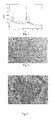
Figure 1 is a XRD curve of the fibrous IM-5 molecular sieve prepared according to Example 1 of the present invention. -
Figure 2 is a transmission electron micrograph of the fibrous IM-5 molecular sieve prepared according to Example 1 of the present invention. -
Figure 3 is a transmission electron micrograph of the fibrous IM-5 molecular sieve prepared according to Example 2 of the present invention. -
Figure 4 is a transmission electron micrograph of a conventional IM-5 molecular sieve prepared according to Comparative Example 1 provided by the present invention. - In the present invention, the length and diameter of the fibrous molecular sieve are measured according the method as follows. The diameter and length of the fibrous molecular sieve are measured with a transmission electron microscope. 20 transmission electron micrographs are taken randomly, from which the diameter and length of the fibrous molecular sieve are measured using an image processing software, Image J. The lengths and diameters of at least 5 fibers that can be displayed integrally on each image are measured, so as to obtain the aspect ratio with the length and diameter data.
- Average length = the sum of the lengths of all the fibers measured /the total number of the fibers
- Average diameter = the sum of the diameters of all the fibers measured /the total number of the fibers
- Average aspect ratio = the sum of the aspects of all the fibers measured /the total number of the fibers
- The embodiments and effects of the present invention will be further illustrated below with Examples.
- In the examples, the transmission electron microscope (TEM) is manufactured by JEOL Ltd., with a model of JEM 2100 (HR), an accelerating voltage of 200KV, and a resolution of 0.23nm.
- Sodium hydroxide, 1,1'-(pentamethylene) di-(1-methylpyrrolidinium) bromide, aluminum nitrate, water, white carbon and cetyl trimethylammonium bromide (CTAB) were mixed at a room temperature, according to molar ratios calculated based on the following species as follows: SiO2/Al2O3=55, OH-/SiO2=0.73, R/SiO2=0.2, H2O/SiO2=50, and R/CTAB=8.
- The mixture obtained was then stirred in a water bath at a temperature of 60 degrees C to be a homogeneous sol, which sol was kept at the constant temperature for 5 hours with stirring for pre-gelation. Subsequently, the gel was transferred into a hydrothermal reactor, heated to 165 degrees C, hydrothermal crystallized for 11 days, then cooled naturally, filtered and dried to provide a molecular sieve coarse powder. By the XRD measurement, the products obtained were all well crystallized fibrous IM-5 molecular sieve, which were observed for the morphology with the TEM at low range, having an average diameter of 13nm, an average length of 357nm, and an average aspect ratio of 27.5.
- Sodium hydroxide, 1,1'-(pentamethylene) di-(1-methylpyrrolidinium) bromide, aluminum nitrate, water, white carbon and cetyl trimethylammonium bromide(CTAB) were mixed at a room temperature, according to molar ratios calculated based on the following species as follows: SiO2/Al2O3=55, OH-/SiO2=0.73, R/SiO2=0.2, H2O/SiO2=50, and R/CTAB=11.
- The mixture obtained was then stirred in a water bath at a temperature of 60 degrees C to be a homogeneous sol, which sol was kept at the constant temperature for 5 hours with stirring for pre-gelation. Subsequently, the gel was transferred into a hydrothermal reactor, heated to 165 degrees C, hydrothermal crystallized for 11 days, then cooled naturally, filtered and dried to provide a molecular sieve coarse powder. By the XRD measurement, the products obtained were all well crystallized fibrous IM-5 molecular sieve, which were observed for the morphology with the TEM at low range, having an average diameter of 12nm, an average length of 550nm, and an average aspect ratio of 24.
- Sodium hydroxide, 1,1'-(pentamethylene) di-(1-methylpyrrolidinium) bromide, aluminum nitrate, water, white carbon and cetyl trimethylammonium bromide(CTAB) were mixed at a room temperature, according to molar ratios calculated based on the following species as follows: SiO2/Al2O3=55, OH-/SiO2=0.71, R/SiO2=0.27, H2O/SiO2=60, and R/CTAB=10.
- The mixture obtained was then stirred in a water bath at a temperature of 65 degrees C to be a homogeneous sol, which sol was kept at the constant temperature for 10 hours with stirring for pre-gelation. Subsequently, the gel was transferred into a hydrothermal reactor, heated to 165 degrees C, hydrothermal crystallized for 11 days, then cooled naturally, filtered and dried to provide a molecular sieve coarse powder. By the XRD measurement, the products obtained were all well crystallized fibrous IM-5 molecular sieve, which were observed for the morphology with the TEM at low range, having an average diameter of 17nm, an average length of 700nm, and an average aspect ratio of 38.
- Sodium hydroxide, 1,1'-(pentamethylene) di-(1-methylpyrrolidinium) bromide, aluminum nitrate, water, white carbon and dodecyl trimethylammonium bromide(DTAB) were mixed at a room temperature, according to molar ratios calculated based on the following species as follows: SiO2/Al2O3=68, OH-/SiO2=0.75, R/SiO2=0.15, H2O/SiO2=45, and R/DTAB=16.
- The mixture obtained was then stirred in a water bath at a temperature of 60 degrees C to be a homogeneous sol, which sol was kept at the constant temperature for 10 hours with stirring for pre-gelation. Subsequently, the gel was transferred into a hydrothermal reactor, heated to 175 degrees C, hydrothermal crystallized for 7 days, then cooled naturally, filtered and dried to provide a molecular sieve coarse powder. By the XRD measurement, the products obtained were all well crystallized fibrous IM-5 molecular sieve, which were observed for the morphology with the TEM at low range, having an average diameter of 24nm, an average length of 1050nm, and an average aspect ratio of 43.
- An IM-5 molecular sieve was prepared referring to the process disclosed by Journal of Catalysis 215 (2003) 151-170. The raw materials, ratios and reaction temperature were same as example 1, except that the raw material mixture was not added with the cetyl trimethylammonium bromide, but, instead, transferred directly and respectively to the hydrothermal reactor after the homogeneous stirring, so as to carry out a hydrothermal crystallization for 11 days at a temperature of 165 degrees C. By the XRD measurement, the products obtained were conventional rodlike IM-5, which were conventional rodlike crystal grains of IM-5 measured by TEM, having typically a particle diameter of about 111nm, a length of about 428nm, and an aspect ratio of about 3.9.
Claims (11)
- An IM-5 molecular sieve, characterized in that the IM-5 molecular sieve is in a fibrous form, having an average diameter of about 5-about 30nm, preferably about 10-about 25nm; and an average aspect ratio of about 15-about 100, preferably about 20-about 50.
- The IM-5 molecular sieve according to claim 1, characterized in that the average length of the fibrous IM-5 molecular sieve is about 100-about 3000nm, preferably about 200-about 1250nm.
- A process of preparing the IM-5 molecular sieve according to claim 1, characterized in comprising the steps of:(1) mixing an alkali source, a templet agent, an aluminum source, water, a silicon source and a cationic surfactant homogeneously, and stirring the mixture to generate a sol; and(2) elevating the temperature of the mixture of step (1) in a hydrothermal reactor to about 140-about 200 degrees C, after a hydrothermal crystallization of about 2-about 15 days, taking out and separating the solid product, drying and calcinating to obtain an IM-5 molecular sieve in the fibrous form.
- The process according to claim 3, characterized in that in step (1), the temperature for stirring is about 20-about 70 degrees C, preferably about 55-about 65 degrees C, and the duration of mixing is about 1-about 24 hours, preferably about 3-about 12 hours.
- The process according to claim 3 characterized in that the templet agent is 1.1'-(pentamethylene) bis(1-methylpyrrolidinium) bromide.
- The process according to claim 3, characterized in that in step (1), the aluminum source is aluminum nitrate, aluminum chloride, aluminum sulfate, or a combination thereof; the alkali source is sodium hydroxide, potassium hydroxide, lithium hydroxide, or a combination thereof; and the silicon source is white carbon, silicic acid, silanolate, silica sol, silica gel, or a combination thereof.
- The process according to claim 3, characterized in that in step (1), the surfactant is a cationic quaternary ammonium salt having a carbon chain of 12-18 carbon atoms, and the corresponding negative ion is a bromide ion or chloride ion.
- The process according to claim 3, characterized in that in step (1),the surfactant is cetyl trimethylammonium bromide, myristyl trimethylammonium bromide or dodecyl trimethylammonium bromide.
- The process according to claim 3, characterized in that in step (1), the molar ratios calculated based on the following species for the various components of the reaction mixture are:SiO2/Al2O3 of about 40-about 70, preferably of about 50-about 70;R/ SiO2 of about 0.15-about 0.4, preferably about 0.15-about 0.3, R representing the templet agent;H2O/SiO2 of about 30-about 70, preferably about 40-about 60;OH-/SiO2 of about 0.6-about 0.8, preferably about 0.70-about 0.75; andR/ SUR+ of about 5-about 20, preferably about 8-about 16, wherein the SUR+ represents the cationic surfactant.
- The process according to claim 3, characterized in that in step (2), the temperature for the hydrothermal crystallization is about 160-about 185 degrees C, preferably about 165-about 175 degrees C.
- The process according to claim 3 or 10, characterized in that in step (2), the duration of the hydrothermal crystallization is about 7-about 12 days.
Applications Claiming Priority (2)
| Application Number | Priority Date | Filing Date | Title |
|---|---|---|---|
| CN201110353591.7A CN103101927B (en) | 2011-11-10 | 2011-11-10 | IM-5 molecular sieve fiber and synthetic method thereof |
| PCT/CN2012/001473 WO2013067764A1 (en) | 2011-11-10 | 2012-10-30 | Fibrous im-5 molecular sieve and preparation process thereof |
Publications (3)
| Publication Number | Publication Date |
|---|---|
| EP2778135A1 true EP2778135A1 (en) | 2014-09-17 |
| EP2778135A4 EP2778135A4 (en) | 2015-08-19 |
| EP2778135B1 EP2778135B1 (en) | 2017-05-10 |
Family
ID=48288483
Family Applications (1)
| Application Number | Title | Priority Date | Filing Date |
|---|---|---|---|
| EP12848379.9A Active EP2778135B1 (en) | 2011-11-10 | 2012-10-30 | Fibrous im-5 molecular sieve and preparation process thereof |
Country Status (7)
| Country | Link |
|---|---|
| US (1) | US9327277B2 (en) |
| EP (1) | EP2778135B1 (en) |
| KR (1) | KR101914615B1 (en) |
| CN (1) | CN103101927B (en) |
| CA (1) | CA2855178C (en) |
| IN (1) | IN2014CN04216A (en) |
| WO (1) | WO2013067764A1 (en) |
Families Citing this family (4)
| Publication number | Priority date | Publication date | Assignee | Title |
|---|---|---|---|---|
| WO2013126140A1 (en) * | 2012-02-21 | 2013-08-29 | Exxonmobil Chemical Patents Inc. | Molecular sieve material, its synthesis and use |
| CN107324356A (en) * | 2017-06-28 | 2017-11-07 | 中国石油天然气集团公司 | One kind is mesoporous to select type molecular sieve and preparation method thereof |
| CN109485066A (en) * | 2018-11-28 | 2019-03-19 | 东莞理工学院 | Preparation method of rod-shaped ZSM-5 molecular sieve |
| CN111977668B (en) * | 2019-05-22 | 2022-08-30 | 中国石油天然气股份有限公司 | IM-5 molecular sieve and preparation method thereof |
Family Cites Families (6)
| Publication number | Priority date | Publication date | Assignee | Title |
|---|---|---|---|---|
| FR2754809B1 (en) * | 1996-10-21 | 2003-04-04 | Inst Francais Du Petrole | ZEOLITHE IM-5, ITS PREPARATION PROCESS AND ITS CATALYTIC APPLICATIONS |
| CN1093510C (en) * | 1998-09-25 | 2002-10-30 | 北京燕山石油化工公司研究院 | Process for synthesizing beta-zeolite |
| US7276224B2 (en) * | 2002-06-11 | 2007-10-02 | Regents Of The University Of Minnesota | Synthesis of nanoporous particles |
| US7799128B2 (en) * | 2008-10-10 | 2010-09-21 | Roman Cement, Llc | High early strength pozzolan cement blends |
| CN101862669B (en) * | 2010-06-23 | 2012-06-20 | 东南大学 | Catalyst for preparing isobutene through dehydrogenation of iso-butane and preparation method thereof |
| CN103101926B (en) * | 2011-11-10 | 2014-10-15 | 中国石油化工股份有限公司 | Hollow ball-like IM-5 molecular sieve and preparation method thereof |
-
2011
- 2011-11-10 CN CN201110353591.7A patent/CN103101927B/en active Active
-
2012
- 2012-10-30 EP EP12848379.9A patent/EP2778135B1/en active Active
- 2012-10-30 CA CA2855178A patent/CA2855178C/en active Active
- 2012-10-30 KR KR1020147015493A patent/KR101914615B1/en active Active
- 2012-10-30 WO PCT/CN2012/001473 patent/WO2013067764A1/en not_active Ceased
- 2012-10-30 US US14/356,725 patent/US9327277B2/en active Active
- 2012-10-30 IN IN4216CHN2014 patent/IN2014CN04216A/en unknown
Also Published As
| Publication number | Publication date |
|---|---|
| CA2855178C (en) | 2019-10-29 |
| US20140323288A1 (en) | 2014-10-30 |
| KR20140118993A (en) | 2014-10-08 |
| CN103101927A (en) | 2013-05-15 |
| CA2855178A1 (en) | 2013-05-16 |
| WO2013067764A1 (en) | 2013-05-16 |
| IN2014CN04216A (en) | 2015-07-17 |
| KR101914615B1 (en) | 2018-11-05 |
| CN103101927B (en) | 2014-12-31 |
| US9327277B2 (en) | 2016-05-03 |
| EP2778135B1 (en) | 2017-05-10 |
| EP2778135A4 (en) | 2015-08-19 |
Similar Documents
| Publication | Publication Date | Title |
|---|---|---|
| CA2855179C (en) | A hollow im-5 molecular sieve sphere and the preparation process thereof | |
| EP3495321A1 (en) | Preparation of powdery, porous crystalline metal silicates by means of flame spray pyrolysis | |
| CN109304226B (en) | A kind of hydrocracking catalyst for producing heavy naphtha and jet fuel and its preparation method and application | |
| CA2855178C (en) | A fibrous im-5 molecular sieve and the preparation process thereof | |
| CN109692704B (en) | Aromatic methylation catalyst and preparation method thereof | |
| JP5555192B2 (en) | Novel pentasil-type zeolite and synthesis method thereof | |
| CN104098109B (en) | A kind of spherical ZSM-5 zeolite molecular sieve and its preparation and application | |
| CN109678176B (en) | Synthesis method of needle-shaped ZSM-5 molecular sieve with controllable particle size | |
| EP3026017A1 (en) | Sol comprising amorphous zr-o-based particles as dispersoid and method for producing same | |
| CN109694085B (en) | Template-free synthesis method of ammonium type ZSM-5 nanosheet | |
| CN106829995B (en) | It is a kind of containing the Beta zeolite of transgranular nano-pore and its application | |
| CN115959682B (en) | A boron-containing ZSM-48 molecular sieve and its preparation method and application | |
| CN112850743A (en) | Green synthesis method for regulating morphology of mordenite molecular sieve | |
| JP4488691B2 (en) | Method for producing faujasite type zeolite | |
| CN112537782B (en) | Method for preparing molecular sieve with TON structure | |
| CN105712375B (en) | A kind of USY molecular sieve and preparation method thereof | |
| CN102030340A (en) | Method for preparing mesoporous molecular sieve with Zeolite Socony Mobil-5 (ZSM-5) secondary structure unit | |
| JP7687032B2 (en) | MTW type zeolite | |
| CN116022813B (en) | A Y-type molecular sieve and its synthesis method and application | |
| CN103101928B (en) | Ultrafine nanometer IM-5 molecular sieve and synthetic method thereof | |
| CN114426288B (en) | Low-silicon strip-shaped ZSM-5 molecular sieve and preparation method and application thereof | |
| WO2018077764A1 (en) | Method for preparing a composite porous material | |
| JP2009155187A (en) | Colloidal faujasite-type zeolite and its synthetic method | |
| CN121405107A (en) | A low silicon-to-aluminum ratio ZSM-5 molecular sieve single-crystal nanosheet and its synthesis method |
Legal Events
| Date | Code | Title | Description |
|---|---|---|---|
| PUAI | Public reference made under article 153(3) epc to a published international application that has entered the european phase |
Free format text: ORIGINAL CODE: 0009012 |
|
| 17P | Request for examination filed |
Effective date: 20140605 |
|
| AK | Designated contracting states |
Kind code of ref document: A1 Designated state(s): AL AT BE BG CH CY CZ DE DK EE ES FI FR GB GR HR HU IE IS IT LI LT LU LV MC MK MT NL NO PL PT RO RS SE SI SK SM TR |
|
| DAX | Request for extension of the european patent (deleted) | ||
| RA4 | Supplementary search report drawn up and despatched (corrected) |
Effective date: 20150720 |
|
| RIC1 | Information provided on ipc code assigned before grant |
Ipc: B01J 29/70 20060101ALI20150713BHEP Ipc: C01B 39/48 20060101AFI20150713BHEP |
|
| 17Q | First examination report despatched |
Effective date: 20160616 |
|
| GRAP | Despatch of communication of intention to grant a patent |
Free format text: ORIGINAL CODE: EPIDOSNIGR1 |
|
| INTG | Intention to grant announced |
Effective date: 20161121 |
|
| GRAS | Grant fee paid |
Free format text: ORIGINAL CODE: EPIDOSNIGR3 |
|
| GRAA | (expected) grant |
Free format text: ORIGINAL CODE: 0009210 |
|
| AK | Designated contracting states |
Kind code of ref document: B1 Designated state(s): AL AT BE BG CH CY CZ DE DK EE ES FI FR GB GR HR HU IE IS IT LI LT LU LV MC MK MT NL NO PL PT RO RS SE SI SK SM TR |
|
| REG | Reference to a national code |
Ref country code: GB Ref legal event code: FG4D |
|
| REG | Reference to a national code |
Ref country code: AT Ref legal event code: REF Ref document number: 892122 Country of ref document: AT Kind code of ref document: T Effective date: 20170515 Ref country code: CH Ref legal event code: EP |
|
| REG | Reference to a national code |
Ref country code: IE Ref legal event code: FG4D |
|
| REG | Reference to a national code |
Ref country code: DE Ref legal event code: R096 Ref document number: 602012032386 Country of ref document: DE |
|
| REG | Reference to a national code |
Ref country code: NL Ref legal event code: FP |
|
| REG | Reference to a national code |
Ref country code: FR Ref legal event code: PLFP Year of fee payment: 6 |
|
| REG | Reference to a national code |
Ref country code: LT Ref legal event code: MG4D |
|
| REG | Reference to a national code |
Ref country code: AT Ref legal event code: MK05 Ref document number: 892122 Country of ref document: AT Kind code of ref document: T Effective date: 20170510 |
|
| PG25 | Lapsed in a contracting state [announced via postgrant information from national office to epo] |
Ref country code: LT Free format text: LAPSE BECAUSE OF FAILURE TO SUBMIT A TRANSLATION OF THE DESCRIPTION OR TO PAY THE FEE WITHIN THE PRESCRIBED TIME-LIMIT Effective date: 20170510 Ref country code: GR Free format text: LAPSE BECAUSE OF FAILURE TO SUBMIT A TRANSLATION OF THE DESCRIPTION OR TO PAY THE FEE WITHIN THE PRESCRIBED TIME-LIMIT Effective date: 20170811 Ref country code: HR Free format text: LAPSE BECAUSE OF FAILURE TO SUBMIT A TRANSLATION OF THE DESCRIPTION OR TO PAY THE FEE WITHIN THE PRESCRIBED TIME-LIMIT Effective date: 20170510 Ref country code: NO Free format text: LAPSE BECAUSE OF FAILURE TO SUBMIT A TRANSLATION OF THE DESCRIPTION OR TO PAY THE FEE WITHIN THE PRESCRIBED TIME-LIMIT Effective date: 20170810 Ref country code: ES Free format text: LAPSE BECAUSE OF FAILURE TO SUBMIT A TRANSLATION OF THE DESCRIPTION OR TO PAY THE FEE WITHIN THE PRESCRIBED TIME-LIMIT Effective date: 20170510 Ref country code: FI Free format text: LAPSE BECAUSE OF FAILURE TO SUBMIT A TRANSLATION OF THE DESCRIPTION OR TO PAY THE FEE WITHIN THE PRESCRIBED TIME-LIMIT Effective date: 20170510 Ref country code: AT Free format text: LAPSE BECAUSE OF FAILURE TO SUBMIT A TRANSLATION OF THE DESCRIPTION OR TO PAY THE FEE WITHIN THE PRESCRIBED TIME-LIMIT Effective date: 20170510 |
|
| PG25 | Lapsed in a contracting state [announced via postgrant information from national office to epo] |
Ref country code: SE Free format text: LAPSE BECAUSE OF FAILURE TO SUBMIT A TRANSLATION OF THE DESCRIPTION OR TO PAY THE FEE WITHIN THE PRESCRIBED TIME-LIMIT Effective date: 20170510 Ref country code: BG Free format text: LAPSE BECAUSE OF FAILURE TO SUBMIT A TRANSLATION OF THE DESCRIPTION OR TO PAY THE FEE WITHIN THE PRESCRIBED TIME-LIMIT Effective date: 20170810 Ref country code: LV Free format text: LAPSE BECAUSE OF FAILURE TO SUBMIT A TRANSLATION OF THE DESCRIPTION OR TO PAY THE FEE WITHIN THE PRESCRIBED TIME-LIMIT Effective date: 20170510 Ref country code: PL Free format text: LAPSE BECAUSE OF FAILURE TO SUBMIT A TRANSLATION OF THE DESCRIPTION OR TO PAY THE FEE WITHIN THE PRESCRIBED TIME-LIMIT Effective date: 20170510 Ref country code: RS Free format text: LAPSE BECAUSE OF FAILURE TO SUBMIT A TRANSLATION OF THE DESCRIPTION OR TO PAY THE FEE WITHIN THE PRESCRIBED TIME-LIMIT Effective date: 20170510 Ref country code: IS Free format text: LAPSE BECAUSE OF FAILURE TO SUBMIT A TRANSLATION OF THE DESCRIPTION OR TO PAY THE FEE WITHIN THE PRESCRIBED TIME-LIMIT Effective date: 20170910 |
|
| PG25 | Lapsed in a contracting state [announced via postgrant information from national office to epo] |
Ref country code: DK Free format text: LAPSE BECAUSE OF FAILURE TO SUBMIT A TRANSLATION OF THE DESCRIPTION OR TO PAY THE FEE WITHIN THE PRESCRIBED TIME-LIMIT Effective date: 20170510 Ref country code: CZ Free format text: LAPSE BECAUSE OF FAILURE TO SUBMIT A TRANSLATION OF THE DESCRIPTION OR TO PAY THE FEE WITHIN THE PRESCRIBED TIME-LIMIT Effective date: 20170510 Ref country code: SK Free format text: LAPSE BECAUSE OF FAILURE TO SUBMIT A TRANSLATION OF THE DESCRIPTION OR TO PAY THE FEE WITHIN THE PRESCRIBED TIME-LIMIT Effective date: 20170510 Ref country code: EE Free format text: LAPSE BECAUSE OF FAILURE TO SUBMIT A TRANSLATION OF THE DESCRIPTION OR TO PAY THE FEE WITHIN THE PRESCRIBED TIME-LIMIT Effective date: 20170510 Ref country code: RO Free format text: LAPSE BECAUSE OF FAILURE TO SUBMIT A TRANSLATION OF THE DESCRIPTION OR TO PAY THE FEE WITHIN THE PRESCRIBED TIME-LIMIT Effective date: 20170510 |
|
| REG | Reference to a national code |
Ref country code: DE Ref legal event code: R097 Ref document number: 602012032386 Country of ref document: DE |
|
| PG25 | Lapsed in a contracting state [announced via postgrant information from national office to epo] |
Ref country code: SM Free format text: LAPSE BECAUSE OF FAILURE TO SUBMIT A TRANSLATION OF THE DESCRIPTION OR TO PAY THE FEE WITHIN THE PRESCRIBED TIME-LIMIT Effective date: 20170510 Ref country code: IT Free format text: LAPSE BECAUSE OF FAILURE TO SUBMIT A TRANSLATION OF THE DESCRIPTION OR TO PAY THE FEE WITHIN THE PRESCRIBED TIME-LIMIT Effective date: 20170510 |
|
| PLBE | No opposition filed within time limit |
Free format text: ORIGINAL CODE: 0009261 |
|
| STAA | Information on the status of an ep patent application or granted ep patent |
Free format text: STATUS: NO OPPOSITION FILED WITHIN TIME LIMIT |
|
| 26N | No opposition filed |
Effective date: 20180213 |
|
| PG25 | Lapsed in a contracting state [announced via postgrant information from national office to epo] |
Ref country code: SI Free format text: LAPSE BECAUSE OF FAILURE TO SUBMIT A TRANSLATION OF THE DESCRIPTION OR TO PAY THE FEE WITHIN THE PRESCRIBED TIME-LIMIT Effective date: 20170510 Ref country code: MC Free format text: LAPSE BECAUSE OF FAILURE TO SUBMIT A TRANSLATION OF THE DESCRIPTION OR TO PAY THE FEE WITHIN THE PRESCRIBED TIME-LIMIT Effective date: 20170510 |
|
| REG | Reference to a national code |
Ref country code: CH Ref legal event code: PL |
|
| REG | Reference to a national code |
Ref country code: IE Ref legal event code: MM4A |
|
| PG25 | Lapsed in a contracting state [announced via postgrant information from national office to epo] |
Ref country code: CH Free format text: LAPSE BECAUSE OF NON-PAYMENT OF DUE FEES Effective date: 20171031 Ref country code: LU Free format text: LAPSE BECAUSE OF NON-PAYMENT OF DUE FEES Effective date: 20171030 Ref country code: LI Free format text: LAPSE BECAUSE OF NON-PAYMENT OF DUE FEES Effective date: 20171031 |
|
| REG | Reference to a national code |
Ref country code: BE Ref legal event code: MM Effective date: 20171031 |
|
| PG25 | Lapsed in a contracting state [announced via postgrant information from national office to epo] |
Ref country code: BE Free format text: LAPSE BECAUSE OF NON-PAYMENT OF DUE FEES Effective date: 20171031 |
|
| REG | Reference to a national code |
Ref country code: FR Ref legal event code: PLFP Year of fee payment: 7 |
|
| PG25 | Lapsed in a contracting state [announced via postgrant information from national office to epo] |
Ref country code: MT Free format text: LAPSE BECAUSE OF NON-PAYMENT OF DUE FEES Effective date: 20171030 |
|
| PG25 | Lapsed in a contracting state [announced via postgrant information from national office to epo] |
Ref country code: IE Free format text: LAPSE BECAUSE OF NON-PAYMENT OF DUE FEES Effective date: 20171030 |
|
| PG25 | Lapsed in a contracting state [announced via postgrant information from national office to epo] |
Ref country code: HU Free format text: LAPSE BECAUSE OF FAILURE TO SUBMIT A TRANSLATION OF THE DESCRIPTION OR TO PAY THE FEE WITHIN THE PRESCRIBED TIME-LIMIT; INVALID AB INITIO Effective date: 20121030 |
|
| PG25 | Lapsed in a contracting state [announced via postgrant information from national office to epo] |
Ref country code: CY Free format text: LAPSE BECAUSE OF NON-PAYMENT OF DUE FEES Effective date: 20170510 |
|
| PG25 | Lapsed in a contracting state [announced via postgrant information from national office to epo] |
Ref country code: MK Free format text: LAPSE BECAUSE OF FAILURE TO SUBMIT A TRANSLATION OF THE DESCRIPTION OR TO PAY THE FEE WITHIN THE PRESCRIBED TIME-LIMIT Effective date: 20170510 |
|
| PG25 | Lapsed in a contracting state [announced via postgrant information from national office to epo] |
Ref country code: TR Free format text: LAPSE BECAUSE OF FAILURE TO SUBMIT A TRANSLATION OF THE DESCRIPTION OR TO PAY THE FEE WITHIN THE PRESCRIBED TIME-LIMIT Effective date: 20170510 |
|
| PG25 | Lapsed in a contracting state [announced via postgrant information from national office to epo] |
Ref country code: PT Free format text: LAPSE BECAUSE OF FAILURE TO SUBMIT A TRANSLATION OF THE DESCRIPTION OR TO PAY THE FEE WITHIN THE PRESCRIBED TIME-LIMIT Effective date: 20170510 |
|
| PG25 | Lapsed in a contracting state [announced via postgrant information from national office to epo] |
Ref country code: AL Free format text: LAPSE BECAUSE OF FAILURE TO SUBMIT A TRANSLATION OF THE DESCRIPTION OR TO PAY THE FEE WITHIN THE PRESCRIBED TIME-LIMIT Effective date: 20170510 |
|
| P01 | Opt-out of the competence of the unified patent court (upc) registered |
Effective date: 20230502 |
|
| PGFP | Annual fee paid to national office [announced via postgrant information from national office to epo] |
Ref country code: NL Payment date: 20250912 Year of fee payment: 14 |
|
| PGFP | Annual fee paid to national office [announced via postgrant information from national office to epo] |
Ref country code: GB Payment date: 20250911 Year of fee payment: 14 |
|
| PGFP | Annual fee paid to national office [announced via postgrant information from national office to epo] |
Ref country code: FR Payment date: 20250908 Year of fee payment: 14 |
|
| PGFP | Annual fee paid to national office [announced via postgrant information from national office to epo] |
Ref country code: DE Payment date: 20250902 Year of fee payment: 14 |