EP2775484A2 - Coil, power receiving apparatus and power transmitting apparatus - Google Patents
Coil, power receiving apparatus and power transmitting apparatus Download PDFInfo
- Publication number
- EP2775484A2 EP2775484A2 EP14156333.8A EP14156333A EP2775484A2 EP 2775484 A2 EP2775484 A2 EP 2775484A2 EP 14156333 A EP14156333 A EP 14156333A EP 2775484 A2 EP2775484 A2 EP 2775484A2
- Authority
- EP
- European Patent Office
- Prior art keywords
- power
- block
- coil
- magnetic core
- groove
- Prior art date
- Legal status (The legal status is an assumption and is not a legal conclusion. Google has not performed a legal analysis and makes no representation as to the accuracy of the status listed.)
- Withdrawn
Links
Images








Classifications
-
- H—ELECTRICITY
- H01—ELECTRIC ELEMENTS
- H01F—MAGNETS; INDUCTANCES; TRANSFORMERS; SELECTION OF MATERIALS FOR THEIR MAGNETIC PROPERTIES
- H01F38/00—Adaptations of transformers or inductances for specific applications or functions
- H01F38/14—Inductive couplings
-
- B—PERFORMING OPERATIONS; TRANSPORTING
- B60—VEHICLES IN GENERAL
- B60L—PROPULSION OF ELECTRICALLY-PROPELLED VEHICLES; SUPPLYING ELECTRIC POWER FOR AUXILIARY EQUIPMENT OF ELECTRICALLY-PROPELLED VEHICLES; ELECTRODYNAMIC BRAKE SYSTEMS FOR VEHICLES IN GENERAL; MAGNETIC SUSPENSION OR LEVITATION FOR VEHICLES; MONITORING OPERATING VARIABLES OF ELECTRICALLY-PROPELLED VEHICLES; ELECTRIC SAFETY DEVICES FOR ELECTRICALLY-PROPELLED VEHICLES
- B60L53/00—Methods of charging batteries, specially adapted for electric vehicles; Charging stations or on-board charging equipment therefor; Exchange of energy storage elements in electric vehicles
- B60L53/10—Methods of charging batteries, specially adapted for electric vehicles; Charging stations or on-board charging equipment therefor; Exchange of energy storage elements in electric vehicles characterised by the energy transfer between the charging station and the vehicle
- B60L53/12—Inductive energy transfer
- B60L53/124—Detection or removal of foreign bodies
-
- B—PERFORMING OPERATIONS; TRANSPORTING
- B60—VEHICLES IN GENERAL
- B60L—PROPULSION OF ELECTRICALLY-PROPELLED VEHICLES; SUPPLYING ELECTRIC POWER FOR AUXILIARY EQUIPMENT OF ELECTRICALLY-PROPELLED VEHICLES; ELECTRODYNAMIC BRAKE SYSTEMS FOR VEHICLES IN GENERAL; MAGNETIC SUSPENSION OR LEVITATION FOR VEHICLES; MONITORING OPERATING VARIABLES OF ELECTRICALLY-PROPELLED VEHICLES; ELECTRIC SAFETY DEVICES FOR ELECTRICALLY-PROPELLED VEHICLES
- B60L53/00—Methods of charging batteries, specially adapted for electric vehicles; Charging stations or on-board charging equipment therefor; Exchange of energy storage elements in electric vehicles
- B60L53/10—Methods of charging batteries, specially adapted for electric vehicles; Charging stations or on-board charging equipment therefor; Exchange of energy storage elements in electric vehicles characterised by the energy transfer between the charging station and the vehicle
- B60L53/12—Inductive energy transfer
- B60L53/126—Methods for pairing a vehicle and a charging station, e.g. establishing a one-to-one relation between a wireless power transmitter and a wireless power receiver
-
- B—PERFORMING OPERATIONS; TRANSPORTING
- B60—VEHICLES IN GENERAL
- B60L—PROPULSION OF ELECTRICALLY-PROPELLED VEHICLES; SUPPLYING ELECTRIC POWER FOR AUXILIARY EQUIPMENT OF ELECTRICALLY-PROPELLED VEHICLES; ELECTRODYNAMIC BRAKE SYSTEMS FOR VEHICLES IN GENERAL; MAGNETIC SUSPENSION OR LEVITATION FOR VEHICLES; MONITORING OPERATING VARIABLES OF ELECTRICALLY-PROPELLED VEHICLES; ELECTRIC SAFETY DEVICES FOR ELECTRICALLY-PROPELLED VEHICLES
- B60L53/00—Methods of charging batteries, specially adapted for electric vehicles; Charging stations or on-board charging equipment therefor; Exchange of energy storage elements in electric vehicles
- B60L53/30—Constructional details of charging stations
-
- H—ELECTRICITY
- H01—ELECTRIC ELEMENTS
- H01F—MAGNETS; INDUCTANCES; TRANSFORMERS; SELECTION OF MATERIALS FOR THEIR MAGNETIC PROPERTIES
- H01F27/00—Details of transformers or inductances, in general
- H01F27/28—Coils; Windings; Conductive connections
-
- H—ELECTRICITY
- H01—ELECTRIC ELEMENTS
- H01F—MAGNETS; INDUCTANCES; TRANSFORMERS; SELECTION OF MATERIALS FOR THEIR MAGNETIC PROPERTIES
- H01F3/00—Cores, Yokes, or armatures
- H01F3/10—Composite arrangements of magnetic circuits
- H01F3/14—Constrictions; Gaps, e.g. air-gaps
-
- H—ELECTRICITY
- H02—GENERATION; CONVERSION OR DISTRIBUTION OF ELECTRIC POWER
- H02J—ELECTRIC POWER NETWORKS; CIRCUIT ARRANGEMENTS OR SYSTEMS FOR SUPPLYING OR DISTRIBUTING ELECTRIC POWER; SYSTEMS FOR STORING ELECTRIC ENERGY
- H02J50/00—Circuit arrangements or systems for wireless supply or distribution of electric power
- H02J50/10—Circuit arrangements or systems for wireless supply or distribution of electric power using inductive coupling
-
- H—ELECTRICITY
- H02—GENERATION; CONVERSION OR DISTRIBUTION OF ELECTRIC POWER
- H02J—ELECTRIC POWER NETWORKS; CIRCUIT ARRANGEMENTS OR SYSTEMS FOR SUPPLYING OR DISTRIBUTING ELECTRIC POWER; SYSTEMS FOR STORING ELECTRIC ENERGY
- H02J7/00—Circuit arrangements for charging or discharging batteries or for supplying loads from batteries
- H02J7/40—Circuit arrangements for charging or discharging batteries or for supplying loads from batteries characterised by the exchange of charge or discharge related data
- H02J7/42—Circuit arrangements for charging or discharging batteries or for supplying loads from batteries characterised by the exchange of charge or discharge related data with electronic devices having internal batteries, e.g. mobile phones
-
- H—ELECTRICITY
- H04—ELECTRIC COMMUNICATION TECHNIQUE
- H04B—TRANSMISSION
- H04B5/00—Near-field transmission systems, e.g. inductive or capacitive transmission systems
- H04B5/40—Near-field transmission systems, e.g. inductive or capacitive transmission systems characterised by components specially adapted for near-field transmission
- H04B5/43—Antennas
-
- H—ELECTRICITY
- H04—ELECTRIC COMMUNICATION TECHNIQUE
- H04B—TRANSMISSION
- H04B5/00—Near-field transmission systems, e.g. inductive or capacitive transmission systems
- H04B5/70—Near-field transmission systems, e.g. inductive or capacitive transmission systems specially adapted for specific purposes
- H04B5/79—Near-field transmission systems, e.g. inductive or capacitive transmission systems specially adapted for specific purposes for data transfer in combination with power transfer
-
- B—PERFORMING OPERATIONS; TRANSPORTING
- B60—VEHICLES IN GENERAL
- B60L—PROPULSION OF ELECTRICALLY-PROPELLED VEHICLES; SUPPLYING ELECTRIC POWER FOR AUXILIARY EQUIPMENT OF ELECTRICALLY-PROPELLED VEHICLES; ELECTRODYNAMIC BRAKE SYSTEMS FOR VEHICLES IN GENERAL; MAGNETIC SUSPENSION OR LEVITATION FOR VEHICLES; MONITORING OPERATING VARIABLES OF ELECTRICALLY-PROPELLED VEHICLES; ELECTRIC SAFETY DEVICES FOR ELECTRICALLY-PROPELLED VEHICLES
- B60L2270/00—Problem solutions or means not otherwise provided for
- B60L2270/10—Emission reduction
- B60L2270/14—Emission reduction of noise
- B60L2270/147—Emission reduction of noise electro magnetic [EMI]
-
- Y—GENERAL TAGGING OF NEW TECHNOLOGICAL DEVELOPMENTS; GENERAL TAGGING OF CROSS-SECTIONAL TECHNOLOGIES SPANNING OVER SEVERAL SECTIONS OF THE IPC; TECHNICAL SUBJECTS COVERED BY FORMER USPC CROSS-REFERENCE ART COLLECTIONS [XRACs] AND DIGESTS
- Y02—TECHNOLOGIES OR APPLICATIONS FOR MITIGATION OR ADAPTATION AGAINST CLIMATE CHANGE
- Y02T—CLIMATE CHANGE MITIGATION TECHNOLOGIES RELATED TO TRANSPORTATION
- Y02T10/00—Road transport of goods or passengers
- Y02T10/60—Other road transportation technologies with climate change mitigation effect
- Y02T10/70—Energy storage systems for electromobility, e.g. batteries
-
- Y—GENERAL TAGGING OF NEW TECHNOLOGICAL DEVELOPMENTS; GENERAL TAGGING OF CROSS-SECTIONAL TECHNOLOGIES SPANNING OVER SEVERAL SECTIONS OF THE IPC; TECHNICAL SUBJECTS COVERED BY FORMER USPC CROSS-REFERENCE ART COLLECTIONS [XRACs] AND DIGESTS
- Y02—TECHNOLOGIES OR APPLICATIONS FOR MITIGATION OR ADAPTATION AGAINST CLIMATE CHANGE
- Y02T—CLIMATE CHANGE MITIGATION TECHNOLOGIES RELATED TO TRANSPORTATION
- Y02T10/00—Road transport of goods or passengers
- Y02T10/60—Other road transportation technologies with climate change mitigation effect
- Y02T10/7072—Electromobility specific charging systems or methods for batteries, ultracapacitors, supercapacitors or double-layer capacitors
-
- Y—GENERAL TAGGING OF NEW TECHNOLOGICAL DEVELOPMENTS; GENERAL TAGGING OF CROSS-SECTIONAL TECHNOLOGIES SPANNING OVER SEVERAL SECTIONS OF THE IPC; TECHNICAL SUBJECTS COVERED BY FORMER USPC CROSS-REFERENCE ART COLLECTIONS [XRACs] AND DIGESTS
- Y02—TECHNOLOGIES OR APPLICATIONS FOR MITIGATION OR ADAPTATION AGAINST CLIMATE CHANGE
- Y02T—CLIMATE CHANGE MITIGATION TECHNOLOGIES RELATED TO TRANSPORTATION
- Y02T90/00—Enabling technologies or technologies with a potential or indirect contribution to GHG emissions mitigation
- Y02T90/10—Technologies relating to charging of electric vehicles
- Y02T90/12—Electric charging stations
-
- Y—GENERAL TAGGING OF NEW TECHNOLOGICAL DEVELOPMENTS; GENERAL TAGGING OF CROSS-SECTIONAL TECHNOLOGIES SPANNING OVER SEVERAL SECTIONS OF THE IPC; TECHNICAL SUBJECTS COVERED BY FORMER USPC CROSS-REFERENCE ART COLLECTIONS [XRACs] AND DIGESTS
- Y02—TECHNOLOGIES OR APPLICATIONS FOR MITIGATION OR ADAPTATION AGAINST CLIMATE CHANGE
- Y02T—CLIMATE CHANGE MITIGATION TECHNOLOGIES RELATED TO TRANSPORTATION
- Y02T90/00—Enabling technologies or technologies with a potential or indirect contribution to GHG emissions mitigation
- Y02T90/10—Technologies relating to charging of electric vehicles
- Y02T90/14—Plug-in electric vehicles
Definitions
- the blocks 130A and 130B provided with the grooves 132 it is possible to reduce the volume and the weight of the magnetic core 122. Furthermore, by arranging the blocks 130A and 130B so that the grooves 132 extend along the direction of magnetic flux, it is possible to prevent the degradation of the characteristics of the coil. Furthermore, by using the blocks 130A and 130B, it is possible to increase the strength of the magnetic core compared to the case that the elongated rod-like ferrite is used,.
Landscapes
- Engineering & Computer Science (AREA)
- Power Engineering (AREA)
- Computer Networks & Wireless Communication (AREA)
- Transportation (AREA)
- Mechanical Engineering (AREA)
- Signal Processing (AREA)
- Chemical & Material Sciences (AREA)
- Composite Materials (AREA)
- Electric Propulsion And Braking For Vehicles (AREA)
- Charge And Discharge Circuits For Batteries Or The Like (AREA)
- Current-Collector Devices For Electrically Propelled Vehicles (AREA)
- Near-Field Transmission Systems (AREA)
Abstract
Description
- This application is based upon and claims the benefit of priority from the prior Japanese Patent Application No.
2013-44226, filed on March 6, 2013 - Embodiments described herein relate generally to a coil, a power receiving apparatus, and a power transmitting apparatus.
- Recently, a wireless power transmission system configured to wirelessly transmit power by mutual inductance between a power transmitting inductor and a power receiving inductor in a non-contact manner has been adopted in many devices. In order to reduce the weight of a power transmitting coil that is used in the wireless power transmission system, a technique for forming a coil by rod-like ferrite cores arranged at regular intervals has been known.
- However, in the case of using an elongated rod-like ferrite core, there has been a problem in that there is a need for a frame or the like for fixing individually the ferrite cores, and it is difficult to fix the ferrite cores.
-
-
FIG. 1 is a block diagram of a wireless power transmission system according to a first embodiment; -
FIG. 2 is a diagram illustrating an example of a capacitor; -
FIGS. 3A and 3B are schematic diagrams of a coil according to the first embodiment; -
FIGS. 4A and 4B are schematic diagrams of a magnetic core block according to the first embodiment; -
FIG. 5 is a graph illustrating a relation between a relative permeability and an inductance value; -
FIG. 6 is a graph illustrating a relation between the relative permeability and a coupling coefficient; -
FIG. 7 is a side view illustrating an example of a coil; -
FIG. 8 is a side view illustrating an example of a coil; -
FIG. 9 is a side view illustrating an example of a coil; -
FIG. 10 is a side view illustrating an example of a coil; -
FIG. 11 is a graph illustrating a relation between a ferrite filling factor and the relative permeability; -
FIG. 12 is a graph illustrating a relation between the ferrite filling factor and the inductance value; -
FIG. 13 is a graph illustrating a relation between the ferrite filling factor and the coupling coefficient; -
FIGS. 14A to 14E are schematic diagrams of a magnetic core block according to a modified example; -
FIG. 15 is a schematic diagram of a magnetic core block according to a modified example; -
FIGS. 16A and 16B are schematic diagrams of a magnetic core block according to a modified example; -
FIGS. 17A and 17B are schematic diagrams of a magnetic core block according to a modified example; -
FIGS. 18A and 18B are schematic diagrams of a magnetic core block according to a modified example; -
FIG. 19 is a schematic diagram of a coil according to a second embodiment; -
FIG. 20 is a schematic diagram of a coil according to a modified example; -
FIG. 21 is a schematic diagram of a coil according to a modified example; -
FIG. 22 is a schematic diagram of a coil according to a modified example; -
FIGS. 23A and 23B are schematic diagrams of a magnetic core block according to a modified example; -
FIGS. 24A and 24B are schematic diagrams of a magnetic core block according to a modified example; -
FIGS. 25A and 25B are schematic diagrams of a magnetic core block according to a modified example; -
FIGS. 26A and 26B are schematic diagrams of a magnetic core block according to a modified example; -
FIGS. 27A to 27D are schematic diagrams of a magnetic core block according to a modified example; -
FIGS. 28A and 28B are schematic diagrams of a coil according to a modified example; -
FIGS. 29A and 29B are schematic diagrams of a coil according to a modified example; and -
FIG. 30 is a schematic diagram of a coil according to a modified example. - In one embodiment, a coil includes a magnetic core and a winding. The magnetic core includes at least one block provided with a groove or an opening. Each block is arranged so as to make the groove or the opening extend along a direction of magnetic flux.
- Embodiments will now be explained with reference to the accompanying drawings.
-
FIG. 1 illustrates a block configuration of a wireless power transmission system according to a first embodiment of the present invention. The wireless power transmission system includes a power transmittingapparatus 1, and apower receiving apparatus 2 to which electric power is wirelessly transmitted from thepower transmitting apparatus 1, and thepower receiving apparatus 2 supplies aload 28 of an electrical device with the transmitted electric power. The power receivingapparatus 2 may be provided inside the electrical device, may be provided integrally with the electrical device, and may be fixed to the exterior of an electrical device main body. For example, the electrical device is a portable terminal or an electric vehicle, and theload 28 is a rechargeable battery. - The power transmitting
apparatus 1 includes apower supply unit 11 configured to perform the conversion from a commercial power source into RF for power transmission, acontrol unit 12 configured to control a required amount of power and control each unit of thepower transmitting apparatus 1, asensor 13, acommunication unit 14, and apower transmitting coil 15. For example, thesensor 13 includes at least one of sensors used in the wireless power transmission between thepower transmitting apparatus 1 and thepower receiving apparatus 2, such as a temperature sensor configured to monitor heating of thepower transmitting apparatus 1, a temperature sensor configured to monitor the heat of foreign objects entering between thepower transmitting coil 15 and apower receiving coil 21 to be described below, a sensor configured to monitor the foreign objects by electromagnetic wave radar or ultrasonic radar, a sensor such as RFID for detecting the position of thepower receiving coil 21, and an ammeter or a voltmeter for detecting the transmitted power. Thecommunication unit 14 can communicate with acommunication unit 27 of thepower receiving apparatus 2 to be described below, and receives a power receiving status of thepower receiving apparatus 2, or transmits a power transmitting status of thepower transmitting apparatus 1. - The
power receiving apparatus 2 includes apower receiving coil 21 that receives power by the mutual inductance with thepower transmitting coil 15 of thepower transmitting apparatus 1, acapacitor 22 connected to thepower receiving coil 21, a rectifier 23 that converts AC power received via thecapacitor 22 into DC power, a DC-DC converter 24 that changes a voltage conversion ratio based on the operating voltage of theload 28, acontrol unit 25 that controls each unit of thepower receiving apparatus 2, asensor 26, and acommunication unit 27. When the received power is controlled on thepower transmitting apparatus 1 side, it is possible not to provide the DC-DC converter 24. - The
capacitor 22 may be connected in series with thepower receiving coil 21, or may be connected in parallel therewith. Furthermore, as illustrated inFIG. 2 , thecapacitor 22 may be configured to include a capacitor element connected in parallel with thepower receiving coil 21, and a capacitor element connected in series therewith. - For example, the
sensor 26 includes at least one of sensors used in the wireless power transmission between thepower transmitting apparatus 1 and thepower receiving apparatus 2, such as a temperature sensor configured to monitor the heating of thepower receiving apparatus 2, a temperature sensor configured to monitor the heat of the foreign objects entering between thepower receiving coil 21 and thepower transmitting coil 15, a sensor configured to monitor the foreign objects by electromagnetic wave radar or ultrasonic wave radar, a sensor such as RFID for detecting the position of thepower transmitting coil 15, and an ammeter or a voltmeter for detecting the received power. Thecommunication unit 27 can communicate with thecommunication unit 14 of thepower transmitting apparatus 1, transmits the power receiving status of thepower receiving apparatus 2, or receives the power transmitting status of thepower transmitting apparatus 1. - The
control unit 25 controls the received power (power supplied to the load 28) based on information acquired by the communication between thecommunication unit 27 and thepower transmitting apparatus 1, and the detection result of thesensor 26. -
FIG. 3A is a top view of acoil 100 according to the first embodiment. Furthermore,FIG. 3B is a side view of thecoil 100 when viewed from a direction of an arrow ofFIG. 3A . Thecoil 100 is used as thepower transmitting coil 15 and thepower receiving coil 21 illustrated inFIG. 1 . - As illustrated in
FIGS. 3A and 3B , thecoil 100 is a solenoid coil that includes amagnetic core 102 and acoil winding portion 104 wound around themagnetic core 102. As thecoil winding portion 104, for example, a copper wire can be used. Themagnetic core 102 includes a plurality of magnetic core blocks 110 (hereinafter, simply referred to as block 110) arranged on the same plane. -
FIG. 4A is a top view of theblock 110, andFIG. 4B is a longitudinal cross-sectional view taken along line A-A ofFIG. 4A . As illustrated inFIGS. 4A and 4B , theblock 110 is provided with a plurality of linear grooves (recesses) 112 parallel to each other. As the material of theblock 110, for example, ferrite is used. - As illustrated in
FIG. 3A , theblock 110 is disposed so that thegrooves 112 extend along a direction (a vertical direction in theFIG. 3A ) of the magnetic flux generated by allowing the current to flow through thecoil 100. In this way, an effect of arranging theblock 110 will be described below. - First, the description will be given of characteristics of the coil having the magnetic core (the magnetic core that is not provided with the groove) on which the planar ferrite block not provided with the groove is arranged.
FIG. 5 illustrates a relation between a relative permeability of the magnetic core without a groove and an inductance value of the coil. Furthermore,FIG. 6 illustrates a relation between a relative permeability of the magnetic core without a groove and a coupling coefficient between the coils. As can be seenFIGS. 5 and 6 , in the range of the relative permeability less than 1000, along with an increase in relative permeability, the inductance value and the coupling coefficient significantly increase. Meanwhile, in the range of the relative permeability of 1000 or more, along with an increase in relative permeability, the changes in the inductance value and the coupling coefficient are small. That is, in the range of relative permeability of 1000 or more, even when the relative permeability is reduced, the characteristics of the coil can be maintained. - Next, a relation between the configuration of the magnetic core and the inductance value of the coil will be described.
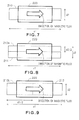
FIG. 7 is a side view of the coil (solenoid) that includes amagnetic core 210 without a groove having a relative permeability µr, and acoil winding portion 220 wound around amagnetic core 210 without a groove. A direction of magnetic flux is a direction from left to right inFIG. 7 , and the inductance value is set to L0. Furthermore, a length of the direction of magnetic flux of themagnetic core 210 without a groove is set to d1, and a length in a direction perpendicular to the direction of magnetic flux is set to d2. - As illustrated in
FIG. 8 , when amagnetic core 210a, in which a length in the direction perpendicular to the direction of magnetic flux of themagnetic core 210 is set to d2/2, and acore 211 having therelative permeability 1 with the same size as that of themagnetic core 210a are stacked (arranged) in the direction perpendicular to the direction of magnetic flux, a synthetic inductance value Lt of the coil is expressed inEquation 1 below. In addition, L1 is an inductance value due to themagnetic core 210a, and L2 is an inductance value due to thecore 211. Thecore 211 having therelative permeability 1 is, for example, an air layer.
- In this way, when the stacking direction of two substances (the
magnetic core 210a and the core 211) is set to be perpendicular to the direction of magnetic flux, in other words, when the contact surface of the two substances is set to be parallel to the direction of magnetic flux, as equivalently illustrated inFIG. 7 , the relative permeability in the case of replacing the same magnetic material with a jammed model becomes an arithmetic mean. The equivalent relative permeability µre at this time is expressed byEquation 2 below. The volume density of each medium is indicated by ρi.
- As illustrated in
FIG. 9 , when themagnetic core 210b in which the length, in the direction of magnetic flux of themagnetic core 210 is set to d1/2, and thecore 212 of therelative permeability 1 with the same size as that of themagnetic core 210b are stacked (arranged) in the direction of magnetic flux, the synthetic inductance value Lt of the coil is as expressed in Equation 3 below.
- In this manner, when the stacking direction of the two substances (the
magnetic core 210b and the core 212) is set to be the direction of magnetic flux, in other words, when the contact surface of the two substances is perpendicular to the direction of magnetic flux, the equivalent relative permeability becomes a harmonic mean. The equivalent relative permeability µre at this time is expressed by Equation 4 below.
- As illustrated in
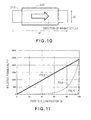
FIG. 10 , when using amagnetic core 213 in which the same substance as themagnetic core 210 is mixed uniformly with a substance ofrelative permeability 1 in the same size as themagnetic core 210, the synthetic inductance value Lt of the coil is expressed in Equation 5 below.
- Thus, when two substances are uniformly mixed, the equivalent relative permeability becomes a geometric mean. The equivalent relative permeability µre at this time is expressed by Equation 6 below.

- In regard to the coil having the configuration illustrated in
FIGS. 8 to 10 , a relation between the filling factor (percentage) of the material (for example, ferrite) of the relative permeability µr of the entire core and the equivalent relative permeability is illustrated inFIG. 11 . Furthermore,FIG. 12 illustrates a relation between the ferrite filling factor and the inductance value. Furthermore,FIG. 13 illustrates a relation between the ferrite filling factor and the coupling coefficient. - In the configuration illustrated in
FIG. 9 , it can be seen fromFIG. 11 that along with a decrease in the ferrite filling factor, the equivalent relative permeability decreases exponentially. For that reason, as illustrated inFIGS. 12 and 13 , along with the decrease in the ferrite filling factor, the inductance value and the coupling coefficient decrease. - Furthermore, in the configuration illustrated in
FIG. 10 , the ferrite filling factor only slightly decreases from 100%, and the equivalent relative permeability suddenly decreases to nearly zero. For that reason, as illustrated inFIGS. 12 and 13 , the ferrite filling factor only decreases slightly from 100%, and therefore, the inductance value and the coupling coefficient greatly decrease. - Meanwhile, in the configuration illustrated in
FIG. 8 , along with a decrease in the ferrite filling factor, the equivalent relative permeability proportionally and linearly decreases. The configuration illustrated inFIG. 8 is able to suppress a decrease in the equivalent relative permeability due to the decrease in the ferrite filling factor, compared to the configurations illustrated inFIGS. 9 and10 . For example, in the case of the configuration illustrated inFIG. 8 , even when the ferrite filling factor is set to 50%, the relative permeability is 1000 or more. As described above, in the range of the relative permeability of 1000 or more, even when the relative permeability decreases, it is possible to maintain the characteristics of the coil (seeFIGS. 5 and 6 ). For that reason, as illustrated inFIGS. 12 and 13 , even when the ferrite filling factor is reduced to 50%, it is possible to suppress the decrease in the inductance value and the coupling coefficient. - Accordingly, as illustrated in
FIG. 3A , it is possible to reduce the volume and the weight of themagnetic core 102 by using theblock 110 provided with thegrooves 112. Furthermore, by arranging theblock 110 such that thegrooves 112 extend along (to be parallel to) the direction of magnetic flux, it is possible to prevent the degradation of the characteristics of the coil. InFIGS. 12 and 13 , the inductance value and the coupling coefficient obtained when the volume of the magnetic core provided with thegrooves 112 is set to about 50% (of the core without the groove) are plotted with a black rectangular marker. - In addition, when using the elongated rod-like ferrite, a frame or the like for fixing each ferrite is required, but when using the
block 110, it is possible to easily fix theblock 110 by simply spreading. - In this way, according to the embodiment, it is possible to reduce the weight of the coil, to facilitate the fixing of the ferrite, and to prevent the degradation of the characteristics.
- For example, the
block 110 provided with thegrooves 112 as described above can be produced by putting the magnetic material into a mold having a concave-convex structure and firing the magnetic material. - In the first embodiment, as illustrated in
FIG. 4 , theblock 110 forms a square, and thegroove 112 is designed so as to be parallel to the side of the square. However, as illustrated inFIG. 14A , thegroove 112 may be provided oblique to the side of the square (along a diagonal direction of the square) depending on the direction of the magnetic flux. Furthermore, as illustrated inFIG. 14B , thegroove 112 may be thicker. Furthermore, as illustrated inFIG. 14C , the shape of thegroove 112 may not be rectangular. In addition, as illustrated inFIGS. 14D and 14E , a configuration obtained by coupling the plurality ofgrooves 112 ofFIG. 14A may be provided. - The shape of the
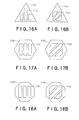
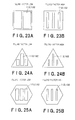
block 110 is not limited to the square, and, for example, as illustrated inFIG. 15 , the shape may be rectangular. In addition, theblock 110 may be rhombus. In addition, as illustrated inFIGS. 16A and 16B , theblock 110 may form a triangle such as an equilateral triangle. Furthermore, as illustrated inFIGS. 17A and 17B , theblock 110 may also form a hexagon such as a regular hexagon. In addition, as illustrated inFIGS. 18A and 18B , theblock 110 may also form an octagon such as a regular octagon. - The depth, the width, and the number of the
grooves 112 provided in theblock 110 may be arbitrarily determined depending on the required weight and characteristics of the coil. - Furthermore, the
groove 112 provided in theblock 110 may be an opening. - All the blocks constituting the
magnetic core 102 may be theblocks 110 provided with thegrooves 112, or a portion of themagnetic core 102 may be constituted by the block that is not provided with thegroove 112. - Furthermore, compared to the
block 110 provided with thegrooves 112, since the block not provided with thegroove 112 has a small core loss, the heating thereof is small. Thus, it is preferred to reduce the heating, by arranging the block not provided with thegroove 112 in the periphery of the part required to avoid the influence due to heat. -
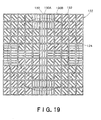
FIG. 19 illustrates a schematic configuration of a coil according to a second embodiment. This coil is used in thepower transmitting coil 15 and thepower receiving coil 21 illustrated inFIG. 1 . - As illustrated in
FIG. 19 , the coil is a spiral coil that includes amagnetic core 122, and acoil winding portion 124 provided on one surface of themagnetic core 122. Themagnetic core 122 includes a plurality of magnetic core blocks 130A and 130B (hereinafter, simply referred to asblocks coil winding portion 124, an inner peripheral portion and an outer peripheral portion thereof are only illustrated by broken lines. - Similarly to the
block 110 in the first embodiment, theblock blocks - Unlike the
coil 100 of the first embodiment, in the coil according to the present embodiment, the direction of magnetic flux is not limited to one direction. For that reason, in the present embodiment, as illustrated inFIG. 19 , by using two types of blocks of asquare block 130A vertically provided with thegrooves 132, and asquare block 130B obliquely provided with thegrooves 132, theblocks grooves 132 extend along the direction of magnetic flux. - By using the
blocks grooves 132, it is possible to reduce the volume and the weight of themagnetic core 122. Furthermore, by arranging theblocks grooves 132 extend along the direction of magnetic flux, it is possible to prevent the degradation of the characteristics of the coil. Furthermore, by using theblocks - In this way, according to the embodiment, it is possible to prevent the degradation of the strength and characteristics, while reducing the weight of the coil.
- In
FIG. 19 , the block located at the center of thecoil winding portion 124 is used as theblock 130A vertically provided with thegrooves 132, but theblock 130B obliquely provided with thegrooves 132 may be used, as illustrated inFIG. 20 . Furthermore, as illustrated inFIG. 21 , ablock 140 provided with non-directional grooves (for example, square recesses) may be used. - In the second embodiment, as illustrated in
FIG. 22 , ablock 150 without a groove may be arranged in the area of a part of the magnetic core. Accordingly, it is possible to arbitrarily adjust the gravity position of the coil. - In the first and second embodiments, the blocks having the different filling factors (sizes and depths of the
grooves FIGS. 23 to 26 illustrate an example of the block having the different filling factors. For example, it is preferable that the block having the high filling factor, in other words, the block having the small size and depth of the groove be arranged at the position where the magnetic flux is concentrated. Furthermore, it is preferable that the block having the low filling factor, in other words, the block having the large size and depth of the groove be arranged at the position where the magnetic flux is not concentrated. - Furthermore, in the first and second embodiments, the
magnetic cores FIGS. 27A to 27D . - As illustrated in
FIGS. 28A and 28B , a part of themagnetic core 122 is not provided, two coils are prepared in which the existence regions of the magnetic cores do not overlap when arranged to face each other, one thereof may be applied to thepower transmitting coil 15, and the other thereof may be applied to thepower receiving coil 21. Accordingly, when thepower transmitting coil 15 and thepower receiving coil 21 are misaligned, it is possible to suppress the fluctuation of the coupling coefficient. - In the first and second embodiments, as illustrated in
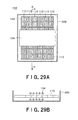
FIGS. 29A and 29B , thecoil 100 may include aconductive plate 300.FIG. 29A is a top view of thecoil 100. Furthermore,FIG. 29B is a longitudinal cross-sectional view taken along line B-B ofFIG. 29A . For example, theconductive plate 300 is a metal plate such as an aluminum plate and a copper plate. - In the above embodiment, although the
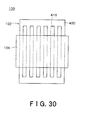
magnetic cores magnetic cores magnetic cores FIG. 30 illustrates an example in which themagnetic core 102 according to the first embodiment is constituted by a singlemagnetic core block 400.Grooves 410 provided in themagnetic core block 400 extend along a direction (the vertical direction inFIG. 30 ) of the magnetic flux generated by allowing the current to flow through thecoil 100. - While certain embodiments have been described, these embodiments have been presented by way of example only, and are not intended to limit the scope of the inventions. Indeed, the novel methods and systems described herein may be embodied in a variety of other forms; furthermore, various omissions, substitutions and changes in the form of the methods and systems described herein may be made without departing from the spirit of the inventions. The accompanying claims and their equivalents are intended to cover such forms or modifications as would fall within the scope and spirit of the inventions.
Claims (11)
- A coil comprising a magnetic core and a winding,
wherein the magnetic core includes at least one block provided with a groove or an opening, and
each block is arranged so as to make the groove or the opening extend along a direction of magnetic flux. - The coil according to claim 1, wherein each block is provided with a plurality of grooves or openings.
- The coil according to claim 1,
wherein the winding is wound around the magnetic core, and
a shape of each block is a rectangle, and the groove or the opening is provided in parallel to one side of the rectangle. - The coil according to claim 1,
wherein the winding is arranged on one surface of the magnetic core,
the magnetic core includes a first block and a second block forming a rectangular shape,
the groove or the opening of the first block is provided in parallel to one side of the rectangle, and
the groove or the opening of the second block is provided obliquely to one side of the rectangle. - The coil according to claim 4, wherein the magnetic core further includes a third block that is not provided with the groove and the opening.
- The coil according to claim 4, wherein the magnetic core further includes a fourth block that is provided with the groove or the opening of the rectangle.
- The coil according to claim 4, wherein the magnetic core has the first block and the second block in which the sizes of the groove or the opening are different.
- The coil according to claim 1, wherein the shape of the block is a regular triangle, a square, a regular hexagon, or a regular octagon.
- The coil according to one of claims 1 to 8, further comprising a conductive plate.
- A power receiving apparatus comprising:a coil according to one of claims 1 to 9 arranged as a power receiving coil for receiving power wirelessly by mutual inductance from a power transmitting apparatus;a capacitor connected to the power receiving coil;a rectifier converting AC power received via the capacitor into DC power;a communication unit communicating a power transmitting status or a power receiving status with the power transmitting apparatus;a sensor performing at least one of detection of received power, detection of foreign object, and detection of temperature; anda control unit controlling the received power, based on received information of the communication unit or a detection result of the sensor.
- A power transmitting apparatus comprising:a power supply unit supplying a high-frequency power;a coil according to one of claims 1 to 9 arranged as a power transmitting coil for wirelessly transmitting the power from the power supply unit to a power receiving apparatus by mutual inductance;a communication unit communicating a power transmitting status or a power receiving status with the power receiving apparatus;a sensor performing at least one of detection of transmission power, detection of foreign object, and detection of temperature; anda control unit controlling the transmission power based on received information of the communication unit or a detection result of the sensor.
Applications Claiming Priority (1)
| Application Number | Priority Date | Filing Date | Title |
|---|---|---|---|
| JP2013044226A JP6071654B2 (en) | 2013-03-06 | 2013-03-06 | Coil, power receiving device, and power transmitting device |
Publications (2)
| Publication Number | Publication Date |
|---|---|
| EP2775484A2 true EP2775484A2 (en) | 2014-09-10 |
| EP2775484A3 EP2775484A3 (en) | 2017-11-22 |
Family
ID=50150661
Family Applications (1)
| Application Number | Title | Priority Date | Filing Date |
|---|---|---|---|
| EP14156333.8A Withdrawn EP2775484A3 (en) | 2013-03-06 | 2014-02-24 | Coil, power receiving apparatus and power transmitting apparatus |
Country Status (4)
| Country | Link |
|---|---|
| US (1) | US10256038B2 (en) |
| EP (1) | EP2775484A3 (en) |
| JP (1) | JP6071654B2 (en) |
| CN (1) | CN104037949A (en) |
Families Citing this family (31)
| Publication number | Priority date | Publication date | Assignee | Title |
|---|---|---|---|---|
| US10965164B2 (en) | 2012-07-06 | 2021-03-30 | Energous Corporation | Systems and methods of wirelessly delivering power to a receiver device |
| US10199835B2 (en) * | 2015-12-29 | 2019-02-05 | Energous Corporation | Radar motion detection using stepped frequency in wireless power transmission system |
| US11502551B2 (en) | 2012-07-06 | 2022-11-15 | Energous Corporation | Wirelessly charging multiple wireless-power receivers using different subsets of an antenna array to focus energy at different locations |
| US12057715B2 (en) | 2012-07-06 | 2024-08-06 | Energous Corporation | Systems and methods of wirelessly delivering power to a wireless-power receiver device in response to a change of orientation of the wireless-power receiver device |
| US10992185B2 (en) | 2012-07-06 | 2021-04-27 | Energous Corporation | Systems and methods of using electromagnetic waves to wirelessly deliver power to game controllers |
| US9984815B2 (en) * | 2014-12-22 | 2018-05-29 | Eaton Capital Unlimited Company | Wireless power transfer apparatus and power supplies including overlapping magnetic cores |
| US10483805B2 (en) * | 2015-09-03 | 2019-11-19 | Koninklijke Philips N.V. | Device for wireless transmission of data and power |
| WO2018183892A1 (en) | 2017-03-30 | 2018-10-04 | Energous Corporation | Flat antennas having two or more resonant frequencies for use in wireless power transmission systems |
| US12074460B2 (en) | 2017-05-16 | 2024-08-27 | Wireless Electrical Grid Lan, Wigl Inc. | Rechargeable wireless power bank and method of using |
| US11462949B2 (en) | 2017-05-16 | 2022-10-04 | Wireless electrical Grid LAN, WiGL Inc | Wireless charging method and system |
| WO2019039684A1 (en) * | 2017-08-22 | 2019-02-28 | Samsung Electronics Co., Ltd. | WIRELESS POWER TRANSCEIVER AND DISPLAY APPARATUS HAVING THE SAME |
| US11342798B2 (en) | 2017-10-30 | 2022-05-24 | Energous Corporation | Systems and methods for managing coexistence of wireless-power signals and data signals operating in a same frequency band |
| JP6866324B2 (en) * | 2018-03-01 | 2021-04-28 | 株式会社東芝 | Inductor unit, contactless power supply system and electric vehicle |
| US11539243B2 (en) | 2019-01-28 | 2022-12-27 | Energous Corporation | Systems and methods for miniaturized antenna for wireless power transmissions |
| CN113661660B (en) | 2019-02-06 | 2023-01-24 | 艾诺格思公司 | Method for estimating optimal phase, wireless power transmitting device and storage medium |
| US12155231B2 (en) | 2019-04-09 | 2024-11-26 | Energous Corporation | Asymmetric spiral antennas for wireless power transmission and reception |
| US11381118B2 (en) | 2019-09-20 | 2022-07-05 | Energous Corporation | Systems and methods for machine learning based foreign object detection for wireless power transmission |
| US11411441B2 (en) | 2019-09-20 | 2022-08-09 | Energous Corporation | Systems and methods of protecting wireless power receivers using multiple rectifiers and establishing in-band communications using multiple rectifiers |
| WO2021055898A1 (en) | 2019-09-20 | 2021-03-25 | Energous Corporation | Systems and methods for machine learning based foreign object detection for wireless power transmission |
| WO2021055900A1 (en) | 2019-09-20 | 2021-03-25 | Energous Corporation | Classifying and detecting foreign objects using a power amplifier controller integrated circuit in wireless power transmission systems |
| WO2021055901A1 (en) | 2019-09-20 | 2021-03-25 | Energous Corporation | Asymmetric spiral antennas with parasitic elements for wireless power transmission |
| US11355966B2 (en) | 2019-12-13 | 2022-06-07 | Energous Corporation | Charging pad with guiding contours to align an electronic device on the charging pad and efficiently transfer near-field radio-frequency energy to the electronic device |
| US10985617B1 (en) | 2019-12-31 | 2021-04-20 | Energous Corporation | System for wirelessly transmitting energy at a near-field distance without using beam-forming control |
| KR102771091B1 (en) * | 2020-01-28 | 2025-02-24 | 에스케이씨 주식회사 | Wireless charging pad, wireless charging device, and electric vehicle comprising same |
| US11799324B2 (en) | 2020-04-13 | 2023-10-24 | Energous Corporation | Wireless-power transmitting device for creating a uniform near-field charging area |
| US11469629B2 (en) | 2020-08-12 | 2022-10-11 | Energous Corporation | Systems and methods for secure wireless transmission of power using unidirectional communication signals from a wireless-power-receiving device |
| US12306285B2 (en) | 2020-12-01 | 2025-05-20 | Energous Corporation | Systems and methods for using one or more sensors to detect and classify objects in a keep-out zone of a wireless-power transmission field, and antennas with integrated sensor arrangements |
| US11876384B2 (en) * | 2020-12-15 | 2024-01-16 | Otis Elevator Company | Wireless power transfer device |
| US11916398B2 (en) | 2021-12-29 | 2024-02-27 | Energous Corporation | Small form-factor devices with integrated and modular harvesting receivers, and shelving-mounted wireless-power transmitters for use therewith |
| JP7753930B2 (en) * | 2022-03-08 | 2025-10-15 | 株式会社Ihi | Power Supply System |
| US12142939B2 (en) | 2022-05-13 | 2024-11-12 | Energous Corporation | Integrated wireless-power-transmission platform designed to operate in multiple bands, and multi-band antennas for use therewith |
Family Cites Families (28)
| Publication number | Priority date | Publication date | Assignee | Title |
|---|---|---|---|---|
| JPS5710211A (en) * | 1980-06-19 | 1982-01-19 | Mitsubishi Electric Corp | Electromagnetic coupling device |
| JPH0677055A (en) * | 1992-08-27 | 1994-03-18 | Toshiba Corp | Plane magnetic element |
| JPH06189479A (en) * | 1992-12-15 | 1994-07-08 | Toyota Autom Loom Works Ltd | Electromagnetic power feeding apparatus |
| US7599744B2 (en) * | 2004-06-24 | 2009-10-06 | Ethicon Endo-Surgery, Inc. | Transcutaneous energy transfer primary coil with a high aspect ferrite core |
| WO2007122788A1 (en) | 2006-03-24 | 2007-11-01 | Kabushiki Kaisha Toshiba | Power receiving device, electronic apparatus using same and non-contact charger |
| DE102007023343A1 (en) | 2006-05-30 | 2007-12-06 | Sew-Eurodrive Gmbh & Co. Kg | Transmitter head for contactless energy transmission system, has condensers and winding arranged in inner side of housing and separated by ferrite parts, where condensers and secondary coil are arranged in same or overlapping axial areas |
| JP2009022122A (en) * | 2007-07-13 | 2009-01-29 | Toko Inc | Non-contact power transmission device |
| JP2009200174A (en) | 2008-02-20 | 2009-09-03 | Panasonic Electric Works Co Ltd | Non-contact power transmission apparatus |
| JP2010041906A (en) | 2008-07-10 | 2010-02-18 | Nec Tokin Corp | Contactless power transmission apparatus, soft magnetic sheet, and module using the same |
| US20100059258A1 (en) | 2008-08-19 | 2010-03-11 | Xu Yang | Ferrite Mosaic and Magnetic Core Structure for Passive Substrate for Switched-Mode Power Supply Module |
| CN101425743A (en) | 2008-08-19 | 2009-05-06 | 西安交通大学 | Ferrite panel and magnet core construction used for switch power supply module passive substrate |
| US20120256494A1 (en) * | 2008-09-27 | 2012-10-11 | Kesler Morris P | Tunable wireless energy transfer for medical applications |
| JP5467569B2 (en) * | 2009-01-21 | 2014-04-09 | 国立大学法人埼玉大学 | Non-contact power feeding device |
| US9283858B2 (en) | 2009-02-05 | 2016-03-15 | Auckland Uniservices Ltd | Inductive power transfer apparatus |
| JP2011116246A (en) | 2009-12-03 | 2011-06-16 | Sumitomo Electric Ind Ltd | Power transfer device, power transfer system, and power transfer method |
| EP2632762B1 (en) * | 2010-10-29 | 2017-05-31 | Qualcomm Incorporated(1/3) | Wireless energy transfer via coupled parasitic resonators |
| CN201893215U (en) | 2010-10-29 | 2011-07-06 | 美桀电子科技(深圳)有限公司 | Passive element |
| JP2012204440A (en) | 2011-03-24 | 2012-10-22 | Nitto Denko Corp | Magnetic element for wireless power transmission and manufacturing method of the same |
| JP5768464B2 (en) * | 2011-04-21 | 2015-08-26 | 日産自動車株式会社 | Non-contact power feeding device |
| CN103493158B (en) | 2011-04-25 | 2016-07-06 | 株式会社东芝 | Magnetic piece and its noncontact current-collecting device of use, electronic equipment and non-contact charging device |
| CN103650075A (en) | 2011-06-30 | 2014-03-19 | 美国亚德诺半导体公司 | Isolated Power Converter with Magnetics on a Chip |
| KR20130035057A (en) * | 2011-09-29 | 2013-04-08 | 한국전자통신연구원 | Wireless power transfer and recieve device |
| JP5738744B2 (en) | 2011-11-15 | 2015-06-24 | 株式会社東芝 | Resonator and wireless power transmission device |
| JP2014096435A (en) | 2012-11-08 | 2014-05-22 | Toshiba Corp | Resonator and wireless power transmission device |
| JP6063719B2 (en) | 2012-11-19 | 2017-01-18 | 株式会社東芝 | Wireless power transmission device |
| JP6071655B2 (en) | 2013-03-06 | 2017-02-01 | 株式会社東芝 | Wireless power transmission device |
| JP6377336B2 (en) | 2013-03-06 | 2018-08-22 | 株式会社東芝 | Inductor and manufacturing method thereof |
| JP6010491B2 (en) | 2013-03-15 | 2016-10-19 | 株式会社東芝 | Resonator and wireless power transmission device |
-
2013
- 2013-03-06 JP JP2013044226A patent/JP6071654B2/en active Active
-
2014
- 2014-02-06 US US14/174,188 patent/US10256038B2/en active Active
- 2014-02-24 CN CN201410061225.8A patent/CN104037949A/en active Pending
- 2014-02-24 EP EP14156333.8A patent/EP2775484A3/en not_active Withdrawn
Non-Patent Citations (1)
| Title |
|---|
| None |
Also Published As
| Publication number | Publication date |
|---|---|
| US20140252867A1 (en) | 2014-09-11 |
| US10256038B2 (en) | 2019-04-09 |
| JP2014176131A (en) | 2014-09-22 |
| CN104037949A (en) | 2014-09-10 |
| JP6071654B2 (en) | 2017-02-01 |
| EP2775484A3 (en) | 2017-11-22 |
Similar Documents
| Publication | Publication Date | Title |
|---|---|---|
| US10256038B2 (en) | Coil, power receiving apparatus, and power transmitting apparatus | |
| CN103890876B (en) | Device for inductively transferring electrical energy | |
| US11264834B2 (en) | Coil apparatus | |
| JP6490585B2 (en) | Coil arrangement in a wireless power transfer system for low electromagnetic radiation | |
| US9742199B2 (en) | Contactless power supply system and contactless extension plug | |
| CN106887902B (en) | Electromagnetic coupling mechanism for wireless power supply of electric vehicles | |
| JP2016504755A5 (en) | ||
| US9716386B2 (en) | Contactless power supply system | |
| EP2854145A1 (en) | Contactless electrical-power-supplying transformer for moving body | |
| JP6676018B2 (en) | Wireless power transmission equipment | |
| JP2011142177A (en) | Contactless power transmission device, and coil unit for contactless power transmission device | |
| US11211189B2 (en) | Coil device | |
| CN104953719A (en) | Coil unit and wireless power transmission device | |
| EP2879141A1 (en) | Coil unit | |
| EP2953147A1 (en) | Contactless power transmission device | |
| US9123466B2 (en) | Wireless power transfer systems containing foil-type transmitter and receiver coils | |
| US20170047162A1 (en) | Transmitter coils for contactless energy transmission systems with coupling enhancement and stray field reduction | |
| JP6022267B2 (en) | Mobile power supply type non-contact power supply device | |
| JP2019016619A (en) | Power transmission device and power reception device | |
| US20140246918A1 (en) | Power transmission system | |
| US20170326993A1 (en) | Power transfer system, power transmission device, and power receiving device | |
| CN114641839B (en) | Variable magnetic layer for wireless charging | |
| KR20170037406A (en) | Apparatus for receiving power wirelessly and power supply apparatus using the same | |
| JP2014170876A (en) | Coil unit and power supply system | |
| CN205751835U (en) | Wireless charging loosely coupled transformer and automobile wireless charging device |
Legal Events
| Date | Code | Title | Description |
|---|---|---|---|
| PUAI | Public reference made under article 153(3) epc to a published international application that has entered the european phase |
Free format text: ORIGINAL CODE: 0009012 |
|
| 17P | Request for examination filed |
Effective date: 20140224 |
|
| AK | Designated contracting states |
Kind code of ref document: A2 Designated state(s): AL AT BE BG CH CY CZ DE DK EE ES FI FR GB GR HR HU IE IS IT LI LT LU LV MC MK MT NL NO PL PT RO RS SE SI SK SM TR |
|
| AX | Request for extension of the european patent |
Extension state: BA ME |
|
| RIC1 | Information provided on ipc code assigned before grant |
Ipc: B60L 11/18 20060101ALI20170714BHEP Ipc: H01F 3/14 20060101AFI20170714BHEP Ipc: H02J 5/00 20160101ALI20170714BHEP Ipc: H01F 38/14 20060101ALI20170714BHEP Ipc: H02J 7/02 20160101ALI20170714BHEP |
|
| PUAL | Search report despatched |
Free format text: ORIGINAL CODE: 0009013 |
|
| AK | Designated contracting states |
Kind code of ref document: A3 Designated state(s): AL AT BE BG CH CY CZ DE DK EE ES FI FR GB GR HR HU IE IS IT LI LT LU LV MC MK MT NL NO PL PT RO RS SE SI SK SM TR |
|
| AX | Request for extension of the european patent |
Extension state: BA ME |
|
| RIC1 | Information provided on ipc code assigned before grant |
Ipc: B60L 11/18 20060101ALI20171017BHEP Ipc: H02J 7/02 20160101ALI20171017BHEP Ipc: H01F 3/14 20060101AFI20171017BHEP Ipc: H01F 38/14 20060101ALI20171017BHEP Ipc: H02J 5/00 20160101ALI20171017BHEP |
|
| STAA | Information on the status of an ep patent application or granted ep patent |
Free format text: STATUS: REQUEST FOR EXAMINATION WAS MADE |
|
| STAA | Information on the status of an ep patent application or granted ep patent |
Free format text: STATUS: THE APPLICATION IS DEEMED TO BE WITHDRAWN |
|
| 18D | Application deemed to be withdrawn |
Effective date: 20180523 |