EP2774903A1 - Nanostructured composite metal oxide material, production method and use - Google Patents
Nanostructured composite metal oxide material, production method and use Download PDFInfo
- Publication number
- EP2774903A1 EP2774903A1 EP12846196.9A EP12846196A EP2774903A1 EP 2774903 A1 EP2774903 A1 EP 2774903A1 EP 12846196 A EP12846196 A EP 12846196A EP 2774903 A1 EP2774903 A1 EP 2774903A1
- Authority
- EP
- European Patent Office
- Prior art keywords
- process according
- zirconia
- alumina
- volume
- suspension
- Prior art date
- Legal status (The legal status is an assumption and is not a legal conclusion. Google has not performed a legal analysis and makes no representation as to the accuracy of the status listed.)
- Withdrawn
Links
- 239000000463 material Substances 0.000 title claims abstract description 47
- 238000004519 manufacturing process Methods 0.000 title claims abstract description 5
- 239000002131 composite material Substances 0.000 title claims description 16
- 229910044991 metal oxide Inorganic materials 0.000 title 1
- 150000004706 metal oxides Chemical class 0.000 title 1
- MCMNRKCIXSYSNV-UHFFFAOYSA-N Zirconium dioxide Chemical compound O=[Zr]=O MCMNRKCIXSYSNV-UHFFFAOYSA-N 0.000 claims abstract description 72
- 239000002245 particle Substances 0.000 claims abstract description 23
- PNEYBMLMFCGWSK-UHFFFAOYSA-N aluminium oxide Inorganic materials [O-2].[O-2].[O-2].[Al+3].[Al+3] PNEYBMLMFCGWSK-UHFFFAOYSA-N 0.000 claims abstract description 19
- 229910052782 aluminium Inorganic materials 0.000 claims abstract description 7
- 229910052726 zirconium Inorganic materials 0.000 claims abstract description 6
- 229910052684 Cerium Inorganic materials 0.000 claims abstract description 5
- 229910052735 hafnium Inorganic materials 0.000 claims abstract description 5
- 229910052760 oxygen Inorganic materials 0.000 claims abstract description 5
- 229910052727 yttrium Inorganic materials 0.000 claims abstract description 5
- 238000000034 method Methods 0.000 claims description 47
- 230000008569 process Effects 0.000 claims description 36
- QTBSBXVTEAMEQO-UHFFFAOYSA-N Acetic acid Chemical compound CC(O)=O QTBSBXVTEAMEQO-UHFFFAOYSA-N 0.000 claims description 27
- 239000000843 powder Substances 0.000 claims description 26
- 239000000725 suspension Substances 0.000 claims description 22
- PPQREHKVAOVYBT-UHFFFAOYSA-H dialuminum;tricarbonate Chemical compound [Al+3].[Al+3].[O-]C([O-])=O.[O-]C([O-])=O.[O-]C([O-])=O PPQREHKVAOVYBT-UHFFFAOYSA-H 0.000 claims description 20
- 239000000919 ceramic Substances 0.000 claims description 19
- 239000000203 mixture Substances 0.000 claims description 11
- 239000002105 nanoparticle Substances 0.000 claims description 10
- XJUNLJFOHNHSAR-UHFFFAOYSA-J zirconium(4+);dicarbonate Chemical compound [Zr+4].[O-]C([O-])=O.[O-]C([O-])=O XJUNLJFOHNHSAR-UHFFFAOYSA-J 0.000 claims description 10
- 229940118662 aluminum carbonate Drugs 0.000 claims description 9
- 239000006104 solid solution Substances 0.000 claims description 9
- 238000007493 shaping process Methods 0.000 claims description 8
- 238000003756 stirring Methods 0.000 claims description 8
- 239000007900 aqueous suspension Substances 0.000 claims description 7
- 238000009694 cold isostatic pressing Methods 0.000 claims description 6
- 239000002086 nanomaterial Substances 0.000 claims description 6
- 229910052594 sapphire Inorganic materials 0.000 claims description 6
- BVKZGUZCCUSVTD-UHFFFAOYSA-L Carbonate Chemical compound [O-]C([O-])=O BVKZGUZCCUSVTD-UHFFFAOYSA-L 0.000 claims description 5
- 238000002156 mixing Methods 0.000 claims description 5
- 239000002253 acid Substances 0.000 claims description 4
- 229910000420 cerium oxide Inorganic materials 0.000 claims description 4
- 238000001035 drying Methods 0.000 claims description 4
- BMMGVYCKOGBVEV-UHFFFAOYSA-N oxo(oxoceriooxy)cerium Chemical compound [Ce]=O.O=[Ce]=O BMMGVYCKOGBVEV-UHFFFAOYSA-N 0.000 claims description 4
- SIWVEOZUMHYXCS-UHFFFAOYSA-N oxo(oxoyttriooxy)yttrium Chemical compound O=[Y]O[Y]=O SIWVEOZUMHYXCS-UHFFFAOYSA-N 0.000 claims description 4
- 238000005452 bending Methods 0.000 claims description 3
- 238000005266 casting Methods 0.000 claims description 3
- 238000005520 cutting process Methods 0.000 claims description 3
- 239000004053 dental implant Substances 0.000 claims description 3
- 239000006185 dispersion Substances 0.000 claims description 3
- 210000003127 knee Anatomy 0.000 claims description 3
- 229910052751 metal Inorganic materials 0.000 claims description 3
- 239000002184 metal Substances 0.000 claims description 3
- 238000004108 freeze drying Methods 0.000 claims description 2
- 150000007522 mineralic acids Chemical class 0.000 claims description 2
- 150000007524 organic acids Chemical class 0.000 claims description 2
- 238000005245 sintering Methods 0.000 claims description 2
- 239000007787 solid Substances 0.000 claims description 2
- 238000010345 tape casting Methods 0.000 claims description 2
- 238000000889 atomisation Methods 0.000 claims 1
- 150000001875 compounds Chemical class 0.000 abstract 1
- 239000000243 solution Substances 0.000 description 10
- 238000010438 heat treatment Methods 0.000 description 9
- 239000002243 precursor Substances 0.000 description 7
- 230000035882 stress Effects 0.000 description 7
- 230000009466 transformation Effects 0.000 description 7
- RKTYLMNFRDHKIL-UHFFFAOYSA-N copper;5,10,15,20-tetraphenylporphyrin-22,24-diide Chemical compound [Cu+2].C1=CC(C(=C2C=CC([N-]2)=C(C=2C=CC=CC=2)C=2C=CC(N=2)=C(C=2C=CC=CC=2)C2=CC=C3[N-]2)C=2C=CC=CC=2)=NC1=C3C1=CC=CC=C1 RKTYLMNFRDHKIL-UHFFFAOYSA-N 0.000 description 6
- 239000008367 deionised water Substances 0.000 description 6
- 238000012545 processing Methods 0.000 description 6
- 230000008901 benefit Effects 0.000 description 5
- 229910010293 ceramic material Inorganic materials 0.000 description 5
- 239000002114 nanocomposite Substances 0.000 description 5
- 239000011858 nanopowder Substances 0.000 description 5
- RVTZCBVAJQQJTK-UHFFFAOYSA-N oxygen(2-);zirconium(4+) Chemical compound [O-2].[O-2].[Zr+4] RVTZCBVAJQQJTK-UHFFFAOYSA-N 0.000 description 5
- 239000000047 product Substances 0.000 description 5
- 229910001928 zirconium oxide Inorganic materials 0.000 description 5
- 238000012986 modification Methods 0.000 description 4
- 230000004048 modification Effects 0.000 description 4
- 238000001694 spray drying Methods 0.000 description 4
- RUDFQVOCFDJEEF-UHFFFAOYSA-N yttrium(III) oxide Inorganic materials [O-2].[O-2].[O-2].[Y+3].[Y+3] RUDFQVOCFDJEEF-UHFFFAOYSA-N 0.000 description 4
- 238000007088 Archimedes method Methods 0.000 description 3
- 239000007864 aqueous solution Substances 0.000 description 3
- 238000001816 cooling Methods 0.000 description 3
- 239000013078 crystal Substances 0.000 description 3
- 229910052734 helium Inorganic materials 0.000 description 3
- 239000001307 helium Substances 0.000 description 3
- SWQJXJOGLNCZEY-UHFFFAOYSA-N helium atom Chemical compound [He] SWQJXJOGLNCZEY-UHFFFAOYSA-N 0.000 description 3
- 238000000386 microscopy Methods 0.000 description 3
- 238000009862 microstructural analysis Methods 0.000 description 3
- 238000013001 point bending Methods 0.000 description 3
- 238000001812 pycnometry Methods 0.000 description 3
- 239000002994 raw material Substances 0.000 description 3
- 230000002269 spontaneous effect Effects 0.000 description 3
- 230000002378 acidificating effect Effects 0.000 description 2
- 230000032683 aging Effects 0.000 description 2
- XAGFODPZIPBFFR-UHFFFAOYSA-N aluminium Chemical compound [Al] XAGFODPZIPBFFR-UHFFFAOYSA-N 0.000 description 2
- VSCWAEJMTAWNJL-UHFFFAOYSA-K aluminium trichloride Chemical compound Cl[Al](Cl)Cl VSCWAEJMTAWNJL-UHFFFAOYSA-K 0.000 description 2
- 239000012620 biological material Substances 0.000 description 2
- 150000004649 carbonic acid derivatives Chemical group 0.000 description 2
- CETPSERCERDGAM-UHFFFAOYSA-N ceric oxide Chemical compound O=[Ce]=O CETPSERCERDGAM-UHFFFAOYSA-N 0.000 description 2
- 229910000422 cerium(IV) oxide Inorganic materials 0.000 description 2
- 238000012512 characterization method Methods 0.000 description 2
- 238000009826 distribution Methods 0.000 description 2
- 238000000227 grinding Methods 0.000 description 2
- 239000007943 implant Substances 0.000 description 2
- 230000006872 improvement Effects 0.000 description 2
- 238000011065 in-situ storage Methods 0.000 description 2
- 238000010348 incorporation Methods 0.000 description 2
- 239000011159 matrix material Substances 0.000 description 2
- 230000007246 mechanism Effects 0.000 description 2
- 238000003672 processing method Methods 0.000 description 2
- 238000002672 stereotactic surgery Methods 0.000 description 2
- 238000003786 synthesis reaction Methods 0.000 description 2
- XLYOFNOQVPJJNP-UHFFFAOYSA-N water Substances O XLYOFNOQVPJJNP-UHFFFAOYSA-N 0.000 description 2
- 229910018072 Al 2 O 3 Inorganic materials 0.000 description 1
- 229910016341 Al2O3 ZrO2 Inorganic materials 0.000 description 1
- QCWXUUIWCKQGHC-UHFFFAOYSA-N Zirconium Chemical compound [Zr] QCWXUUIWCKQGHC-UHFFFAOYSA-N 0.000 description 1
- 239000000654 additive Substances 0.000 description 1
- 230000015572 biosynthetic process Effects 0.000 description 1
- 239000006227 byproduct Substances 0.000 description 1
- 238000001354 calcination Methods 0.000 description 1
- ODINCKMPIJJUCX-UHFFFAOYSA-N calcium oxide Inorganic materials [Ca]=O ODINCKMPIJJUCX-UHFFFAOYSA-N 0.000 description 1
- 230000015556 catabolic process Effects 0.000 description 1
- 238000002144 chemical decomposition reaction Methods 0.000 description 1
- 238000006243 chemical reaction Methods 0.000 description 1
- 150000001805 chlorine compounds Chemical class 0.000 description 1
- 238000000975 co-precipitation Methods 0.000 description 1
- 229910052593 corundum Inorganic materials 0.000 description 1
- 238000006731 degradation reaction Methods 0.000 description 1
- 239000005548 dental material Substances 0.000 description 1
- 238000011161 development Methods 0.000 description 1
- 230000018109 developmental process Effects 0.000 description 1
- 230000009977 dual effect Effects 0.000 description 1
- 238000002474 experimental method Methods 0.000 description 1
- 230000016507 interphase Effects 0.000 description 1
- 238000003754 machining Methods 0.000 description 1
- CPLXHLVBOLITMK-UHFFFAOYSA-N magnesium oxide Inorganic materials [Mg]=O CPLXHLVBOLITMK-UHFFFAOYSA-N 0.000 description 1
- 239000007769 metal material Substances 0.000 description 1
- 150000002823 nitrates Chemical class 0.000 description 1
- 238000005498 polishing Methods 0.000 description 1
- 230000000750 progressive effect Effects 0.000 description 1
- XPGAWFIWCWKDDL-UHFFFAOYSA-N propan-1-olate;zirconium(4+) Chemical compound [Zr+4].CCC[O-].CCC[O-].CCC[O-].CCC[O-] XPGAWFIWCWKDDL-UHFFFAOYSA-N 0.000 description 1
- 230000001105 regulatory effect Effects 0.000 description 1
- 230000002787 reinforcement Effects 0.000 description 1
- 238000011160 research Methods 0.000 description 1
- 230000004044 response Effects 0.000 description 1
- 230000000717 retained effect Effects 0.000 description 1
- 230000002441 reversible effect Effects 0.000 description 1
- 238000012552 review Methods 0.000 description 1
- 239000011833 salt mixture Substances 0.000 description 1
- 238000007873 sieving Methods 0.000 description 1
- 238000007569 slipcasting Methods 0.000 description 1
- 239000002904 solvent Substances 0.000 description 1
- 230000006641 stabilisation Effects 0.000 description 1
- 239000007858 starting material Substances 0.000 description 1
- 239000000126 substance Substances 0.000 description 1
- 238000001308 synthesis method Methods 0.000 description 1
- 238000005979 thermal decomposition reaction Methods 0.000 description 1
- 229910001845 yogo sapphire Inorganic materials 0.000 description 1
Images

Classifications
-
- C—CHEMISTRY; METALLURGY
- C01—INORGANIC CHEMISTRY
- C01F—COMPOUNDS OF THE METALS BERYLLIUM, MAGNESIUM, ALUMINIUM, CALCIUM, STRONTIUM, BARIUM, RADIUM, THORIUM, OR OF THE RARE-EARTH METALS
- C01F7/00—Compounds of aluminium
- C01F7/02—Aluminium oxide; Aluminium hydroxide; Aluminates
-
- C—CHEMISTRY; METALLURGY
- C01—INORGANIC CHEMISTRY
- C01G—COMPOUNDS CONTAINING METALS NOT COVERED BY SUBCLASSES C01D OR C01F
- C01G25/00—Compounds of zirconium
- C01G25/02—Oxides
-
- C—CHEMISTRY; METALLURGY
- C04—CEMENTS; CONCRETE; ARTIFICIAL STONE; CERAMICS; REFRACTORIES
- C04B—LIME, MAGNESIA; SLAG; CEMENTS; COMPOSITIONS THEREOF, e.g. MORTARS, CONCRETE OR LIKE BUILDING MATERIALS; ARTIFICIAL STONE; CERAMICS; REFRACTORIES; TREATMENT OF NATURAL STONE
- C04B35/00—Shaped ceramic products characterised by their composition; Ceramics compositions; Processing powders of inorganic compounds preparatory to the manufacturing of ceramic products
- C04B35/01—Shaped ceramic products characterised by their composition; Ceramics compositions; Processing powders of inorganic compounds preparatory to the manufacturing of ceramic products based on oxide ceramics
- C04B35/10—Shaped ceramic products characterised by their composition; Ceramics compositions; Processing powders of inorganic compounds preparatory to the manufacturing of ceramic products based on oxide ceramics based on aluminium oxide
-
- C—CHEMISTRY; METALLURGY
- C04—CEMENTS; CONCRETE; ARTIFICIAL STONE; CERAMICS; REFRACTORIES
- C04B—LIME, MAGNESIA; SLAG; CEMENTS; COMPOSITIONS THEREOF, e.g. MORTARS, CONCRETE OR LIKE BUILDING MATERIALS; ARTIFICIAL STONE; CERAMICS; REFRACTORIES; TREATMENT OF NATURAL STONE
- C04B35/00—Shaped ceramic products characterised by their composition; Ceramics compositions; Processing powders of inorganic compounds preparatory to the manufacturing of ceramic products
- C04B35/01—Shaped ceramic products characterised by their composition; Ceramics compositions; Processing powders of inorganic compounds preparatory to the manufacturing of ceramic products based on oxide ceramics
- C04B35/10—Shaped ceramic products characterised by their composition; Ceramics compositions; Processing powders of inorganic compounds preparatory to the manufacturing of ceramic products based on oxide ceramics based on aluminium oxide
- C04B35/111—Fine ceramics
- C04B35/117—Composites
- C04B35/119—Composites with zirconium oxide
-
- C—CHEMISTRY; METALLURGY
- C04—CEMENTS; CONCRETE; ARTIFICIAL STONE; CERAMICS; REFRACTORIES
- C04B—LIME, MAGNESIA; SLAG; CEMENTS; COMPOSITIONS THEREOF, e.g. MORTARS, CONCRETE OR LIKE BUILDING MATERIALS; ARTIFICIAL STONE; CERAMICS; REFRACTORIES; TREATMENT OF NATURAL STONE
- C04B35/00—Shaped ceramic products characterised by their composition; Ceramics compositions; Processing powders of inorganic compounds preparatory to the manufacturing of ceramic products
- C04B35/01—Shaped ceramic products characterised by their composition; Ceramics compositions; Processing powders of inorganic compounds preparatory to the manufacturing of ceramic products based on oxide ceramics
- C04B35/48—Shaped ceramic products characterised by their composition; Ceramics compositions; Processing powders of inorganic compounds preparatory to the manufacturing of ceramic products based on oxide ceramics based on zirconium or hafnium oxides, zirconates, zircon or hafnates
-
- C—CHEMISTRY; METALLURGY
- C04—CEMENTS; CONCRETE; ARTIFICIAL STONE; CERAMICS; REFRACTORIES
- C04B—LIME, MAGNESIA; SLAG; CEMENTS; COMPOSITIONS THEREOF, e.g. MORTARS, CONCRETE OR LIKE BUILDING MATERIALS; ARTIFICIAL STONE; CERAMICS; REFRACTORIES; TREATMENT OF NATURAL STONE
- C04B35/00—Shaped ceramic products characterised by their composition; Ceramics compositions; Processing powders of inorganic compounds preparatory to the manufacturing of ceramic products
- C04B35/01—Shaped ceramic products characterised by their composition; Ceramics compositions; Processing powders of inorganic compounds preparatory to the manufacturing of ceramic products based on oxide ceramics
- C04B35/48—Shaped ceramic products characterised by their composition; Ceramics compositions; Processing powders of inorganic compounds preparatory to the manufacturing of ceramic products based on oxide ceramics based on zirconium or hafnium oxides, zirconates, zircon or hafnates
- C04B35/486—Fine ceramics
- C04B35/488—Composites
- C04B35/4885—Composites with aluminium oxide
-
- C—CHEMISTRY; METALLURGY
- C04—CEMENTS; CONCRETE; ARTIFICIAL STONE; CERAMICS; REFRACTORIES
- C04B—LIME, MAGNESIA; SLAG; CEMENTS; COMPOSITIONS THEREOF, e.g. MORTARS, CONCRETE OR LIKE BUILDING MATERIALS; ARTIFICIAL STONE; CERAMICS; REFRACTORIES; TREATMENT OF NATURAL STONE
- C04B35/00—Shaped ceramic products characterised by their composition; Ceramics compositions; Processing powders of inorganic compounds preparatory to the manufacturing of ceramic products
- C04B35/622—Forming processes; Processing powders of inorganic compounds preparatory to the manufacturing of ceramic products
- C04B35/626—Preparing or treating the powders individually or as batches ; preparing or treating macroscopic reinforcing agents for ceramic products, e.g. fibres; mechanical aspects section B
- C04B35/62605—Treating the starting powders individually or as mixtures
- C04B35/62625—Wet mixtures
- C04B35/6263—Wet mixtures characterised by their solids loadings, i.e. the percentage of solids
-
- C—CHEMISTRY; METALLURGY
- C04—CEMENTS; CONCRETE; ARTIFICIAL STONE; CERAMICS; REFRACTORIES
- C04B—LIME, MAGNESIA; SLAG; CEMENTS; COMPOSITIONS THEREOF, e.g. MORTARS, CONCRETE OR LIKE BUILDING MATERIALS; ARTIFICIAL STONE; CERAMICS; REFRACTORIES; TREATMENT OF NATURAL STONE
- C04B35/00—Shaped ceramic products characterised by their composition; Ceramics compositions; Processing powders of inorganic compounds preparatory to the manufacturing of ceramic products
- C04B35/622—Forming processes; Processing powders of inorganic compounds preparatory to the manufacturing of ceramic products
- C04B35/626—Preparing or treating the powders individually or as batches ; preparing or treating macroscopic reinforcing agents for ceramic products, e.g. fibres; mechanical aspects section B
- C04B35/62605—Treating the starting powders individually or as mixtures
- C04B35/62645—Thermal treatment of powders or mixtures thereof other than sintering
- C04B35/62655—Drying, e.g. freeze-drying, spray-drying, microwave or supercritical drying
-
- C—CHEMISTRY; METALLURGY
- C04—CEMENTS; CONCRETE; ARTIFICIAL STONE; CERAMICS; REFRACTORIES
- C04B—LIME, MAGNESIA; SLAG; CEMENTS; COMPOSITIONS THEREOF, e.g. MORTARS, CONCRETE OR LIKE BUILDING MATERIALS; ARTIFICIAL STONE; CERAMICS; REFRACTORIES; TREATMENT OF NATURAL STONE
- C04B35/00—Shaped ceramic products characterised by their composition; Ceramics compositions; Processing powders of inorganic compounds preparatory to the manufacturing of ceramic products
- C04B35/622—Forming processes; Processing powders of inorganic compounds preparatory to the manufacturing of ceramic products
- C04B35/64—Burning or sintering processes
- C04B35/645—Pressure sintering
-
- C—CHEMISTRY; METALLURGY
- C01—INORGANIC CHEMISTRY
- C01P—INDEXING SCHEME RELATING TO STRUCTURAL AND PHYSICAL ASPECTS OF SOLID INORGANIC COMPOUNDS
- C01P2002/00—Crystal-structural characteristics
- C01P2002/50—Solid solutions
- C01P2002/52—Solid solutions containing elements as dopants
- C01P2002/54—Solid solutions containing elements as dopants one element only
-
- C—CHEMISTRY; METALLURGY
- C01—INORGANIC CHEMISTRY
- C01P—INDEXING SCHEME RELATING TO STRUCTURAL AND PHYSICAL ASPECTS OF SOLID INORGANIC COMPOUNDS
- C01P2004/00—Particle morphology
- C01P2004/01—Particle morphology depicted by an image
- C01P2004/03—Particle morphology depicted by an image obtained by SEM
-
- C—CHEMISTRY; METALLURGY
- C01—INORGANIC CHEMISTRY
- C01P—INDEXING SCHEME RELATING TO STRUCTURAL AND PHYSICAL ASPECTS OF SOLID INORGANIC COMPOUNDS
- C01P2004/00—Particle morphology
- C01P2004/80—Particles consisting of a mixture of two or more inorganic phases
- C01P2004/82—Particles consisting of a mixture of two or more inorganic phases two phases having the same anion, e.g. both oxidic phases
-
- C—CHEMISTRY; METALLURGY
- C01—INORGANIC CHEMISTRY
- C01P—INDEXING SCHEME RELATING TO STRUCTURAL AND PHYSICAL ASPECTS OF SOLID INORGANIC COMPOUNDS
- C01P2006/00—Physical properties of inorganic compounds
- C01P2006/10—Solid density
-
- C—CHEMISTRY; METALLURGY
- C04—CEMENTS; CONCRETE; ARTIFICIAL STONE; CERAMICS; REFRACTORIES
- C04B—LIME, MAGNESIA; SLAG; CEMENTS; COMPOSITIONS THEREOF, e.g. MORTARS, CONCRETE OR LIKE BUILDING MATERIALS; ARTIFICIAL STONE; CERAMICS; REFRACTORIES; TREATMENT OF NATURAL STONE
- C04B2103/00—Function or property of ingredients for mortars, concrete or artificial stone
- C04B2103/0068—Ingredients with a function or property not provided for elsewhere in C04B2103/00
- C04B2103/0094—Agents for altering or buffering the pH; Ingredients characterised by their pH
-
- C—CHEMISTRY; METALLURGY
- C04—CEMENTS; CONCRETE; ARTIFICIAL STONE; CERAMICS; REFRACTORIES
- C04B—LIME, MAGNESIA; SLAG; CEMENTS; COMPOSITIONS THEREOF, e.g. MORTARS, CONCRETE OR LIKE BUILDING MATERIALS; ARTIFICIAL STONE; CERAMICS; REFRACTORIES; TREATMENT OF NATURAL STONE
- C04B2235/00—Aspects relating to ceramic starting mixtures or sintered ceramic products
- C04B2235/02—Composition of constituents of the starting material or of secondary phases of the final product
- C04B2235/30—Constituents and secondary phases not being of a fibrous nature
- C04B2235/32—Metal oxides, mixed metal oxides, or oxide-forming salts thereof, e.g. carbonates, nitrates, (oxy)hydroxides, chlorides
- C04B2235/3224—Rare earth oxide or oxide forming salts thereof, e.g. scandium oxide
- C04B2235/3225—Yttrium oxide or oxide-forming salts thereof
-
- C—CHEMISTRY; METALLURGY
- C04—CEMENTS; CONCRETE; ARTIFICIAL STONE; CERAMICS; REFRACTORIES
- C04B—LIME, MAGNESIA; SLAG; CEMENTS; COMPOSITIONS THEREOF, e.g. MORTARS, CONCRETE OR LIKE BUILDING MATERIALS; ARTIFICIAL STONE; CERAMICS; REFRACTORIES; TREATMENT OF NATURAL STONE
- C04B2235/00—Aspects relating to ceramic starting mixtures or sintered ceramic products
- C04B2235/02—Composition of constituents of the starting material or of secondary phases of the final product
- C04B2235/30—Constituents and secondary phases not being of a fibrous nature
- C04B2235/32—Metal oxides, mixed metal oxides, or oxide-forming salts thereof, e.g. carbonates, nitrates, (oxy)hydroxides, chlorides
- C04B2235/3224—Rare earth oxide or oxide forming salts thereof, e.g. scandium oxide
- C04B2235/3229—Cerium oxides or oxide-forming salts thereof
-
- C—CHEMISTRY; METALLURGY
- C04—CEMENTS; CONCRETE; ARTIFICIAL STONE; CERAMICS; REFRACTORIES
- C04B—LIME, MAGNESIA; SLAG; CEMENTS; COMPOSITIONS THEREOF, e.g. MORTARS, CONCRETE OR LIKE BUILDING MATERIALS; ARTIFICIAL STONE; CERAMICS; REFRACTORIES; TREATMENT OF NATURAL STONE
- C04B2235/00—Aspects relating to ceramic starting mixtures or sintered ceramic products
- C04B2235/02—Composition of constituents of the starting material or of secondary phases of the final product
- C04B2235/30—Constituents and secondary phases not being of a fibrous nature
- C04B2235/32—Metal oxides, mixed metal oxides, or oxide-forming salts thereof, e.g. carbonates, nitrates, (oxy)hydroxides, chlorides
- C04B2235/3231—Refractory metal oxides, their mixed metal oxides, or oxide-forming salts thereof
- C04B2235/3244—Zirconium oxides, zirconates, hafnium oxides, hafnates, or oxide-forming salts thereof
- C04B2235/3246—Stabilised zirconias, e.g. YSZ or cerium stabilised zirconia
-
- C—CHEMISTRY; METALLURGY
- C04—CEMENTS; CONCRETE; ARTIFICIAL STONE; CERAMICS; REFRACTORIES
- C04B—LIME, MAGNESIA; SLAG; CEMENTS; COMPOSITIONS THEREOF, e.g. MORTARS, CONCRETE OR LIKE BUILDING MATERIALS; ARTIFICIAL STONE; CERAMICS; REFRACTORIES; TREATMENT OF NATURAL STONE
- C04B2235/00—Aspects relating to ceramic starting mixtures or sintered ceramic products
- C04B2235/02—Composition of constituents of the starting material or of secondary phases of the final product
- C04B2235/30—Constituents and secondary phases not being of a fibrous nature
- C04B2235/44—Metal salt constituents or additives chosen for the nature of the anions, e.g. hydrides or acetylacetonate
- C04B2235/442—Carbonates
-
- C—CHEMISTRY; METALLURGY
- C04—CEMENTS; CONCRETE; ARTIFICIAL STONE; CERAMICS; REFRACTORIES
- C04B—LIME, MAGNESIA; SLAG; CEMENTS; COMPOSITIONS THEREOF, e.g. MORTARS, CONCRETE OR LIKE BUILDING MATERIALS; ARTIFICIAL STONE; CERAMICS; REFRACTORIES; TREATMENT OF NATURAL STONE
- C04B2235/00—Aspects relating to ceramic starting mixtures or sintered ceramic products
- C04B2235/02—Composition of constituents of the starting material or of secondary phases of the final product
- C04B2235/50—Constituents or additives of the starting mixture chosen for their shape or used because of their shape or their physical appearance
- C04B2235/54—Particle size related information
- C04B2235/5409—Particle size related information expressed by specific surface values
-
- C—CHEMISTRY; METALLURGY
- C04—CEMENTS; CONCRETE; ARTIFICIAL STONE; CERAMICS; REFRACTORIES
- C04B—LIME, MAGNESIA; SLAG; CEMENTS; COMPOSITIONS THEREOF, e.g. MORTARS, CONCRETE OR LIKE BUILDING MATERIALS; ARTIFICIAL STONE; CERAMICS; REFRACTORIES; TREATMENT OF NATURAL STONE
- C04B2235/00—Aspects relating to ceramic starting mixtures or sintered ceramic products
- C04B2235/02—Composition of constituents of the starting material or of secondary phases of the final product
- C04B2235/50—Constituents or additives of the starting mixture chosen for their shape or used because of their shape or their physical appearance
- C04B2235/54—Particle size related information
- C04B2235/5418—Particle size related information expressed by the size of the particles or aggregates thereof
- C04B2235/5445—Particle size related information expressed by the size of the particles or aggregates thereof submicron sized, i.e. from 0,1 to 1 micron
-
- C—CHEMISTRY; METALLURGY
- C04—CEMENTS; CONCRETE; ARTIFICIAL STONE; CERAMICS; REFRACTORIES
- C04B—LIME, MAGNESIA; SLAG; CEMENTS; COMPOSITIONS THEREOF, e.g. MORTARS, CONCRETE OR LIKE BUILDING MATERIALS; ARTIFICIAL STONE; CERAMICS; REFRACTORIES; TREATMENT OF NATURAL STONE
- C04B2235/00—Aspects relating to ceramic starting mixtures or sintered ceramic products
- C04B2235/60—Aspects relating to the preparation, properties or mechanical treatment of green bodies or pre-forms
- C04B2235/604—Pressing at temperatures other than sintering temperatures
-
- C—CHEMISTRY; METALLURGY
- C04—CEMENTS; CONCRETE; ARTIFICIAL STONE; CERAMICS; REFRACTORIES
- C04B—LIME, MAGNESIA; SLAG; CEMENTS; COMPOSITIONS THEREOF, e.g. MORTARS, CONCRETE OR LIKE BUILDING MATERIALS; ARTIFICIAL STONE; CERAMICS; REFRACTORIES; TREATMENT OF NATURAL STONE
- C04B2235/00—Aspects relating to ceramic starting mixtures or sintered ceramic products
- C04B2235/65—Aspects relating to heat treatments of ceramic bodies such as green ceramics or pre-sintered ceramics, e.g. burning, sintering or melting processes
- C04B2235/656—Aspects relating to heat treatments of ceramic bodies such as green ceramics or pre-sintered ceramics, e.g. burning, sintering or melting processes characterised by specific heating conditions during heat treatment
- C04B2235/6562—Heating rate
-
- C—CHEMISTRY; METALLURGY
- C04—CEMENTS; CONCRETE; ARTIFICIAL STONE; CERAMICS; REFRACTORIES
- C04B—LIME, MAGNESIA; SLAG; CEMENTS; COMPOSITIONS THEREOF, e.g. MORTARS, CONCRETE OR LIKE BUILDING MATERIALS; ARTIFICIAL STONE; CERAMICS; REFRACTORIES; TREATMENT OF NATURAL STONE
- C04B2235/00—Aspects relating to ceramic starting mixtures or sintered ceramic products
- C04B2235/65—Aspects relating to heat treatments of ceramic bodies such as green ceramics or pre-sintered ceramics, e.g. burning, sintering or melting processes
- C04B2235/656—Aspects relating to heat treatments of ceramic bodies such as green ceramics or pre-sintered ceramics, e.g. burning, sintering or melting processes characterised by specific heating conditions during heat treatment
- C04B2235/6565—Cooling rate
-
- C—CHEMISTRY; METALLURGY
- C04—CEMENTS; CONCRETE; ARTIFICIAL STONE; CERAMICS; REFRACTORIES
- C04B—LIME, MAGNESIA; SLAG; CEMENTS; COMPOSITIONS THEREOF, e.g. MORTARS, CONCRETE OR LIKE BUILDING MATERIALS; ARTIFICIAL STONE; CERAMICS; REFRACTORIES; TREATMENT OF NATURAL STONE
- C04B2235/00—Aspects relating to ceramic starting mixtures or sintered ceramic products
- C04B2235/65—Aspects relating to heat treatments of ceramic bodies such as green ceramics or pre-sintered ceramics, e.g. burning, sintering or melting processes
- C04B2235/656—Aspects relating to heat treatments of ceramic bodies such as green ceramics or pre-sintered ceramics, e.g. burning, sintering or melting processes characterised by specific heating conditions during heat treatment
- C04B2235/6567—Treatment time
-
- C—CHEMISTRY; METALLURGY
- C04—CEMENTS; CONCRETE; ARTIFICIAL STONE; CERAMICS; REFRACTORIES
- C04B—LIME, MAGNESIA; SLAG; CEMENTS; COMPOSITIONS THEREOF, e.g. MORTARS, CONCRETE OR LIKE BUILDING MATERIALS; ARTIFICIAL STONE; CERAMICS; REFRACTORIES; TREATMENT OF NATURAL STONE
- C04B2235/00—Aspects relating to ceramic starting mixtures or sintered ceramic products
- C04B2235/70—Aspects relating to sintered or melt-casted ceramic products
- C04B2235/72—Products characterised by the absence or the low content of specific components, e.g. alkali metal free alumina ceramics
-
- C—CHEMISTRY; METALLURGY
- C04—CEMENTS; CONCRETE; ARTIFICIAL STONE; CERAMICS; REFRACTORIES
- C04B—LIME, MAGNESIA; SLAG; CEMENTS; COMPOSITIONS THEREOF, e.g. MORTARS, CONCRETE OR LIKE BUILDING MATERIALS; ARTIFICIAL STONE; CERAMICS; REFRACTORIES; TREATMENT OF NATURAL STONE
- C04B2235/00—Aspects relating to ceramic starting mixtures or sintered ceramic products
- C04B2235/70—Aspects relating to sintered or melt-casted ceramic products
- C04B2235/72—Products characterised by the absence or the low content of specific components, e.g. alkali metal free alumina ceramics
- C04B2235/724—Halogenide content
-
- C—CHEMISTRY; METALLURGY
- C04—CEMENTS; CONCRETE; ARTIFICIAL STONE; CERAMICS; REFRACTORIES
- C04B—LIME, MAGNESIA; SLAG; CEMENTS; COMPOSITIONS THEREOF, e.g. MORTARS, CONCRETE OR LIKE BUILDING MATERIALS; ARTIFICIAL STONE; CERAMICS; REFRACTORIES; TREATMENT OF NATURAL STONE
- C04B2235/00—Aspects relating to ceramic starting mixtures or sintered ceramic products
- C04B2235/70—Aspects relating to sintered or melt-casted ceramic products
- C04B2235/74—Physical characteristics
- C04B2235/77—Density
-
- C—CHEMISTRY; METALLURGY
- C04—CEMENTS; CONCRETE; ARTIFICIAL STONE; CERAMICS; REFRACTORIES
- C04B—LIME, MAGNESIA; SLAG; CEMENTS; COMPOSITIONS THEREOF, e.g. MORTARS, CONCRETE OR LIKE BUILDING MATERIALS; ARTIFICIAL STONE; CERAMICS; REFRACTORIES; TREATMENT OF NATURAL STONE
- C04B2235/00—Aspects relating to ceramic starting mixtures or sintered ceramic products
- C04B2235/70—Aspects relating to sintered or melt-casted ceramic products
- C04B2235/74—Physical characteristics
- C04B2235/78—Grain sizes and shapes, product microstructures, e.g. acicular grains, equiaxed grains, platelet-structures
- C04B2235/785—Submicron sized grains, i.e. from 0,1 to 1 micron
-
- C—CHEMISTRY; METALLURGY
- C04—CEMENTS; CONCRETE; ARTIFICIAL STONE; CERAMICS; REFRACTORIES
- C04B—LIME, MAGNESIA; SLAG; CEMENTS; COMPOSITIONS THEREOF, e.g. MORTARS, CONCRETE OR LIKE BUILDING MATERIALS; ARTIFICIAL STONE; CERAMICS; REFRACTORIES; TREATMENT OF NATURAL STONE
- C04B2235/00—Aspects relating to ceramic starting mixtures or sintered ceramic products
- C04B2235/70—Aspects relating to sintered or melt-casted ceramic products
- C04B2235/80—Phases present in the sintered or melt-cast ceramic products other than the main phase
- C04B2235/85—Intergranular or grain boundary phases
-
- C—CHEMISTRY; METALLURGY
- C04—CEMENTS; CONCRETE; ARTIFICIAL STONE; CERAMICS; REFRACTORIES
- C04B—LIME, MAGNESIA; SLAG; CEMENTS; COMPOSITIONS THEREOF, e.g. MORTARS, CONCRETE OR LIKE BUILDING MATERIALS; ARTIFICIAL STONE; CERAMICS; REFRACTORIES; TREATMENT OF NATURAL STONE
- C04B2235/00—Aspects relating to ceramic starting mixtures or sintered ceramic products
- C04B2235/70—Aspects relating to sintered or melt-casted ceramic products
- C04B2235/96—Properties of ceramic products, e.g. mechanical properties such as strength, toughness, wear resistance
-
- Y—GENERAL TAGGING OF NEW TECHNOLOGICAL DEVELOPMENTS; GENERAL TAGGING OF CROSS-SECTIONAL TECHNOLOGIES SPANNING OVER SEVERAL SECTIONS OF THE IPC; TECHNICAL SUBJECTS COVERED BY FORMER USPC CROSS-REFERENCE ART COLLECTIONS [XRACs] AND DIGESTS
- Y10—TECHNICAL SUBJECTS COVERED BY FORMER USPC
- Y10T—TECHNICAL SUBJECTS COVERED BY FORMER US CLASSIFICATION
- Y10T428/00—Stock material or miscellaneous articles
- Y10T428/29—Coated or structually defined flake, particle, cell, strand, strand portion, rod, filament, macroscopic fiber or mass thereof
- Y10T428/2982—Particulate matter [e.g., sphere, flake, etc.]
Definitions
- the present invention relates to an alumina-zirconia nanostructured composite material and to a process for obtaining oxidic nanostructured ceramic composite materials with excellent mechanical properties which make them very suitable for applications such as knee prostheses, hip prostheses, dental implants, mechanical components for pumps, alkaline batteries, ceramic components for stereotactic surgery, cutting tools, etc.
- Ceramic materials such as hardness, fracture resistance or toughness
- hardness, fracture resistance or toughness make them ideal candidates for various applications, from grinding balls to biomedical implants.
- Ceramic materials that are especially interesting for the manufacturing of different prostheses and implants are those pertaining to the alumina-zirconia system. These types of materials are perfectly biocompatible, which has resulted in a growing interest in the use thereof, to replace the traditionally-used metallic materials.
- the development of alumina-zirconia composite materials appeared in response to the limitations exhibited by monolithic materials.
- alumina was one of the first ceramic materials used for orthopaedic purposes [ US 3977026 ], its fragility caused a high failure rate, which resulted in disregarding this material and searching for other ceramic components that overcame these limitations.
- zirconium oxide (ZrO 2 ), or zirconia is noteworthy for its high toughness.
- the improvement in the toughness values of zirconia materials has been widely described in the literature as a toughening mechanism by phase transformation, which involves the transformation of the metastable tetragonal phase (t) of zirconia into the stable monoclinic phase (m) at room temperature, with the consequent volume expansion, which causes significant compressive stresses.
- zirconia In an attempt to prevent this reversible transformation from the tetragonal phase (high temperature) to the monoclinic phase (room temperature), zirconia is usually doped with certain proportions of oxides such as CaO, MgO, Y 2 O 3 , CeO 2 , which make it possible to retain the tetragonal structure at room temperature and, therefore, control the stress induced by the t-m transformation by hindering crack propagation, with the consequent increase in the toughness of the material [ Nelly, J.B., and Denry, I., Dental Materials, 24, 289-298, (2008 )]. As a result of these excellent properties, until the year 2005, more than half a million units of this type of prostheses had been implanted both in the USA and Europe.
- the metastable character of tetragonal zirconia induce spontaneous transformation into monoclinic zirconia as a result of processes such as the machining of sintered parts, and even the polishing thereof, with the consequent destabilisation of the ceramic component.
- zirconia undergoes a process known as ageing, characterised by the degradation of its mechanical properties with time.
- ageing is reflected in the progressive spontaneous transformation of the metastable tetragonal phase into the monoclinic phase, and is favoured by the presence of water or steam [ Yoshimura, M., et al., J. Mater. Sci.
- alumina-zirconia composites have acquired special relevance. Two types of alumina-zirconia composites may be distinguished: materials made of a zirconia matrix reinforced with alumina particles and materials made of an alumina matrix reinforced with zirconia particles, both of which improve the mechanical properties with respect to monolithic materials.
- the desired composition is prepared by the mechanical mixing of powders from both components [ US 9841274 ]. The greatest limitation of this synthesis route is the difficulty in obtaining very fine grain sizes and a homogeneous distribution of the phases.
- a very interesting alternative to the powder mixing processing method are chemical synthesis routes such as sol-gel [ Sarkar, D., et al., J. Mater. Sci., 42, 1847-55, 2007 ], co-precipitation [ Upadhyaya, D. et al., Mater. Sci. Eng. A, A270, 133-136, 1999 ] and thermal decomposition of salt mixtures [ Chandradass, J., et al., Mater. Sci. Eng. A, A473, 360-364, 2008 ].
- sol-gel Sarkar, D., et al., J. Mater. Sci., 42, 1847-55, 2007
- co-precipitation Upadhyaya, D. et al., Mater. Sci. Eng. A, A270, 133-136, 1999
- thermal decomposition of salt mixtures Chandradass, J., et al., Mater. Sci. Eng. A, A473, 360-364, 2008 ].
- alumina-zirconia nanocomposites wherein both components are in the nanometric scale
- alumina and ceria-stabilised zirconia nanopowders on the one hand, and aluminum chloride and zirconium propoxide, on the other, are used, as alumina and zirconia precursors, respectively, in order to perform the surface modification of the nanopowders.
- This processing route makes it possible to simultaneously obtain toughness and fracture resistance values above the biomedical standards for monolithic alumina and zirconia prostheses.
- the present invention proposes a new process for obtaining nanostructured ceramic oxide materials. Firstly, the use of precursors from the carbonate family prevents the generation of acidic by-products (chlorides, nitrates, etc.) and, secondly, the adjustment of the reaction conditions during the surface modification makes it possible to greatly reduce the number of steps necessary for preparing the material (grinding, sieving, calcination, etc.). I.e. the present invention proposes the obtainment of high-purity nanostructured ceramic materials by means of an inexpensive, simple and environmentally-friendly process.
- the present invention relates to an alumina-zirconia nanostructured composite material, with certain microstructural characteristics that provide it with a mechanical performance that is superior to that of currently-known materials.
- Another object of the invention is the process for obtaining said material and the applications thereof.
- a first object of the present invention relates to an alumina-zirconia nanostructured composite material (hereinafter "material of the invention”) characterised in that the content of elements other than Al, Zr, Hf, Y, Ce and O is less than 100 ppm, the Cl content is less than 1 ppm, at least one of the components has a mean grain size in the final material smaller than 500 nm, and at least 1/10 of the particles are in the intragranular position.
- material of the invention characterised in that the content of elements other than Al, Zr, Hf, Y, Ce and O is less than 100 ppm, the Cl content is less than 1 ppm, at least one of the components has a mean grain size in the final material smaller than 500 nm, and at least 1/10 of the particles are in the intragranular position.
- composite materials are understood to be those that have the following properties:
- the relative composition of the material is:
- the relative composition of the material is:
- composition of the material is:
- the alumina-zirconia nanostructured composite material is characterised in that it has a bending strength, a threshold stress intensity factor and fracture toughness greater than 500 MPa, 4 MPam 1/2 and 6 MPam 1/2 , respectively.
- a second object of the present invention relates to a process for obtaining alumina-zirconia materials characterised in that the content of elements other than Al, Zr, Hf, Y, Ce and O is less than 100 ppm, the Cl content is less than 1 ppm, at least one of the components has a mean grain size in the final material smaller than 500 nm, and at least 1/10 of the particles are in the intragranular position ( Figures 1, 2 and 3 ), where said process comprises the following steps:
- the inventors have developed a process for obtaining nanostructured composite materials in the Al 2 O 3 -ZrO 2 system by means of the in situ generation of nanoparticles on the surface of nanopowder suspensions through the chemical decomposition of carbonates.
- This process takes advantage of the solubility of the aluminum and zirconium carbonates used in this work in acidic environments. Under these conditions, CO 2 is released and molecular entities of the corresponding hidroxides are generated, which nucleate on the surface of the nanopowder suspension.
- Two main advantages of this processing route are worth noting.
- residues in the material are not generated thus avoiding additional processing steps for eliminating such residues.
- the process for obtaining the alumina-zirconia nanostructured powders of the present invention is preferably performed from the following starting materials:
- the carbonate that acts as the precursor of the second component is added to a ceramic powder suspension, either directly on the dispersion or previously dissolved in water.
- the pH is regulated with an acid solution, such that it is possible to modify it in a controlled manner; for example, 0.05 pH units per drop of acid solution.
- processing of the ceramic suspension continues according to the conventionally-used processes.
- the ceramic oxide powder in step (a) is ⁇ -Al 2 O 3 and it is mixed with zirconium carbonate in an aqueous suspension.
- a Ce-TZP or Y-TZP suspension is mixed with aluminum carbonate in an aqueous suspension.
- two aqueous suspensions are mixed, a solution of ⁇ -Al 2 O 3 with zirconium carbonate and a solution of Ce-TZP or Y-TZP with aluminum carbonate.
- step (a) in step (a), the total solids content is less than 85% by weight and the mixture is kept under stirring by means of any magnetic or mechanical device that favours dispersion.
- step (b) an organic or inorganic acid is added until the pH of the suspension is less than 6.
- the acid used in step (b) is acetic acid.
- step (c) the drying is performed by means of spray-drying or freeze-drying.
- step (d) is performed by means of any shaping method for ceramic suspensions, such as slip casting, pressure casting or tape casting.
- the shaping of step (d) is performed by means of cold isostatic pressing. This cold isostatic pressing is preferably performed by applying a pressure ranging between 100 and 400 MPa.
- step (e) is performed at a maximum temperature ranging between 1400°C and 1600°C.
- a final object of the present invention relates to the use of the material of the invention for the manufacturing of a product selected from the list that comprises knee prostheses, hip prostheses, dental implants, mechanical components for pumps, alkaline batteries, ceramic components for stereotactic surgery and cutting tools.
- Example 1 Alumina material with 5% by volume of ZrO 2 nanoparticles.
- the starting raw materials are:
- the dry product was subjected to a shaping process by means of cold isostatic pressing at 200 MPa.
- a shaped material is obtained which is sintered in a conventional air furnace at a maximum temperature of 1550°C, during 120 minutes.
- the heating cycle performed involved in three steps; heating to 800°C at 1°C/min, dwell time of 60 min at 800°C and heating to 1550°C at 5°C/min. After remaining at the maximum temperature, the cooling is controlled at 5°C/min to a temperature of 700°C and, from this temperature, the furnace is allowed to cool down freely.
- the resulting material was characterised by its real density (helium pycnometry), bulk density (Archimedes method), fracture strength (four-point bending method), toughness (KIC) and threshold stress intensity factor (KIO) (double-torsion method), and microstructural analysis (scanning electronic microscope).
- the results are shown in Table 1.
- the micrography obtained by electronic microscopy is represented in Figure 1 .
- Table 1 Property Ex. 1 Ex. 2 Ex. 3 Relative density (% theoretical density) 99.0 99.3 99.1 Toughness K IC (MPa.m 1/2 ) 6.3 6.6 7.5 Toughness K IO (MPa.m 1/2 ) 4.9 4.2 5.1 Bending strength ⁇ f (MPa) 550 825 630
- Example 2 3Y-TZP material with 5% by volume of Al 2 O 3 nanoparticles.
- the starting raw materials are:
- the dry product was subjected to a shaping process by means of cold isostatic pressing at 200 MPa.
- the shaped material obtained is sintered in a conventional air furnace at a maximum temperature of 1500°C, for 120 minutes.
- the heating cycle performed involved in three steps: heating to 800°C at 1°C/min, dwell time of 60 min at 800°C and heating to 1500°C at 5°C/min. After remaining at the maximum temperature, the cooling is controlled at 5°C/min to a temperature of 700°C and, from this temperature, the furnace is allowed to cool down freely.
- the resulting material was characterised by its real density (helium pycnometry), bulk density (Archimedes method), fracture strength (four-point bending method), toughness (KIC) and threshold stress intensity factor (KIO) (double-torsion method), and microstructural analysis (scanning electronic microscope).
- the results pertaining to these characterisations are shown in Table 1.
- the micrography obtained by electronic microscopy is represented in Figure 2 .
- the starting raw materials are:
- Two suspensions were previously prepared according to embodiment examples 1 and 2: one of them starting from 25 g of alumina and 2.5 g of zirconium carbonate, and the other from 25 g of zirconia and 2 g of aluminum carbonate.
- the pH has been adjusted, in both cases, to a value of 4.0 by the drop-by-drop addition of a 0.5 M acetic acid solution, and after keeping them under stirring for one hour, they are mixed. The stirring is maintained for one more hour, and, subsequently, the resulting mixture is dried by means of spray-drying, to obtain a granulated nanocomposite powder.
- the dry product was shaped by means of cold isostatic pressing at 200 MPa.
- the resulting shaped material is sintered in a conventional air furnace at a maximum temperature of 1550°C, for 120 minutes.
- the heating cycle performed involved in three steps:: heating to 800°C at 1°C/min, dwell time of 60 min at 800°C and heating to 1550°C at 5°C/min. After remaining at the maximum temperature, the cooling is controlled at 5°C/min to a temperature of 700°C and, from this temperature, the oven is allowed to cool down freely.
- the resulting material was characterised by its real density (helium pycnometry), bulk density (Archimedes method), fracture strength (four-point bending method), toughness (KIC) and threshold stress intensity factor (KIO) (double-torsion method), and microstructural analysis (scanning electronic microscope).
- the results pertaining to these characterisations are shown in Table 1.
- the micrography obtained by electronic microscopy is represented in Figure 3 .
Landscapes
- Chemical & Material Sciences (AREA)
- Engineering & Computer Science (AREA)
- Ceramic Engineering (AREA)
- Organic Chemistry (AREA)
- Manufacturing & Machinery (AREA)
- Structural Engineering (AREA)
- Materials Engineering (AREA)
- Inorganic Chemistry (AREA)
- Composite Materials (AREA)
- Physics & Mathematics (AREA)
- Thermal Sciences (AREA)
- Life Sciences & Earth Sciences (AREA)
- Geology (AREA)
- Compositions Of Oxide Ceramics (AREA)
- Inorganic Compounds Of Heavy Metals (AREA)
Abstract
The present invention relates to a nanostructured zirconia alumina compound material which is characterized in that the content of different elements of Al, Zr, Hf, Y, Ce and O is less than 100 ppm, the Cl content is less than 1 ppm, at least one of the components has a mean grain size in the final material of less than 500 nm, and at least 1 /10 of the particles is in an intragranular position. A further subject matter of the invention is the method for producing said material and also the use thereof.
Description
- The present invention relates to an alumina-zirconia nanostructured composite material and to a process for obtaining oxidic nanostructured ceramic composite materials with excellent mechanical properties which make them very suitable for applications such as knee prostheses, hip prostheses, dental implants, mechanical components for pumps, alkaline batteries, ceramic components for stereotactic surgery, cutting tools, etc.
- The excellent mechanical properties that characterise ceramic materials, such as hardness, fracture resistance or toughness, make them ideal candidates for various applications, from grinding balls to biomedical implants. One type of ceramic materials that are especially interesting for the manufacturing of different prostheses and implants are those pertaining to the alumina-zirconia system. These types of materials are perfectly biocompatible, which has resulted in a growing interest in the use thereof, to replace the traditionally-used metallic materials. The development of alumina-zirconia composite materials appeared in response to the limitations exhibited by monolithic materials.
- Thus, although alumina was one of the first ceramic materials used for orthopaedic purposes [
US 3977026 ], its fragility caused a high failure rate, which resulted in disregarding this material and searching for other ceramic components that overcame these limitations. Amongst the possible alternatives, zirconium oxide (ZrO2), or zirconia, is noteworthy for its high toughness. The improvement in the toughness values of zirconia materials has been widely described in the literature as a toughening mechanism by phase transformation, which involves the transformation of the metastable tetragonal phase (t) of zirconia into the stable monoclinic phase (m) at room temperature, with the consequent volume expansion, which causes significant compressive stresses. In an attempt to prevent this reversible transformation from the tetragonal phase (high temperature) to the monoclinic phase (room temperature), zirconia is usually doped with certain proportions of oxides such as CaO, MgO, Y2O3, CeO2, which make it possible to retain the tetragonal structure at room temperature and, therefore, control the stress induced by the t-m transformation by hindering crack propagation, with the consequent increase in the toughness of the material [Nelly, J.B., and Denry, I., Dental Materials, 24, 289-298, (2008)]. As a result of these excellent properties, until the year 2005, more than half a million units of this type of prostheses had been implanted both in the USA and Europe. However, the metastable character of tetragonal zirconia induce spontaneous transformation into monoclinic zirconia as a result of processes such as the machining of sintered parts, and even the polishing thereof, with the consequent destabilisation of the ceramic component. Moreover, zirconia undergoes a process known as ageing, characterised by the degradation of its mechanical properties with time. The ageing phenomenon is reflected in the progressive spontaneous transformation of the metastable tetragonal phase into the monoclinic phase, and is favoured by the presence of water or steam [Yoshimura, M., et al., J. Mater. Sci. Lett., 6, 465-467, 1987], [Tsukuma, K., et al., In Advances in Ceramics, 12, The American Ceramic Society, Columbus, 382-398, 1984], [Masaki, T., Int. J. High Technol. Ceram., 2, 85-98, 1986], [Chevalier, J., et al., J. Am. Ceram. Soc., 82, 2150-2154, 1999]. The increase in the monoclinic phase content leads to a decrease in resistance, toughness and density, followed by the appearance of micro- and macro-cracks. As a result of this behaviour, there are numerous bibliographical reviews were the use of zirconia for this type of applications is evaluated[Chevalier, J., Biomaterials 27 (4), 535-543, 2006], [Hisbergues, M., et al., Journal of Biomedical Materials Research - Part B Applied Biomaterials 88 (2), 519-529, 2009]. - The solution to these problems involves developing materials that use reinforcement mechanisms in order to improve the mechanical properties of zirconia and do not suffer the aforementioned problems. Amongst the possible materials, alumina-zirconia composites have acquired special relevance. Two types of alumina-zirconia composites may be distinguished: materials made of a zirconia matrix reinforced with alumina particles and materials made of an alumina matrix reinforced with zirconia particles, both of which improve the mechanical properties with respect to monolithic materials. In the conventional processing routes for obtaining these materials, the desired composition is prepared by the mechanical mixing of powders from both components [
US 9841274 US 7012036 , for obtaining alumina-Ce-TZP composite materials with a nanostructure that the authors describe as dual. The processing of this nanocomposite is performed by the traditional powder mixing method, in this case using nanometric-type powders, and the microstructure of this material is characterised by the presence of a first group of ceria-stabilised zirconia grains within which alumina crystals are dispersed as a second phase; in turn, these crystals contain smaller stabilised zirconia crystals. - A very interesting alternative to the powder mixing processing method are chemical synthesis routes such as sol-gel [Sarkar, D., et al., J. Mater. Sci., 42, 1847-55, 2007], co-precipitation [Upadhyaya, D. et al., Mater. Sci. Eng. A, A270, 133-136, 1999] and thermal decomposition of salt mixtures [Chandradass, J., et al., Mater. Sci. Eng. A, A473, 360-364, 2008]. One of the most significant advantages of these synthesis methods is the homogeneity achieved in the distribution of the different phases. On the contrary, the main disadvantages are the product yield obtained and the increased cost of the process as a consequence of the precursors used. An intermediate method between traditional processing methods and chemical methods is the surface modification of nanopowders with precursor solutions. Among the different works available in the literature it is worth mentioning [M. Schehl, L.A. Díaz and R. Torrecillas, Acta Materialia; 50 [5], 1125-1139, 2002], which describes significant increases in fracture toughness (KIC) with respect to the values of monolithic alumina, reaching values up to 6.5 MPam1/2. These improvements in toughness are accompanied by an increase in the threshold stress intensity factor, KIO, below which there is no crack propagation risk, so that the KIC and KIO values in the resulting materials are very close to one another [J. Chevalier, et al. 5-7, 1297-1301, 2005]. One process for obtaining alumina-zirconia nanocomposites wherein both components are in the nanometric scale is disclosed in
WO 2011015697 . In this case, alumina and ceria-stabilised zirconia nanopowders on the one hand, and aluminum chloride and zirconium propoxide, on the other, are used, as alumina and zirconia precursors, respectively, in order to perform the surface modification of the nanopowders. This processing route makes it possible to simultaneously obtain toughness and fracture resistance values above the biomedical standards for monolithic alumina and zirconia prostheses. - The present invention proposes a new process for obtaining nanostructured ceramic oxide materials. Firstly, the use of precursors from the carbonate family prevents the generation of acidic by-products (chlorides, nitrates, etc.) and, secondly, the adjustment of the reaction conditions during the surface modification makes it possible to greatly reduce the number of steps necessary for preparing the material (grinding, sieving, calcination, etc.). I.e. the present invention proposes the obtainment of high-purity nanostructured ceramic materials by means of an inexpensive, simple and environmentally-friendly process.
- Other advantages of the invention arise from the in situ generation of the nanoparticles, which favours their presence in intragranular positions, in addition to eliminating the risks during the manipulation thereof. On the other hand, in the case of materials with zirconia, the stabilisation of zirconia by the incorporation of elements in solid solution may be avoided, since the tetragonal phase may be directly retained, as the particle size is smaller than the critical size necessary for spontaneous transformation into the monoclinic phase.
- In the first place, the present invention relates to an alumina-zirconia nanostructured composite material, with certain microstructural characteristics that provide it with a mechanical performance that is superior to that of currently-known materials. Another object of the invention is the process for obtaining said material and the applications thereof.
- Thus, a first object of the present invention relates to an alumina-zirconia nanostructured composite material (hereinafter "material of the invention") characterised in that the content of elements other than Al, Zr, Hf, Y, Ce and O is less than 100 ppm, the Cl content is less than 1 ppm, at least one of the components has a mean grain size in the final material smaller than 500 nm, and at least 1/10 of the particles are in the intragranular position.
- In the present invention, composite materials are understood to be those that have the following properties:
- they are made up of 2 or more components that at first glance are physically indistinguishable and are not mechanically separable;
- they present several mineralogically different phases, which are completely insoluble and are separated by an interphase;
- their mechanical properties are greater to the simple sum of the properties of their components (synergy);
- the term "nanostructured" refers to a structure with an intermediate size between molecular and microscopic structures (of a nano-micrometric size);
- In a preferred embodiment of the material of the invention, the relative composition of the material is:
- a) between 80% and 99.5% by volume of α-alumina;
- b) between 0.5% and 20% by volume of pure zirconia nanoparticles without any elements in solid solution and with a mean particle size smaller than 200 nm.
- In another preferred embodiment of the material of the invention, the relative composition of the material is:
- a) between 70% and 99.5% by volume of zirconia stabilised by means of a solid solution of yttrium oxide or cerium oxide;
- b) between 0.5% and 30% by volume of α-alumina nanoparticles with a mean particle size smaller than 150 nm.
- In another preferred embodiment of the material of the invention, the composition of the material is:
- a) between 20% and 89.5% by volume of a-alumina with a particle size smaller than 500 nm;
- b) between 10% and 79.5% by volume of zirconia stabilised by means of a solid solution of yttrium oxide or cerium oxide, with a mean particle size smaller than 350 nm;
- c) between 0.5% and 10% by volume of pure zirconia nanoparticles without any elements in solid solution and with a mean particle size smaller than 100 nm.
- The alumina-zirconia nanostructured composite material is characterised in that it has a bending strength, a threshold stress intensity factor and fracture toughness greater than 500 MPa, 4 MPam1/2 and 6 MPam1/2, respectively.
- A second object of the present invention relates to a process for obtaining alumina-zirconia materials characterised in that the content of elements other than Al, Zr, Hf, Y, Ce and O is less than 100 ppm, the Cl content is less than 1 ppm, at least one of the components has a mean grain size in the final material smaller than 500 nm, and at least 1/10 of the particles are in the intragranular position (
Figures 1, 2 and3 ), where said process comprises the following steps: - a) mixing at least one suspension of ceramic oxide powder with a metal carbonate, preferably selected from aluminum and zirconium;
- b) adjusting the pH of the mixture prepared in step (a);
- c) drying the suspension obtained in step (b);
- d) shaping the powder obtained in step (c);
- e) sintering the shaped powder obtained in step (d).
- The inventors have developed a process for obtaining nanostructured composite materials in the Al2O3-ZrO2 system by means of the in situ generation of nanoparticles on the surface of nanopowder suspensions through the chemical decomposition of carbonates. This process takes advantage of the solubility of the aluminum and zirconium carbonates used in this work in acidic environments. Under these conditions, CO2 is released and molecular entities of the corresponding hidroxides are generated, which nucleate on the surface of the nanopowder suspension. Two main advantages of this processing route are worth noting. On the one hand, thanks to the use of carbonates as precursors of the second phases, under the experimental working conditions, residues in the material are not generated thus avoiding additional processing steps for eliminating such residues. On the other hand, the only modification with respect to the sequence of steps necessary to prepare a ceramic material following the traditional way, even in the case of monolithic materials, is the incorporation of the adequate quantity of the carbonate-type precursor when the ceramic suspension is prepared and adjusting the adequate pH. The different nanopowder-metal carbonate combinations result in different compositions of the material of the invention described above.
- The process for obtaining the alumina-zirconia nanostructured powders of the present invention is preferably performed from the following starting materials:
- ceria-stabilised zirconia powder (Ce-TZP), with a total molar concentration of ceria ranging between 10%-14% and a mean particle size ranging between 0.05 and 1 µm, or yttria-stabilised zirconia powder (Y-TZP), with a molar concentration of yttria ranging between 2%-7% and a mean particle size ranging between 0.05 and 1 µm;
- aluminum carbonate;
- alumina powder with a mean particle size ranging between 0.01 and 1 µm;
- zirconium carbonate;
- acetic acid;
- de-ionised water, as the solvent medium.
- In a typical experiment, the carbonate that acts as the precursor of the second component is added to a ceramic powder suspension, either directly on the dispersion or previously dissolved in water. The pH is regulated with an acid solution, such that it is possible to modify it in a controlled manner; for example, 0.05 pH units per drop of acid solution. Subsequently, processing of the ceramic suspension continues according to the conventionally-used processes.
- In a preferred embodiment of the process of the invention, the ceramic oxide powder in step (a) is α-Al2O3 and it is mixed with zirconium carbonate in an aqueous suspension.
- In another preferred embodiment of the process of the invention, in step (a), a Ce-TZP or Y-TZP suspension is mixed with aluminum carbonate in an aqueous suspension. In another preferred embodiment of the process of the invention, in step (a), two aqueous suspensions are mixed, a solution of α-Al2O3 with zirconium carbonate and a solution of Ce-TZP or Y-TZP with aluminum carbonate.
- In another preferred embodiment of the process of the invention, in step (a), the total solids content is less than 85% by weight and the mixture is kept under stirring by means of any magnetic or mechanical device that favours dispersion.
- In another preferred embodiment of the process of the invention, in step (b), an organic or inorganic acid is added until the pH of the suspension is less than 6. Preferably, the acid used in step (b) is acetic acid.
- In another preferred embodiment of the process of the invention, in step (c), the drying is performed by means of spray-drying or freeze-drying.
- In another preferred embodiment of the process of the invention, step (d) is performed by means of any shaping method for ceramic suspensions, such as slip casting, pressure casting or tape casting. In a particular embodiment, the shaping of step (d) is performed by means of cold isostatic pressing. This cold isostatic pressing is preferably performed by applying a pressure ranging between 100 and 400 MPa.
- In another preferred embodiment of the process of the invention, step (e) is performed at a maximum temperature ranging between 1400°C and 1600°C.
- Moreover, a final object of the present invention relates to the use of the material of the invention for the manufacturing of a product selected from the list that comprises knee prostheses, hip prostheses, dental implants, mechanical components for pumps, alkaline batteries, ceramic components for stereotactic surgery and cutting tools.
- Throughout the description and the claims, the word "comprises" and the variants thereof are not intended to exclude other technical characteristics, additives, components or steps. For persons skilled in the art, other objects, advantages and characteristics of the invention will arise partly from the description and partly from the practice of the invention. The following examples and drawings are provided for illustrative purposes, and are not intended to limit the scope of the present invention.
-
-
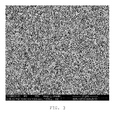
Figure 1 .- Microstructure obtained by means of a scanning electronic microscope of the composite material resulting from example 1. -
Figure 2 .- Microstructure obtained by means of a scanning electronic microscope of the composite material resulting from example 2. -
Figure 3 .- Microstructure obtained by means of a scanning electronic microscope of the composite material resulting from embodiment example 3. - The following examples are presented as an additional guide for average skilled persons in the art and are in no way intended to limit the scope of the invention.
- In order to achieve a better understanding of the object and functionality of this patent, and without understanding them to be restrictive solutions, three examples of compositions will be described.
- The starting raw materials are:
- α-Al2O3 powder, TM-DAR, from the company Taimei, with a mean particle size < 160 nm and a density of 3.90 g/cm3;
- Zirconium carbonate (CAS: 520217);
- De-ionised water;
- Aqueous solution of acetic acid (0.5 M).
- 50 g of Al2O3 were used, which were dispersed in 100 g of de-ionised water. Subsequently, 5 g of zirconium carbonate are added to the suspension and it is kept under stirring. Subsequently, a 0.5 M acetic acid solution is added drop by drop until the pH of the suspension is 4.5. The stirring is maintained for one hour and, thereafter, the suspension is dried by means of spray-drying, to obtain a granulated nanocomposite powder.
- The dry product was subjected to a shaping process by means of cold isostatic pressing at 200 MPa. A shaped material is obtained which is sintered in a conventional air furnace at a maximum temperature of 1550°C, during 120 minutes. The heating cycle performed involved in three steps; heating to 800°C at 1°C/min, dwell time of 60 min at 800°C and heating to 1550°C at 5°C/min. After remaining at the maximum temperature, the cooling is controlled at 5°C/min to a temperature of 700°C and, from this temperature, the furnace is allowed to cool down freely.
- The resulting material was characterised by its real density (helium pycnometry), bulk density (Archimedes method), fracture strength (four-point bending method), toughness (KIC) and threshold stress intensity factor (KIO) (double-torsion method), and microstructural analysis (scanning electronic microscope). The results are shown in Table 1. The micrography obtained by electronic microscopy is represented in
Figure 1 .Table 1 Property Ex. 1 Ex. 2 Ex. 3 Relative density (% theoretical density) 99.0 99.3 99.1 Toughness KIC (MPa.m1/2) 6.3 6.6 7.5 Toughness KIO (MPa.m1/2) 4.9 4.2 5.1 Bending strength σf (MPa) 550 825 630 - The starting raw materials are:
- ZrO2 powder (3% molar of Y2O3), 3Y-TZP from the company Tosoh, with a specific surface area of 16 m2/g;
- Aluminum carbonate (CAS:14455-29-9);
- De-ionised water;
- Aqueous solution of acetic acid (0.5 M).
- 50 g of ZrO2 were used, which were dispersed in 100 g of de-ionised water. Subsequently, 4 g of aluminum carbonate are added to the suspension and it is kept under stirring. Thereafter, a 0.5 M acetic acid solution is added drop by drop until the pH of the suspension is 4.0. The stirring is maintained for one hour and, subsequently, the suspension is dried by means of spray-drying, to obtain a granulated nanocomposite powder.
- The dry product was subjected to a shaping process by means of cold isostatic pressing at 200 MPa. The shaped material obtained is sintered in a conventional air furnace at a maximum temperature of 1500°C, for 120 minutes. The heating cycle performed involved in three steps: heating to 800°C at 1°C/min, dwell time of 60 min at 800°C and heating to 1500°C at 5°C/min. After remaining at the maximum temperature, the cooling is controlled at 5°C/min to a temperature of 700°C and, from this temperature, the furnace is allowed to cool down freely.
- The resulting material was characterised by its real density (helium pycnometry), bulk density (Archimedes method), fracture strength (four-point bending method), toughness (KIC) and threshold stress intensity factor (KIO) (double-torsion method), and microstructural analysis (scanning electronic microscope). The results pertaining to these characterisations are shown in Table 1. The micrography obtained by electronic microscopy is represented in
Figure 2 . - The starting raw materials are:
- α-Al2O3 powder, TM-DAR, from the company Taimei, with a mean particle size < 160 nm and a density of 3.90 g/cm3;
- Zirconium carbonate (CAS:520217);
- ZrO2 powder (3% molar of Y2O3), 3Y-TZP, from the company Tosoh, with a specific surface area of 16 m2/g;
- Aluminum carbonate (CAS:14455-29-9);
- De-ionised water;
- Aqueous solution of acetic acid (0.5 M).
- Two suspensions were previously prepared according to embodiment examples 1 and 2: one of them starting from 25 g of alumina and 2.5 g of zirconium carbonate, and the other from 25 g of zirconia and 2 g of aluminum carbonate. Once the pH has been adjusted, in both cases, to a value of 4.0 by the drop-by-drop addition of a 0.5 M acetic acid solution, and after keeping them under stirring for one hour, they are mixed. The stirring is maintained for one more hour, and, subsequently, the resulting mixture is dried by means of spray-drying, to obtain a granulated nanocomposite powder.
- The dry product was shaped by means of cold isostatic pressing at 200 MPa. The resulting shaped material is sintered in a conventional air furnace at a maximum temperature of 1550°C, for 120 minutes. The heating cycle performed involved in three steps:: heating to 800°C at 1°C/min, dwell time of 60 min at 800°C and heating to 1550°C at 5°C/min. After remaining at the maximum temperature, the cooling is controlled at 5°C/min to a temperature of 700°C and, from this temperature, the oven is allowed to cool down freely.
- The resulting material was characterised by its real density (helium pycnometry), bulk density (Archimedes method), fracture strength (four-point bending method), toughness (KIC) and threshold stress intensity factor (KIO) (double-torsion method), and microstructural analysis (scanning electronic microscope). The results pertaining to these characterisations are shown in Table 1. The micrography obtained by electronic microscopy is represented in
Figure 3 .
Claims (18)
- Alumina-zirconia nanostructured composite material characterised in that the content of elements other than Al, Zr, Hf, Y, Ce and O is less than 100 ppm, the Cl content is less than 1 ppm, at least one of the components has a mean grain size in the final material smaller than 500 nm, and at least 1/10 of the particles are in the intragranular position.
- Nanostructured material according to claim 1, characterised in that it comprises:a) between 80% and 99.5% by volume of α-alumina;b) between 0.5% and 20% by volume of pure zirconia nanoparticles without any elements in solid solution and with a mean particle size smaller than 200 nm.
- Nanostructured material according to claim 1, characterised in that it comprises:a) between 70% and 99.5% by volume of zirconia stabilised by means of a solid solution of yttrium oxide or cerium oxide;b) between 0.5% and 30% by volume of a-alumina nanoparticles with a mean particle size smaller than 150 nm.
- Nanostructured material according to claim 1, characterised in that it comprises:a) between 20% and 89.5% by volume of a-alumina with a particle size smaller than 500 nm;b) between 10% and 79.5% by volume of zirconia stabilised by means of a solid solution of yttrium oxide or cerium oxide, and with a mean particle size smaller than 350 nm;c) between 0.5% and 10% by volume of pure zirconia nanoparticles without any elements in solid solution and with a mean particle size smaller than 100 nm.
- Nanostructured material according to any of claims 1 to 4, characterised in that it presents a fracture resistance under bending greater than 500 MPa, a fracture threshold greater than 4 MPam1/2 and a toughness greater than 6 MPam.1/2.
- Process for obtaining an alumina-zirconia nanostructured composite material with a content of elements other than Al, Zr, Hf, Y, Ce and O of less than 100 ppm, a Cl content of less than 1 ppm, and where at least one of the components has a mean grain size in the final material smaller than 500 nm, and at least 1/10 of the particles are in the intragranular position, where said process is characterised in that it comprises the following steps:a) mixing at least one aqueous suspension composed of a ceramic oxide powder and a metal carbonate;b) adjusting the pH of the mixture prepared in step (a);c) drying the suspension obtained in step (b), to obtain a dry powder;d) shaping the powder obtained in step (c);e) sintering the shaped powder obtained in step (d).
- Process according to claim 6, where the ceramic oxide powder in step (a) is α-Al2O3, which is mixed with zirconium carbonate in an aqueous suspension.
- Process according to claim 6, where the ceramic oxide powder in step (a) is Ce-TZP or Y-TZP, which is mixed with aluminum carbonate in an aqueous suspension.
- Process according to claim 6, where two aqueous suspensions are mixed, a suspension of α-Al2O3 with zirconium carbonate and a suspension of Ce-TZP or Y-TZP with aluminum carbonate.
- Process according to any of claims 6 to 9, where, in step (a), the total solids content is less than 85% by weight and the mixture is kept under stirring by means of a magnetic or mechanical device that favours dispersion.
- Process according to any of claims 6 to 10, where, in step (b), an organic or inorganic acid is added until the pH of the suspension is less than 6.
- Process according to claim 11, where the acid used is acetic acid.
- Process according to any of claims 6 to 12, where the drying of step (c) is performed by means of atomisation or lyophilisation.
- Process according to any of claims 6 to 13, where step (d) is performed by means of a shaping method for ceramic suspensions selected from atmospheric casting, pressure casting and tape casting.
- Process according to claim 14, where the shaping of step (d) is performed by means of cold isostatic pressing.
- Process according to claim 15, where the pressure applied ranges between 100 and 400 MPa.
- Process according to any of claims 6 to 16, where step (e) is performed at a maximum temperature ranging between 1400°C and 1600°C.
- Use of a nanostructured material according to any of claims 1 to 17, for the manufacturing of a product selected from the group formed by knee prostheses, hip prostheses, dental implants, abutments or structures, mechanical components for pumps, alkaline batteries, ceramic components for stereotactic neurology and cutting tools.
Applications Claiming Priority (2)
| Application Number | Priority Date | Filing Date | Title |
|---|---|---|---|
| ES201131767A ES2413162B1 (en) | 2011-11-04 | 2011-11-04 | COMPOSITE NANOESTRUCTURED MATERIAL OF METAL OXIDES, PROCEDURE OF OBTAINING AND USE. |
| PCT/ES2012/070745 WO2013064713A1 (en) | 2011-11-04 | 2012-10-24 | Nanostructured composite metal oxide material, production method and use |
Publications (2)
| Publication Number | Publication Date |
|---|---|
| EP2774903A1 true EP2774903A1 (en) | 2014-09-10 |
| EP2774903A4 EP2774903A4 (en) | 2015-07-29 |
Family
ID=48191417
Family Applications (1)
| Application Number | Title | Priority Date | Filing Date |
|---|---|---|---|
| EP12846196.9A Withdrawn EP2774903A4 (en) | 2011-11-04 | 2012-10-24 | NANOSTRUCTURED MATERIAL COMPRISING METAL OXIDES, PROCESS FOR OBTAINING SAME AND USE THEREOF |
Country Status (5)
| Country | Link |
|---|---|
| US (1) | US20140370291A1 (en) |
| EP (1) | EP2774903A4 (en) |
| JP (1) | JP2015504406A (en) |
| ES (1) | ES2413162B1 (en) |
| WO (1) | WO2013064713A1 (en) |
Cited By (3)
| Publication number | Priority date | Publication date | Assignee | Title |
|---|---|---|---|---|
| EP3286158A1 (en) * | 2015-04-22 | 2018-02-28 | Diamonde | Cutting tool for machining abrasive materials, in particular wood-based materials |
| CN109351355A (en) * | 2018-10-17 | 2019-02-19 | 台州欧信环保净化器有限公司 | A kind of Motorcycle catalytic converter and preparation method thereof meeting motorcycle state four standard |
| US11305457B2 (en) | 2019-05-03 | 2022-04-19 | James R. Glidewell Dental Ceramics, Inc. | Pressure casting of submicron ceramic particles and methods of ejection |
Families Citing this family (3)
| Publication number | Priority date | Publication date | Assignee | Title |
|---|---|---|---|---|
| JP2013245149A (en) * | 2012-05-28 | 2013-12-09 | Sumitomo Chemical Co Ltd | Raw material alumina for producing sapphire single crystal and method for producing the sapphire single crystal |
| JP6713113B2 (en) * | 2016-06-20 | 2020-06-24 | 学校法人同志社 | ZrO2-Al2O3-based ceramics sintered body and method for producing the same |
| CN109503185A (en) * | 2018-11-14 | 2019-03-22 | 安徽致磨新材料科技有限公司 | The zirconia ceramics material of nano aluminium oxide toughening enhancing and products thereof forming method |
Family Cites Families (8)
| Publication number | Priority date | Publication date | Assignee | Title |
|---|---|---|---|---|
| FR2272637B2 (en) | 1974-05-29 | 1977-09-30 | Ceraver | |
| JP2941038B2 (en) * | 1990-10-31 | 1999-08-25 | 東燃株式会社 | Polycrystalline sintered solid electrolyte |
| JP2532753B2 (en) * | 1991-01-18 | 1996-09-11 | 株式会社日本触媒 | Slurry for producing porous ceramics and porous ceramics obtained using this slurry |
| JPH0797257A (en) * | 1993-09-29 | 1995-04-11 | Toshiba Tungaloy Co Ltd | Composite sintered body |
| AU2003213529B2 (en) * | 2002-07-19 | 2005-01-20 | Panasonic Healthcare Holdings Co., Ltd. | ZrO2-AI2O3 composite ceramic material and production method thereof |
| JP3887359B2 (en) * | 2002-07-19 | 2007-02-28 | 松下電工株式会社 | Method for producing zirconia-alumina composite ceramic material |
| JP4428267B2 (en) * | 2004-03-23 | 2010-03-10 | パナソニック電工株式会社 | Zirconia-alumina composite ceramic material and method for producing the same |
| ES2351759B1 (en) | 2009-07-27 | 2011-12-07 | Consejo Superior De Investigaciones Científicas (Csic) | NONESTRUCTURED COMPOSITE MATERIAL OF CIRCONA STABILIZED WITH CERIAA AND ALUMINA GIVEN WITH CIRCONA, PROCEDURE OF OBTAINING AND USES. |
-
2011
- 2011-11-04 ES ES201131767A patent/ES2413162B1/en active Active
-
2012
- 2012-10-24 JP JP2014540527A patent/JP2015504406A/en active Pending
- 2012-10-24 WO PCT/ES2012/070745 patent/WO2013064713A1/en not_active Ceased
- 2012-10-24 EP EP12846196.9A patent/EP2774903A4/en not_active Withdrawn
- 2012-10-24 US US14/356,379 patent/US20140370291A1/en not_active Abandoned
Cited By (4)
| Publication number | Priority date | Publication date | Assignee | Title |
|---|---|---|---|---|
| EP3286158A1 (en) * | 2015-04-22 | 2018-02-28 | Diamonde | Cutting tool for machining abrasive materials, in particular wood-based materials |
| CN109351355A (en) * | 2018-10-17 | 2019-02-19 | 台州欧信环保净化器有限公司 | A kind of Motorcycle catalytic converter and preparation method thereof meeting motorcycle state four standard |
| US11305457B2 (en) | 2019-05-03 | 2022-04-19 | James R. Glidewell Dental Ceramics, Inc. | Pressure casting of submicron ceramic particles and methods of ejection |
| US12304106B2 (en) | 2019-05-03 | 2025-05-20 | James R. Glidewell Dental Ceramics, Inc. | Pressure casting of submicron ceramic particles and methods of ejection |
Also Published As
| Publication number | Publication date |
|---|---|
| ES2413162A1 (en) | 2013-07-15 |
| JP2015504406A (en) | 2015-02-12 |
| ES2413162B1 (en) | 2014-05-16 |
| EP2774903A4 (en) | 2015-07-29 |
| WO2013064713A1 (en) | 2013-05-10 |
| US20140370291A1 (en) | 2014-12-18 |
Similar Documents
| Publication | Publication Date | Title |
|---|---|---|
| US20140370291A1 (en) | Nanostructured composite metal oxide material, production method and use | |
| JP4470378B2 (en) | Zirconia sintered body and manufacturing method thereof | |
| Fornabaio et al. | Zirconia-based composites for biomedical applications: Role of second phases on composition, microstructure and zirconia transformability | |
| JP5366398B2 (en) | Composite ceramics and manufacturing method thereof | |
| US20120295113A1 (en) | Method for producing zirconia-alumina composite ceramic material, zirconia-alumina composite granulated powder, and zirconia beads | |
| JPS63144167A (en) | Ceramic composition, ceramic body and composite body | |
| EP2460782B1 (en) | Nanostructured composite material of stabilized zirconia with cerium oxide and doped alumina with zirconia, use, and procedure for obtaining same | |
| Violini et al. | Low (and negative) thermal expansion Al2TiO5 materials and Al2TiO5-3Al2O3. 2SiO2-ZrTiO4 composite materials. Processing, initial zircon proportion effect, and properties | |
| US7399722B2 (en) | Alumina/zirconia ceramics and method of producing the same | |
| WO2015145354A1 (en) | Sintered ceramic material, powder composition for obtaining thereof, manufacturing process and ceramic pieces thereof | |
| JP4398840B2 (en) | Zirconia composite sintered body and biomaterial using the same | |
| CN100522870C (en) | Composite ceramic and method for producing same | |
| CN1246256C (en) | Method for preparing high tenacity stable zirconia ceramics with partial porous network structure | |
| ZHUkOv et al. | Porous ceramics obtained with the use of aluminum hydroxide powder | |
| CN100435860C (en) | Biological component and method for producing same | |
| JP2001302345A (en) | Zirconia sintered body excellent in durability and manufacturing method thereof | |
| JPS63162570A (en) | Thermal degradation-resistant high strength zirconia-alumina ceramics and manufacture | |
| JP2537132B2 (en) | High toughness ceramic sintered body excellent in heat resistance stability and method for producing the same | |
| US20100035747A1 (en) | Partially stabilized zirconia materials | |
| Balasubramanian et al. | Sintering and mechanical properties of sol-gel derived alumina-zirconia composites | |
| JP4612358B2 (en) | Alumina / zirconia ceramics and production method thereof | |
| JP7607117B2 (en) | Sintered ceramics and ceramic powders | |
| Xu et al. | Fabrication and characterization of (Nd, Y)-TZP ceramics from stabilizer-coated nanopowder | |
| JP7631611B1 (en) | Zirconia sintered body and method for producing the same | |
| Chieko et al. | Influence of Y2O3 addition on the microstructure and mechanical properties of Mg-PSZ ceramics |
Legal Events
| Date | Code | Title | Description |
|---|---|---|---|
| PUAI | Public reference made under article 153(3) epc to a published international application that has entered the european phase |
Free format text: ORIGINAL CODE: 0009012 |
|
| 17P | Request for examination filed |
Effective date: 20140519 |
|
| AK | Designated contracting states |
Kind code of ref document: A1 Designated state(s): AL AT BE BG CH CY CZ DE DK EE ES FI FR GB GR HR HU IE IS IT LI LT LU LV MC MK MT NL NO PL PT RO RS SE SI SK SM TR |
|
| DAX | Request for extension of the european patent (deleted) | ||
| RA4 | Supplementary search report drawn up and despatched (corrected) |
Effective date: 20150701 |
|
| STAA | Information on the status of an ep patent application or granted ep patent |
Free format text: STATUS: THE APPLICATION IS DEEMED TO BE WITHDRAWN |
|
| 18D | Application deemed to be withdrawn |
Effective date: 20160423 |