EP2770059B1 - Resistenz gegen Arthropodenschädlinge bei Tomaten - Google Patents
Resistenz gegen Arthropodenschädlinge bei Tomaten Download PDFInfo
- Publication number
- EP2770059B1 EP2770059B1 EP13305205.0A EP13305205A EP2770059B1 EP 2770059 B1 EP2770059 B1 EP 2770059B1 EP 13305205 A EP13305205 A EP 13305205A EP 2770059 B1 EP2770059 B1 EP 2770059B1
- Authority
- EP
- European Patent Office
- Prior art keywords
- snp
- seq
- allele
- plant
- chromosome
- Prior art date
- Legal status (The legal status is an assumption and is not a legal conclusion. Google has not performed a legal analysis and makes no representation as to the accuracy of the status listed.)
- Active
Links
Images

Classifications
-
- C—CHEMISTRY; METALLURGY
- C12—BIOCHEMISTRY; BEER; SPIRITS; WINE; VINEGAR; MICROBIOLOGY; ENZYMOLOGY; MUTATION OR GENETIC ENGINEERING
- C12N—MICROORGANISMS OR ENZYMES; COMPOSITIONS THEREOF; PROPAGATING, PRESERVING, OR MAINTAINING MICROORGANISMS; MUTATION OR GENETIC ENGINEERING; CULTURE MEDIA
- C12N15/00—Mutation or genetic engineering; DNA or RNA concerning genetic engineering, vectors, e.g. plasmids, or their isolation, preparation or purification; Use of hosts therefor
- C12N15/09—Recombinant DNA-technology
- C12N15/63—Introduction of foreign genetic material using vectors; Vectors; Use of hosts therefor; Regulation of expression
- C12N15/79—Vectors or expression systems specially adapted for eukaryotic hosts
- C12N15/82—Vectors or expression systems specially adapted for eukaryotic hosts for plant cells, e.g. plant artificial chromosomes (PACs)
- C12N15/8241—Phenotypically and genetically modified plants via recombinant DNA technology
- C12N15/8261—Phenotypically and genetically modified plants via recombinant DNA technology with agronomic (input) traits, e.g. crop yield
- C12N15/8271—Phenotypically and genetically modified plants via recombinant DNA technology with agronomic (input) traits, e.g. crop yield for stress resistance, e.g. heavy metal resistance
- C12N15/8279—Phenotypically and genetically modified plants via recombinant DNA technology with agronomic (input) traits, e.g. crop yield for stress resistance, e.g. heavy metal resistance for biotic stress resistance, pathogen resistance, disease resistance
- C12N15/8286—Phenotypically and genetically modified plants via recombinant DNA technology with agronomic (input) traits, e.g. crop yield for stress resistance, e.g. heavy metal resistance for biotic stress resistance, pathogen resistance, disease resistance for insect resistance
-
- Y—GENERAL TAGGING OF NEW TECHNOLOGICAL DEVELOPMENTS; GENERAL TAGGING OF CROSS-SECTIONAL TECHNOLOGIES SPANNING OVER SEVERAL SECTIONS OF THE IPC; TECHNICAL SUBJECTS COVERED BY FORMER USPC CROSS-REFERENCE ART COLLECTIONS [XRACs] AND DIGESTS
- Y02—TECHNOLOGIES OR APPLICATIONS FOR MITIGATION OR ADAPTATION AGAINST CLIMATE CHANGE
- Y02A—TECHNOLOGIES FOR ADAPTATION TO CLIMATE CHANGE
- Y02A40/00—Adaptation technologies in agriculture, forestry, livestock or agroalimentary production
- Y02A40/10—Adaptation technologies in agriculture, forestry, livestock or agroalimentary production in agriculture
- Y02A40/146—Genetically Modified [GMO] plants, e.g. transgenic plants
Definitions
- the present invention relates to tolerance or resistance in plants of Solanum lycopersicum, also known as Lycopersicum esculentum , to arthropod pests, especially to the South American tomato pinworm, Tuta absoluta.
- the resistance or tolerance is provided by DNA sequences, introgressed from S. galapagense at corresponding specific loci in the genome of a S. lycopersicum plant.
- the introgressed sequences can be present homozygously or heterozygously in the genome of the S.lycopersicum plant, and they confer tolerance or resistance to said pests.
- T. absoluta (Lepidoptera-Gelechiidae also known as Scrobipalpula absoluta, Scrobipalpuloides absoluta, Gnorimoschema absoluta, and Phthorimaea absoluta) is one of the most severe pests for solanaceous plants, especially tomatoes. According to Maluf et al. (Euphytica, 2010, 176:113-123 ), T. absoluta is an insect of neotropical distribution considered as a major tomato pest in several Latin American countries, including Argentina, Chile, Peru, Peru, Ecuador, Colombia, Venezuela, Brazil and Brazil.
- T. absoluta attacks the plants in all of their developmental stages, damaging the leaf mesophyll, stems, stem apexes, flowers and fruits.
- oviposition of T. absoluta is predominantly on leaflets (on both abaxial and adaxial surfaces) of the upper third of the plant, but can also occur in stems and flowers.
- Leaf mining can evolve until all the parenchyma tissue of the leaves is consumed and only leaf veins and insect frass are left. Severe pinworm attack can cause yield losses of up to 100%.
- T. absoluta is thus considered as a limiting factor for tomato production in several Latin American countries, wherein it accounts for about 70% of the losses and it becomes an increasing concern in Europe.
- T. absoluta in tomatoes may be an important component of pest management programs. Resistance to T. absoluta has been found in several wild tomato accessions, inter alia in S. pennellii (corresponding to L. pennellii ) LA716, S. peruvianum NAV29 and NAV 115, S. habrochaites (also named L. hirsutum ) var. glabratum PI 134418 and PI 134417, S. habrochaites (also named L. hirsutum ) var. hirsutum PI 127826, and L. hirsutum f . typicum LA1777 (autoimmune, 2001).
- S. pennellii corresponding to L. pennellii
- LA716 S. peruvianum NAV29 and NAV 115
- S. habrochaites also named L. hirsutum var. glabratum PI 134418 and PI 134417
- S. habrochaites also named L.
- allelochemicals with pest-deterrent activities such as methyl-ketones in PI 134417 (Maluf et al. 1997), sesquiterpenes (zingiberene) in PI127826 (Azevedo et al. 2003), and acylsugars (acylglucoses, acylfructoses) in LA 716 (Resende et al. 2006; Maluf et al. 2010).
- Erb et al, 1993 discloses evaluation of F1 hybrids between a L. cheesmanii plant (LA1401) and a S. lycopersicum plant, for their resistance to L trifolii. No tolerant or resistant S. lycopersicum plant is however disclosed.
- Villalta et al, 2007 discloses a QTL analysis of tomato fruit yield under both saline and non-saline irrigation conditions, of two populations of F7 lines, derived from a cross between a S. lycopersicum female parent, and a S. pimpinellifolium or S. cheesmaniae lines as male parent. There is however no disclosure of arthropod resistance.
- the present invention provides commercial S. lycopersicum plants that display important tolerance or resistance to T. absoluta infestation, as well as methods that identify S. lycopersicum plants or populations (germplasm) that display resistance to T. absoluta infestation.
- the present invention also discloses molecular genetic markers, especially SNPs, linked to the resistance loci.
- the present inventors have identified a wild tomato accession in S. galapagense (also known as L. cheesmanii ) which displays an important tolerance or resistance to T. absoluta infestation and they have been able to introgress into S. lycopersicum background the S. galapagense sequences conferring this resistance and/or tolerance, thus obtaining commercial tomatoes resistant and/or tolerant to arthropod pests, especially to T. absoluta.
- S. galapagense also known as L. cheesmanii
- the present inventors have identified a source of T. absoluta resistance which has never been tested before, namely in a S. galapagense accession. Moreover, in the transfer of the resistance sequences, the inventors have made the main selection steps on the basis of T. absoluta resistance and they have determined the best parameter to be followed for this selection.
- the inventors have indeed detected variance in between lines in terms of number of leaflets per total marked leaf fed on (PLA) and the total amount of plant tissue fed on (OPD). This observation could have been caused by differences in amount of eggs the plant was exposed to or the quality of the leaf tissue fed on. The amount of eggs has been ruled out by the inventors, since egg counts per marked leaves indicated no differences between lines. Thus the only causal factor for the non-preference is the quality of the leaf tissue that influences negatively the feeding behavior of the pest, and especially the South American tomato pinworm.
- the plants according to the invention thus present an improved tolerance or resistance to arthropod pests by comparison to any commercial S. lycopersicum plant, all the commercial tomatoes before the present invention being indeed susceptible to arthropod pests, especially to T. absoluta.
- the present invention is thus directed to a S. lycopersicum plant, which is tolerant or resistant to an arthropod pest, comprising in its genome introgressed sequences or intervals from S. galapagense conferring resistance to said arthropod pest.
- the term "Resistance” is as defined by the ISF (International Seed Federation) Vegetable and Ornamental Crops Section for describing the reaction of plants to pests or pathogens, and abiotic stresses for the Vegetable Seed Industry.
- resistance it is meant the ability of a plant variety to restrict the growth and development of a specified pest or pathogen and/or the damage they cause when compared to susceptible plant varieties under similar environmental conditions and pest or pathogen pressure. Resistant varieties may exhibit some disease symptoms or damage under heavy pest or pathogen pressure.
- Insect-resistance refers to insect-plant interactions that comprise insect-responses and plant characteristics
- tolerance means the ability of a plant variety to endure biotic and abiotic stress without serious consequences for growth, appearance and yield.
- Susceptibility The inability of a plant variety to restrict the growth and development of a specified pest or pathogen. Plants from for example the lines Rehovot-13 ( LYCO2 ), Komeett, Plaisance or F1 Daniela (HA144) are susceptible S. lycopersicum plants. A plant according to the invention has thus at least improved resistance or tolerance with respect to these plants, and more generally with respect to any commercial variety of tomato.
- introgression it is meant the infiltration of the genes or of genomic sequences of one species into the gene pool of another one from an initial interspecific hybrid between these species.
- introgressed sequences or intervals from S. galapagense conferring the tolerance or resistance in S. lycopersicum, they are chosen from those present in the genome of a plant of the tomato seed TUT115. A sample of this tomato seed has been deposited by Hazera Genetics Ltd, Berurim, M.P.
- a deposit of this tomato seed is maintained by Hazera Genetics Ltd, Berurim, M.P. Shikmim 79837, Israel.
- the deposited seeds and plants thereof have been obtained from an initial interspecific cross between a plant of S. galapagense GALA1 , i.e. the introgression partner displaying the phenotype of interest, and a plant of the line S. lycopersicum LYCO1 , the recurrent susceptible parent.
- the deposited seeds thus represent a reservoir of introgressed sequences from S. galapagense in the S. lycopersicum genome.
- the introgressed sequences conferring resistance and/or tolerance to pest arthropods according to the invention are chosen from this reservoir.
- a S. lycopersicum plant according to the invention is a commercial plant or line.
- Such a commercial plant or line also exhibits resistance to ToMV (tomato mosaic virus), for example due to the presence of a Tm-2 (allele Tm-2 or Tm -2 2 (also known as Tm- 2 a )) or Tm-1 resistance gene, which also confers resistance to TMV (Tobacco Mosaic Virus).
- Tm-2 allele Tm-2 or Tm -2 2 (also known as Tm- 2 a )) or Tm-1 resistance gene, which also confers resistance to TMV (Tobacco Mosaic Virus).
- Tm-2 allele Tm-2 or Tm -2 2 (also known as Tm- 2 a )
- Tm-1 resistance gene which also confers resistance to TMV (Tobacco Mosaic Virus).
- a plant according to this aspect of the invention preferably has also the following additional features: nematode resistance trait (Mi-1 or Mi-j).
- the commercial plant of the invention gives rise to fruits in suitable conditions, which are at least 10 grams at maturity, preferably at least 25 g at full maturity and or even more preferred at least 50 g at full maturity.
- such a phenotype is conferred by introgressed sequences or intervals from S. galapagense, chosen from the introgressed sequences found in the genome of the deposited plants TUT115.
- Said introgressed sequences or intervals may form part of larger introgression fragments from S. galapagense into the genome of a S. lycopersicum plant of the invention.
- Introgression fragments or introgressed intervals from S. galapagense comprising sequences conferring resistance or tolerance to said pest can be found preferably on chromosomes 1, 5, 6, 9 and 12 of a S. lycopersicum plant of the invention.
- the introgressed sequences are chosen from those present in the genome of a plant of the line TUT115 NCIMB accession number 42109, and include
- said introgression fragments and thus said introgressed sequences conferring resistance and/ or tolerance to arthropod pests are to be found at one or more of the following loci:
- the 12 SNPs mentioned above are referred to in the following as the 12 SNPs of the invention.
- Their location in the tomato genome sequence build SL2.40 is indicated in table 7, and their flanking sequences are illustrated in table 10.
- the genomic interval found at this given locus has the same sequence as the genomic interval found in S. galapagense donor, the introgression partner, at the same locus; thus at least the allele of the SNP is the allele found in the genome of S. galapagense donor, and that the 5' flanking region, or the 3' flanking region, or both, are identical to S. galapagense sequences in this region. Therefore, the SNP may form part of the 3' border or 5' border of the introgressed interval, or may be within the introgressed interval conferring the desired phenotype.
- the introgressed sequences or intervals from S. galapagense are not too long in order to avoid introgression of non-commercial features associated with the S. galapagense genotype.
- Said introgressed sequences are minimized to contain as few as possible sequences unrelated to the desired phenotype.
- QTL Quantitative Trait Loci
- introgressed sequences or intervals from S. galapagense conferring the tolerance or resistance they are chosen from those present in the genome of a plant corresponding to the deposited material TUT115 (NCIMB 42109) at the corresponding loci. Plants corresponding to the deposited material indeed have introgressed sequences from the S. galapagense donor GALA1 at said 12 loci.
- a plant according to this embodiment thus encompasses in its genome introgressed sequences from S. galapagense at one locus or more of the 12 loci recited above; such a plant thus presents the allele specific of the donor S. galapagense for at least one of the 12 SNPs recited above.
- a plant of the invention has thus at least one of the following alleles: allele G of SNP solcap_snp_sl_18619 on chromosome 1, allele C of SNP solcap_snp_sl_12348 on chromosome 1; allele C of SNP EP_1592_LC7762 on chromosome 1, allele T of SNP EE_0301 on chromosome 5, allele G of SNP EE_4363_LC7656 on chromosome 6, allele A of SNP CL016475-0340 on chromosome 9; allele C of SNP EP_0502 on chromosome 9, allele A of SNP EE_4969_LC7529 on chromosome 9, allele T of SNP EE_2332 on chromosome 9, allele C of SNP SL10204_1269 on chromosome 12, allele A of SNP SGN-U573565_snp665 on chromosome 12 and allele T of SNP EE_0924 on
- the 12 SNPs detailed for the first embodiment are used as markers for the detection of introgressed sequence from S. galapagense.
- the 12 SNP markers according to the 1 st non-claimed aspect are marker loci linked to chromosomal regions or QTL that are involved in or associated with the tolerance or resistance phenotype.
- the allele of these markers thus indicates whether the sequences surrounding the markers are introgressed from S. galapagense or not, introgressed sequences at this locus being correlated to resistance or tolerance to arthropod pest whereas S. lycopersicum sequences at this locus are not indicative of resistance or tolerance to arthropod pests.
- a single of this chromosomal region may impart the desired phenotype.
- a plant of the invention has at least one of the following alleles: allele G of SNP solcap_snp_sl_18619 on chromosome 1, allele C of SNP solcap_snp_sl_12348 on chromosome 1; allele C of SNP EP_1592_LC7762 on chromosome 1, allele T of SNP EE_0301 on chromosome 5, allele G of SNP EE_4363_LC7656 on chromosome 6, allele A of SNP CL016475-0340 on chromosome 9; allele C of SNP EP_0502 on chromosome 9, allele A of SNP EE_4969_LC7529 on chromosome 9, allele T of SNP EE_2332 on chromosome 9, allele C of SNP SL10204_1269 on
- Preferred combinations of alleles correspond inter alia to combinations of SNPs found on the same chromosome, for example allele G of SNP solcap_snp_sl_18619, allele C of SNP solcap_snp_sl_12348 and allele C of SNP EP_1592_LC7762 on chromosome 1, or the combination of allele A of SNP CL016475-0340; allele C of SNP EP_0502, allele A of SNP EE_4969_LC7529 and allele T of SNP EE_2332 on chromosome 9, or the combination of allele C of SNP SL10204_1269, allele A of SNP SGN-U573565_snp665 and allele T of SNP EE_0924 on chromosome 12.
- a plant according to the invention displays introgressed sequences from S. galapagense, in at least one of the chromosomes 1, 5, 6, 9 and 12, preferably on at least two of said chromosomes, and preferably at least 3 or 4, or on the 5 chromosomes, at the loci defined above.
- the S. lycopersicum plant of the invention comprises, introgressed in its genome, a chromosomal region or fragment from S. galapagense, conferring resistance or tolerance to arthropod pest, especially to T. absoluta infestation.
- a chromosomal region or fragment corresponds to or includes:
- a plant according to the invention comprises, introgressed in its genome, at least one chromosomal fragment having S. galapagense sequences and corresponding to or comprising one of the chromosomal regions recited above.
- a plant of the invention comprises at least two chromosomal fragments corresponding or comprising at least two of the regions recited above, preferably at least 3 or 4.
- a plant of the invention comprises, introgressed in its genome, sequences corresponding to or comprising the 5 chromosomal regions defined above.
- Said introgressed chromosomal regions from S. galapagense are present in the genome of plants of the deposited seeds (deposited at the NCIMB under accession number 42109) and can thus be defined with respect to these plants.
- a plant of the invention does not comprise any introgression fragment from S. galapagense on a chromosome different from chromosomes 1, 5, 6, 9 and 12.
- the introgressed sequences from S. galapagense conferring resistance and / or tolerance to arthropod pest according to the present invention are preferably homozygoulsy present in the genome of a plant. Accordingly, such a plant preferably exhibits, on both homologues of chromosome 1, and /or of chromosome 6, and/or of chromosome 9 and/or of chromosome 12, introgressed sequences from S. galapagense capable of conferring resistance or tolerance to arthropod pest. It must be borne in mind that this thus not necessarily imply that the introgression fragments from S. galapagense on both chromosome homologues are identical.
- one of the homologue may comprise only the introgressed sequences necessary and sufficient to confer resistance or tolerance, whereas the other homologue comprises a larger introgression fragment, comprising said sequences in addition to further sequences from S. galapagense unrelated to resistance or tolerance.
- a plant of the invention is homozygous for at least one of the following alleles: allele G of SNP solcap_snp_sl_18619 on chromosome 1, allele C of SNP solcap_snp_sl_12348 on chromosome 1; allele C of SNP EP_1592_LC7762 on chromosome 1, allele G of SNP EE_4363_LC7656 on chromosome 6, allele A of SNP CL016475-0340 on chromosome 9; allele C of SNP EP_0502 on chromosome 9, allele A of SNP EE_4969_LC7529 on chromosome 9, allele T of SNP EE_2332 on chromosome 9, allele C of SNP SL10204_1269 on chromosome 12, allele A of SNP SGN-U573565_snp665 on chromosome 12 and allele T of SNP EE_0924 on chromosome 12, and preferably homozygous
- a plant comprises introgressed sequences from S. galapagense conferring the desired trait on only one of the two chromosome homologues, i.e. the introgressed sequences conferring resistance or tolerance are present heterozygously in the genome of such a plant.
- the improved tolerance or resistance to arthropod pest is advantageously determined by comparison to a susceptible (commercial) line, for example Rehovot-13 ( LYCO2 ) tomato plants. It is preferably determined on the basis of Percent Leaflet Attacked rating.
- the present inventors have indeed identified this rating as the best criterion to represent the tolerance or resistance of the plants toward T. absoluta attacks.
- this criterion is determined a few days after infestation; a perfectly suitable time-limit is between 3 to 15 days post infestation by the pest, for example 8 days post infestation.
- the tolerance or resistance to arthropod pest is for example determined at 8 days after exposure to the pest population, and is considered as “improved” if the difference between the test plant and a susceptible plant is a significant reduction of the PLA.
- “significant” it is meant a reduction which is significant from a statistical point of view.
- the significant reduction is a reduction of at least 5% of the PLA for the test plant; preferably, the reduction is of at least 10% or even preferably a reduction by almost 25 or 30%.
- Plants obtained by the inventors as described in the experimental section display a reduction of at least 50 % of the PLA determined at 8 days post infestation.
- a plant according to the invention preferably displays a PLA score at 8 days post exposure to the pest population which is reduced by at least 30%, preferably at least 50% and most preferably at least 70% with respect to a susceptible commercial S. lycopersicum line.
- potential suitable conditions are detailed in the experimental section of the present description. Namely, the PLA is scored preferably in a greenhouse or a nethouse, in presence of an abundant pest population. The climactic conditions in the greenhouse are typical conditions for tomato culture.
- the PLA score is determined according to the scale defined in Maluf et al. 1997, and detailed in the experimental section.
- a plant according to the invention is preferably a plant deriving from a plant grown from the deposited seed under accession number NCIMB 42109, for example a plant derived from one of the deposited seed by one or several backcrosses to a S. lycopersicum line.
- a progeny of a plant obtained from the deposited seed can be identified by one skilled in the art, for example by comparison of the introgression edges. Indeed, the specificity of the location of the introgression edges allows the detection of plants deriving from the deposited plants.
- a plant of the invention is also advantageously obtainable by a process comprising an interspecific cross between a S. galapagense parent, and a S. lycopersicum parent, followed by at least one selfing step and at least two backcrossing steps, whereas the progeny is selected at each stage on the basis of one or more of the alleles of the markers marking the 12 loci; i.e.
- the plants as defined are resistant or tolerant to arthropod pest, wherein said arthropods are more specifically insect arthropods, inter alia Lepidoptera or Hemiptera, or acari arthropods.
- arthropods in the context of the present invention are pinworms, and especially the South American pinworm T. absoluta.
- plants according to the invention are resistant or tolerant to one or more of the following arthropods: aphids, whitefly, thrips, leafminers ( Liriomyza ), caterpillars (Spodoptera), tomato psyllids, spider mites, rust mites and nematodes, in addition to or in place of resistance to T. absoluta.
- a plant of the invention is simultaneously resistant to pinworms, white flies, spider mites, Tomato Russet mites and thrips.
- the present invention is directed to parts of a plant as defined according to the first aspect of the invention, namely parts of a plant resistant or tolerant to an arthropod pest due to the presence in its genome of introgressed sequences from S. galapagense.
- a part of a plant is preferably a plant cell; the invention is thus concerned with a plant cell of S. lycopersicum comprising in its genome introgressed sequences from S. galapagense conferring resistance to said arthropod pest, at one or more of said 12 loci.
- the different features of the introgressed sequences have been defined in relation with the first aspect of the invention and apply mutatis mutandis to this aspect of the invention.
- the introgressed sequences are thus preferably chosen from those present in the genome of a plant corresponding to the deposited material TUT115 (NCIMB accession number 42109).
- a plant cell according to the invention may comprise introgression fragments corresponding to or including one or more of the 5 regions i) to v) defined with respect to the first aspect of the invention.
- a plant cell of the invention does not comprise introgressed sequences from S. galapagense in chromosomes other than chromosomes 1, 5, 6, 9 and 12.
- a plant cell of the invention may have the capacity to be regenerated into a whole plant.
- the invention is also directed to plant cells which are not regenerable, and thus are not capable of giving rise to a whole plant.
- the plant part is any other part of a plant of the invention, it may be in particular seeds, reproductive material, roots, flowers, fruits, rootstock or scion.
- a part comprises a cell as defined above, i.e. having introgressed sequences from S. galapagense capable of conferring resistance or tolerance to arthropod pest to a S. lycopersicum plant.
- the invention is more particularly concerned with seed of a S. lycopersicum plant, giving rise when grown up to S. lycopersicum plant tolerant or resistant to arthropod pest as defined above, which is preferably a commercial plant also resistant to ToMV (Tomato Mosaic Virus).
- S. lycopersicum plant tolerant or resistant to arthropod pest as defined above, which is preferably a commercial plant also resistant to ToMV (Tomato Mosaic Virus).
- ToMV Tomato Mosaic Virus
- the invention is also concerned with seed from a plant of the invention, i.e. obtained from such a plant after selfing or crossing, provided however that the plant obtained from said seed is resistant or tolerant to arthropod pest due to introgressed sequences from S. galapagense conferring said trait.
- the present disclosure is also directed to the use of a tomato plant as detailed according to the first aspect of the invention, i.e. tolerant and/ or resistant to arthropod pest, especially to T. absoluta, as a breeding partner in a breeding program for obtaining S. lycopersicum plants tolerant or resistant to pest arthropods.
- a tomato plant according to the first aspect harbors in its genome introgressed sequences from S. galapagense, conferring said tolerance or resistance. By crossing this plant with susceptible or less resistant plants, it is thus possible to transfer these sequences, conferring the desired phenotype, to the progeny.
- a plant according to the invention can thus be used as a breeding partner for introgressing sequences conferring the desired phenotype into a S. lycopersicum plant or germplasm.
- the disclosure is also directed to the same use with plants or seed of TUT115 as deposited at NCIMB under accession number 42109. Said plants are also suitable as introgression partners in a breeding program aiming at conferring the desired phenotype to a S. lycopersicum plant or germplasm.
- the selection of the progeny displaying the desired phenotype, or bearing sequences linked to the desired phenotype can advantageously be carried out on the basis of the allele of the SNP markers.
- the progeny is preferably selected on the presence of one or more of the following specific alleles: allele G of SNP solcap_snp_sl_18619 on chromosome 1, allele C of SNP solcap_snp_sl_12348 on chromosome 1; allele C of SNP EP_1592_LC7762 on chromosome 1, allele T of SNP EE_0301 on chromosome 5, allele G of SNP EE_4363_LC7656 on chromosome 6, allele A of SNP CL016475-0340 on chromosome 9; allele C of SNP EP_0502 on chromosome 9, allele A of SNP EE_4969_LC7529 on chromosome 9, allele T of SNP EE_2332 on chro
- the selection of the progeny having the desired phenotype can also be made on conditions of pest infestation, as disclosed inter alia in example 1 for T. absoluta.
- a plant according to the invention is thus particularly valuable in a marker assisted selection for obtaining commercial tomato lines and varieties resistant and/or tolerant to arthropod pest, especially to T. absoluta.
- the invention is also directed to the use of said plants in a program aiming at identifying, sequencing and / or cloning the genes conferring the desired phenotype, i.e. resistance and / or tolerance to arthropod pest, especially to T. absoluta.
- the disclosure also concerns methods for the production of S. lycopersicum plants having the desired phenotype, especially commercial plants. Preferably such plants are also resistant to ToMV (Tomato Mosaic Virus).
- ToMV Tomato Mosaic Virus
- a method or process for the production of a plant having these features comprises the following steps:
- the method or process may comprise the following steps:
- it can be selected at steps b), c) and e) either plant tolerant to arthropod pest or resistant to arthropod pest.
- the plant selected at step e) is preferably a commercial plant, especially a plant having fruits which weigh at least 25 g, or at least 50 g at full maturity in normal culture conditions.
- steps d) and e) are repeated at least twice and preferably three times, not necessarily with the same susceptible S. lycopersicum plant.
- Said susceptible S. lycopersicum plant is preferably a breeding line.
- Resistance to nematode trait may be used in place of or in addition to resistance to ToMV in the processes disclosed above.
- the self-pollination and backcrossing steps may be carried out in any order and can be intercalated, for example a backcross can be carried out before and after one or several self-pollinations, and self-pollinations can be envisaged before and after one or several backcrosses.
- Such a method is advantageously carried out by using SNPs markers for one or more of the selections carried out at steps b), c) and/or e) for selecting plants resistant to arthropod pest.
- the SNP markers are preferably one or more of the 12 SNP markers of the invention,.
- the selection is at least partly made on the basis of the allele of one or more SNP solcap_snp_sl_18619 on chromosome 1, SNP solcap_snp_sl_12348 on chromosome 1; SNP EP_1592_LC7762 on chromosome 1, SNP EE_0301 on chromosome 5, SNP EE_4363_LC7656 on chromosome 6, SNP CL016475-0340 on chromosome 9; SNP EP_0502 on chromosome 9, SNP EE_4969_LC7529 on chromosome 9, SNP EE_2332 on chromosome 9, SNP SL10204_1269 on chromosome 12, SNP SGN-U573565_snp665 on chromosome 12 and SNP EE_0924 on chromosome 12.
- the selection is preferably carried out by detecting the alleles of at least 2 or 3 of these SNPs, preferably at least 5, 8 or 10, or on the basis of the 12 SNP markers.
- said set preferably, when only a partial set of the 12 markers is used, said set combines SNPs on different chromosomes.
- partial sets of the 12 markers combine markers which are found in the same region i) to iv) as defined with respect to the first aspect of the invention.
- the plant selected at any one of steps b), c) and/or e) is preferably selected on the presence of one or more of the following specific alleles: allele G of SNP solcap_snp_sl_18619 on chromosome 1, allele C of SNP solcap_snp_sl_12348 on chromosome 1; allele C of SNP EP_1592_LC7762 on chromosome 1, allele T of SNP EE_0301 on chromosome 5, allele G of SNP EE_4363_LC7656 on chromosome 6, allele A of SNP CL016475-0340 on chromosome 9; allele C of SNP EP_0502 on chromosome 9, allele A of SNP EE_4969_LC7529 on chromosome 9, allele T of SNP EE_2332 on chromosome 9, allele C of SNP SL10204_1269 on chromosome 12, allele A of SNP SGN-U573565_sn
- the selection of the progeny having the desired phenotype can also be made on conditions of pest infestation, as disclosed inter alia in example 1 for T. absoluta.
- the method used for allele detection can be based on any technique allowing the distinction between two different alleles of a SNP, on a specific chromosome.
- the disclosure is also directed, in a non-claimed aspect, to a method or process for obtaining S. lycopersicum plants having the desired phenotype, wherein said method comprises the steps of:
- the plant selected at step g) is preferably a commercial plant, especially a plant having fruits which weigh at least 25 g, or at least 50 g, at full maturity in normal culture conditions.
- step d) is carried out with a plant obtained from the deposited seed (NCIMB accession number 42109) instead of the resistant hybrid mentioned above in step d).
- Resistance to nematode trait may be used in place of or in addition to resistance to ToMV in the processes disclosed above.
- steps d) and e) can be repeated, they are preferably carried out twice, or three times.
- steps f) and g) which are preferably carried out twice, three times or more.
- the present disclosure also concerns, in a non-claimed aspect, a plant obtained or obtainable by such a method.
- a plant is indeed a S. lycopersicum plant having the desired phenotype according to the first aspect of the invention and is preferably also resistant to ToMV.
- the disclosure is also directed, in a non-claimed aspect, to a method for obtaining commercial tomato plants, having the desired phenotype, comprising the steps of:
- the selection in the second step is preferably carried out as detailed above for the other methods as disclosed. Said selection is preferably carried out on the presence of one or more of the specific alleles of the SNPs of the invention, as found in TUT115.
- the plant selected is preferably a commercial plant, especially a plant having fruits which weigh at least 25 g, or at least 50 g, at full maturity in normal culture conditions.
- the invention is moreover directed to a method for detecting and/or selecting S. lycopersicum plants having introgressed sequences from S. galapagense conferring resistance to arthropod pest, on the basis of the allele detection of at least one SNP chosen amongst the group of SNPs comprising SNP solcap_snp_sl_18619 on chromosome 1, SNP solcap_snp_sl_12348 on chromosome 1; SNP EP_1592_LC7762 on chromosome 1, SNP EE_0301 on chromosome 5, SNP EE_4363_LC7656 on chromosome 6, SNP CL016475-0340 on chromosome 9; SNP EP_0502 on chromosome 9, SNP EE_4969_LC7529 on chromosome 9, SNP EE_2332 on chromosome 9, SNP SL10204_1269 on chromosome 12, SNP SGN-U573565_snp665 on chromosome
- the selection is thus made on the simultaneous presence of the 12 following alleles: allele G of SNP solcap_snp_sl_18619, allele C of SNP solcap_snp_sl_12348; allele C of SNP EP_1592_LC7762, allele T of SNP EE_0301, allele G of SNP EE_4363_LC7656, allele A of SNP CL016475-0340; allele C of SNP EP_0502, allele A of SNP EE_4969_LC7529, allele T of SNP EE_2332, allele C of SNP SL10204_1269, allele A of SNP SGN-U573565_snp665 and allele T of SNP EE_0924, and the concomitant absence of the following alleles: allele T of SNP solcap_snp_sl_18619, allele T of SNP solcap_snp_sl_12348;
- sequences conferring resistance or tolerance to arthropod pest can also be introduced into S. lycopersicum background by genetic engineering in order to obtain a commercial S. lycopersicum plant resistant or tolerant to said pest.
- the identification and cloning of the introgressed sequences from S. galapagense conferring the desired phenotype, inter alia from the deposit, are routine for the skilled person.
- the present invention is also directed to hybrid plant of S. lycopersicum, obtainable by crossing an homozygously tolerant or resistant plant according to the first aspect of the invention, with a plant of S. lycopersicum, for example a plant susceptible to arthropod pest, or a plant with a different level of resistance or tolerance to arthropod pest.
- a particularly preferred hybrid S. lycopersicum plant is a plant which displays a cytoplasmic male sterility, or any other trait or phenotype of agronomical interest.
- Example 1 Test of a possible source of resistance to T. absoluta.
- Tomato germplasm was sown and reared in nursery trays (187 holes of 1.5" / tray). Seedlings having 3-4 true leaves were transplanted into 1L pots containing soil mixture of peat and volcano soil (2:1). Plants were transferred to an insect free greenhouse for further development. Plants were regularly watered and fertilizer was added (6:6:6 NPK + micro elements). Temperatures varied between day and night and over seasons: namely 26°C at day and 17°C at night in winter, and 27°C at day and 23°C at night in summer. No insecticides were applied, and after three weeks plants were treated with the fungicide PROPAMOCARB-HCL. Plants having at least 6 true leaves were used for experiments, these plants were approximately 6 weeks old and 30-45 cm of height.
- Germplasms tested are mentioned in table 1: Table 1 Name Species LYCO3 S. lycopersicum LYCO4 S. lycopersicum LYCO5 S. lycopersicum LYCO1 S. lycopersicum LYCO6 S. lycopersicum LYCO2 (Rehovot-13) S. lycopersicum HABRO1 S. habrochaites PENN1 S. pennellii PERU1 S. peruvianum HABRO2 S. habrochaites PIMP1 S. pimpinellifolium NEORI S. neorickii PENN2 S. pennellii PERU2 S. peruvianum CHMIE1 S.
- the South American tomato pinworm population is reared on LYCO2 tomato plants. Plants having at least 6 true leaves were placed in an insect cage (45*45*90cm; 150 mesh gauze), to which adult pinworms were added. Pinworm adults were collected from infested commercial greenhouse tomato plants. Insects were reared at approximately 25°C and under 16hr:8hr (L:D) (TLD 840 36W Philips) light conditions. Under these growing conditions the pest life cycle lasts approximately 28 days. For transferring adult tomato pinworms an insect vacuum collector was used.
- Tomato pinworm oviposition experiment Multiple choice experiment
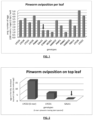
- a selection of 15 different genotypes were tested for differences in oviposition attractiveness for pinworm females.
- One plant originating from one genotype was randomly placed in an insect cage (45*45*90cm; 150 mesh gauze). Experimental plants were exposed to 100 adult moths. Two days post infestation (2dpi) the total number of eggs per leaves present per genotype were scored (24-26°C, 50-70%RH; 8hr darkness and 16hr light (Philips reflex TLD 840 36W)).
- Tomato pinworm oviposition experiment Three choice experiment
- Pinworm larval feeding behavior was studied by exposing a selection of tomato genotypes to adult moths in a choice set-up. Plants were positioned in an insect cage (45*45*90cm; 150 mesh gauze). One cage contained 15 randomly placed individual plants from different germplasm, the experiment consisted out of two replicates. Per replicate the genotypes under testing (see also table 1) were exposed to 100 adult moths. Seven days post infestation the exact number of mines per leaf were counted, since number of mines are indicative for feeding attractiveness by the pinworm larvae. A mine is the space created in leaf tissue between the epidermal layers by herbivore feeding (24-26°C, 50-70%RH; 8hr darkness and 16hr light (Philips reflex TLD 840 36W)).
- the internal rows were divided into 14 different sections (plots) with 16 pots each (15L), in between plots also some LYCO2 tomato plants were positioned.
- LLT Leaflet Lesion Type
- OPD Overall Plant Damage
- PPA Percent Leaflets Attacked
- Pinworm oviposition preferences were studied under climatized lab-conditions. For each tested genotype one plant was positioned in an experimental cage. Plants were approximately of the same height, while number of leaves ranged between 6 and 11. Plants were exposed to 100 adult moths for 2 days, after which number of eggs per leaf per plant were scored. Per tested genotype the average number of eggs per leaf were calculated.
- Pinworm larval feeding behaviour was studied by exposing tomato genotypes to 100 adult moths in a choice experiment. Tested tomato genotypes were positioned in a cage under climatized lab-conditions (two replicates with one plant per genotype).
- Plants were approximately of the same height, while number of leaves ranged between 6 and 11. At 7 dpi the exact numbers of mines per leaf were counted.
- Results are presented in figure 3 . This figure illustrates that GALA1 is far less susceptible to pinworm feeding than most of the tested other germplasms.
- RIL population was an interspecific population derived from a cross between S. lycorpersicum (inbred cultivar LYCO1 ) and S. galapagense GALA1. LYCO1 was verified as susceptible to South American Pinworm. This population consisted of F8 Recombinant Inbred Lines (RILs) developed by Single Seed Descent.
- RILs F8 Recombinant Inbred Lines
- RIL lines per sub-experiment with significant higher levels of resistance than their recurrent parent, LYCO1, are listed below in table 3. Means for distinct parameters from RIL's were statistically compared with the mean of the recurrent parent per plantation date. A ranking of only the significantly different resistant RIL-lines per parameter was performed by normalization using the recurrent parent as the denominator (if the normalized mean is ⁇ 1, the plant is resistant; if the normalized mean is ⁇ 1, the plant is susceptible). Within this invention the inventors characterized as most robust resistance RIL lines TUT101, TUT103, TUT110 and TUT117. RIL-lines TUT115, TUT110 and TUT111 demonstrated strongest immediate, at PLA1, resistance against oviposition. Table 3.
- the inventors conclude that they have identified resistance (comprising inter alia non-feeding-preference) indicated by PLA and to a lower extend also by LLT and OPD.
- TUT115 has been deposited by Hazera Genetics Ltd, Berurim, M.P. Shikmim 79837, Israel, with the NCIMB (NCIMB Ltd, Ferguson Building, Craibstone Estate, Bucksburn, Aberdeen AB21 9YA, United Kingdom), on 11 th February 2013, under accession number NCIMB 42109.
- Phenotypic information based on PLA Phenotypic information based on PLA:
- Phenotypic information shows that both line TUT115 and TUT101 display a significant reduction in leaves affected by T. absoluta.
- Genotypic information show no difference between line TUT115 and TUT101.
- Donor GALA1 2.50%
- TUT115 0%
- TUT101 11%
- One experimental cage contained 4 RIL lines for testing (i.e TUT101, TUT110, TUT115 and TUT103) in replica, 2 recurrent parent plants and 1 donor plant. From each plant 3 consecutive fully developed leaves positioned in the upper third part of the plant were tagged. Plants were infested by introducing 100 adult tomato pinworms per experimental cage.
- One experiment contained 8 experimental cages (24-26 0 C; 50-70%RH; 8hr darkness: 16hr light (Philips reflex TLD 840 36W).
- RILs were compared against the recurrent parent LYCO1. Means from individual lines were adjusted by introducing a cage-effect into the linear model. Individual lines were compared using the Tukey Kramer test.
- Example 2 Development of molecular markers and identification of the underlying genetic.
- the discovery population for the experiment was an interspecific population derived from a cross between S. lycorpersicum (inbred cultivar LYCO1 ) and S. galapagense GALA1.
- LYCO1 was verified as susceptible to South American Pinworm, and GALA1 was identified as resistant to South American Pinworm (example 1).
- This population consisted of F8 Recombinant Inbred Lines (RILs) developed by Single Seed Descent.
- Genomic DNA from tomato leaves was extracted using Qiagen DNeasy plant DNA extraction kit.
- a set of 737-SNPs combination was selected based on their allelic variation and evenly spaced along the genome.
- High-throughput SNP genotyping was carried out with the GoldenGate assays and the BeadXpress reader from Illumina. The genotypes (of the RILs and of the two parental lines) were screened with 384 markers in a single plate. SNP genotyping data was scored using the Illumina GenomeStudio genotyping software with a no-call threshold of 0.25.
- a SNP set was designed for the Illumina GoldenGate assay, which used locus and allele-specific oligos with cy3/cy5 labeling to detect SNP alleles at each locus. These custom Oligo Pool Assay (OPA) sets were then run on the Illumina BeadXpress Reader as 384-plex VeraCode assays. Veracode uses cylinder microbeads with an internal barcode to differentiate bead types which correspond to different SNP loci (384 bead types are used for a 384-plex SNP set), and each microbead was coated with oligos that contain a unique address that hybridizes with the labeled products.
- OPA Oligo Pool Assay
- the beads were aligned in a groove plate, and the bead codes and cy3/cy5 signal intensities were measured across replicated sets of beads to assign the SNP alleles.
- This procedure allowed a rapid, high-quality SNP calling of 96 samples by 384 SNPs without requiring fixed arrays.
- the GenomeStudio software from Illumina was used for clustering alleles based on the ratio of the cy3/cy5 signal intensities to call the three genotype classes.
- SNPs with call rate below 70% or with no polymorphism between donor and recurrent parents were removed from the analysis, resulting in 310 SNPs for further analysis.
- Phenotypic data was collected as described in example 1.
- the resistance phenotype was identified by several measurement methods: 1) percent leaflet attacked (PLA), 2) leaflet lesion type (LLT) and 3) overall plant damage (OPD) ⁇ Maluf, 1997 ⁇ . Each was measured in two time points. The first PLA measurement was the only one that distributes normally, and therefore it was used for marker identification. Information from the two other measurement methods was used to reinforce the confidence in the associated markers.
- Phenotypic data was normalized using a mixed linear model ⁇ Zar, 2010 ⁇ , including planting and measurement date as fixed effects. The adjusted means from the model were used as input for the association study described below.
- the genotyping information described in the SNP genotyping section, and the adjusted mean of the phenotypic measurements were used as input to association mapping via one way ANOVA, using R ⁇ Broman 2009 ⁇ . Each marker was considered independently in order to detect significant markers. The significant markers were then analyzed in the same model in order to retrieve their combined R 2 .
- the inventors investigated the LD (Linkage Disequilibrium) patterns in the RIL population. Pairwise LD estimation for all marker combinations in each chromosome was conducted using Haploview software ⁇ Barrett, 2005 ⁇ . Pairwise LD was measured as the D' statistic ⁇ Lewontin, 1964 ⁇ .
- Haplotype-blocks were defined using the "solid-spine” option which was defined as a “spine” of strong LD running from one marker to its adjacent markers in the LD chart, meaning that the first and last markers in a block were in strong LD with all intermediate markers although the intermediate markers were not necessarily in LD with each other.
- RILs were phenotyped and genotyped using 310 polymorphic SNPs.
- the SNPs were physically mapped to the tomato genome version 2.1 ⁇ Bombarely, 2011 ⁇ and then adjusted to the tomato genome version 2.40.
- the broad sense heritability of the resistance to South America tomato pinworm as defined by the first PLA measurement is 0.6. This means 60% of the trait as observed by this experiment can be explained by genetic factors, either additive or dominant.
- association analysis identified a set of markers significantly linked to resistance to South America tomato pinworm as defined by the first PLA measurement.
- the list of associated markers and their significance are summarized in table 5.
- This table comprises all significant markers resulting from the analysis of the phenotypic data, associated to SNP markers by an ANOVA model.
- the combined R 2 of the listed markers amounts to 0.55, meaning all markers together explain 55% of observed phenotypic variance.
- the allelic state of the significant markers is identical in the resistant parent and the most resistant RIL, namely TUT115, as described in example 1.
- Table 5 Chromosome position (genome version 2.40) SNP P value a significant in additional measurements (with p-value)
- Haplotype Block Adjacent markers with a low recombination rate between them belong to the same haplotype block. Markers from the same chromosome and haplotype block are marked by a gray background.
- Table 6 Chromosome Marker TUT101 TUT110 TUT115 TUT103 T3 T6 1 solcap_snp_sl_18619 G/G G/G G/G T/T T/T G/G 1 solcap_snp_sl_12348 C/C T/T C/C C/C T/T C/C 1 EP_1592_LC7762 * * C/C * T/T C/C 5 EE_0301 T/T G/G T/T G/G G/G T/T 6 EE_4363_LC7656 G/G G/G G/G T/T T/T G/G 9 CL016475-0340 A/A G/G A/A G/G G/G A/A 9 EP_0502 C/C A/A C/C A/A A/A C/C 9 EE_4969_LC7529 A/A G/G A/A G/G G/G G/
- the chromosome position is by reference to the tomato genome version 2.40.
- Table 7 SNP TUT115 LYCO1 GALA1 CHROMOSOME POSITION Donor/ recurrent EE_4663_LC7672 T/T T/T C/C 1 1558580 2 EE_2169_LC7254 A/A A/A G/G 1 2204620 2 IL3_1821 T/T T/T C/C 1 2349120 2 solcap_snp_sl_59890 ⁇ s A/A G/G A/A 1 4597950 1 solcap_snp_sl_19066 C/C T/T C/C 1 38118500 1 solcap_snp_sl_14042 T/T C/C T/T 1 38274900 1 solcap_snp_sl_18619 * G / G T / T G / G 1 68232900 1 solcap_snp_sl_18619 * G / G T / T G / G
- markers were significantly associated with the PLA measure of resistance to South America tomato pinworm, together explaining 55% of the observed phenotypic variance.
- markers are also significantly associated with other measures of resistance, namely LLT and OPD, which reinforce the confidence of these markers.
- LLT and OPD measures of resistance
- Markers are validated by crossing line TUT115, which displayed the highest resistance relative to all tested RILs, with a susceptible line. The resulting F1 is selfed, and a large population of F2 seeds is collected. Plants are grown and genotyped. A selection of the F2 progeny is selfed to F3. The F3 families are phenotyped as described in example 1. The linkage of each marker to the resistance phenotype is assessed.
- Each F2 plant carry a subset of the validated markers, where all selected F2 plants together cover all validated markers.
- Each F2 plant is backcrossed to a breeding line in a marker assisted backcross scheme. Plants having the relevant markers as well as the highest percentage of breeding line markers are selected to a second round of backcrossing. This process is repeated to a third backcross round resulting in a set of lines with a high percentage of breeding line background, each having a homozygous subset of the markers linked to the required resistance. Next the lines are crossed in turn in order to accumulate (“pyramid”) all required markers into one line or commercial variety.
- the resistance to South American Pinworm is a complex trait, probably defined by several genes ⁇ Maluf 1997, 2010a ⁇ .
- the inventors describe here the identification of a resistant source, and resistant recombinant inbred lines devised from this source. In addition, they identified a group of markers significantly correlated with the resistance, identifying the resistant line. Since this trait is highly affected by environment ⁇ Resende 2002 ⁇ , not all the observed variance is however explained by the genetic markers as shown by the calculated heritability of 0.6.
- Example 3 Determine resistance of identified RIL's of GALA1 against additional organisms
- Test plants were infested three weeks after sowing by placing heavily infested leaves from the spidermite rearing face down on the test plants. The leaves used for infestation were placed close to each other in order to create a surface of leaves above the test plants. After infestation, plants were irrigated using a flooding system. Two days after infestation the leaves that were used for infestation were removed.
- the spidermite population reached a peak after two to three weeks. Three weeks post infestation feeding damage levels were scored.
- the susceptible or resistant plants were defined by the amount and the distribution of the population and were indexed by a scale from 0-3 (see below):
- Plant symptoms from 0-1 indicate resistant plants. Plants symptoms from 2-3 indicate susceptible plants (see FIG.4 for illustration).
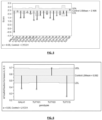
- Resistance levels for the individual RIL-lines were compared to resistance levels from the recurrent parent, i.e. LYCO1 , using an Hsu-Dunnett LSMeans Difference test. The mean score from each tested line was adjusted by entering observation notes as an effect into the linear model. Obtained data indicated that almost all tested RIL lines were significantly more resistant against spider mites when compared to the recurrent parent (see FIG.5 ).
- RIL lines were mostly resistant, but these lines were less resistant compared to donor GALA1. Therefore it is concluded that the donor and also most of the RIL lines contain resistance traits that hamper population build up for the tested spidermite species, which is determined by scoring the population distribution per genotype using feeding symptoms and mite and webbing density as parameters.
- RIL leads were tested for resistance against the Hemiptera white fly. As a measure of resistance the success of building up a white fly population on a plant was scored by counting numbers of newly developed white fly nymphs.
- Experimental plants were randomly divided over three experimental cages (0,9m width * 8,0m length *0,6m height) in a greenhouse (temperature: +/-30 0 C day and +/-20 0 C night).
- Experimental cages hosted at least 6 plants per tested germplasm. Three consecutive fully developed leaves were marked starting at the top of a plant.
- nymphs were counted from the bottom side of the prior marked leaves. For this end, five randomly 2 cm 2 areas per leave were screened for nymphs using a magnifying glass (6X).
- tested genotypes were more resistant against white flies compared to recurrent parent LYCO1. Moreover, this bioassay indicate that tested RIL line TUT112 is more resistant against white fly population build ( i.e. nymph presence) compared to donor GALA1.
- Resistance levels for the individual RIL-lines were compared to resistance levels from the recurrent parent, i.e. LYCO1 , using an Hsu-Dunnett LSMeans Difference test (see FIG.6 ). The mean score from each tested line was adjusted by entering observation notes as an effect into the linear model.
- RIL-lines TUT101 and TUT115 were significantly more resistant against thrips damage compared to recurrent parent LYCO1. These two RIL-lines showed GALA1 levels of resistance against thrips.
- Tomato Russet mite (Aculopus lycopersici )
- Test plants were infested six weeks after sowing by placing heavily infested leaves from a tomato russet mite rearing face down on the test plants. After infestation, plants were regularly irrigated using 20:20:20 NPK. Two days post infestation used leaves for infestation were removed (26°C; 16hr light : 8hr dark regime).
- the tomato russet mite population was scored 2 weeks after infestation by determining the severeness of the present russet mite population and the observed feeding symptoms.
- Table 9 Resistance against the tomato russet mite. genotype Russet mite population Feeding symptoms LYCO2 Abundant severe necrosis + chlorosis TUT103 Abundant severe necrosis + chlorosis TUT110 Abundant severe necrosis + chlorosis TUT115 Poor some necrosis GALA1 Poor some necrosis
- TUT115 contain the resistance characteristics from donor GALA1 that could cause non-preference.
- Example 4 flanking sequences of the SNPs of the invention.
- flanking sequences of the 12 SNPs of the invention and of the 12 alternative SNPs of the invention are hereby given in table 10.
- Table 10 SNP 5' flanking sequence 3' flanking sequence solcap_snp _sl_18619 solcap_snp _sl_12348 EP_1592_L C7762 EE_0301 EE_4363_L C7656 CL016475-0340 EP_0502 EE_4969_L C7529 EE_2332 SL10204_1 269 SGN-U573565_s np665 EE_0924 EE_1452 EE_2996 IL2_5178 EE_2362 SL10187_ 425 solcap_snp _sl_15339 solcap_snp _sl_32320 solcap_snp _sl_40154 solcap_snp _sl_59890 EP_0489_L C7684 EE_3482_L C7808 SL10539_
Landscapes
- Genetics & Genomics (AREA)
- Life Sciences & Earth Sciences (AREA)
- Health & Medical Sciences (AREA)
- Engineering & Computer Science (AREA)
- Zoology (AREA)
- Molecular Biology (AREA)
- Bioinformatics & Cheminformatics (AREA)
- Wood Science & Technology (AREA)
- Chemical & Material Sciences (AREA)
- Biomedical Technology (AREA)
- Organic Chemistry (AREA)
- Biotechnology (AREA)
- General Engineering & Computer Science (AREA)
- Biophysics (AREA)
- Plant Pathology (AREA)
- Microbiology (AREA)
- Physics & Mathematics (AREA)
- Cell Biology (AREA)
- Pest Control & Pesticides (AREA)
- Biochemistry (AREA)
- General Health & Medical Sciences (AREA)
- Insects & Arthropods (AREA)
- Breeding Of Plants And Reproduction By Means Of Culturing (AREA)
Claims (16)
- S. lycopersicum-Pflanze, welche resistent gegen einen Arthropodenschädling und resistent gegen ToMV (Tomatenmosaikvirus) ist, umfassend in ihrem Genom introgressierte Sequenzen von S. galapagense, welche Resistenz gegen den Arthropodenschädling verleihen,wobei die introgressierten Sequenzen ausgewählt sind aus denen, welche in dem Genom einer Pflanze der Linie TUT115 NCIMB-Hinterlegungsnummer 42109 vorhanden sind, undi. das Fragment, welches zwischen SNPs solcap_snp_sl_59890 und solcap_snp_sl_15339 in Chromosom 1 einer Pflanze der Linie TUT115 NCIMB-Hinterlegungsnummer 42109 umfasst ist und/oderii. das Fragment, welches zwischen SNPs solcap_snp_sl_40154 und EP_1592_LC7762 in Chromosom 1 einer Pflanze der Linie TUT115 NCIMB-Hinterlegungsnummer 42109 umfasst ist, und/oderiii. das Fragment, welches zwischen SNPs EE_4363_LC7656 und SL10539_786_LC7260 in Chromosom 6 einer Pflanze der Linie TUT115 NCIMB-Hinterlegungsnummer 42109 umfasst ist, und/oderiv. das Fragment, welches zwischen SNPs EP_0489_LC7684 und EE_1452 in Chromosom 9 einer Pflanze der Linie TUT115 NCIMB-Hinterlegungsnummer 42109 umfasst ist, und/oderv. das Fragment, welches zwischen SNPs SL10204_1269 und EE_0924 in Chromosom 12 einer Pflanze der Linie TUT115 NCIMB-Hinterlegungsnummer 42109 umfasst ist, umfassen undwobei die 5'- und 3'-flankierenden Sequenzen von solcap_snp_sl_59890 jeweils SEQ ID No:41 und SEQ ID No:42 sind, die 5'- und 3'-flankierenden Sequenzen von solcap_snp_sl_15339 jeweils SEQ ID No:35 und SEQ ID No:36 sind, die 5'- und 3'-flankierenden Sequenzen von solcap_snp_sl_40154 jeweils SEQ ID No:39 und SEQ ID No:40 sind, die 5'- und 3'-flankierenden Sequenzen von EP_1592_LC7762 jeweils SEQ ID No:5 und SEQ ID No:6 sind, die 5'- und 3'-flankierenden Sequenzen von EE_4363_LC7656 jeweils SEQ ID No:9 und SEQ ID No:10 sind, die 5'- und 3'-flankierenden Sequenzen von SL10539_786_LC7260 jeweils SEQ ID No:47 und SEQ ID No:48 sind, die 5'- und 3'-flankierenden Sequenzen von EP_0489_LC7684 jeweils SEQ ID No:43 und SEQ ID No:44 sind, die 5'- und 3'-flankierenden Sequenzen von EE_1452 jeweils SEQ ID No:25 und SEQ ID No:26 sind, die 5'- und 3'-flankierenden Sequenzen von SL 10204_1269 jeweils SEQ ID No:19 und SEQ ID No:20 sind und die 5'- und 3'- flankierenden Sequenzen von EE_0924 jeweils SEQ ID No:23 und SEQ ID No:24 sind.
- Pflanze nach Anspruch 1, wobei die introgressierten Sequenzen mindestens zwei der Fragmente (i) bis (v) umfassen.
- Pflanze nach Anspruch 1, wobei die introgressierten Sequenzen drei oder vier der Fragmente (i) bis (v) umfassen.
- S. lycopersicum-Pflanze nach einem der Ansprüche 1 bis 3, wobei die introgressierten Sequenzen von S. galapagense homozygot im Genom der Pflanze vorhanden sind.
- S. lycopersicum-Pflanze nach einem der Ansprüche 1 bis 4, gekennzeichnet durch das Vorhandensein in dem Genom der S. lycopersicum-Pflanze von mindestens einem der folgenden Allele:• Allel G von SNP solcap_snp_sl_18619 auf Chromosom 1, wobei die 5'- und 3'-flankierenden Sequenzen des SNP jeweils SEQ ID No:1 und SEQ ID No:2 sind,• Allel C von SNP solcap_snp_sl_12348 auf Chromosom 1, wobei die 5'- und 3'-flankierenden Sequenzen des SNP jeweils SEQ ID No:3 und SEQ ID No:4 sind;• Allel C von SNP EP_1592_LC7762 auf Chromosom 1, wobei die 5'- und 3'-flankierenden Sequenzen des SNP jeweils SEQ ID No:5 und SEQ ID No:6 sind,• Allel T von SNP EE_0301 auf Chromosom 5, wobei die 5'- und 3'-flankierenden Sequenzen des SNP jeweils SNP SEQ ID No:7 und SEQ ID No:8 sind,• Allel G von SNP EE_4363_LC7656 auf Chromosom 6, wobei die 5'- und 3'-flankierenden Sequenzen des SNP jeweils SEQ ID No:9 und SEQ ID No:10 sind,• Allel A von SNP CL016475-0340 auf Chromosom 9, wobei die 5'- und 3'-flankierenden Sequenzen des SNP jeweils SEQ ID No:11 und SEQ ID No:12 sind;• Allel C von SNP EP_0502 auf Chromosom 9, wobei die 5'- und 3'-flankierenden Sequenzen des SNP jeweils SEQ ID No:13 und SEQ ID No:14 sind,• Allel A von SNP EE_4969_LC7529 auf Chromosom 9, wobei die 5'- und 3'-flankierenden Sequenzen des SNP jeweils SEQ ID No:15 und SEQ ID No:16 sind,• Allel T von SNP EE_2332 auf Chromosom 9, wobei die 5'- und 3'-flankierenden Sequenzen des SNP jeweils SEQ ID No:17 und SEQ ID No:18 sind,• Allel C von SNP SL10204_1269 auf Chromosom 12, wobei die 5'- und 3'-flankierenden Sequenzen des SNP jeweils SEQ ID No:19 und SEQ ID No:20 sind,• Allel A von SNP SGN-U573565_snp665 auf Chromosom 12, wobei die 5'- und 3'-flankierenden Sequenzen des SNP jeweils SEQ ID No:21 und SEQ ID No:22 sind, und• Allel T von SNP EE_0924 auf Chromosom 12, wobei die 5'- und 3'-flankierenden Sequenzen des SNP jeweils SEQ ID No:23 und SEQ ID No:24 sind.
- Pflanze nach einem der Ansprüche 1 bis 5, wobei die introgressierten Sequenzen Quantitative Trait Loci (QTL) konstituieren, welche dem Merkmal, welches der Resistenz gegen Arthropodenschädlinge entspricht, zugrunde liegen.
- Pflanze nach einem der Ansprüche 1 bis 6 umfassend Allel G von SNP solcap_snp_sl_18619, Allel C von SNP solcap_snp_sl_12348, Allel C von SNP EP_1592_LC7762, Allel T von SNP EE_0301, Allel G von SNP EE_4363_LC7656, Allel A von SNP CL016475-0340; Allel C von SNP EP_0502, Allel A von SNP EE_4969_LC7529, Allel T von SNP EE_2332, Allel C von SNP SL10204_1269, Allel A von SNP SGN-U573565_snp665 und Allel T von SNP EE_0924.
- Pflanze nach einem der Ansprüche 1 bis 7, wobei die Arthropoden Insekten sind.
- Pflanze nach einem der Ansprüche 1 bis 8, wobei der Arthropode der südamerikanische Madenwurm T. absoluta ist.
- Pflanze nach einem der Ansprüche 1 bis 9, wobei die Arthropoden ausgewählt sind aus Weißen Fliegen, Thripsen und Spinnmilben.
- Pflanze nach einem der Ansprüche 1 bis 10, wobei die Resistenz anhand des Prozentsatzes attackierten Blätter, vorzugsweise 8 Tage nach dem Befall, gemessen wird.
- Zelle einer S. lycopersicum-Pflanze nach einem der Ansprüche 1 bis 11, umfassend in ihrem Genom introgressierte Sequenzen von S. galapagense, welche Resistenz gegen den Arthropodenschädling verleihen,
wobei die introgressierten Sequenzen ausgewählt sind aus jenen, welche in dem Genom einer Pflanze der Linie TUT115 (NCIMB-Hinterlegungsnummer 42109) vorhanden sind, und ein beliebiges der Fragmente i) bis v) nach Anspruch 1 umfassen. - Pflanzenteil einer S. lycopersicum-Pflanze nach einem der Ansprüche 1 bis 11, insbesondere Samen, Vermehrungsmaterial, Wurzeln, Blüten, Früchte, Wurzelstock oder Spross, wobei der Pflanzenteil Zellen nach Anspruch 12 umfasst.
- Samen einer S. lycopersicum-Pflanze, welcher sich zu einer Pflanze nach einem der Ansprüche 1 bis 11 entwickelt.
- Verfahren zum Detektieren und/oder Selektieren von S. lycopersicum-Pflanzen, welche introgressierte Sequenzen von S. galapagense aufweisen, wie sie in dem Genom einer Pflanze der Linie TUT115 (NCIMB-Hinterlegungsnummer 42109) gefunden werden, wobei die introgressierten Sequenzen Resistenz gegen Arthropoden verleihen, umfassend Detektion von mindestens einem der folgenden Marker: Allel G von SNP solcap_snp_sl_18619, wobei die 5'- und 3'-flankierenden Sequenzen des SNP jeweils SEQ ID No:1 und SEQ ID No:2 sind, Allel C von SNP solcap_snp_sl_12348, wobei die 5'- und 3'-flankierenden Sequenzen des SNP jeweils SEQ ID No:3 und SEQ ID No:4 sind; Allel C von SNP EP_1592_LC7762, wobei die 5'- und 3'-flankierenden Sequenzen des SNP jeweils SEQ ID No:5 und SEQ ID No:6 sind, Allel T von SNP EE_0301, wobei die 5'- und 3'-flankierenden Sequenzen des SNP jeweils SEQ ID No:7 und SEQ ID No:8 sind, Allel G von SNP EE_4363_LC7656, wobei die 5'- und 3'-flankierenden Sequenzen des SNP jeweils SEQ ID No:9 und SEQ ID No:10 sind, Allel A von SNP CL016475-0340, wobei die 5'- und 3'-flankierenden Sequenzen des SNP jeweils SEQ ID No:11 und SEQ ID No:12 sind; Allel C von SNP EP_0502, wobei die 5'- und 3'-flankierenden Sequenzen des SNP jeweils SEQ ID No:13 und SEQ ID No:14 sind, Allel A von SNP EE_4969_LC7529, wobei die 5'- und 3'-flankierenden Sequenzen des SNP jeweils SEQ ID No:15 und SEQ ID No:16 sind, Allel T von SNP EE_2332, wobei die 5'- und 3'-flankierenden Sequenzen des SNP jeweils SEQ ID No:17 und SEQ ID No:18 sind, Allel C von SNP SL10204_1269, wobei die 5'- und 3'-flankierenden Sequenzen des SNP jeweils SEQ ID No:19 und SEQ ID No:20 sind, Allel A von SNP SGN-U573565_snp665, wobei die 5'- und 3'-flankierenden Sequenzen des SNP jeweils SEQ ID No:21 und SEQ ID No:22 sind und Allel T von SNP EE_0924, wobei die 5'- und 3'-flankierenden Sequenzen des SNP jeweils SEQ ID No:23 und SEQ ID No:24 sind, in einer Probe des genetischen Materials der zu selektierenden Pflanze.
- Hybridpflanze von S. lycopersicum, erhältlich durch Kreuzen einer Pflanze von S. lycopersicum mit einer resistenten Pflanze nach Anspruch 4.
Priority Applications (7)
| Application Number | Priority Date | Filing Date | Title |
|---|---|---|---|
| PL13305205.0T PL2770059T3 (pl) | 2013-02-22 | 2013-02-22 | Odporność pomidorów na szkodniki będące stawonogami |
| ES13305205T ES3015723T3 (en) | 2013-02-22 | 2013-02-22 | Resistance to arthropod pest in tomatoes |
| EP13305205.0A EP2770059B1 (de) | 2013-02-22 | 2013-02-22 | Resistenz gegen Arthropodenschädlinge bei Tomaten |
| MA38437A MA38437B2 (fr) | 2013-02-22 | 2014-02-21 | Résistance à un organisme nuisible de type arthropode dans les tomates |
| MX2015010828A MX370778B (es) | 2013-02-22 | 2014-02-21 | Un método para detectar secuencias que confieren resistencia a artrópodos en plantas de solanum lycopersicum. |
| PCT/EP2014/053459 WO2014128268A1 (en) | 2013-02-22 | 2014-02-21 | Resistance to arthropod pest in tomatoes |
| EP14706037.0A EP2959002A1 (de) | 2013-02-22 | 2014-02-21 | Resistenz gegen arthropodenschädlinge in tomaten |
Applications Claiming Priority (1)
| Application Number | Priority Date | Filing Date | Title |
|---|---|---|---|
| EP13305205.0A EP2770059B1 (de) | 2013-02-22 | 2013-02-22 | Resistenz gegen Arthropodenschädlinge bei Tomaten |
Publications (3)
| Publication Number | Publication Date |
|---|---|
| EP2770059A1 EP2770059A1 (de) | 2014-08-27 |
| EP2770059B1 true EP2770059B1 (de) | 2025-02-12 |
| EP2770059C0 EP2770059C0 (de) | 2025-02-12 |
Family
ID=47750594
Family Applications (1)
| Application Number | Title | Priority Date | Filing Date |
|---|---|---|---|
| EP13305205.0A Active EP2770059B1 (de) | 2013-02-22 | 2013-02-22 | Resistenz gegen Arthropodenschädlinge bei Tomaten |
Country Status (4)
| Country | Link |
|---|---|
| EP (1) | EP2770059B1 (de) |
| ES (1) | ES3015723T3 (de) |
| MA (1) | MA38437B2 (de) |
| PL (1) | PL2770059T3 (de) |
-
2013
- 2013-02-22 EP EP13305205.0A patent/EP2770059B1/de active Active
- 2013-02-22 PL PL13305205.0T patent/PL2770059T3/pl unknown
- 2013-02-22 ES ES13305205T patent/ES3015723T3/es active Active
-
2014
- 2014-02-21 MA MA38437A patent/MA38437B2/fr unknown
Also Published As
| Publication number | Publication date |
|---|---|
| MA38437B2 (fr) | 2020-12-31 |
| MA38437A1 (fr) | 2018-11-30 |
| EP2770059A1 (de) | 2014-08-27 |
| PL2770059T3 (pl) | 2025-06-09 |
| ES3015723T3 (en) | 2025-05-07 |
| EP2770059C0 (de) | 2025-02-12 |
Similar Documents
| Publication | Publication Date | Title |
|---|---|---|
| US6096944A (en) | Methods for conferring broad-based soybean cyst nematode resistance to a soybean line | |
| EP2166833B1 (de) | Verbesserte paprikapflanze | |
| EP3777526A1 (de) | Kopfsalatpflanzen mit resistenz gegen nasonovia ribisnigri biotyp 1 | |
| US8841516B2 (en) | Fusarium resistant cucumber plants | |
| US12268144B2 (en) | Melon plants with maturity indicator | |
| US11629386B2 (en) | Resistance to arthropod pest in tomatoes | |
| EP3228186A1 (de) | Erhöhter ertrag und menge von löslichen zuckern, die früchten zugeordnet sind, in tomatenpflanzen | |
| US20250008902A1 (en) | Novel squash plants with downy mildew resistance | |
| AU2021330660B2 (en) | Novel disease resistant watermelon plants | |
| US12600980B2 (en) | Disease resistant melon plants | |
| US9644242B2 (en) | Resistance to arthropod pest in tomatoes | |
| EP2770059A1 (de) | Resistenz gegen Arthropodenschädlinge bei Tomaten | |
| WO2014128268A1 (en) | Resistance to arthropod pest in tomatoes | |
| WO2025021893A1 (en) | Resistance to cysdv in melons | |
| EP4478874A1 (de) | Neue tomatenpflanzen mit tobrfv-resistenz | |
| CN113234850A (zh) | 一种卷筒叶抗褐飞虱水稻恢复系的育种方法 | |
| HK1134994B (en) | Improved pepper plant |
Legal Events
| Date | Code | Title | Description |
|---|---|---|---|
| PUAI | Public reference made under article 153(3) epc to a published international application that has entered the european phase |
Free format text: ORIGINAL CODE: 0009012 |
|
| 17P | Request for examination filed |
Effective date: 20130222 |
|
| AK | Designated contracting states |
Kind code of ref document: A1 Designated state(s): AL AT BE BG CH CY CZ DE DK EE ES FI FR GB GR HR HU IE IS IT LI LT LU LV MC MK MT NL NO PL PT RO RS SE SI SK SM TR |
|
| AX | Request for extension of the european patent |
Extension state: BA ME |
|
| R17P | Request for examination filed (corrected) |
Effective date: 20150227 |
|
| RBV | Designated contracting states (corrected) |
Designated state(s): AL AT BE BG CH CY CZ DE DK EE ES FI FR GB GR HR HU IE IS IT LI LT LU LV MC MK MT NL NO PL PT RO RS SE SI SK SM TR |
|
| 17Q | First examination report despatched |
Effective date: 20160520 |
|
| STAA | Information on the status of an ep patent application or granted ep patent |
Free format text: STATUS: EXAMINATION IS IN PROGRESS |
|
| GRAP | Despatch of communication of intention to grant a patent |
Free format text: ORIGINAL CODE: EPIDOSNIGR1 |
|
| STAA | Information on the status of an ep patent application or granted ep patent |
Free format text: STATUS: GRANT OF PATENT IS INTENDED |
|
| INTG | Intention to grant announced |
Effective date: 20240920 |
|
| GRAS | Grant fee paid |
Free format text: ORIGINAL CODE: EPIDOSNIGR3 |
|
| GRAA | (expected) grant |
Free format text: ORIGINAL CODE: 0009210 |
|
| STAA | Information on the status of an ep patent application or granted ep patent |
Free format text: STATUS: THE PATENT HAS BEEN GRANTED |
|
| AK | Designated contracting states |
Kind code of ref document: B1 Designated state(s): AL AT BE BG CH CY CZ DE DK EE ES FI FR GB GR HR HU IE IS IT LI LT LU LV MC MK MT NL NO PL PT RO RS SE SI SK SM TR |
|
| REG | Reference to a national code |
Ref country code: GB Ref legal event code: FG4D |
|
| REG | Reference to a national code |
Ref country code: CH Ref legal event code: EP |
|
| REG | Reference to a national code |
Ref country code: DE Ref legal event code: R096 Ref document number: 602013086497 Country of ref document: DE |
|
| REG | Reference to a national code |
Ref country code: IE Ref legal event code: FG4D |
|
| U01 | Request for unitary effect filed |
Effective date: 20250310 |
|
| U07 | Unitary effect registered |
Designated state(s): AT BE BG DE DK EE FI FR IT LT LU LV MT NL PT RO SE SI Effective date: 20250408 |
|
| U20 | Renewal fee for the european patent with unitary effect paid |
Year of fee payment: 13 Effective date: 20250423 |
|
| PG25 | Lapsed in a contracting state [announced via postgrant information from national office to epo] |
Ref country code: RS Free format text: LAPSE BECAUSE OF FAILURE TO SUBMIT A TRANSLATION OF THE DESCRIPTION OR TO PAY THE FEE WITHIN THE PRESCRIBED TIME-LIMIT Effective date: 20250512 |
|
| PG25 | Lapsed in a contracting state [announced via postgrant information from national office to epo] |
Ref country code: IS Free format text: LAPSE BECAUSE OF FAILURE TO SUBMIT A TRANSLATION OF THE DESCRIPTION OR TO PAY THE FEE WITHIN THE PRESCRIBED TIME-LIMIT Effective date: 20250612 Ref country code: NO Free format text: LAPSE BECAUSE OF FAILURE TO SUBMIT A TRANSLATION OF THE DESCRIPTION OR TO PAY THE FEE WITHIN THE PRESCRIBED TIME-LIMIT Effective date: 20250512 |
|
| PG25 | Lapsed in a contracting state [announced via postgrant information from national office to epo] |
Ref country code: HR Free format text: LAPSE BECAUSE OF FAILURE TO SUBMIT A TRANSLATION OF THE DESCRIPTION OR TO PAY THE FEE WITHIN THE PRESCRIBED TIME-LIMIT Effective date: 20250212 |
|
| PG25 | Lapsed in a contracting state [announced via postgrant information from national office to epo] |
Ref country code: GR Free format text: LAPSE BECAUSE OF FAILURE TO SUBMIT A TRANSLATION OF THE DESCRIPTION OR TO PAY THE FEE WITHIN THE PRESCRIBED TIME-LIMIT Effective date: 20250513 |
|
| REG | Reference to a national code |
Ref country code: CH Ref legal event code: PL |
|
| PG25 | Lapsed in a contracting state [announced via postgrant information from national office to epo] |
Ref country code: SM Free format text: LAPSE BECAUSE OF FAILURE TO SUBMIT A TRANSLATION OF THE DESCRIPTION OR TO PAY THE FEE WITHIN THE PRESCRIBED TIME-LIMIT Effective date: 20250212 |
|
| PG25 | Lapsed in a contracting state [announced via postgrant information from national office to epo] |
Ref country code: CH Free format text: LAPSE BECAUSE OF NON-PAYMENT OF DUE FEES Effective date: 20250228 |
|
| PG25 | Lapsed in a contracting state [announced via postgrant information from national office to epo] |
Ref country code: CZ Free format text: LAPSE BECAUSE OF FAILURE TO SUBMIT A TRANSLATION OF THE DESCRIPTION OR TO PAY THE FEE WITHIN THE PRESCRIBED TIME-LIMIT Effective date: 20250212 |
|
| PG25 | Lapsed in a contracting state [announced via postgrant information from national office to epo] |
Ref country code: SK Free format text: LAPSE BECAUSE OF FAILURE TO SUBMIT A TRANSLATION OF THE DESCRIPTION OR TO PAY THE FEE WITHIN THE PRESCRIBED TIME-LIMIT Effective date: 20250212 |
|
| PLBE | No opposition filed within time limit |
Free format text: ORIGINAL CODE: 0009261 |
|
| STAA | Information on the status of an ep patent application or granted ep patent |
Free format text: STATUS: NO OPPOSITION FILED WITHIN TIME LIMIT |
|
| PG25 | Lapsed in a contracting state [announced via postgrant information from national office to epo] |
Ref country code: MC Free format text: LAPSE BECAUSE OF FAILURE TO SUBMIT A TRANSLATION OF THE DESCRIPTION OR TO PAY THE FEE WITHIN THE PRESCRIBED TIME-LIMIT Effective date: 20250212 |
|
| PG25 | Lapsed in a contracting state [announced via postgrant information from national office to epo] |
Ref country code: IE Free format text: LAPSE BECAUSE OF NON-PAYMENT OF DUE FEES Effective date: 20250222 |
|
| 26N | No opposition filed |
Effective date: 20251113 |
|
| GBPC | Gb: european patent ceased through non-payment of renewal fee |
Effective date: 20250512 |
|
| U20 | Renewal fee for the european patent with unitary effect paid |
Year of fee payment: 14 Effective date: 20260121 |
|
| PG25 | Lapsed in a contracting state [announced via postgrant information from national office to epo] |
Ref country code: GB Free format text: LAPSE BECAUSE OF NON-PAYMENT OF DUE FEES Effective date: 20250512 |
|
| PGFP | Annual fee paid to national office [announced via postgrant information from national office to epo] |
Ref country code: ES Payment date: 20260302 Year of fee payment: 14 |
|
| PGFP | Annual fee paid to national office [announced via postgrant information from national office to epo] |
Ref country code: TR Payment date: 20260126 Year of fee payment: 14 |
|
| PGFP | Annual fee paid to national office [announced via postgrant information from national office to epo] |
Ref country code: PL Payment date: 20260127 Year of fee payment: 14 |