EP2769870A2 - Electric vehicle and method of operating same - Google Patents
Electric vehicle and method of operating same Download PDFInfo
- Publication number
- EP2769870A2 EP2769870A2 EP12840973.7A EP12840973A EP2769870A2 EP 2769870 A2 EP2769870 A2 EP 2769870A2 EP 12840973 A EP12840973 A EP 12840973A EP 2769870 A2 EP2769870 A2 EP 2769870A2
- Authority
- EP
- European Patent Office
- Prior art keywords
- charging
- battery
- information
- notification message
- information notification
- Prior art date
- Legal status (The legal status is an assumption and is not a legal conclusion. Google has not performed a legal analysis and makes no representation as to the accuracy of the status listed.)
- Withdrawn
Links
Images



Classifications
-
- H—ELECTRICITY
- H02—GENERATION; CONVERSION OR DISTRIBUTION OF ELECTRIC POWER
- H02J—ELECTRIC POWER NETWORKS; CIRCUIT ARRANGEMENTS OR SYSTEMS FOR SUPPLYING OR DISTRIBUTING ELECTRIC POWER; SYSTEMS FOR STORING ELECTRIC ENERGY
- H02J7/00—Circuit arrangements for charging or discharging batteries or for supplying loads from batteries
-
- B—PERFORMING OPERATIONS; TRANSPORTING
- B60—VEHICLES IN GENERAL
- B60L—PROPULSION OF ELECTRICALLY-PROPELLED VEHICLES; SUPPLYING ELECTRIC POWER FOR AUXILIARY EQUIPMENT OF ELECTRICALLY-PROPELLED VEHICLES; ELECTRODYNAMIC BRAKE SYSTEMS FOR VEHICLES IN GENERAL; MAGNETIC SUSPENSION OR LEVITATION FOR VEHICLES; MONITORING OPERATING VARIABLES OF ELECTRICALLY-PROPELLED VEHICLES; ELECTRIC SAFETY DEVICES FOR ELECTRICALLY-PROPELLED VEHICLES
- B60L53/00—Methods of charging batteries, specially adapted for electric vehicles; Charging stations or on-board charging equipment therefor; Exchange of energy storage elements in electric vehicles
- B60L53/10—Methods of charging batteries, specially adapted for electric vehicles; Charging stations or on-board charging equipment therefor; Exchange of energy storage elements in electric vehicles characterised by the energy transfer between the charging station and the vehicle
- B60L53/12—Inductive energy transfer
-
- B—PERFORMING OPERATIONS; TRANSPORTING
- B60—VEHICLES IN GENERAL
- B60L—PROPULSION OF ELECTRICALLY-PROPELLED VEHICLES; SUPPLYING ELECTRIC POWER FOR AUXILIARY EQUIPMENT OF ELECTRICALLY-PROPELLED VEHICLES; ELECTRODYNAMIC BRAKE SYSTEMS FOR VEHICLES IN GENERAL; MAGNETIC SUSPENSION OR LEVITATION FOR VEHICLES; MONITORING OPERATING VARIABLES OF ELECTRICALLY-PROPELLED VEHICLES; ELECTRIC SAFETY DEVICES FOR ELECTRICALLY-PROPELLED VEHICLES
- B60L50/00—Electric propulsion with power supplied within the vehicle
- B60L50/50—Electric propulsion with power supplied within the vehicle using propulsion power supplied by batteries or fuel cells
-
- B—PERFORMING OPERATIONS; TRANSPORTING
- B60—VEHICLES IN GENERAL
- B60L—PROPULSION OF ELECTRICALLY-PROPELLED VEHICLES; SUPPLYING ELECTRIC POWER FOR AUXILIARY EQUIPMENT OF ELECTRICALLY-PROPELLED VEHICLES; ELECTRODYNAMIC BRAKE SYSTEMS FOR VEHICLES IN GENERAL; MAGNETIC SUSPENSION OR LEVITATION FOR VEHICLES; MONITORING OPERATING VARIABLES OF ELECTRICALLY-PROPELLED VEHICLES; ELECTRIC SAFETY DEVICES FOR ELECTRICALLY-PROPELLED VEHICLES
- B60L53/00—Methods of charging batteries, specially adapted for electric vehicles; Charging stations or on-board charging equipment therefor; Exchange of energy storage elements in electric vehicles
- B60L53/10—Methods of charging batteries, specially adapted for electric vehicles; Charging stations or on-board charging equipment therefor; Exchange of energy storage elements in electric vehicles characterised by the energy transfer between the charging station and the vehicle
- B60L53/14—Conductive energy transfer
-
- B—PERFORMING OPERATIONS; TRANSPORTING
- B60—VEHICLES IN GENERAL
- B60L—PROPULSION OF ELECTRICALLY-PROPELLED VEHICLES; SUPPLYING ELECTRIC POWER FOR AUXILIARY EQUIPMENT OF ELECTRICALLY-PROPELLED VEHICLES; ELECTRODYNAMIC BRAKE SYSTEMS FOR VEHICLES IN GENERAL; MAGNETIC SUSPENSION OR LEVITATION FOR VEHICLES; MONITORING OPERATING VARIABLES OF ELECTRICALLY-PROPELLED VEHICLES; ELECTRIC SAFETY DEVICES FOR ELECTRICALLY-PROPELLED VEHICLES
- B60L53/00—Methods of charging batteries, specially adapted for electric vehicles; Charging stations or on-board charging equipment therefor; Exchange of energy storage elements in electric vehicles
- B60L53/30—Constructional details of charging stations
- B60L53/305—Communication interfaces
-
- B—PERFORMING OPERATIONS; TRANSPORTING
- B60—VEHICLES IN GENERAL
- B60L—PROPULSION OF ELECTRICALLY-PROPELLED VEHICLES; SUPPLYING ELECTRIC POWER FOR AUXILIARY EQUIPMENT OF ELECTRICALLY-PROPELLED VEHICLES; ELECTRODYNAMIC BRAKE SYSTEMS FOR VEHICLES IN GENERAL; MAGNETIC SUSPENSION OR LEVITATION FOR VEHICLES; MONITORING OPERATING VARIABLES OF ELECTRICALLY-PROPELLED VEHICLES; ELECTRIC SAFETY DEVICES FOR ELECTRICALLY-PROPELLED VEHICLES
- B60L53/00—Methods of charging batteries, specially adapted for electric vehicles; Charging stations or on-board charging equipment therefor; Exchange of energy storage elements in electric vehicles
- B60L53/60—Monitoring or controlling charging stations
-
- B—PERFORMING OPERATIONS; TRANSPORTING
- B60—VEHICLES IN GENERAL
- B60L—PROPULSION OF ELECTRICALLY-PROPELLED VEHICLES; SUPPLYING ELECTRIC POWER FOR AUXILIARY EQUIPMENT OF ELECTRICALLY-PROPELLED VEHICLES; ELECTRODYNAMIC BRAKE SYSTEMS FOR VEHICLES IN GENERAL; MAGNETIC SUSPENSION OR LEVITATION FOR VEHICLES; MONITORING OPERATING VARIABLES OF ELECTRICALLY-PROPELLED VEHICLES; ELECTRIC SAFETY DEVICES FOR ELECTRICALLY-PROPELLED VEHICLES
- B60L53/00—Methods of charging batteries, specially adapted for electric vehicles; Charging stations or on-board charging equipment therefor; Exchange of energy storage elements in electric vehicles
- B60L53/60—Monitoring or controlling charging stations
- B60L53/62—Monitoring or controlling charging stations in response to charging parameters, e.g. current, voltage or electrical charge
-
- B—PERFORMING OPERATIONS; TRANSPORTING
- B60—VEHICLES IN GENERAL
- B60L—PROPULSION OF ELECTRICALLY-PROPELLED VEHICLES; SUPPLYING ELECTRIC POWER FOR AUXILIARY EQUIPMENT OF ELECTRICALLY-PROPELLED VEHICLES; ELECTRODYNAMIC BRAKE SYSTEMS FOR VEHICLES IN GENERAL; MAGNETIC SUSPENSION OR LEVITATION FOR VEHICLES; MONITORING OPERATING VARIABLES OF ELECTRICALLY-PROPELLED VEHICLES; ELECTRIC SAFETY DEVICES FOR ELECTRICALLY-PROPELLED VEHICLES
- B60L53/00—Methods of charging batteries, specially adapted for electric vehicles; Charging stations or on-board charging equipment therefor; Exchange of energy storage elements in electric vehicles
- B60L53/60—Monitoring or controlling charging stations
- B60L53/63—Monitoring or controlling charging stations in response to network capacity
-
- B—PERFORMING OPERATIONS; TRANSPORTING
- B60—VEHICLES IN GENERAL
- B60L—PROPULSION OF ELECTRICALLY-PROPELLED VEHICLES; SUPPLYING ELECTRIC POWER FOR AUXILIARY EQUIPMENT OF ELECTRICALLY-PROPELLED VEHICLES; ELECTRODYNAMIC BRAKE SYSTEMS FOR VEHICLES IN GENERAL; MAGNETIC SUSPENSION OR LEVITATION FOR VEHICLES; MONITORING OPERATING VARIABLES OF ELECTRICALLY-PROPELLED VEHICLES; ELECTRIC SAFETY DEVICES FOR ELECTRICALLY-PROPELLED VEHICLES
- B60L53/00—Methods of charging batteries, specially adapted for electric vehicles; Charging stations or on-board charging equipment therefor; Exchange of energy storage elements in electric vehicles
- B60L53/60—Monitoring or controlling charging stations
- B60L53/64—Optimising energy costs, e.g. responding to electricity rates
-
- B—PERFORMING OPERATIONS; TRANSPORTING
- B60—VEHICLES IN GENERAL
- B60L—PROPULSION OF ELECTRICALLY-PROPELLED VEHICLES; SUPPLYING ELECTRIC POWER FOR AUXILIARY EQUIPMENT OF ELECTRICALLY-PROPELLED VEHICLES; ELECTRODYNAMIC BRAKE SYSTEMS FOR VEHICLES IN GENERAL; MAGNETIC SUSPENSION OR LEVITATION FOR VEHICLES; MONITORING OPERATING VARIABLES OF ELECTRICALLY-PROPELLED VEHICLES; ELECTRIC SAFETY DEVICES FOR ELECTRICALLY-PROPELLED VEHICLES
- B60L53/00—Methods of charging batteries, specially adapted for electric vehicles; Charging stations or on-board charging equipment therefor; Exchange of energy storage elements in electric vehicles
- B60L53/60—Monitoring or controlling charging stations
- B60L53/66—Data transfer between charging stations and vehicles
-
- B—PERFORMING OPERATIONS; TRANSPORTING
- B60—VEHICLES IN GENERAL
- B60L—PROPULSION OF ELECTRICALLY-PROPELLED VEHICLES; SUPPLYING ELECTRIC POWER FOR AUXILIARY EQUIPMENT OF ELECTRICALLY-PROPELLED VEHICLES; ELECTRODYNAMIC BRAKE SYSTEMS FOR VEHICLES IN GENERAL; MAGNETIC SUSPENSION OR LEVITATION FOR VEHICLES; MONITORING OPERATING VARIABLES OF ELECTRICALLY-PROPELLED VEHICLES; ELECTRIC SAFETY DEVICES FOR ELECTRICALLY-PROPELLED VEHICLES
- B60L53/00—Methods of charging batteries, specially adapted for electric vehicles; Charging stations or on-board charging equipment therefor; Exchange of energy storage elements in electric vehicles
- B60L53/60—Monitoring or controlling charging stations
- B60L53/66—Data transfer between charging stations and vehicles
- B60L53/665—Methods related to measuring, billing or payment
-
- B—PERFORMING OPERATIONS; TRANSPORTING
- B60—VEHICLES IN GENERAL
- B60L—PROPULSION OF ELECTRICALLY-PROPELLED VEHICLES; SUPPLYING ELECTRIC POWER FOR AUXILIARY EQUIPMENT OF ELECTRICALLY-PROPELLED VEHICLES; ELECTRODYNAMIC BRAKE SYSTEMS FOR VEHICLES IN GENERAL; MAGNETIC SUSPENSION OR LEVITATION FOR VEHICLES; MONITORING OPERATING VARIABLES OF ELECTRICALLY-PROPELLED VEHICLES; ELECTRIC SAFETY DEVICES FOR ELECTRICALLY-PROPELLED VEHICLES
- B60L55/00—Arrangements for supplying energy stored within a vehicle to a power network, i.e. vehicle-to-grid [V2G] arrangements
-
- B—PERFORMING OPERATIONS; TRANSPORTING
- B60—VEHICLES IN GENERAL
- B60L—PROPULSION OF ELECTRICALLY-PROPELLED VEHICLES; SUPPLYING ELECTRIC POWER FOR AUXILIARY EQUIPMENT OF ELECTRICALLY-PROPELLED VEHICLES; ELECTRODYNAMIC BRAKE SYSTEMS FOR VEHICLES IN GENERAL; MAGNETIC SUSPENSION OR LEVITATION FOR VEHICLES; MONITORING OPERATING VARIABLES OF ELECTRICALLY-PROPELLED VEHICLES; ELECTRIC SAFETY DEVICES FOR ELECTRICALLY-PROPELLED VEHICLES
- B60L58/00—Methods or circuit arrangements for monitoring or controlling batteries or fuel cells, specially adapted for electric vehicles
- B60L58/10—Methods or circuit arrangements for monitoring or controlling batteries or fuel cells, specially adapted for electric vehicles for monitoring or controlling batteries
- B60L58/12—Methods or circuit arrangements for monitoring or controlling batteries or fuel cells, specially adapted for electric vehicles for monitoring or controlling batteries responding to state of charge [SoC]
-
- H—ELECTRICITY
- H02—GENERATION; CONVERSION OR DISTRIBUTION OF ELECTRIC POWER
- H02J—ELECTRIC POWER NETWORKS; CIRCUIT ARRANGEMENTS OR SYSTEMS FOR SUPPLYING OR DISTRIBUTING ELECTRIC POWER; SYSTEMS FOR STORING ELECTRIC ENERGY
- H02J7/00—Circuit arrangements for charging or discharging batteries or for supplying loads from batteries
- H02J7/40—Circuit arrangements for charging or discharging batteries or for supplying loads from batteries characterised by the exchange of charge or discharge related data
- H02J7/44—Circuit arrangements for charging or discharging batteries or for supplying loads from batteries characterised by the exchange of charge or discharge related data between battery management systems and power sources
-
- H—ELECTRICITY
- H02—GENERATION; CONVERSION OR DISTRIBUTION OF ELECTRIC POWER
- H02J—ELECTRIC POWER NETWORKS; CIRCUIT ARRANGEMENTS OR SYSTEMS FOR SUPPLYING OR DISTRIBUTING ELECTRIC POWER; SYSTEMS FOR STORING ELECTRIC ENERGY
- H02J7/00—Circuit arrangements for charging or discharging batteries or for supplying loads from batteries
- H02J7/485—Circuit arrangements for charging or discharging batteries or for supplying loads from batteries with provisions for charging different types of batteries
-
- H—ELECTRICITY
- H02—GENERATION; CONVERSION OR DISTRIBUTION OF ELECTRIC POWER
- H02J—ELECTRIC POWER NETWORKS; CIRCUIT ARRANGEMENTS OR SYSTEMS FOR SUPPLYING OR DISTRIBUTING ELECTRIC POWER; SYSTEMS FOR STORING ELECTRIC ENERGY
- H02J7/00—Circuit arrangements for charging or discharging batteries or for supplying loads from batteries
- H02J7/70—Circuit arrangements for charging or discharging batteries or for supplying loads from batteries characterised by the mechanical construction
-
- H—ELECTRICITY
- H02—GENERATION; CONVERSION OR DISTRIBUTION OF ELECTRIC POWER
- H02J—ELECTRIC POWER NETWORKS; CIRCUIT ARRANGEMENTS OR SYSTEMS FOR SUPPLYING OR DISTRIBUTING ELECTRIC POWER; SYSTEMS FOR STORING ELECTRIC ENERGY
- H02J7/00—Circuit arrangements for charging or discharging batteries or for supplying loads from batteries
- H02J7/80—Circuit arrangements for charging or discharging batteries or for supplying loads from batteries including monitoring or indicating arrangements
- H02J7/82—Control of state of charge [SOC]
-
- B—PERFORMING OPERATIONS; TRANSPORTING
- B60—VEHICLES IN GENERAL
- B60L—PROPULSION OF ELECTRICALLY-PROPELLED VEHICLES; SUPPLYING ELECTRIC POWER FOR AUXILIARY EQUIPMENT OF ELECTRICALLY-PROPELLED VEHICLES; ELECTRODYNAMIC BRAKE SYSTEMS FOR VEHICLES IN GENERAL; MAGNETIC SUSPENSION OR LEVITATION FOR VEHICLES; MONITORING OPERATING VARIABLES OF ELECTRICALLY-PROPELLED VEHICLES; ELECTRIC SAFETY DEVICES FOR ELECTRICALLY-PROPELLED VEHICLES
- B60L2240/00—Control parameters of input or output; Target parameters
- B60L2240/80—Time limits
-
- B—PERFORMING OPERATIONS; TRANSPORTING
- B60—VEHICLES IN GENERAL
- B60L—PROPULSION OF ELECTRICALLY-PROPELLED VEHICLES; SUPPLYING ELECTRIC POWER FOR AUXILIARY EQUIPMENT OF ELECTRICALLY-PROPELLED VEHICLES; ELECTRODYNAMIC BRAKE SYSTEMS FOR VEHICLES IN GENERAL; MAGNETIC SUSPENSION OR LEVITATION FOR VEHICLES; MONITORING OPERATING VARIABLES OF ELECTRICALLY-PROPELLED VEHICLES; ELECTRIC SAFETY DEVICES FOR ELECTRICALLY-PROPELLED VEHICLES
- B60L2250/00—Driver interactions
- B60L2250/16—Driver interactions by display
-
- B—PERFORMING OPERATIONS; TRANSPORTING
- B60—VEHICLES IN GENERAL
- B60L—PROPULSION OF ELECTRICALLY-PROPELLED VEHICLES; SUPPLYING ELECTRIC POWER FOR AUXILIARY EQUIPMENT OF ELECTRICALLY-PROPELLED VEHICLES; ELECTRODYNAMIC BRAKE SYSTEMS FOR VEHICLES IN GENERAL; MAGNETIC SUSPENSION OR LEVITATION FOR VEHICLES; MONITORING OPERATING VARIABLES OF ELECTRICALLY-PROPELLED VEHICLES; ELECTRIC SAFETY DEVICES FOR ELECTRICALLY-PROPELLED VEHICLES
- B60L2260/00—Operating Modes
- B60L2260/40—Control modes
- B60L2260/44—Control modes by parameter estimation
-
- H—ELECTRICITY
- H02—GENERATION; CONVERSION OR DISTRIBUTION OF ELECTRIC POWER
- H02J—ELECTRIC POWER NETWORKS; CIRCUIT ARRANGEMENTS OR SYSTEMS FOR SUPPLYING OR DISTRIBUTING ELECTRIC POWER; SYSTEMS FOR STORING ELECTRIC ENERGY
- H02J2105/00—Networks for supplying or distributing electric power characterised by their spatial reach or by the load
- H02J2105/30—Networks for supplying or distributing electric power characterised by their spatial reach or by the load the load networks being external to vehicles, i.e. exchanging power with vehicles
- H02J2105/33—Networks for supplying or distributing electric power characterised by their spatial reach or by the load the load networks being external to vehicles, i.e. exchanging power with vehicles exchanging power with road vehicles
- H02J2105/37—Networks for supplying or distributing electric power characterised by their spatial reach or by the load the load networks being external to vehicles, i.e. exchanging power with vehicles exchanging power with road vehicles exchanging power with electric vehicles [EV] or with hybrid electric vehicles [HEV]
-
- Y—GENERAL TAGGING OF NEW TECHNOLOGICAL DEVELOPMENTS; GENERAL TAGGING OF CROSS-SECTIONAL TECHNOLOGIES SPANNING OVER SEVERAL SECTIONS OF THE IPC; TECHNICAL SUBJECTS COVERED BY FORMER USPC CROSS-REFERENCE ART COLLECTIONS [XRACs] AND DIGESTS
- Y02—TECHNOLOGIES OR APPLICATIONS FOR MITIGATION OR ADAPTATION AGAINST CLIMATE CHANGE
- Y02E—REDUCTION OF GREENHOUSE GAS [GHG] EMISSIONS, RELATED TO ENERGY GENERATION, TRANSMISSION OR DISTRIBUTION
- Y02E60/00—Enabling technologies; Technologies with a potential or indirect contribution to GHG emissions mitigation
-
- Y—GENERAL TAGGING OF NEW TECHNOLOGICAL DEVELOPMENTS; GENERAL TAGGING OF CROSS-SECTIONAL TECHNOLOGIES SPANNING OVER SEVERAL SECTIONS OF THE IPC; TECHNICAL SUBJECTS COVERED BY FORMER USPC CROSS-REFERENCE ART COLLECTIONS [XRACs] AND DIGESTS
- Y02—TECHNOLOGIES OR APPLICATIONS FOR MITIGATION OR ADAPTATION AGAINST CLIMATE CHANGE
- Y02T—CLIMATE CHANGE MITIGATION TECHNOLOGIES RELATED TO TRANSPORTATION
- Y02T10/00—Road transport of goods or passengers
- Y02T10/60—Other road transportation technologies with climate change mitigation effect
- Y02T10/70—Energy storage systems for electromobility, e.g. batteries
-
- Y—GENERAL TAGGING OF NEW TECHNOLOGICAL DEVELOPMENTS; GENERAL TAGGING OF CROSS-SECTIONAL TECHNOLOGIES SPANNING OVER SEVERAL SECTIONS OF THE IPC; TECHNICAL SUBJECTS COVERED BY FORMER USPC CROSS-REFERENCE ART COLLECTIONS [XRACs] AND DIGESTS
- Y02—TECHNOLOGIES OR APPLICATIONS FOR MITIGATION OR ADAPTATION AGAINST CLIMATE CHANGE
- Y02T—CLIMATE CHANGE MITIGATION TECHNOLOGIES RELATED TO TRANSPORTATION
- Y02T10/00—Road transport of goods or passengers
- Y02T10/60—Other road transportation technologies with climate change mitigation effect
- Y02T10/7072—Electromobility specific charging systems or methods for batteries, ultracapacitors, supercapacitors or double-layer capacitors
-
- Y—GENERAL TAGGING OF NEW TECHNOLOGICAL DEVELOPMENTS; GENERAL TAGGING OF CROSS-SECTIONAL TECHNOLOGIES SPANNING OVER SEVERAL SECTIONS OF THE IPC; TECHNICAL SUBJECTS COVERED BY FORMER USPC CROSS-REFERENCE ART COLLECTIONS [XRACs] AND DIGESTS
- Y02—TECHNOLOGIES OR APPLICATIONS FOR MITIGATION OR ADAPTATION AGAINST CLIMATE CHANGE
- Y02T—CLIMATE CHANGE MITIGATION TECHNOLOGIES RELATED TO TRANSPORTATION
- Y02T90/00—Enabling technologies or technologies with a potential or indirect contribution to GHG emissions mitigation
- Y02T90/10—Technologies relating to charging of electric vehicles
- Y02T90/12—Electric charging stations
-
- Y—GENERAL TAGGING OF NEW TECHNOLOGICAL DEVELOPMENTS; GENERAL TAGGING OF CROSS-SECTIONAL TECHNOLOGIES SPANNING OVER SEVERAL SECTIONS OF THE IPC; TECHNICAL SUBJECTS COVERED BY FORMER USPC CROSS-REFERENCE ART COLLECTIONS [XRACs] AND DIGESTS
- Y02—TECHNOLOGIES OR APPLICATIONS FOR MITIGATION OR ADAPTATION AGAINST CLIMATE CHANGE
- Y02T—CLIMATE CHANGE MITIGATION TECHNOLOGIES RELATED TO TRANSPORTATION
- Y02T90/00—Enabling technologies or technologies with a potential or indirect contribution to GHG emissions mitigation
- Y02T90/10—Technologies relating to charging of electric vehicles
- Y02T90/14—Plug-in electric vehicles
-
- Y—GENERAL TAGGING OF NEW TECHNOLOGICAL DEVELOPMENTS; GENERAL TAGGING OF CROSS-SECTIONAL TECHNOLOGIES SPANNING OVER SEVERAL SECTIONS OF THE IPC; TECHNICAL SUBJECTS COVERED BY FORMER USPC CROSS-REFERENCE ART COLLECTIONS [XRACs] AND DIGESTS
- Y02—TECHNOLOGIES OR APPLICATIONS FOR MITIGATION OR ADAPTATION AGAINST CLIMATE CHANGE
- Y02T—CLIMATE CHANGE MITIGATION TECHNOLOGIES RELATED TO TRANSPORTATION
- Y02T90/00—Enabling technologies or technologies with a potential or indirect contribution to GHG emissions mitigation
- Y02T90/10—Technologies relating to charging of electric vehicles
- Y02T90/16—Information or communication technologies improving the operation of electric vehicles
-
- Y—GENERAL TAGGING OF NEW TECHNOLOGICAL DEVELOPMENTS; GENERAL TAGGING OF CROSS-SECTIONAL TECHNOLOGIES SPANNING OVER SEVERAL SECTIONS OF THE IPC; TECHNICAL SUBJECTS COVERED BY FORMER USPC CROSS-REFERENCE ART COLLECTIONS [XRACs] AND DIGESTS
- Y02—TECHNOLOGIES OR APPLICATIONS FOR MITIGATION OR ADAPTATION AGAINST CLIMATE CHANGE
- Y02T—CLIMATE CHANGE MITIGATION TECHNOLOGIES RELATED TO TRANSPORTATION
- Y02T90/00—Enabling technologies or technologies with a potential or indirect contribution to GHG emissions mitigation
- Y02T90/10—Technologies relating to charging of electric vehicles
- Y02T90/16—Information or communication technologies improving the operation of electric vehicles
- Y02T90/167—Systems integrating technologies related to power network operation and communication or information technologies for supporting the interoperability of electric or hybrid vehicles, i.e. smartgrids as interface for battery charging of electric vehicles [EV] or hybrid vehicles [HEV]
-
- Y—GENERAL TAGGING OF NEW TECHNOLOGICAL DEVELOPMENTS; GENERAL TAGGING OF CROSS-SECTIONAL TECHNOLOGIES SPANNING OVER SEVERAL SECTIONS OF THE IPC; TECHNICAL SUBJECTS COVERED BY FORMER USPC CROSS-REFERENCE ART COLLECTIONS [XRACs] AND DIGESTS
- Y04—INFORMATION OR COMMUNICATION TECHNOLOGIES HAVING AN IMPACT ON OTHER TECHNOLOGY AREAS
- Y04S—SYSTEMS INTEGRATING TECHNOLOGIES RELATED TO POWER NETWORK OPERATION, COMMUNICATION OR INFORMATION TECHNOLOGIES FOR IMPROVING THE ELECTRICAL POWER GENERATION, TRANSMISSION, DISTRIBUTION, MANAGEMENT OR USAGE, i.e. SMART GRIDS
- Y04S10/00—Systems supporting electrical power generation, transmission or distribution
- Y04S10/12—Monitoring or controlling equipment for energy generation units, e.g. distributed energy generation [DER] or load-side generation
- Y04S10/126—Monitoring or controlling equipment for energy generation units, e.g. distributed energy generation [DER] or load-side generation the energy generation units being or involving electric vehicles [EV] or hybrid vehicles [HEV], i.e. power aggregation of EV or HEV, vehicle to grid arrangements [V2G]
-
- Y—GENERAL TAGGING OF NEW TECHNOLOGICAL DEVELOPMENTS; GENERAL TAGGING OF CROSS-SECTIONAL TECHNOLOGIES SPANNING OVER SEVERAL SECTIONS OF THE IPC; TECHNICAL SUBJECTS COVERED BY FORMER USPC CROSS-REFERENCE ART COLLECTIONS [XRACs] AND DIGESTS
- Y04—INFORMATION OR COMMUNICATION TECHNOLOGIES HAVING AN IMPACT ON OTHER TECHNOLOGY AREAS
- Y04S—SYSTEMS INTEGRATING TECHNOLOGIES RELATED TO POWER NETWORK OPERATION, COMMUNICATION OR INFORMATION TECHNOLOGIES FOR IMPROVING THE ELECTRICAL POWER GENERATION, TRANSMISSION, DISTRIBUTION, MANAGEMENT OR USAGE, i.e. SMART GRIDS
- Y04S30/00—Systems supporting specific end-user applications in the sector of transportation
- Y04S30/10—Systems supporting the interoperability of electric or hybrid vehicles
- Y04S30/14—Details associated with the interoperability, e.g. vehicle recognition, authentication, identification or billing
Definitions
- the present disclosure relates to an electric vehicle and an operating method thereof, and particularly, to a method of charging a battery of an electric vehicle.
- An electronic vehicle includes at least one electric motor using an electrical energy of a rechargeable battery.
- This rechargeable battery may be connected to an electric outlet in order for recharging. In general, it takes a few hours to charge a battery of an electric vehicle. During this process, a user may want to obtain several information.
- electric grids may have a time interval at which an electrical demand exceeds a limitation.
- constructing a power plant additionally may rather disturb the reduction of CO2. Accordingly, adaptively coping with the demand of electricity by using a large capacity battery of an electric vehicle is required.
- a wireless home area network (W-HAN), a wireless personal area network (W-PAN), and a wireless frequency transceiver perform communication through a wireless frequency in a short distance area between devices.
- a Zigbee transceiver may be used as an example. Zigbee is a standard protocol designed for wireless frequency communication in a short distance area. The Zigbee transceiver establishes a mesh network on the basis of IEEE 802.15.4.
- a wireless local area network (WLAN) transceiver performs communication through a wireless frequency between devices away from each other by more than 10 m.
- a Wi-Fi device may be used as an example.
- the Wi-Fi device follows the IEEE 802.11 standards.
- a power line communication (PLC) technique may be used to establish a network between devices through a power line. This technique is limited to an area of up to 100 m.
- a wide area network is a communication network covering a wide area.
- the Transmission Control Protocol / Internet Protocol (TCP/IP), that is, a standard protocol, may be used as an example.
- TCP/IP Transmission Control Protocol / Internet Protocol
- CDMA Code Division Multiple Access
- GSM Global System for Mobile communications
- Embodiments provide a device, system, and method for adaptively coping with the demand of electricity by exchanging various information between power use subjects such as users, electric vehicles, and electric power supply facilities.
- an operating method of an electric vehicle including a battery includes: charging the battery through an electric vehicle power supply device; checking a current state of charging of the battery; and transmitting a first charging information notification message including information on the current state of charging of the battery to a user terminal device.
- an electric power source in the specification represents an electric power transmitter and an electric power sink represents an electric power receiver.
- Fig. 1 is a block diagram of a network topology according to an embodiment of the present invention.
- the network topology includes an electric vehicle 100, an electric vehicle power supplying device 20, a user terminal device 500, a power supply facility 600, and a telematics service providing server 700.
- An electric vehicle is referred to as its acronym, that is, an EV.
- an electric power supplying device is referred to as an EVSE, that is, the acronym of electric vehicle supply equipment.
- a user terminal device is referred to as its acronym, that is, an UTD.
- a telematics service providing server is referred to as TSP, that is, the acronym of a telematics service provider.
- Fig. 2 is a view illustrating an EV according to an embodiment of the present invention.
- the EV 100 includes a battery 140, a charging/discharging point 150, and an EV battery management device 170.
- the charging/discharging point 150 may correspond to an SAE J1772 connector such as an SAE J1772 inlet.
- the SAE J1772 regulates general physical and electrical requirements and performance requirements assisting the inductive charging of an EV/PHEV in North America.
- the SAE J1772 regulates common inductive charging methods of EVs/PHEVs and power supply equipment vehicles in addition to function and specification requirements and operational requirements of vehicle insertions and connectors paring therewith.
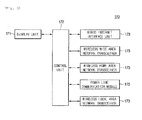
- Fig. 3 is a block diagram illustrating an EV battery management device according to an embodiment of the present invention.
- the EV battery management device 170 is built in the EV 100 and includes a display unit 171, a control unit 172, and at least one communication module 173.
- the control unit 172 displays a processing status, a system status such as a communication status, and a charging status on the display unit 171.
- the control unit 172 may control overall management of the battery 140 of the EV 100 and may communicate with an EVSE 200, an UTD 500, a power supply facility 600, a TSP 700 through the at least one communication module 173.
- the control unit 172 may perform charging management, discharging management, scheduling, and price comparison.
- the at least one communication module 173 may include at least one of a wired internet interface unit, a WWAN transceiver, a WHAN transceiver, a PLC module, and a WLAN transceiver
- communicating with the UTD 500 by the EV battery management device 170 of the EV 100 includes communicating with the UTD 500 through both the EVSE 200 and the TSP 700 by the EV battery management device 170 of the EV 100, communicating with the UTD 500 through the TSP 700 not the EVSE 200 by the EV battery management device 170 of the EV 100, communicating with the UTD 500 through the EVSE 200 not the TSP 700 by the EV battery management device 170 of the EV 100, and communicating with the UTD 500 not through both the EVSE 200 and the TSP 700 by the EV battery management device 170 of the EV 100.
- communicating with the UTD 600 by the EV battery management device 170 of the EV 100 includes communicating with the UTD 600 through both the EVSE 200 and the TSP 700 by the EV battery management device 170 of the EV 100, communicating with the UTD 600 through the TSP 700 not the EVSE 200 by the EV battery management device 170 of the EV 100, communicating with the UTD 600 through the EVSE 200 not the TSP 700 by the EV battery management device 170 of the EV 100, and communicating with the UTD 600 not through both the EVSE 200 and the TSP 700 by the EV battery management device 170 of the EV 100.
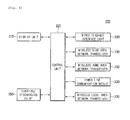
- Fig. 4 is a block diagram illustrating an EV battery management device according to an embodiment of the present invention.
- the EVSE 200 is used to charge the EV 100 by receiving electricity from a home power storage device 400 and a power supply facility 600 or discharge the EV 100 by supplying the electricity of the EV 100 to the home power storage device 400 and the power supply facility 600.
- the EVSE 200 includes a display unit 210, a control unit 220, at least one communication module 230, and a charging/discharging point 250.
- the at least one communication module 230 may include at least one of a wired internet interface unit, a WWAN transceiver, a WHAN transceiver, a PLC module, and a WLAN transceiver
- the control unit 220 displays a charging status, a discharging status, a notification message, and a charging interruption message on the display unit 210.
- the control unit 220 may communicate with the EV 100, an EV battery management device 170, a home power storage device 400, an UTD 500, and a power supply facility 600 through the at least one communication module 230.
- the charging/discharging point 250 may correspond to an SAE J1772 connector such as an SAE J1772 outlet.
- the charging/discharging point 250 is connected to the charging/discharging point 150 by a user.
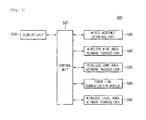
- Fig. 5 is a block diagram of an UTD according to an embodiment of the present invention.
- the UTD 500 includes a display unit 510, a control unit 520, and at least one communication module 530.
- the control unit 520 displays information on billing, pricing, and timing on the display unit 510.
- the control unit 520 may communicate with the EV 100, the EVSE 200, the EV battery management device 170, the home power storage device 400, and the power supply facility 600 through the at least one communication module 530.
- the at least one communication module 530 may include at least one of a wired internet interface unit, a WWAN transceiver, a WHAN transceiver, a PLC module, and a WLAN transceiver
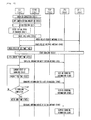
- Fig. 6 is a ladder diagram illustrating a charging method of an EV according to an embodiment of the present invention.
- the control unit 172 of the EV battery management device 170 in the EV 100 checks whether the charging/discharging point 150 is connected to the charging/discharging point 250 of the EVSE 200 in operation S101.
- the control unit 172 of the EV battery management device 170 in the EV 100 sets a communication connection with the EVSE 200 in operation S103.
- the control unit 172 of the EV battery management device 170 in the EV 100 may transmit a charging information notification message including EV charging status information indicating a charging start failure and EV charging error information indicating a communication connection setting failure, to the UTD 500. Then, the control unit 172 of the EV battery management device 170 in the EV 100 stops starting the charging of the battery 140 of the EV 100.
- the UTD 500 may display that charging start is failed due to the communication connection setting failure between the EV 100 and the EVSE 200.
- the control unit 172 of the EV battery management device 170 in the EV 100 performs an authentication operation with the EVSE 200 through a set communication connection by using SAE J2836-1 and SAE J2847-1.
- SAE J2836-1 and SAE J2847-1 regulate the requirements, specifications, and use cases for communications between plug-in EVs and electrical power grids in order for energy transmission and other applications.
- the control unit 172 of the EV battery management device 170 in the EV 100 may transmit a charging information notification message including EV charging status information indicating a charging start failure and EV charging error information indicating an authentication failure, to the UTD 500. Then, the control unit 172 of the EV battery management device 170 in the EV 100 stops starting the charging of the battery 140 of the EV 100.
- the UTD 500 may display that charging start is failed due to the authentication failure between the EV 100 and the EVSE 200.
- the control unit 172 of the EV battery management device 170 in the EV 100 checks an initial SOC of the battery 140 in operation S121. That is, the control unit 172 of the EV battery management device 170 in the EV 100 checks whether the initial SOC of the battery 140 corresponds to the maximum charging capacity of the battery 140.
- the control unit 172 of the EV battery management device 170 in the EV 100 may transmit a charging information notification message including EV charging status information indicating a charging start failure and EV charging error information indicating that the initial SOC of the battery 140 corresponds to the maximum charging capacity of the battery 140, to the UTD 500. Then, the control unit 172 of the EV battery management device 170 in the EV 100 stops starting the charging of the battery 140 of the EV 100.
- the UTD 500 may display that charging start is failed due to the fact that the initial SOC of the battery 140 corresponds to the maximum charging capacity of the battery 140.
- the control unit 172 of the EV battery management device 170 in the EV 100 checks whether the EVSE 200 is capable of providing power to the EV in operation S131.
- the control unit 172 of the EV battery management device 170 in the EV 100 may transmit a charging information notification message including EV charging situation information indicating a charging start failure and EV charging error information indicating that the EVSE 200 is not capable of providing power to the EV 100, to the UTD 500. Then, the control unit 172 of the EV battery management device 170 in the EV 100 stops starting the charging of the battery 140 of the EV 100.
- the UTD 400 may display charging start is failed due to the fact that the EVSE 200 is not capable of providing power to the EV 100.
- control unit 172 of the EV battery management device 170 in the EV 100 transmits a power policy request message to the power supply facility 600 in operation S141.
- the power supply facility 600 Upon the receipt of the power policy request message from the EV 100, the power supply facility 600 transmits a power policy response message including information on a power policy to the EV 100 in operation S143.
- the information on a power policy may include at least one of information on a power sale available time zone, information on a power purchase available time zone, and information on a TOU electricity price.
- the power sale available time zone is a time zone in which the power supply facility 600 is capable of selling power to the outside and the power purchase available time zone is a time zone in which the power supply facility 600 is capable of purchasing power from the outside.
- the TOU electricity price may include part or all of information on a TOU electricity sale price and information on a TOU electricity purchase price.
- the TOU electricity sale price is a price of when the power supply facility 600 sells electricity to the outside and the TOU electricity purchase price is a price of when the power supply facility 600 purchases electricity from the outside.
- the control unit 172 of the EV battery management device 170 in the EV 100 checks whether a TOU electricity price is valid in operation S145. If a TOU electricity price at the current time is equal to or less than an electricity price that a user wants, the control unit 172 of the EV battery management device 170 in the EV 100 may determine that the TOU electricity price is valid. If the TOU electricity price at the current time is greater than the electricity price that the user wants, the control unit 172 of the EV battery management device 170 in the EV 100 may determine that the TOU electricity price is invalid.
- the control unit 172 of the EV battery management device 170 in the EV 100 may transmit a charging information notification message including EV charging status information indicating a charging start failure and EV charging error information indicating the TOU electricity price is invalid, to the UTD 500. Then, the control unit 172 of the EV battery management device 170 in the EV 100 stops starting the charging of the battery 140 of the EV 100.
- the UTD 500 may display that charging start is failed due to the fact that the TOU electricity price is invalid.
- the control unit 172 of the EV battery management device 170 in the EV 100 starts charging the battery 140 by using the power of the power supply facility 600 through the EVSE 200 in operation S151.
- the control unit 172 of the EV battery management device 170 in the EV 100 checks the charge start time of the battery 140 in operation S152.
- the control unit 172 of the EV battery management device 170 in the EV 100 transmits a charging information notification message to the UTD 500 in operation S153.
- the charging information notification message may include charging information on charging of an EV battery.
- the charging information may include part or all of an initial SOC, a current SOC, a charge start time, an estimated charge end time, an actual charge end time, an EV charging status, and EV charging error information
- the current SOC may be identical to the initial SOC; an EV charging status may indicate charging start; and the EV charging error information may indicate no charging error.
- the UTD 500 Upon the receipt of a charging information notification message, the UTD 500 displays charging information therein in operation S159.
- the UTD 500 may display part or all of an initial SOC, a current SOC, a charge start time, and an estimated charge end time and also may display that charging starts and there is no error in charging.
- the control unit 172 of the EV battery management device 170 in the EV 100 checks the current SOC of the battery 140 during charging periodically in operation S161.
- the control unit 172 of the EV battery management device 170 in the EV 100 predicts the estimated charge end time of the battery 140 on the basis of the current SOC and charging speed of the battery 140 in operation S162.
- the control unit 172 of the EV battery management device 170 in the EV 100 transmits a charging information notification message to the UTD 500 in operation S163.
- the EV 100 may transmit the charging information notification message to the UTD 500 periodically.
- the charging information notification message may include charging information on charging of an EV battery.
- the charging information may include part or all of an initial SOC, a current SOC, a charge start time, an estimated charge end time, an EV charging status, and EV charging error information
- the EV charging status may indicate charging in progress and the EV charging error information may indicate no charging error.
- the UTD 500 Upon the receipt of a charging information notification message, the UTD 500 displays charging information therein in operation S169.
- Fig. 7 is a view illustrating a screen displayed on an UTD according to another embodiment of the present invention.
- the UTD 500 may display part or all of an initial SOC, a current SOC, a charge start time, and an estimated charge end time and also may display that charging is in progress and there is no error in charging.
- the control unit 172 of the EV battery management device 170 in the EV 100 detects the completion of the battery 140 charging on the basis of the current SOC of the battery 140 in operation S181.
- the control unit 172 of the EV battery management device 170 in the EV 100 checks the actual charge end time of the battery 140 in operation S183.
- the control unit 172 of the EV battery management device 170 in the EV 100 transmits a charging information notification message to the UTD 500 in operation S185.
- the charging information notification message may include charging information on charging of an EV battery.
- the charging information may include part or all of an initial SOC, a current SOC, a charge start time, an estimated charge end time, an actual charge end time, an EV charging status, and EV charging error information
- the EV charging status may indicate charging completion and the EV charging error information may indicate no charging error.
- the UTD 500 Upon the receipt of a charging information notification message, the UTD 500 displays charging information therein in operation S189.
- Fig. 8 is a view illustrating a screen displayed on an UTD according to another embodiment of the present invention.
- the UTD 500 may display part or all of an initial SOC, a current SOC, a charge start time, and an estimated charge end time, and an actual charge end time and also may display that charging is completed.
- the above method also can be embodied as computer readable codes on a computer readable recording medium having a program recorded thereon.
- the computer readable recording medium include read-only memory (ROM), random-access memory (RAM), CD-ROMs, magnetic tapes, floppy disks, and optical data storage devices and also include carrier waves (such as data transmission through the Internet).
- the above-described mobile terminal is not applied as limited to the configurations and methods of the above embodiments. Some or all of the above embodiments are selectively combined and configured to provide various modifications.
Landscapes
- Engineering & Computer Science (AREA)
- Power Engineering (AREA)
- Transportation (AREA)
- Mechanical Engineering (AREA)
- Life Sciences & Earth Sciences (AREA)
- Sustainable Development (AREA)
- Sustainable Energy (AREA)
- Charge And Discharge Circuits For Batteries Or The Like (AREA)
- Electric Propulsion And Braking For Vehicles (AREA)
Abstract
Description
- The present disclosure relates to an electric vehicle and an operating method thereof, and particularly, to a method of charging a battery of an electric vehicle.
- In order to control global warming through the G20 and G8 countries, a smart grid solution and real-time use of an electric vehicle are suggested to reduce CO2.
- An electronic vehicle includes at least one electric motor using an electrical energy of a rechargeable battery. This rechargeable battery may be connected to an electric outlet in order for recharging. In general, it takes a few hours to charge a battery of an electric vehicle. During this process, a user may want to obtain several information.
- Moreover, electric grids may have a time interval at which an electrical demand exceeds a limitation. In order to prevent this, constructing a power plant additionally may rather disturb the reduction of CO2. Accordingly, adaptively coping with the demand of electricity by using a large capacity battery of an electric vehicle is required.
- For this, users, electric vehicles, and electric power supply facilities may need to exchange information. To this end, various communication techniques may be used.
- A wireless home area network (W-HAN), a wireless personal area network (W-PAN), and a wireless frequency transceiver perform communication through a wireless frequency in a short distance area between devices. A Zigbee transceiver may be used as an example. Zigbee is a standard protocol designed for wireless frequency communication in a short distance area. The Zigbee transceiver establishes a mesh network on the basis of IEEE 802.15.4.
- A wireless local area network (WLAN) transceiver performs communication through a wireless frequency between devices away from each other by more than 10 m. A Wi-Fi device may be used as an example. The Wi-Fi device follows the IEEE 802.11 standards.
- A power line communication (PLC) technique may be used to establish a network between devices through a power line. This technique is limited to an area of up to 100 m.
- A wide area network (WAN) is a communication network covering a wide area. The Transmission Control Protocol / Internet Protocol (TCP/IP), that is, a standard protocol, may be used as an example. Additionally, a CDMA or GSM network may be used as an example of a wireless broadband network.
- In order to adaptively cope with the demand of electricity by using a high capacity battery of an electric vehicle, demands for exchanging information between users, electric vehicles, and electric power supply facilities are emerging.
- Embodiments provide a device, system, and method for adaptively coping with the demand of electricity by exchanging various information between power use subjects such as users, electric vehicles, and electric power supply facilities.
- In one embodiment, an operating method of an electric vehicle including a battery is provided. The method includes: charging the battery through an electric vehicle power supply device; checking a current state of charging of the battery; and transmitting a first charging information notification message including information on the current state of charging of the battery to a user terminal device.
- According to an embodiment of the present invention, by exchanging various information between power use subjects such as user terminal devices, electric vehicles, electric vehicle power supply devices, built-in vehicle communication control devices, home power storage devices, and power supply facilities it is possible to adaptively deal demands for electricity. Thus, this may contribute to the protection of environment.
-
-
Fig. 1 is a block diagram of a network topology according to an embodiment of the present invention. -
Fig. 2 is a view illustrating an EV according to an embodiment of the present invention. -
Fig. 3 is a block diagram illustrating an EV battery management device according to an embodiment of the present invention. -
Fig. 4 is a block diagram illustrating an EV battery management device according to an embodiment of the present invention. -
Fig. 5 is a block diagram of an UTD according to an embodiment of the present invention. -
Fig. 6 is a ladder diagram illustrating a charging method of an EV according to an embodiment of the present invention. -
Fig. 7 is a view illustrating a screen displayed on an UTD according to another embodiment of the present invention. -
Fig. 8 is a view illustrating a screen displayed on an UTD according to another embodiment of the present invention. - Hereinafter, a mobile terminal relating to the present invention is described in more detail with reference to the drawings. The suffixes "module" and "unit" for components used in the description below are assigned or mixed in consideration of easiness in writing the specification and , do not have distinctive meanings or roles by themselves.
- Especially, an electric power source in the specification represents an electric power transmitter and an electric power sink represents an electric power receiver.
- Then, a network topology according to an embodiment of the present invention will be described with reference to
Fig. 1 . -
Fig. 1 is a block diagram of a network topology according to an embodiment of the present invention. - As shown in
Fig. 1 , the network topology includes anelectric vehicle 100, an electric vehicle power supplying device 20, auser terminal device 500, apower supply facility 600, and a telematicsservice providing server 700. - For convenience of description, the following abbreviations are used together. An electric vehicle is referred to as its acronym, that is, an EV. Additionally, an electric power supplying device is referred to as an EVSE, that is, the acronym of electric vehicle supply equipment. A user terminal device is referred to as its acronym, that is, an UTD. A telematics service providing server is referred to as TSP, that is, the acronym of a telematics service provider.
- Then, an
EV 100 according to an embodiment of the present invention will be described with reference toFig. 2 . -
Fig. 2 is a view illustrating an EV according to an embodiment of the present invention. - As shown in
Fig. 2 , theEV 100 includes abattery 140, a charging/discharging point 150, and an EVbattery management device 170. The charging/discharging point 150 may correspond to an SAE J1772 connector such as an SAE J1772 inlet. The SAE J1772 regulates general physical and electrical requirements and performance requirements assisting the inductive charging of an EV/PHEV in North America. Especially, the SAE J1772 regulates common inductive charging methods of EVs/PHEVs and power supply equipment vehicles in addition to function and specification requirements and operational requirements of vehicle insertions and connectors paring therewith. - Then, an EV battery management device according to an embodiment of the present invention will be described with reference to
Fig. 3 . -
Fig. 3 is a block diagram illustrating an EV battery management device according to an embodiment of the present invention. - The EV
battery management device 170 is built in the EV 100 and includes adisplay unit 171, acontrol unit 172, and at least onecommunication module 173. Thecontrol unit 172 displays a processing status, a system status such as a communication status, and a charging status on thedisplay unit 171. Thecontrol unit 172 may control overall management of thebattery 140 of theEV 100 and may communicate with anEVSE 200, anUTD 500, apower supply facility 600, aTSP 700 through the at least onecommunication module 173. Thecontrol unit 172 may perform charging management, discharging management, scheduling, and price comparison. The at least onecommunication module 173 may include at least one of a wired internet interface unit, a WWAN transceiver, a WHAN transceiver, a PLC module, and a WLAN transceiver - Hereinafter, communicating with the
UTD 500 by the EVbattery management device 170 of theEV 100 includes communicating with theUTD 500 through both theEVSE 200 and theTSP 700 by the EVbattery management device 170 of theEV 100, communicating with theUTD 500 through theTSP 700 not theEVSE 200 by the EVbattery management device 170 of theEV 100, communicating with theUTD 500 through theEVSE 200 not theTSP 700 by the EVbattery management device 170 of theEV 100, and communicating with theUTD 500 not through both theEVSE 200 and theTSP 700 by the EVbattery management device 170 of theEV 100. Hereinafter, communicating with theUTD 600 by the EVbattery management device 170 of theEV 100 includes communicating with theUTD 600 through both theEVSE 200 and theTSP 700 by the EVbattery management device 170 of theEV 100, communicating with theUTD 600 through theTSP 700 not theEVSE 200 by the EVbattery management device 170 of theEV 100, communicating with theUTD 600 through theEVSE 200 not theTSP 700 by the EVbattery management device 170 of theEV 100, and communicating with theUTD 600 not through both theEVSE 200 and theTSP 700 by the EVbattery management device 170 of theEV 100. - Then, an EV power supply device according to an embodiment of the present invention will be described with reference to
Fig. 4 . -
Fig. 4 is a block diagram illustrating an EV battery management device according to an embodiment of the present invention. - The
EVSE 200 is used to charge theEV 100 by receiving electricity from a home power storage device 400 and apower supply facility 600 or discharge theEV 100 by supplying the electricity of theEV 100 to the home power storage device 400 and thepower supply facility 600. - As shown in
Fig. 4 , theEVSE 200 includes adisplay unit 210, acontrol unit 220, at least onecommunication module 230, and a charging/dischargingpoint 250. The at least onecommunication module 230 may include at least one of a wired internet interface unit, a WWAN transceiver, a WHAN transceiver, a PLC module, and a WLAN transceiver Thecontrol unit 220 displays a charging status, a discharging status, a notification message, and a charging interruption message on thedisplay unit 210. Thecontrol unit 220 may communicate with theEV 100, an EVbattery management device 170, a home power storage device 400, anUTD 500, and apower supply facility 600 through the at least onecommunication module 230. The charging/dischargingpoint 250 may correspond to an SAE J1772 connector such as an SAE J1772 outlet. The charging/dischargingpoint 250 is connected to the charging/dischargingpoint 150 by a user. - Then, the
UTD 500 according to an embodiment of the present invention will be described with reference toFig. 5 . -
Fig. 5 is a block diagram of an UTD according to an embodiment of the present invention. - The
UTD 500 includes adisplay unit 510, acontrol unit 520, and at least onecommunication module 530. Thecontrol unit 520 displays information on billing, pricing, and timing on thedisplay unit 510. Thecontrol unit 520 may communicate with theEV 100, theEVSE 200, the EVbattery management device 170, the home power storage device 400, and thepower supply facility 600 through the at least onecommunication module 530. The at least onecommunication module 530 may include at least one of a wired internet interface unit, a WWAN transceiver, a WHAN transceiver, a PLC module, and a WLAN transceiver - Then, a method of charging the
EV 100 according to an embodiment of the present invention will be described with reference toFig. 6 . -
Fig. 6 is a ladder diagram illustrating a charging method of an EV according to an embodiment of the present invention. - The
control unit 172 of the EVbattery management device 170 in theEV 100 checks whether the charging/dischargingpoint 150 is connected to the charging/dischargingpoint 250 of theEVSE 200 in operation S101. - When the charging/discharging
point 150 of theEV 100 is connected to the charging/dischargingpoint 250 of theEVSE 200, thecontrol unit 172 of the EVbattery management device 170 in theEV 100 sets a communication connection with theEVSE 200 in operation S103. - If a communication connection setting is failed, the
control unit 172 of the EVbattery management device 170 in theEV 100 may transmit a charging information notification message including EV charging status information indicating a charging start failure and EV charging error information indicating a communication connection setting failure, to theUTD 500. Then, thecontrol unit 172 of the EVbattery management device 170 in theEV 100 stops starting the charging of thebattery 140 of theEV 100. - If the communication connection setting is failed, the
UTD 500 may display that charging start is failed due to the communication connection setting failure between theEV 100 and theEVSE 200. - If the communication connection setting is successful, the
control unit 172 of the EVbattery management device 170 in theEV 100 performs an authentication operation with theEVSE 200 through a set communication connection by using SAE J2836-1 and SAE J2847-1. SAE J2836-1 and SAE J2847-1 regulate the requirements, specifications, and use cases for communications between plug-in EVs and electrical power grids in order for energy transmission and other applications. - If an authentication is failed, the
control unit 172 of the EVbattery management device 170 in theEV 100 may transmit a charging information notification message including EV charging status information indicating a charging start failure and EV charging error information indicating an authentication failure, to theUTD 500. Then, thecontrol unit 172 of the EVbattery management device 170 in theEV 100 stops starting the charging of thebattery 140 of theEV 100. - If the authentication is failed, the
UTD 500 may display that charging start is failed due to the authentication failure between theEV 100 and theEVSE 200. - The
control unit 172 of the EVbattery management device 170 in theEV 100 checks an initial SOC of thebattery 140 in operation S121. That is, thecontrol unit 172 of the EVbattery management device 170 in theEV 100 checks whether the initial SOC of thebattery 140 corresponds to the maximum charging capacity of thebattery 140. - If the initial SOC of the
battery 140 corresponds to the maximum charging capacity of thebattery 140, thecontrol unit 172 of the EVbattery management device 170 in theEV 100 may transmit a charging information notification message including EV charging status information indicating a charging start failure and EV charging error information indicating that the initial SOC of thebattery 140 corresponds to the maximum charging capacity of thebattery 140, to theUTD 500. Then, thecontrol unit 172 of the EVbattery management device 170 in theEV 100 stops starting the charging of thebattery 140 of theEV 100. - When the initial SOC of the
battery 140 corresponds to the maximum charging capacity of thebattery 140, theUTD 500 may display that charging start is failed due to the fact that the initial SOC of thebattery 140 corresponds to the maximum charging capacity of thebattery 140. - If the initial SOC of the
battery 140 is less than the maximum charging capacity of thebattery 140, thecontrol unit 172 of the EVbattery management device 170 in theEV 100 checks whether theEVSE 200 is capable of providing power to the EV in operation S131. - If the
EVSE 200 is not capable of providing power to theEV 100, thecontrol unit 172 of the EVbattery management device 170 in theEV 100 may transmit a charging information notification message including EV charging situation information indicating a charging start failure and EV charging error information indicating that theEVSE 200 is not capable of providing power to theEV 100, to theUTD 500. Then, thecontrol unit 172 of the EVbattery management device 170 in theEV 100 stops starting the charging of thebattery 140 of theEV 100. - When the
EVSE 200 is not capable of providing power to theEV 100, the UTD 400 may display charging start is failed due to the fact that theEVSE 200 is not capable of providing power to theEV 100. - Moreover, the
control unit 172 of the EVbattery management device 170 in theEV 100 transmits a power policy request message to thepower supply facility 600 in operation S141. - Upon the receipt of the power policy request message from the
EV 100, thepower supply facility 600 transmits a power policy response message including information on a power policy to theEV 100 in operation S143. At this point, the information on a power policy may include at least one of information on a power sale available time zone, information on a power purchase available time zone, and information on a TOU electricity price. The power sale available time zone is a time zone in which thepower supply facility 600 is capable of selling power to the outside and the power purchase available time zone is a time zone in which thepower supply facility 600 is capable of purchasing power from the outside. The TOU electricity price may include part or all of information on a TOU electricity sale price and information on a TOU electricity purchase price. The TOU electricity sale price is a price of when thepower supply facility 600 sells electricity to the outside and the TOU electricity purchase price is a price of when thepower supply facility 600 purchases electricity from the outside. - When the
EVSE 200 is capable of providing power to theEV 100, thecontrol unit 172 of the EVbattery management device 170 in theEV 100 checks whether a TOU electricity price is valid in operation S145. If a TOU electricity price at the current time is equal to or less than an electricity price that a user wants, thecontrol unit 172 of the EVbattery management device 170 in theEV 100 may determine that the TOU electricity price is valid. If the TOU electricity price at the current time is greater than the electricity price that the user wants, thecontrol unit 172 of the EVbattery management device 170 in theEV 100 may determine that the TOU electricity price is invalid. - If the TOU electricity price is invalid, the
control unit 172 of the EVbattery management device 170 in theEV 100 may transmit a charging information notification message including EV charging status information indicating a charging start failure and EV charging error information indicating the TOU electricity price is invalid, to theUTD 500. Then, thecontrol unit 172 of the EVbattery management device 170 in theEV 100 stops starting the charging of thebattery 140 of theEV 100. - If the TOU electricity price is invalid, the
UTD 500 may display that charging start is failed due to the fact that the TOU electricity price is invalid. - If a TOU electricity price is valid, the
control unit 172 of the EVbattery management device 170 in theEV 100 starts charging thebattery 140 by using the power of thepower supply facility 600 through theEVSE 200 in operation S151. - The
control unit 172 of the EVbattery management device 170 in theEV 100 checks the charge start time of thebattery 140 in operation S152. - Then, the
control unit 172 of the EVbattery management device 170 in theEV 100 transmits a charging information notification message to theUTD 500 in operation S153. The charging information notification message may include charging information on charging of an EV battery. At this point the charging information may include part or all of an initial SOC, a current SOC, a charge start time, an estimated charge end time, an actual charge end time, an EV charging status, and EV charging error information - Especially, at this point, the current SOC may be identical to the initial SOC; an EV charging status may indicate charging start; and the EV charging error information may indicate no charging error.
- Upon the receipt of a charging information notification message, the
UTD 500 displays charging information therein in operation S159. - The
UTD 500 may display part or all of an initial SOC, a current SOC, a charge start time, and an estimated charge end time and also may display that charging starts and there is no error in charging. - The
control unit 172 of the EVbattery management device 170 in theEV 100 checks the current SOC of thebattery 140 during charging periodically in operation S161. - The
control unit 172 of the EVbattery management device 170 in theEV 100 predicts the estimated charge end time of thebattery 140 on the basis of the current SOC and charging speed of thebattery 140 in operation S162. - During charging, the
control unit 172 of the EVbattery management device 170 in theEV 100 transmits a charging information notification message to theUTD 500 in operation S163. TheEV 100 may transmit the charging information notification message to theUTD 500 periodically. The charging information notification message may include charging information on charging of an EV battery. At this point the charging information may include part or all of an initial SOC, a current SOC, a charge start time, an estimated charge end time, an EV charging status, and EV charging error information - The EV charging status may indicate charging in progress and the EV charging error information may indicate no charging error.
- Upon the receipt of a charging information notification message, the
UTD 500 displays charging information therein in operation S169. -
Fig. 7 is a view illustrating a screen displayed on an UTD according to another embodiment of the present invention. - As shown in
Fig. 7 , theUTD 500 may display part or all of an initial SOC, a current SOC, a charge start time, and an estimated charge end time and also may display that charging is in progress and there is no error in charging. - Again,
Fig. 6 is described. - The
control unit 172 of the EVbattery management device 170 in theEV 100 detects the completion of thebattery 140 charging on the basis of the current SOC of thebattery 140 in operation S181. - The
control unit 172 of the EVbattery management device 170 in theEV 100 checks the actual charge end time of thebattery 140 in operation S183. - If the completion of the
battery 140 charging is detected, thecontrol unit 172 of the EVbattery management device 170 in theEV 100 transmits a charging information notification message to theUTD 500 in operation S185. The charging information notification message may include charging information on charging of an EV battery. At this point the charging information may include part or all of an initial SOC, a current SOC, a charge start time, an estimated charge end time, an actual charge end time, an EV charging status, and EV charging error information - Especially, at this point, the EV charging status may indicate charging completion and the EV charging error information may indicate no charging error.
- Upon the receipt of a charging information notification message, the
UTD 500 displays charging information therein in operation S189. -
Fig. 8 is a view illustrating a screen displayed on an UTD according to another embodiment of the present invention. - As shown in
Fig. 8 , theUTD 500 may display part or all of an initial SOC, a current SOC, a charge start time, and an estimated charge end time, and an actual charge end time and also may display that charging is completed. - According to an embodiment of the present invention, the above method also can be embodied as computer readable codes on a computer readable recording medium having a program recorded thereon. Examples of the computer readable recording medium include read-only memory (ROM), random-access memory (RAM), CD-ROMs, magnetic tapes, floppy disks, and optical data storage devices and also include carrier waves (such as data transmission through the Internet).
- The above-described mobile terminal is not applied as limited to the configurations and methods of the above embodiments. Some or all of the above embodiments are selectively combined and configured to provide various modifications.
Claims (12)
- An operating method of an electric vehicle including a battery, the method comprising:charging the battery through an electric vehicle power supply device;checking an current state of charging of the battery; andtransmitting a first charging information notification message including information on the current state of charging of the battery to a user terminal device.
- The method according to claim 1, further comprising:detecting a completion of the battery charging; andif the completion of the battery charging is detected, transmitting a second charging information notification message indicating the completion of the battery charging to the user terminal device.
- The method according to claim 2, further comprising when the completion of the battery charging is detected, checking an actual charge end time of the battery,
wherein the second charging information notification message comprises information on the actual charge end time of the batter and information on a battery charging status indicating the completion of the battery charging. - The method according to claim 3, wherein the second charging information notification message further comprises at least one of information on the initial state of charging of the battery, information on the current state of charging of the battery, and information on a charge start time of the battery.
- The method according to claim 1, wherein the first charging information notification message further comprises information on a battery charging status indicating that the battery is charging.
- The method according to claim 1, further comprising checking an initial state of charging of the battery, wherein the first charging information notification message further comprises information on the initial state of charging of the battery.
- The method according to claim 1, further comprising checking a charge start time of the battery, wherein the first charging information notification message further comprises information on a charge start time of the battery.
- The method according to claim 1, further predicting an estimated charge end time of the battery on the basis of the current state of charging of the battery, wherein the first charging information notification message further comprises information on the estimated charge end time of the battery.
- The method according to claim 1, further comprising performing an authentication operation on the electric vehicle power supply device, wherein the charging of the battery comprises starting charging the battery if the authentication operation is successful.
- The method according to claim 9, wherein the performing of the authentication operation comprises performing the authentication operation through SAE J2836-1 and SAE J2847-1.
- The method according to claim 10, further comprising, when an SAE J1772 connector is connected, performing a communication connection setting with the electric vehicle power supply device,
wherein the performing of the authentication operation comprises performing the authentication operation when the communication connection setting is successful. - The method according to claim 1, wherein the checking of the current state of charging of the battery comprises checking the current state of charging of the battery periodically, wherein the transmitting of the first charging information notification message comprises transmitting the first charging information notification message to the user terminal device periodically.
Applications Claiming Priority (4)
| Application Number | Priority Date | Filing Date | Title |
|---|---|---|---|
| US201161549266P | 2011-10-20 | 2011-10-20 | |
| US201161549253P | 2011-10-20 | 2011-10-20 | |
| US201261606482P | 2012-03-05 | 2012-03-05 | |
| PCT/KR2012/008632 WO2013058618A2 (en) | 2011-10-20 | 2012-10-19 | Electric vehicle and method of operating same |
Publications (2)
| Publication Number | Publication Date |
|---|---|
| EP2769870A2 true EP2769870A2 (en) | 2014-08-27 |
| EP2769870A4 EP2769870A4 (en) | 2016-01-27 |
Family
ID=48141564
Family Applications (1)
| Application Number | Title | Priority Date | Filing Date |
|---|---|---|---|
| EP12840973.7A Withdrawn EP2769870A4 (en) | 2011-10-20 | 2012-10-19 | ELECTRIC VEHICLE AND METHOD OF USING THE VEHICLE |
Country Status (6)
| Country | Link |
|---|---|
| US (1) | US9566873B2 (en) |
| EP (1) | EP2769870A4 (en) |
| JP (1) | JP2014531186A (en) |
| KR (1) | KR20140116377A (en) |
| CN (1) | CN104159777B (en) |
| WO (1) | WO2013058618A2 (en) |
Cited By (3)
| Publication number | Priority date | Publication date | Assignee | Title |
|---|---|---|---|---|
| EP3001536A4 (en) * | 2013-05-23 | 2016-12-07 | Nec Corp | COMMUNICATION SYSTEM, METHOD FOR CONTROLLING AN ELECTRIC POWER SUPPLY, AND NON-TRANSIENT COMPUTER READABLE MEDIUM FOR CONTROLLING AN ELECTRICAL POWER SUPPLY |
| EP3540901A1 (en) * | 2018-03-12 | 2019-09-18 | Kwang Yang Motor Co., Ltd. | Method and system for notifying a user of a charging progress related to a rechargeable battery that corresponds to the user and that is being charged at a service end |
| FR3144587A1 (en) * | 2023-01-04 | 2024-07-05 | Psa Automobiles Sa | Managing the operation of infotainment equipment in a motor vehicle when charging a vehicle battery using a charging station |
Families Citing this family (15)
| Publication number | Priority date | Publication date | Assignee | Title |
|---|---|---|---|---|
| EP2769870A4 (en) * | 2011-10-20 | 2016-01-27 | Lsis Co Ltd | ELECTRIC VEHICLE AND METHOD OF USING THE VEHICLE |
| TW201535298A (en) * | 2014-03-03 | 2015-09-16 | 吳明修 | Charging method, charging system, charging device and electronic device |
| US9592742B1 (en) | 2014-04-09 | 2017-03-14 | FreeWire Technologies, Inc. | Systems, apparatus, and methods of charging electric vehicles |
| CN105071481B (en) * | 2015-08-24 | 2018-02-02 | 孙源 | A kind of intelligent packaged type electrodynamic machines motor-car charging device and charging method |
| KR101877602B1 (en) * | 2015-10-20 | 2018-07-11 | 현대자동차주식회사 | Security method and apparatus for electric vehicle power transfer system |
| KR101948867B1 (en) * | 2016-03-18 | 2019-05-10 | 주식회사 티앤에스모터스 | Electric Bike Battery charging system and management methods |
| CN105762905B (en) * | 2016-04-25 | 2018-05-18 | 河北冀东泰坦科技有限公司 | A kind of residential area charging system for electric automobile |
| US10326286B2 (en) * | 2016-08-11 | 2019-06-18 | K2 Energy Solutions, Inc. | Battery system with shipping mode |
| CN106828161B (en) * | 2017-02-13 | 2019-03-26 | 清华大学 | A kind of electric vehicle charging equipment applied to multi-channel charging socket and control method thereof |
| CN107176046B (en) * | 2017-05-10 | 2019-10-18 | 华南理工大学 | Electric vehicle charging and discharging control method based on charging failure risk sorting |
| KR102662921B1 (en) | 2017-11-01 | 2024-05-03 | 필립모리스 프로덕츠 에스.에이. | Charger for aerosol-generating devices |
| JP7063798B2 (en) * | 2018-12-21 | 2022-05-09 | トヨタ自動車株式会社 | Charging system |
| JP7251437B2 (en) | 2019-10-15 | 2023-04-04 | トヨタ自動車株式会社 | power supply system |
| JP7554615B2 (en) * | 2020-09-24 | 2024-09-20 | 株式会社ダイヘン | Power System |
| CN113561832A (en) * | 2021-06-21 | 2021-10-29 | 深圳市道通科技股份有限公司 | Electric quantity state acquisition method and device, charging device and charging system |
Family Cites Families (41)
| Publication number | Priority date | Publication date | Assignee | Title |
|---|---|---|---|---|
| US6975997B1 (en) * | 1999-07-07 | 2005-12-13 | Honda Giken Kogyo Kabushiki Kaisha | Method for efficient vehicle allocation in vehicle sharing system |
| JP2001359203A (en) | 2000-06-12 | 2001-12-26 | Ishikawajima Transport Machinery Co Ltd | Electric vehicle charging management method and apparatus for multi-story parking lot |
| JP5305504B2 (en) | 2008-07-04 | 2013-10-02 | 矢崎総業株式会社 | Charge monitoring device |
| WO2010100951A1 (en) | 2009-03-06 | 2010-09-10 | パナソニック株式会社 | Power supply device |
| KR101100363B1 (en) * | 2009-03-20 | 2011-12-30 | 삼성물산 주식회사 | Hybrid vehicle charging system and method for assembly parking lot |
| JP5492451B2 (en) | 2009-05-14 | 2014-05-14 | 株式会社Nttファシリティーズ | Storage battery charging / discharging device and storage battery charging / discharging method |
| US8183826B2 (en) * | 2009-05-15 | 2012-05-22 | Battelle Memorial Institute | Battery charging control methods, electric vehicle charging methods, battery charging apparatuses and rechargeable battery systems |
| JP5332907B2 (en) * | 2009-05-27 | 2013-11-06 | 日産自動車株式会社 | Battery charging control device for electric vehicle |
| WO2010141229A2 (en) * | 2009-06-01 | 2010-12-09 | Edward Mcintyre | Electrical power metering and billing network |
| US9121073B2 (en) * | 2009-07-28 | 2015-09-01 | Bosch Automotive Service Solutions Inc. | Plug-in electric vehicle supply equipment with indicators |
| US8890473B2 (en) * | 2009-07-28 | 2014-11-18 | Bosch Automotive Service Solutions Llc | Sequential charging of multiple electric vehicles |
| JP5476872B2 (en) | 2009-09-04 | 2014-04-23 | 株式会社デンソー | Charging state transmitter and external charging system |
| WO2011037322A2 (en) * | 2009-09-25 | 2011-03-31 | Lg Electronics Inc. | Apparatus and method for controlling a battery |
| JP5568772B2 (en) * | 2009-11-10 | 2014-08-13 | 昭和シェル石油株式会社 | In-vehicle battery charging system with exit guidance function |
| JP5641727B2 (en) | 2009-11-30 | 2014-12-17 | オムロンオートモーティブエレクトロニクス株式会社 | Charge information display portable device and charge information display system |
| JP5788636B2 (en) * | 2009-12-16 | 2015-10-07 | ソニー株式会社 | Electric vehicle, management device, drive management method, and charging device |
| JP2011151891A (en) * | 2010-01-19 | 2011-08-04 | Sony Corp | Method and apparatus for charging secondary battery |
| JP5553106B2 (en) * | 2010-02-22 | 2014-07-16 | トヨタ自動車株式会社 | Power supply control device |
| US8478452B2 (en) * | 2010-04-06 | 2013-07-02 | Battelle Memorial Institute | Grid regulation services for energy storage devices based on grid frequency |
| US8025526B1 (en) * | 2010-04-21 | 2011-09-27 | Coulomb Technologies, Inc. | Self powered electric vehicle charging connector locking system |
| WO2011156776A2 (en) * | 2010-06-10 | 2011-12-15 | The Regents Of The University Of California | Smart electric vehicle (ev) charging and grid integration apparatus and methods |
| DE102010040395A1 (en) * | 2010-09-08 | 2012-03-08 | Siemens Aktiengesellschaft | Method and device for efficiently charging a vehicle battery |
| US8405347B2 (en) * | 2010-10-04 | 2013-03-26 | Ford Global Technologies, Llc | Input voltage based system and method for charging a vehicle battery |
| WO2012061522A2 (en) * | 2010-11-02 | 2012-05-10 | Global Solar Water And Power Systems, Inc. | Grid tie system and method |
| US20120116955A1 (en) * | 2010-11-04 | 2012-05-10 | The Prosser Group LLC | Charging purchases to utility accounts |
| US8321296B2 (en) * | 2011-04-08 | 2012-11-27 | General Electric Company | Methods and systems for distributing solar energy charging capacity to a plurality of electric vehicles |
| US20120280653A1 (en) * | 2011-05-03 | 2012-11-08 | Green Charge Networks | Electric Vehicle Fleet Management Charging Station Systems and Methods |
| US9505318B2 (en) * | 2011-05-26 | 2016-11-29 | Sierra Smart Systems, Llc | Electric vehicle fleet charging system |
| US8624719B2 (en) * | 2011-06-03 | 2014-01-07 | Bosch Automotive Service Solutions Llc | Smart phone control and notification for an electric vehicle charging station |
| KR20110076858A (en) | 2011-06-08 | 2011-07-06 | 조한대 | Remote Metering System for Electric Vehicle Charging |
| US9597967B2 (en) * | 2011-07-19 | 2017-03-21 | Siemens Industry, Inc. | Status indicating electric vehicle charging station, lightguide assembly and methods |
| EP2769870A4 (en) * | 2011-10-20 | 2016-01-27 | Lsis Co Ltd | ELECTRIC VEHICLE AND METHOD OF USING THE VEHICLE |
| WO2013058615A2 (en) * | 2011-10-20 | 2013-04-25 | 엘에스산전(주) | Apparatus for controlling home communication |
| WO2013058614A2 (en) * | 2011-10-20 | 2013-04-25 | 엘에스산전(주) | Electric vehicle and method for actuating same |
| US9096137B2 (en) * | 2011-10-20 | 2015-08-04 | Lsis Co., Ltd. | Method for charging an electric vehicle including a battery |
| KR20140102188A (en) * | 2011-10-20 | 2014-08-21 | 엘에스산전 주식회사 | Embedded device for controlling communication with vehicle and method for actuating same |
| KR101387226B1 (en) * | 2012-06-22 | 2014-04-21 | 엘에스산전 주식회사 | An electric vehicle charging system |
| KR101820994B1 (en) * | 2013-07-10 | 2018-01-22 | 엘에스산전 주식회사 | Add-on communication apparatus attached to in-cable charging control apparatus and method thereof |
| KR101769648B1 (en) * | 2013-07-10 | 2017-08-18 | 엘에스산전 주식회사 | Add-on communication apparatus attached to in-cable charging control apparatus and method thereof |
| KR101779637B1 (en) * | 2013-07-10 | 2017-09-18 | 엘에스산전 주식회사 | Add-on communication apparatus attached to in-cable charging control apparatus and method thereof |
| KR20150109153A (en) * | 2014-03-19 | 2015-10-01 | 엘에스산전 주식회사 | Cable installment type charging control apparatus and method thereof |
-
2012
- 2012-10-19 EP EP12840973.7A patent/EP2769870A4/en not_active Withdrawn
- 2012-10-19 KR KR1020147013435A patent/KR20140116377A/en not_active Withdrawn
- 2012-10-19 US US14/353,009 patent/US9566873B2/en active Active
- 2012-10-19 CN CN201280063048.6A patent/CN104159777B/en not_active Expired - Fee Related
- 2012-10-19 WO PCT/KR2012/008632 patent/WO2013058618A2/en not_active Ceased
- 2012-10-19 JP JP2014536996A patent/JP2014531186A/en active Pending
Cited By (3)
| Publication number | Priority date | Publication date | Assignee | Title |
|---|---|---|---|---|
| EP3001536A4 (en) * | 2013-05-23 | 2016-12-07 | Nec Corp | COMMUNICATION SYSTEM, METHOD FOR CONTROLLING AN ELECTRIC POWER SUPPLY, AND NON-TRANSIENT COMPUTER READABLE MEDIUM FOR CONTROLLING AN ELECTRICAL POWER SUPPLY |
| EP3540901A1 (en) * | 2018-03-12 | 2019-09-18 | Kwang Yang Motor Co., Ltd. | Method and system for notifying a user of a charging progress related to a rechargeable battery that corresponds to the user and that is being charged at a service end |
| FR3144587A1 (en) * | 2023-01-04 | 2024-07-05 | Psa Automobiles Sa | Managing the operation of infotainment equipment in a motor vehicle when charging a vehicle battery using a charging station |
Also Published As
| Publication number | Publication date |
|---|---|
| CN104159777B (en) | 2016-12-14 |
| WO2013058618A3 (en) | 2013-07-04 |
| JP2014531186A (en) | 2014-11-20 |
| US20150022161A1 (en) | 2015-01-22 |
| WO2013058618A2 (en) | 2013-04-25 |
| CN104159777A (en) | 2014-11-19 |
| US9566873B2 (en) | 2017-02-14 |
| EP2769870A4 (en) | 2016-01-27 |
| KR20140116377A (en) | 2014-10-02 |
Similar Documents
| Publication | Publication Date | Title |
|---|---|---|
| EP2769870A2 (en) | Electric vehicle and method of operating same | |
| EP2769871A2 (en) | Electric vehicle and method for actuating same | |
| US20140354235A1 (en) | Embedded device for controlling communication with vehicle and method for actuating same | |
| US20140312847A1 (en) | Apparatus for controlling home communication | |
| US10675979B2 (en) | In-cable control box mounted on electric vehicle charging cable and method for charging electric vehicle using the same | |
| KR101338003B1 (en) | Device of power line communication for electric vehicle charging and system for it | |
| US10500976B2 (en) | Method for controlling wireless charging of electric vehicle, and apparatus using the same | |
| US8896265B2 (en) | Charge transfer devices for plug-in electric vehicles | |
| US9096137B2 (en) | Method for charging an electric vehicle including a battery | |
| CN114274838A (en) | Communication method and power transmission device incorporated in electric vehicle | |
| WO2011126600A1 (en) | Systems and methods for charging electric vehicles | |
| KR101934938B1 (en) | Charging device, system, and method for controlling a charging device | |
| CN119486905A (en) | Charging communication device and method based on wireless local area network for charging electric vehicles | |
| CN111845417A (en) | Method and apparatus for controlling wireless power transfer | |
| EP4559733A1 (en) | Wireless lan-based charging communication apparatus and method, for dynamic wireless power transfer | |
| CN117002308B (en) | A charging pile timing device, method, and equipment based on an on-board terminal | |
| EP4606634A1 (en) | Charging communication handoff method and apparatus for electric vehicle charging through dynamic wireless power transfer using multi-access point | |
| EP4678464A1 (en) | Pairing, positioning, and communicating method and apparatus for charging electric vehicle | |
| EP4621700A1 (en) | Power transmission apparatus and method supporting mobility needs function, and communication apparatus supporting same |
Legal Events
| Date | Code | Title | Description |
|---|---|---|---|
| PUAI | Public reference made under article 153(3) epc to a published international application that has entered the european phase |
Free format text: ORIGINAL CODE: 0009012 |
|
| 17P | Request for examination filed |
Effective date: 20140519 |
|
| AK | Designated contracting states |
Kind code of ref document: A2 Designated state(s): AL AT BE BG CH CY CZ DE DK EE ES FI FR GB GR HR HU IE IS IT LI LT LU LV MC MK MT NL NO PL PT RO RS SE SI SK SM TR |
|
| DAX | Request for extension of the european patent (deleted) | ||
| A4 | Supplementary search report drawn up and despatched |
Effective date: 20160105 |
|
| RIC1 | Information provided on ipc code assigned before grant |
Ipc: H02J 7/00 20060101ALI20151218BHEP Ipc: B60L 11/18 20060101AFI20151218BHEP |
|
| 17Q | First examination report despatched |
Effective date: 20161026 |
|
| STAA | Information on the status of an ep patent application or granted ep patent |
Free format text: STATUS: THE APPLICATION IS DEEMED TO BE WITHDRAWN |
|
| 18D | Application deemed to be withdrawn |
Effective date: 20180501 |