EP2763260A2 - Matrix-based power distribution architecture - Google Patents
Matrix-based power distribution architecture Download PDFInfo
- Publication number
- EP2763260A2 EP2763260A2 EP14153527.8A EP14153527A EP2763260A2 EP 2763260 A2 EP2763260 A2 EP 2763260A2 EP 14153527 A EP14153527 A EP 14153527A EP 2763260 A2 EP2763260 A2 EP 2763260A2
- Authority
- EP
- European Patent Office
- Prior art keywords
- power
- sspcs
- pmad
- matrix
- sspc
- Prior art date
- Legal status (The legal status is an assumption and is not a legal conclusion. Google has not performed a legal analysis and makes no representation as to the accuracy of the status listed.)
- Granted
Links
Images


Classifications
-
- H—ELECTRICITY
- H02—GENERATION; CONVERSION OR DISTRIBUTION OF ELECTRIC POWER
- H02J—ELECTRIC POWER NETWORKS; CIRCUIT ARRANGEMENTS OR SYSTEMS FOR SUPPLYING OR DISTRIBUTING ELECTRIC POWER; SYSTEMS FOR STORING ELECTRIC ENERGY
- H02J1/00—Circuit arrangements for DC mains or DC distribution networks
- H02J1/14—Balancing load and power generation in DC networks
-
- B—PERFORMING OPERATIONS; TRANSPORTING
- B60—VEHICLES IN GENERAL
- B60L—PROPULSION OF ELECTRICALLY-PROPELLED VEHICLES; SUPPLYING ELECTRIC POWER FOR AUXILIARY EQUIPMENT OF ELECTRICALLY-PROPELLED VEHICLES; ELECTRODYNAMIC BRAKE SYSTEMS FOR VEHICLES IN GENERAL; MAGNETIC SUSPENSION OR LEVITATION FOR VEHICLES; MONITORING OPERATING VARIABLES OF ELECTRICALLY-PROPELLED VEHICLES; ELECTRIC SAFETY DEVICES FOR ELECTRICALLY-PROPELLED VEHICLES
- B60L1/00—Supplying electric power to auxiliary equipment of vehicles
-
- H—ELECTRICITY
- H02—GENERATION; CONVERSION OR DISTRIBUTION OF ELECTRIC POWER
- H02J—ELECTRIC POWER NETWORKS; CIRCUIT ARRANGEMENTS OR SYSTEMS FOR SUPPLYING OR DISTRIBUTING ELECTRIC POWER; SYSTEMS FOR STORING ELECTRIC ENERGY
- H02J1/00—Circuit arrangements for DC mains or DC distribution networks
- H02J1/08—Three-wire DC power distribution systems; Systems having more than three wires
- H02J1/082—DC supplies with two or more different DC voltage levels
-
- H—ELECTRICITY
- H02—GENERATION; CONVERSION OR DISTRIBUTION OF ELECTRIC POWER
- H02J—ELECTRIC POWER NETWORKS; CIRCUIT ARRANGEMENTS OR SYSTEMS FOR SUPPLYING OR DISTRIBUTING ELECTRIC POWER; SYSTEMS FOR STORING ELECTRIC ENERGY
- H02J1/00—Circuit arrangements for DC mains or DC distribution networks
- H02J1/10—Parallel operation of DC sources
- H02J1/102—Parallel operation of DC sources being switching converters
-
- H—ELECTRICITY
- H02—GENERATION; CONVERSION OR DISTRIBUTION OF ELECTRIC POWER
- H02J—ELECTRIC POWER NETWORKS; CIRCUIT ARRANGEMENTS OR SYSTEMS FOR SUPPLYING OR DISTRIBUTING ELECTRIC POWER; SYSTEMS FOR STORING ELECTRIC ENERGY
- H02J1/00—Circuit arrangements for DC mains or DC distribution networks
- H02J1/10—Parallel operation of DC sources
- H02J1/106—Parallel operation of DC sources for load balancing, symmetrisation, or sharing
Definitions
- Embodiments of the invention relate to a power distribution architecture, and more particularly to a matrix-based DC power management and distribution architecture to distribute power to various vehicle systems.
- a solid state power controller is used in power management and distribution systems to replace traditional electromechanical circuit breakers. Its main functions are to distribute power and protect various electrical loads. In comparison to electromechanical devices, SSPCs provide a relatively fast response time, and may eliminate arcing during turn-off transient and bouncing during turn-on transient. SSPCs facilitate advanced protection and diagnostics, allowing for efficient power management and distribution architectures. SSPCs include power semiconductor devices that control power (voltage and/or current) supplied to a load. SSPCs perform supervisory and diagnostic functions in order to identify and prevent overload and short circuit conditions. Components of SSPCs may include power semiconductor switching devices, sensors to monitor output voltage and current and power semiconductor device temperature, and control circuitry.
- the control circuitry may include a microcontroller consisting of an arithmetic logic unit (ALU), memory, timer/counters, serial port, input/output (I/O) ports, and clock oscillator.
- ALU arithmetic logic unit
- memory arithmetic logic unit
- timer/counters arithmetic logic unit
- serial port a port for communicating with external devices
- I/O input/output
- clock oscillator arithmetic logic unit
- Some SSPCs are programmable by a computer, user or by any proprietary method.
- Embodiments of the present invention include a power management and distribution (PMAD) system that includes first and second power supplies, first and second loads and a matrix of solid state power controllers (SSPCs) connected between the first and second power supplies and the first and second loads.
- the matrix is configured to selectively supply each of the first and second loads with a plurality of different power levels based on on/off states of the SSPCs of the matrix.
- Embodiments of the invention further include a power management and distribution (PMAD) controller of a matrix-based PMAD system.
- the PMAD controller includes a summing amplifier configured to receive as inputs first and second sensed current signals from first and second solid state power controllers (SSPCs) of an SSPD matrix between a plurality of power supplies and a plurality of loads.
- the PMAD controller also includes a reference voltage modification circuit configured to receive as an input a summed sensed current signal from the summing amplifier and to output to first and second power supplies of the plurality of power supplies first and second reference voltage modification signals to modify a voltage output from the first and second power supplies.
- Embodiments of the invention further include a method of controlling a matrix-based power management and distribution (PMAD) system.
- the method includes determining a number of loads among a plurality of loads to receive power and determining a level of power to be received by the loads determined to receive the power.
- the method further includes controlling a matrix of solid-state power controllers (SSPCs) connected between a plurality of power supplies and the plurality of loads to deliver the determined level of power to the loads determined to receive the power.
- SSPCs solid-state power controllers
- Power management and distribution systems including a plurality of power supplies, loads, and solid state power controllers are subject to failures.
- Required fault tolerance for critical loads may result in additional redundant power supplies, power busses and SSPCs to supply power to the critical loads.
- the SSPCs and power supplies are selected to be relatively large to be able to accommodate large levels of power.
- Embodiments of the invention relate to a matrix-based power management and distribution architecture that may address one or more of these or other problems.
- FIG. 1 illustrates a matrix-based power management and distribution system 100 according to an embodiment of the invention.
- the system 100 includes a plurality of dc-dc converters (power supplies) 110, that are powered by the input dc power bus (V dc ), loads 120 that receive power from the power supplies 110 via a matrix 130 of solid state power controllers (SSPC) that are controlled to form paths for power between the power supplies 110 and the loads 120.
- a power management and distribution (PMAD) controller 140 controls the SSPCs of the matrix 130 to generate the current paths between the power supplies 110 and the loads 120.
- PMAD power management and distribution
- the system 100 includes power supply communication signals 150 between the PMAD controller 140 and the power supplies 110 by which the PMAD controller 140 receives information regarding the status of the power supplies 110 and the PMAD controller 140 controls the power output by the power supplies 110 based on the availability of power sources and load demands.
- the system 110 further includes SSPC matrix communication signals 160 by which the SSPCs of the SSPC matrix 130 communicate information to the PMAD controller 140 regarding power output to the loads 120 and the PMAD controller 140 controls the on/off states of switches in the SSPCs of the SSPC matrix 130.
- FIG. 1 illustrates power supplies 110a to 110n, where the power supply 110a represents a first power supply and the power supply 110n represents a last power supply among a plurality of power supplies.
- the power supply 110a represents a first power supply
- the power supply 110n represents a last power supply among a plurality of power supplies.
- any number of power supplies 110 may exist in the system 100, such as three, four, ten, etc.
- Each power supply receives as an input power from dc bus V dc and outputs a reduced or increased power level to the SSPC matrix 130.
- each power supply 110a to 110n is configured to output substantially the same power level to the SSPC matrix 130.
- the power outputs of each power supply 110a to 110n may be adjusted based on power characteristics detected in the power supplies 110a to 110n and in the SSPCs of the SSPC matrix 130.
- the power supplies 110 may be DC to DC converters configured to convert an input DC voltage, Input V dc , to a lower or higher output DC voltage.
- embodiments of the invention encompass any type of power supply.
- FIG. 1 further illustrates three loads 121, 122 and 123.
- the loads 121, 122 and 123 may correspond to electronic circuitry that require power, other electrical or electromechanical devices, batteries that may be charged, or any other devices capable of consuming power.
- FIG. 1 illustrates first, second and third SSPC stages 131, 132 and 133, each made up of a plurality of SSPCs 131a to 131n, 132a to 132n and 133a to 133n.
- embodiments of the invention encompass any number of SSPC stages and any number of SSPCs per stage.
- an SSPC stage corresponds to a series of SSPCs having power outputs connected to a same load 120 and each SSPC in each stage has a power input connected to a separate power supply 110.
- the PMAD controller 140 is configured to determine a number of loads 120 that are to receive power.
- the number of loads 120 to receive power may be provided by a user, by a computer program, by a device or system connected to the PMAD controller 140 or by any other method.
- the PMAD controller 140 further determines a power level to be supplied to each load 120 that is to receive power.
- the PMAD controller 140 controls the SSPCs of the SSPC matrix 130 to deliver the desired power to the loads 120. For example, if it is determined that only load 122 is to receive power and that the level of power corresponds to the output from two power supplies 110, then the PMAD controller 140 may control the SSPCs 132a and 132n to turn on to supply power from the power supplies 110a and 110n to the load 122 and to utilize load sharing control, as discussed below.
- the PMAD controller 140 may turn on SSPC 131n to supply power from power supply 110n to the load 121, and the PMAD controller 140 may turn on SSPCs 132a and 133a to divide the current output from the power supply 110a between the loads 122 and 123.
- the system may be re-configured to disconnect power from non-critical load and provide additional power to the load that experiences overload.
- a load sharing control is activated during this event to ensure equal load sharing between the power sources. After the overload condition clears, the system is re-configured back to the default condition that existed prior to the overload condition.
- embodiments of the present invention encompass bi-directional SSPCs that allow current to flow from an input-to-output direction or from an output-to-input direction according to a desired power output level.
- the bi-directional SSPC may also include a bi-directional current interruption.
- the term "power input” as it relates to the SSPCs of the SSPC matrix 130 refers to the end of the SSPCs connected to the power line output from the power supplies 110.
- the term “power output” as it relates to the SSPCs of the SSPC matrix 130 refers to the end of the SSPCs connected to the line input to the loads 120.
- current may be controlled to flow bi-directionally through the SSPCs.
- FIG. 2 illustrates an example of bi-directional current flow to supply power to a load 120 when a faulty SSPC is detected.
- the first stage of SSPCs 131 includes SSPCs 131a to 131d and the second stage of SSPCs 132 includes SSPCs 132a to 132d.
- the PMAD controller 140 may determine that the load 122 is to receive power output from all four power supplies 110a to 110d.
- SSPC 132b may be a faulty SSPC that does not permit current to flow through the SSPC 132b.
- the PMAD controller 140 may control SSPCs 132a, 132c, 132d, 131c and 131a to turn on, or to close switches in the SSPCs 132a, 132c, 132d, 131 c and 131a, to permit power to be supplied from the power supplies 110a to 110d to the load 122.
- current flows from the power supply 110a through SSPC 132a to the load 122.
- current flows from the power supply 110b, through the SSPC 131b, through the SSPC 131c (in an output-to-input direction), through the SSPC 132c to the load 122.
- the SSPC matrix 130 permits power to be supplied to a load 120 even when a fault occurs in one or more SSPC devices.
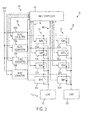
- FIG. 3 illustrates a load sharing architecture 200 according to an embodiment of the invention.
- the load sharing architecture 200 is embodied in one or more semiconductor circuits and may include one or more processors, arithmetic logic units, registers, memory, filter circuitry, etc.
- the architecture 200 may include or comprise software executed by a processor to receive signals as inputs, analyze combine the signals, and output adjusted signals to control devices such as power supplies and SSPCs.
- the architecture 200 includes a PMAD controller 240, power supplies 210a to 210n, and solid state power controllers (SSPCs) 231a to 231n connected to a load 220.
- the PMAD controller 240 corresponds to the PMAD controller 140 of FIG. 1
- the power supplies 210a to 210n correspond to the power supplies 110 of FIG.
- the SSPCs 231a to 231n correspond to the SSPC matrix 130 of FIG. 1
- the load 220 corresponds to the loads 120 of FIG. 1 .
- FIG. 3 While only one stage of SSPCs 231a to 231n is illustrated in FIG. 3 , it is understood that embodiments of the invention encompass a matrix of SSPCs including multiple stages, each stage comprising multiple SSPCs connected to different power supplies and a same load.
- FIG. 3 it is understood that embodiments of the invention encompass any number of loads 220. In this case, however, the output current signals from SSPCs associated with the same power source may be summed together prior to summing them in the summing amplifier 241, described below.
- the PMAD controller 240 includes a summing amplifier 241 configured to receive as inputs sensor signals 260a to 260n corresponding to power output from the SSPCs 231a to 231n.
- the sensor signals are current sensor signals detecting current output from each SSPC 231a to 231n.
- a divider 242 divides the summed sensor signal output from the summing amplifier 241 by a number of power sources "n" to produce an average current signal.
- Current feedback signal comparators 243a to 243n receive respective SSPCs 231 a to 231n output current feedback signals as well as average current signal at the output of block 242 and compare their difference to produce current difference signals.
- the current difference signals are processed by proportional - integral (PI) blocks 244a to 244n to produce voltage bias signals.
- PI proportional - integral
- Voltage bias signals are input to summing circuits 245a to 245a, where they are summed with a predetermined reference voltage V REF .
- the result is an adjusted voltage reference signal that is output to the power supplies 210a to 210n.
- the reference voltage V REF controls a power output of the power supplies 210a to 210n.
- the PMAD controller 240 adjusts the power output from the power supplies 210a to 210n by adjusting the voltage reference signal based on current output levels detected by the SSPCs 231a to 231n to achieve load sharing between power supplies 210a to 210n.
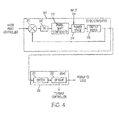
- FIG. 4 illustrates a power supply 310 and SSPC 330 according to an embodiment of the invention.
- the power supply 310 and SSPC 330 may correspond to the power supplies 110 and 210 of FIGS. 1 and 3
- the SSPC 330 may correspond to the SSPCs of the SSPC matrix 330 and the SSPCs 230a to 230n of FIG. 3 .
- the power supply 310 which may be a DC to DC converter, receives as an input the adjusted reference voltage signal from the PMAD controller 240 and compares it in a voltage feedback signal comparator 311 with a feedback signal of the power output from the power supply 310.
- the power supply 310 may further include a PI circuit 312 and a phase shift controller 313.
- a phase shift controller 313 is provided in FIG. 4 as an example of a DC to DC converter, embodiments of the present invention encompass any power converter according to the design considerations of the power distribution system.
- a power stage 314 receives as an input a voltage V dc The voltage V dc may be a high voltage level supplied to each power supply 310, and the high voltage level may be converted to a low voltage level based on the output signal from the phase shift controller 313 (or other DC to DC converter).
- the voltage V dc may also be a low voltage level supplied to each power supply 310 and the low voltage level may be converted to a high voltage level based on the output signal from the phase shift controller 313 (or other DC to DC converter).
- the resulting power signal is output through an output filter 315 to the SSPC 330.
- the SSPC 330 includes a switch 331, such as a power semiconductor switch including one or more transistors, and a sensor 332 to sense current output levels of the SSPC 330.
- the SSPC 330 outputs power to a load and outputs sensor signals to the PMAD controller, which controls SSPC 330 devices to route around faulty circuitry and controls power supplies 310 to adjust power output levels based on sensed power characteristics of the SSPC 330.
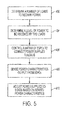
- FIG. 5 illustrates a method of controlling a matrix-based power management and distribution (PMAD) system according to embodiments of the present invention.
- a number of loads in the PMAD system that are to receive power is determined.
- the number of loads to receive power may be determined by a user, by a control system or program, or by any other method.
- the level of power to be supplied to each of the loads is determined based on load demand and the availability of power supplies. For example, it may be determined whether one load is to receive power corresponding to one power supply or two or more power supplies, whether multiple loads are to receive power corresponding to one or more power supplies, or any other variation of multiple power supplies supplying power to multiple loads.
- a solid-state power controller (SSPC) matrix is controlled to connect the determined loads with the determined number of power supplies to supply the loads with the correct power levels.
- the matrix comprises multiple stages of SSPCs, where each stage includes multiple SSPCs, each having a power input connected to a separate power supply and a power output connected to the same load.
- the SSPCs may be bi-directional SSPCs to permit current flow from an output-to-input direction to route power around failed circuitry, such as failed SSPCs.
- power characteristics such as current, output from the SSPCs is detected.
- the power characteristics may be supplied to a PMAD controller, which may control the power supplies and the SSPCs based on the detected power characteristics in block 410.
- a PMAD controller may adjust a reference voltage to power supplies based on the sensed power characteristics to adjust the power output from the power supplies to achieve load sharing between the power supplies.
- a matrix of solid-state power controllers is used to dynamically supply a plurality of loads with power form a plurality of power supplies.
- the loads that receive power, and the amount of power received at each load, is adjusted by turning on and off SSPCs of the matrix and controlling power supplies output. Accordingly, one load may receive power from one power supply or from multiple power supplies. In addition, multiple loads may receive power from one power supply or from multiple power supplies.
- a power management and distribution (PMAD) controller can isolate faulty power supplies and faulty loads, while continuing to provide power to functional power supplies and loads.
- PMAD power management and distribution
- the PMAD controller can reroute power around faulty SSPCs to provide power to loads even when one or more SSPCs in the matrix is turned off, incapable of reliably providing power, or otherwise faulty.
- the PMAD controller may include software and hardware to detect faults in a power supply, in SSPCs and in loads. For example, the PMAD controller may detect a faulty power supply or faulty load by detecting power characteristic levels outside predetermined thresholds via sensor signals from the power supply or from SSPCs electrically connected to the power supply or load. Likewise, the PMAD controller may detect faults in SSPCs based on power characteristic levels from power sensors in the SSPCs that are outside predetermined thresholds.
Landscapes
- Engineering & Computer Science (AREA)
- Power Engineering (AREA)
- Transportation (AREA)
- Mechanical Engineering (AREA)
- Direct Current Feeding And Distribution (AREA)
- Power Sources (AREA)
- Supply And Distribution Of Alternating Current (AREA)
Abstract
Description
- Embodiments of the invention relate to a power distribution architecture, and more particularly to a matrix-based DC power management and distribution architecture to distribute power to various vehicle systems.
- A solid state power controller (SSPC) is used in power management and distribution systems to replace traditional electromechanical circuit breakers. Its main functions are to distribute power and protect various electrical loads. In comparison to electromechanical devices, SSPCs provide a relatively fast response time, and may eliminate arcing during turn-off transient and bouncing during turn-on transient. SSPCs facilitate advanced protection and diagnostics, allowing for efficient power management and distribution architectures. SSPCs include power semiconductor devices that control power (voltage and/or current) supplied to a load. SSPCs perform supervisory and diagnostic functions in order to identify and prevent overload and short circuit conditions. Components of SSPCs may include power semiconductor switching devices, sensors to monitor output voltage and current and power semiconductor device temperature, and control circuitry. The control circuitry may include a microcontroller consisting of an arithmetic logic unit (ALU), memory, timer/counters, serial port, input/output (I/O) ports, and clock oscillator. Some SSPCs are programmable by a computer, user or by any proprietary method.
- In the case of a faulty SSPC or power supply, power is interrupted to the load leading to interruption of one or more load functions.
- Embodiments of the present invention include a power management and distribution (PMAD) system that includes first and second power supplies, first and second loads and a matrix of solid state power controllers (SSPCs) connected between the first and second power supplies and the first and second loads. The matrix is configured to selectively supply each of the first and second loads with a plurality of different power levels based on on/off states of the SSPCs of the matrix.
- Embodiments of the invention further include a power management and distribution (PMAD) controller of a matrix-based PMAD system. The PMAD controller includes a summing amplifier configured to receive as inputs first and second sensed current signals from first and second solid state power controllers (SSPCs) of an SSPD matrix between a plurality of power supplies and a plurality of loads. The PMAD controller also includes a reference voltage modification circuit configured to receive as an input a summed sensed current signal from the summing amplifier and to output to first and second power supplies of the plurality of power supplies first and second reference voltage modification signals to modify a voltage output from the first and second power supplies.
- Embodiments of the invention further include a method of controlling a matrix-based power management and distribution (PMAD) system. The method includes determining a number of loads among a plurality of loads to receive power and determining a level of power to be received by the loads determined to receive the power. The method further includes controlling a matrix of solid-state power controllers (SSPCs) connected between a plurality of power supplies and the plurality of loads to deliver the determined level of power to the loads determined to receive the power.
- The subject matter which is regarded as the invention is particularly pointed out and distinctly claimed in the claims at the conclusion of the specification. The foregoing and other features, and advantages of the invention are apparent from the following detailed description taken in conjunction with the accompanying drawings in which:
-
FIG. 1 illustrates a diagram of a matrix-based power management and distribution architecture according to one embodiment of the invention; -
FIG. 2 illustrates a diagram power-supplying state of a matrix-based power management and distribution architecture according to an embodiment of the invention; -
FIG. 3 is a block diagram of a load sharing architecture according to one embodiment of the invention; -
FIG. 4 is a block diagram of a power supply and solid state power controller according to one embodiment of the invention; and -
FIG. 5 is a flowchart of a method for controlling a matrix-based power management and distribution system according to an embodiment of the invention. - Power management and distribution systems including a plurality of power supplies, loads, and solid state power controllers are subject to failures. Required fault tolerance for critical loads may result in additional redundant power supplies, power busses and SSPCs to supply power to the critical loads. In addition, to accommodate variable load demands, for example during overload condition, the SSPCs and power supplies are selected to be relatively large to be able to accommodate large levels of power. Embodiments of the invention relate to a matrix-based power management and distribution architecture that may address one or more of these or other problems.
-
FIG. 1 illustrates a matrix-based power management anddistribution system 100 according to an embodiment of the invention. Thesystem 100 includes a plurality of dc-dc converters (power supplies) 110, that are powered by the input dc power bus (Vdc),loads 120 that receive power from thepower supplies 110 via amatrix 130 of solid state power controllers (SSPC) that are controlled to form paths for power between thepower supplies 110 and theloads 120. A power management and distribution (PMAD)controller 140 controls the SSPCs of thematrix 130 to generate the current paths between thepower supplies 110 and theloads 120. - The
system 100 includes powersupply communication signals 150 between thePMAD controller 140 and thepower supplies 110 by which the PMADcontroller 140 receives information regarding the status of thepower supplies 110 and the PMADcontroller 140 controls the power output by thepower supplies 110 based on the availability of power sources and load demands. Thesystem 110 further includes SSPCmatrix communication signals 160 by which the SSPCs of theSSPC matrix 130 communicate information to thePMAD controller 140 regarding power output to theloads 120 and thePMAD controller 140 controls the on/off states of switches in the SSPCs of theSSPC matrix 130. -
FIG. 1 illustratespower supplies 110a to 110n, where thepower supply 110a represents a first power supply and thepower supply 110n represents a last power supply among a plurality of power supplies. In other words, while twopower supplies power supplies 110 may exist in thesystem 100, such as three, four, ten, etc. Each power supply receives as an input power from dc bus Vdc and outputs a reduced or increased power level to theSSPC matrix 130. In some embodiments, eachpower supply 110a to 110n is configured to output substantially the same power level to the SSPCmatrix 130. However, in embodiments of the invention, the power outputs of eachpower supply 110a to 110n may be adjusted based on power characteristics detected in thepower supplies 110a to 110n and in the SSPCs of theSSPC matrix 130. In embodiments of the invention, thepower supplies 110 may be DC to DC converters configured to convert an input DC voltage, Input Vdc, to a lower or higher output DC voltage. However, embodiments of the invention encompass any type of power supply. -
FIG. 1 further illustrates threeloads system 100. Theloads FIG. 1 illustrates first, second andthird SSPC stages SSPCs 131a to 131n, 132a to 132n and 133a to 133n. However, embodiments of the invention encompass any number of SSPC stages and any number of SSPCs per stage. For purposes of description, an SSPC stage corresponds to a series of SSPCs having power outputs connected to asame load 120 and each SSPC in each stage has a power input connected to aseparate power supply 110. - In embodiments of the invention, the
PMAD controller 140 is configured to determine a number ofloads 120 that are to receive power. The number ofloads 120 to receive power may be provided by a user, by a computer program, by a device or system connected to thePMAD controller 140 or by any other method. ThePMAD controller 140 further determines a power level to be supplied to eachload 120 that is to receive power. - Based on the determinations of which
loads 120 are to receive power, and the power levels to be delivered to each load, thePMAD controller 140 controls the SSPCs of theSSPC matrix 130 to deliver the desired power to theloads 120. For example, if it is determined that onlyload 122 is to receive power and that the level of power corresponds to the output from twopower supplies 110, then thePMAD controller 140 may control theSSPCs power supplies load 122 and to utilize load sharing control, as discussed below. On the other hand, if it is determined that each ofloads load 121 is to receive power corresponding to the output from onepower supply 110 andloads 123 are to receive power corresponding to half of the output from apower supply 110, then thePMAD controller 140 may turn on SSPC 131n to supply power frompower supply 110n to theload 121, and thePMAD controller 140 may turn onSSPCs 132a and 133a to divide the current output from thepower supply 110a between theloads - In addition, during single load overload condition, the system may be re-configured to disconnect power from non-critical load and provide additional power to the load that experiences overload. A load sharing control is activated during this event to ensure equal load sharing between the power sources. After the overload condition clears, the system is re-configured back to the default condition that existed prior to the overload condition.
- In addition, embodiments of the present invention encompass bi-directional SSPCs that allow current to flow from an input-to-output direction or from an output-to-input direction according to a desired power output level. The bi-directional SSPC may also include a bi-directional current interruption. In the present specification, the term "power input" as it relates to the SSPCs of the
SSPC matrix 130 refers to the end of the SSPCs connected to the power line output from thepower supplies 110. Conversely, the term "power output" as it relates to the SSPCs of theSSPC matrix 130 refers to the end of the SSPCs connected to the line input to theloads 120. However, as discussed above, in embodiments of the invention, current may be controlled to flow bi-directionally through the SSPCs.FIG. 2 illustrates an example of bi-directional current flow to supply power to aload 120 when a faulty SSPC is detected. - Referring to
FIG. 2 , fourpower supplies SSPCs 131 includesSSPCs 131a to 131d and the second stage ofSSPCs 132 includesSSPCs 132a to 132d. ThePMAD controller 140 may determine that theload 122 is to receive power output from all fourpower supplies 110a to 110d. However,SSPC 132b may be a faulty SSPC that does not permit current to flow through theSSPC 132b. Accordingly, thePMAD controller 140 may controlSSPCs SSPCs power supplies 110a to 110d to theload 122. In particular, in the configuration illustrated inFIG. 2 , current flows from thepower supply 110a throughSSPC 132a to theload 122. In addition, current flows from thepower supply 110b, through theSSPC 131b, through theSSPC 131c (in an output-to-input direction), through theSSPC 132c to theload 122. Similarly, the current flows from thepower supply 110c through theSSPC 132c to theload 122. Finally, current flows from thepower supply 110d through theSSPC 132d to theload 122. Accordingly, in embodiments of the present invention, theSSPC matrix 130 permits power to be supplied to aload 120 even when a fault occurs in one or more SSPC devices. -
FIG. 3 illustrates aload sharing architecture 200 according to an embodiment of the invention. Theload sharing architecture 200 is embodied in one or more semiconductor circuits and may include one or more processors, arithmetic logic units, registers, memory, filter circuitry, etc. Thearchitecture 200 may include or comprise software executed by a processor to receive signals as inputs, analyze combine the signals, and output adjusted signals to control devices such as power supplies and SSPCs. Thearchitecture 200 includes aPMAD controller 240,power supplies 210a to 210n, and solid state power controllers (SSPCs) 231a to 231n connected to aload 220. ThePMAD controller 240 corresponds to thePMAD controller 140 ofFIG. 1 , thepower supplies 210a to 210n correspond to the power supplies 110 ofFIG. 1 , theSSPCs 231a to 231n correspond to theSSPC matrix 130 ofFIG. 1 , and theload 220 corresponds to theloads 120 ofFIG. 1 . While only one stage ofSSPCs 231a to 231n is illustrated inFIG. 3 , it is understood that embodiments of the invention encompass a matrix of SSPCs including multiple stages, each stage comprising multiple SSPCs connected to different power supplies and a same load. In addition, while only oneload 220 is illustrated inFIG. 3 , it is understood that embodiments of the invention encompass any number ofloads 220. In this case, however, the output current signals from SSPCs associated with the same power source may be summed together prior to summing them in the summingamplifier 241, described below. - The
PMAD controller 240 includes a summingamplifier 241 configured to receive asinputs sensor signals 260a to 260n corresponding to power output from theSSPCs 231a to 231n. In one embodiment, the sensor signals are current sensor signals detecting current output from eachSSPC 231a to 231n. Adivider 242 divides the summed sensor signal output from the summingamplifier 241 by a number of power sources "n" to produce an average current signal. - Current
feedback signal comparators 243a to 243n receiverespective SSPCs 231 a to 231n output current feedback signals as well as average current signal at the output ofblock 242 and compare their difference to produce current difference signals. The current difference signals are processed by proportional - integral (PI)blocks 244a to 244n to produce voltage bias signals. Alternatively, a PI block may be substituted by a lag function. Voltage bias signals are input to summingcircuits 245a to 245a, where they are summed with a predetermined reference voltage VREF. The result is an adjusted voltage reference signal that is output to thepower supplies 210a to 210n. In other words, during operation, the reference voltage VREF controls a power output of thepower supplies 210a to 210n. ThePMAD controller 240 adjusts the power output from thepower supplies 210a to 210n by adjusting the voltage reference signal based on current output levels detected by theSSPCs 231a to 231n to achieve load sharing betweenpower supplies 210a to 210n. -
FIG. 4 illustrates apower supply 310 andSSPC 330 according to an embodiment of the invention. Thepower supply 310 andSSPC 330 may correspond to the power supplies 110 and 210 ofFIGS. 1 and3 , and theSSPC 330 may correspond to the SSPCs of theSSPC matrix 330 and the SSPCs 230a to 230n ofFIG. 3 . Thepower supply 310, which may be a DC to DC converter, receives as an input the adjusted reference voltage signal from thePMAD controller 240 and compares it in a voltagefeedback signal comparator 311 with a feedback signal of the power output from thepower supply 310. - The
power supply 310 may further include aPI circuit 312 and aphase shift controller 313. Although aphase shift controller 313 is provided inFIG. 4 as an example of a DC to DC converter, embodiments of the present invention encompass any power converter according to the design considerations of the power distribution system. Apower stage 314 receives as an input a voltage Vdc The voltage Vdc may be a high voltage level supplied to eachpower supply 310, and the high voltage level may be converted to a low voltage level based on the output signal from the phase shift controller 313 (or other DC to DC converter). The voltage Vdc may also be a low voltage level supplied to eachpower supply 310 and the low voltage level may be converted to a high voltage level based on the output signal from the phase shift controller 313 (or other DC to DC converter). The resulting power signal is output through anoutput filter 315 to theSSPC 330. - The
SSPC 330 includes aswitch 331, such as a power semiconductor switch including one or more transistors, and asensor 332 to sense current output levels of theSSPC 330. TheSSPC 330 outputs power to a load and outputs sensor signals to the PMAD controller, which controlsSSPC 330 devices to route around faulty circuitry and controlspower supplies 310 to adjust power output levels based on sensed power characteristics of theSSPC 330. -
FIG. 5 illustrates a method of controlling a matrix-based power management and distribution (PMAD) system according to embodiments of the present invention. Inblock 402, a number of loads in the PMAD system that are to receive power is determined. The number of loads to receive power may be determined by a user, by a control system or program, or by any other method. Inblock 404, the level of power to be supplied to each of the loads is determined based on load demand and the availability of power supplies. For example, it may be determined whether one load is to receive power corresponding to one power supply or two or more power supplies, whether multiple loads are to receive power corresponding to one or more power supplies, or any other variation of multiple power supplies supplying power to multiple loads. - In
block 406, a solid-state power controller (SSPC) matrix is controlled to connect the determined loads with the determined number of power supplies to supply the loads with the correct power levels. The matrix comprises multiple stages of SSPCs, where each stage includes multiple SSPCs, each having a power input connected to a separate power supply and a power output connected to the same load. The SSPCs may be bi-directional SSPCs to permit current flow from an output-to-input direction to route power around failed circuitry, such as failed SSPCs. - In
block 408, power characteristics, such as current, output from the SSPCs is detected. The power characteristics may be supplied to a PMAD controller, which may control the power supplies and the SSPCs based on the detected power characteristics inblock 410. As discussed above, a PMAD controller may adjust a reference voltage to power supplies based on the sensed power characteristics to adjust the power output from the power supplies to achieve load sharing between the power supplies. - In embodiments of the present invention, a matrix of solid-state power controllers (SSPCs) is used to dynamically supply a plurality of loads with power form a plurality of power supplies. The loads that receive power, and the amount of power received at each load, is adjusted by turning on and off SSPCs of the matrix and controlling power supplies output. Accordingly, one load may receive power from one power supply or from multiple power supplies. In addition, multiple loads may receive power from one power supply or from multiple power supplies. By controlling the SSPCs that are turned on and off, a power management and distribution (PMAD) controller can isolate faulty power supplies and faulty loads, while continuing to provide power to functional power supplies and loads. In addition, by controlling the SSPCs that are turned on and off, the PMAD controller can reroute power around faulty SSPCs to provide power to loads even when one or more SSPCs in the matrix is turned off, incapable of reliably providing power, or otherwise faulty.
- In embodiments of the invention, the PMAD controller may include software and hardware to detect faults in a power supply, in SSPCs and in loads. For example, the PMAD controller may detect a faulty power supply or faulty load by detecting power characteristic levels outside predetermined thresholds via sensor signals from the power supply or from SSPCs electrically connected to the power supply or load. Likewise, the PMAD controller may detect faults in SSPCs based on power characteristic levels from power sensors in the SSPCs that are outside predetermined thresholds.
- While the invention has been described in detail in connection with only a limited number of embodiments, it should be readily understood that the invention is not limited to such disclosed embodiments. Rather, the invention can be modified to incorporate any number of variations, alterations, substitutions or equivalent arrangements not heretofore described, but which are commensurate with the scope of the invention as defined by the claims. Additionally, while various embodiments of the invention have been described, it is to be understood that aspects of the invention may include only some of the described embodiments. Accordingly, the invention is not to be seen as limited by the foregoing description, but is only limited by the scope of the appended claims.
Claims (14)
- A power management and distribution (PMAD) system, comprising:first and second power supplies (110a-110n);first and second loads (121, 122); anda matrix of solid state power controllers (SSPCs) (131-133) connected between the first and second power supplies and the first and second loads, the matrix configured to selectively supply each of the first and second loads with a plurality of different power levels based on on/off states of the SSPCs of the matrix.
- The PMAD system of claim 1, wherein the matrix comprises:first and second stages (131, 132) of solid state power controllers (SSPCs), the first stage of SSPCs including a first SSPC (131a) having a power input connected to the first power supply and a power output connected to the first load and a second SSPC (131b) having a power input connected to the second power supply and a power output connected to the first load, and the second stage of SSPCs including a third SSPC (132a) having a power input connected to the first power supply and a power output connected to the second load and a fourth SSPC (132b) having a power input connected to the second power supply and a power output connected to the second load.
- The PMAD system of claim 2, further comprising:a third power supply (110c);a third load (123); anda third stage (133) of SSPCs, the third stage of SSPCs including a fifth SSPC (133a) having a power input connected to the first power supply and a power output connected to the third load, a sixth SSPC (133b) having a power input connected to the second power supply and a power output connected to the third load, and a seventh SSPC (133c) having a power input connected to the third power supply and a power output connected to the third load,wherein the first stage of SSPCs includes an eighth SSPC having a power input connected to the third power supply and a power output connected to the first load, andthe second stage of SSPCs includes a ninth SSPC having a power input connected to the third power supply and a power output connected to the second load.
- The PMAD system of claim 1, wherein the first and second power supplies are DC-DC converters configured to each receive as a power input a first DC voltage and to each output substantially a second DC voltage different from the first DC voltage.
- The PMAD system of claim 1, further comprising:a PMAD controller (140) configured to control each of the SSPCs of the matrix to selectively output a predetermined voltage to each of the first and second loads.
- The PMAD system of claim 5, wherein each of the SSPCs of the matrix includes a current sensor (332) configured to output a sensed current to the PMAD controller, and
the PMAD controller is configured to adjust a power output from the first and second power supplies based on the sensed current received from the SSPCs of the matrix. - The PMAD system of claim 6, wherein the PMAD controller is configured to sum the sensed current from all of the SSPCs of the matrix to generate a summed sensed current, divide the summed sensed current by a number of power sources predetermined to deliver power to generate a reference voltage modification signal, and to adjust a reference voltage supplied to the first and second power supplies based on the reference voltage modification signal.
- The PMAD system of claim 5, wherein the PMAD controller is configured to determine a number of loads to receive power and a level of power to be received by the loads determined to receive the power and to control each of the SSPCs of the matrix to deliver the determined level of power to the loads determined to receive the power.
- The PMAD system of claim 5, wherein the PMAD controller is configured to detect at least one of a faulty power supply and a faulty load and to control the SSPCs of the matrix to prevent the supply of power to the faulty load or isolate a faulty power supply
- The PMAD system of claim 5, wherein the PMAD controller is configured to detect a faulty SSPC of the matrix and to control the SSPCs of the matrix to bypass the faulty SSPC to supply power to the first and second loads.
- A power management and distribution (PMAD) controller of a matrix-based PMAD system, comprising:a summing amplifier (241) configured to receive as inputs first and second sensed current signals from first and second solid state power controllers (SSPCs) (231) of an SSPD matrix between a plurality of power supplies (210) and a plurality of loads (220);a reference voltage modification circuit (242, 244, 245) configured to receive as an input a summed sensed current signal from the summing amplifier and to output to first and second power supplies among the plurality of power supplies first and second reference voltage modification signals to modify a voltage output from the first and second power supplies.
- The PMAD controller of claim 11, wherein the reference voltage modification circuit comprises:a summed sensed current signal divider (242) configured to divide the summed sensed current signal by a number of power sources of the matrix-based PMAD system determined to deliver power to generate an average current signal; andfirst and second summing circuits (245) configured to generate first and second difference current signals by summing the average current signal with the first sensed current signal and the second sensed current signal, respectively.
- The PMAD controller of claim 12, wherein the reference voltage modification circuit further comprises:third and fourth summing circuits configured to generate the reference voltage modification signals by summing the first and second voltage bias signals, respectively, with a reference voltage.
- The PMAD controller of claim 13, further comprising:first and second proportional integral (PI) circuits (244) to deliver voltage biased signals to the third and fourth summing circuits.
Applications Claiming Priority (1)
| Application Number | Priority Date | Filing Date | Title |
|---|---|---|---|
| US13/757,237 US9325170B2 (en) | 2013-02-01 | 2013-02-01 | Matrix-based power distribution architecture |
Publications (3)
| Publication Number | Publication Date |
|---|---|
| EP2763260A2 true EP2763260A2 (en) | 2014-08-06 |
| EP2763260A3 EP2763260A3 (en) | 2014-11-12 |
| EP2763260B1 EP2763260B1 (en) | 2017-03-22 |
Family
ID=50068813
Family Applications (1)
| Application Number | Title | Priority Date | Filing Date |
|---|---|---|---|
| EP14153527.8A Active EP2763260B1 (en) | 2013-02-01 | 2014-01-31 | Matrix-based power distribution architecture |
Country Status (2)
| Country | Link |
|---|---|
| US (1) | US9325170B2 (en) |
| EP (1) | EP2763260B1 (en) |
Cited By (6)
| Publication number | Priority date | Publication date | Assignee | Title |
|---|---|---|---|---|
| EP2999084A1 (en) * | 2014-09-18 | 2016-03-23 | Schneider Electric Industries SAS | Electrical interconnection device for source inverter, and source inverter comprising such a device |
| CN105471311A (en) * | 2014-09-30 | 2016-04-06 | 波音公司 | Reducing circulating current and phase to phase imbalance in a parallel modular converter system |
| EP3091662A1 (en) * | 2015-05-07 | 2016-11-09 | Hamilton Sundstrand Corporation | Multi-channel current balancing system including parallel solid-state power controllers |
| US9991778B2 (en) | 2016-02-29 | 2018-06-05 | The Boeing Company | Balancing current within a modular converter system |
| US10454393B2 (en) | 2016-07-25 | 2019-10-22 | The Boeing Company | Balancing current within a parallel modular converter system |
| CN114421741A (en) * | 2022-01-19 | 2022-04-29 | 北京卫星制造厂有限公司 | Power flow control circuit and control method for multiple redundant distribution paths |
Families Citing this family (20)
| Publication number | Priority date | Publication date | Assignee | Title |
|---|---|---|---|---|
| US20140361729A1 (en) * | 2013-06-05 | 2014-12-11 | Enersys Delaware Inc. | Devices, Systems and Methods for Mining Equipment |
| CN105409080B (en) * | 2013-07-29 | 2019-06-11 | 京瓷株式会社 | Power conversion device, method of controlling power conversion device, and power conversion system |
| US9698589B1 (en) * | 2014-06-09 | 2017-07-04 | Google Inc. | DC power distribution architectures |
| US9728965B2 (en) * | 2014-09-29 | 2017-08-08 | The United States Of America As Represented By The Secretary Of The Army | Scalable universal power supply and power converter |
| CN106033904B (en) * | 2015-03-20 | 2017-10-10 | 深圳奥特迅电力设备股份有限公司 | The charging method of matrix form flexibility charging heap and dynamically distributes power |
| CA2947465A1 (en) * | 2015-11-18 | 2017-05-18 | General Electric Company | A system and method for fault ride through |
| EP3176896B1 (en) * | 2015-12-04 | 2019-10-30 | HS Elektronik Systeme GmbH | Power management and distribution system |
| EP3176903B1 (en) * | 2015-12-04 | 2023-09-20 | HS Elektronik Systeme GmbH | Power distribution system |
| JP6220904B2 (en) * | 2016-01-14 | 2017-10-25 | 本田技研工業株式会社 | Power storage device |
| CN106740224B (en) * | 2017-01-12 | 2023-05-23 | 深圳驿普乐氏科技有限公司 | A charging system and method for an electric vehicle |
| US20190074716A1 (en) * | 2017-05-15 | 2019-03-07 | Shenzhen University | Equilibrium-conductance-compensated globally-linear symmetric method for obtaining power flows in dc power networks |
| GB2572821B (en) * | 2018-04-13 | 2021-03-10 | Ge Aviat Systems Ltd | Method and apparatus for operating a power distribution system |
| JP7118531B2 (en) * | 2018-04-26 | 2022-08-16 | 矢崎総業株式会社 | power supply |
| CN112173140B (en) * | 2019-07-04 | 2023-07-11 | 上海航空电器有限公司 | On-board contactless light-weight distributed power distribution structure and method |
| US20210028641A1 (en) * | 2019-07-25 | 2021-01-28 | Solaredge Technologies Ltd. | System for Battery Charging |
| CN110620405A (en) * | 2019-11-08 | 2019-12-27 | 南京航空航天大学 | Matrix type power distribution system in multi-power supply mode and control method |
| US11594879B2 (en) | 2020-07-10 | 2023-02-28 | Infineon Technologies Austria Ag | Multi-power supply monitoring, operation, and control |
| GB2598316B (en) | 2020-08-25 | 2022-11-16 | Ge Aviat Systems Ltd | Control circuit for a power distribution node |
| CN121546532A (en) * | 2020-10-16 | 2026-02-17 | 日立能源有限公司 | Power grid |
| US11581730B2 (en) * | 2021-04-15 | 2023-02-14 | Acbel Polytech Inc. | Power supply device with multiple outputs and power allocation control method thereof |
Family Cites Families (19)
| Publication number | Priority date | Publication date | Assignee | Title |
|---|---|---|---|---|
| US4618779A (en) | 1984-06-22 | 1986-10-21 | Storage Technology Partners | System for parallel power supplies |
| US5654859A (en) | 1995-11-14 | 1997-08-05 | The Boeing Company | Fault tolerant power distribution system |
| US6586850B1 (en) | 2000-07-05 | 2003-07-01 | Koninklijke Philips Electronics N.V. | Device with multiple, concurrently-installed power molecules and method for controlling same |
| US7007179B2 (en) | 2001-02-08 | 2006-02-28 | Honeywell International Inc. | Electric load management center |
| US7400065B2 (en) | 2004-08-24 | 2008-07-15 | Honeywell International Inc. | Electrical power distribution system and method with active load control |
| DE602006020027D1 (en) * | 2005-02-16 | 2011-03-24 | Leach Int Corp | POWER DISTRIBUTION SYSTEM USING SOLID BODY CONTROLLERS |
| US20070273216A1 (en) * | 2006-05-24 | 2007-11-29 | Farbarik John M | Systems and Methods for Reducing Power Losses in a Medical Device |
| KR100759897B1 (en) * | 2006-08-02 | 2007-09-18 | 삼성전자주식회사 | Current detection circuit and method |
| WO2009153657A1 (en) | 2008-06-18 | 2009-12-23 | Desert Star 226 (Pty) Ltd | Power system |
| US8390151B2 (en) | 2010-03-10 | 2013-03-05 | Hamilton Sundstrand Corporation | SSPC with active current limiting |
| US8644997B2 (en) | 2010-05-10 | 2014-02-04 | Hamilton Sundstrand Corporation | Load sharing architecture for redundant channel controllers |
| NL2004746C2 (en) * | 2010-05-19 | 2011-11-22 | Epyon B V | Charging system for electric vehicles. |
| US8519686B2 (en) | 2010-05-19 | 2013-08-27 | Hamilton Sundstrand Corporation | SSPC for soft start of DC link capacitor |
| US8536730B2 (en) | 2010-07-12 | 2013-09-17 | Hamilton Sundstrand Corporation | Electric power generating and distribution system comprising a decoupling filter and a solid state power controller |
| US8553373B2 (en) | 2011-08-25 | 2013-10-08 | Hamilton Sundstrand Corporation | Solid state power controller for high voltage direct current systems |
| US8625243B2 (en) | 2011-08-25 | 2014-01-07 | Hamilton Sundstrand Corporation | Multi-functional solid state power controller |
| US9025294B2 (en) | 2012-02-24 | 2015-05-05 | Hamilton Sundstrand Corporation | System and method for controlling solid state circuit breakers |
| US8699251B2 (en) | 2012-04-24 | 2014-04-15 | Hamilton Sundstrand Corporation | Direct current generating, management and distribution system |
| US9240685B2 (en) | 2013-01-21 | 2016-01-19 | Hamilton Sundstrand Corporation | Reconfigurable matrix-based power distribution architecture |
-
2013
- 2013-02-01 US US13/757,237 patent/US9325170B2/en active Active
-
2014
- 2014-01-31 EP EP14153527.8A patent/EP2763260B1/en active Active
Non-Patent Citations (1)
| Title |
|---|
| None |
Cited By (9)
| Publication number | Priority date | Publication date | Assignee | Title |
|---|---|---|---|---|
| EP2999084A1 (en) * | 2014-09-18 | 2016-03-23 | Schneider Electric Industries SAS | Electrical interconnection device for source inverter, and source inverter comprising such a device |
| FR3026245A1 (en) * | 2014-09-18 | 2016-03-25 | Schneider Electric Ind Sas | ELECTRICAL INTERCONNECT DEVICE FOR SOURCE INVERTER, AND SOURCE INVERTER COMPRISING SUCH A DEVICE |
| CN105471311A (en) * | 2014-09-30 | 2016-04-06 | 波音公司 | Reducing circulating current and phase to phase imbalance in a parallel modular converter system |
| EP3002647A1 (en) * | 2014-09-30 | 2016-04-06 | The Boeing Company | System and method for load balancing in a parallel modular converter system |
| CN105471311B (en) * | 2014-09-30 | 2019-11-08 | 波音公司 | Circulating current and phasetophase in reduction parallel modules converter system is unbalance |
| EP3091662A1 (en) * | 2015-05-07 | 2016-11-09 | Hamilton Sundstrand Corporation | Multi-channel current balancing system including parallel solid-state power controllers |
| US9991778B2 (en) | 2016-02-29 | 2018-06-05 | The Boeing Company | Balancing current within a modular converter system |
| US10454393B2 (en) | 2016-07-25 | 2019-10-22 | The Boeing Company | Balancing current within a parallel modular converter system |
| CN114421741A (en) * | 2022-01-19 | 2022-04-29 | 北京卫星制造厂有限公司 | Power flow control circuit and control method for multiple redundant distribution paths |
Also Published As
| Publication number | Publication date |
|---|---|
| EP2763260B1 (en) | 2017-03-22 |
| US9325170B2 (en) | 2016-04-26 |
| EP2763260A3 (en) | 2014-11-12 |
| US20140217821A1 (en) | 2014-08-07 |
Similar Documents
| Publication | Publication Date | Title |
|---|---|---|
| EP2763260B1 (en) | Matrix-based power distribution architecture | |
| US9800056B2 (en) | Multi-power supply system and control method thereof | |
| US11641106B2 (en) | Power distribution system | |
| US9240685B2 (en) | Reconfigurable matrix-based power distribution architecture | |
| US9806522B2 (en) | Method for the controlled connection of a plurality of on-board power system branches of a vehicle, control unit for carrying out the method and on-board power system | |
| US8344545B2 (en) | Solid state power contactors based on no break power transfer method | |
| US20080231112A1 (en) | Multi-functional lrm performing sspc and elcu functions | |
| JP2020108219A (en) | Energization control device | |
| KR102519092B1 (en) | Power supply control system and method | |
| CN102782981B (en) | Power supplies for electronic devices | |
| US10001824B2 (en) | Power system and power allocation method thereof | |
| US9160174B2 (en) | Control architecture for power switching controller | |
| US20170158350A1 (en) | Power Management and Distribution System | |
| JP7017139B2 (en) | Energization control device and power supply system | |
| EP3176903B1 (en) | Power distribution system | |
| US9952649B2 (en) | Power system and power wake-up method thereof | |
| US20150064587A1 (en) | Apparatus and method for controlling fuel cell system using sub-power conditioning system | |
| JP2013223318A (en) | Current distribution device | |
| JP2009201345A (en) | Battery cell balancing system using current regulator | |
| US20120313687A1 (en) | Connection apparatus | |
| US20050207082A1 (en) | Dual bus static tie switch | |
| KR20210061374A (en) | Power and power supply method | |
| US20240186822A1 (en) | Power Supply Control Device | |
| CN120127816A (en) | Power switching circuit | |
| US20130140897A1 (en) | Arrangement for an uninterruptible power supply |
Legal Events
| Date | Code | Title | Description |
|---|---|---|---|
| PUAI | Public reference made under article 153(3) epc to a published international application that has entered the european phase |
Free format text: ORIGINAL CODE: 0009012 |
|
| 17P | Request for examination filed |
Effective date: 20140131 |
|
| AK | Designated contracting states |
Kind code of ref document: A2 Designated state(s): AL AT BE BG CH CY CZ DE DK EE ES FI FR GB GR HR HU IE IS IT LI LT LU LV MC MK MT NL NO PL PT RO RS SE SI SK SM TR |
|
| AX | Request for extension of the european patent |
Extension state: BA ME |
|
| PUAL | Search report despatched |
Free format text: ORIGINAL CODE: 0009013 |
|
| AK | Designated contracting states |
Kind code of ref document: A3 Designated state(s): AL AT BE BG CH CY CZ DE DK EE ES FI FR GB GR HR HU IE IS IT LI LT LU LV MC MK MT NL NO PL PT RO RS SE SI SK SM TR |
|
| AX | Request for extension of the european patent |
Extension state: BA ME |
|
| RIC1 | Information provided on ipc code assigned before grant |
Ipc: H02J 3/00 20060101ALI20141007BHEP Ipc: H02J 1/14 20060101ALI20141007BHEP Ipc: H02J 1/00 20060101ALI20141007BHEP Ipc: H02J 1/10 20060101AFI20141007BHEP |
|
| R17P | Request for examination filed (corrected) |
Effective date: 20150506 |
|
| RBV | Designated contracting states (corrected) |
Designated state(s): AL AT BE BG CH CY CZ DE DK EE ES FI FR GB GR HR HU IE IS IT LI LT LU LV MC MK MT NL NO PL PT RO RS SE SI SK SM TR |
|
| 17Q | First examination report despatched |
Effective date: 20160120 |
|
| GRAP | Despatch of communication of intention to grant a patent |
Free format text: ORIGINAL CODE: EPIDOSNIGR1 |
|
| GRAJ | Information related to disapproval of communication of intention to grant by the applicant or resumption of examination proceedings by the epo deleted |
Free format text: ORIGINAL CODE: EPIDOSDIGR1 |
|
| GRAP | Despatch of communication of intention to grant a patent |
Free format text: ORIGINAL CODE: EPIDOSNIGR1 |
|
| INTG | Intention to grant announced |
Effective date: 20160926 |
|
| INTG | Intention to grant announced |
Effective date: 20161006 |
|
| GRAS | Grant fee paid |
Free format text: ORIGINAL CODE: EPIDOSNIGR3 |
|
| GRAA | (expected) grant |
Free format text: ORIGINAL CODE: 0009210 |
|
| AK | Designated contracting states |
Kind code of ref document: B1 Designated state(s): AL AT BE BG CH CY CZ DE DK EE ES FI FR GB GR HR HU IE IS IT LI LT LU LV MC MK MT NL NO PL PT RO RS SE SI SK SM TR |
|
| REG | Reference to a national code |
Ref country code: GB Ref legal event code: FG4D |
|
| REG | Reference to a national code |
Ref country code: CH Ref legal event code: EP |
|
| REG | Reference to a national code |
Ref country code: AT Ref legal event code: REF Ref document number: 878621 Country of ref document: AT Kind code of ref document: T Effective date: 20170415 |
|
| REG | Reference to a national code |
Ref country code: IE Ref legal event code: FG4D |
|
| REG | Reference to a national code |
Ref country code: DE Ref legal event code: R096 Ref document number: 602014007722 Country of ref document: DE |
|
| REG | Reference to a national code |
Ref country code: NL Ref legal event code: MP Effective date: 20170322 |
|
| PG25 | Lapsed in a contracting state [announced via postgrant information from national office to epo] |
Ref country code: HR Free format text: LAPSE BECAUSE OF FAILURE TO SUBMIT A TRANSLATION OF THE DESCRIPTION OR TO PAY THE FEE WITHIN THE PRESCRIBED TIME-LIMIT Effective date: 20170322 Ref country code: FI Free format text: LAPSE BECAUSE OF FAILURE TO SUBMIT A TRANSLATION OF THE DESCRIPTION OR TO PAY THE FEE WITHIN THE PRESCRIBED TIME-LIMIT Effective date: 20170322 Ref country code: GR Free format text: LAPSE BECAUSE OF FAILURE TO SUBMIT A TRANSLATION OF THE DESCRIPTION OR TO PAY THE FEE WITHIN THE PRESCRIBED TIME-LIMIT Effective date: 20170623 Ref country code: NO Free format text: LAPSE BECAUSE OF FAILURE TO SUBMIT A TRANSLATION OF THE DESCRIPTION OR TO PAY THE FEE WITHIN THE PRESCRIBED TIME-LIMIT Effective date: 20170622 Ref country code: LT Free format text: LAPSE BECAUSE OF FAILURE TO SUBMIT A TRANSLATION OF THE DESCRIPTION OR TO PAY THE FEE WITHIN THE PRESCRIBED TIME-LIMIT Effective date: 20170322 |
|
| REG | Reference to a national code |
Ref country code: LT Ref legal event code: MG4D |
|
| REG | Reference to a national code |
Ref country code: AT Ref legal event code: MK05 Ref document number: 878621 Country of ref document: AT Kind code of ref document: T Effective date: 20170322 |
|
| PG25 | Lapsed in a contracting state [announced via postgrant information from national office to epo] |
Ref country code: SE Free format text: LAPSE BECAUSE OF FAILURE TO SUBMIT A TRANSLATION OF THE DESCRIPTION OR TO PAY THE FEE WITHIN THE PRESCRIBED TIME-LIMIT Effective date: 20170322 Ref country code: RS Free format text: LAPSE BECAUSE OF FAILURE TO SUBMIT A TRANSLATION OF THE DESCRIPTION OR TO PAY THE FEE WITHIN THE PRESCRIBED TIME-LIMIT Effective date: 20170322 Ref country code: LV Free format text: LAPSE BECAUSE OF FAILURE TO SUBMIT A TRANSLATION OF THE DESCRIPTION OR TO PAY THE FEE WITHIN THE PRESCRIBED TIME-LIMIT Effective date: 20170322 Ref country code: BG Free format text: LAPSE BECAUSE OF FAILURE TO SUBMIT A TRANSLATION OF THE DESCRIPTION OR TO PAY THE FEE WITHIN THE PRESCRIBED TIME-LIMIT Effective date: 20170622 |
|
| PG25 | Lapsed in a contracting state [announced via postgrant information from national office to epo] |
Ref country code: NL Free format text: LAPSE BECAUSE OF FAILURE TO SUBMIT A TRANSLATION OF THE DESCRIPTION OR TO PAY THE FEE WITHIN THE PRESCRIBED TIME-LIMIT Effective date: 20170322 |
|
| PG25 | Lapsed in a contracting state [announced via postgrant information from national office to epo] |
Ref country code: CZ Free format text: LAPSE BECAUSE OF FAILURE TO SUBMIT A TRANSLATION OF THE DESCRIPTION OR TO PAY THE FEE WITHIN THE PRESCRIBED TIME-LIMIT Effective date: 20170322 Ref country code: AT Free format text: LAPSE BECAUSE OF FAILURE TO SUBMIT A TRANSLATION OF THE DESCRIPTION OR TO PAY THE FEE WITHIN THE PRESCRIBED TIME-LIMIT Effective date: 20170322 Ref country code: SK Free format text: LAPSE BECAUSE OF FAILURE TO SUBMIT A TRANSLATION OF THE DESCRIPTION OR TO PAY THE FEE WITHIN THE PRESCRIBED TIME-LIMIT Effective date: 20170322 Ref country code: ES Free format text: LAPSE BECAUSE OF FAILURE TO SUBMIT A TRANSLATION OF THE DESCRIPTION OR TO PAY THE FEE WITHIN THE PRESCRIBED TIME-LIMIT Effective date: 20170322 Ref country code: EE Free format text: LAPSE BECAUSE OF FAILURE TO SUBMIT A TRANSLATION OF THE DESCRIPTION OR TO PAY THE FEE WITHIN THE PRESCRIBED TIME-LIMIT Effective date: 20170322 Ref country code: RO Free format text: LAPSE BECAUSE OF FAILURE TO SUBMIT A TRANSLATION OF THE DESCRIPTION OR TO PAY THE FEE WITHIN THE PRESCRIBED TIME-LIMIT Effective date: 20170322 |
|
| PG25 | Lapsed in a contracting state [announced via postgrant information from national office to epo] |
Ref country code: PT Free format text: LAPSE BECAUSE OF FAILURE TO SUBMIT A TRANSLATION OF THE DESCRIPTION OR TO PAY THE FEE WITHIN THE PRESCRIBED TIME-LIMIT Effective date: 20170724 Ref country code: PL Free format text: LAPSE BECAUSE OF FAILURE TO SUBMIT A TRANSLATION OF THE DESCRIPTION OR TO PAY THE FEE WITHIN THE PRESCRIBED TIME-LIMIT Effective date: 20170322 Ref country code: SM Free format text: LAPSE BECAUSE OF FAILURE TO SUBMIT A TRANSLATION OF THE DESCRIPTION OR TO PAY THE FEE WITHIN THE PRESCRIBED TIME-LIMIT Effective date: 20170322 Ref country code: IS Free format text: LAPSE BECAUSE OF FAILURE TO SUBMIT A TRANSLATION OF THE DESCRIPTION OR TO PAY THE FEE WITHIN THE PRESCRIBED TIME-LIMIT Effective date: 20170722 |
|
| REG | Reference to a national code |
Ref country code: FR Ref legal event code: PLFP Year of fee payment: 5 |
|
| REG | Reference to a national code |
Ref country code: DE Ref legal event code: R097 Ref document number: 602014007722 Country of ref document: DE |
|
| PLBE | No opposition filed within time limit |
Free format text: ORIGINAL CODE: 0009261 |
|
| STAA | Information on the status of an ep patent application or granted ep patent |
Free format text: STATUS: NO OPPOSITION FILED WITHIN TIME LIMIT |
|
| PG25 | Lapsed in a contracting state [announced via postgrant information from national office to epo] |
Ref country code: DK Free format text: LAPSE BECAUSE OF FAILURE TO SUBMIT A TRANSLATION OF THE DESCRIPTION OR TO PAY THE FEE WITHIN THE PRESCRIBED TIME-LIMIT Effective date: 20170322 |
|
| 26N | No opposition filed |
Effective date: 20180102 |
|
| PG25 | Lapsed in a contracting state [announced via postgrant information from national office to epo] |
Ref country code: SI Free format text: LAPSE BECAUSE OF FAILURE TO SUBMIT A TRANSLATION OF THE DESCRIPTION OR TO PAY THE FEE WITHIN THE PRESCRIBED TIME-LIMIT Effective date: 20170322 Ref country code: IT Free format text: LAPSE BECAUSE OF FAILURE TO SUBMIT A TRANSLATION OF THE DESCRIPTION OR TO PAY THE FEE WITHIN THE PRESCRIBED TIME-LIMIT Effective date: 20170322 |
|
| REG | Reference to a national code |
Ref country code: CH Ref legal event code: PL |
|
| PG25 | Lapsed in a contracting state [announced via postgrant information from national office to epo] |
Ref country code: LU Free format text: LAPSE BECAUSE OF NON-PAYMENT OF DUE FEES Effective date: 20180131 |
|
| REG | Reference to a national code |
Ref country code: IE Ref legal event code: MM4A |
|
| REG | Reference to a national code |
Ref country code: BE Ref legal event code: MM Effective date: 20180131 |
|
| PG25 | Lapsed in a contracting state [announced via postgrant information from national office to epo] |
Ref country code: CH Free format text: LAPSE BECAUSE OF NON-PAYMENT OF DUE FEES Effective date: 20180131 Ref country code: BE Free format text: LAPSE BECAUSE OF NON-PAYMENT OF DUE FEES Effective date: 20180131 Ref country code: LI Free format text: LAPSE BECAUSE OF NON-PAYMENT OF DUE FEES Effective date: 20180131 |
|
| PG25 | Lapsed in a contracting state [announced via postgrant information from national office to epo] |
Ref country code: IE Free format text: LAPSE BECAUSE OF NON-PAYMENT OF DUE FEES Effective date: 20180131 |
|
| PG25 | Lapsed in a contracting state [announced via postgrant information from national office to epo] |
Ref country code: MC Free format text: LAPSE BECAUSE OF FAILURE TO SUBMIT A TRANSLATION OF THE DESCRIPTION OR TO PAY THE FEE WITHIN THE PRESCRIBED TIME-LIMIT Effective date: 20170322 |
|
| PG25 | Lapsed in a contracting state [announced via postgrant information from national office to epo] |
Ref country code: MT Free format text: LAPSE BECAUSE OF NON-PAYMENT OF DUE FEES Effective date: 20180131 |
|
| PG25 | Lapsed in a contracting state [announced via postgrant information from national office to epo] |
Ref country code: TR Free format text: LAPSE BECAUSE OF FAILURE TO SUBMIT A TRANSLATION OF THE DESCRIPTION OR TO PAY THE FEE WITHIN THE PRESCRIBED TIME-LIMIT Effective date: 20170322 |
|
| PG25 | Lapsed in a contracting state [announced via postgrant information from national office to epo] |
Ref country code: HU Free format text: LAPSE BECAUSE OF FAILURE TO SUBMIT A TRANSLATION OF THE DESCRIPTION OR TO PAY THE FEE WITHIN THE PRESCRIBED TIME-LIMIT; INVALID AB INITIO Effective date: 20140131 |
|
| PG25 | Lapsed in a contracting state [announced via postgrant information from national office to epo] |
Ref country code: CY Free format text: LAPSE BECAUSE OF FAILURE TO SUBMIT A TRANSLATION OF THE DESCRIPTION OR TO PAY THE FEE WITHIN THE PRESCRIBED TIME-LIMIT Effective date: 20170322 Ref country code: MK Free format text: LAPSE BECAUSE OF NON-PAYMENT OF DUE FEES Effective date: 20170322 |
|
| PG25 | Lapsed in a contracting state [announced via postgrant information from national office to epo] |
Ref country code: AL Free format text: LAPSE BECAUSE OF FAILURE TO SUBMIT A TRANSLATION OF THE DESCRIPTION OR TO PAY THE FEE WITHIN THE PRESCRIBED TIME-LIMIT Effective date: 20170322 |
|
| REG | Reference to a national code |
Ref country code: DE Ref legal event code: R082 Ref document number: 602014007722 Country of ref document: DE |
|
| P01 | Opt-out of the competence of the unified patent court (upc) registered |
Effective date: 20230522 |
|
| PGFP | Annual fee paid to national office [announced via postgrant information from national office to epo] |
Ref country code: GB Payment date: 20251220 Year of fee payment: 13 |
|
| PGFP | Annual fee paid to national office [announced via postgrant information from national office to epo] |
Ref country code: FR Payment date: 20251217 Year of fee payment: 13 |
|
| PGFP | Annual fee paid to national office [announced via postgrant information from national office to epo] |
Ref country code: DE Payment date: 20251217 Year of fee payment: 13 |