EP2761976B1 - Heatable transparency - Google Patents
Heatable transparency Download PDFInfo
- Publication number
- EP2761976B1 EP2761976B1 EP12773431.7A EP12773431A EP2761976B1 EP 2761976 B1 EP2761976 B1 EP 2761976B1 EP 12773431 A EP12773431 A EP 12773431A EP 2761976 B1 EP2761976 B1 EP 2761976B1
- Authority
- EP
- European Patent Office
- Prior art keywords
- bus bar
- segment
- segments
- another
- bus
- Prior art date
- Legal status (The legal status is an assumption and is not a legal conclusion. Google has not performed a legal analysis and makes no representation as to the accuracy of the status listed.)
- Active
Links
Images

Classifications
-
- H—ELECTRICITY
- H05—ELECTRIC TECHNIQUES NOT OTHERWISE PROVIDED FOR
- H05B—ELECTRIC HEATING; ELECTRIC LIGHT SOURCES NOT OTHERWISE PROVIDED FOR; CIRCUIT ARRANGEMENTS FOR ELECTRIC LIGHT SOURCES, IN GENERAL
- H05B3/00—Ohmic-resistance heating
- H05B3/84—Heating arrangements specially adapted for transparent or reflecting areas, e.g. for demisting or de-icing windows, mirrors or vehicle windshields
-
- H—ELECTRICITY
- H05—ELECTRIC TECHNIQUES NOT OTHERWISE PROVIDED FOR
- H05B—ELECTRIC HEATING; ELECTRIC LIGHT SOURCES NOT OTHERWISE PROVIDED FOR; CIRCUIT ARRANGEMENTS FOR ELECTRIC LIGHT SOURCES, IN GENERAL
- H05B2203/00—Aspects relating to Ohmic resistive heating covered by group H05B3/00
- H05B2203/002—Heaters using a particular layout for the resistive material or resistive elements
- H05B2203/005—Heaters using a particular layout for the resistive material or resistive elements using multiple resistive elements or resistive zones isolated from each other
-
- H—ELECTRICITY
- H05—ELECTRIC TECHNIQUES NOT OTHERWISE PROVIDED FOR
- H05B—ELECTRIC HEATING; ELECTRIC LIGHT SOURCES NOT OTHERWISE PROVIDED FOR; CIRCUIT ARRANGEMENTS FOR ELECTRIC LIGHT SOURCES, IN GENERAL
- H05B2203/00—Aspects relating to Ohmic resistive heating covered by group H05B3/00
- H05B2203/013—Heaters using resistive films or coatings
Definitions
- This invention relates to a heatable transparency, e.g. a vehicle transparency, and in particular to a heatable aerospace, e.g. an airplane windshield.
- Heatable transparencies e.g. windshields for vehicles, e.g. airplanes and automobiles, are disclosed, among other places, in U.S. Patent Nos. 3,789,191 ; 3,789,192 ; 3,790,752 ; 3,794,809 ; 4,543,466 ; 4,820,902 ; 5,213,828 and 7,132,625 .
- a pair of spaced bus bars is applied to a surface of a glass or plastic sheet and an electrically conductive member is applied onto the surface between and in electrical contact with the bus bars. Thereafter, the glass or plastic sheet having the heatable member is laminated to another glass or plastic sheet by a plastic interlayer.
- the conductive member is usually an evaporated, sputtered, or pyrolytic electrically conductive coating, e.g. of the type sold by PPG Industries, inc. under the registered trademarks NESATRON and NESA.
- the aircraft and automotive windshield has a generally trapezoidal peripheral shape, and the outer major surface of the windshield as mounted in the aircraft or automobile is convex with the upper portion of the windshield having the shorter length.
- the conductive member follows the peripheral outline of the windshield and is spaced from the peripheral edges of the sheet on which it is applied. Because of the peripheral shape of the windshield, the electrically conductive coating is either between and connected to a pair of spaced bus bars of different lengths having the ends of the smaller bus bar within the boundaries set by the ends of the longer bus bar, or the coating is between and connected to a pair of spaced bus bars having the ends of the bus bars offset from one another with only one end of a bus bar within the boundary defined by the ends of the other bus bar.
- electroconductive material is embedded in the interlayer of a laminated glass unit locally along each of the opposite edges of the unit extending from the vicinity of one bus bar to the vicinity of the other bus bar but in spaced relation thereto relative to the thickness of the interlayer material. Power is applied to the electroconductive material at the same time power is applied to the bus bars so that the interlayer material does not become as cold as the vicinity of the embedded electroconductive material as it normally does in the absence of additional electroconductive material, which helps to prevent cold chipping in these areas, in particular for units having non-rectangular shape.
- US patent no. 2,843,713 proposes to employ segmented opposed pairs of bus bars to eliminate uneven heating effects encountered in heatable articles having non-square and non-rectangular shape.
- an aircraft windshield having a conductive coating between and connected to a pair of spaced bus bars where the ends of the spaced bus bars are offset from one another with only one end of a bus bar within the boundaries defined by the ends of the other bus bar that provides uniform heating of the conductive coating to remove condensation and/or ice that would otherwise not be removed from areas along the top and bottom surface of the windshield.
- This invention relates to an improved heatable member of the type having a dielectric substrate having a major surface having a first bus bar and a spaced second bus bar, and an electrically conductive coating between and in electrical contact with the bus bars, the first bus bar having a first end and an opposite second end, and the second bus bar having a first end and an opposite second end, wherein the first and the second ends of the first bus bar are offset from the first and the second ends of the second bus bar with only one end of each one of the first bus bar and the second bus bar within the boundaries defined by the ends of the other bus bar.
- the coating is a continuous electrically conductive coating.
- the improvement of the invention includes, among other things, the coating having, among other things, a plurality of electrically conductive segments, each of the segments comprising a first end and an opposite second end, wherein the first end of each of the segments is in electrical contact the first bus bar, the second end of each of the segments is in electrical contact with the second bus bar, and portions of each of the segments between the first bus bar and the second bus bar in spaced relationship to one another to prevent electrical contact between adjacent ones of the segments between the bus bars, wherein a ratio of a major diagonal to a minor diagonal is in the range of greater than 1 to less than 1.25.
- the invention further relates to an aircraft window having a first major surface and an opposite second major surface and a heatable member between the first and the second major surfaces.
- the heatable member includes, among other things, a first bus bar and a spaced second bus bar, and an electrically conductive coating between and in electrical contact with the bus bars, the first bus bar having a first end and an opposite second end, and the second bus bar having a first end and an opposite second end, wherein the first and the second ends of the first bus bar are offset from the first and the second ends of the second bus bar with only one end of each one of the first bus bar and the second bus bar within the boundaries defined by the ends of the other bus bar.
- a coating includes, among other things, a plurality of electrically conductive segments, each of the segments comprising a first end and an opposite second end, wherein the first end of each of the segments is in electrical contact the first bus bar, the second end of each of the segments is in electrical contact with the second bus bar, and portions of each of the segments between the first bus bar and the second bus bar in spaced relationship to one another to prevent electrical contact between adjacent ones of the segments between the bus bars, wherein a ratio of a major diagonal to a minor diagonal is in the range of greater than 1 to less than 1.25.
- each numerical parameter should at least be construed in light of the number of reported significant digits and by applying ordinary rounding techniques.
- all ranges disclosed herein are to be understood to encompass any and all subranges subsumed therein.
- a stated range of "1 to 10" should be considered to include any and all subranges between and inclusive of the minimum value of 1 and the maximum value of 10; that is, all subranges beginning with a minimum value of 1 or more and ending with a maximum value of 10 or less, e.g., 1 to 6.7, or 3.2 to 8.1, or 5.5 to 10.
- positioned over or “mounted over” means positioned on or mounted over but not necessarily in surface contact with.
- one article or component of an article “mounted over' or positioned over” another article or component of an article does not preclude the presence of materials between the articles, or between components of the article, respectively.
- Non-limiting embodiments of the invention will be directed to aircraft laminated transparencies, and in particular, to an aircraft windshield.
- the invention is not limited to any particular type of aircraft and/or aircraft transparency, and the invention can be practiced on any type of aircraft and/or aircraft transparency having a heatable member to heat a surface, usually the outer surface of the transparency. Further, the invention can be practiced on commercial and residential windows, e.g. but not limited to the type disclosed in U.S. Patent No.
- the invention is not limited to the material of the layers or sheets of the aircraft window, and the layers or sheets can be made of, but not limited to, cured and uncured plastic sheets; annealed, heat strengthened, and heat and chemically strengthened, clear, colored, coated and uncoated glass sheets.
- the windshield 20 includes a first transparent sheet 22 secured to a second transparent sheet 24 by a first vinyl-interlayer 26; the second sheet 24 secured to a second vinyl-interlayer 28 by a first urethane interlayer 30, and the second vinyl-interlayer 28 secured to a heatable member 32 (see Fig. 3 ) incorporating features of the invention by a second urethane interlayer 34.
- An edge member or moisture barrier 36 of the type used in the art, e.g. but not limited to a silicone rubber or other flexible durable moisture resistant material is secured to (1) peripheral edge 38 of the windshield 20, i.e.
- the first and second glass sheets 22, 24; the first and second vinyl-interlayers 26, 28 and the first urethane interlayer 30 form the structural part, or inner segment, of the windshield 20, and the outer surface 42 of the glass sheet 22 of the windshield 20 faces the interior of the aircraft 18 (hereinafter the outer surface 42 of the glass sheet 22 is also referred to as the inner surface 42 of the windshield 20), and the second urethane layer 34 and the heatable member 32 form the non-structural part, or outer segment, of the windshield 20, and the surface 46 of the heatable member 32 of the windshield 20 faces the exterior of the aircraft 18.
- the heatable member 32 provides heat to prevent fog from forming on, to remove fog from, to prevent ice from forming on, and/or to melt ice on, the outer surface 46 of the heatable member 32 of the windshield 20 (hereinafter the outer surface 46 of the heatable member 32 is also referred to as the outer surface 46 of the windshield 20) in a manner discussed below.
- the invention is not limited to the construction of the windshield 20 and any of the constructions of aircraft windshields used in the art can be used in the practice of the invention.
- the windshield 20 can include a construction wherein the second vinyl interlayer 28 and the first urethane interlayer 30 are omitted, and/or the sheets 22 and 24 are glass or plastic sheets.
- the sheets 22 and 24 of the windshield 20 are clear chemically strengthened glass sheets; however, the invention is not limited thereto, and the glass sheets 22 and 24 can be heat strengthened or heat tempered glass sheets.
- the invention is not limited to the number of glass sheets, vinyl interlayers, or urethane interlayers that make up the windshield 20, and the windshield 20 can have any number of sheets and/or interlayers and any combinations thereof.
- the heatable member 48 includes a glass sheet 50 having a conductive coating 52 applied to surface 54 of the glass sheet 50, and a pair of spaced bus bars 66, 68 in electrical contact with the conductive coating 52.
- Each of the bus bars 66 and 68 are connected by a wire 70 and 71, respectively, to an electrical power source 72, e.g.
- a direct current battery and/or an alternating current electric generator of the airplane 18 to pass current through the bus bars 66 and 68, and the conductive coating 62 to heat the conductive coating 52 and the sheet 50 to prevent the formation of fog and/or ice on, and to remove ice and/or fog from, the outer surface of the windshield, e.g. the surface 46 of the windshield 20.
- An on-off switch and a rheostat or variable transformer 73 is connected to one of the wires, e.g. the wire 71 to position the on-off switch and the rheostat or variable transformer 73 between the power source 72 and the bus bar 68 to vary or regulate the current flow through the bus bars 68 and 66, and the conductive coating 52 to control the temperature of the heatable member 48.
- the ends 75 and 76 of the bus bar 66, ends 78 and 79 of the bus bar 68 and the conductive coating 52 are spaced from adjacent sides 81-84 of the glass sheet 50 to prevent arcing of the bus bars 66 and 68 with metal body cover 85 of the aircraft 18 (see Fig. 1 ).
- the bus bars 66 and 68 have the same length, as measured between the ends 75 and 76 of the bus bar 66 and as measured between the ends 78 and 79 of the bus bar 68, and the bus bars 66 and 68 are parallel to one another.
- the bus bar 66 is designated as the top bus bar
- the bus bar 68 is designated as the bottom bus bar, as the heatable member 48 is mounted in the airplane 18.
- the ends 75 and 76 of the top bus bar 66 are offset from the ends 78 and 79 of the bus bar 68, and only one end of a bus bar, e.g.
- the end 78 of the bus bar 68 is between the boundaries set by the ends of the other bus bar, e.g. the ends 75 and 76 of the bus bar 66.
- the boundary of an end of a bus bar is set by an imaginary line (dotted lines 112 and 114) generally normal to the longitudinal axis of the bus bar and extending from the end of the bus bar to the other bus bar.
- the longitudinal axis of the bus bar is defined as a straight line drawn from the midpoint of one end, e.g. the end 74 of the bus bar 68 or the end 75 of the bus bar 66, to the midpoint of the other end, e.g. the end 79 of the bus bar 68, or the end 76 of the bus bar 66, respectively.
- the ends of the bus bars are offset from one another when the ends of two bus bars are not vertically aligned.
- U.S. Patent No. 7,132,625 relates to heatable windshields having a pair of spaced bus bars with the ends of the shorter bus bar within the boundaries set by the ends of the longer bus bar. Further, U.S. Patent No. 7,132,625 discloses in column 6, line 38 to column 7, line 15, that the watt density of a conductive coating at a longer bus bar is different than the watt density of the coating at an opposite shorter bus bar. The forging is correct when the ends of the shorter bus bar are with the boundaries set by the ends of the longer bus bar, however, the forgoing is not considered correct when the bus bars are offset from one another with only one end of one bus bar within the boundaries set by the ends of the other or opposite bus bar.
- the conductive coating 52 (see Fig. 4 ) will be uniformly heated between the bus bars 66 and 68 because the watt density of the conductive coating 52 at the top bus bar 66 is equal to the watt density at the bottom bus bar 68.
- center portion 115 of the coating 52 of the heatable member 48 outlined by the imaginary lines 112 and 114 between the bus bars 66 and 68, the portion of the bus bar 66 (identified by the number 116) between the end 76 of the bus bar 66 and the imaginary line 112, and the portion of the bus bar 68 (identified by the number 118) between the end 78 and the imaginary line 114 is uniformly heated, and the portions of the coating outside of the center portion 115 are heated to a temperature less than the temperature of the center portion 115 and that the end 76 and the end 78 of the upper and lower bus bars 66 and 68, respectively, draw all of the current from the areas outside of center portion 115.
- the non-uniform heating problem was the result of the electric current taking the path of least resistance, which in this case is the current path with the shortest length.
- the current paths having the shortest distance are within the center portion 115 of the coating 52 which is a rectangle defined by the sides 112, 114 116 and 118.
- the side 116 of the center portion 110 has a length measured from the end 76 of the bus bar 66 to a position 120 on the bus bar 66 spaced from the end 75 of the bus bar 66 and at the intersection point of the imaginary line 112 and the bus bar 66.
- the side 118 of the center portion 110 has a length measured from the end 78 of the bus bar 68 to a position 122 on the bus bar 68 spaced from the end 79 of the bus bar 68 and at the intersection point of the imaginary line 114 and the bus bar 68.
- the imaginary lines 112 and 114 are normal to the longitudinal axis of the bus bar 66 and 68 such that the corners of the center portion 115 are each 90 degrees.
- the heatable member 32 of the invention includes a glass sheet 130 having a segmented electrically conductive coating 132 on surface 134 of the glass sheet 130 between, and in electrical contact, with the pair of spaced bus bars 66, 68.
- the surface 134 of the glass sheet is opposite to surface 136, and in this embodiment of the invention is also the outer surface 46 of the windshield 20 (see Fig. 2 ).
- Each of the bus bars 66 and 68 are connected by the wire 70 and 71, respectively, to the electrical power source 72 (see Fig.
- bus bars 66 and 68 any of the types of bus bars used in the art can be used in the practice of the invention.
- Examples of bus bars that can be used in the practice of the invention include, but are not limited to, the types disclosed in U.S. Patent Nos. 4,623,389 ; 4,894,513 ; 4,994,650 , and 4,902875 .
- the bus bars are fired on silver ceramic glass frit, e.g. of the type disclosed in U.S. Patent No. 4,623,389 .
- the invention is not limited to the composition of the segmented conductive coating 132, for example and not limiting to the invention, the conductive coating 132 can be made from any suitable electrically conductive material.
- conductive coatings that can be used in the practice of the invention include, but are not limited to, a pyrolytic deposited fluorine doped tin oxide film of the type sold by PPG Industries, Inc. under the trademark NESA ® ; a magnetron sputter deposited tin doped indium oxide film of the type sold by PPG Industries, Inc under the trademark NESATRON ® ; a gold film deposited by the physical vapor deposition process, e.g.
- the films including, but not limited to a metal film, e.g. silver between metal oxide films, e.g. zinc oxide and/or zinc stannate, each of which can be applied sequentially by magnetron sputtering, e.g. as disclosed in, but not limited to, U.S. Patent Nos. 4,610,771 ; 4,806,220 and 5,821,001 .
- the non-limiting embodiment of the invention shown in Fig. 3 includes the bus bars 66 and 68 parallel to one another, having the same length and having the ends 75 and 76 of the bus bar 66, and the ends 78 and 79 of the bus bar 68 offset from one another.
- the boundaries of the ends of the bus bars are defined as an imaginary line extending from an end of a bus bar toward the other bus bar and normal to the longitudinal axis of the bus bar having the end.
- the end 75 of the bus bar 66 is to the left of the end 78 of the bus bar 68; the end 78 of the bus bar 68 is to the right of the end 75 of the bus bar 66; the end 76 of the bus bar 68 is to the left of the end 79 of the bus bar 68, and the end 79 of the bus bar 68 is to the right of the end 76 of the bus bar 66.
- the segmented electrically conductive coating 132 of the invention are separated by separation lines 139 in accordance to the invention uniformly heats the coating between the bus bars 66 and 68 by providing each of the segments 137A-137E of the coating 132 with similar if not identical current path lengths. In this manner, there is uniform heating of the segments 137A-137E and uniform heating of the segmented coating 132.
- the invention is not limited to the number of coating segments 137A-137E between the bus bars; however, in the preferred practice of the invention, the width of the segments 137A-137E is selected such that there is no straight current path within the segments 137A-137E that is equal to or shorter than the length of the imaginary line between the bus bars 66 and 68. In other words, the straight current paths of each of the segments 137A-137E are longer than the length of an imaginary line normal to the longitudinal axis of the bus bars, e.g. see imaginary lines 112 and 114 in Fig. 4 .
- each segment 137A-137E includes four sides 140-143 (only the sides of the segments 137A and 137B are marked in Fig. 3 ).
- the length of the sides 140 and 142 define the length of the segments, and the sides 141 and 143 define the width of the segments 137A-137E.
- the width of each segment 138A-137E is selected such that an imaginary line normal to the longitudinal axis of one of the bus bars, e.g. the bus bar 68 extends from one corner of one of the segments 138A-138E of the coating 132 toward the opposite bus bar, e.g. the bus bar 66 and crosses over the side of an adjacent segment before extending to the opposite bus bar.
- the imaginary line 112 normal to the longitudinal axis of the bus bar 68 extends from the end 78 of the bus bar 68, which is a corner of the segment 137A between the sides 140 and 141 of the segment 137A toward the bus bar 66 or opposite corner of the segment 137A between the sides 140 and 143 of the segment 137A.
- the imaginary line 112 crosses over the side 142 of the segment 137A and optionally the side 140 of the segment 137B before contacting the bus bar 66.
- the temperature difference between portions of the coating 52 outside of the center portion 115 are reduced to a lesser extent than by the preferred practice of the invention discussed above.
- the coating 132 is segmented to provide the segments 137A-137E with a width such that an imaginary line normal to the longitudinal axis of one of the bus bars, e.g. the bus bar 68 extends from one corner of the bus bar to the opposite bus bar and stays within the sides of the segment. More particularly and with reference to Fig.
- the imaginary line 112 is normal to the longitudinal axis of the bus bar 68, extends from the end 78 of the bus bar 68, which is the corner of the segment 137A between the sides 141 and 142 of the segment 137A toward the bus bar 66 or the opposite corner of the segment 137A between the sides 140 and 143 of the segment 137A, stays within the sides 140-143 of the segment 137A and contacts the bus bar 66 or the side 143 of the segment 137A.
- the measured distance from the corner between the sides 142 and 143 of the segment 137A to the intersection of the side 143 of the segment 137A and the imaginary line 112 in this non-limiting embodiment of the invention is in the range of 75 to 100% of the measured length of the side 143 of the segment 137A, and preferably in the range of 85 to 100%.
- heatable member 160 includes an electrically conductive coating 162 between and contacting a pair of spaced bus bars 164 and 166 applied to an acrylic sheet 167.
- the bus bars 164 and 166 are offset from one another, non-parallel to one another and having different lengths.
- the electrically conductive coating 162 includes segments 168A-168E. Each of the segments 168A-168E have sides 170-173 and corners 175-178 (corners shown only for segments 168A and 168B, and shown only in Fig. 8 ).
- the sides 170 and 172 face one another, and the sides 171 and 173 face one another.
- a diagonal 180 extends from the corner 175 to the corner 177, and a diagonal 182 extends from the corner 176 to the corner 178.
- the longer diagonal of the segment e.g. the diagonal 182 is referred to as the major diagonal, and the smaller diagonal, e.g. the diagonal 180 of the segment is referred to as the minor diagonal.
- a coating segment 190 having a parallelogram shape having sides 192-195 and corners 197-200.
- the opposite sides 192 and 194, and 193 and 195 are parallel to one another.
- the parallelogram can be defined by the ratio of the diagonals. More particularly, the ratio of the diagonals is 1.
- the ratio of the major diagonal to the minor diagonal is in the range of greater than 1 to less than 1.25, preferably in the range of greater than 1 to less than 1.15, more preferably in the range of greater than 1 to 1.05 and most preferably in the range of greater than 0 to 1.02.
- the segments act as a segment having a parallelogram shape.
- the invention is not limited to the manner of imposing separation lines 139 to electrically isolate the segments 137A-137E and 168A to 168E from one another. More particularly, the separation lines 139 between the segments 137A-137E and 168A-168E can be provided by abrading the coating to impose a separation between the segments, using masks during the coating process to provide the separation between the segments.
- a continuous coating e.g. the coating 132 (see Fig. 3 ) was applied to the surface 134 of the glass 130, and a laser, e.g. of the type disclosed in U.S. Patent Application Publication No. 2010/0159251 A1 , used to impose separation lines 139 to provide the segments of the invention.
- the invention contemplates removing the coating 132 ( Fig. 3 ) or coating 162 ( Fig. 7 ) on the bus bar, e.g. the bus bar 68 as shown in Fig. 5A to completely separate the segments 137A-137E along the adjacent sides 140 and 142.
- the invention also contemplates leaving the coating on the bus bar as shown in Fig. 6A .
- the separation line 139 between the sides 140 and142 of the segments 137A to 137F ( Fig. 3 ), and the sides 170 and 172 of the segments 168A to 168E ( Fig. 7 ) is large enough to prevent arcing between the segments.
- the invention was practiced on an aircraft windshield having a heatable member 32 having bus bars 66 and 68.
- the bus bars each had a length of 4318, cm (17 inches); the end 75 was 35,56 cm (14 inches) to the left of the end 78 of the bus bar 68, and the bus bars were parallel to one another and spaced 45,72 cm (18 inches) apart.
- a coating 132 of gold was applied on the surface 134 of an acrylic sheet 130 and a laser used to apply separation lines 139 to provide 28 segments between the bus bars.
- the coating on the bus bars was removed as shown in Fig. 5A .
- the length of each side 140 and 142 of the segments was 58,42 cm (23 inches), and the length of each side 141 and 143 of the segments was 1,524 cm (0.6 inches).
- a voltage of 115 volts was applied between the bus bars 66 and 68, and the coating 132 demonstrated a temperature uniformity within 5,55 °C (10°F) across the entire heated area.
Landscapes
- Surface Heating Bodies (AREA)
- Tires In General (AREA)
Description
- This invention relates to a heatable transparency, e.g. a vehicle transparency, and in particular to a heatable aerospace, e.g. an airplane windshield.
- Heatable transparencies, e.g. windshields for vehicles, e.g. airplanes and automobiles, are disclosed, among other places, in
U.S. Patent Nos. 3,789,191 ;3,789,192 ;3,790,752 ;3,794,809 ;4,543,466 ;4,820,902 ;5,213,828 and7,132,625 . In general a pair of spaced bus bars is applied to a surface of a glass or plastic sheet and an electrically conductive member is applied onto the surface between and in electrical contact with the bus bars. Thereafter, the glass or plastic sheet having the heatable member is laminated to another glass or plastic sheet by a plastic interlayer. The conductive member is usually an evaporated, sputtered, or pyrolytic electrically conductive coating, e.g. of the type sold by PPG Industries, inc. under the registered trademarks NESATRON and NESA. - Usually, the aircraft and automotive windshield has a generally trapezoidal peripheral shape, and the outer major surface of the windshield as mounted in the aircraft or automobile is convex with the upper portion of the windshield having the shorter length. Usually, the conductive member follows the peripheral outline of the windshield and is spaced from the peripheral edges of the sheet on which it is applied. Because of the peripheral shape of the windshield, the electrically conductive coating is either between and connected to a pair of spaced bus bars of different lengths having the ends of the smaller bus bar within the boundaries set by the ends of the longer bus bar, or the coating is between and connected to a pair of spaced bus bars having the ends of the bus bars offset from one another with only one end of a bus bar within the boundary defined by the ends of the other bus bar.
- The problems associated with the above type of heating arrangements are non-uniform heating of the windshield surfaces and reduced efficiency in the removal of condensation and/or ice that forms outside the boundaries of the smaller bus bar. The problems associated with the coating between a pair of spaced bus bars of different lengths having the ends of the smaller bus bar within the boundaries set by the ends of the longer bus bar are discussed, and solutions to solve the problems presented, in
U.S. Patent No. 7,132,625 .US 2010/0159251 A1 ,US 2004/0065651 A1 ,US patent no. 3,313,920 and Belgian patent no.647317 - According to
US patent no. 3,974,359 electroconductive material is embedded in the interlayer of a laminated glass unit locally along each of the opposite edges of the unit extending from the vicinity of one bus bar to the vicinity of the other bus bar but in spaced relation thereto relative to the thickness of the interlayer material. Power is applied to the electroconductive material at the same time power is applied to the bus bars so that the interlayer material does not become as cold as the vicinity of the embedded electroconductive material as it normally does in the absence of additional electroconductive material, which helps to prevent cold chipping in these areas, in particular for units having non-rectangular shape. -
US patent no. 2,843,713 proposes to employ segmented opposed pairs of bus bars to eliminate uneven heating effects encountered in heatable articles having non-square and non-rectangular shape. - The problems associated with having a conductive coating between and connected to spaced bus bars where the spaced bus bars are of equal length, or unequal length, and have the ends of the bus bars offset from one another with only one end of a bus bar within the boundary defined by the ends of the other bus bar are not discussed in the art, nor is a solution to the problem provided in the art.
US patent no. 2,730,598 discloses inter alia a parallelogram-shaped glass having a pair of bus bars on opposite sides and a continous transparent electroconductive film. In view of the foregoing, it can now be appreciated by those skilled in the art that it would be advantageous to provide a heatable member, e.g. a heatable transparency, e.g. an aircraft windshield having a conductive coating between and connected to a pair of spaced bus bars where the ends of the spaced bus bars are offset from one another with only one end of a bus bar within the boundaries defined by the ends of the other bus bar that provides uniform heating of the conductive coating to remove condensation and/or ice that would otherwise not be removed from areas along the top and bottom surface of the windshield. - This invention relates to an improved heatable member of the type having a dielectric substrate having a major surface having a first bus bar and a spaced second bus bar, and an electrically conductive coating between and in electrical contact with the bus bars, the first bus bar having a first end and an opposite second end, and the second bus bar having a first end and an opposite second end, wherein the first and the second ends of the first bus bar are offset from the first and the second ends of the second bus bar with only one end of each one of the first bus bar and the second bus bar within the boundaries defined by the ends of the other bus bar. The coating is a continuous electrically conductive coating. The improvement of the invention includes, among other things, the coating having, among other things, a plurality of electrically conductive segments, each of the segments comprising a first end and an opposite second end, wherein the first end of each of the segments is in electrical contact the first bus bar, the second end of each of the segments is in electrical contact with the second bus bar, and portions of each of the segments between the first bus bar and the second bus bar in spaced relationship to one another to prevent electrical contact between adjacent ones of the segments between the bus bars, wherein a ratio of a major diagonal to a minor diagonal is in the range of greater than 1 to less than 1.25.
- The invention further relates to an aircraft window having a first major surface and an opposite second major surface and a heatable member between the first and the second major surfaces. The heatable member includes, among other things, a first bus bar and a spaced second bus bar, and an electrically conductive coating between and in electrical contact with the bus bars, the first bus bar having a first end and an opposite second end, and the second bus bar having a first end and an opposite second end, wherein the first and the second ends of the first bus bar are offset from the first and the second ends of the second bus bar with only one end of each one of the first bus bar and the second bus bar within the boundaries defined by the ends of the other bus bar. A coating includes, among other things, a plurality of electrically conductive segments, each of the segments comprising a first end and an opposite second end, wherein the first end of each of the segments is in electrical contact the first bus bar, the second end of each of the segments is in electrical contact with the second bus bar, and portions of each of the segments between the first bus bar and the second bus bar in spaced relationship to one another to prevent electrical contact between adjacent ones of the segments between the bus bars, wherein a ratio of a major diagonal to a minor diagonal is in the range of greater than 1 to less than 1.25.
-
-
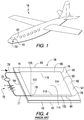
Fig. 1 is an isometric view of an aircraft incorporating features of the invention. -
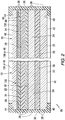
Fig. 2 is a cross sectional elevated view of an aircraft windshield incorporating features of the invention. -
Fig. 3 is an isometric view of a non-limiting embodiment of a heating member of the invention. -
Fig. 4 is a view similar to the view ofFig. 3 showing a prior art heating member. -
Fig. 5 is a fragmented view of a non-limiting embodiment of a heatable member of the invention.Fig. 5A is an enlarged view of the heatable member ofFig. 5 showing a portion of an electrically conductive coating on a bus bar in accordance to a non-limiting embodiment of the invention. -
Fig. 6 is a fragmented view of another non-limiting embodiment of a heatable member of the invention.Fig. 6A is an enlarged view of the heatable member ofFig. 6 showing a portion of an electrically conductive coating on a bus bar in accordance to another non-limiting embodiment of the invention. -
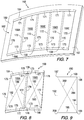
Fig. 7 is a view similar to the view ofFig. 3 showing another non-limiting embodiment of a heating member of the invention. -
Fig. 8 is an enlarged view of two segments of the heating member shown inFig. 7 . -
Fig. 9 is a plane view of a parallelogram shaped electroconductive segment used in the discussion of the heating member shown inFig. 7 - As used herein, spatial or directional terms such as "inner", "outer", "left", "right", "up", "down", "horizontal", "vertical", and the like, relate to the invention as it is shown in the drawing on the figures. However, it is to be understood that the invention can assume various alternative orientations and, accordingly, such terms are not to be considered as limiting. Further, all numbers expressing dimensions, physical characteristics, and so forth, used in the specification and claims are to be understood as being modified in all instances by the term "about". Accordingly, unless indicated to the contrary, the numerical values set forth in the following specification and claims can vary depending upon the property desired and/or sought to be obtained by the present invention. At the very least, and not as an attempt to limit the application of the doctrine of equivalents to the scope of the claims, each numerical parameter should at least be construed in light of the number of reported significant digits and by applying ordinary rounding techniques. Moreover, all ranges disclosed herein are to be understood to encompass any and all subranges subsumed therein. For example, a stated range of "1 to 10" should be considered to include any and all subranges between and inclusive of the minimum value of 1 and the maximum value of 10; that is, all subranges beginning with a minimum value of 1 or more and ending with a maximum value of 10 or less, e.g., 1 to 6.7, or 3.2 to 8.1, or 5.5 to 10. Also, as used herein, the term "positioned over" or "mounted over" means positioned on or mounted over but not necessarily in surface contact with. For example, one article or component of an article "mounted over' or positioned over" another article or component of an article does not preclude the presence of materials between the articles, or between components of the article, respectively.
- Before discussing several non-limiting embodiments of the invention, it is understood that the invention is not limited in its application to the details of the particular non-limiting embodiments shown and discussed herein since the invention is capable of other embodiments. Further, the terminology used herein to discuss the invention is for the purpose of description and is not of limitation. Still further, unless indicated otherwise, in the following discussion like numbers refer to like elements.
- Non-limiting embodiments of the invention will be directed to aircraft laminated transparencies, and in particular, to an aircraft windshield. The invention, however, is not limited to any particular type of aircraft and/or aircraft transparency, and the invention can be practiced on any type of aircraft and/or aircraft transparency having a heatable member to heat a surface, usually the outer surface of the transparency. Further, the invention can be practiced on commercial and residential windows, e.g. but not limited to the type disclosed in
U.S. Patent No. 5,675,944 ; a window for any type of land vehicle; a canopy, cabin window and windshield for any type of air and space vehicle, a window for any above or below water vessel, and a window for a viewing side or door for any type of containers, for example but not limited to a refrigerator, cabinet and/or oven door. Still further, the invention is not limited to the material of the layers or sheets of the aircraft window, and the layers or sheets can be made of, but not limited to, cured and uncured plastic sheets; annealed, heat strengthened, and heat and chemically strengthened, clear, colored, coated and uncoated glass sheets. - Shown in
Fig. 1 is anaircraft 18 having a non-limiting embodiment of anaircraft transparency 20 of the invention. With reference toFig. 2 , thewindshield 20 includes a firsttransparent sheet 22 secured to a secondtransparent sheet 24 by a first vinyl-interlayer 26; thesecond sheet 24 secured to a second vinyl-interlayer 28 by afirst urethane interlayer 30, and the second vinyl-interlayer 28 secured to a heatable member 32 (seeFig. 3 ) incorporating features of the invention by asecond urethane interlayer 34. An edge member ormoisture barrier 36 of the type used in the art, e.g. but not limited to a silicone rubber or other flexible durable moisture resistant material is secured to (1)peripheral edge 38 of thewindshield 20, i.e. theperipheral edge 38 of the first andsecond sheets interlayers second urethane interlayers heatable member 32; (2) margins ormarginal edges 40 ofinner surface 42 of thewindshield 20, i.e. themargins 40 of theouter surface 42 of thefirst glass sheet 22 of thewindshield 20, and (3) margins ormarginal edges 44 ofouter surface 46 of thewindshield 20, i.e. margins of theouter surface 46 of theheatable member 32. - As is appreciated by those skilled in the art and not limiting to the invention, the first and
second glass sheets interlayers first urethane interlayer 30 form the structural part, or inner segment, of thewindshield 20, and theouter surface 42 of theglass sheet 22 of thewindshield 20 faces the interior of the aircraft 18 (hereinafter theouter surface 42 of theglass sheet 22 is also referred to as theinner surface 42 of the windshield 20), and thesecond urethane layer 34 and theheatable member 32 form the non-structural part, or outer segment, of thewindshield 20, and thesurface 46 of theheatable member 32 of thewindshield 20 faces the exterior of theaircraft 18. Theheatable member 32 provides heat to prevent fog from forming on, to remove fog from, to prevent ice from forming on, and/or to melt ice on, theouter surface 46 of theheatable member 32 of the windshield 20 (hereinafter theouter surface 46 of theheatable member 32 is also referred to as theouter surface 46 of the windshield 20) in a manner discussed below. - As can be appreciated, the invention is not limited to the construction of the
windshield 20 and any of the constructions of aircraft windshields used in the art can be used in the practice of the invention. For example and not limiting to the invention, thewindshield 20 can include a construction wherein thesecond vinyl interlayer 28 and thefirst urethane interlayer 30 are omitted, and/or thesheets sheets windshield 20 are clear chemically strengthened glass sheets; however, the invention is not limited thereto, and theglass sheets windshield 20, and thewindshield 20 can have any number of sheets and/or interlayers and any combinations thereof. - With reference to
Fig. 4 , there is shown a prior art heatable member 48 (heatable member 48 of the prior art is replaced by the heatable member 32 (seeFig. 3 ) of the invention). Theheatable member 48 includes aglass sheet 50 having aconductive coating 52 applied to surface 54 of theglass sheet 50, and a pair of spaced bus bars 66, 68 in electrical contact with theconductive coating 52. Each of the bus bars 66 and 68 are connected by awire electrical power source 72, e.g. a direct current battery and/or an alternating current electric generator of theairplane 18 to pass current through the bus bars 66 and 68, and the conductive coating 62 to heat theconductive coating 52 and thesheet 50 to prevent the formation of fog and/or ice on, and to remove ice and/or fog from, the outer surface of the windshield, e.g. thesurface 46 of thewindshield 20. - An on-off switch and a rheostat or
variable transformer 73 is connected to one of the wires, e.g. thewire 71 to position the on-off switch and the rheostat orvariable transformer 73 between thepower source 72 and thebus bar 68 to vary or regulate the current flow through the bus bars 68 and 66, and theconductive coating 52 to control the temperature of theheatable member 48. Preferably the ends 75 and 76 of thebus bar 66, ends 78 and 79 of thebus bar 68 and theconductive coating 52 are spaced from adjacent sides 81-84 of theglass sheet 50 to prevent arcing of the bus bars 66 and 68 with metal body cover 85 of the aircraft 18 (seeFig. 1 ). - With continued reference to
Fig. 4 , the bus bars 66 and 68 have the same length, as measured between theends bus bar 66 and as measured between theends bus bar 68, and the bus bars 66 and 68 are parallel to one another. For purpose of discussion and not limiting to the invention, thebus bar 66 is designated as the top bus bar, and thebus bar 68 is designated as the bottom bus bar, as theheatable member 48 is mounted in theairplane 18. The ends 75 and 76 of thetop bus bar 66 are offset from theends bus bar 68, and only one end of a bus bar, e.g. theend 78 of thebus bar 68 is between the boundaries set by the ends of the other bus bar, e.g. the ends 75 and 76 of thebus bar 66. The boundary of an end of a bus bar is set by an imaginary line (dottedlines 112 and 114) generally normal to the longitudinal axis of the bus bar and extending from the end of the bus bar to the other bus bar. The longitudinal axis of the bus bar is defined as a straight line drawn from the midpoint of one end, e.g. the end 74 of thebus bar 68 or theend 75 of thebus bar 66, to the midpoint of the other end, e.g. theend 79 of thebus bar 68, or theend 76 of thebus bar 66, respectively. Stated another way, the ends of the bus bars are offset from one another when the ends of two bus bars are not vertically aligned. -
U.S. Patent No. 7,132,625 relates to heatable windshields having a pair of spaced bus bars with the ends of the shorter bus bar within the boundaries set by the ends of the longer bus bar. Further,U.S. Patent No. 7,132,625 discloses in column 6,line 38 to column 7, line 15, that the watt density of a conductive coating at a longer bus bar is different than the watt density of the coating at an opposite shorter bus bar. The forging is correct when the ends of the shorter bus bar are with the boundaries set by the ends of the longer bus bar, however, the forgoing is not considered correct when the bus bars are offset from one another with only one end of one bus bar within the boundaries set by the ends of the other or opposite bus bar. More particularly, if the forgoing was correct for the situation when the bus bars are offset from one another with only one end of one bus bar within the boundaries set by the ends of the other bus bar, It would be expected that the conductive coating 52 (seeFig. 4 ) will be uniformly heated between the bus bars 66 and 68 because the watt density of theconductive coating 52 at thetop bus bar 66 is equal to the watt density at thebottom bus bar 68. - It has been observed, however, that
center portion 115 of thecoating 52 of theheatable member 48 outlined by theimaginary lines end 76 of thebus bar 66 and theimaginary line 112, and the portion of the bus bar 68 (identified by the number 118) between theend 78 and theimaginary line 114 is uniformly heated, and the portions of the coating outside of thecenter portion 115 are heated to a temperature less than the temperature of thecenter portion 115 and that theend 76 and theend 78 of the upper and lower bus bars 66 and 68, respectively, draw all of the current from the areas outside ofcenter portion 115. The result is presence of fog, snow and ice, (depending on the weather condition) at portions of thewindow 20 outside of thecenter portion 115, which reduces the area of visibility of thewindow 20 to thecenter portion 115 of theconductive coating 52 and a very high concentration of heat at theend 76 and theend 78 of the bus bars 66 and 68, respectively, which can result in overheating of the interlayer adjacent to the heatable member 32 (seeFig. 2 ). - It was concluded that the non-uniform heating problem was the result of the electric current taking the path of least resistance, which in this case is the current path with the shortest length. With continued reference to
Fig. 4 , the current paths having the shortest distance are within thecenter portion 115 of thecoating 52 which is a rectangle defined by thesides side 116 of the center portion 110 has a length measured from theend 76 of thebus bar 66 to aposition 120 on thebus bar 66 spaced from theend 75 of thebus bar 66 and at the intersection point of theimaginary line 112 and thebus bar 66. Theside 118 of the center portion 110 has a length measured from theend 78 of thebus bar 68 to aposition 122 on thebus bar 68 spaced from theend 79 of thebus bar 68 and at the intersection point of theimaginary line 114 and thebus bar 68. In one non-limiting embodiment of the invention, theimaginary lines bus bar center portion 115 are each 90 degrees. - With reference to
Fig. 3 , there is shown a non-limiting embodiment of aheatable member 32 of the invention. Theheatable member 32 of the invention includes aglass sheet 130 having a segmented electricallyconductive coating 132 onsurface 134 of theglass sheet 130 between, and in electrical contact, with the pair of spaced bus bars 66, 68. Thesurface 134 of the glass sheet is opposite to surface 136, and in this embodiment of the invention is also theouter surface 46 of the windshield 20 (seeFig. 2 ). Each of the bus bars 66 and 68 are connected by thewire Fig. 4 ), to flow current through the bus bars 66 and 68, andsegments 137A-137F of the segmentedconductive coating 130 to heat the segmentedconductive coating 132, and thesheet 130 to prevent the formation of fog and/or ice on, and to remove ice and/or fog from, the outer surface, e.g. thesurface 136 of the windshield 20 (seeFigs. 2 and3 ). - The invention is not limited to the design and/or construction of the bus bars 66 and 68, and any of the types of bus bars used in the art can be used in the practice of the invention. Examples of bus bars that can be used in the practice of the invention, include, but are not limited to, the types disclosed in
U.S. Patent Nos. 4,623,389 ;4,894,513 ;4,994,650 , and4,902875 . In the preferred practice of the invention, the bus bars are fired on silver ceramic glass frit, e.g. of the type disclosed inU.S. Patent No. 4,623,389 . - Further, the invention is not limited to the composition of the segmented
conductive coating 132, for example and not limiting to the invention, theconductive coating 132 can be made from any suitable electrically conductive material. Non-limiting embodiments of conductive coatings that can be used in the practice of the invention include, but are not limited to, a pyrolytic deposited fluorine doped tin oxide film of the type sold by PPG Industries, Inc. under the trademark NESA®; a magnetron sputter deposited tin doped indium oxide film of the type sold by PPG Industries, Inc under the trademark NESATRON®; a gold film deposited by the physical vapor deposition process, e.g. evaporation, and a coating made up of one or more magnetron sputter deposited films, the films including, but not limited to a metal film, e.g. silver between metal oxide films, e.g. zinc oxide and/or zinc stannate, each of which can be applied sequentially by magnetron sputtering, e.g. as disclosed in, but not limited to,U.S. Patent Nos. 4,610,771 ;4,806,220 and5,821,001 . - The non-limiting embodiment of the invention shown in
Fig. 3 includes the bus bars 66 and 68 parallel to one another, having the same length and having theends bus bar 66, and theends bus bar 68 offset from one another. As stated above, the boundaries of the ends of the bus bars are defined as an imaginary line extending from an end of a bus bar toward the other bus bar and normal to the longitudinal axis of the bus bar having the end. With this arrangement and as shown for the non-limiting embodiment of the invention shown inFig. 3 , theend 75 of thebus bar 66 is to the left of theend 78 of thebus bar 68; theend 78 of thebus bar 68 is to the right of theend 75 of thebus bar 66; theend 76 of thebus bar 68 is to the left of theend 79 of thebus bar 68, and theend 79 of thebus bar 68 is to the right of theend 76 of thebus bar 66. - The segmented electrically
conductive coating 132 of the invention are separated byseparation lines 139 in accordance to the invention uniformly heats the coating between the bus bars 66 and 68 by providing each of thesegments 137A-137E of thecoating 132 with similar if not identical current path lengths. In this manner, there is uniform heating of thesegments 137A-137E and uniform heating of thesegmented coating 132. The invention is not limited to the number ofcoating segments 137A-137E between the bus bars; however, in the preferred practice of the invention, the width of thesegments 137A-137E is selected such that there is no straight current path within thesegments 137A-137E that is equal to or shorter than the length of the imaginary line between the bus bars 66 and 68. In other words, the straight current paths of each of thesegments 137A-137E are longer than the length of an imaginary line normal to the longitudinal axis of the bus bars, e.g. seeimaginary lines Fig. 4 . - More particularly, and with continued reference to
Fig. 3 , eachsegment 137A-137E includes four sides 140-143 (only the sides of thesegments Fig. 3 ). The length of thesides sides segments 137A-137E. The width of each segment 138A-137E is selected such that an imaginary line normal to the longitudinal axis of one of the bus bars, e.g. thebus bar 68 extends from one corner of one of the segments 138A-138E of thecoating 132 toward the opposite bus bar, e.g. thebus bar 66 and crosses over the side of an adjacent segment before extending to the opposite bus bar. More particularly and with reference toFig. 5 , in one non-limiting embodiment of the invention, theimaginary line 112 normal to the longitudinal axis of thebus bar 68 extends from theend 78 of thebus bar 68, which is a corner of thesegment 137A between thesides segment 137A toward thebus bar 66 or opposite corner of thesegment 137A between thesides segment 137A. Theimaginary line 112 crosses over theside 142 of thesegment 137A and optionally theside 140 of thesegment 137B before contacting thebus bar 66. - In another non-limiting embodiment of the invention, the temperature difference between portions of the
coating 52 outside of the center portion 115 (seeFig. 4 ) are reduced to a lesser extent than by the preferred practice of the invention discussed above. In this non-limiting embodiment of the invention, thecoating 132 is segmented to provide thesegments 137A-137E with a width such that an imaginary line normal to the longitudinal axis of one of the bus bars, e.g. thebus bar 68 extends from one corner of the bus bar to the opposite bus bar and stays within the sides of the segment. More particularly and with reference toFig. 6 , in this non-limiting embodiment of the invention, theimaginary line 112 is normal to the longitudinal axis of thebus bar 68, extends from theend 78 of thebus bar 68, which is the corner of thesegment 137A between thesides segment 137A toward thebus bar 66 or the opposite corner of thesegment 137A between thesides segment 137A, stays within the sides 140-143 of thesegment 137A and contacts thebus bar 66 or theside 143 of thesegment 137A. The measured distance from the corner between thesides segment 137A to the intersection of theside 143 of thesegment 137A and theimaginary line 112 in this non-limiting embodiment of the invention is in the range of 75 to 100% of the measured length of theside 143 of thesegment 137A, and preferably in the range of 85 to 100%. - As can now be appreciated, the discussion above regarding the
sides segment 137A and theimaginary line 112 is applicable to thesides segments 137B-137F, unless indicated otherwise. - With reference to
Figs. 7 and 8 , there is shown another preferred non-limiting embodiment of the invention. In this embodiment,heatable member 160 includes an electricallyconductive coating 162 between and contacting a pair of spaced bus bars 164 and 166 applied to anacrylic sheet 167. The bus bars 164 and 166 are offset from one another, non-parallel to one another and having different lengths. The electricallyconductive coating 162 includessegments 168A-168E. Each of thesegments 168A-168E have sides 170-173 and corners 175-178 (corners shown only forsegments Fig. 8 ). Thesides sides corner 175 to thecorner 177, and a diagonal 182 extends from thecorner 176 to thecorner 178. The longer diagonal of the segment e.g. the diagonal 182 is referred to as the major diagonal, and the smaller diagonal, e.g. the diagonal 180 of the segment is referred to as the minor diagonal. - Shown in
Fig. 9 is acoating segment 190 having a parallelogram shape having sides 192-195 and corners 197-200. Theopposite sides segment 190 travels the same distance and has the same density, and uniformly heats the segment. The parallelogram can be defined by the ratio of the diagonals. More particularly, the ratio of the diagonals is 1. In the practice of this non-limiting embodiment of the invention, the ratio of the major diagonal to the minor diagonal is in the range of greater than 1 to less than 1.25, preferably in the range of greater than 1 to less than 1.15, more preferably in the range of greater than 1 to 1.05 and most preferably in the range of greater than 0 to 1.02. As can now be appreciated as the ratio of the major diagonal to the minor diagonal approach 1 the segments act as a segment having a parallelogram shape. - The invention is not limited to the manner of imposing
separation lines 139 to electrically isolate thesegments 137A-137E and 168A to 168E from one another. More particularly, theseparation lines 139 between thesegments 137A-137E and 168A-168E can be provided by abrading the coating to impose a separation between the segments, using masks during the coating process to provide the separation between the segments. In the preferred practice of the invention a continuous coating, e.g. the coating 132 (seeFig. 3 ) was applied to thesurface 134 of theglass 130, and a laser, e.g. of the type disclosed inU.S. Patent Application Publication No. 2010/0159251 A1 , used to imposeseparation lines 139 to provide the segments of the invention. - With reference to
Figs. 5A and 6A , the invention contemplates removing the coating 132 (Fig. 3 ) or coating 162 (Fig. 7 ) on the bus bar, e.g. thebus bar 68 as shown inFig. 5A to completely separate thesegments 137A-137E along theadjacent sides Fig. 6A . Although not limiting to the invention, it is preferred in the practice of the invention to have theseparation lines 139 extend over the bus bars as shown inFig. 5A . In this manner each of the segments are completely separated from one another along thesides 140 and 142 (Fig. 3 ) andsides 170 and 172 (Fig. 7 ). Further, in the practice of the invention, it is preferred that theseparation line 139 between thesides 140 and142 of thesegments 137A to 137F (Fig. 3 ), and thesides segments 168A to 168E (Fig. 7 ) is large enough to prevent arcing between the segments. In the practice of the invention, it is preferred for theseparation line 139 to have a length in the range of greater than 0 to less than 0.016 inch (0.04 centimeters), and preferably less than 0.002 inch (0.005 centimeters). - In one non-limiting embodiment of the invention, the invention was practiced on an aircraft windshield having a
heatable member 32 havingbus bars end 75 was 35,56 cm (14 inches) to the left of theend 78 of thebus bar 68, and the bus bars were parallel to one another and spaced 45,72 cm (18 inches) apart. Acoating 132 of gold was applied on thesurface 134 of anacrylic sheet 130 and a laser used to applyseparation lines 139 to provide 28 segments between the bus bars. The coating on the bus bars was removed as shown inFig. 5A . The length of eachside side - A voltage of 115 volts was applied between the bus bars 66 and 68, and the
coating 132 demonstrated a temperature uniformity within 5,55 °C (10°F) across the entire heated area. - The invention is not limited to the embodiments of the invention presented and discussed above which are presented for illustration purposes only, and the scope of the invention is only limited by the scope of the following claims.
Claims (15)
- A heatable member (32, 160) comprising a dielectric substrate (130, 167) having a major surface (134) having a first bus bar (68, 166) and a spaced second bus bar (66, 164), and an electrically conductive coating (132, 162) between and in electrical contact with the bus bars (66, 68, 164, 166), the first bus bar (68, 166) having a first end (78) and an opposite second end (79), and the second bus bar (66, 164)having a first end (75) and an opposite second end (76), wherein the first and the second ends of the first bus bar (78, 79) are offset from the first and the second ends of the second bus bar (75, 76), and wherein the coating (132, 162) is a continuous electrically conductive coating (132, 162), the coating (132, 162) comprising a plurality of electrically conductive segments (137 A-F, 168 A-E), each of the segments (137 A-F, 168 A-E) comprising a first end (143, 171) and an opposite second end (141, 173), wherein the first end (141, 173) of each of the segments is in electrical contact with the first bus bar (68, 166), the second end (143, 171) of each of the segments (137 A-F, 168 A-E) is in electrical contact with the second bus bar (66, 164), and portions of each of the segments (137 A-F, 168 A-E) between the first bus bar (68, 166) and the second bus bar (66, 164) are in spaced (139) relationship to one another to prevent electrical contact between adjacent ones of the segments (137 A-F, 168 A-E) between the bus bars (66, 68, 164, 166), characterised in that the ratio of the major segment diagonal (182) to the minor segment diagonal (180) of each of the segments (137 A-F, 168 A-E) is in the range of greater than 1 to less than 1.25 and in that only one end of each one of the first bus bar (68, 166) and the second bus bar (66, 164) are within the boundaries defined by the ends of the other bus bar.
- The heatable member (32, 160) according to claim 1 wherein the ratio is in the range of greater than 1 to equal to or less than 1.02.
- The heatable member (32, 160) according to claim 2 wherein the first bus bar (68, 166) and the second bus bar (66, 164) have different lengths and are non-parallel to one another.
- The heatable member (32, 160) according to claim 1, wherein the first (68, 166) and the second bus bars (66, 164) each have a longitudinal axis extending from their first end (75, 78) to their second end (76, 79), and each of the plurality of segments (137 A-F, 168 A-E) have a first side (142, 170) opposite to a second side (140, 172); a third side (141, 173) opposite to a fourth side (143, 171), wherein the first, second, third and fourth sides of each segment defines a perimeter of its respective segment, the plurality of segments comprises a first segment and an adjacent segment defined as a second segment, and the second side (140, 172) of the first segment is in facing relationship to and spaced (139) from the first side (142, 170) of the second segment,
wherein the third side (141, 173) of the first and the second segments overlays the first bus bar (68, 166) and the fourth side (143, 171) of the first and the second segments overlays the second bus bar (66, 164), and a straight imaginary line (112) normal to the longitudinal axis of the first bus bar (68, 166) defines a path that extends from a corner formed by the juncture of the first side (142, 170) and the third side (141, 173) of the first segment toward the second bus bar (66, 164), the path crossing over the perimeter of the first segment prior to contacting the second bus bar (66, 164),
wherein the first bus bar (68, 166) and the second bus bar (66, 164) have different lengths and are non-parallel to one another, or have the same length and are parallel to one another. - The heatable member (32, 160) according to claim 4 wherein the first bus bar (68, 166) and the second bus bar (66, 164) have different lengths and are non-parallel to one another, and wherein the second side (140, 172) of the first segment and the first side (142, 170) of the second segment overlaying the first and the second bus bars (66, 68, 164, 166) are spaced from one another.
- The heatable member (32, 160) according to claim 4 wherein the first bus bar (68, 166) and the second bus bar (66, 164) have different lengths and are non-parallel to one another, and wherein the second side (140, 172) of the first segment and the first side (142, 170) of the second segment overlaying the first and the second bus bars (66, 68, 164, 166) are in contact with one another.
- The heatable member (32, 160) according to claim 1, wherein the first and the second bus bars (66, 68, 166, 164) each have a longitudinal axis extending from their first end to their second end, and each of the plurality of segments (137 A-F, 168 A-E) have a first side (142, 170) opposite to a second side (140, 172); a third side (141, 173) opposite to a fourth side (143, 171), wherein the first, second, third and fourth sides of each segment defines a perimeter of its respective segment, the plurality of segments comprises a first segment and an adjacent segment defined as a second segment, and the second side (140, 172) of the first segment is in facing relationship to and spaced from the first side (142, 170) of the second segment,
wherein the third side (141, 173) of the first and the second segments overlays the first bus bar (68, 166) and the fourth side (143, 171) of the first and the second segments overlays the second bus bar (66, 164), and a straight imaginary line (112) normal to the longitudinal axis of the first bus bar (68, 166) defines a path that extends from a corner formed by the juncture of the first side (142, 170) and the third side (141, 173) of the first segment toward the second bus bar (66, 164) and crosses over the perimeter of the first segment at the fourth side (143, 171) defined as the crossing point, wherein the distance between the second side (140, 172) and the cross over point at the fourth side is in the range of 75-100% of the length of the fourth side (140, 172) as measured between the first side (142, 170) and the second side (140, 172) at the second bus bar (66, 164),
wherein the first bus bar (68, 166) and the second bus bar (66, 164) have different lengths and are non-parallel to one another, or have the same length and are parallel to one another. - The heatable member (32, 160) according to claim 1 wherein the heatable member (32, 160) is a component of a transparency for a land vehicle; of a canopy, cabin window and windshield for an air and space vehicle, of a window for above or below water vessel, and of a window for a viewing side or door for containers.
- An aircraft window (20) having a first major surface and an opposite second major surface and a heatable member (32, 160) between the first and the second major surfaces, wherein the heatable member (32, 160) comprises:a first bus bar (68, 166) and a spaced second bus bar (66, 164), and an electrically conductive coating (132, 162) between and in electrical contact with the bus bars (66, 68, 164, 166), the first bus bar (68, 166) having a first end (78) and an opposite second end (79), and the second bus bar (66, 164) having a first end (75) and an opposite second end (76), wherein the first and the second ends of the first bus bar (78, 79) are offset from the first and the second ends of the second bus bar (75, 76), and wherein the coating (132, 162) is a continuous electrically conductive coating (132, 162), then coating (132, 162) comprising a plurality of electrically conductive segments (137 A-F, 168 A-E), each of the segments (137 A-F, 168 A-E) comprising a first end (143, 171) and an opposite second end (141, 173), wherein the first end (143, 171) of each of the segments is in electrical contact with the first bus bar (68, 166), the second end (141, 173) of each of the segments is in electrical contact with the second bus bar (66, 164), and portions of each of the segments (137 A-F, 168 A-E) between the first bus bar (68, 166) and the second bus bar (66, 164) are in spaced (139) relationship to one another to prevent electrical contact between adjacent ones of the segments (137 A-F, 168 A-E) between the bus bars (66, 68, 164, 166), characterised in that the ratio of the major segment diagonal (182) to the minor segment diagonal (180) of each of the segments (137 A-F, 168 A-E) is in the range of greater than 1 to less than 1.25 and in that only one end of each one of the first bus bar (68, 166) and the second bus bar (66, 164) are within the boundaries defined by the ends of the other bus bar.
- The aircraft window (20) according to claim 9, wherein the first and the second bus bars (66, 68, 164, 166) each have a longitudinal axis extending from their first end (75, 78) to their second end (76, 79), and each of the plurality of segments (137 A-F, 168 A-E) have a first side (142, 170) opposite to a second side (140, 172); a third side (141, 173) opposite to a fourth side (143, 171), wherein the first, second, third and fourth sides of each segment defines a perimeter of its respective segment, the plurality of segments comprises a first segment and an adjacent segment defined as a second segment, and the second side (140, 172) of the first segment is in facing relationship to and spaced (139) from the first side (142, 170) of the second segment,
wherein the third side (141, 173) of the first and the second segments overlays the first bus bar (68, 166) and the fourth side (143, 171) of the first and the second segments overlays the second bus bar (66, 164), and a straight imaginary line (112) normal to the longitudinal axis of the first bus bar (68, 166) defines a path that extends from a corner formed by the juncture of the first side (142, 170) and the third side (141, 173) of the first segment toward the second bus bar (66, 164), the path crossing over the perimeter of the first segment prior to contacting the second bus bar (66, 164),
wherein the first bus bar (68, 166) and the second bus bar (66, 164) have different lengths and are non-parallel to one another or have the same length and are parallel to one another. - The aircraft window (20) according to claim 10 wherein the first bus bar (68, 166) and the second bus bar (66, 164) have different lengths and are non-parallel to one another, and wherein the second side (140, 172) of the first segment and the first side (142, 170) of the second segment overlaying the first and the second bus bars (66, 68, 164, 166) are spaced from one another.
- The aircraft window (20) according to claim10 wherein the first bus bar (68, 166) and the second bus bar (66, 164 have different lengths and are non-parallel to one another, and wherein the second side (140, 172) of the first segment and the first side (142, 170) of the second segment overlaying the first and the second bus bars (66, 68, 164, 166) are in contact with one another.
- The aircraft window (20) according to claim 9, wherein the first (68, 166) and the second (66, 164) bus bars each have a longitudinal axis extending from their first end (75, 78) to their second end (76, 79), and each of the plurality of segments (137 A-F, 168 A-E) have a first side (142, 170) opposite to a second side (140, 172); a third side (141, 173) opposite to a fourth side (143, 171), wherein the first, second, third and fourth sides of each segment defines a perimeter of its respective segment, the plurality of segments comprises a first segment and an adjacent segment defined as a second segment, and the second side (140, 172) of the first segment is in facing relationship to and spaced from the first side (142, 170) of the second segment,
wherein the third side (141, 173) of the first and the second segments overlays the first bus bar (68, 166) and the fourth side (143, 171) of the first and the second segments overlays the second bus bar (66, 164), and a straight imaginary line (112) normal to the longitudinal axis of the first bus bar (68, 166) defines a path that extends from a corner formed by the juncture of the first side (142, 170) and the third side (141, 173) of the first segment toward the second bus bar (66, 164) and crosses over the perimeter of the first segment at the fourth side (143, 171) defined as the crossing point, wherein the distance between the second side (140, 172) and the cross over point at the fourth side is in the range of 75-100% of the length of the fourth side (140, 172) as measured between the first side (142, 170) and the second side (140, 172) at the second bus bar (66, 164),
wherein the first bus bar (68, 166) and the second bus bar (66, 164) have different lengths and are non-parallel to one another, or have the same length and are parallel to one another. - The aircraft window (20) according to claim 9 wherein the heatable member (32, 160) is a component of a transparency for a land vehicle; of a canopy, cabin window and windshield for an air and space vehicle, of a window for above or below water vessel, and of a window for a viewing side or door for containers.
- The aircraft window (20) according to claim 9 wherein the ratio is in the range of greater than 1 to equal to or less than 1.02.
Priority Applications (1)
| Application Number | Priority Date | Filing Date | Title |
|---|---|---|---|
| EP17170128.7A EP3258739B1 (en) | 2011-09-30 | 2012-09-07 | Heatable transparency |
Applications Claiming Priority (2)
| Application Number | Priority Date | Filing Date | Title |
|---|---|---|---|
| US13/249,861 US9491806B2 (en) | 2011-09-30 | 2011-09-30 | Heatable transparency |
| PCT/US2012/054189 WO2013048699A1 (en) | 2011-09-30 | 2012-09-07 | Heatable transparency |
Related Child Applications (1)
| Application Number | Title | Priority Date | Filing Date |
|---|---|---|---|
| EP17170128.7A Division EP3258739B1 (en) | 2011-09-30 | 2012-09-07 | Heatable transparency |
Publications (2)
| Publication Number | Publication Date |
|---|---|
| EP2761976A1 EP2761976A1 (en) | 2014-08-06 |
| EP2761976B1 true EP2761976B1 (en) | 2017-05-17 |
Family
ID=47040784
Family Applications (2)
| Application Number | Title | Priority Date | Filing Date |
|---|---|---|---|
| EP17170128.7A Active EP3258739B1 (en) | 2011-09-30 | 2012-09-07 | Heatable transparency |
| EP12773431.7A Active EP2761976B1 (en) | 2011-09-30 | 2012-09-07 | Heatable transparency |
Family Applications Before (1)
| Application Number | Title | Priority Date | Filing Date |
|---|---|---|---|
| EP17170128.7A Active EP3258739B1 (en) | 2011-09-30 | 2012-09-07 | Heatable transparency |
Country Status (10)
| Country | Link |
|---|---|
| US (1) | US9491806B2 (en) |
| EP (2) | EP3258739B1 (en) |
| JP (1) | JP2014534104A (en) |
| CN (1) | CN103828482B (en) |
| BR (1) | BR112014007467A2 (en) |
| CA (1) | CA2850427C (en) |
| ES (1) | ES2818538T3 (en) |
| RU (1) | RU2580509C2 (en) |
| TW (1) | TWI549559B (en) |
| WO (1) | WO2013048699A1 (en) |
Families Citing this family (16)
| Publication number | Priority date | Publication date | Assignee | Title |
|---|---|---|---|---|
| LU92228B1 (en) * | 2013-06-20 | 2014-12-22 | Iee Sarl | Heatable interior trim element |
| DE102014107480B4 (en) * | 2014-05-27 | 2016-02-04 | Webasto SE | Plastic rear window with rear window heating and method of making the same |
| US9384601B2 (en) * | 2014-08-15 | 2016-07-05 | Ppg Industries Ohio, Inc. | Aircraft electronic fingerprint and monitoring performance of an aircraft component using the aircraft's electronic fingerprint |
| MX360834B (en) * | 2014-09-04 | 2018-11-20 | Saint Gobain | Panel having electrical heating area. |
| PT3189707T (en) | 2014-09-04 | 2019-12-30 | Saint Gobain | Transparent surface with thermal coating |
| JP6722422B2 (en) * | 2015-01-28 | 2020-07-15 | 大日本印刷株式会社 | Vehicle glass, vehicle glass equipment |
| WO2017068416A1 (en) | 2015-10-19 | 2017-04-27 | Laminaheat Holding Ltd. | Laminar heating elements with customized or non-uniform resistance and/or irregular shapes, and processes for manufacture |
| WO2017115074A1 (en) | 2015-12-29 | 2017-07-06 | Pilkington Group Limited | Laminated vehicle glazing |
| CN106596284B (en) * | 2016-11-30 | 2019-09-24 | 中国航空工业集团公司沈阳飞机设计研究所 | A kind of canopy Temperature Measure Control method |
| FR3059939B1 (en) * | 2016-12-14 | 2019-01-25 | Saint-Gobain Glass France | LAMINATED GLAZING HAVING AN ELECTROCONDUCTIVE LAYER WITH ABLATION LINE WITH EDGES FREE OF BOURRELET AND SLOW SLOPE |
| CN106739988A (en) * | 2017-01-20 | 2017-05-31 | 大连七色光太阳能科技开发有限公司 | Electric heating car windshield |
| EP3518616A1 (en) * | 2018-01-26 | 2019-07-31 | AGC Glass Europe | Method and arrangement for de-icing a transparent window using an electric heating device |
| US11242151B2 (en) * | 2018-10-16 | 2022-02-08 | Goodrich Corporation | Method of using printed highly flexible conductive ink bus bars to transfer power to heated components |
| USD911038S1 (en) | 2019-10-11 | 2021-02-23 | Laminaheat Holding Ltd. | Heating element sheet having perforations |
| CN111301691A (en) * | 2020-02-27 | 2020-06-19 | 中国商用飞机有限责任公司 | Electric heating unit for anti-icing and de-icing |
| JP7635783B2 (en) * | 2020-06-02 | 2025-02-26 | Agc株式会社 | Automotive Window Glass |
Citations (3)
| Publication number | Priority date | Publication date | Assignee | Title |
|---|---|---|---|---|
| US2730598A (en) * | 1951-08-17 | 1956-01-10 | Pittsburgh Plate Glass Co | Transparent electro-conducting article |
| US2843713A (en) * | 1954-08-04 | 1958-07-15 | Libbey Owens Ford Glass Co | Electrically heated articles |
| US3974359A (en) * | 1975-06-09 | 1976-08-10 | Ppg Industries, Inc. | Electrically heated transparent laminated glazing unit |
Family Cites Families (31)
| Publication number | Priority date | Publication date | Assignee | Title |
|---|---|---|---|---|
| US2878357A (en) * | 1956-07-13 | 1959-03-17 | Gen Dynamics Corp | Electric heated laminated glass panel |
| FR1391388A (en) | 1963-04-30 | 1965-03-05 | Glaverbel | Heating panel |
| NL123804C (en) | 1963-04-30 | |||
| US3789191A (en) | 1972-09-01 | 1974-01-29 | Ppg Industries Inc | Temperature sensor |
| US3789192A (en) | 1972-09-01 | 1974-01-29 | Ppg Industries Inc | Electrically heated window with a temperature sensor |
| US3794809A (en) | 1972-12-29 | 1974-02-26 | Ford Motor Co | Vehicle windshield |
| US3790752A (en) | 1973-03-26 | 1974-02-05 | Ford Motor Co | Heatable laminated windshield construction |
| US4543466A (en) | 1984-07-02 | 1985-09-24 | Ford Motor Company | Bus bar arrangement for uniformly heating a trapezoidally-shaped electrically heated windshield |
| US4610771A (en) | 1984-10-29 | 1986-09-09 | Ppg Industries, Inc. | Sputtered films of metal alloy oxides and method of preparation thereof |
| US4623389A (en) | 1985-04-22 | 1986-11-18 | Ppg Industries, Inc. | Electroconductive silver composition |
| DE3644297A1 (en) * | 1985-12-26 | 1987-07-02 | Nippon Sheet Glass Co Ltd | HEATED GLASS PANEL |
| US4806220A (en) | 1986-12-29 | 1989-02-21 | Ppg Industries, Inc. | Method of making low emissivity film for high temperature processing |
| US4820902A (en) | 1987-12-28 | 1989-04-11 | Ppg Industries, Inc. | Bus bar arrangement for an electrically heated transparency |
| US4894513A (en) | 1988-07-05 | 1990-01-16 | Ppg Industries, Inc. | Heatable windshield temperature control |
| JP2623737B2 (en) * | 1988-08-05 | 1997-06-25 | 株式会社デンソー | Windshield |
| JPH0246663A (en) | 1988-08-08 | 1990-02-16 | Matsushita Electric Ind Co Ltd | Lead-acid battery |
| US4902875A (en) | 1988-11-04 | 1990-02-20 | Ppg Industries, Inc. | Power discontinuity sensor for a dual feed heatable windshield |
| US5213828A (en) | 1989-07-03 | 1993-05-25 | Ppg Industries, Inc. | Heatable windshield |
| US4994650A (en) | 1989-12-01 | 1991-02-19 | Ppg Industries, Inc. | Electric field detector for a heatable windshield |
| US5675944A (en) | 1990-09-04 | 1997-10-14 | P.P.G. Industries, Inc. | Low thermal conducting spacer assembly for an insulating glazing unit and method of making same |
| US5821001A (en) | 1996-04-25 | 1998-10-13 | Ppg Industries, Inc. | Coated articles |
| US6229123B1 (en) * | 1998-09-25 | 2001-05-08 | Thermosoft International Corporation | Soft electrical textile heater and method of assembly |
| RU7729U1 (en) * | 1997-11-20 | 1998-09-16 | Дмитрий Александрович Иванов | ROOM HEATING DEVICE |
| US6559419B1 (en) * | 2001-08-03 | 2003-05-06 | Centre Luxembourgeois De Recherches Pour Le Verre Et La Ceramique S.A. (C.R.V.C.) | Multi-zone arrangement for heatable vehicle window |
| DE10160806A1 (en) * | 2001-12-11 | 2003-06-26 | Saint Gobain Sekurit D Gmbh | Heating disc with an electrically conductive surface coating |
| US7132625B2 (en) * | 2002-10-03 | 2006-11-07 | Ppg Industries Ohio, Inc. | Heatable article having a configured heating member |
| JP4219790B2 (en) * | 2003-11-14 | 2009-02-04 | 日本板硝子株式会社 | Electric window glass |
| RU2316155C1 (en) * | 2006-06-13 | 2008-01-27 | ООО Научно-производственное предприятие "РЕЗТЕХКОМПЛЕКТ" | Highly reflective mirror with heating |
| KR100915708B1 (en) * | 2007-08-31 | 2009-09-04 | 한국기계연구원 | Heating substrate equipped with conductive-thin-film and electrode and manufacturing method of the same |
| US8288678B2 (en) | 2008-12-18 | 2012-10-16 | Ppg Industries Ohio, Inc. | Device for and method of maintaining a constant distance between a cutting edge and a reference surface |
| RU2413395C1 (en) * | 2010-01-11 | 2011-02-27 | Виталий Алексеевич Самойлов | Thermo-electric mat |
-
2011
- 2011-09-30 US US13/249,861 patent/US9491806B2/en active Active
-
2012
- 2012-09-07 RU RU2014117802/07A patent/RU2580509C2/en active
- 2012-09-07 CA CA2850427A patent/CA2850427C/en active Active
- 2012-09-07 EP EP17170128.7A patent/EP3258739B1/en active Active
- 2012-09-07 JP JP2014533555A patent/JP2014534104A/en active Pending
- 2012-09-07 CN CN201280047457.7A patent/CN103828482B/en active Active
- 2012-09-07 BR BR112014007467A patent/BR112014007467A2/en active Search and Examination
- 2012-09-07 ES ES17170128T patent/ES2818538T3/en active Active
- 2012-09-07 WO PCT/US2012/054189 patent/WO2013048699A1/en not_active Ceased
- 2012-09-07 EP EP12773431.7A patent/EP2761976B1/en active Active
- 2012-09-25 TW TW101135162A patent/TWI549559B/en active
Patent Citations (3)
| Publication number | Priority date | Publication date | Assignee | Title |
|---|---|---|---|---|
| US2730598A (en) * | 1951-08-17 | 1956-01-10 | Pittsburgh Plate Glass Co | Transparent electro-conducting article |
| US2843713A (en) * | 1954-08-04 | 1958-07-15 | Libbey Owens Ford Glass Co | Electrically heated articles |
| US3974359A (en) * | 1975-06-09 | 1976-08-10 | Ppg Industries, Inc. | Electrically heated transparent laminated glazing unit |
Also Published As
| Publication number | Publication date |
|---|---|
| RU2580509C2 (en) | 2016-04-10 |
| WO2013048699A1 (en) | 2013-04-04 |
| TWI549559B (en) | 2016-09-11 |
| CN103828482A (en) | 2014-05-28 |
| US9491806B2 (en) | 2016-11-08 |
| CA2850427C (en) | 2017-05-23 |
| JP2014534104A (en) | 2014-12-18 |
| EP3258739A1 (en) | 2017-12-20 |
| US20130082043A1 (en) | 2013-04-04 |
| EP3258739B1 (en) | 2020-06-10 |
| RU2014117802A (en) | 2015-11-10 |
| BR112014007467A2 (en) | 2017-04-04 |
| CA2850427A1 (en) | 2013-04-04 |
| TW201334616A (en) | 2013-08-16 |
| EP2761976A1 (en) | 2014-08-06 |
| ES2818538T3 (en) | 2021-04-13 |
| CN103828482B (en) | 2016-08-24 |
Similar Documents
| Publication | Publication Date | Title |
|---|---|---|
| EP2761976B1 (en) | Heatable transparency | |
| CA2491707C (en) | Eliminating hot spots at end portions of bus bars of a heatable transparency having an electrically conductive member | |
| CN1685765B (en) | Heatable article with configured heating element | |
| US6791065B2 (en) | Edge sealing of a laminated transparency | |
| CN106465485B (en) | Transparency glass plate, its manufacturing method with electric heating layer and application thereof | |
| CN106465478B (en) | Transparent glass plate with electric heating layer, its production method and its use | |
| US20200359467A1 (en) | Coating deletion for electrical connection on vehicle window | |
| US20090321407A1 (en) | Heatable vehicle glazing | |
| US11865811B2 (en) | Laminated glazing comprising a transparent substrate with a heating layer having ablation lines each closing on itself | |
| US20230146513A1 (en) | Laminated glazing comprising a transparent substrate with a heating layer having flow lines which altogether are of variable width | |
| JP7463041B2 (en) | Heatable Glass Panel | |
| US20240306268A1 (en) | Glazing for Electric Heating, Method for Manufacturing the Same and Use of the Same | |
| EA043108B1 (en) | HEATED GLAZING PANEL |
Legal Events
| Date | Code | Title | Description |
|---|---|---|---|
| PUAI | Public reference made under article 153(3) epc to a published international application that has entered the european phase |
Free format text: ORIGINAL CODE: 0009012 |
|
| 17P | Request for examination filed |
Effective date: 20140325 |
|
| AK | Designated contracting states |
Kind code of ref document: A1 Designated state(s): AL AT BE BG CH CY CZ DE DK EE ES FI FR GB GR HR HU IE IS IT LI LT LU LV MC MK MT NL NO PL PT RO RS SE SI SK SM TR |
|
| DAX | Request for extension of the european patent (deleted) | ||
| 17Q | First examination report despatched |
Effective date: 20160720 |
|
| STAA | Information on the status of an ep patent application or granted ep patent |
Free format text: STATUS: EXAMINATION IS IN PROGRESS |
|
| GRAP | Despatch of communication of intention to grant a patent |
Free format text: ORIGINAL CODE: EPIDOSNIGR1 |
|
| STAA | Information on the status of an ep patent application or granted ep patent |
Free format text: STATUS: GRANT OF PATENT IS INTENDED |
|
| INTG | Intention to grant announced |
Effective date: 20170110 |
|
| GRAS | Grant fee paid |
Free format text: ORIGINAL CODE: EPIDOSNIGR3 |
|
| GRAJ | Information related to disapproval of communication of intention to grant by the applicant or resumption of examination proceedings by the epo deleted |
Free format text: ORIGINAL CODE: EPIDOSDIGR1 |
|
| GRAL | Information related to payment of fee for publishing/printing deleted |
Free format text: ORIGINAL CODE: EPIDOSDIGR3 |
|
| STAA | Information on the status of an ep patent application or granted ep patent |
Free format text: STATUS: EXAMINATION IS IN PROGRESS |
|
| GRAR | Information related to intention to grant a patent recorded |
Free format text: ORIGINAL CODE: EPIDOSNIGR71 |
|
| STAA | Information on the status of an ep patent application or granted ep patent |
Free format text: STATUS: GRANT OF PATENT IS INTENDED |
|
| GRAA | (expected) grant |
Free format text: ORIGINAL CODE: 0009210 |
|
| STAA | Information on the status of an ep patent application or granted ep patent |
Free format text: STATUS: THE PATENT HAS BEEN GRANTED |
|
| INTC | Intention to grant announced (deleted) | ||
| AK | Designated contracting states |
Kind code of ref document: B1 Designated state(s): AL AT BE BG CH CY CZ DE DK EE ES FI FR GB GR HR HU IE IS IT LI LT LU LV MC MK MT NL NO PL PT RO RS SE SI SK SM TR |
|
| INTG | Intention to grant announced |
Effective date: 20170411 |
|
| REG | Reference to a national code |
Ref country code: GB Ref legal event code: FG4D |
|
| REG | Reference to a national code |
Ref country code: CH Ref legal event code: EP |
|
| REG | Reference to a national code |
Ref country code: IE Ref legal event code: FG4D |
|
| REG | Reference to a national code |
Ref country code: AT Ref legal event code: REF Ref document number: 895514 Country of ref document: AT Kind code of ref document: T Effective date: 20170615 |
|
| REG | Reference to a national code |
Ref country code: DE Ref legal event code: R096 Ref document number: 602012032591 Country of ref document: DE |
|
| REG | Reference to a national code |
Ref country code: NL Ref legal event code: MP Effective date: 20170517 |
|
| REG | Reference to a national code |
Ref country code: FR Ref legal event code: PLFP Year of fee payment: 6 |
|
| REG | Reference to a national code |
Ref country code: LT Ref legal event code: MG4D |
|
| REG | Reference to a national code |
Ref country code: AT Ref legal event code: MK05 Ref document number: 895514 Country of ref document: AT Kind code of ref document: T Effective date: 20170517 |
|
| PG25 | Lapsed in a contracting state [announced via postgrant information from national office to epo] |
Ref country code: AT Free format text: LAPSE BECAUSE OF FAILURE TO SUBMIT A TRANSLATION OF THE DESCRIPTION OR TO PAY THE FEE WITHIN THE PRESCRIBED TIME-LIMIT Effective date: 20170517 Ref country code: GR Free format text: LAPSE BECAUSE OF FAILURE TO SUBMIT A TRANSLATION OF THE DESCRIPTION OR TO PAY THE FEE WITHIN THE PRESCRIBED TIME-LIMIT Effective date: 20170818 Ref country code: FI Free format text: LAPSE BECAUSE OF FAILURE TO SUBMIT A TRANSLATION OF THE DESCRIPTION OR TO PAY THE FEE WITHIN THE PRESCRIBED TIME-LIMIT Effective date: 20170517 Ref country code: HR Free format text: LAPSE BECAUSE OF FAILURE TO SUBMIT A TRANSLATION OF THE DESCRIPTION OR TO PAY THE FEE WITHIN THE PRESCRIBED TIME-LIMIT Effective date: 20170517 Ref country code: NO Free format text: LAPSE BECAUSE OF FAILURE TO SUBMIT A TRANSLATION OF THE DESCRIPTION OR TO PAY THE FEE WITHIN THE PRESCRIBED TIME-LIMIT Effective date: 20170817 Ref country code: LT Free format text: LAPSE BECAUSE OF FAILURE TO SUBMIT A TRANSLATION OF THE DESCRIPTION OR TO PAY THE FEE WITHIN THE PRESCRIBED TIME-LIMIT Effective date: 20170517 Ref country code: ES Free format text: LAPSE BECAUSE OF FAILURE TO SUBMIT A TRANSLATION OF THE DESCRIPTION OR TO PAY THE FEE WITHIN THE PRESCRIBED TIME-LIMIT Effective date: 20170517 |
|
| PG25 | Lapsed in a contracting state [announced via postgrant information from national office to epo] |
Ref country code: RS Free format text: LAPSE BECAUSE OF FAILURE TO SUBMIT A TRANSLATION OF THE DESCRIPTION OR TO PAY THE FEE WITHIN THE PRESCRIBED TIME-LIMIT Effective date: 20170517 Ref country code: NL Free format text: LAPSE BECAUSE OF FAILURE TO SUBMIT A TRANSLATION OF THE DESCRIPTION OR TO PAY THE FEE WITHIN THE PRESCRIBED TIME-LIMIT Effective date: 20170517 Ref country code: PL Free format text: LAPSE BECAUSE OF FAILURE TO SUBMIT A TRANSLATION OF THE DESCRIPTION OR TO PAY THE FEE WITHIN THE PRESCRIBED TIME-LIMIT Effective date: 20170517 Ref country code: SE Free format text: LAPSE BECAUSE OF FAILURE TO SUBMIT A TRANSLATION OF THE DESCRIPTION OR TO PAY THE FEE WITHIN THE PRESCRIBED TIME-LIMIT Effective date: 20170517 Ref country code: IS Free format text: LAPSE BECAUSE OF FAILURE TO SUBMIT A TRANSLATION OF THE DESCRIPTION OR TO PAY THE FEE WITHIN THE PRESCRIBED TIME-LIMIT Effective date: 20170917 Ref country code: BG Free format text: LAPSE BECAUSE OF FAILURE TO SUBMIT A TRANSLATION OF THE DESCRIPTION OR TO PAY THE FEE WITHIN THE PRESCRIBED TIME-LIMIT Effective date: 20170817 Ref country code: LV Free format text: LAPSE BECAUSE OF FAILURE TO SUBMIT A TRANSLATION OF THE DESCRIPTION OR TO PAY THE FEE WITHIN THE PRESCRIBED TIME-LIMIT Effective date: 20170517 |
|
| PG25 | Lapsed in a contracting state [announced via postgrant information from national office to epo] |
Ref country code: CZ Free format text: LAPSE BECAUSE OF FAILURE TO SUBMIT A TRANSLATION OF THE DESCRIPTION OR TO PAY THE FEE WITHIN THE PRESCRIBED TIME-LIMIT Effective date: 20170517 Ref country code: RO Free format text: LAPSE BECAUSE OF FAILURE TO SUBMIT A TRANSLATION OF THE DESCRIPTION OR TO PAY THE FEE WITHIN THE PRESCRIBED TIME-LIMIT Effective date: 20170517 Ref country code: SK Free format text: LAPSE BECAUSE OF FAILURE TO SUBMIT A TRANSLATION OF THE DESCRIPTION OR TO PAY THE FEE WITHIN THE PRESCRIBED TIME-LIMIT Effective date: 20170517 Ref country code: EE Free format text: LAPSE BECAUSE OF FAILURE TO SUBMIT A TRANSLATION OF THE DESCRIPTION OR TO PAY THE FEE WITHIN THE PRESCRIBED TIME-LIMIT Effective date: 20170517 Ref country code: DK Free format text: LAPSE BECAUSE OF FAILURE TO SUBMIT A TRANSLATION OF THE DESCRIPTION OR TO PAY THE FEE WITHIN THE PRESCRIBED TIME-LIMIT Effective date: 20170517 |
|
| REG | Reference to a national code |
Ref country code: DE Ref legal event code: R097 Ref document number: 602012032591 Country of ref document: DE |
|
| PG25 | Lapsed in a contracting state [announced via postgrant information from national office to epo] |
Ref country code: SM Free format text: LAPSE BECAUSE OF FAILURE TO SUBMIT A TRANSLATION OF THE DESCRIPTION OR TO PAY THE FEE WITHIN THE PRESCRIBED TIME-LIMIT Effective date: 20170517 |
|
| PLBE | No opposition filed within time limit |
Free format text: ORIGINAL CODE: 0009261 |
|
| STAA | Information on the status of an ep patent application or granted ep patent |
Free format text: STATUS: NO OPPOSITION FILED WITHIN TIME LIMIT |
|
| 26N | No opposition filed |
Effective date: 20180220 |
|
| REG | Reference to a national code |
Ref country code: CH Ref legal event code: PL |
|
| PG25 | Lapsed in a contracting state [announced via postgrant information from national office to epo] |
Ref country code: MC Free format text: LAPSE BECAUSE OF FAILURE TO SUBMIT A TRANSLATION OF THE DESCRIPTION OR TO PAY THE FEE WITHIN THE PRESCRIBED TIME-LIMIT Effective date: 20170517 Ref country code: SI Free format text: LAPSE BECAUSE OF FAILURE TO SUBMIT A TRANSLATION OF THE DESCRIPTION OR TO PAY THE FEE WITHIN THE PRESCRIBED TIME-LIMIT Effective date: 20170517 |
|
| REG | Reference to a national code |
Ref country code: IE Ref legal event code: MM4A |
|
| REG | Reference to a national code |
Ref country code: BE Ref legal event code: MM Effective date: 20170930 |
|
| PG25 | Lapsed in a contracting state [announced via postgrant information from national office to epo] |
Ref country code: LU Free format text: LAPSE BECAUSE OF NON-PAYMENT OF DUE FEES Effective date: 20170907 |
|
| PG25 | Lapsed in a contracting state [announced via postgrant information from national office to epo] |
Ref country code: LI Free format text: LAPSE BECAUSE OF NON-PAYMENT OF DUE FEES Effective date: 20170930 Ref country code: IE Free format text: LAPSE BECAUSE OF NON-PAYMENT OF DUE FEES Effective date: 20170907 Ref country code: CH Free format text: LAPSE BECAUSE OF NON-PAYMENT OF DUE FEES Effective date: 20170930 |
|
| PG25 | Lapsed in a contracting state [announced via postgrant information from national office to epo] |
Ref country code: BE Free format text: LAPSE BECAUSE OF NON-PAYMENT OF DUE FEES Effective date: 20170930 |
|
| REG | Reference to a national code |
Ref country code: FR Ref legal event code: PLFP Year of fee payment: 7 |
|
| PG25 | Lapsed in a contracting state [announced via postgrant information from national office to epo] |
Ref country code: MT Free format text: LAPSE BECAUSE OF NON-PAYMENT OF DUE FEES Effective date: 20170907 |
|
| PG25 | Lapsed in a contracting state [announced via postgrant information from national office to epo] |
Ref country code: HU Free format text: LAPSE BECAUSE OF FAILURE TO SUBMIT A TRANSLATION OF THE DESCRIPTION OR TO PAY THE FEE WITHIN THE PRESCRIBED TIME-LIMIT; INVALID AB INITIO Effective date: 20120907 |
|
| PG25 | Lapsed in a contracting state [announced via postgrant information from national office to epo] |
Ref country code: CY Free format text: LAPSE BECAUSE OF NON-PAYMENT OF DUE FEES Effective date: 20170517 |
|
| PG25 | Lapsed in a contracting state [announced via postgrant information from national office to epo] |
Ref country code: MK Free format text: LAPSE BECAUSE OF FAILURE TO SUBMIT A TRANSLATION OF THE DESCRIPTION OR TO PAY THE FEE WITHIN THE PRESCRIBED TIME-LIMIT Effective date: 20170517 |
|
| PG25 | Lapsed in a contracting state [announced via postgrant information from national office to epo] |
Ref country code: PT Free format text: LAPSE BECAUSE OF FAILURE TO SUBMIT A TRANSLATION OF THE DESCRIPTION OR TO PAY THE FEE WITHIN THE PRESCRIBED TIME-LIMIT Effective date: 20170517 |
|
| PG25 | Lapsed in a contracting state [announced via postgrant information from national office to epo] |
Ref country code: AL Free format text: LAPSE BECAUSE OF FAILURE TO SUBMIT A TRANSLATION OF THE DESCRIPTION OR TO PAY THE FEE WITHIN THE PRESCRIBED TIME-LIMIT Effective date: 20170517 |
|
| PGFP | Annual fee paid to national office [announced via postgrant information from national office to epo] |
Ref country code: TR Payment date: 20220824 Year of fee payment: 11 |
|
| P01 | Opt-out of the competence of the unified patent court (upc) registered |
Effective date: 20230524 |
|
| PGFP | Annual fee paid to national office [announced via postgrant information from national office to epo] |
Ref country code: DE Payment date: 20240927 Year of fee payment: 13 |
|
| PGFP | Annual fee paid to national office [announced via postgrant information from national office to epo] |
Ref country code: GB Payment date: 20240927 Year of fee payment: 13 |
|
| PGFP | Annual fee paid to national office [announced via postgrant information from national office to epo] |
Ref country code: FR Payment date: 20240925 Year of fee payment: 13 |
|
| PGFP | Annual fee paid to national office [announced via postgrant information from national office to epo] |
Ref country code: IT Payment date: 20240919 Year of fee payment: 13 |