EP2757504A1 - Route planning - Google Patents
Route planning Download PDFInfo
- Publication number
- EP2757504A1 EP2757504A1 EP13151687.4A EP13151687A EP2757504A1 EP 2757504 A1 EP2757504 A1 EP 2757504A1 EP 13151687 A EP13151687 A EP 13151687A EP 2757504 A1 EP2757504 A1 EP 2757504A1
- Authority
- EP
- European Patent Office
- Prior art keywords
- graph
- search
- data
- nodes
- route planning
- Prior art date
- Legal status (The legal status is an assumption and is not a legal conclusion. Google has not performed a legal analysis and makes no representation as to the accuracy of the status listed.)
- Granted
Links
Images

Classifications
-
- G—PHYSICS
- G01—MEASURING; TESTING
- G01C—MEASURING DISTANCES, LEVELS OR BEARINGS; SURVEYING; NAVIGATION; GYROSCOPIC INSTRUMENTS; PHOTOGRAMMETRY OR VIDEOGRAMMETRY
- G01C21/00—Navigation; Navigational instruments not provided for in groups G01C1/00 - G01C19/00
- G01C21/26—Navigation; Navigational instruments not provided for in groups G01C1/00 - G01C19/00 specially adapted for navigation in a road network
- G01C21/34—Route searching; Route guidance
- G01C21/3453—Special cost functions, i.e. other than distance or default speed limit of road segments
- G01C21/3492—Special cost functions, i.e. other than distance or default speed limit of road segments employing speed data or traffic data, e.g. real-time or historical
-
- G—PHYSICS
- G01—MEASURING; TESTING
- G01C—MEASURING DISTANCES, LEVELS OR BEARINGS; SURVEYING; NAVIGATION; GYROSCOPIC INSTRUMENTS; PHOTOGRAMMETRY OR VIDEOGRAMMETRY
- G01C21/00—Navigation; Navigational instruments not provided for in groups G01C1/00 - G01C19/00
- G01C21/26—Navigation; Navigational instruments not provided for in groups G01C1/00 - G01C19/00 specially adapted for navigation in a road network
- G01C21/34—Route searching; Route guidance
- G01C21/3407—Route searching; Route guidance specially adapted for specific applications
- G01C21/3415—Dynamic re-routing, e.g. recalculating the route when the user deviates from calculated route or after detecting real-time traffic data or accidents
-
- G—PHYSICS
- G01—MEASURING; TESTING
- G01C—MEASURING DISTANCES, LEVELS OR BEARINGS; SURVEYING; NAVIGATION; GYROSCOPIC INSTRUMENTS; PHOTOGRAMMETRY OR VIDEOGRAMMETRY
- G01C21/00—Navigation; Navigational instruments not provided for in groups G01C1/00 - G01C19/00
- G01C21/26—Navigation; Navigational instruments not provided for in groups G01C1/00 - G01C19/00 specially adapted for navigation in a road network
- G01C21/34—Route searching; Route guidance
- G01C21/3446—Details of route searching algorithms, e.g. Dijkstra, A*, arc-flags or using precalculated routes
-
- G—PHYSICS
- G06—COMPUTING OR CALCULATING; COUNTING
- G06N—COMPUTING ARRANGEMENTS BASED ON SPECIFIC COMPUTATIONAL MODELS
- G06N5/00—Computing arrangements using knowledge-based models
- G06N5/01—Dynamic search techniques; Heuristics; Dynamic trees; Branch-and-bound
-
- G—PHYSICS
- G08—SIGNALLING
- G08G—TRAFFIC CONTROL SYSTEMS
- G08G1/00—Traffic control systems for road vehicles
- G08G1/09—Arrangements for giving variable traffic instructions
- G08G1/0962—Arrangements for giving variable traffic instructions having an indicator mounted inside the vehicle, e.g. giving voice messages
- G08G1/0968—Systems involving transmission of navigation instructions to the vehicle
- G08G1/096805—Systems involving transmission of navigation instructions to the vehicle where the transmitted instructions are used to compute a route
- G08G1/096811—Systems involving transmission of navigation instructions to the vehicle where the transmitted instructions are used to compute a route where the route is computed offboard
- G08G1/096816—Systems involving transmission of navigation instructions to the vehicle where the transmitted instructions are used to compute a route where the route is computed offboard where the complete route is transmitted to the vehicle at once
-
- G—PHYSICS
- G08—SIGNALLING
- G08G—TRAFFIC CONTROL SYSTEMS
- G08G1/00—Traffic control systems for road vehicles
- G08G1/09—Arrangements for giving variable traffic instructions
- G08G1/0962—Arrangements for giving variable traffic instructions having an indicator mounted inside the vehicle, e.g. giving voice messages
- G08G1/0968—Systems involving transmission of navigation instructions to the vehicle
- G08G1/096833—Systems involving transmission of navigation instructions to the vehicle where different aspects are considered when computing the route
- G08G1/09685—Systems involving transmission of navigation instructions to the vehicle where different aspects are considered when computing the route where the complete route is computed only once and not updated
Definitions
- pre-computed data based on traffic prediction data is leveraged to accelerate the computation.
- the computation for the second step may comprise a hierarchical speed-up technique such as contraction hierarchies (CH) or highway hierarchies (HH), or any other technique in which precomputed data is used to improve computation speed.
- CH contraction hierarchies
- HH highway hierarchies
- the predicted traffic data is time independent - ie: the predictions do not change at different times.
- the predicted traffic data may alternatively be time-dependent, ie: the data may specify traffic predictions at different times of day and/or different days.
- time averages may be taken for example over traffic data for corresponding time windows (e.g: 09.00 am - 10:00 am) during a large number of selected days (e.g: every day for one month, or every Saturday for one year). It will be appreciated that whether the predicted data is time independent or time dependent, it is available at precomputation time, and therefore can be taken into account in the CH precomputation.
- route planning methods may be operated by a mobile devices (e.g: a smartphone or a SAT NAV).
- a mobile devices e.g: a smartphone or a SAT NAV.
- Mobile routing applications in the context of contraction hierarchies are known per se and discussed for example in " Fast and Exact Mobile Navigation with OpenStreetMap Data", Diploma Thesis of Christian Vetter, Düsseldorf Institute of Technology, 2010 , available online at the time of writing via the following link: http://algo2.iti.kit.edu/routeplanning.php.
Landscapes
- Engineering & Computer Science (AREA)
- Remote Sensing (AREA)
- Radar, Positioning & Navigation (AREA)
- Physics & Mathematics (AREA)
- General Physics & Mathematics (AREA)
- Automation & Control Theory (AREA)
- Mathematical Physics (AREA)
- Theoretical Computer Science (AREA)
- Evolutionary Computation (AREA)
- Computing Systems (AREA)
- General Engineering & Computer Science (AREA)
- Data Mining & Analysis (AREA)
- Software Systems (AREA)
- Computational Linguistics (AREA)
- Artificial Intelligence (AREA)
- Navigation (AREA)
Abstract
Description
- This invention relates to computer-implemented route planning.
- Computer-implemented route planning methods have been developed which generate a route from a start location to a destination location.
- Known route planning methods have a precomputation phase (ie: a computation phase prior to query time) in which map data is processed to form a graph data structure representing possible routes between locations. Costs may be assigned to arcs of the graph to apply weights based on the travel time between locations, and may take into account the distance between particular locations, the type of road, traffic conditions, and other factors which may affect travel time. Costs can alternatively or additionally be assigned to other parts of the graph, e.g: to nodes or subpaths.
- Optimal routes may be calculated by way of a graph search algorithm on the weighted graph. Known graph search algorithms include Dijkstra's algorithm and the A* search algorithm, which compute a connected sequence of arcs from a source node to a target node such that the sum of the arc costs is minimal over all such paths.
- More recently, speed-up algorithms such as the contraction hierarchies (CH) algorithm have been developed, in which shortest paths (called shortcuts) are precomputed to improve speed at query time. A problem with such speed-up algorithms is that it is necessary to have information regarding arc costs at precomputation time, which means that it is not possible to account for real-time traffic conditions.
- It has been proposed to take real-time traffic data into account by way of a Dijkstra-based search at query time, with costs on the graph determined based on the real-time traffic data. However, this approach does not scale to large graphs, because the query computation time becomes unacceptable long.
- The present invention provides a computer-implemented route planning method, comprising: determining source and destination nodes in a graph data structure based on a route planning query, executing an initial graph search on the graph data structure using graph costs based on real-time traffic data, wherein the initial graph search starts at the source node and settles nodes until it stops, and computing one or more routes to the destination node from one or more of said settled nodes using precomputed data based on traffic prediction data, thereby to determine a route from the source node to the destination node via one of said settled nodes.
- The present invention also provides a system, comprising: one or more communication modules for communication with one or more client devices, a precomputation module configured to generate a graph data structure based on map data, and a query processing module configured to determine source and destination nodes in the graph data structure based on a route planning query, wherein the query processing module comprises a first graph search module configured to execute an initial graph search on the graph data structure using graph costs based on real-time traffic data, wherein the initial graph search starts at the source node and settles nodes until it stops. The query processing module further comprises a second graph search module configured to compute one or more routes to the destination node from one or more of said settled nodes using precomputed data based on traffic prediction data, thereby to determine a route from the source node to the destination node via one of said settled nodes.
- The present invention also provides an apparatus comprising at least one processor and at least one memory storing instructions which when executed by the at least one processor cause the at least one processor to perform the steps of: determining source and destination nodes in a graph data structure based on a route planning query, executing an initial graph search on the graph data structure using graph costs based on real-time traffic data, wherein the initial graph search starts at the source node and settles nodes until it stops, and computing one or more routes to the destination node from one or more of said settled nodes using precomputed data based on traffic prediction data, thereby to determine a route from the source node to the destination node via one of said settled nodes.
- Embodiments of the present will now be described, by way of example only, with reference to the accompanying drawings, in which:
-
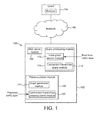
Figure 1 shows a high level block diagram of a system according to an exemplary embodiment; -
Figure 2 shows functional steps in the operation of the route planning system; -
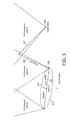
Figure 3 schematically illustrates a graph search scheme according to an exemplary embodiment; -
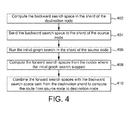
Figure 4 illustrates functional steps of an exemplary multi-shard query. - A route planning system and methodology is provided which efficiently computes optimal routes between locations whilst taking into account real-time traffic data. In an embodiment, an initial graph search is carried out using graph costs based on real-time traffic data. The initial graph search is stopped when the search is beyond an initial part within which real-time traffic data is considered relevant. Pre-computed data based on traffic prediction data is then used to calculate shortest paths to the destination node from each of the nodes at which the initial graph search was stopped, and the best of these paths is selected as the optimal route.
- The initial graph search is stopped based on a preset condition, which is set based on the observation that real-time traffic data is only good to use for some time (e.g: 30 minutes in the future). Precomputed data based on traffic prediction data available at precomputation time is then used for the later part of the route.
- Thus, according to various embodiments of the invention, a two-step route planning methodology is provided. In the first step, an initial graph search (e.g: based on Dijksta's algorithm) is executed for the time that live traffic data is to be used. Then, in the second step, a speed-up technique based on precomputed data is used to compute the part of the route for which traffic prediction data applies.
- In various embodiments, a trade-off is made in the selection of the initial graph search algorithm to emphasise flexibility over search speed. Suitable algorithms include Dijkstra's algorithm, the A* algorithm, or any other flexible algorithm in which graph costs can be changed quickly at query time to accommodate costs based on real-time traffic data. According to various embodiments, the initial graph search is a one-to-many graph search.
- In the second step, pre-computed data based on traffic prediction data is leveraged to accelerate the computation. The computation for the second step may comprise a hierarchical speed-up technique such as contraction hierarchies (CH) or highway hierarchies (HH), or any other technique in which precomputed data is used to improve computation speed. The CH and HH techniques are known per se to those skilled in the art and will not be described in detail here.
-
Figure 1 illustrates a high level block diagram of asystem 100 according to one exemplary embodiment of the invention. The implementation ofFigure 1 comprises a web application, ie: an application that is accessed by users over a network such as the Internet or an Intranet. - As shown in
Figure 1 , thesystem 100 includes aroute planning system 102, which provides route planning information in response to queries from auser client 104. Thesystem 102 is in communication with theclient 104 via anetwork 106, which is typically the internet, but can also be any network, including but not limited to any combination of a LAN, a WAN, a mobile, wired or wireless network, a private network, or a virtual private network. While only asingle client 104 is shown inFigure 1 , it is understood that very large numbers (e.g., millions) of clients are supported and can be in communication with thesystem 102 at any time. Examples ofclient devices 104 are personal computers, digital assistants, personal digital assistants, cellular phones, mobile phones, smart phones or laptop computers. - As shown in
Figure 1 , theroute planning system 102 comprises a number of processing modules. It will be appreciated that the term "module" refers to computer logic utilised to provide specified functionality. Thus, a module can be implemented in hardware, firmware and/or software controlling one or more general purpose processors. In one embodiment, the modules are program code files stored on a storage device, loaded into memory and executed, or can be provided from computer program products, for example computer executable instructions, that are stored in a tangible computer-readable storage medium such as RAM, a hard disk or optical or magnetic media. - It will be appreciated that embodiments of the
system 102 can have different or other modules to the ones described herein, with the described functionalities distributed amongst the modules in a different manner. Moreover, it will be appreciated that thesystem 102 may in some embodiments comprise a single server, or may alternatively comprise multiple servers, with functional tasks distributed between those servers. Each server may comprise a single processor, or may comprise an architecture employing multiple processors for increased computing capability. - As shown, the
exemplary system 102 ofFigure 1 includes a communication module in the form ofweb server module 108, which is configured to communicate with theclient 104 to deliver web content that can be accessed via thenetwork 106. The content may for example include HTML (hypertext markup language), images, scripting language (e.g: JavaScript, Jscript, Visual Basic Script) and other elements that are used by the browser on theclient 104. - Requests from the
client 104 for a route from a start location to a destination location are passed to aquery processing module 110. The query processing module is responsive to the request to generate one or more routes between the start and destination locations specified in the request. Information relating to the generated routes (e.g: text directions, estimated time of arrival and/or display of the route on a map) is then delivered from thesystem 102 to theclient 104 in accordance with techniques which are well known per se to those skilled in the art. -
Query processing module 110 comprises a number of modules which carry out their function at query processing time. In the embodiment ofFigure 1 ,query processing module 110 includes initialgraph search module 112 and contraction hierarchies (CH)query module 114. As shown, thesystem 102 also includes aprecomputation module 120 comprising modules configured to carry out their functionality prior to the time of a query. As shown,precomputation module 120 includes agraph generation module 122 and a contraction hierarchies (CH)precomputation module 124. - As shown in
Figure 2 , in an embodiment, operation of theroute planning system 102 comprises the following functional steps: - 202: Precomputation,
- 204: Receiving a route planning query specifying a start location and a destination location,
- 206: Determining source and destination nodes in a graph data structure based on the route planning query,
- 208: Executing an initial graph search on the graph data structure using graph costs based on real-time traffic data,
- 210: Stopping the initial graph search based on a preset condition,
- 212: Computing one or more routes to the destination node from one or more settled nodes using precomputed data based on traffic prediction data,
- 214: Determining a route from the source node to the destination node via a node at which the initial graph search stopped,
- 216: Providing information relating to the route to the user.
-
Graph generation module 122 is configured to generate a graph data structure comprising nodes and arcs, based on map data obtained from a map database. This process may be implemented by way of any of various known computational schemes to generate a graph data structure from raw map data. It will be appreciated that the map database may form part of thesystem 102, or it may form part of a different system. - The contraction hierarchies (CH)
precomputation module 124 is configured to generate precomputed data by way of the CH technique, to speed up computation of routes by thesystem 102. More specifically, themodule 120 precomputes shortest paths (called shortcuts) by way of the CH technique, using the graph data structure generated by thegraph generation module 122. - As will be appreciated by those skilled in the art, the CH shortcuts are generated in a known manner dependent on graph costs. For a detailed discussion of the CH technique and the generation of shortcuts, reference is directed to, for example, "Contraction Hierarchies: Faster and Simpler Hierarchical Routing in Road Networks", R. Geisberger, P. Sanders, D. Schultes, D. Delling, 7th Workshop on Experimental Algorithms (WEA), May/June 2008, Page(s): 319-333, available online at the time of writing at: http://algo2.iti.kit.edu/english/999.php.
- In embodiments of the invention, the costs on the graph used in the CH precomputation take into account predicted traffic data, which may be received by the
CH precomputation module 124 as shown inFigure 1 . The predicted traffic data is available to theCH precomputation module 124 at precomputation time, and is used to determine the graph costs for the CH precomputation by themodule 120. - The predicted traffic data may be based on past traffic conditions and could for example be determined by time-averaging data relating to vehicle speeds over a suitably long period of time. For example, a time-average may be taken of data relating to the speed of mobile devices (e.g: mobile phones) participating in a crowd-sourcing scheme in which GPS or other location service information is anonymously shared, or a time-average may be taken of traffic flow sensor data from traffic flow sensors at highways or other routes. Predicted traffic data is available from a number of sources, including Google Maps and TomTom HD traffic.
- In some embodiments, the predicted traffic data is time independent - ie: the predictions do not change at different times. Those skilled in the art cognizant of the present disclosure will appreciate that in some embodiments, the predicted traffic data may alternatively be time-dependent, ie: the data may specify traffic predictions at different times of day and/or different days. In the case of time-dependent predictions, time averages may be taken for example over traffic data for corresponding time windows (e.g: 09.00 am - 10:00 am) during a large number of selected days (e.g: every day for one month, or every Saturday for one year). It will be appreciated that whether the predicted data is time independent or time dependent, it is available at precomputation time, and therefore can be taken into account in the CH precomputation.
- It will be appreciated that precomputation by the
CH precomputation module 124 may be carried out at set times, for example periodically (e.g: once per week). - The
query processing module 110 processes user requests for a route from a start location to a destination location and calculates one or more routes using the precomputed data determined by theprecomputation module 120. In response to receiving 204 a new query, thequery processing module 110 determines 206 source and destination nodes in the graph data structure respectively corresponding to the start and destination locations. Initialgraph search module 112 then executes 208 an initial query time graph search on the graph data structure starting at the source node. - The initial graph search uses graph costs based on real-time traffic data. As used herein, the term "real-time" traffic data refers to traffic data obtained for a particular time, and includes "live" traffic data obtained for the time that the query was made, and also real-time traffic data obtained for a time recently before the query was made (e.g: 5 minutes before query time) which is still relevant at query time.
- The real-time traffic data is based on traffic conditions at the relevant time, and may be obtained for example from data relating to the speed of mobile devices (e.g: smartphones) participating in a crowd-sourcing scheme in which GPS or other location service information is anonymously shared, or from traffic flow sensor data from traffic flow sensors at highways or other routes. Suitable real time traffic data is available from a number of sources, including Google Maps and TomTom HD.
- As shown in
Figure 1 , in embodiments the real time traffic data is received by the initialgraph search module 112. The real time traffic data may be received by the initialgraph search module 112 at intervals, for example every 1 minute. - It will be appreciated that in addition to taking into account real time traffic data, the graph costs for the initial graph search may also account for the distance between particular locations, the type of road, and other factors which may affect travel time.
- In the embodiment shown in
Figure 3 , the initial graph search comprises a Dijkstra search, and therefore settles nodes in non-decreasing order of the shortest path cost to define asearch space 302 which expands outwardly from thesource node 304 as the graph search progresses and more nodes are settled. Those skilled in the art will appreciate that alternatively, any other suitable algorithm which can accommodate real-time traffic data could be used for the initial graph search, such as the A* algorithm or other Dijkstra-based algorithm. - The Dijkstra search of
Figure 3 stops when the search is beyond an initial part. The condition for stopping the Dijkstra search is preset based on a heuristic condition that real-time traffic data is only relevant for a limited time. For example, the search may stop where it finds nodes that are more than a preset travel time (e.g: 30 minutes travel time) away from the start location. - Those skilled in the art will appreciate that the destination location could be found during the Dijkstra search if the destination location is sufficiently close to the start location. In this case, the route is determined by the Dijkstra search such that
steps 212 and 214 are unnecessary - If the destination location is not found during the Dijkstra search, the
CH query module 114 computes shortest paths using the precomputed data previously computed by theCH precomputation module 124. More specifically, theCH query module 114 computes 212 shortest paths from each node at which the initial graph search stopped to the destination node. The shortest paths thus determined are then used to select the best route (ie: shortest path) from thesource node 304 to thedestination node 305 via a node at which the initial graph search stopped, thereby to determine 214 a route. - As shown in
Figure 3 , the route fromsource node 304 todestination node 305 thus comprises apath 306 computed by the Dijkstra search with live traffic and apath 307 computed using precomputed data with predicted traffic. Thepath 306 computed by the Dijkstra search extends from the source node to anintermediate node 308 at which the Dijkstra search stopped. The path computed using predicted traffic data extends from theintermediate node 308 to thedestination node 305. - The
CH query module 114 computes 212 shortest paths by analysing CH forward and backward search spaces in a bidirectional search. As shown inFigure 3 , themodule 114 takes into account forward CH search spaces from each node at which the initial graph search stopped, and also the CH backward search space from the destination node. Thus, the search carried out by the CH query module is a many-to-one search. It will be appreciated that it is not necessary to finish the initial graph search before starting the CH many-to-one search, since the latter can be started from a node once the initial search has stopped at that node. - The CH reverse search space and the CH forward search spaces are computed using known techniques, and may be Dijkstra-based. It will be appreciated that the CH forward and reverse search spaces are generated using the precomputed data generated at precomputation time by the
CH precomputation module 124 - The
CH query module 114 combines the CH forward search spaces and the CH backward search space so as to determine the shortest paths from each point at which the initial graph search stopped to the destination node. Combining forward and reverse search spaces to determine optimal routes is a well known aspect of CH and other bidirectional graph searches (e.g: bidirectional Dijkstra), and will not be described in detail here. In some embodiments, the CH query module may combine the forward search spaces to form a combined CH forward search space, and then determine meeting spots between the combined CH forward search space and the backward CH search space, thereby to determine the shortest paths. - In this way, the
CH query module 114 computes shortest paths from each node at which the initial graph search stopped to the destination node in a many-to-one search. The shortest paths thus determined are then used to select the best route (ie: shortest path) from the source node to the destination node, taking into account the results of the initial graph search carried out by the initialgraph search module 112. - Information relating to the determined route, for example text directions, estimated time of arrival and/or display of the route on a map) is then delivered from the
system 102 to theclient 104 and thus provided 216 to the user. - In some embodiments the initial graph search carried out by the
module 112 may comprise a blending phase between the live traffic data and the predicted traffic data to avoid discontinuity in the traffic data at the boundary between the search space for the initial graph search and the combined CH forward search space. This may be achieved by modifying the costs on the graph for the initial graph search so that there is a continuous transition between live traffic data and predicted traffic data. In an embodiment, the costs on the graph may be modified by introducing time-dependent arc costs, ie: arc costs which depend on the departure time at the endpoint of the arc. - Those skilled in the art will appreciate that the nodes at which the initial graph search is stopped could in some embodiments be used as potential vias for a plurality of alternate routes which may be generated to give different route options to the user. An alternate in this case may be determined as the shortest path from the source to the via node, and then from the via node to the destination.
- Moreoever, it will be appreciated that CH is discussed above as a speed-up technique, alternatively any other hierarchical speedup technique (e.g: highway hierarchies) could be used. The CH technique is however particularly advantageous because it leads to small forward and backward search spaces.
- In some embodiments, .e.g: involving large road networks, the graph of the road network may be sharded across multiple machines. General principles of sharding are well known per se. Reference is directed to Distributed Time-Dependent Contraction Hierarchies, T. Kieritz, D. Luxen, P. Sanders, C. Vetter, International Symposium on Experimental Algorithms (SEA 2010), May 2010, Ischia, Italy, available online at the time of writing at http://algo2.iti.kit.edu/english/1590.php.
- According to various embodiments of the invention, additional nodes are included in shards so as to try to ensure that the initial graph search for the first part of a route can be run in the shard of the source node. Moreover, since forward and backward CH search spaces use CH shortcuts, they are relatively small. Thus, in embodiments, for each node in a shard, its forward and backward search spaces are stored in the shard too.
-
Figure 4 illustrates functional steps of an exemplary multi-shard query. As shown in 402, the backward search space is computed in the shard of the destination node. In 404, the backward search space is sent (e.g: via a remote procedure call (RFC) to the shard of the source node. In 406, the initial graph search (e.g: Dijkstra search) is run in the shard of the source node. Then, after the initial part, the algorithm switches to CH by computing 408 the forward search spaces from the nodes where the initial graph search stopped. In 410, the forward search spaces are combined with the backward search space sent from the shard of the destination node to compute the route from source node to destination node. - The nodes added so that the initial graph search can be run in the shard of the source node may be estimated rather than determined exactly. A good estimate can be obtained by including, in each shard, the Dijkstra search space for each point in the shard. This Dijkstra search space can be obtained by way of a Dijkstra search which stops according to the preset condition discussed above (e.g: based on 30 minutes of travel time), and which uses graph costs based on predicted traffic data, rather than live traffic data. Those skilled in the art will appreciate that as a result, the shards overlap.
- Predicted traffic data is used for the estimate discussed in the previous paragraph because predicted traffic data is known prior to query time, whereas live traffic data is not known prior to query time. Thus, there may be differences between the search space included in the shard and the search space required for the query-time search. If, as a result, it is not possible to complete the query-time search in the shard of the source node, the CH forward search can be started early, ie: at nodes which have been settled by the initial graph search and which are included in the shard of the source node.
- Thus, as will be appreciated from the foregoing, various embodiments of the present invention are advantageously compatible with large graphs, sharded over multiple machines.
- Many modifications and variations of the route planning systems and methods described herein are possible.
- For example, although multi-sharded implementations and/or implementations in the form of a web applications are discussed above, many alternative implementations are possible. For example, those skilled in the art will appreciate that in some implementations, route planning methods according to the embodiments of the invention may be operated by a mobile devices (e.g: a smartphone or a SAT NAV). Mobile routing applications in the context of contraction hierarchies are known per se and discussed for example in "Fast and Exact Mobile Navigation with OpenStreetMap Data", Diploma Thesis of Christian Vetter, Karlsruhe Institute of Technology, 2010, available online at the time of writing via the following link: http://algo2.iti.kit.edu/routeplanning.php.
- In some embodiments, the initial Dijkstra graph search may use CH to contract nodes that have no traffic coverage. This allows the initial graph search to skip over these nodes. Contracted Dijkstra algorithms are known per se and will not be described here. Reference is directed to Chapter 4.2 of "Systematic Combination of Speed-Up Techniques for exact Shortest-Path Queries", Diploma Thesis of Dennis Schieferdecker, Department of Informatics at the University of Karlsruhe, 2008, available online at the time of writing via the following link: http://alg02.iti.kit.edu/download/s-scsut-08.pdf, and to "Bidirectional Core-Based Routing in Dynamic Time-Dependent Road Networks", Daniel Delling and Giacomo Nannicin, ISAAC'08 Proceedings of the 19th International Symposium on Algorithms and Computation, Pages 812 - 823.
- In some embodiments, the route planning query may specify one or more "via" locations in addition to the start and destination locations (for example, a user may request a route from Zurich to Berlin via Frankfurt). A route may be calculated from the start location to the destination location via the specified location(s) by carrying out a separate query for each consecutive pair of waypoints (e.g. from the source to the first via, from the first via to the second, etc).
- Many other modifications and variations will be evident to those skilled in the art, that fall within the scope of the appended claims
- It will be appreciated that the particular naming of the components, capitalization of terms, the attributes, data structures, or any other programming or structural aspect is not mandatory or significant, and the mechanisms that implement the invention or its features may have different names, formats, or protocols. Further, the system may be implemented via a combination of hardware and software, as described, or entirely in hardware elements. Also, the particular division of functionality between the various system components described herein is merely exemplary, and not mandatory; functions performed by a single system component may instead be performed by multiple components, and functions performed by multiple components may instead performed by a single component.
- Unless specifically stated otherwise as apparent from the description above, it is appreciated that throughout the description, discussions utilising terms such as "processing" or "computing" or "calculating" or "determining" or "displaying" or the like, refer to the action and processes of a computer system, or similar electronic computing device, that manipulates and transforms data represented as physical (electronic) quantities within the computer system memories or registers or other such information storage, transmission or display devices.
- Certain aspects of the present invention include process steps and instructions described herein in the form of an algorithm. It should be understood that the process steps, instructions, of the present invention as described and claimed, are executed by computer hardware operating under program control, and not mental steps performed by a human. Similarly, all of the types of data described and claimed are stored in a computer readable storage medium operated by a computer system, and are not simply disembodied abstract ideas.
- The present invention also relates to an apparatus for performing the operations herein. This apparatus may be specially constructed for the required purposes, or it may comprise a general-purpose computer selectively activated or reconfigured by a computer program stored on a computer readable medium that can be executed by the computer. Such a computer program are stored in a computer readable storage medium, such as, but is not limited to, any type of disk including floppy disks, optical disks, CD-ROMs, magnetic-optical disks, read-only memories (ROMs), random access memories (RAMs), EPROMs, EEPROMs, magnetic or optical cards, application specific integrated circuits (ASICs), or any type of media suitable for storing electronic instructions, and each coupled to a computer system bus. Furthermore, the computers referred to in the specification may include a single processor or may be architectures employing multiple processor designs for increased computing capability.
- The algorithms and operations presented herein can be executed by any type or brand computer or other apparatus. Various general-purpose systems may also be used with programs in accordance with the teachings herein, or it may prove convenient to construct more specialized apparatus to perform the required method steps. The required structure for a variety of these systems will be apparent to those of skill in the art, along with equivalent variations. In addition, the present invention is not described with reference to any particular programming language. It is appreciated that a variety of programming languages may be used to implement the teachings of the present invention as described herein.
Claims (15)
- A computer-implemented route planning method, comprising:determining source and destination nodes in a graph data structure based on a route planning query;executing an initial graph search on the graph data structure using graph costs based on real-time traffic data, wherein the initial graph search starts at the source node and settles nodes until it stops;computing one or more routes to the destination node from one or more of said settled nodes using precomputed data based on traffic prediction data, thereby to determine a route from the source node to the destination node via one of said settled nodes.
- A computer-implemented route planning method as claimed in claim 1, wherein the initial graph search stops at a predetermined travel time from the source node.
- A computer-implemented route planning method as claimed in any preceding claim, wherein the precomputed data based on traffic prediction data is computed in the precomputation phase of a hierarchical speedup technique.
- A computer-implemented route planning method as claimed in claim 3, wherein the hierarchical speedup technique comprises contraction hierarchies.
- A computer-implemented route planning method as claimed in claim 3, wherein the hierarchical speedup technique comprises highway hierarchies.
- A computer-implemented route planning method as claimed in any preceding claim, where the one or more routes to the destination node are computed based on a many-to-one graph search from a plurality of said settled nodes to the destination node.
- A computer-implemented route planning method as claimed in any preceding claim, wherein computing one or more routes to the destination node comprises computing one or more routes to the destination node from one or more settled nodes at which the initial graph search stops, using precomputed data based on traffic prediction data.
- A computer-implemented route planning method as claimed in any preceding claim, wherein there is a blending phase between the live traffic data and the traffic prediction data.
- A computer-implemented route planning method as claimed in any preceding claim, wherein the graph data structure is multi-sharded, and wherein additional nodes are included in one or more shards based on a search space of the initial graph search algorithm.
- A computer-implemented route planning method as claimed in any preceding claim, wherein computing one or more routes to the destination node from one or more of said settled nodes comprises a bidirectional graph search.
- A computer-implemented route planning method as claimed in any preceding claim, wherein the initial graph search comprises a Dijkstra-based search.
- An apparatus comprising at least one processor and at least one memory storing instructions which when executed by the at least one processor cause the at least one processor to perform the method of any of claims 1 to 11.
- An apparatus as claimed in claim 12, comprising a mobile device.
- A computer-readable medium comprising a computer program product adapted to perform the steps of any of claims 1-11.
- A system, comprising:one or more communication modules for communication with one or more client devices,a precomputation module configured to generate a graph data structure based on map data;a query processing module configured to determine source and destination nodes in the graph data structure based on a route planning query, wherein the query processing module comprises:a first graph search module configured to execute an initial graph search on the graph data structure using graph costs based on real-time traffic data, wherein the initial graph search starts at the source node and settles nodes until it stops; anda second graph search module configured to compute one or more routes to the destination node from one or more of said settled nodes using precomputed data based on traffic prediction data, thereby to determine a route from the source node to the destination node via one of said settled nodes.
Priority Applications (2)
| Application Number | Priority Date | Filing Date | Title |
|---|---|---|---|
| EP13151687.4A EP2757504B1 (en) | 2013-01-17 | 2013-01-17 | Route planning |
| US14/157,913 US9175972B2 (en) | 2013-01-17 | 2014-01-17 | Route planning |
Applications Claiming Priority (1)
| Application Number | Priority Date | Filing Date | Title |
|---|---|---|---|
| EP13151687.4A EP2757504B1 (en) | 2013-01-17 | 2013-01-17 | Route planning |
Publications (2)
| Publication Number | Publication Date |
|---|---|
| EP2757504A1 true EP2757504A1 (en) | 2014-07-23 |
| EP2757504B1 EP2757504B1 (en) | 2022-06-01 |
Family
ID=47552913
Family Applications (1)
| Application Number | Title | Priority Date | Filing Date |
|---|---|---|---|
| EP13151687.4A Active EP2757504B1 (en) | 2013-01-17 | 2013-01-17 | Route planning |
Country Status (2)
| Country | Link |
|---|---|
| US (1) | US9175972B2 (en) |
| EP (1) | EP2757504B1 (en) |
Cited By (4)
| Publication number | Priority date | Publication date | Assignee | Title |
|---|---|---|---|---|
| WO2017120458A1 (en) * | 2016-01-08 | 2017-07-13 | Oracle International Corporation | Methods, systems, and computer readable media for job scheduling using travel costs between job locations |
| DE102016216538A1 (en) | 2016-09-01 | 2018-03-01 | Bayerische Motoren Werke Aktiengesellschaft | Method for operating a control device of a motor vehicle, control device and motor vehicle |
| WO2019164727A1 (en) * | 2018-02-20 | 2019-08-29 | Grzegorz Malewicz | A method and an apparatus for searching or comparing sites using routes or route lengths between sites and places within a transportation system |
| EP3955179A1 (en) * | 2020-08-11 | 2022-02-16 | Robert Bosch GmbH | Apparatus for and method of operating a means of transport |
Families Citing this family (31)
| Publication number | Priority date | Publication date | Assignee | Title |
|---|---|---|---|---|
| US6464265B1 (en) * | 1999-10-22 | 2002-10-15 | Moen Incorporated | Modular shower arm mounting system |
| US7221287B2 (en) | 2002-03-05 | 2007-05-22 | Triangle Software Llc | Three-dimensional traffic report |
| WO2005013063A2 (en) | 2003-07-25 | 2005-02-10 | Landsonar, Inc. | System and method for determining recommended departure time |
| US8619072B2 (en) | 2009-03-04 | 2013-12-31 | Triangle Software Llc | Controlling a three-dimensional virtual broadcast presentation |
| WO2012159083A2 (en) | 2011-05-18 | 2012-11-22 | Triangle Software Llc | System for providing traffic data and driving efficiency data |
| CA2883973C (en) | 2012-01-27 | 2021-02-23 | Edgar Rojas | Estimating time travel distributions on signalized arterials |
| US10223909B2 (en) | 2012-10-18 | 2019-03-05 | Uber Technologies, Inc. | Estimating time travel distributions on signalized arterials |
| DE202015009169U1 (en) * | 2014-05-21 | 2016-11-07 | Google, Inc. | Routing with Diverse Version Merge |
| US20160356602A1 (en) * | 2015-06-03 | 2016-12-08 | Reginald K. Puana | E-Car Trip Planner |
| WO2017160276A1 (en) * | 2016-03-15 | 2017-09-21 | Ford Global Technologies Llc | Multi-day, multi-person, and multi-modal trip planning system |
| US10060753B2 (en) | 2016-08-17 | 2018-08-28 | Apple Inc. | On-demand shortcut computation for routing |
| US10018476B2 (en) | 2016-08-17 | 2018-07-10 | Apple Inc. | Live traffic routing |
| CN106528815B (en) * | 2016-11-14 | 2019-07-02 | 中国人民解放军理工大学 | A method and system for probabilistic aggregation query of moving objects in road network |
| CA3093522C (en) * | 2017-04-12 | 2024-05-07 | Lawrence Livermore National Security, Llc | Swarm path planner system for vehicles |
| JP6974106B2 (en) * | 2017-10-12 | 2021-12-01 | トヨタ自動車株式会社 | Information processing equipment, information processing methods, information processing systems, and programs |
| US10571291B2 (en) | 2017-12-08 | 2020-02-25 | Here Global B.V. | Method, apparatus, and computer program product for traffic optimized routing |
| US11812515B2 (en) | 2018-05-01 | 2023-11-07 | Intermetro Communications, Inc. | Multiple active network wireless device using a shadow number |
| EP3683742A1 (en) * | 2019-01-18 | 2020-07-22 | Naver Corporation | Method for computing at least one itinerary from a departure location to an arrival location |
| US11108644B1 (en) * | 2019-04-30 | 2021-08-31 | Xilinx, Inc. | Data processing engine (DPE) array routing |
| EP3745329B1 (en) | 2019-05-29 | 2026-01-07 | Naver Corporation | Methods for computing itineraries in a multimodal transportation network |
| EP3779362B1 (en) * | 2019-08-14 | 2024-04-03 | Bayerische Motoren Werke Aktiengesellschaft | Method and system for time-dependent vehicle routing |
| DE112021000216T5 (en) * | 2020-02-19 | 2022-11-03 | Nvidia Corporation | Behavior planning for autonomous vehicles |
| US11725954B2 (en) | 2020-08-07 | 2023-08-15 | Waymo Llc | Pre-computing routes for autonomous vehicles using map shards |
| WO2022094584A1 (en) * | 2020-10-30 | 2022-05-05 | Intermetro Communications, Inc. | Route guidance for a multiple active network wireless device |
| EP4016412A1 (en) * | 2020-12-18 | 2022-06-22 | Imec VZW | Traffic prediction |
| CN113204348B (en) * | 2021-04-30 | 2021-11-26 | 北京连山科技股份有限公司 | Domestic road network data compiling method based on linkage hierarchy |
| CN113701761B (en) * | 2021-10-28 | 2022-02-08 | 华清科盛(北京)信息技术有限公司 | Internal road path planning method and system |
| US12626197B2 (en) | 2021-12-20 | 2026-05-12 | Naver Corporation | Method for computing a set of itineraries from a departure location to an arrival location using cluster-based searching |
| CN115394109B (en) * | 2022-08-30 | 2023-05-02 | 合肥工业大学 | K-pair single-source single-sink shortest searching method based on shared calculation and application |
| US20260079017A1 (en) * | 2024-09-17 | 2026-03-19 | Verizon Patent And Licensing Inc. | Systems and methods for handling road edits in conditional customizable contraction hierarchies for vehicle navigation |
| CN119863003B (en) * | 2024-12-19 | 2026-04-24 | 中国民航信息网络股份有限公司 | A method, system, equipment, and medium for inter-flight planning of aircraft flights. |
Family Cites Families (25)
| Publication number | Priority date | Publication date | Assignee | Title |
|---|---|---|---|---|
| US5610821A (en) * | 1994-11-18 | 1997-03-11 | Ibm Corporation | Optimal and stable route planning system |
| JP3754110B2 (en) * | 1995-07-14 | 2006-03-08 | 株式会社日立製作所 | Dynamic route search method and navigation apparatus |
| KR100443495B1 (en) * | 1998-11-24 | 2004-08-09 | 마쯔시다덴기산교 가부시키가이샤 | Data structure of digital map file |
| US6317686B1 (en) * | 2000-07-21 | 2001-11-13 | Bin Ran | Method of providing travel time |
| JP4207793B2 (en) * | 2004-02-20 | 2009-01-14 | アイシン・エィ・ダブリュ株式会社 | Route search apparatus and route search method |
| GB2443472A (en) * | 2006-10-30 | 2008-05-07 | Cotares Ltd | Method of generating routes |
| TR201807691T4 (en) * | 2006-12-29 | 2018-06-21 | Magneti Marelli Spa | A method for calculating an optimal route between a starting point and a destination and which is forced to pass through an intermediate point, a navigation system and a corresponding computer program product. |
| US8005610B2 (en) * | 2007-08-10 | 2011-08-23 | Max-Planck-Gesellschaft zur Förderung der Wissenschaften e.V | Method and device for determining the length of a shortest path in a network |
| US8290699B2 (en) * | 2007-09-28 | 2012-10-16 | Clarion Co., Ltd. | System and method for geographic interpolation of traffic data |
| CN101163105B (en) * | 2007-11-26 | 2011-06-01 | 华为技术有限公司 | Method of obtaining path information and path computing node |
| US20090265091A1 (en) * | 2008-04-16 | 2009-10-22 | Xanavi Informatics Corporation | Method and apparatus utilizing both statistical and real time data for a vehicle navigation system |
| WO2009158058A1 (en) * | 2008-06-24 | 2009-12-30 | Tele Atlas North America Inc. | Methods and systems for dynamically adaptive road network hierarchy and routing |
| CN102110365B (en) * | 2009-12-28 | 2013-11-06 | 日电(中国)有限公司 | Road condition prediction method and road condition prediction system based on space-time relationship |
| EP2375364A1 (en) * | 2010-04-12 | 2011-10-12 | Karlsruher Institut für Technologie | Method and system for time-dependent routing |
| US8583363B2 (en) * | 2010-05-26 | 2013-11-12 | Microsoft Corporation | Determining alternative routes |
| US8364717B2 (en) * | 2011-01-10 | 2013-01-29 | Microsoft Corporation | Hardware accelerated shortest path computation |
| US8738559B2 (en) * | 2011-01-24 | 2014-05-27 | Microsoft Corporation | Graph partitioning with natural cuts |
| US20120254153A1 (en) * | 2011-03-31 | 2012-10-04 | Microsoft Corporation | Shortest path determination in databases |
| US20120250535A1 (en) * | 2011-03-31 | 2012-10-04 | Microsoft Corporation | Hub label based routing in shortest path determination |
| US8660789B2 (en) * | 2011-05-03 | 2014-02-25 | University Of Southern California | Hierarchical and exact fastest path computation in time-dependent spatial networks |
| KR20120126175A (en) * | 2011-05-11 | 2012-11-21 | 팅크웨어(주) | Electronic Device And Operating Method Thereof |
| US20120310523A1 (en) * | 2011-06-03 | 2012-12-06 | Microsoft Corporation | Customizable route planning |
| US8762048B2 (en) * | 2011-10-28 | 2014-06-24 | At&T Mobility Ii Llc | Automatic travel time and routing determinations in a wireless network |
| US8824337B1 (en) * | 2012-03-14 | 2014-09-02 | Google Inc. | Alternate directions in hierarchical road networks |
| US9222791B2 (en) * | 2012-10-11 | 2015-12-29 | Microsoft Technology Licensing, Llc | Query scenarios for customizable route planning |
-
2013
- 2013-01-17 EP EP13151687.4A patent/EP2757504B1/en active Active
-
2014
- 2014-01-17 US US14/157,913 patent/US9175972B2/en active Active
Non-Patent Citations (8)
| Title |
|---|
| G. NANNICINI, P. BAPTISTE, G. BARBIER, D. KROB, L. LIBERTI: "Fast paths in large-scale dynamic road networks", COMPUTATIONAL OPTIMIZATION AND APPLICATIONS, vol. 45, no. 1, 23 February 2008 (2008-02-23), pages 143 - 158, XP019767738, DOI: 10.1007/s10589-008-9172-y * |
| G. NANNICINI: "Point-to-point shortest paths on dynamic time-dependent road networks", THÈSE DE DOCTORAT EN INFORMATIQUE DE L'ÉCOLE POLYTECHNIQUE, 18 June 2009 (2009-06-18), XP055068672, Retrieved from the Internet <URL:http://pastel.archives-ouvertes.fr/pastel-00005275> [retrieved on 20090721] * |
| G. V. BATZ, P. SANDERS: "Time-dependent route planning with generalized objective functions", 20TH EUROPEAN SYMPOSIUM ON ALGORITHMS (ESA'12), 10 September 2012 (2012-09-10), XP055068532, Retrieved from the Internet <URL:http://algo2.iti.uni-karlsruhe.de/download/slides_batz_ESA12.pdf> [retrieved on 20130626] * |
| G. V. BATZ, P. SANDERS: "Time-dependent route planning with generalized objective functions", LECTURE NOTES IN COMPUTER SCIENCE, vol. 7501, 10 September 2012 (2012-09-10), pages 169 - 180, XP047015700, DOI: 10.1007/978-3-642-33090-2_16 * |
| G. V. BATZ, R. GEISBERGER, S. NEUBAUER, P. SANDERS: "Time-dependent contraction hierarchies and approximation", 9TH INTERNATIONAL SYMPOSIUM ON EXPERIMENTAL ALGORITHMS (SEA'10), 20 May 2010 (2010-05-20), XP055068534, Retrieved from the Internet <URL:http://algo2.iti.uni-karlsruhe.de/download/atch.pdf> [retrieved on 20130626] * |
| G. V. BATZ, R. GEISBERGER, S. NEUBAUER, P. SANDERS: "Time-dependent contraction hierarchies and approximation", LECTURE NOTES IN COMPUTER SCIENCE, vol. 6049, 20 May 2010 (2010-05-20), pages 166 - 177, XP019142558, DOI: 10.1007/978-3-642-13193-6_15 * |
| J. DIBBELT, T. PAJOR, D. WAGNER: "User-constrained multi-modal route planning", PROCEEDINGS OF THE 14TH MEETING ON ALGORITHM ENGINEERING & EXPERIMENTS (ALENEX'12), 16 January 2012 (2012-01-16), pages 150 - 159, XP055068637, ISSN: 2164-0300, ISBN: 978-1-611972-12-2 * |
| V. BATZ, R. GEISBERGER, D. LUXEN, P. SANDERS, C. VETTER: "Algorithm engineering for large graphs: fast route planning", INTERNET CITATION, 2009, XP055068552, Retrieved from the Internet <URL:http://algo2.iti.uni-karlsruhe.de/download/transport-optimization-finland-2009.pdf> [retrieved on 20130626] * |
Cited By (6)
| Publication number | Priority date | Publication date | Assignee | Title |
|---|---|---|---|---|
| WO2017120458A1 (en) * | 2016-01-08 | 2017-07-13 | Oracle International Corporation | Methods, systems, and computer readable media for job scheduling using travel costs between job locations |
| US10740702B2 (en) | 2016-01-08 | 2020-08-11 | Oracle International Corporation | Method, system, and non-transitory computer-readable medium for reducing computation time in one-to-many path searching using heuristics and limited boundary adjustment |
| DE102016216538A1 (en) | 2016-09-01 | 2018-03-01 | Bayerische Motoren Werke Aktiengesellschaft | Method for operating a control device of a motor vehicle, control device and motor vehicle |
| WO2019164727A1 (en) * | 2018-02-20 | 2019-08-29 | Grzegorz Malewicz | A method and an apparatus for searching or comparing sites using routes or route lengths between sites and places within a transportation system |
| EP3955179A1 (en) * | 2020-08-11 | 2022-02-16 | Robert Bosch GmbH | Apparatus for and method of operating a means of transport |
| US11875299B2 (en) | 2020-08-11 | 2024-01-16 | Robert Bosch Gmbh | Apparatus for and method of operating a means of transport |
Also Published As
| Publication number | Publication date |
|---|---|
| US20140200807A1 (en) | 2014-07-17 |
| US9175972B2 (en) | 2015-11-03 |
| EP2757504B1 (en) | 2022-06-01 |
Similar Documents
| Publication | Publication Date | Title |
|---|---|---|
| US9175972B2 (en) | Route planning | |
| CN105222796B (en) | Integrating online navigation data with cached navigation data during active navigation | |
| US20250258004A1 (en) | Transportation route error detection and adjustment | |
| JP6316980B2 (en) | Navigation guidance between automatically determined starting point and selected destination | |
| US20150160024A1 (en) | Ranking of Path Segments Based on Incident Probability | |
| KR20210016065A (en) | Providing traffic warnings to a user based on return journey delays | |
| US10288437B2 (en) | Routing with data version stitching | |
| Jariyasunant et al. | Mobile transit trip planning with real-time data | |
| US20150176996A1 (en) | Systems and Methods for Unified Directions | |
| US12450527B2 (en) | Utilizing provider device efficiency metrics to select a provider device for a future time window | |
| US10739154B2 (en) | System and method for vehicle fuel consumption optimization | |
| CN107229461B (en) | Method for integrating navigation services as part of a software application and computing device | |
| JP2021064387A (en) | Neural episodic control | |
| US8630800B1 (en) | Travel routes interface | |
| JP2017203733A (en) | Cruisable range display device, cruisable range display method and program | |
| CN108332754A (en) | Method for optimizing route, device, electronic equipment and computer storage media | |
| US20210407031A1 (en) | Utilizing digital signals to intelligently monitor client device transit progress and generate dynamic public transit interfaces | |
| JP6995205B2 (en) | Systems and methods for assessing the performance of navigation applications | |
| CN114347024B (en) | Robot speed adjusting method and device, robot and storage medium | |
| US11293773B2 (en) | Methods and systems for event initiated navigational assistance | |
| CN113196012B (en) | Default map zoom level by travel time | |
| JP2016118471A (en) | Information processing system and information processing method | |
| US10551209B2 (en) | Methods and systems for event initiated navigational assistance | |
| US20150345975A1 (en) | Navigating to a Selected Location | |
| CN117146792A (en) | Bank node navigation method, apparatus, device, storage medium and program product |
Legal Events
| Date | Code | Title | Description |
|---|---|---|---|
| PUAI | Public reference made under article 153(3) epc to a published international application that has entered the european phase |
Free format text: ORIGINAL CODE: 0009012 |
|
| 17P | Request for examination filed |
Effective date: 20130117 |
|
| AK | Designated contracting states |
Kind code of ref document: A1 Designated state(s): AL AT BE BG CH CY CZ DE DK EE ES FI FR GB GR HR HU IE IS IT LI LT LU LV MC MK MT NL NO PL PT RO RS SE SI SK SM TR |
|
| AX | Request for extension of the european patent |
Extension state: BA ME |
|
| R17P | Request for examination filed (corrected) |
Effective date: 20150114 |
|
| RBV | Designated contracting states (corrected) |
Designated state(s): AL AT BE BG CH CY CZ DE DK EE ES FI FR GB GR HR HU IE IS IT LI LT LU LV MC MK MT NL NO PL PT RO RS SE SI SK SM TR |
|
| RAP1 | Party data changed (applicant data changed or rights of an application transferred) |
Owner name: GOOGLE LLC |
|
| STAA | Information on the status of an ep patent application or granted ep patent |
Free format text: STATUS: EXAMINATION IS IN PROGRESS |
|
| 17Q | First examination report despatched |
Effective date: 20171213 |
|
| GRAP | Despatch of communication of intention to grant a patent |
Free format text: ORIGINAL CODE: EPIDOSNIGR1 |
|
| STAA | Information on the status of an ep patent application or granted ep patent |
Free format text: STATUS: GRANT OF PATENT IS INTENDED |
|
| RIC1 | Information provided on ipc code assigned before grant |
Ipc: G08G 1/0968 20060101ALI20211111BHEP Ipc: G01C 21/34 20060101ALI20211111BHEP Ipc: G01C 21/26 20060101ALI20211111BHEP Ipc: G06N 5/00 20060101AFI20211111BHEP |
|
| RIC1 | Information provided on ipc code assigned before grant |
Ipc: G08G 1/0968 20060101ALI20211124BHEP Ipc: G01C 21/34 20060101ALI20211124BHEP Ipc: G06N 5/00 20060101AFI20211124BHEP |
|
| INTG | Intention to grant announced |
Effective date: 20211215 |
|
| GRAS | Grant fee paid |
Free format text: ORIGINAL CODE: EPIDOSNIGR3 |
|
| GRAA | (expected) grant |
Free format text: ORIGINAL CODE: 0009210 |
|
| STAA | Information on the status of an ep patent application or granted ep patent |
Free format text: STATUS: THE PATENT HAS BEEN GRANTED |
|
| AK | Designated contracting states |
Kind code of ref document: B1 Designated state(s): AL AT BE BG CH CY CZ DE DK EE ES FI FR GB GR HR HU IE IS IT LI LT LU LV MC MK MT NL NO PL PT RO RS SE SI SK SM TR |
|
| REG | Reference to a national code |
Ref country code: GB Ref legal event code: FG4D |
|
| REG | Reference to a national code |
Ref country code: AT Ref legal event code: REF Ref document number: 1495898 Country of ref document: AT Kind code of ref document: T Effective date: 20220615 Ref country code: CH Ref legal event code: EP Ref country code: DE Ref legal event code: R096 Ref document number: 602013081750 Country of ref document: DE |
|
| REG | Reference to a national code |
Ref country code: IE Ref legal event code: FG4D |
|
| REG | Reference to a national code |
Ref country code: LT Ref legal event code: MG9D |
|
| REG | Reference to a national code |
Ref country code: NL Ref legal event code: MP Effective date: 20220601 |
|
| PG25 | Lapsed in a contracting state [announced via postgrant information from national office to epo] |
Ref country code: SE Free format text: LAPSE BECAUSE OF FAILURE TO SUBMIT A TRANSLATION OF THE DESCRIPTION OR TO PAY THE FEE WITHIN THE PRESCRIBED TIME-LIMIT Effective date: 20220601 Ref country code: NO Free format text: LAPSE BECAUSE OF FAILURE TO SUBMIT A TRANSLATION OF THE DESCRIPTION OR TO PAY THE FEE WITHIN THE PRESCRIBED TIME-LIMIT Effective date: 20220901 Ref country code: LT Free format text: LAPSE BECAUSE OF FAILURE TO SUBMIT A TRANSLATION OF THE DESCRIPTION OR TO PAY THE FEE WITHIN THE PRESCRIBED TIME-LIMIT Effective date: 20220601 Ref country code: HR Free format text: LAPSE BECAUSE OF FAILURE TO SUBMIT A TRANSLATION OF THE DESCRIPTION OR TO PAY THE FEE WITHIN THE PRESCRIBED TIME-LIMIT Effective date: 20220601 Ref country code: GR Free format text: LAPSE BECAUSE OF FAILURE TO SUBMIT A TRANSLATION OF THE DESCRIPTION OR TO PAY THE FEE WITHIN THE PRESCRIBED TIME-LIMIT Effective date: 20220902 Ref country code: FI Free format text: LAPSE BECAUSE OF FAILURE TO SUBMIT A TRANSLATION OF THE DESCRIPTION OR TO PAY THE FEE WITHIN THE PRESCRIBED TIME-LIMIT Effective date: 20220601 Ref country code: ES Free format text: LAPSE BECAUSE OF FAILURE TO SUBMIT A TRANSLATION OF THE DESCRIPTION OR TO PAY THE FEE WITHIN THE PRESCRIBED TIME-LIMIT Effective date: 20220601 Ref country code: BG Free format text: LAPSE BECAUSE OF FAILURE TO SUBMIT A TRANSLATION OF THE DESCRIPTION OR TO PAY THE FEE WITHIN THE PRESCRIBED TIME-LIMIT Effective date: 20220901 |
|
| REG | Reference to a national code |
Ref country code: AT Ref legal event code: MK05 Ref document number: 1495898 Country of ref document: AT Kind code of ref document: T Effective date: 20220601 |
|
| PG25 | Lapsed in a contracting state [announced via postgrant information from national office to epo] |
Ref country code: RS Free format text: LAPSE BECAUSE OF FAILURE TO SUBMIT A TRANSLATION OF THE DESCRIPTION OR TO PAY THE FEE WITHIN THE PRESCRIBED TIME-LIMIT Effective date: 20220601 Ref country code: PL Free format text: LAPSE BECAUSE OF FAILURE TO SUBMIT A TRANSLATION OF THE DESCRIPTION OR TO PAY THE FEE WITHIN THE PRESCRIBED TIME-LIMIT Effective date: 20220601 Ref country code: LV Free format text: LAPSE BECAUSE OF FAILURE TO SUBMIT A TRANSLATION OF THE DESCRIPTION OR TO PAY THE FEE WITHIN THE PRESCRIBED TIME-LIMIT Effective date: 20220601 |
|
| PG25 | Lapsed in a contracting state [announced via postgrant information from national office to epo] |
Ref country code: NL Free format text: LAPSE BECAUSE OF FAILURE TO SUBMIT A TRANSLATION OF THE DESCRIPTION OR TO PAY THE FEE WITHIN THE PRESCRIBED TIME-LIMIT Effective date: 20220601 |
|
| REG | Reference to a national code |
Ref country code: FR Ref legal event code: PLFP Year of fee payment: 11 |
|
| PG25 | Lapsed in a contracting state [announced via postgrant information from national office to epo] |
Ref country code: SM Free format text: LAPSE BECAUSE OF FAILURE TO SUBMIT A TRANSLATION OF THE DESCRIPTION OR TO PAY THE FEE WITHIN THE PRESCRIBED TIME-LIMIT Effective date: 20220601 Ref country code: SK Free format text: LAPSE BECAUSE OF FAILURE TO SUBMIT A TRANSLATION OF THE DESCRIPTION OR TO PAY THE FEE WITHIN THE PRESCRIBED TIME-LIMIT Effective date: 20220601 Ref country code: RO Free format text: LAPSE BECAUSE OF FAILURE TO SUBMIT A TRANSLATION OF THE DESCRIPTION OR TO PAY THE FEE WITHIN THE PRESCRIBED TIME-LIMIT Effective date: 20220601 Ref country code: PT Free format text: LAPSE BECAUSE OF FAILURE TO SUBMIT A TRANSLATION OF THE DESCRIPTION OR TO PAY THE FEE WITHIN THE PRESCRIBED TIME-LIMIT Effective date: 20221003 Ref country code: EE Free format text: LAPSE BECAUSE OF FAILURE TO SUBMIT A TRANSLATION OF THE DESCRIPTION OR TO PAY THE FEE WITHIN THE PRESCRIBED TIME-LIMIT Effective date: 20220601 Ref country code: CZ Free format text: LAPSE BECAUSE OF FAILURE TO SUBMIT A TRANSLATION OF THE DESCRIPTION OR TO PAY THE FEE WITHIN THE PRESCRIBED TIME-LIMIT Effective date: 20220601 Ref country code: AT Free format text: LAPSE BECAUSE OF FAILURE TO SUBMIT A TRANSLATION OF THE DESCRIPTION OR TO PAY THE FEE WITHIN THE PRESCRIBED TIME-LIMIT Effective date: 20220601 |
|
| PG25 | Lapsed in a contracting state [announced via postgrant information from national office to epo] |
Ref country code: IS Free format text: LAPSE BECAUSE OF FAILURE TO SUBMIT A TRANSLATION OF THE DESCRIPTION OR TO PAY THE FEE WITHIN THE PRESCRIBED TIME-LIMIT Effective date: 20221001 |
|
| REG | Reference to a national code |
Ref country code: DE Ref legal event code: R097 Ref document number: 602013081750 Country of ref document: DE |
|
| PG25 | Lapsed in a contracting state [announced via postgrant information from national office to epo] |
Ref country code: AL Free format text: LAPSE BECAUSE OF FAILURE TO SUBMIT A TRANSLATION OF THE DESCRIPTION OR TO PAY THE FEE WITHIN THE PRESCRIBED TIME-LIMIT Effective date: 20220601 |
|
| PLBE | No opposition filed within time limit |
Free format text: ORIGINAL CODE: 0009261 |
|
| STAA | Information on the status of an ep patent application or granted ep patent |
Free format text: STATUS: NO OPPOSITION FILED WITHIN TIME LIMIT |
|
| PG25 | Lapsed in a contracting state [announced via postgrant information from national office to epo] |
Ref country code: DK Free format text: LAPSE BECAUSE OF FAILURE TO SUBMIT A TRANSLATION OF THE DESCRIPTION OR TO PAY THE FEE WITHIN THE PRESCRIBED TIME-LIMIT Effective date: 20220601 |
|
| 26N | No opposition filed |
Effective date: 20230302 |
|
| PG25 | Lapsed in a contracting state [announced via postgrant information from national office to epo] |
Ref country code: SI Free format text: LAPSE BECAUSE OF FAILURE TO SUBMIT A TRANSLATION OF THE DESCRIPTION OR TO PAY THE FEE WITHIN THE PRESCRIBED TIME-LIMIT Effective date: 20220601 |
|
| P01 | Opt-out of the competence of the unified patent court (upc) registered |
Effective date: 20230506 |
|
| REG | Reference to a national code |
Ref country code: CH Ref legal event code: PL |
|
| PG25 | Lapsed in a contracting state [announced via postgrant information from national office to epo] |
Ref country code: LU Free format text: LAPSE BECAUSE OF NON-PAYMENT OF DUE FEES Effective date: 20230117 |
|
| REG | Reference to a national code |
Ref country code: BE Ref legal event code: MM Effective date: 20230131 |
|
| PG25 | Lapsed in a contracting state [announced via postgrant information from national office to epo] |
Ref country code: LI Free format text: LAPSE BECAUSE OF NON-PAYMENT OF DUE FEES Effective date: 20230131 Ref country code: CH Free format text: LAPSE BECAUSE OF NON-PAYMENT OF DUE FEES Effective date: 20230131 |
|
| PG25 | Lapsed in a contracting state [announced via postgrant information from national office to epo] |
Ref country code: BE Free format text: LAPSE BECAUSE OF NON-PAYMENT OF DUE FEES Effective date: 20230131 |
|
| PG25 | Lapsed in a contracting state [announced via postgrant information from national office to epo] |
Ref country code: IT Free format text: LAPSE BECAUSE OF FAILURE TO SUBMIT A TRANSLATION OF THE DESCRIPTION OR TO PAY THE FEE WITHIN THE PRESCRIBED TIME-LIMIT Effective date: 20220601 Ref country code: IE Free format text: LAPSE BECAUSE OF NON-PAYMENT OF DUE FEES Effective date: 20230117 |
|
| PG25 | Lapsed in a contracting state [announced via postgrant information from national office to epo] |
Ref country code: MC Free format text: LAPSE BECAUSE OF FAILURE TO SUBMIT A TRANSLATION OF THE DESCRIPTION OR TO PAY THE FEE WITHIN THE PRESCRIBED TIME-LIMIT Effective date: 20220601 |
|
| PG25 | Lapsed in a contracting state [announced via postgrant information from national office to epo] |
Ref country code: MC Free format text: LAPSE BECAUSE OF FAILURE TO SUBMIT A TRANSLATION OF THE DESCRIPTION OR TO PAY THE FEE WITHIN THE PRESCRIBED TIME-LIMIT Effective date: 20220601 |
|
| PG25 | Lapsed in a contracting state [announced via postgrant information from national office to epo] |
Ref country code: BG Free format text: LAPSE BECAUSE OF FAILURE TO SUBMIT A TRANSLATION OF THE DESCRIPTION OR TO PAY THE FEE WITHIN THE PRESCRIBED TIME-LIMIT Effective date: 20220601 |
|
| PG25 | Lapsed in a contracting state [announced via postgrant information from national office to epo] |
Ref country code: BG Free format text: LAPSE BECAUSE OF FAILURE TO SUBMIT A TRANSLATION OF THE DESCRIPTION OR TO PAY THE FEE WITHIN THE PRESCRIBED TIME-LIMIT Effective date: 20220601 |
|
| PG25 | Lapsed in a contracting state [announced via postgrant information from national office to epo] |
Ref country code: CY Free format text: LAPSE BECAUSE OF FAILURE TO SUBMIT A TRANSLATION OF THE DESCRIPTION OR TO PAY THE FEE WITHIN THE PRESCRIBED TIME-LIMIT; INVALID AB INITIO Effective date: 20130117 |
|
| PG25 | Lapsed in a contracting state [announced via postgrant information from national office to epo] |
Ref country code: HU Free format text: LAPSE BECAUSE OF FAILURE TO SUBMIT A TRANSLATION OF THE DESCRIPTION OR TO PAY THE FEE WITHIN THE PRESCRIBED TIME-LIMIT; INVALID AB INITIO Effective date: 20130117 |
|
| PG25 | Lapsed in a contracting state [announced via postgrant information from national office to epo] |
Ref country code: TR Free format text: LAPSE BECAUSE OF FAILURE TO SUBMIT A TRANSLATION OF THE DESCRIPTION OR TO PAY THE FEE WITHIN THE PRESCRIBED TIME-LIMIT Effective date: 20220601 |
|
| PGFP | Annual fee paid to national office [announced via postgrant information from national office to epo] |
Ref country code: GB Payment date: 20260127 Year of fee payment: 14 |
|
| PGFP | Annual fee paid to national office [announced via postgrant information from national office to epo] |
Ref country code: DE Payment date: 20260128 Year of fee payment: 14 |
|
| PGFP | Annual fee paid to national office [announced via postgrant information from national office to epo] |
Ref country code: FR Payment date: 20260126 Year of fee payment: 14 |