EP2750352B1 - Zeitbasierte authentifizierung - Google Patents
Zeitbasierte authentifizierung Download PDFInfo
- Publication number
- EP2750352B1 EP2750352B1 EP13199417.0A EP13199417A EP2750352B1 EP 2750352 B1 EP2750352 B1 EP 2750352B1 EP 13199417 A EP13199417 A EP 13199417A EP 2750352 B1 EP2750352 B1 EP 2750352B1
- Authority
- EP
- European Patent Office
- Prior art keywords
- time
- code
- codes
- authentication
- period
- Prior art date
- Legal status (The legal status is an assumption and is not a legal conclusion. Google has not performed a legal analysis and makes no representation as to the accuracy of the status listed.)
- Active
Links
Images


Classifications
-
- H—ELECTRICITY
- H04—ELECTRIC COMMUNICATION TECHNIQUE
- H04L—TRANSMISSION OF DIGITAL INFORMATION, e.g. TELEGRAPHIC COMMUNICATION
- H04L9/00—Cryptographic mechanisms or cryptographic arrangements for secret or secure communications; Network security protocols
- H04L9/08—Key distribution or management, e.g. generation, sharing or updating, of cryptographic keys or passwords
- H04L9/0861—Generation of secret information including derivation or calculation of cryptographic keys or passwords
-
- H—ELECTRICITY
- H04—ELECTRIC COMMUNICATION TECHNIQUE
- H04L—TRANSMISSION OF DIGITAL INFORMATION, e.g. TELEGRAPHIC COMMUNICATION
- H04L9/00—Cryptographic mechanisms or cryptographic arrangements for secret or secure communications; Network security protocols
- H04L9/08—Key distribution or management, e.g. generation, sharing or updating, of cryptographic keys or passwords
- H04L9/0861—Generation of secret information including derivation or calculation of cryptographic keys or passwords
- H04L9/0872—Generation of secret information including derivation or calculation of cryptographic keys or passwords using geo-location information, e.g. location data, time, relative position or proximity to other entities
-
- H—ELECTRICITY
- H04—ELECTRIC COMMUNICATION TECHNIQUE
- H04L—TRANSMISSION OF DIGITAL INFORMATION, e.g. TELEGRAPHIC COMMUNICATION
- H04L63/00—Network architectures or network communication protocols for network security
- H04L63/08—Network architectures or network communication protocols for network security for authentication of entities
- H04L63/083—Network architectures or network communication protocols for network security for authentication of entities using passwords
- H04L63/0838—Network architectures or network communication protocols for network security for authentication of entities using passwords using one-time-passwords
-
- H—ELECTRICITY
- H04—ELECTRIC COMMUNICATION TECHNIQUE
- H04L—TRANSMISSION OF DIGITAL INFORMATION, e.g. TELEGRAPHIC COMMUNICATION
- H04L63/00—Network architectures or network communication protocols for network security
- H04L63/08—Network architectures or network communication protocols for network security for authentication of entities
- H04L63/083—Network architectures or network communication protocols for network security for authentication of entities using passwords
- H04L63/0846—Network architectures or network communication protocols for network security for authentication of entities using passwords using time-dependent-passwords, e.g. periodically changing passwords
-
- H—ELECTRICITY
- H04—ELECTRIC COMMUNICATION TECHNIQUE
- H04L—TRANSMISSION OF DIGITAL INFORMATION, e.g. TELEGRAPHIC COMMUNICATION
- H04L63/00—Network architectures or network communication protocols for network security
- H04L63/08—Network architectures or network communication protocols for network security for authentication of entities
- H04L63/0853—Network architectures or network communication protocols for network security for authentication of entities using an additional device, e.g. smartcard, SIM or a different communication terminal
-
- H—ELECTRICITY
- H04—ELECTRIC COMMUNICATION TECHNIQUE
- H04L—TRANSMISSION OF DIGITAL INFORMATION, e.g. TELEGRAPHIC COMMUNICATION
- H04L9/00—Cryptographic mechanisms or cryptographic arrangements for secret or secure communications; Network security protocols
- H04L9/08—Key distribution or management, e.g. generation, sharing or updating, of cryptographic keys or passwords
- H04L9/088—Usage controlling of secret information, e.g. techniques for restricting cryptographic keys to pre-authorized uses, different access levels, validity of crypto-period, different key- or password length, or different strong and weak cryptographic algorithms
-
- H—ELECTRICITY
- H04—ELECTRIC COMMUNICATION TECHNIQUE
- H04L—TRANSMISSION OF DIGITAL INFORMATION, e.g. TELEGRAPHIC COMMUNICATION
- H04L9/00—Cryptographic mechanisms or cryptographic arrangements for secret or secure communications; Network security protocols
- H04L9/32—Cryptographic mechanisms or cryptographic arrangements for secret or secure communications; Network security protocols including means for verifying the identity or authority of a user of the system or for message authentication, e.g. authorization, entity authentication, data integrity or data verification, non-repudiation, key authentication or verification of credentials
-
- H—ELECTRICITY
- H04—ELECTRIC COMMUNICATION TECHNIQUE
- H04L—TRANSMISSION OF DIGITAL INFORMATION, e.g. TELEGRAPHIC COMMUNICATION
- H04L9/00—Cryptographic mechanisms or cryptographic arrangements for secret or secure communications; Network security protocols
- H04L9/32—Cryptographic mechanisms or cryptographic arrangements for secret or secure communications; Network security protocols including means for verifying the identity or authority of a user of the system or for message authentication, e.g. authorization, entity authentication, data integrity or data verification, non-repudiation, key authentication or verification of credentials
- H04L9/3226—Cryptographic mechanisms or cryptographic arrangements for secret or secure communications; Network security protocols including means for verifying the identity or authority of a user of the system or for message authentication, e.g. authorization, entity authentication, data integrity or data verification, non-repudiation, key authentication or verification of credentials using a predetermined code, e.g. password, passphrase or PIN
- H04L9/3228—One-time or temporary data, i.e. information which is sent for every authentication or authorization, e.g. one-time-password, one-time-token or one-time-key
-
- H—ELECTRICITY
- H04—ELECTRIC COMMUNICATION TECHNIQUE
- H04L—TRANSMISSION OF DIGITAL INFORMATION, e.g. TELEGRAPHIC COMMUNICATION
- H04L9/00—Cryptographic mechanisms or cryptographic arrangements for secret or secure communications; Network security protocols
- H04L9/32—Cryptographic mechanisms or cryptographic arrangements for secret or secure communications; Network security protocols including means for verifying the identity or authority of a user of the system or for message authentication, e.g. authorization, entity authentication, data integrity or data verification, non-repudiation, key authentication or verification of credentials
- H04L9/3234—Cryptographic mechanisms or cryptographic arrangements for secret or secure communications; Network security protocols including means for verifying the identity or authority of a user of the system or for message authentication, e.g. authorization, entity authentication, data integrity or data verification, non-repudiation, key authentication or verification of credentials involving additional secure or trusted devices, e.g. TPM, smartcard, USB or software token
-
- H—ELECTRICITY
- H04—ELECTRIC COMMUNICATION TECHNIQUE
- H04M—TELEPHONIC COMMUNICATION
- H04M3/00—Automatic or semi-automatic exchanges
- H04M3/22—Arrangements for supervision, monitoring or testing
-
- H—ELECTRICITY
- H04—ELECTRIC COMMUNICATION TECHNIQUE
- H04W—WIRELESS COMMUNICATION NETWORKS
- H04W12/00—Security arrangements; Authentication; Protecting privacy or anonymity
- H04W12/06—Authentication
-
- H—ELECTRICITY
- H04—ELECTRIC COMMUNICATION TECHNIQUE
- H04W—WIRELESS COMMUNICATION NETWORKS
- H04W12/00—Security arrangements; Authentication; Protecting privacy or anonymity
- H04W12/60—Context-dependent security
- H04W12/69—Identity-dependent
- H04W12/77—Graphical identity
Definitions
- the present invention relates to time-based authentication apparatus. It finds particular application in two factor authentication.
- two factor authentication is a widely used term which describes a way of strongly authenticating a user trying to logon.
- Two factor authentication simply means bringing two of these factors together and is interpreted largely as something you know (such as a password) and something you own (such as a token, phone or credit card).
- Nirmal discloses the use of a multi-factor encryption key via a user device.
- the user logs on to a computer application by first entering their user identity (“UserID”) and a personal identification number (“PIN”), these being something they know. If these credentials are correct, a one-time passcode (typically six digits) is then sent from an authentication server as a text message to the user's mobile phone, this being something they own. The user enters this passcode, proving they possess the phone. After this passcode has been used it is locked, that is rendered unusable as a passcode for this user, to prevent any hackers or un-authorised person from trying to replay the already used passcode. For example, an indicator such as a "locked” flag might be set against the individual passcode at the authentication server.
- UserID user identity
- PIN personal identification number
- a security code generator can instead be installed on the user equipment. This can generate a time-varying security code which the user can input to remote authentication apparatus in an authentication process. For example, originating with a seed record, the security code generator takes the current time and applies a hash function using a secret key to generate a multi-digit code which the user inputs.
- IETF Internet Engineering Task Force
- the remote authentication apparatus prefferably accommodates a degree of time slip between the user equipment and the authentication apparatus.
- Each code is usually relevant for a short period of time, for instance 30 or 60 seconds.
- the authentication apparatus might allow for a degree of time slip by accepting a code which would be generated by the user equipment just before or just after the correct time slot.
- this does not accommodate wide discrepancies. Discrepancies of several hours can arise for example because the user has travelled between time zones and then changed the clock on their user equipment.
- time-based authentication apparatus comprising:
- the portable electronic equipment may comprise:
- Portable electronic equipment in this context is intended to mean portable apparatus which can store a seed record and generate and output time-based codes from the seed record. It might be a mobile telephone, tablet or other communications device with storage and processing capacity, or it might be a card reader with no network capability.
- a seed record can be deployed to portable electronic equipment which has been prepared by loading a software application onto it.
- Such loading of a software application can be done for example by downloading an "app" from an online app store.
- the app provides the code generator and output assembler.
- the portable electronic equipment is then enabled to output a composite code for use, via an access device, in authentication.
- a human-readable code for a user to read from the display of portable electronic equipment and then enter via an access device, such as a six or eight digit number.
- an access device such as a six or eight digit number.
- the user might use a card reader to generate a six digit code which they then enter manually to their computer browser.
- the output assembler might preferably be adapted to output the composite code in a machine-readable format. For instance it might be digitised and displayed on a screen and then machine-read by use of a detector or camera such as the widely available web cam commonly provided with computers.
- a suitable graphic format is the QR code (quick response code), a two-dimensional array of binary elements which can also be detected via the camera of Internet-enabled devices such as smartphones or tablets.
- the user can then deliver the composite code to the access device simply by putting the screen of their portable electronic equipment (eg phone or card reader) in front of the web cam of the access device.
- the composite code can be delivered to the access device by any of several other known forms of inter-machine, local communication channel. Suitable formats are:
- Local in this context is intended to indicate a direct inter-machine connection, excluding long-distance networked connections such as the Internet.
- Each time-based code in a composite code might be of known format, such as a six or eight digit code. Hence the composite code might comprise a twelve or sixteen digit code, or greater.
- the use of two or more time-based codes provides strong authentication while remaining simple for the user if the composite code is delivered by an inter-machine, local communication channel such as a QR code or NFC. The user does not then have to read or manually enter the composite code.
- Embodiments of the invention provide equipment which offers automatic resync in a time-based, strong authentication system, even where there has been a major time slip such as several hours.
- the user identification data might comprise a user name and password or personal identification number (PIN).
- the code authenticator might receive a first time-based code which it is configured to authenticate on the basis of a deployed seed record in known manner. For example, it might generate the time-based code relevant to the current time slot, or a series of codes relevant to the current time slot and a small number of time slots before and after it, from the seed record, and compare the first time-based code with the generated code(s). However, if authentication fails with respect to this first time-based code, the code authenticator does not terminate the authentication instance. Instead, it may initiate a different authentication mode. In this different mode, it uses first and second received time-based codes, the code authenticator now generating a substantially larger number of time-based codes relevant to a much longer range of time slots and searching for both received time-based codes against these.
- the code authenticator may receive at least two different time-based codes by means of a composite code output by the portable electronic equipment.
- the code authenticator It would be possible for the code authenticator always to receive all of the two or more different time-based codes and to use the different authentication mode as the only authentication mode. However, this could mean a large amount of data processing for every authentication instance because the substantially larger number of time-based codes would have to be generated and searched every time. It is preferable that the code authenticator has a two stage process using two different authentication modes for the first and second time-based codes as described above.
- the code authenticator might always receive both or all of the time-based codes for each authentication instance but only attempt to authenticate one of them in a first authentication mode, against the small number of time slots, before going into the different authentication mode if the first mode fails.
- the code authenticator might be configured to receive a first time-based code for use in the first authentication mode, and to request the second or further time-based codes only if the first mode fails.
- authentication instance is intended in this context to mean the running of an authentication process from initiation by a user or other entity through to termination, usually on success or final rejection.
- An embodiment of the invention could have great advantage in the following scenario.
- An embodiment of the invention could simply deal with the time sync error whatever the time zone. For instance, for those users travelling in Europe, this might be of the order of +/- five hours. Indeed, the code authenticator can offer automatic resync to any time zone the mobile equipment is operating to (+/- 13 hours) without the mobile equipment having any data connection or signal.
- the two or more different time-based codes might be relevant to consecutive time slots, such as a current time slot and a previous or subsequent one.
- Using two or more codes increases the strength of the authentication process, since the number of digits in the codes received is doubled or more, and increases the information received as to any time drift or resetting that has occurred at the mobile equipment.
- a fixed or varying number of time slots in the separation between the two or more different time-based codes could add a further level of security.
- the code authenticator When a time-based code is received, the code authenticator needs to search for the code in relation to a data profile containing or referring to the correct seed record. In order to do that, it is necessary to identify the data profile, such as by reference to a user name and/or personal identification number (PIN).
- PIN personal identification number
- a user or process might optionally enter these during authentication but it is particularly convenient if the composite code also comprises a profile identity, such as a user name and/or PIN.
- the user might for example just show the QR code on the display of their mobile equipment to a webcam or other detector or camera, thus delivering not just two or more time-based codes but also a user name and/or PIN in just one step. In the NFC case, this would be a single swipe over a reader.
- Embodiments of the invention provide strong authentication since a hacker would need to obtain the user name and PIN or password, and then guess a correct time-based code. If authentication in the first mode fails, the hacker is faced with guessing two time-based codes instead of one, albeit from a wider range of time slots.
- a method of authenticating an entity in an authentication instance comprising receiving a time-based code at authentication apparatus, the time-based code being associated with a time slot, and the authentication apparatus generating and comparing at least one time-based code with the received time-based code, characterised in that the method comprises the steps of:
- the at least two different time-based codes may be valid with respect to consecutive time slots. However, it would be an option that they are valid with respect to nonconsecutive time slots.
- the method may further comprise the steps of:
- the first time-based code is optionally one of the at least two different time-based codes.
- the two different time-based codes may be received together, at step c), or separately.
- the authentication apparatus may request a second time-based code, or two different time-based codes, from the access device.
- the period of time of step b) is greater than the period of time of step d). This means that a quick authentication process is available if the first time-based code is present in the set of codes at step d).
- a method of generating time-based codes from a seed record might comprise the steps of:
- Step ii) might further comprise outputting the composite code in the form of a QR code or as content to be sent by other inter-machine local communication channel.
- Methods of generating time-based codes as described above might be carried out by portable electronic equipment which has received the seed record by means of a local inter-machine communication channel such as a scannable QR code.
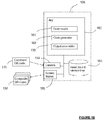
- the authentication apparatus is supported by a server 100 connected in known manner via an external interface or interfaces 145 to a public communication system 105 such as the Internet and/or mobile telephony channels 125.
- a public communication system 105 such as the Internet and/or mobile telephony channels 125.
- the authentication server 100 supports an authentication processor 135 together with a user profile database 140 which stores authentication data in relation to a set of enrolled users.
- Components supported by the authentication server 100 are connected for internal communication via an internal network such as a local area network (“LAN”) 190.
- LAN local area network
- the authentication processor 135 has several processes available for it to run, providing the following components:
- the user requires a portable electronic device 120 such as a smartphone which can carry a software application 180 (app) and has an input 184 and an output 185, each supporting an inter-machine, local communication channel such as a camera for scanning a QR code and a screen for displaying one.
- the app 180 has a code reader 181, a code generator 182 and an output assembler 183. It also has read and write access to data storage 183 provided by the device 120. It can therefore receive an incoming code, such as an enrolment QR code, extract a seed record, store the seed record and read the device time.
- an outline of the functioning of the authentication processor 135 in relation to a user accessing a secure application or database is as follows.
- a user downloads a software application.
- the user must also be represented in the user profile database 140 by a user name and password or personal identification number (PIN) and these must therefore be entered by the user or on their behalf. This can be done by conventional means such as email or other Internet communication with the enrolment process 150 of the authentication processor 135.
- PIN personal identification number
- the user accesses a website offered by the authentication processor 135 via an Internet-capable device 110, such as a computer, tablet or smartphone, enters the user name and PIN and obtains an enrolment QR code 175 which is displayed on the Internet-capable device 110.
- the enrolment QR code 175 contains the user's user name, a PIN and a key, these providing a seed record.
- the user scans this enrolment QR code 175 with the camera 184 of their portable device 120 and the app 180 runs the code reader 181 to obtain the seed record from the enrolment QR code, in known manner.
- the app 180 stores the seed record in the data storage 183 of the portable device 120.
- the app 180 can run its time-based code generator 182 to generate time-based passcodes in synchronism with the authentication processor 135, or with a time offset stored by the authentication processor 135.
- the output assembler 183 can put these into a format for output via the portable device output 185, such as a QR code or NFC message.
- the user can be authenticated by the authentication processor 135 via an access device 110, for instance from a laptop or other computer equipment.
- the user uses the access device 110 to trigger the login process 155 via the internet.
- the login process 155 delivers to the access device 110 a page which has embedded in it software including a command that activates a QR code scan process using the laptop's built-in web cam to scan and interpret QR codes.
- This embedded software is run when the user clicks on a button or menu choice with a relevant name such as "OneScan".
- the user also, independently, starts the app 180 on their portable device 120.
- the app 180 asks the user for their PIN and retrieves the user name from stored data received in the enrolment QR code 175.
- the app 180 starts to create a one-time login QR code 130 every thirty seconds.
- Each login QR code 130 has the following data embedded in it:
- the app 180 now displays a current login QR code 130 on the screen 185 of the portable device 120.
- the software embedded in the login page extracts the content of the QR code, this being user name, PIN and two one-time codes, fills in a login form and submits it to the authentication processor 135.
- This delivery of data to the authentication processor 135 however contains only a first of the one-time codes.
- the PIN entered by the user can be checked by the app 180. It should match the one it received in the enrolment QR code 175. Only if the PIN is correct does the app start to create the QR codes 175.
- the authentication processor 135 On receipt of the login form, the authentication processor 135 starts to run a first of the authentication modes 160, generating one-time codes across an interval of +/- 5 minutes of the current time at the server 100 and searching for a single one-time code to match the code supplied by the login form. If it is found, the user is authenticated and access is granted.
- the finding of the code in this first mode indicates that the time at the portable device 120 is synchronised to the time at the authentication server 100 within five minutes and the code gives the perceived time at the portable device 120 within a 30 second time slot.
- the authentication processor 135 will run the time sync process 185 to update the user profile in the database 140 as necessary.
- the authentication processor 135 requests a second one-time code from the login QR code 130.
- the embedded software in the login page complies and the authentication processor 135 starts to run a second of the authentication modes 160, generating one-time codes across an interval of +/- 13 hours of the coordinated universal time (UTC) and searching for both one-time codes supplied by the software embedded in the login page. If they are found, the user is authenticated and access is granted.
- the finding of the two codes in this second mode could indicate that the time at the portable device 120 is only synchronised to the time at the authentication server 100 within several hours.
- the codes give the perceived time at the portable device 120 within a 30 second time slot and the authentication processor 135 is now enabled, by use of the time sync process 185, to update the user profile in the database 140 automatically so as to adjust for a wide discrepancy in time between the server 100 and the portable device 120.
- the next login attempt by the user is likely to require only the first of the authentication modes 160 to be used and only a single one-time code to be searched.
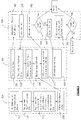
- STEPS 200, 205 The user directs a browser on an Internet-capable device 110 such as a laptop to initiate the enrolment process 150 of the authentication processor 135.
- STEP 210 The enrolment screen gives details on how to download the required app to the mobile device 120.
- STEP 215 The user downloads and installs the app.
- STEPS 220, 225, 230 Interaction between the user and the enrolment process 150 establishes a UserID and a PIN or password which the enrolment process 150 uses in creating a user profile in a user profile store on the database 140.
- STEP 235 The enrolment process 150 assigns a key for use in creating time-based codes to the user profile.
- STEPS 240, 245 The enrolment process 150 creates a QR code containing the UserID and key and sends it to the browser of the laptop 110 which displays it.
- STEPS 250, 255 With the app running on their mobile equipment 120, the user directs its camera to scan the QR code displayed by the browser. The app extracts and stores the content.
- STEPS 300, 305 Using their mobile equipment 120, the user starts the app and requests authentication. The app requests the PIN and retrieves the UserID from storage on the mobile equipment 120.
- STEPS 310, 315 The app starts to create and display a QR code every 30 seconds, this containing the UserID, PIN and two time-based codes created by use of the key in relation to the current time slot according to the mobile equipment 120 and to the next consecutive time slot.
- STEPS 320, 325, 330 Using their laptop 110, the user directs the browser to the authentication processor 135 and requests login.
- the authentication processor 135 starts the login process 155 and sends a login page to the browser.
- This login page includes a "OneScan" button or menu choice.
- STEPS 335, 340, 345 The user selects the OneScan button, which links the output of the laptop's webcam to the login process 155, and directs the webcam to the QR code currently displayed as a result of step 315 on their mobile equipment 120.
- STEP 350 The login process 155, present at the browser on the laptop 110 by means of the login page, extracts the content of the QR code and sends a form containing the UserID, PIN and just a first of the time-based codes to the process running at the authentication processor 135.
- STEP 355 On receipt of the user name and PIN (or password), the login process 155 at the authentication processor 135 looks up the user name and checks the PIN or password is correct. There may already be a stored time sync offset for the user. The login process 155 then retrieves the seed record for the given user name and generates eleven one-time codes, these covering the period +/- five minutes in 30 second steps from the current time, taking into account any stored time sync offset.
- STEP 360 Access is granted if the incoming one-time code matches one of these eleven. The code is then locked and cannot be reused.
- STEPS 365, 370 If no match is made the login process 155 requests the second time-based code from the laptop 110. (Optionally, the second required code could have been appended to the first one in the form at step 350.)
- STEP 375 The login process 155 at the authentication processor 135 now sets the user's time sync offset to zero (UTC time), generates and searches 3121 codes, these covering the period +/- 13 hours (+/- 12 hours of UTC - coordinated universal time - for traveling users who may change their phone's time, and also allows for up to one hour for any clock drift). This search is still in respect of the first of the time-based codes only. Only if a match is found does the login process 155 use the second time-based code and this is to check that the second time-based code is the correct next consecutive code.
- STEP 380 Access is granted if the two codes are found consecutively in the 3121 codes.
- the login process 155 will also update the time offset stored in this user's profile.
- the first and second one-time codes are then locked and cannot be reused.
- the mobile equipment does not request the PIN and the login QR code 130 only contains:
- the user may have entered their PIN or password during the login process via the laptop 110 or the mobile equipment 120 so that it is always verified, but the rest of the process remains the same.
- the authentication processor 135 will disable the user's account.
- first and second one-time codes are associated with consecutive time slots but it could become complicated in terms of locking both time codes if they are associated with widely separated time slots.
Landscapes
- Engineering & Computer Science (AREA)
- Computer Security & Cryptography (AREA)
- Signal Processing (AREA)
- Computer Networks & Wireless Communication (AREA)
- Computer Hardware Design (AREA)
- Computing Systems (AREA)
- General Engineering & Computer Science (AREA)
- Mobile Radio Communication Systems (AREA)
- Telephonic Communication Services (AREA)
- Telephone Function (AREA)
Claims (15)
- Vorrichtung zur zeitbasierten Authentifizierung, wobei die Vorrichtung Folgendes umfasst:a) einen Profilspeicheraktualisierer zum Erzeugen und Aktualisieren einer gespeicherten Menge von Datenprofilen, wobei jedes Datenprofil einen Seed-Datensatz, aus dem zeitbasierte Sicherheitscodes erzeugt werden können, und Benutzeridentifikationsdaten beinhaltet;b) eine Seed-Datensatz-Einsatzvorrichtung zum Einsetzen eines Seed-Datensatzes für einen Zugang über ein tragbares elektronisches Gerät und zu einem Datenprofil; undc) einen Codeauthentifizierer zum Empfangen und Authentifizieren von zeitbasierten Codes auf Basis eines eingesetzten Seed-Datensatzes,dadurch gekennzeichnet, dass der Codeauthentifizierer ausgelegt ist zum Empfangen von zwei oder mehr unterschiedlichen zeitbasierten Codes bezüglich derselben Authentifizierungsinstanz, wobei jeder Code mit einem unterschiedlichen jeweiligen Zeitfenster assoziiert ist und zum Beispiel bezüglich aufeinanderfolgender Zeitfenster gültig ist.
- Vorrichtung nach Anspruch 1, wobei jeder zeitbasierte Code bezüglich eines jeweiligen Zeitfensters gültig ist und der Codeauthentifizierer konfiguriert ist zum Abgleichen der zwei oder mehr unterschiedlichen zeitbasierten Codes mit Codes in einer Menge von zeitbasierten Codes, wobei die Menge von Codes bezüglich aufeinanderfolgender Zeitfenster gültig ist, die zusammen einen Zeitraum abdecken.
- Vorrichtung nach Anspruch 2, wobei der Zeitraum mindestens +/- fünf Stunden, vorzugsweise +/dreizehn Stunden, bezüglich einer gegenwärtigen Zeit für den Codeauthentifizierer beträgt.
- Vorrichtung nach einem der Ansprüche 1 bis 3, wobei der Codeauthentifizierer konfiguriert ist zum Authentifizieren in zwei unterschiedlichen Modi, in einem ersten Modus zum Authentifizieren auf Basis eines einzigen zeitbasierten Codes und in einem zweiten Modus zum Authentifizieren auf Basis von mindestens zwei der unterschiedlichen zeitbasierten Codes.
- Vorrichtung nach Anspruch 4, wobei der Codeauthentifizierer konfiguriert ist zum Arbeiten in dem ersten Modus bei Empfang von mindestens einem zeitbasierten Code und zum Arbeiten in dem zweiten Modus beim Scheitern der Authentifizierung im ersten Modus.
- Vorrichtung nach Anspruch 4 oder 5, wobei:in dem ersten Modus der Codeauthentifizierer konfiguriert ist zum Abgleichen des einzigen zeitbasierten Codes mit Codes in einer Menge, die bezüglich aufeinanderfolgender Zeitfenster gültig sind, die zusammen einen ersten Zeitraum abdecken; undin dem zweiten Modus der Codeauthentifizierer konfiguriert ist zum Abgleichen der mindestens zwei zeitbasierten Codes mit Codes in einer Menge, die bezüglich aufeinanderfolgender Zeitfenster gültig sind, die zusammen einen zweiten Zeitraum abdecken, wobei der zweite Zeitraum länger ist als der erste Zeitraum.
- System, das einen App-Store und eine Vorrichtung nach einem der Ansprüche 1 bis 6 umfasst, wobei der App-Store einen Codegenerator und einen Ausgabe-Assembler umfasst, der zu dem tragbaren elektronischen Gerät heruntergeladen werden kann.
- System nach Anspruch 7, wobei der Ausgabe-Assembler konfiguriert ist zum Ausgeben der zwei oder mehr unterschiedlichen zeitbasierten Codes als einen zusammengesetzten Code, der eine graphische Bildschirmanzeige umfasst.
- System nach Anspruch 8, wobei die graphische Bildschirmanzeige einen QR-Code umfasst.
- System nach einem der Ansprüche 7 bis 9, das das tragbare elektronische Gerät umfasst, wobei das tragbare elektronische Gerät konfiguriert ist zum Bereitstellen eines lokalen Inter-Maschinen-Kommunikationskanals, der Ausgabe-Assembler konfiguriert ist zum Ausgeben des zusammengesetzten Codes als einen Inhalt für diesen Kommunikationskanal und das Gerät optional ausgelegt sein kann zur Verbindung mit einem Mobilkommunikationsnetz.
- System nach Anspruch 10, wobei der Inter-Maschinen-Kommunikationskanal mindestens einen ausgewählten aus dem Folgenden umfasst: einen Nahfeldkommunikationskanal; einen Bluetooth-Kanal; einen WiFi-Kanal; eine USB-Buchse und einen Audiokanal zum Liefern einer Menge von codierten Klangtönen.
- Verfahren zum Authentifizieren einer Entität in einer Authentifizierungsinstanz, wobei das Verfahren Empfangen eines zeitbasierten Codes an einer Authentifizierungsvorrichtung umfasst, wobei der zeitbasierte Code mit einem Zeitfenster assoziiert ist und die Authentifizierungsvorrichtung mindestens einen zeitbasierten Code erzeugt und diesen mit dem empfangenen zeitbasierten Code vergleicht, dadurch gekennzeichnet, dass das Verfahren die folgenden Schritte umfasst:a) Empfangen von mindestens zwei unterschiedlichen zeitbasierten Codes an der Authentifizierungsvorrichtung, wobei jeder Code mit einem unterschiedlichen jeweiligen Zeitfenster assoziiert ist; undb) die Authentifizierungsvorrichtung durchsucht eine Menge von zeitbasierten Codes, wobei die Menge bezüglich aufeinanderfolgender Zeitfenster gültig ist, die zusammen einen Zeitraum abdecken, nach zeitbasierten Codes, die mit den mindestens zwei unterschiedlichen zeitbasierten Codes übereinstimmen.
- Verfahren nach Anspruch 12, ferner umfassend die folgenden Schritte:c) Empfangen eines ersten der zwei unterschiedlichen zeitbasierten Codes;d) Durchsuchen einer Menge von zeitbasierten Codes nach einem zeitbasierten Code, der mit dem ersten zeitbasierten Code übereinstimmt, wobei die Menge bezüglich aufeinanderfolgender Zeitfenster gültig ist, die zusammen einen Zeitraum abdecken; unde) Scheitern, den übereinstimmenden zeitbasierten Code zu finden,wobei die Schritte c) bis e) dem Schritt b) vorausgehen.
- Verfahren nach Anspruch 13, wobei der Zeitraum von Schritt b) größer als der Zeitraum des Schritts d) ist und zum Beispiel +/- dreizehn Stunden bezüglich einer gegenwärtigen Zeit beträgt.
- Verfahren nach einem der Ansprüche 12 bis 14, das ferner Erzeugen, aus einem Seed-Datensatz, der Menge oder Mengen von zeitbasierten Codes beinhaltet.
Priority Applications (1)
| Application Number | Priority Date | Filing Date | Title |
|---|---|---|---|
| EP18192608.0A EP3429164A1 (de) | 2012-12-28 | 2013-12-23 | Zeitbasierte authentifizierung |
Applications Claiming Priority (1)
| Application Number | Priority Date | Filing Date | Title |
|---|---|---|---|
| GB1223466.2A GB2509322A (en) | 2012-12-28 | 2012-12-28 | Time-based two factor authentication |
Related Child Applications (1)
| Application Number | Title | Priority Date | Filing Date |
|---|---|---|---|
| EP18192608.0A Division EP3429164A1 (de) | 2012-12-28 | 2013-12-23 | Zeitbasierte authentifizierung |
Publications (3)
| Publication Number | Publication Date |
|---|---|
| EP2750352A2 EP2750352A2 (de) | 2014-07-02 |
| EP2750352A3 EP2750352A3 (de) | 2014-08-20 |
| EP2750352B1 true EP2750352B1 (de) | 2018-09-05 |
Family
ID=47716249
Family Applications (2)
| Application Number | Title | Priority Date | Filing Date |
|---|---|---|---|
| EP18192608.0A Withdrawn EP3429164A1 (de) | 2012-12-28 | 2013-12-23 | Zeitbasierte authentifizierung |
| EP13199417.0A Active EP2750352B1 (de) | 2012-12-28 | 2013-12-23 | Zeitbasierte authentifizierung |
Family Applications Before (1)
| Application Number | Title | Priority Date | Filing Date |
|---|---|---|---|
| EP18192608.0A Withdrawn EP3429164A1 (de) | 2012-12-28 | 2013-12-23 | Zeitbasierte authentifizierung |
Country Status (3)
| Country | Link |
|---|---|
| US (1) | US9363077B2 (de) |
| EP (2) | EP3429164A1 (de) |
| GB (1) | GB2509322A (de) |
Families Citing this family (26)
| Publication number | Priority date | Publication date | Assignee | Title |
|---|---|---|---|---|
| US10181055B2 (en) * | 2007-09-27 | 2019-01-15 | Clevx, Llc | Data security system with encryption |
| US10742634B1 (en) | 2011-12-27 | 2020-08-11 | Majid Shahbazi | Methods for single sign-on (SSO) using optical codes |
| EP2849448A1 (de) | 2013-09-13 | 2015-03-18 | Nagravision S.A. | Methode zur Kontrolle des Zugriffs auf einen übertragenen Inhalt |
| CN104202167B (zh) * | 2014-09-18 | 2018-04-06 | 公安部第三研究所 | 基于外部认证模块和个人密码实现身份验证的系统及方法 |
| CN104503752A (zh) * | 2014-12-17 | 2015-04-08 | 青岛海信电器股份有限公司 | 一种智能设备中控制网页调用系统功能的方法及装置 |
| GB2533427B (en) * | 2014-12-19 | 2020-01-22 | Gen Electric | Method and system for providing a personalized experience to a user in a medical environment |
| KR101652625B1 (ko) * | 2015-02-11 | 2016-08-30 | 주식회사 이베이코리아 | 온라인 웹사이트의 회원 로그인을 위한 보안인증 시스템 및 그 방법 |
| KR101572111B1 (ko) * | 2015-07-01 | 2015-11-27 | 주식회사 이노스코리아 | 랜덤하면서 유일한 코드를 생성하는 전자 장치 및 방법 |
| US10509900B1 (en) | 2015-08-06 | 2019-12-17 | Majid Shahbazi | Computer program products for user account management |
| US10348737B2 (en) | 2016-03-08 | 2019-07-09 | International Business Machines Corporation | Login performance |
| US9596223B1 (en) * | 2016-05-10 | 2017-03-14 | Logmein, Inc. | Cross-site, TOTP-based two factor authentication |
| CN107370711B (zh) | 2016-05-11 | 2021-05-11 | 创新先进技术有限公司 | 一种验证身份的方法和系统、智能穿戴设备 |
| US10334434B2 (en) * | 2016-09-08 | 2019-06-25 | Vmware, Inc. | Phone factor authentication |
| EP3460649B1 (de) * | 2016-11-16 | 2021-03-31 | Mangoslab Co., Ltd. | Verfahren und vorrichtung zum verbinden eines druckers mit einem client |
| US11190344B2 (en) | 2017-01-25 | 2021-11-30 | Salesforce.Com, Inc. | Secure user authentication based on multiple asymmetric cryptography key pairs |
| US10356088B1 (en) | 2017-01-25 | 2019-07-16 | Salesforce.Com, Inc. | User authentication based on multiple asymmetric cryptography key pairs |
| US10637658B2 (en) | 2017-01-25 | 2020-04-28 | Salesforce.Com, Inc. | Secure internal user authentication leveraging public key cryptography and key splitting |
| US10411907B2 (en) | 2017-01-25 | 2019-09-10 | Salesforce.Com, Inc. | Secure remote user authentication leveraging public key cryptography and key splitting |
| US12008095B2 (en) * | 2017-11-14 | 2024-06-11 | Stratis Iot, Inc. | Smart lock system |
| US10891372B1 (en) | 2017-12-01 | 2021-01-12 | Majid Shahbazi | Systems, methods, and products for user account authentication and protection |
| US20200051054A1 (en) * | 2018-03-07 | 2020-02-13 | Qwyit Llc | Method and apparatus for credit transaction employing unbreakable encryption |
| US11374759B2 (en) * | 2018-10-29 | 2022-06-28 | Xiid Corporation | Username-less and password-less one-time identification and authentication code method and system |
| GB2589330A (en) * | 2019-11-26 | 2021-06-02 | Swivel Secure Ltd | System and method for virtualizing authentication services |
| US11297054B1 (en) * | 2020-10-06 | 2022-04-05 | International Business Machines Corporation | Authentication system(s) with multiple authentication modes using one-time passwords of increased security |
| EP4138435B1 (de) * | 2021-08-18 | 2025-12-24 | GIRA GIERSIEPEN GmbH & Co. KG | Verfahren für die erteilung eines zugriffsrechts auf eine steuereinheit in einem gebäudesteuerungssystem |
| US20240089523A1 (en) * | 2022-09-13 | 2024-03-14 | Netflix, Inc. | Systems and methods for mitigating misdetection of multi-household usage of a subscription service |
Family Cites Families (19)
| Publication number | Priority date | Publication date | Assignee | Title |
|---|---|---|---|---|
| US4885778A (en) * | 1984-11-30 | 1989-12-05 | Weiss Kenneth P | Method and apparatus for synchronizing generation of separate, free running, time dependent equipment |
| US6845453B2 (en) * | 1998-02-13 | 2005-01-18 | Tecsec, Inc. | Multiple factor-based user identification and authentication |
| US7716484B1 (en) * | 2000-03-10 | 2010-05-11 | Rsa Security Inc. | System and method for increasing the security of encrypted secrets and authentication |
| CN1265655C (zh) * | 2000-10-17 | 2006-07-19 | 株式会社电装 | 电信系统的基于前向链路的抢救信道方法及装置 |
| US6959053B2 (en) * | 2001-07-13 | 2005-10-25 | Koninklijke Philips Electronics N.V. | Method and apparatus for searching for a pre-defined code in a bit stream |
| US7149754B2 (en) * | 2001-07-19 | 2006-12-12 | William H. Carpenter, Jr. | Method for transmitting a transferable information packet |
| TWI258129B (en) * | 2001-08-10 | 2006-07-11 | Via Tech Inc | Simplified method for authentication of DVD systems |
| US7363494B2 (en) * | 2001-12-04 | 2008-04-22 | Rsa Security Inc. | Method and apparatus for performing enhanced time-based authentication |
| EP1723594B1 (de) * | 2004-02-23 | 2017-11-29 | Symantec International | Token-authentifikationssystem und -verfahren |
| US20060136739A1 (en) * | 2004-12-18 | 2006-06-22 | Christian Brock | Method and apparatus for generating one-time password on hand-held mobile device |
| US20060160524A1 (en) * | 2005-01-20 | 2006-07-20 | Utstarcom, Inc. | Method and apparatus to facilitate the support of communications that require authentication when authentication is absent |
| US20070220253A1 (en) * | 2006-03-15 | 2007-09-20 | Law Eric C W | Mutual authentication between two parties using two consecutive one-time passwords |
| AU2009200408B2 (en) * | 2006-09-12 | 2012-05-10 | Cpc Patent Technologies Pty Ltd | Password generator |
| US8543829B2 (en) * | 2007-01-05 | 2013-09-24 | Ebay Inc. | Token device re-synchronization through a network solution |
| US8756666B1 (en) * | 2008-09-30 | 2014-06-17 | Emc Corporation | Generating authentication codes |
| US8789166B2 (en) * | 2009-10-30 | 2014-07-22 | Feitian Technologies Co., Ltd. | Verification method and system thereof |
| US8627424B1 (en) * | 2010-06-30 | 2014-01-07 | Emc Corporation | Device bound OTP generation |
| EP2598984A4 (de) * | 2010-07-29 | 2017-04-19 | Nirmal Juthani | System und verfahren zur erzeugung eines strengen multifaktoriellen personalisierten serverschlüssels aus einem einfachen benutzerpasswort |
| US20120138679A1 (en) * | 2010-12-01 | 2012-06-07 | Yodo Inc. | Secure two dimensional bar codes for authentication |
-
2012
- 2012-12-28 GB GB1223466.2A patent/GB2509322A/en not_active Withdrawn
-
2013
- 2013-12-23 EP EP18192608.0A patent/EP3429164A1/de not_active Withdrawn
- 2013-12-23 EP EP13199417.0A patent/EP2750352B1/de active Active
- 2013-12-26 US US14/140,617 patent/US9363077B2/en active Active
Non-Patent Citations (1)
| Title |
|---|
| None * |
Also Published As
| Publication number | Publication date |
|---|---|
| EP2750352A3 (de) | 2014-08-20 |
| EP3429164A1 (de) | 2019-01-16 |
| US20140189831A1 (en) | 2014-07-03 |
| US9363077B2 (en) | 2016-06-07 |
| GB201223466D0 (en) | 2013-02-13 |
| EP2750352A2 (de) | 2014-07-02 |
| GB2509322A (en) | 2014-07-02 |
Similar Documents
| Publication | Publication Date | Title |
|---|---|---|
| EP2750352B1 (de) | Zeitbasierte authentifizierung | |
| US10050952B2 (en) | Smart phone login using QR code | |
| US9756056B2 (en) | Apparatus and method for authenticating a user via multiple user devices | |
| US9727715B2 (en) | Authentication method and system using password as the authentication key | |
| JP2002259344A (ja) | ワンタイムパスワード認証システム及び携帯電話及びユーザ認証サーバ | |
| US9344896B2 (en) | Method and system for delivering a command to a mobile device | |
| US11265311B1 (en) | User authentication systems and methods | |
| US20090300738A1 (en) | Authentication Methods and Systems | |
| JP2013524314A (ja) | 携帯端末機を用いた認証方法及びシステム | |
| US9699656B2 (en) | Systems and methods of authenticating and controlling access over customer data | |
| CN111405016B (zh) | 用户信息获取方法及相关设备 | |
| US12489746B2 (en) | App free authentication across channels | |
| US20080118041A1 (en) | Secure access to restricted resource | |
| CN105959942A (zh) | 一种基于无线接入的身份认证系统及其方法 | |
| US20200019693A1 (en) | Mobile key via mobile device audio channel | |
| US20260044696A1 (en) | Information access handover | |
| KR101739446B1 (ko) | 사용자 인증 시스템 및 인증 방법 | |
| US12386940B2 (en) | Two-factor authentication integrating dynamic QR codes | |
| US11785013B2 (en) | Application program access control | |
| KR100563544B1 (ko) | 일회용 비밀번호를 이용한 사용자 인증 방법 | |
| KR102480054B1 (ko) | 시계를 원격 서버에 보안 접속하기 위한 방법 | |
| EP2355028B1 (de) | Authentifizierungsvorrichtung | |
| CN116938485A (zh) | 一种通信方法、相关装置和相关系统 | |
| US12443689B2 (en) | Two-factor authentication integrating dynamic QR codes | |
| US20240405979A1 (en) | Authentication apparatus, authentication method, authentication system, and recording medium |
Legal Events
| Date | Code | Title | Description |
|---|---|---|---|
| 17P | Request for examination filed |
Effective date: 20131223 |
|
| AK | Designated contracting states |
Kind code of ref document: A2 Designated state(s): AL AT BE BG CH CY CZ DE DK EE ES FI FR GB GR HR HU IE IS IT LI LT LU LV MC MK MT NL NO PL PT RO RS SE SI SK SM TR |
|
| AX | Request for extension of the european patent |
Extension state: BA ME |
|
| PUAI | Public reference made under article 153(3) epc to a published international application that has entered the european phase |
Free format text: ORIGINAL CODE: 0009012 |
|
| PUAL | Search report despatched |
Free format text: ORIGINAL CODE: 0009013 |
|
| AK | Designated contracting states |
Kind code of ref document: A3 Designated state(s): AL AT BE BG CH CY CZ DE DK EE ES FI FR GB GR HR HU IE IS IT LI LT LU LV MC MK MT NL NO PL PT RO RS SE SI SK SM TR |
|
| AX | Request for extension of the european patent |
Extension state: BA ME |
|
| RIC1 | Information provided on ipc code assigned before grant |
Ipc: H04L 29/06 20060101AFI20140715BHEP Ipc: H04L 9/32 20060101ALI20140715BHEP |
|
| R17P | Request for examination filed (corrected) |
Effective date: 20150220 |
|
| RBV | Designated contracting states (corrected) |
Designated state(s): AL AT BE BG CH CY CZ DE DK EE ES FI FR GB GR HR HU IE IS IT LI LT LU LV MC MK MT NL NO PL PT RO RS SE SI SK SM TR |
|
| RAP1 | Party data changed (applicant data changed or rights of an application transferred) |
Owner name: SECURENVOY LTD |
|
| GRAP | Despatch of communication of intention to grant a patent |
Free format text: ORIGINAL CODE: EPIDOSNIGR1 |
|
| STAA | Information on the status of an ep patent application or granted ep patent |
Free format text: STATUS: GRANT OF PATENT IS INTENDED |
|
| INTG | Intention to grant announced |
Effective date: 20180315 |
|
| GRAS | Grant fee paid |
Free format text: ORIGINAL CODE: EPIDOSNIGR3 |
|
| GRAA | (expected) grant |
Free format text: ORIGINAL CODE: 0009210 |
|
| STAA | Information on the status of an ep patent application or granted ep patent |
Free format text: STATUS: THE PATENT HAS BEEN GRANTED |
|
| AK | Designated contracting states |
Kind code of ref document: B1 Designated state(s): AL AT BE BG CH CY CZ DE DK EE ES FI FR GB GR HR HU IE IS IT LI LT LU LV MC MK MT NL NO PL PT RO RS SE SI SK SM TR |
|
| REG | Reference to a national code |
Ref country code: GB Ref legal event code: FG4D |
|
| REG | Reference to a national code |
Ref country code: CH Ref legal event code: EP |
|
| REG | Reference to a national code |
Ref country code: AT Ref legal event code: REF Ref document number: 1039217 Country of ref document: AT Kind code of ref document: T Effective date: 20180915 |
|
| REG | Reference to a national code |
Ref country code: IE Ref legal event code: FG4D |
|
| REG | Reference to a national code |
Ref country code: DE Ref legal event code: R096 Ref document number: 602013043057 Country of ref document: DE |
|
| REG | Reference to a national code |
Ref country code: NL Ref legal event code: FP |
|
| REG | Reference to a national code |
Ref country code: LT Ref legal event code: MG4D |
|
| PG25 | Lapsed in a contracting state [announced via postgrant information from national office to epo] |
Ref country code: FI Free format text: LAPSE BECAUSE OF FAILURE TO SUBMIT A TRANSLATION OF THE DESCRIPTION OR TO PAY THE FEE WITHIN THE PRESCRIBED TIME-LIMIT Effective date: 20180905 Ref country code: LT Free format text: LAPSE BECAUSE OF FAILURE TO SUBMIT A TRANSLATION OF THE DESCRIPTION OR TO PAY THE FEE WITHIN THE PRESCRIBED TIME-LIMIT Effective date: 20180905 Ref country code: NO Free format text: LAPSE BECAUSE OF FAILURE TO SUBMIT A TRANSLATION OF THE DESCRIPTION OR TO PAY THE FEE WITHIN THE PRESCRIBED TIME-LIMIT Effective date: 20181205 Ref country code: BG Free format text: LAPSE BECAUSE OF FAILURE TO SUBMIT A TRANSLATION OF THE DESCRIPTION OR TO PAY THE FEE WITHIN THE PRESCRIBED TIME-LIMIT Effective date: 20181205 Ref country code: RS Free format text: LAPSE BECAUSE OF FAILURE TO SUBMIT A TRANSLATION OF THE DESCRIPTION OR TO PAY THE FEE WITHIN THE PRESCRIBED TIME-LIMIT Effective date: 20180905 Ref country code: GR Free format text: LAPSE BECAUSE OF FAILURE TO SUBMIT A TRANSLATION OF THE DESCRIPTION OR TO PAY THE FEE WITHIN THE PRESCRIBED TIME-LIMIT Effective date: 20181206 Ref country code: SE Free format text: LAPSE BECAUSE OF FAILURE TO SUBMIT A TRANSLATION OF THE DESCRIPTION OR TO PAY THE FEE WITHIN THE PRESCRIBED TIME-LIMIT Effective date: 20180905 |
|
| REG | Reference to a national code |
Ref country code: AT Ref legal event code: MK05 Ref document number: 1039217 Country of ref document: AT Kind code of ref document: T Effective date: 20180905 |
|
| PG25 | Lapsed in a contracting state [announced via postgrant information from national office to epo] |
Ref country code: LV Free format text: LAPSE BECAUSE OF FAILURE TO SUBMIT A TRANSLATION OF THE DESCRIPTION OR TO PAY THE FEE WITHIN THE PRESCRIBED TIME-LIMIT Effective date: 20180905 Ref country code: AL Free format text: LAPSE BECAUSE OF FAILURE TO SUBMIT A TRANSLATION OF THE DESCRIPTION OR TO PAY THE FEE WITHIN THE PRESCRIBED TIME-LIMIT Effective date: 20180905 Ref country code: HR Free format text: LAPSE BECAUSE OF FAILURE TO SUBMIT A TRANSLATION OF THE DESCRIPTION OR TO PAY THE FEE WITHIN THE PRESCRIBED TIME-LIMIT Effective date: 20180905 |
|
| PG25 | Lapsed in a contracting state [announced via postgrant information from national office to epo] |
Ref country code: ES Free format text: LAPSE BECAUSE OF FAILURE TO SUBMIT A TRANSLATION OF THE DESCRIPTION OR TO PAY THE FEE WITHIN THE PRESCRIBED TIME-LIMIT Effective date: 20180905 Ref country code: IS Free format text: LAPSE BECAUSE OF FAILURE TO SUBMIT A TRANSLATION OF THE DESCRIPTION OR TO PAY THE FEE WITHIN THE PRESCRIBED TIME-LIMIT Effective date: 20190105 Ref country code: EE Free format text: LAPSE BECAUSE OF FAILURE TO SUBMIT A TRANSLATION OF THE DESCRIPTION OR TO PAY THE FEE WITHIN THE PRESCRIBED TIME-LIMIT Effective date: 20180905 Ref country code: PL Free format text: LAPSE BECAUSE OF FAILURE TO SUBMIT A TRANSLATION OF THE DESCRIPTION OR TO PAY THE FEE WITHIN THE PRESCRIBED TIME-LIMIT Effective date: 20180905 Ref country code: AT Free format text: LAPSE BECAUSE OF FAILURE TO SUBMIT A TRANSLATION OF THE DESCRIPTION OR TO PAY THE FEE WITHIN THE PRESCRIBED TIME-LIMIT Effective date: 20180905 Ref country code: IT Free format text: LAPSE BECAUSE OF FAILURE TO SUBMIT A TRANSLATION OF THE DESCRIPTION OR TO PAY THE FEE WITHIN THE PRESCRIBED TIME-LIMIT Effective date: 20180905 Ref country code: CZ Free format text: LAPSE BECAUSE OF FAILURE TO SUBMIT A TRANSLATION OF THE DESCRIPTION OR TO PAY THE FEE WITHIN THE PRESCRIBED TIME-LIMIT Effective date: 20180905 Ref country code: RO Free format text: LAPSE BECAUSE OF FAILURE TO SUBMIT A TRANSLATION OF THE DESCRIPTION OR TO PAY THE FEE WITHIN THE PRESCRIBED TIME-LIMIT Effective date: 20180905 |
|
| PGFP | Annual fee paid to national office [announced via postgrant information from national office to epo] |
Ref country code: DE Payment date: 20190328 Year of fee payment: 6 Ref country code: FR Payment date: 20190328 Year of fee payment: 6 |
|
| PG25 | Lapsed in a contracting state [announced via postgrant information from national office to epo] |
Ref country code: SM Free format text: LAPSE BECAUSE OF FAILURE TO SUBMIT A TRANSLATION OF THE DESCRIPTION OR TO PAY THE FEE WITHIN THE PRESCRIBED TIME-LIMIT Effective date: 20180905 Ref country code: PT Free format text: LAPSE BECAUSE OF FAILURE TO SUBMIT A TRANSLATION OF THE DESCRIPTION OR TO PAY THE FEE WITHIN THE PRESCRIBED TIME-LIMIT Effective date: 20190105 Ref country code: SK Free format text: LAPSE BECAUSE OF FAILURE TO SUBMIT A TRANSLATION OF THE DESCRIPTION OR TO PAY THE FEE WITHIN THE PRESCRIBED TIME-LIMIT Effective date: 20180905 |
|
| PGFP | Annual fee paid to national office [announced via postgrant information from national office to epo] |
Ref country code: NL Payment date: 20190328 Year of fee payment: 6 |
|
| REG | Reference to a national code |
Ref country code: DE Ref legal event code: R097 Ref document number: 602013043057 Country of ref document: DE |
|
| PLBE | No opposition filed within time limit |
Free format text: ORIGINAL CODE: 0009261 |
|
| STAA | Information on the status of an ep patent application or granted ep patent |
Free format text: STATUS: NO OPPOSITION FILED WITHIN TIME LIMIT |
|
| PG25 | Lapsed in a contracting state [announced via postgrant information from national office to epo] |
Ref country code: DK Free format text: LAPSE BECAUSE OF FAILURE TO SUBMIT A TRANSLATION OF THE DESCRIPTION OR TO PAY THE FEE WITHIN THE PRESCRIBED TIME-LIMIT Effective date: 20180905 |
|
| REG | Reference to a national code |
Ref country code: CH Ref legal event code: PL |
|
| 26N | No opposition filed |
Effective date: 20190606 |
|
| PG25 | Lapsed in a contracting state [announced via postgrant information from national office to epo] |
Ref country code: MC Free format text: LAPSE BECAUSE OF FAILURE TO SUBMIT A TRANSLATION OF THE DESCRIPTION OR TO PAY THE FEE WITHIN THE PRESCRIBED TIME-LIMIT Effective date: 20180905 Ref country code: LU Free format text: LAPSE BECAUSE OF NON-PAYMENT OF DUE FEES Effective date: 20181223 Ref country code: SI Free format text: LAPSE BECAUSE OF FAILURE TO SUBMIT A TRANSLATION OF THE DESCRIPTION OR TO PAY THE FEE WITHIN THE PRESCRIBED TIME-LIMIT Effective date: 20180905 |
|
| REG | Reference to a national code |
Ref country code: IE Ref legal event code: MM4A |
|
| REG | Reference to a national code |
Ref country code: BE Ref legal event code: MM Effective date: 20181231 |
|
| PG25 | Lapsed in a contracting state [announced via postgrant information from national office to epo] |
Ref country code: IE Free format text: LAPSE BECAUSE OF NON-PAYMENT OF DUE FEES Effective date: 20181223 |
|
| PG25 | Lapsed in a contracting state [announced via postgrant information from national office to epo] |
Ref country code: BE Free format text: LAPSE BECAUSE OF NON-PAYMENT OF DUE FEES Effective date: 20181231 |
|
| PG25 | Lapsed in a contracting state [announced via postgrant information from national office to epo] |
Ref country code: LI Free format text: LAPSE BECAUSE OF NON-PAYMENT OF DUE FEES Effective date: 20181231 Ref country code: CH Free format text: LAPSE BECAUSE OF NON-PAYMENT OF DUE FEES Effective date: 20181231 |
|
| PG25 | Lapsed in a contracting state [announced via postgrant information from national office to epo] |
Ref country code: MT Free format text: LAPSE BECAUSE OF NON-PAYMENT OF DUE FEES Effective date: 20181223 |
|
| PG25 | Lapsed in a contracting state [announced via postgrant information from national office to epo] |
Ref country code: TR Free format text: LAPSE BECAUSE OF FAILURE TO SUBMIT A TRANSLATION OF THE DESCRIPTION OR TO PAY THE FEE WITHIN THE PRESCRIBED TIME-LIMIT Effective date: 20180905 |
|
| PG25 | Lapsed in a contracting state [announced via postgrant information from national office to epo] |
Ref country code: CY Free format text: LAPSE BECAUSE OF FAILURE TO SUBMIT A TRANSLATION OF THE DESCRIPTION OR TO PAY THE FEE WITHIN THE PRESCRIBED TIME-LIMIT Effective date: 20180905 Ref country code: MK Free format text: LAPSE BECAUSE OF NON-PAYMENT OF DUE FEES Effective date: 20180905 Ref country code: HU Free format text: LAPSE BECAUSE OF FAILURE TO SUBMIT A TRANSLATION OF THE DESCRIPTION OR TO PAY THE FEE WITHIN THE PRESCRIBED TIME-LIMIT; INVALID AB INITIO Effective date: 20131223 |
|
| REG | Reference to a national code |
Ref country code: DE Ref legal event code: R119 Ref document number: 602013043057 Country of ref document: DE |
|
| REG | Reference to a national code |
Ref country code: NL Ref legal event code: MM Effective date: 20200101 |
|
| PG25 | Lapsed in a contracting state [announced via postgrant information from national office to epo] |
Ref country code: NL Free format text: LAPSE BECAUSE OF NON-PAYMENT OF DUE FEES Effective date: 20200101 |
|
| PG25 | Lapsed in a contracting state [announced via postgrant information from national office to epo] |
Ref country code: DE Free format text: LAPSE BECAUSE OF NON-PAYMENT OF DUE FEES Effective date: 20200701 Ref country code: FR Free format text: LAPSE BECAUSE OF NON-PAYMENT OF DUE FEES Effective date: 20191231 |
|
| PGFP | Annual fee paid to national office [announced via postgrant information from national office to epo] |
Ref country code: GB Payment date: 20251216 Year of fee payment: 13 |