EP2744291A2 - Vorrichtung, Verfahren und System zur Datenkommunikation durch Gruppieren der Daten in Datenteilmengen - Google Patents
Vorrichtung, Verfahren und System zur Datenkommunikation durch Gruppieren der Daten in Datenteilmengen Download PDFInfo
- Publication number
- EP2744291A2 EP2744291A2 EP13190687.7A EP13190687A EP2744291A2 EP 2744291 A2 EP2744291 A2 EP 2744291A2 EP 13190687 A EP13190687 A EP 13190687A EP 2744291 A2 EP2744291 A2 EP 2744291A2
- Authority
- EP
- European Patent Office
- Prior art keywords
- data subsets
- data
- grouping
- receiving device
- base station
- Prior art date
- Legal status (The legal status is an assumption and is not a legal conclusion. Google has not performed a legal analysis and makes no representation as to the accuracy of the status listed.)
- Withdrawn
Links
- 238000000034 method Methods 0.000 title claims abstract description 63
- 238000004891 communication Methods 0.000 claims abstract description 99
- 230000005540 biological transmission Effects 0.000 claims abstract description 60
- 230000008569 process Effects 0.000 description 18
- 101100441251 Arabidopsis thaliana CSP2 gene Proteins 0.000 description 13
- 101100033098 Arabidopsis thaliana RBG2 gene Proteins 0.000 description 13
- 101100511870 Fagus sylvatica LSM4 gene Proteins 0.000 description 13
- 101150095494 GRP2 gene Proteins 0.000 description 13
- 101150117538 Set2 gene Proteins 0.000 description 11
- 101100042371 Caenorhabditis elegans set-3 gene Proteins 0.000 description 9
- 102100034032 Cytohesin-3 Human genes 0.000 description 8
- 101710160297 Cytohesin-3 Proteins 0.000 description 8
- 101150055297 SET1 gene Proteins 0.000 description 8
- 238000010586 diagram Methods 0.000 description 4
- 230000001413 cellular effect Effects 0.000 description 3
- 238000013507 mapping Methods 0.000 description 3
- 238000006243 chemical reaction Methods 0.000 description 2
- 238000005516 engineering process Methods 0.000 description 2
- 238000001914 filtration Methods 0.000 description 2
- 102100029768 Histone-lysine N-methyltransferase SETD1A Human genes 0.000 description 1
- 101000865038 Homo sapiens Histone-lysine N-methyltransferase SETD1A Proteins 0.000 description 1
- 238000007476 Maximum Likelihood Methods 0.000 description 1
- 230000003321 amplification Effects 0.000 description 1
- 230000008901 benefit Effects 0.000 description 1
- 230000008859 change Effects 0.000 description 1
- 230000006870 function Effects 0.000 description 1
- 238000012423 maintenance Methods 0.000 description 1
- 238000003199 nucleic acid amplification method Methods 0.000 description 1
- 238000001228 spectrum Methods 0.000 description 1
- 230000008685 targeting Effects 0.000 description 1
- XLYOFNOQVPJJNP-UHFFFAOYSA-N water Substances O XLYOFNOQVPJJNP-UHFFFAOYSA-N 0.000 description 1
Images


Classifications
-
- H—ELECTRICITY
- H04—ELECTRIC COMMUNICATION TECHNIQUE
- H04W—WIRELESS COMMUNICATION NETWORKS
- H04W4/00—Services specially adapted for wireless communication networks; Facilities therefor
- H04W4/70—Services for machine-to-machine communication [M2M] or machine type communication [MTC]
-
- H—ELECTRICITY
- H04—ELECTRIC COMMUNICATION TECHNIQUE
- H04W—WIRELESS COMMUNICATION NETWORKS
- H04W4/00—Services specially adapted for wireless communication networks; Facilities therefor
- H04W4/30—Services specially adapted for particular environments, situations or purposes
- H04W4/38—Services specially adapted for particular environments, situations or purposes for collecting sensor information
Definitions
- the technical field relates to a device, method and system for communicating data.
- Machine-Type Communications (MTC) devices are targeting low-end (low cost, low data rate) applications that can be handled adequately by GSM/GPRS.
- MTC Machine-Type Communications
- GSM/GPRS Global System for Mobile communications
- the disclosure provides a method for communicating data, adapted for a base station, the method including grouping a data for transmission in a plurality of data subsets, in which the data for transmission includes a plurality of information bits; encoding the data subsets; modulating the data subsets; and transmitting the data subsets to a receiving device.
- the disclosure provides a base station, including a communication protocol module grouping a data for transmission in a plurality of data subsets, in which the data for transmission includes a plurality of information bits, encoding the data subsets, modulating the data subsets, and transmitting the data subsets to a receiving device.
- the disclosure provides a wireless communication system, including a plurality of base stations and a plurality of receiving devices, in which at least one of the plurality of base stations includes a communication protocol module grouping a data for transmission in a plurality of data subsets, in which the data for transmission includes a plurality of information bits, encoding the data subsets, modulating the data subsets, and transmitting the data subsets to at least one of the plurality of receiving devices.
- FIG. 1 is a schematic view of an example system implementing a method for communicating data in a wireless network according to an exemplary embodiment.
- FIG. 2 is a functional block diagram of a device in the system depicted in FIG. 1 according to an exemplary embodiment.
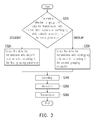
- FIG. 3 is a flow diagram of a method for communicating data adapted for a base station according to an exemplary embodiment.
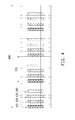
- FIG. 4 is a schematic view of a transmission time interval of a data transmitted by a method for communicating data according to an exemplary embodiment.
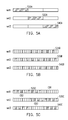
- FIGs. 5A-5C are schematic views of three arrangements of disjoint data subsets according to an exemplary embodiment.
- FIG. 6 is a schematic view of an arrangement of overlapping data subsets according to an exemplary embodiment.
- FIG. 1 is a schematic view of an example system implementing a method for communicating data in a wireless network according to an exemplary embodiment.
- a system 100 includes communication devices 120 and 140 and one or more intermediate devices 160.
- FIG. 2 is a functional block diagram of a device in the system depicted in FIG. 1 according to an exemplary embodiment.
- a device 200 may represent the communication devices 120 and 140 and the one or more intermediate devices 160 shown in FIG. 1 .
- the device 200 may include a transceiver 220, a communication protocol module 240, a memory 260, and a controller 280.
- the transceiver 220, the memory 260, and the controller 280 may be connected to the communication protocol module 240.
- the transceiver 220 may be configured to transmit and receive signals from other devices within the coverage range thereof.
- the transceiver 220 may perform analog-to-digital signal conversion (ADC), digital-to-analog signal conversion (DAC), modulation, demodulation, signal amplification, low-pass filtering, and bandpass filtering.
- ADC analog-to-digital signal conversion
- DAC digital-to-analog signal conversion
- the transceiver 220 is, for example, configured to provide information of a received signal to the communication protocol module 240, modulate data received from the communication protocol module 240 into a modulated signal, and transmit the modulated signal to other devices in the system 100.
- the controller 280 may provide parameters such as a mode parameter MODE, a first grouping parameter GRP1, and a second grouping parameter GRP2 to the communication protocol module 240.
- the communication protocol module 240 may be configured for receiving a reception quality information of another device in the system 100 through the controller 280, and the reception quality information may be obtained from the first grouping parameter GRP1 and the second grouping parameter GRP2, or other parameters in the device 200.
- the communication protocol module 240 may also be configured for receiving a coverage target determined by a base station in the system 100, for example, and the coverage target may be obtained from the first grouping parameter GRP1 and the second grouping parameter GRP2, or other parameters in the device 200.
- the communication protocol module 240 may process commands according to the parameters provided by the controller 280 (or executing corresponding operations according to parameters).
- the communication protocol module 240 may include a processor (not drawn) and an embedded software or firmware program.
- the embedded software or firmware program may include program codes of a communication protocol stack.
- the communication protocol module 240 may be configured for executing various procedures in a method for communicating data, which will be described in detail in the embodiments below accompanied by FIGs. 3-6 .
- the memory 260 may be configured for temporarily storing parameters or other data used in the procedures.
- the device 200 may further include other components (not shown), such as an antenna module to accomplish the aforementioned functions of the transceiver 220, the communication protocol module 240, the memory 260, and the controller 280.
- Other components may also be included in the communication devices 120 and 140 and the one or more intermediate devices 160 in accordance with the wireless network implementation of the system 100, such as CDMA, WCDMA, GSM, UMTS, 3G, 4G, WiMAX, LTE, or other suitable implementations.
- the communication devices 120 and 140 and the one or more intermediate devices 160 depicted in FIG. 1 may be a user equipment (UE), a mobile station (MS), an advanced mobile station (AMS), a wireless terminal communication device, a machine-to-machine (M2M) device, or a machine-type communications (MTC) device.
- the devices may also be a digital television (TV), a digital set-top box, a personal computer (PC), a notebook computer, a tablet computer, a netbook, a mobile phone, a smart mobile phone, a water meter, a gas meter, a watt-hour meter, an alarm, a sensor, or a monitor. These devices may be located in a office building or in a residence.
- the communication device 140 depicted in FIG. 1 may be a smart electric meter installed in a basement of an apartment complex.
- the one or more intermediate devices 160 may be base stations (BS), advanced base stations, node B systems, or evolved node Bs (eNBs), for example.
- BS base stations
- eNBs evolved node Bs
- FIG. 3 is a flow diagram of a method for communicating data adapted for a base station according to an exemplary embodiment.
- the method depicted in FIG. 3 may be executed by the intermediate device 160 serving as a base station (referred to as base station 160 hereafter) for establishing a communication link with the communication device 120 and 140 in the present embodiment.
- the communication protocol module 240 of the base station 160 is configured for grouping a data for transmission in a plurality of data subsets, in which the data for transmission includes a plurality of information bits, encoding the data subsets, modulating the data subsets, and transmitting the data subsets to a receiving device such as the communication devices 120 and 140 depicted in FIG. 1 .
- the communication protocol module 240 may group the data for transmission into the plurality of data subsets by determining whether to group the data for transmission into disjoint data subsets or overlapping data subsets according to the mode parameter MODE from the controller 280 in the base station 160 (Step S310).
- the mode parameter indicates grouping by disjoint data subsets
- the process proceeds to Step S320, and the communication protocol module 240 is configured to group the data for transmission into a plurality of disjoint data subsets according to the first grouping parameter GRP1.
- Step S330 the communication protocol module 240 is configured to group the data for transmission into a plurality of overlapping data subsets according to the second grouping parameter GRP2.
- the communication protocol module may further process the disjoint and the overlapping data subsets.
- each of the disjoint data subsets is interleaved with a plurality of information bits unknown to the communication device 140.
- Each of the interleaved disjoint data subsets may further comprise a plurality of consecutive information bits known to the communication device 140.
- the first grouping parameter GRP1 may include a reception quality information reported by the communication device 140, for example.
- the communication protocol module 240 may determine the number of disjoint data subsets to be transmitted to the communication device 140 according to the reception quality information in the first grouping parameter GRP1.
- the first grouping parameter GRP1 may also include a coverage target determined by the base station 160, and the communication protocol module 240 may determine the number of disjoint data subsets to be transmitted to the communication device 140 according to the coverage target in the first grouping parameter GRP1.
- each of the overlapping data subsets is interleaved with a plurality of information bits unknown to the communication device 140.
- Each of the interleaved overlapping data subsets may further comprise a plurality of consecutive information bits known to the communication device 140.
- the second grouping parameter GRP2 may include a reception quality information reported by the communication device 140, for example.
- the communication protocol module 240 may determine the number of overlapping data subsets to be transmitted to the communication device 140 according to the reception quality information in the second grouping parameter GRP2.
- the second grouping parameter GRP2 may also include a coverage target determined by the base station 160, and the communication protocol module 240 may determine the number of overlapping data subsets to be transmitted to the communication device 140 according to the coverage target in the second grouping parameter GRP2.
- the encoding process in Step S340 is performed.
- the encoding process implemented by the communication protocol module 240 may include a CRC attachment process, a channel coding process, a rate matching process, and a scrambling process.
- a CRC attachment process may add 16 parity bits
- the channel coding process may include tail-biting convolutional coding with 1/3 code rate polynomial
- the rate matching may be repeated 16 times for a robust transmission
- the scrambling process is included to mitigate inter-cell interference.
- Step S350 the data subsets are modulated in Step S350.
- the data subsets are modulated in QPSK for low error rate, for example.
- Step S360 is performed for transmission.
- the transmission step may include layer mapping, precoding, resource mapping, and OFDM generation, for example, in which the layer mapping and precoding adopt SFBC for MIMO transmission.
- a receiving device such as the communication devices 120 and 140 may estimate the information transmitted by the base station 160 in a process that essentially reverses the method depicted in FIG. 3 .
- information that is transmitted such as a MIB information may be estimated by configuring the communication protocol module of the communication devices 120 and 140 to disassmble the constellation symbols of a received signal, and further de-precode, de-layer map, de-modulate, de-scramble, de-rate-match, perform tail-biting convolutional decoding, and execute a CRC check on the received signal.
- the tail-biting convolutional decoding and CRC check processes may be combined into a maximum-likelihood decoding process which decodes each data subsets and a legacy data to achieve performance gain.
- FIG. 4 provides a schematic view of a transmission time interval of a data transmitted by a method for communicating data according to an exemplary embodiment.
- the base station 160 transmitting master information block (MIB) bits is provided.
- the MIB bits are transmitted over a tranmission time interval 400 of 40 ms with four radio subframes 450 of 10 ms, as shown in FIG. 4 .
- the base station 160 may first transmit a legacy data 410 of MIB bits which are not processed by the method for communicating data depicted in FIG. 3 .
- the legacy data 410 may include three downlink system bandwidth information bits, three Physical Hybrid ARQ Indicator Channel (PHICH) configuration information bits, eight system frame number information bits, and ten spare bits, with a total of 24 MIB bits.
- the grouped data subsets 420, 430, and 440 are transmitted, although the disclosure is not limited to three data subsets.
- the data subsets 420-440 may be grouped and transmitted by the method for communicating data shown in FIG. 3 , for example. In this example, the fact that some information in the 24 MIB bits of the legacy data 410 are known by the receiving device in advance is exploited for the grouping of the data subsets 420-440.
- the ten spare bits of the 24 MIB bits are set to zero, and the downlink bandwidth and PHICH configuration bits seldom change. Accordingly, time diversity and antenna diversity may be exploited when only a predetermined amount of bits U unknown to the receiving device are included in each of the data subsets 420-440.
- U unknown bits When there are U unknown bits, then only 2 U codewords are possible after channel encoding in the encoding step of S340 in FIG. 3 .
- the 2 U codewords may be generated in the receiving device by passing 2 U possible MIB information through the CRC encoder and the channel encoder.
- the receiving device such as the communication devices 120 and 140 may blindly detect the number of antenna ports and combine up to four consecutive transmissions in the 40 ms time transmission interval 400.
- each of the legacy data 410 and the data subsets 420-440 include six resource blocks, for example, as indicated by each of the boxes having a diagonal line.
- the number of times each of the data subsets 420-440 is transmitted to the receiving device may be different for each of the data subsets 420-440.
- the data subset 420 may be transmitted once
- the data subset 430 may be transmitted twice
- the data subset 440 may be transmitted four times, although other embodiments of the disclosure are not limited thereto, and other repetition patterns are possible according to the application.
- FIGs. 5A-5C and FIG. 6 additional possible arrangments of the information bits in the data subsets are provided to further illustrate the method for communicating data depicted in FIG. 3 .
- FIGs. 5A-5C are schematic views of three arrangements of disjoint data subsets according to an exemplary embodiment.
- a data for transmission is grouped into three disjoint sets of set1 520A, set2 530A, and set3 540A.
- Set1 520A may include eight unknown bits b1-b8, set2 530A may include unknown bits b9-b16, and set3 540A may include unknown bits b17-b24, in which the other bits in the data subsets 520A-540A may be information bits known to a receiving device such as the communication device 140 in FIG. 1 .
- the number of unknown bits in each of the data subsets 520A-540A are not limited to the number in the current example, and other arrangements of the disjoint data subsets 520A-540A are possible in view of the available system resources and the input data for transmission, which may be information provided by the parameters from the controller 280 in FIG. 2 . For example, FIGs.
- 5B and 5C illustrate that the unknown bits of the disjoint data subsets 520A-540A in FIG. 5A may be interleaved.
- the unknown bits in the data subsets set1 520B, set2 530B, and set3 540B are interleaved, and this arrangment may provide additional decoding performance for the receiving device because the begin state of the tail-biting trellis is known to the receiving device.
- the unknown bits in the data subsets set1 520C, set2 530C, and set3 540C are interleaved.
- each of the data subsets 520C-540C include a plurality of consecutive bits known to the receiving device.
- set1 520C may include a plurality of consecutive bits CB1 forming the end of the data stream
- set2 530C may include a plurality of consecutive bits CB2 forming the beginning of the data stream
- set3 540C may include a plurality of consecutive bits CB3 forming the middle of the data stream, although the disclosure is not limited thereto.
- FIG. 6 is a schematic view of an arrangement of overlapping data subsets according to an exemplary embodiment.
- a legacy data 610 may include 24 information bits.
- the overlapping data subsets set1 620, set2 630, and set3 640 may be grouped by the method for communicating data shown in FIG. 3 , such that set1 620 includes unknown bits b1-b6, set2 630 include unknown bits b1-b12, and set3 640 include unknown bits b1-b18, with overlapping unknown bits in the data subsets 620-640.
- the disclosure is not limited to this arrangement of overlapping unknown bits in the data subsets, and other arrangements are possible, such as an arrangement with a different amount of overlapping unknown bits, for example.
- the number of overlapping data subsets 620-640 transmitted to the communciation device 140 from the base station 160 may be determined by the reception quality information of the second grouping parameter GRP2 depicted in FIG. 2 , which may include information previously reported by the communication device 140 to the base station 160.
- the base station 160 may transmit only the legacy data 610 to the communication device 140, since the communication device 140 may save power by needing to decode only once.
- the base station 160 may first transmit set2 630 and then transmit the legacy data 610 to the communication device 140. Accordingly, the communication device 140 may first decode the unknown bits b1-b12 from set2 630, and then decode bits b13-b24 from the legacy data 610. Moreover, when the second grouping parameter GRP2 indicates the communication device 140 has poor reception quality, the base station 160 may first transmit the overlapping data subsets set1 620, set2 630, and set3 640, and then transmit the legacy data 610 to the communication device 140.
- the communication device 140 would first decode the unknown bits b1-b6 from set1 620, then decode the unknown bits b7-b12 from set2 630, the unknown bits b13-b18 from set3 640, and then bits b19-b24 from the legacy data 610.
- the number of overlapping data subsets 620-640 transmitted to the communciation device 140 from the base station 160 may also be determined by the coverage target of the second grouping parameter GRP2 depicted in FIG. 2 .
- the transmission of different sequences of the data subsets in FIGs. 5A-5C in accordance with the reception quality information may also be applied to the disjoint data subsets shown in FIGs. 5A-5C , or applied to other possible arrangements not shown.
- the wireless communication system may include a plurality of base stations (e.g. the base station 160) and a plurality of receiving devices (e.g. the communication devices 120 and 140). At least one of the plurality of base stations includes a communication protocol module, in which the communication protocol module groups a data for transmission in a plurality of data subsets, in which the data for transmission includes a plurality of information bits, encodes the data subsets, modulates the data subsets, and transmits the data subsets to at least one of the plurality of receiving devices. Further details of the wirless communication system may be obtained in reference to the description of the methods and devices for communicating data and Figs. 2-6 , and therefore further elaboration thereof is omitted hereafter.
- base stations, communication devices and wireless communication systems may achieve preferable transmission and decoding performance along with increased coverage. Moreover, the overall complexity of the decoders in the receiving communication devices may be reduced as a result of the data grouping and transmission by the base stations.
Landscapes
- Engineering & Computer Science (AREA)
- Computer Networks & Wireless Communication (AREA)
- Signal Processing (AREA)
- Mobile Radio Communication Systems (AREA)
Applications Claiming Priority (2)
| Application Number | Priority Date | Filing Date | Title |
|---|---|---|---|
| US201261736553P | 2012-12-13 | 2012-12-13 | |
| US14/040,742 US9294868B2 (en) | 2012-12-13 | 2013-09-30 | Device, method and system for communicating data |
Publications (2)
| Publication Number | Publication Date |
|---|---|
| EP2744291A2 true EP2744291A2 (de) | 2014-06-18 |
| EP2744291A3 EP2744291A3 (de) | 2015-03-04 |
Family
ID=49551513
Family Applications (1)
| Application Number | Title | Priority Date | Filing Date |
|---|---|---|---|
| EP13190687.7A Withdrawn EP2744291A3 (de) | 2012-12-13 | 2013-10-29 | Vorrichtung, Verfahren und System zur Datenkommunikation durch Gruppieren der Daten in Datenteilmengen |
Country Status (4)
| Country | Link |
|---|---|
| US (1) | US9294868B2 (de) |
| EP (1) | EP2744291A3 (de) |
| CN (1) | CN103873194B (de) |
| TW (1) | TWI498036B (de) |
Families Citing this family (2)
| Publication number | Priority date | Publication date | Assignee | Title |
|---|---|---|---|---|
| CN104796987B (zh) * | 2014-01-16 | 2020-01-14 | 中兴通讯股份有限公司 | 发送系统信息的方法和装置 |
| WO2019095330A1 (en) * | 2017-11-17 | 2019-05-23 | Zte Corporation | Predetermined master information block coding |
Family Cites Families (19)
| Publication number | Priority date | Publication date | Assignee | Title |
|---|---|---|---|---|
| JP3694479B2 (ja) | 2001-12-07 | 2005-09-14 | 松下電器産業株式会社 | マルチキャリア送受信装置、マルチキャリア無線通信方法、およびマルチキャリア無線通信用プログラム |
| CN1717887A (zh) * | 2002-10-25 | 2006-01-04 | 高通股份有限公司 | 通讯系统中代码组合的方法和系统 |
| US8627354B2 (en) * | 2004-12-17 | 2014-01-07 | Martin E. Hellman | Tiered subscription broadcast system |
| US7684473B2 (en) | 2005-06-01 | 2010-03-23 | Qualcomm Incorporated | Receiver for wireless communication network with extended range |
| JP4546342B2 (ja) | 2005-07-07 | 2010-09-15 | パナソニック株式会社 | 送信装置および送信方法 |
| US8320359B2 (en) | 2005-10-11 | 2012-11-27 | Telefonaktiebolaget L M Ericsson (Publ) | Synchronization channel scheme for super 3G |
| CN101283564A (zh) | 2005-10-11 | 2008-10-08 | 艾利森电话股份有限公司 | 用于超3g的同步信道方案 |
| KR101093346B1 (ko) | 2006-11-16 | 2011-12-14 | 엘지에릭슨 주식회사 | Ofdma 심볼 송신 장치 및 송신 방법 |
| US8576807B2 (en) | 2007-06-25 | 2013-11-05 | Qualcomm Incorporated | Channel interleaving structure for a wireless communication system |
| US9130712B2 (en) * | 2008-02-29 | 2015-09-08 | Google Technology Holdings LLC | Physical channel segmentation in wireless communication system |
| US20100220651A1 (en) | 2009-03-02 | 2010-09-02 | Mediatek Inc. | Method and apparatus for broadcasting and receiving system information in OFDMA systems |
| KR101349842B1 (ko) * | 2009-04-13 | 2014-01-10 | 엘지전자 주식회사 | 개선 시스템을 지원하는 기지국에서의 시스템 정보 전송 방법 및 장치 |
| US8396170B2 (en) | 2009-07-30 | 2013-03-12 | Qualcomm Incorporated | Utilization of a known portion of a payload to decode a payload having a known and an unknown portion |
| US9407409B2 (en) | 2010-02-23 | 2016-08-02 | Qualcomm Incorporated | Channel state information reference signals |
| US8660063B2 (en) | 2010-07-23 | 2014-02-25 | Intel Corporation | Method and apparatus for cell detection in a wireless communication system |
| CN102271023B (zh) | 2010-09-30 | 2013-01-23 | 重庆重邮信科通信技术有限公司 | 长期演进lte系统的系统帧号检测方法及装置 |
| KR20120041932A (ko) | 2010-10-22 | 2012-05-03 | 한국전자통신연구원 | 랜덤 액세스 자원 할당을 위한 기지국의 통신 방법 및 랜덤 액세스 자원 할당을 이용한 단말의 통신 방법 및 그 장치 |
| IN2014CN04550A (de) | 2011-11-25 | 2015-09-18 | Nec Corp | |
| GB2498569A (en) | 2012-01-20 | 2013-07-24 | Intellectual Ventures Holding 81 Llc | Terminal device communicating on a narrow subset frequency contained within a main frequency band |
-
2013
- 2013-09-30 US US14/040,742 patent/US9294868B2/en active Active
- 2013-10-29 EP EP13190687.7A patent/EP2744291A3/de not_active Withdrawn
- 2013-12-04 TW TW102144494A patent/TWI498036B/zh active
- 2013-12-13 CN CN201310690512.0A patent/CN103873194B/zh active Active
Non-Patent Citations (1)
| Title |
|---|
| None |
Also Published As
| Publication number | Publication date |
|---|---|
| US20140169272A1 (en) | 2014-06-19 |
| CN103873194B (zh) | 2018-05-18 |
| TWI498036B (zh) | 2015-08-21 |
| TW201424440A (zh) | 2014-06-16 |
| US9294868B2 (en) | 2016-03-22 |
| EP2744291A3 (de) | 2015-03-04 |
| CN103873194A (zh) | 2014-06-18 |
Similar Documents
| Publication | Publication Date | Title |
|---|---|---|
| EP3902182B1 (de) | Downlink-kanal-übertragungsverfahren und -vorrichtung | |
| US10313051B2 (en) | Modulation and coding scheme codes | |
| KR102525739B1 (ko) | 무선 통신 시스템에서 랭크 관련 정보를 결정하는 방법 및 장치 | |
| JP2018512101A (ja) | ヘッダを用いたwlanパケットの自動検出のためのシステム及び方法 | |
| US12328220B2 (en) | Variable-to-fixed distribution matching for probabilistic constellation shaping in wireless communications | |
| WO2021061726A1 (en) | Sequence based physical uplink control channel transmission | |
| EP4393092A1 (de) | Konfiguration und signalisierung für unterschiedliche modulationsaufträge | |
| EP4338389A1 (de) | Steuerung der verschlüsselungssequenz pro symbol für digitale nachverzerrung | |
| US20220182171A1 (en) | Coding techniques for reference signal index modulation communications | |
| KR20190056178A (ko) | 무선 통신 시스템에서 부호화 및 복호화를 위한 방법 및 장치 | |
| CN112703761B (zh) | 用于测量无线通信系统中的终端之间的链路的方法和设备 | |
| CN104618918B (zh) | 无线覆盖扩展的方法以及使用所述方法的基站 | |
| US8824598B2 (en) | System and method for communicating information in a wireless network | |
| US9294868B2 (en) | Device, method and system for communicating data | |
| US20250330265A1 (en) | Techniques for joint probabilistic shaping of multiple bits per modulation constellation | |
| US11722265B2 (en) | Feedback design for network coding termination in broadcasting | |
| US20200329462A1 (en) | Method and system of bi-directional transmission to improve uplink performance | |
| CN116195196A (zh) | 针对非相干reed muller码的交织器设计 | |
| US20250226914A1 (en) | Scrambling for non-linear channel encoders | |
| KR20150020296A (ko) | 시스템 정보 송수신 방법 및 그 장치 | |
| US20260100722A1 (en) | Methods, systems, and apparatus for protograph-based low density parity check coding | |
| WO2025208764A1 (en) | Method, apparatus, and system of coding and modulation for probabilistic amplitude shaping | |
| US11368875B1 (en) | Dynamic group common physical control channel assignment techniques | |
| WO2025259406A1 (en) | Mapping schemes for parity codes with shaping | |
| KR20250130160A (ko) | 통신 시스템 또는 방송 시스템에서 제어 정보의 유효성 검사를 위한 전자 장치 및 방법 |
Legal Events
| Date | Code | Title | Description |
|---|---|---|---|
| PUAI | Public reference made under article 153(3) epc to a published international application that has entered the european phase |
Free format text: ORIGINAL CODE: 0009012 |
|
| 17P | Request for examination filed |
Effective date: 20131029 |
|
| AK | Designated contracting states |
Kind code of ref document: A2 Designated state(s): AL AT BE BG CH CY CZ DE DK EE ES FI FR GB GR HR HU IE IS IT LI LT LU LV MC MK MT NL NO PL PT RO RS SE SI SK SM TR |
|
| AX | Request for extension of the european patent |
Extension state: BA ME |
|
| PUAL | Search report despatched |
Free format text: ORIGINAL CODE: 0009013 |
|
| AK | Designated contracting states |
Kind code of ref document: A3 Designated state(s): AL AT BE BG CH CY CZ DE DK EE ES FI FR GB GR HR HU IE IS IT LI LT LU LV MC MK MT NL NO PL PT RO RS SE SI SK SM TR |
|
| AX | Request for extension of the european patent |
Extension state: BA ME |
|
| RIC1 | Information provided on ipc code assigned before grant |
Ipc: H04W 4/00 20090101AFI20150128BHEP |
|
| R17P | Request for examination filed (corrected) |
Effective date: 20150714 |
|
| RBV | Designated contracting states (corrected) |
Designated state(s): AL AT BE BG CH CY CZ DE DK EE ES FI FR GB GR HR HU IE IS IT LI LT LU LV MC MK MT NL NO PL PT RO RS SE SI SK SM TR |
|
| STAA | Information on the status of an ep patent application or granted ep patent |
Free format text: STATUS: EXAMINATION IS IN PROGRESS |
|
| 17Q | First examination report despatched |
Effective date: 20180614 |
|
| STAA | Information on the status of an ep patent application or granted ep patent |
Free format text: STATUS: THE APPLICATION IS DEEMED TO BE WITHDRAWN |
|
| 18D | Application deemed to be withdrawn |
Effective date: 20200603 |