EP2737751B1 - Zellenauswahl in einem mobilkommunikationssystem in gegenwart von inakzeptablen zellen - Google Patents
Zellenauswahl in einem mobilkommunikationssystem in gegenwart von inakzeptablen zellen Download PDFInfo
- Publication number
- EP2737751B1 EP2737751B1 EP12737519.4A EP12737519A EP2737751B1 EP 2737751 B1 EP2737751 B1 EP 2737751B1 EP 12737519 A EP12737519 A EP 12737519A EP 2737751 B1 EP2737751 B1 EP 2737751B1
- Authority
- EP
- European Patent Office
- Prior art keywords
- cell
- discovered
- unqualified
- information
- demodulation frequency
- Prior art date
- Legal status (The legal status is an assumption and is not a legal conclusion. Google has not performed a legal analysis and makes no representation as to the accuracy of the status listed.)
- Active
Links
Images




Classifications
-
- H—ELECTRICITY
- H04—ELECTRIC COMMUNICATION TECHNIQUE
- H04W—WIRELESS COMMUNICATION NETWORKS
- H04W48/00—Access restriction; Network selection; Access point selection
- H04W48/16—Discovering, processing access restriction or access information
Definitions
- the present invention relates to cellular communication systems, and more particularly to cell selection in a cellular communication system.
- FIG. 1 illustrates a cellular communication system providing a system coverage area 101 by means of a plurality of cells 103.
- a telecommunication device such as a mobile phone/user equipment (UE) incorporating technology such as that which is in compliance with any known standards, such as the Global System for Mobile communication (GSM), Wideband Code Division Multiple Access (WCDMA), and/or the Third Generation Partnership Project's (3GPP's) Long Term Evolution (LTE)
- GSM Global System for Mobile communication
- WCDMA Wideband Code Division Multiple Access
- 3GPP's Third Generation Partnership Project's
- LTE Long Term Evolution
- XO crystal oscillator-based
- crystal oscillator is used generically throughout this document to refer to any type of crystal oscillator such as, but not limited to temperature-compensated crystal oscillators (TCXOs) and voltage-controlled crystal oscillators (VCXOs).
- the generated UE demodulation frequency may be inaccurate by as much as ⁇ 17ppm after factory calibration. This inaccuracy may be due to any or a combination of factors such as ambient temperature, aging, and inherent properties of the particular circuit or the calibration process in question. This means, for example, that when a UE tunes in to a carrier on the 2.6 GHz band, it may experience a frequency error of the received signal as large as ⁇ 45 kHz. This is too much for any message to be successfully received and decoded; generally the frequency error is required to be within plus/minus a couple of hundred Hz to allow for proper decoding of messages.
- AFC automatic frequency correction
- a more extensive approach is needed for the special case of the UE now being in an operational state but not having been able to tune its demodulation frequency to a cell belonging to the radio access network (e.g., when the UE is powered on after having been turned off, when the UE returns to a normal communication mode of operation after having been in a special flight-mode, or when the UE has been out-of-coverage for a while).
- the approach generally includes hypothesizing several frequency errors combined with so-called "cell search", and is described, for example, in the background section of Axmon et al.'s U.S. Patent Publication No.
- the UE When the UE is searching for a first cell, it has to carry out initial cell search in order to account for frequency offsets. In case it finds a suitable or acceptable cell (herein generically referred to as a cell that is "qualified for camping"), it can camp on that cell and thereby maintain its UE demodulation frequency synchronized to the network. When it then continues to search for other cells, it can do so using the more efficient cell search technique because it does not need to account for a large demodulation frequency error.
- a suitable or acceptable cell herein generically referred to as a cell that is "qualified for camping
- the inventors of the subject matter described herein have recognized that existing cell searching techniques have problems. For example, if the UE is performing an ordinary cell search (i.e., as a result of the cell search being initiated when the UE's demodulation frequency synchronized to the network within acceptable limits) and encounters a cell that is unqualified for camping (e.g., a cell that the UE is not allowed to camp on for one or more reasons) then the UE has to continue searching for a qualified camping cell (e.g., suitable or acceptable). After some while, the UE will no longer be synchronized to the network, and will then have to use the initial cell search strategy when continuing the search on other carriers/bands/RATs.
- an ordinary cell search i.e., as a result of the cell search being initiated when the UE's demodulation frequency synchronized to the network within acceptable limits
- a cell that is unqualified for camping e.g., a cell that the UE is not allowed to camp on for one or more reasons
- initial cell search requires substantially more time and UE resources than an "ordinary" cell search. Consequently, the more often initial cell search needs to be run, the longer it will take the UE to find a proper cell. This will have an impact on user experience and/or power consumption in some scenarios, particularly for multi-mode UEs supporting several frequency bands.
- EP 2 117 128 A1 describes a system acquisition method suitable for use in W-CDMA utilizing a receiver having an automatic frequency control (AFC) circuit.
- a system acquisition scan is performed over a plurality of candidate frequencies in an RF band.
- a pilot signal of a system on one of the candidate frequencies is detected.
- the pilot signal of the system is assigned as a timing reference in the receiver for one or more remaining candidate frequencies of the system acquisition scan. Therefore, an AFC window time otherwise needed to converge on a remaining candidate frequency is not needed or reduced.
- such operation includes tuning a demodulation frequency of the user equipment based on signals received from a first encountered cell.
- a non-initial cell search procedure is used to continue searching for a qualified cell for camping on, wherein the non-initial cell search procedure relies on the demodulation frequency being within limits of accuracy that enable successful reception and decoding of received information, and wherein qualification of a cell for camping on is an indicator of whether the cell is permitted to act as a service provider to the user equipment.
- the saved information about the first discovered unqualified cell Prior to finding a qualified cell for camping on, information about a first discovered unqualified cell is saved, wherein the saved information enables the first discovered unqualified cell to be found. After a period of time during which the non-initial cell search procedure has been performed, the saved information about the first discovered unqualified cell is used to again tune the demodulation frequency based on reading signals from the first discovered unacceptable cell. Then, the non-initial cell search procedure is continued to be performed.
- tuning the demodulation frequency of the user equipment based on signals received from the first encountered cell comprises using an initial cell-search procedure to find the first encountered cell, wherein the initial cell-search procedure does not rely on the demodulation frequency being within limits of accuracy that enable successful reception and decoding of received information, and wherein the initial cell-search procedure requires more processing to perform than does the non-initial cell-search procedure; and tuning the demodulation frequency based on reading signals from the first encountered cell.
- operation of the user equipment includes using a timer to detect expiration of the period of time.
- the timer is initialized to a predetermined time value.
- the predetermined time value can, for example, represent a shorter amount of time than an amount of time that passes from when the user equipment's demodulation frequency is tuned until the demodulation frequency is no longer within limits of accuracy that enable successful reception and decoding of received information.
- the predetermined time value is at least in part based on one or more characteristics of a crystal oscillator from which the demodulation frequency is derived.
- the predetermined time value is at least in part based on an sensed ambient temperature of the user equipment.
- the predetermined time value is at least in part based on which one of a number of frequency bands the non-initial search is being performed on.
- an ambient temperature of the user equipment is sensed, and the sensed ambient temperature of the user equipment is then used to control a rate at which the timer operates.
- tuning the demodulation frequency based on reading signals from the first discovered unqualified cell comprises reading a master information block from the first discovered unqualified cell.
- tuning the demodulation frequency based on reading signals from the first discovered unqualified cell comprises reading system information from the first discovered unqualified cell.
- the system information from the first discovered unqualified cell is analyzed to ascertain whether the first discovered unqualified cell is now a qualified cell for camping on.
- tuning the demodulation frequency based on reading signals from the first discovered unqualified cell comprises reading pilot and/or synchronization signals from the first discovered unqualified cell.
- operation of the user equipment comprises discovering a second unqualified cell prior to finding the qualified cell for camping on; and replacing the saved information about the first discovered unqualified cell with information about the second unqualified cell, wherein the saved information enables the second discovered unqualified cell to be found.
- replacing the saved information about the first discovered unqualified cell with information about the second unqualified cell is performed only if the signals received from the second discovered unqualified cell are of higher quality than signals received from the first discovered unqualified cell, wherein higher quality is based on a comparison of one or more measured characteristics of the first and second discovered unqualified cells. For example, in some embodiments replacing the saved information about the first discovered unqualified cell with information about the second unqualified cell is performed only if the signals received from the second discovered unqualified cell are stronger than signals received from the first discovered unqualified cell.
- circuitry configured to perform one or more described actions is used herein to refer to any such embodiment (i.e., one or more specialized circuits and/or one or more programmed processors).
- the invention can additionally be considered to be embodied entirely within any form of computer readable carrier, such as solid-state memory, magnetic disk, or optical disk containing an appropriate set of computer instructions that would cause a processor to carry out the techniques described herein.
- any such form of embodiments as described above may be referred to herein as "logic configured to” perform a described action, or alternatively as “logic that” performs a described action.
- a UE when a UE encounters one or more cells that are unqualified for camping (e.g., in 3GPP parlance, "unacceptable” or “unsuitable”, depending on what the UE desires to find) during an ordinary (i.e., non-initial) cell search coverage scan that is being performed after an outage, power-on, or similar event, it shall, at determinable moments, return to any of those unqualified for camping cells and run the normal AFC process in order to adjust its timing and thereby avoid losing synchronization of its demodulation frequency.
- the determinable moments are a function of any, some, or all of:
- FIG. 2 illustrates a UE 201 operating in a cellular communication system.
- the UE 201 at various times performs either an initial cell search or a non-initial cell search to keep apprised of what base stations are nearby (and possibly to find a base station to connect to/camp on if it is not already connected to/camped on a particular base station).
- the base stations are illustrated in FIG. 2 by a first base station 203 and a second base station 205.
- the number of nearby base stations can be more or fewer than the two that are illustrated.
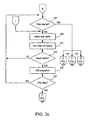
- FIGS. 3a through 3h together constitute, in one respect, a flow chart of steps/processes performed by a UE 201 (or other mobile device) in accordance with exemplary embodiments of the invention.
- FIGS. 3a through 3h together can be considered to depict exemplary means 300 comprising various circuitry configured to perform the described functions.
- one or more frequency bands are scanned for activity (step 301). This can be performed, for example, by means of a received signal strength indicator (RSSI) scan or a RAT scan.
- RSSI received signal strength indicator
- RAT RAT
- Such scans are known in the art.
- the interested reader is referred to B. Lindoff et al.'s U.S. Patent Application Publication 2011/0034168 , entitled "Cell Search Method for Multi-Mode Telecommunication Apparatus, Such Apparatus, and Computer Program for Implementing the Method”.
- the scan results are analyzed and based on the analysis, a first carrier that is likely to be associated with a cell is selected (step 303).
- This carrier is subjected to "initial cell search" (step 305).
- the initial cell search procedure includes performance of an AFC procedure.
- the interested reader can refer to the Axmon et al. document, which was cited and incorporated by reference earlier.
- Metrics produced from the initial cell search e.g., received signal strength, or quality of synchronization signals or pilot signals
- are assessed e.g., compared with threshold values
- processing reverts back to step 303, at which point a new carrier is selected and the process is repeated.
- the UE reads the master information block (MIB) that is transmitted on that cell's broadcast channel (BCH) (step 309). Reading the MIB forces the UE's physical layer to fine-tune the demodulation frequency.
- MIB master information block
- a test is then performed to ascertain whether the MIB read was successful (e.g., as indicated by a successful comparison between a received cyclic redundancy check (CRC) code and a freshly calculated one) (decision block 311). If the test indicates that MIB acquisition failed ("NO" path out of decision block 311), then processing reverts back to step 303, at which point a new carrier is selected and the process is repeated.
- CRC cyclic redundancy check
- a timer is started (step 313 - see Fig. 3b ) because the demodulation frequency has just been tuned (i.e., as part of step 309). This timer keeps track of how much time is remaining before the UE will need to synchronize to the radio access network (RAN) again in order to avoid having the frequency error of its demodulation frequency exceed the range that stills allows received messages to be successfully decoded. Other aspects relating to the timer are discussed below.
- a storage device stores information that enables the detected cell to be revisited, if needed, in a storage device (step 315).
- the cell is herein referred to as a "reference cell”.
- the UE With a reference cell having been set, the UE next acquires system information (SI) (step 317) to ascertain whether the UE is allowed to use the cell, at least for emergency calls.
- SI system information
- SIB1 system information block 1
- UTRA Universal Terrestrial Radio Access
- decision block 319 It is next ascertained whether the SI was accurately received (e.g., by means of a CRC check) (decision block 319), and if not ("NO" path out of decision block 319), the algorithm continues with decision block 327 (see FIG. 3c ), which is described further below.
- decision block 319 if the SI was accurately received ("YES" path out of decision block 319), the aforementioned timer is restarted (step 321) because SI acquisition causes the UE's physical layer to fine-tune the demodulation frequency, thereby rendering it well-tuned. It is next ascertained whether the reference cell is unqualified for camping (e.g., barred or otherwise not allowed to be (re)selected) (decision block 323).
- the detected cell is selected (e.g., the UE will camp on/connect to this cell) (step 325), and the search ends.
- processing continues by ascertaining whether the timer has expired (decision block 327 - see FIG. 3c ). If it has not ("NO" path out of decision block 327), then the UE can continue performing non-initial cell searches without needing to perform an AFC procedure. Consequently, the UE selects a next carrier (step 329) and carries out a non-initial cell search on the selected carrier (step 331). It is here noted that performing a non-initial cell search is much less laborious than carrying out an initial cell search as was performed at step 305. If the metrics generated by the cell search indicate that it is not likely that a cell has been found ("NO" path out of decision block 333), then processing returns to decision block 327, and processing proceeds as just described, beginning with a check for timer expiration.
- step 335 the next action is to read the MIB of this cell.
- a test is performed to ascertain whether the MIB has been successfully acquired (decision block 337). If not ("NO" path out of decision block 337), then processing returns to decision block 327, and processing proceeds as just described, beginning with a check for timer expiration.
- step 339- see FIG. 3d the timer is restarted (step 339- see FIG. 3d ) (i.e., because MIB acquisition includes the UE's physical layer fine-tuning the demodulation frequency) and system information (SI) is read (step 341) to learn whether the detected cell is qualified or unqualified for camping.
- SI system information
- a test is performed to ascertain whether the SI has been successfully acquired (decision block 343), and if not (“NO" path out of decision block 343) then processing returns to decision block 327 (see FIG. 3c ), and processing proceeds as described earlier, beginning with a check for timer expiration.
- the timer is restarted (step 345 - see FIG. 3e ) (i.e., because SI acquisition includes the UE's physical layer fine-tuning the demodulation frequency) and the acquired information is examined to ascertain whether the detected cell is unqualified for camping (decision block 347). If not (i.e., if the cell satisfies the UE's criteria for being camped on) ("NO" path out of decision block 347), then the cell is selected (step 349) and the search is ended.
- decision block 351 If the cell turns out to be unqualified for camping ("YES" path out of decision block 347), it is examined to ascertain whether this cell is stronger/better received than the current reference cell (decision block 351). If so ("YES" path out of decision block 351), this cell replaces the previous reference cell (step 353), and then processing returns to decision block 327 (see FIG. 3c ), and processing proceeds as described earlier, beginning with a check for timer expiration. Otherwise (“NO" path out of decision block 351), processing returns to decision block 327 (see FIG. 3c ) without modifying which cell is designated as the reference cell.
- timer expiration (YES" path out of decision block 327 - see FIG. 3c ) can be handled in any of a number of alternative ways.
- One of these is illustrated in FIG. 3f , and includes the UE re-reading the MIB from the cell that is designated as the reference cell (step 355).
- the MIB read forces the physical layer to fine-tune the demodulation frequency. This fine tuning enables the UE to avoid having to perform the more "expensive" initial AFC process for another time period.
- step 357 If the MIB of the reference cell was successfully acquired (e.g., if it's CRC was okay) ("YES" path out of decision block 357), then the aforementioned timer is restarted (step 359), and processing reverts back to step 329 (see FIG. 3c ) which begins with selecting a next carrier to be searched. If the MIB of the reference cell was not successfully acquired ("NO" path out of decision block 357), the processing returns to step 303 (see FIG. 3a ) at which point it is assumed that the UE is no longer synchronized to the radio access network (hence "initial cell search" is performed at step 305 instead of the "non-initial cell search" called for in step 331).
- the UE is enabled to continue running non-initial cell searches instead of initial cell searches for some longer amount of time as a result of the frequency correction associated with the MIB acquisition, even though the MIB is being acquired from a cell that is unqualified for camping.
- the purpose of this acquisition is not to try to find a cell to select (i.e., camp on / connect to) but rather just to find a way of correcting the frequency error before the error becomes so large that an initial cell search needs to be performed.
- An alternative way of handling timer expiration (“YES" path of out of decision block 327) includes reading the system information from the reference cell (step 361 - see FIG. 3g ).
- the system information in this embodiment is read for the same reason that the MIB was read in the above-described embodiment, namely, to force the physical layer of the UE circuitry to fine-tune the demodulation frequency. If the system information was successfully acquired (e.g., if the CRC checked out okay) ("YES" path out of decision block 363), then the aforementioned timer is restarted 365 and the system information is checked again to see whether the reference cell is still unqualified for camping (decision block 367).
- step 369 If the cell is no longer barred ("NO" path out of decision block 367), then it is selected (step 369) and the search ends. Otherwise (i.e., the reference cell is still unqualified for camping) ("YES" path out of decision block 367) processing reverts back to step 329 (see FIG. 3c ) at which point a next carrier is selected and the search continues.
- step 363 if the system information was not successfully acquired ("NO" path out of decision block 363), the processing returns to step 303 (see FIG. 3a ) at which point it is assumed that the UE is no longer synchronized to the radio access network (hence "initial cell search” is performed at step 305 instead of the "non-initial cell search" called for in step 331).
- the UE is enabled to continue running non-initial cell searches instead of initial cell searches for some longer amount of time as a result of the frequency correction associated with the system information acquisition, even though the cell may or may not be an qualified for being camped on by the UE.
- the benefit of frequency correction (and hence additional time to run non-initial rather than initial cell searches) is gained even if the cell continues to be unqualified for camping and therefore unselectable.
- Yet another alternative way of handling timer expiration (“YES" path of out of decision block 327) includes receiving and conducting measurements on pilots and/or synchronization signals, on any other prior known or predictable channel, or any combination thereof (step 371-see FIG. 3h).
- This step includes the physical layer fine-tuning the demodulation frequency. The fine tuning enables the UE to avoid having to perform the more "expensive" initial AFC process for another time period.
- step 375 If the signal acquisition and measurement was successful (e.g., if no errors were detected) ("YES" path out of decision block 373), then the aforementioned timer is restarted (step 375), and processing reverts back to step 329 (see FIG. 3c ) which begins with selecting a next carrier to be searched. If the signal acquisition and measurement was not successful ("NO" path out of decision block 373), the processing returns to step 303 (see FIG. 3a ) at which point it is assumed that the UE is no longer synchronized to the radio access network (hence "initial cell search" is performed at step 305 instead of the "non-initial cell search" called for in step 331).
- the timer may be set to some conservative value with respect to the particular implementation (e.g., based on characteristics of the crystal oscillator, and the like). In alternative embodiments, the timer may also be set to a value that is at least in part, a function of parameters such as but not limited to ambient temperature and/or aging and/or frequency band of operation. In an aspect of some but not necessarily all embodiments, sensing that the UE's ambient temperature has ascended to, or dropped to, a known threshold level can trigger the same functionality as would timer expiration.
- the predictable/prior known channel e.g., MIB or SI from a reference cell that is (or at least previously was) unqualified for camping
- the timer value may be made a function of ambient temperature by having the timer "tick" at a pace that is determined by ambient temperature, such that when ambient temperature increases (as measured, for example, in the modem of many embodiments), the timer clock ticks faster, thus forcing re-synchronization to the reference cell to be carried out more frequently.
- the timer may also be replaced by other triggers based on similar features.
- alternative embodiments can instead skip this replacement and simply keep the first reference cell detected in step 315 (see FIG. 3b ).
- alternative embodiments can instead always designate (i.e., "set") the latest detected cell to be the reference cell (regardless of signal strength).
- some embodiments before carrying out a scan such as the one illustrated by step 301 (see FIG. 3a ), some embodiments including trying to detect a cell on a carrier that the UE has been connected to before (based on previously stored information).
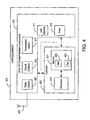
- FIG. 4 is a block diagram of an exemplary UE 401 configured to carry out various aspects of the invention.
- the UE 401 includes a controller 403 that generates signals for controlling other circuitry/hardware components 405 of the UE 401.
- the controller 403 also receives state and other information from the other circuitry/hardware components 405 as necessary to enable it to carry out its control functions.
- the other circuitry/hardware components 405 include radio circuitry 407, which may vary from one embodiment to another.
- the radio circuitry receives and transmits radio frequency signals by means of one or more antennas, of which one antenna 409 is illustrated.
- the other circuitry/hardware 405 also includes one or more user interface devices 411, as are known in the art.
- the other circuitry/hardware components also include a timer 415 that indicates when a frequency tuning process (such as any of the frequency tuning processes described above) needs to be performed before an initial cell search process will become necessary.
- the other circuitry/hardware components 405 further include a temperature sensor that can, in any of the ways described above, be used to adjust how long the timer 415 will "tick" before expiring.
- the controller 403 is configured to generate control signals that cause the other circuitry/hardware components 405 to carry out processes in accordance with any of the variously described embodiments, such as but not limited to the embodiments represented by FIGS. 3a through 3h.
- the controller 403 may be embodied completely in the form of hardwired circuitry (e.g., on an application specific integrated circuit - "ASIC").
- the controller 403 can be embodied as a programmable processor 419, coupled to a nontransitory processor readable storage medium (“memory”) 421.
- the memory 421 stores one or more sets of program instructions that, when executed by the processor 419, cause it to carry out any, all, or a sub-combination of the various processes described above.
- the memory 421 can also store data 425 for use by the processor 419 (e.g., information about the presently selected cell, and other parameters).
- controller 403 is embodied neither wholly as hardwired circuitry nor wholly as a programmable processor in combination with a suitable set of stored program instructions, but instead as some combination of both.
- an initial cell search on a single carrier has a worst case budget of 630 ms radio time plus baseband processing, whereas a non-initial cell search requires only 90 ms radio time plus baseband processing.
Landscapes
- Engineering & Computer Science (AREA)
- Computer Security & Cryptography (AREA)
- Computer Networks & Wireless Communication (AREA)
- Signal Processing (AREA)
- Mobile Radio Communication Systems (AREA)
- Circuits Of Receivers In General (AREA)
Claims (30)
- Verfahren zum Betreiben einer Benutzereinrichtung (201, 401) in einem zellularen Kommunikationssystem, wobei das Verfahren umfasst:Abstimmen einer Demodulationsfrequenz (305) der Benutzereinrichtung (201, 401) basierend auf Signalen, die von einer ersten angetroffenen Zelle empfangen werden, wobei das Abstimmen der Demodulationsfrequenz bewirkt, dass eine Genauigkeit der Demodulationsfrequenz innerhalb von Genauigkeitsgrenzen ist, welche erfolgreiches Empfangen und Decodieren von empfangenen Informationen ermöglichen;Verwenden einer nicht-anfänglichen Zellsuchprozedur (331), um fortzufahren, nach einer qualifizierten Zelle (347) zu suchen, um darauf zu warten, wobei die nicht-anfängliche Zellsuchprozedur darauf beruht, dass die Demodulationsfrequenz innerhalb der Genauigkeitsgrenzen ist, welche erfolgreiches Empfangen und Decodieren von empfangenen Informationen ermöglichen, und wobei die Qualifikation einer Zelle, um darauf zu warten, ein Indikator dessen ist, ob die Zelle als ein Diensteanbieter für die Benutzereinrichtung (201, 401) fungieren darf;Speichern vor dem Finden einer qualifizierten Zelle, um darauf zu warten, von Informationen über eine erste ermittelte unqualifizierte Zelle (315), wobei die gespeicherten Informationen es ermöglichen, die erste ermittelte unqualifizierte Zelle zu finden;Verwenden nach einer Zeitdauer, während der die nicht-anfängliche Zellsuchprozedur durchgeführt wurde (327), der gespeicherten Informationen über die erste ermittelte unqualifizierte Zelle, um die Demodulationsfrequenz basierend auf Lesesignalen von der ersten ermittelten unqualifizierten Zelle erneut abzustimmen (355); undFortfahren, die nicht-anfängliche Zellsuchprozedur durchzuführen (331), undVerwenden eines Zeitgebers (415), um den Ablauf der Zeitdauer zu erkennen (327).
- Verfahren nach Anspruch 1, wobei das Abstimmen der Demodulationsfrequenz der Benutzereinrichtung (201, 401) basierend auf Signalen, die von der ersten angetroffenen Zelle empfangen werden, umfasst:Verwenden einer anfänglichen Zellsuchprozedur (305), um die erste angetroffene Zelle zu finden, wobei die anfängliche Zellsuchprozedur nicht darauf beruht, dass die Demodulationsfrequenz innerhalb von Genauigkeitsgrenzen ist, welche erfolgreiches Empfangen und Decodieren von empfangenen Informationen ermöglichen, und wobei die anfängliche Zellsuchprozedur mehr Verarbeitung zur Durchführung erfordert, als dies die nicht-anfängliche Zellsuchprozedur tut; undAbstimmen der Demodulationsfrequenz (305) basierend auf Lesesignalen von der ersten angetroffenen Zelle.
- Verfahren nach Anspruch 1, wobei der Zeitgeber (415) auf einen vorbestimmten Zeitwert voreingestellt wird.
- Verfahren nach Anspruch 3, wobei der vorbestimmte Zeitwert eine kürzere Zeitdauer als eine Zeitdauer darstellt, die vergeht von wenn die Demodulationsfrequenz der Benutzereinrichtung abgestimmt wird, bis die Demodulationsfrequenz nicht mehr innerhalb von Genauigkeitsgrenzen ist, welche erfolgreiches Empfangen und Decodieren von empfangenen Informationen ermöglichen.
- Verfahren nach Anspruch 3, wobei der vorbestimmte Zeitwert wenigstens zum Teil auf einer oder mehreren Charakteristiken eines Kristalloszillators (413) basiert, von dem die Demodulationsfrequenz abgeleitet wird.
- Verfahren nach Anspruch 3, wobei der vorbestimmte Zeitwert wenigstens zum Teil auf einer gemessenen Umgebungstemperatur (417) der Benutzereinrichtung (201, 401) basiert.
- Verfahren nach Anspruch 3, wobei der vorbestimmte Zeitwert wenigstens zum Teil darauf basiert, auf welchem von einer Anzahl von Frequenzbändern die nicht-anfängliche Suche durchgeführt wird.
- Verfahren nach Anspruch 1, umfassend:Messen einer Umgebungstemperatur (417) der Benutzereinrichtung (201, 401); undVerwenden der gemessenen Umgebungstemperatur der Benutzereinrichtung (201, 401), um eine Rate zu steuern, bei welcher der Zeitgeber arbeitet.
- Verfahren nach Anspruch 1, wobei das Abstimmen der Demodulationsfrequenz basierend auf Lesesignalen von der ersten ermittelten unqualifizierten Zelle ein Lesen eines Masterinformationsblocks von der ersten ermittelten unqualifizierten Zelle umfasst.
- Verfahren nach Anspruch 1, wobei das Abstimmen der Demodulationsfrequenz basierend auf Lesesignalen von der ersten ermittelten unqualifizierten Zelle ein Lesen von Systeminformationen von der ersten ermittelten unqualifizierten Zelle umfasst.
- Verfahren nach Anspruch 1, umfassend:Analysieren der Systeminformationen von der ersten ermittelten unqualifizierten Zelle, um zu bestimmen, ob die erste ermittelte unqualifizierte Zelle nun eine qualifizierte Zelle ist, um darauf zu warten.
- Verfahren nach Anspruch 1, wobei das Abstimmen der Demodulationsfrequenz basierend auf Lesesignalen von der ersten ermittelten unqualifizierten Zelle ein Lesen von Pilot- und/oder Synchronisationssignalen von der ersten ermittelten unqualifizierten Zelle umfasst.
- Verfahren nach Anspruch 1, umfassend:Ermitteln einer zweiten unqualifizierten Zelle (347) vor dem Finden der qualifizierten Zelle, um darauf zu warten; undErsetzen der gespeicherten Informationen über die erste ermittelte unqualifizierte Zelle durch Informationen über die zweite unqualifizierte Zelle (351, 353), wobei die gespeicherten Informationen es ermöglichen, die zweite ermittelte unqualifizierte Zelle zu finden.
- Verfahren nach Anspruch 13, wobei das Ersetzen der gespeicherten Informationen über die erste ermittelte unqualifizierte Zelle durch Informationen über die zweite unqualifizierte Zelle nur dann durchgeführt wird, wenn die von der zweiten ermittelten unqualifizierten Zelle empfangenen Signale eine höhere Qualität als von der ersten ermittelten unqualifizierten Zelle empfangene Signale aufweisen, wobei höhere Qualität auf einem Vergleich einer oder mehrerer gemessener Charakteristiken der ersten und zweiten ermittelten unqualifizierten Zellen basiert.
- Verfahren nach Anspruch 14, wobei das Ersetzen der gespeicherten Informationen über die erste ermittelte unqualifizierte Zelle durch Informationen über die zweite unqualifizierte Zelle nur dann durchgeführt wird, wenn die von der zweiten ermittelten unqualifizierten Zelle empfangenen Signale stärker als von der ersten ermittelten unqualifizierten Zelle empfangene Signale sind.
- Vorrichtung (403) für eine Benutzereinrichtung (201, 401) für ein zellulares Kommunikationssystem, wobei die Vorrichtung umfasst:Schaltungsanordnung, die so konfiguriert ist, dass sie eine Demodulationsfrequenz (305) der Benutzereinrichtung (201, 401) basierend auf Signalen, die von einer ersten angetroffenen Zelle empfangen werden, abstimmt, wobei das Abstimmen der Demodulationsfrequenz bewirkt, dass eine Genauigkeit der Demodulationsfrequenz innerhalb von Genauigkeitsgrenzen ist, welche erfolgreiches Empfangen und Decodieren von empfangenen Informationen ermöglichen;Schaltungsanordnung, die so konfiguriert ist, dass sie eine nicht-anfängliche Zellsuchprozedur (331) verendet, um fortzufahren, nach einer qualifizierten Zelle (347) zu suchen, um darauf zu warten, wobei die nicht-anfängliche Zellsuchprozedur darauf beruht, dass die Demodulationsfrequenz innerhalb der Genauigkeitsgrenzen ist, welche erfolgreiches Empfangen und Decodieren von empfangenen Informationen ermöglichen, und wobei die Qualifikation einer Zelle, um darauf zu warten, ein Indikator dessen ist, ob die Zelle als ein Diensteanbieter für die Benutzereinrichtung (201, 401) fungieren darf;Schaltungsanordnung, die so konfiguriert ist, dass sie vor dem Finden einer qualifizierten Zelle, um darauf zu warten, Informationen über eine erste ermittelte unqualifizierte Zelle (315) speichert, wobei die gespeicherten Informationen es ermöglichen, die erste ermittelte unqualifizierte Zelle zu finden;Schaltungsanordnung, die so ausgelegt ist, dass sie nach einer Zeitdauer, während der die nicht-anfängliche Zellsuchprozedur durchgeführt wurde (327), ein Verwenden der gespeicherten Informationen über die erste ermittelte unqualifizierte Zelle durchführt, um die Demodulationsfrequenz basierend auf Lesesignalen von der ersten ermittelten unqualifizierten Zelle erneut abzustimmen (355); undSchaltungsanordnung, die so konfiguriert ist, dass sie kontinuierliche Durchführung der nicht-anfänglichen Zellsuchprozedur (331) bewirkt, undeinen Zeitgeber (415), der so konfiguriert ist, dass er einen Zeitgeberablauf-Indikator erzeugt, der den Ablauf der Zeitdauer anzeigt (327).
- Vorrichtung nach Anspruch 16, wobei die Schaltungsanordnung, die so konfiguriert ist, dass sie die Demodulationsfrequenz der Benutzereinrichtung (201, 401) basierend auf Signalen abstimmt, die von der ersten angetroffenen Zelle empfangen werden, umfasst:Schaltungsanordnung, die so konfiguriert ist, dass sie eine anfängliche Zellsuchprozedur (305) verwendet, um die erste angetroffene Zelle zu finden, wobei die anfängliche Zellsuchprozedur nicht darauf beruht, dass die Demodulationsfrequenz innerhalb von Genauigkeitsgrenzen ist, welche erfolgreiches Empfangen und Decodieren von empfangenen Informationen ermöglichen, und wobei die anfängliche Zellsuchprozedur mehr Verarbeitung zur Durchführung erfordert, als dies die nicht-anfängliche Zellsuchprozedur tut; undSchaltungsanordnung, die so konfiguriert ist, dass sie die Demodulationsfrequenz basierend auf Lesesignalen von der ersten angetroffenen Zelle abstimmt (305).
- Vorrichtung (403) mach Anspruch 16, umfassend Schaltungsanordnung, die so konfiguriert ist, dass sie den Zeitgeber auf einen vorbestimmten Zeitwert voreinstellt.
- Vorrichtung (403) nach Anspruch 18, wobei der vorbestimmte Zeitwert eine kürzere Zeitdauer als eine Zeitdauer darstellt, die vergeht von wenn die Demodulationsfrequenz der Benutzereinrichtung abgestimmt wird, bis die Demodulationsfrequenz nicht mehr innerhalb von Genauigkeitsgrenzen ist, welche erfolgreiches Empfangen und Decodieren von empfangenen Informationen ermöglichen.
- Vorrichtung (403) nach Anspruch 18, wobei der vorbestimmte Zeitwert wenigstens zum Teil auf einer oder mehreren Charakteristiken eines Kristalloszillators (413) basiert, von dem die Demodulationsfrequenz abgeleitet wird.
- Vorrichtung (403) nach Anspruch 18, wobei der vorbestimmte Zeitwert wenigstens zum Teil auf einer gemessenen Umgebungstemperatur (417) der Benutzereinrichtung (201, 401) basiert.
- Vorrichtung (403) nach Anspruch 18, wobei der vorbestimmte Zeitwert wenigstens zum Teil darauf basiert, auf welchem von einer Anzahl von Frequenzbändern die nicht-anfängliche Suche durchgeführt wird.
- Vorrichtung (403) nach Anspruch 16, umfassend:einen Sensor, der eine Umgebungstemperatur der Benutzereinrichtung (201, 401) misst; undSchaltungsanordnung, die so konfiguriert ist, dass sie die gemessene Umgebungstemperatur der Benutzereinrichtung (201, 401) verwendet, um eine Rate zu steuern, bei welcher der Zeitgeber arbeitet.
- Vorrichtung (403) nach Anspruch 16, wobei die Schaltungsanordnung, die so konfiguriert ist, dass sie die Demodulationsfrequenz basierend auf Lesesignalen von der ersten ermittelten unqualifizierten Zelle abstimmt, Schaltungsanordnung umfasst, die so konfiguriert ist, dass sie einen Masterinformationsblock von der ersten ermittelten unqualifizierten Zelle liest.
- Vorrichtung (403) nach Anspruch 16, wobei die Schaltungsanordnung, die so konfiguriert ist, dass sie die Demodulationsfrequenz basierend auf Lesesignalen von der ersten ermittelten unqualifizierten Zelle abstimmt, Schaltungsanordnung umfasst, die so konfiguriert ist, dass sie Systeminformationen von der ersten ermittelten unqualifizierten Zelle liest.
- Vorrichtung (403) nach Anspruch 16, umfassend:Schaltungsanordnung, die so konfiguriert ist, dass sie die Systeminformationen von der ersten ermittelten unqualifizierten Zelle analysiert, um zu bestimmen, ob die erste ermittelte unqualifizierte Zelle nun eine qualifizierte Zelle ist, um darauf zu warten.
- Vorrichtung (403) nach Anspruch 16, wobei die Schaltungsanordnung, die so konfiguriert ist, dass sie die Demodulationsfrequenz basierend auf Lesesignalen von der ersten ermittelten unqualifizierten Zelle abstimmt, Schaltungsanordnung umfasst, die so konfiguriert ist, dass sie Pilot- und/oder Synchronisationssignale von der ersten ermittelten unqualifizierten Zelle liest.
- Vorrichtung (403) nach Anspruch 16, umfassend:Schaltungsanordnung, die so konfiguriert ist, dass sie vor dem Finden der qualifizierten Zelle, um darauf zu warten, eine zweite unqualifizierte Zelle (347) ermittelt; undSchaltungsanordnung, die so konfiguriert ist, dass sie die gespeicherten Informationen über die erste ermittelte unqualifizierte Zelle durch Informationen über die zweite unqualifizierte Zelle (351, 353) ersetzt, wobei die gespeicherten Informationen es ermöglichen, die zweite ermittelte unqualifizierte Zelle zu finden.
- Vorrichtung (403) nach Anspruch 28, wobei die Schaltungsanordnung, die so konfiguriert ist, dass sie gespeicherten Informationen über die erste ermittelte unqualifizierte Zelle durch Informationen über die zweite unqualifizierte Zelle ersetzt, nur dann aktiviert wird, wenn die von der zweiten ermittelten unqualifizierten Zelle empfangenen Signale eine höhere Qualität als von der ersten ermittelten unqualifizierten Zelle empfangene Signale aufweisen, wobei höhere Qualität auf einem Vergleich einer oder mehrerer gemessener Charakteristiken der ersten und zweiten ermittelten unqualifizierten Zellen basiert.
- Vorrichtung (403) nach Anspruch 29, wobei die Schaltungsanordnung, die so konfiguriert ist, dass sie die gespeicherten Informationen über die erste ermittelte unqualifizierte Zelle durch Informationen über die zweite unqualifizierte Zelle ersetzt, nur dann aktiviert wird, wenn die von der zweiten ermittelten unqualifizierten Zelle empfangenen Signale stärker als von der ersten ermittelten unqualifizierten Zelle empfangene Signale sind.
Priority Applications (1)
| Application Number | Priority Date | Filing Date | Title |
|---|---|---|---|
| PL12737519T PL2737751T3 (pl) | 2011-07-28 | 2012-07-12 | Wybór komórki systemu komunikacji mobilnej w obecności nieakceptowalnych komórek |
Applications Claiming Priority (2)
| Application Number | Priority Date | Filing Date | Title |
|---|---|---|---|
| US13/193,361 US8504029B2 (en) | 2011-07-28 | 2011-07-28 | Mobile communication system cell selection in the presence of unacceptable cells |
| PCT/EP2012/063698 WO2013013996A1 (en) | 2011-07-28 | 2012-07-12 | Mobile communication system cell selection in the presence of unacceptable cells |
Publications (2)
| Publication Number | Publication Date |
|---|---|
| EP2737751A1 EP2737751A1 (de) | 2014-06-04 |
| EP2737751B1 true EP2737751B1 (de) | 2015-09-09 |
Family
ID=46545759
Family Applications (1)
| Application Number | Title | Priority Date | Filing Date |
|---|---|---|---|
| EP12737519.4A Active EP2737751B1 (de) | 2011-07-28 | 2012-07-12 | Zellenauswahl in einem mobilkommunikationssystem in gegenwart von inakzeptablen zellen |
Country Status (6)
| Country | Link |
|---|---|
| US (1) | US8504029B2 (de) |
| EP (1) | EP2737751B1 (de) |
| IL (1) | IL230656A (de) |
| PL (1) | PL2737751T3 (de) |
| RU (1) | RU2605358C2 (de) |
| WO (1) | WO2013013996A1 (de) |
Families Citing this family (6)
| Publication number | Priority date | Publication date | Assignee | Title |
|---|---|---|---|---|
| US9338031B2 (en) * | 2009-08-17 | 2016-05-10 | Qualcomm Incorporated | Methods and apparatus for interference decrease/cancellation on downlink acquisition signals |
| US20150365178A1 (en) * | 2014-06-12 | 2015-12-17 | Broadcom Corporation | System, method, and apparatus for signaling intefering cell information |
| WO2016126189A1 (en) | 2015-02-02 | 2016-08-11 | Telefonaktiebolaget Lm Ericsson (Publ) | Cell search for d2d enabled ues in out of network coverage |
| CN111465069B (zh) * | 2018-01-29 | 2022-09-27 | Oppo广东移动通信有限公司 | 搜索小区的方法和终端设备 |
| CN116647855B (zh) * | 2022-02-15 | 2026-03-20 | 华为技术有限公司 | 通信方法和通信装置 |
| US12323920B2 (en) * | 2022-06-10 | 2025-06-03 | Apple Inc. | Cell search based on user equipment (UE) battery condition |
Family Cites Families (25)
| Publication number | Priority date | Publication date | Assignee | Title |
|---|---|---|---|---|
| KR20000007758A (ko) * | 1998-07-07 | 2000-02-07 | 윤종용 | 셀룰러 단말기의 의사잡음부호 탐색방법 |
| US6223037B1 (en) | 1998-10-09 | 2001-04-24 | Nokia Mobile Phones Ltd. | Cell selection during loss of service in a telecommunications system |
| US6205193B1 (en) | 1998-10-15 | 2001-03-20 | Ericsson Inc. | Systems and methods for fast terminal synchronization in a wireless communication system |
| JP2001086035A (ja) | 1999-09-14 | 2001-03-30 | Nec Corp | Cdmaにおけるセルサーチ方法 |
| WO2003032509A1 (en) * | 2001-10-10 | 2003-04-17 | Samsung Electronics Co., Ltd | Cell search method in discontinuous reception mode in a mobile communication system |
| EP1590974A4 (de) | 2003-01-23 | 2006-09-13 | Interdigital Tech Corp | Ungeeignete-zelle-ausschluss in drahtlosen kommunikationssystemen |
| EP1928195B1 (de) * | 2006-11-29 | 2012-08-29 | Renesas Electronics Corporation | Frequenzsteuerung bei der netzwerksuche in einem mobilen multi-rat-funkkommunikationsgerät |
| US8223689B2 (en) * | 2007-02-15 | 2012-07-17 | Lg Electronics Inc. | Hierarchical service list |
| WO2008112255A2 (en) * | 2007-03-13 | 2008-09-18 | Interdigital Technology Corporation | Cell reselection process for wireless communications |
| WO2008153514A1 (en) * | 2007-05-23 | 2008-12-18 | Agere Systems, Inc. | System and method for time saving cell search for mobile devices in single and multiple radio technology communication systems |
| US9398520B2 (en) * | 2007-10-02 | 2016-07-19 | Qualcomm Incorporated | System search for full service while on a cell with limited service |
| ES2370848T3 (es) | 2007-11-29 | 2011-12-23 | Telefonaktiebolaget Lm Ericsson (Publ) | Método de búsqueda de celda para un aparato de telecomunicación multimodo, tal aparato, y programa de ordenador para implementar el método. |
| US9913206B2 (en) * | 2008-03-21 | 2018-03-06 | Interdigital Patent Holdings, Inc. | Method and apparatus for searching for closed subscriber group cells |
| US8463259B2 (en) | 2008-04-30 | 2013-06-11 | Research In Motion Limited | Servicing cell discovery during out of service |
| EP2117128B1 (de) | 2008-05-09 | 2012-11-21 | Research In Motion Limited | Abtastverfahren und Vorrichtung zur Systemerfassung |
| US8285285B2 (en) * | 2008-08-08 | 2012-10-09 | Qualcomm Incorporated | Intra-frequency cell reselection restriction in wireless communications |
| WO2010062043A2 (en) * | 2008-11-03 | 2010-06-03 | Lg Electronics Inc. | Method and apparatus for rrc connection reestablishment in wireless communication system |
| US8200232B2 (en) * | 2009-08-12 | 2012-06-12 | Lg Electronics Inc. | Apparatus and method of cell reselection in wireless communication system |
| KR20110049694A (ko) * | 2009-11-03 | 2011-05-12 | 엘지전자 주식회사 | 무선 통신 시스템에서 인접 셀의 시스템 정보 수신 중 채널 상태 측정 방법 및 이를 위한 장치 |
| US8447005B2 (en) * | 2009-11-05 | 2013-05-21 | Telefonaktiebolaget L M Ericsson (Publ) | Frequency synchronization methods and apparatus |
| US20110195712A1 (en) * | 2010-02-05 | 2011-08-11 | Christian Mucke | Wireless network frequency scanning |
| US8478269B2 (en) * | 2010-03-24 | 2013-07-02 | Qualcomm Incorporated | Method and apparatus to enable a UE to return to a wireless network after failure to obtain service |
| US8320909B2 (en) * | 2010-06-24 | 2012-11-27 | Apple Inc. | Expanded cell search and selection in a mobile wireless device |
| US8838097B2 (en) * | 2011-03-01 | 2014-09-16 | Qualcomm Incorporated | System for better service reselection when on other than the most preferred system |
| US8731119B2 (en) * | 2011-03-18 | 2014-05-20 | Marvell World Trade Ltd. | Apparatus and method for reducing receiver frequency errors |
-
2011
- 2011-07-28 US US13/193,361 patent/US8504029B2/en not_active Expired - Fee Related
-
2012
- 2012-07-12 PL PL12737519T patent/PL2737751T3/pl unknown
- 2012-07-12 WO PCT/EP2012/063698 patent/WO2013013996A1/en not_active Ceased
- 2012-07-12 EP EP12737519.4A patent/EP2737751B1/de active Active
- 2012-07-12 RU RU2014107479/08A patent/RU2605358C2/ru active
-
2014
- 2014-01-26 IL IL230656A patent/IL230656A/en active IP Right Grant
Also Published As
| Publication number | Publication date |
|---|---|
| EP2737751A1 (de) | 2014-06-04 |
| RU2605358C2 (ru) | 2016-12-20 |
| WO2013013996A1 (en) | 2013-01-31 |
| PL2737751T3 (pl) | 2016-02-29 |
| RU2014107479A (ru) | 2015-09-10 |
| IL230656A0 (en) | 2014-03-31 |
| US8504029B2 (en) | 2013-08-06 |
| US20130029662A1 (en) | 2013-01-31 |
| IL230656A (en) | 2016-05-31 |
Similar Documents
| Publication | Publication Date | Title |
|---|---|---|
| CN109644391B (zh) | 用于在多sim设备中共享测量结果的系统和方法 | |
| US8504029B2 (en) | Mobile communication system cell selection in the presence of unacceptable cells | |
| US11997555B2 (en) | Cell selection/reselection by a user equipment trying to camp on a radio cell of a public land mobile network | |
| US9398634B2 (en) | Mobile station, core network node, base station subsystem, and methods for implementing longer paging cycles in a cellular network | |
| JP3851525B2 (ja) | 移動局装置、移動通信システムおよびキャリア検出方法 | |
| EP2647246B1 (de) | Zellenauswahl mittels eines ranking-algorithmus | |
| US20120083268A1 (en) | Method of Enhancing Public Land Mobile Network Search and Related Communication Device | |
| US20130258876A1 (en) | Method for Power Saving for Wireless Device in Discontinuous Reception Mode | |
| US20090156206A1 (en) | Frequency Band Selection Methods and Apparatus | |
| US8989145B2 (en) | Methods and systems for a generic multi-radio access technology | |
| US8712359B2 (en) | Communication device and method for detecting a radio signal | |
| AU5805999A (en) | Systems and methods for fast terminal synchronization in a wireless communication system | |
| CN105611583A (zh) | 一种缩短多模用户终端搜网选网时延的方法 | |
| EP2561702B1 (de) | Zellverfolgung für Zellneuauswahl in einem Mobilfunkkommunikationssystem | |
| US20150289173A1 (en) | Systems and methods for enhanced cell reselection | |
| US9258771B2 (en) | Radio communication devices and methods for controlling a radio communication device | |
| US10284321B2 (en) | Cell search in a communications network | |
| KR101781639B1 (ko) | 휴대용단말기의 afc 무조정 방법 및 장치 | |
| CN102056272A (zh) | 频率搜索方法及装置 | |
| CN101415216A (zh) | 移动通信设备实现多频带多接入技术小区初始选择的方法 | |
| WO2016182614A1 (en) | Optimized public land mobile network search to reduce data throughput degradation | |
| US20250106743A1 (en) | Out-of-Service Recovery Search Method and Out-of-Service Recovery Search System Capable of Performing High Search Efficiency and Link Tracking for Cell Detection | |
| US20160227500A1 (en) | Efficient method to perform acquisition on gsm subscription in multi-subscriber identity module device | |
| KR100487239B1 (ko) | 이동통신 단말기에서 인접 셀과 동기를 유지하기 위한 방법 | |
| EP2219406B1 (de) | Basisstationsauswahl für ein drahtloses Kommunikationssystem |
Legal Events
| Date | Code | Title | Description |
|---|---|---|---|
| PUAI | Public reference made under article 153(3) epc to a published international application that has entered the european phase |
Free format text: ORIGINAL CODE: 0009012 |
|
| 17P | Request for examination filed |
Effective date: 20140213 |
|
| AK | Designated contracting states |
Kind code of ref document: A1 Designated state(s): AL AT BE BG CH CY CZ DE DK EE ES FI FR GB GR HR HU IE IS IT LI LT LU LV MC MK MT NL NO PL PT RO RS SE SI SK SM TR |
|
| DAX | Request for extension of the european patent (deleted) | ||
| GRAP | Despatch of communication of intention to grant a patent |
Free format text: ORIGINAL CODE: EPIDOSNIGR1 |
|
| INTG | Intention to grant announced |
Effective date: 20150319 |
|
| GRAS | Grant fee paid |
Free format text: ORIGINAL CODE: EPIDOSNIGR3 |
|
| GRAA | (expected) grant |
Free format text: ORIGINAL CODE: 0009210 |
|
| AK | Designated contracting states |
Kind code of ref document: B1 Designated state(s): AL AT BE BG CH CY CZ DE DK EE ES FI FR GB GR HR HU IE IS IT LI LT LU LV MC MK MT NL NO PL PT RO RS SE SI SK SM TR |
|
| REG | Reference to a national code |
Ref country code: GB Ref legal event code: FG4D |
|
| REG | Reference to a national code |
Ref country code: AT Ref legal event code: REF Ref document number: 748984 Country of ref document: AT Kind code of ref document: T Effective date: 20150915 Ref country code: CH Ref legal event code: EP |
|
| REG | Reference to a national code |
Ref country code: IE Ref legal event code: FG4D |
|
| REG | Reference to a national code |
Ref country code: DE Ref legal event code: R096 Ref document number: 602012010414 Country of ref document: DE |
|
| REG | Reference to a national code |
Ref country code: NL Ref legal event code: MP Effective date: 20150909 |
|
| PG25 | Lapsed in a contracting state [announced via postgrant information from national office to epo] |
Ref country code: FI Free format text: LAPSE BECAUSE OF FAILURE TO SUBMIT A TRANSLATION OF THE DESCRIPTION OR TO PAY THE FEE WITHIN THE PRESCRIBED TIME-LIMIT Effective date: 20150909 Ref country code: LV Free format text: LAPSE BECAUSE OF FAILURE TO SUBMIT A TRANSLATION OF THE DESCRIPTION OR TO PAY THE FEE WITHIN THE PRESCRIBED TIME-LIMIT Effective date: 20150909 Ref country code: GR Free format text: LAPSE BECAUSE OF FAILURE TO SUBMIT A TRANSLATION OF THE DESCRIPTION OR TO PAY THE FEE WITHIN THE PRESCRIBED TIME-LIMIT Effective date: 20151210 Ref country code: NO Free format text: LAPSE BECAUSE OF FAILURE TO SUBMIT A TRANSLATION OF THE DESCRIPTION OR TO PAY THE FEE WITHIN THE PRESCRIBED TIME-LIMIT Effective date: 20151209 Ref country code: LT Free format text: LAPSE BECAUSE OF FAILURE TO SUBMIT A TRANSLATION OF THE DESCRIPTION OR TO PAY THE FEE WITHIN THE PRESCRIBED TIME-LIMIT Effective date: 20150909 |
|
| REG | Reference to a national code |
Ref country code: LT Ref legal event code: MG4D |
|
| PG25 | Lapsed in a contracting state [announced via postgrant information from national office to epo] |
Ref country code: SE Free format text: LAPSE BECAUSE OF FAILURE TO SUBMIT A TRANSLATION OF THE DESCRIPTION OR TO PAY THE FEE WITHIN THE PRESCRIBED TIME-LIMIT Effective date: 20150909 Ref country code: ES Free format text: LAPSE BECAUSE OF FAILURE TO SUBMIT A TRANSLATION OF THE DESCRIPTION OR TO PAY THE FEE WITHIN THE PRESCRIBED TIME-LIMIT Effective date: 20150909 Ref country code: HR Free format text: LAPSE BECAUSE OF FAILURE TO SUBMIT A TRANSLATION OF THE DESCRIPTION OR TO PAY THE FEE WITHIN THE PRESCRIBED TIME-LIMIT Effective date: 20150909 Ref country code: RS Free format text: LAPSE BECAUSE OF FAILURE TO SUBMIT A TRANSLATION OF THE DESCRIPTION OR TO PAY THE FEE WITHIN THE PRESCRIBED TIME-LIMIT Effective date: 20150909 |
|
| PG25 | Lapsed in a contracting state [announced via postgrant information from national office to epo] |
Ref country code: NL Free format text: LAPSE BECAUSE OF FAILURE TO SUBMIT A TRANSLATION OF THE DESCRIPTION OR TO PAY THE FEE WITHIN THE PRESCRIBED TIME-LIMIT Effective date: 20150909 |
|
| PG25 | Lapsed in a contracting state [announced via postgrant information from national office to epo] |
Ref country code: IS Free format text: LAPSE BECAUSE OF FAILURE TO SUBMIT A TRANSLATION OF THE DESCRIPTION OR TO PAY THE FEE WITHIN THE PRESCRIBED TIME-LIMIT Effective date: 20160109 Ref country code: IT Free format text: LAPSE BECAUSE OF FAILURE TO SUBMIT A TRANSLATION OF THE DESCRIPTION OR TO PAY THE FEE WITHIN THE PRESCRIBED TIME-LIMIT Effective date: 20150909 Ref country code: SK Free format text: LAPSE BECAUSE OF FAILURE TO SUBMIT A TRANSLATION OF THE DESCRIPTION OR TO PAY THE FEE WITHIN THE PRESCRIBED TIME-LIMIT Effective date: 20150909 Ref country code: EE Free format text: LAPSE BECAUSE OF FAILURE TO SUBMIT A TRANSLATION OF THE DESCRIPTION OR TO PAY THE FEE WITHIN THE PRESCRIBED TIME-LIMIT Effective date: 20150909 Ref country code: CZ Free format text: LAPSE BECAUSE OF FAILURE TO SUBMIT A TRANSLATION OF THE DESCRIPTION OR TO PAY THE FEE WITHIN THE PRESCRIBED TIME-LIMIT Effective date: 20150909 |
|
| PG25 | Lapsed in a contracting state [announced via postgrant information from national office to epo] |
Ref country code: RO Free format text: LAPSE BECAUSE OF FAILURE TO SUBMIT A TRANSLATION OF THE DESCRIPTION OR TO PAY THE FEE WITHIN THE PRESCRIBED TIME-LIMIT Effective date: 20150909 Ref country code: PT Free format text: LAPSE BECAUSE OF FAILURE TO SUBMIT A TRANSLATION OF THE DESCRIPTION OR TO PAY THE FEE WITHIN THE PRESCRIBED TIME-LIMIT Effective date: 20160111 |
|
| REG | Reference to a national code |
Ref country code: DE Ref legal event code: R097 Ref document number: 602012010414 Country of ref document: DE |
|
| PLBE | No opposition filed within time limit |
Free format text: ORIGINAL CODE: 0009261 |
|
| STAA | Information on the status of an ep patent application or granted ep patent |
Free format text: STATUS: NO OPPOSITION FILED WITHIN TIME LIMIT |
|
| REG | Reference to a national code |
Ref country code: FR Ref legal event code: PLFP Year of fee payment: 5 |
|
| 26N | No opposition filed |
Effective date: 20160610 |
|
| PG25 | Lapsed in a contracting state [announced via postgrant information from national office to epo] |
Ref country code: SI Free format text: LAPSE BECAUSE OF FAILURE TO SUBMIT A TRANSLATION OF THE DESCRIPTION OR TO PAY THE FEE WITHIN THE PRESCRIBED TIME-LIMIT Effective date: 20150909 Ref country code: DK Free format text: LAPSE BECAUSE OF FAILURE TO SUBMIT A TRANSLATION OF THE DESCRIPTION OR TO PAY THE FEE WITHIN THE PRESCRIBED TIME-LIMIT Effective date: 20150909 |
|
| PG25 | Lapsed in a contracting state [announced via postgrant information from national office to epo] |
Ref country code: BE Free format text: LAPSE BECAUSE OF FAILURE TO SUBMIT A TRANSLATION OF THE DESCRIPTION OR TO PAY THE FEE WITHIN THE PRESCRIBED TIME-LIMIT Effective date: 20150909 |
|
| REG | Reference to a national code |
Ref country code: CH Ref legal event code: PL |
|
| PG25 | Lapsed in a contracting state [announced via postgrant information from national office to epo] |
Ref country code: MC Free format text: LAPSE BECAUSE OF FAILURE TO SUBMIT A TRANSLATION OF THE DESCRIPTION OR TO PAY THE FEE WITHIN THE PRESCRIBED TIME-LIMIT Effective date: 20150909 |
|
| PG25 | Lapsed in a contracting state [announced via postgrant information from national office to epo] |
Ref country code: LI Free format text: LAPSE BECAUSE OF NON-PAYMENT OF DUE FEES Effective date: 20160731 Ref country code: CH Free format text: LAPSE BECAUSE OF NON-PAYMENT OF DUE FEES Effective date: 20160731 |
|
| REG | Reference to a national code |
Ref country code: IE Ref legal event code: MM4A |
|
| REG | Reference to a national code |
Ref country code: FR Ref legal event code: PLFP Year of fee payment: 6 |
|
| PG25 | Lapsed in a contracting state [announced via postgrant information from national office to epo] |
Ref country code: IE Free format text: LAPSE BECAUSE OF NON-PAYMENT OF DUE FEES Effective date: 20160712 |
|
| PG25 | Lapsed in a contracting state [announced via postgrant information from national office to epo] |
Ref country code: LU Free format text: LAPSE BECAUSE OF NON-PAYMENT OF DUE FEES Effective date: 20160712 |
|
| PG25 | Lapsed in a contracting state [announced via postgrant information from national office to epo] |
Ref country code: SM Free format text: LAPSE BECAUSE OF FAILURE TO SUBMIT A TRANSLATION OF THE DESCRIPTION OR TO PAY THE FEE WITHIN THE PRESCRIBED TIME-LIMIT Effective date: 20150909 Ref country code: CY Free format text: LAPSE BECAUSE OF FAILURE TO SUBMIT A TRANSLATION OF THE DESCRIPTION OR TO PAY THE FEE WITHIN THE PRESCRIBED TIME-LIMIT Effective date: 20150909 Ref country code: HU Free format text: LAPSE BECAUSE OF FAILURE TO SUBMIT A TRANSLATION OF THE DESCRIPTION OR TO PAY THE FEE WITHIN THE PRESCRIBED TIME-LIMIT; INVALID AB INITIO Effective date: 20120712 |
|
| PG25 | Lapsed in a contracting state [announced via postgrant information from national office to epo] |
Ref country code: MK Free format text: LAPSE BECAUSE OF FAILURE TO SUBMIT A TRANSLATION OF THE DESCRIPTION OR TO PAY THE FEE WITHIN THE PRESCRIBED TIME-LIMIT Effective date: 20150909 Ref country code: MT Free format text: LAPSE BECAUSE OF NON-PAYMENT OF DUE FEES Effective date: 20160731 |
|
| REG | Reference to a national code |
Ref country code: FR Ref legal event code: PLFP Year of fee payment: 7 |
|
| PG25 | Lapsed in a contracting state [announced via postgrant information from national office to epo] |
Ref country code: BG Free format text: LAPSE BECAUSE OF FAILURE TO SUBMIT A TRANSLATION OF THE DESCRIPTION OR TO PAY THE FEE WITHIN THE PRESCRIBED TIME-LIMIT Effective date: 20150909 |
|
| PG25 | Lapsed in a contracting state [announced via postgrant information from national office to epo] |
Ref country code: AL Free format text: LAPSE BECAUSE OF FAILURE TO SUBMIT A TRANSLATION OF THE DESCRIPTION OR TO PAY THE FEE WITHIN THE PRESCRIBED TIME-LIMIT Effective date: 20150909 |
|
| REG | Reference to a national code |
Ref country code: AT Ref legal event code: UEP Ref document number: 748984 Country of ref document: AT Kind code of ref document: T Effective date: 20150909 |
|
| PGFP | Annual fee paid to national office [announced via postgrant information from national office to epo] |
Ref country code: TR Payment date: 20220629 Year of fee payment: 11 Ref country code: PL Payment date: 20220620 Year of fee payment: 11 |
|
| PGFP | Annual fee paid to national office [announced via postgrant information from national office to epo] |
Ref country code: AT Payment date: 20220621 Year of fee payment: 11 |
|
| P01 | Opt-out of the competence of the unified patent court (upc) registered |
Effective date: 20230523 |
|
| PGFP | Annual fee paid to national office [announced via postgrant information from national office to epo] |
Ref country code: FR Payment date: 20230725 Year of fee payment: 12 |
|
| REG | Reference to a national code |
Ref country code: AT Ref legal event code: MM01 Ref document number: 748984 Country of ref document: AT Kind code of ref document: T Effective date: 20230712 |
|
| PG25 | Lapsed in a contracting state [announced via postgrant information from national office to epo] |
Ref country code: AT Free format text: LAPSE BECAUSE OF NON-PAYMENT OF DUE FEES Effective date: 20230712 |
|
| PG25 | Lapsed in a contracting state [announced via postgrant information from national office to epo] |
Ref country code: AT Free format text: LAPSE BECAUSE OF NON-PAYMENT OF DUE FEES Effective date: 20230712 |
|
| PG25 | Lapsed in a contracting state [announced via postgrant information from national office to epo] |
Ref country code: PL Free format text: LAPSE BECAUSE OF NON-PAYMENT OF DUE FEES Effective date: 20230712 |
|
| PG25 | Lapsed in a contracting state [announced via postgrant information from national office to epo] |
Ref country code: PL Free format text: LAPSE BECAUSE OF NON-PAYMENT OF DUE FEES Effective date: 20230712 |
|
| PG25 | Lapsed in a contracting state [announced via postgrant information from national office to epo] |
Ref country code: FR Free format text: LAPSE BECAUSE OF NON-PAYMENT OF DUE FEES Effective date: 20240731 |
|
| PGFP | Annual fee paid to national office [announced via postgrant information from national office to epo] |
Ref country code: DE Payment date: 20250729 Year of fee payment: 14 |
|
| PGFP | Annual fee paid to national office [announced via postgrant information from national office to epo] |
Ref country code: GB Payment date: 20250728 Year of fee payment: 14 |