EP2736293A1 - Ack/nack/sr resource mapping method and apparatus - Google Patents
Ack/nack/sr resource mapping method and apparatus Download PDFInfo
- Publication number
- EP2736293A1 EP2736293A1 EP12814325.2A EP12814325A EP2736293A1 EP 2736293 A1 EP2736293 A1 EP 2736293A1 EP 12814325 A EP12814325 A EP 12814325A EP 2736293 A1 EP2736293 A1 EP 2736293A1
- Authority
- EP
- European Patent Office
- Prior art keywords
- nack
- ack
- type protocol
- pucch
- terminal
- Prior art date
- Legal status (The legal status is an assumption and is not a legal conclusion. Google has not performed a legal analysis and makes no representation as to the accuracy of the status listed.)
- Granted
Links
Images



Classifications
-
- H—ELECTRICITY
- H04—ELECTRIC COMMUNICATION TECHNIQUE
- H04W—WIRELESS COMMUNICATION NETWORKS
- H04W72/00—Local resource management
- H04W72/20—Control channels or signalling for resource management
-
- H—ELECTRICITY
- H04—ELECTRIC COMMUNICATION TECHNIQUE
- H04L—TRANSMISSION OF DIGITAL INFORMATION, e.g. TELEGRAPHIC COMMUNICATION
- H04L1/00—Arrangements for detecting or preventing errors in the information received
- H04L1/12—Arrangements for detecting or preventing errors in the information received by using return channel
- H04L1/16—Arrangements for detecting or preventing errors in the information received by using return channel in which the return channel carries supervisory signals, e.g. repetition request signals
- H04L1/18—Automatic repetition systems, e.g. Van Duuren systems
-
- H—ELECTRICITY
- H04—ELECTRIC COMMUNICATION TECHNIQUE
- H04L—TRANSMISSION OF DIGITAL INFORMATION, e.g. TELEGRAPHIC COMMUNICATION
- H04L1/00—Arrangements for detecting or preventing errors in the information received
- H04L1/12—Arrangements for detecting or preventing errors in the information received by using return channel
- H04L1/16—Arrangements for detecting or preventing errors in the information received by using return channel in which the return channel carries supervisory signals, e.g. repetition request signals
- H04L1/18—Automatic repetition systems, e.g. Van Duuren systems
- H04L1/1829—Arrangements specially adapted for the receiver end
- H04L1/1861—Physical mapping arrangements
-
- H—ELECTRICITY
- H04—ELECTRIC COMMUNICATION TECHNIQUE
- H04L—TRANSMISSION OF DIGITAL INFORMATION, e.g. TELEGRAPHIC COMMUNICATION
- H04L1/00—Arrangements for detecting or preventing errors in the information received
- H04L1/12—Arrangements for detecting or preventing errors in the information received by using return channel
- H04L1/16—Arrangements for detecting or preventing errors in the information received by using return channel in which the return channel carries supervisory signals, e.g. repetition request signals
- H04L1/18—Automatic repetition systems, e.g. Van Duuren systems
- H04L1/1867—Arrangements specially adapted for the transmitter end
- H04L1/1893—Physical mapping arrangements
-
- H—ELECTRICITY
- H04—ELECTRIC COMMUNICATION TECHNIQUE
- H04L—TRANSMISSION OF DIGITAL INFORMATION, e.g. TELEGRAPHIC COMMUNICATION
- H04L1/00—Arrangements for detecting or preventing errors in the information received
- H04L1/12—Arrangements for detecting or preventing errors in the information received by using return channel
- H04L1/16—Arrangements for detecting or preventing errors in the information received by using return channel in which the return channel carries supervisory signals, e.g. repetition request signals
- H04L1/18—Automatic repetition systems, e.g. Van Duuren systems
- H04L1/1867—Arrangements specially adapted for the transmitter end
- H04L1/1896—ARQ related signaling
-
- H—ELECTRICITY
- H04—ELECTRIC COMMUNICATION TECHNIQUE
- H04L—TRANSMISSION OF DIGITAL INFORMATION, e.g. TELEGRAPHIC COMMUNICATION
- H04L5/00—Arrangements affording multiple use of the transmission path
- H04L5/003—Arrangements for allocating sub-channels of the transmission path
- H04L5/0053—Allocation of signalling, i.e. of overhead other than pilot signals
- H04L5/0055—Physical resource allocation for ACK/NACK
-
- H—ELECTRICITY
- H04—ELECTRIC COMMUNICATION TECHNIQUE
- H04L—TRANSMISSION OF DIGITAL INFORMATION, e.g. TELEGRAPHIC COMMUNICATION
- H04L5/00—Arrangements affording multiple use of the transmission path
- H04L5/003—Arrangements for allocating sub-channels of the transmission path
- H04L5/0058—Allocation criteria
- H04L5/0064—Rate requirement of the data, e.g. scalable bandwidth, data priority
Definitions
- the present disclosure relates to telecommunications techniques, and more particularly, to an ACK/NACK/SR resource mapping method and an apparatus.
- Time division duplex As one of two basic duplexing modes, attracts more and more attentions along with the increasing requirement of wideband radio communication on bandwidth.
- uplink transmission and downlink transmission use the same frequency resources and transmit uplink/downlink signals on different time slots.
- Familiar TDD systems include: time division-synchronous code division multiple access (TD-SCDMA) system in 3rd generation (3G) mobile communication technique and time division-long term evolved (TD-LTE) system in 4th generation (4G) mobile communication technique.
- TD-SCDMA time division-synchronous code division multiple access
- 3G 3rd generation
- TD-LTE time division-long term evolved
- 4G 4th generation
- Configuration of uplink slots and downlink slots is static or semi-static.
- uplink-downlink slot ratio is determined according to a cell type and an approximate service proportion during network deployment and remains unchanged.
- an existing technique provides a dynamic uplink-downlink subframe allocation solution.
- the detailed processing is as follows.
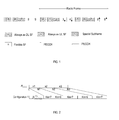
- FIG. 1 is a schematic diagram illustrating a dynamic uplink-downlink subframe allocation solution according to the existing technique.
- the adopted time period is a radio frame (which is an example, other time periods may be adopted), wherein subframes #0 and #5 are always as downlink subframes, subframes #2 and #7 are always as uplink subframes, subframes #1 and #6 are special subframes (or may be seen as always downlink subframes), subframes #3, #4, #8 and #9 are configured as uplink or downlink transmission flexibly.
- the base station may configure flexibly according to a current service requirement and channel condition, so as to be fit for the dynamic change of the service requirement.
- HARQ feedback utilizes bundling and multiplexing techniques, i.e., acknowledgement (ACK)/negative acknowledgement (NACK) of multiple downlink subframes are fed back on a physical uplink control channel (PUCCH) of one uplink subframe.
- ACK acknowledgement
- NACK negative acknowledgement
- ACK/NACK status is related to both information bit fed back on the PUCCH and an ACK/NACK/scheduling request (SR) resource index.
- SR ACK/NACK/scheduling request
- the ACK/NACK status is merely related to the information bit fed back on the PUCCH.
- a mapping method similar to that of the multiplexing technique is adopted for the ACK/NACK/SR resource index.
- one uplink-downlink configuration corresponds to one HARQ time sequence solution and one ACK/NACK/SR resource mapping solution. Therefore, there is no ACK/NACK/SR resource conflict.
- the inventor finds at least the following problem in the existing technique.
- a new HARQ solution (also includes re-using of an HARQ solution corresponding to an R8 configuration).
- an existing uplink-downlink configuration needs to be configured semi-statically and a corresponding HARQ solution has to be adopted.
- R11 and/or following version users may adopt a different HARQ solution with low version users. If the users of two different versions both adopt the existing ACK/NACK/SR resource index n PUCCH 1 allocation method, there may be ACK/NACK/SR resource conflict between the users.
- R11 does not have a definite ACK/NACK/SR resource mapping method. If the existing technique is adopted, ACK/NACK/SR resource conflict may be generated between R11 and/or following version users and low version users.
- Examples of the present disclosure provide an ACK/NACK/SR resource mapping method and an apparatus, so as to solve a problem of ACK/NACK/SR resource conflict between R11 and/or following version users and low version users.
- an ACK/NACK/SR resource mapping method includes:
- a base station applied in a system including a terminal utilizing a first type protocol and a terminal using a second type protocol.
- the base station includes:
- an ACK/NACK/SR resource mapping method includes:
- a terminal is provided.
- the terminal is applied in a system including a terminal utilizing a first type protocol and the terminal utilizing a second type protocol.
- the terminal includes:
- the base station allocates the ACK/NACK/SR resources corresponding to the second type protocol in an area outside of the ACK/NACK/SR resource area reserved for the terminal utilizing the first type protocol, and informs the terminal utilizing the second type protocol of the allocation information of the corresponding ACK/NACK/SR resources.
- the terminal utilizing the second type protocol may transmit feedback information via the corresponding ACK/NACK/SR resources.
- an ACK/NACK/SR resource conflict may be generated between users adopting protocols of different versions.
- n PUCCH 1 An ACK/NACK/SR resource is indicated by index n PUCCH 1 . Therefore, configuration and indicating method of n PUCCH 1 are discussed hereinafter.
- n PUCCH 1 may be configured by higher layers, which applies to situations that SR, semi-persistent scheduling (SPS) are not scheduled by physical downlink control channel (PDCCH).
- n PUCCH 1 may also be bundled with n CCE , applies to a situation that there is PDCCH scheduling.
- n PUCCH 1 divides the ACK/NACK/SR resources into two areas.
- the n PUCCH 1 configured by the higher layers meets n PUCCH 1 ⁇ n PUCCH 1
- calculated n PUCCH 1 meets n PUCCH 1 ⁇ N PUCCH 1 .
- n PUCCH 1 configured by the higher layers is configured by the base station by itself. Therefore, there may be cases that n PUCCH 1 ⁇ N PUCCH 1 .
- an ACK/NACK/SR resource set indicated by higher layer signaling is referred to as a higher layer configured area; an ACK/NACK/SR resource set bundled with n CCE is referred to as a predefined area or a calculated area. Boundary of the two areas is not defined in standards. However, the high layer configured area is usually ahead of the calculated area and the N PUCCH 1 is taken as the boundary. Hereinafter, for simplicity, this typical situation is taken as an example. In fact, the following examples are not restricted to the typical situation.
- n PUCCH 1 follows a rule of first in subframe then in area (the area refers to a value range of n CCE , division of the area is usually related to number of PDCCH symbols, i.e., number of areas equals to the number of PDCCH symbols).
- n PUCCH 1 mapping method uplink-downlink configuration 1
- UE user equipment
- ACK/NACK/SR resource index n PUCCH 1 to transmit HARQ-ACK
- n PUCCH 1 is configured by the higher layers and table 2.
- one uplink feedback subframe is referred to as a feedback window.
- Table 1 Downlink association set index K : ⁇ k 0 ,k 1 ,..., k M -1 ⁇ for TDD UL-DL Configuration Subframe n 0 1 2 3 4 5 6 7 8 9 0 - - 6 - 4 - - 6 - 4 1 - - 7,6 4 - - - 7,6 4 - 2 - - 8,7,4,6 - - - - 8,7,4,6 - - 3 - - 7,6,11 6,5 5,4 - - - - - 4 - - 12,8,7,11 6,5,4,7 - - - - - - - 5 - - 13,12,9,8,7,5,4,11,6 - - - - - - 6 - - 7 7 5 - - 7 7 - Table 2: PUCCH Resource Index for Downlink Semi-Persistent Sche
- HARQ-ACK( i ) is detailed information of ACK/NACK/DTX feedback corresponding to subframe n-k i , wherein k i ⁇ K (as shown in table 1), 0 ⁇ i ⁇ M-1.
- PDSCH without PDCCH indication in subframe n - k i is configured by the higher layers and table 2.
- an example of the present disclosure provides an ACK/NACK/SR resource mapping method, applied in a system including terminals adopting different types of protocols, such that ACK/NACK/SR resources of terminals utilizing different types of protocols do not overlap with each other.
- a terminal which utilizing an existing protocol may still use an existing ACK/NACK resource mapping rule.
- the present disclosure describes the ACK/NACK/SR mapping rule of a terminal utilizing an advanced protocol, wherein the advanced protocol supports dynamic TDD and/or other techniques.
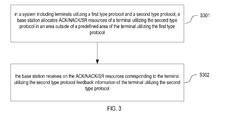
- FIG. 3 is a flowchart illustrating an ACK/NACK/SR resource mapping method according to an example of the present disclosure. As shown in FIG. 3 , the method includes the following.
- a base station allocates ACK/NACK/SR resources of the terminal utilizing the second type protocol in an area outside a predefined area of the terminal utilizing the first type protocol.
- the base station determines the ACK/NACK/SR resources corresponding to the terminal utilizing the second type protocol by itself.
- the terminal utilizing the second type protocol needs to determine allocation information corresponding to its ACK/NACK/SR resources according to higher layer signaling (which directly carries the allocation information of the ACK/NACK/SR resources or carries corresponding assistant information) transmitted by the base station.
- the base station may directly inform the terminal utilizing the second type protocol of the allocation information of the ACK/NACK/SR resources, i.e., the above mentioned n PUCCH 1 information via higher layer signaling.
- the allocation information of the corresponding ACK/NACK/SR resources is informed using n PUCCH , initial 1 information and offset information.
- the base station informs the terminal utilizing the second type protocol of the n PUCCH , initial 1 information directly via higher layer signaling.
- the terminal utilizing the second type protocol determines the ACK/NACK/SR resources corresponding to a first downlink subframe in the feedback window according to the n PUCCH , initial 1 information.
- the terminal utilizing the second type protocol performs an offset processing to the n PUCCH , initial 1 information according to an offset informed by the base station or according to predefined offset information, and determines the ACK/NACK/SR resources corresponding to following downlink subframes in the feedback window according to the n PUCCH 1 information after the offset processing.
- the base station may transmit the offset information and the n PUCCH , initial 1 information together to the terminal utilizing the second type protocol.
- An exemplary offset processing may be as follows: adding different values of the offset information to the n PUCCH , initial 1 information, so as to determine the n PUCCH 1 information of different downlink subframes in the current feedback window.
- the value of the offset information applied may be determined according to a practical requirement. Variations of the value do not affect protection scope of the present disclosure.
- the allocation information of the corresponding ACK/NACK/SR resources is informed by multiple pieces of n PUCCH 1 information.
- the base station directly informs the terminal utilizing the second type protocol of the corresponding multiple pieces of n PUCCH 1 information via higher layer signaling, wherein the number of pieces of the n PUCCH 1 information equals to the number of downlink subframes in the feedback window, or equals to a maximum number of downlink subframes in all feedback windows configured by current uplink-downlink configuration, or a maximum number of downlink subframes in all feedback windows configured by system.
- the terminal utilizing the second type protocol respectively determines the ACK/NACK/SR resources corresponding to each downlink subframe according to the n PUCCH 1 information.
- a relationship between the multiple pieces of n PUCCH 1 information and the downlink subframes in the feedback window is determined by the terminal utilizing the second type protocol according to a predefined rule or according to the PDCCH information in each downlink subframe in the feedback window.
- the base station determines the ACK/NACK/SR resources corresponding to the terminal utilizing the second type protocol according to a predefined rule.
- the terminal utilizing the second type protocol determines the allocation information corresponding to its ACK/NACK/SR resources directly according to the predefined rule with the same content, or according to the predefined rule with the same content and higher layer signaling (carries corresponding assistant information) transmitted by the base station.
- the base station allocates, according to the predefined rule, the ACK/NACK/SR resources corresponding to the terminal utilizing the second type protocol in an area outside the ACK/NACK/SR resources preserved for the terminal utilizing the first type protocol.
- the terminal utilizing the second type protocol determines the allocation information of the corresponding ACK/NACK/SR resources according to the higher layer signaling and the predefined rule.
- the base station may configure different resource start points for the ACK/NACK/SR resource area predefined for the terminal utilizing the first type protocol and the ACK/NACK/SR resource area predefined for the terminal utilizing the second type protocol, so as to differentiate the corresponding ACK/NACK/SR resources.
- the configuration of the start points of different ACK/NACK/SR resources may also have two manners in the present disclosure.
- the ACK/NACK/SR resources of the terminal utilizing one type of protocol are configured in an area after the area of the ACK/NACK/SR resources of the terminal utilizing the other type of protocol.
- the base station may allocate the ACK/NACK/SR resources corresponding to the terminal utilizing the second type protocol in an area in front of or after the ACK/NACK/SR resource area reserved for the terminal utilizing the first type protocol.
- each terminal may determine the start point of its ACK/NACK/SR resources according to the start point of the terminal utilizing the first type protocol and the size of the predefined area of the first/second type protocol.
- the base station allocates the ACK/NACK/SR resources corresponding to the terminal utilizing the second type protocol in an area outside the ACK/NACK/SR resource area persevered for the terminal utilizing the first type protocol.
- the base station transmits a different N PUCCH 1 to the terminal utilizing the second type protocol, such that the terminal utilizing the second type protocol determines the allocation information of the corresponding ACK/NACK/SR resource according to the different N PUCCH 1 .
- the difference between the two manners is the first manner allocates adjacent areas to the ACK/NACK/SR resources of the terminals utilizing two different types of protocols.
- the ACK/NACK/SR resources of the terminal utilizing the second type protocol is computed, merely the size of the area corresponding to the ACK/NACK/SR resources of the terminal utilizing the first or second type protocol needs to be considered, so as to deduce its resource start point.
- the start points of the ACK/NACK/SR resources of the two protocols are defined by the base station by itself.
- the terminals obtain their ACK/NACK/SR resource information according to different N PUCCH 1 .
- the base station allocates the ACK/NACK/SR resources corresponding to the terminal utilizing the second type protocol in an area outside the ACK/NACK/SR resource area reserved for the terminal utilizing the first type protocol according to the predefined rule, such that the terminal utilizing the second type protocol determines the allocation information of the corresponding ACK/NACK/SR information.
- the above predefined rule refers to a relationship between the PDSCH scheduled by PDCCH or the PDCCH which indicates release of SPS resource in the feedback window and the ACK/NACK/SR resources.
- the start point of the ACK/NACK/SR resources corresponding to the terminal utilizing the second type protocol includes the following situations.
- N PUCCH , D 1 , N PUCCH , D 1 is configured by the base station by itself, but should not conflict with the ACK/NACK/SR resources of the terminal utilizing the first type protocol.
- the base station transmits the N PUCCH , D 1 to the terminal utilizing the second type protocol via higher layer signaling, such that the terminal utilizing the second type protocol determines the allocation information of the corresponding ACK/NACK/SR resources according to the N PUCCH , D 1 and the predefined rule.
- Start N PUCCH 1 + delta
- delta is configured by the base station by itself.
- the base station transmits delta to the terminal utilizing the second type protocol via higher layer signaling, such that the terminal utilizing the second type protocol determines the allocation information of the corresponding ACK/NACK/SR resources according to N PUCCH 1 , delta and the predefined rule.
- the number n of the PDCCH symbols in the downlink subframe is:
- One of the above solutions may be adopted according to a requirement of a practical scenario. Whichever solution is adopted to implement the allocation of the ACK/NACK/SR resources, it is required to ensure that the ACK/NACK/SR resources corresponding to the terminals of two different types of protocols do not overlap.
- the base station receives feedback information of the terminal utilizing the second type protocol on the ACK/NACK/SR resources corresponding to the terminal utilizing the second type protocol.
- the base station finishes the allocation of the ACK/NACK/SR resources.
- the terminal utilizing the second type protocol also determines the allocation information of its ACK/NACK/SR resources.
- the terminal utilizing the second type protocol performs uplink transmission of corresponding feedback information via its ACK/NACK/SR resources.
- the base station receives the feedback information on the corresponding resources.
- the terminal determines the allocation information of the ACK/NACK/SR resources following the predefined rule and according to the information informed by the base station.
- the processing may be seen from the above description and is not repeated herein.
- the base station allocates the ACK/NACK/SR resources corresponding to the second type protocol in an area outside of the ACK/NACK/SR resource area reserved for the terminal utilizing the first type protocol, and informs the terminal utilizing the second type protocol of the allocation information of the corresponding ACK/NACK/SR resources.
- the terminal utilizing the second type protocol may transmit feedback information via the corresponding ACK/NACK/SR resources.
- the example of the present disclosure allocates resources outside a computed area of R8 users to PUCCH format 1/1a/1b resource of the R11 or following versions.
- PUCCH format 1/1a/1b resource is configured in the higher layer configured area, n PUCCH 1 is informed by higher layer signaling.
- the configuration and informing of the PUCCH format 1/1a/1b resource may be implemented by two methods.
- ACK/NACK/SR resources are configured in merely the higher layer configured area, n PUCCH 1 is informed by higher layer signaling.
- the base station transmits one piece of n PUCCH , initial 1 information to each terminal, indicating the ACK/NACK/SR resources corresponding to the first downlink subframe in the feedback window.
- the ACK/NACK/SR resources corresponding to following subframes in the feedback window may be determined according to n PUCCH , k 1 obtained by offset processing.
- ⁇ offset may be informed by higher layer signaling or be defined by standards.
- the base station obtains a detailed series of resources and physical resource block (PRB) resources according to n PUCCH , k 1 and a PUCCH format 1/1a/1b mapping method defined by standard (36.211), the procedure is as follows.
- ⁇ shift PUCCH may be informed by higher layer signaling and all users in the cell use this value. It is also possible to configure a default value 1. However, for conventional users and PUCCH in the computed area, the value informed by the higher layers is adopted.
- the parameter deltaPUCCH-Shift ⁇ shift PUCCH is provided by higher layers.
- the terminal receives relevant higher layer signaling and obtains n PUCCH 1 adopting the same computing method, so as to determine its corresponding ACK/NACK/SR resources.
- n PUCCH 1 and the downlink subframes in the feedback window may be obtained according to the predefined rule, e.g., the nth n PUCCH 1 corresponds to the nth downlink subframe in the feedback window, or is indicated by the PDCCH in the downlink subframe.
- the terminal receives the higher layer signaling and/or PDCCH and obtains the n PUCCH 1 according to the same rule.
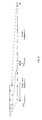
- the ACK/NACK/SR resources are allocated in an area after the ACK/NACK/SR resource area reserved for R8 users, an exemplary implementation solution is as shown in FIG. 4 .
- R8 users adopt uplink-downlink configuration 1, and dynamic users adopt uplink-downlink configuration 2.
- M R 8 denotes a number of downlink subframes of a feedback solution of the first type protocol in one feedback window
- k R 8 denotes number of special slots included in the feedback solution of the first type protocol in one feedback window
- N n denotes the number of CCEs born by n PDCCH symbols
- n denotes the number of PDCCH symbols in the downlink subframe.
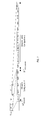
- ACK/NACK/SR resources are allocated in an area ahead of the ACK/NACK/SR resource area reserved for R8 users, n PUCCH 1 is informed implicitly.
- a detailed configuration solution is as shown in FIG. 5 .
- R8 users adopt uplink-downlink configuration 2, and dynamic users adopt uplink-downlink configuration 1.
- M D denotes number of downlink subframes included in the feedback solution of the second type protocol in one feedback window
- k D denotes number of special slots included in the feedback solution of the second type protocol in one feedback window
- N n denotes number of CCEs born by n PDCCH symbols
- n denotes number of PDCCH symbols.
- ACK/NACK bundling and multiplexing definitions of i may be different and are not repeated herein.
- ACK/NACK/SR resources are allocated in an area outside the R8 computed area and the higher layer configured area, n PUCCH 1 is informed implicitly, but the base station indicates corresponding N PUCCH 1 for two kinds of users.
- a detailed configuration solution is as shown in FIG. 6 .
- R8 users adopt uplink-downlink configuration 2, and dynamic users adopt uplink-downlink configuration 1.
- the base station informs the R8 users and the dynamic users of different N PUCCH 1 via higher layer signaling.
- the N PUCCH 1 of R8 users is N PUCCH , R ⁇ 8 1
- the N PUCCH 1 of the dynamic users is N PUCCH , dynamic 1 .
- n PUCCH 1 M - i - 1 ⁇ N p + iN p + 1 + n CCE + N PUCCH 1 , so as to respectively obtain the n PUCCH 1 of the R8 users and the dynamic users.
- the terminal receives the relevant higher layer signaling and obtains the n PUCCH 1 using the same computing method.
- the base station transmits delta to the terminal utilizing the second type protocol via higher layer signaling, such that the terminal utilizing the second type protocol determines the allocation information of the corresponding ACK/NACK/SR resources according to n PUCCH 1 , delta and the predefined rule.
- the variation does not affect the protection scope of the present disclosure.
- the method proposed in the implementation 3 does not restrict the resource mapping sequence of R8 users and the dynamic users.
- positions of the resources of the R8 users and the dynamic users may be arranged by a principle of avoiding much resource fragment.
- FIG. 6 shows an example in which resources of the dynamic users are in front
- FIG. 7 shows an example in which resources of R8 users are in front.
- the R8 users adopt the uplink-downlink configuration 1, and the dynamic users adopt the uplink-downlink configuration 2.
- the base station allocates the ACK/NACK/SR resources corresponding to the second type protocol in an area outside of the ACK/NACK/SR resource area reserved for the terminal utilizing the first type protocol, and informs the terminal utilizing the second type protocol of the allocation information of the corresponding ACK/NACK/SR resources.
- the terminal utilizing the second type protocol may transmit feedback information via the corresponding ACK/NACK/SR resource.
- an example of the present disclosure further provides a base station, the structure is as shown in FIG. 8 .
- the base station is applied in a system including a terminal utilizing a first type protocol and a terminal utilizing a second type protocol.
- the base station includes:
- the allocation module 81 is further adapted to:
- the communication module 82 is further adapted to:
- the communication module 82 is further adapted to:
- the allocation module 81 is further adapted to:
- an example of the present disclosure further provides a terminal.
- the structure is as shown in FIG. 9 .
- the terminal is applied in a system including a terminal utilizing a first type protocol and the terminal utilizing a second type protocol.
- the terminal includes:
- the obtaining module 91 is further adapted to:
- the obtaining module 91 is further adapted to:
- the technical solution provided by the example of the present disclosure has the following advantages:
- the base station allocates the ACK/NACK/SR resources corresponding to the second type protocol in an area outside of the ACK/NACK/SR resource area reserved for the terminal utilizing the first type protocol, and informs the terminal utilizing the second type protocol of the allocation information of the corresponding ACK/NACK/SR resources.
- the terminal utilizing the second type protocol may transmit feedback information via the corresponding ACK/NACK/SR resources.
- the examples of the present disclosure may be implemented by hardware or by software and a necessary hardware platform. Based on this, the technical solution provided by the examples of the present disclosure may be embedded in a software product.
- the software product may be stored on a non-transitory storage medium (such as CD-ROM, U-disk, portable disk, etc.), including a set of instructions executable by a computer device (such as a personal computer, a server or a network device, etc.) to perform the method described by the examples of the present disclosure.
- modules in the apparatus in each application scenario may be arranged in an apparatus in the application scenario according to the description of the application scenario. Some variations are also possible for the modules and the modules may be located in one or more apparatuses. The modules may be combined into one module or divided into several sub-modules.
Landscapes
- Engineering & Computer Science (AREA)
- Signal Processing (AREA)
- Computer Networks & Wireless Communication (AREA)
- Mobile Radio Communication Systems (AREA)
Abstract
Description
- This application claims the benefit of Chinese Patent Application No.
201110205174.8 - The present disclosure relates to telecommunications techniques, and more particularly, to an ACK/NACK/SR resource mapping method and an apparatus.
- Time division duplex (TDD), as one of two basic duplexing modes, attracts more and more attentions along with the increasing requirement of wideband radio communication on bandwidth. In a TDD system, uplink transmission and downlink transmission use the same frequency resources and transmit uplink/downlink signals on different time slots. Familiar TDD systems include: time division-synchronous code division multiple access (TD-SCDMA) system in 3rd generation (3G) mobile communication technique and time division-long term evolved (TD-LTE) system in 4th generation (4G) mobile communication technique. Configuration of uplink slots and downlink slots is static or semi-static. Usually, uplink-downlink slot ratio is determined according to a cell type and an approximate service proportion during network deployment and remains unchanged. This is a simple and effective solution in a macro cell with a large coverage area. With the development of techniques, more and more pico cells and low-power base stations such as home NodeB are deployed for providing small coverage in a local area. In this kind of cell, there are less users and service requirements of the users change frequently. Therefore, the uplink-downlink service proportion in such cells needs to be changed dynamically. Although standard such as TD-LTE also supports dynamic online-changing of the uplink-downlink slot ratio of a cell, a complicated signaling procedure and much configuration time are required, which decreases system performance and cannot catch up with service change in real time.
- Based on the above problem, an existing technique provides a dynamic uplink-downlink subframe allocation solution. The detailed processing is as follows.
- During a certain time period, four kinds of subframe types are configured, including a subframe always as downlink transmission, a subframe always as uplink transmission, and subframes which act as uplink or downlink transmission flexibly.
FIG. 1 is a schematic diagram illustrating a dynamic uplink-downlink subframe allocation solution according to the existing technique. In this technique, the adopted time period is a radio frame (which is an example, other time periods may be adopted), wherein
subframes #0 and #5 are always as downlink subframes, subframes #2 and #7 are always as uplink subframes,subframes # 1 and #6 are special subframes (or may be seen as always downlink subframes), subframes #3, #4, #8 and #9 are configured as uplink or downlink transmission flexibly. - For the last kind of subframe, the base station may configure flexibly according to a current service requirement and channel condition, so as to be fit for the dynamic change of the service requirement.
- For the TDD system, downlink hybrid automatic repeat request (HARQ) feedback utilizes bundling and multiplexing techniques, i.e., acknowledgement (ACK)/negative acknowledgement (NACK) of multiple downlink subframes are fed back on a physical uplink control channel (PUCCH) of one uplink subframe.
- For the multiplexing technique, ACK/NACK status is related to both information bit fed back on the PUCCH and an ACK/NACK/scheduling request (SR) resource index.
- For the bundling technique, the ACK/NACK status is merely related to the information bit fed back on the PUCCH. However, in order to avoid ACK/NACK/SR resource conflict between users, a mapping method similar to that of the multiplexing technique is adopted for the ACK/NACK/SR resource index. Generally, one uplink-downlink configuration corresponds to one HARQ time sequence solution and one ACK/NACK/SR resource mapping solution. Therefore, there is no ACK/NACK/SR resource conflict.
- During the implementation of the present disclosure, the inventor finds at least the following problem in the existing technique.
- In a dynamic system, in order to be fit for the flexible change of the uplink-downlink subframe configuration, a new HARQ solution (also includes re-using of an HARQ solution corresponding to an R8 configuration). At the same time, in order to ensure backward compatibility, for low version terminals, an existing uplink-downlink configuration needs to be configured semi-statically and a corresponding HARQ solution has to be adopted. Thus, R11 and/or following version users may adopt a different HARQ solution with low version users. If the users of two different versions both adopt the existing ACK/NACK/SR resource index

- According to the existing technique, in the dynamic system, R11 does not have a definite ACK/NACK/SR resource mapping method. If the existing technique is adopted, ACK/NACK/SR resource conflict may be generated between R11 and/or following version users and low version users.
- Examples of the present disclosure provide an ACK/NACK/SR resource mapping method and an apparatus, so as to solve a problem of ACK/NACK/SR resource conflict between R11 and/or following version users and low version users.
- According to an example of the present disclosure, an ACK/NACK/SR resource mapping method is provided. The method includes:
- allocating, by a base station in a system comprising a terminal utilizing a first type protocol and a terminal utilizing a second type protocol, ACK/NACK/SR resources corresponding to the terminal utilizing the second type protocol in an area outside of an ACK/NACK/SR resource area reserved for the terminal utilizing the first type protocol; and
- receiving, by the base station, feedback information of the terminal utilizing the second type protocol on the ACK/NACK/SR resources corresponding to the terminal utilizing the second type protocol.
- According to another example of the present disclosure, a base station is provided, applied in a system including a terminal utilizing a first type protocol and a terminal using a second type protocol. The base station includes:
- an allocation module, adapted to allocate acknowledgement (ACK)/negative acknowledgement (NACK)/scheduling request (SR) resources corresponding to the terminal utilizing the second type protocol in an area outside of an ACK/NACK/SR resource area reserved for the terminal utilizing the first type protocol to; and
- a communication module, adapted to receive feedback information of the terminal utilizing the second type protocol on the ACK/NACK/SR resources corresponding to the terminal utilizing the second type protocol allocated by the allocation module.
- According to still another example of the present disclosure, an ACK/NACK/SR resource mapping method is provided. The method includes:
- obtaining, by a terminal in a system comprising a terminal utilizing a first type protocol and the terminal utilizing a second type protocol, allocation information of ACK/NACK/SR resources corresponding to the terminal according to higher layer signaling transmitted by a base station and/or a predefined rule; wherein the ACK/NACK/SR resources corresponding to the terminal utilizing the second type protocol is allocated in an area outside of an ACK/NACK/SR resource area reserved for the terminal utilizing the first type protocol;
- determining, by the terminal, the ACK/NACK/SR resources corresponding to the terminal according to the allocation information of the ACK/NACK/SR resources; and
- transmitting, by the terminal, feedback information to the base station on the ACK/NACK/SR resources corresponding to the terminal.
- According to yet another example of the present disclosure, a terminal is provided. The terminal is applied in a system including a terminal utilizing a first type protocol and the terminal utilizing a second type protocol. The terminal includes:
- an obtaining module, adapted to obtain allocation information of acknowledgement (ACK)/negative acknowledgement (NACK)/scheduling request (SR) resources corresponding to the terminal according to higher layer signaling transmitted by the base station and/or a predefined rule, wherein the ACK/NACK/SR resources corresponding to the terminal utilizing the second type protocol is allocated in an area outside of an ACK/NACK/SR resource area reserved for the terminal utilizing the first type protocol;
- a determining module, adapted to determine the ACK/NACK/SR resources corresponding to the terminal utilizing the second type protocol according to the allocation information corresponding to the ACK/NACK/SR resources obtained by the obtaining module; and
- a transmitting module, adapted to transmit feedback information to the base station on the ACK/NACK/SR resources determined by the determining module.
- Compared with conventional techniques, the technical solution provided by the examples of the present disclosure has the following advantages.
- According to the technical solution provided by the examples of the present disclosure, in a system including a terminal utilizing a first type protocol and a terminal utilizing a second type protocol, the base station allocates the ACK/NACK/SR resources corresponding to the second type protocol in an area outside of the ACK/NACK/SR resource area reserved for the terminal utilizing the first type protocol, and informs the terminal utilizing the second type protocol of the allocation information of the corresponding ACK/NACK/SR resources. Thus, the terminal utilizing the second type protocol may transmit feedback information via the corresponding ACK/NACK/SR resources. In a dynamic system, conflict between ACK/NACK/SR resources of terminals utilizing different types of protocols can be avoided, especially conflict between ACK/NACK/SR resources of R11 and/or following version users and low version users.
-
-
FIG. 1 is a schematic diagram illustrating a dynamic uplink-downlink subframe allocation solution according to a conventional technique. -
FIG. 2 is a schematic diagram illustrating an ACK/NACK/SR resource index
-
FIG. 3 is a flowchart illustrating an ACK/NACK/SR resource mapping method according to an example of the present disclosure. -
FIG. 4 is a schematic diagram illustrating a configuration solution when the ACK/NACK/SR resource mapping method is applied in an application scenario according to an example of the present disclosure. -
FIG. 5 is a schematic diagram illustrating a configuration solution when the ACK/NACK/SR resource mapping method is applied in an application scenario according to an example of the present disclosure. -
FIG. 6 is a schematic diagram illustrating a configuration solution when the ACK/NACK/SR resource mapping method is applied in an application scenario according to an example of the present disclosure. -
FIG. 7 is a schematic diagram illustrating a configuration solution when the ACK/NACK/SR resource mapping method is applied in an application scenario according to an example of the present disclosure. -
FIG. 8 is a schematic diagram illustrating a structure of a base station according to an example of the present disclosure. -
FIG. 9 is a schematic diagram illustrating a structure of a terminal according to an example of the present disclosure. - As described in the background, if the existing ACK/NACK/SR resource mapping method is adopted, an ACK/NACK/SR resource conflict may be generated between users adopting protocols of different versions.
- An ACK/NACK/SR resource is indicated by
index 

- Hereinafter, conventional configuration method of the ACK/NACK/SR resource
index 


- Generally, in order to avoid conflict between the

calculated 
parameter 


- It should be noted that, the


- For facilitating the description, an ACK/NACK/SR resource set indicated by higher layer signaling is referred to as a higher layer configured area; an ACK/NACK/SR resource set bundled with nCCE is referred to as a predefined area or a calculated area. Boundary of the two areas is not defined in standards. However, the high layer configured area is usually ahead of the calculated area and the

- In order to reduce resource fragments, the calculated

- As shown in
FIG. 2 which shows an ACK/NACK/SR resourceindex 


- For a TDD system, ACK/NACK bundling or ACK/NACK multiplexing, when M = 1, in subframe n, user equipment (UE, i.e., the terminal) uses ACK/NACK/SR resource
index 
- in subframe n-k, if there exists a physical downlink shared channel (PDSCH) indicated by PDCCH(s) or exists a PDCCH indicating release of SPS resource, wherein k ∈ K , K is a set including M elements {k 0,k 1,...k M-1}, the value of M is related to the uplink-downlink configuration (as shown in table 1). The UE firstly selects a value from {0,1,2,3} for p, meeting Np ≤ nCCE < N p+1, where

index 

- In subframe n-k (k∈K), if there only exists PDSCH transmission without PDCCH indication,

- For facilitating the description, one uplink feedback subframe is referred to as a feedback window.
Table 1 Downlink association set index K : {k0,k 1,...,k M-1} for TDD UL-DL Configuration Subframe n 0 1 2 3 4 5 6 7 8 9 0 - - 6 - 4 - - 6 - 4 1 - - 7,6 4 - - - 7,6 4 - 2 - - 8,7,4,6 - - - - 8,7,4,6 - - 3 - - 7,6,11 6,5 5,4 - - - - - 4 - - 12,8,7,11 6,5,4,7 - - - - - - 5 - - 13,12,9,8,7,5,4,11,6 - - - - - - - 6 - - 7 7 5 - - 7 7 - Table 2: PUCCH Resource Index for Downlink Semi-Persistent Scheduling Value of 'TPC command for PUCCH' 
'00' The first PUCCH resource index configured by the higher layers '01' The second PUCCH resource index configured by the higher layers '10' The third PUCCH resource index configured by the higher layers '11' The fourth PUCCH resource index configured by the high layers - For TDD ACK/NACK multiplexing, if M > 1, in subframe n ,

- For the PDSCH or the PDCCH which indicates release of SPS resource in subframe n-ki , wherein ki ∈ K, the ACK/NACK feedback resource index is



- For the PDSCH without PDCCH indication in subframe n-ki , is configured by the higher layers and table 2.
- It can be seen from the above that, in a dynamic system, if the above processing solution is still utilized, an ACK/NACK/SR resource conflict will be generated between users adopting protocols of different versions.
- In order to solve this problem, an example of the present disclosure provides an ACK/NACK/SR resource mapping method, applied in a system including terminals adopting different types of protocols, such that ACK/NACK/SR resources of terminals utilizing different types of protocols do not overlap with each other.
- A terminal which utilizing an existing protocol may still use an existing ACK/NACK resource mapping rule. The present disclosure describes the ACK/NACK/SR mapping rule of a terminal utilizing an advanced protocol, wherein the advanced protocol supports dynamic TDD and/or other techniques.
-
FIG. 3 is a flowchart illustrating an ACK/NACK/SR resource mapping method according to an example of the present disclosure. As shown inFIG. 3 , the method includes the following. - At block S301, in a system including a terminal utilizing a first type protocol and a terminal utilizing a second type protocol, a base station allocates ACK/NACK/SR resources of the terminal utilizing the second type protocol in an area outside a predefined area of the terminal utilizing the first type protocol.
- It should be noted that the allocation may be implemented by two manners.
- In one manner, the base station determines the ACK/NACK/SR resources corresponding to the terminal utilizing the second type protocol by itself.
- In block S301, if the base station determines the ACK/NACK/SR resources corresponding to the terminal utilizing the second type protocol by itself, the terminal utilizing the second type protocol needs to determine allocation information corresponding to its ACK/NACK/SR resources according to higher layer signaling (which directly carries the allocation information of the ACK/NACK/SR resources or carries corresponding assistant information) transmitted by the base station.
- In this manner, if the base station allocates the ACK/NACK/SR resources of the terminal utilizing the second protocol in merely the higher layer configured area, the base station may directly inform the terminal utilizing the second type protocol of the allocation information of the ACK/NACK/SR resources, i.e., the above mentioned

- In addition, for this implementation scenario, there may be two methods to inform the terminal of the allocation information of the ACK/NACK/SR resources.
- In one method, the allocation information of the corresponding ACK/NACK/SR resources is informed using

- Firstly, the base station informs the terminal utilizing the second type protocol of the


- Thereafter, the terminal utilizing the second type protocol performs an offset processing to the

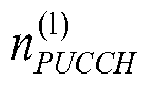
- It should be noted that, the base station may transmit the offset information and the

- An exemplary offset processing may be as follows: adding different values of the offset information to the


- In another method, the allocation information of the corresponding ACK/NACK/SR resources is informed by multiple pieces of

- Firstly, the base station directly informs the terminal utilizing the second type protocol of the corresponding multiple pieces of


- The terminal utilizing the second type protocol respectively determines the ACK/NACK/SR resources corresponding to each downlink subframe according to the

- It should be noted that, a relationship between the multiple pieces of

- In another manner, the base station determines the ACK/NACK/SR resources corresponding to the terminal utilizing the second type protocol according to a predefined rule.
- In block S301, if the base station determines the ACK/NACK/SR resources corresponding to the terminal utilizing the second type protocol according to the predefined rule, the terminal utilizing the second type protocol determines the allocation information corresponding to its ACK/NACK/SR resources directly according to the predefined rule with the same content, or according to the predefined rule with the same content and higher layer signaling (carries corresponding assistant information) transmitted by the base station.
- If there is PDSCH scheduled by PDCCH or there is PDCCH which indicates release of SPS resource in the system, the base station allocates, according to the predefined rule, the ACK/NACK/SR resources corresponding to the terminal utilizing the second type protocol in an area outside the ACK/NACK/SR resources preserved for the terminal utilizing the first type protocol. The terminal utilizing the second type protocol determines the allocation information of the corresponding ACK/NACK/SR resources according to the higher layer signaling and the predefined rule.
- Generally, the base station may configure different resource start points for the ACK/NACK/SR resource area predefined for the terminal utilizing the first type protocol and the ACK/NACK/SR resource area predefined for the terminal utilizing the second type protocol, so as to differentiate the corresponding ACK/NACK/SR resources.
- Similarly, the configuration of the start points of different ACK/NACK/SR resources may also have two manners in the present disclosure.
- In one manner, the ACK/NACK/SR resources of the terminal utilizing one type of protocol are configured in an area after the area of the ACK/NACK/SR resources of the terminal utilizing the other type of protocol.
- In particular, the base station may allocate the ACK/NACK/SR resources corresponding to the terminal utilizing the second type protocol in an area in front of or after the ACK/NACK/SR resource area reserved for the terminal utilizing the first type protocol.
- Based on the predefined rule, each terminal may determine the start point of its ACK/NACK/SR resources according to the start point of the terminal utilizing the first type protocol and the size of the predefined area of the first/second type protocol.
- In another manner, different areas are allocated to the ACK/NACK/SR resources of the terminals utilizing different types of protocols, and
different 
- Firstly, the base station allocates the ACK/NACK/SR resources corresponding to the terminal utilizing the second type protocol in an area outside the ACK/NACK/SR resource area persevered for the terminal utilizing the first type protocol.
- Thereafter, the base station transmits a
different 
different 
- The difference between the two manners is the first manner allocates adjacent areas to the ACK/NACK/SR resources of the terminals utilizing two different types of protocols. When the ACK/NACK/SR resources of the terminal utilizing the second type protocol is computed, merely the size of the area corresponding to the ACK/NACK/SR resources of the terminal utilizing the first or second type protocol needs to be considered, so as to deduce its resource start point. In the second manner, however, the start points of the ACK/NACK/SR resources of the two protocols are defined by the base station by itself. The terminals obtain their ACK/NACK/SR resource information according to
different 
- In a practical application scenario, whichever of the above two manners is adopted, the process may be described as follows.
- The base station allocates the ACK/NACK/SR resources corresponding to the terminal utilizing the second type protocol in an area outside the ACK/NACK/SR resource area reserved for the terminal utilizing the first type protocol according to the predefined rule, such that the terminal utilizing the second type protocol determines the allocation information of the corresponding ACK/NACK/SR information.
- In addition, the above predefined rule refers to a relationship between the PDSCH scheduled by PDCCH or the PDCCH which indicates release of SPS resource in the feedback window and the ACK/NACK/SR resources. The relationship meets:

wherein start denotes the start point of the predefined area of the ACK/NACK/SR resources corresponding to the terminal utilizing the second type protocol, generally, the start point is different from the
- In a practical application scenario, the start point of the ACK/NACK/SR resources corresponding to the terminal utilizing the second type protocol includes the following situations.
- In a first situation,



- In a second situation,


- In a third situation, if the base station allocates the ACK/NACK/SR resources corresponding to the terminal utilizing the second type protocol in an area in front of the ACK/NACK/SR resources predefined for the terminal utilizing the first type protocol,


- In a practical application scenario, the total amount F B of the predefined ACK/NACK/SR resources reserved for the second type protocol may be further denoted by:

wherein MD denotes a number of downlink subframes of a feedback solution of the second type protocol in one feedback window; kD denotes number of special slots in the feedback solution of the second type protocol in one feedback window; Nn denotes number of CCEs born by n PDCCH symbols; and n denotes the number of PDCCH symbols in the downlink subframe. - In a fourth situation, if the base station allocates the ACK/NACK/SR resources corresponding to the terminal utilizing the second type protocol in an area after the ACK/NACK/SR resources predefined for the terminal utilizing the first type protocol,


- In a practical application scenario, the total amount F A of the predefined ACK/NACK/SR resources reserved for the first type protocol may be further denoted by:

wherein M R8 denotes a number of downlink subframes of a feedback solution of the first type protocol in one feedback window; k R8 denotes number of special slots included in the feedback solution of the first type protocol in one feedback window; Nn denotes the number of CCEs born by n PDCCH symbols; and n denotes the number of PDCCH symbols in the downlink subframe. - For the above third and fourth situations, the number n of the PDCCH symbols in the downlink subframe is:
- a maximum number of PDCCH symbols in downlink subframes of one feedback window; or configured by the base station by itself and indicated by higher layer signaling directly; or configured with a default value, e.g., n=3.
- Whichever of the above manners is adopted to determine the value of n , the protection scope of the present disclosure is not affected.
- It should be noted that, if the allocation information of the PUCCH resources corresponding to the terminal utilizing the second type protocol corresponds to physical layer resources,


- One of the above solutions may be adopted according to a requirement of a practical scenario. Whichever solution is adopted to implement the allocation of the ACK/NACK/SR resources, it is required to ensure that the ACK/NACK/SR resources corresponding to the terminals of two different types of protocols do not overlap.
- At block S302, the base station receives feedback information of the terminal utilizing the second type protocol on the ACK/NACK/SR resources corresponding to the terminal utilizing the second type protocol.
- Through the above processing, the base station finishes the allocation of the ACK/NACK/SR resources. The terminal utilizing the second type protocol also determines the allocation information of its ACK/NACK/SR resources. In subsequent information transmission procedure, the terminal utilizing the second type protocol performs uplink transmission of corresponding feedback information via its ACK/NACK/SR resources. The base station receives the feedback information on the corresponding resources.
- Accordingly, at the terminal side, the terminal determines the allocation information of the ACK/NACK/SR resources following the predefined rule and according to the information informed by the base station. The processing may be seen from the above description and is not repeated herein.
- Compared with conventional techniques, the technical solution provided by the example of the present disclosure has the following advantages.
- According to the technical solution provided by the example of the present disclosure, in a system including a terminal utilizing a first type protocol and a terminal utilizing a second type protocol, the base station allocates the ACK/NACK/SR resources corresponding to the second type protocol in an area outside of the ACK/NACK/SR resource area reserved for the terminal utilizing the first type protocol, and informs the terminal utilizing the second type protocol of the allocation information of the corresponding ACK/NACK/SR resources. Thus, the terminal utilizing the second type protocol may transmit feedback information via the corresponding ACK/NACK/SR resources. In a dynamic system, conflict between ACK/NACK/SR resources of terminals utilizing different types of protocols can be avoided, especially the conflict between ACK/NACK/SR resources of R11 and/or following version users and low version users.
- Hereinafter, the technical solution provided by the example of the present disclosure is described with reference to several application scenarios
- In order to avoid conflict between ACK/NACK/SR resources of different version users, especially between ACK/NACK/SR resources of R11 and following version users and old version users such as R8 users, the example of the present disclosure allocates resources outside a computed area of R8 users to
PUCCH format 1/1a/1b resource of the R11 or following versions. - In case that SR and SPS which is not scheduled by PDCCH,
PUCCH format 1/1a/1b resource is configured in the higher layer configured area,
- On the other hand, in case that there is PDSCH scheduled by PDCCH or there is PDCCH which indicates release of SPS resource, the configuration and informing of the
PUCCH format 1/1a/1b resource may be implemented by two methods. - In
method 1, ACK/NACK/SR resources are configured in merely the higher layer configured area,
- The base station transmits one piece of

- The ACK/NACK/SR resources corresponding to following subframes in the feedback window may be determined according to

- In a practical application scenario, the

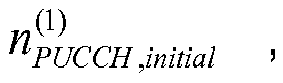

- Δ offset may be any integer. In order to avoid resource fragment, it is possible to configure Δ offset = 1.
- In a practical application, Δ offset may be informed by higher layer signaling or be defined by standards.
- The base station obtains a detailed series of resources and physical resource block (PRB) resources according to

PUCCH format 1/1a/1b mapping method defined by standard (36.211), the procedure is as follows.
default value 1. However, for conventional users and PUCCH in the computed area, the value informed by the higher layers is adopted. - In particular,

where
- The resource indices within the two resource blocks in the two slots of a subframe to which the PUCCH is mapped are given by

for n s mod 2 = 0 and by
for n s mod 2 = 1, where
- The parameter deltaPUCCH-Shift

- The physical resource blocks to be used for transmission of PUCCH in slot ns are given by

where the variable m depends on the PUCCH format. Forformats 1, 1 a and 1b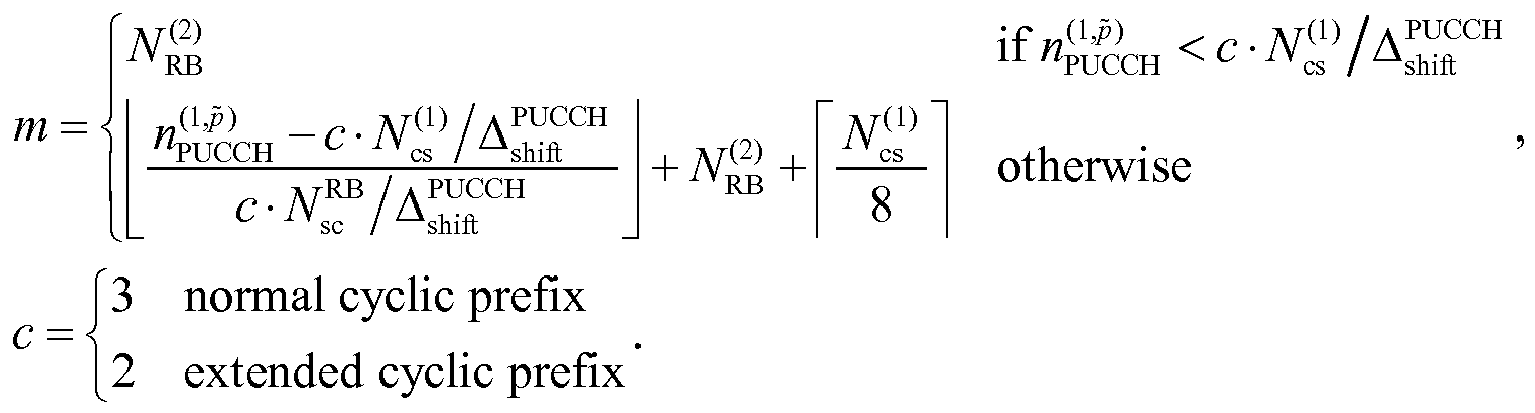
- The terminal receives relevant higher layer signaling and obtains

- The base station transmits M pieces of

- The relationship between

nth 
- The terminal receives the higher layer signaling and/or PDCCH and obtains the

- In method 2, different start points of ACK/NACK/SR resources are configured for R8 users and dynamic users.
- The dynamic users obtain the ACK/NACK/SR resource index

wherein Start denotes the start point of the predefined area of the ACK/NACK/SR resources corresponding to the terminal utilizing the second type protocol. Generally, the start point is different from the
- The ACK/NACK/SR resources are allocated in an area after the ACK/NACK/SR resource area reserved for R8 users, an exemplary implementation solution is as shown in
FIG. 4 . - R8 users adopt uplink-
downlink configuration 1, and dynamic users adopt uplink-downlink configuration 2. - In this scenario, for the dynamic users,


denotes the total amount of resources of the ACK/NACK/SR resource computed area reserved for R8 users. - In particular, in light of the above description of conventional ACK/NACK/SR resource
index 

wherein M R8 denotes a number of downlink subframes of a feedback solution of the first type protocol in one feedback window; k R8 denotes number of special slots included in the feedback solution of the first type protocol in one feedback window; Nn denotes the number of CCEs born by n PDCCH symbols; and n denotes the number of PDCCH symbols in the downlink subframe. - The number n of the PDCCH symbols in the downlink subframe may be: a maximum number of PDCCH symbols in downlink subframes of one feedback window; or configured by the base station by itself and indicated by higher layer signaling directly; or configured with a default value, e.g., n = 3.
- For ACK/NACK bundling and multiplexing, definitions of i are different, which is not described herein.
- ACK/NACK/SR resources are allocated in an area ahead of the ACK/NACK/SR resource area reserved for R8 users,

FIG. 5 . - R8 users adopt uplink-downlink configuration 2, and dynamic users adopt uplink-
downlink configuration 1. - In this scenario, for dynamic users,


- In particular, refer to the above-mentioned
PUCCH format 1/1a/1b resourceindex 

- MD denotes number of downlink subframes included in the feedback solution of the second type protocol in one feedback window; kD denotes number of special slots included in the feedback solution of the second type protocol in one feedback window; Nn denotes number of CCEs born by n PDCCH symbols; n denotes number of PDCCH symbols.
- The number n of the PDCCH symbols in the downlink subframe may be: a maximum number of PDCCH symbols in the downlink subframes of the same feedback window, or configured by the base station by itself and indicated by higher layer signaling directly, or configured with a default value, e.g. n=3.
- For ACK/NACK bundling and multiplexing, definitions of i may be different and are not repeated herein.
- ACK/NACK/SR resources are allocated in an area outside the R8 computed area and the higher layer configured area,

corresponding 
FIG. 6 . - R8 users adopt uplink-downlink configuration 2, and dynamic users adopt uplink-
downlink configuration 1. - In this scenario, the base station informs the R8 users and the dynamic users of
different 


- In particular, during the determination of the

different 


- The terminal receives the relevant higher layer signaling and obtains the

In a detailed implementation procedure, when the


- It should be noted that, the method proposed in the implementation 3 does not restrict the resource mapping sequence of R8 users and the dynamic users.
- Generally, positions of the resources of the R8 users and the dynamic users may be arranged by a principle of avoiding much resource fragment.
FIG. 6 shows an example in which resources of the dynamic users are in front, whereasFIG. 7 shows an example in which resources of R8 users are in front. - The R8 users adopt the uplink-
downlink configuration 1, and the dynamic users adopt the uplink-downlink configuration 2. - The detailed processing is similar to the above and is not repeated herein.
- It should be noted that, the above solution is directed to solve the conflict between ACK/NACK/SR resources of the R11 and/or following version users and the old version such as R8 users. For protocol versions of other types, a similar processing method may be adopted. The variation does not affect the protection scope of the present disclosure.
- Compared with conventional techniques, the technical solution provided by the example of the present disclosure has the following advantages.
- According to the technical solution provided by the examples of the present disclosure, in a system including a terminal utilizing a first type protocol and a terminal utilizing a second type protocol, the base station allocates the ACK/NACK/SR resources corresponding to the second type protocol in an area outside of the ACK/NACK/SR resource area reserved for the terminal utilizing the first type protocol, and informs the terminal utilizing the second type protocol of the allocation information of the corresponding ACK/NACK/SR resources. Thus, the terminal utilizing the second type protocol may transmit feedback information via the corresponding ACK/NACK/SR resource. In a dynamic system, conflict between ACK/NACK/SR resources of terminals utilizing different types of protocols can be avoided, especially conflict between ACK/NACK/SR resources of R11 and/or following version users and low version users.
- In order to implement the technical solution of the example of the present disclosure, an example of the present disclosure further provides a base station, the structure is as shown in
FIG. 8 . The base station is applied in a system including a terminal utilizing a first type protocol and a terminal utilizing a second type protocol. The base station includes: - an
allocation module 81, adapted to allocate ACK/NACK/SR resources corresponding to the terminal utilizing the second type protocol in an area outside an ACK/NACK/SR resource area reserved for the terminal utilizing the first type protocol; and - a
communication module 82, adapted to receive feedback information of the terminal utilizing the second type protocol on the ACK/NACK/SR resources corresponding to the terminal utilizing the second type protocol. - In a detailed implementation scenario, the
allocation module 81 is further adapted to: - determine the ACK/NACK/SR resources corresponding to the terminal utilizing the second type protocol by itself; or
- determine the ACK/NACK/SR resources corresponding to the terminal utilizing the second type protocol according to a predefined rule.
- The
communication module 82 is further adapted to: - if the
allocation module 81 determines the ACK/NACK/SR resources corresponding to the terminal utilizing the second type protocol by itself, transmit higher layer signaling and inform the terminal utilizing the second type protocol of allocation information of the ACK/NACK/SR resources. - The
communication module 82 is further adapted to: - inform the terminal utilizing the second type protocol of


- inform the terminal utilizing the second type protocol of multiple pieces of


- The
allocation module 81 is further adapted to: - determine the ACK/NACK/SR resources corresponding to the terminal utilizing the second type protocol according to the predefined rule if the system has PDCCH scheduled PDSCH or PDCCH which indicates release of SPS resource.
- In addition, an example of the present disclosure further provides a terminal. The structure is as shown in
FIG. 9 . The terminal is applied in a system including a terminal utilizing a first type protocol and the terminal utilizing a second type protocol. The terminal includes: - an obtaining
module 91, adapted to obtain allocation information of ACK/NACK/SR resources corresponding to the terminal via higher layer signaling transmitted by a base station or via a predefined rule; - a determining
module 92, adapted to determine ACK/NACK/SR resources corresponding to the terminal according to the allocation information of the ACK/NACK/SR resources obtained by the obtainingmodule 91; wherein the ACK/NACK/SR resources corresponding to the terminal utilizing the second type protocol is allocated in an area outside of the ACK/NACK/SR resource area reserved for the terminal utilizing the first type protocol; and - a transmitting
module 91, adapted to transmit feedback information to the base station via the ACK/NACK/SR resources determined by the determiningmodule 92. - The obtaining
module 91 is further adapted to: - if the higher layer signaling carries only


- if the higher layer signaling carries multiple pieces of


- In another scenario, the obtaining
module 91 is further adapted to: - if the system has PDCCH scheduled PDSCH or PDCCH which indicates release of SPS resource, determine the allocation information of the ACK/NACK/SR resources according to the higher layer signaling and the predefined rule, or determine the allocation information of the corresponding ACK/NACK/SR resources according to the predefined rule;
- the base station allocates the ACK/NACK/SR resources corresponding to the terminal utilizing the second type protocol in an area outside the ACK/NACK/SR resource area reserved for the terminal utilizing the first type protocol according to the predefined rule.
- Compared with the conventional technique, the technical solution provided by the example of the present disclosure has the following advantages:
- According to the technical solution provided by the examples of the present disclosure, in a system including a terminal utilizing a first type protocol and a terminal utilizing a second type protocol, the base station allocates the ACK/NACK/SR resources corresponding to the second type protocol in an area outside of the ACK/NACK/SR resource area reserved for the terminal utilizing the first type protocol, and informs the terminal utilizing the second type protocol of the allocation information of the corresponding ACK/NACK/SR resources. Thus, the terminal utilizing the second type protocol may transmit feedback information via the corresponding ACK/NACK/SR resources. In a dynamic system, conflict between ACK/NACK/SR resources of terminals utilizing different types of protocols can be avoided, especially conflict between ACK/NACK/SR resources of R11 and/or following version users and low version users.
- Based on the above description of the examples of the present disclosure, those skilled in the art would know that the examples of the present disclosure may be implemented by hardware or by software and a necessary hardware platform. Based on this, the technical solution provided by the examples of the present disclosure may be embedded in a software product. The software product may be stored on a non-transitory storage medium (such as CD-ROM, U-disk, portable disk, etc.), including a set of instructions executable by a computer device (such as a personal computer, a server or a network device, etc.) to perform the method described by the examples of the present disclosure.
- Those skilled in the art would know that the drawings are merely examples. The modules or blocks in the drawings may not be necessary for implementing the examples of the present disclosure.
- Those skilled in the art would also know that the modules in the apparatus in each application scenario may be arranged in an apparatus in the application scenario according to the description of the application scenario. Some variations are also possible for the modules and the modules may be located in one or more apparatuses. The modules may be combined into one module or divided into several sub-modules.
- The serial numbers of the examples of the present disclosure are merely used for facilitating the description but not denote any preference of the examples.
- What has been described and illustrated herein is a preferred example of the disclosure along with some of its variations. The terms, descriptions and figures used herein are set forth by way of illustration only and are not meant as limitations. Many variations are possible within the spirit and scope of the disclosure, which is intended to be defined by the following claims -- and their equivalents -- in which all terms are meant in their broadest reasonable sense unless otherwise indicated.
Claims (25)
- An acknowledgement (ACK)/negative acknowledgement (NACK)/scheduling request (SR) resource mapping method, comprising:allocating, by a base station in a system comprising a terminal utilizing a first type protocol and a terminal utilizing a second type protocol, ACK/NACK/SR resources corresponding to the terminal utilizing the second type protocol in an area outside of an ACK/NACK/SR resource area reserved for the terminal utilizing the first type protocol; andreceiving, by the base station, feedback information of the terminal utilizing the second type protocol on the ACK/NACK/SR resources corresponding to the terminal utilizing the second type protocol.
- The method of claim 1, wherein the allocating the ACK/NACK/SR resources corresponding to the terminal utilizing the second type protocol in the area outside of the ACK/NACK/SR resource area reserved for the terminal utilizing the first type protocol comprises:determining, by the base station, the ACK/NACK/SR resources corresponding to the terminal utilizing the second type protocol by itself; ordetermining, by the base station, the ACK/NACK/SR resources corresponding to the terminal utilizing the second type protocol according to a predefined rule.
- The method of claim 2, further comprising:if the base station determines the ACK/NACK/SR resources corresponding to the terminal utilizing the second type protocol by itself,informing, by the base station, the terminal utilizing the second type protocol of allocation information of the ACK/NACK/SR resources via higher layer signaling.
- The method of claim 3, wherein the informing the terminal utilizing the second type protocol of the allocation information of the ACK/NACK/SR resources via higher layer signaling comprises:informing, by the base station, the terminal utilizing the second type protocol of


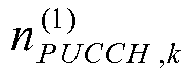
 informing, by the base station, the terminal utilizing the second type protocol of multiple pieces of


- The method of claim 4, wherein a corresponding relationship between the multiple pieces of

- The method of claim 2, wherein if the system has PDCCH scheduled physical downlink shared channel (PDSCH) or a PDCCH which indicates release of semi-persistent scheduling (SPS) resource, the base station determines the ACK/NACK/SR resources corresponding to the terminal utilizing the second type protocol according to the predefined rule.
- The method of claim 2, wherein the predefined rule comprises a corresponding relationship between a physical downlink control channel (PDCCH) scheduled physical downlink shared channel (PDSCH) or a PDCCH which indicates release of semi-persistent scheduling (SPS) resource in a feedback window and the ACK/NACK/SR resources, the corresponding relationship meets:

wherein Start denotes a predefined start point of the ACK/NACK/SR resources corresponding to the terminal utilizing the second type protocol, and the start point is different from
- The method of claim 7, wherein the predefined start point of the ACK/NACK/SR resources corresponding to the terminal utilizing the second type protocol comprises:


if the base station allocates the ACK/NACK/SR resources corresponding to the terminal utilizing the second type protocol in the area in front of the ACK/NACK/SR resource area reserved for the terminal utilizing the first type protocol,

if the base station allocates the ACK/NACK/SR resources corresponding to the terminal utilizing the second type protocol in the area after the ACK/NACK/SR resource area reserved for the terminal utilizing the first type protocol,

- The method of claim 8, wherein
the total amount F B of ACK/NACK/SR resources reserved for the second type protocol is further expressed as:
the total amount FA of the ACK/NACK/SR resources reserved for the first type protocol is further expressed as:
wherein MD denotes a number of downlink subframes of a feedback solution of the second type protocol in one feedback window; kD denotes a number of special slots in the feedback solution of the second type protocol in one feedback window; M R8 denotes a number of downlink subframes in a feedback solution of the first type protocol in one feedback window; k R8 denotes a number of special slots in the feedback solution of the first type protocol in one feedback window; Nn denotes a number of control channel elements (CCEs) born by n PDCCH symbols, n denotes the number of PDCCH symbols in the downlink subframes, wherein the number of symbols is: a maximum number of PDCCH symbols in the downlink subframes of one feedback window; or, is configured by the base station by itself and is indicated by higher layer signaling; or, is configured with a default value. - The method of claim 1, wherein if the terminal utilizing the second type protocol determines that the allocation information


- A base station, applied in a system comprising a terminal utilizing a first type protocol and a terminal utilizing a second type protocol, comprising:an allocation module, adapted to allocate acknowledgement (ACK)/negative acknowledgement (NACK)/scheduling request (SR) resources corresponding to the terminal utilizing the second type protocol in an area outside of an ACK/NACK/SR resource area reserved for the terminal utilizing the first type protocol to; anda communication module, adapted to receive feedback information of the terminal utilizing the second type protocol on the ACK/NACK/SR resources corresponding to the terminal utilizing the second type protocol allocated by the allocation module.
- The base station of claim 11, wherein the allocation module is further adapted to:determine the ACK/NACK/SR resources corresponding to the terminal utilizing the second type protocol by itself; ordetermine the ACK/NACK/SR resources corresponding to the terminal utilizing the second type protocol according to a predefined rule;if the system has a physical downlink control channel (PDCCH) scheduled a physical downlink shared channel (PDSCH) or a PDCCH which indicates release of semi-persistent scheduling (SPS) resource, the base station is adapted to determine the ACK/NACK/SR resources corresponding to the terminal utilizing the second type protocol according to the predefined rule.
- The base station of claim 12, wherein the communication module is further adapted to transmit, if the allocation module determines the ACK/NACK/SR resources corresponding to the terminal utilizing the second type protocol by itself, higher layer signaling to inform the terminal utilizing the second type protocol of allocation information of the ACK/NACK/SR resources.
- The base station of claim 13, wherein the communication module is further adapted to:inform the terminal utilizing the second type protocol of


 inform the terminal utilizing the second type protocol of multiple pieces of


- An acknowledgement (ACK)/negative acknowledgement (NACK)/scheduling request (SR) resource mapping method, comprising:obtaining, by a terminal in a system comprising a terminal utilizing a first type protocol and the terminal utilizing a second type protocol, allocation information of ACK/NACK/SR resources corresponding to the terminal according to higher layer signaling transmitted by a base station and/or a predefined rule; wherein the ACK/NACK/SR resources corresponding to the terminal utilizing the second type protocol is allocated in an area outside of an ACK/NACK/SR resource area reserved for the terminal utilizing the first type protocol;determining, by the terminal, the ACK/NACK/SR resources corresponding to the terminal according to the allocation information of the ACK/NACK/SR resources; andtransmitting, by the terminal, feedback information to the base station on the ACK/NACK/SR resources corresponding to the terminal.
- The method of claim 15, wherein the obtaining the allocation information of the ACK/NACK/SR resources corresponding to the terminal according to the higher layer signaling transmitted by the base station comprises:if the higher layer signaling carries


 if the higher layer signaling carries multiple pieces of

- The method of claim 16, wherein a corresponding relationship between the multiple pieces of

- The method of claim 15, wherein the obtaining the allocation information of the ACK/NACK/SR resources corresponding to the terminal according to the higher layer signaling transmitted by the base station and/or the predefined rule comprises:if the system has a PDCCH scheduled physical downlink shared channel (PDSCH) or a PDCCH which indicates release of semi-persistent scheduling (SPS) resource, determining, by the terminal, the allocation information of the ACK/NACK/SR resources corresponding to the terminal according to the higher layer signaling and the predefined rule, or according to the predefined rule;wherein the base station allocates the ACK/NACK/SR resources corresponding to the terminal utilizing the second type protocol in the area outside of the ACK/NACK/SR resource area reserved for the terminal utilizing the first type protocol.
- The method of claim 15, wherein the predefined rule comprises a corresponding relationship between a physical downlink control channel (PDCCH) scheduled physical downlink shared channel (PDSCH) or a PDCCH which indicates release of semi-persistent scheduling (SPS) resource in a feedback window and the ACK/NACK/SR resources, the corresponding relationship meets:

wherein Start denotes a start point of the ACK/NACK/SR resources corresponding to the terminal utilizing the second type protocol, and the start point is different from
- The method of claim 19, wherein the start point of the ACK/NACK/SR resources corresponding to the terminal utilizing the second type protocol comprises:receiving, by the terminal,


 receiving, by the terminal, delta transmitted by the base station to the terminal utilizing the second type protocol, the start point of the ACK/NACK/SR resources corresponding to the terminal utilizing the second type protocol is
 if the base station allocates the ACK/NACK/SR resources corresponding to the terminal utilizing the second type protocol in the area in front of the ACK/NACK/SR resource area reserved for the terminal utilizing the first type protocol, receiving, by the terminal,

 if the base station allocates the ACK/NACK/SR resources corresponding to the terminal utilizing the second type protocol in the area after the ACK/NACK/SR resource area reserved for the terminal utilizing the first type protocol, receiving, by the terminal,


- The method of claim 20, wherein,
the total amount F B of ACK/NACK/SR resources reserved for the second type protocol is further expressed as:
the total amount FA of the ACK/NACK/SR resources reserved for the first type protocol is further expressed as:
wherein MD denotes a number of downlink subframes of a feedback solution of the second type protocol in one feedback window; kD denotes a number of special slots in the feedback solution of the second type protocol in one feedback window; M R8 denotes a number of downlink subframes in a feedback solution of the first type protocol in one feedback window; k R8 denotes a number of special slots in the feedback solution of the first type protocol in one feedback window; Nn denotes a number of control channel elements (CCEs) born by n PDCCH symbols, n denotes the number of PDCCH symbols in the downlink subframes, wherein the number of symbols is: a maximum number of PDCCH symbols in the downlink subframes of one feedback window; or, is configured by the base station by itself and is indicated by higher layer signaling; or, is configured in default. - The method of claim 15, wherein if the terminal utilizing the second type protocol determines that the allocation information


- A terminal, applied in a system comprising a terminal utilizing a first type protocol and the terminal utilizing a second type protocol, comprising:an obtaining module, adapted to obtain allocation information of acknowledgement (ACK)/negative acknowledgement (NACK)/scheduling request (SR) resources corresponding to the terminal according to higher layer signaling transmitted by the base station and/or a predefined rule, wherein the ACK/NACK/SR resources corresponding to the terminal utilizing the second type protocol is allocated in an area outside of an ACK/NACK/SR resource area reserved for the terminal utilizing the first type protocol;a determining module, adapted to determine the ACK/NACK/SR resources corresponding to the terminal utilizing the second type protocol according to the allocation information corresponding to the ACK/NACK/SR resources obtained by the obtaining module; anda transmitting module, adapted to transmit feedback information to the base station on the ACK/NACK/SR resources determined by the determining module.
- The terminal of claim 23, wherein the obtaining module is further adapted to:determine, if the higher layer signaling carries


 determine, if the higher layer signaling carries multiple pieces of

- The terminal of claim 23, wherein the obtaining module is further adapted to:if the system has a physical downlink control channel (PDCCH) scheduled physical downlink shared channel (PDSCH) or a PDCCH which indicates release of semi-persistent scheduling (SPS) resource, determine the allocation information of the ACK/NACK/SR resources corresponding to the terminal according to the higher layer signaling and the predefined rule, or according to the predefined rule;wherein the base station allocates the ACK/NACK/SR resources corresponding to the terminal utilizing the second type protocol in the area outside of the ACK/NACK/SR resource area reserved for the terminal utilizing the first type protocol.
Applications Claiming Priority (2)
| Application Number | Priority Date | Filing Date | Title |
|---|---|---|---|
| CN201110205174.8A CN102238737B (en) | 2011-07-21 | 2011-07-21 | Acknowledgement (ACK)/negative acknowledgement (NACK)/scheduling request (SR) resource mapping method and equipment |
| PCT/CN2012/078173 WO2013010440A1 (en) | 2011-07-21 | 2012-07-04 | Ack/nack/sr resource mapping method and apparatus |
Publications (3)
| Publication Number | Publication Date |
|---|---|
| EP2736293A1 true EP2736293A1 (en) | 2014-05-28 |
| EP2736293A4 EP2736293A4 (en) | 2014-07-02 |
| EP2736293B1 EP2736293B1 (en) | 2017-01-04 |
Family
ID=44888786
Family Applications (1)
| Application Number | Title | Priority Date | Filing Date |
|---|---|---|---|
| EP12814325.2A Active EP2736293B1 (en) | 2011-07-21 | 2012-07-04 | Ack/nack/sr resource mapping method and apparatus |
Country Status (4)
| Country | Link |
|---|---|
| US (1) | US9332533B2 (en) |
| EP (1) | EP2736293B1 (en) |
| CN (1) | CN102238737B (en) |
| WO (1) | WO2013010440A1 (en) |
Cited By (2)
| Publication number | Priority date | Publication date | Assignee | Title |
|---|---|---|---|---|
| EP2744139A4 (en) * | 2011-08-09 | 2014-08-20 | China Academy Of Telecomm Tech | METHOD, SYSTEM AND DEVICE FOR UPLINK FEEDBACK |
| CN112262591A (en) * | 2018-06-12 | 2021-01-22 | 华为技术有限公司 | Method and device for transmitting information |
Families Citing this family (20)
| Publication number | Priority date | Publication date | Assignee | Title |
|---|---|---|---|---|
| CN102238737B (en) * | 2011-07-21 | 2015-07-15 | 电信科学技术研究院 | Acknowledgement (ACK)/negative acknowledgement (NACK)/scheduling request (SR) resource mapping method and equipment |
| CN109921885B (en) * | 2012-04-20 | 2021-11-26 | 北京三星通信技术研究有限公司 | Method for allocating HARQ-ACK channel resources supporting transmission diversity and channel selection |
| JP5990793B2 (en) * | 2012-06-07 | 2016-09-14 | シャープ株式会社 | Terminal device, base station device, communication method, and integrated circuit |
| CN103580828A (en) * | 2012-08-06 | 2014-02-12 | 夏普株式会社 | HARQ information sending/receiving method, base station and user equipment |
| CN108449165B (en) * | 2012-10-26 | 2021-02-19 | 太阳专利信托公司 | Terminal device, base station device, communication method, and integrated circuit |
| EP2915391B1 (en) | 2012-10-30 | 2021-06-30 | Telefonaktiebolaget LM Ericsson (publ) | Scheduling request transmission method and apparatus for decoupled downlink-uplink |
| CN103945536B (en) * | 2013-01-17 | 2017-09-19 | 上海贝尔股份有限公司 | Support the carrier structure and resource allocation methods of separate configurations |
| EP3562077B1 (en) | 2014-01-31 | 2021-07-07 | Panasonic Intellectual Property Corporation of America | Terminal and transmission method |
| US10880883B2 (en) | 2014-09-02 | 2020-12-29 | Qualcomm Incorporated | Low-latency, low-bandwidth and low duty cycle operation in a wireless communication system |
| CN106411475B (en) * | 2015-07-27 | 2019-05-24 | 中兴通讯股份有限公司 | A feedback transmission method and device |
| CN115379573B (en) * | 2016-11-04 | 2025-03-18 | 中兴通讯股份有限公司 | A data transmission method, base station, user equipment and system |
| CN108365934A (en) * | 2017-01-26 | 2018-08-03 | 索尼公司 | Wireless communications method and wireless telecom equipment |
| US10484147B2 (en) * | 2017-02-03 | 2019-11-19 | Qualcomm Incorporated | Techniques for enhanced machine type communication acknowledgment bundling |
| CN109495927B (en) * | 2017-09-11 | 2022-01-28 | 维沃移动通信有限公司 | Information transmission method, terminal and network side equipment |
| CN116744459A (en) * | 2017-10-02 | 2023-09-12 | 财团法人资讯工业策进会 | Base stations and user devices used in mobile communication systems |
| CN110034850B (en) * | 2018-01-12 | 2020-10-30 | 电信科学技术研究院有限公司 | Information transmission method, terminal and network equipment |
| EP3768010B1 (en) | 2018-03-30 | 2022-12-21 | Guangdong Oppo Mobile Telecommunications Corp., Ltd. | Uplink control information transmission method and device |
| CN110944394B (en) * | 2018-09-25 | 2023-04-21 | 华硕电脑股份有限公司 | Method and apparatus for deriving feedback resources for side link transmission in wireless communication |
| CN111800867B (en) * | 2019-08-16 | 2023-05-09 | 维沃移动通信有限公司 | Feedback method of semi-persistent scheduling physical downlink shared channel and terminal equipment |
| US11716745B1 (en) * | 2021-06-16 | 2023-08-01 | T-Mobile Innovations Llc | Scheduler systems and methods |
Family Cites Families (11)
| Publication number | Priority date | Publication date | Assignee | Title |
|---|---|---|---|---|
| KR101384078B1 (en) * | 2007-01-10 | 2014-04-09 | 삼성전자주식회사 | Method and apparatus for allocating and signalling ack/nack channel resources in wireless communication systems |
| KR101138517B1 (en) * | 2007-10-30 | 2012-04-25 | 노키아 지멘스 네트웍스 오와이 | Providing improved scheduling request signaling with ack/nack or cqi |
| CN101932005B (en) | 2009-06-26 | 2015-06-03 | 中兴通讯股份有限公司 | Method and device for reserving and index-mapping dynamic physical uplink control channel resources |
| US8583128B2 (en) * | 2009-07-13 | 2013-11-12 | Intel Mobile Communications GmbH | Apparatus and method for mapping physical control channels |
| WO2011019795A1 (en) * | 2009-08-13 | 2011-02-17 | Interdigital Patent Holdings, Inc. | Multiplexing uplink l1/l2 control and data |
| CN101997659B (en) * | 2009-08-25 | 2012-12-26 | 电信科学技术研究院 | Methods and devices for allocating uplink control resources and transmitting uplink control information |
| CN101715211A (en) * | 2009-11-02 | 2010-05-26 | 中兴通讯股份有限公司 | Method and device for setting transmission mode |
| CN102083211B (en) | 2010-03-29 | 2017-04-19 | 电信科学技术研究院 | Determining method and equipment of uplink control channel resources |
| CN101834658B (en) * | 2010-05-05 | 2016-01-20 | 中兴通讯股份有限公司 | A kind of uplink control signaling sending method and equipment |
| US8755340B2 (en) * | 2010-11-08 | 2014-06-17 | Blackberry Limited | Releasing wireless resources |
| CN102238737B (en) | 2011-07-21 | 2015-07-15 | 电信科学技术研究院 | Acknowledgement (ACK)/negative acknowledgement (NACK)/scheduling request (SR) resource mapping method and equipment |
-
2011
- 2011-07-21 CN CN201110205174.8A patent/CN102238737B/en active Active
-
2012
- 2012-07-04 EP EP12814325.2A patent/EP2736293B1/en active Active
- 2012-07-04 WO PCT/CN2012/078173 patent/WO2013010440A1/en not_active Ceased
- 2012-07-04 US US14/234,072 patent/US9332533B2/en active Active
Cited By (4)
| Publication number | Priority date | Publication date | Assignee | Title |
|---|---|---|---|---|
| EP2744139A4 (en) * | 2011-08-09 | 2014-08-20 | China Academy Of Telecomm Tech | METHOD, SYSTEM AND DEVICE FOR UPLINK FEEDBACK |
| US9001711B2 (en) | 2011-08-09 | 2015-04-07 | China Academy Of Telecommunications Technology | Uplink feedback method, system and device |
| CN112262591A (en) * | 2018-06-12 | 2021-01-22 | 华为技术有限公司 | Method and device for transmitting information |
| CN112262591B (en) * | 2018-06-12 | 2022-06-10 | 华为技术有限公司 | Method and device for transmitting information |
Also Published As
| Publication number | Publication date |
|---|---|
| US20140219201A1 (en) | 2014-08-07 |
| CN102238737A (en) | 2011-11-09 |
| CN102238737B (en) | 2015-07-15 |
| US9332533B2 (en) | 2016-05-03 |
| EP2736293B1 (en) | 2017-01-04 |
| EP2736293A4 (en) | 2014-07-02 |
| WO2013010440A1 (en) | 2013-01-24 |
Similar Documents
| Publication | Publication Date | Title |
|---|---|---|
| EP2736293B1 (en) | Ack/nack/sr resource mapping method and apparatus | |
| EP4133850B1 (en) | Apparatus and method for communicating a pusch including uci | |
| US10892875B2 (en) | Method and apparatus for transmitting ACK/NACK in a wireless communication system based on TDD | |
| EP2826184B1 (en) | Uplink control channel resource collision avoidance in carrier aggregation systems | |
| US9680622B2 (en) | Method and apparatus for transmitting reception confirmation in wireless system | |
| EP2938018B1 (en) | Method and apparatus for transmitting ack/nack in wireless communication system | |
| EP2606594B1 (en) | Physical uplink control channel resource allocation for multiple component carriers | |
| EP3876450B1 (en) | Apparatus and method for ack/nack transmission | |
| EP2744139B1 (en) | Uplink feedback method and apparatus | |
| EP3731449B1 (en) | Method and arrangement in a communication system | |
| EP2742757B1 (en) | Storage and assignment of control timing configurations in a multiple cell communications network | |
| EP2728957B1 (en) | Control channel resource allocation method and device | |
| EP3829244B1 (en) | User device and method thereof | |
| EP2693823A2 (en) | Method and apparatus | |
| US20120207103A1 (en) | Method and System for Transmitting Downlink Control Information | |
| EP3518450A1 (en) | Mobile communication system and channel transmission/reception method thereof | |
| EP2680654A1 (en) | Method and system for cross-subframe scheduling during carrier aggregation | |
| US20200068556A1 (en) | Communication system | |
| EP2982068A1 (en) | Method, ue and basestation for reporting/receiving harq ack/nack for pdsch in dynamic tdd configurations | |
| WO2013137924A1 (en) | Explicit indication of uplink control channel resources in carrier aggregation systems | |
| EP3057259A1 (en) | Method and apparatus for transmitting ack/nack by terminal in wireless communication system |
Legal Events
| Date | Code | Title | Description |
|---|---|---|---|
| PUAI | Public reference made under article 153(3) epc to a published international application that has entered the european phase |
Free format text: ORIGINAL CODE: 0009012 |
|
| 17P | Request for examination filed |
Effective date: 20140219 |
|
| AK | Designated contracting states |
Kind code of ref document: A1 Designated state(s): AL AT BE BG CH CY CZ DE DK EE ES FI FR GB GR HR HU IE IS IT LI LT LU LV MC MK MT NL NO PL PT RO RS SE SI SK SM TR |
|
| A4 | Supplementary search report drawn up and despatched |
Effective date: 20140602 |
|
| RIC1 | Information provided on ipc code assigned before grant |
Ipc: H04L 1/18 20060101ALI20140526BHEP Ipc: H04W 72/04 20090101AFI20140526BHEP Ipc: H04L 5/00 20060101ALI20140526BHEP |
|
| DAX | Request for extension of the european patent (deleted) | ||
| 17Q | First examination report despatched |
Effective date: 20141119 |
|
| GRAP | Despatch of communication of intention to grant a patent |
Free format text: ORIGINAL CODE: EPIDOSNIGR1 |
|
| INTG | Intention to grant announced |
Effective date: 20160726 |
|
| GRAS | Grant fee paid |
Free format text: ORIGINAL CODE: EPIDOSNIGR3 |
|
| STAA | Information on the status of an ep patent application or granted ep patent |
Free format text: STATUS: GRANT OF PATENT IS INTENDED |
|
| GRAA | (expected) grant |
Free format text: ORIGINAL CODE: 0009210 |
|
| STAA | Information on the status of an ep patent application or granted ep patent |
Free format text: STATUS: THE PATENT HAS BEEN GRANTED |
|
| AK | Designated contracting states |
Kind code of ref document: B1 Designated state(s): AL AT BE BG CH CY CZ DE DK EE ES FI FR GB GR HR HU IE IS IT LI LT LU LV MC MK MT NL NO PL PT RO RS SE SI SK SM TR |
|
| REG | Reference to a national code |
Ref country code: GB Ref legal event code: FG4D |
|
| REG | Reference to a national code |
Ref country code: CH Ref legal event code: EP |
|
| REG | Reference to a national code |
Ref country code: AT Ref legal event code: REF Ref document number: 860342 Country of ref document: AT Kind code of ref document: T Effective date: 20170115 |
|
| REG | Reference to a national code |
Ref country code: IE Ref legal event code: FG4D |
|
| REG | Reference to a national code |
Ref country code: DE Ref legal event code: R096 Ref document number: 602012027499 Country of ref document: DE |
|
| REG | Reference to a national code |
Ref country code: LT Ref legal event code: MG4D Ref country code: NL Ref legal event code: MP Effective date: 20170104 |
|
| REG | Reference to a national code |
Ref country code: AT Ref legal event code: MK05 Ref document number: 860342 Country of ref document: AT Kind code of ref document: T Effective date: 20170104 |
|
| PG25 | Lapsed in a contracting state [announced via postgrant information from national office to epo] |
Ref country code: NL Free format text: LAPSE BECAUSE OF FAILURE TO SUBMIT A TRANSLATION OF THE DESCRIPTION OR TO PAY THE FEE WITHIN THE PRESCRIBED TIME-LIMIT Effective date: 20170104 |
|
| PG25 | Lapsed in a contracting state [announced via postgrant information from national office to epo] |
Ref country code: LT Free format text: LAPSE BECAUSE OF FAILURE TO SUBMIT A TRANSLATION OF THE DESCRIPTION OR TO PAY THE FEE WITHIN THE PRESCRIBED TIME-LIMIT Effective date: 20170104 Ref country code: FI Free format text: LAPSE BECAUSE OF FAILURE TO SUBMIT A TRANSLATION OF THE DESCRIPTION OR TO PAY THE FEE WITHIN THE PRESCRIBED TIME-LIMIT Effective date: 20170104 Ref country code: GR Free format text: LAPSE BECAUSE OF FAILURE TO SUBMIT A TRANSLATION OF THE DESCRIPTION OR TO PAY THE FEE WITHIN THE PRESCRIBED TIME-LIMIT Effective date: 20170405 Ref country code: HR Free format text: LAPSE BECAUSE OF FAILURE TO SUBMIT A TRANSLATION OF THE DESCRIPTION OR TO PAY THE FEE WITHIN THE PRESCRIBED TIME-LIMIT Effective date: 20170104 Ref country code: NO Free format text: LAPSE BECAUSE OF FAILURE TO SUBMIT A TRANSLATION OF THE DESCRIPTION OR TO PAY THE FEE WITHIN THE PRESCRIBED TIME-LIMIT Effective date: 20170404 Ref country code: IS Free format text: LAPSE BECAUSE OF FAILURE TO SUBMIT A TRANSLATION OF THE DESCRIPTION OR TO PAY THE FEE WITHIN THE PRESCRIBED TIME-LIMIT Effective date: 20170504 |
|
| REG | Reference to a national code |
Ref country code: FR Ref legal event code: PLFP Year of fee payment: 6 |
|
| PG25 | Lapsed in a contracting state [announced via postgrant information from national office to epo] |
Ref country code: BG Free format text: LAPSE BECAUSE OF FAILURE TO SUBMIT A TRANSLATION OF THE DESCRIPTION OR TO PAY THE FEE WITHIN THE PRESCRIBED TIME-LIMIT Effective date: 20170404 Ref country code: PL Free format text: LAPSE BECAUSE OF FAILURE TO SUBMIT A TRANSLATION OF THE DESCRIPTION OR TO PAY THE FEE WITHIN THE PRESCRIBED TIME-LIMIT Effective date: 20170104 Ref country code: RS Free format text: LAPSE BECAUSE OF FAILURE TO SUBMIT A TRANSLATION OF THE DESCRIPTION OR TO PAY THE FEE WITHIN THE PRESCRIBED TIME-LIMIT Effective date: 20170104 Ref country code: LV Free format text: LAPSE BECAUSE OF FAILURE TO SUBMIT A TRANSLATION OF THE DESCRIPTION OR TO PAY THE FEE WITHIN THE PRESCRIBED TIME-LIMIT Effective date: 20170104 Ref country code: AT Free format text: LAPSE BECAUSE OF FAILURE TO SUBMIT A TRANSLATION OF THE DESCRIPTION OR TO PAY THE FEE WITHIN THE PRESCRIBED TIME-LIMIT Effective date: 20170104 Ref country code: SE Free format text: LAPSE BECAUSE OF FAILURE TO SUBMIT A TRANSLATION OF THE DESCRIPTION OR TO PAY THE FEE WITHIN THE PRESCRIBED TIME-LIMIT Effective date: 20170104 Ref country code: PT Free format text: LAPSE BECAUSE OF FAILURE TO SUBMIT A TRANSLATION OF THE DESCRIPTION OR TO PAY THE FEE WITHIN THE PRESCRIBED TIME-LIMIT Effective date: 20170504 Ref country code: ES Free format text: LAPSE BECAUSE OF FAILURE TO SUBMIT A TRANSLATION OF THE DESCRIPTION OR TO PAY THE FEE WITHIN THE PRESCRIBED TIME-LIMIT Effective date: 20170104 |
|
| REG | Reference to a national code |
Ref country code: DE Ref legal event code: R097 Ref document number: 602012027499 Country of ref document: DE |
|
| PG25 | Lapsed in a contracting state [announced via postgrant information from national office to epo] |
Ref country code: RO Free format text: LAPSE BECAUSE OF FAILURE TO SUBMIT A TRANSLATION OF THE DESCRIPTION OR TO PAY THE FEE WITHIN THE PRESCRIBED TIME-LIMIT Effective date: 20170104 Ref country code: EE Free format text: LAPSE BECAUSE OF FAILURE TO SUBMIT A TRANSLATION OF THE DESCRIPTION OR TO PAY THE FEE WITHIN THE PRESCRIBED TIME-LIMIT Effective date: 20170104 Ref country code: CZ Free format text: LAPSE BECAUSE OF FAILURE TO SUBMIT A TRANSLATION OF THE DESCRIPTION OR TO PAY THE FEE WITHIN THE PRESCRIBED TIME-LIMIT Effective date: 20170104 Ref country code: IT Free format text: LAPSE BECAUSE OF FAILURE TO SUBMIT A TRANSLATION OF THE DESCRIPTION OR TO PAY THE FEE WITHIN THE PRESCRIBED TIME-LIMIT Effective date: 20170104 Ref country code: SK Free format text: LAPSE BECAUSE OF FAILURE TO SUBMIT A TRANSLATION OF THE DESCRIPTION OR TO PAY THE FEE WITHIN THE PRESCRIBED TIME-LIMIT Effective date: 20170104 |
|
| PLBE | No opposition filed within time limit |
Free format text: ORIGINAL CODE: 0009261 |
|
| STAA | Information on the status of an ep patent application or granted ep patent |
Free format text: STATUS: NO OPPOSITION FILED WITHIN TIME LIMIT |
|
| PG25 | Lapsed in a contracting state [announced via postgrant information from national office to epo] |
Ref country code: SM Free format text: LAPSE BECAUSE OF FAILURE TO SUBMIT A TRANSLATION OF THE DESCRIPTION OR TO PAY THE FEE WITHIN THE PRESCRIBED TIME-LIMIT Effective date: 20170104 Ref country code: DK Free format text: LAPSE BECAUSE OF FAILURE TO SUBMIT A TRANSLATION OF THE DESCRIPTION OR TO PAY THE FEE WITHIN THE PRESCRIBED TIME-LIMIT Effective date: 20170104 |
|
| 26N | No opposition filed |
Effective date: 20171005 |
|
| PG25 | Lapsed in a contracting state [announced via postgrant information from national office to epo] |
Ref country code: SI Free format text: LAPSE BECAUSE OF FAILURE TO SUBMIT A TRANSLATION OF THE DESCRIPTION OR TO PAY THE FEE WITHIN THE PRESCRIBED TIME-LIMIT Effective date: 20170104 |
|
| REG | Reference to a national code |
Ref country code: CH Ref legal event code: PL |
|
| REG | Reference to a national code |
Ref country code: IE Ref legal event code: MM4A |
|
| PG25 | Lapsed in a contracting state [announced via postgrant information from national office to epo] |
Ref country code: LI Free format text: LAPSE BECAUSE OF NON-PAYMENT OF DUE FEES Effective date: 20170731 Ref country code: CH Free format text: LAPSE BECAUSE OF NON-PAYMENT OF DUE FEES Effective date: 20170731 Ref country code: IE Free format text: LAPSE BECAUSE OF NON-PAYMENT OF DUE FEES Effective date: 20170704 |
|
| REG | Reference to a national code |
Ref country code: BE Ref legal event code: MM Effective date: 20170731 |
|
| PG25 | Lapsed in a contracting state [announced via postgrant information from national office to epo] |
Ref country code: LU Free format text: LAPSE BECAUSE OF NON-PAYMENT OF DUE FEES Effective date: 20170704 |
|
| REG | Reference to a national code |
Ref country code: FR Ref legal event code: PLFP Year of fee payment: 7 |
|
| PG25 | Lapsed in a contracting state [announced via postgrant information from national office to epo] |
Ref country code: BE Free format text: LAPSE BECAUSE OF NON-PAYMENT OF DUE FEES Effective date: 20170731 |
|
| PG25 | Lapsed in a contracting state [announced via postgrant information from national office to epo] |
Ref country code: MT Free format text: LAPSE BECAUSE OF NON-PAYMENT OF DUE FEES Effective date: 20170704 |
|
| PG25 | Lapsed in a contracting state [announced via postgrant information from national office to epo] |
Ref country code: HU Free format text: LAPSE BECAUSE OF FAILURE TO SUBMIT A TRANSLATION OF THE DESCRIPTION OR TO PAY THE FEE WITHIN THE PRESCRIBED TIME-LIMIT; INVALID AB INITIO Effective date: 20120704 Ref country code: MC Free format text: LAPSE BECAUSE OF FAILURE TO SUBMIT A TRANSLATION OF THE DESCRIPTION OR TO PAY THE FEE WITHIN THE PRESCRIBED TIME-LIMIT Effective date: 20170104 |
|
| PG25 | Lapsed in a contracting state [announced via postgrant information from national office to epo] |
Ref country code: CY Free format text: LAPSE BECAUSE OF NON-PAYMENT OF DUE FEES Effective date: 20170104 |
|
| PG25 | Lapsed in a contracting state [announced via postgrant information from national office to epo] |
Ref country code: MK Free format text: LAPSE BECAUSE OF FAILURE TO SUBMIT A TRANSLATION OF THE DESCRIPTION OR TO PAY THE FEE WITHIN THE PRESCRIBED TIME-LIMIT Effective date: 20170104 |
|
| PG25 | Lapsed in a contracting state [announced via postgrant information from national office to epo] |
Ref country code: TR Free format text: LAPSE BECAUSE OF FAILURE TO SUBMIT A TRANSLATION OF THE DESCRIPTION OR TO PAY THE FEE WITHIN THE PRESCRIBED TIME-LIMIT Effective date: 20170104 |
|
| PG25 | Lapsed in a contracting state [announced via postgrant information from national office to epo] |
Ref country code: AL Free format text: LAPSE BECAUSE OF FAILURE TO SUBMIT A TRANSLATION OF THE DESCRIPTION OR TO PAY THE FEE WITHIN THE PRESCRIBED TIME-LIMIT Effective date: 20170104 |
|
| REG | Reference to a national code |
Ref country code: DE Ref legal event code: R081 Ref document number: 602012027499 Country of ref document: DE Owner name: DATANG MOBILE COMMUNICATIONS EQUIPMENT CO., LT, CN Free format text: FORMER OWNER: CHINA ACADEMY OF TELECOMMUNICATIONS TECHNOLOGY, MII, HAIDIAN, BEIJING, CN |
|
| REG | Reference to a national code |
Ref country code: GB Ref legal event code: 732E Free format text: REGISTERED BETWEEN 20210729 AND 20210804 |
|
| P01 | Opt-out of the competence of the unified patent court (upc) registered |
Effective date: 20230512 |
|
| PGFP | Annual fee paid to national office [announced via postgrant information from national office to epo] |
Ref country code: DE Payment date: 20250722 Year of fee payment: 14 |
|
| PGFP | Annual fee paid to national office [announced via postgrant information from national office to epo] |
Ref country code: GB Payment date: 20250722 Year of fee payment: 14 |
|
| PGFP | Annual fee paid to national office [announced via postgrant information from national office to epo] |
Ref country code: FR Payment date: 20250725 Year of fee payment: 14 |