EP2735317B1 - Sterile liquid transfer port - Google Patents
Sterile liquid transfer port Download PDFInfo
- Publication number
- EP2735317B1 EP2735317B1 EP14155832.0A EP14155832A EP2735317B1 EP 2735317 B1 EP2735317 B1 EP 2735317B1 EP 14155832 A EP14155832 A EP 14155832A EP 2735317 B1 EP2735317 B1 EP 2735317B1
- Authority
- EP
- European Patent Office
- Prior art keywords
- assembly
- beta
- alpha
- product
- cover
- Prior art date
- Legal status (The legal status is an assumption and is not a legal conclusion. Google has not performed a legal analysis and makes no representation as to the accuracy of the status listed.)
- Not-in-force
Links
Images





Classifications
-
- A—HUMAN NECESSITIES
- A61—MEDICAL OR VETERINARY SCIENCE; HYGIENE
- A61L—METHODS OR APPARATUS FOR STERILISING MATERIALS OR OBJECTS IN GENERAL; DISINFECTION, STERILISATION OR DEODORISATION OF AIR; CHEMICAL ASPECTS OF BANDAGES, DRESSINGS, ABSORBENT PADS OR SURGICAL ARTICLES; MATERIALS FOR BANDAGES, DRESSINGS, ABSORBENT PADS OR SURGICAL ARTICLES
- A61L2/00—Disinfection or sterilisation of materials or objects, in general; Accessories therefor
- A61L2/26—Accessories
-
- A—HUMAN NECESSITIES
- A61—MEDICAL OR VETERINARY SCIENCE; HYGIENE
- A61L—METHODS OR APPARATUS FOR STERILISING MATERIALS OR OBJECTS IN GENERAL; DISINFECTION, STERILISATION OR DEODORISATION OF AIR; CHEMICAL ASPECTS OF BANDAGES, DRESSINGS, ABSORBENT PADS OR SURGICAL ARTICLES; MATERIALS FOR BANDAGES, DRESSINGS, ABSORBENT PADS OR SURGICAL ARTICLES
- A61L2/00—Disinfection or sterilisation of materials or objects, in general; Accessories therefor
- A61L2/02—Disinfection or sterilisation of materials or objects, in general; Accessories therefor using physical processes
- A61L2/04—Heat
- A61L2/06—Hot gas
- A61L2/07—Steam
-
- Y—GENERAL TAGGING OF NEW TECHNOLOGICAL DEVELOPMENTS; GENERAL TAGGING OF CROSS-SECTIONAL TECHNOLOGIES SPANNING OVER SEVERAL SECTIONS OF THE IPC; TECHNICAL SUBJECTS COVERED BY FORMER USPC CROSS-REFERENCE ART COLLECTIONS [XRACs] AND DIGESTS
- Y10—TECHNICAL SUBJECTS COVERED BY FORMER USPC
- Y10T—TECHNICAL SUBJECTS COVERED BY FORMER US CLASSIFICATION
- Y10T137/00—Fluid handling
- Y10T137/8593—Systems
Definitions
- a transfer port apparatus and method enables the uncontaminated transfer of a sterile liquid from a relatively dirty environment to a relatively clean environment through a transfer port in an isolation wall that separates the dirty environment from the clean environment.
- EP 0661062 describes an aseptic liquid barrier transfer coupling comprising a transfer cup assembly which can be docked with a wall plate arrangement by pushing it through a barrier guide tube for docking at an active frame. The transfer cup assembly is sterilised within a bell jar assembly.
- WO 2007/044347 describes a hazardous waste transfer port system.
- EP 0830896 describes a transport system to allow material to transfer between two dockable sterile environments.
- GB 2237816 describes a transfer port for the transfer of materials into and products out of an isolator.
- a bulk quantity of sterile liquid product must be transferred to smaller containers for distribution to end users.
- the transfer process begins by filling a product tank with product.
- the sterile liquid product is then conveyed from inside the product tank, through the inside of a product hose, and through the inside of a product tube.
- the product tube is a part of a transfer port apparatus.
- the sterile liquid is conveyed from the product tube into a filling hose and then into filling equipment, which sequentially fills a number of smaller containers.
- the interiors of the product tank, product hose, and product tube may be contaminated by biological agents and nonviable particles, such as dust. Both the biological agents and the nonviable particles will compromise the sterility of the sterile liquid product unless they are removed prior to filling the product tank and associated conduits.
- the sterile liquid transfer port rids the contamination by steam cleaning the product tank and associated conduits by use of a beta assembly and a sterilization docking cover.
- the relatively dirty environment can contaminate the cleaner environment with nonviable particles.
- a physical barrier between the dirty environment, in which the product tank is located, and the clean environment is interposed.
- the barrier is comprised of the alpha assembly of the sterile liquid transfer port in conjunction with the beta assembly.
- the sterile liquid transfer port provides for safe, fast, economical, and cost effective (i) sterilization of the product container and conduits through which the sterile liquid product is transferred and (ii) isolation of the less clean environment from the clean environment.
- Transfer of liquid product from a sterilized interior of the product tank 202 (located in the product suite 205) to the filling equipment 209 (located in the filling suite 204) is a fairly simple task once sterilization is complete. Transfer of the sterile liquid product is through a transfer port 201b in an isolation wall 201.
- the alpha assembly of the SLTP also isolates the product suite 205, the less clean environment, from the filling suite 204, the clean environment.
- the product suite 205 houses a product tank 202 for containment of a bulk quantity of a sterile liquid product.
- the filling suite 204 houses filling equipment 209 for commercial packaging of smaller amounts of product.
- the product suite 205 has a lower level of cleanliness (for example, a Class 10,000 environment) than the filling suite 204 (for example, a Class 100 environment).
- the pharmaceutical setting gives rise to a requirement for moving a biological agent from the product suite 205 to the filling suite 204, where relatively small quantities of product are transferred into containers for distribution, such as aseptic vials and syringes.
- the SLTP is comprised of an alpha assembly, a beta assembly, and a sterilization docking cover.
- the transfer port apparatus can also be comprised of (a) an isolation wall; (b) a product suite on a first side of the isolation wall; (c) a filling suite on a second side of the isolation wall; (d) an alpha assembly spanning a port in the isolation wall between the first and second sides of the isolation wall; (e) a product tank; (f) a means for sterilization of the product tank, a conduit, and a beta assembly; (g) the beta assembly configured for connection with the alpha assembly for sterile transfer of a product; (h) a conduit for transferring product from the product suite to the filling suite; and (i) equipment in the filling suite for filling product.
- the transfer port apparatus implements a method of transferring a sterile liquid from a product suite to a filling suite by (a) sterilization of the means for transferring the sterile liquid to a product tube on a beta assembly; (b) insertion of an alpha assembly through a port in an isolation wall; (c) mating a beta assembly with the alpha assembly; (d) opening an alpha door into the filling suite; (f) connecting a means for transferring the sterile liquid from the product suite to the filling suite; and (g) transferring the sterile liquid from the product suite to the filling suite.
- the SLTP isolates the clean environment and provides uncontaminated transfer of the sterile liquid product. Isolation of the clean environment is accomplished by a single step sterilization process. Uncontaminated transfer of the sterile liquid product is accomplished by the combination of the alpha assembly and the beta assembly.
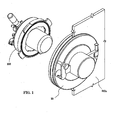
- the SLTP includes two main components - the alpha assembly 10 and the beta assembly 100.
- Figure 1 is an isometric view of the alpha and beta assemblies 10 and 100 of the sterile liquid transfer port, and can be understood in the context of Figures 5I and 5J.
- Figure 5I is an elevation view of the SLTP in the filling mode
- Figure 5J is a detailed view of the SLTP in the filling mode.
- Figure 5I depicts an SLTP system in a relevant environment, where an isolation wall 201 separates a first side 205 from a second side 204.
- the first side 205 can be a product suite having a product tank 202.
- the second side 204 can be a filling suite having filling equipment 209.
- the first side 205 can be a relatively "dirty” side, and can be classified as a Class 10,000 environment.
- the second side 204 can be a relatively "clean" side, which can be classified as a Class 100 environment.
- An SLTP system can aid in such liquid transfer.
- the alpha assembly 10 spans a transfer port 201b in an isolation window 201 a. While the alpha assembly 10 can be primarily associated with the filling suite 204 (a Class 100 environment), as depicted in Figure 5I , the alpha assembly 10 extends into the product suite 205, which is the relatively "dirty" environment such that its rear portion is exposed to the Class 10,000 environment.
- the beta assembly 100 however is exclusively associated with the product suite 205, or the "dirty" side, in various embodiments, and docks to that rear portion of the alpha assembly 10.
- the alpha assembly 10 is configured to dock with the beta assembly 100, which is demonstrated progressively from Figure 5A to Figure 5F , and is described below.
- product can be transferred from the product suite 205 to the filling suite 204 ( Figure 5I ) without breaking containment.
- the beta assembly 100 is mounted in-line with the alpha assembly 10, as depicted in Figure 5A .
- a rigid product tube 109 extends into the filling suite 204 and is ready for attachment to a sterile flexible filling hose 208.
- the sterile flexible filling hose 208 can deliver product (for example serum and vaccines) to commercially-sized containers for distribution.
- FIG 2A is an exploded view of the alpha assembly 10.
- the alpha assembly 10 has a first flange gasket 18, second flange gasket 18, a flange nut 17, an alpha flange 11 and an alpha door 16.
- the flange gasket 18 is a seal between the alpha flange 11 and the isolation window 201a. The seal prevents leakage from a first side of the isolation window 201 a to a second side of the isolation window 201 a, or the second side of the isolation window 201a to the first side of the isolation window 201a.
- a second flange gasket 18 is located on the opposite side of the isolation window 201a than that of the first flange gasket 18.
- the second flange gasket 18 also serves the purpose of preventing leakage from the product suite 205 side of the isolation window 201a into the filling suite 204 side of the isolation window 201a (depicted in Figure 5I ).
- the alpha door 16 is disposed on the alpha flange 11.
- FIG 2B is an elevation view of the alpha assembly 10.
- the alpha assembly 10 comprises an alpha flange 11 and an alpha door 16.
- the alpha door 16 opens into one side of the isolation wall, which can be the filling suite side of the isolation wall depicted in Figure 5I .
- the alpha door 16 is generally closed, unless a filling operation is in progress.
- the alpha door 16 also remains closed during sterilization, which can include sterilization of the product tank 202, such as the one depicted in Figure 5I . Sterilization generally takes place prior to initiation of a filling operation.
- Figure 2B also illustrates a latch 13 affixed to alpha door 16.
- a latch handle 14 engages with latch 13. When the latch handle 14 is in the up position, latch 13 is locked, as is the alpha door 16, in one example embodiment.
- the alpha door 16 is in a locked position whenever it is closed to avoid inadvertent contamination of clean side of the isolation wall, which can be the filling suite 204 from Figure 5I , in one embodiment.
- a mechanical latch interlock 15 can prevent improper or unwanted operation of the SLTP.
- improper operations could include: opening the alpha door 16 before the beta assembly 100 is docked with the alpha assembly 10; removing the beta assembly 100 from the alpha assembly 10 when the alpha door 16 is open; and rotating the latch handle 14 of the alpha door 16 when the alpha door 16 is open.
- Latch interlock 15 can prevent accidental opening of alpha door 16.
- the alpha door 16 can be opened when the beta assembly 100 is docked with the alpha assembly 10 due to automatic disengagement of the latch interlock 15 by the beta assembly 100.
- the alpha door 16 can then be safely opened by rotation of the latch handle 14, counter-clockwise 180°, in one embodiment, although other angles of rotation could be foreseen.
- FIG. 2B also illustrates a hinge assembly 12 comprised of a hinge 12a, a hinge pivot block 12b, and a hinge pin 12c.
- the hinge 12a is affixed to alpha door 16.
- the hinge assembly 12 provides a pivot connection between the alpha door 16 and the alpha flange 11 in a plane.
- Hinge 12a allows pivoting or rotation of the alpha door 16 around the hinge pin 12c to both open and close the alpha door 16.
- the hinge pivot block 12b acts as a support guide to maintain the alpha door 16 in horizontal alignment during rotation or pivoting and during the time it is in the open position.
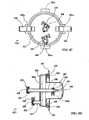
- Figure 2C is a cross-sectional view of the alpha assembly 10 of Figure 2B .
- the alpha assembly 10 is intended to maintain isolation of a first side of an isolation wall from a second side of an isolation wall, such as the product suite 205 from the filling suite 204 as depicted in Figure 5I . Such isolation is maintained regardless of whether the SLTP is in a sterilization mode or a filling mode.
- the installation of the alpha flange 11 is relatively permanent, while the beta flange 101 is often inserted and removed. Now an example structure of the alpha assembly 10 will be described.
- the alpha assembly 10 is comprised of a flange 11, alpha door 16, bayonet receiver 11a, bayonet receiver channel 11b, flange nut 17, alpha seal 19, gasket 18 on the product suite side, and gasket 18 on the filling suite side.
- the alpha seal 19 surrounds the inside of the alpha door 16 and seals the door 16 to the flange 11 upon closure.
- an isolation window 201a is installed in an opening in the isolation wall 201 and the alpha flange 11a is installed in the transfer port 201b in the isolation wall 201.
- the alpha flange 11 is inserted into a transfer port 201b (see Figure 2A ) in an isolation wall 201.
- gasket 18 on the filling suite side is put in place around the flange 11.
- the isolation window 201a is used to monitor activity in the product and/or filling suites 204 and 205.
- gasket 18 on the product suite 204 side is placed around the flange 11 and flange nut 17 is tightened down against the isolation window 201a or the isolation wall 201, as the case may be.
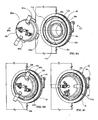
- FIG 2D is an elevational view of the alpha assembly 10 viewed from the rear.
- Alpha bayonet receiver 11a can also be referred to as a third connector set 11a, and is configured for mating engagement with a beta flange bayonet 101a when a beta assembly 100 is docked with the alpha assembly 10.
- the beta flange bayonet 101 a can be referred to as a first connector set.
- handles 104a are used to rotate the beta flange bayonets 101a counter-clockwise to releasably lock the beta flange bayonets 101a under the alpha bayonet receiver channel 11b.
- Alpha door bayonets 16a which can be referred to as a fourth connector set 16a, are also configured for mating engagement with beta cover bayonet receivers 102b, where the beta cover bayonet receivers 102b can be referred to as a second connector set 102b.
- Handles 104a are used to further rotate the docked beta assembly 100 counterclockwise to rotation of the beta flange releasably lock the alpha door bayonets 16a under the beta cover bayonet receiver channels 102c.
- Figure 2E is an isometric view of the alpha assembly 10 with the alpha door 16 closed. As previously mentioned, latch handle 14 is engaged with latch 13. When latch handle 14 is in the up position it locks latch 13 and thereby alpha door 16.
- Figure 2F is an isometric view of the alpha assembly with the alpha door open. To open the alpha door 16, latch handle 14 is rotated counter-clockwise 180°.
- FIG 3A is an isometric view of a beta assembly 100 from the front.
- the beta assembly is configured for connection with the alpha assembly from the first side of the isolation wall for sterile transfer of a product.
- the beta assembly generally has a housing having a first side 101 and second side 102 that define an interior space, where the first side 101 is a beta flange 101 and the second side 102 is a beta cover 102.
- a first connector set 101 a is defined on the first side 101 and a second connector set 102b is defined on the second side 102.
- the beta flange 101 is releasably locked to the beta cover 102.
- Flange bayonets 101a on the first side 101 of the housing are configured to engage bayonet receivers 111b of the docking cover.
- the beta assembly 100 also has a beta seal 103.
- the beta cover 102 includes a beta cover end cap 102d that provides a closed interior space 100a for the rigid product tube 109 and a rigid drain tube 107 (shown in Figure 3B ).
- the product tube 109 defines a passage from the interior space 100a to outside of the housing.
- the closed interior space 100a created by the cover end cap 102d is used in the sterilization mode.
- Sanitary fitting clamp 110 connects a flexible product hose 203 to a rigid product tube 109 for use during the sterilization process and for transfer of product during the filling process.
- the beta cover 102 is releasably locked to the beta flange by alignment of the beta cover bayonets 102a with the bayonet cover receivers 101b of the beta flange 100, followed by rotation of the beta cover bayonets 102a under the beta cover bayonet receiver channels 101c.
- Beta flange 101 comprises at least one handle, in some embodiments two handles, and brackets 104a and 104b, sanitary fitting clamp 110, and flange bayonets 101a.
- a first connector set 101a which are flange bayonets 101a, are aligned with the alpha bayonet receiver 11a during docking of the beta assembly 100 with the alpha assembly 10.
- Cover seal 103 seals the beta cover end cap 102 to the beta flange 101 when the beta cover 102 is connected to beta flange 101.
- Handles 104a are used to rotate the beta flange bayonets 101a counter-clockwise to releasably lock the beta flange bayonets 101a under the alpha bayonet receiver channels 11b.
- Alpha door bayonets 16a are configured for mating engagement with beta cover bayonet receivers 102b. Rotation of the beta flange bayonets 101a counter-clockwise also releasably locks the alpha door bayonets 16a under the beta flange bayonet receiver channels 102c.
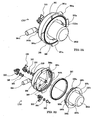
- Figure 3B is an exploded, isometric view of the beta assembly 100 from the front. In this view, the interior space 100a of the beta flange can be clearly seen.
- a first hose connection device incorporating a combination of the sanitary fitting clamp 110, the sanitary fitting cap 106, and the sanitary fitting seal 105 provides the connection between a flexible product hose 203 from the product tank 202 and the rigid product tube 109 without the use of tools.
- a second hose connection device incorporates a combination of the sanitary fitting clamp 110, sanitary fitting seal 105, and sanitary fitting cap 106, to provide a connection between a product tube 109 and a flexible filling hose 208 without the use of tools.
- a rigid drain tube 107 is shown in the interior space 100a and is combined with the sanitary fitting clamp 110, sanitary fitting seal 105, and sanitary fitting adaptor 108. It provides the connection between the interior space 100a of the beta assembly 100, the rigid drain tube 107, and the flexible steam drain hose 207.
- the rigid drain tube 107 is used during the sterilization process.
- the rigid drain tube 107 defines a passage from the interior space 100a to outside of the housing of the beta assembly 100.
- Figure 3C is an elevational view of the beta assembly from the rear.
- Figure 3D is a cross-sectional view of the beta assembly 100 of Figure 3A .
- the product port and the drain port are capped with sanitary fitting adaptors 106 for storage of the beta assembly.
- a docking cover is generally located on a first side of an isolation wall and is configured for connection with a beta assembly during a sterilization process.
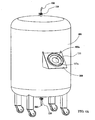
- Figure 4A is an isometric view of the product tank 202 with the docking cover 111 located on the product tank.
- the docking cover 111 may be located on a wall, bench, or other convenient place within the product suite 205.
- the tank 202 is shown with wheels to indicate that the tank 202 is movable within the product suite 205 or movable to an entirely different product suit.
- the SLTP will include multiple product tanks 202 and beta assemblies 100, yet only one alpha assembly 10.
- the beta assemblies 100 can also be located in a mobile product suite 205.
- the flexible product hose 203 is used as steam supply hose during sterilization and for transferring product to the beta assembly during filling.
- Each hose 203, 207, and 208 attaches to a sanitary fitting adaptor 108 when connected to the beta assembly 100.
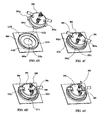
- FIG 4B is an isometric view of the beta assembly 100 aligned for docking with the docking cover 111.
- the docking cover 111 generally defines an opening to accommodate a portion of the housing 100.
- the docking cover 111 is attached to a mounting plate 200 that in turn is attached to the outside of the product tank 202.
- the beta assembly 100, beta cover 102, and the mounting plate 200 are not connected in any way to the inside of the tank 202.
- the docking cover 111 has bayonet receivers 111b, which is referred to as a fifth connector set 111b, for engagement with the first connector set 101a, or beta flange bayonets 101a, on the beta assembly 100.
- the first connector set 101 a and fifth connector set 111b can be a variety of mateable components that mate in a variety of different ways even though the connector sets described in the implementations disclosed herein are generally bayonet connections.
- the beta assembly 100 mounts to the docking cover without using any tools.
- the beta cover end cap 102d is inserted into the docking cover opening 111a, which is in alignment with the mounting plate opening 200a.
- the beta assembly After insertion of the bayonets 101a into the bayonet receivers 111b, the beta assembly, as shown in Figure 4D , is mounted to the docking cover by rotating the beta assembly counter-clockwise, using handle assemblies 104, thereby rotating the beta flange bayonets 101a in the docking cover bayonet receiver channels 111c. Sanitary fitting adaptors 108 are also shown.
- Figure 4E is an isometric view of the beta assembly with a flexible product hose 203 and a steam drain hose 207.
- the product hose 203 is connected to the product tube 109 of the beta assembly 100.
- the drain hose 207 is connected to the drain tube 107.
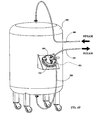
- FIGs 4F and 4G are isometric views of the product tank 202 and the beta assembly 100 docked with the docking cover 111 in the steam sterilization mode.
- Steam from a steam source is introduced into the top of the product tank 202 and passes through the flexible steam supply hose 206. Steam exits at the bottom of the tank 202 through the flexible product hose 203 and into the beta assembly 100 via rigid product tube 109. Steam continues its travel through the interior 100a of the beta assembly 100, out the rigid drain tube 107, through the flexible steam drain hose 207, and into a condensate tank for disposal (not depicted).
- FIG. 4G illustrates the detail of the beta assembly interior 100a and the hose connections to the beta assembly 100.
- a seal 103 positioned between a portion of the beta cover and a portion of the beta flange, wherein the docking cover contacts the seal when the beta assembly is mated to the docking cover.
- the docking cover supports the seal during the sterilization process.
- the combination of the beta cover, beta flange and docking cover contact the seal on all sides of the seal. Without the cover, steam pressure during the sterilization process could cause the seal to be forced out of its seat, thereby possibly causing a leak which would be a failure of the sterilization process.
- the seal 103 With the docking cover, the seal 103 is further supported and a successful sterilization process is more likely.
- the beta assembly 100 is an integral part of the sterilization process.
- the sterilization system comprises the interior surfaces of the empty (i) product tank 202, (ii) flexible product hose 203, (iii) flexible steam supply hose 206, (iv) flexible steam drain hose 207, (v) beta assembly 100, and (vi) steam source.
- the beta assembly 100 comprises the beta assembly interior 100a.
- the interior 100a comprises the (i) rigid product tube 109, (ii) beta flange 101, (iii) beta cover 102, and (iv) outlet 107a of the rigid drain tube.
- Exposure to elevated temperature and pressure for an extended period ensures sterilization of all of the internal surfaces of the sterilization system.
- the alpha door 16 of the alpha assembly 10 is closed and sealed while sterilization takes place.
- Saturated steam at the elevated temperature and pressure is circulated through the sterilization system.
- the saturated steam is injected through the system at a working pressure of about 36.3 psi (depending upon the product type).
- the saturated steam temperature is about 150° Centigrade (depending upon the product type) when it enters the system.
- the required level of sterilization is maintained by continually monitoring the steam temperature at the rigid drain tube 107 to ensure that the steam temperature at the drain tube 107 remains at or about 150° Centigrade (depending upon the product type).
- condensate is removed from the system by injecting hot, dry air through the system.
- the beta assembly 100 Upon completion of the sterilization process the beta assembly 100 is undocked from the docking cover 111 and docked with the alpha assembly 10.
- the flexible product hose 203 was connected at the rear of the beta assembly 100 to the rigid product tube 109.
- the flexible product hose 203 must remain connected.
- the flexible steam drain hose 207 and the sanitary fitting adaptor 108 must be removed from the rigid drain tube 107 and replaced with the sanitary fitting cap 106.
- Figure 5A is an isometric view of the beta and alpha assemblies 100 and 10 with the beta assembly aligned for docking with the alpha assembly.
- a first connector set 101a on the first side 100 and a second connector set 102b on the second side 102 visible in Figure 3A , for example), where the first connector set 101a is configured to be mated with a third connector 11a set on the alpha assembly 10 and the second connector set 102b is configured to be mated with a fourth connector set 16a on the alpha assembly 10.
- the first connector set 101 a can also be configured to be mated with a fifth connector set on a product tank as described above in the discussion of Figure 4B-4E .
- FIG. 5B is an isometric view of the beta assembly with the beta flange bayonets 101 a received in the alpha bayonet receivers 11a.
- Those skilled in the art will appreciate that a variety of other types of connections can be employed and still remain in the scope of the technology disclosed herein.
- the beta flange bayonets 101a are then rotated counter-clockwise under the alpha bayonet receiver channels 11b.
- the first 101a and third 11b connector sets can be configured to engage and disengage upon rotation with respect to each other.
- the second and fourth connector sets can be configured to engage and disengage upon rotation with respect to each other, although other means of engaging and disengaging the first and third connector sets can be employed.
- Figure 5D is an isometric view of the alpha and beta assemblies 10 and 100 with the alpha door 16 latched.
- Figure 5E is an isometric view of the alpha and beta assemblies 10 and 100 with the alpha door 16 unlatched.
- Figure 5F is an isometric view of the alpha and beta assemblies with the alpha door 16 open, thereby allowing access to the sanitary fitting adaptor 108 for attachment to the flexible filling hose 208.
- Figure 5G is an isometric view of alpha and beta assemblies 10 and 100 having one rigid product tube 109.
- Figure 5H is an isometric view of the alpha and beta assemblies 10 and 100 having two rigid product tubes 109.
- two substances may be differentially metered from separate product tanks into the respective product tubes 109 for combination into a two-part medicant. In this manner any number of individual product tubes may be employed to mix the various substances together.
- the rear of the beta cover 102 is captured by the alpha door 16 when the beta assembly 100 is engaged with the alpha assembly 10.
- the flexible filling hose 208 extends into the filling suite 204.
- Figure 5I is an elevation view of the SLTP in the filling mode.
- Figure 5J is a detailed view of the SLTP in the filling mode. Transfer of product to the filling suite 204 may be accomplished by pumping, gravity feed, or pressurization of the product tank 202. Typically, product is stored under pressure.
- the alpha assembly 10 and the beta assembly 100 implement the process of uncontaminated transfer of sterile liquid product.
- the product suite 205 is always isolated from the filling suite 204 by an alpha assembly 10.
- the alpha assembly 10 has an interface for docking the beta assembly 100.
- the alpha assembly 10 is configured so the alpha door 16 cannot be opened without the beta assembly 100 docked to the alpha assembly 10. This ensures that the product suite 205 will not contaminate the filling suite 204.
- the flexible steam supply hose 206 is shut-off from the product tank 202
- the flexible steam drain hose 207 is shut-off from the sanitary fitting adaptor 108 on the beta assembly 100, the adaptor is removed from the beta assembly, and the adaptor 108 is replaced with a plug
- the beta assembly 100, with its attached flexible product hose 203 is undocked from the docking cover 111 and docked with the alpha assembly 10.
- the product tank 202 is filled with product.
- Rotating the beta assembly 100 and docking it to the alpha assembly 10 causes four events to simultaneously occur.
- Second, docking causes the beta cover 102 to become detached from the beta flange.
- the docking process disengages the interlock mechanism on the alpha assembly 10 thus enabling the alpha door 16 to be safely opened.
- the beta cover 102 becomes separated from the beta flange 101 thereby exposing the sterile rigid product tube 109, sterile sanitary fitting seal 105, sterile sanitary fitting adaptor 108, and sterile sanitary fitting clamp 110 to the clean filling suite 204.
- Attachment of a flexible filling hose 208 enables transfer of the sterile liquid without contamination from the product suite 205 into the filling suite 204 and subsequently into the filling equipment 209.
Landscapes
- Health & Medical Sciences (AREA)
- Epidemiology (AREA)
- Life Sciences & Earth Sciences (AREA)
- Animal Behavior & Ethology (AREA)
- General Health & Medical Sciences (AREA)
- Public Health (AREA)
- Veterinary Medicine (AREA)
- Apparatus For Disinfection Or Sterilisation (AREA)
- Quick-Acting Or Multi-Walled Pipe Joints (AREA)
Applications Claiming Priority (2)
| Application Number | Priority Date | Filing Date | Title |
|---|---|---|---|
| US12/245,603 US20100084045A1 (en) | 2008-10-03 | 2008-10-03 | Sterile liquid transfer port |
| EP09736351.9A EP2379120B1 (en) | 2008-10-03 | 2009-10-05 | Sterile liquid transfer port |
Related Parent Applications (2)
| Application Number | Title | Priority Date | Filing Date |
|---|---|---|---|
| EP09736351.9A Division EP2379120B1 (en) | 2008-10-03 | 2009-10-05 | Sterile liquid transfer port |
| EP09736351.9A Division-Into EP2379120B1 (en) | 2008-10-03 | 2009-10-05 | Sterile liquid transfer port |
Publications (2)
| Publication Number | Publication Date |
|---|---|
| EP2735317A1 EP2735317A1 (en) | 2014-05-28 |
| EP2735317B1 true EP2735317B1 (en) | 2015-12-30 |
Family
ID=41404106
Family Applications (2)
| Application Number | Title | Priority Date | Filing Date |
|---|---|---|---|
| EP14155832.0A Not-in-force EP2735317B1 (en) | 2008-10-03 | 2009-10-05 | Sterile liquid transfer port |
| EP09736351.9A Not-in-force EP2379120B1 (en) | 2008-10-03 | 2009-10-05 | Sterile liquid transfer port |
Family Applications After (1)
| Application Number | Title | Priority Date | Filing Date |
|---|---|---|---|
| EP09736351.9A Not-in-force EP2379120B1 (en) | 2008-10-03 | 2009-10-05 | Sterile liquid transfer port |
Country Status (4)
| Country | Link |
|---|---|
| US (2) | US20100084045A1 (enExample) |
| EP (2) | EP2735317B1 (enExample) |
| JP (1) | JP5753088B2 (enExample) |
| WO (1) | WO2010040126A2 (enExample) |
Families Citing this family (9)
| Publication number | Priority date | Publication date | Assignee | Title |
|---|---|---|---|---|
| US20100084045A1 (en) | 2008-10-03 | 2010-04-08 | Adams Richard H | Sterile liquid transfer port |
| CL2010000644A1 (es) * | 2010-06-18 | 2011-01-14 | Andesocean S A | Equipo de estirilizacion utilizado en la carga de envases para el transporte de productos en forma aseptica, que comprende una caldera portatil, sistemas de lavado previo mediante quimicos, agua de circulacion y agua caliente, una bomba para lavado, vapor de agua para esterilizado y mangueras flexibles; y metodo de lavado. |
| FR3016794B1 (fr) * | 2014-01-24 | 2018-03-02 | Pierre Fabre Dermo-Cosmetique | Dispositif et procede pour le transfert d'un produit sterile entre deux conteneurs |
| GB2542123A (en) * | 2015-09-08 | 2017-03-15 | Chargepoint Tech Ltd | Transfer device |
| BE1023860B1 (fr) * | 2016-02-18 | 2017-08-22 | Aseptic Technologies S.A. | Système de connexion |
| DE102020102765A1 (de) * | 2020-02-04 | 2021-08-05 | Groninger & Co. Gmbh | Verfahren zum Transferieren zumindest einer Füllnadel einer Anzahl von Füllnadeln in einen aseptischen Isolator |
| DE102020124826A1 (de) | 2020-09-23 | 2022-03-24 | Syntegon Technology Gmbh | Beta-Komponente eines Transfersystems für einen sterilen Isolationsbereich, steriler Isolationsbereich, aseptische Abfüllanlage sowie ein Verfahren zum Betrieb einer derartigen Abfüllanlage |
| DE102024103510A1 (de) * | 2024-02-08 | 2025-08-14 | Syntegon Technology Gmbh | Transfersystem zur Verwendung in einem pharmazeutischen Barrieresystem, insbesondere einem Isolator, Beta-Komponente zur Verwendung in einem Transfersystem, Barrieresystem, insbesondere Isolator und Produktionsanlage |
| CN119218472B (zh) * | 2024-11-15 | 2025-09-26 | 四川科伦药业股份有限公司 | 一种双蝶阀无菌药物转移系统及无菌药物转移方法 |
Family Cites Families (11)
| Publication number | Priority date | Publication date | Assignee | Title |
|---|---|---|---|---|
| US4347877A (en) | 1980-04-21 | 1982-09-07 | Jakob Hoiss | Apparatus for aseptically discharging flowable substances |
| GB2237816A (en) | 1989-11-09 | 1991-05-15 | Cambridge Isolation Tech | Isolator transfer containers |
| GB9325667D0 (en) * | 1993-12-15 | 1994-02-16 | Total Process Containment Ltd | Aseptic liquid barrier transfer coupling |
| US5460439A (en) * | 1994-01-07 | 1995-10-24 | Delaware Capital Formation, Inc. | Sealed transfer system |
| US5523519A (en) * | 1994-07-14 | 1996-06-04 | Delaware Capital Formation, Inc. | System for facilitating safe transfer of hazardous material |
| US5662581A (en) * | 1995-01-05 | 1997-09-02 | Delaware Capital Formation, Inc. | Easily sterilizable glove system |
| FR2735201B1 (fr) * | 1995-06-08 | 1997-08-29 | Calhene | Couvercle a placer sur une porte d'un recipient a steriliser |
| US5892200A (en) * | 1996-09-19 | 1999-04-06 | The Boc Group, Inc. | Transfer port system |
| US7044347B1 (en) * | 2003-03-06 | 2006-05-16 | Fabio Pedrini | Interlock arrangement for an extendible and retractable stabilizer for use in a bicycle carrier |
| US7690406B2 (en) * | 2005-10-05 | 2010-04-06 | Delaware Capital Formation, Inc. | Hazardous waste transfer port system and storage container |
| US20100084045A1 (en) | 2008-10-03 | 2010-04-08 | Adams Richard H | Sterile liquid transfer port |
-
2008
- 2008-10-03 US US12/245,603 patent/US20100084045A1/en not_active Abandoned
-
2009
- 2009-10-05 WO PCT/US2009/059532 patent/WO2010040126A2/en not_active Ceased
- 2009-10-05 US US13/122,222 patent/US9198992B2/en active Active
- 2009-10-05 EP EP14155832.0A patent/EP2735317B1/en not_active Not-in-force
- 2009-10-05 JP JP2011530289A patent/JP5753088B2/ja active Active
- 2009-10-05 EP EP09736351.9A patent/EP2379120B1/en not_active Not-in-force
Also Published As
| Publication number | Publication date |
|---|---|
| EP2379120A2 (en) | 2011-10-26 |
| WO2010040126A3 (en) | 2010-09-10 |
| EP2735317A1 (en) | 2014-05-28 |
| US20100084045A1 (en) | 2010-04-08 |
| EP2379120B1 (en) | 2014-04-23 |
| JP2012504475A (ja) | 2012-02-23 |
| US20110256021A1 (en) | 2011-10-20 |
| WO2010040126A2 (en) | 2010-04-08 |
| JP5753088B2 (ja) | 2015-07-22 |
| US9198992B2 (en) | 2015-12-01 |
Similar Documents
| Publication | Publication Date | Title |
|---|---|---|
| EP2379120B1 (en) | Sterile liquid transfer port | |
| US8950624B2 (en) | Externally operated alpha port system for use with a rapid transfer port | |
| CN101945673B (zh) | 用于药用容器的传输储器 | |
| US9687417B2 (en) | Compounder apparatus | |
| CN113044263B (zh) | 用于在受控环境外壳中自动地执行流体处理制程的方法 | |
| AU2014307860B2 (en) | Container for transporting and storing a liquid | |
| JP3246037U (ja) | 自動薬物調合器のためのドライ・ディスコネクト・カートリッジおよびデュアル・ルーメン針 | |
| US20230364619A1 (en) | Beta component of a transfer system for a sterile isolation region, sterile isolation region, aseptic filling system, and a method of operating such a filling system | |
| JPH06321360A (ja) | 重力で流出する製品の移送装置及び移送方法 | |
| US6969497B2 (en) | Decontamination system for use with a rapid transfer port | |
| US20160185494A1 (en) | Container for Transporting and Storing a Liquid | |
| US11286076B2 (en) | Contained transfer of sterile or aseptic materials | |
| WO1994015864A1 (en) | Process material transfer | |
| AU2001291764A1 (en) | System for providing communication between the interior and the exterior of a compartment | |
| ZA200301213B (en) | System for providing communication between the interior and the exterior of a compartment. | |
| CN207860623U (zh) | 连续密闭出料套袋系统 | |
| KR101376119B1 (ko) | 클린룸용 물품전달장치 | |
| Lechiffre et al. | Rapid transfer port system: the key element for contained enclosures in advanced aseptic processing | |
| Partington | Aseptic processing transfer systems | |
| Lechiffre et al. | 9 Rapid transfer port system: the key element for contained enclosures in advanced | |
| CN108190115A (zh) | 连续密闭出料套袋系统及其套袋更换方法 | |
| WO2002080990A1 (en) | Apparatus for sterile transfer | |
| HK1098113B (en) | Container with valve assembly for filling and dispensing substances, and apparatus and method for filling | |
| HK1098113A1 (zh) | 用於填充和分配物质的具有阀组件的容器以及填充装置和方法 | |
| HK1057418B (en) | System for providing communication between the interior and the exterior of a compartment |
Legal Events
| Date | Code | Title | Description |
|---|---|---|---|
| PUAI | Public reference made under article 153(3) epc to a published international application that has entered the european phase |
Free format text: ORIGINAL CODE: 0009012 |
|
| 17P | Request for examination filed |
Effective date: 20140219 |
|
| AC | Divisional application: reference to earlier application |
Ref document number: 2379120 Country of ref document: EP Kind code of ref document: P |
|
| AK | Designated contracting states |
Kind code of ref document: A1 Designated state(s): AT BE BG CH CY CZ DE DK EE ES FI FR GB GR HR HU IE IS IT LI LT LU LV MC MK MT NL NO PL PT RO SE SI SK SM TR |
|
| GRAJ | Information related to disapproval of communication of intention to grant by the applicant or resumption of examination proceedings by the epo deleted |
Free format text: ORIGINAL CODE: EPIDOSDIGR1 |
|
| GRAP | Despatch of communication of intention to grant a patent |
Free format text: ORIGINAL CODE: EPIDOSNIGR1 |
|
| INTG | Intention to grant announced |
Effective date: 20150619 |
|
| GRAS | Grant fee paid |
Free format text: ORIGINAL CODE: EPIDOSNIGR3 |
|
| GRAA | (expected) grant |
Free format text: ORIGINAL CODE: 0009210 |
|
| AC | Divisional application: reference to earlier application |
Ref document number: 2379120 Country of ref document: EP Kind code of ref document: P |
|
| AK | Designated contracting states |
Kind code of ref document: B1 Designated state(s): AT BE BG CH CY CZ DE DK EE ES FI FR GB GR HR HU IE IS IT LI LT LU LV MC MK MT NL NO PL PT RO SE SI SK SM TR |
|
| REG | Reference to a national code |
Ref country code: GB Ref legal event code: FG4D |
|
| REG | Reference to a national code |
Ref country code: CH Ref legal event code: EP |
|
| REG | Reference to a national code |
Ref country code: AT Ref legal event code: REF Ref document number: 767161 Country of ref document: AT Kind code of ref document: T Effective date: 20160115 |
|
| REG | Reference to a national code |
Ref country code: IE Ref legal event code: FG4D |
|
| REG | Reference to a national code |
Ref country code: DE Ref legal event code: R096 Ref document number: 602009035491 Country of ref document: DE |
|
| REG | Reference to a national code |
Ref country code: LT Ref legal event code: MG4D |
|
| PG25 | Lapsed in a contracting state [announced via postgrant information from national office to epo] |
Ref country code: HR Free format text: LAPSE BECAUSE OF FAILURE TO SUBMIT A TRANSLATION OF THE DESCRIPTION OR TO PAY THE FEE WITHIN THE PRESCRIBED TIME-LIMIT Effective date: 20151230 Ref country code: LT Free format text: LAPSE BECAUSE OF FAILURE TO SUBMIT A TRANSLATION OF THE DESCRIPTION OR TO PAY THE FEE WITHIN THE PRESCRIBED TIME-LIMIT Effective date: 20151230 Ref country code: NO Free format text: LAPSE BECAUSE OF FAILURE TO SUBMIT A TRANSLATION OF THE DESCRIPTION OR TO PAY THE FEE WITHIN THE PRESCRIBED TIME-LIMIT Effective date: 20160330 |
|
| REG | Reference to a national code |
Ref country code: NL Ref legal event code: MP Effective date: 20151230 |
|
| REG | Reference to a national code |
Ref country code: AT Ref legal event code: MK05 Ref document number: 767161 Country of ref document: AT Kind code of ref document: T Effective date: 20151230 |
|
| PG25 | Lapsed in a contracting state [announced via postgrant information from national office to epo] |
Ref country code: LV Free format text: LAPSE BECAUSE OF FAILURE TO SUBMIT A TRANSLATION OF THE DESCRIPTION OR TO PAY THE FEE WITHIN THE PRESCRIBED TIME-LIMIT Effective date: 20151230 Ref country code: FI Free format text: LAPSE BECAUSE OF FAILURE TO SUBMIT A TRANSLATION OF THE DESCRIPTION OR TO PAY THE FEE WITHIN THE PRESCRIBED TIME-LIMIT Effective date: 20151230 Ref country code: SE Free format text: LAPSE BECAUSE OF FAILURE TO SUBMIT A TRANSLATION OF THE DESCRIPTION OR TO PAY THE FEE WITHIN THE PRESCRIBED TIME-LIMIT Effective date: 20151230 Ref country code: GR Free format text: LAPSE BECAUSE OF FAILURE TO SUBMIT A TRANSLATION OF THE DESCRIPTION OR TO PAY THE FEE WITHIN THE PRESCRIBED TIME-LIMIT Effective date: 20160331 |
|
| PG25 | Lapsed in a contracting state [announced via postgrant information from national office to epo] |
Ref country code: NL Free format text: LAPSE BECAUSE OF FAILURE TO SUBMIT A TRANSLATION OF THE DESCRIPTION OR TO PAY THE FEE WITHIN THE PRESCRIBED TIME-LIMIT Effective date: 20151230 |
|
| PG25 | Lapsed in a contracting state [announced via postgrant information from national office to epo] |
Ref country code: ES Free format text: LAPSE BECAUSE OF FAILURE TO SUBMIT A TRANSLATION OF THE DESCRIPTION OR TO PAY THE FEE WITHIN THE PRESCRIBED TIME-LIMIT Effective date: 20151230 Ref country code: IT Free format text: LAPSE BECAUSE OF FAILURE TO SUBMIT A TRANSLATION OF THE DESCRIPTION OR TO PAY THE FEE WITHIN THE PRESCRIBED TIME-LIMIT Effective date: 20151230 Ref country code: CZ Free format text: LAPSE BECAUSE OF FAILURE TO SUBMIT A TRANSLATION OF THE DESCRIPTION OR TO PAY THE FEE WITHIN THE PRESCRIBED TIME-LIMIT Effective date: 20151230 |
|
| PG25 | Lapsed in a contracting state [announced via postgrant information from national office to epo] |
Ref country code: EE Free format text: LAPSE BECAUSE OF FAILURE TO SUBMIT A TRANSLATION OF THE DESCRIPTION OR TO PAY THE FEE WITHIN THE PRESCRIBED TIME-LIMIT Effective date: 20151230 Ref country code: AT Free format text: LAPSE BECAUSE OF FAILURE TO SUBMIT A TRANSLATION OF THE DESCRIPTION OR TO PAY THE FEE WITHIN THE PRESCRIBED TIME-LIMIT Effective date: 20151230 Ref country code: IS Free format text: LAPSE BECAUSE OF FAILURE TO SUBMIT A TRANSLATION OF THE DESCRIPTION OR TO PAY THE FEE WITHIN THE PRESCRIBED TIME-LIMIT Effective date: 20160430 Ref country code: SM Free format text: LAPSE BECAUSE OF FAILURE TO SUBMIT A TRANSLATION OF THE DESCRIPTION OR TO PAY THE FEE WITHIN THE PRESCRIBED TIME-LIMIT Effective date: 20151230 Ref country code: RO Free format text: LAPSE BECAUSE OF FAILURE TO SUBMIT A TRANSLATION OF THE DESCRIPTION OR TO PAY THE FEE WITHIN THE PRESCRIBED TIME-LIMIT Effective date: 20151230 Ref country code: SK Free format text: LAPSE BECAUSE OF FAILURE TO SUBMIT A TRANSLATION OF THE DESCRIPTION OR TO PAY THE FEE WITHIN THE PRESCRIBED TIME-LIMIT Effective date: 20151230 Ref country code: PT Free format text: LAPSE BECAUSE OF FAILURE TO SUBMIT A TRANSLATION OF THE DESCRIPTION OR TO PAY THE FEE WITHIN THE PRESCRIBED TIME-LIMIT Effective date: 20160502 Ref country code: PL Free format text: LAPSE BECAUSE OF FAILURE TO SUBMIT A TRANSLATION OF THE DESCRIPTION OR TO PAY THE FEE WITHIN THE PRESCRIBED TIME-LIMIT Effective date: 20151230 |
|
| REG | Reference to a national code |
Ref country code: DE Ref legal event code: R097 Ref document number: 602009035491 Country of ref document: DE |
|
| REG | Reference to a national code |
Ref country code: FR Ref legal event code: PLFP Year of fee payment: 8 |
|
| PG25 | Lapsed in a contracting state [announced via postgrant information from national office to epo] |
Ref country code: DK Free format text: LAPSE BECAUSE OF FAILURE TO SUBMIT A TRANSLATION OF THE DESCRIPTION OR TO PAY THE FEE WITHIN THE PRESCRIBED TIME-LIMIT Effective date: 20151230 |
|
| PLBE | No opposition filed within time limit |
Free format text: ORIGINAL CODE: 0009261 |
|
| STAA | Information on the status of an ep patent application or granted ep patent |
Free format text: STATUS: NO OPPOSITION FILED WITHIN TIME LIMIT |
|
| 26N | No opposition filed |
Effective date: 20161003 |
|
| PG25 | Lapsed in a contracting state [announced via postgrant information from national office to epo] |
Ref country code: BE Free format text: LAPSE BECAUSE OF FAILURE TO SUBMIT A TRANSLATION OF THE DESCRIPTION OR TO PAY THE FEE WITHIN THE PRESCRIBED TIME-LIMIT Effective date: 20151230 |
|
| PG25 | Lapsed in a contracting state [announced via postgrant information from national office to epo] |
Ref country code: SI Free format text: LAPSE BECAUSE OF FAILURE TO SUBMIT A TRANSLATION OF THE DESCRIPTION OR TO PAY THE FEE WITHIN THE PRESCRIBED TIME-LIMIT Effective date: 20151230 |
|
| REG | Reference to a national code |
Ref country code: CH Ref legal event code: PL |
|
| REG | Reference to a national code |
Ref country code: IE Ref legal event code: MM4A |
|
| PG25 | Lapsed in a contracting state [announced via postgrant information from national office to epo] |
Ref country code: LI Free format text: LAPSE BECAUSE OF NON-PAYMENT OF DUE FEES Effective date: 20161031 Ref country code: CH Free format text: LAPSE BECAUSE OF NON-PAYMENT OF DUE FEES Effective date: 20161031 |
|
| PG25 | Lapsed in a contracting state [announced via postgrant information from national office to epo] |
Ref country code: LU Free format text: LAPSE BECAUSE OF NON-PAYMENT OF DUE FEES Effective date: 20161005 |
|
| REG | Reference to a national code |
Ref country code: FR Ref legal event code: PLFP Year of fee payment: 9 |
|
| PG25 | Lapsed in a contracting state [announced via postgrant information from national office to epo] |
Ref country code: IE Free format text: LAPSE BECAUSE OF NON-PAYMENT OF DUE FEES Effective date: 20161005 |
|
| PG25 | Lapsed in a contracting state [announced via postgrant information from national office to epo] |
Ref country code: CY Free format text: LAPSE BECAUSE OF FAILURE TO SUBMIT A TRANSLATION OF THE DESCRIPTION OR TO PAY THE FEE WITHIN THE PRESCRIBED TIME-LIMIT Effective date: 20151230 Ref country code: HU Free format text: LAPSE BECAUSE OF FAILURE TO SUBMIT A TRANSLATION OF THE DESCRIPTION OR TO PAY THE FEE WITHIN THE PRESCRIBED TIME-LIMIT; INVALID AB INITIO Effective date: 20091005 |
|
| PG25 | Lapsed in a contracting state [announced via postgrant information from national office to epo] |
Ref country code: MT Free format text: LAPSE BECAUSE OF NON-PAYMENT OF DUE FEES Effective date: 20161031 Ref country code: MK Free format text: LAPSE BECAUSE OF FAILURE TO SUBMIT A TRANSLATION OF THE DESCRIPTION OR TO PAY THE FEE WITHIN THE PRESCRIBED TIME-LIMIT Effective date: 20151230 Ref country code: MC Free format text: LAPSE BECAUSE OF FAILURE TO SUBMIT A TRANSLATION OF THE DESCRIPTION OR TO PAY THE FEE WITHIN THE PRESCRIBED TIME-LIMIT Effective date: 20151230 |
|
| PG25 | Lapsed in a contracting state [announced via postgrant information from national office to epo] |
Ref country code: BG Free format text: LAPSE BECAUSE OF FAILURE TO SUBMIT A TRANSLATION OF THE DESCRIPTION OR TO PAY THE FEE WITHIN THE PRESCRIBED TIME-LIMIT Effective date: 20151230 |
|
| REG | Reference to a national code |
Ref country code: FR Ref legal event code: PLFP Year of fee payment: 10 |
|
| PG25 | Lapsed in a contracting state [announced via postgrant information from national office to epo] |
Ref country code: TR Free format text: LAPSE BECAUSE OF FAILURE TO SUBMIT A TRANSLATION OF THE DESCRIPTION OR TO PAY THE FEE WITHIN THE PRESCRIBED TIME-LIMIT Effective date: 20151230 |
|
| PGFP | Annual fee paid to national office [announced via postgrant information from national office to epo] |
Ref country code: GB Payment date: 20231027 Year of fee payment: 15 |
|
| PGFP | Annual fee paid to national office [announced via postgrant information from national office to epo] |
Ref country code: FR Payment date: 20231025 Year of fee payment: 15 Ref country code: DE Payment date: 20231027 Year of fee payment: 15 |
|
| REG | Reference to a national code |
Ref country code: DE Ref legal event code: R081 Ref document number: 602009035491 Country of ref document: DE Owner name: STABILUS MOTION CONTROLS GMBH, DE Free format text: FORMER OWNER: DELAWARE CAPITAL FORMATION, INC., WILMINGTON, DEL., US |
|
| REG | Reference to a national code |
Ref country code: GB Ref legal event code: 732E Free format text: REGISTERED BETWEEN 20241128 AND 20241204 |
|
| REG | Reference to a national code |
Ref country code: DE Ref legal event code: R119 Ref document number: 602009035491 Country of ref document: DE |
|
| GBPC | Gb: european patent ceased through non-payment of renewal fee |
Effective date: 20241005 |
|
| PG25 | Lapsed in a contracting state [announced via postgrant information from national office to epo] |
Ref country code: DE Free format text: LAPSE BECAUSE OF NON-PAYMENT OF DUE FEES Effective date: 20250501 |
|
| PG25 | Lapsed in a contracting state [announced via postgrant information from national office to epo] |
Ref country code: GB Free format text: LAPSE BECAUSE OF NON-PAYMENT OF DUE FEES Effective date: 20241005 |
|
| PG25 | Lapsed in a contracting state [announced via postgrant information from national office to epo] |
Ref country code: FR Free format text: LAPSE BECAUSE OF NON-PAYMENT OF DUE FEES Effective date: 20241031 |