EP2723356B1 - Delivery of viral agents - Google Patents
Delivery of viral agents Download PDFInfo
- Publication number
- EP2723356B1 EP2723356B1 EP12732609.8A EP12732609A EP2723356B1 EP 2723356 B1 EP2723356 B1 EP 2723356B1 EP 12732609 A EP12732609 A EP 12732609A EP 2723356 B1 EP2723356 B1 EP 2723356B1
- Authority
- EP
- European Patent Office
- Prior art keywords
- plant material
- bacteriophage
- particles
- food
- wound
- Prior art date
- Legal status (The legal status is an assumption and is not a legal conclusion. Google has not performed a legal analysis and makes no representation as to the accuracy of the status listed.)
- Active
Links
Images




Classifications
-
- A—HUMAN NECESSITIES
- A61—MEDICAL OR VETERINARY SCIENCE; HYGIENE
- A61K—PREPARATIONS FOR MEDICAL, DENTAL OR TOILETRY PURPOSES
- A61K35/00—Medicinal preparations containing materials or reaction products thereof with undetermined constitution
- A61K35/66—Microorganisms or materials therefrom
- A61K35/76—Viruses; Subviral particles; Bacteriophages
-
- A—HUMAN NECESSITIES
- A01—AGRICULTURE; FORESTRY; ANIMAL HUSBANDRY; HUNTING; TRAPPING; FISHING
- A01N—PRESERVATION OF BODIES OF HUMANS OR ANIMALS OR PLANTS OR PARTS THEREOF; BIOCIDES, e.g. AS DISINFECTANTS, AS PESTICIDES OR AS HERBICIDES; PEST REPELLANTS OR ATTRACTANTS; PLANT GROWTH REGULATORS
- A01N37/00—Biocides, pest repellants or attractants, or plant growth regulators containing organic compounds containing a carbon atom having three bonds to hetero atoms with at the most two bonds to halogen, e.g. carboxylic acids
- A01N37/44—Biocides, pest repellants or attractants, or plant growth regulators containing organic compounds containing a carbon atom having three bonds to hetero atoms with at the most two bonds to halogen, e.g. carboxylic acids containing at least one carboxylic group or a thio analogue, or a derivative thereof, and a nitrogen atom attached to the same carbon skeleton by a single or double bond, this nitrogen atom not being a member of a derivative or of a thio analogue of a carboxylic group, e.g. amino-carboxylic acids
- A01N37/46—N-acyl derivatives
-
- A—HUMAN NECESSITIES
- A01—AGRICULTURE; FORESTRY; ANIMAL HUSBANDRY; HUNTING; TRAPPING; FISHING
- A01N—PRESERVATION OF BODIES OF HUMANS OR ANIMALS OR PLANTS OR PARTS THEREOF; BIOCIDES, e.g. AS DISINFECTANTS, AS PESTICIDES OR AS HERBICIDES; PEST REPELLANTS OR ATTRACTANTS; PLANT GROWTH REGULATORS
- A01N63/00—Biocides, pest repellants or attractants, or plant growth regulators containing microorganisms, viruses, microbial fungi, animals or substances produced by, or obtained from, microorganisms, viruses, microbial fungi or animals, e.g. enzymes or fermentates
- A01N63/40—Viruses, e.g. bacteriophages
-
- A—HUMAN NECESSITIES
- A23—FOODS OR FOODSTUFFS; TREATMENT THEREOF, NOT COVERED BY OTHER CLASSES
- A23K—FODDER
- A23K10/00—Animal feeding-stuffs
- A23K10/10—Animal feeding-stuffs obtained by microbiological or biochemical processes
-
- A—HUMAN NECESSITIES
- A23—FOODS OR FOODSTUFFS; TREATMENT THEREOF, NOT COVERED BY OTHER CLASSES
- A23K—FODDER
- A23K10/00—Animal feeding-stuffs
- A23K10/10—Animal feeding-stuffs obtained by microbiological or biochemical processes
- A23K10/16—Addition of microorganisms or extracts thereof, e.g. single-cell proteins, to feeding-stuff compositions
- A23K10/18—Addition of microorganisms or extracts thereof, e.g. single-cell proteins, to feeding-stuff compositions of live microorganisms
-
- A—HUMAN NECESSITIES
- A23—FOODS OR FOODSTUFFS; TREATMENT THEREOF, NOT COVERED BY OTHER CLASSES
- A23K—FODDER
- A23K10/00—Animal feeding-stuffs
- A23K10/30—Animal feeding-stuffs from material of plant origin, e.g. roots, seeds or hay; from material of fungal origin, e.g. mushrooms
-
- A—HUMAN NECESSITIES
- A23—FOODS OR FOODSTUFFS; TREATMENT THEREOF, NOT COVERED BY OTHER CLASSES
- A23K—FODDER
- A23K50/00—Feeding-stuffs specially adapted for particular animals
- A23K50/70—Feeding-stuffs specially adapted for particular animals for birds
-
- A—HUMAN NECESSITIES
- A23—FOODS OR FOODSTUFFS; TREATMENT THEREOF, NOT COVERED BY OTHER CLASSES
- A23K—FODDER
- A23K50/00—Feeding-stuffs specially adapted for particular animals
- A23K50/70—Feeding-stuffs specially adapted for particular animals for birds
- A23K50/75—Feeding-stuffs specially adapted for particular animals for birds for poultry
-
- A—HUMAN NECESSITIES
- A61—MEDICAL OR VETERINARY SCIENCE; HYGIENE
- A61K—PREPARATIONS FOR MEDICAL, DENTAL OR TOILETRY PURPOSES
- A61K35/00—Medicinal preparations containing materials or reaction products thereof with undetermined constitution
- A61K35/66—Microorganisms or materials therefrom
- A61K35/76—Viruses; Subviral particles; Bacteriophages
- A61K35/768—Oncolytic viruses not provided for in groups A61K35/761 - A61K35/766
-
- A—HUMAN NECESSITIES
- A61—MEDICAL OR VETERINARY SCIENCE; HYGIENE
- A61L—METHODS OR APPARATUS FOR STERILISING MATERIALS OR OBJECTS IN GENERAL; DISINFECTION, STERILISATION OR DEODORISATION OF AIR; CHEMICAL ASPECTS OF BANDAGES, DRESSINGS, ABSORBENT PADS OR SURGICAL ARTICLES; MATERIALS FOR BANDAGES, DRESSINGS, ABSORBENT PADS OR SURGICAL ARTICLES
- A61L15/00—Chemical aspects of, or use of materials for, bandages, dressings or absorbent pads
- A61L15/16—Bandages, dressings or absorbent pads for physiological fluids such as urine or blood, e.g. sanitary towels, tampons
- A61L15/36—Bandages, dressings or absorbent pads for physiological fluids such as urine or blood, e.g. sanitary towels, tampons containing microorganisms
-
- A—HUMAN NECESSITIES
- A61—MEDICAL OR VETERINARY SCIENCE; HYGIENE
- A61L—METHODS OR APPARATUS FOR STERILISING MATERIALS OR OBJECTS IN GENERAL; DISINFECTION, STERILISATION OR DEODORISATION OF AIR; CHEMICAL ASPECTS OF BANDAGES, DRESSINGS, ABSORBENT PADS OR SURGICAL ARTICLES; MATERIALS FOR BANDAGES, DRESSINGS, ABSORBENT PADS OR SURGICAL ARTICLES
- A61L15/00—Chemical aspects of, or use of materials for, bandages, dressings or absorbent pads
- A61L15/16—Bandages, dressings or absorbent pads for physiological fluids such as urine or blood, e.g. sanitary towels, tampons
- A61L15/42—Use of materials characterised by their function or physical properties
- A61L15/44—Medicaments
-
- A—HUMAN NECESSITIES
- A61—MEDICAL OR VETERINARY SCIENCE; HYGIENE
- A61P—SPECIFIC THERAPEUTIC ACTIVITY OF CHEMICAL COMPOUNDS OR MEDICINAL PREPARATIONS
- A61P1/00—Drugs for disorders of the alimentary tract or the digestive system
-
- A—HUMAN NECESSITIES
- A61—MEDICAL OR VETERINARY SCIENCE; HYGIENE
- A61P—SPECIFIC THERAPEUTIC ACTIVITY OF CHEMICAL COMPOUNDS OR MEDICINAL PREPARATIONS
- A61P31/00—Antiinfectives, i.e. antibiotics, antiseptics, chemotherapeutics
- A61P31/04—Antibacterial agents
-
- A—HUMAN NECESSITIES
- A61—MEDICAL OR VETERINARY SCIENCE; HYGIENE
- A61L—METHODS OR APPARATUS FOR STERILISING MATERIALS OR OBJECTS IN GENERAL; DISINFECTION, STERILISATION OR DEODORISATION OF AIR; CHEMICAL ASPECTS OF BANDAGES, DRESSINGS, ABSORBENT PADS OR SURGICAL ARTICLES; MATERIALS FOR BANDAGES, DRESSINGS, ABSORBENT PADS OR SURGICAL ARTICLES
- A61L2300/00—Biologically active materials used in bandages, wound dressings, absorbent pads or medical devices
- A61L2300/40—Biologically active materials used in bandages, wound dressings, absorbent pads or medical devices characterised by a specific therapeutic activity or mode of action
- A61L2300/404—Biocides, antimicrobial agents, antiseptic agents
-
- A—HUMAN NECESSITIES
- A61—MEDICAL OR VETERINARY SCIENCE; HYGIENE
- A61L—METHODS OR APPARATUS FOR STERILISING MATERIALS OR OBJECTS IN GENERAL; DISINFECTION, STERILISATION OR DEODORISATION OF AIR; CHEMICAL ASPECTS OF BANDAGES, DRESSINGS, ABSORBENT PADS OR SURGICAL ARTICLES; MATERIALS FOR BANDAGES, DRESSINGS, ABSORBENT PADS OR SURGICAL ARTICLES
- A61L2300/00—Biologically active materials used in bandages, wound dressings, absorbent pads or medical devices
- A61L2300/40—Biologically active materials used in bandages, wound dressings, absorbent pads or medical devices characterised by a specific therapeutic activity or mode of action
- A61L2300/442—Colorants, dyes
-
- C—CHEMISTRY; METALLURGY
- C12—BIOCHEMISTRY; BEER; SPIRITS; WINE; VINEGAR; MICROBIOLOGY; ENZYMOLOGY; MUTATION OR GENETIC ENGINEERING
- C12N—MICROORGANISMS OR ENZYMES; COMPOSITIONS THEREOF; PROPAGATING, PRESERVING, OR MAINTAINING MICROORGANISMS; MUTATION OR GENETIC ENGINEERING; CULTURE MEDIA
- C12N2795/00—Bacteriophages
- C12N2795/00011—Details
- C12N2795/00032—Use of virus as therapeutic agent, other than vaccine, e.g. as cytolytic agent
Definitions
- the present invention relates to a means for the delivery of viral agents (such as bacteriophage or other viruses), in a sustainable viable state, and in various formats suitable for prevention and control of microbial infection, colonisation and/or contamination.
- viral agents such as bacteriophage or other viruses
- a system is provided which may also act as a means to locate and deliver genetically modified viable viruses suitable for delivery of specific genes/proteins as therapy or immunisation.
- the invention can be applied to counteract microbial/bacterial growth and/or colonisation in virtually any situation in which microbial/bacterial contamination, colonisation or infection is present or likely to occur and where the sustained antimicrobial activity of viruses such as bacteriophages might be beneficial.
- wound healing preventing wound infection is a vital aspect of wound care and recovery. Since all wounds are susceptible to infection, wound care best practise endeavours to take this into account.
- wounds are cleaned to remove foreign debris that may harbour bacteria, and where tissues have suffered severe trauma, tissue repair is frequently assisted through suturing.
- tissue repair is frequently assisted through suturing.
- major surgical procedures such as hip replacement this involves repair of several tissue layers, followed by a sterile wound dressing of a type generally available.
- a sterile wound dressing is applied to the skin surface to aid cleanliness and prevent infection.
- An alternative approach is to treat the dressing with an agent which is designed to limit microbial growth.
- agents which are designed to limit microbial growth.
- many such agents can leach out of the dressing once in contact with wound exudates, so limiting the effectiveness of the dressing and indeed can be problematic with the active agent causing irritation or damage to surrounding tissue.
- WO 03/093462 discloses a method for immobilising viruses, such as bacteriophage, to a substrate, such that the viruses still retain infectivity.
- bacterial infections of plants can result in reduced germination, growth and/or yields. It is desirous to treat or prevent those infections, but approaches to doing so currently risk adversely affecting another factor influencing plant growth.
- Another object of the invention is to address plant bacterial infections and provide plant material treated according to the invention and uses thereof.
- the invention provides plant material selected from seeds, roots and tubers to which bacteriophage has been covalently attached, wherein the bacteriophage is attached to the plant material by activating the plant material and then attaching the bacteriophage to the activated plant material, and wherein the bacteriophage retains infectivity.
- the invention also provides a method of treating plant material selected from seeds, roots and tubers, comprising activating the plant material and then covalently attaching the bacteriophage to the activated plant material, wherein the bacteriophage retains infectivity.
- the invention additionally provides a method of treating plant material for use in treating or preventing a disease in a creature that eats the plant material, wherein the plant material is selected from fruits, vegetables, leaves, stems, flowers, roots, tubers and seedlings, comprising bringing an aqueous preparation of particles to which bacteriophage are covalently attached into contact with the plant material and drying the combination to attach the particles to the plant material.
- the invention provides food for use in treating or preventing a disease in a creature that eats the food, prepared by treating the food by attaching a particle to which bacteriophage are covalently attached.
- the invention provides plant material for use in treating or preventing a disease in a creature that eats the plant material, wherein the plant material is selected from fruits, vegetables, leaves, stems, flowers, roots, tubers and seedlings, the plant material comprising particles to which bacteriophage are covalently attached and which have been adhered to the plant material by drying.
- the invention provides a composition
- a composition comprising a carrier selected from (i) a filament, (ii) a planar material, and (iii) particles and/or beads, and bacteriophage covalently attached thereto for use in treatment or prevention of bacterial infection in a deep wound, wherein the composition is located in a deep wound which is then closed up, and wherein the bacteriophage retains infectivity.
- a live virus carrier composite comprising live virus attached to a carrier substrate.
- a LVCC live virus carrier composite
- Such a LVCC may be used in situations where it is advantageous that the biological action of the virus shall convey therapeutic or other anti-microbial benefits. Typically this will entail viruses retaining their biological properties, and in the case of bacteriophages, retaining their ability to target, infect and destroy bacterial cells.
- the viruses may be bacteriophages that target bacteria responsible for wound infections. In the invention they are attached to the surface of a carrier substrate material so that their biological properties are maintained within an infected or contaminated environment.
- the carrier surface may be provided, for example, by a filamentous, planar (sheet) material (for example as strips) or by the surface of particles and/or beads, and which is sufficient to allow virus attachment and immobilisation such that virus viability is retained.
- sheet planar
- the LVCC's may be provided singly or in combinations within a deep wound or at another relevant site so that the beneficial properties of the attached live virus are provided and delivered as required.
- the carrier/substrate may be any material onto which virus may be immobilised while concurrently sustaining viability and retaining antimicrobial properties suitable for application as an LVCC.
- a composition of the invention may comprise a carrier selected from (i) a filament, (ii) a planar material, and (iii) particles and/or beads, and bacteriophage covalently attached thereto, wherein the bacteriophage retains infectivity.
- the carrier is suitably biodegradable and/or biocompatible. Separately it may be tissue compatible and able to be absorbed in situ.
- a use of the composition lies in treatment or prevention of bacterial infection in a deep wound, by which is meant a wound that is not on an exposed surface of the body.
- a deep wound may be an internal wound, including an internal would closed by sutures on the body surface
- a composition of the invention is located in a deep wound which is then closed up.
- a filament of the invention can thus be located at and left in a deep wound. In an embodiment of the invention described in more detail below, location of a filament to which bacteriophage were attached in a deep wound resulted in a well healed wound compared to the control.
- the material of the composition is a biodegradable and/or biocompatible material, or make of a polymer or other material that is tissue compatible and can be absorbed in situ. Degradation can occur over time so that the anti-microbial action or other relevant property of the attached virus (such as bacteriophage) is not substantially affected.
- LVCCs attached to various surgical implants such as prostheses, stents, catheters, membranes or scaffold material for surgical repair or to material utilised as scaffold or framework for regenerative purposes, suture anchors, sutures and other wound closure devices (for example adhesive strips or staples), shunts, catheters, in dwelling canulas, tubes and similar devices and components thereof etc. They may be attached onto the surface or incorporated into scaffold or supporting materials comprised of various non- biodegradable polymers, biodegradable polymers, collagen, keratin, cellulose, cotton, silk and other similar substances singly or in combination (see below).
- LVCC LVCC
- viability and biological properties for bacteriophage this includes their bactericidal properties
- hostile environments such as infected or contaminated areas
- materials that may be used singly or in combination or as mixtures or as co polymers and suitable for use as carrier substrates within an LVCC.
- Suitable polymer classes include biopolymer, conductive polymer, copolymer, fluoropolymer, polyterpenes, phenolic resins, polyanhydrides, polyesters, polyolefins (polyalkenes), rubber, silicone, silicone rubber, superabsorbent polymers, synthetic rubbers, vinyl polymers, nucleic acids, polypeptides, sugars, polylactic acid (PLA poly-3-hydroxybutyrate, Inorganic polymers, homo-atomic polymers, polysilanes, polygermanes;, polystannanes, hetero-atomic polymers, polyborazylenes, polysiloxanes, polydimethylsiloxane (PDMS), polymethylhydrosiloxane (PMHS) and polydiphenylsiloxane); polysilazanes like perhydridopolysilazane PHPS, polyphosphazenes, polythiazyls, polysulfides, ultra high molecular weight polyethylene (UH
- urea-formaldehyde UFD
- TCP tricalcium phosphate
- natural materials wood, ceramics, rock, grit and stone; horn and keratin; bone; leather; paper; silk; cotton; hemp;glass, ferous and non-ferrous metals and metal alloys
- Specialist materials that can be used include processed cellulose as fibres or fabric (carboxymethylated), collagen, hyaluronic acid, hydro colloids, hydrogels, films, foams, alginates, ethyl methyl acrylate, specialist glasses (biodegradable and non-biodegradable), specialist nylons, polysaccharides,
- Viruses may be immobilised directly to the surfaces of the material comprising the device.
- the material from which the device is formed becomes the LVCC carrier material.
- immobilising bacteriophage to surgical sutures at once provides an LVCC having dual purpose, capable of wound closure while delivering a potent antibacterial capability.
- Sutures may be of various types including biodegradable polymers.
- LVCC's as filaments or strips to which bacteriophage have been attached singly or in combination
- LVCC's may be added to and/or beneath a wound dressing or used in conjunction with other types of dressing or device that may convey specific advantages, but that receive an enhanced antimicrobial function as a result of concurrent LVCC application.
- LVCC as part of a wound dressing.
- This may be as a separate (LVCC) component that is formatted to be an integral part of the dressing or distinct from it but introduced within and/or beneath the dressing to provide an antimicrobial function.
- the carrier material may be part of the dressing.
- the LVCC or carrier material may be formatted in various ways, such as described below, but which are not to be construed as limiting.
- a particular wound dressing may comprise a plurality of filaments to which bacteriophage are attached, wherein there is at least a first filament to which a first bacteriophage is attached and a second filament to which a second bacteriophage is attached and wherein the first and second bacteriophage infect bacteria of different strains or species.
- the first and second filaments can be of different colours. This provides colour coding of the dressing. Hence, in use, colours are used to identify the disease that is treatable or preventable by a given dressing, the colours being consistently to indicate which bacterial specificity is exhibited by the phage attached to that filament or part of the dressing. In a specific example, filaments of one colour have phage that infect S. aureus attached and filaments of a second colour have phage that infect C. difficile attached.
- a wound dressing or bandage comprises a dressing layer for providing wound protection and/or for absorbing wound fluid, and a wound contact surface, at least a portion of which may comprise viruses immobilised thereon.
- the contact surface may be part of the dressing layer or may be part of a further component, such as part of a cover which surrounds or overlays the first material.
- the contact surface may be permeable so as to allow fluid to pass through and ingress to the dressing layer.
- the wound contact surface is generally a portion of a material which may be placed in contact with the wound to be treated, although contact may not be direct.
- a further permeable substrate may be positioned between the wound and the contact surface upon which the viruses are immobilised. In this manner wound fluid, which may comprise any microbial agent, is able to penetrate the permeable substrate and contact the immobilised virus present on the contact surface.
- the contact surface may incorporate an LVCC as a component designed to be inserted within a pouch or the like formed in a dressing.
- LVCC as a component designed to be inserted within a pouch or the like formed in a dressing.
- different inserts comprising different immobilised viruses may be provided and a desired insert chosen and placed within a dressing, depending on the type of wound being treated.
- a wound may be tested to ascertain which type of microbial agents may be present and an insert chosen appropriately to target such microbes.
- LVCC's comprised of several bacteriophage providing a general broad spectrum antimicrobial action may be employed.
- a wound dressing might comprise three components: an outer covering for attaching the dressing to the skin for example, either through bandage or adhesive; a dressing middle layer that may act to buffer against knocks and abrasion and may also provide a function in aid of the healing process - an example might be absorbent lint, material that has been used in basic dressing formats for many years; and an inner membrane forming the contact surface which is in contact with the wound.
- This may comprise, for example, a synthetic polymer woven into a sheet or mesh and perhaps coated with a substance to ensure the dressing can easily be removed.
- phage may be attached to the surface of an inner layer (the contact surface), or that inner layer be introduced as a LVCC and distinct from the dressing, but which is brought into contact with a wound.
- General positioning serves to locate phage in the area where bacterial wound infection is/may become established and optimises the likelihood that an initial infectious bacteriophage event can occur, so initiating a cycle of ever amplifying bacterial destruction.
- a dressing or LVCC may be devised to be active against a single type of bacterium and so would involve immobilisation of phage (or phages) active against a single type of bacteria.
- phages immobilised across the entire area of the contact surface may prove unnecessary or not the most economical method for either immobilisation or manufacture.
- Other formats may be possible. For instance phages may only be attached to defined areas of a contact surface. This may be achieved through activation of only parts of the surface and an attachment process that allows phage access to the whole surface, but with immobilisation occurring only at an activated area.
- phages may be directed into activated areas only, in a type of printing technique. This may require an arrangement (the reversal of the above) in which phage are activated prior to the attachment process and subsequently 'printed' onto a suitable surface.
- both phage and surface may be activated either concurrently or in the case of dressings carrying multiple phage at different times - to provide an alternative method of manufacturing dressings carrying multiple phage types.
- viruses/phages contained in a suitable buffer may or may not contain a dye for product identification or as an indicator to provide a signal that a dressing is due for change or not.
- a dye as indicator might be utilised separately as a marker or to distinguish particular virus/phage attachment areas.
- a dye may also form a linker to attach virus/phage to certain surfaces.
- virus/bacteriophage may be attached to specified areas and applied in various patterns so reducing the quantity of virus/phage required for manufacture.
- patterning and/or colour markers may be used in LVCC or dressing identification.
- viruses/phages may be attached to pre-coloured areas according to the type of virus/phage. Alternatively they might be attached to non-coloured areas.
- viruses/phage may be attached at the periphery of a dressing to discourage subsequent ingress of microbes, or a conventional antibacterial agent (disinfectant or antibiotic) might be used at the periphery.
- phage may be applied to dressings or LVCC's either singly or in combination with antibacterial compounds (disinfectant, antibiotic or other) and/or enzymes, which may also be immobilised, for specific purposes to either augment the effects of attached phage, assist their action, for example by removing biofilms, or applied in conjunction with phage to provide an anti microbial barrier.
- dressings and LVCC's may comprise more than one type of antimicrobial agent and may comprise several viruses/phages allied to several other agents be they conventional antimicrobial chemical agents or enzymes. Indeed, such combinations may work synergistically.
- LVCC fibres or strands as described above, which may be coloured (also as described above) and can be attached to surfaces or interwoven within a surface, or both.
- Fibres may be woven or attached in various patterns to signify type of dressing or LVCC.
- the fibres may have phage attached before or after incorporation onto/into the active/contact surface Moreover, the LVCC fibres may be coloured according to phages employed or alternately may be colourless but woven into colour printed areas of a dressing contact surface or other area of the dressing.
- fibrous LVCC's may comprise two or more strands, coloured or non - coloured, and having virus/phage attached to one strand or both (as described below for multiple phage dressing options) and attached or perhaps fully integrated within a dressing.
- Another option is to incorporate virus/phage into dressings through attachment to the middle dressing layer according to any of the above methods, so that access to target microbes occurs through a permeable or mesh membrane located adjacent to a wound.
- An additional aspect may involve incorporation of LVCC comprised of phage attached to particles and/or beads composed of various carrier substances. This may be achieved through attachment to particles/beads directly or immobilisation upon a sheet or planar surface that can be finely divided to generate many small particles, or fine strips. Particles may be administered through aerosol or nebulizer and may also be sprayed or printed on any dressing or LVCC or directly onto/into the area of need.
- bacteriophage may be attached to various surfaces through a two stage activation process whereby phage are immobilised to a filament, particle or bead to generate an LVCC.
- the LVCC is itself immobilised /attached to the surface of a device such as those earlier described.
- material onto which phage can be immobilised may be irreversibly bound to a device (such as a prosthesis) followed by a second activation step which immobilises phage to the carrier substrate bound to the device.
- LVCC LVCC
- dressing active against multiple microbes/bacteria is possible.
- One approach may involve utilising a heterogeneous mixture containing several different phage types that is used as a bulk phage source for immobilisation across an entire contact surface, or at specified locations as described above.
- An alternative approach may involve specific phages held distinct and separate in homogeneous solutions that are activated and dispensed collaterally - a type of two (or multiple) jet printing.
- viruses/phages are activated and readied for immobilisation either prior to or concurrently as they move through the printing jet.
- Another aspect involves immobilising specific phage types in defined order on to the LVCC or dressing contact surface through several surface activation steps. This approach employs those binding sites that remain following the initial immobilisation process so that sequential activation and attachment steps do not affect phage previously immobilised.
- phages might be attached to specific areas of a dressing contact surface, individually or in combination according to the type of treatment needed, through sequential activation of specific areas.
- the areas may be colour coded.
- viruses/phages may be attached to LVCC's composed of individual fibres or fine strips and attached or woven into dressing surfaces or attached to other devices, as described above. Fibres may have virus/phage already immobilised upon them or may be activated to receive virus/phage once incorporated or may simply receive activated phage.
- Fibres may be colour coded according to the type of virus/phages and then twisted into strands comprised of two or more filaments (similar to a barbers pole) that may then be woven or attached (or both) to the dressing or contact surface. Moreover, coloured indicator strips could be added (attached, woven or printed) that change colour over time to indicate optimum timing for dressing change.
- the contact surface, fibres or strips may comprise indicators, such as a colour marker or the like, so to inform a user of the type of virus attached and/or to aid with correct positioning of the LVCC or dressing.
- the immobilised viruses themselves may be modified such that they are capable of expressing a marker protein, such as green fluorescent protein or similar, such that when microbes are infected with the virus, the marker gene will be expressed and the marker protein produced. This in turn may be detected and the medical practitioner is alerted to the fact that microbes are present in the wound. The practitioner may then change the dressing at the appropriate time so as to retain an active bacteriophage population at the contaminated site, and keep doing this until no colour change is observed indicating the wound is therefore free of microbes. To facilitate this, the dressing may desirably be transparent or partially transparent so colouration at the wound surface can be observed.
- a marker protein such as green fluorescent protein or similar
- the wound may be an internal wound or a wound involving several tissue layers or within the skin layers or at a subjects skin surface.
- Many types of wound are known, including those caused by trauma, surgery, burns, cuts, abrasions, ulcers, pressure sores and other lesions caused by diabetes, poor circulation and the like.
- the term is also used very broadly to encompass other applications where it may be desirable to absorb bodily fluids and prevent any serious microbial infection from occurring; one such application may be in women's hygiene products, such as tampons for absorbing menses and at the same time preventing or minimising development of toxic shock syndrome. It may also include actual surgical sites and hence immobilised phage would convey antimicrobial properties to absorbent materials which are often placed within a surgical area to absorb excess fluid or to barrier materials such as disposable products.
- the subject may be any animal subject such as a domestic or farm animal, but may particularly be a human.
- LVCC's are covalently attached to a wide range of plant material, selected from fruits, vegetables, leaves, stems, flowers, roots, tubers, seedlings and seeds to be used for consumption or as stored seed stock.
- bacteriophage are immobilised directly to the surface of seeds so that the seed remains viable while its surface in effect becomes the carrier component of the LVCC, so providing a means to combat bacterial plant diseases occurring during storage, germination, harvest, and transportation and sale.
- plant material to which bacteriophage has been covalently attached, wherein the bacteriophage retains infectivity.
- a plurality of bacteriophage that infect different bacteria may be attached, giving a broader spectrum of activity.
- Suitable plant material includes fruits, vegetables, leaves, stems, flowers, roots, tubers, seedlings and seeds. Seeds for consumption, e.g. by animals or birds are one example. Seed stock, e.g. being stored prior to being sowed, is another.
- Plant material of the invention may be used for prevention or treatment of a plant disease or a disease in a creature that eats the plant material, such as bacterial infections in the gastrointestinal tract.
- composition of the invention is animal or bird food comprising plant material of the invention, in particular seeds.
- the food can be in the form of a cake or pellet made from or comprising seed of the invention.
- the food can be in the form of a cake or pellet which is then treated to attach phage, such as by treating the food with an aqueous preparation of particles to which phage are covalently attached, then typically drying the food to attach the particles.
- a dry preparation of the particles can be combined with the food.
- the bacteriophage may be indirectly attached to the plant material, e.g. attached to a particle or particles which provide a method of delivering phage e.g. to counteract plant disease.
- a solution of particles with phage attached can be sprayed onto and dried to stick them to the plant material.
- such particles were attached to potato tubers by that sort of method. The phage retained viability and were effective in preventing disease of the tubers.
- the invention includes methods comprising bringing an aqueous preparation of particles to which bacteriophage are covalently attached into combination with plant material and drying the combination to attach the particles to the plant material.
- a dry preparation of the particles can be combined with plant material, e.g. dusted onto the plant material.
- bacteriophage were covalently attached to tomato seeds. Tests in a separate embodiment confirmed that phage attached in this way to cellulose (such as found on the tomato seed surface) retained phage viability. Tomato seeds were used as an example. Other seeds can be used with similar results, from small (Nicotiana) to large (maize) seeds. Chemical and corona activation of seeds results in transient modification of the seed coat surface, which contains polymers related to cellulose or pectin with variable amounts of proteins and fatty acids.
- plant material e.g. leaves, stems, flowers, roots
- phage directly attached, e.g. covalently.
- Plant material can also be associated with or combined with particles to which phage are covalently attached. Particles bearing phage can be dried onto the plant material. The particles can otherwise be associated with the plant material.
- potato tubers were treated with immobilised phage.
- phage was attached to the surface of cellulose particles and these were immobilised onto the potato surface by spraying the tubers with a solution of the particles and then drying the tubers - to enable the particles to adhere.
- Growth of the potato plants was surprisingly improved followed this treatment: incidence of infection was reduced, and also growth of the treated plants was significantly better.
- the seed based form of LVCC may be used to deliver bacteriophage for treatment of seed eating creatures susceptible to bacterial infections such as those of the gastrointestinal tract.
- LVCC may be applied to other food stuffs for treatment of digestive and other diseases.
- an LVCC can substitute for grit and so be utilised for treatment of Avian diseases. In this way bacteriophage counteracting bacterial pathogens can be administered into the gut for treatment of bacterial diseases of animals.
- LVCC's may also be administered rectally for delivery of antibacterial treatment to the lower alimentary tract.
- Immobilised is understood to relate to a specific physical immobilisation by covalent bonding and is therefore distinguished from any passive protuberance of the virus to a substrate. Moreover, immobilisation is such that the virus retains an ability to infect a cell or cells. Thus, immobilisation may occur through a head or capsid protein, or indeed any other surface protein of the virus, providing that the virus is still able to infect the desired target cell. More preferably, bacteriophage/virus are immobilised to the substrate via their head groups or nucleocapsid by activating the substrate before the addition and coupling of bacteriophage/virus. Covalent attachment is a preferred means of attachment.
- virus includes double-stranded or single-stranded RNA or DNA viruses, including those that infect bacteria and are generally termed bacteriophage.
- the viruses are bacteriophages.
- bacteriophage/viruses are known in the art and suitable bacteriophage/viruses may be chosen depending on the bacterial problem to be addressed For example for wound treatment the clinician is likely to be aware of the common types of bacteria/protozoa/fungi which are likely to infect particular wounds and the wound dressing may comprise one or more different types of bacteriophage/viruses which are designed to infect and hence minimise growth of bacteria/protoza/fungi which may infect a particular wound.
- wound pathogens examples include Streptococci, such as Streptococcus pyogenes; enterococci, such as Enterococcus faecalis; Staphylococci, such as Staphylococcus aureus, especially methicillin-resistant Staphylococcus aureus (MRSA); Pseudomonas aeruginosa; Enterobacter species; Escherichia coli; Klebsiella species; Proteus species; Bacteroides; Clostridium; yeasts such as candida; and Aspergillus.
- Streptococci such as Streptococcus pyogenes
- enterococci such as Enterococcus faecalis
- Staphylococci such as Staphylococcus aureus, especially methicillin-resistant Staphylococcus aureus (MRSA); Pseudomonas aeruginosa
- Enterobacter species Escherichia
- carrier / substrate is understood to mean any solid phase material to which a virus may be immobilised.
- said carrier may be a material which may be advantageously activated to allow, for example, head-group specific binding of a virus, such as complex bacteriophage.
- Said substrate may take many forms, for example, nylon and any other similar polymers, polymers with reactive groups, such as amino or carboxyl surface groups, cellulose or other hydroxyl-containing polymer, polystyrene or other similar polymer.
- Substrate may also comprise polymers as long chain macromolecules composed of multiple covalently bonded monomer subunits and composed of single repeating monomers or combinations of types of monomer.
- PGA polyglycolic acid
- PLA polylactic acid enenatiomers
- PDA poly D-L -lactic acid copolymer polyglycolicacid
- PDO poly dioxanone
- TMC polytrimethylene carbonate
- PEEK polyetheretherketone
- Substrates may also include plastics or other aforementioned polymers or beads or particles, which may be magnetic or comprised of biological material such as alginates, glasses or glass fibre, stainless steel, silicone, silk, collagen, or a ceramic material.
- said substrate is made of a material commonly used in medical devices in treatment, or in support of treatments.
- the substrate may be biodegradable/bioreabsorbable and hence may degrade and be reabsorbed in vivo over time, when placed in contact with body fluids.
- the dressing layer may for example be formed of a hydrogel material to which the viruses are attached, which may also serve to absorb fluid from the wound and bring such fluid into contact with the immobilised viruses.
- activated/activating/activation is understood to mean the activation of a substrate and /or virus by reacting said substrate/virus with various chemical groups (leaving a surface chemistry able to bind viruses, such as bacteriophage head or capsid surface proteins or groups).
- immobilisation may be achieved through electrical activation or other electrical discharge, field or field effects such as plasmas, microwaves, photo electric effects, radiofrequency field effects, gamma and other energetic radiation etc. This may be applied to the carrier substrate, or virus or both substrate and virus.
- Activation of substrates may also be achieved by, for example, preliminary hydrolysis with an acid, preferably HCI followed by a wash step of water and an alkali to remove the acid.
- an acid preferably HCI
- an alkali to remove the acid.
- said alkali is sodium bicarbonate.
- Binding of viruses, for example bacteriophage, via their head groups is important. In the case of complex bacteriophage for example, binding via head groups leaves the tail groups, which are necessary for bacteria-specific recognition, free to infect, i. e., bind and penetrate a host bacterial cell. It will be understood that this mechanism of infection of a host cell is similar for many other viruses other than viruses that infect and multiply only in bacteria.
- a plurality of viruses e. g., various strain-specific bacteriophage, may be immobilised to a substrate at any one time.
- Coupling of viruses to a substrate is as a result of the formation of bonds, such as covalent bonds between a viral coat protein and the substrate such as through an amino group on a peptide, for example a peptide bond.
- bonds such as covalent bonds between a viral coat protein and the substrate such as through an amino group on a peptide, for example a peptide bond.
- “Coupling Agents” that aid this process vary, dependent on the substrate used. For example, for coupling to the substrate nylon or other polymer with amino or carboxy surface groups the coupling agents carbodiimide or glutaraldehyde may be used.
- the coupling agents vinylsulfonylethylene ether or triazine may be used.
- Coupling agents for the coupling of virus to the substrate polythene or other similar polymer or many other polymer types, include corona discharge or permanganate oxidation.
- Nylon and related polymers such as: Nylon and related polymers, Dacron, Polystyrene, Plastics and related polymers, Natural and synthetic Rubbers, Bioabsorbable/Bioresorbable monomers, polymers, and copolymers either singly or in combination or as copolymers, such as polyglycolic acid (PGA) polylactic acid enenatiomers (PLA), and poly D-L -lactic acid copolymer polyglycolicacid (PDLLA-co-PGA),poly dioxanone (PDO) and polytrimethylene carbonate (TMC), polyetheretherketone (PEEK) and combinations and composites thereof, Silicon, Ceramics, Glasses and glass fibre, Metals including Steels, aluminium and metal alloys, Collagen, Keratin,
- coupling agents for the coupling of bacteriophage to a substrate include: S-Acetylmercaptosuccinic anhydride; S-Acetylthioglycolic acid N-hydroxysuccinimide ester; Adipic acid dihydrazide; 4-Azidobenzoic acid N-hydroxysuccinimide ester; N- (5-Azido-2- nitrobenzyloxy) succinimide; 6-(4-Azido-2-nitrophenylamino) hexanoic acid N-hydroxysuccinimide ester; p-Azidophenacyl bromide; 4-Azidosalicylic acid N-hydroxysuccinimide ester; Bromoacetic acid N-hydroxysuccinimide ester; 1,4-Butanediol diglycidyl ether; 2-Diazo-3, 3,3-trifluoroproprionic acid p- nitrophenyl ester; Diethyl malonimidate
- said immobilization may confer stability.
- the immobilised virus is stabilised in such a way that it maintains its viability and infectivity even when in contact with agents, for example proteases, which may otherwise quickly inactivate the virus.
- agents for example proteases, which may otherwise quickly inactivate the virus.
- physical stress such as dehydration, temperature or pH which would otherwise inactivate the virus.
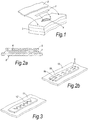
- Figure 1 shows schematically an LVCC (1) pressed onto a wound (4) in a tissue (3) by dressing (2).
- Figure 2a is an inverted dressing incorporating an LVCC, shown in cross section.
- a pouch (5) encloses an LVCC (6) adhered to dressing (7), having top dressing surface (8) - hence it is inverted in the figure.
- Figure 2b shows schematically an LVCC (9) woven into a dressing (10).
- the two filaments (9a and 9b) are of different colours and have different bacteriophage attached.
- Figure 3 shows a further schematic of a dressing (11) into which a filament with phage attached (12) is incorporated.
- an LVCC for delivering bacteriophage, to counteract bacterial infection within an infected deep wound environment using an in vivo model is demonstrated.
- Deep wounds penetrating several tissue layers and infected at all levels with Methycillin Resistant Staphylococcus aureus (MRSA) (E15) were treated with an LVCC comprised of bacteriophages active against the infecting MRSA strains.
- MRSA Methycillin Resistant Staphylococcus aureus
- Bacteriophage were immobilised to a synthetic nylon polymer filament similar to that used in the manufacture of wound closure sutures. Infected wounds were closed using the LVCC as suture, at various levels. The filamentous LVCC had either anti-MRSA bacteriophages immobilised to their surface (the prototype LVCC to be tested) or did not (control).
- LVCC's recovered from infected subjects were washed and stored at 4° C and periodically evaluated for continuing antimicrobial activity against MRSA grown in vitro.
- anti-MRSA activity was maintained as demonstrated by LVCC placed within a lawn of bacteria.
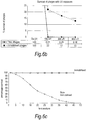
- Bacteriophage activity (as shown by the clearing seen around the recovered LVCCs) extended several weeks following storage - see figure 5 .
- Example 3 Stability conferred by LVCC against Desiccation, Ultra Violet radiation and Temperature
- LVCC were generated using activated nylon polymer or cotton fibres as the carrier substrate.
- LVCC with attached bacteriophage were exposed to a series of environmental conditions, including dehydration, shown by the effect of relative humidity on bacteriophage survival (see figure 6a ), ultraviolet light (see figure 6b ) and elevated temperature (see figure 6c ), all conditions known to denature free bacteriophages.
- LVCC bacteriophage was determined following exposure to the astringent conditions provided by soil.
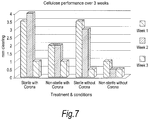
- the study involved construction of two types of LVCC using bacteriophage immobilised to either a nylon polymer or cellulose. Each LVCC was then buried in non sterilised or sterilised soil and samples taken over a three week period to assess the antibacterial activity of the LVCC.
- Results show enhanced survival of bacteriophage for both LVCC bacteriophage types compared to free bacteriophage (see figure 7 ).
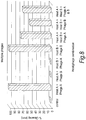
- Results show no diminution in antibacterial activity, with LVCC bacteriophages remaining active against both target bacteria (see figure 8 ). Exposure of treated material to 2 bacterial species (1 host, 1 non-host) still results in clearing of susceptible hosts.
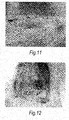
- FIG. 9 showing the infected control: as seen, the site remained large and swollen and was poorly if at all healed, with a raised incision site on day 14. When opened, as shown in Fig. 10 , a pus-filled incision site was revealed.
- test filament with bacteriophages attached is shown in fig. 11 . This was a well healed incision site with minimal swelling on day 14. The internal site exhibited reduced swelling to the wound site and reduced pus formation within the paraspinous muscle on day 14.
- Tomato seeds were treated with a corona field at 75kV for 1 second, then immersed in the bacteriophage suspension (an alternative is to spray the treated seeds with the bacteriophage suspension). We washed the seeds with water three times to remove unbound bacteriophages (an alternative is that the bacteriophage suspension be applied to the seeds prior to corona treatment). Note that other field strengths are also effective and washing is only needed to demonstrate that the observed anti-bacterial effects are produced by covalently bound bacteriophages rather than adsorbed "free" bacteriophages.
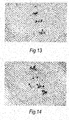
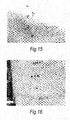
- Tomato seeds showed enhanced germination with corona ( fig. 15 ) and corona with anti- Pectobacterium phages ( fig. 14 ) compared with the control ( fig. 13 , no corona) and with no phage ( fig. 16 ). Clearing zones will be seen around the seeds treated with corona and anti- Pectobacterium phages on agar inoculated with suitable Pectobacterium strains (susceptible to the bacteriophages used). Tomato seed surface is largely cellulose and we then separately tested the viability of bacteriophage immobilised onto cellulose particles - see below.
- Tubers were planted and growth was recorded as number of plants, total number of stems, and number of plants infected with Blackleg. The results are shown in Table 4.
Landscapes
- Life Sciences & Earth Sciences (AREA)
- Health & Medical Sciences (AREA)
- Chemical & Material Sciences (AREA)
- Engineering & Computer Science (AREA)
- Polymers & Plastics (AREA)
- Microbiology (AREA)
- Zoology (AREA)
- General Health & Medical Sciences (AREA)
- Virology (AREA)
- Food Science & Technology (AREA)
- Animal Husbandry (AREA)
- Veterinary Medicine (AREA)
- Animal Behavior & Ethology (AREA)
- Public Health (AREA)
- Biotechnology (AREA)
- Epidemiology (AREA)
- Birds (AREA)
- Mycology (AREA)
- Pharmacology & Pharmacy (AREA)
- Physiology (AREA)
- Medicinal Chemistry (AREA)
- Molecular Biology (AREA)
- Environmental Sciences (AREA)
- Dentistry (AREA)
- Wood Science & Technology (AREA)
- Plant Pathology (AREA)
- Agronomy & Crop Science (AREA)
- Pest Control & Pesticides (AREA)
- Biochemistry (AREA)
- Hematology (AREA)
- Materials Engineering (AREA)
- Biomedical Technology (AREA)
- Oncology (AREA)
- Botany (AREA)
- Chemical Kinetics & Catalysis (AREA)
- General Chemical & Material Sciences (AREA)
- Nuclear Medicine, Radiotherapy & Molecular Imaging (AREA)
- Organic Chemistry (AREA)
- Bioinformatics & Cheminformatics (AREA)
- Communicable Diseases (AREA)
Applications Claiming Priority (2)
| Application Number | Priority Date | Filing Date | Title |
|---|---|---|---|
| GBGB1110647.3A GB201110647D0 (en) | 2011-06-23 | 2011-06-23 | Delivery of viral agents |
| PCT/EP2012/062270 WO2012175749A1 (en) | 2011-06-23 | 2012-06-25 | Delivery of viral agents |
Publications (2)
| Publication Number | Publication Date |
|---|---|
| EP2723356A1 EP2723356A1 (en) | 2014-04-30 |
| EP2723356B1 true EP2723356B1 (en) | 2019-09-11 |
Family
ID=44485029
Family Applications (1)
| Application Number | Title | Priority Date | Filing Date |
|---|---|---|---|
| EP12732609.8A Active EP2723356B1 (en) | 2011-06-23 | 2012-06-25 | Delivery of viral agents |
Country Status (8)
| Country | Link |
|---|---|
| US (1) | US9539343B2 (cg-RX-API-DMAC7.html) |
| EP (1) | EP2723356B1 (cg-RX-API-DMAC7.html) |
| JP (1) | JP6230994B6 (cg-RX-API-DMAC7.html) |
| CN (1) | CN103747792B (cg-RX-API-DMAC7.html) |
| BR (1) | BR112013032990A2 (cg-RX-API-DMAC7.html) |
| ES (1) | ES2758879T3 (cg-RX-API-DMAC7.html) |
| GB (1) | GB201110647D0 (cg-RX-API-DMAC7.html) |
| WO (1) | WO2012175749A1 (cg-RX-API-DMAC7.html) |
Cited By (1)
| Publication number | Priority date | Publication date | Assignee | Title |
|---|---|---|---|---|
| WO2025045944A1 (de) * | 2023-08-30 | 2025-03-06 | Forschungszentrum Jülich GmbH | Matrix-vermittelte beschichtung von zielorganismen mit bioeffektoren |
Families Citing this family (17)
| Publication number | Priority date | Publication date | Assignee | Title |
|---|---|---|---|---|
| GB201217097D0 (en) * | 2012-09-25 | 2012-11-07 | Fixed Phage Ltd | Treatment of bacterial infection |
| WO2015112690A1 (en) * | 2014-01-24 | 2015-07-30 | The Procter & Gamble Company | Fibrous structures comprising a surface care composition and a bacteriophage |
| US20150209468A1 (en) * | 2014-01-24 | 2015-07-30 | The Procter & Gamble Company | Hygiene article containing microorganism |
| US11252966B2 (en) | 2014-01-24 | 2022-02-22 | The Procter & Gamble Company | Fibrous structures comprising a surface care composition and methods for making and using same |
| EP3097182A1 (en) * | 2014-01-24 | 2016-11-30 | The Procter & Gamble Company | Filaments comprising a microorganism and method for making same |
| US20150209469A1 (en) * | 2014-01-24 | 2015-07-30 | The Procter & Gamble Company | Web Comprising a Microorganism-Containing Fibrous Element and Methods for Making Same |
| GB201402139D0 (en) * | 2014-02-07 | 2014-03-26 | Fixed Phage Ltd | Treatment of topical and systemic bacterial infections |
| TWI581771B (zh) * | 2015-04-14 | 2017-05-11 | 財團法人紡織產業綜合研究所 | 傷口護理用敷材 |
| EP3461345A1 (en) * | 2017-09-28 | 2019-04-03 | Fixed Phage Limited | Anti-bacterial packaging |
| EP3616730A1 (en) | 2018-08-28 | 2020-03-04 | UPM-Kymmene Corporation | Composition or matrix for storage of bacteriophages comprising nanofibrillar cellulose |
| AU2019382919A1 (en) | 2018-11-22 | 2021-05-27 | Fixed Phage Limited | Production of immobilised bacteriophage |
| EP4714458A2 (en) | 2019-04-10 | 2026-03-25 | NexaBiome Limited | Continuous treatment with plasma |
| DE102020100725A1 (de) * | 2020-01-14 | 2021-07-15 | Justus Gross | Bakteriophagen-Bereitstellungen sowie Bakteriophagen-Applikationsvorrichtung |
| EP4136974A1 (en) | 2021-08-20 | 2023-02-22 | Fixed Phage Limited | Plasma treatment process and apparatus therefor |
| WO2023152491A1 (en) * | 2022-02-08 | 2023-08-17 | Oxford Silk Phage Technologies Ltd | Method and apparatus for making an article from filaments containing bacteriophages |
| CN115006581A (zh) * | 2022-06-02 | 2022-09-06 | 武汉军旭实业有限责任公司 | 一种伤口防护用材料及其制备方法 |
| JPWO2024204527A1 (cg-RX-API-DMAC7.html) * | 2023-03-30 | 2024-10-03 |
Family Cites Families (8)
| Publication number | Priority date | Publication date | Assignee | Title |
|---|---|---|---|---|
| US4828999A (en) * | 1986-07-21 | 1989-05-09 | Jackson Le Roy E | Bacteriophage prevention and control of harmful plant bacteria |
| GB0209680D0 (en) * | 2002-04-27 | 2002-06-05 | Univ Strathclyde | Immobilisation and stabilisation of bacteriophage |
| US8178021B2 (en) | 2004-02-26 | 2012-05-15 | University Of Yamanashi | Method of manufacturing a drawn biodegradable micro-filament |
| AU2005301048A1 (en) | 2004-11-02 | 2006-05-11 | Chr. Hansen A/S | Bacteriophage compositions |
| EP1888088A4 (en) * | 2005-05-26 | 2012-07-04 | Chr Hansen As | BACTERIAL REGULATION IN ANIMAL CONTAINMENT SYSTEMS |
| GB0526176D0 (en) | 2005-12-22 | 2006-02-01 | Blaze Venture Technologies Ltd | Particle binding |
| DE102007054127A1 (de) * | 2007-11-11 | 2009-05-14 | Birgit Riesinger | Hygiene- oder Pflegeartikel, aufweisend einen Anteil an hydroaktiven Polymeren, und eine Zubereitung aufweisend Bakteriophagen oder mindestens einen Bestandteil derselben |
| GB201217097D0 (en) * | 2012-09-25 | 2012-11-07 | Fixed Phage Ltd | Treatment of bacterial infection |
-
2011
- 2011-06-23 GB GBGB1110647.3A patent/GB201110647D0/en not_active Ceased
-
2012
- 2012-06-25 US US14/127,429 patent/US9539343B2/en active Active
- 2012-06-25 WO PCT/EP2012/062270 patent/WO2012175749A1/en not_active Ceased
- 2012-06-25 EP EP12732609.8A patent/EP2723356B1/en active Active
- 2012-06-25 ES ES12732609T patent/ES2758879T3/es active Active
- 2012-06-25 JP JP2014516392A patent/JP6230994B6/ja not_active Expired - Fee Related
- 2012-06-25 CN CN201280035218.XA patent/CN103747792B/zh active Active
- 2012-06-25 BR BR112013032990A patent/BR112013032990A2/pt not_active IP Right Cessation
Non-Patent Citations (1)
| Title |
|---|
| None * |
Cited By (1)
| Publication number | Priority date | Publication date | Assignee | Title |
|---|---|---|---|---|
| WO2025045944A1 (de) * | 2023-08-30 | 2025-03-06 | Forschungszentrum Jülich GmbH | Matrix-vermittelte beschichtung von zielorganismen mit bioeffektoren |
Also Published As
| Publication number | Publication date |
|---|---|
| EP2723356A1 (en) | 2014-04-30 |
| WO2012175749A1 (en) | 2012-12-27 |
| CN103747792A (zh) | 2014-04-23 |
| US20140208464A1 (en) | 2014-07-24 |
| ES2758879T3 (es) | 2020-05-06 |
| GB201110647D0 (en) | 2011-08-10 |
| US9539343B2 (en) | 2017-01-10 |
| CN103747792B (zh) | 2017-08-29 |
| JP6230994B2 (ja) | 2017-11-15 |
| JP2014528694A (ja) | 2014-10-30 |
| JP6230994B6 (ja) | 2020-09-09 |
| BR112013032990A2 (pt) | 2017-08-01 |
Similar Documents
| Publication | Publication Date | Title |
|---|---|---|
| EP2723356B1 (en) | Delivery of viral agents | |
| Luo et al. | Polymeric antibacterial materials: design, platforms and applications | |
| Rajkumar et al. | Chitosan-based biomaterial in wound healing: a review | |
| Bano et al. | Chitosan: A potential biopolymer for wound management | |
| ES2310658T3 (es) | Inmovilizacion y estabilizacion de virus. | |
| US9181290B2 (en) | Inhibition of biofilm formation by 1,2,3,4,6-penta-O-galloyl-D-glucopyranose | |
| Smith | Biofilms and antibiotic therapy: is there a role for combating bacterial resistance by the use of novel drug delivery systems? | |
| Liu et al. | Template-assisted magnetron sputtering of cotton nonwovens for wound healing application | |
| KR101829136B1 (ko) | 가시광선 광경화 수용성 키토산 유도체, 키토산 하이드로겔 및 이의 제조방법 | |
| Peles et al. | Soy protein films for wound‐healing applications: antibiotic release, bacterial inhibition and cellular response | |
| Li et al. | Antimicrobial surgical sutures: Fabrication and application of infection prevention and wound healing | |
| Wojcik et al. | Biocompatible curdlan-based biomaterials loaded with gentamicin and Zn-doped nano-hydroxyapatite as promising dressing materials for the treatment of infected wounds and prevention of surgical site infections | |
| Kikuchi et al. | Hydrogel based drug delivery systems: a review with special emphasis on challenges associated with decontamination of hydrogels and biomaterials | |
| CN109331219A (zh) | 一种壳聚糖液体敷料 | |
| KR101820306B1 (ko) | 갈산-키토산 결합체 및 이를 이용한 창상치료용 조성물 | |
| Ekhtiari-Sadegh et al. | Rapid eradication of vancomycin and methicillin-resistant Staphylococcus aureus by MDP1 antimicrobial peptide coated on photocrosslinkable chitosan hydrogel: in vitro antibacterial and in silico molecular docking studies | |
| CN104857556A (zh) | 一种化学接枝型长效缓释抗菌真丝缝合线及其制备方法 | |
| CN104474573A (zh) | 一种生物敷膜及制备方法 | |
| CN109875762A (zh) | 一种新型抗菌创可贴及其制备方法与应用 | |
| RU2733137C1 (ru) | Способ получения биокомпозита с регенерационными свойствами на основе гидрогеля бактериальной целлюлозы | |
| CN1167471C (zh) | 壳聚糖、胶原和海藻酸钙生物复合无纺布敷料 | |
| Zhukovskii | Problems and prospects for development and production of surgical suture materials | |
| Mukhopadhyay et al. | Speciality dressings for managing difficult-to-heal wounds | |
| RU100724U1 (ru) | Атравматическое перевязочное средство с наночастицами серебра "асептика" | |
| Roy et al. | Current development on chitosan-based antimicrobial drug formulations for the wound healing |
Legal Events
| Date | Code | Title | Description |
|---|---|---|---|
| PUAI | Public reference made under article 153(3) epc to a published international application that has entered the european phase |
Free format text: ORIGINAL CODE: 0009012 |
|
| 17P | Request for examination filed |
Effective date: 20131126 |
|
| AK | Designated contracting states |
Kind code of ref document: A1 Designated state(s): AL AT BE BG CH CY CZ DE DK EE ES FI FR GB GR HR HU IE IS IT LI LT LU LV MC MK MT NL NO PL PT RO RS SE SI SK SM TR |
|
| DAX | Request for extension of the european patent (deleted) | ||
| 17Q | First examination report despatched |
Effective date: 20150126 |
|
| RAP1 | Party data changed (applicant data changed or rights of an application transferred) |
Owner name: FIXED PHAGE LIMITED |
|
| STAA | Information on the status of an ep patent application or granted ep patent |
Free format text: STATUS: EXAMINATION IS IN PROGRESS |
|
| GRAP | Despatch of communication of intention to grant a patent |
Free format text: ORIGINAL CODE: EPIDOSNIGR1 |
|
| STAA | Information on the status of an ep patent application or granted ep patent |
Free format text: STATUS: GRANT OF PATENT IS INTENDED |
|
| RIC1 | Information provided on ipc code assigned before grant |
Ipc: A61K 35/76 20150101AFI20190319BHEP Ipc: A61L 15/36 20060101ALI20190319BHEP Ipc: A23K 10/10 20160101ALI20190319BHEP Ipc: A61K 47/46 20060101ALI20190319BHEP |
|
| INTG | Intention to grant announced |
Effective date: 20190404 |
|
| GRAS | Grant fee paid |
Free format text: ORIGINAL CODE: EPIDOSNIGR3 |
|
| GRAA | (expected) grant |
Free format text: ORIGINAL CODE: 0009210 |
|
| STAA | Information on the status of an ep patent application or granted ep patent |
Free format text: STATUS: THE PATENT HAS BEEN GRANTED |
|
| AK | Designated contracting states |
Kind code of ref document: B1 Designated state(s): AL AT BE BG CH CY CZ DE DK EE ES FI FR GB GR HR HU IE IS IT LI LT LU LV MC MK MT NL NO PL PT RO RS SE SI SK SM TR |
|
| REG | Reference to a national code |
Ref country code: GB Ref legal event code: FG4D |
|
| REG | Reference to a national code |
Ref country code: CH Ref legal event code: EP |
|
| REG | Reference to a national code |
Ref country code: AT Ref legal event code: REF Ref document number: 1177601 Country of ref document: AT Kind code of ref document: T Effective date: 20190915 |
|
| REG | Reference to a national code |
Ref country code: DE Ref legal event code: R096 Ref document number: 602012063868 Country of ref document: DE Ref country code: IE Ref legal event code: FG4D |
|
| REG | Reference to a national code |
Ref country code: NL Ref legal event code: FP |
|
| REG | Reference to a national code |
Ref country code: LT Ref legal event code: MG4D |
|
| PG25 | Lapsed in a contracting state [announced via postgrant information from national office to epo] |
Ref country code: FI Free format text: LAPSE BECAUSE OF FAILURE TO SUBMIT A TRANSLATION OF THE DESCRIPTION OR TO PAY THE FEE WITHIN THE PRESCRIBED TIME-LIMIT Effective date: 20190911 Ref country code: HR Free format text: LAPSE BECAUSE OF FAILURE TO SUBMIT A TRANSLATION OF THE DESCRIPTION OR TO PAY THE FEE WITHIN THE PRESCRIBED TIME-LIMIT Effective date: 20190911 Ref country code: LT Free format text: LAPSE BECAUSE OF FAILURE TO SUBMIT A TRANSLATION OF THE DESCRIPTION OR TO PAY THE FEE WITHIN THE PRESCRIBED TIME-LIMIT Effective date: 20190911 Ref country code: NO Free format text: LAPSE BECAUSE OF FAILURE TO SUBMIT A TRANSLATION OF THE DESCRIPTION OR TO PAY THE FEE WITHIN THE PRESCRIBED TIME-LIMIT Effective date: 20191211 Ref country code: BG Free format text: LAPSE BECAUSE OF FAILURE TO SUBMIT A TRANSLATION OF THE DESCRIPTION OR TO PAY THE FEE WITHIN THE PRESCRIBED TIME-LIMIT Effective date: 20191211 Ref country code: SE Free format text: LAPSE BECAUSE OF FAILURE TO SUBMIT A TRANSLATION OF THE DESCRIPTION OR TO PAY THE FEE WITHIN THE PRESCRIBED TIME-LIMIT Effective date: 20190911 |
|
| PG25 | Lapsed in a contracting state [announced via postgrant information from national office to epo] |
Ref country code: GR Free format text: LAPSE BECAUSE OF FAILURE TO SUBMIT A TRANSLATION OF THE DESCRIPTION OR TO PAY THE FEE WITHIN THE PRESCRIBED TIME-LIMIT Effective date: 20191212 Ref country code: RS Free format text: LAPSE BECAUSE OF FAILURE TO SUBMIT A TRANSLATION OF THE DESCRIPTION OR TO PAY THE FEE WITHIN THE PRESCRIBED TIME-LIMIT Effective date: 20190911 Ref country code: AL Free format text: LAPSE BECAUSE OF FAILURE TO SUBMIT A TRANSLATION OF THE DESCRIPTION OR TO PAY THE FEE WITHIN THE PRESCRIBED TIME-LIMIT Effective date: 20190911 Ref country code: LV Free format text: LAPSE BECAUSE OF FAILURE TO SUBMIT A TRANSLATION OF THE DESCRIPTION OR TO PAY THE FEE WITHIN THE PRESCRIBED TIME-LIMIT Effective date: 20190911 |
|
| REG | Reference to a national code |
Ref country code: AT Ref legal event code: MK05 Ref document number: 1177601 Country of ref document: AT Kind code of ref document: T Effective date: 20190911 |
|
| PG25 | Lapsed in a contracting state [announced via postgrant information from national office to epo] |
Ref country code: RO Free format text: LAPSE BECAUSE OF FAILURE TO SUBMIT A TRANSLATION OF THE DESCRIPTION OR TO PAY THE FEE WITHIN THE PRESCRIBED TIME-LIMIT Effective date: 20190911 Ref country code: EE Free format text: LAPSE BECAUSE OF FAILURE TO SUBMIT A TRANSLATION OF THE DESCRIPTION OR TO PAY THE FEE WITHIN THE PRESCRIBED TIME-LIMIT Effective date: 20190911 Ref country code: AT Free format text: LAPSE BECAUSE OF FAILURE TO SUBMIT A TRANSLATION OF THE DESCRIPTION OR TO PAY THE FEE WITHIN THE PRESCRIBED TIME-LIMIT Effective date: 20190911 Ref country code: PT Free format text: LAPSE BECAUSE OF FAILURE TO SUBMIT A TRANSLATION OF THE DESCRIPTION OR TO PAY THE FEE WITHIN THE PRESCRIBED TIME-LIMIT Effective date: 20200113 Ref country code: PL Free format text: LAPSE BECAUSE OF FAILURE TO SUBMIT A TRANSLATION OF THE DESCRIPTION OR TO PAY THE FEE WITHIN THE PRESCRIBED TIME-LIMIT Effective date: 20190911 |
|
| REG | Reference to a national code |
Ref country code: ES Ref legal event code: FG2A Ref document number: 2758879 Country of ref document: ES Kind code of ref document: T3 Effective date: 20200506 |
|
| PG25 | Lapsed in a contracting state [announced via postgrant information from national office to epo] |
Ref country code: SM Free format text: LAPSE BECAUSE OF FAILURE TO SUBMIT A TRANSLATION OF THE DESCRIPTION OR TO PAY THE FEE WITHIN THE PRESCRIBED TIME-LIMIT Effective date: 20190911 Ref country code: IS Free format text: LAPSE BECAUSE OF FAILURE TO SUBMIT A TRANSLATION OF THE DESCRIPTION OR TO PAY THE FEE WITHIN THE PRESCRIBED TIME-LIMIT Effective date: 20200224 Ref country code: SK Free format text: LAPSE BECAUSE OF FAILURE TO SUBMIT A TRANSLATION OF THE DESCRIPTION OR TO PAY THE FEE WITHIN THE PRESCRIBED TIME-LIMIT Effective date: 20190911 Ref country code: CZ Free format text: LAPSE BECAUSE OF FAILURE TO SUBMIT A TRANSLATION OF THE DESCRIPTION OR TO PAY THE FEE WITHIN THE PRESCRIBED TIME-LIMIT Effective date: 20190911 |
|
| REG | Reference to a national code |
Ref country code: DE Ref legal event code: R097 Ref document number: 602012063868 Country of ref document: DE |
|
| PLBE | No opposition filed within time limit |
Free format text: ORIGINAL CODE: 0009261 |
|
| STAA | Information on the status of an ep patent application or granted ep patent |
Free format text: STATUS: NO OPPOSITION FILED WITHIN TIME LIMIT |
|
| PG2D | Information on lapse in contracting state deleted |
Ref country code: IS |
|
| PG25 | Lapsed in a contracting state [announced via postgrant information from national office to epo] |
Ref country code: DK Free format text: LAPSE BECAUSE OF FAILURE TO SUBMIT A TRANSLATION OF THE DESCRIPTION OR TO PAY THE FEE WITHIN THE PRESCRIBED TIME-LIMIT Effective date: 20190911 Ref country code: IS Free format text: LAPSE BECAUSE OF FAILURE TO SUBMIT A TRANSLATION OF THE DESCRIPTION OR TO PAY THE FEE WITHIN THE PRESCRIBED TIME-LIMIT Effective date: 20200112 |
|
| 26N | No opposition filed |
Effective date: 20200615 |
|
| PG25 | Lapsed in a contracting state [announced via postgrant information from national office to epo] |
Ref country code: SI Free format text: LAPSE BECAUSE OF FAILURE TO SUBMIT A TRANSLATION OF THE DESCRIPTION OR TO PAY THE FEE WITHIN THE PRESCRIBED TIME-LIMIT Effective date: 20190911 |
|
| PG25 | Lapsed in a contracting state [announced via postgrant information from national office to epo] |
Ref country code: MC Free format text: LAPSE BECAUSE OF FAILURE TO SUBMIT A TRANSLATION OF THE DESCRIPTION OR TO PAY THE FEE WITHIN THE PRESCRIBED TIME-LIMIT Effective date: 20190911 |
|
| REG | Reference to a national code |
Ref country code: CH Ref legal event code: PL |
|
| PG25 | Lapsed in a contracting state [announced via postgrant information from national office to epo] |
Ref country code: LU Free format text: LAPSE BECAUSE OF NON-PAYMENT OF DUE FEES Effective date: 20200625 |
|
| REG | Reference to a national code |
Ref country code: BE Ref legal event code: MM Effective date: 20200630 |
|
| PG25 | Lapsed in a contracting state [announced via postgrant information from national office to epo] |
Ref country code: LI Free format text: LAPSE BECAUSE OF NON-PAYMENT OF DUE FEES Effective date: 20200630 Ref country code: CH Free format text: LAPSE BECAUSE OF NON-PAYMENT OF DUE FEES Effective date: 20200630 |
|
| PG25 | Lapsed in a contracting state [announced via postgrant information from national office to epo] |
Ref country code: BE Free format text: LAPSE BECAUSE OF NON-PAYMENT OF DUE FEES Effective date: 20200630 |
|
| PG25 | Lapsed in a contracting state [announced via postgrant information from national office to epo] |
Ref country code: TR Free format text: LAPSE BECAUSE OF FAILURE TO SUBMIT A TRANSLATION OF THE DESCRIPTION OR TO PAY THE FEE WITHIN THE PRESCRIBED TIME-LIMIT Effective date: 20190911 Ref country code: MT Free format text: LAPSE BECAUSE OF FAILURE TO SUBMIT A TRANSLATION OF THE DESCRIPTION OR TO PAY THE FEE WITHIN THE PRESCRIBED TIME-LIMIT Effective date: 20190911 Ref country code: CY Free format text: LAPSE BECAUSE OF FAILURE TO SUBMIT A TRANSLATION OF THE DESCRIPTION OR TO PAY THE FEE WITHIN THE PRESCRIBED TIME-LIMIT Effective date: 20190911 |
|
| PG25 | Lapsed in a contracting state [announced via postgrant information from national office to epo] |
Ref country code: MK Free format text: LAPSE BECAUSE OF FAILURE TO SUBMIT A TRANSLATION OF THE DESCRIPTION OR TO PAY THE FEE WITHIN THE PRESCRIBED TIME-LIMIT Effective date: 20190911 |
|
| PGFP | Annual fee paid to national office [announced via postgrant information from national office to epo] |
Ref country code: NL Payment date: 20230628 Year of fee payment: 12 Ref country code: IE Payment date: 20230627 Year of fee payment: 12 Ref country code: FR Payment date: 20230628 Year of fee payment: 12 Ref country code: DE Payment date: 20230629 Year of fee payment: 12 |
|
| PGFP | Annual fee paid to national office [announced via postgrant information from national office to epo] |
Ref country code: IT Payment date: 20230623 Year of fee payment: 12 Ref country code: ES Payment date: 20230707 Year of fee payment: 12 |
|
| REG | Reference to a national code |
Ref country code: DE Ref legal event code: R119 Ref document number: 602012063868 Country of ref document: DE |
|
| REG | Reference to a national code |
Ref country code: NL Ref legal event code: MM Effective date: 20240701 |
|
| PG25 | Lapsed in a contracting state [announced via postgrant information from national office to epo] |
Ref country code: NL Free format text: LAPSE BECAUSE OF NON-PAYMENT OF DUE FEES Effective date: 20240701 |
|
| PG25 | Lapsed in a contracting state [announced via postgrant information from national office to epo] |
Ref country code: NL Free format text: LAPSE BECAUSE OF NON-PAYMENT OF DUE FEES Effective date: 20240701 |
|
| PG25 | Lapsed in a contracting state [announced via postgrant information from national office to epo] |
Ref country code: DE Free format text: LAPSE BECAUSE OF NON-PAYMENT OF DUE FEES Effective date: 20250101 |
|
| PG25 | Lapsed in a contracting state [announced via postgrant information from national office to epo] |
Ref country code: IE Free format text: LAPSE BECAUSE OF NON-PAYMENT OF DUE FEES Effective date: 20240625 |
|
| PG25 | Lapsed in a contracting state [announced via postgrant information from national office to epo] |
Ref country code: FR Free format text: LAPSE BECAUSE OF NON-PAYMENT OF DUE FEES Effective date: 20240630 |
|
| PG25 | Lapsed in a contracting state [announced via postgrant information from national office to epo] |
Ref country code: IT Free format text: LAPSE BECAUSE OF NON-PAYMENT OF DUE FEES Effective date: 20240625 |
|
| PGFP | Annual fee paid to national office [announced via postgrant information from national office to epo] |
Ref country code: GB Payment date: 20250624 Year of fee payment: 14 |
|
| REG | Reference to a national code |
Ref country code: ES Ref legal event code: FD2A Effective date: 20250801 |
|
| PG25 | Lapsed in a contracting state [announced via postgrant information from national office to epo] |
Ref country code: ES Free format text: LAPSE BECAUSE OF NON-PAYMENT OF DUE FEES Effective date: 20240626 |