EP2701397B1 - Inhaltsabhängiges Videoqualitätsmodell für Video-Streaming-Dienste - Google Patents
Inhaltsabhängiges Videoqualitätsmodell für Video-Streaming-Dienste Download PDFInfo
- Publication number
- EP2701397B1 EP2701397B1 EP12181015.4A EP12181015A EP2701397B1 EP 2701397 B1 EP2701397 B1 EP 2701397B1 EP 12181015 A EP12181015 A EP 12181015A EP 2701397 B1 EP2701397 B1 EP 2701397B1
- Authority
- EP
- European Patent Office
- Prior art keywords
- gop
- scene
- quality
- parameters
- per
- Prior art date
- Legal status (The legal status is an assumption and is not a legal conclusion. Google has not performed a legal analysis and makes no representation as to the accuracy of the status listed.)
- Active
Links
Images


Classifications
-
- H—ELECTRICITY
- H04—ELECTRIC COMMUNICATION TECHNIQUE
- H04N—PICTORIAL COMMUNICATION, e.g. TELEVISION
- H04N17/00—Diagnosis, testing or measuring for television systems or their details
- H04N17/004—Diagnosis, testing or measuring for television systems or their details for digital television systems
-
- H—ELECTRICITY
- H04—ELECTRIC COMMUNICATION TECHNIQUE
- H04N—PICTORIAL COMMUNICATION, e.g. TELEVISION
- H04N19/00—Methods or arrangements for coding, decoding, compressing or decompressing digital video signals
- H04N19/10—Methods or arrangements for coding, decoding, compressing or decompressing digital video signals using adaptive coding
- H04N19/134—Methods or arrangements for coding, decoding, compressing or decompressing digital video signals using adaptive coding characterised by the element, parameter or criterion affecting or controlling the adaptive coding
- H04N19/154—Measured or subjectively estimated visual quality after decoding, e.g. measurement of distortion
-
- H—ELECTRICITY
- H04—ELECTRIC COMMUNICATION TECHNIQUE
- H04N—PICTORIAL COMMUNICATION, e.g. TELEVISION
- H04N19/00—Methods or arrangements for coding, decoding, compressing or decompressing digital video signals
- H04N19/10—Methods or arrangements for coding, decoding, compressing or decompressing digital video signals using adaptive coding
- H04N19/169—Methods or arrangements for coding, decoding, compressing or decompressing digital video signals using adaptive coding characterised by the coding unit, i.e. the structural portion or semantic portion of the video signal being the object or the subject of the adaptive coding
- H04N19/177—Methods or arrangements for coding, decoding, compressing or decompressing digital video signals using adaptive coding characterised by the coding unit, i.e. the structural portion or semantic portion of the video signal being the object or the subject of the adaptive coding the unit being a group of pictures [GOP]
-
- H—ELECTRICITY
- H04—ELECTRIC COMMUNICATION TECHNIQUE
- H04N—PICTORIAL COMMUNICATION, e.g. TELEVISION
- H04N19/00—Methods or arrangements for coding, decoding, compressing or decompressing digital video signals
- H04N19/48—Methods or arrangements for coding, decoding, compressing or decompressing digital video signals using compressed domain processing techniques other than decoding, e.g. modification of transform coefficients, variable length coding [VLC] data or run-length data
-
- H—ELECTRICITY
- H04—ELECTRIC COMMUNICATION TECHNIQUE
- H04N—PICTORIAL COMMUNICATION, e.g. TELEVISION
- H04N19/00—Methods or arrangements for coding, decoding, compressing or decompressing digital video signals
- H04N19/85—Methods or arrangements for coding, decoding, compressing or decompressing digital video signals using pre-processing or post-processing specially adapted for video compression
- H04N19/89—Methods or arrangements for coding, decoding, compressing or decompressing digital video signals using pre-processing or post-processing specially adapted for video compression involving methods or arrangements for detection of transmission errors at the decoder
Definitions
- the invention relates to a method and an apparatus for estimating the perceived quality of a digital video signal, preferably in the context of video streaming services such as Internet Protocol Television (IPTV) or Video on Demand (VoD), and in particular for content-dependent estimations of the perceived quality of a digital video signal by providing content-complexity parameters, and by controlling existing or future parameter-based video quality estimation methods by the provided content-complexity parameters.
- IPTV Internet Protocol Television
- VoD Video on Demand
- the invention is designed for encrypted video streams, but also works on non-encrypted video streams.
- IPTV non-interactive streaming video
- VoD non-interactive streaming video
- video quality models are developed which provide estimates of the video quality as perceived by the user.
- Those models can, for instance, output the degree of similarity between the video received at the user's end and the original non-degraded video.
- the Human Visual System HVS
- the model output can be mapped to the results of extensive subjective quality tests, to ultimately provide an estimation of perceived quality.
- the complexity of the contents is determined per video frame by comparing the current frame size with an adaptive threshold. Whether the current frame size is above, equal to or below this threshold will result in increasing or decreasing the estimated quality associated with the current frame.
- the method disclosed in these references only provides a relatively coarse consideration of the video content. In other words, there is no smooth or continuous measurement of the complexity of the frames within a given measurement window.
- the adaptive threshold is computed over the complete or part of the measurement window, the complexity of each frame is determined relative to the complexity of other frames in the same video sequence, but not relative to the complexity of other contents.
- Ref. [15] a solution is proposed for inserting content-related parameters, i.e. parameters which reflect the spatio-temporal complexity of the content such as quantization parameter and motion vectors, into a parameter-based video quality model.
- content-related parameters i.e. parameters which reflect the spatio-temporal complexity of the content such as quantization parameter and motion vectors.
- these content-related parameters cannot be extracted from an encrypted bitstream, so that Ref. [15] cannot be used in the same way as the present invention.
- Ref. [16] presents a solution for estimating the perceived video quality in case of packet loss with a single parameter, which represents the magnitude of the signal degradation due to packet loss. This solution foresees the inclusion of a correction-factor for adjusting the estimated magnitude of the signal degradation based on the temporal or spatio-temporal complexity of the content. However, no solution is proposed for computing this correcting factor, for example in case of encrypted video.
- the invention is targeting the use with parameter-based video quality models in case of encrypted-video, i.e. where only packet-header information is available.
- the invention also works in case of non-encrypted video, but may be by design less accurate than a video quality model based on fully decoding or extracting deeper information from the unencrypted bitstream. Only making use of packet-based information offers the advantage of keeping the computational complexity of the invention low, and of course extends the application range to non-encrypted as well as encrypted streams.
- the objective of the present invention is to provide a method for estimating the perceived quality of a digital video signal by providing content-complexity parameters and using these content-complexity parameters for controlling arbitrary-and thus existing or prospective-parameter-based video quality estimation methods.
- the method according to the invention on the one hand allows for a rather fine-grained consideration of the quality impact of the content of the video signal, but on the other hand also is applicable for encrypted video and for both, the packet-loss case as well as the no-loss case.
- a further objective of the present invention is to provide an apparatus configured for computing content-complexity parameters and inserting them into arbitrary parameter-based video quality models, with all the advantages such packet-header-based approaches are associated with.
- the present invention substantially differs from the approaches of the references cited above [13a, 13b, 14] by both the content-related parameters that are computed, and the way in which these parameters are included into the models.
- the content-related parameters are provided as absolute values, which are not dependent on the history of frames as disclosed in Refs. [13a, 13b, 14]. Hence, they could in principle be used for comparing the complexity of two different contents, or of different scenes or passages of one content.
- the values of the content-related parameters used in the present invention are continuous-and not categorical in terms of indistinct classes as in [13a, 13b, 14]-and thus allow a very fine-grained estimation of the quality impact of the content.
- all parameters are computed either over the whole measurement window, per Group Of Picture (GOP) or per video scene, while in prior art (cf. Refs. [13a, 13b, 14]), they are computed per frame.
- the GOP structure can be estimated using [20]. Further note that a (video) scene starts with an I-frame and generally contains several GOPs. The scene cuts can be detected in case of encrypted video using Ref. [21] (not published prior to the filing date of the present application). Two video scenes usually differ by their semantic contents. Moreover, the intra-scene variation of the spatio-temporal (ST) complexity of the content signal is generally lower than its inter-scene variation.
- Eqs. (1) and (2) are, for instance, expressed on a scale from 0 to 100, or from 1 to 5.
- Icod and Itra can be computed per measurement window, one measurement window typically lasting from 10 to 20 seconds.
- p IF and q IF are preferably computed for each measurement window, one measurement window typically lasting from 10 to 20 seconds.
- the upper index IF will be termed according to the respective name of the variable used for quantification or measurement of a specific impairment factor, i.e., for example, Icod or Itra.
- the application of Eq. (3) is not limited to the cases of the impairment factors Icod and Itra; Eq. (3) can rather be applied also to other types of quality degradations, i.e., to other impairment factors.
- Eq. (3) constitutes a general concept for estimating the content-related contribution to impairment factors.
- Eq. (3) is not only applicable to different impairment factors such as Icod or Itra, but also applies to various (parameter-based) models for estimating the quality degradation due to a specific impairment factor, e.g., Icod.
- the estimation of this impairment factor becomes controlled by the content-dependent parameters.
- the method according to the invention allows for the above mentioned fine-grained consideration of the quality impact due to the content of the video signal.
- the GOP / scene-complexity parameters used for computing the content-dependent parameters q IF are all parameters requiring knowledge on the type and size (e.g. in bytes) of the video frames. These parameters are usually-but not necessarily-calculated per Group of Picture (GOP) or video scene (SC), and the parameters or the resulting quality estimation is then aggregated over the measurement window.
- GOP Group of Picture
- SC video scene
- GOP / scene-complexity parameters can be considered:
- the frame sequence type i.e. I, P, B, b, or noI
- the frame sequence type i.e. I, P, B, b, or noI
- B sc T B ⁇ y sc T ⁇ f ⁇ r T nf ⁇ r T ⁇ b ⁇ r T , where
- fr T could be replaced by the overall frame rate fr and nfr T by the overall number nfr of frames in the scene.
- each ratio is computed per GOP from the GOP / scene-complexity parameters as defined above:
- One aspect of the invention relates to a method for estimating the perception quality of a digital video signal, the method comprising the steps of:
- the GOP/scene-complexity parameters may be calculated per Group of Picture (GOP) or per video scene.
- each of the impact functions used in step (1b) further depends on:
- the set of content-dependent parameters q is derived from at least one of the following GOP/scene-complexity parameters:
- an impact function f IF is used.
- the impact function f IF is used for estimating the quality impact due to compression artifacts, that depends on a content-dependent parameter q 1 being computed from the reciprocal of the weighted mean of the GOP/scene-complexity parameter S sc I over the scenes sc multiplied by a coefficient.
- the coefficient may be proportional to the number of pixels per video frame nx and the video frame rate fr .
- the parameter ⁇ k ,1 may depend on the GOP/scene-complexity parameter S nol /l .
- the parameter ⁇ k ,2 may depend on the GOP/scene-complexity parameter S hlP .
- the parameters ⁇ k ,1 for each k ⁇ ⁇ 1, ... , v ⁇ are obtained by the following steps:
- p 1 is a parameter describing the quality impact due to compression artifacts.
- p 2 is the number of GOPs in the measurement window or the measurement window duration.
- the video signal is at least part of a non-interactive data stream, preferably a non-interactive video or audiovisual stream, or at least part of an interactive data stream, preferably an interactive video or audiovisual stream.
- the method is combined with one or more methods for estimating the impact on the perception quality of a digital video signal by other impairments than compression and/or transmission, wherein the combination is preferably performed using at least a linear function and/or at least a multiplicative function of the methods to be combined.
- the method is combined with one or more other methods for estimating the perception quality of a digital video by compression and/or transmission, wherein the combination is preferably performed using at least a linear function and/or at least a multiplicative function of the methods to be combined.
- One aspect of the invention relates to a method for monitoring the quality of a transmitted digital video signal with the steps of:
- One aspect of the invention relates to an apparatus for estimating the perception quality of a digital video signal, the apparatus comprising:
- the apparatus preferably is further configured to estimate the perception quality of a digital video signal using a method according to any one of the embodiments of the method for estimating the perception quality of a digital video signal as described above.
- One aspect of the invention relates to a set top box connectable to a receiver for receiving a digital video signal, wherein the set top box comprises the apparatus according to the invention.
- One aspect of the invention relates to a system for monitoring the quality of a transmitted digital video signal, the system comprising a server and a client, and the system being configured for executing the method for monitoring the quality of a transmitted digital video signal according to the invention as disclosed above.
- the client is configured as apparatus according to the invention.
- the client comprises an apparatus according to the invention.
- system further comprises the set top box according to the invention, wherein the set top box is connected to the client.
- the content-complexity-impact on both the compression-related quality impairment Icod and the transmission-related quality impairment Itra can be estimated using the scheme described in the following:
- ⁇ 1 Icod 47.78
- ⁇ 2 Icod - 21.46
- ⁇ 3 Icod 7.61
- ⁇ 4 Icod 7.71
- br is the video bitrate in Mbit/s.
- Fig. 1 illustrates as an example the computation of equation (10) with a video sequence composed of two scenes (it is assumed that the measurement window corresponds to the duration of this video sequence).
- the format of the video sequence is 1080p25.
- the S sc I minimum in the video sequence is S 1 I .
- p 1 Itra Icod
- p 2 Itra v
- v is the measurement window duration
- r k is xl_k / T_k of equation (5) in Ref. [16].
- r i of Eq. (15) corresponds to xl_ i of equation (7c) in Ref. [16]
- r i in Eq. (16) corresponds to xl_i in the equation (7) of Ref. [16].
- the summation of ⁇ k ,1 and ⁇ k ,2 of Eqs. (12) and (13) corresponds to the correcting factor ⁇ 1, k in the equation (9a) of Ref. [16].
- no solution is proposed for computing this correcting factor in case of encrypted video.
- parameters ⁇ k ,1 and ⁇ k ,2 are derived from GOP / scene-complexity parameters and are computed for each GOP k .
- ⁇ k ,1 is obtained using the following steps (see Fig. 2 ):
Landscapes
- Engineering & Computer Science (AREA)
- Multimedia (AREA)
- Signal Processing (AREA)
- Health & Medical Sciences (AREA)
- Biomedical Technology (AREA)
- General Health & Medical Sciences (AREA)
- Compression Or Coding Systems Of Tv Signals (AREA)
- Testing, Inspecting, Measuring Of Stereoscopic Televisions And Televisions (AREA)
- Two-Way Televisions, Distribution Of Moving Picture Or The Like (AREA)
- Silicates, Zeolites, And Molecular Sieves (AREA)
Claims (24)
- Verfahren zum Schätzen der Wahrnehmungsqualität eines digitalen Videosignals, wobei das Verfahren die folgenden Schritte aufweist:(1a) Extrahieren von Informationen des Videobitstroms, der vor dem Decodieren erfasst wird;(1b) Erhalten einer/von Schätzung(en) für einen oder mehrere Beeinträchtigungsfaktoren IF unter Verwendung einer Einflussfunktion, die für den jeweiligen Beeinträchtigungsfaktor angepasst ist, für jede der Schätzungen;(1c) Schätzen der wahrgenommenen Qualität des digitalen Videosignals unter Verwendung der in Schritt (1b) erhaltenen Schätzung(en);wobei das Verfahren dadurch gekennzeichnet ist, dass jede der in Schritt (1b) verwendeten Beeinträchtigungsfunktionen einen Satz inhaltsabhängiger Parameter q als Eingabe nimmt, der aus einem Satz von GOP/Szenenkomplexitätsparametern berechnet wird, wobei die GOP/Szenenkomplexitätsparameter aus den Paketanfangsblockinformationen ableitbar sind und im Fall verschlüsselter Videobitströme verfügbar sind;
wobei der Satz inhaltsabhängiger Parameter q wenigstens aus einem GOP/Szenenkomplexitätsparameter
wobei zum Schätzen wenigstens eines der Beeinträchtigungsfaktoren, vorzugsweise des Qualitätseinflusses aufgrund von Kompressionsfehlern, eine Einflussfunktion fIF verwendet wird, die von einem inhaltsabhängigen Parameter qI abhängt, der aus dem Kehrwert des gewichteten Mittels des GOP/Szenenkomplexitätsparameters
wobei jede Szene sc ein Gewicht von wsc × Nsc , hat wobei Nsc die Anzahl von GOPs pro Szene ist und wsc ein Gewichtsfaktor ist, wobei für die Szenen mit dem niedrigsten
- Verfahren nach Anspruch 1, wobei:der Koeffizient proportional zu der Anzahl von Bildpunkten pro Video-Frame nx und der Video-Framerate fr ist.
- Verfahren nach Anspruch 2, wobei der inhaltsabhängige Parameter q1 gegeben ist durch:

- Verfahren nach einem der Ansprüche 1 bis 3, wobei die GOP/Szenenkomplexitätsparameter pro Bildgruppe (GOP) oder pro Videoszene berechnet werden.
- Verfahren nach einem der Ansprüche 1 bis 4, wobei wenigstens eine der in Schritt (1b) verwendeten Einflussfunktionen weiter abhängt von:Codierungs- oder technischen Netzwerkcharakteristiken, zum Beispiel der Bitrate, der Framerate, dem Prozentsatz an Paketverlusten oder dem Verlustanteil in einer GOP oder Szene; und/oderKoeffizienten, die zu der Einflussfunktion gehören.
- Verfahren nach einem der Ansprüche 1 bis 5, wobei der Satz inhaltsabhängiger Parameter q von wenigstens einem der folgenden GOP/Szenenkomplexitätsparameter abgeleitet wird:

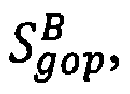


- Verfahren nach Anspruch 6, wobei der Satz von Parametern q aus wenigstens einem der folgenden GOP/Szenenkomplexitätsparameter abgeleitet wird:

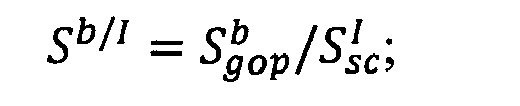


- Verfahren nach einem der Ansprüche 1 bis 7, wobei die Einflussfunktion FIF abhängig von dem inhaltsabhängigen Parameter q = q1 gegeben ist durch:

wobei p = p1 vorzugsweise ein Parameter ist, der die Anzahl von Bits pro Bildpunkt beschreibt und am besten gegeben ist durch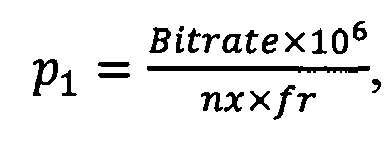
und
wobei α = (α1, α2, α3, α4) der Koeffizientensatz ist, der zu der Einflussfunktion gehört. - Verfahren nach einem der Ansprüche 1 bis 8, wobei eine Einflussfunktion fIF vorzugsweise zum Schätzen des Qualitätseinflusses aufgrund von Übertragungsfehlern verwendet wird, welche von einem Satz inhaltsabhängiger Parameter q = (q 1 , q 2) abhängt, wobei jede Komponente qj mit j ∈{1, 2} des Satzes durch eine gewichtete Summe von Parametern β k,i erhalten wird, die von GOP/Szenenkomplexitätsparametern abhängen, wobei die gewichtete Summe für jedes j ∈ {1, 2} vorzugsweise berechnet wird gemäß

- Verfahren nach Anspruch 9, wobei die Gewichte gegeben sind durch

wobei Tk die Verlustdauer der GOP k ist, ti die Stelle in der GOP eines Verlustereignisses i ist und ri die räumliche Ausdehnung des Verlustereignisses i bezeichnet, und wobei vorzugsweise:
und
wobei np die Anzahl von Paketen in dem Frame ist, nap die Anzahl betroffener Transportstrom- (TS-) Pakete in dem getroffenen Frame ist, nlp die Anzahl von verlorenen Paketen in dem Frame ist, nle die Anzahl von Verlustereignissen in dem Frame ist und nsl die Anzahl von Slices in dem Frame ist. - Verfahren nach den Anspruch 9 oder 10, wobei:der Parameter β k,1 von dem GOP/Szenenkomplexitätsparameter S noI/I abhängt; und/oderder Parameter β k,2 von dem GOP/Szenenkomplexitätsparameter S b/P abhängt.
- Verfahren nach einem der Ansprüche 9 bis 11, wobei die Parameter β k,1 für jedes k ∈ {1, ..., v} durch die folgenden Schritte erhalten werden:(12a) Festlegen von β k,1 = S noI/ I;(12b) im Fall von β k,1 ≤ 0,5, Festlegen von β k,1 auf 2 × β k,1;(12c) im Fall von β k,1 > 0,5, Festlegen von β k,1 auf 1.
- Verfahren nach einem der Ansprüche 9 bis 12, wobei die Parameter β k,2 für jedes k ∈ {1, ..., v} d erhalten werden als

- Verfahren nach einem der Ansprüche 9 bis 13, wobei die Einflussfunktion fIF, die von dem Satz inhaltsabhängiger Parameter q = (q 1, q 2) abhängt, gegeben ist durch

- Verfahren nach einem der vorhergehenden Ansprüche, wobei das Videosignal wenigstens ein Teil eines nicht-interaktiven Datenstroms, vorzugsweise eines nicht-interaktiven Videos oder audiovisuellen Stroms, oder wenigstens Teil eines interaktiven Datenstroms, vorzugsweise eines interaktiven Videos oder audiovisuellen Stroms, ist.
- Verfahren nach einem der vorhergehenden Ansprüche, wobei das Verfahren mit einem oder mehreren Verfahren zum Schätzen des Einflusses auf die Wahrnehmungs-qualität eines digitalen Videosignals durch andere Beeinträchtigungen als der Kompression und/oder der Übertragung kombiniert wird, wobei die Kombination vorzugsweise unter Verwendung wenigstens einer linearen Funktion und/oder wenigstens einer multiplikativen Funktion der zu kombinierenden Verfahren durchgeführt wird.
- Verfahren nach einem der vorhergehenden Ansprüche, wobei das Verfahren mit einem oder mehreren Verfahren zum Schätzen der Wahrnehmungsqualität eines digitalen Videos durch Kompression und/oder Übertragung kombiniert wird, wobei die Kombination vorzugsweise unter Verwendung wenigstens einer linearen Funktion und/oder wenigstens einer multiplikativen Funktion der zu kombinierenden Verfahren durchgeführt wird.
- Verfahren zum Überwachen der Qualität eines übertragenen digitalen Videosignals mit den folgenden Schritten:(18a) Übertragen des Videosignals von einem Server an den Client;(18b) Client-seitiges Ausführen des Verfahrens zum Schätzen der Wahrnehmungsqualität eines digitalen Videosignals nach einem der Ansprüche 1 bis 17;(18c) Übertragen des Ergebnisses der Schätzung von Schritt (18b) an den Server;(18d) Server-seitiges Überwachen der Schätzung der Qualität des übertragenen Videosignals; undwobei das Verfahren vorzugsweise die folgenden weiteren Schritte aufweist:(18e) Analysieren der überwachten Qualität des übertragenen Videosignals, vorzugsweise in Abhängigkeit von Übertragungsparametern; und wahlweise(18f) Ändern der Übertragungsparameter basierend auf der Analyse von Schritt (18e), um die Qualität des übertragenen Videosignals zu erhöhen.
- Vorrichtung zum Schätzen der Wahrnehmungsqualität eines digitalen Videosignals, wobei die Vorrichtung aufweist:eine Einrichtung, die konfiguriert ist, um Informationen aus einem Videobitstrom zu extrahieren, der vor dem Decodieren erfasst wird;wenigstens einen Einflussschätzer;einen Qualitätsschätzer, der konfiguriert ist, um die Wahrnehmungsqualität Qv des Videosignals zu schätzen:wobei die Vorrichtung dadurch gekennzeichnet ist, dass jeder der Einflussschätzer konfiguriert ist, um den Qualitätseinfluss aufgrund eines Beeinträchtigungsfaktors mit Hilfe einer Beeinträchtigungsfunktion zu schätzen, die als Eingabe einen Satz inhaltsabhängiger Parameter q nimmt, die aus einem Satz von GOP/Szenenkomplexitätsparametern berechnet werden, wobei die GOP/Szenenkomplexitätsparameter aus Paketanfangsblockinformationen ableitbar sind und somit im Fall von verschlüsselten Videobitströmen verfügbar sind,wobei der Satz inhaltsabhängiger Parameter q wenigstens aus einem GOP/Szenenkomplexitätsparameter
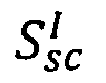 wobei zum Schätzen wenigstens eines der Beeinträchtigungsfaktoren, vorzugsweise des Qualitätseinflusses aufgrund von Kompressionsfehlern, eine Einflussfunktion fIF verwendet wird, die von einem inhaltsabhängigen Parameter qI abhängt, der aus dem Kehrwert des gewichteten Mittels des GOP/Szenenkomplexitätsparameters
 wobei jede Szene sc ein Gewicht von wsc × Nsc, hat wobei Nsc die Anzahl von GOPs pro Szene ist und wsc ein Gewichtsfaktor ist, wobei für die Szenen mit dem niedrigsten
- Vorrichtung nach Anspruch 19, die ferner konfiguriert ist, um die Wahrnehmungsqualität eines digitalen Videosignals unter Verwendung eines Verfahrens nach einem der Ansprüche 2 bis 17 zu schätzen.
- Set Top Box, die mit einem Empfänger zum Empfangen eines digitalen Videosignals verbindbar ist, wobei die Set Top Box die Vorrichtung nach einem der Ansprüche 19 oder 20 aufweist.
- System zum Überwachen der Qualität eines übertragenen digitalen Videosignals, wobei das System einen Server und einen Client aufweist und das System konfiguriert ist, um das Verfahren nach Anspruch 18 auszuführen.
- System nach Anspruch 22, wobei:der Client als Vorrichtung nach Anspruch 19 oder 20 konfiguriert ist; und/oderder Client eine Vorrichtung nach Anspruch 19 oder 20 aufweist.
- System nach Anspruch 22, das ferner die Set Top Box nach Anspruch 21 aufweist, wobei die Set Top Box mit dem Client verbunden ist.
Priority Applications (10)
| Application Number | Priority Date | Filing Date | Title |
|---|---|---|---|
| ES12181015.4T ES2526080T3 (es) | 2012-08-20 | 2012-08-20 | Modelo de calidad de vídeo dependiente del contenido para servicios de transmisión de vídeo |
| EP12181015.4A EP2701397B1 (de) | 2012-08-20 | 2012-08-20 | Inhaltsabhängiges Videoqualitätsmodell für Video-Streaming-Dienste |
| PT121810154T PT2701397E (pt) | 2012-08-20 | 2012-08-20 | Modelo de qualidade de vídeo dependente do conteúdo para serviços de fluxo de vídeo |
| PL12181015T PL2701397T3 (pl) | 2012-08-20 | 2012-08-20 | Zależny od treści model jakości wideo dla usług strumieniowania wideo |
| CN201380038171.7A CN104488265B (zh) | 2012-08-20 | 2013-07-16 | 用于视频流服务的内容相关的视频质量模型 |
| US14/403,595 US9319672B2 (en) | 2012-08-20 | 2013-07-16 | Content-dependent video quality model for video streaming services |
| KR1020147037146A KR102059222B1 (ko) | 2012-08-20 | 2013-07-16 | 비디오 스트리밍 서비스를 위한 컨텐트-의존 비디오 품질 모델 |
| JP2015527824A JP6328637B2 (ja) | 2012-08-20 | 2013-07-16 | ビデオストリーミングサービスのためのコンテンツ依存型ビデオ品質モデル |
| PCT/EP2013/065033 WO2014029561A1 (en) | 2012-08-20 | 2013-07-16 | Content-dependent video quality model for video streaming services |
| HRP20141060AT HRP20141060T1 (hr) | 2012-08-20 | 2014-11-03 | Model kvalitete videa ovisan o sadržaju, za servise koji omoguä†uju video strujanje |
Applications Claiming Priority (1)
| Application Number | Priority Date | Filing Date | Title |
|---|---|---|---|
| EP12181015.4A EP2701397B1 (de) | 2012-08-20 | 2012-08-20 | Inhaltsabhängiges Videoqualitätsmodell für Video-Streaming-Dienste |
Publications (2)
| Publication Number | Publication Date |
|---|---|
| EP2701397A1 EP2701397A1 (de) | 2014-02-26 |
| EP2701397B1 true EP2701397B1 (de) | 2014-10-08 |
Family
ID=48986090
Family Applications (1)
| Application Number | Title | Priority Date | Filing Date |
|---|---|---|---|
| EP12181015.4A Active EP2701397B1 (de) | 2012-08-20 | 2012-08-20 | Inhaltsabhängiges Videoqualitätsmodell für Video-Streaming-Dienste |
Country Status (9)
| Country | Link |
|---|---|
| US (1) | US9319672B2 (de) |
| EP (1) | EP2701397B1 (de) |
| JP (1) | JP6328637B2 (de) |
| KR (1) | KR102059222B1 (de) |
| ES (1) | ES2526080T3 (de) |
| HR (1) | HRP20141060T1 (de) |
| PL (1) | PL2701397T3 (de) |
| PT (1) | PT2701397E (de) |
| WO (1) | WO2014029561A1 (de) |
Families Citing this family (12)
| Publication number | Priority date | Publication date | Assignee | Title |
|---|---|---|---|---|
| US20150163273A1 (en) * | 2011-09-29 | 2015-06-11 | Avvasi Inc. | Media bit rate estimation based on segment playback duration and segment data length |
| US20150163271A1 (en) * | 2011-12-22 | 2015-06-11 | Telefonaktiebolaget L M Ericsson (Publ) | Apparatus and method for monitoring performance in a communications network |
| CN104780369B (zh) * | 2012-08-21 | 2018-04-17 | 华为技术有限公司 | 一种获得视频编码压缩质量的方法及装置 |
| US10021402B2 (en) * | 2015-12-16 | 2018-07-10 | Dialogic Corporation | Estimation of video quality of experience on media servers |
| EP3291556A1 (de) * | 2016-08-30 | 2018-03-07 | Deutsche Telekom AG | Verfahren und vorrichtung zur bestimmung der videowahrnehmungsqualität eines blocks mit multimedia-inhalt |
| EP3439308A1 (de) * | 2017-07-31 | 2019-02-06 | Zhilabs S.L. | Bestimmung von qoe bei verschlüsselten videoströmen unter verwendung von betreutem lernen |
| US11831933B2 (en) | 2020-04-09 | 2023-11-28 | Qualcomm Incorporated | Video aware transmission and processing |
| US11575910B2 (en) * | 2020-04-09 | 2023-02-07 | Qualcomm Incorporated | Video aware transmission and multiple input multiple output layer processing |
| US11245741B2 (en) | 2020-04-09 | 2022-02-08 | Qualcomm Incorporated | Video aware multiplexing for wireless communication |
| CN113542849B (zh) * | 2021-07-06 | 2023-06-30 | 腾讯科技(深圳)有限公司 | 视频数据处理方法及装置、电子设备、存储介质 |
| CN116965042A (zh) * | 2022-02-25 | 2023-10-27 | 京东方科技集团股份有限公司 | 视频插帧处理方法、视频插帧处理装置和可读存储介质 |
| CN118972704A (zh) * | 2024-10-17 | 2024-11-15 | 合肥云联半导体有限公司 | 一种车载设备的音视频信息的传输方法 |
Family Cites Families (10)
| Publication number | Priority date | Publication date | Assignee | Title |
|---|---|---|---|---|
| JP4514155B2 (ja) * | 2005-03-04 | 2010-07-28 | 日本電信電話株式会社 | 映像品質評価装置、方法およびプログラム |
| CN101325977A (zh) | 2005-12-08 | 2008-12-17 | 皇家飞利浦电子股份有限公司 | 使用Overhauser增强的NMR监测体内药物释放的系统和方法 |
| WO2009012302A1 (en) * | 2007-07-16 | 2009-01-22 | Telchemy, Incorporated | Method and system for viewer quality estimation of packet video streams |
| JP4796019B2 (ja) * | 2007-08-08 | 2011-10-19 | 日本電信電話株式会社 | 映像品質推定装置、方法、およびプログラム |
| JP5107971B2 (ja) * | 2009-06-29 | 2012-12-26 | 日本電信電話株式会社 | ユーザ体感品質推定システムおよび方法 |
| JP5390369B2 (ja) * | 2009-12-17 | 2014-01-15 | 日本電信電話株式会社 | 映像品質推定装置および方法、符号化ビットレート推定装置および方法、並びにプログラム |
| WO2011134113A1 (en) * | 2010-04-30 | 2011-11-03 | Thomson Licensing | Method and apparatus for assessing quality of video stream |
| PT2413535E (pt) | 2010-07-30 | 2013-01-25 | Deutsche Telekom Ag | Método para estimar o tipo da estrutura do grupo de imagens de uma pluralidade de fotogramas de vídeo numa sequência de vídeo |
| EP2649807B1 (de) | 2010-12-10 | 2018-04-25 | Deutsche Telekom AG | Verfahren und vorrichtung zur beurteilung der qualität eines videosignals während der kodierung und übertragung des videosignals |
| WO2013053385A1 (en) | 2011-10-11 | 2013-04-18 | Telefonaktiebolaget L M Ericsson (Publ) | Scene change detection for perceptual quality evaluation in video sequences |
-
2012
- 2012-08-20 EP EP12181015.4A patent/EP2701397B1/de active Active
- 2012-08-20 PT PT121810154T patent/PT2701397E/pt unknown
- 2012-08-20 PL PL12181015T patent/PL2701397T3/pl unknown
- 2012-08-20 ES ES12181015.4T patent/ES2526080T3/es active Active
-
2013
- 2013-07-16 WO PCT/EP2013/065033 patent/WO2014029561A1/en not_active Ceased
- 2013-07-16 JP JP2015527824A patent/JP6328637B2/ja active Active
- 2013-07-16 KR KR1020147037146A patent/KR102059222B1/ko active Active
- 2013-07-16 US US14/403,595 patent/US9319672B2/en active Active
-
2014
- 2014-11-03 HR HRP20141060AT patent/HRP20141060T1/hr unknown
Also Published As
| Publication number | Publication date |
|---|---|
| EP2701397A1 (de) | 2014-02-26 |
| WO2014029561A1 (en) | 2014-02-27 |
| US9319672B2 (en) | 2016-04-19 |
| PL2701397T3 (pl) | 2015-03-31 |
| US20150138373A1 (en) | 2015-05-21 |
| KR20150045958A (ko) | 2015-04-29 |
| KR102059222B1 (ko) | 2019-12-24 |
| CN104488265A (zh) | 2015-04-01 |
| ES2526080T3 (es) | 2015-01-05 |
| JP6328637B2 (ja) | 2018-05-23 |
| JP2015533269A (ja) | 2015-11-19 |
| HRP20141060T1 (hr) | 2014-12-19 |
| PT2701397E (pt) | 2014-12-12 |
Similar Documents
| Publication | Publication Date | Title |
|---|---|---|
| EP2701397B1 (de) | Inhaltsabhängiges Videoqualitätsmodell für Video-Streaming-Dienste | |
| CN102959976B (zh) | 评估视频流质量的方法及设备 | |
| EP2649807B1 (de) | Verfahren und vorrichtung zur beurteilung der qualität eines videosignals während der kodierung und übertragung des videosignals | |
| US9077972B2 (en) | Method and apparatus for assessing the quality of a video signal during encoding or compressing of the video signal | |
| Yang et al. | Content-adaptive packet-layer model for quality assessment of networked video services | |
| JP5221459B2 (ja) | 映像品質推定装置、システム、方法およびプログラム | |
| Argyropoulos et al. | No-reference video quality assessment for SD and HD H. 264/AVC sequences based on continuous estimates of packet loss visibility | |
| Koumaras et al. | A theoretical framework for end-to-end video quality prediction of MPEG-based sequences | |
| Wang et al. | No-reference hybrid video quality assessment based on partial least squares regression | |
| EP3264709B1 (de) | Verfahren zur berechnung, bei einem client zum empfang von multimediainhalt von einem server mittels adaptivem streaming, der wahrgenommenen qualität einer vollständigen mediensitzung sowie client | |
| Usman et al. | A no reference method for detection of dropped video frames in live video streaming | |
| Zhang et al. | MDVQM: A novel multidimensional no-reference video quality metric for video transcoding | |
| WO2018041892A1 (en) | Method and apparatus for determining the perceptual video quality of a chunk of multimedia content | |
| Zhang et al. | QoE models for online video streaming | |
| Uhl et al. | Suitability of transport techniques for video transmission in IP networks | |
| CN104488265B (zh) | 用于视频流服务的内容相关的视频质量模型 | |
| Arsenović et al. | Quality of Experience Assessment for HTTP Based Adaptive Video Streaming. | |
| Reiter et al. | Comparing apples and oranges: assessment of the relative video quality in the presence of different types of distortions | |
| Shmueli et al. | Effects of frame rate, frame size and MPEG2 compression on the perceived compressed video quality transmitted over lossy IP networks | |
| Hadar et al. | Effects of compression parameters on the perceived quality of video stream over a lossy Internet protocol network | |
| Menkovski | Computational inference and control of quality in multimedia services | |
| Pace et al. | Fast and accurate video PQoS estimation over wireless networks | |
| Jean et al. | QoE-based packet drop control for 3D-video streaming over wireless networks | |
| YILMAZ | A spatiotemporal no-reference video quality assessment model |
Legal Events
| Date | Code | Title | Description |
|---|---|---|---|
| PUAI | Public reference made under article 153(3) epc to a published international application that has entered the european phase |
Free format text: ORIGINAL CODE: 0009012 |
|
| 17P | Request for examination filed |
Effective date: 20130701 |
|
| AK | Designated contracting states |
Kind code of ref document: A1 Designated state(s): AL AT BE BG CH CY CZ DE DK EE ES FI FR GB GR HR HU IE IS IT LI LT LU LV MC MK MT NL NO PL PT RO RS SE SI SK SM TR |
|
| AX | Request for extension of the european patent |
Extension state: BA ME |
|
| REG | Reference to a national code |
Ref country code: DE Ref legal event code: R079 Ref document number: 602012003326 Country of ref document: DE Free format text: PREVIOUS MAIN CLASS: H04N0021442000 Ipc: H04N0019154000 |
|
| GRAP | Despatch of communication of intention to grant a patent |
Free format text: ORIGINAL CODE: EPIDOSNIGR1 |
|
| RIC1 | Information provided on ipc code assigned before grant |
Ipc: H04N 17/00 20060101ALI20140407BHEP Ipc: H04N 21/442 20110101ALI20140407BHEP Ipc: H04N 19/48 20140101ALI20140407BHEP Ipc: H04N 19/177 20140101ALI20140407BHEP Ipc: H04N 19/154 20140101AFI20140407BHEP Ipc: H04B 17/00 20060101ALI20140407BHEP Ipc: H04N 7/64 20060101ALI20140407BHEP |
|
| GRAJ | Information related to disapproval of communication of intention to grant by the applicant or resumption of examination proceedings by the epo deleted |
Free format text: ORIGINAL CODE: EPIDOSDIGR1 |
|
| GRAP | Despatch of communication of intention to grant a patent |
Free format text: ORIGINAL CODE: EPIDOSNIGR1 |
|
| INTG | Intention to grant announced |
Effective date: 20140506 |
|
| INTG | Intention to grant announced |
Effective date: 20140530 |
|
| GRAS | Grant fee paid |
Free format text: ORIGINAL CODE: EPIDOSNIGR3 |
|
| GRAA | (expected) grant |
Free format text: ORIGINAL CODE: 0009210 |
|
| AK | Designated contracting states |
Kind code of ref document: B1 Designated state(s): AL AT BE BG CH CY CZ DE DK EE ES FI FR GB GR HR HU IE IS IT LI LT LU LV MC MK MT NL NO PL PT RO RS SE SI SK SM TR |
|
| REG | Reference to a national code |
Ref country code: GB Ref legal event code: FG4D |
|
| REG | Reference to a national code |
Ref country code: AT Ref legal event code: REF Ref document number: 691162 Country of ref document: AT Kind code of ref document: T Effective date: 20141015 Ref country code: CH Ref legal event code: EP |
|
| REG | Reference to a national code |
Ref country code: CH Ref legal event code: NV Representative=s name: VOSSIUS AND PARTNER, CH |
|
| REG | Reference to a national code |
Ref country code: HR Ref legal event code: TUEP Ref document number: P20141060 Country of ref document: HR |
|
| REG | Reference to a national code |
Ref country code: IE Ref legal event code: FG4D |
|
| REG | Reference to a national code |
Ref country code: DE Ref legal event code: R096 Ref document number: 602012003326 Country of ref document: DE Effective date: 20141120 |
|
| REG | Reference to a national code |
Ref country code: PT Ref legal event code: SC4A Free format text: AVAILABILITY OF NATIONAL TRANSLATION Effective date: 20141202 |
|
| REG | Reference to a national code |
Ref country code: HR Ref legal event code: T1PR Ref document number: P20141060 Country of ref document: HR |
|
| REG | Reference to a national code |
Ref country code: SE Ref legal event code: TRGR |
|
| REG | Reference to a national code |
Ref country code: ES Ref legal event code: FG2A Ref document number: 2526080 Country of ref document: ES Kind code of ref document: T3 Effective date: 20150105 |
|
| REG | Reference to a national code |
Ref country code: GR Ref legal event code: EP Ref document number: 20140402060 Country of ref document: GR Effective date: 20141121 |
|
| REG | Reference to a national code |
Ref country code: NL Ref legal event code: T3 |
|
| REG | Reference to a national code |
Ref country code: SK Ref legal event code: T3 Ref document number: E 17536 Country of ref document: SK |
|
| REG | Reference to a national code |
Ref country code: LT Ref legal event code: MG4D |
|
| REG | Reference to a national code |
Ref country code: PL Ref legal event code: T3 |
|
| PG25 | Lapsed in a contracting state [announced via postgrant information from national office to epo] |
Ref country code: FI Free format text: LAPSE BECAUSE OF FAILURE TO SUBMIT A TRANSLATION OF THE DESCRIPTION OR TO PAY THE FEE WITHIN THE PRESCRIBED TIME-LIMIT Effective date: 20141008 Ref country code: LT Free format text: LAPSE BECAUSE OF FAILURE TO SUBMIT A TRANSLATION OF THE DESCRIPTION OR TO PAY THE FEE WITHIN THE PRESCRIBED TIME-LIMIT Effective date: 20141008 Ref country code: IS Free format text: LAPSE BECAUSE OF FAILURE TO SUBMIT A TRANSLATION OF THE DESCRIPTION OR TO PAY THE FEE WITHIN THE PRESCRIBED TIME-LIMIT Effective date: 20150208 Ref country code: NO Free format text: LAPSE BECAUSE OF FAILURE TO SUBMIT A TRANSLATION OF THE DESCRIPTION OR TO PAY THE FEE WITHIN THE PRESCRIBED TIME-LIMIT Effective date: 20150108 |
|
| REG | Reference to a national code |
Ref country code: HU Ref legal event code: AG4A Ref document number: E022562 Country of ref document: HU |
|
| PG25 | Lapsed in a contracting state [announced via postgrant information from national office to epo] |
Ref country code: RS Free format text: LAPSE BECAUSE OF FAILURE TO SUBMIT A TRANSLATION OF THE DESCRIPTION OR TO PAY THE FEE WITHIN THE PRESCRIBED TIME-LIMIT Effective date: 20141008 Ref country code: CY Free format text: LAPSE BECAUSE OF FAILURE TO SUBMIT A TRANSLATION OF THE DESCRIPTION OR TO PAY THE FEE WITHIN THE PRESCRIBED TIME-LIMIT Effective date: 20141008 Ref country code: LV Free format text: LAPSE BECAUSE OF FAILURE TO SUBMIT A TRANSLATION OF THE DESCRIPTION OR TO PAY THE FEE WITHIN THE PRESCRIBED TIME-LIMIT Effective date: 20141008 |
|
| REG | Reference to a national code |
Ref country code: DE Ref legal event code: R097 Ref document number: 602012003326 Country of ref document: DE |
|
| PG25 | Lapsed in a contracting state [announced via postgrant information from national office to epo] |
Ref country code: DK Free format text: LAPSE BECAUSE OF FAILURE TO SUBMIT A TRANSLATION OF THE DESCRIPTION OR TO PAY THE FEE WITHIN THE PRESCRIBED TIME-LIMIT Effective date: 20141008 Ref country code: EE Free format text: LAPSE BECAUSE OF FAILURE TO SUBMIT A TRANSLATION OF THE DESCRIPTION OR TO PAY THE FEE WITHIN THE PRESCRIBED TIME-LIMIT Effective date: 20141008 |
|
| PLBE | No opposition filed within time limit |
Free format text: ORIGINAL CODE: 0009261 |
|
| STAA | Information on the status of an ep patent application or granted ep patent |
Free format text: STATUS: NO OPPOSITION FILED WITHIN TIME LIMIT |
|
| 26N | No opposition filed |
Effective date: 20150709 |
|
| REG | Reference to a national code |
Ref country code: RO Ref legal event code: EPE |
|
| PG25 | Lapsed in a contracting state [announced via postgrant information from national office to epo] |
Ref country code: SI Free format text: LAPSE BECAUSE OF FAILURE TO SUBMIT A TRANSLATION OF THE DESCRIPTION OR TO PAY THE FEE WITHIN THE PRESCRIBED TIME-LIMIT Effective date: 20141008 |
|
| PG25 | Lapsed in a contracting state [announced via postgrant information from national office to epo] |
Ref country code: LU Free format text: LAPSE BECAUSE OF FAILURE TO SUBMIT A TRANSLATION OF THE DESCRIPTION OR TO PAY THE FEE WITHIN THE PRESCRIBED TIME-LIMIT Effective date: 20150820 Ref country code: MC Free format text: LAPSE BECAUSE OF FAILURE TO SUBMIT A TRANSLATION OF THE DESCRIPTION OR TO PAY THE FEE WITHIN THE PRESCRIBED TIME-LIMIT Effective date: 20141008 |
|
| REG | Reference to a national code |
Ref country code: IE Ref legal event code: MM4A |
|
| REG | Reference to a national code |
Ref country code: CH Ref legal event code: PFA Owner name: DEUTSCHE TELEKOM AG, DE Free format text: FORMER OWNER: DEUTSCHE TELEKOM AG, DE |
|
| PG25 | Lapsed in a contracting state [announced via postgrant information from national office to epo] |
Ref country code: IE Free format text: LAPSE BECAUSE OF NON-PAYMENT OF DUE FEES Effective date: 20150820 |
|
| REG | Reference to a national code |
Ref country code: FR Ref legal event code: PLFP Year of fee payment: 5 |
|
| PG25 | Lapsed in a contracting state [announced via postgrant information from national office to epo] |
Ref country code: MT Free format text: LAPSE BECAUSE OF FAILURE TO SUBMIT A TRANSLATION OF THE DESCRIPTION OR TO PAY THE FEE WITHIN THE PRESCRIBED TIME-LIMIT Effective date: 20141008 |
|
| PG25 | Lapsed in a contracting state [announced via postgrant information from national office to epo] |
Ref country code: SM Free format text: LAPSE BECAUSE OF FAILURE TO SUBMIT A TRANSLATION OF THE DESCRIPTION OR TO PAY THE FEE WITHIN THE PRESCRIBED TIME-LIMIT Effective date: 20141008 |
|
| REG | Reference to a national code |
Ref country code: FR Ref legal event code: PLFP Year of fee payment: 6 |
|
| PG25 | Lapsed in a contracting state [announced via postgrant information from national office to epo] |
Ref country code: MK Free format text: LAPSE BECAUSE OF FAILURE TO SUBMIT A TRANSLATION OF THE DESCRIPTION OR TO PAY THE FEE WITHIN THE PRESCRIBED TIME-LIMIT Effective date: 20141008 |
|
| REG | Reference to a national code |
Ref country code: FR Ref legal event code: PLFP Year of fee payment: 7 |
|
| PG25 | Lapsed in a contracting state [announced via postgrant information from national office to epo] |
Ref country code: AL Free format text: LAPSE BECAUSE OF FAILURE TO SUBMIT A TRANSLATION OF THE DESCRIPTION OR TO PAY THE FEE WITHIN THE PRESCRIBED TIME-LIMIT Effective date: 20141008 |
|
| REG | Reference to a national code |
Ref country code: HR Ref legal event code: ODRP Ref document number: P20141060 Country of ref document: HR Payment date: 20190808 Year of fee payment: 8 |
|
| REG | Reference to a national code |
Ref country code: HR Ref legal event code: ODRP Ref document number: P20141060 Country of ref document: HR Payment date: 20200807 Year of fee payment: 9 |
|
| REG | Reference to a national code |
Ref country code: HR Ref legal event code: ODRP Ref document number: P20141060 Country of ref document: HR Payment date: 20210811 Year of fee payment: 10 |
|
| REG | Reference to a national code |
Ref country code: HR Ref legal event code: ODRP Ref document number: P20141060 Country of ref document: HR Payment date: 20220808 Year of fee payment: 11 |
|
| REG | Reference to a national code |
Ref country code: HR Ref legal event code: ODRP Ref document number: P20141060 Country of ref document: HR Payment date: 20230808 Year of fee payment: 12 |
|
| REG | Reference to a national code |
Ref country code: HR Ref legal event code: ODRP Ref document number: P20141060 Country of ref document: HR Payment date: 20240809 Year of fee payment: 13 |
|
| REG | Reference to a national code |
Ref country code: HR Ref legal event code: ODRP Ref document number: P20141060 Country of ref document: HR Payment date: 20250811 Year of fee payment: 14 |
|
| PGFP | Annual fee paid to national office [announced via postgrant information from national office to epo] |
Ref country code: NL Payment date: 20250821 Year of fee payment: 14 |
|
| PGFP | Annual fee paid to national office [announced via postgrant information from national office to epo] |
Ref country code: HU Payment date: 20250814 Year of fee payment: 14 |
|
| PGFP | Annual fee paid to national office [announced via postgrant information from national office to epo] |
Ref country code: ES Payment date: 20250917 Year of fee payment: 14 Ref country code: PT Payment date: 20250807 Year of fee payment: 14 |
|
| PGFP | Annual fee paid to national office [announced via postgrant information from national office to epo] |
Ref country code: DE Payment date: 20250819 Year of fee payment: 14 |
|
| PGFP | Annual fee paid to national office [announced via postgrant information from national office to epo] |
Ref country code: GR Payment date: 20250819 Year of fee payment: 14 |
|
| PGFP | Annual fee paid to national office [announced via postgrant information from national office to epo] |
Ref country code: TR Payment date: 20250812 Year of fee payment: 14 Ref country code: PL Payment date: 20250807 Year of fee payment: 14 Ref country code: IT Payment date: 20250829 Year of fee payment: 14 |
|
| PGFP | Annual fee paid to national office [announced via postgrant information from national office to epo] |
Ref country code: BG Payment date: 20250821 Year of fee payment: 14 Ref country code: BE Payment date: 20250820 Year of fee payment: 14 Ref country code: GB Payment date: 20250818 Year of fee payment: 14 |
|
| PGFP | Annual fee paid to national office [announced via postgrant information from national office to epo] |
Ref country code: HR Payment date: 20250811 Year of fee payment: 14 |
|
| PGFP | Annual fee paid to national office [announced via postgrant information from national office to epo] |
Ref country code: FR Payment date: 20250821 Year of fee payment: 14 Ref country code: AT Payment date: 20250819 Year of fee payment: 14 |
|
| PGFP | Annual fee paid to national office [announced via postgrant information from national office to epo] |
Ref country code: CH Payment date: 20250901 Year of fee payment: 14 Ref country code: SE Payment date: 20250821 Year of fee payment: 14 |
|
| PGFP | Annual fee paid to national office [announced via postgrant information from national office to epo] |
Ref country code: CZ Payment date: 20250808 Year of fee payment: 14 |
|
| PGFP | Annual fee paid to national office [announced via postgrant information from national office to epo] |
Ref country code: RO Payment date: 20250811 Year of fee payment: 14 |
|
| PGFP | Annual fee paid to national office [announced via postgrant information from national office to epo] |
Ref country code: SK Payment date: 20250808 Year of fee payment: 14 |