EP2701066A1 - Error detection device for programming language - Google Patents
Error detection device for programming language Download PDFInfo
- Publication number
- EP2701066A1 EP2701066A1 EP13181328.9A EP13181328A EP2701066A1 EP 2701066 A1 EP2701066 A1 EP 2701066A1 EP 13181328 A EP13181328 A EP 13181328A EP 2701066 A1 EP2701066 A1 EP 2701066A1
- Authority
- EP
- European Patent Office
- Prior art keywords
- sequence
- logic
- lcs
- program
- error detection
- Prior art date
- Legal status (The legal status is an assumption and is not a legal conclusion. Google has not performed a legal analysis and makes no representation as to the accuracy of the status listed.)
- Ceased
Links
Images

Classifications
-
- G—PHYSICS
- G06—COMPUTING OR CALCULATING; COUNTING
- G06F—ELECTRIC DIGITAL DATA PROCESSING
- G06F11/00—Error detection; Error correction; Monitoring
- G06F11/36—Prevention of errors by analysis, debugging or testing of software
- G06F11/3604—Analysis of software for verifying properties of programs
-
- G—PHYSICS
- G06—COMPUTING OR CALCULATING; COUNTING
- G06F—ELECTRIC DIGITAL DATA PROCESSING
- G06F11/00—Error detection; Error correction; Monitoring
- G06F11/36—Prevention of errors by analysis, debugging or testing of software
-
- G—PHYSICS
- G06—COMPUTING OR CALCULATING; COUNTING
- G06F—ELECTRIC DIGITAL DATA PROCESSING
- G06F8/00—Arrangements for software engineering
- G06F8/70—Software maintenance or management
- G06F8/71—Version control; Configuration management
Definitions
- aspects of the present disclosure relate to an error detection device for programming language and method thereof, and more particularly to an error detection device for IEC61131-3 programming language and a method thereof.
- IEC International Electrotechnical Commission
- FIG.1 is a block diagram of a program environment of a PLC automation system according to prior art.
- a program of a PLC automation system includes a program preparation unit (11) configured to prepare a program by providing an IEC 61131-3 programming environment, a program download unit (12) downloading the prepared program to a controller, and a program verification unit (13) verifying the downloaded program.
- the program controller of the automation system frequently controls the PLC automation program by repeatedly using one or more same logics or similar logics.
- logic change for use of one or more same components must be equally applied to all cases where same components are used. Even if one component is omitted from logic change, reliability deteriorates to an entire automation system. Although same or similar logics alike must be importantly managed from a development stage of automation system to trial operation and maintenance/ repair stages, functions of searching for same or similar logics are not provided under the conventional program environment of automation system.
- Exemplary aspects of the present disclosure are to substantially solve at least the above problems and/or disadvantages and to provide at least the advantages as mentioned below.
- the present disclosure is directed to provide an error detection device for a programming language configured to report same (identical) or similar logics on a program of an automation system by detecting the same or similar logics, and a method thereof.
- the present disclosure is also directed to provide an error detection device for a programming language configured to rapidly and easily detect logic same as (identical to) or similar to an erroneous logic, and to allow a user to pre-recognize an error-prone logic, and a method thereof.
- an error detection device for a programming language on a PLC automation system comprising:
- the error detection device may further comprise a result determinator configured to determine that a relevant sequence is a same logic, in a case hash codes are mutually same by comparing the hash codes for each minimum unit of the plurality of program languages calculated by the hash code calculator, and to determine that a relevant sequence is a similar logic, in a case the LCS is greater than a similarity threshold of a set sequence by comparing the LCS calculated by the LCS calculator with the similarity threshold of the set sequence.
- a result determinator configured to determine that a relevant sequence is a same logic, in a case hash codes are mutually same by comparing the hash codes for each minimum unit of the plurality of program languages calculated by the hash code calculator, and to determine that a relevant sequence is a similar logic, in a case the LCS is greater than a similarity threshold of a set sequence by comparing the LCS calculated by the LCS calculator with the similarity threshold of the set sequence.
- the error detection device may further comprise a logic reporting unit configured to report same logic detection, similar logic detection and determination results relative to the sequence.
- the error detection device may further comprise a threshold input unit configured to change and set, by a user, a similarity threshold of the sequence, in a case the similar logic is not detected, or the number of similar logics exceeds a set threshold.
- a threshold input unit configured to change and set, by a user, a similarity threshold of the sequence, in a case the similar logic is not detected, or the number of similar logics exceeds a set threshold.
- the error detection device may further comprise a variable filtering unit configured to remove information on variables of the programming language for accurate detection and determination of same logic.
- an error detection method for a programming language on a PLC automation system comprising:
- the method may further comprise determining that a relevant sequence is a same logic, in a case hash codes are mutually same by comparing the hash codes for each minimum unit of the plurality of program languages calculated by the hash code calculator, and to determine that a relevant sequence is a similar logic, in a case the LCS is greater than a similarity threshold of a set sequence by comparing the LCS calculated by the LCS calculator with the similarity threshold of the set sequence.
- the method may further comprise reporting to a user same logic detection, similar logic detection relative to the sequence and determination results thereof
- the method may further comprise changing and setting, by a user, a similarity threshold of the sequence, in a case the similar logic is not detected, or the number of similar logics exceeds a set threshold.
- the method may further comprise removing information on variables of the programming language for accurate detection and determination of same logic.
- the exemplary embodiment of the present disclosure is advantageous in that a potential logic error that may be generated in a trial operation and maintenance/repair stages of automation system can be prevented by recognizing, by a user, same or similar logics used by automation system program to improve reliability of the automation system.
- IEC61131-3 language is not limited thereto, and it should be apparent to the skilled in the art that other languages than the IEC61131-3 language may be applied to the present disclosure.
- FIG.2 is a block diagram illustrating an error detection device for a programming language according to a first exemplary embodiment of the present disclosure.
- the error detection device for a programming language may include a program preparation unit (21), a logic converter (22), a hash code calculator (24), an LCS (Longest Common Subsequence) calculator (25) and a logic reporting unit (27).
- a program preparation unit 21
- a logic converter 22
- a hash code calculator 24
- an LCS (Longest Common Subsequence) calculator 2-5
- a logic reporting unit 27.
- program preparation unit (21) programs a program using IEC61131-3 language.
- the IEC61131-3 language uses graphic type language, and the logic converter (22) converts the IEC61131-3 program language programmed by the program preparation unit (21) to a sequence format.
- the hash code calculator (24) divides the IEC61131-3 program language converted to the sequence format by the logic converter (22) for each minimum unit (rung) of IEC61131-3 program language.
- the hash code calculator (24) detects same logics by comparing each hash code after calculating a hash code of each divided rung.
- the LCS calculator (25) detects similar logics using LCS algorithm for determining similarity of each rung after calculating LCS (Longest Common Subsequence) for each minimum unit (rung) of the IEC61131-3 program language, where the LCS algorithm is to output a longest one out of common subsequences, the detailed explanation of which will be omitted herein as it would be obvious to the skilled in the art.
- LCS Longest Common Subsequence
- the logic reporting unit (27) reports to a user a result of searched same or similar logics by using the hash code and LCS. That is, the logic reporting unit (27) reports logics having same hash code as same logics, and reports as similar logics the logics having greater similarity threshold than that preset by a user.
- the similarity threshold of sequence preset by the user will be described in detail with reference to FIG.5 .
- FIG.3 is a block diagram illustrating an error detection device for a programming language according to a second exemplary embodiment of the present disclosure, where FIG.3 further includes a variable filtering unit (23) in addition to what is illustrated in FIG.2 .
- the error detection device for a programming language may include a program preparation unit (21), a logic converter (22), a variable filtering unit (23), a hash code calculator (24), an LCS (Longest Common Subsequence) calculator (25) and a logic reporting unit (27).
- a user programs a program using IEC61131-3 language through the program preparation unit (21).
- the IEC61131-3 language uses graphic type language, and the logic converter (22) converts the IEC61131-3 program language programmed by a user through the program preparation unit (21) to a sequence format.
- variable filtering unit (23) removes variable information used by the program in response to selection of a user, where the user may select to minimize influence on variables by the variable filtering unit (23), whereby similarity among rungs can be prevented from being lowered by difference of variables inputted by the user. That is, in a case the variable filtering unit (23) is used, a similar user program can be detected regardless of variable information inputted by the user, and a process of minimizing the influence on variables by the variable filtering unit (23) will be described later with reference to FIG.4 .
- the hash code calculator (24) divides the IEC61131-3 program language converted to the sequence format by the logic converter (22) for each minimum unit (rung) of IEC61131-3 program language.
- the hash code calculator (24) detects same logics by comparing each hash code after calculating a hash code of each divided rung.
- the LCS calculator (25) detects similar logics using LCS algorithm for determining similarity of each rung after calculating LCS for each minimum unit (rung) of the IEC61131-3 program language.
- the logic reporting unit (27) reports to a user a result of searched same or similar logics by using the hash code and LCS. That is, the logic reporting unit (27) reports logics having same hash code as same logics, and reports as similar logics the logics having greater similarity threshold than that preset by a user.
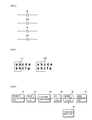
- FIG.4 is a schematic view illustrating an operation of filtering a variable of a programming language by a variable filtering unit illustrated in FIG.3 .
- same capacitors are illustrated in graphic format, and the same capacitors are expressed as A, A1, a, and a1 respectively. That is, the same capacitors are expressed in four different variables.
- capacitors may be converted to same characters, but variables are respectively converted to different characters, and logics that may be detected as same logics may develop a problem of being detected as similar logics.
- the same logics can be accurately searched as the variable filtering unit (23) removes the variable information.
- FIG.5 is a schematic view illustrating an example of setting, by a user, a similarity threshold of a sequence in an error detection device for a programming language according to the present disclosure.
- sequences comparing the similarity are 'abcde' and 'abcfg' respectively, for example, it is possible to set a case (L1) as being similar where 'ab' forming each sequence are same and remaining characters are different, or to set a case (L2) as being similar where 'abc' are same, and remaining characters are different. That is, it is possible for a user, for similarity threshold of sequences, to set as a threshold a case where two characters out of the sequences thus compared are same, or a case where three characters are same.
- the user may change the similarity threshold of sequences to search similar logics desired by the user.
- the set-up of similarity threshold of sequences is not limited thereto, and it should be apparent that methods of threshold being different may be also set up.
- FIG.6 is a block diagram illustrating an error detection device for a programming language according to a third exemplary embodiment of the present disclosure.
- the error detection device for a programming language may include a program preparation unit (21), a logic converter (22), a hash code calculator (24), an LCS calculator (25), a result determinator (26), a logic reporting unit (27) and a threshold input unit (28).
- a user programs a program using IEC61131-3 language through the program preparation unit (21).
- the IEC61131-3 language uses graphic type language, and the logic converter (22) converts the IEC61131-3 program language programmed by a user through the program preparation unit (21) to a sequence format.
- the hash code calculator (24) divides the IEC61131-3 program language converted to the sequence format by the logic converter (22) for each minimum unit (rung) of IEC61131-3 program language, and calculates hash code of each divided rung.
- the LCS calculator (25) divides the IEC61131-3 program language converted to the sequence format by the logic converter (22) for each minimum unit (rung) of IEC61131-3 program language, and calculates LCS for each divided unit
- the result determinator (26) determines the same logics by comparing the hash codes of each rung, and determines the similar logics by comparing similarity threshold of sequences set up by the LCS of each rung and the threshold input unit (28). That is, logics having same hash code are determined as same logics, and logics having greater similarity threshold than that preset by the user through the threshold input unit (28) are determined as similar logics.
- the logic reporting unit (27) reports to a user a result of searched same or similar logics by the result determinator (26).
- the user may change the similarity threshold of sequences using the threshold input unit (28).
- the result determinator (26) detects the similar logics for each unit (rung) of IEC61131-3 program language, using the similarity threshold of changed sequences and the LCS algorithm. If similar logics are detected, the logic reporting unit (27) reports the detected similar logics to the user.
- the user may change again the similarity threshold of sequences using the threshold input unit (28). That is, change of similarity threshold of sequences may be repeated by the user to thereby detect similar logics desired by the user.
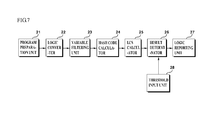
- FIG.7 is a block diagram illustrating an error detection device for a programming language according to a fourth exemplary embodiment of the present disclosure, where FIG.7 further includes the variable filtering unit (23) unlike FIG.6 .
- the error detection device for a programming language may include a program preparation unit (21), a logic converter (22), a variable filtering unit (23), a hash code calculator (24), an LCS (Longest Common Subsequence) calculator (25), a result determinator (26), a logic reporting unit (27) and a threshold input unit (28).
- a program preparation unit 21
- a logic converter 22
- a variable filtering unit 23
- a hash code calculator 24
- an LCS (Longest Common Subsequence) calculator 25
- a result determinator 26
- a logic reporting unit (27)
- a threshold input unit 28
- a user programs a program using IEC61131-3 language through the program preparation unit (21).
- the IEC61131-3 language uses graphic type language, and the logic converter (22) converts the IEC61131-3 program language programmed by a user through the program preparation unit (21) to a sequence format.
- variable filtering unit (23) removes variable information used by the program in response to selection of a user, and whereby similarity among rungs can be prevented from being lowered by difference of variables inputted by the user. Furthermore, the variable filtering unit (23) is configured such that influence on variables can be minimized by a user selection, whereby similar user programs can be detected without being influenced by the variable information inputted by the user.
- the hash code calculator (24) divides the IEC61131-3 program language converted to the sequence format by the logic converter (22) for each minimum unit (rung) of IEC61131-3 program language, and calculates the hash code of each divided rung.
- the LCS calculator (25) divides the IEC61131-3 program language converted to the sequence format by the logic converter (22) for each minimum unit (rung) of IEC61131-3 program language, and calculates LCS for each unit.
- the result determinator (26) determines the same logics by comparing the hash codes of each rung, and determines the similar logics by comparing similarity threshold of sequences set up by the LCS of each rung and the threshold input unit (28). That is, logics having same hash code are determined as same logics, and logics having greater similarity threshold than that preset by the user through the threshold input unit (28) are determined as similar logics.
- the logic reporting unit (27) reports to a user a result of searched same or similar logics by the result determinator (26).
- the user may change the similarity threshold of sequences using the threshold input unit (28).
- the result determinator (26) detects the similar logics for each unit (rung) of IEC61131-3 program language, using the similarity threshold of changed sequences and the LCS algorithm. If similar logics are detected, the logic reporting unit (27) reports the detected similar logics to the user.
- the user may change again the similarity threshold of sequences using the threshold input unit (28). That is, change of similarity threshold of sequences may be repeated by the user to thereby detect similar logics desired by the user.
Landscapes
- Engineering & Computer Science (AREA)
- Theoretical Computer Science (AREA)
- Physics & Mathematics (AREA)
- General Physics & Mathematics (AREA)
- Computer Hardware Design (AREA)
- Quality & Reliability (AREA)
- General Engineering & Computer Science (AREA)
- Software Systems (AREA)
- Programmable Controllers (AREA)
- Stored Programmes (AREA)
- Debugging And Monitoring (AREA)
- Automation & Control Theory (AREA)
Abstract
Description
- Aspects of the present disclosure relate to an error detection device for programming language and method thereof, and more particularly to an error detection device for IEC61131-3 programming language and a method thereof.
- In general, a user is prone to err in controlling a PLC (Programmable Logic Controller) due to diversified and distributed PLC programming language, and squandering of manpower and material resources resultant from use of each PLC programming language is often generated. In order to solve these problems, IEC (International Electrotechnical Commission) has adopted a language internationally standardized as IEC61131-3, and integrated and standardized the conventional PLC programming languages.
-
FIG.1 is a block diagram of a program environment of a PLC automation system according to prior art. - Referring to
FIG.1 , a program of a PLC automation system includes a program preparation unit (11) configured to prepare a program by providing an IEC 61131-3 programming environment, a program download unit (12) downloading the prepared program to a controller, and a program verification unit (13) verifying the downloaded program. - The program controller of the automation system frequently controls the PLC automation program by repeatedly using one or more same logics or similar logics. However, there is a problem of searching and changing the same or similar logics one by one during logic change, in a case same or similar logics are repeatedly used, due to lack of elements such as template for repeated logic use during preparation of programs, in comparison between the IEC 61131-3 programming language used in the PLC automation system and C/C++ language which is a higher level programming language.
- Particularly, logic change for use of one or more same components must be equally applied to all cases where same components are used. Even if one component is omitted from logic change, reliability deteriorates to an entire automation system. Although same or similar logics alike must be importantly managed from a development stage of automation system to trial operation and maintenance/ repair stages, functions of searching for same or similar logics are not provided under the conventional program environment of automation system.
- Exemplary aspects of the present disclosure are to substantially solve at least the above problems and/or disadvantages and to provide at least the advantages as mentioned below. Thus, the present disclosure is directed to provide an error detection device for a programming language configured to report same (identical) or similar logics on a program of an automation system by detecting the same or similar logics, and a method thereof.
- The present disclosure is also directed to provide an error detection device for a programming language configured to rapidly and easily detect logic same as (identical to) or similar to an erroneous logic, and to allow a user to pre-recognize an error-prone logic, and a method thereof.
- In one general aspect of the present disclosure, there is provided an error detection device for a programming language on a PLC automation system, the device comprising:
- a logic converter configured to convert a program to a sequence, the program programmed by a programming language;
- a hash code calculator configured to detect a same logic relative to a sequence by dividing the converted sequence to a minimum unit of a plurality of program languages, calculating each hash code by the divided minimum unit of the plurality of program languages and comparing each calculated hash code; and
- an LCS (Longest Common Subsequence) calculator calculating an LCS relative to the sequence divided by the minimum unit of the plurality of program languages, and detecting a similar logic relative to the sequence by applying the calculated LCS to an LCS algorithm.
- Preferably, but not necessarily, the error detection device may further comprise a result determinator configured to determine that a relevant sequence is a same logic, in a case hash codes are mutually same by comparing the hash codes for each minimum unit of the plurality of program languages calculated by the hash code calculator, and to determine that a relevant sequence is a similar logic, in a case the LCS is greater than a similarity threshold of a set sequence by comparing the LCS calculated by the LCS calculator with the similarity threshold of the set sequence.
- Preferably, but not necessarily, the error detection device may further comprise a logic reporting unit configured to report same logic detection, similar logic detection and determination results relative to the sequence.
- Preferably, but not necessarily, the error detection device may further comprise a threshold input unit configured to change and set, by a user, a similarity threshold of the sequence, in a case the similar logic is not detected, or the number of similar logics exceeds a set threshold.
- Preferably, but not necessarily, the error detection device may further comprise a variable filtering unit configured to remove information on variables of the programming language for accurate detection and determination of same logic.
- In another general aspect of the present disclosure, there is provided an error detection method for a programming language on a PLC automation system, the method comprising:
- converting the a program to a sequence, the program programmed by a programming language;
- detecting a same logic relative to a sequence by dividing the converted sequence to a minimum unit of a plurality of program languages, calculating each hash code by the divided minimum unit of the plurality of program languages and comparing each calculated hash code; and
- calculating an LCS (Longest Common Subsequence) relative to the sequence divided by the minimum unit of the plurality of program languages, and detecting a similar logic relative to the sequence by applying the calculated LCS to an LCS algorithm.
- Preferably, but not necessarily, the method may further comprise determining that a relevant sequence is a same logic, in a case hash codes are mutually same by comparing the hash codes for each minimum unit of the plurality of program languages calculated by the hash code calculator, and to determine that a relevant sequence is a similar logic, in a case the LCS is greater than a similarity threshold of a set sequence by comparing the LCS calculated by the LCS calculator with the similarity threshold of the set sequence.
- Preferably, but not necessarily, the method may further comprise reporting to a user same logic detection, similar logic detection relative to the sequence and determination results thereof
- Preferably, but not necessarily, the method may further comprise changing and setting, by a user, a similarity threshold of the sequence, in a case the similar logic is not detected, or the number of similar logics exceeds a set threshold.
- Preferably, but not necessarily, the method may further comprise removing information on variables of the programming language for accurate detection and determination of same logic.
- The exemplary embodiment of the present disclosure is advantageous in that a potential logic error that may be generated in a trial operation and maintenance/repair stages of automation system can be prevented by recognizing, by a user, same or similar logics used by automation system program to improve reliability of the automation system.
-
-
FIG. 1 is a block diagram illustrating a program environment of a PLC automation system according to prior art. -
FIG.2 is a block diagram illustrating an error detection device for a programming language according to a first exemplary embodiment of the present disclosure. -
FIG.3 is a block diagram illustrating an error detection device for a programming language according to a second exemplary embodiment of the present disclosure. -
FIG.4 is a schematic view illustrating an operation of filtering a variable of a programming language by a variable filtering unit illustrated inFIG.3 . -
FIG.5 is a schematic view illustrating an example of setting, by a user, a similarity threshold of a sequence in an error detection device for a programming language according to the present disclosure. -
FIG.6 is a block diagram illustrating an error detection device for a programming language according to a third exemplary embodiment of the present disclosure. -
FIG.7 is a block diagram illustrating an error detection device for a programming language according to a fourth exemplary embodiment of the present disclosure. - Advantages and features of the present disclosure may be understood more readily by reference to the following detailed description of exemplary embodiments and the accompanying drawings. Thus, the present disclosure is not limited to the exemplary embodiments which will be described below, but may be implemented in other forms. Accordingly, the described aspect is intended to embrace all such alterations, modifications, and variations that fall within the scope and novel idea of the present disclosure.
- Although the following detailed description explained and illustrated IEC61131-3 language as a programming language, the present disclosure is not limited thereto, and it should be apparent to the skilled in the art that other languages than the IEC61131-3 language may be applied to the present disclosure.
- Error detection device and method for programming language according to exemplary embodiments will be described more fully hereinafter with reference to the accompanying drawings, where like reference numerals refer to like elements throughout.
-
FIG.2 is a block diagram illustrating an error detection device for a programming language according to a first exemplary embodiment of the present disclosure. - \Referring to
FIG.2 , the error detection device for a programming language according to the present disclosure may include a program preparation unit (21), a logic converter (22), a hash code calculator (24), an LCS (Longest Common Subsequence) calculator (25) and a logic reporting unit (27). - First, program preparation unit (21) programs a program using IEC61131-3 language. The IEC61131-3 language uses graphic type language, and the logic converter (22) converts the IEC61131-3 program language programmed by the program preparation unit (21) to a sequence format.
- The hash code calculator (24) divides the IEC61131-3 program language converted to the sequence format by the logic converter (22) for each minimum unit (rung) of IEC61131-3 program language. The hash code calculator (24) detects same logics by comparing each hash code after calculating a hash code of each divided rung.
- The LCS calculator (25) detects similar logics using LCS algorithm for determining similarity of each rung after calculating LCS (Longest Common Subsequence) for each minimum unit (rung) of the IEC61131-3 program language, where the LCS algorithm is to output a longest one out of common subsequences, the detailed explanation of which will be omitted herein as it would be obvious to the skilled in the art.
- The logic reporting unit (27) reports to a user a result of searched same or similar logics by using the hash code and LCS. That is, the logic reporting unit (27) reports logics having same hash code as same logics, and reports as similar logics the logics having greater similarity threshold than that preset by a user. The similarity threshold of sequence preset by the user will be described in detail with reference to
FIG.5 . -
FIG.3 is a block diagram illustrating an error detection device for a programming language according to a second exemplary embodiment of the present disclosure, whereFIG.3 further includes a variable filtering unit (23) in addition to what is illustrated inFIG.2 . - Referring to
FIG.3 , the error detection device for a programming language according to the present disclosure may include a program preparation unit (21), a logic converter (22), a variable filtering unit (23), a hash code calculator (24), an LCS (Longest Common Subsequence) calculator (25) and a logic reporting unit (27). - First, a user programs a program using IEC61131-3 language through the program preparation unit (21). The IEC61131-3 language uses graphic type language, and the logic converter (22) converts the IEC61131-3 program language programmed by a user through the program preparation unit (21) to a sequence format.
- The variable filtering unit (23) removes variable information used by the program in response to selection of a user, where the user may select to minimize influence on variables by the variable filtering unit (23), whereby similarity among rungs can be prevented from being lowered by difference of variables inputted by the user. That is, in a case the variable filtering unit (23) is used, a similar user program can be detected regardless of variable information inputted by the user, and a process of minimizing the influence on variables by the variable filtering unit (23) will be described later with reference to
FIG.4 . - The hash code calculator (24) divides the IEC61131-3 program language converted to the sequence format by the logic converter (22) for each minimum unit (rung) of IEC61131-3 program language. The hash code calculator (24) detects same logics by comparing each hash code after calculating a hash code of each divided rung.
- The LCS calculator (25) detects similar logics using LCS algorithm for determining similarity of each rung after calculating LCS for each minimum unit (rung) of the IEC61131-3 program language.
- The logic reporting unit (27) reports to a user a result of searched same or similar logics by using the hash code and LCS. That is, the logic reporting unit (27) reports logics having same hash code as same logics, and reports as similar logics the logics having greater similarity threshold than that preset by a user.
-
FIG.4 is a schematic view illustrating an operation of filtering a variable of a programming language by a variable filtering unit illustrated inFIG.3 . - Referring to
FIG.4 , same capacitors (condensers) are illustrated in graphic format, and the same capacitors are expressed as A, A1, a, and a1 respectively. That is, the same capacitors are expressed in four different variables. - In a case four same capacitors and respective variables are converted to characters, capacitors may be converted to same characters, but variables are respectively converted to different characters, and logics that may be detected as same logics may develop a problem of being detected as similar logics. Thus, the same logics can be accurately searched as the variable filtering unit (23) removes the variable information.
-
FIG.5 is a schematic view illustrating an example of setting, by a user, a similarity threshold of a sequence in an error detection device for a programming language according to the present disclosure. - Referring to
FIG.5 , assuming that sequences comparing the similarity are 'abcde' and 'abcfg' respectively, for example, it is possible to set a case (L1) as being similar where 'ab' forming each sequence are same and remaining characters are different, or to set a case (L2) as being similar where 'abc' are same, and remaining characters are different. That is, it is possible for a user, for similarity threshold of sequences, to set as a threshold a case where two characters out of the sequences thus compared are same, or a case where three characters are same. - If similar logics desired by the user are not detected or too many similar logics are detected even by the similarity threshold of sequences set up by the user, the user may change the similarity threshold of sequences to search similar logics desired by the user. The set-up of similarity threshold of sequences is not limited thereto, and it should be apparent that methods of threshold being different may be also set up.
-
FIG.6 is a block diagram illustrating an error detection device for a programming language according to a third exemplary embodiment of the present disclosure. - Referring to
FIG.6 , the error detection device for a programming language according to the present disclosure may include a program preparation unit (21), a logic converter (22), a hash code calculator (24), an LCS calculator (25), a result determinator (26), a logic reporting unit (27) and a threshold input unit (28). - First, a user programs a program using IEC61131-3 language through the program preparation unit (21). The IEC61131-3 language uses graphic type language, and the logic converter (22) converts the IEC61131-3 program language programmed by a user through the program preparation unit (21) to a sequence format.
- The hash code calculator (24) divides the IEC61131-3 program language converted to the sequence format by the logic converter (22) for each minimum unit (rung) of IEC61131-3 program language, and calculates hash code of each divided rung.
- The LCS calculator (25) divides the IEC61131-3 program language converted to the sequence format by the logic converter (22) for each minimum unit (rung) of IEC61131-3 program language, and calculates LCS for each divided unit
- The result determinator (26) determines the same logics by comparing the hash codes of each rung, and determines the similar logics by comparing similarity threshold of sequences set up by the LCS of each rung and the threshold input unit (28). That is, logics having same hash code are determined as same logics, and logics having greater similarity threshold than that preset by the user through the threshold input unit (28) are determined as similar logics.
- The logic reporting unit (27) reports to a user a result of searched same or similar logics by the result determinator (26).
- However, if similar logics are not detected or too many similar logics are detected, the user may change the similarity threshold of sequences using the threshold input unit (28). The result determinator (26) detects the similar logics for each unit (rung) of IEC61131-3 program language, using the similarity threshold of changed sequences and the LCS algorithm. If similar logics are detected, the logic reporting unit (27) reports the detected similar logics to the user.
- If similar logics are not detected or too many similar logics are detected, the user may change again the similarity threshold of sequences using the threshold input unit (28). That is, change of similarity threshold of sequences may be repeated by the user to thereby detect similar logics desired by the user.
-
FIG.7 is a block diagram illustrating an error detection device for a programming language according to a fourth exemplary embodiment of the present disclosure, whereFIG.7 further includes the variable filtering unit (23) unlikeFIG.6 . - Referring to
FIG.7 , the error detection device for a programming language according to the present disclosure may include a program preparation unit (21), a logic converter (22), a variable filtering unit (23), a hash code calculator (24), an LCS (Longest Common Subsequence) calculator (25), a result determinator (26), a logic reporting unit (27) and a threshold input unit (28). - First, a user programs a program using IEC61131-3 language through the program preparation unit (21). The IEC61131-3 language uses graphic type language, and the logic converter (22) converts the IEC61131-3 program language programmed by a user through the program preparation unit (21) to a sequence format.
- The variable filtering unit (23) removes variable information used by the program in response to selection of a user, and whereby similarity among rungs can be prevented from being lowered by difference of variables inputted by the user. Furthermore, the variable filtering unit (23) is configured such that influence on variables can be minimized by a user selection, whereby similar user programs can be detected without being influenced by the variable information inputted by the user.
- The hash code calculator (24) divides the IEC61131-3 program language converted to the sequence format by the logic converter (22) for each minimum unit (rung) of IEC61131-3 program language, and calculates the hash code of each divided rung.
- The LCS calculator (25) divides the IEC61131-3 program language converted to the sequence format by the logic converter (22) for each minimum unit (rung) of IEC61131-3 program language, and calculates LCS for each unit.
- The result determinator (26) determines the same logics by comparing the hash codes of each rung, and determines the similar logics by comparing similarity threshold of sequences set up by the LCS of each rung and the threshold input unit (28). That is, logics having same hash code are determined as same logics, and logics having greater similarity threshold than that preset by the user through the threshold input unit (28) are determined as similar logics.
- The logic reporting unit (27) reports to a user a result of searched same or similar logics by the result determinator (26).
- However, if similar logics are not detected or too many similar logics are detected, the user may change the similarity threshold of sequences using the threshold input unit (28). The result determinator (26) detects the similar logics for each unit (rung) of IEC61131-3 program language, using the similarity threshold of changed sequences and the LCS algorithm. If similar logics are detected, the logic reporting unit (27) reports the detected similar logics to the user.
- If similar logics are not detected or too many similar logics are detected, the user may change again the similarity threshold of sequences using the threshold input unit (28). That is, change of similarity threshold of sequences may be repeated by the user to thereby detect similar logics desired by the user.
- Although exemplary embodiments have been described with reference to a number of illustrative embodiments thereof, it should be understood that numerous other modifications and embodiments can be devised by those skilled in the art that will fall within the spirit and scope of the principles of this disclosure. More particularly, various variations and modifications are possible in the component parts and/or arrangements of the subject combination arrangement within the scope of the disclosure, the drawings and the appended claims.
Claims (10)
- An error detection device for a programming language on a PLC automation system, the device characterized by:a logic converter (22) configured to convert a program to a sequence, the program programmed by a programming language;a hash code calculator (24) configured to detect a same logic relative to a sequence by dividing the converted sequence to a minimum unit of a plurality of program languages, calculating each hash code by the divided minimum unit of the plurality of program languages and comparing each calculated hash code; andan LCS (Longest Common Subsequence) calculator (25) calculating an LCS relative to the sequence divided by the minimum unit of the plurality of program languages, and detecting a similar logic relative to the sequence by applying the calculated LCS to an LCS algorithm.
- The error detection device according to claim 1, further characterized by a result determinator (26) configured to determine that a relevant sequence is a same logic, in a case hash codes are mutually same by comparing the hash codes for each minimum unit of the plurality of program languages calculated by the hash code calculator, and to determine that a relevant sequence is a similar logic, in a case the LCS is greater than a similarity threshold of a set sequence by comparing the LCS calculated by the LCS calculator with the similarity threshold of the set sequence.
- The error detection device of claim according to any one 1 to 2, further characterized by a logic reporting unit (27) configured to report same logic detection, similar logic detection and determination results relative to the sequence.
- The error detection device of claim according to any one 1 to 3, further characterized by a threshold input unit (28) configured to change and set, by a user, a similarity threshold of the sequence, in a case the similar logic is not detected, or the number of similar logics exceeds a set threshold.
- The error detection device of claim according to any one 1 to 4, further characterized by a variable filtering unit (23) configured to remove information on variables of the programming language for accurate detection and determination of same logic.
- An error detection method for a programming language on a PLC automation system, the method characterized by:converting a program to a sequence, the program programmed by a programming language;detecting a same logic relative to a sequence by dividing the converted sequence to a minimum unit of a plurality of program languages,calculating each hash code by the divided minimum unit of the plurality of program languages and comparing each calculated hash code; andcalculating an LCS (Longest Common Subsequence) relative to the sequence divided by the minimum unit of the plurality of program languages, and detecting a similar logic relative to the sequence by applying the calculated LCS to an LCS algorithm.
- The error detection method according to claim 6, further characterized by determining that a relevant sequence is a same logic, in a case hash codes are mutually same by comparing the hash codes for each minimum unit of the plurality of program languages calculated by the hash code calculator, and determining that a relevant sequence is a similar logic, in a case the LCS is greater than a similarity threshold of a set sequence by comparing the LCS calculated by the LCS calculator with the similarity threshold of the set sequence.
- The error detection method of claim according to any one 6 to 7, further characterized by reporting, to a user, same logic detection, similar logic detection relative to the sequence and determination results thereof
- The error detection method of claim according to any one 6 to 8, further characterized by changing and setting, by a user, a similarity threshold of the sequence, in a case the similar logic is not detected, or the number of similar logics exceeds a set threshold.
- The error detection method of claim according to any one 6 to 9, further characterized by removing information on variables of the programming language for accurate detection and determination of same logic.
Applications Claiming Priority (1)
| Application Number | Priority Date | Filing Date | Title |
|---|---|---|---|
| KR1020120092136A KR101602993B1 (en) | 2012-08-23 | 2012-08-23 | Error detection device for programming language |
Publications (1)
| Publication Number | Publication Date |
|---|---|
| EP2701066A1 true EP2701066A1 (en) | 2014-02-26 |
Family
ID=49123638
Family Applications (1)
| Application Number | Title | Priority Date | Filing Date |
|---|---|---|---|
| EP13181328.9A Ceased EP2701066A1 (en) | 2012-08-23 | 2013-08-22 | Error detection device for programming language |
Country Status (5)
| Country | Link |
|---|---|
| US (1) | US9639449B2 (en) |
| EP (1) | EP2701066A1 (en) |
| JP (1) | JP5753232B2 (en) |
| KR (1) | KR101602993B1 (en) |
| CN (1) | CN103631711A (en) |
Families Citing this family (4)
| Publication number | Priority date | Publication date | Assignee | Title |
|---|---|---|---|---|
| CN106610965A (en) * | 2015-10-21 | 2017-05-03 | 北京瀚思安信科技有限公司 | Text string common sub sequence determining method and equipment |
| KR102478005B1 (en) * | 2016-04-28 | 2022-12-14 | 엘에스일렉트릭(주) | Analysis method for plc user program |
| KR102919745B1 (en) * | 2020-02-11 | 2026-01-28 | 엘에스일렉트릭(주) | Control method of plc for supporting multiple programming language |
| JP7447574B2 (en) * | 2020-03-12 | 2024-03-12 | オムロン株式会社 | Support equipment, support programs and support methods |
Citations (2)
| Publication number | Priority date | Publication date | Assignee | Title |
|---|---|---|---|---|
| US20100306514A1 (en) * | 2009-05-27 | 2010-12-02 | Frost Gary R | Correlating Instruction Sequences with CPU Performance Events to Improve Software Performance |
| EP2455855A1 (en) * | 2010-11-22 | 2012-05-23 | Siemens AG | Graphical comparison display of software |
Family Cites Families (11)
| Publication number | Priority date | Publication date | Assignee | Title |
|---|---|---|---|---|
| JPS6289134A (en) * | 1985-10-16 | 1987-04-23 | Nippon Steel Corp | Character string difference extracting method and its device |
| JPH0232425A (en) * | 1988-07-22 | 1990-02-02 | Nec Corp | Constant optimizing system |
| DE19707107A1 (en) * | 1997-02-22 | 1998-09-10 | Bosch Gmbh Robert | Device for programming a PLC |
| DE102004010179A1 (en) | 2004-03-02 | 2005-10-06 | Siemens Ag | Method and data processing device for updating computer programs by data transmission |
| JP5039428B2 (en) * | 2007-05-14 | 2012-10-03 | 株式会社キーエンス | Programmable controller and PLC system |
| KR100904835B1 (en) | 2007-06-07 | 2009-06-25 | 미쓰비시덴키 가부시키가이샤 | Computer-readable storage medium recording string matching device and string matching program |
| JP5208635B2 (en) | 2008-09-12 | 2013-06-12 | インターナショナル・ビジネス・マシーンズ・コーポレーション | Information processing apparatus, information processing system, programming support method and program for supporting programming |
| US8498982B1 (en) * | 2010-07-07 | 2013-07-30 | Openlogic, Inc. | Noise reduction for content matching analysis results for protectable content |
| KR101162051B1 (en) * | 2010-12-21 | 2012-07-03 | 한국인터넷진흥원 | Using string comparison malicious code detection and classification system and method |
| WO2013004389A1 (en) * | 2011-07-06 | 2013-01-10 | Abb Ag | Method and device for the programming and configuration of a programmable logic controller |
| KR102029465B1 (en) * | 2011-11-17 | 2019-10-08 | 삼성에스디에스 주식회사 | Searching and pattern matching engine and terminal apparatus using the same and method thereof |
-
2012
- 2012-08-23 KR KR1020120092136A patent/KR101602993B1/en active Active
-
2013
- 2013-08-19 US US13/970,480 patent/US9639449B2/en active Active
- 2013-08-22 EP EP13181328.9A patent/EP2701066A1/en not_active Ceased
- 2013-08-23 JP JP2013173527A patent/JP5753232B2/en active Active
- 2013-08-23 CN CN201310373735.4A patent/CN103631711A/en active Pending
Patent Citations (2)
| Publication number | Priority date | Publication date | Assignee | Title |
|---|---|---|---|---|
| US20100306514A1 (en) * | 2009-05-27 | 2010-12-02 | Frost Gary R | Correlating Instruction Sequences with CPU Performance Events to Improve Software Performance |
| EP2455855A1 (en) * | 2010-11-22 | 2012-05-23 | Siemens AG | Graphical comparison display of software |
Also Published As
| Publication number | Publication date |
|---|---|
| KR20140025860A (en) | 2014-03-05 |
| JP2014041617A (en) | 2014-03-06 |
| JP5753232B2 (en) | 2015-07-22 |
| US9639449B2 (en) | 2017-05-02 |
| CN103631711A (en) | 2014-03-12 |
| US20140058540A1 (en) | 2014-02-27 |
| KR101602993B1 (en) | 2016-03-11 |
Similar Documents
| Publication | Publication Date | Title |
|---|---|---|
| US9639449B2 (en) | Error detection device for programming language | |
| CN103279418B (en) | A kind of method of testing of configuration control information and device | |
| CN105259756B (en) | Power plant's control loop identification Method and system | |
| CN102103589B (en) | Test table creation system and test table creation method | |
| CN113826128B (en) | State estimation device and state estimation method | |
| JP5489958B2 (en) | Test table generation apparatus and method | |
| JP6955309B2 (en) | Methods and equipment for defining stages for multivariate batch control analysis, manufactured articles | |
| EP2806318A1 (en) | Method for storing data | |
| CN104572999B (en) | Heterogeneous data-based error data detection method and device | |
| US20140055273A1 (en) | Method of alarming abnormal state of automated manufacturing system based on plc signal pattern | |
| WO2020146486A1 (en) | Predictive maintenance tool based on digital model | |
| Dhouibi et al. | Automatic decomposition and allocation of safety integrity level using system of linear equations | |
| CN112529218A (en) | Building safety detection method and system based on correlation analysis | |
| US20220187805A1 (en) | Plant operating condition determination device, plant control system, operating condition determination method and program | |
| KR102426581B1 (en) | Method and apparatus for analyzing safety of automotive software | |
| KR20170140753A (en) | Method and apparatus for analyzing safety of software | |
| KR101566355B1 (en) | Master pattern generation method and apparatus for checking normal operation of plc based manufacturing system | |
| KR101774815B1 (en) | Cursor location recognition test automation system and test automation method using the same | |
| WO2016181526A1 (en) | Control logic diagram analysis device and control logic diagram analysis method | |
| KR101675986B1 (en) | Method and apparatus for analyzing safety of automotive software | |
| KR20210028452A (en) | Process safety management drawing automationtechnology for high-tech manufacturing industry using ai | |
| KR101767723B1 (en) | Method for verifying plc instruction using ld program | |
| KR101734872B1 (en) | Method and apparatus for analyzing safety of software | |
| JP7318798B2 (en) | SECURITY ASSESSMENT DEVICE, SECURITY ASSESSMENT METHOD, AND PROGRAM | |
| JP2016018292A (en) | Setting device and setting method |
Legal Events
| Date | Code | Title | Description |
|---|---|---|---|
| PUAI | Public reference made under article 153(3) epc to a published international application that has entered the european phase |
Free format text: ORIGINAL CODE: 0009012 |
|
| AK | Designated contracting states |
Kind code of ref document: A1 Designated state(s): AL AT BE BG CH CY CZ DE DK EE ES FI FR GB GR HR HU IE IS IT LI LT LU LV MC MK MT NL NO PL PT RO RS SE SI SK SM TR |
|
| AX | Request for extension of the european patent |
Extension state: BA ME |
|
| 17P | Request for examination filed |
Effective date: 20140826 |
|
| RBV | Designated contracting states (corrected) |
Designated state(s): AL AT BE BG CH CY CZ DE DK EE ES FI FR GB GR HR HU IE IS IT LI LT LU LV MC MK MT NL NO PL PT RO RS SE SI SK SM TR |
|
| 17Q | First examination report despatched |
Effective date: 20170901 |
|
| 18R | Application refused |
Effective date: 20180623 |