EP2690962B1 - Antimicrobial powders for the preparation of bakery products - Google Patents
Antimicrobial powders for the preparation of bakery products Download PDFInfo
- Publication number
- EP2690962B1 EP2690962B1 EP12763143.0A EP12763143A EP2690962B1 EP 2690962 B1 EP2690962 B1 EP 2690962B1 EP 12763143 A EP12763143 A EP 12763143A EP 2690962 B1 EP2690962 B1 EP 2690962B1
- Authority
- EP
- European Patent Office
- Prior art keywords
- dough
- antimicrobial
- powder
- weight
- antimicrobial powder
- Prior art date
- Legal status (The legal status is an assumption and is not a legal conclusion. Google has not performed a legal analysis and makes no representation as to the accuracy of the status listed.)
- Active
Links
Images



Classifications
-
- A—HUMAN NECESSITIES
- A01—AGRICULTURE; FORESTRY; ANIMAL HUSBANDRY; HUNTING; TRAPPING; FISHING
- A01N—PRESERVATION OF BODIES OF HUMANS OR ANIMALS OR PLANTS OR PARTS THEREOF; BIOCIDES, e.g. AS DISINFECTANTS, AS PESTICIDES OR AS HERBICIDES; PEST REPELLANTS OR ATTRACTANTS; PLANT GROWTH REGULATORS
- A01N37/00—Biocides, pest repellants or attractants, or plant growth regulators containing organic compounds containing a carbon atom having three bonds to hetero atoms with at the most two bonds to halogen, e.g. carboxylic acids
- A01N37/06—Unsaturated carboxylic acids or thio analogues thereof; Derivatives thereof
-
- A—HUMAN NECESSITIES
- A21—BAKING; EDIBLE DOUGHS
- A21D—TREATMENT OF FLOUR OR DOUGH FOR BAKING, e.g. BY ADDITION OF MATERIALS; BAKING; BAKERY PRODUCTS
- A21D2/00—Treatment of flour or dough by adding materials thereto before or during baking
- A21D2/08—Treatment of flour or dough by adding materials thereto before or during baking by adding organic substances
- A21D2/14—Organic oxygen compounds
- A21D2/145—Acids, anhydrides or salts thereof
-
- A—HUMAN NECESSITIES
- A01—AGRICULTURE; FORESTRY; ANIMAL HUSBANDRY; HUNTING; TRAPPING; FISHING
- A01N—PRESERVATION OF BODIES OF HUMANS OR ANIMALS OR PLANTS OR PARTS THEREOF; BIOCIDES, e.g. AS DISINFECTANTS, AS PESTICIDES OR AS HERBICIDES; PEST REPELLANTS OR ATTRACTANTS; PLANT GROWTH REGULATORS
- A01N25/00—Biocides, pest repellants or attractants, or plant growth regulators, characterised by their forms, or by their non-active ingredients or by their methods of application, e.g. seed treatment or sequential application; Substances for reducing the noxious effect of the active ingredients to organisms other than pests
- A01N25/08—Biocides, pest repellants or attractants, or plant growth regulators, characterised by their forms, or by their non-active ingredients or by their methods of application, e.g. seed treatment or sequential application; Substances for reducing the noxious effect of the active ingredients to organisms other than pests containing solids as carriers or diluents
-
- A—HUMAN NECESSITIES
- A01—AGRICULTURE; FORESTRY; ANIMAL HUSBANDRY; HUNTING; TRAPPING; FISHING
- A01N—PRESERVATION OF BODIES OF HUMANS OR ANIMALS OR PLANTS OR PARTS THEREOF; BIOCIDES, e.g. AS DISINFECTANTS, AS PESTICIDES OR AS HERBICIDES; PEST REPELLANTS OR ATTRACTANTS; PLANT GROWTH REGULATORS
- A01N25/00—Biocides, pest repellants or attractants, or plant growth regulators, characterised by their forms, or by their non-active ingredients or by their methods of application, e.g. seed treatment or sequential application; Substances for reducing the noxious effect of the active ingredients to organisms other than pests
- A01N25/12—Powders or granules
-
- A—HUMAN NECESSITIES
- A01—AGRICULTURE; FORESTRY; ANIMAL HUSBANDRY; HUNTING; TRAPPING; FISHING
- A01N—PRESERVATION OF BODIES OF HUMANS OR ANIMALS OR PLANTS OR PARTS THEREOF; BIOCIDES, e.g. AS DISINFECTANTS, AS PESTICIDES OR AS HERBICIDES; PEST REPELLANTS OR ATTRACTANTS; PLANT GROWTH REGULATORS
- A01N37/00—Biocides, pest repellants or attractants, or plant growth regulators containing organic compounds containing a carbon atom having three bonds to hetero atoms with at the most two bonds to halogen, e.g. carboxylic acids
- A01N37/10—Aromatic or araliphatic carboxylic acids, or thio analogues thereof; Derivatives thereof
-
- A—HUMAN NECESSITIES
- A01—AGRICULTURE; FORESTRY; ANIMAL HUSBANDRY; HUNTING; TRAPPING; FISHING
- A01N—PRESERVATION OF BODIES OF HUMANS OR ANIMALS OR PLANTS OR PARTS THEREOF; BIOCIDES, e.g. AS DISINFECTANTS, AS PESTICIDES OR AS HERBICIDES; PEST REPELLANTS OR ATTRACTANTS; PLANT GROWTH REGULATORS
- A01N37/00—Biocides, pest repellants or attractants, or plant growth regulators containing organic compounds containing a carbon atom having three bonds to hetero atoms with at the most two bonds to halogen, e.g. carboxylic acids
- A01N37/18—Biocides, pest repellants or attractants, or plant growth regulators containing organic compounds containing a carbon atom having three bonds to hetero atoms with at the most two bonds to halogen, e.g. carboxylic acids containing the group —CO—N<, e.g. carboxylic acid amides or imides; Thio analogues thereof
-
- A—HUMAN NECESSITIES
- A01—AGRICULTURE; FORESTRY; ANIMAL HUSBANDRY; HUNTING; TRAPPING; FISHING
- A01N—PRESERVATION OF BODIES OF HUMANS OR ANIMALS OR PLANTS OR PARTS THEREOF; BIOCIDES, e.g. AS DISINFECTANTS, AS PESTICIDES OR AS HERBICIDES; PEST REPELLANTS OR ATTRACTANTS; PLANT GROWTH REGULATORS
- A01N43/00—Biocides, pest repellants or attractants, or plant growth regulators containing heterocyclic compounds
- A01N43/90—Biocides, pest repellants or attractants, or plant growth regulators containing heterocyclic compounds having two or more relevant hetero rings, condensed among themselves or with a common carbocyclic ring system
-
- A—HUMAN NECESSITIES
- A01—AGRICULTURE; FORESTRY; ANIMAL HUSBANDRY; HUNTING; TRAPPING; FISHING
- A01N—PRESERVATION OF BODIES OF HUMANS OR ANIMALS OR PLANTS OR PARTS THEREOF; BIOCIDES, e.g. AS DISINFECTANTS, AS PESTICIDES OR AS HERBICIDES; PEST REPELLANTS OR ATTRACTANTS; PLANT GROWTH REGULATORS
- A01N65/00—Biocides, pest repellants or attractants, or plant growth regulators containing material from algae, lichens, bryophyta, multi-cellular fungi or plants, or extracts thereof
- A01N65/08—Magnoliopsida [dicotyledons]
- A01N65/24—Lauraceae [Laurel family], e.g. laurel, avocado, sassafras, cinnamon or camphor
-
- A—HUMAN NECESSITIES
- A21—BAKING; EDIBLE DOUGHS
- A21D—TREATMENT OF FLOUR OR DOUGH FOR BAKING, e.g. BY ADDITION OF MATERIALS; BAKING; BAKERY PRODUCTS
- A21D13/00—Finished or partly finished bakery products
- A21D13/20—Partially or completely coated products
- A21D13/22—Partially or completely coated products coated before baking
-
- A—HUMAN NECESSITIES
- A21—BAKING; EDIBLE DOUGHS
- A21D—TREATMENT OF FLOUR OR DOUGH FOR BAKING, e.g. BY ADDITION OF MATERIALS; BAKING; BAKERY PRODUCTS
- A21D6/00—Other treatment of flour or dough before baking, e.g. cooling, irradiating or heating
-
- A—HUMAN NECESSITIES
- A21—BAKING; EDIBLE DOUGHS
- A21D—TREATMENT OF FLOUR OR DOUGH FOR BAKING, e.g. BY ADDITION OF MATERIALS; BAKING; BAKERY PRODUCTS
- A21D8/00—Methods for preparing or baking dough
- A21D8/02—Methods for preparing dough; Treating dough prior to baking
- A21D8/04—Methods for preparing dough; Treating dough prior to baking treating dough with microorganisms or enzymes
- A21D8/042—Methods for preparing dough; Treating dough prior to baking treating dough with microorganisms or enzymes with enzymes
-
- A—HUMAN NECESSITIES
- A23—FOODS OR FOODSTUFFS; TREATMENT THEREOF, NOT COVERED BY OTHER CLASSES
- A23B—PRESERVATION OF FOODS, FOODSTUFFS OR NON-ALCOHOLIC BEVERAGES; CHEMICAL RIPENING OF FRUIT OR VEGETABLES
- A23B40/00—Preservation of flour or dough before baking
Definitions
- the present invention relates to novel bakery products having long shelf-lives and superior mold growth inhibition.
- the invention is also directed towards novel methods of making such bakery products using inventive antimicrobial powders ("AMPs"). Furthermore, these properties can be achieved even without the use of chemical preservatives in the doughs themselves.
- microorganisms such as mold, rope, spoilage yeast, and bacteria
- the growth of microorganisms is often the limiting factor in the shelf-life of foods. This is especially true for bakery products, such as bread, due to their relatively higher moisture content, higher pH, and the exposure to open air during cooling.
- the microbial growth not only shortens the shelf-life of bakery products, but also results in difficulties in production, storage and distribution, and sales. A significant amount of such food is wasted either in the store or in consumers' homes due to the microbial growth.
- mold growth has probably become the most critical limiting factor that will determine the shelf-life of future bakery products.
- preservatives are used in the food industry to inhibit the microbial growth in bakery products.
- the preservatives commonly used in bakery products are often chemical based, such as calcium propionate, potassium sorbate, etc.
- these chemical preservatives inhibit yeast fermentation, impart an off-flavor to the finished product, and increase the formula and production cost when added to the dough.
- US 2005/136166 and US 5,225,222 also relate to liquid antimicrobial compositions.
- US 2005/136166 relates to an improved pan oil composition comprising a mould inhibiting preservative. The composition can be sprayed directly to the product or applied to the surface of a baking tray/pan to which the dough is added.
- US 5,225,222, published in 1993 also relates to a liquid antimicrobial composition in the form of a gel which is applied to baked goods after removal from an oven.
- Natural preservatives such as vinegar, raisin juice concentrate, and fermented sugars, etc. are used for mold inhibition in all-natural bakery products.
- these preservatives not only have limited effectiveness in mold inhibition, but also inhibit yeast fermentation, affect the flavor and taste of the final products, and are often much more expensive to use.
- the present invention is broadly concerned with an antimicrobial powder ("AMP") comprising an antimicrobial agent dispersed in a carrier, wherein the powder is substantially salt-free.
- AMP antimicrobial powder
- the invention is directed towards a method of extending the shelf-life of a dough-based product as defined in claim 1.
- the method comprises treating the surface of a dough with an antimicrobial powder and baking the dough to yield a baked product having an extended mold-free shelf-life.
- the antimicrobial powder comprises an antimicrobial agent dispersed in a carrier and comprises less than 2% by weight sodium chloride, based upon the total weight of the powder taken as 100% by weight.
- the invention is also concerned generally with the combination of a dough-based product having an outer surface and a coating of antimicrobial powder adjacent the dough-based product's outer surface.
- the antimicrobial powder comprises an antimicrobial agent dispersed in a carrier, and comprises less than 2% by weight sodium chloride, based upon the total weight of the powder taken as 100% by weight.
- a further antimicrobial powder comprising an antimicrobial agent dispersed in a carrier is also provided.
- the antimicrobial agent is selected from the group consisting of sorbic acid, natamycin, fumaric acid, citric acid, polylysine, sodium benzoate, cinnamon, fermented carbohydrates, and combinations thereof.
- the invention is also directed generally towards an antimicrobial powder comprising an antimicrobial agent dispersed in a carrier.
- the antimicrobial powder is free of calcium propionate, sodium propionate, potassium sorbate, sodium diacetate, ascorbic acid, and propionic acid.
- a further method of extending the shelf-life of a dough-based product comprises shaping a dough, treating the surface of a dough with an antimicrobial powder to yield a treated dough, proofing the treated dough, and baking the treated dough to yield a baked product having an extended mold-free shelf-life.
- the antimicrobial powder comprises an antimicrobial agent dispersed in a carrier.
- the present invention is concerned with novel antimicrobial powders as well as novel methods of making leavened (yeast or chemical) bakery products and other dough-based bakery products having increased mold-free shelf-lives, with yeast-raised products being particularly preferred.
- These dough-based products include those selected from the group consisting of breads, buns, rolls, bagels, and sandwich thins.
- the surface of a dough is coated with a novel, antimicrobial powder in accordance with the invention, which can be used in addition to, or in lieu of, chemical and/or natural preservatives in the dough formulations themselves.
- Dusting powders or flours are commonly used in the baking arts as a dry lubricant and are applied to baking equipment and surfaces to prevent sticking of dough and facilitate release of the product during processing.
- the inventive antimicrobial powder comprises an antimicrobial agent dispersed in a carrier.
- the antimicrobial agent and carrier are preferably each provided in powder form.
- the term "powder,” as used herein with respect to the inventive powder and its respective components refers to a relatively free flowing composition of loose (i.e., discrete) particles, particulates, or granules. More preferably, to enhance the flowability and reduce the tendency to clump, the antimicrobial powder is in the form of a substantially dry powder.
- the moisture content of the antimicrobial powder is preferably less than 20% by weight, more preferably less than 16% by weight, and even more preferably less than 14% by weight, based upon the total weight of the antimicrobial powder taken as 100% by weight.
- Suitable chemical or natural antimicrobial agents for use in the invention include those selected from the group consisting of sorbic acid, natamycin, sodium diacetate, calcium propionate, sodium propionate, potassium sorbate, fumaric acid, citric acid, polylysine, sodium benzoate, cinnamon, cultured whey, fermented carbohydrates, and combinations thereof.
- the antimicrobial powder is free of calcium propionate, sodium propionate, potassium sorbate, sodium diacetate, ascorbic acid, and propionic acid. That is, the antimicrobial agent is selected from the group consisting of sorbic acid, natamycin, fumaric acid, citric acid, polylysine, sodium benzoate, cinnamon, fermented carbohydrates, and combinations thereof.
- the antimicrobial agent is preferably not only effective at inhibiting mold growth, but also shows no negative impact on product quality, such as crust discoloration or spotting.
- particularly preferred antimicrobial agents are selected from the group consisting of sorbic acid, natamycin, sodium diacetate, fumaric acid, and combinations thereof. It will be appreciated that the amount of antimicrobial agent in the antimicrobial powder will vary depending upon the particular agent(s) and combinations used in the antimicrobial powder. Ranges for various suitable antimicrobial agents are provided in Table 1 below. Table 1.
- Antimicrobial Agents Antimicrobial Agent Broad Range* Preferred Range* Most Preferred Range* Sorbic Acid 1%-40% 5%-20% 7%-10% Natamycin 0.1%-10% 0.5%-5% 1%-2% Sodium Diacetate 1%-40% 5%-30% 10%-20% Calcium Propionate 1%-40% 5%-30% 10%-20% Sodium Propionate 1%-40% 5%-30% 10%-20% Potassium Sorbate 1%-40% 5%-30% 10%-20% Fumaric Acid 1%-40% 5%-30% 10%-15% Citric Acid 1%-40% 5%-30% 10%-20% Polylysine 0.5%-40% 5%-30% 10%-20% Sodium Benzoate 1%-40% 10%-30% 15%-25% Cinnamon 1%-40% 5%-30% 10%-20% Fermented Carbohydrates 1%-40% 5%-30% 10%-25% Based upon the total weight of the antimicrobial powder taken as 100% by weight.
- the antimicrobial agent preferably has an average particle size that is equal to ⁇ 20% of the average particle size of the carrier.
- the average particle size refers to the average maximum surface-to-surface dimension (e.g., diameter in the case of spherical particles) of all particles in a given sample.
- the carriers are selected from the group consisting of flours (e.g., bread, whole wheat, rice, cake, pastry), calcium sulfate, silica, starches (e.g., corn, potato, wheat), fibers, and combinations thereof.
- the antimicrobial powder preferably comprises from 60% to 99% by weight carrier, more preferably from 70% to about 95%, and even more preferably from 80% to 90% by weight carrier, based upon the total weight of the antimicrobial powder taken as 100% by weight.
- the ratio of antimicrobial agent to carrier in the antimicrobial powder is preferably from 1:1.5 to 1:99, more preferably from 1:2.3 to 1:19, and even more preferably from 1:4 to 1:9.
- the antimicrobial powder preferably comprises from 80% to 99.9% by weight carrier, more preferably from 90% to 99%, and even more preferably from 95% to 98.5% by weight carrier, based upon the total weight of the antimicrobial powder taken as 100% by weight.
- the ratio of antimicrobial agent to carrier in the powders with natamycin is preferably from 1:4 to 1:999, more preferably from 1:9 to 1:99, and even more preferably from 1:19 to 1:66.
- the antimicrobial powder is preferably prepared by blending the antimicrobial agent with the carrier until a substantially homogeneous mixture is obtained, and more preferably until the antimicrobial agent is substantially uniformly dispersed in the carrier.
- the antimicrobial powder can include a number of optional ingredients dispersed in the carrier along with the antimicrobial agent, such as salt, fats/oils, and combinations thereof.
- the antimicrobial powder comprises less than 2% by weight salt, more preferably less than 1.8% by weight salt, and even more preferably less than 1.5% by weight salt, based upon the total weight of the antimicrobial powder taken as 100% by weight.
- salt refers to sodium chloride.
- the antimicrobial powder consists essentially (or even consists) of the antimicrobial agent dispersed in the carrier.
- the antimicrobial powder is also preferably substantially salt-free in some embodiments.
- the antimicrobial powder preferably comprises less than 1% by weight salt, more preferably less than 0.5% by weight salt, and even more preferably 0% by weight salt, based upon the total weight of the antimicrobial powder taken as 100% by weight.
- the antimicrobial powder is also preferably substantially free of corn meal. That is, the antimicrobial powder preferably comprises less than 1% by weight corn meal, more preferably less than 0.5% by weight corn meal, and even more preferably 0% by weight corn meal, based upon the total weight of the antimicrobial powder taken as 100% by weight.
- the antimicrobial powder is also preferably substantially free of any added fats or oils.
- the antimicrobial powder preferably comprises less than 1% by weight fat or oil, more preferably less than 0.5% by weight fat or oil, and even more preferably 0% by weight fat or oil, based upon the total weight of the antimicrobial powder taken as 100% by weight.
- the antimicrobial powder is also substantially free of any starches (e.g., corn starch). That is, the antimicrobial powder preferably comprises less than 1% by weight corn starch, more preferably less than 0.5% by weight corn starch, and even more preferably 0% by weight corn starch, based upon the total weight of the antimicrobial powder taken as 100% by weight.
- the antimicrobial powder is utilized to treat the surfaces of the dough. More specifically, the antimicrobial powder is applied to the surfaces of the dough, preferably after the dough is molded/shaped, but before proofing or baking. Unlike conventional dusting powders, the antimicrobial powders are preferably applied directly to the dough (after shaping/before proofing) rather than being applied to the equipment.
- the antimicrobial powder is preferably utilized at an amount of from 0.1% to 2% by weight, more preferably from 0.3% to 1% by weight antimicrobial powder, and even more preferably from 0.5% to 0.75% by weight antimicrobial powder, based upon the total weight of the treated dough taken as 100% by weight.
- the antimicrobial powder can be applied to the surfaces of the dough that come into contact with the sheets, pans, or other substrates used for baking or holding the dough (i.e., the "contacting" surfaces of the dough), or to those surfaces of the dough that do not come into contact with these substrates, such as the crown of a bread loaf (i.e., the "non-contacting" or “exposed” surfaces of the dough), or a combination thereof.
- the antimicrobial powder coats at least 75% to 80% of the surface area of the dough, and most preferably from 95% to 100% of the surface area of the dough, based upon the total surface area of the dough taken as 100%.
- the dough piece is completely (about 100% of the surface area) and uniformly coated with a thin layer of the antimicrobial powder.
- the antimicrobial powder can be applied to the dough surfaces by any method suitable for coating the exterior surface of the dough, such as sprinkling over the surface of the dough, rolling the dough in the antimicrobial powder, or any combination thereof.
- the antimicrobial powder can be applied to the contacting surfaces of the dough as described above, followed by spraying the non-contacting surfaces of the dough with a chemical preservative, such as potassium sorbate, either before or after baking.
- a chemical preservative such as potassium sorbate
- the treatment of the surface of the dough described herein may also be used in combination with the addition of natural or chemical preservatives inside the dough to maximize the antimicrobial effects and to extend the mold-free shelf-life of the resulting baked product.
- the inventive antimicrobial powder can also be used with doughs formulated without chemical-based preservatives or without any preservatives or other antimicrobial agents at all.
- the dough formulations themselves preferably comprise less than 1% by weight preservatives inside the dough formulation, more preferably less than 0.5% by weight preservatives, and even more preferably are free of any preservatives inside the dough formulation, based upon the total weight of the flour taken as 100% by weight. In this way, the disadvantages of the traditional preservatives in the dough are avoided, while still providing a dough-based product with extended mold-free shelf-life.
- the present invention is preferably used to reduce or even eliminate the need for preservatives or other antimicrobial agents added inside of the dough.
- the invention can reduce or avoid many problems associated with the preservatives inside the dough, such as yeast inhibition, off-flavors, and other negative impacts on the color and the texture of the final products.
- the antimicrobial agent in the antimicrobial powder is the only antimicrobial agent used to extend the shelf-life of the dough-based products.
- the antimicrobial powder and/or the dough formulations themselves are preferably substantially free of any other antimicrobial agents, and more specifically comprise less than 2% by weight of other antimicrobial agents, more preferably less than 1% by weight of other antimicrobial agents, based upon the total weight of the antimicrobial powder or baked product taken as 100% by weight, as applicable.
- antimicrobial refers to any agent that kills or inhibits the growth of bacteria, fungi, or protozoans.
- other antimicrobial agents refers to any other antimicrobial agents besides the specifically enumerated antimicrobial agents in the antimicrobial powder of the invention, as described above.
- the inventive antimicrobial powder is suitable for use with any dough-based products.
- a plurality of ingredients for the leavened dough-based products are mixed together with flour to form the dough. These ingredients and their preferred ranges are set forth in Table 2. Table 2.
- Ingredients for Dough-Based Products Ingredient Broad Range* Preferred* Most Preferred* Leavening agent 0.5%-10% 2%-8% 4%-8% Dough Conditioner 0%-10% 0.2%-5% 0.3%-3% Water 30%-90% 45%-80% 50%-70% Non-Fat Dry Milk 0%-5% 0.001%-3% 0.01%-2% Salt 0%-4% 1%-3% 1.5%-2% Sugar 0%-55% 4%-20% 6%-15% Oil/Fat 0%-10% 1%-5% 2%-3% Mono- and Diglycerides 0%-5% 0%-3% 0.5%-2% Vital Wheat Gluten 0%-20% 0%-10% 0%-5% Enzymes 0%-5% 0.1%-1% 0.2%-0.6% Preservatives 0%-2% 0.1%-1% 0.2%-0.5% *Baker's percentage (100% flour).
- baking percentage refers to the amount by weight of an ingredient in the formulation expressed as a percentage of the total flour weight (which is always 100%).
- Suitable flours for use in the dough-based formulations include enriched bleached flour, all-purpose flour, whole wheat flour, pastry flour, bread flour, white wheat flour, rye flour, and mixtures thereof.
- Suitable leavening agents include yeast, sodium bicarbonate, potassium bicarbonate, sodium aluminum phosphate, sodium acid pyrophosphate, sodium aluminum sulfate, monocalcium phosphate, any other leavening acids, and combinations thereof.
- Yeast is the preferred leavening agent for the dough formulations and can be any yeast conventionally used in yeast-raised bakery products, with compressed yeast being preferred.
- dough conditioner is intended to refer to additives that affect the condition (handling characteristics, machinability) of the dough, as well as those that actually strengthen the dough by increasing its resistance to mechanical stress.
- Suitable chemical dough conditioners include those selected from the group consisting of sodium stearoyl lactylate (SSL), metabisulfite, calcium stearoyl lactylate (CSL), diacetyl tartaric acid esters of mono-diglycerides (DATEM), ethoxylated monoglycerides, potassium bromate, potassium iodate, azodicarbonamide (ADA), calcium peroxide, potassium sorbate, sorbic acids, and L-cysteine.
- SSL sodium stearoyl lactylate
- CSL calcium stearoyl lactylate
- DATEM diacetyl tartaric acid esters of mono-diglycerides
- ADA ethoxylated monoglycerides
- potassium bromate potassium iodate
- azodicarbonamide
- Suitable natural dough conditioners include those selected from the group consisting of ascorbic acid, enzyme active soy flour, amylases (fungal), xylanases, hemicellulases, proteases, glucose oxidases, hexose oxidases, peroxidases, lipases, phospholipases, transglutaminases, and cellulases.
- a preferred dough conditioner is sold under the name DEPENDOX ® AXC (a blend of ascorbic acid, ADA, fungal enzymes, and wheat starch; available from Caravan Ingredients).
- the sugar can be any typical sugar used in bakery products, including granulated brown or white sugar, high fructose corn syrup, corn syrup, fructose, invert sugar, honey, molasses, maple syrup, and mixtures thereof.
- the preferred oil or fat is selected from the group consisting of soy oil, partially hydrogenated soy oil, lard, palm oil, corn oil, cottonseed oil, canola oil, vegetable shortening, and mixtures thereof.
- the dough compositions can also include anti-staling enzymes, such as amylases.
- anti-staling amylases are maltogenic amylases, such as maltogenic ⁇ -amylase, G-4 amylase, G+ amylase, and thermally-stable bacterial amylase.
- the anti-staling amylase is a maltogenic exoamylase, such as one sold under the name NOVAMYL ® 10,000 by Novozymes A/S, as described in U.S. Patent Application Pub. No. 2009/0297659 ,.
- NOVAMYL ® 10,000 is used at activity levels of from 0.001-40,000 MANU/kg of flour, more preferably from 5,000 to 30,000 MANU/kg of flour, and even more preferably from 5,000 to 10,000 MANU/kg of flour.
- one MANU is defined as the amount of enzyme required to release one ⁇ mol of maltose per minute at a concentration of 10 mg of maltotriose (Sigma M 8378) substrate per ml of 0.1 M citrate buffer, pH 5.0 at 37°C for 30 minutes.
- Use of the maltogenic amylase at these high levels results in many significant advantages, as described in U.S. Patent Application Pub. No. 2009/0297659 .
- utilizing the maltogenic amylase at high levels may allow for the quantity of other ingredients commonly used in the industry to be reduced. That is, the following formula changes might be made: decreased sugar, increased water, decreased yeast, reduced dough conditioners.
- the dough formulations can also include other enzymes in addition to, or in lieu of, the anti-staling amylase.
- Such other enzymes include those selected from the group consisting of asparaginase, lactase, amyloglucosidase, pullulanse, and combinations thereof.
- the dough formulations can also include preservatives.
- Suitable preservatives for use in the dough formulations include natural and chemical preservatives.
- Preferred natural preservatives for use in the dough formulations include those selected from the group consisting of vinegar, raisin juice concentrate, fermented whey, fermented flour, fermented starch, fermented or cultured sugars.
- Preferred chemical-based preservatives for use in the dough formulations include those selected from the group consisting of sorbic acid, potassium sorbate, propionic acid, sorbyl-palmitate, sodium propionate, benzoates, methyl and propyl paraben, calcium propionate.
- the preservatives can also be used in encapsulated form.
- the dough formulations will include preservatives in an amount of from 0.1 baker's % to 2 baker's %, more preferably from 0.2 baker's % to 1 baker's %, and most preferably from 0.3 baker's % to 0.6 baker's %.
- the dough formulations can also include additives such as artificial flavors, spices, colorings, hydrocolloids, and Vital Wheat Gluten.
- the ingredients listed in Table 2 above can be simply mixed together in one stage using a "no-time dough process,” or they can be subjected to a “sponge and dough process.”
- part of the flour e.g., 55-75% by weight of the total flour
- yeast e.g., a sponge and dough process
- part of the flour e.g., 55-75% by weight of the total flour
- yeast e.g., 55-75% by weight of the total flour
- the dough conditioner if utilized
- the remaining ingredients are mixed with the sponge for a time period of from 2 minutes to 20 minutes.
- the resulting dough is preferably allowed to rest for a time period of from 5 minutes to 15 minutes before being divided and formed into the desired size pieces.
- the dough can then be treated with the antimicrobial powder before being placed in or on a baking pan or other surface.
- the dough is then preferably allowed to proof at a temperature of from 35°C (95°F) to 40°C(105°F) at a relative humidity of from 75% to 95% for a time period of from 50 minutes to 70 minutes.
- the dough can then be baked using the times and temperatures necessary for the type and size of product being made (e.g., from 200°C (400F) to 226°C (440F) for 15 minutes to 30 minutes). After baking, the resulting baked product is removed from the pan, allowed to cool for 40 to 65 minutes, and packaged for distribution or sale.
- Bakery products formed according to the present invention have greatly improved mold-free shelf-lives, while also avoiding the many negative effects of adding mold inhibitors in the dough directly, such as inhibiting yeast fermentation or leaving an unpleasant taste in the finished products.
- the resulting baked products will have a mold-free shelf-life of at least 7 days, more preferably at least 14 days, and even more preferably at least 30 days under ambient conditions ( ⁇ 22°C (72°F) and 40-75% relative humidity). While the present invention greatly improves mold-free shelf life, it can be used in combination with anti-staling technologies, such as anti-staling enzymes so that the shelf life of those bakery products can be truly maximized. In fact, antimicrobial and anti-staling technologies complement each other, and are preferably used in combination to greater enhance the value of each technology and significantly extend the shelf life of bakery products.
- the term "mold-free” means that there is no mold growth on the surface of the treated food product visible to the naked eye (i.e., unaided by magnification).
- the significant shelf-life extension of such dough-based products can help increase the production efficiency (by producing large numbers of products in a longer production run and by storing away the product without loss of product quality), to expand the distribution network and market size, and to reduce the waste of the final products both in retail stores and in the consumer's home.
- the shaped dough pieces were then evenly coated with 2 grams of various antimicrobial powders containing different antimicrobial agents, as described below, and then placed into 1-1b loaf pans.
- the loaves were proofed at 104°F and 86% humidity for 1 hour.
- the loaves were then removed from the proof box and baked at 420°F for 20 minutes. After baking, the loaves were removed from the oven and depanned.
- the loaves were cooled on wire racks for 1 hour and then bagged in poly bags with twist ties.
- the bread was stored at room temperature ( ⁇ 72°F) to observe mold growth.
- Each of the antimicrobial powders used above was prepared by adding the ingredients in the tables below to a 5 qt Hobart mixer and blending with a paddle attachment for 10 minutes.
- Test 1 Grams 0% 2.5% 5% Natamycin 0 6.25 12.5 Wheat Flour 250 243.75 237.5 Total 250 250 250
- Test 2 Grams 0% .5% 1.5% 2.5% Natamycin 0 1.25 3.75 6.25 Wheat Flour 250 248.75 246.25 243.75 Total 250 250 250
- Inhibit 1400 wheat flour, natural flavor (Mezzoni Foods, Inc.; El Cerrito, CA).
- Sodium benzoate antimicrobial powder was prepared according to the same procedure as the other antimicrobial powders, except that in one of the powder formulations a quantity of Fumaric acid was also added to the powder as indicated in the table below. Grams 0% 10% 20% 18% Sodium Benzoate 0 25 50 50 Fumaric Acid 0 0 0 25 Wheat Flour 250 225 200 200 Total 250 250 250 250
- Sorbic acid antimicrobial powder was effective at mold inhibition and did not impact the appearance of the bread. The results are provided in Table 5 below, as well as in Fig. 1 . Table 5. Sorbic Acid Antimicrobial Powder.* Day No Add Control 5% Sorbic Acid 10% Sorbic Acid 20% Sorbic Acid 14 100 0 0 0 15 100 0 0 0 16 100 25 0 25** 17 100 25 0 25 18 100 25 0 25 19 100 25 0 25 20 100 25 0 25 21 100 25 0 25 22 100 25 0 25 23 100 25 0 25 24 100 25 0 25 25 100 25 0 25 26 100 25 0 25 27 100 25 0 25 28 100 25 0 25 29 100 25 0 25 *% of molded bread out of 4 loaves (e.g., 50 means two out of four loaves had at least one spot of mold growth). ** On Day 16, the bread with 20% Sorbic Acid only had mold growth on the unprotected break and shred.
- Sodium Diacetate Antimicrobial Powder was observed to have an effect on mold inhibition at levels of 20% by weight, and it did not impact the appearance of the bread. The results are provided in Table 8 below, as well as in Fig. 4 . Table 8. Sodium Diacetate Antimicrobial Powder.* Day No Add Control 10% Sodium Diacetate 20% Sodium Diacetate 10 0 25 0 11 25 25 0 12 25 25 25 13 100 75 25 14 100 100 25 15 100 100 25 16 100 100 25 17 100 100 50 18 100 100 50 19 100 100 75 20 100 100 75 21 100 100 75 * % molded bread out of 4 loaves.
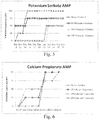
- Potassium Sorbate Antimicrobial Powder was effective at mold inhibition, but negatively impacted the appearance of the bread, as it caused a significant darkening of the crust color. The results are provided in Table 9 below, as well as in Fig. 5 . Table 9. Potassium Sorbate Antimicrobial Powder.* Day No Add Control 5% K Sorbate 10% K Sorbate 20% K Sorbate 10 0 50 0 0 11 25 50 0 0 12 25 50 0 0 13 25 50 0 0 14 75 50 0 0 15 100 75 0 0 16 100 75 0 0 17 100 75 0 0 18 100 75 0 0 19 100 75 0 0 20 100 75 0 0 21 100 75 0 0 22 100 75 0 0 23 100 75 0 50 24 100 75 75 50 25 100 75 75 50 26 100 75 75 50 27 100 75 75 50 28 100 75 75 50 29 100 75 75 50 30 100 75 75 50 31 100 75 75 50 32 100 75 75 50 33 100 75 75 50 34 100 75 75 50 35 100 75
- Calcium Propionate Antimicrobial Powder was found to have a slight effect on mold inhibition over the control, but negatively impacted the appearance of the bread.
- the Calcium Propionate Antimicrobial Powder caused dark spots on the crust. The results are provided in Table 10 below, as well as in Fig. 6 . Table 10.
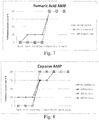
- Fumaric Acid Antimicrobial Powder was found to have an effect on inhibiting mold, and it did not impact the appearance of the bread. The results are provided in Table 11 below, as well as in Fig. 7 . Table 11. Fumaric Acid Antimicrobial Powder.* Dav No Add Control 5% Fumaric Acid 10% Fumaric Acid 8 0 0 0 9 25 0 0 10 25 0 0 11 25 0 0 12 100 100 100 13 100 100 100 14 100 100 100 100 * % molded bread out of 4 loaves.
- Fermented Carbohydrate Antimicrobial Powder was found to have an effect on mold inhibition over the control, but it negatively impacted the appearance of the bread. This antimicrobial powder caused darkening of the crust color. The results are provided in Table 12 below, as well as in Fig. 8 . Table 12. Fermented Carbohydrate Antimicrobial Powder.* Day No Add Control 10% Caparve 20% Caparve 30% Caparve 8 25 0 0 0 9 25 0 0 0 10 25 0 0 0 11 75 75 100 100 12 75 75 100 100 100 100 100 100 * % molded bread out of 4 loaves.
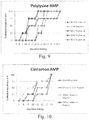
- Polylysine Antimicrobial Powder was effective at mold inhibition over the control, but it negatively impacted the appearance of the bread. This powder caused darkening of the crust color. The results are provided in Table 13 below, as well as in Fig. 9 . Table 13. Polylysine Antimicrobial Powder.* Day No Add Control 5% Polylysine 10% Polylysine 20% Polylysine 30% Polylysine 7 0 0 0 0 8 0 0 0 0 0 9 25 0 25 0 0 10 25 0 25 0 0 11 75 50 50 0 0 12 75 50 50 0 0 13 75 50 50 0 0 14 100 100 75 25 50 15 100 100 75 25 50 16 100 100 75 100 50 17 100 100 75 100 100 18 100 100 100 75 100 19 100 100 75 100 100 20 100 100 75 100 100 100 100 100 100 100 100 * % molded bread out of 4 loaves.
- Cinnamon Antimicrobial Powder had an effect on mold inhibition over the control, but it negatively impacted the appearance of the bread, as it caused dark specks on the crust. The results are provided in Table 14 below, as well as in Fig. 10 . Table 14. Cinnamon Antimicrobial Powder.* Dav No Add Control 5% Cinnamon 10% Cinnamon 20% Cinnamon 7 0 0 0 0 8 0 0 25 0 9 25 0 50 0 10 25 0 50 0 11 75 25 75 50 12 75 25 75 50 13 75 25 75 50 14 100 100 100 100 100 * % molded bread out of 4 loaves.
- Sodium Propionate Antimicrobial Powder was found to be effective at mold inhibition, but it negatively impacted the appearance of the bread by causing a slight darkening of the crust color. The results are provided in Table 16 below, as well as in Fig. 12 . Table 16. Sodium Propionate Antimicrobial Powder.* Day No Add Control 5% Sodium Propionate 10% Sodium Propionate 20% Sodium Propionate 14 100 50 0 0 15 100 50 0 0 16 100 50 25 0 17 100 75 100 25 18 100 100 100 100 50 19 100 100 100 50 20 100 100 100 100 100 50 21 100 100 100 75 22 100 100 100 75 23 100 100 100 75 24 100 100 100 100 100 * % molded bread out of 4 loaves.
- the buns were proofed at 104°F and 86% humidity for 1 hour.
- the buns were then removed from the proof box and baked at 460°F for 8 minutes. After baking, the buns were removed from the oven and depanned. They were cooled on wire racks for 30 minutes and then bagged in poly bags with twist ties.
- the buns were stored at room temperature ( ⁇ 72°F) to observe mold growth.
- Sorbic Acid Antimicrobial Powders were prepared by mixing all of the ingredients in the table below in a 5 qt Hobart mixer with a paddle attachment for 10 minutes. Grams 0% 10% 20% Sorbic Acid 0 25 50 Wheat Flour 250 225 200 Total 250 250 250
- the shaped dough pieces were then evenly coated with 2 grams of Natamycin Antimicrobial Powder (described below), and then placed into 1-lb loaf pans.
- the loaves were proofed at 104°F and 86% humidity for 1 hour.
- the loaves were then removed from the proof box and baked at 420°F for 22 minutes. After baking, the loaves were removed from the oven and depanned.
- the loaves were cooled on wire racks for 1 hour and then bagged in poly bags with twist ties.
- the bread was stored at room temperature ( ⁇ 72°F) to observe mold growth.
- Natamycin Antimicrobial Powders were prepared by mixing all of the ingredients in the table below in a 5 qt Hobart mixer with a paddle attachment for 10 minutes. Grams 0% 1.5% Natamycin 0 3.75 Wheat Flour 250 246.25 Total 250 250
Landscapes
- Life Sciences & Earth Sciences (AREA)
- Engineering & Computer Science (AREA)
- Health & Medical Sciences (AREA)
- General Health & Medical Sciences (AREA)
- Zoology (AREA)
- Wood Science & Technology (AREA)
- Plant Pathology (AREA)
- Dentistry (AREA)
- Agronomy & Crop Science (AREA)
- Environmental Sciences (AREA)
- Pest Control & Pesticides (AREA)
- Food Science & Technology (AREA)
- Toxicology (AREA)
- Microbiology (AREA)
- Natural Medicines & Medicinal Plants (AREA)
- Biotechnology (AREA)
- Mycology (AREA)
- Chemical & Material Sciences (AREA)
- Polymers & Plastics (AREA)
- Bakery Products And Manufacturing Methods Therefor (AREA)
- Food Preservation Except Freezing, Refrigeration, And Drying (AREA)
- Agricultural Chemicals And Associated Chemicals (AREA)
Description
- The present invention relates to novel bakery products having long shelf-lives and superior mold growth inhibition. The invention is also directed towards novel methods of making such bakery products using inventive antimicrobial powders ("AMPs"). Furthermore, these properties can be achieved even without the use of chemical preservatives in the doughs themselves.
- The growth of microorganisms, such as mold, rope, spoilage yeast, and bacteria is often the limiting factor in the shelf-life of foods. This is especially true for bakery products, such as bread, due to their relatively higher moisture content, higher pH, and the exposure to open air during cooling. The microbial growth not only shortens the shelf-life of bakery products, but also results in difficulties in production, storage and distribution, and sales. A significant amount of such food is wasted either in the store or in consumers' homes due to the microbial growth. Among the problems associated with the shelf-life of bakery products, mold growth has probably become the most critical limiting factor that will determine the shelf-life of future bakery products.
- Various methods and preservatives are used in the food industry to inhibit the microbial growth in bakery products. The preservatives commonly used in bakery products are often chemical based, such as calcium propionate, potassium sorbate, etc. However, these chemical preservatives inhibit yeast fermentation, impart an off-flavor to the finished product, and increase the formula and production cost when added to the dough.
- A number of solutions have been developed to minimize the negative impact of using the above-mentioned chemical preservatives. These include topical spraying of sorbate solution or using encapsulated sorbic acid or propionate that only release the mold inhibitors during the baking stage. For example,
US 3,021,219 , published in 1962, discloses a process for preserving baked products using liquid antimicrobials provided as a solution or suspension.EP 0,009,988 , published in 1980, also discloses a process for preserving baked products using liquid antimicrobials. Specifically,EP 0,009,998 discloses that sorbates, in the form of a 10%
potassium sorbate/water solution (Example 2), can be added to dough or applied to the surface of a bakery product before or after baking.US 2005/136166 andUS 5,225,222 also relate to liquid antimicrobial compositions.US 2005/136166 relates to an improved pan oil composition comprising a mould inhibiting preservative. The composition can be sprayed directly to the product or applied to the surface of a baking tray/pan to which the dough is added.US 5,225,222, published in 1993 , also relates to a liquid antimicrobial composition in the form of a gel which is applied to baked goods after removal from an oven. - Natural preservatives, such as vinegar, raisin juice concentrate, and fermented sugars, etc. are used for mold inhibition in all-natural bakery products. However, these preservatives not only have limited effectiveness in mold inhibition, but also inhibit yeast fermentation, affect the flavor and taste of the final products, and are often much more expensive to use.
- There is still a need for improved methods and compositions for inhibiting microbial growth on dough-based products.
- The present invention is broadly concerned with an antimicrobial powder ("AMP") comprising an antimicrobial agent dispersed in a carrier, wherein the powder is substantially salt-free.
- The invention is directed towards a method of extending the shelf-life of a dough-based product as defined in claim 1. The method comprises treating the surface of a dough with an antimicrobial powder and baking the dough to yield a baked product having an extended mold-free shelf-life. The antimicrobial powder comprises an antimicrobial agent dispersed in a carrier and comprises less than 2% by weight sodium chloride, based upon the total weight of the powder taken as 100% by weight.
- The invention is also concerned generally with the combination of a dough-based product having an outer surface and a coating of antimicrobial powder adjacent the dough-based product's outer surface. The antimicrobial powder comprises an antimicrobial agent dispersed in a carrier, and comprises less than 2% by weight sodium chloride, based upon the total weight of the powder taken as 100% by weight.
- A further antimicrobial powder comprising an antimicrobial agent dispersed in a carrier is also provided. The antimicrobial agent is selected from the group consisting of sorbic acid, natamycin, fumaric acid, citric acid, polylysine, sodium benzoate, cinnamon, fermented carbohydrates, and combinations thereof.
- The invention is also directed generally towards an antimicrobial powder comprising an antimicrobial agent dispersed in a carrier. The antimicrobial powder is free of calcium propionate, sodium propionate, potassium sorbate, sodium diacetate, ascorbic acid, and propionic acid.
- A further method of extending the shelf-life of a dough-based product is also disclosed herein. The method comprises shaping a dough, treating the surface of a dough with an antimicrobial powder to yield a treated dough, proofing the treated dough, and baking the treated dough to yield a baked product having an extended mold-free shelf-life. The antimicrobial powder comprises an antimicrobial agent dispersed in a carrier.
-
- Figure (
Fig.) 1 is a graph of the results from the sorbic acid antimicrobial powder mold inhibition tests from Example 1; -
Fig. 2 is a is a graph of the results from mold inhibition test 1 of the natamycin antimicrobial powder from Example 1; -
Fig. 3 is a is a graph of the results frommold inhibition test 2 of the natamycin antimicrobial powder from Example 1; -
Fig. 4 is a graph of the results from the sodium diacetate antimicrobial powder mold inhibition tests from Example 1; -
Fig. 5 is a graph of the results from the potassium sorbate antimicrobial powder mold inhibition tests from Example 1; -
Fig. 6 is a graph of the results from the calcium propionate antimicrobial powder mold inhibition tests from Example 1; -
Fig. 7 is a graph of the results from the fumaric acid antimicrobial powder mold inhibition tests from Example 1; -
Fig. 8 is a graph of the results from the fermented carbohydrates antimicrobial powder mold inhibition tests from Example 1; -
Fig. 9 is a graph of the results from the polylysine antimicrobial powder mold inhibition tests from Example 1; -
Fig. 10 is a graph of the results from the cinnamon antimicrobial powder mold inhibition tests from Example 1; -
Fig. 11 is a graph of the results from the sodium benzoate antimicrobial powder mold inhibition tests from Example 1; -
Fig. 12 is a graph of the results from the sodium propionate antimicrobial powder mold inhibition tests from Example 1; -
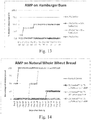
Fig. 13 is a graph of the results from the hamburger bun mold inhibition tests from Example 2 using calcium propionate in the dough and sorbic acid antimicrobial powder; and -
Fig. 14 is a graph of the results from the whole wheat bread mold inhibition tests from Example 3 using a natural preservative in the dough and natamycin antimicrobial powder. - In more detail, the present invention is concerned with novel antimicrobial powders as well as novel methods of making leavened (yeast or chemical) bakery products and other dough-based bakery products having increased mold-free shelf-lives, with yeast-raised products being particularly preferred. These dough-based products include those selected from the group consisting of breads, buns, rolls, bagels, and sandwich thins.
- In one method of the invention, the surface of a dough is coated with a novel, antimicrobial powder in accordance with the invention, which can be used in addition to, or in lieu of, chemical and/or natural preservatives in the dough formulations themselves. Dusting powders or flours are commonly used in the baking arts as a dry lubricant and are applied to baking equipment and surfaces to prevent sticking of dough and facilitate release of the product during processing. Unlike conventional powders or flours, the inventive antimicrobial powder comprises an antimicrobial agent dispersed in a carrier. The antimicrobial agent and carrier are preferably each provided in powder form. The term "powder," as used herein with respect to the inventive powder and its respective components refers to a relatively free flowing composition of loose (i.e., discrete) particles, particulates, or granules. More preferably, to enhance the flowability and reduce the tendency to clump, the antimicrobial powder is in the form of a substantially dry powder. The moisture content of the antimicrobial powder is preferably less than 20% by weight, more preferably less than 16% by weight, and even more preferably less than 14% by weight, based upon the total weight of the antimicrobial powder taken as 100% by weight.
- Suitable chemical or natural antimicrobial agents for use in the invention include those selected from the group consisting of sorbic acid, natamycin, sodium diacetate, calcium propionate, sodium propionate, potassium sorbate, fumaric acid, citric acid, polylysine, sodium benzoate, cinnamon, cultured whey, fermented carbohydrates, and combinations thereof. In some embodiments, the antimicrobial powder is free of calcium propionate, sodium propionate, potassium sorbate, sodium diacetate, ascorbic acid, and propionic acid. That is, the antimicrobial agent is selected from the group consisting of sorbic acid, natamycin, fumaric acid, citric acid, polylysine, sodium benzoate, cinnamon, fermented carbohydrates, and combinations thereof. In further embodiments, the antimicrobial agent is preferably not only effective at inhibiting mold growth, but also shows no negative impact on product quality, such as crust discoloration or spotting. Thus, particularly preferred antimicrobial agents are selected from the group consisting of sorbic acid, natamycin, sodium diacetate, fumaric acid, and combinations thereof. It will be appreciated that the amount of antimicrobial agent in the antimicrobial powder will vary depending upon the particular agent(s) and combinations used in the antimicrobial powder. Ranges for various suitable antimicrobial agents are provided in Table 1 below.
Table 1. Antimicrobial Agents Antimicrobial Agent Broad Range* Preferred Range* Most Preferred Range* Sorbic Acid 1%-40% 5%-20% 7%-10% Natamycin 0.1%-10% 0.5%-5% 1%-2% Sodium Diacetate 1%-40% 5%-30% 10%-20% Calcium Propionate 1%-40% 5%-30% 10%-20% Sodium Propionate 1%-40% 5%-30% 10%-20% Potassium Sorbate 1%-40% 5%-30% 10%-20% Fumaric Acid 1%-40% 5%-30% 10%-15% Citric Acid 1%-40% 5%-30% 10%-20% Polylysine 0.5%-40% 5%-30% 10%-20% Sodium Benzoate 1%-40% 10%-30% 15%-25% Cinnamon 1%-40% 5%-30% 10%-20% Fermented Carbohydrates 1%-40% 5%-30% 10%-25% Based upon the total weight of the antimicrobial powder taken as 100% by weight. - Although the respective particle sizes of the antimicrobial powder components will vary, the antimicrobial agent preferably has an average particle size that is equal to ±20% of the average particle size of the carrier. The average particle size, as used herein, refers to the average maximum surface-to-surface dimension (e.g., diameter in the case of spherical particles) of all particles in a given sample. The carriers are selected from the group consisting of flours (e.g., bread, whole wheat, rice, cake, pastry), calcium sulfate, silica, starches (e.g., corn, potato, wheat), fibers, and combinations thereof. In general, the antimicrobial powder preferably comprises from 60% to 99% by weight carrier, more preferably from 70% to about 95%, and even more preferably from 80% to 90% by weight carrier, based upon the total weight of the antimicrobial powder taken as 100% by weight. The ratio of antimicrobial agent to carrier in the antimicrobial powder is preferably from 1:1.5 to 1:99, more preferably from 1:2.3 to 1:19, and even more preferably from 1:4 to 1:9. However, in embodiments where the antimicrobial agent is natamycin, the antimicrobial powder preferably comprises from 80% to 99.9% by weight carrier, more preferably from 90% to 99%, and even more preferably from 95% to 98.5% by weight carrier, based upon the total weight of the antimicrobial powder taken as 100% by weight. Likewise, the ratio of antimicrobial agent to carrier in the powders with natamycin is preferably from 1:4 to 1:999, more preferably from 1:9 to 1:99, and even more preferably from 1:19 to 1:66.
- Regardless of the embodiment, the antimicrobial powder is preferably prepared by blending the antimicrobial agent with the carrier until a substantially homogeneous mixture is obtained, and more preferably until the antimicrobial agent is substantially uniformly dispersed in the carrier.
- The antimicrobial powder can include a number of optional ingredients dispersed in the carrier along with the antimicrobial agent, such as salt, fats/oils, and combinations thereof. For example, when present, the antimicrobial powder comprises less than 2% by weight salt, more preferably less than 1.8% by weight salt, and even more preferably less than 1.5% by weight salt, based upon the total weight of the antimicrobial powder taken as 100% by weight. As used herein, the term "salt" refers to sodium chloride. However, in some embodiments, it is preferred that the antimicrobial powder consists essentially (or even consists) of the antimicrobial agent dispersed in the carrier. The antimicrobial powder is also preferably substantially salt-free in some embodiments. That is, the antimicrobial powder preferably comprises less than 1% by weight salt, more preferably less than 0.5% by weight salt, and even more preferably 0% by weight salt, based upon the total weight of the antimicrobial powder taken as 100% by weight. The antimicrobial powder is also preferably substantially free of corn meal. That is, the antimicrobial powder preferably comprises less than 1% by weight corn meal, more preferably less than 0.5% by weight corn meal, and even more preferably 0% by weight corn meal, based upon the total weight of the antimicrobial powder taken as 100% by weight. The antimicrobial powder is also preferably substantially free of any added fats or oils. That is, the antimicrobial powder preferably comprises less than 1% by weight fat or oil, more preferably less than 0.5% by weight fat or oil, and even more preferably 0% by weight fat or oil, based upon the total weight of the antimicrobial powder taken as 100% by weight. In some embodiments, the antimicrobial powder is also substantially free of any starches (e.g., corn starch). That is, the antimicrobial powder preferably comprises less than 1% by weight corn starch, more preferably less than 0.5% by weight corn starch, and even more preferably 0% by weight corn starch, based upon the total weight of the antimicrobial powder taken as 100% by weight.
- The antimicrobial powder is utilized to treat the surfaces of the dough. More specifically, the antimicrobial powder is applied to the surfaces of the dough, preferably after the dough is molded/shaped, but before proofing or baking. Unlike conventional dusting powders, the antimicrobial powders are preferably applied directly to the dough (after shaping/before proofing) rather than being applied to the equipment. The antimicrobial powder is preferably utilized at an amount of from 0.1% to 2% by weight, more preferably from 0.3% to 1% by weight antimicrobial powder, and even more preferably from 0.5% to 0.75% by weight antimicrobial powder, based upon the total weight of the treated dough taken as 100% by weight. In some embodiments, the antimicrobial powder can be applied to the surfaces of the dough that come into contact with the sheets, pans, or other substrates used for baking or holding the dough (i.e., the "contacting" surfaces of the dough), or to those surfaces of the dough that do not come into contact with these substrates, such as the crown of a bread loaf (i.e., the "non-contacting" or "exposed" surfaces of the dough), or a combination thereof. Preferably, the antimicrobial powder coats at least 75% to 80% of the surface area of the dough, and most preferably from 95% to 100% of the surface area of the dough, based upon the total surface area of the dough taken as 100%. More preferably, the dough piece is completely (about 100% of the surface area) and uniformly coated with a thin layer of the antimicrobial powder. The antimicrobial powder can be applied to the dough surfaces by any method suitable for coating the exterior surface of the dough, such as sprinkling over the surface of the dough, rolling the dough in the antimicrobial powder, or any combination thereof.
- It will be appreciated that any of the foregoing application methods can be carried out alone, or in combination with another suitable method of preventing mold growth. For example, the antimicrobial powder can be applied to the contacting surfaces of the dough as described above, followed by spraying the non-contacting surfaces of the dough with a chemical preservative, such as potassium sorbate, either before or after baking. The treatment of the surface of the dough described herein may also be used in combination with the addition of natural or chemical preservatives inside the dough to maximize the antimicrobial effects and to extend the mold-free shelf-life of the resulting baked product. However, the inventive antimicrobial powder can also be used with doughs formulated without chemical-based preservatives or without any preservatives or other antimicrobial agents at all. Thus, in one aspect of the invention, although the surface of the dough is treated with the antimicrobial powder, the dough formulations themselves preferably comprise less than 1% by weight preservatives inside the dough formulation, more preferably less than 0.5% by weight preservatives, and even more preferably are free of any preservatives inside the dough formulation, based upon the total weight of the flour taken as 100% by weight. In this way, the disadvantages of the traditional preservatives in the dough are avoided, while still providing a dough-based product with extended mold-free shelf-life.
- Thus, although the antimicrobial effectiveness can be greatly enhanced by the combinations of surface treatments of the dough-based products and the addition of natural or chemical preservatives inside the dough, the present invention is preferably used to reduce or even eliminate the need for preservatives or other antimicrobial agents added inside of the dough. By reducing or eliminating the preservatives inside the dough, the invention can reduce or avoid many problems associated with the preservatives inside the dough, such as yeast inhibition, off-flavors, and other negative impacts on the color and the texture of the final products. Accordingly, in some embodiments, the antimicrobial agent in the antimicrobial powder is the only antimicrobial agent used to extend the shelf-life of the dough-based products. That is, the antimicrobial powder and/or the dough formulations themselves are preferably substantially free of any other antimicrobial agents, and more specifically comprise less than 2% by weight of other antimicrobial agents, more preferably less than 1% by weight of other antimicrobial agents, based upon the total weight of the antimicrobial powder or baked product taken as 100% by weight, as applicable. The term "antimicrobial," as used herein, refers to any agent that kills or inhibits the growth of bacteria, fungi, or protozoans. Thus, the term "other antimicrobial agents," as used herein, refers to any other antimicrobial agents besides the specifically enumerated antimicrobial agents in the antimicrobial powder of the invention, as described above.
- The inventive antimicrobial powder is suitable for use with any dough-based products. However, in a preferred method of making dough-based products having an extended shelf-life, a plurality of ingredients for the leavened dough-based products are mixed together with flour to form the dough. These ingredients and their preferred ranges are set forth in Table 2.
Table 2. Ingredients for Dough-Based Products Ingredient Broad Range* Preferred* Most Preferred* Leavening agent 0.5%-10% 2%-8% 4%-8 % Dough Conditioner 0%-10% 0.2%-5% 0.3%-3 % Water 30%-90% 45%-80% 50%-70% Non-Fat Dry Milk 0%-5% 0.001%-3% 0.01%-2 % Salt 0%-4% 1%-3% 1.5%-2 % Sugar 0%-55% 4%-20% 6%-15% Oil/ Fat 0%-10% 1%-5% 2%-3% Mono- and Diglycerides 0%-5% 0%-3% 0.5%-2% Vital Wheat Gluten 0%-20% 0%-10% 0%-5 % Enzymes 0%-5% 0.1%-1% 0.2%-0.6 % Preservatives 0%-2% 0.1%-1% 0.2%-0.5% *Baker's percentage (100% flour). - The term "baker's percentage," as used herein, refers to the amount by weight of an ingredient in the formulation expressed as a percentage of the total flour weight (which is always 100%). Suitable flours for use in the dough-based formulations include enriched bleached flour, all-purpose flour, whole wheat flour, pastry flour, bread flour, white wheat flour, rye flour, and mixtures thereof.
- Suitable leavening agents include yeast, sodium bicarbonate, potassium bicarbonate, sodium aluminum phosphate, sodium acid pyrophosphate, sodium aluminum sulfate, monocalcium phosphate, any other leavening acids, and combinations thereof. Yeast is the preferred leavening agent for the dough formulations and can be any yeast conventionally used in yeast-raised bakery products, with compressed yeast being preferred.
- The term "dough conditioner," as used herein, is intended to refer to additives that affect the condition (handling characteristics, machinability) of the dough, as well as those that actually strengthen the dough by increasing its resistance to mechanical stress. Suitable chemical dough conditioners include those selected from the group consisting of sodium stearoyl lactylate (SSL), metabisulfite, calcium stearoyl lactylate (CSL), diacetyl tartaric acid esters of mono-diglycerides (DATEM), ethoxylated monoglycerides, potassium bromate, potassium iodate, azodicarbonamide (ADA), calcium peroxide, potassium sorbate, sorbic acids, and L-cysteine. Suitable natural dough conditioners include those selected from the group consisting of ascorbic acid, enzyme active soy flour, amylases (fungal), xylanases, hemicellulases, proteases, glucose oxidases, hexose oxidases, peroxidases, lipases, phospholipases, transglutaminases, and cellulases. A preferred dough conditioner is sold under the name DEPENDOX® AXC (a blend of ascorbic acid, ADA, fungal enzymes, and wheat starch; available from Caravan Ingredients).
- The sugar can be any typical sugar used in bakery products, including granulated brown or white sugar, high fructose corn syrup, corn syrup, fructose, invert sugar, honey, molasses, maple syrup, and mixtures thereof.
- The preferred oil or fat is selected from the group consisting of soy oil, partially hydrogenated soy oil, lard, palm oil, corn oil, cottonseed oil, canola oil, vegetable shortening, and mixtures thereof.
- The dough compositions can also include anti-staling enzymes, such as amylases. Preferred anti-staling amylases are maltogenic amylases, such as maltogenic α-amylase, G-4 amylase, G+ amylase, and thermally-stable bacterial amylase. Even more preferably, the anti-staling amylase is a maltogenic exoamylase, such as one sold under the name NOVAMYL® 10,000 by Novozymes A/S, as described in U.S. Patent Application Pub. No.
2009/0297659 ,. When present, NOVAMYL® 10,000 is used at activity levels of from 0.001-40,000 MANU/kg of flour, more preferably from 5,000 to 30,000 MANU/kg of flour, and even more preferably from 5,000 to 10,000 MANU/kg of flour. As used herein, one MANU (Maltogenic Amylase Novo Unit) is defined as the amount of enzyme required to release one µmol of maltose per minute at a concentration of 10 mg of maltotriose (Sigma M 8378) substrate per ml of 0.1 M citrate buffer, pH 5.0 at 37°C for 30 minutes. Use of the maltogenic amylase at these high levels results in many significant advantages, as described in U.S. Patent Application Pub. No.2009/0297659 . For example, utilizing the maltogenic amylase at high levels may allow for the quantity of other ingredients commonly used in the industry to be reduced. That is, the following formula changes might be made: decreased sugar, increased water, decreased yeast, reduced dough conditioners. - The dough formulations can also include other enzymes in addition to, or in lieu of, the anti-staling amylase. Such other enzymes include those selected from the group consisting of asparaginase, lactase, amyloglucosidase, pullulanse, and combinations thereof.
- In some embodiments, the dough formulations can also include preservatives. Suitable preservatives for use in the dough formulations include natural and chemical preservatives. Preferred natural preservatives for use in the dough formulations include those selected from the group consisting of vinegar, raisin juice concentrate, fermented whey, fermented flour, fermented starch, fermented or cultured sugars. Preferred chemical-based preservatives for use in the dough formulations include those selected from the group consisting of sorbic acid, potassium sorbate, propionic acid, sorbyl-palmitate, sodium propionate, benzoates, methyl and propyl paraben, calcium propionate. The preservatives can also be used in encapsulated form. When present in the formulations, the dough formulations will include preservatives in an amount of from 0.1 baker's % to 2 baker's %, more preferably from 0.2 baker's % to 1 baker's %, and most preferably from 0.3 baker's % to 0.6 baker's %.
- The dough formulations can also include additives such as artificial flavors, spices, colorings, hydrocolloids, and Vital Wheat Gluten.
- In forming the dough-based products according to the invention, the ingredients listed in Table 2 above can be simply mixed together in one stage using a "no-time dough process," or they can be subjected to a "sponge and dough process." In the latter process, part of the flour (e.g., 55-75% by weight of the total flour) is mixed with water, yeast, and preferably some of the dough conditioner (if utilized) and allowed to ferment for a time period of from 3 hours to 4 hours at from 21°C (70F) to 32°C (90°F) and from 80% to 90% relative humidity. This forms the "sponge." After this time period, the remaining ingredients are mixed with the sponge for a time period of from 2 minutes to 20 minutes.
- Regardless of the embodiment, the resulting dough is preferably allowed to rest for a time period of from 5 minutes to 15 minutes before being divided and formed into the desired size pieces. The dough can then be treated with the antimicrobial powder before being placed in or on a baking pan or other surface. The dough is then preferably allowed to proof at a temperature of from 35°C (95°F) to 40°C(105°F) at a relative humidity of from 75% to 95% for a time period of from 50 minutes to 70 minutes. The dough can then be baked using the times and temperatures necessary for the type and size of product being made (e.g., from 200°C (400F) to 226°C (440F) for 15 minutes to 30 minutes). After baking, the resulting baked product is removed from the pan, allowed to cool for 40 to 65 minutes, and packaged for distribution or sale.
- Bakery products formed according to the present invention have greatly improved mold-free shelf-lives, while also avoiding the many negative effects of adding mold inhibitors in the dough directly, such as inhibiting yeast fermentation or leaving an unpleasant taste in the finished products.
- More specifically, the resulting baked products will have a mold-free shelf-life of at least 7 days, more preferably at least 14 days, and even more preferably at least 30 days under ambient conditions (∼22°C (72°F) and 40-75% relative humidity). While the present invention greatly improves mold-free shelf life, it can be used in combination with anti-staling technologies, such as anti-staling enzymes so that the shelf life of those bakery products can be truly maximized. In fact, antimicrobial and anti-staling technologies complement each other, and are preferably used in combination to greater enhance the value of each technology and significantly extend the shelf life of bakery products. As used herein, the term "mold-free" means that there is no mold growth on the surface of the treated food product visible to the naked eye (i.e., unaided by magnification). The significant shelf-life extension of such dough-based products can help increase the production efficiency (by producing large numbers of products in a longer production run and by storing away the product without loss of product quality), to expand the distribution network and market size, and to reduce the waste of the final products both in retail stores and in the consumer's home.
- The following examples set forth methods in accordance with the invention.
- In this Example, breads without any chemical preservatives, such as calcium propionate, in the dough were prepared according to the following dough bread making process, using the ingredients in Table 3 below.
Table 3. Dough Formulation A INGREDIENTS Bakers % Grams White Bread Flour 100.00 3000 Compressed Yeast 6.00 180 Sodium Stearoyl Lactylate (SSL) 0.50 15 Ice Water 56.00 1680 Non-fat dry milk (NFDM) 1.00 30 Sugar 8.00 240 Dependox® AXCA 0.04 1.2 Soy Oil 2.00 60 Salt 2.00 60 AA blend of ascorbic acid, azodicarbonamide (ADA), fungal enzymes, and wheat starch (available from Caravan Ingredients). - All of the ingredients except for the salt were added to a 20 qt Hobart mixer, and mixed with a spiral hook on the 1 st speed setting (low) for two minutes. The sides of the mixing bowl were scraped, and the ingredients were mixed for 8 minutes at the 2nd speed setting (high). The salt was added, followed by mixing at the 2nd speed setting for an additional 3 minutes until full dough development. The dough was allowed to rest on a wood bench for 10 minutes, and then divided into 535-gram dough pieces, which were then rounded and allowed to rest for an additional 5 minutes. Next, a Gemini Straight Grain Moulder was used, according to the settings in Table 4 below, to sheet and mould the dough pieces.
Table 4. Gemini Straight Grain Moulder Settings Rollers 5/3 Pressure Bd. 32/31 Guide Rails 16/14 - The shaped dough pieces were then evenly coated with 2 grams of various antimicrobial powders containing different antimicrobial agents, as described below, and then placed into 1-1b loaf pans. Next, the loaves were proofed at 104°F and 86% humidity for 1 hour. The loaves were then removed from the proof box and baked at 420°F for 20 minutes. After baking, the loaves were removed from the oven and depanned. The loaves were cooled on wire racks for 1 hour and then bagged in poly bags with twist ties. The bread was stored at room temperature (∼72°F) to observe mold growth.
- Each of the antimicrobial powders used above was prepared by adding the ingredients in the tables below to a 5 qt Hobart mixer and blending with a paddle attachment for 10 minutes.
-
Grams 0% 5% 10% 20 % Sorbic Acid 0 12.5 25 50 Wheat Flour 250 237.5 225 200 Total 250 250 250 250 - Two separate tests were performed using Natamycin powder in varying amounts, as indicated below.
Test 1 Grams 0% 2.5% 5 % Natamycin 0 6.25 12.5 Wheat Flour 250 243.75 237.5 Total 250 250 250 Test 2Grams 0% .5% 1.5% 2.5 % Natamycin 0 1.25 3.75 6.25 Wheat Flour 250 248.75 246.25 243.75 Total 250 250 250 250 -
Grams 0% 10% 20 % Sodium Diacetate 0 25 50 Wheat Flour 250 225 200 Total 250 250 250 -
Grams 0% 5% 10% 20% 30 % Potassium Sorbate 0 12.5 25 50 75 Wheat Flour 250 237.5 225 200 175 Total 250 250 250 250 250 -
Grams 0% 5% 10% 20 % Calcium Propionate 0 12.5 25 50 Wheat Flour 250 237.5 225 200 Total 250 250 250 250 -
Grams 5% 10% Fumaric Acid 12.5 25 Wheat Flour 237.5 225 Total 250 250 -
Grams 10% 20% 30 % Caparve A 25 50 75 Wheat Flour 225 200 175 Total 250 250 250 A Inhibit 1400: wheat flour, natural flavor (Mezzoni Foods, Inc.; El Cerrito, CA). -
Grams 0% 5% 10% 20% 30 % Polylysine 0 12.5 25 50 75 Wheat Flour 250 237.5 225 200 175 Total 250 250 250 250 250 -
Grams 5% 10% 20% Cinnamon Powder 12.5 25 50 Wheat Flour 237.5 225 200 Total 250 250 250 - Sodium benzoate antimicrobial powder was prepared according to the same procedure as the other antimicrobial powders, except that in one of the powder formulations a quantity of Fumaric acid was also added to the powder as indicated in the table below.
Grams 0% 10% 20% 18 % Sodium Benzoate 0 25 50 50 Fumaric Acid 0 0 0 25 Wheat Flour 250 225 200 200 Total 250 250 250 250 -
Grams 0% 5% 10% 20 % Sodium Propionate 0 12.5 25 50 Wheat Flour 250 237.5 225 200 Total 250 250 250 250 - The Results are provided for each antimicrobial powder below.
- Sorbic acid antimicrobial powder was effective at mold inhibition and did not impact the appearance of the bread. The results are provided in Table 5 below, as well as in
Fig. 1 .Table 5. Sorbic Acid Antimicrobial Powder.* Day No Add Control 5 % Sorbic Acid 10 % Sorbic Acid 20 % Sorbic Acid 14 100 0 0 0 15 100 0 0 0 16 100 25 0 25** 17 100 25 0 25 18 100 25 0 25 19 100 25 0 25 20 100 25 0 25 21 100 25 0 25 22 100 25 0 25 23 100 25 0 25 24 100 25 0 25 25 100 25 0 25 26 100 25 0 25 27 100 25 0 25 28 100 25 0 25 29 100 25 0 25 *% of molded bread out of 4 loaves (e.g., 50 means two out of four loaves had at least one spot of mold growth).
** OnDay 16, the bread with 20% Sorbic Acid only had mold growth on the unprotected break and shred. - For Test 1, it was found that Natamycin Antimicrobial Powder was effective at mold inhibition and did not impact the appearance of the bread. The results are provided in Table 6 below, as well as in
Fig. 2 .Table 6. Natamycin Antimicrobial Powder, Test 1* Day No Add Control 2.5 % Natamycin 5 % Natamycin 8 25 0 0 9 25 0 0 10 25 0 0 11 75 0 0 12 75 0 0 13 100 0 0 14 100 0 0 15 100 0 0 16 100 0 0 17 100 0 0 18 100 0 0 19 100 0 0 20 100 0 0 21 100 0 0 22 100 0 0 23 100 0 0 24 100 0 0 25 100 0 75 26 100 0 75 27 100 0 75 28 100 0 75 29 100 0 75 30 100 0 75 31 100 0 75 32 100 25 75 33 100 25 75 34 100 25 75 35 100 25 75 36 100 25 75 37 100 25 75 38 100 25 75 39 100 25 75 * % of molded bread out of 4 loaves. - Based upon the results from
Test 2, it was found that at least 1.5% by weight Natamycin was required in the powder to obtain mold inhibition. The results forTest 2 are provided in Table 7 below, as well as inFig. 3 .Table 7. Natamycin Antimicrobial Powder, Test 2*Day No Add Control .5% Natamycin 1.5% Natamycin 2.5 % Natamycin 11 100 25 0 0 12 100 25 0 0 13 100 25 0 0 14 100 75 0 25 15 100 75 0 25 16 100 75 0 25 17 100 75 0 25 18 100 75 25 25 19 100 75 50 75 20 100 75 50 75 21 100 75 50 75 22 100 75 50 75 23 100 75 50 75 24 100 75 50 75 25 100 75 50 75 * % molded bread out of 4 loaves. - Sodium Diacetate Antimicrobial Powder was observed to have an effect on mold inhibition at levels of 20% by weight, and it did not impact the appearance of the bread. The results are provided in Table 8 below, as well as in
Fig. 4 .Table 8. Sodium Diacetate Antimicrobial Powder.* Day No Add Control 10 % Sodium Diacetate 20 % Sodium Diacetate 10 0 25 0 11 25 25 0 12 25 25 25 13 100 75 25 14 100 100 25 15 100 100 25 16 100 100 25 17 100 100 50 18 100 100 50 19 100 100 75 20 100 100 75 21 100 100 75 * % molded bread out of 4 loaves. - Potassium Sorbate Antimicrobial Powder was effective at mold inhibition, but negatively impacted the appearance of the bread, as it caused a significant darkening of the crust color. The results are provided in Table 9 below, as well as in
Fig. 5 .Table 9. Potassium Sorbate Antimicrobial Powder.* Day No Add Control 5 % K Sorbate 10 % K Sorbate 20 % K Sorbate 10 0 50 0 0 11 25 50 0 0 12 25 50 0 0 13 25 50 0 0 14 75 50 0 0 15 100 75 0 0 16 100 75 0 0 17 100 75 0 0 18 100 75 0 0 19 100 75 0 0 20 100 75 0 0 21 100 75 0 0 22 100 75 0 0 23 100 75 0 50 24 100 75 75 50 25 100 75 75 50 26 100 75 75 50 27 100 75 75 50 28 100 75 75 50 29 100 75 75 50 30 100 75 75 50 31 100 75 75 50 32 100 75 75 50 33 100 75 75 50 34 100 75 75 50 35 100 75 75 50 36 100 75 75 50 37 100 75 75 50 38 100 75 75 50 39 100 75 75 50 40 100 75 75 50 41 100 75 75 50 42 100 75 75 50 * % molded bread out of 4 loaves. - Calcium Propionate Antimicrobial Powder was found to have a slight effect on mold inhibition over the control, but negatively impacted the appearance of the bread. The Calcium Propionate Antimicrobial Powder caused dark spots on the crust. The results are provided in Table 10 below, as well as in
Fig. 6 .Table 10. Calcium Propionate Antimicrobial Powder.* Day Control 5% Calcium Propionate 10% Calcium Propionate 20 % Calcium Propionate 8 0 0 0 0 9 25 25 50 0 10 25 25 50 0 11 25 25 50 0 12 100 100 75 100 13 100 100 75 100 14 100 100 100 100 * % molded bread out of 4 loaves. - Fumaric Acid Antimicrobial Powder was found to have an effect on inhibiting mold, and it did not impact the appearance of the bread. The results are provided in Table 11 below, as well as in
Fig. 7 .Table 11. Fumaric Acid Antimicrobial Powder.* Dav No Add Control 5 % Fumaric Acid 10 % Fumaric Acid 8 0 0 0 9 25 0 0 10 25 0 0 11 25 0 0 12 100 100 100 13 100 100 100 14 100 100 100 * % molded bread out of 4 loaves. - Fermented Carbohydrate Antimicrobial Powder was found to have an effect on mold inhibition over the control, but it negatively impacted the appearance of the bread. This antimicrobial powder caused darkening of the crust color. The results are provided in Table 12 below, as well as in
Fig. 8 .Table 12. Fermented Carbohydrate Antimicrobial Powder.* Day No Add Control 10 % Caparve 20 % Caparve 30 % Caparve 8 25 0 0 0 9 25 0 0 0 10 25 0 0 0 11 75 75 100 100 12 75 75 100 100 13 100 100 100 100 * % molded bread out of 4 loaves. - Polylysine Antimicrobial Powder was effective at mold inhibition over the control, but it negatively impacted the appearance of the bread. This powder caused darkening of the crust color. The results are provided in Table 13 below, as well as in
Fig. 9 .Table 13. Polylysine Antimicrobial Powder.* Day No Add Control 5 % Polylysine 10 % Polylysine 20 % Polylysine 30 % Polylysine 7 0 0 0 0 0 8 0 0 0 0 0 9 25 0 25 0 0 10 25 0 25 0 0 11 75 50 50 0 0 12 75 50 50 0 0 13 75 50 50 0 0 14 100 100 75 25 50 15 100 100 75 25 50 16 100 100 75 100 50 17 100 100 75 100 100 18 100 100 75 100 100 19 100 100 75 100 100 20 100 100 75 100 100 21 100 100 100 100 100 * % molded bread out of 4 loaves. - Cinnamon Antimicrobial Powder had an effect on mold inhibition over the control, but it negatively impacted the appearance of the bread, as it caused dark specks on the crust. The results are provided in Table 14 below, as well as in
Fig. 10 .Table 14. Cinnamon Antimicrobial Powder.* Dav No Add Control 5 % Cinnamon 10 % Cinnamon 20 % Cinnamon 7 0 0 0 0 8 0 0 25 0 9 25 0 50 0 10 25 0 50 0 11 75 25 75 50 12 75 25 75 50 13 75 25 75 50 14 100 100 100 100 * % molded bread out of 4 loaves. - Sodium Benzoate Antimicrobial Powder was found to be effective at mold inhibition, but it negatively impacted the appearance of the bread by causing a darkening of the crust color. the results are provided in Table 15 below, as well as in
Fig. 11 .Table 15. Sodium Benzoate Antimicrobial Powder.* Day No Add Control 10 % Na Benzoate 20 % Na Benzoate 18 % Na Benzoate 9% Fumaric Acid 9 25 0 0 0 10 25 0 0 0 11 100 0 0 0 12 100 0 0 0 13 100 0 0 0 14 100 0 25 0 15 100 75 25 25 16 100 75 50 50 17 100 75 50 50 18 100 75 50 50 19 100 100 50 50 20 100 100 50 50 21 100 100 75 75 22 100 100 75 75 23 100 100 75 75 24 100 100 75 75 25 100 100 75 75 26 100 100 75 75 27 100 100 75 75 28 100 100 75 75 29 100 100 75 75 30 100 100 75 75 31 100 100 75 75 32 100 100 75 75 33 100 100 100 100 * % molded bread out of 4 loaves. - Sodium Propionate Antimicrobial Powder was found to be effective at mold inhibition, but it negatively impacted the appearance of the bread by causing a slight darkening of the crust color. The results are provided in Table 16 below, as well as in
Fig. 12 .Table 16. Sodium Propionate Antimicrobial Powder.* Day No Add Control 5% Sodium Propionate 10% Sodium Propionate 20 % Sodium Propionate 14 100 50 0 0 15 100 50 0 0 16 100 50 25 0 17 100 75 100 25 18 100 100 100 50 19 100 100 100 50 20 100 100 100 50 21 100 100 100 75 22 100 100 100 75 23 100 100 100 75 24 100 100 100 100 * % molded bread out of 4 loaves. - A summary of the results for each of the Antimicrobial Powders is provided in Table 17 below.
Table 17. Summary of Results Antimicrobial Optimum LevelA Mold Inhibition Appearance Sorbic Acid 10% Effective No Impact Natamycin at least 1.5% Effective No Impact Sodium Diacetate 20% Moderately Effective No Impact Potassium Sorbate at least 10% Effective Negative Calcium Propionate 20% Slightly Effective Negative Fumaric Acid at least 5% Slightly Effective No Impact Fermented Carbohydrate at least 10% Slightly Effective Negative Polylysine at least 10% Moderately Effective Negative Cinnamon Powder at least 5% Slightly Effective Negative Sodium Benzoate at least 10% Moderately Effective Negative Sodium Propionate 20% Moderately Effective Negative A % by weight in powder, based upon the total weight of the Antimicrobial Powder taken as 100% by weight. - In this Example, hamburger buns containing calcium propionate in the dough were prepared according to the following dough making process, using the ingredients in Table 18 below.
Table 18. Dough Formulation B INGREDIENTS Bakers % Grams White Bread Flour 100.00 1300 Compressed Yeast 4.00 52 Sodium Stearoyl Lactylate (SSL) .1 1.3 Ice Water 58 754 Sugar 7.00 91 Dependox® AXCA .06 .78 Calcium PropionateB Variable Variable Sov Oil 3 39 Salt 2.3 29.9 A A blend of ascorbic acid, azodicarbonamide (ADA), fungal enzymes, and wheat starch (available from Caravan Ingredients).
B Calcium propionate was added at 0%, 0,2% or 0.5% on a flour wt. basis. - All of the ingredients were added to a McDuffy bowl fitted to a Hobart mixer, and mixed on the 1 st speed setting (low) for one minute. The sides of the mixing bowl were scraped, and the ingredients were mixed for 15 minutes at the 2nd speed setting (high) until full development. The dough was allowed to rest on a wood bench for 5 minutes, and then divided into 57-gram dough pieces. The dough pieces were rounded, and then allowed to rest for 1 minute. The dough pieces were sheeted slightly, evenly coated with 0.3 grams of sorbic acid powder (described below), and then placed onto glazed bun pans.
- Next, the buns were proofed at 104°F and 86% humidity for 1 hour. The buns were then removed from the proof box and baked at 460°F for 8 minutes. After baking, the buns were removed from the oven and depanned. They were cooled on wire racks for 30 minutes and then bagged in poly bags with twist ties. The buns were stored at room temperature (∼72°F) to observe mold growth.
- Sorbic Acid Antimicrobial Powders were prepared by mixing all of the ingredients in the table below in a 5 qt Hobart mixer with a paddle attachment for 10 minutes.
Grams 0% 10% 20 % Sorbic Acid 0 25 50 Wheat Flour 250 225 200 Total 250 250 250 - The 10% Sorbic Acid Antimicrobial Powder with 0.2% calcium propionate added to the dough was found to perform better at inhibiting mold growth than 0.2% calcium propionate alone. The results are provided in Table 19 below, as well as in
Fig. 13 .Table 19. Sorbic Acid Antimicrobial Powder with Calcium Propionate.* Day 0,5% Calcium Propionate 0.2% Calcium Propionate 0.2% Calcium Propionate 10% Sorbic Acid 0.2% Calcium Propionate 20 % Sorbic Acid 10 0.0 12.5 0.0 0.0 11 0.0 12.5 0.0 0.0 12 0.0 12.5 0.0 0.0 13 0.0 37.5 0.0 0.0 14 0.0 37.5 0.0 0,0 15 0.0 37.5 0.0 0.0 16 0.0 37.5 0.0 0.0 17 0.0 37.5 0.0 0.0 18 0.0 37.5 0.0 0.0 19 0.0 37.5 0.0 0.0 20 0.0 37.5 0.0 0.0 21 0.0 50.0 0.0 0.0 22 0.0 50.0 0.0 0.0 23 0.0 50.0 0.0 0.0 24 0.0 50.0 0.0 0.0 25 0.0 50.0 0.0 0.0 26 0.0 50.0 0.0 0.0 27 0.0 50.0 0.0 0.0 28 0.0 50.0 0.0 0.0 29 0.0 50.0 0.0 0.0 30 0.0 50.0 0.0 0.0 31 0.0 50.0 0.0 0.0 32 0.0 50.0 0.0 0.0 33 0.0 50.0 0.0 0.0 34 0.0 50.0 0.0 0.0 35 0.0 50.0 0.0 0.0 36 0.0 50.0 0.0 0.0 37 0.0 50.0 0.0 0.0 38 0.0 50.0 0.0 0.0 39 0.0 50.0 0.0 0.0 40 0.0 50.0 0.0 0.0 * % of molded buns out of 8 buns (e.g., 50 means 4 out of 8 buns had at least one spot of mold growth). - In this Example, an all-natural whole wheat bread without calcium propionate was prepared according to the following dough bread making process, using the ingredients in Table 20 below.
Table 20. Dough Formulation C INGREDIENTS Bakers % Grams Whole Wheat Flour 92 2760 Compressed Yeast 5.5 165 Vital Wheat Gluten 8 240 Ice Water 67 2010 Sugar 10 300 Strong-Do All Natural XtraA .25 7.5 Soy Oil 2 60 Verdad™ RV 75BVariable Variable Salt 2 60 A A blend of wheat starch, calcium sulfate, enzymes, ascorbic acid, and salt (available from Caravan Ingredients). B PuraQ™ Verdad™ RV 75 (a cultured sugar) was added at 0% or 1% on a flour wt. basis. - All of the ingredients except for the salt were added to a 20 qt Hobart mixer, and mixed with a spiral hook on the 1 st speed setting (low) for two minutes. The sides of the mixing bowl were scraped, and the ingredients were mixed for 13 minutes at the 2nd speed setting (high). The salt was added, followed by mixing at the 2nd speed setting for an additional 3 minutes until full dough development. The dough was allowed to rest on a wood bench for 10 minutes, and then divided into 535-gram dough pieces, which were then rounded and allowed to rest for an additional 5 minutes. Next, a Gemini Straight Grain Moulder was used, according to the settings in Table 21 below, to sheet and mould the dough pieces.
Table 21. Gemini Straight Grain Moulder Settings Rollers 5/3 Pressure Bd. 32/31 Guide Rails 16/14 - The shaped dough pieces were then evenly coated with 2 grams of Natamycin Antimicrobial Powder (described below), and then placed into 1-lb loaf pans. Next, the loaves were proofed at 104°F and 86% humidity for 1 hour. The loaves were then removed from the proof box and baked at 420°F for 22 minutes. After baking, the loaves were removed from the oven and depanned. The loaves were cooled on wire racks for 1 hour and then bagged in poly bags with twist ties. The bread was stored at room temperature (∼72°F) to observe mold growth.
- Natamycin Antimicrobial Powders were prepared by mixing all of the ingredients in the table below in a 5 qt Hobart mixer with a paddle attachment for 10 minutes.
Grams 0% 1.5 % Natamycin 0 3.75 Wheat Flour 250 246.25 Total 250 250 - The combination of 1.5% Natamycin Antimicrobial Powder and 1% Verdad™ RV75 in the dough performed very well at inhibiting mold growth. The results are provided in Table 22 below, as well as in
Fig. 14 .Table 22. Natamycin Antimicrobial Powder and Verdad™ RV75.* Dav No Add Control 0% Verdad™ RV 75 1.5% Natamycin AMP1% Verdad™ RV 75 0% AMP1% Verdad™ RV 75 1.5% AMP 8 50 0 0 0 9 50 0 0 0 10 50 0 0 0 11 100 0 0 0 12 100 0 0 0 13 100 0 0 0 14 100 0 0 0 15 100 0 0 0 16 100 0 0 0 17 100 0 0 0 18 100 0 0 0 19 100 0 50 0 20 100 0 50 0 21 100 0 50 0 22 100 0 50 0 23 100 0 50 0 24 100 0 50 0 25 100 0 100 0 26 100 0 100 0 27 100 0 100 0 28 100 0 100 0 29 100 0 100 0 30 100 0 100 0 31 100 25 100 0 32 100 25 100 0 33 100 25 100 0 34 100 25 100 0 35 100 25 100 0 36 100 25 100 0 37 100 25 100 0 38 100 25 100 0 39 100 25 100 0 40 100 25 100 0 * % of molded bread out of 4 loaves. - In this Example, three conventional bread doughs were prepared for this experiment. Two doughs contained 0% sorbic acid and one dough contained 0.1 % sorbic acid. One of the doughs with 0% sorbic acid was treated with a 10% Sorbic Acid Antimicrobial Powder as described in Example 1, before being placed in the pan. Two loaves from each dough were analyzed for sorbic acid content in the bread crumb and the bread crust. The results are below.
Crust Analysis Results Sample Sorbic Acid on Dry Basis (ppm) No Add Control Crumb <100 Crust <100 10% Sorbic Acid Powder Loaf 1 Crumb <100 Crust 849 0% Sorbic Acid in Dough Loaf 2 Crumb <100 Crust 829 0.1% Sorbic Acid in Dough Loaf 1 Crumb 856 Crust 451 Loaf 2Crumb 863 Crust 440 - The results conclusively show a significant amount of sorbic acid on the crust is attributable to the Antimicrobial Powder,
Claims (12)
- A method of extending the shelf-life of a dough-based product comprising:treating the exterior surface of a dough with an antimicrobial powder to yield a treated dough having said antimicrobial powder on the exterior surface thereof, said antimicrobial powder comprising an antimicrobial agent dispersed in a carrier powder selected from the group consisting of flours, calcium sulfate, silica, starches, fibers, and combinations thereof, wherein said antimicrobial agent is selected from the group consisting of sorbic acid, natamycin, sodium diacetate, calcium propionate, sodium propionate, potassium sorbate, fumaric acid, polylysine, sodium benzoate, fermented carbohydrates, and combinations thereof, wherein said antimicrobial powder comprises:less than 2% by weight sodium chloride;less than 1 % by weight fat or oil; anda moisture content of less than 20% by weight, based upon the total weight of the antimicrobial powder taken as 100% by weight; andbaking said treated dough having said antimicrobial powder on the exterior surface thereof to yield said dough-based product having a mold-free shelf-life of at least 7 days under ambient conditions.
- The method of claim 1, further comprising proofing said treated dough prior to said baking.
- The method of claim 1, wherein said treating comprises coating at least 75% of the surface area of said dough with a layer of said antimicrobial powder.
- The method of claim 1, wherein said baking comprises baking said dough in or on a baking pan.
- The method of claim 4, wherein said dough is treated with said antimicrobial powder prior to placing said dough in or on said baking pan.
- The method of claim 4, further comprising proofing said dough after placing said dough in or on said baking pan.
- The method of claim 1, wherein said antimicrobial powder is salt-free.
- Use of an antimicrobial powder to coat the outer surface of a dough based food product to extend shelf-life wherein the antimicrobial powder comprises an antimicrobial agent dispersed in a carrier powder selected from the group consisting of flours, calcium sulfate, silica, starches, fibers, and combinations thereof, said antimicrobial powder:comprising less than 2% by weight sodium chloride;comprising less than 1% by weight fat or oil; andhaving a moisture content of less than 20% by weight, based upon the total weight of the antimicrobial powder taken as 100% by weight, wherein said antimicrobial agent is selected from the group consisting of sorbic acid, natamycin, sodium diacetate, calcium propionate, sodium propionate, potassium sorbate, fumaric acid, polylysine, sodium benzoate, fermented carbohydrates, and combinations thereof.
- Use according to claim 8, wherein said dough-based baked product is selected from the group breads, buns, rolls, bagels, and sandwich thins.
- Use according to claim 8, wherein said antimicrobial powder is salt-free.
- An antimicrobial powder comprising an antimicrobial agent dispersed in a carrier powder selected from the group consisting of flours, calcium sulfate, silica, starches, fibers, and combinations thereof, said antimicrobial powder comprising less than 2% by weight sodium chloride, less than 1% by weight fat or oil, and a moisture content of less than 20% by weight, based upon the total weight of the powder taken as 100% by weight, wherein said antimicrobial agent is selected from the group consisting of sorbic acid, natamycin, sodium diacetate, calcium propionate, sodium propionate, potassium sorbate, propionic acid, fumaric acid, citric acid, polylysine, sodium benzoate, cinnamon, fermented whey, fermented flour, fermented starch, fermented sugars, and combinations thereof
- The antimicrobial powder of claim 11, said powder being salt-free.
Applications Claiming Priority (2)
| Application Number | Priority Date | Filing Date | Title |
|---|---|---|---|
| US13/077,293 US9445608B2 (en) | 2011-03-31 | 2011-03-31 | Antimicrobial powders for the preparation of bakery products |
| PCT/US2012/030844 WO2012135282A2 (en) | 2011-03-31 | 2012-03-28 | Antimicrobial powders for the preparation of bakery products |
Publications (3)
| Publication Number | Publication Date |
|---|---|
| EP2690962A2 EP2690962A2 (en) | 2014-02-05 |
| EP2690962A4 EP2690962A4 (en) | 2014-08-27 |
| EP2690962B1 true EP2690962B1 (en) | 2017-10-11 |
Family
ID=46927584
Family Applications (1)
| Application Number | Title | Priority Date | Filing Date |
|---|---|---|---|
| EP12763143.0A Active EP2690962B1 (en) | 2011-03-31 | 2012-03-28 | Antimicrobial powders for the preparation of bakery products |
Country Status (8)
| Country | Link |
|---|---|
| US (2) | US9445608B2 (en) |
| EP (1) | EP2690962B1 (en) |
| CN (2) | CN103582422A (en) |
| BR (1) | BR112013025017A2 (en) |
| DK (1) | DK2690962T3 (en) |
| ES (1) | ES2649398T3 (en) |
| MX (1) | MX350883B (en) |
| WO (1) | WO2012135282A2 (en) |
Families Citing this family (9)
| Publication number | Priority date | Publication date | Assignee | Title |
|---|---|---|---|---|
| EP4108087A1 (en) | 2014-07-08 | 2022-12-28 | Caravan Ingredients Inc. | Sugar-producing and texture-improving bakery methods and products formed therefrom |
| FR3037773B1 (en) * | 2015-06-29 | 2019-05-10 | Lesaffre Et Compagnie | IMPROVING AND BREADING METHOD FOR BREADED AND PRESERVED BREADS WITHOUT FREEZING |
| CN106720033B (en) * | 2016-11-22 | 2020-06-26 | 上海市食品研究所 | Natural compound preservative for bread and preservation method |
| WO2019090105A1 (en) * | 2017-11-03 | 2019-05-09 | Emerald Kalama Chemical, Llc | Antimicrobial compositions |
| JP7463296B2 (en) * | 2018-06-04 | 2024-04-08 | ユニリーバー・アイピー・ホールディングス・ベスローテン・ヴェンノーツハップ | Preservation Composition |
| JP7374927B2 (en) | 2018-06-04 | 2023-11-07 | ユニリーバー・アイピー・ホールディングス・ベスローテン・ヴェンノーツハップ | preservation composition |
| WO2019233757A1 (en) | 2018-06-04 | 2019-12-12 | Unilever Plc | Preservation compositions |
| RU2723520C1 (en) * | 2019-01-10 | 2020-06-11 | Федеральное государственное бюджетное образовательное учреждение высшего образования "Уральский государственный экономический университет" (УрГЭУ) | Method for suppressing potato disease and moulding of bread |
| EP4007559B1 (en) | 2019-08-01 | 2024-10-23 | Unilever IP Holdings B.V. | An antidandruff composition |
Family Cites Families (25)
| Publication number | Priority date | Publication date | Assignee | Title |
|---|---|---|---|---|
| US3021219A (en) | 1959-11-27 | 1962-02-13 | Corn Products Co | Process for preserving baked products |
| US3317323A (en) | 1963-12-26 | 1967-05-02 | Procter & Gamble | Dusting powder and method for facilitating the separation of individual pieces of unbaked dough |
| US3996386A (en) | 1971-12-15 | 1976-12-07 | Yrjo Malkki | Method for preventing microbial surface deterioration of foods and feeds |
| EP0009988B1 (en) | 1978-10-10 | 1982-07-14 | Monsanto Company | Specialty bread product containing preservative and method of preparing same |
| US4407839A (en) | 1981-07-06 | 1983-10-04 | Robin Hood Multifoods Inc. | Dusting blend |
| US5225222A (en) | 1990-10-10 | 1993-07-06 | Kraft General Foods, Inc. | Surface-coating for producing microbiologically-stable baked goods |
| US5626893A (en) * | 1994-10-18 | 1997-05-06 | Reddy; Malireddy S. | Method of treating a divided cheese product for anticaking |
| US5636893A (en) * | 1995-04-17 | 1997-06-10 | Wheatley; Donald E. | Folding hard panel tonneau cover with rail attachment |
| US6291436B1 (en) * | 1999-07-16 | 2001-09-18 | International Fiber Corporation | Direct action anti-mycotic |
| WO2001011975A1 (en) | 1999-08-19 | 2001-02-22 | Horn Merritt C | Methods for preparing baked goods with addition of lipid-coated enzyme |
| US6312741B1 (en) | 2000-02-22 | 2001-11-06 | Balchem Corporation | Encapsulated food acids for preservation of baked goods |
| JP2002360153A (en) | 2001-06-05 | 2002-12-17 | Ueno Seiyaku Oyo Kenkyusho:Kk | Coated organic acid preparation for preserving bakery products |
| US7014878B2 (en) | 2002-07-18 | 2006-03-21 | Kraft Foods Holdings, Inc. | Refrigerated extended shelf-life bread products |
| US20050266049A1 (en) * | 2002-08-06 | 2005-12-01 | D S M Ip Assets B.V. | Method for the covering of food with polyene antifungal compositions |
| US20060134285A1 (en) | 2002-08-14 | 2006-06-22 | Joan Schnieber | Method of making a shelf stable edible snack having an outer dough layer |
| GB2388581A (en) | 2003-08-22 | 2003-11-19 | Danisco | Coated aqueous beads |
| EP1667530A4 (en) | 2003-09-19 | 2011-05-25 | Ics Holdings Inc | PREPARATION OF A PASTA-BASED EDIBLE PRODUCT |
| US20050163895A1 (en) * | 2004-01-28 | 2005-07-28 | Graham Williams | Baked product with increased shelf life and process for increasing the shelf life of baked products |
| CN100366160C (en) | 2004-03-30 | 2008-02-06 | 深圳市海川实业股份有限公司 | Compound bread preserving agent |
| US20050226974A1 (en) * | 2004-04-08 | 2005-10-13 | John Faragher | Natamycin dosage form, process for preparing same, method for preserving a food product and preserved food product |
| WO2006045831A1 (en) * | 2004-10-28 | 2006-05-04 | Dsm Ip Assets B.V. | Stable needle-shaped crystals of natamycin |
| AU2006238899A1 (en) | 2005-04-25 | 2006-11-02 | Bakery Technology Centre Bv | Preparation of an edible product from dough |
| CN100393223C (en) * | 2005-07-20 | 2008-06-11 | 安琪酵母股份有限公司 | Freshness preserving type coocked wheaten product modifier and its producing method |
| FI20075167A0 (en) | 2007-03-09 | 2007-03-09 | Danisco | Process for spraying natamycin on bakery products and using heat to remove solvents from bakery products |
| US20110300265A1 (en) | 2010-06-08 | 2011-12-08 | Caravan Ingredients Inc. | Pan release compositions for preparation of long shelf life, bakery products |
-
2011
- 2011-03-31 US US13/077,293 patent/US9445608B2/en active Active
-
2012
- 2012-03-28 EP EP12763143.0A patent/EP2690962B1/en active Active
- 2012-03-28 MX MX2013011302A patent/MX350883B/en active IP Right Grant
- 2012-03-28 CN CN201280026593.8A patent/CN103582422A/en active Pending
- 2012-03-28 WO PCT/US2012/030844 patent/WO2012135282A2/en not_active Ceased
- 2012-03-28 DK DK12763143.0T patent/DK2690962T3/en active
- 2012-03-28 ES ES12763143.0T patent/ES2649398T3/en active Active
- 2012-03-28 BR BR112013025017A patent/BR112013025017A2/en not_active Application Discontinuation
- 2012-03-28 CN CN201810989508.7A patent/CN109090178A/en active Pending
-
2016
- 2016-08-22 US US15/243,467 patent/US20160353752A1/en not_active Abandoned
Also Published As
| Publication number | Publication date |
|---|---|
| CN103582422A (en) | 2014-02-12 |
| BR112013025017A2 (en) | 2017-01-17 |
| MX350883B (en) | 2017-09-25 |
| ES2649398T3 (en) | 2018-01-11 |
| CN109090178A (en) | 2018-12-28 |
| US9445608B2 (en) | 2016-09-20 |
| MX2013011302A (en) | 2014-06-23 |
| US20160353752A1 (en) | 2016-12-08 |
| WO2012135282A3 (en) | 2013-01-03 |
| EP2690962A2 (en) | 2014-02-05 |
| EP2690962A4 (en) | 2014-08-27 |
| DK2690962T3 (en) | 2017-12-11 |
| WO2012135282A2 (en) | 2012-10-04 |
| US20120251662A1 (en) | 2012-10-04 |
Similar Documents
| Publication | Publication Date | Title |
|---|---|---|
| US9445608B2 (en) | Antimicrobial powders for the preparation of bakery products | |
| RU2467572C2 (en) | Composition of dough containing rye flour, gluten, and possibly enhancer of gluten, encapsulated acidulant or emulsifier, and baked products obtained from said composition of dough | |
| EP1077609B1 (en) | Methods for using cellobiose dehydrogenase in baking | |
| US7981452B2 (en) | Preparation of an edible product from dough | |
| JP7126363B2 (en) | Fat and oil composition for bakery | |
| US20090214732A1 (en) | Preparation of an edible product from dough | |
| JP6616197B2 (en) | Quality improver for frozen or refrigerated dough bread, method for producing frozen or refrigerated dough, and method for producing bread using frozen or refrigerated dough | |
| WO2011156010A1 (en) | Pan release compositions for preparation of long shelf life, bakery products | |
| JP2023123414A (en) | Composition for preserving bread | |
| AU2005220616A1 (en) | Taste-enhancing agent, baking doughs, breadmaking and cereal products comprising same, and use thereof as an NaCl substitute | |
| JP7507656B2 (en) | Quality improver for baked frozen bread, method for improving the quality of baked frozen bread, and method for producing baked frozen bread | |
| US20040146601A1 (en) | Dough conditioner | |
| JP7186627B2 (en) | Quality preserving agent for confectionery and method for preserving quality of confectionery | |
| BR122019015183B1 (en) | ANTIMICROBIAL POWDER AND COMBINATION | |
| Assouad | Reformulation packaging studies to delay staling in a bakery product | |
| JP2025063516A (en) | Freezing Bread Dough | |
| Hung | Effect of ingredients on the quality of frozen dough | |
| GRUNDY | Vitusa Products, Inc., Troy, Illinois | |
| CH705886A2 (en) | Fresh dough and process for making fresh dough. |
Legal Events
| Date | Code | Title | Description |
|---|---|---|---|
| PUAI | Public reference made under article 153(3) epc to a published international application that has entered the european phase |
Free format text: ORIGINAL CODE: 0009012 |
|
| 17P | Request for examination filed |
Effective date: 20131031 |
|
| AK | Designated contracting states |
Kind code of ref document: A2 Designated state(s): AL AT BE BG CH CY CZ DE DK EE ES FI FR GB GR HR HU IE IS IT LI LT LU LV MC MK MT NL NO PL PT RO RS SE SI SK SM TR |
|
| DAX | Request for extension of the european patent (deleted) | ||
| A4 | Supplementary search report drawn up and despatched |
Effective date: 20140730 |
|
| RIC1 | Information provided on ipc code assigned before grant |
Ipc: A21D 6/00 20060101AFI20140724BHEP Ipc: A21D 15/08 20060101ALI20140724BHEP |
|
| 17Q | First examination report despatched |
Effective date: 20150729 |
|
| STAA | Information on the status of an ep patent application or granted ep patent |
Free format text: STATUS: EXAMINATION IS IN PROGRESS |
|
| GRAP | Despatch of communication of intention to grant a patent |
Free format text: ORIGINAL CODE: EPIDOSNIGR1 |
|
| STAA | Information on the status of an ep patent application or granted ep patent |
Free format text: STATUS: GRANT OF PATENT IS INTENDED |
|
| RIC1 | Information provided on ipc code assigned before grant |
Ipc: A21D 6/00 20060101AFI20170418BHEP Ipc: A01N 37/06 20060101ALI20170418BHEP Ipc: A21D 15/08 20060101ALI20170418BHEP Ipc: A01N 37/02 20060101ALI20170418BHEP Ipc: A01N 25/08 20060101ALI20170418BHEP |
|
| INTG | Intention to grant announced |
Effective date: 20170510 |
|
| GRAS | Grant fee paid |
Free format text: ORIGINAL CODE: EPIDOSNIGR3 |
|
| GRAA | (expected) grant |
Free format text: ORIGINAL CODE: 0009210 |
|
| STAA | Information on the status of an ep patent application or granted ep patent |
Free format text: STATUS: THE PATENT HAS BEEN GRANTED |
|
| AK | Designated contracting states |
Kind code of ref document: B1 Designated state(s): AL AT BE BG CH CY CZ DE DK EE ES FI FR GB GR HR HU IE IS IT LI LT LU LV MC MK MT NL NO PL PT RO RS SE SI SK SM TR |
|
| REG | Reference to a national code |
Ref country code: GB Ref legal event code: FG4D |
|
| REG | Reference to a national code |
Ref country code: CH Ref legal event code: EP |
|
| REG | Reference to a national code |
Ref country code: IE Ref legal event code: FG4D |
|
| REG | Reference to a national code |
Ref country code: AT Ref legal event code: REF Ref document number: 935220 Country of ref document: AT Kind code of ref document: T Effective date: 20171115 |
|
| REG | Reference to a national code |
Ref country code: DE Ref legal event code: R096 Ref document number: 602012038424 Country of ref document: DE |
|
| REG | Reference to a national code |
Ref country code: DK Ref legal event code: T3 Effective date: 20171205 |
|
| REG | Reference to a national code |
Ref country code: SE Ref legal event code: TRGR |
|
| REG | Reference to a national code |
Ref country code: NL Ref legal event code: FP |
|
| REG | Reference to a national code |
Ref country code: ES Ref legal event code: FG2A Ref document number: 2649398 Country of ref document: ES Kind code of ref document: T3 Effective date: 20180111 |
|
| REG | Reference to a national code |
Ref country code: LT Ref legal event code: MG4D |
|
| REG | Reference to a national code |
Ref country code: AT Ref legal event code: MK05 Ref document number: 935220 Country of ref document: AT Kind code of ref document: T Effective date: 20171011 |
|
| REG | Reference to a national code |
Ref country code: FR Ref legal event code: PLFP Year of fee payment: 7 |
|
| PG25 | Lapsed in a contracting state [announced via postgrant information from national office to epo] |
Ref country code: LT Free format text: LAPSE BECAUSE OF FAILURE TO SUBMIT A TRANSLATION OF THE DESCRIPTION OR TO PAY THE FEE WITHIN THE PRESCRIBED TIME-LIMIT Effective date: 20171011 Ref country code: NO Free format text: LAPSE BECAUSE OF FAILURE TO SUBMIT A TRANSLATION OF THE DESCRIPTION OR TO PAY THE FEE WITHIN THE PRESCRIBED TIME-LIMIT Effective date: 20180111 |
|
| PG25 | Lapsed in a contracting state [announced via postgrant information from national office to epo] |
Ref country code: GR Free format text: LAPSE BECAUSE OF FAILURE TO SUBMIT A TRANSLATION OF THE DESCRIPTION OR TO PAY THE FEE WITHIN THE PRESCRIBED TIME-LIMIT Effective date: 20180112 Ref country code: LV Free format text: LAPSE BECAUSE OF FAILURE TO SUBMIT A TRANSLATION OF THE DESCRIPTION OR TO PAY THE FEE WITHIN THE PRESCRIBED TIME-LIMIT Effective date: 20171011 Ref country code: RS Free format text: LAPSE BECAUSE OF FAILURE TO SUBMIT A TRANSLATION OF THE DESCRIPTION OR TO PAY THE FEE WITHIN THE PRESCRIBED TIME-LIMIT Effective date: 20171011 Ref country code: IS Free format text: LAPSE BECAUSE OF FAILURE TO SUBMIT A TRANSLATION OF THE DESCRIPTION OR TO PAY THE FEE WITHIN THE PRESCRIBED TIME-LIMIT Effective date: 20180211 Ref country code: AT Free format text: LAPSE BECAUSE OF FAILURE TO SUBMIT A TRANSLATION OF THE DESCRIPTION OR TO PAY THE FEE WITHIN THE PRESCRIBED TIME-LIMIT Effective date: 20171011 Ref country code: BG Free format text: LAPSE BECAUSE OF FAILURE TO SUBMIT A TRANSLATION OF THE DESCRIPTION OR TO PAY THE FEE WITHIN THE PRESCRIBED TIME-LIMIT Effective date: 20180111 Ref country code: HR Free format text: LAPSE BECAUSE OF FAILURE TO SUBMIT A TRANSLATION OF THE DESCRIPTION OR TO PAY THE FEE WITHIN THE PRESCRIBED TIME-LIMIT Effective date: 20171011 |
|
| REG | Reference to a national code |
Ref country code: DE Ref legal event code: R097 Ref document number: 602012038424 Country of ref document: DE |
|
| PG25 | Lapsed in a contracting state [announced via postgrant information from national office to epo] |
Ref country code: EE Free format text: LAPSE BECAUSE OF FAILURE TO SUBMIT A TRANSLATION OF THE DESCRIPTION OR TO PAY THE FEE WITHIN THE PRESCRIBED TIME-LIMIT Effective date: 20171011 Ref country code: SK Free format text: LAPSE BECAUSE OF FAILURE TO SUBMIT A TRANSLATION OF THE DESCRIPTION OR TO PAY THE FEE WITHIN THE PRESCRIBED TIME-LIMIT Effective date: 20171011 Ref country code: CZ Free format text: LAPSE BECAUSE OF FAILURE TO SUBMIT A TRANSLATION OF THE DESCRIPTION OR TO PAY THE FEE WITHIN THE PRESCRIBED TIME-LIMIT Effective date: 20171011 |
|
| PLBE | No opposition filed within time limit |
Free format text: ORIGINAL CODE: 0009261 |
|
| STAA | Information on the status of an ep patent application or granted ep patent |
Free format text: STATUS: NO OPPOSITION FILED WITHIN TIME LIMIT |
|
| PG25 | Lapsed in a contracting state [announced via postgrant information from national office to epo] |
Ref country code: SM Free format text: LAPSE BECAUSE OF FAILURE TO SUBMIT A TRANSLATION OF THE DESCRIPTION OR TO PAY THE FEE WITHIN THE PRESCRIBED TIME-LIMIT Effective date: 20171011 Ref country code: PL Free format text: LAPSE BECAUSE OF FAILURE TO SUBMIT A TRANSLATION OF THE DESCRIPTION OR TO PAY THE FEE WITHIN THE PRESCRIBED TIME-LIMIT Effective date: 20171011 Ref country code: IT Free format text: LAPSE BECAUSE OF FAILURE TO SUBMIT A TRANSLATION OF THE DESCRIPTION OR TO PAY THE FEE WITHIN THE PRESCRIBED TIME-LIMIT Effective date: 20171011 Ref country code: RO Free format text: LAPSE BECAUSE OF FAILURE TO SUBMIT A TRANSLATION OF THE DESCRIPTION OR TO PAY THE FEE WITHIN THE PRESCRIBED TIME-LIMIT Effective date: 20171011 |
|
| 26N | No opposition filed |
Effective date: 20180712 |
|
| REG | Reference to a national code |
Ref country code: CH Ref legal event code: PL |
|
| PG25 | Lapsed in a contracting state [announced via postgrant information from national office to epo] |
Ref country code: SI Free format text: LAPSE BECAUSE OF FAILURE TO SUBMIT A TRANSLATION OF THE DESCRIPTION OR TO PAY THE FEE WITHIN THE PRESCRIBED TIME-LIMIT Effective date: 20171011 Ref country code: MC Free format text: LAPSE BECAUSE OF FAILURE TO SUBMIT A TRANSLATION OF THE DESCRIPTION OR TO PAY THE FEE WITHIN THE PRESCRIBED TIME-LIMIT Effective date: 20171011 |
|
| REG | Reference to a national code |
Ref country code: IE Ref legal event code: MM4A |
|
| PG25 | Lapsed in a contracting state [announced via postgrant information from national office to epo] |
Ref country code: LU Free format text: LAPSE BECAUSE OF NON-PAYMENT OF DUE FEES Effective date: 20180328 |
|
| PG25 | Lapsed in a contracting state [announced via postgrant information from national office to epo] |
Ref country code: IE Free format text: LAPSE BECAUSE OF NON-PAYMENT OF DUE FEES Effective date: 20180328 |
|
| PG25 | Lapsed in a contracting state [announced via postgrant information from national office to epo] |
Ref country code: CH Free format text: LAPSE BECAUSE OF NON-PAYMENT OF DUE FEES Effective date: 20180331 Ref country code: LI Free format text: LAPSE BECAUSE OF NON-PAYMENT OF DUE FEES Effective date: 20180331 |
|
| PG25 | Lapsed in a contracting state [announced via postgrant information from national office to epo] |
Ref country code: MT Free format text: LAPSE BECAUSE OF NON-PAYMENT OF DUE FEES Effective date: 20180328 |
|
| PG25 | Lapsed in a contracting state [announced via postgrant information from national office to epo] |
Ref country code: TR Free format text: LAPSE BECAUSE OF FAILURE TO SUBMIT A TRANSLATION OF THE DESCRIPTION OR TO PAY THE FEE WITHIN THE PRESCRIBED TIME-LIMIT Effective date: 20171011 |
|
| PG25 | Lapsed in a contracting state [announced via postgrant information from national office to epo] |
Ref country code: HU Free format text: LAPSE BECAUSE OF FAILURE TO SUBMIT A TRANSLATION OF THE DESCRIPTION OR TO PAY THE FEE WITHIN THE PRESCRIBED TIME-LIMIT; INVALID AB INITIO Effective date: 20120328 Ref country code: PT Free format text: LAPSE BECAUSE OF FAILURE TO SUBMIT A TRANSLATION OF THE DESCRIPTION OR TO PAY THE FEE WITHIN THE PRESCRIBED TIME-LIMIT Effective date: 20171011 |
|
| PG25 | Lapsed in a contracting state [announced via postgrant information from national office to epo] |
Ref country code: MK Free format text: LAPSE BECAUSE OF NON-PAYMENT OF DUE FEES Effective date: 20171011 Ref country code: CY Free format text: LAPSE BECAUSE OF FAILURE TO SUBMIT A TRANSLATION OF THE DESCRIPTION OR TO PAY THE FEE WITHIN THE PRESCRIBED TIME-LIMIT Effective date: 20171011 |
|
| PG25 | Lapsed in a contracting state [announced via postgrant information from national office to epo] |
Ref country code: AL Free format text: LAPSE BECAUSE OF FAILURE TO SUBMIT A TRANSLATION OF THE DESCRIPTION OR TO PAY THE FEE WITHIN THE PRESCRIBED TIME-LIMIT Effective date: 20171011 |
|
| P01 | Opt-out of the competence of the unified patent court (upc) registered |
Effective date: 20230529 |
|
| PGFP | Annual fee paid to national office [announced via postgrant information from national office to epo] |
Ref country code: SE Payment date: 20260327 Year of fee payment: 15 |
|
| PGFP | Annual fee paid to national office [announced via postgrant information from national office to epo] |
Ref country code: GB Payment date: 20260327 Year of fee payment: 15 |
|
| PGFP | Annual fee paid to national office [announced via postgrant information from national office to epo] |
Ref country code: DK Payment date: 20260325 Year of fee payment: 15 Ref country code: DE Payment date: 20260327 Year of fee payment: 15 |
|
| PGFP | Annual fee paid to national office [announced via postgrant information from national office to epo] |
Ref country code: FI Payment date: 20260325 Year of fee payment: 15 Ref country code: BE Payment date: 20260327 Year of fee payment: 15 |
|
| PGFP | Annual fee paid to national office [announced via postgrant information from national office to epo] |
Ref country code: NL Payment date: 20260326 Year of fee payment: 15 |
|
| PGFP | Annual fee paid to national office [announced via postgrant information from national office to epo] |
Ref country code: FR Payment date: 20260325 Year of fee payment: 15 |
|
| PGFP | Annual fee paid to national office [announced via postgrant information from national office to epo] |
Ref country code: ES Payment date: 20260401 Year of fee payment: 15 |