EP2690816A2 - Apparatuses and methods for signaling coordinated multi-point (comp) measurement configuration - Google Patents
Apparatuses and methods for signaling coordinated multi-point (comp) measurement configuration Download PDFInfo
- Publication number
- EP2690816A2 EP2690816A2 EP13177842.5A EP13177842A EP2690816A2 EP 2690816 A2 EP2690816 A2 EP 2690816A2 EP 13177842 A EP13177842 A EP 13177842A EP 2690816 A2 EP2690816 A2 EP 2690816A2
- Authority
- EP
- European Patent Office
- Prior art keywords
- csi
- comp
- resources
- measurement set
- mobile communication
- Prior art date
- Legal status (The legal status is an assumption and is not a legal conclusion. Google has not performed a legal analysis and makes no representation as to the accuracy of the status listed.)
- Withdrawn
Links
- 238000005259 measurement Methods 0.000 title claims abstract description 101
- 238000000034 method Methods 0.000 title claims description 34
- 230000011664 signaling Effects 0.000 title claims description 18
- 238000010295 mobile communication Methods 0.000 claims abstract description 74
- 230000001413 cellular effect Effects 0.000 claims abstract description 70
- 230000004044 response Effects 0.000 claims description 16
- 230000009849 deactivation Effects 0.000 claims description 13
- 230000004913 activation Effects 0.000 claims 4
- 230000003213 activating effect Effects 0.000 claims 3
- 238000005516 engineering process Methods 0.000 description 26
- 230000005540 biological transmission Effects 0.000 description 6
- 238000004891 communication Methods 0.000 description 5
- 238000010586 diagram Methods 0.000 description 4
- 230000008901 benefit Effects 0.000 description 3
- 238000006243 chemical reaction Methods 0.000 description 3
- 238000012545 processing Methods 0.000 description 2
- 230000004075 alteration Effects 0.000 description 1
- 238000011161 development Methods 0.000 description 1
- 230000018109 developmental process Effects 0.000 description 1
- 230000002708 enhancing effect Effects 0.000 description 1
- 230000007774 longterm Effects 0.000 description 1
- 239000011159 matrix material Substances 0.000 description 1
- 238000012986 modification Methods 0.000 description 1
- 230000004048 modification Effects 0.000 description 1
- 230000006855 networking Effects 0.000 description 1
- 238000012552 review Methods 0.000 description 1
Images

Classifications
-
- H—ELECTRICITY
- H04—ELECTRIC COMMUNICATION TECHNIQUE
- H04W—WIRELESS COMMUNICATION NETWORKS
- H04W24/00—Supervisory, monitoring or testing arrangements
- H04W24/10—Scheduling measurement reports ; Arrangements for measurement reports
-
- H—ELECTRICITY
- H04—ELECTRIC COMMUNICATION TECHNIQUE
- H04L—TRANSMISSION OF DIGITAL INFORMATION, e.g. TELEGRAPHIC COMMUNICATION
- H04L5/00—Arrangements affording multiple use of the transmission path
- H04L5/003—Arrangements for allocating sub-channels of the transmission path
- H04L5/0053—Allocation of signalling, i.e. of overhead other than pilot signals
-
- H—ELECTRICITY
- H04—ELECTRIC COMMUNICATION TECHNIQUE
- H04L—TRANSMISSION OF DIGITAL INFORMATION, e.g. TELEGRAPHIC COMMUNICATION
- H04L5/00—Arrangements affording multiple use of the transmission path
- H04L5/003—Arrangements for allocating sub-channels of the transmission path
- H04L5/0032—Distributed allocation, i.e. involving a plurality of allocating devices, each making partial allocation
- H04L5/0035—Resource allocation in a cooperative multipoint environment
Definitions
- the invention generally relates to Coordinated Multi-Point (CoMP) measurement configuration and, more particularly, to signaling CoMP measurement configuration between a mobile communication device and a cellular station by a Medium Access Control (MAC) Control Element (CE).
- CoMP Coordinated Multi-Point
- CE Medium Access Control
- WLAN Wireless Fidelity
- Bluetooth Bluetooth technology
- cellular network technologies or called Wide Area Network (WAN) technologies
- GSM Global System for Mobile communications
- GPRS General Packet Radio Service
- EDGE Enhanced Data rates for Global Evolution
- WCDMA Wideband Code Division Multiple Access
- CDMA-2000 Code Division Multiple Access 2000
- TD-SCDMA Time Division-Synchronous Code Division Multiple Access
- WiMAX Worldwide Interoperability for Microwave Access
- LTE Long Term Evolution
- LTE-Advanced technology Long-Advanced technology
- TD-LTE Time- Division LTE
- CoMP Coordinated Multi-Point
- eNBs evolved Node-Bs
- UE User Equipment
- the UE is required to measure the downlink channel from the eNBs to the UE according to a plurality of Channel Station Information Reference Signal (CSI-RS) resources and then report the measurement result in the uplink to the serving eNB, wherein each of the CSI-RS resources contains a set of parameters indicating the time, frequency, and power, etc., for the UE to perform the measurement of the specific CSI-RS associated with a respective eNB.
- CSI-RS Channel Station Information Reference Signal
- the cooperating set of eNBs may vary due to movement of the UE, causing frequent updates of the CoMP measurement configuration, i.e., the CSI-RS resources.
- a mobile communication device comprising a wireless module and a controller module.
- the wireless module performs wireless transceiving to and from a cellular station.
- the controller module configures a plurality of CSI-RS resources according to a Radio Resource Control (RRC) message received from the cellular station via the wireless module, and receives a MAC CE from the cellular station via the wireless module.
- RRC Radio Resource Control
- the controller module adds or removes at least one of the CSI-RS resources to or from a measurement set for CoMP according to the MAC CE.
- a method for signaling CoMP measurement configuration by a mobile communication device comprises the steps of configuring a plurality of CSI-RS resources according to an RRC message received from a cellular station, receiving a MAC CE from the cellular station, and adding or removing at least one of the CSI-RS resources to or from a measurement set for CoMP according to the first MAC CE.
- a cellular station comprises a wireless module and a controller module.
- the wireless module performs wireless transceiving to and from a mobile communication device.
- the controller module transmits an RRC message for configuring a plurality of CSI-RS resources to the mobile communication device via the wireless module, and transmitting a MAC CE to the mobile communication device via the wireless module, for the mobile communication device to add or remove at least one of the CSI-RS resources to or from a measurement set for CoMP.
- a method for signaling CoMP measurement configuration by a cellular station comprises the steps of transmitting an RRC message for configuring a plurality of CSI-RS resources to a mobile communication device, and transmitting a MAC CE to the mobile communication device, for the mobile communication device to add or remove at least one of the CSI-RS resources to or from a measurement set for CoMP.
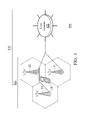
- Fig. 1 is a block diagram of a wireless communications environment according to an embodiment of the invention
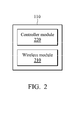
- Fig. 2 is a block diagram illustrating the mobile communication device 110 according to an embodiment of the invention.
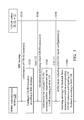
- Fig. 3 is a message sequence chart illustrating the signaling of a CoMP measurement configuration according to an embodiment of the invention
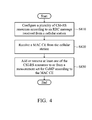
- Fig. 4 is a flow chart illustrating the method for signaling CoMP measurement configuration by a mobile communication device according to an embodiment of the invention.
- Fig. 5 is a flow chart illustrating the method for signaling CoMP measurement configuration by a cellular station according to an embodiment of the invention.
- Fig. 1 is a block diagram of a wireless communications environment according to an embodiment of the invention.
- the wireless communications environment 100 comprises a mobile communication device 110 and a service network 120, wherein the service network 120 comprises an access network 121 and a core network 122.
- the access network 121 comprises at least three cellular stations 21, 22, and 23, each of which forms a respective wireless transceiving cell coverage.
- the mobile communication device 110 may communicate with one or more of the cellular stations 21 to 23 to obtain wireless services.
- the access network 121 supports the CoMP technique, which means the cellular stations 21 to 23 may be coordinated (i.e., the cellular stations 21 to 23 may form a CoMP cooperating set) for transmission and reception to and from the mobile communication device 110 for enhancing the transceiving rate of the mobile communication device 110 and improving coverage, cell-edge throughput, and/or system efficiency of the service network 120.
- the CoMP technique which means the cellular stations 21 to 23 may be coordinated (i.e., the cellular stations 21 to 23 may form a CoMP cooperating set) for transmission and reception to and from the mobile communication device 110 for enhancing the transceiving rate of the mobile communication device 110 and improving coverage, cell-edge throughput, and/or system efficiency of the service network 120.
- the service network 120 may be an LTE-Advanced network.
- the access network 121 may be an Evolved Universal Terrestrial Radio Access Network (E-UTRAN), and each of the cellular stations 21 to 23 may be an evolved Node-B (eNB).
- the core network 122 may be an Evolved Packet Core (EPC) which includes a Home Subscriber Server (HSS), Mobility Management Entity (MME), Serving Gateway (S-GW), and Packet Data Network Gateway (PDN-GW or P-GW).
- EPC Evolved Packet Core
- HSS Home Subscriber Server
- MME Mobility Management Entity
- S-GW Serving Gateway
- PDN-GW Packet Data Network Gateway
- one of the cellular stations 21 to 23 may be an eNB and the rest of the cellular stations 21 to 23 may be Home eNBs (HeNBs), wherein the eNB forms a macro-cell and the HeNBs form two pico-cells.
- HeNBs Home eNBs
- the LTE-Advanced network is merely an illustrative example, and the service network 120 may utilize another wireless technology, as long as the utilized wireless technology supports the CoMP technique, and thus, the invention is not limited thereto.
- the mobile communication device 110 may be a smart phone, a panel Personal Computer (PC), a laptop computer, or any computing device supporting the wireless technology utilized by the service network 120.
- the mobile communication device 110 may be an LTE-Advanced UE (or called a Mobile Station (MS)). It is to be understood that, the LTE-Advanced UE is merely an illustrative example, and the mobile communication device 110 may utilize another wireless technology, as long as the utilized wireless technology supports the CoMP technique, and thus, the invention is not limited thereto.
- Fig. 2 is a block diagram illustrating the mobile communication device 110 according to an embodiment of the invention.
- the mobile communication device 110 comprises a wireless module 210 and a controller module 220.
- the wireless module 210 is responsible for performing the functionality of wireless transmissions and receptions to and from the cellular stations 21 to 23 of the service network 120.
- the controller module 220 is responsible for controlling the operations of the wireless module 210, and other functional components (not shown), such as a display unit and/or keypad serving as the Man-Machine Interface (MMI), a storage unit storing the program codes of applications or communication protocols, or others.
- the controller module 220 controls the wireless module 210 for performing the method for signaling CoMP measurement configuration.
- the wireless module 210 may be a Radio Frequency (RF) unit (not shown), and the controller module 220 may be a general-purpose processor or a Micro Control Unit (MCU) of a baseband unit (not shown).
- the baseband unit may contain multiple hardware devices to perform baseband signal processing, including analog to digital conversion (ADC)/digital to analog conversion (DAC), gain adjusting, modulation/demodulation, encoding/decoding, and so on.
- the RF unit may receive RF wireless signals, convert the received RF wireless signals to baseband signals, which are processed by the baseband unit, or receive baseband signals from the baseband unit and convert the received baseband signals to RF wireless signals, which are later transmitted.
- the RF unit may also contain multiple hardware devices to perform radio frequency conversion.
- the RF unit may comprise a mixer to multiply the baseband signals with a carrier oscillated in the radio frequency of the mobile communication system, wherein the radio frequency may be 900MHz, 2100MHz, or 2.6GHz utilized in the LTE-Advanced technology, or others, depending on the wireless technology in use.
- each of the cellular stations 21 to 23 at least comprises a wireless module and a controller module, similar to Fig. 2 , wherein the wireless module is responsible for performing the functionality of wireless transmissions and receptions to and from the mobile communication device 110, and the controller module is responsible for controlling the operations of the wireless module and interfacing with the core network 122.
- Fig. 3 is a message sequence chart illustrating the signaling of a CoMP measurement configuration according to an embodiment of the invention.
- the signaling of the CoMP measurement configuration is performed between the mobile communication device 110 and one of the cellular stations 21 to 23.
- the one of the cellular station 21, 22, or 23 transmits an RRC message to the mobile communication device 110 (step S310), wherein the RRC message comprises information of a plurality of CSI-RS resources.
- the RRC message may be an RRCConnectionReconfiguration message or others.
- the mobile communication device 110 configures the CSI-RS resources according to the information included in the RRC message (step S320).
- Each of the CSI-RS resources is uniquely identified by an ID and comprises a set of parameters indicating the frequency where a CSI-RS will be transmitted, the time when the CSI-RS will be transmitted, and the power that will be used by the cellular station to transmit the CSI-RS, etc.
- the RRC message in step S310 may also comprise information indicating which of the CSI-RS resources is to be added to the measurement set for CoMP. That is, the RRC message may be used for configuring the CSI-RS resources and setting up the measurement set for CoMP at one time.
- the one of the cellular station 21, 22, or 23 transmits a MAC CE to the mobile communication device 110 (step S330), wherein the MAC CE comprises information indicating which of the CSI-RS resources is to be added to or removed from the measurement set for CoMP.
- the information included in the MAC CE may be a plurality of bits, each of which indicates whether a corresponding CSI-RS resource should be added to or removed from the measurement set for CoMP. For example, if a bit is set to 1, the corresponding CSI-RS resource should be added to the measurement set for CoMP, and if a bit is set to 0, the corresponding CSI-RS resource should be removed from the measurement set for CoMP.
- the information included in the MAC CE may be a plurality of IDs of the CSI-RS resources which should be added to or removed from the measurement set for CoMP.
- the mobile communication device 110 adds or removes the indicated one(s) of the CSI-RS resources to or from the measurement set for CoMP according to the information included in the MAC CE (step S340).
- the CoMP technique is applied for Joint Transmission (JT), Dynamic Point Scheduling (DPS)/muting, or Semi-Static Point Selection (SSPS)
- the signaling of a CoMP measurement configuration as shown in steps S310 to S340 of Fig. 3 may occur when another cellular station in the cooperating set is selected to be a Transmission Point (TP) but no CSI-RS resource is configured for the TP.
- JT Joint Transmission
- DPS Dynamic Point Scheduling
- SSPS Semi-Static Point Selection
- the RRC message in step S310 may be used to configure one or more CSI-RS resources for the TP, and the MAC CE in step S330 may be used to add the newly configured CSI-RS resource(s) to the measurement set for CoMP. Later, if the TP is scheduled not to transmit data to the mobile communication device 110, another MAC CE may be transmitted to the mobile communication device 110 for removing the CSI-RS resources corresponding to the TP from the measurement set for CoMP or for releasing the CSI-RS resources.
- the one of the cellular station 21, 22, or 23 transmits another MAC CE to the mobile communication device 110 (step S350), wherein the MAC CE comprises information indicating which of the CSI report configurations corresponding to the CSI-RS resources in the measurement set for CoMP is to be activated or deactivated.
- the CSI report configurations are pre-configured by the RRC layer, which specify the CSI feedback for each CSI-RS resource to be measured and reported.
- the information included in the MAC CE may be a bitmap in which each bit indicates a respective CSI report configuration to be activated or deactivated.
- the mobile communication device 110 When receiving the MAC CE, the mobile communication device 110 starts or stops deriving CSI feedback from the measurement result on the corresponding CSI-RS resources and reporting the CSI feedback to the one of the cellular station 21, 22, or 23 according to the information included in the MAC CE (step S360).
- the CSI feedback may include the Channel Quality Indicator (CQI), Rank Indicator (RI), and/or Precoding Matrix Indicator (PMI), etc., for each CSI-RS resource.
- the one of the cellular station 21, 22, or 23 may properly determine the parameters used for downlink transmission, such as the radio resource elements, modulation scheme, coding scheme, and power, etc.
- the serving cellular station may forward the measurement result to the target cellular station to assist with the system resource management for CoMP.
- the mobile communication device 110 may deactivate the CSI-RS resource and stop measuring the CSI-RS resource and reporting the measurement result to the one of the cellular station 21, 22, or 23 in response to deactivation of the CSI-RS resource. In another embodiment, if a CSI-RS resource in the measurement set for CoMP is activated or deactivated, the mobile communication device 110 may activate or deactivate all of the CSI report configurations corresponding to the CSI-RS resource.
- the MAC CE may be used to deactivate a Secondary Cell (SCell), and if it does, the measurement set for CoMP corresponding to the deactivated SCell should be deactivated as well.
- SCell Secondary Cell
- the MAC CE may comprise information indicating which of the CSI report configurations corresponding to the CSI-RS resource is to be activated.
- Fig. 4 is a flow chart illustrating the method for signaling CoMP measurement configuration by a mobile communication device according to an embodiment of the invention.
- the mobile communication device configures a plurality of CSI-RS resources according to an RRC message received from a cellular station (step S410).
- the RRC message may be an RRCConnectionReconfiguration message which comprises information of the CSI-RS resources, or other messages capable of carrying the information of the CSI-RS resources.
- Each of the CSI-RS resources is uniquely identified by an ID and comprises a set of parameters indicating the frequency where a CSI-RS will be transmitted, the time when the CSI-RS will be transmitted, and the power that will be used by the cellular station to transmit the CSI-RS, etc.
- the mobile communication device receives a MAC CE from the cellular station (step S420), and then adds or removes at least one of the CSI-RS resources to or from a measurement set for CoMP according to the MAC CE (step S430).
- the MAC CE may comprise information indicating which of the CSI-RS resources is to be added to or removed from the measurement set for CoMP. It is noted that, steps S410 to S430 in Fig. 4 are similar to steps S320 to S340 in Fig. 3 , and thus, other detailed description of steps S410 to S430 is not repeated here for brevity.
- Fig. 5 is a flow chart illustrating the method for signaling CoMP measurement configuration by a cellular station according to an embodiment of the invention.
- the cellular station transmits an RRC message for configuring a plurality of CSI-RS resources to a mobile communication device (step S510).
- the RRC message may be an RRCConnectionReconfiguration message which comprises information of the CSI-RS resources, or other messages capable of carrying the information of the CSI-RS resources.
- the cellular station transmits a MAC CE to the mobile communication device, for the mobile communication device to add or remove at least one of the CSI-RS resources to or from a measurement set for CoMP (step S520).
- the MAC CE may comprise information indicating which of the CSI-RS resources is to be added to or removed from the measurement set for CoMP. It is noted that, steps S510 and S520 in Fig. 5 are similar to steps S310 and S330 in Fig. 3 , and thus, other detailed description of steps S510 and S520 is not repeated here for brevity.
- the invention proposes to use a MAC CE as the means for updating the CoMP measurement configuration after the CoMP measurement configuration has been configured by an RRC message.
- this alleviates the processing burden of the RRC or upper layers in the communication protocol and improves the signaling performance on both the UE side and the network side.
Landscapes
- Engineering & Computer Science (AREA)
- Signal Processing (AREA)
- Computer Networks & Wireless Communication (AREA)
- Mobile Radio Communication Systems (AREA)
Abstract
Description
- This Application claims the benefit of
U.S. Provisional Application No. 61/674,864, filed on July 24, 2012 U.S. Provisional Application No. 61/678,293, filed on August 01, 2012 U.S. Provisional Application No. 61/681,976, filed on August 10, 2012 - The invention generally relates to Coordinated Multi-Point (CoMP) measurement configuration and, more particularly, to signaling CoMP measurement configuration between a mobile communication device and a cellular station by a Medium Access Control (MAC) Control Element (CE).
- With rapid developments in ubiquitous computing and networking, various wireless technologies have been developed, such as the WLAN technologies, including the Wireless Fidelity (WiFi) technology, and Bluetooth technology, etc., and the cellular network technologies (or called Wide Area Network (WAN) technologies), including the Global System for Mobile communications (GSM) technology, General Packet Radio Service (GPRS) technology, Enhanced Data rates for Global Evolution (EDGE) technology, Wideband Code Division Multiple Access (WCDMA) technology, Code Division Multiple Access 2000 (CDMA-2000) technology, Time Division-Synchronous Code Division Multiple Access (TD-SCDMA) technology, Worldwide Interoperability for Microwave Access (WiMAX) technology, Long Term Evolution (LTE) technology, LTE-Advanced technology, and Time- Division LTE (TD-LTE) technology, etc.
- Taking the LTE-Advanced technology as an example, Coordinated Multi-Point (CoMP) has been proposed and is widely recognized as a spectrally efficient technique for improving coverage, cell-edge throughput, and/or system efficiency. By applying the CoMP technique, multiple evolved Node-Bs (eNBs) may be coordinated to communicate with a User Equipment (UE) at the same time for increasing the transceiving rate of the UE. For the operations of the CoMP technique, the UE is required to measure the downlink channel from the eNBs to the UE according to a plurality of Channel Station Information Reference Signal (CSI-RS) resources and then report the measurement result in the uplink to the serving eNB, wherein each of the CSI-RS resources contains a set of parameters indicating the time, frequency, and power, etc., for the UE to perform the measurement of the specific CSI-RS associated with a respective eNB. However, the cooperating set of eNBs may vary due to movement of the UE, causing frequent updates of the CoMP measurement configuration, i.e., the CSI-RS resources. Thus, it is desirable to have an efficient way of signaling the CoMP measurement configuration between the serving eNB and the UE.
- In a first aspect of the invention, a mobile communication device is provided. The mobile communication device comprises a wireless module and a controller module. The wireless module performs wireless transceiving to and from a cellular station. The controller module configures a plurality of CSI-RS resources according to a Radio Resource Control (RRC) message received from the cellular station via the wireless module, and receives a MAC CE from the cellular station via the wireless module. Also, the controller module adds or removes at least one of the CSI-RS resources to or from a measurement set for CoMP according to the MAC CE.
- In a second aspect of the invention, a method for signaling CoMP measurement configuration by a mobile communication device is provided. The method comprises the steps of configuring a plurality of CSI-RS resources according to an RRC message received from a cellular station, receiving a MAC CE from the cellular station, and adding or removing at least one of the CSI-RS resources to or from a measurement set for CoMP according to the first MAC CE.
- In a third aspect of the invention, a cellular station is provided. The cellular station comprises a wireless module and a controller module. The wireless module performs wireless transceiving to and from a mobile communication device. The controller module transmits an RRC message for configuring a plurality of CSI-RS resources to the mobile communication device via the wireless module, and transmitting a MAC CE to the mobile communication device via the wireless module, for the mobile communication device to add or remove at least one of the CSI-RS resources to or from a measurement set for CoMP.
- In a fourth aspect of the invention, a method for signaling CoMP measurement configuration by a cellular station is provided. The method comprises the steps of transmitting an RRC message for configuring a plurality of CSI-RS resources to a mobile communication device, and transmitting a MAC CE to the mobile communication device, for the mobile communication device to add or remove at least one of the CSI-RS resources to or from a measurement set for CoMP.
- Other aspects and features of the present invention will become apparent to those with ordinarily skilled in the art upon review of the following description of specific embodiments of the mobile communication devices, service networks, and methods for signaling CoMP measurement configuration.
- The invention can be more fully understood by reading the subsequent detailed description and examples with references made to the accompanying drawings, wherein:
-
Fig. 1 is a block diagram of a wireless communications environment according to an embodiment of the invention; -
Fig. 2 is a block diagram illustrating themobile communication device 110 according to an embodiment of the invention; -
Fig. 3 is a message sequence chart illustrating the signaling of a CoMP measurement configuration according to an embodiment of the invention; -
Fig. 4 is a flow chart illustrating the method for signaling CoMP measurement configuration by a mobile communication device according to an embodiment of the invention; and -
Fig. 5 is a flow chart illustrating the method for signaling CoMP measurement configuration by a cellular station according to an embodiment of the invention. - The following description is of the best-contemplated mode of carrying out the invention. This description is made for the purpose of illustrating the general principles of the invention and should not be taken in a limiting sense. It should be understood that the embodiments may be realized in software, hardware, firmware, or any combination thereof.
-
Fig. 1 is a block diagram of a wireless communications environment according to an embodiment of the invention. Thewireless communications environment 100 comprises amobile communication device 110 and aservice network 120, wherein theservice network 120 comprises anaccess network 121 and acore network 122. Theaccess network 121 comprises at least threecellular stations mobile communication device 110 may communicate with one or more of thecellular stations 21 to 23 to obtain wireless services. Particularly, theaccess network 121 supports the CoMP technique, which means thecellular stations 21 to 23 may be coordinated (i.e., thecellular stations 21 to 23 may form a CoMP cooperating set) for transmission and reception to and from themobile communication device 110 for enhancing the transceiving rate of themobile communication device 110 and improving coverage, cell-edge throughput, and/or system efficiency of theservice network 120. - In one embodiment, the
service network 120 may be an LTE-Advanced network. Theaccess network 121 may be an Evolved Universal Terrestrial Radio Access Network (E-UTRAN), and each of thecellular stations 21 to 23 may be an evolved Node-B (eNB). Thecore network 122 may be an Evolved Packet Core (EPC) which includes a Home Subscriber Server (HSS), Mobility Management Entity (MME), Serving Gateway (S-GW), and Packet Data Network Gateway (PDN-GW or P-GW). Alternatively, one of thecellular stations 21 to 23 may be an eNB and the rest of thecellular stations 21 to 23 may be Home eNBs (HeNBs), wherein the eNB forms a macro-cell and the HeNBs form two pico-cells. It is to be understood that, the LTE-Advanced network is merely an illustrative example, and theservice network 120 may utilize another wireless technology, as long as the utilized wireless technology supports the CoMP technique, and thus, the invention is not limited thereto. - The
mobile communication device 110 may be a smart phone, a panel Personal Computer (PC), a laptop computer, or any computing device supporting the wireless technology utilized by theservice network 120. In one embodiment, themobile communication device 110 may be an LTE-Advanced UE (or called a Mobile Station (MS)). It is to be understood that, the LTE-Advanced UE is merely an illustrative example, and themobile communication device 110 may utilize another wireless technology, as long as the utilized wireless technology supports the CoMP technique, and thus, the invention is not limited thereto. - Regarding detailed description of the CoMP technique for the LTE-Advanced technology, reference may be made to the 3rd Generation Partnership Project (3GPP) Technical Specification (TS) 36.819. However, the 3GPP specification may only be used to teach the spirit of the invention, and the invention is not limited thereto.
-
Fig. 2 is a block diagram illustrating themobile communication device 110 according to an embodiment of the invention. Themobile communication device 110 comprises awireless module 210 and acontroller module 220. Thewireless module 210 is responsible for performing the functionality of wireless transmissions and receptions to and from thecellular stations 21 to 23 of theservice network 120. Thecontroller module 220 is responsible for controlling the operations of thewireless module 210, and other functional components (not shown), such as a display unit and/or keypad serving as the Man-Machine Interface (MMI), a storage unit storing the program codes of applications or communication protocols, or others. Also, thecontroller module 220 controls thewireless module 210 for performing the method for signaling CoMP measurement configuration. - To further clarify, the
wireless module 210 may be a Radio Frequency (RF) unit (not shown), and thecontroller module 220 may be a general-purpose processor or a Micro Control Unit (MCU) of a baseband unit (not shown). The baseband unit may contain multiple hardware devices to perform baseband signal processing, including analog to digital conversion (ADC)/digital to analog conversion (DAC), gain adjusting, modulation/demodulation, encoding/decoding, and so on. The RF unit may receive RF wireless signals, convert the received RF wireless signals to baseband signals, which are processed by the baseband unit, or receive baseband signals from the baseband unit and convert the received baseband signals to RF wireless signals, which are later transmitted. The RF unit may also contain multiple hardware devices to perform radio frequency conversion. For example, the RF unit may comprise a mixer to multiply the baseband signals with a carrier oscillated in the radio frequency of the mobile communication system, wherein the radio frequency may be 900MHz, 2100MHz, or 2.6GHz utilized in the LTE-Advanced technology, or others, depending on the wireless technology in use. - Although not shown, each of the
cellular stations 21 to 23 at least comprises a wireless module and a controller module, similar toFig. 2 , wherein the wireless module is responsible for performing the functionality of wireless transmissions and receptions to and from themobile communication device 110, and the controller module is responsible for controlling the operations of the wireless module and interfacing with thecore network 122. -
Fig. 3 is a message sequence chart illustrating the signaling of a CoMP measurement configuration according to an embodiment of the invention. In this embodiment, the signaling of the CoMP measurement configuration is performed between themobile communication device 110 and one of thecellular stations 21 to 23. To begin, the one of thecellular station mobile communication device 110 configures the CSI-RS resources according to the information included in the RRC message (step S320). Each of the CSI-RS resources is uniquely identified by an ID and comprises a set of parameters indicating the frequency where a CSI-RS will be transmitted, the time when the CSI-RS will be transmitted, and the power that will be used by the cellular station to transmit the CSI-RS, etc. - Alternatively, the RRC message in step S310 may also comprise information indicating which of the CSI-RS resources is to be added to the measurement set for CoMP. That is, the RRC message may be used for configuring the CSI-RS resources and setting up the measurement set for CoMP at one time.
- Next, the one of the
cellular station - Subsequently, when receiving the MAC CE, the
mobile communication device 110 adds or removes the indicated one(s) of the CSI-RS resources to or from the measurement set for CoMP according to the information included in the MAC CE (step S340). In an exemplary scenario where the CoMP technique is applied for Joint Transmission (JT), Dynamic Point Scheduling (DPS)/muting, or Semi-Static Point Selection (SSPS), the signaling of a CoMP measurement configuration as shown in steps S310 to S340 ofFig. 3 may occur when another cellular station in the cooperating set is selected to be a Transmission Point (TP) but no CSI-RS resource is configured for the TP. At first, the RRC message in step S310 may be used to configure one or more CSI-RS resources for the TP, and the MAC CE in step S330 may be used to add the newly configured CSI-RS resource(s) to the measurement set for CoMP. Later, if the TP is scheduled not to transmit data to themobile communication device 110, another MAC CE may be transmitted to themobile communication device 110 for removing the CSI-RS resources corresponding to the TP from the measurement set for CoMP or for releasing the CSI-RS resources. - After that, the one of the
cellular station - When receiving the MAC CE, the
mobile communication device 110 starts or stops deriving CSI feedback from the measurement result on the corresponding CSI-RS resources and reporting the CSI feedback to the one of thecellular station cellular station mobile communication device 110 from a serving cellular station to a target cellular station, the serving cellular station may forward the measurement result to the target cellular station to assist with the system resource management for CoMP. - In one embodiment, if all CSI report configurations corresponding to the same CSI-RS resource in the measurement set for CoMP are deactivated, the
mobile communication device 110 may deactivate the CSI-RS resource and stop measuring the CSI-RS resource and reporting the measurement result to the one of thecellular station mobile communication device 110 may activate or deactivate all of the CSI report configurations corresponding to the CSI-RS resource. In yet another embodiment, the MAC CE may be used to deactivate a Secondary Cell (SCell), and if it does, the measurement set for CoMP corresponding to the deactivated SCell should be deactivated as well. In addition, if a CSI-RS resource in the measurement set for CoMP is to be activated by the MAC CE, the MAC CE may comprise information indicating which of the CSI report configurations corresponding to the CSI-RS resource is to be activated. -
Fig. 4 is a flow chart illustrating the method for signaling CoMP measurement configuration by a mobile communication device according to an embodiment of the invention. To begin, the mobile communication device configures a plurality of CSI-RS resources according to an RRC message received from a cellular station (step S410). Specifically, the RRC message may be an RRCConnectionReconfiguration message which comprises information of the CSI-RS resources, or other messages capable of carrying the information of the CSI-RS resources. Each of the CSI-RS resources is uniquely identified by an ID and comprises a set of parameters indicating the frequency where a CSI-RS will be transmitted, the time when the CSI-RS will be transmitted, and the power that will be used by the cellular station to transmit the CSI-RS, etc. - Next, the mobile communication device receives a MAC CE from the cellular station (step S420), and then adds or removes at least one of the CSI-RS resources to or from a measurement set for CoMP according to the MAC CE (step S430). Specifically, the MAC CE may comprise information indicating which of the CSI-RS resources is to be added to or removed from the measurement set for CoMP. It is noted that, steps S410 to S430 in
Fig. 4 are similar to steps S320 to S340 inFig. 3 , and thus, other detailed description of steps S410 to S430 is not repeated here for brevity. -
Fig. 5 is a flow chart illustrating the method for signaling CoMP measurement configuration by a cellular station according to an embodiment of the invention. To begin, the cellular station transmits an RRC message for configuring a plurality of CSI-RS resources to a mobile communication device (step S510). Specifically, the RRC message may be an RRCConnectionReconfiguration message which comprises information of the CSI-RS resources, or other messages capable of carrying the information of the CSI-RS resources. Next, the cellular station transmits a MAC CE to the mobile communication device, for the mobile communication device to add or remove at least one of the CSI-RS resources to or from a measurement set for CoMP (step S520). Specifically, the MAC CE may comprise information indicating which of the CSI-RS resources is to be added to or removed from the measurement set for CoMP. It is noted that, steps S510 and S520 inFig. 5 are similar to steps S310 and S330 inFig. 3 , and thus, other detailed description of steps S510 and S520 is not repeated here for brevity. - Please note that, the invention proposes to use a MAC CE as the means for updating the CoMP measurement configuration after the CoMP measurement configuration has been configured by an RRC message. Advantageously, this alleviates the processing burden of the RRC or upper layers in the communication protocol and improves the signaling performance on both the UE side and the network side.
- While the invention has been described by way of example and in terms of preferred embodiment, it is to be understood that the invention is not limited thereto. Those who are skilled in this technology can still make various alterations and modifications without departing from the scope and spirit of this invention. Therefore, the scope of the invention shall be defined and protected by the following claims and their equivalents.
Claims (34)
- A mobile communication device, comprising:a wireless module performing wireless transceiving to and from a cellular station; anda controller module configuring a plurality of Channel State Information-Reference Signal (CSI-RS) resources according to a Radio Resource Control (RRC) message received from the cellular station via the wireless module, receiving a first Medium Access Control (MAC) Control Element (CE) from the cellular station via the wireless module, and adding or removing at least one of the CSI-RS resources to or from a measurement set for Coordinated Multi-Point (CoMP) according to the first MAC CE.
- The mobile communication device of claim 1, wherein the RRC message comprises information indicating which of the CSI-RS resources is to be added to the measurement set for CoMP.
- The mobile communication device of claim 1, wherein the first MAC CE comprises information indicating which of the CSI-RS resources is to be added to or removed from the measurement set for CoMP.
- The mobile communication device of claim 1, wherein the controller module further releases at least one of the CSI-RS resources according to the first MAC CE.
- The mobile communication device of claim 1, wherein the controller module further deactivates the measurement set for CoMP, in response to deactivation of a Secondary Cell (SCell) corresponding to the measurement set for CoMP, and stops measuring the CSI-RS resources in the measurement set for CoMP and reporting the measurement result to the cellular station via the wireless module, in response to deactivation of the measurement set for CoMP.
- The mobile communication device of claim 1, wherein the controller module further receives, from the cellular station via the wireless module, a second MAC CE for activating or deactivating one or more of a plurality of CSI report configurations corresponding to the CSI-RS resources in the measurement set for CoMP.
- The mobile communication device of claim 6, wherein the controller module further starts or stops deriving CSI feedback from a measurement result on the corresponding CSI-RS resources and reporting the CSI feedback to the cellular station via the wireless module, in response to activation or deactivation of one or more of the CSI report configurations.
- The mobile communication device of claim 6, wherein the second MAC CE comprises a bitmap in which each bit indicates a respective CSI report configuration to be activated or deactivated.
- The mobile communication device of claim 6, wherein the controller module further deactivates at least one of the CSI-RS resources in the measurement set for CoMP in response to deactivation of all of the CSI report configurations corresponding to the at least one of the CSI-RS resources in the measurement set for CoMP, and stops measuring the at least one of the CSI-RS resources in the measurement set for CoMP and reporting the measurement result to the cellular network via the wireless module, in response to deactivation of the at least one of the CSI-RS resources in the measurement set for CoMP.
- The mobile communication device of claim 6, wherein the controller module further activates or deactivates all of the CSI report configurations corresponding to at least one of the CSI-RS resources in the measurement set for CoMP, in response to activation or deactivation of the at least one of the CSI-RS resources in the measurement set for CoMP.
- The mobile communication device of claim 6, wherein the second MAC CE comprises information indicating which of the CSI report configurations corresponding to one of the CSI-RS resources in the measurement set for CoMP is to be activated, in response to that the one of the CSI-RS resources in the measurement set for CoMP is to be activated by the second MAC CE.
- A method for signaling Coordinated Multi-Point (CoMP) measurement configuration by a mobile communication device, comprising:configuring a plurality of Channel State Information-Reference Signal (CSI-RS) resources according to a Radio Resource Control (RRC) message received from a cellular station;receiving a first Medium Access Control (MAC) Control Element (CE) from the cellular station; andadding or removing at least one of the CSI-RS resources to or from a measurement set for CoMP according to the first MAC CE.
- The method of claim 12, further comprising:releasing at least one of the CSI-RS resources according to the first MAC CE.
- The method of claim 12, further comprising:deactivating the measurement set for CoMP in response to deactivation of a Secondary Cell (SCell) corresponding to the measurement set for CoMP; andstopping measuring the CSI-RS resources in the measurement set for CoMP and reporting the measurement result to the cellular station in response to deactivation of the measurement set for CoMP.
- The method of claim 12, further comprising:receiving, from the cellular station, a second MAC CE for activating or deactivating one or more of a plurality of CSI report configurations corresponding to the CSI-RS resources in the measurement set for CoMP.
- The method of claim 15, further comprising:starting or stopping deriving CSI feedback from a measurement result on the corresponding CSI-RS resources and reporting the CSI feedback to the cellular station, in response to activation or deactivation of one or more of the CSI report configurations.
- The method of claim 15, further comprising:deactivating at least one of the CSI-RS resources in the measurement set for CoMP in response to deactivation of all of the CSI report configurations corresponding to the at least one of the CSI-RS resources in the measurement set for CoMP; andstopping measuring the at least one of the CSI-RS resources in the measurement set for CoMP and reporting the measurement result to the cellular station in response to deactivation of the at least one of the CSI-RS resources in the measurement set for CoMP.
- The method of claim 15, further comprising:activating or deactivating all of the CSI report configurations corresponding to at least one of the CSI-RS resources in the measurement set for CoMP, in response to activation or deactivation of the at least one of the CSI-RS resources in the measurement set for CoMP.
- A cellular station, comprising:a wireless module performing wireless transceiving to and from a mobile communication device; anda controller module transmitting a Radio Resource Control (RRC) message for configuring a plurality of Channel State Information-Reference Signal (CSI-RS) resources to the mobile communication device via the wireless module, and transmitting a first Medium Access Control (MAC) Control Element (CE) to the mobile communication device via the wireless module, for the mobile communication device to add or remove at least one of the CSI-RS resources to or from a measurement set for Coordinated Multi-Point (CoMP).
- The cellular station of claim 19, wherein the RRC message comprises information indicating which of the CSI-RS resources is to be added to the measurement set for CoMP.
- The cellular station of claim 19, wherein the first MAC CE comprises information indicating which of the CSI-RS resources is to be added to or removed from the measurement set for CoMP.
- The cellular station of claim 19, wherein the first MAC CE is transmitted, for the mobile communication device to release at least one of the CSI-RS resources.
- The cellular station of claim 19, wherein the controller module further receives a measurement result from the mobile communication device via the wireless module, and during handover of the mobile communication device from the cellular station to a target cellular station, forwards the measurement result to the target cellular station.
- The cellular station of claim 19, wherein the controller module further transmits, to the mobile communication device via the wireless module, a second MAC CE for the mobile communication device to activate or deactivate one or more of a plurality of CSI report configurations corresponding to the CSI-RS resources in the measurement set for CoMP.
- The cellular station of claim 24, wherein the second MAC CE comprises a bitmap in which each bit indicates a respective CSI report configuration to be activated or deactivated.
- The cellular station of claim 24, wherein the second MAC CE comprises information indicating which of the CSI report configurations corresponding to one of the CSI-RS resources in the measurement set for CoMP is to be activated, in response to that the one of the CSI-RS resources in the measurement set for CoMP is to be activated by the second MAC CE
- A method for signaling Coordinated Multi-Point (CoMP) measurement configuration by a cellular station, comprising:transmitting a Radio Resource Control (RRC) message for configuring a plurality of Channel State Information-Reference Signal (CSI-RS) resources to a mobile communication device; andtransmitting a first Medium Access Control (MAC) Control Element (CE) to the mobile communication device, for the mobile communication device to add or remove at least one of the CSI-RS resources to or from a measurement set for CoMP.
- The method of claim 27 or 12, wherein the RRC message comprises information indicating which of the CSI-RS resources is to be added to the measurement set for CoMP.
- The method of claim 27 or 12, wherein the first MAC CE comprises information indicating which of the CSI-RS resources is to be added to or removed from the measurement set for CoMP.
- The method of claim 27, wherein the first MAC CE is transmitted, for the mobile communication device to release at least one of the CSI-RS resources.
- The method of claim 27, further comprising:receiving a measurement result from the mobile communication device; andduring handover of the mobile communication device from the cellular station to a target cellular station, forwarding the measurement result to the target cellular station.
- The method of claim 27, further comprising:transmitting, to the mobile communication device, a second MAC CE for the mobile communication device to activate or deactivate one or more of a plurality of CSI report configurations corresponding to the CSI-RS resources in the measurement set for CoMP.
- The method of claim 32 or 15, wherein the second MAC CE comprises a bitmap in which each bit indicates a respective CSI report configuration to be activated or deactivated.
- The method of claim 32 or 15, wherein the second MAC CE comprises information indicating which of the CSI report configurations corresponding to one of the CSI-RS resources in the measurement set for CoMP is to be activated, in response to that the one of the CSI-RS resources in the measurement set for CoMP is to be activated by the second MAC CE.
Applications Claiming Priority (4)
| Application Number | Priority Date | Filing Date | Title |
|---|---|---|---|
| US201261674864P | 2012-07-24 | 2012-07-24 | |
| US201261678293P | 2012-08-01 | 2012-08-01 | |
| US201261681976P | 2012-08-10 | 2012-08-10 | |
| US13/945,210 US20140029458A1 (en) | 2012-07-24 | 2013-07-18 | Apparatuses and methods for signaling coordinated multi-point (comp) measurement configuration |
Publications (2)
| Publication Number | Publication Date |
|---|---|
| EP2690816A2 true EP2690816A2 (en) | 2014-01-29 |
| EP2690816A3 EP2690816A3 (en) | 2014-03-26 |
Family
ID=48979520
Family Applications (1)
| Application Number | Title | Priority Date | Filing Date |
|---|---|---|---|
| EP13177842.5A Withdrawn EP2690816A3 (en) | 2012-07-24 | 2013-07-24 | Apparatuses and methods for signaling coordinated multi-point (comp) measurement configuration |
Country Status (4)
| Country | Link |
|---|---|
| US (1) | US20140029458A1 (en) |
| EP (1) | EP2690816A3 (en) |
| CN (1) | CN103581947A (en) |
| TW (1) | TW201408090A (en) |
Cited By (4)
| Publication number | Priority date | Publication date | Assignee | Title |
|---|---|---|---|---|
| CN108702226A (en) * | 2016-02-23 | 2018-10-23 | 三星电子株式会社 | The method and apparatus of measuring reference signals in wireless communication system |
| CN110035503A (en) * | 2018-01-11 | 2019-07-19 | 维沃移动通信有限公司 | Configuration method, activation or the anti-activating method of resource status, base station and terminal |
| WO2019234595A1 (en) * | 2018-06-04 | 2019-12-12 | Telefonaktiebolaget Lm Ericsson (Publ) | Control information based activation of measurement reporting configurations |
| US20220060921A1 (en) * | 2014-11-14 | 2022-02-24 | Interdigital Patent Holdings, Inc. | Methods and procedures for channel measurements and reporting mechanisms |
Families Citing this family (26)
| Publication number | Priority date | Publication date | Assignee | Title |
|---|---|---|---|---|
| MY166921A (en) * | 2012-05-11 | 2018-07-24 | Ericsson Telefon Ab L M | Method and arrangement in a wireless communication system |
| US9496997B2 (en) * | 2012-09-07 | 2016-11-15 | Lg Electronics Inc. | Method and apparatus for measuring channel in wireless communication system |
| WO2014121845A1 (en) * | 2013-02-08 | 2014-08-14 | Nokia Solutions And Networks Oy | Channel estimation in wireless communications |
| US10326569B2 (en) | 2013-02-12 | 2019-06-18 | Altiostar Networks, Inc. | Inter-site carrier aggregation with physical uplink control channel monitoring |
| EP2957141B1 (en) | 2013-02-12 | 2019-01-02 | Altiostar Networks, Inc. | Long term evolution radio access network |
| US9713075B2 (en) * | 2014-01-10 | 2017-07-18 | Kt Corporation | Method and apparatus for measuring channel for small cell discovery |
| US10581547B2 (en) * | 2014-09-26 | 2020-03-03 | Google Technology Holdings LLC | Methods and apparatus for synchronization to, and measurements on, unlicensed frequency carriers |
| CN107211412B (en) * | 2015-01-23 | 2022-05-31 | 株式会社Ntt都科摩 | Terminal, base station, and wireless communication method |
| EP3547742B1 (en) * | 2015-01-29 | 2025-05-28 | Sony Group Corporation | Apparatus and method |
| FR3036141B1 (en) * | 2015-05-12 | 2019-08-09 | Safran Aircraft Engines | RADIAL CONTROL SHAFT FOR DEVICE FOR CONTROLLING THE ORIENTATION OF BLOWER BLADES OF A NON - CARBENE BLOWER TURBOMACHINE AND METHOD FOR MOUNTING SUCH A SHAFT. |
| CN106686620B (en) * | 2015-11-06 | 2021-06-22 | 索尼公司 | Wireless communication device and wireless communication method |
| US9991942B2 (en) | 2015-12-30 | 2018-06-05 | Samsung Electronics Co., Ltd. | Method and apparatus for channel state information reference signal (CSI-RS) |
| WO2017128175A1 (en) | 2016-01-28 | 2017-08-03 | Qualcomm Incorporated | Energy efficient csi measurement for fd-mimo |
| WO2017177223A1 (en) | 2016-04-08 | 2017-10-12 | Altiostar Networks, Inc. | Dual connectivity |
| US10499413B2 (en) | 2016-04-08 | 2019-12-03 | Altiostar Networks, Inc. | Wireless data priority services |
| US10333672B2 (en) * | 2016-07-28 | 2019-06-25 | Qualcomm Incorporated | Semi-persistent measurement reference signal (MRS) configuration |
| US10624034B2 (en) | 2016-12-13 | 2020-04-14 | Altiostar Networks, Inc. | Power control in wireless communications |
| EP3485597B1 (en) * | 2017-01-09 | 2020-03-04 | Telefonaktiebolaget LM Ericsson (publ) | Systems and methods for reliable dynamic indication for semi-persistent csi-rs |
| KR102823161B1 (en) * | 2017-02-07 | 2025-06-20 | 삼성전자 주식회사 | METHOD AND APPARATUS OF OPERATING PDCP LAYER PROCESSING QoS IN WIRELESS COMMUNICATION |
| US10868608B2 (en) * | 2017-05-04 | 2020-12-15 | Samsung Electronics Co., Ltd. | Method and apparatus for beam association between downlink/uplink |
| JP7151115B2 (en) * | 2018-03-23 | 2022-10-12 | 日本電気株式会社 | BASE STATION, COMMUNICATION TERMINAL, WIRELESS COMMUNICATION METHOD, PROGRAM AND WIRELESS COMMUNICATION SYSTEM |
| US10750563B2 (en) * | 2018-05-09 | 2020-08-18 | Htc Corporation | Device and method for handling a fallback |
| CN112379186B (en) * | 2019-07-29 | 2024-03-29 | 致茂电子(苏州)有限公司 | Capacitance test device |
| US11418238B2 (en) * | 2019-08-16 | 2022-08-16 | Qualcomm Incorporated | Sidelink-based channel state information |
| CN114007262B (en) * | 2020-07-27 | 2025-02-25 | 华为技术有限公司 | Communication method and device |
| CN117560127A (en) * | 2022-08-03 | 2024-02-13 | 上海朗帛通信技术有限公司 | A method and device for wireless communication |
Family Cites Families (9)
| Publication number | Priority date | Publication date | Assignee | Title |
|---|---|---|---|---|
| CN101873629A (en) * | 2009-04-24 | 2010-10-27 | 北京三星通信技术研究有限公司 | Method and device for joint multi-point transmission |
| CN102118868B (en) * | 2009-12-31 | 2015-10-21 | 中兴通讯股份有限公司 | Cell resources in cooperative measurement set during multipoint cooperative transmission mapping method and system |
| CN102131225B (en) * | 2010-08-16 | 2013-04-17 | 华为技术有限公司 | Method and device for measuring state information of data channel |
| KR101996075B1 (en) * | 2011-01-07 | 2019-07-03 | 인터디지탈 패튼 홀딩스, 인크 | Communicating channel state information (csi) of multiple transmission points |
| KR101896001B1 (en) * | 2011-07-12 | 2018-09-06 | 한국전자통신연구원 | Method of mobility management for mobile terminal in a heterogeneous network environment |
| US9197379B2 (en) * | 2011-10-03 | 2015-11-24 | Telefonaktiebolaget L M Ericsson (Publ) | Methods and apparatus for modified PHICH |
| WO2013066416A1 (en) * | 2011-11-04 | 2013-05-10 | Intel Corporation | Signaling for configuration of downlink coordinated multipoint communications |
| JP5893760B2 (en) * | 2012-02-06 | 2016-03-23 | インテル コーポレイション | Device used by user device, management device, user device, and management method |
| US8767581B2 (en) * | 2012-03-28 | 2014-07-01 | Sharp Laboratories Of America, Inc. | Coordinated multipoint (CoMP) radio resource management (RRM) measurement |
-
2013
- 2013-07-18 US US13/945,210 patent/US20140029458A1/en not_active Abandoned
- 2013-07-19 TW TW102125876A patent/TW201408090A/en unknown
- 2013-07-24 CN CN201310314486.1A patent/CN103581947A/en active Pending
- 2013-07-24 EP EP13177842.5A patent/EP2690816A3/en not_active Withdrawn
Non-Patent Citations (1)
| Title |
|---|
| None |
Cited By (9)
| Publication number | Priority date | Publication date | Assignee | Title |
|---|---|---|---|---|
| US20220060921A1 (en) * | 2014-11-14 | 2022-02-24 | Interdigital Patent Holdings, Inc. | Methods and procedures for channel measurements and reporting mechanisms |
| US11856437B2 (en) * | 2014-11-14 | 2023-12-26 | Interdigital Patent Holdings, Inc. | Methods and procedures for channel measurements and reporting mechanisms |
| US20240080701A1 (en) * | 2014-11-14 | 2024-03-07 | Interdigital Patent Holdings, Inc. | Methods and procedures for channel measurements and reporting mechanisms |
| US12294885B2 (en) * | 2014-11-14 | 2025-05-06 | Interdigital Patent Holdings, Inc. | Methods and procedures for channel measurements and reporting mechanisms |
| CN108702226A (en) * | 2016-02-23 | 2018-10-23 | 三星电子株式会社 | The method and apparatus of measuring reference signals in wireless communication system |
| CN110035503A (en) * | 2018-01-11 | 2019-07-19 | 维沃移动通信有限公司 | Configuration method, activation or the anti-activating method of resource status, base station and terminal |
| CN110035503B (en) * | 2018-01-11 | 2021-09-14 | 维沃移动通信有限公司 | Resource state configuration method, activation or deactivation method, base station and terminal |
| WO2019234595A1 (en) * | 2018-06-04 | 2019-12-12 | Telefonaktiebolaget Lm Ericsson (Publ) | Control information based activation of measurement reporting configurations |
| US11558765B2 (en) | 2018-06-04 | 2023-01-17 | Telefonaktiebolaget Lm Ericsson (Publ) | Control information based activation of measurement reporting configurations |
Also Published As
| Publication number | Publication date |
|---|---|
| US20140029458A1 (en) | 2014-01-30 |
| TW201408090A (en) | 2014-02-16 |
| EP2690816A3 (en) | 2014-03-26 |
| CN103581947A (en) | 2014-02-12 |
Similar Documents
| Publication | Publication Date | Title |
|---|---|---|
| US20140029458A1 (en) | Apparatuses and methods for signaling coordinated multi-point (comp) measurement configuration | |
| CN108282212B (en) | Method, device and system for processing channel state information | |
| US10547364B2 (en) | Quasi co-location for beamforming | |
| CN110098853B (en) | Configuration of rate matching and interference measurement resources for coordinated multipoint transmission | |
| EP3703299B1 (en) | Transmission scheme and quasi co-location assumption of antenna ports for pdsch of transmission mode 10 for lte advanced | |
| JP6038317B2 (en) | Method and apparatus for controlling RI reporting | |
| EP3962168B1 (en) | Signal measurement method and apparatus | |
| CN103391631B (en) | The sending method and device of CSI-RS | |
| CN110268637B (en) | User equipment and method for SRS transmission | |
| EP3389327B1 (en) | Terminal device, network device, data transmission method, and wireless communication system | |
| KR20140099238A (en) | Reference signal for time and/or frequency tracking in a wireless network | |
| JP2017529714A (en) | Wireless device, network node and method for reporting channel state information (CSI) in a wireless communication network | |
| WO2018127149A1 (en) | Channel state information processing method, apparatus and system | |
| CN113890702A (en) | Beam indication method, device, terminal and network side equipment | |
| CN110999196A (en) | Wireless communication method, user equipment and base station | |
| CN104811288A (en) | Coordinated multiple point (CoMP) transmission method | |
| EP2713669B1 (en) | Mobile communication devices and methods for physical downlink control channel (PDCCH) monitoring | |
| CN104468182B (en) | Method for processing measurement mode in time division duplex system and communication device thereof | |
| CN110662301A (en) | Apparatus and method for processing sounding reference signal transmission | |
| CN111510190A (en) | Beam processing method and base station | |
| CN119013904A (en) | Method and apparatus for CSI reporting on multi-panel PUSCH | |
| CN119452694A (en) | The user equipment (UE) performs layer 1 (L1) measurement operations on L1 reference signals received by the UE outside the active bandwidth portion. | |
| EP3577837B1 (en) | User equipment and wireless communication method | |
| CN120513666A (en) | Single uplink handover technique and multiple uplink handover technique | |
| CN119631448A (en) | Design of handshake mechanism in FR2 SCell activation |
Legal Events
| Date | Code | Title | Description |
|---|---|---|---|
| PUAI | Public reference made under article 153(3) epc to a published international application that has entered the european phase |
Free format text: ORIGINAL CODE: 0009012 |
|
| AK | Designated contracting states |
Kind code of ref document: A2 Designated state(s): AL AT BE BG CH CY CZ DE DK EE ES FI FR GB GR HR HU IE IS IT LI LT LU LV MC MK MT NL NO PL PT RO RS SE SI SK SM TR |
|
| AX | Request for extension of the european patent |
Extension state: BA ME |
|
| PUAL | Search report despatched |
Free format text: ORIGINAL CODE: 0009013 |
|
| AK | Designated contracting states |
Kind code of ref document: A3 Designated state(s): AL AT BE BG CH CY CZ DE DK EE ES FI FR GB GR HR HU IE IS IT LI LT LU LV MC MK MT NL NO PL PT RO RS SE SI SK SM TR |
|
| AX | Request for extension of the european patent |
Extension state: BA ME |
|
| RIC1 | Information provided on ipc code assigned before grant |
Ipc: H04L 5/00 20060101AFI20140220BHEP Ipc: H04W 24/10 20090101ALI20140220BHEP |
|
| STAA | Information on the status of an ep patent application or granted ep patent |
Free format text: STATUS: THE APPLICATION IS DEEMED TO BE WITHDRAWN |
|
| 18D | Application deemed to be withdrawn |
Effective date: 20140927 |