EP2690460A1 - Apparatus and method for calculating inter-vehicle distance - Google Patents
Apparatus and method for calculating inter-vehicle distance Download PDFInfo
- Publication number
- EP2690460A1 EP2690460A1 EP12187984.5A EP12187984A EP2690460A1 EP 2690460 A1 EP2690460 A1 EP 2690460A1 EP 12187984 A EP12187984 A EP 12187984A EP 2690460 A1 EP2690460 A1 EP 2690460A1
- Authority
- EP
- European Patent Office
- Prior art keywords
- inter
- information
- vehicle distance
- vehicle
- relative speed
- Prior art date
- Legal status (The legal status is an assumption and is not a legal conclusion. Google has not performed a legal analysis and makes no representation as to the accuracy of the status listed.)
- Granted
Links
Images


Classifications
-
- B—PERFORMING OPERATIONS; TRANSPORTING
- B60—VEHICLES IN GENERAL
- B60W—CONJOINT CONTROL OF VEHICLE SUB-UNITS OF DIFFERENT TYPE OR DIFFERENT FUNCTION; CONTROL SYSTEMS SPECIALLY ADAPTED FOR HYBRID VEHICLES; ROAD VEHICLE DRIVE CONTROL SYSTEMS FOR PURPOSES NOT RELATED TO THE CONTROL OF A PARTICULAR SUB-UNIT
- B60W30/00—Purposes of road vehicle drive control systems not related to the control of a particular sub-unit, e.g. of systems using conjoint control of vehicle sub-units
- B60W30/08—Active safety systems predicting or avoiding probable or impending collision or attempting to minimise its consequences
- B60W30/095—Predicting travel path or likelihood of collision
-
- G—PHYSICS
- G01—MEASURING; TESTING
- G01S—RADIO DIRECTION-FINDING; RADIO NAVIGATION; DETERMINING DISTANCE OR VELOCITY BY USE OF RADIO WAVES; LOCATING OR PRESENCE-DETECTING BY USE OF THE REFLECTION OR RERADIATION OF RADIO WAVES; ANALOGOUS ARRANGEMENTS USING OTHER WAVES
- G01S13/00—Systems using the reflection or reradiation of radio waves, e.g. radar systems; Analogous systems using reflection or reradiation of waves whose nature or wavelength is irrelevant or unspecified
- G01S13/88—Radar or analogous systems specially adapted for specific applications
- G01S13/93—Radar or analogous systems specially adapted for specific applications for anti-collision purposes
-
- G—PHYSICS
- G01—MEASURING; TESTING
- G01S—RADIO DIRECTION-FINDING; RADIO NAVIGATION; DETERMINING DISTANCE OR VELOCITY BY USE OF RADIO WAVES; LOCATING OR PRESENCE-DETECTING BY USE OF THE REFLECTION OR RERADIATION OF RADIO WAVES; ANALOGOUS ARRANGEMENTS USING OTHER WAVES
- G01S13/00—Systems using the reflection or reradiation of radio waves, e.g. radar systems; Analogous systems using reflection or reradiation of waves whose nature or wavelength is irrelevant or unspecified
- G01S13/88—Radar or analogous systems specially adapted for specific applications
- G01S13/93—Radar or analogous systems specially adapted for specific applications for anti-collision purposes
- G01S13/931—Radar or analogous systems specially adapted for specific applications for anti-collision purposes of land vehicles
-
- B—PERFORMING OPERATIONS; TRANSPORTING
- B60—VEHICLES IN GENERAL
- B60R—VEHICLES, VEHICLE FITTINGS, OR VEHICLE PARTS, NOT OTHERWISE PROVIDED FOR
- B60R21/00—Arrangements or fittings on vehicles for protecting or preventing injuries to occupants or pedestrians in case of accidents or other traffic risks
- B60R21/01—Electrical circuits for triggering passive safety arrangements, e.g. airbags, safety belt tighteners, in case of vehicle accidents or impending vehicle accidents
- B60R21/013—Electrical circuits for triggering passive safety arrangements, e.g. airbags, safety belt tighteners, in case of vehicle accidents or impending vehicle accidents including means for detecting collisions, impending collisions or roll-over
-
- B—PERFORMING OPERATIONS; TRANSPORTING
- B60—VEHICLES IN GENERAL
- B60W—CONJOINT CONTROL OF VEHICLE SUB-UNITS OF DIFFERENT TYPE OR DIFFERENT FUNCTION; CONTROL SYSTEMS SPECIALLY ADAPTED FOR HYBRID VEHICLES; ROAD VEHICLE DRIVE CONTROL SYSTEMS FOR PURPOSES NOT RELATED TO THE CONTROL OF A PARTICULAR SUB-UNIT
- B60W30/00—Purposes of road vehicle drive control systems not related to the control of a particular sub-unit, e.g. of systems using conjoint control of vehicle sub-units
- B60W30/08—Active safety systems predicting or avoiding probable or impending collision or attempting to minimise its consequences
-
- B—PERFORMING OPERATIONS; TRANSPORTING
- B60—VEHICLES IN GENERAL
- B60W—CONJOINT CONTROL OF VEHICLE SUB-UNITS OF DIFFERENT TYPE OR DIFFERENT FUNCTION; CONTROL SYSTEMS SPECIALLY ADAPTED FOR HYBRID VEHICLES; ROAD VEHICLE DRIVE CONTROL SYSTEMS FOR PURPOSES NOT RELATED TO THE CONTROL OF A PARTICULAR SUB-UNIT
- B60W30/00—Purposes of road vehicle drive control systems not related to the control of a particular sub-unit, e.g. of systems using conjoint control of vehicle sub-units
- B60W30/14—Adaptive cruise control
- B60W30/16—Control of distance between vehicles, e.g. keeping a distance to preceding vehicle
-
- G—PHYSICS
- G01—MEASURING; TESTING
- G01S—RADIO DIRECTION-FINDING; RADIO NAVIGATION; DETERMINING DISTANCE OR VELOCITY BY USE OF RADIO WAVES; LOCATING OR PRESENCE-DETECTING BY USE OF THE REFLECTION OR RERADIATION OF RADIO WAVES; ANALOGOUS ARRANGEMENTS USING OTHER WAVES
- G01S13/00—Systems using the reflection or reradiation of radio waves, e.g. radar systems; Analogous systems using reflection or reradiation of waves whose nature or wavelength is irrelevant or unspecified
- G01S13/02—Systems using reflection of radio waves, e.g. primary radar systems; Analogous systems
- G01S13/06—Systems determining position data of a target
- G01S13/08—Systems for measuring distance only
-
- G—PHYSICS
- G08—SIGNALLING
- G08G—TRAFFIC CONTROL SYSTEMS
- G08G1/00—Traffic control systems for road vehicles
- G08G1/16—Anti-collision systems
- G08G1/161—Decentralised systems, e.g. inter-vehicle communication
- G08G1/163—Decentralised systems, e.g. inter-vehicle communication involving continuous checking
-
- B—PERFORMING OPERATIONS; TRANSPORTING
- B60—VEHICLES IN GENERAL
- B60W—CONJOINT CONTROL OF VEHICLE SUB-UNITS OF DIFFERENT TYPE OR DIFFERENT FUNCTION; CONTROL SYSTEMS SPECIALLY ADAPTED FOR HYBRID VEHICLES; ROAD VEHICLE DRIVE CONTROL SYSTEMS FOR PURPOSES NOT RELATED TO THE CONTROL OF A PARTICULAR SUB-UNIT
- B60W50/00—Details of control systems for road vehicle drive control not related to the control of a particular sub-unit, e.g. process diagnostic or vehicle driver interfaces
- B60W50/02—Ensuring safety in case of control system failures, e.g. by diagnosing, circumventing or fixing failures
- B60W50/0205—Diagnosing or detecting failures; Failure detection models
- B60W2050/0215—Sensor drifts or sensor failures
-
- B—PERFORMING OPERATIONS; TRANSPORTING
- B60—VEHICLES IN GENERAL
- B60W—CONJOINT CONTROL OF VEHICLE SUB-UNITS OF DIFFERENT TYPE OR DIFFERENT FUNCTION; CONTROL SYSTEMS SPECIALLY ADAPTED FOR HYBRID VEHICLES; ROAD VEHICLE DRIVE CONTROL SYSTEMS FOR PURPOSES NOT RELATED TO THE CONTROL OF A PARTICULAR SUB-UNIT
- B60W2554/00—Input parameters relating to objects
- B60W2554/40—Dynamic objects, e.g. animals, windblown objects
- B60W2554/404—Characteristics
- B60W2554/4041—Position
-
- B—PERFORMING OPERATIONS; TRANSPORTING
- B60—VEHICLES IN GENERAL
- B60W—CONJOINT CONTROL OF VEHICLE SUB-UNITS OF DIFFERENT TYPE OR DIFFERENT FUNCTION; CONTROL SYSTEMS SPECIALLY ADAPTED FOR HYBRID VEHICLES; ROAD VEHICLE DRIVE CONTROL SYSTEMS FOR PURPOSES NOT RELATED TO THE CONTROL OF A PARTICULAR SUB-UNIT
- B60W2554/00—Input parameters relating to objects
- B60W2554/80—Spatial relation or speed relative to objects
-
- B—PERFORMING OPERATIONS; TRANSPORTING
- B60—VEHICLES IN GENERAL
- B60W—CONJOINT CONTROL OF VEHICLE SUB-UNITS OF DIFFERENT TYPE OR DIFFERENT FUNCTION; CONTROL SYSTEMS SPECIALLY ADAPTED FOR HYBRID VEHICLES; ROAD VEHICLE DRIVE CONTROL SYSTEMS FOR PURPOSES NOT RELATED TO THE CONTROL OF A PARTICULAR SUB-UNIT
- B60W2554/00—Input parameters relating to objects
- B60W2554/80—Spatial relation or speed relative to objects
- B60W2554/801—Lateral distance
-
- B—PERFORMING OPERATIONS; TRANSPORTING
- B60—VEHICLES IN GENERAL
- B60W—CONJOINT CONTROL OF VEHICLE SUB-UNITS OF DIFFERENT TYPE OR DIFFERENT FUNCTION; CONTROL SYSTEMS SPECIALLY ADAPTED FOR HYBRID VEHICLES; ROAD VEHICLE DRIVE CONTROL SYSTEMS FOR PURPOSES NOT RELATED TO THE CONTROL OF A PARTICULAR SUB-UNIT
- B60W2554/00—Input parameters relating to objects
- B60W2554/80—Spatial relation or speed relative to objects
- B60W2554/802—Longitudinal distance
-
- B—PERFORMING OPERATIONS; TRANSPORTING
- B60—VEHICLES IN GENERAL
- B60W—CONJOINT CONTROL OF VEHICLE SUB-UNITS OF DIFFERENT TYPE OR DIFFERENT FUNCTION; CONTROL SYSTEMS SPECIALLY ADAPTED FOR HYBRID VEHICLES; ROAD VEHICLE DRIVE CONTROL SYSTEMS FOR PURPOSES NOT RELATED TO THE CONTROL OF A PARTICULAR SUB-UNIT
- B60W2554/00—Input parameters relating to objects
- B60W2554/80—Spatial relation or speed relative to objects
- B60W2554/804—Relative longitudinal speed
-
- B—PERFORMING OPERATIONS; TRANSPORTING
- B60—VEHICLES IN GENERAL
- B60W—CONJOINT CONTROL OF VEHICLE SUB-UNITS OF DIFFERENT TYPE OR DIFFERENT FUNCTION; CONTROL SYSTEMS SPECIALLY ADAPTED FOR HYBRID VEHICLES; ROAD VEHICLE DRIVE CONTROL SYSTEMS FOR PURPOSES NOT RELATED TO THE CONTROL OF A PARTICULAR SUB-UNIT
- B60W30/00—Purposes of road vehicle drive control systems not related to the control of a particular sub-unit, e.g. of systems using conjoint control of vehicle sub-units
- B60W30/14—Adaptive cruise control
-
- G—PHYSICS
- G01—MEASURING; TESTING
- G01S—RADIO DIRECTION-FINDING; RADIO NAVIGATION; DETERMINING DISTANCE OR VELOCITY BY USE OF RADIO WAVES; LOCATING OR PRESENCE-DETECTING BY USE OF THE REFLECTION OR RERADIATION OF RADIO WAVES; ANALOGOUS ARRANGEMENTS USING OTHER WAVES
- G01S13/00—Systems using the reflection or reradiation of radio waves, e.g. radar systems; Analogous systems using reflection or reradiation of waves whose nature or wavelength is irrelevant or unspecified
- G01S13/88—Radar or analogous systems specially adapted for specific applications
- G01S13/93—Radar or analogous systems specially adapted for specific applications for anti-collision purposes
- G01S13/931—Radar or analogous systems specially adapted for specific applications for anti-collision purposes of land vehicles
- G01S2013/932—Radar or analogous systems specially adapted for specific applications for anti-collision purposes of land vehicles using own vehicle data, e.g. ground speed, steering wheel direction
-
- G—PHYSICS
- G01—MEASURING; TESTING
- G01S—RADIO DIRECTION-FINDING; RADIO NAVIGATION; DETERMINING DISTANCE OR VELOCITY BY USE OF RADIO WAVES; LOCATING OR PRESENCE-DETECTING BY USE OF THE REFLECTION OR RERADIATION OF RADIO WAVES; ANALOGOUS ARRANGEMENTS USING OTHER WAVES
- G01S13/00—Systems using the reflection or reradiation of radio waves, e.g. radar systems; Analogous systems using reflection or reradiation of waves whose nature or wavelength is irrelevant or unspecified
- G01S13/88—Radar or analogous systems specially adapted for specific applications
- G01S13/93—Radar or analogous systems specially adapted for specific applications for anti-collision purposes
- G01S13/931—Radar or analogous systems specially adapted for specific applications for anti-collision purposes of land vehicles
- G01S2013/9321—Velocity regulation, e.g. cruise control
-
- G—PHYSICS
- G01—MEASURING; TESTING
- G01S—RADIO DIRECTION-FINDING; RADIO NAVIGATION; DETERMINING DISTANCE OR VELOCITY BY USE OF RADIO WAVES; LOCATING OR PRESENCE-DETECTING BY USE OF THE REFLECTION OR RERADIATION OF RADIO WAVES; ANALOGOUS ARRANGEMENTS USING OTHER WAVES
- G01S13/00—Systems using the reflection or reradiation of radio waves, e.g. radar systems; Analogous systems using reflection or reradiation of waves whose nature or wavelength is irrelevant or unspecified
- G01S13/88—Radar or analogous systems specially adapted for specific applications
- G01S13/93—Radar or analogous systems specially adapted for specific applications for anti-collision purposes
- G01S13/931—Radar or analogous systems specially adapted for specific applications for anti-collision purposes of land vehicles
- G01S2013/9325—Radar or analogous systems specially adapted for specific applications for anti-collision purposes of land vehicles for inter-vehicle distance regulation, e.g. navigating in platoons
-
- G—PHYSICS
- G01—MEASURING; TESTING
- G01S—RADIO DIRECTION-FINDING; RADIO NAVIGATION; DETERMINING DISTANCE OR VELOCITY BY USE OF RADIO WAVES; LOCATING OR PRESENCE-DETECTING BY USE OF THE REFLECTION OR RERADIATION OF RADIO WAVES; ANALOGOUS ARRANGEMENTS USING OTHER WAVES
- G01S13/00—Systems using the reflection or reradiation of radio waves, e.g. radar systems; Analogous systems using reflection or reradiation of waves whose nature or wavelength is irrelevant or unspecified
- G01S13/88—Radar or analogous systems specially adapted for specific applications
- G01S13/93—Radar or analogous systems specially adapted for specific applications for anti-collision purposes
- G01S13/931—Radar or analogous systems specially adapted for specific applications for anti-collision purposes of land vehicles
- G01S2013/9327—Sensor installation details
- G01S2013/93271—Sensor installation details in the front of the vehicles
Definitions
- the present invention relates to an apparatus and a method for calculating an inter-vehicle distance, and more particularly, to an apparatus and a method for calculating an inter-vehicle distance that calculates a more accurate inter-vehicle distance by setting a physical limit value and recognizing an inter-vehicle distance error occurring due to reasons such as an installation location of a sensor, a type of a vehicle, illegal remodeling of the vehicle, and the like, thereby correcting an inter-vehicle distance.
- SCC smart cruise control
- the SCC system is a system that controls a vehicle to maintain an inter-vehicle distance by measuring an inter-vehicle distance with a preceding vehicle using radar.
- detection capability of the radar varies based on an installation location of the radar.
- generally used radar has performance of a vertical detection angle of about ⁇ 2 degrees to ⁇ 4 degrees in a vertical direction.
- a detection angle is too large, a lower end of road or an upper structure of the road is erroneously detected.
- the detection angle is too small, error recognition of a detection distance occurs based on the installation location of the radar.
- the radar when the radar is installed around a lower end of a license plate of a vehicle or around a fog lamp, and when ground clearance of the preceding vehicle is high or when a rear shape such as a ready-mixed concrete (RMC) truck is different from a general vehicle, the radar may not accurately verify an inter-vehicle distance.
- RMC ready-mixed concrete
- the inter-vehicle distance may not be accurately measured.
- the SCC system may put the brake on the vehicle at a location closer to the preceding vehicle than expected. If the above occurs, a collision with the preceding vehicle may occur.
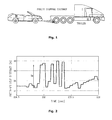
- FIG. 1 is a diagram illustrating an example of a case in which an inter-vehicle distance is not accurately measured according to a related art.
- a preceding vehicle is a trailer having high ground clearance and existing inter-vehicle distance measurement is performed in such a manner that radar detects a wheel portion of the trailer, instead of detecting the rear of the vehicle. Accordingly, an error occurs in timing for an SCC system to put the brake on the vehicle and thus, a stoppage distance becomes faulty.
- FIG. 2 is a graph illustrating an example of an inter-vehicle distance with the same preceding vehicle measured by an inter-vehicle distance measuring apparatus according to the related art.
- FIG. 2 it can be known that the same circumstance as FIG. 1 occurred around 205 seconds and thus, an error of about 5 meters occurred within the inter-vehicle distance.
- the present invention has been made in an effort to provide an apparatus and a method for calculating an inter-vehicle distance that calculates a more accurate inter-vehicle distance by setting a physical limit value and recognizing an inter-vehicle distance error occurring due to reasons such as an installation location of a sensor, a type of a vehicle, illegal remodeling of the vehicle, and the like, thereby correcting an inter-vehicle distance.
- An exemplary embodiment of the present invention provides an apparatus for calculating an inter-vehicle distance, the apparatus including: an information obtainment unit to obtain information about an inter-vehicle distance with a preceding vehicle at a temporal interval; an estimation unit to estimate an inter-vehicle distance with the preceding vehicle to be obtained by the information obtainment unit at a subsequent interval, based on the information obtained by the information obtainment unit; a physical limit determining unit to determine whether a absolute value obtained by subtracting a subsequent inter-vehicle distance estimated by the estimation unit from the inter-vehicle distance obtained by the information obtainment unit at the subsequent interval is greater than or equal to a predetermined inter-vehicle distance change range (Dth); and a correction unit to correct the inter-vehicle distance obtained by the information obtainment unit by determining that an error is present within the inter-vehicle distance obtained by the information obtainment unit at the subsequent interval, when the absolute value is greater than or equal to the predetermined inter-vehicle distance change range.
- the information obtainment unit may obtain information about a relative speed with the preceding vehicle at the temporal interval, the estimation unit may estimate a relative speed with the preceding vehicle to be obtained by the information obtainment unit at the subsequent interval, based on information about the relative speed obtained by the information obtainment unit, the physical limit determining unit may determine whether a value obtained by subtracting a subsequent relative speed estimated by the estimation unit from the relative speed obtained by the information obtainment unit at the subsequent interval is greater than or equal to a predetermined relative speed change range (VRth), and the correction unit may correct the inter-vehicle distance obtained by the information obtainment unit by determining that an error is present within the inter-vehicle distance obtained by the information obtainment unit at the subsequent interval, when the value is greater than or equal to the predetermined relative speed change range.
- VRth relative speed change range
- the information obtainment unit may obtain information about a speed of the preceding vehicle at the temporal interval
- the physical limit determining unit may determine whether a value obtained by subtracting a relative speed obtained by the information obtainment unit at a previous interval from a relative speed obtained by the information obtainment unit is greater than or equal to a predetermined physical change range (Pth)
- the correction unit may correct the inter-vehicle distance obtained by the information obtainment unit by determining that an error is present within the inter-vehicle distance obtained by the information obtainment unit at the subsequent interval, when the value is greater than or equal to the predetermined physical change range.
- the inter-vehicle distance calculating apparatus may further include an identical vehicle determining unit to determine whether the preceding vehicle that is a target of information obtained by the information obtainment unit is identical to a preceding vehicle that is a target of information previously obtained by the information obtainment unit.
- the inter-vehicle distance calculating apparatus may further include an information transmitter to transmit, to a smart cruise control system, information about the inter-vehicle distance obtained by the information obtainment unit when the physical limit determining unit determines that the value is less than the predetermined inter-vehicle distance change range, or when the identical vehicle determining unit determines that the preceding vehicle is different, and to transmit, to the smart cruise control system, the inter-vehicle distance corrected by the correction unit when the identical vehicle determining unit determines that the preceding vehicle is identical and when the physical limit determining unit determines that the value is greater than or equal to the predetermined inter-vehicle distance change range.
- Another exemplary embodiment of the present invention provides a method of calculating an inter-vehicle distance, the method including: an information obtaining operation of obtaining information about an inter-vehicle distance with a preceding vehicle at a temporal interval; an estimating operation of estimating an inter-vehicle distance with the preceding vehicle to be obtained at a subsequent interval in the information obtaining operation, based on the information obtained in the information obtaining operation; a physical limit determining operation of determining whether a value obtained by subtracting a subsequent inter-vehicle distance estimated in the estimating operation from the inter-vehicle distance obtained at the subsequent interval in the information obtaining operation is greater than or equal to a predetermined inter-vehicle distance change range (Dth); and a correcting operation of correcting the inter-vehicle distance in the information obtaining operation by determining that an error is present within the inter-vehicle distance obtained at the subsequent interval in the information obtaining operation, when the value is greater than or equal to the predetermined inter-vehicle
- the information obtaining operation may obtain information about a relative speed with the preceding vehicle at the temporal interval
- the estimating operation may estimate a relative speed with the preceding vehicle to be obtained at the subsequent interval in the information obtaining operation, based on information about the relative speed obtained in the information obtaining operation
- the physical limit determining operation may determine whether a value obtained by subtracting a subsequent relative speed estimated in the estimating operation from the relative speed obtained at the subsequent interval in the information obtaining operation is greater than or equal to a predetermined relative speed change range (VRth)
- the correcting operation may correct the inter-vehicle distance obtained in the information obtaining operation by determining that an error is present within the subsequent inter-vehicle distance obtained at the subsequent interval in the information obtaining operation, when the value is greater than or equal to the predetermined relative speed change range.
- the information obtaining operation may obtain information about a speed of the preceding vehicle at the temporal interval
- the physical limit determining operation may determine whether a value obtained by subtracting a relative speed obtained at a previous interval in the information obtaining operation from a relative speed obtained in the information obtaining operation is greater than or equal to a predetermined physical change range (Pth)
- the correcting operation may correct the inter-vehicle distance obtained in the information obtaining operation by determining that an error is present within the inter-vehicle distance obtained at the subsequent interval in the information obtaining operation, when the value is greater than or equal to the predetermined physical change range.
- the inter-vehicle distance calculating method may further include an identical vehicle determining operation of determining whether the preceding vehicle that is a target of information obtained in the information obtaining operation is identical to a preceding vehicle that is a target of information previously obtained in the information obtaining operation.
- the inter-vehicle distance calculating method may further include an information transmitting operation of transmitting, to a smart cruise control system, information about the inter-vehicle distance obtained in the information obtaining operation when the physical limit determining operation determines that the value is less than the predetermined inter-vehicle distance change range, or when the identical vehicle determining operation determines that the preceding vehicle is different, and of transmitting, to the smart cruise control system, the inter-vehicle distance corrected in the correcting operation when the identical vehicle determining operation determines that the preceding vehicle is identical and when the physical limit determining operation determines that the value is greater than or equal to the predetermined inter-vehicle distance change range.
- a predetermined constituent element When it is described that a predetermined constituent element is “connected to” or “accessed to” another constituent element, the predetermined constituent element may be directly connected to or accessed to the other constituent element, however, should be understood that still another constituent element may be present between the predetermined constituent element and the other constituent element. On the other hand, when it is described that the predetermined constituent element is “directly connected to” or “directly accessed to” the other constituent element, it should be understood that still another constituent element is absent between the predetermined constituent element and the other constituent element.
- FIG. 3 is a diagram to describe an inter-vehicle distance calculating apparatus according to the present invention.
- the inter-vehicle distance calculating apparatus relates to an apparatus for correcting an error by setting a physical limit based on acceleration or deceleration performance of a vehicle using a principle that the vehicle may not travel beyond a limited area during a predetermined period of time, and by determining that the error is present within a measured inter-vehicle distance when the set physical limit is exceeded.
- the inter-vehicle distance calculating apparatus is effective, particularly, in a slow speed circumstance and a near-distance circumstance.
- the inter-vehicle distance calculating apparatus may be set to be utilized to calculate an inter-vehicle distance in a circumstance in which a preceding vehicle is driven at a low speed of about 30k/h in a near distance of about 10 m or less with the preceding vehicle.
- about 10m and about 30k/h are only examples and thus, the inter-vehicle distance calculating apparatus may be applied even to a further distant distance or a faster speed.
- FIG. 4 is a block diagram illustrating an inter-vehicle distance calculating apparatus 400 according to an exemplary embodiment of the present invention.
- the inter-vehicle distance calculating apparatus 400 includes an information obtainment unit 410, an identical vehicle determining unit 420, estimation unit 430, a physical limit determining unit 440, a correction unit 450, and an information transmitter 460.
- the information obtainment unit 410 obtains, from radar or an optical camera installed in a vehicle, an inter-vehicle distance with a preceding vehicle and information about at least one of a relative speed with the preceding vehicle and a speed of the preceding vehicle.
- the radar or the optical camera measures information about at least one of the relative speed with the preceding vehicle and the speed of the preceding vehicle, and the inter-vehicle distance with the preceding vehicle in real time.
- the radar or the optical camera may periodically or aperiodically measure information about at least one of the relative speed with the preceding vehicle and the speed of the preceding vehicle, and the inter-vehicle distance with the preceding vehicle.
- the radar or the optical camera may measure information about at least one of the relative speed with the preceding vehicle and the speed of the preceding vehicle, and the inter-vehicle distance with the preceding vehicle once per single interval by employing 50 ms as a single interval.
- That the information obtainment unit 410 obtains information about at least one of the relative speed with the preceding vehicle and the speed of the preceding vehicle, and the inter-vehicle distance with the preceding vehicle is not necessarily limited to obtaining the above information from the radar or the optical camera installed in the vehicle.
- the above information may be obtained from various sensors installed in the vehicle.
- the identical vehicle determining unit 420 determines whether a preceding vehicle that is a measurement target by the radar or the optical camera is identical. That is, when the radar measures information about at least one of the relative speed with the preceding vehicle and the speed of the preceding vehicle, and the inter-vehicle distance with the preceding vehicle once per single interval, the identical vehicle determining unit 420 determines whether a vehicle that is a current measurement target is identical to a vehicle that is a measurement target at a previous interval.
- the correction unit 450 does not correct the inter-vehicle distance even though a measurement value is beyond the physical limit range determined by the physical limit determining unit 440.
- the identical vehicle determining unit 420 may determine whether the measurement target is an identical target based on tracking information that is measured by the radar or the optical camera. Additionally, the identical vehicle determining unit 420 may determine whether the preceding vehicle is identical based on information about a vehicle width that is measured by the radar or the optical camera.
- the radar or the optical camera may measure the inter-vehicle distance with the preceding vehicle and the relative speed with the preceding vehicle, may also collect tracking information of the preceding vehicle, and may also measure the vehicle width of the preceding vehicle.
- the estimation unit 430 estimates a subsequent location and relative speed of the preceding vehicle based on information obtained by the information obtainment unit 410.
- the estimation unit 430 estimates the inter-vehicle distance and the relative speed after 50ms that is a subsequent interval using an inter-vehicle distance and a relative speed currently measured by the radar. For more accurate estimation, in addition to the inter-vehicle distance and the relative speed currently measured by the radar, a previously measured inter-vehicle distance and relative speed may be utilized to estimate a subsequent inter-vehicle distance and relative speed after 50ms.
- the estimation unit 430 may estimate an inter-vehicle distance and a relative speed to be measured by the radar at a subsequent interval using a Kalman filter.
- the estimation unit 430 may estimate the t inter-vehicle distance and relative speed to be measured by the radar at the subsequent interval using Equation 1 through Equation 3.
- x k p x k p y k v x k v y k T
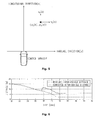
- FIG. 5 is a diagram to describe Px(k), Py(k), Vx(k), and Vy(k).
- Equation 1 expresses a state variable.
- Px(k) denotes a longitudinal relative distance and Py(k) denotes a traverse relative distance.
- Vx(k) denotes a longitudinal relative speed.
- Vy(k) denotes a traverse relative speed.
- Equation 2 is a system model using process noise that is defined as a probabilistic characteristic (Q) of a relative speed in a follow-up circumstance.
- the range of the process noise may be selected using a maximum value and a minimum value of a change amount of the relative speed.
- Equation 3 is an observation model using measurement noise that is defined as a probabilistic characteristic (R) of longitudinal and traverse location measurement values of a radar sensor.
- the range of the measurement noise may be selected based on the signal change range and a resolution rate.
- x ⁇ k + 1 ⁇ ⁇ x k + ⁇ ⁇ ⁇ k ⁇
- Q z k H ⁇ x k + v k ⁇
- Equation 4 is an equation to induce a steady-state filter gain based on a probabilistic characteristic of the process noise and a probabilistic characteristic of the measurement noise.
- the process noise w(k) may be defined as the probabilistic characteristic (Q) of the relative speed in the follow-up circumstance
- the measurement noise v(k) may be defined as the probabilistic characteristic (R) of the longitudinal and traverse location measurement values of the radar sensor. That is, w(k) may be expressed as a probability function of which average is zero and variance is Q, and v(k) may be expressed as a probability function of which average is zero and variance is R.
- Equation 5 The estimation unit 430 designed using Equation 1 through Equation 4 may be expressed as Equation 5.
- the estimation unit 430 estimates an inter-vehicle distance and a relative speed of a subsequent time or a subsequent interval desired to be estimated through Time-Update and Measurement-Update.
- a variable x(k+1) desired to be estimated from a variable x(k) is calculated.
- x(k+1) becomes traverse and longitudinal travel distances and traverse and longitudinal relative speeds of the subsequent time or the subsequent interval according to Equation 1.
- the inter-vehicle distance may be calculated.
- Equation 1 through Equation 5 apply a method of configuring a logic using an estimation scheme such as the Kalman filter.
- the estimation unit 430 is not limited to estimating the inter-vehicle distance and the relative speed to be measured by a sensor at the subsequent time or the subsequent interval using Equation 1 through Equation 5 or the Kalman filter, and may also estimate the inter-vehicle distance and the relative speed using other known arts.
- the physical limit determining unit 440 sets a physical limit based on (f?) acceleration or deceleration performance of a vehicle using a principle that the vehicle may not travel beyond a limited area during a predetermined period of time, determines whether a measurement value is beyond the set physical limit, and determines whether an error is present within the inter-vehicle distance measured by the sensor.
- the physical limit determining unit 440 includes an inter-vehicle distance change range determining unit 442, a relative speed change range determining unit 444, and a physical change range determining unit 446.
- the inter-vehicle distance change range determining unit 442 determines whether an inter-vehicle distance change range is greater than or equal to a predetermined inter-vehicle distance change range (Dth).
- the inter-vehicle distance change range indicates a difference between an inter-vehicle distance measured by the information obtainment unit 410 at a predetermined time and an inter-vehicle distance estimated by the estimation unit 430 at the corresponding predetermined time.
- the predetermined inter-vehicle distance change range (Dth) is a value changeable due to brake performance of a vehicle, a brake distance of the vehicle, a safety distance defined by a law, acceleration or deceleration performance of the vehicle, a measurement interval of a sensor, a request of a vehicle manufacturer or a user, and the like.
- the predetermined inter-vehicle distance change range (Dth) may be determined as a predetermined value between 1m and 2m.
- the predetermined inter-vehicle distance change range (Dth) is designated as a value that is determined as a case in which it is physically impossible or defective from a common-sense point of view based on the acceleration or deceleration performance of the vehicle.
- the above determination that it is physically impossible or defective from a common-sense point of view may be performed by also considering the relative speed. Considering the relative speed may be performed by the relative speed change range determining unit 444.
- the relative speed change range determining unit 444 determines whether a relative speed change range is greater than or equal to a predetermined relative speed change range (VRth).
- the relative speed change range indicates a difference between the inter-vehicle distance measured by the information obtainment unit 410 at the predetermined time and the inter-vehicle distance estimated by the estimation unit 430 at the corresponding predetermined time.
- the predetermined relative speed change range (VRth) is a value changeable due to brake performance of the vehicle, the brake distance of the vehicle, the safety distance defined by the law, acceleration or deceleration performance of the vehicle, the measurement interval of the sensor, the request of the vehicle manufacturer or the user, and the like.
- the predetermined relative speed change range (VRth) may be set to be about 1m/s.
- the physical change range determining unit 446 determines whether a physical change range is greater than or equal to a predetermined physical change range (Pth).
- the physical change range indicates a difference between a vehicle speed of a preceding vehicle measured by the information obtainment unit 410 at the predetermined time and a vehicle speed of the preceding vehicle measured by the information obtainment unit at a subsequent time or a subsequent interval.
- the predetermined physical change range (Pth) is a value changeable due to brake performance of the vehicle, the brake distance of the vehicle, acceleration or deceleration performance of the vehicle, the request of the vehicle manufacturer or the user, the measurement interval of the sensor, and the like.
- the predetermined physical change range (Pth) may be set be about 10m/s.
- the information obtainment unit 410 obtains speed information of the preceding vehicle measured by the sensor at intervals of 50ms.
- a speed of the preceding vehicle currently obtained by the information obtainment unit 410 is 60km/h (16.67m/s) and a speed of the preceding vehicle previously obtained at a previous interval of 50ms that is a previous interval is 20km/h (5.55m/s)
- the physical change range is obtained by calculating a speed difference of the preceding vehicle corresponding to a single interval difference obtained by the information obtainment unit 410 and is compared with the predetermined physical change range (Pth).
- the physical change range is greater than or equal to the predetermined physical change range (Pth)
- Pth the predetermined physical change range
- the inter-vehicle distance change range determining unit 442 may determine whether the inter-vehicle distance change range is greater than or equal to the predetermined inter-vehicle distance change range (Dth), and may determine that the error is present within the inter-vehicle distance measured by the sensor when the inter-vehicle distance change range is greater than or equal to the predetermined inter-vehicle distance change range (Dth).
- the relative speed change range determining unit 444 may determine whether the relative speed change range is greater than or equal to the predetermined relative speed change range (VRth), and may determine that the error is present within the inter-vehicle distance measured by the sensor when the relative speed change range is greater than or equal to the predetermined relative speed change range (VRth).
- the relative speed change range determining unit 444, and the physical change range determining unit 446 determine that the error is present. It is also possible to determine that the error is present within the inter-vehicle distance measured by the sensor.
- the correction unit 450 may correct the error.
- the correction unit 450 estimates an offset distance between a location of the vehicle measured by the sensor and a rear location of the vehicle, and corrects the measured inter-vehicle distance by the estimated offset distance. Estimation of the offset distance may utilize an existing technology.
- the correction unit 450 may add about 2m to 5m to the measured inter-vehicle distance or may subtract about 2m to 5m from the measured inter-vehicle distance based on the whole length of the vehicle in order to secure the safety distance or the brake distance.
- the information transmitter 460 may transmit inter-vehicle distance information corrected by the correction unit 450 to a place needing inter-vehicle distance information with the preceding vehicle, such as a smart cruise control system and the like.
- FIG. 6 is a graph illustrating an example of a result of correcting, by a correction unit of an inter-vehicle distance calculating apparatus, a measured inter-vehicle distance according to the present invention.
- FIG. 6 illustrates a result of correcting, by the correction unit 450, an inter-vehicle distance when the physical limit determining unit 440 determines that an error is present within the inter-vehicle distance measured between 37 seconds and 38 seconds.
- the result of estimating, by the correction unit 450, an offset distance between a location of a vehicle and a rear location of the vehicle and correcting the measured inter-vehicle distance by the estimated offset distance is indicated as a dotted line.
- a sensor outputs about at least 10m of a detection distance around 38 seconds due to error recognition and lower end detection.
- a smart cruise control system controls the vehicle to be stopped based on the inter-vehicle distance of 10m erroneously measured by the sensor, the vehicle is stopped within 3 m, not 5 m that is a target stoppage distance. Accordingly, a collision accident with the preceding vehicle may occur.
- the smart cruise control system may control the vehicle to be stopped within the target stoppage distance.
- the inter-vehicle distance calculating apparatus 400 may determine whether the error is present within the inter-vehicle distance measured by the sensor, and may calculate a more accurate inter-vehicle distance by recognizing and correcting the error when the error occurs within the inter-vehicle distance.
- Inter-vehicle distance information calculated by the inter-vehicle distance calculating apparatus 400 according to the present invention may be transmitted to a system needing the inter-vehicle distance information such as a smart cruise control system and the like to thereby be utilized for precise vehicle control.
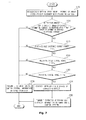
- FIG. 7 is a flowchart illustrating a method of calculating an inter-vehicle distance according to an exemplary embodiment of the present invention.
- the information obtainment unit 410 periodically obtains, from a sensor such as radar installed in a vehicle and the like, an inter-vehicle distance with a preceding vehicle and information about at least one of a relative speed with the preceding vehicle and a speed of the preceding vehicle (operation S710).
- the identical vehicle determining unit 420 determines whether a preceding vehicle that is a target of information currently obtained by the information obtainment unit 410 is identical to a preceding vehicle that is a target of information obtained at a previous interval (operation S720).
- the information transmitter 460 may directly transmit information obtained by the information obtainment unit 410 to a place needing the information, such as a smart cruise control system and the like, without a need for the correction unit 450 to correct the information (operation S730).
- the physical limit determining unit 440 determines whether an error is present within the inter-vehicle distance measured by the sensor.
- the inter-vehicle distance change range determining unit 442 of the physical limit determining unit 440 determines whether an inter-vehicle distance change range is greater than or equal to a predetermined inter-vehicle distance change range (Dth) (operation S740).
- the relative speed change range determining unit 444 of the physical limit determining unit 440 determines whether a relative speed change range is greater than or equal to a predetermined relative speed change range (VRth) (operation S750).
- the physical change range determining unit 446 of the physical limit determining unit 440 determines whether a physical change range is greater than or equal to a predetermined physical change range (Pth) (operation S760).
- the correction unit 450 estimates an offset distance between a location of the vehicle measured by the sensor and a rear location of the vehicle, and corrects the measured inter-vehicle distance by the estimated offset distance (operation S770).
- the information transmitter 460 may transmit corrected inter-vehicle distance information to a place needing the inter-vehicle distance information, such as a smart cruise control system and the like (operation S780).
- Operations S740 through S760 may be sequentially performed and may also be equivalently performed. Only at least one of operations S740 through S760 may be performed. Even when "yes" is determined in any one of operations S740 through S760, the correction unit 450 may correct the measured inter-vehicle distance.
- the information transmitter 460 may transmit inter-vehicle distance information obtained by the information obtainment unit 410 to a place needing the inter-vehicle distance information, such as the smart cruise control system and the like (operation S730).
- the information transmitter 460 may transmit inter-vehicle distance information obtained by the information obtainment unit 410 to a place needing the inter-vehicle distance information, such as the smart cruise control system and the like, only when "no" is determined in all of operations S740 through S760.
- the block diagram of the inter-vehicle distance calculating apparatus 400 should be understood to indicate an exemplary conceptual point of view for embodying a principle of the present invention.
- all of the flowcharts should be understood to be substantially expressed in computer-readable media and to express a variety of processes performed by a computer or a processor, regardless of whether the computer or the processor is clearly illustrated.
- Functions of various devices illustrated in the drawings including functional blocks that are expressed as a processor or a concept similar thereto may be provided for use of dedicated hardware and use of hardware having a capability to execute software in association with appropriate software.
- the functions may be provided by the processor, the functions may be provided by a single dedicated processor, a single shared processor, or a plurality of individual processors, and a portion thereof may be shared.
- DSP digital signal processor
Landscapes
- Engineering & Computer Science (AREA)
- Remote Sensing (AREA)
- Radar, Positioning & Navigation (AREA)
- Physics & Mathematics (AREA)
- Mechanical Engineering (AREA)
- Automation & Control Theory (AREA)
- Transportation (AREA)
- General Physics & Mathematics (AREA)
- Computer Networks & Wireless Communication (AREA)
- Electromagnetism (AREA)
- Control Of Driving Devices And Active Controlling Of Vehicle (AREA)
- Traffic Control Systems (AREA)
- Radar Systems Or Details Thereof (AREA)
Abstract
Description
- This application claims priority to and the benefit of Korean Patent Application No.
10-2012-0080303 - The present invention relates to an apparatus and a method for calculating an inter-vehicle distance, and more particularly, to an apparatus and a method for calculating an inter-vehicle distance that calculates a more accurate inter-vehicle distance by setting a physical limit value and recognizing an inter-vehicle distance error occurring due to reasons such as an installation location of a sensor, a type of a vehicle, illegal remodeling of the vehicle, and the like, thereby correcting an inter-vehicle distance.
- Currently, the number of vehicles applied with a smart cruise control (SCC) system has been increasing.
- The SCC system is a system that controls a vehicle to maintain an inter-vehicle distance by measuring an inter-vehicle distance with a preceding vehicle using radar.
- Accordingly, in the SCC system, it is important to accurately measure the inter-vehicle distance with the preceding vehicle. However, detection capability of the radar varies based on an installation location of the radar. Specifically, generally used radar has performance of a vertical detection angle of about ±2 degrees to ±4 degrees in a vertical direction. When a detection angle is too large, a lower end of road or an upper structure of the road is erroneously detected. When the detection angle is too small, error recognition of a detection distance occurs based on the installation location of the radar.
- In particular, when the radar is installed around a lower end of a license plate of a vehicle or around a fog lamp, and when ground clearance of the preceding vehicle is high or when a rear shape such as a ready-mixed concrete (RMC) truck is different from a general vehicle, the radar may not accurately verify an inter-vehicle distance.
- Alternatively, even when the preceding vehicle is a heavy-duty truck and is a vehicle of which rear safety valve is illegally remodeled, the inter-vehicle distance may not be accurately measured.
- When the inter-vehicle distance is not accurately measured, the SCC system may put the brake on the vehicle at a location closer to the preceding vehicle than expected. If the above occurs, a collision with the preceding vehicle may occur.
-
FIG. 1 is a diagram illustrating an example of a case in which an inter-vehicle distance is not accurately measured according to a related art. - Referring to
FIG. 1 , a preceding vehicle is a trailer having high ground clearance and existing inter-vehicle distance measurement is performed in such a manner that radar detects a wheel portion of the trailer, instead of detecting the rear of the vehicle. Accordingly, an error occurs in timing for an SCC system to put the brake on the vehicle and thus, a stoppage distance becomes faulty. -
FIG. 2 is a graph illustrating an example of an inter-vehicle distance with the same preceding vehicle measured by an inter-vehicle distance measuring apparatus according to the related art. - Referring to
FIG. 2 , it can be known that the same circumstance asFIG. 1 occurred around 205 seconds and thus, an error of about 5 meters occurred within the inter-vehicle distance. - Accordingly, there is a need for a method of calculating an accurate inter-vehicle distance by correcting an error when the error occurs within an inter-vehicle distance with a preceding vehicle due to a variety of reasons.
- The present invention has been made in an effort to provide an apparatus and a method for calculating an inter-vehicle distance that calculates a more accurate inter-vehicle distance by setting a physical limit value and recognizing an inter-vehicle distance error occurring due to reasons such as an installation location of a sensor, a type of a vehicle, illegal remodeling of the vehicle, and the like, thereby correcting an inter-vehicle distance.
- An exemplary embodiment of the present invention provides an apparatus for calculating an inter-vehicle distance, the apparatus including: an information obtainment unit to obtain information about an inter-vehicle distance with a preceding vehicle at a temporal interval; an estimation unit to estimate an inter-vehicle distance with the preceding vehicle to be obtained by the information obtainment unit at a subsequent interval, based on the information obtained by the information obtainment unit; a physical limit determining unit to determine whether a absolute value obtained by subtracting a subsequent inter-vehicle distance estimated by the estimation unit from the inter-vehicle distance obtained by the information obtainment unit at the subsequent interval is greater than or equal to a predetermined inter-vehicle distance change range (Dth); and a correction unit to correct the inter-vehicle distance obtained by the information obtainment unit by determining that an error is present within the inter-vehicle distance obtained by the information obtainment unit at the subsequent interval, when the absolute value is greater than or equal to the predetermined inter-vehicle distance change range.
- The information obtainment unit may obtain information about a relative speed with the preceding vehicle at the temporal interval, the estimation unit may estimate a relative speed with the preceding vehicle to be obtained by the information obtainment unit at the subsequent interval, based on information about the relative speed obtained by the information obtainment unit, the physical limit determining unit may determine whether a value obtained by subtracting a subsequent relative speed estimated by the estimation unit from the relative speed obtained by the information obtainment unit at the subsequent interval is greater than or equal to a predetermined relative speed change range (VRth), and the correction unit may correct the inter-vehicle distance obtained by the information obtainment unit by determining that an error is present within the inter-vehicle distance obtained by the information obtainment unit at the subsequent interval, when the value is greater than or equal to the predetermined relative speed change range.
- The information obtainment unit may obtain information about a speed of the preceding vehicle at the temporal interval, the physical limit determining unit may determine whether a value obtained by subtracting a relative speed obtained by the information obtainment unit at a previous interval from a relative speed obtained by the information obtainment unit is greater than or equal to a predetermined physical change range (Pth), and the correction unit may correct the inter-vehicle distance obtained by the information obtainment unit by determining that an error is present within the inter-vehicle distance obtained by the information obtainment unit at the subsequent interval, when the value is greater than or equal to the predetermined physical change range.
- The inter-vehicle distance calculating apparatus may further include an identical vehicle determining unit to determine whether the preceding vehicle that is a target of information obtained by the information obtainment unit is identical to a preceding vehicle that is a target of information previously obtained by the information obtainment unit.
- The inter-vehicle distance calculating apparatus may further include an information transmitter to transmit, to a smart cruise control system, information about the inter-vehicle distance obtained by the information obtainment unit when the physical limit determining unit determines that the value is less than the predetermined inter-vehicle distance change range, or when the identical vehicle determining unit determines that the preceding vehicle is different, and to transmit, to the smart cruise control system, the inter-vehicle distance corrected by the correction unit when the identical vehicle determining unit determines that the preceding vehicle is identical and when the physical limit determining unit determines that the value is greater than or equal to the predetermined inter-vehicle distance change range.
- Another exemplary embodiment of the present invention provides a method of calculating an inter-vehicle distance, the method including: an information obtaining operation of obtaining information about an inter-vehicle distance with a preceding vehicle at a temporal interval; an estimating operation of estimating an inter-vehicle distance with the preceding vehicle to be obtained at a subsequent interval in the information obtaining operation, based on the information obtained in the information obtaining operation; a physical limit determining operation of determining whether a value obtained by subtracting a subsequent inter-vehicle distance estimated in the estimating operation from the inter-vehicle distance obtained at the subsequent interval in the information obtaining operation is greater than or equal to a predetermined inter-vehicle distance change range (Dth); and a correcting operation of correcting the inter-vehicle distance in the information obtaining operation by determining that an error is present within the inter-vehicle distance obtained at the subsequent interval in the information obtaining operation, when the value is greater than or equal to the predetermined inter-vehicle distance change range.
- The information obtaining operation may obtain information about a relative speed with the preceding vehicle at the temporal interval, the estimating operation may estimate a relative speed with the preceding vehicle to be obtained at the subsequent interval in the information obtaining operation, based on information about the relative speed obtained in the information obtaining operation, the physical limit determining operation may determine whether a value obtained by subtracting a subsequent relative speed estimated in the estimating operation from the relative speed obtained at the subsequent interval in the information obtaining operation is greater than or equal to a predetermined relative speed change range (VRth), and the correcting operation may correct the inter-vehicle distance obtained in the information obtaining operation by determining that an error is present within the subsequent inter-vehicle distance obtained at the subsequent interval in the information obtaining operation, when the value is greater than or equal to the predetermined relative speed change range.
- The information obtaining operation may obtain information about a speed of the preceding vehicle at the temporal interval, the physical limit determining operation may determine whether a value obtained by subtracting a relative speed obtained at a previous interval in the information obtaining operation from a relative speed obtained in the information obtaining operation is greater than or equal to a predetermined physical change range (Pth), and the correcting operation may correct the inter-vehicle distance obtained in the information obtaining operation by determining that an error is present within the inter-vehicle distance obtained at the subsequent interval in the information obtaining operation, when the value is greater than or equal to the predetermined physical change range.
- The inter-vehicle distance calculating method may further include an identical vehicle determining operation of determining whether the preceding vehicle that is a target of information obtained in the information obtaining operation is identical to a preceding vehicle that is a target of information previously obtained in the information obtaining operation.
- The inter-vehicle distance calculating method may further include an information transmitting operation of transmitting, to a smart cruise control system, information about the inter-vehicle distance obtained in the information obtaining operation when the physical limit determining operation determines that the value is less than the predetermined inter-vehicle distance change range, or when the identical vehicle determining operation determines that the preceding vehicle is different, and of transmitting, to the smart cruise control system, the inter-vehicle distance corrected in the correcting operation when the identical vehicle determining operation determines that the preceding vehicle is identical and when the physical limit determining operation determines that the value is greater than or equal to the predetermined inter-vehicle distance change range.
- According to exemplary embodiments of the present invention, when an error occurs within an inter-vehicle distance, it is possible to calculate a more accurate inter-vehicle distance by recognizing the error and by correcting the error.
- According to exemplary embodiments of the present invention, it is possible to enable calculated inter-vehicle distance information to be utilized for precise vehicle control by transmitting the calculated inter-vehicle distance information to a system requiring inter-vehicle distance information such as a smart cruise control system and the like.
- The foregoing summary is illustrative only and is not intended to be in any way limiting. In addition to the illustrative aspects, embodiments, and features described above, further aspects, embodiments, and features will become apparent by reference to the drawings and the following detailed description.
-
-
FIG. 1 is a diagram illustrating an example of a case in which an inter-vehicle distance is not accurately measured according to a related art. -
FIG. 2 is a graph illustrating an example of an inter-vehicle distance with the same preceding vehicle measured by an inter-vehicle distance measuring apparatus according to the related art. -
FIG. 3 is a diagram to describe an inter-vehicle distance calculating apparatus according to the present invention. -
FIG. 4 is a block diagram illustrating an inter-vehicle distance calculating apparatus according to an exemplary embodiment of the present invention. -
FIG. 5 is a diagram to describe Px(k), Py(k), Vx(k), and Vy(k). -
FIG. 6 is a graph illustrating an example of a result of correcting, by a correction unit of an inter-vehicle distance calculating apparatus, a measured inter-vehicle distance according to the present invention. -
FIG. 7 is a flowchart illustrating a method of calculating an inter-vehicle distance according to an exemplary embodiment of the present invention. - It should be understood that the appended drawings are not necessarily to scale, presenting a somewhat simplified representation of various features illustrative of the basic principles of the invention. The specific design features of the present invention as disclosed herein, including, for example, specific dimensions, orientations, locations, and shapes will be determined in part by the particular intended application and use environment.
- In the figures, reference numbers refer to the same or equivalent parts of the present invention throughout the several figures of the drawing.
- Hereinafter, exemplary embodiments of the present invention will be described in detail with reference to the accompanying drawings. In the following description and the accompanying drawings, like reference numerals refer to like constituent elements and thus, the repeated description will be omitted. When it is determined that the detailed description related to a related known function or configuration may make the purpose of the present invention unnecessarily ambiguous in describing the present invention, the detailed description will be omitted here.
- When it is described that a predetermined constituent element is "connected to" or "accessed to" another constituent element, the predetermined constituent element may be directly connected to or accessed to the other constituent element, however, should be understood that still another constituent element may be present between the predetermined constituent element and the other constituent element. On the other hand, when it is described that the predetermined constituent element is "directly connected to" or "directly accessed to" the other constituent element, it should be understood that still another constituent element is absent between the predetermined constituent element and the other constituent element.
- In the present specification, unless particularly described in the sentence, a singular form may also include a plural form. "Includes (comprises)" and/or "including (comprising)" used in the present specification does not exclude the presence or addition of at least one another constituent element, step, operation, and/or device with respect to the described constituent element, step, operation, and/or device.
-
FIG. 3 is a diagram to describe an inter-vehicle distance calculating apparatus according to the present invention. - Referring to
FIG. 3 , the inter-vehicle distance calculating apparatus according to the present invention relates to an apparatus for correcting an error by setting a physical limit based on acceleration or deceleration performance of a vehicle using a principle that the vehicle may not travel beyond a limited area during a predetermined period of time, and by determining that the error is present within a measured inter-vehicle distance when the set physical limit is exceeded. - The inter-vehicle distance calculating apparatus according to the present invention is effective, particularly, in a slow speed circumstance and a near-distance circumstance.
- When the vehicle runs at a high speed and an inter-vehicle distance is significantly distant, a phenomenon that an inter-vehicle distance measured by radar spontaneously varies barely occurs. Even though the phenomenon occurs, a change amount thereof is extremely small and thus does not affect a smart cruise control system and the like in controlling the vehicle.
- Accordingly, the inter-vehicle distance calculating apparatus according to the present invention may be set to be utilized to calculate an inter-vehicle distance in a circumstance in which a preceding vehicle is driven at a low speed of about 30k/h in a near distance of about 10 m or less with the preceding vehicle. Here, about 10m and about 30k/h are only examples and thus, the inter-vehicle distance calculating apparatus may be applied even to a further distant distance or a faster speed.
-
FIG. 4 is a block diagram illustrating an inter-vehicle distance calculating apparatus 400 according to an exemplary embodiment of the present invention. - Referring to
FIG. 4 , the inter-vehicle distance calculating apparatus 400 includes aninformation obtainment unit 410, an identicalvehicle determining unit 420,estimation unit 430, a physicallimit determining unit 440, acorrection unit 450, and aninformation transmitter 460. - The
information obtainment unit 410 obtains, from radar or an optical camera installed in a vehicle, an inter-vehicle distance with a preceding vehicle and information about at least one of a relative speed with the preceding vehicle and a speed of the preceding vehicle. - The radar or the optical camera measures information about at least one of the relative speed with the preceding vehicle and the speed of the preceding vehicle, and the inter-vehicle distance with the preceding vehicle in real time. The radar or the optical camera may periodically or aperiodically measure information about at least one of the relative speed with the preceding vehicle and the speed of the preceding vehicle, and the inter-vehicle distance with the preceding vehicle. For example, the radar or the optical camera may measure information about at least one of the relative speed with the preceding vehicle and the speed of the preceding vehicle, and the inter-vehicle distance with the preceding vehicle once per single interval by employing 50 ms as a single interval.
- That the information obtainment
unit 410 obtains information about at least one of the relative speed with the preceding vehicle and the speed of the preceding vehicle, and the inter-vehicle distance with the preceding vehicle is not necessarily limited to obtaining the above information from the radar or the optical camera installed in the vehicle. The above information may be obtained from various sensors installed in the vehicle. - The identical
vehicle determining unit 420 determines whether a preceding vehicle that is a measurement target by the radar or the optical camera is identical. That is, when the radar measures information about at least one of the relative speed with the preceding vehicle and the speed of the preceding vehicle, and the inter-vehicle distance with the preceding vehicle once per single interval, the identicalvehicle determining unit 420 determines whether a vehicle that is a current measurement target is identical to a vehicle that is a measurement target at a previous interval. - When the preceding vehicle is different, a measurement target of the radar or the optical camera is changed and thus, an inconsecutive point occurs in the inter-vehicle distance and the relative speed. Accordingly, when calculating the inter-vehicle distance by setting a physical limit, a wrong value may be calculated.
- Accordingly, when the identical
vehicle determining unit 420 determines that the preceding vehicle is different, it is desirable that thecorrection unit 450 does not correct the inter-vehicle distance even though a measurement value is beyond the physical limit range determined by the physicallimit determining unit 440. - The identical
vehicle determining unit 420 may determine whether the measurement target is an identical target based on tracking information that is measured by the radar or the optical camera. Additionally, the identicalvehicle determining unit 420 may determine whether the preceding vehicle is identical based on information about a vehicle width that is measured by the radar or the optical camera. - That is, the radar or the optical camera may measure the inter-vehicle distance with the preceding vehicle and the relative speed with the preceding vehicle, may also collect tracking information of the preceding vehicle, and may also measure the vehicle width of the preceding vehicle.
- The
estimation unit 430 estimates a subsequent location and relative speed of the preceding vehicle based on information obtained by the information obtainmentunit 410. - For example, when the radar measures the inter-vehicle distance and the relative distance at intervals of about 50ms, the
estimation unit 430 estimates the inter-vehicle distance and the relative speed after 50ms that is a subsequent interval using an inter-vehicle distance and a relative speed currently measured by the radar. For more accurate estimation, in addition to the inter-vehicle distance and the relative speed currently measured by the radar, a previously measured inter-vehicle distance and relative speed may be utilized to estimate a subsequent inter-vehicle distance and relative speed after 50ms. - Specifically, the
estimation unit 430 may estimate an inter-vehicle distance and a relative speed to be measured by the radar at a subsequent interval using a Kalman filter. - More specifically, the
estimation unit 430 may estimate the t inter-vehicle distance and relative speed to be measured by the radar at the subsequent interval using Equation 1 through Equation 3.
-
FIG. 5 is a diagram to describe Px(k), Py(k), Vx(k), and Vy(k). - Equation 1 expresses a state variable. Referring to
FIG. 5 , Px(k) denotes a longitudinal relative distance and Py(k) denotes a traverse relative distance. Vx(k) denotes a longitudinal relative speed. Vy(k) denotes a traverse relative speed.
- Equation 2 is a system model using process noise that is defined as a probabilistic characteristic (Q) of a relative speed in a follow-up circumstance. The range of the process noise may be selected using a maximum value and a minimum value of a change amount of the relative speed.

- Equation 3 is an observation model using measurement noise that is defined as a probabilistic characteristic (R) of longitudinal and traverse location measurement values of a radar sensor. The range of the measurement noise may be selected based on the signal change range and a resolution rate.

- Equation 4 is an equation to induce a steady-state filter gain based on a probabilistic characteristic of the process noise and a probabilistic characteristic of the measurement noise. As described above, the process noise w(k) may be defined as the probabilistic characteristic (Q) of the relative speed in the follow-up circumstance, and the measurement noise v(k) may be defined as the probabilistic characteristic (R) of the longitudinal and traverse location measurement values of the radar sensor. That is, w(k) may be expressed as a probability function of which average is zero and variance is Q, and v(k) may be expressed as a probability function of which average is zero and variance is R.
- The
estimation unit 430 designed using Equation 1 through Equation 4 may be expressed asEquation 5.
- In
Equation 5, theestimation unit 430 estimates an inter-vehicle distance and a relative speed of a subsequent time or a subsequent interval desired to be estimated through Time-Update and Measurement-Update. - That is, a variable x(k+1) desired to be estimated from a variable x(k) is calculated. x(k+1) becomes traverse and longitudinal travel distances and traverse and longitudinal relative speeds of the subsequent time or the subsequent interval according to Equation 1. When using a travel distance, the inter-vehicle distance may be calculated.
- Equation 1 through
Equation 5 apply a method of configuring a logic using an estimation scheme such as the Kalman filter. Here, theestimation unit 430 is not limited to estimating the inter-vehicle distance and the relative speed to be measured by a sensor at the subsequent time or the subsequent interval using Equation 1 throughEquation 5 or the Kalman filter, and may also estimate the inter-vehicle distance and the relative speed using other known arts. - The physical
limit determining unit 440 sets a physical limit based on (f?) acceleration or deceleration performance of a vehicle using a principle that the vehicle may not travel beyond a limited area during a predetermined period of time, determines whether a measurement value is beyond the set physical limit, and determines whether an error is present within the inter-vehicle distance measured by the sensor. - Specifically, the physical
limit determining unit 440 includes an inter-vehicle distance changerange determining unit 442, a relative speed changerange determining unit 444, and a physical changerange determining unit 446. - The inter-vehicle distance change
range determining unit 442 determines whether an inter-vehicle distance change range is greater than or equal to a predetermined inter-vehicle distance change range (Dth). - The inter-vehicle distance change range indicates a difference between an inter-vehicle distance measured by the information obtainment
unit 410 at a predetermined time and an inter-vehicle distance estimated by theestimation unit 430 at the corresponding predetermined time. - The predetermined inter-vehicle distance change range (Dth) is a value changeable due to brake performance of a vehicle, a brake distance of the vehicle, a safety distance defined by a law, acceleration or deceleration performance of the vehicle, a measurement interval of a sensor, a request of a vehicle manufacturer or a user, and the like. For example, the predetermined inter-vehicle distance change range (Dth) may be determined as a predetermined value between 1m and 2m. When the inter-vehicle distance change range becomes to be greater than or equal to Dth, the predetermined inter-vehicle distance change range (Dth) is designated as a value that is determined as a case in which it is physically impossible or defective from a common-sense point of view based on the acceleration or deceleration performance of the vehicle. The above determination that it is physically impossible or defective from a common-sense point of view may be performed by also considering the relative speed. Considering the relative speed may be performed by the relative speed change
range determining unit 444. - The relative speed change
range determining unit 444 determines whether a relative speed change range is greater than or equal to a predetermined relative speed change range (VRth). - The relative speed change range indicates a difference between the inter-vehicle distance measured by the information obtainment
unit 410 at the predetermined time and the inter-vehicle distance estimated by theestimation unit 430 at the corresponding predetermined time. - The predetermined relative speed change range (VRth) is a value changeable due to brake performance of the vehicle, the brake distance of the vehicle, the safety distance defined by the law, acceleration or deceleration performance of the vehicle, the measurement interval of the sensor, the request of the vehicle manufacturer or the user, and the like. For example, the predetermined relative speed change range (VRth) may be set to be about 1m/s.
- The physical change
range determining unit 446 determines whether a physical change range is greater than or equal to a predetermined physical change range (Pth). - The physical change range indicates a difference between a vehicle speed of a preceding vehicle measured by the information obtainment
unit 410 at the predetermined time and a vehicle speed of the preceding vehicle measured by the information obtainment unit at a subsequent time or a subsequent interval. - The predetermined physical change range (Pth) is a value changeable due to brake performance of the vehicle, the brake distance of the vehicle, acceleration or deceleration performance of the vehicle, the request of the vehicle manufacturer or the user, the measurement interval of the sensor, and the like. For example, the predetermined physical change range (Pth) may be set be about 10m/s.
- Specifically describing, when the sensor measures a speed of the preceding vehicle at intervals of 50ms, the information obtainment
unit 410 obtains speed information of the preceding vehicle measured by the sensor at intervals of 50ms. When a speed of the preceding vehicle currently obtained by the information obtainmentunit 410 is 60km/h (16.67m/s) and a speed of the preceding vehicle previously obtained at a previous interval of 50ms that is a previous interval is 20km/h (5.55m/s), the physical change range is obtained by calculating a speed difference of the preceding vehicle corresponding to a single interval difference obtained by the information obtainmentunit 410 and is compared with the predetermined physical change range (Pth). That is, since the physical change range 11.12m/s (difference between 16.67m/s and 5.55m/s) is greater than the predetermined physical change range (Pth) 10m/s, it is possible to determine that an error is present within the recognized inter-vehicle distance. - When the physical change range is greater than or equal to the predetermined physical change range (Pth), it is possible to determine that a measurement value is beyond the range of the acceleration or deceleration performance of the vehicle. That is, with a current technology and acceleration performance of the vehicle, it is impossible for the preceding vehicle driving at a speed of 20 km/h to accelerate by 40 km/h only after 50 ms and then to drive at a speed of 60 km/h. Therefore, it is reasonable to determine that an error is present within the recognized inter-vehicle distance due to a malfunction of the sensor and the like.
- Similar to the aforementioned physical change
range determining unit 446, even in the case of the inter-vehicle distance changerange determining unit 442 and the relative speed changerange determining unit 444, when a change greater than or equal to the predetermined inter-vehicle distance change range (Dth) or the predetermined relative speed change range (VRth) occurs, the above change is a change of a level impossible based on performance of the vehicle and the like and thus, it is reasonable to determine that the error is present within the inter-vehicle distance measured by the sensor. That is, the inter-vehicle distance changerange determining unit 442 may determine whether the inter-vehicle distance change range is greater than or equal to the predetermined inter-vehicle distance change range (Dth), and may determine that the error is present within the inter-vehicle distance measured by the sensor when the inter-vehicle distance change range is greater than or equal to the predetermined inter-vehicle distance change range (Dth). Similarly, the relative speed changerange determining unit 444 may determine whether the relative speed change range is greater than or equal to the predetermined relative speed change range (VRth), and may determine that the error is present within the inter-vehicle distance measured by the sensor when the relative speed change range is greater than or equal to the predetermined relative speed change range (VRth). - To more accurately determine that the error is present within the recognized inter-vehicle distance, only when all of the inter-vehicle distance change
range determining unit 442, the relative speed changerange determining unit 444, and the physical changerange determining unit 446 determine that the error is present, it is possible to determine that the error is present within the inter-vehicle distance measured by the sensor. On the other hand, when at least one of the inter-vehicle distance changerange determining unit 442, the relative speed changerange determining unit 444, and the physical changerange determining unit 446 determines that the error is present, it is also possible to determine that the error is present within the inter-vehicle distance measured by the sensor. - When the physical
limit determining unit 440 determines that the error is present within the inter-vehicle distance measured by the sensor, thecorrection unit 450 may correct the error. - The
correction unit 450 estimates an offset distance between a location of the vehicle measured by the sensor and a rear location of the vehicle, and corrects the measured inter-vehicle distance by the estimated offset distance. Estimation of the offset distance may utilize an existing technology. - When the physical
limit determining unit 440 determines that the error is present within the inter-vehicle distance measured by the sensor, thecorrection unit 450 may add about 2m to 5m to the measured inter-vehicle distance or may subtract about 2m to 5m from the measured inter-vehicle distance based on the whole length of the vehicle in order to secure the safety distance or the brake distance. - The
information transmitter 460 may transmit inter-vehicle distance information corrected by thecorrection unit 450 to a place needing inter-vehicle distance information with the preceding vehicle, such as a smart cruise control system and the like. -
FIG. 6 is a graph illustrating an example of a result of correcting, by a correction unit of an inter-vehicle distance calculating apparatus, a measured inter-vehicle distance according to the present invention. - Specifically,
FIG. 6 illustrates a result of correcting, by thecorrection unit 450, an inter-vehicle distance when the physicallimit determining unit 440 determines that an error is present within the inter-vehicle distance measured between 37 seconds and 38 seconds. - Referring to
FIG. 6 , the result of estimating, by thecorrection unit 450, an offset distance between a location of a vehicle and a rear location of the vehicle and correcting the measured inter-vehicle distance by the estimated offset distance is indicated as a dotted line. - That is, in an actual driving circumstance, even though an actual inter-vehicle distance is about 8 m, a sensor outputs about at least 10m of a detection distance around 38 seconds due to error recognition and lower end detection. When a smart cruise control system controls the vehicle to be stopped based on the inter-vehicle distance of 10m erroneously measured by the sensor, the vehicle is stopped within 3 m, not 5 m that is a target stoppage distance. Accordingly, a collision accident with the preceding vehicle may occur. However, when the smart cruise control system utilizes the inter-vehicle distance corrected through the inter-vehicle distance calculating apparatus 400 according to the present invention, the smart cruise control system may control the vehicle to be stopped within the target stoppage distance.
- The inter-vehicle distance calculating apparatus 400 according to the present invention may determine whether the error is present within the inter-vehicle distance measured by the sensor, and may calculate a more accurate inter-vehicle distance by recognizing and correcting the error when the error occurs within the inter-vehicle distance.
- Inter-vehicle distance information calculated by the inter-vehicle distance calculating apparatus 400 according to the present invention may be transmitted to a system needing the inter-vehicle distance information such as a smart cruise control system and the like to thereby be utilized for precise vehicle control.
-
FIG. 7 is a flowchart illustrating a method of calculating an inter-vehicle distance according to an exemplary embodiment of the present invention. - Describing the method of calculating the inter-vehicle distance with reference to
FIG. 7 , the information obtainmentunit 410 periodically obtains, from a sensor such as radar installed in a vehicle and the like, an inter-vehicle distance with a preceding vehicle and information about at least one of a relative speed with the preceding vehicle and a speed of the preceding vehicle (operation S710). - The identical
vehicle determining unit 420 determines whether a preceding vehicle that is a target of information currently obtained by the information obtainmentunit 410 is identical to a preceding vehicle that is a target of information obtained at a previous interval (operation S720). - When the identical
vehicle determining unit 420 determines that the preceding vehicle is different, theinformation transmitter 460 may directly transmit information obtained by the information obtainmentunit 410 to a place needing the information, such as a smart cruise control system and the like, without a need for thecorrection unit 450 to correct the information (operation S730). - When the identical
vehicle determining unit 420 determines that the preceding vehicle is identical, the physicallimit determining unit 440 determines whether an error is present within the inter-vehicle distance measured by the sensor. - Specifically, the inter-vehicle distance change
range determining unit 442 of the physicallimit determining unit 440 determines whether an inter-vehicle distance change range is greater than or equal to a predetermined inter-vehicle distance change range (Dth) (operation S740). - When the inter-vehicle distance change range is greater than or equal to the predetermined inter-vehicle distance change range (Dth), the relative speed change
range determining unit 444 of the physicallimit determining unit 440 determines whether a relative speed change range is greater than or equal to a predetermined relative speed change range (VRth) (operation S750). - When the relative speed change range is greater than or equal to the predetermined relative speed change range (VRth), the physical change
range determining unit 446 of the physicallimit determining unit 440 determines whether a physical change range is greater than or equal to a predetermined physical change range (Pth) (operation S760). - When the physical change
range determining unit 446 determines that the physical change range is greater than or equal to the predetermined physical change range (Pth), thecorrection unit 450 estimates an offset distance between a location of the vehicle measured by the sensor and a rear location of the vehicle, and corrects the measured inter-vehicle distance by the estimated offset distance (operation S770). - The
information transmitter 460 may transmit corrected inter-vehicle distance information to a place needing the inter-vehicle distance information, such as a smart cruise control system and the like (operation S780). - Operations S740 through S760 may be sequentially performed and may also be equivalently performed. Only at least one of operations S740 through S760 may be performed. Even when "yes" is determined in any one of operations S740 through S760, the
correction unit 450 may correct the measured inter-vehicle distance. - When "no" is determined in any one of operations S740 through S760, the
information transmitter 460 may transmit inter-vehicle distance information obtained by the information obtainmentunit 410 to a place needing the inter-vehicle distance information, such as the smart cruise control system and the like (operation S730). Alternatively, when operations S740 through S760 are equivalently or selectively performed, theinformation transmitter 460 may transmit inter-vehicle distance information obtained by the information obtainmentunit 410 to a place needing the inter-vehicle distance information, such as the smart cruise control system and the like, only when "no" is determined in all of operations S740 through S760. - The block diagram of the inter-vehicle distance calculating apparatus 400 according to then exemplary embodiment of the present invention should be understood to indicate an exemplary conceptual point of view for embodying a principle of the present invention. Similarly, all of the flowcharts should be understood to be substantially expressed in computer-readable media and to express a variety of processes performed by a computer or a processor, regardless of whether the computer or the processor is clearly illustrated.
- Functions of various devices illustrated in the drawings including functional blocks that are expressed as a processor or a concept similar thereto may be provided for use of dedicated hardware and use of hardware having a capability to execute software in association with appropriate software. When the functions are provided by the processor, the functions may be provided by a single dedicated processor, a single shared processor, or a plurality of individual processors, and a portion thereof may be shared.
- Clear use of the processor, control, or terminology proposed as a similar concept thereto should not be interpreted by exclusively citing hardware having the capability to execute software, and should be understood to allusively include digital signal processor (DSP) hardware, ROM for storing software, RAM, and a non-volatile memory without restriction.
- As described above, the exemplary embodiments have been described and illustrated in the drawings and the specification. The exemplary embodiments were chosen and described in order to explain certain principles of the invention and their practical application, to thereby enable others skilled in the art to make and utilize various exemplary embodiments of the present invention, as well as various alternatives and modifications thereof. As is evident from the foregoing description, certain aspects of the present invention are not limited by the particular details of the examples illustrated herein, and it is therefore contemplated that other modifications and applications, or equivalents thereof, will occur to those skilled in the art. Many changes, modifications, variations and other uses and applications of the present construction will, however, become apparent to those skilled in the art after considering the specification and the accompanying drawings. All such changes, modifications, variations and other uses and applications which do not depart from the spirit and scope of the invention are deemed to be covered by the invention which is limited only by the claims which follow.
Claims (10)
- An apparatus for calculating an inter-vehicle distance, the apparatus comprising:an information obtainment unit to obtain information about an inter-vehicle distance with a preceding vehicle at a temporal interval;an estimation unit to estimate an inter-vehicle distance with the preceding vehicle to be obtained by the information obtainment unit at a subsequent interval, based on the information obtained by the information obtainment unit;a physical limit determining unit to determine whether a absolute value obtained by subtracting a subsequent inter-vehicle distance estimated by the estimation unit from the inter-vehicle distance obtained by the information obtainment unit at the subsequent interval is greater than or equal to a predetermined inter-vehicle distance change range (Dth); anda correction unit to correct the inter-vehicle distance obtained by the information obtainment unit by determining that an error is present within the inter-vehicle distance obtained by the information obtainment unit at the subsequent interval, when the absolute value is greater than or equal to the predetermined inter-vehicle distance change range.
- The apparatus of claim 1, wherein:the information obtainment unit obtains information about a relative speed with the preceding vehicle at the temporal interval,the estimation unit estimates a relative speed with the preceding vehicle to be obtained by the information obtainment unit at the subsequent interval, based on information about the relative speed obtained by the information obtainment unit,the physical limit determining unit determines whether a value obtained by subtracting a subsequent relative speed estimated by the estimation unit from the relative speed obtained by the information obtainment unit at the subsequent interval is greater than or equal to a predetermined relative speed change range (VRth), andthe correction unit corrects the inter-vehicle distance obtained by the information obtainment unit by determining that an error is present within the inter-vehicle distance obtained by the information obtainment unit at the subsequent interval, when the value is greater than or equal to the predetermined relative speed change range.
- The apparatus of claim 1, wherein:the information obtainment unit obtains information about a speed of the preceding vehicle at the temporal interval,the physical limit determining unit determines whether a value obtained by subtracting a relative speed obtained by the information obtainment unit at a previous interval from a relative speed obtained by the information obtainment unit is greater than or equal to a predetermined physical change range (Pth), andthe correction unit corrects the inter-vehicle distance obtained by the information obtainment unit by determining that an error is present within the inter-vehicle distance obtained by the information obtainment unit at the subsequent interval, when the value is greater than or equal to the predetermined physical change range.
- The apparatus of claim 1, further comprising:an identical vehicle determining unit to determine whether the preceding vehicle that is a target of information obtained by the information obtainment unit is identical to a preceding vehicle that is a target of information previously obtained by the information obtainment unit.
- The apparatus of claim 4, further comprising:an information transmitter to transmit, to a smart cruise control system, information about the inter-vehicle distance obtained by the information obtainment unit when the physical limit determining unit determines that the value is less than the predetermined inter-vehicle distance change range, or when the identical vehicle determining unit determines that the preceding vehicle is different, and to transmit, to the smart cruise control system, the inter-vehicle distance corrected by the correction unit when the identical vehicle determining unit determines that the preceding vehicle is identical and when the physical limit determining unit determines that the value is greater than or equal to the predetermined inter-vehicle distance change range.
- A method of calculating an inter-vehicle distance, the method comprising:an information obtaining operation of obtaining information about an inter-vehicle distance with a preceding vehicle at a temporal interval;an estimating operation of estimating an inter-vehicle distance with the preceding vehicle to be obtained at a subsequent interval in the information obtaining operation, based on the information obtained in the information obtaining operation;a physical limit determining operation of determining whether a value obtained by subtracting a subsequent inter-vehicle distance estimated in the estimating operation from the inter-vehicle distance obtained at the subsequent interval in the information obtaining operation is greater than or equal to a predetermined inter-vehicle distance change range (Dth); anda correcting operation of correcting the inter-vehicle distance in the information obtaining operation by determining that an error is present within the inter-vehicle distance obtained at the subsequent interval in the information obtaining operation, when the value is greater than or equal to the predetermined inter-vehicle distance change range.
- The method of claim 6, wherein:the information obtaining operation obtains information about a relative speed with the preceding vehicle at the temporal interval,the estimating operation estimates a relative speed with the preceding vehicle to be obtained at the subsequent interval in the information obtaining operation, based on information about the relative speed obtained in the information obtaining operation,the physical limit determining operation determines whether a value obtained by subtracting a subsequent relative speed estimated in the estimating operation from the relative speed obtained at the subsequent interval in the information obtaining operation is greater than or equal to a predetermined relative speed change range (VRth), andthe correcting operation corrects the inter-vehicle distance obtained in the information obtaining operation by determining that an error is present within the subsequent inter-vehicle distance obtained at the subsequent interval in the information obtaining operation, when the value is greater than or equal to the predetermined relative speed change range.
- The method of claim 6, wherein:the information obtaining operation obtains information about a speed of the preceding vehicle at the temporal interval,the physical limit determining operation determines whether a value obtained by subtracting a relative speed obtained at a previous interval in the information obtaining operation from a relative speed obtained in the information obtaining operation is greater than or equal to a predetermined physical change range (Pth), andthe correcting operation corrects the inter-vehicle distance obtained in the information obtaining operation by determining that an error is present within the inter-vehicle distance obtained at the subsequent interval in the information obtaining operation, when the value is greater than or equal to the predetermined physical change range.
- The method of claim 6, further comprising:an identical vehicle determining operation of determining whether the preceding vehicle that is a target of information obtained in the information obtaining operation is identical to a preceding vehicle that is a target of information previously obtained in the information obtaining operation.
- The method of claim 9, further comprising:an information transmitting operation of transmitting, to a smart cruise control system, information about the inter-vehicle distance obtained in the information obtaining operation when the physical limit determining operation determines that the value is less than the predetermined inter-vehicle distance change range, or when the identical vehicle determining operation determines that the preceding vehicle is different, and of transmitting, to the smart cruise control system, the inter-vehicle distance corrected in the correcting operation when the identical vehicle determining operation determines that the preceding vehicle is identical and when the physical limit determining operation determines that the value is greater than or equal to the predetermined inter-vehicle distance change range.
Applications Claiming Priority (1)
| Application Number | Priority Date | Filing Date | Title |
|---|---|---|---|
| KR1020120080303A KR101380888B1 (en) | 2012-07-24 | 2012-07-24 | Apparatus and Method for Calculating Vehicle-Distance |
Publications (2)
| Publication Number | Publication Date |
|---|---|
| EP2690460A1 true EP2690460A1 (en) | 2014-01-29 |
| EP2690460B1 EP2690460B1 (en) | 2016-09-14 |
Family
ID=47071138
Family Applications (1)
| Application Number | Title | Priority Date | Filing Date |
|---|---|---|---|
| EP12187984.5A Active EP2690460B1 (en) | 2012-07-24 | 2012-10-10 | Apparatus and method for calculating inter-vehicle distance |
Country Status (4)
| Country | Link |
|---|---|
| US (1) | US9126595B2 (en) |
| EP (1) | EP2690460B1 (en) |
| KR (1) | KR101380888B1 (en) |
| CN (1) | CN103576142B (en) |
Cited By (2)
| Publication number | Priority date | Publication date | Assignee | Title |
|---|---|---|---|---|
| DE102015001970A1 (en) * | 2015-02-19 | 2016-08-25 | Iav Gmbh Ingenieurgesellschaft Auto Und Verkehr | Adaptive distance control for vehicles |
| DE102017106952A1 (en) | 2017-03-31 | 2018-10-04 | Connaught Electronics Ltd. | DISTANCE CONTROL FOR A VEHICLE WITH TRAILER |
Families Citing this family (17)
| Publication number | Priority date | Publication date | Assignee | Title |
|---|---|---|---|---|
| KR101803164B1 (en) | 2013-03-15 | 2017-12-28 | 우버 테크놀로지스, 인크. | Methods, systems, and apparatus for multi-sensory stereo vision for robotics |
| DE102014204000A1 (en) * | 2014-03-05 | 2015-09-10 | Conti Temic Microelectronic Gmbh | Device for correcting a distance value and / or for correcting a relative speed value, vehicle and method |
| US20150325126A1 (en) * | 2014-05-07 | 2015-11-12 | Robert Bosch Gmbh | Method for detecting the presence of a trailer |
| US11458970B2 (en) | 2015-06-29 | 2022-10-04 | Hyundai Motor Company | Cooperative adaptive cruise control system based on driving pattern of target vehicle |
| JP2017044599A (en) * | 2015-08-27 | 2017-03-02 | ルネサスエレクトロニクス株式会社 | Control system |
| US10338225B2 (en) | 2015-12-15 | 2019-07-02 | Uber Technologies, Inc. | Dynamic LIDAR sensor controller |
| US10281923B2 (en) | 2016-03-03 | 2019-05-07 | Uber Technologies, Inc. | Planar-beam, light detection and ranging system |
| US9952317B2 (en) | 2016-05-27 | 2018-04-24 | Uber Technologies, Inc. | Vehicle sensor calibration system |
| US10479376B2 (en) | 2017-03-23 | 2019-11-19 | Uatc, Llc | Dynamic sensor selection for self-driving vehicles |
| KR101988559B1 (en) * | 2017-06-21 | 2019-06-12 | 현대오트론 주식회사 | Apparatus and method for detecting object in vehicle |
| US10746858B2 (en) | 2017-08-17 | 2020-08-18 | Uatc, Llc | Calibration for an autonomous vehicle LIDAR module |
| US10775488B2 (en) | 2017-08-17 | 2020-09-15 | Uatc, Llc | Calibration for an autonomous vehicle LIDAR module |
| US10914820B2 (en) | 2018-01-31 | 2021-02-09 | Uatc, Llc | Sensor assembly for vehicles |
| US20190377359A1 (en) * | 2018-06-12 | 2019-12-12 | Telenav, Inc. | Navigation system with vehicle operation mechanism and method of operation thereof |
| KR102610741B1 (en) * | 2018-11-15 | 2023-12-08 | 현대자동차주식회사 | Apparatus for controlling platooning of vehicle and method thereof |
| DE102019107412B3 (en) * | 2019-03-22 | 2020-07-09 | Zf Active Safety Gmbh | Control system and control method for driving a motor vehicle |
| JP2020179808A (en) * | 2019-04-26 | 2020-11-05 | トヨタ自動車株式会社 | Vehicle control unit |
Citations (5)
| Publication number | Priority date | Publication date | Assignee | Title |
|---|---|---|---|---|
| JP2002071808A (en) * | 2000-08-28 | 2002-03-12 | Omron Corp | Ranging device, preceding vehicle detection system using the same, and preceding vehicle following system |
| US20050159875A1 (en) * | 2004-01-21 | 2005-07-21 | Chia Michael I. | Technique for detecting truck trailer for stop and go adaptive cruise control |
| US20060289216A1 (en) * | 2005-06-16 | 2006-12-28 | Ryoji Kato | Relative speed computing apparatus and inter-vehicle distance control apparatus |
| DE102008040631A1 (en) * | 2008-07-23 | 2010-01-28 | Robert Bosch Gmbh | Method for distance and speed control of a motor vehicle and distance sensor |
| EP2199826A1 (en) * | 2008-12-18 | 2010-06-23 | Valeo Vision | Method for detecting a target object for an automobile |
Family Cites Families (69)
| Publication number | Priority date | Publication date | Assignee | Title |
|---|---|---|---|---|
| JPS5869285U (en) * | 1981-10-31 | 1983-05-11 | 日産自動車株式会社 | Vehicle notification device |
| US5189619A (en) * | 1989-09-05 | 1993-02-23 | Toyota Jidosha Kabushiki Kaisha | AI-based adaptive vehicle control system |
| US5454442A (en) * | 1993-11-01 | 1995-10-03 | General Motors Corporation | Adaptive cruise control |
| JP3132361B2 (en) * | 1995-03-17 | 2001-02-05 | トヨタ自動車株式会社 | Automotive radar equipment |
| DE19607345A1 (en) * | 1996-02-27 | 1997-08-28 | Sick Ag | Laser distance determination device |
| DE19833065B4 (en) * | 1997-07-22 | 2010-04-15 | DENSO CORPORATION, Kariya-shi | An angular displacement determining device for determining the angular displacement of the radar center axis for use in a self-locating obstacle detection system |
| JPH11142520A (en) * | 1997-11-06 | 1999-05-28 | Omron Corp | Method for adjusting axis of distance measuring device, method for detecting axis deviation, and distance measuring device |
| JP2000056020A (en) * | 1998-08-07 | 2000-02-25 | Honda Motor Co Ltd | Object detection device |
| US6269308B1 (en) * | 1998-08-20 | 2001-07-31 | Honda Giken Kogyo Kabushiki Kaisha | Safety running system for vehicle |
| US6317073B1 (en) * | 1998-09-07 | 2001-11-13 | Denso Corporation | FM-CW radar system for measuring distance to and relative speed of a target |
| JP3658519B2 (en) * | 1999-06-28 | 2005-06-08 | 株式会社日立製作所 | Vehicle control system and vehicle control device |
| DE19952056A1 (en) * | 1999-10-28 | 2001-05-03 | Bosch Gmbh Robert | Distance sensor with a compensation device for a misalignment angle on a vehicle |
| DE10007217A1 (en) * | 2000-02-17 | 2001-08-30 | Bosch Gmbh Robert | Method for correcting the field of vision of a distance sensor in an installation offset from the central axis of a motor vehicle |
| JP3600499B2 (en) * | 2000-03-17 | 2004-12-15 | 三菱電機株式会社 | FM pulse Doppler radar device |
| US6529814B2 (en) * | 2000-05-16 | 2003-03-04 | Nissan Motor Co., Ltd. | System and method for controlling vehicle velocity and inter-vehicle distance |
| CN1263624C (en) * | 2000-05-16 | 2006-07-12 | 日产自动车株式会社 | Systems and methods for controlling vehicle speed and inter-vehicle distance |
| JP3909647B2 (en) * | 2000-12-13 | 2007-04-25 | 本田技研工業株式会社 | Auto cruise equipment |
| JP4740449B2 (en) * | 2000-12-27 | 2011-08-03 | 富士通テン株式会社 | Vertical axis deviation detection device for automotive radar |
| US6711280B2 (en) * | 2001-05-25 | 2004-03-23 | Oscar M. Stafsudd | Method and apparatus for intelligent ranging via image subtraction |
| DE10149115A1 (en) * | 2001-10-05 | 2003-04-17 | Bosch Gmbh Robert | Object detection device for motor vehicle driver assistance systems checks data measured by sensor systems for freedom from conflict and outputs fault signal on detecting a conflict |
| DE10149146A1 (en) * | 2001-10-05 | 2003-04-17 | Bosch Gmbh Robert | Speed regulator with distance regulating function for motor vehicle, has monitoring module for detecting situation with danger of objects not detected by location system being in immediate vicinity |
| DE60238660D1 (en) * | 2001-11-08 | 2011-02-03 | Fujitsu Ten Ltd | scanning radar |
| JP2003167054A (en) * | 2001-12-04 | 2003-06-13 | Denso Corp | Distance measuring method and distance measuring device |
| JP3878008B2 (en) * | 2001-12-07 | 2007-02-07 | 株式会社日立製作所 | Vehicle travel control device and map information data recording medium |
| JP3891011B2 (en) * | 2002-03-12 | 2007-03-07 | 株式会社デンソー | Cruise control device, program |
| JP4043276B2 (en) * | 2002-04-24 | 2008-02-06 | 株式会社日立製作所 | Radar equipment |
| JP4023228B2 (en) * | 2002-06-19 | 2007-12-19 | 日産自動車株式会社 | In-vehicle obstacle detection device |
| DE10241456A1 (en) * | 2002-09-07 | 2004-03-18 | Robert Bosch Gmbh | Arrangement of sensors on vehicle, used for locating objects, establishes detection zones covering full vehicle width at first distance, with overlap further away |
| JP2004117071A (en) * | 2002-09-24 | 2004-04-15 | Fuji Heavy Ind Ltd | Outside-vehicle monitoring device and travel control device provided with the outside-vehicle monitoring device |
| JP2004125739A (en) * | 2002-10-07 | 2004-04-22 | Omron Corp | Object detection apparatus and method |
| KR20040037589A (en) * | 2002-10-29 | 2004-05-07 | 현대자동차주식회사 | Distance detection method of collision alarming on vehicle |
| US7136753B2 (en) * | 2002-12-05 | 2006-11-14 | Denso Corporation | Object recognition apparatus for vehicle, inter-vehicle control apparatus, and distance measurement apparatus |
| US6927699B2 (en) * | 2002-12-05 | 2005-08-09 | Denso Corporation | Object recognition apparatus for vehicle, and inter-vehicle distance control unit |
| JP2004217175A (en) * | 2003-01-17 | 2004-08-05 | Toyota Motor Corp | Inter-vehicle distance control device |
| JP3994941B2 (en) * | 2003-07-22 | 2007-10-24 | オムロン株式会社 | Radar equipment for vehicles |
| JP2005090974A (en) * | 2003-09-12 | 2005-04-07 | Daihatsu Motor Co Ltd | Preceding car recognition device |
| JP4375064B2 (en) * | 2004-03-10 | 2009-12-02 | 株式会社デンソー | Radar equipment |
| JP4428208B2 (en) * | 2004-11-16 | 2010-03-10 | 株式会社デンソー | Vehicle object recognition device |
| JP4451315B2 (en) * | 2005-01-06 | 2010-04-14 | 富士重工業株式会社 | Vehicle driving support device |
| JP4244964B2 (en) * | 2005-06-06 | 2009-03-25 | オムロン株式会社 | Ranging device for vehicles |
| JP2007168727A (en) * | 2005-12-26 | 2007-07-05 | Aisin Aw Co Ltd | Operation support device, operation support system, and operation support program |
| US8164628B2 (en) * | 2006-01-04 | 2012-04-24 | Mobileye Technologies Ltd. | Estimating distance to an object using a sequence of images recorded by a monocular camera |
| JP4890924B2 (en) * | 2006-04-27 | 2012-03-07 | オムロンオートモーティブエレクトロニクス株式会社 | Radar equipment |
| JP4984713B2 (en) * | 2006-07-25 | 2012-07-25 | 株式会社デンソー | Radar equipment |
| JP5056220B2 (en) | 2006-09-29 | 2012-10-24 | 日産自動車株式会社 | Travel control device |
| DE102007018470A1 (en) * | 2007-04-19 | 2008-10-23 | Robert Bosch Gmbh | Driver assistance system and method for object plausibility |
| JP4949179B2 (en) * | 2007-09-25 | 2012-06-06 | 本田技研工業株式会社 | Vehicle travel control device |
| JP4457136B2 (en) * | 2007-09-27 | 2010-04-28 | 日立オートモティブシステムズ株式会社 | Travel control system |
| KR20090062520A (en) | 2007-12-13 | 2009-06-17 | 현대자동차주식회사 | Inertial Driving Guidance System Using Distance Measurement and Its Method |
| JP2009150707A (en) * | 2007-12-19 | 2009-07-09 | Mitsubishi Electric Corp | Radar equipment |
| JP2009220630A (en) * | 2008-03-13 | 2009-10-01 | Fuji Heavy Ind Ltd | Traveling control device for vehicle |
| JP2010025600A (en) * | 2008-07-15 | 2010-02-04 | Sanyo Electric Co Ltd | Beam irradiation apparatus |
| JP2010035820A (en) | 2008-08-05 | 2010-02-18 | Fujifilm Corp | Clipping tool |
| JP5094658B2 (en) * | 2008-09-19 | 2012-12-12 | 日立オートモティブシステムズ株式会社 | Driving environment recognition device |
| CN101750049B (en) * | 2008-12-05 | 2011-12-21 | 南京理工大学 | Monocular vision vehicle distance measuring method based on road and vehicle information |
| JP5688876B2 (en) * | 2008-12-25 | 2015-03-25 | 株式会社トプコン | Calibration method for laser scanner measurement system |
| KR101053855B1 (en) * | 2009-01-22 | 2011-08-03 | 주식회사 만도 | Sensor vertical alignment regulator and sensor |
| JP5257341B2 (en) * | 2009-12-02 | 2013-08-07 | 株式会社デンソー | Object recognition device, program |
| KR20110073233A (en) | 2009-12-22 | 2011-06-29 | 한국과학기술원 | Vehicle cruise control device and method capable of maintaining distance between vehicles |
| US20110190972A1 (en) * | 2010-02-02 | 2011-08-04 | Gm Global Technology Operations, Inc. | Grid unlock |
| DE102011001533B4 (en) * | 2010-03-30 | 2022-02-17 | Subaru Corporation | Driving support device for a vehicle |
| JP5585177B2 (en) * | 2010-04-12 | 2014-09-10 | トヨタ自動車株式会社 | Leading vehicle position determination device |
| CN102275558B (en) * | 2010-06-12 | 2013-01-23 | 财团法人车辆研究测试中心 | Dual vision front vehicle safety warning device and method thereof |
| JP5573461B2 (en) * | 2010-07-27 | 2014-08-20 | トヨタ自動車株式会社 | Vehicle control system |
| US20120109421A1 (en) * | 2010-11-03 | 2012-05-03 | Kenneth Scarola | Traffic congestion reduction system |
| KR101665723B1 (en) | 2010-11-17 | 2016-10-13 | 현대모비스 주식회사 | Smart Cruise Control Method Determine Forward Vehicle Behaviour |
| US8543309B2 (en) * | 2011-01-10 | 2013-09-24 | Bendix Commercial Vehicle Systems Llc | ACC and AM braking range variable based on lateral and longitudinal position of forward vehicle and curvature of road |
| TWI421177B (en) * | 2011-03-18 | 2014-01-01 | 財團法人工業技術研究院 | Energy saving control method and system |
| JP5273213B2 (en) * | 2011-06-27 | 2013-08-28 | 株式会社デンソー | Driving support system and vehicle wireless communication device |
-
2012
- 2012-07-24 KR KR1020120080303A patent/KR101380888B1/en active Active
- 2012-10-10 EP EP12187984.5A patent/EP2690460B1/en active Active
- 2012-10-11 US US13/649,717 patent/US9126595B2/en active Active
- 2012-10-12 CN CN201210385965.8A patent/CN103576142B/en active Active
Patent Citations (5)
| Publication number | Priority date | Publication date | Assignee | Title |
|---|---|---|---|---|
| JP2002071808A (en) * | 2000-08-28 | 2002-03-12 | Omron Corp | Ranging device, preceding vehicle detection system using the same, and preceding vehicle following system |
| US20050159875A1 (en) * | 2004-01-21 | 2005-07-21 | Chia Michael I. | Technique for detecting truck trailer for stop and go adaptive cruise control |
| US20060289216A1 (en) * | 2005-06-16 | 2006-12-28 | Ryoji Kato | Relative speed computing apparatus and inter-vehicle distance control apparatus |
| DE102008040631A1 (en) * | 2008-07-23 | 2010-01-28 | Robert Bosch Gmbh | Method for distance and speed control of a motor vehicle and distance sensor |
| EP2199826A1 (en) * | 2008-12-18 | 2010-06-23 | Valeo Vision | Method for detecting a target object for an automobile |
Cited By (5)
| Publication number | Priority date | Publication date | Assignee | Title |
|---|---|---|---|---|
| DE102015001970A1 (en) * | 2015-02-19 | 2016-08-25 | Iav Gmbh Ingenieurgesellschaft Auto Und Verkehr | Adaptive distance control for vehicles |
| DE102015001970B4 (en) | 2015-02-19 | 2021-11-04 | Iav Gmbh Ingenieurgesellschaft Auto Und Verkehr | Adaptive distance control for vehicles |
| DE102017106952A1 (en) | 2017-03-31 | 2018-10-04 | Connaught Electronics Ltd. | DISTANCE CONTROL FOR A VEHICLE WITH TRAILER |
| WO2018178052A1 (en) | 2017-03-31 | 2018-10-04 | Connaught Electronics Ltd. | Distance control for a vehicle with trailer |
| US11370429B2 (en) | 2017-03-31 | 2022-06-28 | Connaught Electronics Ltd. | Distance control for a vehicle with trailer |
Also Published As
| Publication number | Publication date |
|---|---|
| CN103576142A (en) | 2014-02-12 |
| CN103576142B (en) | 2017-09-26 |
| US20140032078A1 (en) | 2014-01-30 |
| KR20140014418A (en) | 2014-02-06 |
| US9126595B2 (en) | 2015-09-08 |
| EP2690460B1 (en) | 2016-09-14 |
| KR101380888B1 (en) | 2014-04-02 |
Similar Documents
| Publication | Publication Date | Title |
|---|---|---|
| EP2690460B1 (en) | Apparatus and method for calculating inter-vehicle distance | |
| EP3657461B1 (en) | Information processing system and server | |
| EP3151034B1 (en) | Automated vehicle radar system to determine yaw-rate of a target vehicle | |
| EP3221856B1 (en) | Lane assistance system responsive to extremely fast approaching vehicles | |
| US11300415B2 (en) | Host vehicle position estimation device | |
| US9764719B2 (en) | Method and device for avoiding a possible subsequent collision and for reducing the accident consequences of a collision | |
| US11292481B2 (en) | Method and apparatus for multi vehicle sensor suite diagnosis | |
| CN102565783A (en) | Determining a restricted detection range of a sensor of a vehicle | |
| US20120330527A1 (en) | Drive assist system and wireless communication device for vehicle | |
| JP2018106334A (en) | Vehicle alert device | |
| US20150247922A1 (en) | Vehicle control system, specific object determination device, specific object determination method, and non-transitory storage medium storing specific object determination program | |
| KR20160056129A (en) | System and method for correcting position information of surrounding vehicle | |
| CN103827633B (en) | For determining the method for the position data of vehicle | |
| EP3537173B1 (en) | Method and system for determining the pointing angle of a moving object | |
| US11713039B2 (en) | Driving support system and method | |
| KR20140133131A (en) | Apparatus and method for correcting error of sensor of vehicle | |
| JPWO2012137354A1 (en) | Road shape estimation system | |
| CN108974001A (en) | A kind of automatic driving vehicle is overtaken other vehicles control method and system | |
| CN113228133A (en) | Driving support device | |
| US20050278112A1 (en) | Process for predicting the course of a lane of a vehicle | |
| KR20230164145A (en) | How to operate driver assistance systems, computer program products, driver assistance systems and vehicles | |
| US20120268310A1 (en) | Apparatus and method for intelligently controlling moving object | |
| KR101470231B1 (en) | Method and apparatus for controlling driving of vehicle, vehicle control system performing thereof | |
| JP6455292B2 (en) | Object detection apparatus and object detection method | |
| KR102158745B1 (en) | Device for correcting the obstacle detection on the curve road and method thereof |
Legal Events
| Date | Code | Title | Description |
|---|---|---|---|
| PUAI | Public reference made under article 153(3) epc to a published international application that has entered the european phase |
Free format text: ORIGINAL CODE: 0009012 |
|
| 17P | Request for examination filed |
Effective date: 20121010 |
|
| AK | Designated contracting states |
Kind code of ref document: A1 Designated state(s): AL AT BE BG CH CY CZ DE DK EE ES FI FR GB GR HR HU IE IS IT LI LT LU LV MC MK MT NL NO PL PT RO RS SE SI SK SM TR |
|
| AX | Request for extension of the european patent |
Extension state: BA ME |
|
| RBV | Designated contracting states (corrected) |
Designated state(s): AL AT BE BG CH CY CZ DE DK EE ES FI FR GB GR HR HU IE IS IT LI LT LU LV MC MK MT NL NO PL PT RO RS SE SI SK SM TR |
|
| GRAP | Despatch of communication of intention to grant a patent |
Free format text: ORIGINAL CODE: EPIDOSNIGR1 |
|
| RIC1 | Information provided on ipc code assigned before grant |
Ipc: G08G 1/16 20060101ALI20160304BHEP Ipc: B60W 50/02 20120101ALI20160304BHEP Ipc: B60W 30/14 20060101ALI20160304BHEP Ipc: G01S 13/93 20060101AFI20160304BHEP Ipc: B60W 30/095 20120101ALI20160304BHEP Ipc: B60W 30/16 20120101ALI20160304BHEP |
|
| INTG | Intention to grant announced |
Effective date: 20160329 |
|
| GRAS | Grant fee paid |
Free format text: ORIGINAL CODE: EPIDOSNIGR3 |
|
| GRAA | (expected) grant |
Free format text: ORIGINAL CODE: 0009210 |
|
| AK | Designated contracting states |
Kind code of ref document: B1 Designated state(s): AL AT BE BG CH CY CZ DE DK EE ES FI FR GB GR HR HU IE IS IT LI LT LU LV MC MK MT NL NO PL PT RO RS SE SI SK SM TR |
|
| REG | Reference to a national code |
Ref country code: GB Ref legal event code: FG4D |
|
| REG | Reference to a national code |
Ref country code: CH Ref legal event code: EP |
|
| REG | Reference to a national code |
Ref country code: IE Ref legal event code: FG4D |
|
| REG | Reference to a national code |
Ref country code: AT Ref legal event code: REF Ref document number: 829592 Country of ref document: AT Kind code of ref document: T Effective date: 20161015 |
|
| REG | Reference to a national code |
Ref country code: DE Ref legal event code: R096 Ref document number: 602012022745 Country of ref document: DE |
|
| REG | Reference to a national code |
Ref country code: FR Ref legal event code: PLFP Year of fee payment: 5 |
|
| REG | Reference to a national code |
Ref country code: SE Ref legal event code: TRGR |
|
| REG | Reference to a national code |
Ref country code: LT Ref legal event code: MG4D |
|
| REG | Reference to a national code |
Ref country code: NL Ref legal event code: MP Effective date: 20160914 |
|
| PG25 | Lapsed in a contracting state [announced via postgrant information from national office to epo] |
Ref country code: NO Free format text: LAPSE BECAUSE OF FAILURE TO SUBMIT A TRANSLATION OF THE DESCRIPTION OR TO PAY THE FEE WITHIN THE PRESCRIBED TIME-LIMIT Effective date: 20161214 Ref country code: RS Free format text: LAPSE BECAUSE OF FAILURE TO SUBMIT A TRANSLATION OF THE DESCRIPTION OR TO PAY THE FEE WITHIN THE PRESCRIBED TIME-LIMIT Effective date: 20160914 Ref country code: HR Free format text: LAPSE BECAUSE OF FAILURE TO SUBMIT A TRANSLATION OF THE DESCRIPTION OR TO PAY THE FEE WITHIN THE PRESCRIBED TIME-LIMIT Effective date: 20160914 Ref country code: LT Free format text: LAPSE BECAUSE OF FAILURE TO SUBMIT A TRANSLATION OF THE DESCRIPTION OR TO PAY THE FEE WITHIN THE PRESCRIBED TIME-LIMIT Effective date: 20160914 Ref country code: FI Free format text: LAPSE BECAUSE OF FAILURE TO SUBMIT A TRANSLATION OF THE DESCRIPTION OR TO PAY THE FEE WITHIN THE PRESCRIBED TIME-LIMIT Effective date: 20160914 |
|
| REG | Reference to a national code |
Ref country code: AT Ref legal event code: MK05 Ref document number: 829592 Country of ref document: AT Kind code of ref document: T Effective date: 20160914 |
|
| PG25 | Lapsed in a contracting state [announced via postgrant information from national office to epo] |
Ref country code: NL Free format text: LAPSE BECAUSE OF FAILURE TO SUBMIT A TRANSLATION OF THE DESCRIPTION OR TO PAY THE FEE WITHIN THE PRESCRIBED TIME-LIMIT Effective date: 20160914 Ref country code: LV Free format text: LAPSE BECAUSE OF FAILURE TO SUBMIT A TRANSLATION OF THE DESCRIPTION OR TO PAY THE FEE WITHIN THE PRESCRIBED TIME-LIMIT Effective date: 20160914 Ref country code: BE Free format text: LAPSE BECAUSE OF NON-PAYMENT OF DUE FEES Effective date: 20161031 Ref country code: GR Free format text: LAPSE BECAUSE OF FAILURE TO SUBMIT A TRANSLATION OF THE DESCRIPTION OR TO PAY THE FEE WITHIN THE PRESCRIBED TIME-LIMIT Effective date: 20161215 |
|
| PG25 | Lapsed in a contracting state [announced via postgrant information from national office to epo] |
Ref country code: EE Free format text: LAPSE BECAUSE OF FAILURE TO SUBMIT A TRANSLATION OF THE DESCRIPTION OR TO PAY THE FEE WITHIN THE PRESCRIBED TIME-LIMIT Effective date: 20160914 Ref country code: RO Free format text: LAPSE BECAUSE OF FAILURE TO SUBMIT A TRANSLATION OF THE DESCRIPTION OR TO PAY THE FEE WITHIN THE PRESCRIBED TIME-LIMIT Effective date: 20160914 |
|
| PG25 | Lapsed in a contracting state [announced via postgrant information from national office to epo] |
Ref country code: BE Free format text: LAPSE BECAUSE OF FAILURE TO SUBMIT A TRANSLATION OF THE DESCRIPTION OR TO PAY THE FEE WITHIN THE PRESCRIBED TIME-LIMIT Effective date: 20160914 Ref country code: IS Free format text: LAPSE BECAUSE OF FAILURE TO SUBMIT A TRANSLATION OF THE DESCRIPTION OR TO PAY THE FEE WITHIN THE PRESCRIBED TIME-LIMIT Effective date: 20170114 Ref country code: PT Free format text: LAPSE BECAUSE OF FAILURE TO SUBMIT A TRANSLATION OF THE DESCRIPTION OR TO PAY THE FEE WITHIN THE PRESCRIBED TIME-LIMIT Effective date: 20170116 Ref country code: ES Free format text: LAPSE BECAUSE OF FAILURE TO SUBMIT A TRANSLATION OF THE DESCRIPTION OR TO PAY THE FEE WITHIN THE PRESCRIBED TIME-LIMIT Effective date: 20160914 Ref country code: PL Free format text: LAPSE BECAUSE OF FAILURE TO SUBMIT A TRANSLATION OF THE DESCRIPTION OR TO PAY THE FEE WITHIN THE PRESCRIBED TIME-LIMIT Effective date: 20160914 Ref country code: CZ Free format text: LAPSE BECAUSE OF FAILURE TO SUBMIT A TRANSLATION OF THE DESCRIPTION OR TO PAY THE FEE WITHIN THE PRESCRIBED TIME-LIMIT Effective date: 20160914 Ref country code: BG Free format text: LAPSE BECAUSE OF FAILURE TO SUBMIT A TRANSLATION OF THE DESCRIPTION OR TO PAY THE FEE WITHIN THE PRESCRIBED TIME-LIMIT Effective date: 20161214 Ref country code: AT Free format text: LAPSE BECAUSE OF FAILURE TO SUBMIT A TRANSLATION OF THE DESCRIPTION OR TO PAY THE FEE WITHIN THE PRESCRIBED TIME-LIMIT Effective date: 20160914 Ref country code: SK Free format text: LAPSE BECAUSE OF FAILURE TO SUBMIT A TRANSLATION OF THE DESCRIPTION OR TO PAY THE FEE WITHIN THE PRESCRIBED TIME-LIMIT Effective date: 20160914 Ref country code: SM Free format text: LAPSE BECAUSE OF FAILURE TO SUBMIT A TRANSLATION OF THE DESCRIPTION OR TO PAY THE FEE WITHIN THE PRESCRIBED TIME-LIMIT Effective date: 20160914 |
|
| REG | Reference to a national code |
Ref country code: CH Ref legal event code: PL |
|
| REG | Reference to a national code |
Ref country code: DE Ref legal event code: R097 Ref document number: 602012022745 Country of ref document: DE |
|
| PLBE | No opposition filed within time limit |
Free format text: ORIGINAL CODE: 0009261 |
|
| STAA | Information on the status of an ep patent application or granted ep patent |
Free format text: STATUS: NO OPPOSITION FILED WITHIN TIME LIMIT |
|
| REG | Reference to a national code |
Ref country code: IE Ref legal event code: MM4A |
|
| PG25 | Lapsed in a contracting state [announced via postgrant information from national office to epo] |
Ref country code: CH Free format text: LAPSE BECAUSE OF NON-PAYMENT OF DUE FEES Effective date: 20161031 Ref country code: DK Free format text: LAPSE BECAUSE OF FAILURE TO SUBMIT A TRANSLATION OF THE DESCRIPTION OR TO PAY THE FEE WITHIN THE PRESCRIBED TIME-LIMIT Effective date: 20160914 Ref country code: LI Free format text: LAPSE BECAUSE OF NON-PAYMENT OF DUE FEES Effective date: 20161031 |
|
| 26N | No opposition filed |
Effective date: 20170615 |
|
| REG | Reference to a national code |
Ref country code: FR Ref legal event code: PLFP Year of fee payment: 6 |
|
| PG25 | Lapsed in a contracting state [announced via postgrant information from national office to epo] |
Ref country code: LU Free format text: LAPSE BECAUSE OF NON-PAYMENT OF DUE FEES Effective date: 20161010 |
|
| PG25 | Lapsed in a contracting state [announced via postgrant information from national office to epo] |
Ref country code: SI Free format text: LAPSE BECAUSE OF FAILURE TO SUBMIT A TRANSLATION OF THE DESCRIPTION OR TO PAY THE FEE WITHIN THE PRESCRIBED TIME-LIMIT Effective date: 20160914 Ref country code: IE Free format text: LAPSE BECAUSE OF NON-PAYMENT OF DUE FEES Effective date: 20161010 |
|
| PG25 | Lapsed in a contracting state [announced via postgrant information from national office to epo] |
Ref country code: CY Free format text: LAPSE BECAUSE OF FAILURE TO SUBMIT A TRANSLATION OF THE DESCRIPTION OR TO PAY THE FEE WITHIN THE PRESCRIBED TIME-LIMIT Effective date: 20160914 Ref country code: HU Free format text: LAPSE BECAUSE OF FAILURE TO SUBMIT A TRANSLATION OF THE DESCRIPTION OR TO PAY THE FEE WITHIN THE PRESCRIBED TIME-LIMIT; INVALID AB INITIO Effective date: 20121010 |
|
| PG25 | Lapsed in a contracting state [announced via postgrant information from national office to epo] |
Ref country code: MK Free format text: LAPSE BECAUSE OF FAILURE TO SUBMIT A TRANSLATION OF THE DESCRIPTION OR TO PAY THE FEE WITHIN THE PRESCRIBED TIME-LIMIT Effective date: 20160914 Ref country code: MC Free format text: LAPSE BECAUSE OF FAILURE TO SUBMIT A TRANSLATION OF THE DESCRIPTION OR TO PAY THE FEE WITHIN THE PRESCRIBED TIME-LIMIT Effective date: 20160914 Ref country code: MT Free format text: LAPSE BECAUSE OF NON-PAYMENT OF DUE FEES Effective date: 20161031 |
|
| REG | Reference to a national code |
Ref country code: FR Ref legal event code: PLFP Year of fee payment: 7 |
|
| PG25 | Lapsed in a contracting state [announced via postgrant information from national office to epo] |
Ref country code: AL Free format text: LAPSE BECAUSE OF FAILURE TO SUBMIT A TRANSLATION OF THE DESCRIPTION OR TO PAY THE FEE WITHIN THE PRESCRIBED TIME-LIMIT Effective date: 20160914 Ref country code: TR Free format text: LAPSE BECAUSE OF FAILURE TO SUBMIT A TRANSLATION OF THE DESCRIPTION OR TO PAY THE FEE WITHIN THE PRESCRIBED TIME-LIMIT Effective date: 20160914 |
|
| P01 | Opt-out of the competence of the unified patent court (upc) registered |
Effective date: 20230523 |
|
| PGFP | Annual fee paid to national office [announced via postgrant information from national office to epo] |
Ref country code: IT Payment date: 20250822 Year of fee payment: 14 |
|
| PGFP | Annual fee paid to national office [announced via postgrant information from national office to epo] |
Ref country code: GB Payment date: 20250820 Year of fee payment: 14 |
|
| PGFP | Annual fee paid to national office [announced via postgrant information from national office to epo] |
Ref country code: FR Payment date: 20250821 Year of fee payment: 14 |
|
| PGFP | Annual fee paid to national office [announced via postgrant information from national office to epo] |
Ref country code: SE Payment date: 20250821 Year of fee payment: 14 |
|
| PGFP | Annual fee paid to national office [announced via postgrant information from national office to epo] |
Ref country code: DE Payment date: 20250820 Year of fee payment: 14 |