EP2690170A1 - Bactéries du genre Pseudonocardia capables de dégrader le méthyl tert-butyl éther (MTBE) ou l'éthyl tert-butyl éther (ETBE) en solution dans des effluents - Google Patents
Bactéries du genre Pseudonocardia capables de dégrader le méthyl tert-butyl éther (MTBE) ou l'éthyl tert-butyl éther (ETBE) en solution dans des effluents Download PDFInfo
- Publication number
- EP2690170A1 EP2690170A1 EP13305836.2A EP13305836A EP2690170A1 EP 2690170 A1 EP2690170 A1 EP 2690170A1 EP 13305836 A EP13305836 A EP 13305836A EP 2690170 A1 EP2690170 A1 EP 2690170A1
- Authority
- EP
- European Patent Office
- Prior art keywords
- mtbe
- etbe
- effluent
- bacteria
- bacterium
- Prior art date
- Legal status (The legal status is an assumption and is not a legal conclusion. Google has not performed a legal analysis and makes no representation as to the accuracy of the status listed.)
- Withdrawn
Links
Images
Classifications
-
- A—HUMAN NECESSITIES
- A62—LIFE-SAVING; FIRE-FIGHTING
- A62D—CHEMICAL MEANS FOR EXTINGUISHING FIRES OR FOR COMBATING OR PROTECTING AGAINST HARMFUL CHEMICAL AGENTS; CHEMICAL MATERIALS FOR USE IN BREATHING APPARATUS
- A62D3/00—Processes for making harmful chemical substances harmless or less harmful, by effecting a chemical change in the substances
- A62D3/02—Processes for making harmful chemical substances harmless or less harmful, by effecting a chemical change in the substances by biological methods, i.e. processes using enzymes or microorganisms
-
- C—CHEMISTRY; METALLURGY
- C02—TREATMENT OF WATER, WASTE WATER, SEWAGE, OR SLUDGE
- C02F—TREATMENT OF WATER, WASTE WATER, SEWAGE, OR SLUDGE
- C02F3/00—Biological treatment of water, waste water, or sewage
- C02F3/02—Aerobic processes
-
- C—CHEMISTRY; METALLURGY
- C02—TREATMENT OF WATER, WASTE WATER, SEWAGE, OR SLUDGE
- C02F—TREATMENT OF WATER, WASTE WATER, SEWAGE, OR SLUDGE
- C02F3/00—Biological treatment of water, waste water, or sewage
- C02F3/34—Biological treatment of water, waste water, or sewage characterised by the microorganisms used
-
- C—CHEMISTRY; METALLURGY
- C12—BIOCHEMISTRY; BEER; SPIRITS; WINE; VINEGAR; MICROBIOLOGY; ENZYMOLOGY; MUTATION OR GENETIC ENGINEERING
- C12N—MICROORGANISMS OR ENZYMES; COMPOSITIONS THEREOF; PROPAGATING, PRESERVING, OR MAINTAINING MICROORGANISMS; MUTATION OR GENETIC ENGINEERING; CULTURE MEDIA
- C12N1/00—Microorganisms; Compositions thereof; Processes of propagating, maintaining or preserving microorganisms or compositions thereof; Processes of preparing or isolating a composition containing a microorganism; Culture media therefor
- C12N1/20—Bacteria; Culture media therefor
-
- C—CHEMISTRY; METALLURGY
- C12—BIOCHEMISTRY; BEER; SPIRITS; WINE; VINEGAR; MICROBIOLOGY; ENZYMOLOGY; MUTATION OR GENETIC ENGINEERING
- C12N—MICROORGANISMS OR ENZYMES; COMPOSITIONS THEREOF; PROPAGATING, PRESERVING, OR MAINTAINING MICROORGANISMS; MUTATION OR GENETIC ENGINEERING; CULTURE MEDIA
- C12N1/00—Microorganisms; Compositions thereof; Processes of propagating, maintaining or preserving microorganisms or compositions thereof; Processes of preparing or isolating a composition containing a microorganism; Culture media therefor
- C12N1/20—Bacteria; Culture media therefor
- C12N1/205—Bacterial isolates
-
- A—HUMAN NECESSITIES
- A62—LIFE-SAVING; FIRE-FIGHTING
- A62D—CHEMICAL MEANS FOR EXTINGUISHING FIRES OR FOR COMBATING OR PROTECTING AGAINST HARMFUL CHEMICAL AGENTS; CHEMICAL MATERIALS FOR USE IN BREATHING APPARATUS
- A62D2101/00—Harmful chemical substances made harmless, or less harmful, by effecting chemical change
- A62D2101/20—Organic substances
- A62D2101/28—Organic substances containing oxygen, sulfur, selenium or tellurium, i.e. chalcogen
-
- C—CHEMISTRY; METALLURGY
- C12—BIOCHEMISTRY; BEER; SPIRITS; WINE; VINEGAR; MICROBIOLOGY; ENZYMOLOGY; MUTATION OR GENETIC ENGINEERING
- C12R—INDEXING SCHEME ASSOCIATED WITH SUBCLASSES C12C - C12Q, RELATING TO MICROORGANISMS
- C12R2001/00—Microorganisms ; Processes using microorganisms
- C12R2001/01—Bacteria or Actinomycetales ; using bacteria or Actinomycetales
Definitions
- the present invention relates to microorganisms of the genus Pseudonocardia capable of degrading additives and species particularly ethyl tert -butyl ether (ETBE) and methyl tert -butyl ether (MTBE) or tert-butyl alcohol (TBA) solution in water.
- the subject of the invention is also a strain of the genus Pseudonocardia deposited on July 12, 2012 at the Pasteur Institute (CNCM, 25 rue du Dondel Roux, F-75724 PARIS Cedex 15, France) under the number CNCM I-4656.
- the microorganisms according to the invention find their application in the water treatment industry.
- the present invention also relates to an aqueous effluent treatment process containing compounds of the type ethyl tert -butyl ether (ETBE) and / or methyl tert-butyl ether (MTBE) or optionally of the tert-butyl alcohol (TBA) in using such microorganisms.
- EBE ethyl tert -butyl ether
- MTBE methyl tert-butyl ether
- TSA tert-butyl alcohol
- methyl tert-butyl ether (hereinafter referred to as MTBE) is a ethers which can be used as an oxygen additive in unleaded gasoline in order to increase their octane number as well as ethyl tert-butyl ether (hereinafter referred to as ETBE) which is preferentially used for several years in France and Europe because of its qualification as a biofuel.
- ETBE ethyl tert-butyl ether
- Pipeline transport which is generally considered safer than by truck, train or tanker, can nevertheless lead to pollution. It was estimated in 2010 that pipelines are the most common source (27%) of spills. Land pollution by oil is also due to accidents of trucks or trains during transport, accidents during filling of service station tanks, leakage from storage tanks at service stations or industrial sites. . In addition to these major sources of oil pollution, there is chronic pollution that occurs during the filling of vehicle tanks at service stations or leaks on vehicle tanks. In the latter two cases, this discharge to terrestrial waters of a very small amount chronically is also important. Among the compounds of the species, all do not have the same toxicity and / or biodegradability and this will determine their fate in the environment.
- Benzene for example, which is one of the Monoaromatic compounds of the essences, is a very toxic compound but easily degraded in aerobiosis.
- 2,2,4-trimethylpentane referred to as isooctane
- cyclohexane whose toxicity levels are a little lower.
- An object of the invention is to propose new microorganisms capable of biodegrading MTBE or ETBE which can reach the aquifers in cases of pollution.
- the Applicant has surprisingly found that the microorganisms of the genus Pseudonocardia had significant biodegradation capacities of MTBE and / or ETBE and / or TBA, in particular the Pseudonocardia strain deposited on July 12, 2012 at Institut Pasteur (CNCM, 25 rue du Dondel Roux, F-75724 PARIS Cedex 15) under the CNCM No. I-4656.
- TSA Tert- Butyl alcohol
- the bacteria according to the invention were isolated from microcosms from different environments that were obtained by enrichment on a minimum medium containing MTBE or ETBE as the only carbon source. This protocol was performed according to the enrichment techniques in specific microorganisms known to those skilled in the art.
- the resulting bacterial strains were isolated after these specific enrichment steps on petri dishes containing rich medium conventionally used by those skilled in the art (Tripticase / Soy medium or TS) but after dilution of this medium to 1 / 10 compared to the concentration usually used. These bacteria were then identified by their 16S rDNA sequence and by comparison with the bacterial DNA data banks and tested for their degradation capabilities of ETBE and MTBE.
- the present invention also relates to a process for treating effluents containing MTBE and / or ETBE and optionally TBA in which the effluent is contacted under aerobic conditions in the presence of at least one bacterial strain of the genus Pseudonocardia , and in particular the Pseudonocardia strain deposited on July 12, 2012 under CNCM No. I-4656 at the Institut Pasteur (25 rue du Dondel Roux, F-75724 PARIS Cedex 15, France).
- bacteria for the continuous treatment of effluents polluted with MTBE or ETBE can be carried out, for example in a biofilter where the bacteria are fixed on a mineral or organic support or they can be added as inoculum to sewage sludge, or any other system suitable for water and soil treatment (biobarrier).
- the treatment method can use the bacteria according to the invention in association with the bacteria described in the patent application.
- a preculture of the bacterium of the genus Pseudonocardia No. CNCM I-4656 is carried out: Pseudonocardia strain No. CNCM I-4656 is seeded on saline mineral medium MM supplemented with ETBE to about 200 mg.L -1 as a source of carbon and potassium. 'energy.
- the MM medium has the following composition: KH 2 PO 4 1.4 g K 2 HPO 4 1.7 g NaNO 3 1.5 g MgSO 4 , 7H 2 O 0.5 g CaCl 2 , 2H 2 O 0.04 g FeCl 3 , 6H 2 O 0.012 g Concentrated solution of vitamins 1 mL Concentrated solution of trace elements 1 mL H 2 O 1 L
- the concentrated solution of vitamins has the following composition for 1 liter of distilled water: biotin 200mg riboflavin 50 mg Nicotinic acid 50 mg pantothenate 50 mg P-aminobenzoic acid 50 mg Folic acid 20 mg thiamin 15 mg cyanocobalamin 1.5 mg
- the concentrated solution of trace elements has the following composition for 1 liter of distilled water: CuSO 4 , 5H 2 O 0.1 g MnSO 4 , 2H 2 O 1 g ZnSO 4 , 7H 2 O 1 g AlCl 3 , 6H 2 O 0.4 g NiCl 2 , 6H 2 O 0.25 g H 3 BO 3 0.1 g CoCl 2 , 6H 2 O 1 g Na 2 MoO 4 , 2H 2 O 1 g Na 2 WO 4 , 2H 2 O 1 g
- this preculture is used to inoculate 100 ml of the saline mineral medium (seeding rate: 10% v / v) to which ETBE is added to a final concentration of about 300 mg.L -1 in a vial.
- CPG / FID flame ionization detector
- the flask is then incubated at 30 ° C in a rotary shaker.
- a sample for the determination of the substrate and its possible degradation products is carried out at regular intervals.
- the production of CO 2 produced in the gas phase is also measured by sampling said gas phase through the septum with a sealed gas syringe by CO 2 analysis in gas chromatography with a katharometer type detector (GC
- the protocol described above can be applied to different bacteria to evaluate their ability to degrade ETBE and thus to select bacteria capable of degrading ETBE.
- a preculture of the bacterium of the genus Pseudonocardia No. CNCM I-4656 is carried out: the Pseudonocardia strain No. CNCM I-4656 is seeded on a saline mineral medium MM supplemented with MTBE to about 200 mg.L -1 as a source of carbon and potassium.
- the medium MM has the composition described in Example 1.
- GC / TCD flame ionization detector
- the protocol described above can be applied to different bacteria to evaluate their ability to degrade MTBE and thus allows the selection of bacteria capable of degrading MTBE.
Landscapes
- Life Sciences & Earth Sciences (AREA)
- Chemical & Material Sciences (AREA)
- Engineering & Computer Science (AREA)
- Health & Medical Sciences (AREA)
- Microbiology (AREA)
- Organic Chemistry (AREA)
- Biotechnology (AREA)
- Zoology (AREA)
- Bioinformatics & Cheminformatics (AREA)
- Wood Science & Technology (AREA)
- Genetics & Genomics (AREA)
- General Health & Medical Sciences (AREA)
- Biomedical Technology (AREA)
- Biochemistry (AREA)
- Virology (AREA)
- Water Supply & Treatment (AREA)
- Tropical Medicine & Parasitology (AREA)
- Medicinal Chemistry (AREA)
- Biodiversity & Conservation Biology (AREA)
- Hydrology & Water Resources (AREA)
- Environmental & Geological Engineering (AREA)
- General Engineering & Computer Science (AREA)
- Molecular Biology (AREA)
- Toxicology (AREA)
- Chemical Kinetics & Catalysis (AREA)
- General Chemical & Material Sciences (AREA)
- Business, Economics & Management (AREA)
- Emergency Management (AREA)
- Micro-Organisms Or Cultivation Processes Thereof (AREA)
Abstract
Description
- La présente invention concerne des microorganismes du genre Pseudonocardia capables de dégrader des additifs des essences et en particulier l'éthyl tert-butyl éther (ETBE) ou le méthyl tert-butyl éther (MTBE) ou le tert-butyl alcool (TBA) en solution dans l'eau. L'invention a également pour objet une souche du genre Pseudonocardia déposée, le 12 juillet 2012 à l'Institut Pasteur (CNCM, 25 rue du Docteur Roux, F-75724 PARIS Cedex 15, France) sous le n° CNCM I-4656. Les microorganismes selon l'invention trouvent leur application dans l'industrie du traitement des eaux.
- La présente invention a également pour objet un procédé de traitement d'effluents aqueux contenant des composés du type éthyl tert-butyl éther (ETBE) et/ou méthyl tert-butyl éther (MTBE) ou éventuellement du tert-butyl alcool (TBA) en mettant en oeuvre de tels microorganismes.
- Il est connu que des additifs sont ajoutés aux essences pour améliorer les performances des moteurs, c'est le cas des additifs oxygénés, ou éthers-carburants : le méthyl tert-butyl éther (désigné ci-après sous le terme de MTBE) est un des éthers qui peut être utilisé comme additif oxygéné dans les essences sans plomb dans le but d'augmenter leur indice d'octane ainsi que de l'éthyl tert-butyl éther (désigné ci-après sous le terme d'ETBE) qui est préférentiellement utilisé depuis plusieurs années en France et en Europe du fait de sa qualification en tant que biocarburant. Ces composés peuvent être ajoutés aux essences à raison de 22% (v/v). Le transport d'hydrocarbures, par voie terrestre ou maritime, présente de nombreux risques d'accidents. Le transport par pipe-lines qui est généralement considéré comme plus sûr que par camion, train ou tanker peut néanmoins induire des pollutions. Il a été estimé en 2010 que les pipelines représentent la source la plus fréquente (27 %) des déversements. Les pollutions terrestres par les hydrocarbures sont également dues à des accidents de camions ou de trains pendant le transport, des accidents durant le remplissage des cuves de stations-service, des fuites sur des cuves de stockage dans des stations-service ou sur des sites industriels. En plus de ces sources majeures de pollution par hydrocarbures, il existe une pollution chronique qui se produit durant le remplissage des réservoirs des véhicules dans les stations-service ou à des fuites sur les réservoirs des véhicules. Dans ces deux derniers cas, cette décharge vers les eaux terrestres de très faible quantité de manière chronique est aussi importante. Parmi les composés des essences, tous n'ont pas la même toxicité et/ou biodégradabilité et ceci va déterminer leur devenir dans l'environnement. Le benzène, par exemple, qui est un des composés monoaromatiques des essences, est un composé très toxique mais facilement dégradé en aérobiose. Parmi les composés natifs des essences qui sont récalcitrants à la biodégradation, on peut citer le 2,2,4-triméthylpentane (désigné sous le terme d'isooctane) ou le cyclohexane, dont les niveaux de toxicité sont un peu moindres.
- La littérature relative à la biodégradation des composés des essences ou des alcanes par les microorganismes est importante. De nombreux microorganismes ayant des capacités de dégradation de ces composés ont été isolés. Par contre, un nombre plus restreint de microorganismes avec des capacités de dégradation du MTBE ou de l'ETBE, dont la biodégradation est plus lente que celle des composés dit "facilement biodégradables", ont été isolés. En raison de l'utilisation croissante d'additifs tels que le MTBE ou l'ETBE dans les formulations d'essences ou de gazole, il est donc nécessaire de connaître le devenir de ces composés en cas de déversement accidentel conduisant à une pollution des sols et des eaux souterraines ou de surface. Cette nécessité est d'autant plus grande dans le cas du MTBE et de l'ETBE car ces composés sont très solubles dans l'eau (40 et 10 g.L-1, respectivement) et qu'ils sont considérés comme potentiellement toxiques (en particulier le MTBE) et que, hormis toute considération de toxicité, leur présence dans l'eau à de très faibles concentrations rend l'eau impropre à la consommation du fait du goût qu'ils lui confèrent. Par ailleurs, en raison de leur faible biodégradabilité, la contamination par un de ces composés peut conduire à leur persistance comme cela a récemment été démontré par exemple sur un site de station-service contaminé par de l'ETBE, où des concentrations jusqu'à 200 mg.L-1 d'ETBE ont été mesurées même après plusieurs années de traitement du site par les moyens classiques (sparging,...), confirmant ainsi la faible efficacité des moyens physico-chimiques classiques pour la réhabilitation de tels sites [ Journal of Hazardous Materials, 201-202 (2012) p. 36-243 ].
- Un but de l'invention est de proposer de nouveaux microorganismes capables de biodégrader le MTBE ou l'ETBE qui peuvent atteindre les nappes aquifères dans les cas de pollution.
- La Demanderesse a découvert de façon surprenante que les microorganismes du genre Pseudonocardia avaient des capacités de biodégradation importantes du MTBE et/ou de l'ETBE et/ou le TBA, en particulier la souche Pseudonocardia déposée le 12 juillet 2012 à l'Institut Pasteur (CNCM, 25 rue du Docteur Roux, F-75724 PARIS Cedex 15) sous la n° CNCM I-4656.
- La Demanderesse a observé de façon surprenante que lorsque l'on fournit à une bactérie du genre Pseudonocardia, et en particulier à la souche Pseudonocardia déposée le 12 juillet 2012 sous le n° CNCM I-4656, de l'ETBE ou du MTBE, celle-ci s'est avérée capable de dégrader ces deux composés. Le tert-butyl alcool (TBA) qui est un intermédiaire majeur de la dégradation du MTBE et de l'ETBE est produit transitoirement au cours de la biodégradation puis est ensuite totalement consommé par cette bactérie prouvant ainsi que les bactéries selon l'invention possède la totalité des enzymes de dégradation permettant d'aller jusqu'à la minéralisation et la production de biomasse.
- Les bactéries selon l'invention ont été isolées à partir de microcosmes provenant de différents environnements qui ont été obtenus par enrichissement sur un milieu minimum contenant le MTBE ou l'ETBE comme seule source de carbone. Ce protocole a été réalisé selon les techniques d'enrichissement en microorganismes spécifiques connues de l'homme de l'art.
- Les souches bactériennes résultantes ont été isolées après ces étapes d'enrichissement spécifiques sur des boîtes de pétri contenant du milieu riche classiquement utilisé par l'homme de l'art (milieu Tripticase/Soja ou TS) mais après dilution de ce milieu au 1/10 par rapport à la concentration habituellement utilisée. Ces bactéries ont ensuite été identifiées d'après leur séquence d'ADNr 16S et par comparaison avec les banques de données des ADN bactériens puis elles ont été testées pour leurs capacités de dégradation de l'ETBE et le MTBE.
- La présente invention concerne également un procédé de traitement d'effluents contenant du MTBE et/ou de l'ETBE et éventuellement du TBA dans lequel on met en contact en conditions aérobies l'effluent en présence au moins d'une souche bactérienne du genre Pseudonocardia, et en particulier la souche Pseudonocardia déposée le 12 juillet 2012 sous le n° CNCM I-4656 à l'Institut Pasteur (25 rue du Docteur Roux, F-75724 PARIS Cedex 15, France).
- La mise en oeuvre de ces bactéries pour le traitement en continu d'effluents pollués par du MTBE ou de l'ETBE peut être réalisée, par exemple dans un biofiltre où les bactéries sont fixées sur un support minéral ou organique ou bien elles peuvent être ajoutées comme inoculum à des boues de station d'épuration, ou dans tout autre système adapté au traitement des eaux et des sols (biobarrière).
- Selon un mode de réalisation avantageux, le procédé de traitement peut mettre en oeuvre les bactéries selon l'invention en association avec les bactéries décrites dans la demande de brevet
FR 2 944 006 - Ces aspects ainsi que d'autres aspects de l'invention seront clarifiés dans la description détaillée de modes de réalisation particuliers de l'invention, référence étant faite aux dessins des figures, dans lesquelles :
- la
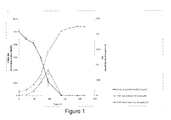
figure 1 montre l'évolution de la concentration en ETBE, en TBA dans le milieu culture et du CO2 formé en fonction du temps de contact avec la bactérie du genre Pseudonocardia déposée le 12 juillet 2012 sous le n° CNCM I-4656 à l'Institut Pasteur (25 rue du Docteur Roux, F-75724 PARIS Cedex 15, France). - la
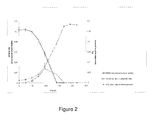
figure 2 montre l'évolution de la concentration en MTBE, en TBA dans le milieu culture et du CO2 formé en fonction du temps de contact avec la bactérie du genre Pseudonocardia déposée le 12 juillet 2012 sous le n° CNCM I-4656 à l'Institut Pasteur (25 rue du Docteur Roux, F-75724 PARIS Cedex 15, France). - On effectue une préculture de la bactérie du genre Pseudonocardia n° CNCM I-4656 : on ensemence la souche Pseudonocardia n° CNCM I-4656 sur milieu minéral salin MM supplémenté en ETBE à environ 200 mg.L-1 comme source de carbone et d'énergie.
- Le milieu MM a la composition suivante :
KH2PO4 1,4 g K2HPO4 1,7 g NaNO3 1,5 g MgSO4, 7H2O 0,5 g CaCl2, 2H2O 0,04 g FeCl3, 6H2O 0,012 g Solution concentrée de vitamines 1 mL Solution concentrée d'oligoéléments 1 mL H2O 1 L - La solution concentrée de vitamines a la composition suivante pour 1 litre d'eau distillée :
Biotine 200 mg Riboflavine 50 mg Acide nicotinamique 50 mg Panthoténate 50 mg Acide p-aminobenzoïque 50 mg Acide folique 20 mg Thiamine 15 mg Cyanocobalamine 1,5 mg - La solution concentrée d'oligoéléments a la composition suivante pour 1 litre d'eau distillée :
CuSO4, 5 H2O 0,1 g MnSO4, 2H2O 1 g ZnSO4, 7 H2O 1 g AlCl3, 6H2O 0,4 g NiCl2,6 H2O 0,25 g H3BO3 0,1 g CoCl2, 6 H2O 1 g Na2MoO4, 2H2O 1 g Na2WO4, 2H2O 1 g - Après croissance, cette préculture est utilisée pour ensemencer 100 mL du milieu minéral salin (taux d'ensemencement : 10% v/v) auquel on ajoute de l'ETBE à une concentration finale d'environ 300 mg.L-1 dans une fiole d'Erlenmeyer d'une contenance de 500 mL fermée avec un bouchon téflonné afin d'éviter toute perte d'ETBE au cours de la croissance. Un prélèvement est effectué au temps t=0 pour un dosage de l'ETBE au départ par analyse en chromatographie en phase gazeuse avec un détecteur à ionisation de flamme (CPG/FID). La fiole est ensuite incubée à 30°C dans un agitateur rotatif. Un prélèvement pour le dosage du substrat et de ses éventuels produits de dégradation est effectué à intervalle régulier. La production de CO2 produit dans la phase gazeuse est également mesurée par prélèvement de ladite phase gazeuse à travers le septum avec une seringue à gaz étanche par analyse du CO2 en chromatographie en phase gazeuse avec un détecteur de type catharomètre (CPG/TCD).
- Le résultat de cette expérimentation est présenté dans la
figure 1 . Comme on le voit sur cette figure, l'ETBE est dégradé en partie en TBA. Ce composé est ensuite lui-même re-consommé et utilisé comme substrat de croissance. - On peut appliquer le protocole décrit ci-dessus à différentes bactéries pour évaluer leur capacité a dégrader l'ETBE et donc permet de sélectionner les bactéries capables de dégrader l'ETBE.
- On effectue une préculture de la bactérie du genre Pseudonocardia n° CNCM I-4656 : on ensemence la souche Pseudonocardia n° CNCM I-4656 sur milieu minéral salin MM supplémenté en MTBE à environ 200 mg.L-1 comme source de carbone et d'énergie.. Le milieu MM a la composition décrite dans l'exemple 1.
- Après croissance, cette préculture est utilisée pour ensemencer 100 mL de milieu MM (taux d'ensemencement : 10% v/v) auquel on ajoute du MTBE à une concentration finale d'environ 300 mg.L-1 dans une fiole d'Erlenmeyer d'une contenance de 500 mL fermée avec un bouchon téflonné afin d'éviter toute perte de MTBE au cours de la croissance. Un prélèvement est effectué au temps t=0 pour un dosage du MTBE au départ par analyse en chromatographie en phase gazeuse avec un détecteur à ionisation de flamme (CPG/FID). La fiole est ensuite incubée à 30°C dans un agitateur rotatif. Un prélèvement pour le dosage du substrat et de ses éventuels produits de dégradation est effectué à intervalle régulier. La production de CO2 produit dans la phase gazeuse est également mesurée par prélèvement de ladite phase gazeuse à travers le septum avec une seringue à gaz étanche par analyse du CO2 en chromatographie en phase gazeuse avec un détecteur de type catharomètre (CPG/TCD).
- Le résultat de cette expérimentation est présenté dans la
figure 2 . Comme on le voit sur cettefigure 2 , le MTBE est dégradé en partie en TBA. Ce composé est ensuite lui-même re-consommé et utilisé comme substrat de croissance. - On peut appliquer le protocole décrit ci-dessus à différentes bactéries pour évaluer leur capacité a dégrader le MTBE et donc permet de sélectionner les bactéries capables de dégrader le MTBE.
Claims (6)
- Bactérie du genre Pseudonocardia capable de dégrader le MTBE et/ou l'ETBE.
- Bactérie du genre Pseudonocardia déposée le 12 juillet 2012 sous le n° ° CNCM I-4656 à l'Institut Pasteur (25 rue du Docteur Roux, F-75724 PARIS Cedex 15, France)
- Procédé de traitement d'un effluent comprenant du MTBE et/ou du ETBE et éventuellement du TBA comme substrat de croissance dans lequel on met en contact, dans des conditions aérobies, ledit effluent avec au moins une bactérie selon la revendication 2.
- Procédé selon la revendication 3 dans lequel la bactérie est fixée dans un biofiltre.
- Procédé selon la revendication 4 dans lequel la bactérie est fixée sur un support minéral ou organique.
- Procédé selon la revendication 3 dans lequel on met en contact l'effluent avec une boue d'épuration dans laquelle a été inoculée la bactérie selon la revendication 2.
Applications Claiming Priority (1)
| Application Number | Priority Date | Filing Date | Title |
|---|---|---|---|
| FR1202105A FR2993899B1 (fr) | 2012-07-25 | 2012-07-25 | Bacteries du genre pseudonocardia capables de degrader le metyl tert-butyl ether (mtbe) ou l'ethyl tert-butyl ether (etbe) en solution dans des effluents |
Publications (1)
| Publication Number | Publication Date |
|---|---|
| EP2690170A1 true EP2690170A1 (fr) | 2014-01-29 |
Family
ID=47291063
Family Applications (1)
| Application Number | Title | Priority Date | Filing Date |
|---|---|---|---|
| EP13305836.2A Withdrawn EP2690170A1 (fr) | 2012-07-25 | 2013-06-20 | Bactéries du genre Pseudonocardia capables de dégrader le méthyl tert-butyl éther (MTBE) ou l'éthyl tert-butyl éther (ETBE) en solution dans des effluents |
Country Status (3)
| Country | Link |
|---|---|
| US (1) | US20140030793A1 (fr) |
| EP (1) | EP2690170A1 (fr) |
| FR (1) | FR2993899B1 (fr) |
Citations (1)
| Publication number | Priority date | Publication date | Assignee | Title |
|---|---|---|---|---|
| WO2000063343A2 (fr) * | 1999-04-14 | 2000-10-26 | Shell Internationale Research Maatschappij B.V. | Culture bacterienne |
Family Cites Families (2)
| Publication number | Priority date | Publication date | Assignee | Title |
|---|---|---|---|---|
| JP2004254690A (ja) * | 2003-02-03 | 2004-09-16 | Nippon Soda Co Ltd | Dl−メチオニンの製造法 |
| EP2608869A4 (fr) * | 2010-08-27 | 2014-07-02 | Empire Technology Dev Llc | Biofiltres pour espaces de vie |
-
2012
- 2012-07-25 FR FR1202105A patent/FR2993899B1/fr not_active Expired - Fee Related
-
2013
- 2013-06-20 EP EP13305836.2A patent/EP2690170A1/fr not_active Withdrawn
- 2013-07-24 US US13/949,669 patent/US20140030793A1/en not_active Abandoned
Patent Citations (1)
| Publication number | Priority date | Publication date | Assignee | Title |
|---|---|---|---|---|
| WO2000063343A2 (fr) * | 1999-04-14 | 2000-10-26 | Shell Internationale Research Maatschappij B.V. | Culture bacterienne |
Non-Patent Citations (7)
| Title |
|---|
| FAYOLLE ET AL: "Isolation of two aerobic bacterial strains that degrade efficiently ethyl t-butyl ether (ETBE)", BIOTECHNOLOGY LETTERS, KEW, SURREY, GB, vol. 20, no. 3, 1 March 1998 (1998-03-01), pages 283 - 286, XP002115642, ISSN: 0141-5492, DOI: 10.1023/A:1005390221856 * |
| FRANCOIS A ET AL: "Biodegradation of methyl tert-butyl ether and other fuel oxygenates by a new strain, Mycobacterium austroafricanum IFP 2012", APPLIED AND ENVIRONMENTAL MICROBIOLOGY, AMERICAN SOCIETY FOR MICROBIOLOGY, US, vol. 68, no. 6, 1 June 2002 (2002-06-01), pages 2754 - 2762, XP002379946, ISSN: 0099-2240, DOI: 10.1128/AEM.68.6.2754-2762.2002 * |
| JENNIFER R. MCKELVIE ET AL: "Isotopic Fractionation of Methyl tert -Butyl Ether Suggests Different Initial Reaction Mechanisms during Aerobic Biodegradation", ENVIRONMENTAL SCIENCE & TECHNOLOGY, vol. 43, no. 8, 15 April 2009 (2009-04-15), pages 2793 - 2799, XP055085249, ISSN: 0013-936X, DOI: 10.1021/es803307y * |
| KHAROUNE M ET AL: "ISOLATION AND CHARACTERIZATION OF TWO AEROBIC BACTERIAL STRAINS THAT COMPLETELY DEGRADE ETHYL TERT-BUTYL ETHER (ETBE)", APPLIED MICROBIOLOGY AND BIOTECHNOLOGY, SPRINGER VERLAG, BERLIN, DE, vol. 55, no. 3, 1 April 2001 (2001-04-01), pages 348 - 353, XP001037901, ISSN: 0175-7598, DOI: 10.1007/S002530000528 * |
| PIVETEAU P ET AL: "BIODEGRADATION OF TERT-BUTYL ALCOHOL AND RELATED XENOBIOTICS BY A METHYLOTROPHIC BACTERIAL ISOLATE", APPLIED MICROBIOLOGY AND BIOTECHNOLOGY, SPRINGER VERLAG, BERLIN, DE, vol. 55, no. 3, 1 April 2001 (2001-04-01), pages 369 - 373, XP001036947, ISSN: 0175-7598, DOI: 10.1007/S002530000545 * |
| S. VAINBERG ET AL: "Biodegradation of Ether Pollutants by Pseudonocardia sp. Strain ENV478", APPLIED AND ENVIRONMENTAL MICROBIOLOGY, vol. 72, no. 8, 1 August 2006 (2006-08-01), pages 5218 - 5224, XP055057669, ISSN: 0099-2240, DOI: 10.1128/AEM.00160-06 * |
| STEFFAN ET AL: "Biodegradation of the gasoline oxygenates methyl tert-butyl ether, ethyl tert-butyl ether, and tert-amyl methyl ether by propane-oxidizing bacteria", APPLIED AND ENVIRONMENTAL MICROBIOLOGY, AMERICAN SOCIETY FOR MICROBIOLOGY, US, vol. 63, no. 11, 1 November 1997 (1997-11-01), pages 4216 - 4222, XP002115641, ISSN: 0099-2240 * |
Also Published As
| Publication number | Publication date |
|---|---|
| FR2993899A1 (fr) | 2014-01-31 |
| US20140030793A1 (en) | 2014-01-30 |
| FR2993899B1 (fr) | 2016-02-05 |
Similar Documents
| Publication | Publication Date | Title |
|---|---|---|
| Parthipan et al. | Biosurfactant and degradative enzymes mediated crude oil degradation by bacterium Bacillus subtilis A1 | |
| Gupte et al. | Bioremediation of polycyclic aromatic hydrocarbon (PAHs): a perspective | |
| Ye et al. | Biodegradation of anthracene by Aspergillus fumigatus | |
| Ribeiro et al. | Potential of dissimilatory nitrate reduction pathways in polycyclic aromatic hydrocarbon degradation | |
| Quensen III et al. | Reductive dechlorination of polychlorinated biphenyls by anaerobic microorganisms from sediments | |
| Fiorenza et al. | Review of MTBE biodegradation and bioremediation | |
| Auffret et al. | Degradation of a mixture of hydrocarbons, gasoline, and diesel oil additives by Rhodococcus aetherivorans and Rhodococcus wratislaviensis | |
| Loffler et al. | Complete reductive dechlorination of 1, 2-dichloropropane by anaerobic bacteria | |
| CA2262770C (fr) | Biodegradation de composes oxygenes de l'essence | |
| FR2944006A1 (fr) | Bacteries capables de degrader des composes petroliers multiples en solution dans des effluents aqueux et procede de traitement desdits effluents | |
| Lee et al. | Degradation of hexane and other recalcitrant hydrocarbons by a novel isolate, Rhodococcus sp. EH831 | |
| CA2407199C (fr) | Procede de traitement d'effluents aqueux contenant du methyl-tert-butyl ether et ou du methyl-tert-amyl ether par mycobacterium austroafricanum-i-2562 | |
| WO2002002718A2 (fr) | Biodegradation de produits oxygenes de l'essence | |
| Onuoha et al. | Biodegradation potentials of hydrocarbon degraders from waste-lubricating oil-spilled soils in Ebonyi State, Nigeria. | |
| Fayolle et al. | Limitations in MTBE biodegradation | |
| EP2690169A1 (fr) | Bactéries du genre Pseudoxanthomonas capables de dégrader le méthyl tert-butyl éther (MTBE) en solution dans des effluents | |
| Tsai et al. | Determination of optimal phenanthrene, sulfate and biomass concentrations for anaerobic biodegradation of phenanthrene by sulfate-reducing bacteria and elucidation of metabolic pathway | |
| US6303366B1 (en) | Biodegradation of the gasoline oxygenates | |
| NL1013882C2 (nl) | Werkwijze voor de bacteriÙle behandeling van effluentia die ten minste ether bevatten. | |
| EP1252107B1 (fr) | Procede de traitement bacterien d'effluents contenant au moins un ether par gordonia terrae cip i-2194 | |
| FR2993899A1 (fr) | Bacteries du genre pseudonocardia capables de degrader le metyl tert-butyl ether (mtbe) ou l'ethyl tert-butyl ether (etbe) en solution dans des effluents | |
| KR20020031907A (ko) | 유류분해능을 가지는 신규 아시네토박터 캘코아세티쿠스에이취에스1 및 이를 이용한 유류 분해 방법 | |
| EP2188071B1 (fr) | Procède de traitement bactérien d'effluents contenant du 2-ethylhexyl nitrate | |
| Gawdzik et al. | Impact of pollution with oil derivatives on the natural environment and methods of their removal | |
| Giri et al. | Bacterial metabolism of petroleum hydrocarbons |
Legal Events
| Date | Code | Title | Description |
|---|---|---|---|
| PUAI | Public reference made under article 153(3) epc to a published international application that has entered the european phase |
Free format text: ORIGINAL CODE: 0009012 |
|
| AK | Designated contracting states |
Kind code of ref document: A1 Designated state(s): AL AT BE BG CH CY CZ DE DK EE ES FI FR GB GR HR HU IE IS IT LI LT LU LV MC MK MT NL NO PL PT RO RS SE SI SK SM TR |
|
| AX | Request for extension of the european patent |
Extension state: BA ME |
|
| 17P | Request for examination filed |
Effective date: 20140729 |
|
| RBV | Designated contracting states (corrected) |
Designated state(s): AL AT BE BG CH CY CZ DE DK EE ES FI FR GB GR HR HU IE IS IT LI LT LU LV MC MK MT NL NO PL PT RO RS SE SI SK SM TR |
|
| 17Q | First examination report despatched |
Effective date: 20160215 |
|
| STAA | Information on the status of an ep patent application or granted ep patent |
Free format text: STATUS: THE APPLICATION IS DEEMED TO BE WITHDRAWN |
|
| 18D | Application deemed to be withdrawn |
Effective date: 20160628 |