EP2690083A1 - Verfahren und Vorrichtung zur Umwandlung eines Alkohols in ein Kraftstoffgemisch - Google Patents
Verfahren und Vorrichtung zur Umwandlung eines Alkohols in ein Kraftstoffgemisch Download PDFInfo
- Publication number
- EP2690083A1 EP2690083A1 EP13003164.4A EP13003164A EP2690083A1 EP 2690083 A1 EP2690083 A1 EP 2690083A1 EP 13003164 A EP13003164 A EP 13003164A EP 2690083 A1 EP2690083 A1 EP 2690083A1
- Authority
- EP
- European Patent Office
- Prior art keywords
- alcohol
- reactor
- fuel mixture
- reaction
- combustion engine
- Prior art date
- Legal status (The legal status is an assumption and is not a legal conclusion. Google has not performed a legal analysis and makes no representation as to the accuracy of the status listed.)
- Granted
Links
Images

Classifications
-
- C—CHEMISTRY; METALLURGY
- C10—PETROLEUM, GAS OR COKE INDUSTRIES; TECHNICAL GASES CONTAINING CARBON MONOXIDE; FUELS; LUBRICANTS; PEAT
- C10L—FUELS NOT OTHERWISE PROVIDED FOR; NATURAL GAS; SYNTHETIC NATURAL GAS OBTAINED BY PROCESSES NOT COVERED BY SUBCLASSES C10G OR C10K; LIQUIFIED PETROLEUM GAS; USE OF ADDITIVES TO FUELS OR FIRES; FIRE-LIGHTERS
- C10L1/00—Liquid carbonaceous fuels
- C10L1/02—Liquid carbonaceous fuels essentially based on components consisting of carbon, hydrogen, and oxygen only
-
- C—CHEMISTRY; METALLURGY
- C07—ORGANIC CHEMISTRY
- C07C—ACYCLIC OR CARBOCYCLIC COMPOUNDS
- C07C41/00—Preparation of ethers; Preparation of compounds having groups, groups or groups
- C07C41/01—Preparation of ethers
- C07C41/09—Preparation of ethers by dehydration of compounds containing hydroxy groups
-
- C—CHEMISTRY; METALLURGY
- C10—PETROLEUM, GAS OR COKE INDUSTRIES; TECHNICAL GASES CONTAINING CARBON MONOXIDE; FUELS; LUBRICANTS; PEAT
- C10L—FUELS NOT OTHERWISE PROVIDED FOR; NATURAL GAS; SYNTHETIC NATURAL GAS OBTAINED BY PROCESSES NOT COVERED BY SUBCLASSES C10G OR C10K; LIQUIFIED PETROLEUM GAS; USE OF ADDITIVES TO FUELS OR FIRES; FIRE-LIGHTERS
- C10L1/00—Liquid carbonaceous fuels
- C10L1/02—Liquid carbonaceous fuels essentially based on components consisting of carbon, hydrogen, and oxygen only
- C10L1/026—Liquid carbonaceous fuels essentially based on components consisting of carbon, hydrogen, and oxygen only for compression ignition
-
- F—MECHANICAL ENGINEERING; LIGHTING; HEATING; WEAPONS; BLASTING
- F02—COMBUSTION ENGINES; HOT-GAS OR COMBUSTION-PRODUCT ENGINE PLANTS
- F02B—INTERNAL-COMBUSTION PISTON ENGINES; COMBUSTION ENGINES IN GENERAL
- F02B1/00—Engines characterised by fuel-air mixture compression
- F02B1/02—Engines characterised by fuel-air mixture compression with positive ignition
- F02B1/08—Engines characterised by fuel-air mixture compression with positive ignition with separate admission of air and fuel into cylinder
- F02B1/10—Methods of operating
-
- C—CHEMISTRY; METALLURGY
- C10—PETROLEUM, GAS OR COKE INDUSTRIES; TECHNICAL GASES CONTAINING CARBON MONOXIDE; FUELS; LUBRICANTS; PEAT
- C10L—FUELS NOT OTHERWISE PROVIDED FOR; NATURAL GAS; SYNTHETIC NATURAL GAS OBTAINED BY PROCESSES NOT COVERED BY SUBCLASSES C10G OR C10K; LIQUIFIED PETROLEUM GAS; USE OF ADDITIVES TO FUELS OR FIRES; FIRE-LIGHTERS
- C10L2270/00—Specifically adapted fuels
- C10L2270/02—Specifically adapted fuels for internal combustion engines
- C10L2270/026—Specifically adapted fuels for internal combustion engines for diesel engines, e.g. automobiles, stationary, marine
-
- C—CHEMISTRY; METALLURGY
- C10—PETROLEUM, GAS OR COKE INDUSTRIES; TECHNICAL GASES CONTAINING CARBON MONOXIDE; FUELS; LUBRICANTS; PEAT
- C10L—FUELS NOT OTHERWISE PROVIDED FOR; NATURAL GAS; SYNTHETIC NATURAL GAS OBTAINED BY PROCESSES NOT COVERED BY SUBCLASSES C10G OR C10K; LIQUIFIED PETROLEUM GAS; USE OF ADDITIVES TO FUELS OR FIRES; FIRE-LIGHTERS
- C10L2290/00—Fuel preparation or upgrading, processes or apparatus therefore, comprising specific process steps or apparatus units
- C10L2290/56—Specific details of the apparatus for preparation or upgrading of a fuel
- C10L2290/562—Modular or modular elements containing apparatus
-
- C—CHEMISTRY; METALLURGY
- C10—PETROLEUM, GAS OR COKE INDUSTRIES; TECHNICAL GASES CONTAINING CARBON MONOXIDE; FUELS; LUBRICANTS; PEAT
- C10L—FUELS NOT OTHERWISE PROVIDED FOR; NATURAL GAS; SYNTHETIC NATURAL GAS OBTAINED BY PROCESSES NOT COVERED BY SUBCLASSES C10G OR C10K; LIQUIFIED PETROLEUM GAS; USE OF ADDITIVES TO FUELS OR FIRES; FIRE-LIGHTERS
- C10L2290/00—Fuel preparation or upgrading, processes or apparatus therefore, comprising specific process steps or apparatus units
- C10L2290/56—Specific details of the apparatus for preparation or upgrading of a fuel
- C10L2290/567—Mobile or displaceable apparatus
-
- C—CHEMISTRY; METALLURGY
- C10—PETROLEUM, GAS OR COKE INDUSTRIES; TECHNICAL GASES CONTAINING CARBON MONOXIDE; FUELS; LUBRICANTS; PEAT
- C10L—FUELS NOT OTHERWISE PROVIDED FOR; NATURAL GAS; SYNTHETIC NATURAL GAS OBTAINED BY PROCESSES NOT COVERED BY SUBCLASSES C10G OR C10K; LIQUIFIED PETROLEUM GAS; USE OF ADDITIVES TO FUELS OR FIRES; FIRE-LIGHTERS
- C10L2290/00—Fuel preparation or upgrading, processes or apparatus therefore, comprising specific process steps or apparatus units
- C10L2290/58—Control or regulation of the fuel preparation of upgrading process
-
- C—CHEMISTRY; METALLURGY
- C10—PETROLEUM, GAS OR COKE INDUSTRIES; TECHNICAL GASES CONTAINING CARBON MONOXIDE; FUELS; LUBRICANTS; PEAT
- C10L—FUELS NOT OTHERWISE PROVIDED FOR; NATURAL GAS; SYNTHETIC NATURAL GAS OBTAINED BY PROCESSES NOT COVERED BY SUBCLASSES C10G OR C10K; LIQUIFIED PETROLEUM GAS; USE OF ADDITIVES TO FUELS OR FIRES; FIRE-LIGHTERS
- C10L2290/00—Fuel preparation or upgrading, processes or apparatus therefore, comprising specific process steps or apparatus units
- C10L2290/60—Measuring or analysing fractions, components or impurities or process conditions during preparation or upgrading of a fuel
-
- C—CHEMISTRY; METALLURGY
- C10—PETROLEUM, GAS OR COKE INDUSTRIES; TECHNICAL GASES CONTAINING CARBON MONOXIDE; FUELS; LUBRICANTS; PEAT
- C10L—FUELS NOT OTHERWISE PROVIDED FOR; NATURAL GAS; SYNTHETIC NATURAL GAS OBTAINED BY PROCESSES NOT COVERED BY SUBCLASSES C10G OR C10K; LIQUIFIED PETROLEUM GAS; USE OF ADDITIVES TO FUELS OR FIRES; FIRE-LIGHTERS
- C10L2300/00—Mixture of two or more additives covered by the same group of C10L1/00 - C10L1/308
- C10L2300/30—Mixture of three components
-
- F—MECHANICAL ENGINEERING; LIGHTING; HEATING; WEAPONS; BLASTING
- F02—COMBUSTION ENGINES; HOT-GAS OR COMBUSTION-PRODUCT ENGINE PLANTS
- F02B—INTERNAL-COMBUSTION PISTON ENGINES; COMBUSTION ENGINES IN GENERAL
- F02B69/00—Internal-combustion engines convertible into other combustion-engine type, not provided for in F02B11/00; Internal-combustion engines of different types characterised by constructions facilitating use of same main engine-parts in different types
- F02B69/02—Internal-combustion engines convertible into other combustion-engine type, not provided for in F02B11/00; Internal-combustion engines of different types characterised by constructions facilitating use of same main engine-parts in different types for different fuel types, other than engines indifferent to fuel consumed, e.g. convertible from light to heavy fuel
Definitions
- the invention relates to a process for the conversion of an alcohol into a fuel mixture according to the preamble of patent claim 1 and to a device for carrying it out according to patent claim 10.
- a mixture of alcohol, ether and water can also be prepared directly during the operation of an internal combustion engine in an upstream process step from alcohol, for example from methanol or ethanol, with the aid of a suitable catalyst.
- the fuel mixture produced according to this known method is subject to very high quality fluctuations, which occurs through a strongly fluctuating water content in appearance, which is why use for diesel engine operation in practice is not possible. Occurring quality fluctuations lead to strongly fluctuating cetane numbers and as a result to time-varying ignition times. In addition, the resulting fuel mixture is not always equally suitable for all engine operating points.
- the invention has for its object to provide a method for converting an alcohol into a fuel mixture for an internal combustion engine, with the most consistent quality of the resulting fuel mixture can be achieved.
- the mixing ratio of alcohol content, ether content and water content in Fuel mixture adjusted by controlling at least one reaction parameter.
- the mixing ratio of the fuel mixture resulting from the conversion of the alcohol depends inter alia on the reaction temperature, which is why adjustment of the mixing ratio is possible by adjusting the reaction temperature accordingly.
- the following table shows by way of example the dependence of the mixing ratio on the reaction temperature at a reactor pressure of 2 MPa when using methanol as alcohol, which is converted in a reactor into a fuel mixture of alcohol, ether and water: reaction temperature alcohol content ether portion water content [° C] [%] [%] [%] 200 8th 67 25 300 14 62 24 400 19 59 22 500 22 57 21
- the setting of a desired reaction temperature can be done by a corresponding control of the temperature of the supplied alcohol, for example, the supplied methanol.
- Another reaction parameter with which the mixing ratio of the fuel mixture produced according to the invention can be set is the reaction pressure.
- a desired cetane number can be achieved by relatively simple control systems.
- a cetane number of less than 50 and / or an octane number of over 95 RON can be achieved, while for diesel engine operation, a fuel mixture with a cetane number of more than 50 by a corresponding control of the reactor ongoing reaction can be generated.
- the control of at least one reaction parameter can in particular also depend on operating parameters of the internal combustion engine take place, for which the fuel mixture is provided.
- the fuel mixture in its properties, for example, to operating parameters such as boost pressure, speed and / or load, adapted to achieve optimized operation of the internal combustion engine.
- Reaction parameters can also be controlled as a function of operating parameters of an exhaust aftertreatment system in order, for example, to obtain as low-emission combustion as possible in the internal combustion engine.
- reaction parameters can also be carried out depending on the nature of the alcohol used, whereby the purity of the alcohol used can be taken into account as reaction parameters.
- methanol or ethanol can be used to convert an alcohol to a fuel mixture, but a methanol-ethanol mixture can also be used as the alcohol to be converted to achieve desired fuel properties.
- the fuel mixture produced by the process according to the invention can therefore contain dimethyl ether and / or diethyl ether as the ether component.
- the invention is also based on the object of specifying a device for converting an alcohol into a fuel mixture for an internal combustion engine with which the fuel mixture can be varied with respect to its mixture proportions.
- the alcohol supplied to the reactor is heated by means of a heating device.
- a control device is provided which adjusts the heating of the alcohol in the heating device as a function of reaction parameters of a conversion process taking place in the reactor and / or of operating parameters of an associated internal combustion engine.
- reaction temperatures which can be varied, for example, in a range between 200 and 500 ° C result.
- the reaction product obtained is a fuel mixture having a desired alcohol-ether-water mixture ratio.
- the mixing ratio significantly determines the combustion properties of the fuel mixture in the internal combustion engine. These combustion properties can be easily adjusted by controlling the reaction temperature.
- the preferred embodiment of the device according to the invention has a heating device which consists of an exhaust gas heat exchanger and an air heat exchanger. At least one of the two heat exchangers is controlled with respect to the heat transfer to the passing through the alcohol, which is supplied to the reactor.
- the air heat exchanger preferably serves as a cooling device in order to cool the alcohol heated in the upstream exhaust gas heat exchanger to a desired process temperature. It may be sufficient to control only the cooling by the air heat exchanger in order to obtain a desired reaction temperature in the reactor.
- a control device as part of a control system can control the heating of the supplied alcohol.
- a control system can be realized with relatively simple means.
- the pressure in the reactor can also be regulated or changed independently of the temperature, for example with the aid of a pressure regulating valve and / or by varying the amount supplied and / or discharged.
- the reaction process taking place in the reactor can also take place as a function of the cylinder pressure and / or as a function of knock sensor signals.
- cylinder pressure sensors and / or knock sensors may be attached to the internal combustion engine, which transmit their measuring signals via measuring lines to the control device for adjusting the heating of the alcohol and / or the pressure in the reactor.
- control device which controls the heating of the alcohol supplied to the reactor
- further operating parameters of the internal combustion engine and its exhaust aftertreatment system can be taken into account in order to optimize the fuel combustion.
- a reduction of pollutants and improved fuel utilization can thus be achieved.
- FIG. 1 shows a schematic representation of an apparatus for converting alcohol into a fuel mixture, which serves for the operation of an internal combustion engine as fuel.
- the apparatus has a tank 1 in which, for example, methanol or ethanol is present as the alcohol, which is supplied to a reactor 3 by means of a first pump P1 via a heating device 2.
- a conversion of the alcohol takes place at a suitable reaction temperature in a fuel mixture, which is supplied via a chamber 4 and a second pump P2 of the internal combustion engine 5.
- injectors 6 to 9 are arranged on the internal combustion engine 5, via which the fuel mixture is injected into the combustion chambers of the internal combustion engine 5.
- FIG. 1 shown device may be arranged in particular in a motor vehicle whose internal combustion engine 5 is a diesel engine.
- the alcohol is heated to a temperature suitable for this purpose in the heating device 2 before it is fed to the reactor 3.
- the heating process is controlled by a control device 10 as a function of a plurality of operating parameters.
- the control device 10 receives measuring signals, which represent different operating parameters, from sensors provided in the reactor 3 and on the internal combustion engine 5 via measuring signal lines 11 to 13. From the reactor 3, the control device 10 receives the reaction temperature and the reaction pressure as measurement signals of which the mixing ratio of alcohol, ether and water in the fuel mixture depends.
- control device 10 receives from a knock sensor 14 and a cylinder pressure sensor 15 corresponding measurement signals, which together with other operating state signals, such as speed n, load and Acceleration, the current operating state of the internal combustion engine 5 mark. In dependence on these operating parameters of the internal combustion engine 5, the control device 10 can determine a suitable mixing ratio for the fuel mixture and make a corresponding control of the reaction in the reactor 3.
- the heating device 2 consists of an exhaust gas heat exchanger 16 and an air heat exchanger 17.
- the exhaust gas heat exchanger 16 performs the exhaust pipe 18 of the internal combustion engine 5, which also heats the exhaust gas in the exhaust heat exchanger 16 passed through the exhaust gas heat exchanger 16.
- the heated alcohol passes from the exhaust gas heat exchanger 16 to the air heat exchanger 17, where by means of ambient air flowing through the alcohol can be cooled to a desired temperature.
- Both the exhaust gas heat exchanger 16 and the air heat exchanger 17 may be controllable heat exchangers, which allow control of the heat transfer. For example, in the exhaust gas heat exchanger 16 by a bypass control only a more or less large proportion of the exhaust gas flow can be used to heat the passing alcohol.
- the air throughput through the air heat exchanger 17 can be controlled by the control device 10 for the controlled cooling of the alcohol flowing through.
- heat exchanger 17 instead of air and another heat transfer medium, such as water or oil, (not shown here) are used.
- the temperature and the pressure in the reactor can be varied by means of control organs.
- this can be achieved by changing the amount of methanol delivered by the pump P1, for example by Change of speed or stroke or by means of a arranged on the suction side of the pump P1 variable throttle done.
- Another possibility is the use of a pressure control valve on the pressure side of the pump P1, with the help of which the pressure in the reactor can be adjusted independently of the reactor temperature.
- the fuel mixture produced in the reactor 3 can be aftertreated or temporarily stored in a chamber 4 connected downstream of the reactor 3, as far as this is necessary.
Landscapes
- Chemical & Material Sciences (AREA)
- Oil, Petroleum & Natural Gas (AREA)
- Engineering & Computer Science (AREA)
- Organic Chemistry (AREA)
- Chemical Kinetics & Catalysis (AREA)
- General Chemical & Material Sciences (AREA)
- Combustion & Propulsion (AREA)
- Mechanical Engineering (AREA)
- General Engineering & Computer Science (AREA)
- Combined Controls Of Internal Combustion Engines (AREA)
- Output Control And Ontrol Of Special Type Engine (AREA)
- Electrical Control Of Air Or Fuel Supplied To Internal-Combustion Engine (AREA)
Abstract
Description
- Die Erfindung betrifft ein Verfahren zur Umwandlung eines Alkohols in ein Kraftstoffgemisch gemäß dem Oberbegriff des Patentanspruchs 1 sowie eine Vorrichtung zu dessen Durchführung gemäß dem Patentanspruch 10.
- Die Substitution konventioneller fossiler Kraftstoffe durch alternative Kraftstoffe gewinnt immer stärker an Bedeutung. In diesem Zusammenhang sind vor allem Alkohole, wie Methanol oder Ethanol, interessant, da sie relativ einfach aus regenerativen Quellen hergestellt werden können. Allerdings können diese Kraftstoffe aufgrund ihrer geringen Cetanzahl nicht in selbstzündenden Dieselmotoren verwendet werden. Um eine dieselmotorische Verbrennung zu ermöglichen, können diesen Kraftstoffen Additive, wie Dimethylether oder Diethylether, zur Anhebung der Cetanzahl zugegeben werden.
- Ein Gemisch aus Alkohol, Ether und Wasser kann auch direkt während des Betriebs einer Brennkraftmaschine in einem vorgelagerten Prozessschritt aus Alkohol, beispielsweise aus Methanol oder Ethanol, mit Hilfe eines geeigneten Katalysators hergestellt werden.
- Aus der
US 44 22 412 A ist ein Verfahren zur Umwandlung von Alkohol in ein Kraftstoffgemisch bekannt, bei dem mittels eines Katalysators in einem Reaktor der auf eine geeignete Reaktionstemperatur erwärmte Alkohol, beispielsweise Methanol, in ein Kraftstoffgemisch gemäß beiliegender Reaktionsgleichung umgewandelt wird:
2 CH3OH ↔ CH3-O-CH3 + H2O Reaktion 1
- Mit dem hier verwendeten Methanol (CH3OH) entsteht somit zusätzlich im Reaktor Dimethylether (CH3-O-CH3) und Wasser (H2O). Wird dagegen Ethanol zur Herstellung des Kraftstoffgemischs für das Umwandlungsverfahren verwendet, kann mittels des Reaktors ein Gemisch aus Ethanol, Diethylether und Wasser hergestellt werden. Als Katalysator kann dabei im Reaktor Gamma-Aluminium eingesetzt werden.
- Das gemäß diesem bekannten Verfahren hergestellte Kraftstoffgemisch unterliegt sehr starken Qualitätsschwankungen, was durch einen stark schwankenden Wasseranteil in Erscheinung tritt, weshalb eine Verwendung für den dieselmotorischen Betrieb in der Praxis nicht möglich ist. Auftretende Qualitätsschwankungen führen zu stark schwankenden Cetanzahlen und in deren Folge zu zeitlich stark schwankenden Zündzeitpunkten. Außerdem ist das sich ergebende Kraftstoffgemisch nicht immer für alle Motorbetriebspunkte gleichermaßen geeignet.
- Der Erfindung liegt die Aufgabe zugrunde, ein Verfahren zur Umwandlung eines Alkohols in ein Kraftstoffgemisch für eine Brennkraftmaschine anzugeben, mit dem eine möglichst gleichbleibende Qualität des sich ergebenden Kraftstoffgemischs erzielt werden kann.
- Die Lösung dieser Aufgabe erhält man durch die im Patentanspruchs 1 angegebenen Merkmale. Besonders vorteilhafte Weiterbildungen des erfindungsgemäßen Verfahrens sind in den Unteransprüchen 2 bis 9 offenbart.
- Gemäß dem kennzeichnenden Teil des Patentanspruchs 1 wird das Mischungsverhältnis von Alkoholanteil, Etheranteil und Wasseranteil im Kraftstoffgemisch durch Steuerung wenigstens eines Reaktionsparameters eingestellt. Das Mischungsverhältnis des sich aus der Umwandlung des Alkohols ergebenden Kraftstoffgemischs ist unter anderem von der Reaktionstemperatur abhängig, weshalb durch eine entsprechende Einstellung der Reaktionstemperatur eine Einstellung des Mischungsverhältnisses möglich ist. Die nachfolgende Tabelle zeigt beispielhaft die Abhängigkeit des Mischungsverhältnisses von der Reaktionstemperatur bei einem Reaktordruck von 2Mpa bei der Verwendung von Methanol als Alkohol, der in einem Reaktor in ein Kraftstoffgemisch aus Alkohol, Ether und Wasser umgewandelt wird:
Reaktionstemperatur Alkoholanteil Etheranteil Wasseranteil [°C] [%] [%] [%] 200 8 67 25 300 14 62 24 400 19 59 22 500 22 57 21 - Die Einstellung einer gewünschten Reaktionstemperatur kann durch eine entsprechende Regelung der Temperatur des zugeführten Alkohols, beispielsweise des zugeführten Methanols, erfolgen. Ein weiterer Reaktionsparameter mit dem das Mischungsverhältnis des erfindungsgemäß hergestellten Kraftstoffgemisch eingestellt werden kann, ist der Reaktionsdruck.
- Bei Untersuchungen hat sich gezeigt, dass die Bildung von Dimethylether (DME) gemäß Reaktion 1 folgendem Geschwindigkeitsansatz folgt:

mit:
KM : Gleichgewichstkonstante von Methanol
pM : Methanol Partialdruck
kr : Geschwindigkeitskonstante der Reaktion

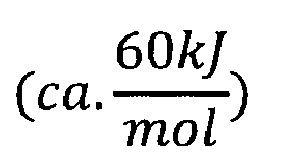
- Dies macht deutlich, dass die Geschwindigkeit, in der DME gebildet wird, zum einen vom Methanolpartialdruck, als auch, über die Temperaturabhängigkeit der Geschwindigkeitskonstanten kr, von der Reaktionstemperatur abhängt.
- Durch die Einstellung des Mischungsverhältnisses von Alkoholanteil, Etheranteil und Wasseranteil im Kraftstoffgemisch kann eine gewünschte Cetanzahl durch verhältnismäßig einfache Steuer- und Regelsysteme erreicht werden. Um eine Brennkraftmaschine im Betriebsbereich homogener Kompressionszündung betreiben zu können, kann eine Cetanzahl von unter 50 und/oder eine Oktanzahl von über 95 ROZ erreicht werden, während für den dieselmotorischen Betrieb ein Kraftstoffgemisch mit einer Cetanzahl von mehr als 50 durch eine entsprechende Steuerung der im Reaktor ablaufenden Reaktion erzeugt werden kann.
- Die Steuerung wenigstens eines Reaktionsparameters kann insbesondere auch in Abhängigkeit von Betriebsparametern der Brennkraftmaschine erfolgen, für die das Kraftstoffgemisch vorgesehen ist. Damit kann das Kraftstoffgemisch in seinen Eigenschaften, beispielsweise an Betriebsparameter, wie Ladedruck, Drehzahl und/oder Last, angepasst werden, um einen optimierten Betrieb der Brennkraftmaschine zu erreichen.
- Reaktionsparameter können auch in Abhängigkeit von Betriebsparametern eines Abgasnachbehandlungssystems gesteuert werden, um beispielsweise eine möglichst schadstoffarme Verbrennung in der Brennkraftmaschine zu erhalten.
- Die Reaktionsparameter können außerdem auch in Abhängigkeit von der Beschaffenheit des verwendeten Alkohols erfolgen, wobei auch die Reinheit des verwendeten Alkohols als Reaktionsparameter berücksichtigt werden kann.
- Zur Umwandlung eines Alkohols in ein Kraftstoffgemisch kann beispielsweise Methanol oder Ethanol verwendet werden, wobei aber auch zur Erzielung gewünschter Kraftstoffeigenschaften ein Methanol-Ethanol-Gemisch als umzuwandelnder Alkohol verwendet werden kann. Das mit dem erfindungsgemäßen Verfahren hergestellte Kraftstoffgemisch kann demzufolge als Etheranteil Dimethylether und/oder Diethylether enthalten.
- Der Erfindung liegt außerdem die Aufgabe zugrunde, eine Vorrichtung zur Umwandlung eines Alkohols in ein Kraftstoffgemisch für eine Brennkraftmaschine anzugeben, mit der das Kraftstoffgemisch bzgl. seiner Gemischanteile variiert werden kann.
- Die Lösung der sich auf die Vorrichtung beziehenden Aufgabe wird durch die Merkmale des Patentanspruchs 10 erhalten. Besonders vorteilhafte Weiterbildungen der erfindungsgemäßen Vorrichtung sind in den Unteransprüchen 11 bis 15 offenbart.
- Bei der Vorrichtung gemäß dem Patentanspruch 10 wird der dem Reaktor zugeführte Alkohol mittels einer Erwärmungseinrichtung erwärmt. Gemäß dem kennzeichnenden Teil des Patentanspruchs 10 ist eine Steuereinrichtung vorgesehen, die die Erwärmung des Alkohols in der Erwärmungseinrichtung in Abhängigkeit von Reaktionsparametern eines im Reaktor ablaufenden Umwandlungsprozesses und/oder von Betriebsparametern einer zugehörigen Brennkraftmaschine einstellt. Durch eine entsprechende Erwärmung des zugeführten Alkohols ergeben sich unterschiedliche Reaktionstemperaturen, die beispielsweise in einem Bereich zwischen 200 und 500 °C variiert werden können. Je nach eingestellter Reaktionstemperatur erhält man als Reaktionsprodukt ein Kraftstoffgemisch mit einem gewünschten Alkohol-Ether-Wasser-Mischungsverhältnis. Das Mischungsverhältnis bestimmt maßgeblich die Verbrennungseigenschaften des Kraftstoffgemischs in der Brennkraftmaschine. Diese Verbrennungseigenschaften lassen sich auf einfache Weise durch eine Regelung der Reaktionstemperatur einstellen.
- Die bevorzugte Ausführungsform der erfindungsgemäßen Vorrichtung besitzt eine Erwärmungseinrichtung, die aus einem Abgaswärmetauscher und einem Luftwärmetauscher besteht. Wenigstens einer der beiden Wärmetauscher wird bzgl. der Wärmeübertragung auf den hindurchströmenden Alkohol, der dem Reaktor zugeführt wird, gesteuert. Dabei dient der Luftwärmetauscher vorzugsweise als Kühlvorrichtung, um den im vorgeschalteten Abgaswärmetauscher erwärmten Alkohol auf eine gewünschte Prozesstemperatur abzukühlen. Dabei kann es ausreichend sein, nur die Kühlung durch den Luftwärmetauscher zu steuern, um eine gewünschte Reaktionstemperatur im Reaktor zu erhalten.
- Mittels Sensoren, die die Temperatur und/oder den Druck im Reaktor messen, kann eine Steuereinrichtung als Teil eines Regelsystems die Erwärmung des zugeführten Alkohols steuern. Ein solches Temperaturregelsystem ist mit verhältnismäßig einfachen Mitteln realisierbar.
- Zudem kann der Druck im Reaktor auch unabhängig von der Temperatur, beispielsweise mit Hilfe eines Druckregelventils und/oder durch Variation der zu- und/oder abgeführten Menge, geregelt bzw. verändert werden.
- Der im Reaktor ablaufende Reaktionsprozess kann auch in Abhängigkeit vom Zylinderdruck und/oder in Abhängigkeit von Klopfsensorsignalen erfolgen. Zu diesem Zweck können Zylinderdrucksensoren und/oder Klopfsensoren an der Brennkraftmaschine angebracht sein, die über Messleitungen ihre Messsignale an die Steuereinrichtung zur Einstellung der Erwärmung des Alkohols und/oder des Drucks im Reaktor übertragen.
- In der Steuereinrichtung, die die Erwärmung des dem Reaktor zugeführten Alkohols steuert, können auch weitere Betriebsparameter der Brennkraftmaschine und deren Abgasnachbehandlungssystems berücksichtigt werden, um die Kraftstoffverbrennung zu optimieren. Insbesondere kann damit eine Reduzierung von Schadstoffen und auch eine verbesserte Kraftstoffverwertung erzielt werden.
- Die Erfindung wird nachfolgend anhand eines in der Zeichnungsfigur 1 dargestellten Ausführungsbeispiels näher erläutert.
-
Figur 1 zeigt eine schematische Darstellung einer Vorrichtung zur Umwandlung von Alkohol in ein Kraftstoffgemisch, welches für den Betrieb einer Brennkraftmaschine als Kraftstoff dient. - Die Vorrichtung besitzt einen Tank 1, in welchem sich als Alkohol beispielsweise Methanol oder Ethanol befindet, der mittels einer ersten Pumpe P1 über eine Erwärmungseinrichtung 2 einem Reaktor 3 zugeführt wird. Im Reaktor 3 erfolgt eine Umwandlung des Alkohols bei einer geeigneten Reaktionstemperatur in ein Kraftstoffgemisch, welches über eine Kammer 4 und eine zweite Pumpe P2 der Brennkraftmaschine 5 zugeführt wird. An der Brennkraftmaschine 5 sind hierzu Einspritzdüsen 6 bis 9 angeordnet, über die das Kraftstoffgemisch in die Brennkammern der Brennkraftmaschine 5 eingespritzt wird.
- Die in
Figur 1 dargestellte Vorrichtung kann insbesondere in einem Kraftfahrzeug angeordnet sein, dessen Brennkraftmaschine 5 ein Dieselmotor ist. - Damit das der Brennkraftmaschine 5 zugeführte Kraftstoffgemisch ein für die Brennkraftmaschine 5 geeignetes Mischungsverhältnis der Anteile von Alkohol, Ether und Wasser hat, wird der Alkohol, bevor er dem Reaktor 3 zugeführt wird, auf eine hierfür geeignete Temperatur in der Erwärmungseinrichtung 2 erwärmt. Den Erwärmungsvorgang steuert eine Steuereinrichtung 10 in Abhängigkeit von mehreren Betriebsparametern. Die Steuereinrichtung 10 erhält hierzu von im Reaktor 3 und an der Brennkraftmaschine 5 vorgesehenen Sensoren über Messsignalleitungen 11 bis 13 Messsignale, die unterschiedliche Betriebsparameter repräsentieren. Aus dem Reaktor 3 erhält die Steuereinrichtung 10 die Reaktionstemperatur und den Reaktionsdruck als Messsignale von denen das Mischungsverhältnis von Alkohol, Ether und Wasser im Kraftstoffgemisch abhängt. Außerdem erhält die Steuereinrichtung 10 von einem Klopfsensor 14 und einem Zylinderdrucksensor 15 entsprechende Messsignale, die zusammen mit weiteren Betriebszustandssignalen, wie beispielsweise Drehzahl n, Last und Beschleunigung, den aktuellen Betriebszustand der Brennkraftmaschine 5 kennzeichnen. In Abhängigkeit von diesen Betriebsparametern der Brennkraftmaschine 5 kann die Steuereinrichtung 10 ein geeignetes Mischungsverhältnis für das Kraftstoffgemisch bestimmen und eine entsprechende Regelung der Reaktion im Reaktor 3 vornehmen.
- Beim dargestellte Ausführungsbeispiel besteht die Erwärmungseinrichtung 2 aus einem Abgaswärmetauscher 16 und einem Luftwärmetauscher 17. Durch den Abgaswärmetauscher 16 führt die Abgasleitung 18 der Brennkraftmaschine 5, die im Abgaswärmetauscher 16 den ebenfalls durch den Abgaswärmetauscher 16 geleiteten Alkohol erwärmt. Der erwärmte Alkohol gelangt aus dem Abgaswärmetauscher 16 zum Luftwärmetauscher 17, wo mittels hindurchströmender Umgebungsluft der Alkohol auf eine gewünschte Temperatur abgekühlt werden kann. Sowohl der Abgaswärmetauscher 16 als auch der Luftwärmetauscher 17 können steuerbare Wärmetauscher sein, die eine Steuerung der Wärmeübertragung ermöglichen. So kann beispielsweise im Abgaswärmetauscher 16 durch eine Bypassregelung nur ein mehr oder weniger großer Anteil des Abgasstroms zur Erwärmung des hindurchströmenden Alkohols eingesetzt werden. Bei dem Luftwärmetauscher 17 kann zur geregelten Kühlung des hindurchströmenden Alkohols zum Beispiel der Luftdurchsatz durch den Luftwärmetauscher 17 von der Steuereinrichtung 10 gesteuert werden.
- Selbstverständlich kann für den Wärmetauscher 17 an Stelle von Luft auch ein anderes Wärmeträgermedium, wie Wasser oder Öl, (hier nicht dargestellt) eingesetzt werden.
- Neben der Temperatur kann auch der Druck im Reaktor mit Hilfe von Steuerorganen variiert werden. Zum einen kann dies durch Veränderung der von der Pumpe P1 geförderten Methanolmenge, beispielsweise durch Veränderung von Drehzahl oder Hub oder mit Hilfe einer auf der Saugseite der Pumpe P1 angeordneten variablen Drossel, erfolgen. Eine weitere Möglichkeit besteht in der Verwendung eines Druckregelventils auf der Druckseite der Pumpe P1, mit dessen Hilfe der Druck im Reaktor unabhängig von der Reaktortemperatur eingestellt werden kann.
- Das im Reaktor 3 erzeugte Kraftstoffgemisch kann in einer dem Reaktor 3 nachgeschalteten Kammer 4 nachbehandelt oder zwischengelagert werden, soweit dies erforderlich ist.
Claims (15)
- Verfahren zur Umwandlung eines Alkohols in ein aus Alkohol, Ether und Wasser bestehendes Kraft stoffgemisch, das zum Betrieb einer Brennkraftmaschine (5), insbesondere eines Ve rbrennungsmotors in einem Kraftfahrzeug, geeignet ist, wobei der Alkohol bei einer geeigneten Reaktionstemperatur in ei nem Reak tor (3) in das Kr aftstoffgemisch umgewandelt wird, dadurch gekennzeichnet, dass das Mis chungsverhältnis von Alkoholant eil, Et heranteil, und Wasseranteil im Kraftstoffgemisch dur ch St euerung wenigs tens eines Reak tionsparameters ei ner in dem Reaktor ( 3) ablaufenden Reakti on eingestellt wird.
- Verfahren nach Anspruch 1, dadurch gekennzeichnet, dass das Mischungsverhältnis durch Steuer ung der Reaktionstemperatur und/oder des Reaktionsdrucks im Reaktor eingestellt wird.
- Verfahren nach einem der Ansprüche 1 oder 2, dadurch gekennzeichnet, dass die Steuerung wenigstens eines Reaktionsparameters in Abhängigkei t von Betriebsparametern der Brennkraftmaschine (5) erfolgt.
- Verfahren nach einem der vorhergehenden Ansprüche, dadurch gekennzeichnet, dass die Steuerung wenigstens eines Reaktionsparameters in Abhängigk eit von Bet riebsparametern ei nes Abgasnachbehandlungssystems erfolgt.
- Verfahren nach ei nem der vorhergehenden Anspr üche, dadurch gekennzeichnet, dass die Steuerung wenigstens eines Reaktionsparameters in Abhängigke it von der Beschaffenheit des umzuwandelnden Alkohols erfolgt.
- Verfahren nach einem der vorhergehenden Ansprüche, dadurch gekennzeichnet, dass für das Verfahren ein Methanol-Ethanol-Gemisch als umzuwandelnder Alkohol verwendet wird.
- Verfahren nach einem der vorhergehenden Ansprüche, dadurch gekennzeichnet, dass das verf ahrensgemäß her gestellte Kraftstoffgemisch als Et heranteil Dimet hylether und/oder Diethylet her enthält.
- Verfahren nach einem der vorhergehenden Ansprüche, dadurch gekennzeichnet, dass die Brennkraft maschine (5) im Betriebs bereich homogener Kompressionszündung betrieben wird.
- Verfahren nach einem der Ansprüche 1 bis 7, dadurch gekennzeichnet, dass die Umwandl ung des Alkohols in ein Kraftstoffgemis ch so erfolgt, dass die Cetanzahl des Kraftstoffgemischs über 50 liegt.
- Vorrichtung mit einem Reakt or (3), der mittels einer Erwärmungseinrichtung (2) erwärmten Alkohol in ein Kraftstoffgemisch für den Betrieb einer Brennkraftmaschi ne (5) umwandelt, insbesonder e zur Durchführung des Verfahre ns nach Ans pruch 1, dadurch gekennzeichnet, dass ei ne Steuerei nrichtung (10) die Er wärmung des Alkohols in der Erwärmungseinric htung (2) und/oder den Druck im Reaktor in Abhängigkeit von Reaktionsparamet ern einer im Reaktor (3) ablaufenden Reaktion und/od er in Abhängigkeit von Betriebsparametern der Brennkraftmaschine (5) einstellt.
- Vorrichtung nach Anspruch 10, dadurch gekennzeichnet, das s die Erwärmungseinrichtung (2) aus einem Abgaswärmetaus cher (16) z ur Erwärmung und gegebenenfall s wenigstens einem zweiten Wärmetauscher (17), mit Luft oder Flüssi gkeiten als Übertragungsmedium, zur Kühlungbesteht, und dass wenigstens in einem der beiden W ärmetauscher (16, 17) die Wärmeübe rtragung auf den hindurchströmenden Alkohol mittels der Steuerei nrichtung (10) steuerbar ist.
- Vorrichtung nach einem der Anspr üche 10 oder 11, dadurch gekennzeichnet, dass der zweite Wärmetaus cher (17) zwischen dem Abgaswärmetauscher (1 6) und dem Reakt or ( 3) angeor dnet ist und mittels der Umgebungs luft oder einer Flüssigkeit, insbesondere Wasser oder Öl, den i m Abgaswärmetauscher (16) erwärmten Alkohol auf einen für di e i m Reakt or (3) abl aufende Reaktion geeigneten Temper atur-und/oder Druckwert kühlt.
- Vorrichtung nach einem der Ansprüche 10 bis 12, dadurch gekennzeichnet, dass Sensoren di e Temperatur und/oder den Druck im Reaktor (3) messen un d di e Messwerte al s Messsignale an die Steuereinrichtung (10) übertragen.
- Vorrichtung nach einem der Ansprüche 10 bis 13, dadurch gekennzeichnet, dass ein oder mehrere Zylinderdrucksensoren (15) und/oder ein oder mehrere Klopfsensoren ( 14) an der Brennkraftmaschine (5) vorgesehen sind, die ihre Messsignale an die Steuereinrichtung (10) als Betr iebsparameter der Brennk raftmaschine (5) zur Einstellung der Erwärmung des umzuwandelnden Alkohols und/oder des Drucks im Reaktor übertragen.
- Vorrichtung nach einem der Ansprüche 10 bis 14, dadurch gekennzeichnet, dass die Steuer einrichtung (10) die Drehzahl und die Last der Brennkr aftmaschine (5) als Betriebs parameter bei der Einstellung der Erwärmun g des umzuwandelnden Al kohols und/oder des Drucks im Reaktor berücksichtigt.
Applications Claiming Priority (1)
| Application Number | Priority Date | Filing Date | Title |
|---|---|---|---|
| DE102012014755.4A DE102012014755A1 (de) | 2012-07-26 | 2012-07-26 | Verfahren und Vorrichtung zur Umwandlung eines Alkohols in ein Kraftstoffgemisch |
Publications (2)
| Publication Number | Publication Date |
|---|---|
| EP2690083A1 true EP2690083A1 (de) | 2014-01-29 |
| EP2690083B1 EP2690083B1 (de) | 2016-08-10 |
Family
ID=48672342
Family Applications (1)
| Application Number | Title | Priority Date | Filing Date |
|---|---|---|---|
| EP13003164.4A Active EP2690083B1 (de) | 2012-07-26 | 2013-06-21 | Verfahren und Vorrichtung zur Umwandlung eines Alkohols in ein Kraftstoffgemisch |
Country Status (6)
| Country | Link |
|---|---|
| US (2) | US9624447B2 (de) |
| EP (1) | EP2690083B1 (de) |
| CN (1) | CN103573481B (de) |
| BR (1) | BR102013018691B1 (de) |
| DE (1) | DE102012014755A1 (de) |
| RU (1) | RU2640801C2 (de) |
Cited By (1)
| Publication number | Priority date | Publication date | Assignee | Title |
|---|---|---|---|---|
| WO2024186436A1 (en) * | 2023-03-07 | 2024-09-12 | Caterpillar Inc. | Systems and methods for pilot fuel synthesis |
Families Citing this family (5)
| Publication number | Priority date | Publication date | Assignee | Title |
|---|---|---|---|---|
| CN105003337B (zh) * | 2015-06-03 | 2017-08-29 | 亚能石化股份有限公司 | 一种柴油‑甲醇双燃料发动机的控制方法与系统 |
| CN105134351B (zh) * | 2015-10-12 | 2017-11-21 | 上海海事大学 | 船舶发动机废气余热循环利用装置 |
| TR202106709A2 (tr) * | 2021-04-16 | 2021-05-21 | Amasya Ueniversitesi Rektoerluegue | Di̇zel motorlar i̇çi̇n geli̇şti̇ri̇lmi̇ş yakit katkisi ve üreti̇m yöntemi̇ |
| US11635039B1 (en) * | 2022-04-15 | 2023-04-25 | Deere & Company | Work vehicle alcohol-based power system with on-board ether |
| US12078115B1 (en) * | 2023-06-20 | 2024-09-03 | Caterpillar Inc. | Systems and methods for pilot fuel synthesis using engine waste heat |
Citations (4)
| Publication number | Priority date | Publication date | Assignee | Title |
|---|---|---|---|---|
| US4422412A (en) * | 1979-12-27 | 1983-12-27 | Aeci Limited | Device for converting alcohols to ethers |
| US4876989A (en) * | 1988-05-10 | 1989-10-31 | Technology Development Associates, Inc. | Enhanced performance of alcohol fueled engine during cold conditions |
| WO2001002515A1 (en) * | 1999-07-01 | 2001-01-11 | Haldor Topsøe A/S | Continuous dehydration of alcohol to ether and water used as fuel for diesel engines |
| US20060180099A1 (en) * | 2005-02-17 | 2006-08-17 | Honda Motor Co., Ltd. | Method for controlling compression ignition internal combustion engine |
Family Cites Families (38)
| Publication number | Priority date | Publication date | Assignee | Title |
|---|---|---|---|---|
| US1956950A (en) | 1930-04-08 | 1934-05-01 | Bilhuber Inc E | Manufacture of laevo-1-phenyl-2-methylaminopropanol-1 |
| DE3171380D1 (en) * | 1980-05-20 | 1985-08-22 | Ici Plc | Methanol production |
| NZ204248A (en) | 1982-06-01 | 1985-04-30 | Ici Australia Ltd | Production of vinyl chloride polymer |
| US4519342A (en) * | 1982-09-03 | 1985-05-28 | Conco Inc. | Alcohol dissociation reactor for motor vehicles |
| EP0201670B1 (de) * | 1985-05-08 | 1993-05-26 | Volkswagen Aktiengesellschaft | Einrichtung zur Aufbereitung von im wesentlichen aus Methanol bestehenden Flüssigkeiten |
| JPH0388957A (ja) * | 1989-08-22 | 1991-04-15 | New Zealand Government | 圧縮点火エンジンの燃料供給装置及びその制御装置 |
| US5504259A (en) * | 1992-10-29 | 1996-04-02 | Midwest Research Institute | Process to convert biomass and refuse derived fuel to ethers and/or alcohols |
| US5485818A (en) * | 1995-02-22 | 1996-01-23 | Navistar International Transportation Corp. | Dimethyl ether powered engine |
| AU2001254921A1 (en) * | 2000-05-03 | 2001-11-12 | Zero-M Limited | Fuel system |
| ES2640910T3 (es) * | 2000-10-27 | 2017-11-07 | Air Products And Chemicals, Inc. | Sistemas y procesos para proporcionar hidrógeno a células de combustible |
| GB0121375D0 (en) * | 2001-09-04 | 2001-10-24 | Ashe Morris Ltd | Temperature control systems |
| JP2005290984A (ja) * | 2003-09-17 | 2005-10-20 | Noble Paul | 燃料コンバータ |
| JP4119864B2 (ja) * | 2004-03-31 | 2008-07-16 | 三菱重工業株式会社 | 内燃機関の燃料噴射装置 |
| US8463529B2 (en) * | 2004-09-17 | 2013-06-11 | Eaton Corporation | System and method of operating internal combustion engines at fuel rich low-temperature- combustion mode as an on-board reformer for solid oxide fuel cell-powered vehicles |
| US8206470B1 (en) * | 2005-08-03 | 2012-06-26 | Jacobson William O | Combustion emission-reducing method |
| JP4382722B2 (ja) * | 2005-08-04 | 2009-12-16 | 本田技研工業株式会社 | 内燃機関システム |
| US7487631B2 (en) * | 2005-12-12 | 2009-02-10 | General Electric Company | System and method for supplying reductants to an emission treatment system |
| US8015951B2 (en) * | 2006-03-17 | 2011-09-13 | Ford Global Technologies, Llc | Apparatus with mixed fuel separator and method of separating a mixed fuel |
| US7933713B2 (en) * | 2006-03-17 | 2011-04-26 | Ford Global Technologies, Llc | Control of peak engine output in an engine with a knock suppression fluid |
| US8198338B2 (en) * | 2006-03-20 | 2012-06-12 | Cri Ehf | Process for producing liquid fuel from carbon dioxide and water |
| JP2007255329A (ja) * | 2006-03-23 | 2007-10-04 | Honda Motor Co Ltd | 内燃機関システム |
| CA2654795C (en) * | 2006-06-13 | 2014-08-26 | Monsanto Technology Llc | Reformed alcohol power systems |
| US7909019B2 (en) * | 2006-08-11 | 2011-03-22 | Ford Global Technologies, Llc | Direct injection alcohol engine with boost and spark control |
| BRPI0703981A2 (pt) * | 2006-10-30 | 2009-06-23 | Honda Motor Co Ltd | sistema de motor de combustão interna |
| KR101290282B1 (ko) * | 2006-11-24 | 2013-07-26 | 삼성디스플레이 주식회사 | 액정 표시 장치 및 이의 제조 방법 |
| US7461628B2 (en) * | 2006-12-01 | 2008-12-09 | Ford Global Technologies, Llc | Multiple combustion mode engine using direct alcohol injection |
| JP4770753B2 (ja) * | 2007-02-20 | 2011-09-14 | 株式会社豊田中央研究所 | 内燃機関の制御装置 |
| US7906559B2 (en) * | 2007-06-21 | 2011-03-15 | University Of Southern California | Conversion of carbon dioxide to methanol and/or dimethyl ether using bi-reforming of methane or natural gas |
| DE102008032253B4 (de) * | 2008-07-09 | 2013-05-29 | Man Truck & Bus Ag | Selbstzündende Verbrennungskraftmaschine mit Ether-Fumigation der Verbrennungsluft für Fahrzeuge und Verfahren zur Ether-Fumigation der Verbrennungsluft in einer selbstzündenden Verbrennungsmaschine für Fahrzeuge |
| EP2557301B1 (de) * | 2009-04-16 | 2018-02-14 | Ethanol Boosting Systems LLC | Mit Dimethylether (DME) verbesserter Dieselmotor |
| KR20130086282A (ko) * | 2010-03-31 | 2013-08-01 | 할도르 토프쉐 에이/에스 | 알콜 함유 연료로 압축 점화 엔진을 작동하기 위한 방법 및 시스템 |
| BR112012024783A2 (pt) * | 2010-03-31 | 2016-06-07 | Haldor Tops0E As | composição de combustível diesel à base de éter dietílico |
| WO2011120615A1 (en) * | 2010-03-31 | 2011-10-06 | Haldor Topsøe A/S | Method and system for operating a pressure ignition engine |
| US20110247573A1 (en) * | 2010-04-07 | 2011-10-13 | Mccann David M | Oxygenate dehydration system for compression ignition engines |
| EP2667009A1 (de) * | 2012-05-24 | 2013-11-27 | Grupo Guascor S.L. | Ethanol-Vorwärmer für Motor |
| AT513052B1 (de) * | 2012-10-24 | 2014-01-15 | Ge Jenbacher Gmbh & Co Og | Verbrennungsmotor-Reformer-Anlage |
| US20140275636A1 (en) * | 2013-03-15 | 2014-09-18 | Celanese International Corporation | Catalysts For Forming Diethyl Ether |
| US9079489B2 (en) * | 2013-05-29 | 2015-07-14 | Mcalister Technologies, Llc | Methods for fuel tank recycling and net hydrogen fuel and carbon goods production along with associated apparatus and systems |
-
2012
- 2012-07-26 DE DE102012014755.4A patent/DE102012014755A1/de active Granted
-
2013
- 2013-06-21 EP EP13003164.4A patent/EP2690083B1/de active Active
- 2013-07-23 US US13/948,599 patent/US9624447B2/en active Active
- 2013-07-23 BR BR102013018691-0A patent/BR102013018691B1/pt active IP Right Grant
- 2013-07-25 RU RU2013134976A patent/RU2640801C2/ru active
- 2013-07-26 CN CN201310318588.0A patent/CN103573481B/zh active Active
-
2017
- 2017-01-30 US US15/419,247 patent/US10144890B2/en active Active
Patent Citations (4)
| Publication number | Priority date | Publication date | Assignee | Title |
|---|---|---|---|---|
| US4422412A (en) * | 1979-12-27 | 1983-12-27 | Aeci Limited | Device for converting alcohols to ethers |
| US4876989A (en) * | 1988-05-10 | 1989-10-31 | Technology Development Associates, Inc. | Enhanced performance of alcohol fueled engine during cold conditions |
| WO2001002515A1 (en) * | 1999-07-01 | 2001-01-11 | Haldor Topsøe A/S | Continuous dehydration of alcohol to ether and water used as fuel for diesel engines |
| US20060180099A1 (en) * | 2005-02-17 | 2006-08-17 | Honda Motor Co., Ltd. | Method for controlling compression ignition internal combustion engine |
Cited By (1)
| Publication number | Priority date | Publication date | Assignee | Title |
|---|---|---|---|---|
| WO2024186436A1 (en) * | 2023-03-07 | 2024-09-12 | Caterpillar Inc. | Systems and methods for pilot fuel synthesis |
Also Published As
| Publication number | Publication date |
|---|---|
| US20140026470A1 (en) | 2014-01-30 |
| US9624447B2 (en) | 2017-04-18 |
| DE102012014755A1 (de) | 2014-05-15 |
| BR102013018691B1 (pt) | 2019-10-15 |
| CN103573481B (zh) | 2017-04-12 |
| US20170145328A1 (en) | 2017-05-25 |
| RU2640801C2 (ru) | 2018-01-12 |
| BR102013018691A2 (pt) | 2014-12-23 |
| EP2690083B1 (de) | 2016-08-10 |
| RU2013134976A (ru) | 2015-01-27 |
| US10144890B2 (en) | 2018-12-04 |
| CN103573481A (zh) | 2014-02-12 |
Similar Documents
| Publication | Publication Date | Title |
|---|---|---|
| EP2690083B1 (de) | Verfahren und Vorrichtung zur Umwandlung eines Alkohols in ein Kraftstoffgemisch | |
| DE102008001606B4 (de) | Verfahren und Vorrichtung zum Betreiben einer Brennkraftmaschine | |
| DE69921457T2 (de) | Brennstoffemulsion mischsystem | |
| EP2789839B1 (de) | System und Verfahren zur Wassereinspritzung für eine Brennkraftmaschine | |
| EP0821150B1 (de) | Verfahren und Vorrichtung zur Motormomenteinstellung bei einem Verbrennungsmotor | |
| DE2649407C3 (de) | Verfahren zur Steuerung einer mit Vorbehandlung des Treibstoffs arbeitenden Brennkraftmaschine | |
| DE102011011371B4 (de) | Adaptive Dieselmotorsteuerung bei Cetanzahlschwankungen | |
| EP1112461B1 (de) | Verfahren zum betrieb eines brenners und brenneranordnung | |
| DE102013017009A1 (de) | Verbrennungsmotor | |
| DE102009055734A1 (de) | Multifuel-Diesel-Verbrennungskraftmaschine | |
| DE102008006841B4 (de) | Verfahren und Vorrichtung zum Betrieb einer Brennkraftmaschine mit einem flüssigen Kraftstoffgemisch | |
| DE112014001776B4 (de) | Verfahren und System zur Steuerung eines Verbrennungsmotors | |
| DE102015207901A1 (de) | Steuergerät für eine Verbrennungskraftmaschine | |
| WO2004090311A1 (de) | Verfahren zum betrieb einer brennkraftmaschine mit selbstzündung | |
| DE112014001724B4 (de) | Verfahren und System zum Steuern eines Verbrennungsmotors | |
| DE102018214856A1 (de) | Verfahren und Computerprogrammprodukt zum Betrieb einer Brennkraftmaschine mit unterschiedlichen Kraftstoffen | |
| WO2012072195A2 (de) | Verfahren und steuereinrichtung zum betrieb eines otto-gasmotors | |
| DE10319333B4 (de) | System und Verfahren zur Beeinflussung der Ansauggastemperatur im Brennraum eines Verbrennungsmotors | |
| EP1306537B1 (de) | Verfahren und Vorrichtung zur Steuerung einer Brennkraftmaschine | |
| WO2017125185A1 (de) | Verfahren und vorrichtung zum steuern oder regeln der menge eines kraftstoffgemischs | |
| EP2828507B1 (de) | Verfahren zur bestimmung wenigstens einer feuerungstemperatur für die regelung einer gasturbine | |
| DE102011103707B4 (de) | Diesel-Einspritzvorrichtung und Verfahren hierzu | |
| DE10317120B4 (de) | System und Verfahren zum Ermitteln eines Restgasgehaltes in einem Brennraum eines Verbrennungsmotors | |
| EP1417405A1 (de) | Verfahren zur regelung eines verbrennungsmotors mit abgasrückführung sowie einrichtung zur durchführung des verfahrens | |
| DE69514929T2 (de) | Verfahren zur steuerung einer brennkraftmaschine mit direkteinspritzung |
Legal Events
| Date | Code | Title | Description |
|---|---|---|---|
| PUAI | Public reference made under article 153(3) epc to a published international application that has entered the european phase |
Free format text: ORIGINAL CODE: 0009012 |
|
| AK | Designated contracting states |
Kind code of ref document: A1 Designated state(s): AL AT BE BG CH CY CZ DE DK EE ES FI FR GB GR HR HU IE IS IT LI LT LU LV MC MK MT NL NO PL PT RO RS SE SI SK SM TR |
|
| AX | Request for extension of the european patent |
Extension state: BA ME |
|
| 17P | Request for examination filed |
Effective date: 20140718 |
|
| 17Q | First examination report despatched |
Effective date: 20141117 |
|
| GRAP | Despatch of communication of intention to grant a patent |
Free format text: ORIGINAL CODE: EPIDOSNIGR1 |
|
| INTG | Intention to grant announced |
Effective date: 20160119 |
|
| GRAS | Grant fee paid |
Free format text: ORIGINAL CODE: EPIDOSNIGR3 |
|
| GRAA | (expected) grant |
Free format text: ORIGINAL CODE: 0009210 |
|
| AK | Designated contracting states |
Kind code of ref document: B1 Designated state(s): AL AT BE BG CH CY CZ DE DK EE ES FI FR GB GR HR HU IE IS IT LI LT LU LV MC MK MT NL NO PL PT RO RS SE SI SK SM TR |
|
| REG | Reference to a national code |
Ref country code: GB Ref legal event code: FG4D Free format text: NOT ENGLISH |
|
| REG | Reference to a national code |
Ref country code: CH Ref legal event code: EP Ref country code: AT Ref legal event code: REF Ref document number: 818857 Country of ref document: AT Kind code of ref document: T Effective date: 20160815 |
|
| REG | Reference to a national code |
Ref country code: IE Ref legal event code: FG4D Free format text: LANGUAGE OF EP DOCUMENT: GERMAN |
|
| REG | Reference to a national code |
Ref country code: DE Ref legal event code: R096 Ref document number: 502013003991 Country of ref document: DE |
|
| REG | Reference to a national code |
Ref country code: SE Ref legal event code: TRGR |
|
| REG | Reference to a national code |
Ref country code: NL Ref legal event code: FP |
|
| REG | Reference to a national code |
Ref country code: LT Ref legal event code: MG4D |
|
| PG25 | Lapsed in a contracting state [announced via postgrant information from national office to epo] |
Ref country code: IS Free format text: LAPSE BECAUSE OF FAILURE TO SUBMIT A TRANSLATION OF THE DESCRIPTION OR TO PAY THE FEE WITHIN THE PRESCRIBED TIME-LIMIT Effective date: 20161210 Ref country code: HR Free format text: LAPSE BECAUSE OF FAILURE TO SUBMIT A TRANSLATION OF THE DESCRIPTION OR TO PAY THE FEE WITHIN THE PRESCRIBED TIME-LIMIT Effective date: 20160810 Ref country code: LT Free format text: LAPSE BECAUSE OF FAILURE TO SUBMIT A TRANSLATION OF THE DESCRIPTION OR TO PAY THE FEE WITHIN THE PRESCRIBED TIME-LIMIT Effective date: 20160810 Ref country code: RS Free format text: LAPSE BECAUSE OF FAILURE TO SUBMIT A TRANSLATION OF THE DESCRIPTION OR TO PAY THE FEE WITHIN THE PRESCRIBED TIME-LIMIT Effective date: 20160810 Ref country code: FI Free format text: LAPSE BECAUSE OF FAILURE TO SUBMIT A TRANSLATION OF THE DESCRIPTION OR TO PAY THE FEE WITHIN THE PRESCRIBED TIME-LIMIT Effective date: 20160810 Ref country code: NO Free format text: LAPSE BECAUSE OF FAILURE TO SUBMIT A TRANSLATION OF THE DESCRIPTION OR TO PAY THE FEE WITHIN THE PRESCRIBED TIME-LIMIT Effective date: 20161110 |
|
| PG25 | Lapsed in a contracting state [announced via postgrant information from national office to epo] |
Ref country code: GR Free format text: LAPSE BECAUSE OF FAILURE TO SUBMIT A TRANSLATION OF THE DESCRIPTION OR TO PAY THE FEE WITHIN THE PRESCRIBED TIME-LIMIT Effective date: 20161111 Ref country code: PT Free format text: LAPSE BECAUSE OF FAILURE TO SUBMIT A TRANSLATION OF THE DESCRIPTION OR TO PAY THE FEE WITHIN THE PRESCRIBED TIME-LIMIT Effective date: 20161212 Ref country code: LV Free format text: LAPSE BECAUSE OF FAILURE TO SUBMIT A TRANSLATION OF THE DESCRIPTION OR TO PAY THE FEE WITHIN THE PRESCRIBED TIME-LIMIT Effective date: 20160810 Ref country code: PL Free format text: LAPSE BECAUSE OF FAILURE TO SUBMIT A TRANSLATION OF THE DESCRIPTION OR TO PAY THE FEE WITHIN THE PRESCRIBED TIME-LIMIT Effective date: 20160810 Ref country code: ES Free format text: LAPSE BECAUSE OF FAILURE TO SUBMIT A TRANSLATION OF THE DESCRIPTION OR TO PAY THE FEE WITHIN THE PRESCRIBED TIME-LIMIT Effective date: 20160810 |
|
| PG25 | Lapsed in a contracting state [announced via postgrant information from national office to epo] |
Ref country code: EE Free format text: LAPSE BECAUSE OF FAILURE TO SUBMIT A TRANSLATION OF THE DESCRIPTION OR TO PAY THE FEE WITHIN THE PRESCRIBED TIME-LIMIT Effective date: 20160810 Ref country code: RO Free format text: LAPSE BECAUSE OF FAILURE TO SUBMIT A TRANSLATION OF THE DESCRIPTION OR TO PAY THE FEE WITHIN THE PRESCRIBED TIME-LIMIT Effective date: 20160810 |
|
| REG | Reference to a national code |
Ref country code: DE Ref legal event code: R097 Ref document number: 502013003991 Country of ref document: DE |
|
| PG25 | Lapsed in a contracting state [announced via postgrant information from national office to epo] |
Ref country code: BG Free format text: LAPSE BECAUSE OF FAILURE TO SUBMIT A TRANSLATION OF THE DESCRIPTION OR TO PAY THE FEE WITHIN THE PRESCRIBED TIME-LIMIT Effective date: 20161110 Ref country code: SK Free format text: LAPSE BECAUSE OF FAILURE TO SUBMIT A TRANSLATION OF THE DESCRIPTION OR TO PAY THE FEE WITHIN THE PRESCRIBED TIME-LIMIT Effective date: 20160810 Ref country code: DK Free format text: LAPSE BECAUSE OF FAILURE TO SUBMIT A TRANSLATION OF THE DESCRIPTION OR TO PAY THE FEE WITHIN THE PRESCRIBED TIME-LIMIT Effective date: 20160810 Ref country code: CZ Free format text: LAPSE BECAUSE OF FAILURE TO SUBMIT A TRANSLATION OF THE DESCRIPTION OR TO PAY THE FEE WITHIN THE PRESCRIBED TIME-LIMIT Effective date: 20160810 Ref country code: SM Free format text: LAPSE BECAUSE OF FAILURE TO SUBMIT A TRANSLATION OF THE DESCRIPTION OR TO PAY THE FEE WITHIN THE PRESCRIBED TIME-LIMIT Effective date: 20160810 |
|
| PLBE | No opposition filed within time limit |
Free format text: ORIGINAL CODE: 0009261 |
|
| STAA | Information on the status of an ep patent application or granted ep patent |
Free format text: STATUS: NO OPPOSITION FILED WITHIN TIME LIMIT |
|
| REG | Reference to a national code |
Ref country code: FR Ref legal event code: PLFP Year of fee payment: 5 |
|
| 26N | No opposition filed |
Effective date: 20170511 |
|
| PG25 | Lapsed in a contracting state [announced via postgrant information from national office to epo] |
Ref country code: SI Free format text: LAPSE BECAUSE OF FAILURE TO SUBMIT A TRANSLATION OF THE DESCRIPTION OR TO PAY THE FEE WITHIN THE PRESCRIBED TIME-LIMIT Effective date: 20160810 |
|
| PG25 | Lapsed in a contracting state [announced via postgrant information from national office to epo] |
Ref country code: MC Free format text: LAPSE BECAUSE OF FAILURE TO SUBMIT A TRANSLATION OF THE DESCRIPTION OR TO PAY THE FEE WITHIN THE PRESCRIBED TIME-LIMIT Effective date: 20160810 |
|
| REG | Reference to a national code |
Ref country code: CH Ref legal event code: PL |
|
| GBPC | Gb: european patent ceased through non-payment of renewal fee |
Effective date: 20170621 |
|
| REG | Reference to a national code |
Ref country code: IE Ref legal event code: MM4A |
|
| PG25 | Lapsed in a contracting state [announced via postgrant information from national office to epo] |
Ref country code: CH Free format text: LAPSE BECAUSE OF NON-PAYMENT OF DUE FEES Effective date: 20170630 Ref country code: GB Free format text: LAPSE BECAUSE OF NON-PAYMENT OF DUE FEES Effective date: 20170621 Ref country code: LU Free format text: LAPSE BECAUSE OF NON-PAYMENT OF DUE FEES Effective date: 20170621 Ref country code: IE Free format text: LAPSE BECAUSE OF NON-PAYMENT OF DUE FEES Effective date: 20170621 Ref country code: LI Free format text: LAPSE BECAUSE OF NON-PAYMENT OF DUE FEES Effective date: 20170630 |
|
| REG | Reference to a national code |
Ref country code: BE Ref legal event code: MM Effective date: 20170630 |
|
| REG | Reference to a national code |
Ref country code: FR Ref legal event code: PLFP Year of fee payment: 6 |
|
| PG25 | Lapsed in a contracting state [announced via postgrant information from national office to epo] |
Ref country code: BE Free format text: LAPSE BECAUSE OF NON-PAYMENT OF DUE FEES Effective date: 20170630 |
|
| PG25 | Lapsed in a contracting state [announced via postgrant information from national office to epo] |
Ref country code: MT Free format text: LAPSE BECAUSE OF FAILURE TO SUBMIT A TRANSLATION OF THE DESCRIPTION OR TO PAY THE FEE WITHIN THE PRESCRIBED TIME-LIMIT Effective date: 20160810 |
|
| PG25 | Lapsed in a contracting state [announced via postgrant information from national office to epo] |
Ref country code: AL Free format text: LAPSE BECAUSE OF FAILURE TO SUBMIT A TRANSLATION OF THE DESCRIPTION OR TO PAY THE FEE WITHIN THE PRESCRIBED TIME-LIMIT Effective date: 20160810 |
|
| PG25 | Lapsed in a contracting state [announced via postgrant information from national office to epo] |
Ref country code: HU Free format text: LAPSE BECAUSE OF FAILURE TO SUBMIT A TRANSLATION OF THE DESCRIPTION OR TO PAY THE FEE WITHIN THE PRESCRIBED TIME-LIMIT; INVALID AB INITIO Effective date: 20130621 |
|
| REG | Reference to a national code |
Ref country code: AT Ref legal event code: MM01 Ref document number: 818857 Country of ref document: AT Kind code of ref document: T Effective date: 20180621 |
|
| REG | Reference to a national code |
Ref country code: DE Ref legal event code: R081 Ref document number: 502013003991 Country of ref document: DE Owner name: MAN TRUCK & BUS SE, DE Free format text: FORMER OWNER: MAN TRUCK & BUS AG, 80995 MUENCHEN, DE |
|
| PG25 | Lapsed in a contracting state [announced via postgrant information from national office to epo] |
Ref country code: CY Free format text: LAPSE BECAUSE OF NON-PAYMENT OF DUE FEES Effective date: 20160810 |
|
| PG25 | Lapsed in a contracting state [announced via postgrant information from national office to epo] |
Ref country code: MK Free format text: LAPSE BECAUSE OF FAILURE TO SUBMIT A TRANSLATION OF THE DESCRIPTION OR TO PAY THE FEE WITHIN THE PRESCRIBED TIME-LIMIT Effective date: 20160810 |
|
| PG25 | Lapsed in a contracting state [announced via postgrant information from national office to epo] |
Ref country code: AT Free format text: LAPSE BECAUSE OF NON-PAYMENT OF DUE FEES Effective date: 20180621 |
|
| PG25 | Lapsed in a contracting state [announced via postgrant information from national office to epo] |
Ref country code: TR Free format text: LAPSE BECAUSE OF FAILURE TO SUBMIT A TRANSLATION OF THE DESCRIPTION OR TO PAY THE FEE WITHIN THE PRESCRIBED TIME-LIMIT Effective date: 20160810 |
|
| PGFP | Annual fee paid to national office [announced via postgrant information from national office to epo] |
Ref country code: DE Payment date: 20250626 Year of fee payment: 13 |
|
| PGFP | Annual fee paid to national office [announced via postgrant information from national office to epo] |
Ref country code: NL Payment date: 20250624 Year of fee payment: 13 |
|
| PGFP | Annual fee paid to national office [announced via postgrant information from national office to epo] |
Ref country code: FR Payment date: 20250624 Year of fee payment: 13 |
|
| PGFP | Annual fee paid to national office [announced via postgrant information from national office to epo] |
Ref country code: SE Payment date: 20250619 Year of fee payment: 13 |
|
| PGFP | Annual fee paid to national office [announced via postgrant information from national office to epo] |
Ref country code: IT Payment date: 20250623 Year of fee payment: 13 |