EP2687582A1 - Lubricant compositions for direct injection engines - Google Patents
Lubricant compositions for direct injection engines Download PDFInfo
- Publication number
- EP2687582A1 EP2687582A1 EP13174444.3A EP13174444A EP2687582A1 EP 2687582 A1 EP2687582 A1 EP 2687582A1 EP 13174444 A EP13174444 A EP 13174444A EP 2687582 A1 EP2687582 A1 EP 2687582A1
- Authority
- EP
- European Patent Office
- Prior art keywords
- lubricant composition
- engine
- lubricant
- aromatic compound
- additive
- Prior art date
- Legal status (The legal status is an assumption and is not a legal conclusion. Google has not performed a legal analysis and makes no representation as to the accuracy of the status listed.)
- Withdrawn
Links
- 239000000203 mixture Substances 0.000 title claims abstract description 113
- 239000000314 lubricant Substances 0.000 title claims abstract description 76
- 238000002347 injection Methods 0.000 title claims abstract description 10
- 239000007924 injection Substances 0.000 title claims abstract description 10
- 239000000654 additive Substances 0.000 claims abstract description 51
- 230000000996 additive effect Effects 0.000 claims abstract description 39
- 150000001491 aromatic compounds Chemical class 0.000 claims abstract description 27
- 238000000034 method Methods 0.000 claims abstract description 18
- 239000003879 lubricant additive Substances 0.000 claims abstract description 11
- 238000009835 boiling Methods 0.000 claims abstract description 9
- -1 amine phosphate salts Chemical class 0.000 claims description 46
- 229910052751 metal Inorganic materials 0.000 claims description 29
- 239000002184 metal Substances 0.000 claims description 29
- 239000003607 modifier Substances 0.000 claims description 20
- 239000002270 dispersing agent Substances 0.000 claims description 19
- 239000003599 detergent Substances 0.000 claims description 15
- 239000003795 chemical substances by application Substances 0.000 claims description 11
- 239000003112 inhibitor Substances 0.000 claims description 11
- 239000003963 antioxidant agent Substances 0.000 claims description 10
- 239000002518 antifoaming agent Substances 0.000 claims description 6
- RLSSMJSEOOYNOY-UHFFFAOYSA-N m-cresol Chemical compound CC1=CC=CC(O)=C1 RLSSMJSEOOYNOY-UHFFFAOYSA-N 0.000 claims description 6
- QWVGKYWNOKOFNN-UHFFFAOYSA-N o-cresol Chemical compound CC1=CC=CC=C1O QWVGKYWNOKOFNN-UHFFFAOYSA-N 0.000 claims description 6
- IWDCLRJOBJJRNH-UHFFFAOYSA-N p-cresol Chemical compound CC1=CC=C(O)C=C1 IWDCLRJOBJJRNH-UHFFFAOYSA-N 0.000 claims description 6
- DKCPKDPYUFEZCP-UHFFFAOYSA-N 2,6-di-tert-butylphenol Chemical compound CC(C)(C)C1=CC=CC(C(C)(C)C)=C1O DKCPKDPYUFEZCP-UHFFFAOYSA-N 0.000 claims description 5
- BKZXZGWHTRCFPX-UHFFFAOYSA-N 2-tert-butyl-6-methylphenol Chemical compound CC1=CC=CC(C(C)(C)C)=C1O BKZXZGWHTRCFPX-UHFFFAOYSA-N 0.000 claims description 5
- WJQOZHYUIDYNHM-UHFFFAOYSA-N 2-tert-Butylphenol Chemical compound CC(C)(C)C1=CC=CC=C1O WJQOZHYUIDYNHM-UHFFFAOYSA-N 0.000 claims description 4
- QHPQWRBYOIRBIT-UHFFFAOYSA-N 4-tert-butylphenol Chemical compound CC(C)(C)C1=CC=C(O)C=C1 QHPQWRBYOIRBIT-UHFFFAOYSA-N 0.000 claims description 4
- NLZUEZXRPGMBCV-UHFFFAOYSA-N Butylhydroxytoluene Chemical compound CC1=CC(C(C)(C)C)=C(O)C(C(C)(C)C)=C1 NLZUEZXRPGMBCV-UHFFFAOYSA-N 0.000 claims description 4
- 235000010354 butylated hydroxytoluene Nutrition 0.000 claims description 4
- 230000007797 corrosion Effects 0.000 claims description 3
- 238000005260 corrosion Methods 0.000 claims description 3
- 239000003995 emulsifying agent Substances 0.000 claims description 3
- JEIPFZHSYJVQDO-UHFFFAOYSA-N iron(III) oxide Inorganic materials O=[Fe]O[Fe]=O JEIPFZHSYJVQDO-UHFFFAOYSA-N 0.000 claims description 3
- 239000010936 titanium Substances 0.000 claims description 3
- 229910052719 titanium Inorganic materials 0.000 claims description 3
- RTAQQCXQSZGOHL-UHFFFAOYSA-N Titanium Chemical compound [Ti] RTAQQCXQSZGOHL-UHFFFAOYSA-N 0.000 claims description 2
- 239000003921 oil Substances 0.000 description 45
- 235000019198 oils Nutrition 0.000 description 45
- 125000001183 hydrocarbyl group Chemical group 0.000 description 25
- 125000003118 aryl group Chemical group 0.000 description 24
- 239000002199 base oil Substances 0.000 description 22
- 125000004432 carbon atom Chemical group C* 0.000 description 20
- 239000003981 vehicle Substances 0.000 description 19
- 150000001875 compounds Chemical class 0.000 description 18
- NINIDFKCEFEMDL-UHFFFAOYSA-N Sulfur Chemical compound [S] NINIDFKCEFEMDL-UHFFFAOYSA-N 0.000 description 15
- 239000000446 fuel Substances 0.000 description 15
- 239000010705 motor oil Substances 0.000 description 15
- 150000001336 alkenes Chemical class 0.000 description 14
- 229910052717 sulfur Inorganic materials 0.000 description 14
- 239000011593 sulfur Substances 0.000 description 14
- 229910052784 alkaline earth metal Inorganic materials 0.000 description 13
- 229920013639 polyalphaolefin Polymers 0.000 description 12
- 238000012360 testing method Methods 0.000 description 12
- OAICVXFJPJFONN-UHFFFAOYSA-N Phosphorus Chemical compound [P] OAICVXFJPJFONN-UHFFFAOYSA-N 0.000 description 11
- 150000002148 esters Chemical class 0.000 description 11
- 239000005078 molybdenum compound Substances 0.000 description 11
- 229910052698 phosphorus Inorganic materials 0.000 description 11
- 239000011574 phosphorus Substances 0.000 description 11
- 229920000768 polyamine Polymers 0.000 description 11
- 150000003839 salts Chemical class 0.000 description 11
- 150000001412 amines Chemical class 0.000 description 10
- 230000001050 lubricating effect Effects 0.000 description 10
- 230000008569 process Effects 0.000 description 10
- 230000008901 benefit Effects 0.000 description 9
- 229930195733 hydrocarbon Natural products 0.000 description 9
- 150000002430 hydrocarbons Chemical class 0.000 description 9
- 150000002752 molybdenum compounds Chemical class 0.000 description 9
- 239000002585 base Substances 0.000 description 8
- 150000002989 phenols Chemical class 0.000 description 8
- KZNICNPSHKQLFF-UHFFFAOYSA-N succinimide Chemical compound O=C1CCC(=O)N1 KZNICNPSHKQLFF-UHFFFAOYSA-N 0.000 description 8
- OYPRJOBELJOOCE-UHFFFAOYSA-N Calcium Chemical compound [Ca] OYPRJOBELJOOCE-UHFFFAOYSA-N 0.000 description 7
- RTZKZFJDLAIYFH-UHFFFAOYSA-N Diethyl ether Chemical compound CCOCC RTZKZFJDLAIYFH-UHFFFAOYSA-N 0.000 description 7
- 125000000217 alkyl group Chemical group 0.000 description 7
- 239000011575 calcium Substances 0.000 description 7
- 229910052791 calcium Inorganic materials 0.000 description 7
- DMBHHRLKUKUOEG-UHFFFAOYSA-N diphenylamine Chemical class C=1C=CC=CC=1NC1=CC=CC=C1 DMBHHRLKUKUOEG-UHFFFAOYSA-N 0.000 description 7
- 125000004433 nitrogen atom Chemical group N* 0.000 description 7
- JRZJOMJEPLMPRA-UHFFFAOYSA-N olefin Natural products CCCCCCCC=C JRZJOMJEPLMPRA-UHFFFAOYSA-N 0.000 description 7
- 125000001424 substituent group Chemical group 0.000 description 7
- 239000004711 α-olefin Substances 0.000 description 7
- ZOKXTWBITQBERF-UHFFFAOYSA-N Molybdenum Chemical compound [Mo] ZOKXTWBITQBERF-UHFFFAOYSA-N 0.000 description 6
- 239000002253 acid Substances 0.000 description 6
- 239000003513 alkali Substances 0.000 description 6
- 150000001342 alkaline earth metals Chemical class 0.000 description 6
- 150000008064 anhydrides Chemical class 0.000 description 6
- 239000012141 concentrate Substances 0.000 description 6
- 125000005266 diarylamine group Chemical group 0.000 description 6
- 239000010687 lubricating oil Substances 0.000 description 6
- 229910052750 molybdenum Inorganic materials 0.000 description 6
- 239000011733 molybdenum Substances 0.000 description 6
- HCHKCACWOHOZIP-UHFFFAOYSA-N Zinc Chemical compound [Zn] HCHKCACWOHOZIP-UHFFFAOYSA-N 0.000 description 5
- 150000001408 amides Chemical class 0.000 description 5
- 238000006243 chemical reaction Methods 0.000 description 5
- 239000007795 chemical reaction product Substances 0.000 description 5
- 239000010685 fatty oil Substances 0.000 description 5
- 239000011777 magnesium Substances 0.000 description 5
- 229910052749 magnesium Inorganic materials 0.000 description 5
- 229920000642 polymer Polymers 0.000 description 5
- FAGUFWYHJQFNRV-UHFFFAOYSA-N tetraethylenepentamine Chemical compound NCCNCCNCCNCCN FAGUFWYHJQFNRV-UHFFFAOYSA-N 0.000 description 5
- 239000011701 zinc Substances 0.000 description 5
- 229910052725 zinc Inorganic materials 0.000 description 5
- 239000004215 Carbon black (E152) Substances 0.000 description 4
- LFQSCWFLJHTTHZ-UHFFFAOYSA-N Ethanol Chemical compound CCO LFQSCWFLJHTTHZ-UHFFFAOYSA-N 0.000 description 4
- VZCYOOQTPOCHFL-OWOJBTEDSA-N Fumaric acid Chemical compound OC(=O)\C=C\C(O)=O VZCYOOQTPOCHFL-OWOJBTEDSA-N 0.000 description 4
- FYYHWMGAXLPEAU-UHFFFAOYSA-N Magnesium Chemical compound [Mg] FYYHWMGAXLPEAU-UHFFFAOYSA-N 0.000 description 4
- 229920002367 Polyisobutene Polymers 0.000 description 4
- OFOBLEOULBTSOW-UHFFFAOYSA-N Propanedioic acid Natural products OC(=O)CC(O)=O OFOBLEOULBTSOW-UHFFFAOYSA-N 0.000 description 4
- 230000002378 acidificating effect Effects 0.000 description 4
- 125000001931 aliphatic group Chemical group 0.000 description 4
- 230000003078 antioxidant effect Effects 0.000 description 4
- MTHSVFCYNBDYFN-UHFFFAOYSA-N diethylene glycol Chemical compound OCCOCCO MTHSVFCYNBDYFN-UHFFFAOYSA-N 0.000 description 4
- NAGJZTKCGNOGPW-UHFFFAOYSA-N dithiophosphoric acid Chemical compound OP(O)(S)=S NAGJZTKCGNOGPW-UHFFFAOYSA-N 0.000 description 4
- 238000009472 formulation Methods 0.000 description 4
- 125000002887 hydroxy group Chemical group [H]O* 0.000 description 4
- FPYJFEHAWHCUMM-UHFFFAOYSA-N maleic anhydride Chemical compound O=C1OC(=O)C=C1 FPYJFEHAWHCUMM-UHFFFAOYSA-N 0.000 description 4
- 239000002480 mineral oil Substances 0.000 description 4
- 230000007935 neutral effect Effects 0.000 description 4
- 229910052757 nitrogen Inorganic materials 0.000 description 4
- 230000003647 oxidation Effects 0.000 description 4
- 238000007254 oxidation reaction Methods 0.000 description 4
- 239000000047 product Substances 0.000 description 4
- 229920006395 saturated elastomer Polymers 0.000 description 4
- CXMXRPHRNRROMY-UHFFFAOYSA-N sebacic acid Chemical compound OC(=O)CCCCCCCCC(O)=O CXMXRPHRNRROMY-UHFFFAOYSA-N 0.000 description 4
- 238000005987 sulfurization reaction Methods 0.000 description 4
- VZCYOOQTPOCHFL-UHFFFAOYSA-N trans-butenedioic acid Natural products OC(=O)C=CC(O)=O VZCYOOQTPOCHFL-UHFFFAOYSA-N 0.000 description 4
- VXNZUUAINFGPBY-UHFFFAOYSA-N 1-Butene Chemical compound CCC=C VXNZUUAINFGPBY-UHFFFAOYSA-N 0.000 description 3
- CURLTUGMZLYLDI-UHFFFAOYSA-N Carbon dioxide Chemical compound O=C=O CURLTUGMZLYLDI-UHFFFAOYSA-N 0.000 description 3
- LYCAIKOWRPUZTN-UHFFFAOYSA-N Ethylene glycol Chemical compound OCCO LYCAIKOWRPUZTN-UHFFFAOYSA-N 0.000 description 3
- DNIAPMSPPWPWGF-UHFFFAOYSA-N Propylene glycol Chemical compound CC(O)CO DNIAPMSPPWPWGF-UHFFFAOYSA-N 0.000 description 3
- 150000001298 alcohols Chemical class 0.000 description 3
- 229910052799 carbon Inorganic materials 0.000 description 3
- 150000001732 carboxylic acid derivatives Chemical class 0.000 description 3
- USIUVYZYUHIAEV-UHFFFAOYSA-N diphenyl ether Chemical class C=1C=CC=CC=1OC1=CC=CC=C1 USIUVYZYUHIAEV-UHFFFAOYSA-N 0.000 description 3
- 125000003438 dodecyl group Chemical group [H]C([H])([H])C([H])([H])C([H])([H])C([H])([H])C([H])([H])C([H])([H])C([H])([H])C([H])([H])C([H])([H])C([H])([H])C([H])([H])C([H])([H])* 0.000 description 3
- 239000007789 gas Substances 0.000 description 3
- 239000001257 hydrogen Substances 0.000 description 3
- 229910052739 hydrogen Inorganic materials 0.000 description 3
- 239000007788 liquid Substances 0.000 description 3
- 150000002736 metal compounds Chemical class 0.000 description 3
- 239000003595 mist Substances 0.000 description 3
- 150000002751 molybdenum Chemical class 0.000 description 3
- KHYKFSXXGRUKRE-UHFFFAOYSA-J molybdenum(4+) tetracarbamodithioate Chemical class C(N)([S-])=S.[Mo+4].C(N)([S-])=S.C(N)([S-])=S.C(N)([S-])=S KHYKFSXXGRUKRE-UHFFFAOYSA-J 0.000 description 3
- LSHROXHEILXKHM-UHFFFAOYSA-N n'-[2-[2-[2-(2-aminoethylamino)ethylamino]ethylamino]ethyl]ethane-1,2-diamine Chemical compound NCCNCCNCCNCCNCCN LSHROXHEILXKHM-UHFFFAOYSA-N 0.000 description 3
- 239000003208 petroleum Substances 0.000 description 3
- 229920001223 polyethylene glycol Polymers 0.000 description 3
- 238000000746 purification Methods 0.000 description 3
- 150000003254 radicals Chemical class 0.000 description 3
- 229960002317 succinimide Drugs 0.000 description 3
- OTXHZHQQWQTQMW-UHFFFAOYSA-N (diaminomethylideneamino)azanium;hydrogen carbonate Chemical compound OC([O-])=O.N[NH2+]C(N)=N OTXHZHQQWQTQMW-UHFFFAOYSA-N 0.000 description 2
- CIRMGZKUSBCWRL-LHLOQNFPSA-N (e)-10-[2-(7-carboxyheptyl)-5,6-dihexylcyclohex-3-en-1-yl]dec-9-enoic acid Chemical compound CCCCCCC1C=CC(CCCCCCCC(O)=O)C(\C=C\CCCCCCCC(O)=O)C1CCCCCC CIRMGZKUSBCWRL-LHLOQNFPSA-N 0.000 description 2
- RZRNAYUHWVFMIP-KTKRTIGZSA-N 1-oleoylglycerol Chemical compound CCCCCCCC\C=C/CCCCCCCC(=O)OCC(O)CO RZRNAYUHWVFMIP-KTKRTIGZSA-N 0.000 description 2
- IJGRMHOSHXDMSA-UHFFFAOYSA-N Atomic nitrogen Chemical compound N#N IJGRMHOSHXDMSA-UHFFFAOYSA-N 0.000 description 2
- OKTJSMMVPCPJKN-UHFFFAOYSA-N Carbon Chemical compound [C] OKTJSMMVPCPJKN-UHFFFAOYSA-N 0.000 description 2
- RPNUMPOLZDHAAY-UHFFFAOYSA-N Diethylenetriamine Chemical compound NCCNCCN RPNUMPOLZDHAAY-UHFFFAOYSA-N 0.000 description 2
- SNRUBQQJIBEYMU-UHFFFAOYSA-N Dodecane Natural products CCCCCCCCCCCC SNRUBQQJIBEYMU-UHFFFAOYSA-N 0.000 description 2
- DGAQECJNVWCQMB-PUAWFVPOSA-M Ilexoside XXIX Chemical compound C[C@@H]1CC[C@@]2(CC[C@@]3(C(=CC[C@H]4[C@]3(CC[C@@H]5[C@@]4(CC[C@@H](C5(C)C)OS(=O)(=O)[O-])C)C)[C@@H]2[C@]1(C)O)C)C(=O)O[C@H]6[C@@H]([C@H]([C@@H]([C@H](O6)CO)O)O)O.[Na+] DGAQECJNVWCQMB-PUAWFVPOSA-M 0.000 description 2
- VQTUBCCKSQIDNK-UHFFFAOYSA-N Isobutene Chemical group CC(C)=C VQTUBCCKSQIDNK-UHFFFAOYSA-N 0.000 description 2
- LRHPLDYGYMQRHN-UHFFFAOYSA-N N-Butanol Chemical compound CCCCO LRHPLDYGYMQRHN-UHFFFAOYSA-N 0.000 description 2
- PXHVJJICTQNCMI-UHFFFAOYSA-N Nickel Chemical compound [Ni] PXHVJJICTQNCMI-UHFFFAOYSA-N 0.000 description 2
- ABLZXFCXXLZCGV-UHFFFAOYSA-N Phosphorous acid Chemical class OP(O)=O ABLZXFCXXLZCGV-UHFFFAOYSA-N 0.000 description 2
- ZLMJMSJWJFRBEC-UHFFFAOYSA-N Potassium Chemical compound [K] ZLMJMSJWJFRBEC-UHFFFAOYSA-N 0.000 description 2
- YSMRWXYRXBRSND-UHFFFAOYSA-N TOTP Chemical compound CC1=CC=CC=C1OP(=O)(OC=1C(=CC=CC=1)C)OC1=CC=CC=C1C YSMRWXYRXBRSND-UHFFFAOYSA-N 0.000 description 2
- 238000009825 accumulation Methods 0.000 description 2
- 150000007513 acids Chemical class 0.000 description 2
- WNLRTRBMVRJNCN-UHFFFAOYSA-N adipic acid Chemical compound OC(=O)CCCCC(O)=O WNLRTRBMVRJNCN-UHFFFAOYSA-N 0.000 description 2
- 125000003342 alkenyl group Chemical group 0.000 description 2
- 125000002877 alkyl aryl group Chemical group 0.000 description 2
- 150000004996 alkyl benzenes Chemical class 0.000 description 2
- 125000003710 aryl alkyl group Chemical group 0.000 description 2
- QVGXLLKOCUKJST-UHFFFAOYSA-N atomic oxygen Chemical compound [O] QVGXLLKOCUKJST-UHFFFAOYSA-N 0.000 description 2
- 230000015572 biosynthetic process Effects 0.000 description 2
- 229910002092 carbon dioxide Inorganic materials 0.000 description 2
- 150000004649 carbonic acid derivatives Chemical class 0.000 description 2
- 125000003178 carboxy group Chemical group [H]OC(*)=O 0.000 description 2
- 150000001735 carboxylic acids Chemical class 0.000 description 2
- 239000003054 catalyst Substances 0.000 description 2
- 238000002485 combustion reaction Methods 0.000 description 2
- 125000000113 cyclohexyl group Chemical group [H]C1([H])C([H])([H])C([H])([H])C([H])(*)C([H])([H])C1([H])[H] 0.000 description 2
- 125000002704 decyl group Chemical group [H]C([H])([H])C([H])([H])C([H])([H])C([H])([H])C([H])([H])C([H])([H])C([H])([H])C([H])([H])C([H])([H])C([H])([H])* 0.000 description 2
- 150000001991 dicarboxylic acids Chemical class 0.000 description 2
- VJHINFRRDQUWOJ-UHFFFAOYSA-N dioctyl sebacate Chemical compound CCCCC(CC)COC(=O)CCCCCCCCC(=O)OCC(CC)CCCC VJHINFRRDQUWOJ-UHFFFAOYSA-N 0.000 description 2
- 238000004821 distillation Methods 0.000 description 2
- LQZZUXJYWNFBMV-UHFFFAOYSA-N dodecan-1-ol Chemical compound CCCCCCCCCCCCO LQZZUXJYWNFBMV-UHFFFAOYSA-N 0.000 description 2
- 230000000694 effects Effects 0.000 description 2
- 230000032050 esterification Effects 0.000 description 2
- 238000005886 esterification reaction Methods 0.000 description 2
- 125000001495 ethyl group Chemical group [H]C([H])([H])C([H])([H])* 0.000 description 2
- 238000011156 evaluation Methods 0.000 description 2
- 239000006260 foam Substances 0.000 description 2
- 239000002816 fuel additive Substances 0.000 description 2
- 239000001530 fumaric acid Substances 0.000 description 2
- 235000011087 fumaric acid Nutrition 0.000 description 2
- RZRNAYUHWVFMIP-HXUWFJFHSA-N glycerol monolinoleate Natural products CCCCCCCCC=CCCCCCCCC(=O)OC[C@H](O)CO RZRNAYUHWVFMIP-HXUWFJFHSA-N 0.000 description 2
- 125000005842 heteroatom Chemical group 0.000 description 2
- ZSIAUFGUXNUGDI-UHFFFAOYSA-N hexan-1-ol Chemical compound CCCCCCO ZSIAUFGUXNUGDI-UHFFFAOYSA-N 0.000 description 2
- 125000004435 hydrogen atom Chemical group [H]* 0.000 description 2
- 238000010348 incorporation Methods 0.000 description 2
- 239000004615 ingredient Substances 0.000 description 2
- 229910052500 inorganic mineral Inorganic materials 0.000 description 2
- 125000001449 isopropyl group Chemical group [H]C([H])([H])C([H])(*)C([H])([H])[H] 0.000 description 2
- 239000003446 ligand Substances 0.000 description 2
- 238000005461 lubrication Methods 0.000 description 2
- VZCYOOQTPOCHFL-UPHRSURJSA-N maleic acid Chemical compound OC(=O)\C=C/C(O)=O VZCYOOQTPOCHFL-UPHRSURJSA-N 0.000 description 2
- 239000011976 maleic acid Substances 0.000 description 2
- VNWKTOKETHGBQD-UHFFFAOYSA-N methane Chemical compound C VNWKTOKETHGBQD-UHFFFAOYSA-N 0.000 description 2
- 239000011707 mineral Substances 0.000 description 2
- 235000010755 mineral Nutrition 0.000 description 2
- 239000010688 mineral lubricating oil Substances 0.000 description 2
- 235000010446 mineral oil Nutrition 0.000 description 2
- 238000002156 mixing Methods 0.000 description 2
- JKQOBWVOAYFWKG-UHFFFAOYSA-N molybdenum trioxide Chemical compound O=[Mo](=O)=O JKQOBWVOAYFWKG-UHFFFAOYSA-N 0.000 description 2
- 125000004108 n-butyl group Chemical group [H]C([H])([H])C([H])([H])C([H])([H])C([H])([H])* 0.000 description 2
- 125000001280 n-hexyl group Chemical group C(CCCCC)* 0.000 description 2
- 125000004123 n-propyl group Chemical group [H]C([H])([H])C([H])([H])C([H])([H])* 0.000 description 2
- BDJRBEYXGGNYIS-UHFFFAOYSA-N nonanedioic acid Chemical compound OC(=O)CCCCCCCC(O)=O BDJRBEYXGGNYIS-UHFFFAOYSA-N 0.000 description 2
- 125000000962 organic group Chemical group 0.000 description 2
- 229910052760 oxygen Inorganic materials 0.000 description 2
- 239000001301 oxygen Substances 0.000 description 2
- 125000004430 oxygen atom Chemical group O* 0.000 description 2
- 125000001997 phenyl group Chemical group [H]C1=C([H])C([H])=C(*)C([H])=C1[H] 0.000 description 2
- XNGIFLGASWRNHJ-UHFFFAOYSA-N phthalic acid Chemical compound OC(=O)C1=CC=CC=C1C(O)=O XNGIFLGASWRNHJ-UHFFFAOYSA-N 0.000 description 2
- 229920005862 polyol Polymers 0.000 description 2
- 229920006389 polyphenyl polymer Polymers 0.000 description 2
- 239000011591 potassium Substances 0.000 description 2
- 229910052700 potassium Inorganic materials 0.000 description 2
- 125000002924 primary amino group Chemical group [H]N([H])* 0.000 description 2
- 239000011734 sodium Substances 0.000 description 2
- 229910052708 sodium Inorganic materials 0.000 description 2
- 239000011684 sodium molybdate Substances 0.000 description 2
- 235000015393 sodium molybdate Nutrition 0.000 description 2
- 239000002904 solvent Substances 0.000 description 2
- TYFQFVWCELRYAO-UHFFFAOYSA-N suberic acid Chemical compound OC(=O)CCCCCCC(O)=O TYFQFVWCELRYAO-UHFFFAOYSA-N 0.000 description 2
- 235000011044 succinic acid Nutrition 0.000 description 2
- UWHCKJMYHZGTIT-UHFFFAOYSA-N tetraethylene glycol Chemical compound OCCOCCOCCOCCO UWHCKJMYHZGTIT-UHFFFAOYSA-N 0.000 description 2
- 150000003609 titanium compounds Chemical class 0.000 description 2
- VXUYXOFXAQZZMF-UHFFFAOYSA-N titanium(IV) isopropoxide Chemical compound CC(C)O[Ti](OC(C)C)(OC(C)C)OC(C)C VXUYXOFXAQZZMF-UHFFFAOYSA-N 0.000 description 2
- 235000015112 vegetable and seed oil Nutrition 0.000 description 2
- OBETXYAYXDNJHR-SSDOTTSWSA-M (2r)-2-ethylhexanoate Chemical compound CCCC[C@@H](CC)C([O-])=O OBETXYAYXDNJHR-SSDOTTSWSA-M 0.000 description 1
- WRIDQFICGBMAFQ-UHFFFAOYSA-N (E)-8-Octadecenoic acid Natural products CCCCCCCCCC=CCCCCCCC(O)=O WRIDQFICGBMAFQ-UHFFFAOYSA-N 0.000 description 1
- BJEPYKJPYRNKOW-REOHCLBHSA-N (S)-malic acid Chemical compound OC(=O)[C@@H](O)CC(O)=O BJEPYKJPYRNKOW-REOHCLBHSA-N 0.000 description 1
- SASYHUDIOGGZCN-ARJAWSKDSA-N (z)-2-ethylbut-2-enedioic acid Chemical compound CC\C(C(O)=O)=C\C(O)=O SASYHUDIOGGZCN-ARJAWSKDSA-N 0.000 description 1
- FLAQPUNKKBKPDE-FPLPWBNLSA-N (z)-2-hexylbut-2-enedioic acid Chemical compound CCCCCC\C(C(O)=O)=C\C(O)=O FLAQPUNKKBKPDE-FPLPWBNLSA-N 0.000 description 1
- RDAGYWUMBWNXIC-UHFFFAOYSA-N 1,2-bis(2-ethylhexyl)benzene Chemical class CCCCC(CC)CC1=CC=CC=C1CC(CC)CCCC RDAGYWUMBWNXIC-UHFFFAOYSA-N 0.000 description 1
- YEYQUBZGSWAPGE-UHFFFAOYSA-N 1,2-di(nonyl)benzene Chemical class CCCCCCCCCC1=CC=CC=C1CCCCCCCCC YEYQUBZGSWAPGE-UHFFFAOYSA-N 0.000 description 1
- YJTKZCDBKVTVBY-UHFFFAOYSA-N 1,3-Diphenylbenzene Chemical group C1=CC=CC=C1C1=CC=CC(C=2C=CC=CC=2)=C1 YJTKZCDBKVTVBY-UHFFFAOYSA-N 0.000 description 1
- RLPSARLYTKXVSE-UHFFFAOYSA-N 1-(1,3-thiazol-5-yl)ethanamine Chemical compound CC(N)C1=CN=CS1 RLPSARLYTKXVSE-UHFFFAOYSA-N 0.000 description 1
- RMSGQZDGSZOJMU-UHFFFAOYSA-N 1-butyl-2-phenylbenzene Chemical group CCCCC1=CC=CC=C1C1=CC=CC=C1 RMSGQZDGSZOJMU-UHFFFAOYSA-N 0.000 description 1
- KWKAKUADMBZCLK-UHFFFAOYSA-N 1-octene Chemical compound CCCCCCC=C KWKAKUADMBZCLK-UHFFFAOYSA-N 0.000 description 1
- VILCJCGEZXAXTO-UHFFFAOYSA-N 2,2,2-tetramine Chemical compound NCCNCCNCCN VILCJCGEZXAXTO-UHFFFAOYSA-N 0.000 description 1
- MFGALGYVFGDXIX-UHFFFAOYSA-N 2,3-Dimethylmaleic anhydride Chemical compound CC1=C(C)C(=O)OC1=O MFGALGYVFGDXIX-UHFFFAOYSA-N 0.000 description 1
- QVXGKJYMVLJYCL-UHFFFAOYSA-N 2,3-di(nonyl)-N-phenylaniline Chemical compound C(CCCCCCCC)C=1C(=C(C=CC1)NC1=CC=CC=C1)CCCCCCCCC QVXGKJYMVLJYCL-UHFFFAOYSA-N 0.000 description 1
- BVUXDWXKPROUDO-UHFFFAOYSA-N 2,6-di-tert-butyl-4-ethylphenol Chemical compound CCC1=CC(C(C)(C)C)=C(O)C(C(C)(C)C)=C1 BVUXDWXKPROUDO-UHFFFAOYSA-N 0.000 description 1
- VJRINUKEPADBHG-UHFFFAOYSA-N 2,6-ditert-butyl-4-(2-ethylhexyl)phenol Chemical compound CCCCC(CC)CC1=CC(C(C)(C)C)=C(O)C(C(C)(C)C)=C1 VJRINUKEPADBHG-UHFFFAOYSA-N 0.000 description 1
- QPKDVAYNINMEAS-UHFFFAOYSA-N 2,6-ditert-butyl-4-decylphenol Chemical compound CCCCCCCCCCC1=CC(C(C)(C)C)=C(O)C(C(C)(C)C)=C1 QPKDVAYNINMEAS-UHFFFAOYSA-N 0.000 description 1
- SZATXRHXOOLEFV-UHFFFAOYSA-N 2,6-ditert-butyl-4-dodecylphenol Chemical compound CCCCCCCCCCCCC1=CC(C(C)(C)C)=C(O)C(C(C)(C)C)=C1 SZATXRHXOOLEFV-UHFFFAOYSA-N 0.000 description 1
- OEHMRECZRLQSRD-UHFFFAOYSA-N 2,6-ditert-butyl-4-heptylphenol Chemical compound CCCCCCCC1=CC(C(C)(C)C)=C(O)C(C(C)(C)C)=C1 OEHMRECZRLQSRD-UHFFFAOYSA-N 0.000 description 1
- YZUYDHQEUJQTOI-UHFFFAOYSA-N 2,6-ditert-butyl-4-hexylphenol Chemical compound CCCCCCC1=CC(C(C)(C)C)=C(O)C(C(C)(C)C)=C1 YZUYDHQEUJQTOI-UHFFFAOYSA-N 0.000 description 1
- VQQLTEBUMLSLFJ-UHFFFAOYSA-N 2,6-ditert-butyl-4-nonylphenol Chemical compound CCCCCCCCCC1=CC(C(C)(C)C)=C(O)C(C(C)(C)C)=C1 VQQLTEBUMLSLFJ-UHFFFAOYSA-N 0.000 description 1
- NICMVXRQHWVBAP-UHFFFAOYSA-N 2,6-ditert-butyl-4-octylphenol Chemical compound CCCCCCCCC1=CC(C(C)(C)C)=C(O)C(C(C)(C)C)=C1 NICMVXRQHWVBAP-UHFFFAOYSA-N 0.000 description 1
- LCMYFCPKOLFRJI-UHFFFAOYSA-N 2,6-ditert-butyl-4-pentylphenol Chemical compound CCCCCC1=CC(C(C)(C)C)=C(O)C(C(C)(C)C)=C1 LCMYFCPKOLFRJI-UHFFFAOYSA-N 0.000 description 1
- STHGHFNAPPFPQV-UHFFFAOYSA-N 2,6-ditert-butyl-4-propylphenol Chemical compound CCCC1=CC(C(C)(C)C)=C(O)C(C(C)(C)C)=C1 STHGHFNAPPFPQV-UHFFFAOYSA-N 0.000 description 1
- ZCCKMGQOANICEB-UHFFFAOYSA-N 2,6-ditert-butyl-4-undecylphenol Chemical compound CCCCCCCCCCCC1=CC(C(C)(C)C)=C(O)C(C(C)(C)C)=C1 ZCCKMGQOANICEB-UHFFFAOYSA-N 0.000 description 1
- JAHNSTQSQJOJLO-UHFFFAOYSA-N 2-(3-fluorophenyl)-1h-imidazole Chemical compound FC1=CC=CC(C=2NC=CN=2)=C1 JAHNSTQSQJOJLO-UHFFFAOYSA-N 0.000 description 1
- TXBCBTDQIULDIA-UHFFFAOYSA-N 2-[[3-hydroxy-2,2-bis(hydroxymethyl)propoxy]methyl]-2-(hydroxymethyl)propane-1,3-diol Chemical compound OCC(CO)(CO)COCC(CO)(CO)CO TXBCBTDQIULDIA-UHFFFAOYSA-N 0.000 description 1
- PTJWCLYPVFJWMP-UHFFFAOYSA-N 2-[[3-hydroxy-2-[[3-hydroxy-2,2-bis(hydroxymethyl)propoxy]methyl]-2-(hydroxymethyl)propoxy]methyl]-2-(hydroxymethyl)propane-1,3-diol Chemical compound OCC(CO)(CO)COCC(CO)(CO)COCC(CO)(CO)CO PTJWCLYPVFJWMP-UHFFFAOYSA-N 0.000 description 1
- HXRAIVCWVIJIKB-UHFFFAOYSA-N 2-butyl-n-octyl-n-phenylaniline Chemical compound C=1C=CC=C(CCCC)C=1N(CCCCCCCC)C1=CC=CC=C1 HXRAIVCWVIJIKB-UHFFFAOYSA-N 0.000 description 1
- YIWUKEYIRIRTPP-UHFFFAOYSA-N 2-ethylhexan-1-ol Chemical compound CCCCC(CC)CO YIWUKEYIRIRTPP-UHFFFAOYSA-N 0.000 description 1
- NFCPRRWCTNLGSN-UHFFFAOYSA-N 2-n-phenylbenzene-1,2-diamine Chemical compound NC1=CC=CC=C1NC1=CC=CC=C1 NFCPRRWCTNLGSN-UHFFFAOYSA-N 0.000 description 1
- IKEHOXWJQXIQAG-UHFFFAOYSA-N 2-tert-butyl-4-methylphenol Chemical compound CC1=CC=C(O)C(C(C)(C)C)=C1 IKEHOXWJQXIQAG-UHFFFAOYSA-N 0.000 description 1
- LQJBNNIYVWPHFW-UHFFFAOYSA-N 20:1omega9c fatty acid Natural products CCCCCCCCCCC=CCCCCCCCC(O)=O LQJBNNIYVWPHFW-UHFFFAOYSA-N 0.000 description 1
- NUCFNMOPTGEHQA-UHFFFAOYSA-N 3-bromo-2h-pyrazolo[4,3-c]pyridine Chemical compound C1=NC=C2C(Br)=NNC2=C1 NUCFNMOPTGEHQA-UHFFFAOYSA-N 0.000 description 1
- AXGOOCLYBPQWNG-UHFFFAOYSA-N 3-ethylfuran-2,5-dione Chemical compound CCC1=CC(=O)OC1=O AXGOOCLYBPQWNG-UHFFFAOYSA-N 0.000 description 1
- NDACNGSDAFKTGE-UHFFFAOYSA-N 3-hydroxydiphenylamine Chemical compound OC1=CC=CC(NC=2C=CC=CC=2)=C1 NDACNGSDAFKTGE-UHFFFAOYSA-N 0.000 description 1
- AYKYXWQEBUNJCN-UHFFFAOYSA-N 3-methylfuran-2,5-dione Chemical compound CC1=CC(=O)OC1=O AYKYXWQEBUNJCN-UHFFFAOYSA-N 0.000 description 1
- OFNISBHGPNMTMS-UHFFFAOYSA-N 3-methylideneoxolane-2,5-dione Chemical compound C=C1CC(=O)OC1=O OFNISBHGPNMTMS-UHFFFAOYSA-N 0.000 description 1
- MDWVSAYEQPLWMX-UHFFFAOYSA-N 4,4'-Methylenebis(2,6-di-tert-butylphenol) Chemical compound CC(C)(C)C1=C(O)C(C(C)(C)C)=CC(CC=2C=C(C(O)=C(C=2)C(C)(C)C)C(C)(C)C)=C1 MDWVSAYEQPLWMX-UHFFFAOYSA-N 0.000 description 1
- CLPFFLWZZBQMAO-UHFFFAOYSA-N 4-(5,6,7,8-tetrahydroimidazo[1,5-a]pyridin-5-yl)benzonitrile Chemical compound C1=CC(C#N)=CC=C1C1N2C=NC=C2CCC1 CLPFFLWZZBQMAO-UHFFFAOYSA-N 0.000 description 1
- WTWGHNZAQVTLSQ-UHFFFAOYSA-N 4-butyl-2,6-ditert-butylphenol Chemical compound CCCCC1=CC(C(C)(C)C)=C(O)C(C(C)(C)C)=C1 WTWGHNZAQVTLSQ-UHFFFAOYSA-N 0.000 description 1
- RFIGTTJHAXAQGO-UHFFFAOYSA-N 6-methyl-6-(2-methylbutan-2-yl)cyclohexa-1,3-dien-1-ol Chemical compound CCC(C)(C)C1(C)CC=CC=C1O RFIGTTJHAXAQGO-UHFFFAOYSA-N 0.000 description 1
- QSBYPNXLFMSGKH-UHFFFAOYSA-N 9-Heptadecensaeure Natural products CCCCCCCC=CCCCCCCCC(O)=O QSBYPNXLFMSGKH-UHFFFAOYSA-N 0.000 description 1
- 229910011255 B2O3 Inorganic materials 0.000 description 1
- LKDKCTLTRLXBKU-UHFFFAOYSA-N C(CCCCCC)C=1C(=C(C=CC1)NC1=CC=CC=C1)CCCCCCC Chemical compound C(CCCCCC)C=1C(=C(C=CC1)NC1=CC=CC=C1)CCCCCCC LKDKCTLTRLXBKU-UHFFFAOYSA-N 0.000 description 1
- UUNBFTCKFYBASS-UHFFFAOYSA-N C(CCCCCCC)C=1C(=C(C=CC1)NC1=CC=CC=C1)CCCCCCCC Chemical compound C(CCCCCCC)C=1C(=C(C=CC1)NC1=CC=CC=C1)CCCCCCCC UUNBFTCKFYBASS-UHFFFAOYSA-N 0.000 description 1
- CZGUDKPQIDCBKM-UHFFFAOYSA-N C(CCCCCCCCCCCCC)C=1C(=C(C=CC1)NC1=CC=CC=C1)CCCCCCCCCCCCCC Chemical compound C(CCCCCCCCCCCCC)C=1C(=C(C=CC1)NC1=CC=CC=C1)CCCCCCCCCCCCCC CZGUDKPQIDCBKM-UHFFFAOYSA-N 0.000 description 1
- 125000006539 C12 alkyl group Chemical group [H]C([H])([H])C([H])([H])C([H])([H])C([H])([H])C([H])([H])C([H])([H])C([H])([H])C([H])([H])C([H])([H])C([H])([H])C([H])([H])C([H])([H])* 0.000 description 1
- RYGMFSIKBFXOCR-UHFFFAOYSA-N Copper Chemical compound [Cu] RYGMFSIKBFXOCR-UHFFFAOYSA-N 0.000 description 1
- 239000005749 Copper compound Substances 0.000 description 1
- FEWJPZIEWOKRBE-JCYAYHJZSA-N Dextrotartaric acid Chemical compound OC(=O)[C@H](O)[C@@H](O)C(O)=O FEWJPZIEWOKRBE-JCYAYHJZSA-N 0.000 description 1
- MQIUGAXCHLFZKX-UHFFFAOYSA-N Di-n-octyl phthalate Natural products CCCCCCCCOC(=O)C1=CC=CC=C1C(=O)OCCCCCCCC MQIUGAXCHLFZKX-UHFFFAOYSA-N 0.000 description 1
- XTJFFFGAUHQWII-UHFFFAOYSA-N Dibutyl adipate Chemical compound CCCCOC(=O)CCCCC(=O)OCCCC XTJFFFGAUHQWII-UHFFFAOYSA-N 0.000 description 1
- IAYPIBMASNFSPL-UHFFFAOYSA-N Ethylene oxide Chemical compound C1CO1 IAYPIBMASNFSPL-UHFFFAOYSA-N 0.000 description 1
- UFHFLCQGNIYNRP-UHFFFAOYSA-N Hydrogen Chemical compound [H][H] UFHFLCQGNIYNRP-UHFFFAOYSA-N 0.000 description 1
- WHXSMMKQMYFTQS-UHFFFAOYSA-N Lithium Chemical compound [Li] WHXSMMKQMYFTQS-UHFFFAOYSA-N 0.000 description 1
- MQHWFIOJQSCFNM-UHFFFAOYSA-L Magnesium salicylate Chemical class [Mg+2].OC1=CC=CC=C1C([O-])=O.OC1=CC=CC=C1C([O-])=O MQHWFIOJQSCFNM-UHFFFAOYSA-L 0.000 description 1
- 229910015427 Mo2O3 Inorganic materials 0.000 description 1
- 229910015686 MoOCl4 Inorganic materials 0.000 description 1
- XQVWYOYUZDUNRW-UHFFFAOYSA-N N-Phenyl-1-naphthylamine Chemical compound C=1C=CC2=CC=CC=C2C=1NC1=CC=CC=C1 XQVWYOYUZDUNRW-UHFFFAOYSA-N 0.000 description 1
- KEQFTVQCIQJIQW-UHFFFAOYSA-N N-Phenyl-2-naphthylamine Chemical compound C=1C=C2C=CC=CC2=CC=1NC1=CC=CC=C1 KEQFTVQCIQJIQW-UHFFFAOYSA-N 0.000 description 1
- 239000005642 Oleic acid Substances 0.000 description 1
- ZQPPMHVWECSIRJ-UHFFFAOYSA-N Oleic acid Natural products CCCCCCCCC=CCCCCCCCC(O)=O ZQPPMHVWECSIRJ-UHFFFAOYSA-N 0.000 description 1
- 229910019142 PO4 Inorganic materials 0.000 description 1
- 235000019482 Palm oil Nutrition 0.000 description 1
- 235000019483 Peanut oil Nutrition 0.000 description 1
- ISWSIDIOOBJBQZ-UHFFFAOYSA-N Phenol Chemical compound OC1=CC=CC=C1 ISWSIDIOOBJBQZ-UHFFFAOYSA-N 0.000 description 1
- 239000002202 Polyethylene glycol Substances 0.000 description 1
- 239000004743 Polypropylene Substances 0.000 description 1
- GOOHAUXETOMSMM-UHFFFAOYSA-N Propylene oxide Chemical compound CC1CO1 GOOHAUXETOMSMM-UHFFFAOYSA-N 0.000 description 1
- 235000019484 Rapeseed oil Nutrition 0.000 description 1
- 235000003434 Sesamum indicum Nutrition 0.000 description 1
- 244000000231 Sesamum indicum Species 0.000 description 1
- KDYFGRWQOYBRFD-UHFFFAOYSA-N Succinic acid Natural products OC(=O)CCC(O)=O KDYFGRWQOYBRFD-UHFFFAOYSA-N 0.000 description 1
- FEWJPZIEWOKRBE-UHFFFAOYSA-N Tartaric acid Natural products [H+].[H+].[O-]C(=O)C(O)C(O)C([O-])=O FEWJPZIEWOKRBE-UHFFFAOYSA-N 0.000 description 1
- RYYWUUFWQRZTIU-UHFFFAOYSA-N Thiophosphoric acid Chemical class OP(O)(S)=O RYYWUUFWQRZTIU-UHFFFAOYSA-N 0.000 description 1
- ATJFFYVFTNAWJD-UHFFFAOYSA-N Tin Chemical compound [Sn] ATJFFYVFTNAWJD-UHFFFAOYSA-N 0.000 description 1
- ZJCCRDAZUWHFQH-UHFFFAOYSA-N Trimethylolpropane Chemical compound CCC(CO)(CO)CO ZJCCRDAZUWHFQH-UHFFFAOYSA-N 0.000 description 1
- 241000722921 Tulipa gesneriana Species 0.000 description 1
- XYRMLECORMNZEY-UHFFFAOYSA-B [Mo+4].[Mo+4].[Mo+4].[O-]P([O-])([S-])=S.[O-]P([O-])([S-])=S.[O-]P([O-])([S-])=S.[O-]P([O-])([S-])=S Chemical class [Mo+4].[Mo+4].[Mo+4].[O-]P([O-])([S-])=S.[O-]P([O-])([S-])=S.[O-]P([O-])([S-])=S.[O-]P([O-])([S-])=S XYRMLECORMNZEY-UHFFFAOYSA-B 0.000 description 1
- XWKKZTDYIZDRQS-UHFFFAOYSA-J [Mo+4].[S-][PH2]=S.[S-][PH2]=S.[S-][PH2]=S.[S-][PH2]=S Chemical class [Mo+4].[S-][PH2]=S.[S-][PH2]=S.[S-][PH2]=S.[S-][PH2]=S XWKKZTDYIZDRQS-UHFFFAOYSA-J 0.000 description 1
- CGBYBGVMDAPUIH-UHFFFAOYSA-N acide dimethylmaleique Natural products OC(=O)C(C)=C(C)C(O)=O CGBYBGVMDAPUIH-UHFFFAOYSA-N 0.000 description 1
- 239000001361 adipic acid Substances 0.000 description 1
- 235000011037 adipic acid Nutrition 0.000 description 1
- 125000002723 alicyclic group Chemical group 0.000 description 1
- 125000003545 alkoxy group Chemical group 0.000 description 1
- 150000003973 alkyl amines Chemical class 0.000 description 1
- 125000005907 alkyl ester group Chemical group 0.000 description 1
- 125000004414 alkyl thio group Chemical group 0.000 description 1
- 125000002947 alkylene group Chemical group 0.000 description 1
- OBETXYAYXDNJHR-UHFFFAOYSA-N alpha-ethylcaproic acid Natural products CCCCC(CC)C(O)=O OBETXYAYXDNJHR-UHFFFAOYSA-N 0.000 description 1
- BJEPYKJPYRNKOW-UHFFFAOYSA-N alpha-hydroxysuccinic acid Natural products OC(=O)C(O)CC(O)=O BJEPYKJPYRNKOW-UHFFFAOYSA-N 0.000 description 1
- 230000004075 alteration Effects 0.000 description 1
- 229910052782 aluminium Inorganic materials 0.000 description 1
- XAGFODPZIPBFFR-UHFFFAOYSA-N aluminium Chemical compound [Al] XAGFODPZIPBFFR-UHFFFAOYSA-N 0.000 description 1
- 150000001409 amidines Chemical class 0.000 description 1
- APUPEJJSWDHEBO-UHFFFAOYSA-P ammonium molybdate Chemical compound [NH4+].[NH4+].[O-][Mo]([O-])(=O)=O APUPEJJSWDHEBO-UHFFFAOYSA-P 0.000 description 1
- 239000011609 ammonium molybdate Substances 0.000 description 1
- 235000018660 ammonium molybdate Nutrition 0.000 description 1
- 229940010552 ammonium molybdate Drugs 0.000 description 1
- 239000010775 animal oil Substances 0.000 description 1
- 239000007866 anti-wear additive Substances 0.000 description 1
- 150000008378 aryl ethers Chemical class 0.000 description 1
- 239000012298 atmosphere Substances 0.000 description 1
- 150000003819 basic metal compounds Chemical class 0.000 description 1
- 125000001797 benzyl group Chemical group [H]C1=C([H])C([H])=C(C([H])=C1[H])C([H])([H])* 0.000 description 1
- 239000002551 biofuel Substances 0.000 description 1
- 235000010290 biphenyl Nutrition 0.000 description 1
- 150000004074 biphenyls Chemical class 0.000 description 1
- BJQHLKABXJIVAM-UHFFFAOYSA-N bis(2-ethylhexyl) phthalate Chemical compound CCCCC(CC)COC(=O)C1=CC=CC=C1C(=O)OCC(CC)CCCC BJQHLKABXJIVAM-UHFFFAOYSA-N 0.000 description 1
- WLLCYXDFVBWGBU-UHFFFAOYSA-N bis(8-methylnonyl) nonanedioate Chemical compound CC(C)CCCCCCCOC(=O)CCCCCCCC(=O)OCCCCCCCC(C)C WLLCYXDFVBWGBU-UHFFFAOYSA-N 0.000 description 1
- KGBXLFKZBHKPEV-UHFFFAOYSA-N boric acid Chemical compound OB(O)O KGBXLFKZBHKPEV-UHFFFAOYSA-N 0.000 description 1
- 239000004327 boric acid Substances 0.000 description 1
- 229910052796 boron Inorganic materials 0.000 description 1
- 150000001639 boron compounds Chemical class 0.000 description 1
- IAQRGUVFOMOMEM-UHFFFAOYSA-N butene Natural products CC=CC IAQRGUVFOMOMEM-UHFFFAOYSA-N 0.000 description 1
- 125000004369 butenyl group Chemical group C(=CCC)* 0.000 description 1
- OSMZVRQRVPLKTN-UHFFFAOYSA-N calcium;1-nonyl-7-thiabicyclo[4.1.0]hepta-2,4-dien-6-ol Chemical compound [Ca].C1=CC=CC2(CCCCCCCCC)C1(O)S2 OSMZVRQRVPLKTN-UHFFFAOYSA-N 0.000 description 1
- 239000000828 canola oil Substances 0.000 description 1
- 235000019519 canola oil Nutrition 0.000 description 1
- 150000001721 carbon Chemical group 0.000 description 1
- 239000001569 carbon dioxide Substances 0.000 description 1
- 239000004359 castor oil Substances 0.000 description 1
- 235000019438 castor oil Nutrition 0.000 description 1
- 230000015556 catabolic process Effects 0.000 description 1
- 125000001309 chloro group Chemical group Cl* 0.000 description 1
- HNEGQIOMVPPMNR-IHWYPQMZSA-N citraconic acid Chemical compound OC(=O)C(/C)=C\C(O)=O HNEGQIOMVPPMNR-IHWYPQMZSA-N 0.000 description 1
- 229940018557 citraconic acid Drugs 0.000 description 1
- 239000003245 coal Substances 0.000 description 1
- 239000003240 coconut oil Substances 0.000 description 1
- 235000019864 coconut oil Nutrition 0.000 description 1
- 230000006835 compression Effects 0.000 description 1
- 238000007906 compression Methods 0.000 description 1
- 239000000356 contaminant Substances 0.000 description 1
- 229920001577 copolymer Polymers 0.000 description 1
- 229910052802 copper Inorganic materials 0.000 description 1
- 239000010949 copper Substances 0.000 description 1
- 150000001880 copper compounds Chemical class 0.000 description 1
- 239000002285 corn oil Substances 0.000 description 1
- 235000005687 corn oil Nutrition 0.000 description 1
- 235000012343 cottonseed oil Nutrition 0.000 description 1
- 239000002385 cottonseed oil Substances 0.000 description 1
- 125000000392 cycloalkenyl group Chemical group 0.000 description 1
- 125000000753 cycloalkyl group Chemical group 0.000 description 1
- 230000000994 depressogenic effect Effects 0.000 description 1
- 230000006866 deterioration Effects 0.000 description 1
- 150000004985 diamines Chemical class 0.000 description 1
- JKWMSGQKBLHBQQ-UHFFFAOYSA-N diboron trioxide Chemical compound O=BOB=O JKWMSGQKBLHBQQ-UHFFFAOYSA-N 0.000 description 1
- 229940100539 dibutyl adipate Drugs 0.000 description 1
- UZEFVQBWJSFOFE-UHFFFAOYSA-N dibutyl hydrogen phosphite Chemical compound CCCCOP(O)OCCCC UZEFVQBWJSFOFE-UHFFFAOYSA-N 0.000 description 1
- PEEFBAYDEKJSPE-UHFFFAOYSA-N dicyclohexylcarbamodithioic acid Chemical compound C1CCCCC1N(C(=S)S)C1CCCCC1 PEEFBAYDEKJSPE-UHFFFAOYSA-N 0.000 description 1
- 150000005690 diesters Chemical class 0.000 description 1
- 235000014113 dietary fatty acids Nutrition 0.000 description 1
- 239000003085 diluting agent Substances 0.000 description 1
- CGBYBGVMDAPUIH-ARJAWSKDSA-N dimethylmaleic acid Chemical compound OC(=O)C(/C)=C(/C)C(O)=O CGBYBGVMDAPUIH-ARJAWSKDSA-N 0.000 description 1
- LTYMSROWYAPPGB-UHFFFAOYSA-N diphenyl sulfide Chemical class C=1C=CC=CC=1SC1=CC=CC=C1 LTYMSROWYAPPGB-UHFFFAOYSA-N 0.000 description 1
- PXJJSXABGXMUSU-UHFFFAOYSA-N disulfur dichloride Chemical compound ClSSCl PXJJSXABGXMUSU-UHFFFAOYSA-N 0.000 description 1
- KWKXNDCHNDYVRT-UHFFFAOYSA-N dodecylbenzene Chemical class CCCCCCCCCCCCC1=CC=CC=C1 KWKXNDCHNDYVRT-UHFFFAOYSA-N 0.000 description 1
- 238000005516 engineering process Methods 0.000 description 1
- 125000004185 ester group Chemical group 0.000 description 1
- 239000010696 ester oil Substances 0.000 description 1
- 150000002168 ethanoic acid esters Chemical class 0.000 description 1
- 125000002573 ethenylidene group Chemical group [*]=C=C([H])[H] 0.000 description 1
- 238000006266 etherification reaction Methods 0.000 description 1
- 150000002170 ethers Chemical class 0.000 description 1
- 238000000605 extraction Methods 0.000 description 1
- 239000003925 fat Substances 0.000 description 1
- 235000019197 fats Nutrition 0.000 description 1
- 229930195729 fatty acid Natural products 0.000 description 1
- 239000000194 fatty acid Substances 0.000 description 1
- 238000001914 filtration Methods 0.000 description 1
- 125000001153 fluoro group Chemical group F* 0.000 description 1
- 125000000524 functional group Chemical group 0.000 description 1
- 125000002541 furyl group Chemical group 0.000 description 1
- 239000003502 gasoline Substances 0.000 description 1
- ZEMPKEQAKRGZGQ-XOQCFJPHSA-N glycerol triricinoleate Natural products CCCCCC[C@@H](O)CC=CCCCCCCCC(=O)OC[C@@H](COC(=O)CCCCCCCC=CC[C@@H](O)CCCCCC)OC(=O)CCCCCCCC=CC[C@H](O)CCCCCC ZEMPKEQAKRGZGQ-XOQCFJPHSA-N 0.000 description 1
- 150000002314 glycerols Chemical class 0.000 description 1
- 239000008169 grapeseed oil Substances 0.000 description 1
- 150000004820 halides Chemical class 0.000 description 1
- 229910052736 halogen Inorganic materials 0.000 description 1
- 125000005843 halogen group Chemical group 0.000 description 1
- 230000002209 hydrophobic effect Effects 0.000 description 1
- XLYOFNOQVPJJNP-UHFFFAOYSA-M hydroxide Chemical compound [OH-] XLYOFNOQVPJJNP-UHFFFAOYSA-M 0.000 description 1
- 150000004679 hydroxides Chemical class 0.000 description 1
- 150000002462 imidazolines Chemical class 0.000 description 1
- 125000002883 imidazolyl group Chemical group 0.000 description 1
- 150000003949 imides Chemical class 0.000 description 1
- 150000002466 imines Chemical group 0.000 description 1
- 125000000959 isobutyl group Chemical group [H]C([H])([H])C([H])(C([H])([H])[H])C([H])([H])* 0.000 description 1
- QXJSBBXBKPUZAA-UHFFFAOYSA-N isooleic acid Natural products CCCCCCCC=CCCCCCCCCC(O)=O QXJSBBXBKPUZAA-UHFFFAOYSA-N 0.000 description 1
- 239000010699 lard oil Substances 0.000 description 1
- 239000011133 lead Substances 0.000 description 1
- 125000005645 linoleyl group Chemical group 0.000 description 1
- 229910052744 lithium Inorganic materials 0.000 description 1
- 238000012423 maintenance Methods 0.000 description 1
- 239000001630 malic acid Substances 0.000 description 1
- 235000011090 malic acid Nutrition 0.000 description 1
- WPBNNNQJVZRUHP-UHFFFAOYSA-L manganese(2+);methyl n-[[2-(methoxycarbonylcarbamothioylamino)phenyl]carbamothioyl]carbamate;n-[2-(sulfidocarbothioylamino)ethyl]carbamodithioate Chemical compound [Mn+2].[S-]C(=S)NCCNC([S-])=S.COC(=O)NC(=S)NC1=CC=CC=C1NC(=S)NC(=O)OC WPBNNNQJVZRUHP-UHFFFAOYSA-L 0.000 description 1
- 238000004519 manufacturing process Methods 0.000 description 1
- 238000005259 measurement Methods 0.000 description 1
- 238000010297 mechanical methods and process Methods 0.000 description 1
- 230000005226 mechanical processes and functions Effects 0.000 description 1
- HNEGQIOMVPPMNR-NSCUHMNNSA-N mesaconic acid Chemical compound OC(=O)C(/C)=C/C(O)=O HNEGQIOMVPPMNR-NSCUHMNNSA-N 0.000 description 1
- 125000002496 methyl group Chemical group [H]C([H])([H])* 0.000 description 1
- LVHBHZANLOWSRM-UHFFFAOYSA-N methylenebutanedioic acid Natural products OC(=O)CC(=C)C(O)=O LVHBHZANLOWSRM-UHFFFAOYSA-N 0.000 description 1
- HNEGQIOMVPPMNR-UHFFFAOYSA-N methylfumaric acid Natural products OC(=O)C(C)=CC(O)=O HNEGQIOMVPPMNR-UHFFFAOYSA-N 0.000 description 1
- 125000000325 methylidene group Chemical group [H]C([H])=* 0.000 description 1
- 239000000693 micelle Substances 0.000 description 1
- 230000004048 modification Effects 0.000 description 1
- 238000012986 modification Methods 0.000 description 1
- MEFBJEMVZONFCJ-UHFFFAOYSA-N molybdate Chemical compound [O-][Mo]([O-])(=O)=O MEFBJEMVZONFCJ-UHFFFAOYSA-N 0.000 description 1
- QXYJCZRRLLQGCR-UHFFFAOYSA-N molybdenum(IV) oxide Inorganic materials O=[Mo]=O QXYJCZRRLLQGCR-UHFFFAOYSA-N 0.000 description 1
- VLAPMBHFAWRUQP-UHFFFAOYSA-L molybdic acid Chemical compound O[Mo](O)(=O)=O VLAPMBHFAWRUQP-UHFFFAOYSA-L 0.000 description 1
- 239000000178 monomer Substances 0.000 description 1
- SRENRFDRXNVMKN-UHFFFAOYSA-N n-butyl-n-phenylaniline Chemical compound C=1C=CC=CC=1N(CCCC)C1=CC=CC=C1 SRENRFDRXNVMKN-UHFFFAOYSA-N 0.000 description 1
- AFFLGGQVNFXPEV-UHFFFAOYSA-N n-decene Natural products CCCCCCCCC=C AFFLGGQVNFXPEV-UHFFFAOYSA-N 0.000 description 1
- AJTWXZCTAWXTLG-UHFFFAOYSA-N n-heptyl-n-phenylaniline Chemical compound C=1C=CC=CC=1N(CCCCCCC)C1=CC=CC=C1 AJTWXZCTAWXTLG-UHFFFAOYSA-N 0.000 description 1
- LVZUNTGFCXNQAF-UHFFFAOYSA-N n-nonyl-n-phenylaniline Chemical compound C=1C=CC=CC=1N(CCCCCCCCC)C1=CC=CC=C1 LVZUNTGFCXNQAF-UHFFFAOYSA-N 0.000 description 1
- RQVGZVZFVNMBGS-UHFFFAOYSA-N n-octyl-n-phenylaniline Chemical compound C=1C=CC=CC=1N(CCCCCCCC)C1=CC=CC=C1 RQVGZVZFVNMBGS-UHFFFAOYSA-N 0.000 description 1
- ZLNMGXQGGUZIJL-UHFFFAOYSA-N n-octyl-n-phenylnaphthalen-1-amine Chemical compound C=1C=CC2=CC=CC=C2C=1N(CCCCCCCC)C1=CC=CC=C1 ZLNMGXQGGUZIJL-UHFFFAOYSA-N 0.000 description 1
- 125000000740 n-pentyl group Chemical group [H]C([H])([H])C([H])([H])C([H])([H])C([H])([H])C([H])([H])* 0.000 description 1
- KHJCTWVHTQLYFU-UHFFFAOYSA-N n-phenyl-n-tetradecylaniline Chemical compound C=1C=CC=CC=1N(CCCCCCCCCCCCCC)C1=CC=CC=C1 KHJCTWVHTQLYFU-UHFFFAOYSA-N 0.000 description 1
- 125000001624 naphthyl group Chemical group 0.000 description 1
- 239000003345 natural gas Substances 0.000 description 1
- SLCVBVWXLSEKPL-UHFFFAOYSA-N neopentyl glycol Chemical compound OCC(C)(C)CO SLCVBVWXLSEKPL-UHFFFAOYSA-N 0.000 description 1
- 238000006386 neutralization reaction Methods 0.000 description 1
- 230000003472 neutralizing effect Effects 0.000 description 1
- 229910052759 nickel Inorganic materials 0.000 description 1
- 150000002825 nitriles Chemical class 0.000 description 1
- 125000000449 nitro group Chemical group [O-][N+](*)=O 0.000 description 1
- 229910017464 nitrogen compound Inorganic materials 0.000 description 1
- 150000002830 nitrogen compounds Chemical class 0.000 description 1
- 125000001400 nonyl group Chemical group [H]C([*])([H])C([H])([H])C([H])([H])C([H])([H])C([H])([H])C([H])([H])C([H])([H])C([H])([H])C([H])([H])[H] 0.000 description 1
- ZQPPMHVWECSIRJ-KTKRTIGZSA-N oleic acid Chemical compound CCCCCCCC\C=C/CCCCCCCC(O)=O ZQPPMHVWECSIRJ-KTKRTIGZSA-N 0.000 description 1
- 125000001117 oleyl group Chemical group [H]C([*])([H])C([H])([H])C([H])([H])C([H])([H])C([H])([H])C([H])([H])C([H])([H])C([H])([H])/C([H])=C([H])\C([H])([H])C([H])([H])C([H])([H])C([H])([H])C([H])([H])C([H])([H])C([H])([H])C([H])([H])[H] 0.000 description 1
- 239000004006 olive oil Substances 0.000 description 1
- 235000008390 olive oil Nutrition 0.000 description 1
- 150000002894 organic compounds Chemical class 0.000 description 1
- 150000002895 organic esters Chemical class 0.000 description 1
- 150000002903 organophosphorus compounds Chemical class 0.000 description 1
- SFPKXFFNQYDGAH-UHFFFAOYSA-N oxomolybdenum;tetrahydrochloride Chemical compound Cl.Cl.Cl.Cl.[Mo]=O SFPKXFFNQYDGAH-UHFFFAOYSA-N 0.000 description 1
- ATGUVEKSASEFFO-UHFFFAOYSA-N p-aminodiphenylamine Chemical compound C1=CC(N)=CC=C1NC1=CC=CC=C1 ATGUVEKSASEFFO-UHFFFAOYSA-N 0.000 description 1
- 239000002540 palm oil Substances 0.000 description 1
- 239000002245 particle Substances 0.000 description 1
- 239000000312 peanut oil Substances 0.000 description 1
- WXZMFSXDPGVJKK-UHFFFAOYSA-N pentaerythritol Chemical compound OCC(CO)(CO)CO WXZMFSXDPGVJKK-UHFFFAOYSA-N 0.000 description 1
- NVTPMUHPCAUGCB-UHFFFAOYSA-N pentyl dihydrogen phosphate Chemical compound CCCCCOP(O)(O)=O NVTPMUHPCAUGCB-UHFFFAOYSA-N 0.000 description 1
- 238000005325 percolation Methods 0.000 description 1
- 150000002990 phenothiazines Chemical class 0.000 description 1
- 235000021317 phosphate Nutrition 0.000 description 1
- 150000003003 phosphines Chemical class 0.000 description 1
- AQSJGOWTSHOLKH-UHFFFAOYSA-N phosphite(3-) Chemical class [O-]P([O-])[O-] AQSJGOWTSHOLKH-UHFFFAOYSA-N 0.000 description 1
- 235000011007 phosphoric acid Nutrition 0.000 description 1
- 150000003013 phosphoric acid derivatives Chemical class 0.000 description 1
- 150000003016 phosphoric acids Chemical class 0.000 description 1
- 150000003017 phosphorus Chemical class 0.000 description 1
- 229920000058 polyacrylate Polymers 0.000 description 1
- 229920001281 polyalkylene Polymers 0.000 description 1
- 229920001083 polybutene Polymers 0.000 description 1
- 229920001748 polybutylene Polymers 0.000 description 1
- 229920000151 polyglycol Polymers 0.000 description 1
- 239000010695 polyglycol Substances 0.000 description 1
- 238000006116 polymerization reaction Methods 0.000 description 1
- 230000000379 polymerizing effect Effects 0.000 description 1
- 150000003077 polyols Chemical class 0.000 description 1
- 229920001155 polypropylene Polymers 0.000 description 1
- 229920001451 polypropylene glycol Polymers 0.000 description 1
- 229920001296 polysiloxane Polymers 0.000 description 1
- 235000007686 potassium Nutrition 0.000 description 1
- 150000003138 primary alcohols Chemical class 0.000 description 1
- 150000003141 primary amines Chemical class 0.000 description 1
- 238000012545 processing Methods 0.000 description 1
- 125000004368 propenyl group Chemical group C(=CC)* 0.000 description 1
- 125000004076 pyridyl group Chemical group 0.000 description 1
- 239000000376 reactant Substances 0.000 description 1
- 239000011541 reaction mixture Substances 0.000 description 1
- 230000009467 reduction Effects 0.000 description 1
- 239000003813 safflower oil Substances 0.000 description 1
- 150000003873 salicylate salts Chemical class 0.000 description 1
- 229940116351 sebacate Drugs 0.000 description 1
- CXMXRPHRNRROMY-UHFFFAOYSA-L sebacate(2-) Chemical compound [O-]C(=O)CCCCCCCCC([O-])=O CXMXRPHRNRROMY-UHFFFAOYSA-L 0.000 description 1
- 125000002914 sec-butyl group Chemical group [H]C([H])([H])C([H])([H])C([H])(*)C([H])([H])[H] 0.000 description 1
- 150000003333 secondary alcohols Chemical class 0.000 description 1
- 239000003079 shale oil Substances 0.000 description 1
- 239000010802 sludge Substances 0.000 description 1
- TVXXNOYZHKPKGW-UHFFFAOYSA-N sodium molybdate (anhydrous) Chemical compound [Na+].[Na+].[O-][Mo]([O-])(=O)=O TVXXNOYZHKPKGW-UHFFFAOYSA-N 0.000 description 1
- HYHCSLBZRBJJCH-UHFFFAOYSA-N sodium polysulfide Chemical compound [Na+].S HYHCSLBZRBJJCH-UHFFFAOYSA-N 0.000 description 1
- 229910052979 sodium sulfide Inorganic materials 0.000 description 1
- GRVFOGOEDUUMBP-UHFFFAOYSA-N sodium sulfide (anhydrous) Chemical compound [Na+].[Na+].[S-2] GRVFOGOEDUUMBP-UHFFFAOYSA-N 0.000 description 1
- 238000000638 solvent extraction Methods 0.000 description 1
- 239000003549 soybean oil Substances 0.000 description 1
- 235000012424 soybean oil Nutrition 0.000 description 1
- 125000004079 stearyl group Chemical group [H]C([*])([H])C([H])([H])C([H])([H])C([H])([H])C([H])([H])C([H])([H])C([H])([H])C([H])([H])C([H])([H])C([H])([H])C([H])([H])C([H])([H])C([H])([H])C([H])([H])C([H])([H])C([H])([H])C([H])([H])C([H])([H])[H] 0.000 description 1
- PTISTKLWEJDJID-UHFFFAOYSA-N sulfanylidenemolybdenum Chemical class [Mo]=S PTISTKLWEJDJID-UHFFFAOYSA-N 0.000 description 1
- 125000000020 sulfo group Chemical group O=S(=O)([*])O[H] 0.000 description 1
- BDHFUVZGWQCTTF-UHFFFAOYSA-M sulfonate Chemical compound [O-]S(=O)=O BDHFUVZGWQCTTF-UHFFFAOYSA-M 0.000 description 1
- 150000003871 sulfonates Chemical class 0.000 description 1
- 125000004434 sulfur atom Chemical group 0.000 description 1
- FWMUJAIKEJWSSY-UHFFFAOYSA-N sulfur dichloride Chemical compound ClSCl FWMUJAIKEJWSSY-UHFFFAOYSA-N 0.000 description 1
- 235000020238 sunflower seed Nutrition 0.000 description 1
- 239000013589 supplement Substances 0.000 description 1
- 238000003786 synthesis reaction Methods 0.000 description 1
- 239000003760 tallow Substances 0.000 description 1
- 239000011975 tartaric acid Substances 0.000 description 1
- 235000002906 tartaric acid Nutrition 0.000 description 1
- 125000000999 tert-butyl group Chemical group [H]C([H])([H])C(*)(C([H])([H])[H])C([H])([H])[H] 0.000 description 1
- JZALLXAUNPOCEU-UHFFFAOYSA-N tetradecylbenzene Chemical class CCCCCCCCCCCCCCC1=CC=CC=C1 JZALLXAUNPOCEU-UHFFFAOYSA-N 0.000 description 1
- AGGKEGLBGGJEBZ-UHFFFAOYSA-N tetramethylenedisulfotetramine Chemical compound C1N(S2(=O)=O)CN3S(=O)(=O)N1CN2C3 AGGKEGLBGGJEBZ-UHFFFAOYSA-N 0.000 description 1
- 125000001544 thienyl group Chemical group 0.000 description 1
- 150000003558 thiocarbamic acid derivatives Chemical class 0.000 description 1
- 125000003396 thiol group Chemical class [H]S* 0.000 description 1
- 229910052718 tin Inorganic materials 0.000 description 1
- 239000011135 tin Substances 0.000 description 1
- 125000002889 tridecyl group Chemical group [H]C([*])([H])C([H])([H])C([H])([H])C([H])([H])C([H])([H])C([H])([H])C([H])([H])C([H])([H])C([H])([H])C([H])([H])C([H])([H])C([H])([H])C([H])([H])[H] 0.000 description 1
- 229960001124 trientine Drugs 0.000 description 1
- WMYJOZQKDZZHAC-UHFFFAOYSA-H trizinc;dioxido-sulfanylidene-sulfido-$l^{5}-phosphane Chemical compound [Zn+2].[Zn+2].[Zn+2].[O-]P([O-])([S-])=S.[O-]P([O-])([S-])=S WMYJOZQKDZZHAC-UHFFFAOYSA-H 0.000 description 1
- 238000005292 vacuum distillation Methods 0.000 description 1
- 239000008158 vegetable oil Substances 0.000 description 1
- 238000009423 ventilation Methods 0.000 description 1
- 239000004034 viscosity adjusting agent Substances 0.000 description 1
- 239000012855 volatile organic compound Substances 0.000 description 1
- XLYOFNOQVPJJNP-UHFFFAOYSA-N water Substances O XLYOFNOQVPJJNP-UHFFFAOYSA-N 0.000 description 1
- 239000012991 xanthate Substances 0.000 description 1
Images

Classifications
-
- C—CHEMISTRY; METALLURGY
- C10—PETROLEUM, GAS OR COKE INDUSTRIES; TECHNICAL GASES CONTAINING CARBON MONOXIDE; FUELS; LUBRICANTS; PEAT
- C10M—LUBRICATING COMPOSITIONS; USE OF CHEMICAL SUBSTANCES EITHER ALONE OR AS LUBRICATING INGREDIENTS IN A LUBRICATING COMPOSITION
- C10M129/00—Lubricating compositions characterised by the additive being an organic non-macromolecular compound containing oxygen
- C10M129/02—Lubricating compositions characterised by the additive being an organic non-macromolecular compound containing oxygen having a carbon chain of less than 30 atoms
- C10M129/04—Hydroxy compounds
- C10M129/10—Hydroxy compounds having hydroxy groups bound to a carbon atom of a six-membered aromatic ring
-
- C—CHEMISTRY; METALLURGY
- C10—PETROLEUM, GAS OR COKE INDUSTRIES; TECHNICAL GASES CONTAINING CARBON MONOXIDE; FUELS; LUBRICANTS; PEAT
- C10M—LUBRICATING COMPOSITIONS; USE OF CHEMICAL SUBSTANCES EITHER ALONE OR AS LUBRICATING INGREDIENTS IN A LUBRICATING COMPOSITION
- C10M125/00—Lubricating compositions characterised by the additive being an inorganic material
- C10M125/04—Metals; Alloys
-
- C—CHEMISTRY; METALLURGY
- C10—PETROLEUM, GAS OR COKE INDUSTRIES; TECHNICAL GASES CONTAINING CARBON MONOXIDE; FUELS; LUBRICANTS; PEAT
- C10M—LUBRICATING COMPOSITIONS; USE OF CHEMICAL SUBSTANCES EITHER ALONE OR AS LUBRICATING INGREDIENTS IN A LUBRICATING COMPOSITION
- C10M127/00—Lubricating compositions characterised by the additive being a non- macromolecular hydrocarbon
- C10M127/04—Lubricating compositions characterised by the additive being a non- macromolecular hydrocarbon well-defined aromatic
-
- C—CHEMISTRY; METALLURGY
- C10—PETROLEUM, GAS OR COKE INDUSTRIES; TECHNICAL GASES CONTAINING CARBON MONOXIDE; FUELS; LUBRICANTS; PEAT
- C10M—LUBRICATING COMPOSITIONS; USE OF CHEMICAL SUBSTANCES EITHER ALONE OR AS LUBRICATING INGREDIENTS IN A LUBRICATING COMPOSITION
- C10M161/00—Lubricating compositions characterised by the additive being a mixture of a macromolecular compound and a non-macromolecular compound, each of these compounds being essential
-
- C—CHEMISTRY; METALLURGY
- C10—PETROLEUM, GAS OR COKE INDUSTRIES; TECHNICAL GASES CONTAINING CARBON MONOXIDE; FUELS; LUBRICANTS; PEAT
- C10M—LUBRICATING COMPOSITIONS; USE OF CHEMICAL SUBSTANCES EITHER ALONE OR AS LUBRICATING INGREDIENTS IN A LUBRICATING COMPOSITION
- C10M2203/00—Organic non-macromolecular hydrocarbon compounds and hydrocarbon fractions as ingredients in lubricant compositions
- C10M2203/06—Well-defined aromatic compounds
-
- C—CHEMISTRY; METALLURGY
- C10—PETROLEUM, GAS OR COKE INDUSTRIES; TECHNICAL GASES CONTAINING CARBON MONOXIDE; FUELS; LUBRICANTS; PEAT
- C10M—LUBRICATING COMPOSITIONS; USE OF CHEMICAL SUBSTANCES EITHER ALONE OR AS LUBRICATING INGREDIENTS IN A LUBRICATING COMPOSITION
- C10M2205/00—Organic macromolecular hydrocarbon compounds or fractions, whether or not modified by oxidation as ingredients in lubricant compositions
- C10M2205/02—Organic macromolecular hydrocarbon compounds or fractions, whether or not modified by oxidation as ingredients in lubricant compositions containing acyclic monomers
- C10M2205/022—Ethene
-
- C—CHEMISTRY; METALLURGY
- C10—PETROLEUM, GAS OR COKE INDUSTRIES; TECHNICAL GASES CONTAINING CARBON MONOXIDE; FUELS; LUBRICANTS; PEAT
- C10M—LUBRICATING COMPOSITIONS; USE OF CHEMICAL SUBSTANCES EITHER ALONE OR AS LUBRICATING INGREDIENTS IN A LUBRICATING COMPOSITION
- C10M2207/00—Organic non-macromolecular hydrocarbon compounds containing hydrogen, carbon and oxygen as ingredients in lubricant compositions
- C10M2207/02—Hydroxy compounds
- C10M2207/023—Hydroxy compounds having hydroxy groups bound to carbon atoms of six-membered aromatic rings
-
- C—CHEMISTRY; METALLURGY
- C10—PETROLEUM, GAS OR COKE INDUSTRIES; TECHNICAL GASES CONTAINING CARBON MONOXIDE; FUELS; LUBRICANTS; PEAT
- C10M—LUBRICATING COMPOSITIONS; USE OF CHEMICAL SUBSTANCES EITHER ALONE OR AS LUBRICATING INGREDIENTS IN A LUBRICATING COMPOSITION
- C10M2207/00—Organic non-macromolecular hydrocarbon compounds containing hydrogen, carbon and oxygen as ingredients in lubricant compositions
- C10M2207/02—Hydroxy compounds
- C10M2207/023—Hydroxy compounds having hydroxy groups bound to carbon atoms of six-membered aromatic rings
- C10M2207/026—Hydroxy compounds having hydroxy groups bound to carbon atoms of six-membered aromatic rings with tertiary alkyl groups
-
- C—CHEMISTRY; METALLURGY
- C10—PETROLEUM, GAS OR COKE INDUSTRIES; TECHNICAL GASES CONTAINING CARBON MONOXIDE; FUELS; LUBRICANTS; PEAT
- C10M—LUBRICATING COMPOSITIONS; USE OF CHEMICAL SUBSTANCES EITHER ALONE OR AS LUBRICATING INGREDIENTS IN A LUBRICATING COMPOSITION
- C10M2219/00—Organic non-macromolecular compounds containing sulfur, selenium or tellurium as ingredients in lubricant compositions
- C10M2219/04—Organic non-macromolecular compounds containing sulfur, selenium or tellurium as ingredients in lubricant compositions containing sulfur-to-oxygen bonds, i.e. sulfones, sulfoxides
- C10M2219/046—Overbased sulfonic acid salts
-
- C—CHEMISTRY; METALLURGY
- C10—PETROLEUM, GAS OR COKE INDUSTRIES; TECHNICAL GASES CONTAINING CARBON MONOXIDE; FUELS; LUBRICANTS; PEAT
- C10M—LUBRICATING COMPOSITIONS; USE OF CHEMICAL SUBSTANCES EITHER ALONE OR AS LUBRICATING INGREDIENTS IN A LUBRICATING COMPOSITION
- C10M2223/00—Organic non-macromolecular compounds containing phosphorus as ingredients in lubricant compositions
- C10M2223/02—Organic non-macromolecular compounds containing phosphorus as ingredients in lubricant compositions having no phosphorus-to-carbon bonds
- C10M2223/04—Phosphate esters
- C10M2223/043—Ammonium or amine salts thereof
-
- C—CHEMISTRY; METALLURGY
- C10—PETROLEUM, GAS OR COKE INDUSTRIES; TECHNICAL GASES CONTAINING CARBON MONOXIDE; FUELS; LUBRICANTS; PEAT
- C10M—LUBRICATING COMPOSITIONS; USE OF CHEMICAL SUBSTANCES EITHER ALONE OR AS LUBRICATING INGREDIENTS IN A LUBRICATING COMPOSITION
- C10M2223/00—Organic non-macromolecular compounds containing phosphorus as ingredients in lubricant compositions
- C10M2223/02—Organic non-macromolecular compounds containing phosphorus as ingredients in lubricant compositions having no phosphorus-to-carbon bonds
- C10M2223/04—Phosphate esters
- C10M2223/045—Metal containing thio derivatives
-
- C—CHEMISTRY; METALLURGY
- C10—PETROLEUM, GAS OR COKE INDUSTRIES; TECHNICAL GASES CONTAINING CARBON MONOXIDE; FUELS; LUBRICANTS; PEAT
- C10N—INDEXING SCHEME ASSOCIATED WITH SUBCLASS C10M RELATING TO LUBRICATING COMPOSITIONS
- C10N2010/00—Metal present as such or in compounds
- C10N2010/08—Groups 4 or 14
-
- C—CHEMISTRY; METALLURGY
- C10—PETROLEUM, GAS OR COKE INDUSTRIES; TECHNICAL GASES CONTAINING CARBON MONOXIDE; FUELS; LUBRICANTS; PEAT
- C10N—INDEXING SCHEME ASSOCIATED WITH SUBCLASS C10M RELATING TO LUBRICATING COMPOSITIONS
- C10N2020/00—Specified physical or chemical properties or characteristics, i.e. function, of component of lubricating compositions
- C10N2020/01—Physico-chemical properties
- C10N2020/015—Distillation range
-
- C—CHEMISTRY; METALLURGY
- C10—PETROLEUM, GAS OR COKE INDUSTRIES; TECHNICAL GASES CONTAINING CARBON MONOXIDE; FUELS; LUBRICANTS; PEAT
- C10N—INDEXING SCHEME ASSOCIATED WITH SUBCLASS C10M RELATING TO LUBRICATING COMPOSITIONS
- C10N2030/00—Specified physical or chemical properties which is improved by the additive characterising the lubricating composition, e.g. multifunctional additives
- C10N2030/04—Detergent property or dispersant property
-
- C—CHEMISTRY; METALLURGY
- C10—PETROLEUM, GAS OR COKE INDUSTRIES; TECHNICAL GASES CONTAINING CARBON MONOXIDE; FUELS; LUBRICANTS; PEAT
- C10N—INDEXING SCHEME ASSOCIATED WITH SUBCLASS C10M RELATING TO LUBRICATING COMPOSITIONS
- C10N2040/00—Specified use or application for which the lubricating composition is intended
- C10N2040/25—Internal-combustion engines
- C10N2040/255—Gasoline engines
Definitions
- the disclosure relates to lubricant compositions and in particular to additives for improving reducing the amount of intake valve deposits that form adjacent intake valves of a spark ignition direct injection (SIDI) engine.
- SIDI spark ignition direct injection
- SIDI Spark ignition direct injection
- Asian and European manufacturers have all indicated a commitment to pursuing SIDI engine technology.
- SIDI engines do not have port fuel injectors to wash the deposits off the intake valves. Accordingly, there is no effective removal process for intake valves of SIDI engines and thus deposits tend to build over time. Intake valve deposits may eventually build up to a point where the valves remain open, either causing a loss of engine compression or causing catastrophic failure in the event a piston crown strikes the open valve.
- Deposits may build up on the intake valves of the SIDI engines such that by about 35,000 miles the vehicle must be taken out of service and the valves cleaned through mechanical process.
- deposits in the engine arose primarily from the fuel and thus a variety of fuel additives were used in an attempt to reduce the formation of engine deposits.
- the intake valve deposits in a SIDI engine arise primarily from the lubricant used in the engine. It is believed that oil vapors from the lubricant composition enter the intake valve ports via the positive crankcase ventilation (PCV) circuit and the vapors condense on the valves forming deposits. Accordingly, there is a need for a lubricant composition and method for reducing the amount of deposits formed on the intake valves of the SIDI engine.
- PCV positive crankcase ventilation
- a lubricant additive for reducing intake valve deposits in a spark ignition direct injection (SIDI) engine.
- the lubricant additive includes an aromatic compound having a boiling point under standard atmospheric conditions of from about 190° to about 270° C.
- the aromatic compound is effective to reduce intake valve deposits in a SIDI engine when used in an amount ranging from about 0.1 to about 5.0 percent by weight based on a total weight of a lubricant composition containing the additive.
- An unexpected advantage of the use of the aromatic additive of the disclosed embodiments is that a SIDI engine containing the aromatic additive may be operated for more than twice the mileage of a vehicle operated without the additive without loss of engine efficiency or performance due to restricted air flow in intake valve ports of the engine.
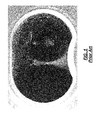
- FIG. 1 is a photograph of an intake valve and valve port from an air inlet side of the valve port for a vehicle having an SIDI engine run for 35,184 miles without an aromatic additive as described herein.
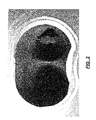
- FIG. 2 is a close up photograph of the deposits on the valve stem of the intake valve of FIG. 1 .
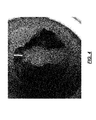
- FIG. 3 is a photograph a representative intake valve and valve port for a vehicle having an SIDI engine run for 80,912 miles with an aromatic additive according to an embodiment of the disclosure.
- FIG. 4 is a close up photograph of the deposits on the valve stem of the intake valve of FIG. 3 .
- oil composition As used herein, the terms “oil composition,” “lubrication composition,” “lubricating oil composition,” “lubricating oil,” “lubricant composition,” “lubricating composition,” “fully formulated lubricant composition,” and “lubricant” are considered synonymous, fully interchangeable terminology referring to the finished lubrication product comprising a major amount of a base oil plus a minor amount of an additive composition.
- additive package As used herein, the terms "additive package,” “additive concentrate,” and “additive composition” are considered synonymous, fully interchangeable terminology referring the portion of the lubricating composition excluding the major amount of base oil stock mixture.
- hydrocarbyl substituent or “hydrocarbyl group” is used in its ordinary sense, which is well-known to those skilled in the art. Specifically, it refers to a group having a carbon atom directly attached to the remainder of the molecule and having predominantly hydrocarbon character.
- hydrocarbyl groups include:
- percent by weight means the percentage the recited component represents to the weight of the entire composition.
- oil-soluble or “dispersible” used herein may but do not necessarily indicate that the compounds or additives are soluble, dissolvable, miscible, or capable of being suspended in the oil in all proportions.
- the foregoing terms do mean, however, that they are, for instance, soluble or stably dispersible in oil to an extent sufficient to exert their intended effect in the environment in which the oil is employed.
- the additional incorporation of other additives may also permit incorporation of higher levels of a particular additive, if desired.
- Lubricating oils, engine lubricating oils, and/or crankcase lubricating oils of the present disclosure may be formulated by the addition of one or more additives, as described in detail below, to an appropriate base oil formulation.
- the additives may be combined with a base oil in the form of an additive package (or concentrate), may be combined individually with a base oil, or alternatively, may be added to the lubricant composition in an engine as a "booster" additive.
- a “booster” additive, as used herein, is an amount of additive added to a fully formulated lubricant composition that supplements or increases the amount of additive component in the lubricant composition over and above a conventional amount of the component typically present in the fully formulated lubricant composition.
- the fully formulated lubricant, engine lubricant, and/or crankcase lubricant may exhibit improved performance properties, based on the additives added and their respective proportions.
- Engine or crankcase lubricant compositions are used in vehicles containing spark ignition engines, particularly spark ignition direct injection engines. Such engines may be used in automotive and light duty truck applications and may be operated on fuels including, but not limited to, gasoline, alcohol-containing fuels, compressed natural gas, gas-to-liquid fuels, biofuels, flex-fuels, mixtures thereof, and the like.
- the disclosure may describe lubricants suitable for use as engine lubricants, such as automotive crankcase lubricants that meet or exceed the proposed ILSAC GF-5 lubricant standards.
- a conventional GF-5 lubricant composition may include one or more additive components selected from detergents, dispersants, friction modifiers, antioxidants, rust inhibitors, viscosity index improvers, emulsifiers, demulsifiers, corrosion inhibitors, antiwear agents, metal dihydrocarbyl dithiophosphates, ash-free amine phosphate salts, antifoam agents, and pour point depressants.
- the lubricant composition also includes an aromatic compound in an amount that is effective to reduce intake valve deposits in a SIDI engine.
- a relatively volatile aromatic additive is combined with a fully formulated lubricant composition having a boiling point under standard atmospheric conditions of from about 190° to about 270° C., wherein the aromatic compound is effective to reduce intake valve deposits in a SIDI engine when used in an amount ranging from about 0.1 to about 5.0 percent by weight based on a total weight of a lubricant composition containing the additive.
- Aromatic additive compounds that may be used include compounds of the formula: wherein each of R 1 , R 2 , and R 3 is selected from hydrogen and a hydrocarbyl group containing from 1 to 6 carbon atoms, provided that at least one of R 1 , R 2 , and R 3 is a hydrocarbyl group containing from 1 to 6 carbon atoms, wherein the compound has a boiling point under standard atmospheric conditions ranging from about 190° to about 270° C. Standard atmospheric conditions are room temperature and one atmosphere of pressure.
- particularly suitable compounds include hindered phenol compounds having a boiling point within the range of from about 190° to about 270° C., for example from about 220° to about 265° C.
- Examples of such compounds include 2,6-di-tert-butylphenol, 2,6-di-tert-butyl-4-methylphenol, 2-tert-butyl-6-methylphenol, 2-tert-butylphenol, and 4-tert-butylphenol.
- the compounds described herein are relatively more volatile than the aromatic compounds conventionally used in lubricant composition. Without desiring to be limited by theoretical considerations, it is believed that the aromatic compound described herein may more readily volatilize and enter the intake air manifold of the SIDI engine with oil mist and vapors in the PCV circuit of the engine. As the entrained oil mist and vapor containing the aromatic condense on the intake valve stem and tulip the aromatic compound may prevent the oil from the mist and vapor from polymerizing, allowing sufficient time for the oil to naturally vaporize and be consumed in the combustion process.
- the amount of aromatic additive compound in the lubricant composition is desirably an amount sufficient to maintain the performance and/or fuel economy of an SIDI engine for more than about 35,000 miles of engine operation. Accordingly, the amount of aromatic additive that may be used in a fully formulated lubricant composition for an SIDI engine may range from about 0.1 to about 5.0 percent by weight based on a total weight of a lubricant composition containing the additive. A particularly suitable amount of additive may range from about 0.5 to about 2.0 percent by weight based on a total weight of the lubricant composition containing the additive.
- the aromatic additive may be initially present in a fully formulated lubricant composition, or may be added to a lubricant composition or to the crankcase of an engine containing a fully formulated lubricant composition. In another embodiment, the aromatic additive may be added to the crankcase of an engine after the engine has been operated for a predetermined number of miles in order to reduce the amount of deposits formed in the intake valves of the engine.
- Base oils suitable for use in formulating engine lubricant compositions may be selected from any of suitable synthetic or mineral oils or mixtures thereof.
- Mineral oils may include animal oils and vegetable oils (e.g., castor oil, lard oil) as well as mineral lubricating oils such as liquid petroleum oils and solvent treated or acid-treated mineral lubricating oils of the paraffinic, naphthenic or mixed paraffinic-naphthenic types. Oils derived from coal or shale may also be suitable.
- the base oil typically may have a viscosity of about 2 to about 15 cSt or, as a further example, about 2 to about 10 cSt at 100° C. Further, an oil derived from a gas-to-liquid process is also suitable.
- Suitable synthetic base oils may include alkyl esters of dicarboxylic acids, polyglycols and alcohols, poly-alpha-olefins, including polybutenes, alkyl benzenes, organic esters of phosphoric acids, and polysilicone oils.
- Synthetic oils include hydrocarbon oils such as polymerized and interpolymerized olefins (e.g., polybutylenes, polypropylenes, propylene isobutylene copolymers, etc.); poly(1-hexenes), poly-(1-octenes), poly(1-decenes), etc.
- alkylbenzenes e.g., dodecylbenzenes, tetradecylbenzenes, dinonylbenzenes, di-(2-ethylhexyl)benzenes, etc.
- polyphenyls e.g., biphenyls, terphenyl, alkylated polyphenyls, etc.
- Alkylene oxide polymers and interpolymers and derivatives thereof where the terminal hydroxyl groups have been modified by esterification, etherification, etc. constitute another class of known synthetic oils that may be used.
- Such oils are exemplified by the oils prepared through polymerization of ethylene oxide or propylene oxide, the alkyl and aryl ethers of these polyoxyalkylene polymers (e.g., methyl-polyisopropylene glycol ether having an average molecular weight of about 1000, diphenyl ether of polyethylene glycol having a molecular weight of about 500-1000, diethyl ether of polypropylene glycol having a molecular weight of about 1000-1500, etc.) or mono- and polycarboxylic esters thereof, for example, the acetic acid esters, mixed C 3 -C 8 fatty acid esters, or the C 13 oxo-acid diester of tetraethylene glycol.
- esters of dicarboxylic acids e.g., phthalic acid, succinic acid, alkyl succinic acids, alkenyl succinic acids, maleic acid, azelaic acid, suberic acid, sebacic acid, fumaric acid, adipic acid, linoleic acid dimer, malonic acid, alkyl malonic acids, alkenyl malonic acids, etc.
- alcohols e.g., butyl alcohol, hexyl alcohol, dodecyl alcohol, 2-ethylhexyl alcohol, ethylene glycol, diethylene glycol monoether, propylene glycol, etc.
- these esters include dibutyl adipate, di(2-ethylhexyl)sebacate, di-n-hexyl fumarate, dioctyl sebacate, diisooctyl azelate, diisodecy
- Esters useful as synthetic oils also include those made from C 5 to C 12 monocarboxylic acids and polyols and polyol ethers such as neopentyl glycol, trimethylol propane, pentaerythritol, dipentaerythritol, tripentaerythritol, etc.
- the base oil used which may be used to make the engine lubricant compositions as described herein may be selected from any of the base oils in Groups I-V as specified in the American Petroleum Institute (API) Base Oil Interchangeability Guidelines.
- Such base oil groups are as follows: Table 1 Base Oil Group 1 Sulfur (wt%) Saturates (wt%) Viscosity Index Group I > 0.03 And/or ⁇ 90 80 to 120 Group II ⁇ 0.03 And ⁇ 90 80 to 120 Group III ⁇ 0.03 And ⁇ 90 ⁇ 120 Group IV all polyalphaolefins (PAOs) Group V all others not included in Groups I-IV 1 Groups I-III are mineral oil base stocks.
- PAOs polyalphaolefins
- the base oil may contain a minor or major amount of a poly-alpha-olefin (PAO).
- PAO poly-alpha-olefin
- the poly-alpha-olefins are derived from monomers having from about 4 to about 30, or from about 4 to about 20, or from about 6 to about 16 carbon atoms.
- PAOs include those derived from octene, decene, mixtures thereof, and the like.
- PAOs may have a viscosity of from about 2 to about 15, or from about 3 to about 12, or from about 4 to about 8 cSt at 100° C.
- PAOs examples include 4 cSt at 100° C poly-alpha-olefins, 6 cSt at 100° C poly-alpha-olefins, and mixtures thereof. Mixtures of mineral oil with the foregoing poly-alpha-olefins may be used.
- the base oil may be an oil derived from Fischer-Tropsch synthesized hydrocarbons.
- Fischer-Tropsch synthesized hydrocarbons are made from synthesis gas containing H 2 and CO using a Fischer-Tropsch catalyst.
- Such hydrocarbons typically require further processing in order to be useful as the base oil.
- the hydrocarbons may be hydroisomerized using processes disclosed in U.S. Pat. Nos. 6,103,099 or 6,180,575 ; hydrocracked and hydroisomerized using processes disclosed in U.S. Pat. Nos. 4,943,672 or 6,096,940 ; dewaxed using processes disclosed in U.S. Pat. No. 5,882,505 ; or hydroisomerized and dewaxed using processes disclosed in U.S. Pat. Nos. 6,013,171 ; 6,080,301 ; or 6,165,949 .
- Unrefined, refined, and rerefined oils either mineral or synthetic (as well as mixtures of two or more of any of these) of the type disclosed hereinabove can be used in the base oils.
- Unrefined oils are those obtained directly from a mineral or synthetic source without further purification treatment.
- a shale oil obtained directly from retorting operations a petroleum oil obtained directly from primary distillation or ester oil obtained directly from an esterification process and used without further treatment would be an unrefined oil.
- Refined oils are similar to the unrefined oils except they have been further treated in one or more purification steps to improve one or more properties.
- Rerefined oils are obtained by processes similar to those used to obtain refined oils applied to refined oils which have been already used in service. Such rerefined oils are also known as reclaimed or reprocessed oils and often are additionally processed by techniques directed to removal of spent additives, contaminants, and oil breakdown products.
- the base oil may be combined with an additive composition as disclosed in embodiments herein to provide an engine lubricant composition suitable for the crankcase of the engine. Accordingly, the base oil may be present in the engine lubricant composition in an amount ranging from about 50 wt% to about 95 wt % based on a total weight of the lubricant composition.
- Dispersants contained in fully formulated lubricant compositions according to the disclosure may include, but are not limited to, an oil soluble polymeric hydrocarbon backbone having functional groups that are capable of associating with particles to be dispersed.
- the dispersants comprise amine, alcohol, amide, or ester polar moieties attached to the polymer backbone often via a bridging group.
- Dispersants may be selected from Mannich dispersants as described in U.S. Pat. Nos. 3,697,574 and 3,736,357 ; ashless succinimide dispersants as described in U.S. Pat. Nos. 4,234,435 and 4,636,322 ; amine dispersants as described in U.S. Pat. Nos.
- a suitable dispersant that may be used in a fully formulated lubricant composition may include a reaction product of A) a hydrocarbyl-carboxylic acid or anhydride or a hydrocarbyl-substituted Mannich base and B) a polyamine containing at least two nitrogen atoms.
- the hydrocarbyl moiety of the hydrocarbyl-carboxylic acid or anhydride of Component A may be derived from butene polymers, for example polymers of isobutylene.
- Suitable polyisobutenes for use herein include those formed from polyisobutylene or highly reactive polyisobutylene having at least about 60%, such as about 70% to about 90% and above, terminal vinylidene content.
- Suitable polyisobutenes may include those prepared using BF 3 catalysts.
- the number average molecular weight of the polyalkenyl substituent may vary over a wide range, for example from about 100 to about 5000, such as from about 500 to about 5000, as determined by GPC as described above.
- the carboxylic acid or anhydride of Component A may be selected from carboxylic reactants other than maleic anhydride, such as maleic acid, fumaric acid, malic acid, tartaric acid, itaconic acid, itaconic anhydride, citraconic acid, citraconic anhydride, mesaconic acid, ethylmaleic anhydride, dimethylmaleic anhydride, ethylmaleic acid, dimethylmaleic acid, hexylmaleic acid, and the like, including the corresponding acid halides and lower aliphatic esters.
- a mole ratio of maleic anhydride to hydrocarbyl moiety in a reaction mixture used to make Component A may vary widely.
- the mole ratio may vary from about 5:1 to about 1.5, for example from about 3:1 to about 1:3, and as a further example, the maleic anhydride may be used in stoichiometric excess to force the reaction to completion.
- the unreacted maleic anhydride may be removed by vacuum distillation.
- Non-limiting exemplary polyamines may include aminoguanidine bicarbonate (AGBC), diethylene triamine (DETA), triethylene tetramine (TETA), tetraethylene pentamine (TEPA), pentaethylene hexamine (PEHA) and heavy polyamines.
- a heavy polyamine may comprise a mixture of polyalkylenepolyamines having small amounts of lower polyamine oligomers such as TEPA and PEHA, but primarily oligomers having seven or more nitrogen atoms, two or more primary amines per molecule, and more extensive branching than conventional polyamine mixtures.
- polyamines which may be used to prepare the hydrocarbyl-substituted succinimide dispersant are disclosed in U.S. Pat. No. 6,548,458 , the disclosure of which is incorporated herein by reference in its entirety.
- the polyamine may be selected from tetraethylene pentamine (TEPA).
- the fully formulated lubricant composition may contain from about 0.5 weight percent to about 10.0 weight of the dispersant described above based on a total weight of the lubricant composition.
- a typical range of dispersant may be from about 2 weight percent to about 5 weight percent based on a total weight of the lubricant composition.
- Metal detergents that may be used with the dispersant reaction product described above generally comprise a polar head with a long hydrophobic tail where the polar head comprises a metal salt of an acidic organic compound.
- the salts may contain a substantially stoichiometric amount of the metal, in which case they are usually described as normal or neutral salts, and would typically have a total base number or TBN (as measured by ASTM D2896) of from about 0 to less than about 150.
- TBN total base number
- Large amounts of a metal base may be included by reacting an excess of a metal compound such as an oxide or hydroxide with an acidic gas such as carbon dioxide.
- the resulting overbased detergent comprises micelles of neutralized detergent surrounding a core of inorganic metal base (e.g., hydrated carbonates).
- Such overbased detergents may have a TBN of about 150 or greater, such as from about 150 to about 450 or more.
- Detergents that may be suitable for use in the present embodiments include oil-soluble overbased, low base, and neutral sulfonates, phenates, sulfurized phenates, and salicylates of a metal, particularly the alkali or alkaline earth metals, e.g., sodium, potassium, lithium, calcium, and magnesium. More than one metal may be present, for example, both calcium and magnesium. Mixtures of calcium and/or magnesium with sodium may also be suitable.
- Suitable metal detergents may be overbased calcium or magnesium sulfonates having a TBN of from 150 to 450 TBN, overbased calcium or magnesium phenates or sulfurized phenates having a TBN of from 150 to 300 TBN, and overbased calcium or magnesium salicylates having a TBN of from 130 to 350. Mixtures of such salts may also be used.
- the metal-containing detergent may be present in a lubricating composition in an amount of from about 0.5 wt % to about 5 wt %. As a further example, the metal-containing detergent may be present in an amount of from about 1.0 wt % to about 3.0 wt %. The metal-containing detergent may be present in a lubricating composition in an amount sufficient to provide from about 500 to about 5000 ppm alkali and/or alkaline earth metal to the lubricant composition based on a total weight of the lubricant composition. As a further example, the metal-containing detergent may be present in a lubricating composition in an amount sufficient to provide from about 1000 to about 3000 ppm alkali and/or alkaline earth metal.
- Phosphorus-based wear preventative agents may be used and may comprise a metal dihydrocarbyl dithiophosphate compound, such as but not limited to a zinc dihydrocarbyl dithiophosphate compound.
- Suitable metal dihydrocarbyl dithiophosphates may comprise dihydrocarbyl dithiophosphate metal salts wherein the metal may be an alkali or alkaline earth metal, or aluminum, lead, tin, molybdenum, manganese, nickel, copper, or zinc.
- Dihydrocarbyl dithiophosphate metal salts may be prepared in accordance with known techniques by first forming a dihydrocarbyl dithiophosphoric acid (DDPA), usually by reaction of one or more alcohol or a phenol with P 2 S 5 and then neutralizing the formed DDPA with a metal compound.
- DDPA dihydrocarbyl dithiophosphoric acid
- a dithiophosphoric acid may be made by reacting mixtures of primary and secondary alcohols.
- multiple dithiophosphoric acids can be prepared where the hydrocarbyl groups on one are entirely secondary in character and the hydrocarbyl groups on the others are entirely primary in character.
- any basic or neutral metal compound could be used but the oxides, hydroxides and carbonates are most generally employed. Commercial additives frequently contain an excess of metal due to the use of an excess of the basic metal compound in the neutralization reaction.
- ZDDP zinc dihydrocarbyl dithiophosphates
- R and R' may be the same or different hydrocarbyl radicals containing from 1 to 18, for example 2 to 12, carbon atoms and including radicals such as alkyl, alkenyl, aryl, arylalkyl, alkaryl, and cycloaliphatic radicals.
- R and R' groups may be alkyl groups of 2 to 8 carbon atoms.
- the radicals may, for example, be ethyl, n-propyl, i-propyl, n-butyl, i-butyl, sec-butyl, amyl, n-hexyl, i-hexyl, n-octyl, decyl, dodecyl, octadecyl, 2-ethylhexyl, phenyl, butylphenyl, cyclohexyl, methylcyclopentyl, propenyl, butenyl.
- the total number of carbon atoms (i.e., R and R') in the dithiophosphoric acid will generally be about 5 or greater.
- the zinc dihydrocarbyl dithiophosphate can therefore comprise zinc dialkyl dithiophosphates.
- Suitable components that may be utilized as the phosphorus-based wear preventative include any suitable organophosphorus compound, such as but not limited to, phosphates, thiophosphates, di-thiophosphates, phosphites, and salts thereof and phosphonates. Suitable examples are tricresyl phosphate (TCP), di-alkyl phosphite (e.g., dibutyl hydrogen phosphite), and amyl acid phosphate.
- TCP tricresyl phosphate
- di-alkyl phosphite e.g., dibutyl hydrogen phosphite
- amyl acid phosphate e.g., amyl acid phosphate.
- a phosphorylated succinimide such as a completed reaction product from a reaction between a hydrocarbyl substituted succinic acylating agent and a polyamine combined with a phosphorus source, such as inorganic or organic phosphorus acid or ester. Further, it may comprise compounds wherein the product may have amide, amidine, and/or salt linkages in addition to the imide linkage of the type that results from the reaction of a primary amino group and an anhydride moiety.
- the phosphorus-based wear preventative may be present in a lubricating composition in an amount sufficient to provide from about 200 to about 2000 ppm phosphorus. As a further example, the phosphorus-based wear preventative may be present in a lubricating composition in an amount sufficient to provide from about 500 to about 800 ppm phosphorus.
- the phosphorus-based wear preventative may be present in a lubricating composition in an amount sufficient to provide a ratio of alkali and/or alkaline earth metal content (ppm) based on the total amount of alkali and/or alkaline earth metal in the lubricating composition to phosphorus content (ppm) based on the total amount of phosphorus in the lubricating composition of from about 1.6 to about 3.0 (ppm/ppm).
- Embodiments of the present disclosure may include one or more friction modifiers.
- Suitable friction modifiers may comprise metal containing and metal-free friction modifiers and may include, but are not limited to, imidazolines, amides, amines, succinimides, alkoxylated amines, alkoxylated ether amines, amine oxides, amidoamines, nitriles, betaines, quaternary amines, imines, amine salts, amino guanadine, alkanolamides, phosphonates, metal-containing compounds, glycerol esters, and the like.
- Suitable friction modifiers may contain hydrocarbyl groups that are selected from straight chain, branched chain, or aromatic hydrocarbyl groups or admixtures thereof, and may be saturated or unsaturated.
- the hydrocarbyl groups may be composed of carbon and hydrogen or hetero atoms such as sulfur or oxygen.
- the hydrocarbyl groups may range from about 12 to about 25 carbon atoms and may be saturated or unsaturated.
- Aminic friction modifiers may include amides of polyamines.
- Such compounds can have hydrocarbyl groups that are linear, either saturated or unsaturated, or a mixture thereof and may contain from about 12 to about 25 carbon atoms.
- suitable friction modifiers include alkoxylated amines and alkoxylated ether amines.
- Such compounds may have hydrocarbyl groups that are linear, either saturated, unsaturated, or a mixture thereof. They may contain from about 12 to about 25 carbon atoms. Examples include ethoxylated amines and ethoxylated ether amines.
- the amines and amides may be used as such or in the form of an adduct or reaction product with a boron compound such as a boric oxide, boron halide, metaborate, boric acid or a mono-, di- or tri-alkyl borate.
- a boron compound such as a boric oxide, boron halide, metaborate, boric acid or a mono-, di- or tri-alkyl borate.
- suitable friction modifiers may include an organic, ashless (metal-free), nitrogen-free organic friction modifier.
- Such friction modifiers may include esters formed by reacting carboxylic acids and anhydrides with alkanols.
- Other useful friction modifiers generally include a polar terminal group (e.g. carboxyl or hydroxyl) covalently bonded to an oleophilic hydrocarbon chain. Esters of carboxylic acids and anhydrides with alkanols are described in U.S. 4,702,850 .
- Another example of an organic ashless nitrogen-free friction modifier is known generally as glycerol monooleate (GMO) which may contain mono- and diesters of oleic acid.
- GMO glycerol monooleate
- the ashless friction modifier may be present in the lubricant composition in an amount ranging from about 0.1 to about 0.4 percent by weight based on a total weight of the lubricant composition.
- Suitable friction modifiers may also include one or more molybdenum compounds.
- the molybdenum compound may be selected from the group consisting of molybdenum dithiocarbamates (MoDTC), molybdenum dithiophosphates, molybdenum dithiophosphinates, molybdenum xanthates, molybdenum thioxanthates, molybdenum sulfides, a trinuclear organo-molybdenum compound, molybdenum/amine complexes, and mixtures thereof.
- MoDTC molybdenum dithiocarbamates
- MoDTC molybdenum dithiophosphates
- molybdenum dithiophosphinates molybdenum xanthates
- molybdenum thioxanthates molybdenum sulfides
- a trinuclear organo-molybdenum compound molybdenum/
- the molybdenum compound may be an acidic molybdenum compound. Included are molybdic acid, ammonium molybdate, sodium molybdate, potassium molybdate, and other alkaline metal molybdates and other molybdenum salts, e.g., hydrogen sodium molybdate, MoOCl 4 , MoO 2 Br 2 , Mo 2 O 3 Cl 6 , molybdenum trioxide or similar acidic molybdenum compounds.
- the compositions can be provided with molybdenum by molybdenum/sulfur complexes of basic nitrogen compounds as described, for example, in U.S. Pat. Nos.
- Suitable molybdenum dithiocarbamates may be represented by the formula: where R 1 , R 2 , R 3 , and R 4 each independently represent a hydrogen atom, a C 1 to C 20 alkyl group, a C 6 to C 20 cycloalkyl, aryl, alkylaryl, or aralkyl group, or a C 3 to C 20 hydrocarbyl group containing an ester, ether, alcohol, or carboxyl group; and X 1 , X 2 , Y 1 , and Y 2 each independently represent a sulfur or oxygen atom.
- R 1 , R 2 , R 3 , and R 4 examples include 2-ethylhexyl, nonylphenyl, methyl, ethyl, n-propyl, iso-propyl, n-butyl, t-butyl, n-hexyl, n-octyl, nonyl, decyl, dodecyl, tridecyl, lauryl, oleyl, linoleyl, cyclohexyl and phenylmethyl.
- R 1 to R 4 may each have C 6 to C 18 alkyl groups.
- X 1 and X 2 may be the same, and Y 1 and Y 2 may be the same.
- X 1 and X 2 may both comprise sulfur atoms, and Y 1 and Y 2 may both comprise oxygen atoms.
- molybdenum dithiocarbamates include C 6 - C 18 dialkyl or diaryldithiocarbamates, or alkyl-aryldithiocarbamates such as dibutyl-, diamyl-di-(2-ethylhexyl)-, dilauryl-, dioleyl-, and dicyclohexyl-dithiocarbamate.
- organo-molybdenum compounds are trinuclear molybdenum compounds, such as those of the formula Mo 3 S k L n Q z and mixtures thereof, wherein L represents independently selected ligands having organo groups with a sufficient number of carbon atoms to render the compound soluble or dispersible in the oil, n is from 1 to 4, k varies from 4 through 7, Q is selected from the group of neutral electron donating compounds such as water, amines, alcohols, phosphines, and ethers, and z ranges from 0 to 5 and includes non-stoichiometric values.
- L represents independently selected ligands having organo groups with a sufficient number of carbon atoms to render the compound soluble or dispersible in the oil
- n is from 1 to 4
- k varies from 4 through 7
- Q is selected from the group of neutral electron donating compounds such as water, amines, alcohols, phosphines, and ethers
- z ranges from
- At least 21 total carbon atoms may be present among all the ligands' organo groups, such as at least 25, at least 30, or at least 35 carbon atoms. Additional suitable molybdenum compounds are described in US 6,723,685 , herein incorporated by reference.
- the molybdenum compound may be present in a fully formulated engine lubricant in an amount to provide about 5 ppm to 800 ppm molybdenum. As a further example, the molybdenum compound may be present in an amount to provide about 30 to 100 ppm molybdenum.
- Titanium compounds may also be included in the lubricant compositions as friction modifiers.
- the titanium compounds include the reaction product of titanium alkoxide, such as titanium isopropoxide, and a carboxylic acid containing from 6 to 25 carbon atoms, as generally described in U.S. Patent Nos. 7,615,519 ; 7,615,520 ; 7,709,423 ; 7,776,800 ; 7,767,632 ; 7,772,167 ; 7,879,774 ; 7,897,548 ; 8,008,237 ; 8,048,834 , the disclosures of which are incorporated herein by reference thereto.
- a foam inhibitor may form another component suitable for use in the compositions.
- Foam inhibitors may be selected from silicones, polyacrylates, and the like.
- the amount of antifoam agent in the engine lubricant formulations described herein may range from about 0.001 wt% to about 0.1 wt% based on the total weight of the formulation.
- antifoam agent may be present in an amount from about 0.004 wt% to about 0.008 wt%.
- Oxidation inhibitors or antioxidants reduce the tendency of base stocks to deteriorate in service which deterioration can be evidenced by the products of oxidation such as sludge and varnish-like deposits that deposit on metal surfaces and by viscosity growth of the finished lubricant.
- Such oxidation inhibitors include hindered phenols, sulfurized hindered phenols, alkaline earth metal salts of alkylphenolthioesters having C 5 to C 12 alkyl side chains, sulfurized alkylphenols, metal salts of either sulfurized or nonsulfurized alkylphenols, for example calcium nonylphenol sulfide, ashless oil soluble phenates and sulfurized phenates, phosphosulfurized or sulfurized hydrocarbons, phosphorus esters, metal thiocarbamates, and oil soluble copper compounds as described in U.S. Pat. No. 4,867,890 .
- Additional antioxidants include sterically hindered phenols and esters thereof, diarylamines, alkylated phenothiazines, sulfurized compounds, and ashless dialkyldithiocarbamates.
- sterically hindered phenols include, but are not limited to, 4-ethyl-2,6-di-tertiary butylphenol, 4-propyl-2,6-di-tertiary butylphenol, 4-butyl-2,6-di-tertiary butylphenol, 4-pentyl-2,6-di-tertiary butylphenol, 4-hexyl-2,6-di-tertiary butylphenol, 4-heptyl-2,6-di-tertiary butylphenol, 4-(2-ethylhexyl)-2,6-di-tertiary butylphenol, 4-octyl-2,6-di-tertiary butylphenol, 4-
- the hindered phenol compounds described above may be used in addition to the aromatic compounds described herein for the purposes of improving the antioxidant properties of the lubricant without affecting intake valve deposits.
- the foregoing antioxidants are used in an amount that provides antioxidant effects without reducing the amount of deposits on intake valves of an SIDI engine.
- Diarylamine antioxidants include, but are not limited to diarylamines having the formula: wherein R' and R" each independently represents a substituted or unsubstituted aryl group having from 6 to 30 carbon atoms.
- substituents for the aryl group include aliphatic hydrocarbon groups such as alkyl having from 1 to 30 carbon atoms, hydroxy groups, halogen radicals, carboxylic acid or ester groups, or nitro groups.
- the aryl group is preferably substituted or unsubstituted phenyl or naphthyl, particularly wherein one or both of the aryl groups are substituted with at least one alkyl having from 4 to 30 carbon atoms, preferably from 4 to 18 carbon atoms, most preferably from 4 to 9 carbon atoms. It is preferred that one or both aryl groups be substituted, e.g. mono-alkylated diphenylamine, di-alkylated diphenylamine, or mixtures of mono- and di-alkylated diphenylamines.
- the diarylamines may be of a structure containing more than one nitrogen atom in the molecule.
- the diarylamine may contain at least two nitrogen atoms wherein at least one nitrogen atom has two aryl groups attached thereto, e.g. as in the case of various diamines having a secondary nitrogen atom as well as two aryls on one of the nitrogen atoms.
- diarylamines examples include, but are not limited to: diphenylamine; various alkylated diphenylamines; 3-hydroxydiphenylamine; N-phenyl-1,2-phenylenediamine; N-phenyl-1,4-phenylenediamine; monobutyldiphenyl-amine; dibutyldiphenylamine; monooctyldiphenylamine; dioctyldiphenylamine; monononyldiphenylamine; dinonyldiphenylamine; monotetradecyldiphenylamine; ditetradecyldiphenylamine, phenyl-alpha-naphthylamine; monooctyl phenyl-alpha-naphthylamine; phenyl-beta-naphthylamine; monoheptyldiphenylamine; diheptyl-diphenylamine; p-oriented stylamine; N
- the sulfur containing antioxidants include, but are not limited to, sulfurized olefins that are characterized by the type of olefin used in their production and the final sulfur content of the antioxidant.
- High molecular weight olefins i.e. those olefins having an average molecular weight of 168 to 351 g/mole, are preferred.
- Examples of olefins that may be used include alpha-olefins, isomerized alpha-olefins, branched olefins, cyclic olefins, and combinations of these.
- Alpha-olefins include, but are not limited to, any C 4 to C 25 alpha-olefins. Alpha-olefins may be isomerized before the sulfurization reaction or during the sulfurization reaction. Structural and/or conformational isomers of the alpha olefin that contain internal double bonds and/or branching may also be used. For example, isobutylene is a branched olefin counterpart of the alpha-olefin 1-butene.
- Sulfur sources that may be used in the sulfurization reaction of olefins include: elemental sulfur, sulfur monochloride, sulfur dichloride, sodium sulfide, sodium polysulfide, and mixtures of these added together or at different stages of the sulfurization process.
- Unsaturated oils because of their unsaturation, may also be sulfurized and used as an antioxidant.
- oils or fats that may be used include corn oil, canola oil, cottonseed oil, grapeseed oil, olive oil, palm oil, peanut oil, coconut oil, rapeseed oil, safflower seed oil, sesame seed oil, soybean oil, sunflower seed oil, tallow, and combinations of these.
- the amount of sulfurized olefin or sulfurized fatty oil delivered to the finished lubricant is based on the sulfur content of the sulfurized olefin or fatty oil and the desired level of sulfur to be delivered to the finished lubricant. For example, a sulfurized fatty oil or olefin containing 20 weight % sulfur, when added to the finished lubricant at a 1.0 weight % treat level, will deliver 2000 ppm of sulfur to the finished lubricant. A sulfurized fatty oil or olefin containing 10 weight % sulfur, when added to the finished lubricant at a 1.0 weight % treat level, will deliver 1000 ppm sulfur to the finished lubricant. It is desirable that the sulfurized olefin or sulfurized fatty oil to deliver between 200 ppm and 2000 ppm sulfur to the finished lubricant.
- a suitable engine lubricant may include additive components in the ranges listed in the following table.
- Table 3 Component Wt. % (Broad) Wt. % (Typical) Dispersant 0.5 - 15.0 1.0 - 10.0 Additional Dispersants 0.0 - 10% 0.0 - 5.0% Antioxidants 0 - 5.0 0.01 - 3.0 Metal Detergents 0.1 - 15.0 0.2 - 8.0 Corrosion Inhibitor 0 - 5.0 0 - 2.0 Metal dihydrocarbyl dithiophosphate 0.1 - 6.0 0.5 - 4.0 Antifoaming agents 0 - 5.0 0.001 - 0.15 Antiwear agents 0 - 1.0 0 - 0.8 Pour point depressant 0.01 - 5.0 0.01 - 1.5 Viscosity modifier 0.01 - 20.00 0.25 - 10.0 Friction modifiers 0 - 2.0 0.1 - 1.0 Base oil Balance Balance Total 100 100
- Additional optional additives that may be included in lubricant compositions described herein include, but are not limited to, rust inhibitors, emulsifiers, demulsifiers, and oil-soluble titanium-containing additives.
- Additives used in formulating the compositions described herein may be blended into the base oil individually or in various sub-combinations. However, it may be suitable to blend all of the components concurrently using an additive concentrate (i.e., additives plus a diluent, such as a hydrocarbon solvent).
- an additive concentrate i.e., additives plus a diluent, such as a hydrocarbon solvent.
- the use of an additive concentrate may take advantage of the mutual compatibility afforded by the combination of ingredients when in the form of an additive concentrate. Also, the use of a concentrate may reduce blending time and may lessen the possibility of blending errors.
- the present disclosure provides novel lubricating oil blends specifically formulated for use as automotive engine lubricants in SIDI engines.
- novel lubricating oil blends specifically formulated for use as automotive engine lubricants in SIDI engines.
- the following non-limiting examples are provided.
- Test Vehicle 1 Before the start of testing the valves and ports of both vehicles were disassembled, cleaned and reassembled.
- Test Vehicle 1 a baseline fully formulated engine oil, as recommended by the manufacturer of the vehicle was used.
- Test Vehicle 2 an SAE 5W-30 test oil formulated to meet the ILSAC GF-4 and GF-5 requirements, and containing the aromatic compound described herein was used.
- Test Vehicle 1 was operated on a Mileage Accumulation Dynamometer (MAD) according to an in-house "Quad 4" driving cycle used for testing fuel effects on combustion chamber deposits. Since the fuel did not interact with the intake valve this was not deemed to be a test variable. The evaluation was concluded at 35,184 miles when Test Vehicle 1 developed sufficient deposits to cause loss of engine efficiency due to restricted air flow in the intake port and around the intake valve. Test Vehicle 2 was still operating normally at 80912 miles.
- MAD Mileage Accumulation Dynamometer
- FIG. 1 is a photograph of one of the representative intake valve ports and valve stems from Test Vehicle 1 after 35,184 miles operating on the conventional engine oil composition. Because of previous experience with stuck valves the operators of this test knew that there was sufficient accumulation to indicate imminent valve sticking.
- FIG. 2 is a close up photograph of the deposits on the valve stem FIG. 1 .
- FIG. 3 is a photograph of one of the representative intake valve ports and valve stems from Vehicle 2 after running the vehicle for 80912 miles.
- FIG. 4 is a close-up photograph of the valve stem of FIG. 3 .
- FIGS. 3 and 4 the appearance of the ports and valves from the vehicle using the aromatic compound described herein were significantly different.
- the deposits illustrated by FIGS. 3 and 4 showed no evidence of oily deposits.
- the deposits shown in FIGS. 3 and 4 have an ash-like appearance. It is believed that the ash was derived from the metallic compounds used in the oil compositions, e.g., the zinc dithio-phosphate anti-wear additive, and the calcium sulfonate detergent. As the oil portion was volatilized the ash elements were left behind. The ash-like deposit was brittle in nature and was prone to flaking off of the valve stem and valve as the valve moved up and down in the guide and port of the engine.
- each numerical parameter should at least be construed in light of the number of reported significant digits and by applying ordinary rounding techniques. Notwithstanding that the numerical ranges and parameters setting forth the broad scope of the invention are approximations, the numerical values set forth in the specific examples are reported as precisely as possible. Any numerical value, however, inherently contains certain errors necessarily resulting from the standard deviation found in their respective testing measurements. It is intended that the specification and examples be considered as exemplary only, with a true scope and spirit of the invention being indicated by the following claims.
Landscapes
- Chemical & Material Sciences (AREA)
- Oil, Petroleum & Natural Gas (AREA)
- Chemical Kinetics & Catalysis (AREA)
- General Chemical & Material Sciences (AREA)
- Organic Chemistry (AREA)
- Engineering & Computer Science (AREA)
- Metallurgy (AREA)
- Inorganic Chemistry (AREA)
- Lubricants (AREA)
Abstract
Description
- The disclosure relates to lubricant compositions and in particular to additives for improving reducing the amount of intake valve deposits that form adjacent intake valves of a spark ignition direct injection (SIDI) engine.
- Spark ignition direct injection (SIDI) engines have been investigated for benefits in fuel economy and reduction in CO2 emissions for over 90 years. Technical challenges have included fuel management control, exhaust emissions control, injector fouling and engine deposits. Asian and European manufacturers have all indicated a commitment to pursuing SIDI engine technology. However, SIDI engines do not have port fuel injectors to wash the deposits off the intake valves. Accordingly, there is no effective removal process for intake valves of SIDI engines and thus deposits tend to build over time. Intake valve deposits may eventually build up to a point where the valves remain open, either causing a loss of engine compression or causing catastrophic failure in the event a piston crown strikes the open valve.
- Deposits may build up on the intake valves of the SIDI engines such that by about 35,000 miles the vehicle must be taken out of service and the valves cleaned through mechanical process. Until now, it was believed that the deposits in the engine arose primarily from the fuel and thus a variety of fuel additives were used in an attempt to reduce the formation of engine deposits. However, it has now been discovered, quite surprisingly, that the intake valve deposits in a SIDI engine arise primarily from the lubricant used in the engine. It is believed that oil vapors from the lubricant composition enter the intake valve ports via the positive crankcase ventilation (PCV) circuit and the vapors condense on the valves forming deposits. Accordingly, there is a need for a lubricant composition and method for reducing the amount of deposits formed on the intake valves of the SIDI engine.
- With regard to the foregoing, embodiments of the disclosure provide a lubricant additive, an crankcase lubricant composition and a method for reducing intake valve deposits in a spark ignition direct injection (SIDI) engine. The lubricant additive includes an aromatic compound having a boiling point under standard atmospheric conditions of from about 190° to about 270° C. The aromatic compound is effective to reduce intake valve deposits in a SIDI engine when used in an amount ranging from about 0.1 to about 5.0 percent by weight based on a total weight of a lubricant composition containing the additive.
- Use of an aromatic additive having a boiling point ranging from about 190° to 270° C. in a lubricant composition for an engine goes against the conventional wisdom that tends to avoid the use of volatile organic compounds in such lubricant compositions. Furthermore, it was not expected that a lubricant additive as described herein would be more effective than a fuel additive at reducing intake valve deposits in a SIDI engine.
- An unexpected advantage of the use of the aromatic additive of the disclosed embodiments is that a SIDI engine containing the aromatic additive may be operated for more than twice the mileage of a vehicle operated without the additive without loss of engine efficiency or performance due to restricted air flow in intake valve ports of the engine. Other benefits and advantages may be evident from the following description and attached drawings.
- Additional details and advantages of the disclosure will be set forth in part in the description which follows, and/or may be learned by practice of the disclosure in conjunction with the attached drawings, wherein:
-
FIG. 1 is a photograph of an intake valve and valve port from an air inlet side of the valve port for a vehicle having an SIDI engine run for 35,184 miles without an aromatic additive as described herein. -
FIG. 2 is a close up photograph of the deposits on the valve stem of the intake valve ofFIG. 1 . -
FIG. 3 is a photograph a representative intake valve and valve port for a vehicle having an SIDI engine run for 80,912 miles with an aromatic additive according to an embodiment of the disclosure. -
FIG. 4 is a close up photograph of the deposits on the valve stem of the intake valve ofFIG. 3 . - It is to be understood that both the foregoing general description and the following detailed description are exemplary and explanatory only and are not restrictive of the disclosure, as claimed. The details and advantages of the disclosure may be realized and attained by means of the elements and combinations particularly pointed out in the appended claims.
- The present disclosure will now be described in the more limited aspects of embodiments thereof, including various examples of the formulation and use of the present disclosure. It will be understood that these embodiments are presented solely for the purpose of illustrating the invention and shall not be considered as a limitation upon the scope thereof.
- With regard to the exemplary embodiments, the following definitions of terms are provided in order to clarify the meanings of certain terms as used herein.
- As used herein, the terms "oil composition," "lubrication composition," "lubricating oil composition," "lubricating oil," "lubricant composition," "lubricating composition," "fully formulated lubricant composition," and "lubricant" are considered synonymous, fully interchangeable terminology referring to the finished lubrication product comprising a major amount of a base oil plus a minor amount of an additive composition.
- As used herein, the terms "additive package," "additive concentrate," and "additive composition" are considered synonymous, fully interchangeable terminology referring the portion of the lubricating composition excluding the major amount of base oil stock mixture.
- As used herein, the term "hydrocarbyl substituent" or "hydrocarbyl group" is used in its ordinary sense, which is well-known to those skilled in the art. Specifically, it refers to a group having a carbon atom directly attached to the remainder of the molecule and having predominantly hydrocarbon character. Examples of hydrocarbyl groups include:
- (1) hydrocarbon substituents, that is, aliphatic (e.g., alkyl or alkenyl), alicyclic (e.g., cycloalkyl, cycloalkenyl) substituents, and aromatic-, aliphatic-, and alicyclic-substituted aromatic substituents, as well as cyclic substituents wherein the ring is completed through another portion of the molecule (e.g., two substituents together form an alicyclic radical);
- (2) substituted hydrocarbon substituents, that is, substituents containing non-hydrocarbon groups which, in the context of this invention, do not alter the predominantly hydrocarbon substituent (e.g., halo (especially chloro and fluoro), hydroxy, alkoxy, mercapto, alkylmercapto, nitro, nitroso, amino, alkylamine, and sulfo xy);
- (3) hetero substituents, that is, substituents which, while having a predominantly hydrocarbon character, in the context of this invention, contain other than carbon in a ring or chain otherwise composed of carbon atoms. Heteroatoms include sulfur, oxygen, nitrogen, and encompass substituents such as pyridyl, furyl, thienyl, and imidazolyl. In general, no more than two, for example, no more than one, non-hydrocarbon substituent will be present for every ten carbon atoms in the hydrocarbyl group; typically, there will be no non-hydrocarbon substituents in the hydrocarbyl group.
- As used herein, the term "percent by weight", unless expressly stated otherwise, means the percentage the recited component represents to the weight of the entire composition.
- The terms "oil-soluble" or "dispersible" used herein may but do not necessarily indicate that the compounds or additives are soluble, dissolvable, miscible, or capable of being suspended in the oil in all proportions. The foregoing terms do mean, however, that they are, for instance, soluble or stably dispersible in oil to an extent sufficient to exert their intended effect in the environment in which the oil is employed. Moreover, the additional incorporation of other additives may also permit incorporation of higher levels of a particular additive, if desired.
- Lubricating oils, engine lubricating oils, and/or crankcase lubricating oils of the present disclosure may be formulated by the addition of one or more additives, as described in detail below, to an appropriate base oil formulation. The additives may be combined with a base oil in the form of an additive package (or concentrate), may be combined individually with a base oil, or alternatively, may be added to the lubricant composition in an engine as a "booster" additive. A "booster" additive, as used herein, is an amount of additive added to a fully formulated lubricant composition that supplements or increases the amount of additive component in the lubricant composition over and above a conventional amount of the component typically present in the fully formulated lubricant composition. The fully formulated lubricant, engine lubricant, and/or crankcase lubricant may exhibit improved performance properties, based on the additives added and their respective proportions.
- Engine or crankcase lubricant compositions, described herein, are used in vehicles containing spark ignition engines, particularly spark ignition direct injection engines. Such engines may be used in automotive and light duty truck applications and may be operated on fuels including, but not limited to, gasoline, alcohol-containing fuels, compressed natural gas, gas-to-liquid fuels, biofuels, flex-fuels, mixtures thereof, and the like. The disclosure may describe lubricants suitable for use as engine lubricants, such as automotive crankcase lubricants that meet or exceed the proposed ILSAC GF-5 lubricant standards. A conventional GF-5 lubricant composition may include one or more additive components selected from detergents, dispersants, friction modifiers, antioxidants, rust inhibitors, viscosity index improvers, emulsifiers, demulsifiers, corrosion inhibitors, antiwear agents, metal dihydrocarbyl dithiophosphates, ash-free amine phosphate salts, antifoam agents, and pour point depressants. According to an embodiment of the disclosure the lubricant composition also includes an aromatic compound in an amount that is effective to reduce intake valve deposits in a SIDI engine.
- According to an embodiment of the disclosure, a relatively volatile aromatic additive is combined with a fully formulated lubricant composition having a boiling point under standard atmospheric conditions of from about 190° to about 270° C., wherein the aromatic compound is effective to reduce intake valve deposits in a SIDI engine when used in an amount ranging from about 0.1 to about 5.0 percent by weight based on a total weight of a lubricant composition containing the additive.
- Aromatic additive compounds that may be used include compounds of the formula:

- Accordingly, suitable aromatic compounds that may be used to reduce valve deposits in SIDI engines include, but are not limited to, 2,6-di-tert-butylphenol, 2,6-di-tert-butyl-4-methylphenol, 2-tert-butyl-6-methylphenol, 2-tert-butylphenol, 4-tert-butylphenol, o-cresol, m-cresol, p-cresol, and mixtures of two or more of the foregoing. Of the foregoing, particularly suitable compounds include hindered phenol compounds having a boiling point within the range of from about 190° to about 270° C., for example from about 220° to about 265° C. Examples of such compounds include 2,6-di-tert-butylphenol, 2,6-di-tert-butyl-4-methylphenol, 2-tert-butyl-6-methylphenol, 2-tert-butylphenol, and 4-tert-butylphenol.
- Compared to conventional phenolic compounds used in lubricant compositions, the compounds described herein are relatively more volatile than the aromatic compounds conventionally used in lubricant composition. Without desiring to be limited by theoretical considerations, it is believed that the aromatic compound described herein may more readily volatilize and enter the intake air manifold of the SIDI engine with oil mist and vapors in the PCV circuit of the engine. As the entrained oil mist and vapor containing the aromatic condense on the intake valve stem and tulip the aromatic compound may prevent the oil from the mist and vapor from polymerizing, allowing sufficient time for the oil to naturally vaporize and be consumed in the combustion process.
- The amount of aromatic additive compound in the lubricant composition is desirably an amount sufficient to maintain the performance and/or fuel economy of an SIDI engine for more than about 35,000 miles of engine operation. Accordingly, the amount of aromatic additive that may be used in a fully formulated lubricant composition for an SIDI engine may range from about 0.1 to about 5.0 percent by weight based on a total weight of a lubricant composition containing the additive. A particularly suitable amount of additive may range from about 0.5 to about 2.0 percent by weight based on a total weight of the lubricant composition containing the additive.
- The aromatic additive may be initially present in a fully formulated lubricant composition, or may be added to a lubricant composition or to the crankcase of an engine containing a fully formulated lubricant composition. In another embodiment, the aromatic additive may be added to the crankcase of an engine after the engine has been operated for a predetermined number of miles in order to reduce the amount of deposits formed in the intake valves of the engine.
- Base oils suitable for use in formulating engine lubricant compositions may be selected from any of suitable synthetic or mineral oils or mixtures thereof. Mineral oils may include animal oils and vegetable oils (e.g., castor oil, lard oil) as well as mineral lubricating oils such as liquid petroleum oils and solvent treated or acid-treated mineral lubricating oils of the paraffinic, naphthenic or mixed paraffinic-naphthenic types. Oils derived from coal or shale may also be suitable. The base oil typically may have a viscosity of about 2 to about 15 cSt or, as a further example, about 2 to about 10 cSt at 100° C. Further, an oil derived from a gas-to-liquid process is also suitable.
- Suitable synthetic base oils may include alkyl esters of dicarboxylic acids, polyglycols and alcohols, poly-alpha-olefins, including polybutenes, alkyl benzenes, organic esters of phosphoric acids, and polysilicone oils. Synthetic oils include hydrocarbon oils such as polymerized and interpolymerized olefins (e.g., polybutylenes, polypropylenes, propylene isobutylene copolymers, etc.); poly(1-hexenes), poly-(1-octenes), poly(1-decenes), etc. and mixtures thereof; alkylbenzenes (e.g., dodecylbenzenes, tetradecylbenzenes, dinonylbenzenes, di-(2-ethylhexyl)benzenes, etc.); polyphenyls (e.g., biphenyls, terphenyl, alkylated polyphenyls, etc.); alkylated diphenyl ethers and alkylated diphenyl sulfides and the derivatives, analogs and homologs thereof and the like.
- Alkylene oxide polymers and interpolymers and derivatives thereof where the terminal hydroxyl groups have been modified by esterification, etherification, etc., constitute another class of known synthetic oils that may be used. Such oils are exemplified by the oils prepared through polymerization of ethylene oxide or propylene oxide, the alkyl and aryl ethers of these polyoxyalkylene polymers (e.g., methyl-polyisopropylene glycol ether having an average molecular weight of about 1000, diphenyl ether of polyethylene glycol having a molecular weight of about 500-1000, diethyl ether of polypropylene glycol having a molecular weight of about 1000-1500, etc.) or mono- and polycarboxylic esters thereof, for example, the acetic acid esters, mixed C3-C8 fatty acid esters, or the C13 oxo-acid diester of tetraethylene glycol.
- Another class of synthetic oils that may be used includes the esters of dicarboxylic acids (e.g., phthalic acid, succinic acid, alkyl succinic acids, alkenyl succinic acids, maleic acid, azelaic acid, suberic acid, sebacic acid, fumaric acid, adipic acid, linoleic acid dimer, malonic acid, alkyl malonic acids, alkenyl malonic acids, etc.) with a variety of alcohols (e.g., butyl alcohol, hexyl alcohol, dodecyl alcohol, 2-ethylhexyl alcohol, ethylene glycol, diethylene glycol monoether, propylene glycol, etc.) Specific examples of these esters include dibutyl adipate, di(2-ethylhexyl)sebacate, di-n-hexyl fumarate, dioctyl sebacate, diisooctyl azelate, diisodecyl azelate, dioctyl phthalate, didecyl phthalate, dieicosyl sebacate, the 2-ethylhexyl diester of linoleic acid dimer, the complex ester formed by reacting one mole of sebacic acid with two moles of tetraethylene glycol and two moles of 2-ethylhexanoic acid and the like.
- Esters useful as synthetic oils also include those made from C5 to C12 monocarboxylic acids and polyols and polyol ethers such as neopentyl glycol, trimethylol propane, pentaerythritol, dipentaerythritol, tripentaerythritol, etc.
- Hence, the base oil used which may be used to make the engine lubricant compositions as described herein may be selected from any of the base oils in Groups I-V as specified in the American Petroleum Institute (API) Base Oil Interchangeability Guidelines. Such base oil groups are as follows:
Table 1 Base Oil Group1 Sulfur (wt%) Saturates (wt%) Viscosity Index Group I > 0.03 And/or < 90 80 to 120 Group II ≤ 0.03 And ≥ 90 80 to 120 Group III ≤ 0.03 And ≥ 90 ≥ 120 Group IV all polyalphaolefins (PAOs) Group V all others not included in Groups I-IV 1Groups I-III are mineral oil base stocks. - The base oil may contain a minor or major amount of a poly-alpha-olefin (PAO). Typically, the poly-alpha-olefins are derived from monomers having from about 4 to about 30, or from about 4 to about 20, or from about 6 to about 16 carbon atoms. Examples of useful PAOs include those derived from octene, decene, mixtures thereof, and the like. PAOs may have a viscosity of from about 2 to about 15, or from about 3 to about 12, or from about 4 to about 8 cSt at 100° C. Examples of PAOs include 4 cSt at 100° C poly-alpha-olefins, 6 cSt at 100° C poly-alpha-olefins, and mixtures thereof. Mixtures of mineral oil with the foregoing poly-alpha-olefins may be used.
- The base oil may be an oil derived from Fischer-Tropsch synthesized hydrocarbons. Fischer-Tropsch synthesized hydrocarbons are made from synthesis gas containing H2 and CO using a Fischer-Tropsch catalyst. Such hydrocarbons typically require further processing in order to be useful as the base oil. For example, the hydrocarbons may be hydroisomerized using processes disclosed in
U.S. Pat. Nos. 6,103,099 or6,180,575 ; hydrocracked and hydroisomerized using processes disclosed inU.S. Pat. Nos. 4,943,672 or6,096,940 ; dewaxed using processes disclosed inU.S. Pat. No. 5,882,505 ; or hydroisomerized and dewaxed using processes disclosed inU.S. Pat. Nos. 6,013,171 ;6,080,301 ; or6,165,949 . - Unrefined, refined, and rerefined oils, either mineral or synthetic (as well as mixtures of two or more of any of these) of the type disclosed hereinabove can be used in the base oils. Unrefined oils are those obtained directly from a mineral or synthetic source without further purification treatment. For example, a shale oil obtained directly from retorting operations, a petroleum oil obtained directly from primary distillation or ester oil obtained directly from an esterification process and used without further treatment would be an unrefined oil. Refined oils are similar to the unrefined oils except they have been further treated in one or more purification steps to improve one or more properties. Many such purification techniques are known to those skilled in the art such as solvent extraction, secondary distillation, acid or base extraction, filtration, percolation, etc. Rerefined oils are obtained by processes similar to those used to obtain refined oils applied to refined oils which have been already used in service. Such rerefined oils are also known as reclaimed or reprocessed oils and often are additionally processed by techniques directed to removal of spent additives, contaminants, and oil breakdown products.
- The base oil may be combined with an additive composition as disclosed in embodiments herein to provide an engine lubricant composition suitable for the crankcase of the engine. Accordingly, the base oil may be present in the engine lubricant composition in an amount ranging from about 50 wt% to about 95 wt % based on a total weight of the lubricant composition.
- Dispersants contained in fully formulated lubricant compositions according to the disclosure may include, but are not limited to, an oil soluble polymeric hydrocarbon backbone having functional groups that are capable of associating with particles to be dispersed. Typically, the dispersants comprise amine, alcohol, amide, or ester polar moieties attached to the polymer backbone often via a bridging group. Dispersants may be selected from Mannich dispersants as described in
U.S. Pat. Nos. 3,697,574 and3,736,357 ; ashless succinimide dispersants as described inU.S. Pat. Nos. 4,234,435 and4,636,322 ; amine dispersants as described inU.S. Pat. Nos. 3,219,666 ,3,565,804 , and5,633,326 ; Koch dispersants as described inU.S. Pat. Nos. 5,936,041 ,5,643,859 , and5,627,259 , and polyalkylene succinimide dispersants as described inU.S. Pat. Nos. 5,851,965 ;5,853,434 ; and5,792,729 . - A suitable dispersant that may be used in a fully formulated lubricant composition may include a reaction product of A) a hydrocarbyl-carboxylic acid or anhydride or a hydrocarbyl-substituted Mannich base and B) a polyamine containing at least two nitrogen atoms. The hydrocarbyl moiety of the hydrocarbyl-carboxylic acid or anhydride of Component A may be derived from butene polymers, for example polymers of isobutylene. Suitable polyisobutenes for use herein include those formed from polyisobutylene or highly reactive polyisobutylene having at least about 60%, such as about 70% to about 90% and above, terminal vinylidene content. Suitable polyisobutenes may include those prepared using BF3 catalysts. The number average molecular weight of the polyalkenyl substituent may vary over a wide range, for example from about 100 to about 5000, such as from about 500 to about 5000, as determined by GPC as described above.
- The carboxylic acid or anhydride of Component A may be selected from carboxylic reactants other than maleic anhydride, such as maleic acid, fumaric acid, malic acid, tartaric acid, itaconic acid, itaconic anhydride, citraconic acid, citraconic anhydride, mesaconic acid, ethylmaleic anhydride, dimethylmaleic anhydride, ethylmaleic acid, dimethylmaleic acid, hexylmaleic acid, and the like, including the corresponding acid halides and lower aliphatic esters. A mole ratio of maleic anhydride to hydrocarbyl moiety in a reaction mixture used to make Component A may vary widely. Accordingly, the mole ratio may vary from about 5:1 to about 1.5, for example from about 3:1 to about 1:3, and as a further example, the maleic anhydride may be used in stoichiometric excess to force the reaction to completion. The unreacted maleic anhydride may be removed by vacuum distillation.
- Any of numerous polyamines can be used as Component B in preparing the functionalized dispersant. Non-limiting exemplary polyamines may include aminoguanidine bicarbonate (AGBC), diethylene triamine (DETA), triethylene tetramine (TETA), tetraethylene pentamine (TEPA), pentaethylene hexamine (PEHA) and heavy polyamines. A heavy polyamine may comprise a mixture of polyalkylenepolyamines having small amounts of lower polyamine oligomers such as TEPA and PEHA, but primarily oligomers having seven or more nitrogen atoms, two or more primary amines per molecule, and more extensive branching than conventional polyamine mixtures. Additional non-limiting polyamines which may be used to prepare the hydrocarbyl-substituted succinimide dispersant are disclosed in
U.S. Pat. No. 6,548,458 , the disclosure of which is incorporated herein by reference in its entirety. In an embodiment of the disclosure, the polyamine may be selected from tetraethylene pentamine (TEPA). - The fully formulated lubricant composition may contain from about 0.5 weight percent to about 10.0 weight of the dispersant described above based on a total weight of the lubricant composition. A typical range of dispersant may be from about 2 weight percent to about 5 weight percent based on a total weight of the lubricant composition.
- Metal detergents that may be used with the dispersant reaction product described above generally comprise a polar head with a long hydrophobic tail where the polar head comprises a metal salt of an acidic organic compound. The salts may contain a substantially stoichiometric amount of the metal, in which case they are usually described as normal or neutral salts, and would typically have a total base number or TBN (as measured by ASTM D2896) of from about 0 to less than about 150. Large amounts of a metal base may be included by reacting an excess of a metal compound such as an oxide or hydroxide with an acidic gas such as carbon dioxide. The resulting overbased detergent comprises micelles of neutralized detergent surrounding a core of inorganic metal base (e.g., hydrated carbonates). Such overbased detergents may have a TBN of about 150 or greater, such as from about 150 to about 450 or more.
- Detergents that may be suitable for use in the present embodiments include oil-soluble overbased, low base, and neutral sulfonates, phenates, sulfurized phenates, and salicylates of a metal, particularly the alkali or alkaline earth metals, e.g., sodium, potassium, lithium, calcium, and magnesium. More than one metal may be present, for example, both calcium and magnesium. Mixtures of calcium and/or magnesium with sodium may also be suitable. Suitable metal detergents may be overbased calcium or magnesium sulfonates having a TBN of from 150 to 450 TBN, overbased calcium or magnesium phenates or sulfurized phenates having a TBN of from 150 to 300 TBN, and overbased calcium or magnesium salicylates having a TBN of from 130 to 350. Mixtures of such salts may also be used.
- The metal-containing detergent may be present in a lubricating composition in an amount of from about 0.5 wt % to about 5 wt %. As a further example, the metal-containing detergent may be present in an amount of from about 1.0 wt % to about 3.0 wt %. The metal-containing detergent may be present in a lubricating composition in an amount sufficient to provide from about 500 to about 5000 ppm alkali and/or alkaline earth metal to the lubricant composition based on a total weight of the lubricant composition. As a further example, the metal-containing detergent may be present in a lubricating composition in an amount sufficient to provide from about 1000 to about 3000 ppm alkali and/or alkaline earth metal.
- Phosphorus-based wear preventative agents may be used and may comprise a metal dihydrocarbyl dithiophosphate compound, such as but not limited to a zinc dihydrocarbyl dithiophosphate compound. Suitable metal dihydrocarbyl dithiophosphates may comprise dihydrocarbyl dithiophosphate metal salts wherein the metal may be an alkali or alkaline earth metal, or aluminum, lead, tin, molybdenum, manganese, nickel, copper, or zinc.
- Dihydrocarbyl dithiophosphate metal salts may be prepared in accordance with known techniques by first forming a dihydrocarbyl dithiophosphoric acid (DDPA), usually by reaction of one or more alcohol or a phenol with P2S5 and then neutralizing the formed DDPA with a metal compound. For example, a dithiophosphoric acid may be made by reacting mixtures of primary and secondary alcohols. Alternatively, multiple dithiophosphoric acids can be prepared where the hydrocarbyl groups on one are entirely secondary in character and the hydrocarbyl groups on the others are entirely primary in character. To make the metal salt, any basic or neutral metal compound could be used but the oxides, hydroxides and carbonates are most generally employed. Commercial additives frequently contain an excess of metal due to the use of an excess of the basic metal compound in the neutralization reaction.
- The zinc dihydrocarbyl dithiophosphates (ZDDP) are oil soluble salts of dihydrocarbyl dithiophosphoric acids and may be represented by the following formula:

- Other suitable components that may be utilized as the phosphorus-based wear preventative include any suitable organophosphorus compound, such as but not limited to, phosphates, thiophosphates, di-thiophosphates, phosphites, and salts thereof and phosphonates. Suitable examples are tricresyl phosphate (TCP), di-alkyl phosphite (e.g., dibutyl hydrogen phosphite), and amyl acid phosphate.
- Another suitable component is a phosphorylated succinimide such as a completed reaction product from a reaction between a hydrocarbyl substituted succinic acylating agent and a polyamine combined with a phosphorus source, such as inorganic or organic phosphorus acid or ester. Further, it may comprise compounds wherein the product may have amide, amidine, and/or salt linkages in addition to the imide linkage of the type that results from the reaction of a primary amino group and an anhydride moiety.
- The phosphorus-based wear preventative may be present in a lubricating composition in an amount sufficient to provide from about 200 to about 2000 ppm phosphorus. As a further example, the phosphorus-based wear preventative may be present in a lubricating composition in an amount sufficient to provide from about 500 to about 800 ppm phosphorus.
- The phosphorus-based wear preventative may be present in a lubricating composition in an amount sufficient to provide a ratio of alkali and/or alkaline earth metal content (ppm) based on the total amount of alkali and/or alkaline earth metal in the lubricating composition to phosphorus content (ppm) based on the total amount of phosphorus in the lubricating composition of from about 1.6 to about 3.0 (ppm/ppm).
- Embodiments of the present disclosure may include one or more friction modifiers. Suitable friction modifiers may comprise metal containing and metal-free friction modifiers and may include, but are not limited to, imidazolines, amides, amines, succinimides, alkoxylated amines, alkoxylated ether amines, amine oxides, amidoamines, nitriles, betaines, quaternary amines, imines, amine salts, amino guanadine, alkanolamides, phosphonates, metal-containing compounds, glycerol esters, and the like.
- Suitable friction modifiers may contain hydrocarbyl groups that are selected from straight chain, branched chain, or aromatic hydrocarbyl groups or admixtures thereof, and may be saturated or unsaturated. The hydrocarbyl groups may be composed of carbon and hydrogen or hetero atoms such as sulfur or oxygen. The hydrocarbyl groups may range from about 12 to about 25 carbon atoms and may be saturated or unsaturated.
- Aminic friction modifiers may include amides of polyamines. Such compounds can have hydrocarbyl groups that are linear, either saturated or unsaturated, or a mixture thereof and may contain from about 12 to about 25 carbon atoms.
- Further examples of suitable friction modifiers include alkoxylated amines and alkoxylated ether amines. Such compounds may have hydrocarbyl groups that are linear, either saturated, unsaturated, or a mixture thereof. They may contain from about 12 to about 25 carbon atoms. Examples include ethoxylated amines and ethoxylated ether amines.
- The amines and amides may be used as such or in the form of an adduct or reaction product with a boron compound such as a boric oxide, boron halide, metaborate, boric acid or a mono-, di- or tri-alkyl borate. Other suitable friction modifiers are described in
US 6,300,291 , herein incorporated by reference. - Other suitable friction modifiers may include an organic, ashless (metal-free), nitrogen-free organic friction modifier. Such friction modifiers may include esters formed by reacting carboxylic acids and anhydrides with alkanols. Other useful friction modifiers generally include a polar terminal group (e.g. carboxyl or hydroxyl) covalently bonded to an oleophilic hydrocarbon chain. Esters of carboxylic acids and anhydrides with alkanols are described in
U.S. 4,702,850 . Another example of an organic ashless nitrogen-free friction modifier is known generally as glycerol monooleate (GMO) which may contain mono- and diesters of oleic acid. Other suitable friction modifiers are described inUS 6,723,685 , herein incorporated by reference. The ashless friction modifier may be present in the lubricant composition in an amount ranging from about 0.1 to about 0.4 percent by weight based on a total weight of the lubricant composition. - Suitable friction modifiers may also include one or more molybdenum compounds. The molybdenum compound may be selected from the group consisting of molybdenum dithiocarbamates (MoDTC), molybdenum dithiophosphates, molybdenum dithiophosphinates, molybdenum xanthates, molybdenum thioxanthates, molybdenum sulfides, a trinuclear organo-molybdenum compound, molybdenum/amine complexes, and mixtures thereof.
- Additionally, the molybdenum compound may be an acidic molybdenum compound. Included are molybdic acid, ammonium molybdate, sodium molybdate, potassium molybdate, and other alkaline metal molybdates and other molybdenum salts, e.g., hydrogen sodium molybdate, MoOCl4, MoO2Br2, Mo2O3Cl6, molybdenum trioxide or similar acidic molybdenum compounds. Alternatively, the compositions can be provided with molybdenum by molybdenum/sulfur complexes of basic nitrogen compounds as described, for example, in
U.S. Pat. Nos. 4,263,152 ;4,285,822 ;4,283,295 ;4,272,387 ;4,265,773 ;4,261,843 ;4,259,195 and4,259,194 ; andWO 94/06897 - Suitable molybdenum dithiocarbamates may be represented by the formula:

- Examples of suitable groups for each of R1, R2, R3, and R4 include 2-ethylhexyl, nonylphenyl, methyl, ethyl, n-propyl, iso-propyl, n-butyl, t-butyl, n-hexyl, n-octyl, nonyl, decyl, dodecyl, tridecyl, lauryl, oleyl, linoleyl, cyclohexyl and phenylmethyl.
R1 to R4 may each have C6 to C18 alkyl groups. X1 and X2 may be the same, and Y1 and Y2 may be the same. X1 and X2 may both comprise sulfur atoms, and Y1 and Y2 may both comprise oxygen atoms. - Further examples of molybdenum dithiocarbamates include C6 - C18 dialkyl or diaryldithiocarbamates, or alkyl-aryldithiocarbamates such as dibutyl-, diamyl-di-(2-ethylhexyl)-, dilauryl-, dioleyl-, and dicyclohexyl-dithiocarbamate.
- Another class of suitable organo-molybdenum compounds are trinuclear molybdenum compounds, such as those of the formula Mo3SkLnQz and mixtures thereof, wherein L represents independently selected ligands having organo groups with a sufficient number of carbon atoms to render the compound soluble or dispersible in the oil, n is from 1 to 4, k varies from 4 through 7, Q is selected from the group of neutral electron donating compounds such as water, amines, alcohols, phosphines, and ethers, and z ranges from 0 to 5 and includes non-stoichiometric values. At least 21 total carbon atoms may be present among all the ligands' organo groups, such as at least 25, at least 30, or at least 35 carbon atoms. Additional suitable molybdenum compounds are described in
US 6,723,685 , herein incorporated by reference. - The molybdenum compound may be present in a fully formulated engine lubricant in an amount to provide about 5 ppm to 800 ppm molybdenum. As a further example, the molybdenum compound may be present in an amount to provide about 30 to 100 ppm molybdenum.
- Titanium compounds may also be included in the lubricant compositions as friction modifiers. The titanium compounds include the reaction product of titanium alkoxide, such as titanium isopropoxide, and a carboxylic acid containing from 6 to 25 carbon atoms, as generally described in
U.S. Patent Nos. 7,615,519 ;7,615,520 ;7,709,423 ;7,776,800 ;7,767,632 ;7,772,167 ;7,879,774 ;7,897,548 ;8,008,237 ;8,048,834 , the disclosures of which are incorporated herein by reference thereto. - In some embodiments, a foam inhibitor may form another component suitable for use in the compositions. Foam inhibitors may be selected from silicones, polyacrylates, and the like. The amount of antifoam agent in the engine lubricant formulations described herein may range from about 0.001 wt% to about 0.1 wt% based on the total weight of the formulation. As a further example, antifoam agent may be present in an amount from about 0.004 wt% to about 0.008 wt%.
- Oxidation inhibitors or antioxidants reduce the tendency of base stocks to deteriorate in service which deterioration can be evidenced by the products of oxidation such as sludge and varnish-like deposits that deposit on metal surfaces and by viscosity growth of the finished lubricant. Such oxidation inhibitors include hindered phenols, sulfurized hindered phenols, alkaline earth metal salts of alkylphenolthioesters having C5 to C12 alkyl side chains, sulfurized alkylphenols, metal salts of either sulfurized or nonsulfurized alkylphenols, for example calcium nonylphenol sulfide, ashless oil soluble phenates and sulfurized phenates, phosphosulfurized or sulfurized hydrocarbons, phosphorus esters, metal thiocarbamates, and oil soluble copper compounds as described in
U.S. Pat. No. 4,867,890 . - Additional antioxidants that may be used include sterically hindered phenols and esters thereof, diarylamines, alkylated phenothiazines, sulfurized compounds, and ashless dialkyldithiocarbamates. Non-limiting examples of sterically hindered phenols include, but are not limited to, 4-ethyl-2,6-di-tertiary butylphenol, 4-propyl-2,6-di-tertiary butylphenol, 4-butyl-2,6-di-tertiary butylphenol, 4-pentyl-2,6-di-tertiary butylphenol, 4-hexyl-2,6-di-tertiary butylphenol, 4-heptyl-2,6-di-tertiary butylphenol, 4-(2-ethylhexyl)-2,6-di-tertiary butylphenol, 4-octyl-2,6-di-tertiary butylphenol, 4-nonyl-2,6-di-tertiary butylphenol, 4-decyl-2,6-di-tertiary butylphenol, 4-undecyl-2,6-di-tertiary butylphenol, 4-dodecyl-2,6-di-tertiary butylphenol, methylene bridged sterically hindered phenols including but not limited to 4,4-methylenebis(6-tert-butyl-o-cresol), 4,4-methylenebis(2-tert-amyl-o-cresol), 2,2-methylenebis(4-methyl-6 tert-butylphenol, 4,4-methylene-bis(2,6-di-tert-butylphenol) and mixtures thereof as described in
U.S Publication No. 2004/0266630 . The hindered phenol compounds described above may be used in addition to the aromatic compounds described herein for the purposes of improving the antioxidant properties of the lubricant without affecting intake valve deposits. In other words, the foregoing antioxidants are used in an amount that provides antioxidant effects without reducing the amount of deposits on intake valves of an SIDI engine. - Diarylamine antioxidants include, but are not limited to diarylamines having the formula:

- The aryl group is preferably substituted or unsubstituted phenyl or naphthyl, particularly wherein one or both of the aryl groups are substituted with at least one alkyl having from 4 to 30 carbon atoms, preferably from 4 to 18 carbon atoms, most preferably from 4 to 9 carbon atoms. It is preferred that one or both aryl groups be substituted, e.g. mono-alkylated diphenylamine, di-alkylated diphenylamine, or mixtures of mono- and di-alkylated diphenylamines.
- The diarylamines may be of a structure containing more than one nitrogen atom in the molecule. Thus the diarylamine may contain at least two nitrogen atoms wherein at least one nitrogen atom has two aryl groups attached thereto, e.g. as in the case of various diamines having a secondary nitrogen atom as well as two aryls on one of the nitrogen atoms.
- Examples of diarylamines that may be used include, but are not limited to: diphenylamine; various alkylated diphenylamines; 3-hydroxydiphenylamine; N-phenyl-1,2-phenylenediamine; N-phenyl-1,4-phenylenediamine; monobutyldiphenyl-amine; dibutyldiphenylamine; monooctyldiphenylamine; dioctyldiphenylamine; monononyldiphenylamine; dinonyldiphenylamine; monotetradecyldiphenylamine; ditetradecyldiphenylamine, phenyl-alpha-naphthylamine; monooctyl phenyl-alpha-naphthylamine; phenyl-beta-naphthylamine; monoheptyldiphenylamine; diheptyl-diphenylamine; p-oriented styrenated diphenylamine; mixed butyloctyldi-phenylamine; and mixed octylstyryldiphenylamine.
- The sulfur containing antioxidants include, but are not limited to, sulfurized olefins that are characterized by the type of olefin used in their production and the final sulfur content of the antioxidant. High molecular weight olefins, i.e. those olefins having an average molecular weight of 168 to 351 g/mole, are preferred. Examples of olefins that may be used include alpha-olefins, isomerized alpha-olefins, branched olefins, cyclic olefins, and combinations of these.
- Alpha-olefins include, but are not limited to, any C4 to C25 alpha-olefins. Alpha-olefins may be isomerized before the sulfurization reaction or during the sulfurization reaction. Structural and/or conformational isomers of the alpha olefin that contain internal double bonds and/or branching may also be used. For example, isobutylene is a branched olefin counterpart of the alpha-olefin 1-butene.
- Sulfur sources that may be used in the sulfurization reaction of olefins include: elemental sulfur, sulfur monochloride, sulfur dichloride, sodium sulfide, sodium polysulfide, and mixtures of these added together or at different stages of the sulfurization process.
- Unsaturated oils, because of their unsaturation, may also be sulfurized and used as an antioxidant. Examples of oils or fats that may be used include corn oil, canola oil, cottonseed oil, grapeseed oil, olive oil, palm oil, peanut oil, coconut oil, rapeseed oil, safflower seed oil, sesame seed oil, soybean oil, sunflower seed oil, tallow, and combinations of these.
- The amount of sulfurized olefin or sulfurized fatty oil delivered to the finished lubricant is based on the sulfur content of the sulfurized olefin or fatty oil and the desired level of sulfur to be delivered to the finished lubricant. For example, a sulfurized fatty oil or olefin containing 20 weight % sulfur, when added to the finished lubricant at a 1.0 weight % treat level, will deliver 2000 ppm of sulfur to the finished lubricant. A sulfurized fatty oil or olefin containing 10 weight % sulfur, when added to the finished lubricant at a 1.0 weight % treat level, will deliver 1000 ppm sulfur to the finished lubricant. It is desirable that the sulfurized olefin or sulfurized fatty oil to deliver between 200 ppm and 2000 ppm sulfur to the finished lubricant.
- In general terms, a suitable engine lubricant may include additive components in the ranges listed in the following table.
Table 3 Component Wt. % (Broad) Wt. % (Typical) Dispersant 0.5 - 15.0 1.0 - 10.0 Additional Dispersants 0.0 - 10% 0.0 - 5.0% Antioxidants 0 - 5.0 0.01 - 3.0 Metal Detergents 0.1 - 15.0 0.2 - 8.0 Corrosion Inhibitor 0 - 5.0 0 - 2.0 Metal dihydrocarbyl dithiophosphate 0.1 - 6.0 0.5 - 4.0 Antifoaming agents 0 - 5.0 0.001 - 0.15 Antiwear agents 0 - 1.0 0 - 0.8 Pour point depressant 0.01 - 5.0 0.01 - 1.5 Viscosity modifier 0.01 - 20.00 0.25 - 10.0 Friction modifiers 0 - 2.0 0.1 - 1.0 Base oil Balance Balance Total 100 100 - Additional optional additives that may be included in lubricant compositions described herein include, but are not limited to, rust inhibitors, emulsifiers, demulsifiers, and oil-soluble titanium-containing additives.
Additives used in formulating the compositions described herein may be blended into the base oil individually or in various sub-combinations. However, it may be suitable to blend all of the components concurrently using an additive concentrate (i.e., additives plus a diluent, such as a hydrocarbon solvent). The use of an additive concentrate may take advantage of the mutual compatibility afforded by the combination of ingredients when in the form of an additive concentrate. Also, the use of a concentrate may reduce blending time and may lessen the possibility of blending errors. - The present disclosure provides novel lubricating oil blends specifically formulated for use as automotive engine lubricants in SIDI engines. In order to demonstrate the benefits and advantages of lubricant compositions according to the disclosure, the following non-limiting examples are provided.
- Two identically equipped 2008 Pontiac Solstice test vehicles using SIDI fuel management were employed in this evaluation. Both vehicles had previously used a conventional fully formulated engine oil in their crankcase, which is an SAE 5W-30 motor oil meeting the ILSAC GF-4 specification. Both vehicles had previously developed pronounced intake valve deposits which would lead to a loss of engine efficiency and have to be mechanically removed in a maintenance process before damaging the engine. The deposits, if left to accumulate, would have lead to eventual seizure of the intake valves in the valve guides and cause damage to the engine.
- Before the start of testing the valves and ports of both vehicles were disassembled, cleaned and reassembled. In Test Vehicle 1, a baseline fully formulated engine oil, as recommended by the manufacturer of the vehicle was used. In Test Vehicle 2, an SAE 5W-30 test oil formulated to meet the ILSAC GF-4 and GF-5 requirements, and containing the aromatic compound described herein was used.
- Both vehicles were operated on a Mileage Accumulation Dynamometer (MAD) according to an in-house "Quad 4" driving cycle used for testing fuel effects on combustion chamber deposits. Since the fuel did not interact with the intake valve this was not deemed to be a test variable. The evaluation was concluded at 35,184 miles when Test Vehicle 1 developed sufficient deposits to cause loss of engine efficiency due to restricted air flow in the intake port and around the intake valve. Test Vehicle 2 was still operating normally at 80912 miles.
-
FIG. 1 is a photograph of one of the representative intake valve ports and valve stems from Test Vehicle 1 after 35,184 miles operating on the conventional engine oil composition. Because of previous experience with stuck valves the operators of this test knew that there was sufficient accumulation to indicate imminent valve sticking.FIG. 2 is a close up photograph of the deposits on the valve stemFIG. 1 . - From previous experience it is known that the oily deposits shown in
FIGS. 1 and2 were derived from recirculated crankcase gas containing vaporized engine oil. Because SIDI engines do not use port fuel injection there is no fuel to wash the oily deposits from the valve stems and ports as would occur in a port fuel injected engine. -
FIG. 3 is a photograph of one of the representative intake valve ports and valve stems from Vehicle 2 after running the vehicle for 80912 miles.FIG. 4 is a close-up photograph of the valve stem ofFIG. 3 . - As shown in
FIGS. 3 and4 , the appearance of the ports and valves from the vehicle using the aromatic compound described herein were significantly different. The deposits illustrated byFIGS. 3 and4 showed no evidence of oily deposits. By contrast toFIGS. 1 and2 , the deposits shown inFIGS. 3 and4 have an ash-like appearance. It is believed that the ash was derived from the metallic compounds used in the oil compositions, e.g., the zinc dithio-phosphate anti-wear additive, and the calcium sulfonate detergent. As the oil portion was volatilized the ash elements were left behind. The ash-like deposit was brittle in nature and was prone to flaking off of the valve stem and valve as the valve moved up and down in the guide and port of the engine. It is believed that the aromatic compound additive described herein stabilized the oily deposits long enough to allow time for natural volatilization of the oil component in the deposits, leaving only an ash residue on the valve stem and port. By contrast, the oily deposits shown inFIGS. 1 and2 formed larger and harder deposits that experience has taught leads to valve seizure. - At numerous places throughout this specification, reference has been made to a number of U.S. Patents. All such cited documents are expressly incorporated in full into this disclosure as if fully set forth herein.
- Other embodiments of the present disclosure will be apparent to those skilled in the art from consideration of the specification and practice of the embodiments disclosed herein. As used throughout the specification and claims, "a" and/or "an" may refer to one or more than one. Unless otherwise indicated, all numbers expressing quantities of ingredients, properties such as molecular weight, percent, ratio, reaction conditions, and so forth used in the specification and claims are to be understood as being modified in all instances by the term "about." Accordingly, unless indicated to the contrary, the numerical parameters set forth in the specification and claims are approximations that may vary depending upon the desired properties sought to be obtained by the present invention. At the very least, and not as an attempt to limit the application of the doctrine of equivalents to the scope of the claims, each numerical parameter should at least be construed in light of the number of reported significant digits and by applying ordinary rounding techniques. Notwithstanding that the numerical ranges and parameters setting forth the broad scope of the invention are approximations, the numerical values set forth in the specific examples are reported as precisely as possible. Any numerical value, however, inherently contains certain errors necessarily resulting from the standard deviation found in their respective testing measurements. It is intended that the specification and examples be considered as exemplary only, with a true scope and spirit of the invention being indicated by the following claims.
- The foregoing embodiments are susceptible to considerable variation in practice. Accordingly, the embodiments are not intended to be limited to the specific exemplifications set forth hereinabove. Rather, the foregoing embodiments are within the spirit and scope of the appended claims, including the equivalents thereof available as a matter of law.
- The patentees do not intend to dedicate any disclosed embodiments to the public, and to the extent any disclosed modifications or alterations may not literally fall within the scope of the claims, they are considered to be part hereof under the doctrine of equivalents.
Claims (14)
Applications Claiming Priority (1)
| Application Number | Priority Date | Filing Date | Title |
|---|---|---|---|
| US13/551,836 US20140020645A1 (en) | 2012-07-18 | 2012-07-18 | Lubricant compositions for direct injection engines |
Publications (1)
| Publication Number | Publication Date |
|---|---|
| EP2687582A1 true EP2687582A1 (en) | 2014-01-22 |
Family
ID=48746323
Family Applications (1)
| Application Number | Title | Priority Date | Filing Date |
|---|---|---|---|
| EP13174444.3A Withdrawn EP2687582A1 (en) | 2012-07-18 | 2013-06-28 | Lubricant compositions for direct injection engines |
Country Status (10)
| Country | Link |
|---|---|
| US (2) | US20140020645A1 (en) |
| EP (1) | EP2687582A1 (en) |
| JP (1) | JP5778206B2 (en) |
| KR (1) | KR20140011288A (en) |
| CN (1) | CN103571572A (en) |
| AU (3) | AU2013205855A1 (en) |
| BR (1) | BR102013018069A2 (en) |
| CA (1) | CA2814662C (en) |
| MX (1) | MX354915B (en) |
| SG (1) | SG196710A1 (en) |
Cited By (4)
| Publication number | Priority date | Publication date | Assignee | Title |
|---|---|---|---|---|
| US20220033725A1 (en) * | 2020-07-29 | 2022-02-03 | Ecolab Usa Inc. | Phosphorous-free oil soluble molybdenum complexes for high temperature naphthenic acid corrosion inhibition |
| WO2022026436A1 (en) * | 2020-07-29 | 2022-02-03 | Ecolab Usa Inc. | Phosphorous-free oil soluble molybdenum complexes as high temperature fouling inhibitors |
| US11697756B2 (en) | 2019-07-29 | 2023-07-11 | Ecolab Usa Inc. | Oil soluble molybdenum complexes as high temperature fouling inhibitors |
| US11767596B2 (en) | 2019-07-29 | 2023-09-26 | Ecolab Usa Inc. | Oil soluble molybdenum complexes for inhibiting high temperature corrosion and related applications in petroleum refineries |
Families Citing this family (2)
| Publication number | Priority date | Publication date | Assignee | Title |
|---|---|---|---|---|
| US20160272915A1 (en) | 2015-03-18 | 2016-09-22 | The Lubrizol Corporation | Lubricant compositions for direct injection engines |
| JP6781709B2 (en) | 2015-03-25 | 2020-11-04 | ザ ルブリゾル コーポレイションThe Lubrizol Corporation | Lubricant composition for direct injection engine |
Citations (53)
| Publication number | Priority date | Publication date | Assignee | Title |
|---|---|---|---|---|
| US2883339A (en) * | 1955-10-18 | 1959-04-21 | Standard Oil Co | Lubricant compositions |
| US3219666A (en) | 1959-03-30 | 1965-11-23 | Derivatives of succinic acids and nitrogen compounds | |
| US3565804A (en) | 1965-08-23 | 1971-02-23 | Chevron Res | Lubricating oil additives |
| US3697574A (en) | 1965-10-22 | 1972-10-10 | Standard Oil Co | Boron derivatives of high molecular weight mannich condensation products |
| US3736357A (en) | 1965-10-22 | 1973-05-29 | Standard Oil Co | High molecular weight mannich condensation products from two different alkyl-substituted hydroxy-aromatic compounds |
| US4234435A (en) | 1979-02-23 | 1980-11-18 | The Lubrizol Corporation | Novel carboxylic acid acylating agents, derivatives thereof, concentrate and lubricant compositions containing the same, and processes for their preparation |
| US4259194A (en) | 1979-06-28 | 1981-03-31 | Chevron Research Company | Reaction product of ammonium tetrathiomolybdate with basic nitrogen compounds and lubricants containing same |
| US4259195A (en) | 1979-06-28 | 1981-03-31 | Chevron Research Company | Reaction product of acidic molybdenum compound with basic nitrogen compound and lubricants containing same |
| US4261843A (en) | 1979-06-28 | 1981-04-14 | Chevron Research Company | Reaction product of acidic molybdenum compound with basic nitrogen compound and lubricants containing same |
| US4263152A (en) | 1979-06-28 | 1981-04-21 | Chevron Research Company | Process of preparing molybdenum complexes, the complexes so-produced and lubricants containing same |
| US4265773A (en) | 1979-06-28 | 1981-05-05 | Chevron Research Company | Process of preparing molybdenum complexes, the complexes so-produced and lubricants containing same |
| US4272387A (en) | 1979-06-28 | 1981-06-09 | Chevron Research Company | Process of preparing molybdenum complexes, the complexes so-produced and lubricants containing same |
| US4283295A (en) | 1979-06-28 | 1981-08-11 | Chevron Research Company | Process for preparing a sulfurized molybdenum-containing composition and lubricating oil containing said composition |
| US4285822A (en) | 1979-06-28 | 1981-08-25 | Chevron Research Company | Process for preparing a sulfurized molybdenum-containing composition and lubricating oil containing the composition |
| US4636322A (en) | 1985-11-04 | 1987-01-13 | Texaco Inc. | Lubricating oil dispersant and viton seal additives |
| US4702850A (en) | 1980-10-06 | 1987-10-27 | Exxon Research & Engineering Co. | Power transmitting fluids containing esters of hydrocarbyl succinic acid or anhydride with thio-bis-alkanols |
| US4867890A (en) | 1979-08-13 | 1989-09-19 | Terence Colclough | Lubricating oil compositions containing ashless dispersant, zinc dihydrocarbyldithiophosphate, metal detergent and a copper compound |
| US4943672A (en) | 1987-12-18 | 1990-07-24 | Exxon Research And Engineering Company | Process for the hydroisomerization of Fischer-Tropsch wax to produce lubricating oil (OP-3403) |
| WO1994006897A1 (en) | 1992-09-11 | 1994-03-31 | Chevron Research And Technology Company, A Division Of Chevron U.S.A. Inc. | Fuel composition for two-cycle engines |
| US5627259A (en) | 1994-06-17 | 1997-05-06 | Exxon Chemical Patents Inc. | Amidation of ester functionalized hydrocarbon polymers |
| US5633326A (en) | 1989-12-13 | 1997-05-27 | Exxon Chemical Patents Inc. | Polyolefin-substituted amines grafted with poly(aromatic-N-monomers) for oleaginous compositions |
| US5643859A (en) | 1992-12-17 | 1997-07-01 | Exxon Chemical Patents Inc. | Derivatives of polyamines with one primary amine and secondary of tertiary amines |
| US5792729A (en) | 1996-08-20 | 1998-08-11 | Chevron Chemical Corporation | Dispersant terpolymers |
| US5851965A (en) | 1995-12-01 | 1998-12-22 | Chevron Chemical Company | Dispersant compositions having polyalkylene succinimides |
| US5882505A (en) | 1997-06-03 | 1999-03-16 | Exxon Research And Engineering Company | Conversion of fisher-tropsch waxes to lubricants by countercurrent processing |
| US5936041A (en) | 1994-06-17 | 1999-08-10 | Exxon Chemical Patents Inc | Dispersant additives and process |
| US6013171A (en) | 1998-02-03 | 2000-01-11 | Exxon Research And Engineering Co. | Catalytic dewaxing with trivalent rare earth metal ion exchanged ferrierite |
| US6080301A (en) | 1998-09-04 | 2000-06-27 | Exxonmobil Research And Engineering Company | Premium synthetic lubricant base stock having at least 95% non-cyclic isoparaffins |
| US6096940A (en) | 1995-12-08 | 2000-08-01 | Exxon Research And Engineering Company | Biodegradable high performance hydrocarbon base oils |
| US6103099A (en) | 1998-09-04 | 2000-08-15 | Exxon Research And Engineering Company | Production of synthetic lubricant and lubricant base stock without dewaxing |
| US6165949A (en) | 1998-09-04 | 2000-12-26 | Exxon Research And Engineering Company | Premium wear resistant lubricant |
| US6180575B1 (en) | 1998-08-04 | 2001-01-30 | Mobil Oil Corporation | High performance lubricating oils |
| US6300291B1 (en) | 1999-05-19 | 2001-10-09 | Infineum Usa L.P. | Lubricating oil composition |
| US6548458B2 (en) | 2000-05-01 | 2003-04-15 | Ethyl Corporation | Succinimide-acid compounds and derivatives thereof |
| US20030139304A1 (en) * | 2001-11-29 | 2003-07-24 | Palazzotto John D. | Lubricating oil having enhanced resistance to oxidation, nitration and viscosity increase |
| US6723685B2 (en) | 2002-04-05 | 2004-04-20 | Infineum International Ltd. | Lubricating oil composition |
| US20040266630A1 (en) | 2003-06-25 | 2004-12-30 | The Lubrizol Corporation, A Corporation Of The State Of Ohio | Novel additive composition that reduces soot and/or emissions from engines |
| EP1602711A1 (en) * | 2004-06-01 | 2005-12-07 | Shell Internationale Researchmaatschappij B.V. | Lubricating oil composition |
| US7615520B2 (en) | 2005-03-14 | 2009-11-10 | Afton Chemical Corporation | Additives and lubricant formulations for improved antioxidant properties |
| US7615519B2 (en) | 2004-07-19 | 2009-11-10 | Afton Chemical Corporation | Additives and lubricant formulations for improved antiwear properties |
| US7709423B2 (en) | 2005-11-16 | 2010-05-04 | Afton Chemical Corporation | Additives and lubricant formulations for providing friction modification |
| US7767632B2 (en) | 2005-12-22 | 2010-08-03 | Afton Chemical Corporation | Additives and lubricant formulations having improved antiwear properties |
| US7772167B2 (en) | 2006-12-06 | 2010-08-10 | Afton Chemical Corporation | Titanium-containing lubricating oil composition |
| US20100199943A1 (en) * | 2007-09-26 | 2010-08-12 | Carrick Virginia A | Titanium Compounds and Complexes as Additives in Lubricants |
| US7776800B2 (en) | 2005-12-09 | 2010-08-17 | Afton Chemical Corporation | Titanium-containing lubricating oil composition |
| DE102009030061A1 (en) * | 2009-06-22 | 2010-12-30 | Chemische Werke Kluthe Gmbh | Synthetic oil, its use and an additive combination |
| US7879774B2 (en) | 2004-07-19 | 2011-02-01 | Afton Chemical Corporation | Titanium-containing lubricating oil composition |
| US7897548B2 (en) | 2007-03-15 | 2011-03-01 | Afton Chemical Corporation | Additives and lubricant formulations for improved antiwear properties |
| EP2308953A1 (en) * | 2009-09-29 | 2011-04-13 | Chevron Oronite Technology B.V. | System oil formulation for marine two-stroke engines containing alkyl salicylates |
| US8008237B2 (en) | 2008-06-18 | 2011-08-30 | Afton Chemical Corporation | Method for making a titanium-containing lubricant additive |
| US8048834B2 (en) | 2007-05-08 | 2011-11-01 | Afton Chemical Corporation | Additives and lubricant formulations for improved catalyst performance |
| WO2012047949A1 (en) * | 2010-10-06 | 2012-04-12 | The Lubrizol Corporation | Lubricating oil composition with anti-mist additive |
| WO2012058012A2 (en) * | 2010-10-29 | 2012-05-03 | Chevron Oronite Company Llc | Lubricating oil compositions |
Family Cites Families (25)
| Publication number | Priority date | Publication date | Assignee | Title |
|---|---|---|---|---|
| US5024775A (en) * | 1989-11-06 | 1991-06-18 | Ethyl Corporation | Alkyl phenol stabilizer compositions for fuels and lubricants |
| JP3500445B2 (en) * | 1994-06-06 | 2004-02-23 | 新日本石油株式会社 | Lubricating oil composition for internal combustion engines |
| JP3510368B2 (en) * | 1995-01-31 | 2004-03-29 | 東燃ゼネラル石油株式会社 | Lubricating oil composition for internal combustion engines |
| JP4351764B2 (en) * | 1999-07-13 | 2009-10-28 | 株式会社Adeka | Lubricating composition for engine oil |
| JP2002310005A (en) * | 2001-04-16 | 2002-10-23 | Nippon Oil Corp | Gasoline engine system |
| JP3933450B2 (en) * | 2001-11-22 | 2007-06-20 | 新日本石油株式会社 | Lubricating oil composition for internal combustion engines |
| AU2003221899B2 (en) * | 2002-04-23 | 2008-11-27 | The Lubrizol Corporation | Method of operating internal combustion engine by introducing antioxidant into combustion chamber |
| WO2004044108A1 (en) * | 2002-11-12 | 2004-05-27 | Mitsui Chemicals, Inc. | Lubricating oil composition and internal combustion engine oil |
| US6846782B2 (en) * | 2003-04-04 | 2005-01-25 | The Lubrizol Corporation | Method of reducing intake valve deposits in a direct injection engine |
| US7645728B2 (en) * | 2004-02-17 | 2010-01-12 | Afton Chemical Corporation | Lubricant and fuel additives derived from treated amines |
| WO2006105022A1 (en) * | 2005-03-28 | 2006-10-05 | The Lubrizol Corporation | Titanium compounds and complexes as additives in lubricants |
| US20060223724A1 (en) * | 2005-03-29 | 2006-10-05 | Gatto Vincent J | Lubricating oil composition with reduced phosphorus levels |
| US7399737B2 (en) * | 2005-06-13 | 2008-07-15 | Exxonmobil Chemical Patents Inc. | Lube additives |
| CN101020856B (en) * | 2006-02-14 | 2012-08-29 | 英菲诺姆国际有限公司 | Lubrication |
| JP5460310B2 (en) * | 2006-04-26 | 2014-04-02 | ヴァンダービルト ケミカルズ、エルエルシー | Antioxidant synergist for lubricating compositions |
| WO2009012153A1 (en) * | 2007-07-13 | 2009-01-22 | Dow Global Technologies Inc. | Viscosity index improver for lubricant compositions |
| US7878160B2 (en) * | 2007-09-24 | 2011-02-01 | Afton Chemical Corporation | Surface passivation and to methods for the reduction of fuel thermal degradation deposits |
| JP5380453B2 (en) * | 2007-09-26 | 2014-01-08 | ザ ルブリゾル コーポレイション | Titanium compounds and titanium complexes as additives in lubricants |
| US7897552B2 (en) * | 2007-11-30 | 2011-03-01 | Afton Chemical Corporation | Additives and lubricant formulations for improved antioxidant properties |
| US8378042B2 (en) * | 2009-04-28 | 2013-02-19 | Exxonmobil Chemical Patents Inc. | Finishing process for amorphous polymers |
| EP2513268B1 (en) * | 2009-12-17 | 2019-02-20 | The Lubrizol Corporation | Use of an aromatic compound as antiwear agent in lubricants |
| EP2526133B1 (en) * | 2010-01-22 | 2015-04-22 | ExxonMobil Chemical Patents Inc. | Ethylene copolymers, methods for their production, and use |
| US20130130958A1 (en) * | 2011-11-22 | 2013-05-23 | Shell Oil Company | High molecular weight polymers as viscosity modifiers |
| US20130312320A1 (en) * | 2012-05-25 | 2013-11-28 | Basf Se | Tertiary amines for reducing injector nozzle fouling in direct injection spark ignition engines |
| US9388354B2 (en) * | 2012-11-06 | 2016-07-12 | Basf Se | Tertiary amines for reducing injector nozzle fouling and modifying friction in direct injection spark ignition engines |
-
2012
- 2012-07-18 US US13/551,836 patent/US20140020645A1/en not_active Abandoned
-
2013
- 2013-05-02 CA CA2814662A patent/CA2814662C/en not_active Expired - Fee Related
- 2013-05-15 AU AU2013205855A patent/AU2013205855A1/en active Pending
- 2013-05-15 AU AU2013101717A patent/AU2013101717B4/en not_active Ceased
- 2013-05-22 JP JP2013108076A patent/JP5778206B2/en active Active
- 2013-05-28 SG SG2013041157A patent/SG196710A1/en unknown
- 2013-06-27 MX MX2013007555A patent/MX354915B/en active IP Right Grant
- 2013-06-28 EP EP13174444.3A patent/EP2687582A1/en not_active Withdrawn
- 2013-07-15 BR BRBR102013018069-6A patent/BR102013018069A2/en not_active IP Right Cessation
- 2013-07-16 CN CN201310297675.2A patent/CN103571572A/en active Pending
- 2013-07-17 KR KR1020130084418A patent/KR20140011288A/en not_active Ceased
-
2014
- 2014-11-06 US US14/534,680 patent/US20150065408A1/en not_active Abandoned
-
2015
- 2015-12-02 AU AU2015101739A patent/AU2015101739B4/en not_active Ceased
Patent Citations (54)
| Publication number | Priority date | Publication date | Assignee | Title |
|---|---|---|---|---|
| US2883339A (en) * | 1955-10-18 | 1959-04-21 | Standard Oil Co | Lubricant compositions |
| US3219666A (en) | 1959-03-30 | 1965-11-23 | Derivatives of succinic acids and nitrogen compounds | |
| US3565804A (en) | 1965-08-23 | 1971-02-23 | Chevron Res | Lubricating oil additives |
| US3697574A (en) | 1965-10-22 | 1972-10-10 | Standard Oil Co | Boron derivatives of high molecular weight mannich condensation products |
| US3736357A (en) | 1965-10-22 | 1973-05-29 | Standard Oil Co | High molecular weight mannich condensation products from two different alkyl-substituted hydroxy-aromatic compounds |
| US4234435A (en) | 1979-02-23 | 1980-11-18 | The Lubrizol Corporation | Novel carboxylic acid acylating agents, derivatives thereof, concentrate and lubricant compositions containing the same, and processes for their preparation |
| US4283295A (en) | 1979-06-28 | 1981-08-11 | Chevron Research Company | Process for preparing a sulfurized molybdenum-containing composition and lubricating oil containing said composition |
| US4259194A (en) | 1979-06-28 | 1981-03-31 | Chevron Research Company | Reaction product of ammonium tetrathiomolybdate with basic nitrogen compounds and lubricants containing same |
| US4261843A (en) | 1979-06-28 | 1981-04-14 | Chevron Research Company | Reaction product of acidic molybdenum compound with basic nitrogen compound and lubricants containing same |
| US4263152A (en) | 1979-06-28 | 1981-04-21 | Chevron Research Company | Process of preparing molybdenum complexes, the complexes so-produced and lubricants containing same |
| US4265773A (en) | 1979-06-28 | 1981-05-05 | Chevron Research Company | Process of preparing molybdenum complexes, the complexes so-produced and lubricants containing same |
| US4272387A (en) | 1979-06-28 | 1981-06-09 | Chevron Research Company | Process of preparing molybdenum complexes, the complexes so-produced and lubricants containing same |
| US4259195A (en) | 1979-06-28 | 1981-03-31 | Chevron Research Company | Reaction product of acidic molybdenum compound with basic nitrogen compound and lubricants containing same |
| US4285822A (en) | 1979-06-28 | 1981-08-25 | Chevron Research Company | Process for preparing a sulfurized molybdenum-containing composition and lubricating oil containing the composition |
| US4867890A (en) | 1979-08-13 | 1989-09-19 | Terence Colclough | Lubricating oil compositions containing ashless dispersant, zinc dihydrocarbyldithiophosphate, metal detergent and a copper compound |
| US4702850A (en) | 1980-10-06 | 1987-10-27 | Exxon Research & Engineering Co. | Power transmitting fluids containing esters of hydrocarbyl succinic acid or anhydride with thio-bis-alkanols |
| US4636322A (en) | 1985-11-04 | 1987-01-13 | Texaco Inc. | Lubricating oil dispersant and viton seal additives |
| US4943672A (en) | 1987-12-18 | 1990-07-24 | Exxon Research And Engineering Company | Process for the hydroisomerization of Fischer-Tropsch wax to produce lubricating oil (OP-3403) |
| US5633326A (en) | 1989-12-13 | 1997-05-27 | Exxon Chemical Patents Inc. | Polyolefin-substituted amines grafted with poly(aromatic-N-monomers) for oleaginous compositions |
| WO1994006897A1 (en) | 1992-09-11 | 1994-03-31 | Chevron Research And Technology Company, A Division Of Chevron U.S.A. Inc. | Fuel composition for two-cycle engines |
| US5643859A (en) | 1992-12-17 | 1997-07-01 | Exxon Chemical Patents Inc. | Derivatives of polyamines with one primary amine and secondary of tertiary amines |
| US5627259A (en) | 1994-06-17 | 1997-05-06 | Exxon Chemical Patents Inc. | Amidation of ester functionalized hydrocarbon polymers |
| US5936041A (en) | 1994-06-17 | 1999-08-10 | Exxon Chemical Patents Inc | Dispersant additives and process |
| US5851965A (en) | 1995-12-01 | 1998-12-22 | Chevron Chemical Company | Dispersant compositions having polyalkylene succinimides |
| US5853434A (en) | 1995-12-01 | 1998-12-29 | Chevron Chemical Company | Fuel compositions having polyalkylene succinimides and preparation thereof |
| US6096940A (en) | 1995-12-08 | 2000-08-01 | Exxon Research And Engineering Company | Biodegradable high performance hydrocarbon base oils |
| US5792729A (en) | 1996-08-20 | 1998-08-11 | Chevron Chemical Corporation | Dispersant terpolymers |
| US5882505A (en) | 1997-06-03 | 1999-03-16 | Exxon Research And Engineering Company | Conversion of fisher-tropsch waxes to lubricants by countercurrent processing |
| US6013171A (en) | 1998-02-03 | 2000-01-11 | Exxon Research And Engineering Co. | Catalytic dewaxing with trivalent rare earth metal ion exchanged ferrierite |
| US6180575B1 (en) | 1998-08-04 | 2001-01-30 | Mobil Oil Corporation | High performance lubricating oils |
| US6080301A (en) | 1998-09-04 | 2000-06-27 | Exxonmobil Research And Engineering Company | Premium synthetic lubricant base stock having at least 95% non-cyclic isoparaffins |
| US6103099A (en) | 1998-09-04 | 2000-08-15 | Exxon Research And Engineering Company | Production of synthetic lubricant and lubricant base stock without dewaxing |
| US6165949A (en) | 1998-09-04 | 2000-12-26 | Exxon Research And Engineering Company | Premium wear resistant lubricant |
| US6300291B1 (en) | 1999-05-19 | 2001-10-09 | Infineum Usa L.P. | Lubricating oil composition |
| US6548458B2 (en) | 2000-05-01 | 2003-04-15 | Ethyl Corporation | Succinimide-acid compounds and derivatives thereof |
| US20030139304A1 (en) * | 2001-11-29 | 2003-07-24 | Palazzotto John D. | Lubricating oil having enhanced resistance to oxidation, nitration and viscosity increase |
| US6723685B2 (en) | 2002-04-05 | 2004-04-20 | Infineum International Ltd. | Lubricating oil composition |
| US20040266630A1 (en) | 2003-06-25 | 2004-12-30 | The Lubrizol Corporation, A Corporation Of The State Of Ohio | Novel additive composition that reduces soot and/or emissions from engines |
| EP1602711A1 (en) * | 2004-06-01 | 2005-12-07 | Shell Internationale Researchmaatschappij B.V. | Lubricating oil composition |
| US7615519B2 (en) | 2004-07-19 | 2009-11-10 | Afton Chemical Corporation | Additives and lubricant formulations for improved antiwear properties |
| US7879774B2 (en) | 2004-07-19 | 2011-02-01 | Afton Chemical Corporation | Titanium-containing lubricating oil composition |
| US7615520B2 (en) | 2005-03-14 | 2009-11-10 | Afton Chemical Corporation | Additives and lubricant formulations for improved antioxidant properties |
| US7709423B2 (en) | 2005-11-16 | 2010-05-04 | Afton Chemical Corporation | Additives and lubricant formulations for providing friction modification |
| US7776800B2 (en) | 2005-12-09 | 2010-08-17 | Afton Chemical Corporation | Titanium-containing lubricating oil composition |
| US7767632B2 (en) | 2005-12-22 | 2010-08-03 | Afton Chemical Corporation | Additives and lubricant formulations having improved antiwear properties |
| US7772167B2 (en) | 2006-12-06 | 2010-08-10 | Afton Chemical Corporation | Titanium-containing lubricating oil composition |
| US7897548B2 (en) | 2007-03-15 | 2011-03-01 | Afton Chemical Corporation | Additives and lubricant formulations for improved antiwear properties |
| US8048834B2 (en) | 2007-05-08 | 2011-11-01 | Afton Chemical Corporation | Additives and lubricant formulations for improved catalyst performance |
| US20100199943A1 (en) * | 2007-09-26 | 2010-08-12 | Carrick Virginia A | Titanium Compounds and Complexes as Additives in Lubricants |
| US8008237B2 (en) | 2008-06-18 | 2011-08-30 | Afton Chemical Corporation | Method for making a titanium-containing lubricant additive |
| DE102009030061A1 (en) * | 2009-06-22 | 2010-12-30 | Chemische Werke Kluthe Gmbh | Synthetic oil, its use and an additive combination |
| EP2308953A1 (en) * | 2009-09-29 | 2011-04-13 | Chevron Oronite Technology B.V. | System oil formulation for marine two-stroke engines containing alkyl salicylates |
| WO2012047949A1 (en) * | 2010-10-06 | 2012-04-12 | The Lubrizol Corporation | Lubricating oil composition with anti-mist additive |
| WO2012058012A2 (en) * | 2010-10-29 | 2012-05-03 | Chevron Oronite Company Llc | Lubricating oil compositions |
Cited By (9)
| Publication number | Priority date | Publication date | Assignee | Title |
|---|---|---|---|---|
| US11697756B2 (en) | 2019-07-29 | 2023-07-11 | Ecolab Usa Inc. | Oil soluble molybdenum complexes as high temperature fouling inhibitors |
| US11767596B2 (en) | 2019-07-29 | 2023-09-26 | Ecolab Usa Inc. | Oil soluble molybdenum complexes for inhibiting high temperature corrosion and related applications in petroleum refineries |
| US12552980B2 (en) | 2019-07-29 | 2026-02-17 | Ecolab Usa Inc | Oil soluble molybdenum complexes as high temperature fouling inhibitors |
| US20220033725A1 (en) * | 2020-07-29 | 2022-02-03 | Ecolab Usa Inc. | Phosphorous-free oil soluble molybdenum complexes for high temperature naphthenic acid corrosion inhibition |
| WO2022026436A1 (en) * | 2020-07-29 | 2022-02-03 | Ecolab Usa Inc. | Phosphorous-free oil soluble molybdenum complexes as high temperature fouling inhibitors |
| US11999915B2 (en) | 2020-07-29 | 2024-06-04 | Ecolab Usa Inc. | Phosphorous-free oil soluble molybdenum complexes as high temperature fouling inhibitors |
| US12006483B2 (en) | 2020-07-29 | 2024-06-11 | Ecolab Usa Inc. | Phosphorous-free oil soluble molybdenum complexes for high temperature naphthenic acid corrosion inhibition |
| US12365845B2 (en) | 2020-07-29 | 2025-07-22 | Ecolab Usa Inc. | Phosphorous-free oil soluble molybdenum complexes as high temperature fouling inhibitors |
| US12516258B2 (en) | 2020-07-29 | 2026-01-06 | Ecolab Usa Inc. | Phosphorous-free oil soluble molybdenum complexes for high temperature naphthenic acid corrosion inhibition |
Also Published As
| Publication number | Publication date |
|---|---|
| CA2814662C (en) | 2016-02-16 |
| MX2013007555A (en) | 2014-01-17 |
| SG196710A1 (en) | 2014-02-13 |
| US20140020645A1 (en) | 2014-01-23 |
| AU2013101717A4 (en) | 2015-03-26 |
| AU2015101739B4 (en) | 2016-09-01 |
| US20150065408A1 (en) | 2015-03-05 |
| KR20140011288A (en) | 2014-01-28 |
| JP2014019866A (en) | 2014-02-03 |
| AU2015101739A4 (en) | 2016-01-14 |
| BR102013018069A2 (en) | 2015-06-30 |
| JP5778206B2 (en) | 2015-09-16 |
| MX354915B (en) | 2018-03-26 |
| AU2013101717B4 (en) | 2015-12-17 |
| CN103571572A (en) | 2014-02-12 |
| AU2013205855A1 (en) | 2014-02-06 |
| CA2814662A1 (en) | 2014-01-18 |
Similar Documents
| Publication | Publication Date | Title |
|---|---|---|
| EP2557144B1 (en) | Lubricant compositions containing a functionalized dispersant | |
| EP2371935B1 (en) | Lubricant compositions for improved engine performance | |
| EP3366755B1 (en) | Improvements in and relating to lubricating compositions | |
| EP2915871B1 (en) | Lubricating oil composition having improved piston deposit control and emulsion stability | |
| EP2500406B1 (en) | Lubricant compositions containing a functionalized dispersant for improved soot of sludge handling capabilities | |
| AU2015101739B4 (en) | Lubricant compositions for direct injection engines | |
| US9090847B2 (en) | Lubricant compositions containing a heteroaromatic compound | |
| US8207099B2 (en) | Lubricating oil composition for crankcase applications |
Legal Events
| Date | Code | Title | Description |
|---|---|---|---|
| PUAI | Public reference made under article 153(3) epc to a published international application that has entered the european phase |
Free format text: ORIGINAL CODE: 0009012 |
|
| AK | Designated contracting states |
Kind code of ref document: A1 Designated state(s): AL AT BE BG CH CY CZ DE DK EE ES FI FR GB GR HR HU IE IS IT LI LT LU LV MC MK MT NL NO PL PT RO RS SE SI SK SM TR |
|
| AX | Request for extension of the european patent |
Extension state: BA ME |
|
| 17P | Request for examination filed |
Effective date: 20140719 |
|
| RBV | Designated contracting states (corrected) |
Designated state(s): AL AT BE BG CH CY CZ DE DK EE ES FI FR GB GR HR HU IE IS IT LI LT LU LV MC MK MT NL NO PL PT RO RS SE SI SK SM TR |
|
| 17Q | First examination report despatched |
Effective date: 20161110 |
|
| STAA | Information on the status of an ep patent application or granted ep patent |
Free format text: STATUS: THE APPLICATION HAS BEEN WITHDRAWN |
|
| 18W | Application withdrawn |
Effective date: 20180816 |