EP2687505B1 - Method for preparing a dinitrile compound - Google Patents
Method for preparing a dinitrile compound Download PDFInfo
- Publication number
- EP2687505B1 EP2687505B1 EP12760109.4A EP12760109A EP2687505B1 EP 2687505 B1 EP2687505 B1 EP 2687505B1 EP 12760109 A EP12760109 A EP 12760109A EP 2687505 B1 EP2687505 B1 EP 2687505B1
- Authority
- EP
- European Patent Office
- Prior art keywords
- compound
- reaction
- present disclosure
- dinitrile compound
- dinitrile
- Prior art date
- Legal status (The legal status is an assumption and is not a legal conclusion. Google has not performed a legal analysis and makes no representation as to the accuracy of the status listed.)
- Active
Links
Images

Classifications
-
- C—CHEMISTRY; METALLURGY
- C07—ORGANIC CHEMISTRY
- C07C—ACYCLIC OR CARBOCYCLIC COMPOUNDS
- C07C255/00—Carboxylic acid nitriles
- C07C255/01—Carboxylic acid nitriles having cyano groups bound to acyclic carbon atoms
- C07C255/02—Carboxylic acid nitriles having cyano groups bound to acyclic carbon atoms of an acyclic and saturated carbon skeleton
- C07C255/04—Carboxylic acid nitriles having cyano groups bound to acyclic carbon atoms of an acyclic and saturated carbon skeleton containing two cyano groups bound to the carbon skeleton
-
- C—CHEMISTRY; METALLURGY
- C07—ORGANIC CHEMISTRY
- C07C—ACYCLIC OR CARBOCYCLIC COMPOUNDS
- C07C253/00—Preparation of carboxylic acid nitriles
- C07C253/30—Preparation of carboxylic acid nitriles by reactions not involving the formation of cyano groups
-
- B—PERFORMING OPERATIONS; TRANSPORTING
- B01—PHYSICAL OR CHEMICAL PROCESSES OR APPARATUS IN GENERAL
- B01J—CHEMICAL OR PHYSICAL PROCESSES, e.g. CATALYSIS OR COLLOID CHEMISTRY; THEIR RELEVANT APPARATUS
- B01J23/00—Catalysts comprising metals or metal oxides or hydroxides, not provided for in group B01J21/00
- B01J23/02—Catalysts comprising metals or metal oxides or hydroxides, not provided for in group B01J21/00 of the alkali- or alkaline earth metals or beryllium
- B01J23/04—Alkali metals
-
- B—PERFORMING OPERATIONS; TRANSPORTING
- B01—PHYSICAL OR CHEMICAL PROCESSES OR APPARATUS IN GENERAL
- B01J—CHEMICAL OR PHYSICAL PROCESSES, e.g. CATALYSIS OR COLLOID CHEMISTRY; THEIR RELEVANT APPARATUS
- B01J31/00—Catalysts comprising hydrides, coordination complexes or organic compounds
- B01J31/02—Catalysts comprising hydrides, coordination complexes or organic compounds containing organic compounds or metal hydrides
- B01J31/0201—Oxygen-containing compounds
- B01J31/0211—Oxygen-containing compounds with a metal-oxygen link
- B01J31/0212—Alkoxylates
-
- C—CHEMISTRY; METALLURGY
- C07—ORGANIC CHEMISTRY
- C07C—ACYCLIC OR CARBOCYCLIC COMPOUNDS
- C07C253/00—Preparation of carboxylic acid nitriles
- C07C253/32—Separation; Purification; Stabilisation; Use of additives
-
- C—CHEMISTRY; METALLURGY
- C07—ORGANIC CHEMISTRY
- C07C—ACYCLIC OR CARBOCYCLIC COMPOUNDS
- C07C255/00—Carboxylic acid nitriles
- C07C255/01—Carboxylic acid nitriles having cyano groups bound to acyclic carbon atoms
- C07C255/11—Carboxylic acid nitriles having cyano groups bound to acyclic carbon atoms containing cyano groups and singly-bound oxygen atoms bound to the same saturated acyclic carbon skeleton
- C07C255/13—Carboxylic acid nitriles having cyano groups bound to acyclic carbon atoms containing cyano groups and singly-bound oxygen atoms bound to the same saturated acyclic carbon skeleton containing cyano groups and etherified hydroxy groups bound to the carbon skeleton
-
- B—PERFORMING OPERATIONS; TRANSPORTING
- B01—PHYSICAL OR CHEMICAL PROCESSES OR APPARATUS IN GENERAL
- B01J—CHEMICAL OR PHYSICAL PROCESSES, e.g. CATALYSIS OR COLLOID CHEMISTRY; THEIR RELEVANT APPARATUS
- B01J2231/00—Catalytic reactions performed with catalysts classified in B01J31/00
- B01J2231/30—Addition reactions at carbon centres, i.e. to either C-C or C-X multiple bonds
- B01J2231/32—Addition reactions to C=C or C-C triple bonds
Definitions
- the present disclosure relates to a method for preparing a dinitrile compound, and more specifically to a method for preparing a dinitrile compound in a simple manner without accompanying the formation of any impurity.
- lithium secondary batteries are currently available.
- a typical example of the lithium secondary batteries developed in the early 1990's includes an anode made of a carbonaceous material capable of intercalating/deintercalating lithium ions, a cathode made of a lithium-containing oxide, and a non-aqueous electrolyte solution containing an appropriate amount of a lithium salt in a mixed organic solvent.
- Non-aqueous electrolyte solutions containing organic solvents are prone to oxidation during long-term storage at high temperatures. This oxidation causes gas evolution and thus leads to the swelling of batteries, eventually resulting in degradation of the batteries.
- the gases arising from the decomposition of the electrolyte solutions may deform pouch or can type battery assemblies to cause internal short circuits. In extreme cases, the batteries may catch fire or explode.
- the oxidation of the electrolyte solutions may be accelerated by transition metals dissolved out under high voltage conditions.
- an example of such additives is a dinitrile compound having two or more ether bonds.
- the dinitrile compound is known to inhibit oxidation between an electrolyte solution and a cathode to suppress heat release.
- the dinitrile compound is also known to inhibit oxidative decomposition of an electrolyte solution to prevent a battery from swelling.
- a base catalyst such as an alkali metal hydroxide or a quaternary ammonium compound, is used for a cyanoethylation reaction between an alcohol compound and acrylonitrile.
- Some methods have been attempted to suppress the formation of the by-product, for example, by controlling the amount of acrylonitrile consumed in the reaction and by dropping acrylonitrile at a low rate to control the acrylonitrile concentration.
- these methods suffer from some problems, such as an increase in the amount of the alcohol compound remaining in the reaction mixture, causing low quality of the final product.
- Another possible method is to prevent the occurrence of cyanoethylation due to the presence of water by reacting the reactants under non-aqueous conditions.
- the polymerization of acrylonitrile may occur depending on the presence of an alkali metal hydroxide or an organic base, leading to discoloration of the reactants.
- Japanese Patent Registration No. 3946825 discloses a method for preparing a cyanoethyl compound in the presence of lithium hydroxide as a reaction catalyst under anhydrous conditions. This method was reported to be useful in suppressing the formation of bis(2-cyanoethyl)ether and reducing the occurrence of coloring due to the polymerization of acrylonitrile.
- lithium hydroxide is not effective in preventing the polymerization of the nitrile compound having an unsaturated bond and its relatively low solubility increases the reaction time.
- JP 2005-263717 A discloses a method for producing 1,2-bits(2-cyanoethoxy)ethane by reacting ethylene glycol and acrylonitrile with a sodium methoxide catalyst.
- JP 2005-263716 A discloses a method for producing 1,1,1-tris(2-cyano-ethoxymethyl)propane by reacting trimethylolpropane and acrylonitrile with a sodium methoxide catalyst.
- the present disclosure is designed to solve the problems of the prior art, and therefore it is an object of the present disclosure to provide a method for preparing a high-purity dinitrile compound in a simple manner within a short reaction time indicating high productivity.
- a method for preparing a dinitrile compound comprising reacting an alcohol compound with a nitrile compound having a terminal carbon-carbon unsaturated bond under anhydrous conditions wherein a potassium alkoxide selected from the group consisting of potassium tert-butoxide, potassium tert-pentoxide, and mixtures thereof is used as a catalyst for the reaction, wherein the alcohol compound is selected from the group consisting of ethylene glycol, propylene glycol, butylene glycol, pentylene glycol, and mixtures thereof, wherein the nitrile compound having a terminal carbon-carbon unsaturated bond is selected from the group consisting of acrylonitrile, 3-butenenitrile, 4-pentenenitrile, and mixtures thereof.
- the content of the potassium alkoxide may vary depending on the specific kind of intended dinitrile compound, etc.
- the potassium alkoxide may be used in an amount of 0.01 to 5 parts by weight, based on 100 parts by weight of the alcohol compound, but is not limited to this range.
- the reaction may be carried out at a relatively low temperature of 20 to 50 °C.
- the reaction is carried out under anhydrous conditions so that the formation of bis(2-cyanoethyl)ether as a by-product can be suppressed and the polymerization of the nitrile compound having a carbon-carbon unsaturated bond can be inhibited to prevent the occurrence of coloring.
- the reaction time is short, contributing to a marked improvement in productivity.
- the present disclosure provides a method for preparing a dinitrile compound.
- the method of the present disclosure is characterized by the reaction of an alcohol compound with a nitrile compound having a terminal carbon-carbon unsaturated bond under anhydrous conditions and the use of a potassium alkoxide as a catalyst in the course of the reaction, as disclosed in claim 1.
- Alkali metal hydroxides and organic bases have been used as catalysts for the preparation of dinitrile compounds.
- these catalysts polymerize nitrile compounds having an unsaturated bond, causing discoloration of reactants.
- the use of the potassium alkoxide as a catalyst in the method of the present disclosure does not cause the polymerization of the nitrile compound having an unsaturated bond, avoiding the discoloration of the reactants. Furthermore, high solubility of the potassium alkoxide shortens the time required for dissolution, leading to high productivity.
- reaction under anhydrous conditions in the presence of the potassium alkoxide enables the preparation of a dinitrile compound in high purity without accompanying the formation of any impurity.
- the amount of the potassium alkoxide used for the reaction may be suitably chosen depending on the specific kind of an intended dinitrile compound and the kinds and contents of the alcohol compound and the nitrile compound having an unsaturated bond as reactants.
- the potassium alkoxide may be used in an amount of 0.01 to 5 parts by weight, based on 100 parts by weight of the alcohol compound, but is not limited to this range. If the amount of the potassium alkoxide is less than 0.01 parts by weight, the reaction rate may be slow. Meanwhile, if the amount of the potassium alkoxide exceeds 5 parts by weight, it will no longer exhibit the desired effect of using the catalyst, i.e. increase in reactivity, and it may not be easy to remove the catalyst after completion of the reaction.
- a dinitrile compound can be prepared using the reactants and the catalyst in a simple way. An embodiment of the method will be described in more detail below.
- the potassium alkoxide catalyst is added to and sufficiently mixed with the alcohol compound under heating and/or with stirring until its complete dissolution. Thereafter, the unsaturated nitrile compound is slowly added dropwise to initiate the formation of a dinitrile compound. After the dropwise addition is finished, the reactants are sufficiently mixed by a suitable process, such as stirring, to complete the formation of the dinitrile compound. After completion of the reaction, the dinitrile compound is separated using a proper solvent, followed by filtration.
- the method of the present disclosure can be carried out at a relatively low temperature, for example, from 20 to 50 °C, enabling the preparation of a dinitrile compound in a simple and easy manner.
- the dinitrile compound is preferably one that has two or more ether bonds.
- the dinitrile compound of the present disclosure can be selected from the group consisting of, but not limited to, 3,5-dioxa-heptanedinitrile, 1,4-bis(cyanoethoxy)butane, bis(2-cyanoethyl)-monoformal, bis(2-cyanoethyl)-diformal, bis(2-cyanoethyl)-triformal, ethylene glycol bis(2-cyanoethyl)ether, bis(2-(2-cyanoethoxy)ethyl)ether, 4,7,10,13-tetraoxahexadecanedinitrile, 4,7,10,13,16-pentaoxanonadecane-1,14-dinitrile, 3,6,9,12,15,18-hexaoxaeicosan dinitrile, 4,10-dioxa-undecanedinitrile, 1,10-dicyano-3,8-dioxadecane, 4,10-d
- non-aqueous electrolyte solution for a lithium secondary battery wherein the non-aqueous electrolyte solution includes a lithium salt, an organic solvent and the dinitrile compound as an additive.
- the dinitrile compound having ether bonds according to the present disclosure can form a complex on the surface of a cathode composed of a lithium-transition metal oxide. This complexation inhibits oxidation between the electrolyte solution and the cathode to suppress heat release and prevents a steep rise in the temperature of a battery to protect the battery from internal short circuits.
- Non-aqueous electrolyte solutions Various kinds of compounds exist in non-aqueous electrolyte solutions during charge and discharge. Particularly, such compounds as HF and PF 5 make the atmosphere of non-aqueous electrolyte solutions acidic. This acidic atmosphere accelerates the oxidation of non-aqueous electrolyte solutions on the surface of cathodes.
- the oxygen atoms (-O-) present in the dinitrile compound having ether bonds according to the present disclosure bond to such compounds as HF and PF 5 in non-aqueous electrolyte solutions to suppress the creation of an acidic atmosphere, which can also protect the non-aqueous electrolyte solutions from oxidative degradation.
- the dinitrile compound having ether bonds according to the present disclosure can exhibit improved effects in terms of battery performance compared to other known additives. Specifically, the use of the dinitrile compound according to the present disclosure can impart a battery with excellent electrochemical properties, such as high capacity retention and improved charging and discharging cycle life.
- the lithium salt as an electrolyte included in the non-aqueous electrolyte solution may be any of those commonly used in electrolyte solutions for lithium secondary batteries.
- the anion of the lithium salt may be selected from the group consisting of F - , Cl - , Br - , I - , NO 3 - , N(CN) 2 - , BF 4 - , ClO 4 - , AlO 4 - , AlCl 4 - , PF 6 - , SbF 6 - , BF 2 C 2 O 4 - , BC 4 O 8 - , (CF 3 ) 2 PF 4 - , (CF 3 ) 3 PF 3 - , (CF 3 ) 4 PF 2 - , (CF 3 ) 5 PF - , (CF 3 ) 6 P - , CF 3 SO 3 - , C 4 F 9 SO 3 - , CF 3 CF 2 SO 3 - , (CF 3 SO 2
- the organic solvent included in the non-aqueous electrolyte solution may be any of those commonly used in electrolyte solutions for lithium secondary batteries.
- Non-limiting examples of organic solvents suitable for use in the non-aqueous electrolyte solution include, but are not limited to, ethers, esters, amides, linear carbonates and cyclic carbonates. These organic solvents may be used alone or as a mixture of two or more thereof.
- the non-aqueous electrolyte solution may include a carbonate compound, such as a cyclic carbonate, a linear carbonate or a mixture thereof, as a representative example of the organic solvent.
- a carbonate compound such as a cyclic carbonate, a linear carbonate or a mixture thereof, as a representative example of the organic solvent.
- the cyclic carbonate compound may be selected from the group consisting of ethylene carbonate (EC), propylene carbonate (PC), 1,2-butylene carbonate, 2,3-butylene carbonate, 1,2-pentylene carbonate, 2,3-pentylene carbonate, vinylene carbonate, halides thereof, and mixtures thereof.
- the linear carbonate compound may be selected from the group consisting of, but not limited to, dimethyl carbonate (DMC), diethyl carbonate (DEC), dipropyl carbonate, ethyl methyl carbonate (EMC), methyl propyl carbonate, ethyl propyl carbonate, and mixtures thereof.
- DMC dimethyl carbonate
- DEC diethyl carbonate
- EMC ethyl methyl carbonate
- methyl propyl carbonate ethyl propyl carbonate
- ethyl propyl carbonate ethyl propyl carbonate
- Ethylene carbonate and propylene carbonate which are highly viscous and high dielectric constant cyclic carbonates, are particularly preferred because of their good ability to dissociate the lithium salt present in the electrolyte solution.
- a mixture of such a cyclic carbonate and a linear carbonate whose viscosity and dielectric constant are low, such as dimethyl carbonate or diethyl carbonate, in a suitable ratio is more preferably used because it can be used to prepare an electrolyte solution having a high electrical conductivity.
- ethers examples include, but are not limited to, dimethyl ether, diethyl ether, dipropyl ether, methyl ethyl ether, methyl propyl ether and ethyl propyl ether. These ethers may be used alone or as a mixture of two or more thereof.
- esters examples include, but are not limited to, methyl acetate, ethyl acetate, propyl acetate, methyl propionate, ethyl propionate, ⁇ -butyrolactone, ⁇ -valerolactone, ⁇ -caprolactone, ⁇ -valerolactone and ⁇ -caprolactone. These esters may be used alone or as a mixture of two or more thereof.
- the non-aqueous electrolyte solution can be injected into an electrode structure consisting of a cathode, an anode and a separator interposed between the electrodes to fabricate a lithium secondary battery.
- the cathode, the anode and the separator constituting the electrode structure may be those commonly used to fabricate lithium secondary batteries.
- the structure of the product was confirmed by NMR.
- the NMR spectrum is shown in FIG. 1 .
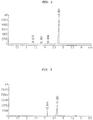
- the purity of the product was confirmed by gas chromatography (GC). The results are shown is FIG. 2 .
- the graph of FIG. 2 reveals that the product had a purity of 99% or higher.
- the purity of the product was confirmed by gas chromatography (GC). The results are shown is FIG. 2 .
- the graph of FIG. 2 reveals that the product had a purity of 79% and bis (2-cyanoethyl) ether as a by-product was formed in an amount of 21%.
- reaction mixture began to discolor from an hour after initiation of the dropwise addition and turned black along with precipitation after completion of the dropwise addition.
- the formation of the desired product ethylene glycol bis (2-cyanoethyl) ether, could not be confirmed by gas chromatography.
Landscapes
- Chemical & Material Sciences (AREA)
- Organic Chemistry (AREA)
- Chemical Kinetics & Catalysis (AREA)
- Engineering & Computer Science (AREA)
- Materials Engineering (AREA)
- Organic Low-Molecular-Weight Compounds And Preparation Thereof (AREA)
- Low-Molecular Organic Synthesis Reactions Using Catalysts (AREA)
Description
- The present disclosure relates to a method for preparing a dinitrile compound, and more specifically to a method for preparing a dinitrile compound in a simple manner without accompanying the formation of any impurity.
- Energy storage technologies have received more and more attention in recent years. As the applicability of energy storage technology is extended to mobile phones, camcorders, notebook PCs and even electric automobiles, there is a growing demand for high energy-density batteries as power sources for such electronic devices. As batteries capable of meeting this demand, lithium secondary batteries are considered the most promising batteries and are being actively researched.
- Many secondary batteries are currently available. Of these, a typical example of the lithium secondary batteries developed in the early 1990's includes an anode made of a carbonaceous material capable of intercalating/deintercalating lithium ions, a cathode made of a lithium-containing oxide, and a non-aqueous electrolyte solution containing an appropriate amount of a lithium salt in a mixed organic solvent.
- Non-aqueous electrolyte solutions containing organic solvents are prone to oxidation during long-term storage at high temperatures. This oxidation causes gas evolution and thus leads to the swelling of batteries, eventually resulting in degradation of the batteries. The gases arising from the decomposition of the electrolyte solutions may deform pouch or can type battery assemblies to cause internal short circuits. In extreme cases, the batteries may catch fire or explode. The oxidation of the electrolyte solutions may be accelerated by transition metals dissolved out under high voltage conditions.
- In efforts to solve such problems, various additives have been proposed to prevent the swelling of batteries in non-aqueous electrolyte solutions. An example of such additives is a dinitrile compound having two or more ether bonds. The dinitrile compound is known to inhibit oxidation between an electrolyte solution and a cathode to suppress heat release. The dinitrile compound is also known to inhibit oxidative decomposition of an electrolyte solution to prevent a battery from swelling.
- In a general method for the preparation of the dinitrile compound, a base catalyst, such as an alkali metal hydroxide or a quaternary ammonium compound, is used for a cyanoethylation reaction between an alcohol compound and acrylonitrile. The use of sodium hydroxide, which is most economically advantageous and is easy to synthesize, is widely known as the base catalyst.
- However, water used as a mediator for the cyanoethylation reaction reacts with acrylonitrile to form cyanoethanol, which further reacts with acrylonitrile to form bis(2-cyanoethyl)ether, which acts as an impurity.
- Some methods have been attempted to suppress the formation of the by-product, for example, by controlling the amount of acrylonitrile consumed in the reaction and by dropping acrylonitrile at a low rate to control the acrylonitrile concentration. However, these methods suffer from some problems, such as an increase in the amount of the alcohol compound remaining in the reaction mixture, causing low quality of the final product.
- Another possible method is to prevent the occurrence of cyanoethylation due to the presence of water by reacting the reactants under non-aqueous conditions. In this case, however, the polymerization of acrylonitrile may occur depending on the presence of an alkali metal hydroxide or an organic base, leading to discoloration of the reactants.
- On the other hand, a suggestion to solve such problems is described in Japanese Patent Registration No.
3946825 - However, lithium hydroxide is not effective in preventing the polymerization of the nitrile compound having an unsaturated bond and its relatively low solubility increases the reaction time.
-
JP 2005-263717 A -
JP 2005-263716 A - The present disclosure is designed to solve the problems of the prior art, and therefore it is an object of the present disclosure to provide a method for preparing a high-purity dinitrile compound in a simple manner within a short reaction time indicating high productivity.
- According to the present disclosure, there is provided a method for preparing a dinitrile compound, the method comprising reacting an alcohol compound with a nitrile compound having a terminal carbon-carbon unsaturated bond under anhydrous conditions wherein a potassium alkoxide selected from the group consisting of potassium tert-butoxide, potassium tert-pentoxide, and mixtures thereof is used as a catalyst for the reaction, wherein the alcohol compound is selected from the group consisting of ethylene glycol, propylene glycol, butylene glycol, pentylene glycol, and mixtures thereof, wherein the nitrile compound having a terminal carbon-carbon unsaturated bond is selected from the group consisting of acrylonitrile, 3-butenenitrile, 4-pentenenitrile, and mixtures thereof..
- The content of the potassium alkoxide may vary depending on the specific kind of intended dinitrile compound, etc. For example, the potassium alkoxide may be used in an amount of 0.01 to 5 parts by weight, based on 100 parts by weight of the alcohol compound, but is not limited to this range.
- The reaction may be carried out at a relatively low temperature of 20 to 50 °C.
- According to the method of the present disclosure, the reaction is carried out under anhydrous conditions so that the formation of bis(2-cyanoethyl)ether as a by-product can be suppressed and the polymerization of the nitrile compound having a carbon-carbon unsaturated bond can be inhibited to prevent the occurrence of coloring. In addition, the reaction time is short, contributing to a marked improvement in productivity.
- The accompanying drawings illustrate preferred embodiments of the present disclosure and, together with the foregoing disclosure, serve to provide further understanding of the technical spirit of the present disclosure. However, the present disclosure is not to be construed as being limited to the drawings.
-
FIG. 1 is a nuclear magnetic resonance (NMR) spectrum of a dinitrile compound prepared in Example 1. -
FIG. 2 is a gas chromatograph of a dinitrile compound prepared in Example 1. -
FIG. 3 is a gas chromatograph of a dinitrile compound prepared in Comparative Example 1. - Hereinafter, preferred embodiments of the present disclosure will be described in detail with reference to the accompanying drawings. Prior to the description, it should be understood that the terms used in the specification and the appended claims should not be construed as limited to general and dictionary meanings, but interpreted based on the meanings and concepts corresponding to technical aspects of the present disclosure on the basis of the principle that the inventor is allowed to define terms appropriately for the best explanation.
- The present disclosure provides a method for preparing a dinitrile compound. The method of the present disclosure is characterized by the reaction of an alcohol compound with a nitrile compound having a terminal carbon-carbon unsaturated bond under anhydrous conditions and the use of a potassium alkoxide as a catalyst in the course of the reaction, as disclosed in claim 1.
- Alkali metal hydroxides and organic bases have been used as catalysts for the preparation of dinitrile compounds. However, these catalysts polymerize nitrile compounds having an unsaturated bond, causing discoloration of reactants.
- In contrast, the use of the potassium alkoxide as a catalyst in the method of the present disclosure does not cause the polymerization of the nitrile compound having an unsaturated bond, avoiding the discoloration of the reactants. Furthermore, high solubility of the potassium alkoxide shortens the time required for dissolution, leading to high productivity.
- In addition, the reaction under anhydrous conditions in the presence of the potassium alkoxide enables the preparation of a dinitrile compound in high purity without accompanying the formation of any impurity.
- The amount of the potassium alkoxide used for the reaction may be suitably chosen depending on the specific kind of an intended dinitrile compound and the kinds and contents of the alcohol compound and the nitrile compound having an unsaturated bond as reactants. For example, the potassium alkoxide may be used in an amount of 0.01 to 5 parts by weight, based on 100 parts by weight of the alcohol compound, but is not limited to this range. If the amount of the potassium alkoxide is less than 0.01 parts by weight, the reaction rate may be slow. Meanwhile, if the amount of the potassium alkoxide exceeds 5 parts by weight, it will no longer exhibit the desired effect of using the catalyst, i.e. increase in reactivity, and it may not be easy to remove the catalyst after completion of the reaction.
- According to the method of the present disclosure, a dinitrile compound can be prepared using the reactants and the catalyst in a simple way. An embodiment of the method will be described in more detail below.
- The potassium alkoxide catalyst is added to and sufficiently mixed with the alcohol compound under heating and/or with stirring until its complete dissolution. Thereafter, the unsaturated nitrile compound is slowly added dropwise to initiate the formation of a dinitrile compound. After the dropwise addition is finished, the reactants are sufficiently mixed by a suitable process, such as stirring, to complete the formation of the dinitrile compound. After completion of the reaction, the dinitrile compound is separated using a proper solvent, followed by filtration.
- The method of the present disclosure can be carried out at a relatively low temperature, for example, from 20 to 50 °C, enabling the preparation of a dinitrile compound in a simple and easy manner.
- Those skilled in the art can appropriately determine the mixing ratio between the alcohol compound and the nitrile compound having an unsaturated bond taking into consideration the specific kind of an intended dinitrile compound.
- Also provided is a dinitrile compound prepared by the method. The dinitrile compound is preferably one that has two or more ether bonds.
- More specifically, the dinitrile compound of the present disclosure can be selected from the group consisting of, but not limited to, 3,5-dioxa-heptanedinitrile, 1,4-bis(cyanoethoxy)butane, bis(2-cyanoethyl)-monoformal, bis(2-cyanoethyl)-diformal, bis(2-cyanoethyl)-triformal, ethylene glycol bis(2-cyanoethyl)ether, bis(2-(2-cyanoethoxy)ethyl)ether, 4,7,10,13-tetraoxahexadecanedinitrile, 4,7,10,13,16-pentaoxanonadecane-1,14-dinitrile, 3,6,9,12,15,18-hexaoxaeicosan dinitrile, 4,10-dioxa-undecanedinitrile, 1,10-dicyano-3,8-dioxadecane, 4,10-dioxa-tridecanedinitrile and 6,9-dioxatetradecanedinitrile.
- Also provided is a non-aqueous electrolyte solution for a lithium secondary battery wherein the non-aqueous electrolyte solution includes a lithium salt, an organic solvent and the dinitrile compound as an additive.
- The dinitrile compound having ether bonds according to the present disclosure can form a complex on the surface of a cathode composed of a lithium-transition metal oxide. This complexation inhibits oxidation between the electrolyte solution and the cathode to suppress heat release and prevents a steep rise in the temperature of a battery to protect the battery from internal short circuits.
- Various kinds of compounds exist in non-aqueous electrolyte solutions during charge and discharge. Particularly, such compounds as HF and PF5 make the atmosphere of non-aqueous electrolyte solutions acidic. This acidic atmosphere accelerates the oxidation of non-aqueous electrolyte solutions on the surface of cathodes. The oxygen atoms (-O-) present in the dinitrile compound having ether bonds according to the present disclosure bond to such compounds as HF and PF5 in non-aqueous electrolyte solutions to suppress the creation of an acidic atmosphere, which can also protect the non-aqueous electrolyte solutions from oxidative degradation.
- The dinitrile compound having ether bonds according to the present disclosure can exhibit improved effects in terms of battery performance compared to other known additives. Specifically, the use of the dinitrile compound according to the present disclosure can impart a battery with excellent electrochemical properties, such as high capacity retention and improved charging and discharging cycle life.
- The lithium salt as an electrolyte included in the non-aqueous electrolyte solution may be any of those commonly used in electrolyte solutions for lithium secondary batteries. For example, the anion of the lithium salt may be selected from the group consisting of F-, Cl-, Br-, I-, NO3 -, N(CN)2 -, BF4 -, ClO4 -, AlO4 -, AlCl4 -, PF6 -, SbF6 -, BF2C2O4 -, BC4O8 -, (CF3)2PF4 -, (CF3)3PF3 -, (CF3)4PF2 -, (CF3)5PF-, (CF3)6P-, CF3SO3 -, C4F9SO3 -, CF3CF2SO3 -, (CF3SO2)2N-, (FSO2)2N-, CF3CF2(CF3)2CO-, (CF3SO2)2CH-, (SF5)3C-, (CF3SO2)3C-, CF3(CF2)7SO3 -, CF3CO2 -, CH3CO2 -, SCN- and (CF3CF2SO2)2N-
- The organic solvent included in the non-aqueous electrolyte solution may be any of those commonly used in electrolyte solutions for lithium secondary batteries. Non-limiting examples of organic solvents suitable for use in the non-aqueous electrolyte solution include, but are not limited to, ethers, esters, amides, linear carbonates and cyclic carbonates. These organic solvents may be used alone or as a mixture of two or more thereof.
- The non-aqueous electrolyte solution may include a carbonate compound, such as a cyclic carbonate, a linear carbonate or a mixture thereof, as a representative example of the organic solvent. Specifically, the cyclic carbonate compound may be selected from the group consisting of ethylene carbonate (EC), propylene carbonate (PC), 1,2-butylene carbonate, 2,3-butylene carbonate, 1,2-pentylene carbonate, 2,3-pentylene carbonate, vinylene carbonate, halides thereof, and mixtures thereof. The linear carbonate compound may be selected from the group consisting of, but not limited to, dimethyl carbonate (DMC), diethyl carbonate (DEC), dipropyl carbonate, ethyl methyl carbonate (EMC), methyl propyl carbonate, ethyl propyl carbonate, and mixtures thereof.
- Ethylene carbonate and propylene carbonate, which are highly viscous and high dielectric constant cyclic carbonates, are particularly preferred because of their good ability to dissociate the lithium salt present in the electrolyte solution. A mixture of such a cyclic carbonate and a linear carbonate whose viscosity and dielectric constant are low, such as dimethyl carbonate or diethyl carbonate, in a suitable ratio is more preferably used because it can be used to prepare an electrolyte solution having a high electrical conductivity.
- Examples of the ethers include, but are not limited to, dimethyl ether, diethyl ether, dipropyl ether, methyl ethyl ether, methyl propyl ether and ethyl propyl ether. These ethers may be used alone or as a mixture of two or more thereof.
- Examples of the esters include, but are not limited to, methyl acetate, ethyl acetate, propyl acetate, methyl propionate, ethyl propionate, γ-butyrolactone, γ-valerolactone, γ-caprolactone, σ-valerolactone and ε-caprolactone. These esters may be used alone or as a mixture of two or more thereof.
- The non-aqueous electrolyte solution can be injected into an electrode structure consisting of a cathode, an anode and a separator interposed between the electrodes to fabricate a lithium secondary battery. The cathode, the anode and the separator constituting the electrode structure may be those commonly used to fabricate lithium secondary batteries.
- Hereinafter, embodiments of the present disclosure will be described in detail. The embodiments of the present disclosure, however, may take several other forms, and the scope of the present disclosure should not be construed as being limited to the following examples. The embodiments of the present disclosure are provided to more fully explain the present disclosure to those having ordinary knowledge in the art to which the present disclosure pertains.
- 124.2 g of ethylene glycol as an alcohol compound and 0.2 g of potassium tert-butoxide were placed in a flask and were stirred under heating at 40 °C. To the mixture was added dropwise 222.8 g of acrylonitrile over 1 hr.
- After the dropwise addition was finished, stirring was continued for an additional 4 hr. The reaction mixture was extracted with 200 g of methylene chloride and 500 g of distilled water. The extraction procedure was repeated once more. The methylene chloride solution was separated and distilled under reduced pressure, affording colorless and transparent ethylene glycol bis(2-cyanoethyl)ether.
- The structure of the product was confirmed by NMR. The NMR spectrum is shown in
FIG. 1 . - The purity of the product was confirmed by gas chromatography (GC). The results are shown is
FIG. 2 . The graph ofFIG. 2 reveals that the product had a purity of 99% or higher. - 124.2 g of ethylene glycol as an alcohol compound and a 2% aqueous solution of sodium hydroxide were placed in a flask and were stirred under heating at 40 °C. To the mixture was added dropwise 222.8 g of acrylonitrile over 1 hr.
- After the dropwise addition was finished, stirring was continued for an additional 3 hr. The reaction mixture was extracted with 200 g of methylene chloride and 500 g of distilled water. The extraction procedure was repeated once more. The methylene chloride solution was separated and distilled under reduced pressure, affording colorless and transparent ethylene glycol bis(2-cyanoethyl)ether.
- The purity of the product was confirmed by gas chromatography (GC). The results are shown is
FIG. 2 . The graph ofFIG. 2 reveals that the product had a purity of 79% and bis (2-cyanoethyl) ether as a by-product was formed in an amount of 21%. - From these results, it can be confirmed that the aqueous conditions for the reaction in Comparative Example 1 led to the formation of the by-product, bis(2-cyanoethyl)ether, which is a cause of the lower purity, unlike the anhydrous conditions for the reaction in Example 1.
- 124.2 g of ethylene glycol as an alcohol compound and 0.1 g of sodium hydroxide were placed in a flask and were stirred under heating at 40-50 °C. To the mixture was added dropwise 222.8 g of acrylonitrile over 2 hr.
- The reaction mixture began to discolor from an hour after initiation of the dropwise addition and turned black along with precipitation after completion of the dropwise addition. After the reaction was finished, the formation of the desired product, ethylene glycol bis (2-cyanoethyl) ether, could not be confirmed by gas chromatography.
- From these results, it can be seen that the polymerization of the acrylonitrile as a raw material impeded the formation of the desired product and caused the occurrence of coloring.
Claims (3)
- A method for preparing a dinitrile compound, the method comprising reacting an alcohol compound with a nitrile compound having a terminal carbon-carbon unsaturated bond under anhydrous conditions wherein a potassium alkoxide selected from the group consisting of potassium tert-butoxide, potassium tert-pentoxide, and mixtures thereof is used as a catalyst for the reaction,
wherein the alcohol compound is selected from the group consisting of ethylene glycol, propylene glycol, butylene glycol, pentylene glycol, and mixtures thereof, wherein the nitrile compound having a terminal carbon-carbon unsaturated bond is selected from the group consisting of acrylonitrile, 3-butenenitrile, 4-pentenenitrile, and mixtures thereof. - The method according to claim 1, wherein the potassium alkoxide is used in an amount of 0.01 to 5 parts by weight, based on 100 parts by weight of the alcohol compound.
- The method according to claim 1, wherein the reaction is carried out at a temperature of 20 to 50 °C.
Applications Claiming Priority (3)
| Application Number | Priority Date | Filing Date | Title |
|---|---|---|---|
| KR20110024437 | 2011-03-18 | ||
| KR1020120003863A KR101440529B1 (en) | 2011-03-18 | 2012-01-12 | Method of preparing dinitrile compounds |
| PCT/KR2012/000485 WO2012128462A1 (en) | 2011-03-18 | 2012-01-19 | Method for preparing a dinitrile compound |
Publications (3)
| Publication Number | Publication Date |
|---|---|
| EP2687505A1 EP2687505A1 (en) | 2014-01-22 |
| EP2687505A4 EP2687505A4 (en) | 2014-10-08 |
| EP2687505B1 true EP2687505B1 (en) | 2018-04-04 |
Family
ID=47113225
Family Applications (1)
| Application Number | Title | Priority Date | Filing Date |
|---|---|---|---|
| EP12760109.4A Active EP2687505B1 (en) | 2011-03-18 | 2012-01-19 | Method for preparing a dinitrile compound |
Country Status (6)
| Country | Link |
|---|---|
| US (1) | US9394242B2 (en) |
| EP (1) | EP2687505B1 (en) |
| JP (1) | JP5802284B2 (en) |
| KR (1) | KR101440529B1 (en) |
| CN (1) | CN103429566B (en) |
| WO (1) | WO2012128462A1 (en) |
Families Citing this family (9)
| Publication number | Priority date | Publication date | Assignee | Title |
|---|---|---|---|---|
| IL322264A (en) * | 2014-04-07 | 2025-09-01 | Novartis Ag | Treatment of cancer using anti-cd19 chimeric antigen receptor |
| CN103980156B (en) * | 2014-05-22 | 2016-04-06 | 中国科学院福建物质结构研究所 | A kind of preparation method of alkyl diol (two propionitrile base) ether |
| CN105418456A (en) * | 2015-12-07 | 2016-03-23 | 张家港瀚康化工有限公司 | Preparation method of butanediol bis(propionitrile) ether |
| CN105481718A (en) * | 2015-12-07 | 2016-04-13 | 张家港瀚康化工有限公司 | Production method of butenediol bis (propionitrile) ether |
| CN109134309B (en) * | 2018-09-19 | 2020-12-29 | 张家港瀚康化工有限公司 | Method for purifying ethylene glycol bis (propionitrile) ether |
| CN114621117A (en) * | 2022-05-16 | 2022-06-14 | 山东海科新源材料科技股份有限公司 | Method for preparing ethylene glycol bis (propionitrile) ether crude product by anhydrous method |
| CN115322119B (en) * | 2022-07-29 | 2023-09-29 | 抚顺顺能化工有限公司 | Preparation method of ethylene glycol bis (propionitrile) ether |
| CN116217432A (en) * | 2023-03-08 | 2023-06-06 | 深圳市宝安区新材料研究院 | A kind of preparation method of ethylene glycol bis(propionitrile) ether |
| CN117603091A (en) * | 2023-11-21 | 2024-02-27 | 合肥市赛纬电子材料有限公司 | Preparation method of ethylene glycol bis (propionitrile) ether |
Family Cites Families (8)
| Publication number | Priority date | Publication date | Assignee | Title |
|---|---|---|---|---|
| US2977337A (en) * | 1956-03-21 | 1961-03-28 | American Cyanamid Co | Cyanoethylated polyacrylonitrile compositions |
| US2941990A (en) * | 1957-07-15 | 1960-06-21 | American Cyanamid Co | Cyanoethylated polymers |
| DE2924133A1 (en) * | 1978-06-16 | 1979-12-20 | Suntech | PROCESS FOR CONTINUOUS CYANAETHYLATION |
| JP3946825B2 (en) | 1997-09-10 | 2007-07-18 | サンスター技研株式会社 | Method for producing cyanoethyl compound for electrolyte of lithium or lithium ion secondary battery |
| JP2005263717A (en) * | 2004-03-19 | 2005-09-29 | Mitsubishi Chemicals Corp | Method for producing cyanoalkoxy compound |
| JP2005263716A (en) * | 2004-03-19 | 2005-09-29 | Mitsubishi Chemicals Corp | Method for producing cyanoalkoxy compound |
| WO2009152392A2 (en) * | 2008-06-11 | 2009-12-17 | University Of Toledo | Muscarinic agonists for neurological disorders and methods of making the same |
| JP2013075837A (en) * | 2011-09-29 | 2013-04-25 | Fujifilm Corp | Manufacturing method for nitrile compound |
-
2012
- 2012-01-12 KR KR1020120003863A patent/KR101440529B1/en active Active
- 2012-01-19 WO PCT/KR2012/000485 patent/WO2012128462A1/en not_active Ceased
- 2012-01-19 JP JP2013557635A patent/JP5802284B2/en active Active
- 2012-01-19 CN CN201280014212.4A patent/CN103429566B/en active Active
- 2012-01-19 EP EP12760109.4A patent/EP2687505B1/en active Active
-
2013
- 2013-09-13 US US14/026,233 patent/US9394242B2/en active Active
Non-Patent Citations (1)
| Title |
|---|
| None * |
Also Published As
| Publication number | Publication date |
|---|---|
| CN103429566B (en) | 2017-03-22 |
| EP2687505A1 (en) | 2014-01-22 |
| JP2014519473A (en) | 2014-08-14 |
| KR20120106546A (en) | 2012-09-26 |
| JP5802284B2 (en) | 2015-10-28 |
| CN103429566A (en) | 2013-12-04 |
| EP2687505A4 (en) | 2014-10-08 |
| US9394242B2 (en) | 2016-07-19 |
| KR101440529B1 (en) | 2014-09-17 |
| WO2012128462A1 (en) | 2012-09-27 |
| US20140018567A1 (en) | 2014-01-16 |
Similar Documents
| Publication | Publication Date | Title |
|---|---|---|
| US9394242B2 (en) | Method for preparing dinitrile compound | |
| CN110233289B (en) | High-voltage additive, electrolyte containing same and battery | |
| CN103562177B (en) | Non-aqueous electrolyte solution for lithium secondary battery and lithium secondary battery containing the same | |
| US11476502B2 (en) | Nonaqueous electrolyte compositions comprising cyclic carbonate and non-fluorinated acyclic carbonate | |
| EP3086397B1 (en) | Nonaqueous electrolyte solution, electricity storage device using same, and phosphonoformic acid compound used in same | |
| JP6380392B2 (en) | Non-aqueous electrolyte, power storage device using the same, and biphenyl group-containing carbonate compound used therefor | |
| JP6903128B2 (en) | Electrolyte and battery | |
| US20120301760A1 (en) | Nonaqueous electrolyte secondary battery with an electrolyte including a lithium boron compound | |
| KR20100098499A (en) | Phenyl sulfonate compound, nonaqueous electrolyte solution using the same, and lithium battery | |
| CN106558731A (en) | A kind of lithium-ion battery electrolytes and lithium ion battery | |
| KR102023678B1 (en) | Electrolyte for Secondary Battery and Secondary Battery Comprising the Same | |
| KR20110066130A (en) | Non-aqueous electrolyte solution for lithium batteries, lithium battery using the same, and formyloxy group-containing compound used therein | |
| KR20250122489A (en) | Electrolyte containing a pyrosulfuric acid-boron trifluoride complex lithium salt and a lithium ion secondary battery | |
| JPWO2013168716A1 (en) | Non-aqueous electrolyte, power storage device using the same, and dihalophosphate compound | |
| KR20110103871A (en) | Nonaqueous electrolyte secondary battery | |
| EP3618163A1 (en) | Non-aqueous electrolyte solution, and secondary battery | |
| JP2022079649A (en) | Additives for electrolytes | |
| KR20040015420A (en) | Nonaqueous electrolytic solution with improved safety and lithium battery employing the same | |
| JP5286718B2 (en) | Non-aqueous electrolyte for phenyl ester and lithium secondary battery, and lithium secondary battery using the same | |
| JP5455889B2 (en) | Non-aqueous electrolyte and secondary battery | |
| US20080193852A1 (en) | Nonaqueous Electrolyte Secondary Battery | |
| CN113381073B (en) | Silicon sulfonate non-aqueous electrolyte additive and application thereof | |
| CN119965342B (en) | A high-voltage non-aqueous electrolyte and a lithium-ion battery | |
| JPH0845544A (en) | Nonaqueous electrolyte and nonaqueous electrolyte battery | |
| CN120623144A (en) | Thiophene ether-containing nitrile compound, preparation method thereof, and electrolyte |
Legal Events
| Date | Code | Title | Description |
|---|---|---|---|
| PUAI | Public reference made under article 153(3) epc to a published international application that has entered the european phase |
Free format text: ORIGINAL CODE: 0009012 |
|
| 17P | Request for examination filed |
Effective date: 20130905 |
|
| AK | Designated contracting states |
Kind code of ref document: A1 Designated state(s): AL AT BE BG CH CY CZ DE DK EE ES FI FR GB GR HR HU IE IS IT LI LT LU LV MC MK MT NL NO PL PT RO RS SE SI SK SM TR |
|
| DAX | Request for extension of the european patent (deleted) | ||
| A4 | Supplementary search report drawn up and despatched |
Effective date: 20140908 |
|
| RIC1 | Information provided on ipc code assigned before grant |
Ipc: B01J 31/12 20060101ALI20140902BHEP Ipc: C07C 253/32 20060101AFI20140902BHEP Ipc: C07C 255/09 20060101ALI20140902BHEP Ipc: C07B 61/00 20060101ALI20140902BHEP |
|
| 17Q | First examination report despatched |
Effective date: 20160510 |
|
| STAA | Information on the status of an ep patent application or granted ep patent |
Free format text: STATUS: EXAMINATION IS IN PROGRESS |
|
| GRAP | Despatch of communication of intention to grant a patent |
Free format text: ORIGINAL CODE: EPIDOSNIGR1 |
|
| STAA | Information on the status of an ep patent application or granted ep patent |
Free format text: STATUS: GRANT OF PATENT IS INTENDED |
|
| INTG | Intention to grant announced |
Effective date: 20180201 |
|
| GRAS | Grant fee paid |
Free format text: ORIGINAL CODE: EPIDOSNIGR3 |
|
| GRAA | (expected) grant |
Free format text: ORIGINAL CODE: 0009210 |
|
| STAA | Information on the status of an ep patent application or granted ep patent |
Free format text: STATUS: THE PATENT HAS BEEN GRANTED |
|
| AK | Designated contracting states |
Kind code of ref document: B1 Designated state(s): AL AT BE BG CH CY CZ DE DK EE ES FI FR GB GR HR HU IE IS IT LI LT LU LV MC MK MT NL NO PL PT RO RS SE SI SK SM TR |
|
| REG | Reference to a national code |
Ref country code: GB Ref legal event code: FG4D |
|
| REG | Reference to a national code |
Ref country code: CH Ref legal event code: EP |
|
| REG | Reference to a national code |
Ref country code: AT Ref legal event code: REF Ref document number: 985458 Country of ref document: AT Kind code of ref document: T Effective date: 20180415 |
|
| REG | Reference to a national code |
Ref country code: IE Ref legal event code: FG4D |
|
| REG | Reference to a national code |
Ref country code: DE Ref legal event code: R096 Ref document number: 602012044776 Country of ref document: DE |
|
| REG | Reference to a national code |
Ref country code: NL Ref legal event code: MP Effective date: 20180404 |
|
| REG | Reference to a national code |
Ref country code: LT Ref legal event code: MG4D |
|
| PG25 | Lapsed in a contracting state [announced via postgrant information from national office to epo] |
Ref country code: NL Free format text: LAPSE BECAUSE OF FAILURE TO SUBMIT A TRANSLATION OF THE DESCRIPTION OR TO PAY THE FEE WITHIN THE PRESCRIBED TIME-LIMIT Effective date: 20180404 |
|
| PG25 | Lapsed in a contracting state [announced via postgrant information from national office to epo] |
Ref country code: LT Free format text: LAPSE BECAUSE OF FAILURE TO SUBMIT A TRANSLATION OF THE DESCRIPTION OR TO PAY THE FEE WITHIN THE PRESCRIBED TIME-LIMIT Effective date: 20180404 Ref country code: SE Free format text: LAPSE BECAUSE OF FAILURE TO SUBMIT A TRANSLATION OF THE DESCRIPTION OR TO PAY THE FEE WITHIN THE PRESCRIBED TIME-LIMIT Effective date: 20180404 Ref country code: NO Free format text: LAPSE BECAUSE OF FAILURE TO SUBMIT A TRANSLATION OF THE DESCRIPTION OR TO PAY THE FEE WITHIN THE PRESCRIBED TIME-LIMIT Effective date: 20180704 Ref country code: ES Free format text: LAPSE BECAUSE OF FAILURE TO SUBMIT A TRANSLATION OF THE DESCRIPTION OR TO PAY THE FEE WITHIN THE PRESCRIBED TIME-LIMIT Effective date: 20180404 Ref country code: PL Free format text: LAPSE BECAUSE OF FAILURE TO SUBMIT A TRANSLATION OF THE DESCRIPTION OR TO PAY THE FEE WITHIN THE PRESCRIBED TIME-LIMIT Effective date: 20180404 Ref country code: AL Free format text: LAPSE BECAUSE OF FAILURE TO SUBMIT A TRANSLATION OF THE DESCRIPTION OR TO PAY THE FEE WITHIN THE PRESCRIBED TIME-LIMIT Effective date: 20180404 Ref country code: FI Free format text: LAPSE BECAUSE OF FAILURE TO SUBMIT A TRANSLATION OF THE DESCRIPTION OR TO PAY THE FEE WITHIN THE PRESCRIBED TIME-LIMIT Effective date: 20180404 Ref country code: BG Free format text: LAPSE BECAUSE OF FAILURE TO SUBMIT A TRANSLATION OF THE DESCRIPTION OR TO PAY THE FEE WITHIN THE PRESCRIBED TIME-LIMIT Effective date: 20180704 |
|
| PG25 | Lapsed in a contracting state [announced via postgrant information from national office to epo] |
Ref country code: RS Free format text: LAPSE BECAUSE OF FAILURE TO SUBMIT A TRANSLATION OF THE DESCRIPTION OR TO PAY THE FEE WITHIN THE PRESCRIBED TIME-LIMIT Effective date: 20180404 Ref country code: LV Free format text: LAPSE BECAUSE OF FAILURE TO SUBMIT A TRANSLATION OF THE DESCRIPTION OR TO PAY THE FEE WITHIN THE PRESCRIBED TIME-LIMIT Effective date: 20180404 Ref country code: GR Free format text: LAPSE BECAUSE OF FAILURE TO SUBMIT A TRANSLATION OF THE DESCRIPTION OR TO PAY THE FEE WITHIN THE PRESCRIBED TIME-LIMIT Effective date: 20180705 Ref country code: HR Free format text: LAPSE BECAUSE OF FAILURE TO SUBMIT A TRANSLATION OF THE DESCRIPTION OR TO PAY THE FEE WITHIN THE PRESCRIBED TIME-LIMIT Effective date: 20180404 |
|
| REG | Reference to a national code |
Ref country code: AT Ref legal event code: MK05 Ref document number: 985458 Country of ref document: AT Kind code of ref document: T Effective date: 20180404 |
|
| PG25 | Lapsed in a contracting state [announced via postgrant information from national office to epo] |
Ref country code: PT Free format text: LAPSE BECAUSE OF FAILURE TO SUBMIT A TRANSLATION OF THE DESCRIPTION OR TO PAY THE FEE WITHIN THE PRESCRIBED TIME-LIMIT Effective date: 20180806 |
|
| REG | Reference to a national code |
Ref country code: DE Ref legal event code: R097 Ref document number: 602012044776 Country of ref document: DE |
|
| PG25 | Lapsed in a contracting state [announced via postgrant information from national office to epo] |
Ref country code: AT Free format text: LAPSE BECAUSE OF FAILURE TO SUBMIT A TRANSLATION OF THE DESCRIPTION OR TO PAY THE FEE WITHIN THE PRESCRIBED TIME-LIMIT Effective date: 20180404 Ref country code: DK Free format text: LAPSE BECAUSE OF FAILURE TO SUBMIT A TRANSLATION OF THE DESCRIPTION OR TO PAY THE FEE WITHIN THE PRESCRIBED TIME-LIMIT Effective date: 20180404 Ref country code: SK Free format text: LAPSE BECAUSE OF FAILURE TO SUBMIT A TRANSLATION OF THE DESCRIPTION OR TO PAY THE FEE WITHIN THE PRESCRIBED TIME-LIMIT Effective date: 20180404 Ref country code: EE Free format text: LAPSE BECAUSE OF FAILURE TO SUBMIT A TRANSLATION OF THE DESCRIPTION OR TO PAY THE FEE WITHIN THE PRESCRIBED TIME-LIMIT Effective date: 20180404 Ref country code: RO Free format text: LAPSE BECAUSE OF FAILURE TO SUBMIT A TRANSLATION OF THE DESCRIPTION OR TO PAY THE FEE WITHIN THE PRESCRIBED TIME-LIMIT Effective date: 20180404 Ref country code: CZ Free format text: LAPSE BECAUSE OF FAILURE TO SUBMIT A TRANSLATION OF THE DESCRIPTION OR TO PAY THE FEE WITHIN THE PRESCRIBED TIME-LIMIT Effective date: 20180404 |
|
| PLBE | No opposition filed within time limit |
Free format text: ORIGINAL CODE: 0009261 |
|
| STAA | Information on the status of an ep patent application or granted ep patent |
Free format text: STATUS: NO OPPOSITION FILED WITHIN TIME LIMIT |
|
| PG25 | Lapsed in a contracting state [announced via postgrant information from national office to epo] |
Ref country code: IT Free format text: LAPSE BECAUSE OF FAILURE TO SUBMIT A TRANSLATION OF THE DESCRIPTION OR TO PAY THE FEE WITHIN THE PRESCRIBED TIME-LIMIT Effective date: 20180404 Ref country code: SM Free format text: LAPSE BECAUSE OF FAILURE TO SUBMIT A TRANSLATION OF THE DESCRIPTION OR TO PAY THE FEE WITHIN THE PRESCRIBED TIME-LIMIT Effective date: 20180404 |
|
| 26N | No opposition filed |
Effective date: 20190107 |
|
| PG25 | Lapsed in a contracting state [announced via postgrant information from national office to epo] |
Ref country code: SI Free format text: LAPSE BECAUSE OF FAILURE TO SUBMIT A TRANSLATION OF THE DESCRIPTION OR TO PAY THE FEE WITHIN THE PRESCRIBED TIME-LIMIT Effective date: 20180404 |
|
| PG25 | Lapsed in a contracting state [announced via postgrant information from national office to epo] |
Ref country code: MC Free format text: LAPSE BECAUSE OF FAILURE TO SUBMIT A TRANSLATION OF THE DESCRIPTION OR TO PAY THE FEE WITHIN THE PRESCRIBED TIME-LIMIT Effective date: 20180404 |
|
| REG | Reference to a national code |
Ref country code: CH Ref legal event code: PL |
|
| PG25 | Lapsed in a contracting state [announced via postgrant information from national office to epo] |
Ref country code: LU Free format text: LAPSE BECAUSE OF NON-PAYMENT OF DUE FEES Effective date: 20190119 |
|
| REG | Reference to a national code |
Ref country code: BE Ref legal event code: MM Effective date: 20190131 |
|
| REG | Reference to a national code |
Ref country code: IE Ref legal event code: MM4A |
|
| PG25 | Lapsed in a contracting state [announced via postgrant information from national office to epo] |
Ref country code: BE Free format text: LAPSE BECAUSE OF NON-PAYMENT OF DUE FEES Effective date: 20190131 |
|
| PG25 | Lapsed in a contracting state [announced via postgrant information from national office to epo] |
Ref country code: CH Free format text: LAPSE BECAUSE OF NON-PAYMENT OF DUE FEES Effective date: 20190131 Ref country code: LI Free format text: LAPSE BECAUSE OF NON-PAYMENT OF DUE FEES Effective date: 20190131 |
|
| PG25 | Lapsed in a contracting state [announced via postgrant information from national office to epo] |
Ref country code: IE Free format text: LAPSE BECAUSE OF NON-PAYMENT OF DUE FEES Effective date: 20190119 |
|
| PG25 | Lapsed in a contracting state [announced via postgrant information from national office to epo] |
Ref country code: TR Free format text: LAPSE BECAUSE OF FAILURE TO SUBMIT A TRANSLATION OF THE DESCRIPTION OR TO PAY THE FEE WITHIN THE PRESCRIBED TIME-LIMIT Effective date: 20180404 |
|
| PG25 | Lapsed in a contracting state [announced via postgrant information from national office to epo] |
Ref country code: MT Free format text: LAPSE BECAUSE OF NON-PAYMENT OF DUE FEES Effective date: 20190119 |
|
| PG25 | Lapsed in a contracting state [announced via postgrant information from national office to epo] |
Ref country code: CY Free format text: LAPSE BECAUSE OF FAILURE TO SUBMIT A TRANSLATION OF THE DESCRIPTION OR TO PAY THE FEE WITHIN THE PRESCRIBED TIME-LIMIT Effective date: 20180404 |
|
| PG25 | Lapsed in a contracting state [announced via postgrant information from national office to epo] |
Ref country code: IS Free format text: LAPSE BECAUSE OF FAILURE TO SUBMIT A TRANSLATION OF THE DESCRIPTION OR TO PAY THE FEE WITHIN THE PRESCRIBED TIME-LIMIT Effective date: 20180804 |
|
| PG25 | Lapsed in a contracting state [announced via postgrant information from national office to epo] |
Ref country code: HU Free format text: LAPSE BECAUSE OF FAILURE TO SUBMIT A TRANSLATION OF THE DESCRIPTION OR TO PAY THE FEE WITHIN THE PRESCRIBED TIME-LIMIT; INVALID AB INITIO Effective date: 20120119 |
|
| PG25 | Lapsed in a contracting state [announced via postgrant information from national office to epo] |
Ref country code: MK Free format text: LAPSE BECAUSE OF FAILURE TO SUBMIT A TRANSLATION OF THE DESCRIPTION OR TO PAY THE FEE WITHIN THE PRESCRIBED TIME-LIMIT Effective date: 20180404 |
|
| P01 | Opt-out of the competence of the unified patent court (upc) registered |
Effective date: 20230323 |
|
| REG | Reference to a national code |
Ref country code: DE Ref legal event code: R081 Ref document number: 602012044776 Country of ref document: DE Owner name: LG ENERGY SOLUTION, LTD., KR Free format text: FORMER OWNER: LG CHEM. LTD., SEOUL/SOUL, KR |
|
| REG | Reference to a national code |
Ref country code: GB Ref legal event code: 732E Free format text: REGISTERED BETWEEN 20230824 AND 20230831 |
|
| PGFP | Annual fee paid to national office [announced via postgrant information from national office to epo] |
Ref country code: GB Payment date: 20251222 Year of fee payment: 15 |
|
| PGFP | Annual fee paid to national office [announced via postgrant information from national office to epo] |
Ref country code: FR Payment date: 20251223 Year of fee payment: 15 |
|
| PGFP | Annual fee paid to national office [announced via postgrant information from national office to epo] |
Ref country code: DE Payment date: 20251222 Year of fee payment: 15 |