EP2677983B1 - Machine for making absorbent sanitary articles, such as nappies for babies or incontinence pads for adults, sanitary towels or the like - Google Patents
Machine for making absorbent sanitary articles, such as nappies for babies or incontinence pads for adults, sanitary towels or the like Download PDFInfo
- Publication number
- EP2677983B1 EP2677983B1 EP12708944.9A EP12708944A EP2677983B1 EP 2677983 B1 EP2677983 B1 EP 2677983B1 EP 12708944 A EP12708944 A EP 12708944A EP 2677983 B1 EP2677983 B1 EP 2677983B1
- Authority
- EP
- European Patent Office
- Prior art keywords
- laser
- machine
- making absorbent
- absorbent sanitary
- sanitary articles
- Prior art date
- Legal status (The legal status is an assumption and is not a legal conclusion. Google has not performed a legal analysis and makes no representation as to the accuracy of the status listed.)
- Not-in-force
Links
- 230000002745 absorbent Effects 0.000 title claims description 30
- 239000002250 absorbent Substances 0.000 title claims description 30
- 206010021639 Incontinence Diseases 0.000 title claims description 10
- 238000005520 cutting process Methods 0.000 claims description 40
- 239000000463 material Substances 0.000 claims description 24
- 238000007789 sealing Methods 0.000 claims description 20
- 230000003287 optical effect Effects 0.000 claims description 3
- 239000004065 semiconductor Substances 0.000 claims 1
- 239000000853 adhesive Substances 0.000 description 4
- 230000001070 adhesive effect Effects 0.000 description 4
- 230000033001 locomotion Effects 0.000 description 4
- 238000004519 manufacturing process Methods 0.000 description 3
- 239000000126 substance Substances 0.000 description 3
- 229920003043 Cellulose fiber Polymers 0.000 description 2
- 229910000831 Steel Inorganic materials 0.000 description 2
- 238000010521 absorption reaction Methods 0.000 description 2
- 238000010586 diagram Methods 0.000 description 2
- 239000000835 fiber Substances 0.000 description 2
- 238000009434 installation Methods 0.000 description 2
- 238000003698 laser cutting Methods 0.000 description 2
- 238000000034 method Methods 0.000 description 2
- 239000004745 nonwoven fabric Substances 0.000 description 2
- 239000010959 steel Substances 0.000 description 2
- 238000006467 substitution reaction Methods 0.000 description 2
- 238000004026 adhesive bonding Methods 0.000 description 1
- 230000004888 barrier function Effects 0.000 description 1
- 230000005540 biological transmission Effects 0.000 description 1
- 238000007796 conventional method Methods 0.000 description 1
- 239000013013 elastic material Substances 0.000 description 1
- 238000002474 experimental method Methods 0.000 description 1
- 238000012423 maintenance Methods 0.000 description 1
- 238000007493 shaping process Methods 0.000 description 1
- 230000008719 thickening Effects 0.000 description 1
Images



Classifications
-
- A—HUMAN NECESSITIES
- A61—MEDICAL OR VETERINARY SCIENCE; HYGIENE
- A61F—FILTERS IMPLANTABLE INTO BLOOD VESSELS; PROSTHESES; DEVICES PROVIDING PATENCY TO, OR PREVENTING COLLAPSING OF, TUBULAR STRUCTURES OF THE BODY, e.g. STENTS; ORTHOPAEDIC, NURSING OR CONTRACEPTIVE DEVICES; FOMENTATION; TREATMENT OR PROTECTION OF EYES OR EARS; BANDAGES, DRESSINGS OR ABSORBENT PADS; FIRST-AID KITS
- A61F13/00—Bandages or dressings; Absorbent pads
- A61F13/15—Absorbent pads, e.g. sanitary towels, swabs or tampons for external or internal application to the body; Supporting or fastening means therefor; Tampon applicators
- A61F13/15577—Apparatus or processes for manufacturing
- A61F13/15699—Forming webs by bringing together several webs, e.g. by laminating or folding several webs, with or without additional treatment of the webs
-
- A—HUMAN NECESSITIES
- A61—MEDICAL OR VETERINARY SCIENCE; HYGIENE
- A61F—FILTERS IMPLANTABLE INTO BLOOD VESSELS; PROSTHESES; DEVICES PROVIDING PATENCY TO, OR PREVENTING COLLAPSING OF, TUBULAR STRUCTURES OF THE BODY, e.g. STENTS; ORTHOPAEDIC, NURSING OR CONTRACEPTIVE DEVICES; FOMENTATION; TREATMENT OR PROTECTION OF EYES OR EARS; BANDAGES, DRESSINGS OR ABSORBENT PADS; FIRST-AID KITS
- A61F13/00—Bandages or dressings; Absorbent pads
- A61F13/15—Absorbent pads, e.g. sanitary towels, swabs or tampons for external or internal application to the body; Supporting or fastening means therefor; Tampon applicators
-
- A—HUMAN NECESSITIES
- A61—MEDICAL OR VETERINARY SCIENCE; HYGIENE
- A61F—FILTERS IMPLANTABLE INTO BLOOD VESSELS; PROSTHESES; DEVICES PROVIDING PATENCY TO, OR PREVENTING COLLAPSING OF, TUBULAR STRUCTURES OF THE BODY, e.g. STENTS; ORTHOPAEDIC, NURSING OR CONTRACEPTIVE DEVICES; FOMENTATION; TREATMENT OR PROTECTION OF EYES OR EARS; BANDAGES, DRESSINGS OR ABSORBENT PADS; FIRST-AID KITS
- A61F13/00—Bandages or dressings; Absorbent pads
- A61F13/15—Absorbent pads, e.g. sanitary towels, swabs or tampons for external or internal application to the body; Supporting or fastening means therefor; Tampon applicators
- A61F13/15577—Apparatus or processes for manufacturing
- A61F13/15707—Mechanical treatment, e.g. notching, twisting, compressing, shaping
- A61F13/15723—Partitioning batts; Cutting
-
- A—HUMAN NECESSITIES
- A61—MEDICAL OR VETERINARY SCIENCE; HYGIENE
- A61F—FILTERS IMPLANTABLE INTO BLOOD VESSELS; PROSTHESES; DEVICES PROVIDING PATENCY TO, OR PREVENTING COLLAPSING OF, TUBULAR STRUCTURES OF THE BODY, e.g. STENTS; ORTHOPAEDIC, NURSING OR CONTRACEPTIVE DEVICES; FOMENTATION; TREATMENT OR PROTECTION OF EYES OR EARS; BANDAGES, DRESSINGS OR ABSORBENT PADS; FIRST-AID KITS
- A61F13/00—Bandages or dressings; Absorbent pads
- A61F13/15—Absorbent pads, e.g. sanitary towels, swabs or tampons for external or internal application to the body; Supporting or fastening means therefor; Tampon applicators
- A61F13/15577—Apparatus or processes for manufacturing
- A61F13/15707—Mechanical treatment, e.g. notching, twisting, compressing, shaping
- A61F13/15739—Sealing, e.g. involving cutting
-
- A—HUMAN NECESSITIES
- A61—MEDICAL OR VETERINARY SCIENCE; HYGIENE
- A61F—FILTERS IMPLANTABLE INTO BLOOD VESSELS; PROSTHESES; DEVICES PROVIDING PATENCY TO, OR PREVENTING COLLAPSING OF, TUBULAR STRUCTURES OF THE BODY, e.g. STENTS; ORTHOPAEDIC, NURSING OR CONTRACEPTIVE DEVICES; FOMENTATION; TREATMENT OR PROTECTION OF EYES OR EARS; BANDAGES, DRESSINGS OR ABSORBENT PADS; FIRST-AID KITS
- A61F13/00—Bandages or dressings; Absorbent pads
- A61F13/15—Absorbent pads, e.g. sanitary towels, swabs or tampons for external or internal application to the body; Supporting or fastening means therefor; Tampon applicators
- A61F13/15577—Apparatus or processes for manufacturing
- A61F13/15756—Applying tabs, strips, tapes, loops; Knotting the ends of pads
-
- A—HUMAN NECESSITIES
- A61—MEDICAL OR VETERINARY SCIENCE; HYGIENE
- A61F—FILTERS IMPLANTABLE INTO BLOOD VESSELS; PROSTHESES; DEVICES PROVIDING PATENCY TO, OR PREVENTING COLLAPSING OF, TUBULAR STRUCTURES OF THE BODY, e.g. STENTS; ORTHOPAEDIC, NURSING OR CONTRACEPTIVE DEVICES; FOMENTATION; TREATMENT OR PROTECTION OF EYES OR EARS; BANDAGES, DRESSINGS OR ABSORBENT PADS; FIRST-AID KITS
- A61F13/00—Bandages or dressings; Absorbent pads
- A61F13/15—Absorbent pads, e.g. sanitary towels, swabs or tampons for external or internal application to the body; Supporting or fastening means therefor; Tampon applicators
- A61F13/15577—Apparatus or processes for manufacturing
- A61F13/15804—Plant, e.g. involving several steps
-
- B—PERFORMING OPERATIONS; TRANSPORTING
- B23—MACHINE TOOLS; METAL-WORKING NOT OTHERWISE PROVIDED FOR
- B23K—SOLDERING OR UNSOLDERING; WELDING; CLADDING OR PLATING BY SOLDERING OR WELDING; CUTTING BY APPLYING HEAT LOCALLY, e.g. FLAME CUTTING; WORKING BY LASER BEAM
- B23K26/00—Working by laser beam, e.g. welding, cutting or boring
- B23K26/08—Devices involving relative movement between laser beam and workpiece
- B23K26/083—Devices involving movement of the workpiece in at least one axial direction
- B23K26/0838—Devices involving movement of the workpiece in at least one axial direction by using an endless conveyor belt
-
- B—PERFORMING OPERATIONS; TRANSPORTING
- B23—MACHINE TOOLS; METAL-WORKING NOT OTHERWISE PROVIDED FOR
- B23K—SOLDERING OR UNSOLDERING; WELDING; CLADDING OR PLATING BY SOLDERING OR WELDING; CUTTING BY APPLYING HEAT LOCALLY, e.g. FLAME CUTTING; WORKING BY LASER BEAM
- B23K26/00—Working by laser beam, e.g. welding, cutting or boring
- B23K26/20—Bonding
- B23K26/206—Laser sealing
-
- B—PERFORMING OPERATIONS; TRANSPORTING
- B23—MACHINE TOOLS; METAL-WORKING NOT OTHERWISE PROVIDED FOR
- B23K—SOLDERING OR UNSOLDERING; WELDING; CLADDING OR PLATING BY SOLDERING OR WELDING; CUTTING BY APPLYING HEAT LOCALLY, e.g. FLAME CUTTING; WORKING BY LASER BEAM
- B23K26/00—Working by laser beam, e.g. welding, cutting or boring
- B23K26/50—Working by transmitting the laser beam through or within the workpiece
- B23K26/57—Working by transmitting the laser beam through or within the workpiece the laser beam entering a face of the workpiece from which it is transmitted through the workpiece material to work on a different workpiece face, e.g. for effecting removal, fusion splicing, modifying or reforming
-
- B—PERFORMING OPERATIONS; TRANSPORTING
- B29—WORKING OF PLASTICS; WORKING OF SUBSTANCES IN A PLASTIC STATE IN GENERAL
- B29C—SHAPING OR JOINING OF PLASTICS; SHAPING OF MATERIAL IN A PLASTIC STATE, NOT OTHERWISE PROVIDED FOR; AFTER-TREATMENT OF THE SHAPED PRODUCTS, e.g. REPAIRING
- B29C65/00—Joining or sealing of preformed parts, e.g. welding of plastics materials; Apparatus therefor
- B29C65/002—Joining methods not otherwise provided for
-
- B—PERFORMING OPERATIONS; TRANSPORTING
- B29—WORKING OF PLASTICS; WORKING OF SUBSTANCES IN A PLASTIC STATE IN GENERAL
- B29C—SHAPING OR JOINING OF PLASTICS; SHAPING OF MATERIAL IN A PLASTIC STATE, NOT OTHERWISE PROVIDED FOR; AFTER-TREATMENT OF THE SHAPED PRODUCTS, e.g. REPAIRING
- B29C65/00—Joining or sealing of preformed parts, e.g. welding of plastics materials; Apparatus therefor
- B29C65/02—Joining or sealing of preformed parts, e.g. welding of plastics materials; Apparatus therefor by heating, with or without pressure
- B29C65/14—Joining or sealing of preformed parts, e.g. welding of plastics materials; Apparatus therefor by heating, with or without pressure using wave energy, i.e. electromagnetic radiation, or particle radiation
- B29C65/16—Laser beams
- B29C65/1603—Laser beams characterised by the type of electromagnetic radiation
- B29C65/1612—Infrared [IR] radiation, e.g. by infrared lasers
- B29C65/1619—Mid infrared radiation [MIR], e.g. by CO or CO2 lasers
-
- B—PERFORMING OPERATIONS; TRANSPORTING
- B65—CONVEYING; PACKING; STORING; HANDLING THIN OR FILAMENTARY MATERIAL
- B65H—HANDLING THIN OR FILAMENTARY MATERIAL, e.g. SHEETS, WEBS, CABLES
- B65H35/00—Delivering articles from cutting or line-perforating machines; Article or web delivery apparatus incorporating cutting or line-perforating devices, e.g. adhesive tape dispensers
- B65H35/04—Delivering articles from cutting or line-perforating machines; Article or web delivery apparatus incorporating cutting or line-perforating devices, e.g. adhesive tape dispensers from or with transverse cutters or perforators
-
- Y—GENERAL TAGGING OF NEW TECHNOLOGICAL DEVELOPMENTS; GENERAL TAGGING OF CROSS-SECTIONAL TECHNOLOGIES SPANNING OVER SEVERAL SECTIONS OF THE IPC; TECHNICAL SUBJECTS COVERED BY FORMER USPC CROSS-REFERENCE ART COLLECTIONS [XRACs] AND DIGESTS
- Y10—TECHNICAL SUBJECTS COVERED BY FORMER USPC
- Y10T—TECHNICAL SUBJECTS COVERED BY FORMER US CLASSIFICATION
- Y10T156/00—Adhesive bonding and miscellaneous chemical manufacture
- Y10T156/12—Surface bonding means and/or assembly means with cutting, punching, piercing, severing or tearing
-
- Y—GENERAL TAGGING OF NEW TECHNOLOGICAL DEVELOPMENTS; GENERAL TAGGING OF CROSS-SECTIONAL TECHNOLOGIES SPANNING OVER SEVERAL SECTIONS OF THE IPC; TECHNICAL SUBJECTS COVERED BY FORMER USPC CROSS-REFERENCE ART COLLECTIONS [XRACs] AND DIGESTS
- Y10—TECHNICAL SUBJECTS COVERED BY FORMER USPC
- Y10T—TECHNICAL SUBJECTS COVERED BY FORMER US CLASSIFICATION
- Y10T156/00—Adhesive bonding and miscellaneous chemical manufacture
- Y10T156/12—Surface bonding means and/or assembly means with cutting, punching, piercing, severing or tearing
- Y10T156/1313—Cutting element simultaneously bonds [e.g., cut seaming]
-
- Y—GENERAL TAGGING OF NEW TECHNOLOGICAL DEVELOPMENTS; GENERAL TAGGING OF CROSS-SECTIONAL TECHNOLOGIES SPANNING OVER SEVERAL SECTIONS OF THE IPC; TECHNICAL SUBJECTS COVERED BY FORMER USPC CROSS-REFERENCE ART COLLECTIONS [XRACs] AND DIGESTS
- Y10—TECHNICAL SUBJECTS COVERED BY FORMER USPC
- Y10T—TECHNICAL SUBJECTS COVERED BY FORMER US CLASSIFICATION
- Y10T156/00—Adhesive bonding and miscellaneous chemical manufacture
- Y10T156/12—Surface bonding means and/or assembly means with cutting, punching, piercing, severing or tearing
- Y10T156/1348—Work traversing type
Definitions
- the absorbent articles comprise various other components which make their structure, as well as their production, more or less complex.
- accessory components are normally used, for example, elastic bands, faecal barriers and lateral wings for fastening the nappies or incontinence pads around the waist of the users.
- Prior art machines for making such products therefore comprise many feed means for the materials used to make the above-mentioned basic and accessory components.
- the devices for transversal cutting of the webs used in machines of the type considered comprise a blade able to move with a back-and-forth motion and an anvil, or a pair of rollers rotating in opposite directions, substantially at a tangent to each other and respectively equipped with a blade and a counter-blade.
- the frame due to the stresses which the reciprocal mechanical action of the blade and the counter-blade apply on the frame of the cutting device, the frame must be suitably sized. For that reasons, the frame is usually made of steel, with consequent negative repercussions in terms of weight, manoeuvrability during installation and transportation, and cost.
- the numeral 1 denotes in its entirety a machine for making absorbent sanitary articles 2, such as nappies for babies or incontinence pads for adults, illustrated in Figure 2 .
- the articles 2 have a substantially rectangular shape.
- the articles 2 comprise a recess 6, or leg opening, formed by two arched stretches which are symmetrical relative to the axis A.
- the sheets 7 and 8 are superposed one on top of the other and interposed between them there is a third main element consisting of an absorbent pad 9, comprising a wad of cellulose fibre 10, enclosed between two sheets 11 of permeable material.
- the numeral 12 denotes two shaped wings fixed to the inner face of the sheet 7, having a grip lobe 12a at the free end and projecting transversally to the axis A from the front portion 3.
- the numeral 13 denotes two shaped wings, parallel with the wings 12, projecting from the rear portion 5.
- each of the rear wings 13 there is a small wing 14 equipped with an adhesive strip 15, extending parallel with the axis A, designed to adhere, in use, to a corresponding front strip 16 applied to the front portion 3 of the outer face of the sheet 7.
- the wings 13 equipped with the small wings 14, together with the front strip 16, form means for fastening the article 2.
- the acquisition layer On the inner face of the sheet 8 of permeable material, in contact with the absorbent pad 9 and sealed along the border of the latter, there is a sheet of absorbent material 20, called the "acquisition layer", which is designed to render uniform the absorption by the surface of the pad 9.
- the machine 1 comprises a plurality of modules 21 which are drawn near each other, together forming a base 22 substantially having the shape of a parallelepiped delimited at the front by vertical wall 23.
- the wall 23 constitutes the support for a plurality of operating units which are associated with each of the modules 21.
- Said operating units comprise cutting and sealing devices, as well as units for unwinding reels of the various component materials of the articles 2, the reels being mounted shafts transversal to the wall 23.
- the continuous web 25 slides along a horizontal path P, in the direction indicated by the arrow F, through the operating units, which gradually make the article 2 by adding successive elements to each stretch, labelled 7', of web 25 corresponding to a sheet 7.
- the strips 16 are obtained by transversally cutting into pieces, with a cutting device which is a laser unit 28, a continuous web unwound from a reel 27.
- a cutting device comprising a laser cutting unit 34 separates the above-mentioned continuous succession into the individual pads 9.
- the wings 12 are made from the same web 36a unwound from a reel 36.
- a first cutting device which is a fixed laser unit 42 divides the web 41 a longitudinally into two identical webs 41b ( Figure 7a ).
- a sheet 20 of absorbent material, constituting the "acquisition layer” is coupled to each stretch 8' which will form an inner sheet 8 of a sanitary article 2 ( Figure 5l ).
- the block 60 indicates a diode-type laser source with predetermined power.
- the means for conveying the secondary beams 60b to the respective laser units for cutting and/or sealing comprise fibre optic cables 62.
- the rated power of the source 60 may be substantially equal to the sum of the maximum powers necessary for each of the laser units connected to it.
- a central unit 63 is provided for selectively powering the individual laser units for cutting and/or sealing, the central unit being associated with the splitter device 61.
- the laser source 60 is positioned remotely relative to the machine 1, since the secondary beams 60b are easily conveyed via the fibre optic cables 62.
Landscapes
- Health & Medical Sciences (AREA)
- Engineering & Computer Science (AREA)
- Heart & Thoracic Surgery (AREA)
- Epidemiology (AREA)
- Biomedical Technology (AREA)
- Vascular Medicine (AREA)
- Life Sciences & Earth Sciences (AREA)
- Animal Behavior & Ethology (AREA)
- General Health & Medical Sciences (AREA)
- Public Health (AREA)
- Veterinary Medicine (AREA)
- Manufacturing & Machinery (AREA)
- Mechanical Engineering (AREA)
- Absorbent Articles And Supports Therefor (AREA)
- Packages (AREA)
Description
- This invention relates to a machine for making absorbent sanitary articles, such as nappies for babies or incontinence pads for adults, sanitary towels or the like
- As is known, the above-mentioned articles are obtained by superposing a sheet of permeable material (non-woven fabric) on a sheet of impermeable material, and interposing an absorbent pad between them.
- Generally, in addition to the above-mentioned basic components, the absorbent articles comprise various other components which make their structure, as well as their production, more or less complex. In particular, in the case of nappies for babies or incontinence pads for adults accessory components are normally used, for example, elastic bands, faecal barriers and lateral wings for fastening the nappies or incontinence pads around the waist of the users.
- Prior art machines for making such products therefore comprise many feed means for the materials used to make the above-mentioned basic and accessory components.
- More precisely, the sheets of impermeable and permeable materials and the various accessory components are made from continuous webs unwound from respective reels and separated into pieces, at operating stations or units, by suitable cutting devices. The various pieces are then joined to each other at stations in which gluing or sealing devices operate.
- The devices for transversal cutting of the webs used in machines of the type considered comprise a blade able to move with a back-and-forth motion and an anvil, or a pair of rollers rotating in opposite directions, substantially at a tangent to each other and respectively equipped with a blade and a counter-blade.
- In addition to the transversal cutting devices, there may be further cutting devices for shaping the articles to give them an anatomical shape. In particular, in the case of nappies for babies or incontinence pads for adults, they make two lateral leg openings at the central portion of the nappies for babies or incontinence pads for adults.
- As is known, such cutting devices, all of the mechanical type, as well as having considerable dimensions, have the disadvantage of requiring frequent sharpening and regular substitution of the blades.
- Moreover, due to the stresses which the reciprocal mechanical action of the blade and the counter-blade apply on the frame of the cutting device, the frame must be suitably sized. For that reasons, the frame is usually made of steel, with consequent negative repercussions in terms of weight, manoeuvrability during installation and transportation, and cost.
- In addition to that, the large number of mechanical cutting units of the above-mentioned type significantly increases the noise emitted by the machine.
- Similar considerations apply for the various sealing devices located along the production line. In fact, again, the presence of huge steel frames is a disadvantage in terms of dimensions, weight, manoeuvrability and cost.
- It is known from
EP1736272 a device having a laser beam source designates to produce one or more laser beams for the treatment of sanitary articles that are moving in a given direction. The laser beams produced by the source are sent to two optical transmission units and, from these, to an assembly having a scanning function for controlling the position and collimation of the beam. In this way, it is possible to direct towards the articles at least two distinct laser beams, with the faculty of imparting on each beam - independently - a movement of deflection that may be either in the direction of movement of the articles or in the transverse direction with respect to said direction of movement of the articles. - It is known from document
EP1447068 a device having a laser beam source for generating a laser beam projected on an article, which is moving in a given direction. The laser beam produced by the source is sent to two beam deflections able to send back in the articles a respective portion of the laser beam received from the source. In the solution of documentEP1447068 , each of the beams generated by the source have been imparted in respective deflection paths such as to define a respective part of the outline of each individual sanitary article. It is also known fromUS2008/305298 a device having a least one laser beam source that generates a beam of lights directed on a mirror assembly. The beam of light can also be divided into multiple beams of light by beam splitter and then directed by the mirror assembly to create desired lane configurations and designs on an outer nonwoven or fibrous layer of the laminate. - The aim of this invention is to provide a machine for making absorbent sanitary articles, such as nappies for babies or incontinence pads for adults, sanitary towels or the like, which is economical to make, assemble and manage, and which at the same time has reduced overall dimensions and weight.
- The above-mentioned aim is fulfilled with a machine for making absorbent sanitary articles, such as nappies for babies or incontinence pads for adults, sanitary towels or the like, according to independent claim 1.
- This invention will now be described with reference to the accompanying drawings which show a non-limiting example embodiment, in which:
-
Figure 1 is a schematic front view of a machine for making absorbent sanitary articles; -
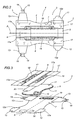
Figure 2 is a plan view of an example of an absorbent sanitary article made by the machine ofFigure 1 ; -
Figure 3 is an exploded perspective view of the absorbent sanitary article ofFigure 2 ; -
Figure 4 is a block diagram relating to the machine ofFigure 1 ; -
Figure 5 is a plan view of the various steps for making the absorbent sanitary article ofFigure 3 ; -
Figure 6 is a schematic view of the various steps for making a first detail ofFigure 5 ; and -
Figure 7 is a schematic view of the various steps for making a second detail ofFigure 5 . - With reference to
Figure 1 , the numeral 1 denotes in its entirety a machine for making absorbentsanitary articles 2, such as nappies for babies or incontinence pads for adults, illustrated inFigure 2 . - As shown in
Figures 2 and 3 , thearticles 2 have a substantially rectangular shape. - The
articles 2 comprise, aligned according to their longitudinal axis, labelled A, afront portion 3, acentral portion 4 and arear portion 5. - At the
central portion 4 thearticles 2 comprise arecess 6, or leg opening, formed by two arched stretches which are symmetrical relative to the axis A. - The
articles 2 comprise a plurality of elements, which may be separated into main elements, or basic components, and accessory elements, or accessory components. - The main elements are a
sheet 7 of impermeable material and asheet 8 of permeable material (non-woven fabric), designed to respectively form the outer face and the inner face of thearticle 2. - The
sheets absorbent pad 9, comprising a wad ofcellulose fibre 10, enclosed between twosheets 11 of permeable material. - The accessory elements, which may vary in number and shape, are hereinafter described with reference to the
sanitary article 2 illustrated inFigure 3 . - The
numeral 12 denotes two shaped wings fixed to the inner face of thesheet 7, having agrip lobe 12a at the free end and projecting transversally to the axis A from thefront portion 3. - The
numeral 13 denotes two shaped wings, parallel with thewings 12, projecting from therear portion 5. - Applied to each of the
rear wings 13 there is asmall wing 14 equipped with anadhesive strip 15, extending parallel with the axis A, designed to adhere, in use, to acorresponding front strip 16 applied to thefront portion 3 of the outer face of thesheet 7. Thewings 13 equipped with thesmall wings 14, together with thefront strip 16, form means for fastening thearticle 2. - Sealed to the sides of the
sheet 8 of permeable material there are twostrips 17 of impermeable material for thickening and expanding its longitudinal edges, having anelasticated portion 18 at an intermediate stretch of them. - A further accessory element is an
elastic band 19 applied, transversally to the axis A, to the inner face of therear portion 5 of thesheet 7. - On the inner face of the
sheet 8 of permeable material, in contact with theabsorbent pad 9 and sealed along the border of the latter, there is a sheet ofabsorbent material 20, called the "acquisition layer", which is designed to render uniform the absorption by the surface of thepad 9. - With reference to
Figures 1 and4 , the machine 1 comprises a plurality ofmodules 21 which are drawn near each other, together forming abase 22 substantially having the shape of a parallelepiped delimited at the front byvertical wall 23. - The
wall 23 constitutes the support for a plurality of operating units which are associated with each of themodules 21. - Said operating units comprise cutting and sealing devices, as well as units for unwinding reels of the various component materials of the
articles 2, the reels being mounted shafts transversal to thewall 23. - Starting from the left end of
Figure 4 , the machine 1 comprises at its infeed a unit for unwinding from a reel 24 acontinuous web 25 of impermeable material which, once separated into pieces, will form thesheets 7. - With reference also to
Figure 5 , thecontinuous web 25 slides along a horizontal path P, in the direction indicated by the arrow F, through the operating units, which gradually make thearticle 2 by adding successive elements to each stretch, labelled 7', ofweb 25 corresponding to asheet 7. - At a
first operating unit 26 in the known way, using an adhesive substance, thefront strip 16 transversal to the axis A is applied to thefront portion 3 of the outer face of eachstretch 7' of the web 25 (Figure 5a ). - The
strips 16 are obtained by transversally cutting into pieces, with a cutting device which is alaser unit 28, a continuous web unwound from areel 27. - At a
second operating unit 29, using an adhesive substance, thestrip 19 of elastic material is applied, transversally to the axis A, on therear portion 5 of the inner face of eachstretch 7' of the web 25 (Figure 5b ). - The
strips 19 are obtained by transversally cutting into pieces, with a cutting device which is alaser unit 31, a continuous web unwound from areel 30. - At a
third operating unit 32, at the central zone of eachstretch 7', anabsorbent pad 9 is applied, comprising thewad 10 of cellulose fibre sandwiched between two pieces of 11 permeable material (Figure 5c ). - The
pads 9 are made in a continuous succession by a unit, schematically illustrated with ablock 33, according to a method described in patentIT2006BO00586 - A cutting device comprising a
laser cutting unit 34 separates the above-mentioned continuous succession into theindividual pads 9. - Downstream of the operating
unit 32 theweb 25 passes through afourth operating unit 35 for making the twofront wings 12 and then application of said wings, with thegrip lobe 12a outwards, on eachstretch 7' of the web 25 (Figure 5d ). - With reference also to
Figure 6 , thewings 12 are made from thesame web 36a unwound from areel 36. - A first cutting device which is a
laser unit 37, able to move by oscillating transversally to the direction of feed of theweb 36a, divides theweb 36a longitudinally according to aline 38 which is substantially sinusoidal (Figure 6a ). - The two
webs 36b generated by that cutting operation are divided into pieces 12' by respective cutting devices which are alaser unit 39 for making the individual wings 12 (Figures 6b, 6c ). - The two
front wings 12 are applied in the known way, with thelobes 12a outwards, on eachstretch 7' of theweb 25. - Downstream of the operating
unit 35, along the path P, there is afifth operating unit 40 for making the tworear wings 13, each provided with a respectivesmall grip wing 14. - With reference also to
Figure 7 , thewings 13, which have a substantially trapezoidal shape, are made from thesame web 41a unwound from areel 41. - A first cutting device which is a fixed
laser unit 42 divides theweb 41 a longitudinally into twoidentical webs 41b (Figure 7a ). - On each stretch 13', which will form an
individual wing 13, on each of thewebs 41b, an adhesive substance is used to apply a small wing 14 (Figure 7b ). - The
small wings 14 are obtained by transversally cutting into pieces, with a cutting device which is alaser unit 43, a continuous web unwound from areel 44, substantially according to the method already used to obtain thewings 12. - Two cutting devices comprising an oscillating laser unit, schematically illustrated with the
block 45, make theoblique cutting lines 13a forming the triangular portions, labelled 13b, located between each pair ofwings 13. Saidportions 13b are eliminated using suction by a suction roller which is not illustrated. - A further cutting device which is a
laser unit 46 completely separates the individualrear wings 13 from the respectivecontinuous webs 41b. - Downstream of the
unit 40 thewall 23 supports, close to its right-hand end, asixth operating unit 47 comprising a unit for unwinding from areel 48 aweb 48a of permeable material (Figure 5i ). - A
sheet 20 of absorbent material, constituting the "acquisition layer" is coupled to each stretch 8' which will form aninner sheet 8 of a sanitary article 2 (Figure 5l ). - The
sheets 20 are obtained by dividing into pieces, with a cutting device which is a laser unit schematically illustrated with ablock 50, a web unwound from areel 49. - The
sheets 20 are then applied to theweb 48a by a sealing device which is a laser unit which is schematically illustrated with ablock 51. - The lateral strips 17 of impermeable material are also applied to the stretches 8' of the
absorbent web 48a (Figures 5m, 5n ). - The
strips 17 are obtained from a web unwound from areel 52, through cutting operations carried out by a cutting device which is alaser unit 53. - A sealing device which is a
laser unit 54 seals twostrips 17, equipped with the above-mentionedelasticated portions 18, according tolines 17a close to the opposite longitudinal edges of each stretch 8'. - The
web 48a equipped with thesheets 20 and the lateral strips 17 is guided (arrow F1) towards the path P and placed against theweb 25 of impermeable material, in such a way that the stretches 8' are precisely superposed on thestretches 7'. - The block labelled 55 indicates a device for sealing the
stretches 8' and 7' to each other along the respective borders for making acontinuous web 56 comprising stretches 2' designed to form the articles 2 (station 5e). - The
web 56 passes through afurther operating unit 58, comprising a cutting device, consisting of alaser unit 57, able to move in such a way as to cut from each stretch 2' ofweb 56 two substantially semi-circular portions, thus giving said stretches 2' substantially the shape of an hourglass (Figure 5g ). - The operating
unit 58 also comprises a cutting device which is alaser unit 59, which divides theweb 56 into the individual finishedarticles 2. - With reference in particular to the diagram in
Figure 4 , theblock 60 indicates a diode-type laser source with predetermined power. - The
laser source 60 is shared by all or some of the operating stations used for the cutting and/or sealing operations. - The
laser source 60 emits abeam 60a, which is fed to the input of a splitter device of the known type, schematically illustrated with ablock 61. - The
splitter device 61 splits thebeam 60a into a number of secondary beams 60b equal to the number of the above-mentioned laser units for cutting and/or sealing. - The means for conveying the secondary beams 60b to the respective laser units for cutting and/or sealing comprise fibre optic cables 62.
- The use of optical fibres is particularly advantageous since the operating stations equipped with the respective laser units are usually remote from each other, that is to say, distributed along the articles production line in positions which are not adjacent.
- According to an alternative embodiment, the diode-
type laser source 60 is substituted with a QCL (quantum cascade laser) semiconductor-type laser source 60. - In this case, preferably, the
laser source 60 emits at a frequency of between 2800 cm-1 and 3200 cm-1. In particular, preferably, thelaser source 60 emits at a frequency of between 2900 cm-1 and 3100 cm-1. In that frequency range, the optimum frequency is substantially equal to 3000 cm-1. In fact, at that frequency, in temperature conditions equal to ambient temperature, experiments have shown that the various materials of which the absorbent articles are made demonstrate maximum energy absorption. - According to a further embodiment, the
laser source 60 could be of the CO2 type. In that case, the means for conveying the secondary beams 60b to the respective laser units for cutting and/or sealing comprise tubular ducts (not illustrated). - The rated power of the
source 60 may be substantially equal to the sum of the maximum powers necessary for each of the laser units connected to it. - If the various cutting and/or sealing operations are offset, in such a way that they do not all occur at the same time, the rated power of the
laser source 60 may be suitably reduced. In this case, acentral unit 63 is provided for selectively powering the individual laser units for cutting and/or sealing, the central unit being associated with thesplitter device 61. - Preferably the
laser source 60 is positioned remotely relative to the machine 1, since the secondary beams 60b are easily conveyed via the fibre optic cables 62. - Thanks to the use of the laser and the consequent substantial absence of mechanical stresses for the cutting and/or sealing operations, the individual operating stations can each be equipped with a frame made of plastic material. For example, each laser cutting device may comprise a respective frame made of plastic material. Similarly, each laser sealing device may comprise a respective frame made of plastic material.
- It is apparent from the above description how this invention eliminates the various disadvantages of the prior art, caused by the use of mechanical cutting and sealing devices.
- Full or partial substitution of the mechanical cutting and sealing devices with devices powered by a shared
laser source 60, that is to say, asingle laser source 60, allows considerable advantages over the conventional methods in terms of maintenance, noise, overall dimensions, overall weight, cost and manoeuvrability of the devices during installation and transportation.
Claims (12)
- A machine for making absorbent sanitary articles, such as nappies for babies or incontinence pads for adults, sanitary towels or the like, comprises a plurality of operating stations equipped with devices for cutting and/or sealing the materials of which the articles (2) consist, at least two of the operating stations each comprise at least one laser unit for performing the cutting and/or sealing operation, the laser units being connected to the same laser source (60); the machine being characterised in that comprises splitter means (61) for the laser beam (60a) emitted by the laser source (60) for splitting the laser beam (60a) emitted into a plurality of secondary laser beams (60b) and conveying means (62) for the secondary laser beams (60b) for conveying the secondary laser beams (60b) from the splitter means (61) to the laser units; and in that the conveying means comprise optical fibres (62).
- The machine for making absorbent sanitary articles according to claim 1, characterised in that at least two operating stations, each comprising at least one laser unit for performing the cutting and/or sealing operation, are remote from each other.
- The machine for making absorbent sanitary articles according to claim 1 or 2, characterised in that the laser source (60) is of the diode type.
- The machine for making absorbent sanitary articles according to claim 1 or 2, characterised in that the laser source (60) is of the QCL (quantum cascade laser) semiconductor type.
- The machine for making absorbent sanitary articles according to claim 4, characterised in that the laser source (60) emits at a frequency of between 2800 cm-1 and 3200 cm-1.
- The machine for making absorbent sanitary articles according to claim 4, characterised in that the laser source (60) emits at a frequency of between 2900 cm-1 and 3100 cm-1.
- The machine for making absorbent sanitary articles according to claim 4, characterised in that the laser source (60) emits at a frequency substantially equal to 3000 cm-1.
- The machine for making absorbent sanitary articles according to claim 1 or 2, characterised in that the laser source (60) is of the CO2 type.
- The machine for making absorbent sanitary articles according to any of the foregoing claims from 1 to 8, characterised in that the rated power of the laser source (60) is equal to the sum of the maximum powers absorbed by the laser units.
- The machine for making absorbent sanitary articles according to any of the foregoing claims from 1 to 9, characterised in that the rated power of the laser source (60) is less than the sum of the powers absorbed by the laser units of the cutting and/or sealing devices, there being a central unit (63) for selectively powering the laser units.
- The machine for making absorbent sanitary articles according to any of the foregoing claims from 1 to 10, characterised in that the laser source (60) is located in a remote position relative to the machine (1).
- The machine for making absorbent sanitary articles according to any of the foregoing claims from 1 to 11, characterised in that the operating stations each comprise a respective frame made of plastic material.
Applications Claiming Priority (2)
| Application Number | Priority Date | Filing Date | Title |
|---|---|---|---|
| ITBO2011A000078A IT1404309B1 (en) | 2011-02-24 | 2011-02-24 | PACKAGING MACHINE FOR HYGIENIC ABSORBENT ITEMS, SUCH AS PANELS, BUFFERS OR SIMILAR. |
| PCT/IB2012/050825 WO2012114295A1 (en) | 2011-02-24 | 2012-02-23 | Machine for making absorbent sanitary articles, such as nappies for babies or incontinence pads for adults, sanitary towels or the like |
Publications (2)
| Publication Number | Publication Date |
|---|---|
| EP2677983A1 EP2677983A1 (en) | 2014-01-01 |
| EP2677983B1 true EP2677983B1 (en) | 2015-04-08 |
Family
ID=43975931
Family Applications (1)
| Application Number | Title | Priority Date | Filing Date |
|---|---|---|---|
| EP12708944.9A Not-in-force EP2677983B1 (en) | 2011-02-24 | 2012-02-23 | Machine for making absorbent sanitary articles, such as nappies for babies or incontinence pads for adults, sanitary towels or the like |
Country Status (7)
| Country | Link |
|---|---|
| US (1) | US9149394B2 (en) |
| EP (1) | EP2677983B1 (en) |
| JP (1) | JP2014507232A (en) |
| KR (1) | KR101926101B1 (en) |
| CN (1) | CN103402472A (en) |
| IT (1) | IT1404309B1 (en) |
| WO (1) | WO2012114295A1 (en) |
Families Citing this family (7)
| Publication number | Priority date | Publication date | Assignee | Title |
|---|---|---|---|---|
| KR20170026333A (en) * | 2014-04-18 | 2017-03-08 | 쥐디엠 에스.피.에이. | Device and method for laser cutting a web of fibrous material. |
| CN107072837A (en) | 2014-11-07 | 2017-08-18 | 宝洁公司 | Method and apparatus for manufacturing absorbent article using lasing light emitter |
| ITUB20154187A1 (en) | 2015-10-06 | 2016-01-06 | Fameccanica Data Spa | PROCEDURE AND EQUIPMENT FOR THE PRODUCTION OF AN ABSORBENT STRUCTURE |
| JP6568449B2 (en) * | 2015-10-16 | 2019-08-28 | 花王株式会社 | Manufacturing method and manufacturing apparatus of sheet fusion body |
| KR102636469B1 (en) * | 2015-12-18 | 2024-02-15 | 킴벌리-클라크 월드와이드, 인크. | How to laser cut web structures |
| WO2017160701A1 (en) * | 2016-03-15 | 2017-09-21 | The Procter & Gamble Company | Methods and apparatuses for separating and positioning discrete articles |
| MX2022004043A (en) | 2019-10-22 | 2022-07-19 | Essity Hygiene & Health Ab | PANTS TYPE GARMENT AND METHOD FOR THE PRODUCTION OF THE SAME. |
Family Cites Families (11)
| Publication number | Priority date | Publication date | Assignee | Title |
|---|---|---|---|---|
| US20070007353A1 (en) * | 1986-08-08 | 2007-01-11 | Danielson Arvin D | Laser scanner module having integral interface with hand-held data capture terminal, proximity and label sensing, and enhanced sensitivity and power efficiency |
| JP2000156545A (en) * | 1998-09-18 | 2000-06-06 | Atr Adaptive Communications Res Lab | Quantum cascade semiconductor laser system |
| GB2383706B (en) * | 2001-11-30 | 2005-03-30 | Marconi Optical Components Ltd | Modulation control |
| EP1447068A1 (en) * | 2003-02-14 | 2004-08-18 | Fameccanica.Data S.p.A. | Process and device for the localised treatment of articles, for example hygienic and sanitary products |
| ATE389497T1 (en) * | 2005-06-21 | 2008-04-15 | Fameccanica Data Spa | DEVICE AND DEVICE FOR LASER CUTTING ARTICLES, IN PARTICULAR SANITARY PRODUCTS AND THEIR COMPONENTS, WITH A LASER FOCUS POINT DIAMETER OF 0.1 TO 0.3 MM |
| JP2007167936A (en) * | 2005-12-26 | 2007-07-05 | Miyachi Technos Corp | Gold plating peeling method and gold plating peeling apparatus |
| CN101610871B (en) * | 2007-01-02 | 2012-06-20 | 法麦凯尼柯设备有限责任公司 | Equipment for cutting thin film materials using a laser beam |
| CN100574959C (en) * | 2007-06-01 | 2009-12-30 | 深圳市大族激光科技股份有限公司 | A kind of PP sheet cutting equipment and method thereof |
| US20080305298A1 (en) * | 2007-06-11 | 2008-12-11 | 3M Innovative Properties Company | Laser activation of elastic laminates |
| JP4847435B2 (en) * | 2007-12-11 | 2011-12-28 | 住友重機械工業株式会社 | Laser processing apparatus and laser processing method |
| JP5209290B2 (en) * | 2007-12-14 | 2013-06-12 | ミヤチテクノス株式会社 | Laser processing monitoring device and laser processing device |
-
2011
- 2011-02-24 IT ITBO2011A000078A patent/IT1404309B1/en active
-
2012
- 2012-02-23 WO PCT/IB2012/050825 patent/WO2012114295A1/en not_active Ceased
- 2012-02-23 EP EP12708944.9A patent/EP2677983B1/en not_active Not-in-force
- 2012-02-23 KR KR1020137022556A patent/KR101926101B1/en not_active Expired - Fee Related
- 2012-02-23 JP JP2013554967A patent/JP2014507232A/en active Pending
- 2012-02-23 CN CN2012800102409A patent/CN103402472A/en active Pending
- 2012-02-23 US US13/981,131 patent/US9149394B2/en not_active Expired - Fee Related
Also Published As
| Publication number | Publication date |
|---|---|
| JP2014507232A (en) | 2014-03-27 |
| US20130299093A1 (en) | 2013-11-14 |
| ITBO20110078A1 (en) | 2012-08-25 |
| IT1404309B1 (en) | 2013-11-22 |
| EP2677983A1 (en) | 2014-01-01 |
| KR101926101B1 (en) | 2018-12-06 |
| CN103402472A (en) | 2013-11-20 |
| KR20140032999A (en) | 2014-03-17 |
| WO2012114295A1 (en) | 2012-08-30 |
| US9149394B2 (en) | 2015-10-06 |
Similar Documents
| Publication | Publication Date | Title |
|---|---|---|
| US9149394B2 (en) | Machine for making absorbent sanitary articles, such as nappies for babies or incontinence pads for adults, sanitary towels or the like | |
| CN105662718B (en) | For producing the device and method of the composite elastic coiled material of spaced elastic part | |
| JP4180514B2 (en) | Method for producing a molded component from a web material | |
| US8662133B2 (en) | Ultrasonic processing apparatus | |
| US8764927B2 (en) | Method and apparatus for providing a diaper | |
| ES2891856T3 (en) | dual gluer | |
| EP3095589B1 (en) | A device for forming ultrasonic welds on web materials in continuous movement | |
| US10709617B2 (en) | Absorbent article with fusion bonded side seams | |
| KR101297929B1 (en) | Apparatus and method for making pre-fastened absorbent undergarments | |
| US9808379B2 (en) | Pants-type wearing article and production method for same | |
| US10610418B2 (en) | Device and method for laser cutting a web of fibrous material | |
| JP2015009504A (en) | Sheet fusion body manufacturing apparatus and sheet fusion body manufacturing method | |
| JP2015016361A (en) | Production machine for manufacturing personal sanitary item | |
| CA2320119A1 (en) | Disposable trunks-type pants and process for making the same | |
| US20180303678A1 (en) | Method of treating a web using an apparatus having a center bearer ring | |
| WO2019107333A1 (en) | Sheet-piece producing method, sheet-piece producing apparatus, and absorbent-body producing method | |
| JP7029997B2 (en) | Absorber manufacturing method and absorber manufacturing equipment | |
| US20230150159A1 (en) | System and method for the shaped cutting of sanitary articles, namely of washable absorbent garments | |
| EP4159171B1 (en) | An absorbent sanitary article and a method for producing the same | |
| JP2012135349A (en) | Method for manufacturing absorbent article | |
| JP2011125641A (en) | Method of manufacturing stretchable sheet | |
| US9642753B1 (en) | Apparatus and method for forming and securing discrete components to moving webs | |
| US20240374437A1 (en) | Machine and method for the production of hygienic absorbent items | |
| IT202100004832A1 (en) | PLANT AND PROCESS FOR THE PRODUCTION OF PANTS | |
| US20160254126A1 (en) | Apparatus and methods for modifying webs of material with plasma |
Legal Events
| Date | Code | Title | Description |
|---|---|---|---|
| PUAI | Public reference made under article 153(3) epc to a published international application that has entered the european phase |
Free format text: ORIGINAL CODE: 0009012 |
|
| 17P | Request for examination filed |
Effective date: 20130920 |
|
| AK | Designated contracting states |
Kind code of ref document: A1 Designated state(s): AL AT BE BG CH CY CZ DE DK EE ES FI FR GB GR HR HU IE IS IT LI LT LU LV MC MK MT NL NO PL PT RO RS SE SI SK SM TR |
|
| DAX | Request for extension of the european patent (deleted) | ||
| 17Q | First examination report despatched |
Effective date: 20140610 |
|
| GRAP | Despatch of communication of intention to grant a patent |
Free format text: ORIGINAL CODE: EPIDOSNIGR1 |
|
| INTG | Intention to grant announced |
Effective date: 20141027 |
|
| GRAS | Grant fee paid |
Free format text: ORIGINAL CODE: EPIDOSNIGR3 |
|
| GRAA | (expected) grant |
Free format text: ORIGINAL CODE: 0009210 |
|
| AK | Designated contracting states |
Kind code of ref document: B1 Designated state(s): AL AT BE BG CH CY CZ DE DK EE ES FI FR GB GR HR HU IE IS IT LI LT LU LV MC MK MT NL NO PL PT RO RS SE SI SK SM TR |
|
| REG | Reference to a national code |
Ref country code: GB Ref legal event code: FG4D |
|
| REG | Reference to a national code |
Ref country code: CH Ref legal event code: EP |
|
| REG | Reference to a national code |
Ref country code: IE Ref legal event code: FG4D |
|
| REG | Reference to a national code |
Ref country code: AT Ref legal event code: REF Ref document number: 719943 Country of ref document: AT Kind code of ref document: T Effective date: 20150515 |
|
| REG | Reference to a national code |
Ref country code: DE Ref legal event code: R096 Ref document number: 602012006521 Country of ref document: DE Effective date: 20150521 |
|
| REG | Reference to a national code |
Ref country code: AT Ref legal event code: MK05 Ref document number: 719943 Country of ref document: AT Kind code of ref document: T Effective date: 20150408 |
|
| REG | Reference to a national code |
Ref country code: NL Ref legal event code: VDEP Effective date: 20150408 |
|
| REG | Reference to a national code |
Ref country code: LT Ref legal event code: MG4D |
|
| PG25 | Lapsed in a contracting state [announced via postgrant information from national office to epo] |
Ref country code: NL Free format text: LAPSE BECAUSE OF FAILURE TO SUBMIT A TRANSLATION OF THE DESCRIPTION OR TO PAY THE FEE WITHIN THE PRESCRIBED TIME-LIMIT Effective date: 20150408 |
|
| PG25 | Lapsed in a contracting state [announced via postgrant information from national office to epo] |
Ref country code: ES Free format text: LAPSE BECAUSE OF FAILURE TO SUBMIT A TRANSLATION OF THE DESCRIPTION OR TO PAY THE FEE WITHIN THE PRESCRIBED TIME-LIMIT Effective date: 20150408 Ref country code: HR Free format text: LAPSE BECAUSE OF FAILURE TO SUBMIT A TRANSLATION OF THE DESCRIPTION OR TO PAY THE FEE WITHIN THE PRESCRIBED TIME-LIMIT Effective date: 20150408 Ref country code: PT Free format text: LAPSE BECAUSE OF FAILURE TO SUBMIT A TRANSLATION OF THE DESCRIPTION OR TO PAY THE FEE WITHIN THE PRESCRIBED TIME-LIMIT Effective date: 20150810 Ref country code: NO Free format text: LAPSE BECAUSE OF FAILURE TO SUBMIT A TRANSLATION OF THE DESCRIPTION OR TO PAY THE FEE WITHIN THE PRESCRIBED TIME-LIMIT Effective date: 20150708 Ref country code: FI Free format text: LAPSE BECAUSE OF FAILURE TO SUBMIT A TRANSLATION OF THE DESCRIPTION OR TO PAY THE FEE WITHIN THE PRESCRIBED TIME-LIMIT Effective date: 20150408 Ref country code: LT Free format text: LAPSE BECAUSE OF FAILURE TO SUBMIT A TRANSLATION OF THE DESCRIPTION OR TO PAY THE FEE WITHIN THE PRESCRIBED TIME-LIMIT Effective date: 20150408 |
|
| PG25 | Lapsed in a contracting state [announced via postgrant information from national office to epo] |
Ref country code: IS Free format text: LAPSE BECAUSE OF FAILURE TO SUBMIT A TRANSLATION OF THE DESCRIPTION OR TO PAY THE FEE WITHIN THE PRESCRIBED TIME-LIMIT Effective date: 20150808 Ref country code: AT Free format text: LAPSE BECAUSE OF FAILURE TO SUBMIT A TRANSLATION OF THE DESCRIPTION OR TO PAY THE FEE WITHIN THE PRESCRIBED TIME-LIMIT Effective date: 20150408 Ref country code: RS Free format text: LAPSE BECAUSE OF FAILURE TO SUBMIT A TRANSLATION OF THE DESCRIPTION OR TO PAY THE FEE WITHIN THE PRESCRIBED TIME-LIMIT Effective date: 20150408 Ref country code: GR Free format text: LAPSE BECAUSE OF FAILURE TO SUBMIT A TRANSLATION OF THE DESCRIPTION OR TO PAY THE FEE WITHIN THE PRESCRIBED TIME-LIMIT Effective date: 20150709 Ref country code: LV Free format text: LAPSE BECAUSE OF FAILURE TO SUBMIT A TRANSLATION OF THE DESCRIPTION OR TO PAY THE FEE WITHIN THE PRESCRIBED TIME-LIMIT Effective date: 20150408 |
|
| REG | Reference to a national code |
Ref country code: DE Ref legal event code: R097 Ref document number: 602012006521 Country of ref document: DE |
|
| PG25 | Lapsed in a contracting state [announced via postgrant information from national office to epo] |
Ref country code: DK Free format text: LAPSE BECAUSE OF FAILURE TO SUBMIT A TRANSLATION OF THE DESCRIPTION OR TO PAY THE FEE WITHIN THE PRESCRIBED TIME-LIMIT Effective date: 20150408 Ref country code: EE Free format text: LAPSE BECAUSE OF FAILURE TO SUBMIT A TRANSLATION OF THE DESCRIPTION OR TO PAY THE FEE WITHIN THE PRESCRIBED TIME-LIMIT Effective date: 20150408 |
|
| PLBE | No opposition filed within time limit |
Free format text: ORIGINAL CODE: 0009261 |
|
| STAA | Information on the status of an ep patent application or granted ep patent |
Free format text: STATUS: NO OPPOSITION FILED WITHIN TIME LIMIT |
|
| PG25 | Lapsed in a contracting state [announced via postgrant information from national office to epo] |
Ref country code: RO Free format text: LAPSE BECAUSE OF NON-PAYMENT OF DUE FEES Effective date: 20150408 Ref country code: CZ Free format text: LAPSE BECAUSE OF FAILURE TO SUBMIT A TRANSLATION OF THE DESCRIPTION OR TO PAY THE FEE WITHIN THE PRESCRIBED TIME-LIMIT Effective date: 20150408 Ref country code: SK Free format text: LAPSE BECAUSE OF FAILURE TO SUBMIT A TRANSLATION OF THE DESCRIPTION OR TO PAY THE FEE WITHIN THE PRESCRIBED TIME-LIMIT Effective date: 20150408 Ref country code: PL Free format text: LAPSE BECAUSE OF FAILURE TO SUBMIT A TRANSLATION OF THE DESCRIPTION OR TO PAY THE FEE WITHIN THE PRESCRIBED TIME-LIMIT Effective date: 20150408 |
|
| 26N | No opposition filed |
Effective date: 20160111 |
|
| PG25 | Lapsed in a contracting state [announced via postgrant information from national office to epo] |
Ref country code: IT Free format text: LAPSE BECAUSE OF FAILURE TO SUBMIT A TRANSLATION OF THE DESCRIPTION OR TO PAY THE FEE WITHIN THE PRESCRIBED TIME-LIMIT Effective date: 20150408 |
|
| PG25 | Lapsed in a contracting state [announced via postgrant information from national office to epo] |
Ref country code: BE Free format text: LAPSE BECAUSE OF NON-PAYMENT OF DUE FEES Effective date: 20160229 Ref country code: SI Free format text: LAPSE BECAUSE OF FAILURE TO SUBMIT A TRANSLATION OF THE DESCRIPTION OR TO PAY THE FEE WITHIN THE PRESCRIBED TIME-LIMIT Effective date: 20150408 |
|
| PG25 | Lapsed in a contracting state [announced via postgrant information from national office to epo] |
Ref country code: BE Free format text: LAPSE BECAUSE OF FAILURE TO SUBMIT A TRANSLATION OF THE DESCRIPTION OR TO PAY THE FEE WITHIN THE PRESCRIBED TIME-LIMIT Effective date: 20150408 |
|
| PG25 | Lapsed in a contracting state [announced via postgrant information from national office to epo] |
Ref country code: MC Free format text: LAPSE BECAUSE OF FAILURE TO SUBMIT A TRANSLATION OF THE DESCRIPTION OR TO PAY THE FEE WITHIN THE PRESCRIBED TIME-LIMIT Effective date: 20150408 Ref country code: LU Free format text: LAPSE BECAUSE OF FAILURE TO SUBMIT A TRANSLATION OF THE DESCRIPTION OR TO PAY THE FEE WITHIN THE PRESCRIBED TIME-LIMIT Effective date: 20160223 |
|
| REG | Reference to a national code |
Ref country code: CH Ref legal event code: PL |
|
| GBPC | Gb: european patent ceased through non-payment of renewal fee |
Effective date: 20160223 |
|
| PG25 | Lapsed in a contracting state [announced via postgrant information from national office to epo] |
Ref country code: CH Free format text: LAPSE BECAUSE OF NON-PAYMENT OF DUE FEES Effective date: 20160229 Ref country code: LI Free format text: LAPSE BECAUSE OF NON-PAYMENT OF DUE FEES Effective date: 20160229 |
|
| REG | Reference to a national code |
Ref country code: FR Ref legal event code: ST Effective date: 20161028 |
|
| REG | Reference to a national code |
Ref country code: IE Ref legal event code: MM4A |
|
| PG25 | Lapsed in a contracting state [announced via postgrant information from national office to epo] |
Ref country code: IE Free format text: LAPSE BECAUSE OF NON-PAYMENT OF DUE FEES Effective date: 20160223 Ref country code: FR Free format text: LAPSE BECAUSE OF NON-PAYMENT OF DUE FEES Effective date: 20160229 Ref country code: GB Free format text: LAPSE BECAUSE OF NON-PAYMENT OF DUE FEES Effective date: 20160223 |
|
| PG25 | Lapsed in a contracting state [announced via postgrant information from national office to epo] |
Ref country code: SE Free format text: LAPSE BECAUSE OF FAILURE TO SUBMIT A TRANSLATION OF THE DESCRIPTION OR TO PAY THE FEE WITHIN THE PRESCRIBED TIME-LIMIT Effective date: 20150408 |
|
| PG25 | Lapsed in a contracting state [announced via postgrant information from national office to epo] |
Ref country code: MT Free format text: LAPSE BECAUSE OF FAILURE TO SUBMIT A TRANSLATION OF THE DESCRIPTION OR TO PAY THE FEE WITHIN THE PRESCRIBED TIME-LIMIT Effective date: 20150408 |
|
| PG25 | Lapsed in a contracting state [announced via postgrant information from national office to epo] |
Ref country code: CY Free format text: LAPSE BECAUSE OF FAILURE TO SUBMIT A TRANSLATION OF THE DESCRIPTION OR TO PAY THE FEE WITHIN THE PRESCRIBED TIME-LIMIT Effective date: 20150408 Ref country code: HU Free format text: LAPSE BECAUSE OF FAILURE TO SUBMIT A TRANSLATION OF THE DESCRIPTION OR TO PAY THE FEE WITHIN THE PRESCRIBED TIME-LIMIT; INVALID AB INITIO Effective date: 20120223 Ref country code: SM Free format text: LAPSE BECAUSE OF FAILURE TO SUBMIT A TRANSLATION OF THE DESCRIPTION OR TO PAY THE FEE WITHIN THE PRESCRIBED TIME-LIMIT Effective date: 20150408 |
|
| PGFP | Annual fee paid to national office [announced via postgrant information from national office to epo] |
Ref country code: TR Payment date: 20180206 Year of fee payment: 7 |
|
| PG25 | Lapsed in a contracting state [announced via postgrant information from national office to epo] |
Ref country code: MK Free format text: LAPSE BECAUSE OF FAILURE TO SUBMIT A TRANSLATION OF THE DESCRIPTION OR TO PAY THE FEE WITHIN THE PRESCRIBED TIME-LIMIT Effective date: 20150408 Ref country code: MT Free format text: LAPSE BECAUSE OF FAILURE TO SUBMIT A TRANSLATION OF THE DESCRIPTION OR TO PAY THE FEE WITHIN THE PRESCRIBED TIME-LIMIT Effective date: 20160229 |
|
| PG25 | Lapsed in a contracting state [announced via postgrant information from national office to epo] |
Ref country code: BG Free format text: LAPSE BECAUSE OF FAILURE TO SUBMIT A TRANSLATION OF THE DESCRIPTION OR TO PAY THE FEE WITHIN THE PRESCRIBED TIME-LIMIT Effective date: 20150408 |
|
| PG25 | Lapsed in a contracting state [announced via postgrant information from national office to epo] |
Ref country code: AL Free format text: LAPSE BECAUSE OF FAILURE TO SUBMIT A TRANSLATION OF THE DESCRIPTION OR TO PAY THE FEE WITHIN THE PRESCRIBED TIME-LIMIT Effective date: 20150408 |
|
| PGFP | Annual fee paid to national office [announced via postgrant information from national office to epo] |
Ref country code: DE Payment date: 20190227 Year of fee payment: 8 |
|
| REG | Reference to a national code |
Ref country code: DE Ref legal event code: R119 Ref document number: 602012006521 Country of ref document: DE |
|
| PG25 | Lapsed in a contracting state [announced via postgrant information from national office to epo] |
Ref country code: DE Free format text: LAPSE BECAUSE OF NON-PAYMENT OF DUE FEES Effective date: 20200901 |
|
| PG25 | Lapsed in a contracting state [announced via postgrant information from national office to epo] |
Ref country code: TR Free format text: LAPSE BECAUSE OF NON-PAYMENT OF DUE FEES Effective date: 20190223 |