EP2669841B1 - Verfahren und vorrichtung zur verbesserung der energieeffizienz eines lesegeräts - Google Patents
Verfahren und vorrichtung zur verbesserung der energieeffizienz eines lesegeräts Download PDFInfo
- Publication number
- EP2669841B1 EP2669841B1 EP11860578.1A EP11860578A EP2669841B1 EP 2669841 B1 EP2669841 B1 EP 2669841B1 EP 11860578 A EP11860578 A EP 11860578A EP 2669841 B1 EP2669841 B1 EP 2669841B1
- Authority
- EP
- European Patent Office
- Prior art keywords
- timeslots
- labels
- reader
- value
- power level
- Prior art date
- Legal status (The legal status is an assumption and is not a legal conclusion. Google has not performed a legal analysis and makes no representation as to the accuracy of the status listed.)
- Not-in-force
Links
Images


Classifications
-
- G—PHYSICS
- G06—COMPUTING OR CALCULATING; COUNTING
- G06K—GRAPHICAL DATA READING; PRESENTATION OF DATA; RECORD CARRIERS; HANDLING RECORD CARRIERS
- G06K7/00—Methods or arrangements for sensing record carriers, e.g. for reading patterns
- G06K7/10—Methods or arrangements for sensing record carriers, e.g. for reading patterns by electromagnetic radiation, e.g. optical sensing; by corpuscular radiation
- G06K7/10009—Methods or arrangements for sensing record carriers, e.g. for reading patterns by electromagnetic radiation, e.g. optical sensing; by corpuscular radiation sensing by radiation using wavelengths larger than 0.1 mm, e.g. radio-waves or microwaves
- G06K7/10198—Methods or arrangements for sensing record carriers, e.g. for reading patterns by electromagnetic radiation, e.g. optical sensing; by corpuscular radiation sensing by radiation using wavelengths larger than 0.1 mm, e.g. radio-waves or microwaves setting parameters for the interrogator, e.g. programming parameters and operating modes
- G06K7/10207—Methods or arrangements for sensing record carriers, e.g. for reading patterns by electromagnetic radiation, e.g. optical sensing; by corpuscular radiation sensing by radiation using wavelengths larger than 0.1 mm, e.g. radio-waves or microwaves setting parameters for the interrogator, e.g. programming parameters and operating modes parameter settings related to power consumption of the interrogator
Definitions
- the present document relates to the field of Radio Frequency Identification (RFID) technology, and particularly, to a method and device for improving energy efficiency performance of a reader.
- RFID Radio Frequency Identification
- An RFID system can be composed of at least one reader and one label, and communication is performed between the reader and the label in a wireless way.
- An RFID system can be composed of at least one reader and one label, and communication is performed between the reader and the label in a wireless way.
- the main object of the present document is to provide a method and device for improving energy efficiency performance of a reader as defined in the independent claims, to maximize the throughput of an RFID system, thereby reducing energy consumption of the system and extending usage time of the system; and while the energy consumption is reduced, a rate at which the reader reads the labels is guaranteed.
- the present document provides a method for improving energy efficiency performance of a reader, which comprises: initializing and adjusting operation parameters, and acquiring a current number of frame timeslots; updating a frame timeslot status, and determining that a power level is not required to be increased according to the updated frame timeslot status; and estimating a number of labels according to the current number of frame timeslots, and acquiring an optimum Q value according to the number of labels.
- the step of initializing and adjusting operation parameters and acquiring a current number of frame timeslots comprises: initializing the operation parameters, adding an increment value to a current power level in the operation parameters, adding 1 to Q, and acquiring the current number of frame timeslots according to a current Q value and a calculation formula for the number of frame timeslots.
- the method before updating the frame timeslot status, the method further comprises: when determining that current power is less than or equal to a maximum power value, updating the frame timeslot status; and when determining that the current power is greater than the maximum power value, estimating the number of labels according to the current number of frame timeslots.
- the step of updating the frame timeslot status comprises: according to the current number of frame timeslots and a communication protocol between the reader and the labels, updating a number of idle timeslots, a number of successful timeslots and a number of conflicting timeslots.
- the step of determining that a power level is not required to be increased according to the updated frame timeslot status comprises: when the number of conflicting timeslots is equal to 0, or when the number of conflicting timeslots is greater than 0 and the number of successful timeslots is equal to 0, and when an iteration value after iterating is greater than a maximum iteration value, determining that the power level is not required to be increased.
- the step of estimating a number of labels according to the current number of frame timeslots and acquiring an optimum Q value according to the number of labels comprises: making the current number of frame timeslots equal to a total number of labels, and according to a mapping relationship table between the total number of labels and the optimum Q value, acquiring an optimum Q value corresponding to the total number of labels, and setting the current Q value as the optimum Q value.
- the present document further provides a device for improving energy efficiency performance of a reader, which comprises: an initialization module, an adjustment module, a setting module and an estimation module; the initialization module is configured to: initialize operation parameters, and notify the adjustment module; the adjustment module is configured to: adjust the operation parameters, acquire a current number of frame timeslots, and notify the setting module; the setting module is configured to: update a frame timeslot status, determine that a power level is not required to be increased according to the frame timeslot status, and send the current number of frame timeslots to the estimation module; wherein the notification contains the current number of frame timeslots; and the estimation module is configured to: estimate a number of labels according to the current number of frame timeslots, and acquire an optimum Q value according to the number of labels.
- the initialization module is specifically configured to: initialize the operation parameters in the adjustment module and the setting module; the adjustment module is specifically configured to: add an increment value to a current power level in the operation parameters, add 1 to Q, and acquire the current number of frame timeslots according to a current Q value and a calculation formula for the number of frame timeslots.
- the adjustment module is further configured to: add the increment value to the current power level, when determining that the current power level is less than or equal to a maximum power level value, send the current number of frame timeslots to the setting module; and when determining that the current power level is greater than the maximum power level value, send the current number of frame timeslots to the estimation module.
- the setting module is specifically configured to: according to a received current number of frame timeslots and a communication protocol between the reader and the labels, update a number of idle timeslots, a number of successful timeslots and a number of conflicting timeslots.
- the setting module is specifically configured to: when the number of conflicting timeslots is 0, or when the number of conflicting timeslots is greater than 0 and the number of successful timeslots is 0, and when determining that an iteration value after iterating is greater than a maximum iteration value, determine that the power level is not required to be increased.
- the estimation module is specifically configured to: make the current number of frame timeslots equal to a total number of labels, and according to a mapping relationship table between the total number of labels and the optimum Q value, acquire an optimum Q value corresponding to the total number of labels, and set the Q value in the adjustment module as the optimum Q value.
- the total number of labels is estimated to acquire the optimum Q value, which can maximize the throughput of the RFID system, thereby reducing energy consumption of the system and extending usage time of the system.
- the total number of labels is firstly estimated, thereby acquiring the appropriate number of timeslots, and the energy consumption is reduced while a rate at which the reader reads the labels is guaranteed.
- the basic idea of the present document is: a reader initializing and adjusting operation parameters, acquiring the current number of frame timeslots, updating a frame timeslot status, determining that a power level is not required to be increased according to the frame timeslot status, estimating the total number of labels according to the current number of frame timeslots, and acquiring an optimum Q value according to the total number of labels.
- FIG. 1 A principle of a device for passive labels obtaining energy is as shown in FIG. 1 .
- the reader continually transmits a group of electromagnetic waves at a fixed frequency outward, when a label gets close to the reader, an LC parallel resonant circuit within the label will generate resonance, and a frequency of the LC parallel resonant circuit is the same as a transmitting frequency of the reader, thereby making a capacitance C be charged and have charges.
- a charge pump of unilateral conduction is connected, and the charges within the capacitance C are sent to another capacitance C1 to be stored.
- the capacitance C1 When the capacitance C1 is charged to a certain voltage, the capacitance C1 serves as the power supply and provides working voltage for other circuits on the label, thereby data within the label is transmitted out or data sent from the reader are received and stored.
- the label can have three statuses, which are respectively an idle status, namely an outage status of C1; a lossy status, namely a status between the outage status and a fully charged status of C1; and an active status, namely a fully charged status.
- the response rate of the physical layer during the communication between the labels and the reader is measured through a sniffer.
- FIG. 4 A method for improving energy efficiency performance of a reader provided in the present document is as shown in FIG. 4 , and the following steps are specifically included.
- step 401 operation parameters are initialized.
- the reader sends a query to labels in a form of scattered waves, starts the communication between the reader and the labels, and determines that a collision occurs between the labels, and the reader initializes the operation parameters.
- the step of the reader determining that a collision occurs between the labels includes: according to a communication protocol between the reader and the labels, if codes received by the reader and replied by the labels contain reply failure information, it is indicated that the collision occurs between the labels and there exist conflicting timeslots. There are following reasons for the occurrence of collision between the labels, the labels reply the query of the reader at the same timeslot; or the labels are in the lossy status and the energy shortage causes the reply interruption; or the labels are damaged and the reply information is wrong.
- the X i is an iteration value
- the Q is a quality factor of the reader antenna which influences the transmission efficiency and throughput of reader energy
- a value range of the Q is decided by the reader itself
- the throughput is a probability of the reader reading the labels successfully.
- step 402 the operation parameters are adjusted, the current number of frame timeslots is acquired, and then it is determined whether the current power level is greater than the maximum power level, if yes, the current power level is the maximum power level, and then step 404 is executed, and if not, step 403 is executed.
- the acquisition of the current number of frame timeslots can be implemented according to a current Q value and a calculation formula for the number of frame timeslots.
- step 403 a frame timeslot status is updated, and it is judged whether the current power level is required to be increased according to the frame timeslot status; if yes, step 402 is executed, and if not, step 404 is executed.
- the update of the frame timeslot status includes: updating the number of idle timeslots S 0 , the number of successful timeslots S 1 and the number of conflicting timeslots S 2 according to the current number of frame timeslots and the communication protocol between the reader and the labels.
- the step of judging whether the current power level is required to be increased according to the frame timeslot status includes: it is judged whether the S 2 is 0, if the S 2 is greater than 0, it is indicated that the collision occurs between the labels at the point, it is further judged whether the S 1 is greater than 0, if the S 1 is greater than 0, it is indicated that there exist both conflicting timeslots and successful timeslots at the point, in order to reduce an occurrence probability of the conflicting timeslots, it is required to increase the current power level and clear the X i , and then step 402 is executed; if the S 1 is equal to 0, it is indicated that there exist conflicting timeslots but no successful timeslots at the present, no labels perform normal communication with the reader, the condition is abnormal, it is judged whether an iteration value after iterating is greater than a maximum iteration value, if the iteration value is greater than the maximum iteration value, it is indicated that the power level has increased to a certain degree, but the abnormal condition still exists, if it continues
- step 404 is executed.
- step 404 the total number of labels is estimated, and an optimum Q value is acquired according to the total number of labels.
- the estimation of the total number of labels includes: reading the current number of frame timeslots N S , according to a throughput computation formula, it can be known that the system can reach the maximum throughput in a case that the N S and the total number of labels are equal, thus the total number of labels is the current number of frame timeslots, according to the total number of labels, a mapping relationship table between the total number of labels and the optimum Q value is read, an optimum Q value corresponding to the total number of labels is acquired, the current Q value is set as the acquired optimum Q value, and the maximum throughput can be acquired, thereby making the energy consumption of the reader minimum at the present.
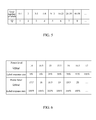
- mapping relationship table between the total number of labels and the optimum Q value can be acquired through a measurement based on experience, when a transmission rate between the reader and labels is 10kbp, the mapping relationship between the total number of labels and the optimum Q value is as shown in FIG.
- a label response rate keeps at 100% after the power level reaches a certain value
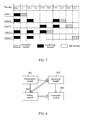
- the mapping relationship table between the label response rate and the power level as shown in FIG. 6 a mapping relationship between the label response rate and the power level can be acquired based on experience, wherein, when the power level reaches a critical point as 17 dBm shown in FIG. 6 , the label response rate is 100%, the power level is further increased, the label response rate keeps unchanged, this is a kind of wasting with regard to the energy of the reader, and according to the measurement results, it can be known that the system throughput is the maximum when the power level of the reader is at the critical point. Therefore, in the scheme of the present document, it can be seen that the acquisition of the optimum Q value makes the system reach the maximum throughput and makes the system keep the power level at the maximum throughput, which can minimize the energy consumption of the reader.
- the system has 5 labels
- the reader sends a command to the labels
- all the 5 labels reply to a query of the reader in a form of back scattered waves after receiving the command. Since the labels reply randomly, the labels can select any timeslot to make a response, thus different labels may reply to the query of the reader at the same timeslot, this will cause the collision, and at the point, the timeslot is a conflicting timeslot, such as TS0, TS2, TS4 or TS6 in the figure.
- the labels reply to the query of the reader in the conflicting timeslots, due to the occurrence of collision, the reader cannot read the labels correctly and the labels cannot be identified by the reader.
- the labels which are not identified by the reader will constantly select new timeslots to reply to the query of the reader, if only one label in a timeslot makes a response at a certain moment, it can successfully reply to the query of the reader, and the timeslot is a successful timeslot, such as TS1, TS5, TS7, TS8 or TS9 in the figure.
- the labels which are identified by the reader are temporarily in a dormant state and will not occupy the timeslots any more. Meanwhile, it may also be that there is no label in the same timeslot to reply to the response of the reader, then this timeslot is an idle slot, such as TS3 in the figure.
- the setting module 803 is specifically configured to: read the current number of frame timeslots, and according to the number of frame timeslots and a communication protocol between the reader and the labels, update the number of idle timeslots, the number of successful timeslots and the number of conflicting timeslots.
- Updating according to the number of frame timeslots and the communication protocol between the reader and the labels includes: the reader receives replies of the labels, according to the communication protocol, if codes replied by the labels contain reply failure information, it is indicated that a collision occurs between the labels, and the number of received replies containing the failure information is the number of conflicting timeslots; similarly, the number of received replies containing success information is the number of successful timeslots; and according to the acquired current number of frame timeslots, the number of conflicting timeslots and the number of successful timeslots, the number of idle timeslots can be acquired.
- the setting module 803 is specifically configured to: when the number of conflicting timeslots is 0, or when the number of conflicting timeslots is greater than 0 and the number of successful timeslots is 0, and when determining that an iteration value after iterating is greater than a maximum iteration value, determine that the power level is not required to be increased; and when the number of conflicting timeslots is greater than 0 and the number of successful timeslots is greater than 0, or when the number of conflicting timeslots is greater than 0 and the number of successful timeslots is 0, and when determining that the iteration value after iterating is less than or equal to the maximum iteration value, determine that the power level is required to be increased.
- the estimation module 804 is specifically configured to: make the current number of frame timeslots equal to the total number of labels, and according to a mapping relationship table between the total number of labels and the optimum Q value, acquire an optimum Q value corresponding to the total number of labels, and set the Q value in the adjustment module as the optimum Q value.
Landscapes
- Health & Medical Sciences (AREA)
- Toxicology (AREA)
- Physics & Mathematics (AREA)
- Engineering & Computer Science (AREA)
- Electromagnetism (AREA)
- General Health & Medical Sciences (AREA)
- Artificial Intelligence (AREA)
- Computer Vision & Pattern Recognition (AREA)
- General Physics & Mathematics (AREA)
- Theoretical Computer Science (AREA)
- Mobile Radio Communication Systems (AREA)
Claims (10)
- Verfahren, dadurch charakterisiert, dass es aufweist:a, Initialisieren (401) von Betriebsparametern eines Lesers, wobei der Schritt des Initialisierens von Betriebsparametern aufweist: Setzen, durch den Leser, eines aktuellen Leistungspegels P auf P=Pmin-0,5, wobei ein minimaler Leistungspegel Pmin und ein maximaler Leistungspegel Pmax durch einen Leistungspegelbereich des Lesers selbst festgelegt werden, ferner aufweisend Initialisieren von Xi als 0 und Initialisieren eines Q-Werts als 1, wobei Xi ein Iterationswert ist und der Q-Wert ein Qualitätsfaktor einer Antenne des Lesers ist, wobei der Qualitätsfaktor die Übertragungseffizienz und den Durchsatz von Leserenergie beeinflusst;b, Anpassen (402) der Betriebsparameter, wobei der Schritt des Anpassens der Betriebsparameter aufweist: Addieren eines Inkrementwerts zu dem aktuellen Leistungspegel und Addieren von 1 zu dem Q-Wert in der Zwischenzeit; wenn der Inkrementwert zu dem aktuellen Leistungspegel P addiert wird, Annehmen, dass der Inkrementwert 0,5 ist, P=P+0,5, dann Vergleichen des aktuellen Leistungspegels P und des maximalen Leistungspegels Pmax, falls P größer als Pmax ist, Beschaffen der aktuellen Anzahl von Rahmenzeitschlitzen gemäß dem aktuellen Q-Wert und der Formel NS=2Q und Ausführen (404) von Schritt d unten und, falls P nicht größer als Pmax ist, Ausführen (403) von Schritt c unten;c, Aktualisieren (403) eines Rahmenzeitschlitzstatus und Beurteilen, ob der aktuelle Leistungspegel gemäß dem aktualisierten Rahmenzeitschlitzstatus erhöht werden muss, falls ja, Ausführen (402) des Schritts b, und falls nicht, Ausführen (404) des Schritts d; undd, Schätzen (404) einer Anzahl von Etiketten gemäß der aktuellen Anzahl von Rahmenzeitschlitze durch Setzen der aktuellen Anzahl von Rahmenzeitschlitze gleich der Gesamtanzahl von Etiketten und, gemäß einer Abbildungsbeziehungstabelle zwischen der Gesamtanzahl von Etiketten und dem optimalen Q-Wert, Beschaffen eines optimalen Q-Werts entsprechend der Gesamtanzahl von Etiketten und Setzen des aktuellen Q-Werts auf den optimalen Q-Wert.
- Verfahren gemäß Anspruch 1, wobei der Schritt a auch aufweist:Senden, durch den Leser, einer Anfrage an die Etiketten in der Form von verstreuten Wellen, Starten der Kommunikation zwischen dem Leser und den Etiketten, wenn ermittelt wird, dass eine Kollision zwischen den Etiketten auftritt, Initialisieren, durch den Leser, der Betriebsparameter.
- Verfahren gemäß Anspruch 1, wobei der Schritt des Aktualisierens (403) des Rahmenzeitschlitzstatus aufweist:Aktualisieren, gemäß der aktuellen Anzahl von Rahmenzeitschlitzen und einem Kommunikationsprotokoll zwischen dem Leser und den Etiketten, einer Anzahl von Ruhezeitschlitzen S0, einer Anzahl von erfolgreichen Zeitschlitzen S1 und einer Anzahl von kollidierenden Zeitschlitzen S2.
- Verfahren gemäß Anspruch 3, wobei der Schritt des Aktualisierens (403) einer Anzahl von Ruhezeitschlitzen S0, einer Anzahl von erfolgreichen Zeitschlitzen S1 und einer Anzahl von kollidierenden Zeitschlitzen S2 aufweist:Zunächst Empfangen, durch den Leser, von Antworten der Etiketten, falls von den Etiketten geantwortete Codes Antwortfehlerinformation enthalten, Anzeigen, dass eine Kollision zwischen den Etiketten auftritt und die Anzahl von empfangen Antworten, die die Fehlerinformation enthalten, die Anzahl von kollidierenden Zeitschlitzen ist; ähnlich ist die Anzahl von empfangenen Antworten, die Erfolginformation enthalten, die Anzahl von erfolgreichen Zeitschlitzen; und gemäß der beschafften aktuellen Anzahl von Rahmenzeitschlitzen, der Anzahl von kollidierenden Zeitschlitzen und der Anzahl von erfolgreichen Zeitschlitzen, Beschaffen der Anzahl von Ruhezeitschlitzen, wobei die Anzahl von Ruhezeitschlitzen S0=NS-S1-S2 ist.
- Verfahren gemäß Anspruch 3 oder 4, wobei der Schritt des Beurteilens, ob der aktuelle Leistungspegel gemäß dem aktualisierten Rahmenzeitschlitzstatus erhöht werden muss, aufweist:wenn die Anzahl von kollidierenden Zeitschlitzen gleich 0 ist oder wenn die Anzahl von kollidierenden Zeitschlitzen größer als 0 ist und die Anzahl von erfolgreichen Zeitschlitzen gleich 0 ist und wenn ein Iterationswert nach Iterieren größer ist als ein maximaler Iterationswert, Bestimmen, dass der Leistungspegel nicht erhöht werden muss.
- Vorrichtung zum Verbessern des Energieeffizienzverhaltens eines Lesers, dadurch charakterisiert, dass es ein Initialisierungsmodul, ein Anpassungsmodul, ein Einstellmodul und ein Schätzmodul aufweist:wobei das Initialisierungsmodul (801) eingerichtet ist zum: Initialisieren von Betriebsparametern und Benachrichtigen des Anpassungsmoduls (802); wobei das Initialisierungsmodul eingerichtet ist zum Initialisieren von Betriebsparametern durch: Setzen, durch den Leser eines aktuellen Leistungspegels P auf P=Pmin-0,5, wobei ein minimaler Leistungspegel Pmin und ein maximaler Leistungspegel Pmax durch einen Leistungspegelbereich des Lesers selbst festgelegt werden, ferner aufweisend Initialisieren von Xi als 0 und Initialisieren eines Q-Werts als 1, wobei Xi ein Iterationswert ist und der Q-Wert ein Qualitätsfaktor einer Antenne des Lesers ist, wobei der Qualitätsfaktor die Übertragungseffizienz und den Durchsatz von Leserenergie beeinflusst;wobei das Anpassungsmodul (802) eingerichtet ist zum Anpassen der Betriebsparameter durch: Addieren eines Inkrementwerts zu dem aktuellen Leistungspegel und Addieren von 1 zu dem Q-Wert in der Zwischenzeit; wenn der Inkrementwert zu dem aktuellen Leistungspegel P addiert wird, Annehmen, dass der Inkrementwert 0,5 ist, P=P+0,5, dann Vergleichen des aktuellen Leistungspegels P und des maximalen Leistungspegels Pmax, falls P größer als Pmax ist, Beschaffen der aktuellen Anzahl von Rahmenzeitschlitzen gemäß dem aktuellen Q-Wert und der Formel NS=2Q und Benachrichtigen des Schätzmoduls (804) und, falls P nicht größer als Pmax ist, Benachrichtigen des Einstellmoduls (803);wobei das Einstellmodul (803) eingerichtet ist zum: Aktualisieren eines Rahmenzeitschlitzstatus und Beurteilen, ob der aktuelle Leistungspegel gemäß dem aktualisierten Rahmenzeitschlitzstatus erhöht werden muss, falls ja, Benachrichtigen des Anpassungsmoduls (802), und falls nicht, Senden der aktuellen Anzahl von Rahmenzeitschlitzen an das Schätzmodul (804); wobei die Benachrichtigung die aktuelle Anzahl von Rahmenzeitschlitzen enthält; undwobei das Schätzmodul (804) eingerichtet ist zum: Schätzen einer Anzahl von Etiketten gemäß der aktuellen Anzahl von Rahmenzeitschlitze durch: Setzen der aktuellen Anzahl von Rahmenzeitschlitze gleich der Gesamtanzahl von Etiketten und, gemäß einer Abbildungsbeziehungstabelle zwischen der Gesamtanzahl von Etiketten und dem optimalen Q-Wert, Beschaffen eines optimalen Q-Werts entsprechend der Gesamtanzahl von Etiketten und Setzen des aktuellen Q-Werts auf den optimalen Q-Wert.
- Vorrichtung gemäß Anspruch 6, wobei das Initialisierungsmodul (801) eingerichtet ist zum Initialisieren von Betriebsparametern durch:Senden, durch den Leser, einer Anfrage an die Etiketten in der Form von verstreuten Wellen, Starten der Kommunikation zwischen dem Leser und den Etiketten, wenn ermittelt wird, dass eine Kollision zwischen den Etiketten auftritt, Initialisieren, durch den Leser, der Betriebsparameter.
- Vorrichtung gemäß Anspruch 6, wobei
das Aktualisierungsmodul (803) speziell eingerichtet ist zum:Aktualisieren, gemäß einer empfangenen aktuellen Anzahl von Rahmenzeitschlitzen und einem Kommunikationsprotokoll zwischen dem Leser und den Etiketten, einer Anzahl von Ruhezeitschlitzen S0, einer Anzahl von erfolgreichen Zeitschlitzen S1 und einer Anzahl von kollidierenden Zeitschlitzen S2. - Vorrichtung gemäß Anspruch 8, wobei das Einstellmodul (803) speziell eingerichtet ist zum Aktualisieren einer Anzahl von Ruhezeitschlitzen S0, einer Anzahl von erfolgreichen Zeitschlitzen S1 und einer Anzahl von kollidierenden Zeitschlitzen S2 durch:Zunächst Empfangen, durch den Leser, von Antworten der Etiketten, falls von den Etiketten geantwortete Codes Antwortfehlerinformation enthalten, Anzeigen, dass eine Kollision zwischen den Etiketten auftritt und die Anzahl von empfangen Antworten, die die Fehlerinformation enthalten, die Anzahl von kollidierenden Zeitschlitzen ist; ähnlich ist die Anzahl von empfangenen Antworten, die Erfolginformation enthalten, die Anzahl von erfolgreichen Zeitschlitzen; und gemäß der beschafften aktuellen Anzahl von Rahmenzeitschlitzen, der Anzahl von kollidierenden Zeitschlitzen und der Anzahl von erfolgreichen Zeitschlitzen, Beschaffen der Anzahl von Ruhezeitschlitzen, wobei die Anzahl von Ruhezeitschlitzen S0=NS-S1-S2 ist.
- Vorrichtung gemäß Anspruch 8 oder 9, wobei:das Einstellmodul (803) speziell eingerichtet ist zum: wenn die Anzahl von kollidierenden Zeitschlitzen gleich 0 ist oder wenn die Anzahl von kollidierenden Zeitschlitzen größer als 0 ist und die Anzahl von erfolgreichen Zeitschlitzen gleich 0 ist und wenn ein Iterationswert nach Iterieren größer ist als ein maximaler Iterationswert, Bestimmen, dass der Leistungspegel nicht erhöht werden muss.
Applications Claiming Priority (2)
| Application Number | Priority Date | Filing Date | Title |
|---|---|---|---|
| CN201110055793 | 2011-03-08 | ||
| PCT/CN2011/078851 WO2012119413A1 (zh) | 2011-03-08 | 2011-08-24 | 一种提高阅读器能效性能的方法及装置 |
Publications (3)
| Publication Number | Publication Date |
|---|---|
| EP2669841A1 EP2669841A1 (de) | 2013-12-04 |
| EP2669841A4 EP2669841A4 (de) | 2014-10-15 |
| EP2669841B1 true EP2669841B1 (de) | 2015-11-25 |
Family
ID=44464491
Family Applications (1)
| Application Number | Title | Priority Date | Filing Date |
|---|---|---|---|
| EP11860578.1A Not-in-force EP2669841B1 (de) | 2011-03-08 | 2011-08-24 | Verfahren und vorrichtung zur verbesserung der energieeffizienz eines lesegeräts |
Country Status (4)
| Country | Link |
|---|---|
| US (1) | US9443120B2 (de) |
| EP (1) | EP2669841B1 (de) |
| CN (1) | CN102163272B (de) |
| WO (1) | WO2012119413A1 (de) |
Families Citing this family (6)
| Publication number | Priority date | Publication date | Assignee | Title |
|---|---|---|---|---|
| CN102708341A (zh) * | 2012-05-02 | 2012-10-03 | 广州中大微电子有限公司 | 一种rfid系统标签防碰撞方法 |
| US10510042B2 (en) * | 2017-09-29 | 2019-12-17 | Sensormatic Electronics, LLC | Systems and methods for determining inventory using time-slotted tag communications |
| CN107742088B (zh) * | 2017-10-12 | 2020-07-21 | 太原理工大学 | 基于能量预测的无源可计算rfid防冲突方法 |
| CN111178100B (zh) * | 2019-12-26 | 2024-02-13 | 大连大学 | 射频识别的rfid标签数量估计方法 |
| US20210304039A1 (en) * | 2020-03-24 | 2021-09-30 | Hitachi, Ltd. | Method for calculating the importance of features in iterative multi-label models to improve explainability |
| CN112906417B (zh) * | 2021-04-02 | 2022-07-19 | 山东管理学院 | 多标签防碰撞读取方法及系统 |
Family Cites Families (12)
| Publication number | Priority date | Publication date | Assignee | Title |
|---|---|---|---|---|
| US20050280506A1 (en) * | 2004-05-25 | 2005-12-22 | Impinj, Inc. | Storing and retrieving a query parameter Q used for inventorying RFID tags |
| EP1859385A4 (de) * | 2005-03-16 | 2010-03-24 | Samsung Electronics Co Ltd | Drahtloses endgerät und rfid-system zur bereitstellung zusätzlicher informationen und verfahren zum bereitstellen zusätzlicher informationen unter verwendung eines drahtlosen endgeräts und rfid-systems |
| US20070075838A1 (en) * | 2005-10-04 | 2007-04-05 | Symbol Technologies, Inc. | Method and apparatus for avoiding radio frequency identification (RFID) tag response collisions |
| CN1979517A (zh) * | 2005-11-30 | 2007-06-13 | 华为技术有限公司 | 一种射频识别方法及装置 |
| US20080111661A1 (en) * | 2006-11-15 | 2008-05-15 | Symbol Technologies, Inc. | Method and system for transmission power reduction in RFID interrogators |
| KR100848354B1 (ko) * | 2006-12-21 | 2008-07-25 | 성균관대학교산학협력단 | 태그의 수 추정 및 충돌 방지 시스템과 그 추정 및 충돌방지 방법 |
| US20080191843A1 (en) | 2007-02-09 | 2008-08-14 | Symbol Technologies, Inc. | Scanning Settings Inferred From Prior Scan Data |
| JP4983505B2 (ja) * | 2007-09-25 | 2012-07-25 | ブラザー工業株式会社 | 無線タグ通信装置 |
| CN101436243B (zh) | 2007-11-14 | 2011-09-28 | 伍作文 | 用于识别多个射频标签的冲突解决方法 |
| CN101286192B (zh) * | 2008-06-05 | 2011-05-04 | 复旦大学 | 适用于动态环境的时隙aloha防碰撞算法 |
| CN101510249A (zh) * | 2009-03-06 | 2009-08-19 | 电子科技大学 | 一种多电子标签清点方法 |
| CN102004895B (zh) * | 2010-11-30 | 2012-08-01 | 中国人民解放军国防科学技术大学 | 基于碰撞预检的时隙扫描防碰撞方法 |
-
2011
- 2011-04-07 CN CN201110086343.0A patent/CN102163272B/zh not_active Expired - Fee Related
- 2011-08-24 US US14/003,251 patent/US9443120B2/en not_active Expired - Fee Related
- 2011-08-24 WO PCT/CN2011/078851 patent/WO2012119413A1/zh not_active Ceased
- 2011-08-24 EP EP11860578.1A patent/EP2669841B1/de not_active Not-in-force
Also Published As
| Publication number | Publication date |
|---|---|
| CN102163272B (zh) | 2015-07-22 |
| EP2669841A1 (de) | 2013-12-04 |
| CN102163272A (zh) | 2011-08-24 |
| US20130342328A1 (en) | 2013-12-26 |
| US9443120B2 (en) | 2016-09-13 |
| EP2669841A4 (de) | 2014-10-15 |
| WO2012119413A1 (zh) | 2012-09-13 |
Similar Documents
| Publication | Publication Date | Title |
|---|---|---|
| EP2669841A1 (de) | Verfahren und vorrichtung zur verbesserung der energieeffizienz eines lesegeräts | |
| CN115618914B (zh) | 一种基于rfid的同步通信方法及装置 | |
| US8085131B2 (en) | System for tag estimation and anti-collision and method thereof | |
| US20090179738A1 (en) | Tag reading device | |
| WO2022206503A1 (zh) | 用于网络设备中数据信号传输的方法和装置 | |
| CN101286192A (zh) | 适用于动态环境的时隙aloha防碰撞算法 | |
| KR101589526B1 (ko) | 다중 패킷 수신이 가능한 rfid 시스템의 태그 충돌 방지 방법 및 태그 인식 장치, 및 시스템 | |
| CN115665715B (zh) | 一种rfid标签的群读应答方法及装置 | |
| EP1313057B1 (de) | Kontaktlose Chipkarte, Antwortverfahren und entsprechendes Programm | |
| EP2149202B1 (de) | Verfahren zur bestimmung der optimalen framegrösse zur verhinderung von etikettkollision in einem rfid-system | |
| Chen et al. | A novel time-aware frame adjustment strategy for RFID anti-collision | |
| CN100405775C (zh) | 射频识别信息的防碰撞读取方法 | |
| EP4492697A1 (de) | Verfahren und vorrichtung zur nullleistungskommunikation, vorrichtung und medium | |
| US9313713B2 (en) | Method for discovering a plurality of NFC-B devices by a NFC-B reader and corresponding NFC-B reader | |
| CN115618898B (zh) | 一种对rfid标签的侦测方法及装置 | |
| CN115643634B (zh) | 一种无线协同追踪监测方法、装置及系统 | |
| CN103390182A (zh) | 一种有源电子标签防碰撞方法 | |
| EP4210234A1 (de) | Kommunikationsvorrichtung und betriebsverfahren | |
| CN112528688A (zh) | 射频标签控制方法、响应方法及装置、存储介质、阅读器、射频标签 | |
| Šolić et al. | Linearized Combinatorial Model for optimal frame selection in Gen2 RFID system | |
| CN115618908B (zh) | 基于rfid的物品周转核验方法、装置及系统 | |
| Li et al. | An anti-collision algorithm for active RFID | |
| WO2025102253A1 (zh) | 信道传输方法、装置、设备及存储介质 | |
| EP4486021A1 (de) | Leistungssteuerungsverfahren und -vorrichtung sowie computerlesbares speichermedium | |
| WO2025175575A1 (en) | Communication method and related apparatus |
Legal Events
| Date | Code | Title | Description |
|---|---|---|---|
| PUAI | Public reference made under article 153(3) epc to a published international application that has entered the european phase |
Free format text: ORIGINAL CODE: 0009012 |
|
| 17P | Request for examination filed |
Effective date: 20130830 |
|
| AK | Designated contracting states |
Kind code of ref document: A1 Designated state(s): AL AT BE BG CH CY CZ DE DK EE ES FI FR GB GR HR HU IE IS IT LI LT LU LV MC MK MT NL NO PL PT RO RS SE SI SK SM TR |
|
| DAX | Request for extension of the european patent (deleted) | ||
| REG | Reference to a national code |
Ref country code: DE Ref legal event code: R079 Ref document number: 602011021727 Country of ref document: DE Free format text: PREVIOUS MAIN CLASS: G06K0007000000 Ipc: G06K0007100000 |
|
| A4 | Supplementary search report drawn up and despatched |
Effective date: 20140912 |
|
| RIC1 | Information provided on ipc code assigned before grant |
Ipc: G06K 7/10 20060101AFI20140908BHEP |
|
| GRAP | Despatch of communication of intention to grant a patent |
Free format text: ORIGINAL CODE: EPIDOSNIGR1 |
|
| INTG | Intention to grant announced |
Effective date: 20150622 |
|
| GRAS | Grant fee paid |
Free format text: ORIGINAL CODE: EPIDOSNIGR3 |
|
| GRAA | (expected) grant |
Free format text: ORIGINAL CODE: 0009210 |
|
| AK | Designated contracting states |
Kind code of ref document: B1 Designated state(s): AL AT BE BG CH CY CZ DE DK EE ES FI FR GB GR HR HU IE IS IT LI LT LU LV MC MK MT NL NO PL PT RO RS SE SI SK SM TR |
|
| REG | Reference to a national code |
Ref country code: GB Ref legal event code: FG4D |
|
| REG | Reference to a national code |
Ref country code: CH Ref legal event code: EP |
|
| REG | Reference to a national code |
Ref country code: AT Ref legal event code: REF Ref document number: 762932 Country of ref document: AT Kind code of ref document: T Effective date: 20151215 |
|
| REG | Reference to a national code |
Ref country code: IE Ref legal event code: FG4D |
|
| REG | Reference to a national code |
Ref country code: DE Ref legal event code: R096 Ref document number: 602011021727 Country of ref document: DE |
|
| REG | Reference to a national code |
Ref country code: LT Ref legal event code: MG4D |
|
| REG | Reference to a national code |
Ref country code: NL Ref legal event code: MP Effective date: 20160225 |
|
| REG | Reference to a national code |
Ref country code: AT Ref legal event code: MK05 Ref document number: 762932 Country of ref document: AT Kind code of ref document: T Effective date: 20151125 |
|
| PG25 | Lapsed in a contracting state [announced via postgrant information from national office to epo] |
Ref country code: LT Free format text: LAPSE BECAUSE OF FAILURE TO SUBMIT A TRANSLATION OF THE DESCRIPTION OR TO PAY THE FEE WITHIN THE PRESCRIBED TIME-LIMIT Effective date: 20151125 Ref country code: HR Free format text: LAPSE BECAUSE OF FAILURE TO SUBMIT A TRANSLATION OF THE DESCRIPTION OR TO PAY THE FEE WITHIN THE PRESCRIBED TIME-LIMIT Effective date: 20151125 Ref country code: NO Free format text: LAPSE BECAUSE OF FAILURE TO SUBMIT A TRANSLATION OF THE DESCRIPTION OR TO PAY THE FEE WITHIN THE PRESCRIBED TIME-LIMIT Effective date: 20160225 Ref country code: IS Free format text: LAPSE BECAUSE OF FAILURE TO SUBMIT A TRANSLATION OF THE DESCRIPTION OR TO PAY THE FEE WITHIN THE PRESCRIBED TIME-LIMIT Effective date: 20160325 Ref country code: NL Free format text: LAPSE BECAUSE OF FAILURE TO SUBMIT A TRANSLATION OF THE DESCRIPTION OR TO PAY THE FEE WITHIN THE PRESCRIBED TIME-LIMIT Effective date: 20151125 Ref country code: ES Free format text: LAPSE BECAUSE OF FAILURE TO SUBMIT A TRANSLATION OF THE DESCRIPTION OR TO PAY THE FEE WITHIN THE PRESCRIBED TIME-LIMIT Effective date: 20151125 |
|
| PG25 | Lapsed in a contracting state [announced via postgrant information from national office to epo] |
Ref country code: SE Free format text: LAPSE BECAUSE OF FAILURE TO SUBMIT A TRANSLATION OF THE DESCRIPTION OR TO PAY THE FEE WITHIN THE PRESCRIBED TIME-LIMIT Effective date: 20151125 Ref country code: AT Free format text: LAPSE BECAUSE OF FAILURE TO SUBMIT A TRANSLATION OF THE DESCRIPTION OR TO PAY THE FEE WITHIN THE PRESCRIBED TIME-LIMIT Effective date: 20151125 Ref country code: FI Free format text: LAPSE BECAUSE OF FAILURE TO SUBMIT A TRANSLATION OF THE DESCRIPTION OR TO PAY THE FEE WITHIN THE PRESCRIBED TIME-LIMIT Effective date: 20151125 Ref country code: RS Free format text: LAPSE BECAUSE OF FAILURE TO SUBMIT A TRANSLATION OF THE DESCRIPTION OR TO PAY THE FEE WITHIN THE PRESCRIBED TIME-LIMIT Effective date: 20151125 Ref country code: GR Free format text: LAPSE BECAUSE OF FAILURE TO SUBMIT A TRANSLATION OF THE DESCRIPTION OR TO PAY THE FEE WITHIN THE PRESCRIBED TIME-LIMIT Effective date: 20160226 Ref country code: PT Free format text: LAPSE BECAUSE OF FAILURE TO SUBMIT A TRANSLATION OF THE DESCRIPTION OR TO PAY THE FEE WITHIN THE PRESCRIBED TIME-LIMIT Effective date: 20160325 Ref country code: LV Free format text: LAPSE BECAUSE OF FAILURE TO SUBMIT A TRANSLATION OF THE DESCRIPTION OR TO PAY THE FEE WITHIN THE PRESCRIBED TIME-LIMIT Effective date: 20151125 Ref country code: PL Free format text: LAPSE BECAUSE OF FAILURE TO SUBMIT A TRANSLATION OF THE DESCRIPTION OR TO PAY THE FEE WITHIN THE PRESCRIBED TIME-LIMIT Effective date: 20151125 |
|
| PG25 | Lapsed in a contracting state [announced via postgrant information from national office to epo] |
Ref country code: CZ Free format text: LAPSE BECAUSE OF FAILURE TO SUBMIT A TRANSLATION OF THE DESCRIPTION OR TO PAY THE FEE WITHIN THE PRESCRIBED TIME-LIMIT Effective date: 20151125 Ref country code: IT Free format text: LAPSE BECAUSE OF FAILURE TO SUBMIT A TRANSLATION OF THE DESCRIPTION OR TO PAY THE FEE WITHIN THE PRESCRIBED TIME-LIMIT Effective date: 20151125 |
|
| REG | Reference to a national code |
Ref country code: FR Ref legal event code: PLFP Year of fee payment: 6 |
|
| REG | Reference to a national code |
Ref country code: DE Ref legal event code: R097 Ref document number: 602011021727 Country of ref document: DE |
|
| PG25 | Lapsed in a contracting state [announced via postgrant information from national office to epo] |
Ref country code: EE Free format text: LAPSE BECAUSE OF FAILURE TO SUBMIT A TRANSLATION OF THE DESCRIPTION OR TO PAY THE FEE WITHIN THE PRESCRIBED TIME-LIMIT Effective date: 20151125 Ref country code: DK Free format text: LAPSE BECAUSE OF FAILURE TO SUBMIT A TRANSLATION OF THE DESCRIPTION OR TO PAY THE FEE WITHIN THE PRESCRIBED TIME-LIMIT Effective date: 20151125 Ref country code: RO Free format text: LAPSE BECAUSE OF FAILURE TO SUBMIT A TRANSLATION OF THE DESCRIPTION OR TO PAY THE FEE WITHIN THE PRESCRIBED TIME-LIMIT Effective date: 20151125 Ref country code: SM Free format text: LAPSE BECAUSE OF FAILURE TO SUBMIT A TRANSLATION OF THE DESCRIPTION OR TO PAY THE FEE WITHIN THE PRESCRIBED TIME-LIMIT Effective date: 20151125 Ref country code: SK Free format text: LAPSE BECAUSE OF FAILURE TO SUBMIT A TRANSLATION OF THE DESCRIPTION OR TO PAY THE FEE WITHIN THE PRESCRIBED TIME-LIMIT Effective date: 20151125 |
|
| PLBE | No opposition filed within time limit |
Free format text: ORIGINAL CODE: 0009261 |
|
| STAA | Information on the status of an ep patent application or granted ep patent |
Free format text: STATUS: NO OPPOSITION FILED WITHIN TIME LIMIT |
|
| 26N | No opposition filed |
Effective date: 20160826 |
|
| PG25 | Lapsed in a contracting state [announced via postgrant information from national office to epo] |
Ref country code: SI Free format text: LAPSE BECAUSE OF FAILURE TO SUBMIT A TRANSLATION OF THE DESCRIPTION OR TO PAY THE FEE WITHIN THE PRESCRIBED TIME-LIMIT Effective date: 20151125 |
|
| PG25 | Lapsed in a contracting state [announced via postgrant information from national office to epo] |
Ref country code: BE Free format text: LAPSE BECAUSE OF FAILURE TO SUBMIT A TRANSLATION OF THE DESCRIPTION OR TO PAY THE FEE WITHIN THE PRESCRIBED TIME-LIMIT Effective date: 20151125 |
|
| PG25 | Lapsed in a contracting state [announced via postgrant information from national office to epo] |
Ref country code: MC Free format text: LAPSE BECAUSE OF FAILURE TO SUBMIT A TRANSLATION OF THE DESCRIPTION OR TO PAY THE FEE WITHIN THE PRESCRIBED TIME-LIMIT Effective date: 20151125 |
|
| REG | Reference to a national code |
Ref country code: CH Ref legal event code: PL |
|
| PG25 | Lapsed in a contracting state [announced via postgrant information from national office to epo] |
Ref country code: LI Free format text: LAPSE BECAUSE OF NON-PAYMENT OF DUE FEES Effective date: 20160831 Ref country code: CH Free format text: LAPSE BECAUSE OF NON-PAYMENT OF DUE FEES Effective date: 20160831 |
|
| REG | Reference to a national code |
Ref country code: IE Ref legal event code: MM4A |
|
| PG25 | Lapsed in a contracting state [announced via postgrant information from national office to epo] |
Ref country code: IE Free format text: LAPSE BECAUSE OF NON-PAYMENT OF DUE FEES Effective date: 20160824 |
|
| REG | Reference to a national code |
Ref country code: FR Ref legal event code: PLFP Year of fee payment: 7 |
|
| PG25 | Lapsed in a contracting state [announced via postgrant information from national office to epo] |
Ref country code: LU Free format text: LAPSE BECAUSE OF NON-PAYMENT OF DUE FEES Effective date: 20160824 |
|
| PG25 | Lapsed in a contracting state [announced via postgrant information from national office to epo] |
Ref country code: CY Free format text: LAPSE BECAUSE OF FAILURE TO SUBMIT A TRANSLATION OF THE DESCRIPTION OR TO PAY THE FEE WITHIN THE PRESCRIBED TIME-LIMIT Effective date: 20151125 Ref country code: HU Free format text: LAPSE BECAUSE OF FAILURE TO SUBMIT A TRANSLATION OF THE DESCRIPTION OR TO PAY THE FEE WITHIN THE PRESCRIBED TIME-LIMIT; INVALID AB INITIO Effective date: 20110824 |
|
| PG25 | Lapsed in a contracting state [announced via postgrant information from national office to epo] |
Ref country code: MT Free format text: LAPSE BECAUSE OF NON-PAYMENT OF DUE FEES Effective date: 20160831 Ref country code: TR Free format text: LAPSE BECAUSE OF FAILURE TO SUBMIT A TRANSLATION OF THE DESCRIPTION OR TO PAY THE FEE WITHIN THE PRESCRIBED TIME-LIMIT Effective date: 20151125 Ref country code: MK Free format text: LAPSE BECAUSE OF FAILURE TO SUBMIT A TRANSLATION OF THE DESCRIPTION OR TO PAY THE FEE WITHIN THE PRESCRIBED TIME-LIMIT Effective date: 20151125 |
|
| PG25 | Lapsed in a contracting state [announced via postgrant information from national office to epo] |
Ref country code: BG Free format text: LAPSE BECAUSE OF FAILURE TO SUBMIT A TRANSLATION OF THE DESCRIPTION OR TO PAY THE FEE WITHIN THE PRESCRIBED TIME-LIMIT Effective date: 20151125 |
|
| REG | Reference to a national code |
Ref country code: FR Ref legal event code: PLFP Year of fee payment: 8 |
|
| PG25 | Lapsed in a contracting state [announced via postgrant information from national office to epo] |
Ref country code: AL Free format text: LAPSE BECAUSE OF FAILURE TO SUBMIT A TRANSLATION OF THE DESCRIPTION OR TO PAY THE FEE WITHIN THE PRESCRIBED TIME-LIMIT Effective date: 20151125 |
|
| PGFP | Annual fee paid to national office [announced via postgrant information from national office to epo] |
Ref country code: DE Payment date: 20200812 Year of fee payment: 10 Ref country code: FR Payment date: 20200715 Year of fee payment: 10 Ref country code: GB Payment date: 20200813 Year of fee payment: 10 |
|
| REG | Reference to a national code |
Ref country code: DE Ref legal event code: R119 Ref document number: 602011021727 Country of ref document: DE |
|
| GBPC | Gb: european patent ceased through non-payment of renewal fee |
Effective date: 20210824 |
|
| PG25 | Lapsed in a contracting state [announced via postgrant information from national office to epo] |
Ref country code: GB Free format text: LAPSE BECAUSE OF NON-PAYMENT OF DUE FEES Effective date: 20210824 Ref country code: FR Free format text: LAPSE BECAUSE OF NON-PAYMENT OF DUE FEES Effective date: 20210831 Ref country code: DE Free format text: LAPSE BECAUSE OF NON-PAYMENT OF DUE FEES Effective date: 20220301 |