EP2667193A1 - MMP2 as a predictive biomarker of response to antiangiogenic therapy and survival after therapy in cancer patients - Google Patents
MMP2 as a predictive biomarker of response to antiangiogenic therapy and survival after therapy in cancer patients Download PDFInfo
- Publication number
- EP2667193A1 EP2667193A1 EP12305565.9A EP12305565A EP2667193A1 EP 2667193 A1 EP2667193 A1 EP 2667193A1 EP 12305565 A EP12305565 A EP 12305565A EP 2667193 A1 EP2667193 A1 EP 2667193A1
- Authority
- EP
- European Patent Office
- Prior art keywords
- mmp2
- patients
- level
- response
- treatment
- Prior art date
- Legal status (The legal status is an assumption and is not a legal conclusion. Google has not performed a legal analysis and makes no representation as to the accuracy of the status listed.)
- Ceased
Links
Images

Classifications
-
- G—PHYSICS
- G01—MEASURING; TESTING
- G01N—INVESTIGATING OR ANALYSING MATERIALS BY DETERMINING THEIR CHEMICAL OR PHYSICAL PROPERTIES
- G01N33/00—Investigating or analysing materials by specific methods not covered by groups G01N1/00 - G01N31/00
- G01N33/48—Biological material, e.g. blood, urine; Haemocytometers
- G01N33/50—Chemical analysis of biological material, e.g. blood, urine; Testing involving biospecific ligand binding methods; Immunological testing
- G01N33/53—Immunoassay; Biospecific binding assay; Materials therefor
- G01N33/574—Immunoassay; Biospecific binding assay; Materials therefor for cancer
- G01N33/57484—Immunoassay; Biospecific binding assay; Materials therefor for cancer involving compounds serving as markers for tumor, cancer, neoplasia, e.g. cellular determinants, receptors, heat shock/stress proteins, A-protein, oligosaccharides, metabolites
- G01N33/57488—Immunoassay; Biospecific binding assay; Materials therefor for cancer involving compounds serving as markers for tumor, cancer, neoplasia, e.g. cellular determinants, receptors, heat shock/stress proteins, A-protein, oligosaccharides, metabolites involving compounds identifable in body fluids
-
- A—HUMAN NECESSITIES
- A61—MEDICAL OR VETERINARY SCIENCE; HYGIENE
- A61P—SPECIFIC THERAPEUTIC ACTIVITY OF CHEMICAL COMPOUNDS OR MEDICINAL PREPARATIONS
- A61P35/00—Antineoplastic agents
-
- A—HUMAN NECESSITIES
- A61—MEDICAL OR VETERINARY SCIENCE; HYGIENE
- A61P—SPECIFIC THERAPEUTIC ACTIVITY OF CHEMICAL COMPOUNDS OR MEDICINAL PREPARATIONS
- A61P43/00—Drugs for specific purposes, not provided for in groups A61P1/00-A61P41/00
-
- A—HUMAN NECESSITIES
- A61—MEDICAL OR VETERINARY SCIENCE; HYGIENE
- A61P—SPECIFIC THERAPEUTIC ACTIVITY OF CHEMICAL COMPOUNDS OR MEDICINAL PREPARATIONS
- A61P9/00—Drugs for disorders of the cardiovascular system
-
- G—PHYSICS
- G01—MEASURING; TESTING
- G01N—INVESTIGATING OR ANALYSING MATERIALS BY DETERMINING THEIR CHEMICAL OR PHYSICAL PROPERTIES
- G01N33/00—Investigating or analysing materials by specific methods not covered by groups G01N1/00 - G01N31/00
- G01N33/48—Biological material, e.g. blood, urine; Haemocytometers
- G01N33/50—Chemical analysis of biological material, e.g. blood, urine; Testing involving biospecific ligand binding methods; Immunological testing
- G01N33/53—Immunoassay; Biospecific binding assay; Materials therefor
- G01N33/574—Immunoassay; Biospecific binding assay; Materials therefor for cancer
- G01N33/57407—Specifically defined cancers
-
- G—PHYSICS
- G01—MEASURING; TESTING
- G01N—INVESTIGATING OR ANALYSING MATERIALS BY DETERMINING THEIR CHEMICAL OR PHYSICAL PROPERTIES
- G01N2333/00—Assays involving biological materials from specific organisms or of a specific nature
- G01N2333/90—Enzymes; Proenzymes
- G01N2333/914—Hydrolases (3)
- G01N2333/948—Hydrolases (3) acting on peptide bonds (3.4)
- G01N2333/95—Proteinases, i.e. endopeptidases (3.4.21-3.4.99)
- G01N2333/964—Proteinases, i.e. endopeptidases (3.4.21-3.4.99) derived from animal tissue
- G01N2333/96425—Proteinases, i.e. endopeptidases (3.4.21-3.4.99) derived from animal tissue from mammals
- G01N2333/96427—Proteinases, i.e. endopeptidases (3.4.21-3.4.99) derived from animal tissue from mammals in general
- G01N2333/9643—Proteinases, i.e. endopeptidases (3.4.21-3.4.99) derived from animal tissue from mammals in general with EC number
- G01N2333/96486—Metalloendopeptidases (3.4.24)
- G01N2333/96491—Metalloendopeptidases (3.4.24) with definite EC number
- G01N2333/96494—Matrix metalloproteases, e. g. 3.4.24.7
-
- G—PHYSICS
- G01—MEASURING; TESTING
- G01N—INVESTIGATING OR ANALYSING MATERIALS BY DETERMINING THEIR CHEMICAL OR PHYSICAL PROPERTIES
- G01N2800/00—Detection or diagnosis of diseases
- G01N2800/52—Predicting or monitoring the response to treatment, e.g. for selection of therapy based on assay results in personalised medicine; Prognosis
-
- G—PHYSICS
- G01—MEASURING; TESTING
- G01N—INVESTIGATING OR ANALYSING MATERIALS BY DETERMINING THEIR CHEMICAL OR PHYSICAL PROPERTIES
- G01N2800/00—Detection or diagnosis of diseases
- G01N2800/70—Mechanisms involved in disease identification
- G01N2800/7014—(Neo)vascularisation - Angiogenesis
Definitions
- the present invention relates to the use of matrix metalloproteinase-2 (MMP2) as a predictive biomarker of response to antiangiogenic therapy and survival after antiangiogenic therapy in cancer patients, and to related methods for predicting or monitoring the response to an antiangiogenic treatment and the survival after said treatment of a cancer patient.
- MMP2 matrix metalloproteinase-2
- Angiogenesis is a determinant and universal feature associated to tumor growth of solid tumors, and a promising target for cancer treatment.
- proangiogenic and antiangiogenic factors that regulate angiogenesis including growth factors, integrins, junction molecules, chemokines and proteases (matrix metalloproteinases or MMPs)
- VEGF vascular endothelial growth factor A
- MMPs matrix metalloproteinases
- VEGF vascular endothelial growth factor A
- Number of antiangiogenic agents that target the VEGF pathway have been successfully developed in the past years and have been approved in the vast majority of cancers (Review in P. Carmeliet and R.K. Jain, Nature, 2011, 473, 298-307 ; Perren et al., New England Journal of Medicine, 2011, 365, 2484-2496 ).
- Bevacizumab (Avastin), a VEGF-neutralizing monoclonal antibody, was the first antiangiogenic agent that has demonstrated a benefit on progression-free survival (PFS) with or without impact on survival, in patients with advanced and metastatic cancer.
- This antiangiogenic agent has been approved in the vast majority of cancer, including metastatic colorectal cancer, metastatic non-squamous non-small-cell lung cancer (NSCLC), metastatic renal cell carcinoma (RCC), metastatic breast cancer, ovarian cancer and recurrent glioblastoma ( Van Meter, M.E. and E.S. Kim, Curr.Opin. Oncol., 2010, 22, 586-591 ).
- NSCLC metastatic non-squamous non-small-cell lung cancer
- RRCC metastatic renal cell carcinoma
- GBM glioblastoma
- the use of bevacizumab is approved only when combined with cytotoxic or cytokine therapy.
- TKIs multi-targeted tyrosine kinase inhibitors
- VEGFRs VEGF receptors
- sorafenib Nonavar
- sunitinib Sunitinib
- pazopanib Vandetanib
- sunitinib has been recommended for approval for advanced pancreatic neuroendocrine tumors.
- Ideal biomarker should be easy to measure on multiple points upon treatment, and standardized in their analysis. Numerous intratumoral or circulating candidate biomarkers have been explored based on their baseline level, their initial variation and/or their changes at progression observed under treatment. However, to date their predictive significance has been generally weak and rarely confirmed among studies. Moreover, some of these candidate biomarkers have been exclusively analyzed in patients treated with antiangiogenic agent, and not compared in patient populations treated without this treatment
- Hypertension and polymorphism that affect components of the VEGF pathway have been associated to some predictive value of bevacizumab benefit but not validated to date due to their lack of standardization and an inconsistent effect among tumors ( A.M. Jubb and A.L. Harris, Lancet Oncol., 2010, 11, 1172-1183 ).
- In-situ potential biomarkers such as VEGF, VEGF receptor 2 (VEGFR-2) or carbonic anhydrase 9 (CA9) expressions in tumor tissue analyzed on the sample of initial diagnosis have inconsistently been associated with outcome under bevacizumab.
- High VEGF expression has been correlated to radiographic response, but not to survival, while CA9 seems to modestly impact survival without effect on tumor response ( Sathornsumetee et al., J. Clin. Oncol., 2008, 26, 271-278 ).
- Another study reported that a high ratio of tumor VEGF-A/VEGFR-2 expression, analyzed at initial diagnosis tend to be associated to a shorter survival ( Raizer et al., Cancer, 2010, 116, 5297-5305 ).
- a circulating marker is highly desirable to monitor therapy in patients with a brain tumor.
- Baseline plasma biomarkers such as VEGF, soluble VEGF receptor 1 (VEGFR-1), placental growth factor (PlGF), stromal cell-derived factor-1 alpha (SDF1- ⁇ ), vascular cell adhesion protein 1 (VCAM-1), intracellular adhesion molecule 1 (ICAM-1), interleukin 6 (IL-6), interleukin 8 (IL-8), as well as circulating endothelial cells, have been reported to be correlated to outcome under bevacizumab. However, their predictive value was inconsistent between studies, and none of them has been associated both with response, PFS and overall survival (OS). Assessment of circulating VEGF has been reported to be impaired by VEGF bound to bevacizumab and VEGF released from activated platelets in patients with cancer ( Niers, Plos one, 2011, 6(5), e19873 ).
- circulating potential biomarkers of treatment benefit include VEGF-C, soluble VEGFR-3 or change in plasma concentration of VEGF, ICAM-1 and interleukins ( Rini et al., J. Clin. Oncol., 2008, 26, 3743-3748 ; Hanrahan et al., J. Clin. Oncol., 2010, 28, 193-201 ).
- VEGF-C vascular endothelial growth factor
- ICAM-1 interleukins
- MMP2 belongs to the matrix metalloproteinase (MMP) family, whose activity has been implicated in proteolysis of extra-cellular matrix, regulation of cell adhesion and migration, processing of growth factors and cytokines, and liberation of angiogenic factors ( Roy et al., J. Clin. Oncol., 2009, 27, 5287-5297 ).
- MMP matrix metalloproteinase
- MMP9 expression in plasma, urine, or tumor tissue has been considered as potential biomarkers which could reflect diagnosis, dissemination and staging, prognosis, and effect of therapy in various cancers.
- MMP2 and MMP9 in urine, CSF or plasma appear to be correlated to tissue expression in bladder cancer and brain tumors ( Papathoma et al., Anticancer research, 2000, 20, 2009-2013 ; Smith et al., Clin. Cancer Res., 2008, 14, 2378-2386 ).
- very few studies, restricted to colorectal and prostate cancer, have tested the prognostic or predictive value of MMP2 plasma level.
- High expression of MMP2 and 9 have been associated to tumor aggressiveness and poor prognosis in various cancers.
- the prognostic value of MMP2 tissue expression is unclear ( Jäälinojä, J. Neuro-Oncol, 2000, 46, 81-90 ; Colin et al., Acta Neuropathol., 2009, 118, 745-754 ; Brell et al., Brain Tumor Pathol., 2011, 28, 137-144 ).
- HMG high grade glioma
- bevacizumab has been associated to an initial decrease of urine MMP2 activity, followed by a upregulation at the time of progression in urine ( Takano et al., Brain Tumor Pathol., 2010, 27, 89-94 ) or an overexpression in tumor tissue (de Groot et al., Neuro-Oncol., 2010, 12, 233-242 ), giving arguments to consider MMP2 as a potential actor of infiltrative escape from bevacizumab.
- biomarkers including MMP2, VEGF, soluble VEGFR-2 and PlGF present transient variations during treatment that have been related either to progression or survival ( Batchelor et al., J. Clin. Oncol., 2010, 28, 2817-2823 ).
- cediranib treatment induced a decrease in MMP-2 in plasma, while an early increase in plasma MMP-2 at 8 hours after first administration of cediranib correlated with reduced progression-free survival (PFS) and overall survival (OS).
- PFS progression-free survival
- OS overall survival
- VEGF vascular endothelial growth factor
- FGF fibroblast growth factor
- SDF1- ⁇ stromal cell-derived factor 1
- PlGF placental growth factor
- uPA urokinase plasminogen activator
- PAI1 plasminogen activator inhibitor-1
- MMP2 matrix metalloproteinase 2
- MMP7 matrix metalloproteinase 7
- MMP9 matrix metalloproteinase 9
- AM adrenomedulline
- Correlations were validated in a separate cohort of patients treated with bevacizumab for a recurrent HGG. Markers analyses were performed in two other cohorts of patients,both treated with cytotoxic agents without bevacizumab, one treated with cytotoxics alone and one treated with cytotoxics and radiotherapy.
- MMP2 appears to be predictive of bevacizumab benefit.
- higher serum MMP2 level prior to bevacizumab administration was strongly associated with objective response, prolonged tumor control and survival. Therefore, MMP2 appears to be a strong candidate to predict antiangiogenic therapy efficacy in cancer patients.
- the present invention relates to the use of matrix metalloproteinase-2 (MMP2) as a predictive biomarker of response to antiangiogenic therapy and survival after antiangiogenic therapy in cancer patients.
- MMP2 matrix metalloproteinase-2
- the invention relates also to a method for predicting the response to an antiangiogenic treatment and the survival after treatment of a cancer patient, which comprises the step of: measuring the level of MMP2 prior to said antiangiogenic treatment, in a biological sample from said patient, wherein a higher level of MMP2 in said sample, compared to a reference value, is indicative of a response to said antiangiogenic treatment and survival after treatment in said patient.
- a lower level of MMP2 in said sample is indicative of an absence of response to said antiangiogenic treatment and survival after treatment in said patient.
- the method according to the invention is performed on a cancer patient who is to be subjected to an antiangiogenic treatment, to evaluate the efficiency of the antiangiogenic treatment in said patient.
- the invention provides for the first time a marker which can predict the efficiency of an antiangiogenic therapy prior to treatment.
- the MMP2 biomarker of the invention is the only biomarker which allows distinguishing between antiangiogenic treatment responder (high baseline MMP2 level) and non-responder (low baseline MMP2 level) patients and subsequently sorting responder patients, before starting an antiangiogenic therapy.
- the MMP2 biomarker of the invention has thus the advantage of allowing the selection of the patients in which the antiangiogenic treatment will be efficient.
- cancer patients with high MMP2 level prior to antiangiogenic treatment will benefit from the treatment and have a positive treatment outcome.
- cancer patients with high MMP2 level prior to antiangiogenic treatment will have a prolonged tumor control and survival compared to treated patients having a low level MMP2 level before antiangiogenic treatment and untreated patients.
- the method/use of the invention comprises the use of MMP2 alone, in the absence of any other biomarker.
- the level of a single biomarker, MMP2 alone, prior to angiogenic therapy is sufficient to predict the efficiency of said therapy and the survival after therapy in cancer patients.
- the reference value which is used for comparison may be the baseline level of MMP2 obtained by determining the median concentration of MMP2 in a panel of cancer patients not treated with an antiangiogenic agent.
- the reference value may be obtained from the same type of biological sample and/or from a panel of patients with the same type of cancer, as the tested patient.
- said antiangiogenic therapy is with a pharmacological agent which targets the vascular endothelial growth factor (VEGF) pathway.
- VEGF vascular endothelial growth factor
- said agent is an anti-VEGF antibody, in particular bevacizumab (Avastin).
- said agent is a VEGF receptor tyrosine kinase inhibitor (TKI), including a multi (pan)-targeted or a VEGF receptor-targeted TKI.
- TKI VEGF receptor tyrosine kinase inhibitor
- the VEGF receptor tyrosine kinase inhibitor may be selected from the group consisting of: sunitinib (Sutent), vandetanib (Zactima), pazopanib (Votrient), sorafenib (Nexavar) and cediranib.
- said cancer is associated with VEGF overexpression.
- said cancer is selected from the group consisting of: glioblastoma, breast, colon, lung, liver, kidney, pancreas, thyroid and ovarian cancers.
- said cancer may be selected from the group consisting of: newly diagnosed and recurrent glioblastoma, metastatic breast cancer, metastatic colorectal cancer, metastatic non-squamous non-small-cell lung cancer (NSCLC), metastatic renal cell carcinoma (RCC), ovarian cancer, advanced pancreatic neuroendocrine cancer, hepatocellular carcinoma, and medullary thyroid cancer.
- said patient is a human individual.
- said patient is a newly diagnosed individual, not treated with any anticancer drug after cancer diagnosis.
- said biological sample is a body fluid or biopsied tumor cells or tissue.
- the body fluid may be serum, plasma, blood, lymph, synovial, pleural, peritoneal, or cerebrospinal fluid, mucus, bile, urine saliva, tears and sweat.
- the biological sample is a body fluid, in particular plasma, serum or urine.
- MMP2 level may be assayed directly on the biological sample or following a standard pretreatment, according to pretreatment methods which are well-known to a person having ordinary skill in the art in the art.
- Pretreatment may include for example preparing plasma from blood, diluting viscous fluids, lysing cells, extracting and precipitating RNA, and embedding biopsied tissue in plastic or paraffin.
- MMP2 level can be measured using a variety of techniques for detecting and quantifying the expression of a gene or the activity of a gene product, that are well-known to a person having ordinary skill in the art. Such techniques typically include methods based on the determination of the level of transcription (i.e., the amount of mRNA produced), methods based on the quantification of the protein encoded by the MMP2 gene, and methods based on the quantification of the enzymatic activity of the MMP2 protein.
- mRNA MMP2 messenger RNA
- MMP2 mRNA level may be measured, either by hybridization to a specific probe, eventually labeled with a detectable label and/or immobilized on the surface of a solid support (plate, slide, strip, wells, microparticles, fiber, gel), or by amplification using specific primers, eventually labeled with a detectable label.
- the MMP2 mRNA level is measured using an assay selected from the group consisting of: nucleic acid array- or tissue microarray-based assay, and quantitative reverse transcription polymerase chain reaction (qRT-PCR) assay.
- qRT-PCR quantitative reverse transcription polymerase chain reaction
- it comprises measuring MMP2 protein level in said biological sample, preferably a body fluid, more preferably plasma, serum or urine.
- MMP2 protein level may be achieved using several different techniques, many of which are antibody-based.
- Example of such techniques include with no limitations immunoassays (Enzyme-linked immunoassay (ELISA), radioimmunoassay, chemiluminescence- and fluorescence-immunoassay), immunohistochemistry assays and antibody microarray-based assays.
- MMP2 protein level is measured using an immunoassay such as ELISA.
- MMP2 antibodies are well-known in the art and various monoclonal and polyclonal antibodies are available, including mouse, rabbit and sheep polyclonal antibodies and various mouse monoclonal antibodies (clone 4D3, 2C1, 8B4, 42-5D11).
- ELISA Enzyme-linked immunoassay
- radioimmunoassay radioimmunoassay
- chemiluminescence- and fluorescence-immunoassay chemiluminescence- and fluorescence-immunoas
- MMP2 enzymatic activity level in said biological sample, preferably a body fluid, more preferably, plasma, serum or urine.
- MMP2 enzymatic activity may be measured by gelatin zymography, according to protocols which are well-known in the art ( Yamamoto et al., Cancer Res., 1996, 56, 384-392 ; Uemura et al., Circ.; Res., 2001, 88, 1291-1298 ).
- the method according to the present invention may be performed simultaneously or subsequently on biological samples from different patients.
- the above mentioned method may further comprise, after the measuring step, a further step of sorting the cancer patient(s) into responder or non-responder based on MMP2 level(s) in said biological sample(s).
- a particularly advantageous embodiment of the present invention is the use of MMP2 protein as a predictive biomarker of response to an anti-VEGF antibody therapy, in particular bevacizumab (Avastin) therapy, and survival after therapy in patients with glioblastoma, in particular recurrent glioblastoma.
- the embodiment comprises preferably the use of MMP2 protein level in a body fluid, more preferably, plasma, serum or urine, as a predictive biomarker of said response/survival.
- Another particularly advantageous embodiment of the present invention is a method for predicting the response to an anti-VEGF antibody treatment, in particular bevacizumab (Avastin) treatment, and the survival after treatment of a patient with glioblastoma, in particular recurrent glioblastoma, which comprises the step of: measuring the level of MMP2 protein prior to said anti-VEGF antibody treatment, in a serum or plasma sample from said patient, wherein a higher level of MMP2 in said sample, compared to the median serum MMP2 concentration at baseline in a panel of cancer patients non-treated with an antiangiogenic agent, is indicative of a response to said anti-VEGF antibody treatment and survival after treatment in said patient.
- an anti-VEGF antibody treatment in particular bevacizumab (Avastin) treatment
- glioblastoma in particular recurrent glioblastoma
- the invention relates also to a method for monitoring the response to an antiangiogenic treatment of a patient suffering from cancer, comprising: measuring the level of MMP2 in a biological sample from the patient, at one or more time points during said angiogenic treatment, wherein an equal or higher level of MMP2 in said sample, compared to a reference value, is indicative of a prolonged response to said antiangiogenic treatment, whereas a lower level of MMP2 is indicative of a resistance to said angiogenic therapy.
- the reference value may be the same as for the above mentioned method for predicting the response to an antiangiogenic treatment.
- the reference value may be the baseline level of MMP2, in the same type of biological sample from the same patient, prior to said angiogenic treatment.
- the method(s)/use according to the invention are not carried out in vivo, but in vitro and/or ex vivo.
- Example 1 Material and methods
- Eligible patients included those patients aged 18 years or older with recurrent high grade glioma treated with bevacizumab at least 3 months apart from the end of radiotherapy. Treatment regimens, evaluation and follow-up were similar for cohort 1 and 2.
- bevacizumab initiation administrated for recurrence or progression of their disease, patients were proposed to participate to that study. Plasma was collected before bevacizumab dose administration. All patients were informed of the investigational nature of the study and provided written informed consent in accordance with institutional and national guidelines. This protocol was approved by institutional review board.
- Cohort 1 included 26 patients with recurrent HGG for which, at least, 2 dosages were available: a baseline time point collected before first dose administration and another point at day 15, just before the second dosing of bevacizumab. All patients were treated with the combination of bevacizumab 10mg/kg and irinotecan 340 mg/m2 (if taking enzyme-inducing antiepileptic drugs) or 125mg/m2 (if no taking enzyme-inducing antiepileptic drugs) every 2 weeks. The characteristics of the 26 patients included are described in Table I.
- Diagnosis of progression that motivates bevacizumab treatment was based on clinical and magnetic resonance imaging (MRI) data, completed by fluorodeoxyglucose positron emission tomography (FDG-PET) imaging if needed by the referring physician. An interval of 3 months after radiotherapy was required before bevacizumab initiation to avoid pseudo-progression. None of the patients had histologic confirmation of recurrence, so that histology reported is the first documented histology for each patient. First documented histology was glioblastoma for 20 patients (76.9%); all were treated upfront with radiotherapy and temozolomide.
- MRI magnetic resonance imaging
- FDG-PET fluorodeoxyglucose positron emission tomography
- Bevacizumab and irinotecan was applied in second, third, and fourth line for 13, 6, and one patients, after gliadel or BCNU (carmustine).
- BCNU carmustine
- Bevacizumab and irinotecan was applied in third or fourth line after temozolomide, gliadel or carboplatine etoposide. Duration of follow-up was 24.6 and 39. At the time of last follow-up, April 15, 2012, 24 patients died of disease.
- a fourth cohort of patients with GBM treated with the standard regimen defined in the first line setting that combine chemotherapy (temozolomide) and radiotherapy without any further administration of bevacizumab in previous or subsequent lines, was retrospectively identified from a plasma collection. In all cases, plasma was collected prior to the first administration of chemotherapy. All patients are evaluable for PFS and OS.
- VEGF vascular endothelial growth factor
- VEGF R1 vascular endothelial growth factor receptor 1
- PlGF Placenta growth factor
- FGF Fibroblast growth factor
- SDF 1 stromal cell-derived factor 1
- u-PA urokinase plasminogen activator
- PAI-1 plasminogen activator inhibitor-1
- MMP2 matrix metalloproteinase 2
- MMP7 matrix metalloproteinase 7
- MMP9 matrix metalloproteinase 9
- AM adrenomedulline
- ELISA enzyme-linked immunosorbent assay
- Responses were dichotomized into responders (best response of partial or complete response per RANOcriteria) and nonresponders (stable disease or progressiveion). Subjects were divided into two groups based on their baseline biomarkers levels using the median value as the cutoff. Within each of the biomarkers groupings, a Fisher exact test with a two-sided 5% type I error rate was used to detect an association between response and treatment. Mann-Whitney U-test was used to detect an association between response and continuous value of biomarkers. Calculation sensitivity and specificity of MMP2 cuttoff in the determination of response was performed using receiver operating characteristic (ROC) curve analysis. Survival status was updated in April of 2012.
- ROC receiver operating characteristic
- Example 2 High serum MMP2 baseline level correlates with response and survival in patients treated with bevacizumab for recurrent high grade glioma.
- VEGF vascular endothelial growth factor
- VEGF-R1, FGF, SDF1- ⁇ , PlGF, uPA, PAIl, MMP2, MMP7, MMP9, and adrenomedulline (AM) were analyzed, using ELISA, at baseline and two weeks apart from bevacizumab initiation in a first cohort of 26 patients treated with bevacizumab based regimen in University Timone Hospital (Marseille, France), for a recurrent HGG between July 2007 and March 2010 (cohort 1); date of last follow-up was April 2012.
- Plasma marker dosages were correlated to objective response as analyzed by RANO criteria's, Progression-free survival (PFS), and overall survival (OS).
- Biomarkers kinetics after the first bevacizumab administration was characterized by a decrease of PlGF levels in all patients tested while other markers exhibit an heterogeneous variation at day 15.
- VEGF decreased in 16 out of 25 patients while VEGFR increased in 18 out of 26 patients.
- MMP2 and MMP9 increase respectively in 10 and 6 out of 25 patients.
- Table II Response rates according to patients cohorts and plasmatic MMP2 level Serie 1 Serie 2 Serie 3 Responders (R) Non Responders (NR) Response-Rate (RR) R NR RR R N R RR MMP2 ⁇ 1 Median memori 1 2 11 15.4% 6 28 17.6% 4 3 24% MMP2 > 1 Median memori 1 10 2 83.3% 2 3 80% 1 2 33.3% P value 0.001 ⁇ 0.0001 0.601
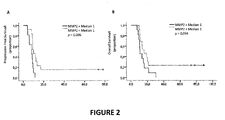
- Patients with initial high level of MMP 2 presented a median PFS of 7.3 months (IC95: 5.2-9.4) and a median OS of 12.8 months (IC95: 10.4-15.2) as compared to a median PFS of 3.0 months (IC95: 2.5-3.5) and a median OS of 5.9 months (IC95: 4.0-7.8) in case of initial low MMP2 level.
- Patients with initial low level of MMP 9 presented a median PFS of 8.2 months (IC95: 1.4-15.0) and a median OS of 12.3 months (IC95: 0 - 26.1) as compared to a median PFS of 3.7 (IC95: 2.9-4.6) and a median OS of 6.9 (IC95: 4.6-9.3) in case of initial high MMP9 level.
- Baseline MMP2 and MMP9 were the only biomarkers assessed in that cohort.
- the cut-off for MMP2 and MMP9 defined in cohort 1 were applied for subsequent analysis.
- 16 (32 %) patients exhibit a high MMP2 level and 27 (54 %) patients a low MMP9 level.
- Response could be evaluated for 49 patients.
- MMP2 similarly impacted response rate in that population, with 12 objective responses (RR: 80%) observed in the 15 patients with high MMP2 level and 6 objective responses (RR: 17.6%) in patients with low MMP2 level (p ⁇ 0.0001; Table II).
- Baseline MMP2 and MMP9 were the only biomarkers assessed in that cohort.
- the cut-off for MMP2 and MMP9 defined in cohort 1 were again applied for subsequent analysis.
- 11 patients (46%) presented a high MMP2 level.
- MMP2 plasma level appear to be a robust candidate to predict outcome of patients treated with bevacizumab for an high grade glioma.
- MMP9 baseline level exhibited inconsistent results between the 2 cohorts while VEGF kinetic, which impacts PFS and OS in the cohort 1, could not be assessed in the cohort 2. Consistent with previous studies, an increase of PlGF was observed in all patients analyzed, while change of others potential biomarkers tested was heterogeneous. However none of these change appear to influence outcome as observed in most studies with bevacizumab.
Landscapes
- Health & Medical Sciences (AREA)
- Life Sciences & Earth Sciences (AREA)
- Engineering & Computer Science (AREA)
- Immunology (AREA)
- Chemical & Material Sciences (AREA)
- Urology & Nephrology (AREA)
- Molecular Biology (AREA)
- Hematology (AREA)
- Biomedical Technology (AREA)
- Medicinal Chemistry (AREA)
- General Health & Medical Sciences (AREA)
- Cell Biology (AREA)
- Analytical Chemistry (AREA)
- Food Science & Technology (AREA)
- Pathology (AREA)
- Hospice & Palliative Care (AREA)
- Oncology (AREA)
- General Physics & Mathematics (AREA)
- Biochemistry (AREA)
- Biotechnology (AREA)
- Physics & Mathematics (AREA)
- Microbiology (AREA)
- Animal Behavior & Ethology (AREA)
- Public Health (AREA)
- General Chemical & Material Sciences (AREA)
- Veterinary Medicine (AREA)
- Pharmacology & Pharmacy (AREA)
- Chemical Kinetics & Catalysis (AREA)
- Nuclear Medicine, Radiotherapy & Molecular Imaging (AREA)
- Organic Chemistry (AREA)
- Bioinformatics & Cheminformatics (AREA)
- Heart & Thoracic Surgery (AREA)
- Cardiology (AREA)
- Measuring Or Testing Involving Enzymes Or Micro-Organisms (AREA)
- Investigating Or Analysing Biological Materials (AREA)
- Medicines That Contain Protein Lipid Enzymes And Other Medicines (AREA)
- Medicines Containing Antibodies Or Antigens For Use As Internal Diagnostic Agents (AREA)
Priority Applications (5)
| Application Number | Priority Date | Filing Date | Title |
|---|---|---|---|
| EP12305565.9A EP2667193A1 (en) | 2012-05-23 | 2012-05-23 | MMP2 as a predictive biomarker of response to antiangiogenic therapy and survival after therapy in cancer patients |
| EP13735437.9A EP2852842A1 (en) | 2012-05-23 | 2013-05-23 | Mmp2 as a predictive biomarker of response to antiangiogenic therapy and survival after therapy in cancer patients |
| JP2015513339A JP2015524055A (ja) | 2012-05-23 | 2013-05-23 | ガン患者における抗血管新生療法に対する応答及び該療法後の生存についての予知バイオマーカーとしてのmmp2 |
| PCT/IB2013/054275 WO2013175429A1 (en) | 2012-05-23 | 2013-05-23 | Mmp2 as a predictive biomarker of response to antiangiogenic therapy and survival after therapy in cancer patients |
| US14/402,913 US20150148248A1 (en) | 2012-05-23 | 2013-05-23 | Mmp2 as a predictive biomarker of response to antiangiogenic therapy and survival after therapy in cancer patients |
Applications Claiming Priority (1)
| Application Number | Priority Date | Filing Date | Title |
|---|---|---|---|
| EP12305565.9A EP2667193A1 (en) | 2012-05-23 | 2012-05-23 | MMP2 as a predictive biomarker of response to antiangiogenic therapy and survival after therapy in cancer patients |
Publications (1)
| Publication Number | Publication Date |
|---|---|
| EP2667193A1 true EP2667193A1 (en) | 2013-11-27 |
Family
ID=48782563
Family Applications (2)
| Application Number | Title | Priority Date | Filing Date |
|---|---|---|---|
| EP12305565.9A Ceased EP2667193A1 (en) | 2012-05-23 | 2012-05-23 | MMP2 as a predictive biomarker of response to antiangiogenic therapy and survival after therapy in cancer patients |
| EP13735437.9A Withdrawn EP2852842A1 (en) | 2012-05-23 | 2013-05-23 | Mmp2 as a predictive biomarker of response to antiangiogenic therapy and survival after therapy in cancer patients |
Family Applications After (1)
| Application Number | Title | Priority Date | Filing Date |
|---|---|---|---|
| EP13735437.9A Withdrawn EP2852842A1 (en) | 2012-05-23 | 2013-05-23 | Mmp2 as a predictive biomarker of response to antiangiogenic therapy and survival after therapy in cancer patients |
Country Status (4)
| Country | Link |
|---|---|
| US (1) | US20150148248A1 (enExample) |
| EP (2) | EP2667193A1 (enExample) |
| JP (1) | JP2015524055A (enExample) |
| WO (1) | WO2013175429A1 (enExample) |
Cited By (1)
| Publication number | Priority date | Publication date | Assignee | Title |
|---|---|---|---|---|
| CN107604074A (zh) * | 2017-10-27 | 2018-01-19 | 中南大学湘雅医院 | 胶质瘤预后标志物circ15:101235082|101235577及应用 |
Families Citing this family (5)
| Publication number | Priority date | Publication date | Assignee | Title |
|---|---|---|---|---|
| BR112013031019A2 (pt) | 2011-06-02 | 2017-03-21 | Almac Diagnostics Ltd | teste diagnóstico molecular para câncer |
| US11091809B2 (en) | 2012-12-03 | 2021-08-17 | Almac Diagnostic Services Limited | Molecular diagnostic test for cancer |
| GB201409476D0 (en) * | 2014-05-28 | 2014-07-09 | Almac Diagnostics Ltd | Molecular subtype for use in prognosis |
| CN108496084B (zh) * | 2016-01-25 | 2021-11-05 | 赛诺菲 | 通过测量血浆生物标记的水平预测疑似患有癌症的患者使用阿柏西普的治疗的结果的方法 |
| CN107937532B (zh) * | 2017-12-28 | 2020-06-30 | 中南大学湘雅医院 | 胶质瘤诊断标志物hsa_circ_0021827及应用 |
Citations (1)
| Publication number | Priority date | Publication date | Assignee | Title |
|---|---|---|---|---|
| US4683195A (en) | 1986-01-30 | 1987-07-28 | Cetus Corporation | Process for amplifying, detecting, and/or-cloning nucleic acid sequences |
Family Cites Families (1)
| Publication number | Priority date | Publication date | Assignee | Title |
|---|---|---|---|---|
| BR112013031019A2 (pt) * | 2011-06-02 | 2017-03-21 | Almac Diagnostics Ltd | teste diagnóstico molecular para câncer |
-
2012
- 2012-05-23 EP EP12305565.9A patent/EP2667193A1/en not_active Ceased
-
2013
- 2013-05-23 US US14/402,913 patent/US20150148248A1/en not_active Abandoned
- 2013-05-23 JP JP2015513339A patent/JP2015524055A/ja not_active Withdrawn
- 2013-05-23 EP EP13735437.9A patent/EP2852842A1/en not_active Withdrawn
- 2013-05-23 WO PCT/IB2013/054275 patent/WO2013175429A1/en not_active Ceased
Patent Citations (2)
| Publication number | Priority date | Publication date | Assignee | Title |
|---|---|---|---|---|
| US4683195A (en) | 1986-01-30 | 1987-07-28 | Cetus Corporation | Process for amplifying, detecting, and/or-cloning nucleic acid sequences |
| US4683195B1 (enExample) | 1986-01-30 | 1990-11-27 | Cetus Corp |
Non-Patent Citations (44)
| Title |
|---|
| "Immobilized Cells And Enzymes", 1986, IRL PRESS |
| A.M. JUBB; A.L. HARRIS, LANCET ONCOL., vol. 11, 2010, pages 1172 - 1183 |
| B. D. HAMES & S. J. HIGGINS: "Transcription And Translation", 1984 |
| B. D. HARRIES & S. J. HIGGINS: "Nucleic Acid Hybridization", 1984 |
| B. PERBAL: "A Practical Guide To Molecular Cloning", 1984 |
| BATCHELOR ET AL., J. CLIN. ONCOL., vol. 28, 2010, pages 2817 - 2823 |
| BATCHELOR TRACY T ET AL: "Phase II study of cediranib, an oral pan-vascular endothelial growth factor receptor tyrosine kinase inhibitor, in patients with recurrent glioblastoma", JOURNAL OF CLINICAL ONCOLOGY, LIPPINCOTT WILLIAMS & WILKINS, USA, vol. 28, no. 17, 10 June 2010 (2010-06-10), pages 2817 - 2823, XP008156728, ISSN: 1527-7755, [retrieved on 20100510], DOI: 10.1200/JCO.2009.26.3988 * |
| BRELL ET AL., BRAIN TUMOR PATHOL., vol. 28, 2011, pages 137 - 144 |
| COLIN ET AL., ACTA NEUROPATHOL., vol. 118, 2009, pages 745 - 754 |
| COX G ET AL: "A biological staging model for operable non-small cell lung cancer", THORAX, BMJ PUBLISHING GROUP, vol. 56, no. 7, 1 July 2001 (2001-07-01), pages 561 - 566, XP008156726, ISSN: 0040-6376, DOI: 10.1136/THORAX.56.7.561 * |
| D. GOEDDEL,: "Gene Expression Technology", vol. 185 |
| D. M. WEIR AND C. C. BLACKWELL: "Handbook Of Experimental Immunology", vol. I-IV, 1986 |
| D. WILD,: "The immunoassay Handbook", May 2005, ELSEVIER LTD |
| DE GROOT ET AL., NEURO-ONCOL., vol. 12, 2010, pages 233 - 242 |
| DUDA ET AL., JOURNAL OF CLINICAL ONCOLOGY, vol. 28, 2010, pages 183 - 185 |
| EISENHAUER ET AL., EUR. J. CANCER., vol. 45, 2009, pages 228 - 247 |
| FREDERICK M. AUSUBEL: "Current Protocols in Molecular Biology", 2003, WILEY AND SON INC |
| HANRAHAN ET AL., J. CLIN. ONCOL., vol. 28, 2010, pages 193 - 201 |
| J. ABELSON AND M. SIMON,: "Methods In ENZYMOLOGY", ACADEMIC PRESS, INC. |
| J. H. MILLER AND M. P. CALOS: "Gene Transfer Vectors For Mammalian Cells", 1987, COLD SPRING HARBOR LABORATORY |
| JAALINOJA, J., NEURO-ONCOL, vol. 46, 2000, pages 81 - 90 |
| LEUNG ET AL., SCIENCE, vol. 246, 1989, pages 1306 - 1309 |
| LUCIO-ETEROVIC ET AL., CLIN. CANCER RES., vol. 15, 2009, pages 4589 - 4599 |
| M. J. GAIT: "Oligonucleotide Synthesis", 1984 |
| MAYER AND WALKER: "Immunochemical Methods In Cell And Molecular Biology", 1987, ACADEMIC PRESS |
| MILLER J C ET AL: "Imaging angiogenesis: Application and potential for drug development", vol. 97, no. 3, 2 February 2005 (2005-02-02), pages 172 - 187, XP008156756, ISSN: 0027-8874, Retrieved from the Internet <URL:http://jncicancerspectrum.oxfordjournals.org/> DOI: 10.1093/JNCI/DJI023 * |
| NIERS, PLOS ONE, vol. 6, no. 5, 2011, pages EL9873 |
| P. CARMELIET; R.K. JAIN, NATURE, vol. 473, 2011, pages 298 - 307 |
| PAPATHOMA ET AL., ANTICANCER RESEARCH, vol. 20, 2000, pages 2009 - 2013 |
| PERREN ET AL., NEW ENGLAND JOURNAL OF MEDICINE, vol. 365, 2011, pages 2484 - 2496 |
| R. I. FRESHNEY: "Culture Of Animal Cells", 1987, ALAN R. LISS, INC. |
| RAIZER ET AL., CANCER, vol. 116, 2010, pages 5297 - 5305 |
| RINI ET AL., J. CLIN. ONCOL., vol. 26, 2008, pages 3743 - 3748 |
| ROY ET AL., J. CLIN. ONCOL., vol. 27, 2009, pages 5287 - 5297 |
| ROY R ET AL: "Matrix metalloproteinases as novel biomarkers and potential therapeutic targets in human cancer", 20091101, vol. 27, no. 31, 1 November 2009 (2009-11-01), pages 5287 - 5297, XP008156700, DOI: 10.1200/JCO.2009.23.5556 * |
| S. DEPRIMO ET AL: "Surrogate biomarkers in evaluating response to anti-angiogenic agents: focus on sunitinib", ANNALS OF ONCOLOGY, vol. 18, no. Supplement 10, 1 September 2007 (2007-09-01), pages x11 - x19, XP055039277, ISSN: 0923-7534, DOI: 10.1093/annonc/mdm409 * |
| SAMBROOK ET AL.: "Molecular Cloning: A Laboratory Manual, Third Edition,", 2001, COLD SPRING HARBOR LABORATORY PRESS |
| SATHORNSUMETEE ET AL., J. CLIN. ONCOL., vol. 26, 2008, pages 271 - 278 |
| SMITH ET AL., CLIN. CANCER RES., vol. 14, 2008, pages 2378 - 2386 |
| TAKANO ET AL., BRAIN TUMOR PATHOL., vol. 27, 2010, pages 89 - 94 |
| UEMURA ET AL., CIRC.; RES., vol. 88, 2001, pages 1291 - 1298 |
| VAN METER, M.E.; E.S. KIM, CURR.OPIN. ONCOL., vol. 22, 2010, pages 586 - 591 |
| WEN ET AL., J. CLIN. ONCOL., vol. 28, 2010, pages 1963 - 1972 |
| YAMAMOTO ET AL., CANCER RES., vol. 56, 1996, pages 384 - 392 |
Cited By (2)
| Publication number | Priority date | Publication date | Assignee | Title |
|---|---|---|---|---|
| CN107604074A (zh) * | 2017-10-27 | 2018-01-19 | 中南大学湘雅医院 | 胶质瘤预后标志物circ15:101235082|101235577及应用 |
| CN107604074B (zh) * | 2017-10-27 | 2020-06-30 | 中南大学湘雅医院 | 胶质瘤预后标志物circ15:101235082|101235577及应用 |
Also Published As
| Publication number | Publication date |
|---|---|
| JP2015524055A (ja) | 2015-08-20 |
| EP2852842A1 (en) | 2015-04-01 |
| US20150148248A1 (en) | 2015-05-28 |
| WO2013175429A1 (en) | 2013-11-28 |
Similar Documents
| Publication | Publication Date | Title |
|---|---|---|
| Hormigo et al. | YKL-40 and matrix metalloproteinase-9 as potential serum biomarkers for patients with high-grade gliomas | |
| Tabouret et al. | Association of matrix metalloproteinase 2 plasma level with response and survival in patients treated with bevacizumab for recurrent high-grade glioma | |
| US20150148248A1 (en) | Mmp2 as a predictive biomarker of response to antiangiogenic therapy and survival after therapy in cancer patients | |
| Pelissier et al. | CA125 kinetic parameters predict optimal cytoreduction in patients with advanced epithelial ovarian cancer treated with neoadjuvant chemotherapy | |
| Coticchia et al. | Urinary MMP-2 and MMP-9 predict the presence of ovarian cancer in women with normal CA125 levels | |
| EP3427058B1 (en) | Chromogranin a as a marker for bladder cancer | |
| Paek et al. | Prognostic significance of human epididymis protein 4 in epithelial ovarian cancer | |
| Blom et al. | Clinical utility of a circulating tumor cell assay in Merkel cell carcinoma | |
| Autelitano et al. | Performance of a multianalyte test as an aid for the diagnosis of ovarian cancer in symptomatic women | |
| EP3835789A1 (en) | Biomarker panel for diagnosing colorectal cancer | |
| Mouawad et al. | Old and new serological biomarkers in melanoma: where we are in 2009 | |
| Matsuyama et al. | Prognostic significance of the urokinase plasminogen activator system in tissue and serum of dogs with appendicular osteosarcoma | |
| WO2019117132A1 (ja) | がん免疫療法の予後予測のためのバイオマーカー | |
| US20170115292A1 (en) | Method and Compositions for the Diagnosis of a Thyroid Condition | |
| Hashimoto et al. | Use of squamous cell carcinoma antigen as a biomarker of chemotherapy response in patients with metastatic cervical carcinoma | |
| US20240069029A1 (en) | Pd-ecgf as biomarker of cancer | |
| Magbanua et al. | Outcomes and clinicopathologic characteristics associated with disseminated tumor cells in bone marrow after neoadjuvant chemotherapy in high-risk early stage breast cancer: the I-SPY SURMOUNT study | |
| JP7564097B2 (ja) | ソラフェニブ化合物を含む療法のためのバイオマーカー | |
| US20190195880A1 (en) | Methods and kits for predicting the sensitivity of a subject suffering of renal cancer to cancer treatment | |
| ES2984122T3 (es) | Biomarcadores para carcinoma de células renales | |
| Turan et al. | Clinical utility of GAL-8, ITGΒ-1, and HIF-1α as non-invasive diagnostic and prognostic biomarkers for assessing glioma | |
| US20160327559A1 (en) | Hepatocyte growth factor as marker of prognosis in small cell lung cancer (sclc) | |
| JPWO2016111364A1 (ja) | がん又は炎症性疾患患者の予後を予測する方法 | |
| US12504431B2 (en) | Biomarkers for a therapy comprising a sorafenib compound | |
| EP4528279A1 (en) | In vitro method for the diagnosis, prognosis and treatment response of migraine |
Legal Events
| Date | Code | Title | Description |
|---|---|---|---|
| PUAI | Public reference made under article 153(3) epc to a published international application that has entered the european phase |
Free format text: ORIGINAL CODE: 0009012 |
|
| AK | Designated contracting states |
Kind code of ref document: A1 Designated state(s): AL AT BE BG CH CY CZ DE DK EE ES FI FR GB GR HR HU IE IS IT LI LT LU LV MC MK MT NL NO PL PT RO RS SE SI SK SM TR |
|
| AX | Request for extension of the european patent |
Extension state: BA ME |
|
| STAA | Information on the status of an ep patent application or granted ep patent |
Free format text: STATUS: THE APPLICATION HAS BEEN REFUSED |
|
| 18R | Application refused |
Effective date: 20131214 |