EP2663124A2 - Vorrichtung und Verfahren zur Speicherung von prioritätsbasierten Neuauswahlparametern bei Übergabe und Verbindungsherstellung - Google Patents
Vorrichtung und Verfahren zur Speicherung von prioritätsbasierten Neuauswahlparametern bei Übergabe und Verbindungsherstellung Download PDFInfo
- Publication number
- EP2663124A2 EP2663124A2 EP13167098.6A EP13167098A EP2663124A2 EP 2663124 A2 EP2663124 A2 EP 2663124A2 EP 13167098 A EP13167098 A EP 13167098A EP 2663124 A2 EP2663124 A2 EP 2663124A2
- Authority
- EP
- European Patent Office
- Prior art keywords
- priority information
- user equipment
- dedicated priority
- cell
- rrc
- Prior art date
- Legal status (The legal status is an assumption and is not a legal conclusion. Google has not performed a legal analysis and makes no representation as to the accuracy of the status listed.)
- Withdrawn
Links
- 238000000034 method Methods 0.000 title claims description 29
- 238000005516 engineering process Methods 0.000 claims abstract description 10
- 230000011664 signaling Effects 0.000 claims description 19
- 230000006399 behavior Effects 0.000 description 16
- 230000008859 change Effects 0.000 description 14
- 238000012545 processing Methods 0.000 description 12
- 238000005259 measurement Methods 0.000 description 10
- 238000012986 modification Methods 0.000 description 6
- 230000004048 modification Effects 0.000 description 6
- 230000009471 action Effects 0.000 description 4
- 230000008569 process Effects 0.000 description 3
- 238000011156 evaluation Methods 0.000 description 2
- 238000001914 filtration Methods 0.000 description 2
- 238000012546 transfer Methods 0.000 description 2
- 238000013459 approach Methods 0.000 description 1
- 230000005540 biological transmission Effects 0.000 description 1
- 238000004891 communication Methods 0.000 description 1
- 238000012217 deletion Methods 0.000 description 1
- 230000037430 deletion Effects 0.000 description 1
- 230000006870 function Effects 0.000 description 1
- GVVPGTZRZFNKDS-JXMROGBWSA-N geranyl diphosphate Chemical compound CC(C)=CCC\C(C)=C\CO[P@](O)(=O)OP(O)(O)=O GVVPGTZRZFNKDS-JXMROGBWSA-N 0.000 description 1
- 230000002452 interceptive effect Effects 0.000 description 1
- 239000004973 liquid crystal related substance Substances 0.000 description 1
- 238000010295 mobile communication Methods 0.000 description 1
- 239000013307 optical fiber Substances 0.000 description 1
- 230000000737 periodic effect Effects 0.000 description 1
- 238000002360 preparation method Methods 0.000 description 1
- 238000009877 rendering Methods 0.000 description 1
- 230000007704 transition Effects 0.000 description 1
Images



Classifications
-
- H—ELECTRICITY
- H04—ELECTRIC COMMUNICATION TECHNIQUE
- H04W—WIRELESS COMMUNICATION NETWORKS
- H04W36/00—Hand-off or reselection arrangements
- H04W36/0005—Control or signalling for completing the hand-off
- H04W36/0055—Transmission or use of information for re-establishing the radio link
Definitions
- the present application relates generally to wireless devices and, more specifically, to storing priority-based reselection (PBR) parameters at handover and connection establishment in a mobile terminal.
- PBR priority-based reselection
- Conventional wireless networks support priority-based reselection (PBR) operations, in which a user equipment (or mobile device) accessing a first cell re-selects to a second cell.
- PBR priority-based reselection
- a priority-based reselection operation uses priority information in its algorithm to choose the second cell.
- the priority information may be common priority information that is common to multiple user equipment or may be dedicated priority information that is device-specific to a particular user equipment.
- an initial rankling of neighbouring cells may be done based on assigned priorities rather than on relative or absolute radio measurement. It is possible to assign device-specific priority information, which persists across multiple cells, including cells of different radio access technologies (RATs).
- Reselection algorithms are typically based on measured properties of a signal associated with a particular cell. For example, for a GSM cell, measurements of the signal transmitted on the broadcast control channel (BCCH) frequency for that cell may be used for a PBR algorithm.
- BCCH broadcast control channel
- a wireless device In earlier reselection algorithms, a wireless device often made such measurements for multiple (possibly all) candidate cells. This often required measurements and comparisons of values for cells using different radio access technologies. As the numbers and types of cells increase (e.g., introduction of new RATs), such a re-selection algorithm becomes progressively more complex. First, there are more candidate neighbour cells to evaluate. Second, it becomes harder to define appropriate ways of comparing measurements of cells, which operate using different radio access technologies.
- FIGURE 1 illustrates an exemplary wireless network according to one aspect of the disclosure
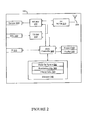
- FIGURE 2 illustrates user equipment according to one aspect of the disclosure
- FIGURE 3 illustrates the operation of an exemplary user equipment that receives priority information that exceeds defined limits according to one aspect of the disclosure
- FIGURE 4 illustrates a table that lists the constraints and formats for sending conventional dedicated priority information in the various RAT networks
- FIGURE 5 illustrates a table that comprises limits on priority information that may be transmitted in different types of RAT networks according to the principles of the present disclosure
- FIGURE 6 illustrates modifications to Table 7.3 3GPP TS 36.221 to provide for storage of priority information at RRC Connection establishment according to the principles of the present disclosure.
- FIGURES 1 through 6 discussed herein, and the various aspects thereof used to describe the principles of the present disclosure are by way of illustration only and should not be construed in any way to limit the scope of the disclosure. Those skilled in the art will understand that the principles of the present disclosure may be implemented in any suitably arranged wireless user equipment.
- 3GPP Release 8 which coincided with the first specifications of the Evolved UMTS Terrestrial Radio Access Network (E-UTRAN), a new priority-based reselection algorithm was defined based on priority levels.
- a PBR algorithm cells are grouped into different priority layers. For any given neighbour cell, a determination is made as to whether it fulfills certain reselection requirements. If it meets the requirements, then no further evaluation of cells with lower priorities is necessary. Comparison of multiple cells is only necessary if multiple cells within a priority level meet the criteria. In the 3GPP priority-based reselection algorithm, it is not permitted to have cells using different RATs have the same priority level. This means there is no requirement to compare measurements of cells of different RATs when using the reselection algorithm. Examples of different radio access technologies (RATs) are Global System for Mobile Communications (GSM), UTRAN and E-UTRAN.
- GSM Global System for Mobile Communications
- UTRAN UTRAN
- E-UTRAN E-UTRAN
- Two sets of thresholds for candidate neighbour cells are specified.
- the set of thresholds to be used depends on whether the neighbour cell has a higher or lower priority than the serving cell.
- the reselection criteria do not include any criteria associated with the serving cell. Reselection to a candidate neighbour cell with a lower priority than the serving cell is possible only if the serving cell measurements meet some criteria - typically that the strength and/or quality of the serving cell signal has dropped below some threshold(s).
- Dedicated priority information may be transmitted using point-to-point signaling to individual mobile devices to set the priorities that a particular mobile device should use.
- the manner in which dedicated priorities are set is a matter of network operator policy and not within the scope of the standards.
- UE user equipment
- a device with a low-value subscription may be assigned a lower (or no) priority for the same cells.
- dedicated priority information should be consistent, regardless of the RAT in which it was transmitted. Furthermore, when a device performs cell reselection from one cell to another, any stored dedicated priority information should remain valid, even if the cells use different RATs.
- Dedicated priorities may contain priorities for frequencies that are not in the current neighbour cell list and are not available locally. This ensures that a mobile device that moves to a region where these frequencies are available will already have the correct and applicable priorities.
- Dedicated priority information may be associated with a validity timer - on the order of 5 to 180 minutes. At the expiry of this timer, which is also inherited at cell reselection across RATs as above, the dedicated priority information is deleted and the mobile device reverts to using common priority information. If no timer is specified, the dedicated priorities remain valid indefinitely (i.e., until deleted due to some other rule).
- Dedicated priority information is provided in different messages, depending on the RAT of the current serving cell.
- GSM Global System for Mobile communications
- the Channel Release message, the Packet Measurement Order message, and the Packet Cell Change Order message may be used.
- UTRAN the UTRAN MOBILITY INFO message may be used.
- E-UTRAN the RRC Connection Release message may be used. Signaling is quite different from one RAT to another RAT and allows for different numbers and combinations of frequency and priority indications for cells of different RATs to be indicated.
- the Table in FIGURE 4 lists the constraints and formats for sending conventional dedicated priority information in the various RAT networks.
- Columns in the Table in FIGURE 4 represent the RAT (e.g., GSM, UTRAN) in which the priority information is signaled.
- Rows in the Table in FIGURE 4 correspond to the RAT for which priority information is being signaled.
- the signaling in E-UTRAN permits priorities to be signaled for up to 16 UTRAN FDD frequencies and up to 16 UTRAN TDD frequencies (i.e., 3rd row, 2nd column).
- the variables N_GSM, N_UTRAN_FDD, N_UTRAN_TDD, and N_EUTRAN are used only in the context of this disclosure document, and are not used in 3GPP specifications.
- GERAN GSM/EDGE radio access network
- the mobile device In E-UTRAN and GSM specifications, the mobile device is simply required to store the information received in the respective message, with no further details given on the details of the storage format.
- a variable called the PRIORITY_INFO_LIST is defined for the purpose of storing priority information while in UTRAN.
- dedicated priority information may be deleted on state change.
- Different rules apply to UTRAN and GSM.
- priority information is not affected by transitions between different Radio Resource Control (RRC) and/or RR states.
- RRC Radio Resource Control
- dedicated priorities are deleted on entering RRC_CONNECTED mode. This difference may have been motivated by the fact that there is no cell reselection in EUTRA connected mode, while in the other RAT networks, cell reselection in (at least some) connected mode(s) is allowed (e.g., UMTS CELL_FACH, UMTS Cell_PCH, and UMTS URA_PCH states and in GERAN Packet Transfer mode).
- deletion on handover is implicit from the absence of specification of inheritance of priority information at handover. See, for example, Section 5.2.4.1 of 3GPP Technical Specification 36.304.
- Some general problems with the foregoing schemes are the diversity of the signaling options, the need for storage of dedicated priorities when moving across RATs, and the limitations of the PRIORITY_INFO_LIST variable.
- the capacity for GSM priority information within the PRIORITY_INFO_LIST may not be sufficient to store all possible GSM priority information that could be sent in the UTRAN priority information signaling.
- the signaling capabilities in GSM for UTRAN and E-UTRAN may exceed the storage capability of the PRIORITY_INFO_LIST variable.
- GSM Global System for Mobile communications
- IE Individual Priority Information Element
- UTRAN and E-UTRAN signaling there are different limitations on the number of UTRAN and E-UTRAN frequencies for which priority information can be provided and multiple priorities can be signalled for different GSM frequencies.
- the UTRAN variable PRIORITY_INFO_LIST is limited in the amount of priority information it can contain. There is the risk that individual priority information may be provided in GSM or E-UTRAN which exceeds the capacity of this structure.
- UTRAN it is possible to signal more GSM frequencies in the Dedicated Priority Info IE than can be stored in the PRIORITY_INFO_LIST.
- the above may lead to one or more of the following problem cases for the user equipment (UE):
- a corollary of the above issue is that the network may currently need to send dedicated priority information to each device that incurs an inter-RAT HO before moving the device to a state where autonomous reselection is permitted.
- GERAN GSM/EDGE radio access network
- PS Packet-Switch
- this may be required after every handover, if the network permits autonomous reselection while in packet transfer mode (i.e., the UE is in mode NCO or NC 1) in order to ensure the desired behaviour.
- Similar issues may arise in other RATs if autonomous reselection is possible in connected mode and/or immediately after handover.
- the new cell controller (or base station) may not be able to determine whether an inbound handover is an inter-RAT handover or intra-RAT handover.
- the new cell controller may therefore have to treat some intra-RAT handovers as inter-RAT and provide dedicated priorities to all mobiles after such handovers.
- the Serving cell does not support PBR - If the cell that the UE ends up in after HO does not support PBR, then subsequent reselection follows legacy reselection rules (e.g. ranking-based reselection) until the UE moves to a cell which supports PBR and will then use common priorities, rather than dedicated priorities. This could happen even without any movement by the UE, such as when the UE is handed over from a PBR-capable UTRAN to a non-PBR capable GSM for load balancing of voice calls. When the call terminates, the UE may move according to legacy reselection back to UTRAN, where the UE then uses common priorities, since the UE may have no dedicated priorities
- the present disclosure describes apparatuses and methods that may place limits on the number of UTRAN and E-UTRAN dedicated priorities which a user equipment (UE) is required to be able to handle. These limits may be coordinated across diffent RATs, such that there is no possible ambiguity for UE behaviour when inheriting priorities during a change from one RAT to another, provided these limits are respected on the network side.
- the PRIORITY_INFO_LIST variable may be updated to satisfy the requirements.
- minimum limits may be placed on the number of UTRAN and E-UTRAN dedicated priorities which the UE is required to be able to handle.
- the disclosed apparatuses and methods may place limits on the amount of priority information that the user equipment is expected to be able to process and store, and may define behaviour when priority information exceeding these limits (but which can, nevertheless, be signaled) is received.
- the user equipment may treat any use of the ARFCNO + ending ARFCN as "single priority applicable to all GSM frequencies".
- ARFCNO + ending ARFCN may not be able to cover all GSM frequencies with a single instance, due to the overlap of DCS and PCS AFRCN values. Nevertheless, a single instance using the ending ARFCN may be considered to cover all GSM frequencies, including both DCS and PCS frequencies.
- FIGURE 1 illustrates exemplary wireless network 100 according to one aspect of the present disclosure.
- Wireless network 100 includes base station (BS) 111, BS 112, and BS 113.
- BS 111, BS 112 and BS 113 may communicate with each other via wireless links or by a wireline backbone network (e.g., optical fiber, DSL, cable, T1/E1 line, etc.).
- a wireline backbone network e.g., optical fiber, DSL, cable, T1/E1 line, etc.
- each of base stations 111-113 is configured to communicate with other base stations using Internet protocol (IP) network 130, which may be, for example, the Internet, a proprietary IP network, or another data network.
- IP Internet protocol
- Each of base stations 111-113 is also configured to communicate with a conventional circuit-switched telephone network (not shown), either directly or by means of network 130.
- BS 111 provides wireless broadband access to network 130 to a first plurality of user equipments (UEs) within a coverage area of BS111.
- the first plurality of UEs includes user equipment (UE) 121 and UE 122, among others.
- BS112 provides wireless broadband access to network 130 to a second plurality of UEs within a coverage area of base station 112.
- the second plurality of UEs includes UE 121, UE 122, UE 123, and UE 124, among others.
- BS113 provides wireless broadband access to network 130 to a third plurality of UEs within a coverage area of bBS113.
- the third plurality of UEs includes UE 121, UE 124, and UE 125, among others.
- UE 121 is able to access all three of base stations 111-113, whereas UE 125 is only able to access BS 113 and UE 123 is only able to access BS 112. UE 122 and UE 124 can each access two base stations.
- Each of base stations 111-113 may provide different levels of service to UEs 121-125 according to priority levels (common and/or dedicated) associated with each UE.
- BS 111 may provide a T1 level service to UE 121 and may provide a fractional T1 level service to UE 122.
- UEs 121-125 may use the broadband access to network 130 to access voice, data, video, video teleconferencing, and/or other broadband services.
- Each one of UEs 121-125 may be any of a number of types of wireless devices, including a wireless-enabled laptop computer, a personal data assistant, a notebook, a mobile phone, a tablet, or another wireless-enabled device.
- base station may be commonly used in some types of networks, such as CDMA2000 systems or some 3GPP systems. But “base station” is not universally used in all types of radio access technology (RAT).
- base station may be replaced by "eNodeB”, or “eNB”, or “access point”, or “cell controller.”
- eNodeB or “eNB”
- access point or “cell controller.”
- base station and cell controller may be used interchangeably in this disclosure document to refer to the network infrastructure device that provides wireless access to user equipment.
- the term “user equipment” may be commonly used in some types of networks, but not in others. In some types of networks, the term “user equipment” may be replaced by "subscriber station”, “mobile station”, “remote terminal”, “wireless terminal” or the like.
- the term “user equipment”, or “UE”, is used in this disclosure document, and in the claims in particular, to refer to the remote wireless device that accesses the network infrastructure device (i.e., the base station).
- FIGURE 2 illustrates an example user equipment (UE) 121 according to the present disclosure.
- UE 121 comprises at least one antenna 205, radio frequency (RF) transceiver (XCVR) 210, transmitter baseband (TX BB) processing circuitry 215, microphone 220, and receiver baseband (RX BB) processing circuitry 225.
- UE 121 also comprises speaker 230, main controller 240, input/output (I/O) interface (IF) 245, keypad 250, display 255, and memory 260.
- Memory 260 stores basic operating system (OS) program 261, reselection algorithm 262, priority information 263, and other data (not shown).
- OS basic operating system
- reselection algorithm 262 priority information 263, and other data (not shown).
- Radio frequency transceiver 210 receives from antenna 205 an incoming RF signal transmitted by a base station of wireless network 100.
- Radio frequency transceiver 210 comprises receiver circuitry configured to operate in cells associated with one or more types of radio access technology (RAT) networks (e.g., GSM, UTRAN, E-UTRAN, etc.).
- Radio frequency transceiver 210 down-converts the incoming RF signal to produce an intermediate frequency (IF) or a baseband signal.
- the IF or baseband signal is sent to RX BB processing circuitry 225, which may produce a processed baseband signal by, for example, filtering and digitizing the received baseband or IF signal, additional filtering, and, if necessary, demodulation and/or decoding.
- Receiver baseband (RX BB) processing circuitry 225 transmits the processed baseband signal to speaker 230 (i.e., voice data) or to main controller 240 for further processing (e.g., web browsing).
- Transmitter baseband (TX BB) processing circuitry 215 may receive analog or digital voice data from microphone 220 or other outgoing baseband data (e.g., web data, e-mail, interactive video game data) from main controller 240. TX BB processing circuitry 215 may encode, modulate, multiplex, and/or digitize the outgoing baseband data to produce a processed baseband or IF signal. Radio frequency transceiver 210 receives the outgoing processed baseband or IF signal from TX BB processing circuitry 215. Radio frequency transceiver 210 up-converts the baseband or IF signal to a radio frequency (RF) signal that is transmitted via antenna 205.
- RF radio frequency
- Main controller 240 may comprise any device, system or part thereof that controls at least one operation. Such a device may be implemented in hardware, firmware or software, or some combination of at least two of the same. Main controller 240 is a microprocessor or a microcontroller. Memory 260 is coupled to main controller 240. Part of memory 260 may comprise a random access memory (RAM) and another part of memory 260 may comprise a non-volatile memory, such as Flash memory.
- RAM random access memory
- Flash memory non-volatile memory
- Main controller 240 executes basic operating system (OS) program 261 stored in memory 260 in order to control the overall operation of UE121. In one such operation, main controller 240 controls the reception of forward channel signals and the transmission of reverse channel signals by radio frequency transceiver 210, RX BB processing circuitry 225, and TX BB processing circuitry 215, in accordance with well-known principles.
- OS basic operating system
- Main controller 240 is capable of executing other processes and programs resident in memory 260. Main controller 240 can move data into or out of memory 260, as required by an executing process. Main controller 240 is also coupled to I/O interface 245. I/O interface 245 provides UE121 with the ability to connect to other devices, such as laptop computers and handheld computers. I/O interface 245 is the communication path between these accessories and main controller 240. Main controller 240 may also be coupled to an input device, such as keypad 250, and display 255. The operator of user equipment 121 uses keypad 250 to enter data into user equipment 121. Display 255 may be a liquid crystal display capable of rendering text and/or at least limited graphics from web sites. Alternate examples may use other types of displays (or none). Display 255 may include a touch screen input device which may be used in conjunction with, or in place of, keypad 250.
- User equipment 121 is configured to store and to use priority information 263 in memory 260 according to the principles of the present disclosure.
- Main controller 240 executes reselection algorithm 262, which uses priority information 263, to improve operation of UE 121.
- the reselection algorithm 262 may obviate one or more of the problems described above.
- Main controller 240 under control of reselection algorithm 262, may be configured to limit the amount of priority information that UE 121 is expected to take into account when performing PBR-based reselection.
- Main controller 240 may be further configured to define behaviour when priority information exceeding these limits is received from a base station.
- main controller 240 may use the limits shown in the Table in FIGURE 5 to limit the contents of priority information 263 in memory 260.
- FIGURE 3 illustrates the operation of exemplary user equipment (UE) 121 when UE 121 receives priority information that exceeds defined limits according to one aspect of the disclosure.
- UE user equipment
- the scope of the defined limits on priority information is not restricted in this disclosure.
- a defined limit may comprise a number of priority levels and/or carrier frequencies (or cells operating thereon) to which priorities are assigned.
- a limit also may comprise one or more RAT-specific limits (e.g., a limit on the number of carrier frequencies for which priorities are provided for cells operating on a particular RAT), and/or an overall limit covering priority information across all RATs.
- the limit may comprise a number of instances of an entity type within the hierarchy (e.g., number of structures of a given type).
- UE 121 receives an incoming message containing priority information (step 305).
- Main controller 240 in UE 121 may compare the priority information to existing limits, such as the limits in the Table in FIGURE 5 (step 310). If the priority information is within limits (Yes in 310), then main controller 240 stores the limits in memory 260 for subsequent processing in a cell reselection operation (step 315)). If the priority information exceeds the limits in the Table in FIGURE 5 (No in 310), there may be a number of possibilities regarding how user equipment 121 and main controller 240 may respond.
- UE 121 may be configured to do one or more of Options 1-4, as described further below. Options 1, 2, and 4 are directed towards instances in which priority information is first received.
- Option 3 is directed more towards instances when a change of RAT occurs and inherited individual priority information is present.
- Option 1 the UE 121 may ignore the new priorities and proceed as before, possibly using previous dedicated priorities.
- the implementation of Option 1 may vary depending on the specific RAT.
- the UE may act on the received Channel Release message, but ignore the priorities in the IE.
- the UE may further reject the UMI message.
- Option 1 may have a plurality of sub-cases, including ignore the priority information, and either accept or reject the message.
- a UE may implement Option 1 by operating in accordance with the above portion of Section 3.2.3.3 amended to further include:
- the UE 121 may delete all dedicated priorities and may use common priorities, such as broadcast or non-user equipment specific priorities.
- UE 121 may use a legacy algorithm instead of common priority information to perform reselection.
- a UE may implement Option 2 by operating in accordance with the above portion of Section 3.2.3.3 of 3GPP Technical Specification 44.018 amended to further include:
- Option 4 the UE 121 may store and act on priorities up to the agreed limit and may discard the remaining priorities.
- a UE may implement Option 4 by operating in accordance with the above portion of Section 3.2.3.3 of 3GPP Technical Specification 44.018, amended to further include:
- a UE also may implement Option 4 by operating in accordance with Section 8.6.7.23 of 3GPP Technical Specification 25.331, further amended to include (changes are underlined):
- Section 3.2.3.3 of 3GPP Technical Specification 44.018 further states:
- Option 3 the UE 121 may initially (i.e., on receipt of the priorities), store and act on the new priorities (above the limit, up to and including all signaled priorities).
- Option 3 may be complemented by one of a number of behaviours when moving to a cell of a different RAT.
- a UE may implement such additional behaviours by operating in accordance with the above portion of Section 3.2.3.3 of 3GPP Technical Specification 44.018, amended to further include:
- a UE may implement such additional behaviours by operating in accordance with the above portion of Section 3.2.3.3 of 3GPP Technical Specification 44.018 amended to further include:
- any of Options 1, 2, and 4 may be performed at the change of RAT.
- the UE may ignore and/or delete the newly received priority information.
- the UE may store the newly received priority information up to the limit.
- the UE may store some of the newly received priority information (above the limit).
- the UE may: 1) delete and/or ignore the information (Option 3 + Option 1 or Option 2); 2) store the priority information amount up to and including the limit (Option 3 + Option 4); 3) store and/or use a different amount of priority information (above the limit) (Option 3 + Option 3); and 4) store an amount of priority information that is greater than 0 and fewer than the limit.
- the frequencies may be counted regardless of whether or not a UE supports them. Capabilities signaled in one RAT may not indicate UE support of individual frequency bands for another RAT. It may be difficult for the radio access network to restrict signaling of dedicated priorities to those frequencies that the UE supports. Therefore, in one advantageous example, an enhancement to the limits such as those defined in the Table in FIGURE 5 may consider only frequencies that the UE does support. For example, UE 121 may store up to 8 EARFCNs that UE 121 supports. Provided that the dedicated priority information includes 8 or fewer EARFCNs that the UE supports, then the limit is not exceeded, independently of the number of unsupported EARFCNs for which dedicated priority information is signaled.
- the present disclosure describes apparatuses and methods for processing priority information that exceed the limits on the amount of priority information the UE handles. These limits may be coordinated across diffent RATs, to thereby define UE behaviour when inheriting priorities during a change from one RAT to another.
- the PRIORITY_INFO_LIST variable may be updated to satisfy the requirements.
- minimum limits may also be placed on the number of UTRAN and E-UTRAN dedicated priorities which the UE is required to be able to handle.
- the present disclosure also describes apparatuses and methods related to: i) a user equipment (e.g., UE 121) dropping an RRC connection other than by a successful RRC Connection Release procedure, such as when there is a link failure, and ii) inconsistencies of handling these events in different types of RAT networks (e.g., GSM, UTRAN, E-UTRAN).
- a user equipment e.g., UE 121
- UE 121 is configured to provide for the storage of priority parameters at RRC Establishment.
- UE 121 is further configured to combine the first aspect above with inheritance of priority parameters at inter-RAT handover.
- UE 121 may delete stored priority information if the RRC Connection Release message does not include an Idle Mode Mobility Control Info information element. Otherwise, UE 121 uses the priorities in the Idle Mode Mobility Control Info information element. In a second option, UE 121 may delete stored priority information if the RRC Connection Release message does include the Idle Mode Mobility Control Info information element, but does not list priority information.
- a UE 121 may be configured to maintain dedicated priority information during an RRC connection. Additionally, or alternatively, a UE 121 may be configured to inherit dedicated priority information at handover, as well as at inter-RAT reselection/selection. Therefore, UE 121 may no longer be required to delete priority information at RRC Connection establishment and may be capable of inheriting priority information at inter-RAT handover.
- associated 3GPP specifications may be modified to remove requirements that the UE delete priority information at RRC Connection establishment; and to indicate that the Timer T320 is started also at handover and not stopped at RRC Connection establishment.
- TS Technical Specification
- a UE may implement the behaviours described above by operating in accordance with 3GPP TS 36.311, as amended as shown in the following sections.
- 3GPP TS 36.331 Section 5.3.3.4 (Reception Of The RRCConnectionSetup By The UE) may be modified by deleting the language that is struck-through below:
- timer T320 in Section 7.3 may be modified as shown in FIGURE 6 , where added text is underlined and deleted text is struck-through.
- a UE also may implement the behaviours described above by operating in accordance with 3GPP TS 36.304, as amended as shown in the following sections.
- Section 5.2.4.1 Selection Priorities handling
- 3GPP TS 36.304 Section 5.2.4.1 (Reselection Priorities handling) may be modified as shown below, where added text is underlined and deleted text is struck-through:
- a UE also may implement the behaviours described above by operating in accordance with 3GPP TS 44.018, as amended as shown in the following sections.
- Section 3.2.3.3 Provision of Individual Priorities Information
- Added text is underlined and deleted text is struck-through:
- the operation of the cell controller may be modified to allow the cell controller to send dedicated priorities prior to state change after handover (HO).
- the cell controller and UE 121 may be configured to provide for the inheritance of priority parameters at inter-RAT handover. Accordingly, in one example, either UE 121 or the current serving cell controller may signal to the new cell controller (i.e., the cell controller after handover) whether UE 121 has stored dedicated priorities or not. Network signaling may, for example, be by means of the transparent container sent between cell controllers (or RAN nodes) as part of the handover preparation. Based on this, the new cell controller (or base station) transmits, or refrains from transmitting, dedicated priority information to the UE in the new cell.
- the PSHandover Indications information element provides indications related to the PS Handover procedure.
- the element coding is: Table 11.3.95a.a: PS Handover Indications IE 8 7 6 5 4 3 2 1 octet 1 IEI octet 2. 2a Length Indicator octet 3 Spare IP SI/PSI Table 11.3.95a,c: "IP" coding coding Semantic 00 Mobile station does not have individual priorities information 01 Status of individual priorities information in MS is not known 10 Reserved (treated as '01') 11 Mobile station has individual priorities information
- UE 121 may be further configured to selectively store priority parameters on entering or remaining in RRC_CONNECTED mode in E-UTRAN networks. This may prevent dedicated priority information from being stored and used after multiple handovers in an area where the dedicated priority information is no longer valid. By way of example, and not of limitation, this may be accomplished according to one or more of the following options:
- Option 1 - UE 121 is configured to store priority parameters at RRC Establishment in E-UTRAN and to delete priority parameters if: a) intra-E-UTRAN handover occurs while still in RRC_CONNECTED mode; and/or b) intra-E-UTRAN handover is to a cell whose tracking area ID (TAI) is not one in which UE 121 is registered.
- TAI tracking area ID
- the network may be configured to signal whether priority parameters are to be stored in RRC_CONNECTED mode or not.
- the network may also be configured to signal whether a) or b) in Option 1 above applies.
- a UE 121 may indicate (i.e., signal) that the UE 121 implements a behavior described in this disclosure.
- a UE 121 may indicate this by means of an appropriate access stratum capability indicator relevant to the current RAT (e.g., the Mobile Station Radio Access Capabilities (MS RAC) IE, see 3GPP TS 24.008, which is applicable in GERAN).
- MS RAC Mobile Station Radio Access Capabilities
- a UE 121 signalling whether UE 121 has dedicated priorities may serve as an implicit indication of support for the feature, or at least may enable the network to make a decision as to whether further dedicated priority signaling is required. This capability would allow the network to determine whether or not to send dedicated priority information based on whether UE 121 sends this capability indicator.
Landscapes
- Engineering & Computer Science (AREA)
- Computer Networks & Wireless Communication (AREA)
- Signal Processing (AREA)
- Mobile Radio Communication Systems (AREA)
Applications Claiming Priority (1)
| Application Number | Priority Date | Filing Date | Title |
|---|---|---|---|
| US13/466,979 US20130303165A1 (en) | 2012-05-08 | 2012-05-08 | Apparatus And Method For Storage Of Priority-Based Reselection Parameters At Handover And Connection Establishment |
Publications (1)
| Publication Number | Publication Date |
|---|---|
| EP2663124A2 true EP2663124A2 (de) | 2013-11-13 |
Family
ID=48326166
Family Applications (1)
| Application Number | Title | Priority Date | Filing Date |
|---|---|---|---|
| EP13167098.6A Withdrawn EP2663124A2 (de) | 2012-05-08 | 2013-05-08 | Vorrichtung und Verfahren zur Speicherung von prioritätsbasierten Neuauswahlparametern bei Übergabe und Verbindungsherstellung |
Country Status (2)
| Country | Link |
|---|---|
| US (1) | US20130303165A1 (de) |
| EP (1) | EP2663124A2 (de) |
Cited By (6)
| Publication number | Priority date | Publication date | Assignee | Title |
|---|---|---|---|---|
| WO2016181040A1 (en) * | 2015-05-13 | 2016-11-17 | Nokia Solutions And Networks Oy | Cell reselection control mechanism in multi-connectivity communication mode |
| CN107889109A (zh) * | 2017-12-01 | 2018-04-06 | 广东欧珀移动通信有限公司 | 网络接入结果的检测方法及装置、计算机存储介质 |
| CN108156638A (zh) * | 2017-12-29 | 2018-06-12 | 广东欧珀移动通信有限公司 | 检测方法及装置、计算机存储介质 |
| CN108200589A (zh) * | 2017-12-29 | 2018-06-22 | 广东欧珀移动通信有限公司 | 检测方法及装置、计算机存储介质 |
| CN109729534A (zh) * | 2017-10-27 | 2019-05-07 | 普天信息技术有限公司 | 一种同覆盖异频小区生成方法和装置 |
| US11240871B2 (en) | 2018-06-20 | 2022-02-01 | Google Llc | Releasing information to improve cell selection in different resource control states |
Families Citing this family (14)
| Publication number | Priority date | Publication date | Assignee | Title |
|---|---|---|---|---|
| US8934899B2 (en) | 2012-05-08 | 2015-01-13 | Blackberry Limited | Apparatus and method for high priority search on RRC state change |
| US20140106749A1 (en) * | 2012-10-12 | 2014-04-17 | Nokia Siemens Networks Oy | Method, apparatus, computer program product, computer readable medium and system for cell reselection |
| EP2987285B1 (de) * | 2013-04-17 | 2018-02-21 | Telefonaktiebolaget LM Ericsson (publ) | Verfahren und vorrichtung zur optimierung von telekommunikationsdiensten |
| US9693278B2 (en) | 2014-08-11 | 2017-06-27 | Intel IP Corporation | Load balancing schemes for idle mode user equipment |
| US9667303B2 (en) * | 2015-01-28 | 2017-05-30 | Lam Research Corporation | Dual push between a host computer system and an RF generator |
| US11089648B2 (en) * | 2015-01-30 | 2021-08-10 | Kyocera Corporation | User terminal for executing dual connectivity |
| CN107040975A (zh) * | 2015-07-16 | 2017-08-11 | 中兴通讯股份有限公司 | 一种网络接入方法和装置 |
| JP6768680B2 (ja) * | 2015-09-25 | 2020-10-14 | 京セラ株式会社 | 基地局及びユーザ端末 |
| US20180302826A1 (en) * | 2017-04-18 | 2018-10-18 | Nokia Technologies Oy | Automatic Management Of Pre-Configuration Levels For Autonomous UE Mobility |
| US10856256B2 (en) * | 2018-09-26 | 2020-12-01 | Charter Communications Operating, Llc | Paging related methods and apparatus |
| US10764864B2 (en) | 2018-09-26 | 2020-09-01 | Charter Communcations Operating, LLC | Paging related methods and apparatus |
| US10694495B2 (en) | 2018-09-26 | 2020-06-23 | Charter Communications Operation, LLC | Paging related methods and apparatus |
| CN112584465B (zh) * | 2020-11-30 | 2022-09-16 | 紫光展锐(重庆)科技有限公司 | 通信系统快速选网方法、装置、电子设备及存储介质 |
| US11792712B2 (en) | 2021-12-23 | 2023-10-17 | T-Mobile Usa, Inc. | Cell reselection priority assignment based on performance triggers |
Family Cites Families (8)
| Publication number | Priority date | Publication date | Assignee | Title |
|---|---|---|---|---|
| DE602004001335T2 (de) * | 2004-04-29 | 2006-11-09 | Matsushita Electric Industrial Co., Ltd., Kadoma | Verlagerung, auch teilweise, einer Kontrollfunktionalität einer Resourcenverwaltung von einer Basistation in eine andere in einem verteilten Funkzugangsnetz |
| CN101015141B (zh) * | 2004-08-12 | 2010-12-08 | Lg电子株式会社 | 无线通信系统专用服务的接收 |
| US8284734B2 (en) * | 2007-09-28 | 2012-10-09 | Qualcomm Incorporated | Methods for intra base station handover optimizations |
| CN101557619B (zh) * | 2008-04-09 | 2011-06-22 | 华为技术有限公司 | 小区重选的方法、终端及系统 |
| WO2010092457A1 (en) * | 2009-02-10 | 2010-08-19 | Nokia Corporation | Method, apparatus and computer program product for transfer of capability support information in a multi-rat environment |
| MX2012008896A (es) * | 2010-02-02 | 2012-08-31 | Ericsson Telefon Ab L M | Metodos y arreglos en una red de comunicacion celular. |
| US9060328B2 (en) * | 2011-04-13 | 2015-06-16 | Interdigital Patent Holdings, Inc. | Method and apparatus for small cell discovery in heterogeneous networks |
| CN103959828B (zh) * | 2011-09-30 | 2017-10-31 | Lg电子株式会社 | 在无线通信系统中处理与位置区更新关联的数据的方法 |
-
2012
- 2012-05-08 US US13/466,979 patent/US20130303165A1/en not_active Abandoned
-
2013
- 2013-05-08 EP EP13167098.6A patent/EP2663124A2/de not_active Withdrawn
Non-Patent Citations (1)
| Title |
|---|
| None |
Cited By (10)
| Publication number | Priority date | Publication date | Assignee | Title |
|---|---|---|---|---|
| WO2016181040A1 (en) * | 2015-05-13 | 2016-11-17 | Nokia Solutions And Networks Oy | Cell reselection control mechanism in multi-connectivity communication mode |
| US10813019B2 (en) | 2015-05-13 | 2020-10-20 | Nokia Solutions And Networks Oy | Cell reselection control mechanism in multi-connectivity communication mode |
| CN109729534A (zh) * | 2017-10-27 | 2019-05-07 | 普天信息技术有限公司 | 一种同覆盖异频小区生成方法和装置 |
| CN107889109A (zh) * | 2017-12-01 | 2018-04-06 | 广东欧珀移动通信有限公司 | 网络接入结果的检测方法及装置、计算机存储介质 |
| CN108156638A (zh) * | 2017-12-29 | 2018-06-12 | 广东欧珀移动通信有限公司 | 检测方法及装置、计算机存储介质 |
| CN108200589A (zh) * | 2017-12-29 | 2018-06-22 | 广东欧珀移动通信有限公司 | 检测方法及装置、计算机存储介质 |
| CN108156638B (zh) * | 2017-12-29 | 2020-07-24 | Oppo广东移动通信有限公司 | 检测方法及装置、计算机存储介质 |
| CN108200589B (zh) * | 2017-12-29 | 2021-06-22 | Oppo广东移动通信有限公司 | 检测方法及装置、计算机存储介质 |
| US11240871B2 (en) | 2018-06-20 | 2022-02-01 | Google Llc | Releasing information to improve cell selection in different resource control states |
| EP3685625B1 (de) * | 2018-06-20 | 2024-09-11 | Google LLC | Ausgabe von informationen zur verbesserung der zellenauswahl in unterschiedlichen ressourcensteuerungszuständen |
Also Published As
| Publication number | Publication date |
|---|---|
| US20130303165A1 (en) | 2013-11-14 |
Similar Documents
| Publication | Publication Date | Title |
|---|---|---|
| EP2663124A2 (de) | Vorrichtung und Verfahren zur Speicherung von prioritätsbasierten Neuauswahlparametern bei Übergabe und Verbindungsherstellung | |
| US9374760B2 (en) | Apparatus and method for processing priority information in a wireless device | |
| JP7724816B2 (ja) | 通信方法、アクセスネットワークデバイス、コアネットワークデバイス及びユーザ装置 | |
| EP3249973B1 (de) | Verfahren und vorrichtung zur signalisierungsoptimierung | |
| KR102068679B1 (ko) | 이종 이동 통신 시스템 간 리디렉션을 제어하기 위한 방법 및 장치 | |
| KR102091469B1 (ko) | 서킷 스위치 폴백 서비스를 지원하는 무선 통신 시스템에서 단말의 통신 방법 및 장치 | |
| WO2013167976A1 (en) | Apparatus and method for high priority search on rrc state change | |
| HK1256179A1 (en) | Apparatus and method for processing priority information in a wireless device | |
| HK1256179B (en) | Apparatus and method for processing priority information in a wireless device | |
| HK1206901B (en) | Apparatus and method for processing priority information in a wireless device | |
| CN117255374A (zh) | 一种小区重选优先级指示方法、装置及终端 |
Legal Events
| Date | Code | Title | Description |
|---|---|---|---|
| PUAI | Public reference made under article 153(3) epc to a published international application that has entered the european phase |
Free format text: ORIGINAL CODE: 0009012 |
|
| 17P | Request for examination filed |
Effective date: 20130508 |
|
| AK | Designated contracting states |
Kind code of ref document: A2 Designated state(s): AL AT BE BG CH CY CZ DE DK EE ES FI FR GB GR HR HU IE IS IT LI LT LU LV MC MK MT NL NO PL PT RO RS SE SI SK SM TR |
|
| AX | Request for extension of the european patent |
Extension state: BA ME |
|
| RAP1 | Party data changed (applicant data changed or rights of an application transferred) |
Owner name: BLACKBERRY LIMITED |
|
| STAA | Information on the status of an ep patent application or granted ep patent |
Free format text: STATUS: THE APPLICATION IS DEEMED TO BE WITHDRAWN |
|
| 18D | Application deemed to be withdrawn |
Effective date: 20151201 |