EP2654328B1 - Fernabfrage während eines eingehenden Anrufs - Google Patents
Fernabfrage während eines eingehenden Anrufs Download PDFInfo
- Publication number
- EP2654328B1 EP2654328B1 EP12164619.4A EP12164619A EP2654328B1 EP 2654328 B1 EP2654328 B1 EP 2654328B1 EP 12164619 A EP12164619 A EP 12164619A EP 2654328 B1 EP2654328 B1 EP 2654328B1
- Authority
- EP
- European Patent Office
- Prior art keywords
- mobile communications
- communications terminal
- request
- alarm
- controller
- Prior art date
- Legal status (The legal status is an assumption and is not a legal conclusion. Google has not performed a legal analysis and makes no representation as to the accuracy of the status listed.)
- Not-in-force
Links
- 238000010295 mobile communication Methods 0.000 claims description 156
- 230000004044 response Effects 0.000 claims description 34
- 238000000034 method Methods 0.000 claims description 33
- 238000004891 communication Methods 0.000 claims description 25
- 230000015654 memory Effects 0.000 claims description 19
- 238000012790 confirmation Methods 0.000 claims description 4
- 230000001419 dependent effect Effects 0.000 claims description 3
- 230000000474 nursing effect Effects 0.000 description 9
- 230000001413 cellular effect Effects 0.000 description 6
- 238000005516 engineering process Methods 0.000 description 6
- 230000003340 mental effect Effects 0.000 description 6
- 230000005540 biological transmission Effects 0.000 description 5
- 238000004590 computer program Methods 0.000 description 4
- 230000003213 activating effect Effects 0.000 description 3
- 238000012545 processing Methods 0.000 description 3
- 230000009471 action Effects 0.000 description 2
- 230000004913 activation Effects 0.000 description 2
- 238000013500 data storage Methods 0.000 description 2
- 238000013461 design Methods 0.000 description 2
- 230000000977 initiatory effect Effects 0.000 description 2
- 238000003491 array Methods 0.000 description 1
- 230000009286 beneficial effect Effects 0.000 description 1
- 230000000994 depressogenic effect Effects 0.000 description 1
- 230000009977 dual effect Effects 0.000 description 1
- 230000007774 longterm Effects 0.000 description 1
- 238000007726 management method Methods 0.000 description 1
- 238000004519 manufacturing process Methods 0.000 description 1
- 230000006855 networking Effects 0.000 description 1
- 230000003287 optical effect Effects 0.000 description 1
- 230000001755 vocal effect Effects 0.000 description 1
- 230000036642 wellbeing Effects 0.000 description 1
Images


Classifications
-
- H—ELECTRICITY
- H04—ELECTRIC COMMUNICATION TECHNIQUE
- H04W—WIRELESS COMMUNICATION NETWORKS
- H04W4/00—Services specially adapted for wireless communication networks; Facilities therefor
- H04W4/90—Services for handling of emergency or hazardous situations, e.g. earthquake and tsunami warning systems [ETWS]
-
- H—ELECTRICITY
- H04—ELECTRIC COMMUNICATION TECHNIQUE
- H04W—WIRELESS COMMUNICATION NETWORKS
- H04W4/00—Services specially adapted for wireless communication networks; Facilities therefor
- H04W4/02—Services making use of location information
- H04W4/029—Location-based management or tracking services
-
- H—ELECTRICITY
- H04—ELECTRIC COMMUNICATION TECHNIQUE
- H04W—WIRELESS COMMUNICATION NETWORKS
- H04W4/00—Services specially adapted for wireless communication networks; Facilities therefor
- H04W4/20—Services signaling; Auxiliary data signalling, i.e. transmitting data via a non-traffic channel
-
- H—ELECTRICITY
- H04—ELECTRIC COMMUNICATION TECHNIQUE
- H04W—WIRELESS COMMUNICATION NETWORKS
- H04W4/00—Services specially adapted for wireless communication networks; Facilities therefor
- H04W4/02—Services making use of location information
Definitions
- This application relates to a mobile communications terminal, a method and a computer-readable program carrying instructions for remotely requesting a position of a communication party, and in particular to a mobile communications terminal, a method and a computer-readable program carrying instructions for remotely requesting a position of a communication party during an on-going call.
- US2003050039 serves to provide a cellular phone to be used for emergency reports that performs GPS positioning by means of remote control from an emergency report center, and transmits positional information to the emergency report center.
- the emergency report cellular phone according to the US2003050039 is constituted such that when an emergency report switch thereof is depressed, a call request is made to the emergency report center.
- the emergency report center transmits a response signal with the result that a call link is formed between the emergency report cellular phone and the emergency report center.
- the emergency report center transmits a position recalculation command message, by means of a DTMF signal.
- the emergency report cellular phone which has received this command message, performs GPS positioning and then converts latitudinal and longitudinal information to a DTMF signal before transmitting the same to the emergency report center.
- a reporting party is unable to perform GPS positioning manually as a result of a poor physical condition, for example, since GPS positioning is possible by means of remote control, it is possible to rescue the reporting party in a rapid and reliable manner.
- the published US patent application US 2010/029302 discloses a system wherein during an ongoing wireless telephone call communication session between a pair of mobile devices, a local device responds to its user's activation of a virtual or actual button or key, or its user's verbal command, by automatically sending an over the air message (e.g., a SMS or text message or other network communication message) to the remote device.
- the message requests location information of the remote device.
- a location of the remote device is automatically displayed on the local device.
- Other embodiments are also described and claimed.
- the published US patent application US 2012/005285 discloses a method for requesting location-based assistance executed on a mobile device of an assistance requester, and a method and system for providing location-based assistance executed on a server of a joint assistance service provider.
- the disclosed method integrates mobile positioning and telecommunications technologies to provide assistance provision information.
- an assistance request module of the mobile device is activated for execution to locate the assistance requester; assistance request information containing the assistance requester's location information is transmitted to the server of the joint assistance service provider.
- the mobile device is connected to a social networking website or an assistance provider via the server of the joint assistance service provider to receive real-time assistance provision information.
- the disclosed method improves conventional assistance request methods as well as assistance provision timings.
- the assistance request information containing the assistance requester's location information, is analyzed to provide more accurate assistance-related data to the assistance provider. Therefore, the disclosed method allows the efficiency of providing assistance to be improved. However, the disclosed method requires the called party to take action to initiate the alarm.
- a mobile communications terminal comprising a memory, a user interface and a controller, wherein said controller is configured, during an on-going communication session with a second mobile communications terminal, to receive a request for a position through said user interface, generate a position request and transmit said position request to said second mobile communications terminal, thereby instructing said second mobile communications terminal to provide a current position of said second mobile communications terminal, receive a position response from said second mobile communications terminal, said position response indicating a position, present said position through said user interface, and receive a request for an alarm through said user interface and generate an alarm request and transmit said alarm request to said second mobile communications terminal, thereby instructing said second mobile communications terminal to issue an alarm to an emergency contact, thereby allowing for issuing appropriate alarms.
- the controller is further configured to receive a request for an alarm through said user interface and generate an alarm request and transmit said alarm request to said second mobile communications terminal, thereby instructing said second mobile communications terminal to issue an alarm to an emergency contact
- the calling party is enabled to establish the mental affinity and whether the mental affinity is indicative of a potential risk situation based on the current position of a called party before initiating an alarm, thereby avoiding that unnecessary alarms are initiated and making sure that alarms are only issued when appropriate and, in one embodiment as will be shown below, to the appropriate emergency contact.
- the method above has the same advantages as the mobile communications terminal.
- a mobile communications terminal comprising a memory and a controller, wherein said controller is configured, during an on-going communication session with a first mobile communications terminal, to: receive a position request from said first mobile communications terminal, determine a position of said mobile communications terminal, generate a position response indicating said position and transmit said position response to said first mobile communications terminal, and receive an alarm request from said first mobile communications terminal and in response thereto issue an alarm to an emergency contact.
- controller is further configured to receive an alarm request from said first mobile communications terminal and in response thereto issue an alarm to an emergency contact, the calling party is enabled for using a first mobile communications terminal to ensure that an appropriate alarm is issued.
- the method above has the same advantages as the mobile communications terminal.
- the inventors of the present application have realized, after inventive and insightful reasoning, that by allowing a calling party to seamlessly request the position of a called party, the calling party is able to ascertain whether the called party is at any risk or danger based on both the mental affinity and the position of the called party, thereby ensuring that only appropriate alarms are issued and in circumstances where an alarm is warranted.
- FIG. 1 shows a schematic overview of a mobile communications terminal 100 adapted according to the teachings herein.
- the mobile communications terminal is a mobile phone 100.
- the mobile communications terminal 100 is a personal digital assistant, a media player, a location finding device or any hand-held device capable of communicating with other devices.
- the mobile phone 100 comprises a housing 110 in which a display 120 is arranged.
- the display 120 is a touch display.
- the display 120 is a non-touch display.
- the mobile phone 100 comprises two keys 130a, 130b. In this embodiment there are two keys 130, but any number of keys, including none, is possible and depends on the design of the mobile phone 100.
- the mobile phone 100 is configured to display and operate a virtual key 135 on the touch display 120. It should be noted that the number of virtual keys 135 are dependent on the design of the mobile phone 100 and an application that is executed on the mobile phone 100.
- the communications terminal 100 comprises an ITU-T keypad or a QWERTY (or equivalent) keypad in addition to or as an alternative to a touch-sensitive display.
- the display 120 is a non-touch-sensitive display.
- FIG. 2 shows a schematic view of the general structure of a communications terminal according to figure 1 .
- the mobile phone 100 comprises a controller 210 which is responsible for the overall operation of the mobile terminal and is preferably implemented by any commercially available CPU ("Central Processing Unit"), DSP ("digital signal processor") or any other electronic programmable logic device or a combination of such processors or other electronic programmable logic device.
- the controller 210 may be implemented using instructions that enable hardware functionality, for example, by using executable computer program instructions in a general-purpose or special-purpose processor that may be stored on a computer readable storage medium (disk, memory etc) 240 to be executed by such a processor.
- the controller 210 is configured to read instructions from the memory 240 and execute these instructions to control the operation of the mobile communications terminal 100.
- the memory 240 may be implemented using any commonly known technology for computer-readable memories such as ROM, RAM, SRAM, DRAM, CMOS, FLASH, DDR, EEPROM memory, flash memory, hard drive, optical storage or any combination thereof.
- the memory 240 is used for various purposes by the controller 210, one of them being for storing application data and various software modules in the mobile terminal.
- the software modules include a real-time operating system, drivers for a man-machine interface 220, an application handler as well as various applications 250.
- the applications 250 are sets of instructions that when executed by the controller 210 control the operation of the mobile communications terminal 100.
- the applications 250 can include a messaging application for short messaging service (SMS), multimedia messaging service (MMS) and electronic mail, a media player application, as well as various other applications 250, such as applications for voice calling, video calling, web browsing, document reading and/or document editing, an instant messaging application, a phonebook application, a calendar application, a control panel application, one or more video games, a notepad application, location finding applications, etc.
- the mobile communications terminal 200 further comprises a Global Positioning Systems (GPS) receiver 260.
- GPS Global Positioning Systems
- the mobile communications terminal 200 further comprises a user interface 220, which in the mobile communications terminal 100 of figure 1 is comprised of the display 120, the keys 130, 135, a microphone and a loudspeaker.
- the user interface (UI) 220 also includes one or more hardware controllers, which together with the user interface drivers cooperate with the display 120, keypad 130, as well as various other I/O devices such as microphone, loudspeaker, vibrator, ringtone generator, LED indicator, etc.
- the user may operate the mobile terminal through the man-machine interface thus formed.
- the mobile communications terminal 200 further comprises a radio frequency interface 230, which is adapted to allow the mobile communications terminal to communicate with other communications terminals in a radio frequency band through the use of different radio frequency technologies. Examples of such technologies are W-CDMA, GSM, UMTS, LTE and NMT to name a few.
- the controller 210 is configured to operably execute the applications 250, such as the voice call and message handling applications, through the RF interface 230 and software stored in the memory 240, which software includes various modules, protocol stacks, drivers, etc. to provide communication services (such as transport, network and connectivity) for the RF interface 230, and optionally a Bluetooth interface and/or an IrDA interface for local connectivity.
- the RF interface 230 comprises an internal or external antenna as well as appropriate radio circuitry for establishing and maintaining a wireless link to a base station.
- the radio circuitry comprises a series of analogue and digital electronic components, together forming a radio receiver and transmitter. These components include, e.g., band pass filters, amplifiers, mixers, local oscillators, low pass filters, AD/DA converters, etc.
- FIG. 3 shows a schematic view of the general structure of a telecommunications system 300 according to the teachings herein.
- various telecommunications services such as cellular voice calls, www/wap browsing, cellular video calls, data calls, facsimile transmissions, music transmissions, still image transmissions, video transmissions, electronic message transmissions and electronic commerce may be performed between a mobile terminal 100, 200, 300 according to the disclosed embodiments and other communications terminals, such as another mobile terminal 355 or a stationary telephone 380.
- the mobile terminals 350, 355 are connected to a mobile telecommunications network 310 through Radio Frequency links via base stations 340.
- the telecommunications system 300 comprises at least one server 330.
- a server 330 has a data storage and a controller that may be implemented by any commercially available CPU ("Central Processing Unit"), DSP ("Digital Signal Processor") or any other electronic programmable logic device.
- MME Mobility Management Entity
- a server is a Gateway (GW).
- the servers 330 are configured to communicate with a mobile telecommunications core network (CN) 310 and/or an external resource 320 such as the internet or a Public Switched Telephone Network (PSTN).
- PSTN 320 is configured to communicate with and establish communication between stationary or portable telephones 380.
- the external resource comprises or is configured to communicate with an external service provider 390.
- the servers 330 are configured to communicate with other communications terminals using a packet switched technology or protocol. In such an embodiment the servers 330 may make up an Evolved Packet Core (EPC) layer.
- EPC Evolved Packet Core
- the servers 330 are configured to communicate with nodes, also referred to as base stations 340.
- the base station 340 is an evolved Node Base (eNB).
- a base station 340 is further configured to communicate with a server 330.
- the communication between a server 330 and a base station 340 is effected through a standard or protocol 370.
- the protocol is S1.
- a base station 340 is configured to communicate with another base station 340.
- the communication between a base station 340 and another base station 340 is effected through a standard or protocol 360.
- the protocol 360 is X2.
- a base station 340 is further configured to handle or service a cell 380.
- the one or more base stations 340 make up a Long Term Evolution (LTE) layer.
- the one or more base stations 340 make up an LTE Advanced layer.
- LTE Long Term Evolution
- the base station 340 is configured to communicate with a mobile communications terminal 350 (100, 200) through a wireless radio frequency protocol.
- the telecommunications system 300 is an Evolved Packet System (EPS) network.
- EPS Evolved Packet System
- the telecommunications system is a system based on the 3GPP (3rd Generation Partnership Project) standard.
- the telecommunications system is a system based on the UMTS (Universal Mobile Telecommunications System) standard.
- the telecommunications system is a system based on a telecommunications standard such as GSM, D-AMPS, CDMA2000, FOMA or TD-SCDMA.
- references to 'computer-readable storage medium', 'computer program product', 'tangibly embodied computer program' etc. or a 'controller', 'computer', 'processor' etc. should be understood to encompass not only computers having different architectures such as single /multi- processor architectures and sequential (Von Neumann)/parallel architectures but also specialized circuits such as field-programmable gate arrays (FPGA), application specific circuits (ASIC), signal processing devices and other devices.
- References to computer program, instructions, code etc. should be understood to encompass software for a programmable processor or firmware such as, for example, the programmable content of a hardware device whether instructions for a processor, or configuration settings for a fixed-function device, gate array or programmable logic device etc.
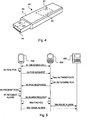
- FIG. 4 shows a schematic view of a computer-readable medium as described in the above.
- the computer-readable medium 40 is in this embodiment a memory stick, such as a Universal Serial Bus (USB) stick.
- the USB stick 40 comprises a housing 43 having an interface, such as a connector 44, and a memory chip 42.
- the memory chip 42 is a flash memory, that is, a non-volatile data storage that can be electrically erased and re-programmed.
- the memory chip 42 is programmed with instructions 41 that when loaded (possibly via the connector 44) into a controller, such as a processor, execute a method or procedure according to the embodiments disclosed above.
- the USB stick 40 is arranged to be connected to and read by a reading device, such as a terminal according to figure 1 , for loading the instructions into the controller.
- a reading device such as a terminal according to figure 1
- a computer-readable medium can also be other mediums such as compact discs, digital video discs, hard drives or other memory technologies commonly used.
- the instructions can also be downloaded from the computer-readable medium via a wireless interface to be loaded into the controller.
- Figure 5 shows a time-dependency graph according to an embodiment of the teachings herein.
- a first mobile communications terminal 550 is connected to a second mobile communications terminal 555 through an ongoing communication session 51.
- Each of the first and second mobile communications terminals 550, 555 may, for instance, be implemented like the mobile communications terminal 100 or 200 of figure 1 or 2
- the first mobile communications terminal 550 represents a calling party
- the second mobile communications terminal 555 represents a called party
- the communication session 51 will be a voice call. It should be noted that for the sake of the teachings herein it does not matter which party initiated the communication session.
- the calling party issues a command on his mobile communications terminal 550 to request a position 52 of the called party.
- the calling party issues the command through activating a designated virtual key (referenced 135 in figure 1 ).
- the calling party issues the command by inputting a request code.
- the command is received by a controller (210) of the first mobile communications terminal 550 and the controller issues a position request 53 that is sent to the second mobile communications terminal 555.
- the position request is sent as a coded DTMF (Dual Tone Multiple-Frequency) signal.
- the controller is configured to create a corresponding coded DTMF signal and transmit it.
- the controller is configured to create a coded DTMF signal corresponding to the request code and transmit it.
- the request code is implemented as being executed upon entering a sequence such as: * 11 * 1234#[SEND].
- the controller (210) of the second mobile communications terminal 555 is configured to authenticate 54a the position request before executing it.
- the calling party is authenticated by including an access code in the request. This allows the calling party to use any available terminal for communicating with the called party.
- the calling party's request is authenticated by comparing an identifier for the calling party (such as the IMSI or phone number) against a list of pre-authenticated contacts. The list may be stored in a memory (referenced 240) of the second mobile communications terminal 555. This prevents that other users misuse the code if the code is intercepted by unauthorized users.
- the calling party is authenticated by the second mobile communications terminal 555 by prompting the called party for confirmation that a position may be determined and provided to the calling party.
- the action of authenticating 54a the request is shown as being optional as indicated by the dashed lines.
- the second mobile communications terminal 555 is configured to determine its current position 54 in response to receiving a position request.
- the controller (210) of the second mobile communications terminal 555 is configured to request the current position from a GPS receiver (referenced 260 in figure 2 ).
- the GPS receiver 260 which can be external or internal to the second mobile communications terminal 555, returns the current position to the controller 210.
- GPS receivers 260 sometimes require a lot of power to operate and for this reason it is common for users to have the GPS receiver turned off during normal use of their mobile communications terminal. Or, the user may not even be aware that the mobile communications terminal is capable of position determination using GPS and thus has not activated it.
- the controller (210) of the second mobile communications terminal 555 is configured to, upon receiving a position request, determine whether the GPS receiver is activated, and if not, activate it.
- the controller 210 is further configured to deactivate the GPS receiver after the position has been determined, or upon completion of the ongoing communication session (to allow for updated position requests without turning the GPS receiver on and off, as it takes some time for a GPS receiver to synchronize with the satellites). This allows for a position to be accurately determined while still saving power.
- the controller (210) is configured to transmit the code in a position response 55 to the first mobile communications terminal 550.
- the position is sent as coordinates which allows a receiving party to accurately determine the position.
- the controller of the second mobile communications terminal 555 is configured to transform the position into a form that is more easily recognizable, such as a reference to a street address, as a proximity to a known building, park or square or as a reference to user-specified hot points, for example HOME.
- the manner of sending the position response can vary according to user-settings and capabilities of both the called party's mobile communications terminal 555 and the calling party's mobile communications terminal 550.
- the signal may be coded so that only authenticated positions are presented to the calling party.
- the position response is transmitted as a DTMF signal to the calling party's mobile communications terminal 550, wherein the signal carries a code indicating the position of the calling party.
- a code is: *1234*48.8583*2.2945#, wherein 1234 is an authentication code and 48.8583 is the latitudinal coordinate and 2.2945 is the longitudinal coordinate.
- the position response is transmitted as a text message, such as an SMS message, to the calling party's mobile communications terminal 550, wherein the text message carries a position of the calling party.
- a position text message is the coordinates for the current position: Position 48.8583N 2.2945E.
- Another example of such a text message is the position given as a reference to a known address or other easily recognizable entity as has been disclosed above, for example: Position Eiffel Tower.
- the position response is transmitted as a media message, such as a MMS message, to the calling party's mobile communications terminal 550.
- a media message such as a MMS message
- the media message carries an image showing the position of the calling party on a map.
- the media message carries an audio recording indicating the position of the calling party.
- Cell ID identification of network cell
- triangulation for base stations having known positions
- proximity estimations based on presence of known BluetoothTM beacons or wireless servers or hubs, such as a WiFi hub operating under the IEEE 802.11 standard.
- the controller of the second mobile communications terminal 555 is configured to provide a null position to the first mobile communications terminal 550.
- the calling party's mobile communications terminal 550 receives the position response and presents 56 it to the calling party.
- the controller is configured to present the position through a voice over that is played through the ear piece (or loud speaker) of the mobile communications terminal. This enables a calling party to be informed of the position without shifting focus by having to remove the mobile communications terminal 550 from his ear to watch the display.
- the controller is configured to present the position on the display. This allows for a calling party to focus on the on-going conversation without it being interrupted and decide when to look at the position.
- the controller is configured to display the position in text.
- the controller is configured to display the position as a graphical indication, such as displaying a map indicating the position of the called party.
- the controller is configured to present the position in the format it is received.
- the controller is configured to transform the format of the position as received and present the transformed position. This enables a mobile communications terminal 550 to receive a position in a format not suited for presentation according to user wishes or that is difficult to recognize, transform the format and present the position in a suitable or more easily recognizable format.
- the controller can receive the position as coordinates in a DTMF-signal, transform the coordinates into a reference or a hot spot by identifying the coordinates and present the name of the hotspot or the reference through a voice over and/or a text message displayed on the display.
- the controller of the first mobile communications terminal 550 is configured to display a map indicating the coordinates, possibly indicating the name of a reference or hotspot if such has been identified.
- the calling party now being aware of the position of the called party, can determine whether the called party is in any danger and if an alarm should be issued or not. For example, should a calling party determine that a called party is mildly confused, but is presently in a nursing home, there is no need to raise an alarm as it can be safely assumed that the called party will be attended to and cared for. However, should the called party be at the position indicated in the examples above or perhaps deep in a forest and be severely confused it would be prudent to raise an alarm. This allows a calling party to determine the proper circumstances when an alarm should be raised or not, thereby being able to issue an alarm if so is needed while avoiding issuing unnecessary alarms.
- the calling party requests an alarm 57 on the first mobile communications terminal 550.
- the alarm can be issued through activation of a virtual key or by inputting a code such as has been described above with reference to how to request a determination of the position.
- the controller (210) of the first mobile communications terminal 550 receives the request from the calling party and creates and transmits an alarm request 58 to the second mobile communications terminal 555, thereby instructing the second mobile communications terminal 555 to initiate an alarm sequence.
- the controller (210) of the second mobile communications terminal 555 receives the alarm request and issues an alarm 59b accordingly to an emergency contact; such emergency contact may be an operator of a safety or security service, an automated alarm service or it may be a person such as a friend or a relative.
- controller (210) of the second mobile communications terminal 555 is configured to include the determined position when issuing the alarm 59b.
- the controller (210) of the second mobile communications terminal 555 is configured to find a contact 59a, an In Case of Emergency contact, according to the determined position and issue the alarm to that contact.
- the ICE may be a pre-defined contact, such as a relative or friend. It may also be an emergency operator such as a private security provider or the public security service.
- the controller of the first mobile communications terminal 550 is configured to include an indication of an ICE in the alarm request.
- the ICE can be provided by the calling party, for example by providing a code identifying the ICE from a list of ICEs, providing the contact information of the ICE or by selecting the ICE from a displayed list of ICEs.
- an example alarm request to be provided to the controller of the first mobile communications terminal 550 is: *12*1234*112#, wherein 12 indicates that it is an alarm request that it is to be .issued, 1234 is an authentication code and 112 is the number of the ICE to be contacted.
- the code can be sent as in the above example of how to input the request.
- the controller of the first mobile communications terminal 550 and/or the controller of the second mobile communications terminal 555 are configured to query a remote server, such as an operator or emergency server, for an appropriate emergency contact based on the determined position.
- a remote server such as an operator or emergency server
- an emergency operator proxy can be arranged to determine which emergency contact that should be contacted based on the determined position. For example, should an alarm be issued by the calling party and the alarm is sent to an emergency server at a nursing home, the nursing home server can determine that a public security service should be contacted if the position is remote to the nursing home, whereas a specified care giver should be alarmed if the position is within the nursing home.
- the controller (210) of the first mobile communications terminal 550 receives the request from the calling party and creates and transmits an alarm request 58 (indicated by dashed lines) directly to an emergency contact 580.
- the controller of the first mobile communications terminal 550 can also be configured to find an ICE to issue the alarm to.
- the controller (210) of the first mobile communications terminal 555 is configured to include the determined position when issuing the alarm 59b.
- the request of an alarm 57 is implicit and the alarm request 57 is automatically generated if the controller determines that the received position is within an area or at a position that is indicated to be of danger.
- An example of such an area is an area outside a nursing home.
- One further example of such an embodiment is where the position has not been successfully retrieved or determined.
- the controller of the first mobile communications terminal 550 is configured to prompt the calling party for confirmation that an alarm request 57 is to be generated, and after receiving such confirmation, generate the alarm request 58. This allows for a simple manner of activating an alarm while still preventing that unnecessary alarms are issued.
- the first mobile communications terminal 550 and the second mobile communications terminal 555 are adapted to only implement the position requesting features as disclosed above. This allows for a calling party to determine the position of a called party without being able to raise an alarm during the on-going call which further prevents that unnecessary alarms are issued.
- the first mobile communications terminal 550 and the second mobile communications terminal 555 are adapted to only implement the alarm requesting features as disclosed above. This allows for a quick manner of issuing an alarm should the calling party be concerned about the well-being of the called party.
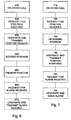
- Figure 6 shows a flowchart for a method to be executed by a first mobile communications terminal as described above.
- a controller receives 620 a request for a position and in response thereto generates and transmits a position request 630 to the called party.
- a response indicating a position is received 640 from the called party and presented 650 through the first mobile communications terminal.
- a request for an alarm is received 660 by the controller from the calling party, and the controller generates and transmits an alarm request 670 to the called party.
- Figure 7 shows a flowchart for a method to be executed by a second mobile communications terminal as described above.
- a controller receives 720 a position request from the first mobile communications terminal and in response thereto determines a current position 730, possibly through the use of a GPS receiver, and generates and transmits a position response 740 to the first mobile communications terminal.
- an alarm request is received 750 by the controller of the second mobile communications terminal from the first mobile communications terminal, and the controller of the second mobile communications terminal generates and issues an alarm 760 to an emergency contact.
Landscapes
- Engineering & Computer Science (AREA)
- Computer Networks & Wireless Communication (AREA)
- Signal Processing (AREA)
- Business, Economics & Management (AREA)
- Health & Medical Sciences (AREA)
- Emergency Management (AREA)
- Environmental & Geological Engineering (AREA)
- Public Health (AREA)
- Telephonic Communication Services (AREA)
- Telephone Function (AREA)
- Alarm Systems (AREA)
Claims (11)
- Mobiles Kommunikationsendgerät (200, 550), umfassend einen Speicher (240), eine Benutzerschnittstelle (120, 130, 135, 220) und eine Steuerung (210), wobei die Steuerung (210) so konfiguriert ist, dass sie während einer bestehenden Kommunikationssitzung mit einem zweiten mobilen Kommunikationsendgerät (200, 555):eine Abfrage für eine Position durch die Benutzerschnittstelle (120, 130, 135, 220) empfängt;eine Positionsabfrage erzeugt und die Positionsabfrage an das zweite mobile Kommunikationsendgerät (200, 555) sendet, um dadurch das zweite mobile Kommunikationsendgerät (200, 555) anzuweisen, eine aktuelle Position des zweiten mobilen Kommunikationsendgeräts (200, 555) bereitzustellen;eine Positionsantwort vom zweiten mobilen Kommunikationsendgerät (200, 555) empfängt, wobei die Positionsantwort eine Position angibt;die Position durch die Benutzerschnittstelle (120, 220) darstellt, um dadurch ein Ausgeben von entsprechenden Alarmen zu ermöglichen; undeine Abfrage für einen Alarm durch die Benutzerschnittstelle (120, 130, 135, 220, 220) empfängt undeine Alarmabfrage erzeugt und die Alarmabfrage an das zweite mobile Kommunikationsendgerät (200, 555) sendet, um dadurch das zweite mobile Kommunikationsendgerät (200, 555) anzuweisen, einen Alarm an einen Notfallkontakt (580) auszugeben.
- Mobiles Kommunikationsendgerät (200, 550) nach Anspruch 1, wobei die Steuerung (210) ferner so konfiguriert ist, dass sie eine Authentifizierung in die Positionsabfrage aufnimmt.
- Mobiles Kommunikationsendgerät (200, 550) nach einem der Ansprüche 1 bis 2, wobei die Steuerung (210) ferner so konfiguriert ist, dass sie die Position als Voice-over durch die Benutzerschnittstelle (220) darstellt.
- Mobiles Kommunikationsendgerät (200, 550) nach einem der Ansprüche 1 bis 3, wobei die Steuerung (210) ferner so konfiguriert ist, dass sie eine Aufforderung für einen Alarm durch die Benutzerschnittstelle (120, 220) darstellt, und wobei die empfangene Abfrage für einen Alarm durch die Benutzerschnittstelle (120, 130, 135, 220) eine Antwort auf die Aufforderung ist, um dadurch eine Bestätigung eines Alarms vor der Ausgabe des Alarms zu ermöglichen.
- Mobiles Kommunikationsendgerät (200, 550) nach einem der Ansprüche 1 oder 4, wobei die Position einen vordefinierten Hotspot oder eine Referenz einer Straßenadresse, eines Parks, eines Platzes oder eines Gebäudes anzeigt.
- Mobiles Kommunikationsendgerät (200, 550) nach einem der Ansprüche 1 oder 5, wobei die Abfrage für eine Position und/oder die Abfrage für einen Alarm, wenn von Anspruch 2 bis 5 abhängig, durch eine Berührungsanzeige (120, 135) empfangen wird.
- Mobiles Kommunikationsendgerät (200, 550) nach einem der Ansprüche 1 oder 6, wobei die Abfrage für eine Position und/oder die Abfrage für einen Alarm, wenn von Anspruch 2 bis 5 abhängig, als Code durch mindestens eine Zahlentaste (130) empfangen wird.
- Verfahren zur Verwendung in einem mobilen Kommunikationsendgerät (200, 550), das einen Speicher (240), eine Benutzerschnittstelle (120, 130, 135, 220) und eine Steuerung (210) umfasst, wobei das Verfahren während einer bestehenden Kommunikationssitzung mit einem zweiten mobilen Kommunikationsendgerät (200, 555) umfasst:Empfangen einer Abfrage für eine Position durch die Benutzerschnittstelle (120, 130, 135, 220);Erzeugen einer Positionsabfrage und Senden der Positionsabfrage an das zweite mobile Kommunikationsendgerät (200, 555), um dadurch das zweite mobile Kommunikationsendgerät (200, 555) anzuweisen, eine aktuelle Position des zweiten mobilen Kommunikationsendgeräts (200, 555) bereitzustellen;Empfangen einer Positionsantwort vom zweiten mobilen Kommunikationsendgerät (200, 555), wobei die Positionsantwort eine Position angibt;Darstellen der Position durch die Benutzerschnittstelle (120, 220), um dadurch ein Ausgeben von entsprechenden Alarmen zu ermöglichen; undEmpfangen einer Abfrage für einen Alarm durch die Benutzerschnittstelle (120, 130, 135, 220, 220) undErzeugen einer Alarmabfrage und Senden der Alarmabfrage an das zweite mobile Kommunikationsendgerät (200, 555), um das zweite mobile Kommunikationsendgerät (200, 555) anzuweisen,einen Alarm an einen Notfallkontakt (580) auszugeben.
- Mobiles Kommunikationsendgerät (200, 555), umfassend einen Speicher (240) und eine Steuerung (210), wobei die Steuerung (210) so konfiguriert ist, dass sie während einer bestehenden Kommunikationssitzung mit einem ersten mobilen Kommunikationsendgerät (200, 550) :eine Positionsabfrage vom ersten mobilen Kommunikationsendgerät (200, 550) empfängt;eine Position des mobilen Kommunikationsendgeräts (200, 555) bestimmt;eine Positionsantwort erzeugt, welche die Position angibt, und die Positionsantwort an das erste mobile Kommunikationsendgerät (200, 550) sendet; undeine Alarmabfrage vom ersten mobilen Kommunikationsendgerät (200, 550) empfängt undals Antwort darauf einen Alarm an einen Notfallkontakt (580) ausgibt.
- Verfahren zur Verwendung in einem mobilen Kommunikationsendgerät (200, 555), das einen Speicher (240) und eine Steuerung (210) umfasst, wobei das Verfahren während einer bestehenden Kommunikationssitzung mit einem ersten mobilen Kommunikationsendgerät (200, 550) umfasst:Empfangen einer Positionsabfrage vom ersten mobilen Kommunikationsendgerät (200, 550);Bestimmen einer Position des mobilen Kommunikationsendgeräts (200, 555);Erzeugen einer Positionsantwort, welche die Position angibt, und Senden der Positionsantwort an das erste mobile Kommunikationsendgerät (200, 550); undEmpfangen einer Alarmabfrage vom ersten mobilen Kommunikationsendgerät (200, 550) undAusgeben eines Alarms an einen Notfallkontakt (580) als Antwort darauf.
- Computerlesbares Speichermedium (40), das mit Anweisungen (41) codiert ist, die, wenn auf einen Prozessor geladen und darauf ausgeführt, die Durchführung des Verfahrens nach Anspruch 8 oder 10 veranlassen.
Priority Applications (2)
| Application Number | Priority Date | Filing Date | Title |
|---|---|---|---|
| EP12164619.4A EP2654328B1 (de) | 2012-04-18 | 2012-04-18 | Fernabfrage während eines eingehenden Anrufs |
| PCT/EP2013/057965 WO2013156506A2 (en) | 2012-04-18 | 2013-04-17 | Remote request during on-going call |
Applications Claiming Priority (1)
| Application Number | Priority Date | Filing Date | Title |
|---|---|---|---|
| EP12164619.4A EP2654328B1 (de) | 2012-04-18 | 2012-04-18 | Fernabfrage während eines eingehenden Anrufs |
Publications (2)
| Publication Number | Publication Date |
|---|---|
| EP2654328A1 EP2654328A1 (de) | 2013-10-23 |
| EP2654328B1 true EP2654328B1 (de) | 2014-04-30 |
Family
ID=46000933
Family Applications (1)
| Application Number | Title | Priority Date | Filing Date |
|---|---|---|---|
| EP12164619.4A Not-in-force EP2654328B1 (de) | 2012-04-18 | 2012-04-18 | Fernabfrage während eines eingehenden Anrufs |
Country Status (2)
| Country | Link |
|---|---|
| EP (1) | EP2654328B1 (de) |
| WO (1) | WO2013156506A2 (de) |
Families Citing this family (2)
| Publication number | Priority date | Publication date | Assignee | Title |
|---|---|---|---|---|
| CN105812600B (zh) * | 2014-12-30 | 2019-07-19 | 海能达通信股份有限公司 | 基于呼叫的位置信息获取方法、装置及系统 |
| US12328792B2 (en) | 2021-12-17 | 2025-06-10 | International Business Machines Corporation | Sender activated mobile call overloading |
Family Cites Families (3)
| Publication number | Priority date | Publication date | Assignee | Title |
|---|---|---|---|---|
| US7127229B2 (en) | 2001-09-04 | 2006-10-24 | Uniden Corporation | Emergency report cellular phone, cellular connection switching method and GPS positioning method |
| US9456298B2 (en) * | 2008-08-04 | 2016-09-27 | Apple Inc. | Device-to-device location awareness |
| US9485642B2 (en) * | 2010-03-26 | 2016-11-01 | Hung Yuan Lin | System and method for requesting and providing location-based assistance |
-
2012
- 2012-04-18 EP EP12164619.4A patent/EP2654328B1/de not_active Not-in-force
-
2013
- 2013-04-17 WO PCT/EP2013/057965 patent/WO2013156506A2/en not_active Ceased
Also Published As
| Publication number | Publication date |
|---|---|
| WO2013156506A2 (en) | 2013-10-24 |
| EP2654328A1 (de) | 2013-10-23 |
| WO2013156506A3 (en) | 2014-01-23 |
Similar Documents
| Publication | Publication Date | Title |
|---|---|---|
| US12219470B2 (en) | Method for accessing wireless local area network and terminal | |
| EP3681137B1 (de) | Verfahren und vorrichtung zum senden eines notrufs in einem mobilen endgerät | |
| US10798552B2 (en) | Emergency call-for-help method and system based on fingerprint identification for mobile terminal, and mobile terminal | |
| TWI461037B (zh) | 於無線網路中的多媒體緊急存取系統與方法 | |
| CN104113630B (zh) | 在移动电子装置中进行紧急呼救的方法及装置 | |
| US20110009085A1 (en) | E911 Services Using Distributed Nodes | |
| US8515407B1 (en) | Redirecting incoming phone calls | |
| US20100048160A1 (en) | Methods and Systems for One-To-Multiple Emergency Call Communication | |
| TW200818949A (en) | Method and system for using a mobile terminal as a location-based reminder | |
| CN105103618A (zh) | 用于无线修改便携式设备的检测特征的系统和方法 | |
| CN101087479A (zh) | 用于移动终端的位置定位的系统及方法 | |
| US10674342B2 (en) | Electronic device and method for providing location information of user in emergency | |
| US10567534B2 (en) | Apparatus, method and computer program product for sharing data | |
| CN108174375A (zh) | 一种基于可穿戴设备的定位方法及系统 | |
| US20120158979A1 (en) | Method and apparatus for controlling access to access point in mobile terminal | |
| CN105208206B (zh) | 移动终端防追踪方法及移动终端 | |
| CN111479221B (zh) | 移动发起的sms小区广播的方法和系统 | |
| CN103546642A (zh) | 一种智能手势呼救系统及方法 | |
| EP2654328A1 (de) | Fernabfrage während eines eingehenden Anrufs | |
| WO2017041610A1 (zh) | 提示附近好友的方法及装置 | |
| CN114173321B (zh) | 设备通信连接建立方法及设备通信系统 | |
| CN113784277A (zh) | 用于存储位置信息的系统、方法和装置 | |
| WO2021018284A1 (zh) | 网络切换方法、网络设备及终端 | |
| US8954036B2 (en) | Data arrival control server and method for notifying a communication terminal of a plurality of communication terminals of data arrival at a certain communication terminal of the plurality of communication terminals | |
| WO2021000319A1 (zh) | 保障终端安全的方法、装置以及系统 |
Legal Events
| Date | Code | Title | Description |
|---|---|---|---|
| PUAI | Public reference made under article 153(3) epc to a published international application that has entered the european phase |
Free format text: ORIGINAL CODE: 0009012 |
|
| 17P | Request for examination filed |
Effective date: 20130130 |
|
| AK | Designated contracting states |
Kind code of ref document: A1 Designated state(s): AL AT BE BG CH CY CZ DE DK EE ES FI FR GB GR HR HU IE IS IT LI LT LU LV MC MK MT NL NO PL PT RO RS SE SI SK SM TR |
|
| AX | Request for extension of the european patent |
Extension state: BA ME |
|
| RBV | Designated contracting states (corrected) |
Designated state(s): AL AT BE BG CH CY CZ DE DK EE ES FI FR GB GR HR HU IE IS IT LI LT LU LV MC MK MT NL NO PL PT RO RS SE SI SK SM TR |
|
| GRAP | Despatch of communication of intention to grant a patent |
Free format text: ORIGINAL CODE: EPIDOSNIGR1 |
|
| RIC1 | Information provided on ipc code assigned before grant |
Ipc: H04W 4/20 20090101AFI20131128BHEP Ipc: H04W 4/22 20090101ALI20131128BHEP Ipc: H04W 4/02 20090101ALN20131128BHEP |
|
| INTG | Intention to grant announced |
Effective date: 20131209 |
|
| GRAS | Grant fee paid |
Free format text: ORIGINAL CODE: EPIDOSNIGR3 |
|
| GRAA | (expected) grant |
Free format text: ORIGINAL CODE: 0009210 |
|
| AK | Designated contracting states |
Kind code of ref document: B1 Designated state(s): AL AT BE BG CH CY CZ DE DK EE ES FI FR GB GR HR HU IE IS IT LI LT LU LV MC MK MT NL NO PL PT RO RS SE SI SK SM TR |
|
| REG | Reference to a national code |
Ref country code: GB Ref legal event code: FG4D Ref country code: CH Ref legal event code: EP |
|
| REG | Reference to a national code |
Ref country code: AT Ref legal event code: REF Ref document number: 665801 Country of ref document: AT Kind code of ref document: T Effective date: 20140515 |
|
| REG | Reference to a national code |
Ref country code: IE Ref legal event code: FG4D |
|
| REG | Reference to a national code |
Ref country code: DE Ref legal event code: R096 Ref document number: 602012001532 Country of ref document: DE Effective date: 20140612 |
|
| REG | Reference to a national code |
Ref country code: SE Ref legal event code: TRGR |
|
| REG | Reference to a national code |
Ref country code: AT Ref legal event code: MK05 Ref document number: 665801 Country of ref document: AT Kind code of ref document: T Effective date: 20140430 |
|
| REG | Reference to a national code |
Ref country code: LT Ref legal event code: MG4D |
|
| REG | Reference to a national code |
Ref country code: NL Ref legal event code: VDEP Effective date: 20140430 |
|
| PG25 | Lapsed in a contracting state [announced via postgrant information from national office to epo] |
Ref country code: LT Free format text: LAPSE BECAUSE OF FAILURE TO SUBMIT A TRANSLATION OF THE DESCRIPTION OR TO PAY THE FEE WITHIN THE PRESCRIBED TIME-LIMIT Effective date: 20140430 Ref country code: FI Free format text: LAPSE BECAUSE OF FAILURE TO SUBMIT A TRANSLATION OF THE DESCRIPTION OR TO PAY THE FEE WITHIN THE PRESCRIBED TIME-LIMIT Effective date: 20140430 Ref country code: CY Free format text: LAPSE BECAUSE OF FAILURE TO SUBMIT A TRANSLATION OF THE DESCRIPTION OR TO PAY THE FEE WITHIN THE PRESCRIBED TIME-LIMIT Effective date: 20140430 Ref country code: IS Free format text: LAPSE BECAUSE OF FAILURE TO SUBMIT A TRANSLATION OF THE DESCRIPTION OR TO PAY THE FEE WITHIN THE PRESCRIBED TIME-LIMIT Effective date: 20140830 Ref country code: NL Free format text: LAPSE BECAUSE OF FAILURE TO SUBMIT A TRANSLATION OF THE DESCRIPTION OR TO PAY THE FEE WITHIN THE PRESCRIBED TIME-LIMIT Effective date: 20140430 Ref country code: GR Free format text: LAPSE BECAUSE OF FAILURE TO SUBMIT A TRANSLATION OF THE DESCRIPTION OR TO PAY THE FEE WITHIN THE PRESCRIBED TIME-LIMIT Effective date: 20140731 Ref country code: NO Free format text: LAPSE BECAUSE OF FAILURE TO SUBMIT A TRANSLATION OF THE DESCRIPTION OR TO PAY THE FEE WITHIN THE PRESCRIBED TIME-LIMIT Effective date: 20140730 Ref country code: BG Free format text: LAPSE BECAUSE OF FAILURE TO SUBMIT A TRANSLATION OF THE DESCRIPTION OR TO PAY THE FEE WITHIN THE PRESCRIBED TIME-LIMIT Effective date: 20140730 |
|
| PG25 | Lapsed in a contracting state [announced via postgrant information from national office to epo] |
Ref country code: AT Free format text: LAPSE BECAUSE OF FAILURE TO SUBMIT A TRANSLATION OF THE DESCRIPTION OR TO PAY THE FEE WITHIN THE PRESCRIBED TIME-LIMIT Effective date: 20140430 Ref country code: RS Free format text: LAPSE BECAUSE OF FAILURE TO SUBMIT A TRANSLATION OF THE DESCRIPTION OR TO PAY THE FEE WITHIN THE PRESCRIBED TIME-LIMIT Effective date: 20140430 Ref country code: PL Free format text: LAPSE BECAUSE OF FAILURE TO SUBMIT A TRANSLATION OF THE DESCRIPTION OR TO PAY THE FEE WITHIN THE PRESCRIBED TIME-LIMIT Effective date: 20140430 Ref country code: HR Free format text: LAPSE BECAUSE OF FAILURE TO SUBMIT A TRANSLATION OF THE DESCRIPTION OR TO PAY THE FEE WITHIN THE PRESCRIBED TIME-LIMIT Effective date: 20140430 Ref country code: ES Free format text: LAPSE BECAUSE OF FAILURE TO SUBMIT A TRANSLATION OF THE DESCRIPTION OR TO PAY THE FEE WITHIN THE PRESCRIBED TIME-LIMIT Effective date: 20140430 Ref country code: LV Free format text: LAPSE BECAUSE OF FAILURE TO SUBMIT A TRANSLATION OF THE DESCRIPTION OR TO PAY THE FEE WITHIN THE PRESCRIBED TIME-LIMIT Effective date: 20140430 |
|
| PG25 | Lapsed in a contracting state [announced via postgrant information from national office to epo] |
Ref country code: PT Free format text: LAPSE BECAUSE OF FAILURE TO SUBMIT A TRANSLATION OF THE DESCRIPTION OR TO PAY THE FEE WITHIN THE PRESCRIBED TIME-LIMIT Effective date: 20140901 |
|
| PG25 | Lapsed in a contracting state [announced via postgrant information from national office to epo] |
Ref country code: SK Free format text: LAPSE BECAUSE OF FAILURE TO SUBMIT A TRANSLATION OF THE DESCRIPTION OR TO PAY THE FEE WITHIN THE PRESCRIBED TIME-LIMIT Effective date: 20140430 Ref country code: RO Free format text: LAPSE BECAUSE OF FAILURE TO SUBMIT A TRANSLATION OF THE DESCRIPTION OR TO PAY THE FEE WITHIN THE PRESCRIBED TIME-LIMIT Effective date: 20140430 Ref country code: CZ Free format text: LAPSE BECAUSE OF FAILURE TO SUBMIT A TRANSLATION OF THE DESCRIPTION OR TO PAY THE FEE WITHIN THE PRESCRIBED TIME-LIMIT Effective date: 20140430 Ref country code: EE Free format text: LAPSE BECAUSE OF FAILURE TO SUBMIT A TRANSLATION OF THE DESCRIPTION OR TO PAY THE FEE WITHIN THE PRESCRIBED TIME-LIMIT Effective date: 20140430 Ref country code: BE Free format text: LAPSE BECAUSE OF FAILURE TO SUBMIT A TRANSLATION OF THE DESCRIPTION OR TO PAY THE FEE WITHIN THE PRESCRIBED TIME-LIMIT Effective date: 20140430 Ref country code: DK Free format text: LAPSE BECAUSE OF FAILURE TO SUBMIT A TRANSLATION OF THE DESCRIPTION OR TO PAY THE FEE WITHIN THE PRESCRIBED TIME-LIMIT Effective date: 20140430 |
|
| REG | Reference to a national code |
Ref country code: DE Ref legal event code: R097 Ref document number: 602012001532 Country of ref document: DE |
|
| PLBE | No opposition filed within time limit |
Free format text: ORIGINAL CODE: 0009261 |
|
| STAA | Information on the status of an ep patent application or granted ep patent |
Free format text: STATUS: NO OPPOSITION FILED WITHIN TIME LIMIT |
|
| PG25 | Lapsed in a contracting state [announced via postgrant information from national office to epo] |
Ref country code: IT Free format text: LAPSE BECAUSE OF FAILURE TO SUBMIT A TRANSLATION OF THE DESCRIPTION OR TO PAY THE FEE WITHIN THE PRESCRIBED TIME-LIMIT Effective date: 20140430 |
|
| 26N | No opposition filed |
Effective date: 20150202 |
|
| REG | Reference to a national code |
Ref country code: DE Ref legal event code: R097 Ref document number: 602012001532 Country of ref document: DE Effective date: 20150202 |
|
| PG25 | Lapsed in a contracting state [announced via postgrant information from national office to epo] |
Ref country code: SI Free format text: LAPSE BECAUSE OF FAILURE TO SUBMIT A TRANSLATION OF THE DESCRIPTION OR TO PAY THE FEE WITHIN THE PRESCRIBED TIME-LIMIT Effective date: 20140430 |
|
| PG25 | Lapsed in a contracting state [announced via postgrant information from national office to epo] |
Ref country code: MC Free format text: LAPSE BECAUSE OF FAILURE TO SUBMIT A TRANSLATION OF THE DESCRIPTION OR TO PAY THE FEE WITHIN THE PRESCRIBED TIME-LIMIT Effective date: 20140430 Ref country code: LU Free format text: LAPSE BECAUSE OF FAILURE TO SUBMIT A TRANSLATION OF THE DESCRIPTION OR TO PAY THE FEE WITHIN THE PRESCRIBED TIME-LIMIT Effective date: 20150418 |
|
| REG | Reference to a national code |
Ref country code: CH Ref legal event code: PL |
|
| REG | Reference to a national code |
Ref country code: IE Ref legal event code: MM4A |
|
| PG25 | Lapsed in a contracting state [announced via postgrant information from national office to epo] |
Ref country code: CH Free format text: LAPSE BECAUSE OF NON-PAYMENT OF DUE FEES Effective date: 20150430 Ref country code: LI Free format text: LAPSE BECAUSE OF NON-PAYMENT OF DUE FEES Effective date: 20150430 |
|
| REG | Reference to a national code |
Ref country code: FR Ref legal event code: PLFP Year of fee payment: 5 |
|
| PG25 | Lapsed in a contracting state [announced via postgrant information from national office to epo] |
Ref country code: IE Free format text: LAPSE BECAUSE OF NON-PAYMENT OF DUE FEES Effective date: 20150418 |
|
| PG25 | Lapsed in a contracting state [announced via postgrant information from national office to epo] |
Ref country code: MT Free format text: LAPSE BECAUSE OF FAILURE TO SUBMIT A TRANSLATION OF THE DESCRIPTION OR TO PAY THE FEE WITHIN THE PRESCRIBED TIME-LIMIT Effective date: 20140430 |
|
| REG | Reference to a national code |
Ref country code: FR Ref legal event code: PLFP Year of fee payment: 6 |
|
| PG25 | Lapsed in a contracting state [announced via postgrant information from national office to epo] |
Ref country code: HU Free format text: LAPSE BECAUSE OF FAILURE TO SUBMIT A TRANSLATION OF THE DESCRIPTION OR TO PAY THE FEE WITHIN THE PRESCRIBED TIME-LIMIT; INVALID AB INITIO Effective date: 20120418 |
|
| PG25 | Lapsed in a contracting state [announced via postgrant information from national office to epo] |
Ref country code: SM Free format text: LAPSE BECAUSE OF FAILURE TO SUBMIT A TRANSLATION OF THE DESCRIPTION OR TO PAY THE FEE WITHIN THE PRESCRIBED TIME-LIMIT Effective date: 20140430 |
|
| PG25 | Lapsed in a contracting state [announced via postgrant information from national office to epo] |
Ref country code: TR Free format text: LAPSE BECAUSE OF FAILURE TO SUBMIT A TRANSLATION OF THE DESCRIPTION OR TO PAY THE FEE WITHIN THE PRESCRIBED TIME-LIMIT Effective date: 20140430 |
|
| REG | Reference to a national code |
Ref country code: FR Ref legal event code: PLFP Year of fee payment: 7 |
|
| PG25 | Lapsed in a contracting state [announced via postgrant information from national office to epo] |
Ref country code: MK Free format text: LAPSE BECAUSE OF FAILURE TO SUBMIT A TRANSLATION OF THE DESCRIPTION OR TO PAY THE FEE WITHIN THE PRESCRIBED TIME-LIMIT Effective date: 20140430 |
|
| PGFP | Annual fee paid to national office [announced via postgrant information from national office to epo] |
Ref country code: DE Payment date: 20180426 Year of fee payment: 7 |
|
| PGFP | Annual fee paid to national office [announced via postgrant information from national office to epo] |
Ref country code: FR Payment date: 20180425 Year of fee payment: 7 |
|
| REG | Reference to a national code |
Ref country code: DE Ref legal event code: R082 Ref document number: 602012001532 Country of ref document: DE Representative=s name: HOFFMANN - EITLE PATENT- UND RECHTSANWAELTE PA, DE Ref country code: DE Ref legal event code: R081 Ref document number: 602012001532 Country of ref document: DE Owner name: DORO AB, SE Free format text: FORMER OWNER: DORO AB, LUND, SE |
|
| PGFP | Annual fee paid to national office [announced via postgrant information from national office to epo] |
Ref country code: SE Payment date: 20180427 Year of fee payment: 7 |
|
| PG25 | Lapsed in a contracting state [announced via postgrant information from national office to epo] |
Ref country code: AL Free format text: LAPSE BECAUSE OF FAILURE TO SUBMIT A TRANSLATION OF THE DESCRIPTION OR TO PAY THE FEE WITHIN THE PRESCRIBED TIME-LIMIT Effective date: 20140430 |
|
| PGFP | Annual fee paid to national office [announced via postgrant information from national office to epo] |
Ref country code: GB Payment date: 20180425 Year of fee payment: 7 |
|
| REG | Reference to a national code |
Ref country code: DE Ref legal event code: R119 Ref document number: 602012001532 Country of ref document: DE |
|
| REG | Reference to a national code |
Ref country code: SE Ref legal event code: EUG |
|
| GBPC | Gb: european patent ceased through non-payment of renewal fee |
Effective date: 20190418 |
|
| PG25 | Lapsed in a contracting state [announced via postgrant information from national office to epo] |
Ref country code: GB Free format text: LAPSE BECAUSE OF NON-PAYMENT OF DUE FEES Effective date: 20190418 Ref country code: DE Free format text: LAPSE BECAUSE OF NON-PAYMENT OF DUE FEES Effective date: 20191101 Ref country code: SE Free format text: LAPSE BECAUSE OF NON-PAYMENT OF DUE FEES Effective date: 20190419 |
|
| PG25 | Lapsed in a contracting state [announced via postgrant information from national office to epo] |
Ref country code: FR Free format text: LAPSE BECAUSE OF NON-PAYMENT OF DUE FEES Effective date: 20190430 |