EP2650787A2 - Verfahren und System zum Einfordern von ungenutzten Ressourcen in einer vernetzten Anwendungsumgebung - Google Patents
Verfahren und System zum Einfordern von ungenutzten Ressourcen in einer vernetzten Anwendungsumgebung Download PDFInfo
- Publication number
- EP2650787A2 EP2650787A2 EP13163300.0A EP13163300A EP2650787A2 EP 2650787 A2 EP2650787 A2 EP 2650787A2 EP 13163300 A EP13163300 A EP 13163300A EP 2650787 A2 EP2650787 A2 EP 2650787A2
- Authority
- EP
- European Patent Office
- Prior art keywords
- resource
- expiration period
- candidate owner
- reclamation
- candidate
- Prior art date
- Legal status (The legal status is an assumption and is not a legal conclusion. Google has not performed a legal analysis and makes no representation as to the accuracy of the status listed.)
- Ceased
Links
Images

Classifications
-
- G—PHYSICS
- G06—COMPUTING OR CALCULATING; COUNTING
- G06F—ELECTRIC DIGITAL DATA PROCESSING
- G06F9/00—Arrangements for program control, e.g. control units
- G06F9/06—Arrangements for program control, e.g. control units using stored programs, i.e. using an internal store of processing equipment to receive or retain programs
- G06F9/46—Multiprogramming arrangements
- G06F9/50—Allocation of resources, e.g. of the central processing unit [CPU]
- G06F9/5005—Allocation of resources, e.g. of the central processing unit [CPU] to service a request
- G06F9/5011—Allocation of resources, e.g. of the central processing unit [CPU] to service a request the resources being hardware resources other than CPUs, Servers and Terminals
- G06F9/5022—Mechanisms to release resources
-
- G—PHYSICS
- G06—COMPUTING OR CALCULATING; COUNTING
- G06F—ELECTRIC DIGITAL DATA PROCESSING
- G06F16/00—Information retrieval; Database structures therefor; File system structures therefor
- G06F16/10—File systems; File servers
- G06F16/14—Details of searching files based on file metadata
-
- G—PHYSICS
- G06—COMPUTING OR CALCULATING; COUNTING
- G06F—ELECTRIC DIGITAL DATA PROCESSING
- G06F16/00—Information retrieval; Database structures therefor; File system structures therefor
- G06F16/20—Information retrieval; Database structures therefor; File system structures therefor of structured data, e.g. relational data
- G06F16/28—Databases characterised by their database models, e.g. relational or object models
- G06F16/284—Relational databases
- G06F16/285—Clustering or classification
-
- H—ELECTRICITY
- H04—ELECTRIC COMMUNICATION TECHNIQUE
- H04L—TRANSMISSION OF DIGITAL INFORMATION, e.g. TELEGRAPHIC COMMUNICATION
- H04L47/00—Traffic control in data switching networks
- H04L47/70—Admission control; Resource allocation
- H04L47/76—Admission control; Resource allocation using dynamic resource allocation, e.g. in-call renegotiation requested by the user or requested by the network in response to changing network conditions
-
- H—ELECTRICITY
- H04—ELECTRIC COMMUNICATION TECHNIQUE
- H04L—TRANSMISSION OF DIGITAL INFORMATION, e.g. TELEGRAPHIC COMMUNICATION
- H04L67/00—Network arrangements or protocols for supporting network services or applications
- H04L67/01—Protocols
- H04L67/10—Protocols in which an application is distributed across nodes in the network
-
- H—ELECTRICITY
- H04—ELECTRIC COMMUNICATION TECHNIQUE
- H04L—TRANSMISSION OF DIGITAL INFORMATION, e.g. TELEGRAPHIC COMMUNICATION
- H04L67/00—Network arrangements or protocols for supporting network services or applications
- H04L67/2866—Architectures; Arrangements
- H04L67/30—Profiles
- H04L67/306—User profiles
-
- H—ELECTRICITY
- H04—ELECTRIC COMMUNICATION TECHNIQUE
- H04L—TRANSMISSION OF DIGITAL INFORMATION, e.g. TELEGRAPHIC COMMUNICATION
- H04L69/00—Network arrangements, protocols or services independent of the application payload and not provided for in the other groups of this subclass
- H04L69/30—Definitions, standards or architectural aspects of layered protocol stacks
- H04L69/32—Architecture of open systems interconnection [OSI] 7-layer type protocol stacks, e.g. the interfaces between the data link level and the physical level
- H04L69/322—Intralayer communication protocols among peer entities or protocol data unit [PDU] definitions
- H04L69/329—Intralayer communication protocols among peer entities or protocol data unit [PDU] definitions in the application layer [OSI layer 7]
Definitions
- Embodiments of the present invention generally relate to distributed computing systems and methods, and more specifically to reclaiming unused resources in a networked application environment.
- a networked application may be provided using multiple interacting computing nodes within a distributed computing architecture.
- a web site may be provided using a web server (running on one node within the distributed computing system) configured to receive requests from users for web pages. The requests can be passed to an application server (running on another node within the distributed computing system), which in turn processes the requests and generate responses passed back to the web server, and ultimately to the users.
- a content distribution system used to provide access to media titles over a network.
- a content distribution system may include various servers such as access servers and content servers.
- Clients may connect to the servers using a content player, such as a gaming console, computing system, computing tablet, mobile telephone, or network-aware DVD player.
- the content server stores files (or "streams") available for download from the content server to the content player.
- Each stream may provide a digital version of various forms of video or other content, such as a movie, a television program, a sporting event, user generated content, or a staged or live event captured by recorded video.
- Users access the service by connecting to a web server, where a list of content is available. Once a request for a particular title is received, the title may be streamed to the client system over a connection to an available content server.
- Unused resources could be redeployed to other networked applications where the resources would be utilized more efficiently.
- users may pay for reserving or maintaining resources within the distributed computing architecture. Where resources have fallen into disuse, users may be paying for resources that are underutilized.
- security vulnerabilities may arise when resources fall into disuse. Unused resources may not receive software updates, including updates to resolve security problems, and thus present a security risk to the distributed computing system. While unused resources may be reclaimed manually, some unused resources may be inadvertently missed due to human error, while other unused resources may be difficult to discover using manual processes.
- One embodiment of the present invention sets forth a computer-implemented method for reclaiming unused resources in a networked application environment.
- the method includes identifying a resource that is eligible for reclaiming, determining a classification for the resource based on one or more classification criteria, notifying a candidate owner of the resource that the resource is to be reclaimed at the termination of an expiration period, and if the candidate owner claims the resource within the expiration period, then terminating the reclamation of the resource, or if the candidate owner does not claim the resource within the expiration period, then reclaiming the resource.
- inventions include, without limitation, a computer program product, for example including a computer-readable medium, that includes instructions that enable a processing unit to implement one or more aspects of the disclosed methods as well as a system configured to implement one or more aspects of the disclosed methods.
- One advantage of the disclosed method is that unused resources in a distributed computing architecture are reclaimed and subsequently may be relinquished or redeployed, resulting in more efficient and cost effective utilization of the resources.
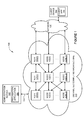
- Figure 1 illustrates a distributed computing system configured to implement one or more aspects of the present invention.
- FIG 2 illustrates the administration server of Figure 1 which includes the reclamation application, according to one embodiment of the invention.
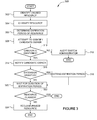
- Figure 3 sets forth a flow diagram of method steps for reclaiming unused resources within a distributed computing architecture, according to one embodiment of the present invention.
- FIG. 1 illustrates a distributed computing system 100 configured to implement one or more aspects of the present invention.
- the distributed computing system 100 includes, without limitation, a distributed computing architecture 110 (also referred to herein as "the cloud"), a network 120, a client device 142, a communication channel 130, and an administration server.
- the distributed computing architecture 110 includes a plurality of "compute nodes" 102 (referred to herein as nodes).
- Each of the nodes 102 may include a processor (CPU), a memory, a network interface controller (NIC), and one or more non-volatile storage devices such as a hard-disk drive, a magnetic tape drive, optical disk drives, a drive array (e.g., RAID), or the like.
- Each node 102 includes an operating system as well as one or more applications stored in memory and executing on the CPU. Some of the applications may provide a software framework for various cloud service architectures, such as a distributed database management system or a distributed application system. Such applications may execute on a single node 102.
- Applications may also execute on multiple nodes 102 where portions of the application run on different nodes 102. Alternatively, multiple instances of the application, where the instances execute on various nodes 102 within distributed computing system 100.
- the distributed computing architecture 110 provides one or more virtual computing services via standard messaging protocols, such as representational state transfer (REST). Examples of virtual computing services may include processing capacity, storage, and relational databases, among many other types of services.
- the virtual computing services may include networked applications where various active application components of the networked application execute on a plurality of nodes in communication with each other. For example, node 102(0) may execute one active application component of a networked application.
- Node 102(0) may communicate with node 102(4), where node 102(4) may execute a second active application component of the same networked application.
- Node 102(4) may communicate with nodes 102(2), 102(5), 102(N-1), where each of these nodes may execute an instance of a third active application component of the same networked application.
- the nodes 102 interconnect to each other through any technically feasible means.
- the distributed computing architecture connect to external devices and other computing systems via network 120 and communication channel 130.
- the network 120 connects the distributed computing architecture 110 to external devices such as client device 142.
- the network 120 may include any technically feasible networking system such as a LAN (Local Area Network), a WAN (Wide Area Network), or the Internet.
- the client device 142 is configured to access one or more applications executing within the distributed computing architecture 110.
- the client device may access a content distribution system executing within the distributed computing architecture 110 to access media titles over network 120.
- client computer 142 is maintained by a data analyst to analyze the distributed computing architecture 110.
- the client device 142 includes a processor (CPU), a memory, a NIC, and one or more non-volatile storage devices (not shown). Similar to nodes 102, client device 142 also includes an operating system as well as one or more applications, such as client application 144, stored in memory and running on the CPU.
- the client device 142 communicates with one or more of the nodes 102 via network 120 thereby allowing the client application 144 to access to or more networked applications executing on the distributed computing architecture 110.
- the communication channel 130 connects one or more nodes 102 within the distributed computing architecture 110 to a computing system utilized for configuring, maintaining, and testing the distributed computing architecture 110 such as the administration server 162.
- the network 120 may include any technically feasible communication channel including a point-to-point connection, or a networking system such as a LAN (Local Area Network), a WAN (Wide Area Network), or the Internet.
- the administration server 162 performs administrative tasks for the distributed computing architecture 110 autonomously or in response to one or more commands issued by a system administrator.
- the administration server 162 may be any type of computing device such as a personal computer, minicomputer or server. As shown, the administration server 162 may include one or more software applications that allow a system administrator to perform various functions including, without limitation, configuring, monitoring, and testing the distributed computing architecture 110.
- the administration server 162 includes a reclamation application 164 that enables searches for unused resources within the distributed computing architecture 110.
- the reclamation application determines the expiration period for the resource, identifies a candidate owner of the resource, and notifies the candidate owner. If the candidate owner does not claim the resource within the expiration period, then the reclamation application 164 is able to reclaim the resource.
- the administration server 162 communicates to one or more of the nodes 102 via communication link 130.
- FIG 2 illustrates the administration server 162 of Figure 1 which includes the reclamation application 164, according to one embodiment of the invention.
- the administration server 162 includes, without limitation, a central processing unit (CPU) 205, an interconnect 220, a network interface 215, a memory 225, and storage 230.
- the administration server 162 may also include an I/O device interface 210 connecting I/O devices 212 (e.g., keyboard, display and mouse devices) to the administration server 162.
- I/O device interface 210 connecting I/O devices 212 (e.g., keyboard, display and mouse devices) to the administration server 162.
- the CPU 205 is included to be representative of a single CPU, multiple CPUs, a single CPU having multiple processing cores, and the like.
- the CPU retrieves and executes programming instructions related to various application programs residing on the administration server 162.
- the CPU 205 is connected to other components within the administration server 162 via the interconnect 220.
- the interconnect 220 is a communications channel, such as a computer bus, to provide a means of communication among the various components within the administration server 162.
- the interconnect 220 facilitates transmission of programming instructions and application data between the CPU 205, network interface 215, memory 225, storage 230, and I/O devices interface 210.
- the network interface 215 provides a communication path between the administration server 162 and the distributed computing infrastructure 110.
- the memory 225 includes programming and instructions and application data for the administration server 162. Accordingly, the CPU 205 retrieves and executes programming instructions stored in the memory 225. Similarly, the CPU 205 stores and retrieves application data residing in the memory 225.
- the memory 225 is generally included to be representative of a random access memory.
- the storage 230 may be any device for long term storage of data such as a disk drive storage device. Although shown as a single unit, the storage 230 may be a combination of fixed and/or removable storage devices, such as fixed disc drives, floppy disc drives, tape drives, removable memory cards, optical storage, network attached storage (NAS), or a storage area-network (SAN).
- the I/O device interface 210 connects I/O devices 212 (e.g., keyboard, display and mouse devices) to the administration server 162.
- the memory 225 includes a reclamation application 164 and storage 230 includes a resource database 255.
- the reclamation application 164 includes a reclamation component 223 and reclamation rules 229.
- the reclamation application 164 is configured to search the distributed computing architecture 110 for unused resources and then, if desired, reclaim the resources.
- the reclamation component 223 is configured to search the distributed computing architecture 110 via network interface 215 to identify resources that are eligible for reclaiming. Resources are determined to be eligible for reclaiming based on one or more conditions including, without limitation, resources associated with out of date software, resources that have not been accessed for a pre-determined period of time, and resources associated with a storage volume that contains no data. When an unused resource has been identified, the reclamation component 223 determines a class for the resource based on one or more classification criteria. For example, the reclamation component 223 may determine that an unused resource is classified as an instance of a software application, a user account, or a storage volume.
- multiple instances of a software application may exist within the distributed computing architecture, and the reclamation component 223 classifies the instances based on the software version number of the software application associated with each instance.
- the classification criteria may also include characteristics not directly related to the type of resource, such as the date on which the resource was last accessed or the version number of a software application associated with the resource.
- the reclamation component 223 determines an expiration period for the resource based on one or more reclamation rules 229.
- the reclamation rules 229 may indicate that a storage volume has an expiration period of fifteen days, while an instance of a software application has an expiration period of thirty days.
- the reclamation rules 229 include any suitable rules for setting expiration periods associated with a reclaimable resource, as tailored for the distributed computing architecture 110.
- the reclamation component 223 also is responsible for identifying a candidate owner of a reclaimable resource based on one or more characteristics of the resource. Examples of resource characteristics include, without limitation, a username to which the resource is registered, a username associated with one or more data files stored within the resource, and in cases where more than one candidate owner is identified, the reclamation application may use any technically feasible technique for determining the most likely candidate owner.
- the reclamation component 223 then notifies the candidate owner that the resource will be reclaimed at the termination of the expiration period. For example, the reclamation component 223 may send an email to the candidate owner via network interface 215. The notification includes information identifying the resource and the expiration period for the resource based on the reclamation rules 229.
- the reclamation component 223 may be unable to determine candidate owner for an unused resource.
- a resource may have no identifiable characteristics to identify a candidate owner.
- the reclamation component 223 may have determined a candidate owner and sent the candidate owner a notification, but the candidate owner is not the actual owner.
- the reclamation component 223 may have determined a candidate owner who no longer owns the resource. In such cases, the reclamation component 223 notifies the system administrator that no candidate owner has been identified, and terminates the reclamation of the resource. The system administrator may then manually attempt to reclaim the resource.
- the candidate owner may respond and claim the resource within the duration of the expiration period, otherwise the resource is reclaimed.
- the candidate owner may reclaim the resource through any technically feasible means, such as replying to the notification, by accessing a specific uniform resource locator (URL) associated with a website that is configured to claim resources, or by requesting an extension to the expiration period. If the candidate owner claims the resource, then the reclamation component 223 terminates the process for reclaiming the resource. Alternatively, the candidate owner may respond and request that the expiration period be extended. If the expiration period is extended, then the resource is still eligible for reclaiming, but the reclamation component 223 delays reclaiming the resource until the expiration of the extended period. If the candidate owner does not respond to the notification within the expiration period, then the reclamation component 223 proceeds to reclaim the resource.
- URL uniform resource locator
- FIG 3 sets forth a flow diagram of method steps for reclaiming unused resources within a distributed computing architecture 110, according to one embodiment of the present invention.
- the method steps are described in conjunction with the systems of Figures 1-2 , persons skilled in the art will understand that any system configured to perform the method steps, in any order, is within the scope of the present invention.
- a method 300 begins at step 302, where the reclamation component 223 identifies an unused resource. For example, the reclamation component 223 may systematically scan a set of resources and determine that a resource is considered unused if the resource has not been accessed for the previous thirty days.
- the reclamation component 223 classifies the unused resource. For example, the reclamation component 223 may determine that the unused resource is an unused storage volume.
- the reclamation component 223 determines the expiration period for the resource according to a pre-determined rule. For example, the reclamation component 223 may determine that a storage volume expiration period is fifteen days.
- the reclamation component 223 attempts to identify the candidate owner based on one or more characteristics of the resource.
- the reclamation component 223 may examine the resource to see whether the resource is registered to a particular user, whether there is a record of the user who last accessed the resource, the time when the resource was most recently accessed, or whether the resource is associated with a particular user's account.
- the reclamation component 223 determines whether a candidate user has been identified. If a candidate user has not been identified, then the method 300 proceeds to step 312, where the reclamation component 223 alerts the system administer. The method 300 then terminates.
- step 310 the method 300 proceeds to step 314, where the monitoring application notifies the candidate owner via a generated email message, a system message, or any other technically feasible means.
- the reclamation component 223 determines whether a request to extend the expiration period has been received and granted, such as by request of the candidate owner. If an extension of the expiration period has been granted, then the method 300 proceeds to step 318, where the reclamation component 223 where the reclamation component 223 extends the expiration period. The method 300 then proceeds to step 320, where the reclamation component 223 waits for the duration of the extended expiration period.
- the reclamation component 223 determines whether the candidate owner has claimed the resource. If the candidate owner has claimed the resource, then the method 300 terminates.
- step 322 If, however, in step 322, the candidate owner has not claimed the resource, then the method 300 proceeds to step 324, where the reclamation component 223 reclaims the resource. The method 300 then terminates.
- step 316 if an extension of the expiration period has not been granted, then the method proceeds to step 320 and continues as described above.
- a reclamation component 223 within a reclamation application 164 searches a distributed computing architecture 110 for unused resources such as storage volumes and out of date software applications.
- a resource may be considered unused if, for example, the resource has not been accessed for an extended period.
- the resource is classified via one or more classification criteria such as whether the resource is a storage volume.
- the reclamation component 223 determines an expiration period for the resource based on a set of reclamation rules 229.
- the reclamation component 223 identifies a candidate owner based on one or more characteristics of the resource, such as registration of the resource to or access of the resource by a particular username.
- the reclamation component 223 notifies the candidate owner that the unused resource is to be reclaimed at the termination of the expiration period unless the candidate owner claims the resource. If the candidate owner claims the resource, then the reclamation component 223 terminates the reclamation of the resource. Alternatively, the candidate owner may request an extension to the termination period before the resource is claimed. If the candidate owner has not claimed the resource by the end of the expiration period, then the reclamation component 223 reclaims the resource. The resource may then be relinquished or redeployed by the system administrator.
- unused resources within a distributed computing architecture 110 are reclaimed and subsequently relinquished or redeployed. Resources may be redeployed for other purposes, thus increasing overall efficiency and utilization. Resources that are no longer needed may be relinquished resulting in lower operating and maintenance costs. Further, some unused resources may pose a security risk. Reclaiming such resources may improve security within the distributed computing architecture 110.
- aspects of the present invention may be implemented in hardware or software or in a combination of hardware and software.
- One embodiment of the invention may be implemented as a program product including instructions for use with a computer system.
- the program(s) of the program product define functions of the embodiments (including the methods described herein) and can be contained on a variety of computer-readable storage media.
- Illustrative computer-readable storage media include, but are not limited to: (i) non-writable storage media (e.g., read-only memory devices within a computer such as CD-ROM disks readable by a CD-ROM drive, flash memory, ROM chips or any type of solid-state non-volatile semiconductor memory) on which information is permanently stored; and (ii) writable storage media (e.g., floppy disks within a diskette drive or hard-disk drive or any type of solid-state random-access semiconductor memory) on which alterable information is stored.
- non-writable storage media e.g., read-only memory devices within a computer such as CD-ROM disks readable by a CD-ROM drive, flash memory, ROM chips or any type of solid-state non-volatile semiconductor memory
- writable storage media e.g., floppy disks within a diskette drive or hard-disk drive or any type of solid-state random-access semiconductor memory
Landscapes
- Engineering & Computer Science (AREA)
- Theoretical Computer Science (AREA)
- Databases & Information Systems (AREA)
- Physics & Mathematics (AREA)
- General Engineering & Computer Science (AREA)
- General Physics & Mathematics (AREA)
- Computer Networks & Wireless Communication (AREA)
- Signal Processing (AREA)
- Software Systems (AREA)
- Data Mining & Analysis (AREA)
- Computer Security & Cryptography (AREA)
- Library & Information Science (AREA)
- Information Retrieval, Db Structures And Fs Structures Therefor (AREA)
- Multi Processors (AREA)
- Computer And Data Communications (AREA)
- Information Transfer Between Computers (AREA)
Applications Claiming Priority (1)
| Application Number | Priority Date | Filing Date | Title |
|---|---|---|---|
| US13/445,877 US9026586B2 (en) | 2012-04-12 | 2012-04-12 | Method and system for reclaiming unused resources in a networked application environment |
Publications (2)
| Publication Number | Publication Date |
|---|---|
| EP2650787A2 true EP2650787A2 (de) | 2013-10-16 |
| EP2650787A3 EP2650787A3 (de) | 2018-01-03 |
Family
ID=48095649
Family Applications (1)
| Application Number | Title | Priority Date | Filing Date |
|---|---|---|---|
| EP13163300.0A Ceased EP2650787A3 (de) | 2012-04-12 | 2013-04-11 | Verfahren und System zum Einfordern von ungenutzten Ressourcen in einer vernetzten Anwendungsumgebung |
Country Status (2)
| Country | Link |
|---|---|
| US (3) | US9026586B2 (de) |
| EP (1) | EP2650787A3 (de) |
Families Citing this family (7)
| Publication number | Priority date | Publication date | Assignee | Title |
|---|---|---|---|---|
| US9026586B2 (en) * | 2012-04-12 | 2015-05-05 | Netflix, Inc. | Method and system for reclaiming unused resources in a networked application environment |
| US8819820B2 (en) * | 2012-11-19 | 2014-08-26 | International Business Machines Corporation | Security capability reference model for goal-based gap analysis |
| US10168910B2 (en) * | 2017-03-09 | 2019-01-01 | International Business Machines Corporation | Storage area network reclamation for virtual environments |
| US10545846B2 (en) * | 2017-03-17 | 2020-01-28 | International Business Machines Corporation | Identifying and correcting suboptimal storage-reclamation processes |
| US10944758B1 (en) * | 2018-09-28 | 2021-03-09 | Amazon Technologies, Inc. | Computer resource vulnerability assessment and remediation |
| CN110716804A (zh) * | 2019-09-02 | 2020-01-21 | 平安普惠企业管理有限公司 | 无用资源的自动删除方法、装置、存储介质及电子设备 |
| US11573837B2 (en) | 2020-07-27 | 2023-02-07 | International Business Machines Corporation | Service retention in a computing environment |
Citations (1)
| Publication number | Priority date | Publication date | Assignee | Title |
|---|---|---|---|---|
| US5349342A (en) * | 1992-01-30 | 1994-09-20 | Motorola, Inc. | Method for reclaiming unused system resources |
Family Cites Families (21)
| Publication number | Priority date | Publication date | Assignee | Title |
|---|---|---|---|---|
| US7095854B1 (en) * | 1995-02-13 | 2006-08-22 | Intertrust Technologies Corp. | Systems and methods for secure transaction management and electronic rights protection |
| GB9701960D0 (en) * | 1997-01-30 | 1997-03-19 | Sgs Thomson Microelectronics | A cache system |
| US8117644B2 (en) * | 2000-01-07 | 2012-02-14 | Pennar Software Corporation | Method and system for online document collaboration |
| US6954729B2 (en) * | 2000-01-27 | 2005-10-11 | Bowe Bell & Howell Postal Systems Company | Address learning system and method for using same |
| US7194764B2 (en) * | 2000-07-10 | 2007-03-20 | Oracle International Corporation | User authentication |
| US7124203B2 (en) * | 2000-07-10 | 2006-10-17 | Oracle International Corporation | Selective cache flushing in identity and access management systems |
| US7185364B2 (en) * | 2001-03-21 | 2007-02-27 | Oracle International Corporation | Access system interface |
| US7302634B2 (en) * | 2001-03-14 | 2007-11-27 | Microsoft Corporation | Schema-based services for identity-based data access |
| US7305492B2 (en) * | 2001-07-06 | 2007-12-04 | Juniper Networks, Inc. | Content service aggregation system |
| US7017162B2 (en) * | 2001-07-10 | 2006-03-21 | Microsoft Corporation | Application program interface for network software platform |
| US20050108385A1 (en) * | 2003-10-28 | 2005-05-19 | Gabriel Wechter | Method and system for managing a discovery-related process in a network |
| US8510732B2 (en) * | 2005-02-22 | 2013-08-13 | Connectif Solutions Inc. | Distributed asset management system and method |
| US8141078B2 (en) * | 2006-02-23 | 2012-03-20 | International Business Machines Corporation | Providing shared tasks amongst a plurality of individuals |
| US8924269B2 (en) * | 2006-05-13 | 2014-12-30 | Sap Ag | Consistent set of interfaces derived from a business object model |
| US8484309B2 (en) * | 2007-02-20 | 2013-07-09 | International Business Machines Corporation | Owner controlled access to shared data resource |
| CA2885962A1 (en) * | 2009-06-25 | 2010-09-01 | Certusview Technologies, Llc | Methods and apparatus for assessing locate request tickets |
| US8887163B2 (en) * | 2010-06-25 | 2014-11-11 | Ebay Inc. | Task scheduling based on dependencies and resources |
| US20130024371A1 (en) * | 2011-02-22 | 2013-01-24 | Prakash Hariramani | Electronic offer optimization and redemption apparatuses, methods and systems |
| US9336063B1 (en) * | 2012-03-23 | 2016-05-10 | Amazon Technologies, Inc. | Distributed task management |
| US9026586B2 (en) * | 2012-04-12 | 2015-05-05 | Netflix, Inc. | Method and system for reclaiming unused resources in a networked application environment |
| US9461876B2 (en) * | 2012-08-29 | 2016-10-04 | Loci | System and method for fuzzy concept mapping, voting ontology crowd sourcing, and technology prediction |
-
2012
- 2012-04-12 US US13/445,877 patent/US9026586B2/en active Active
-
2013
- 2013-04-11 EP EP13163300.0A patent/EP2650787A3/de not_active Ceased
-
2015
- 2015-05-04 US US14/703,859 patent/US9577950B2/en active Active
-
2017
- 2017-02-20 US US15/437,407 patent/US10798017B2/en active Active
Patent Citations (1)
| Publication number | Priority date | Publication date | Assignee | Title |
|---|---|---|---|---|
| US5349342A (en) * | 1992-01-30 | 1994-09-20 | Motorola, Inc. | Method for reclaiming unused system resources |
Also Published As
| Publication number | Publication date |
|---|---|
| US20130275593A1 (en) | 2013-10-17 |
| US10798017B2 (en) | 2020-10-06 |
| US20150236976A1 (en) | 2015-08-20 |
| EP2650787A3 (de) | 2018-01-03 |
| US20170163556A1 (en) | 2017-06-08 |
| US9026586B2 (en) | 2015-05-05 |
| US9577950B2 (en) | 2017-02-21 |
Similar Documents
| Publication | Publication Date | Title |
|---|---|---|
| US10798017B2 (en) | Method and system for reclaiming unused resources in a networked application environment | |
| US10691814B2 (en) | Method and system for improving security and reliability in a networked application environment | |
| US10210342B2 (en) | Centralized throttling service | |
| JP5898207B2 (ja) | ネットワーク化アプリケーションの弾力性検証 | |
| US9106627B2 (en) | Method, system and program product for managing download requests received to download files from a server | |
| US8640190B1 (en) | Parental control policy generation | |
| US8627405B2 (en) | Policy and compliance management for user provisioning systems | |
| CN111176803B (zh) | 业务处理方法、装置、服务器及存储介质 | |
| US9832221B1 (en) | Systems and methods for monitoring the activity of devices within an organization by leveraging data generated by an existing security solution deployed within the organization | |
| WO2019041738A1 (zh) | 客户资源获取方法、装置、终端设备及存储介质 | |
| TW201638779A (zh) | 一種對虛擬主機的資源管理的方法、裝置、系統及電子設備 | |
| US20140095722A1 (en) | Cloud-based resource sharing method and system | |
| US10698863B2 (en) | Method and apparatus for clearing data in cloud storage system | |
| WO2014146434A1 (en) | Methods and systems for managing user privileges | |
| CN107592296A (zh) | 垃圾账户的识别方法和装置 | |
| WO2024213993A1 (en) | A system for multi modal aggregation in a governance platform and a method thereof | |
| US20170034258A1 (en) | Methods for centralized management api service across disparate storage platforms and devices thereof | |
| WO2015154416A1 (zh) | 一种上网行为管理方法及装置 | |
| US20180159868A1 (en) | Network attack pattern determination apparatus, determination method, and non-transitory computer readable storage medium thereof | |
| CN107819754B (zh) | 一种防劫持方法、监控服务器、终端及系统 | |
| CN105335362B (zh) | 实时数据的处理方法及系统、即时处理系统 | |
| CN109063081B (zh) | 一种nfs业务监控方法、装置、设备及可读存储介质 | |
| CN114817818B (zh) | 站点页面分级的方法、装置、设备及存储介质 | |
| US20140289805A1 (en) | Methods and systems for managing user privileges | |
| KR20190074723A (ko) | 원격 컴퓨팅 서비스 제공 시스템 및 방법 |
Legal Events
| Date | Code | Title | Description |
|---|---|---|---|
| PUAI | Public reference made under article 153(3) epc to a published international application that has entered the european phase |
Free format text: ORIGINAL CODE: 0009012 |
|
| AK | Designated contracting states |
Kind code of ref document: A2 Designated state(s): AL AT BE BG CH CY CZ DE DK EE ES FI FR GB GR HR HU IE IS IT LI LT LU LV MC MK MT NL NO PL PT RO RS SE SI SK SM TR |
|
| AX | Request for extension of the european patent |
Extension state: BA ME |
|
| PUAL | Search report despatched |
Free format text: ORIGINAL CODE: 0009013 |
|
| AK | Designated contracting states |
Kind code of ref document: A3 Designated state(s): AL AT BE BG CH CY CZ DE DK EE ES FI FR GB GR HR HU IE IS IT LI LT LU LV MC MK MT NL NO PL PT RO RS SE SI SK SM TR |
|
| AX | Request for extension of the european patent |
Extension state: BA ME |
|
| RIC1 | Information provided on ipc code assigned before grant |
Ipc: G06F 9/50 20060101AFI20171128BHEP |
|
| STAA | Information on the status of an ep patent application or granted ep patent |
Free format text: STATUS: REQUEST FOR EXAMINATION WAS MADE |
|
| 17P | Request for examination filed |
Effective date: 20180703 |
|
| RBV | Designated contracting states (corrected) |
Designated state(s): AL AT BE BG CH CY CZ DE DK EE ES FI FR GB GR HR HU IE IS IT LI LT LU LV MC MK MT NL NO PL PT RO RS SE SI SK SM TR |
|
| STAA | Information on the status of an ep patent application or granted ep patent |
Free format text: STATUS: EXAMINATION IS IN PROGRESS |
|
| 17Q | First examination report despatched |
Effective date: 20181019 |
|
| STAA | Information on the status of an ep patent application or granted ep patent |
Free format text: STATUS: THE APPLICATION HAS BEEN REFUSED |
|
| 18R | Application refused |
Effective date: 20210621 |