EP2650258A2 - Gasification method for reducing emission of carbon dioxide - Google Patents
Gasification method for reducing emission of carbon dioxide Download PDFInfo
- Publication number
- EP2650258A2 EP2650258A2 EP11846868.5A EP11846868A EP2650258A2 EP 2650258 A2 EP2650258 A2 EP 2650258A2 EP 11846868 A EP11846868 A EP 11846868A EP 2650258 A2 EP2650258 A2 EP 2650258A2
- Authority
- EP
- European Patent Office
- Prior art keywords
- carbon
- carbon dioxide
- gasification
- syngas
- catalyst
- Prior art date
- Legal status (The legal status is an assumption and is not a legal conclusion. Google has not performed a legal analysis and makes no representation as to the accuracy of the status listed.)
- Withdrawn
Links
Images


Classifications
-
- C—CHEMISTRY; METALLURGY
- C01—INORGANIC CHEMISTRY
- C01B—NON-METALLIC ELEMENTS; COMPOUNDS THEREOF; METALLOIDS OR COMPOUNDS THEREOF NOT COVERED BY SUBCLASS C01C
- C01B3/00—Hydrogen; Gaseous mixtures containing hydrogen; Separation of hydrogen from mixtures containing it; Purification of hydrogen; Reversible storage of hydrogen
- C01B3/02—Production of hydrogen; Production of gaseous mixtures containing hydrogen
- C01B3/32—Production of hydrogen; Production of gaseous mixtures containing hydrogen by reaction of gaseous or liquid organic compounds with gasifying agents, e.g. water, carbon dioxide or air
- C01B3/34—Production of hydrogen; Production of gaseous mixtures containing hydrogen by reaction of gaseous or liquid organic compounds with gasifying agents, e.g. water, carbon dioxide or air by reaction of hydrocarbons with gasifying agents
- C01B3/38—Production of hydrogen; Production of gaseous mixtures containing hydrogen by reaction of gaseous or liquid organic compounds with gasifying agents, e.g. water, carbon dioxide or air by reaction of hydrocarbons with gasifying agents using catalysts
- C01B3/40—Production of hydrogen; Production of gaseous mixtures containing hydrogen by reaction of gaseous or liquid organic compounds with gasifying agents, e.g. water, carbon dioxide or air by reaction of hydrocarbons with gasifying agents using catalysts characterised by the catalyst
-
- C—CHEMISTRY; METALLURGY
- C10—PETROLEUM, GAS OR COKE INDUSTRIES; TECHNICAL GASES CONTAINING CARBON MONOXIDE; FUELS; LUBRICANTS; PEAT
- C10J—PRODUCTION OF PRODUCER GAS, WATER-GAS, SYNTHESIS GAS FROM SOLID CARBONACEOUS MATERIAL, OR MIXTURES CONTAINING THESE GASES; CARBURETTING AIR OR OTHER GASES
- C10J3/00—Production of combustible gases containing carbon monoxide from solid carbonaceous fuels
- C10J3/72—Other features
- C10J3/82—Gas withdrawal means
-
- B—PERFORMING OPERATIONS; TRANSPORTING
- B01—PHYSICAL OR CHEMICAL PROCESSES OR APPARATUS IN GENERAL
- B01J—CHEMICAL OR PHYSICAL PROCESSES, e.g. CATALYSIS OR COLLOID CHEMISTRY; THEIR RELEVANT APPARATUS
- B01J27/00—Catalysts comprising the elements or compounds of halogens, sulfur, selenium, tellurium, phosphorus or nitrogen; Catalysts comprising carbon compounds
- B01J27/20—Carbon compounds
- B01J27/232—Carbonates
-
- C—CHEMISTRY; METALLURGY
- C01—INORGANIC CHEMISTRY
- C01B—NON-METALLIC ELEMENTS; COMPOUNDS THEREOF; METALLOIDS OR COMPOUNDS THEREOF NOT COVERED BY SUBCLASS C01C
- C01B3/00—Hydrogen; Gaseous mixtures containing hydrogen; Separation of hydrogen from mixtures containing it; Purification of hydrogen; Reversible storage of hydrogen
- C01B3/50—Separation of hydrogen or hydrogen-containing gases from gaseous mixtures, e.g. purification
-
- C—CHEMISTRY; METALLURGY
- C10—PETROLEUM, GAS OR COKE INDUSTRIES; TECHNICAL GASES CONTAINING CARBON MONOXIDE; FUELS; LUBRICANTS; PEAT
- C10J—PRODUCTION OF PRODUCER GAS, WATER-GAS, SYNTHESIS GAS FROM SOLID CARBONACEOUS MATERIAL, OR MIXTURES CONTAINING THESE GASES; CARBURETTING AIR OR OTHER GASES
- C10J3/00—Production of combustible gases containing carbon monoxide from solid carbonaceous fuels
-
- B—PERFORMING OPERATIONS; TRANSPORTING
- B01—PHYSICAL OR CHEMICAL PROCESSES OR APPARATUS IN GENERAL
- B01J—CHEMICAL OR PHYSICAL PROCESSES, e.g. CATALYSIS OR COLLOID CHEMISTRY; THEIR RELEVANT APPARATUS
- B01J23/00—Catalysts comprising metals or metal oxides or hydroxides, not provided for in group B01J21/00
- B01J23/02—Catalysts comprising metals or metal oxides or hydroxides, not provided for in group B01J21/00 of the alkali- or alkaline earth metals or beryllium
-
- C—CHEMISTRY; METALLURGY
- C01—INORGANIC CHEMISTRY
- C01B—NON-METALLIC ELEMENTS; COMPOUNDS THEREOF; METALLOIDS OR COMPOUNDS THEREOF NOT COVERED BY SUBCLASS C01C
- C01B2203/00—Integrated processes for the production of hydrogen or synthesis gas
- C01B2203/02—Processes for making hydrogen or synthesis gas
- C01B2203/0283—Processes for making hydrogen or synthesis gas containing a CO-shift step, i.e. a water gas shift step
-
- C—CHEMISTRY; METALLURGY
- C01—INORGANIC CHEMISTRY
- C01B—NON-METALLIC ELEMENTS; COMPOUNDS THEREOF; METALLOIDS OR COMPOUNDS THEREOF NOT COVERED BY SUBCLASS C01C
- C01B2203/00—Integrated processes for the production of hydrogen or synthesis gas
- C01B2203/04—Integrated processes for the production of hydrogen or synthesis gas containing a purification step for the hydrogen or the synthesis gas
-
- C—CHEMISTRY; METALLURGY
- C01—INORGANIC CHEMISTRY
- C01B—NON-METALLIC ELEMENTS; COMPOUNDS THEREOF; METALLOIDS OR COMPOUNDS THEREOF NOT COVERED BY SUBCLASS C01C
- C01B2203/00—Integrated processes for the production of hydrogen or synthesis gas
- C01B2203/04—Integrated processes for the production of hydrogen or synthesis gas containing a purification step for the hydrogen or the synthesis gas
- C01B2203/0465—Composition of the impurity
- C01B2203/0475—Composition of the impurity the impurity being carbon dioxide
-
- C—CHEMISTRY; METALLURGY
- C01—INORGANIC CHEMISTRY
- C01B—NON-METALLIC ELEMENTS; COMPOUNDS THEREOF; METALLOIDS OR COMPOUNDS THEREOF NOT COVERED BY SUBCLASS C01C
- C01B2203/00—Integrated processes for the production of hydrogen or synthesis gas
- C01B2203/04—Integrated processes for the production of hydrogen or synthesis gas containing a purification step for the hydrogen or the synthesis gas
- C01B2203/0465—Composition of the impurity
- C01B2203/0485—Composition of the impurity the impurity being a sulfur compound
-
- C—CHEMISTRY; METALLURGY
- C01—INORGANIC CHEMISTRY
- C01B—NON-METALLIC ELEMENTS; COMPOUNDS THEREOF; METALLOIDS OR COMPOUNDS THEREOF NOT COVERED BY SUBCLASS C01C
- C01B2203/00—Integrated processes for the production of hydrogen or synthesis gas
- C01B2203/06—Integration with other chemical processes
- C01B2203/061—Methanol production
-
- C—CHEMISTRY; METALLURGY
- C01—INORGANIC CHEMISTRY
- C01B—NON-METALLIC ELEMENTS; COMPOUNDS THEREOF; METALLOIDS OR COMPOUNDS THEREOF NOT COVERED BY SUBCLASS C01C
- C01B2203/00—Integrated processes for the production of hydrogen or synthesis gas
- C01B2203/06—Integration with other chemical processes
- C01B2203/062—Hydrocarbon production, e.g. Fischer-Tropsch process
-
- C—CHEMISTRY; METALLURGY
- C10—PETROLEUM, GAS OR COKE INDUSTRIES; TECHNICAL GASES CONTAINING CARBON MONOXIDE; FUELS; LUBRICANTS; PEAT
- C10J—PRODUCTION OF PRODUCER GAS, WATER-GAS, SYNTHESIS GAS FROM SOLID CARBONACEOUS MATERIAL, OR MIXTURES CONTAINING THESE GASES; CARBURETTING AIR OR OTHER GASES
- C10J2300/00—Details of gasification processes
- C10J2300/09—Details of the feed, e.g. feeding of spent catalyst, inert gas or halogens
- C10J2300/0913—Carbonaceous raw material
- C10J2300/0916—Biomass
-
- C—CHEMISTRY; METALLURGY
- C10—PETROLEUM, GAS OR COKE INDUSTRIES; TECHNICAL GASES CONTAINING CARBON MONOXIDE; FUELS; LUBRICANTS; PEAT
- C10J—PRODUCTION OF PRODUCER GAS, WATER-GAS, SYNTHESIS GAS FROM SOLID CARBONACEOUS MATERIAL, OR MIXTURES CONTAINING THESE GASES; CARBURETTING AIR OR OTHER GASES
- C10J2300/00—Details of gasification processes
- C10J2300/09—Details of the feed, e.g. feeding of spent catalyst, inert gas or halogens
- C10J2300/0913—Carbonaceous raw material
- C10J2300/093—Coal
-
- C—CHEMISTRY; METALLURGY
- C10—PETROLEUM, GAS OR COKE INDUSTRIES; TECHNICAL GASES CONTAINING CARBON MONOXIDE; FUELS; LUBRICANTS; PEAT
- C10J—PRODUCTION OF PRODUCER GAS, WATER-GAS, SYNTHESIS GAS FROM SOLID CARBONACEOUS MATERIAL, OR MIXTURES CONTAINING THESE GASES; CARBURETTING AIR OR OTHER GASES
- C10J2300/00—Details of gasification processes
- C10J2300/09—Details of the feed, e.g. feeding of spent catalyst, inert gas or halogens
- C10J2300/0913—Carbonaceous raw material
- C10J2300/0943—Coke
-
- C—CHEMISTRY; METALLURGY
- C10—PETROLEUM, GAS OR COKE INDUSTRIES; TECHNICAL GASES CONTAINING CARBON MONOXIDE; FUELS; LUBRICANTS; PEAT
- C10J—PRODUCTION OF PRODUCER GAS, WATER-GAS, SYNTHESIS GAS FROM SOLID CARBONACEOUS MATERIAL, OR MIXTURES CONTAINING THESE GASES; CARBURETTING AIR OR OTHER GASES
- C10J2300/00—Details of gasification processes
- C10J2300/09—Details of the feed, e.g. feeding of spent catalyst, inert gas or halogens
- C10J2300/0953—Gasifying agents
- C10J2300/0969—Carbon dioxide
-
- C—CHEMISTRY; METALLURGY
- C10—PETROLEUM, GAS OR COKE INDUSTRIES; TECHNICAL GASES CONTAINING CARBON MONOXIDE; FUELS; LUBRICANTS; PEAT
- C10J—PRODUCTION OF PRODUCER GAS, WATER-GAS, SYNTHESIS GAS FROM SOLID CARBONACEOUS MATERIAL, OR MIXTURES CONTAINING THESE GASES; CARBURETTING AIR OR OTHER GASES
- C10J2300/00—Details of gasification processes
- C10J2300/09—Details of the feed, e.g. feeding of spent catalyst, inert gas or halogens
- C10J2300/0953—Gasifying agents
- C10J2300/0973—Water
- C10J2300/0976—Water as steam
-
- C—CHEMISTRY; METALLURGY
- C10—PETROLEUM, GAS OR COKE INDUSTRIES; TECHNICAL GASES CONTAINING CARBON MONOXIDE; FUELS; LUBRICANTS; PEAT
- C10J—PRODUCTION OF PRODUCER GAS, WATER-GAS, SYNTHESIS GAS FROM SOLID CARBONACEOUS MATERIAL, OR MIXTURES CONTAINING THESE GASES; CARBURETTING AIR OR OTHER GASES
- C10J2300/00—Details of gasification processes
- C10J2300/09—Details of the feed, e.g. feeding of spent catalyst, inert gas or halogens
- C10J2300/0983—Additives
- C10J2300/0986—Catalysts
-
- C—CHEMISTRY; METALLURGY
- C10—PETROLEUM, GAS OR COKE INDUSTRIES; TECHNICAL GASES CONTAINING CARBON MONOXIDE; FUELS; LUBRICANTS; PEAT
- C10J—PRODUCTION OF PRODUCER GAS, WATER-GAS, SYNTHESIS GAS FROM SOLID CARBONACEOUS MATERIAL, OR MIXTURES CONTAINING THESE GASES; CARBURETTING AIR OR OTHER GASES
- C10J2300/00—Details of gasification processes
- C10J2300/18—Details of the gasification process, e.g. loops, autothermal operation
- C10J2300/1807—Recycle loops, e.g. gas, solids, heating medium, water
- C10J2300/1815—Recycle loops, e.g. gas, solids, heating medium, water for carbon dioxide
-
- Y—GENERAL TAGGING OF NEW TECHNOLOGICAL DEVELOPMENTS; GENERAL TAGGING OF CROSS-SECTIONAL TECHNOLOGIES SPANNING OVER SEVERAL SECTIONS OF THE IPC; TECHNICAL SUBJECTS COVERED BY FORMER USPC CROSS-REFERENCE ART COLLECTIONS [XRACs] AND DIGESTS
- Y02—TECHNOLOGIES OR APPLICATIONS FOR MITIGATION OR ADAPTATION AGAINST CLIMATE CHANGE
- Y02P—CLIMATE CHANGE MITIGATION TECHNOLOGIES IN THE PRODUCTION OR PROCESSING OF GOODS
- Y02P20/00—Technologies relating to chemical industry
- Y02P20/141—Feedstock
- Y02P20/145—Feedstock the feedstock being materials of biological origin
-
- Y—GENERAL TAGGING OF NEW TECHNOLOGICAL DEVELOPMENTS; GENERAL TAGGING OF CROSS-SECTIONAL TECHNOLOGIES SPANNING OVER SEVERAL SECTIONS OF THE IPC; TECHNICAL SUBJECTS COVERED BY FORMER USPC CROSS-REFERENCE ART COLLECTIONS [XRACs] AND DIGESTS
- Y02—TECHNOLOGIES OR APPLICATIONS FOR MITIGATION OR ADAPTATION AGAINST CLIMATE CHANGE
- Y02P—CLIMATE CHANGE MITIGATION TECHNOLOGIES IN THE PRODUCTION OR PROCESSING OF GOODS
- Y02P20/00—Technologies relating to chemical industry
- Y02P20/50—Improvements relating to the production of bulk chemicals
- Y02P20/52—Improvements relating to the production of bulk chemicals using catalysts, e.g. selective catalysts
-
- Y—GENERAL TAGGING OF NEW TECHNOLOGICAL DEVELOPMENTS; GENERAL TAGGING OF CROSS-SECTIONAL TECHNOLOGIES SPANNING OVER SEVERAL SECTIONS OF THE IPC; TECHNICAL SUBJECTS COVERED BY FORMER USPC CROSS-REFERENCE ART COLLECTIONS [XRACs] AND DIGESTS
- Y02—TECHNOLOGIES OR APPLICATIONS FOR MITIGATION OR ADAPTATION AGAINST CLIMATE CHANGE
- Y02P—CLIMATE CHANGE MITIGATION TECHNOLOGIES IN THE PRODUCTION OR PROCESSING OF GOODS
- Y02P30/00—Technologies relating to oil refining and petrochemical industry
Definitions
- the present invention relates to a gasification method of a carbon-containing material such as coal, biomass or petroleum coke, and more particularly, to a gasification method capable of increasing a gasification rate and reducing an amount of carbon dioxide to be generated by using a catalyst at a low temperature.
- gasification means that solid or liquid fuel which basically contains carbon such as coal, petroleum coke, and biomass is reacted with gas such as oxygen, steam, carbon dioxide, and hydrogen to produce combustible gases such as CO, H 2 and CH 4 .
- gas such as oxygen, steam, carbon dioxide, and hydrogen
- the process is performed primarily at a high temperature and high pressure in order to maximize capacity and efficiency of a gasification treatment.
- the resultant combustible gases are used as a plant fuel gas, as chemicals or synthetic petroleum through a methanol synthesis process, an NH 3 synthesis process and a Fischer-Tropsch synthesis process, or as a hydrogen generation source for a hydrodesulphurisation process and a hydrocracking process of crude oil by maximizing hydrogen production.
- syngas by reacting coal or other carbon-containing materials with steam and oxygen (or air).
- the "syngas” of the present invention is mainly formed of hydrogen and carbon monoxide, but the present invention is not limited thereto, and may additionally include components such as carbon dioxide and methane.
- FIG. 3 schematically shows the conventional gasification process.
- H 2 O, oxygen and a carbon-containing material are introduced to a gasifier.
- the carbon-containing material introduced to a gasifier is reacted with H 2 O and oxygen both with a kind of catalysts and without catalysts, thus generating a product containing H 2 , CO, CO 2 , and the like. Then, the following main reactions occur in the gasifier.
- the product thus generated in the gasifier is subjected to a removal process of particular materials, Hg, and NOx, and then an acidic gas removal process of H 2 S and CO 2 . Subsequently, the resultant gas is selectively used for Fischer-Tropsch (F-T) reaction or MeOH reaction through the following water gas shift reaction, or may be used without changing excess H 2 .
- F-T Fischer-Tropsch
- MeOH MeOH
- Carbon efficiency (%) (the sum of the mole number of carbon monoxide and the mole number of methane in syngas having a H 2 /CO of 2 to 2.1) ⁇ 100/mole number of carbon in raw materials introduced for gasification
- Such low carbon efficiency reduces economic efficiency of a Coal-to-Liquids (CTL) process, or the like. Further, in order to reduce CO 2 that is a greenhouse gas, additional facilities are required, high costs are required to collect and store carbon, and it is difficult to construct commercial plants with economic efficiency.
- CTL Coal-to-Liquids
- Korean patent Laid-open Publication No. 10-2008-0041635 discloses an alkaline metal catalytic steam gasification method which uses CO 2 trapping materials and/or mineral binder materials in a gas generation apparatus.
- the Patent Document discloses CO 2 trapping materials for converting CO 2 into solid carbonate or bicarbonate in order to improve catalyst activity.
- CO 2 may not be converted into substantially available materials such as CO.
- this Patent Document is limited to the specific catalyst and should additionally include CO 2 trapping materials such as CaO.
- the present inventors found that, there is no net generation of carbon dioxide, and efficiency of gasification process is increased, when the amount of carbon dioxide consumed by the C-CO 2 reaction is equal to the sum of the amount of carbon dioxide produced during the combustion of syngases and the amount of carbon dioxide produced by the water gas shift reaction. Thus, the present invention was accomplished.
- an object of the present invention is to provide a gasification method of carbon-containing materials, which may reduce a CO 2 generation amount, as well as achieve high carbon efficiency from carbon-containing materials such as coal, petroleum coke, and biomass at a low temperature.
- a gasification method of carbon-containing materials includes:
- step (b) generating a carbon dioxide rich gas including at least one selected from i) introducing a portion of the syngas that has been produced in step (a) into the combustion process, and
- step (c) recycling, to step (a), the carbon dioxide rich gas that has been produced in step (b).
- Examples of the catalysts that may be used in step (a) include general catalysts that may be used for the gasification reaction of carbon-containing materials, and preferably transition metal catalysts, or catalysts containing alkaline metals or alkaline earth metals.
- Examples of the alkaline metal components that may be used include Li, Na, K, Rb, Cs, Fr, and the like.
- Examples of the alkaline earth metal components that may be used include Mg, Ca, and the like.
- Examples of the transition metal catalysts that may be used include Fe, Ni, Co, Cu, Zn, and the like.
- the present invention is not limited thereto. Other metal components which is suitable to the object of the present invention may be used, which is evident to those skilled in the art.
- the catalyst which may be used includes one or a mixture of at least two, of hydrates, oxides, and metal salts of the metal.
- the metal may be mixed with general gasification reaction catalysts.
- the carbon-containing materials to be treated in step (a) may be used without limitation as long as they may be a material which is suitable to the object of the present invention. Typical examples thereof include coal, biomass, coke, or the like, but the present invention are not limited thereto.
- step (b) in order to generate the carbon dioxide rich gas in step (b), one selected from introducing a portion of the syngas that has been produced in step (a) to the combustion process and separating hydrogen and carbon monoxide from the syngas may be used, or two processes thereof may be used at the same time. A portion of the syngas that has been produced in step (b) is introduced to the combustion process and thereby a heating value which is required for the gasification of carbon-containing materials according to the present invention may be supplied.
- a combustion method includes general flame combustion, catalyst combustion, and the like. In order to control conditions at the time of introduction to a gasifier, methods such as Chemical Looping Combustion may be used. Two or more combustion methods may be combined for a higher effect.
- the present invention may further include:
- step (d) separating carbon dioxide from the syngas that has not been not introduced at the time of the combustion process in step (b).
- present invention may further include:
- step (e) recycling, to step (a), the carbon dioxide that has been separated in step (d); or
- step (f) recycling, to the combustion process of step (b), the carbon dioxide that has been separated in step (d).
- the present invention may further include separating and recovering the catalyst used for the purpose of gasification.
- the catalyst may be separated and recovered at any time during the gasification according to the present invention, if necessary.
- the catalyst recovery is performed such that effective catalyst components are recovered in liquid or solid state from the mixture of catalyst and ash.
- the catalyst may be recovered from the mixture of catalyst and ash emitted from the lower portion of the gasifier; or from the entrainment material in gas flow, by using an apparatus separately provided or integrally equipped with the gasifier.
- gasification method of the invention a gasification method in which carbon dioxide that is a greenhouse gas is not generated may be implemented. Also, carbon efficiency may be maximized, when chemicals such as methanol or production of synthetic oil are produced through the consecutive Fischer-Tropsch process after the gasification, and thus economic efficiency of the entire process may be improved.
- CCS Carbon Capture & Storage
- FIG. 1 shows the process of a gasification method according to a preferable specific example of the present invention
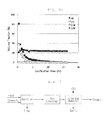
- FIGS. 2a and 2b show graphs showing a composition example of the syngas emitted from a gasifier
- FIG. 2a is a graph showing the composition of the syngas at the time of steam-carbon dioxide gasification with use of a catalyst
- FIG. 2b is a graph showing the composition of the syngas at the time of steam-carbon dioxide gasification of lignite without use of a catalyst
- FIG. 3 shows a general process of high temperature steam-oxygen gasification
- FIG. 4 shows a general CTL process made of a high temperature steam-oxygen gasifier.
- the present invention basically includes separating and recycling carbon dioxide after gasification using a catalyst, which promotes the C-CO 2 gasification reaction in a gasifier.
- the gasification method according to the present invention discloses (a) reacting carbon-containing materials to be treated, such as coal, petroleum coke, biomass, and the like under the presence of a catalyst with steam to produce a syngas containing hydrogen, carbon monoxide and carbon dioxide.
- coal, petroleum coke, biomass, and the like along with a catalyst are added to a gasifier 1.
- the reactions in the gasifier 1 result in production of a syngas containing hydrogen, carbon monoxide and carbon dioxide.
- the reaction rate of the C-CO 2 reaction known as a carbon dioxide gasification reaction is generally slower than that of the steam gasification reaction at a low temperature.
- a catalyst is used to supplement the slower reaction rate of CO 2 reaction.
- the catalyst that may be used in the present invention may include general catalysts that may be used for the gasification reaction of carbon-containing materials, and preferably include catalysts containing alkaline metals or alkaline earth metals. Examples of the alkaline metal components that may be used include Li, Na, K, Rb, Cs, Fr, and the like.
- the alkaline earth metals examples include Mg, Ca, and the like.
- the catalyst which may be used includes one or a mixture of at least two, of hydrates, oxides, and metal salts of the metal.
- the metal may be mixed with general gasification reaction catalysts.
- the gasification may be preferably performed at a temperature of 750 to 850°C.
- the syngas generated from the gasifier 1 is subjected to separation of carbon dioxide from the syngas containing H 2 and carbon monoxide in a CO 2 separation section 3.
- the carbon dioxide thus separated may be recycled to a recycled line and supplied directly to the gasifier 1, or may be supplied to a catalytic combustion section 4 along with a portion of the syngas which has been emitted from the gasifier 1 and recycled to the recycled line. Then, the syngas that has been emitted from the gasifier 1 and recycled is burned in the catalytic combustion section 4, and thus a heating value required for the reaction, steam and carbon dioxide are supplied.
- the carbon dioxide that has been produced by the combustion of carbon monoxide is converted into carbon monoxide through the C-CO 2 reaction in the gasifier 1, a portion of the generated carbon monoxide is converted into hydrogen and carbon dioxide through the water gas shift reaction.
- the amount of carbon dioxide consumed by the C-CO 2 reaction is equal to the sum of the amount of carbon dioxide produced during the combustion of the syngases and the amount of carbon dioxide produced by the water gas shift reaction, there is no net generation of carbon dioxide, and therefore efficiency of gasification process is increased.
- the carbon dioxide that has been recycled and steam that has been supplied to the gasifier 1 are allowed to increase a partial pressure of carbon dioxide and a partial pressure of steam as a gasification agent, which serves to promote the gasification reaction with steam and the gasification reaction with carbon dioxide.
- FIG. 2 shows the composition of the syngas generated by the steam-carbon dioxide gasification of lignite containing 10 wt% of a K 2 CO 3 catalyst and catalyst-free lignite.
- the composition of the syngas proceeded at the temperature of 800°C, the atmospheric pressure and the gage pressure of 1 Kgf/cm 2 . Then, a partial pressure of steam was about 0.36 Kgf/cm 2 and a partial pressure of carbon dioxide was 0.19 Kgf/cm 2 .
- the catalyst is used as shown in FIG. 2a , carbon dioxide is converted into carbon monoxide by reaction with the carbon of coal, whereas carbon monoxide is not almost produced by the C-CO 2 reaction at the time of the gasification of catalyst-free coal. The effect is not limited to a K 2 CO 3 catalyst.
- the catalyst that has been subjected to gasification is recovered, and is supplied to the gasifier 1 again along with carbon-containing materials.
- a stoichiometric formula of the steam gasification reaction to 1g-mol of bituminous coal, calculated from the composition of the syngas generated from a GE-TEXACO gasifier [see DOE/NETL-2008/1331] is as follows:
- the maximum theoretical heat efficiency calculated using the following formula is about 70%.
- 0.23 mol of carbon dioxide is emitted per 1g-mol of the carbon included in bituminous coal, and therefore 77% of the carbon may be used effectively.
- Heat efficiency (%) [(mole number of H 2 ⁇ unit heating value of H 2 ) + (mole number of CO ⁇ unit heating value of CO) ⁇ 100 (%)/[g-mol of coal ⁇ unit heating value of coal]
- the heat efficiency calculated using the calculation equation of heat efficiency is about 96%.
- the Air Separation Unit (ASU) that separates oxygen from air and supplied to a gasifier has a very large effect on heat efficiency of the entire gasification process.
- a supplied oxygen amount according to the gasification method described in the present Example corresponds to about 44%, compared to Comparative Example 1, and thus energy supplied for ASU operation is considerably low.
- a heat of reaction required for gasification is supplied by the combustion of coal that is a solid state, whereas a heat of reaction required for gasification is supplied by burning the syngas that is a gas state in the present invention, thus obtaining high combustion efficiency.
- the effect obtained from the present invention may be further improved by using a catalyst at the time of burning the syngas. In other words, combustion of the syngas is performed by using a catalyst, and thereby it is expected that a ratio of oxygen to fuel may be minimized.
- a ratio of hydrogen to carbon monoxide may be controlled by the water gas shift reaction.
- the syngas produced through a GE-TEXACO gasifier of Comparative Example 1 is converted such that a ratio of hydrogen to carbon monoxide is 2 to 1 through the water gas shift reaction.
- the water gas shift reaction is performed in a gasifier, and thereby an additional reactor is not needed. Then, the steam gasification reaction and the C-CO 2 gasification reaction are preferably carried out by about 1 to 0.33, respectively. About 39% is converted into hydrogen and carbon dioxide through the water gas shift reaction, with respect to the total amount of carbon monoxide produced by the gasification reaction.
- the carbon efficiency improved by the present invention may significantly reduce an amount of raw materials such as coal to be used.
- the cost of raw materials, the apparatus cost and operation cost for drying, grinding, transfer and storage of raw material (coal) may be reduced significantly.
- the ASU apparatus cost and operation cost may be improved by 50% or more through catalytic combustion of the syngas.
- the amount of carbon dioxide to be emitted is reduced significantly, the used energy amount and costs of apparatus such as a CO 2 separation process, for example, an amine absorption process are improved significantly, and therefore economic efficiency of the entire process may be further improved.
Landscapes
- Chemical & Material Sciences (AREA)
- Organic Chemistry (AREA)
- Engineering & Computer Science (AREA)
- Combustion & Propulsion (AREA)
- Chemical Kinetics & Catalysis (AREA)
- Oil, Petroleum & Natural Gas (AREA)
- Inorganic Chemistry (AREA)
- Materials Engineering (AREA)
- General Health & Medical Sciences (AREA)
- Health & Medical Sciences (AREA)
- Organic Low-Molecular-Weight Compounds And Preparation Thereof (AREA)
- Industrial Gases (AREA)
- Carbon And Carbon Compounds (AREA)
Abstract
Description
- The present invention relates to a gasification method of a carbon-containing material such as coal, biomass or petroleum coke, and more particularly, to a gasification method capable of increasing a gasification rate and reducing an amount of carbon dioxide to be generated by using a catalyst at a low temperature.
- With the rapid development of the society since the 20th century, an energy supply and demand system has become unstable and environmental problems such as global warming have increased. An attempt to use fossil energy by an environmentally friendly method along with a study on fuels that do not cause environmental pollution has been actively conducted. Particularly, compared to the direct combustion of coal which causes serous environmental pollution, attempts to convert coal into a gas fuel form such as a syngas has been tried continuously (referred to as "gasification").
- In other words, the term "gasification" means that solid or liquid fuel which basically contains carbon such as coal, petroleum coke, and biomass is reacted with gas such as oxygen, steam, carbon dioxide, and hydrogen to produce combustible gases such as CO, H2 and CH4. The process is performed primarily at a high temperature and high pressure in order to maximize capacity and efficiency of a gasification treatment. The resultant combustible gases are used as a plant fuel gas, as chemicals or synthetic petroleum through a methanol synthesis process, an NH3 synthesis process and a Fischer-Tropsch synthesis process, or as a hydrogen generation source for a hydrodesulphurisation process and a hydrocracking process of crude oil by maximizing hydrogen production.
- Common gasification systems produce a syngas by reacting coal or other carbon-containing materials with steam and oxygen (or air). The "syngas" of the present invention is mainly formed of hydrogen and carbon monoxide, but the present invention is not limited thereto, and may additionally include components such as carbon dioxide and methane.
-
FIG. 3 schematically shows the conventional gasification process. - Referring to
FIG. 3 , H2O, oxygen and a carbon-containing material (for example, coal, petroleum coke, biomass, and the like) are introduced to a gasifier. The carbon-containing material introduced to a gasifier is reacted with H2O and oxygen both with a kind of catalysts and without catalysts, thus generating a product containing H2, CO, CO2, and the like. Then, the following main reactions occur in the gasifier. - C + H2O → CO + H2
- C + CO2 → 2CO
- C + O2 → CO2
- The product thus generated in the gasifier is subjected to a removal process of particular materials, Hg, and NOx, and then an acidic gas removal process of H2S and CO2. Subsequently, the resultant gas is selectively used for Fischer-Tropsch (F-T) reaction or MeOH reaction through the following water gas shift reaction, or may be used without changing excess H2.
- <water gas shift reaction>
- CO + H2O → H2 + CO2
- <Fischer-Tropsch (F-T) reaction>
- CO + 2H2 → -(CH2)n- + H2O
- <Methanol synthesis>
- CO + 2H2 → CH3OH
- When a common steam/oxygen gasifier is used, since the carbon gasification reaction (C + H2O → H2 + CO or C + CO2 → 2CO) is a very strong endothermic reaction, the corresponding heating value should be provided by the carbon combustion reaction (C + O2 → CO2). Therefore, a portion of hydrocarbon used as raw materials is converted into carbon dioxide in or out of the gasifier, after the combustion reaction. After the gasification, the syngas generated from the gasifier need to have a H2/CO ratio of 2, which is stoichiometrically required in order that F-T synthesis or methanol generation is performed through the water gas shift reaction. In this case, it is calculated that the total process has a theoretical carbon efficiency of less than 49.8% and has a CO2 generation amount of 0.502 mol CO2/mol C or more. Then, carbon efficiency is defined as follows.
- Carbon efficiency (%) =(the sum of the mole number of carbon monoxide and the mole number of methane in syngas having a H2/CO of 2 to 2.1) × 100/mole number of carbon in raw materials introduced for gasification
-
[Table 1] Gasification reaction 1.0C + 1.0H2O → 1.0H2 + 1.0CO Combustion reaction 0.34C + C.34 O2 → 0.34CO2 Water gas shift reaction 0.33CO + 0.33H2O → 0.33H2 + 0.33CO2 Entire reaction 1.34C + 1.33H2O + 0.34O2 → 1.33H2 + 0.67CO + 0.67CO2 - Such low carbon efficiency reduces economic efficiency of a Coal-to-Liquids (CTL) process, or the like. Further, in order to reduce CO2 that is a greenhouse gas, additional facilities are required, high costs are required to collect and store carbon, and it is difficult to construct commercial plants with economic efficiency.
- Korean patent Laid-open Publication No.
10-2008-0041635 - The present inventors found that, there is no net generation of carbon dioxide, and efficiency of gasification process is increased, when the amount of carbon dioxide consumed by the C-CO2 reaction is equal to the sum of the amount of carbon dioxide produced during the combustion of syngases and the amount of carbon dioxide produced by the water gas shift reaction. Thus, the present invention was accomplished.
- Therefore, an object of the present invention is to provide a gasification method of carbon-containing materials, which may reduce a CO2 generation amount, as well as achieve high carbon efficiency from carbon-containing materials such as coal, petroleum coke, and biomass at a low temperature.
- In one general aspect, a gasification method of carbon-containing materials includes:
- (a) reacting carbon-containing materials to be treated under the presence of a catalyst with steam to produce a syngas containing hydrogen, carbon monoxide and carbon dioxide;
- (b) generating a carbon dioxide rich gas including at least one selected from i) introducing a portion of the syngas that has been produced in step (a) into the combustion process, and
- ii) separating hydrogen and carbon monoxide from the syngas produced in step (a); and
- (c) recycling, to step (a), the carbon dioxide rich gas that has been produced in step (b).
- Examples of the catalysts that may be used in step (a) include general catalysts that may be used for the gasification reaction of carbon-containing materials, and preferably transition metal catalysts, or catalysts containing alkaline metals or alkaline earth metals. Examples of the alkaline metal components that may be used include Li, Na, K, Rb, Cs, Fr, and the like. Examples of the alkaline earth metal components that may be used include Mg, Ca, and the like. Examples of the transition metal catalysts that may be used include Fe, Ni, Co, Cu, Zn, and the like. The present invention is not limited thereto. Other metal components which is suitable to the object of the present invention may be used, which is evident to those skilled in the art.
- Furthermore, the catalyst which may be used includes one or a mixture of at least two, of hydrates, oxides, and metal salts of the metal. In addition, the metal may be mixed with general gasification reaction catalysts.
- The carbon-containing materials to be treated in step (a) may be used without limitation as long as they may be a material which is suitable to the object of the present invention. Typical examples thereof include coal, biomass, coke, or the like, but the present invention are not limited thereto.
- Furthermore, in order to generate the carbon dioxide rich gas in step (b), one selected from introducing a portion of the syngas that has been produced in step (a) to the combustion process and separating hydrogen and carbon monoxide from the syngas may be used, or two processes thereof may be used at the same time. A portion of the syngas that has been produced in step (b) is introduced to the combustion process and thereby a heating value which is required for the gasification of carbon-containing materials according to the present invention may be supplied.
- A combustion method includes general flame combustion, catalyst combustion, and the like. In order to control conditions at the time of introduction to a gasifier, methods such as Chemical Looping Combustion may be used. Two or more combustion methods may be combined for a higher effect.
- According to a preferable specific example of the present invention, the present invention may further include:
- (d) separating carbon dioxide from the syngas that has not been not introduced at the time of the combustion process in step (b).
- Further, the present invention may further include:
- (e) recycling, to step (a), the carbon dioxide that has been separated in step (d); or
- (f) recycling, to the combustion process of step (b), the carbon dioxide that has been separated in step (d).
- According to a preferable specific example of the present invention, the present invention may further include separating and recovering the catalyst used for the purpose of gasification. The catalyst may be separated and recovered at any time during the gasification according to the present invention, if necessary.
- The catalyst recovery is performed such that effective catalyst components are recovered in liquid or solid state from the mixture of catalyst and ash. Specifically, during or after the completion of gasification in a gasifier, the catalyst may be recovered from the mixture of catalyst and ash emitted from the lower portion of the gasifier; or from the entrainment material in gas flow, by using an apparatus separately provided or integrally equipped with the gasifier.
- By the gasification method of the invention, a gasification method in which carbon dioxide that is a greenhouse gas is not generated may be implemented. Also, carbon efficiency may be maximized, when chemicals such as methanol or production of synthetic oil are produced through the consecutive Fischer-Tropsch process after the gasification, and thus economic efficiency of the entire process may be improved.
- Further, the existing gasification process needs Carbon Capture & Storage (CCS) or separation for reducing carbon dioxide because about 50% is emitted as carbon dioxide, with respect to the carbon included in raw materials. Therefore, huge costs are required for the practical use thereof.
- When the gasification method for reducing emission of carbon dioxide of the present invention is used, costs for constructing a separate apparatus and facility for carbon dioxide capture and storage may be minimized, and thus the gasification process may be constructed economically.
- The above and other objects, features and advantages of the present invention will become apparent from the following description of preferred embodiments given in conjunction with the accompanying drawings, in which:
-
FIG. 1 shows the process of a gasification method according to a preferable specific example of the present invention; -
FIGS. 2a and2b show graphs showing a composition example of the syngas emitted from a gasifier,FIG. 2a is a graph showing the composition of the syngas at the time of steam-carbon dioxide gasification with use of a catalyst, andFIG. 2b is a graph showing the composition of the syngas at the time of steam-carbon dioxide gasification of lignite without use of a catalyst; -
FIG. 3 shows a general process of high temperature steam-oxygen gasification; and -
FIG. 4 shows a general CTL process made of a high temperature steam-oxygen gasifier. - Hereinafter, the present invention will be described in detail with reference to the accompanying exemplary drawings and the following reaction formulae. However, exemplified drawings are only described to easily comprehend the present invention. Also, the scope of the present invention is not limited to those illustrated in the drawings, which is evident to those skilled in the art.
- The present invention basically includes separating and recycling carbon dioxide after gasification using a catalyst, which promotes the C-CO2 gasification reaction in a gasifier.
- The gasification method according to the present invention discloses (a) reacting carbon-containing materials to be treated, such as coal, petroleum coke, biomass, and the like under the presence of a catalyst with steam to produce a syngas containing hydrogen, carbon monoxide and carbon dioxide.
- Additionally for the gasification, as shown in
FIG. 1 , coal, petroleum coke, biomass, and the like along with a catalyst are added to agasifier 1. - Then, the following reactions are carried out in the gasifier 1:
- C + H2O → H2 + CO, HR = 131 KJ/mol (1)
- C + CO2 → 2CO, HR = 174 KJ/mol (2)
- CO + H2O → H2 + CO2, HR = -33.6 KJ/mol (3)
- CO + 3H2 → CH4 + H2O, HR = -226.8 KJ/mol (4)
- The reactions in the
gasifier 1 result in production of a syngas containing hydrogen, carbon monoxide and carbon dioxide. Regardless of the steam gasification reaction, the reaction rate of the C-CO2 reaction known as a carbon dioxide gasification reaction is generally slower than that of the steam gasification reaction at a low temperature. A catalyst is used to supplement the slower reaction rate of CO2 reaction. Then, the catalyst that may be used in the present invention may include general catalysts that may be used for the gasification reaction of carbon-containing materials, and preferably include catalysts containing alkaline metals or alkaline earth metals. Examples of the alkaline metal components that may be used include Li, Na, K, Rb, Cs, Fr, and the like. Examples of the alkaline earth metals that may be used include Mg, Ca, and the like. Furthermore, the catalyst which may be used includes one or a mixture of at least two, of hydrates, oxides, and metal salts of the metal. In addition, the metal may be mixed with general gasification reaction catalysts. - The gasification may be preferably performed at a temperature of 750 to 850°C.
- As shown in
FIG. 1 , the syngas generated from thegasifier 1 is subjected to separation of carbon dioxide from the syngas containing H2 and carbon monoxide in a CO2 separation section 3. - As shown in
FIG. 1 , the carbon dioxide thus separated may be recycled to a recycled line and supplied directly to thegasifier 1, or may be supplied to a catalytic combustion section 4 along with a portion of the syngas which has been emitted from thegasifier 1 and recycled to the recycled line. Then, the syngas that has been emitted from thegasifier 1 and recycled is burned in the catalytic combustion section 4, and thus a heating value required for the reaction, steam and carbon dioxide are supplied. - The main reaction formulae are as follows:
- H2 + 0.5O2 → H2O, HR = -241.8 KJ/mol
- CO + 0.5O2 → CO2, HR = -283 KJ/mol
- The carbon dioxide that has been produced by the combustion of carbon monoxide is converted into carbon monoxide through the C-CO2 reaction in the
gasifier 1, a portion of the generated carbon monoxide is converted into hydrogen and carbon dioxide through the water gas shift reaction. During this process, when the amount of carbon dioxide consumed by the C-CO2 reaction is equal to the sum of the amount of carbon dioxide produced during the combustion of the syngases and the amount of carbon dioxide produced by the water gas shift reaction, there is no net generation of carbon dioxide, and therefore efficiency of gasification process is increased. Additionally, the carbon dioxide that has been recycled and steam that has been supplied to thegasifier 1 are allowed to increase a partial pressure of carbon dioxide and a partial pressure of steam as a gasification agent, which serves to promote the gasification reaction with steam and the gasification reaction with carbon dioxide. -
FIG. 2 shows the composition of the syngas generated by the steam-carbon dioxide gasification of lignite containing 10 wt% of a K2CO3 catalyst and catalyst-free lignite. The composition of the syngas proceeded at the temperature of 800°C, the atmospheric pressure and the gage pressure of 1 Kgf/cm2. Then, a partial pressure of steam was about 0.36 Kgf/cm2 and a partial pressure of carbon dioxide was 0.19 Kgf/cm2. When the catalyst is used as shown inFIG. 2a , carbon dioxide is converted into carbon monoxide by reaction with the carbon of coal, whereas carbon monoxide is not almost produced by the C-CO2 reaction at the time of the gasification of catalyst-free coal. The effect is not limited to a K2CO3 catalyst. - The catalyst that has been subjected to gasification is recovered, and is supplied to the
gasifier 1 again along with carbon-containing materials. - Hereinafter, the present invention will be described with reference to the Examples. However, the following Examples will be provided for description, but the invention is not limited thereto.
- [Comparative Example] Heat Efficiency of General Steam-Oxygen Gasification Method
- A stoichiometric formula of the steam gasification reaction to 1g-mol of bituminous coal, calculated from the composition of the syngas generated from a GE-TEXACO gasifier [see DOE/NETL-2008/1331] is as follows:
- CH0.9O0.1 + 0.1H2O +0.5O2 → 0.55H2 + 0.77CO + 0.23CO2
- In this case, the maximum theoretical heat efficiency calculated using the following formula is about 70%. On the other hand, 0.23 mol of carbon dioxide is emitted per 1g-mol of the carbon included in bituminous coal, and therefore 77% of the carbon may be used effectively.
- Heat efficiency (%) = [(mole number of H2 × unit heating value of H2) + (mole number of CO × unit heating value of CO) × 100 (%)/[g-mol of coal × unit heating value of coal]
- Then, a unit heating value of g-mol of coal was calculated by the enthalpy of a reaction in which carbon and hydrogen are burned to produce carbon dioxide and water.
- [Example 1] Heat Efficiency Improvement by the Present Invention
- When the C-CO2 gasification reaction proceeded by 1, the steam gasification reaction proceeded by 0.6 with respect to 1 g-mol of lignite, and 15 % of the carbon monoxide produced by the gasification reaction is converted into hydrogen and carbon dioxide by the water gas shift reaction, the total stoichiometric formula is as follows. Then, a heat of reaction required for gasification is supplied by the combustion of the produced syngas.
- CH0.8O0.2 + 0.38H2O +0.22O2 → 0.78H2 + 1.00CO + (-0.001CO)
- In this case, the heat efficiency calculated using the calculation equation of heat efficiency is about 96%.
- The Air Separation Unit (ASU) that separates oxygen from air and supplied to a gasifier has a very large effect on heat efficiency of the entire gasification process. A supplied oxygen amount according to the gasification method described in the present Example corresponds to about 44%, compared to Comparative Example 1, and thus energy supplied for ASU operation is considerably low. Further, in a general gasifier, a heat of reaction required for gasification is supplied by the combustion of coal that is a solid state, whereas a heat of reaction required for gasification is supplied by burning the syngas that is a gas state in the present invention, thus obtaining high combustion efficiency. The effect obtained from the present invention may be further improved by using a catalyst at the time of burning the syngas. In other words, combustion of the syngas is performed by using a catalyst, and thereby it is expected that a ratio of oxygen to fuel may be minimized.
-
[Table 2] Comparative Example 1 Example 1 Efficiency increase (%) Heat efficiency (%) 70 96 37.7 Carbon efficiency (%) 77 100 29.9 - [Example 2] In the case of setting a ratio of hydrogen to carbon monoxide in syngas to 2
- After the gasification of coal, when synthetic oil was produced through the F-T reaction or methanol was produced, a ratio of hydrogen to carbon monoxide that is required is 2 to 1.
- Fischer-Tropsch reaction nCO + 2nH2 → (CH2)n + nH2O
- Methanol synthesis reaction nCO + 2nH2 → nCH3OH
- With respect to the syngas produced by the gasification, a ratio of hydrogen to carbon monoxide may be controlled by the water gas shift reaction. The syngas produced through a GE-TEXACO gasifier of Comparative Example 1 is converted such that a ratio of hydrogen to carbon monoxide is 2 to 1 through the water gas shift reaction.
- CH0.9O0.1 + 0.1H2O +0.5O2 → 0.88H2 + 0.44CO + 0.56CO2
- In the present invention, the water gas shift reaction is performed in a gasifier, and thereby an additional reactor is not needed. Then, the steam gasification reaction and the C-CO2 gasification reaction are preferably carried out by about 1 to 0.33, respectively. About 39% is converted into hydrogen and carbon dioxide through the water gas shift reaction, with respect to the total amount of carbon monoxide produced by the gasification reaction.
- Then, a theoretical formula is as follows:
- CH0.8O0.25 + 0.38H2O +0.22O2 → 1.22H2 + 0.61CO + 0.39CO2
- Heat efficiency, carbon efficiency and reduced amount of the generated carbon dioxide improved by the present invention was shown in Table 3
-
[Table 3] After water gas shift reaction of Comparative Example 1 Example 2 Efficiency increase / generation amount decrease (%) Heat efficiency (%) 67.2 95.4 42.1 Carbon efficiency (%) 44 61 38.9 CO2 generation amount (%) 56 39 30.5 - As described in Examples 1 and 2, the carbon efficiency improved by the present invention may significantly reduce an amount of raw materials such as coal to be used. Thus, the cost of raw materials, the apparatus cost and operation cost for drying, grinding, transfer and storage of raw material (coal) may be reduced significantly. Also, the ASU apparatus cost and operation cost may be improved by 50% or more through catalytic combustion of the syngas. In addition, the amount of carbon dioxide to be emitted is reduced significantly, the used energy amount and costs of apparatus such as a CO2 separation process, for example, an amine absorption process are improved significantly, and therefore economic efficiency of the entire process may be further improved.
Claims (8)
- A gasification method of a carbon-containing material, the method comprising:(a) reacting a carbon-containing material to be treated under the presence of a catalyst with steam to produce a syngas containing hydrogen, carbon monoxide and carbon dioxide;(b) generating a carbon dioxide rich gas including at least one selected fromi) introducing a portion of the syngas that has been produced in step (a) into a combustion process, andii) separating hydrogen and carbon monoxide from the syngas produced in step (a); and(c) recycling, to step (a), the carbon dioxide rich gas that has produced in step (b).
- The gasification method of a carbon-containing material of claim 1, further comprising: (d) separating carbon dioxide from the syngas that has not been introduced to the combustion process in step (b).
- The gasification method of a carbon-containing material of claim 2, further comprising: (e) recycling, to step (a), the carbon dioxide that has been separated in step (d).
- The gasification method of a carbon-containing material of claim 2, further comprising: (f) recycling, to the combustion process of step (b), the carbon dioxide that has been separated in step (d).
- The gasification method of a carbon-containing material of claim 1, wherein the catalyst includes transition metal catalysts, or catalysts containing alkaline metals or alkaline earth metals.
- The gasification method of a carbon-containing material of claim 5, wherein a metal component included in the catalyst is one or a mixture of at least two, selected from the group consisting of Li, Na, K, Rb, Cs, Fr, Mg, Ca, Fe, Ni, Co, Cu and Zn
- The gasification method of a carbon-containing material of claim 5, wherein the catalyst is a K2CO3 catalyst.
- The gasification method of a carbon-containing material of claim 1, wherein the carbon-containing material is coal, biomass, or coke.
Applications Claiming Priority (3)
| Application Number | Priority Date | Filing Date | Title |
|---|---|---|---|
| KR20100124651 | 2010-12-08 | ||
| KR1020110129125A KR20120064030A (en) | 2010-12-08 | 2011-12-05 | Carbon dioxide free gasification |
| PCT/KR2011/009437 WO2012077978A2 (en) | 2010-12-08 | 2011-12-07 | Gasification method for reducing emission of carbon dioxide |
Publications (2)
| Publication Number | Publication Date |
|---|---|
| EP2650258A2 true EP2650258A2 (en) | 2013-10-16 |
| EP2650258A4 EP2650258A4 (en) | 2015-03-25 |
Family
ID=46684295
Family Applications (1)
| Application Number | Title | Priority Date | Filing Date |
|---|---|---|---|
| EP11846868.5A Withdrawn EP2650258A4 (en) | 2010-12-08 | 2011-12-07 | GASIFICATION METHOD FOR REDUCING CARBON DIOXIDE EMISSIONS |
Country Status (8)
| Country | Link |
|---|---|
| US (1) | US20130326953A1 (en) |
| EP (1) | EP2650258A4 (en) |
| JP (1) | JP2013544946A (en) |
| KR (1) | KR20120064030A (en) |
| CN (1) | CN103261089A (en) |
| AU (1) | AU2011339160A1 (en) |
| CA (1) | CA2820859A1 (en) |
| WO (1) | WO2012077978A2 (en) |
Cited By (1)
| Publication number | Priority date | Publication date | Assignee | Title |
|---|---|---|---|---|
| US12421465B2 (en) | 2016-10-17 | 2025-09-23 | Haldor Topsøe A/S | Gasification process employing acid gas recycle |
Families Citing this family (29)
| Publication number | Priority date | Publication date | Assignee | Title |
|---|---|---|---|---|
| TWI567184B (en) | 2008-09-26 | 2017-01-21 | 美國州立俄亥俄大學 | Method for preparing ceramic composite particles |
| US9371227B2 (en) | 2009-09-08 | 2016-06-21 | Ohio State Innovation Foundation | Integration of reforming/water splitting and electrochemical systems for power generation with integrated carbon capture |
| WO2011031752A2 (en) | 2009-09-08 | 2011-03-17 | The Ohio State University Research Foundation | Synthetic fuels and chemicals production with in-situ co2 capture |
| CN103354763B (en) | 2010-11-08 | 2016-01-13 | 俄亥俄州立大学 | There is the recirculating fluidized bed of air seal between reactor and moving bed downcomer |
| US9903584B2 (en) | 2011-05-11 | 2018-02-27 | Ohio State Innovation Foundation | Systems for converting fuel |
| WO2012155059A1 (en) | 2011-05-11 | 2012-11-15 | The Ohio State University | Oxygen carrying materials |
| KR101890952B1 (en) * | 2012-12-26 | 2018-08-22 | 에스케이이노베이션 주식회사 | Integrated Gasification Apparatus for Carbonaceous Fuel Including Flash Dryer |
| CA3148322A1 (en) | 2013-02-05 | 2014-08-14 | Ohio State Innovation Foundation | Methods for converting fuel into syngas |
| CN103232857B (en) * | 2013-04-24 | 2015-10-28 | 华东理工大学 | A kind of CO 2the coal-based electric power of zero release and chemicals joint process |
| WO2015131117A1 (en) | 2014-02-27 | 2015-09-03 | Ohio State Innovation Foundation | Systems and methods for partial or complete oxidation of fuels |
| KR102287827B1 (en) * | 2014-06-26 | 2021-08-10 | 에스케이이노베이션 주식회사 | Catalysts Based on Natural Minerals and Process for Gasification Using the Same |
| KR101664833B1 (en) * | 2015-10-02 | 2016-10-13 | 주식회사 윈테크에너지 | Apparatus for manufacturing carbon monoxide using a microwave plasma and method for manufacturing the same |
| US11111143B2 (en) | 2016-04-12 | 2021-09-07 | Ohio State Innovation Foundation | Chemical looping syngas production from carbonaceous fuels |
| CN105801354B (en) * | 2016-04-29 | 2018-08-10 | 昆明理工大学 | A kind of carbon dioxide conversion in the high-temperature flue gas by electrolytic aluminium is the device and method of methanol |
| US10787362B2 (en) | 2016-05-16 | 2020-09-29 | Christopher L. de Graffenried, SR. | Hydrogen co-firing with carbon pre-capture for higher carbon ratio fossil fuels |
| EP3648881B1 (en) | 2017-07-31 | 2023-10-25 | Ohio State Innovation Foundation | Reactor system with unequal reactor assembly operating pressures |
| US10549236B2 (en) | 2018-01-29 | 2020-02-04 | Ohio State Innovation Foundation | Systems, methods and materials for NOx decomposition with metal oxide materials |
| KR102658830B1 (en) * | 2018-08-02 | 2024-04-19 | 에스케이이노베이션 주식회사 | Heat-resisting Carbonic Anhydrase Variants and Composition for Capturing Carbon Dioxide |
| WO2020033500A1 (en) | 2018-08-09 | 2020-02-13 | Ohio State Innovation Foundation | Systems, methods and materials for hydrogen sulfide conversion |
| US12134560B2 (en) | 2019-01-17 | 2024-11-05 | Ohio State Innovation Foundation | Systems, methods and materials for stable phase syngas generation |
| CA3129146A1 (en) | 2019-04-09 | 2020-10-15 | Liang-Shih Fan | Alkene generation using metal sulfide particles |
| US12350651B2 (en) | 2019-08-19 | 2025-07-08 | Ohio State Innovation Foundation | Mesoporous support-immobilized metal oxide-based nanoparticles |
| AU2020340961A1 (en) | 2019-09-03 | 2022-03-24 | Ohio State Innovation Foundation | Redox reaction facilitated carbon dioxide capture from flue gas and conversion to carbon monoxide |
| JP7580951B2 (en) * | 2020-06-24 | 2024-11-12 | 積水化学工業株式会社 | Organic substance manufacturing method and organic substance manufacturing apparatus |
| WO2022006112A1 (en) | 2020-06-29 | 2022-01-06 | Ohio State Innovation Foundation | Systems and methods for high reactant conversion through multiple reactant flow ratio staging |
| CN112029544A (en) * | 2020-08-17 | 2020-12-04 | 新奥科技发展有限公司 | Catalytic gasification method and device |
| CN113736522A (en) * | 2021-09-22 | 2021-12-03 | 东华工程科技股份有限公司 | Reduction of CO2Discharged process method and system for producing synthesis gas |
| WO2024030014A1 (en) * | 2022-08-04 | 2024-02-08 | Petroliam Nasional Berhad (Petronas) | Process for converting carbon dioxide to carbon monoxide |
| CN118754473B (en) * | 2024-06-28 | 2025-06-24 | 成都金长岷环保科技有限公司 | High-concentration carbon dioxide capturing system built on cement kiln system and low-carbon emission type cement clinker production line |
Family Cites Families (22)
| Publication number | Priority date | Publication date | Assignee | Title |
|---|---|---|---|---|
| US3758673A (en) * | 1971-03-18 | 1973-09-11 | Exxon Research Engineering Co | Process for the production of a carbon monoxide containing gas |
| US3817724A (en) * | 1972-05-11 | 1974-06-18 | Chevron Res | Gasification of solid carbonaceous waste material |
| US4017271A (en) * | 1975-06-19 | 1977-04-12 | Rockwell International Corporation | Process for production of synthesis gas |
| GB8521608D0 (en) * | 1985-08-30 | 1985-10-02 | Shell Int Research | Producing synthesis gas |
| JPH075897B2 (en) * | 1989-05-24 | 1995-01-25 | 宇部興産株式会社 | Partial oxidation method for carbonaceous fuel |
| JPH0360416A (en) * | 1989-07-25 | 1991-03-15 | Ube Ind Ltd | Partial oxidation method of carbonaceous fuel |
| JPH0356592A (en) * | 1989-07-24 | 1991-03-12 | Osaka Gas Co Ltd | Preparation of fuel gas |
| JPH1135950A (en) * | 1996-12-26 | 1999-02-09 | Mitsubishi Heavy Ind Ltd | Power generation method and power generation device |
| US20010039760A1 (en) * | 1999-05-17 | 2001-11-15 | Shang-I Cheng | Zero-pollution wastes disposal and energy generation |
| JP2000355693A (en) * | 1999-06-14 | 2000-12-26 | Ishikawajima Harima Heavy Ind Co Ltd | Coal gasification equipment |
| US6489370B2 (en) * | 2000-05-30 | 2002-12-03 | Mitsubishi Heavy Industries, Ltd. | Method of manufacturing a synthesis gas to be employed for the synthesis of gasoline, kerosene and gas oil |
| JP2002114986A (en) * | 2000-10-10 | 2002-04-16 | Tokyo Electric Power Co Inc:The | Gas production method and gas production apparatus |
| JP4414951B2 (en) * | 2005-09-08 | 2010-02-17 | 日揮株式会社 | Catalyst for catalytic partial oxidation of hydrocarbons and process for producing synthesis gas |
| US7909898B2 (en) * | 2006-02-01 | 2011-03-22 | Air Products And Chemicals, Inc. | Method of treating a gaseous mixture comprising hydrogen and carbon dioxide |
| WO2007122498A2 (en) * | 2006-04-24 | 2007-11-01 | University Of The Witwatersrand, Johannesburg | Improvement of carbon efficiencies in hydrocarbon production |
| KR20080004163A (en) | 2006-07-05 | 2008-01-09 | 여용수 | Numeric keypad to input with finger recognition |
| NZ579550A (en) * | 2007-02-12 | 2011-01-28 | Sasol Tech Pty Ltd | Co-production of power and hydrocarbons |
| US7932298B2 (en) * | 2007-12-13 | 2011-04-26 | Gyco, Inc. | Method and apparatus for reducing CO2 in a stream by conversion to a syngas for production of energy |
| US7811446B2 (en) * | 2007-12-21 | 2010-10-12 | Uop Llc | Method of recovering energy from a fluid catalytic cracking unit for overall carbon dioxide reduction |
| CN101381628A (en) * | 2008-10-30 | 2009-03-11 | 唐山科源环保技术装备有限公司 | Coal gasification method using oxygen-rich air, CO2 flue gas and steam as gasifying agents |
| JP5574367B2 (en) * | 2009-05-20 | 2014-08-20 | 独立行政法人産業技術総合研究所 | Method for producing mixed gas |
| CN101792680B (en) * | 2009-09-14 | 2013-01-02 | 新奥科技发展有限公司 | Comprehensive utilization method and system for coal |
-
2011
- 2011-12-05 KR KR1020110129125A patent/KR20120064030A/en not_active Withdrawn
- 2011-12-07 JP JP2013543097A patent/JP2013544946A/en active Pending
- 2011-12-07 AU AU2011339160A patent/AU2011339160A1/en not_active Abandoned
- 2011-12-07 CN CN2011800593887A patent/CN103261089A/en active Pending
- 2011-12-07 WO PCT/KR2011/009437 patent/WO2012077978A2/en not_active Ceased
- 2011-12-07 EP EP11846868.5A patent/EP2650258A4/en not_active Withdrawn
- 2011-12-07 CA CA2820859A patent/CA2820859A1/en not_active Abandoned
- 2011-12-07 US US13/992,859 patent/US20130326953A1/en not_active Abandoned
Cited By (1)
| Publication number | Priority date | Publication date | Assignee | Title |
|---|---|---|---|---|
| US12421465B2 (en) | 2016-10-17 | 2025-09-23 | Haldor Topsøe A/S | Gasification process employing acid gas recycle |
Also Published As
| Publication number | Publication date |
|---|---|
| EP2650258A4 (en) | 2015-03-25 |
| AU2011339160A1 (en) | 2013-07-11 |
| CA2820859A1 (en) | 2012-06-14 |
| WO2012077978A3 (en) | 2012-08-02 |
| WO2012077978A2 (en) | 2012-06-14 |
| KR20120064030A (en) | 2012-06-18 |
| JP2013544946A (en) | 2013-12-19 |
| US20130326953A1 (en) | 2013-12-12 |
| WO2012077978A9 (en) | 2012-09-27 |
| CN103261089A (en) | 2013-08-21 |
Similar Documents
| Publication | Publication Date | Title |
|---|---|---|
| US20130326953A1 (en) | Gasification Method for Reducing Emission of Carbon Dioxide | |
| JP5686803B2 (en) | Method for gasifying carbon-containing materials including methane pyrolysis and carbon dioxide conversion reaction | |
| Dai et al. | Chemical looping gasification and sorption enhanced gasification of biomass: A perspective | |
| Shahbaz et al. | The influence of catalysts in biomass steam gasification and catalytic potential of coal bottom ash in biomass steam gasification: a review | |
| AU2010292313B2 (en) | Integration of reforming/water splitting and electrochemical systems for power generation with integrated carbon capture | |
| US9856426B2 (en) | Combined processes for utilizing synthesis gas with low CO2 emission and high energy output | |
| US20080098654A1 (en) | Synthetic fuel production methods and apparatuses | |
| US20090151252A1 (en) | Method and Apparatus for Reducing CO2 in a Stream by Conversion to a Syngas for Production of Energy | |
| WO2011112484A1 (en) | Using fossil fuels to increase biomass-based fuel benefits | |
| US20090156695A1 (en) | Method and Apparatus for Reducing CO2 in a Stream by Conversion to a Syngas for Production of Energy | |
| US11591213B2 (en) | System and method for carbon and syngas production | |
| Han et al. | Enhanced hydrogen production via catalytic toluene reforming with in situ carbon dioxide capture: Effects of a hybrid iron-calcium composite prepared by impregnation | |
| US20230062545A1 (en) | Process the Generation of Gaseous Fuels | |
| Devadhas et al. | Carbon capture, utilization and storage (CCUS)-the energy source of the future | |
| JP2008163873A (en) | Solid fuel gasification gas utilization plant | |
| WO2021161019A1 (en) | Grid-energy firming process | |
| Sun et al. | Simulation Study on Calcium Looping Capture of CO2-Assisted Methanol Synthesis from Coke Oven Gas | |
| CN121240938A (en) | Recycling processes and recovery methods for converting solid carbonaceous waste into durable solid products via methanol and other synthetic pathways. |
Legal Events
| Date | Code | Title | Description |
|---|---|---|---|
| PUAI | Public reference made under article 153(3) epc to a published international application that has entered the european phase |
Free format text: ORIGINAL CODE: 0009012 |
|
| 17P | Request for examination filed |
Effective date: 20130708 |
|
| AK | Designated contracting states |
Kind code of ref document: A2 Designated state(s): AL AT BE BG CH CY CZ DE DK EE ES FI FR GB GR HR HU IE IS IT LI LT LU LV MC MK MT NL NO PL PT RO RS SE SI SK SM TR |
|
| DAX | Request for extension of the european patent (deleted) | ||
| A4 | Supplementary search report drawn up and despatched |
Effective date: 20150219 |
|
| RIC1 | Information provided on ipc code assigned before grant |
Ipc: B01J 23/04 20060101ALI20150213BHEP Ipc: C01B 3/54 20060101ALI20150213BHEP Ipc: B01J 23/02 20060101ALI20150213BHEP Ipc: C01B 3/50 20060101ALI20150213BHEP Ipc: B01J 27/232 20060101ALI20150213BHEP Ipc: C10J 3/00 20060101ALI20150213BHEP Ipc: B01J 19/24 20060101ALI20150213BHEP Ipc: C10J 3/82 20060101ALI20150213BHEP Ipc: C01B 3/38 20060101AFI20150213BHEP |
|
| STAA | Information on the status of an ep patent application or granted ep patent |
Free format text: STATUS: THE APPLICATION IS DEEMED TO BE WITHDRAWN |
|
| 18D | Application deemed to be withdrawn |
Effective date: 20150922 |