EP2650179A1 - Airbag tear seam tape - Google Patents
Airbag tear seam tape Download PDFInfo
- Publication number
- EP2650179A1 EP2650179A1 EP13160519.8A EP13160519A EP2650179A1 EP 2650179 A1 EP2650179 A1 EP 2650179A1 EP 13160519 A EP13160519 A EP 13160519A EP 2650179 A1 EP2650179 A1 EP 2650179A1
- Authority
- EP
- European Patent Office
- Prior art keywords
- tear seam
- decorative layer
- seam tape
- tape
- panel
- Prior art date
- Legal status (The legal status is an assumption and is not a legal conclusion. Google has not performed a legal analysis and makes no representation as to the accuracy of the status listed.)
- Granted
Links
- 239000000758 substrate Substances 0.000 claims abstract description 39
- 239000000463 material Substances 0.000 claims description 45
- 239000000853 adhesive Substances 0.000 claims description 21
- 230000001070 adhesive effect Effects 0.000 claims description 21
- 238000000034 method Methods 0.000 claims description 18
- 239000010985 leather Substances 0.000 claims description 9
- 239000004820 Pressure-sensitive adhesive Substances 0.000 claims description 4
- 229920005594 polymer fiber Polymers 0.000 claims description 3
- 238000004519 manufacturing process Methods 0.000 claims description 2
- 230000003313 weakening effect Effects 0.000 description 13
- 239000004744 fabric Substances 0.000 description 8
- 229920000728 polyester Polymers 0.000 description 3
- 125000006850 spacer group Chemical group 0.000 description 3
- 230000037303 wrinkles Effects 0.000 description 3
- 238000005520 cutting process Methods 0.000 description 2
- 238000012986 modification Methods 0.000 description 2
- 230000004048 modification Effects 0.000 description 2
- 208000027418 Wounds and injury Diseases 0.000 description 1
- 230000015572 biosynthetic process Effects 0.000 description 1
- 239000011248 coating agent Substances 0.000 description 1
- 238000000576 coating method Methods 0.000 description 1
- 230000008602 contraction Effects 0.000 description 1
- 230000006378 damage Effects 0.000 description 1
- 238000000151 deposition Methods 0.000 description 1
- 238000010438 heat treatment Methods 0.000 description 1
- 208000014674 injury Diseases 0.000 description 1
- 230000001788 irregular Effects 0.000 description 1
- 238000003754 machining Methods 0.000 description 1
- 230000035515 penetration Effects 0.000 description 1
- 230000002093 peripheral effect Effects 0.000 description 1
- 229920006254 polymer film Polymers 0.000 description 1
- 239000002861 polymer material Substances 0.000 description 1
- 239000011148 porous material Substances 0.000 description 1
- 239000012858 resilient material Substances 0.000 description 1
- 239000007787 solid Substances 0.000 description 1
- 238000005507 spraying Methods 0.000 description 1
- 229920002994 synthetic fiber Polymers 0.000 description 1
- 239000004753 textile Substances 0.000 description 1
- 229920001169 thermoplastic Polymers 0.000 description 1
- 239000012815 thermoplastic material Substances 0.000 description 1
- 229920001187 thermosetting polymer Polymers 0.000 description 1
- 239000004416 thermosoftening plastic Substances 0.000 description 1
Images

Classifications
-
- B—PERFORMING OPERATIONS; TRANSPORTING
- B60—VEHICLES IN GENERAL
- B60R—VEHICLES, VEHICLE FITTINGS, OR VEHICLE PARTS, NOT OTHERWISE PROVIDED FOR
- B60R21/00—Arrangements or fittings on vehicles for protecting or preventing injuries to occupants or pedestrians in case of accidents or other traffic risks
- B60R21/02—Occupant safety arrangements or fittings, e.g. crash pads
- B60R21/16—Inflatable occupant restraints or confinements designed to inflate upon impact or impending impact, e.g. air bags
- B60R21/20—Arrangements for storing inflatable members in their non-use or deflated condition; Arrangement or mounting of air bag modules or components
- B60R21/215—Arrangements for storing inflatable members in their non-use or deflated condition; Arrangement or mounting of air bag modules or components characterised by the covers for the inflatable member
- B60R21/2165—Arrangements for storing inflatable members in their non-use or deflated condition; Arrangement or mounting of air bag modules or components characterised by the covers for the inflatable member characterised by a tear line for defining a deployment opening
-
- Y—GENERAL TAGGING OF NEW TECHNOLOGICAL DEVELOPMENTS; GENERAL TAGGING OF CROSS-SECTIONAL TECHNOLOGIES SPANNING OVER SEVERAL SECTIONS OF THE IPC; TECHNICAL SUBJECTS COVERED BY FORMER USPC CROSS-REFERENCE ART COLLECTIONS [XRACs] AND DIGESTS
- Y10—TECHNICAL SUBJECTS COVERED BY FORMER USPC
- Y10T—TECHNICAL SUBJECTS COVERED BY FORMER US CLASSIFICATION
- Y10T29/00—Metal working
- Y10T29/49—Method of mechanical manufacture
- Y10T29/49826—Assembling or joining
Definitions
- the present invention relates generally to vehicle interior panels and coverings having tear seams for use over vehicle airbags. Aspects of the invention relate to a panel, to a method and to a vehicle.
- Vehicle airbags are safety devices that deploy toward the interior of a vehicle to help protect its occupants from injury in the event of a crash.
- Airbags may be concealed behind or beneath an interior panel during normal vehicle operation until such an event. When the airbag deploys, it typically does so through a deployment opening formed in or around the interior panel.
- the deployment opening may be pre-formed in the panel, the panel may move away to reveal the opening, or the opening may be formed during airbag deployment at a predetermined location in the panel.
- a tear seam may be provided in one or more components of the panel to at least partially define the predetermined location of the opening.
- U.S. Patent No. 7,989,052 to Hehn et al. describes an airbag cover for a motor vehicle having a decor layer and a spacer mesh, each with a weakening for deploying an airbag.
- the weakening is formed in both the decor layer and the spacer mesh on a side which faces a folded airbag.
- An intermediate layer is positioned between the decor layer and the spacer mesh and is made of material that is relatively resistant to tensile forces, but has low tear resistance to forces acting perpendicular to its plane.
- a panel for use over a vehicle airbag.
- the panel may include a substrate having an outer surface and a decorative layer disposed over the outer surface of the substrate.
- the decorative layer may include an inner surface that faces toward the substrate.
- a tear seam may be formed in the inner surface of the decorative layer at a predetermined airbag deployment opening location.
- the panel may also include tear seam tape attached to the inner surface of the decorative layer along at least a portion of the tear seam, and the tear seam tape is shaped to fit the tear seam.
- the tear seam tape is made of a material having polymer fibers randomly oriented in the plane of the tear seam tape.
- the tear seam tape is perforated.
- the tear seam tape has a first edge and an opposite second edge which are not rectilinear.
- the tear seam tape has an area density of about one ounce or less per square yard and a thickness ranging from about 0.05 mm to about 0.15 mm.
- the decorative layer has a residual wall thickness at the tear seam that is about 50% or less than a nominal thickness of the decorative layer.
- the decorative layer is made of leather or simulated leather and has a thickness ranging from about 0.5 mm to about 2.0 mm.
- the panel includes an intermediate layer between the substrate and the decorative layer such that the tear seam tape is between the decorative layer and the intermediate layer, and the intermediate layer does not include a tear seam.
- a method for making a panel for use over a vehicle airbag.
- the method may include the steps of: (a) attaching a strip of tear seam tape to an inner surface of a decorative layer along at least a portion of a tear seam formed in the decorative layer; (b) attaching an intermediate layer to the inner surface of the decorative layer such that the tear seam tape is sandwiched between the decorative layer and the intermediate layer; and (c) disposing the decorative layer with the tear seam tape and the intermediate layer over a substrate.
- the method includes adhesively attaching the tear seam tape to the decorative layer with a pressure sensitive adhesive.
- the method includes attaching the intermediate layer with an adhesive material that penetrates at least a portion of the tear seam tape.
- the adhesive material penetrates the tear seam tape through perforations formed through the tear seam tape.
- the adhesive material penetrates the tear seam tape through the thickness of the tear seam tape.
- the method includes attaching more than one strip of tear seam tape to the inner surface of the decorative layer along the tear seam.
- the method includes attaching the tear seam tape to a leather decorative layer.
- the method includes attaching tear seam tape made of a non-woven material that is resistant to wrinkling.
- airbag coverings with non-visible tear seams may include tear seam tape to hold a decorative layer together at a tear seam formed in an inner surface of the decorative layer.
- the tear seam tape can help prevent the tear seam from becoming visible at a decorative side of the covering over time, when the covering may be subjected to temperature extremes, for example.
- the airbag module 12 may include any component or device with an airbag configured to deploy into a cabin of a vehicle when inflated.
- the airbag module 12 includes an airbag canister 14 and a housing 16.
- the airbag is configured to deploy from the canister 14 toward the panel 10 and into the vehicle cabin when necessary.
- the housing 16 supports the airbag canister 14 beneath the interior panel 10 and a portion of the housing 16 may act as a chute 18 which guides the airbag during deployment.
- Other types of airbag modules may not include a canister or a separate housing and may include other types of components to compliment the functionality of the airbag.
- the vehicle interior panel 10 includes multiple layers of materials.
- This example includes a substrate 20 and a multi-layer covering 22 overlying the substrate 20.
- the substrate 20 is the base structural component of the interior panel 10 and includes inner and outer surfaces 24 and 26.
- the illustrated substrate 20 includes a line of weakening 28 in the form of a groove at the inner surface 24 to at least partly define an airbag deployment opening location.
- the covering 22 may be provided for decorative purposes and may include a decorative layer 30 having a non-visible tear seam 32 formed therein and an intermediate layer 34 that lies between the substrate 20 and the decorative layer 30.
- the panel 10 also includes a strip of tear seam tape 36 attached to the decorative layer 30 and sandwiched between the decorative layer 30 and the intermediate layer 34.
- the tear seam tape 36 is attached to an inner surface 38 of the decorative layer 30 along the tear seam 32 to help prevent the location of the tear seam 32 from showing at an opposite decorative surface 40.
- the intermediate layer 34 is omitted so that the decorative layer 30 is the covering, and other embodiments include additional layers of material.
- the line of weakening 28 and the tear seam 32 determine the location of the airbag deployment opening.
- the airbag exerts pressure at the inner surface 24 of the substrate 20.
- the multiple layers of the panel 10 collectively tear open along the line of weakening 28 and the tear seam 32 to form an airbag deployment opening through the panel 10.
- the terms "tear seam” and "line of weakening” may be used interchangeably and can be formed in a layer of material by making various types of holes, cuts, scores, notches, or other stress concentrators in the layer that extend at least partially through the layer. Laser scoring, machining, hot or cold knife cutting, or rotary knife cutting are examples of methods that can be used to form a tear seam.
- the intermediate layer 34 of the example shown in FIG. 2 does not include a tear seam or line of weakening.
- the intermediate layer 34, and any one or more of the other panel layers, also may include one or more lines of weakening for the formation of an airbag deployment opening therethrough.
- FIG. 3 is an exploded view of one embodiment of the vehicle interior panel 10 separately showing the substrate 20, the decorative layer 30, the intermediate layer 34, and the tear seam tape 36.
- the substrate 20 determines the overall shape of the interior panel 10 and supports the overlying layers.
- the line of weakening 28 may be formed as described above, or it may be molded-in to the substrate. It one embodiment the line of weakening 28 includes a continuous or discontinuous slot formed through the substrate.
- the substrate 20 or the underlying airbag module may include a pre-formed airbag door which may swing open during airbag deployment.
- the substrate can be made from any suitable material such as a filled or unfilled thermoplastic material, in which case it may range in thickness from about 2.0 mm to about 4.0 mm.
- the decorative layer 30 may be constructed from a relatively pliable material for a desired look and feel. Leather, simulated leather or other polymer materials such as PUR or PVC are examples of suitable materials.
- the inner surface 38 faces toward the substrate 20, and the opposite decorative surface 40 is the visible external surface of the interior panel 10.
- the decorative layer 30 may have a thickness ranging from about 0.5 mm to about 2.0 mm, and preferably from about 0.75 mm to 1.5 mm. In another embodiment, the thickness of the decorative layer may be about 1.0 mm, or range from about 0.9 mm to about 1.1 mm.
- the tear seam 32 is a non-visible tear seam, meaning that it is formed in the decorative layer so that its location is not apparent when the covering 22 is viewed by a vehicle occupant.
- the illustrated tear seam 32 is generally U-shaped and located to correspond with the line of weakening 28 in the substrate.
- the tear seam 32 and/or the line of weakening 28 may assume other known shapes, such as a rectangular shape, H-shape, or X-shape, to name a few examples.
- the tear seam 32 may include one or more cuts, scores, notches or stress concentrators which extend from the inner surface 38 into the decorative layer 30.
- the tear seam 32 may extend into the decorative layer at a depth corresponding to 50% to 70% of the total thickness of the decorative layer 30.
- the tear seam 32 may extend into the decorative layer at a depth of about 0.5 mm to about 0.7 mm so that the decorative layer 30 has a residual wall thickness of about 0.3 to about 0.5mm at the tear seam 32.
- the tear seam tape 36 includes a tear seam side 42 facing the tear seam 32 and an opposite side 44 facing toward the substrate 20 and/or the intermediate layer 34.
- the tear seam tape 36 may be shaped to fit the tear seam 32, as shown.
- the tear seam tape 36 in FIG. 3 is U-shaped like the tear seam 32.
- a strip form of tear seam tape 36 facilitates application of the tape 36 only where needed to help prevent read-through of the tear seam 36 at the decorative surface 40 of the decorative layer 30.
- the tear seam tape does not necessarily have to be present along the entire tear seam 32 or along portions of the decorative layer 30 away from the tear seam 32.
- the tear seam tape 36 may prevent discernible read-through of the tear seam 36 even after the panel 10 has been exposed to thermal and/or mechanical stresses (other than the stresses that occur during airbag deployment). For example, it has been found that the tear seam tape 36 can prevent discernible read-through of the tear seam 32 after the interior panel 10 has been aged at various temperatures ranging from -35°C to 100°C in air having humidity levels of up to 95%.
- the tear seam tape 36 may prevent read-through of the tear seam 32 by holding the decorative layer 30 together at the tear seam 32 during expansion and contraction of the decorative layer 30 during exposure to different temperatures.
- Various embodiments of tear seam tape 36 will be described in further detail below.
- the intermediate layer 34 may provide a softer tactile feel to the covering 22 and to the overall interior panel 10 than would be provided if the decorative layer 30 was in direct contact with the substrate 20, which may be more rigid.
- the intermediate layer 34 may be attached to the decorative layer 30 after the tear seam tape 36 is attached to the decorative layer.
- the intermediate layer 34 may be constructed from one or more compressible but resilient materials. Various types of natural or synthetic materials can be used for the intermediate layer 34.
- the intermediate layer 34 is made of three-dimensional (3D) fabric, which is a fabric with a relatively irregular or rough surface that can be useful with natural decorative layers such as leather.
- the intermediate layer 34 may have a thickness ranging from about 1.0 to about 5.0 mm, preferably from about 2.5 to about 3.5 mm.
- the intermediate layer 34 is 3D polyester fabric with a thickness ranging from about 2.7 mm to 3.3 mm, or about 3 mm.
- the intermediate layer may be selected so that it does not require a line of weakening or tear seam.
- FIGS. 4-9 illustrate different embodiments of tear seam tape 36 attached to the inner surface of the decorative layer 30 prior to being disposed over the substrate and/or prior to attachment of the intermediate layer.
- the tear seam tape 36 is provided in strip form so that it can be shaped to fit the tear seam 32 and may be adhesively attached to the inner surface 38 of the decorative layer 30.
- a pressure-sensitive adhesive material is pre-applied as a film to the tear seam side 42 (shown in FIG. 3 ) of the tear seam tape 36.
- the adhesive material may be a thermoplastic adhesive material and may be applied to the inner surface 38 and/or the tear seam side of the tear seam tape 36 prior to attachment.
- the tear seam tape 36 may be made from a variety of materials and may have one or more of the following characteristics.
- the tear seam tape 36 may be resistant to wrinkling during assembly of the vehicle interior panel.
- the tear seam tape 36 is made from a material with a basis weight or area density of about 1.0 ounce per square yard (oz./sq. yd.) or less.
- the basis weight of the material may be about 0.5 oz./sq. yd., or it may range from about 0.4 oz./sq. yd. to 0.6 oz./sq. yd.
- the tear seam tape has a thickness of about 0.2 mm or less, and preferably has a thickness from about 0.1 mm to about 0.15 mm. It has been found that tear seam tape made from materials according to these area density ranges and/or thickness ranges are sufficiently resistant to wrinkling during assembly, though there may be other sufficiently wrinkle-resistant materials outside these ranges. In addition, these relatively low thickness materials may help prevent the tear seam tape from showing through at the decorative surface of the covering. Other desirable properties may include a high strength to weight ratio and thermal and dimensional stability in the range of temperatures normally encountered in the cabin of an automotive vehicle.
- the tear seam tape 36 is made from a material having polymer fibers randomly oriented in the plane of the tear seam tape 36.
- a spunbond fabric is one example of such a material, and may be produced by depositing extruded, spun filaments onto a collecting belt in random orientations followed by bonding the filaments together to form the spunbond fabric.
- a spunbond fabric is non-woven so that its properties may be less directional that a woven textile.
- a spunbond fabric is also not a solid polymer film and may thus be able to readily tear along with the tear seam 32 during airbag deployment.
- One example of a suitable spunbond material is Polyfab 500, a polyester spunbond fabric available from Hanes Engineered Materials. This is only one example of a suitable tear seam tape material. Other non-polyester materials may be suitable, as well as other types of non-film and/or non-woven materials.
- the tear seam tape 36 includes first and second edges 46 and 48 that generally follow the shape of the tear seam 32 with one edge of the tape on each side of the tear seam 32 when attached.
- the tear seam tape 36 may be wide enough to cover the tear seam 32 and to hold the decorative layer 30 together at the tear seam 32.
- the tear seam tape 36 has a width, measured from the first edge 46 to the second edge 48, in a range from about 20 mm to about 30 mm, or about 25 mm.
- the tear seam tape may be wider or narrower and still sufficient to hold the tear seam 32 together.
- the tear seam tape is a continuous strip of tape sized to fit over the entire length of the tear seam 32.
- FIG. 5 illustrates an example of more than one strip of tear seam tape 36 attached to the inner surface 38 of the decorative layer 30.
- three individual strips of tear seam tape 36 are attached along different portions of the entire length of the tear seam 32. Individual strips may be used, for example, where a single continuous strip of tape would tend to wrinkle where it follows changes in direction of the tear seam 32 along the inner surface 38 of the decorative layer 30.
- FIG. 6 illustrates an example of tear seam tape 36 attached to the inner surface 38 of the decorative layer 30 along only a portion of the tear seam 32.
- two individual strips of tear seam tape 36 are attached the parallel portions of the U-shaped tear seam 32.
- This type of configuration may be used when only certain portions of the tear seam 32 are susceptible to read-through.
- the decorative layer 30 may be stretched or put into tension in a particular direction when attached over the substrate and tend to cause only a portion of the tear seam 32 to separate at the inner surface 38, and the tear seam tape may be attached along those portions of the tear seam 32 only.
- the first and/or second edges 46, 48 of the tear seam tape 36 may be shaped to reduce read-through of the tear seam tape 36 on the external surface 40 of the decorative layer 30.
- the tear seam tape 36 may be formed with first and second edges 46, 48 that are not harsh or prominent so that an outline or border of the tear seam tape 36 is not readily discernible at the decorative surface of the decorative layer 30.
- the first and/or second edges 46, 48 of the tape 36 are not rectilinear.
- the first and second edges 46, 48 of the tape are not rectilinear and follow a wavy or sinusoidal path.
- the tear seam tape 36 may have various other configurations, such as randomly curved edges 46, 48, intended to conceal the location of the tear seam tape 36 when the decorative layer 30 is viewed from inside the vehicle.
- the tear seam tape 36 may include perforations.
- the embodiment of FIG. 8 includes a plurality of discrete apertures or holes 50 formed through the tape, while the embodiment of FIG. 9 includes a number of smaller perforations or pores throughout the material.
- Perforations can allow adhesive material to penetrate the tape 36.
- adhesive material applied between the tear seam tape 36 and the decorative layer 30 can penetrate the tape through the perforations to adhere the decorative layer 30 to the intermediate layer, or adhesive material applied between the intermediate layer 30 and the tear seam tape 36 can penetrate the tape to do the same.
- the tear seam tape 36 is made from a material sufficiently thin and/or porous that adhesive material can penetrate through the thickness of the tape without additional perforations.
- An illustrative method may generally include providing a decorative layer, forming a tear seam in an inner surface of the decorative layer at a predetermined airbag deployment opening location, and attaching tear seam tape to the inner surface of the decorative layer along at least a portion of the tear seam to hold the decorative layer together at the tear seam. Thereafter, an intermediate layer may be attached to the decorative layer such that the tear seam tape is sandwiched between the decorative layer and the intermediate layer.
- the laminate of the decorative layer and the intermediate form a covering which may be disposed over a substrate to form the vehicle interior panel.
- the covering may also include one or more additional layers, or the intermediate layer may be disposed over the substrate before being attached to the decorative layer.
- the step of attaching the tear seam tape may include use of a pressure sensitive adhesive, either pre-applied or applied at the time of assembly.
- a pressure sensitive adhesive either pre-applied or applied at the time of assembly.
- other types of adhesives may be used.
- the tear seam side of the tape may be placed in contact with the inner surface of the decorative layer along the tear seam.
- pressure may be applied to the opposite side of the tear seam tape to adhere the tear seam tape to the decorative layer. Suitable pressure may be further applied to smooth out any wrinkles which may have formed in the tape during attachment.
- Other steps may be included, such as heating the tape, adhesive, and/or decorative layer at various times during the process as necessary.
- the intermediate layer may be adhesively attached to the decorative layer 30.
- a thermosetting adhesive material is used to attach the decorative layer and the intermediate layer together.
- the adhesive material may be applied to one or both of the inner surface of the decorative layer and one side of the intermediate layer.
- the adhesive material may be applied by spraying a layer or coating of the adhesive material directly onto the inner surface of the decorative layer and/or onto the intermediate layer. Thereafter, the decorative layer and the intermediate layer 34 may be brought together to form the covering as a laminate.
- the adhesive material may penetrate at least a portion of the tear seam tape when the decorative layer is attached to the intermediate layer. Such penetration may help adhere the intermediate layer to the decorative layer, particularly at the location of the tear seam.
- the adhesive material may penetrate one or more portions of the tear seam tape if the tape is suitably thin and/or if the tear seam tape is perforated.
- the covering including the laminate of the decorative layer and the intermediate layer, may be attached to the substrate.
- the intermediate layer may be directly attached to the substrate, or one or more other layers may be attached to the intermediate layer to form the covering.
- the covering may be attached to the underlying substrate by any suitable method.
- the covering may be attached to the substrate using an adhesive.
- the covering may be attached to the substrate by wrapping the covering 22 around peripheral edges of the substrate and then attaching the covering to the substrate at its inner surface.
Landscapes
- Engineering & Computer Science (AREA)
- Mechanical Engineering (AREA)
- Air Bags (AREA)
Abstract
Description
- The present invention relates generally to vehicle interior panels and coverings having tear seams for use over vehicle airbags. Aspects of the invention relate to a panel, to a method and to a vehicle.
- Vehicle airbags are safety devices that deploy toward the interior of a vehicle to help protect its occupants from injury in the event of a crash. Airbags may be concealed behind or beneath an interior panel during normal vehicle operation until such an event. When the airbag deploys, it typically does so through a deployment opening formed in or around the interior panel. The deployment opening may be pre-formed in the panel, the panel may move away to reveal the opening, or the opening may be formed during airbag deployment at a predetermined location in the panel. Where formed during deployment, a tear seam may be provided in one or more components of the panel to at least partially define the predetermined location of the opening.
-
U.S. Patent No. 7,989,052 to Hehn et al. describes an airbag cover for a motor vehicle having a decor layer and a spacer mesh, each with a weakening for deploying an airbag. The weakening is formed in both the decor layer and the spacer mesh on a side which faces a folded airbag. An intermediate layer is positioned between the decor layer and the spacer mesh and is made of material that is relatively resistant to tensile forces, but has low tear resistance to forces acting perpendicular to its plane. - Aspects of the invention provide a panel, a method and a vehicle as claimed in the appended claims.
- According to one embodiment, a panel is provided for use over a vehicle airbag. The panel may include a substrate having an outer surface and a decorative layer disposed over the outer surface of the substrate. The decorative layer may include an inner surface that faces toward the substrate. A tear seam may be formed in the inner surface of the decorative layer at a predetermined airbag deployment opening location. The panel may also include tear seam tape attached to the inner surface of the decorative layer along at least a portion of the tear seam, and the tear seam tape is shaped to fit the tear seam.
- In an embodiment, the tear seam tape is made of a material having polymer fibers randomly oriented in the plane of the tear seam tape.
- In an embodiment, the tear seam tape is perforated.
- In an embodiment, the tear seam tape has a first edge and an opposite second edge which are not rectilinear.
- In an embodiment, the tear seam tape has an area density of about one ounce or less per square yard and a thickness ranging from about 0.05 mm to about 0.15 mm.
- In an embodiment, the decorative layer has a residual wall thickness at the tear seam that is about 50% or less than a nominal thickness of the decorative layer.
- In an embodiment, the decorative layer is made of leather or simulated leather and has a thickness ranging from about 0.5 mm to about 2.0 mm.
- In an embodiment, the panel includes an intermediate layer between the substrate and the decorative layer such that the tear seam tape is between the decorative layer and the intermediate layer, and the intermediate layer does not include a tear seam.
- In accordance with another embodiment, a method is provided for making a panel for use over a vehicle airbag. The method may include the steps of: (a) attaching a strip of tear seam tape to an inner surface of a decorative layer along at least a portion of a tear seam formed in the decorative layer; (b) attaching an intermediate layer to the inner surface of the decorative layer such that the tear seam tape is sandwiched between the decorative layer and the intermediate layer; and (c) disposing the decorative layer with the tear seam tape and the intermediate layer over a substrate.
- In an embodiment, the method includes adhesively attaching the tear seam tape to the decorative layer with a pressure sensitive adhesive.
- In an embodiment, the method includes attaching the intermediate layer with an adhesive material that penetrates at least a portion of the tear seam tape.
- In an embodiment, the adhesive material penetrates the tear seam tape through perforations formed through the tear seam tape.
- In an embodiment, the adhesive material penetrates the tear seam tape through the thickness of the tear seam tape.
- In an embodiment, the method includes attaching more than one strip of tear seam tape to the inner surface of the decorative layer along the tear seam.
- In an embodiment, the method includes attaching the tear seam tape to a leather decorative layer.
- In an embodiment, the method includes attaching tear seam tape made of a non-woven material that is resistant to wrinkling.
- Within the scope of this application it is expressly intended that the various aspects, embodiments, examples and features set out in the preceding paragraphs, in the claims and/or in the following description and drawings, and in particular the individual features thereof, may be taken independently or in any combination. For example, features disclosed in connection with one embodiment are applicable to all embodiments, except where such features are incompatible.
- One or more embodiments will hereinafter be described, by way of example only, in conjunction with the appended drawings, wherein like designations denote like elements, and wherein:
-
FIG. 1 is a cutaway view of an illustrative vehicle interior panel over an airbag module; -
FIG. 2 is a cross-sectional view of a vehicle interior panel, showing tear seam tape arranged along a tear seam; -
FIG. 3 is an exploded view of a vehicle interior panel of, showing tear seam tape for attachment to the decorative layer; -
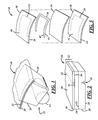
FIG. 4 is a view of an inner surface of a decorative layer with a strip of tear seam tape attached along a tear seam; -
FIG. 5 is a view of the inner surface ofFIG. 4 with more than one strip of tear seam tape attached along the tear seam; -
FIG. 6 is a view of the inner surface ofFIG. 4 with more than one strip of tear seam tape attached along portions of the tear seam; -
FIG. 7 is a view of the inner surface ofFIG. 4 with a strip of tear seam tape having non-rectilinear edges attached along the tear seam; -
FIG. 8 is a view of the inner surface ofFIG. 4 with one embodiment of perforated tear seam tape attached along the tear seam; and -
FIG. 9 is a view of the inner surface ofFIG. 4 with another embodiment of perforated tear seam tape attached along the tear seam. - As will be apparent from the following disclosure, airbag coverings with non-visible tear seams may include tear seam tape to hold a decorative layer together at a tear seam formed in an inner surface of the decorative layer. The tear seam tape can help prevent the tear seam from becoming visible at a decorative side of the covering over time, when the covering may be subjected to temperature extremes, for example. It is noted that the appended drawings are not necessarily to scale and that some features may be exaggerated or omitted for purposes of clear illustration.
- Referring now to
FIG. 1 , a cut-away view of a portion of avehicle interior panel 10 is shown with a passenger-side airbag module 12 installed therebeneath. A vehicle passenger-side airbag is shown only as an example of one type of airbag that may benefit from the following disclosure. For example, theairbag module 12 may include any component or device with an airbag configured to deploy into a cabin of a vehicle when inflated. In this embodiment, theairbag module 12 includes anairbag canister 14 and ahousing 16. The airbag is configured to deploy from thecanister 14 toward thepanel 10 and into the vehicle cabin when necessary. Thehousing 16 supports theairbag canister 14 beneath theinterior panel 10 and a portion of thehousing 16 may act as achute 18 which guides the airbag during deployment. Other types of airbag modules may not include a canister or a separate housing and may include other types of components to compliment the functionality of the airbag. - As shown in the cross-section of
FIG. 2 , the vehicleinterior panel 10 includes multiple layers of materials. This example includes asubstrate 20 and a multi-layer covering 22 overlying thesubstrate 20. Thesubstrate 20 is the base structural component of theinterior panel 10 and includes inner andouter surfaces substrate 20 includes a line of weakening 28 in the form of a groove at theinner surface 24 to at least partly define an airbag deployment opening location. The covering 22 may be provided for decorative purposes and may include adecorative layer 30 having anon-visible tear seam 32 formed therein and anintermediate layer 34 that lies between thesubstrate 20 and thedecorative layer 30. Thepanel 10 also includes a strip oftear seam tape 36 attached to thedecorative layer 30 and sandwiched between thedecorative layer 30 and theintermediate layer 34. More specifically, thetear seam tape 36 is attached to aninner surface 38 of thedecorative layer 30 along thetear seam 32 to help prevent the location of thetear seam 32 from showing at an oppositedecorative surface 40. In one embodiment, theintermediate layer 34 is omitted so that thedecorative layer 30 is the covering, and other embodiments include additional layers of material. - The line of weakening 28 and the
tear seam 32 determine the location of the airbag deployment opening. During airbag deployment, the airbag exerts pressure at theinner surface 24 of thesubstrate 20. In response to such pressure, the multiple layers of thepanel 10 collectively tear open along the line of weakening 28 and thetear seam 32 to form an airbag deployment opening through thepanel 10. The terms "tear seam" and "line of weakening" may be used interchangeably and can be formed in a layer of material by making various types of holes, cuts, scores, notches, or other stress concentrators in the layer that extend at least partially through the layer. Laser scoring, machining, hot or cold knife cutting, or rotary knife cutting are examples of methods that can be used to form a tear seam. Some types of panel materials may not require a tear seam in order to tear along with the other layers of the panel during airbag deployment. For example, theintermediate layer 34 of the example shown inFIG. 2 does not include a tear seam or line of weakening. However, theintermediate layer 34, and any one or more of the other panel layers, also may include one or more lines of weakening for the formation of an airbag deployment opening therethrough. -
FIG. 3 is an exploded view of one embodiment of the vehicleinterior panel 10 separately showing thesubstrate 20, thedecorative layer 30, theintermediate layer 34, and thetear seam tape 36. Thesubstrate 20 determines the overall shape of theinterior panel 10 and supports the overlying layers. The line of weakening 28 may be formed as described above, or it may be molded-in to the substrate. It one embodiment the line of weakening 28 includes a continuous or discontinuous slot formed through the substrate. In another embodiment, thesubstrate 20 or the underlying airbag module may include a pre-formed airbag door which may swing open during airbag deployment. The substrate can be made from any suitable material such as a filled or unfilled thermoplastic material, in which case it may range in thickness from about 2.0 mm to about 4.0 mm. - The
decorative layer 30 may be constructed from a relatively pliable material for a desired look and feel. Leather, simulated leather or other polymer materials such as PUR or PVC are examples of suitable materials. Theinner surface 38 faces toward thesubstrate 20, and the oppositedecorative surface 40 is the visible external surface of theinterior panel 10. In one embodiment, thedecorative layer 30 may have a thickness ranging from about 0.5 mm to about 2.0 mm, and preferably from about 0.75 mm to 1.5 mm. In another embodiment, the thickness of the decorative layer may be about 1.0 mm, or range from about 0.9 mm to about 1.1 mm. - The
tear seam 32 is a non-visible tear seam, meaning that it is formed in the decorative layer so that its location is not apparent when the covering 22 is viewed by a vehicle occupant. The illustratedtear seam 32 is generally U-shaped and located to correspond with the line of weakening 28 in the substrate. Thetear seam 32 and/or the line of weakening 28 may assume other known shapes, such as a rectangular shape, H-shape, or X-shape, to name a few examples. As noted above, thetear seam 32 may include one or more cuts, scores, notches or stress concentrators which extend from theinner surface 38 into thedecorative layer 30. For example, thetear seam 32 may extend into the decorative layer at a depth corresponding to 50% to 70% of the total thickness of thedecorative layer 30. In other words, if thedecorative layer 30 has a nominal thickness of 1.0 mm, thetear seam 32 may extend into the decorative layer at a depth of about 0.5 mm to about 0.7 mm so that thedecorative layer 30 has a residual wall thickness of about 0.3 to about 0.5mm at thetear seam 32. - The
tear seam tape 36 includes atear seam side 42 facing thetear seam 32 and anopposite side 44 facing toward thesubstrate 20 and/or theintermediate layer 34. Thetear seam tape 36 may be shaped to fit thetear seam 32, as shown. For example thetear seam tape 36 inFIG. 3 is U-shaped like thetear seam 32. A strip form oftear seam tape 36 facilitates application of thetape 36 only where needed to help prevent read-through of thetear seam 36 at thedecorative surface 40 of thedecorative layer 30. In other words, the tear seam tape does not necessarily have to be present along theentire tear seam 32 or along portions of thedecorative layer 30 away from thetear seam 32. Thetear seam tape 36 may prevent discernible read-through of thetear seam 36 even after thepanel 10 has been exposed to thermal and/or mechanical stresses (other than the stresses that occur during airbag deployment). For example, it has been found that thetear seam tape 36 can prevent discernible read-through of thetear seam 32 after theinterior panel 10 has been aged at various temperatures ranging from -35°C to 100°C in air having humidity levels of up to 95%. Thetear seam tape 36 may prevent read-through of thetear seam 32 by holding thedecorative layer 30 together at thetear seam 32 during expansion and contraction of thedecorative layer 30 during exposure to different temperatures. Various embodiments oftear seam tape 36 will be described in further detail below. - The
intermediate layer 34 may provide a softer tactile feel to the covering 22 and to the overallinterior panel 10 than would be provided if thedecorative layer 30 was in direct contact with thesubstrate 20, which may be more rigid. Theintermediate layer 34 may be attached to thedecorative layer 30 after thetear seam tape 36 is attached to the decorative layer. Theintermediate layer 34 may be constructed from one or more compressible but resilient materials. Various types of natural or synthetic materials can be used for theintermediate layer 34. In one embodiment, theintermediate layer 34 is made of three-dimensional (3D) fabric, which is a fabric with a relatively irregular or rough surface that can be useful with natural decorative layers such as leather. Theintermediate layer 34 may have a thickness ranging from about 1.0 to about 5.0 mm, preferably from about 2.5 to about 3.5 mm. In one embodiment theintermediate layer 34 is 3D polyester fabric with a thickness ranging from about 2.7 mm to 3.3 mm, or about 3 mm. As already noted, the intermediate layer may be selected so that it does not require a line of weakening or tear seam. -
FIGS. 4-9 illustrate different embodiments oftear seam tape 36 attached to the inner surface of thedecorative layer 30 prior to being disposed over the substrate and/or prior to attachment of the intermediate layer. Generally, thetear seam tape 36 is provided in strip form so that it can be shaped to fit thetear seam 32 and may be adhesively attached to theinner surface 38 of thedecorative layer 30. In one embodiment, a pressure-sensitive adhesive material is pre-applied as a film to the tear seam side 42 (shown inFIG. 3 ) of thetear seam tape 36. The adhesive material may be a thermoplastic adhesive material and may be applied to theinner surface 38 and/or the tear seam side of thetear seam tape 36 prior to attachment. - The
tear seam tape 36 may be made from a variety of materials and may have one or more of the following characteristics. For example, thetear seam tape 36 may be resistant to wrinkling during assembly of the vehicle interior panel. In one embodiment, thetear seam tape 36 is made from a material with a basis weight or area density of about 1.0 ounce per square yard (oz./sq. yd.) or less. The basis weight of the material may be about 0.5 oz./sq. yd., or it may range from about 0.4 oz./sq. yd. to 0.6 oz./sq. yd. In another embodiment, the tear seam tape has a thickness of about 0.2 mm or less, and preferably has a thickness from about 0.1 mm to about 0.15 mm. It has been found that tear seam tape made from materials according to these area density ranges and/or thickness ranges are sufficiently resistant to wrinkling during assembly, though there may be other sufficiently wrinkle-resistant materials outside these ranges. In addition, these relatively low thickness materials may help prevent the tear seam tape from showing through at the decorative surface of the covering. Other desirable properties may include a high strength to weight ratio and thermal and dimensional stability in the range of temperatures normally encountered in the cabin of an automotive vehicle. - In one embodiment, the
tear seam tape 36 is made from a material having polymer fibers randomly oriented in the plane of thetear seam tape 36. A spunbond fabric is one example of such a material, and may be produced by depositing extruded, spun filaments onto a collecting belt in random orientations followed by bonding the filaments together to form the spunbond fabric. A spunbond fabric is non-woven so that its properties may be less directional that a woven textile. A spunbond fabric is also not a solid polymer film and may thus be able to readily tear along with thetear seam 32 during airbag deployment. One example of a suitable spunbond material is Polyfab 500, a polyester spunbond fabric available from Hanes Engineered Materials. This is only one example of a suitable tear seam tape material. Other non-polyester materials may be suitable, as well as other types of non-film and/or non-woven materials. - With reference to
FIG. 4 , thetear seam tape 36 includes first andsecond edges tear seam 32 with one edge of the tape on each side of thetear seam 32 when attached. Thetear seam tape 36 may be wide enough to cover thetear seam 32 and to hold thedecorative layer 30 together at thetear seam 32. In one embodiment, thetear seam tape 36 has a width, measured from thefirst edge 46 to thesecond edge 48, in a range from about 20 mm to about 30 mm, or about 25 mm. Of course, the tear seam tape may be wider or narrower and still sufficient to hold thetear seam 32 together. In the example ofFIG. 4 , the tear seam tape is a continuous strip of tape sized to fit over the entire length of thetear seam 32. -
FIG. 5 illustrates an example of more than one strip oftear seam tape 36 attached to theinner surface 38 of thedecorative layer 30. In this particular example, three individual strips oftear seam tape 36 are attached along different portions of the entire length of thetear seam 32. Individual strips may be used, for example, where a single continuous strip of tape would tend to wrinkle where it follows changes in direction of thetear seam 32 along theinner surface 38 of thedecorative layer 30. -
FIG. 6 illustrates an example oftear seam tape 36 attached to theinner surface 38 of thedecorative layer 30 along only a portion of thetear seam 32. In this particular example, two individual strips oftear seam tape 36 are attached the parallel portions of theU-shaped tear seam 32. This type of configuration may be used when only certain portions of thetear seam 32 are susceptible to read-through. For example, thedecorative layer 30 may be stretched or put into tension in a particular direction when attached over the substrate and tend to cause only a portion of thetear seam 32 to separate at theinner surface 38, and the tear seam tape may be attached along those portions of thetear seam 32 only. - In another embodiment, such as that shown in
FIG. 7 , the first and/orsecond edges tear seam tape 36 may be shaped to reduce read-through of thetear seam tape 36 on theexternal surface 40 of thedecorative layer 30. For example, thetear seam tape 36 may be formed with first andsecond edges tear seam tape 36 is not readily discernible at the decorative surface of thedecorative layer 30. In one embodiment, the first and/orsecond edges tape 36 are not rectilinear. In the specific example ofFIG. 7 , the first andsecond edges tear seam tape 36 may have various other configurations, such as randomly curved edges 46, 48, intended to conceal the location of thetear seam tape 36 when thedecorative layer 30 is viewed from inside the vehicle. - As shown in
FIGS. 8 and 9 , thetear seam tape 36 may include perforations. The embodiment ofFIG. 8 includes a plurality of discrete apertures or holes 50 formed through the tape, while the embodiment ofFIG. 9 includes a number of smaller perforations or pores throughout the material. Perforations can allow adhesive material to penetrate thetape 36. For example, adhesive material applied between thetear seam tape 36 and thedecorative layer 30 can penetrate the tape through the perforations to adhere thedecorative layer 30 to the intermediate layer, or adhesive material applied between theintermediate layer 30 and thetear seam tape 36 can penetrate the tape to do the same. In another embodiment, thetear seam tape 36 is made from a material sufficiently thin and/or porous that adhesive material can penetrate through the thickness of the tape without additional perforations. - A method of making a vehicle interior panel, for use over an airbag may be described that can be used to construct one or more of the above embodiments. An illustrative method may generally include providing a decorative layer, forming a tear seam in an inner surface of the decorative layer at a predetermined airbag deployment opening location, and attaching tear seam tape to the inner surface of the decorative layer along at least a portion of the tear seam to hold the decorative layer together at the tear seam. Thereafter, an intermediate layer may be attached to the decorative layer such that the tear seam tape is sandwiched between the decorative layer and the intermediate layer. In combination, the laminate of the decorative layer and the intermediate form a covering which may be disposed over a substrate to form the vehicle interior panel. The covering may also include one or more additional layers, or the intermediate layer may be disposed over the substrate before being attached to the decorative layer.
- The step of attaching the tear seam tape may include use of a pressure sensitive adhesive, either pre-applied or applied at the time of assembly. However, other types of adhesives may be used. After adhesive application, the tear seam side of the tape may be placed in contact with the inner surface of the decorative layer along the tear seam. Thereafter, pressure may be applied to the opposite side of the tear seam tape to adhere the tear seam tape to the decorative layer. Suitable pressure may be further applied to smooth out any wrinkles which may have formed in the tape during attachment. Other steps may be included, such as heating the tape, adhesive, and/or decorative layer at various times during the process as necessary.
- The intermediate layer may be adhesively attached to the
decorative layer 30. In one embodiment, a thermosetting adhesive material is used to attach the decorative layer and the intermediate layer together. The adhesive material may be applied to one or both of the inner surface of the decorative layer and one side of the intermediate layer. The adhesive material may be applied by spraying a layer or coating of the adhesive material directly onto the inner surface of the decorative layer and/or onto the intermediate layer. Thereafter, the decorative layer and theintermediate layer 34 may be brought together to form the covering as a laminate. The adhesive material may penetrate at least a portion of the tear seam tape when the decorative layer is attached to the intermediate layer. Such penetration may help adhere the intermediate layer to the decorative layer, particularly at the location of the tear seam. For example, the adhesive material may penetrate one or more portions of the tear seam tape if the tape is suitably thin and/or if the tear seam tape is perforated. - Thereafter, the covering, including the laminate of the decorative layer and the intermediate layer, may be attached to the substrate. The intermediate layer may be directly attached to the substrate, or one or more other layers may be attached to the intermediate layer to form the covering. The covering may be attached to the underlying substrate by any suitable method. For example, the covering may be attached to the substrate using an adhesive. In another example, the covering may be attached to the substrate by wrapping the covering 22 around peripheral edges of the substrate and then attaching the covering to the substrate at its inner surface.
- It is to be understood that the foregoing is a description of one or more example embodiments of the invention. The invention is not limited to the particular embodiment(s) disclosed herein, but rather is defined solely by the claims below. Furthermore, the statements contained in the foregoing description relate to particular embodiments and are not to be construed as limitations on the scope of the invention or on the definition of terms used in the claims, except where a term or phrase is expressly defined above. Various other embodiments and various changes and modifications to the disclosed embodiment(s) will become apparent to those skilled in the art. All such other embodiments, changes, and modifications are intended to come within the scope of the appended claims.
- As used in this specification and claims, the terms "for example," "for instance," "such as," and "like," and the verbs "comprising," "having," "including," and their other verb forms, when used in conjunction with a listing of one or more components or other items, are each to be construed as open-ended, meaning that the listing is not to be considered as excluding other, additional components or items. Other terms are to be construed using their broadest reasonable meaning unless they are used in a context that requires a different interpretation.
- This application claims priority from
US patent application serial no. 13/444,486, filed 11th April 2012
Claims (15)
- A panel for use over a vehicle airbag, comprising:a substrate having an outer surface;a decorative layer disposed over the outer surface of the substrate, the decorative layer having an inner surface that faces toward the substrate;a tear seam formed in the inner surface of the decorative layer at a predetermined airbag deployment opening location; andtear seam tape attached to the inner surface of the decorative layer along at least a portion of the tear seam, the tear seam tape being shaped to fit the tear seam.
- A panel as claimed in claim 1, wherein the tear seam tape is made of a material having polymer fibers randomly oriented in the plane of the tear seam tape.
- A panel as claimed in claim 1 or claim 2, wherein the tear seam tape is perforated.
- A panel as claimed in any preceding claim, wherein the tear seam tape has a first edge and an opposite second edge which are not rectilinear.
- A panel as claimed in any preceding claim, wherein the tear seam tape has an area density of about one ounce or less per square yard and a thickness ranging from about 0.05 mm to about 0.15 mm.
- A panel as claimed in any preceding claim, wherein the decorative layer has a residual wall thickness at the tear seam that is about 50% or less than a nominal thickness of the decorative layer.
- A panel as claimed in any preceding claim, wherein the decorative layer is made of leather or simulated leather and has a thickness ranging from about 0.5 mm to about 2.0 mm.
- A panel as claimed in any preceding claim, comprising an intermediate layer between the substrate and the decorative layer such that the tear seam tape is between the decorative layer and the intermediate layer, wherein the intermediate layer does not include a tear seam.
- A vehicle having a panel as claimed in any preceding claim.
- A method of making a panel for use over a vehicle airbag, comprising:(a) attaching a strip of tear seam tape to an inner surface of a decorative layer along at least a portion of a tear seam formed in the decorative layer;(b) attaching an intermediate layer to the inner surface of the decorative layer such that the tear seam tape is sandwiched between the decorative layer and the intermediate layer; and(c) disposing the decorative layer with the tear seam tape and the intermediate layer over a substrate.
- The method of claim 10, wherein step (a) includes adhesively attaching the tear seam tape to the decorative layer with a pressure sensitive adhesive.
- The method of claim 10 or claim 11, wherein step (b) includes attaching the intermediate layer with an adhesive material that penetrates at least a portion of the tear seam tape.
- The method of claim 12, wherein the adhesive material penetrates the tear seam tape through perforations formed through the tear seam tape and/or through the thickness of the tear seam tape.
- The method of any of claims 10 - 13, wherein step (a) includes attaching more than one strip of tear seam tape to the inner surface of the decorative layer along the tear seam.
- The method of any of claims 10 - 14, wherein step (a) includes:attaching the tear seam tape to a leather decorative layer; and/orattaching tear seam tape made of a non-woven material that is resistant to wrinkling.
Applications Claiming Priority (1)
| Application Number | Priority Date | Filing Date | Title |
|---|---|---|---|
| US13/444,486 US8651514B2 (en) | 2012-04-11 | 2012-04-11 | Airbag tear seam tape |
Publications (2)
| Publication Number | Publication Date |
|---|---|
| EP2650179A1 true EP2650179A1 (en) | 2013-10-16 |
| EP2650179B1 EP2650179B1 (en) | 2017-08-30 |
Family
ID=47913204
Family Applications (1)
| Application Number | Title | Priority Date | Filing Date |
|---|---|---|---|
| EP13160519.8A Not-in-force EP2650179B1 (en) | 2012-04-11 | 2013-03-21 | Airbag tear seam tape |
Country Status (2)
| Country | Link |
|---|---|
| US (1) | US8651514B2 (en) |
| EP (1) | EP2650179B1 (en) |
Cited By (1)
| Publication number | Priority date | Publication date | Assignee | Title |
|---|---|---|---|---|
| DE102018006705A1 (en) * | 2018-08-24 | 2020-02-27 | K.L. Kaschier- Und Laminier Gmbh | Cover part of an airbag |
Families Citing this family (13)
| Publication number | Priority date | Publication date | Assignee | Title |
|---|---|---|---|---|
| DE102012204392B3 (en) * | 2012-03-20 | 2013-04-25 | Lisa Dräxlmaier GmbH | Interior fitting, in particular dashboard with an airbag flap |
| FR3000449B1 (en) * | 2012-12-27 | 2016-02-05 | Faurecia Interieur Ind | INTERIOR VEHICLE CLUTCH PIECE SUITABLE FOR COVERING AN INFLATABLE SAFETY CUSHION |
| US20150102588A1 (en) * | 2013-10-14 | 2015-04-16 | Autoliv Asp, Inc. | Non-slitted tear seam for mini-wrappers |
| DE102014116813A1 (en) * | 2014-11-18 | 2016-05-19 | International Automotive Components Group Gmbh | Interior trim part and method for its production |
| US9296354B1 (en) | 2015-02-11 | 2016-03-29 | Global Ip Holdings, Llc | Airbag cover assembly including layered, decorative cover pieces held together at a decorative seam |
| US10369953B2 (en) * | 2015-04-24 | 2019-08-06 | Faurecia Interior Systems, Inc. | Interior panels including substrates with inserts for defining integrated airbag deployment doors for motor vehicles and methods of making the same |
| US9713997B2 (en) * | 2015-07-29 | 2017-07-25 | Faurecia Interior Systems, Inc. | Interior panels including substrates with film inserts for defining integrated airbag deployment doors for motor vehicles and methods of making the same |
| US9694778B1 (en) * | 2016-03-11 | 2017-07-04 | Ford Global Technologies, Llc | Vehicle seat side air bag assembly |
| US9789838B1 (en) * | 2016-04-04 | 2017-10-17 | Autoliv Asp, Inc. | Airbag cover weakening patterns and related systems and methods |
| US9771044B1 (en) * | 2016-04-25 | 2017-09-26 | Ford Global Technologies, Llc | Leather trim panel skin hidden tear seam with disrupted fiber matrix |
| US10569733B2 (en) | 2018-05-22 | 2020-02-25 | Faurecia Interior Systems, Inc. | Interior panel including a cover skin with a tear seam for a motor vehicle and a method for making the same |
| US11890821B1 (en) | 2018-08-01 | 2024-02-06 | Air Cruisers Company, LLC | Dedicated seam tape and dedicated accessory fabric for inflatable devices |
| DE102020111343A1 (en) * | 2020-04-27 | 2021-10-28 | Bayerische Motoren Werke Aktiengesellschaft | Airbag cap of a vehicle |
Citations (4)
| Publication number | Priority date | Publication date | Assignee | Title |
|---|---|---|---|---|
| DE10001246A1 (en) * | 2000-01-14 | 2001-07-19 | Acts Adv Car Tech Sys Gmbh | Airbag cover for motor vehicles has reinforcement of esp. aluminum foil strip on inside of outer cover skin |
| DE10240439A1 (en) * | 2002-09-02 | 2004-03-11 | Delphi Technologies, Inc., Troy | Manufacture of air bag cover for dash board, involves sealing recess formed at tear open position of cover layer with cover film and applying foam material onto cover layer and cover film |
| DE102005017124A1 (en) * | 2005-04-14 | 2006-10-19 | Volkswagen Ag | Cladding part for vehicle has hinge band extending over at least one part region of airbag outlet aperture region keeping holding plate in flat connecting position |
| US7989052B2 (en) | 2004-03-26 | 2011-08-02 | Lisa Dräxlmaier GmbH | Airbag cover |
Family Cites Families (25)
| Publication number | Priority date | Publication date | Assignee | Title |
|---|---|---|---|---|
| US3121021A (en) * | 1960-04-18 | 1964-02-11 | Minnesota Mining & Mfg | Breathable surgical adhesive tapes |
| US3364063A (en) * | 1964-07-20 | 1968-01-16 | Kendall & Co | Porous pressure-sensitive adhesive tapes |
| US3503495A (en) * | 1968-11-29 | 1970-03-31 | Minnesota Mining & Mfg | Masking tape |
| US3908650A (en) * | 1974-06-18 | 1975-09-30 | Minnesota Mining & Mfg | Abrasion and soil resistant microporous medical adhesive tape |
| US4427737A (en) * | 1981-04-23 | 1984-01-24 | E. R. Squibb & Sons, Inc. | Microporous adhesive tape |
| US5246773A (en) * | 1989-03-20 | 1993-09-21 | The Kendall Company | Industrial tapes |
| US5082310A (en) | 1989-11-06 | 1992-01-21 | Tip Engineering Group, Inc. | Arrangement for providing an air bag deployment opening |
| US5590901A (en) * | 1994-09-14 | 1997-01-07 | The Goodyear Tire & Rubber Company | Method and apparatus for vehicle trim panel having hidden air bag door |
| US5533748A (en) | 1994-12-01 | 1996-07-09 | Morton International, Inc. | Invisible instrument panel or dashboard airbag cover door |
| DE29511172U1 (en) * | 1995-07-14 | 1996-02-01 | Peguform-Werke GmbH, 79268 Bötzingen | Plastic cladding for vehicles equipped with airbag devices |
| US5775727A (en) * | 1996-01-17 | 1998-07-07 | Trw Vehicle Safety Systems Inc. | Deployment door assembly |
| US5997030A (en) | 1997-03-19 | 1999-12-07 | Lear Automotive Dearborn, Inc. | Vehicle instrument panel with seamless airbag cover |
| US6410464B1 (en) * | 1998-10-02 | 2002-06-25 | 3M Innovative Properties Company | Hand-tearable tape |
| JP3807216B2 (en) | 2000-09-29 | 2006-08-09 | 豊田合成株式会社 | Airbag cover |
| US6457739B1 (en) * | 2001-04-03 | 2002-10-01 | Visteon Global Technologies, Inc. | Instrument panel having an air bag device |
| US6689306B2 (en) | 2001-07-11 | 2004-02-10 | Delphi Technologies, Inc. | Process of making a multi-layer outer skin for the exterior of a dash panel structure of a vehicle |
| US6644685B2 (en) | 2001-09-07 | 2003-11-11 | Visteon Global Technologies, Inc. | Seamless passenger side airbag door |
| US20030066586A1 (en) | 2001-10-05 | 2003-04-10 | Frank Blockhaus | Airbag cover |
| US6657158B1 (en) | 2002-06-03 | 2003-12-02 | Visteon Global Technologies, Inc. | Method of processing a laser scored instrument panel with an invisible seam airbag opening |
| DE10231131C5 (en) | 2002-07-10 | 2020-01-09 | Lisa Dräxlmaier GmbH | Dashboard for a vehicle |
| US7100941B2 (en) | 2003-02-24 | 2006-09-05 | Collins & Aikman | Pre-weakening of fabric covered airbag doors |
| DE102004038314A1 (en) * | 2004-08-05 | 2006-03-16 | Eissmann Gmbh | Cover for the cover of an airbag |
| DE102005013477B4 (en) | 2005-03-23 | 2008-12-04 | Lisa Dräxlmaier GmbH | Motor vehicle trim part with weakening points and method for its production |
| US7798518B2 (en) | 2006-04-27 | 2010-09-21 | Magna International, Inc. | Trim panel with pre-weakened segment and bridge |
| CN101367370B (en) * | 2007-08-15 | 2011-04-13 | 延锋伟世通汽车饰件系统有限公司 | Internal decoration piece inside automobile |
-
2012
- 2012-04-11 US US13/444,486 patent/US8651514B2/en not_active Expired - Fee Related
-
2013
- 2013-03-21 EP EP13160519.8A patent/EP2650179B1/en not_active Not-in-force
Patent Citations (4)
| Publication number | Priority date | Publication date | Assignee | Title |
|---|---|---|---|---|
| DE10001246A1 (en) * | 2000-01-14 | 2001-07-19 | Acts Adv Car Tech Sys Gmbh | Airbag cover for motor vehicles has reinforcement of esp. aluminum foil strip on inside of outer cover skin |
| DE10240439A1 (en) * | 2002-09-02 | 2004-03-11 | Delphi Technologies, Inc., Troy | Manufacture of air bag cover for dash board, involves sealing recess formed at tear open position of cover layer with cover film and applying foam material onto cover layer and cover film |
| US7989052B2 (en) | 2004-03-26 | 2011-08-02 | Lisa Dräxlmaier GmbH | Airbag cover |
| DE102005017124A1 (en) * | 2005-04-14 | 2006-10-19 | Volkswagen Ag | Cladding part for vehicle has hinge band extending over at least one part region of airbag outlet aperture region keeping holding plate in flat connecting position |
Cited By (1)
| Publication number | Priority date | Publication date | Assignee | Title |
|---|---|---|---|---|
| DE102018006705A1 (en) * | 2018-08-24 | 2020-02-27 | K.L. Kaschier- Und Laminier Gmbh | Cover part of an airbag |
Also Published As
| Publication number | Publication date |
|---|---|
| US20130270801A1 (en) | 2013-10-17 |
| US8651514B2 (en) | 2014-02-18 |
| EP2650179B1 (en) | 2017-08-30 |
Similar Documents
| Publication | Publication Date | Title |
|---|---|---|
| EP2650179B1 (en) | Airbag tear seam tape | |
| EP1902910A1 (en) | Multilayer film dry lamination of airbag fabrics | |
| US7661703B2 (en) | Automobile interior structure and headliner interior material | |
| US7989052B2 (en) | Airbag cover | |
| US8807590B2 (en) | Multi-layer vehicle airbag coverings | |
| US8567814B2 (en) | Patterned weakening of airbag coverings | |
| US9067560B2 (en) | Trim part with an airbag cover and a method for manufacturing a trim part | |
| US9358697B2 (en) | Non-visible tear seams for airbag coverings | |
| US10773676B2 (en) | Spacer fabric having hinge function | |
| US20050263345A1 (en) | Sound absorbing panel for a vehicle and its method of manufacture | |
| US7625004B2 (en) | Motor vehicle trim element having weakened areas and methods for the manufacture thereof | |
| CN112384413A (en) | Airbag cover, method for manufacturing same, and airbag device | |
| EP1846222A2 (en) | Vehicle air bag constructed from a composite film | |
| US7093850B2 (en) | Instrument panel with integral hidden door cover and method of manufacture thereof | |
| US20090267329A1 (en) | Invisible Pre-Weakened Seam for an Air Bag Deployment Cover | |
| EP2952393A2 (en) | Airbag deployment system for a fabric wrapped vehicle interior panel | |
| EP2460696A1 (en) | Improved tear seams for airbag covers | |
| US10322684B2 (en) | Vehicle interior panel with sealed perforations | |
| JP2009120192A (en) | Instrument panel for automobile and method for manufacturing the same | |
| US20210221318A1 (en) | Cover Material for Covering an Airbag Unit | |
| JP4972659B2 (en) | Structure of occupant protection device for expandable vehicles cut, stitched and stacked | |
| JP2023156634A (en) | Laminated sheet and its manufacturing method | |
| KR20190035220A (en) | Vehicle interior material including a weakened portion | |
| CN106476718B (en) | Vehicle interior trim component and method of forming the same | |
| KR20250164499A (en) | Structure for Roof-Lining |
Legal Events
| Date | Code | Title | Description |
|---|---|---|---|
| PUAI | Public reference made under article 153(3) epc to a published international application that has entered the european phase |
Free format text: ORIGINAL CODE: 0009012 |
|
| AK | Designated contracting states |
Kind code of ref document: A1 Designated state(s): AL AT BE BG CH CY CZ DE DK EE ES FI FR GB GR HR HU IE IS IT LI LT LU LV MC MK MT NL NO PL PT RO RS SE SI SK SM TR |
|
| AX | Request for extension of the european patent |
Extension state: BA ME |
|
| 17P | Request for examination filed |
Effective date: 20140416 |
|
| RBV | Designated contracting states (corrected) |
Designated state(s): AL AT BE BG CH CY CZ DE DK EE ES FI FR GB GR HR HU IE IS IT LI LT LU LV MC MK MT NL NO PL PT RO RS SE SI SK SM TR |
|
| 17Q | First examination report despatched |
Effective date: 20141201 |
|
| GRAP | Despatch of communication of intention to grant a patent |
Free format text: ORIGINAL CODE: EPIDOSNIGR1 |
|
| INTG | Intention to grant announced |
Effective date: 20161110 |
|
| GRAJ | Information related to disapproval of communication of intention to grant by the applicant or resumption of examination proceedings by the epo deleted |
Free format text: ORIGINAL CODE: EPIDOSDIGR1 |
|
| GRAP | Despatch of communication of intention to grant a patent |
Free format text: ORIGINAL CODE: EPIDOSNIGR1 |
|
| INTC | Intention to grant announced (deleted) | ||
| INTG | Intention to grant announced |
Effective date: 20170329 |
|
| GRAS | Grant fee paid |
Free format text: ORIGINAL CODE: EPIDOSNIGR3 |
|
| GRAA | (expected) grant |
Free format text: ORIGINAL CODE: 0009210 |
|
| AK | Designated contracting states |
Kind code of ref document: B1 Designated state(s): AL AT BE BG CH CY CZ DE DK EE ES FI FR GB GR HR HU IE IS IT LI LT LU LV MC MK MT NL NO PL PT RO RS SE SI SK SM TR |
|
| REG | Reference to a national code |
Ref country code: GB Ref legal event code: FG4D |
|
| REG | Reference to a national code |
Ref country code: CH Ref legal event code: EP |
|
| REG | Reference to a national code |
Ref country code: AT Ref legal event code: REF Ref document number: 923196 Country of ref document: AT Kind code of ref document: T Effective date: 20170915 |
|
| REG | Reference to a national code |
Ref country code: IE Ref legal event code: FG4D |
|
| REG | Reference to a national code |
Ref country code: DE Ref legal event code: R096 Ref document number: 602013025686 Country of ref document: DE |
|
| REG | Reference to a national code |
Ref country code: NL Ref legal event code: MP Effective date: 20170830 |
|
| REG | Reference to a national code |
Ref country code: LT Ref legal event code: MG4D |
|
| REG | Reference to a national code |
Ref country code: AT Ref legal event code: MK05 Ref document number: 923196 Country of ref document: AT Kind code of ref document: T Effective date: 20170830 |
|
| PG25 | Lapsed in a contracting state [announced via postgrant information from national office to epo] |
Ref country code: LT Free format text: LAPSE BECAUSE OF FAILURE TO SUBMIT A TRANSLATION OF THE DESCRIPTION OR TO PAY THE FEE WITHIN THE PRESCRIBED TIME-LIMIT Effective date: 20170830 Ref country code: HR Free format text: LAPSE BECAUSE OF FAILURE TO SUBMIT A TRANSLATION OF THE DESCRIPTION OR TO PAY THE FEE WITHIN THE PRESCRIBED TIME-LIMIT Effective date: 20170830 Ref country code: NO Free format text: LAPSE BECAUSE OF FAILURE TO SUBMIT A TRANSLATION OF THE DESCRIPTION OR TO PAY THE FEE WITHIN THE PRESCRIBED TIME-LIMIT Effective date: 20171130 Ref country code: FI Free format text: LAPSE BECAUSE OF FAILURE TO SUBMIT A TRANSLATION OF THE DESCRIPTION OR TO PAY THE FEE WITHIN THE PRESCRIBED TIME-LIMIT Effective date: 20170830 Ref country code: SE Free format text: LAPSE BECAUSE OF FAILURE TO SUBMIT A TRANSLATION OF THE DESCRIPTION OR TO PAY THE FEE WITHIN THE PRESCRIBED TIME-LIMIT Effective date: 20170830 Ref country code: AT Free format text: LAPSE BECAUSE OF FAILURE TO SUBMIT A TRANSLATION OF THE DESCRIPTION OR TO PAY THE FEE WITHIN THE PRESCRIBED TIME-LIMIT Effective date: 20170830 |
|
| PG25 | Lapsed in a contracting state [announced via postgrant information from national office to epo] |
Ref country code: BG Free format text: LAPSE BECAUSE OF FAILURE TO SUBMIT A TRANSLATION OF THE DESCRIPTION OR TO PAY THE FEE WITHIN THE PRESCRIBED TIME-LIMIT Effective date: 20171130 Ref country code: IS Free format text: LAPSE BECAUSE OF FAILURE TO SUBMIT A TRANSLATION OF THE DESCRIPTION OR TO PAY THE FEE WITHIN THE PRESCRIBED TIME-LIMIT Effective date: 20171230 Ref country code: GR Free format text: LAPSE BECAUSE OF FAILURE TO SUBMIT A TRANSLATION OF THE DESCRIPTION OR TO PAY THE FEE WITHIN THE PRESCRIBED TIME-LIMIT Effective date: 20171201 Ref country code: LV Free format text: LAPSE BECAUSE OF FAILURE TO SUBMIT A TRANSLATION OF THE DESCRIPTION OR TO PAY THE FEE WITHIN THE PRESCRIBED TIME-LIMIT Effective date: 20170830 Ref country code: RS Free format text: LAPSE BECAUSE OF FAILURE TO SUBMIT A TRANSLATION OF THE DESCRIPTION OR TO PAY THE FEE WITHIN THE PRESCRIBED TIME-LIMIT Effective date: 20170830 Ref country code: ES Free format text: LAPSE BECAUSE OF FAILURE TO SUBMIT A TRANSLATION OF THE DESCRIPTION OR TO PAY THE FEE WITHIN THE PRESCRIBED TIME-LIMIT Effective date: 20170830 |
|
| PG25 | Lapsed in a contracting state [announced via postgrant information from national office to epo] |
Ref country code: NL Free format text: LAPSE BECAUSE OF FAILURE TO SUBMIT A TRANSLATION OF THE DESCRIPTION OR TO PAY THE FEE WITHIN THE PRESCRIBED TIME-LIMIT Effective date: 20170830 |
|
| PG25 | Lapsed in a contracting state [announced via postgrant information from national office to epo] |
Ref country code: DK Free format text: LAPSE BECAUSE OF FAILURE TO SUBMIT A TRANSLATION OF THE DESCRIPTION OR TO PAY THE FEE WITHIN THE PRESCRIBED TIME-LIMIT Effective date: 20170830 Ref country code: PL Free format text: LAPSE BECAUSE OF FAILURE TO SUBMIT A TRANSLATION OF THE DESCRIPTION OR TO PAY THE FEE WITHIN THE PRESCRIBED TIME-LIMIT Effective date: 20170830 Ref country code: RO Free format text: LAPSE BECAUSE OF FAILURE TO SUBMIT A TRANSLATION OF THE DESCRIPTION OR TO PAY THE FEE WITHIN THE PRESCRIBED TIME-LIMIT Effective date: 20170830 Ref country code: CZ Free format text: LAPSE BECAUSE OF FAILURE TO SUBMIT A TRANSLATION OF THE DESCRIPTION OR TO PAY THE FEE WITHIN THE PRESCRIBED TIME-LIMIT Effective date: 20170830 |
|
| PG25 | Lapsed in a contracting state [announced via postgrant information from national office to epo] |
Ref country code: SK Free format text: LAPSE BECAUSE OF FAILURE TO SUBMIT A TRANSLATION OF THE DESCRIPTION OR TO PAY THE FEE WITHIN THE PRESCRIBED TIME-LIMIT Effective date: 20170830 Ref country code: IT Free format text: LAPSE BECAUSE OF FAILURE TO SUBMIT A TRANSLATION OF THE DESCRIPTION OR TO PAY THE FEE WITHIN THE PRESCRIBED TIME-LIMIT Effective date: 20170830 Ref country code: SM Free format text: LAPSE BECAUSE OF FAILURE TO SUBMIT A TRANSLATION OF THE DESCRIPTION OR TO PAY THE FEE WITHIN THE PRESCRIBED TIME-LIMIT Effective date: 20170830 Ref country code: EE Free format text: LAPSE BECAUSE OF FAILURE TO SUBMIT A TRANSLATION OF THE DESCRIPTION OR TO PAY THE FEE WITHIN THE PRESCRIBED TIME-LIMIT Effective date: 20170830 |
|
| REG | Reference to a national code |
Ref country code: DE Ref legal event code: R097 Ref document number: 602013025686 Country of ref document: DE |
|
| PLBE | No opposition filed within time limit |
Free format text: ORIGINAL CODE: 0009261 |
|
| STAA | Information on the status of an ep patent application or granted ep patent |
Free format text: STATUS: NO OPPOSITION FILED WITHIN TIME LIMIT |
|
| 26N | No opposition filed |
Effective date: 20180531 |
|
| PG25 | Lapsed in a contracting state [announced via postgrant information from national office to epo] |
Ref country code: SI Free format text: LAPSE BECAUSE OF FAILURE TO SUBMIT A TRANSLATION OF THE DESCRIPTION OR TO PAY THE FEE WITHIN THE PRESCRIBED TIME-LIMIT Effective date: 20170830 |
|
| REG | Reference to a national code |
Ref country code: CH Ref legal event code: PL |
|
| GBPC | Gb: european patent ceased through non-payment of renewal fee |
Effective date: 20180321 |
|
| PG25 | Lapsed in a contracting state [announced via postgrant information from national office to epo] |
Ref country code: MC Free format text: LAPSE BECAUSE OF FAILURE TO SUBMIT A TRANSLATION OF THE DESCRIPTION OR TO PAY THE FEE WITHIN THE PRESCRIBED TIME-LIMIT Effective date: 20170830 |
|
| REG | Reference to a national code |
Ref country code: BE Ref legal event code: MM Effective date: 20180331 |
|
| REG | Reference to a national code |
Ref country code: IE Ref legal event code: MM4A |
|
| PG25 | Lapsed in a contracting state [announced via postgrant information from national office to epo] |
Ref country code: LU Free format text: LAPSE BECAUSE OF NON-PAYMENT OF DUE FEES Effective date: 20180321 |
|
| PG25 | Lapsed in a contracting state [announced via postgrant information from national office to epo] |
Ref country code: IE Free format text: LAPSE BECAUSE OF NON-PAYMENT OF DUE FEES Effective date: 20180321 |
|
| PG25 | Lapsed in a contracting state [announced via postgrant information from national office to epo] |
Ref country code: BE Free format text: LAPSE BECAUSE OF NON-PAYMENT OF DUE FEES Effective date: 20180331 Ref country code: GB Free format text: LAPSE BECAUSE OF NON-PAYMENT OF DUE FEES Effective date: 20180321 Ref country code: CH Free format text: LAPSE BECAUSE OF NON-PAYMENT OF DUE FEES Effective date: 20180331 Ref country code: LI Free format text: LAPSE BECAUSE OF NON-PAYMENT OF DUE FEES Effective date: 20180331 |
|
| PG25 | Lapsed in a contracting state [announced via postgrant information from national office to epo] |
Ref country code: FR Free format text: LAPSE BECAUSE OF NON-PAYMENT OF DUE FEES Effective date: 20180331 |
|
| PG25 | Lapsed in a contracting state [announced via postgrant information from national office to epo] |
Ref country code: MT Free format text: LAPSE BECAUSE OF NON-PAYMENT OF DUE FEES Effective date: 20180321 |
|
| PG25 | Lapsed in a contracting state [announced via postgrant information from national office to epo] |
Ref country code: TR Free format text: LAPSE BECAUSE OF FAILURE TO SUBMIT A TRANSLATION OF THE DESCRIPTION OR TO PAY THE FEE WITHIN THE PRESCRIBED TIME-LIMIT Effective date: 20170830 |
|
| PG25 | Lapsed in a contracting state [announced via postgrant information from national office to epo] |
Ref country code: PT Free format text: LAPSE BECAUSE OF FAILURE TO SUBMIT A TRANSLATION OF THE DESCRIPTION OR TO PAY THE FEE WITHIN THE PRESCRIBED TIME-LIMIT Effective date: 20170830 Ref country code: HU Free format text: LAPSE BECAUSE OF FAILURE TO SUBMIT A TRANSLATION OF THE DESCRIPTION OR TO PAY THE FEE WITHIN THE PRESCRIBED TIME-LIMIT; INVALID AB INITIO Effective date: 20130321 |
|
| PG25 | Lapsed in a contracting state [announced via postgrant information from national office to epo] |
Ref country code: CY Free format text: LAPSE BECAUSE OF FAILURE TO SUBMIT A TRANSLATION OF THE DESCRIPTION OR TO PAY THE FEE WITHIN THE PRESCRIBED TIME-LIMIT Effective date: 20170830 Ref country code: MK Free format text: LAPSE BECAUSE OF NON-PAYMENT OF DUE FEES Effective date: 20170830 |
|
| PG25 | Lapsed in a contracting state [announced via postgrant information from national office to epo] |
Ref country code: AL Free format text: LAPSE BECAUSE OF FAILURE TO SUBMIT A TRANSLATION OF THE DESCRIPTION OR TO PAY THE FEE WITHIN THE PRESCRIBED TIME-LIMIT Effective date: 20170830 |
|
| PGFP | Annual fee paid to national office [announced via postgrant information from national office to epo] |
Ref country code: DE Payment date: 20220217 Year of fee payment: 10 |
|
| REG | Reference to a national code |
Ref country code: DE Ref legal event code: R119 Ref document number: 602013025686 Country of ref document: DE |
|
| PG25 | Lapsed in a contracting state [announced via postgrant information from national office to epo] |
Ref country code: DE Free format text: LAPSE BECAUSE OF NON-PAYMENT OF DUE FEES Effective date: 20231003 |