EP2645271A2 - Verfahren und vorrichtung zur graphischen verwaltung von formen - Google Patents
Verfahren und vorrichtung zur graphischen verwaltung von formen Download PDFInfo
- Publication number
- EP2645271A2 EP2645271A2 EP12742291.3A EP12742291A EP2645271A2 EP 2645271 A2 EP2645271 A2 EP 2645271A2 EP 12742291 A EP12742291 A EP 12742291A EP 2645271 A2 EP2645271 A2 EP 2645271A2
- Authority
- EP
- European Patent Office
- Prior art keywords
- transposing
- dimension
- frames
- arranged along
- sequentially arranged
- Prior art date
- Legal status (The legal status is an assumption and is not a legal conclusion. Google has not performed a legal analysis and makes no representation as to the accuracy of the status listed.)
- Ceased
Links
Images



Classifications
-
- G—PHYSICS
- G06—COMPUTING OR CALCULATING; COUNTING
- G06F—ELECTRIC DIGITAL DATA PROCESSING
- G06F40/00—Handling natural language data
- G06F40/10—Text processing
- G06F40/166—Editing, e.g. inserting or deleting
- G06F40/177—Editing, e.g. inserting or deleting of tables; using ruled lines
- G06F40/18—Editing, e.g. inserting or deleting of tables; using ruled lines of spreadsheets
-
- G—PHYSICS
- G06—COMPUTING OR CALCULATING; COUNTING
- G06F—ELECTRIC DIGITAL DATA PROCESSING
- G06F40/00—Handling natural language data
- G06F40/10—Text processing
- G06F40/166—Editing, e.g. inserting or deleting
- G06F40/174—Form filling; Merging
Definitions
- the present invention relates to the field of an electronic document application, and in particular, to a table graphics management method and apparatus in an electronic document.
- a table may be adjusted when a document is being edited, such as according to a relevant specification or requirement.
- the adjustment may be as follows: the content of rows is converted into the content of columns, or the content of columns is converted into the content of rows, or a table header of rows or columns is cancelled.
- Embodiments of the present invention provide a table graphics management method and apparatus, which can quickly implement table graphics management.
- a table graphics management method including: displaying a table on a display apparatus, in which the table has multiple rows and multiple columns, each of the rows includes multiple frames that are sequentially arranged along a first dimension, each of the columns includes multiple frames that are sequentially arranged along a second dimension, and the second dimension is vertical to the first dimension, in which the frames of the rows and the columns are filled with information; detecting a control track for the table input by an input device; determining a moving direction of the control track according to the detected control track; and along the moving direction of the control track, transposing original information in the frames of the rows that are sequentially arranged along the first dimension into the frames of the columns that are sequentially arranged along the second dimension, and transposing original information in the frames of the columns that are sequentially arranged along the second dimension into the frames of the rows that are sequentially arranged along the first dimension, so as to acquire a transposed table; and displaying the transposed table on the display apparatus.
- a table graphics management apparatus including a displaying module, an input device, a detecting module and a transposing module, in which the displaying module is configured to display a table on a display apparatus, in which the table has multiple rows and multiple columns, each of the rows includes multiple frames that are sequentially arranged along a first dimension, each of the columns includes multiple frames that are sequentially arranged along a second dimension, and the second dimension is vertical to the first dimension, in which the frames of the rows and the columns are filled with information; and further configured to display a transposed table on the display apparatus;
- the input device is configured to receive a control track for the table;
- the detecting module is configured to detect the control track for the table input by the input device, and determine a moving direction of the control track according to the control track;
- the transposing module is configured to, along the moving direction of the control track, transpose original information in the frames of the rows that are sequentially arranged along the first dimension into the frames of the columns that are sequentially arranged along the second dimension, and
- a table graphics management method including: displaying a table on a display apparatus, in which the table has multiple rows and multiple columns, each of the rows includes multiple frames that are sequentially arranged along a first dimension, each of the columns includes multiple frames that are sequentially arranged along a second dimension, and the second dimension is vertical to the first dimension, in which the frames of the rows and the columns are filled with information; receiving a selection input by an input device, and generating a transposing selection frame suspended at the periphery of the table according to the selection, in which the transposing selection frame includes a transposing manner option for the rows and the columns of the table; receiving a selection for the transposing manner option in the transposing selection frame, and performing table transposing in a transposing manner selected according to the selection, so as to acquire a transposed table, in which the table transposing includes: transposing original information in the frames of the rows that are sequentially arranged along the first dimension into the frames of the columns that are sequentially arranged along the second
- a table graphics management apparatus including a displaying module, a generating module and a transposing module, in which the displaying module is configured to display a table on a display apparatus, in which the table has multiple rows and multiple columns, each of the rows includes multiple frames that are sequentially arranged along a first dimension, each of the columns includes multiple frames that are sequentially arranged along a second dimension, and the second dimension is vertical to the first dimension, in which the frames of the rows and the columns are filled with information; and further configured to display a transposed table on the display apparatus; the generating module is configured to receive a selection input by an input device, and generate a transposing selection frame suspended at the periphery of the table according to the selection, in which the transposing selection frame includes a transposing manner option for the rows and the columns of the table; the transposing module is configured to receive a selection for the transposing manner option in the transposing selection frame, and perform table transposing in a transposing manner selected according to the selection,
- the foregoing technical solutions may directly perform table transposing in a text editing tool based on an input of a user, thereby quickly and conveniently implementing table graphics management in text editing, and providing convenience for the user.
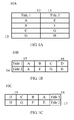
- FIG. 1A to FIG. 1C are schematic diagrams of a table according to an embodiment of the present invention.
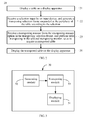
- FIG. 2 is a schematic flowchart of a table graphics management method according to an embodiment of the present invention
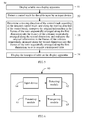
- FIG. 3 is a schematic block diagram of a table graphics management apparatus according to an embodiment of the present invention.
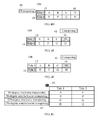
- FIG. 4A to FIG. 4G are schematic diagrams of table graphics management according to an embodiment of the present invention.
- FIG. 5 is a schematic flowchart of a table graphics management method according to an embodiment of the present invention.
- FIG. 6 is a schematic block diagram of a table graphics management apparatus according to an embodiment of the present invention.
- FIG. 7A to FIG. 7F are schematic diagrams of table graphics management according to an embodiment of the present invention.
- FIG. 8 is a schematic block diagram of a computer system applicable to an embodiment of the present invention.
- a table is copied in an electronic table tool such as Excel, and then the table is pasted in another place, and during pasting, a "transposing" option is selected.
- the content of rows is converted into the content of columns in the table, or the content of columns is converted into the content of a rows.
- the method is implemented by an electronic table tool rather than a text editing tool, such as Microsoft Word.
- the table transposing operation can be performed only when a table is copied and pasted in another place, so the operation is not simple and direct enough, and the operation triggering is relatively covert. As a result, a user cannot quickly implement table management if the user is unfamiliar with the management tool.
- An embodiment of the present invention provides a table graphics management method, which can quickly, simply and conveniently implement table graphics management in a text editing tool.
- FIG. 1A to FIG. 1C are schematic diagrams of a table according to an embodiment of the present invention.
- a table includes rows and columns, the direction of the rows is referred to as a first dimension in all the embodiments of the present invention, and the direction of the columns is referred to as a second dimension in all the embodiments of the present invention.
- the first dimension and the second dimension are vertical to each other.
- Rows and columns may include multiple cells in which information may be filled.
- the cell set in rows or columns and used for redisplaying the attribute of information filled in the rows or columns is referred to as a table header, and the identification content filled in the table header is referred to as table header content.
- a table 10A in FIG. 1A is an ordinary form of table, and a table of 5 rows and 2 columns is taken as an example.
- the table 10A has two table headers 11 and 12 in a rows, the content of the table headers is the title 1 and the title 2, respectively.
- the table header 11 is the row tail of the rows where the table header 11 is located
- the table header 12 is the row head of the rows where the table header 12 is located and is also the column head of the columns vertical to the rows where the table header 12 is located.
- the table further includes a cell 13, and the cell 13 is the column tail of the columns where the table header 12 is located.
- FIG. 1B is a table 10B with 2 rows and 5 columns, and the table 10B and the table 10A in FIG. 1A are transposed from each other.
- the table 10B has two table headers 14 and 15 in a columns, the content of the table headers is the same as that in the table headers 11 and 12 in the table 10A, respectively.
- the table header 14 is the column tail of the columns where the table header 14 is located
- the table header 15 is the column head of the columns where the table header 15 is located and is also the row head of the rows vertical to the columns where the table header 15 is located.
- the table further includes a cell 16, and the cell 16 is the row tail of the rows where the table header 15 is located.
- FIG. 1C is a table 10C which is a table of 2 rows and 5 columns, and the table 10C and the table 10A in FIG. 1A are transposed from each other.
- the table 10C has two table headers 17 and 18 in columns, content of the table headers is the same as that in the table headers 11 and 12 in the table 10A respectively.
- the table header 17 is the column tail of the columns where the table header 17 is located
- the table header 18 is the column head of the columns where the table header 18 is located and is also the row tail of the rows vertical to the columns where the table header 18 is located.
- the table further includes a cell 19, and the cell 19 is the row head of the rows where the table header 18 is located.
- the transposing from the table 10A into the table 10B may be referred to as90-degree anticlockwise transposing along an anticlockwise direction, or may be also referred to as 270-degree clockwise transposing along a clockwise direction, and the transposing is used for transposing the original information in the frames of the rows that are sequentially arranged along the first dimension into the frames of the columns that are sequentially arranged along the second dimension.
- the transposing from the table 10B into the table 10A may be referred to as 90-degree clockwise transposing along the clockwise direction, or may be also referred to as 270-degree anticlockwise transposing along the anticlockwise direction, and the foregoing transposing is used for transposing the original information in the frames of the columns that are sequentially arranged along the second dimension into the frames of the rows that are sequentially arranged along the first dimension.
- the transposing from the table 10A into the table 10C may be referred to as 90-degree clockwise transposing along the clockwise direction, or may be also referred to as 270-degree anticlockwise transposing along the anticlockwise direction, and the foregoing transposing is used for transposing the original information in the frames of the rows that are sequentially arranged along the first dimension into the frames of the columns that are sequentially arranged along the second dimension.
- the transposing from the table 10C into FIG. 10A may be referred to as 90-degree anticlockwise transposing along the anticlockwise direction, or may be also referred to as 270-degree clockwise transposing along the clockwise direction, and the foregoing transposing is used for transposing the original information in the frames of the columns that are sequentially arranged along the second dimension into the frames of the rows that are sequentially arranged along the first dimension.
- FIG. 2 is a schematic flowchart of a table graphics management method 20 according to an embodiment of the present invention.
- the method 20 includes the following content.
- each of the rows includes multiple frames that are sequentially arranged along a first dimension
- each of the columns includes multiple frames that are sequentially arranged along a second dimension.
- the second dimension is vertical to the first dimension, and the frames of the rows and the columns are filled with information.
- the transposing selection frame includes a transposing manner option for the rows and the columns of the table.
- the table transposing includes: transposing original information in the frames of the row that are sequentially arranged along the first dimension into the frames of the column that are sequentially arranged along the second dimension, and transposing original information in the frames of the column that are sequentially arranged along the second dimension into the frames of the row that are sequentially arranged along the first dimension.
- the embodiment of the present invention may provide, based on an input of a user, a transposing manner option for table transposing in a text editing tool, thereby quickly and conveniently implementing table graphics management in text editing, and providing convenience for the user.
- the receiving selection input by the input device and generating the transposing selection frame suspended at the periphery of the table according to the selection includes: when table header content in the table is selected, generating the transposing selection frame suspended at the periphery of the table, in which the table header content refers to identification content set in a frame of the rows or columns and used to redisplay an attribute of information filled in the frame of the rows or columns.
- the transposing manner option in the transposing selection frame includes clockwise transposing and anticlockwise transposing; and the receiving a transposing manner selected from selected from a transposing manner option in the transposing selection frame, and performing the table transposing according to the selected transposing manner includes: implementing the table transposing in a clockwise direction when a selection for the clockwise transposing is received; and implement the table transposing in an anticlockwise direction when a selection for the anticlockwise transposing is received.
- the clockwise transposing includes 90-degree clockwise transposing and 270-degree clockwise transposing; and the implementing the table transposing in the clockwise direction when the selection for the clockwise transposing is received includes: implementing the table transposing in a 90-degree clockwise direction when a selection for the 90-degree clockwise transposing is received; and implementing the table transposing in a 270-degree clockwise direction when a selection for the 270-degree clockwise transposing is received.
- the implementing the table transposing in the 90-degree clockwise direction when the selection for the 90-degree clockwise transposing is received includes: when the transposing manner selected according to the selection is the 90-degree clockwise transposing, transposing, in a 90-degree clockwise direction, the original information in the frames of the row that are sequentially arranged along the first dimension into the frames of the column that are sequentially arranged along the second dimension, and transposing, in a 90-degree clockwise direction, the original information in the frames of the column that are sequentially arranged along the second dimension into in the frames of the row that are sequentially arranged along the first dimension.
- the implementing the table transposing in the 270-degree clockwise direction when the selection for the 270-degree clockwise transposing is received includes: when the transposing manner selected according to the selection is the 270-degree clockwise transposing, transposing, in a 270-degree clockwise direction, the original information in in the frames of the row that are sequentially arranged along the first dimension into the frames of the column that are sequentially arranged along the second dimension, and transposing, in a 270-degree clockwise direction, the original information in the frames of the column that are sequentially arranged along the second dimension into in the frames of the row that are sequentially arranged along the first dimension.
- the anticlockwise transposing includes 90-degree anticlockwise transposing and 270-degree anticlockwise transposing; and the implementing the table transposing in the anticlockwise direction when the selection for the anticlockwise transposing is received includes: implementing the table transposing in a 90-degree anticlockwise direction when a selection for the 90-degree anticlockwise transposing is received; and implementing the table transposing in a 270-degree anticlockwise direction when a selection for the 270-degree anticlockwise transposing is received.
- the implementing the table transposing in the 90-degree anticlockwise direction when the selection for the 90-degree anticlockwise transposing is received includes: when the transposing manner selected according to the selection is the 90-degree anticlockwise transposing, 90-degree anticlockwise transposing the original information in the frames of the row that are sequentially arranged along the first dimension into the frames of the column that are sequentially arranged along the second dimension, and 90-degree anticlockwise transposing the original information in the frames of the column that are sequentially arranged along the second dimension into the frames of the row that are sequentially arranged along the first dimension.
- the implementing the table transposing in the 270-degree anticlockwise direction when the selection for the 270-degree anticlockwise transposing is received includes: when the transposing manner selected according to the selection is the 270-degree anticlockwise transposing, 270-degree anticlockwise transposing the original information in the frames of the row that are sequentially arranged along the first dimension into the frames of the column that are sequentially arranged along the second dimension, and 270-degree anticlockwise transposing the original information in the frames of the column that are sequentially arranged along the second dimension into the frames of the row that are sequentially arranged along the first dimension.
- FIG. 3 is a schematic block diagram of a table graphics management apparatus 30 according to an embodiment of the present invention.
- the apparatus 30 includes a displaying module 31, a generating module 32 and a transposing module 33.
- the displaying module 31 displays a table on a display apparatus, in which the table has multiple rows and multiple columns, each of the rows includes multiple frames that are sequentially arranged along a first dimension, each of the columns includes multiple frames that are sequentially arranged along a second dimension, and the second dimension is vertical to the first dimension, in which the frames of the rows and the columns are filled with information; and the displaying module 31 is further configured to display a transposed table on the display apparatus.
- the generating module 32 receives a selection input by an input device, and generates a transposing selection frame suspended at the periphery of the table according to the selection, in which the transposing selection frame includes a transposing manner option for the rows and the columns of the table.
- the transposing module 33 receives a selection for the transposing manner option in the transposing selection frame, and performs table transposing in a transposing manner selected according to the selection, so as to acquire a transposed table, in which the table transposing includes: transposing original information in the frames of the row that are sequentially arranged along the first dimension into the frames of the column that are sequentially arranged along the second dimension, and transposing original information in the frames of the column that are sequentially arranged along the second dimension into the frames of the row that are sequentially arranged along the first dimension.
- the embodiment of the present invention may provide, based on an input of a user, a transposing manner option for table transposing in a text editing tool, thereby quickly and conveniently implementing table graphics management in text editing, and providing convenience for the user.
- the generating module 32 when table header content in the table is selected, the generating module 32 generates the transposing selection frame suspended at the periphery of the table, in which the table header content refers to identification content set in a frame of the rows or columns and used to redisplay an attribute of information filled in the frame of the rows or columns.
- the transposing manner option in the transposing selection frame generated by the generating module 32 includes clockwise transposing and anticlockwise transposing, and accordingly, the transposing module 33 is configured to implement the table transposing in a clockwise direction when a selection for the clockwise transposing is received; and implement the table transposing in an anticlockwise direction when a selection for the anticlockwise transposing is received.
- the clockwise transposing includes 90-degree clockwise transposing and 270-degree clockwise transposing; and the implementing the table transposing in the clockwise direction when the selection for the clockwise transposing is received includes: implementing the table transposing in a 90-degree clockwise direction when a selection for the 90-degree clockwise transposing is received; and implementing the table transposing in a 270-degree clockwise direction when a selection for the 270-degree clockwise transposing is received.
- the implementing the table transposing in the 90-degree clockwise direction when the selection for the 90-degree clockwise transposing is received includes: when the transposing manner selected according to the selection is the 90-degree clockwise transposing, displaying, by the displaying module 31, transposing, in a 90-degree clockwise direction, the original information in the frames of the row that are sequentially arranged along the first dimension into the frames of the column that are sequentially arranged along the second dimension, and transposing, in a 90-degree clockwise direction, the original information in the frames of the column that are sequentially arranged along the second dimension into the frames of the row that are sequentially arranged along the first dimension.
- the implementing the table transposing in the 270-degree clockwise direction when the selection for the 270-degree clockwise transposing is received includes: when the transposing manner selected according to the selection is the 270-degree clockwise transposing, displaying, by the displaying module 31, transposing, in a 270-degree clockwise direction, the original information in the frames of the row that are sequentially arranged along the first dimension into the frames of the column that are sequentially arranged along the second dimension, and transposing, in a 270-degree clockwise direction, the original information in the frames of the column that are sequentially arranged along the second dimension into the frames of the row that are sequentially arranged along the first dimension.
- the anticlockwise transposing includes 90-degree anticlockwise transposing and 270-degree anticlockwise transposing; and the implementing the table transposing in the anticlockwise direction when the selection for the anticlockwise transposing is received includes: implementing the table transposing in a 90-degree anticlockwise direction when a selection for the 90-degree anticlockwise transposing is received; and implementing the table transposing in a 270-degree anticlockwise direction when a selection for the 270-degree anticlockwise transposing is received.
- the implementing the table transposing in the 90-degree anticlockwise direction when the selection for the 90-degree anticlockwise transposing is received includes: when the transposing manner selected according to the selection is the 90-degree anticlockwise transposing, displaying, by the displaying module 31, 90-degree anticlockwise transposing the original information in the frames of the row that are sequentially arranged along the first dimension into the frames of the column that are sequentially arranged along the second dimension, and 90-degree anticlockwise transposing the original information in the frames of the column that are sequentially arranged along the second dimension into the frames of the row that are sequentially arranged along the first dimension.
- the implementing the table transposing in the 270-degree anticlockwise direction when the selection for the 270-degree anticlockwise transposing is received includes: when the transposing manner selected according to the selection is the 270-degree anticlockwise transposing, displaying, by the displaying module 31, 270-degree anticlockwise transposing the original information in the frames of the row that are sequentially arranged along the first dimension into the frames of the column that are sequentially arranged along the second dimension, and 270-degree anticlockwise transposing the original information in the frames of the column that are sequentially arranged along the second dimension into the frames of the row that are sequentially arranged along the first dimension.
- FIG. 4A to FIG. 4F are schematic diagrams of table graphics management according to an embodiment of the present invention.
- the table 10A in FIG. 1A is a displayed table.
- FIG. 4A is a schematic diagram of an intermediate procedure of transposing the table 10A into the table 10B according to an embodiment of the present invention.
- a user selects table header content of the table headers 11 and 12 in the table 10A through a cursor.
- the parts in the cells denoted with oblique lines indicate the selected table header content.
- a transposing selection frame 41 is generated at the periphery of the table 10A.
- the table 10A is transposed into the table 10B in FIG. 1B .
- the method shown in FIG. 4B may be further adopted.
- the user selects the table header content in the table 10A through the cursor, and also selects a cell 13 in the table 10A.
- the table 10A is transposed into the table 10B in FIG. 1B .
- FIG. 4C may be further adopted. It may also be simplified to a case that the user selects only the table header 11 and the cell 13, so as to complete the foregoing transposing.
- FIG. 4D to FIG. 4F are schematic diagrams of an intermediate procedure of transposing the table 10B in FIG. 1B into the table 10A in FIG. 1A .
- the table 10B in FIG. 1B is a displayed table.
- a user selects table header content of the table headers 14 and 15 in the table 10B through the cursor.
- the parts of cells denoted with oblique lines indicate the selected table header content here.
- a transposing selection frame 41 is generated at the periphery of the table 10B.
- the table 10B is transposed into the table 10A in FIG. 1A .
- the method shown in FIG. 4E may be further adopted.
- the user selects the table header content in the table 10B through the cursor and also selects a cell 16 in the table 10B.
- the table 10B is transposed into the table 10A in FIG. 1A .
- FIG. 4F may be further adopted. It may also be simplified to a case that the user selects only the table header 14 and the cell 16, so as to complete the foregoing transposing.
- the method shown in FIG. 4G may be further adopted.
- the table is selected through a quick selection button 42 beside the table, the transposing selection frame 41 may be displayed without the need of selecting specific cell content, and after the selection on the transposing selection frame 41 is further selected, the table graphics management is implemented.
- the transposing selection frame 41 may include transposing manner options of clockwise transposing and anticlockwise transposing, or may also include only one of the clockwise transposing and the anticlockwise transposing for different application scenarios.
- the clockwise transposing in the transposing selection frame includes 90-degree clockwise transposing and 270-degree clockwise transposing.
- the anticlockwise transposing in the transposing selection frame includes 90-degree anticlockwise transposing and 270-degree anticlockwise transposing. Accordingly, the transposing in the embodiments of FIG. 4A to FIG. 4C may be 90-degree anticlockwise transposing or 270-degree clockwise transposing, and the transposing in the embodiments of FIG. 4D to FIG. 4F may be 90-degree clockwise transposing or 270-degree anticlockwise transposing.
- the foregoing embodiments all implement the table graphics management by detecting a selected object input by the user.
- the embodiment of the present invention may provide, based on an input of a user, a transposing manner option for table transposing in a text editing tool, thereby quickly and conveniently implementing table graphics management in text editing, and providing convenience for the user.
- FIG. 5 is a schematic flowchart of a table graphics management method 50 according to an embodiment of the present invention.
- the method 50 includes the following content.
- each of the rows includes multiple frames that are sequentially arranged along a first dimension
- each of the columns includes multiple frames that are sequentially arranged along a second dimension
- the second dimension is vertical to the first dimension, in which the frames of the rows and the columns are filled with information.
- the embodiment of the present invention may directly perform table transposing in a text editing tool based on an input of a user, thereby quickly and conveniently implementing table graphics management in text editing, and providing convenience for the user.
- control track input by the input device is as follows: with any one point of the rows of the table where the rows does not intersect the columns of the table as a starting point, drawing through a location where the rows containing the starting point intersects the columns and extending to any one point of the columns where the columns does not intersect the rows containing the starting point; or with any one point of the columns of the table where the columns does not intersect the rows of the table as a starting point, drawing through a location where the columns containing the starting point intersects the rows and extending to any one point of the rows where the rows does not intersect the columns containing the starting point.
- the input device is a touch input apparatus
- the detecting the control track for the table input by the input device includes: detecting a touch track on the touch input apparatus for the table, in which the touch track is used as the control track for the table.
- the detecting the control track for the table input by the input device includes: detecting a first input location input by the input device; and detecting a rotation track that is input by the input device and uses the first input location as a rotation point, in which the rotation track that uses the first input location as the rotation point is used as the control track for the table.
- FIG. 6 is a schematic block diagram of a table graphics management apparatus 60 according to an embodiment of the present invention.
- the apparatus 60 includes a displaying module 61, a detecting module 62, a transposing module 63 and an input device 64.
- the displaying module 61 displays a table on a display apparatus, in which the table has multiple rows and multiple columns, each of the rows includes multiple frames that are sequentially arranged along a first dimension, each of the columns includes multiple frames that are sequentially arranged along a second dimension, and the second dimension is vertical to the first dimension, in which the frames of the rows and the columns are filled with information; and further displays a transposed table on the display apparatus.
- the input device 64 receives a control track for the table.
- the detecting module 62 detects the control track received by the input device 64, and determines a moving direction of the control track according to the control track.
- the transposing module 63 along the moving direction of the control track detected by the detecting module 62, transposes original information in the frames of the row that are sequentially arranged along the first dimension into the frames of the column that are sequentially arranged along the second dimension, and transposes original information in the frames of the column that are sequentially arranged along the second dimension into the frames of the row that are sequentially arranged along the first dimension, so as to acquire the transposed table.
- the embodiment of the present invention may directly perform table transposing in a text editing tool based on an input of a user, thereby quickly and conveniently implementing table graphics management in text editing, and providing convenience for the user.
- control track detected by the detecting module 62 is as follows: with any one point of the rows of the table where the rows does not intersect the columns of the table as a starting point, drawing through a location where the rows containing the starting point intersects the columns and extending to any one point of the columns where the columns does not intersect the rows containing the starting point; or with any one point of the columns of the table where the columns does not intersect the rows of the table as a starting point, drawing through a location where the columns containing the starting point intersects the rows and extending to any one point of the rows where the rows does not intersect the columns containing the starting point.
- the input device 64 is a touch input apparatus, and accordingly, the detecting module 62 detects a touch track on the touch input apparatus for the table, in which the touch track is used as the control track for the table.
- the detecting module 62 detects a first input location input by the input device 64; and detects a rotation track, input by the input device 64, with the first input location as a rotation point, in which the rotation track that uses the first input location as the rotation point is used as the control track for the table.
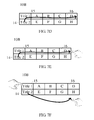
- FIG. 7A to FIG. 7F are schematic diagrams of table graphics management according to an embodiment 70 of the present invention.
- the table 10A in FIG. 1A is a displayed table.
- FIG. 7A is a schematic diagram of an intermediate procedure of transposing the table 10A into the table 10B according to an embodiment of the present invention.
- a control track input by a user through an input device is a mouse moving track.
- the moving track of the mouse is shown by the arrows in FIG. 7A , and the table 10A is transposed into the table 10B in FIG. 1B .
- the method shown in FIG. 7B may be further adopted.
- the control track input by the user through the input device is a touch track of the user for the foregoing table on a touch interacting terminal, and when the touch track moves from the table header 11 in the table 10A to the table header 12, and then moves to the cell 13, as shown by the arrows in FIG. 7B , the table 10A is transposed into the table 10B in FIG. 1B .
- FIG. 7C may be further adopted. Different from the touch track of the embodiment in FIG. 7B , a finger presses on the table header 12 of the table 10A, by using the table header 12 as a rotation center, and then another finger presses on the table header 11 and drags toward the lower left side, that is, a clockwise rotation, as shown by the arrows in FIG. 7C , so as to complete the foregoing transposing.
- FIG. 7D to FIG. 7F are schematic diagrams of an intermediate procedure of transposing the table 10B in FIG. 1B into the table 10A in FIG. 1A .
- the table 10B in FIG. 1B is a displayed table.
- FIG. 7D is a schematic diagram of an intermediate procedure of transposing the table 10B into the table 10A according to an embodiment of the present invention.
- a control track input by a user through an input device is a mouse moving track.
- the moving track of the mouse is shown by the arrows in FIG. 7D , and the table 10B is transposed into the table 10A in FIG. 1B .
- the method shown in FIG. 7E may be further adopted.
- the control track input by the user through the input device is a touch track of the user for the foregoing table on a touch interacting terminal, and when the touch track moves from the table header 14 in the table 10B to the table header 15, and then moves to the cell 16, as shown by the arrows in FIG. 7E , the table 10B is transposed into the table 10A in FIG. 1A .
- FIG. 7F may be further adopted. Different from the touch track of the embodiment in 7E, a finger presses on the table header 15 of the table 10B, by using the table header 15 as a rotation center, and then another finger presses on the table header 14 and drags toward the upper right side, that is, an anticlockwise rotation, as shown by the arrows in FIG. 7F , so as to complete the foregoing transposing.
- the foregoing embodiments all implement the table graphics management by detecting the control track for the table input by the user through the input device.
- the embodiment of the present invention may directly perform table transposing in a text editing tool based on an input of a user, thereby quickly and conveniently implementing table graphics management in text editing, and providing convenience for the user.
- FIG. 8 is a schematic block diagram of a computer system 80 applicable to an embodiment of the present invention.
- the computer system 80 at least includes, for example, the following apparatuses: a display 81, an input device 82, a memory 83 and a processor 84.
- the display 81 may be suitable apparatuses such as a cathode ray tube (CRT, Cathode Ray Tube) display and a liquid crystal display (LCD, Liquid Crystal Display), and an apparatus which may be configured to display a graphics user interface.
- CTR cathode ray tube
- LCD liquid crystal display
- the input device 82 may include any suitable apparatus such as a keyboard, a mouse, a track recognizer, and a voice recognizing interface, and is configured to receive an input of a user, and send the input to the processor.
- an interacting touch screen may be the display 81, and may also be the input device 82.
- the memory 83 may include an RAM and an ROM, or any fixed storage medium, or a removable storage medium, and is configured to store a program which may execute an embodiment of the present invention or data to be processed in an embodiment of the present invention.
- the processor 84 is configured to execute the program of the embodiment of the present invention stored in the memory 83, and perform bidirectional communication with other apparatuses through a bus.
- the memory 83 and the processor 84 may also be integrated into a physical module applying an embodiment of the present invention, and the program for implementing the embodiment of the present invention is stored and run on the physical module.
- the processor 84 enables the display 81 to display a table, in which the table has multiple rows and multiple columns, each of the rows includes multiple frames that are sequentially arranged along a first dimension, each of the columns includes multiple frames that are sequentially arranged along a second dimension, and the second dimension is vertical to the first dimension, in which the frames of the rows and the columns are filled with information; in step 22, the processor 84 receives a selection input by the input device 82, and generates a transposing selection frame suspended at the periphery of the table according to the selection, in which the transposing selection frame includes a transposing manner option for the rows and the columns of the table; in step 23, the processor 84 receives a selection for the transposing manner option in the transposing selection frame, and performs table transposing in a transposing manner selected according to the selection, so as to acquire a transposed table, in which the table transposing includes: transposing original information in the frames of the row that are sequential
- the processor 84 enables the display 81 to display a table, in which the table has multiple rows and multiple columns, each of the rows includes multiple frames that are sequentially arranged along a first dimension, each of the columns includes multiple frames that are sequentially arranged along a second dimension, and the second dimension is vertical to the first dimension, in which the frames of the rows and the columns are filled with information; in step 52, the processor 84 detects a control track for the table input by the input device 82; in step 53, the processor 84 determines a moving direction of the control track according to the detected control track; and along the moving direction of the control track, transposes the original information in the frames of the row that are sequentially arranged along the first dimension into the frames of the column that are sequentially arranged along the second dimension, and transposes the original information in the frames of the column that are sequentially arranged along the second dimension into the frames of the row that are sequentially arranged along the first dimension, so as to acquire a transposed
- table transposing may be directly performed in a text editing tool based on an input of a user, thereby quickly and conveniently implementing table graphics management in text editing, and providing convenience for the user.
- the disclosed system, device, and method may be implemented in other modes.
- the device embodiment described above is merely exemplary.
- the division of units is merely a division of logical functions and there may be other division modes in actual applications.
- multiple units or components may be combined or may be integrated to another system, or some characteristics may be ignored or not executed.
- the shown or discussed mutual couplings or direct couplings or communication connections may be implemented via some interfaces.
- the indirect couplings or communication connections between apparatuses or units may be implemented in electrical, mechanical, or other forms.
- the units described as separate parts may or may not be physically separate, and parts displayed as units may or may not be physical units, may be located in one position, or may be distributed on multiple network elements. A part or all of the units may be selected according to the actual needs to achieve the objectives of the solutions of the embodiments.
- function units in the embodiments of the present invention may be integrated into a processing unit, or each of the units may exist alone physically, or two or more units are integrated into a unit.
- the functions When being implemented in the form of a software function unit and sold or used as a stand-alone product, the functions may be stored in a computer-readable storage medium. Based on such understanding, the essence of the technical solutions of the present invention, or part that makes contributions to the prior art, or part of the technical solution may be embodied in the form of a software product.
- the computer software product may be stored in a storage medium, and incorporates several instructions for instructing a computer device (for example, personal computer, server, or network device) to execute all or part of the steps of the method in any embodiment of the present invention.
- the storage medium may be any medium that is capable of storing program codes, such as a USB flash drive, a removable hard disk, a Read-Only Memory (ROM, Read-Only Memory), a Random Access Memory (RAM, Random Access Memory), a magnetic disk, or an optical disk.
- program codes such as a USB flash drive, a removable hard disk, a Read-Only Memory (ROM, Read-Only Memory), a Random Access Memory (RAM, Random Access Memory), a magnetic disk, or an optical disk.
Landscapes
- Engineering & Computer Science (AREA)
- Theoretical Computer Science (AREA)
- Health & Medical Sciences (AREA)
- Artificial Intelligence (AREA)
- Audiology, Speech & Language Pathology (AREA)
- Computational Linguistics (AREA)
- General Health & Medical Sciences (AREA)
- Physics & Mathematics (AREA)
- General Engineering & Computer Science (AREA)
- General Physics & Mathematics (AREA)
- User Interface Of Digital Computer (AREA)
- Processing Or Creating Images (AREA)
Applications Claiming Priority (1)
| Application Number | Priority Date | Filing Date | Title |
|---|---|---|---|
| PCT/CN2012/074369 WO2012103854A2 (zh) | 2012-04-19 | 2012-04-19 | 表格图形化管理方法和装置 |
Publications (2)
| Publication Number | Publication Date |
|---|---|
| EP2645271A2 true EP2645271A2 (de) | 2013-10-02 |
| EP2645271A4 EP2645271A4 (de) | 2014-10-01 |
Family
ID=46603154
Family Applications (1)
| Application Number | Title | Priority Date | Filing Date |
|---|---|---|---|
| EP12742291.3A Ceased EP2645271A4 (de) | 2012-04-19 | 2012-04-19 | Verfahren und vorrichtung zur graphischen verwaltung von formen |
Country Status (4)
| Country | Link |
|---|---|
| US (1) | US8782509B2 (de) |
| EP (1) | EP2645271A4 (de) |
| CN (1) | CN102741834B (de) |
| WO (1) | WO2012103854A2 (de) |
Families Citing this family (2)
| Publication number | Priority date | Publication date | Assignee | Title |
|---|---|---|---|---|
| JP5319829B1 (ja) * | 2012-07-31 | 2013-10-16 | 楽天株式会社 | 情報処理装置、情報処理方法及び情報処理プログラム |
| CN105677629A (zh) * | 2015-12-30 | 2016-06-15 | 联想(北京)有限公司 | 一种信息处理方法及电子设备 |
Family Cites Families (17)
| Publication number | Priority date | Publication date | Assignee | Title |
|---|---|---|---|---|
| US5757432A (en) * | 1995-12-18 | 1998-05-26 | Intel Corporation | Manipulating video and audio signals using a processor which supports SIMD instructions |
| US5815421A (en) * | 1995-12-18 | 1998-09-29 | Intel Corporation | Method for transposing a two-dimensional array |
| US6070175A (en) * | 1997-08-26 | 2000-05-30 | The United States As Represented By The Director The National Security Agency | Method of file editing using framemaker enhanced by application programming interface clients |
| US6298342B1 (en) * | 1998-03-16 | 2001-10-02 | Microsoft Corporation | Electronic database operations for perspective transformations on relational tables using pivot and unpivot columns |
| US6748389B1 (en) * | 1999-09-21 | 2004-06-08 | International Business Machines Corporation | Method, system, and program for inverting columns in a database table |
| US7010779B2 (en) * | 2001-08-16 | 2006-03-07 | Knowledge Dynamics, Inc. | Parser, code generator, and data calculation and transformation engine for spreadsheet calculations |
| US7072808B2 (en) * | 2002-02-04 | 2006-07-04 | Tuszynski Steve W | Manufacturing design and process analysis system |
| US20040036681A1 (en) | 2002-08-23 | 2004-02-26 | International Business Machines Corporation | Identifying a form used for data input through stylus movement by means of a traced identifier pattern |
| JP2006520502A (ja) * | 2003-03-14 | 2006-09-07 | テラノード コーポレイション | ワークフローのグラフィック操作のためのバッチベースの方法および手段 |
| US7614006B2 (en) * | 2005-02-11 | 2009-11-03 | International Business Machines Corporation | Methods and apparatus for implementing inline controls for transposing rows and columns of computer-based tables |
| US20070118510A1 (en) * | 2005-11-18 | 2007-05-24 | Microsoft Corporation | Optimization of leaf-level multi-dimensional calculation using scripts |
| US20080222509A1 (en) * | 2007-03-08 | 2008-09-11 | Huy Nguyen | Method and system for converting a source spreadsheet to a target spreadsheet |
| US8059101B2 (en) * | 2007-06-22 | 2011-11-15 | Apple Inc. | Swipe gestures for touch screen keyboards |
| US8041731B2 (en) * | 2008-07-21 | 2011-10-18 | Oracle International Corporation | Efficient evaluation of SQL pivot operations |
| CN101409845B (zh) * | 2008-10-31 | 2010-10-06 | 北京大学软件与微电子学院 | 一种avs视频编码中的视频失真度估计方法及其装置 |
| CN101996031A (zh) | 2009-08-25 | 2011-03-30 | 鸿富锦精密工业(深圳)有限公司 | 具有触摸输入功能的电子装置及其触摸输入方法 |
| US8744821B2 (en) * | 2011-07-07 | 2014-06-03 | Xldyn, Llc | Spreadsheet-based templates for supporting the systems engineering process |
-
2012
- 2012-04-19 CN CN201280000322.5A patent/CN102741834B/zh not_active Expired - Fee Related
- 2012-04-19 EP EP12742291.3A patent/EP2645271A4/de not_active Ceased
- 2012-04-19 WO PCT/CN2012/074369 patent/WO2012103854A2/zh not_active Ceased
-
2013
- 2013-07-24 US US13/950,125 patent/US8782509B2/en active Active
Also Published As
| Publication number | Publication date |
|---|---|
| US20130311865A1 (en) | 2013-11-21 |
| US8782509B2 (en) | 2014-07-15 |
| EP2645271A4 (de) | 2014-10-01 |
| CN102741834B (zh) | 2014-08-13 |
| WO2012103854A2 (zh) | 2012-08-09 |
| WO2012103854A3 (zh) | 2013-03-21 |
| CN102741834A (zh) | 2012-10-17 |
Similar Documents
| Publication | Publication Date | Title |
|---|---|---|
| CN105009057B (zh) | 使用高dpi屏幕的多窗口智能窗口放置 | |
| US11551392B2 (en) | Graphic drawing method and apparatus, device, and storage medium | |
| US20110252302A1 (en) | Fitting network content onto a reduced-size screen | |
| US9569004B2 (en) | Swipe toolbar to switch tabs | |
| EP2706456A1 (de) | Widgetverarbeitungsverfahren und -vorrichtung sowie mobiles endgerät | |
| CN102622395A (zh) | 虚拟化应用辅助访问网页的方法、服务器及客户端 | |
| US10965743B2 (en) | Synchronized annotations in fixed digital documents | |
| US20130031481A1 (en) | Method and apparatus of locally controlling display content of a remote system | |
| WO2014148358A1 (ja) | 情報端末、操作領域制御方法及び操作領域制御プログラム | |
| CN113296661A (zh) | 图像处理方法、装置、电子设备及可读存储介质 | |
| EP3008620B1 (de) | Gebundener auswahlgriff | |
| CN108616575A (zh) | 操作监控方法、装置、计算机设备及存储介质 | |
| US8782509B2 (en) | Table graphics management method and apparatus | |
| US20180341638A1 (en) | Providing suggested diagrammatic representations of user entered textual information | |
| CN106648571A (zh) | 一种用于校对应用界面的方法和装置 | |
| CN106909445A (zh) | 表格中数据复制或剪切的方法、装置及电子设备 | |
| CN107797736A (zh) | 信息显示方法和装置 | |
| US10019412B2 (en) | Dissociative view of content types to improve user experience | |
| CN104156145A (zh) | 基于手写笔的文本内容选定方法及便携式终端 | |
| CN106598315B (zh) | 触控显示设备及其背景图置换方法 | |
| CN107368698A (zh) | 条码模版获取方法及医学病历管理设备 | |
| US20160320948A1 (en) | Document and object manipulation | |
| CN113762223B (zh) | 题目拆分模型训练方法、题目拆分方法及相关装置 | |
| JP2012181873A (ja) | 電子書籍表示制御装置、電子書籍表示制御プログラム、電子書籍表示制御方法、電子書籍 | |
| CN114675798A (zh) | 一种电子设备的翻译显示方法 |
Legal Events
| Date | Code | Title | Description |
|---|---|---|---|
| PUAI | Public reference made under article 153(3) epc to a published international application that has entered the european phase |
Free format text: ORIGINAL CODE: 0009012 |
|
| 17P | Request for examination filed |
Effective date: 20130603 |
|
| AK | Designated contracting states |
Kind code of ref document: A2 Designated state(s): AL AT BE BG CH CY CZ DE DK EE ES FI FR GB GR HR HU IE IS IT LI LT LU LV MC MK MT NL NO PL PT RO RS SE SI SK SM TR |
|
| A4 | Supplementary search report drawn up and despatched |
Effective date: 20140902 |
|
| RIC1 | Information provided on ipc code assigned before grant |
Ipc: G06F 17/24 20060101AFI20140822BHEP |
|
| DAX | Request for extension of the european patent (deleted) | ||
| 17Q | First examination report despatched |
Effective date: 20150717 |
|
| APBK | Appeal reference recorded |
Free format text: ORIGINAL CODE: EPIDOSNREFNE |
|
| APBN | Date of receipt of notice of appeal recorded |
Free format text: ORIGINAL CODE: EPIDOSNNOA2E |
|
| APBR | Date of receipt of statement of grounds of appeal recorded |
Free format text: ORIGINAL CODE: EPIDOSNNOA3E |
|
| APAV | Appeal reference deleted |
Free format text: ORIGINAL CODE: EPIDOSDREFNE |
|
| REG | Reference to a national code |
Ref country code: DE Ref legal event code: R003 |
|
| APBT | Appeal procedure closed |
Free format text: ORIGINAL CODE: EPIDOSNNOA9E |
|
| STAA | Information on the status of an ep patent application or granted ep patent |
Free format text: STATUS: THE APPLICATION HAS BEEN REFUSED |
|
| 18R | Application refused |
Effective date: 20200217 |