EP2642460A1 - Procédé d'alerte au moyen d'un terminal mobile - Google Patents
Procédé d'alerte au moyen d'un terminal mobile Download PDFInfo
- Publication number
- EP2642460A1 EP2642460A1 EP13159784.1A EP13159784A EP2642460A1 EP 2642460 A1 EP2642460 A1 EP 2642460A1 EP 13159784 A EP13159784 A EP 13159784A EP 2642460 A1 EP2642460 A1 EP 2642460A1
- Authority
- EP
- European Patent Office
- Prior art keywords
- mobile terminal
- person
- position information
- contact
- server
- Prior art date
- Legal status (The legal status is an assumption and is not a legal conclusion. Google has not performed a legal analysis and makes no representation as to the accuracy of the status listed.)
- Granted
Links
Images
Classifications
-
- G—PHYSICS
- G08—SIGNALLING
- G08B—SIGNALLING SYSTEMS, e.g. PERSONAL CALLING SYSTEMS; ORDER TELEGRAPHS; ALARM SYSTEMS
- G08B25/00—Alarm systems in which the location of the alarm condition is signalled to a central station, e.g. fire or police telegraphic systems
- G08B25/01—Alarm systems in which the location of the alarm condition is signalled to a central station, e.g. fire or police telegraphic systems characterised by the transmission medium
- G08B25/016—Personal emergency signalling and security systems
Definitions
- the invention relates to a warning method using a mobile terminal, and a mobile terminal and a server arranged to implement such a method.
- a mobile terminal may be in difficulty, for example following an accident, malaise or aggression. Therefore, it may be advantageous for a user to have on his mobile terminal means arranged to allow him to quickly alert third parties, such as his relatives or emergency services.
- the iREGA® application developed by the Swiss Air Rescue Service (REGA) for the Apple® iPhone® allows the user to automatically call the REGA dispatch center by simply activating a button displayed on the screen of his mobile terminal.
- this application includes means for automatically calculating the geographical coordinates of the user after activation of the button and means for sending to the central intervention said coordinates and personal data of said user, including relating to his identity.
- WO-2011/106200 discloses a location system comprising a wireless device and an adjunct device for connection to a port of a mobile terminal, said devices each comprising a specific user interface and being connected by a wireless communication type Bluetooth®.
- the user presses a button specific to the interface of one of the devices, so that the mobile terminal automatically issues an emergency call, for example in the form of an SMS (for Short Message Service ), said call comprising position information of said terminal, including geographical coordinates.
- SMS Short Message Service
- these solutions are not entirely satisfactory, in that the user must view the button to be operated and thus enter his mobile terminal to be able to trigger an alert.
- some applications require several manipulations of the mobile terminal, in particular to navigate the menus of said terminal and / or to confirm an alert before its effective trigger.
- the invention aims to improve the prior art by proposing in particular a solution allowing the user of a mobile terminal to trigger an alert in a simple, fast and intuitive way.
- the invention proposes a server comprising means for receiving from such a terminal a notification comprising a position information of said terminal and at least one coordinate of a person to be contacted, as well as means for sending a message. alert to said person to contact.
- the mobile terminal 1 may be a smartphone, such as the lphone® marketed by the Apple® company, and is connected to a telecommunications network, for example a GPS network (for the English Global Positioning System), a telephony network, or a satellite beacon network.
- a telecommunications network for example a GPS network (for the English Global Positioning System), a telephony network, or a satellite beacon network.
- the mobile terminal 1 can be connected to a GPRS network (for General Packet Radio Service), a GSM network (for Global System for Mobile Communications), an EDGE network (for Enhanced Data rates for GSM Evolution), a UMTS network (for Universal Mobile Telecommunications System), or an LTE (Long Term Evolution) network.
- GPRS network for General Packet Radio Service
- GSM Global System for Mobile Communications
- EDGE network for Enhanced Data rates for GSM Evolution
- UMTS for Universal Mobile Telecommunications System
- LTE Long Term Evolution
- the mobile terminal 1 comprises at least one port 2, including a physical port or radio, for example a USB port (for the English Universal Serial Bus), a jack or a RCA port (for English Radio Corporation of America).
- a peripheral device 3 is intended to be connected to the port 2, the method providing for monitoring the state of the connection of said device, in order to trigger an alert in case of detection of a change of state of said connection. In particular, the method is able to trigger an alert in case of disconnection of the device 3.
- the peripheral device 3 may be an accessory specific to the triggering of an alert and which is provided with a plug 4 compatible with the port 2.
- the accessory may furthermore comprise an element 5 for assisting its grip by the user. 6 of the mobile terminal 1.
- the gripping aid element may be a ribbon 5 which is connected to the jack 4 of the peripheral device 3 by a cord 5a and on which is written a text message 5b to indicate to the user 6 that must pull on said ribbon to disconnect said device and thereby trigger an alert.
- the gripping aid element 5 may be a pin or an emergency lever.
- the peripheral device 3 can also be a conventional accessory compatible with the mobile terminal 1.
- the peripheral device 3 may be a set of headphones or a hands-free kit.
- the mobile terminal 1 comprises an application which comprises means for monitoring the state of the connection of the peripheral device 3 to the port 2, said means being able to detect a change of state of said connection, for example following a disconnection of said device.
- the monitoring means can be arranged to detect the appearance or disappearance of a short circuit at the terminals of the port 2, for example following the disconnection of the plug 4 of the device 3 of said port.
- the means of monitoring can be arranged to detect a change in impedance or resistance between the mass and one of the other channels of said socket, in particular following the deactivation of at least one of the accessories of said device. For example, such deactivation may occur when the cable connecting an accessory, including a speaker, earpiece or microphone, to the socket 4 of the device 3 is damaged, but that said plug remains connected to the port 2.
- the method provides for determining at least one position information of the mobile terminal 1.
- the application of the mobile terminal 1 comprises means for determine at least one such information as a result of such detection.
- the determination means may be able to calculate the geographical coordinates of the mobile terminal 1 as position information of said mobile terminal.
- the method further provides for identifying at least one person to contact 7.
- the application of the mobile terminal 1 includes means for identifying at least one person to contact 7.
- the person to be contacted 7 can be predefined by the user 6 of the mobile terminal 1, in particular by means specific to the application of said mobile terminal that enable said user to predefine said person to contact by entering at least one coordinate for example a telephone number or an e-mail address of said contact person.
- the method then provides to send to the person to contact 7 an alert message including the position information of the mobile terminal 1.
- the application of the mobile terminal 1 comprises means for sending such a message of alert 8, for example a text message (SMS, for Short Messaging Service) comprising the geographical coordinates of the mobile terminal 1, to the person to contact 7.
- SMS Short Messaging Service
- the method provides for sending to a server 9 via the mobile terminal 1 a notification 10 comprising the position information of said mobile terminal and at least one coordinate of a person to contact 7, said server sending an alert message 11 to said person to contact.
- the mobile terminal 1 comprises means for sending to a server 9 such a notification 10, said server comprising means for receiving said notification and means for sending an alert message 11 to at least one person to contact 7 according to the coordinates present in said notification.
- the alert message 11 sent by the server 9 may be an email and may include an interactive link allowing the person to contact 7 to access the position information of the mobile terminal 1.
- the link interactive can allow the person to contact 7 to display a map on which are indicated the geographical coordinates of the mobile terminal 1.
- the server 9 comprises means for storing the information contained in the notification 10, in particular the identifier of the mobile terminal 1 having sent said notification, the position information of said mobile terminal and the coordinates of the persons to contact 7, but also the time of receipt of the said notification.
- this information may for example be transmitted later to emergency services.
- the method can send an alert message 8, 11 to said person directly via said mobile terminal and / or by the user.
- an alert message 8 can be sent to said number directly via the mobile terminal 1 of the user 6.
- the mobile terminal 1 can send a notification 10 to the server 9, said server sending to said person to contact an alert message 11 of the email type that said nobody can visualize by consulting for example his mailbox on his mobile terminal 12.
- the mobile terminal 1 can simultaneously send a first alert message 8 to at least one person to contact 7 and a notification 10 to the server 9, so that said server sends a second alert message 11 to at least one user.
- person to contact 7 including a person other than the person receiving the first message 8.
- all these people 7 can be identified by the application of the mobile terminal 1 and all will receive an alert message 8, 11.
- the person to be contacted 7 is identified according to a position information determined by the mobile terminal 12 of said person, said mobile terminal being arranged to periodically send to the server 9 a notification 14 comprising said position information.
- the mobile terminal 12 of the person to contact 7 may include an application that includes means for determining a position information of said terminal, for example geographic coordinates, and means for periodically sending the server 9 a notification 14 comprising said position information.
- an application can be offered to people 7 wishing to assist users 6 in difficulty.
- the server 9 comprises means capable of identifying the person to contact 7 according to the position information contained in the notification 14 sent by the mobile terminal 12 of said person.
- these means may be able to compare the position information communicated by the portable terminals 1, 12 respectively of the user 6 and the person to contact 7, said contact person being identified according to said comparison.
- the server 9 may comprise a database in which the position information of the persons to be contacted 7 are stored, said database being updated by the periodic sending of notifications 14 comprising new position information for said persons to contact.
- the identification means of said server can query the database of the people to contact 7 in order to compare said geographical coordinates with the coordinates geographical area of said persons to contact.
- server identification means 9 may be arranged to identify the contact persons 7 whose geographical coordinates are closest to the geographical coordinates sent in the notification 10, for example as a function of the distance between said coordinates.
- the server 9 sends an alert message 11 to the contact persons 7 thus identified, so that said persons provide assistance to the user 6 of the mobile terminal 1 and / or serve as a relay on site to possible emergency services .
Landscapes
- Engineering & Computer Science (AREA)
- Computer Security & Cryptography (AREA)
- Business, Economics & Management (AREA)
- Emergency Management (AREA)
- Physics & Mathematics (AREA)
- General Physics & Mathematics (AREA)
- Alarm Systems (AREA)
- Telephonic Communication Services (AREA)
Abstract
Description
- L'invention concerne un procédé d'alerte au moyen d'un terminal mobile, ainsi qu'un terminal mobile et un serveur agencés pour mettre en oeuvre un tel procédé.
- Lors d'un déplacement, notamment pour la pratique sportive, l'utilisateur d'un terminal mobile peut se trouver en difficulté, par exemple suite à un accident, un malaise ou une agression. De ce fait, il peut être intéressant pour un utilisateur de disposer sur son terminal mobile de moyens agencés pour lui permettre d'alerter rapidement des tiers, par exemple ses proches ou des services de secours.
- A cet effet, on connaît des solutions pour terminal mobile qui permettent à l'utilisateur de déclencher une alerte par une action simple, notamment par activation d'un bouton spécifique.
- Par exemple, l'application iREGA® développée par la Garde Aérienne Suisse de Sauvetage (REGA) pour l'iPhone® d'Apple® permet à l'utilisateur d'appeler automatiquement la centrale d'intervention de la REGA en activant simplement un bouton interactif affiché sur l'écran de son terminal mobile. En outre, cette application comprend des moyens pour calculer automatiquement les coordonnées géographiques de l'utilisateur après activation du bouton et des moyens pour envoyer à la centrale d'intervention lesdites coordonnées et des données personnelles dudit utilisateur, notamment relatives à son identité.
- Par ailleurs, le document
WO-2011/106200 décrit un système de localisation comprenant un dispositif sans fil et un dispositif adjoint destiné à être branché à un port d'un terminal mobile, lesdits dispositifs comprenant chacun une interface utilisateur spécifique et étant reliés par une communication sans fil de type Bluetooth®. Pour déclencher une alerte, l'utilisateur appuie sur un bouton spécifique de l'interface de l'un des dispositifs, afin que le terminal mobile émette automatiquement un appel d'urgence, par exemple sous forme d'un SMS (pour Short Message Service), ledit appel comprenant une information de position dudit terminal, notamment des coordonnées géographiques. Cependant, ces solutions ne donnent pas entière satisfaction, en ce que l'utilisateur doit visualiser le bouton à actionner et donc saisir son terminal mobile pour pouvoir déclencher une alerte. En outre, certaines applications nécessitent plusieurs manipulations du terminal mobile, notamment pour naviguer dans les menus dudit terminal et/ou pour confirmer une alerte avant son déclenchement effectif. - Or, dans le cas d'un accident grave ou d'une agression, l'utilisateur peut ne pas avoir le temps et/ou la capacité physique pour effectuer de telles manipulations, ce qui complique le déclenchement de l'alerte.
- L'invention vise à perfectionner l'art antérieur en proposant notamment une solution permettant à l'utilisateur d'un terminal mobile de déclencher une alerte de façon simple, rapide et intuitive.
- A cet effet, selon un premier aspect, l'invention propose un procédé d'alerte au moyen d'un terminal mobile, ledit terminal mobile comprenant au moins un port sur lequel est connecté un dispositif périphérique, ledit procédé prévoyant de surveiller l'état de la connexion dudit dispositif et, en cas de détection d'un changement d'état de ladite connexion, de :
- déterminer au moins une information de position dudit terminal mobile ;
- identifier au moins une personne à contacter ;
- envoyer un message d'alerte comprenant ladite information de position à ladite personne à contacter.
- Selon un deuxième aspect, l'invention propose un terminal mobile comprenant au moins un port sur lequel un dispositif périphérique est destiné à être connecté, ledit terminal comprenant en outre une application qui comprend :
- des moyens pour surveiller l'état de la connexion d'un dispositif périphérique audit port, lesdits moyens étant aptes à détecter un changement d'état de ladite connexion ;
- des moyens pour déterminer au moins une information de position dudit terminal mobile à la suite de ladite détection ;
- des moyens pour identifier au moins une personne à contacter ;
- des moyens pour envoyer un message d'alerte comprenant ladite information de position à ladite personne à contacter.
- Selon un troisième aspect, l'invention propose un serveur comprenant des moyens pour recevoir d'un tel terminal une notification comprenant une information de position dudit terminal et au moins une coordonnée d'une personne à contacter, ainsi que des moyens pour envoyer un message d'alerte à ladite personne à contacter.
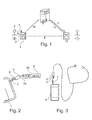
- D'autres particularités et avantages de l'invention apparaîtront dans la description qui suit, faite en référence aux figures annexées, dans lesquelles :
- la
figure 1 représente schématiquement une architecture pour la mise en oeuvre d'un procédé selon l'invention ; - les
figures 2 et 3 représentent schématiquement l'interaction entre un terminal mobile et respectivement un type de dispositif périphérique. - En relation avec ces figures, on décrit ci-dessous un procédé d'alerte au moyen d'un terminal mobile 1. Le terminal mobile 1 peut être un smartphone, comme par exemple l'lphone® commercialisé par la société Apple®, et est connecté à un réseau de télécommunications, par exemple un réseau GPS (pour l'anglais Global Positioning System), un réseau de téléphonie, ou encore un réseau de balise satellite. En particulier, le terminal mobile 1 peut être connecté à un réseau GPRS (pour General Packet Radio Service), un réseau GSM (pour Global System for Mobile Communications), un réseau EDGE (pour Enhanced Data rates for GSM Evolution), un réseau UMTS (pour Universal Mobile Telecommunications System), ou encore un réseau LTE (Long Term Evolution).
- De façon connue, le terminal mobile 1 comprend au moins un port 2, notamment un port physique ou radio, par exemple un port USB (pour l'anglais Universal Serial Bus), un port jack ou un port RCA (pour l'anglais Radio Corporation of America). Un dispositif périphérique 3 est destiné à être connecté au port 2, le procédé prévoyant de surveiller l'état de la connexion dudit dispositif, afin de déclencher une alerte en cas de détection d'un changement d'état de ladite connexion. En particulier, le procédé est apte à déclencher une alerte en cas de déconnexion du dispositif 3.
- Le dispositif périphérique 3 peut être un accessoire spécifique au déclenchement d'une alerte et qui est pourvu d'une prise 4 compatible avec le port 2. L'accessoire peut comprendre en outre un élément 5 d'aide à sa préhension par l'utilisateur 6 du terminal mobile 1. En relation avec la
figure 2 , l'élément d'aide à la préhension peut être un ruban 5 qui est lié à la prise jack 4 du dispositif périphérique 3 par un cordon 5a et sur lequel est inscrit un message textuel 5b pour indiquer à l'utilisateur 6 qu'il doit tirer sur ledit ruban pour déconnecter ledit dispositif et ainsi déclencher une alerte. - En variante non représentée, l'élément 5 d'aide à la préhension peut être une goupille ou une manette d'urgence.
- Le dispositif périphérique 3 peut être également un accessoire classique compatible avec le terminal mobile 1. En particulier, comme représenté sur la
figure 3 , le dispositif périphérique 3 peut être un ensemble d'écouteurs ou un kit mains libres. - Pour pouvoir mettre en oeuvre le procédé, le terminal mobile 1 comprend une application qui comprend des moyens pour surveiller l'état de la connexion du dispositif périphérique 3 au port 2, lesdits moyens étant aptes à détecter un changement d'état de ladite connexion, par exemple suite à une déconnexion dudit dispositif. En particulier, les moyens de surveillance peuvent être agencés pour détecter l'apparition ou la disparition d'un court circuit aux bornes du port 2, par exemple suite au débranchement de la prise 4 du dispositif 3 dudit port.
- Par ailleurs, notamment lorsque le dispositif périphérique 3 est un ensemble d'écouteurs ou un kit mains libres pourvu d'une prise 4, les moyens de surveillance peuvent être agencés pour détecter un changement d'impédance ou de résistance entre la masse et l'une des autres voies de ladite prise, notamment suite à la désactivation d'au moins un des accessoires dudit dispositif. Par exemple, une telle désactivation peut survenir lorsque le câble reliant un accessoire, notamment un haut parleur, un écouteur ou un micro, à la prise 4 du dispositif 3 est endommagé, mais que ladite prise reste branchée au port 2.
- En cas de détection d'un changement d'état de la connexion du dispositif périphérique 3, le procédé prévoit de déterminer au moins une information de position du terminal mobile 1. Pour ce faire, l'application du terminal mobile 1 comprend des moyens pour déterminer au moins une telle information à la suite d'une telle détection. En particulier, les moyens de détermination peuvent être aptes à calculer les coordonnées géographiques du terminal mobile 1 en tant qu'information de position dudit terminal mobile.
- Le procédé prévoit en outre d'identifier au moins une personne à contacter 7. Pour ce faire, l'application du terminal mobile 1 comprend des moyens pour identifier au moins une personne à contacter 7.
- En particulier, la personne à contacter 7 peut être prédéfinie par l'utilisateur 6 du terminal mobile 1, notamment grâce à des moyens spécifiques de l'application dudit terminal mobile qui permettent audit utilisateur de prédéfinir ladite personne à contacter en entrant au moins une coordonnée, par exemple un numéro de téléphone ou une adresse électronique, de ladite personne à contacter.
- Le procédé prévoit ensuite d'envoyer à la personne à contacter 7 un message d'alerte comprenant l'information de position du terminal mobile 1. Pour ce faire, l'application du terminal mobile 1 comprend des moyens pour envoyer un tel message d'alerte 8, par exemple un message textuel (SMS, pour Short Messaging Service) comprenant les coordonnées géographiques du terminal mobile 1, à la personne à contacter 7.
- Selon une réalisation, le procédé prévoit d'envoyer à un serveur 9 par l'intermédiaire du terminal mobile 1 une notification 10 comprenant l'information de position dudit terminal mobile et au moins une coordonnée d'une personne à contacter 7, ledit serveur envoyant un message d'alerte 11 à ladite personne à contacter.
- En relation avec la
figure 1 , le terminal mobile 1 comprend des moyens pour envoyer à un serveur 9 une telle notification 10, ledit serveur comprenant des moyens pour recevoir ladite notification et des moyens pour envoyer un message d'alerte 11 à au moins une personne à contacter 7 en fonction des coordonnées présentes dans ladite notification. - En particulier, le message d'alerte 11 envoyé par le serveur 9 peut être un courriel et peut comprendre un lien interactif permettant à la personne à contacter 7 d'accéder à l'information de position du terminal mobile 1. Par exemple, le lien interactif peut permettre à la personne à contacter 7 d'afficher une carte sur laquelle sont indiquées les coordonnées géographiques du terminal mobile 1.
- En outre, le serveur 9 comprend des moyens pour stocker les informations contenues dans la notification 10, notamment l'identifiant du terminal mobile 1 ayant envoyé ladite notification, l'information de position dudit terminal mobile et les coordonnées des personnes à contacter 7, mais aussi l'heure de réception de ladite notification. Ainsi, ces informations pourront par exemple être transmises ultérieurement à des services de secours.
- Selon le type de coordonnées entrées par l'utilisateur 6 du terminal mobile 1 pour la personne à contacter 7, le procédé peut envoyer un message d'alerte 8, 11 à ladite personne directement par l'intermédiaire dudit terminal mobile et/ou par l'intermédiaire du serveur 9. Par exemple, si la coordonnée entrée est le numéro du téléphone mobile 12 de la personne à contacter 7, un message d'alerte 8 de type SMS peut être envoyé audit numéro directement par l'intermédiaire du terminal mobile 1 de l'utilisateur 6.
- De même, si la coordonnée entrée est une adresse électronique de la personne à contacter 7, le terminal mobile 1 peut envoyer une notification 10 au serveur 9, ledit serveur envoyant à ladite personne à contacter un message d'alerte 11 de type courriel que ladite personne peut visualiser en consultant par exemple sa boite de messagerie électronique sur son terminal mobile 12.
- De façon avantageuse, le terminal mobile 1 peut envoyer simultanément un premier message d'alerte 8 à au moins une personne à contacter 7 et une notification 10 au serveur 9, afin que ledit serveur envoie un deuxième message d'alerte 11 à au moins une personne à contacter 7, notamment une autre personne que la personne destinataire du premier message 8. Ainsi, quelque soit le type des coordonnées entrées par l'utilisateur 6 pour prédéfinir les personnes à contacter 7, toutes ces personnes 7 pourront être identifiées par l'application du terminal mobile 1 et toutes recevront un message d'alerte 8, 11.
- Selon un mode de réalisation, la personne à contacter 7 est identifiée en fonction d'une information de position déterminée par le terminal mobile 12 de ladite personne, ledit terminal mobile étant agencé pour envoyer périodiquement au serveur 9 une notification 14 comprenant ladite information de position.
- Pour ce faire, le terminal mobile 12 de la personne à contacter 7 peut comprendre une application qui comprend des moyens pour déterminer une information de position dudit terminal, par exemple des coordonnées géographiques, ainsi que des moyens pour envoyer périodiquement au serveur 9 une notification 14 comprenant ladite information de position. En particulier, une telle application peut être proposée aux personnes 7 souhaitant porter assistance aux utilisateurs 6 en difficulté.
- En outre, le serveur 9 comprend des moyens aptes à identifier la personne à contacter 7 en fonction de l'information de position contenue dans la notification 14 envoyée par le terminal mobile 12 de ladite personne. En particulier, ces moyens peuvent être aptes à comparer les informations de position communiquées par les terminaux portables 1, 12 de respectivement l'utilisateur 6 et la personne à contacter 7, ladite personne à contacter étant identifiée en fonction de ladite comparaison.
- Pour ce faire, le serveur 9 peut comprendre une base de données dans laquelle les informations de position des personnes à contacter 7 sont stockées, ladite base de données étant mise à jour par l'envoi périodique de notifications 14 comprenant de nouvelles informations de position pour lesdites personnes à contacter.
- Ainsi, en relation avec la
figure 1 , lorsque le terminal mobile 1 de l'utilisateur 6 envoie au serveur 9 une notification 10 avec ses coordonnées géographiques, les moyens d'identification dudit serveur peuvent interroger la base de données des personnes à contacter 7 afin de comparer lesdites coordonnées géographiques avec les coordonnées géographiques desdites personnes à contacter. - En outre, les moyens d'identification du serveur 9 peuvent être agencés pour identifier les personnes à contacter 7 dont les coordonnées géographiques sont les plus proches des coordonnées géographiques envoyées dans la notification 10, par exemple en fonction de la distance entre lesdites coordonnées.
- Ensuite, le serveur 9 envoie un message d'alerte 11 aux personnes à contacter 7 ainsi identifiées, afin que lesdites personnes portent secours à l'utilisateur 6 du terminal mobile 1 et/ou servent de relais sur place à d'éventuels services de secours.
Claims (11)
- Procédé d'alerte au moyen d'un terminal mobile (1), ledit terminal mobile comprenant au moins un port (2) sur lequel est connecté un dispositif périphérique (3), ledit procédé prévoyant de surveiller l'état de la connexion dudit dispositif et, en cas de détection d'un changement d'état de ladite connexion, de :- déterminer au moins une information de position dudit terminal mobile ;- identifier au moins une personne à contacter (7) ;- envoyer un message d'alerte (8, 11) comprenant ladite information de position à ladite personne à contacter.
- Procédé selon la revendication 1, caractérisé en ce que la personne à contacter (7) est prédéfinie par l'utilisateur (6) du terminal mobile (1).
- Procédé selon la revendication 1 ou 2, caractérisé en ce qu'il prévoit d'envoyer à un serveur (9) par l'intermédiaire du terminal mobile (1) une notification (10) comprenant l'information de position dudit terminal mobile et au moins une coordonnée d'une personne à contacter (7), ledit serveur envoyant un message d'alerte (11) à ladite personne à contacter.
- Procédé selon la revendication 3, caractérisé en ce que le message d'alerte (11) envoyé par le serveur (9) comprend un lien interactif permettant à la personne à contacter (7) d'accéder à l'information de position du terminal (1).
- Procédé selon la revendication 3 ou 4, caractérisé en ce que la personne à contacter (7) est identifiée en fonction d'une information de position déterminée par le terminal mobile (12) de ladite personne, ledit terminal mobile étant agencé pour envoyer périodiquement au serveur (9) une notification (14) comprenant ladite information de position.
- Terminal mobile (1) comprenant au moins un port (2) sur lequel un dispositif périphérique (3) est destiné à être connecté, ledit terminal comprenant en outre une application qui comprend :- des moyens pour surveiller l'état de la connexion d'un dispositif périphérique (3) audit port, lesdits moyens étant aptes à détecter un changement d'état de ladite connexion ;- des moyens pour déterminer au moins une information de position dudit terminal mobile à la suite de ladite détection ;- des moyens pour identifier au moins une personne à contacter (7) ;- des moyens pour envoyer un message d'alerte (8) comprenant ladite information de position à ladite personne à contacter.
- Terminal (1) selon la revendication 6, caractérisé en ce que l'application comprend des moyens pour permettre à l'utilisateur (6) dudit terminal de prédéfinir la personne à contacter (7).
- Terminal (1) selon la revendication 6 ou 7, caractérisé en ce que l'application comprend des moyens pour envoyer à un serveur (9) une notification (10) comprenant l'information de position dudit terminal mobile et au moins une coordonnée d'une personne à contacter (7).
- Serveur (9) comprenant des moyens pour recevoir d'un terminal (1) selon la revendication 8 une notification (10) comprenant une information de position dudit terminal et au moins une coordonnée d'une personne à contacter (7), ainsi que des moyens pour envoyer un message d'alerte (11) à ladite personne à contacter.
- Serveur (9) selon la revendication 9, caractérisé en ce que le message d'alerte (11) comprend un lien interactif permettant à la personne contactée (7) d'accéder à l'information de position du terminal mobile (1).
- Serveur (9) selon la revendication 9 ou 10, caractérisé en ce qu'il comprend des moyens aptes à identifier la personne à contacter (7) en fonction d'une information de position déterminée par le terminal mobile (12) de ladite personne.
Applications Claiming Priority (1)
| Application Number | Priority Date | Filing Date | Title |
|---|---|---|---|
| FR1252454A FR2988200B1 (fr) | 2012-03-19 | 2012-03-19 | Procede d’alerte au moyen d’un terminal mobile |
Publications (2)
| Publication Number | Publication Date |
|---|---|
| EP2642460A1 true EP2642460A1 (fr) | 2013-09-25 |
| EP2642460B1 EP2642460B1 (fr) | 2014-11-05 |
Family
ID=47845881
Family Applications (1)
| Application Number | Title | Priority Date | Filing Date |
|---|---|---|---|
| EP20130159784 Not-in-force EP2642460B1 (fr) | 2012-03-19 | 2013-03-18 | Procédé d'alerte au moyen d'un terminal mobile |
Country Status (3)
| Country | Link |
|---|---|
| EP (1) | EP2642460B1 (fr) |
| ES (1) | ES2529654T3 (fr) |
| FR (1) | FR2988200B1 (fr) |
Cited By (1)
| Publication number | Priority date | Publication date | Assignee | Title |
|---|---|---|---|---|
| WO2018130607A1 (fr) * | 2017-01-13 | 2018-07-19 | Schostok Irenaeus | Dispositif de protection à disposer sur un appareil de communication portable |
Citations (3)
| Publication number | Priority date | Publication date | Assignee | Title |
|---|---|---|---|---|
| DE102006045875A1 (de) * | 2006-12-04 | 2009-09-24 | Neubauer, Hartung, als gesetzlicher Vertreter der minderjährigen Neubauer, Ricarda | Notruf und Notortungssystem für Solosportler |
| WO2011064380A1 (fr) * | 2009-11-30 | 2011-06-03 | Andrzej Jaroslaw Galuszka | Téléphone mobile équipé pour l'activation d'un mode d'urgence |
| WO2011106200A1 (fr) | 2010-02-26 | 2011-09-01 | Thl Holding Company, Llc | Système et dispositif sans fil pour localiser un objet distant |
-
2012
- 2012-03-19 FR FR1252454A patent/FR2988200B1/fr active Active
-
2013
- 2013-03-18 EP EP20130159784 patent/EP2642460B1/fr not_active Not-in-force
- 2013-03-18 ES ES13159784.1T patent/ES2529654T3/es active Active
Patent Citations (3)
| Publication number | Priority date | Publication date | Assignee | Title |
|---|---|---|---|---|
| DE102006045875A1 (de) * | 2006-12-04 | 2009-09-24 | Neubauer, Hartung, als gesetzlicher Vertreter der minderjährigen Neubauer, Ricarda | Notruf und Notortungssystem für Solosportler |
| WO2011064380A1 (fr) * | 2009-11-30 | 2011-06-03 | Andrzej Jaroslaw Galuszka | Téléphone mobile équipé pour l'activation d'un mode d'urgence |
| WO2011106200A1 (fr) | 2010-02-26 | 2011-09-01 | Thl Holding Company, Llc | Système et dispositif sans fil pour localiser un objet distant |
Non-Patent Citations (2)
| Title |
|---|
| APPLE INC.: "RipCord Personal Security", XP002698371, Retrieved from the Internet <URL:https://itunes.apple.com/us/app/ripcord-personal-security/id383054793?mt=8> [retrieved on 20121025] * |
| KEVIN IVES: "RipCord Personal Security", XP002698372, Retrieved from the Internet <URL:https://itunes.apple.com/us/app/ripcord-personal-security/id383054793?mt=8> [retrieved on 20121025] * |
Cited By (1)
| Publication number | Priority date | Publication date | Assignee | Title |
|---|---|---|---|---|
| WO2018130607A1 (fr) * | 2017-01-13 | 2018-07-19 | Schostok Irenaeus | Dispositif de protection à disposer sur un appareil de communication portable |
Also Published As
| Publication number | Publication date |
|---|---|
| ES2529654T3 (es) | 2015-02-24 |
| EP2642460B1 (fr) | 2014-11-05 |
| FR2988200B1 (fr) | 2016-10-21 |
| FR2988200A1 (fr) | 2013-09-20 |
Similar Documents
| Publication | Publication Date | Title |
|---|---|---|
| US9295087B2 (en) | Mobile device smart button that adapts to device status | |
| KR101468284B1 (ko) | 무선 통신 시스템들에서의 자동 메시징 응답 | |
| EP2120411A1 (fr) | Adaptation du statut de présence de messagerie instantaneé | |
| JP2005510157A (ja) | 緊急救助支援 | |
| US10446016B2 (en) | Advanced mobile emergency communication system | |
| CN104735615A (zh) | 移动终端定位方法、信息发送方法、装置、终端及设备 | |
| US20110045797A1 (en) | Portable emergency device | |
| US11044595B2 (en) | Flip phone with direct access to emergency service providers | |
| US20110275343A1 (en) | Wireless emergency breaker beacon for use with wireless telecommunication devices | |
| WO2013083901A1 (fr) | Telephone cellulaire et programme informatique comprenant des moyens pour la generation et l'emission d'un message d'alarme | |
| WO2005036487A2 (fr) | Systeme de securite personnel | |
| EP2642460B1 (fr) | Procédé d'alerte au moyen d'un terminal mobile | |
| EP2544475B1 (fr) | Procédés et appareil pour une utilisation dans le traitement d'appels d'urgence déconnectés et d'autres communications impliquant des dispositifs de communication mobiles et la surveillance à distance de celui-ci | |
| CN204946258U (zh) | 智能穿戴式紧急呼救装置 | |
| EP3613029B1 (fr) | Identification à bord d'un véhicule | |
| FR2985114A1 (fr) | Telephone mobile adaptable a une zone a acces restreint et cellule d'exploitation de tels telephones | |
| FR3055325A1 (fr) | Touret de cable de transport d’electricite connecte | |
| US9756454B1 (en) | Portable wearable primary device which communciates data to secondary device that is in communication with multiple networks and related communication systems | |
| JP2012029039A (ja) | 通信システム、携帯端末、基地局及び制御方法 | |
| KR101165401B1 (ko) | 이동기기의 위치정보 획득장치 및 획득방법 | |
| FR2912858A1 (fr) | Appareil de communitation miniature | |
| FR2988348A1 (fr) | Procede de commande d'un terminal portable dans un vehicule et terminal portable mettant en oeuvre ce procede | |
| CN103037308A (zh) | 一种应用于移动设备的紧急求救方法和装置 | |
| KR20140052316A (ko) | 휴대단말 애플리케이션을 이용한 긴급 호출장치 및 긴급 호출방법 | |
| FR3057984A1 (fr) | Procede et systeme d'appel automatique de secours d'urgence lors de la detection d'une personne en situation de detresse |
Legal Events
| Date | Code | Title | Description |
|---|---|---|---|
| PUAI | Public reference made under article 153(3) epc to a published international application that has entered the european phase |
Free format text: ORIGINAL CODE: 0009012 |
|
| AK | Designated contracting states |
Kind code of ref document: A1 Designated state(s): AL AT BE BG CH CY CZ DE DK EE ES FI FR GB GR HR HU IE IS IT LI LT LU LV MC MK MT NL NO PL PT RO RS SE SI SK SM TR |
|
| AX | Request for extension of the european patent |
Extension state: BA ME |
|
| 17P | Request for examination filed |
Effective date: 20140321 |
|
| RBV | Designated contracting states (corrected) |
Designated state(s): AL AT BE BG CH CY CZ DE DK EE ES FI FR GB GR HR HU IE IS IT LI LT LU LV MC MK MT NL NO PL PT RO RS SE SI SK SM TR |
|
| RIC1 | Information provided on ipc code assigned before grant |
Ipc: G08B 25/01 20060101AFI20140415BHEP |
|
| GRAP | Despatch of communication of intention to grant a patent |
Free format text: ORIGINAL CODE: EPIDOSNIGR1 |
|
| INTG | Intention to grant announced |
Effective date: 20140526 |
|
| RIN1 | Information on inventor provided before grant (corrected) |
Inventor name: ISPER, M. LIONEL Inventor name: LEGRAS, M. BRUNO |
|
| GRAS | Grant fee paid |
Free format text: ORIGINAL CODE: EPIDOSNIGR3 |
|
| GRAA | (expected) grant |
Free format text: ORIGINAL CODE: 0009210 |
|
| AK | Designated contracting states |
Kind code of ref document: B1 Designated state(s): AL AT BE BG CH CY CZ DE DK EE ES FI FR GB GR HR HU IE IS IT LI LT LU LV MC MK MT NL NO PL PT RO RS SE SI SK SM TR |
|
| REG | Reference to a national code |
Ref country code: GB Ref legal event code: FG4D Free format text: NOT ENGLISH |
|
| REG | Reference to a national code |
Ref country code: CH Ref legal event code: EP |
|
| REG | Reference to a national code |
Ref country code: AT Ref legal event code: REF Ref document number: 694968 Country of ref document: AT Kind code of ref document: T Effective date: 20141115 |
|
| REG | Reference to a national code |
Ref country code: IE Ref legal event code: FG4D Free format text: LANGUAGE OF EP DOCUMENT: FRENCH |
|
| REG | Reference to a national code |
Ref country code: DE Ref legal event code: R096 Ref document number: 602013000423 Country of ref document: DE Effective date: 20141224 |
|
| REG | Reference to a national code |
Ref country code: ES Ref legal event code: FG2A Ref document number: 2529654 Country of ref document: ES Kind code of ref document: T3 Effective date: 20150224 |
|
| REG | Reference to a national code |
Ref country code: AT Ref legal event code: MK05 Ref document number: 694968 Country of ref document: AT Kind code of ref document: T Effective date: 20141105 |
|
| REG | Reference to a national code |
Ref country code: NL Ref legal event code: VDEP Effective date: 20141105 |
|
| REG | Reference to a national code |
Ref country code: LT Ref legal event code: MG4D |
|
| PG25 | Lapsed in a contracting state [announced via postgrant information from national office to epo] |
Ref country code: FI Free format text: LAPSE BECAUSE OF FAILURE TO SUBMIT A TRANSLATION OF THE DESCRIPTION OR TO PAY THE FEE WITHIN THE PRESCRIBED TIME-LIMIT Effective date: 20141105 Ref country code: NL Free format text: LAPSE BECAUSE OF FAILURE TO SUBMIT A TRANSLATION OF THE DESCRIPTION OR TO PAY THE FEE WITHIN THE PRESCRIBED TIME-LIMIT Effective date: 20141105 Ref country code: PT Free format text: LAPSE BECAUSE OF FAILURE TO SUBMIT A TRANSLATION OF THE DESCRIPTION OR TO PAY THE FEE WITHIN THE PRESCRIBED TIME-LIMIT Effective date: 20150305 Ref country code: LT Free format text: LAPSE BECAUSE OF FAILURE TO SUBMIT A TRANSLATION OF THE DESCRIPTION OR TO PAY THE FEE WITHIN THE PRESCRIBED TIME-LIMIT Effective date: 20141105 Ref country code: IS Free format text: LAPSE BECAUSE OF FAILURE TO SUBMIT A TRANSLATION OF THE DESCRIPTION OR TO PAY THE FEE WITHIN THE PRESCRIBED TIME-LIMIT Effective date: 20150305 Ref country code: NO Free format text: LAPSE BECAUSE OF FAILURE TO SUBMIT A TRANSLATION OF THE DESCRIPTION OR TO PAY THE FEE WITHIN THE PRESCRIBED TIME-LIMIT Effective date: 20150205 |
|
| PG25 | Lapsed in a contracting state [announced via postgrant information from national office to epo] |
Ref country code: RS Free format text: LAPSE BECAUSE OF FAILURE TO SUBMIT A TRANSLATION OF THE DESCRIPTION OR TO PAY THE FEE WITHIN THE PRESCRIBED TIME-LIMIT Effective date: 20141105 Ref country code: HR Free format text: LAPSE BECAUSE OF FAILURE TO SUBMIT A TRANSLATION OF THE DESCRIPTION OR TO PAY THE FEE WITHIN THE PRESCRIBED TIME-LIMIT Effective date: 20141105 Ref country code: PL Free format text: LAPSE BECAUSE OF FAILURE TO SUBMIT A TRANSLATION OF THE DESCRIPTION OR TO PAY THE FEE WITHIN THE PRESCRIBED TIME-LIMIT Effective date: 20141105 Ref country code: CY Free format text: LAPSE BECAUSE OF FAILURE TO SUBMIT A TRANSLATION OF THE DESCRIPTION OR TO PAY THE FEE WITHIN THE PRESCRIBED TIME-LIMIT Effective date: 20141105 Ref country code: GR Free format text: LAPSE BECAUSE OF FAILURE TO SUBMIT A TRANSLATION OF THE DESCRIPTION OR TO PAY THE FEE WITHIN THE PRESCRIBED TIME-LIMIT Effective date: 20150206 Ref country code: LV Free format text: LAPSE BECAUSE OF FAILURE TO SUBMIT A TRANSLATION OF THE DESCRIPTION OR TO PAY THE FEE WITHIN THE PRESCRIBED TIME-LIMIT Effective date: 20141105 Ref country code: SE Free format text: LAPSE BECAUSE OF FAILURE TO SUBMIT A TRANSLATION OF THE DESCRIPTION OR TO PAY THE FEE WITHIN THE PRESCRIBED TIME-LIMIT Effective date: 20141105 Ref country code: AT Free format text: LAPSE BECAUSE OF FAILURE TO SUBMIT A TRANSLATION OF THE DESCRIPTION OR TO PAY THE FEE WITHIN THE PRESCRIBED TIME-LIMIT Effective date: 20141105 |
|
| PG25 | Lapsed in a contracting state [announced via postgrant information from national office to epo] |
Ref country code: SK Free format text: LAPSE BECAUSE OF FAILURE TO SUBMIT A TRANSLATION OF THE DESCRIPTION OR TO PAY THE FEE WITHIN THE PRESCRIBED TIME-LIMIT Effective date: 20141105 Ref country code: CZ Free format text: LAPSE BECAUSE OF FAILURE TO SUBMIT A TRANSLATION OF THE DESCRIPTION OR TO PAY THE FEE WITHIN THE PRESCRIBED TIME-LIMIT Effective date: 20141105 Ref country code: DK Free format text: LAPSE BECAUSE OF FAILURE TO SUBMIT A TRANSLATION OF THE DESCRIPTION OR TO PAY THE FEE WITHIN THE PRESCRIBED TIME-LIMIT Effective date: 20141105 Ref country code: EE Free format text: LAPSE BECAUSE OF FAILURE TO SUBMIT A TRANSLATION OF THE DESCRIPTION OR TO PAY THE FEE WITHIN THE PRESCRIBED TIME-LIMIT Effective date: 20141105 |
|
| REG | Reference to a national code |
Ref country code: DE Ref legal event code: R097 Ref document number: 602013000423 Country of ref document: DE |
|
| PLBE | No opposition filed within time limit |
Free format text: ORIGINAL CODE: 0009261 |
|
| STAA | Information on the status of an ep patent application or granted ep patent |
Free format text: STATUS: NO OPPOSITION FILED WITHIN TIME LIMIT |
|
| 26N | No opposition filed |
Effective date: 20150806 |
|
| PG25 | Lapsed in a contracting state [announced via postgrant information from national office to epo] |
Ref country code: LU Free format text: LAPSE BECAUSE OF FAILURE TO SUBMIT A TRANSLATION OF THE DESCRIPTION OR TO PAY THE FEE WITHIN THE PRESCRIBED TIME-LIMIT Effective date: 20150318 Ref country code: MC Free format text: LAPSE BECAUSE OF FAILURE TO SUBMIT A TRANSLATION OF THE DESCRIPTION OR TO PAY THE FEE WITHIN THE PRESCRIBED TIME-LIMIT Effective date: 20141105 |
|
| REG | Reference to a national code |
Ref country code: IE Ref legal event code: MM4A |
|
| PG25 | Lapsed in a contracting state [announced via postgrant information from national office to epo] |
Ref country code: IE Free format text: LAPSE BECAUSE OF NON-PAYMENT OF DUE FEES Effective date: 20150318 |
|
| REG | Reference to a national code |
Ref country code: FR Ref legal event code: PLFP Year of fee payment: 4 |
|
| PG25 | Lapsed in a contracting state [announced via postgrant information from national office to epo] |
Ref country code: SI Free format text: LAPSE BECAUSE OF FAILURE TO SUBMIT A TRANSLATION OF THE DESCRIPTION OR TO PAY THE FEE WITHIN THE PRESCRIBED TIME-LIMIT Effective date: 20141105 |
|
| PG25 | Lapsed in a contracting state [announced via postgrant information from national office to epo] |
Ref country code: RO Free format text: LAPSE BECAUSE OF FAILURE TO SUBMIT A TRANSLATION OF THE DESCRIPTION OR TO PAY THE FEE WITHIN THE PRESCRIBED TIME-LIMIT Effective date: 20141105 |
|
| REG | Reference to a national code |
Ref country code: CH Ref legal event code: PL |
|
| PG25 | Lapsed in a contracting state [announced via postgrant information from national office to epo] |
Ref country code: MT Free format text: LAPSE BECAUSE OF FAILURE TO SUBMIT A TRANSLATION OF THE DESCRIPTION OR TO PAY THE FEE WITHIN THE PRESCRIBED TIME-LIMIT Effective date: 20141105 |
|
| PG25 | Lapsed in a contracting state [announced via postgrant information from national office to epo] |
Ref country code: CH Free format text: LAPSE BECAUSE OF NON-PAYMENT OF DUE FEES Effective date: 20160331 Ref country code: LI Free format text: LAPSE BECAUSE OF NON-PAYMENT OF DUE FEES Effective date: 20160331 |
|
| REG | Reference to a national code |
Ref country code: FR Ref legal event code: PLFP Year of fee payment: 5 |
|
| PGFP | Annual fee paid to national office [announced via postgrant information from national office to epo] |
Ref country code: DE Payment date: 20170222 Year of fee payment: 5 Ref country code: FR Payment date: 20170221 Year of fee payment: 5 |
|
| PG25 | Lapsed in a contracting state [announced via postgrant information from national office to epo] |
Ref country code: BG Free format text: LAPSE BECAUSE OF FAILURE TO SUBMIT A TRANSLATION OF THE DESCRIPTION OR TO PAY THE FEE WITHIN THE PRESCRIBED TIME-LIMIT Effective date: 20141105 Ref country code: HU Free format text: LAPSE BECAUSE OF FAILURE TO SUBMIT A TRANSLATION OF THE DESCRIPTION OR TO PAY THE FEE WITHIN THE PRESCRIBED TIME-LIMIT; INVALID AB INITIO Effective date: 20130318 |
|
| PGFP | Annual fee paid to national office [announced via postgrant information from national office to epo] |
Ref country code: BE Payment date: 20170223 Year of fee payment: 5 Ref country code: GB Payment date: 20170224 Year of fee payment: 5 |
|
| PGFP | Annual fee paid to national office [announced via postgrant information from national office to epo] |
Ref country code: ES Payment date: 20170222 Year of fee payment: 5 Ref country code: IT Payment date: 20170221 Year of fee payment: 5 |
|
| PG25 | Lapsed in a contracting state [announced via postgrant information from national office to epo] |
Ref country code: TR Free format text: LAPSE BECAUSE OF FAILURE TO SUBMIT A TRANSLATION OF THE DESCRIPTION OR TO PAY THE FEE WITHIN THE PRESCRIBED TIME-LIMIT Effective date: 20141105 |
|
| PG25 | Lapsed in a contracting state [announced via postgrant information from national office to epo] |
Ref country code: SM Free format text: LAPSE BECAUSE OF FAILURE TO SUBMIT A TRANSLATION OF THE DESCRIPTION OR TO PAY THE FEE WITHIN THE PRESCRIBED TIME-LIMIT Effective date: 20141105 |
|
| PG25 | Lapsed in a contracting state [announced via postgrant information from national office to epo] |
Ref country code: MK Free format text: LAPSE BECAUSE OF FAILURE TO SUBMIT A TRANSLATION OF THE DESCRIPTION OR TO PAY THE FEE WITHIN THE PRESCRIBED TIME-LIMIT Effective date: 20141105 |
|
| REG | Reference to a national code |
Ref country code: DE Ref legal event code: R119 Ref document number: 602013000423 Country of ref document: DE |
|
| PG25 | Lapsed in a contracting state [announced via postgrant information from national office to epo] |
Ref country code: AL Free format text: LAPSE BECAUSE OF FAILURE TO SUBMIT A TRANSLATION OF THE DESCRIPTION OR TO PAY THE FEE WITHIN THE PRESCRIBED TIME-LIMIT Effective date: 20141105 |
|
| GBPC | Gb: european patent ceased through non-payment of renewal fee |
Effective date: 20180318 |
|
| REG | Reference to a national code |
Ref country code: BE Ref legal event code: MM Effective date: 20180331 |
|
| PG25 | Lapsed in a contracting state [announced via postgrant information from national office to epo] |
Ref country code: DE Free format text: LAPSE BECAUSE OF NON-PAYMENT OF DUE FEES Effective date: 20181002 |
|
| PG25 | Lapsed in a contracting state [announced via postgrant information from national office to epo] |
Ref country code: BE Free format text: LAPSE BECAUSE OF NON-PAYMENT OF DUE FEES Effective date: 20180331 Ref country code: IT Free format text: LAPSE BECAUSE OF NON-PAYMENT OF DUE FEES Effective date: 20180318 Ref country code: GB Free format text: LAPSE BECAUSE OF NON-PAYMENT OF DUE FEES Effective date: 20180318 |
|
| PG25 | Lapsed in a contracting state [announced via postgrant information from national office to epo] |
Ref country code: FR Free format text: LAPSE BECAUSE OF NON-PAYMENT OF DUE FEES Effective date: 20180331 |
|
| REG | Reference to a national code |
Ref country code: ES Ref legal event code: FD2A Effective date: 20190830 |
|
| PG25 | Lapsed in a contracting state [announced via postgrant information from national office to epo] |
Ref country code: ES Free format text: LAPSE BECAUSE OF NON-PAYMENT OF DUE FEES Effective date: 20180319 |